Address: Royal Palm Suites, 2/3 Curban Street Underwood, QLD 4119 Ph: (07) 3189 6535
E-mail: admin@jdmediacorp.com.au
Australian Indian Times is a monthly newspaper published in English. No material, including advertisements designed by Australian Indian Times, may be reproduced in part or who without the written consent of the manager. Opinions carried in Australian Indian Times are those of the writers and not necessarily endorsed by Australian Indian Times. Australian Indian Times will not be held liable for any advertising / editorial contentAdvertisers supply / approve content therefore should any content be deemed inappropriate it is the advertisers / correspondents responsibility. While every effort has been made to capture the true likeness to colour printing is an art and therefore we cannot guarantee an exact matching of product to image. Refund / Credit is not given as a result of the previous mentioned. All corresondence should be addressed to: Australian Indian Times - 2/3 Curban Street Underwood, QLD 4119. Ph: (07) 3189 6535, Email: admin@jdmediacorp.com.au
From the Editor:
If you would like us to publish your letters, feedback, comments on any of our stories or suggest ideas columns or features, please send your submissions to:
Australian Indian Times 2/3 Curban Street Underwood, QLD 4119 or E-mail: admin@jdmediacorp.com.au
A Southern Summer & Spice:
AS the Australian summer sun beats down, a new glow is radiating from Christmas celebrations across the nation, imbued with the vibrant colours and rich traditions of the Indian Diaspora. Far from merely adopting a Western holiday, Indian Australian communities are actively co-creating a unique festive tapestry, blending their rich heritage with established Aussie customs. This fascinating cultural fusion is not only adding new flavour to the festive season but is also playing a crucial role in strengthening the very fabric of Australia's multicultural society.
Christmas in Australia has always held a distinct character, shaped by its summer setting. Gone are the snowladen landscapes; in their place, we find beach cricket, backyard barbecues, and platters of fresh seafood. It's a national holiday synonymous with family gatherings, gift-giving, and a well-deserved break under the warm southern sun. This broad, often secular, interpretation of Christmas has provided a welcoming canvas for migrant communities to paint their own cultural nuances.
Among these, the Indian Diaspora stands out. With one of the fastestgrowing migrant populations, Indian Australians are increasingly influencing how Christmas is celebrated. For many, major traditional festivals like Diwali already embody themes of light, family, and shared joy. It's therefore a natural step for them to embrace Christmas, not as a religious conversion, but as a powerful opportunity for cultural integration and social bonding within their new homeland.
"Christmas for us is about connecting with the broader Australian community and celebrating together," explains Priya Sharma, a second-generation Indian Australian from Melbourne.
"It’s a chance to share our food, our hospitality, and our own festive spirit with friends and neighbours who might not celebrate Diwali. It makes us feel more connected and truly a part of Australia."
The integration is deliciously evident in the culinary landscape. The traditional Aussie prawn platter and pavlova are now frequently found alongside Indian-inspired delicacies.
Christmas dinner in many Indian Australian homes might feature a slow-roasted turkey infused with aromatic garam masala, or a fragrant biryani served alongside classic roast vegetables. Desserts might include both a traditional plum pudding and a rich kulfi or an assortment of vibrant mithai. This culinary fusion is more than just food; it’s a tangible representation of cultural dialogue and mutual appreciation.
Beyond the plate, the visual spectacle of Christmas is also being reimagined. Drawing parallels with the elaborate lighting displays of Diwali, many Indian Australian homes showcase dazzling Christmas decorations, often incorporating traditional Indian textiles, colours, and even rangoliinspired patterns. The Christmas tree, a universal symbol of the season, becomes a canvas for a unique blend of East and West
The significance of the Indian Diaspora's embrace of Christmas extends far beyond aesthetics and gastronomy; it is deeply woven into the nation's social fabric:
• Actively participating in Australia's national holiday signals a strong commitment to their adopted home. It fosters a sense of belonging and community, reducing the feeling of isolation sometimes experienced by migrant groups and building bridges with wider Australian society.
• This cultural exchange continually
broadens and enriches the definition of an "Australian Christmas." It moves the celebration beyond its Anglo-European roots to reflect the true, vibrant diversity of modern Australia. The holiday transforms into a celebration by Australia, for all of Australia.
• For younger Indian Australians, Christmas is an integral part of their upbringing, celebrated alongside their school friends and the wider community. By integrating elements of their heritage, parents enable their children to forge a strong, confident hybrid identity that honours both their Australian present and their Indian past.
• At its heart, the Christmas celebrated by the Indian Diaspora aligns with universal themes of generosity, family, hope, and coming together. These values resonate deeply across all cultures and faiths, reinforcing the idea that despite diverse origins, shared human experiences can unite us.
As Australia continues to grow as a truly multicultural nation, the festive season stands as a powerful testament to its success. The Indian Diaspora is not just celebrating Christmas; they are helping to evolve it, creating a richer, more inclusive, and uniquely Australian experience that truly reflects the vibrant diversity of the nation.
Celebrating Christmas in Multicultural Australia
CHRISTMAS in Australia is a vibrant tapestry woven with threads of tradition, sunshine, and global influences. Unlike the whiteblanketed, cold-weather celebrations of the Northern Hemisphere, the Australian Christmas takes place in the height of summer, fundamentally altering its character. This unique setting—marked by beach barbecues, backyard cricket, and cool seafood feasts— forms the backdrop for a national celebration that is increasingly defined by its multicultural embrace.
Among the most significant contributors to this evolving cultural landscape is the Indian Diaspora, whose presence is injecting new flavours, colours, and perspectives into the festive season, cementing Christmas as a truly Australian hybrid holiday.
THE AUSTRALIAN CHRISTMAS: A SUN-DRENCHED FOUNDATION
The origins of Christmas in Australia are, naturally, rooted in the traditions brought by its early European, primarily British, settlers. Yet, from the very first celebration in 1788, the environment forced an adaptation. The imagery of snow and fir trees gave way to the reality of sweltering heat. The Australian Christmas evolved into a celebration of summer freedom and togetherness.
KEY CHARACTERISTICS OF A QUINTESSENTIAL
AUSSIE CHRISTMAS INCLUDE:
• Outdoor Festivities: Formal hot roasts are often replaced by cold ham, fresh seafood (especially prawns), salads, and the ubiquitous backyard barbecue. Desserts like the pavlova, laden with fresh summer fruits, are preferred over heavy Christmas puddings.
• Unique Symbolism: While the traditional Santa remains, he is often humorously depicted on a surfboard or riding a utility pulled by "Six White Boomers" (kangaroos), a nod to the local climate and fauna. Native Australian plants like the Christmas Bush and gum leaves are used for decorations.
• Community Events: Carols by Candlelight, where thousands gather in the warm night air to sing hymns and seasonal songs, is a cherished tradition that symbolises
community spirit and connection. This foundation of family, food, gift-giving, and public holiday relaxation makes Christmas less about a strictly Christian observance for the general populace, and more about a secular national holiday of collective joy and rest. This broad, inclusive atmosphere is precisely what makes it so welcoming for migrant communities, including the rapidly growing Indian Diaspora.
THE INDIAN DIASPORA'S FESTIVE BRIDGE: FROM DIWALI TO DECK THE HALLS
The Indian community in Australia is vast and diverse, representing multiple faiths, languages, and regional cultures. While the major festival for many Hindus, Sikhs, and Jains in the diaspora is Diwali (the Festival of Lights), which carries a similar aura of light, celebration, family gatherings, and gift-giving, Christmas presents a different, yet equally embraced, opportunity for connection. For many Indian Australians, the celebration of Christmas is less a religious conversion and more a powerful act of cultural integration and social bonding. It is a chance to participate in the dominant national celebration of their new homeland.
THE ORIGINS OF CHRISTMAS IN AUSTRALIA ARE, NATURALLY, ROOTED IN THE TRADITIONS BROUGHT BY ITS EARLY EUROPEAN, PRIMARILY BRITISH, SETTLERS. YET, FROM THE VERY FIRST CELEBRATION IN 1788, THE ENVIRONMENT FORCED AN ADAPTATION. THE IMAGERY OF SNOW AND FIR TREES GAVE WAY TO THE REALITY OF SWELTERING HEAT. THE AUSTRALIAN CHRISTMAS EVOLVED INTO A CELEBRATION OF SUMMER FREEDOM AND TOGETHERNESS.
• Embracing the Spectacle: The Indian Diaspora often fully embraces the visual spectacle of the season. Inspired by the elaborate light displays of Diwali, many Indian Australian homes feature dazzling, colourful Christmas decorations. The Christmas tree, a largely secular symbol in the Australian context, becomes a centrepiece, often decorated with an Indian flair, perhaps incorporating elements like vibrant rangoli patterns or traditional Indian textile ornaments.
• The Family Focus: Christmas aligns perfectly with the strong family orientation of Indian culture. For families whose parents and extended relatives might be overseas, Christmas Day becomes a crucial time to gather the local support network of close friends, or a "chosen family," to cook, feast, and share presents. This tradition echoes the importance of communal feasting and hospitality
seen during major Indian festivals.
• A "Brown Christmas" Fusion: The most delicious and visible form of integration is in the food. The traditional Aussie prawn platter and pavlova are now often served alongside Indianinspired delicacies. A Christmas dinner in an Indian Australian home might feature:
• Indian Spices: Roast turkey or ham is marinated with aromatic Indian spices like garam masala, turmeric, or ginger-garlic paste.
• Familiar Sides: Raita, naan, or fragrant biryani might sit beside the standard roast potatoes and cranberry sauce.
• Sweet Integration: Traditional Indian sweets (mithai) or a rich kulfi (Indian ice cream) often make an appearance alongside the Christmas pudding. This culinary fusion creates a genuinely cross-cultural festive feast.
SIGNIFICANCE IN THE AUSTRALIAN SOCIAL
FABRIC
The Indian Diaspora's enthusiastic adoption and adaptation of Christmas carry a profound social significance that enriches the entire Australian society:
1. A Symbol of Belonging and Integration: Participating in the national holiday signals a strong commitment to their new home. As some migrants have noted, celebrating Christmas is an opportunity to connect with neighbours and local friends, strengthening the social fabric and fostering mutual respect for diverse traditions. It acts as a bridge, making the immigrant experience feel less isolated.
2. Multicultural Enrichment: The fusion of Indian elements— from the food to the lights and the emphasis on hospitality— challenges and expands the definition of an "Australian Christmas." It moves the celebration beyond its AngloEuropean roots to reflect the true diversity of modern Australia. The holiday transforms into a celebration by Australia, not just in Australia.
3. Intergenerational Connection: For second and third-generation Indian Australians, celebrating Christmas is part of their normal Australian upbringing. It is the festival of their school friends and the wider community. By incorporating Indian food or family rituals, parents
A SYMBOL OF BELONGING AND INTEGRATION: PARTICIPATING IN THE NATIONAL HOLIDAY SIGNALS A STRONG COMMITMENT TO THEIR NEW HOME. AS SOME MIGRANTS HAVE NOTED, CELEBRATING CHRISTMAS IS AN OPPORTUNITY TO CONNECT WITH NEIGHBOURS AND LOCAL FRIENDS, STRENGTHENING THE SOCIAL FABRIC AND FOSTERING MUTUAL RESPECT FOR DIVERSE TRADITIONS. IT ACTS AS A BRIDGE, MAKING THE IMMIGRANT EXPERIENCE FEEL LESS ISOLATED.
can harmonise their children's Australian identity with their Indian heritage, promoting a healthy, confident hybrid identity.
4. A Celebration of Universal Values: Ultimately, the Christmas celebrated by the Indian Diaspora in Australia focuses on the universal themes that resonate across all cultures and faiths, generosity, family, hope, and coming together. Just as Diwali symbolises the triumph of light over darkness and good over evil, Christmas celebrates peace and goodwill. The ability of the two cultures to find common ground in these essential human values is a testament to the strength and success of Australian multiculturalism.
India and Russia Forge 2030 Roadmap Amid Global Shifts
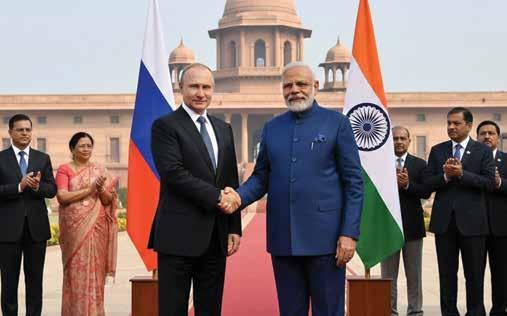
NEW DELHI – In a powerful display of strategic autonomy, Prime Minister Narendra Modi and Russian President Vladimir Putin concluded the 23rd IndiaRussia Annual Summit in New Delhi this week, solidifying a comprehensive roadmap for their "Special and Privileged Strategic Partnership." The meeting delivered a strong message to the world: the decadesold bond between the two nations remains resolute and is transitioning into a futuristic model of joint economic and technological collaboration.
The summit's most significant outcome was the finalization of the "Programme for the Development of Strategic Areas of India-Russia Economic Cooperation till 2030." This ambitious plan aims to increase annual bilateral trade to $\$100$ billion by the end of the decade, a colossal jump from the current $\$68.7$ billion (FY 2024-25), which is heavily skewed by Indian oil imports.
"Our economic partnership is a common priority," PM Modi stated, emphasizing that the new program is designed to make
trade "more diversified, balanced, and sustainable."
TO ADDRESS THE CURRENT TRADE IMBALANCE AND BOOST INDIAN EXPORTS, BOTH LEADERS AGREED TO:
• Fast-track a Free Trade Agreement (FTA) between India and the Russia-led Eurasian Economic Union (EAEU).
• Resolve logistical and payment bottlenecks, with a commitment to increasing the use of national currencies (rupee and ruble) for settlements—a major step toward insulating trade from external financial pressures. Currently, around 96% of transactions are already conducted in national currencies.
• Promote Indian exports in sectors like pharmaceuticals, agriculture, textiles, and marine products, with Russia agreeing to actively remove non-tariff barriers.
The energy pillar remains crucial. President Putin affirmed Russia's readiness to ensure "uninterrupted shipments of fuel" and proposed expanding cooperation in civil nuclear energy, including the potential for
joint construction of small modular reactors and floating nuclear power plants.
The defence partnership, the historical backbone of the relationship, is undergoing a fundamental reorientation.
The focus is shifting from a simple buyer-seller model to one centred on joint Research & Development (R&D), co-development, and co-production.
The joint statement underlined plans to encourage joint manufacturing in India of
spare parts, components, and aggregates for Russianorigin military equipment already in India's inventory.
This move aligns perfectly with India's 'Make in India' initiative and aims not only to meet the needs of the Indian Armed Forces but also to explore exports to "mutually friendly third countries."
While no new major defence contracts were signed at the summit, highlevel discussions covered the potential for additional batches of the S-400 ‘Triumf’
air defence system and the joint production of advanced variants of the BrahMos supersonic cruise missile.
The timing and content of the summit served as an unmistakable affirmation of India’s strategic autonomy amidst sustained geopolitical pressures, particularly from the West, to reduce engagement with Russia.
KEY AGREEMENTS ALSO EXTENDED TO:
• Migration and Mobility: Agreements were signed to facilitate the movement and employment of skilled workers between the two nations.
• Tourism: India announced the launch of a free 30-day e-tourist visa and a 30-day group tourist visa for Russian citizens.
• Arctic Cooperation: An agreement was signed to train Indian seafarers for polar waters, strengthening India's presence and collaboration in the strategic Arctic region.
• In an era of flux and realignment, the Delhi Summit has not just reinforced the 'Pole Star' friendship but has equipped it with a practical, long-term economic and technological blueprint designed to navigate global turbulence and secure the mutual interests of both nations for the next decade.
Both leaders underscored their commitment to a "just and democratic multipolar world order," emphasizing that their partnership remains resilient against external constraints. The personal warmth and grand reception accorded to the Russian President by PM Modi, who received him personally, were widely interpreted as a symbolic rejection of any coercion to choose sides.
Traveling overseas? What vaccinations do you need before you go?
ARE you heading overseas to see family, friends, or holiday? Make sure you are protected against infections that we don’t have here in Australia.
In 2025, Queensland Health has seen a number of travellers returning from overseas with vaccine preventable infections such as measles, typhoid fever, and hepatitis A.
“Getting vaccinated is the best thing you can do to prevent these very nasty infections” said Dr Bhakti Vasant public health doctor from Queensland Health.
“Many people heading home to see family or friends don’t know that they might not be protected or don’t see a doctor before they go” Dr Vasant said.
MEASLES
Measles is an extremely infectious disease that is spread through coughing, sneezing, or breathing.
Fever, rash, sore and watering eyes are other symptoms. In some cases, measles can cause inflammation of the brain, blindness, pneumonia, and even death.
TYPHOID
Typhoid and paratyphoid fever | Health and wellbeing | Queensland Government (www.qld.gov.au)
HEPATITIS A
Like typhoid, hepatitis A is also spread by unsafe water, food or not washing hands, and it can be prevented through vaccination.
The hepatitis A infection commonly causes body aches, pains, stomach upset and inflammation of the liver.
Liver inflammation can lead to yellow skin, eyes and dark urine which is known as jaundice.
Two doses of a hepatitis A vaccine will give you lifelong protection.
Hepatitis A | Health and wellbeing | Queensland Government (www.qld.gov. au)
BEFORE YOU GO
As there is no specific treatment for measles, vaccination is the best line of defence. If you are unsure if you are immune to measles, check with your doctor to see if you are eligible for a free measles vaccine. Measles | Health and wellbeing | Queensland Government (www.qld.gov. au)
India’s
Another vaccine preventable disease is the gut infection, typhoid fever. Typhoid causes fevers, headaches, belly pains,
constipation, or diarrhoea, but can occasionally cause severe disease and death if left untreated. Antibiotics can treat typhoid but there has been an increase in the numbers of antibiotic resistant cases around the worldparticularly in the Indian Subcontinent.
You can prevent typhoid when travelling overseas by getting vaccinated every 3 years, regularly washing your hands and making sure the water and food you consume is safe and clean.
If you are planning on travelling overseas, make sure you see your doctor 6-8 weeks before and ask which vaccines you need. If you’re looking for more information visit the Smart traveller website.
Vaccinations and preventative health | Smartraveller
Financial Sector: Navigating Digital
Headwinds and Regulatory Shifts
THE Indian financial sector is currently at an inflection point, driven by a powerful confluence of technological disruption, proactive regulatory intervention, and a shifting macroeconomic landscape. Far from being a quiet corner of the economy, finance in India today is a dynamic arena where traditional banks, agile FinTechs, and massive government schemes are all vying for space. Understanding the current trends—from the RBI’s surgical approach to NonBanking Financial Companies (NBFCs) to the unstoppable force of digital payments—is key to grasping the trajectory of the world’s fifth-largest economy. At the heart of the Indian financial system is the Reserve Bank of India (RBI), which is skilfully balancing the need to spur economic growth with the necessity of maintaining financial stability. On the growth front, the recent decision to cut the repo rate—the rate at which commercial banks borrow from the central bank—by 25 basis points has injected a renewed sense of optimism. This move is a growthsupportive signal, aimed at lowering the cost of capital in the long term. If fully
transmitted by banks, this easing is expected to provide a crucial stimulus to housing, vehicle, and corporate lending, boosting aggregate demand.
However, this supportive monetary policy is juxtaposed against a significant tightening of regulatory screws, particularly for NBFCs. The RBI has expressed concern over the rapid, and sometimes reckless, growth of unsecured lending, prompting an increase in risk weights and capital provisioning requirements for certain loan categories. This move is not punitive but rather preemptive. It differentiates between prudently managed, secured lenders and those who have chased high growth at the expense of sound risk management. The resulting pressure on capitalization has forced several smaller NBFCs to consolidate or pivot their strategy, steering the sector towards a more stable, secured-lending model and ultimately reducing systemic risk. It is a necessary friction that prioritizes long-term financial health over shortterm exuberance. If the RBI is the central stabilizing force, the Unified Payments Interface (UPI) is the central revolutionary force. India’s digital payment
ecosystem continues to break global records, fundamentally altering how commerce is conducted. UPI transactions have maintained exponential growth, penetrating deeper into rural and semi-urban markets and acting as a primary vehicle for financial inclusion.
The current trend is the deepening of this technology. Banks and FinTech companies are now leveraging UPI's success by integrating Artificial Intelligence (AI) and Machine Learning (ML) tools to enhance the user experience. These technologies are not
just about chatbots; they are powering sophisticated fraud detection systems, optimizing credit scoring for thin-file customers, and enabling hyper-personalized financial products, moving India towards a truly intelligent and inclusive financial system.
Furthermore, the government’s commitment to expanding access is evident in the rise of the Financial Inclusion Index (FI-Index), which measures access, usage, and quality of financial services. Driven by initiatives like the Pradhan Mantri Jan Dhan Yojana (PMJDY), which has brought hundreds of millions into the formal banking system, the financial sector is witnessing a structural shift where credit and banking services are no longer the exclusive domain of major metropolitan areas.
On the macroeconomic front, the financial sector is grappling with the pressures of global instability. The Indian Rupee (INR) has faced persistent weakness against the US Dollar, a challenge driven by factors including sustained capital outflows by Foreign Portfolio Investors (FPIs) in response to higher US interest rates and persistent demand for the dollar to service import bills. While the RBI has intervened strategically
to manage volatility, the INR’s depreciation remains a key variable influencing corporate balance sheets and the cost of foreign debt.
Despite these external headwinds, the fundamental health of the domestic banking sector remains robust. Decisive action taken years ago to tackle the mountain of bad loans has paid off. The Non-Performing Asset (NPA) ratio continues its downward trajectory, while the Capital Adequacy Ratio (CAR) remains well above international minimums. This improved resilience means Indian banks are better positioned today to manage economic shocks and sustain credit growth. Finally, the Indian finance sector is exhibiting both maturity and momentum. The digital revolution is democratizing access, while the central bank is ensuring the structural integrity of the players. The immediate future will be defined by the careful execution of new technologies within the framework of tightened regulation, promising a financial system that is not only vast but also fundamentally sound and ready to support India’s ambition of becoming a major global economic power.
Shahana Goswami and Sabrina Khan Shine at Asia Pacific Screen Awards Economy: Strong Growth & Rate Cuts
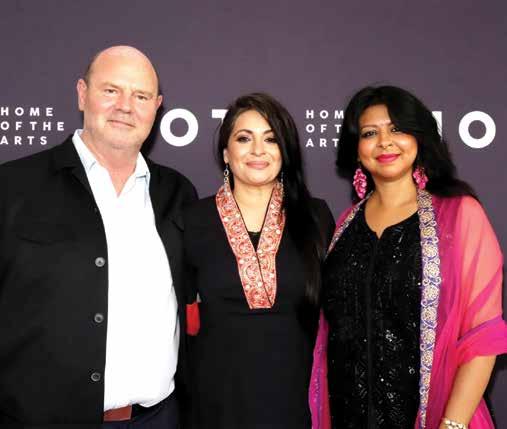
SHAHANA Goswami and Sabrina Khan were notable attendees at the Asia Pacific Screen Awards held on the Gold Coast, Australia on November 27th. Shahana Goswami, born in New Delhi, is a talented actress known for her roles in various films, including her breakthrough performance as Debbie in Abhishek Kapoor's "Rock On," which earned her several awards, including the Filmfare Best Actress (Critics) award. British born Sabrina Khan of mixed heritage including India is a highly acclaimed film director, producer, and actress who acted in "Mercy Box," directed "Tonya," and "Seema," and whose films have won her international acclaim. She is also an international human rights lawyer and the recipient of the 2025 New South Wales Human Rights Medal.
Cyclone
Ditwah: Current
Status and Impact
WEAKENED but Still
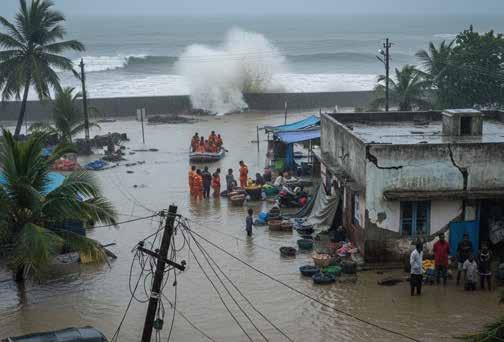
Active: Cyclone Ditwah has weakened into a deep depression. It is very likely to continue moving nearly northwards, parallel to the North Tamil NaduPuducherry coasts, and weaken further into a depression around this morning.
Rainfall and Alerts: The system is still bringing significant heavy to very heavy rainfall to coastal areas of Tamil Nadu,
Puducherry, and adjoining South Andhra Pradesh.
Red Alerts were in place for several coastal districts, including Cuddalore, Nagapattinam, and Mayiladuthurai.
Orange Alerts were issued for other districts, including Chennai, Kancheepuram, Tiruvallur, and Pudukkottai, for heavy to very heavy rain.
Impact on India:
Tragically, at least three people have died in rain-
Individual Achievers (2025 Award Winners)
SEVERAL IndianQueenslanders have been recognized for their excellence in business and community service:
Taaj Kumar: The cofounder of GM Coffee (a Brisbane-based business) was named the "Nick Xynias Multicultural Young Business Person of the Year" at the Lord Mayor's Multicultural Business Awards in November 2025. He was recognized for his
entrepreneurial drive and fostering cross-cultural collaboration.
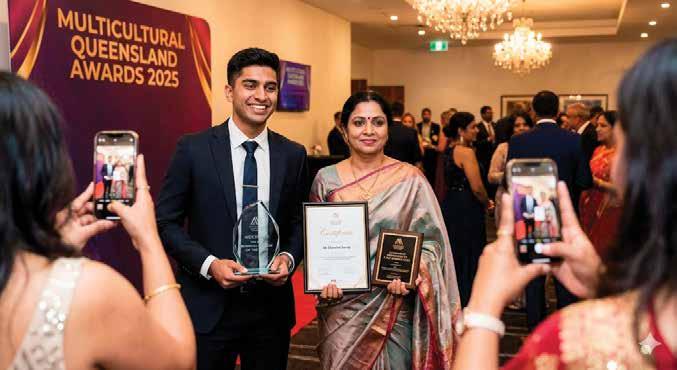
Dr. Chanchal Kurup: She won the "Outstanding Contribution by a New Queenslander" award at the Multicultural Queensland Awards 2025.
Dr. Kurup is a researcher and educator advocating for Internationally Qualified Nurses (IQNs), helping them integrate into the Queensland healthcare system.
GDP Surge: The Indian economy grew by 8.2% in the July-September quarter (Q2), making it the fastest expansion in six quarters. This growth was driven by a strong manufacturing comeback and robust services activity.
RBI Rate Cut: In a move to further boost growth, the Reserve Bank of India (RBI) has cut the repo rate by 25 basis points to 5.25%.
Future Outlook: The
RBI RATE CUT: IN A MOVE TO FURTHER BOOST GROWTH, THE RESERVE BANK OF INDIA (RBI) HAS CUT THE REPO RATE BY 25 BASIS POINTS TO 5.25%.
FUTURE OUTLOOK: THE CHIEF ECONOMIC ADVISOR (CEA) HAS RAISED THE GDP FORECAST FOR FY26 TO 7.3%, PREDICTING THE ECONOMY WILL TOP THE $4 TRILLION MARK NEXT FISCAL YEAR.
year.
related incidents in Tamil Nadu (due to wall collapses and electrocution).
Severe weather has caused waterlogging in lowlying areas, including parts of Thoothukudi.
Authorities have deployed NDRF (National Disaster Response Force) and SDRF teams to vulnerable districts.
Schools remain closed in Puducherry and several Tamil Nadu districts as a precautionary measure.
Chief Economic Advisor (CEA) has raised the GDP forecast for FY26 to 7.3%,
predicting the economy will top the $4 trillion mark next fiscal
The New World Disorder: From Shifting Alliances to the Race for AI Supremacy
THE year 2025 closes with the global landscape arguably more fractured and unpredictable than at any point since the Cold War’s end. The comfortable assumptions of the last three decades of globalisation as an irresistible force, of Western-led institutional stability, and of a clear unipolar hierarchy have been profoundly challenged.
From the prolonged shadow wars in Eastern Europe and the Middle East to the accelerating technological arms race, the defining characteristic of this new era is disorder, driven by a shifting geopolitical tectonic plate.
THE NEW DIPLOMATIC CHESSBOARD
One of the most telling barometers of this re-alignment is the visible strain on historic alliances and the strengthening of nonaligned or 'transactional' partnerships. The recent high-profile visit of Russian President Vladimir Putin to India, despite intense pressure from Western capitals to isolate Moscow, underscores this reality.
While the White House urges New Delhi to diversify its energy and defence procurement away from Russia, the deep-seated, decadeslong Indo-Russian strategic ties, particularly in defence technology and stable energy supply have proven resilient. For nations like India, the diplomatic tightrope walk is not just about balancing great powers; it is a pragmatic necessity of securing national interests in a world where every superpower offers something vital but demands a price.
Conversely, the internal cohesion of the West is facing unprecedented tests. The ongoing military and diplomatic support for Ukraine remains a central pillar of NATO and EU policy, yet fissures are emerging.
Lingering disputes over the use of frozen Russian sovereign assets with some European nations pushing back against aggressive seizure plans highlight the deep divisions over the economic and legal playbook for this conflict.
Furthermore, the rising wave of populism across Europe, often advocating for a more insular, ‘America First’ style foreign policy, threatens to further erode institutional unity.
The recent signals from the U.S. administration,
warning of potential 'civilizational erasure' in Europe and questioning the reliability of allies, inject a profound uncertainty into the future of trans-Atlantic security. The age of unipolar diplomacy, observers argue, is conclusively over, giving way to a multi-polar, multi-vector reality.
Meanwhile, the flashpoints of conflict continue to burn, driving humanitarian crises and regional instability. The war in Ukraine has evolved into a grinding, attritional contest, punctuated by massive, coordinated drone and missile attacks targeting civilian and energy infrastructure.
Diplomatic overtures, such as the peace talks recently held in Miami, have yielded little tangible progress, with Russia showing no willingness to commit to a peace plan that does not secure its current territorial gains. The frontlines of this conflict are mirrored by a dangerous diplomatic stalemate, leaving the world bracing for another harsh winter of protracted fighting.
In the Middle East, the fragile ceasefire
THE RECENT SIGNALS FROM THE U.S. ADMINISTRATION, WARNING OF POTENTIAL 'CIVILIZATIONAL ERASURE' IN EUROPE AND QUESTIONING THE RELIABILITY OF ALLIES, INJECT A PROFOUND UNCERTAINTY INTO THE FUTURE OF TRANS-ATLANTIC SECURITY. THE AGE OF UNIPOLAR DIPLOMACY, OBSERVERS ARGUE, IS CONCLUSIVELY OVER, GIVING WAY TO A MULTI-POLAR, MULTIVECTOR REALITY.
agreements and ongoing negotiations in Gaza remain at a "critical moment," according to key mediators. Even with the cessation of major hostilities, the sheer scale of the humanitarian catastrophe— compounded by the emergence of quasianarchy and a struggle for post-conflict control—means a return to 'normal' life is an illusion for millions.
Simultaneously, the region sees heightened tensions elsewhere, with Israel and Lebanon engaging in rare talks aimed at de-escalation, a stark reminder of the ever-present risk of regional contagion.
Africa, too, is gripped by internal turmoil that often escapes front-page
global coverage.
In Sudan, the conflict between rival military factions continues its devastating course. Satellite images have painted a harrowing picture of cities turned into 'slaughterhouses' by RSF massacres, and the shocking toll of a recent drone attack on a nursery, killing dozens of children, underscores the conflict's brutal cost. Despite efforts by the U.S. to impose wider sanctions, the humanitarian situation across the country continues to spiral out of control.
The most crucial longterm battle is not being fought with missiles, but with silicon and code. The race for Artificial General Intelligence (AGI) is no longer an abstract future
IN SUDAN, THE CONFLICT BETWEEN RIVAL MILITARY FACTIONS CONTINUES ITS DEVASTATING COURSE. SATELLITE IMAGES HAVE PAINTED A HARROWING PICTURE OF CITIES TURNED INTO 'SLAUGHTERHOUSES' BY RSF MASSACRES, AND THE SHOCKING TOLL OF A RECENT DRONE ATTACK ON A NURSERY, KILLING DOZENS OF CHILDREN, UNDERSCORES THE CONFLICT'S BRUTAL COST. DESPITE EFFORTS BY THE U.S. TO IMPOSE WIDER SANCTIONS, THE HUMANITARIAN SITUATION ACROSS THE COUNTRY CONTINUES TO SPIRAL OUT OF CONTROL.
Furthermore, as key global economies, including Pakistan, struggle with debt crises and inflation, the International Monetary Fund (IMF) and other lenders are walking a tightrope, attempting to prevent outright collapse while demanding reforms that often inflict shortterm pain on populations.
concept; it is the central strategic competition of the present. Recent studies, such as those from Anthropic, suggest that AI could potentially double U.S. productivity growth, making supremacy in this field a direct determinant of future economic and military power.
This technological contest is fundamentally reshaping global economics. We are seeing major, unprecedented corporate manoeuvres, such as the colossal Netflix acquisition of Warner Bros. studios, a deal valued at over $72 billion. These mergers reflect a scramble by tech and media giants to control the content and distribution channels of the future, all of which will be increasingly powered by sophisticated AI algorithms.
Beyond corporate strategy, the financial system itself is under stress. The global surge in copper prices, driven by the clean energy transition, has led to a major increase in crime, dubbed the 'great global copper swindle' as the metal becomes a more attractive target for organized criminals.
The cumulative effect of these overlapping crises and tectonic shifts is a pervasive sense of uncertainty. Domestic issues, from tightening immigration controls in Australia and the U.S. to the controversial moves to ban social media for minors in places like Australia, reflect a widespread political desire to reassert control over rapidly changing external forces.
Ultimately, the defining story of 2025 is the transition, a painful, messy, and unpredictable process away from a post-Cold War world order towards a new, yetto-be-defined multi-polar system.
The coming year will likely demand more pragmatic diplomacy, more robust international cooperation on existential threats like climate change and pandemics, and a renewed focus on the humanitarian consequences of perpetual conflict. The challenge for global leadership is not merely to react to the disorder, but to actively shape a pathway toward a stable future where great power competition does not eclipse the welfare of ordinary citizens.
Global Tides: Collaboration Fights Fragmentation in the Pursuit of Financial Security
Jitendra Deo Chief Executive Officer JD Group Australia
THE world is currently being shaped by two powerful, opposing forces: a relentless, technological drive toward hyper-collaboration and a resurgent, politically charged wave of geopolitical fragmentation.
While innovation is forging unprecedented layers of financial security, the foundations of the global economic order are simultaneously under threat.
The most profound shift lies in the accelerating integration of financial systems, largely powered by technology. Collaboration in finance is no longer a choice; it is a necessity for competition.
• FinTech Partnerships: Traditional banks are rapidly forging strategic partnerships with FinTech firms to offer
seamless, real-time, crossborder payment services. This is exemplified by the need to upgrade archaic correspondent banking networks to agile payment ecosystems, allowing quicker settlements and better customer experiences globally. The new collaborative model orchestrates end-to-end financial experiences, not just isolated services.
• AI for Resilience: The adoption of Artificial Intelligence (AI) has dramatically increased in finance, moving from early trials to core strategies. Collaboration on AI-driven platforms helps finance teams refine strategic planning, enhance forecasting, and most crucially, bolster data security and privacy to protect customer assets across borders. This shared technological infrastructure strengthens the overall operational resilience of the system.
• The Global Safety Net: The established Global Financial Safety Net (GFSN), comprising national reserves, the International Monetary Fund (IMF), Regional Financial Arrangements (RFAs) like the European Stability Mechanism, and central bank swap lines, continues to evolve. Its capacity has grown significantly to around
20% of world GDP, serving as a critical global insurance mechanism against balance of payments crises. This multilateral effort is a testament to the enduring, albeit sometimes strained, commitment to shared financial stability. In direct conflict with this technological convergence is a political trend of fracturing—a reversal of decades of increasing integration that poses a direct threat to long-term financial security.
• Splintering of Capital Flows: Geopolitical tensions are visibly
reducing cross-border portfolio and bank allocations. Countries with dissimilar foreign policy outlooks (as proxied by UN voting patterns) see bilateral investment reduced significantly. This "friend-shoring" or "bloc-formation" in investment allocation limits international risk diversification, making emerging and developing economies particularly vulnerable to sudden capital flow reversals and higher borrowing costs.
• Weaponization of Finance: The use of financial sanctions has triggered a strategic shift
by nations seeking to shield themselves from such measures. This is manifesting in a structural move away from dollardominated reserves, with central banks systematically increasing their holdings of physical gold to levels not seen in decades. This search for assets offering protection against sanctions risk and currency debasement reflects deep-seated concerns about the stability of the current multipolar financial landscape.
• Trade and Regulatory Divergence: The imposition of tariffs and non-tariff trade restrictions, coupled with the divergence of national regulatory frameworks, adds friction and cost to global commerce. Fragmentation can lead to an estimated reduction in global GDP and a rise in inflation, ultimately impacting the purchasing power and financial health of the average citizen worldwide.
As a global community, the world is shaping up not as a fully unified body, but as one committed to pragmatic, focused collaboration to mitigate the damage of fragmentation.
• Disaster Risk Reduction (DRR) and Climate Resilience: Leaders have committed to scaling up ex-ante financing and integrating risk reduction principles into national financial planning, recognizing climate risk as a systemic financial threat.
• Debt Reform and Global Governance: Efforts are underway to improve transparency in debt restructuring and reform global governance to better reflect the new economic realities, particularly by elevating the voice of the Global South.
The world is thus in a race: a race between the efficiency and resilience offered by digital collaboration and the instability and cost imposed by political fragmentation.
Financial security in the coming decade will depend on whether leaders can set aside nationalist impulses to strengthen the cooperative mechanisms such as the GFSN, the G20 dialogue, and international regulatory alignment that underpin half a century of global prosperity.
The stability of our markets, and the wealth of our citizens, hangs in the balance.
The G20 remains the primary forum for driving this cooperation. Recent summits have focused on highly specific, crucial issues:
Global Instability and the New Geopolitical Fault Lines
AS the year winds down, the world finds itself in a state of deepening fragmentation, marked by conflicts that refuse to abate and an increasingly complex web of diplomatic and economic pressures. The age of unipolar certainty is definitively over, replaced by a precarious multipolar environment where alliances are fluid and the threat of escalation is constant.
THE UNRELENTING WARS: UKRAINE AND SUDAN
The conflicts in Ukraine and Sudan continue to define the human cost of this new disorder. In Eastern Europe, despite ongoing, yet unproductive, diplomatic talks (such as those recently held in Miami), Russia has unleashed massive, coordinated drone and missile attacks, showcasing a commitment to a protracted war of attrition.
The conflict remains a geopolitical stalemate, leaving Europe to grapple with its security future amidst
internal disagreements, notably regarding the controversial proposal to use frozen Russian assets to fund Ukraine's war effort. Belgium and others are reportedly pushing back against aggressive seizure plans, highlighting fissures in Western unity.\ Meanwhile, the civil war in Sudan has deteriorated into an unprecedented humanitarian crisis. Reports, substantiated by satellite images, depict cities turned into "slaughterhouses" by massacres carried out by the Rapid Support Forces (RSF). The recent tragedy of a drone attack on a nursery, killing dozens of children, underscores the conflict's brutal disregard for civilian life. Ceasefire efforts continue to falter, even as the U.S. considers broader sanctions against both the Sudanese army and the RSF.
MIDDLE EAST ON A KNIFE EDGE
In the Middle East, the delicate ceasefire in Gaza remains at a "critical moment," according to mediators like Qatar. While the immediate hostilities
have been paused, the region is consumed by the humanitarian catastrophe and the political vacuum. The focus has shifted to the long-term status of the territory, with the deployment of an international force and the complete withdrawal of Israeli troops being crucial demands for moving to the next phase of a peace deal. The instability is contagious, with other regional tensions, including those between Israel and Lebanon, requiring constant diplomatic intervention to prevent broader conflagration.
THE RISE OF STRATEGIC AUTONOMY
A defining feature of the current global landscape is the rise of strategic autonomy among key nations. The recent visit of Russian President Vladimir Putin to India, a key U.S. strategic partner, perfectly illustrates this. Despite Western pressure to isolate Moscow, India is preserving its deep defence and energy ties with Russia. This is not defiance but pragmatism:
securing uninterrupted oil shipments and military technology while simultaneously balancing relationships with the U.S. and its allies. Foreign Minister Jaishankar termed the India-Russia relationship as one of the "steadiest" globally, signalling a clear intent to navigate a multi-polar world on its own terms.
GLOBAL ECONOMY: TARIFFS, UNCERTAINTY, AND THE GOLD RUSH
The global economy is struggling under the weight of heightened policy uncertainty and rising trade barriers, factors that are now cited as the biggest disruption risk by executives worldwide.
• Trade Slowdown: Global growth forecasts for 2025 have been significantly downgraded, with global GDP growth expected to be the slowest of any decade since the 1960s. The initial surge in global trade earlier this year, driven by companies front-loading orders in anticipation of new tariffs, is expected to fade as those tariffs
take effect, suggesting a potential reversal in trade momentum.
• The Gold Standard of Fear: The year 2025 saw gold experience an exceptional year, hitting over 50 new record highs and delivering a return of over 60%. This performance is directly attributed by the World Gold Council to the "heightened" geopolitical and geoeconomic environment, with investors viewing the precious metal as a crucial hedge against global risk and uncertainty.
• AI and the Corporate Scramble:
The silent but profound technological race for Artificial General Intelligence (AGI) is driving massive corporate shifts. The colossal acquisition of Warner Bros. studios by Netflix, valued at over $72 billion, is just one example of media and tech giants consolidating control over content and distribution, fundamentally reshaping industry structures through the lens of future AI-powered dominance
THE MIGRATION AND INTEGRITY CRACKDOWN
Closer to home, Australia is pushing forward with its Migration Strategy, which focuses heavily on integrity. Recent changes have tightened the screws on the international student market to prevent misuse of the visa system, replacing the GTE with the stricter Genuine Student (GS) requirement and hiking the minimum financial capacity needed to obtain a visa.
Simultaneously, the new Skills in Demand (SID) visa replaces the old TSS, offering different pathways based on salary tiers, aiming to ensure temporary migration genuinely addresses high-value skill shortages in the economy. As global volatility persists, the central question for policymakers worldwide remains how to transition from managing continuous crises to establishing a durable, stable framework for a newly multi-polar world.
Closed Season for Open Government
IN Yes Minister, Bernard Woolley once triggered a bureaucratic firestorm with his innocent query: “why shouldn’t the public know more about what’s going on?” — and his insistence that “surely the citizens of a democracy have a right to know.” Sir Humphrey Appleby, ever the maestro of obfuscation, dismissed him at once: “No. They have a right to be ignorant. Knowledge only means complicity and guilt. Ignorance has a certain dignity.”
From there, the hierarchy weighed in. Sir Arnold Robinson, the mandarin’s mandarin, coolly observed: “if people don’t know what you’re doing, they don’t know what you’re doing wrong.” And in another episode, when Minister James Hacker queried his party’s commitment to open government, Sir Arnold dryly announced: “this seems to be the closed season for open government.”
It was meant as satire, of course—but as with all good satire, it struck close to the truth. Decades later, across continents and political systems, the same irony endures: governments the world over continue to treat transparency not as a duty but as a danger.
Freedom of information (FOI) laws were designed to reverse that instinct—to tilt the scales from darkness toward daylight. The stated
purpose and scope of the Freedom of Information Act 1982 (Cth) is “to give to members of the public rights of access to official documents of the Government of the Commonwealth and of its agencies”. Then follows lofty objectives such as Parliament’s intent to “promote Australia’s representative democracy by contributing towards… increasing scrutiny, discussion, comment and review of the Government’s activities”.
Yet despite their promise, they remain riddled with exemptions, delays and quiet obstruction.
This tension between accountability and control is not new. Since the first FOI law emerged in Sweden in 1776, and spread through Westminster-style democracies, parliaments have wrestled with how to reconcile accountability with control. The pattern has been remarkably consistent: lofty declarations of openness, followed by the slow reassertion of secrecy through process, protocol, and the catch-all phrases — “exemptions” and “public interest exemptions” in the case of Australia. At its heart, the debate reveals an enduring flaw in how modern government understands itself. Ministers and officials often see information as their property, to be guarded, rationed, and
sometimes withheld for the good of the public. Yet the truth is quite the opposite. The business of government, though carried out in the name of the Crown, is conducted on behalf of the people. It is their money, their consent and their trust that sustain the system.
In legal terms, the relationship is more agency than autocracy. The governors are the agents; the governed, oddly, the principals. And just as any principal in a commercial milieu is entitled to know how their agent conducts their affairs, so too should citizens expect to see what is done in their name. That is not a radical proposition—it is the essence of representative democracy.
Yet, somewhere along the way, the principle became blurred. Freedom of information has too often been treated as a nuisance for administrators, or worse, a threat to ministerial control. In practice, many
agencies respond to requests with the reflexes of a litigant: defensive, procedural and intent on minimising disclosure. The result is an elaborate game of hide and seek—one that tests the patience of journalists, researchers and citizens alike.
Of course, there must be statutory carve-outs to openness, at least in the name of national security, personal privacy or safety and the like. Accounting for these necessary concessions, when every corner of public administration is fenced off by one exemption or another, the cumulative effect is opacity masquerading as prudence. It becomes, once again, a closed season on open government.
Periodically, the urge to recalibrate the balance between accountability and control prompts a flurry of promised reforms—each heralded as a new dawn— only for the light to fade as
institutions quietly revert to the comforts of opacity.
In Attorney-General v Patrick, a 2024 Federal Court case, Attorney-General Mark Dreyfus sought to refuse access to a document because the question whether a document is an “official document of a Minister” is to be determined both at the time the request for access is made and at the time that a decision is made whether to grant access to the document. As such, the document was no longer an ‘official document of the Minister’ because the Minister had changed several times and there was a change in government since the request for access was made.
The full Federal Court ruled that the “time for assessing whether a document is an “official document of a Minister” is the time the request for access is made (and only that time).” The Attorney-General’s argument demonstrates how an FOI request can be derailed simply because ministers change, or elections intervene.
In Victoria, the Ministerial Code of Conduct was updated in 2023 to require Ministers to “publish summaries from their diaries on a quarterly basis”. Only three of the state’s 22 ministers have complied. Historical overseas trends are no different. In 2001, US President Bush signed an executive order allowing either the White House or
former presidents to veto release of their presidential papers. In 2005, the New Zealand Ombudsman stated that “some Ministers’ offices remain unwilling or unable to meet official information requests in a timely fashion. Sometimes reasons for withholding information… seem to relate more to political or administrative convenience than to legitimate withholding grounds under the [Official Information Act].”
Then there are daring efforts to limit openness. Current Australian legislative proposals seek to extend the time for agencies to make FOI decisions, prohibit anonymous requests and broadening of the scope of the cabinet documents exemption, among others. A former public service commissioner castigated these reforms as going in “exactly the opposite direction” to the openness pursued by former Cabinet Secretary Senator John Faulkner in 2009.
In the end, these cycles are not failures of process but symptoms of a deeper truth: governments tolerate openness only in theory and will always find reasons— however artfully expressed— why too much sunlight is a danger rather than a democratic necessity.
Nilay B. Patel is a lawyer based in Melbourne.
Forum of Australian Academics of Indian
Origin Successfully Concludes at QUT
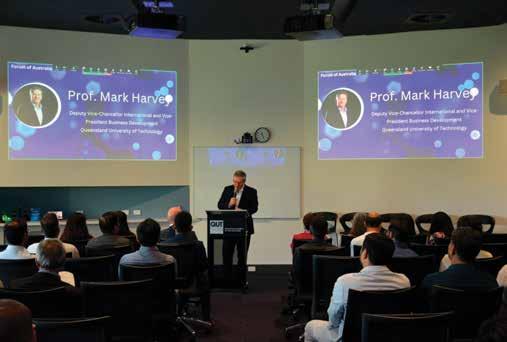
BRISBANE, Australia —The first Forum of Australian Academics of Indian Origin meet-up concluded successfully on 21 November 2025 at the Queensland University of Technology (QUT), marking a significant step forward in strengthening bilateral cooperation in education and research.
The concept for the Forum was first proposed by academics of Indian origin in Australia during the recent ministerial visit of Hon. Dharmendra Pradhan, India’s Minister of Education, and his Australian counterpart, Hon. Jason Clare. The event was honoured by the presence of distinguished representatives from the High Commission of India, the Australian Government, and Queensland University of Technology, including:
• Her Excellency Ms Irina Thakur, Acting High Commissioner of India
• Her Excellency Neetu Bhagotia, Consul General, Indian Consulate Brisbane
• Professor Chennupati Jagadish, AC, President of the Australian Academy of Science
• Professor Mark Harvey, Deputy Vice-Chancellor, International and Business Development, QUT
• Distinguished Professor Patsy Yates, Faculty of Health, Office of the Executive Dean, QUT
• Professor Ian O'Hara, Acting Executive Dean of Faculty of Engineering.
• Professor Clinton Fookes, Associate Dean (Research), Faculty of Engineering, QUT
• Ms Vanessa Lapthorne, Assistant Secretary, International Engagement, Department of Education, Australian Federal Government Welcoming the gathering, Prof. Mark Harvey praised the initiative and commended academics for taking a proactive role in establishing the Forum, reaffirming QUT’s commitment to fostering global collaboration.
In her address, Deputy
High Commissioner Ms Irina Thakur described the Forum as “an important milestone in Australia–India cooperation in research and education,” emphasising the growing strategic value of academic partnerships between the two nations.
Consul General H.E. Neetu Bhagotia highlighted the significance of the Forum for Brisbane’s academics of Indian origin and expressed her eagerness to see the platform grow and strengthen in the years ahead.
Delivering the keynote address, Professor Chennupati Jagadish, AC, President of the Australian Academy of Science, underscored the importance of Australia and India working together
with genuine intent to advance mutual scientific and educational goals. He emphasised the need for responsible research with a strong ESG (Environmental, Social, and Governance) focus as both nations navigate an era rich with opportunities yet marked by global challenges.
Jointly supported by the Australian High Commission, Canberra, and the Australian Department of Education, the Forum
brought together academics, policymakers, government representatives, and sector leaders to explore new avenues for collaboration in higher education, scientific research, and innovation-led development.
The event also featured panel discussions on emerging technologies, AI in education and research, health, and neuroscience.
Participants, primarily academics, expressed strong enthusiasm for the
Forum, describing it as a much-needed initiative and conveying keen interest in seeing it grow and evolve in the years ahead.
The successful conclusion of the inaugural meet-up sets the foundation for a recurring platform dedicated to advancing Australia–India academic cooperation and building sustainable, futurefocused partnerships in the fields of education, health, agriculture, and science and technology.
No One Left Behind – Support Queensland Multicultural Communities in the Fight Against HIV
THE 1st of December marks World AIDS Day, and this year’s theme for Australia is “No One Left Behind”, which reminds us of the importance of equality in HIV prevention, testing, and care — for everyone in our diverse communities.
HIV is a virus that can cause AIDS. Since it was first identified in 1981, it has affected more than 40 million people worldwide. Thanks to advances in medicine and prevention, both new HIV infections and HIV-related deaths have declined globally (UNAIDS).
Australia has also made great progress — but not all communities have benefited equally. Recent data (HIV in Queensland 2024 Annual Report) shows that people born overseas are overrepresented in new HIV diagnoses in Queensland, despite making up only around 24% of the population.
Language barriers, stigma, lack of awareness, and limited access to health services are some of the reasons overseasborn people are less likely to know about HIV prevention and testing options.
The good news is that with early testing and effective treatment, people living with HIV can live long and healthy
lives — just like anyone else. No one should feel afraid or ashamed to get tested or seek care. Here are some key facts everyone should know:
1. HIV can be treated and managed like other chronic health conditions.
2. HIV is transmitted through blood and sexual contact. However, people with an undetectable viral load cannot transmit HIV through sex (U=U — Undetectable = Untransmittable).
3. HIV prevention
menthods include condoms, PrEP (preexposure prophylaxis), and PEP (post-exposure prophylaxis). Learn more at endinghiv.org.au/staysafe/prep.
4. Early testing saves lives. You can get tested at your doctor, a Rapid clinic (www.rapid. org.au ), or by using a free HIV self-testing kit available at www.hivtest. au. Self-test kits can also be purchased from www. atom.com.au or selected pharmacies.
5. People without a Medicare card, such as
temporary visa holders, can get free HIV treatment and care at public sexual health clinics or hospitals. Find out more at HIV treatment and care for people not eligible for Medicare | Queensland Health
To make HIV information more accessible, ECCQ’s Love Health team provide free translated resources in multiple languages and free education sessions for community groups. You can also order free condoms at https://eccq. com.au/condom-request-
form/. This World AIDS Day, let’s work together to make sure no one in Queensland’s multicultural communities is left behind. Everyone deserves access to knowledge, testing, and
AUSTRALIA HAS ALSO MADE GREAT PROGRESS — BUT NOT ALL COMMUNITIES HAVE BENEFITED EQUALLY. RECENT DATA (HIV IN QUEENSLAND 2024 ANNUAL REPORT) SHOWS THAT PEOPLE BORN OVERSEAS ARE OVERREPRESENTED IN NEW HIV DIAGNOSES IN QUEENSLAND, DESPITE MAKING UP ONLY AROUND 24% OF THE POPULATION.
care — regardless of where they come from or what language they speak. You can find more information including translated resources on hepatitis, HIV, and STIs at www.eccq.com.au/bbv. If you are in Cairns, you can contact the team at Cairns Sexual Health Services by calling (07) 4226 4769 or emailing cairnsshs@health.qld.gov. au.
Hepatitis, HIV/AIDS and Sexual Health Program Ethnic Communities Council of Queensland (ECCQ)
The Quiet Power of Belonging
THE QUIET POWER OF BELONGING
Belonging isn’t a location. It’s a feeling. A soft breath that says, you’re safe here.
In India, we grow up surrounded by people,family, neighbours, entire communities that fold us into their routines. And yet, more and more people quietly admit, I feel alone, even when I’m not.
That’s because true belonging isn’t about being around others, it’s about being allowed to show up as your whole self.
In my work with clients and practitioners, through breath, emotion, movement, and reflection, I see the same thread repeating. People are exhausted from trying to fit in. They edit themselves to be accepted, contort their voice to meet expectations, and silence their needs to avoid disruption.
Fitting in may offer approval. Belonging offers ease.
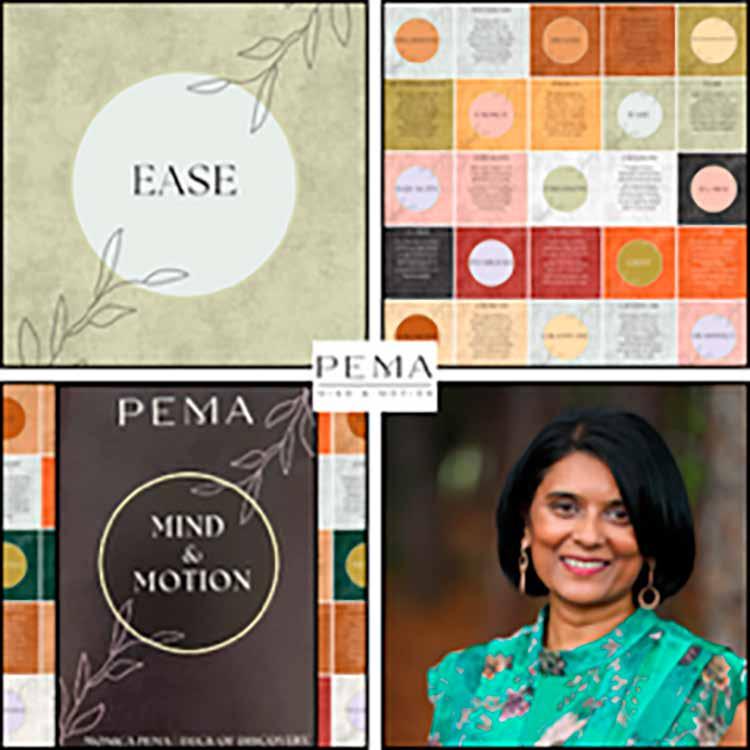
One of the most potent cards in the Mind and Motion Deck of Discovery is called Ease. It may seem simple, but I’ve seen this card bring tears. It reminds people of something deeply forgotten: you don’t have to earn your worth. Ease is not laziness. It’s not giving up. It’s the moment you stop resisting who you are. Your shoulders drop. Your breath returns.
Your nervous system softens. Through a Vedic lens, this reflects the principle of Santosha. A deep inner contentment that isn’t dependent on outcomes, but on presence. It’s not passive. It’s powerful.
Belonging, in this way, becomes a sacred practice. Not one granted by others, but one reclaimed by you.
Your body knows when something feels off. A knot in the belly. A tight jaw. The urge to shrink. These are not inconveniences, they are clues. And when you learn to listen, you stop abandoning yourself in spaces that never saw the real you to begin with.
The Mind and Motion Cards were created for these quiet moments. They are not just tools for reflection, they are conversation starters. The Ease card in particular offers a gentle prompt to soften the internal fight, and allow who you are to be enough. Right here. Right now.
If you’re seeking belonging, start by asking: Where do I feel most at ease? Who allows me to be unfiltered? What part of me longs to be met?
This is where belonging begins. Not in performance, but in presence. And the more you return to yourself, the more you allow others to do the same. So if you’ve been striving, stretching, or secondguessing, pause. Breathe. As the Ease card reminds us: You belong not because of what you do. You belong because of who you are.
EXPLORE FURTHER
The Mind and Motion Cards offer guided reflections like this to support your personal growth journey. These tools are designed to complement, not replace, professional support.
For more resources or to purchase the deck, please visit https://www.monicapema. com/mindandmotiondeck
Monica Pema | Integrated Wellness Expert
MSc. Psychology
“From Passion to Purpose in All Walks of Life” This article is intended for self-reflection and general education only. It is not a substitute for professional medical, mental health, or psychological care.
FOR new or recent investment properties purchased, having a clear understanding of depreciation from the beginning is an extremely important and helpful tool when it comes to managing your property portfolio and your tax.
Newly built residential properties can generate a considerable amount in depreciation deductions over the first five years and even older properties that have received qualifying improvements can yield substantial depreciation value.
To break it down, when a property is purchased, the owner is essentially purchasing the structure of the property plus depreciating assets. These assets are not part of the property’s structure; they are identifiable as separate to the structure, unlikely to be permanent and, generally, can be replaced within a relatively short period of time.
As a rental property owner, you can claim a deduction on the item’s decline in value, but it is important that you understand the legislation correctly. Detailed record keeping is essential, and its importance cannot be understated.
Depreciating assets have an ‘effective useful life’ and they’re reasonably expected to decline in value over time. Some examples
are carpets, appliances such as dishwashers or washing machines, furniture, air conditioning units and curtains. These are likely to have a period of use that is not infinite and will need to be replaced at some point.
For new assets, including those purchased with a newly built or substantially renovated property, you may be entitled to claim a deduction if no one was previously
entitled to claim, however, for second-hand depreciating assets there are specific conditions and limitations.
Sandy Deo REMAX Landmark 0400920238
07 3189 6535
2/3 Curban Street Underwood landmark@remax.com.au
The Australian Government’s ATO website is a valuable resource in understanding the ins and outs of depreciating assets, but it is crucial to ensure you seek professional advice for your specific circumstances and your unique property to ensure the complexities of what you can and can’t claim for your property are met. Don’t DIY or AI for your depreciation schedule. Talk to your accountant, your financial advisor and seek professional guidance to ensure that your schedule is both accurate and effective. The legislation is complex and taking shortcuts or guessing what can/ cannot be claimed will only lead to trouble.
Credit: REMAX Australia
The Unfolding Crisis in Greater Brisbane: When Opportunity Meets Unaffordability
GREATER Brisbane stands today as a city of stark paradoxes. On one hand, it is Australia’s undisputed growth engine, attracting a record influx of interstate migrants drawn by lifestyle, career opportunities, and the massive infrastructure projects leading up to the 2032 Olympics. On the other, this surging success has birthed a profound and intensifying property crisis, one that is rapidly eroding affordability for both prospective homeowners and renters alike.
This crisis is not merely a cyclical boom; it is a structural failure of supply to meet overwhelming, sustained demand, pushing the region towards a critical social and economic tipping point.
The current situation in Greater Brisbane, encompassing the capital and surrounding high-growth areas like Ipswich and the Gold Coast hinterland, can be traced to three primary, interlocking drivers:
Queensland has consistently captured the largest share of net internal migration in Australia, with many new arrivals settling in the Greater Brisbane area. This is a structural shift fuelled by lifestyle appeal and relative value compared to Sydney and Melbourne. This sudden, exponential increase in demand has put an impossible strain on the housing market. Data confirms that population growth is running at a pace that far outstrips new dwelling construction, leading to an acute, chronic undersupply.
While demand has soared, the pipeline for new housing delivery has stalled. The construction sector has been plagued by a crippling combination of high material costs, ongoing global supply chain delays, and severe labour
shortages. These factors have made it financially unviable for developers to initiate or complete projects quickly, leaving the housing stock significantly below long-term state targets.
Consequently, listings for established properties are tracking significantly below historical averages, in some recent months, more than 30% below the five-year average. This scarcity creates a "fiercely competitive" market, heavily skewing selling conditions in favour of vendors and leading to bidding wars that push prices well beyond reasonable expectations.
The result of this imbalance is a market that has become dramatically unaffordable. Since the onset of the postpandemic boom, dwelling values in some parts of Brisbane have soared by over 50%, with the median house price in the capital pushing well over the $1 million mark.
FOR PROSPECTIVE BUYERS, THE FINANCIAL HURDLES ARE IMMENSE:
• Price-to-Income Ratio: The dwelling price-to-income ratio has surged to a record high, meaning households must save for far longer and borrow significantly more to enter the market.
• Mortgage Stress: Even with interest rate fluctuations, the percentage of household income required to service a median new mortgage has soared to near-record levels, placing severe strain on middle-income buyers. Many first-home buyers are now reportedly exhausting all their savings just to meet the deposit and stamp duty costs, leaving them financially vulnerable.
The crisis in the purchase market is mirrored, and arguably magnified, in the rental sector. When
homeownership becomes inaccessible, demand is shunted directly into the rental pool, creating an intense shortage.
Greater Brisbane's rental market remains critically tight, with vacancy rates stubbornly low—often below 1% in many high-demand suburbs. This lack of available stock has led to:
• Soaring Rents: Advertised rents have surged by 47% over the past five years, adding thousands of dollars annually to the cost of living for the typical tenant.
• Rental Stress: The percentage of household income required to meet
the median rent has hit a record high. Even averageearning households are now on the verge of, or are already experiencing, rental stress, spending more than 30% of their income on housing. For low-income and essential workers, the situation is dire, pushing them further away from the inner city and closer to economic displacement.
In the face of this widespread crisis, a few factors offer a measure of relief and hope for the future.
The unit market has become the primary shock absorber for the affordability crisis. Unit price growth is now outpacing house price growth
in some segments, as attached dwellings offer a significantly more accessible entry point for first-home buyers and a better rental yield for investors. The affordability gap between houses and units is causing a necessary, if forced, shift in consumer preference toward higher density living.
Furthermore, both local and state governments are now taking direct action. The Brisbane City Council's Housing Supply Action Plan is focusing on making it easier and cheaper to build medium and high-density housing through reduced or deferred infrastructure charges for build-to-rent and small-sized apartments. Similarly, massive infrastructure investment, from the Cross River Rail to the Brisbane Metro and Olympic developments, is boosting confidence and creating longterm value, but the benefit of this will take years to flow through to broad affordability.
The Greater Brisbane property crisis is a complex beast, demanding more than short-term fixes. It is a fundamental challenge of urban planning, construction capacity, and population management.
While the city's robust economy and enviable lifestyle continue to make it an irresistible destination, the severe lag in housing supply is now threatening to undermine its very appeal. If governments, industry, and regulators fail to unlock the capacity to deliver tens of thousands of new, well-located, affordable homes quickly, the dream of homeownership, and even stable, affordable rent, will drift further out of reach for a generation, potentially impacting the city's social fabric and economic competitiveness for years to come.
A Season of Celebration, Connection, and Giving Back
IT’S hard to believe that the New Year is just four weeks away. It always seems to arrive so quickly! I really enjoy this season, from Christmas festivities to endof-year gatherings, and reconnecting with people we don’t see often. Still, amid all the celebrations, I find myself thinking of those going through tough times. The holidays can be particularly challenging for families dealing with financial stress, health issues, mental health struggles, or complicated family dynamics. Remember to take care of yourself, and consider reaching out to those around you. Even a small act of kindness can make a big difference.
I’d like to express my appreciation to the Deo family and our Brisbane Indian Times team for making this past year so memorable. Together, we’ve worked to keep the paper focused on the topics that matter most to you. I’m especially thankful for the readers who shared their thoughts on the upcoming social media laws and what they might mean for families.
The hot topic this month is the introduction of social media restrictions for anyone under the age of 16. For some background, Australia’s new social media laws take effect on 10 December 2025. They will prevent anyone under 16 from creating or maintaining accounts on platforms like Facebook, Instagram, TikTok, and YouTube to name a few. Under the Online Safety Amendment (Social Media Minimum Age) Act 2024, these platforms must verify users’ ages and block underage access.
In a related story by Sam Buckingham-Jones Media and marketing reporter in the Financial Review on November 26th, 2025, a constitutional challenge has already been filed against the law by two teenagers, Noah Jones and Macy Neyland, through the Digital Freedom Project. The case argues that raising the minimum age for social media use from 13 to 16 infringes on teenagers’ constitutional rights to freedom of political communication. I’ll be watching this closely and
reporting updates as they happen next year.
Many parents I’ve spoken with when out and about in the community agree that protecting children online is important, yet they question whether these laws will make a real difference, as young people often find ways around restrictions using Artificial Intelligence (AI). Some parents are concerned about the extra personal information their children may need to provide, while some young people see the government as overreaching, stepping into the role of parents or caregivers making being a parent more difficult as it will be harder for them to monitor what their children are seeing. Others argue that stricter laws and penalties should target those who use social media to harm or exploit children. I would love to hear your thoughts. Do you agree with the intent of these laws, the way they are being implemented, or neither?
Personally, I haven’t used social media for the past two years. I chose instead to focus on grassroots community work, reading the paper and writing for – of course, the Brisbane Indian Times. Helping people directly and having meaningful conversations is the best way to know what is really happening on the ground. I prefer hearing firsthand from readers about their experiences—the good, the bad, and the challenging—so that together we can work toward solutions and truth.
One of my personal highlights this month was attending the Lord Mayor’s Multicultural Business Awards with friends Usha, Bob Pillay and volunteering on the same night at the inaugural Lighthouse community fundraiser. The evening sparkled with colour, culture, and pride as we celebrated Brisbane’s vibrant multicultural business community. A heartfelt thank you to Umesh for your warm hospitality and generous welcome at the table—it made the night even more special. Service has also been central to my month. I was grateful to volunteer again with Community Life Uniting Church at their
final garage sale of the year, helping visitors carry their purchases and supporting a cause that gives so much back to our community. In November, the Inala Lions Club hosted its inaugural trivia night—a lively evening full of laughter, friendly competition, and community spirit. It was wonderful to see so many friends and locals come together to support the club’s important work. A big thank you to Grill’d Mt Ommaney for supporting the event and providing the
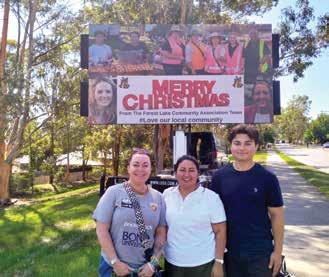
perfect venue. We raised much important funds to serve those who need a smile and helping hand. Stop by for a chat. You’ll also find me at the Forest Lake Christmas Carols this year, so please come say hello and sing a carol or two. I’ll be by the lake from 8:00 AM to 2:00 PM, before moving to the Christmas Carols program from 4:00 PM until it begins on Saturday, 6 December. I’ll also be volunteering at Blessing Day, a community tradition I’ve
been part of since I was five years old. This free event at Community Life Uniting Church supports families experiencing hardship, offering children’s gifts, activities, a festive photo booth, food and drinks, face painting, a Christmas hamper for each family, and a delicious lunch sponsored by Nando’s. Thank you for being such an important part of this community. It has been a privilege to share stories, celebrations, and moments
of connection with you this year, and I look forward to continuing that journey together in 2026. For anyone who may need them, here are some important numbers: Emergencies
StorySiri – My Story, My Values
BY SAKETH MANDA
THE Basava Samiti
Chapter hosted a vibrant and inspiring public speaking competition on 8 November, drawing a diverse group of young participants from across the community for an evening dedicated to confident communication, cultural reflection and valuebased expression.
The event forms part of the organisation’s ongoing commitment to promoting education, empowerment and ethical leadership among youth. Participants were invited to reflect on reallife situations where they had demonstrated values drawn from the teachings of 12th-century social reformer Guru Basava, whose principles of equality, compassion, integrity and social responsibility remain central to the Charity’s mission. Throughout the evening, students delivered speeches highlighting moments of personal growth, acts of kindness, and lessons learned from their everyday experiences.
Audience members
THE SUCCESS OF THIS YEAR’S COMPETITION HAS STRENGTHENED PLANS TO ESTABLISH THE EVENT AS AN ANNUAL HIGHLIGHT IN THE BRISBANE CHAPTER’S CALENDAR. ORGANISERS HAVE EXPRESSED INTEREST IN EXPANDING FUTURE EDITIONS THROUGH PARTNERSHIPS WITH LOCAL SCHOOLS, YOUTH ORGANISATIONS AND COMMUNITY GROUPS.
praised the high calibre of speeches, noting the strong organisation, clarity and composure shown by the speakers. These contestants incorporated personal anecdotes to demonstrate how Basava’s teachings continue to inspire decision-making in modern life, giving their speeches a sense of authenticity and emotional depth that resonated with the audience.
Organisers emphasised that the purpose of the competition extends far beyond the development of public speaking techniques. “Our focus is on giving young people a platform to
express themselves,” an event coordinator said. This program brings Basava’s ideals into a contemporary community setting and encourages young people to think deeply about the values they want to embody.
The event drew a warm and supportive crowd of families and community members, who applauded each speaker and fostered an encouraging atmosphere for both new and experienced participants. In keeping with the Charity’s inclusive approach, every speaker received appreciation, acknowledging their effort and courage.
Every performer was also recognised for outstanding content, delivery and confidence, reflecting the event’s emphasis on both skill and substance.
The success of this year’s competition has strengthened plans to establish the event as an annual highlight in the Brisbane chapter’s calendar. Organisers have expressed interest in expanding future editions through partnerships with local schools, youth organisations and community groups. These collaborations
aim to broaden participation, provide additional opportunities and continue fostering leadership skills grounded in cultural, ethical and communityfocused values.
As the evening concluded, many attendees praised the event for creating a space where young voices could be heard, celebrated and empowered. The competition not only showcased emerging talent but also underscored the enduring relevance of Basava’s teachings in shaping
confident, thoughtful and socially conscious young leaders.
Basava Samiti Asia Pacific conducted this event in two cities in Sydney on the 16th November 2025 and in Brisbane on the 8th November 2025. Both cities rejoiced the reflections and adoption of the values. Sydney also welcomed the speakers of the Batch 6 Learn2Grow Program, CEO Talk from Mr.Emmanuel Musoni, Executive Manager GALPD graced by three councillors from the Blacktown city council.
Across Borders, Beyond Wounds: Nurturing Ageing Parent Bonds Overseas
By Rinchaal Patel, Mindset and Relationship Coach, YOLO Academy
Contd. from Nov month
NAVIGATING GUILT AND BOUNDARIES
One of the most common emotional burdens migrant children face is guilt:
• Guilt for leaving them behind.
• Guilt for not visiting often enough.
• Guilt for not being their primary caregivers.
• Guilt for feeling frustrated or resentful.
But guilt alone does not serve relationships—it often leads to resentment or burnout. Healthy relationships with ageing parents require boundaries:
• Recognising that you cannot meet all their needs alone.
• Sharing responsibility with siblings, relatives, or professional caregivers.
• Setting realistic expectations about what you can provide.
• Accepting that love expressed consistently, even in limited forms, is still love.
Boundaries do not mean neglect. They mean loving without destroying yourself.
Healing the Inner Child
While Caring for Parents
Part of maintaining a healthy relationship with ageing parents is tending to the younger self inside us, the child who still longs for validation or nurturing. Practical ways to support this inner healing include:
• Therapy or counselling: A safe space to process unhealed wounds without projecting them entirely onto parents.
• Journaling:
Writing letters to your younger self or even unsent letters to your parents.
• Community: Sharing stories with fellow migrants who understand the complexity of crossborder family dynamics.
• Self-parenting: Learning to give yourself the emotional care you once sought from your parents.
When we care for our inner child, we show up for our parents with more patience, less bitterness, and greater clarity.
The Power of Acceptance
Ultimately, maintaining healthy relationships with ageing parents across continents is not
about fixing everything. It’s about accepting dual truths:
• They did their best, and it wasn’t always enough.
• We love them, and we sometimes resent them.
• They are ageing, and so are we.
• Some conversations will happen, and some never will.
Acceptance doesn’t mean resignation; it means living fully in the relationship that exists, not the one we wish existed. Within acceptance, there’s still room for joy, humour, gratitude, and connection.
Conclusion: Love Beyond Perfect Words
As a millennial living
in Australia with parents ageing in India, I’ve come to see our relationship as a living thing imperfect, evolving, and tender in its own way. We may never have all the conversations I once longed for. We may never perfectly understand each other across cultural and generational divides. But we can still choose love, forgiveness, and connection—one phone call, one visit, one gentle gesture at a time.
Healthy relationships with ageing parents aren’t about erasing the past; they’re about weaving healing into the present. And sometimes, that is more than enough.
The best financial opportunity: pay it forward
IT’S very hard to construct the profile of a donor to Life Global Australia. Occupation is highly variable: from businesswoman to yoga instructor, from copy writer to computer analyst, from psychologist to IT consultant, and from student to retiree. As a result, income is widely varied. Likewise, age is not a defining characteristic: some are over 70, some as young as 12. There are, however, some common factors: all are Australian, all are conscious of being in a position of privilege, and all see that privilege as an opportunity.
Several LifeGA donors are members of the expat Indian community in Australia. In its nascent days, some learned of the charity directly through its founder, Dr Dipti McGowan.
Deepti Jajee first learned about LifeGA and in-country partner charity, Project Life, when Dr McGowan invited her to visit Gujarat, India, to see their work firsthand. As a result of her visit, Ms Jajee, an IT Consultant, has funded five women to complete the Women’s Empowerment Programme, and her husband, Raghu, has funded a further five. She is firmly convinced that when a woman is empowered, her whole family is uplifted.
“I’ve always believed in the idea of teaching a man to fish rather than simply giving him one,” Ms Jajee said. “It’s incredible how this simple concept can have the power to transform lives.”
Like her friend, Dr McGowan, Ms Jajee grew up in a family that believed in helping others.
“My mother instilled in
me the value of gratitude and taught me to always show compassion for those who are less fortunate.”
Bina Gorasia was inspired to act after learning about the effects of the Women’s Empowerment Programme. Her Indian heritage gave her significant insight into the predicament of the women entering the programme. After meeting Dr McGowan, the businesswoman became interested in LifeGA’s work with women.
“I come from a culture in which women are not given opportunities,”
Ms Gorasia said. “The Women’s Empowerment Programme gives them the strength to change their lives.”
Ms Gorasia was impressed by the extent of the programme, which reaches out to impoverished women, often in remote areas, and provides skill development and personal advancement. The women are educated and given the opportunity to start their own enterprises in various trades such as sewing, embroidery, catering, beauty and computer operations. Further than that, though, they are given training in self defence, gender equality, banking, budgeting and finance.
Kamini Patel was also drawn to the Women’s Empowerment Programme. Curious about Dr McGowan’s motivation and the work of the charity, Kamini went to the LifeGA
website and did some research. On her birthday, Ms Patel asked friends and family to donate to the programme instead of buying her gifts. She committed to match the total donations made. The first to donate on that day were her daughters, aged 12 and 14, who raided their piggy banks to contribute.
“Donating to LifeGA is an opportunity for us to help families become independent and for me to ¬¬¬¬-set an example for my daughters that, when we can, we should help other women. It is important to me that women can be self-reliant. I have had the privilege of being independent since finishing my studies and I know what living life with confidence feels like.”
Importantly, though, LifeGA’s effectiveness is known well beyond the Indian diaspora. Some of the first people to accompany Dr McGowan on the charity’s annual philanthropic trip to India had never seen Gujarat. Sustainability consultant, Rachel Thompson, is now one of the charity’s Directors, and experienced philanthropist, Geoff Anson, is Chair of the Advisory Board.
Former teacher, Jane Elliott, has not been to Gujarat, but was immediately interested in the charity when she learned of the Indian connection. Ms Elliott had instigated a service trip for students from the independent school where she taught to southern India. Through a colleague, she learned
of an institution in Tamil Nadu that provided lifetime education and support for people born with significant disabilities. Students and teachers on the bi-annual trip worked for a week at the privately-funded sangam, digging gardens, painting classrooms, supervising homework and helping with physical therapy.
“When I retired, I lost that access to meaningful service. With a reduced income, I could no longer afford to travel so far,” Ms Elliott said.
When she learned of the rigorous standards and proven results of LifeGA, Ms Elliott knew immediately she had found the answer.
“With its experienced in-country partner, LifeGA can transform the small amount of money I can afford to give into a big change in a community.”
Businessman, Chirag Panchal, became a donor through the intersection of his corporate and community interests. He believes it is everyone’s responsibility as human beings to support each other, especially when we have the ability to make a real difference. He wants to help LifeGA build a school. Incredibly, LifeGA’s partner, Project Life, has built 10-classroom earthquake-proof schools for A$250,000.
“Education is a basic right, but in many remote villages of India, it’s still a privilege. We are building a school to provide access to quality education for children who currently
have no reliable facility to study. A school in their own village will give them the foundation for a brighter future, break the cycle of poverty, and uplift the entire community.”
For Mr Panchal, donating is not just about money.
“This is bigger than just building a school –it’s about building futures. It’s about hope. We are fortunate to live in a place with opportunities
– others aren’t as lucky. I donate because it’s a way of giving back.” Mr Panchal believes passionately in LifeGA’s vision to support, sustain and enrich lives through working together.
“When we join hands, we multiply the impact,” Mr Panchal said. “Even a small contribution to LifeGA can go a long way. Together, we can light up a generation.”
www.lifeglobal.org.au
Brizzy Bangali Utsav er Morshum 2025
…marks the end of tyranny of the evil and time to rejoice the beginning of goodness. It’s the most powerful and auspicious moment on the Bengali-calendar and event list for every Indian around the globe.
Celebration, devotion, brotherhood, festivity and heritage take priority with the onset of Mahalaya each year. We thank the contribution of Australia India Radio, The Bengal and The Bengali Society of Queensland to bring these milestone events every year to Brisbane.
2025 is no different…every probashi bangali in Brisbane woke up early to the sound of shankho-dhwani (
with family and friends in probash. Bengali Society of Queensland keeps no stone unturned to make every probashi bangali in Brisbane glisten and raise comraderies and brotherhood above all.
as guests and share their presence that will be revered by all members equally.
Day one was Debi r Bodhon (
Birendra
ধ্বপন) and the auspicious chandipath (চণ্ীিাঠ) by Sri
Krishno Bhadra on Sunday 21st September. It is a great privilege to have Mahalaya aired timely and not once, but twice, to the listeners of all age. We are enriched by the contributions of Australia India Radio and The Bengal for doing the honours that marks the beginning and set the vibe of Sharodiya (শারেীয়া) with a bang!
Mahalaya sets the background and energy perfect, arouses goosebumps in a bangali heart and the countdown for Sharod-Utsav begins. It is the time to set our overseas connections and communications strong for another fabulous Durgotsav
In this age of social media, virtual internet and AI, the whole world is at our doorstep. Being a probashi bangali, we are not missing out or left behind on the spirit, instead we enjoy the best of both worlds. The Bengal brings us Pujo Mela to showcase the best outfit for Durga Pujo and Bengali Society of Queensland takes care of the nittygritty of Pujo, khaoya-daoya, gaan -bajna and shubho sharodiya vibes. The mesmerising cultural programs and mouthwatering food kept the halls full of people from all over Brisbane and surrounding suburbs. Kudos to the 2025 EC for organising the 3-day long Durgotsav in Brisbane. BSQ Durga Pujo reached the 28th year milestone and was hosted at Indooroopilly State High School from 26th September to 28th September. The occasion was graced by Swami Atmeshanandaji from Vedanta Society of Queensland, Mr Umesh Chandra and Mrs Usha Chandra from GOPIO, Dr Preeti, President FICQ, Ms Prerna Pehwa and Walter Taylor ward Councillor Ms Penny Wolff. BSQ will be ever grateful to have them
and recitation by Samya Karpha. 27th and 28th September daytime actions was a sight not to be missed. Bhog-daan, Pushpanjali, the sound of Dhaak Uloo-Dhwani and Aarti brought life to the pandal and devi murti hosted by Bengali Society of Queensland at Indooroopilly State High School. It is hard to imagine Durga Pujo without Sri Sunil Mukherjee but the mammoth task of pourohityo was in the able hands of Sri Banibrata Mukhopadhyay and Sri Krishnendu Bhattacharya. With Bengali Society of Queensland also comes the privilege of the master craftsman Sri Sukumar Chakroborty & Shukla Chakroborty giving us a splendid unique creation each year of the pandal and Sri Prabir Halder & Mita
Halder lighting the venue with pleasure. Thank you to our senior stalwarts.
Food each day is the greatest attraction and maha bhog (মহাক্�াগ
and proshad (
)is what everyone awaits to be blessed with each day. Men and women clad in their new and best attire puts in their best self to make this event a grand one and the better one each year. The sponsors and members contribute with open heart to the best of their abilities. The ambience is electrifying and the entire community wakes up to the fragrance of fresh flowers and festivities…” asche bochor abar hobey” Brizzy Boys Dhak and Kerala Drummers take Durga-boron, Bishorjon and Bijoya to another level and a houseful crowd dances to “dhaaker taley komor doley…” (
)The red and white colour of the devotees and sindoor khela is the epitome of Durga Dashami bidding an
emotional farewell to Gauri, the beloved daughter towards her in-laws’ abode of Shankar Mahadev in Kailash Parvat. The next weekend is not far to celebrate Lakshmi Pujo. The auspicious Koja Gori Lakshmi Pujo in Brisbane found its place where Maa Durga prevailed a week earlier.
Yes, Indooroopilly State High School hosted Maha Lakshmi Pujo too celebrating prosperity and excellence. This is celebrating Sharod
Purnima on the full moon day of the Hindu Lunar Month of Ashwin. It is the night when Sharod Utsav sees a culmination on a moonlit night, when Maa Lakshmi descends to join in the actions of human beings. Om Vishwa Roopashya Varadasi Haripriye….
News Article : Saheli Mukherjee
Photography : Pablo Lanata Productions, www. pablolanata.com
Session times & locations
Saturday: 9am-12pm at 10 Cognac Court, Calamvale Qld
Thursday Afternoon Each Week 3:30 pm – 6pm at Sunnybank Hills
Shopping town Library. 67 Level 2, Cnr
Calam & Compton Road.
5-Day Shiv Katha Gyan Yagya – A Spiritual Awakening for All
Jyoti Jagrati Sansthan (DJJS) is delighted to announce a 5-day “Shiv Katha Gyan Yagya” — a powerful and soul-stirring spiritual experience.
A team of 12 revered saints and seers from India — highly accomplished spiritual orator and singers who have dedicated their
lives to the cause of humanity and world peace — will be sharing gems of knowledge from our spiritual scriptures in ways you have never heard before. This divine treasure of wisdom will help us understand our glorious spiritual heritage and how we can pass it on to our future generations.
FOR FIVE MAGNIFICENT
EVENINGS-
4Enlightening discourses on the profound Shiv Katha — thought-provoking and transformative.
4Soulful and moving bhajans that touch the heart and elevate the soul.
4A never-before experience for all Shiv Bhakts in Brisbane.
4Absolutely free entry and delicious food will be served to all attendees after the program.
Come with your family and friends. Let us unite in devotion, wisdom, and the spirit of Lord Shiva. Don’t miss this oncein-a-lifetime spiritual celebration!
4**Date:** 21st – 25th February
4**Time:** 5:45 PM to 8:45 PM
4**Venue:** SunPAC Auditorium, Sunnybank For more details, visit www.djjs.org or follow us on Facebook at DJJS Brisbane Events.
4*Let the divine vibrations of Shiv Katha awaken the light within.*
Hindu Society of Qld Marks a Historic Milestone with Bhoomi Pooja
THE Hindu Society of Qld celebrated a historic moment with the auspicious Bhoomi Pooja ceremony, marking the beginning of construction for its new cultural and spiritual centre in Brisbane. The event, held on 11th October 2025, brought together members of the Indian community in a vibrant display of faith and tradition.
The Bhoomi Pooja, a sacred ritual performed before laying the foundation of a new building, symbolizes respect for the Mother Earth and seeks blessings for a successful and prosperous venture. Pundit Harihar Adhikari ji from Delhi officiated the ceremony, with assistance from Pundit Bharat Solanki ji, adding meaningful spiritual value to the event.
The event drew a large gathering of community members, young and old, all participating in the celebrations with devotion and enthusiasm
Anit Ram, President of HSQ, shared his excitement: “This is a momentous day for our community. Our vision has always been to create a space that not only fosters spiritual growth but also preserves and promotes our rich cultural heritage. The Bhoomi Pooja marks the first step towards that dream becoming a reality.”
HSQ’s new centre promises to be a landmark in Brisbane, providing a spiritual home for Hindus while serving as a hub for cultural education, community events, and charitable initiatives.
DIVYA
New report warns Soil health will be the missing solution in Global Climate Change mitigation at COP 30
AT the COP30 summit, a new report released on 10th November 2025 from the UNEP, IUCN, WFP, and FAO backed Save Soil campaign, unearths critical gaps on soil and agriculture in the majority of nations’ National Determined Contributions (NDCs) - a country's climate action plan submitted under the Paris Agreement. Titled “Solution Instead of Victim: Integrating Soil Health into Nationally Determined Contributions (NDCs) for Climate Change Mitigation”, the report's key finding is that over 70% of nations do not feature soil as a climate change mitigation tool in their NDCs. This is a shocking and critical gap, as soil’s potential as a carbon sink has long been documented and recognised, making this omission all the more stark. In 2021, the UN Food and Agricultural Organisation outlined that soils were the world’s largest carbon sink after oceans.
Outlining the vast carbon sequestration
potential of soils, the report’s findings reveal that:
• Up to 27% of emission cuts needed to keep global warming below a 2°C rise could be achieved and sequestered by restoring agricultural soil health.
• The world's soils hold 45% more carbon than previously estimated.
• Revitalising soil health through regenerative practices can reduce fertilizerrelated emissions by as much as 80% by 2050.
Australia has not submitted their third NDC. Their second NDC, submitted in September 2025, outlines strong commitments to ecosystem restoration and biodiversity, yet lacks measurable soilcarbon or soil-health targets. Given its vast agricultural lands, including soil indicators in its future climate reporting would enhance transparency and highlight agriculture’s mitigation role.
Agriculture, accounting for almost 30% of global GHG emissions, also has the potential to become a
significant source of carbon capture. This, however, remains unacknowledged in the NDCs which primarily consider transformation of energy and transport sectors as mitigation solutions. Countries include agriculture and soil only in their adaptation plans, and not invest in soils as a solution for climate change.
Conversely, degrading soils act as carbon emitters. The report outlines if just 1% of carbon contained in Europe’s soils alone were to be released, would be equal to the annual emissions of 1 billion cars. Globally, 40% of the planet’s land is degraded.
Praveena Sridhar, Chief Scientific and Policy Advisor of the Save Soil Movement commented on the situation: “The world has a 45% largerthan-expected carbon bank right under its feet, yet our current climate mitigation plans largely fail to treat soil health as the powerful, cost-effective climate solution it is.
• UP TO 27% OF EMISSION CUTS NEEDED TO KEEP GLOBAL WARMING BELOW A 2°C RISE COULD BE ACHIEVED AND SEQUESTERED BY RESTORING AGRICULTURAL SOIL HEALTH.
• THE WORLD'S SOILS HOLD 45% MORE CARBON THAN PREVIOUSLY ESTIMATED.
We urge policymakers to immediately prioritize soil health through regenerative agricultural practices as part of their climate mitigation and financing strategies.
These can include simple practices such as cover cropping, notill farming and crop rotation.”
According to recent review-reports from the British Ecological Society (2025) and World Bank (2024), regenerative agriculture techniques such as yearround ground cover, diverse rotations and integrated livestock show strong evidence of improving soil structure, organic matter content and biological activity –all key indicators of soil health
“Having been a regenerative farmer for over 25 years, and having supported tens of thousands of farmers in their transition to regenerative practices, I’ve consistently observed that soil health improves dramatically with the adoption of these techniques. This leads to higher productivity,
reduced chemical use, and greater resilience.
The same practices that restore our soils also store carbon — turning farms into part of the climate solution.”
ABOUT SAVE SOIL
Save Soil is a global people’s movement launched by Conscious Planet to address the rapid degradation of agricultural soils.
Over the last three decades, Save Soil has implemented a holistic strategy for soil revitalization through scalable farmerdriven projects, policy advocacy, and citizen awareness campaigns.
The movement is working with a number of governments across the globe to shape soil policies, and is supporting over 250,000 farmers in India to transition to various other regenerative agricultural practices including tree based agriculture (often referred to as agroforestry). Save Soil is backed by the UN Environment Program, UN Food and Agricultural
AUSTRALIA HAS NOT SUBMITTED THEIR THIRD NDC. THEIR SECOND NDC, SUBMITTED IN SEPTEMBER 2025, OUTLINES STRONG COMMITMENTS TO ECOSYSTEM RESTORATION AND BIODIVERSITY, YET LACKS MEASURABLE SOILCARBON OR SOILHEALTH TARGETS. GIVEN ITS VAST AGRICULTURAL LANDS, INCLUDING SOIL INDICATORS IN ITS FUTURE CLIMATE REPORTING WOULD ENHANCE TRANSPARENCY AND HIGHLIGHT AGRICULTURE’S MITIGATION ROLE.
Organisation, UN Convention to Combat Desertification, World Food Program, and IUCN amongst others. —Amod Datar Save Soil Campaign
Bhagavad Gita Chapters 6 & 8
CHAPTER 6: ATMASANYAM
YOG – YOG OF SELF RESTRAINT
SHREE BHAGAVAN
KRISHNA SAID:
1. The one who performs obligatory duties without expecting any reward is a Sannyasi and a Yogi, and not the one who renounces the sacred fire or neglects one’s duty.
2. O Pandav Arjun, know that what is called sannyas, renunciation, is the discipline of yog. For one cannot become a yogi without renouncing purposeful selfish intents.
3. For neophyte practitioners of yog, performing prescribed acts is considered to be the means for their success. For mature practitioners, withdrawing from material activities is their path to bliss.
4. When one does not get attached either to sense objects or to works, and renounces all material desires, then that person is said to have ascended the height of yog.
5. One should deliver oneself with own efforts and be careful not to degrade one’s own self. For one’s self is their own friend and their own enemy.
6. The one who have conquered the self by the self, then the self is a friend. However, those who fail to do so, their self destructively behaves like an enemy.
7. The one who has conquered one’s self and achieved tranquillity, is wholly absorbed in the supreme, even in the midst of cold and heat, bliss and suffering, and respect and infamy.
8. The yogi who is filled with contentment of knowledge and discernment, who is firm and has control over senses and for whom a clod of soil, a rock and gold are of equal value, is spoken as a competent in yog.
9. Those who are equal minded among wellwishers, friends and foes, neutral acquaintances, mediators, antagonists, relatives, and virtuous and evil persons far excel.
10. The yogis residing alone in a secluded place, with controlled mind and body and without desire and possessions, constantly engage their self with yog.
11. A practitioner of yog selects a sanctified place for self and sets up a firm seat covered with a soft cloth, deerskin and Kush-grass, neither too high nor too low for practicing yog.
12. Sitting on the seat and maintaining control over thoughts, senses and actions, and with mind focussed on a single point, a yogi practices yog for self-purification.
13. Holding the body, head and neck erect, firm and motionless, fixing eyes on the tip of own nose and not looking around,
14. The yogi sits absorbed in me with serene spirit, bereft of fear, steadfast in following the vows of Brahmacharya and with restrained mind and all thoughts on me.
15. In this manner, the yogi who constantly engages in yog with controlled mind attains peace and absolute relief from the miseries of life by attaining union with me.
16. O Arjun, this yog is not for those who eat too much or fasts too much. It is also not for those who oversleep or constantly remain awake.
17. Those who are disciplined in food consumption, recreation, performing prescribed duties, and regulating sleep and wakefulness attain perfection in yog, which destroys sorrow.
18. When one’s thoughts are restrained and abide in the self alone, without any longing for all objects of sense gratification, then that person is said to be harmonised in yog.
19. As a lamp does not flicker in a windless place, even so the yogi’s thought seeking union with the self remains firm.
20. When thoughts are at rest restrained by the practice of yog then the practitioners become content in themselves by looking at the self by the self.
21. In that state, the self of the person experiences the ultimate bliss, which can be perceived by intelligence and transcends the senses, and being firmly fixed, does not swerve from truth.
22. Having gained that, one considers nothing superior worthy of acquisition and being firmly established in it, does get dislodged in pain however great.
23. The disconnection from union with pain is known as yog, which should be understood. This yog should be practiced with determination and absolute conviction in mind.
24. Forsaking all desires born of selfish purposes without exception, one should keep senses totally restrained by mind from all sides.
25. Step by step one attains tranquillity by exercise with intelligence and firm conviction, and with mind firmly fixed on the self without thinking of anything else.
26. Wherever, the mind strays due to its fickle and unsteady nature, it should be reined and brought
under full control of the self from there.
27. The sinless yogi, whose mind is serene and passions are subdued, attains the supreme bliss and becomes one with the Brahm.
28. By regularly engaging the self in this manner, the sinless yogi cheerfully enjoys the eternal bliss of contact with the Brahm.
29. The one whose self is harmonised with yog sees the self in all beings and all beings in the self. Such a person sees everywhere the same.
30. The one who sees me everywhere and perceives everything in me never loses sight of me, and I never forsake such a person.
31. The yogi who worships me as established in oneness although abiding in all beings, always resides in me despite being anywhere in all respects.
32. O Arjun, the one who see everyone everywhere equally like their own self, whether in suffering or during times of wellness, are perfect yogis.
ARJUN SAID:
33. O Madhusudan Krishna, I do not see the stable foundation of the yog that you have described in equanimity due to the restlessness.
34. O Krishna, the mind is restless, blustery, powerful and obstinate. I consider subduing it is as difficult to control as the wind.
SHREE BHAGAVAN
KRISHNA SAID:
35. Without doubt O Mahabaho Arjun, the mind is fickle and difficult to restrain. However, O Kaunteya Arjun, it can be controlled by practice and detachment.
36. Without selfrestraint, it is difficult to accomplish yog. That is my opinion. But for the self-controlled person who strives using proper means, it is attainable.
ARJUN SAID:
37. O Krishna, what becomes of those who do not attain perfection in yog despite being endowed with faith but with mind straying away from yog and are unable to control their passion?
38. O Mahabaho Krishna, is that fool not lost like a splintered cloud, fallen from both worlds without any foothold in the material world and faltering on the path to Brahm?
39. O Krishna, it behoves you to completely dispel my doubts. None other than you is capable of doing so.
SHREE BHAGAVAN
KRISHNA SAID:
40. O Parth Arjun, such a person is not destroyed in this life or hereafter.
Dear friend, no one who does good travels the path of woe.
41. Following the death, those fallen from the path of yog reside for countless years in the region meant for pious people, and then take birth in the house of pious and wealthy families.
42. Or, such a being may even be born in a family of enlightened yogis. However, such a birth is difficult to obtain in the world.
43. There they automatically obtain the intellect from the previous life and thereafter, again they strive for perfection, O Kurunandan Arjun.
44. By virtue of their practice in yog in the previous life, they are instinctively attracted to it. Those keen to mastering yog go beyond the ritualistic principles of the scriptures.
45. The yogi persevering in the practice of yog is absolved of all the sins accumulated over multiple lifetimes and attains the supreme goal.
46. A yogi is deemed superior to an ascetic and is also regarded as being more evolved than a person of knowledge as well as the person of action. Therefore, O Arjun, you become a yogi.
47. Amongst all the yogis, the one who worships me with full faith and whose inner self resides in me is the best yogi according to me.
Thus ends the sixth chapter of the Bhagavad Gita, entitled Atmasanyam Yog – Yog of Self Restraint containing the sermon between Shree Krishna and Arjun on divine knowledge about the science of yog.
CHAPTER 8: AKSHAR BRAHM YOG - THE YOG OF THE IMPERISHABLE BRAHM
ARJUN SAID:
1. O Purushottam Krishna, what is that Brahm? What is Adhyatma? What is Karma? What is called Adhibhut and what is termed Adhidaiva?
2. O Madhusudan Krishna, who in this body is called Adhiyagya? At the time of death how are you to be known by a selfcontrolled person?
SHREE BHAGAVAN
KRISHNA SAID:
3. The supreme imperishable is Brahm. One’s own self is called Adhyatma. The creative process by which all beings are brought forth into existence is Karma.
4. The perishable creation is Adhibhut. The Purush, the principle of cosmic divinity, is Adhidaiva. I, myself, here, dwelling in the body, am Adhiyagya, O exalted
among embodied beings.
5. Those who at the last hour of their life, remembering me alone depart leaving this body, attain my status. There is no doubt about it.
6. O Kaunteya Arjun, whatever form remembering at the time of death, the mortals leave their body, that alone they attain, because of being ever absorbed in its thought.
7. Therefore, remember me at all times and fight. With your mind and intellect fixed on me alone, you will attain me without doubt.
8. Those who meditate on the Supreme Divine Being with their mind disciplined by the practice of yog and without drifting after anything else go to Him, O Parth Arjun.
9. Those who meditate on the seer, the ancient one, ruler of all, smaller than the atom, maintainer of all, with an incredible form, shining like the sun and far beyond the darkness;
10. And the one who at the time of death contemplate with a firm mind, devotion and strength of yog, and completely set their life breath in between their eyebrows attain the Absolute Divine Being.
11. I shall disclose to you in brief about that which the knowers of the Veds call the imperishable. Wherein ascetics free from passion enter and desiring which the celibates observe the prescribed rites of Brahmacharya.
12. Controlling all the doors of the senses and fixing the mind within the heart and the life breath in the head, and remaining steadfast in yogic concentration;
13. The one who leaves this body uttering single syllable Om, which is the imperishable Brahm and constantly keeping me in mind, reaches the Supreme destination.
14. O Parth Arjun, whosoever remembers me always and persistently with mind completely fixed on me, for such an everengaged yogi, I am easily attainable.
15. Having obtained me, the noble souls accomplish the highest perfection and are not subject to rebirth, which is a transient abode filled with misery.
16. O Arjun, all the realms from the earth to the world of Brahm are liable to the repeated cycle of birth and death. But for those who reach me there is no rebirth for them, O Kaunteya Arjun.
17. Those who know that a single day of Brahma the creator extends to a thousand yugs and similarly his single night for a thousand yugs, are the
true knowers of the day and night.
18. At the celestial daybreak, all manifested beings come forth from the unmanifested state and at the cosmic nightfall they merge into the same unmanifested form again.
19. O Parth Arjun, the multitude of beings arise again and again and then merge helplessly at the coming of night. They appear again at the start of the day.
20. Far beyond this unmanifested nature, there is yet another unmanifested eternal being, which does not perish even when all creatures perish.
21. The same unmanifested, which is spoken as imperishable, is called the supreme goal. Those who attain that goal do not return. That is my supreme abode.
22. O Parth Arjun, that unmanifested supreme person within whom all creatures reside and by whom all is suffused is attainable only through unwavering devotion.
23. O Bharatarshabh Arjun, I shall reveal to you the time in which the yogis departing from this world return to it and the time when they do not.
24. The knower of Brahm attain the Brahm by passing away during the influence of fire, light, day, the bright fortnight of the month and six months of northward course of the sun.
25. The yogi who passes away during the influence of smoke, night, the dark fortnight of the month, and the six months of southward course of the sun, obtains the lustre of the moon and returns to the earth.
26. The bright and dark paths of the world are considered to be eternal. By proceeding through one of them, one attains the supreme goal from whence there is no retreat, whilst proceeding by the other, one returns again.
27. O Parth Arjun, the yogi who knows these two paths does not become deluded. O Arjun, at all times, you must remain steadfast in yog.
28. The yogi who know all this attains the primal supreme state, which surpasses the fruits of meritorious deeds obtained by study of the Veds, performance of sacrifices, austerities and charitable acts.
Thus ends the eighth chapter of the Bhagavad Gita, entitled Akshar Brahm Yog - The Yog of the imperishable Brahm containing the discourse between Shree Krishna and Arjun on divine knowledge about the science of yog.
Awadhesh Sharma, www.hinduguru.com.au
Why Open-Eye Raja yoga Meditation Fits the Modern Busy Life
IN a world where time is scarce and stress abundant, the search for peace often feels like a luxury. Yet, what if inner calm didn’t require silence, seclusion, or closed eyes? What if peace could be experienced right here—while in traffic, in meetings, or making dinner?
Welcome to Open-Eye Raja yoga Meditation-a practice rooted in ancient wisdom yet perfectly suited to today’s fast-paced life.
MEDITATION WITH EYES OPEN?
Across cultures, yogis and sages are often depicted with eyes softly half-open - not withdrawn from the world, nor consumed by it. This subtle gaze represents a deeper truth: balance. In the practice of Raja yoga, this is more than posture. It’s a powerful reminder that peace isn’t found by escaping lifebut by engaging with it, differently.
Closed-eye meditation
offers deep rest and introspection. But Raja yoga introduces a complementary path: meditation with the eyes open-remaining soulconscious while fully present in the world.
THE POWER OF SOULAWARENESS
In our daily lives, we may see-but are we truly aware? Thoughts drift to the past or race toward the future. Openeye meditation anchors us in the now. It gently reminds the soul: “Stay awake. Stay aware. Remember who you are.” This shift in awareness transforms everyday moments. You are no longer just reacting-you’re responding with clarity, patience, and love.
DRISHTI: SILENT ENERGY THROUGH THE EYES
In Raja yoga, the eyes are seen as more than sense organs. They are instruments of energy. Through your Drishtiyour spiritual gazeyou radiate vibrations.
Brahma Kumaris Shailer Park
When your thoughts are peaceful, so is your presence. When your heart is pure, your glance becomes a blessing.
This silent energy influences families, workplaces, and relationships. Without a word, your calmness uplifts others. Your awareness becomes your service.
PEACE YOU CAN PRACTICE ALL DAY
Busy schedule? No time to meditate for hours? That’s okay. Raja yoga isn't about duration—it's about awareness. You can practice it:
While working I am a peaceful soul. While speaking: Let my words uplift. While waiting: The Divine is with me. These gentle thoughts become anchors of peace. Gradually, they shape how you feel, think, and interact. Meditation becomes a way of living, not just a spiritual task.
REAL-LIFE IMPACT
At Work: In a tense meeting, someone interrupts. You pause, breathe, and respond with calm. Your energy diffuses the tension. At Home: Your child makes a mistake. Instead of
IN RAJA YOGA, THE EYES ARE SEEN AS MORE THAN SENSE ORGANS. THEY ARE INSTRUMENTS OF ENERGY. THROUGH YOUR DRISHTIYOUR SPIRITUAL GAZE-YOU RADIATE VIBRATIONS. WHEN YOUR THOUGHTS ARE PEACEFUL, SO IS YOUR PRESENCE. WHEN YOUR HEART IS PURE, YOUR GLANCE BECOMES A BLESSING.
reacting, you remember: They are a soul, learning their path. Your gaze comforts, not criticizes.
In Solitude: Even alone, you silently affirm I am light. I am loved. I am under divine care. This inner remembrance recharges the soul.
HOW TO START
Sit comfortably—at home, at your desk, or outdoors. Let your eyes remain softly open, without focusing on anything in particular. Gently think I am a soul, a being of peace.
The Supreme is a point of divine light. His light fills me with strength and love. Practice this for a few minutes each morning, then return to this awareness throughout the day in short moments of pause.
Raja yoga Meditation offers something rare: peace that moves with you. It invites us to live with deeper awarenesswhere each interaction becomes sacred, each thought a choice, and each gaze a blessing. In a noisy world, it teaches us to see with silence. To act without reaction. To be presentand peaceful-right now.
Brahma Kumaris Shailer Park provide free Raja Yoga Meditation, Positive Thinking and Anger Management Courses. Please contact us on 0414685144 or shailerpark@ au.brahmakumaris.org for further information. https://brahmakumaris. org.au and find out the events happening close to your location. OM SHANTHI
God Is My 24/7 Protection – A Living Testimony
WHEN you pass through the waters, I will be with you; and when you pass through the rivers, they will not sweep over you.
When you walk through the fire, you will not be burned; the flames will not set you ablaze.”
— Isaiah 43:2
I do not believe in God’s protection as a theory. My life is a living, breathing testimony.
I believe because I have walked through my own floods, fires, and dangerous dens — and witnessed His unseen hand shelter me every time.
The Holy Scriptures paint His power clearly:
The Red Sea split open.
The River Jordan stood still.
Fire spared the three faithful Hebrew men.
Hungry lions bowed before Daniel.
A deadly snake could not kill Paul.
But what convinces me most is not only what
Jesus said “Arise and Shine…”
God did then — it is what He continues to do now, in our generation and in our troubled world.
In my debut book, FINDING YOUR SUNRISE, I recount many life stories. One such moment was the night the road tried to take my life.
THE NIGHT THE ROAD TRIED TO TAKE MY LIFE
One late night, driving home exhausted, my eyes grew heavy. Suddenly, I felt my car drift due to wet road conditions. Within seconds, it spun out of control and slid across to the opposite side of the road.
I cried out, closing my eyes, “O God, save me…”
Miraculously, my car came to a complete stop — perfectly aligned on the opposite side of the road. I stepped out trembling, stunned to discover I was unharmed and the car was undamaged.
That night I realised:
My God does not sleep, even when I do.
WHEN FEAR KNOCKED AT MY DOOR
Another day came when the medical report in my hand felt heavier than the world. The doctors spoke in careful tones, preparing me for the worst. Fear knocked loudly at the door of my heart.
Yet deep within, something stronger arose — a quiet, unshakable peace.
I prayed, “Lord, give me faith to believe in Your power to heal and save.”
I began to question the rigidity of traditional beliefs and surrendered my fears and worries to a God whose ways and Word I did not yet fully understand.
Yet a gentle calmness began to wash over me. What was expected to worsen reversed itself. Healing came where logic said it shouldn’t. I knew then — this was no coincidence. This was the same God who walked with Daniel in the lions’ den, still guarding His children today.
WHY I BELIEVE
Because I have walked through many dangers
and witnessed God’s protection. Because I have faced fear and found peace that surpasses all
human understanding.
Because I have seen chaos and evil powers bow to His authority. God’s protection is
not limited to ancient stories.
It is a living promise for those who call on His name and walk in His Word.
I believe He is my shield in storms.
My refuge in uncertainty. My guardian in the night.
My strength in every invisible battle.
The floods may rise. The fires may roar.
The lions may growl. But my God still declares:
“I will be with you.”
And that is why I believe — not just with words, but with my life — that God is my 24/7 protection in every danger of life.
A GENTLE INVITATION
Are you walking through challenges in health, finance, or relationships? Your true help is found in humbling your heart and seeking God’s grace. His grace alone has the power to break every chain, silence every curse, and restore what seems lost.
I encourage you to meditate on God’s truth. Let His love and light transform your world from chaos to peace.
The Guilt of Having It All How Millennial Indian Women in Australia Are Redefining Success, Family, and Self-Worth
BY RINCHAAL PATEL MINDSET AND RELATIONSHIP COACH (YOLO ACADEMY)
They are the women who did everything right. They studied hard, migrated to Australia in the early 2000s, built careers, created families, and checked every box that once defined success. Yet, beneath the surface of their carefully balanced lives — run by color-coded calendars and endless todo lists — many carry a quiet, persistent weight: the guilt of having it all.
It is the unspoken inheritance of a generation raised between duty and desire, expectation and independence. For millennial Indian women living in Australia, guilt isn’t just an emotion — it’s a constant undercurrent shaping how they love, parent, and belong.
THE DUAL LIFE OF THE MODERN INDIAN WOMAN
These women are the product of postliberalization India - raised by parents who dreamed of stability, and societies that demanded perfection. They were told to pursue success, but with humility. Ambition, but with restraint. Independence, but never at the expense of family.
When they arrived in Australia, those lessons travelled with them. They became professionals by day, caregivers by evening, emotional anchors by default. And while they gained financial freedom, many found themselves emotionally indebted — to families back home, partners beside them, and children before them.
“We call it achievement, but often it’s just exhaustion disguised as success,” says a psychologist who works closely with South Asian women.
“They’re constantly toggling between gratitude and guilt — for the life they’ve built and the life they left behind.”
THE EMOTIONAL CURRENCY OF GUILT
For millennial Indian women, guilt shows up in subtle ways. It is the pang of missing a call from aging parents in India. The hesitation before posting a vacation photo that might
seem “too indulgent.” The uneasy silence after being called “lucky”.
It is also the guilt of being a working mother — wanting to be fully present at work and at home, knowing that doing both often means being absent somewhere. That quickly converts to guilt and keeps them in a constant state of inner conflict.
As one mother shared, “No one told us that freedom would feel this heavy. I love what I have built here, but sometimes I feel like I am constantly apologizing- to my kids, to my parents, to my partner and even to myself.”
“As soon as I find some sort of calm within myself, something will happen and the goal post would feel farther than my reach. I am constantly chasing that goal post that would allow me to enjoy things guilt free” says another working mother.
SHIFTING SIBLING BONDS AND THE CHANGING FAMILY WEB
In many families, migration redefined sibling dynamics. The physical distance turned shared childhood memories into intermittent phone calls and WhatsApp groups. Over time, roles evolved — the one abroad became the “responsible one,” the problem solver, the emotional bridge between aging parents and extended family.
What used to be a relationship of equality became one of quiet expectation. This shift, though often unspoken, adds another layer to the emotional load many Indian women in Australia carry.
“When you are the daughter who left, you often become the emotional caretaker for everyone who stayed.”
It is not resentment — it is responsibility, wrapped in love and guilt.
THE HIDDEN STRAIN IN MODERN MARRIAGES
While many millennial Indian couples thrive, the emotional terrain beneath their relationships can be complex. These are unions built on modern ideals but shaped by traditional pressures - the expectation to “having it all” and “doing it all” without complaint.
Australia’s data shows 17% of women have experienced partner violence since age 15, and one in three migrant women report domestic or family abuse. Among South Asian communities, studies show up to 32% of women have encountered or witnessed dowryrelated coercion or financial control.
For others, the strain is more invisible- the emotional loneliness of being high-functioning but unsupported, successful yet unseen and sometimes
unappreciated.
Many women quietly internalize this imbalance, convinced that struggle is the price of stability. They crave connection that goes beyond coordination.
“We long for our partners to truly see us - to talk beyond schedules and to-do lists, to share their dreams and fears, and to listen when we do the same.” says a millennial woman.
It is a simple need, but one often lost in the blur of responsibilities and unspoken expectations. When emotional intimacy is replaced by logistics, even love can begin to feel like another task to manage.
MOTHERHOOD AND THE PERFECTION
PARADOX
Parenting intensifies the internal divide. Many Indian-Australian mothers live in two worlds at once - raising children in a world built on shared roles, while still shaped by the hierarchies they once knew.”
They want to give their children freedom, but fear they’ll lose connection to heritage. They want to model ambition, but dread being judged for working late. Each decision -school choice, holiday plan, extracurricular activity, carries the invisible weight of comparison.
“We compare without meaning to. It is how guilt travels - from mothers to
AUSTRALIA’S DATA SHOWS 17% OF WOMEN HAVE EXPERIENCED PARTNER VIOLENCE SINCE AGE 15, AND ONE IN THREE MIGRANT WOMEN REPORT DOMESTIC OR FAMILY ABUSE. AMONG SOUTH ASIAN COMMUNITIES, STUDIES SHOW UP TO 32% OF WOMEN HAVE ENCOUNTERED OR WITNESSED DOWRY-RELATED COERCION OR FNANCIAL CONTROL.
daughters, disguised as care.”
THE UNSEEN COST OF SUCCESS
Statistically, Indian women in Australia are among the most educated and professionally accomplished migrant groups. Yet, many still measure their worth by how well they maintain relationships, not how far they have come.
The guilt of “having it all” manifests as overfunctioning: the woman who manages every detail, smoothens every conflict, remembers every birthday. She is praised for her
strength — and punished by her exhaustion. Toward a New Definition of Having It All But change is underway. Across Australia, Indian women’s circles, professional networks, and cultural platforms are reframing guilt not as weakness but as evidence of deep emotional intelligence.
The modern Indian woman is learning that balance is not about doing everything; it is about doing what matters most. She is learning that saying no to others can sometimes be the most powerful yes to herself. And she is beginning to see guilt not as a burdenbut as a reminder of her capacity to care deeply while still claiming space for her own joy.
A NEW FEMININE WISDOM
Perhaps this generation’s legacy won’t be the myth of having it all - but the wisdom to redefine what “all” really means. It is not about perfection, but presence. Not about sacrifice, but self-awareness. Not about being everything to everyone, but being true to oneself first.
For today’s woman, freedom isn’t measured in balance but in belonging - in owning her choices, her flaws, and the evolving story of who she is.
Who, What, Where, When...
Fazia Zulla 80th birthday celebration in Brisbane
Musical evening Rahim Zulla ji Forest Lake community carols
ICAS sponsored by The Urban Land Qld
Lions club of Inala Trivia night
International Conference on the occasion of the 110th birth anniversary of revered Pandit Deendayal Upadhyaya, Vigyan Bhavan, New Delhi.
International Conference on the occasion of the 110th birth anniversary of revered Pandit Deendayal Upadhyaya, Vigyan Bhavan, New Delhi.
"Seema" Premieres on the Gold Coast: A Powerful Film Addressing Domestic Violence
HOME of the Arts (HOTA) on the Gold Coast played host to the premiere of "Seema" on November 1st, marking a significant moment for Australian cinema and a powerful statement against domestic violence. The event drew a distinguished crowd, including film industry professionals and representatives from a prominent Indian network, underscoring the film's international appeal and relevance.
"Seema" features a compelling cast, led by Bollywood American actress Reena Shah, known for her previous work with Manisha Koirala, and Australian actor Morrison James. Directed by Sabrina Khan, an international human rights lawyer and recipient of the 2025 NSW Human Rights Medal and a Qld Community Service Award, the film promises a nuanced exploration of a sensitive subject. The premiere was particularly wellattended by artists from the Indian community, highlighting the film's cultural resonance.
Reena Shah shared insights into her portrayal
of Seema, a character trapped in a cycle of domestic violence: "It was essential for me to embody the internal psychology of someone trapped in a cycle of domestic violence in a way that felt truthful, layered, and immediately recognizable. I relied on subtle physical choices: the way Seema holds her body, how her breath changes, how her eyes avoid or search for connection, and the small, instinctive movements of someone constantly assessing danger. I wanted the audience to feel her story."
Shah also emphasized the importance of collaboration: "Our director Sabrina Khan and I spent time aligning on the emotional arc of Seema’s journey. With the actor Morrison James playing George, communication and consent were essential. The crew also made key decisions that strengthened the impact: keeping sets closed for vulnerable scenes, adjusting lighting to mirror Seema’s internal world, and allowing space between takes to reset."
Morrison James
Photo credit: Brittany Noring
reflected on his preparation for the role: "I read quite a few various articles and interviews on the subject from both the victims and perpetrators. I also accessed and watched some documentaries." He also spoke about the emotional challenges
on set: "I would have to say when my screen wife (Reena) became emotionally affected as the story progressed. We both spent genuine time together getting to know each other as real people and chatting about any possible boundaries each other may have had on set
while we were filming."
Director Sabrina Khan on Bringing "Seema" to Life mentioned that "my work as an international human rights lawyer has provided me with a deep understanding of the complexities and nuances of domestic violence. I wanted to
ensure that "Seema" was not just a film, but a platform for raising awareness and promoting empathy. We worked closely with advocacy groups and survivors to ensure the story was told authentically and respectfully. Every scene was crafted with the intention of honouring the experiences of those who have lived through similar situations. I hope "Seema" will spark conversations and encourage people to recognize the signs of abuse, offer support to those affected, and challenge the societal norms that perpetuate violence. Ultimately, I prayerfully hope the film empowers survivors to seek help and find their path to healing."
In a remarkable tribute to the film's powerful message, the USA has officially named November 1st "Seema" Day, dedicated to standing in solidarity with individuals trapped in abusive relationships and unable to leave. This recognition underscores the film's potential to make a lasting impact on the fight against domestic violence.
Navigating the Festive Frenzy: Your Guide to Stress-Free Overseas Travel from Australia
THE festive season – a magical time of year, but also, for many, a prime opportunity to escape the Australian summer for cooler climates or vibrant celebrations overseas. However, travelling during this peak period, particularly from Australia, comes with its own unique set of challenges. Record passenger numbers stretched airport resources, and the ever-present potential for unexpected disruptions mean that meticulous planning isn't just a suggestion; it's a necessity.
To ensure your dream holiday doesn't turn into a nightmare of delays and missed connections, here's a comprehensive guide to navigating overseas travel from Australia during this bustling festive season.
1. Plan, Plan, and Plan Again: Early Bird Catches the Flight
The golden rule for festive travel is simple, book everything as far in advance as possible. This isn't just about securing cheaper flights; it's about guaranteeing your spot on often overbooked services.
• Flights: Demand for popular routes to Europe, North America, and Asia skyrockets. Don't wait for last-minute deals; they're rare during this period. Consider flying mid-week or on Christmas Day/New
Year's Day itself, as these can sometimes be slightly less busy or cheaper.
• Accommodation: Hotels, particularly in desirable locations, will be at full capacity and inflated prices. Secure your rooms months ahead, especially if you have specific requirements or are travelling with family.
• Activities & Transport: If there are specific tours, shows, or train journeys you're set on, book them too. Many popular attractions will have timed entry or sell out quickly. Research local public transport options at your destination in advance – festive schedules can be erratic.
2. The Power of "Less is More": Smart Packing Airlines are already under pressure, and baggage handling systems can buckle under the festive load. Overpacking is a recipe for stress, excess baggage fees, and potential lost luggage.
• Minimise Checked Luggage: If possible, try to travel with just carry-on. This eliminates the risk of lost bags and speeds up your exit from the airport.
• Essential Carry-On: If you must check a bag, pack a change of clothes, essential medications, toiletries, and any valuables in your carryon. This way, if your main
luggage is delayed, you're not completely stranded.
• Layering for Diverse Climates: Instead of bulky items, pack layers. They offer versatility for varying temperatures and take up less space.
• Gift-Giving Strategy: Consider shipping gifts ahead, buying them at your destination, or opting for gift cards to reduce luggage bulk. Avoid wrapping gifts in checked luggage, as security may need to unwrap them for inspection.
3. Airport Acumen: Arrive Early, Stay Calm Australian airports, like those globally, will be bustling. Give yourself an ample buffer.
• Arrive Well in Advance: For international flights, aim to be at the airport at least 3 hours before departure. This allows for unexpected queues at bag drop, security, and immigration.
• Online Check-in: Check in online 24 hours before your flight. This can save you significant time, even if you still need to drop off luggage.
Procedures: Have your liquids (under 100ml, in a clear bag) and electronics ready to be removed from your bag at security. Wear slip-on shoes to speed up the process.
• Relax and Breathe: Expect crowds and potential delays. A calm, patient attitude will serve you far better than frustration. Keep snacks and water handy.
4. Documentation & Digital Preparedness: Your Travel Toolkit
In a world still recovering from pandemic-era travel complexities, having your documents in order is paramount.
• Passport Validity: Ensure your passport is valid for at least six months beyond your intended return date. Many countries enforce this rule strictly.
• Visas & Entry Requirements: Research visa requirements for your destination(s) and any transit countries well in advance. Some countries, like those in the Schengen Area, may require pre-registration even for visa-free travel.
• Travel Insurance: This is non-negotiable, especially during peak travel. Cover for flight delays, lost luggage, medical emergencies, and trip cancellations is crucial. Read the fine print carefully.
• Offline Maps & Apps: Download offline maps for your destination and essential travel apps (currency converters, translation tools) before you leave.
5. Staying Connected & Informed: The Global Village Even on holiday, staying connected is vital for safety and managing potential changes.
• Notify Your Bank: Inform your bank of your travel dates and destinations to prevent cards from being flagged for suspicious activity.
• Local SIM Card/ eSIM: Consider purchasing a local SIM card or an eSIM upon arrival. This is often cheaper than international roaming and ensures you have reliable data for navigation and emergencies.
• Know Your Terminals: If you have connecting flights, confirm terminal changes and allow generous layover times, especially at large international hubs.
• Security
• Digital Copies: Keep digital copies of your passport, visas, flight confirmations, hotel bookings, and travel insurance details on your phone and in a cloud storage service. Email a copy to a trusted family member.
• Airline Apps: Download your airline's app. They often provide real-time updates on flight status, gate changes, and baggage information, which can be invaluable during disruptions.
6. Health & Wellbeing: Your Most Important Cargo Don't let the excitement overshadow your health.
• Medication: Carry sufficient supplies of any prescription medication in its original packaging, along with a doctor's letter. Keep it in your carry-on.
• Vaccinations: Check if any specific vaccinations are recommended or required for your destination.
• Jet Lag Strategy: Hydrate well, try to adjust your sleep schedule gradually before departure, and expose yourself to natural light upon arrival to help reset your body clock.
Travelling from Australia to overseas during the festive season can be an incredibly rewarding experience, offering unique celebrations and unforgettable memories. By adopting a proactive, organised, and patient approach, you can navigate the inevitable crowds and pressures with confidence, ensuring your holiday begins and ends on a high note. Safe travels!
• Emergency Contacts: Ensure a family member or friend back in Australia knows your itinerary and how to reach you. Register your travel plans with the Smartraveller website (smartraveller.gov.au) for official government advice and updates specific to your destination.
DECEMBER 2025 PREDICTIONS
ARIES ( 21ST MARCH TO 20TH APRIL )
Jupiter will not only ease the pressure but also bring some good opportunities for progress as the month begins. It may also help you make progress and also you can look forward to new projects if you are in business. Venus will push you to work towards bringing a major change your financial planning this month. The impact of Venus will be helping your romance during this month. The south Node indicates the period till mid of this month will be slightly difficult for your studies and you may be struggling to strike right balance during the most part of this month. Jupiter may have a marked positive impact on your health. Around the mid of this month, Mars may cause some disruptions so it may require special care and attention to all matters related to your career. Also, you need to remain careful in monetary matters this time around. Refrain from risking your money for mere short term gains. The combined impact of Venus and Mars, the love relationship is likely to be full of excitements during the latter half of this month As the month approaches its end, you will have a clear vision of your career. Mars indicates success, stability, and prosperity at the career front. Single persons can get into love alliances but it is up to them to decide to get into a relationship. The month end will be a period to analyze and introspect your status in studies. Around the month end, good health will enable you to give a good performance.
Saturn indicates that you may face some complicated matters at your work place. Business persons must not take undue risk. It will be better to focus on consolidation of business. Venus indicates that the period looks good to purchase some valuables or luxuries for yourself and your family. But the period may remain somewhat confusing for your personal life and relationship. Planetary influences will remain favourable for your studies and this phase is likely to help you sort out some existing health problems as well. As the month advances, Saturn may bring added responsibilities at your work. For business persons, negligence in business-related matters would not go down well. It will be better for you to postpone any financial commitment in which high risk is involved as the impact of North Node can be very confusing around the mid of this month. Venus indicates some better changes are coming your way and the feeling of love with some awesome beautiful moments as well. The period around mid of this month will be an ideal week for you if you are looking to go abroad for your higher education but some malefic energies may keep on creating some small health problems. Gradually, you will realize better health status. During the latter half, Mercury will make you able to carry out your routine activities at your work place. Business persons need to focus more on the ongoing projects to carry the business. Mars also indicates that you need to act with caution as your hasty actions may create more confusions in your personal life. In your education, you may not find the going smooth now and may have to struggle hard.. Due to the impact of South Node, you will be facing problems and issues in your ongoing projects during the ending part of this month.
LIBRA ( 23RD SEPTEMBER TO 22ND OCTOBER )
This month's journey is influenced by the celestial ballet of Saturn, Venus, Mars, Mercury, North Node, and South Node. The first week brings relationship challenges, financial opportunities, career productivity, academic hurdles, and health fluctuations. Saturn demands patience in love, while finances expand with improved earnings prospects. Mars boosts career productivity, and education faces challenges except for fine arts students who excel under Venus' influence. Health experiences fluctuations, requiring vigilance. In the middle of the month, Saturn demands patience and balance in relationships, while finances benefit from long-term planning. Career advancement may face unexpected events, and education excels with enhanced focus and mental clarity under Venus' influence. Health experiences fluctuations but generally supports wellness. The latter half of the month brings relationship fluctuations, financial breakthroughs, career progress, academic challenges, and health balance. Saturn requires patience and empathy in love, while finances benefit from sustained hard work and systematic planning. Mars boosts career confidence, and education faces mediocre growth. Health benefits from a balanced lifestyle despite mid-week challenges. The ending part of the month brings relationship growth, financial progress, career challenges, academic success, and health awareness. Venus and Mercury deepen love connections, finances require extra effort, career confidence empowers professionals, education excels with focus and curiosity, and health requires management of temperament and discipline.
( 22ND DECEMBER TO 20TH JANUARY )
At the month's beginning, Mercury emphasizes the importance of effective communication in career advancement, strengthening decision-making and favoring successful meetings and negotiations. Despite good income, financial pressure exists. The first half allows for rectifying past mistakes, a crucial cleansing process leading to stronger relationships. As the month advances, Jupiter focuses on future goals, with a heavy workload but opportunities for advantage. Inheriting ancestral property is possible, and Jupiter's impact brings success and major deal opportunities during the latter half. However, Mercury warns against sharing confidential financial information. Venus increases intimacy, and health remains good, but the North Node brings business uncertainty. Avoid loans and debt. As the month ends, Mercury offers growth opportunities and new financial deals. Venus brings favorable conditions for new friendships and love, and energy shifts towards achieving academic success. Prioritize effective communication, strategic decision-making, and financial prudence to navigate the month's opportunities and challenges. Embrace the cleansing process, and focus on future goals for a successful and fulfilling month.
TAURUS ( 21ST APRIL TO 21ST MAY )
In the beginning of this month, under the influence of Saturn, you may be trying to make up for the mistake you committed earlier. However, it may not allow smooth functioning of routine activities. For business person, there may be glitches in finalizing a deal. There will be times, when you will be angry with your beloved ones, fiancé or partner. In your studies, situations may sometimes seem very demanding. You must not get overworked in order to maintain your fitness levels during the first half of month. Those in business may feel motivated by receiving calls from high worth customer to negotiate a big ticket deal around the mid of this month. You will have to care for the needs of your beloved ones and family members. Spend some time with your parents and family members regularly to maintain harmony. Lack of concentration may not allow you to perform well in your studies. Also, hectic work schedules may burn out your energy hence the period around the mid of this month may require special care and attention to your energy levels. The combined impact of Venus and Mercury may bring promising opportunities in your career during the latter half of month. An increase in your personal and habitual expenses is indicated. This period will help you handle your health very efficiently. Around the end of this month, Mars may bring the drive and energy both – at work. Business person may be able to remove some bottlenecks and Mercury may encourage to take some important financial decisions. Venus around the month end may bring some great opportunities to show and express your love for your mate. It will be a favouarble phase for your studies and to gain some valuable insights and advises from the people of excellent academic background.
As the month begins, Jupiter will continue to remain progressive and if you put in more efforts to improve your relations with seniors, the growth will be even better. Business persons are likely to make a mark with their efforts. Mercury may remain favourable for your finance. But, some complicated issues may come to fore especially if you are in committed relationship, indicates Saturn. Some distraction might affect your performance to an extent in your studies. You need to adopt a healthy life style to remain healthy this time around. Mars indicates that things shall start picking up and directing you towards your professional goals as the month advances. Venus indicates some important financial dealings. A strong sense of belonging will help you to empower your relationship. Mercury will make you able to learn well enough and also be able to impress your mentors with your perfect grasp of complicated subjects. Saturn will bring some obstacles and bottlenecks around the mid of this month hence you cannot expect smooth sailing at your work place. Mercury may however bring financial gains, and some previous investments may also bring good rewards. The love and romance vibes shall be stronger. If taking a committed relationship to the next level is on your agenda, you may find some good chance, indicates Venus. Your wayward approach may cause problems in your during the latter part of this month. Saturn may force you to work hard and to make sustained efforts to get desired success. However, Mars indicates that you will be high on confidence, and will be blessed with some good earning opportunities. Mercury suggests that dilemma regarding some key relationship issues will seem acute. However, it will make you able to sort out issues in personal close relationships. You may get moderate success in your studies. Be open to new experiences as well as to accept your weakness or mistakes.
This month, Venus' patient energy advises singles to wait until mid-week for a romantic connection, while couples enjoy quality time together, and Jupiter's supportive influence brings a busy financial landscape, requiring caution and expertise. Mid-month, Venus' loving energy makes it ideal for expressing feelings, proposing, or confessing love, with Jupiter's supportive influence prioritizing partners' health and well-being, and finances improving gradually.
The combined energy of Mars and Venus intensifies feelings of love and passion, deepening bonds for unmarried couples and bringing joy to married couples, with Jupiter's supportive influence presenting financial opportunities, and Mars' dynamic energy bringing a smooth career trajectory. Venus' loving energy fills the air with love and harmony, bringing couples closer together, with Jupiter's supportive influence demanding discipline in financial planning, and Mars' dynamic energy amplifying talents and strengths, presenting career growth opportunities. Finally, the impact of Venus brings joy and excitement to love lives, with Jupiter's supportive influence demanding patience in financial matters, and Mars' dynamic energy driving career growth, but requiring thoughtful actions to avoid mistakes. Overall, it's a month of love, financial growth, career progress, educational success, and health improvements, with planetary influences guiding through challenges and toward success, positivity, and intentional living, requiring focus, patience, and commitment to harness favorable influences, and navigate complexities successfully, setting yourself up for long-term growth and vitality.
AQUARIUS ( 21ST JANUARY TO 18TH FEBRUARY )
As the month begins, Mercury indicates intelligent ideas will boost your career, and business will progress. Unexpected expenses may occur, but continue working diligently, and improvement will follow. Venus blesses you with a wonderful time with loved ones. Saturn demands good use of finances, focusing on priorities and responsibilities. Venus indicates strong love prospects, but inflexibility may make relationships vulnerable. Hectic work schedules may harm energy levels mid-month. Intense cosmic energy will lighten in the latter half, making it the right time to implement plans to strengthen financial status. Performance will improve, and good grades are possible in examinations. However, South Node's energy may be disruptive, so be aware of tricky situations and illusionary thoughts to avoid career problems. Mercury will help resolve pending problems around month-end, bringing goodness and pending dues. Venus will make love life refreshing and rewarding, with good stamina and vitality. Set goals in education, and positive changes will follow.
GEMINI ( 22ND MAY TO 21ST JUNE )
As the month begins, things shall start picking up positive momentum at your career front. Due to the favour of Jupiter, business person may explore new horizons to expand the business. You may get some good earning opportunities but you must refrain from making any new investments as the impact of North Node might cause problems. It may also rouse emotions and some events of the past may cause unnecessary disruptions in your love life. It will be a time to review your past performance and to make necessary modifications in order to achieve better results in your studies. This phase might make you uncomfortable with your health and fitness level. As the month advances, the impact of Saturn may bring scopes for growth in your profession amid some obstacles. Business persons may also need to review their plan during this phase. Mercury indicates that profits and rewards would be high and your actions in right directions will lead you to make good investments. There may be somewhat difficult moments due to some misunderstandings with your beloved ones around the mid of this month, suggests Mars. You may have excellent favour of Mercury and Venus for career growth during the latter half of month. There can be some important development mostly positive at your work place. You can expect to have better understanding about your relationship and personal environment. Mercury may transform your thinking process and be open to some fresh experiences. For business persons, the period around the month end may bring major boost to their business prospects. It might help you fetch some good financial gains from your past investments. Venus indicates happy encounter with your beloved one. Also, your performance may improve gradually leading you towards success in your studies. The favourable impact of Mercury will help you handle your health in a better way around the month end.
VIRGO ( 23RD AUGUST TO 22ND SEPTEMBER )
In the beginning of this month, Saturn occupies you with family matters, leading to disturbances in love life, but patience and attention to partner's needs maintain harmony. Financially, expect a good inflow of money, but avoid shortcuts for rapid growth under Mars' influence. In career, maintain exceptional performance, overcoming challenges and achieving success. The middle of the month, Mars brings initial difficulties, but Mercury provides strength and tact to deal with them effectively. Financially, expect good earning opportunities, but Saturn demands discipline and solid planning. Professionally, Saturn demands focus on standing, building a solid foundation for future success. Students maintain a steadfast focus on studies, making satisfactory progress. The latter half of the month, warmth and understanding with your mate help navigate challenges, but avoid starting a new relationship in haste. Financially, expect growth and good earning opportunities, but be cautious this time around. Professionally, Saturn demands calm and patience, navigating occasional challenges with robust planetary support. By month-end, Venus brings a positive response from your loved one, and love and romance vibes become stronger. Financially, expect opportunities for gains, profits from previous investments, and fresh investment opportunities. Mercury indicates a good time for financial negotiations and investments in land or property.
This month is favorable for career and business growth. Relationships with seniors and coworkers will play a crucial role in your progress. Business owners can take on large projects to expand their horizons, with Mars boosting confidence and decision-making for fastpaced growth. However, be cautious and calculative, as the North Node's impact can be complex. Jupiter's luck will support hard work, potentially leading to promotions. Financially, be prepared for old matters to arise, but Venus indicates a positive latter half of the month. This month prioritizes personal wellbeing, family, and love life. It's ideal for taking relationships to the next level or making a meaningful connection. Your health will be satisfactory, with gradual improvement in strength and stamina. Students will benefit from Mercury's influence, expanding their knowledge and delving deeper into projects. By staying focused, adaptable, and motivated, you'll navigate challenges, cultivate resilience, and achieve a balanced, harmonious life. Make the most of this month's celestial support, prioritize self-care, and nurture your overall wellbeing. Remember to be strategic, calculated, and open to opportunities, and you'll overcome obstacles, achieve success, and create a fulfilling life. With luck and hard work on your side, this month promises growth, progress, and positive experiences.
PISCES ( 19TH FEBRUARY TO 20TH MARCH )
This month brings moments of joy and growth in your profession, courtesy of Jupiter, resolving pending business matters and receiving positive news on old financial issues. However, Mercury's influence may cause indecisiveness until midweek, while Mars' volatile energy leads to emotional highs and lows. Remain resilient and focused to overcome academic challenges and capitalize on opportunities. Mid-month, Saturn urges strategic planning and cautious decision-making amidst stiff competition, financial challenges, and potential misguided decisions. Venus brings positivity to love and relationships, intensifying connections and intuition. Channel energy into new learning approaches to gain valuable insights in education. Mars brings growth and potential gains in business, enhancing professional status through discipline and effective work management. Financial clarity and stability lead to gradual growth, and Venus fosters a romantic phase, rekindling faded friendships. Showcase skills and talents in education, boosting your image. Toward month's end, Jupiter presents tremendous opportunities for career growth, recovering past-due payments, and capitalizing on new business opportunities. Mars ignites enthusiasm and romance, making you feel flirty and ready for new experiences. Studies progress smoothly, and decisionmaking empowerment increases. Enjoy a worry-free week health-wise, and make the most of this productive and romantic phase. Throughout, prioritize decisiveness, emotional balance, self-care, strategic thinking, discipline, financial stability, and energy management to thrive.
CAPRICORN
LEO ( 23RD JULY TO 22ND AUGUST )
SAGITTARIUS
CANCER ( 22ND JUNE TO 22ND JULY )
SCORPIO
The Cosmic Web: How the Hindu Universe Shapes the Human Story
FOR the followers of Hinduism, the influence of the universe is not a distant, abstract concept studied through telescopes; it is the very fabric of existence, a living blueprint that determines destiny, duty, and the ultimate purpose of life. Unlike linear cosmologies that propose a single beginning and end, the Hindu view places human life within an infinite, cyclical drama, governed by eternal laws where the boundaries between the microcosm (the individual soul) and the macrocosm (the cosmos itself) are perpetually blurred.
This profound understanding of the universe provides not just a framework for worship, but a complete manual for ethical living, societal duty, and spiritual liberation.
THE GRAND ARCHITECTS: BRAHMAN AND THE COSMIC CYCLE
At the apex of the Hindu universal view is Brahman, the Ultimate Reality, the infinite, formless, and eternal Supreme Consciousness that pervades and underpins all existence. The entire universe, with its cycles of creation, preservation, and destruction, is considered a manifestation of this one ultimate reality.
THE NEVER-ENDING DANCE OF TIME
Hindu cosmology describes time not as a straight line, but as a vast, repeating circle—a concept that shapes the perception of human insignificance and eternity simultaneously.
• Cycles of the Trimurti: The continuous existence of the universe is managed by the Trimurti, or the Hindu Trinity: Brahma (The Creator), Vishnu (The Preserver), and Shiva (The Destroyer/ Regenerator). Shiva’s cosmic dance, or Tandava, symbolizes this perpetual cycle: creation is followed by maintenance, which ultimately leads to dissolution, paving the way for a new creation.
• Yugas and Kalpas: Time is measured in colossal units: Yugas (epochs) form a ChaturYuga, and a thousand Chatur-Yugas constitute a Kalpa—one day in the life of Brahma, estimated at 4.32 billion years. We are currently living in the Kali Yuga, the darkest and final age, marked by moral decline. The knowledge of these vast, repeating cycles instills in the individual a sense
of patience, recognizing that temporary earthly events are merely fleeting moments within cosmic time, encouraging a focus on enduring spiritual values.
The most significant impact of the universe on human life stems from the identity of the individual soul, or Atma, with the Supreme Reality, Brahman. Hinduism teaches that the essence of a human being (Atman) is an inseparable, divine spark of the universal spirit (Brahman).
The primary goal of human existence is Moksha, or liberation, the release from the cycle of birth and death (Samsara) achieved through the realization of this oneness: "Aham Brahmasmi" ("I am Brahman"). This cosmological unity makes every single human life fundamentally sacred and divine, directly connecting the self to the ultimate truth of the cosmos.
THE GOVERNING LAWS: KARMA AND DHARMA
While the cosmos provides the stage and the goal, two immutable, ethical laws dictate the plot and the progress
of the individual soul through human life.
KARMA: THE UNIVERSAL LAW OF CAUSALITY
Karma is the foundational principle that directly ties an individual's actions to the universal order. It is the law of cause and effect, where every action (Kriyamana karma), thought, and word generates a corresponding reaction that influences the soul's current and future circumstances.
• Not Fatalism: Importantly, Karma is not fate. It dictates the set of circumstances one is born into (Prarabdha karma, the portion of accumulated past actions Sanchita karma allocated to this life), but free will determines how one reacts to those circumstances, which in turn generates new karma. The universe acts as a flawless moral ledger, ensuring retributive justice and spiritual growth across countless lifetimes.
• Motivation for Ethics: The law of Karma is perhaps the strongest philosophical driver of ethical behaviour. Knowing that negative
actions will inevitably rebound—if not in this life, then in a future one— compels the individual to live a compassionate, truthful, and righteous life.
DHARMA: ALIGNMENT WITH COSMIC ORDER
If Karma is the law of action, Dharma is the law of right conduct, duty, and moral order that maintains cosmic balance. Dharma is the prescribed path that helps the individual accumulate positive karma and progress towards Moksha.
• Righteous Duty: Dharma is multi-layered, encompassing universal duties (like non-violence and truthfulness) as well as duties specific to one’s station in life (Svadharma), such as the duty of a parent, a teacher, or a leader.
• Maintaining the Universe: By fulfilling one’s Dharma, a person is not just benefiting themselves; they are actively participating in and sustaining the harmony (Rita) of the entire universe. The well-being of the whole is dependent on the righteous conduct of its individual parts. Human life is thus given
THE PRIMARY GOAL OF HUMAN EXISTENCE IS MOKSHA, OR LIBERATION, THE RELEASE FROM THE CYCLE OF BIRTH AND DEATH (SAMSARA) ACHIEVED THROUGH THE REALIZATION OF THIS ONENESS: "AHAM BRAHMASMI" ("I AM BRAHMAN"). THIS COSMOLOGICAL UNITY MAKES EVERY SINGLE HUMAN LIFE FUNDAMENTALLY SACRED AND DIVINE, DIRECTLY CONNECTING THE SELF TO THE ULTIMATE TRUTH OF THE COSMOS.
an immediate, cosmic purpose—to align with the ultimate rhythm of the universe.
THE COSMIC MAP: JYOTISHA AND PLANETARY INFLUENCE
The influence of the universe is also experienced in the most personal and predictive way through Jyotisha (Vedic Astrology), often referred to as the "science of light." Jyotisha acts as a map of an individual's Prarabdha karma—the destiny allocated for the current incarnation.
• Grahas (Planets) as Messengers: The Sun, Moon, and planets (Grahas) are not seen merely as inert masses of matter but as cosmic intelligences that filter and transmit subtle energies, impacting the affairs of humans on Earth. The position of these Grahas at the precise moment of a person’s birth creates a birth chart that reveals the karmic potentials and challenges of that life.
• Sacred Timing: Jyotisha is used to determine auspicious times (muhurtas) for important life events, such as marriage, starting a business, or embarking
on a journey. This practice reflects the belief that by aligning human actions with the dynamic cycles and energies of the cosmos, one can mitigate negative karmic influences and harness favourable cosmic forces. Thus, daily life is guided by the movements of celestial bodies, making the universe an active, intimate participant in human decision-making. The Hindu perspective offers a radically expansive and empowering view of human life. It teaches that humans are not isolated creatures on a small planet but rather conscious extensions of the Supreme Reality, placed within an endlessly recycling cosmos.
The universe does not merely affect human life; it is the field in which the human drama of the soul (Atman) unfolds, driven by the moral imperative of Karma and the social contract of Dharma. This grand, cyclical vision removes the fear of finality, replacing it with the enduring purpose of seeking Moksha—not as an escape, but as the final, conscious realization of the inherent divinity that resides within, forever one with the timeless, creative energy of the universe itself. This framework transforms life's challenges from random suffering into necessary lessons, granting every individual the power to shape their own ultimate destiny by simply choosing to live in harmony with the eternal laws of the cosmos.
MATRIMONIAL
<Seeking BRIDE for an Australian Qualified Engineer working with a reputable organisation in the public sector. Born and educated in Melbourne. PhD in engineering. 29 yrs 5’8’’ Sikh Jat. Independent person raised with humility and upright values. Likes honesty, dependability and have a good sense of humour. Liberal values. Respects others with dignity, kindness, and empathy. If you wish to know more, please contact parents kspooni@hotmail. com; M +61433338403 We would consider ALL compatible match Australia or Overseas.
<Fiji born Indian family residing in Sydney Australia. Seeking for a Hindu girl, age between 38 to 43. Interested family or person can contact us! Only genuine inquiries nalishdas@gmail.com or siwankathy@yahoo.com.au
<Indian Girl Sought for 44-Year-Old Son in the USA, We are looking for an Indian girl for my 44-year-old son, who is single and living in the USA. Contact prod@ indiantimes.com.au
<Have a 22 year girls
from. Very good and simple family in Navua.
<Fiji Boy mid 20s ,looking for Aussie girl, similar age group for a serious relationship . Humble boy .Humble girl preferred. We don't want any financial gains etc.We want to help to make someone's life.
<Australian citizen boy. 30 yr old .Looking for girl similar age group. Girl from Humble Family preferred.
<Hi m 31 years old Indian single boy. looking for girl for marriage in nadi....if any of the girls or family members are interested please inbox me
<Hi we are looking for a girl for a 39 year old single boy. Australian citizen, good secured job. Never married before. Born and raised in Fiji . Living in Sydney Australia
<Fiji Boy mid 20s ,looking for Aussie girl, similar age group for a serious relationship. Humble boy. Humble girl preferred. We don't want any financial gains etc.We want to help to make someone's life.
<Australian citizen boy. 30 yr old .Looking for girl similar age group. Girl from Humble Family preferred.
<31yrs single boy never married based in suva Fiji, down to earth person, separated from families, knows cooking n house chores, Truck driver by profession, looking for similar aged women to get settled with, looking for someone who believes in love and marriage n who doesn't have the word divorce in her life dictionary.
<Looking for bride, Details about boy: DOB: Sep-1999 (25 years) POB: Suva, Fiji. Religion: Sanatan Hindu Vargh: KshatriyaBrahmin. Gotra: Bhardwaj Kashyap. Diet: Flexible - veg (including onion, garlic) & non-veg, Education: Bachelor of Commerce (Honours) Professional Accounting & Economics, CPA Australia. Occupation: External Financial Auditor in Sydney (previously Auditor/ Accountant at Big4 Accounting Firm). Work: NSW Government. Height: 6'2". Body type: Slim. Complexion: Medium-Wheatish skin tone/ fair complexion . Open-minded, modern yet sanskaari. Family-oriented, business mindset. Family Details: Only son (child) of family. Own business (for 3 generations) in Suva, Fiji. Requirements: Age: 22-25
years. Religion: Sanatan Hindu/ Gujarati/ Marwadi. Open-minded modern & sansakaari. Location: Sydney & Auckland (preferred), open to consider Brisbane and Melbourne and other locations in New Zealand. Diet: Flexible. Family-oriented. Interested persons may contact me for photograph and more details.
<Fiji born Indian family residing in Sydney Australia Seeking for a Hindu girl, age between 38 to 43. Interested family or person can contact us! Only genuine inquiries nalishdas@gmail.com or siwankathy@yahoo.com.au
ü For verification purposes, please include your home address, email address and telephone numbers, including a daytime telephone number.
ü JD Media may read or share image of your story in Australian Indian radio and Global Indian TV.
ü This is a free service provided as an act of goodwill by JD Media Corporation.
HOUSE FOR RENT
< Chennai -NUNGAMBAKKA Ready to Occupy New 3BHK Flat in 1999 Sqft Vastu, Lift, 2CCP, CCTV, VDP, SMS+61451191270
BIRTHDAYS/ ANNIVERSARYS
ü For verification purposes, please include your home address, email address and telephone numbers, including a daytime telephone number.
ü JD Media may read or share image of your story in Australian Indian radio and Global Indian TV.
ü This is a free service provided as an act of goodwill by JD Media Corporation.
MEMORIAL
ü For verification purposes, please include your home address, email address and telephone numbers, including a daytime telephone number.
ü JD Media may read or share image of your story in Australian Indian radio and Global Indian TV.
ü This is a free service provided as an act of goodwill by JD Media Corporation.
EMPLOYMENT
<Join JD Realty Group as a Licensed Real Estate Agent! Are you an experienced Licensed Real Estate Agent looking for a dynamic team to grow with? JD Realty Group invites you to join our expanding team. With a preference for 2-3 years of experience, this commissionbased role offers substantial potential, supported by a large clientele database and numerous lead opportunities. Please email your resume to sandy@jdrealtygroup.com.au to apply.
<Join JD Realty Group as a Licensed Mortgage Broker! Are you a Licensed Mortgage Broker seeking an opportunity to thrive? JD Realty Group is seeking motivated professionals to join our team. Successful applicants will enjoy access to office space and essential data, enabling them to capitalize on our extensive resources. This commissionbased role offers substantial earning potential.To apply, please send your resume to sandy@jdrealtygroup.com.au.
<Join JD Media Corporation as a Radio Jockey (RJ)! Are you passionate about becoming an RJ? Look no further! JD Media Corporation is offering exciting opportunities for enthusiastic individuals to undergo training and host their own shows on Australian Indian Radio. This is a voluntary position aimed at those eager to explore the world of radio broadcasting. To apply, please send your resume to jd@jdmediacorp. com.au.
<Join JD Media Corporation as a correspondent. Are you passionate about becoming writer/journalist? Look no further! JD Media Corporation is offering exciting opportunities for enthusiastic individuals to undergo training and contribute to Brisbane Indian Times. This is a voluntary
position aimed at those eager to explore the world of Journalism To apply, please send your resume to jd@jdmediacorp. com.au.
<Join JD Media Corporation as a TV Reporter! Are you passionate about becoming a TV personality? Look no further! JD Media Corporation is offering exciting opportunities for enthusiastic individuals to undergo training and contribute to Global Indian Television. This voluntary position is perfect for those eager to explore the world of media. To apply, please send your resume to jd@ jdmediacorp.com.au.
<JD Electrical is looking for Subcontractors to install Solar and Storage Battery in Brisbane Toowoomba and Sunshine Coast. The applicants must have relevant licenses and insurances. Please apply via email jd@ jdlectrical.com.au
<JD Electrical is looking for Subcontractors to carry out electrical works in Brisbane metro area. The applicants must have relevant licenses and insurances. Please apply via email jd@jdlectrical.com.au
<JD Electrical is looking for Subcontractors to carry out Air Conditioning in Brisbane metro area. The applicants must have relevant licenses and insurances. Please apply via email jd@jdlectrical.com. au
ü For verification purposes, please include your home address, email address and telephone numbers, including a daytime telephone number.
ü JD Media may read or share image of your story in Australian Indian radio and Global Indian TV.
ü This is a free service provided as an act of goodwill by JD Media Corporation.
PUROHIT SERVICES
<PANDIT Dr. G A Tularam offers all 16 Vedic Sanskaar, Sanskrit Prayers, Hawans for weddings, death rites, new homes, anniversaries, birthdays, and more. For professional religious services, call 0468 366 797 or E: a.tularam28@gmail.com
Rain at the Gabba Seals India’s T20I Series Win Over Australia
India sealed a 2-1 T20 series win over Australia after the rain-soaked final match at the Gabba was abandoned with the visitors racing to 0-52 in 4.5 overs.
INDIA have won the T20 international series against Australia 2-1 after the fifth and final match was washed out at the Gabba. The sold-out crowd will receive a full refund as the fixture did not reach the stipulated cut-off of six overs.
Lightning in the vicinity of the ground initially forced the players off after India made the most of shocking fielding by Australia to race to 0-52 in the opening 4.5 overs. A storm then rolled in, accompanied by steady rain, to ensure there was no further play.
Shubman Gill, with 29 off 13 deliveries, and Abhishek Sharma, with 23 off 13, tore into the Australia attack. Abhishek, who made 163 runs across the five matches, was dropped twice and rode his luck.
“I’ve been waiting
for this tournament,”
Abhishek said. “We had a plan and we executed it really well.”
It was the second washed-out match of the series with the opening game in Canberra abandoned after India had scored 1-97 in 9.4 overs.
The Australia captain, Mitch Marsh, said: “I can’t remember the last time we had so many rain interruptions but it was a great series with two really good teams going at it. India won the games when it mattered, so congratulations to them.
“There were a lot of learnings, a lot of positives. The adaptability and the flexibility of our group, and the squad that we’re trying to build in a World Cup year has been amazing.”
more about their best combinations with the T20 World Cup to be held in February and March. Ellis confirmed his burgeoning credentials in the series with his subtle changes of pace and wicket-taking abilities. He finished as the leading wicket taker, with his nine scalps coming at an average of 12.77.
The unlucky Ben Dwarshuis had a sense of deja vu in the opening over when Abhishek was dropped at mid-off by the
Gill was a man on a mission before the players left the field. His timing for six boundaries was immaculate.
usually reliable Glenn Maxwell. Abhishek had also been dropped in the first over, off the same bowler, two days earlier on the Gold Coast, when India secured a 48-run win.
Dwarshuis then
spilled a sitter himself at fine leg when Abhishek had made 12, this time off the bowling of Nathan Ellis. The world’s No 1-ranked T20 batter then dispatched Ellis for six over midwicket. Both teams found out
India won game four on Thursday night after Australia collapsed against a three-pronged spin attack at Carrara. They can expect plenty more of it in India and Sri Lanka, where the pitches will no doubt be conducive to turn.
The hosts did not field their strongest side in the latter stages of the tournament with Josh Hazlewood playing just the first two matches and Travis Head the opening three.
Oscar Piastri qualifies third for Abu Dhabi F1 Grand Prix, behind rivals Max Verstappen and Lando Norris
FORMULA One is focused on a potentially dramatic final-day duel between Lando Norris and Max Verstappen, but Oscar Piastri is gently reminding everyone he is still in the hunt.
Australian outsider Piastri's hopes sank further on Saturday when he finished behind the two championship frontrunners in qualifying for the final race of the year in Abu Dhabi.
Verstappen's sublime run to yet another pole ahead of Norris kicked off a mass of speculation in the Yas Marina paddock about how McLaren's title leader Norris might yet capitulate to the charging champion, who has promised to go "allout" for an unlikely titleclinching victory.
McLaren was asked about potential "dirty tricks'' from Red Bull's ruthless Verstappen, who only last week was jovially labelled by the British team's boss Zak Brown as an indestructible "monster''
who just would not lie down and kept coming back to haunt them.
Norris, for one, reckoned he was ruling out nothing, while McLaren principal Andrea Stella shrugged that he wasn't worried and was confident there would be "interesting racing but within the boundaries of sportsmanship and fairness".
In all this, Piastri, four points behind Verstappen and 16 adrift of teammate Norris, was treated a little like the forgotten man, his third place on the grid on Sunday having made it ever more improbable he can take the title, especially as he has to finish in the top two just to stay in the hunt.
Even a victory might not be enough, with Norris needing to just finish in the top three to seal the title.
Yet Piastri, asked about the possibility of him having to accept McLaren's team orders to help Norris, reminded everyone gently: "Until
either Lando or Max cross the line in front of me, I've still got a chance of winning the title, so we'll see how the race pans out."
The key for him on a circuit where it's not easy to overtake will come at the start, and Piastri was asked whether he might
be tempted to enjoy his third place and let the two favourites jostle, risking a potential collision.
"It could do," he smiled wryly. "We'll see. We'll see how it gets played."
Asked about his approach to the first turn, the Australian added: "Not really sure yet. I haven't
thought that far ahead. But obviously to try and win the championship, I need more than to just simply win the race, so we'll see what that entails. "I need things to happen in the race to win the championship," added the 24-year-old, whose manager Mark
lost out to Red
lying third at the time, in another multidriver championship last-race showdown in Abu Dhabi in 2010.
"So I'll wait and see if those things happen."
Verstappen was also asked whether he might repeat the tactics in the 2016 finale, when Lewis Hamilton tried to back his chasing teammate Nico Rosberg into the orbit of the cars behind so they could overtake him. It didn't work.
"It was also a different layout. I feel like now you get towed around a lot more around the lap, so it's probably not as easy to do something like that," Verstappen said. "Cars also are completely different to back then. It was a lot easier back then to back it up because the tyres would overheat a lot when you would get close.
"I hope it's not straightforward, the race, but hopefully that's not because of me."
Webber
Bull teammate Sebastian Vettel,
Is
Priyanka Chopra replacing Deepika Padukone in Kalki 2898
DEEPIKA Padukone’s withdrawal from the sequel to Nag Ashwin’s Kalki 2898 AD left a yawning chasm in the film’s stellar cast.
We now hear that Priyanka Chopra Jonas, currently shooting for another Telugu megaproject, Rajamouli’s Varanasi, is going to replace Deepika in Kalki 2898 AD 2.
HOW FAR IS THIS TRUE?
Here is what this writer’s very reliable source in Hyderabad has revealed.
“Priyanka Chopra Jonas is most definitely in serious negotiations for this project. However,
there are some hurdles, ironically similar to the obstacles which expelled
Aryan Khan wins his first Best Director Award for The Ba***ds Of Bollywood at Bollywood Hungama OTT Fest and India Entertainment Awards
Deepika from the project. Priyanka requires flexibility regarding her time and schedule in order to fulfil her mom duties. However, this is not an insurmountable issue, as Priyanka is agreeable to travelling with her daughter to locations.”
A bigger problem is the remuneration. Apparently Priyanka is asking for almost the same price as Deepika.
The writer reached out to the Kalki 2898 AD producer Priyanka Dutta for a confirmation. She chose not to reply.
Mohanlal wraps Drishyam 3 shoot;
MOHANLAL has officially wrapped the shoot of Drishyam 3, marking a major milestone in one of Indian cinema’s most successful film franchises. The actor shared a behind-the-scenes video to announce the completion, writing, “See you in cinemas!” The clip features glimpses from the set, candid moments with crew members, and a cake-cutting ceremony to celebrate the final day of filming.
The update has fuelled massive excitement among fans, especially since the makers have yet to announce the film’s release date. Comments poured in on Mohanlal’s post, with audiences expressing their anticipation for the next chapter in Georgekutty’s saga. The BTS video, however, sparked curiosity as several key actors, including Meena, Ansiba Hassan and Esther
Anil — who play members of Georgekutty’s family — were not seen in the footage. Actor Siddique, who portrays Prabhakar, the husband of IPS officer Geeta Prabhakar, was present in the video.
Earlier, in a conversation with SCREEN, director Jeethu Joseph shed light on his approach to the third instalment. “I’ve created
only one franchise so far, that’s Drishyam. Nonetheless, it’s an organic approach that I have used there,” he said.
“That was the case with Part 2, and it will be the same with Drishyam 3.”
He added that building pressure to top the previous film isn't part of his creative process.
“People told me, ‘Drishyam 2’s script was amazing,
and we expect something better than that.’ But I’m not consciously trying to write a ‘better-thanDrishyam 2’ script just for the sake of it. My focus is only on Georgekutty and his family, and on what could have happened in their lives over the six or seven years since Part 2.”
Meanwhile, the Hindi version starring Ajay Devgn is also in development. Jeethu Joseph has previously shared that the Malayalam version will release first — reportedly about two months before the Hindi adaptation hits theatres.
With the shoot now complete, anticipation is higher than ever as fans await the official release date and first look of Drishyam 3, which promises yet another gripping chapter in Georgekutty’s longrunning battle to protect his family.
ARYAN Khan added a major milestone to his rapidly rising creative career last night as he won the Best Director Award for his acclaimed OTT series The Ba***ds Of Bollywood at the prestigious Bollywood Hungama OTT Fest and India Entertainment Awards in Mumbai. This is his first award for his work as a director on the show. The starstudded evening, filled with glitz, performances and heartfelt tributes, celebrated some of the most impactful work across the digital entertainment space, with Aryan’s win emerging as one of the most talkedabout moments.
The series, which generated massive buzz for its bold storytelling, sharp commentary and high-impact visual style, established Aryan as a filmmaker with a distinct voice. His direction was praised for its confidence, narrative grip and ability to bring complex characters to life—qualities that earned him both audience appreciation and strong critical acclaim.
Aryan Khan was unable to attend the ceremony due to prior commitments. Hence, his trophy will be sent to his residence. The enthusiasm in the room made it clear that his work has already made a significant impact.
Guests and industry insiders at the event noted that Aryan’s achievement symbolises the new era of bold, youth-driven storytelling emerging on Indian OTT platforms. His win not only reinforces his potential as a filmmaker but also highlights the growing creative freedom and experimentation flourishing in the digital space.
With this major honour, Aryan Khan’s directorial career has taken a powerful leap forward— leaving audiences eagerly awaiting what he creates next.
The Ba***ds Of Bollywood, which is streaming on Netfilx, stars an ensemble cast of Lakshya, Bobby Deol, Sahher Bambba, Raghav Juyal, Mona Singh, Manish Chaudhari, Anya Singh, Rajat Bedi among others.
THE month of Avatar is officially underway, and anticipation for James Cameron’s Avatar: Fire and Ash is reaching unprecedented levels. With global buzz intensifying, IMAX has announced that advance bookings for the film will open nationwide on December 5, kicking off what is expected to be one of the biggest pre-release booking waves of the year. The film will also debut, for the first time ever, in Dolby Vision cinemas,
making the experience even more sought after for moviegoers.
IMAX is positioning itself at the forefront of the release campaign, promising audiences an immersive viewing experience with its signature large-format visuals and precision sound. Fans are being encouraged to secure the “best seats in the house” as soon as bookings go live, with IMAX hinting at a sharp spike in demand as bookings open
simultaneously across the country.
To amplify the excitement, IMAX theatres will feature dedicated Avatar-themed box office counters in the days leading up to booking
day. These specially designed counters aim to create a high-energy, interactive environment that mirrors the largerthan-life appeal of the franchise. The move is part of a nationwide
rollout designed to build momentum and offer fans an early taste of the film’s visual identity.
With Avatar: Fire and Ash marking the next chapter in Cameron’s visually groundbreaking saga, the film is already considered one of the most awaited global releases of 2025. IMAX has urged audiences to plan for first-day, firstshow bookings, given the expected surge in demand from fans who want to witness the film
in its most immersive format.
20th Century Studios will release Avatar: Fire and Ash in theatres on December 19, and the film will be available in six languages — English, Hindi, Tamil, Telugu, Malayalam and Kannada — ensuring a wide nationwide reach. As the countdown begins, theatres and fans alike are gearing up for what may be the biggest cinematic event of the year.
Australian Indian Times - Distribution Centres
Name Address Name Address
NEW SOUTH WALES
Bansi Supermarket Unit 1/148 Walters Rd,Blacktown, 2148
Bigsmart Suite 1/56 Restwell St, Bankstown, 2200
Casula Indian Mart Shop10,633 Hume Highway, Casula, 2170
Indian Hprermarket 128 Frances St, Lidcombe, 2141
Koseli Megamart Unit 5/42-44 Queen St, Cambelltown, 2560
Little India Supermarket 1/29 Amax Avenue, Girraween, 2145
Milan Bazaar 69 Boomerang Pl, Seven Hills, 2147
Om Namah 65 Graftonn St, Coffs Harbour, 2450
Radhe WholeSale & Retail 8/12 Station St E, Harris Park, 2150
Townsville Indian Groceries 3/244 Ross River Rd, Townsville City, 4814
Tulsi Spice and Indian Restaurant Shop 8A/200 Grand Ave, Forest Lake, 4078
Vedanta Centre of Brisbane 96 Vedanta Dr, Springfield Lakes, 4300
SOUTH AUSTRALIA
Indian Traders 345 Anzac Hwy, Plympton, 5038
VICTORIA
Divya Indian Groceries 102 Coleman Rd, Boronia, 3155
Indiagate Spices And Groceries Unit 14C/ 560-590 High St, Epping, 3076
WESTERN AUSTRALIA
Quality Indian Groceries 1/1337 Albany Hwy, Cannington, 6107
Why Choose JD Electrical?
We’ve helped countless Brisbane families dramatically reduce their power bills with high-quality solar and battery installations backed by solid warranties and expert advice.
✅ Trusted local expertise
✅ Licensed & experienced team
✅ Transparent pricing and no pushy sales
✅ Ongoing support, not just installation
We offer free, no-obligation assessments just honest advice to help you make the best choice for your home Book your free assessment today
Discount ends September 30 – appointment spots filling fast into August!
$6499 It can be installed for
Store your free daytime solar power for evening use Cut your electricity bills by up to 90% Keep the lights on during blackouts Lock in energy savings for years to come