How’s the mining in Venezuela, Greenland? |

M&A | Tie-up would create ‘critical mass’, analysts say
BY FRÉDÉRIC TOMESCO
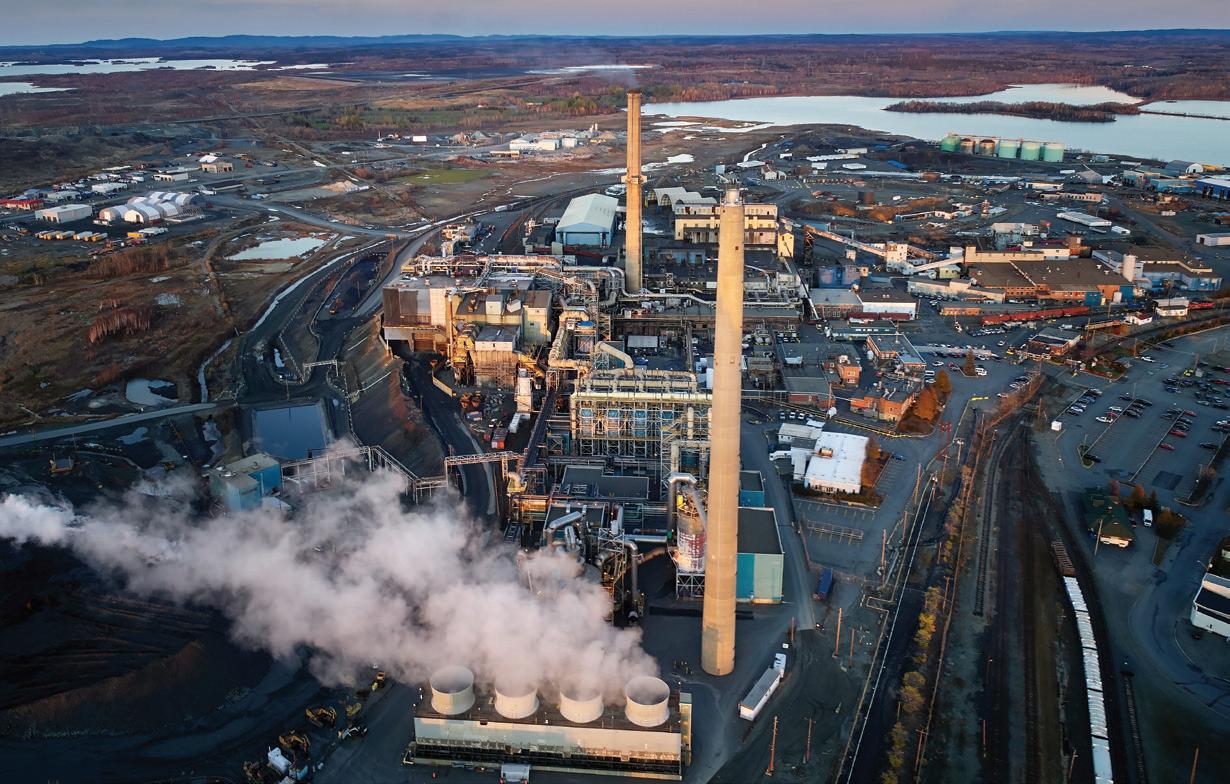
Rio Tinto’s (NYSE, LSE, ASX: RIO) interest in acquiring Glencore (LSE: GLEN) stems from a will to control future copper output before supply shortages drive up prices further, analysts said.
Glencore and Rio disclosed Jan. 8 they were holding preliminary talks about combining some or all of their businesses in a deal that could create the world’s largest miner. Under U.K. securities rules, Rio Tinto has until 5 p.m. (London time) on Feb. 5 to either declare a firm intention to make an offer for Glencore or announce that it doesn’t intend to make an offer.
A premium of 15% to 30% to Glencore’s early January share price could get the deal done and avoid spurring rival BHP (NYSE, LSE, ASX: BHP) to bid for the company, RBC mining analyst Ben Davis said in a Jan. 16 report, citing conversations with investors. That could value Glencore at as much as $121 billion (C$167 million). Securing copper – not creating near-term value – is the key rationale for the transaction, Davis stressed.
“The desire to create critical mass in copper production is really what’s driving this type of deal,” Gold Royalty (NYSE: GROY) CEO David Garofalo, a former Hudbay Minerals (TSX, NYSE: HBM) head who has spent about half his career in the base metals industry, told The Northern Miner in an interview.
“What this consolidation speaks to is the severe lack of development-stage projects available in the copper business. There hasn’t been any exploration done to meet the demand requirements for copper, which is growing exponentially given the desire to electrify the global economy and decarbonize. There’s a significant supply crunch in place that’s amplifying over time. So if you’re not able to build, you’re going to have to buy to create critical mass.”
Topping BHP
Possible scenarios include an allshare merger between the companies, Glencore and Rio said. Glencore’s market capitalization was about £56.6 billion ($105 billion) as press time neared, while Rio’s was about A$211 billion ($187 billion).
A combined “GlenTinto” would leapfrog BHP as the world’s larg-
est mining company by market value, while significantly boosting Rio Tinto’s long-term copper exposure at a time when electrification-driven demand growth is colliding with a thin project development pipeline.
Glencore’s copper assets are the real prize for Rio. They include a 44% share in the Collahuasi copper mine – a joint venture with Anglo American – in Chile, which investors see as its crown jewel, Davis wrote.
“This is all about Glencore’s copper business, in our view, and it’s easier to gain access to some of the best assets globally at a lower relative valuation via cannibalization of another large cap, although navigating the spin-outs [or] asset sales of unwanted assets may be challenging,” BMO Capital Markets mining analyst Alexander Pearce wrote in a Jan. 19 note.
Rio, which expanded into lithium last year with the $6.7-billion acquisition of Arcadium Lithium, expects commodities output to rise
“What this consolidation speaks to is the severe lack of developmentstage projects available in the copper business.”
DAVID GAROFALO CEO, GOLD ROYALTY
about 3% annually by 2030 as new assets such as Guinea’s Simandou iron ore mine and Mongolia’s Oyu Tolgoi copper complex start producing.
Copper accounted for about a quarter of Rio’s first-half pretax earnings, which rose 69% to $3.1 billion, the company said Jan. 20. Copper revenue jumped 41% to $6.2 billion.
News of the negotiations with
Glencore comes as Anglo American (LSE: AAL) and Teck Resources (TSX: TECK.A, TECK.B; NYSE: TECK) work to complete a $53-billion mega-merger that would create of one of the world’s largest copper producers. Canada’s federal government approved the tie-up in December, though other regulatory hurdles remain.
Copper prices have set multiple records in recent weeks as supply disruptions and U.S. trade uncertainty fuel a sharp rally for base metals.
Financial muscle
Mergers and acquisitions give companies “market presence, but also a bigger balance sheet to approach the next cycle of mine development,” Garofalo said. “The industry needs to invest in development-stage projects because consolidation in the copper industry is a zero-sum game. It doesn’t create additional supply.
“These companies are going to
Glencore 40 >
Discover Sandvik DS422iE, the world’s first battery-electric cable bolter. Zero emissions tramming, drilling and grouting on battery power.
Go Electric. Go Sandvik.
A resolution to rescind a Biden-era mining ban on public lands in northern Minnesota is going to the U.S. Senate, whose approval would send it to President Donald Trump for his signature.
It is not clear when or if the Senate – where Republicans hold 53 of the chamber’s 100 seats – will take up the matter, Associated Press reported Jan. 21.
Chile’s Antofagasta has been trying to develop a massive copper-nickel mine on public land for decades.
The Twin Metals project on one of the world’s largest polymetallic deposits would be the first underground mine in Minnesota since 1967.
Saudi Arabia’s Maaden plans to invest $110 billion into metals and mining over the next decade, the latest move by the state-owned miner as it aggressively expands in the sector.
The investment is aimed at tripling Maaden’s phosphate and gold business and doubling its aluminum business, as the company pursues eight megaprojects, CEO Bob Wilt said in January, according to news site Semafor.
It currently produces about 500,000 oz. of gold and about 7 million tonnes annually of phosphate and aluminum.
The investment announcement adds to Maaden drilling adding almost 8 million oz. of gold resources across four sites.
The Democratic Republic of Congo wants to develop a $29-billion (C$40.1-billion) iron ore export plan linked at one time to U.S.-sanctioned Israeli billionaire Dan Gertler.
Called Mines de fer de la Grande Orientale (Minefor), the northern area that Kinshasa wants to develop has cumulative resources of 15-20 billion tonnes which grades at more than 60% iron, according to the government.
It said initial production could be 50 million tonnes annually, with the potential to scale to 300 million tonnes.
“While details are unclear, this may well relate to the Banalia deposit in the Tshopo province, formally associated with Gertler,” BMO Capital Markets analysts said last month.
China’s Zijin Gold is buying Africa-focused Allied Gold for $5.5 billion (US$4 billion) in cash after the Canadian miner began looking at options in 2024.
The price is a 27% premium to Allied’s 30-day stock average, the company said Jan. 26. The federal government must approve the takeover expected to close in April, but Ottawa and Beijing just thawed relations with a trade deal.
Allied’s Sadiola mine in Mali accounts for about half the company’s 400,000 oz. per year output. It also holds Côte d’Ivoire operations and the Kurmuk project in Ethiopia due to start producing this year.


GLOBAL MINING NEWS • SINCE 1915 www.northernminer.com
PRESIDENT THE NORTHERN MINER GROUP: Anthony Vaccaro, CFA, MBA avaccaro@northernminer.com
EDITOR-IN-CHIEF: Colin McClelland cmcclelland@northernminer.com
COPY EDITOR AND PRODUCTION EDITOR: Blair McBride bmcbride@northernminer.com
SENIOR STAFF WRITER: Frédéric Tomesco ftomesco@northernminer.com
WESTERN EDITOR: Henry Lazenby hlazenby@northernminer.com
PODCAST HOST: Adrian Pocobelli apocobelli@northernminer.com
ADVERTISING: Robert Hertzman (416) 898-6654 rhertzman@northernminer.com
Kathleen Plamondon (514) 917-5284 kplamondon@northernminer.com
Michael Winter (416) 510-6772 mwinter@northernminer.com
SUBSCRIPTION SALES/ APPOINTMENT NOTICES/ CAREER ADS
George Agelopoulos (416) 510-5104 (Toll free) 1-888-502-3456, ext. 43702 gagelopoulos@northernminer.com
PRODUCTION MANAGER: Jessica Jubb (416) 510-5213 jjubb@northernminer.com
CIRCULATION/CUSTOMER SERVICE: (416) 510-6789 | 1-888-502-3456 northernminer2@northernminer.com
REPUBLISHING: (416) 510-6768 jmonteiro@northernminergroup.com
ADDRESS: Toronto Head Office
69 Yonge St, Toronto, ON M5E 1K3 (416) 510-6789 tnm@northernminer.com
SUBSCRIPTION RATES: Canada:
C$130.00 one year; 5% G.S.T. to CDN orders.
7% P.S.T. to BC orders
13% H.S.T.
809744071RT001

BY COLIN McCLELLAND
The first few weeks of the new year have seemed crazier than most.
Precious metal prices hit levels that not long ago would have seemed preposterous (page 9). A mid-January Goldman Sachs forecast for $5,400 per oz. gold by next December looked aggressive at the time and seemed behind the curve just days later.
Two of the largest miners, Rio Tinto and Glencore, said they are again in talks about merging to create what would be the industry’s biggest company ever (page 1). It would eclipse the most recent mega-deal, Anglo American’s acquisition of Teck Resources, which is now attempting to clear its final regulatory hurdles.
Of course, it all truly got going when American forces snatched then-President Nicolás Maduro from Venezuela on Jan. 3. We examine the South American country’s mining and metals potential on page 5.
Then the Trump administration ratcheted up pressure on Federal Reserve Chairman Jerome Powell with threats of potential criminal prosecution related to a central bank building renovation. “Unprecedented” has become a weak and overused word over the past year, but here it fits again: openly threatening the Fed’s independence, a bedrock of Western economic policy.
Adding more gasoline to the institutional fire, Donald Trump went to the World Economic Forum in Davos, Switzerland, with renewed vigour and a fresh declaration that Greenland must come under direct U.S. control. We look on page 8 at why the icy island is not the metals and mining bonanza the administration claims.
At Davos, in the month’s central moment for Canada and, by extension, for our industry, Prime Minister Mark Carney argued for a new way forward.
In a speech lauded globally, if not in the White House, Carney argued that the old rules-based order is no longer functioning as advertised; that great powers are using tariffs, finance and supply chains as weapons; and that middle powers like Canada must build strategic autonomy in energy, food, defence and critical minerals through new trade relationships and alliances.
That isn’t anti-mining. In fact, it is explicitly pro-mining, pro-infrastructure and pro-permitting speed.
The prime minister outlined how Canada is responding by cutting taxes, removing internal trade barriers and fast-tracking roughly $1 trillion of investment in energy, AI, critical minerals and trade corridors. Countries should stop “living within the lie” and pretending the system still works as it did, he said.
This is a tricky moment for the industry. Carney’s speech aligns with mining’s strategic interests — critical minerals, fast-tracking projects, trade corridors, defence and energy security — even as it attacks the broader transactional world that Trumpism represents.
Trumpism has been good for parts of the mining business. Tariff chaos and geopolitical stress push up gold prices. Deregulation and faster approvals in the U.S. help projects move. Tax cuts benefit capital-intensive industries and wealthy owners. “America First” industrial policy increases demand for domestic minerals.
So mining executives are in an awkward position. They benefit financially from the instability Carney is criticizing. But they need long-life, stable, predictable investment regimes to build $5-billion-to-$20-billion mines.
The smart response for the mining industry is not to take sides in a culture war, but to align itself openly with the logic of strategic autonomy and critical minerals that Carney is laying out. The industry can say, credibly, that the world is fragmenting, that supply chains are being weaponized, and that Canada and its allies need secure, domestic and allied sources of copper, nickel, uranium, potash, gold and rare earths.
And it can say, just as credibly, that achieving that requires faster permitting, deeper capital pools and major investments in infrastructure.
At the same time, the industry can acknowledge a quieter truth: volatility may be good for trading, but it is bad for building. Gold miners may love price spikes and macro stress, but builders of copper, uranium and potash mines do not. Mines are built for 30 years, not for one election cycle.
A sensible industry line is that short-term volatility may help some prices, but multi-decade assets require policy stability, predictable rules and reliable trade relationships. That fits squarely with Carney’s argument against a world of permanent coercion and retaliation.
The industry’s strongest political case, in fact, is to frame mining as part of the solution rather than as a beneficiary of chaos. The argument is not that miners are trying to profit from disorder, but that they are trying to reduce strategic vulnerability in energy, defence, food and industry.
That means building mines in Canada and allied countries even if it costs more than sourcing from the cheapest or most convenient jurisdiction. Once again, that maps almost perfectly to Carney’s concept of strategic autonomy.
And finally, even if some executives privately welcome the gold-price impact of geopolitical stress, it is not in the industry’s long-term interest to be seen as cheering instability. The permitting, financing and social-licence environment for mining is far better in a world of rules — even imperfect ones — than in a world of pure power politics. TNM

BY JAMES COOPER
The United States has danced this tune many times in the past, and each time it led to misery, bloodshed or civil war for its southern neighbours.
The track record of U.S. intervention isn’t good, and that’s perhaps sobering news for the Venezuelans. Take the period throughout the 1970s.
This was a dark period in U.S. geopolitical history; the Vietnam War was the key event. But it was also a prolific era of military interventions across South and Central America. And, like today, much of the geopolitical chest-beating was based on securing America’s supply of critical commodities.
‘Chilenization of copper’
If you’re not familiar, Chile is the world’s largest producer of copper, accounting for around 30% of total global supplies. It’s what makes copper a serious business in this South American nation, and it’s been that way for over 60 years.
In fact, half of the country’s total exports come from just this commodity. In a way, copper to Chile is similar to what iron ore or coal is to Australia, in terms of its essential role in the economy.
However, copper has also played a leading role in staging a dark and brutal chapter in Chile’s not-so-distant past.
It all started back in the early 1970s, when the left-wing Chilean government, led by Salvador Allende, set about the outright nationalization of the country’s copper mines. It was a period known as the ‘Chilenization of copper.’
Frustrated by multinationals siphoning the country’s mineral wealth mostly to the U.S., Allende gained widespread public appeal by bringing the country’s copper assets under state control. In 1971, Allende’s government amended the country’s constitution, which gave the nation full ownership of all major copper mines.
With tails between their legs, the multinational mining companies were swiftly extradited from the country.
No compensation
Multi-million-dollar assets were wiped from the companies’ balance sheets, effectively overnight.
In the early 1970s, copper accounted for 80% of Chile’s total exports. It’s why the commodity was popularized as “Chile’s salary!”
Unsurprisingly, the people adored Allende and his Marxistgovernment. But his bold actions were creating ripples to the north.
The U.S. government, suffering from years of chronic communist paranoia, was determined

to undermine Allende and eradicate the idea of nationalism for other would-be South and Central American nations looking to repeat Chile’s playbook. Which is precisely what the U.S. government did.
Chile was condemned by the West and given a strong dose of international sanctions. However, for then-U.S. President Richard Nixon, he wasn’t satisfied with these soft tactics.
Despite the Chilean public’s overwhelming support for the democratically elected Allende government, U.S. officials systematically dismantled his control.
On Sept. 11, 1973, a group of military officers led by General Augusto Pinochet seized power in a coup, ending civilian rule. Chile called the event its very own ‘September 11.’
The military established a junta (dictatorship) that suspended all political activity in Chile and repressed left-wing movements, especially communist and socialist parties. Allende was killed, most likely executed by the military, while his presidential palace was attacked.
The Nixon administration, which had worked to create the conditions for the coup, promptly recognized the junta government and supported it in consolidating power. It marked the end of Chilean democracy, which had been in place since 1932.
It also initiated one of the most violent periods in Chile’s history. The U.S.-supported government used political suppression, torture and murder to destroy all remnants of the left ideology. This persisted for years.
As the country’s most important export, copper played a critical role in sparking the darkest chapter in Chile’s history.
Dictatorship encore? Is history repeating itself 53 years later in Venezuela?
The U.S. has a poor history of military interventions in South America, sowing the seeds of chaos and often fanning civil war. There is no doubt that the U.S. is playing a dangerous game, and in some of the most important regions for future oil supply. The stakes are enormous, after all, oil is the global economy’s most critical resource.
So, what could possibly go wrong? It all boils down to this: Keep commodities at the forefront of your portfolio right now; we could be embarking on a major new chapter in this market. TNM
James Cooper is a geologist based in Australia who runs the commodities investment service Diggers and Drillers. You can also follow him on X @JCooperGeo.
BY FRÉDÉRIC TOMESCO AND COLIN MCCLELLAND
Venezuela has significant mineral resources – including gold reserves rivalling Peru and Brazil and large dormant projects the government seized more than a decade ago.
As companies and investors size up opportunities after the U.S. toppled President Nicolás Maduro, will that untapped potential be enough to attract the required capital?
Mining projects face severe headwinds in a country with dilapidated infrastructure, pervasive state control and patchy exploration records while world-leading oil reserves are bound to attract more immediate capital from U.S. companies, analysts said.
“Venezuela has considerable reserves of gold, iron ore oxide and coal,” veteran metallurgist Phillip Mackey told The Northern Miner last month. He was an expert witness in Anglo American’s (LSE: AAL) World Bank arbitration hearing over the Loma nickel mine that the Hugo Chávez regime stopped in 2015.
“Before Loma de Níquel was seized, Anglo American reported nickel ore reserves of 33.1 million tonnes at 1.47% nickel,” Mackey said by phone. “Cobalt is also present at lower levels.”
Most of Venezuela’s mining production, exploration and investment collapsed after Chávez nationalized the industry by expropriating foreign miners, such as Crystallex International and Gold Reserve (CVE: GRZ), and refusing to renew Anglo American’s concessions.
Mining had accounted for as much as 6% of the country’s total exports in the 1990s, J.P. Morgan says. At that time, Venezuela was a large regional producer of aluminum, gold, cement, bauxite, iron ore and steel.
Offers coming Gold Reserve’s shares have more than doubled since Jan. 1. As press time neared, the stock was trading at $5.60 apiece in Toronto. The developer, which owns the Brisas and Siembra Minera gold and copper deposits, is seeking more than $2 billion in compensation through World Bank tribunal arbitration.
“Gold Reserve has the means and the fortitude to return to Venezuela and we stand ready to do our part to work with all legitimate parties to assist with post-Maduro transition and recovery efforts to foster peace and prosperity,” the company said in a Jan. 5 statement.
Siembra alone holds 1.18 million measured and indicated tonnes grading 0.7 gram gold per tonne and 0.1% copper for 26.8 million oz. gold and 2.69 million lb. copper, according to a 2018 preliminary economic assessment.
The project, a joint venture between the Venezuelan government and Bermuda-based Gold Reserve, accounts for about 30% of the country’s identified gold reserves, Gracelin Baskaran, head of the critical minerals security program at the Washington, D.C.-based Center for International & Strategic Studies, said in a note last month.
“Asset-level data” of 24 identified goldbearing mines shows that Venezuela now holds an estimated 75 million oz. of gold, equivalent to roughly 2,343 tons in the ground, Baskaran said. Still, “assessing Venezuela’s mineral endowment is difficult because reliable data are scarce and often conflated,” she added.
U.S. Geological Survey data from last year show Peru has 2,500 tons in reserves and Brazil has 2,400 tons.
Artisanal gold
Only two of Venezuela’s 24 gold mines that have reserve data are active – while 19 are inactive and three have been suspended, Baskaran said.
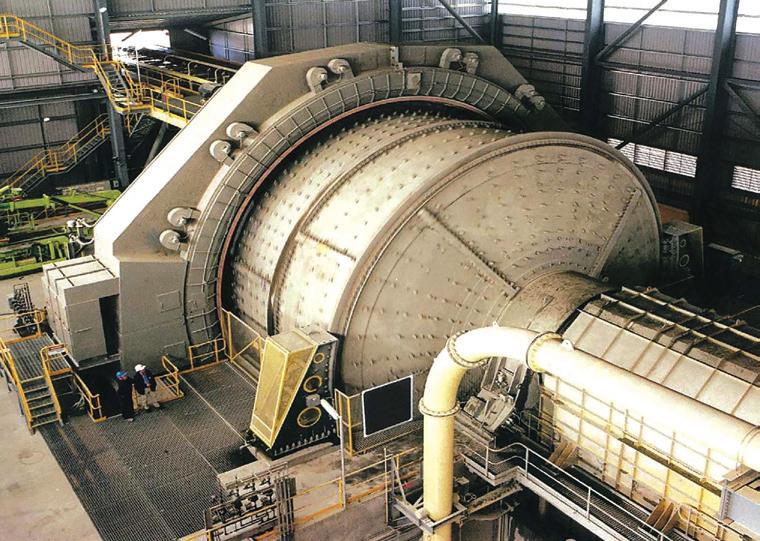
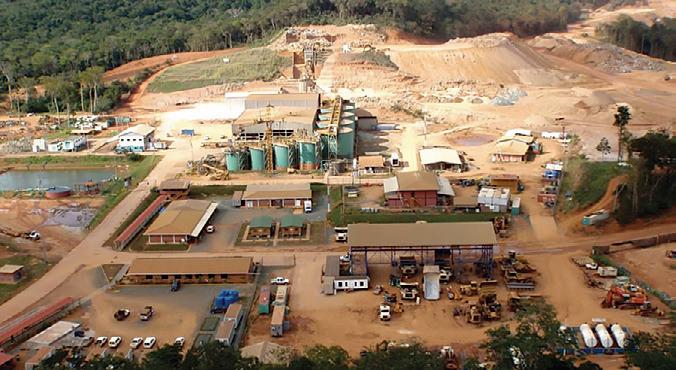
“Assessing
Venezuela’s gold potential is vastly undeveloped. Artisanal operations, many of which are associated with regime-linked groups, dominate current production. Annual gold output ranges between 50 and 70 tonnes, Alicia Garcia-Herrero, chief economist for Asia-Pacific at the French investment bank Natixis, wrote in a LinkedIn post last month.
State ownership plays an outsized role in Venezuelan mining: 11 of the country’s 20 largest mines are held by the state-owned holding company Corporación Venezolana de Guayana.
“These dynamics underscore the extent to which Venezuela’s mining sector is constrained by state dominance and limited participation by credible private investors,” Baskaran wrote.
Crystallex, which owns the huge Las Cristinas gold project expropriated in 2011, won its arbitration claim against the government in 2016. John Ing, the CEO of Toronto-based investment firm Maison Placements who was active in Venezuela in the 1980s, suggested Crystallex could be “the first in line” to benefit from changes in the country’s economy.
“[Las Cristinas] is a big potential project,” he told The Northern Miner. “The question is, how much is left after all these years when the army and all these other people have raped and pillaged the deposit?”
Anglo nickel
Anglo American sought $600 million for alleged breaches of the U.K.-Venezuela bilateral investment treaty on the Loma de Níquel lateritic nickel mine. It operated it for decades as the country’s only nickel producer.
The World Bank tribunal ruled against the company in 2019. It said the nickel assets reverted to Venezuela by law at the conces-
Venezuela’s mineral endowment is difficult because reliable data are scarce and often conflated.”
— GRACELIN BASKARAN, CENTER FOR INTERNATIONAL AND STRATEGIC STUDIES
sion’s end and weren’t an unlawful expropriation. Today, it lies dormant like many mining operations the government took over.
Rusoro Mining (CVE: RML), which had the Choco 10 gold mine and part of the Isidora mine before the Chávez government expropriated the assets without compensation, agreed with Venezuela in 2018 on a $1.28-billion settlement. Some $100 million has been paid.
Most of the country’s minerals, which also include zinc and rare earth elements, are concentrated in the Orinoco Mining Arc, an area covering southern states such as Bolivar and Amazonas that has become a hub for illegal mining. The arc is part of the Guiana Shield, which covers neighbouring Guyana, Suriname and most of northeast South America.
The region surrounding Los Pijiguaos, the country’s sole operating bauxite mine, is estimated to contain up to 6 billion tons of probable bauxite resources, Baskaran said.
“Given the opaque nature of Venezuela’s official and black-market economy, we cannot say for sure what the real prospects are for critical mineral development,” Michael Cembalest, chairman of market and investment strategy for J.P. Morgan Asset & Wealth Management, said in a note last month. “But it’s notable that China, which controls the
By Frédéric Tomesco
Venezuela’s mining sector isn’t the only one to be hobbled by decaying infrastructure. Its energy industry too needs a lot of love.
Although it holds the world’s largest proven oil reserves, an estimated 303 billion barrels that account for about 17% of the worldwide total, Venezuela contributes less than 1% of global production. State-controlled oil producer PDVSA, which owns and operates the country’s five refineries, is the largest source of revenue for the Venezuelan government.
Venezuela owes its underperformance to deteriorating infrastructure – itself the result of a lack of investment and maintenance caused by international sanctions, restrictive government policies and a prolonged economic crisis, according to the US Energy Information Administration (EIA). Many of the country’s 25 operational pipelines estimated to be more than 50 years old, the EIA says.
ExxonMobil CEO Darren Woods put it more bluntly.
“If we look at the legal and commercial constructs–frameworks– in place today in Venezuela, today it’s uninvestable,” Woods said Jan. 9 in Washington during a meeting of oil industry executives hosted by U.S. President Donald Trump. “Significant changes have to be made to those commercial frameworks, the legal system, there has to be durable investment protections, and there has to be a change to the hydrocarbon laws in the country.”
Since 2005, the U.S. has slapped sanctions on Venezuelan individuals and entities for criminal, antidemocratic or corrupt behaviour. The U.S. government began to grant exemptions from sanctions starting in 2022, allowing more Venezuelan crude oil to enter the global market. Even so, Venezuela’s total energy production plunged by about 70% between 2013 and 2023. Petroleum and other liquids accounted for most of the drop.
Returning to earlier production levels could require between $60 billion and $70 billion over seven to nine years, economists at French bank Natixis estimated last month.
Key risks include uncertainty about contract sanctity under future governments; the fate of barrels that were pledged as collateral to China; and the equity positions of Russian energy producers in several Venezuelan oil ventures.
By Blair McBride
Rare earths – essential components in electronics, defence applications and electric vehicle batteries – are hot geopolitical items as Western countries seek to secure supplies outside of Chinese control. Exploration companies across many Canadian provinces and U.S. states are intently searching for the 17 elements, while MP Materials’ Mountain Pass mine in California is the only producing rare earths mine in North America. A handful of other companies whose projects have merited varying degrees of advanced economic studies are candidates for the second possible mine, though such studies don’t guarantee a mine will open. The Northern Miner takes a look at 10 projects with studies released between 2012 and 2025 that might become the next rare earths mine.













BY NORTHERN MINER STAFF
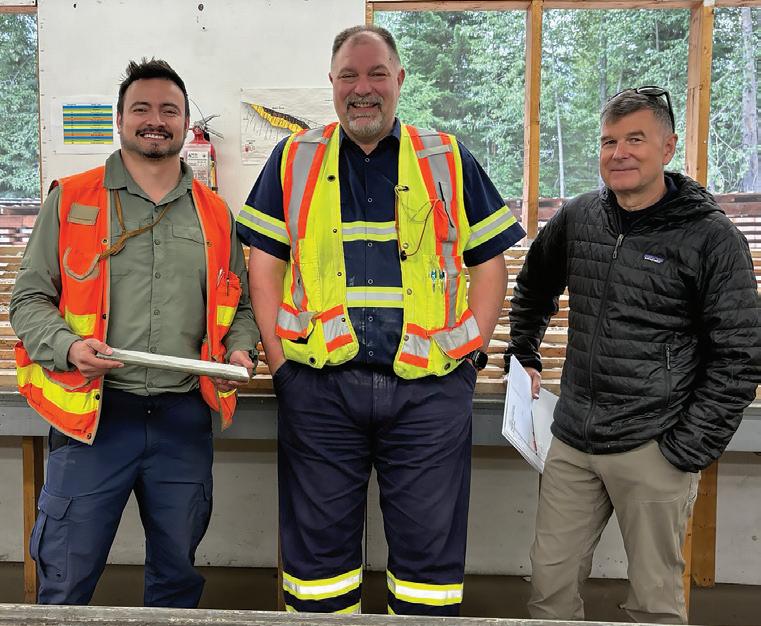
Spanish Mountain Gold (TSXV: SPA; US-OTC: SPAUF) says new drilling along the Orca Fault has returned broad, near-surface gold intercepts above the current resource grade at its Cariboo project in British Columbia, advancing it towards feasibility and a potential construction decision.
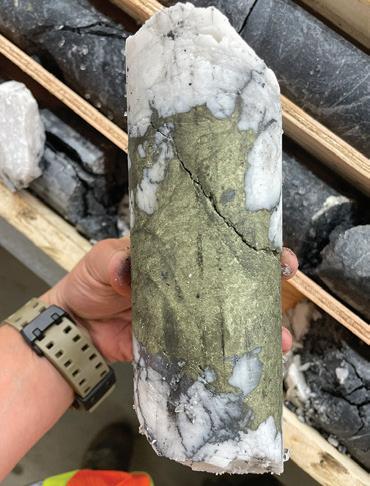
Recent drilling has extended the Orca Fault target to roughly 530 metres of strike, returning broad intercepts above the current resource grade, including 102 metres grading 0.92 gram gold per tonne, within areas previously modelled as waste inside the proposed open pit.
President and CEO Peter Mah says tighter drill spacing and improved core recovery are revealing continuous highergrade corridors that could improve mill feed grades and reduce strip ratios. “One of the major headwinds for this project has been the misconception that it’s just a low-grade deposit,” Mah said. “We’ve hit significantly higher grades than previously modelled, and in some areas that material was classified as waste.”
Cariboo, in the burgeoning namesake B.C. gold district that boasts the $890-million capex Osisko Development (TSXV, NYSE: ODV) project, might initially produce 203,000 oz. of the yellow metal a year, according to a 2025 preliminary economic assessment (PEA). Spanish Mountain is due to start a feasibility study within weeks as it heads towards a construction decision by late 2027.
Mine plan
Mah says current drilling is focused on strengthening years six to 10 of the mine plan, where grades are forecast to decline and project value is most sensitive. Improving grades in that period could help smooth cash flow and reduce risk across the first decade of operations, he said.
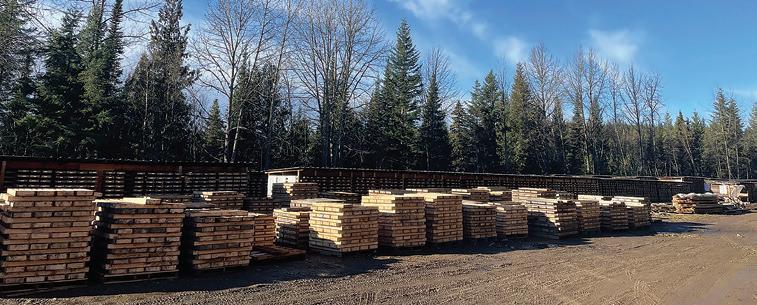
Drilling under the current exploration program is more than 90% complete, with about 9,300 metres drilled towards a planned 10,000 metres. The company has also implemented split tube core barrels to boost core recovery.
“We’re expecting the two-prong strategy of adding high grade within the deposit and ore sorting to improve and enhance mill feed grades respectively and hopefully scale production,” Mah said.
Located near Likely, roughly 550 km north of Vancouver in the central part of the province, Cariboo benefits from year-round access. The project is part of a resurgent gold district. The region is also home to Artemis Gold’s (TSXV: ARTG) Blackwater mine, which recently achieved commercial production.
Mah said the gentle terrain of the region is more amenable to mining. “It’s a mature mining district, the communities and the governments have been approving projects and advancing them,” he said. “This is really the next Golden Triangle.”
In parallel to its drill program, the company is advancing ore-sorting test work on representative samples from the Main deposit and the nearby Phoenix zone, with results expected to underpin a potential update to the project’s PEA. Mah said the approach mirrors Osisko’s use of a similar process at its Carboo project. “We have very similar mineralogy,” he said.
Mah describes the current PEA as a “vanilla base case” that intentionally excluded upside from higher grades, ore sorting and a higher long-term gold price environment.
The PEA was completed using a gold price of $2,450 per oz., Mah noted, and didn’t account for the higher long-term price assumptions now being used across the sector. He said any future update would
“We’re
going to be the third major gold project within a 200-km area in a district that’s been sleeping since the Cariboo gold rush in the late 1850s. This is a new Cariboo Gold Rush and Spanish
Mountain Gold is thrilled to be a part of it.”
— PETER MAH , PRESIDENT AND CEO, SPANISH MOUNTAIN GOLD
reflect both the evolving grade profile and the current gold price environment, which has been shaped by heightened geopolitical uncertainty.
“In Q1 of 2025, we hit the highest-grade sample ever in the history of this property,” Mah said.
One hole in the K Zone intersected 0.75 metre grading 719.26 grams gold, part of a wider 139-metre mineralized package averaging 4.18 grams gold within 200 metres of surface. “So it’s not just in the Main zone, there are multiple zones where we see high grade,” he said. “We’re really touching the tip of the iceberg of what’s possible.”
Spanish Mountain’s PEA also marked a significant shift in tailings management, replacing the conventional valley-fill concept outlined in the 2021 pre-feasibility with filtered dry-stack tailings.
The revised design relocates tailings out of the valley and away from fishbearing waters, a change the company says materially reduces environmental risk factors and improves the project’s permitting profile. Compared with the earlier
mine plan as a higher-grade feed source, potentially supporting an updated economic case.
Drilling at Phoenix will continue to test depth extensions and better define the geometry of the mineralization in all directions while moving forward at the Main deposit.
“Will we have a double up of a pit? Will they connect? The growth potential here just in that area is massive,” Mah said. Beyond Phoenix, Mah points to broader discovery potential along the project’s 12-km mineralized trend, much of which has seen limited drilling. To date, most work has focused within about 300 metres of surface, leaving open the possibility of additional mineralization at depth and along strike as the project advances.
Besides prepping for 18 months of feasibility work, Spanish Mountain is also advancing its power studies. The project is now in stage two of BC Hydro’s system impact process for a proposed 230-kilovolt, roughly 60-megawatt grid connection. Mah said that phase is expected to wrap up by the end of March, clearing the way to move into stage three – a key step towards securing power certainty and supporting future project financing.
“We’re on track there and already working with BC Hydro on next steps,” Mah said. “They’ve begun their First Nations and community engagement processes as part of stage two so that’s going well.”
plan, the updated mine layout cuts the water catchment area by about 50%, reducing the volume of water requiring treatment and discharge.
Mah says the dry-stack approach is fully incorporated into the project’s capital and operating cost estimates and provides greater flexibility as the mine plan evolves. Unlike conventional facilities, dry-stack tailings can be reconfigured as new deposits are defined, allowing the company to adapt infrastructure placement as exploration advances.
“We have all the characteristics to do something really special here in terms of sustainable mining,” Mah said.
The flexibility of dry-stack tailings is particularly relevant to the Phoenix deposit, located near the Main deposit, which hosts an inferred resource of about 357,000 oz. gold but is not included in the current PEA.
Spanish Mountain is testing Phoenix material as part of its ore-sorting program, with representative samples undergoing analysis in Saskatchewan. Mah says the assay results will help determine whether Phoenix could be brought forward in the
Spanish Mountain has also presented the project’s PEA to local communities and First Nations, building on feedback gathered over the past several years. Mah says the consultation has been constructive, and the company is now working towards a protocol agreement with the Williams Lake First Nation as it advances permitting and project planning.
The company is assessing non-dilutive financing options to fully fund the company through feasibility.
With multiple Cariboo projects now moving through construction and into production, Mah views the district as entering a new stage of consolidation and investment interest.
“We’re going to be the third major gold project within a 200-km area in a district that’s been sleeping since the Cariboo gold rush in the late 1850s,” Mah said. “This is a new Cariboo Gold Rush, and Spanish Mountain Gold is thrilled to be a part of it.”
The preceding Joint Venture Article is PROMOTED CONTENT sponsored by Spanish Mountain Gold and produced in co-operation with The Northern Miner. Visit: www.spanishmountaingold.com for more information.
BY FRÉDÉRIC TOMESCO
United States officials are misguided if they think gaining control of Greenland will give them access to a wealth of resources capable of shrinking overnight the country’s critical minerals reliance on China, analysts say.
President Donald Trump has repeatedly said he has to “have” Greenland, telling reporters that controlling the semi-autonomous Danish territory was a matter of national security. After threatening last month to slap tariffs on eight European nations that opposed a sale of Greenland to the U.S., he said at the World Economic Forum he had reached a “framework for a future deal” with Nato Secretary General Mark Rutte – without disclosing details.
Key Trump aide Stephen Miller had earlier said the island should “obviously” be part of the U.S. and that “nobody is going to fight the United States militarily over the future of Greenland.”
Strident statements such as those have sparked outrage in Europe and elsewhere, with many European leaders warning of catastrophic consequences. Danish Prime Minister Mette Frederiksen said that an American takeover of Greenland would probably spell the end of the Nato military alliance.
“We’re highly skeptical of Greenland as a cure-all for the U.S. minerals problem – especially in the near term,” Timothy Puko, director of commodities at the Eurasia Group, a New York-based political risk research and consulting firm, said via email.
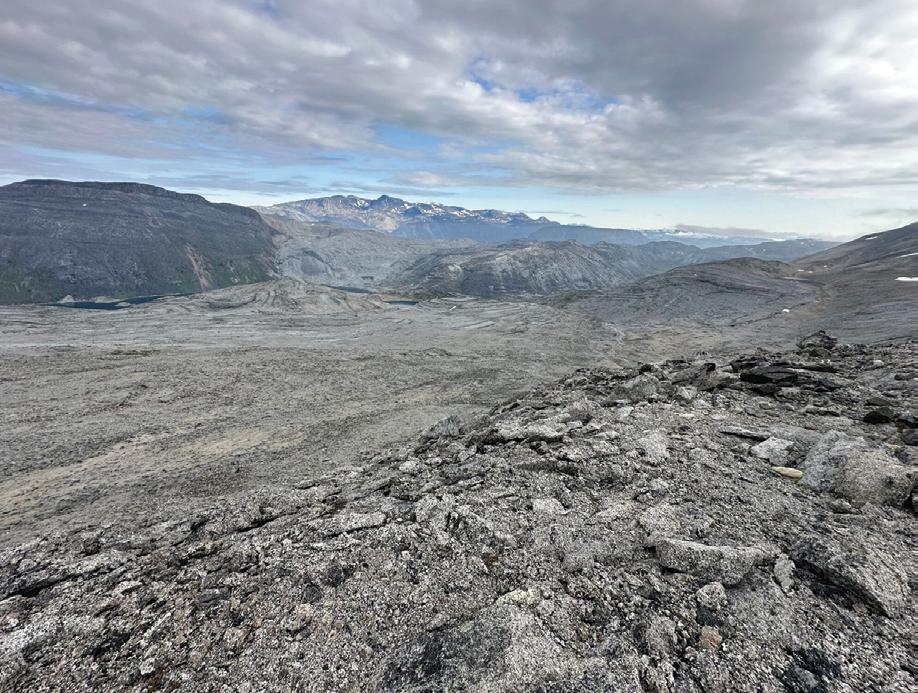
While there are good reasons for the U.S. to consider setting up longterm partnerships to tap some of the island’s potential, “the logistics of retrieving any of the resources there are difficult, probably far more so than with other likely partners such as Australia, Canada, Brazil and Latin America at large,” Puko added. “It’s cold, it’s icy, it’s remote, and much of it is unproven. Prospects like that take sometimes decades to develop, and most development there is in its earliest stages.”
Miners gain
Investor interest in Greenland has been a boon for miners that operate in the Danish territory.
Critical Metals (Nasdaq: CRML) shares surged in January after the company unveiled plans to buy a fully integrated, mobile assay laboratory to supplement its Tanbreez project – which hosts one of the world’s largest deposits of rare earth minerals. Critical Metals was trading at $18.46 on the Nasdaq market as press time neared, taking its climb since Jan. 1 to 127%.
Amaroq Minerals (AIM, TSXV: AMRQ) also jumped after the Greenland miner disclosed talks with the U.S. government about investing in its mining projects on the Arctic island. Amaroq was trading at C$2.44 as press time neared for a year-to date gain of 21%.
CEO Eldur Olafsson told CNBC last month that discussions have been held with U.S. government bodies about potential investment opportunities, which may include “offtake agreements, infrastructure support and credit lines.”
Unforced error
Trying to seize Greenland, “by force or coercion, would be an unforced error for the Trump administration,” Otto Svendsen, an associate fellow at the Washington-based Center for International & Strategic Studies, wrote in a commentary last year.
“It is unnecessary on national security grounds, as Washington can already achieve its objectives through working with Greenland and Denmark. Moreover, Trump’s rhetoric could backfire and revive Chinese overtures toward the territory, activate European Union trade defense instruments, and accelerate the ongoing militarization of the Arctic.”
At any rate, it’s far from certain that the tough talk from Washington will result in U.S. boots on the ground. Trump is expected to pursue economic coercion to annex Greenland, Eurasia Group said in a recent report. Military action is unlikely “given its significant downside risks,” the firm added.
Untapped potential
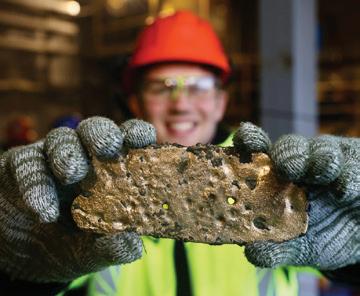
Greenland hosts a wide variety of mineral resources such as coal, copper, gold, graphite, ilmenite, molybdenum, iron ore, lead, nickel, precious stones, rare-earth elements, silver, titanium, uranium and zinc.
Many of those fall in the category of so-called critical minerals, whose demand is driven by clean energy and technology transitions because they are deemed essential for everything from electric vehicles and renewable energy to semiconductors and defence technologies.
“Clearly the fact that most of Greenland is covered by areas with assumed potential for additional critical mineral resources highlights a possibly large untapped mineral potential that needs to be further explored,” according to a
44 million tonnes, followed by Brazil, with 21 million tonnes, India, with 6.9 million tonnes, and Australia, with 5.7 million tonnes, the data show. Canada’s reserves amount to 830,000 tonnes.
Over the years, the USGS has worked with Greenland’s government to map mineral resources, providing expertise such as hyperspectral imaging.
Several large deposits have been mapped and partially delineated in Greenland, particularly in the south, while vast areas remain poorly explored. The ice-covered interior – about 80% of the island’s surface – and difficult terrain have meant that many promising geological settings are under-sampled or lack modern resource estimates.
The southern Gardar province is believed to contain some of the territory’s most significant known resources. They include the Ilimaussaq complex, whose biggest orebodies are rich in rare earths and allied metals such as lithium, tantalum, niobium, hafnium and zirconium.
South Greenland is also home to Critical Metals’ Tanbreez property. It contains at least 45 million tonnes in resources within a massive kakortokite unit that has largely been underexplored to date, according to the company.
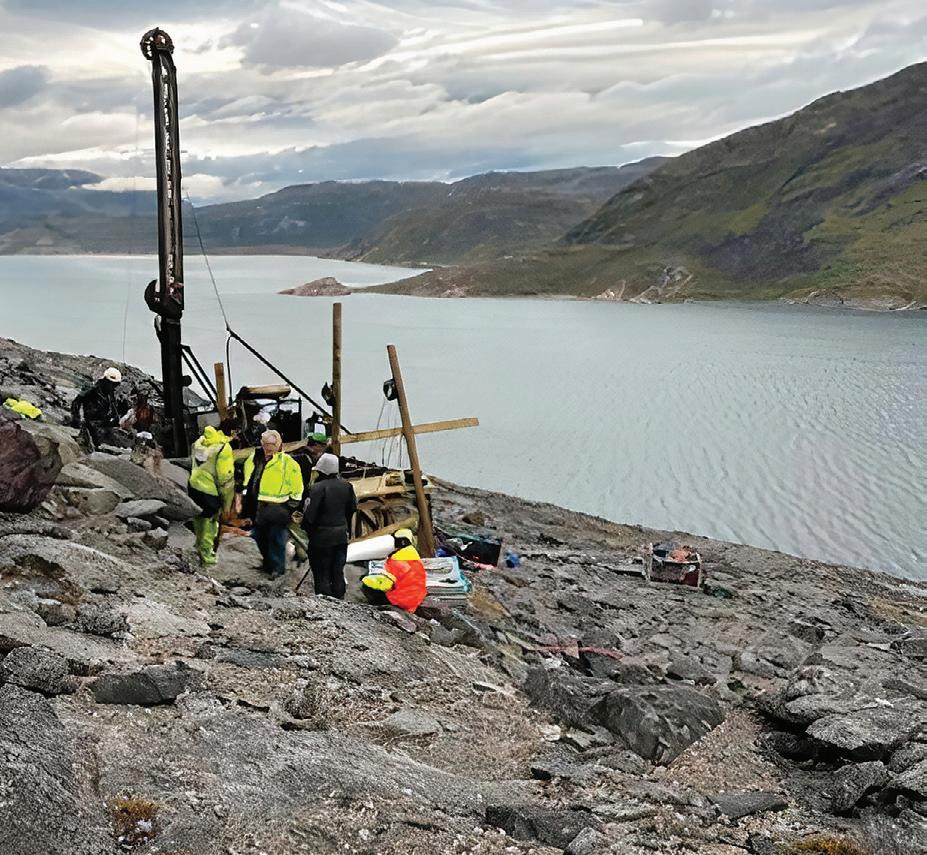
4 billion years

2023 report on the island’s mineral potential.
Geological complexity and low grades often make deposits harder to develop than those in established mining jurisdictions, though Greenland’s geology resembles that of well-mined countries such as Canada and Australia.
The island’s harsh climate, limited infrastructure and high operating costs compound costs and risk – as do strict environmental regulations. Greenland has banned the exploration and mining of uranium ore with an average concentration of more than 100 parts per million, as well as the extraction of oil and natural gas.
Its ice-free zone, covering about 400,000 sq. km., hosts complex geological terranes that represent almost 4 billion years of geological history, according to the 2023 report from the Geological Survey of Denmark and Greenland.
That same report judged Greenland’s potential to be “high” for 11 critical minerals, including graphite, molybdenum, niobium and platinum group metals. It also found “moderate” potential for 16 other elements, including antimony, chromium, lithium and nickel.
Greenland hosts an estimated 1.5 million tonnes of rare earths reserves, according to 2025 data from the United States Geological Service. That represents less than 2% of global reserves, trailing even the U.S. endowment of 1.9 million tonnes, USGS data show.
China has the most reserves of rare earth elements globally, with
East Greenland, which has traditionally been unexplored, is considered ripe for new discoveries of several commodities. It hosts the giant Malmbjerg molybdenum deposit and the Skaergaard intrusion, a well-known source of platinum group elements, titanium, vanadium and gold whose most recent aeromagnetic and gravity surveys date back to 1971. The region also holds the Karstryggen evaporitic strontium deposit. Still, support for mining among Greenlanders remains limited. And while authorities have taken early steps to support some development, “all political signs suggest locals don’t want to be rushed into any of this,” Eurasia Group’s Puko says. “In many cases they are likely to decide environmental protections and conservation are much more important than
for
BY BLAIR MCBRIDE
Facebook parent Meta signed deals in early January with three U.S. utilities to buy electricity for its data centres (enough to power 6 million homes) while the largest physical holder of uranium increased its reserves – more tailwinds for nuclear energy and the heavy metal.
Meta’s agreements with Vistra, TerraPower and Oklo announced on Jan. 9 cover up to 6.6 gigawatts of power by 2035. They will support the tech company’s operations as well as its Prometheus supercluster, a huge set of artificial intelligence servers located in New Albany, Ohio.
Canadian investor Sprott disclosed new purchases in January of physical uranium, or yellowcake, to hold the most in three years and raise the value of its Sprott Physical Uranium Trust (TSX: U.U for USD; U.UN for CAD) to $6.57 billion near press time.
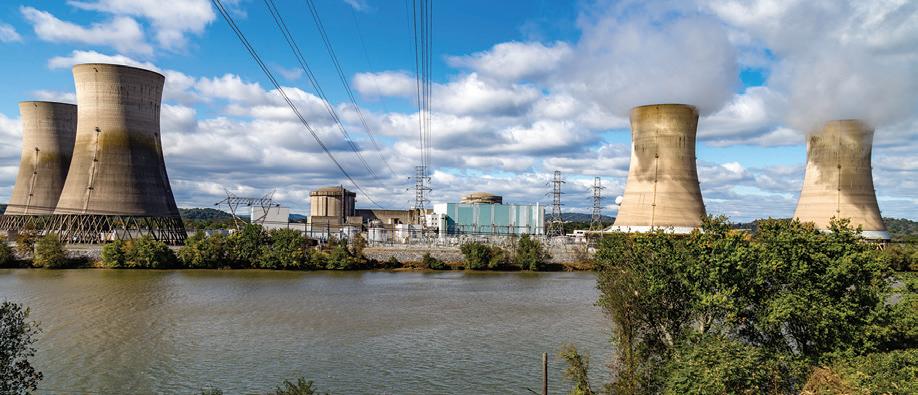
The power deals and uranium buying reflect the industry’s resurgence 15 years after the Fukushima disaster in Japan as nations around the world embrace nuclear energy to slow climate change. U.S. President Donald Trump wants to increase Western control of fuel and promote plant construction, even restart the notorious Three Mile Island.
But the industry faces long-standing hurdles of cost, regulation and toxic waste.
The power deals would allow Meta to draw from Vistra’s plants in Ohio and Pennsylvania and future supply from TerraPower and Oklo’s planned facilities in Wyoming and Ohio. Meta didn’t provide financial details of the agreements.
“Our agreements with Vistra, TerraPower, Oklo, and Constellation make Meta one of the most significant corporate purchasers of nuclear energy in American history,” Joel Kaplan, Meta’s chief global affairs officer, said in a release. “State-of-the-art data centres and AI infrastructure are essential to securing America’s position as a global leader in AI.”
The projects will create “thousands” of skilled jobs in Ohio and Pennsylvania, add new energy to the grid, extend the life of three existing nuclear plants and accelerate new reactor technologies, Meta says.
“Our agreements... make Meta one of the most significant corporate purchasers of nuclear energy in American history.”
JOEL KAPLAN, CHIEF GLOBAL AFFAIRS OFFICER, META
The power agreements come just over eight months after Meta signed a 20-year deal with Constellation Energy (Nasdaq: CEG) to buy about 1.12 GW from its Clinton nuclear plant in central Illinois. That amount can power about 1 million homes.
Uranium purchases
Uranium, the key ingredient in nuclear power, continues to be a hot commodity, with Sprott’s dedicated fund buying 300,000 lb. of uranium oxide in the first week of January. After buying 100,000 lb. of physical uranium on Jan. 2, the trust bought another 200,000 lb. on Jan. 8 to bring its total holdings to about 75.4 million lb. near press time.
The purchases bring to 450,000 lb. Sprott’s uranium buys so far this year, its highest first-quarter level since 2023, BMO Capital Markets analyst Helen Amos said in a Jan. 9 note.
The spot uranium price sat at $88.40 per lb. in Toronto in late January, its highest level since May 2024. The price logged a 12% rise over 2025, ending the year at $81.55 per pound.
Power agreements such as Meta’s are occurring against a wider political backdrop favouring nuclear energy. Trump wants new nuclear reactors to be a cornerstone achievement of his second term.
The U.S. Energy Department has already awarded $800 million for new reactor technologies and offered $1 billion in loan guarantees in November to restart Constellation’s Three Mile Island power plant in Pennsylvania.
But the industry’s recent track record exposes the challenges and costs of those ambitions. NuScale, once seen as the early leader to deliver the first small modular reactor (SMR) in the U.S., was forced to
cancel its Idaho project in November 2023 after utilities walked away from power-purchase agreements because costs rose too high.
Costs
“Historically, new nuclear plants have been completed behind schedule and over budget,” the Pembina Institute, a Calgary-based non-partisan think tank supporting the clean energy transition, said in a November report.
“Recent nuclear projects around the world reflect this trend, with new facilities typically coming online six years late and at double the initial estimated cost.”
But the industry is today being buoyed by something it lacked in the early 2000s, when delays and soaring budgets dashed hopes of a nuclear revival: deep-pocketed tech companies, whose investments in AI are returning capital and urgency to the sector.
After being roughly flat for years, demand for power by data centres is projected to surge 175% by 2030 from 2023 levels, Goldman Sachs Research said in December.
Ontario invests Ontario, the province using the most nuclear power in Canada, is planning four 300-MW SMRs east of Toronto at Darlington, four large 1,200-MW units at the existing Bruce Power nuclear site on Lake Huron and eight large 1,000-MW units at Wesleyville on the site of an unfinished oil-fired power plant.
Together, these projects would add 14,000 MW of new generation capacity to Ontario’s grid, more than the province’s currently installed nuclear capacity.
“Ontario has demonstrated its expertise in delivering refurbishments of nuclear units on time, which extends their lifespans,” Pembina lead author David Pickup wrote.
“However, building new nuclear plants is fundamentally different to refurbishing existing ones, involving greater complexity, new regulatory frameworks, and engineering challenges that far exceed those encountered in refurbishment projects.”
The Darlington SMRs will also be the first grid-scale build in a G7 country, he said.
“This only increases the likelihood of a delay and cost overruns, with ratepayers ultimately taking on this risk.” TNM
Greenland, Fed control spook investors
By Frédéric Tomesco and Blair McBride
Precious metals set multiple all-time highs last month as heightened tensions caused by U.S. government threats to seize control of Greenland and criminally prosecute Federal Reserve chair Jerome Powell sparked safe-haven fears.
Gold surpassed $5,100 per oz. even after Trump had toned down his Greenland tariff threats as press time neared, taking its gain since Jan. 1 to about 17%. Silver traded at $109.75 per oz. for a 53% year-todate surge.
Investors tend to quickly react by moving toward safe-haven assets when institutional and policy risks rise – with gold once again coming out as the top choice, Linh Tran, a senior market analyst with Cyprusbased broker XS.com, said in a note.
“Gold is no longer merely reacting to tariff headlines or Fed-related developments but is entering a phase of strategic revaluation within global portfolios,” Tran said. “As risks stemming from unpredictable policy actions intensify and confidence in fiat currencies is increasingly tested, gold is gradually transitioning from a defensive hedge into a core asset within risk management strategies.”
Investor concerns escalated in early January after the United States Department of Justice threatened to criminally prosecute Federal Reserve chair Jerome Powell over a building project, sparking concern that the U.S. central bank might struggle to operate free of political control.
On Jan. 9, the Department of Justice served the Fed with grand jury subpoenas as it threatened a criminal indictment related to Powell’s June 2025 testimony before the U.S. Senate Banking Committee. That testimony included comments about a multi-year project to renovate historical Fed office buildings, whose cost has jumped to about $2.5 billion (C$3.5 billion).
Golden goose
“Going after the Fed’s independence is killing the goose that lays the golden egg because the Fed has monetized the deficit spending of the government for more than a century,” Jeffrey Christian, managing director of the U.S.-based research firm CPM Group, told The Northern Miner podcast host Adrian Pocobelli. “It has kept the dollar strong, and it has kept the dollar vital to the global economy. Going after the Fed’s independence puts the dollar at risk.”
The criminal investigation marked a sudden escalation in U.S. President Donald Trump’s spat with Powell, whom he has repeatedly criticized over the past year for ignoring calls to cut rates or acting too slowly. The Fed’s 25 basis-point reduction in September was its first since 2020.
The new developments bring “the independence of the Fed again into sharp focus,” BMO Capital markets commodities analysts Helen Amos and George Heppel wrote Jan. 12 in a note. Investors are seeking “hedges to concerns over U.S. dollar devaluation amid prospects for further monetary easing.”
Safe-haven demand
When combined with repeated U.S. threats to take over or acquire Greenland violent protests in Iran and the recent capture of Venezuela President Nicolas Maduro, the prospect of a Powell indictment is “keeping safe-haven demand for metals elevated,” Amos and Heppel wrote.
Beijing last month restricted the export of physical silver to the global market, piling additional pressure on inventories in London and Zurich, according to BMI, a unit of Fitch Solutions.
Mexico, the world’s largest silver producer, is also unlikely to increase volume this year due to declining ore grades and output at some mines, the analysts said in a note.
Many investors are moving out of cash and U.S. dollars to buy metals such as gold, silver, platinum or copper, Christian said.
“They’re getting out of the U.S. dollar and they’re putting their money not in the U.S. stock market…but in tangible assets that probably are going to become more expensive because of the economic and financial issues that just got worse,” he said.
The justice department’s “unprecedented” action “should be seen in the broader context of the administration’s threats and ongoing pressure,” Powell said Jan. 11 in a video posted to the Fed’s website.
“The threat of criminal charges is a consequence of the Federal Reserve setting interest rates based on our best assessment of what will serve the public, rather than following the preferences of the president. This is about whether the Fed will be able to continue to set interest rates based on evidence and economic conditions – or whether instead monetary policy will be directed by political pressure or intimidation.”
Central banks
Investment bank Goldman Sachs last month lifted its year-end forecast for gold to $5,400 per oz. to reflect the yellow metal’s growing appeal among private-sector investors.
In a note published Jan. 21, the bank’s analysts reiterated the confluence of factors – including strong purchases from central banks – that drove gold prices up 64% last year. TNM
HONOURS | Firms support young minds to boost industry
BY COLIN MCCLELLAND
Andrea Ferriss is studying for a B.Sc. (Hons) Geology at the University of Alberta to champion sustainable resource development as a priority for the industry.
“I’ve chosen a career in mining because I want to contribute to the energy transition through mineral resources,” Ferriss says. “I believe that critical metals are vital to fuel the innovation of decarbonization and renewable energy technology.”
Ferriss won the Sprott $10,000 Sustainability in Mining Scholarship. She is just one of 65 students awarded between $500 and $10,000 as part of the 2025 Young Mining Professionals Scholarship Fund’s $250,000 for mining-related programs at post-secondary institutions across Canada. Some 30 mining companies and other sponsors are backing the effort, including new supporter Franco-Nevada (TSX, NYSE: FNV).
“Our renewable scholarship program is about investing in people and the future of the mining industry,” says Paul Brink, president and CEO of Franco-Nevada. “By leveraging YMP’s extensive distribution network, we can broaden the reach of our support and join other industry leaders in helping ensure high-potential students from a broad range of backgrounds have the resources they need to thrive.”
Commitment
More than 3,000 students applied to the YMP fund. Applicants were considered based on academic achievement, extracurricular activities, and a commitment to a career in the mining industry.
The awards include several scholarships specifically targeting women, residents of Northern communities and Indigenous students, such as Maxwell Brown. He’s studying in his second year towards a B.Sc. in Mechanical Engineering at the University of Calgary. Brown earned American Eagle Gold’s (TSXV: AE; US-OTC: AMEGF) Lake Babine Nation mining scholarship.
“The mining industry has many benefits including a variety of engineering job positions to make a real-world impact,” Brown says.
“Encouraging young talent and expanding access to opportunity strengthens our industry.”
— JOHN MCCLUSKEY, CEO, ALAMOS GOLD
“This scholarship has and will support me on my path to be an engineer, and I will be forever grateful.”
Anthony Moreau, director of the fund and CEO of American Eagle Gold, recently hired two scholarship recipients to work at the company’s main copper-gold exploration project, NAK, in British Columbia this year. He says the industry’s rewards for him and his family motivated him to give back by personally supporting the initiative.
“The industry will continue to thrive, but we must focus on attracting and retaining talent,” Moreau says. “The YMP Scholarship embodies this effort. By offering scholarships and partnering with companies to support exceptional students, we not only keep these future leaders in the industry but also empower them to become ambassadors, spreading the word and fostering growth.”
Canada’s largest
The fund, Canada’s largest set of scholarships for students in mining-related programs, was established in 2018 by the Ore Group and Iamgold (TSX: IMG; NYSE: IAG) with a mere $12,000 awarded to students. The number of sponsors and the value of scholarships awarded has steadily increased since then.
“Alamos is proud to support the YMP Scholarship program, which plays an important role in opening doors for the next generation of mining leaders,” Alamos Gold (TSX, NYSE: AGI) CEO John McCluskey says. “Encouraging young talent and expanding access to opportunity strengthens our industry and helps to ensure a bright future for mining in Canada.”
Every dollar contributed by the sponsors goes to the scholarship winners as the program is administered entirely by volunteers. They see nurturing talent and fostering a pipeline of skilled professionals to drive innovation and sustainability in mining as critical for the industry, which in recent years has seen post-secondary enrolment in mining fields fall to half-century lows.
“Supporting the next generation of mining professionals is essential to the long term success and sustainability of our industry,”
B2Gold (TSX: BTO AMEX: BTG) CEO Clive Johnson says. “We are proud to contribute to this initiative and to help create pathways for female and indigenous talent and future leaders.”
The scholarship fund is a registered Canadian charity offering tax receipts to participating donors.
Benefactors
Returning supporters to this year’s scholarships are Agnico Eagle Mines (TSX, NYSE: AEM), Alamos Gold, American Eagle Gold, Auriginal Metals (TSXV: AUME) Awalé Resources (TSX-V: ARIC), B2Gold, Barrick Mining (TSX: ABX; NYSE: B); Eldorado Gold (TSX: ELD, NYSE: EGO), Equinox Gold (TSX, NYSE: EQX), Geiger Energy (TSXV: BEEP); Gold Royalty (NYSE: GROY), Iamgold, Kinross Gold (TSX: K; NYSE: KGC), Metal Energy (TSXV: MERG); Ore Group, OreCap Invest (TSXV: OCI; US-OTC: ORFDF), Pan American Silver (TSX, NYSE: PAAS), ResourceTalks.com, Stardust Metals (CSE: ZIGY), Joan Margaret Stewart, Sprott, TD Securities, The Northern Miner, Triple Flag Precious Metals (TSX, NYSE: TFPM), XXIX Metals (TSXV: XXIX) and YMP Toronto.
New sponsoring companies are Franco-Nevada, Mithril Silver and Gold (TSXV: MSG), Revival Gold (TSXV: RVG), Valkea Resources (TSXV: OZ) and Snowline Gold (TSX: SGD).
A list of winners can be viewed at YMPScholarships.com/2025-winners. To inquire about participating in the 2026 YMP Scholarship fund, please email amoreau@oregroup.ca. TNM
THOMAS AWARD | Winner aids BHP M&A
BY BLAIR MCBRIDE
Vicky Liu started at UBC with the “naïve science student aim” of potentially going into medicine, but geology pulled her in.
“It became really clear to me about a year or two into my sciences degree that I really loved the adventure nature of geology, the fact that you’re constantly solving a mystery,” she said.
Now on BHP’s (ASX, LSE, NYSE: BHP) Corporate Development team, Vicky works in portfolio strategy, long-term growth initiatives and M&A transactions across the major’s global assets. She is the 2026 recipient of the Eira Thomas Award for talented women leaders under age 40 from industry group Young Mining Professionals.
Geologist
Liu started her career as an exploration geologist at Silvercorp Metals’ (TSX, NYSE: SVM) former Silvertip project in a remote part of northern British Columbia. At the time, Silvercorp was trying to diversify away from its main assets in China.
The mapping, drill core logging and geophysics she did at the camp were all part of the first economic report Silvercorp filed for the project. Silvercorp sold Silvertip in 2013 to JDS Silver, which was later acquired by Coeur Mining (NYSE: CDE).
“We were really putting together an exploration program, a camp and a strategy for the asset from zero,” she said.
While her experiences as an exploration geologist were invaluable, she felt she needed to learn more about the financial markets side of mining.
Financial analyst
Vicky charted a different path working for an investment banking firm in Vancouver and then went onto Deloitte, where she was an analyst in the company’s corporate finance advisory side.
“That was really my first career change – still in mining – but very much learning more about the financial services side of the business,” she said.
Her success in the field built on more success, and she was hired
MUNK AWARD | Hard knocks prepped entrepreneur

for a similar role in London, U.K. before going on to work for French bank Société Générale and RBC, where she advised mining clients on financing and M&A.
In 2021 she moved on to BHP and now works as a practice lead on “future facing commodities” such as copper and potash.
“I do a lot of thinking and sourcing new opportunities for investment or for acquisitions and thinking about new areas where BHP could move into,” she said.
Global M&A
The role is taking her around the world, whether that’s to BHP’s iron operations in Australia or to Brazil, where she worked on the Carajas copper mines sale. BHP reached a deal in August to sell the sites to CoreX Holding BV for $465 million.
Amid the rising trajectory of her career, Vicky sees the progress made in raising women’s involvement in mining. While the industry remains male-dominated, she sees the huge opportunities that greater diversity can bring.
In her previous roles at RBC, she helped diversify teams when she worked in staffing and recruitment. She saw the value in widening the scope across gender, education, non-traditional backgrounds and geographic origins.
BHP is an industry leader with its target of reaching 50-50 male-female parity in its workforce, which Vicky says is a huge ambition for an employee base of 90,000 people.
“Where it’s still a bit lagging is when you think about who senior leaders are,” she said. “You still see a lot of imbalance there. It’s really important for our generation of mining professionals to stick with it and move into those leadership roles.”
TNM
BY COLIN MCCLELLAND
It was after the market hollowed out two of his mining startups that Fred Bell landed on royalty financing as the idea for a firm now valued at $1.76 billion and listed on Nasdaq. First the 2011 Fukushima disaster levelled an Australia-focused uranium company, then the 20-teens commodity slump sidelined a West African gold explorer.
“The only business model I can see where you can get cash flow early and protect yourself against the cyclic penalty of the space is in the royalty model,” Bell said from the London office of Elemental Royalty (Nasdaq, TSXV: ELE), where he’s founder, president and chief operating officer.
“That’s how it started: a private company, really lean, getting diversified cash flow to protect the downside from day one, and with
the basis that if you can do that, then you can scale the company up over time.”
Now all that growth in eight years has earned him the 2026 Peter Munk Award from Young Mining Professionals, a group backed by the mining industry’s major players such as Agnico Eagle Mines (TSX, NYSE: AEM), B2Gold (TSX: BTO; NYSE-A: BTG) and Kinross Gold (TSX: K; NYSE: KGC) among many others. Along with the Eira
Thomas Award this year for Vicky Liu, the YMP honours go to industry leaders under age 40.
Saloon
“I am 39 so I guess it’s last-chance saloon, you know,” London, U.K. native Bell said. “I was not expecting that. And in terms of some of the previous winners, I mean some really high-profile people, so, yeah,
BY BLAIR MCBRIDE
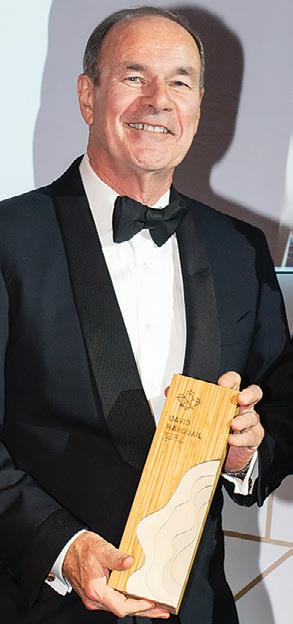
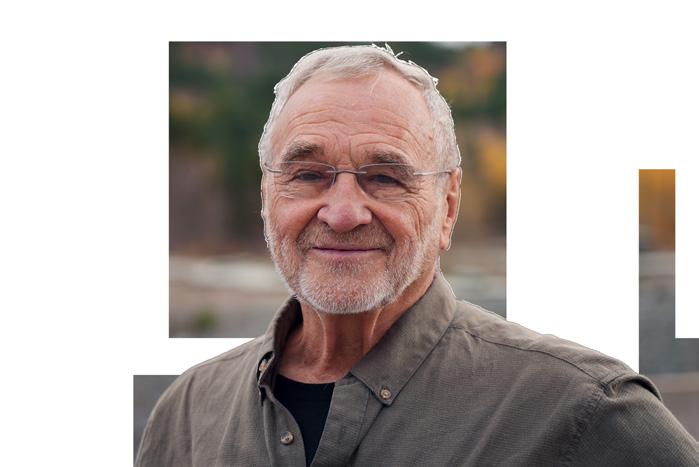
The mining career of FrancoNevada (TSX, NYSE: FNV) co-founder and board chair
David Harquail has taken him almost everywhere, even to discuss gold with a communist dictator.
Harquail recalled a trip to Havana with Franco-Nevada co-founder and fellow Hall of Fame member Pierre Lassonde in the 1990s. The pair met with Fidel Castro to talk about a gold project and decided to gift Castro a company gold pen, unaware the CIA had tried to kill him with a poison pen in the 1960s.
“And out jumped the security officers for Castro,” Harquail recounted. “They whisked him out of the room, they manhandled us, took the pen, tore it apart, the spring [jumped] out. And the big lesson here is do your homework before a meeting!”
As CEO of Franco-Nevada from 2007 until 2020, Harquail steered the royalties company into its initial public offering and raised $1.2 billion, still the largest mining IPO in Canadian history. FrancoNevada would eventually grow its market capitalization to more than $50 billion.
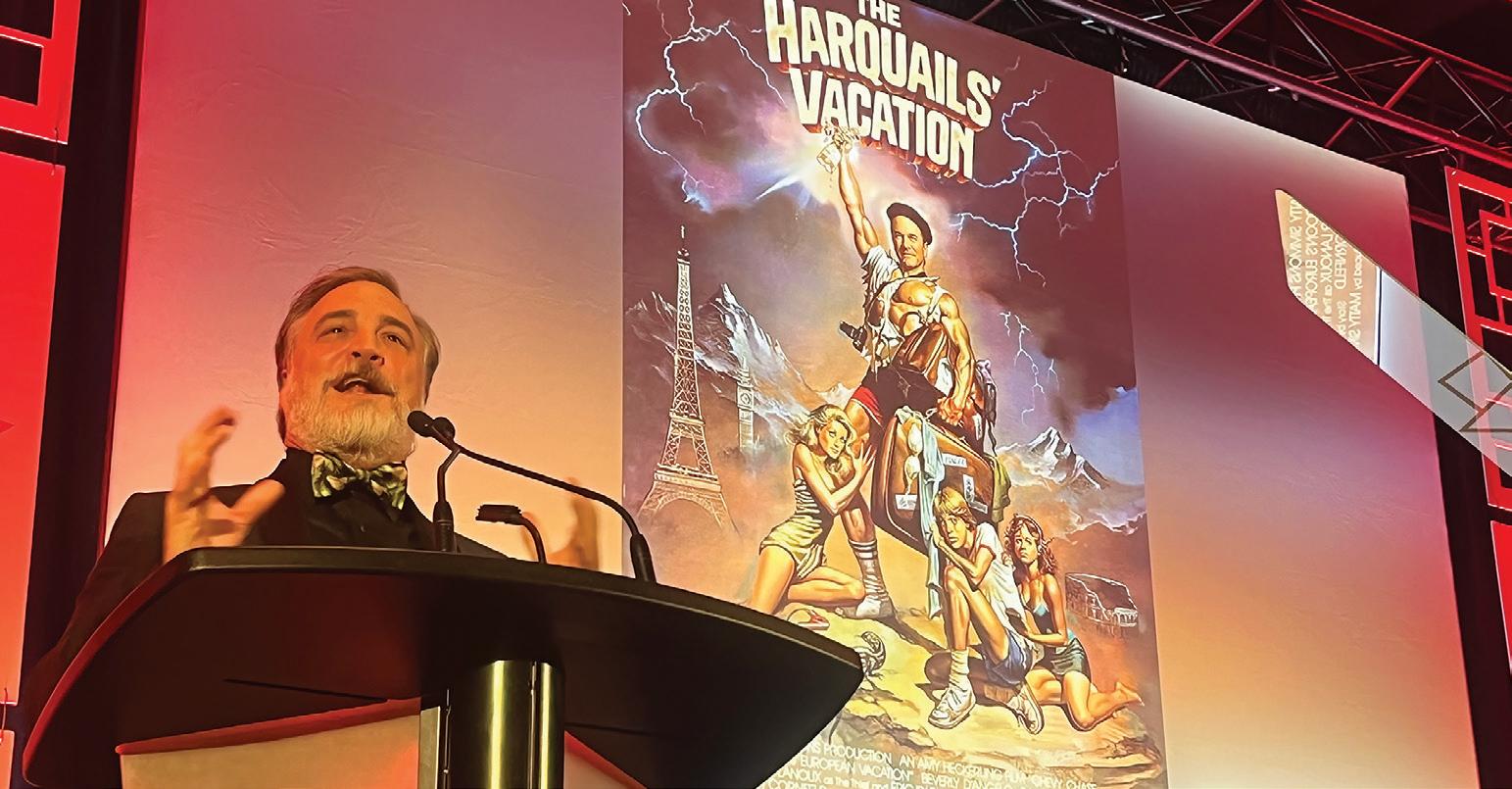
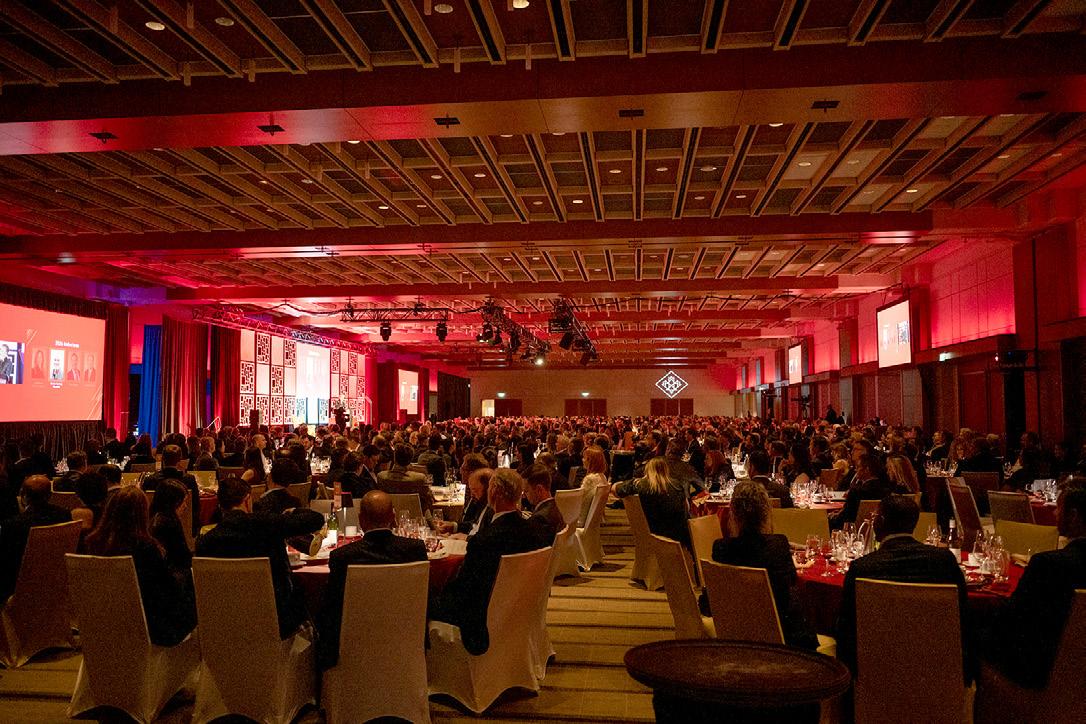
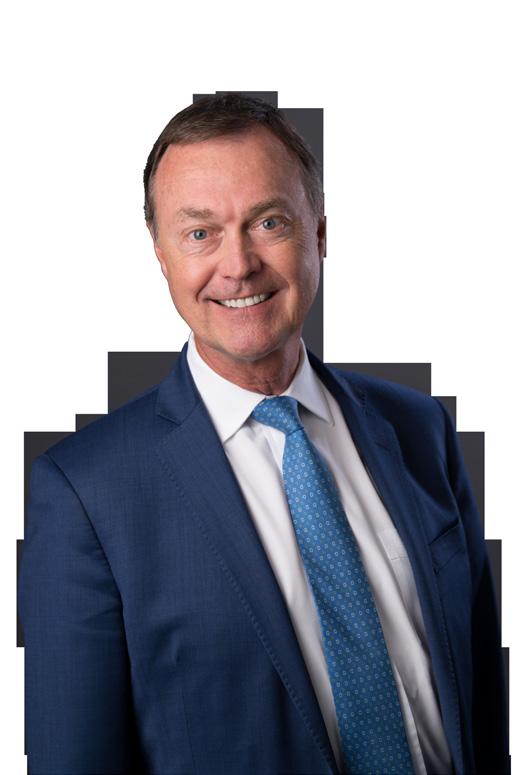
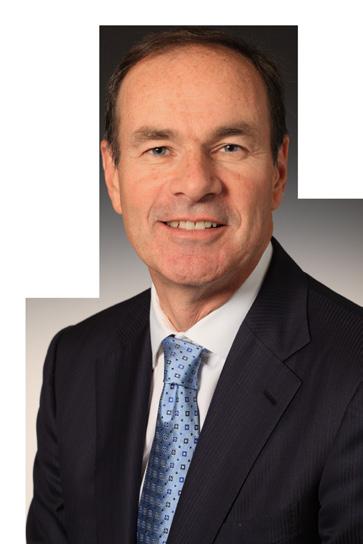
The achievement is one of the reasons he was celebrated on Jan. 8 for his induction into The Canadian Mining Hall of Fame. Vision, discipline, strategy and guts were all qualities honoured at the ceremony in the Toronto Convention Centre where ESG leader Don Lindsay, entrepreneur-trailblazer Catherine McLeod-Seltzer and people-focused explorer Gordon Morrison were also celebrated.
Industry safety
Harquail’s passion started early, and he was visiting mining camps in northern Ontario and Nunavut as a kid. Once he turned a family vacation to Machu Picchu in Peru into a side-trip to a copper mine. His contributions to Canadian mining have outlived the Cold War, and today the industry is regarded as positive and nation-building, he said.
“It’s the best of times to be a Canadian miner, and I’m very proud to be part of it.”
Mining veteran Don Lindsay remembers his first industry job with the Iron Ore Company of Canada and the short orientation he was given the night before he started.
“I was a foreman in the pit with 25 steelworker union guys reporting to me, at 21 years old,” he said in a video shown to the audience.
“I don’t know which way’s up! On night shift, I would try and operate every single [piece of] equipment: grader, a dozer, a drill, a shovel. You could never do that today, incredibly unsafe, but I wanted to know and understand what they were doing.”
That rugged introduction would set the tone for his later career when he prioritized safety, a focus that served him well in his tenure as president and CEO of Teck Resources (TSX: TECK.A, TECK.B; NYSE: TECK) from 2005 until 2022.
On his watch, Teck’s market capi-
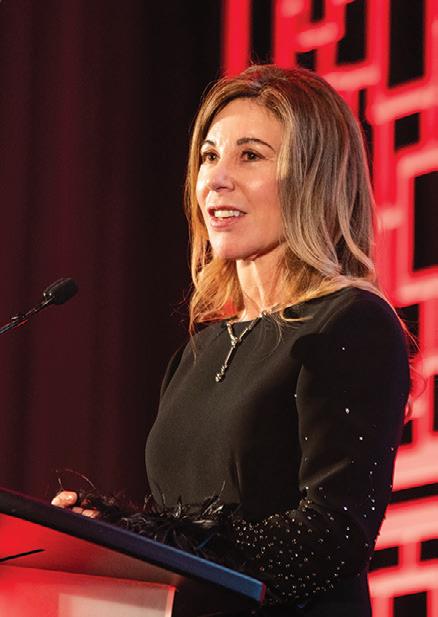
talization grew from $8 billion when he started to $22 billion when he stepped down. Its copper reserves expanded from 2.5 million tonnes to 19 million and almost $9 billion was returned to shareholders.
ESG forerunner
Big numbers and achievements aside, Lindsay knows that business success should enhance the world and people rather than come at its expense.
His leadership helped kickstart Teck’s partnership with Unicef to address zinc deficiency in children, a problem that can cause death from diarrhea. The Zinc Alliance for Child Health program has reached more than 140 million people around the world. Lindsay saw the program up close in Kenya at a nursing station.
“There were 10 mothers and their children whose lives had been saved,” he said in a video. “I get choked up thinking about it. No one else was there to see. But it was so moving. It was so powerful knowing Teck made a difference.”
Whether it’s industry success or outreach to the world, Lindsay stressed that it comes down to having the tenacity to pursue dreams.
“I told geologists…they should come to my office and jump up and down on my desk, leave footprints and insist that we fund them,” he told the audience. “Some called it the ‘footprints on the desk speech.’ While we didn’t find many elephants, we did find one QB2.”
Teck’s Quebrada Blanca stage two expansion mine in Chile is one of the world’s largest copper producers with output of more than 300,000 tonnes a year.
“Dreams do come true, but only if you have the guts to pursue them.”
Pathfinder for women
Catherine McLeod-Seltzer’s industry ambition seems to be always buzzing, no matter the circumstances.

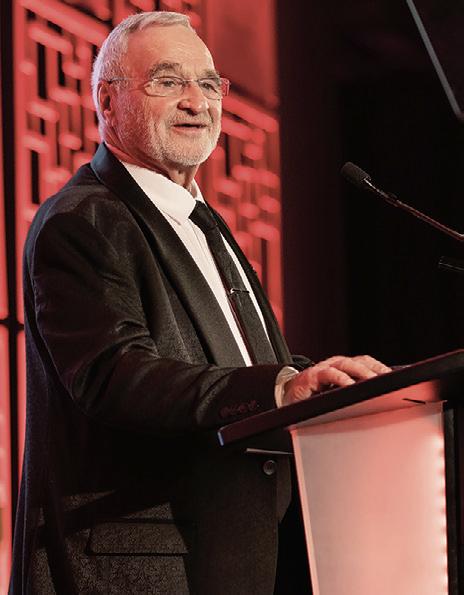
The founder of several exploration and mining firms, McLeod-Seltzer has raised more than $750 million in exploration capital and been behind more than $4 billion made in the building and selling of companies.
Her induction into the hall of fame marks the first time in its history that a father and daughter have both received the accolade. Her mining pioneer father Don was inducted in 2017.
She’s also a role model for women in an industry that’s still largely male-dominated. Her accolades include being named one of Canada’s Most Powerful Women by the Women’s Executive Network, Mining Person of the Year by The Northern Miner in 1999 and one of the 100 Global Inspirational Women in Mining.
When she was three months pregnant, she teamed up with geologist David Lowell to try and secure a copper asset in Peru. The day after McLeod-Seltzer gave birth, Lowell called her when she was in the hospital to tell her they had acquired it.
“I remember thinking, ‘Well, a new baby and a copper project. It’s going to be quite a year!’” she told the audience.
That project became Toromocho, one of the largest copper mines in the world, and McLeod-Seltzer and Lowell eventually sold it to Minera Chinalco Peru for $840 million. The duo also discovered the huge Pierina gold deposit in Peru and sold the company to Barrick Mining (TSX: ABX; NYSE: B) in 1996 for $1.1 billion.
“We built a dream on a shoestring budget,” she said. “I’ll never forget thinking when the deal was done that this is what happens when you work with the right people.”
McLeod-Seltzer has made her mark with responsible mining as well, particularly with a program in Peru focused on improving wool yields and hygiene among alpaca herders who work high up in the Andes mountains.
The inclusion of veterinarians, nutrition initiatives and medicines helped encourage more handwashing among children, who help their mothers with herding. Respiratory illnesses, which is the main fatality for infants in the highlands, were sharply reduced.
Gordon Morrison’s acceptance speech embodied much of the reason why he was honoured because he thanked others for their positive contributions to his career more than he told stories about himself.
“In any challenging endeavour, help can come from many sources but the people around you are key to that successful outcome,” he said. “That was the wisdom
imparted to me by my father, who saw the strength in good people.”
An exploration geologist whose innovative use of technology led to numerous discoveries in Ontario’s Sudbury basin, Morrison’s leadership led to 17 major metal finds, many with Inco and FNX Mining. Nine of those discoveries advanced into full production and three into partial development, representing billions of pounds of nickel and copper, and millions of ounces of platinum, palladium and gold.
The total value of those finds would be worth more than $70 billion at today’s prices.
“Respect and trust is really important,” he said. “Always try to respect other people’s point of view, and if you do that, they will trust you.”
It’s an approach that’s much needed when working with people from different cultures and it proved essential in Morrison’s work with TMAC Resources at the Hope Bay gold project in Nunavut. It was later acquired by Agnico Eagle Mines (TSX, NYSE: AEM).
He helped negotiate a 20-year agreement with Inuit landowners, crafting out the contours of Indigenous partnerships and consultations.
“The years at Hope Bay in the Arctic were very special, and I owe a debt of gratitude and a big thank you to the Inuit people for their friendship and their wisdom,” he said.
In his closing remarks to the audience, Morrison said he had a simple message for the mining industry. “Next time a new discovery is made and people are slapping themselves on the back saying, ‘Wow, we sure picked the right horse!’ Just remember that you guys, you are that horse, and without you, there is no horsepower.”

| How they knew they were close
BY NORTHERN MINER STAFF
Two Ontario sisters flew to Newfoundland on a hunch, followed the Argentia-region clues from The Northern Miner’s Great Canadian Treasure Hunt and dug up the latest $37,000 gold bonus prize.
Stefanie St. Denis and Jennifer Crichton are longtime Northern Miner subscribers and escaperoom regulars. They told The Miner’s anchor Devan Murugan their solve came from a mix of puzzle work, patience and a willingness to book the flight before they could talk themselves out of it.
Devan Murugan: Steph, what did it feel like to find the gold?
Stefanie St. Denis: It was surreal. It was a trek, but we were pretty confident. It’s exciting and it gives us confidence going forward in the hunt.
DM: Jennifer, you’re both big into escape rooms. How did that translate into treasure hunting?
Jennifer Crichton: We’ve done hundreds together. We’ve travelled around and done some of the best, especially in Montreal [which is considered one birthplace of the genre]. We’re naturally good at puzzles, so a treasure-hunt solve was right up our alley. We dove in from the start for the fun of it.
DM: You went from solving to

travelling fast. You hadn’t booked anything, right? What happened?
SSD: Spontaneity is the name of the game. We woke up and didn’t know we were going to Newfoundland that day. We had the idea for the solve around Christmas and sat with it for a while. Then we ran out of reasons not to go, booked a flight and by the end of the day we were in Newfoundland.
DM: It sounds spontaneous, but something pushed you over the line. What was it?
JC: We followed the clues and a lot of it was instinct. We felt we were onto something.
DM: Without giving away locations or trade secrets, what was it about Argentia that clicked?
SSD: It’s hard to say. When you watch earlier winners talk about their solves, you’re hanging on to every detail. We considered laying it all out, but the thrill is in the solve. Giving it away would take that fun away. We followed the signals we got from the article, the
clues and the video, and it led us to a place we felt strongly about.
DM: For people watching and thinking this looks tough – is it? What skill set do you need?
JC: It depends how you look at it. If you like puzzles, like hunting for clues and can trust your gut a bit, it’s doable for anybody. But we put in a lot of time before we felt confident enough to travel from Ontario to Newfoundland.
DM: Beyond the gold, what
stood out on the ground? Any memorable moments?
JC: For us it’s bonding. We have so much fun together. We’re sisters, best friends. We love doing things together – escape rooms, treasure hunts, all of it. A lot of it is the memories from the crazy stuff that happens along the way. It’s a story we’ll tell for a lifetime.
DM: This hunt pulls people into Canadian history and mining, too. Did you know much about mining going in?
SSD: Not nearly as much as we do now. We went into it with a lot less information about Canadian history and mining. Once you start digging in, you realize how big it is.
DM: What would you tell hunters still chasing the $1-million national prize?
SSD: Go with your gut. You have to trust yourself and your thought process. It’s not laid out crystal clear. You have to trust the path you’re on and act on it.
JC: TNM says it well: if you feel like you’re getting close, you probably are. If you think you’re onto something, take it right to the end. Take the risk. Try it.
DM: Well, best of luck chasing the big one.
SSD: Thank you so much. TNM
COIN SEARCH | ‘Silver Valley’ teased seekers for decades
BY NORTHERN MINER STAFF
On the rugged shores of Placentia Bay in southeastern Newfoundland lies a place shaped by sea spray, fog, and dreams bigger than its size. Long before roads or deepwater ports, this was the tiny fishing settlement of Petit Plaisance – “Pleasant Little Place” – named by French mariners who came here in the 1600s to haul cod from the richest banks in the North Atlantic.
But by the late 19th century, something stirred beneath the surface — something that would change how the world knew this isolated corner of what is known as “The Rock.”
A Priest, a Prospect, and a Name Reborn
It was Father John St. John, the energetic parish priest of Holy Rosary Parish, from 1895-1911, who first gave voice to a new identity for this humble community. In the shadows of towering cliffs near Broad Cove Point, local prospectors had stumbled on glittering veins of galena – rich lead ore that carried silver deep in the rock.
The word on everyone’s lips was “argent,” the French word for silver often heard in taverns. Around 1900,
at Father St. John’s urging, Little Placentia was renamed Argentia –the ‘Silver Valley’ to the locals.
The discovery brought excitement – and high hopes – to this coastal outpost. Men like John Burke, the prospector credited with locating the first silver exposed in veins in the early 1880s, sold claims to English investors who dreamed of striking it rich.
But the silver was stubborn, locked in narrow quartz veins that teased more than delivered. Over decades, the silver found at the Cliff Mine opened and closed, worked in “fits and starts” as financiers came and went, metal prices swung, and winter storms battered the shore. Miners carved short adits into rocky slopes and hauled ore down narrow trails, but the bounty that had lifted hopes never quite paid its way.
Storm Clouds Over the Argent Cliff By the early 1920s, the mine had shut down for good. Argentia’s dream of silver always seemed out of reach – yet the echoes of pickaxes and ore cars clung stubbornly to the hillsides. Townsfolk returned to fishing and the rhythms of daily life, but many still whispered about what might have been.

Then, in the shadows of Europe’s rising turmoil, a new force arrived on Argentia’s doorstep.
World War II: From Quiet Harbour to Global Stage In 1940, as war engulfed Europe and the Battle of the Atlantic raged under the waves, leaders in Britain and the United States made a daring decision. Under the “Destroyers for Bases” agreement,” the harbour at Argentia was chosen for a major new U.S. naval and air base – a strategic foothold to guard the convoys crossing the North Atlantic.
The change was immediate and dramatic. Families who had lived
in Argentia for generations were asked – and sometimes forced – to leave their homes so runways and barracks could be built. By early 1942, almost every resident had moved to nearby communities like Freshwater and Placentia.
The construction that followed was nothing short of feverish: thousands of Newfoundlanders laboured side by side with American engineers, and by 1943 more than 12,000 U.S. servicemen were stationed here, transforming the oncetiny harbour into one of the largest foreign naval bases in existence.
Then, in the fog and salt spray off Placentia Bay in August 1941,
two of the world’s most powerful leaders – U.S. President Franklin D. Roosevelt and British Prime Minister Winston Churchill – met aboard warships anchored offshore. Far from London or Washington, they forged the first outline of the Atlantic Charter, a bold blueprint for a peaceful world after the war.
From Silver Undercurrents to Maritime Dreams
Long after the last soldiers left and the base was finally closed in 1994, Argentia’s story didn’t end – it changed direction. What was once a quiet fishing village, then a hopeful mining hub, then a strategic wartime base, has become something new again: a deepwater port and industrial centre, connecting continents and continents’ cargo in the same bay where silver lay waiting more than a century earlier. Today, the ghosts of silver that fuelled the mines may linger in collapsed adits and scattered relics –reminders of a dream that never quite paid off – but the heartbeat of Argentia is found on the docks and tarmac where ships and wind energy components now arrive from around the world, anchoring this Atlantic outpost in the global economy once more. TNM
BY FRÉDÉRIC TOMESCO
The United States Depart-
ment of Energy has awarded contracts worth $2.7 billion
(C$3.7 billion) to three companies in a bid to boost domestic uranium enrichment capacity over the next decade and cut the country’s reliance on foreign producers such as Russia.
American Centrifuge Operating and General Matter will each receive $900 million to develop domestic high-assay low-enriched uranium enrichment (HALEU) capacity, while a unit of France’s Orano will receive the same amount to expand U.S. production of low-enriched uranium, the energy department said Jan. 5 in a statement. HALEU is a more advanced type of fuel that will be needed for next-generation nuclear reactors.
“While not a total surprise, this does highlight the U.S. government’s increased focus on critical mineral self-sufficiency,” BMO Capital Markets commodities analysts Helen Amos and George Heppel said in a note.
Specific milestones
The awards – which result from a competitive solicitation issued in December – will require the companies to meet specific milestones, the energy department said without providing details. Another $28 million was allocated to Global Laser Enrichment to support next-generation enhancement technologies, the department said.
Uranium enrichment – raising
concentration of isotope uranium-235 – is essential for producing fuel that powers the 94 U.S. commercial nuclear reactors that generate a key portion of the nation’s electricity.
U.S.-based nuclear plants depend on imports for most of their uranium needs, according to the U.S. Energy Information Administration (EIA). Of the uranium oxide the U.S. purchases, 57% comes from Kazakhstan, Uzbekistan, Australia and Russia, and 27% comes from Canada, EIA data shows.
Round the clock
Appetite for nuclear energy in the U.S. is rising as tech companies such as Amazon, Microsoft and Facebook owner Meta ramp up efforts to build data centres amid surging demand for cloud computing and artificial intelligence-related computing power. Nuclear energy is especially prized because it’s available around the clock and doesn’t emit planet-warming air pollution.
Global demand for uranium is projected to triple by 2040. It already outstrips production by 50 million to 60 million lb. a year, according to World Nuclear Association data.
“Today’s awards show that this administration is committed to restoring a secure domestic nuclear fuel supply chain capable of producing the nuclear fuels needed to power the reactors of today and the advanced reactors of tomorrow,” Secretary of Energy Chris Wright said. TNM
| Cobre Las Cruces operated 2009-2021
BY FRÉDÉRIC TOMESCO
First Quantum Minerals (TSX: FM) agreed to sell the past-producing Cobre Las Cruces copper mine in Spain to an investment fund for up to $190 million (C$260 million) to free up cash for other priorities.
Global Panduro, an entity controlled by U.S. private equity firm Resource Capital Funds, will acquire Las Cruces to develop a polymetallic primary sulphide project on the site, First Quantum said in a statement in December. The transaction is expected to close in the first half of 2026.
“First Quantum had earlier highlighted that the mine was non-core and stated its intention of monetizing the asset as a measure to support liquidity,” Shane Nagle, a mining analyst at National Bank Financial, said in a note.
Under the terms of the transaction, Global Panduro will pay $45 million in cash at closing and issue a $65 million loan note to First Quantum. The purchase price also includes about $80 million in deferred payments tied to certain project development milestones, as well as other deferred payments tied to exit and liquidity events.
The sale caps a busy year for First Quantum that has seen the Toronto-based miner expand copper production, boost liquidity, restructure its debt and sign a $1 billion streaming pact while its massive Cobre Panama mine remains on a care and maintenance plan.
News of the deal comes almost two years after First Quantum pub-
TRENDS | Investors pull back from risky regions
BY CECILIA JAMASMIE
Global mining mergers and acquisitions hit about $30 billion in the first three quarters of 2025, with 74% of deal value flowing to Latin America as investors retreat from higher-risk jurisdictions, reports from McKinsey & Co. and the Future Minerals Forum show.
The researchers found there is a widening gap between mineral endowment and investment. More than half of global critical mineral reserves sit in the so-called Super Region – Africa, West Asia and central Asia – yet it attracts the lowest exploration spending worldwide, heightening long-term supply risks.
Since 2021, mining deal values in Latin America are up more than 200%, while Africa has seen an almost 80% decline as capital gravitates toward jurisdictions perceived as more stable.
The world will need about $5 trillion in cumulative investment by 2035 to meet critical minerals demand, while exploration spending remains 40% to 50% below what is required, according to the reports. Compounding the shortfall is an average 16-year timeline from discovery to first production, meaning projects found today are unlikely to contribute meaningfully to 2030 or 2035 climate targets.
The figures are part of the Future Minerals Barometer Report 2025, which tracks supply-chain readiness across Africa, West Asia, Central Asia and Latin America.
Developed in partnership with McKinsey & Co. and other sector experts S&P Global Market Intelligence, Global AI and GlobeScan, the barometer integrates stakeholder sentiment, data, market intelligence and project-level evidence into a single authoritative platform to guide global decision-making.
The barometer builds on McKinsey’s Global Materials Perspective, released in October, which shows mining productivity has improved by just 1% a year since 2018, reinforcing why investors are increasingly focused on capital discipline and permitting certainty.
The report warns that global critical mineral supply chains are under growing strain just as demand accelerates, driven by the energy transition, digitalization and rising defence needs.
Demand for copper, lithium, nickel and rare earths is rising faster than new supply can be brought online, while long permitting timelines, infrastructure gaps, capital intensity and policy uncertainty continue to slow project development.
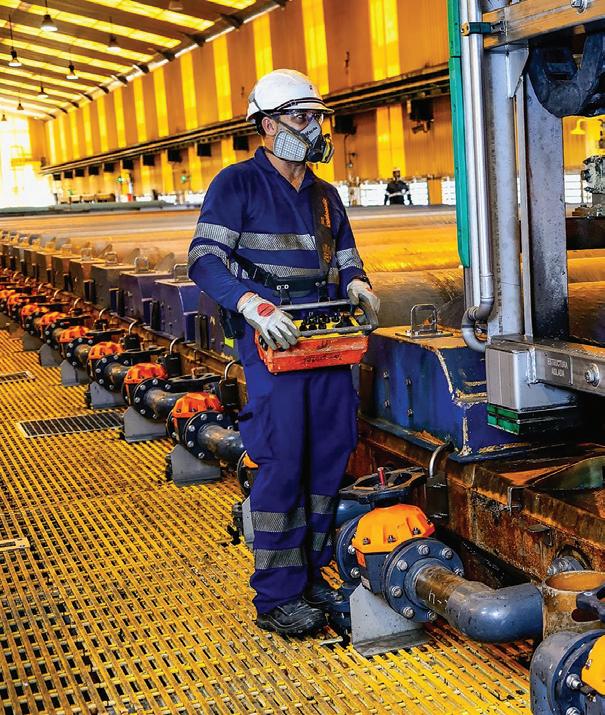
lished an updated NI 43-101 technical report that set out plans for the next stage redevelopment of the site via a new underground mine feeding a refinery to produce copper, zinc, lead and silver.
For Resource Capital, the acquisition adds a European asset that it expects to benefit from rising longterm demand due to artificial intelligence and grid electrification.
Located about 20 km north-
west of Seville, Las Cruces includes a high-grade open-pit copper mine and hydrometallurgical plant that produced copper cathode from 2009 until 2021. It also completed tailings reprocessing from 2021 to 2023. Shares traded for C$41.50 apiece as press time approached in Toronto, valuing the company at C$34.6 billion ($25 billion). The stock has traded between C$14.41 and C$41.89 in the past year. TNM
More than 45% of refined production for electric vehicle materials is concentrated in a single region, increasing exposure to geopolitical risk, trade disruptions and price volatility.
Anglo American (LSE: AAL) CEO Duncan Wanblad said global copper demand is projected to rise 75% to 56 million tonnes a year by 2050, requiring about 60 new mines the size of the Quellaveco mine in Peru to be developed over the next decade to offset declining output from aging assets.
Risk reset
Investment flows reflect a broader reset in risk perception. McKinsey partner Jeffrey Lorch said the barometer integrates market data and stakeholder sentiment to give companies a practical roadmap to navigate volatility.
GlobeScan CEO Chris Coulter said the Super Region faces major challenges but also a significant opportunity if policy, financing and infrastructure gaps can be addressed.
Industry leaders at the forum argued that faster development will depend on regulatory harmonization, new funding mechanisms and deeper collaboration between governments, miners and investors to unlock supply in Africa, Asia and Latin America. TNM
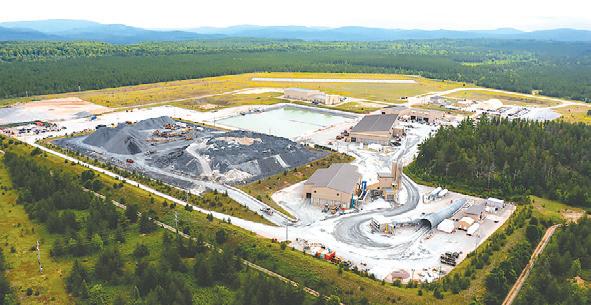
BY CECILIA JAMASMIE
Lundin Mining (TSX: LUN)
has sold its Eagle nickel-copper mine and Humboldt Mill in Michigan to fellow Canadian miner Talon Metals (TSX: TLO) in a share-based deal valued at almost $84 million (about C$116.2 million).
Lundin transferred its U.S. subsidiary, which owns the Eagle operation, to Talon in exchange for roughly 275 million Talon shares, valued around $83.7 million based on recent prices. The deal, which closed in January, leaves Lundin with a 20% non-diluted stake in Talon.
Eagle is the only primary nickel mine currently operating in the U.S. and has produced more than 194,000 tonnes of the critical metal and 185,000 tonnes of copper since starting production in 2014, Lundin said.
“This transaction also unlocks meaningful synergies, including the opportunity to leverage the Humboldt Mill as a shared, centralized processing facility,” Lundin President and CEO Jack Lundin said in a Dec. 19 statement.
Home-grown producer
The deal positions Talon as a pureplay nickel-copper company with domestic processing assets, including Humboldt and a planned future facility in Beulah, N.D.
The mine generated more than $3.2 billion in revenue as of the third quarter of 2025, the company noted.
Talon is to expand its board to 10 directors following the deal,
adding two nominees from Lundin, while Darby Stacey, managing director of the Eagle mine and Humboldt Mill, will become Talon’s CEO and a director.
“The integration enables our combined team to advance our four strategic priorities in parallel –extending the Eagle mine life, accelerating exploration in Michigan and in Minnesota, advancing permitting at the Tamarack Nickel-Copper Project and the Beulah Minerals Processing Facility, and progressing engineering towards feasibility study and construction,” Talon’s current CEO, Henri van Rooyen, said in a separate statement.
Top-10 ambitions
Lundin, which acquired Eagle from Rio Tinto (NYSE, ASX, LSE: RIO) in 2013, said the sale will streamline its portfolio and sharpen its focus on larger copper operations in Brazil and Chile. It also maintains exposure to potential upside through Talon’s exploration assets, including the Tamarack nickel project in Minnesota.
The transaction aligns with Lundin’s broader strategy to move into the ranks of the world’s top 10 copper producers, with a target of producing 500,000 tonnes of copper and about 550,000 oz. gold annually within three to five years.
That plan centres on brownfield expansions at core assets, including Candelaria and Caserones in Chile and Chapada in Brazil, alongside new developments in the Vicuña district straddling the Chile-Argentina border, home to the Josemaría and Filo del Sol projects. TNM
EARTHS | $300M deal includes mine, facilities
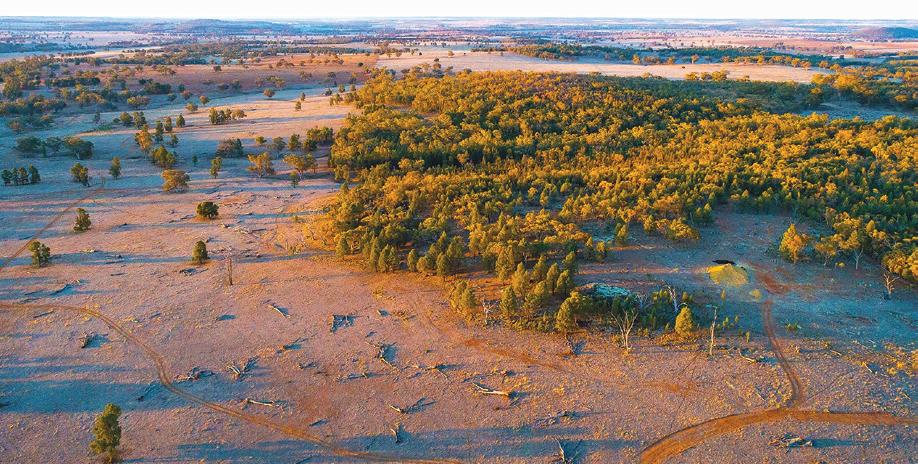
BY BLAIR MCBRIDE
Energy Fuels (NYSE: UUUU; TSX: EFR) is to acquire rare earth metals producer Australian Strategic Materials (ASX: ASM) in a share deal valued at US$299 million. Energy Fuels shares rose.
The deal will create the largest, fully integrated rare earth elements (REE) “mine-to-metal and alloy” producer outside of China and close a key strategic gap in global supply chains, Energy Fuels said in mid-January.
The company will gain ASM’s Korean Metals Plant in South Korea, which is among few nonChina rare earth facilities. It produces neodymium-praseodymium, dysprosium, and terbium metals. It will also receive ASM’s developing Dubbo rare earths mine and processing plant in New South Wales, Australia.
“We see metal/alloy-making capabilities as the key driver [of the deal], as the technical knowhow that comes with an operating facility would be very hard to build from scratch,” SCP Equity Research analyst Justin Chan said in a note on Jan. 21.
“This enables Energy Fuels to progress much more quickly with its plans to scale up rare earth production and separation and provides a larger and more end-to-end solution to end users and the gov-
“Energy Fuels is executing our plan to create the largest fully integrated producer of rare earth elements materials outside of China.”
MARK CHALMERS CEO, ENERGY FUELS
ernment, which is important as the supply chain is still in the early stages of forming.”
The acquisition follows months of positive developments for Energy Fuels. It released a bankable feasibility study in January for its White Mesa mill in Utah showing the plant could become one of the biggest producers of separated rare earths outside China.
It also updated its Vara Mada project in Madagascar. And in September, the company announced its rare earths processed in the United States are suitable for making permanent magnets used in electric autos and hybrid electric vehicles.
Shares gained 7% to $33.37 apiece on Jan. 22 in Toronto, their highest level in three months, valuing the company at $7.9 billion.
BY HENRY LAZENBY
Eldorado Gold (TSX: ELD; NYSE: EGO), a mid-tier producer, has raised its ownership in Amex Exploration (TSXV: AMX; US-OTC: AMXEF) to more than a quarter in what appears to be a matched private trade as financier Eric Sprott left the Quebec-focused junior.
Vancouver-based Eldorado in mid-December acquired 14.9 million Amex shares at $4 apiece for about $59.5 million. The secondary market deal lifted Eldorado’s position to 38.6 million shares, plus 207,000 warrants, representing about 27% of Amex on a non-di-
luted basis, the company said.
Amex is advancing its Perron and Perron West projects near Normétal in the Abitibi region, about 730 km northwest of Montreal.
Amex President and CEO Victor Cantore downplayed any shift in the relationship in a call with The Northern Miner, saying the company has worked closely with Eldorado since the producer in Quebec, Greece and Turkey first invested. Eldorado took a 9.9% stake in Amex in January 2024 via a $15-million investment in the junior’s flow-through financing.
“They’ve been a great partner,” Cantore said. “Other than them controlling more shares, I don’t see
anything really different.”
Eldorado’s purchase demonstrates the industry trend towards raising equity stakes instead of increasing reserves through exploration.
The purchase was for investment purposes and Eldorado has no plans that would lead to corporate actions under Canadian takeover rules, the company said in the release. Spokesperson Chad Pederson told The Miner the company had nothing to add.
On Dec. 19 after the transaction, Amex shares gained 5% to close at $4.04 apiece in Toronto. They rose to $4.97 near press time compared with $1.05 a year earlier for a mar-
ket capitalization of $708 million.
Opportunity
Sprott’s numbered company 2176423 Ontario Ltd. sold 14.8 million Amex shares on Dec. 17 through a private agreement at $4 per share, it disclosed in a separate statement. It leaves the veteran industry investor holding only 435,000 warrants.
The identical share count and price suggest Eldorado took out Sprott’s position, though Eldorado did not name the seller in its disclosure.
Eldorado described the equity stake increase as an investment move that came in response to an
The stock has traded in a 12-month range of $4.59 to $38.37.
‘Largest integrated producer’
“Energy Fuels is executing our plan to create the largest fully integrated producer of REE materials outside of China, including REE oxides, metals and alloys, while supporting U.S. and allied critical mineral supply chains,” Energy Fuels CEO Mark Chalmers said in a release.
“We see an opportunity to deliver an expanded suite of REE products by combining U.S. rare earth oxide production at our White Mesa processing facility in the U.S. with downstream metal and alloy manufacturing capacity at ASM’s Korean Metals Plant.”
The proposed merger delivers a significant premium for ASM shareholders and allows them to participate in the upside of a larger and better-capitalized critical minerals firm, ASM CEO managing director Rowena Smith said.
“We are pleased to recommend this transaction not only for the value it delivers but it accelerates the execution of our mine to metals strategy in a way that unlocks greater scale, de-risks delivery and positions us to capture the full potential of our rare earths opportunity,” she said.
Pending ASM shareholder and regulatory approval, Energy Fuels expects the deal to close by the end of June. TNM
“unsolicited opportunity.”
Cantore said Eldorado’s contractual rights are limited to maintaining Eldorado’s ownership through future financings.
“There’s no right of first refusal,” he said. “What they have is a top-up. If I do a financing, they have the right to participate at 27%.”
Bulk sample
Amex’s Perron resource estimate published in May last year outlined 8.2 million tonnes of measured and indicated resources grading 6.1 grams gold per tonne for 1.6 million oz. of contained gold, plus 5
BY BLAIR MCBRIDE
ntario has named Can-
ada Nickel’s (TSXV: CNC; US-OTC: CNIKF) polymetallic Crawford project as the second under its One Project, One Process (1P1P) permit fast-track framework. Shares of the company soared to a new yearly high.
With the 1P1P fast-tracking, the province plans for construction to start on the $3.5-billion capex Crawford, deemed to hold the world’s second-largest reserves of nickel, by the end of the year.
That would allow the mine to open by the fourth quarter of 2028, provincial Energy and Mines Minister Stephen Lecce said Jan. 13 in Timmins.
“We’re committed to…use the authority to advance the Western world’s largest nickel deposit, the largest critical mineral mine in the country,” Lecce told reporters. “We’re talking about a project that could add $70 billion – just for the mine alone – to Canada’s national economy, $5 billion in direct investment. This is how we do nation-building.”
Lecce had previously voiced strong support for Crawford at
The Northern Miner’s International Metals Symposium in London in early December.
Dual approval
Crawford is the only mining project in the country to gain formal fast-track status from both a province and Ottawa, after Prime Minister Mark Carney referred it to the Major Projects Office in November.
The nickel venture follows Frontier Lithium’s (TSXV: FL; US-OTC: LITOF) PAK project in northwestern Ontario, which the province added to the 1P1P program in October.
The fast-track initiatives aim to cut permit times for advanced projects in half as other Western governments seek to accelerate critical mineral development to build supply chains outside Chinese control.
Canada Nickel shares gained 16% to $2.10 apiece on Jan. 13 in Toronto, before rising to $2.32 each as press time approached, valuing the company at about $543 million. The shares may have gained from Indonesia’s plans confirmed in January to curb nickel exports. Please see page 33.
Green mine credentials
The project, just 40 km north of Timmins, stands out for its claimed low carbon dioxide (CO2) emissions due to a planned in-process tailings method of carbonization. It involves injecting a concentrated source of CO2 into tailings in the mill, geologically sequestering carbon in the tailings while they’re in the processing circuit, instead of after. It could capture and store 1.5 million tonnes per year of carbon.
“Crawford has been designed from the outset to reflect the future of mining,” Canada Nickel CEO Mark Selby told reporters. “[Sequestering carbon] enables us to deliver clean, reliable nickel with a made-in-Ontario, climate advantage for critical minerals production, in stark contrast to the high carbon, high environmental impact nickel produced in Indonesia under Chinese controlled supply chains.”
With an initial life of 41 years, Crawford could produce 3.5 billion lb. of nickel, around 53 million lb. of cobalt, 490,000 oz. of palladium and platinum, 58 million tonnes of iron and 6.2 million lb. of chromium, according to a 2023 feasibility study.
BY FRÉDÉRIC TOMESCO
Canadian developer Montage Gold
(TSX: MAU, US-OTC: MAUTF) is advancing first production at its flagship Koné project in Côte d’Ivoire by six months after construction crews made faster-than-expected progress. The stock soared to a new record.
First gold is now expected to be produced in the fourth quarter of this year instead of 2027’s second quarter, Montage said Jan. 19 in a statement. Construction remains on budget with more than $545 million (C$756 million), or 63%, of the capital committed.
“The rapid construction progress…and acceleration of first gold to late 2026 aligns well with prior commentary from management and affords the company improved operational and financial flexibility,” Scotia Capital mining analyst Ovais Habib said on Jan. 19 in a note.
Montage shares surged 12% to C$11.19 on Jan. 19 – the company’s highest intraday level since it went public in late 2020 – before climbing to C$11.99 closer to press time, giving the company a market capitalization of C$4.3 billion ($3.1 billion).
Located about 350 km northwest of Yamoussoukro, the country’s capital, Koné is targeting annual output of 300,000 ounces. It’s one of the largest mining sites in West Africa, covering 1,318 sq. km and including several satellite targets.
More than 3,000 employees and contractors are now active at Koné. Key milestones achieved so far include the erection of all 14 carbon-in-leach tanks, pipe rack and grid mesh walkways. Construction crews also completed an oxide sizer and delivered a ball mill to the site.
Construction of a permanent camp is nearing completion, with all rooms fully fitted and available for use. An airstrip has been
completed and is expected to be operational in this quarter.
Grid connection is progressing rapidly, with power line construction of a 33-kilovolt overhead line to the camp, river abstraction and processing plant main area nearing completion, Montage said. Construction of a 225 kV substation construction is advancing on schedule, and the installation of 225 kV powerline towers is under way.
New village
A resettlement village, which opened in November, is now fully occupied. It includes new houses, a school, a maternity hospital, market and religious buildings.
Koné is estimated to hold 269 million indicated tonnes grading 0.63 gram gold per tonne for contained metal of 5.49 million oz., according to data released by Montage in November. Inferred resources stand at 43 million tonnes grading 0.51 gram for contained metal of 704,000 ounces.
Montage is planning to release an updated resource estimate within weeks. It will incorporate 2025 drilling data, including initial resources on advanced targets such as Petit Yao.
Drilling program
This year’s $16-million exploration program calls for about 99,000 metres of drilling mostly at Koné and 9,000 meters on the recently awarded Wendé property, Montage said.
Crews drilled some 115,000 metres at Koné last year as efforts focused on delineating higher-grade satellite resources.
Montage last year set itself a goal of finding more than 1 million measured and indicated oz. on the property grading at least 1 gram gold before targeted production starts.
The company envisages a 16-year mine life for Koné. A 2024 feasibility study calculated the project would have an after-tax net present value of $3.1 billion if gold prices averaged $3,000 an ounce. TNM
1P1P
“We’re talking about a project that could add $70 billion – just for the mine – to Canada’s national economy. This is how we do nation building.”
STEPHEN LECCE ONTARIO
ENERGY AND MINES MINISTER
Based on an 8% discount rate, Crawford has an estimated posttax net present value of $2.6 billion. Annual earnings before interest, taxes, depreciation and amortization would be $811 million, with free cash flow of $546 million.
The project benefits from the relationships that Canada Nickel has worked to build with Indigenous communities in the Timmins region, Mattagami First Nation Chief Jennifer Constant said.
“Long gone are the days where First Nations input in terms of sustainability and environmental issues are not factored in,” Constant said. “When we when we talk
about respect…everyone knows that is the standard of what we expect for all relationships within our territories.”
While Crawford is the company’s main focus for now, its nearby Reid project could prove even more valuable by grades and lower costs to mine, according to a resource update on Jan. 12. Reid sits 16 km southwest of Crawford.
Reid, boasting what the company calls better open-pit characteristics than Crawford, hosts measured and indicated resources of 867 million tonnes grading 0.23% nickel for 2.1 million tonnes of contained metal.
It also has 1.5 billion inferred tonnes grading 0.22% nickel for 3.2 million tonnes – up 47% from the Dec. 2024 Reid resource estimate. Reid’s resource stands out with nearly half the strip ratio, one-third less overburden and 15% higher chromium grades than Crawford, Selby said. More than 40% of the geophysical target remains to be explored and the deposit is open for continued drilling definition. TNM
— with files from Henry Lazenby
BY HENRY LAZENBY
Kinross Gold (TSX: K; NYSE: KGC) has approved three U.S. growth projects designed to add about 3 million oz. between 2028 and 2038.
The additions will keep total output around 2 million oz. a year through the decade, Kinross said on Jan. 15. They are Round Mountain Phase X and Bald Mountain Redbird 2 in Nevada, and a restart of Kettle River–Curlew in Washington.
“Today, we are announcing plans to reinvest in our business to generate additional value from internal projects that are underpinned by a low-cost structure and demonstrate excellent economics at a range of gold prices,” CEO Paul Rollinson told analysts on a conference call.
The project approvals extend a portfolio shift that accelerated after Kinross exited Russia in 2022 on the back of U.S. sanctions resulting from the war in Ukraine. The new U.S. mines are timed to coincide with a return to higher-grade mining at Tasiast in 2028, ahead of targeted first production at Great Bear in Ontario in 2029 and at Lobo-Marte in Chile in the early 2030s, Rollinson said.
‘Attractive costs’
Rollinson called the package “the next phase” of Kinross’s grade-enhancement strategy, with “all projects demonstrating attractive all-in sustaining costs.”
At a $4,300 (C$5,975) per oz. gold case, the trio are to generate a combined after-tax internal rate of return (IRR) of 55% and a net present value (NPV) of about $4.1 billion, with paybacks of less than two years. Average gold prices of $3,200 per oz. would cut combined NPV to about $2 billion and IRR to 32%.
Construction is to be funded with internal cash resources, Kinross said. Chief Financial Officer Andrea Freeborough told analysts that roughly $425 million of 2026 capital is earmarked for the U.S. projects within a total
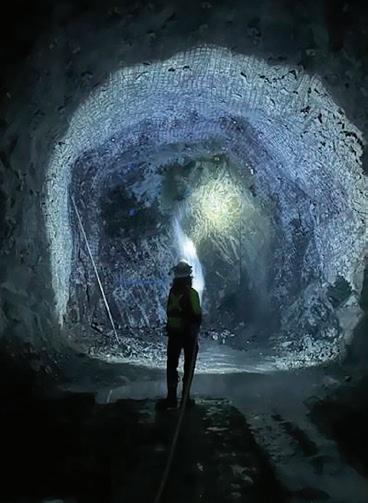
$1.5-billion budget.
Freeborough said investors should “think about $1.5 billion as sort of the new flat capex guidance for the next three years,” subject to inflation and the pace of longer-dated projects.
The miner is emphasizing assets in the Americas and Mauritania. It has expanded the Tasiast mill to 24,000 tonnes a year and restarted Chile’s La Coipa. Alaska’s Manh Choh has sent high-grade ore to Fort Knox since 2024.
The company’s $400-million stage 10 for its Round Mountain mine marks a shift from the long-running open pit to bulk-tonnage underground mining beneath the Phase W pit. Kinross has driven dual declines, advanced about 6 km of underground development and drilled roughly 35 km.
BY DENISE HECKBERT
Privately-held Michigan Potash & Salt and Utah-focused Peak Minerals have two of the most advanced potash projects in the United States as the Trump administration pumps money and permits into a sector that’s been mostly dormant since the 1960s and dependent on imports.
Peak Minerals, backed by Hong Kong-based private equity firm EMR Capital, is seeking funding for its $435-million (C$604-million) capex Sevier Playa project as it contends with an environmental group’s opposition.
“We’re in advanced discussions with lenders and equity investors and possible royalty investors to fully fund phase one of the project,” Woods Silleroy, Peak’s vice-president of operations, told The Northern Miner by email in mid-January. “We remain confident that the environmental work performed by the Bureau of Land Management will prove to be unimpeachable.”
The federal FAST-41 permits program could approve Michigan Potash’s U.S. project this year after the government extended a $1.26-billion loan guarantee for the 726,000tonne a year proposed mine.
Critical mineral
The U.S. potash industry has been largely idle since the 1960s, when the development of massive, lower-cost deposits in Saskatchewan rendered most American operations uncompetitive. In a new push, the White House listed potash as a critical mineral last year and unlocked government funding.
It wants to wean the U.S. off 6.1 million tonnes in annual imports that account for more than 90% of
| Trump seeks to revive fertilizer sector
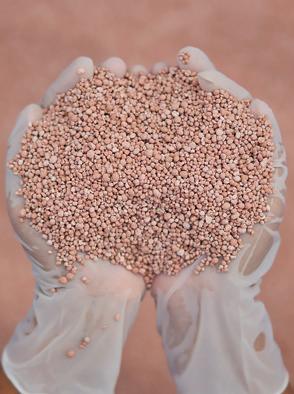
domestic needs and to ease fertilizer costs for struggling U.S. farmers. An agriculture bailout cost the government $12 billion in bridge financing in December. The timing may be right for smaller potash projects.
The administration’s best bet for quick action may be Peak’s Sevier Playa project about 300 km southwest of Salt Lake City. Support for Peak from the U.S. Department of Agriculture included an $80-million grant, Silleroy said.
The Bureau of Land Management approved construction of Sevier Playa’s 195,000-tonne initial stage in June. The approval was the last Peak needed to start construction although the Southern Utah Wilderness Alliance is challenging the project.
Financing needs
Peak still requires $355 million in construction capital, but the company has signed offtake agreements with Anglo American (LSE: AAL) and Mexico’s Fertilizantes Tepeyac. The deals cover 60% of Peak’s initial
“The U.S. agricultural sector will need to rely heavily on imports (e.g. from Canada) for the foreseeable future. It will take considerable time and money to build the infrastructure.”
U.S. INTERNATIONAL TRADE COMMISSION EXECUTIVE MEMO ISSUED IN NOVEMBER
195,000 tonne annual output. Silleroy said Peak is in negotiations on another 20% of output and is considering further contracts or spot market options for the remainder.
Michigan Potash & Salt also received an $80-million USDA grant, in December. The FAST-41 program overseen by the Federal Permitting Improvement Steering Council is awaiting an environmental report and a final Department of Energy decision on government funding, according to the program’s website.
“The department continues to work closely and collaboratively with Michigan Potash, the Environmental Protection Agency and the Permitting Council to advance the project,” an energy department spokesperson said by email on Jan. 14.
The company has an offtake agreement for all of its initial run and has announced a deal with Austin, Texas-based potassium-battery technology developer Group1 for taking later production.
Early-stage development
While some legacy U.S. production has continued in places such as New Mexico and through byproduct or solution-mining operations, the country has not built a new world-scale conventional potash mine in more than half a century. It has become heavily dependent on imports, mainly from Canada –the world’s largest potash producer – for the vast majority of its supply.
“The U.S. agricultural sector will need to rely heavily on imports (e.g., from Canada) for the foreseeable future,” the U.S. International Trade Commission said in a November executive memo. “It will take considerable time and money to build the required infrastructure.”
But some companies with early-stage projects see opportunities in the Trump administration’s new push to boost domestic potash mining. Sage Potash (TSXV: SAGE, US-OTC: SGPTF) and American Critical Minerals (CSE: KCLI, US-OTC: APCOF) are two Canada-listed juniors benefiting from the government’s onshoring initiative.
Sage received $14 million from the USDA in September and raised C$14 million ($10.2 million) in a private placement last year. It anticipates its Sage Plains project will produce 300,000 tonnes annually in Utah’s southeast. Sage will use the financing for more drilling as per its November 2025 technical report.
American Critical Minerals raised C$7.45 million in December to support exploration at its Green River Potash and Lithium project in Utah. The company plans to drill four holes this quarter.
America’s existing potash producers aren’t showing interest in major
capital spends. Mosaic (NYSE: MOS) said in December that it had spun off its Carlsbad, New Mexico mine to Delaware-registered International Minerals Carlsbad for $30 million in cash. Mosaic added that its potash production is now entirely focused on operations in Canada. The new company said it planned to increase production at the mine but hasn’t released new spending plans.
Intrepid Potash (NYSE: IPI), which owns three mines and accounts for most domestic output, said in November that operational changes could result in moderately increased output but proposed no new development.
Most U.S. potash is imported from Canada. BHP (NYSE, LSE, ASX: BHP), the world’s biggest miner, has been hit with $2.7 billion in capex overruns at its stageone Jansen potash project in Saskatchewan. The company last month updated the cost to $8.4 billion from $5.7 billion last July. BHP is slated to ramp up Jansen to full production of 8.5 million tonnes per year in 2031. This would represent 10% of global supply once complete and would be more than enough to meet growing U.S. demand.
Nutrien (TSX, NYSE: NTR), which produces about 14 million tonnes of potash a year as Canada’s largest supplier, floated plans in November to build a potash export terminal in Washington state to serve Asian markets.
But the proposal stirred backlash at home as industry players and policymakers questioned why Canada’s main producer would invest in major export infrastructure outside the country rather than expand capacity at domestic ports. TNM
NEVADA | But costs
BY FRÉDÉRIC TOMESCO
Orla Mining (TSX: OLA; NYSE: ORLA) said it will kick off construction at its South Railroad gold project in Nevada after an updated feasibility study showed costs doubled in three years while resources increased.
Capital costs rose to $395 million (C$549 million) from $190 million in a 2022 study due to inflation, new two-stage crushing and water management, Orla said in January. Full construction at South Railroad should start within weeks of a final state permit due in August, the company said.
Located 700 km northeast of Las Vegas, South Railroad is a key asset for Orla as the Vancouver-based miner works to reach annual gold production of 500,000 ounces. The project covers 250 sq. km on Nevada’s Carlin Trend, offering potential for resource growth and new discoveries. Orla acquired the project from Gold Standard Ventures in 2022.
“Engineering is advancing well,
efforts to attract and retain the necessary labour are progressing, Orla’s balance sheet is in strong shape to fund construction, and the board has approved project spending,” National Bank Financial mining analyst Alex Terentiew said in a Jan. 21 note. He expects first production starting in 2028.
On Jan. 20, the company reported record fourth-quarter output which lifted full-year production to 300,000 oz., 15,000 oz. past its upper-end forecast. Orla operates the Musselwhite mine in Ontario, Camino Roja in Mexico and the South Carlin Complex in Nevada.
South Railroad Development will be financed through operating cash flow and cash on hand, Orla says. It forecasts $202 million for life-of-mine sustaining capital.
Based on a 5% discount rate, a gold price of $3,100 per oz. and a silver price of $36.50 per oz., South Railroad now has an after-tax net present value (NPV) of $783 million and an internal rate of return (IRR) of 48%, Orla said. With a
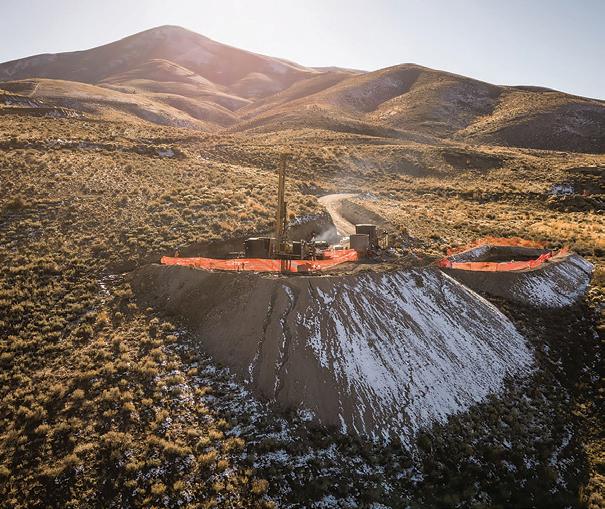
gold price of $4,500, the NPV rises to $1.7 billion and the IRR to 95%.
South Railroad holds 66.6 million tonnes of proven and probable reserves grading 0.71 gram gold per tonne and 5.1 grams silver for contained metal of 1.52 million oz. gold
and 6.2 million oz. silver, according to a September resource. Measured and indicated resources have increased since 2022 by 206,000 oz. in oxide and 469,000 oz. in sulphide, according to the company.
Orla envisions average annual gold production at South Railroad of 104,000 oz. over the projected 10-year life at an average all-in sustaining cost of $1,505 per ounce. Annual output over the first five years will average 130,000 ounces.
“This optimized South Railroad feasibility study reaffirms the strength of the project and the basis upon which we will move forward in Nevada,” CEO Jason Simpson said. “South Railroad is more than our next project; it is our next building block of growth as we solidify our place in Nevada.”
Crews have completed 57,800 metres of drilling at South Railroad over the past three years to expand the resource, including 18,000 metres last year. “Aggressive” exploration is planned for 2026, the company says.
Orla shares fell 1% to C$20.36 on Jan. 15 in Toronto before climbing to $24.03 near press time, giving the company a market value of C$8.14 billion ($5.9 billion).

20 Market News contents
21 Capital Raisings
23 Infographic Top 5 Canadian gold and silver producers
24 EV Metals
Shorts
28 Market Data + Mining events
*Data may not be comprehensive and is provided on a best-efforts basis as of press time. Investors are responsible for their own due diligence.
Delivering fit-for-purpose solutions across the entire project life cycle
Delivering fit-for-purpose solutions across the entire project life cycle
Delivering fit-for-purpose solutions across the entire project life cycle
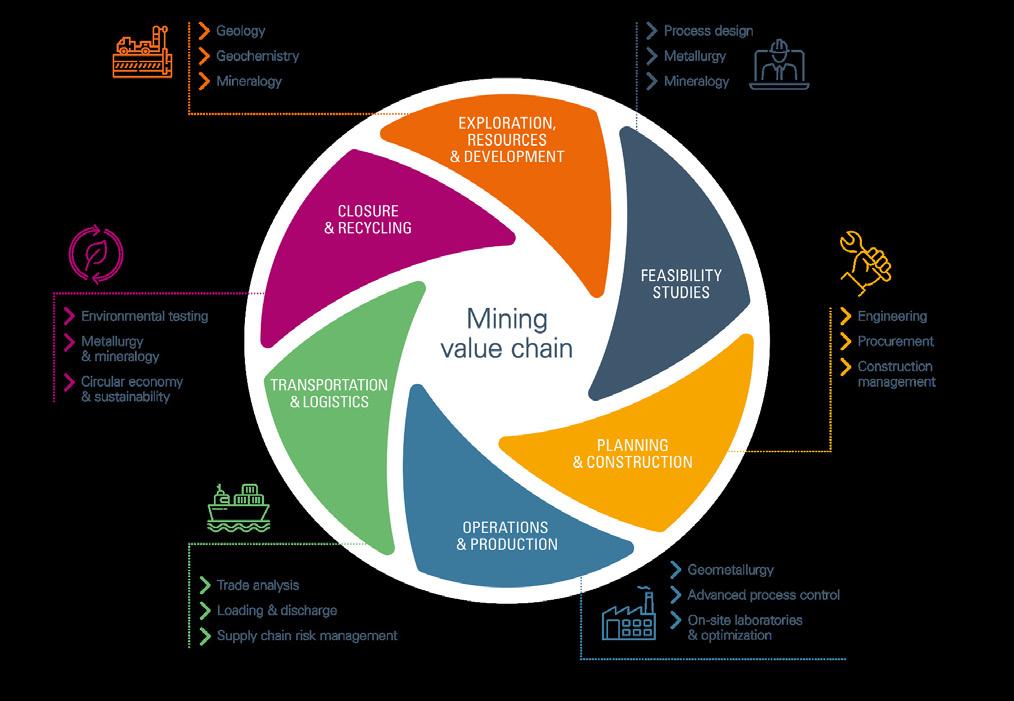
Our fit-for-purpose solutions encompass the skills of qualified geologists, geostaticians, analytical chemists, mineralogists, metallurgists, process engineers and mining engineers and inspectors brought together to provide accurate and timely mineral and process evaluation services across the entire project life cycle.
Our fit-for-purpose solutions encompass the skills of qualified geologists, geostaticians, analytical chemists, mineralogists, metallurgists, process engineers and mining engineers and inspectors brought together to provide accurate and timely mineral and process evaluation services across the entire project life cycle.
Our fit-for-purpose solutions encompass the skills of qualified geologists, geostaticians, analytical chemists, mineralogists, metallurgists, process engineers and mining engineers and inspectors brought together to provide accurate and timely mineral and process evaluation services across the entire project life cycle.
Our fit-for-purpose solutions encompass the skills of qualified geologists, geostaticians, analytical chemists, mineralogists, metallurgists, process engineers and mining engineers and inspectors brought together to provide accurate and timely mineral and process evaluation services across the entire project life cycle.
WWW.SGS.COM/NATURALRESOURCES
WWW.SGS.COM/NATURALRESOURCES NAM.NATURALRESOURCES@SGS.COM
WWW.SGS.COM/NATURALRESOURCES NAM.NATURALRESOURCES@SGS.COM
WWW.SGS.COM/NATURALRESOURCES NAM.NATURALRESOURCES@SGS.COM

Week of Jan 19-23, 2026
TSXV jumps 6% while Dow, S&P 500 slips
By Henry Lazenby
Geopolitical tensions hurt U.S. markets during the Jan. 19-23 trading week while tariff threats lifted gold and Canadalisted miners.
The Dow Jones Industrial Average fell 260 points or 0.5% to 49,098.71 and the S&P 500 fell 24.4 points or 0.4% over the week to 6,9940.01.
The S&P/TSX Composite Index gained 104.4 points or 0.3% to 33,144.98, and the S&P/TSX Venture Composite Index climbed 63 points or 5.8% to 1,154.15.
S&P/TSX Global Mining Index gained 15.46 points or 6.4% to 257.65, and the S&P/TSX Global Gold Index gained 74.11 points or 7.9% to 1,014.58.
Gold traded at US$4,946.25 per oz. after more than US$335.2 per oz. or 7.3% in gains and set a record high of
$4,966.93 during the week
The S&P/TSX Global Base Metals Index gained 13.16 points or 4% to 339.88, as copper rebounded from recent lows to close at US$5.94 per lb. on Jan. 23.
Precious metals companies gained the most in value. Among NYSE-listed stocks, Franco Nevada added US$17.06 to US$214.54 and Newmont gained US$10.19 to 124.31 per share.
In Toronto, Agnico Eagle rose $19.16 to close at $293.89 and Wheaton Precious Metals added $11.98 to $200.26.
On the S&P/TSX Venture Exchange Artemis Gold closed $5.71 higher at $45.32 after releasing record fourthquarter production results, capping the central British Columbia Blackwater mine’s first full year of operations.

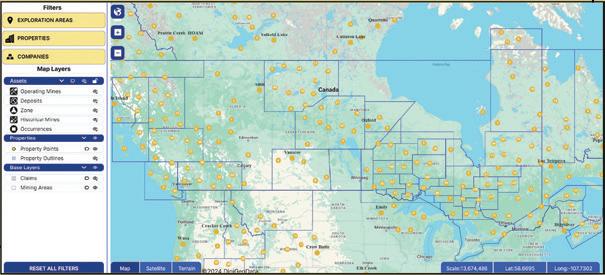
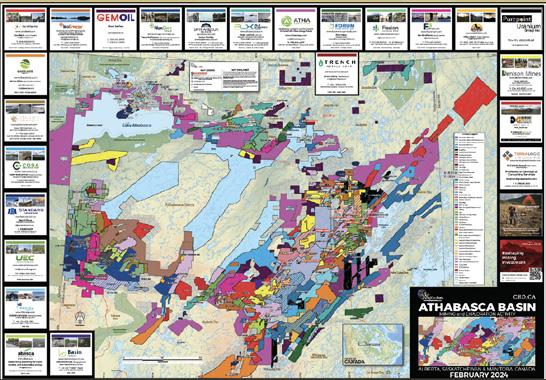
$3,000
$2,000
$1,000 $0
The Northern Miner charts the leading Canada-domiciled precious metals producers by market capitalization from last February to date.
Gold Producers Market Capitalizations (CAD | Billions) Silver Producers Market Capitalizations (CAD | Billions)
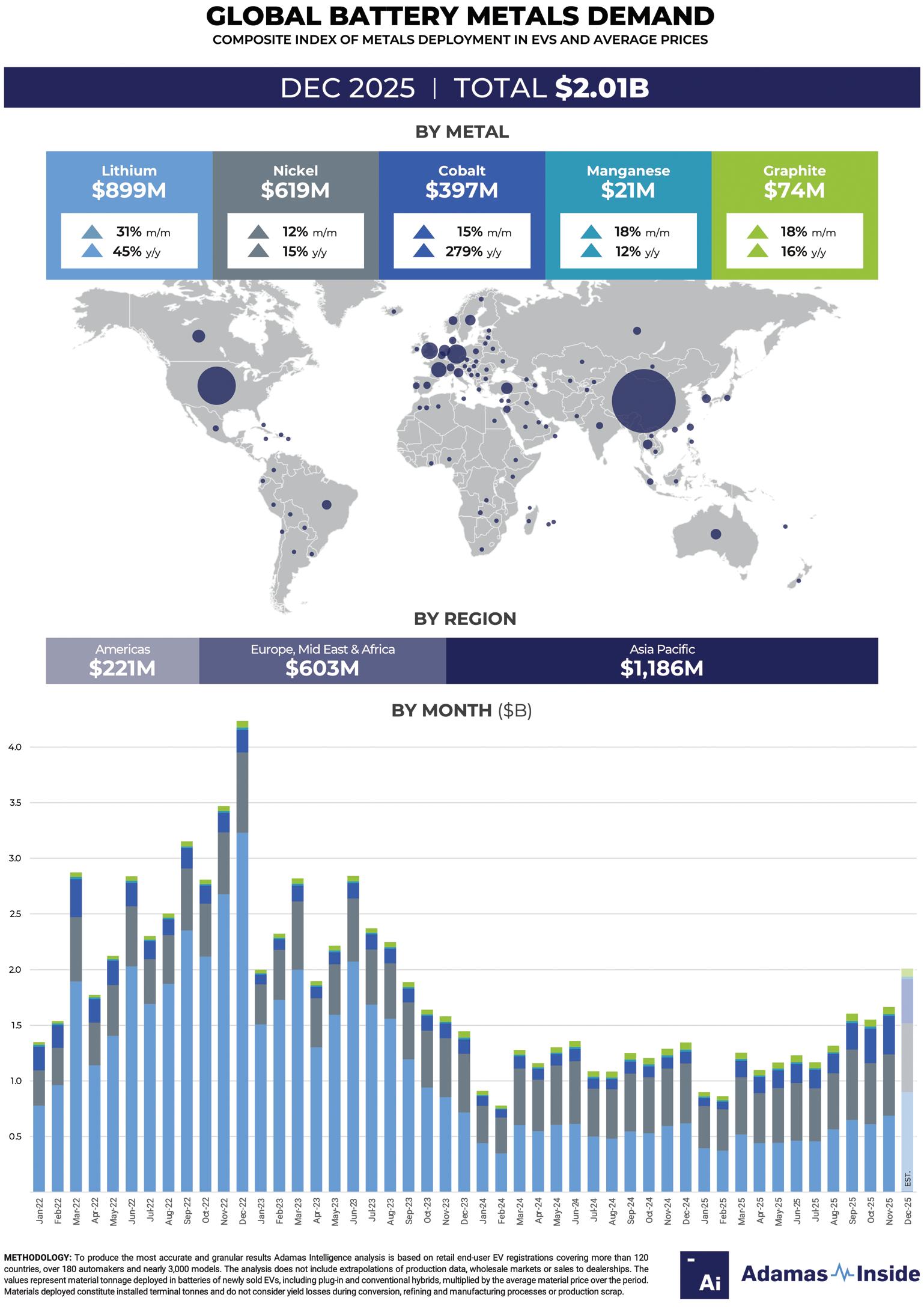
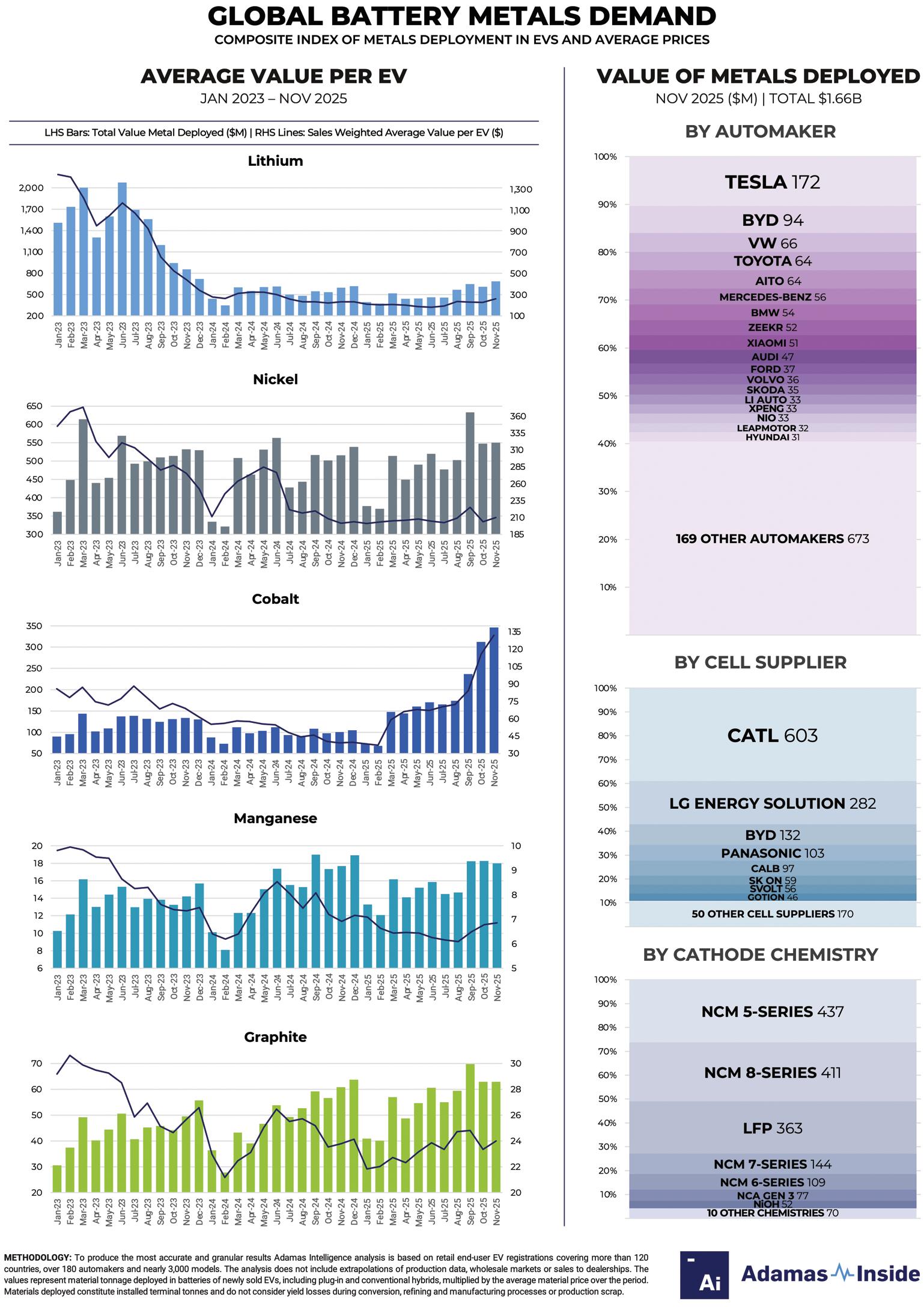
Our TNM Drill Down features the top 10 gold, copper and silver assays of the past month. Drill holes are ranked by grade x width.
December 12, 2025 to January 12, 2026
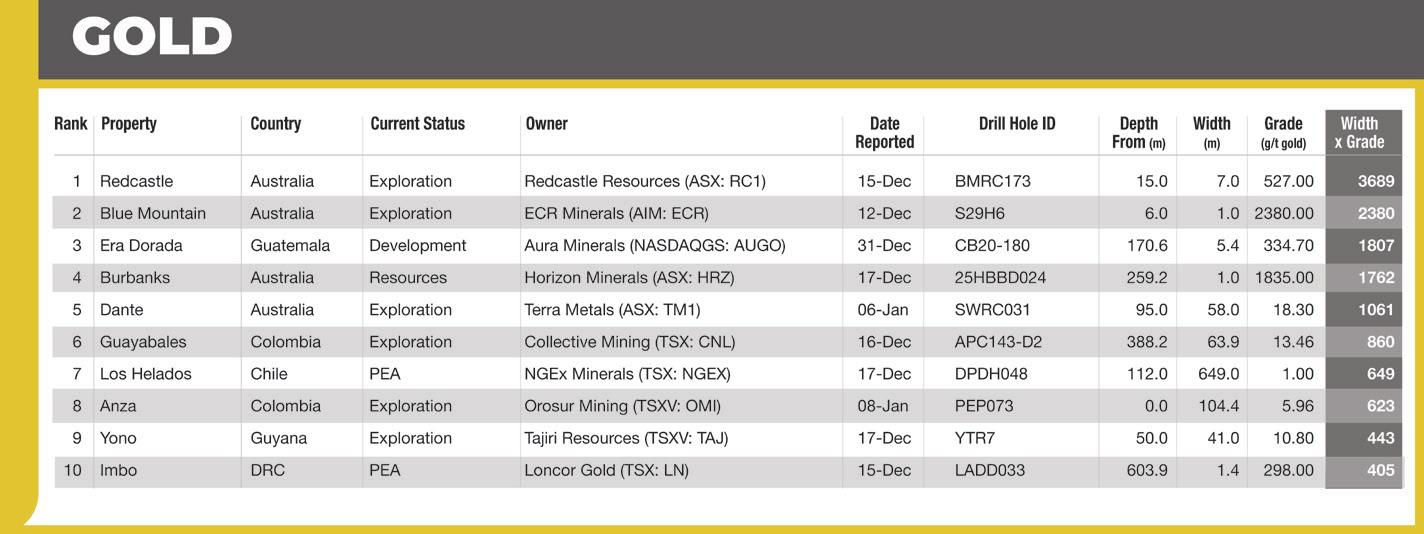
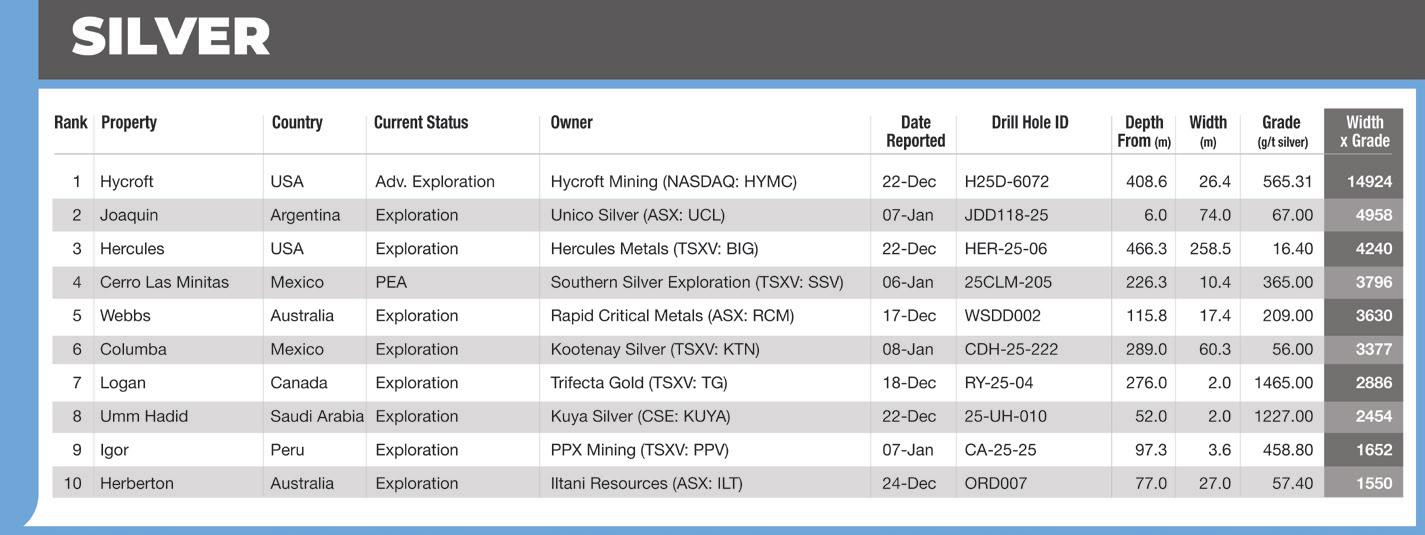
Talisker Resources Ltd. SK.WT One Warrant to purchase one common 5-05-2028 share of the Issuer at $0.75 until expiry
GoGold Resources Inc. GGD.WT One Warrant to purchase one common 11-27-2028 share of the Issuer at $3.50 until expiry
Silver Mountain AGMR.WT.A One warrant to purchase one common 02-09-2026 Resources Inc. share at $0.45 per share.
Osisko Development ODV.WT.B One warrant to purchase one common 03-02-2026 Corp. share at $8.55 per share.
Denarius Silver Corp. DSLV.WT One warrant to purchase one common 03-17-2026 share at $0.80 per share.
West Red Lake Gold WRLG.WT One warrant to purchase one common 05-16-2026 Mines Ltd. share at $1.00 per share.
Aurania Resources Ltd. ARU.WT.B One warrant to purchase one common 10-21-2026 share at $2.20 per share.
Tuktu Resources Ltd. TUK.WT One warrant to purchase one common 11-23-2026 share at $0.13 per share.
Freeman Gold Corp FMAN.WT.U One warrant to purchase one common 11-29-2026 share at US$0.65 per share.
Palisades Goldcorp Ltd. PALI.WT One warrant to purchase 0.060538 12-06-2026 common share at $0.50 per share.
Mogotes Metals Inc MOG.WT One warrant to purchase one common 01-31-2027 share at $0.30 per share.
Osisko Development ODV.WT.A One warrant to purchase one common 03-02-2027 Corp. share at $14.75 per share.
Integra Resources Corp. ITR.WT One warrant to purchase one common 03-13-2027 share at $1.20 per share.
Elevation Gold Mining ELVT.WT.A One warrant to purchase one common 03-24-2027 Corp. share at $0.70 per share.
Osisko Development ODV.WT.U One warrant to purchase one common 05-27-2027 Corp. share at US$10.70 per share.
Robex Resources Inc RBX.WT One warrant to purchase one common 06-27-2027 share at $2.55 per share.
Graphite One Inc GPH.WT One warrant to purchase one common 08-22-2027 share at $1.10 per share.
West Red Lake Gold WRLG.WT.B One warrant to purchase one common 10-24-2027
Mines Ltd. share at $0.90 per share.
Nexmetals Mining Corp. NEXM.WT One warrant to purchase one common 11-17-2027 share at $8.00 per share.
Lion One Metals Ltd. LIO.WT.A One warrant to purchase one common 02-14-2028 share at $0.41 per share.
West Red Lake Gold WRLG.WT.C One warrant to purchase one common 02-25-2028 Mines Ltd. share at $0.90 per share.
Silver Mountain AGMR.WT.B One warrant to purchase one common 04-24-2028
Resources Inc. share at $0.135 per share.
Bear Creek Mining Corp. BCM.WT One warrant to purchase one common 10-05-2028 share at $0.42 per share.
3 Lithium Ltd ETL.WT One warrant to purchase one common 10-14-2028 share at $1.50 per share.
West Red Lake Gold WRLG.WT.A One warrant to purchase one common 03-19-2029 Mines Ltd. share at $0.95 per share.
Osisko Development ODV.WT.V One warrant to purchase one common 10-01-2029 Corp. share at US$3.00 per share.
TSX SHORT POSITIONS
Short positions outstanding as of January 15, 2026 (with changes from December 31, 2025)
Largest short positions Company Ticker Short position Change
B2Gold Corp BTO 33606187 -12153244
Suncor Energy SU 26637318 -674009
Denison Mines DML 25890135 3194215
Discovery Silv DSV 25283425 -1749104
Global Atomic GLO 22229750 10135698
Rio2 Limited RIO 18775871 1914689
i-80 Gold IAU 14361830 301173
Barrick Gold ABX 13191252 562466
Capstone Mng CS 11324534 4271423
Ivanhoe Mines IVN 11042438 -508550
Ur-Energy URE 10870851 1066568
Nexgen Energy NXE 10720256 13720
Fortuna Silvr FVI 10619892 -502155
Lundin Mng LUN 9414107 -186617
HudBay Min HBM 9300086 297256
Largest increase in short position
Global Atomic GLO 22229750 10135698
Generation Min GENM 9009117 8463126
Capstone Mng CS 11324534 4271423
Denison Mines DML 25890135 3194215
Taseko Mines TKO 4758932 2509320
-12153244
NGD 7078165 -2386598
IMG 5957597 -2254117
Short positions outstanding as of January 15, 2026 (with changes from December 31,
PER OZ.)
PER OZ.)
COPPER PRICE (US$ PER LB.)
$4,700
$4,200
$3,700
Commodity Prices 12-Month Trend
NICKEL PRICE (US$ PER LB.)
COMMODITY PRICES | Prices current as of January 23, 2025
Aluminum: $1.44/lb. Coal: Central Appalachia, 12,500 Btu,
Cobalt: $25.53/lb.
Gold: $4,966.35/oz.
Lead: $0.9227/lb.
Rhodium: $10,300/oz.
Tin: US$23.531/lb.
2026 n February
February 9-12
Mining Indaba 2026 — Cape Town, South Africa
VENUE: Cape Town International Convention Center
MORE INFORMATION: miningindaba.com/home
February 10-11
Mining Critical Minerals & Clean Energy India Conference and Exhibition — Mumbai
VENUE: JW Marriott Mumbai Sahar
MORE INFORMATION: www.miningindiaconvention. com/
February 22-25
MINEXCHANGE 2026 — Salt Lake City, Utah
VENUE: Salt Palace Convention Center
MORE INFORMATION: smeannualconference.org
February 26-27
Red Cloud’s Pre-PDAC Mining Showcase — Toronto
VENUE: The OMNI King Edward Hotel
MORE INFORMATION: redcloudfs.com/prepdac2026/
February 27-28
Metals Investor Forum — Toronto
VENUE: Delta Hotel
MORE INFORMATION: metalsinvestorforum.com/ metals-investor-forum-toronto/
n March
March 1-4
Prospectors and Developers Association of Canada Conference — Toronto
VENUE: Metro Toronto Convention Centre
MORE INFORMATION: pdac.ca/convention-2026/
Copper: $5.92/lb.
Iridium: $4,500/tr oz.
Lithium carbonate: $24,553.72/tonne
Ruthenium: $910/oz.
Uranium (U3O8): $86.20 per lb.
March 8-10
Mines and Money — Miami, Fla.
VENUE: James L. Knight Center
MORE INFORMATION: minesandmoney.com
March 16-17
Botswana Mining & Energy Conference and Expo — Gaborone, Botswana
VENUE: Gaborone Hall, Boipuso Fairgrounds
MORE INFORMATION: bwminingandenergy.com/
March 18–19
Swiss Mining Institute — Zurich, Switzerland
VENUE: The Dolder Grand
MORE INFORMATION: www.swissmininginstitute.ch
March 26
Mining & Critical Minerals Korea Conference — Seoul, South Korea
VENUE: Conrad Seoul
MORE INFORMATION: criticalmineralskorea.com
n April
April 8-9
Ontario Mineral Exploration Showcase 2026 — Thunder Bay, Ont.
VENUE: Valhalla Inn
MORE INFORMATION: nwopa.net
April 13-14
Mining & Critical Minerals Middle East Conference & Exhibition — Dubai, United Arab Emirates
VENUE: DoubleTree by Hilton Dubai M Square Hotel & Residences
MORE INFORMATION: miningcriticalminerals.com
$4,966.35 US$/oz. (+$2,302.81 vs. YA)
$100.90 US$/oz. (+$71.28 vs. YA)
$5.92 US$/Lb. (+$1.63 vs. YA) $8.49 US$/Lb. (+$1.27 vs. YA)
Group Futures April 2026: $5.97/lb.
Iron Ore 62% Fe CFR China-S: $106.36
Nickel: $8.4867/lb.
Silver: $100.90/oz.
Zinc: $1.4874 per lb.
April 15–16
Swiss Mining Institute — Panama City, Panama
VENUE: TBA MORE INFORMATION: www.swissmininginstitute.ch
April 21-22
Water in Mining Global Summit — Vancouver
VENUE: Vancouver Convention Center
MORE INFORMATION: www.waterinmining.net/2026
April 21-22
International Mining Geology Conference 2026 — Brisbane, Australia
VENUE: Brisbane Convention and Exhibition Centre
MORE INFORMATION: ausimm.com/conferences-andevents/mining-geology/
April 23-24
Critical Minerals North America Conference & Exhibition — New York City
VENUE: TBA
MORE INFORMATION: criticalmineralsnorthamerica.com
April 29-May 1 9th Annual First Nations Major Project Coalition — Toronto
VENUE: Sheraton Centre
MORE INFORMATION: fnmpc.ca/conference/
n May
May 3-6
CIM CONNECT 2026 — Vancouver
VENUE: Vancouver Convention Centre
MORE INFORMATION: cimconnect.ca
May 8-9
Metals Investor Forum — Vancouver
VENUE: JW Marriot Parq
MORE INFORMATION: metalsinvestorforum.com/ metals-investor-forum/
$3,500 3,000 2,500 2,000 1,500 1,000 500 0
The Northern Miner charts the leading Canada-domiciled precious metals exploration companies by market capitalization from last February to date.
(CAD | Millions)
(CAD | Millions)
$12,000 10,000 8,000 6,000 4,000 2,000 0
The Northern Miner charts the leading Canada-domiciled critical metals exploration companies by market capitalization from last February to date.
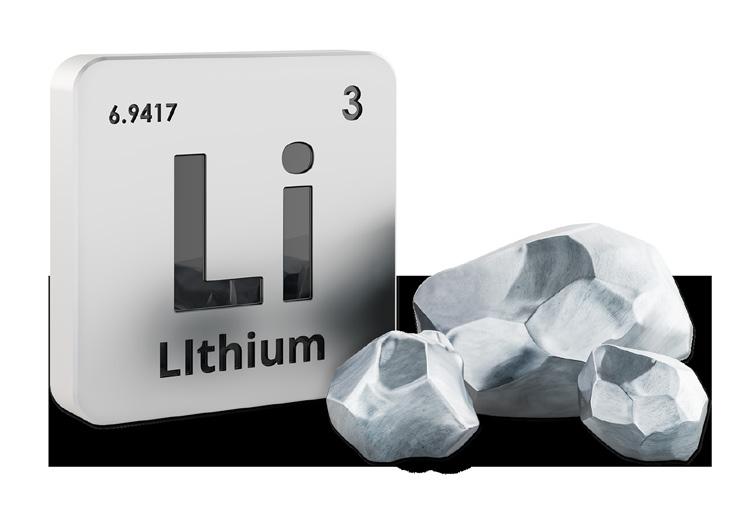
Explorers Market Capitalizations (CAD | Millions)
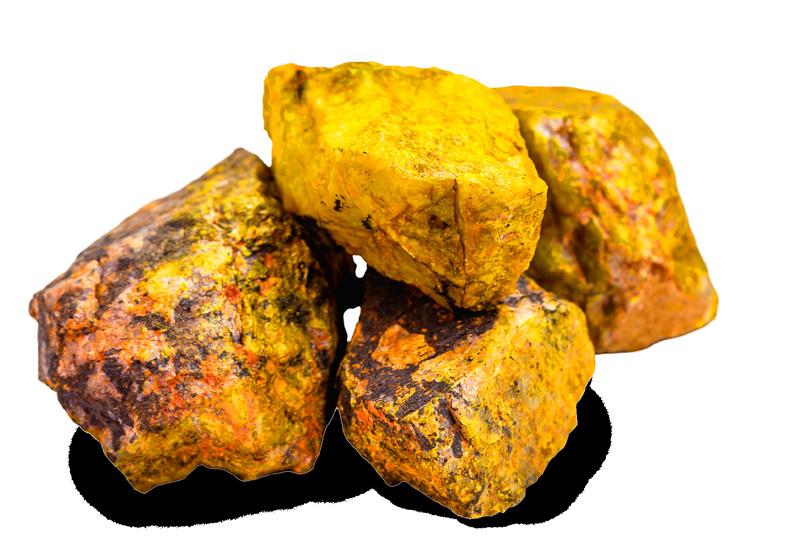
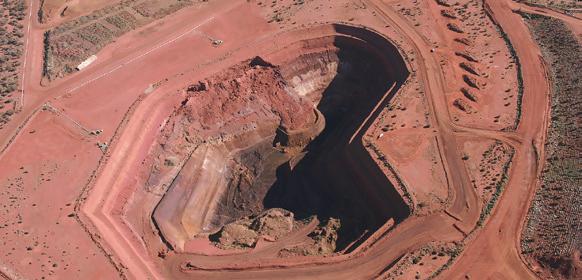
BY CECILIA JAMASMIE
Australia plans to buy and stockpile key minerals from domestic producers to strengthen defence and technology supply chains and reduce reliance on China.
The government will initially target rare-earth elements, antimony and gallium under a A$1.2-billion ($802-million) program, Treasurer Jim Chalmers, Resources Minister Madeleine King and Trade Minister Don Farrell said on Jan. 12.
Australia ranks among the world’s leading producers of critical minerals outside China, and the reserve aims to blunt Beijing’s market power.
Critical minerals have become a flashpoint in global trade and security as governments scramble to secure access to commodities essential for clean energy, advanced manufacturing and military equipment.
China has used its dominance of the sector as leverage in past trade disputes with the U.S., accelerating efforts by rival nations to expand local production and build stockpiles.
G7 in action
Australia joined finance ministers from the Group of Seven in Washington on Jan. 12 to discuss supply chain security. Canberra has said it intends to make the reserve available to allies to help mitigate supply disruptions.
“Based on the wording of sev-
eral of the USA’s trade deals signed in the last year as well as some statements from public officials, we believe that minimum pricing of some critical minerals could be a key topic of discussion,” BMO Metals analysts said in a note.
Australia’s Chalmers said the reserve would place the country “at the centre of efforts to build stable and reliable supply chains” for international partners.
“The world needs critical minerals,” he said. “Australia has plenty of them, and our critical minerals reserve will help us weather global economic uncertainty while boosting trade and investment.”
The reserve will secure rights to minerals produced in Australia and on-sell those rights to meet demand, a structure the government says will support local miners while strengthening partner supply chains.
The government plans legislation to expand the powers of its export finance agency and the industry department, which will oversee transactions, King told a briefing in Perth.
The reserve, originally targeted for launch by mid-2026, will be operational by year-end, King said.
Australia signed an agreement with the U.S. in October to counter China’s dominance in critical minerals, including an $8.5-billion project pipeline that leverages the proposed reserve to supply metals vulnerable to disruption. TNM
M&A | Maker snubs ‘cheap’ bid
BY CECILIA JAMASMIE
BlueScope Steel (ASX: BSL) has rejected an $8.8-billion takeover bid by U.S. steelmaker Steel Dynamics (Nasdaq: STLD) and Australian conglomerate SGH (ASX: SGH), accusing the bidders of trying to buy the company “on the cheap”.
The company’s board said on Jan. 7 the proposal failed to properly reflect the value of BlueScope’s assets and came during a period of weaker steel spreads in Asia, conditions it argued masked the company’s longer-term earnings power. It was the fourth approach from Steel Dynamics since late
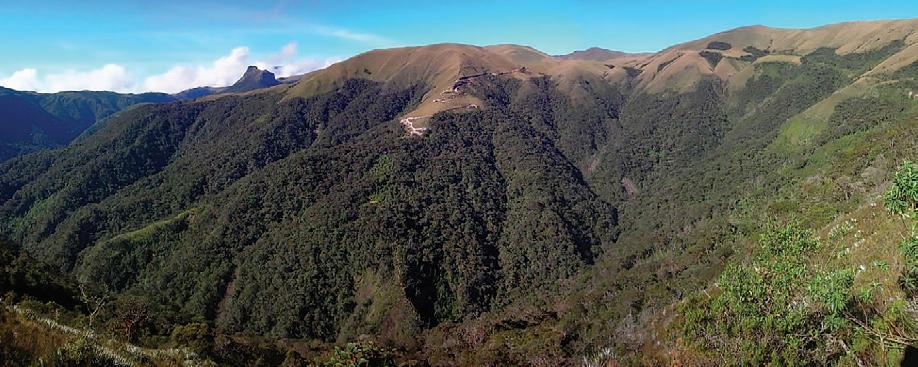
M&A | Major to gain Cañariaco project in Peru
BY FRÉDÉRIC TOMESCO
Australia’s Fortescue (ASX: FMG) agreed to buy all of Peru-focused explorer Alta Copper (TSX: ATCU; US-OTC: DNCUD) in a C$139-million (US$101-million) deal that accelerates a pivot into copper amid surging global demand.
Fortescue’s wholly owned Nascent Exploration unit will acquire the 64% of Alta Copper shares it doesn’t already own for C$1.40 in cash per share, according to a statement issued Dec. 14. The offer price, funded from existing cash reserves, represents a 50% premium to Alta’s 30-day volume-weighted average price through Dec. 15.
“This all-cash premium offer from Fortescue is an excellent outcome for our shareholders given the significant costs and risk associated with advancing the Cañariaco project,” Alta CEO Giulio Bonifacio said in the statement.
“We believe this represents the right time to deliver a substantial non-dilutive success to Alta Copper shareholders.”
The transaction would give Fortescue control of the major Cañariaco project in one of the world’s leading copper jurisdictions as the Australian miner continues efforts to diversify beyond iron ore. Copper, a key building block in electrification and the energy transition, is facing a 70% increase in demand by the middle of the century, BHP (NYSE, LSE, ASX: BHP) CEO Mike Henry has predicted.
copper, 2.14 million oz. gold and 59.4 million oz. silver. It also holds 401.6 million inferred tonnes grading 0.29% copper, 0.04 gram gold and 1.4 grams silver for 2.66 billion lb. of contained copper, 550,000 oz. gold and 18.1 million oz. silver. Advancing Cañariaco independently would require significant financing to navigate Peru’s multiyear permitting and community engagement processes, Alta says. Selling to Fortescue now would let shareholders cash in without committing additional capital or shouldering project execution risk.
Long-term development
Fortescue, which has been active in Latin America since 2018 and boasts significant technical, permitting and community engagement expertise, said it’s “well placed” to advance Cañariaco. It pledged to apply its “proven approach of working collaboratively with local
and indigenous communities” to ensure the responsible, long-term development of the project.
The proposed transaction, which is subject to conditions such as court, regulatory and shareholder approvals, is expected to close this month, pending an Alta shareholders vote that was scheduled for Jan. 26. Shares of the company would be delisted from the Toronto Stock Exchange after closing.
Deal protection measures such as a “right to match” for Fortescue –are included in the agreement. Alta would be required to pay Fortescue a C$3-million termination fee in certain unspecified circumstances. Alta’s board and special committee are unanimously recommending that shareholders vote in favour of the deal. Fortescue already holds about 33.6 million Alta Copper shares. This represents about 36% of the company’s issued and outstanding stock. TNM
2024 and followed a BlueScope statement on Jan. 5 that the latest offer appeared unacceptable.
“Let me be clear – this proposal was an attempt to take BlueScope from its shareholders on the cheap,” BlueScope Chair Jane McAloon said, adding the board’s position had not changed across multiple approaches.
The board also cited a period of lower steel spreads in Asia as one of the reasons for refusing the offer.
Steel Dynamics and SGH, which is controlled by billionaire Kerry Stokes, offered A$30 ($20.20) a share for the Australian steelBlueScope P40 >
Alta shares – which surged 59% from mid-November to mid-December – sat at a 52-week high of $1.36 apiece before press time in Toronto, for a market capitalization of $128.1 million. Fortescue traded for A$21.48 apiece on the ASX before press time, valuing it at about A$69.7 billion ($47.6 billion).
Prospective land
Vancouver-based Alta is focused on the development of Cañariaco, one of the largest copper deposits in the Americas not held by a major. Located about 700 km northwest of Lima, Cañariaco covers 91 sq. km of highly prospective land that includes the Cañariaco Norte and Cañariaco Sur deposits and the Quebrada Verde prospect.
Cañariaco holds 1.1 billion measured and indicated tonnes grading 0.39% copper, 0.06 gram gold per tonne and 1.7 grams silver for contained metal of 9.29 billion lb.

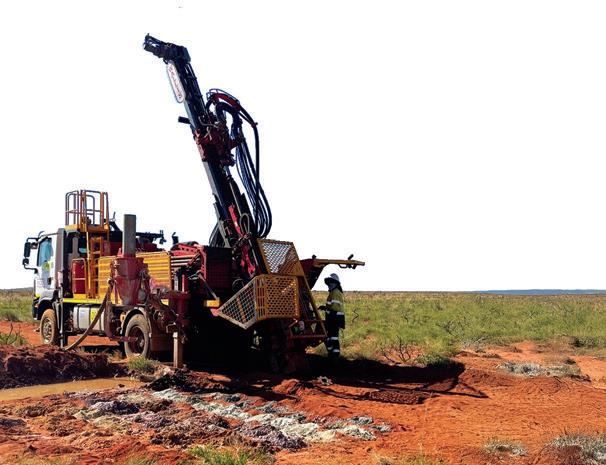
BY BLAIR MCBRIDE
Lynas Rare Earths (ASX: LYC), Energy Fuels (TSX: EFR; NYSE: UUUU) and MP Materials (NYSE: MP) are among Western companies chipping away at China’s enormous lead in rare earths.
Leading the charge is the Lynas Mt Weld mine in Western Australia and its Malaysian processing plant, the largest producer of separated rare earths outside China. Energy Fuels’ White Mesa mill in Utah could be the first in North America to produce light and heavy separated rare earths at commercial scale. It might even surpass output from MP Materials, the continent’s only producer.
China’s recent threats to curb exports to Japan and the United States highlight the plight of the West which needs the hard-to-produce metals for everything from cell phones to fighter jets. The Asian giant took on rare earths as a strategic goal 60 years ago as Western nations let go their grip on the dirty process.
Now, as superpowers turn mining into a new Cold War, the U.S. is scrambling to catch up by threatening a Greenland takeover of sorts and buying an equity stake in MP Materials, its largest producer.
“Trade uncertainties reinforce the importance of protecting current functioning outside China supply chains and investing in the supply chain,” a Lynas spokesperson told The Northern Miner by email. “Lynas plays an important role in this as the only outside China commercial producer of both separated light and heavy rare earth oxides today.”
Japan’s reliance exposed Beijing’s threats last month against Japan echo those in 2010, which had spurred Tokyo to begin exploring alternate sources of rare earths, leading to Lynas. Japanese conglomerate Sojitz and government mineral agency Jogmec signed a $250-million agreement for longterm supply of rare earths.
That deal and others helped Japan lessen its reliance on Chinese rare earths to 60-70% today from 90% in 2010, according to Jogmec data cited by The New York Times
Lynas started mining in 2011 at Mt Weld, estimated to contain 2 million tonnes of total rare earth oxides in reserves. Its processing facility in Kuantan, Malaysia began output of separated light rare earths in 2013, eventually ramping up to annual capacity of 5,500 to 6,000 tonnes. Lynas produced 10,908 tonnes of light rare earth oxides in 2024, for 5,655 tonnes of separated neodymium-praseodymium (NdPr), company figures show.
The company reached its heavy rare earth commercial production milestone last May at annual capacity of 1,500 tonnes. Heavy rare earths include samarium, gadolinium, dysprosium and terbium and are used in wind turbines, electronics and defence applications.
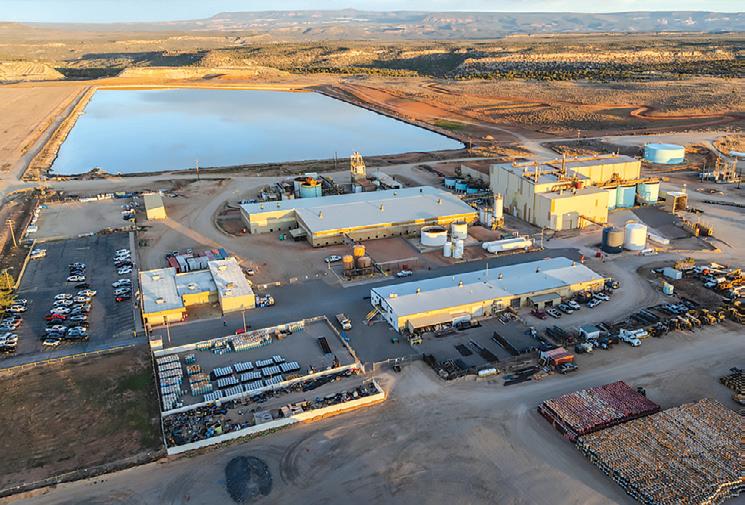
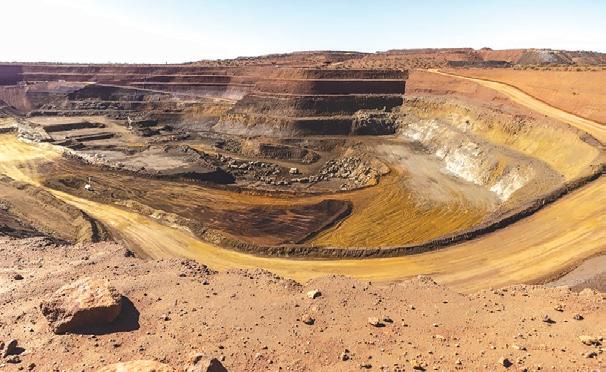
Lynas announced plans in October to build a new separation plant in Malaysia with annual capacity of 5,000 tonnes of heavy rare earths. It expects to begin producing samarium this April, with full throughput targeted for 2027-2028.
However, this production is only a tiny fraction what analysts say the West needs. Western producers currently make about 7,000 tonnes annually of separated rare earths, including Lynas’ output and around 1,300 tonnes from MP Materials. But an analysis from McKinsey suggests Western demand could reach 50,000 to 70,000 tonnes annually by the mid-2030s. Despite the accelerated efforts to build up rare earth mining and processing capacity in recent years, the task of trying to match China is massive.
The Asian country produced 270,000 tonnes of rare earth oxides in 2024, according to U.S. Geological Survey figures. That’s more than four times the combined total in 2024 from the main Western rare earths producers of the U.S. (45,000 tonnes), Australia (13,000 tonnes) and Brazil (20 tonnes).
Fuelling future supply
While not as advanced as Lynas, Energy Fuels’ White Mesa mill in southeast Utah might be able to produce a comparable amount of separated rare earths after its stage two circuit expansion is commissioned in 2029, according to a feasibility study released on Jan. 15.
WESTERN PRODUCERS MAKE 7,000 TONNES ANNUALLY OF SEPARATED RARE EARTHS. BUT WESTERN DEMAND COULD REACH 50,000 TO 70,000 TONNES BY THE MID-2030S.
Currently the only operating conventional uranium mill in the United States, White Mesa is also the country’s sole facility that can process light rare earths at commercial scale, and heavy rare earths at pilot scale. The circuit expansion could boost capacity six-fold to 6,000 tonnes per year of separated NdPr and about 300 tonnes of heavy elements dysprosium (Dy) and terbium (Tb).
White Mesa would source rare earths mined at its Vara Mada project in Madagascar, and third party sites such as Astron’s (ASX: ATR) Donald project in Australia’s Victoria state and Chemours’ (NYSE: CC) projects in Florida and Georgia.
“Energy Fuels has a very clear pathway to becoming a tier one, global producer of rare earth oxides on par with Lynas, which is of course the current global leader in
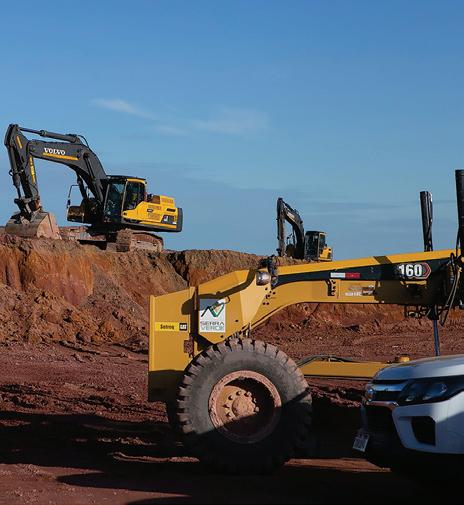
the ex-China rare earth industry,” Curtis Moore, senior vice-president of marketing and corporate development told The Northern Miner in emailed comments.
The company gained further momentum when it signed a $299-million deal on Jan. 20 to acquire Australian Strategic Materials (ASX: ASM) and its rare earths processing sites in South Korea and Australia.
Cost effective
The expansion’s economics stand out as well. At an 8% discount rate, the stage two circuit would have a post-tax net present value (NPV) of $1.9 billion and an after-tax internal rate of return (IRR) of 33%, at initial capital costs of $410 million. The NPV almost doubles to $3.7 billion if the circuit expansion is combined with the $1.8 billion NPV for Vara Mada.
White Mesa’s costs are on the low end for facilities of its size. Iluka Resources’ (ASX: ILU) Eneabba plant in Western Australia – now being built – has a similar capacity to White Mesa. It could produce up to 5,500 tonnes annually of light rare earths and 725 tonnes of heavy rare earths. But Eneabba’s estimated costs – at A$1.7 billion – are more than double White Mesa’s. Iluka targets commissioning and production at Enneabba in 2027.
The Utah mill project also benefits from it being an expansion on an already operational, multi-commodity facility, while Eneabba would be a new plant designed only for processing rare earths.
Next big processor?
By contrast, White Mesa could exceed the output of North America’s only rare earths mine, MP Materials’ Mountain Pass mine in California, while also processing heavy rare earths.
Mountain Pass produced 45,455 tonnes of rare earth concentrates in 2024 for 1,294 tonnes of separated NdPr oxide. However, Mountain Pass doesn’t produce commercial
scale separated heavy rare earths. Still, the California miner is riding tailwinds from a 10-year off-take agreement it signed last August with the Department of Defense. It gives the government a 15% stake in MP Materials and sets a price floor of $110 per kg for NdPr materials. The company also made a $500-million deal in July with Apple (Nasdaq: AAPL) for domestic supplies of rare earths for smartphones and electric vehicles.
South American ‘powerhouse’
In the wider Western world, Brazil stands to emerge as the next rare earths “powerhouse”, according to analysis from BMI last October.
Brazil hosts Latin America’s sole rare earths mine: Serra Verde’s Pela Ema project in Goiás state, as well as enormous reserves of the elements, a pipeline of advanced projects and international partnerships. Since the private miner started commercial production in early 2024, Pela Ema has annual capacity of 5,000 tonnes of light and heavy rare earths over a 25-year life. It plans to ramp up to 6,500 tonnes by early 2027.
Serra Verde has drawn significant financing from U.S. government agencies, including up to $465 million from the U.S. International Development Finance Corporation in November for operational upgrades at Pela Ema; and $150 million in 2024 from the Minerals Security Partnership to boost efficiency at the mine.
Huge reserves
In neighbouring Minas Gerais state, Meteoric Resources’ (ASX: MEI) is developing the Caldeira project that sits on the largest ionic adsorption clay rare earths deposit outside China. It holds 103 million tonnes in probable reserves grading 4,091 parts per million (ppm) total rare earth oxides (TREO) for 421,000 tonnes of TREO, according
BY HENRY LAZENBY
The price of nickel has gained nearly 20% from early December, when the market began to speculate about possible Indonesian quota cuts – now enacted – but not everyone is convinced the rally will be enough to kick-start a new wave of Western sulphide projects.
Indonesia on Jan. 14 said it’s cutting 2026 nickel ore quotas to about 250–260 million tonnes, down about a third from 379 million tonnes approved for 2025. The London Metal Exchange (LME) three-month contract increased to around $17,800 (about C$24,640) per tonne near press time from less than $15,000 in early December.
Veteran nickel analyst Andrew Mitchell cautioned that the market was reacting more to the anticipation of higher prices than actual output.
“It’s all smoke and mirrors right now,” Mitchell, who recently retired from natural resources consultant Wood Mackenzie, said in an interview. In his view, a price around $18,500 per tonne is still “not enough” to spur a rush of new Western supply. Although nickel traded above $20,000 for long stretches through 2022 and into 2023, major project approvals in the West failed to materialize, he added.
Mitchell’s skepticism centres on the uncertainty and opacity inside Indonesia’s quota process. The country sets mining and shipment limits through the RKAB system – annual work plan and budget approvals that effectively determine each miner’s ore-production and shipment quotas. Indonesia has roughly tripled output over a decade to supply about 60% of global demand, so getting a grip on its regulatory drivers is key to markets and project developers.
Known unknowns
While Jakarta in December flagged tighter controls, “we don’t really know what the quotas were in the first place,” Mitchell said. Other unknowns: how much approved quota was actually used, what grades were mined, and whether any headline “cuts” would translate into real reductions in contained nickel.
The uncertainty hasn’t stopped the market from moving. It was enough to revive a familiar debate across Canada, the United States and Australia: will Indonesia’s latest policy signals finally deliver a durable price boost – and with it, a path to greenlight new Western sulphide mines?
That puts a short list of Western sulphide candidates back on the radar – including Talon Metals’ (TSX: TLO) Tamarack project in Minnesota, Giga Metals’ (TSXV: GIGA; US-OTC: HNCKF) Turnagain deposit in British Columbia and Kinterra Capital and Nion Nickel’s Dumont project in Quebec. There is also BHP’s (ASX, LSE, NYSE: BHP) West Musgrave project in Western Australia, despite talk of the company selling its nickel business.
Mind the gap
“Indonesian nickel ore demand was about 280 million tonnes in 2025 according to industry estimates, meaning that this quota would likely represent a decline in
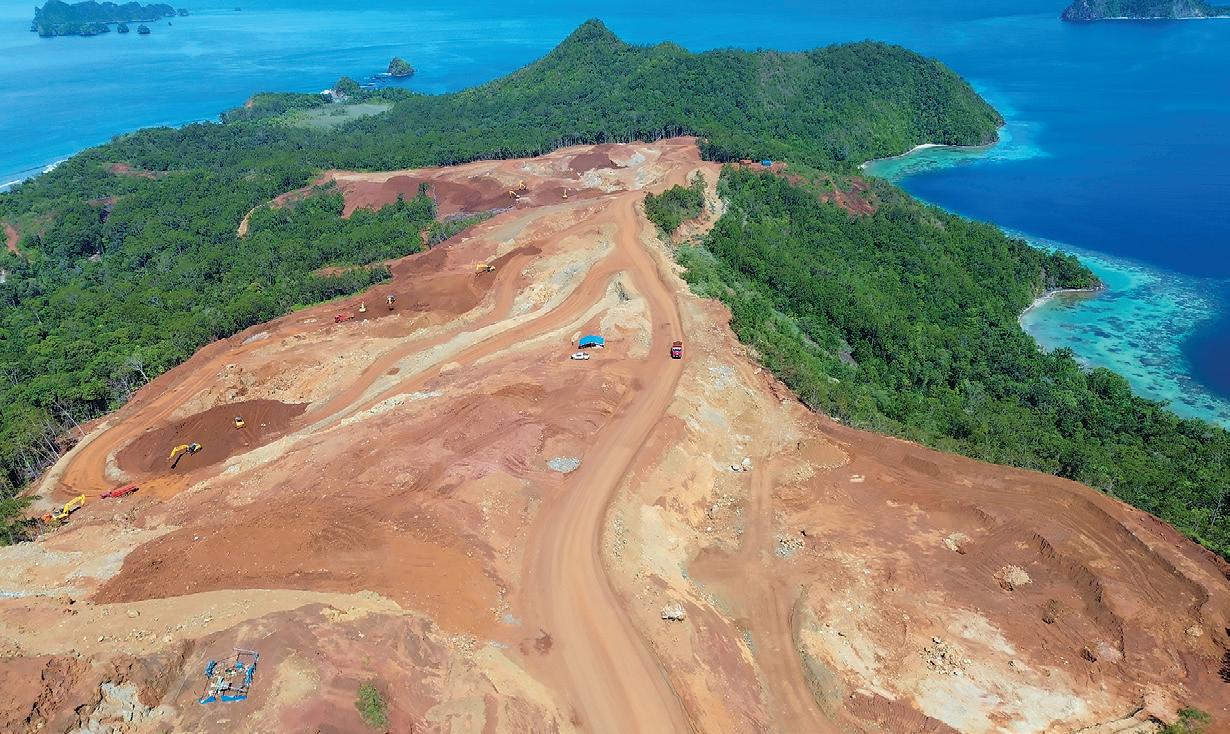
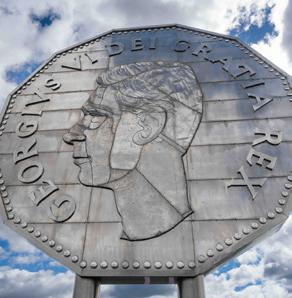
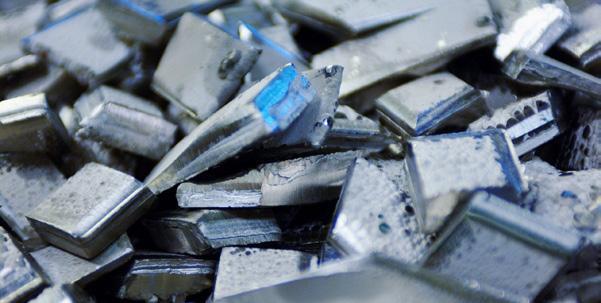
Indonesia nickel output year-onyear,” BMO Capital Markets commodities analysts Helen Amos and George Heppel said in a note on Jan. 20. “LME nickel prices have remained elevated on the news, with the closing price remaining above $17,500 per tonne for most of January.”
Analysis by London-based CRU estimates an Indonesian cap of 250 million tonnes would produce a 40-50 million tonne gap to meet the industry requirements of roughly 310–320 million tonnes of ore this year.
That potential difference puts 400,000 to 450,000 tonnes of contained nickel at risk and could swing the market from surplus to deficit, Nikhil Shah, CRU London Principal for Nickel Market Service Analysis & Forecasts, said in an interview.
At the same time, the broader nickel complex remains shaped by Indonesia’s flood of lower-purity and high-carbon Class 2 units used in stainless steel.
The latest Indonesia-driven volatility is landing as governments and buyers sharpen their focus on securing North American critical-minerals supply, Power Metallic Mines’ (TSXV: PNPN; US-OTC: PNPNF) CEO Terry Lynch said during a presentation Jan. 8.
The company, which is developing the polymetallic Nisk project in Quebec’s James Bay Lowlands, has
CAN INDONESIA-DRIVEN VOLATILITY IMPROVE THE PERCEPTIONS OF SULPHIDE PROJECTS ELSEWHERE - AND CAN THE INDUSTRY ACTUALLY BUILD THEM?
spoken with U.S. defence and policy circles that want “local supply” alongside global sourcing, Lynch said.
Indonesia’s leverage Canada Nickel’s (TSXV: CNC) founder and CEO, Mark Selby, agrees that Indonesia holds the key levers – but he sees longer-term constraints that could force Jakarta to become a more disciplined supplier.
Selby told The Northern Miner Indonesia is now behaving like an “OPEC of one” in nickel: the country’s nickel and stainless exports have become economically meaningful and he expects policymakers to increasingly manage output to maximize value rather than volume.
Indonesia isn’t operating with limitless ore, Selby argued. Saprolite – the laterite layer used to make nickel pig iron and matte – represents roughly half of global nickel supply and is facing grade decline after years of “triple high-grading” – selectively mining only the best ore, feeding only the highest-quality material to the plant, and focusing production on the highest-margin
products, at the expense of longterm resource value.. Indeed, Indonesian operations have increasingly pulled in ore from the Philippines to keep plants fed, he said.
Mitchell doesn’t dispute Indonesia’s market power, but he questions whether the politics of quota cuts will be as simple as traders assume – and whether reductions would fall on major Chinese-linked industrial parks or smaller domestic miners. He also notes that cutting ore output could lower Indonesia’s royalty take, something policymakers will weigh carefully.
Western revival?
The central question for investors and miners is whether Indonesia-driven volatility can improve the perceptions of sulphide projects elsewhere – and whether the industry can actually build them.
Selby believes the strategic case for non-Chinese-controlled nickel supply exists even without Indonesian action, pointing to nickel’s longstanding role in high-performance alloys and defence applications. Prices in the $18,000–$20,000 per tonne range – particularly with a weak Canadian dollar – could
support advancement of at least some Canadian projects, with momentum building further above $20,000, he said.
Mitchell is far less optimistic. Beyond price, he sees a practical bottleneck: processing capacity. After closures in Western Australia and a broader hollowing-out of Western nickel processing over the past decade, a limited amount of spare sulphide smelting capacity now exists outside China.
Even if new mines are approved, they can take years to permit, build and commission, Mitchell said –and the nickel price may not cooperate by the time first concentrate is ready.
On the much-discussed idea of a “green premium” for low-carbon Class 1 nickel, Selby, Mitchell and Shah were cautious. Selby said pricing differentials do exist between regions – with North American prices often carrying a premium to Europe and Asia – but he did not attribute that to a single, explicit low-carbon mechanism.
Mitchell said any premium is more likely to show up in private offtake negotiations than on the LME. For now, Mitchell’s view is that the market is trading the possibility of Indonesian action – not the reality.
“If Indonesia doesn’t do something, then the house of cards could all come crashing back down again.” TNM
| Rare earths mine set for 2029-30
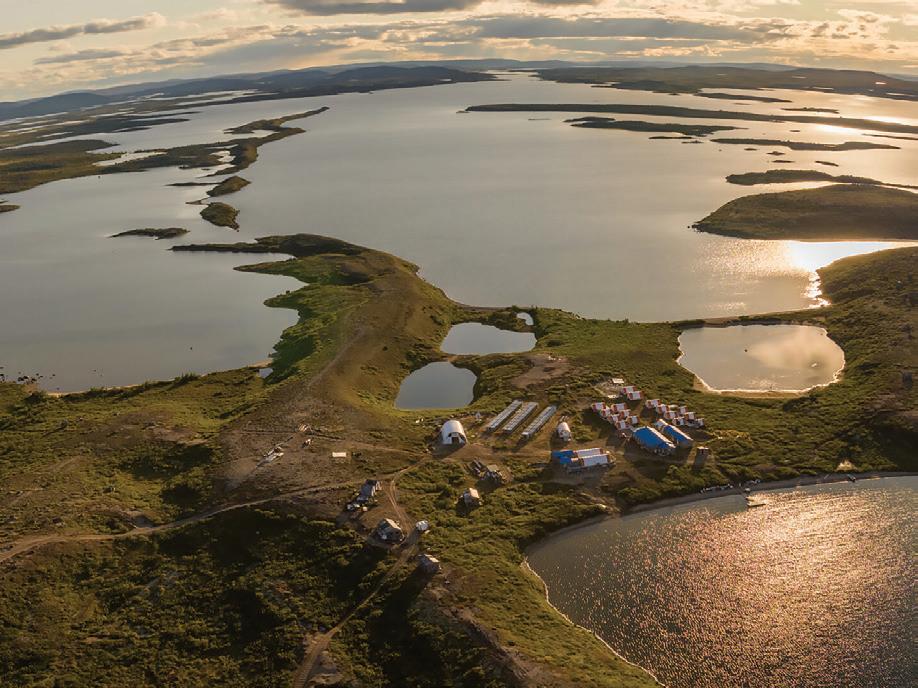
BY FRÉDÉRIC TOMESCO
Privately held developer Torngat Metals has pushed back its target for starting rare earths production at the $2-billion Strange Lake project in northern Quebec by about a year due to permitting and other delays.
Until recently, the Montreal-based company had been saying it was aiming to start production by 2028. That timeline has now slipped, CEO Yves Leduc says.
“It’s likely we will get permits in the earlier part of 2027, and construction would start around then. So 2028 is very, very tight. It’s more like 2029-30,” CEO Yves Leduc told The Northern Miner in a telephone interview.
Torngat is working to publish a bankable feasibility study for Strange Lake in the first half of 2026 and complete environmental impact assessments by the end of the year, Leduc says. The project includes three key components –a mine and concentration plant in Nunavik; a 180-km road to Voisey’s Bay, Labrador and an $800 million, 15,000 tonne-a-year rare earth separation plant in Sept-Îles, Que.
Strange Lake stands out among North American rare earth projects for its heavy rare earth content, particularly dysprosium and terbium – elements critical to permanent magnets used in electric vehicles, wind turbines and defence technologies. It’s also notable for the company’s strategy of building a rare earth separation plant in Quebec and producing finished oxides domestically rather than exporting concentrates.
Global demand for rare earths is set to climb by as much as 700% by 2040 to meet the needs of green technologies, according to International Energy Association forecasts. Chinese leverage China’s dominance in the mining, processing and separation of rare earths has spurred Western coun-
tries such as Canada and the U.S. to accelerate mining projects – especially after the Asian country introduced export curbs last year. China controls 80 to 90% of the rare earths market, along with the entire supply chain for electric motors and permanent magnets.
“You can say it was foresight on the part of China. Everybody was happy to have the processing of rare earths done in China,” Leduc said. “Today this small industry, heavy rare earths, which has a $10-billion size globally, controls directly over $50 trillion of economies. You can’t imagine more leverage.”
Compared with China’s statebacked operations, Strange Lake would be modest in scale but significant strategically. Its planned annual output could meet a meaningful portion of North American demand for dysprosium and terbium, helping to cut reliance on Chinese imports.
“We’re looking at an opportunity, probably never seen in Canada, to build an industry that will be the only alternative to a Chinese monopoly,” Leduc said. “If you add to that permanent magnet production, which could be in Canada’s control, you can see a mineto-magnet vision. No other country, other than China, would have that. So the stars are aligned for this project to succeed.”
Top producer Strange Lake would make Torngat the largest producer of heavy rare earths in North America and one of the biggest outside China. Production costs per kilogram of rare earth oxide would be competitive with global producers, though final figures will depend on engineering studies now in progress, Torngat says.
The company envisions a mine life of more than 30 years, with between 5 million and 13 million tonnes of material extracted annually. Strange Lake is projected to produce 540 tonnes of dysprosium,
BY FRÉDÉRIC TOMESCO
Northern Graphite’s (TSXV: NGC; US-OTC: NGPHF)
decision to build a $200-million (C$144-million) battery material plant in Saudi Arabia should serve as a warning for governments in Canada and France, where the miner has been mulling similar projects, CEO Hugues Jacquemin says.
Ottawa-based Northern last month agreed with Saudi Arabian conglomerate Al Obeikan Group for Investment to jointly build and operate the facility after the miner restarts a dormant mine in Namibia. Construction is expected to begin in the second half after a final feasibility study has been completed, with production set for 2028.
Until announcing the Saudi commitment, North America’s only producer of natural graphite had been developing plans to build battery material facilities in Baie-Comeau, Que. and France. Those two projects will now take a backseat to the Saudi venture, Jacquemin said.
“Certainly it’s a wake-up call for those two regions to come up with incentives that would allow us to move forward,” Jacquemin told The Northern Miner in an interview after announcing the Saudi Arabia venture. “At the end of the day, it’s a question of resource and money. The graphite is there. It’s in the ground. If there is a will, there is a way.”
STRANGE LAKE WOULD MAKE TORNGAT NORTH AMERICA’S LARGEST HEAVY RARE EARTHS PRODUCER, ONE OF THE BIGGEST OUTSIDE CHINA, AND COSTS WOULD BE COMPETITIVE.
80 tonnes of terbium and 2,400 tonnes of neodymium and praseodymium a year, the company says on its website.
In the meantime, talks are under way with six First Nations – including the Innu and the Inuit – to secure community approval for the project’s key components and negotiate equity stakes.
“We want the Indigenous to become shareholders in the company, which would be a first in Eastern Canada,” Leduc said. “We are mobilizing to earn their trust. We set the bar very high on the environmental side. We want to be a role model in how we exploit rare earths and how we refine them.”
Fundraising mode
After securing $165 million in loans last year from Export Development Canada and the Canada Infrastructure Bank (CIB) for pre-construction work at Strange Lake, Torngat is again in fundraising mode. The current focus is on raising equity, Leduc said.
CIB could lend Torngat as much as $500 million to help build access to the project, Divya Shah, the bank’s managing director of trade and transportation investments, told The Northern Miner in a separate interview.
With Prime Minister Mark Carney having made critical minerals a priority for Canada, “we’re at
Torngat
Northern has previously said operations in Baie-Comeau could start as soon as 2027. Capacity would initially be about 20,000 tonnes a year, with potential for expansion. Securing power from Hydro-Québec, the province’s electricity producer, will be crucial for the fate of the proposed plant.
“We’re still awaiting allocation of power in Quebec and we’re still waiting to see what kind of support the government is willing to give us,” Jacquemin said. “Hopefully this news will put more pressure on them.”
Located in the port city of Yanbu, on the Red Sea coast, Northern’s Saudi plant will have an initial capacity of 25,000 tonnes, Northern said Jan. 14. Supply will come from the Okanjande mine in Namibia, where Northern expects to start producing graphite concentrate in 2028.
“It will be a model of what we want to do. Then we can copy-paste what we do here elsewhere,” Jacquemin said of the Saudi factory. “We will continue to pursue the projects we have in Europe and North America, but this one will definitely move faster.”
Northern’s ambition “is always to be first to market,” the CEO added. “By doing this we believe we will be first to market with a fully integrated supply chain between Namibia and Saudi Arabia.”
Obeikan will own 51% of the joint venture, compared with Northern’s 49% stake, and spearhead efforts to secure local debt funding required to finance the plant’s construction, development and commissioning.
Output could increase over time to meet growing global demand for graphite anode materials sourced outside of China, Northern said. Anode material is the largest component in the lithium-ion batteries that power electric vehicles.
Negotiations with unidentified global battery makers over a longterm, 25,000-tonne-per-year offtake agreement are well advanced, Northern said. The joint venture will commit to buying up to 50,000 tonnes per year of graphite concentrate from Okanjande.
Restarting Okanjande should cost about $35 million, Jacquemin said. A preliminary economic assessment published in 2023 contemplates annual output of 31,000 tonnes for the mine over a 10-year life.
Jacquemin says he was introduced to Obeikan officials after a friend of his met company representatives last year at the Future Minerals Forum in Riyadh. Talks intensified after the Saudi group expressed an interest in backing a graphite processing plant in the country.
“Saudi Arabia was never really on our radar as a location for us to build this facility,” Jacquemin said. “As we started talking to Obeikan and looking at the location, the cost structure and the kind of incentives the Saudi government is willing to put on the table, it started to make a lot of sense.”
Saudi Arabia’s investment is consistent with Vision 2030 – a strategic plan announced in 2016 by Crown Prince Mohammed bin Salman to transform the kingdom’s economy and society by reducing its dependency on oil. Key areas of focus include advanced manufacturing and energy transition technologies.
“Our partnership with Northern is fully aligned with the Kingdom’s ambition to lead in advanced materials and clean energy supply chains,” Obeikan CEO Abdallah Obeikan said in a statement. “This partnership will combine Northern’s expertise with the industrial knowledge of Obeikan and the strength of Saudi Arabia.”
BY COLIN MCCLELLAND
Canadian explorer Midnight Sun Mining (TSX-V: MMA; US-OTC: MDNGF) just released an initial resource in the heart of the Zambian-Congo Copperbelt, an area that’s attracting Cold War-style financing competition to speed the record-price red metal to market.
The junior reported Jan. 20 that its Kazhiba deposit, a small part of its Solwezi project’s Dome Region shallow copper system, holds 2.33 million indicated tonnes grading 1.41% copper for contained copper of 72.4 million pounds.
It’s a tiny package so far, but it’s in the belt ranking second-largest in global copper output and reserves, trailing only Chile. First Quantum Minerals (TSX: FM) has the Kansanshi mine next door and Sentinel further away. Barrick Mining (TSX: ABX; NYSE: B) operates Lumwana to the west, and Ivanhoe Mines (TSX: IVN; US-OTC: IVPAF) partners with China’s Zijin Mining to run the Kamoa-Kakula complex north of the border in the Democratic Republic of Congo (DRC).
With spot copper prices rising to all-time highs – within pennies of $6 a lb. near press time – Midnight Sun President and CEO Al Fabbro says the company’s timing is right to sell Kazhiba copper to pay for drilling on the more promising 20-km long Dumbwa deposit nearby.
“We secured absolutely critical ground at the heart of what is now emerging as one of the world’s premier copper districts, ground that today would be virtually impossible for anyone but a major to acquire,” Fabbro told The Northern Miner by email. “It’s ground now at the centre of a geopolitical tug-of-war between the U.S. and China as they compete for access to this vital copper supply.”
Lobito Corridor
At the heart of that contest is Angola’s Lobito Corridor, a $2.1-billion Western-backed effort to upgrade a railway into a major Atlantic export route for copper and other critical minerals by extending it into Zambia and the DRC. Meantime, China is financing a separate eastward rail link to the Indian Ocean via Tanzania.
Perhaps ironically, it was China that first rehabilitated the colonialera Benguela railway in Angola after a decades-old civil war ended in 2002. That work was initially completed around 2017 but in recent years the U.S. has seen refurbishing the corridor as a means to chip away at China’s inroads in Africa through infrastructure building.
“The growing global demand for critical minerals and the desire to limit Western dependence on China’s critical mineral supply chains have spurred greater levels of U.S. and European engagement in Africa’s mining sectors,” notes the South African Institute of International Affairs in a January report.
“Examples of such initiatives are the Lobito Corridor and support for a 2023 Memorandum of Understanding on a Zambia–Democratic Republic of Congo battery value
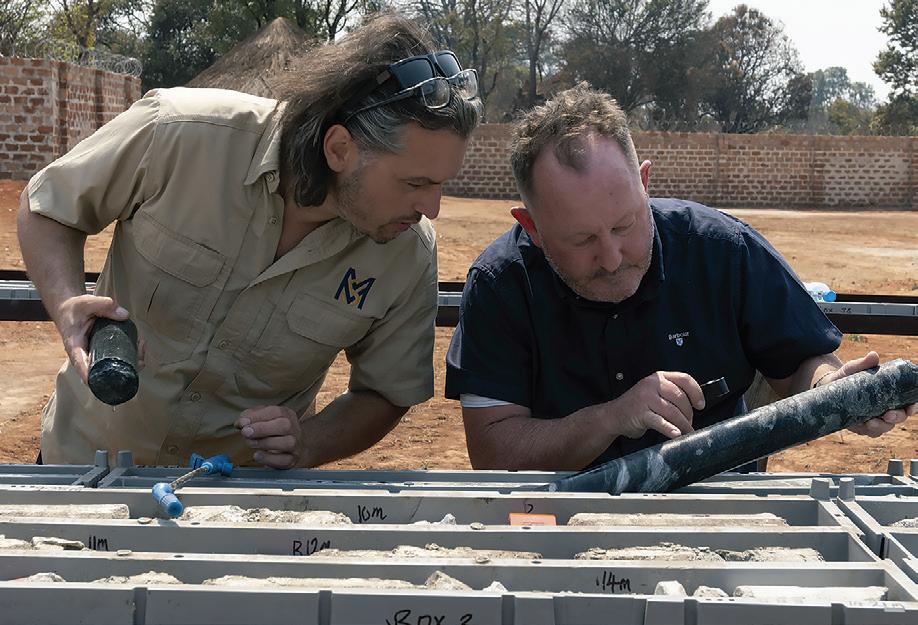
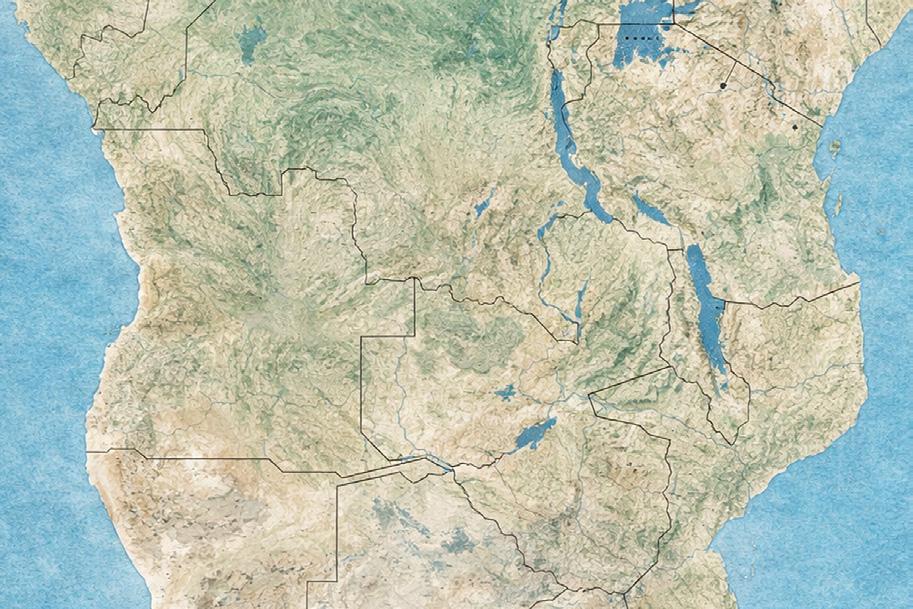
Approximate route of proposed Zambia-Lobito
chain,” institute authors Yaseen Tayob and Adrian Joseph write.
$553M US loan
The backbone of the plan is a $553-million loan from the U.S. International Development Finance Corp. to the Lobito Atlantic Railway consortium to rehabilitate roughly 1,300 km of track across Angola and upgrade port facilities at Lobito.
Multilateral lenders the Abidjan, Côte d’Ivoire-based African Development Bank and the Africa Finance Corp. in Lagos, Nigeria are financing $1.6 billion to upgrade the Angolan rail system and build new links into the copperbelt. For miners in the region – First Quantum, Barrick and billionaire Robert Friedland-backed Ivanhoe – the attraction is a shorter, westward route to Atlantic markets.
China has spun the other way, reviving and modernizing the long-neglected Tanzania–Zambia Railway Authority line, which runs from the Copperbelt to the port of Dar es Salaam, under a deal valued at about $1.4 billion. That east-
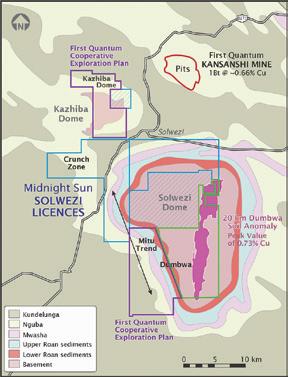
ward corridor offers a direct outlet to Indian Ocean shipping lanes and Asian markets, and has long been the traditional route for much of the region’s copper. The two builds are a rare case of competing, geopolitically-charged infrastructure strategies playing out over the same mineral district.
Aluminum was second with 20% then iron at 15%. The country’s main producer in Africa is its 40% share of Kamoa-Kakula. The mine produced 388,000 tonnes of copper concentrate last year on its way to 550,000 tonnes by about 2028.
In comparison, First Quantum reported 370,000 tonnes from Kansanshi/Sentinel in 2025 and is aiming for roughly 430,000–490,000 tonnes in 2028. Barrick’s Lumwana was on pace for 145,000 tonnes last year as its Super Pit expansion promises 240,000 tonnes by 2028.
Midnight Sun hired Barrick’s architect behind the Lumwana resource – 1.6 billion tonnes grading 0.52% copper for 8.3 million tonnes contained metal – that’s fuelling the Super Pit. Kevin Bonel is now Midnight Sun’s chief operating officer as the company deploys six rigs to drill along Dumbwa, a 20-km anomaly that shows 0.73% copper at surface, said Adrian O’Brien, vice-president of corporate development and communications. The plan is to have the first 12 km assayed by the end of this year.
“Kevin ended up leaving his job at Barrick and joining us because he believed so wholeheartedly that Dumbwa was bigger than Lumwana,” O’Brien said by phone. “He brought that exact same methodology.”
Midnight Sun sees the small Kazhiba deposit’s value as a cash generator. Since it’s less than 10 km from First Quantum’s mill, it can pay for advancing the wider Solwezi with the goal one day of rivalling major neighbours in resources.
Kazhiba’s “grade is well above typical economic thresholds for oxide copper,” Haywood Securities mining analyst Pierre Vaillancourt said in a Jan. 20 note. It has “mineralization extending to an average maximum depth of only 30 metres within a compact footprint (300 metres x 350 metres), making it very accessible for potential extraction.”
Western governments are promoting Lobito as part of a broader effort to “de-risk” critical minerals supply chains, while China is upgrading a transport axis it originally helped build in the 1970s.
China’s investment
The Asian giant’s foreign direct investment in the continent’s mining and processing was about $10 billion in 2022, second to construction and nearly a quarter of its total spending in Africa, according to the SAIIA.
“Between 2019 and 2024, China increased its ownership of Africa’s mines by 21%, while companies from Australia, Canada and the U.S. saw decreases in their mine ownership during the same period,” the institute said. “Its involvement in Africa’s mining sector is thus substantial and it is a major player in many resource-rich African countries.”
Copper is China’s main focus in Africa, accounting for 35% of the country’s investment in non-energy mining across the continent.
Midnight Sun’s share price fell 8% after the resource to $1.51 apiece, valuing the company at C$$321 million (US$234 million). The market expected a copper grade of 2-3% based on guidance from the explorer, but Haywood’s Vaillancourt said the reaction was overdone.
The junior has formed a technical alliance with First Quantum which is helping with metallurgy. Longer term, the plan is to sell the project, O’Brien said.
“We’re not operators, we’re explorers,” he said. “First Quantum has got a new circuit there. It’s hungry, looking for feed. We could have an absolutely perfect situation.”
Midnight Sun started in the district more than 12 years ago when copper prices and investor interest were low, noted CEO Fabbro.
“We stayed the course, and today Midnight Sun is advancing a high-impact discovery at Dumbwa with the potential to become the next major Domes Region deposit during the strongest copper market the world has ever seen,” he said.
“That’s timing.” TNM
BY NORTHERN MINER STAFF
Energy transition metals have never been as critical as they are today. Here’s a look at eight companies seeking to reduce North America’s reliance on critical minerals from China by building domestic supply chains.
Aclara Resources (TSX: ARA; US-OTC: ARAAF) is building the first heavy rare earths separation facility in the United States, with feed to be sourced from its two ionic-clay-hosted deposits in South America.
The company aims to supply more than 75% of the country’s requirements of dysprosium and terbium for electric vehicles by 2028. The $277-million (C$384-million) project in Louisiana is being supported with tax incentives and grants from the state government valued at about $46.4 million.
In addition, the company plans to build a metals and alloy plant next to the separation facility targeting the permanent magnet market. The project is a joint-venture with Chilean iron ore producer CAP S.A. Aclara plans to complete a feasibility study for the $130-million plant in the second half of this year and expects to start operations by mid-2028.
The primary source of feedstock for the Louisiana facilities will come from Aclara’s flagship Carina ionic-clay deposit in Brazil. A pre-feasibility study last November envisioned an open-pit mine of 18 years with annual production of 149 tonnes dysprosium, 25 tonnes terbium and 1,170 tonnes neodymium and praseodymium, along with other strategic heavy rare earth elements samarium (170 tonnes), gadolinium (171 tonnes), lutetium (10 tonnes) and yttrium (1,098 tonnes).
Carina delivers a post-tax net present value (at an 8% discount rate) of $1.07 billion and an internal rate of return (IRR) of 21.8%. Initial capital costs of $548.3 million could be repaid in 4.5 years.
Aclara submitted its Environmental Impact Assessment for Carina last May and plans to complete a feasibility study in the second quarter of 2026. The U.S. International Development Finance Corp. has committed up to $5 million in development funding for that study.
The company forecasts that early works could start by mid-2026, with the beginning of operations targeted for mid-2028.
Aclara is also developing the Penco Module ionic-clay-hosted deposit in Chile, about 6 km from the Port of Concepcion and 500 km south of Santiago. A preliminary economic assessment in 2021 outlined a mine life of 14 years with average annual production of 774 tonnes of rare earth oxides (REOs). Using a base case price of $96 per kg of REO, the study estimated an after-tax NPV (at a 5% discount
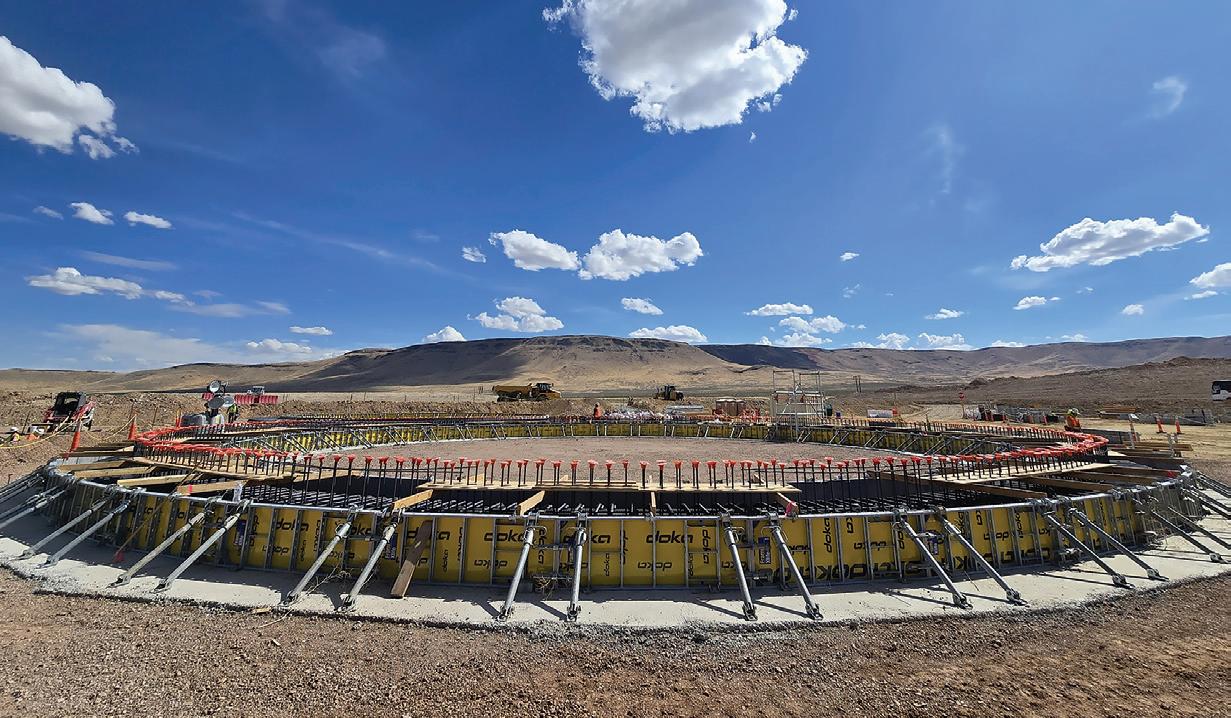
rate) of $178 million and an IRR of 23%. Initial capital of $119 million could be repaid post-tax in 4.7 years.
Major shareholders are Eduardo Hochschild (37%), Hochschild Mining (LSE: HOC) (20%) and CAP S.A. (10%).
Aclara Resources has a market cap of about C$488 million.
Electra Battery Materials (TSXV; Nasdaq: ELBM) is building a battery-grade cobalt sulphate refinery in Temiskaming Shores, Ont.
The facility will be the first of its kind in North America and is expected to produce about 6,500 tonnes of battery-grade cobalt annually. Commissioning is targeted for 2027. Once in production, Electra’s facility is expected to be one of the few major cobalt refineries outside China.
All of Electra’s cobalt feedstock for the refinery is to come from Eurasian Resources Group and Glencore (LSE: GLEN), both of which mine most of their cobalt from the Democratic Republic of Congo, the world’s top producer of the critical metal.
LG Energy Solution is to purchase 60-80% of Electra’s production (15,000 to 20,000 tonnes of battery grade cobalt over a five-year period) on a tolling basis under a $700 million offtake agreement, Electra said.
The company started early works at the fully permitted brownfield site last June and in November resumed construction following the arrangement of $82 million in project financing, which included $48 million in support from the U.S., and the Canadian and Ontario governments.
In July, Electra began testing cobalt feedstock from the historic Cobalt Camp in Ontario and its Iron Creek cobalt and copper project in Idaho to give the company a clearer picture of how North Amer-
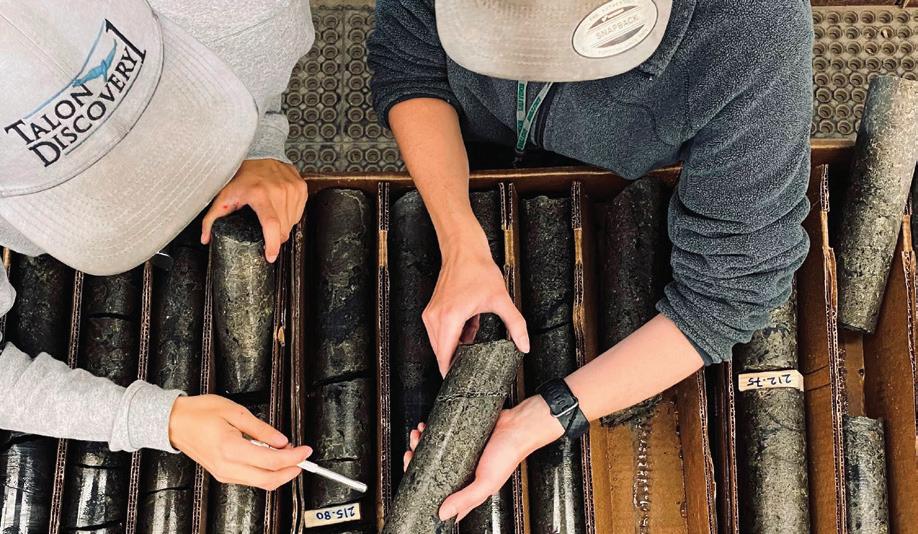
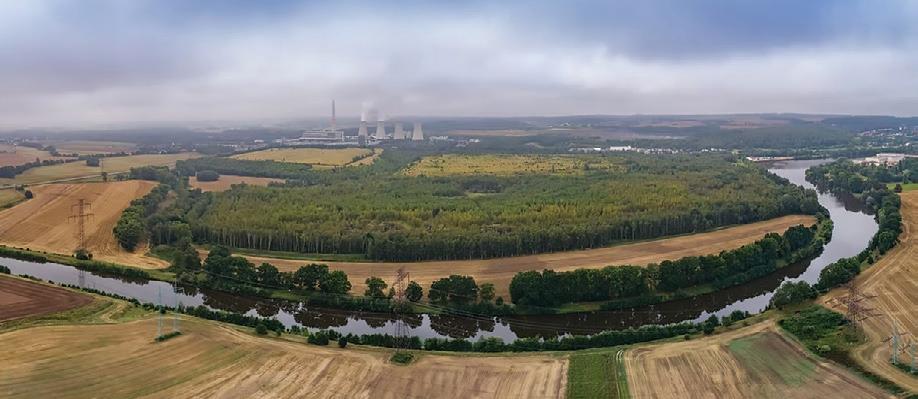
ican cobalt-bearing concentrates can be processed using its hydrometallurgical technology.
Electra also has launched a feasibility level engineering study to build a battery recycling refinery adjacent to the cobalt plant. The study will build on the technology and expertise accumulated during a year-long black mass recycling trial, during which Electra produced technical grade lithium and a nickel and cobalt product from end-of-life lithium batteries.
Currently most black mass produced from battery scrap is shipped to Asia for refining. Black mass,
the material remaining once lithium-ion batteries or battery scrap material are shredded and all casings separated, contains elements including lithium, nickel, cobalt, manganese, copper and graphite, which can be recovered and recycled to make new batteries.
Electra holds the Aki Battery Recycling joint venture with Indigenous economic development firm Three Fires Group to source and process battery waste from manufacturers and produce black mass. The JV aims in the coming years to build a new processing plant in southern Ontario.
In addition to the refinery and recycling facilities in Ontario, the company is evaluating opportunities for cobalt production in Bécancour, Que. near Vale’s (NYSE: VALE) proposed nickel sulphate plant, which Vale has shelved. Electra is also exploring nickel sulphate production potential elsewhere in North America.
Electra Battery Materials has a market cap of about C$122 million.
n Euro Manganese Euro Manganese (TSXV, ASX: EMN) plans to produce high-pu-
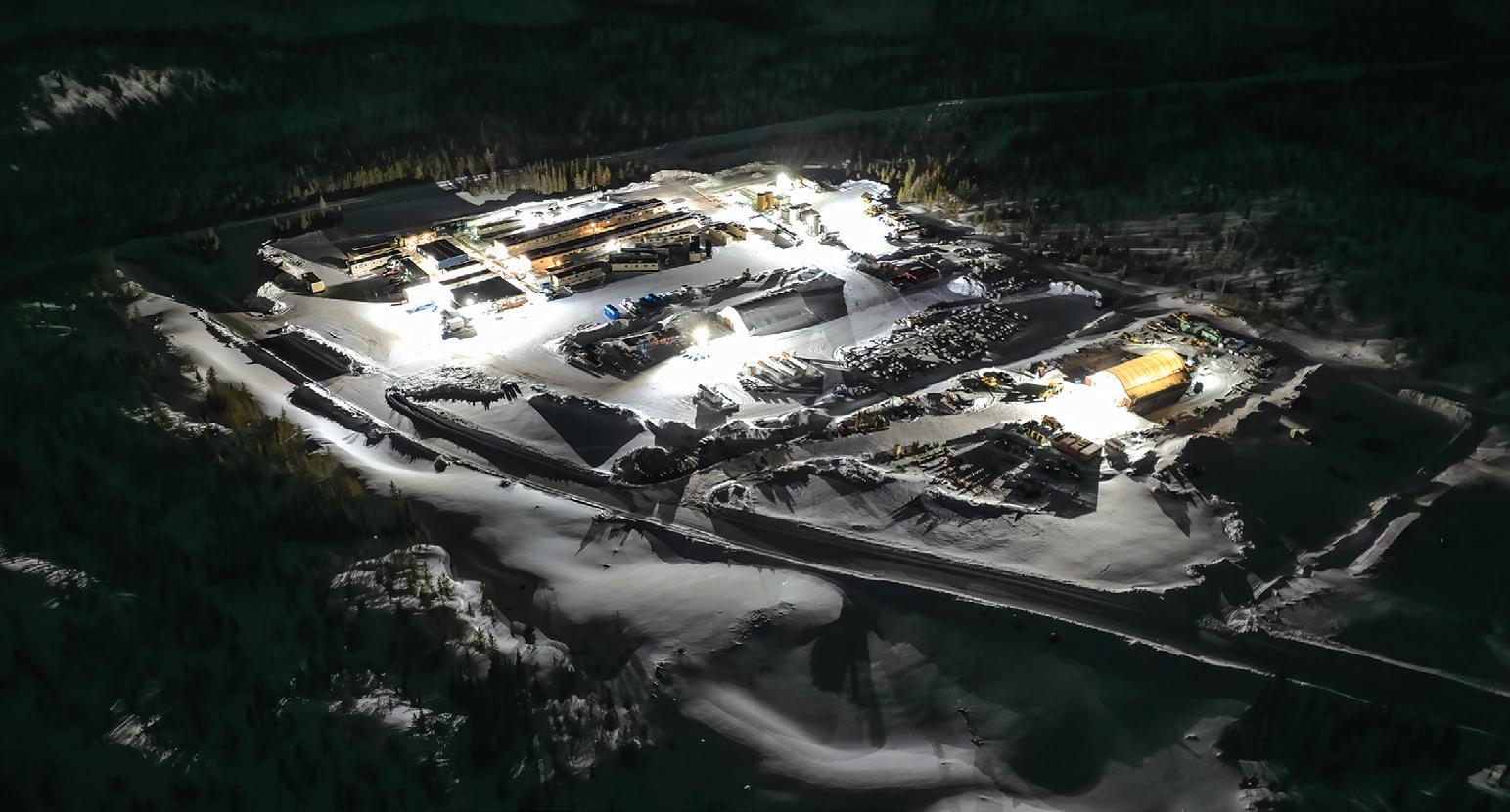
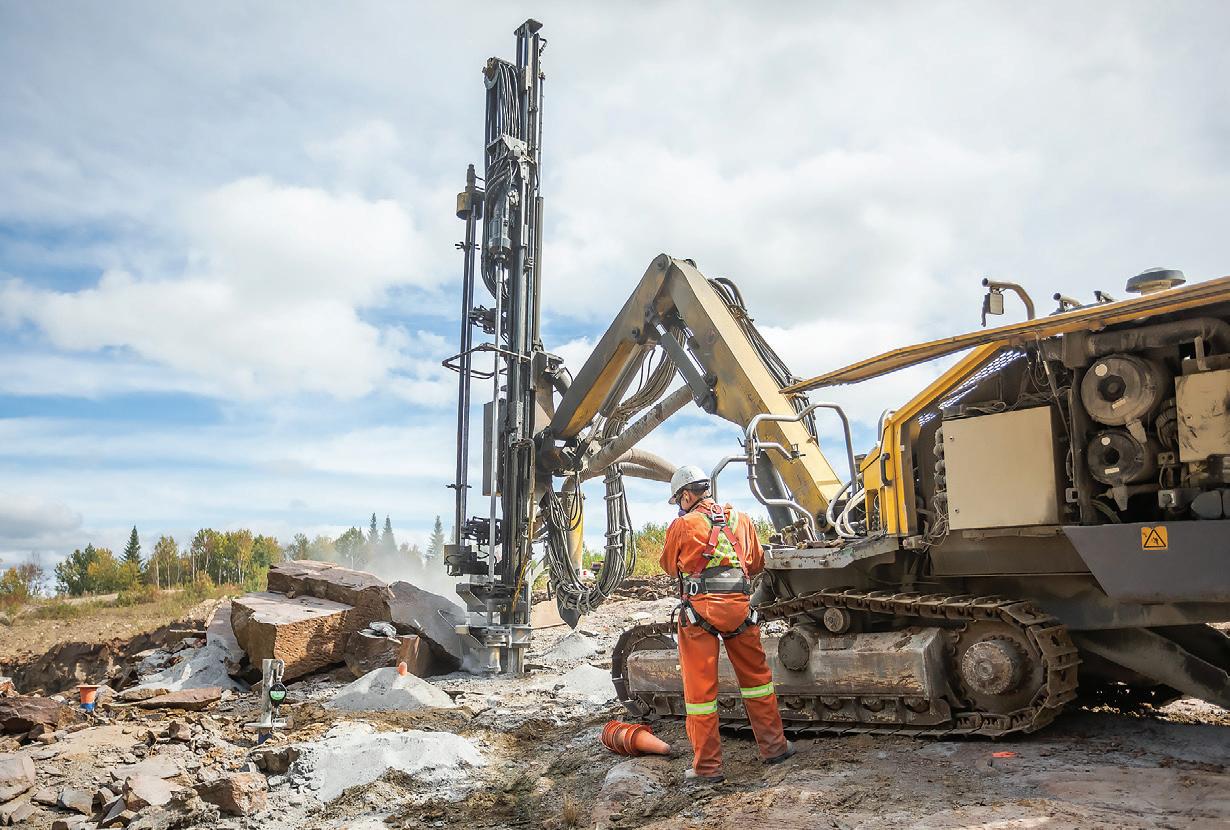
rity manganese products aimed at the battery market at its Chvaletice project in the Czech Republic by reprocessing historic tailings from a decommissioned open-pit mine that operated between 1951 and 1975.
The Czech government designated Chvaletice as a strategic project last March, followed by the European Union in April. Under the EU’s Critical Raw Materials Act (CRMA), Chvaletice gains access to guidance and potential funding from private and public sources including the European Investment Bank and the European Bank for Reconstruction and Development. The EU designation also ensures that permitting proceeds according to the deadlines set under the CRMA.
Chvaletice, 90 km east of Prague,
will produce high-purity electrolytic manganese metal (HPEMM) and high-purity manganese sulphate monohydrate (HPMSM).
The project has a post-tax NPV (at an 8% discount rate) of $1.34 billion and a post-tax IRR of 22%, according to a 2022 feasibility study. Initial capex of $757.3 million could be repaid in four years.
Chvaletice is projected to have a 25-year life producing about 1.2 million tonnes of HPEMM, about two-thirds of which will be converted into HPMSM on-site.
Last June the company signed an offtake term sheet with Integrals Power, a battery technology company based in the U.K. If initial test work is successful, Euro Manganese will supply Integrals Power with HPMSM for an initial seven-year period.
The Czech Republic granted the project a mining lease permit in January 2025 and its environmental licence in March 2024.
Chvaletice hosts 26.9 million measured and indicated tonnes grading 7.33% total manganese and 5.86% soluble manganese.
Euro Manganese has a market cap of about C$23 million.
Ioneer (ASX: INR; Nasdaq: IONR) is developing the Rhyolite Ridge lithium-boron project, one of very few lithium-boron deposits in the world. It is also the only known lithium deposit that is amenable to vat and heap leaching.
The fully permitted, shovel ready project in Nevada, about halfway between Reno and Las Vegas, hosts
the largest undeveloped boron reserve in the world outside Turkey. About 30-40% of the project’s revenue is expected to come from boron and 60-70% from lithium.
The U.S. government added boron to its list of critical minerals in November last year. Boron is essential for military applications, including advanced armour, high-strength magnets and nuclear shielding.
Ioneer received its final federal permit for the project from the Bureau of Land Management in October 2024 and in January last year secured a $996-million loan guarantee through the US Department of Energy’s (DOE) Loan Programs Office.
The mine will produce three products: lithium carbonate, battery-grade lithium hydroxide monohydrate (starting in its third
year) and boric acid. The mine plan envisions extracting and processing 3.2 million tonnes of ore per year over an 82-year life.
The company completed leach optimization work and a new mine plan at the end of October, improving the project’s economics in the first 25 years.
By cutting the leach time to one and a half days, Ioneer says it can reduce acid consumption per tonne of ore processed and generate a 13% increase in the amount of ore processed annually to 3.4 million tonnes from 3 million tonnes using the available surplus acid. The increased lithium production means the project will produce about 9,500 tonnes per year of lithium carbonate/hydroxide that is not committed under existing offtake agreements.
The study envisioned annual average production in the first 25 years of 24,500 tonnes of lithium carbonate equivalent, 27,800 tonnes of lithium hydroxide (starting in year three), and 135,500 tonnes of boric acid at all-in sustaining costs (net of the boric acid credit) of $4,628 per tonne LCE. The project delivers an after-tax NPV (at an 8% discount rate) of $2.24 billion and an after-tax IRR of 18%. Initial capital was pegged at $1.7 million with a payback of seven years.
An updated resource from October outlined measured and indicated tonnes of 440.3 million tonnes grading 1,424 ppm lithium and 5,026 ppm boron for 3.34 million tonnes contained LCE and 12.66 million tonnes contained boric acid. Inferred resources add 108.3 million tonnes averaging 1,310 ppm lithium and 3,384 ppm boron for 755,000 tonnes LCE and 2.1 million tonnes boric acid.
Ioneer has signed separate offtake agreements with Ford Motor Company and Prime Planet & Energy Solutions (a joint-venture between Toyota and Panasonic) and South Korea’s EcoPro Innovation.
Ioneer has a market cap of about $323 million.
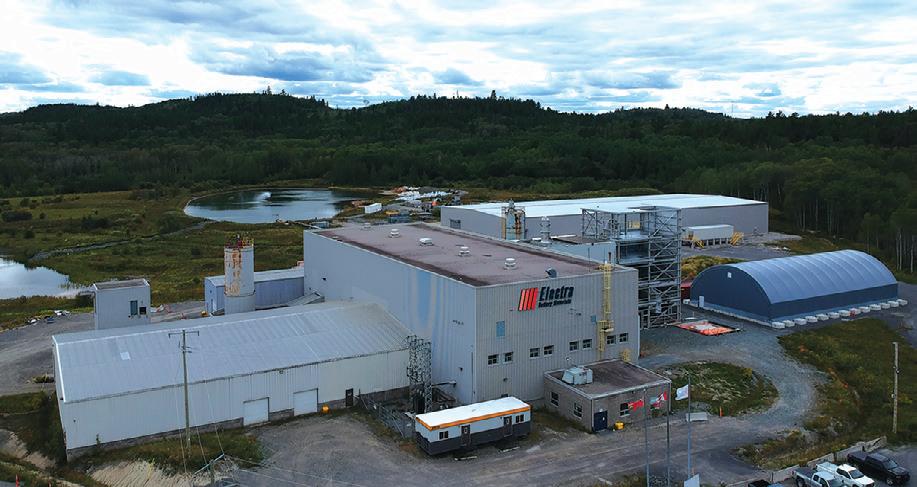
Lithium Americas (TSX, NYSE: LAC) is building the first stage of its fully funded Thacker Pass project in northern Nevada targeting production of 40,000 tonnes of battery-quality LCE per year.
The project hosts the largest known lithium resource in the world with 3.79 billion measured and indicated tonnes grading 2,230 parts per million (ppm) lithium for 44.5 million tonnes of LCE and another 1.98 billion inferred tonnes at 2,070 ppm lithium for 21.6 million tonnes of LCE.
In late October, Lithium Americas was allowed to draw down $435 million from its $2.23 billion guaranteed loan from the DOE after it agreed to sell minority stakes in the company and the project to the DOE. In return, the DOE deferred $182 million of debt service over the loan’s first five years.
The 5% stake in Lithium Americas comes with a direct 5% economic interest in the Thacker Pass joint venture that the company has with General Motors (NYSE: GM).
The equity stakes in the company and JV come through warrants to buy common shares at 1¢ each. Under the arrangement, Lithium Americas agreed to post an additional $120 million to DOE loan reserve accounts that will be funded within 12 months of the first loan draw. Once the warrants are exercised fully, the JV will be owned by Lithium Americas (59%), General Motors (36%) and the DOE (5%).
GM also amended its lithium offtake agreement to allow the JV to enter into third-party offtakes for remaining production volumes that the auto maker wouldn’t buy. Its earlier offtake deal permitted it to buy 100% of production from the project’s first stage for 20 years and 38% of production for 20 years during the second stage.
In April, Lithium Americas closed a $250-million investment from funds managed by Orion Resource Partners.
Thacker Pass is forecast to produce 160,000 tonnes per year of battery quality LCE in five stages over 85 years.
Lithium Americas has a market cap of about C$2 billion.
n Nouveau Monde Graphite
Nouveau Monde Graphite (TSX: NOU; NYSE: NMG) is advancing the Matawinie graphite mine and Bécancour battery material plant, both of which are within 150 km northeast of Montreal.
The graphite ore-to-anode project was one of several critical minerals projects that Prime Minister Mark Carney referred to the Major Projects Office (MPO) for consideration in November. The federal government formed the MPO in August to speed nation-building ventures and develop critical mineral supply chains outside of Chinese and Russian control.
The Matawinie open pit mine is expected to produce 105,882 tonnes of graphite concentrate a year over 25 years. The mine is to be integrated with the company’s battery material plant to produce spherical graphite used in the production of electric vehicle batteries and energy storage systems.
In October, the company said it was ready to advance project financing discussions towards a final investment decision after announcing a commercial offtake agreement with the Canadian government and updating existing offtake agreements with Panasonic Energy and Traxys North America. It also has an offtake agreement with GM for 18,000 tonnes annually of anode material over six years, tied to a $150 million equity investment in Nouveau Monde
The company estimates that after a positive investment decision, both the mine and plant could be built and enter commercial production within three years.
An updated feasibility study of the integrated mine and battery material plant from last March outlined a post-tax NPV (at an 8% discount rate) of $1.05 billion ($252 million for the mine and $801 million for the battery material plant) and an IRR of 17.5%. Initial capex was pegged at $1.33 billion with an after-tax payback of five years.
The open-pit mine hosts 130.3 million measured and indicated tonnes grading 4.26% graphitic carbon (Cg) for 5.55 million tonnes of contained graphite. Inferred resources add 23 million tonnes of 4.28% Cg for 980,000 tonnes of graphite.
Nouveau Monde has a market cap of C$584 million.
n PMET Resources
PMET Resources (TSX: PMET; US-OTC: PMETF), formerly known as Patriot Battery Metals, is advancing its district-scale Shaakichiuwaanaan hard-rock lithium project in Quebec’s Eeyou Istchee James Bay region to a final investment decision in the second half of 2027.
Shaakichiuwaanaan contains one of the largest pegmatite resources in the Americas. The company is focused on the project’s main CV5 deposit, where a feasi-
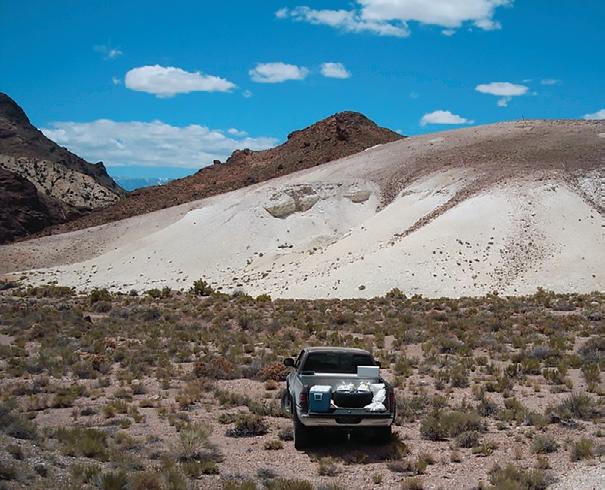
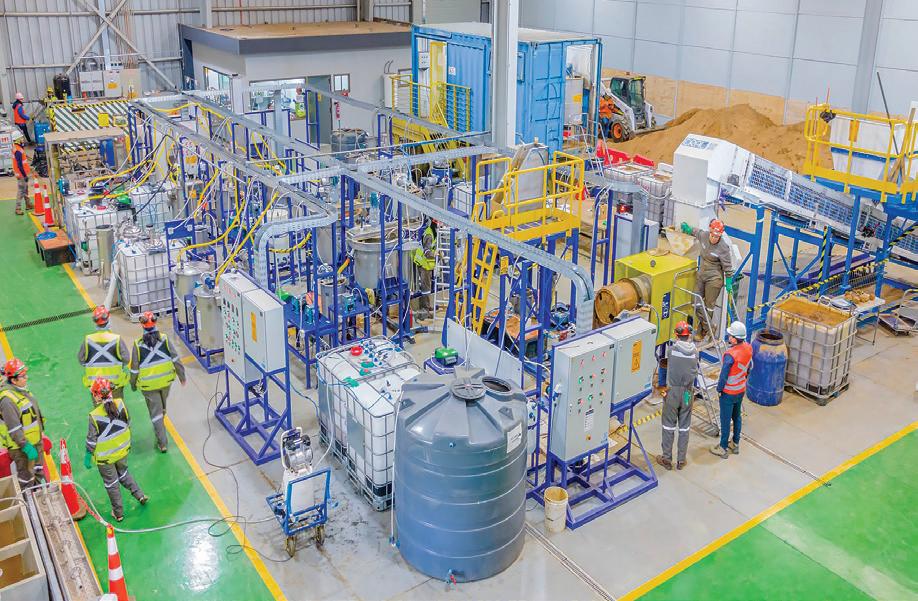
bility study from last October outlined a hybrid mining model combining a first stage open pit and second stage underground operation over 20 years.
The study envisioned production of spodumene concentrate at a rate of up to about 800,000 tonnes per year, which would rank the company as potentially the fourth largest spodumene producer in the world.
The feasibility study outlined a post-tax NPV (at an 8% discount rate) of $1.19 billion and post-tax IRR of about 18.1% using a longterm spodumene concentrate price of $1,221 per tonne. Total development capital is pegged at $1.98 billion, or $1.51 billion net of anticipated pre-production credits.
The study was based on CV5’s lithium content only, which measures 101.8 million indicated tonnes grading 1.38% lithium oxide (Li2O) and 13.9 million inferred tonnes at 1.21% Li2O.
The project’s CV5 and CV13 pegmatites together host 108 million indicated tonnes grading 1.4% Li2O, 0.11% caesium oxide (Cs2O), 166 ppm tantalum oxide (Ta2O5) and 66 ppm gallium for 3.74 million tonnes of contained LCE. Inferred resources add 33.4 million tonnes grading 1.33% Li2O, 0.21% Cs2O, 155 ppm Ta2O5 and 65 ppm gallium for 1.09 million tonnes LCE.
The company plans to finalize and file the Environmental and Social Impact Assessment to support final mine authorizations for the project and its planned processing facilities of up to 5.1 million tonnes per year and start detailed engineering work. It is also considering developing a 2,300-metre exploration ramp for a
bulk sample.
The 237-sq.-km project, about 240 km northeast of Nemaska, Que., is just 30 km northeast of the La Grande hydroelectric dam complex.
PMET Resources has a market cap of about C$919 million.
n Talon Metals
Talon Metals (TSX: TLO; US-OTC: TLOFF), best known for its Tamarack nickel-copper-cobalt project in central Minnesota, moved beyond a single-asset company in December with the acquisition of Lundin Mining’s (TSX: LUN) Eagle nickel-copper mine and Humboldt mill in Michigan in a share-based deal valued at almost $84 million.
Eagle is the only primary nickel mine currently operating in the U.S. and transforms Talon into a pure-play nickel-copper producer. In exchange, Lundin Mining will receive roughly 275 million shares in Talon giving it a 20% non-diluted stake in the company.
The transaction also unlocks synergies including the opportunity to leverage the Humboldt mill as a shared, centralized processing facility. Talon’s Boulderdash discovery is just 13 km from the Eagle mine.
The integration also will allow the combined team to advance four strategic priorities at the same time: extending the Eagle mine life, accelerating exploration in Michigan and Minnesota; advancing permitting at the Tamarack project and Talon’s proposed Beulah Minerals Processing Facility in North Dakota; and progressing engineering towards feasibility and con-
struction, Talon says.
Through a joint venture with Rio Tinto (ASX, LSE, NYSE: RIO) at Tamarack, Talon is working on a feasibility study and is focused on expanding and infilling its resource to shape a mine plan to submit to regulators. Talon currently owns 51% of the project with an earn-in right to acquire up to 60%.
The Tamarack Intrusive Complex is one of the world’s highest-grade undeveloped nickel deposits. The complex hosts about 8.6 million indicated tonnes grading 1.73% nickel, 0.92% copper, 0.05% cobalt, 0.34 gram platinum per tonne, 0.21 gram palladium, and 0.17 gram gold. Inferred resources add about 8.5 million tonnes grading 0.83% nickel, 0.55% copper, 0.02% cobalt, 0.23 gram platinum, 0.13 gram palladium and 0.13 gram gold.
Talon already has an agreement with Tesla to supply it with 75,000 tonnes (165 million lb.) of nickel in concentrate (and certain by-products including cobalt and iron) from Tamarack over an estimated six years once in commercial production.
The company has benefited from government support as Washington prioritizes securing supply of critical minerals like nickel for the battery manufacturing and defence industries.
In 2023, the US Department of War awarded Talon a $20.6 million grant for exploration in Minnesota and Michigan. A year earlier the DOE extended a $114.8 million grant for the Beulah processing facility.
Talon Metals has a market cap of about C$727 million. TNM
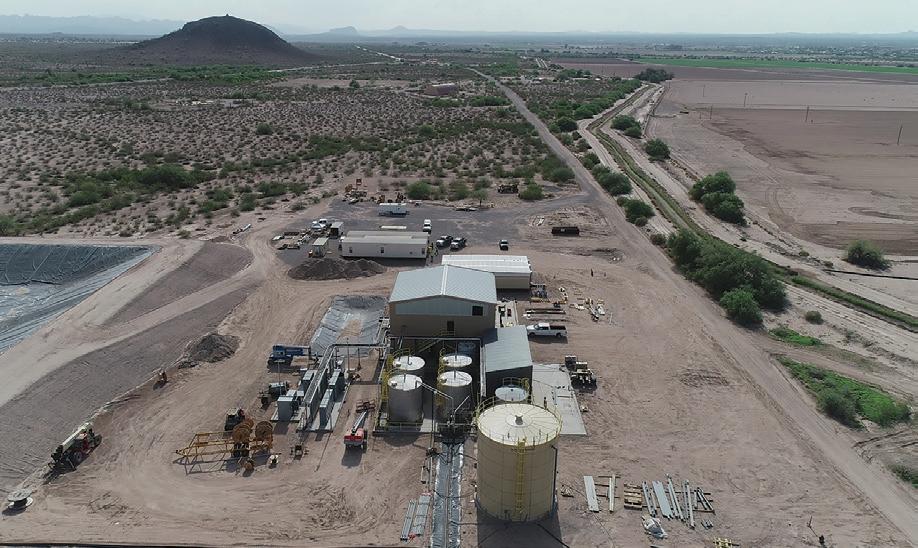
BY CECILIA JAMASMIE
Canada’s Taseko Mines (TSX: TKO; NYSE: TGB) has completed construction at its Florence copper project in Arizona and is targeting first copper production within weeks.
Commissioning of the solvent extraction and electrowinning (SX/EW) plant has advanced without major issues and start-up is expected shortly, President and CEO Stuart McDonald told the Northern Miner Group. The transition from construction to operations has been smooth and the company is encouraged by early copper recoveries.
“2025 was a great year for Taseko,” McDonald said. “Major milestones achieved at Florence Copper in Arizona contributed significantly to Taseko’s share price appreciation over the past 12 months. First copper cathode production from Florence Copper is expected in early 2026, with ramp-up to full production over the following year.”
> West from P32
to a July pre-feasibility study.
At a post-tax NPV of $1.3 billion and an IRR of 39%, Caldeira could produce 103 million tonnes of rare earths over a 20-year life. With a feasibility study on the radar for this year, Meteoric is targeting mine construction in late 2026 and first production in 2028.
China’s challenge
China’s lead is bolstered by its decades of state-led investment into the rare earths space, starting in 1964 when Deng Xiaoping, who later became China’s top leader, inspected a mine that held the world’s largest deposit of the elements, according to The New York Times
Deng declared China had to develop steel along with rare earths. In the next two decades, he led efforts to discover the military uses of rare earths, which helped
More drilling
Drilling at Florence has also resumed, with three rigs operating on site to expand the commercial wellfield, a step expected to support higher solution flows and increased copper production during this year’s ramp-up.
In British Columbia, Taseko’s Gibraltar mine produced 98 million lb. of copper and 1.9 million lb. of molybdenum last year. Fourth-quarter output was impacted by unanticipated mill downtime linked to unscheduled maintenance and a serious accident that triggered a temporary sitewide shutdown in November.
Fourth-quarter copper production totalled 31 million lb., a sharp
Chinese chemists find ways to affordably separate rare earths into their individual elements.
After Deng drafted a five-year production plan for rare earths in 1981, it spurred more than 100 towns and villages across China to build rare-earth refineries, many of them state-owned. By 1986, China was the world’s top producer of rare earths.
The Lynas spokesperson noted the West has abundant rare earth resources, and Mt Weld and Mountain Pass have about 50 years of mine life combined. But the big hurdle to clear is making the processing bottleneck more affordable and practical.
“The separation of rare earth elements is technically complex,” the spokesperson said. “And Lynas has built environmentally responsible, in-house rare earths processing expertise over the past 13 years that we have been in production.” TNM
BY FRÉDÉRIC TOMESCO
The United States government is acquiring 10% of USA Rare Earth (Nasdaq: USAR) – its fourth equity stake in a miner since last July – as part of wider $3.1-billion (C$4.2-billion) cash injection for the company that’s developing a Texas mine. The stock surged.
USA Rare Earth’s non-binding letter of interest with the U.S. Department of Commerce includes $277 million of Federal funding and a $1.3 billion senior secured loan from the CHIPS Act of 2022, according to a company statement issued Jan. 26.
increase from earlier quarters, as head grades improved to 0.26% and recoveries averaged 81%. Molybdenum output reached 800,000 lb., about 50% higher than the third quarter and the strongest quarterly result in eight years. Gibraltar’s SX/ EW plant produced 900,000 lb. of copper cathode in the quarter.
Higher grades
Full-year sales came in at 99 million lb. of copper and 1.9 million lb. of molybdenum. In October, the company had forecast copper production of 120-130 million lb. for 2025.
McDonald said production in the second half of the year improved on higher grades and better-quality ore, adding that more consistent quarterly output is expected in 2026 as mining advances further into the Connector pit.
Beyond Gibraltar, Taseko also holds the Yellowhead copper project in B.C., now in the environmental permitting stage, and a 78% interest in the New Prosperity property near Williams Lake. TNM
USA Rare Earth has also agreed to sell $1.5 billion worth of stock to Inflection Point – a special purpose acquisition company that helped the miner go public last year – with participation from other undisclosed investors. This marks another equity investment into critical minerals companies since the Trump administration acquired stakes in MP Materials (NYSE: MP), Lithium Americas (TSX: LAC) and Trilogy Metals (TSX: TMQ) last year.
“USA Rare Earth’s heavy critical minerals project is essential to restoring U.S. critical mineral independence,” U.S. Secretary of Commerce Howard Lutnick said in the statement. “This investment ensures our supply chains are resilient and no longer reliant on foreign nations.”
Shares of the company surged 16% to $28.61 in Nasdaq trading in the hours that followed the announcement. As press time neared, the company was valued at about $4 billion after a doubling of the stock since the start of the year.
Round Top
USA Rare Earth is developing a rare earth mine in Sierra Blanca,
> Torngat from P34
the heart of many, many discussions that are critical to Canada’s future,” Leduc said. “This project is extremely well financed, and it will continue to be.”
Although Torngat’s largest shareholder is New York-based private equity firm Cerberus Capital Management, following a US$50 million ($70 million) investment in 2022, Leduc insists Strange Lake will serve Canada’s interests first and foremost.
Cerberus executives “understand this has a to be a Quebec project,” Leduc said. “That’s why they nominated a Quebec CEO and a Quebec chair. We are putting a lot of focus on building a shareholder base that’s Canadian. That’s how we make this a Canadian project serving Canadian interests.”
“It’s all about making sure the project remains Canadian. Our focus is on building an industry here. That will create leverage for the country that other industries wouldn’t have.”
Texas, that’s scheduled start production in 2028. The deposit, known as Round Top, is specifically rich in “heavy” rare earths such as dysprosium, which are essential ingredients to make permanent magnets found in hightech applications such as electric vehicles, wind turbines and defence systems.
A 2019 technical report estimates that the open-pit mine could produce 2,213 tonnes of rare earth elements, of which over 1,900 tonnes would be “heavy” REEs, over a 20-year life. A year ago, the project achieved a key milestone by producing its first batch of dysprosium oxide with a purity of 99.1%.
Under the terms of the deal, USA Rare Earth will issue 16.1 million shares of common stock – priced at $17.17 a share – and about 17.6 million warrants to the Department of Commerce. Closing is expected by March 31.
As for Inflection Point and the other investors, they will buy 69.8 million shares for $21.50 apiece. That transaction is expected to close on Jan. 28.
Prices for both transactions represent discounts to USA Rare Earth’s closing price of $22.71 in New York on the last trading day before the deal was disclosed.
Round Top is expected to backstop a U.S.-based mine-to-magnet value chain that also includes a magnet manufacturing plant in Stillwater, Oklahoma, and a processing and separation laboratory in Wheat Ridge, Colorado.
On Jan. 22, the company said its plan to build a metal and alloy plant in southwest France this year would be backed by $152 million in state funding. TNM
— With files from Mining.com.
Provincial commitment
Political developments in Quebec haven’t dented the province’s commitment to Strange Lake, Leduc adds – even after Premier Francois Legault said Jan. 14 he planned to step down this year. Quebecers are scheduled to go to the polls in October.
“There is a great deal of enthusiasm already expressed by the current government” about Strange Lake, Leduc said. “This is not something that’s tied to a government. I’m very confident that whoever leads [the province] after the next election will have the same level of enthusiasm that I have.”
Leduc, a veteran executive with about 25 years of manufacturing experience who was named Torngat CEO last March, says his current challenge is unlike anything he’s ever experienced.
“This is the most exciting thing I’ve ever done in my career,” he said. “The energy transition fully depends on heavy rare earths. Once Quebec has that strategy in place and we are in operation, we will be a critical component of the energy transition. That moves a lot of people.” TNM
> Northern Graphite from P34
Saudi Arabia “is investing a lot in the electrification of the country. They clearly have very ambitious goals to make batteries here,” Jacquemin said.
Since the new plant is regarded by Saudi Arabia to be a strategic project, its backers will have access to funding from the government-owned Saudi Industrial Development Fund, or SIDF, the CEO added.
“SIDF will fund between 50-75% of this project, and there are other incentives. It allows us to move very fast. Their timeline for permitting is very short.”
Saudi Arabia is well positioned geopolitically “because they have agreements with both the West and the East,” Jacquemin also said. “It can be a platform to supply the global market with a lot of different minerals, and graphite is definitely on their list. By being here we can supply the Middle East, but also Europe and North America.” TNM
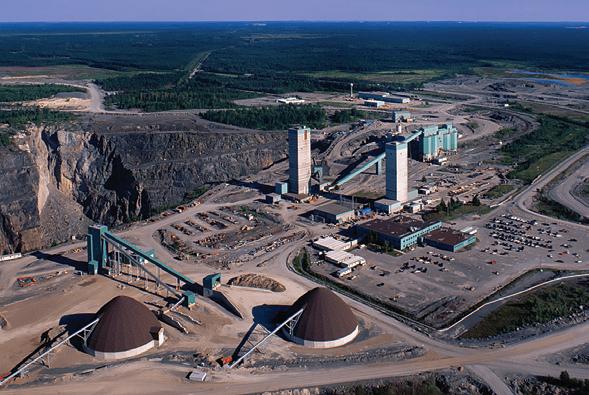
have to invest in development, and they’re going to be much better equipped to invest the tens of billions of dollars required to meet the supply requirements of the global economy,” he added.
Slowing growth
While Rio has “got a lot right” in recent years in developing Oyu Tolgoi and Simandou, “the growth beyond this current phase is far less exciting with projects either too small to make a difference or still in the development phase or stuck in courts,” RBC’s Davis wrote. Those include copper assets such as Resolution in the U.S. and Nuevo Cobre in Chile.
As a result, Davis said he expects Rio to offer a 27% premium to Glencore’s “undisturbed,” or preannouncement, share price. On Jan. 16, he raised his target price for the stock to 530 pence.
Glencore was trading at 482 pence in London as press time neared, taking its climb this year to about 18%. Rio shares were trading at A$146.34, leaving them little changed in 2026.
Simple is best
Most investors polled by RBC agree that Rio should keep the deal as simple as possible to avoid repeating the mistakes BHP made when it tried to buy Anglo. This means bidding for all of Glencore – including its coal business.
With BHP also in the market to add copper assets, “Glencore finds itself in a strong position,” Davis wrote. “We believe they’re a willing seller, assuming they are compensated for a loss of control, and will entertain any sort of deal structure.”
After dumping the last of its coal assets in 2018, “Rio might have to get its hands dirty again,” the RBC analyst said. “However, we don’t believe it would be that hard to get rid of coal later down the line. Glencore already did the work, placing their coal business into a separate Australian subsidiary.”
Former Anglo CEO Mark Cuti-
fani, who ran the London-based company between 2013 and 2022, argues there’s more to the proposed deal than just the red metal.
“It’s broader than copper,” Cutifani – who held talks with Rio at various points during his stint at the helm – told The Northern Miner by telephone. “Copper is clearly important to both, but Rio also has a very good iron ore business and Glencore has the industry’s leading marketing and trading business. So there are some elements that in my view are quite complementary.”
“People will know from my history that I was always keen on an Anglo-Rio combination years back, but Rio-Glencore is potentially a very solid combination.”
Culture clash
Rio and Glencore investors are eagerly awaiting details of potential synergies.
Savings could include marketing spending, shared central services and head office costs, with total estimates among investors surveyed by RBC ranging from $3.7 billion to $10.4 billion. That’s well below the $17 billion required for the deal to break even in case of a 27% premium, Davis said.
“The benefits from economies of scale are not infinite and there will be a significant clash of cultures from trying to push these very different companies together,” he wrote. “The entire command structure of Glencore will likely have to be dismantled, as marketing goes from running the show to being a bolt on to the business.”
One thing seems certain: if it happens, the Rio-Glencore deal won’t be the last big copper merger.
“For other players to be competitive on the copper side there will need to be other combinations,” Cutifani said. “Technologies and innovations require strong balance sheets and long-term thinking. This is critical for the future of the industry. That’s why I believe these types of consolidations are important.” TNM
> Venezuela from P5
vast majority of critical mineral mining and processing activities around the world, is active in Venezuela.”
Decade or more
Even though 20 years ago Venezuela was the 12th-largest producer of iron ore and eighth-largest producer of bauxite, nationalization and neglect of the mining industry means it will take more than a decade for any meaningful change, according to analysis by BMI, a unit of Fitch Solutions.
“We see no upside [from 2026 to 2035] for Venezuela’s mining sector from the removal of Nicolás Maduro,” BMI said last month.
“We do not expect these production declines to reverse over our forecast period, given years of underinvestment in mining and rail infrastructure in Venezuela’s mining regions. Gold production is also significantly underdeveloped, with mining in Bolívar and Amazonas often controlled by guerilla groups and criminal gangs.”
Between 2004 and 2024, BMI estimates annual iron ore output fell to 2 million tonnes from 20 million tonnes, bauxite to 300,000 tonnes from 5 million, and coal to less than 500,000 tonnes from roughly 6 million tonnes. Venezuela is similar to countries with abundant oil reserves like Saudi Arabia and Nigeria that have underdeveloped mining sectors, the firm said.
“Ironically, we see Venezuela’s substantial reserves of oil – the world’s largest – as the biggest barrier to investment in new critical mineral projects in the country. In most cases, production of oil is far easier and quicker to achieve than production of minerals; hence it is likely to be prioritized by U.S. companies and by the U.S. government.”
Infrastructure
A significant expansion into strategic minerals would require large-scale mining and refining investment; financing access; a predictable legal and judicial framework as well as transport, energy and port infrastructure, Natixis analysts led by Benito Berber said in a research note last month.
“These enabling conditions are not presently in place, limiting realistic near-term output,” they wrote.
Constraints for Venezuela’s mining sector “today are not geological,” Baskaran said. “They are political risk, sanctions exposure, insecurity in mining regions, weak rule of law, and the absence of enforceable contracts. Until those fundamentals change, serious Western capital will likely remain on the sidelines.”
Venezuela’s mining sector is very much underdeveloped, Mackey added.
“Because of much uncertainty and other issues it will likely take a long time before investor confidence returns.” TNM — With files from Blair McBride.
it’s a very big compliment to get it.”
Bell started Elemental in 2017, took it public in 2020, then within 18 months faced a hostile takeover from Gold Royalty (NYSE-A: GROY) which pushed Elemental to merge with U.K.-listed Altus Strategies. After taking over EMX Royalty in November, Elemental has 16 producing royalties and 34 on advanced development stage projects and is ranked among the top 10 royalty companies by stock market value.
The Altus transaction gave Elemental a large pipeline of development project royalties while EMX delivered three cornerstone assets: a 1.3% net smelter return (NSR) on Lundin Mining’s (TSX: LUN) Caserones copper-molybdenum mine in Chile; a 0.36% NSR on Zijin Mining’s Timok copper-gold mine in Serbia; and a 1% gross smelter return royalty on Nevada Gold Mines’ (Barrick Mining TSX: ABX; NYSE: B and Newmont TSX: NGT; NYSE: NEM) Leeville mine.
Another main asset is a 2% NSR on Capricorn Metals’ (ASX: CMM) Karlawinda gold mine in Australia, Bell said.
Industry option
Bell, who earned a history degree at the University of Edinburgh before landing in mining by accident, said he was attracted to the background about the industry. The royalty industry has ballooned from a niche market two decades ago to be valued at more than $200 billion now as an increasing number of developers come to rely on its financing to avoid share dilution, uncertain capital raisings and debt burdens.
Wheaton Precious Metals (TSX, NYSE, LSE: WPM) added streaming, then arbitrage derivatives, while more recently commodity-specific companies have emerged such as Lithium Royalty (TSX: LIRC) and Uranium Royalty (TSX: URC; Nasdaq: UROY).
“It’s incredible how it has grown, not just by itself, but as a percentage of the mining industry,” Bell said. “Ultimately, we’re all wanting to grow the mining space. We want to get investors in. And the more different structures, opportunities and ways to play the mining space, it’s great.” TNM
from P16
million inferred tonnes averaging 4.31 grams gold for 698,000 contained ounces.
Within that total, the Champagne zone accounts for 1.6 million measured and indicated tonnes at 16.2 grams gold for 831,000 oz., plus 406,000 inferred tonnes at 9.8 grams for 128,000 ounces.
Next on Amex’s schedule is bulk sampling, now in permitting, and Cantore said the junior is in talks with several groups about toll mill-
> Kinross from P17
It amounts to a probable underground reserve of 11 million tonnes grading 3.2 grams per tonne gold for 1.2 million oz. of metal at all-in sustaining cost (AISC) of $1,680 per ounce.
First production, slated for 2028, is to boost the mine’s annual output by about 140,000 oz. and its life to 2038. State approvals are expected near-term.
Curlew
In Washington state, Curlew will restart as a high-grade underground mine feeding the 1,800-tonnes per day Kettle River mill about 40 km northwest. Kettle River produced 2.8 million oz. before going on care and maintenance in 2017.
Kinross has defined about 1.2 million oz. of mineable inventory at an average life-of-mine grade near 5.8 grams gold per tonne. This includes 2 million oz. indicated at 6.4 grams gold and 4.2 million
> BlueScope from P31
maker. Steel Dynamics would have acquired BlueScope’s North American operations, while SGH would have retained the rest of the business.
Shares in Australia’s largest steelmaker closed up 1.1% at A$29.90 apiece on Jan. 7, before the board announced its decision, having jumped nearly 21% a day
earlier on news of the bid. The stock climbed higher to A$30.42 each closer to press time for a market capitalization of A$13.1 billion.
BlueScope has long been viewed as a potential takeover target because of its sizable North American footprint, which includes five businesses and contributed about 45% of revenue in the 2025 financial year. TNM
ing. With Eldorado’s Lamaque Complex and Sigma mill in Vald’Or, the producer is among the obvious candidates to process the material if a deal is struck.
In parallel, Amex is planning exploration across its Quebec and Ontario land positions and work on a feasibility study targeted for the first half next year.
“I view the investment as very positive. It shows that Eldorado’s really all-in with us,” Cantore said. “We’re firing on all cylinders right now.”
TNM
tonnes inferred at 6.3 grams gold. Output is targeted for 2028, averaging 100,000 oz. a year for the first five full years at an AISC of $1,726 per ounce. Total output should reach about 940,000 ounces.
Upfront capital is estimated at $485 million, including a full mill refurbishment and conversion to dry-stack tailings.
At Bald Mountain, Redbird 2 comprises a second pushback at the namesake pit and five quick-payback satellite pits to leverage the existing fleet, leach pads and workforce.
Production is planned from 2028, delivering about 155,000 oz. per year between 2028 and 2031 and 640,000 oz. total through 2032, at an AISC of $1,466 per ounce.
Initial capital is estimated at $490 million, including pre-stripping, additional fleet and a sulphidization, acidification, recycling and thickening plant to improve leach economics on higher-copper ore.
The Redbird pit, three of the five satellites and two heap-leach expansions are already permitted to begin ramp-up this year. The remaining two satellites are expected win approval later in 2026.
Beyond Redbird, Kinross points to the permitted, 1-million-oz. Top pit as the next anchor that can carry operations into the 2030s across a district hosting more than 40 pits. TNM




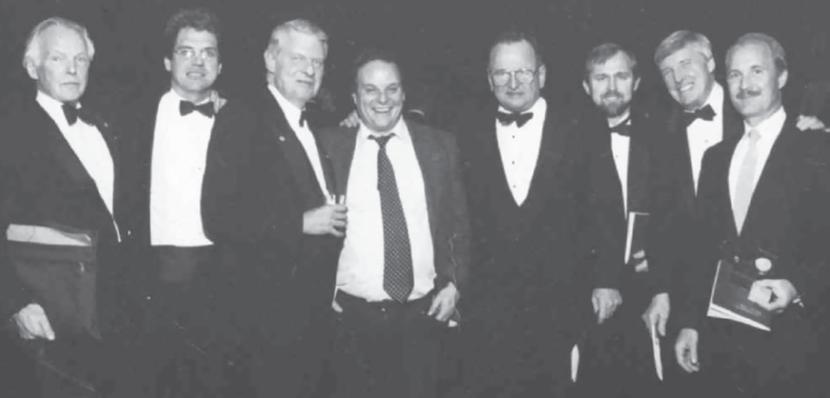
The following editorial is a glimpse into the creation of the Canadian Mining Hall of Fame in 1988 by The Northern Miner and cofounding sponsors Prospectors & Developers Association of Canada, Canadian Institute of Mining, Metallurgy and Petroleum, and the Mining Association of Canada. The four sponsors are supported by five associate organizations: Association for Mineral Exploration British Columbia, Mining Association of British Columbia, Ontario Mining Association, Quebec Mining Association and Saskatchewan Mining Association.
Located today in the Teck Suite of Galleries at the Royal Ontario Museum in Toronto, the Canadian Mining Hall of Fame Gallery showcases the biographies and personal stories of Hall of Fame inductees through a bilingual interactive video wall that also explains how mining touches every part of our lives. Please visit the Hall online at www.mininghalloffame.ca. — By John Cumming, 2015
December 14, 1987
EDITORIAL: MINING HALL OF FAME
Just the other day, at a meeting of the Toronto Geological Discussion Group, the publisher of The Northern Miner, Maurice R. Brown, proposed establishment of a Mining Hall of Fame. This, like sports Halls of Fame in Canada, would permanently enshrine those individuals who have made great and lasting contributions in their particular fields of endeavour.
We think it’s a challenging idea, with a great deal of merit, and not at all impossible of achievement. There is no reason why mine discoverers and developers, like hockey and football players, should not be accorded something of the public honor that election to a Hall of Fame entails. In fact, the mining industry is long overdue in attempting to make its accomplishments more widely known, in this case through those remarkable individuals who would merit inclusion in a Mining Hall of Fame.
The Hall of Fame concept is not at all new, though it is when applied to an industry segment, rather than to sports. There are literally dozens of Halls of Fame across Canada in the sports arena, but none we’re aware of that apply to a particular Canadian industry.
The mining industry itself already accords special honors to mining achievers, through such bodies, for instance, as the Prospectors and Developers Association and its Prospector-of-the-Year award, and the Canadian Institute of Mining and Metallurgy, with its various annual awards. This paper, too, we believe makes a significant contribution to the honors list with its own annual selection of Mining Man of the Year. But one problem with all of these awards is that they generally make limited outside public impact. The industry itself knows of and appreciates them, but few others will be even aware of them. A Mining Hall of Fame, supported by the industry and located in a permanent home available for public visitation, we think, could considerably enhance the opportunities to make mining’s accomplishments, and the names of the men who achieve them, better known to all Canadians.
A Mining Hall of Fame is just an idea, at this stage. But it is at least a possibility, with the backing and financial support of the industry from top to bottom (not just the seniors, the big players, but right down to the smaller companies in the junior resource sector). We suggest as a starter, that industry associations, particularly the national groups, include the idea on their public relations agendas for discussion. Meantime we’d like to hear from anyone who feels he or she could contribute to a dialogue on the proposal.
1989: James Y. Murdoch; Thayer Lindsley; Gilbert A. LaBine; Franc R. Joubin; Murray E. Watts; Jules R. Timmins; H. H. “Spud” Huestis; Dr. Duncan R. Derry; Karl Springer; Stephen B. Roman; Frederick M. Connell; Pierre Beauchemin.
1990: Robert Crooks Stanley; Alex Mosher; Eldon Leslie Brown; John Ross Bradfield; Selwyn Gwillym Blaylock; Hector Authier; William Fleming James; Norman Bell Keevil.
1991: Ralph D. Parker; Viola R. MacMillan; John C. MacIsaac; Albert A. Koffman; John E. Hammell; Randolph W. Diamond; John D. Simpson; Richard and Norman C. Pearce.
1992: Sir William Logan; Oliver Hall; James Roycroft Gordon; Horace John Fraser; A.O. Dufresne; Neil Campbell; Matthew James Boylen; Robert William Boyle; Arthur W. White.
1993: Donald M. Hogarth; Joseph Arlington Retty; John Williams McBean; Henry Verney Warren; Lloyd Montgomery Pidgeon.
1994: Côme Carbonneau; Bernard O. Brynelsen; John Kostuik; Willet Green Miller; Joseph H. Hirshhorn; James Paul Norrie.
1995: Louis Renzoni; Donald A. McLeod; Egil H. Lorntzsen; James Gerald McCrea; Ed Horne.
1996: Robert Jowsey; John Hammell; Donald A. McLeod; John Errington; James Darragh; Gerald Hatch; Kate Rice.
1997: William S. Row; Charles E. Michener; Arthur Thomas Griffis; Tony Barringer; Robert Henderson; Edmund Ernest “Benny” Hollinger.
1998: Gerald G. Hatch; Herbert E. T. Haultain; Benjamin Taylor A. Bell; Archibald M. Bell.
1999: Harry Verney Warren; Stephen P. Ogryzlo; Anthony (Tony) Barringer; Maurice Russell Brown; Paul Penna.
2000: Robert Hallbauer; Benny Hollinger; John Paris Bickell; James H. McKinley.
2001: William Guy Brissenden; Marsh A. Cooper; Alexander Stewart Dadson; Richard Geren; John Fairfield Thompson; James Merritt Harrison.
2002: Peter Munk; William James.
2003: Vladimir Nicolaus Mackiw; James Edward Gill; Richard J. Ennis; The Cobalt Discoverers.
2004: Dr. Norman B. Keevil; Michael J. Knuckey; Walter J. Riva; Edgar A. Scholz.
2005: J. Tuzo Wilson; W. Austin McVeigh; Adolphe “Lap” La Prairie; Alan Kulan.
2006: John Convey; Nathanael V. Davis; Bruce J. Grierson; James J. McDougall; Richard W. Hutchinson; Seymour Schulich.
2007: Harry L. Roscoe; R.G.K. Morrison; Alfred E. Miller; George B. Cross.
2008: Chester F. Millar; David A. Thompson; Johannes J. Brummer; Ernest Craig; Carroll O. Brawner.
2009: D. Grenville Thomas; Roman Shklanka; Bernard M. Michel; Donald H. Gorman.
2010: Victor C. Wansbrough; Timmins Mine Finders / Builders; Graham Farquharson; Hugo T. Dummett; Peter M. Brown.
2011: Mike Muzylowski; Bert Wasmund; John T. Williamson.
2012: John A. Hansuld; Phillip G. Hallof; Ned Goodman; Robert Hunter and Robert Dickinson.
2013: James C. O’Rourke; Pierre Lassonde; Gerald W. Grandey; Charles E. Fipke.
2014: David S. Robertson; Kathleen C.S. Rice; C. Mark Rebagliati; John (Jack) F. McOuat.
2015: Mackenzie Iles Watson; Ian Telfer; Ronald K. Netolitzky.
2016: Stewart L. Blusson; Harold (Hank) Williams; Robert Friedland; Louis Gignac.
2017: John Zigarlick, Jr.; Donald A. McLeod; Robert R. McEwen.
2018: A. Terrance MacGibbon; Robert A. Gannicott; Ross J. Beaty; Edward G. Thompson.
2019: A.M. “Sandy” Laird; Brian K. G. Meikle; James M. Franklin; James W. Gill.
2020: Hans T.F. Lundberg; P. Jerry Asp; Alex G. Balogh; Ebe Scherkus.
2021: David Elliott; William Gladstone Jewitt; Steven D. Scott; Patricia Dillon; Mary Edith Tyrrell.
2022: F. Dale Corman; Peter Risby; Phillip John Mackey; Robert Quartermain; Maureen C. Jensen.
2023: Alexander John Davidson; Douglas Balfour Silver; Jim Cooney.
2024: Eric Sprott; William E. Roscoe; John T. Postle; Ross D. Lawrence; David R. Bell.
2025: Sean Boyd; Patricia Ann Sheahan; Frank Giustra; Donald Roderick MacLean.
2026: Gordon Garfield Morrison; Don Lindsay; David Harquail; Catherine McLeod-Seltzer.
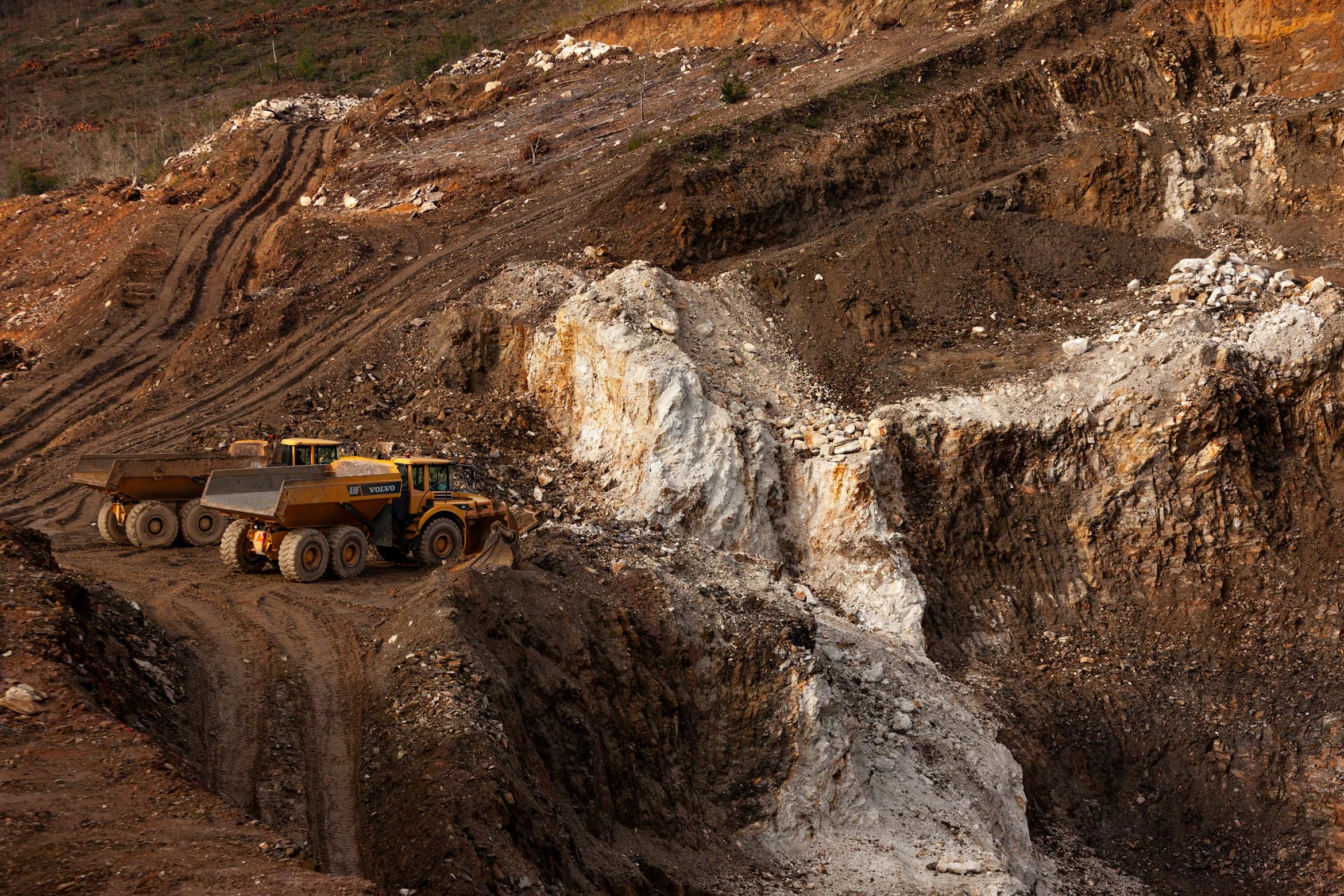




















Toronto Thank you to our




Suha Abdalla | Richard Akifjev | Nina Assanvo | Zander Baker | Michael Bilboe | Maxwell Brown
Amy Brush | Dorian Charette | Baltej Cheema | Elise Delaney | Haedon Evanski | Temitope Fakorede
Andrea Ferriss | Grace Franklin | Yarden Gedalia | Isaac Gilbert | Cameron Godfrey | Jeromy Jean
Benjamin Johnstone | Hunter L’Heureux | Joeseph Meany | Maya Muckpah | Marion Olivier
Miguel Ortiz-Chaparro | Federico Pingitore | Maxwell Porter | Samuel Psyklywec | Edwin Qi
Henry Ato Nketsiah Quayson | Brynn Quist | Niloufarsadat Sadeghi | Emilia Saltos | Charlotte Smith Haozhe Wang | Nahanni Young