



Bangor University makes an outstanding contribution to the economic, social and cultural wellbeing of our city and our nation, and as we look back on the year, I am delighted to present the Annual Report and Financial Statements 2024/25. Despite challenges being faced by universities across the UK, the academic year was marked by significant achievements, another period of transition, one in which Bangor continued to adapt with resilience and ambition, harnessing new opportunities in a complex and turbulent higher education sector.
Council has taken decisive steps to ensure the institution’s long-term academic and financial sustainability in this ever-changing landscape. Whilst the delivery of our savings programme was undoubtedly challenging, and we recognise the impact this has had on our community, these measures were essential to safeguard the University for future generations. Students have clear ideas about what and how they want to learn. We need to balance the academic rigour of our degree programmes whilst modernising traditional subjects and introducing new subjects that are relevant to the world in which we live and work today.
Like us, many universities will be recording financial deficits following particularly fierce competition for both home and overseas students. Although recent fee increases will provide some relief, the financial landscape remains challenging after more than a decade of static fees in Wales, and a sector-wide drop in international student recruitment. It is therefore critical that Council continues to provide direction and support to ensure we have a financially sustainable model for our future needs.
Throughout the year, we have celebrated achievements across teaching, research and community engagement, as well as national and international recognition through awards and rankings. The positive results reflect Bangor University’s continued progress and growing reputation for excellence. The rises in both The Times and Guardian University Guides highlight the University’s strengthened academic standing, while the improved National Student Survey results demonstrate ongoing success in enhancing the student experience. Collectively, these achievements underscore Bangor’s commitment to delivering high-quality teaching, research, and support that make a real difference to its students, to the region and to Wales.
October 2024 marked a major milestone in the University’s proud history, our 140th anniversary. The celebrations provided an opportunity to reflect on our heritage and reaffirm our civic commitment to serving Wales and the wider world through education, research and engagement. A vibrant programme of events took place throughout the year, including an alumni reunion weekend, academic lectures and a celebratory concert headlined by Sir Bryn Terfel. We were delighted to host a public exhibition showcasing over 650 works from our fine art collection, allowing our community to enjoy this remarkable heritage.
Perhaps the most significant achievement in the 140th anniversary year was the official opening of the North Wales Medical School by the First Minister. A momentous step that will transform healthcare training and provision in the region for generations to come. In 2025, we have also launched our Pharmacy programme, a development which further strengthens Bangor’s position as a leader in health and life sciences.
We were honoured to receive a transformative £10.5 million donation from the Albert Gubay Charitable Foundation, the largest philanthropic gift in the University’s history. The creation of the Albert Gubay Business School will provide state-of-the-art facilities for enterprise and innovation, inspiring the next generation of entrepreneurs and leaders in Wales and beyond.
I am delighted that our commitment to community engagement is as strong as ever. We continue to take pride in serving our region and Wales as a whole — through opportunities that transform lives, partnerships that benefit local communities, our research and contribution to local and national innovation, or championing the Welsh language and culture, Bangor remains deeply rooted in its communities and dedicated to making a positive difference. As the City marked its 1,500th anniversary, the University was proud to play an active role in the celebrations, reflecting deep and historic ties that unite the University and Bangor city.
While there is much to celebrate, we must also acknowledge the continuing financial pressures facing higher education. The 2025 Post-16 Education and Skills White Paper sets a clear direction for England, which will undoubtedly influence UK-wide trends in student mobility and funding. As we look ahead to the 2026 Senedd elections, it is vital that we continue to champion higher education as a national priority, and to define a model that secures the long-term financial sustainability of Welsh universities.
With an ever-changing higher education landscape, Bangor University must continue to manage its resources prudently, identifying opportunities for growth and efficiency to ensure the University’s long-term financial sustainability.
As I complete my seventh year as Pro-Chancellor and Chair of Council, I remain deeply proud of Bangor University, its people, its purpose, and its place at the centre of its community.
On behalf of the University Council, I extend my sincere thanks to our Vice-Chancellor, the Executive Board, and all our academic and professional colleagues for their commitment and hard work, and to my fellow Council members for their continued insight and dedication.

Marian Wyn Jones Chair of Council





Through teaching, research, and innovation, Bangor University continues to transform lives, support regional growth, and make a lasting contribution not only in Wales but globally. The past year has been one of both achievements and challenges, reflecting the changing landscape across the higher education sector.
Universities across the UK continue to operate in an uncertain financial environment. Rising operating costs, policy changes affecting international students and employer contributions, amongst other developments created sustained pressure on institutional finances. In response, Bangor undertook a financial exercise to deliver £15 million in savings. This was a difficult but essential decision to ensure that our cost base became sustainable and aligned with our long-term income.
Despite these sector-wide challenges, over the last year Bangor, has continued to make significant progress. The launch of the North Wales Medical School by the First Minister Eluned Morgan marked a major milestone for both the University and the region. Welcoming its first cohort of medical students, the School strengthens the healthcare workforce in North Wales and provides vital support to NHS Wales.
This year also saw the largest donation in the University’s history, a £10.5 million gift from The Albert Gubay Charitable Foundation to establish the Albert Gubay Business School. With this donation, we will be transforming the historic Friars building into a centre for business education. This represents an investment that aims to connect research and enterprise, equipping students with the skills, knowledge and ambition to lead in a rapidly changing world.
Bangor’s research and innovation continue to make a global impact. A new collaboration with Verily, a leading health technology company, marks an important step in expanding our wastewater research into a Europe-wide public health initiative. Through this partnership, we will help governments and communities detect and respond to infectious diseases more quickly, strengthening Europe’s health security and reinforcing Bangor’s role as a key contributor to global bio-surveillance.
Our reputation for excellence is also reflected in external benchmarks. In the 2026 University Compare rankings, we are ranked as the top university in Wales and 15th in the UK. The University was again recognised as a leader in sustainability, ranking 64th globally and top ten in the UK in the Times Higher Education Impact Rankings, reflecting strong performance against the UN Sustainable Development Goals. Bangor also had signficant improvements in the NSS rankings for student satisfaction and teaching quality. These achievements demonstrate the continued dedication of our staff and students in delivering high-quality learning and impactful research.
Bangor’s international outlook remains central to its mission. Over the past year, students graduated through transnational partnerships in China, Uzbekistan, Singapore, and Bahrain, reflecting the global reach and quality of Bangor’s teaching. On campus, students from over 80 countries contribute to a diverse and inclusive community, enriching university life and strengthening our international connections.
Our commitment to equality, diversity, and inclusion was recognised through the award of the Race Equality Charter Bronze Award, highlighting progress in supporting underrepresented students and staff.
Over the past year, we have had to take a close look at our finances and make some difficult decisions to reshape the University. Yet, when I reflect on the year as a whole, I am proud of what we have achieved and the successes we have realised despite these challenges.
While challenges remain, Bangor University enters the coming year on a stable financial footing and with renewed confidence. We will continue to enhance the student experience, deepen our research excellence, grow our international partnerships, and embed sustainability and inclusion across all areas of activity. By combining academic excellence with civic purpose, Bangor will continue to serve its communities, contribute to the prosperity of Wales, and play an active role in addressing global challenges.
Finally, I would like to close this statement by acknowledging and thanking the University’s talented and committed staff for all their hard work and dedication over the past year.

Professor Edmund Burke Vice–Chancellor


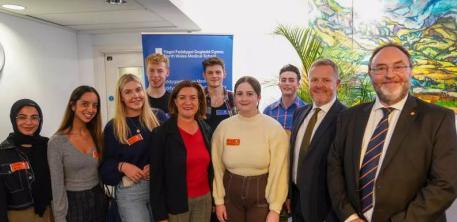
Launch of the North Wales Medical School: A new era for medical education and healthcare in North Wales
Established to play a crucial role in training future doctors, the School welcomed its first students to train as future doctors, to serve both NHS Wales and the people of the region.
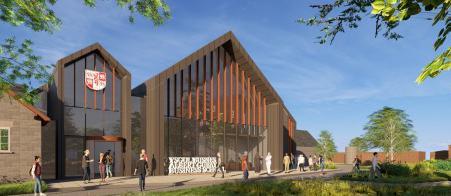
£10.5 million donation to establish the ‘Albert Gubay Business School’
The largest gift ever to the institution from The Albert Gubay Charitable Foundation will convert the former Friars historic building to provide state-of-the-art facilities and support business education.

Pioneering Decarbonisation – A first of its kind in the UK
The collaboration project between three organisations; Adra, Grŵp Llandrillo Menai and Bangor University will ensure that north west Wales is at the forefront of the decarbonisation agenda, working with communities and businesses to retrofit homes over the coming years.

Canolfan Bedwyr’s Dewi Bryn Jones Wins the National Eisteddfod’s Science and Technology Medal 2025
It was a successful National Eisteddfod for the University as lecturer Dr Peredur Webb-Davies won the Daniel Owen prize for writing a novel, and Research Fellow Dr Bryn Jones won the Prose Medal.

Bangor University receives outstanding outcome in Quality Enhancement Review
The review confirmed that the University provided high-quality education, supported its students effectively, and had robust systems in place to maintain and enhance standards.

Bangor University awarded the Race Equality Charter (REC) Bronze Award
The award was given in recognition of the University’s progress in understanding and tackling the issues faced by its black, Asian and minoritised ethnic staff and students in higher education.

Treborth Botanic Garden awarded Woodland Investment Grant
The grant will go towards improving access and providing meaningful learning experiences through a diverse programme of courses, workshops, and training

Legal Advice Clinic wins the Legal News Wales Pro Bono Award
The award was presented in recognition of the Clinic’s valuable work in providing free legal advice to those in need in the Bangor area.

Film and media students win Royal Television Society Award
Tape 15, a horror short, won in the Student Entertainment and Comedy Drama category. This marks the 17th win for Tape 15, which has been screened at international film festivals.
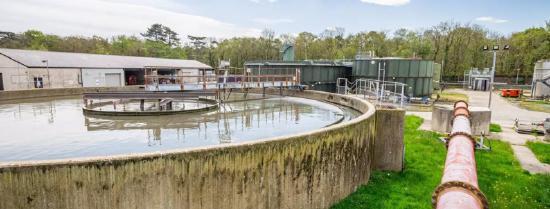
Bangor University partners with Verily to expand wastewater testing services across Europe
Launch of ARFer App: Revolutionising the use of Welsh in the workplace

The app primary purpose is to provide an easy and fun framework for groups of staff to use more Welsh in the workplace.

Michael Mosley’s final series: how researchers showed what happens to your body when you’re stressed
Researchers took the late radio journalist, producer, presenter out of his comfort zone to complete a highrisk activity, monitoring his body to measure his stress response - to help viewers better understand their own bodies.
The partnership with health technology company will leverage the University’s wastewater-based public health surveillance program capabilities and main testing lab.

The late D avidCo usins,o s ngwriter delivered inspiring talks to studenst
With a career spanning over five decades, David was one of the finest modern British songwriters, best known as the lead singer and chief songwriter of the legendary band Strawbs.

‘Bangor Child Lab’, a research group dedicated to improving children’s educational outcomes and well-being
The Bangor Child Lab’s multidisciplinary team will explore critical areas such as language development, literacy, and social cognition, using a combination of behavioural assessments, neuroimaging, and computational modelling.


Bangor University is strongly positioned as a globally engaged institution that is deeply rooted in North Wales. We have consolidated our position as a researchintensive University, with a Research Excellence Framework (REF) performance in REF2021 that placed us second in Wales and 42nd in the UK. As with all universities, we face a future that offers both challenges and opportunities. As such, we present a strategy that is growth-oriented and one that will require us to operate with agility.
Realising our ambitious strategy will mean that we can invest to further improve our excellent student experience and grow our world-leading, internationally excellent research. We aim to continue to deliver social, cultural, and environmental benefits through our sector-leading impact, addressing global societal challenges across areas including healthcare, climate change, and energy solutions for the future.
To view full details of our Strategy 2030 please visit: https://www.bangor.ac.uk/strategy-2030
Our Mission
A globally engaged, research-led university rooted in North Wales, providing transformative learning experiences and nurturing a positive impact on society regionally, nationally, and globally.
Our vision
A globally connected University, realising opportunities for success through transformative, innovative, impact-driven research and teaching, with a commitment to sustainability.
Our values and guiding principles
These four values and guiding principles are our cultural cornerstones, guiding our decision-making and how we work together as a University community.
Inspired by our history and our people, we enable We provide equal access, equal rights, and equal the extraordinary. We are courageous, ambitious justice to all. We will promote mutual regard for for our University, our colleagues, and our the rights and liberties of diverse people and students, as well as supporting the ambitions of their ideas, backgrounds, and approaches to our partners. As a place of academic endeavour, the pursuit of knowledge and understanding. innovation, and transformation, we are driven We trust, value, empower and care for each to help enrich society. We are committed to other, and we hold ourselves accountable. As excellence at all levels of the educational and collaborators we will be responsive and will creative experience. achieve more together.
We act with honesty and transparency and will seek to collaborate in all we do. We will facilitate intellectual growth through academic freedom, creative expression and communication of truth, knowledge, social and moral development.
We are passionate about promoting a culture and scholarship of environmental stewardship, living in harmony, and caring for the world in ways that meet our economic, social, environmental, and cultural needs. Underpinned by our world-renowned research, we will support the development of Wales as a bilingual learning country with a knowledge driven economy for the benefit of the world and future generations.
The University's strategy is underpinned by three strategic pillars and three transformational themes.
The strategic pillars will sustain and progress our core endeavour to position the University as a driving force for higher education and the economy of North Wales, coupled with a vision that aims to be genuinely transformational, strengthening and promoting the University's potential thematically aligned to our strengths and national policy priorities.
Our research strategy continues to champion innovation and impact, with a clear commitment to addressing some of the most pressing challenges facing society. Research at Bangor recognises that all disciplines underpin sustainability and multi- and interdisciplinary approaches remain a priority to support our vision of becoming a globally recognised centre of excellence in sustainability.
Across the University, research is guided by the four pillars of sustainability: human, social, economic, and environmental; providing opportunities for teams to integrate their expertise in tackling global challenges.
Generating new knowledge helps us understand critical changes and tipping points in our environment, societies, and cultures, while engagement with non-academic partners ensures that this knowledge is applied to deliver transformational impact in human behaviour, economic development, services, and natural resource management.
This approach aligns with the Welsh Government’s Wellbeing of Future Generations Act and the United Nations Sustainable Development Goals, allowing Bangor to lead in addressing emerging priorities while maintaining the breadth and depth of research excellence across all disciplines.
This year, Bangor secured a €3 million European grant to lead the ‘EU ARTHURS: European Arthurs, medieval to modern’ doctoral training network, placing the University at the centre of a prestigious international scholarship in the arts and humanities, in partnership with the University of Iceland, Scuola Normale Superiore in Italy, Université Clermont Auvergne in France, University of Iceland, Universiteit van Amsterdam in the Netherlands, and with partner University of Zürich. The network also brings together associated partners across Europe, including the Universities of, Leiden, Stockholm, Strasbourg, and Utrecht, along with the Fondazione Ezio Franceschini (Italy), the National Museum of Iceland, Clermont Auvergne Métropole, and Quaternio Verlag Luzern (Switzerland).
A partnership was established with Verily, a precision health technology company and part of the Alphabet Group that owns Google, to expand wastewater testing services across the UK and Europe, giving governments and health agencies vital tools to protect public health.
Following recognition through the Queen’s Anniversary Prize for this work, Bangor was invited to participate in the Coronation Challenge CreaTech, a year-long research initiative commissioned by the Department for Digital, Culture, Media and Sport (DCMS) as part of the 2023 Sector Vision programme to stimulate growth within the UK’s Creative Industries.
These achievements demonstrate the strength of Welsh research and the opportunities that can be unlocked through sustained investment. In a report produced by London Economics for UK Universities it stated that every £1 of public funding invested in university research returns around £10 to the UK economy, generating benefits that extend far beyond academia. By building on this strong foundation, Bangor University can continue to drive innovation, attract global partnerships, and create the high-value jobs and businesses that will secure long-term prosperity.
Looking ahead, Bangor will continue to build capacity in health and sustainability, and lead in emerging fields. With continued support, our researchers are well placed to deliver excellence and innovation that make a real difference to communities in Wales and across the world.

In September 2024, Bangor University entered an exclusive partnership with Verily, a precision health technology company, to enhance its wastewater surveillance capabilities. This collaboration integrates Verily’s advanced testing technology with Bangor’s established lab, led by Professor Davey Jones. The expanded program will monitor a broader range of pathogens, including SARS-CoV-2, Norovirus, and antimicrobial-resistant bacteria. Serving as a research and development hub for the UK Health Security Agency and the Welsh Government, Bangor’s lab aims to strengthen public health responses across the UK and Europe through this innovative partnership.
As part of its Queen’s Anniversary Prize recognition, Bangor University joined the Coronation Challenge CreaTech, a research initiative commissioned by the Department for Digital, Culture, Media and Sport (DCMS) under the 2023 Sector Vision programme to grow the UK’s Creative Industries. Represented by Professors Andrew Lewis and Andrew McStay, Bangor contributed to a national report by 22 universities and colleges on how creativity and emerging technology can transform skills, innovation, and business. Areas explored include sound design, immersive media, and human–artificial intelligence interaction. Key recommendations called for increased research and development investment, improved education pathways, and stronger industry–academia partnerships to sustain sector growth.
Bangor University has secured a €3 million European grant to lead the EU ARTHURS project, enhancing its global reputation in Arthurian Studies. Under the leadership of Professor Raluca Radulescu, the Centre for Arthurian Studies will collaborate with 35 academics, doctoral fellows, and cultural institutions across Europe. This success builds on Bangor’s long standing international recognition in the field, further confirmed by Professor Radulescu’s election as President of the International Arthurian Society in 2024.
As a research network whose aims are to investigate the changing relationships between central traditions and peripheries in Arthurian studies, the project also expands doctoral research capacity, foster long-term collaborations, and contribute to the Research Excellence Framework 2029 through open-access publications and academic conferences. This success demonstrates the value of arts and humanities research in modern society and strengthens Bangor’s position on the international stage.


Bangor University continues to elevate the student experience through strategic collaboration and innovative teaching, building on our ongoing mission to provide transformative learning for all students. In February 2025, the University received an outstanding outcome in the Quality Enhancement Review (QER), benchmarking quality of the student learning experience and our approach to enhancement.
The 2025 National Student Survey (NSS) results further reflect the impact of our enhancement activity, with overall student satisfaction rising as well as teaching satisfaction. Students reported that teaching staff explain course content clearly, engage with them meaningfully in learning, and stimulate intellectual curiosity. These outcomes place Bangor third in Wales for teaching satisfaction and 46th out of 124 institutions in the UK, demonstrating a sustained upward trajectory in student experience and academic engagement.
Central to this success is the University’s long-standing partnership with students and the Students’ Union, Undeb Bangor. This collaboration continues to inform institutional priorities and underpins the implementation of the Student Experience Sub-Strategy, launched in 2024. Developed through extensive consultation with staff and students, the strategy empowers learners to take ownership of their education and personal development. Over the past year, these ambitions have been brought to life through initiatives that enrich opportunities beyond the classroom, prioritise wellbeing, embrace inclusivity, enhance learning environments, and strengthen communication across the University community. A new Student Experience Delivery Group, with representation from both staff and students, has ensured these objectives are monitored and embedded across all areas of the student journey.
Our curriculum remains underpinned by five core educational attributes: challenge, inquiry, application, collaboration, and self-direction and is delivered through a broad, researchand practice-informed programme. Technological innovation has expanded these learning opportunities, enabling virtual international classrooms and flexible learning pathways. Together, these developments ensure that Bangor graduates are equipped to succeed in regional and global graduate markets while maintaining strong civic engagement and connection to society.
We remain committed to turning strategic goals into meaningful improvements in teaching, learning, and the student experience. By fostering strong collaboration between students, staff, and the Students’ Union, the University continues to support learners to succeed academically and shape their future with confidence and purpose, thus maintaining Bangor’s position as a leader in the provision of research-informed, high-quality education.
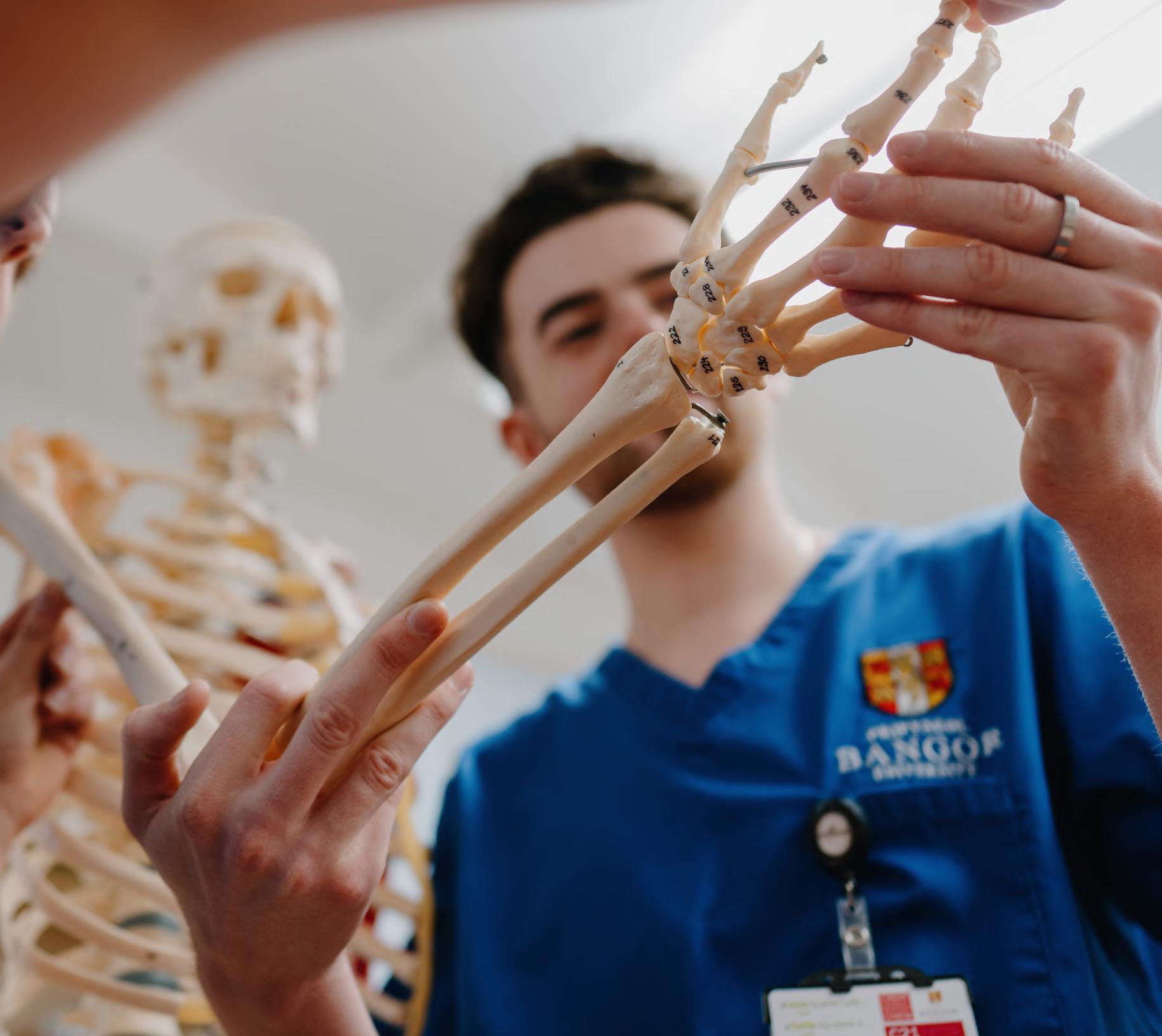
Bangor University has been awarded an outstanding outcome with six commendations following its recent Institutional Quality Enhancement Review (QER), conducted by the Quality Assurance Agency for Higher Education (QAA) on behalf of Medr. QERs, which take place approximately every five years, assess Welsh higher education providers to ensure high standards in teaching, student support, and quality assurance.
The review, which included an evaluation of Bangor University’s self-analysis submission and a visit in December, confirmed that the University provides high-quality education, supports its students effectively, and maintains robust systems to enhance academic standards. This outcome reflects the University’s strong commitment to delivering excellence in education and fostering a positive student experience.
The six commendations recognised Bangor University’s achievements in key areas: student partnership, Welsh language and bilingualism, comprehensive student support, staff development, the Assessment Equivalence Framework, and data-driven enhancement. These commendations highlight the University’s innovative approaches to embedding student feedback, promoting inclusivity, supporting staff and students, and ensuring consistency and continuous improvement. making significant strides in preparing its students for success in a dynamic global workforce.
In December, the School of Environmental and Natural Sciences hosted its first studentled employability event, engaging nearly 300 students. Organised entirely by the School’s Student-led Employability Group, the initiative demonstrated the leadership, creativity, and initiative of the student community.
The event featured over 20 interactive stalls, six guest speakers and career advice sessions, providing students with a comprehensive platform to enhance their career readiness. Several stalls were hosted by graduates, enabling students to network with industry professionals, discuss recruitment strategies, and explore graduate jobs, placements, and volunteering opportunities.
This successful student-led initiative highlights the University’s commitment to employability, student leadership, and fostering strong connections between students, alumni, and industry, while providing valuable opportunities for career development and professional networking.



In a year when the University celebrated its 140th anniversary and the John Morris-Jones (JMJ) Welsh halls of residence marked fifty years of existence, it was understandable that the past took centre stage. The Hall’s anniversary was celebrated at Pontio with a day of reminiscence in conversation and song, featuring current residents performing with Côr Aelwyd JMJ in a grand concert alongside Bryn Terfel to mark 140 years of higher education in Bangor
At the same time, innovation and forward thinking remained central to Bangor University’s relationship with the Welsh language, as reflected in its Welsh Language Strategy and recognised in the Quality Assurance Agency’s Quality Enhancement Review report, which praised the University for embedding Welsh and bilingualism deeply in its culture to the benefit of all staff and students.
Excellence of this kind doesn’t happen without ongoing planning and action. The Welsh Language Strategy Action Plan ensures that practical steps are taken each year to create a truly bilingual institution that values the Welsh language. These steps guarantee opportunities to study through Welsh across all subject areas, while also enabling all staff and students to engage positively with the language and feel a sense of ownership over its central place in University life.

With the launch of the North Wales Medical School at the start of the academic year and a commitment to deliver bilingual healthcare for the region, steps were taken to ensure that language training and language awareness education were part of the offering for every student. The course ‘More than Words – Welsh as a Clinical Skill’ was developed by expert tutors and policy leads at Canolfan Bedwyr, in collaboration with clinical and support staff at the Medical School. Delivered at Taster, Intermediate and Proficiency levels, the course supports the Welsh Government’s More than Just Words policy in embedding Welsh in health and social care. In addition to language lessons, students received language awareness training to give them a full understanding of the linguistic landscape in which they will be working.
The importance of Welsh in the workplace was also highlighted in a podcast series published during the year under the title Bangor – What Next? Over five episodes, Bangor University alumni, including journalist Liam Evans and football presenter Sioned Dafydd, shared how studying through Welsh at Bangor had benefited their careers. This message was reinforced at a Celebrating Bilingualism event during Graduate Career Week in October, and again at the Welsh Jobs Fair held in March, which was organised and led by students.
University staff remain keenly aware of their ongoing responsibility to enhance the teaching and learning experience for current and prospective students. For Welsh-speaking students, this often means addressing gaps in materials by creating accessible and up-to-date resources. Professor Jerry Hunter, in collaboration with Professor Richard Wyn Jones from Cardiff University, dedicated a special series of their popular podcast Yr Hen Iaith to tackling A-level Welsh syllabus texts in a fun and engaging way.
The University is also very conscious of its responsibility to contribute to the prosperity of the Welsh language in the wider community and has a long history of developing resources for the benefit of other organisations and workplaces. Under the ARFOR fund, a Bilingual Workforce Recruitment Pack developed by a team from the School of History, Law and Social Sciences was launched at an event attended by up to 100 employers and practitioners from across Wales. Thanks to the same fund, Canolfan Bedwyr developed an app to change language practices in workplaces, based on the behavioural change project ARFer.
Looking back over the University’s history, the contribution of individual staff members to Welsh literature is one that cannot be overlooked, with names such as R. Williams Parry, Gwyn Thomas and Angharad Price forming a distinguished lineage. It was therefore fitting, in this celebratory year, to see that tradition continue with Gwenno Gwilym, a member of the University’s Web Team, winning the Welsh Fiction award at the Book of the Year awards for her debut novel V + Fo.

Bangor University demonstrates a strong and sustained commitment to community, civic, and economic engagement through a wide-ranging programme of initiatives connecting students, staff, and communities across north Wales.
The University’s 140th anniversary in 2024 provided a valuable opportunity to celebrate shared achievements with the wider community. The year concluded with a special concert in Theatr Bryn Terfel, Pontio featuring its namesake Sir Bryn Terfel and guest artists, marking 140 years of education, collaboration, and cultural contribution.
The Bangor University Community Fund continues to play a vital role in supporting partnerships with community organisations, schools, and local groups through projects that address social, environmental, and cultural priorities. During the most recent funding call, four new projects were supported, bringing the total number of initiatives funded through the Research Wales Innovation Fund (RWIF) to twenty-two.
Applications were received from across the University, demonstrating a strong appetite to collaborate with external partners and stakeholders, and contribute positively to community wellbeing. The successful projects collectively focus on themes of youth empowerment, creativity, sustainability, and local heritage.
Activities include providing young people with opportunities to engage in public health and climate discussions, building skills and confidence through creative media, supporting sustainable rural enterprise, and strengthening community identity through heritage engagement. These initiatives exemplify the University’s Civic Engagement Strategy which seeks to align research and teaching with the needs and aspirations of local communities.
Through these projects, staff and students are working directly with schools, social enterprises, and voluntary organisations to co-develop solutions to regional challenges. The emphasis is on practical impact—whether helping young people develop leadership skills, supporting rural innovation, or building stronger connections between communities and their cultural heritage. Student-led initiatives such as the Hot Meals Project and Healing Gardens also continue to make a tangible difference, providing practical support for vulnerable or isolated community members while offering students valuable opportunities to develop leadership, volunteering, and project management experience.
The University’s Pontio Arts Centre remains a cornerstone of cultural life in north Wales, offering diverse arts and creative engagement through theatre, dance and music events as well as youth workshops delivered through its BLAS programme. In addition, 2024/25 continued to be a positive year for the University with a busy programme of public lectures and corporate events.
At Treborth Botanic Garden, a £250,000 Woodland Investment Grant (TWIG) from the National Lottery Heritage Fund and Welsh Government is supporting the restoration and revitalisation of woodland habitats. The project enhances accessibility and learning through workshops, training, and communityled conservation activities, ensuring Treborth remains a volunteer-driven hub for wellbeing, biodiversity, and environmental education. The funding will also enable Treborth to become part of the National Forest for Wales, reinforcing its role as a centre for nature-based learning and sustainable community engagement.
M-SParc, the University’s science park, continues to drive innovation, STEM learning, and sustainable economic growth. Through initiatives such as the Digidol 24 digital innovation conference, Clwb Sparci STEM workshops, the Library of Things promoting a circular economy, and Maker Space

activities focused on green technologies and creativity, M-SParc supports enterprise, skills development, and community regeneration. Its #OnTour hub on Bangor High Street further extends this impact by promoting innovation and entrepreneurship in the heart of the city.
Bangor University also actively participates in regional and national events, including the National Eisteddfod in Wrexham in 2025, showcasing research, creativity, and partnership working. These activities reinforce the University’s strong regional connections and its role in supporting cultural, social, and economic wellbeing across north Wales.
A new Student Bursary Fund, launched in partnership with Bangor City Council, supports academic research that directly contributes to the city’s development and strategic ambitions. The fund offers grants of up to £1,000 to undergraduate and postgraduate students whose work demonstrates tangible benefits for the local area. In addition to financial support, recipients gain opportunities to collaborate with civic stakeholders and apply their research to real-world challenges. The highest-scoring applicant also receives match funding from the University’s science park M-SParc, encouraging innovation and community-focused research.
This partnership between Bangor City Council, Bangor University, the Students’ Union, and M-SParc exemplifies the University’s civic mission, connecting learning, research, and innovation with local needs to generate meaningful societal impact, and continues the strong relationship between the university and the city, encouraging research that benefits both the local community and the region.
Overthe past year, Bangor University has made significant strides
in enhancing global engagement, emphasising collaboration and sustainability to benefit current and future generations. Guided by multilingual and multicultural principles, this approach reflects the University’s commitment to fostering meaningful connections both locally and globally.
Bangor University launched its Global Engagement Strategy earlier this year and it aims to define the University’s ambitions over the next decade. A central goal of this strategy is to explore collaborative opportunities with global partners to transform lives and contribute to societal and economic development. This includes ensuring that the University’s global education and research efforts support long-term sustainability, encompassing social, economic, and environmental dimensions.
Global engagement also offers avenues to tackle critical global challenges, such as environmental change and public health, while promoting cultural and linguistic diversity. Collaborative international research amplifies the impact and reach of academic work, with evidence showing that globally co-authored publications often achieve significantly greater influence compared to national efforts.
This commitment to global engagement has already delivered tangible results. Over the past year, Bangor University has celebrated degrees awarded to students studying through international partnerships, with graduations taking place in China, Tashkent, Singapore, and Bahrain. These achievements underscore the high quality of education delivered through transnational programs and highlight the University’s dedication to cultivating a globally connected academic community.
Bangor’s international community on campus continues to enrich University life. Students from more than 80 countries choose to study in Bangor, contributing to a vibrant, diverse, and inclusive environment. The wide range of international clubs and societies along with events such as the annual International Gala celebrate cultural exchange and foster lifelong connections between students from across the world. This global community plays an important role in shaping Bangor’s identity as a welcoming and outward-looking university.
Bangor University’s global engagement efforts continue to build a foundation for addressing shared global challenges while creating opportunities for innovation and progress. By fostering collaboration across borders, the University is ensuring its impact extends far beyond geographical boundaries, enriching lives and contributing to a sustainable future.

Over different nationalities of students
80

Our commitment to fostering a healthy, vibrant, and inclusive environment, where every member of our community can thrive, is one of the University’s three strategic pillars: Our People.
This commitment has continued to guide our actions and decisions as we have strengthened the ways we support, celebrate, and invest in our staff community.
In 2024, we were proud to achieve the Race Equality Charter (REC) Bronze Award, a significant milestone that recognises our progress in understanding and addressing the challenges faced by our Black, Asian and minoritised ethnic staff and students. The REC, awarded by Advance HE, provides a rigorous framework for improving representation, experience, progression, and success for minoritised ethnic groups.
Receiving this Bronze Award reflects the dedication and hard work of our staff and students and demonstrates our institutional commitment to advancing race equality. It is accompanied by a comprehensive five-year Race Action Plan, which sets out clear priorities to continue driving this important work forward.
Our commitment to the wellbeing of staff and to environmental sustainability has also been strengthened through our involvement in the Gwynedd and Anglesey Healthy Travel Charter. By joining public sector partners such as Cyngor Gwynedd, the Isle of Anglesey County Council, and Natural Resources Wales, we have pledged to promote healthier, more sustainable ways of travelling. Encouraging staff and visitors to walk, cycle, or use public transport not only supports individual wellbeing but also contributes to our collective efforts to reduce carbon emissions and build a more sustainable future.
This period also brought significant organisational change, requiring colleagues across the University to adapt and reprioritise. Throughout this period, we have placed a strong emphasis on communication, compassion, and access to support. Our Staff Wellbeing Champions and Wellbeing Coaches have continued to play an essential role in promoting healthy practices and providing one-to-one support to colleagues.
Professional help also remained easily accessible through the Employee Assistance Programme (Vivup), which offered confidential advice and counselling on a wide range of topics.
Learning and development also remained key to embedding a culture of wellbeing across the University. Courses such as i-act and Understanding Yourself and Others have helped colleagues to develop the confidence and skills needed to support one another. Thanks to MEDR funding, we were also able to extend our wellbeing offer through new initiatives, including bilingual counselling, financial wellbeing sessions, stress and burnout e-learning, and a campus wellbeing fair – all of which were well received by staff.
Looking ahead, we are building on this strong foundation through the creation of a new ‘Our People’ workstream, which will focus specifically on morale, workload, and wellbeing. This work will be crucial in ensuring that our ways of working remain sustainable, supportive, and aligned with the needs of our staff community.
Our people remain at the heart of Bangor University’s success. Together, we are shaping a culture where every member of our community feels valued, supported, and empowered to achieve their best.
Highlights
Income
million
Income growth -7% -4%
Surplus / (deficit) before tax (as % of income)
(Deficit) excluding USS pension movements (as % income)
(£18.290) million (-12%) £29.483 million (17%)
(£18.290) million (-12%) (£13.367) million (-8%)
(Deficit) excluding restructuring costs (as % of income) (£13.285) million (-8%) (£13.039) million (-8%)
Operating cash flow from operating activities (as % of income) (£3,888) million (-2%) £5.728 million (3%)
Capital expenditure £9.355 million £8.107 million
Year-end cash and short-term investments £15.824 million £33.480 million
Overview
2024/25 was a very challenging year for the University. We had a large reduction in our international student intake through the year because of changes to the UK’s student visa system. We also had a reduction in our home intake as we saw more students recruited into high-tariff universities result in a smaller market share for mid-tariff universities. As a result of this environment, our income was £157.930 million in 2024/25, a reduction of over 7% on the previous year.
Our response to these challenges involved short-term action to bring down our costs by delaying the implementation of the national pay award, introducing a voluntary severance scheme, reducing non-pay and capital spend reductions. To reset our expenditure into the longer term, we have completed a restructuring programme which has delivered savings of around £15 million.
We have also had a very strong focus on managing our cash balances in the year, with detailed forecasting in place and future projections being kept up-up-date. Our cash balance fell to £15.8 million at 31 July 2025. We have a £25 million revolving credit facility in place. At the time of signing the financial statements, we have not yet drawn on the revolving credit facility.
2025/26 will remain a challenging year. We have budgeted for an operating deficit as part of a path to moving back into surplus from 2026/27 onwards. Our autumn term student recruitment has been close to budget, and we will be using 2025/26 as a key year to reset our strategy. The impact of the reduction in international students last year was addressed by resetting the cost base which included a reduction in pay of £15m. The restructuring exercise is now completed, and we are planning a stronger performance to a more longer-term sustainable position.
Our income comes from several sources as shown in the chart below.
Total tuition fees income fell by almost 11% in 2024/25, with both home fees and international fees down 3% and 25% respectively. Student recruitment continues to be a very competitive market, with no cap on numbers for English or Welsh universities. A fee plan has been agreed by MEDR including a fee of £9,535 for home undergraduate and PGCE which will become effective for 2025/26 onwards. The fee plan includes increasing investments to support widening access, the student experience, Welsh medium and employability, including supporting access to sports clubs, societies and volunteering activities in the Students’ Union, and enhanced library and sporting provision.
The portfolio of research grants and contracts slightly declined in the year with income falling by 1.5%. This was largely because of the continued fall in EU Government funding which reduced from £2.7 million in 2023/24 to £0.259 million in 2024/25. The funding of activity previously funded by the EU is a major challenge since BREXIT.
Our pay costs ratio has increased from 58% of income to 60% in 2024/25 (excluding the cost of voluntary severance) and the action now underway is aiming to bring this ratio back to a sustainable level.
The statement of financial position shows a decrease in net assets from £235.862 million at 31 July 2024 to £219.307 million at 31 July 2025. The main change between the two years was the reduction in cash from £33.48 million to £15.82 million.
The cash flow from operating activities in the year was a negative £3.888 million after the impact of the performance in the year, including the cost of voluntary severance packages paid as part of the restructuring programme. Without these one-off costs ,our operating cash flow would have been positive. We are targeting a higher level of operating cash generation to finance the plans for future capital expenditure.
In 2024-25, we had 9,875 students studying with us. This was a reduction of c8% on the previous year. International enrolments had dropped by c.24% compared with last year, with part-time students increasing slightly and remaining over 1,600 students. The distribution of students in 2024-25 was:
The University recognises that there are inherent risks and uncertainties associated with many aspects of its operations. It aims to identify, manage and mitigate those risks wherever possible and promotes a culture of active risk management throughout the University. The institutional risk register is formally reviewed by the Executive Board, Audit and Risk Committee and Council regularly.
The key high-level risks present for the University are:
Risk Area Risk Description Risk Mitigation
Research
* Student census data as at 1 November, with further adjustments in respect of semester 2 enrolments.
Our strategy for the estates remains under regular review to ensure that we have the capacity and capability to effectively accommodate a wide range of teaching and research across our broad portfolio of disciplines.
During the year, we finished our project to redesign Parc y Coleg. This has created a more welcoming shared space for the entire community and now links up with Pontio, Significant equipment investments were also made into our Centre for Environmental Biotechnology to increase its research ability in the environmental sciences. The University purchased the old Ysgol Friars and will redevelop this to create a new business school called the Albert Gubay Business School. This follows a £10.5 million donation from the Albert Gubay Charitable Foundation.
The University continued its investments in digital infrastructure with a project completed to upgrade the entire wireless capacity on campus.
People
The University fails to improve research quality and loss of research funding
The Research Committee monitors the research quality and impact through annual reviews. Academics are supported by peer reviews of grant applications, the early career researcher network and focused annual planning rounds. Increased REF awareness through the college research institutes and the recently implemented PURE information system provide additional support. Research funding is reported to the Executive, Finance Committee and Council as part of the financial reporting pack.
The University fails to improve staff morale and the impact on operations
The University has a range of policies and tools to support training, development, mentoring, wellbeing initiatives, together with its occupational health representatives. It circulates a newsletter each week and on campus briefings from the Vice Chancellor and the senior leadership team.
Financial Resilience
The University fails to ensure financial sustainability in the medium to long term
The University adopts a continuous improvement to its business processes and business systems. The annual planning process informs financial forecasting and budgeting that is aligned to student recruitment and impacts of external market forces. This sensitivity analysis on income assumptions models and informs effective controls for cost reductions.
Marketing & Recruitment
The University fails to recruit the student numbers in the financial forecasts for both home and international
We are monitoring strategy alignment through the Marketing and Recruitment Committee to ensure courses are appropriate for the market demand. We are also maintaining good commercial relationships with international agents and partners, and development of new global partnerships with overseas institutions and ensure they are delivered effectively.
Brand & Reputation
The University doesn’t convey its brand, image and reputation
The University maintains a strong social media presence to promote communications and achievements. It works closely with SU representatives on all relevant committees, delivery groups and Boards.
Physical & Digital Infrastructure
The University fails to protect against cyber security and maintain/improve the condition of its estate
The University has centralised cybersecurity arrangements with audited access control procedures for personal/ sensitive data. It conducts regular cyber security penetration testing, annual mandatory training for staff, and two-factor authentication to the Microsoft Office 365 suite. The Asset Management system monitors the condition of its estate and implements preventative measures when needed.
Funding
Impact of changes in Welsh Government HE Policy and funding regimes
We are maintaining close relationship with politicians, funders, regulators and commissioning bodies. Processes are in place to model scenarios to inform decision-making as part of the annual planning processes.
Each risk is assigned to a member of the Executive Board as the risk owner and another senior colleague as the risk lead. The cause and effect of each risk is scored to give an inherent rating. The risk process then considers the first, second and third line of controls before identifying a residual score and clear actions to mitigate or manage the risk. Council has reviewed the financial forecasts and the key factors that support the University’s Strategic Plan. These have been tested against various scenarios, including downside scenarios, which demonstrate that the University has access to adequate resources to continue to meet its obligations for the foreseeable future.
The University operated three main pension schemes in the year. Staff at grade 7 and above were enrolled into USS. Staff at grades 1-6 were automatically enrolled into the NEST Defined Contribution Scheme and had the option to join the BU PAS Defined Benefit Scheme.
We have around 0.5% of the active membership of USS and it is an important aspect of our financial position. As the scheme is in surplus, we no longer have a liability on our balance sheet in respect of USS liabilities and our annual payments to USS for employer contributions are £7.91 million.
USS had a surplus of £7.4 billion at 31 March 2023 and 20.6% total contributions are now paid into fund future service. 6.1% is payable by member and 14.5% by employers.
The BUPAS scheme is a defined benefit scheme operated by the University. On an FRS 102 basis the scheme has assets of £108.499 million and liabilities of £100.989 million at 31 July 2025 and therefore a surplus of £7.51 million which is recognised on the University’s Statement of Financial Position.
The scheme has completed the actuarial valuation as at 31 July 2023 and agreement has been reached to reduce the University employer contribution to 12.5% for this valuation cycle from 1 August 24.
The NEST scheme is a defined contribution scheme where members pay 5% of salary and the University pays 3%. The University has implemented a new defined contribution scheme from 1st August 2025 for all staff on grades 1-6.
From 1 August 2025, we have introduced a replacement defined contribution scheme for most staff in grades 1-6 on more generous terms.
The University holds funds arising from bequests and other gifts, which are recognised in these accounts as either endowments or donations with or without restrictions. These funds have been invested on a pooled basis and are managed by UBS in line with the University’s sustainable investment policy. During the year, the funds increased in value by £672,000 alongside an income of £340,000 and new endowments of £136,000. The total value of endowment reserves as at 31 July 2025 was £10.113 million, including accumulated income of £2.097 million.
The Group and University’s activities, together with the factors likely to affect its future development, performance, financial position, cash flows, liquidity and borrowing facilities are set out within this Strategic Review which forms part of the Annual Review.
The Group and University meets its day to day working capital requirements through existing unrestricted cash balances which are adequate to meet liabilities as and when they fall due for the foreseeable future. The University has a £25 million revolving credit facility.
The Group implemented significant restructuring in 2024/25 with the aim to reduce pay by £15 million. This has now been completed along with a reduction in the non-pay operating costs delivered during the year.
The Council has prepared detailed cash flow forecasts for both 2025/26 and 2026/27. After reviewing these forecasts, the Council is of the opinion that, taking account of severe but plausible downside risks, the Group will have sufficient funds to meet their liabilities as they fall due over the period of 12 months from the date of approval of the financial statements (the going concern assessment period).
We have assessed several scenarios which estimated the various financial impacts of the risks faced through a range of areas, in particular student number and fee income generation together with income from residences and commercial income. This also included assessment of the plausible impact of continuing reductions in student recruitment.
The University has a Budget for 2025/26 based on its student recruitment together with control over capital expenditure to maintain liquidity. The University will maintain control of its pay costs to align with its metrics as a percentage of turnover, together with a reduction to its operating non-pay. Our banking covenants were renegotiated earlier in the year and are not forecast to be breached during the going concern assessment period.
Because of this review, the Council considers that the Group and the parent University can manage its finance and business risks and will continue to meet their liabilities as they fall due for at least 12 months from the date of the approval of the financial statements and therefore have prepared the financial statements on a going concern basis.

Chief Financial Officer

E Hepburn, Chair of Finance Committee

Bangor University continues to strengthen its position as a global leader in sustainability, aligning its vision with the Welsh Government’s Wellbeing of Future Generations Act and the United Nations’ Sustainable Development Goals (SDGs). We remain committed to embedding sustainability into every aspect of our operations - from teaching and research to campus management, community engagement, and global collaboration.
To fulfil this mission, we continue to manage our financial, environmental, cultural, and societal resources responsibly, ensuring that we address the immediate needs of our students, staff, and local community while safeguarding the ability of future generations to meet theirs.
Bangor University has once again been recognised nationally and internationally for its outstanding sustainability performance. In the 2025 Times Higher Education Impact Rankings, assessed against the United Nations’ SDGs, Bangor ranked equal 64th in the world and 9th in the UK. We were also placed 12th globally for ‘Responsible Consumption and Production’
-a reflection of our commitment to promoting sustainable use of resources.
In the 2024/25 People & Planet University League, Bangor University retained its prestigious First-Class Award for the sixth consecutive year, ranking 19th out of 149 universities in the UK and rising to 2nd in Wales. Notable strengths included joint 9th nationally for Carbon Management and strong performance across staff and student engagement.
This year also saw Bangor University staff and students take part in the March for Clean Water in London - a national event organised by River Action and campaigner Feargal Sharkey, calling for stronger action to tackle water pollution. Bangor was the first university to become an official supporter of the event, joining organisations including Surfers Against Sewage, the RSPB, and The Rivers Trust. Staff and students from across the university, dressed in branded lab coats, marched to highlight Bangor’s scientific leadership in water quality monitoring and nature-based solutions for pollution control.
In another innovative step towards reducing environmental impact, Bangor University became the first university in Wales to adopt Ecosia as its default search engine. Ecosia is the world’s largest not-for-profit search engine, using its profits to fund global reforestation projects. Within 12 months of launch, searches from Bangor University devices have contributed to the planting of over 15,000 trees in biodiversity restoration projects worldwide.
A major milestone in 2025 was the successful completion of the University’s 25by25 Carbon Reduction Challenge - achieving the goal of reducing Bangor’s carbon dioxide equivalent (CO₂e) Scope 1 and 2 emissions by 25% from a baseline year of 2018/19, within just three years. We have also reduced our gas and electricity consumption by over 20% since 2018/19. This ambitious target required every part of the University community to play a role in changing how we use power and fuel, and promoted better management of waste and water, to reduce all forms of greenhouse gas emissions. Achieving 25by25 ahead of schedule demonstrates the effectiveness of our Carbon Reduction Approach and highlights Bangor’s leadership in climate action within the higher education sector.
These initiatives demonstrate Bangor University’s commitment to coupling local action with global impact. Our Carbon Reduction Approach continues to guide progress towards the Welsh Government’s Net Zero 2050 target, focusing on our three major emission pathways — the built environment, university travel, and supply chain.
Our teaching and research also reflect this deep-rooted commitment. Many Bangor degrees now highlight relevant SDGs, ensuring students graduate with an understanding of sustainability in their discipline. In research, we continue to implement the Wellcome Environmental Sustainability Concordat, embedding sustainable research practices across all disciplines. Through these collective efforts, Bangor University remains firmly on course to deliver a sustainable futurefor our community, for Wales, and for future generations.


Undeb Bangor, Bangor University’s Students’ Union, experienced a transformative year, shaped by the dedication of student leaders, staff, and volunteers. Strategic developments and grassroots campaigns focused on amplifying student voice, fostering inclusive communities, and enhancing the overall student experience.
A major milestone was the development of the Undeb Bangor Strategy 2025–2030, shaped through student surveys and workshops. Endorsed by the Board of Trustees, the strategy outlines four themes: Student Voice & Advocacy, Student Communities, Growth & Development, and Organisational Sustainability. It will launch in September 2025 with a supporting operational plan.
A Democracy Review was undertaken to improve decision-making, elections, and campaigning. Changes include a simplified process and clearer opportunities for student participation.
Governance and financial reporting remained strong. The SU Governance Audit confirmed “Substantial Assurance,” and the Financial Audit resulted in only one recommendation. Recruitment for new Student and External Trustees was launched to strengthen board diversity and expertise.
Student voice remained a central focus throughout the year. A comprehensive Course Rep Review was completed, resulting in a transition to a school-level representation model for the 2025–26 academic year, with a reduced number of representatives and enhanced support structures. This revised system aims to empower students to effectively communicate academic concerns and aspirations to staff and the wider university community.
Student Insight Reports were produced, focusing on the experiences of international students and Welsh-speaking students. These reports contributed to university planning and identified key areas for improvement.
The Sabbatical Officer Elections attracted 16 candidates and 1,928 votes, representing a 16.7% turnout, above the sector average. Student-led responses to the University’s Business Cases for Change were also facilitated, ensuring that concerns related to academic provision, support services, equality and diversity, and Welsh-medium education were clearly represented.
Undeb Bangor rose 24 places in the 2025 National Student Survey, ranking 22nd in the UK and 3rd in Wales for representing students’ academic interests, with a score of 79%.
Undeb Bangor continued to foster vibrant and inclusive student communities throughout 2024–25. A total of 175 student-led groups were supported, comprising 7,157 student members across clubs and societies, and 1,496 volunteers engaged in volunteering projects. Welcome Week and the Serendipity Welcome Fairs in September and January attracted over 8,000 attendees. Additional engagement activities included Chill and Chat sessions, as well
as Christmas and Easter events for students remaining in Bangor, which welcomed over 170 participants.
Student achievements were recognised through the Societies & Volunteering Awards, Athletic Union Awards, and High Sheriff Awards, celebrating the contributions of hundreds of students. Varsity 2025 featured 45 events and drew over 1,000 attendees, culminating in Bangor’s ninth consecutive victory over Aberystwyth.
Summer Sessions were introduced to support students during the summer break, offering inclusive activities and excursions, aimed at reducing isolation and maintaining engagement. This programme was supported by the Bangor Fund and Medr Health and Wellbeing funding.
UMCB played a leading role in promoting Welsh culture through events such as the Eisteddfod Ryng-golegol, the 50th Anniversary of Neuadd John Morris-Jones (JMJ), and the UMCB Awards. UMCB also contributed significantly to the Welsh Language Student Experience Insight Report and led advocacy efforts to safeguard Welsh-medium provision during university restructuring and successfully advocating for the protection of Neuadd JMJ.
Campaigns addressed key student issues. The Reclaim the Night and Trans Rights Marches raised awareness of gender-based violence and LGBTQ+ rights. In partnership with the Money Support Unit, crisis funding and short-term financial support were provided for vulnerable students including those identifying with gender expression, LGBTQ+, lone parents, and pregnant students, supported by Medr funding.
The Cost-of-Living Campaign included initiatives such as a Swap Shop, Repair Café, and the distribution of free period products, all aimed at promoting student wellbeing and financial resilience.
Academic and wellbeing campaigns support remained a priority. The Academic Advice Service supported a wide range of cases, particularly among final-year and Health Sciences students. A new framework is being developed to improve clarity accessibility and evaluation of the service.
A Study Aid Campaign during exams provided practical resources and wellbeing materials, contributing to a more supportive academic environment, and helped address student needs during key pressure points in the academic calendar.
As we prepare to launch our new strategy, we remain committed to delivering a high-quality, inclusive, and empowering student experience. The year ahead will see the implementation of our new Clubs & Societies Fee Model, further development of our democratic structures, and continued partnership with the University to ensure students are active partners in shaping their education.
We are proud of what we’ve achieved together in 2024–25 and look forward to building on this momentum in the year ahead.

Yakubu Jidda, President
Huw Williams, Llywydd

Bangor University is a Registered Charity (number 1141565) in accordance with the terms of the Charities Act 2011. In setting and reviewing the University’s objectives and activities, the Universi has due regard to the Charity Commission’s guidance on public benefit and supplementary guidance for charities established for educational purposes.
Funded by quarrymen and farmers who wanted to give the local people of North Wales the chanc to access higher education, Bangor University first opened its doors in October 1884. In 2024 we celebrated 140 years. Today, we have over 10,000 students and around 1,800 members of staff.
Bangor University is committed to delivering high-quality, student-centred education across a wide range of disciplines, underpinned by innovation, inclusivity and a strong focus on community impact.
The University successfully completed its Quality Enhancement Review (QER) by the Quality Assurance Agency for Higher Education (QAA), receiving commendations for the strong embedding of Welsh language and bilingualism, for outstanding student–staff engagement, and for prioritising staff professional development. These achievements demonstrate Bangor’s ongoing dedication to maintaining high standards in teaching quality and ensuring an excellent student experience.
In addition, the University launched the Bilingual Workforce Recruitment Pack, developed by a team from the School of History, Law and Social Sciences. The pack, funded under the ARFOR Challenge Fund, was unveiled at an event attended by up to 100 employers and practitioners from across Wales and is designed to support employers in recruiting Welsh-speaking staff — thereby linking teaching, bilingual education and workforce readiness in local communities.
Together, these developments highlight Bangor University’s continued leadership in advancing educational quality, supporting bilingual and inclusive learning, and enhancing opportunities for learners across Wales and beyond.
The university undertakes impactful research across various disciplines, addressing global challenges like health, environmental sustainability, and technology. Research outputs contribute to societal improvement, with Bangor engaging in projects that have both local and international benefits.
Recent initiatives reflect this ongoing commitment. In partnership with the Welsh Government and leading academic institutions, the University has led a large-scale intervention to improve literacy and bilingual language skills for children aged 3–16 across Wales. This initiative has been developing new bilingual professional learning materials and classroom tools for teachers, extending Bangor’s educational expertise well beyond the University and directly benefiting schools and communities across the country. Building on this literacy project, the team were recently awarded an £8million grant to establish CAL:ON Cymru which unites, develops, and implements these bilingual activities on a larger scale, as well as creating additional programmemes for the full 3 – 16 year age range.
Our research is also improving public safety and resilience in coastal communities. Working in partnership with the RNLI, Bangor scientists have revealed significant gaps in public understanding of tidal movements, a factor contributing to numerous coastal incidents each year. This work is now informing awareness campaigns and practical interventions that reduce risk and help people enjoy the coast safely.
These projects illustrate Bangor University’s commitment to research that makes a real difference: improving lives, shaping policy, and strengthening the wellbeing of communities locally and nationally.
Bangor University actively supports widening access to higher education through scholarships, outreach programmes, and partnerships, ensuring students from diverse backgrounds have the opportunity to pursue their academic aspirations. These initiatives embody the university’s commitment to inclusivity and promoting equality of opportunity.
For over 23 years, Bangor has been the lead institution for the Reaching Wider North and Mid Wales Partnership. This all-age programme operates across Wales, striving to broaden the educational aspirations of learners traditionally underrepresented in higher education. Bangor University leads on the All-Wales Reaching Wider Mentoring Programme and recruit’s learners from Years 9 to 13, carers and care experienced from Reaching Wider priority schools, colleges and communities, pairing them with undergraduate mentors studying at Welsh institutions. Bangor University leads the All-Wales Reaching Wider Mentoring Programmeme, recruiting learners from Years 9 to 13, as well as carers and care-experienced individuals, from Reaching Wider priority schools, colleges, and communities. These learners are paired with undergraduate mentors studying at Welsh higher education institutions. Now in its third year, the programmeme has also developed a growing network of alumni (former mentees) who have successfully progressed into higher education and are now trained mentors themselves, supporting the next generation of participants
Bangor University has further solidified its commitment to the Reaching Wider programme by organising impactful events and courses including a three-day residential programme for young carers during Easter, adult learner taster courses and the ‘Medical schools teddy bear hospital’ which engaged with a local primary school. Each initiative is thoughtfully designed to provide participants with a genuine taste of university life, highlighting the vast academic opportunities and well-being support available at Bangor University.
With partnerships and collaborations worldwide, Bangor University attracts students and faculty globally, fostering cross-cultural exchange and knowledge transfer. This international presence enhances both the university’s impact and North Wales’ profile on a global scale.
The University continues to extend its research and teaching impact across the globe, fostering collaboration that addresses urgent international challenges. For example, our School of Environmental and Natural Sciences is leading a fully funded PhD project investigating climate-driven migration in Madagascar. Working alongside local NGO partners and conducting fieldwork in-country, this research explores the social and environmental consequences of migration, contributing to global understanding of climate adaptation and supporting sustainable development in a region facing significant environmental pressures.
In addition to research, Bangor’s teaching initiatives are building bridges with institutions worldwide. A recent partnership with the China University of Political Science and Law in Beijing enables Bangor staff to deliver teaching on language acquisition to students overseas, enhancing cross-cultural knowledge exchange and strengthening international academic networks. Through these initiatives, Bangor University demonstrates that its work generates tangible public benefit not only locally, but also globally — by advancing knowledge, supporting sustainable solutions, and fostering inclusive international collaboration.
Bangor University engages closely with the local community through outreach, events, and collaborative projects, enhancing cultural, educational, and economic vitality in North Wales.
The Bangor University Community Fund plays a central role in connecting academic expertise with local priorities, supporting collaborative projects that promote social, environmental, and cultural wellbeing. Four new initiatives were funded in the most recent call, bringing the total number of projects supported through the Research Wales Innovation Fund (RWIF) to twenty-two.
Applications from across the University demonstrate a shared commitment to working with external partners and community stakeholders to deliver positive change. Current projects focus on youth empowerment, creativity, sustainability, and local heritage, themes that reflect Bangor’s deep connection to its regional context.
In addition, the University’s Treborth Botanic Garden, received a Woodland Investment Grant (TWIG) from the National Lottery Heritage Fund and Welsh Government to support the restoration and revitalisation of woodland habitats. The project enhances accessibility and learning through workshops, training, and community-led conservation, ensuring Treborth remains a volunteer-driven hub for wellbeing, biodiversity, and environmental education. This work also sees Treborth join the National Forest for Wales, strengthening its role as a centre for nature-based learning and sustainable community engagement.
Bangor University has made significant progress in reducing its environmental impact, achieving a major milestone in 2025 with the successful completion of the 25by25 Carbon Reduction Challenge.
The University reduced Scope 1 and 2 carbon dioxide equivalent (CO₂e) emissions by 25% from the 2018/19 baseline within just three years, alongside a 20% reduction in gas and electricity consumption.
This initiative is part of a broader commitment to sustainability, guiding progress towards the Welsh Government’s Net Zero 2050 target and focusing on the University’s key emission pathways, the built environment, travel, and supply chain.
Sustainability is also embedded in teaching and research: many Bangor degrees now highlight relevant Sustainable Development Goals, ensuring graduates understand the environmental and societal challenges in their field, while research practices continue to align with the Wellcome Environmental Sustainability Concordat, promoting responsible, sustainable scholarship across disciplines.
Through these ongoing efforts, Bangor University demonstrates leadership in climate action, working to deliver a sustainable future for its community, for Wales, and for generations to come.
The Remuneration Committee is responsible for determining and reviewing an overall reward strategy for senior staff of the University (Senior officers being defined as the Vice–Chancellor, members of the Executive and staff in receipt of salaries of £100,000 and above).
The Remuneration Committee ensures that it complies with its Terms of Reference and the Committee of University Chairs (CUC) Higher Education Senior Staff Remuneration Code. In line with its Terms of Reference and the CUC Senior Staff Remuneration Code, senior staff salaries are reviewed using a fair process. This process reflects individual performance in the context of the University’s overall performance and also considers equity. The Committee considers affordability, proportionality to remuneration of other university staff, performance, comparative external information on remuneration and equality information. Data is drawn from the Universities and Colleges Employers Association (UCEA) Senior Staff Remuneration Survey is used to provide evidence for any market adjustments.
The remuneration of the Vice–Chancellor is determined by the Remuneration Committee. In reviewing the salary, the Committee considers the breadth of leadership, financial responsibilities and delivery against the University’s strategic objectives. The Committee considers the organisational context, the Vice–Chancellor’s performance, general staff pay trends and relevant market factors, informed by salary benchmarking with comparator universities. The Vice–Chancellor’s performance is assessed by the Chair of Council after taking some soundings and feedback from members of Council.
The majority of staff are on the National Framework Agreement (NFA) pay spine and covered by the University’s Grading structure which consist of 9 Grades. Staff on this pay structure gain incremental pay increases annually based on increased skill, knowledge and experience until they reach the top of the grade’s core range. They are also eligible for nationally agreed pay awards where applicable. Clinical staff pay scale replicates the NHS pay ranges. Clinical staff gain incremental pay increases annually based on increased skill, knowledge and experience until they reach the top of the grade’s core range. The Professorial pay scale comprises of 3 Bands with individuals undertaking their first appointment at Band 1. Band 2 is normally available for Professors who have a well-established international reputation in their field or have an external presence that places them significantly higher than that expected of Band 1. Professorial Band 3 will normally be available for Professors who have evidence of being a major academic figurehead, internationally renowned and considered to bring considerable prestige to the University through their sustained record of academic achievement at the highest level. The Pay Progression and Contribution Related Pay Policy, the Professorial Staff Salary Review and the Senior Staff Salary Review, allows the University to reward and recognise all individuals and groups of staff who make an exceptional (sustained or one–off) contribution that furthers the aims and objectives of the University, College, School or Professional Service, or meets an exceptional shorter-term operational challenge. Given the significant financial challenges during this year, these salary reviews were not carried out.
The University is an accredited Living Wage employer and as a result all staff receive at least the Living Wage Foundation rate of pay.
The ratios between the Vice–Chancellor salary and the median pay of staff is disclosed within the financial statements.
All University staff receive the cost of living increases following annual pay negotiations conducted by UCEA on behalf of Universities. In the current year, the award was deferred but subsequently paid at a later date.
The Council is the governing body of the University and is responsible, as set out in its Charter, for the finance, estates, investments, and general business of the University, and for setting the general strategic direction of the institution. The Council endeavours to conduct its business in accordance with the Nolan Principles identified by the Committee on Standards in Public Life (selflessness, integrity, objectivity, accountability, openness, honesty and leadership).
The University is a charity, and all members of Council are trustees of the University, providing their time freely, contributing to the discussions and decision-making of the organisation.
The Council continues to note the requirements of the Committee of University Chairs (CUC) Higher Education Code of Governance (September 2020) and the Camm Review of Governance of the Universities in Wales (December 2019). These requirements are kept under review as part of the business of the Nominations & Governance Committee, and the outcome of the review of the CUC Code of Governance, currently underway, will be reviewed by the Committee once published.
The Council applies an approach of continuous improvements to governance, and regularly reviews its effectiveness. The most recent Governance Effectiveness Review was completed in February 2023, which resulted in an assessment that, overall, the governance at the University is effective. A further review will be undertaken in early 2026.
The matters specifically reserved to the Council for decision are set out in the Charter and the Ordinances of the University, by custom and under the Financial Management Code with Medr.
The roles of Chair of Council and Deputy Chair of Council are separated from the role of the University’s Chief Executive, who is the Vice-Chancellor. The Council has a majority of members from outside the University (described as independent members), from whom its Chair and Deputy Chair are drawn. In addition, other members of Council are drawn from members of the Senate, and members of academic and non-academic staff, as well as the Students’ Union. Role descriptions have been approved by the Nominations & Governance Committee for the Chair of Council, the Deputy Chair of Council, the Senior Independent Governor, Chairs of Council Committees and Members of Council.
The Chancellor is the University’s ceremonial head and one of its most prominent ambassadors who works with the Vice-Chancellor and other senior officers to promote the University’s achievements at home and overseas. Bangor University’s Chancellor is Sir Robin Williams, and the Nominations & Governance Committee has approved a role description for the Chancellor role.
The Council meets five times a year but much of its detailed work is handled initially by standing committees of the Council. The Council has a number of standing Committees (Finance, Audit & Risk, Nominations & Governance, People & Culture, Welsh Language, and Remuneration). In addition the Finance Committee has a sub-committee – the Investment Committee. The Honorary Degrees and Fellowships Committee is also a committee of Council, and meets once a year to consider nominations for honorary degrees. This Committee is chaired by the Chair of Council. All Committees are formally constituted with terms of reference and membership which include independent members of Council. The Nominations & Governance Committee requests annual assurances from each Committee that they have operated under the requirements of their Terms of Reference during the previous academic year. Matters relating to health and safety continue to be overseen by the Audit & Risk Committee, which receives reports from the Health, Safety and Emergency Management Committee.
The membership of the Council and its Committees along with the attendance figures for the 2024/25 academic year are noted below.
plus any extraordinary meetings Name and Position Current Committees as required))
Chair of Council
Mrs Marian Wyn Jones (until 8 February 2028)
& Governance Committee (Chair),
Degrees & Fellowships
(Chair)
Sir Paul Lambert
(until 31 July 2026)
Ex officio Members of Council
Vice–Chancellor
Professor Edmund Burke
Deputy Vice-Chancellor
Professor Oliver Turnbull (to 31 July 2025)
& Governance Committee
Professor Andrew Edwards (from Finance Committee November 2024)
Ms Nida Ambreen (to 30 June 2025)
President, Students Union
Mr Yakubu Jidda (from 1 July 2025)
President, UMCB Welsh Language Committee
Mr Gwion Rowlands (to 11 April 2025) President, UMCB
Mr Huw Williams (from 1 July 2025)
Appointed by the Senate
Dr Aled Ll. Jones (until 27
November 2026)
Professor Rhiannon Tudor Edwards (until 31 July 2025)
Appointed by Staff
Dr Ama Eyo (until 30 September 2025)
Dr John T. Prabhakar (until 31
March 2027)
Ms Julie Perkins (until 12 May 2025)
Professor Timothy Wheeler (until 05 May 2026)
Dr. Ian Rees (until 31 July 2027)
(Chair)
Committee (Chair)
Governor
& Risk Committee,
(Chair)
Mr Eric Hepburn CBE
(until 31 October 2024)
(Chair)
Mr Atul Devani Audit & Risk Committee
(until 31 October 2024)
Professor Jean White
(until 31 October 2029)
Name and Position Current Committees
Independent Members (continued)
Ms Elin Wyn
(until 27 November 2026)
Professor David Viner Health, Safety and Emergency (until 10 February 2027)
Mrs Emily Rees (until 30 September 2027)
Mr Rheon Tomos (until 30 September 2027)
Mr Peter Waziri (until 30 April 2026)
Judge Meleri Tudur Thomas (until 30 June 2029)
University Secretary and Secretary to the Council: Mrs Gwenan Hine
Committee
Sub-Committee (Chair)
Nominations & Governance Committee (Secretary)
Welsh Language Committee (Secretary) People & Culture Committee (Secretary)
Joint Engagement Forum (Secretary) Audit & Risk Committee
Committee
The Council is committed to promoting equality, diversity and inclusivity across all categories of membership. The University’s continued work on equality, diversity and inclusion is overseen, on behalf of the Council, by the People and Culture Committee.
All vacancies for independent members are advertised externally with applications particularly welcome from under-represented groups. Vacancies for Senate, Academic and Non-Academic Members of Staff are advertised to all relevant members of staff.
Applications for independent members are considered by a Selection Panel set up by the Nominations and Governance Committee, which brings recommendations to the Council. Essential skills are matched against the current skills matrix, which was last undertaken in the summer of 2025. No independent member receives payment, apart from the reimbursement of expenses, for the work which they do for the University. All independent members of the Council serve for a period of four years in the first instance, and may be reappointed for a second term, with a maximum term of eight years unless there is exceptional justification to recommend a long term.
Senate, Academic and Non-Academic members of staff are appointed through a nominations process, and a ballot should more than one name be received. Members serve for a period of four years in the first instance, and may be reappointed for a second term, with a maximum term of eight years.
New members of Council, in all categories, are required to undertake an in-depth induction session with the Chair of Council and the University Secretary. The induction session includes the history of Bangor University, University values, and the Governance and Regulatory framework. In addition, where at all possible, new members are invited to observe a meeting of the Council prior to joining as a member. The induction session was updated in 2024/25, and is kept under continuous review.
The Chair of the Council works with each member of the Council on individual Annual Development Reviews for continued development and improving effectiveness, as well as identifying additional development requirements and / or opportunities. The outcome of these Reviews is drawn together in an Action Plan which is overseen by the Nominations and Governance Committee.
In the Review of Governance of Universities in Wales, author Gillian Camm recommended a higher bar for governor independence than existed at the time of the Review (2019); and that guidance on what is meant by independence and those matters which may compromise governor independence be produced and made public. The University has adopted the Guide on Independence for Lay Members developed and agreed upon by the Welsh Secretaries and Clerks in June 2020 as a response to this recommendation. The Guide has been shared with Council members and is kept under review by the Nominations & Governance Committee.
As the governing body of the University, the Council is entrusted with public funds, and therefore has a particular duty to fulfil the highest standards of corporate governance at all times. Universities were included among the public bodies examined by the ‘Committee on Standards in Public Life’ (the Nolan Committee) and consequently Council members must observe the Seven Principles of Public Life drawn up by the Committee, namely selflessness, integrity, objectivity, accountability, openness, honesty and leadership.
Council members must not allow themselves to be unduly influenced by the interests of others associated with the University such as staff, students, alumni, or trade unions. Council members need to be able to challenge effectively and constructively and they cannot do so if they have a vested interest in a matter under discussion.
These principles are discussed with new members of Council during the induction process.
Council members are required to undertake a formal declaration of interest procedure at the start of each academic year, and the register is available online.
In addition, members are asked to declare any conflict of interest in relation to items on the agenda, at the start of each Council meeting, and each Council Committee meeting, and these are formally noted in the minutes.

Chair of Council - Mrs Marian Wyn Jones
Marian is an award-winning journalist and documentary filmmaker who had an extensive career at the BBC before developing a career as a Non-Executive Director at the highest level of public life, including the Snowdonia National Park Authority, Betsi Cadwaladr University Health Board and the Arts Council of Wales, where she was Vice-Chair. She is an Independent Board Member of Digital Health and Care Wales, where she contributes to the digital transformation of health services across the country. She has also served on the governing bodies of several other charities and education establishments. She has previously served as a member of the Council, and as a result has a deep understanding of the University and the challenges facing the higher education sector.


Deputy Chair of Council – Vice-Admiral Sir Paul Lambert
Vice Admiral Sir Paul Lambert has strategic, financial and leadership skills which have been gained in a series of high-profile roles and appointments in Whitehall and the Charitable Sector. He has served as Secretary General of St John International and was previously Deputy Chief Defence Staff (Capability), responsible for equipment and support budget of £14bn and providing independent advice to Ministers. He was Knighted in 2012 and is committed to lifelong learning. He has extensive international experience.
Senior Independent Governor – Dr Ian Rees
Dr Rees is a Non-Executive Board Member and Chair of the Board at Audit Wales. He is a former Principal of Coleg Menai and Senior Director with responsibility for External Affairs with Grŵp Llandrillo Menai. Prior to this he was Principal/Chief Executive of Coleg MeirionDwyfor and Head of Ysgol y Moelwyn, Blaenau Ffestiniog. Over the years he has also been a director of a number of bodies, including Nant Gwrtheyrn Language Centre, Fforwm and the Coleg Cymraeg Cenedlaethol. He has also been a member of ELWa’s Mid Wales Regional Committee. Between 2006 and 2012 he was a member of the Arts Council of Wales. Between 2012 and 2015 Ian chaired the Welsh Language Commissioner’s Advisory Panel and in 2018 he was appointed as chair of the Commissioner’s Audit and Risk Committee. Ian is a Non-Executive Board Member and Chair of Board at Audit Wales.

Atul has held a number of senior positions in software technology companies operating in various sectors including finance, mobile, telecoms, food & drink, health and pharmaceuticals. He was founder and chief executive officer of AIM listed United Clearing Plc, which was sold to BSG in 2006. Atul is currently CEO of a UK Healthcare provider and Chairman of a Venture Capital Trust at Maven Capital and an investor in a number of private companies. He is also a mentor of entrepreneurs at the Company of Information Technologists in the City of London. Atul has a First Class Honours Degree in Electronic Engineering from Bangor University.

Independent Member – Professor Jean White CBE
Jean is a Fellow of Bangor University. She served as the Welsh Government’s Chief Nursing Officer for Wales between Oct 2010 – April 2021. Her nursing career spans more than 40 years, beginning as a State Registered Nurse in Swansea and has practised in Wales and London. She has held senior positions in nurse education, at the Welsh National Board (regulator), Health Professions Wales and as a civil servant in Welsh Government. Her international work involved the EU Commission and World Health Organisation. Currently she is Visiting Professor of Nursing at University of South Wales, Trustee with three charities, ambassador for Brynawel Rehab (drug & alcohol), a mentor for the Ethnic Minority Women in Welsh Health Care programme, and sits as a panel judge for the national St David Awards. Jean was the High Sheriff of Mid Glamorgan County 2023-24. Jean is Fellow of Swansea University, Fellow of the Queen’s Nursing Institute and Honorary Fellow of the Royal College of Midwives. She was awarded the Welsh Government’s Lifetime Achievement award in 2021.

Independent Member – Mr Eric Hepburn CBE
Eric held the position of Director of Security for Parliament until December 2020, a role that covered the physical, operational and personnel security for both the House of Commons and House of Lords and was a management board member for both Houses, a NonExecutive Director role on Parliament’s cyber security programme and Senior Responsible Owner (SRO) for Parliament’s high profile c£5bn Restoration and Renewal Programme. Eric is a Chartered Management Accountant, Chartered Banker, holds a MBA with distinction from Henley management College and is a graduate of Oxford University/HM Treasury Infrastructure & Projects Authority’s ‘Major Projects Leadership Academy’. Eric is also Bangor University’s Prevent Duty Lead Governor.

Independent Member – Mrs Julie Perkins
A Bangor alumna and an experienced IT professional with a track record of complex change delivery throughout a long executive career at Lloyds Banking Group. Julie has extensive experience as a motivational leader of large diverse teams across multiple geographies with an ability to embed large scale transformational change. She championed and delivered a new digital workplace solution across a 90k strong organisation creating a transformed colleague and business platform to create deeper engagement, collaboration and efficiency across colleague and client relationships. She has core skills in strategic planning, commercial negotiation and vendor management. Julie has worked across multiple technologies including leading on branch, telephony and workflow solutions and her latest delivery was an operating model to embed sustainability in core business processes, engaging every colleague to deliver on the Group’s target to be Net Zero by 2050 and 50% Net Zero by 2030.

Independent Member – Professor Tim Wheeler DL
Tim was appointed as Principal of the then Chester College in 1998 and subsequently the Vice-Chancellor of the University of Chester in 2005. He retired from this role in 2020. During his time there he grew the institution from 4,200 students to 20,700, from one site to nine including University Centre Shrewsbury. He broadened the curriculum from education, nursing, arts and science to offer, law, medicine, business, engineering and saw the turnover grow from £14M to £130M with a surplus of £3M. Tim was Deputy Chair of the Cheshire and Warrington LEP (Local Enterprise Partnership) and a member of the Mersey Dee Alliance, a cross border economic think tank. He is a former deputy Chair of Universities and Colleges Admissions Service (UCAS). He is a Deputy Lieutenant for Cheshire and is actively involved with Chester Cathedral as a Lay Canon. He is a freeman of the Cities of London and Chester. He has been a school governor and FE corporation governor for over 35 years. Tim is Chair of the Board of Coleg Cambria.

Independent Member – Ms Elin Wyn
During a career spanning 24 years as a journalist with BBC Wales, Elin was sub-editor, producer and editor on a number of news, current affairs and political programmes on both radio and television. In 1999, when the National Assembly for Wales was founded, Elin was responsible for establishing the S4C2 channel to broadcast all of the live Assembly’s proceedings. In 2006, Elin founded a consulting and training company specialising in communication. She trained journalists in Nigeria, Ghana, Swaziland (now Eswatini), Pakistan, Kurdistan, and Kuwait. In Wales, she offered media training to a number of organisations including Snowdonia National Park, the Older People’s Commissioner for Wales, the National Assembly for Wales, Cymdeithas Cyfieithwyr Cymru, Equal Opportunities Commission, and the Joint Education Committee for Wales and S4C. In terms of voluntary work, Elin was a governor at Ysgol Gymraeg Pwll Coch and Ysgol Treganna, a member of the UNESCO Wales Committee, and one of the founders of the Women in Management Wales network. For 12 years, Elin was a member of the Board and then Chair of the Chapter Arts Centre in Cardiff.

Independent Member – Professor David Viner
David has over 30 years’ experience working across the globe on climate change and sustainability. From 2007 David was the Principal Specialist for Climate Change at Natural England where he developed the research and approach to landscape scale adaptation. From 2008 David was the Director for Climate Change at the British Council. Here he developed a global programme of engagement to help support the UK and wider support for climate action, working across science, the arts and education. From 2012 David joined Mott MacDonald, here he provided the evidence base for the establishment of the Climate Resilience Initiative which helped to transform and position the group as a world leader in developing climate resilience solutions. In 2020 David joined the Green Investment Group at Macquarie capital where he oversaw the Green Principles for financial investments across the group. In 2022 David joined a global geoscience company at which he developed the stratgy and methodology to use AI and Machine learning for a integrated climate risk and natural capital platform. David has been involved with the United Nation’s Intergovernmental Panel on Climate Change since 1992, most recently as a Co-ordinating Lead Author for the Sixth Assessment Report.

Mrs Emily Rees
Emily brings experience in strategic and operational finance, as well as strong governance, as CFO of Cyberfort Group Limited. Her global career includes senior financial and company secretarial positions within blue-chip, AIM listed and private equity backed businesses. All roles have included strong commercial and operational experience and significant business partnering across the breadth of management teams. Emily’s roles have also included heading up HR, where she has introduced people strategies to improve practices across the employee lifecycle. Emily has used her experience to assist two charities as treasurer, as well as previously being a school governor, where she headed up the finance, people and premises committee. She has been a Welsh learner for 3 years. Emily is a member of the Chartered Institute of Management Accounts and holds a BSc (Hons) in Government and Economics from the London School of Economics and Political Science.

Mr Rheon Tomos
Rheon is a qualified accountant and has held senior positions at the Audit Commission and Deloitte before working independently and as a Partner of TDE Associates. His areas of specialism include accountancy and audit, performance improvement and risk assessment/management. Rheon has also specialised in all aspects of governance and has carried out several reviews and consulting assignments at a range of small and large public sector organisations. He partnered with the Chartered Institute of Public Finance and Accountancy to develop their diploma and certificate courses in Effective Governance, whilst also supporting other training initiatives in areas associated with financial management and risk. Rheon has been actively involved in areas that support children and young people as well as the Welsh language. Previously a School Governor he joined the URDD as Treasurer and was a Trustee for the organisation for over 15 years. He is a Director of Gwyl Hanes Cymru i Blant, the organisation providing online and live experiences of key individuals or organisations that have significantly contributed to Welsh history. He is currently a Non-executive Member of the Welsh Revenue Authority, having had previous similar roles at S4C, Estyn and Qualifications Wales. He has undertaken Audit and Risk Committee roles at The Welsh Language Commissioner and Amgueddfa Cymru and has chaired the Advisory Board at the Canolfan Dysgu Cymraeg Genedlaethol. He was also a director of National Theatre Wales (Productions) Limited.

Mr Peter Waziri
Peter is a globally minded executive with over 30 years of experience spanning financial services, health care management, business strategy and consulting. His background includes serving as a healthcare CFO in the US, and over 20 years working in the corporate/ investment banking, private equity, investment management, and capital market sectors in the US. Peter worked as an analyst in the Institute of European Finance before moving to the USA as a recipient of the Rotary Foundation Scholarship representing the Bangor Rotary Club. He served as a cultural and goodwill ambassador that represented the whole of Wales and northern England. Afterwards, he obtained his MBA in International Management & Finance from Case Western Reserve University in Cleveland Ohio. Peter currently sits on the board of Xpress Wellness Urgent Care in the US, a private equity backed company owned by Goldman Sachs, with over 60 locations across Kansas, Oklahoma, and Texas. Peter is a Bangor University alumnus, is enthusiastic about giving back to the University and is a member of the Alumni Advisory Board.

Judge Meleri Tudur Thomas Meleri Tudur was brought up in Bangor and attended Aberystwyth University. She was admitted as a solicitor in 1983 working at Morgan Bruce and Nicholas in Pontypridd, until she moved to work as an in-house solicitor for Gwynedd County Council. She subsequently returned to private practice in Bangor and in Caernarfon before joining the judiciary, initially as a fee paid tribunal judge. She developed a range of tribunal appointments during the 1990s, across England and Wales, creating a ‘portfolio career’ before the term was invented, whilst bringing up a family of five daughters in Caernarfon.
In 2009, the opportunity arose for a full time salaried appointment, as Judge of the Firsttier Tribunal Health, Education and Social Care Chamber. Meleri was appointed Deputy Chamber President of the Health Education and Social Care Chamber in October 2014 Deputy High Court Judge in the King’s Bench Division of the High Court of England and Wales in August 2019. She was authorised to sit in the Administrative Court in 2021, and authorised to sit in the Upper Tribunal Administrative Appeals Chamber and became President of the Adjudication Panel for Wales in July 2024. On her retirement from the role of Deputy Chamber President on the 1 June 2025, she retained both the Upper Tribunal and devolved jurisdiction roles.
Meleri has been a Senior Trainer for the Judicial College and a Judicial College consultant on judicial IT training. She continues to sit on the Editorial Board of Clarke Hall and Morrison on Children and is a member of the Administrative Justice Council.
Meleri was awarded an Honorary Fellowship of Bangor University for services to law in 2019.
The University works closely with the Council on stakeholder engagement, and the University has a Community Board which acts as a platform to bring together a broad range of stakeholders in Bangor and north west Wales. The Board provides a platform for the University to discuss key strategic issues with external stakeholders, to raise urgent matters, to identify areas for cooperation and to deepen and strengthen relationships with partners in the community. The Board is a key part of the University’s civic enagement, helping to improve and promote the wellbeing of our communities.
The University continues to hold a regular Joint Engagement Forum with Campus Trades Unions, prior to each Council meeting. The Forum enables senior independent members of the University Council to engage effectively with the Campus Trades Unions on all aspects of the Council’s remit and responsibilities and to share information and understanding of strategic and operational matters. In addition the Forum provides an opportunity to discuss key strategic issues, to enable Campus Trades Unions representatives to be briefed on matters currently being discussed by the Council, and to allow representatives to present the opinions of their members on such issues before any decisions are made by Council. The minutes of the Forum are shared with the Council.
Chair: Sir Paul Lambert
The Audit and Risk Committee is chaired by an independent member of Council and meets four times a year. The Committee comprises five independent Council members with the University’s internal and external auditors in attendance. The Committee considers reports and recommendations for the improvement of the University’s systems of internal control, together with management responses and implementation plans. Executive team members and other senior staff attend the Audit & Risk Committee, as necessary.
The Committee advises the University Council on risk management and the appointment and remuneration of the internal and external auditors. In accordance with the Risk Management Policy, the University has formal processes in place for evaluating and managing significant risks facing the institution. It receives reports setting out key performance and risk indicators and considers possible control issues brought to their attention by early warning mechanisms embedded within the University’s operational units and reinforced by risk awareness training. The emphasis is on obtaining an appropriate degree of assurance and not merely reporting by exception. The Committee considers documentation from the University’s risk management and internal audit processes and takes account of events since the prior year end.
The University Council is responsible for the system of internal controls that support achievement of the University’s aims and objectives, whilst safeguarding public and other funds.
The systems of internal control are designed to manage, rather than eliminate, significant risks which threaten the University’s business objectives; it can therefore only provide reasonable, but not absolute, assurance against material misstatement or loss.
The Council receives an annual report of the work undertaken by the internal auditor from the Audit & Risk Committee, which provides an assurance on the effectiveness of the University’s system of internal control, risk management and governance processes.
For the year ended 31 July 2025 the report expresses further areas reviewed during the year, the university has reasonable and effective risk management, control and governance processes in place. The Council is satisfied that this has been in place for the year ended 31 July 2025 and up to the date of approval of the Annual Report, in accordance with Medr guidance, and that it is regularly reviewed by the Audit & Risk Committee on behalf of the Council.
The Council is satisfied that the University has adequate and effective processes in place in relation to risk management; control and governance; economy, efficiency and effectiveness; and the management and quality assurance of data submitted to statutory bodies – bearing in mind that any system of internal control can provide only reasonable and not absolute assurance against misstatement or loss.
The key elements of the University’s system of internal financial control, which is designed to discharge the responsibilities set out above, include the following:
• clear definitions of the responsibilities of, and the authority delegated to, heads of academic schools and colleges, and professional services
• a comprehensive medium- and short-term planning process, supplemented by detailed annual income, expenditure and capital budgets
• regular reviews of academic performance and quarterly reviews of financial results involving variance reporting and updates of forecast outturns
• clearly defined and formalised requirements for approval and control of expenditure, with investment decisions involving capital or revenue expenditure being subject to formal detailed appraisal and review according to approval levels set by the Council
• comprehensive financial regulations, detailing financial controls and procedures, approved by the Audit & Risk Committee and the Finance & Strategy Committee
• policies and procedures to prevent, detect and respond to fraud, bribery and corruption, including a counter-fraud framework and whistleblowing arrangements, which are reviewed by the Audit & Risk Committee
• a professional outsourced internal audit function whose annual programme is approved by the Audit & Risk Committee.
The Finance Committee is responsible for reviewing on behalf of the Council the overall financial health of the institution, and the performance of the University against its planned strategies, and maintaining oversight and making recommendations on the strategic direction and financial strategy for the University.
The Committee is chaired by an Independent Member of Council, and membership also includes the Chair of Council, a further three independent members of Council, a member of staff who is a member of Council, the President of the Student’s Union as well as senior members of the University including the Vice-Chancellor, Deputy Vice-Chancellor, the Chief Financial Officer, theChief Operating Officer and the University Secretary.
The Investment Sub-Committee, chaired by Mrs Emily Rees, reports to the Finance Committee, providing oversight of the University’s investment portfolio.
During the academic year 2024/25 the Committee met on five occasions, and also held three extraordinary meetings. In accordance with the Committee’s terms of reference, the following matters were discussed:
• Quarterly monitoring of the University’s financial performance including financial position and student recruitment;
• Review of loan agreements;reviewing the University’s annual accounts on behalf of Council;
• Oversight of the University’s capital programme including regular reports from estates and digital capital projects;
• Consideration of the minutes of the Investment Sub-Committee, and approval of the Sustainable Investments Policy;
• Revised Procurement Procedures;
•Planning & Transformation Group updates;
•Consideration of the University of Dundee Report;
• Oversight of submissions to statutory bodies: Medr fee and access plan, Medr financial forecasts, Medr Triennial Borrowing Threshold review, TRAC return;
•Making recommendations to the Council as principal employer in matters relating to all pension schemes; and
•Consider and decide upon the University’s insurance cover, appointment of bankers and other financial advisers.
• Updates from Subsidiaries
A Joint Meeting with the Audit & Risk Committee was also undertaken.
Chair: Mrs Marian Wyn Jones
The Honorary Degrees and Fellowships Committee is chaired by Mrs Marian Wyn Jones, the Chair of Council. Membership includes an additional three independent members of Council, along with the Vice-Chancellor, Deputy Vice-Chancellor, Pro Vice-Chancellor (Welsh Language, Civic Engagement and Strategic Projects), the three Pro Vice-Chancellor / Head of College, the Chief Marketing Officer and the University Secretary.
The Committee, on behalf of the Council considers the nominations received for Honorary Degrees and Fellowships and provides recommendations for the award of honorary degrees and fellowships to the Council.
Chair: Mrs Marian Wyn Jones
The Nominations and Governance Committee is Chaired by Mrs Marian Wyn Jones, the Chair of Council and, during 2024/25, included three independent members of Council, the President of the Students’ Union as well as senior University officers.
The Committee, on behalf of the Council oversees University Governance, the membership and terms of reference of the Council and its Sub-Committees, and the effectiveness of governance at the University.
During the 2024/25 academic year the Committee met on two occasions with an additional extraordinary meeting to consider the Human Resources Ordinances modernisation exercise. The Committee considered the membership of Council, the attendance at Council meetings, membership of Council Sub-Committees, and progress with action plans at each meeting. In addition, the following items were considered during the year:
• Terms of Reference for Council Sub-Committees
• Annual Assurance Review reports from Council Sub-Committees
•Annual Development Reviews and Action Plan updates
•Action Plan updates
•The Scheme of Delegation and Decision Making Powers
•Register of Interests
• Skills and Diversity Audit Report
• Council Members Questionnaire Report
•Review of Ordinances in line with new Supplemental Charter
• Guide for Council Members
• Membership of subsidiary companies
• Membership of External Boards
• Governance Effectiveness Review 2023: Review of Report and Recommendations
Chair – Dr Ian Rees
The People and Culture Committee is responsible for overseeing the development and implementation of people and culture themes within the University’s Strategic Plan, receiving assurances on compliance with all relevant legislation, ensuring rigorous and transparent employee policies procedures and systems are in place and kept under review, and monitoring the delivery of University strategy relating to equality, diversity and inclusivity, including race equality and consideration of the Race Equality Action Plan. In addition, the Committee is updated on training on people and culture themes, as well as receiving updates on PDR completion and assessing impact on the student experience. The Committee oversees the process in relation to staff on fixed-term contracts and monitors the implementation of staff surveys and associated action plans.
The Committee is chaired by an Independent Member of Council, and, during 2024/25, also included the Deputy Vice-Chancellor, the Non-academic staff member on Council (as an observer), the President of the Student’s Union and a further two independent members of Council. The Committee also has two co-opted members, external to the University.
During the academic year 2024/25 the Committee met on two occasions and the following matters were discussed:
• Annual Assurance and Review of Terms of Reference of the Committee;
• Organisational Development Framework;
• Financial Sustainability and Voluntary Severance Scheme;
• Annual Equality Report;
•Gender Pay Gap Report;
•Prevent Duty Annual Report
• Annual Research Concordat Report
•Race Equality Charter;
•Athena Swan Silver Award;
•Update on Health and Wellbeing matters;
In addition the following items were discussed:
•Minutes and Updates from the Equality, Diversity, Inclusion and Wellbeing Committee;
•Minutes and Updates from the Welsh Language and Culture Committee;
• Legislation Log and Update on Relevant Legislation;
• Report on Recruitment, Turnover and Casework;
• Applications for Emeritus Professor; and
•Review of Fixed Term Contracts
Chair –Mrs Julie Perkins (to 31 December 2024) / Professor Tim Wheeler (from 1 January 2025)
The Remuneration Committee is chaired by an Independent Member of Council, and during 2024/25 its membership consists of the Chair of Council, the President of the Students’ Union, the Chair of the Finance Committee, two independent members of Council. The Vice-Chancellor, the Chief People Officer, the Deputy Chief People Officer and the University Secretary are in attendance. Its Terms of Reference are set in line with the Council of University Chairs (CUC) Code. The Committee determines and reviews the remuneration of the Vice-Chancellor, members of the Executive Board, and staff in receipt of salaries of £100,000 and above. It determines the strategy for severance payments to senior staff of the University.
During the 2024/25 academic year the Committee met on two occasions and considered the following items:
• Annual Pay Policy Statement;
• Remuneration Report; and
• Senior Staff Pay Review
• Annual Equality Report and Gender Pay Gap Report
• Executive Board Objectives
• Changes to the Executive Board
• Update on Pay Award
Chair – Dr Ian Rees (to May 2024) Ms Elin Wyn (from May 2024)
The Welsh Language Committee is responsible for ensuring that bilingualism is promoted within the University, as part of the University’s civic mission and in relation to any of the University’s objectives, on behalf of the Council and the Executive. It also ensures compliance with the Welsh language legislative framework and scrutinises the development and implementation of the University’s Welsh-medium strategy and its Welsh Language Policy. The Committee reports to the Council.
The Committee is chaired by an Independent Member of Council, and during 2024/25, its membership consists of an additional two independent members of Council, a member of staff who is a member of Council, the Pro Vice-Chancellor (Welsh Language, Civic Engagement and Strategic Partnerships) and the President of UMCB, as well as other relevant senior officers from the University. The Committee also has a co-opted member, external to the University.
During the academic year 2024/25 the Committee met on three occasions and the following items were discussed:
• Annual Assurance and Review of Terms of Reference;
• Default registration system;
• Analysis of Medical Applicants’ data;
• Technology to promote use and change behaviour;
• UMCB Welsh Student Experience Report;
• Updates on the Welsh Language Strategy and Welsh Language Strategy Action Plan;
• Update on Eisteddfod Genedlaethol activities;
• Update on Coleg Cymraeg Cenedlaethol;
• Annual Report to the Welsh Language Commissioner;
• HESA Statistics 2023/24;
In addition, the Committee received an update from the Undeb Myfyrwyr Cymraeg Bangor (UMCB) President, and received the Minutes of the Welsh Language and Culture Committee at each meeting.
The Senate is the academic authority of the University and draws its membership entirely from the academic staff and the students of the institution. During the 2024/25 academic year a review of the Senate was undertaken, with the membership being reduced to 25. The Senate met on four occasions. The Senate’s membership is set out in Ordinance 12 and is chaired by the Vice-Chancellor. For 2024/25 membership also included the Deputy Vice-Chancellor, Pro Vice-Chancellors, all Heads of Schools, a representative from each academic College, three Students’ Union representatives and up to three co-opted members.
The following Sub-Committees report to the Senate: The Senate Appeals Panel, Examinations Boards, the Prizes & Awards Committee, the Regulations and Special Cases Committee, the Research Governance Committee, the Senate Nominations Committee and the Board of Discipline.
The Court is a large, formal body which is somewhat similar to a stakeholder meeting and is chaired by the Chancellor. It offers a means whereby the wider interests served by the University can be associated with the institution and provides a public forum where members of Court can raise any matters about the University. The Court meets once a year to receive the Annual Report and Financial Statements of the University. A majority of the members of the Court are drawn from outside the University, representing the north Wales community and other designated bodies with an interest in the work of the University, but the membership also includes representatives of the staff of the University (both academic and professional services) and the student body. The membership of the Court is set out in Ordinance 13.
The Executive Board is the University’s senior management group and is responsible for the overall management and administration of the University. The Executive team is chaired by the Vice-Chancellor and during 2024/25 membership also included the Deputy Vice-Chancellor, Pro Vice-Chancellors, Chief Financial Officer, Chief Operating Officer, Chief People Officer, Chief Strategy and Planning Officer, Chief Marketing Officer and the University Secretary.
We have audited the financial statements of Bangor University (“The University”) for the year ended 31 July 2025 which comprise the Consolidated and University Statements of Comprehensive Income and Expenditure, the Consolidated and University Statement of Changes in Reserves, the Consolidated and University Statement of Financial Position and the Consolidated Statement of Cash Flows and notes to the financial statements, including a summary of significant accounting policies. The financial reporting framework that has been applied in their preparation is applicable law and United Kingdom Accounting Standards, including Financial Reporting Standard 102 The Financial Reporting Standard applicable in the UK and Republic of Ireland (United Kingdom Generally Accepted Accounting Practice).
In our opinion, the financial statements:
• give a true and fair view of the state of the Group’s and of the University’s affairs as at 31 July 2025 and of the University’s net movement in funds, including the income and expenditure, for the year then ended; and
• have been properly prepared in accordance with UK accounting standards, including FRS 102 The Financial Reporting Standard applicable in the UK and Republic of Ireland, and with the 2019 Statement of Recommended Practice – Accounting for Further and Higher Education; and have been prepared in accordance with the requirements of the Charities Act 2011, the Further and Higher Education Act 1992, the Higher Education Act 2004, the Higher Education and Research Act 2017 and the Accounts Direction issued by Medr.
Basis for opinion
We have been appointed as auditor under the Charters and Statutes of the University and under section 144 of the Charities Act 2011 and report in accordance with the Act and relevant regulations made or having effect thereunder. We conducted our audit in accordance with International Standards on Auditing (UK) (“ISAs (UK)”) and applicable law. Our responsibilities are described below. We have fulfilled our ethical responsibilities under, and are independent of the Group in accordance with, UK ethical requirements including the FRC Ethical Standard. We believe that the audit evidence we have obtained is a sufficient and appropriate basis for our opinion.
In auditing the financial statements, we have concluded that the Council’s use of the going concern basis of accounting in the preparation of the financial statements is appropriate. Based on the work we have performed, we have not identified any material uncertainties relating to events or conditions that, individually or collectively, may cast significant doubt on the group’s ability to continue as a going concern for a period of at least twelve months from when the financial statements are authorised for issue.
Our responsibilities and the responsibilities of the Council with respect to going concern are described in the relevant sections of this report.
The Council (the members of which are the Trustees of the University for the purposes of charity law) is responsible for the other information. The other information comprises the information included in the Annual Report other than the financial statements and our auditor’s report thereon. Our opinion on the financial statements does not cover the other information and, accordingly, we do not express an audit opinion or, except as explicitly stated below, any form of assurance conclusion thereon. In connection with our audit of the financial statements, our responsibility is to read the other information and, in doing so, consider whether
Auditor’s report
the other information is materially inconsistent with the financial statements or our knowledge obtained in the audit or otherwise appears to be materially misstated. If we identify such material inconsistencies or apparent material misstatements, we are required to determine whether there is a material misstatement in the financial statements or a material misstatement of the other information. If, based on the work we have performed, we conclude that there is a material misstatement of this other information, we are required to report that fact. We have nothing to report in this regard.
We have nothing to report in respect of the following matters in relation to which the Charities (Accounts and Reports) Regulations 2008 require us to report to you if, in our opinion:
• adequate accounting records have not been kept by the charitable parent University; or
• sufficient accounting records have not been kept; or
• the parent University financial statements are not in agreement with the accounting records and returns; or
• we have not received all the information and explanations we require for our audit.
As explained more fully in the Council’s responsibilities statement set out on page 72-73, the Council is responsible for the preparation of the financial statements and for being satisfied that they give a true and fair view, and for such internal control as the Council determines is necessary to enable the preparation of financial statements that are free from material misstatement, whether due to fraud or error.
In preparing the financial statements, the Council is responsible for assessing the group’s and the parent University’s ability to continue as a going concern, disclosing, as applicable, matters related to going concern and using the going concern basis of accounting unless the Council either intends to liquidate the group or the parent University or to cease operations, or have no realistic alternative but to do so.
Our objectives are to obtain reasonable assurance about whether the financial statements as a whole are free from material misstatement, whether due to fraud or error, and to issue our opinion in an auditor’s report. Reasonable assurance is a high level of assurance, but does not guarantee that an audit conducted in accordance with ISAs (UK) will always detect a material misstatement when it exists. Misstatements can arise from fraud or error and are considered material if, individually or in aggregate, they could reasonably be expected to influence the economic decisions of users taken on the basis of the financial statements. Irregularities, including fraud, are instances of non-compliance with laws and regulations. We design procedures in line with our responsibilities, outlined above, to detect material misstatements in respect of irregularities, including fraud. The extent to which our procedures are capable of detecting irregularities, including fraud is detailed below.
Based on our understanding of the group and the environment in which it operates, we identified that the principal risks of noncompliance with laws and regulations related to compliance with Higher Education regulatory requirements of Medr and charitable law applicable to charities in England and Wales, and we considered the extent to which non-compliance might have a material effect on the financial statements. We also considered those laws and regulations that have a direct impact on the preparation of the financial statements such as the Further and Higher Education SORP 2019, the Accounts Direction to Higher Education Institutions in Wales for 2024/25, the Charities Act 2011, taxation legislation and pensions legislation.
We evaluated management’s incentives and opportunities for fraudulent manipulation of the financial statements (including the risk of override of controls), and determined that the principal risks were related to the improper cut-off of revenue other than that from student fees and management override of controls.
Audit procedures performed by the engagement team included:
• Inspecting correspondence with regulators and tax authorities;
• Discussions with management including consideration of known or suspected instances of noncompliance with laws and regulation and fraud;
• Evaluating management’s controls designed to prevent and detect irregularities;
• Identifying and testing journals, in particular journal entries posted with unusual account combinations, postings by unusual users or with unusual descriptions; and
• Challenging assumptions and judgements made by management in their accounting estimates.
Because of the inherent limitations of an audit, there is a risk that we will not detect all irregularities, including those leading to a material misstatement in the financial statements or non-compliance with regulation. This risk increases the more that compliance with a law or regulation is removed from the events and transactions reflected in the financial statements, as we will be less likely to become aware of instances of non-compliance. The risk is also greater regarding irregularities occurring due to fraud rather than error, as fraud involves intentional concealment, forgery, collusion, omission or misrepresentation.
A fuller description of our responsibilities is provided on the FRC’s website at www.frc.org.uk/ auditorsresponsibilities. This description forms part of our auditor’s report.
We are required to report on the following matters prescribed in the Financial Management Code issued under the Higher Education (Wales) Act 2015 and the Accounts Direction to Higher Education Institutions for 2024/25 issued by Medr (“the Accounts Direction”).
The regulation of the Welsh Higher Education sector was transferred from the Higher Education Funding Council for Wales (‘HEFCW’) to Medr, the Commission for Tertiary Education and Research on 1 August 2024. The Financial Management Code and Terms and Conditions of Funding 2024/25 issued by HEFCW remain in place at the date of our report. In view of this transfer, any reference to Medr in our report should be read as also referring to HEFCW.
In our opinion, in all material respects:
• funds from whatever source administered by the Group or the University for specific purposes have been properly applied to those purposes and managed in accordance with relevant legislation;
• income, where appropriate, has been applied by the Group or the University in accordance with paragraph 145 of the HEFCW’s Financial Management Code (“FMC”);
• Funding Council grants have been applied in accordance with terms and conditions attached to them and used for the purposes for which they were received, including the Terms and Conditions of Funding 2024/25 issued by HEFCW; and
• the requirements of Medr’s Accounts Direction have been met.
This report is made solely to the University’s Council, as a body, in accordance with section 144 of the Charities Act 2011 and regulations made under section 154 of that Act. Our audit work has been undertaken so that we might state to the Council those matters we are required to state to them in an Auditor’s report and for no other purpose. To the fullest extent permitted by law, we do not accept or assume responsibility to anyone other than the Council as a body for our audit work, for this report, or for the opinions we have formed.
Steve Harper
For and on behalf of HaysMac LLP, Statutory Auditors
10 Queen Street Place
London
EC4R 1AG

28 November 2025
Statement of Council responsibilities in respect of the Annual Report and the Financial Statements
Year ended 31 July 2025
The Council is responsible for preparing the Annual Report and the financial statements in accordance with the requirements of the Terms and Conditions of Funding 2024/25 issued by the Higher Education Funding Council for Wales (“HEFCW”), the Accounts Direction to Higher Education Institutions for 2024/25 issued by Medr (“the Accounts Direction”), the Financial Management Code issued under the Higher Education (Wales) Act 2015 (“FMC”) and applicable law and regulations.
It is required to prepare the Group and parent University financial statements in accordance with UK accounting standards and applicable law (UK Generally Accepted Accounting Practice), including FRS 102 The Financial Reporting Standard applicable in the UK and Republic of Ireland and the requirements of the Charities Act 2011. The Terms and Conditions of Funding 2024/25 further require the financial statements to be prepared in accordance with the 2019 Statement of Recommended Practice – Accounting for Further and Higher Education and in accordance with the requirements of the Accounts Direction.
The Council is required to prepare financial statements which give a true and fair view of the state of affairs of the Group and parent University and of their income and expenditure, gains and losses and changes in reserves, and the of Group’s cash flows, for that period. In preparing each of the Group and parent University financial statements, the directors are required to:
— select suitable accounting policies and then apply them consistently;
— make judgements and estimates that are reasonable and prudent;
— state whether applicable UK accounting standards and the Statement of Recommended Practice have been followed, subject to any material departures disclosed and explained in the financial statements;
— assess the Group and parent University’s ability to continue as a going concern, disclosing, as applicable, matters related to going concern; and
— use the going concern basis of accounting unless it either intends to liquidate the Group or the parent University or to cease operations, or has no realistic alternative but to do so.
The Council is responsible for keeping adequate accounting records that are sufficient to show and explain the parent University’s transactions and disclose with reasonable accuracy at any time the financial position of the parent University. It is responsible for such internal control as it determines is necessary to enable the preparation of financial statements that are free from material misstatement, whether due to fraud or error, and has general responsibility for taking such steps as are reasonably open to it to safeguard the assets of the Group and to prevent and detect fraud and other irregularities.
Statement of Council responsibilities in respect of the Annual Report and the Financial Statements (continued) Year ended 31 July 2025
The Council is also responsible for ensuring that:
— funds from whatever source administered by the Group or the University for specific purposes have been properly applied to those purposes and managed in accordance with relevant legislation;
— income, where appropriate, has been applied in accordance with paragraph 145 of the FMC;
— Funding Council grants have been applied in accordance with terms and conditions attached to them and used for the purposes for which they were received, including the Terms and Conditions of Funding;
— ensuring that there are appropriate financial and management controls in place to safeguard public funds and funds from other sources; and
— securing the economical, efficient and effective management of the University’s resources and expenditure.
The Council is responsible for the maintenance and integrity of the corporate and financial information included on the University’s website. Legislation in the UK governing the preparation and dissemination of financial statements may differ from legislation in other jurisdictions.
Consolidated Statement of Comprehensive Income and Expenditure
Year ended 31 July 2025
Consolidated and University Statement of Financial Position
Year ended 31 July 2025
The Statement of Accounting Policies and Notes on pages 78 to 113 form part of the financial statements. The financial statements were approved and authorised for issue by the Council on 25 November 2025 and were signed on its behalf on 28 November by:
Statement of Principal Accounting Policies
Year ended 31 July 2025
1. General information
Bangor University is registered with the Charity Commission (number 1141565). The address of the registered office is Bangor University, College Road, Bangor, Gwynedd, LL57 2DG.
2. Basis of preparation
The Consolidated and University financial statements have been prepared in accordance with United Kingdom Accounting Standards, including Financial Reporting Standard 102 (FRS 102) and the Statement of Recommended Practice (SORP): Accounting for Further and Higher Education issued in 2019. They have also been prepared in accordance with the ‘carried forward’ powers and duties of previous legislation (Further and Higher Education Act 1992 and the Higher Education Act 2004) and the new powers of the Higher Education and Research Act 2017 during the transition period to 31 July 2023, the Royal Charter and the Accounts Direction issued by Medr.
The University is a public benefit entity and therefore has applied the relevant public benefit requirement of the applicable UK laws and accounting standards.
The Consolidated and University financial statements have been prepared under the historical cost convention (modified by the revaluation of certain financial assets and liabilities at fair value).
The financial statements are prepared in sterling which is the functional currency of the group and rounded to the nearest £’000.
3. Exemptions under FRS 102
The University has taken the exemption under section 3.3 of the SORP (1.12(b) of FRS 102) to not produce a cash flow statement for the University in its separate financial statements.
The consolidated financial statements include the financial statements of the University and all its subsidiaries together with the share of the results of joint ventures and associates for the financial year to 31 July 2025.
The results of subsidiaries acquired or disposed of during the period are included in the consolidated statement of comprehensive income from the date of acquisition or up to the date of disposal. Intra-group transactions are eliminated on consolidation.
Gains or losses on any intra-group transactions are eliminated in full. Amounts in relation to debts and claims between undertakings included in the consolidation are also eliminated. Balances between the University and its associates and joint ventures are not eliminated. Normal trading transactions that are not settled by the balance sheet date are included as current assets or liabilities. Any gains or losses are included in the carrying amount of assets of either entity, the part relating to the University’s share is eliminated.
The consolidated financial statements do not include the Students’ Union as the University does not exert control or dominant influence over policy decisions.
Joint ventures are accounted for using the equity method.
5. Going Concern
The Group and University’s activities, together with the factors likely to affect its future development, performance, financial position, cash flows, liquidity and borrowing facilities are set out within this Strategic Review which forms part of the Annual Review.
The Group and University meets its day to day working capital requirements through existing unrestricted cash balances which are adequate to meet liabilities as and when they fall due for the foreseeable future. The University has a £25 million revolving credit facility.
Statement of Principal Accounting Policies (continued)
Year ended 31 July 2025
The Council has prepared detailed cash flow forecasts for both 2025/26 and 2026/27. After reviewing these forecasts, the Council is of the opinion that, taking account of severe but plausible downside risks, the Group will have sufficient funds to meet their liabilities as they fall due over the period of 12 months from the date of approval of the financial statements (the going concern assessment period).
We have assessed several scenarios which estimated the various financial impacts of the risks faced through a range of areas, in particular student number and fee income generation together with income from residences and commercial income.
This also included assessment of the plausible impact of continuing reductions in student recruitment.
The University has a Budget for 2025/26 based on its student recruitment together with control over capital expenditure to maintain liquidity. The University will maintain control of its pay costs to align with its metrics as a percentage of turnover, together with a reduction to its operating non-pay. Our banking covenants were renegotiated earlier in the year and are not forecast to be breached during the going concern assessment period.
Because of this review, the Council considers that the Group and the parent University can appropriately manage its finance and business risks and will continue to meet their liabilities as they fall due for at least 12 months from the date of the approval of the financial statements and therefore have prepared the financial statements on a going concern basis.
6. Income recognition
Income from the sale of goods or services is credited to the Consolidated Statement of Comprehensive Income and Expenditure when the goods or services are supplied to the external customers or the terms of the contract have been satisfied.
Fee income is stated gross of any expenditure which is not a discount and credited to the Consolidated Statement of Income and Comprehensive Expenditure over the period in which students are studying. Where the amount of the tuition fee is reduced, for example, by way of a discount for prompt payment or other form of waiver, income receivable is shown net of such reductions. The actual payment of bursaries and scholarships are accounted for gross as expenditure and not deducted from income.
Investment income is credited to the statement of income and expenditure on a receivable basis.
Funds the University receives and disburses as paying agent on behalf of a funding body are excluded from the income and expenditure of the University where the University is exposed to minimal risk or enjoys minimal economic benefit related to the transaction.
Grant funding
Government revenue grants including funding council block grant and research grants are recognised in income over the periods in which the Institution recognises the related costs for which the grant is intended to compensate. Where part of a government grant is deferred it is recognised as deferred income within creditors and allocated between creditors due within one year and due after more than one year as appropriate.
Grants (including research grants) from non government sources are recognised in income when the Institution is entitled to the income and performance related conditions have been met. Income received in advance of performance related conditions being met is recognised as deferred income within creditors in the Statement of Financial Position and released to income as the conditions are met.
Non exchange transactions without performance related conditions are donations and endowments.
Statement of Principal Accounting Policies (continued)
Year ended 31 July 2025
Donations and endowments with donor imposed restrictions are recognised in income when the University is entitled to the funds. Income is retained within the restricted reserve until such time that it is utilised in line with such restrictions at which point the income is released to general reserves through a reserve transfer.
Donations with no restrictions are recognised in income when the University is entitled to the funds.
Investment income and appreciation of endowments is recorded in income in the year in which it arises as either restricted or unrestricted income according to the terms of the individual endowment fund. There are four main types of donations and endowments identified within reserves:
1. Restricted donations - the donor has specified that the donation must be used for a particular objective.
2. Unrestricted permanent endowments - the donor has specified that the fund is to be permanently invested to generate an income stream for the general benefit of the University.
3. Restricted expendable endowments - the donor has specified a particular objective other than the purchase or construction of tangible fixed assets, and the University has the power to use the capital.
4. Restricted permanent endowments - the donor has specified that the fund is to be permanently invested to generate an income stream to be applied to a particular objective.
Capital grants
Capital grants are recognised in income when the University is entitled to the funds subject to any performance related conditions being met.
7. Accounting for retirement benefits
The two principal pension schemes for the University’s staff are the Universities Superannuation Scheme (USS) and the Bangor University Pension and Assurance Scheme 1978 (BUPAS). The schemes are defined benefit schemes which are externally funded and contracted out of the State Second Pension (S2P).
Each fund is valued every three years by professionally qualified independent actuaries.
The USS is a multi-employer defined benefit scheme for which it is not possible to identify the assets and liabilities to University members due to the mutual nature of the scheme and therefore this scheme is accounted for as a defined contribution retirement benefit scheme. A liability is recorded within provisions for any contractual commitment to fund past deficits within the USS scheme.
Defined Contribution Plan
A defined contribution plan is a post-employment benefit plan under which the University pays fixed contributions into a separate entity and will have no legal or constructive obligation to pay further amounts. Obligations for contributions to defined contribution pension plans are recognised as an expense in the income statement in the periods during which services are rendered by employees.
Multi-employer schemes
Where the University is unable to identify its share of the underlying assets and liabilities in a multi employer scheme on a reasonable and consistent basis, it accounts as if the scheme were a defined contribution scheme. Where the University has entered into an agreement with such a multi employer scheme that determines how the University will contribute to a deficit recovery plan, the University recognizes a liability for the contributions payable that arise from the agreement, to the extent that they relate to the deficit, and the resulting expense is recognised in expenditure.
Defined benefit schemes
A defined benefit plan is a post-employment benefit plan other than a defined contribution plan. Under defined
Statement of Principal Accounting Policies (continued)
Year ended 31 July 2025
benefit plans the University’s obligation is to provide the agreed benefits to current and former employees, and actuarial risk (that benefits will cost more or less than expected) and investment risk (that returns on assets set aside to fund the benefits will differ from expectations) are borne in substance by the University.
The net liability is recognised in the balance sheet in respect of each scheme and is the present value of the defined benefit obligation at the reporting date less the fair value of the plan assets at the reporting date.
The Group should recognise a liability for its obligations under defined benefit plans net of plan assets. This net defined benefit liability is measured as the estimated amount of benefit that employees have earned in return for their service in the current and prior periods, discounted to determine its present value, less the fair value (at bid price) of plan assets.
The calculation is performed by a qualified actuary using the projected unit credit method. Under section 28.22(Employee Benefits - Defined benefit plan asset) of FRS 102 the University does not recognise the surplus of the scheme as it is unable to recover the surplus through reduced contributions in the future or through refunds from the plan. The Trust Deed provides for the University to unilaterally wind up the Bangor University Pension and Assurance Scheme, in which event any residual amounts after settling all scheme obligations are repayable to the University. As a result the University has determined that it has an unconditional right to a refund on wind-up. However, the Trust Deed also provides for the Fund Trustees to transfer annuity policies into individual members’ names without requiring the University’s consent. Due to the existence of those Fund Trustees rights, the University considers it appropriate to not recognise the surplus within the financial statements in respect of the Pension Fund.
Annually the University engages independent actuaries to calculate the obligation for each scheme. The present value is determined by discounting the estimated future payments at a discount rate based on market yields on high quality corporate bonds denominated in sterling with terms approximating to the estimated period of the future payments.
The fair value of a scheme’s assets is measured in accordance with the FRS 102 fair value hierarchy and in accordance with the University’s policy for similarly held assets. This includes the use of appropriate valuation techniques.
Actuarial gains and losses arising from experience adjustments and changes in actuarial assumptions are charged or credited to other comprehensive income. These amounts together with the return on plan assets, less amounts included in net interest, are disclosed as actuarial gains and losses.
The cost of the defined benefit plan, recognised in expenditure as staff costs, except where included in the cost of an asset, comprises the increase in pension benefit liability arising from employee service during the period and the cost of plan introductions, benefit changes, curtailments, and settlements. The net interest cost is calculated by applying the discount rate to the net liability. This cost is recognised in expenditure as a finance cost.
Further detail is provided on the specific pension schemes in Note 30 to the accounts.
Short term employment benefits such as salaries and compensated absences are recognised as an expe in the year in which the employees render service to the University. Any unused benefits are accrued and nse measured as the additional amount the University expects to pay as a result of the unused entitlement.
Leases in which the University assumes substantially all the risks and rewards of ownership of the leased asset are classified as finance leases. Leased assets acquired by way of finance lease and the corresponding lease liabilities are initially recognised at an amount equal to the lower of their fair value and the present value of the minimum lease payments at inception of the lease.
Minimum lease payments are apportioned between the finance charge and the reduction of the outstanding liability. The finance charge is allocated to each period during the lease term so as to produce a constant
Statement of Principal Accounting Policies (continued)
Year ended 31 July 2025
periodic rate of interest on the remaining balance of the liability.
Private Finance Initiative (PFI) transactions which meet the definition of a service concession arrangement are accounted for as ‘on Balance Sheet’ by the University. The underlying assets are recognised as Fixed Assets at their fair value as determined in the operators’ model. An equivalent financial liability is recognised in accordance with FRS 102.
The annual contract payments are apportioned between the repayment of the liability, a finance cost and the charges for services. The finance cost is calculated using the implicit interest rate for the scheme.
The service charge is recognised in operating expenses and the finance cost is charged to Finance Costs in the Statement of Comprehensive Income.
An element of the annual unitary payment increase due to cumulative indexation is allocated to the finance lease. In accordance with FRS 102, this amount is not included in the minimum lease payments, but is instead treated as contingent rent and is expensed as incurred. In substance, this amount is a finance cost in respect of the liability and the expense is presented as a contingent finance cost in the Statement of Comprehensive Income.
Lifecycle replacement costs are recognised in operating expenses based on the operators’ planned programme of lifecycle replacement.
11. Property, Plant and Equipment
Costs in respect of operating leases are charged on a straight-line basis over the lease term. Any lease premiums or incentives are spread over the minimum lease term.
12. Foreign currency
Transactions in foreign currencies are translated to the respective functional currencies of Group entities at the foreign exchange rate ruling at the date of the transaction. Monetary assets and liabilities denominated in foreign currencies at the balance sheet date are translated to the functional currency at the foreign exchange rate ruling at that date. Foreign exchange differences arising on translation are recognised as a Surplus or Deficit.
Non-monetary assets and liabilities that are measured in terms of historical cost in a foreign currency are translated using the exchange rate at the date of the transaction. Non-monetary assets and liabilities denominated in foreign currencies that are stated at fair value are retranslated to the functional currency at foreign exchange rates ruling at the dates the fair value was determined.
13. Property, Plant and Equipment
Land and buildings
Land and buildings are capitalised at cost on initial recognition.
After initial recognition land and buildings are subsequently measured at deemed cost less accumulated depreciation and accumulated impairment losses.
Certain land and buildings have been revalued to fair value at the date of transition to the 2015 FE HE SORP, and are measured on the basis of deemed cost, being the revalued amount at the date of that revaluation. The valuation was undertaken by a professionally qualified firm of Chartered Surveyors. Some assets were excluded from the valuation where they were considered for disposal, demolition or major refurbishment.
Costs incurred in relation to land and buildings after initial purchase or c extent that they increase the expected future benefits to the University. onstruction are capitalised to the
Freehold land is not depreciated as it is considered to have an indefinite useful life. Unless they are
Statement of Principal Accounting Policies (continued)
Year ended 31 July 2025
componentised, freehold buildings are depreciated on a straight line basis over their expected useful lives as follows:
Buildings 50 years
Building refurbishments 15 years
Where appropriate, buildings are componentised into three parts: building structure, fit out and mechanical & engineering. These are accounted for as separate items of fixed assets and each part is depreciated on a straight line basis over their respective useful lives:
Buildings structure Up to 50 years
Fit out Up to 20 years
Mechanical and engineering Up to 20 years
Where an item of land and buildings comprise two or more major components with substantially different useful economic lives (UELs), each component is accounted for separately and depreciated over its individual UEL. Expenditure relating to subsequent replacement of components is capitalised as incurred.
Leasehold improvements are depreciated over the life of the lease.
Depreciation is applied in full to the year the asset was brought into service. No depreciation is charged on assets in the course of construction.
Depreciation methods, useful lives and residual values are reviewed at the date of preparation of each Statement of Financial Position.
Equipment
Equipment is capitalised at cost on initial recognition and then subsequently at cost less accumulated depreciation and accumulated impairment losses.
Equipment, including computers and software, costing less than the de-minimis of £10,000 per individual item, or group of related items, is recognised as expenditure unless funded by capital grants. All other equipment is capitalised.
Capitalised equipment is stated at cost and depreciated over its expected useful life as follows:
Computer Equipment 5 years
Equipment acquired for specific research projects 5 years
Other Equipment Up to 10 years
Motor Vehicles 5 years
Depreciation methods, useful lives and residual values are reviewed at the date of preparation of each Statement of Financial Position. Depreciation is applied in full to the year the asset was brought into service.
A review for impairment of property, plant and equipment is carried out if events or changes in circumstances indicate that the carrying amount of the property, plant and equipment may not be recoverable.
Borrowing costs
Borrowing costs are recognised as expenditure in the period in which they are incurred.
Statement of Principal Accounting Policies (continued)
Year ended 31 July 2025
14. Heritage assets
The University owns an extensive collection of works of art, and other museum collections including ceramics, musical instruments, natural history items, geological artefacts and manuscripts, which have been mostly donated or bequeathed to the University during the last 130 years. These items are not included in the financial statements, as the University considers that in most cases, due to their unique nature, it would not be practical to obtain a meaningful valuation. Very few heritage assets could be sold by the University due to the restrictive nature of their acquisition. Further information is provided in Note 12. The cost of conservation and restoration of the heritage collection is reported in the Statement of Comprehensive Income for the year it is incurred.
15. Investments
Non-current asset investments in unlisted securities are held on the Statement of Financial Position at cost less impairment.
Investments in jointly controlled entities, associates and subsidiaries are carried at cost less impairment in the University’s Financial Statements.
Investments are held in the Statement of Financial Position as basic financial assets and are measured in accordance with accounting policy Note 18.
16. Stock
Stock is held at the lower of cost and net realisable value, and is measured using an average cost formula.
17. Cash and cash equivalents
Cash includes cash in hand and deposits repayable on demand. Deposits are repayable on demand if they are in practice available within 24 hours without penalty.
Cash equivalents are short term, highly liquid investments that are readily convertible to known amounts of cash with insignificant risk of change in value
18. Provisions, contingent liabilities and contingent assets
Provisions are recognised in the financial statements when:
(a)the University has a present obligation (legal or constructive) as a result of a past event;
(b)it is probable that an outflow of economic benefits will be required to settle the obligation; and
(c)a reliable estimate can be made of the amount of the obligation.
The amount recognised as a provision is determined by discounting the expected future cash flows at a pretax rate that reflects risks specific to the liability.
A contingent liability arises from a past event that gives the University a possible obligation whose existence will only be confirmed by the occurrence or otherwise of uncertain future events not wholly within the control of the University. Contingent liabilities also arise in circumstances where a provision would otherwise be made but either it is not probable that an outflow of resources will be required or the amount of the obligation cannot be measured reliably.
A contingent asset arises where an event has taken place that gives the University a possible asset whose existence will only be confirmed by the occurrence or otherwise of uncertain future events not wholly within the control of the University.
Contingent assets and liabilities are not recognised in the Balance Sheet but are disclosed in the Notes.
19. Accounting for Joint Operations, Jointly Controlled Assets and Jointly Controlled Operations
The University accounts for its share of joint ventures using the equity method.
Statement of Principal Accounting Policies (continued)
Year ended 31 July 2025
The University accounts for its share of transactions from joint operations and jointly controlled assets in the Consolidated Statement of Income and Expenditure.
20. Taxation
Current tax, including UK corporation tax and foreign tax, is provided at amounts expected to be paid (or recovered) using the tax rates and laws that have been enacted or substantively enacted by the balance sheet date.
The University is considered to pass the tests set out in Paragraph 1 of Schedule 6 to the Finance Act 2010 and therefore it meets the definition of a charitable company for UK corporation tax purposes. Accordingly, the University is potentially exempt from taxation in respect of income or capital gains received within categories covered by section 478-488 of the Corporation Tax Act 2010 (CTA 2010) or section 256 of the Taxation of Chargeable Gains Act 1992, to the extent that such income or gains are applied to exclusively charitable purposes.
The University has elected to adopt Sections 11 and 12 of FRS 102 in respect of the recognition, measurement, and disclosure of financial instruments.
Financial assets and liabilities are recognised when the University becomes party to the contractual provision of the instrument, and they are classified according to the substance of the contractual arrangements entered into.
A financial asset and a financial liability are offset only when there is a legally enforceable right to set off the recognised amounts and an intention either to settle on a net basis, or to realise the asset and settle the liability simultaneously.
Basic financial assets include trade and other receivables, cash and cash equivalents, and investments in commercial paper (i.e. deposits and bonds). These assets are initially recognised at transaction price unless the arrangement constitutes a financing transaction, where the transaction is measured at the present value of the future receipts discounted at a market rate of interest. Such assets are subsequently carried at amortised cost using the effective interest rate method. Financial assets are assessed for indicators of impairment at each reporting date. If there is objective evidence of impairment, an impairment loss is recognised in the Statement of Comprehensive Income.
For financial assets carried at amortised cost the impairment loss is the difference between the carrying amount of the asset and the present value of the estimated future cash flows, discounted at the asset’s original effective interest rate.
Other financial assets, including investments in equity instruments which are not subsidiaries, associates, or joint ventures are initially measured at fair value, which is typically the transaction price. These assets are subsequently carried at fair value and changes in fair value at the reporting date are recognised in the statement of comprehensive income. Where the investment in equity instruments are not publicly traded and where the fair value cannot be reliably measured the assets are measured at cost less impairment.
Financial assets are de recognised when the contractual rights to the cash flows from the asset expire or are settled or substantially all of the risks and rewards of the ownership of the asset are transferred to another party.
Basic financial liabilities include trade and other payables, bank loans, and intra group loans. These liabilities are initially recognised at transaction price unless the arrangement constitutes a financing transaction, where the debt instrument is measured at the present value of the future payments discounted at a market rate of interest. Debt instruments are subsequently carried at amortised cost using the effective interest rate method.
Statement of Principal Accounting Policies (continued)
Year ended 31 July 2025
Fees paid on the establishment of loan facilities are recognised as transaction costs of the loan to the extent that it is probable that some or all of the facility will be drawn down.
Trade payables are obligations to pay for goods and services that have been acquired in the ordinary course of business from suppliers. Accounts payable are classified as current liabilities if payment is due within one year or less. If not, they are presented as non current liabilities. Trade payables are recognised initially at transaction price and subsequently measured at amortised cost using the effective interest rate method.
Derivatives, including forward foreign exchange contracts, are not basic financial instruments. Derivatives are initially recognised at fair value on the date the derivative contract is entered into and are subsequently re measured at their fair value at the reporting date. Changes in the fair value of derivatives are recognised in the Statement of Comprehensive Income in finance costs or finance income as appropriate, unless they are included in a hedging arrangement.
To the extent that the University enters into forward foreign exchange contracts which remain unsettled at the reporting date the fair value of the contracts is reviewed at that date. The initial fair value is measured as the transaction price on the date of inception of the contracts. Subsequent valuations are considered on the basis of the forward rates for those unsettled contracts at the reporting date. The University does not apply hedge accounting in respect of forward foreign exchange contracts held to manage cash flow exposures of forecast transactions denominated in foreign currencies.
Financial liabilities are de recognised when the liability is discharged, cancelled, or expires.
Reserves are classified as restricted or unrestricted. Restricted endowment reserves include certain balances which, through endowment to the University, are held as a permanently restricted fund which the University must hold in perpetuity.
Other restricted reserves include balances where the donor has designated a specific purpose and therefore the University is restricted in the use of these funds.
uncertainty
The preparation of the University’s financial statements requires management to make judgements, estimates, and assumptions that affect the application of accounting policies and reported amounts of assets and liabilities, income, and expenses. These judgements, estimates, and associated assumptions are based on historical experience and other factors, including expectations of future events that are believed to be reasonable under the circumstances. The resulting accounting estimates will, by definition, seldom equal the related actual results.
Management consider the areas set out below to be those where critical accounting judgements have been applied and the resulting estimates and assumptions may lead to adjustments to the future carrying amounts of assets and liabilities:
Judgement is applied in determining the value and timing of certain income items to be recognised in the financial statements. This includes determining when performance related conditions have been met, and determining the revenues associated with partially delivered courses and training where the activities have not been fully completed at the reporting date.
Property, plant and equipment represent a significant proportion of the University’s total assets. Therefore, the estimated useful lives can have a significant impact on the depreciation charged and the University’s reported performance. Useful lives are determine at the time the asset is acquired and reviewed regularly for
Statement of Principal Accounting Policies (continued)
Year ended 31 July 2025
appropriateness. The lives are based on historical experience with similar assets as well as anticipation of future events. Details of the carrying values of property, plant and equipment are shown in Note 11.
The provision for doubtful debts is based on our estimate of the expected recoverability of those debts. The provision is based on the current situation of the customer, the age profile of the debt and the nature of the amount due.
The University’s Trade Receivables balance, Note 17, discloses the amount due to the University and the Group after deducting the bad debt provision of £3,494k (2024: £5,404k) and £3,494k (2024: £5,404k) respectively.
The bad debt provision mainly relates to residential and tuition fees owed by students.
Management have reviewed individual debts and assessed recoverability having regard to age, status of the debtor, and any other relevant information relating to the delay in payment.
The University has two service concession agreements on its Balance Sheet, the Ffriddoedd Road and St Mary’s schemes (Note 13). The associated finance obligations have been derived using a modelling tool for service concession agreements under guidance from the University’s professional advisors, with inputs derived from the operator models which underpinned the contracts concluded with the private sector partners. The asset values are based on costs taken from the same operator models, and these are subject to an annual impairment review. No impairment arose in 2024/25 (2023/24 - Nil).
It has been assumed that any lifecycle expenditure is revenue in nature based on the information in the operator models.
Retirement benefit obligations
USS pension provision
The cost of defined benefit pension plans are determined using actuarial valuations. The actuarial valuation involves making assumptions about discount rates, future salary increases, mortality rates and future pension increases. Due to the complexity of the valuation, the underlying assumptions and the long term nature of these plans, such estimates are subject to significant uncertainty. Further details are given in Note 30.
Management are satisfied that Universities Superannuation Scheme meets the definition of a multi-employer scheme and has therefore recognised the discounted fair value of the contractual contributions under the funding plan in existence at the date of approving the financial statements.
As the University is contractually bound to make deficit recovery payments to USS, this is recognised as a liability on the balance sheet. The provision is currently based on the USS deficit recovery plan agreed after the 2023 actuarial valuation, which defines the deficit payment required as a percentage of future salaries until 2034. These contributions will be reassessed within each triennial valuation of the scheme.
The provision is based on management’s estimate of expected future salary inflations, changes in staff numbers and the prevailing rate of discount. Further details are set out in Note 30A.
The pension liability position, as contained within the accounts, is based on a number of complex assessments and judgements relating to discount rates, projected salary increases, changes in retirement ages, mortality rates and expected returns on scheme assets. A professional firm of consulting actuaries is engaged by the University to provide expert advice on the assumptions to be applied and the calculation of the scheme liability.
Assumptions used in the current year are detailed in Note 30B.
to the Financial Statements (continued)
Year ended 31 July 2025
Emoluments of the Vice-Chancellor 1 August 2024 to 31 July 2025:
Notes to the Financial Statements (continued) Year ended 31 July 2025
Staff numbers are expressed as full-time equivalents.
Compensation for loss of office was paid to 4 former higher paid employees under the terms of the University’s standard voluntary severance scheme, the amount paid was £223k (2023/24 2 - £29k)
Key management personnel
Key management personnel are those persons having authority and responsibility for planning, directing and controlling the activities of the University. Staff costs include both employers’ pension and NI contributions.
The Vice-Chancellor received a pay uplift in November 2023 and did not receive any uplift in the 2024/25 year. The increase shown above is the full-year impact of the award in November 2023.
Vice-Chancellor remuneration as a pay multiple of all other 2024/25 2023/24 employees on an FTE basis
The Vice-Chancellor’s salary is set by the Remuneration Committee who consider affordability, comparative information on remuneration within the sector such as benchmarking data from the UCEA Senior Staff Remuneration Survey and the CUC Survey of VC’s salaries as well as relevant metrics and performance data. The Remuneration Committee is chaired by an independent lay member of Council.
The Vice-Chancellor is enrolled in the enhanced opt out arrangement within the Universities’ Superannuation Scheme. The University’s employer contributions associated with the enhanced opt out reduced in January 2024 when new rates were introduced.
The performance of the Vice-Chancellor is monitored throughout the year. This includes regular 1:1 meetings with the Chair of Council and an annual performance appraisal using the same process as for other staff. Through the appraisal process the Chair of Council sets the Vice-Chancellor’s annual objectives.
Remuneration of higher paid staff (excluding the Vice Chancellor and excluding employer’s pension contributions)
FTE Equivalent number of key management personnel (Including the
The split of key management staff costs were : Salary £2.105m (2024 £2.115m), Employer NI £247k (2024 :£242k) and Employer Pension £254k (2024 :£471k).
Council Members
No lay council members received remuneration from the group during the year (2024 - none).
The total expenses paid to or on behalf of 10 lay council members was £7,346 (2024 - £6,783). This represents travel expenses incurred in attending Council, Committee meetings and other events in their official capacity.
Related party transactions
Due to the nature of the Institution’s operations and the composition of its Council (being drawn from local public and private sector organisations) and Senior Leadership Team, it is inevitable that transactions will take place with organisations in which a member of Council or the Senior Leadership Team may have an interest. .
All such transactions are conducted at arm’s length and in accordance with the University’s financial regulations and normal procurement procedures. The University has taken advantage of the exemption within FRS 102 Section 33 ‘Related Party Disclosures’ and has not disclosed transactions with other wholly owned group entities. The value of these transactions reflected in the accounts for the year ended 31 July 2025 are set out below :
Coleg Cambria Prof.Timothy Wheeler Chair of Governing Body / Board Member
Betsi Cadwalder Prof Mike Larvin Member of Betsi
Four members of staff in the Medical School are paid over £100,000 (2023/24-four) Average staff numbers by major category:
Notes to the Financial Statements (continued)
Year ended 31 July 2025
Notes to the Financial Statements (continued) Year ended 31 July 2025
to
Statements (continued)
Year ended 31 July 2025
The University holds a number of collections of Heritage Assets, including: Arts Collection - approximately 600 oil paintings, watercolours, prints, and drawings, plus 9 sculptures, dating from the 17th to the 21st centuries; Ceramics Collection - contains around 500 pieces on display and in store; Music Collection - approximately 600 ethnographic musical instruments, together with 325 pre-Columbian clay instruments; Geology Collection – around 8,000 rocks and 6,000 fossils from all over the world; Natural History Collection - composed of around 40,000 specimens (of which around 500 are on display); Welsh Antiquities Collection – and other antiquities are held on display in the Gwynedd Museum & Art Gallery; and a Manuscripts Collection – the Library has around 16,500 books of rare or special significance and the Archives Department holds around 80 collections, mostly of estate and family papers from the counties of North Wales, together with private papers of prominent individuals and a miscellaneous collection of literary, historical and antiquarian records.
The University’s Heritage Assets are documented and were valued during 22/23 at £14.6m for insurance purposes only. This value is not reflected in the University’s Financial Statements.
13 Service concession arrangements
The University has two on Balance Sheet service concession arrangements, the St Mary’s and Ffriddoedd Road sites, where service delivery has commenced.
Movement in service concession arrangement assets
The asset value of the service concessions included on the Balance Sheet as at 31 July 2025 is £53,232k (1 August 2024 £54,697k). The decrease of £1,465k results from depreciation charges during the year.
Movement in service concession arrangement liabilities
The total liabilities relating to the service concessions included on the Balance Sheet as at 31 July 2025 were £56,372k (1 August 2024 £57,835k). The decrease of £1,463k results from repayments during the year.
Future commitments
The following table analyses the University’s future commitments in relation to service concession arrangements.
The notes below give more information on the University’s current on Balance Sheet service concession arrangements:
a) Friddoedd Road scheme
On 6 October 2006 the University entered into a 29 year contract with a third party provider for the provision and maintenance of accommodation to 1,136 students.
The assets and liabilities relating to this scheme are recognised on the University’s Balance Sheet. The service commenced on 1 October 2009 and the contract will finish on 30 September 2038.
b) St Mary’s scheme
On 23 July 2014 the University entered into a 40 year contract with a third party provider for the provision and maintenance of accommodation to 602 students.
The assets and liabilities relating to this scheme are recognised on the University’s Balance Sheet. The service commenced on 25 September 2015 and the contract will finish on 24 September 2055.
to the Financial Statements (continued)
Non-current investments are stated at cost with the exception of market
. the University’s managed funds which are stated at
Notes to the Financial Statements (continued)
15 Investment in joint venture
The University holds a 50% share (50,000 £1 Ordinary shares) of P.Madog Offshore Services Limited, a company registered in England, which undertakes the chartering of a research vessel. This is a joint venture company owned equally by the University and O.S. Energy (UK) Limited. The arrangement is treated as a joint venture and is accounted for using the equity method, such that 50% of the company’s gross assets and liabilities are incorporated into the consolidated balance sheet of the University and 50% of its net income is reported in the University’s consolidated
Statement of Comprehensive Income.
amounts due within one year
Creditors: amounts due after more than one year
Notes to the Financial Statements (continued) Year ended 31 July 2025
20
18
in loans are the following:
The interest rates above were those in place at the 31/7/2024. As part of the loan renegotiations the interest rate for the EIB loans increased by 1% from May 2025 onwards.
The University also holds an undrawndown Revolving Credit Facility of £25m.
Notes to the Financial Statements (continued)
The entry for the Local Scheme (BUPAS) represents a surplus in the scheme valuation, recognised as a Pension Asset in the Statement of Financial Position. Further details are given in Note 30B. Notes to the Financial Statements (continued) Year ended 31 July 2025
/ (Decrease) in market
During 2024/25 the Albert Gubay Foundation committed to donate £10.5m to the University for the construction of a Business School building. In accordance with the agreement, the donation will be released in instalments following each completion stage of the project, at which point the income will be recognised. £446k was recognised for 2024/25 in the Restricted Reserves Note.
Notes to the Financial Statements (continued) Year ended 31 July 2025
28 Events after the reporting period
The North West Wales Management Development Centre’s activities and staff transferred to Bangor University on 1 August 2025, as a consequence the subsidiary’s financial statements were not prepared on a going concern basis. No provisions were required and no assets were written down to net releasable value.
There are no other post balance sheet events to report.
29 Subsidiary and associate company undertakings
Holding acquired at a cost of £50,000
The financial statements do not incorporate Naturiol Bangor Limited or The Shellfish Centre as the results and assets and liabilities of these companies are not considered material.
30 Pension Schemes
Different categories of staff were eligible to join one of the following schemes:
• Universities’ Superannuation Scheme (USS)
•Bangor University Pension and Assurance Scheme 1978 (BUPAS)
•The Government’s workplace pension scheme (NEST)
A small number of staff remain in other schemes that are not open to new members.
30A The Universities Superannuation Scheme
The institution participates in Universities Superannuation Scheme (USS) which is the main scheme covering most academic and academic-related staff. The Scheme is a hybrid pension scheme, providing defined benefits (for all members), as well as defined contribution benefits. The assets of the scheme are held in a separate trustee-administered fund.
USS is a multi-employer scheme and is accounted for as set out in the accounting policies.
The total cost charged to the Consolidated Statement of Comprehensive Income is £0m (23/24: £0m). Deficit recovery contributions due within one year for the Institution are £0m (23/24 - £0m).
A deficit recovery plan was put in place as part of the 2020 valuation, which required payment of 6.2% of salaries over the period 1 April 2022 until 31 March 2024, at which point the rate would increase to 6.3%. No deficit recovery plan was required under the 2023 valuation because the scheme was in surplus on a technical provisions basis. The institution was no longer required to make deficit recovery contributions from 1 January 2024 and accordingly released the outstanding provision to the profit and loss account (Note 21).
The latest available complete actuarial valuation of the Retirement Income Builder is as at 31 March 2023 (the valuation date), which was carried out using the projected unit method.
The 2023 valuation was the seventh valuation for the scheme under the scheme-specific funding regime introduced by the Pensions Act 2004, which requires schemes to have sufficient and appropriate assets to cover their technical provisions (the statutory funding objective). At the valuation date, the value of the assets of the scheme was £73.1 billion and the value of the scheme’s technical provisions was £65.7 billion indicating a surplus of £7.4 billion and a funding ratio of 111%.
Since the institution cannot identify its share of USS Retirement Income Builder (defined benefit) assets and liabilities, the following disclosures reflect those relevant for those assets and liabilities as a whole.
The key financial assumptions used in the 2023 valuation are described below. More detail is set out in the Statement of Funding Principles.
Notes to the Financial Statements (continued)
Year ended 31 July 2025
30A The Universities Superannuation Scheme (continued)
Principal actuarial assumptions
Price inflation - Consumer Prices Index (CPI)
RPI/CPI gap
Pension increases (subject to a floor
31 March 2023 valuationtechnical provisions
3.0 p.a. (based on a long-term average expected level of CPI, broadly consistent with longterm market expectations)
1.0% p.a. to 2030, reducing to 0.1%p.a. from 2030
Benefits with no cap: CPI assumption plus 3bps
Benefits subject to a “soft cap” of 5% (providing inflationary of 0%) increases up to 5%, and half of any excess inflation over 5% up to a maximum of 10%): CPI assumption minus 3bps
Discount rate (forward rates)
Fixed interest gilt yield curve plus: Pre-retirement: 2.5% p.a.
Post retirement: 0.9% p.a.
The main demographic assumption used relates to the mortality assumptions. These assumptions are based on analysis of the scheme’s experience carried out as part of the 2023 actuarial valuation. The mortality assumptions used in these figures are as follows:
2023 valuation
Mortality Base Table 101% of S2PMA “AMC00 for males and 95% of S3PFA for females. Future Improvements to mortality CMI 2021 with a smoothing parameter of 7.5, an initial addition of 0.4% p.a., 10% w2020 and w2021 parameters, and a long-term improvement rate of 1.8% pa for males and 1.6% pa for females
The current life expectancies on retirement at age 65 are:
The University operates a defined benefit pension scheme for ancillary and support staff, the Bangor University Pension and Assurance Scheme 1978 (BUPAS). The scheme is externally funded and was contracted out of the State Second Pension (S2P) until 31 March 2016.
The latest actuarial valuation was carried out as at 31 July 2023 and was updated for the purpose of FRS102 Section 28, Employee Benefits, to 31 July 2024 by a professionally qualified actuary.
During the year, the University paid contributions to the pension scheme at the rate of August 2024 to April 2025 12.5% / June 2025 to July 2025 6.75% (23/24: 17.5%). The total cost of contributions paid by the University was £1,853k (23/24: £3,009k).
Accounting standard FRS102 requires that, as the University does not have an automatic right to a refund of surplus, the scheme’s current surplus to be recognised to the extent that the University is able to derive economic value from the surplus in the form of potential future reduced contributions. The economic value the University can derive from the surplus is calculated as the difference between the present value of the future contributions the University is committed to paying under the documentation in force at the reporting date and the present value of the future benefits expected to accrue in the future (over the working lifetime of active members) as measured on the accounting basis at the reporting date. On this basis the 2024/25 surplus of £7,510k (23/24 £6,232k) was fully recognised.
to the Financial Statements (continued)
Under FRS 17, the economic value is calculated as the present value of the future service costs. For the year ending 31 July 2025, the present value of future service costs is greater than the surplus in full, therefore the surplus can be recognised in full.
In June 2023, the High Court handed down a decision in the case of Virgin Media Limited v NTL Pension Trustees II Limited and others relating to the validity of certain historical pension changes due to the lack of actuarial confirmation required by law. In July 2024, the Court of Appeal dismissed the appeal brought by Virgin Media Ltd against aspects of the June 2023 decision. The conclusions reached by the court in this case may have implications for other UK defined benefit plans. The Company and pension trustees are currently considering the implications of the case for the Bangor University Pension and Assurance Scheme. The defined benefit obligation has been calculated on the basis of the pension benefits currently being administered, and at this stage the directors do not consider it necessary to make any adjustments as a result of the Virgin Media case .
Since Mercer have been engaged to derive the assumptions this year, the curves used to derive the discount rate and RPI inflation at the year-end are Mercer curves rather than the XPS curves. Both methodologies take similar approaches but will result in different assumptions. For example for the discount rate, differences may be due to differences in the underlying bonds included and the extrapolation approach.
In addition, the inflation risk premium (IRP) deducted from market implied inflation has been applied to both pre and post 2030 RPI. Last year it was deducted from post 2030 RPI only.
One of the private credit funds is based on a lagged valuation as at 30th June 2023 since it is valued on a quarterly basis, hence the latest valuation was as at 30/06/2023. We have rolled-forward this valuation to 31 July 2024 using the cashflows that occurred in July 2023.
The financial assumptions used to calculate scheme liabilities under FRS102 at the year ended 31 July are:
The most significant non-financial assumption is the assumed level of longevity. The table below shows the life expectancy assumptions used in the accounting assessments at the year ended 31 July based on the life expectancy of male and female members at age 65.
30B Bangor University Pension and Assurance Scheme 1978 (continued)
Notes to the Financial Statements (continued) Year ended 31 July 2025
The BUPAS disclosures depend on the assumptions made. In particular, Scheme assets do not match the underlying basis required for valuing the liabilities i.e. corporate bonds. As a result, the assets are not expected to move in the same way as the liabilities and hence the surplus or deficit can be quite volatile from year to year.
The following figures are provided to show the illustrative sensitivity of the liability results to the key assumptions; they are not intended to be regarded as a recommendation for this or future accounting disclosures.
The approximate impact of a 0.1% change in the discount rate on the liability value and the consequence for the Scheme’s balance sheet is as follows:
Inflation (RPI)
The table below illustrates the approximate impact of a 0.1% change in the RPI inflation assumption on the liability value and the consequence for the Scheme’s balance sheet.
Mortality
The mortality assumption behind the disclosures use the SAPS S3PA tables with a 113% loading for males (ie the rates of death are assumed to be 13% higher than the rates from the standard tables) and a 108% loading for females (ie the rates of death are assumed to be 8% higher than the rates from the standard tables), projected from year of birth using the CMI_2023 projections (initial addition parameter of 0.2%, w2020 and w2021 of 0%, w2022 and w2023 of 15%) with a long-term annual improvement trend of 1.6% for males and 1.2% for females.
The impact on the balance sheet if members were assumed to live for one year longer is shown for comparison against the current mortality assumption below:
Notes to the Financial Statements (continued)
Year ended 31 July 2025
31 Related party transactions
Included within the financial statements are financial transactions with the following related parties in which the University does not have a controlling interest. All transactions are conducted at arms length and in accordance with the University’s Financial Regulations and usual procurement procedures. The value of these transactions reflected in the accounts for the year ended 31 July 2025 are set out below.
from / (to) at 31 Organisation
Other transactions with related parties involving members of the University’s Council are disclosed under Note 7.
32 Bursaries
The University is the paying agent on behalf of the National Health Service and the Welsh Government in respect of bursaries and expenses made available for students studying nursing and teacher training. The sums paid are:
Notes to the Financial Statements (continued)
33 Financial Instruments (continued)
The income and expenditure in respect of the financial instruments is summarised below:
The University enters into predominantly non-complex or short term transactions resulting in basic financial instruments. As such the risk associated with the assets and liabilities outlined above is deemed by the University to be relatively low. The financial assets measured at cost are mainly in the form of cash or cash equivalents held with financial institutions on deposit. Financial assets measured at market value are exposed to the risk of changes in market prices. These are actively managed by professional fund managers according to an investment strategy set by the University.
For further details on terms and conditions associated with loans refer to Note 20.
The bursaries and related disbursements are excluded from the Statement of Comprehensive Income.
33
measured at amortised cost:
Notes to the Financial Statements (continued)
Year ended 31 July 2025
In satisfaction of its obligations to facilitate students’ access to US federal financial aid, Bangor University is required, by the US Department of Education, to present the following Supplemental Schedule in a prescribed format.
The amounts presented within the schedules have been:
• prepared under the historical cost convention, subject to the revaluation of certain fixed assets;
• prepared using United Kingdom generally accepted accounting practice, in accordance with Financial Reporting Standard 102 (FRS 102) and the Statement of Recommended Practice: Accounting for Further and Higher Education (2019 edition); and
• presented in pounds sterling.
The schedules set out how each amount disclosed has been extracted from the financial statements. As set out above, the accounting policies used in determining the amounts disclosed are not intended to and do not comply with the requirements of accounting principles generally accepted in the United States of America.
Notes to the Financial Statements (continued)
Year ended 31 July 2025
Note 11 Opening Note of Financial Lease right-of-use asset Balance - Service
SoCIE - Loss on Statement of Activities Non-Operating and Net Investments + Share _ Non-Operating Investment (loss) of operating surplus in (Investment return joint venture + Pension appropriated for Provision Movement spending), Investments, less Note 5 Investment net of annual spending Income gain (loss), Other components of net periodic pension costs,
Pension-related changes other than net periodic pension, Change in value of split-interest agreements and Other gains (loss)-(Total from Statement of Activities
prior to adjustments)
Investments, net of annual spending, gain (loss)