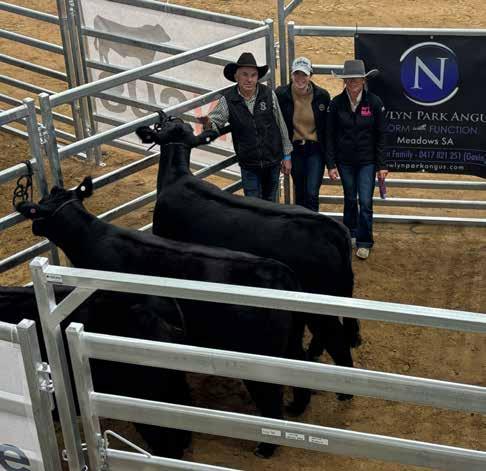
We appreciate your interest in our program and present twenty three quality young sires for your consideration.
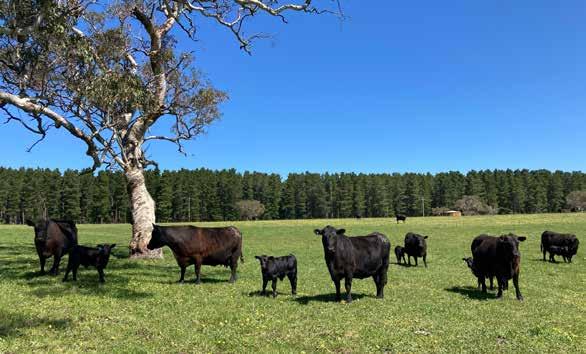
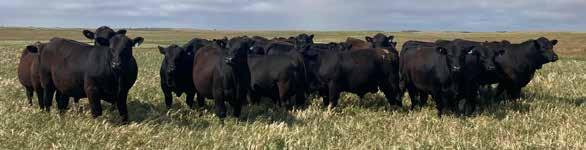
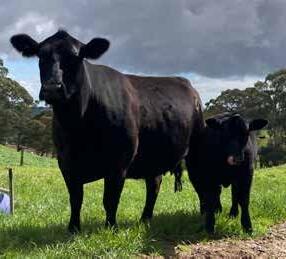
Establishing our Angus stud herd in 2006, we are in our twentieth year of developing a superior herd of Angus cows which excel for conformation, temperament, function and breeding values. The bulls on offer are the sons of these great Angus females.
We pride ourselves on the power of breeding and depth in these bulls’pedigrees. They are comparable with any in the country. They all have something significant to offer in their genetic makeup, and can be considered to be significant improvers in many traits.
Some elite sires are represented here , of particular note are the sons of Mill Brae Benchmark who we identified for his strong heritage . His ability to add muscling to his progeny is amazing. He will also feature in our maternal lines for years to come. You will note a number of bulls sired by our own home bred bulls. Not surprisingly they are on par with the bulls sired by industry elites ,given the proven bulls and cows in their pedigrees.
We are pleased to offer these bulls for your consideration. As we know their pedigrees thoroughly, we will be pleased to discuss how they can be most effectively used to meet your breeding objectives.
We take this opportunity to thank our past clients who have shown confidence in our program and have achieved success utilising our genetics. Newlyn Park sired cattle have performed very well in recent Strathalbyn and Naracoorte feature sales.
We look forward to seeing you at our open day on February the 8th and at our sale.
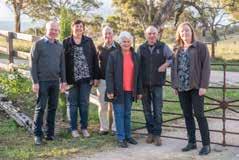
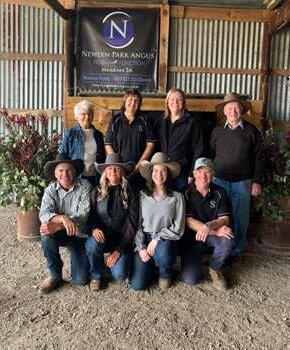
The Newman Family.
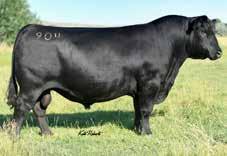
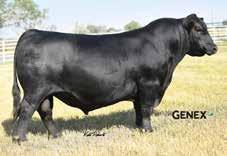
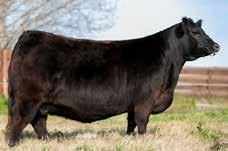
STERLING PACIFIC 904 PV
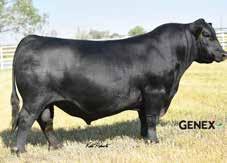
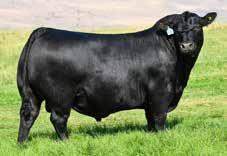
DB ICONIC G95
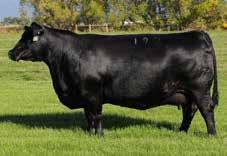
SITZ
SALE INFORMATION
SALE LOCATION
917 Dashwood Gully Road, Meadows, SA.
CONTACTS
Newlyn Park - Gavin Newman 0417 821 251
Nutrien - Brad Walker 0427 255 518
Nutrien - Gordon Wood 0408 813 215
Nutrien - Andrew Wilson 0439 354 228
HERD HEALTH
Newlyn Park is a JBAS 8 Herd.
Bulls have been tested negative for Pestivirus, Vaccinated with Pestiguard, Vibrovax and 7in1.
Bulls have been inspected and semen tested by Ben Weir of Production Animal Veterinary Services. All bulls are sound and produce viable semen. Some bulls show sub optimal results often due to maturity or stress . All bulls are guaranteed fertile for twelve months from sale.
SAFETY
The bulls have been screened for temperament and are considered docile, however there are always risks associated with handling cattle.
Visitors enter the Bull pens at their own risk.
Children must not enter the Bull Pens.
The vendor or agents will be pleased to escort visitors through the Bulls if required.
REBATES
Rebates available to outside agents, conditions apply.
DELIVERY
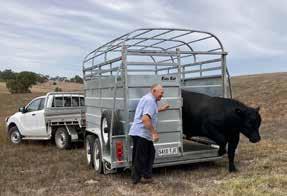
Vendor will deliver bulls free to the Hills, Fleurieu and Upper South East.
ANGUS AUSTRALIA DISCLAIMER
Animal details included in this catalogue, including but not limited to pedigree, DNA information, Estimated Breeding Values (EBVs) and Index values, are based on information provided by the breeder or owner of the animal. Whilst all reasonable care has been taken to ensure that the information provided in this catalogue was correct at the time of publication, Angus Australia will assume no responsibility for the accuracy or completeness of the information, nor for the outcome (including consequential loss) of any action taken based on this information.
PARENT VERIFICATION SUFFIXES
The animals listed within this catalogue including its pedigree, are displaying a Parent Verification Suffix which indicates the DNA parent verification status that has been conducted on the animal. The Parent Verification Suffixes that will appear at the end of each animal’s name.
PV: both parents have been verified by DNA.
SV: the sire has been verified by DNA.
DV: the dam has been verified by DNA.
#: DNA verification has not been conducted.
E: DNA verification has identified that the sire and/or dam may possibly be incorrect, but this cannot be confirmed conclusively.
GENETIC CONDITIONS
All Newlyn Park bulls offered for sale are either, tested free of recessive genetic conditions or their pedigrees contain no known recessive conditions. AM, CA, DD, NH.
LUNCH
Please join us for lunch following the sale.
Beef Week Open Day - Sunday 8th of February 9am-4pm
Scan here for videos of the sale lots, and other related animals.
Understanding the TransTasman Angus Cattle Evaluation (TACE)
What is the TransTasman Angus Cattle Evaluation?
The TransTasman Angus Cattle Evaluation is the genetic evaluation program adopted by Angus Australia for Angus and Angus influenced beef cattle. The TransTasman Angus Cattle Evaluation uses Best Linear Unbiased Prediction (BLUP) technology to produce Estimated Breeding Values (EBVs) of recorded cattle for a range of important production traits (e.g. weight, carcase, fertility).
The TransTasman Angus Cattle Evaluation is an international genetic evaluation and includes pedigree, performance and genomic information from the Angus Australia and Angus New Zealand databases, along with selected information from the American and Canadian Angus Associations.
The TransTasman Angus Cattle Evaluation utilises a range of genetic evaluation software, including the internationally recognised BLUPF90 family of programs, and BREEDPLAN® beef genetic evaluation analytical software, as developed by the Animal Genetics and Breeding Unit (AGBU), a joint institute of NSW Agriculture and the University of New England, and Meat and Livestock Australia Limited (MLA).
What is an EBV?
An animal’s breeding value can be defined as its genetic merit for each trait. While it is not possible to determine an animal’s true breeding value, it is possible to estimate it. These estimates of an animal’s true breeding value are called EBVs (Estimated Breeding Values).
EBVs are expressed as the difference between an individual animal’s genetics and a historical genetic level (i.e. group of animals) within the TACE genetic evaluation, and are reported in the units in which the measurements are taken.
Using EBVs to Compare the Genetics of Two Animals
TACE EBVs can be used to estimate the expected difference in the genetics of two animals, with the expected difference equating to half the difference in the EBVs of the animals, all other things being equal (e.g. they are joined to the same animal/s).
For example, a bull with a 200 Day Growth EBV of +60 would be expected to produce progeny that are, on average, 10 kg heavier at 200 days of age than a bull with a 200 Day Growth EBV of +40 kg (i.e. 20
kg difference between the sire’s EBVs, then halved as the sire only contributes half the genetics).
Or similarly, a bull with an IMF EBV of +3.0 would be expected to produce progeny with on average, 1% more intramuscular fat in a 400 kg carcase than a bull with a IMF EBV of +1.0 (i.e. 2% difference between the sire’s EBVs, then halved as the sire only contributes half the genetics).
Using EBVs to Benchmark an Animal’s Genetics with the Breed
EBVs can also be used to benchmark an animal’s genetics relative to the genetics of other Angus or Angus infused animals recorded with Angus Australia. To benchmark an animal’s genetics relative to other Angus animals, an animal’s EBV can be compared to the EBV reference tables, which provide:
• the breed average EBV
• the percentile bands table
The current breed average EBV is listed on the bottom of each page in this publication, while the current EBV reference tables are included at the end of these introductory notes.
For easy reference, the percentile band in which an animal’s EBV ranks is also published in association with the EBV.
Considering Accuracy
An accuracy value is published with each EBV, and is usually displayed as a percentage value immediately below the EBV.
The accuracy value provides an indication of the reliability of the EBV in estimating the animal’s genetics (or true breeding value), and is an indication of the amount of information that has been used in the calculation of the EBV.
EBVs with accuracy values below 50% should be considered as preliminary or of low accuracy, 50-74% as of medium accuracy, 75-90% of medium to high accuracy, and 90% or greater as high accuracy.
Description of TACE EBVs
EBVs are calculated for a range of traits within TACE, covering calving ease, growth, fertility, maternal performance, carcase merit, feed efficiency and structural soundness. A description of each EBV included in this publication is provided on the following page.
CEDir %
UNDERSTANDING ESTIMATED BREEDING VALUES (EBVS)
Genetic differences in the ability of a sire’s calves to be born unassisted from 2 year old heifers.
Higher EBVs indicate fewer calving difficulties in 2 year old heifers.
CEDtrs %
GL days
BW kg
200 Day kg
400 Day kg
600 Day kg
MCH cm
MBC score
MCW kg
Milk kg
DtC days
SS cm
CWT kg
EMA cm2
Rib Fat mm
P8 Fat mm
RBY %
IMF %
NFI-F kg/day
Genetic differences in the ability of a sire’s daughters to calve unassisted at 2 years of age.
Genetic differences between animals in the length of time from the date of conception to the birth of the calf.
Genetic differences between animals in calf weight at birth.
Genetic differences between animals in live weight at 200 days of age due to genetics for growth.
Genetic differences between animals in live weight at 400 days of age.
Genetic differences between animals in live weight at 600 days of age.
Genetic differences between animals in the height of mature females.
Genetic differences between animals in the body condition of mature females.
Genetic differences between animals in live weight of cows at 5 years of age.
Genetic differences between animals in live weight at 200 days of age due to the maternal contribution of its dam.
Genetic differences between animals in the time from the start of the joining period (i.e. when the female is introduced to a bull) until subsequent calving.
Genetic differences between animals in scrotal circumference at 400 days of age.
Genetic differences between animals in hot standard carcase weight at 750 days of age.
Genetic differences between animals in eye muscle area at the 12/13th rib site in a 400 kg carcase.
Genetic differences between animals in fat depth at the 12/13th rib site in a 400 kg carcase.
Genetic differences between animals in fat depth at the P8 rump site in a 400 kg carcase.
Genetic differences between animals in boned out saleable meat from a 400 kg carcase.
Genetic differences between animals in intramuscular fat (marbling) at the 12/13th rib site in a 400 kg carcase.
Genetic differences between animals in feed intake at a standard weight and rate of weight gain when animals are in a feedlot finishing phase.
Doc % Genetic differences between animals in temperament.
Claw Set
score Genetic differences in claw set structure (shape and evenness of claws).
Foot Angle score Genetic differences in foot angle (strength of pastern, depth of heel).
Leg Angle score Genetic differences in rear leg structure when viewed from the side (angle at front of the hock).
$A $
$A-L $
Genetic differences between animals in net profitability per cow joined in a typical commercial self replacing herd using Angus bulls. This selection index is not specific to a particular market end-point, but identifies animals that will improve overall net profitability in the majority of commercial, self replacing, grass and grain finishing beef production systems.
The $A-L index is similar to the $A index but is modelled on a production system where feed is surplus to requirements for the majority of the year, or the cost of supplying additional feed when animal feed requirements increase is low.
While the $A aims to maintain mature cow weight, the $A-L does not aim to limit the increase in mature cow weight as there is minimal cost incurred if the feed maintenance requirements of the female breeding herd increase as a result of selection decisions.
Higher EBVs indicate fewer calving difficulties in 2 year old heifers.
Lower EBVs indicate shorter gestation length.
Lower EBVs indicate lighter birth weight.
Higher EBVs indicate heavier live weight.
Higher EBVs indicate heavier live weight.
Higher EBVs indicate heavier live weight.
Higher EBVs indicate taller mature females.
Higher EBVs indicate more body condition of mature females.
Genetic differences between animals in net profitability per cow joined in a commercial self replacing herd targeting the domestic supermarket trade. Steers are either finished using pasture, pasture supplemented by grain, or grain (e.g. 50 -70 days) with steers assumed to be slaughtered at 510kg live weight (280kg carcase weight with 12mm P8 fat depth) at 16 months of age.
The $D-L index is similar to the $D index but is modelled on a production system where feed is surplus to requirements for the majority of the year, or the cost of supplying additional feed when animal feed requirements increase is low.
While the $D aims to maintain mature cow weight, the $D-L does not aim to limit the increase in mature cow weight as there is minimal cost incurred if the feed maintenance requirements of the female breeding herd increase as a result of selection decisions.
Genetic differences between animals in net profitability per cow joined in a commercial self replacing herd targeting pasture grown steers with a 250 day feedlot finishing period for the grain fed high quality, highly marbled markets. Steers are assumed to be slaughtered at 800 kg live weight (455 kg carcase weight with 30 mm P8 fat depth) at 24 months of age, with a significant premium for steers that exhibit superior marbling.
The $GN-L index is similar to the $GN index but is modelled on a production system where feed is surplus to requirements for the majority of the year, or the cost of supplying additional feed when animal feed requirements increase is low.
While the $GN aims to maintain mature cow weight, the $GN-L does not aim to limit the increase in mature cow weight as there is minimal cost incurred if the feed maintenance requirements of the female breeding herd increase as a result of selection decisions.
Genetic differences between animals in net profitability per cow joined in a commercial self replacing herd targeting pasture finished steers. Steers are assumed to be slaughtered at 650 kg live weight (350 kg carcase weight with 12 mm P8 fat depth) at 22 months of age. Emphasis has been placed on eating quality and tenderness to favour animals that are suited to MSA requirements.
The $GS-L index is similar to the $GS index but is modelled on a production system where feed is surplus to requirements for the majority of the year, or the cost of supplying additional feed when animal feed requirements increase is low.
While the $GS aims to maintain mature cow weight, the $GS-L does not aim to limit the increase in mature cow weight as there is minimal cost incurred if the feed maintenance requirements of the female breeding herd increase as a result of selection decisions.
Genetic differences between animals in net profitability per cow joined in a commercial self replacing herd based in New Zealand that targets the production of grass finished steers for the AngusPure programme. Steers are assumed marketed at approximately 530 kg live weight (290 kg carcase weight with 10 mm P8 fat depth) at 20 months of age, with a significant premium for steers that exhibit superior marbling.
Genetic difference between animals in net profitability per cow joined in a situation where Angus bulls are being used as a terminal sire over mature breeding females and all progeny, both male and female, are slaughtered. The Angus Terminal Sire Index focusses on increasing growth, carcase yield and eating quality. Daughters are not retained for breeding and therefore no emphasis is given to female fertility or maternal traits.
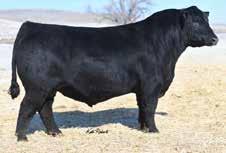
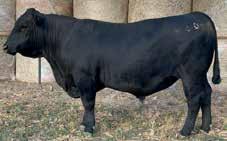
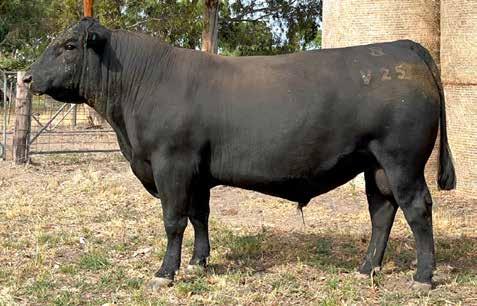
Very similar type bull to lot 1, they’d look good together, very similar pedigrees, serious growth in this bull but still a calving ease option, ranks very high for carcase weight and scrotal.
MILL BRAE JOANIE FERD 903# Number of Herds: 26, Prog Analysed:
Mating Type: ET
Traits Oberserved: Genomics
Mid January 2026 TransTasman Angus Cattle Evaluation
Mill Brae Benchmark has been used heavily for his maternal heritage. He is a proven sire of high growth sons and productive daughters. His sons here are unmatched for power and muscle shape and we expect his daughters to contribute significantly to our program.
Purchaser:.......................................................................................... $:..................................... Mid January 2026 TransTasman Angus Cattle Evaluation
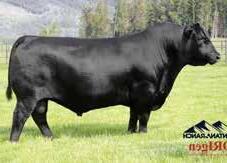
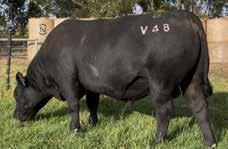
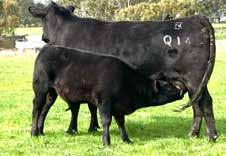
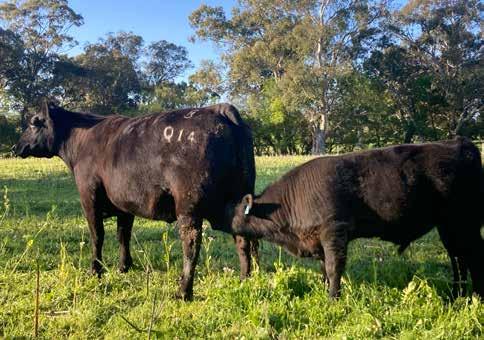
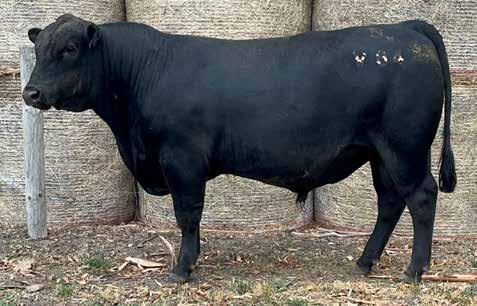
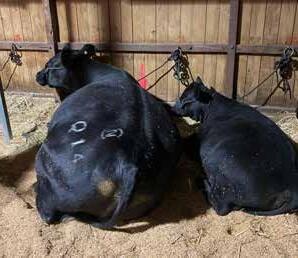
The first of six Benchmark sons Valour is super thick and wide. He is so long with great muscle expression. A very docile bull, low birth weight and solid growth. His maternal brother sold for 15k to NSW in 2023. Stacking some great Angus cows in his pedigree: Mill Brae FP Joanie 3063, Elbanna of Conanga 1209, Laura L7 ,Wilcoola D101, his dam Q14 has been Reserve Champion at the Royal Adelaide Show.
NEWLYN PARK VALOUR V48 SV Lot 3 SKO24V48
NEWLYN PARK VERMONT V 60SV Lot 4 SKO24V60
NEWLYN PARK LAURA Q14 Lot 3 Dam: SKO24V48
WARRAWEE C251 BLACKBIRD Q27 Lot 4 Granddam: SKO24V60
Mid January 2026 TransTasman Angus Cattle Evaluation
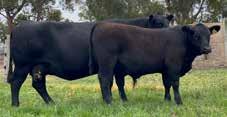
A lot to like about this thick, deep flanked bull. Wonderful temperament and a little extra bone. His pedigree contains three crosses of the famous Baldridge Isabel Y69. Breed leading growth and docility. His Grand dam is the C251 Blackbird cow whose 3 sons sold for an average of $12500 last year.
Mid January 2026 TransTasman Angus Cattle Evaluation
So correct and balanced in his makeup Viper is hard to look past. A low birth weight bull ,high for scrotal and foot scores, a very safe bet backed by the Laura cow family. His sire Makahu is well respected for his consistency throughout SA.
Mid January 2026 TransTasman Angus Cattle Evaluation
Real well put together bull here. Great structure Vortex is thick and muscular. Breed leading growth figures, heavy carcase and good foot scores. Comes from a Paratrooper dam from the Laura family, has been used to back up stud cows at Newlyn Park.
Mid January 2026 TransTasman Angus Cattle Evaluation
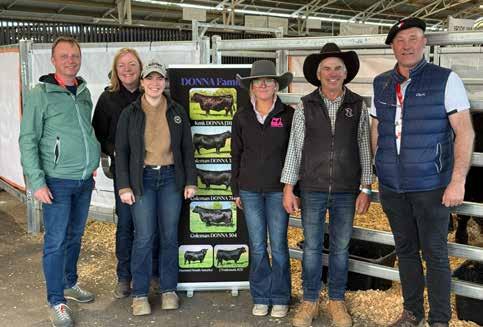
SELLING 50 % SHARE. An imported embryo bull with a very unique pedigree for South Australia . We have sourced embryos from the Coleman Donna family In the USA , to provide a different maternal line which matches our ideals. The Donna family are one of the most respected maternal lines in the USA at this time. We are excited about what these cattle can contribute to our program. The females from these embryos are outstanding. Valens is a smooth made and docile bull .He is long fronted with an athletic build. He scores well for all calving traits has solid growth predictions and scores well for all Angus selection indexes.
Mid January 2026 TransTasman Angus Cattle Evaluation
Spring bull. Thick and powerful, a really well made bull. Low birth to top 2% growth spread. High scrotal. A really strong set of EBV’s. A Benchmark from a 38 special Dam . All selection indexes in the top 1-5 % of the angus population. This is a good calf.
Mid January 2026 TransTasman Angus Cattle Evaluation
Spring Bull . Moderate and super thick made, another Benchmark from a 38 Special Dam. High early growth and high EMA, could be used to add muscle shape to almost anything!
Mid January 2026 TransTasman Angus Cattle Evaluation
Spring Bull . Very high growth and foot scores . Comes from the Laura family, pedigree contains some greats in Hoover No Doubt, Isabel Y69 and a long line of great Laura cows.
Mid January 2026 TransTasman Angus Cattle Evaluation
Spring Bull. Another Benchmark son, balanced and well made with a strong, thick top. Dam is a Makahu from the respected Yankee Queen cow family. Really solid data set, low birth with high growth.
Mid January 2026 TransTasman Angus Cattle Evaluation
Spring Bull. Another high growth Benchmark here from the Laura family, still moderate for birth weight. Upper percentiles for docility, carcase weight and EMA.
This is information for bull buyers about the recessive genetic conditions, Arthrogryposis Multiplex (AM), Hydrocephalus (NH), Contractural Arachnodactyly (CA) and Developmental Duplications (DD).
Putting undesirable Genetic Recessive Conditions in perspective
All animals, including humans, carry single copies (alleles) of undesirable or “broken” genes. In single copy form, these undesirable alleles usually cause no harm to the individual.
But when animals carry 2 copies of certain undesirable or “broken” alleles it often results in bad consequences. Advances in genomics have facilitated the development of accurate diagnostic tests to enable the identification and management of numerous undesirable or “broken” genes.
Angus Australia is proactive in providing its members and their clients with relevant tools and information to assist them in the management of known undesirable genes and our members are leading the industry in their use of this technology.
What are AM, NH, CA and DD?
AM, NH, CA and DD are all recessive conditions caused by “broken” alleles within the DNA of individual animals. When a calf inherits 2 copies of the AM or NH alleles their development is so adversely affected that they will be stillborn.
In other cases, such as CA and DD, calves carrying 2 copies of the broken allele may reach full-term. In such cases the animal may either appear relatively normal, or show physical symptoms that affect their health and/or performance.
What happens when carriers are mated to other animals?
Carriers, will on average, pass the undesirable allele to a random half (50 %) of their progeny.
When a carrier bull and carrier cow is mated, there is a 25% chance that the resultant calf will inherit two normal alleles, a 50% chance that the mating will result in a carrier (i.e. with just 1 copy of the undesirable allele, and a 25% chance that the calf will inherit two copies of the undesirable gene.
If animals tested free of the undesirable gene are mated to carrier animals the condition will not be expressed at all. All calves will appear normal, but approximately half (50%) could be expected to be carriers.
How is the genetic status of animals reported?
DNA-based diagnostic tests have been developed which
can be used to determine whether an individual animal is either a carrier or free of the alleles resulting in AM, NH, CA or DD.
Angus Australia uses advanced software to calculate the probability of (untested) animals to being carriers of AM, NH, CA or DD. The software uses the test results of any relatives in the calculations and the probabilities may change as new results for additional animals become available.
The genetic status of animals is being reported using five categories:
AMF
AMFU
Tested AM free
Based on Pedigree AM freeAnimal has not been tested
AM_% _% probability the animal is an AM carrier
AMC
AMA
Tested AM-Carrier
AM-Affected
For NH, CA and DD, simply replace AM in the above table with NH, CA or DD.
Registration certificates and the Angus Australia webdatabase display these codes. This information is displayed on the animal details page and can be accessed by conducting an “Database Search” from the Angus Australia website or looking up individual animals listed in a sale catalogue.
Implications for Commercial Producers
Your decision on the importance of the genetic condition status of replacement bulls should depend on the genetics of your cow herd (which bulls you previously used) and whether some female progeny will be retained or sold as breeders.
Most Angus breeders are proactive and transparent in managing known genetic conditions, endeavouring to provide the best information available. The greatest risk to the commercial sector from undesirable genetic recessive conditions comes from unregistered bulls with unknown genetic background. The genetic condition testing that Angus Australia seedstock producers are investing in provides buyers of registered Angus bulls with unmatched quality assurance.
For further information contact Angus Australia (02) 6773 4600.