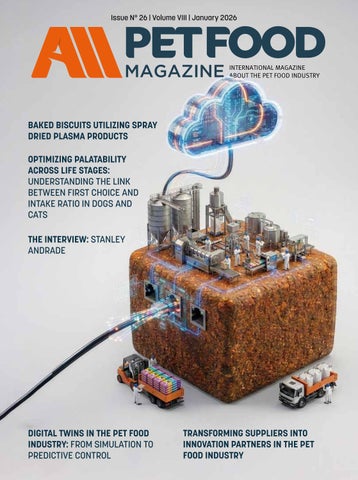
OPTIMIZING PALATABILITY ACROSS LIFE STAGES: UNDERSTANDING THE LINK BETWEEN FIRST CHOICE AND INTAKE RATIO IN DOGS AND CATS
THE INTERVIEW: STANLEY ANDRADE
INTERNATIONAL MAGAZINE ABOUT THE PET FOOD INDUSTRY
DIGITAL TWINS IN THE PET FOOD INDUSTRY: FROM SIMULATION TO PREDICTIVE CONTROL
TRANSFORMING SUPPLIERS INTO INNOVATION PARTNERS IN THE PET FOOD INDUSTRY
The Results Speak for Themselves
With Wenger, you make products that pets love to eat.
Through careful testing and extensive research, our world-class team helps you develop premium foods and treats, and the processes to produce them at scale. Pet food producers globally trust Wenger for extrusion cooking and drying solutions to satisfy healthy pets everywhere.
See what Wenger can do for your business.
Wenger.com
Tel: +55 19 3881 5060
E-mail: wengerbr@wenger.com
All Pet Food
Alvear 44, Chacabuco
Provincia Buenos Aires–Argentina info@allpetfood.net
Editorial Team
Josefina Poy
Victorina Manes
Maria Candelaria Carbajo
Delfina Rojas
Laureano Cane
Ludmila Barbi Trindade
Erika Stasieniuk
Candela Bonaura
Armando Enriquez de la Fuente Blanquet
Juan Manuel Peralta
Luis Miguel Gómez Osorio
Josiane Volpato
Juan Gómez-Basauri
Iván Franco
Felipe J. Martínez
CEO Pablo Porcel de Peralta pablo.porcel@allpetfood.net
Sales Manager
Iván Marquetti ivan.marquetti@allpetfood.net
Marketing Coordinator
Julia Cruz Díaz
julia.cruzdiaz@allpetfood.net
Editorial Leader / Community Manager
Josefina Poy josefina.poy@allpetfood.net
Admin. Leader / Product Owner Magazine
Victorina Manes
victorina.manes@allpetfood.net
Content Marketing Specialist
María Candelaria Carbajo candelaria.carbajo@allpetfood.net
Beginning in 2026, this edition marks both a milestone and a reflection of all we have built over the past 10 years. This is the first All Pet Food Magazine —already published in English and Spanish—to now also be available in Portuguese , making us the only pet food industry social media with a magazine and platform in three languages. We celebrate this achievement because it is not about communicating in more languages, but about continuing to fulfill our mission: connecting the pet food chain in Latin America and around the world without barriers.
“Connected Plant” is the main theme of this issue. Industrial processes are increasingly being digitalized, integrated, and optimized to gain efficiency, traceability, and agility. From intelligent sensors to predictive maintenance, through new tools that improve decision-making, this edition explores how plant technologies are not a future concept but an operational reality.
Among the featured content, we highlight articles on palatability, milling, process control, Nutrition 4.0, and food safety. In addition, we share an exclusive interview with Stanley Andrade , Director of MBRF Pet , who offers his present and future vision of one of the most relevant companies in the Brazilian market.
As part of the journey we are building together, we are already preparing for the next edition of CIPAL , which will take place in September in Buenos Aires. This will be another opportunity to meet in person, share knowledge, and continue promoting regional innovation.
Thank you for joining us in this new issue!
Editorial Team
ONLINE MAGAZINE
TRANSFORMING SUPPLIERS INTO INNOVATION PARTNERS IN THE PET FOOD INDUSTRY
Discussions around connected plants and innovation in the pet food industry often evoke images of sensors, integrated software, and advanced automation. However, when we examine the root cause of most quality deviations, it becomes evident that the most transformative form of connectivity begins not within the factory, but even before the entrance: it stems from how raw materials are produced, monitored, classified, documented, and delivered by suppliers.
By Ludmila Barbi Trindade Bomcompagni – All Pet Food
Raw Materials: The Source of Major Risks
In recent years, many countries have reported multiple recall incidents involving animal feed products, and scientific literature confirms a pattern familiar the sector: most contamination in pet food results from inadequate monitoring of raw materials or from ingredients purchased without an adequate technical history (Witaszak et al., 2020; Cheli et al., 2020).
The increasing onset of mycotoxins such as aflatoxins, DON, fumonisins, and zearalenone, as well as other contaminants in dog and cat food, demonstrates that agricultural ingredients and animal by-products pose
specific risks to food safety and quality (Witaszak et al., 2020). This data reinforces a fundamental point: there is no connected plant without a connected supplier.
The Limits of Isolated Control Within Factories
When a manufacturer, especially a smaller operation, tries to build an isolated quality control system without technical collaboration at the upstream stage, its limitations quickly become apparent. This is because the natural variability of ingredients, such as corn, protein meals, animal by-products, and oils, cannot be fully controlled through incoming inspection alone.
According to food safety literature, raw material specifications are the cornerstones of risk prevention, yet continue to be neglected, particularly by smaller plants (Cheli et al., 2020). Many manufacturers operate with simplified raw material descriptions, without analytical limits, a statistical database, or a clear understanding of the specific risks associated with each origin or crop.
The Supplier as an Intelligent Link in the Chain
Precisely at this point, the supplier becomes not just an input vendor, but a truly intelligent link in the chain. Technical suppliers have access to internal databases, batch-by-batch analysis, variation curves, harvest records, seasonal monitoring, and certified industrial processes.
When this data is shared, manufacturers gain immediate access to a layer of intelligence that would be extremely difficult to build on their own. What defines a truly connected plan is this structured information—a plant that is not only internally integrated but extended across the entire production chain (Integrated Mycotoxin Management System, 2021; Aung & Chang, 2014).
Joint Development of Technical Specifications
The joint development of technical specifications is a clear example of how this connection changes the landscape. Historical-based specifications are significantly more effective at reducing deviations than generic models applied to all sources (Cheli et al., 2020).
• A well-prepared supplier can help the manufacturer understand:
• The natural variability of ingredients.
• Expected limits of mycotoxins and other contaminants by region.
• Seasonal trends in moisture and composition.
• Appropriate analytical methods for each risk.
This collaboration reduces unnecessary rejections, minimizes process variability, and lowers formulation costs.
Mycotoxins: An Example of Strategic Partnership
Collaboration becomes even more strategic in the case of mycotoxins, one of the critical contaminants in pet food. The BIOMIN Mycotoxin Survey and other studies have shown that the presence of aflatoxins, DON, and fumonisins varies widely depending on season, region, and climatic conditions, reinforcing the need for continuous, shared monitoring (Cheli et al., 2020; Witaszak et al., 2020). In other words, a manufacturer that only analyzes what arrives at its gate is always reacting too late. Trendbased monitoring programs that consider seasonal patterns are far more effective than isolated analyses (Cheli et al., 2020). And who understands these trends better than the supplier, who follows the ingredient from the field through processing?
Traceability Starting with the Supplier
Connectivity is also reflected in traceability. The origin, production date, storage time, logistics route, laboratory analysis, and processing conditions are all part of the history of each batch that comes into the factory.
When suppliers make these data available in a structured way—through QR codes, digital reports, or integrated systems—manufacturers operate with far greater speed and confidence. Upstream traceability is one of the weakest points in the global pet food supply chain, and the most efficient way to strengthen it is to ensure that the information flows from the supplier (Aung & Chang, 2014).
Training and Qualification as Part of Connectivity
This relationship is not limited to documentation; it extends to technical training. Many of the errors that lead small plants to accept irregular batches are the result of inadequate sampling, misinterpretation of reports, or lack of awareness of the most likely risks. Studies show that even basic training for receiving teams significantly reduces the intake of out-of-spec raw materials (Integrated Mycotoxin Management System, 2021).
By providing these services, whether through training, consulting, or technical visits, suppliers effectively raise the plant’s maturity level, helping it operate as a connected system even without major technological investments.
Hybrid Analytical Tools
The supplier-manufacturer connection translates into practical innovation through the use of hybrid analytical tools. When properly validated, rapid mycotoxin test kits correlate well with confirmatory methods and are recommended as part of contaminant detection systems (Cheli et al., 2020).
Small plants can adopt an efficient combination: rapid screening upon receipt, periodic validation in an accredited laboratory, and continuous analytical reports provided by the upstream partner. This approach reduces waste, accelerates decision-making, and enables more intelligent use of resources.
Conclusion
The literature also shows that plants operating with shared supplier data achieve better production predictability and lower cost variability (Integrated Mycotoxin Management System, 2021).
When suppliers and manufacturers operate as a single information network, the industry obtains safety, predictability, innovation, and competitiveness. The global pet food market—ever more demanding and risksensitive—depends on this intelligent integration, which begins before the production line and ends with safe, traceable, and stable food reaching the bowl.
SENSITIVE NUTRIENTS CONNECTION FOR PRECISION NUTRITION
The pet food industry has noticeably evolved in the last few decades. Besides producing complete and balanced food, today’s goal is to ensure precision nutrition with robust traceability, seeking sensitive nutrient stability and guaranteeing consistency from batch to batch. In this scenario, plants are more connected, as long as processes are revolutionizing how vitamins and trace materials—essential components to animal nutrition, though extremely delicate from a technological perspective—are added and controlled.
By MVZ Armando Enriquez de la Fuente Blanquet
The impact of digitalization on the micronutrient nutritional profile of pet food is a significant and often overlooked subject, even when technology is not considered. By precisely controlling extrusion parameters (temperature, moisture, precision and baking time), the quality of sensitive nutrients, such as vitamins, minerals, and amino acids, is maintained, avoiding degradation from heat or excessive humidity. Controlling the process allows manufacturers to verify the density, moisture, size, and shape of kibbles, which impact digestibility, texture, nutrient absorption, and palatability. When we refer to specific diets (high digestibility, weight control, and digestive health), these factors are essential. Traceability and digital registration facilitate not only nutritional auditing and formula controls but also
regulatory compliance and micronutrient management per batch, which is especially important in the presence of transparency, quality, animal health, or special diets. With historical data and analytical support, manufacturers can upgrade their recipes to achieve efficiency in nutrition and costs. For example, optimizing ingredient mixes, protein sources, additives, vitamins, and minerals to achieve better nutritional balance without compromising economy or scalability.
Moreover, vit amins and trace minerals, such as zinc, iron, copper, manganese, selenium, and iodine, among others, are essential for energy metabolism, immune health, bone and muscle development, and skin and coat integrity as they regulate cellular oxidation, reproduction, and growth.
Micronutrients, instead, face technological challenges in food manufacturing:
• Heat, moisture, and oxygen sensitivity: Heat, moisture, and oxygen sensitivity: Vitamins are highly thermolabile, and they break down during extrusion and drying. It is fundamental to use products with microencapsulation technologies to protect them against high temperatures and reduce oxidation and chemical interactions with minerals.
• Chemical interactions: If trace minerals (e.g., iron and copper) are not properly protected, they oxidize or inactivate vitamins. Chelated or organic minerals not only offer better bioavailability and stability of trace elements in the thermal process but also reduce negative interactions with nutrients.
• Dosage difficulties in small quantities: Premixes are applied to microdosing, so with a minimal deviation, the nutritional value of the batch is compromised. Nowadays, we refer to intelligent mixing in which control software manages optimal times, mixing speed, additional period, and final homogeneity to ensure the uniform distribution of vitamins and minerals.
• Distribution problems in mixing: To ensure the same nutrient proportion in kibbles, homogeneity must be high. Premix manufacturers produce precise, homogeneous mixes that minimize dosage mistakes, ensure uniformity between batches, and facilitate registration and nutritional auditing.
These challenges are boosting a strong demand for advanced formulation technologies, intelligent automation, and digital monitoring systems. The precise incorporation of vitamins and trace elements no longer depends on understanding nutrition. Today, they require automated processes, intelligent sensors, digital control, and predictive maintenance. Pet food plants become an atmosphere where innovation in ingredients combines with technological transformation to guarantee safer, stable, nutritious, and reliable products.
Conclusion
Digitalization in pet food facilities is not a future trend; it is a reality that shows concrete achievements. Technologies for automation, sensors, digital control, AI, and data analysis are already transforming the way pet food is produced, enhancing efficiency, quality, consistency, traceability, sustainability, and flexibility.
DOG AND CAT FOOD PROCESSING: OUR DAILY CHALLENGE
The pet food market continues to expand, with demand increasing year after year. Quality controls, food safety, and traceability requirements are becoming increasingly stringent, while nutritional quality remains a top priority. At the same time, formulation customization has gained strong momentum, becoming an increasingly common practice in product development.
By Josiane Volpato and Juliana Soares Brazorotto
Pet foods are currently classified into three categories: complete, complementary, and specific, whether dry or wet. Within each category, companies develop subsegments to meet the needs of different animal profiles, such as senior pets, athletic animals, and obese pets, among others. The search for alternative diets, functional ingredients, and more sustainable solutions has shown steady growth. This movement has driven intensive research to ensure that products deliver not only adequate nutrition but also additional health benefits, improved quality of life, and a reduced environmental footprint.
To achieve all of this, the industry no longer relies solely on robust equipment or generic formulations for dogs and cats. More than ever, manufacturers must be connected in real time to every stage of the process, with each department involved in the production
of pet food. Machines, sensors, software, and people, therefore, need to operate in an integrated manner so that production continuously adapts to the process and improves over time. By combining automation, data, and technical expertise, an automated plant transforms production into a dynamic, intelligent system capable of continuous evolution.
Daily Manufactured Innovation
The achieved precision at each stage of the process— extrusion, drying, and coating— is a practical example of how this approach is carried out. An automated system enables:
• Precise, automated dosing of micro-ingredients, especially in complementary foods that require a high level of accuracy.
• Automated control and inclusion of fresh meat, meals, and oils.
• High-tech laboratories that analyze all raw materials upon reception.
• Aligned NIR systems with just-in-time results, enabling immediate adjustments when required.
• Minimization of variations that affect digestibility and palatability.
• Fully digital traceability, from raw material intake to finished product.
• Automation of Overall Equipment Effectiveness (OEE) helps identify bottlenecks and opportunities for improvement.
In extrusion, one of the most critical steps in kibble manufacturing, the process is significantly optimized through automation:
• Temperature and pressure control in each extruder zone.
• Screw speed control.
• Steam and water addition as required.
• Greater baking consistency, which improves digestibility, texture, and kibble durability.
• More homogeneous kibble density and expansion, with improved starch gelatinization and reduced waste.
• Automatic recording of process parameters, ensuring traceability and batch-to-batch standardization.
The drying stage is crucial for removing moisture and controlling water activity, both of which directly contribute to microbiological safety. Moisture also affects palatability: dogs tend to prefer slightly higher-moisture foods, while cats generally accept drier products. For this reason, the integration of sensors and intelligent software in dryers is critical to prevent under- or overprocessing and to ensure that each batch reaches the exact target moisture content. This level of precision ensures stability, safety, and palatability aligned with the specific requirements of each species.
Another key step is coating, a particularly delicate stage in the manufacturing of dry pet food. Today, the market offers more advanced coating systems, such as vacuum batch processing equipment, which allows highly precise ingredient application. This level of control directly impacts palatability, oxidative stability, and final product acceptance, ensuring superior sensory performance and overall food quality.
Automation enables much more robust and accessible traceability. With integrated systems, each batch can be tracked from raw material to finished product, ensuring:
• Rapid identification of non-conformities.
• More efficient responses in case of product recalls.
• Greater transparency for consumers.
• Complete, auditable history of every stage of the process.
This traceability is especially critical in the production of complementary and therapeutic foods, where any nutritional deviations may compromise product efficacy. Through digitalized controls, the industry ensures precision, consistency, and total batch safety for pet consumption.
The Importance of Labeling
Labelling is another equally essential step to ensuring that all mandatory information is present and accurate, in compliance with the legislation of each country.
At this stage, it is crucial to involve representatives from all areas of the production chain—including Regulatory Affairs, Quality Control, Research and Development, Packaging, and Marketing. This integration ensures that labeling and packaging are developed safely and efficiently, without rework, while remaining compatible with filling lines and attractive to the end consumer. Technology also plays an increasingly important role in this process. Many companies now utilize specialized software that automatically checks label descriptions against each version. It compares information, detects inconsistencies, and significantly reduces the risk of human error. With automation, greater document security, faster review processes, and higher reliability in final label approval are obtained.
Another topic gaining increasing relevance in the pet food industry—and one that directly impacts the entire production chain—is sustainability. Far from being just a trend, sustainability has become a strategic pillar guiding decisions from raw material selection to packaging development and industrial process design. Implementing sustainability in the pet food industry is a complex challenge, as it requires balancing production efficiency, costs, and regulatory requirements while also meeting consumer expectations that are increasingly influenced by environmental awareness. The supply chain is complex: it depends on both animal- and plant-based ingredients, requires large volumes of water and energy, and relies on high-barrier packaging that is often difficult to recycle.
Nevertheless, the sector has made consistent progress. An increasing number of companies are incorporating innovative raw materials, so-called super proteins, including insect meals, which offer a reduced environmental footprint and excellent nutritional value. At the same time, there is a growing internal movement to reduce water and energy consumption, reuse resources,
monitor and mitigate CO₂ emissions, and develop 100% recyclable mono-material packaging, facilitating reintegration into the production cycle and reducing environmental impact.
An even more strategic step is the adoption of Life Cycle Assessment (LCA), a tool that quantifies the environmental impact of a product from the origin of its ingredients to its destination. Companies that already apply LCA stand out for making data-based decisions, identifying critical points, and directing their efforts more effectively—whether in raw material selection, process efficiency, or packaging sustainability. LCA is considered one of the key trends shaping the future of the industry and a competitive advantage for organizations genuinely committed to reducing environmental impact across all stages of the value chain.
By combining innovation, responsibility, and a longterm vision, the pet food industry demonstrates that sustainability is not merely rhetoric, but an irreversible path and a tangible opportunity to create better products, more efficient processes, and a more balanced future for the planet and coming generations. This underscores that the challenge of producing pet food goes far beyond formulation or ingredient selection; it involves a complex chain that depends on technology, integration, rigorous control, and continuous innovation.
UNLEASHING THE POWER OF HIGH IMPACT AND LOW EFFORT INNOVATION
Innovation is linked to big changes, as it is distinctive and of significant interest. Generally, these disruptions are the outcome of large budgets in terms of time and money. However, innovation does not always require major investments in research and development—great ideas originate from close inspection and deep understanding of the production process.
By Felipe Martinez R.
For the commercial sector in the pet food industry, this “silent innovation” can be an endless source of opportunities to enhance products, optimize costs, and meet consumers’ changing demands. Often, innovations require little effort and have a high impact.
The Production Process as an Inspiration Source
Each stage of the production process—from ingredient selection to the final packaging—is an opportunity to innovate with little effort and high impact. By understanding the details, the commercial area can
identify areas that require improvement, which are often unseen.
Types of low effort and high impact innovation:
• Optimize grinding: Adjusting the size of ingredient grinding enhances digestibility and reduces waste. It has a substantial impact on pet health and consumer satisfaction, despite not requiring big investments.
• Modify textures: By adjusting extrusion or baking features, the kibble texture can be modified to make food more appealing, according to pets’ preferences. Everything without the need for new equipment.
• Add functional ingredients: Small quantities of functional ingredients, such as probiotics, prebiotics, or antioxidants, enhance digestive health, the immune system, and coat health in pets. Adding these ingredients is easy. Accurate communication can be beneficial when commercializing products.
• Improve packaging: Using more sustainable packaging, e.g., recyclable or biodegradable bags, can reduce the environmental impact and attract more aware consumers. This does not require major changes to the process but can positively impact the brand image. Improving the bagging percentage or resizing bags to be logistically efficient can result in considerable operational savings.
• Personalized rations: Offering food in individual rations or resealable packaging eases pet food nourishing and reduces waste—it can be made by adjusting the packaging process without modifying formulation. Revising the sales unit for retailers can balance working capital and inventory management in sales points.
Identifying Innovation Opportunities
• Close observation: Visiting production plants, looking at the process, and conversing with operators—experts in subprocesses—can show improvement areas that cannot be seen from the office.
• Data analysis: Analyzing production data, consumers’ requests, and buyers’ comments can identify patterns and trends for innovation.
• Benchmarking: Understanding products and processes from the competition inspires new ideas and reveals which areas companies can improve.
• Brainstorming: Organizing brainstorming sessions with multifunctional equipment—from the plant to sales— results in a wide range of innovative ideas.
Benefits of Low Effort and High Impact Innovation
• Continuous progress allows the company to continuously improve its products and processes without requiring huge investments.
• Cost reduction results in savings of materials, energy, and labor.
• Client satisfaction enhances product quality and consumer experience.
Conclusion
Innovation that requires little effort and high impact is a long-term winning strategy for the pet food industry. With a profound understanding of the production process, the commercial area generates a series of creative ideas that enhance products, optimize costs, and satisfy consumers’ needs. In a competitive market, the key to long-term success is this silent innovation.
VETERINARIANS SHOULD KNOW HOW PET FOOD IS MADE AND ITS INNOVATIONS
This topic often elicits conflicting views, sparking controversy. If I am true, even in 2026, veterinarians believe that commercial food is usually not beneficial for pets—it’s just a matter of business.
By Dr. Bonaura M. Candela
Our pets, or patients, eat daily; if they don’t, families and vets may worry and feel sad. From my perspective, I believe we should be informed about the manufacturing process, raw materials, manufacturers, quality, and innovation.
Diet is a clinical tool, not an accessory. Our knowledge of pet physiology and disease behavior allows us to make diets the key to maintaining a pet’s health or even to provide special treatment, which is necessary to maintain a patient’s quality of life.
Nowadays, innovation ensures process optimization, resulting in more complete and functional ingredients. Besides nourishing and meeting energetic requirements,
they promote comprehensive health from naturally combining nutritious and “pharmacological or medicinal” actions.
Besides providing better and more natural alternatives, innovation allows understanding which ingredients are not appropriate or secure, so they must be removed from formulations. By knowing more and being involved in this topic, we have the tools to choose between attractive marketing offers and real quality food.
Modern plants automate the process from the raw materials selection to final bagging and palletizing. In this way, human errors are reduced, and production speed is increased. Sensors measure critical parameters, such as
moisture, temperature, density, and drying conditions, among others. Instead, AI and automatic learning allow for formula optimization, anticipation, and correction. In quality control, many companies are already employing automated inspection (e.g., computer vision, sensors) to identify faults, pollution, or size, density, and texture inconsistency. Digitalization follows each batch—from raw materials input to the final product—enhancing traceability and minimizing product recalls or complaints. It also ensures quality and food safety standards, which are crucial to avoiding contamination, nutritional variability, or production failures.
What do these processes allow:
• Better quality testing of the prescribed or recommended food.
• Understanding how “secure” a commercial food can be.
• Knowing changes within the industry to be updated with personalized or specialized food.
• Offering treatment and diagnosis, with improved capacity to prescribe therapeutic diets, recommending high-quality and specific food.
• Addressing the management of chronic diseases with food as the primary treatment for obesity, gastrointestinal, and dermatological diseases.
• Advising tutors on food quality, trends, and science. Also teaching about the importance of nutrition.
• Preventing diseases in the future by promoting appropriate diets since they are puppies.
Summary
These changes are of great interest to vets as the digitalization of pet food directly impacts the quality, security, and reliability of the food we recommend. Don’t hesitate to reach out to attend courses in nutrition, food, and more.
THE NEW POWER OF THE SHOPPER ANALYSIS IN PET FOOD: UNDERSTANDING THE SHOPPER IS UNDERSTANDING THE FUTURE
The pet food industry has long focused on formulation improvements, portfolio optimization, and enhanced communication for years. However, the most determining resources for sustainable growth, i.e., shopper analysis, have historically been underused. Companies that master shopper dynamics better anticipate the market’s movements, identify premiumization opportunities, and assign strategic resources with surgical precision.
By Iván Franco
Shopper analysis is no longer a secondary element. Now, it is the competitive compass in a market that is increasingly segmented, emotional, and sensitive to perceived value.
More than Pet Owners, Archetypes Motivate Differently
Our recent research shows profiles that completely transform the strategy’s design:
1. The expert is deeply informed: compares labels, looks for functional benefits, cares about ingredients, and is willing to pay more for visible outcomes.
One of the major contributions of the contemporary shopper analysis is breaking down the “dog and cat owners” idea. There is no single pet food shopper; rather, there is a variety of archetypes—each one with emotional, rational, and economic motivations.
2. The economic protector cares for its budget without compromising basic well-being. It responds to
promotions and reliable brands, not necessarily premium ones.
3. The aspirational wants “the best” even if it is not always affordable—the silent driver of premiumization.
4. The routine pragmatist buys the usual; its change requires clear, simple, and practical arguments.
5. The solution searcher is driven by specific needs: digestion, skin, coat, allergies, and weight control, etc. Knowing these models not only allows better segmentation but also messages that really connect, designing products aligned with real expectations, and understanding which evidence, claims, and formats are meaningful to them.
Companies that master these archetypes turn insights into actions—from portfolio to valuable narrative redesign.
Precise Segmentation: The Core of More Profitable Decisions
Accurate segmentation is no longer based on separating the market into economic, standard, and premium. Today, it demands crossing dimensions:
• Type of food
• Income level
• Purchase goal
• Frequency
• Price sensitivity
• Preferred channel
• Animal’s emotional role at home
When a business segments with precision, it obtains immediate benefits:
• Better strategic focus: Money invested has better repayment as each action is directed to the correct segment.
• Portfolio optimization: SKUs that significantly contribute to growth are promoted by reducing those that do not.
• Channel competition: Each channel has a different shopper. The development of differentiated strategies for self-service, animal hospitals, traditional, specialized, or online is facilitated by segmentation.
Well-conducted segmentation avoids vague efforts, unnecessary SKU multiplication, and promotions with no impact.
Understanding the Shopper Journey: Decisions, Obstacles, and Incentives
The pet food shopper not only makes decisions on shelves. The path involves vet recommendations, digital content, experiences, online reviews, promotions, and availability, as well as the pressure of being a “good tutor.”
The shopper analysis reveals critical steps in the journey:
• What activates the decision: health problems, a rise in the economy, lifestyle changes.
• What slows down conversion: claims misunderstanding, shelf saturation, and distrust in new brands.
• What drives the trade-up: clear benefits, professional packaging, scientific support, vet influencers.
• What promotes recurrence: product consistency, accessibility on different channels, and a feeling of safety.
By managing these moments, brands sell more. Besides, they build psychological trust, which is deeper than simple purchasing repetition.
Price, Elasticity, and Perceived Value: The Triangle that Redefines Profitability
Research on shoppers allows us to understand why the price is not just a number but a perception.
Through a series of pet age, breed size, purchase goal, and emotional motivations, it’s observed that:
• Homes with young dogs widely drive premiumization.
• Medium and small breeds pay more per kilogram because the monthly cost is still manageable.
• Homes with multiple pets respond better to promotions per volume.
• Shoppers of veterinarian channels are less sensitive to prices but demand functionality.
With this information, brands can optimize their prices, segment promotions, and create presentations that maximize profitability per sector.
The shopper analysis identifies the precise point at which the brand can maintain competitiveness without increasing prices. It is not possible to gather the connection between real behavior and subjective perception without data.
Channels with Different Behavior: Understanding Competition from the Shopper View
The channel is more than a sales point; it is a universe with its own rules.
Each channel involves different archetypes:
• Self-service: Rational, comparative, sensitive to price and presentation shoppers.
• Animal hospitals: Look for authority, support, and functionality. Less elasticity, more loyalty.
• Specialized: Coexist aspirational and premium consumers, and those who are looking for consultancy.
• Traditional: Search for convenience, rooted habits, and economic brands.
• Online: High level of research, immediate comparison, and sensitivity to variety.
With this analysis, you know what to sell, to whom, and how to position the product in each channel. Without this data, companies follow generic strategies that do not reflect the true competitive dynamic.
Investing in Shopper Analysis: What Companies Gain
Finally, a usual question in the industry is “What do I obtain?” The answer is conclusive.
1. Strategic precision: Decisions are no longer based on intuition or sell-out data. They are now backed by a deep understanding of the consumer.
2. Relevant products: Insights show unattended needs and leave space to functional, natural, therapeutic, or premium innovations.
3. Clear positioning: Brands achieve the communication of advantages with technical and emotional resonance.
4. Efficient portfolios: SKUs with no value are removed, and those that boost sales, rotation, and margin are strengthened.
5. Commercial execution: Strategies per channel become coherent according to the kind of shopper that views them.
6. Profitability increase: Better SKU combination, optimum prices, directed promotions, and trade-up backed with evidence.
Understanding the shopper is no luxury in a continuously growing and evolving industry. Literally, it is the most strategic competitive advantage of the sector.
Conclusion: The Shopper is the Connective Narrative
The pet food shopper analysis goes beyond brands, presentations, and categories. It allows us to understand pet owners’ lives, their feelings, worries, personal aspirations, and their pet’s emotional role—whoever dominates that story, dominates the market. Companies that integrate shopper analysis as a main axis achieve what few brands have: simultaneous emotional and competitive relevance.
The struggle for pet food growth is not on shelves; it is achieved in consumers’ minds and hearts.
INNOVATION, TECHNOLOGY, AND NUTRITION:
THE USE OF FUNCTIONAL SNACKS IN THE MANAGEMENT OF CANINE OSTEOARTHRITIS
The use of functional snacks as supplementation in dogs with osteoarthritis has gained increasing relevance in clinical practice and the pet food industry. This approach combines nutrition, food technology, and veterinary medicine. It provides an effective, highly compliant alternative for administering nutraceutical compounds in disease management.
By Flávia Lavach
Osteoarthritis (OA) is a chronic, progressive, and degenerative joint disease frequently diagnosed in large-breed, obese, and geriatric dogs, as well as in those with genetic predisposition, such as Labrador retrievers and German shepherds. Joint pain, reduced range of motion, crepitus, and inflammation are the most common clinical signs, resulting in barriers to physical activity and reluctance to perform routine tasks, such as walking or climbing stairs. These limitations significantly compromise animal well-being and quality of life.
Conventional therapeutic options include surgical interventions on affected joints and pain management through the administration of nonsteroidal antiinflammatory drugs (NSAIDs), whose benefits in analgesia
and functional improvement are well established. However, long-term use of these drugs may be associated with relevant adverse effects, including renal and hepatic toxicity, as well as gastrointestinal complications. In addition , therapeutic efficacy depends not only on the pharmacodynamics of the active compound but also on treatment adherence, which is directly influenced by palatability and ease of administration. In light of these limitations, interest in complementary and less invasive therapies has continued to grow, e.g., nutraceuticals and dietary supplements.
Nutraceuticals, bioactive compounds with therapeutic potential, are widely used in the management of canine OA. Among the most extensively studied agents are
glucosamine, chondroitin sulfate, undenatured type II collagen, omega-3 fatty acids, and cannabinoids, particularly cannabidiol (CBD). These compounds modulate inflammatory processes, stimulating cartilage regeneration and maintenance, reducing pain, and improving mobility.
Within this context, functional snacks have emerged as an effective vehicle for delivering these compounds, particularly due to their high acceptance by dogs and ease of use for pet owners, as they are commonly offered as training rewards or expressions of affection. Studies such as that by Costa et al. (2025), which evaluated owner-perceived acceptance of different pharmaceutical forms for continuous use in dogs, have demonstrated high acceptance of functional snacks (95%) and palatable pastes (90%), followed by powdered sachets (75%), oral suspensions (60%), and capsules (35%). Delivery formats directly associated with feeding showed superior adherence, while capsules had the lowest acceptability, especially in smaller dogs. The high palatability characteristic of snacks promotes better therapeutic compliance compared with traditional supplementation in capsules or powders, which are often rejected by animals or forgotten by owners. Another important advantage is dose standardization: each snack unit can contain precise quantities of bioactives, ensuring accurate intake and facilitating therapeutic monitoring.
Despite these advantages, the development and processing of functional snacks present challenges and require careful attention to technological and nutritional aspects, as the bioactive efficacy largely depends on ingredient selection and the processing conditions applied during manufacturing.
The food matrix of the snack can positively or negatively influence nutrient bioavailability. Formulations with adequate lipid levels enhance the absorption of lipophilic compounds (EPA and DHA). Likewise, additional functional ingredients—such as fermentable fibers, prebiotics, and antioxidants—may have complementary effects on joint function and inflammatory modulation.
Many of the compounds used in OA management are sensitive to heat, oxidation, and moisture, making production methods a critical factor in preserving their integrity, stability, and bioavailability.
Extrusion, the primary processing method used in the pet food industry, exposes ingredients to high temperatures and pressures, which may degrade compounds essential to therapeutic efficacy. On one hand, prolonged baking intensifies the Maillard reaction and lipid oxidation, reducing the functionality of sensitive actives. On the other hand, cold forming has emerged as an interesting alternative, although it presents limitations related to shelf life, microbiological safety, and operational costs. The key challenge, therefore, lies in adapting conventional technologies to minimize bioactive degradation without compromising texture, palatability, or product safety.
To mitigate functional losses, the industry employs technologies like microencapsulation, post-processing
coating, and rigorous control of water activity and oxidation. Modern facilities incorporate low-temperature extruders, hybrid production lines, continuous NIR monitoring, and intelligent packaging solutions capable of extending the shelf life of nutraceuticals. Computational modeling also contributes to the optimization of industrial parameters, ensuring improved preservation of active compounds.
Industrial innovations have significantly contributed to the feasibility of therapeutic snacks, which manage osteoarthritis in pet food manufacturing. Integrating advanced technology, optimized industrial processes, and animal health ensures not only the stability of bioactive compounds but also their efficacy, representing a safe, practical, and highly compliant nutritional strategy for pet owners and veterinary professionals. The management of disease progression, the reduction of inflammation, and pain control are all significantly influenced by these technologies.
This movement aligns with the accelerated growth of the premium pet market, driven by owners seeking preventive health solutions and products with higher added value.
In this way, functional snacks turn their role as simple palatable treats into a strategic position as part of complementary therapeutic protocols. Meanwhile, manufacturers benefit from technologies that promote operational efficiency, loss reduction, and continuous innovation. As well, they position themselves as key players in the development of more sustainable, traceable, and personalized nutritional solutions.
DIGITAL TWINS IN THE PET FOOD INDUSTRY: FROM SIMULATION TO PREDICTIVE CONTROL
For years, the pet food industry has faced a structural challenge that is difficult to resolve: producing safe, consistent, high-quality food in a context where raw materials and process conditions are constantly changing. The need to address this complexity without compromising efficiency or competitiveness is accelerating the adoption of a key technology in the most advanced plants: digital twins.
By Candelaria Carbajo – All Pet Food
What Digital Twins Are and How They Are Used Today
A digital twin is a dynamic, virtual representation of a physical object, process, or entire an production system. Unlike static simulation, it continuously utilizes real data from sensors and control systems, enabling it to accurately reflect the current state of the process and predict its future behavior.
According to IBM, digital twins are currently used in manufacturing to improve operational efficiency, optimize processes, reduce failures, accelerate product development, and enable predictive maintenance. In
industrial environments, their application ranges from individual production lines to entire plants , integrating operating variables, energy consumption, quality, and equipment performance, as well as supporting plant planning, virtual testing of new products, layout optimization, and control of complex processes, among other uses.
From Simulation to Predictive DecisionMaking
The advancement of digital twins is closely linked to the convergence of process simulation, industrial sensors, artificial intelligence, and cloud computing.
This integration enables manufacturers to move from a reactive model—based on manual sampling and subsequent adjustments—to a predictive and preventive approach.
According to an article by StartUs Insights, the market for digital twins applied to manufacturing could reach USD 714 billion by 2032, driven by the need to optimize complex processes and reduce operational inefficiencies. The same report indicates that more than 81% of global companies are already actively exploring the industrial metaverse, and that 62% increased their investment in these technologies over the past year.
These figures refle ct a structural shift: simulation is no longer limited to the design stage but is becoming a central tool for day-to-day plant management.
The study, Digital Twin applications in the food industry: a review, identifies four main approaches to applying digital twins in the food industry, defined by their role within the production system. First, forecasting digital twins are used to anticipate the future behavior of processes or equipmen t based on the analysis of historical data and current conditions, enabling the prediction of deviations, inefficiencies, or failures before they occur. Second, reactive simulation models allow real-time process monitoring and autonomous responses to deviations , adjusting operating variables
and recommending corrective or preventive actions. A third approach is virtual commissioning, which utilizes digital twins to test, validate, and optimize new technologies , equipment, or plant configurations in a virtual environment before physical implementation. Finally, synchronization-based simulation keeps the digital twin aligned in real time, or near real time, with the physical system, creating a highly accurate representation of the process that is especially valuable for scenario analysis, operational optimization, and improved decision-making in complex systems.
How Do Digital Twins Contribute to the Pet Food Industry?
Focusing specifically on the pet food industry, raw material variability is one of the main factors affecting final product quality. Ingredients, such as cereals, protein meals, fats, and animal by-products naturally fluctuate in moisture, protein content, fat levels, and particle size distribution.
According to a technical analysis published by Haskell, these variations directly affect critical operations such as extrusion and drying, influencing attributes such as texture, density, nutritional stability, and product shelf life. Traditional control methods often detect these deviations only after the product has already been produced, leading to reprocessing, waste, and efficiency
losses. Digital twins, by contrast, anticipate these effects before they impact the final product.
In pet food production, a digital twin is built from models that represent the thermal, mechanical, and dynamic behavior of each unit operation (mixing, conditioning, extrusion, drying, and cooling). These models are powered in real time with data from sensors installed in the plant, such as ingredient moisture measurements, extruder barrel temperature, screw speed, pressure, airflow, and dryer parameters. This information synchronizes the virtual model with the real process, creating a living representation of the plant in operation.
In closed-loop control systems, besides observing the process, digital twins predict how variations in raw materials will affect the final product and automatically adjust operating parameters to compensate—often even before the ingredient enters the extruder.
Benefits of Implementation
Implementing digital twins delivers tangible benefits at multiple levels. First, it significantly improves product consistency by reducing batch-to-batch variability, a key factor for consumer trust and brand reputation.
By preventing out-of-spec production, raw materials
and energy waste are reduced . This approach also optimizes energy consumption and increases throughput without compromising quality, directly impacting operating costs.
Another strategic benefit is to hasten product development. Formulations can be tested virtually, evaluating their performance in the process before conducting physical trials, thereby reducing time, risk, and costs associated with industrial testing.
Added to this is the ability to integrate predictive maintenance, using digital twins to detect deviations in equipment performance and anticipate failures , avoiding unplanned downtime.
Digital Twins: Key Technology for Building Truly Connected Plants
The incorporation of digital twins marks a turning point in how pet food production plants are managed. It is no longer just about automation, but about deeply understanding the process, anticipating deviations, and making decisions based on real, comparable data.
In a context where efficiency, sustainability, and quality are increasingly decisive, digital twins are consolidating their role as a strategic tool for manufacturers seeking to scale, differentiate, and build truly connected and resilient plants.
OPTIMIZING PALATABILITY ACROSS LIFE STAGES:
UNDERSTANDING THE LINK BETWEEN FIRST CHOICE AND INTAKE RATIO IN DOGS AND CATS
As pet owners increasingly seek tailored nutrition for their animals, understanding how life stages influence eating behavior becomes crucial. This work explores the link between two key palatability metrics, first choice and intake ratio, where in AFB palatability results it becomes clear that flavor preferences in pets evolve throughout their life stages.
By AFB INTERNATIONAL
This study emphasizes the importance of developing palatants formulations that cater to pets’ distinct taste sensitivities, nutritional requirements and enjoyment across life stages, ultimately supporting the health and well-being of both cats and dogs.
Based on over 1,500 two-bowl palatability assessments trials conducted for both species, cats and dogs, this research provided a robust pool of data, based on realworld data across a broad population of cats and dogs in different life stages.
Key Findings
Our research highlighted key palatability factors influencing preference, through controlled feeding trials and preference assessments. We evaluated the effectiveness of various palatability parameters across each life stage and species, taking a number of flavour enhancement strategies addressing palatability improvement.
Palatability is known to drive acceptability and consumption of pet food. Two critical indicators identified aligned with pets’ life stage were:
• Intake Ratio: The proportion of the food offered is actually consumed.
• First Choice: Which product a pet chooses first when given multiple options, driven primarily by aroma.
In the present study, it was observed that both metrics are influenced by a pet’s sensory perception, which is believed to change with age.
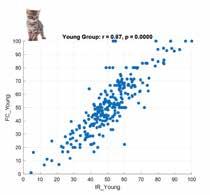
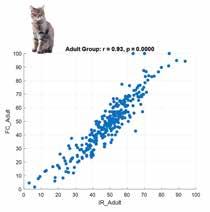
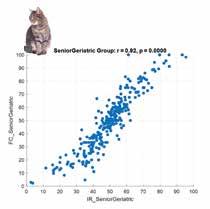
One of the key findings is that first choice, related to aroma perception, is not only positively correlated with intake ratio, but also, in particular for cats from young age through adulthood and into senior years, the observed correlation is considerably high (>0.87) across all life stages (Figure 1).
AFB is more than just palatants. We provide custom solutions to improve pet food palatability, meet attribute requirements, achieve performance targets, and deliver technical objectives.
Our experts will collaborate with you to evaluate the best services for your needs. We are your global partner!
Results: Correlation Insights Across Life Stages
The relationship between first choice and intake ratio is based on data from over 1,500 two-bowl assessments for
both dogs and cats. The results demonstrated clear patterns of correlation strength varying by life stage for both studied animal species.
Figure 1: Scatter plots with the correlation between First Choice and Intake Ratio for cats according to life stages (young, adult and senior).
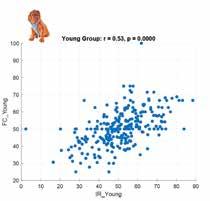
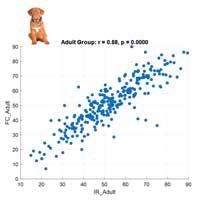
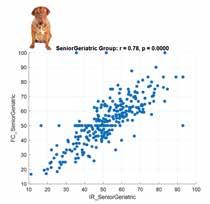
Figure 2: Scatter plots with the correlation between First Choice and Intake ratio for dogs according to life stages (young, adult and senior).
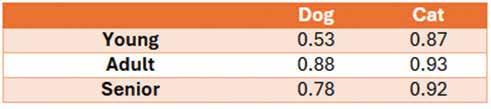
These results show that in dogs, first choice becomes a stronger predictor of intake as the animals mature, peaking in adulthood, while for cats, a consistently high correlation across all life stages indicates strong alignment between initial preference and overall consumption, even in younger animals.
In the following table the correlation factors, between intake ratio and first choice, are captured for both cats and dogs, across the 3 life stages, studied.
Table 1: Correlation (r-square) between FC and IR for cat and dog according with life stages.
Conclusion
The insights provided suggest that, while both species respond well to targeted palatants, life stage-specific adjustments are particularly impactful in dogs, especially in young animals where palatability preferences may still be developing. In cats, first choice was significantly positively correlated with intake ratio, for cats from young age through adulthood and into senior years.
Palatability isn’t one-size-fits-all. As dogs and cats grow, their sensory needs evolve and so should the approach. By considering first choice and intake ratio in the context of life stage, it’s possible to deliver more appealing, effective and differentiated pet food products.
To learn more about this topic, or to speak with our Science & Technology experts, please reach out to your AFB Sales representative or afbinternational.com/contact.
Baked biscuits utilize various flours and ingredients for ideal texture and product quality. Alternative ingredients to enhance or impact texture, palatability, or health benefits can be useful for baked biscuit manufacturing.
By Joy Campbell and Angela Smith - APC
Background Information
Spray dried plasma (SDP) or Cravings (hydrolyzed plasma) are high-protein ingredients utilized in pet food for functional texture properties, enhancing palatability, or supporting overall health.
Study Objective
The study objective was to evaluate how SDP or Cravings inclusion impacts texture and palatability of baked biscuits utilizing wheat gluten.
Experimental Procedure
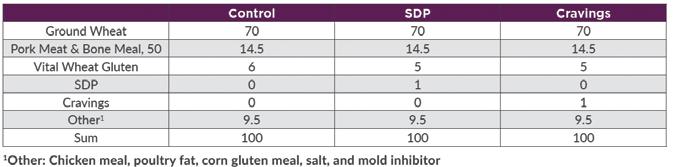
The study evaluated palatability and texture of baked biscuits utilizing 1% SDP or Cravings to replace
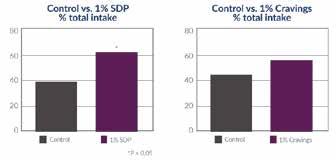
wheat gluten in control formula. Palatability testing was conducted with 20 dogs for a 2-day test. Different ingredient sources and processing conditions were used in each study accounting for differences in texture of final product.
Baked biscuits were made by preparing the dough utilizinga KitchenAid mixer equipped with a dough hook, rolling out by hand to a set depth and size, and then baking to moisture level of less than 10%. Three replicate batches of each formula were completed for analysis per study.
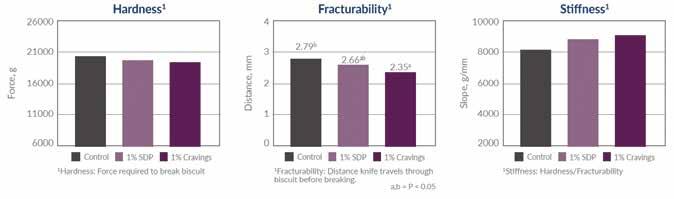
Texture was measured on a TA.XT Plus utilizing an adjustable bridge with a rounded-end knife probe for a 3-point bend. Baked biscuits of 2 cm × 7 cm were placed over the two-bridge span spaced 2.5 cm apart to measure maximum force to break (hardness), fracturability, and
stiffness to determine texture. Five baked biscuits per treatment were analyzed for texture from each replicate batch. Digital calipers were utilized to measure biscuit dimensions and volume.
Proof of Concept: Test Formula
Results: Texture
Results: Palatability
Summary
SDP and Cravings can be incorporated into baked biscuits as a processing aide to impact texture depending on ingredient matrix and target, while SDP also improves palatability. Overall, both SDP and Cravings can be an alternative to vital wheat gluten to maintain or enhance product quality.
ANDRITZ: TECHNOLOGY TO FEED THE FUTURE
For decades, ANDRITZ Feed & Biofuel has accompanied the evolution of the pet food industry, offering comprehensive solutions that combine engineering, energy efficiency, and process control. Today, technology is redefining the standards of quality, sustainability, and flexibility in pet food manufacturing.
By ANDRITZ
In recent years, pet food manufacturing has undergone a significant shift. The industry is no longer driven by volume but by innovation. In this context, ANDRITZ Feed & Biofuel consolidated itself as a key technological partner.
This transformation is evident as pet humanization has increased consumer demands—who once purchased “dog food”, now seek functional products with digestive or hypoallergenic benefits, or made from alternative proteins. In sales, packaging highlights claims, such as Omega-3, antioxidants, insect protein, and premium formulas free of artificial additives. Behind the well-being narrative lies a deep change in production processes.
“Today’s consumers seek the same things for their pets as they do for themselves: well-being, variety, and sustainability,” note representatives from ANDRITZ Chile. “This requires plants to be more flexible, to innovate more efficiently, and to incorporate technologies that enable a rapid response to market trends.”
The team summarizes a silent revolution: pet food as a technological product. A robust extruder or efficient dryer is no longer enough. Today, manufacturers require more complete lines capable of ensuring traceability, energy control, nutritional precision, and above all, consistency.
Integral Solutions and Precision Technology
In the pet food industry, every detail matters. Grinding, mixing, baking, and coating processes not only shape textures and flavors but also define digestibility and nutritional value. ANDRITZ provides both stand-alone equipment and turnkey solutions for the entire process —from raw material reception to final bagging.
The equipment is as diverse as the products it helps create: the Multimill Hammer Mill for precise and homogeneous grinding; Optimix mixers provide uniformity in formulation; the Combi-Zone Dryer for stable textures and extended shelf life. Finally, EX Series extruders combine low operational costs with flexibility to produce everything from dry kibbles to functional snacks.
“We aim to be a comprehensive supplier to ensure total compatibility between the equipment. Customers don’t need to worry about adjusting interfaces or performance—everything is designed to work in harmony,” ANDRITZ’s experts explain.
The result is a cleaner, efficient, and more reliable output: a plant where each phase connects seamlessly to the next, without leaks or inconsistencies, creating a technological ecosystem where energy, quality, and productivity align with the design.
“Each machine is thought to operate with minimal energy consumption and maximum reliability. Sustainability is not optional: it is part of the design.”
ANDRITZ’s innov ation is also represented in process intelligent control. The FLEXTEX system allows operators to monitor and adjust specific mechanical energy (SME) in real time during extrusion, without downtimes or modifications. This enables adjustments to density, texture, or product expansion with millimetric precision while the plant is still operating.
“SME control is key to final product quality. FLEXTEX offers a precise and dynamic tool to innovate without compromising process stability.”
Thanks to these technologies, manufacturers can develop specific products for each segment—from smallbreed kibbles and energetic snacks for sporting dogs to digestive formulas for senior cats.
Innovation and Sustainability as Growing Drivers
In a sustainability-driven era, social concerns are also reflected in pet food. Pet owners demand traceability, natural ingredients, and clean processes —what once was a value-added feature is now essential.
Emerging trends aim to alternative proteins, such as insects or pulses, functional snacks with digestive or oral health properties, and highly digestible vegetable
formulas. In all these options, processing technology plays a decisive role.
“Producing more is not the challenge: producing better is. Plants must adapt quickly to new recipes and raw materials without losing efficiency or quality,” ANDRITZ’s team states.
ANDRITZ technology bridges the gap between a formulator’s creativity and industrial reality. It transforms ideas —such as new oral-care treats or plant-based kibbles—into scalable, safe, and consistent products.
Moreover, the company has a global support network and strong local service. In Latin America, the team works closely with manufacturers, providing predictive maintenance, original spare parts, and continuous training.
“Client proximity is in our DNA. We work hand in hand with manufacturers to ensure each plant maintains optimal performance over time.”
ANDRITZ’s commitment to sustainability extends beyond energy savings. Plants integrate automation, remote monitoring, and digital traceability systems to control each parameter and reduce raw material waste.
“In the future, plants will be more intelligent, efficient, and sustainable. Our mission is to prepare every client for that technological leap (with no attributable change),” Oliva assures.
Global Experience, Local Support
With more than 180 years of industrial experience and presence in major global markets, ANDRITZ Feed & Biofuel combines precision engineering, global support, and local expertise to lead pet food manufacturers to a new productive era.
ANDRITZ offers more than machinery—it brings knowledge, experience, and continuous support. The company becomes part of the design and operation of each plant, adapting every solution to market needs and product goals.
The pet food industry is facing one of its most dynamic moments. Driven by increasingly demanding and informed consumers, it follows a model in which technology and sustainability are inseparable. On this path, ANDRITZ is more than a supplier—this partner understands that behind every kibble, snack, or innovative formula, there is science, commitment, and vision.
“At ANDRITZ, we do more than build equipment; we help build a more efficient and sustainable industry, ready to feed the future.”
ANDRITZ – Innovation, sustainability, and industrial precision for a new era in pet food manufacturing.
THE DIGITAL TRANSFORMATION AT THE HEART OF PET FOOD
Digitalization is redefining every stage of pet food production. From the reception of raw materials to the final palletizing, connected plants are achieving greater efficiency, quality, and traceability. This article reviews the technologies already being implemented in the industry and the concrete benefits they generate.
By Clivio Solutions
Digitalization from the First Step
At first glance, a pet food plant appears to be a complex system of machines, silos, pipes, and packaging lines working simultaneously. But behind this industrial symphony lies something deeper: decisions, data, and technology that allow each piece of the process to respond with precision. That is the heart of the connected plant.
For years, factories operated under a fragmented model: each stage had its own rhythm, its own controls, and often its own logic. Today, that paradigm is changing. The industry is moving toward an integrated ecosystem where processing, monitoring, maintenance, and control articulate with each other, creating smarter, safer, and more efficient flows. And the interesting thing is that it is not a futuristic concept: it is already happening.
When Quality Becomes Part of the Process
Quality in pet food is designed from the first stage. Digitalization makes it possible to monitor in real time variables that previously required manual intervention or sporadic checks: moisture, temperature, retention times, drying or cooling conditions.
This not only improves efficiency but also enhances sanitation, prevents reprocessing, and ensures that the final product always meets the same parameters. For such a demanding market as pet food, where consumer trust is critical, this makes a difference.
In parallel, advanced technologies in magnetic separation, sampling, and air treatment raise standards of safety and sustainability. Many plants are already adopting systems that detect ferrous contaminants, plants that automate
quality validation, or plants that neutralize odors without using chemicals.
Technological Improvements Applied to Processing
• Precision dosing: Micro-dosing systems ensure that each formula receives the exact amount of ingredients, additives, and micronutrients. This not only minimizes human error and waste but also guarantees the nutritional consistency of the final product, which is vital for pet health.
• Extrusion and drying optimization: Automation now includes optimal control of critical variables, such as moisture, temperature, and pressure during extrusion and drying. This is essential to achieve the desired density, texture, and durability of the kibble, as well as ensuring proper cooking. Product waste is reduced during line starts and stops.
• Smart packaging: High-speed packaging systems that are not only faster and more hygienic but also equipped to perform real-time quality checks and ensure seal integrity
The End of the Line Also Goes Digital
In the final stage, from packaging to palletizing, automation and continuous recording enable an efficiency that previously required extensive manual supervision. Faster format changes, less waste of bags or film, and traceability of each batch up to delivery.
What was once “the tail end of the process” is now a key point to ensure logistics efficiency and perceived quality.
Concrete Benefits
Adopting a digitalized and connected plant with comprehensive solutions provides multiple competitive advantages:
• Operational efficiency and cost reduction: precise dosing, efficient conveying, and process automation minimize errors, waste, and reprocessing, reducing input, labor, and maintenance costs.
• Improved product quality and consistency: controlled processes, traceability, magnetic separation, and sanitary controls ensure each batch meets standards, positively impacting the reliability of the final product.
• Operational safety and ergonomics: minimizing manual intervention, avoiding silo entry, reducing contamination risks or accidents—all contribute to a safer and more reliable environment for operators.
• Sustainability and environmental responsibility: odor control, resource optimization, and reduced waste of raw materials and energy contribute to cleaner and more environmentally responsible operations.
• Scalability and adaptability: a connected plant can adjust to different formats, volumes, or products, facilitating diversification and expansion.
• Traceability and regulatory compliance: digital process records, quality control, and continuous monitoring help meet food safety standards and respond to audits and market requirements.
Conclusion
The connected plant is an innovation built every day. Digitalization transforms the way production is carried out, controlled, and assured. On this path, the challenge is to build integrated, stable processes capable of evolving.
In this scenario, Clivio Solutions supports the pet food industry in adopting technologies and engineering approaches that enable operating with greater precision, traceability, and efficiency. For companies, investing in digitalization is the key to ensuring competitiveness, leadership, and high-quality nutrition in the next generation of pet food.
STATEC BINDER: PACKAGING MACHINES FOR A WIDE RANGE OF ANIMAL FEED
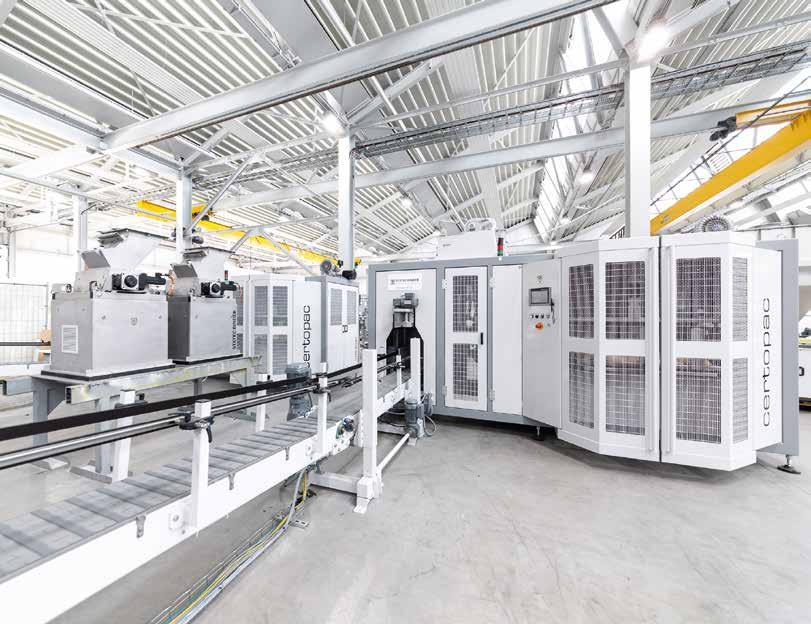
STATEC BINDER is one of the leading suppliers of packaging machines for the animal feed industry. The Austrian company focuses primarily on one key aspect: flexibility. Because this is particularly important in the animal feed industry.
By STATEC BINDER
Dog food in PE bags, bird feed in paper bags, horse feed in big bags. The global feed industry is booming. According to estimates, the sector will grow to $816 billion by 2030—a gigantic market. The largest feed manufacturers are located in China and the US. Soy and corn are among the most important resources, closely followed by wheat and rapeseed. But whether it’s feed for farm animals or beloved pets, all these products must not only comply with quality guidelines but also be carefully packaged. And this is where modern high-tech packaging systems play a key role. Austrian manufacturer STATEC BINDER specializes in precisely this area.
A Wide Range of Products Requires a High Degree of Flexibility
Packaging machines from STATEC BINDER combine a number of advantages: from high-quality components that guarantee durability and robustness to sophisticated software that makes them easy to operate. Above all, however, one special aspect runs like a thread through development and production and sets the direction: flexibility. The reason for this is easy to explain: not all animal feed is the same. On the contrary, there are numerous different products of varying sizes and with
different flow characteristics—from powdery and dusty goods to free-flowing ones.
What does this mean for packaging machines? They have to cope with this wide variety of goods and what’s more important, they have to be perfectly aligned with them. For STATEC BINDER, high flexibility in machines is therefore not only desirable, but has long since become a core value. Only in this way can the respective system be optimally integrated into the company setting and be 100% compatible with the product.
Flexibility as a Central Part of the Company Concept
This flexibility manifests itself at STATEC BINDER on several levels:
• Sophisticated systems: Start with selecting the right packaging machine The product portfolio includes both open-mouth packaging systems and FFS machines.
• Customization options: In the next step, the machine is customized. For example, with a wash-down design for easier cleaning, a bag air press device for even more efficient results, or labeling features.
• Effective accessor ies: Accurate net weighers dose
the exact amount into the bag. Modern bag-sealing machines guarantee secure closure. Finally, metal detectors ensure that no foreign objects end up in the bag.
The result is high-quality, reliable, and durable packaging machines for pet food that reflect STATEC BINDER’s many years of experience.
Because pet food not only has to be securely packaged but also stacked quickly and neatly on pallets for further transport, every packaging machine can be supplemented with a STATEC BINDER palletizing system. This further increases the degree of automation.
Strong Professional and Interpersonal Skills
STATEC BINDER is not only a developer, manufacturer, and supplier but also a long-term partner for every customer. This is because it is not just a matter of designing the ideal packaging machine for the respective feed and company, but also of ensuring its smooth operation for many years and continuously developing the system. That is why STATEC BINDER relies on comprehensive, worldwide customer service This strong human component, combined with technical expertise, makes STATEC BINDER one of the leading suppliers of packaging machines in the feed industry.
TECHNOLOGY SHOWCASE
AP 920 | SPRAY DRIED PLASMA
Plasma is a powerful functional ingredient used in pet diets to help support palatability and digestibility, while also delivering processing benefits.
Choose plasma-based ingredients to enhance your dry pet foods, treats, and health-focused supplements. Whether you need added functionality in your formulation or a unique ingredient with research-backed health benefits, APC offers solutions to meet your needs.
• Supports whole body health in a systemic way
• Improves digestibility
• Highly palatable
• Low-ash alternative with high protein concentration
Functional Health Benefits
More than 600 published scientific articles demonstrate the power of plasma and its positive impact on overall animal well-being.
• Digestive health • Cognitive function
• Muscle • Joints and bones
• Skin and coat
https://apcpet.com/
Twin-Screw Extruders
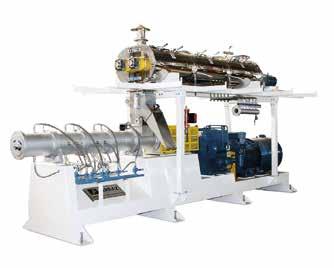
FERRAZ’s twin-screw extruders produce bicolored and stuffed food. Due to extrusion problems with single-screw extruders, they are particularly well-suited for producing premium and super-premium food products. By working together, the screws’ geometry ensures major standardization in products. They have different screw settings that allow versatility in food production. Extruders are equipped with a gear reducer, made in Brazil with easily available spare parts, designed to withstand high axial and radial loads.
Highlights
• Better product uniformity. Capacity to produce with high ethereal content (superior to 17%).
• Small kibble production (0,8–2,00 mm size).
• Extrusion with addition of fresh meat or high-moisture content products (superior to 30%).
In this All Pet Food Magazine section we highlight the latest innovations to optimize pet food production.
Let’s take a look at the solutions proposed by different supplier and market leader companies.
LACTIUM®
Grupo Harmony’s portfolio presents Lactium®, a natural bovine milk-derived ingredient that is positioned as an innovative solution to promote well-being in dogs, cats, and horses.
Lactium® acts as an adaptogen by reducing stress and anxiety symptoms, enhancing resistance, and providing a positive mood in pets.
Compared to other ingredients with depressing and temporary effects, Lactium’s impact is positive, natural, and sustained over time. It works on the nervous, immune, and endocrine systems to balance stress response.
It incorporates low doses and can be added to dry and wet food, snacks, and veterinary medicines.
Benefits
• Balanced stress regulation
• Cognitive functions enhancement
• Pet emotional and physical well-being contribution
• Sustainability in the value chain thanks to collaboration with local milk producers and continuous investment in technologies.
https://www.lactium.com/animal/
PREMIER TECH SOLUTIONS: OML 1140 I APC 1120
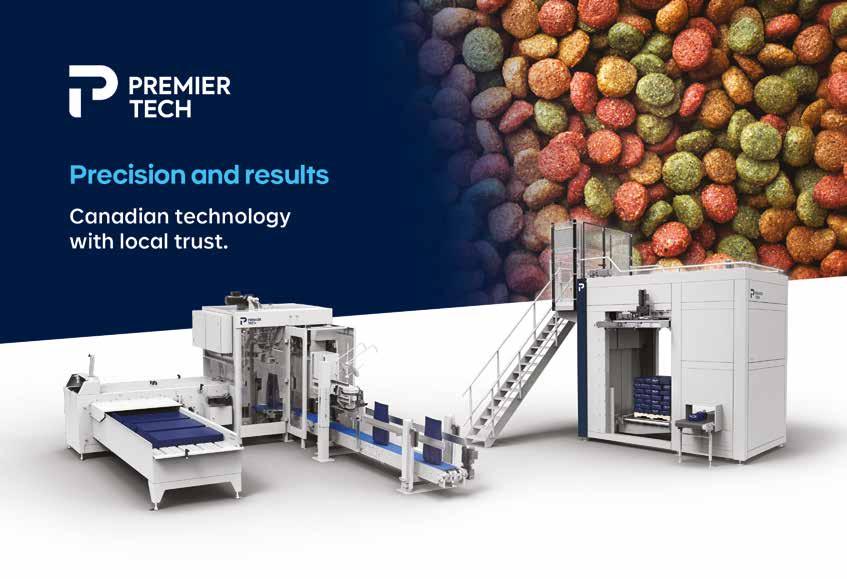
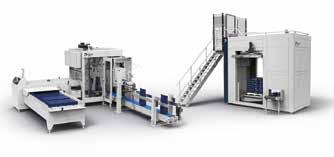
The Premier Tech OML 1140 is a high-performance automatic bagging machine designed for pet food and animal nutrition lines that demand continuous production, precision, and reliability. As part of the OML open-mouth bagging systems line, it handles pre-made bags from 7 to 50 kg, reaching capacities of up to approximately 1,200 bags per hour. Its versatility allows for the handling of both granular and powder materials, along with compatibility with paper, polyethylene, and polypropylene bags.
Complementing the line, the APC 1120 is a compact and robust automatic palletizing solution, engineered to ensure well-formed layers, stable loads, and excellent final pallet presentation. Its modular design enables easy integration into different industrial layouts and supports multiple pallet patterns.
Together, the OML 1140 and APC 1120 form a complete line, from filling to palletizing , enhancing operational efficiency, productivity, and reliability.
https://www.ptchronos.com
THE INTERVIEW
STANLEY ANDRADE
Director of MBRF Pet
With a career built mostly within the group that is now MBRF, Stanley Andrade brings a deep and integrated perspective on the business. His journey began at Sadia, continued through BRF, and led to today’s MBRF, with a strong focus on supply chain and global planning. Along the way, he developed a strategic view of the entire value chain, from farm to consumer, which he now applies to leading MBRF Pet, a business unit defined by complexity, innovation, and a clear purpose: to improve the lives of pets, veterinarians, and pet parents.
MBRF Pet is currently positioned as one of the leading companies in the sector in Brazil. How would you describe the company’s current moment and the main pillars of its growth strategy?
MBRF Pet was born as a major player, with a long history and significant contributions to pet nutrition and wellbeing, supported by the expertise of one of the largest food companies. Over the past year, our focus has been strongly directed toward integrating companies, systems, and processes—both internally within MBRF Pet and with MBRF as a whole. This has placed us in an even more privileged position in key areas, including partnerships, cutting-edge technology, and a consistent capacity for investment in our operations.
MBRF Pet has the most complete pet portfolio in the market, offering solutions for all sizes, life stages, and consumption profiles. This breadth has enabled us to be present across all channels and consumption occasions, always delivering the best value equation for our customers and pet owners. This diversity is undoubtedly one of the company’s greatest strengths.
One of our main pillars is anchored in the Super Premium Natural segment, where we hold two of the most relevant brands on the market: Biofresh and Guabi Natural Based on in-depth and ongoing research conducted by our technical team, we are convinced that this is the future of pet nutrition. There is still significant potential for growth in this segment in Brazil and Latin America, driven by increasing awareness among veterinarians and pet owners.
Our priority remains the commitment to improving the lives of pets, their owners, and industry professionals. To achieve this, we continue to invest consistently in innovation and the delivery of the highest-quality foods. Biofresh stands out as the only brand with a high inclusion of fresh ingredients—not only animal proteins but also fresh vegetables, herbs, and greens—while Guabi Natural is a pioneer in the Super Premium Natural segment in Brazil, with a trajectory that began in 2004.
We are also attentive to different consumption occasions and continuously seek to expand our portfolio, ranging from complete meals—both dry and wet—to reward moments such as snacks, as well as new textures and
flavor variations. We operate strategically to meet the specific demands of each channel , offering tailored solutions for both mass retail and specialized pet channels, always respecting consumer profiles and brand positioning.
You are leading a significant international expansion. What opportunities do you currently see for Latin American pet food brands in global markets?
International expansion remains a central pillar of our strategy and is directly connected to the investments we have made in portfolio evolution and MBRF Pet’s production capacity. Today, we operate in more than 20 countries, with a focus on regions such as Latin America, the Middle East, and Asia. Over the next two years, we plan to expand our presence to more than 30 markets. Brands, such as GranPlus, Biofresh, Guabi Natural, Balance, Three Dogs, Three Cats, Primocão, and Primogato, are gaining global relevance, bringing the quality of MBRF Pet nutrition to new consumers.
We see very clear opportunities for Latin American brands, especially when they combine quality, innovation, and a value proposition aligned with key global industry trends. The pet market undergoes an accelerated process of sophistication, driven by pet humanization, the search for more natural foods, and the consistent growth of the cat population, which is expanding at a faster pace than dogs. This movement has a direct impact on the demand for specific nutritional solutions, particularly in the wet food segment, which is growing rapidly, especially among felines.
In addition, MBRF Pet’s industrial footprint is the strongest in the market, with factories in Brazil and Paraguay, strict quality controls required by different countries, a fully integrated chain, and the advantage of MBRF’s global scale and logistics expertise. This allows us to compete efficiently and consistently in international markets, combining superior quality, food safety, and innovation capability.
From this solid foundation, international growth is driven by strategic local partnerships, deep consumer knowledge, and adaptation to regional dynamics. It is an ongoing effort that requires disciplined execution on a daily basis,
but it has enabled us to consolidate leadership positions in several markets and open new avenues for MBRF Pet’s brand growth.
From your perspective, what are the most relevant technological transformations currently shaping the pet food industry?
The pet food industry is experiencing a period of significant technological advancement, driven by science, innovation, and a deeper understanding of animals’ real nutritional needs. Together, technology and nutrition create even more complete, safe, and functional food, aligned with the expectations of pet owners and veterinarians.
These trends have guided our investments in production capacity and new product development, especially in the wet food and Super Premium Natural segments.
A recent example of this commitment to innovation is the recognition of the Biofresh brand at the FISA 2025 Innovation Awards, with the launch of Biofresh Lombo & Abacaxi (loin and pineapple). It is a Super Premium Natural food that delivers functionality and an exclusive “ideal feces” claim: reduced volume and odor, firm texture, and less attractive feces for ingestion. This reinforces our focus on advanced, effective nutritional solutions.
This innovation combines nutritional science, food engineering, and rigorous quality control, delivering a differentiated and high-value-added product.
Digitalization and data use throughout the entire production chain play a fundamental role. Ingredient traceability, industrial process control, and system integration generate significant gains in efficiency, predictability, and quality. At MBRF Pet, we leverage the full technological robustness of MBRF to operate under extremely high global standards.
How does sustainability fit into MBRF Pet’s strategy?
As part of MBRF’s global chain, MBRF Pet adopts a wide range of practices that promote sustainable development, minimize environmental impact, and contribute to animal welfare and social development. These are non-negotiable principles, rooted in our commitment to quality, integrity, and safety. We are committed to producing pet food responsibly, applying manufacturing processes that reduce environmental impact and supporting NGOs dedicated to animal welfare. One of our goals, for example, is to make all packaging recyclable, reusable, or biodegradable.
As regards sustainability, MBRF Pet practices “zero landfill” operations at its Ivoti and Campinas plants: the waste generated is sent monthly for co-processing rather than disposal in landfills. Additional initiatives include the use of feed waste as organic fertilizer, the recycling of 100% of Guabi Natural packaging (with the company having already offset 130 tons of packaging), as well as water reuse practices and grain traceability.
On the social front, through the Guabi Natural brand, the company supports NGOs, such as GAVAA. It has donated over 111 tons of pet food to rescued animals, in addition to other donations to institutions. In 2023 alone, the company donated more than 20 tons of pet food to Ampara, AAAC, and Pata Santa.
Sustainability is a central axis for MBRF. It guides the company toward ethical, transparent, and responsible business practices. Within its global chain, the company operates a robust sustainability platform with multiple pillars, including origin control and supply chain management, climate, animal welfare, natural resources, circular economy, waste management, and social responsibility. The full sustainability report is available on the company’s website.
Finally, is there any message, ideas, or reflection you would like to share with industry professionals reading this interview?
The pet sector carries great responsibility, as we deal directly with their health, well-being, and quality of life. For this reason, I believe that the industry growth must always be accompanied by science, ethics, collaboration, and a long-term vision.
There has been a positive market evolution characterized by increasingly qualified professionals, more conscious consumers, and companies that consistently invest in innovation and sustainability. This movement raises the overall standard of the sector and benefits the entire value chain, from producers to pet owners.
As an industry, our role is to continue investing in knowledge, technology, and best practices, fostering transparent and responsible relationships with customers, partners, veterinarians, and society. The future of the pet market necessarily depends on doing more and doing better—always with respect for animals and a positive impact on people.
Thank you, Stanley, for sharing your vision and knowledge with the All Pet Food community!
FAMSUN Co., Ltd., headquartered in Yangzhou, Jiangsu Province, China, has established itself as a leading global provider of food and feed engineering solutions. The company offers a comprehensive portfolio of systems, equipment, and engineering projects spanning diverse sectors, including aquaculture feed, swine and poultry feed, ruminant feed, premixes, fermented feed, and pet food. These products are an integral part of the global farm-to-table value chain, contributing to sustainable and efficient food production.
With a robust global sales network, the company has extended its reach to over 100 countries and regions. Its operations are supported by 33 representative offices and four production facilities, two of which are currently under construction. Notably, FAMSUN has established longterm partnerships with nine of the world’s top ten food companies and actively serves customers in 79 countries and regions through the Belt and Road Initiative.
Solutions for the Pet Food Industry
Leveraging its extensive industry experience, FAMSUN provides efficient system solutions for pet food factories, including factory planning, engineering design, complete equipment, factory construction, and integrated control.
With automated, digital, and intelligent equipment, FAMSUN fully supports various production requirements, helping to promote the healthy growth of pets.
Sjhs Series Double-circle Paddle Mixer
• Highly efficient mixer with feed-to-food safety standard for animal feed, food and pet food industries.
• Optimized paddle-to-wall gap and fully open discharge doors, minimum residue, no contamination; unique airsac seal, no leakage; optional corrosion-resistant steel design.
• Easy maintenance.
• Large access door for cleaning and maintenance, time saver.
• High efficiency.
• High mixing homogeneity with short dry mixing (60s~90s per batch) and discharging.
Swfp66d Series Fine-grinding Hammermill
Specialized for the fine grinding of pre-crushed various broken in feed, food and oilseed industries.
Pre-broken coarse initial materials like cereal grains, oil cakes and meal in particular.
• Screen hole dimension: 0.5mm-3.0mm. Particle distribution mainly in range: 30 - 60 mesh.
• High capacity: Patented axial air inlet and water-drop shaped grinding structure and tuning technology for optimal grinding; widened grinding area (1.5 times of normal), capacity increased 25% possible.
• Stable performance: Rigid structure, optimal hammer arrangement and dynamically balanced high-precision rotor, stable running and low noise; reversible rotation, long service life.
• Friendly operation: Patented one-step screen holddown device and fully-open sliding doors, easy access and maintenance; CE standard design for human & machine safety.
• Customized solution: We offer customized solutions for machine size, feeder, screen, aspiration system, underneath hopper, etc.
Research and Development
Innovation is the cornerstone of its success. Through collaboration with partners, customers, leading universities,
and research institutions worldwide, they continuously enhance their technological capabilities to deliver cutting-edge solutions, customized products, and advanced technologies. To date, they have established four research and development centers globally, including major facilities in China.
Expanding Mission and Vission
On November 12, 2025, FAMSUN Co., Ltd., held the launch of its premium brand FAMSCEND in its HQs in Yangzhou. The event, themed “Innovate · Ascend · Nourish”, brought together over 160 industrial leaders, partners around the world in the high-end human food and pet food sectors, and media representatives, to witness the brand’s launch.
FAMSCEND’s mission-’Innovating to nourish a better world’, and vision-’A trustworthy partner, always’ were also announced at the ceremony. It marks FAMSUN’s official entry into the new field, with higher value-added, of equipment industry for pet food and human healthy food through its new brand FAMSCEND, ushering in its strategic shift from scale leadership to value guidance.
Commitment to Sustainability
Guided by the concept of “Quality Food,” FAMSUN is committed to maintaining the highest standards of food safety and security. Through digital innovation, they are transforming and modernizing the agricultural and livestock industries. Their comprehensive and systematic solutions guarantee food traceability and safety throughout the entire supply chain.
Driven by a commitment to quality and productivity, FAMSUN integrates smart solutions, drives corporate green transformation, fosters industry collaboration, and invests heavily in innovation and R&D. These efforts improve energy efficiency, reduce carbon emissions, and promote the sustainable development of the industry.
A MEETING AN EXPERIENCE
For All Pet Food, industry events create bridges for sector training and networking. Getting to know each other is an opportunity to connect and exchange knowledge, news, and trends.
Here, we treasure some fragments of moments we have shared with the entire industry community. Relive the experience with us!
Pet Fair South East Asia - Bangkok
NOURISHING FLAVORS: EVOLUTION AND TRENDS
In each All Pet Food Magazine issue, we share recognized products and new launches from prominent worldwide pet food manufacturing companies.
We present innovative formulations with high-quality raw materials, in line with market trends, obtained through technological production processes, and providing benefits to both pet health and nutrition.
PremieR Formula is a product line from PremieRpet , a leading Brazilian brand in super premium and premium special pet food for dogs and cats. It is part of PremieR’s New Generation portfolio, developed to further elevate the standards of pet nutrition.
Made exclusively with high-quality, carefully selected ingredients and produced under strict quality control, the line delivers high performance in both nutrition and satiety. It also promotes excellent overall health, providing more energy and vitality for pets.
• Availability: PremieR Formula – Latam Line Benefits
• Health and vitality: Ingredients rich in antioxidants that help fight free radicals.
• Digestive health: A combination of highly digestible ingredients, special fibers, and prebiotics.
• Beautiful coat and healthy skin: Rich in high-quality proteins, with an ideal balance of essential fatty acids –omega 3 and 6.
• Natural ingredients: Free from artificial colors and flavors.
Made in
VOICE OF AUTHORITY
All Pet Food Magazine publishes content of high academic interest created by editors, who bring prestige to each issue and valuable knowledge to the entire pet food industry. In this section, we are pleased to share the professional profiles of our guest editors, their country of residence, and their main phrase.
CANDELA BONAURA
“Until one has loved an animal, a part of one’s soul remains unawakened”
Anatole France
ARMANDO ENRIQUEZ DE LA FUENTE BLANQUET
“Precision nutrition, the pet’s best friend”
ALL PET FOOD
NEWS
ALL PET FOOD MARKET INSIGHTS: THE INTERACTIVE MARKET INTELLIGENCE PLATFORM FOR THE PET
FOOD INDUSTRY
The pet food industry is undergoing an era of growth, personalization, and regional expansion that demands new tools to gain a deeper understanding of the market. In this context, having reliable, comparative, and up-to-date information is crucial for informed decision-making.
https://acortar.link/txzu3n
ANIMAL WELFARE WILL DEFINE 2026: MORE EMOTIONAL HEALTH, TECHNOLOGY AND RESPONSIBLE CONSUMPTION
Pet care will evolve in 2026 towards a more conscious, innovative and responsible model. Tiendanimal anticipates the trends that will solidify next year, which will be marked by a more holistic vision of well-being, the search for premium and personalized products, the integration of technology into daily life, and a firm commitment to sustainability.
https://acortar.link/SFrMTZ
PAYPER DRIVES ITS GROWTH WITH A NEW 8,800 M² INDUSTRIAL WAREHOUSE
IN BELL-LLOC
With an investment of €6 million, PAYPER drives its expansion in Bell-Iloc to streghten its productive capacity and address increasinhly market demands.
https://acortar.link/LyzBXV
KEMIN UNIFIES LATIN AMERICA, EXPANDS REGIONAL STRUCTURE, AND BRAZIL BECOMES A STRATEGIC HUB
The restructuring marks a new growth cycle for the company in the region and is accompanied by the creation of 46 new positions, distributed across different Latin American countries.