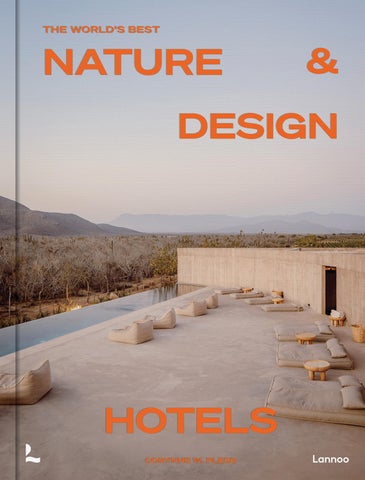
HORSEBACK RIDING THROUGH sandy dunes at sunset, zip-lining over a rushing river to the check-in, forest bathing under a canopy of starlit pines – the 28 hotels featured in The World’s Best Nature & Design Hotels offer transformative experiences and were mindfully designed to protect our natural world. Each featured destination, spanning across six continents, has gently challenged the inorganic methods of traditional tourism. Instead of overpowering or manipulating unchartered land and fragile ecosystems, these hotels are empowered by their geography and influenced by the fantastic wildlife and native flora that surround them. By introducing thoughtful, often biophilic (see p. 16), architecture and experiences, they have made efforts to lessen their environmental impact and authenticise their guests’ connection to the outside world, where raw, majestic landscapes await to nurture the heart and ease the mind.
Many of the hotels within these pages do not conform to the traditional perception, or perhaps the definition of a hotel, apart from simply providing accommodation. Because these escapes value the coexistence of nature and humanity, rooms are often free-standing and dotted throughout the terrain to introduce a more private, natureled experience. The list of hotels featured was then diversified and expanded to include lodges, retreats, camps, a ryokan, reserves and resorts, all of which embrace nature, architecture and exquisite design. Operating sustainably anywhere requires time, knowledge, and a bit of creativity. Several destinations are located hours away from any urban civilisation, which made the build and crafting of each facility a bit of a challenge. In a few cases, the wood and tools required to build each guest room, restaurant or communal lounge was delivered by boat, carried by hand, or brought in by mule. Many structures were built on stilts, elevated over the ground so as not to disturb any natural inhabitants. These guest rooms then have the advantage of gently floating above ground, with breathtaking views of the surrounding landscape. Hoteliers also called on the region’s craftspeople, architects and creatives to design culturally relevant architectural vernaculars where local materials, ancient building traditions and skilled artisans come together to reflect the land, its heritage and its people.
Several hotels highlighted in this book arose from a personal nostalgia or childhood dream of reinventing an experience or place on their own terms. For example, many years ago, atop an idyllic Greek mountain, a young boy at summer camp found himself inside an abandoned sanatorium and dreamed of one day transforming this decaying, decadent building into a magnificent hotel. After nearly 80 years of solitude, the sanatorium and its property went to auction and the boy, now an adult, found himself back at its doorstep holding the keys – proving wishes can come true.
Another couple spent years travelling with their young children to various traditional ryokans across Japan, enjoying the inns’ slow, simple approach to life and nature. However, while the couple adored the ryokan’s historic traditions, at times cold winds rushed through the ageing doors, often hindering their comfort. Much later, after acquiring a peaceful stretch of land in northern Japan, the couple knew it was the perfect location to design their own modernised, luxury ryokan – and did just that and more.
The hotels and properties featured in this book are passionate about optimising comfort and luxury within the natural world. After a day of trekking through unchartered wilderness or an afternoon basking in the sun with a good book, travellers are welcomed into rooms where fine linens, bespoke furniture, and local snacks and beverages await. Nearly every hotel is equipped with a spa, many with private pools, skylit saunas, and a menu offering botanical therapies; one hotel even offers unlimited, in-room spa services.
Every hotel serves fresh, creative dishes, which are often made with herbs, eggs, fish and vegetables picked or caught from nearby lakes and seas, on-site gardens or neighbouring farms. A few hotels go as far as inviting guests to join the kitchen as they forage the property for organic flowers, leaves, seeds, fungi and more to add to their dinner or cocktail that evening – a delicious learning experience. Every hotel has carefully curated excursions, classes or experiences that better connect their guests to the region’s culture, food, land and community.
The 28 destinations highlighted in The World's Best Nature & Design Hotels are filled with purpose, adventure and tranquillity and were designed to better complement our natural world. Bon voyage!
PREVIOUS LEFT — Boca de Agua, Mexico
PREVIOUS RIGHT — eriro, Austria
OPPOSITE — Reschio, Italy
FOLLOWING — Les Bains Gardians, France
GLOSSARY
AGRITOURISM , also referred to as ‘agrotourism’, is essentially the fusion of agriculture and tourism, designed to better immerse guests within the local land and agriculture. Foraging for wild mushrooms with an in-house chef or picking fresh flowers and herbs from the gardens are just a couple of the many types of agritourism activities offered by the hotels featured in this book.
— Clayoquot Wilderness Lodge, Canada
A NATURAL SWIMMING POOL
or bio-pool is filtered by rocks, plants and biological filters, instead of harsh chemicals. The water reflects earthy blue, green and brown colours and is often dotted (and at times, purified) with aquatic plants such as water lilies or cattails. Hotels and resorts have begun including bio-pools within their design to give guests a chance to cool off in chemical-free, naturally beautiful water. For example, on page 200, Sublime Comporta in Portugal built a magnificent natural pool for guests to dip into from their own private deck.
— Sublime Comporta, Portugal
WILD SWIMMING is simply the act of freely swimming in natural bodies of water. Whether you dive into a lake, river, hot springs or cenote, wild swimming is an adventurous (and exhilarating) way to experience our marvellous world.
— Fritton Lake, UK
ECOTOURISM is a type of tourism that focuses on the conservation and protection of local communities and natural environments. Hotels who support ecotourism have recognised their potential impact on a specific region and will introduce responsible architecture, activities and educational programmes to help preserve the land they steward. Alta Sanctuary (page 18), for example, partners with Junglekeepers, who help safeguard over 100,000 acres of the Amazon.
— Alta Sanctuary, Peru
BIOPHILIC ARCHITECTURE
harmonises with the natural world, directly and indirectly, within its design. The materials, colours, tones, light and general aesthetics are carefully curated (and often locally sourced) so the overall appearance reflects and honours the surrounding natural landscape. Biophilic buildings often incorporate natural ventilation and other sustainable features, as well as native vegetation, fountains and natural light.
— Tierra Patagonia, Chile
DECONSTRUCTED AND LANDSCAPE HOTELS
accommodate guests in individual rooms, pavilions or tents spread throughout the property, instead of the typical, storeyed buildings expected when visiting a hotel. These guest rooms are surrounded by nature, so the flora and fauna are part of the experience. Moonlit walkways replace traditional enclosed hallways, and walls are removed or replaced by glass so the exterior sights and sounds are elevated. Views of the landscape are also prioritised when considering each room’s placement. Juvet in Norway (page 88), Piaule in New York (page 148) and The Tawny in England (page 218) are a few of the many hotels that have captured this concept beautifully.
— Juvet Landscape Hotel, Norway
REGENERATIVE
AGRICULTURE uses holistic, mindful farming practices to help support the natural cycles of soil, water and ecosystems – efforts that in return help reduce climate change. For example, the hotel Paradero Todos Santos (page 138) recently began converting over 60 acres of its land to the ancient milpa agriculture. Milpa agriculture has a 50-year lifecycle and was developed centuries ago. It was used by the Aztecs and leaves the farmed land in better shape that it was found.
— Paradero Todos Santos, Mexico
REWILDING helps restore overused or depleted ecosystems and landscapes back to a more natural life cycle. Often, non-native vegetation is replaced with native species, and indigenous animals are reintroduced to the area. Fritton Lake in England (page 78) began rewilding their land several years ago and invite guests on safari tours to witness their efforts in action.
— Fritton Lake, UK
NATURE RESERVES , also known as wildlife refuges, bioreserves or nature preserves are areas of land that are safeguarded by regional and/or national governments because of their biospheric fragility and importance. These areas are typically open for recreational use, yet enforce strict laws that help conserve their ecosystems. Nature reserves are often home to rare plant and animal species, making them popular destinations for nature enthusiasts from around the world. Clayoquot Wilderness Lodge in Canada (page 46) and Bisate Reserve (page 238) in Africa, among many others, are located near nature reserves, providing guests the opportunity to join a bird-watching hike, trek with gorillas, or watch wild black bears rummage the shores.
— Clayoquot Wilderness Lodge, Canada
SANCTUARY
ALTA
— Madre De Dios, Peru
‘AS WE ENTERED the rainforest, it felt like crossing a threshold into another world –one untouched by time,’ remembers Stephane Thomas, co-director of Alta Sanctuary, a conservation-led getaway located deep within the Peruvian Amazon rainforest. Alta Sanctuary is most notably home to a 110 ft sustainably built treehouse towering over the jungle’s canopy, with sweeping views of Peru’s beautiful landscape.