166
CINQUECENTO NAPUR ARCHITECT LTD.
166
CINQUECENTO NAPUR ARCHITECT LTD.
“This private house does not reveal its secrets right away. It conceals its innovative, complex technology that organizes the owner’s life.”
MATTEO THUN
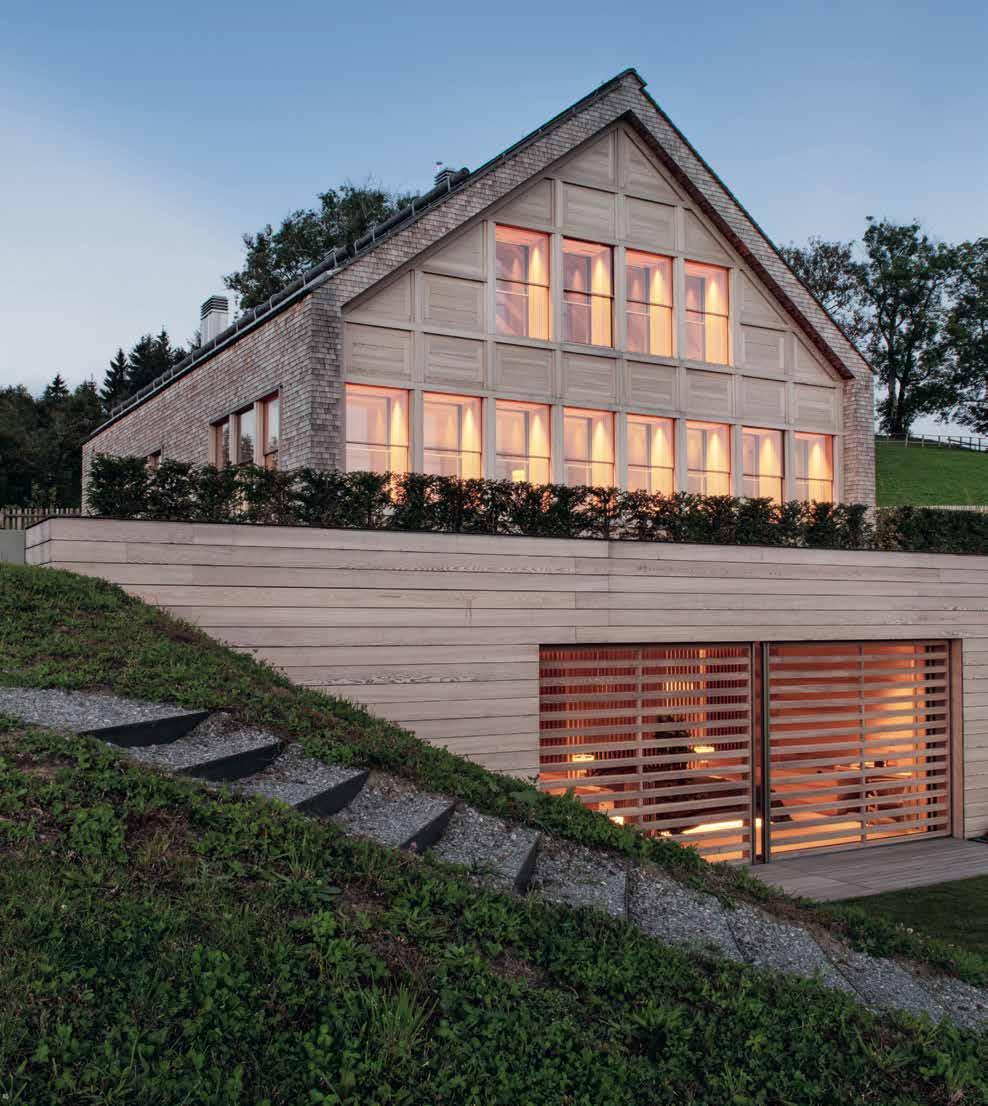
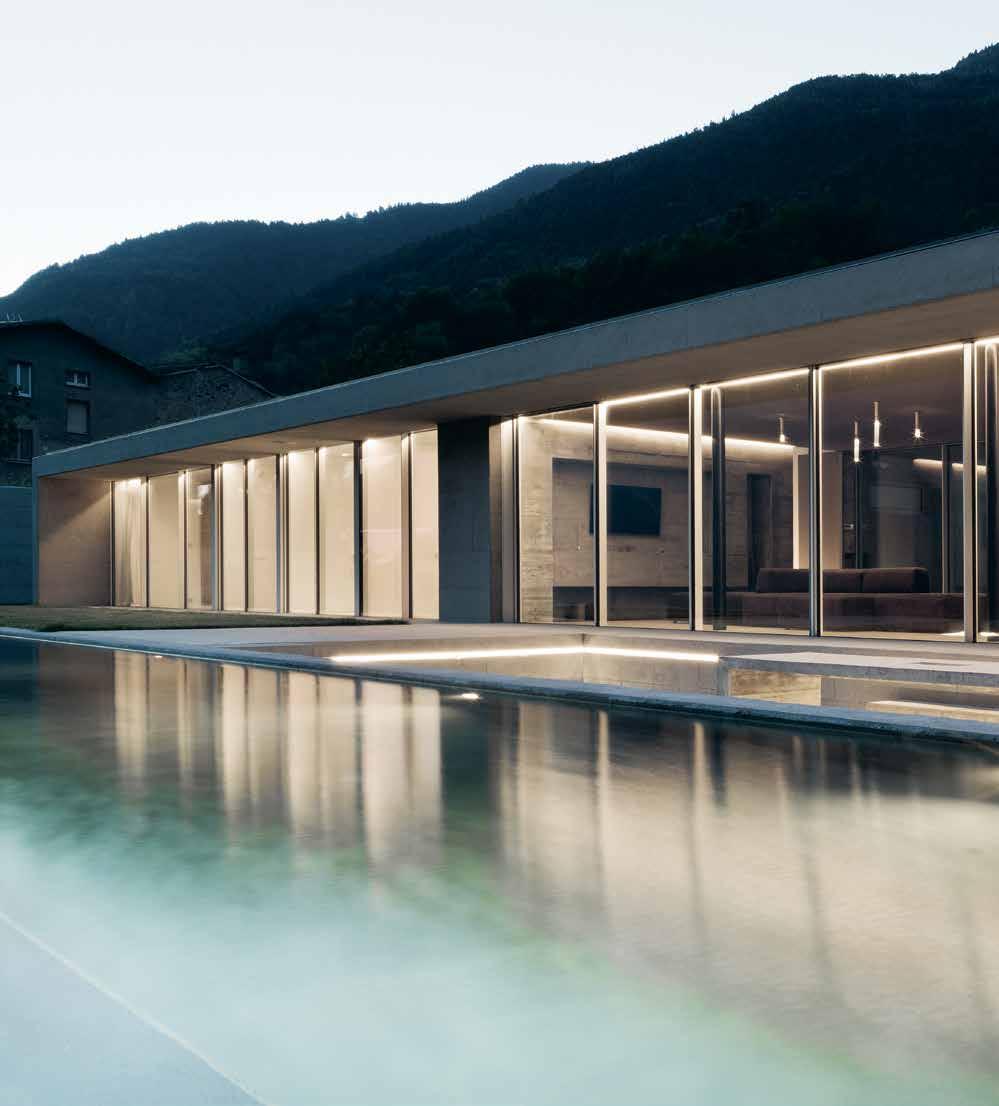
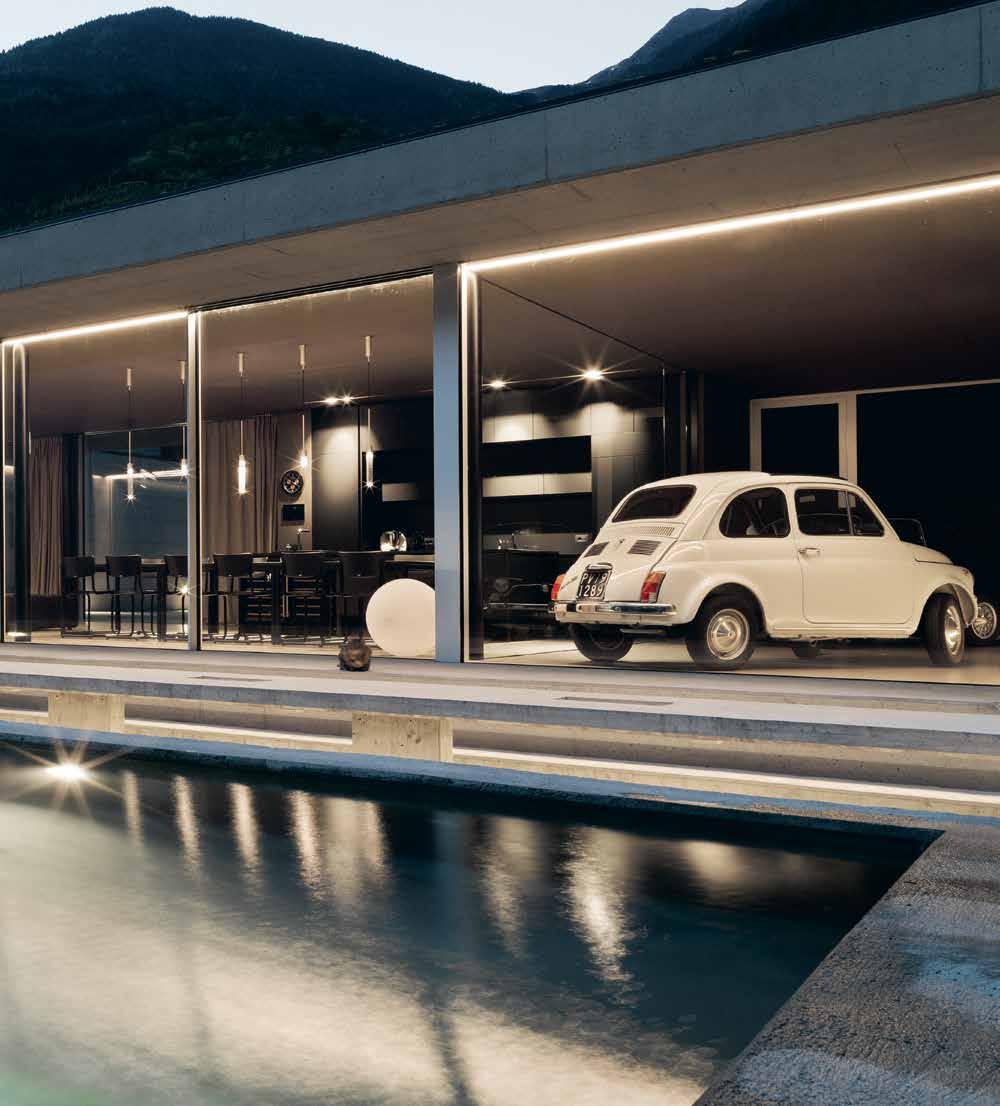
A beautiful spot in the mild climate of the gently rolling countryside around St. Gallen, perched on a hill among meadows and trees, not far from the northern shore of Lake Constance. And the perfectly proportioned house is equally beautiful, looking down at the landscape of mountains and lakes at its feet. The building material is local wood: Larch shingles cover the outside walls, ash is used for the interiors, and the simple gabled roof eschews an overhang to highlight the building’s striking silhouette. From a distance, though, the clean-cut lines are somewhat deceiving. Even the way the building is set into the softly undulating lawn hints at a complex floor plan and entices the viewer to take a closer look. Two recesses at the gable front and southeast side indicate that the house extends downward in an interesting way, “underground” in its most positive sense. This is where the two generously proportioned bedrooms are, foregoing neither light nor a connection to the lovely surroundings. The master bedroom opens up with wide French doors, while the guest suite extends under the terrace. The unique interior layout, already hinted at above, also
shapes the ground floor, which opens out to the pool deck and grassy terraces.A large open kitchen serves as the main living space, taking up the southwestern third. The living area is tucked away as a retreat behind the slim staircase that runs through the middle. Two stories high, it has a functional extension in the attic in the form of a large gallery which takes in the top four gable windows. The overall calmness of living here comes from the minimalist aesthetic, achieved by smart ideas such as hiding light switches, lamps, and speakers out of sight. The sound system is part of the design’s sophisticated technical side. That side further includes the three underground levels of the seven-story building, among them the floors of the underground garage, stacked like a narrow box under the house, which are accessed by the residents via an elevator and staircase. The cars, which span collectors’ items and daily runabouts, drive onto a platform; when closed, only the cover is visible. The elevator rising from the ground then conveys them down into the three-story parking rack. A turntable lines up the cars for parking and driving out.
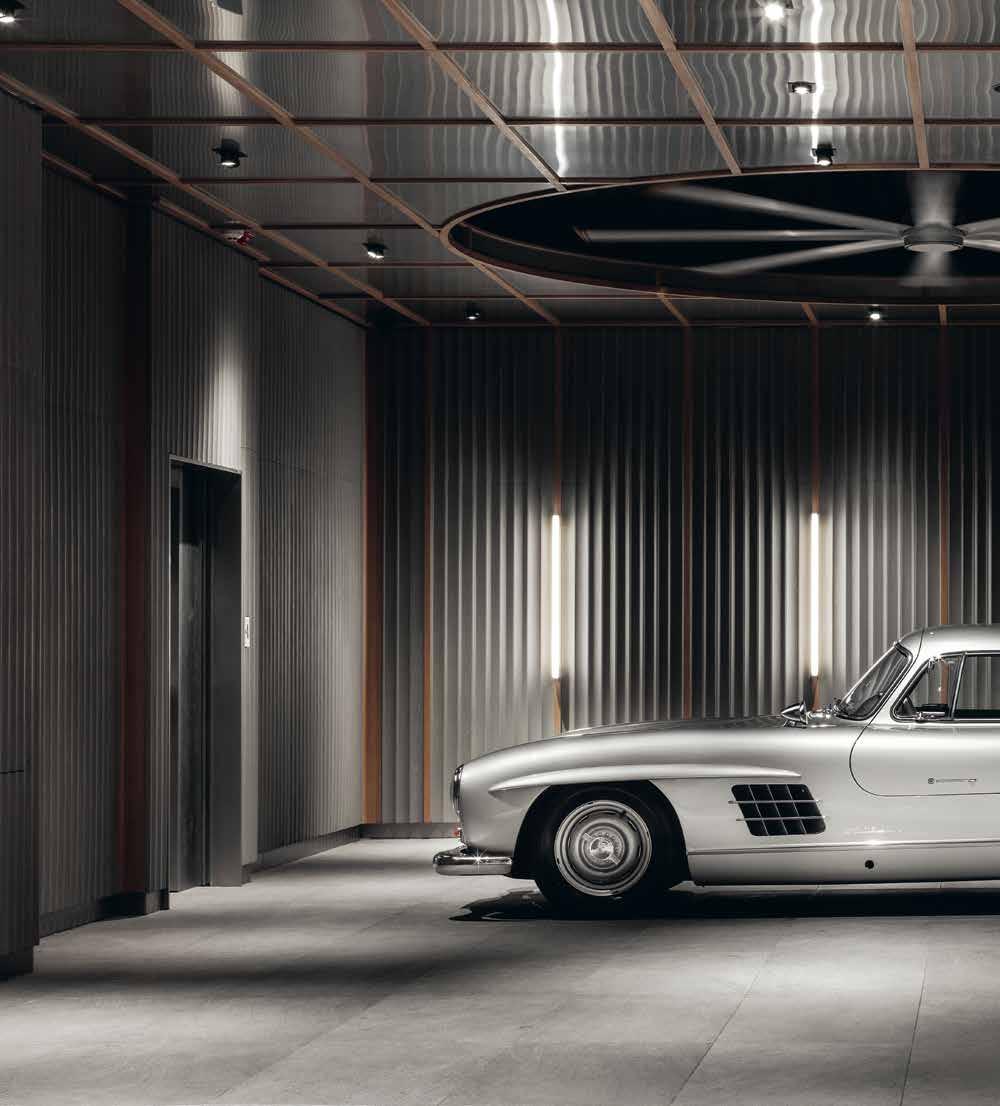
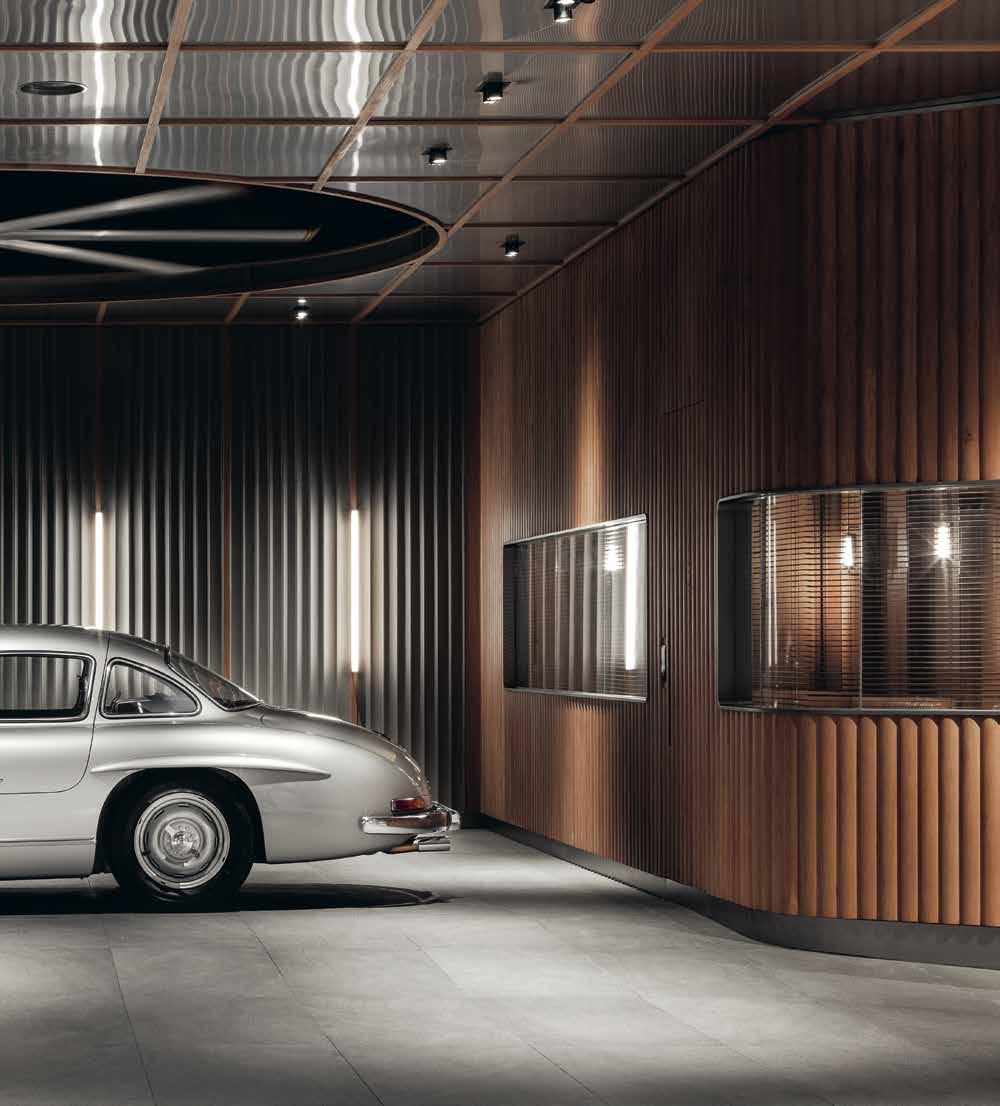
“We have done show garages with bars in them, because these days people are buying cars like they are pieces of art, and they want to display them.”
PAUL MCCLEAN
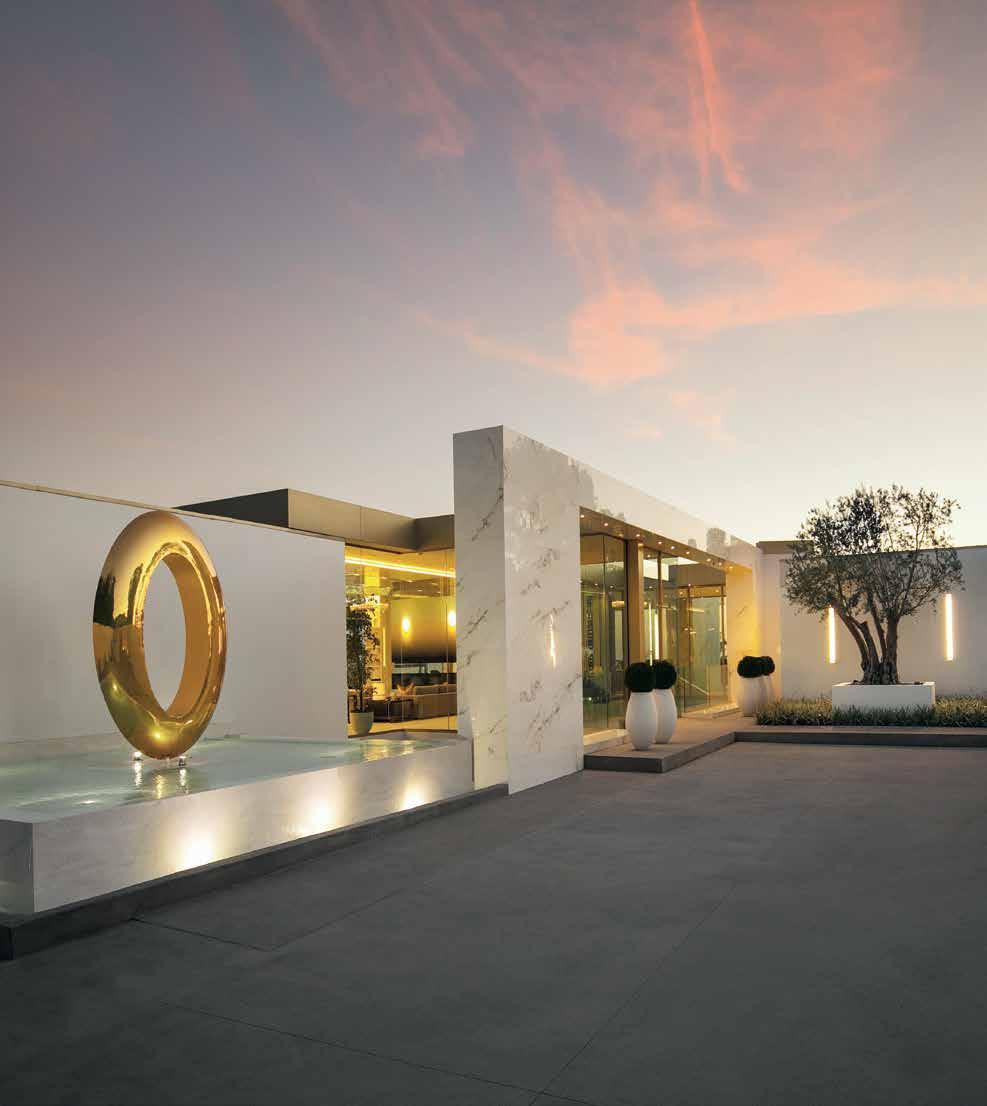
Gold undoubtedly exerts a magnetic attraction over us. But why is that? Could it be that uniquely warm glow, which seems to deepen the more solidly the metal has been worked? The festive, luxurious charisma that emanates from this precious metal took time to develop, but continues to captivate people to this day. Nevertheless, given the property presented here, it is surprising to find gold in such dominant abundance in the architecture, albeit primarily as a “gold luster effect.” Hadn’t the modernist revolution a century ago already forbidden designers of the future from using anything with semantic or decorative import? That’s right. But first, postmodernism has restored our articulateness and individualism, and second, this is Beverly Hills. And that’s a good thing, because there, more than anywhere else, being showy —in a positive sense—is absolutely legitimate: entertaining, sensuous, humorous, and glamorous.
With a wealth of experience in designing villas, the team at McClean Design nailed their brief, striking a balance between a 1,517-square-meter (16,330 square feet) villa layout with sleek, minimalist spaces and an
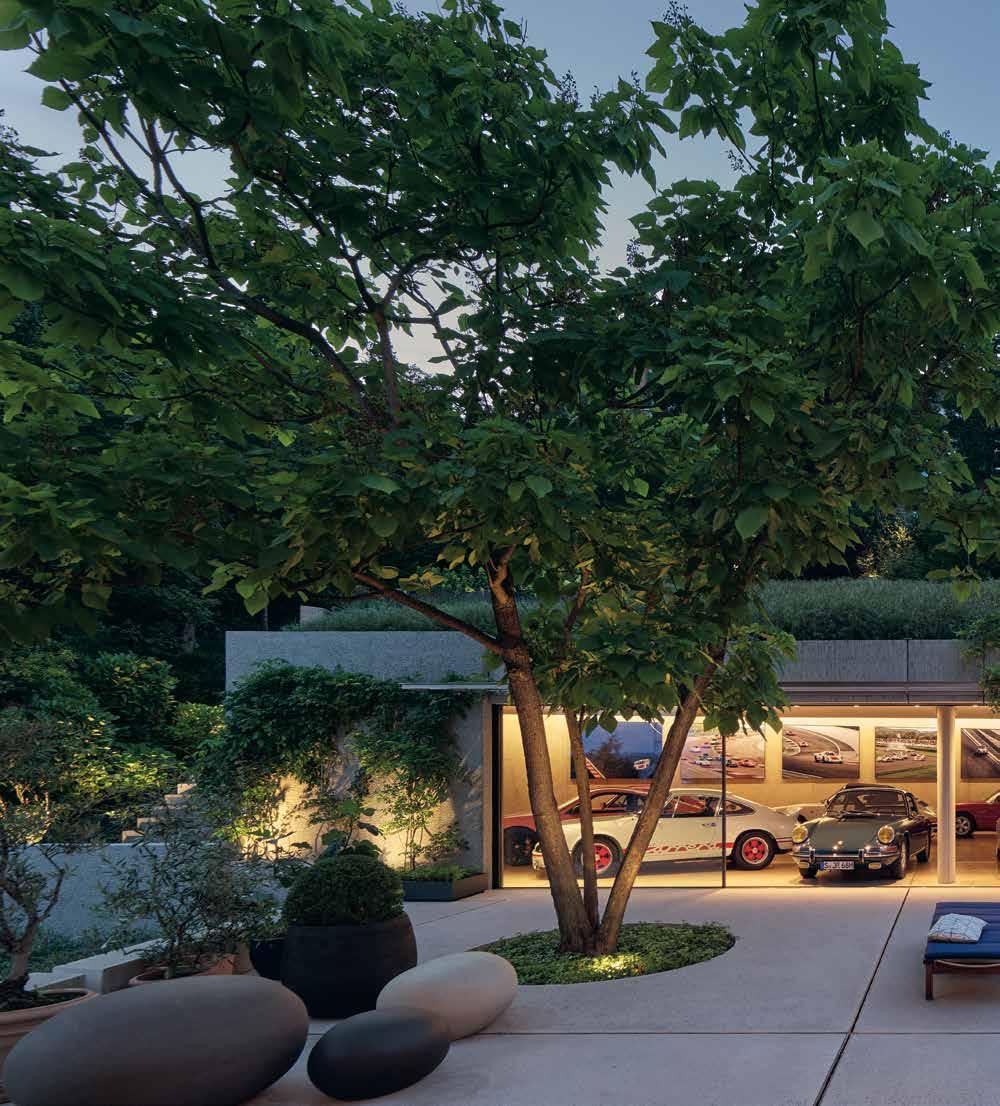
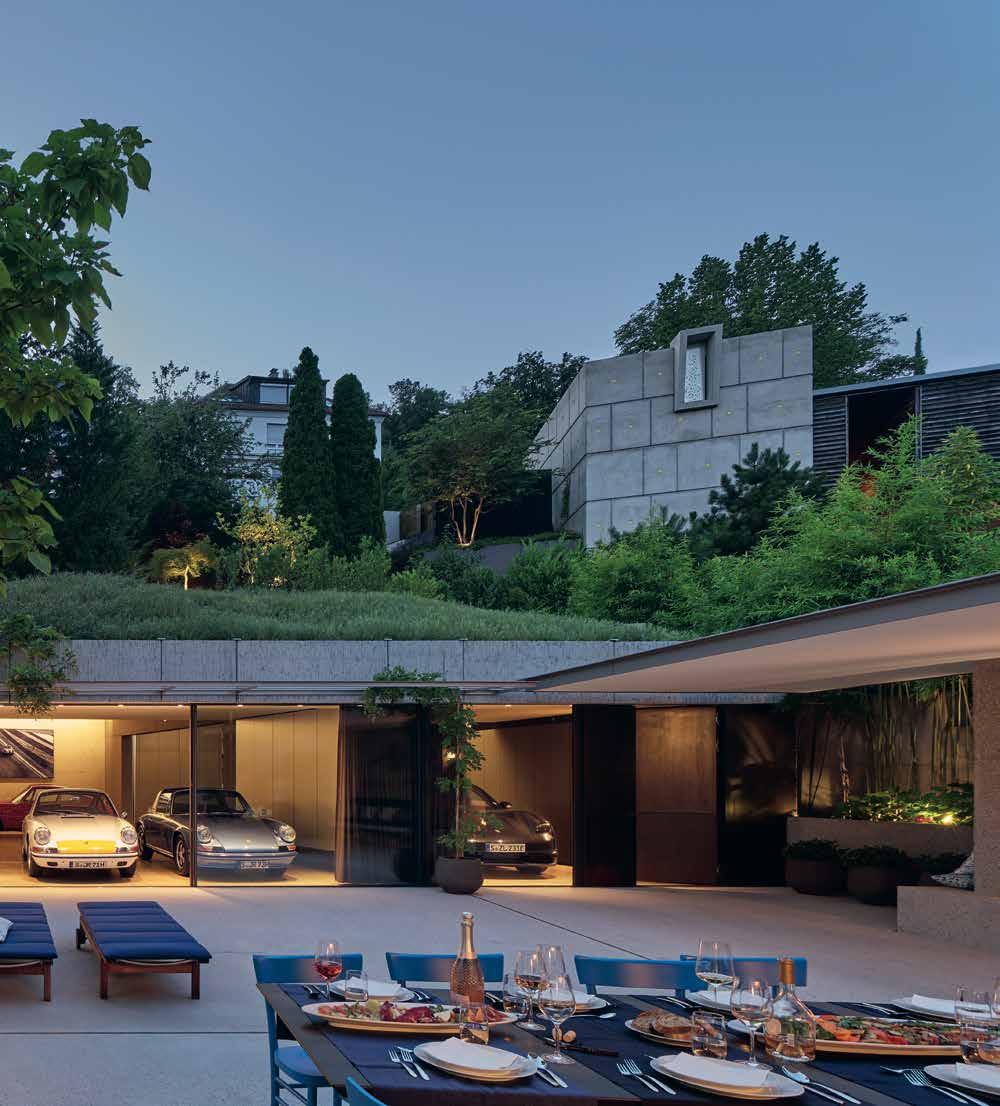
ostentatiously glittering, glamorous aesthetic of gold and marble. The area in front of the house forms a grand courtyard, separated from the driveway by a wall with gleaming golden portals. From there, a ramp leads down to the underground garage of the elegant white two-story building. But first, the gate closes behind a new arrival. Passing a gold sculpture and water features, you reach the upper floor with four bedrooms, a south-facing family room with kitchen, and the large central living area with an entertainment bar. The basement receives light from the hill side through two atriums, below which is a large indoor pool. As the pool precludes any further openings toward the valley, use of the varied wellness and entertainment facilities is easy and comfortable. This is where all the more private and personal features are located: a movie theater, a wine tasting room, and the large underground garage. If the goal is to enjoy everything Hillcrest has to offer in one day—including the massage room, hair and pedicure salon, and pool table—there will probably only be time in the evening to take out the car collection. likewise gold-finished, into the mild California night.
“The Compound House is an adventurous project, eschewing style in lieu of an exploration into light and shadow, form and texture, order and chaos, the rational and the random.”
MARCH STUDIO
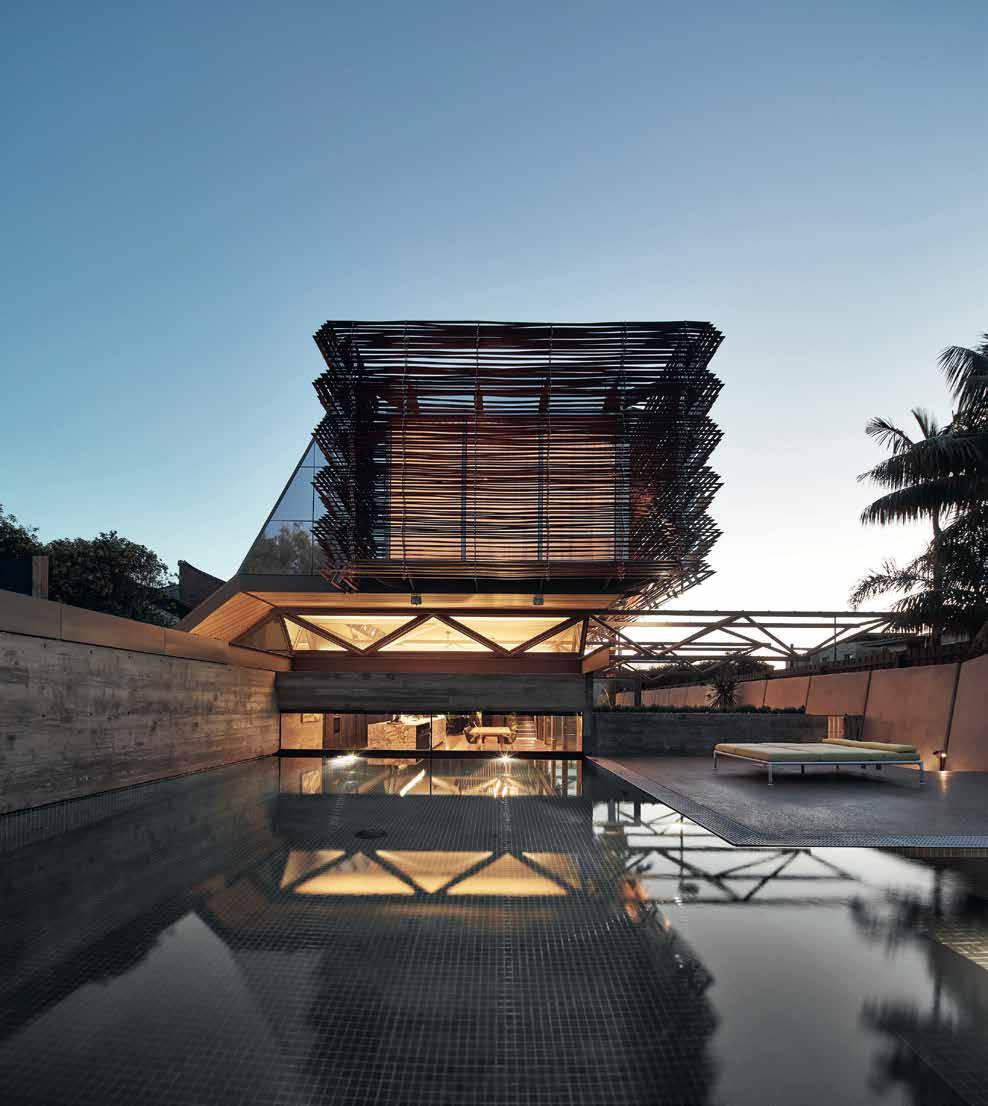
A structure almost 20 meters (66 feet) long occupies the center of the equally elongated plot, almost exactly west to east. Form and construction appear to be extremely complicated; a quick glance while driving or walking past is not enough to make an informed assessment of the building. But that may actually be no bad thing.
We are long since accustomed to the fact that even the boxy, minimalist houses by the best-established architecture firms can cleverly conceal all the planning efforts and myriad essential technology within their smooth walls. Here, however, the architecture truly communicates; the thrilling form of the villa is influenced by its structure and materials. It seems both architects and residents have a genuine passion for technology and steel, but also for “light and shadow, form and texture, order and chaos, the rational and the random.”
The design concept is based on three levels, with the shorter basement fully sunk into the ground of the property. The ground floor extends across the entire width, with open spaces at the sides for the south terrace and driveway. It supports six triangular crossbeams, which also span the garage forecourt
and hold the upper floor above. A good fit for the client’s professional background, the industrial- style introduces support walls of unfinished, rough concrete, trusses, or copper bands. Metal, especially steel, becomes the defining material of the space. It also makes up the black steel staircase that connects the house. Its floors are north facing, a response to the often extremely hot climate. The lawn is treated with equal care, getting plenty of shade.
The top floor contains three large bedrooms. Space was left between their floorto-ceiling windows and the building’s metal shell to incorporate a narrow outdoor walkway and a balcony. On the ground floor, behind the large garage on the west side, is a studio in the center and a windowless living area with a fireplace. The kitchen and dining area, which opens up to the garden and pool, thus benefits from abundant space and light.
As enjoyable as the upper level is, real fun comes on a descent to the very bottom. There, the double car elevator has already brought down your favorite car and illuminated it, the home theater projector is already warmed up, and you’ve just had a great workout in the gym. You could say “Underground heaven!”
“The architectural language of the house is universal [...] it works with the broadest context and with the conviction that beauty and individuality are integral parts of the house’s functionality.”
PETR JANDA
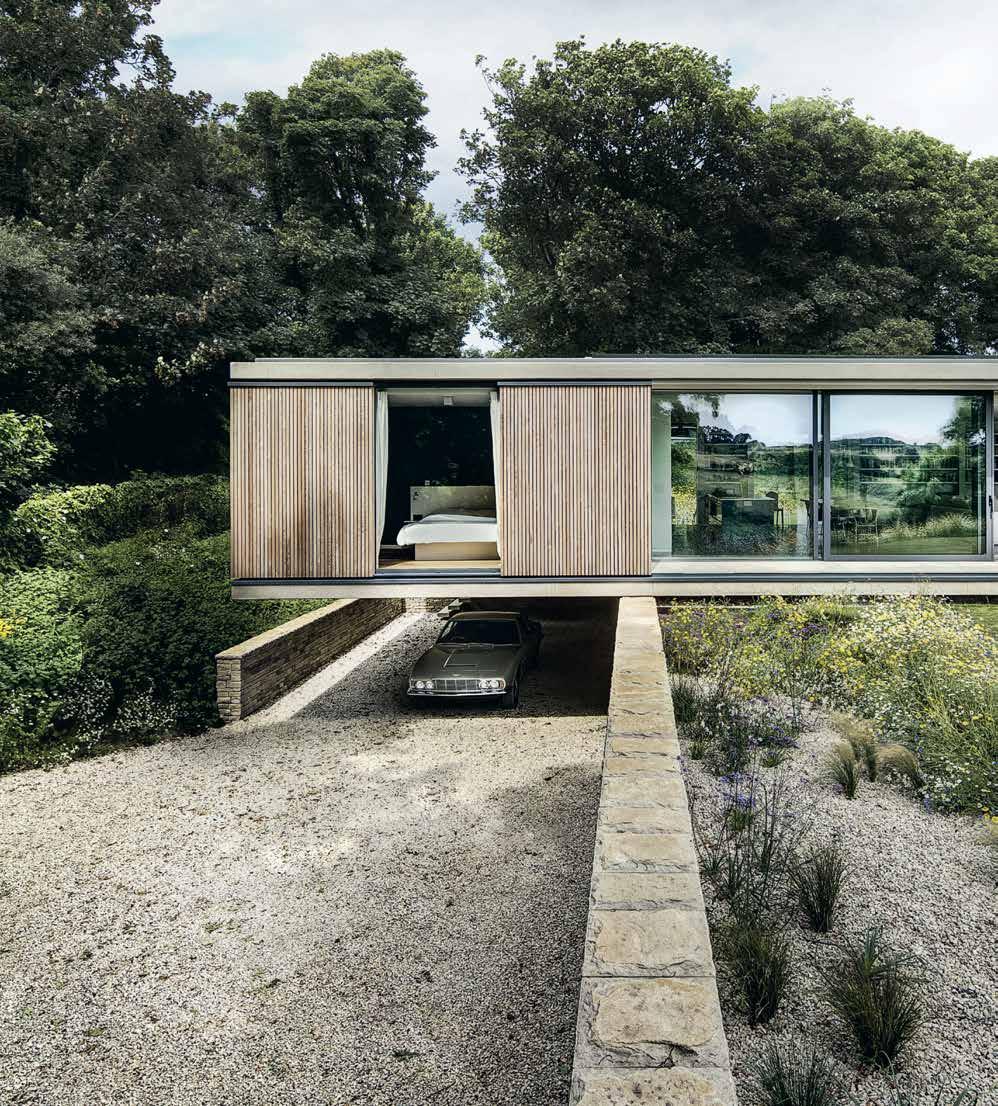
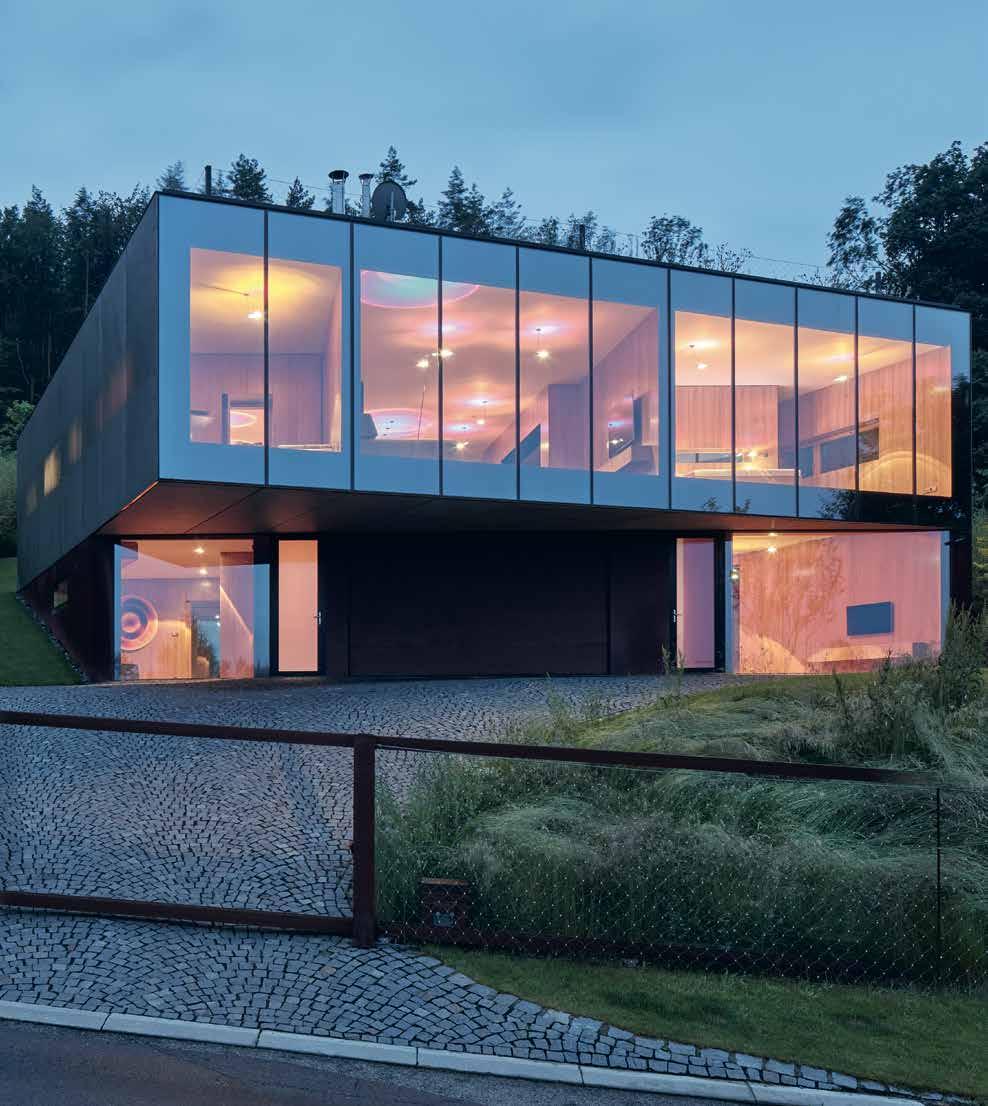
Engaging with architecture is especially rewarding where it is the culmination of evidently intense planning. A design like this needs passion, obsessive attention to detail, and time. Believe it or not, developing and building the Lazy House took 14 years. Its name apparently refers not to the architects’ work or to some laid-back way of using the house, as you might think. In fact, pronounced in the Czech way, it actually designates the neighborhood. The house is located on the southern perimeter of Zlín, a Moravian industrial city known among insiders for its uniquely modernist urban architecture, thanks to the Bata shoe company. A standard to which the owners clearly responded; the complexity and versatility of this house says it all. Sited on a green slope above a neighborhood of typical flat-roofed houses, it has great views as well as a connection to the 1,200-square-meter (12,900 square feet) garden, which it respectfully mirrors in its green roof. And it meets the Passive House Standard.
At the same time, this standalone architectural work is a masterpiece of extreme orthogonality and formal distance: a flat cube with sharply cut edges, slightly aligned to the northeast on
the street front. Apart from the small box on the roof that holds a studio, all the functions of the 400-square-meter (4,300 square feet) interior are spread over two levels. A clever trick in the floor plan creates formal tension by cutting diagonally into the lower level on the access side, giving the living floor a skewed, cantilevered appearance. This creates an empty space that matches the south loggia on the upper floor and forms a canopy for the two entrances—one on the right, leading to a self-contained apartment, and one on the left, giving access to stairs up to a leisure and guest area and adjacent sauna.
The room layout of the upper floor follows the same angles used in the floor plan. It contains the living area, dining area with kitchen unit, and loggia, from which the garden is accessed via a step in the central axis; bedrooms and bathrooms are tucked into the triangles flanking the space. The position of the garage, with its shimmering silver interior, follows naturally from the direction of access. Its froggreen floor offers a deliberate contrast to the cobblestones outside, seeming to confirm to arriving cars that they are now in the architecture’s own unique zone.
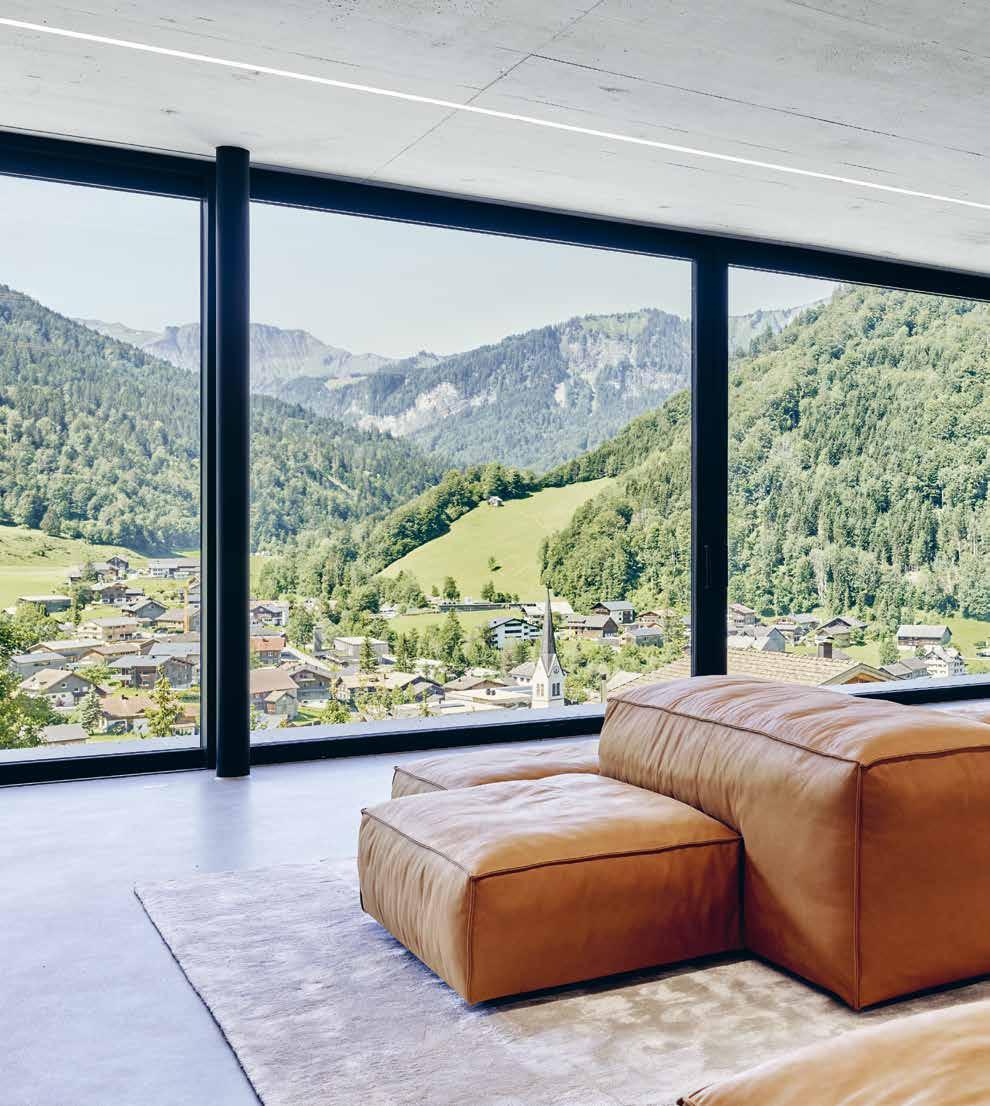
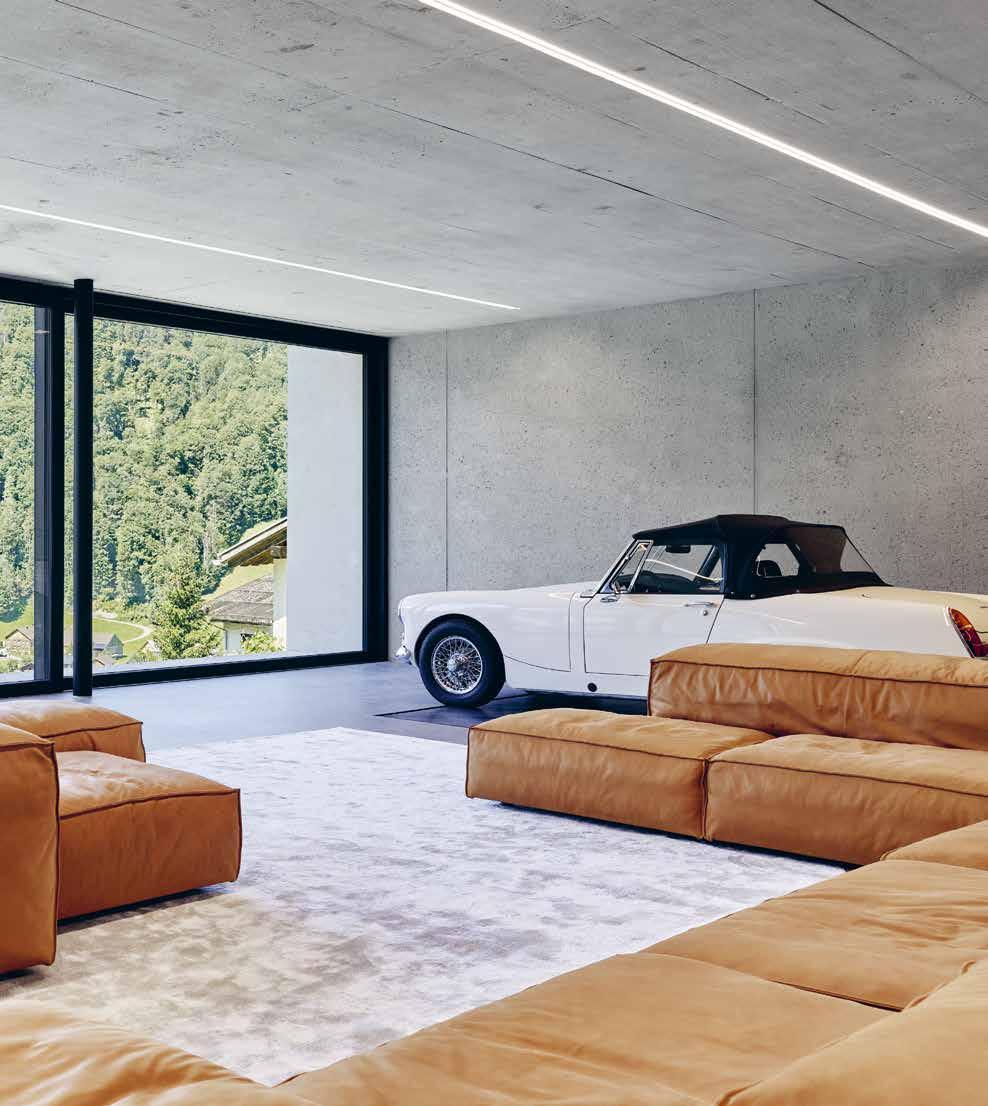
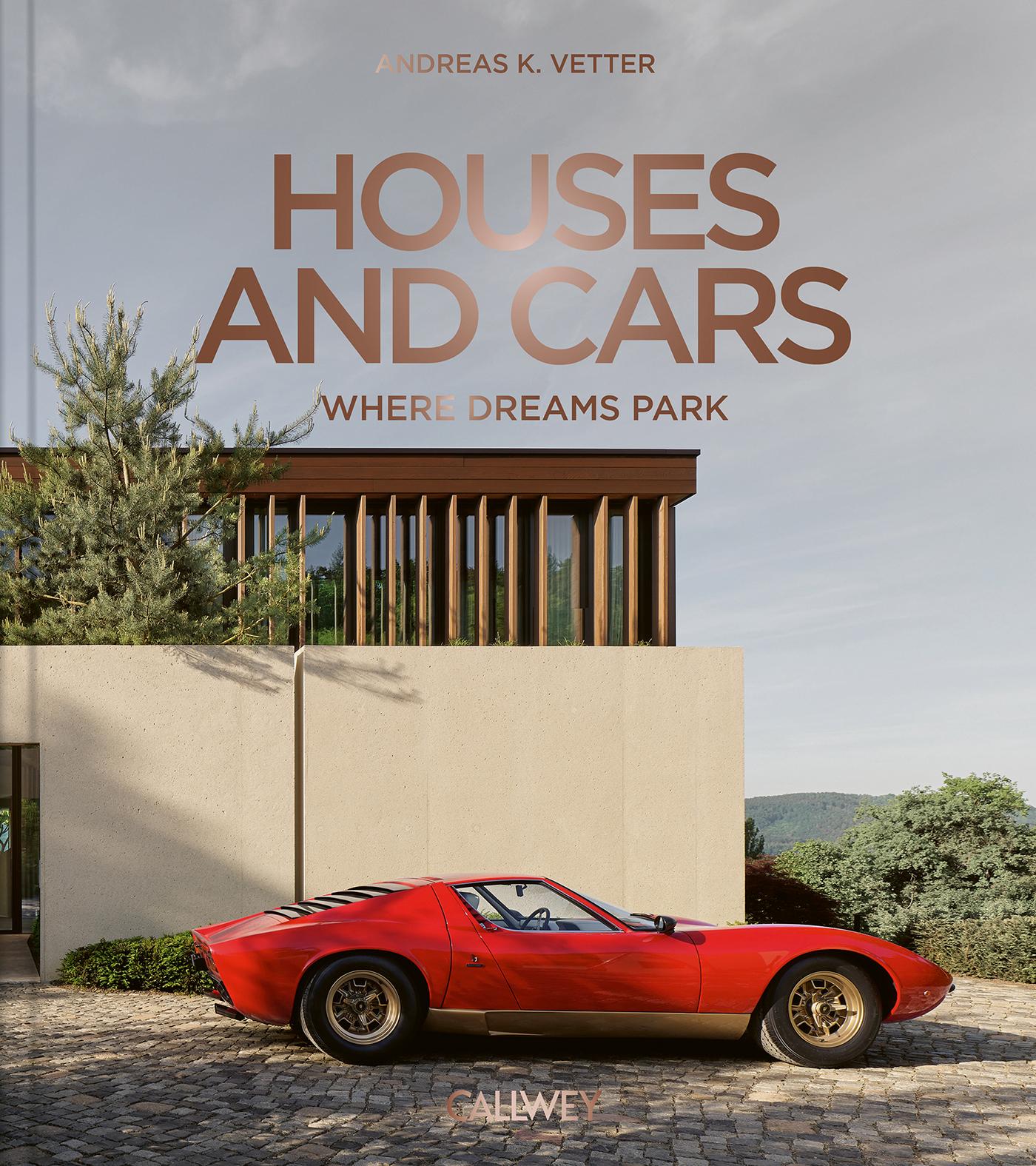
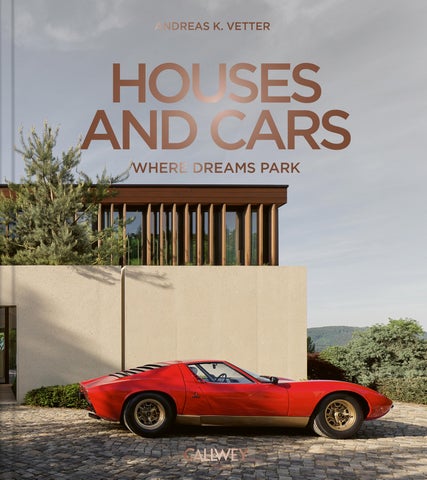
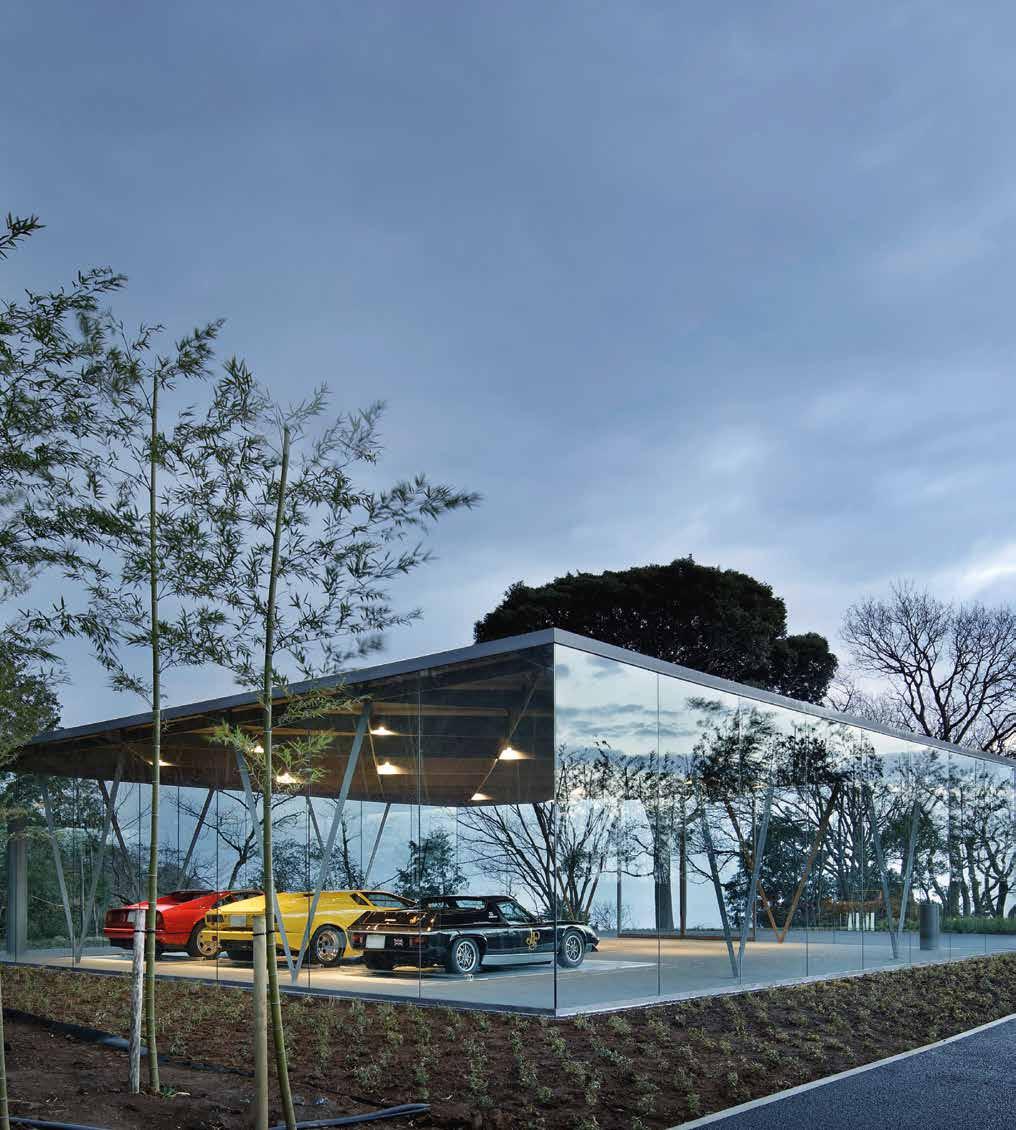
Houses and Cars is an absolute must for car lovers and fans of spectacular architecture. 44 innovative examples show ways of presenting a four-wheeled buddy—or even an entire collection—and providing it the attention it deserves. This book is about parking, but so much more. It’s about creating an architecturally outstanding space for a car, where it has its own special place as an integral part of life.
All projects are presented with stunning photos and clear plans. They are complemented by interviews with car enthusiasts and fascinating facts.
• 44 spectacular ideas for creative garages
• New technologies and innovative solutions
• Absorbing interviews with car enthusiasts
• The ultimate collection of the best international examples