Amberley Museum
A wild wander through the working past
For over a century, from the 1840s to 1960s, this was a working chalk quarry extending over 36 acres in the heart of the South Downs. Transformed into one of Britain’s finest outdoor museums in the late 1970s, Amberley Museum offers an inspiring exploration of historic industries, transport and traditional crafts in a natural sylvan setting.
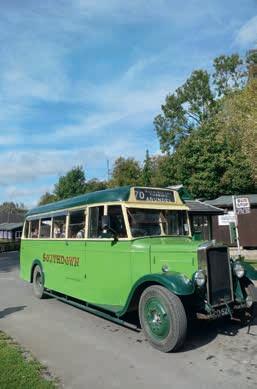
Alongside vintage industrial infrastructure (old kilns, giant engines), historic buildings have been repurposed to highlight different areas of working heritage. A delightful narrow gauge miniature railway and a 100-year-old bus provide memorable transport around the site.
The 40-plus exhibition areas are impressively diverse. Discover how birch brooms have been made in Sussex since Saxon times, then check out a 1930s cobbler’s shop relocated from its former location in Bognor Regis. Fans of vintage technology can reminisce over fabulous old phones, radios and TVs, whilst learning how communication evolved from the first Morse code transmission to modern computer chips. Even better, old kit is put to use through activities such as the Museum’s own radio station, or the 1930s rural telephone exchange that still handles its internal calls.
There’s also a thought-provoking Hidden Innovators exhibition, which spotlights women and people from black and minority ethnic backgrounds, who were denied due recognition for their pioneering technology achievements. They include black electrical engineer Rufus Paul Turner, who developed the first practical transistor radio in 1949, and Erna Schneider Hoover, who in the 1950s became the first woman to receive a computer software patent. James Bond film fans, meanwhile, should head for the old quarry tunnel near the Museum’s ‘Brockham Station’, where Roger Moore and Grace Jones foiled the bad guys when it served as Mainstrike Mine in the 1980s blockbuster A View To A Kill.
Address New Barn Road, Amberley, BN18 9LT, amberleymuseum.co.uk | Getting there The Museum is directly opposite Amberley railway station; by car, 12 miles north-east of Chichester at Houghton Bridge, via the B 2139 | Hours Feb – Oct Wed – Sun 10am – 4.30pm, plus Bank Holidays; Nov – Jan Wed, Sat & Sun 10am – 4pm; some Christmas / New Year closures | Tip The outdoor terrace at the Riverside Tea Rooms is a lovely spot for drinks and light meals and long views beside the banks of the River Arun just 100 metres from the museum. For a pub lunch, meanwhile, the Bridge Inn, just across the road, offers a Mediterranean-influenced menu.
Arundel Lido
The best swimming pool view in England?
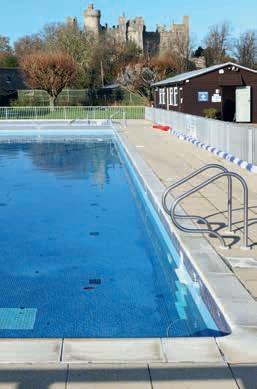
Views from the clear blue waters of the lovely open-air pool at Arundel Lido must make it difficult for swimmers to concentrate on their stroke, given an eyeline filled with one of England’s most beautiful panoramas – the ravishing medieval town of Arundel, spread across a meadow-wrapped hill topped by England’s biggest castle.
Despite its Sussex location, Arundel Castle is the dazzling home of the Duke of Norfolk. It was a donation of land from the then Duke in 1960 – to mark the 21st birthday of his eldest daughter, Lady Anne – that provided the site on which the first Arundel Lido was built. Today’s Lido – consisting of a 25-metre heated main pool and a 5-metre splash pool – is the only one remaining in West Sussex. The original 1960s pool was given a bold makeover in 2000 by the award-winning Adam Richards Architects, who took inspiration for their design from the discovery of a nearby Roman villa. Drawing on the history of public baths from antiquity, the changing room features brick walls that ripple as if seen through water, plus a two-storey wing hosting ‘civic’ spaces oriented to point like an arrow from town into the beautiful surrounding countryside.
The Lido is run by a community trust that arranges a busy programme of activities. These include a Community Cuppa, designed to help people who feel isolated, or those suffering from dementia, to socialise with others over a hot drink and snacks. Although the Lido’s main open season is geared to the warmer months of the year, from May to September, the pool also stages traditional Festive Swims on Christmas Eve, Christmas Day, Boxing Day, New Year’s Eve and New Year’s Day – for those hardy swimmers wanting to mix warm water with freezing air! The ongoing Project LEAP promises new developments, including a gym and multi-purpose community hall and café, aiming to make Arundel Lido a yearround pleasure.
Address Queen Street, Arundel, BN18 9JG, www.arundel-lido.com | Getting there 15-minute walk from Arundel railway station | Hours Mon 6.30am – 7.45pm, Tue & Thu 7.30am – 9pm, Wed 6.30am – 8pm, Fri 6.30am – 6.30pm, Sat 8am – 6pm, Sun 9am – 6pm | Tip Arundel offers a more wild watery place for fun at Swanbourne Lake, around a 30-minute stroll along nearby Mill Lane. Hire a rowing boat or just watch the waterfowl from the lakeside Swanbourne Lodge tearoom (www.swanbournelodgetearoom.co.uk).
Tea and Biscuit Club
A refreshing and exotic taste of the world
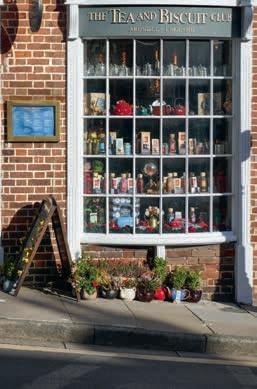
This shrine to tea was founded by Erik and Faye Childerhouse, following careers leading international development projects across the globe. Their shop takes inspiration from that past life, drawing on travels to over 90 countries during the last 20 years to inspire their expanding array of blends, encompassing white, black and green teas, fruit blends and herbal infusions.
Around 60 blends are currently available, arrayed in giant jars to tempt customers looking for a scoop of leafy colour to brighten up the traditional British cuppa. As well as their own classic English Breakfast, there is a host of innovative options to try. Turmeric Vanilla Chia or Tropical Oolong, perhaps? Or how about naturally fermented Orange Pu-Erh? Many of the blends come with a story attached, which Erik and Faye are happy to share from behind the counter. The teas have regularly received the UK’s prestigious Great Taste Awards too. Past winners include Rooibos Rhubarb Pie – South African rooibos underlaid with rhubarb, cherries, cranberries and apples –and Raspberry Parfair, a caffeine-free infusion bursting with bright flavours, including elderberry, lavender and hibiscus.
Inspired by their international development backgrounds, Erik and Faye also donate some of their proceeds each year to the charity Shine (www.shinecharity.org), which tackles childhood illiteracy in southern Africa, as well as providing vital school meals to malnourished pupils. The shop also sells a range of teapots from old-school shapes in zingy colours (purple pot, anyone?) to designer square glass pots, and brightly patterned heart-shaped pots!
Erik and Faye also run private tea tastings for 2 – 10 people (£25 per person) between April and October in the shop’s walled garden beside Arundel Castle, offering the chance to sample up to biscuits. Green & Coal cafe also serves the shop’s teas in a retro setting just metres away.
Address 26 High Street, Arundel, BN18 9AB, www.theteaandbiscuitclub.com | Getting there 20-minute walk from Arundel railway station | Hours Daily 9am – 5.30pm | Tip
Combine a tea sampling with something stronger, with a sparkling wine tasting across the road at Digby Fine English. One-hour tastings also offer a perfect chance to try the globally renowned local Sussex sparkling wine (www.digby-fine-english.com).
Pink’s Parlour
Ice cream beacon built on happy chance
If ice cream’s your thing, who better to guide you than the President of the Ice Cream Alliance? Katy Alston’s adventures in the cold stuff began by chance one chilly Christmas morning in 2001. That was when her husband Kevin surprised her with a very unexpected gift –a clapped out old ice cream van that was more scrap-heap challenge than vintage beauty! But, working alongside her daughter Georgia, Katy – now going under the name ‘Mrs Whippy’ – decided to put ice cream at the centre of her working life.
Beginning in 2013 with a single van, the business that became Pinks Vintage has gone from strength to strength, going from one decrepit old vehicle to two state-of-the-art machines nicknamed Terence and Patsy – plus a traditional British ‘Pashley’ tricycle called Rosey! A slew of awards followed, including Mobiler of the Year for Kate / Mrs Whippy at the 2015 Ice Cream Alliance Awards, while Georgia (aka ‘Little Miss Whippy’) scooped the Guido Morelli Rising Star Award at the National Ice Cream Competition in 2019.
Despite the success of their mobile trade, there was always a desire for a more permanent base – leading to the opening of Pink’s Parlour just back from the Bognor Regis seafront in 2019. By way of pre-opening research, Katy and Georgia even went to Italy – not only to pick up ice cream-making insights, but also to get their serving counter handmade in quality traditional style.
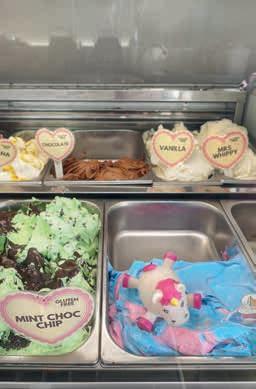
Today, a regular stream of customers choose from a dazzling and colourful variety of flavours, from simple but beautifully made classics to more unusual offerings such as Guinness ice-cream or Pina Colada sorbet. The ‘Unicorn’ ice cream, meanwhile, seeks to combine candy floss with ‘a taste of soft clouds’! Even better, you can watch ‘Mrs Whippy’ or one of her expert team create gelato in front of your eyes at the shop’s very own Ice Cream Lab.
Address 18 Waterloo Square, Bognor Regis, PO21 1SU, www.pinksparlour.co.uk | Getting there 15-minute walk from Bognor Regis railway station | Hours Daily 11am – 5pm | Tip To enjoy another quintessential British seaside experience, challenge yourself to an 18-hole round at Bognor Regis Crazy Golf, just 100 metres south of Pink’s Parlour (www.facebook.com/bognorregisminigolf).
Guitars To Go
No fret in rock guitar heaven
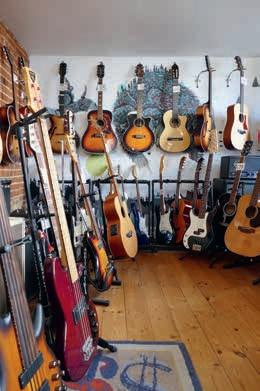
Rock guitarists may have a reputation for flamboyance, but it would be all too easy to miss this distinctive shop, run by musician Trevor Nobes, tucked down a lane between the bustle of North Street and the leafy attractions of Priory Park. The roots of Guitars To Go stretch back a decade, when Trevor was just a keen collector who had amassed ‘hundreds’ of instruments dating back to the 1960s – until he ran out of money!
At the time, the space had a very different existence as a coffee and cake shop run by one of Trevor’s friends and his wife – but when the couple split up, the friend called Trevor and suggested that, as he had ‘no money and loads of guitars’, he should give the shop space a new use.
As cake shop stuff was moved out, Trevor moved his guitar collection in to provide initial stock – though like most collectors, he admits there were some instruments he didn’t want to sell. Thankfully, word soon spread, and the ensuing years have seen a steady stream of customers bringing in guitars to sell or part-exchange, as well as chatting about a shared passion. ‘Almost everyone’s got more guitars than they know what to do with,’ Trevor reveals wryly.
There are always rarities in the shop’s eye-catchingly diverse stock, ranging from a rare Les Paul that was produced in a limited edition run of a hundred or so, to quirky creations such as a white plastic Maccafferi guitar made in the early 1950s – to which Trevor has attached a label stating ‘This is not a toy’!
Guitars To Go isn’t only a meeting place for guitar enthusiasts, but a draw for youngsters dazzled by the old-school cool of the instruments. Some of the younger visitors tell Trevor his shop is like a wonderful musical museum. Yet, in the same way that sports cars deserve to be driven, guitars aren’t just objects to look at, so Trevor regularly combines shop work with guest slots for local bands.
Address 3 Guildhall Street, Chichester, PO19 1NJ | Getting there 20-minute walk from Chichester railway station | Hours Mon – Sat 10.30am – 5.30pm | Tip Check out the listings for the nearby Chichester Inn, an 18th-century pub hosting regular live music nights (www.chichesterinn.co.uk).
Noir Mural
A poppy splash of Berlin and The Beatles
Pity the car drivers unable to fully take in this eye-catching mural as they make their way around the busy North Gate Roundabout. Covering a giant section of Metro House, the towering work by renowned street artist Thierry Noir presents four boldly coloured cartoonish faces that pay homage to characters in The Beatles’ 1968 animated film Yellow Submarine.
Though the mural brings a delightful dash of retro pop psychedelia to Chichester, Noir is most closely associated with Berlin. Born in the French city of Lyon in 1958, he moved to Germany in 1982, and acquired legendary status for being among the first – if not the first – artist to paint the western side of the Berlin Wall. This was both an act of free expression and a form of protest against the restrictive Communist dictatorship on the East German side. ‘I did nothing but react to its sadness,’ Noir once said.
Painting on the Wall was strictly forbidden at the time – it had been built three metres beyond the official border so that East German guards were able to arrest any person standing too near it. Noir responded by learning to paint fast, using a technique he described as ‘two ideas, three colours’. Noir’s deceptively simple characters and visual language gained iconic status, and his work was immortalised in both Wim Wenders’ acclaimed 1987 film Wings of Desire and on the cover of U2’s album Achtung Baby.
His presence here is down to the Chichester Street Art festival in 2013, which saw work by a host of international artists appear around the town, after being organised in secret for a year beforehand by Street Art London and the National Open Art Competition. ‘The art will be up as long as people don’t want it taken down, as long as there is no outcry,’ said National Open Art Competition CEO Lawson Baker to the Chichester Observer in 2014. And despite some decriers, here it remains.

Address Metro House, Northgate, Chichester, PO19 1BE, www.instagram.com/ thierrynoir | Getting there 25-minute walk from Chichester railway station | Hours Accessible 24 hours | Tip There’s also an incredible – and very different – 2013 mural by Spanish artist Liqen around the corner of Metro House, on its west side.
The Sweet Jar
Chewing over myriad delicious memories
Run by husband and wife team Jan and Matt Ellison, The Sweet Jar taps the power of taste memory in the same way a nibble of madeleine cakes transported the protagonist in Marcel Proust’s legendary novel À La Recherche Du Temps Perdu back in time in an instant. ‘The idea was to sell lovely sweets that take people back to their childhood,’ says Jan.
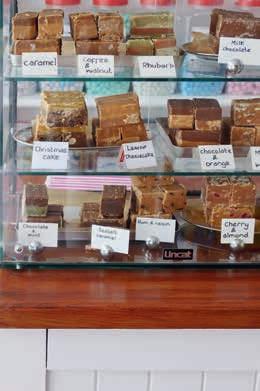
The couple run two shops – one in the heart of Chichester, another in the nearby seaside resort of Bognor Regis – selling over 250 varieties of traditional sweets, fudges and rock, and when warmer weather comes, ice cream too! Customers frequently share memories of how the sweets take them back to past times with grandparents, or even World War II, when such treats were in very short supply.
The variety of flavours is dizzying. In boiled sweets, you could go for Clove Balls, Sour Sherbet Bombs or Dandelion and Burdock, while innovative flavourings in the chewy category include Watermelon Bonbons or Herbal Candy – like the Kendal mint cake beloved of mountaineers for its instant energy kick, but with extra herby buzz! There are bestsellers, though. ‘We sell a huge number of aniseed balls,’ says Jan. ‘And people of all ages like rhubarb and custard sweets. I think it’s something that’s handed down to children –along with sweet peanuts, cola cubes and sherbet lemons.’
Jar labels also highlight some venerable traditional sweet makers, such as Joseph Dobson and Co – makers of things like Mega Lollies in Yorkshire since 1850 – and Welsh producer Brays, whose Newport factory has been in business since 1867. Those wanting a taste of Europe, meanwhile, can delve into continental confectionery including Dutch salt diamonds or salty herrings, Swedish cherry and chilli liquorice, Finnish cable bites, or Danish caramel and liquorice twists. And for the diet-conscious there’s a pleasing range of sugar-free sweets too.
Address 18 Southgate, Chichester, PO19 1ES and 11 The Arcade, Bognor Regis, PO21 1LH, www.the-sweet-jar.co.uk | Getting there Five-minute walk from Chichester railway station | Hours Mon – Sat 10am – 5.30pm | Tip If there’s a traditional sweet you recall from your past, Jan is happy to turn confectionery detective to track it down – as she did with a previously requested confectionery called Toffee Crunch. And you don’t have to live locally, as the shop does online orders.
Turner’s Pies
A Sussex beacon for a British culinary classic
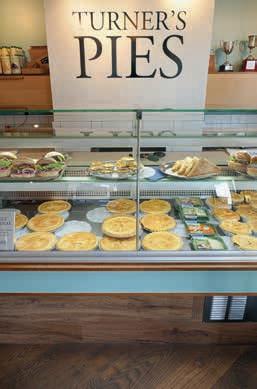
While other countries have pies, nowhere else has it become such an iconic food as in Britain. And nowhere else in the UK has better claim to be at the pinnacle of the British pie world than this Sussex company, whose shops now dot the region.
At the British Pie Awards – the ‘Oscars’ of British pie-making, held each year at an ancient church in the pork pie capital of Melton Mowbray – no other maker has won more awards. Turner’s has taken the ‘Pie of Pies’ Supreme Champion accolade twice in the past decade, most recently the 2020 award for its Steak & Stilton Pie. The same pie also earned a place in the Guild of Fine Foods’ Top 50 Foods in Britain. The company’s Steak and Kidney pie, meanwhile, has twice been champion at the Pie Awards, and in 2016 Turner’s pies beat hundreds of rivals in four separate categories.
It all began nearly a century ago in 1933, when Eva and Reginald Turner made a pie for a hotel in the Sussex resort of Bognor Regis. By the 1960s, Mrs Turner’s steak and kidney pie had become a must-eat local treat. It was their youngest son, Pip, who set expansion going in 1985 by selling to butchers and delicatessens, and it is his three children who oversee Turner’s today. They continue to invent new pies, from the 2023 bestseller Steak, Mushroom and Truffle, to vegetarian hits such as Butternut, Chilli and Cheese. Also available are seasonal pies such as the Christmas-time Turkey, Gammon and Cranberry.
Turner’s original Bognor Regis pie shop opened in 1990, with the simple motto: ‘Only the finest ingredients’. And although Turner’s Pies are now stocked in elite outlets such as the famous food hall in London’s Harrods, the company’s heart and roots remain local. It was no surprise when, in 2012, the company received the Britten Trophy, awarded annually by Bognor Regis to those who have made a key contribution to the town and its community.
Address 89 Hawthorn Road, Bognor Regis, PO21 2BL; 13 East Gate Square, Chichester PO19 1JL, www.turnerspies.co.uk | Getting there Bognor Regis branch is 15 minutes walk from Bognor Regis railway station; train to Chichester railway station, then a 20-minute walk | Hours Mon – Sat 8am – 4.30pm | Tip Beer is the perfect accompaniment to a pie, so try a range of intriguing brews at Bognor craft ale beacon The Dog & Duck (www.facebook.com/dogduckbognor).
Petworth Antiques
One of Britain’s vintage design meccas
Whilst the grand 17th-century Petworth House and its vast country estate dominate the eponymous Sussex village in many minds, Petworth also stands out as the only town outside London to boast over 30 arts and antiques dealers within a one mile radius. There are, in fact, around 70 dealers selling wonderfully contrasting wares around the ancient streets of its compact centre.
Across the road from the Church of St Mary the Virgin, for example, Phoenix Antiques has a cornucopia of temptations including vintage cameras, old apothecary bottles and Deco pottery. That miscellany contrasts with the offerings next door at John Bird, whose focus on older times mingles antique garden paraphernalia with 18th-century medicine drawers. Petworth’s antique spots handily cluster a stone’s throw from each other on adjacent short streets, throwing up more enticing contrasts, such as silverware-and-clocks specialist Chequers contrasting with Mid Century Modern beacon BEAR on New Street.
On the High Street, Dickson Rendall offers what Lesley Rendall describes as ‘top-end 20th-century European design’, while across the road there are fabulous old posters and other printed paraphernalia at J Giles. Next door, vintage fashion accessories at Bradley’s Past & Present offer something retro and stylish to wear at the Goodwood Revival vintage festival held every August.
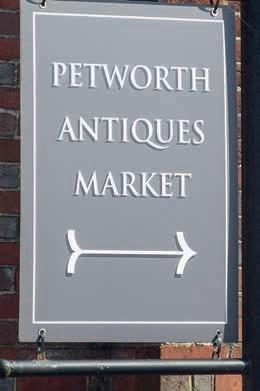
Around 40 dealers come together at Petworth Antiques Market, where you might find 19th-century skittles alongside an Art Deco cocktail kit. ‘We try to be all-inclusive with stock ranging across all eras, back to the 16th century,’ says owner Kathryn Mandry. They also have a fine selection of antique copper cookware that echoes the vast array on show in the Petworth House kitchen. ‘But you can buy things here that you can’t touch there!’ she adds. Or wear, in the case of the striking Deco-era ring bought here on a recent visit.
Address Most shops cluster along High Street, Lombard Street and East Street, www.discoverpetworth.uk | Getting there By car, Petworth sits at the crossroads of the A 283 and A 272; train to Pulborough railway station, then a 5-mile taxi ride; bus 99 from Chichester | Hours Vary from shop to shop | Tip Just over a mile from Petworth, Coultershaw Beam Pump (www.coultershaw.co.uk) is a working waterwheel that still powers an 18th-century beam pump in an enchanting riverside setting. An exhibition explains the history of Coultershaw, and its early use of water power.
Railway Carriage Homes
Vintage trains at a final seaside stop
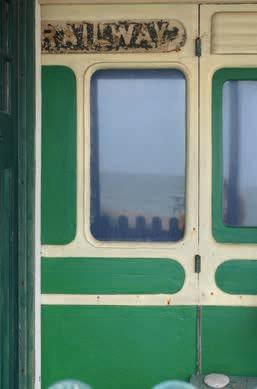
Stretching back from the eastern end of Selsey’s East Beach promenade is an enclave of remarkable homes – former railway carriages ingeniously recycled first as quirky holiday homes, and then permanent dwellings, clustered in an area known as the Park Estate. To see two striking examples, wander down the road running east from the Eric Coates plaque until you come to a pair of strange-looking neighbours named ‘Green Bungalow’ and ‘Santos’. They clearly show their origins – in this case, carriages from the 1920s. So how did they come to be here?
The 1890s saw the area split into 50 plots for holiday accommodation. The railway homes, though, began appearing in the 1920s when an advertisement in the Chichester Observer offered ‘Rail Coaches Suitable for Bungalows’, with a starting price of £25 for a 5-compartment, 3rd Class carriage. Buyers wanting something more upmarket, however, could splash out on classier options, including 1890s first class compartments reconditioned by Pullman – manufacturers of luxury train carriages used across Europe on trains such as the Orient Express.
The actual sourcing of the carriages has hints of shady dealing.
The Park Estate land was purchased in 1920 by an East London tailor called Jacob Berg (known to friends as Tommy), who was introduced to Selsey by a famous playwright friend, R. C. Sherriff, author of Journey’s End. Tommy, in turn, had a friend at London’s Waterloo Station. They were a likely source of the carriages – most from the London, Brighton and South East Railway (LBSER) – though details of the deal remain a mystery.
Around 30 carriage homes remain around the estate, though most now hide their origins behind clapboard encasing, added against the coastal weather. As a footnote, the whole estate was taken over during World War II to house Canadian and US soldiers just before they set off on D-Day.
Address Park Copse, Selsey, PO20 9BT | Getting there Bus 51 from Chichester station to Selsey, walk from the Seal Road stop to the Park Estate in 30 minutes, or hop on the Selsey Circular community bus to East Beach Road | Hours Exteriors accessible 24 hours | Tip If you’d like to stay in a railway carriage home on the Selsey seafront, you can rent Seabanks –two lovingly restored, 19th-century Stroudley railway carriages turned into a holiday let for up to eight people (www.seabankselsey.com/index.html).


Alexandra Loske is a British-German art historian and museum curator with a particular interest in late eighteenth and early nineteenth century European art and architecture. She has been living in Sussex since 1999 and is the Curator of the Royal Pavilion and Historic Properties at Brighton & Hove Museums. She has lectured and published widely on colour history and other topics, appeared as an art historian on many TV and radio programmes and writes regularly for local and national magazines.
The information in this book was accurate at the time of publication, but it can change at any time. Please confirm the details for the places you’re planning to visit before you head out on your adventures. Norman Miller is an award-winning journalist for leading outlets including the BBC, The Times and The Guardian, writing about an eclectic range of subjects such as travel, food and drink, history, arts and culture, and the environment. He is also a published and performed creative writer of theatre, poetry and short stories. He’s contributed to several nonfiction titles, including the BBC series book Plants: From Roots to Riches and the photography showcase London: The Panoramas.