


As we say goodbye to 2025, and head down the road into 2026 the transport and logistics sector is in a state of transition.
And while our industry is changing rapidly, with new technology and the move towards more sustainable operations, it is still grounded by the same fundamentals that have always driven it forward - reliability, resilience and adaptability.

With emissions targets tightening and customers demanding greener supply chains, operators will increasingly focus on practical decarbonisation - from the wider adoption of electric and alternativefuel vehicles to smarter route planning and load optimisation.
Technology has a huge part to play in all of this, and no doubt AI will have a significant role in the transport companies of the future.
None of us know exactly what 2026 will bring but we are confident whatever challenges lie in the year ahead the professionals who work in this industry will meet them head-on and adapt to still get the goods delivered on time.
What we can predict is that Export & Freight will be here to keep you as up to date as possible with what’s happening across the industry –both through this magazine and via our weekly newsletter.
In this issue we have the latest industry news, columns from our industry experts as well as features on Tyres and on Servicing and Winter Maintenance. We also have a special focus feature on Terberg MPM, as this Hillsborough based company looks confidently towards the future.
We hope you enjoy reading this issue, and if you have any news or stories for our next issue please get in touch.
Austin Lynch Editor
Email: austin@4squaremedia.net
EXPORT & FREIGHT SUBSCRIPTIONS, 4 SM (NI) Ltd
Email: accounts@4squaremedia.net
Web: www.exportandfreight.com
RHA appoints Brian Beattie as new Manager of Northern Ireland Affairs Page 4
DAF XD and XF Electric elected ‘International Truck of the Year 2026’ Page 6
In a blink of an eye: Scania Autonomous Trucks help Red Bull Athlete Matt Jones complete a World First Page 12
Transaid challenges riders to take on Isle of Wight adventure Page 48
MAN Financial Services UK Marks One Year with TRATON Financial Services – A Year of Growth, Partnership and Progress Page 58
Josh Fenton, Policy Manager Trade, Customs and Borders, Logistics UK Page 20
Martin Reid, RHA Policy Director for Scotland, Wales and NI Page 22 Court Reports Page 50
John McMahon Page 60-61
Servicing and Winter Maintenance Page 23-27
Terberg MPM - Building for the Future Page 34-46 Focus on Winter Tyres Page 51-56
Ford Ranger PHEV - Built Tough Page 64-65
Naming ceremony of Stena Futura takes place in Belfast Page 66-67

Email: helen@4squaremedia.net
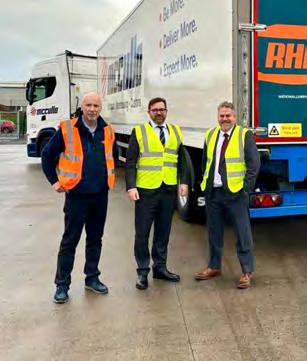
The RHA (Road Haulage Association) is pleased to announce the appointment of Brian Beattie as its new Manager of Northern Ireland Affairs, starting in March 2026.
In his new role, Brian will lead the association’s engagement across Northern Irelandstrengthening relationships with members, decision-makers,
industry partners and local stakeholders. He’ll also be a key member of the wider RHA team. Brian is a highly respected leader in the Northern Ireland transport and logistics community, with more than 25 years’ senior operational experience at McCulla (Ireland) Ltd.
During his time as Director of Operations, Brian played a central role in the growth and management of the company.
Commenting on the appointment, RHA MD Richard Smith said: “I’m delighted to welcome Brian to the team. Brian brings invaluable
experience across our sector, and he’s acutely aware of what’s required of businesses operating in, and trading with Northern Ireland. His knowledge of the local business community, and standing within our industry will further enhance the support we provide to members in the region.”
Brian Beattie said: “I’m pleased to be joining the RHA team in 2026, a crucial time for our key sector in Northern Ireland. “There are some big challenges and opportunities ahead. I look
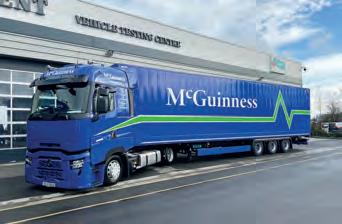
Two leading commercial equipment suppliers have joined forces to provide one of Europe’s foremost tour logistics specialists with a consignment of mega event trailers.
McGuinness, based in Dublin, is one of Ireland’s longest-established and most trusted tour logistics specialists. The company travels across Europe with major artists, bands and production crews, transporting the full scope of touring equipment - lighting, staging, audio systems, backline, and technical infrastructure - safely and precisely from venue to venue.
Joining the fast-expanding McGuinness fleet and supplied by Ireland’s premier Renault truck dealer, Setanta Vehicle Sales, are 10 Krone Dry Liner steel bodies trailers and 10 brand-new Renault 4x2 T-High trucks.
“Our reputation is built on reliability,” says Mick Dillon, Fleet Manager for McGuinness.
“Touring is unforgiving - every load-in and load-out is time-critical, and our trucks often move overnight to ensure the next show is ready to build when the crew arrives.
We handle everything from delicate audio gear to high-value staging systems, so the equipment we run has to be robust, secure and absolutely dependable. For us, the right trailer specification isn’t a luxury - it’s essential
to meet the demanding schedules and loading requirements of modern touring.”
In this regard, the high cube mega trailers are steel bodied with steel rear doors and come with a bespoke ramp carrier, insulated roof and, for flexible loading, Krone’s multipoint keyhole system. All steel parts are shot-blasted prior to priming and then finished with Krone’s KTL powder coating paint process. A 10-year guarantee against corrosion perforation is provided as standard.
Setanta Vehicle Sales, based in Dublin,
forward to playing my part, working with colleagues and collaborating with trusted partners to deliver for members and our industry.”
supplies a wide range of trucks and trailers for a variety of sector requirements and says the company, has a strong commercial relationship with Krone Trailer UK.
“There is always a strong demand for Krone event trailers,” says John McCann, Head of Trailer Sales for Setanta, “driven largely by their reputation for providing high quality equipment, tailored to the requirements of the job. Moreover, the Krone team understand what is required, and for this particular customer, they were able to respond quickly to a tight delivery schedule.”
“McGuinness is part of the live entertainment world,” adds Mick Dillon, “and in touring, there is simply no margin for error. Whether it’s an arena, stadium or festival site, our job is to ensure that every piece of production equipment arrives exactly when it’s needed and in perfect condition.
“Once the show ends, we’re straight into a highly coordinated breakdown and overnight move to the next city. Our drivers and crews are among the best in the industry, but they can only perform at that level with equipment that’s equally reliable. Keeping a major tour moving night after night demands nothing less.”
With decades of experience on the road, says the company, McGuinness has built a reputation for delivering complex multi-truck tours with absolute reliability, seamless coordination and industry-leading attention to detail.
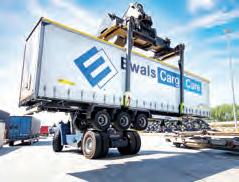
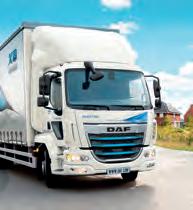
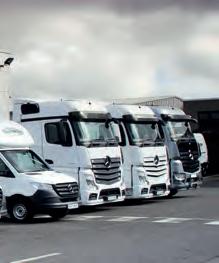
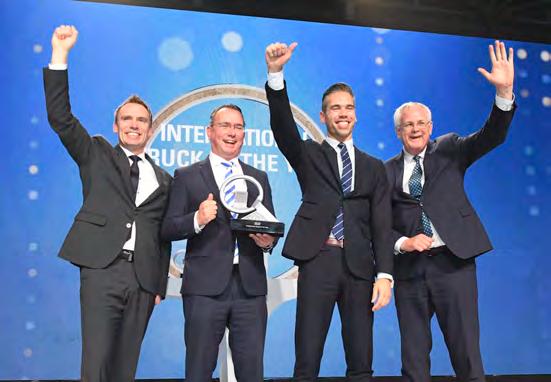
DAF’s New Generation XD and XF Electric trucks have been awarded ‘International Truck of the Year 2026’.
Harald Seidel, president of DAF Trucks, received the most prestigious award in the truck industry during an award ceremony at the Solutrans exhibition in Lyon, France. It is the third win for DAF in five years, after the New Generation XF/XG/XG+ and XD became ‘International Truck of the Year’ in 2022 and 2023. In line with the rules of the International Truck of the Year (IToY) organisation, the title is awarded annually to the vehicle introduced in the previous 12 months that has made the greatest contribution to road transport efficiency. The assessment covers a range of criteria, including technological innovation, comfort, safety, drivability, energy efficiency, environmental performance and Total Cost of Ownership (TCO). Praised for exceptional efficiency
The jury of 23 leading commercial vehicle journalists from across Europe praised DAF’s XD and XF Electric truck series for their
exceptional energy efficiency, refined yet powerful driveline, and advanced technical architecture. Furthermore, the award-winning vehicles were recognised for their long driving ranges, advantageous LFP battery technology, and superior driver comfort.
“During extensive test drives, jury members praised the XD and XF Electric for the perfection of their drivelines and the almost imperceptible gear changes. The modular vehicle concept, offering a wide choice of battery and axle configurations provide operators an exceptional flexibility”, commented
Florian Engel, chairman of the International Truck of the Year jury.
“With the new XD and XF Electric, DAF Trucks demonstrates that the combination of a central electric motor and a traditional rear axle can be at least as energy-efficient as a driveline with an e-axle. Moreover, this DAF configuration provides perfect weight distribution, enabling virtually all use cases to be covered by a single technical platform.”
Zero emission range up to over 500 kilometres
The XD and XF Electric trucks are powered by PACCAR’s advanced
At the annual Fleet Transport Awards, the DAF XD with powerful yet economic PACCAR PX-7 engine was crowned ‘Irish Distribution Truck of the Year 2026’ in the medium duty rigid class. This marks yet another award for the New Generation DAF truck series, whose extensive lineup has claimed multiple accolades across Europe in recent months.
The prestigious Fleet Transport Awards ceremony, held at the Johnstown Estate Hotel in County Meath, just outside Dublin, welcomed over 650 guests from across the Irish transport industry. The awards jury, made up of commercial vehicle editors, transport professionals, operators and drivers, undertook detailed assessments of each nominated vehicle, evaluating performance, efficiency, safety, driver comfort and ease of operation.
‘Something special’
“After only a few seconds behind the wheel of the DAF XD the driver will realise that this truck is special”, stated the jury. “To start with: the 6.7 litre PACCAR PX-7 engine with the PowerLine eight-speed automated transmission offers refinement not found previously in this vehicle
class. The truck is a pleasure to drive and the full-width 2.5-metre cab gives the sense of a much bigger truck, even in the day cab format. The XD also offers impressive safety benefits from a new engine brake that delivers up to 300 hp.”
‘Class-leading’
“Of increasing importance in the urban distribution segment is visibility. DAF XD’s direct vision addresses this issue in a highly practical manner with the class-leading forward view. The view is further enhanced by DAF’s well-designed digital camera system, especially thanks to the DAF Corner View, which provides an excellent view of the area directly in front of the co-driver’s side of the truck. Also important is the ease of access for multi-drop drivers. Certainly, the DAF XD sets
EX-D1 and EX-D2 e-motors, delivering outputs from 170 kW (230 hp) to 350 kW (480 hp). With modular battery packs ranging from 210 to 525 kWh, the 4x2 and 6x2 tractor and rigid vehicles offer zero-emission ranges of over 500 kilometres on a single charge, and even over 1,000 kilometres per day thought optimal charging planning.
DAF’s XD and XF Electric trucks are designed for both city and regional distribution and long distance applications, combining excellent aerodynamics with a low cab position, ultra-low window belt-lines, and advanced digital camera systems for superior safety and visibility.
‘A moment of pride’
“Winning the International Truck of the Year 2026 with our XD and XF Electric models is a moment of pride for all DAF employees”, said DAF president Harald Seidel. “This recognition underlines our commitment to drive the future of zero-emission transport through innovation, quality and sustainability. We are thrilled that the jury of leading commercial vehicle journalists acknowledges the vehicles’ efficiency, safety and exceptional driver comfort. Receiving the most prestigious award in the truck industry is another recognition of the hard work of the entire DAF organisation to deliver first class products and services to our customers.”
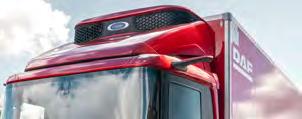
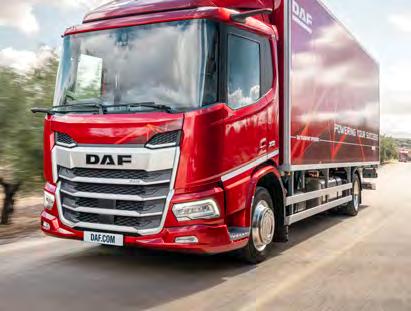
a number of new benchmarks in this sector.”
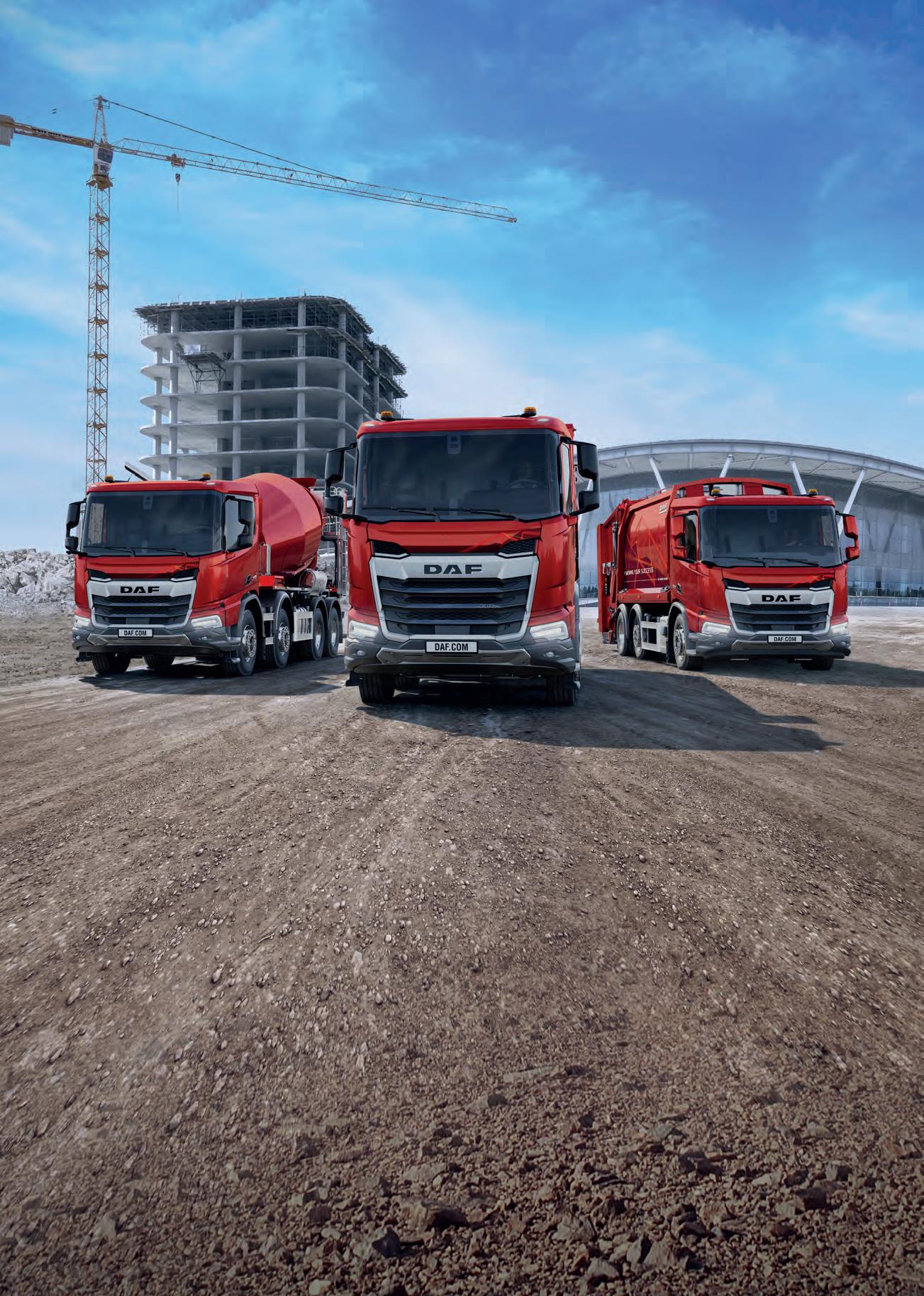
The DAF XD is a new-generation distribution and vocational truck that stands out in safety, efficiency, and driver comfort. It offers a wide range of powertrain options, including fuelefficient PACCAR MX-11 diesel engines and advanced fully electric PACCAR EX-D1 and EX-D2 motors. The XD is available in multiple chassis configurations – 4x2, 6x2, 6x4, 8x2, 8x4, and even 10x4 for heavy-duty applications – providing tailored solutions for all transport needs. Cab variants include the Day Cab, Sleeper Cab, and Sleeper High Cab, each designed to maximize visibility and ergonomics, while offering first class comfort for drivers.





































The latest versions of our award-winning New Generation DAF series come with a full suite of innovations that benefit robust construction and municipal applications. Driveline and aerodynamic improvements optimise fuel efficiency and increase durability. And a much richer specification takes safety and comfort to another level. Discover how DAF Transport Efficiency can power the success of your operations.























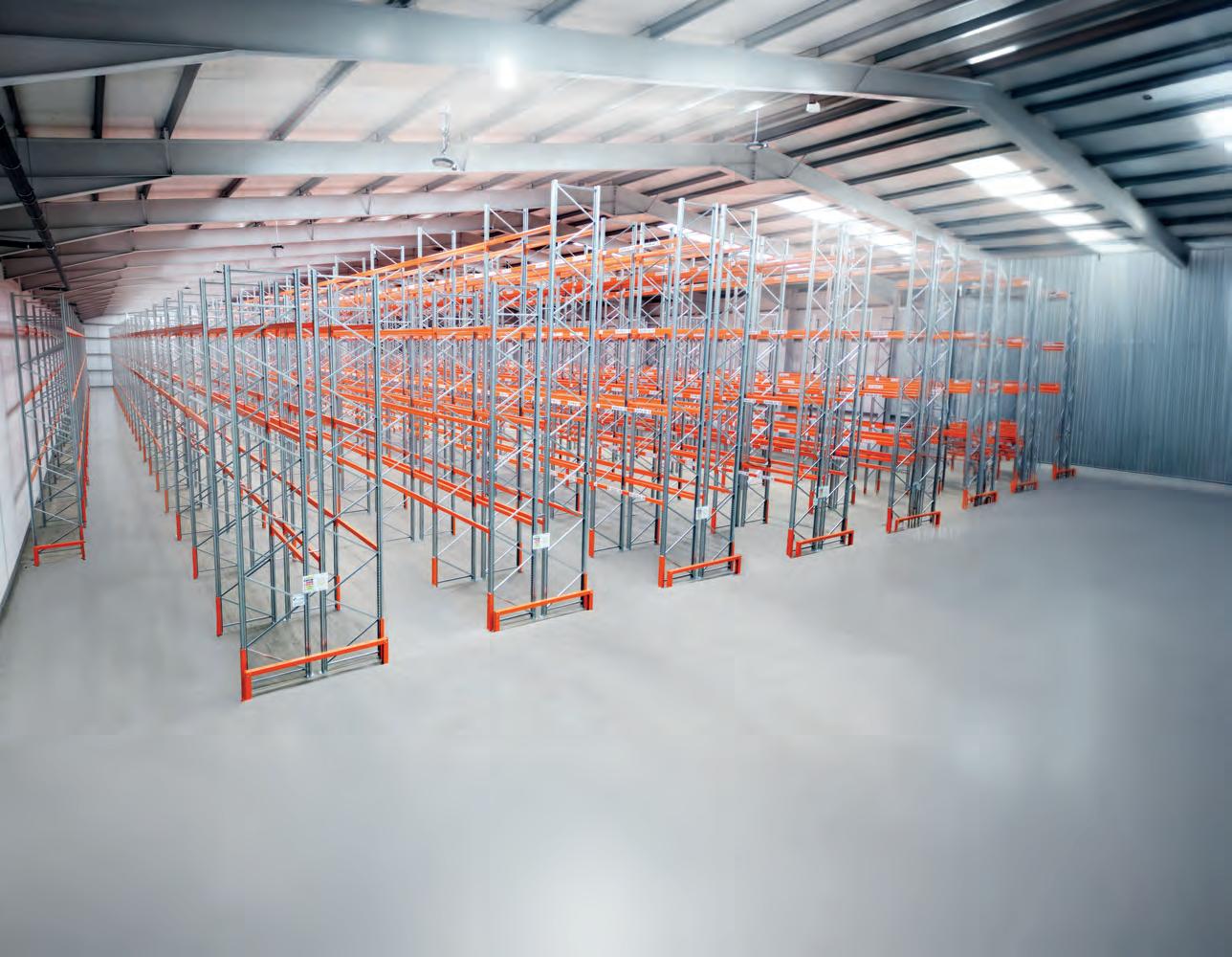
Manfreight has expanded its warehousing capacity in Northern Ireland with the £9m acquisition of a 100,000sq ft ambient facility in Belfast Harbour, supported by Danske Bank UK. The new site forms a key part of the company’s strategy to grow its BRCGS-accredited warehousing network across the UK and Ireland, strengthening Manfreight’s ability to provide fast, scalable, and fully integrated storage and distribution solutions to customers across multiple sectors.
Located less than four minutes from the major ferry terminals and only two minutes from the motorway network, the new facility offers a strategic connection between sea freight and road distribution, enabling highly efficient onward movement of goods. With over 12,000 standard / 15,000 Euro pallet spaces and the capacity to process more than 1,050 pallets per day, the site has been designed around flow, throughput, and operational agility. Turnaround times of under 30 minutes ensure high-volume capacity even during peak demand.
The Duncrue Street facility integrates seamlessly with Manfreight’s state-of-the-art chilled warehouse in Belfast Harbour and its temperature-controlled operation in Skelmersdale, creating a unified, three-site warehousing network across the UK and Ireland. This connected approach allows customers to access ambient, chilled, and temperature-controlled storage within one vertically managed supply chain, supported
by Manfreight’s own fleet of 330+ trucks and 550+ trailers.
Digital visibility sits at the heart of the operation. End-to-end tracking and data integration provide customers with a continuous line of information from collection to storage to final delivery - a capability increasingly demanded by modern FMCG,
food, pharmaceutical, retail, and manufacturing supply chains.
Speaking on the acquisition, Chris Slowey, Managing Director of Manfreight, said: “The key to our success is our ability to combine speed to market with scalability and highly bespoke levels of service. This facility gives us even greater control of our distribution, transportation,
and storage operationsensuring we can maintain one continuous line of data for our customers. We are grateful to Danske Bank for supporting this next step in our journey.”
Danske Bank’s Mark Brown added: “Manfreight is an ambitious local business that continues to invest in its end-to-end logistics offering. We are pleased to support its growth strategy and look forward to seeing the business expand further.”
With this latest development, Manfreight continues to build one of the UK and Ireland’s most advanced warehousing and logistics networks - combining ambient and temperature-controlled capacity with cutting-edge technology, strategic location, and sustainable design principles.
If you have any questions or would like to discuss how this facility can support your requirements or to request a copy of the brochure, please contact Manfreight by emailing warehousing@manfreight.eu

Why push air when you have a load to pull? The Volvo FH Aero increases your energy efficiency thanks to its aerodynamic cab. Designed to reduce your fuel costs, extend your range and minimise your environmental footprint. The Camera Monitoring System replaces side mirrors, opens your visual field, and further streamlines the cab. Your efficiency. Extended.
Contact your Volvo Trucks local dealer or visit volvotrucks.co.uk
The UKWA (UK Warehousing Association), the organisation working for a better future for warehousing, is looking to attract more members.
There are currently over 1,000 UKWA members across the UK but the organisation is seeking to increase its membership spread and are particularly looking for more members here in Northern Ireland.
Clare Bottle is the Chief Executive of UKWA, the leading trade body for the UK warehousing sector, offering support, insights, and advocacy.
Through UKWA Clare is working ‘for a better future for warehousing’
“Among our objectives at UKWA we want to make sure our young people recognise the career opportunities in warehousing. We want to ensure our members are embracing the green revolution, so our warehouses become increasingly sustainable. And we work very hard consolidating the reputation of the logistics industry with policy-makers and the public” comments Clare Bottle.
Talking to Export & Freight from a hotel in Slough – Clare explains that while a lot of her role is on the road they have their head office in Market Harborough, Leicestershire.

The Chief Executive says this is a great location as warehousing in big in the East Midlands. UKWA used to have its head office in London, as at that time the trade body felt it was important to be close to Government and policy makers. But they closed this after the COVID pandemic.
However they felt it was important to have somewhere the team could get together, and having this office has also made it possible to take on an apprentice.
Clare has been with UKWA for the past four and a half years, and before joining the trade body she worked for Coca-Cola Europacific Partners where she was Associate Director of Warehousing.
Clare explains she enjoyed working for Coke but was head-hunted by UKWA and when she realised what the new position was, she decided ‘I’d like to do that’.
Asked about how the membership works – and is it the person, or the organisation who joins; Clare explains UKWA membership is for companies – not individuals… and members are divided into two categories – full members and associate members.
An example of a full member is a company that operates warehousing – leasing forklift trucks, having a property and being involved in warehouse operations, either as a thirdparty logistics provider (3PL) or as the warehousing department within a larger retail or manufacturing business. Associate members will have some kind of goods or services that they want to sell to the full members e.g. warehouse management systems, forklift trucks or HR services.
“Any business that is involved in warehousing we would really welcome them.
We’re trying to grow our

membership at the moment. We are the Voice of Warehousing’. Turning to this part of the UK, Clare said membership is small in Northern Ireland at the moment but it is growing. Some multinational UKWA members like Amazon, DHL Supply Chain, DSV and GXO have operations in Northern Ireland alongside local businesses already in membership, including Jenkins, Montgomery Distribution, TST Group and Woodside Distribution.
Becoming a member…
To become a member of UKWA you can join on the website (www.ukwa.org.uk), or you can contact one of the team.
“Lisa on my team is the best person to contact – she looks after our full members. She’s been with the organisation longer than me and she knows everybody
“We will do a credit check, and ask for copies of insurance – just some basic checks on companies before they join the organisation.
Regarding the cost of membership – it depends on how much covered space you have – annual subscriptions range from £721 up to £3,166 for the biggest members.
As Clare and UKWA work to attract more members, Clare explains the benefits of membership are broken down into four central pillars: Benefits of membership – four pillars
Talk about Warehousing – we are the Voice of Warehousing.
“We talk about warehousing because people simply don’t talk about warehousing enough.
“We talk to the public, the media, policy makers and MPs to ensure warehousing is part of the national dialogue – which gives us a stronger voice.
Raise Standards – members can benefit from coming along to UKWA events to pick-up new ideas. Through working with experts and academics UKWA recently introduced the first ever globally recognized qualification for warehouse managers.
“There has never been a recognized qualification to be

a warehouse manager - we had that written from scratch by experts a few years ago. The course is run in England at the moment – but can also be accessed via online modules.
Those who complete the full course and pass the exams get a qualification issued by Chartered Institute of Logistics and Transport.
“So that’s one of the ways of raising standards” comments Clare Bottle.
Build Community – making people feel like they are part of something valuable and important. This includes running events and roadshows and conferences – it’s all about networking. UKWA also works hard to build its online community, with a new improved website and active presence on LinkedIn too.
Help Our Members – members can contact us with any queries about warehousing or if they’re simply looking for warehouse space.
Explaining a bit more about how UKWA target and act on certain topics, Clare explained that back in 2022 they were getting queries about members putting solar panels on warehouse roof tops. In response to this they did some research into this topic, so they are now able to give advice and guidance to members.
And this ultimately led to them publishing a ‘Solar Toolkit’ – for which they received some moral support from central government (although sadly no funding).
“And now we are hearing a lot of enquires from members about the storage of batteries for electric vehicles – companies having to store batteries for EVs as part of the supply chain.
“There’s a lot of electrification going on as we decarbonize our economy and the insurance rules about how we are supposed to store batteries are a bit of a mess – so that’s yet another opportunity where UKWA can be seen stepping up to help our members.
“If you want to be part of this journey, please join the UK Warehousing Association”
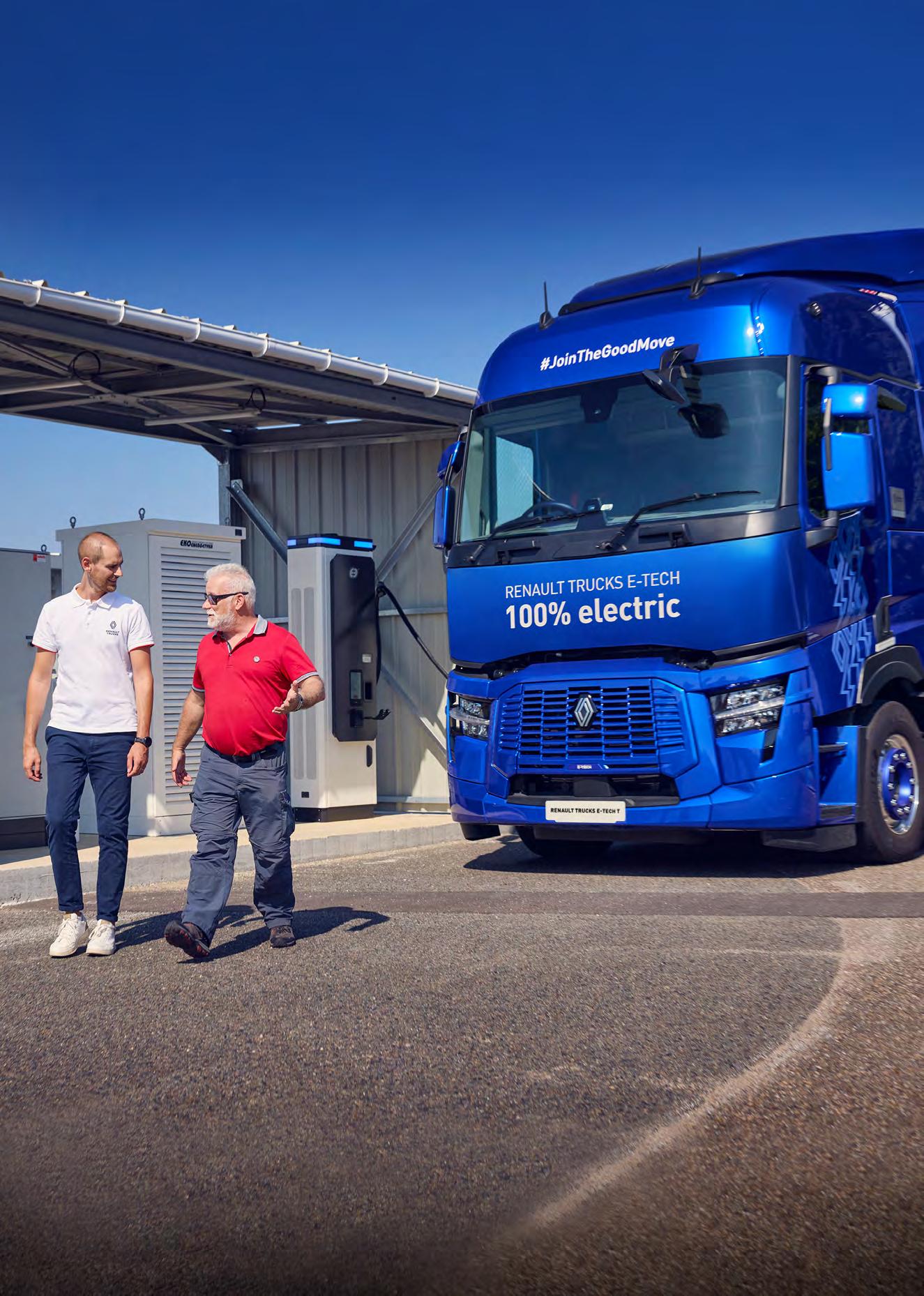
We’re proving electric trucks work in the real world. With millions of electric miles already covered, we have the proof to back our promises. Experience you can rely on. Expertise you can trust.
renault-trucks.co.uk
Scan the QR code to watch our Zeroing In electromobility series
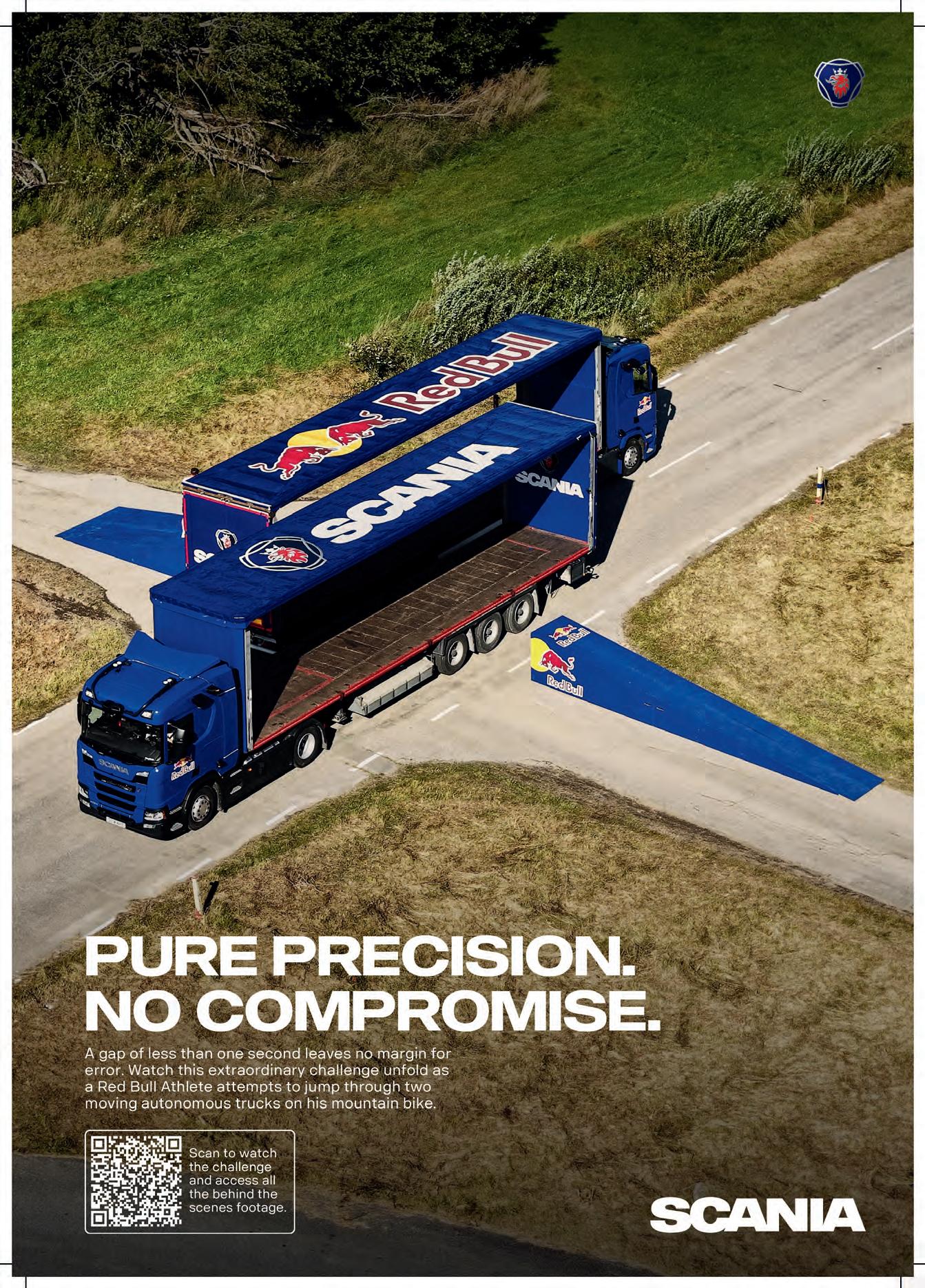
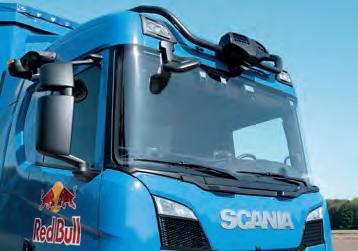
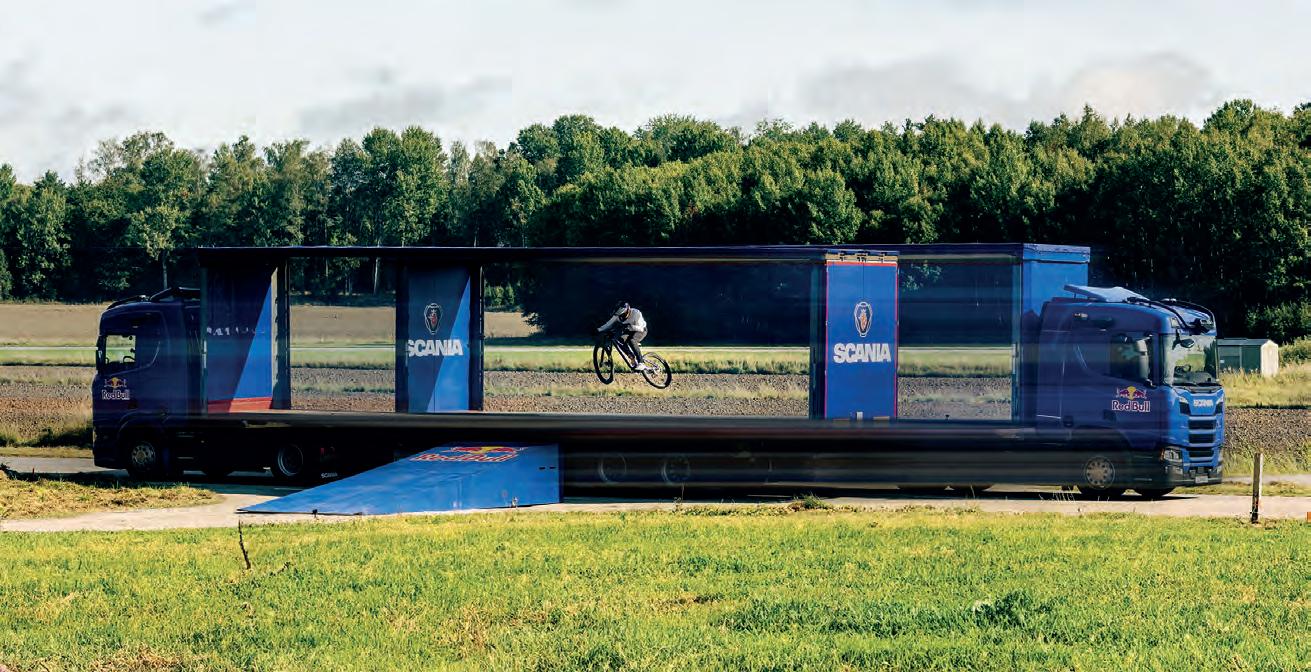
In a story of man vs motor, Scania’s autonomously driven trucks gave Red Bull Athlete and mountain biker, Matt Jones, the opportunity to become the first person to jump through two moving trucks.
This world first, completed at an airfield close to Scania’s home in Södertälje, Sweden, was a true test of both innovation and precision, as both the rider and the trucks needed to be in perfect sync for the jump to happen safely.
Having originally sketched the idea down in a notepad, Matt chose to use Scania’s selfdriving trucks, as the accuracy and dependability of this cutting-edge AI-based technology, would guarantee Matt with the window of less than a second to make the jump.
Speaking about the challenge, Peter Hafmar, Head of Autonomous Solutions at Scania, says: “What an incredible feat and world first to be involved with. It was a real team effort from the Scania and Red Bull teams, with months of working together to make Matt’s ‘impossible’ vision a reality.
“You need to remember; he has just a blink of an eye to make this jump. With no margin for error, the team had to be so precise and calculated throughout. Thanks to our autonomous trucks, we could create a window of opportunity needed for Matt to do this kind of jump.
Seeing first-hand the precision and safety that Scania’s autonomous trucks and technology has brought to this challenge fills us with immense pride.
“Transport is a cornerstone of our daily lives, and with that comes the responsibility to make sure goods arrive to the right person or company in the most safe and efficient way. This feat gives everyone a glimpse of what
autonomous technology is capable of – delivering precision and safety that you can count on.”
Red Bull Athlete Matt Jones said: “I tried to turn my brain off and become autonomous, I had full faith in the technology and maths. I was completely locked in staring at the road ahead with the trucks in my peripheral vision, knowing that they were going to cross over each other and reveal the gap I was going to jump through.
“When I got halfway up the ramp and the trucks had initially gone past each other, I felt huge adrenaline because I could see the target on the other side. I instantly went from feeling numb to being flooded with adrenaline, it was nothing like I’ve experienced before.
“After completing the jump I experienced so many emotions. I had a sense of relief, pride and accomplishment in myself, but also so much appreciation and respect for the Red Bull
team and Scania to make all of this possible.”
After months of meticulous planning, technical and physical rehearsals and safety checks to prepare, this feat saw the Scania, Red Bull and PlusAI teams collaborate and share their creativity, engineering expertise and determination to turn an ‘impossible’ vision into a reality.
Scania is already revolutionising transport, with its focus of driving the shift towards sustainable transport systems that creates a world of mobility that is better for business, society and the environment. Autonomous vehicle technology is ready to and will play an active role in redefining safety, operational efficiency and minimising the environmental impact. This technology is no longer just an idea for the future. Scania’s autonomous mining trucks have been operating in Rio Tinto’s mine in Australia since 2018, and have been available to commercially buy since 2024. That is just the beginning. Self-driving technology will soon be moving onto highways, enabling hub-to-hub freight transport.
In fact, Scania is already actively testing on European roads, in partnership with the Silicon Valley based company PlusAI.
Scania’s world-class trucks and in-house software capabilities, paired with PlusAI’s cutting edge AI-based technology will deliver safe, scalable and factory-built autonomous solutions for the road.
Find out more about Scania’s autonomous technology here: scania.com/autonomous

In the fast-paced world of transportation and logistics, risk is an unavoidable reality. From fleet accidents to cargo damage and liability claims, the financial impact of unforeseen events can be devastating.
This is where an insurance broker becomes an indispensable partner—providing expertise, cost efficiency, and peace of mind for businesses navigating complex risk landscapes.
Transportation insurance is not a one-sizefits-all solution. Brokers bring deep industry knowledge, understanding the nuances of motor fleet coverage, goods-in-transit policies, and liability protection, alongside many other covers. Unlike direct insurers, brokers work for the client—not the insurance company—ensuring that coverage is tailored to operational needs. Their ability to interpret policy wording, negotiate terms, and identify gaps in protection can make the difference between a minor setback and a major financial loss – a vital service for any business.
Managing insurance costs is a priority for every transportation business. Large brokers such as Dickson Group leverage their broad market access and negotiating power to secure competitive premiums without sacrificing coverage quality. They understand how factors like fleet size, driver training programs, and telematics data influence pricing, and they use this insight to position clients favourably with insurers. In many cases, brokers can also advise on risk management strategies that reduce claims— and, in turn, lower long-term insurance costs.
We all understand that claims are one of the most influential factors upon premium rating. Ensuring that claims are reported early helps give insurers confidence and proactively management of claims can help reduce premiums.
Dickson Group’s Claims Director and its dedicated claims team work on behalf of their clients to ensure that claims are dealt with quickly and professionally.
Not every broker can cope with the challenges of transportation companies who are
based in Northern Ireland, but also have Republic-based business operations.
For ROI elements of the client’s business, Dickson Group will engage with its sister company Dickson & Wilson Insurance Brokers based in Monaghan, to coordinate the insurances. In practical terms, this means Dickson & Wilson negotiate with Dublin and Europeanbased insurers for the client’s ROI-based risk, whilst Dickson Group in N.I. deal with the NI and GB-based insurers.
An independent broker like Dickson Group is not tied to any single insurer, and act as an agent of their clients, the policyholders. Which means their recommendations are unbiased and client-focused. This independence allows them to compare multiple providers, ensuring businesses receive the best combination of coverage and price. For transportation companies, where margins are tight and risks are high, this impartiality is critical. It guarantees that decisions are driven by client needs, not insurer incentives.
Transportation is a local and regional business at its core. Having a broker with offices across Northern Ireland, and who understands the local market, regulations, and road conditions, adds significant value.
A local broker can respond quickly when incidents occur, provide face-to-face support, and build relationships that go beyond transactional interactions. In times of crisis—such as an accident or cargo loss—this proximity ensures faster claims handling and personalised service.
Ultimately, an insurance broker is more than a policy provider—they are a strategic advisor. By aligning coverage with business goals, helping manage risk, and ensuring compliance, brokers enable transportation companies to operate confidently and focus on growth. In an industry where every mile carries risk, having the right broker on your side is not just smart—it’s essential.
We know that a penny at the pump can make a real impact on your costs. We deal with over 150 insurers, giving you the peace of mind that you have the best insurance cover at the best price for your business.


Whether it’s for your vehicles, your premises, your employees or the goods you transport, we have the expertise to create a tailor-made insurance programme specific to you.
As well as core insurances such as motor, employers’ liability and property, talk to us about cover for cyber insurance, warehouse legal liability, or legal advice immediately following an accident.
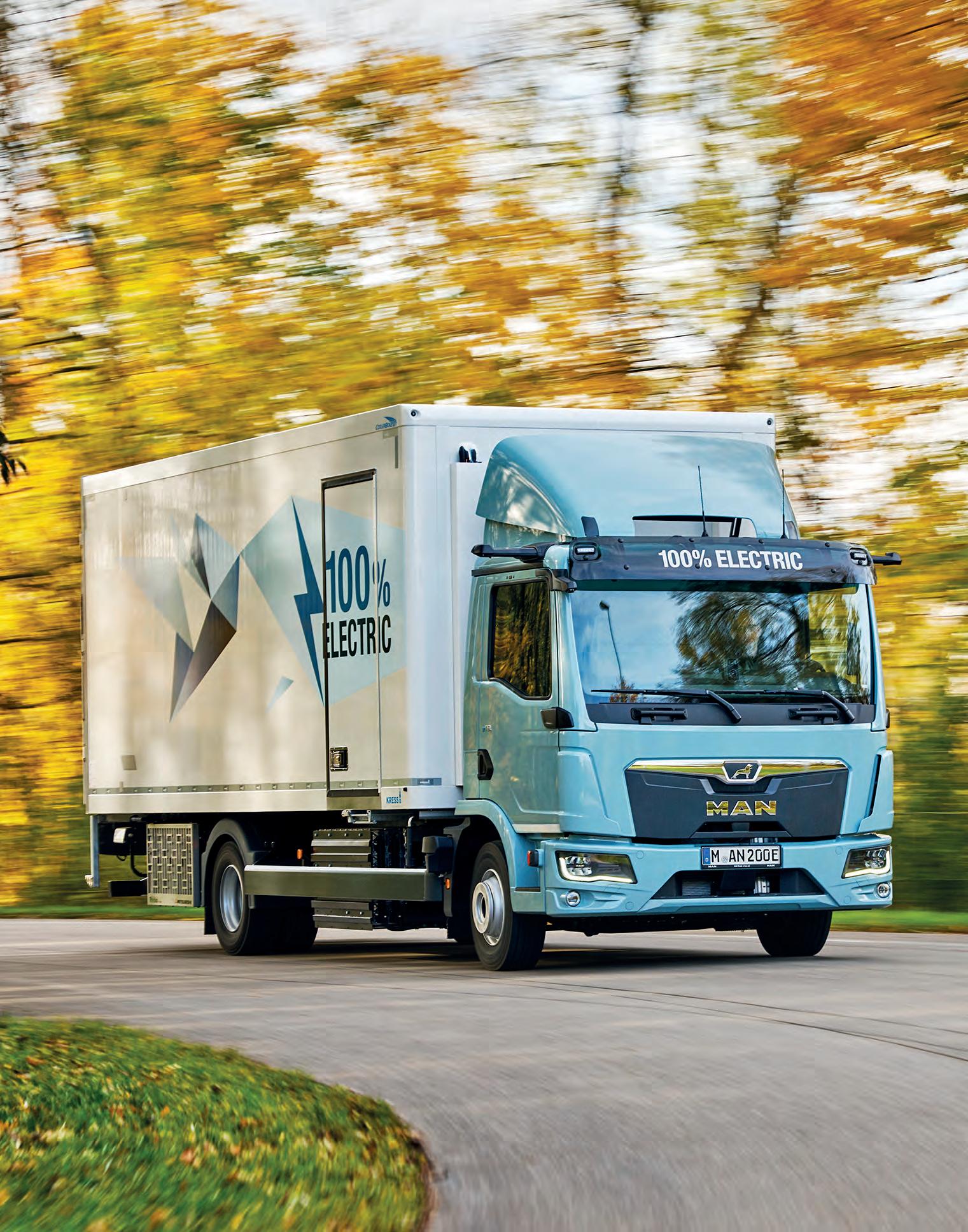
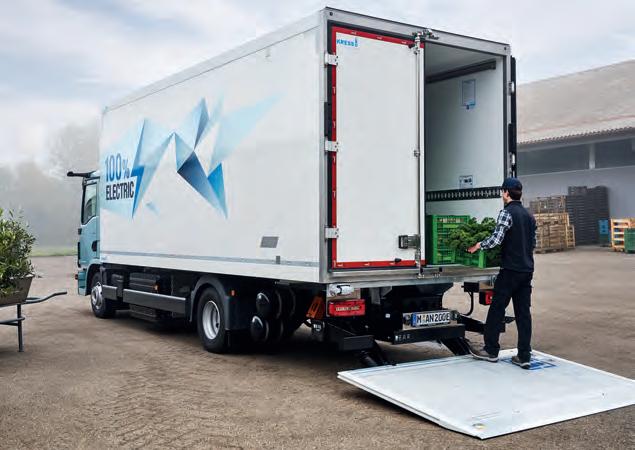
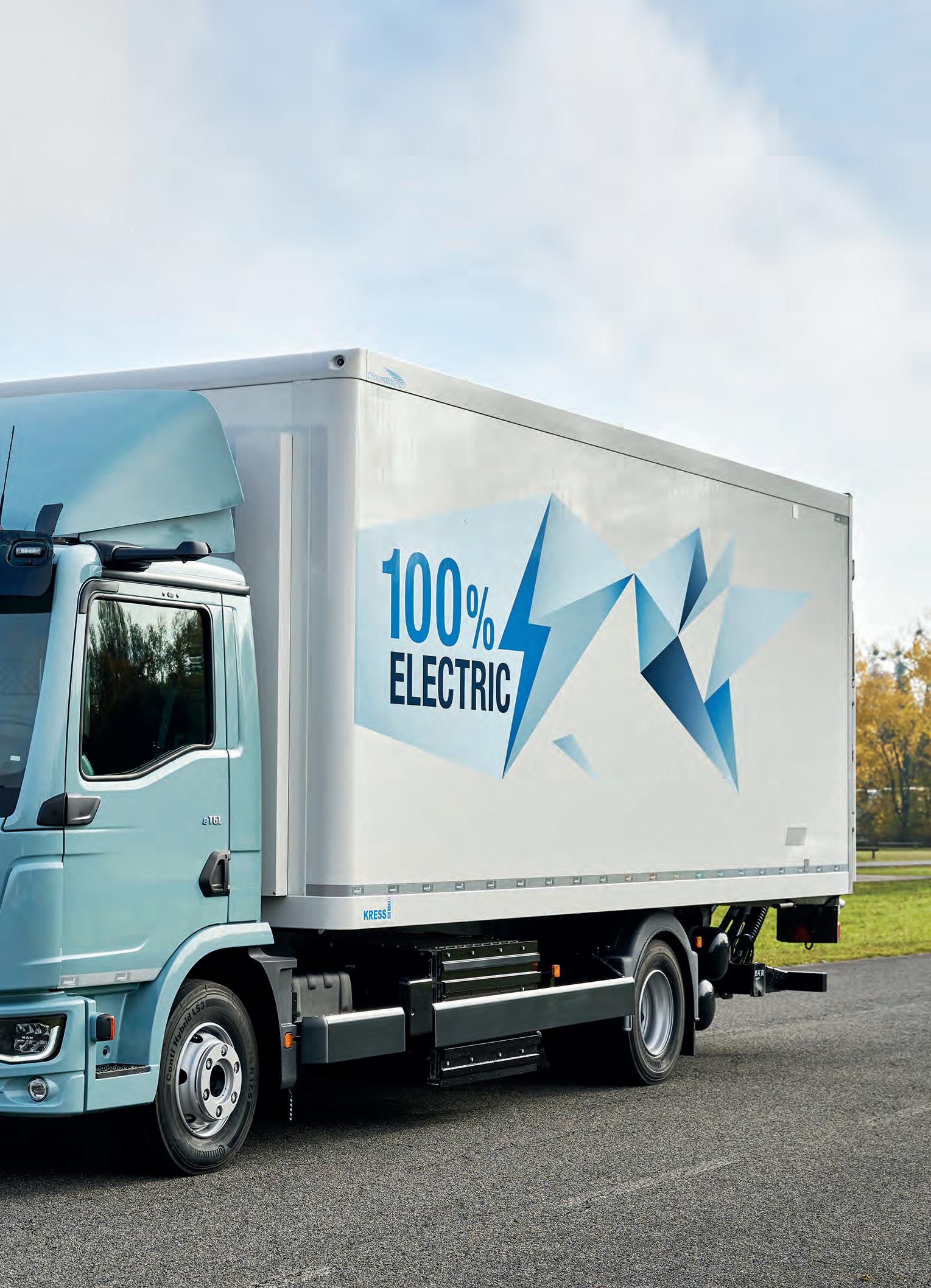
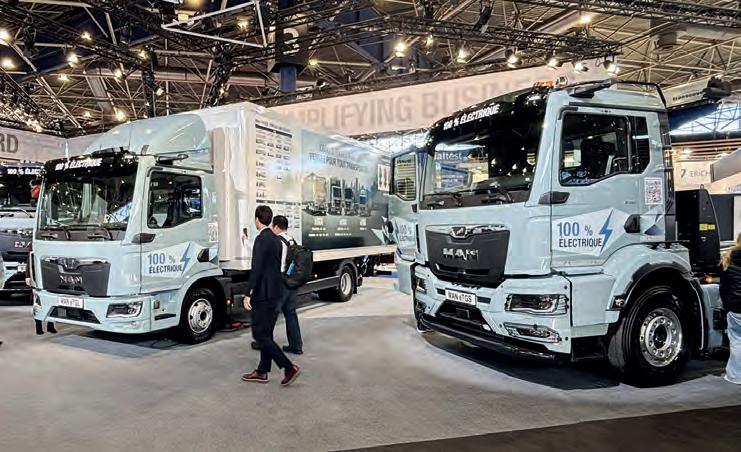
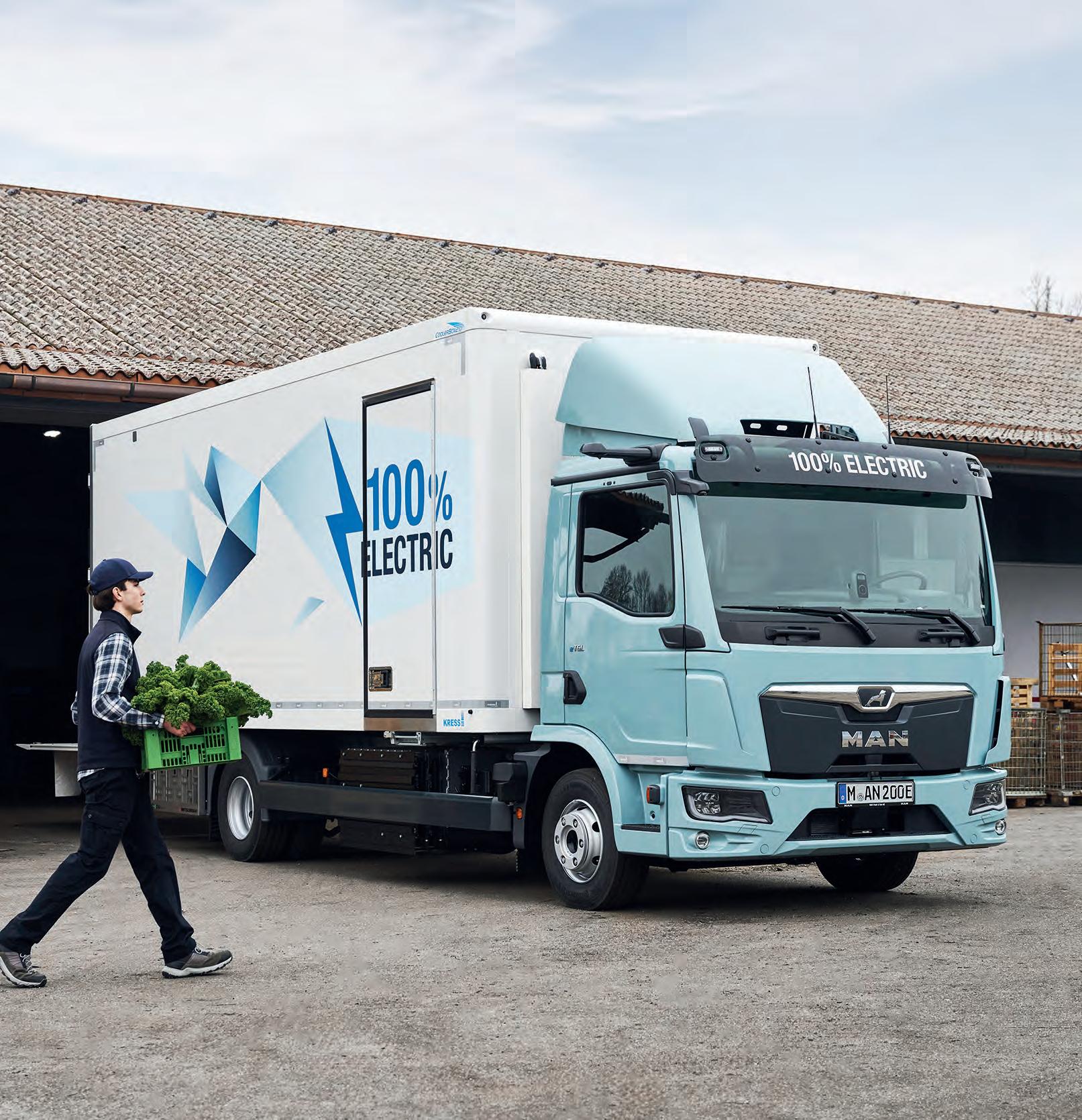
MAN Truck & Bus has further strengthened its electric truck line-up with the introduction of the 12-tonne MAN eTGL, now available in a configuration specifically designed for refrigerated box bodies. The new variant was unveiled at the Solutrans 2025 exhibition in Lyon in mid-November and marks an important step in extending zeroemission transport into temperature-controlled urban and regional distribution.
The refrigerated eTGL enables locally emission-free and exceptionally quiet delivery of temperature-sensitive goods, including food and pharmaceuticals. A dedicated high-voltage interface allows the refrigeration unit to draw power directly from the vehicle’s electrical system, offering an efficient and weight-optimised
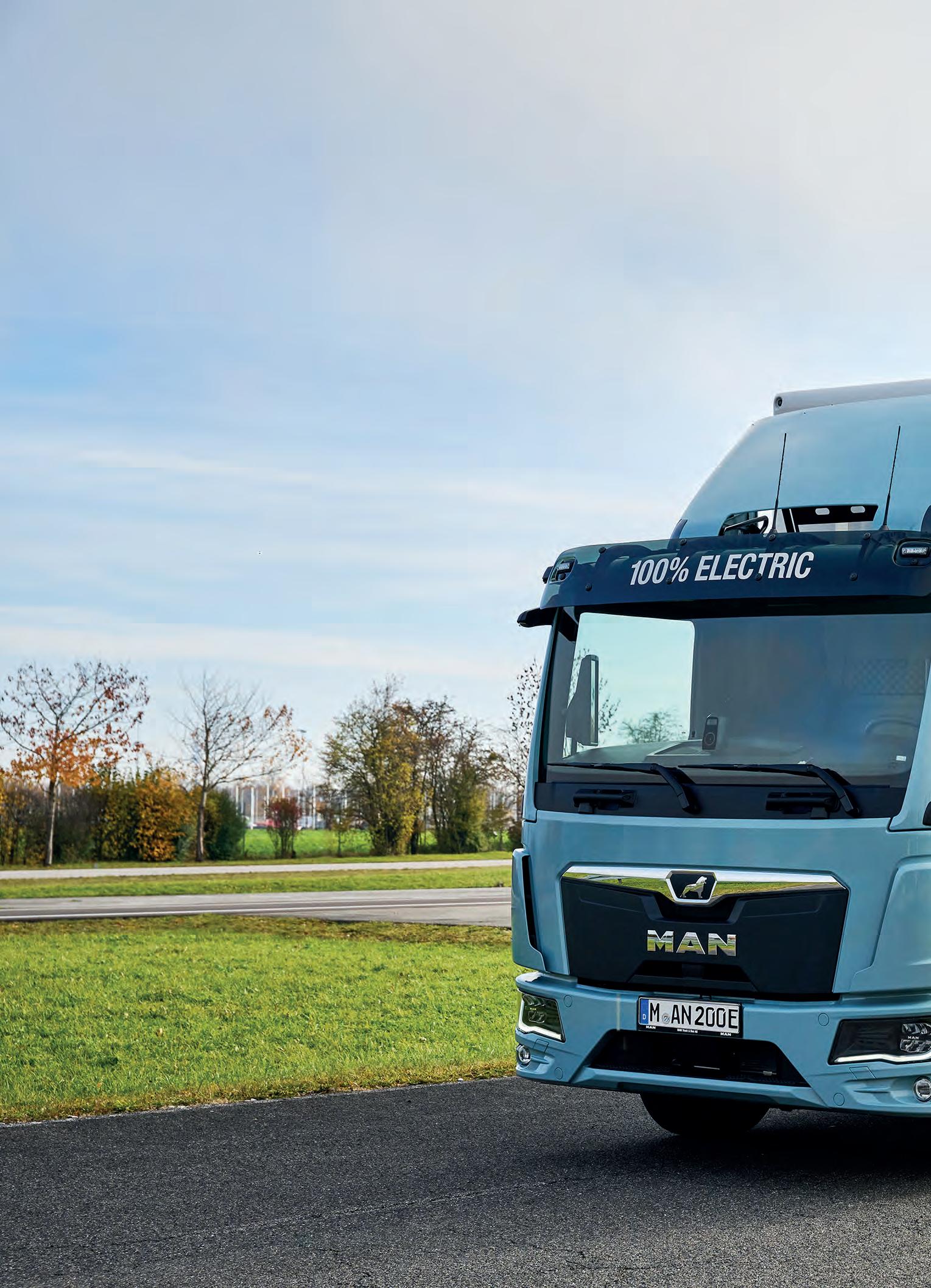
solution without the need for a separate power source. With this addition, MAN’s all-electric refrigerated logistics portfolio now spans vehicles from 12 to 42 tonnes.
The eTGL is equipped with two battery packs providing
a usable capacity of 160 kWh, delivering a range of up to 310 kilometres depending on body configuration and operating conditions. Fast-charging capability allows the batteries to be recharged from 10 to 80 per cent in around 35 minutes, enabling operators to make effective use of loading or rest breaks and extending the potential daily range to as much as 600 kilometres.
Friedrich Baumann, Member of the Executive Board for Sales & Customer Solutions at MAN Truck & Bus, said the new model significantly broadens the scope of MAN’s lightweight electric trucks. Together with the eTGX and eTGS, the manufacturer now offers a
comprehensive zero-emission solution for temperature-controlled logistics, from inner-city distribution through to long-distance transport. Like its heavier electric counterparts, the eTGL benefits from recent efficiency upgrades across the MAN eTruck range. Improvements to auxiliary systems, enhanced waste heat utilisation and refined driving functions deliver an approximate ten per cent increase in range. As a result, the latest eTGX variants can now achieve up to 570 kilometres in articulated form and up to 870 kilometres as a solo chassis with box body, depending on specification.
Based on MAN’s established 12-tonne
diesel chassis, the eTGL offers a payload of up to 6.6 tonnes, a 4,500 mm wheelbase and body lengths ranging from 6,200 to 7,300 mm. Low-entry cab access with a single step makes it particularly well suited to multi-drop urban distribution. A fully digital 12.3-inch display provides drivers with real-time information on charge status, range and energy consumption. The vehicle shares its electric drivetrain architecture with the heavier eTGX and eTGS models, including MAN-developed battery packs produced at the company’s Nuremberg facility. Each pack delivers 80 kWh of usable capacity, while propulsion comes from a centrally mounted 285 hp electric motor paired with a two-speed gearbox. MAN’s modular battery concept, designed specifically for commercial vehicle applications, allows a wide variety of chassis and body combinations.

This flexibility enables fully electric operation across a broad spectrum of transport tasks, from long-haul and construction applications to refuse collection and now deep-freeze supermarket distribution. In real-world operation, MAN’s electric trucks have already demonstrated strong efficiency and reliability. Around 400 eTGX and eTGS vehicles have accumulated more than nine million kilometres in customer service within their first year, recording an average energy consumption of approximately 93 kWh per 100 kilometres.
Supporting the vehicle range is MAN’s 360-degree eMobility Consulting service, which is also available to eTGL customers. This includes tailored analysis of vehicle deployment, route planning and charging infrastructure requirements, with particular focus on the specific demands of refrigerated logistics. At Solutrans, the eTGL formed part of MAN Truck & Bus’s wider zero-emission showcase, alongside the eTGX, eTGS and the hydrogen
combustion-engine hTGX, winner of the Truck Innovation Award 2025. The stand also featured expert presentations and
consultancy sessions, underlining MAN’s commitment to supporting operators through the transition to electric mobility.

In a market where every penny counts, UK and Northern Irish truck fleets are understandably focused on tyres that offer dependable mileage and good value. Yet the very option that can deliver both - quality retreads - continues to be overlooked.
In a recent survey of more than 700 UK-based commercial vehicle fleets, Continental Tyres found that the results painted a revealing picture of operator priorities. More than half of respondents (56.7%) selected mileage performance as one of the most important criteria when choosing tyres. While similar numbers (56.3%) highlighted the retail price. Other key decision points were damage resistance (51.6%) and wholelife ownership costs (50.2%). These are practical, operationally driven considerations, no surprise in a fiercely competitive industry where tyres represent significant cost. However, additional data from the same survey showed that two-thirds of fleets (66.9%) exclusively fit new tyres. For many operators, the hesitation stems from perceived issues with quality, as 62.5% of respondents believe retreads may not have the quality of new tyres, while 46% question their durability. These findings underline Continental’s determination to combat the misinformation and misconceptions around retreads. Pete
Robb, Marketing Director at Continental Tyres, points out that fleets are actively seeking tyres that offer value for money, precisely the area where retreads excel. He describes retreads as a “sweet spot” for many businesses, thanks to their lower purchase price and like-for-like mileage capabilities compared to an equivalent new tyre. Yet a historic reluctance persists, pushing fleets towards cheaper new tyres that may be single-use products and may not deliver the same operational benefits as high-quality retreads from a renowned manufacturer.
A retread tyre can have a lower retail price than its new equivalent, immediately reducing running costs. High-quality retreads may then be regrooved, extending their overall service life, and in many cases, the casing can be retreaded a second, sometimes third, time. Over the tyre’s lifetime, this can translate into hundreds of thousands of miles.
The sustainability benefits are equally significant. With hundreds of truck tyres replaced every day across the UK and Northern Ireland, the environmental burden of disposal is considerable. In a typical retread, up to 85% of the tyre uses recycled or renewable materials, and the process can save up to 55kg of waste per tyre in production.
Retread manufacturers invest heavily in research, development and engineering to ensure the final product meets stringent regulations. All retread tyre manufacturers must comply with the UN’s ECE Regulation 109, which ensures performance, dimensions and tyre wall markings are equivalent to those of a new tyre. Within Continental’s own operations, ContiLifeCycle plants, where ContiRe and Bandvulc tyres are produced, adhere to ISO auditing criteria, ensuring consistently high production standards. Modern retreads aren’t a compromise. Businesses are too often missing out on reducing their operating costs and enhancing their environmental credentials because of a perception that remanufactured tyres are inferior, when in fact, they offer a compelling blend of performance, cost efficiency and sustainability.
To find out more, please visit: ContiLifeCycle Continental Tyres
Josh Fenton
Manager

From 1 January 2026 all carriers, logistics firms and traders moving goods between Great Britain and Northern Ireland, as well as GB to the EU, will need to comply with Import Control System 2 (ICS2) - the EU’s upgraded customs security and safety programme.
ICS2 replaces the EU’s Import Control System, and requires more detailed data submissions on all goods entering the EU prior to their arrival. As part of this process, ICS NI, currently used for the movement of goods from GB to NI, will also transition to the mandatory requirements of ICS2 from 31 December 2025. From this point, ICS NI will no longer be an option. The new system requires logistics companies to submit an Entry Summary Declaration (ENS) when moving goods between GB and NI, GB and the EU, and countries outside of the EU into NI. ENS must be submitted no later than two hours before the goods arrive in NI or the EU. ICS2 marks a considerable change in the requirements for companies operating across the supply chain, and readiness is essential. Please be aware that those who do not comply with ICS2 requirements will have their goods stopped and delayed at EU customs borders, with the potential for these goods not to be cleared, and sanctions imposed for failure to comply. However, a perceived lack of readiness in the system, visibility and clarity over requirements have given logistics businesses cause for concern while preparing for compliance and may put further pressure on small to medium enterprises (SMEs) - something which we at Logistics UK are maintaining awareness of with officials to speed a resolution.
ICS2 spells out new data requirements that need to be understood in order to ensure supply chain readiness – more specifically, the descriptions of goods, which need to be more detailed, and the commodity code, previously four digits, which will now need to be provided in six digits.
The descriptions of goods must be clear, concise and specific, to clarify what the goods are. To this end, descriptors cannot feature ‘stop words’ which are determined by the EU. It has published a list of words that would be considered too vague. Examples of these words include accessories, animals, cleaning products, and clothes. If these words are included in the ENS, it will be automatically rejected. For example, labelling goods as ‘jewellery’ would not be acceptable, but labelling these goods as ‘women’s gold jewellery’ would provide the necessary clarification, and would be accepted. This guidance will be continuously updated and iterated by the EU.
One major challenge associated with getting prepared for ICS2 has been the readiness of the IT system. There have been reports of system outages and disruptions, and since the system is maintained by the EU, and not a UK-based authority, operators have reported challenges in communicating issues as and when they arise. For busy periods of the year, like the festive season, hauliers cannot afford outages and the complete stoppage of goods. Logistics UK is calling for contingency plans to be mapped out and communicated to the industry before the 31 December 2025 deadline to ensure goods continue to move in case of a widespread systems failure. This should be done both for ICS2, but also for the Trader Support Service (TSS) for those transporting goods between GB and NI. In some instances, businesses have already reported they have had to revert to ICS NI where outages have prevented them from using ICS2.
It is therefore essential to ensure the system is fully operational when it is formally brought in, to keep trade flowing between countries.
Another major challenge for ICS2 is the potential impact on groupage operators and the pallet network model. Groupage allows multiple small consignments, often lowvalue and time-sensitive, to move at speed through shared transport and hauliers often lack contact with consignors or consignees.
The sector makes up a huge portion of the movement of goods from GB to NI, with the majority of hauliers being small to medium enterprises where any disruption can have a significant impact on their businesses.
One solution Logistics UK has been pressing government for is a Trusted Hauliers Scheme to be put in place to ease difficulties with the Windsor Framework and now the ICS2. As a periodical review of hauliers, it would allow groupage operators more time to secure all the information required and enable hauliers to maintain speed.
With the deadline of ICS2 compliance looming, logistics businesses must do all they can to prepare and to reduce any potential disruption. In a similar vein, those overseeing the effective rollout of the system must listen to industry concerns and respond accordingly, to ensure it adequately aligns with the needs of the entire supply chain. Logistics businesses operate on razor-thin margins and cannot afford any further impacts on their operational efficiency and profitability. The system that is brought in must be tried, tested and fit for purpose – and if all else fails, there must be a contingency plan to ensure trade is not halted.
For more information about the organisation and its work, please visit logistics.org.uk
The sustainable option for businesses who want to help the environment.
Fuelled by years of early investment and leadership in the field of renewable energy, Texaco HVO Renewable Diesel is lower in carbon and burns cleaner than regular diesel. Its high cetane count enhances engine performance and gives a smoother delivery that performs well in both cold and warm climates. As a drop-in fuel with a chemical makeup that’s the same as regular petroleum-based diesel, no engine or infrastructure changes are needed.

Why Texaco HVO Renewable Diesel is the better choice:
100% renewable and sustainable
Up to 90% less greenhouse gas emissions compared to regular diesel
Chemically the same as petroleum-based diesel
Burns cleaner with a lower carbon footprint
Provides higher engine performance
Performs in cold and warm climates
Cost-competitive
More reliable than electric vehicles
Significantly lower greenhouse gases than hybrid and electric vehicles
Guaranteed performance



In September 2025, Lord Murphy published his independent review of the Windsor Framework. It is a pretty comprehensive and sizeable document with more than eighty recommendations.
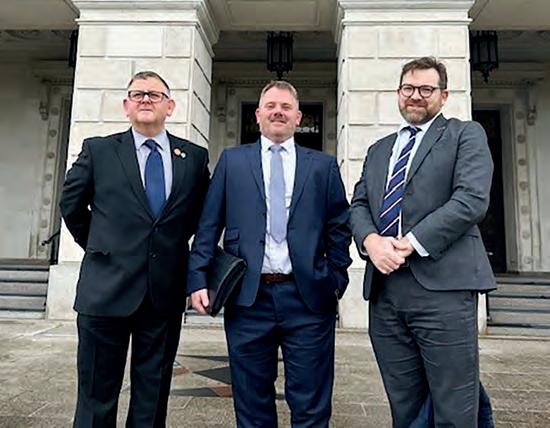
At the start of November, Lord Murphy met with the NI Economy Committee to go over his findings and our new Policy Lead for Trade and Borders, Alastair Gunn, joined Ally Hobson of Montgomery Group, Mark Tait of Target Transport, and myself in following Lord Murphy in giving evidence to the Committee. Some of Lord Murphy’s findings aligned with what members have been telling us and the fact that Ally and Mark could give real life examples of where the Trader Support Service (TSS) is hampering rather than supporting the sector. RHA’s long standing request for a “trusted haulier” scheme has also been picked up by Lord Murphy and was reported to the committee as a recommendation. This would allow hauliers to prove they have met requisite standards and allow the authorities to pursue the serially non- compliant and the ones who deliberately put in incorrect information to reduce admin and cost.
Our main ask is for “Risk” to be moved to the point of sale. This would make sense as once an item is sold you know its end destination. If sold goods are going to ROI and therefore the EU, then customs processes would apply. If they are sold and will be remaining in NI or heading back to GB, then we believe customs
processes should not apply.
Currently, almost all goods (excepting retail or food) are automatically deemed “at risk” and must go through full customs requirements, even when just going into stock.
Our position throughout the past four or years has remained consistent, as have our asks of Westminster. Moving risk to the point of sale removes the need for huge parts of the NI supply chain to go through the red lane.
As stated at the Committee last week, this is no ‘silver bullet’ but it
would make a marked difference to the day to day running of NI PLC. The Committee heard from our members that it is easier to move goods through Dublin from GB to NI than it is to move goods directly GB to NI as the movements through Dublin can be done with one customs entry, one package, one press of a button, unlike the multitude (NIRMS, Non-NIRMS, UKIMS, API etc) required when using the direct GB to NI route. The Chair of the Committee. Phillip Brett MLA, thanked RHA, “throughout the entire process
you have being willing to stand up and speak about the issues…. from a business point of view these arrangements do not work.”
There were times at the beginning when we were the lone voice but many organisations such as FSB have started to raise concerns from their members. The Committee have subsequently written back to us to say that they have quested a briefing from HMRC’s Windsor Framework NI Stakeholder Engagement Team and also that they will be writing to the Secretary of State for NI to indicate support for a Trusted Hauliers Scheme, reform of the Duty Reimbursement Scheme, to indicate concern about unlawful movements and seeking a study of the effects, seeking commentary on moving risk to the point of sale and confirmation that this will all be fed into the UK/EU reset talks.
RHA held an event at the House of Lords at the end of November with Lord Murphy and several other Peers to discuss his report and for our members to relate their real time experiences of moving goods from GB to NI. We will also be asking for support from the House of Lords in pushing the discussion forward for moving risk to the point of sale. Keep an eye out for that report in the next issue of Export and Freight.
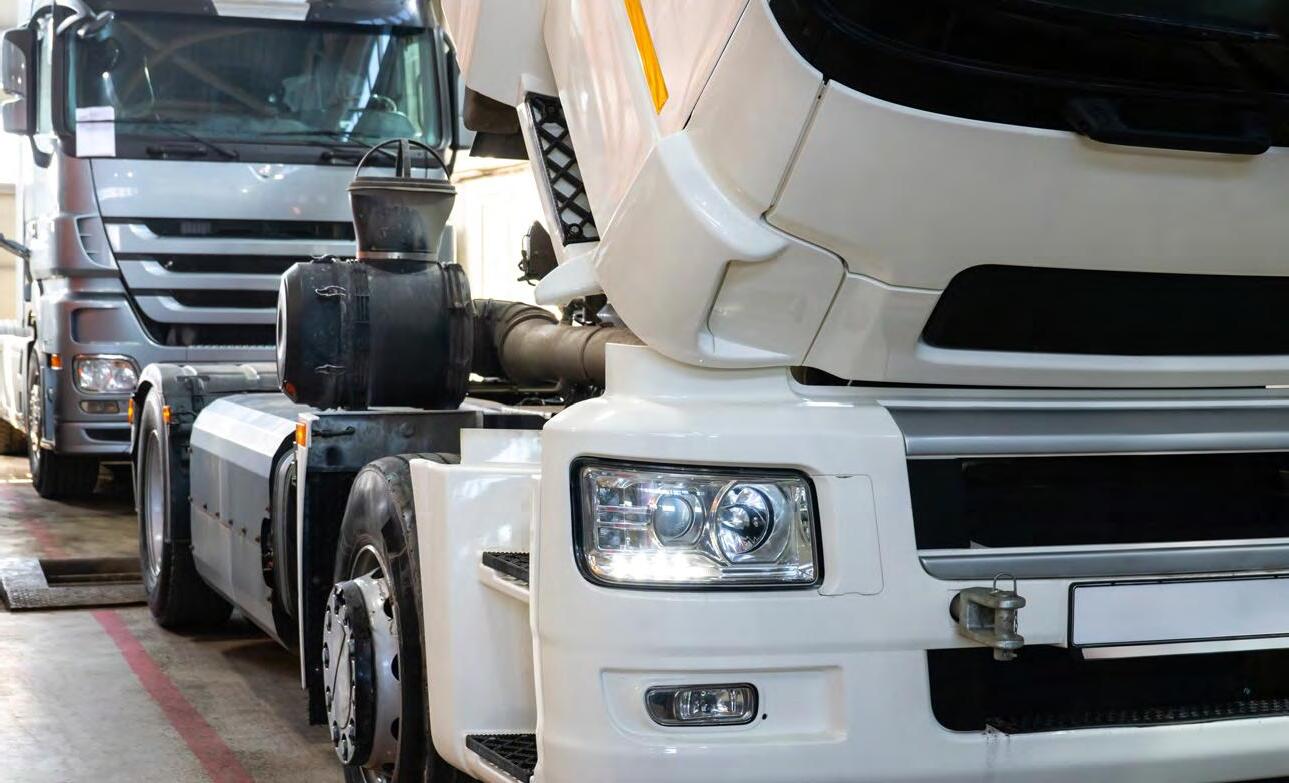
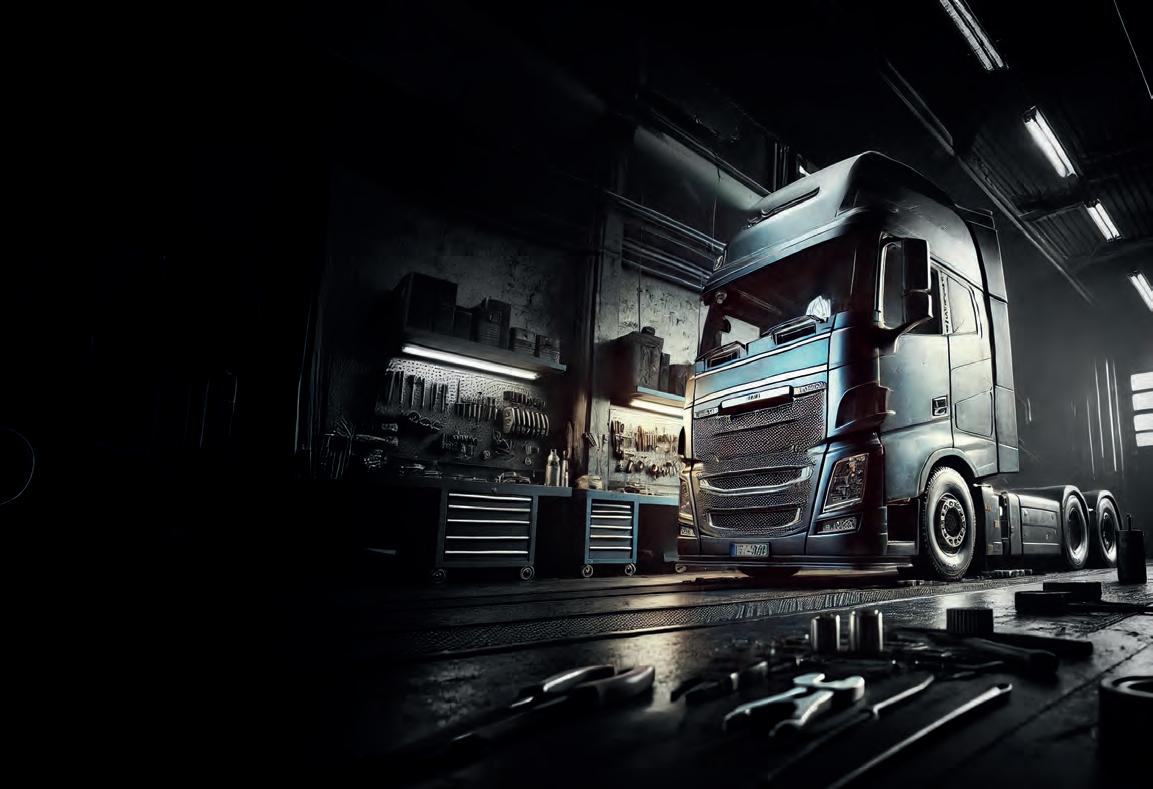
As winter tightens its grip across the UK and Europe, the importance of proactive servicing and seasonal maintenance becomes impossible to ignore.
Shorter days, dropping temperatures and often treacherous road conditions place unprecedented strain on commercial vehicles, making reliable performance not just a matter of efficiency, but of safety, compliance and continuity for operators working to keep goods moving through the colder months.
For fleet managers and owneroperators alike, winter presents a unique set of challenges. From cold starts and reduced battery efficiency to the increased risk of component
wear, corrosion and fluid failure, the hidden impacts of sub-zero conditions can quickly escalate into costly downtime if not properly addressed.
A comprehensive servicing regime, tailored specifically for winter operation, is therefore essential in safeguarding vehicle reliability and protecting bottom-line profitability.
This feature explores the critical role that winter maintenance plays in ensuring fleet resilience, examining best practice approaches to preventative servicing and the key checks
that should form part of any cold-weather preparation plan. From coolant strength and brake performance to tyre condition, lighting systems and driver awareness, every element contributes to keeping vehicles roadworthy when conditions are at their most unforgiving.
In a sector where missed deliveries and unexpected breakdowns can have farreaching consequences across supply chains, investing in scheduled inspections and structured maintenance programmes offers more than
peace of mind; it provides a strategic advantage. Technological advances, predictive diagnostics and smarter servicing schedules are now enabling operators to stay one step ahead, minimising risk while maximising uptime throughout the winter season.
As the transport industry continues to balance operational pressures with tightening regulations and sustainability targets, winter maintenance remains a cornerstone of effective fleet management.
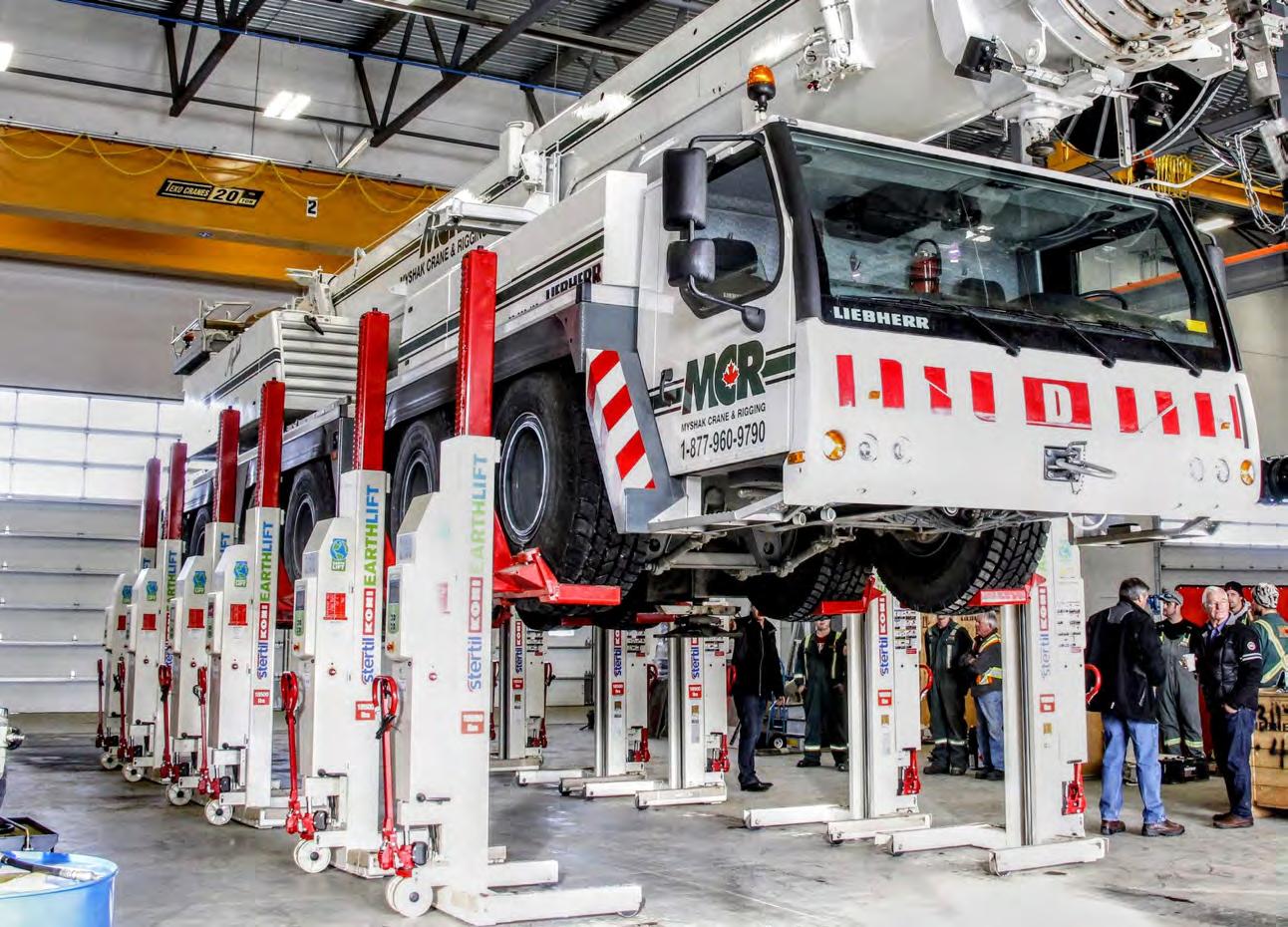
As we start the New Year, there’s a renewed emphasis at SWS on the all-important supply of consumables for the workshop, without any loss of our focus on workshop fit out and the supply of equipment.
SWS have been working with commercial vehicle workshops across the whole of Ireland for over 50 years. Alongside all the changes that technology has introduced, the need for a supplier that understands the challenges faced everyday has never been greater.
That’s exactly where SWS fit in – combining an in-depth understanding of what it
takes to run the workshop with product knowledge that has been accumulated as a result of the experience. And it doesn’t just stay as knowledge. Backing up the advice is a stockholding at their Irish distribution centre that has the customer as a priority.
If you’re starting the year conscious that your workshop has got to be overhauled, but not sure where to go for honest, open advice
give SWS a call. With our years of experience we can give you the best advice that will result in a cost-effective solution that best suits your business and your individual needs.
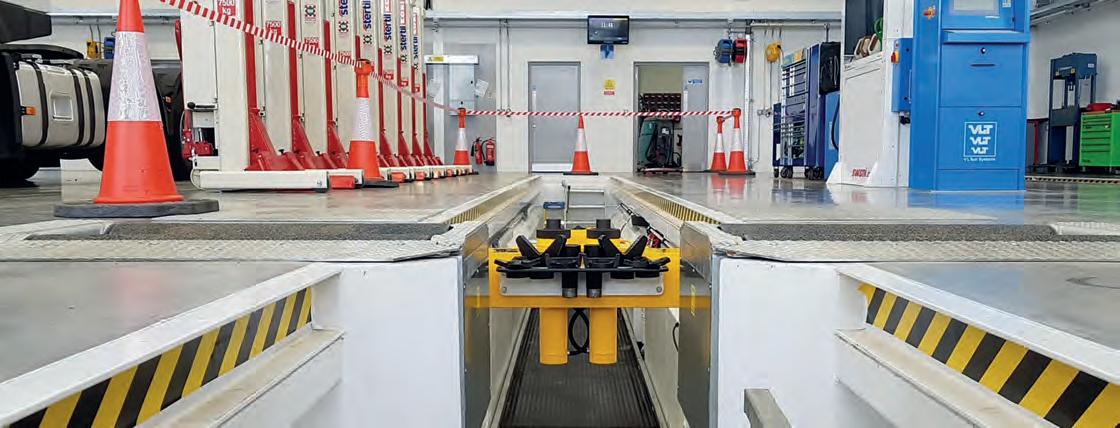
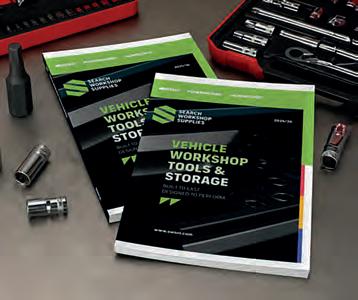
Remember, it doesn’t stop at supply – the comprehensive packages offered are all-inclusive of training, maintenance and certification. This is all backed up by some of the best names in the industry – Stertil Koni, VL Test Systems, Samoa, Majorlift; to name but a few. However, it’s quite likely that your workshop is all up to date, everything functioning as it should and apart from some regular maintenance (don’t forget SWS) all the boxes are ticked. That is except for one (important) thing – all those items that are needed every day, every week and every month. If that’s the case – we’ve got your back. SWS
understand the pain that running out of the most basic items – like cable ties, can cause. It’s why the stock holding is so large. If you need it, SWS want to be able to supply it. To make accessing these basic products easier SWS are rolling out an all-new publication – The Workshop Essential. And this does exactly what the title says – it’s full of all those every-day, essential lines. If a copy hasn’t crossed your desk yet – give SWS a shout. They’ll be glad to get one to you and to discuss the options available to ensure you’ve always got the best quality products that you need, when you need them.

Five winter-readiness essentials to keep Ireland’s fleets moving
Irish fleet operators know that winter rarely arrives in a predictable way, with sudden cold snaps, coastal moisture, heavy rain and salt exposure all putting extra strain on vehicles. Whether maintenance is handled in-house or through a trusted workshop partner, making sure the right winter checks are carried out is essential for maximising uptime.
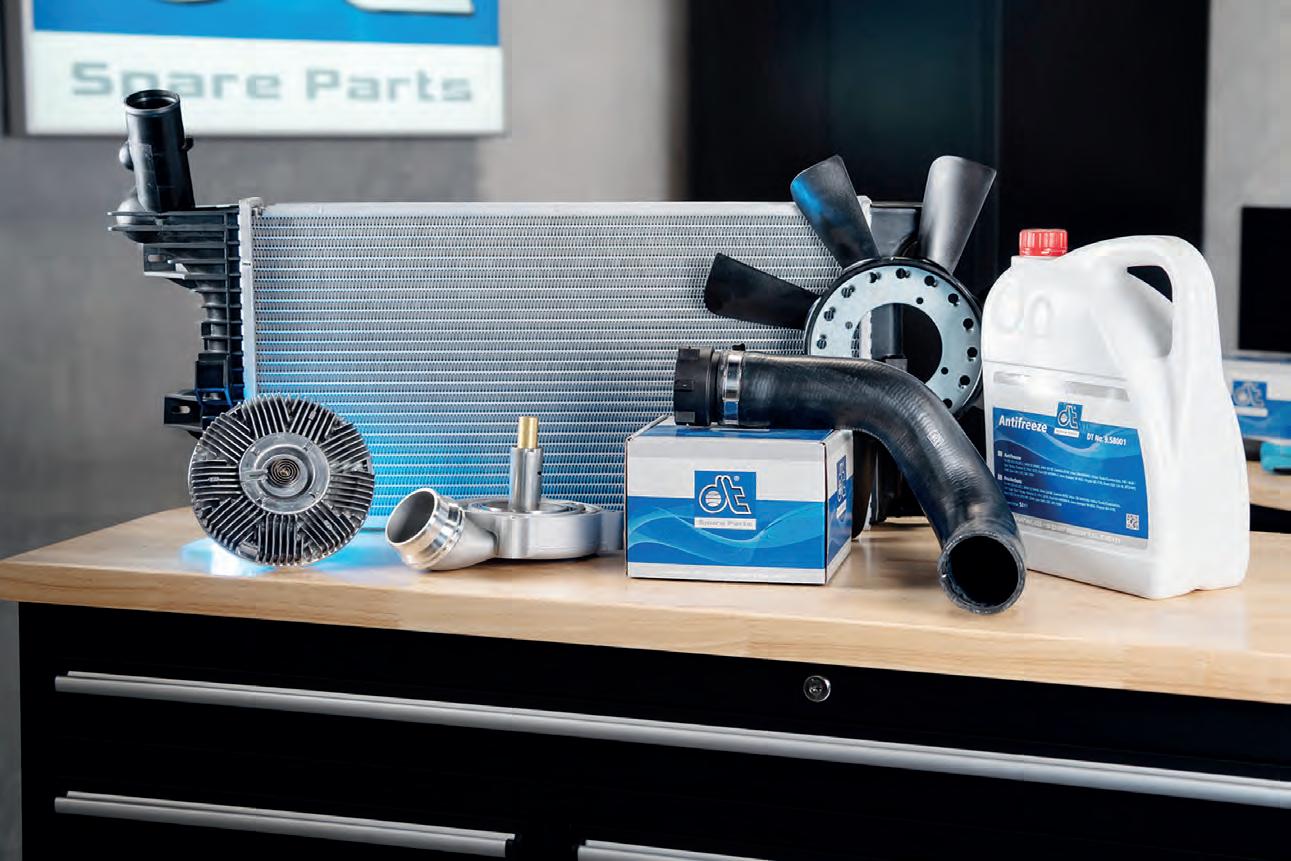
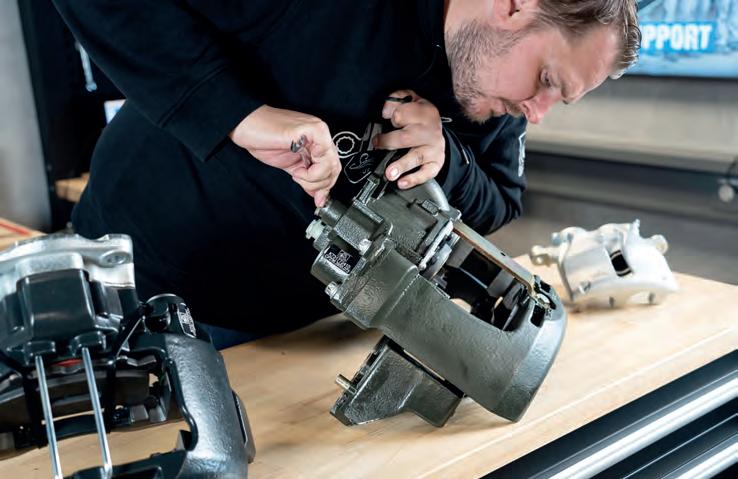
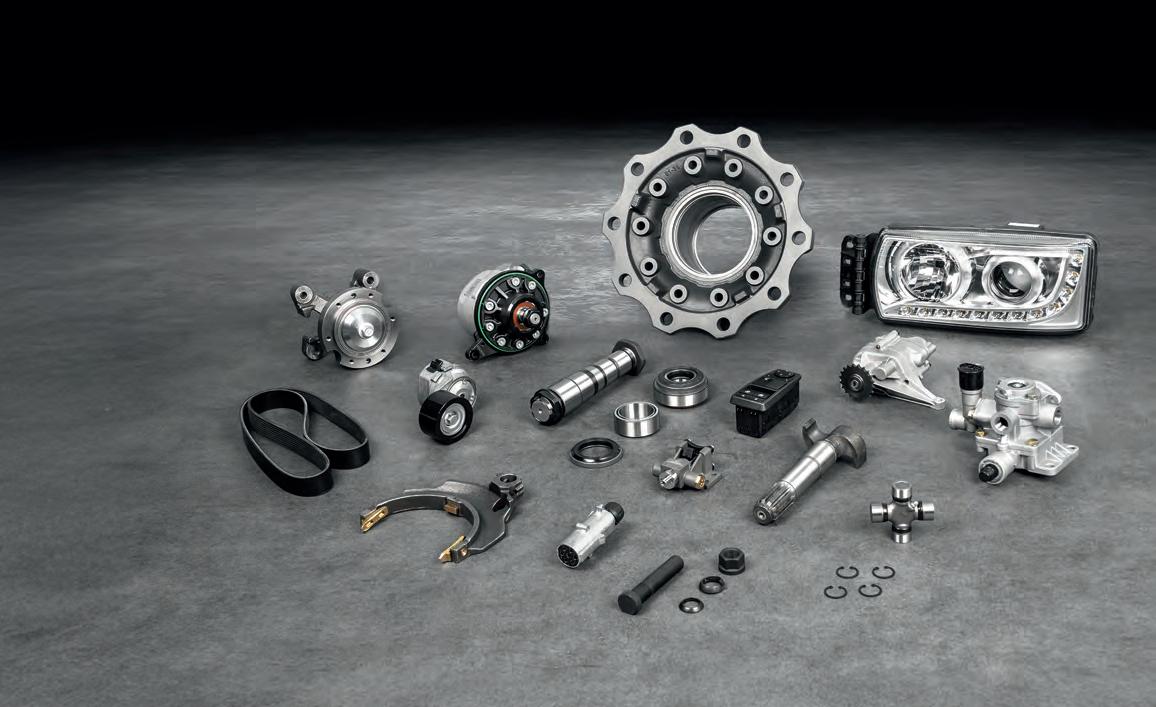
Diesel Technic provides a wide range of spare parts to keep fleets dependable through the toughest months.
Here are five critical areas to prioritise for reliable winter running:
1. FUEL FILTRATION & WATER SEPARATION
Ireland’s damp climate raises the risk of water contamination in diesel. Combined with low temperatures, this can lead to waxing, blocked
filters and hard starting. Fuel filters, seals and water separators should be checked and replaced as needed.
2. COOLING SYSTEM & ANTIFREEZE PROTECTION
Fluctuating temperatures and shorter journeys can expose weaknesses in the cooling system. Radiators, pumps, hoses, thermostats and clamps should all be inspected, and coolant concentrations verified to ensure adequate freeze protection.
3.
Cold weather increases electrical load, particularly for vehicles operating at night or on rural routes. Alternators, starters, wiring and connectors should be tested to ensure reliable cranking and charging performance.
Road salt and constant moisture—

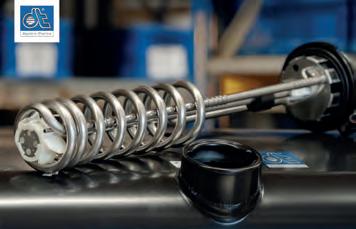
especially on coastal or motorway routes - accelerate corrosion across braking and suspension components. Brake lines, hoses, valves, chambers and chassis mounts should be carefully inspected for early signs of wear or damage.
Fog, rain and frosty mornings make effective heating and demisting essential. Blower motors, resistors, sensors and HVAC
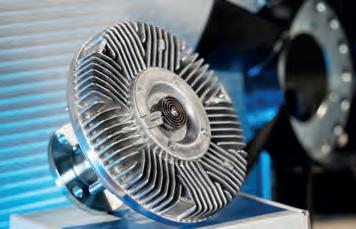
components should be checked, and it Is good practice to run the A/C periodically to maintain compressor lubrication.
Diesel Technic provides a comprehensive range of quality-assured spare parts across all key winter-maintenance systems, helping workshops and fleet operators reduce downtime and keep vehicles moving through the toughest conditions.
Its dedicated Parts Specialists also offer technical support via the Help Desk: www.parts-specialists.com/en/helpdesk

Renault Trucks has just unveiled new versions of the Renault Trucks E-Tech T: the Renault Trucks E-Tech T 585 and the Renault Trucks E-Tech T 780, which can travel up to 600 km on a single charge.
Designed to meet hauliers’ specific needs, the Renault Trucks E-Tech T 780 is focused on range and the Renault Trucks E-Tech T 585 on payload, while the Renault Trucks E-Tech T 540 4x2 remains dedicated to regional distribution.
The increased range of the Renault Trucks E-Tech T 780 and T 585 has been achieved by integrating an electric axle. The E-axle enables all parts of the powertrain – electric motors and transmission – to be grouped together at the vehicle’s rear. This architecture frees
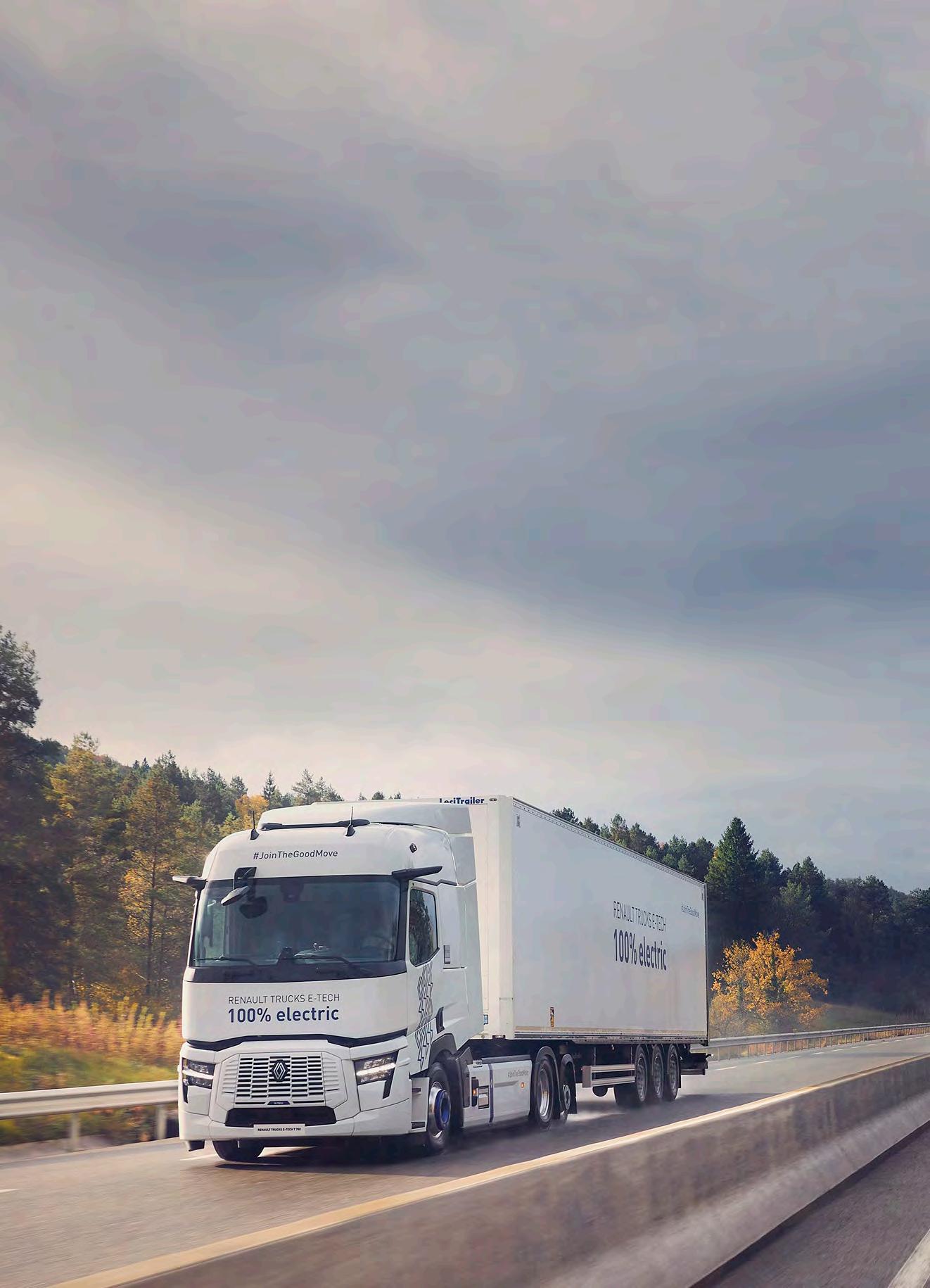
up space between the side members to accommodate additional battery packs.
These new models are fitted with highenergy-density NCA (Nickel, Cobalt, Aluminium) lithium-ion batteries, with a specific L-shape design to fit neatly in the new layout. Renault Trucks guarantees their performance up to 8 years or 1 million kilometres.
The Renault Trucks E-Tech T 585, which carries 585 kWh of battery capacity, can travel up to 460 km* on a single
charge, while offering the highest payload in this vehicle range.
With 780 kWh of capacity, the Renault Trucks E-Tech T 780 achieves a range of 600 km* and is designed for hauliers looking above all for maximum range.
To get the most out of stops, both models are compatible with charging stations equipped with the ultra-fast Megawatt Charging System (MCS), up to 720 kW. These stations can provide up to 350 km of range in a 45-minute driver’s rest break.
They can also be charged at a depot using the standard CCS (up to 350 kW). Alongside these developments, Renault Trucks is upgrading its current model, the Renault Trucks E-Tech T 540 4x2, which will now be able to travel up to 450 km on a single charge.
Designed for long distances, the Renault Trucks 6x2 tractor versions E-Tech T 585 and T 780 provide optimal driving comfort, and thanks to their rear axle, these new models’ manoeuvrability is comparable with that of a 4x2 tractor version. This lightweight, steerable and liftable axle protects tyres during return trips at low load.
To guarantee the performance and profitability of its electric vehicles, Renault Trucks provides a full range of connected and predictive services:
The Optifleet fleet management solution, with its various modules, enables route planning, real-time vehicle tracking, performance analysis, and charging management, for simplified planning and monitoring.
The Serenity Pack, a specific electromobility contract, ensures optimal use of electric trucks through enhanced tracking and personalised assistance provided by Renault Trucks experts during the first year of operation.
The Driver App enables drivers to monitor charging status and remotely prepare
their vehicle (pre-conditioning of the cab and batteries), so as to guarantee optimal availability before each assignment.
Finally, the Renault Trucks E-Tech Programme consultancy service provides transport operators with access to electromobility experts and advanced tools (fleet and route analysis, site energy capacity assessment, range and CO2 savings simulations, etc.) to build a bespoke decarbonisation strategy.
These three new models will be produced at the plant in Bourg-en-Bresse, where vehicles in the electric heavy-duty range –Renault Trucks E-Tech T and Renault Trucks E-Tech C – have been assembled since late 2023. They are available to order now.
Renault Trucks is expanding its electric range with the Renault Trucks E-Tech D14, a 14-tonne vehicle designed for city-centre distribution rounds. Compact and agile, it joins the electric medium-duty range developed by Renault Trucks, which now provides solutions fit for all urban applications, from 14 to 28 tonnes.
With a 2.39-metre-wide chassis, a 3.8-metre wheelbase and a turning radius under 7.3 metres, the Renault Trucks E-Tech D14 is the most compact and manoeuvrable vehicle in the manufacturer’s electric range. It stands out as the ideal solution for deliveries in dense urban environments where space is limited. Its low load bed height makes it easier to perform repeated tasks, whether they involve dry or refrigerated goods distribution. With a payload of 6.7 tonnes, it achieves an excellent trade-off between carrying capacity and agility.
And the Renault Trucks E-Tech D14 is the only truck in its category to feature full air suspension, both at the front and rear, providing optimal driving comfort in urban environments. Range to meet the city’s needs and simplified charging Fitted with four LFP batteries
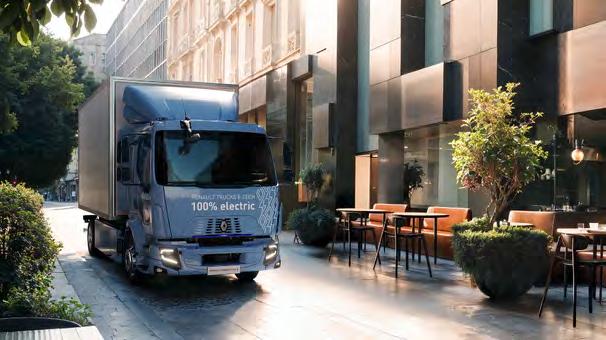
providing a combined capacity of 176 kWh, the Renault Trucks E-Tech D14 offers a range of up to 220 km on a single charge, comfortably covering the needs of a full day’s distribution work in town. It is also the only 14-tonne vehicle to feature a 43 kW AC on-board charger, to enable charging at alternatingcurrent stations, which are widely available and easy to install.
The Renault Trucks E-Tech D14 is paired with a set of connected services designed to make operators’ day-to-day work easier. Drivers and fleet managers can remotely monitor charging data using the Driver App and plan their routes with the Optifleet Mission module, which come as standard. With the optional module Optifleet Charge, they can remotely

control battery charging status and optimise charging cycles to maximise vehicle availability.
Going a step further, the Serenity Pack – a specific electromobility contract – provides enhanced tracking and personalised assistance by Renault Trucks experts during the first year of operation, to guarantee optimal use of the electric truck.
Finally, the Renault Trucks E-Tech Programme consultancy service provides transport operators with access to electromobility experts and advanced tools (fleet and route analysis, site energy capacity assessment, range and CO2 savings simulations, etc.) to build a bespoke decarbonisation strategy.
The Renault Trucks E-Tech D14 is available to order and is produced at the plant in Blainville-sur-Orne, France – a European leader in electric truck manufacturing.
With this new model, the Renault Trucks electric distribution range is now available in 14, 16, 18 and 28 tonnes, making it another part of a comprehensive electromobility solution offering that ranges from 3.5-tonne to 44-tonne.
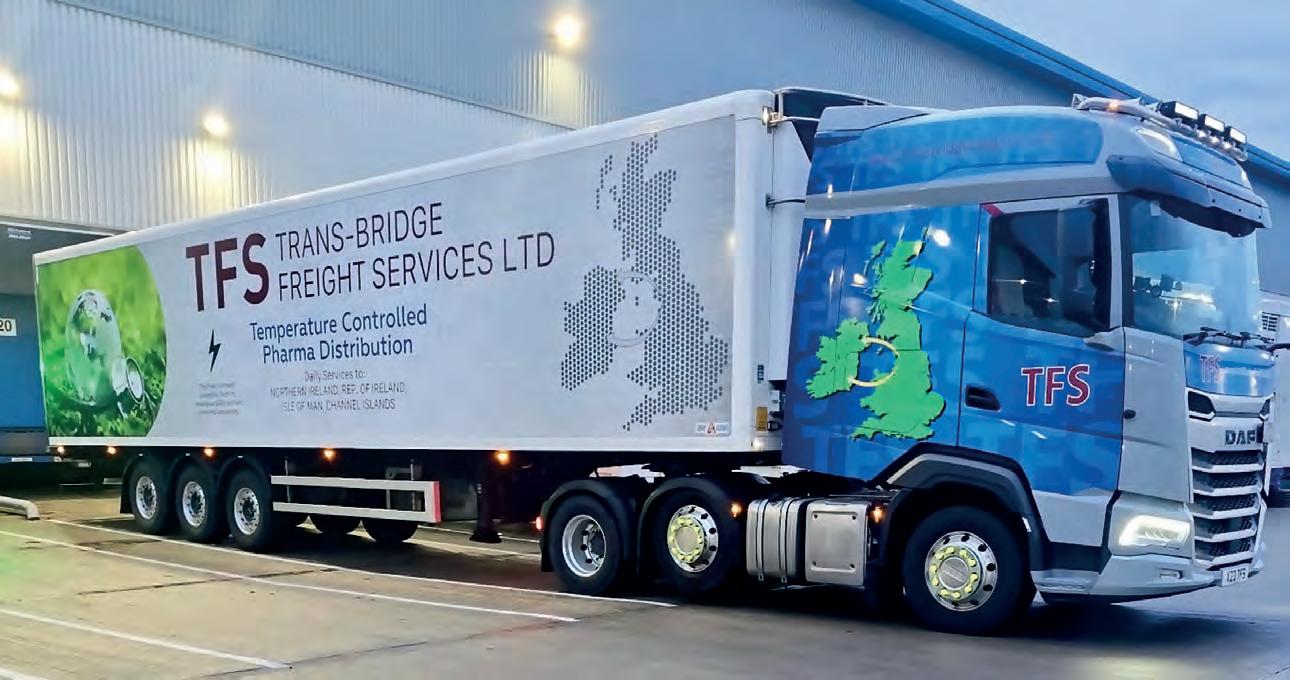
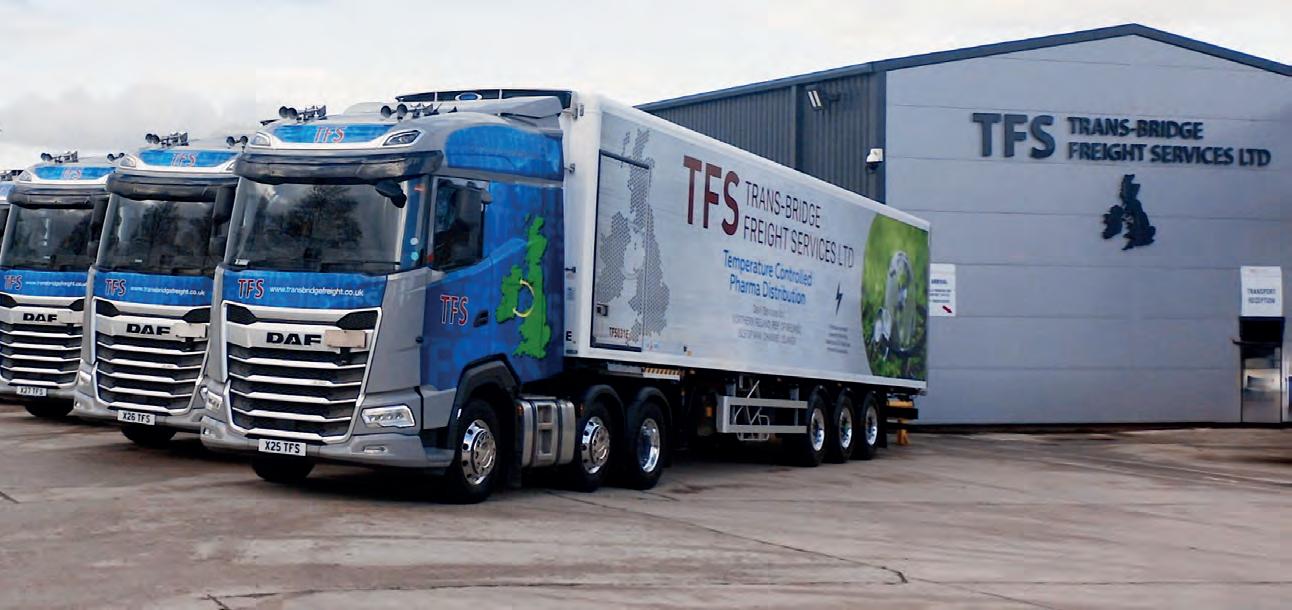
Over the past two years, Transbridge Freight Services has been on a mission—driving innovation, strengthening resilience, and raising the bar for what a modern logistics partner can deliver. From helping clients shrink their carbon footprint to tackling the rising challenges of cyber security, they’ve been reshaping how the supply chain can be protected, optimised, and future-ready.
We caught up with Director, Brian Anderton to give us an inside look at their progress - and a glimpse into their ambitious plans through 2026 - he answered some of the key questions shaping the next chapter of their journey
Q1. WHAT ARE THE KEY EXPECTATIONS FROM YOUR CLIENTS HEADING INTO 2026?
Historically the main asks of any Transport Service provider were to provide a reliable door to door service at the best price possible. Over the last 2 years a lot more focus, particularly from our larger Global clients, has been centred on reducing our carbon footprint and subsequently our client’s scope 3 Emissions. The other hot topic, particularly in the last year has been Supply Chain and Cyber Security.
Q2. TAKING CO2 REDUCTION FIRST, WHAT IMPROVEMENTS HAVE TRANS-BRIDGE FREIGHT SERVICES MADE IN THE LAST 12 MONTHS TO SATISFY YOUR CLIENTS ESG EXPECTATIONS?
If you recall you featured our first fully electric powered Temperature Controlled Trailer in Export & Freight in June 2024, our fleet replacement
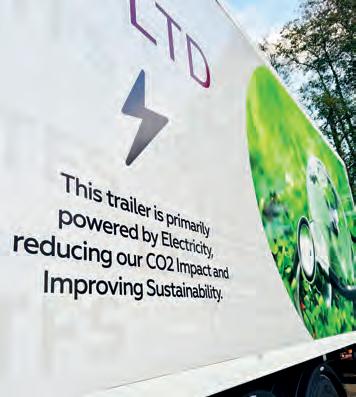
plan is now underway with these trailers as the default asset, with more added in 2025 and further builds planned for 2026. We also gained accreditation of ISO14001:2015 Certification which involved a major gap analysis of our energy use and how best we could reduce that. One of our highest energy intensive resources
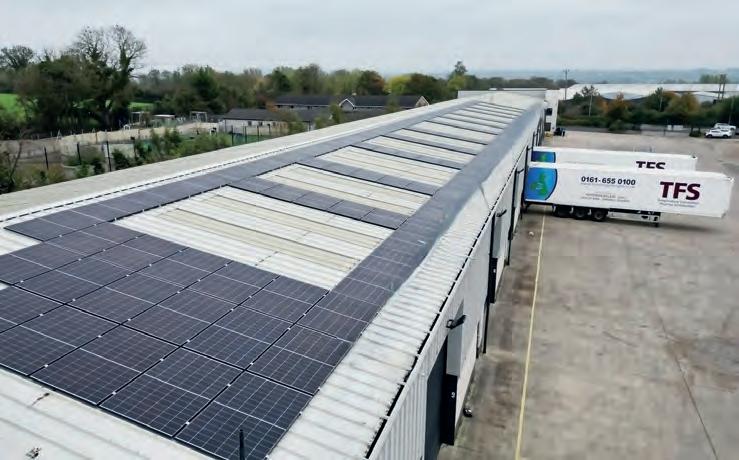
is the constant heating and cooling our Pharmaceutical Warehouses. Our obligations under the regulation of the MHRA and client contractual agreements is that we maintain a warehouse and transit environment for the Healthcare and Medicinal products that have strict temperature conditions. Both Cold Chain and Ambient products that patients rely upon to arrive with its efficacy intact. To reduce this high energy demand we have just completed installation of Solar Panels at our Antrim facility with Manchester to follow suit by Q3 2026. Working closely with our approved supplier Solmatix Ltd these panels provide a significant reduction in electricity consumption and in turn a valuable reduction in CO2.
Q3. MOVING ONTO SUPPLY CHAIN AND CYBER SECURITY, CAN YOU EXPAND ON WHAT YOUR ROLE AS THE TRANSPORT PROVIDER HAS HERE?
Taking Cyber Security first, I think the whole world is starting to understand the huge impact a Cyber Attack can impact all of our daily lives, whether that be through direct public facing services such as Banking or Communication channels or secondary impacts such as consumer
interruption. There have been some really high-profile examples recently such as Marks and Spencer, Jaguar Land Rover and the NHS to name just a few that were pretty much paralysed at the hands of Cyber Criminals resulting in wide reaching commercial damage and Millions of Pounds in losses. It is no secret that Cyber Criminals see the Supply Chain as a prime target to create disruption and mayhem, particularly in key areas such as Healthcare. Albeit we are a relatively small cog in a much bigger machine we don’t take lightly our responsibility in terms of protecting not only our Data and Systems but also that of our highprofile client portfolio. A recent minor incident prompted us to significantly update our IT security and working practices to reflect the risks we know of today. Mobile Phones, Internet and Social Media exposure, remote working and innocent everyday devices that connect to the outside world all pose risk of attack. We have invested heavily in external expertise and technology to not only protect as best we can but to also train our teams to be aware of the length these unsavoury individuals will go to, to bring our business to a grinding halt. Our primary responsibility is to protect
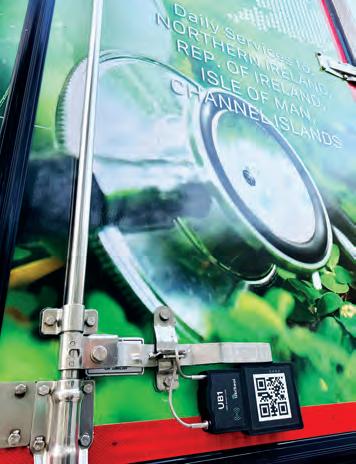
our ability to function and in turn maintain the key supply chain that our customers entrust to us. The big challenge is keeping pace with the evolution of the threat. Product Integrity is one of key the pillars upon which our customer relationships are built, and load security is a key component of protecting product integrity. The GB to Northern Ireland post Brexit process also demands a higher level of visibility and security. We have partnered with Northern Ireland based, Block Chain specialist, Ubloquity Ltd to provide a sophisticated yet practical solution to provide transparent data in tandem with a highly secure vehicle locking system.
The smart locks that we have invested in are of Military Grade and are independent of the truck itself. The locks contain Communication Sims that not only give pinpoint accuracy as to its location, but also communicates via a dashboard to our operations team. From this central panel we can see the status of the lock, the log of events, and have the option to attach documentation electronically that can be shared securely with all interested parties, including Border Force, HMRC, Shipping Companies and Clients. The locks can be opened by RFID Card
and remotely and most important they can be deployed to any vehicle of our choosing. The provision of complete Block Chain visibility increases our value-added security that this perilous modern digital world demands.
Communication and collaboration with all interested parties is key. Its important to note that threats don’t just arise from the criminal world. Hostile Governments and Regimes also see Cyber Attack as a very sophisticated and effective weapon. Paralysing Supply Chains, particularly in critical sectors could have a devastating impact on the entire nation.
We will be exhibiting again at the Making and Distributing Pharmaceuticals event in April 2026 where we will be hosting a Q&A Panel with some key experts on this subject from different industry sectors. Our Social Media platforms will be promoting this event in the coming months for anyone want to join the conversation.
sales@transbridgefreight.co.uk

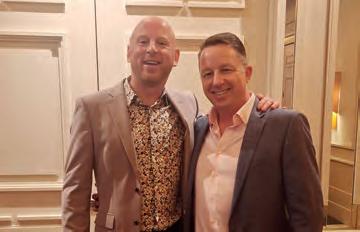
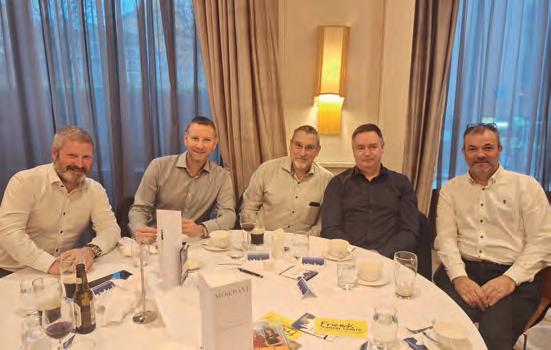
The Merchant Hotel in Belfast was once again the venue for the annual Logistics UK lunch, which was held at the start of November.
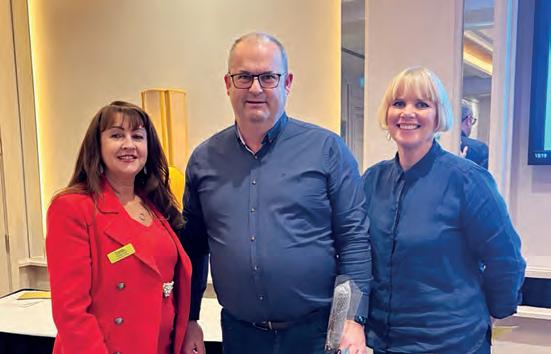
The event was hosted by Jemma James, Digital Development Director, Logistics UK and attended by representatives of the local transport and logistics industry and their guests. In her address Jemma James welcomed ‘members, colleagues and friends’ to the lunch, telling the audience, “You are the people that literally keep Northern Ireland moving”.
“Our sector is the heartbeat of this economy. More than 6,000 logistics businesses operate here, employing almost 70,000 people – that’s around 8% of Northern
Ireland’s total workforce.”
“Every household, business and public service depends on all of you in this room whether its food on supermarket shelves, medicines in hospitals or parts for advanced manufacturingnothing moves without logistics.
“This is a chance to celebrate all of you and everything you do, but also to look ahead.
Ms. James continued saying she understands the challenges the local industry faces – trade friction, rising costs, constrained infrastructure, decarbonisation, skills shortages. And yet despite all these pressures, the industry here in Northern Ireland continues to deliver.
“Logistics UK have been working hard over the past 12 months with the Northern Ireland Executive and the UK Government to make sure they recognize this industry’s contribution. This includes simpler,

more efficient GB and NI trade backed by improved Windsor Framework processes, and fighting for a fair decarbonisation transition with realistic timeframes including investment in charging and refueling infrastructure.
Ms. James also said how Logistics UK are supporting the next generation through the ‘Generation Logistics Campaign’. Currently backed by over 40 businesses this campaign aims to increase positive sentiment about careers in logistics among 13-24 year olds.
Concluding her address Ms James said, “Thank you – you are the voice, the strength and the heartbeat of this organisation”
Jemma James then introduced Maire Clare Reid, Chair of the Northern Ireland Freight Council to say a few words.
Describing logistics as ‘One of Northern Ireland’s most dynamic
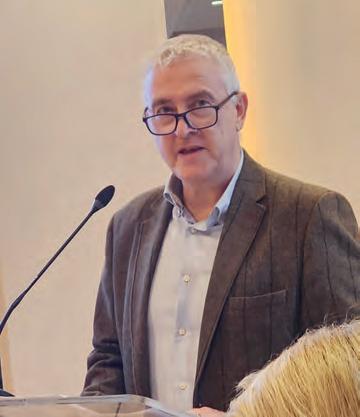
and resilient industries’, Marie Claire said; “Today isn’t about statistics and regulations – it’s about people: people who plan, drive, load, repair, dispatch and deliver. People who have worked through disruption, uncertainty and endless change – yet still find a way to make sure everything gets where it needs to go.
“As someone who has spent their life in logistics, I’ve seen first-hand just how much this industry contributes to the everyday life of Northern Ireland. We underpin every sector from agrifoods to retail to construction.
Maire Claire highlighted how the Freight Council collaborates with government to bring about practical solutions to industry issues.
She gave an example of how during Storm Eowyn ‘supply chains were disrupted, roads were closed and operations across the country were stretched.



“Through Logistics UK Northern Ireland Freight Council we gathered direct feedback from our members on the ground and presented the evidence to the Dept. of Infrastructure. As a result a temporary relaxation of driver’s hours rules was granted to help our industry recover
quickly and safely. That was a clear example of collaboration between industry and government.
“The Freight Council continues to engage in several issues that matter deeply to our members and the wider industry
“The more people understand what logistics delivers, literally and

figuratively, the more influence we have in shaping the policy and public perception to our industry. The world around us is changing, but the Northern Ireland logistics sector has shown time and again we can evolve, adapt and we can lead.
Following a delicious lunch guests
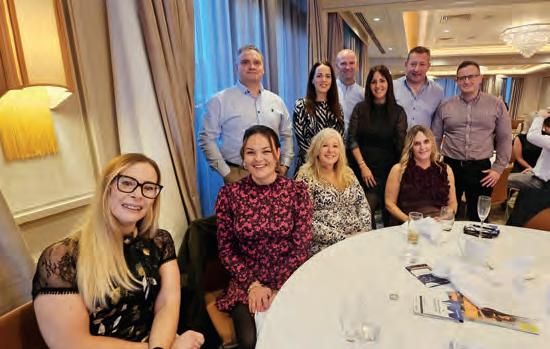
were entertained by the fabulous comedian, author and playwright Nuala McKeever and after this a charity raffle, in aid of Friends of the Cancer Centre – took place. A show of hands confirmed the preference of the audience was to keep this annual fixture at the start of November for next year.

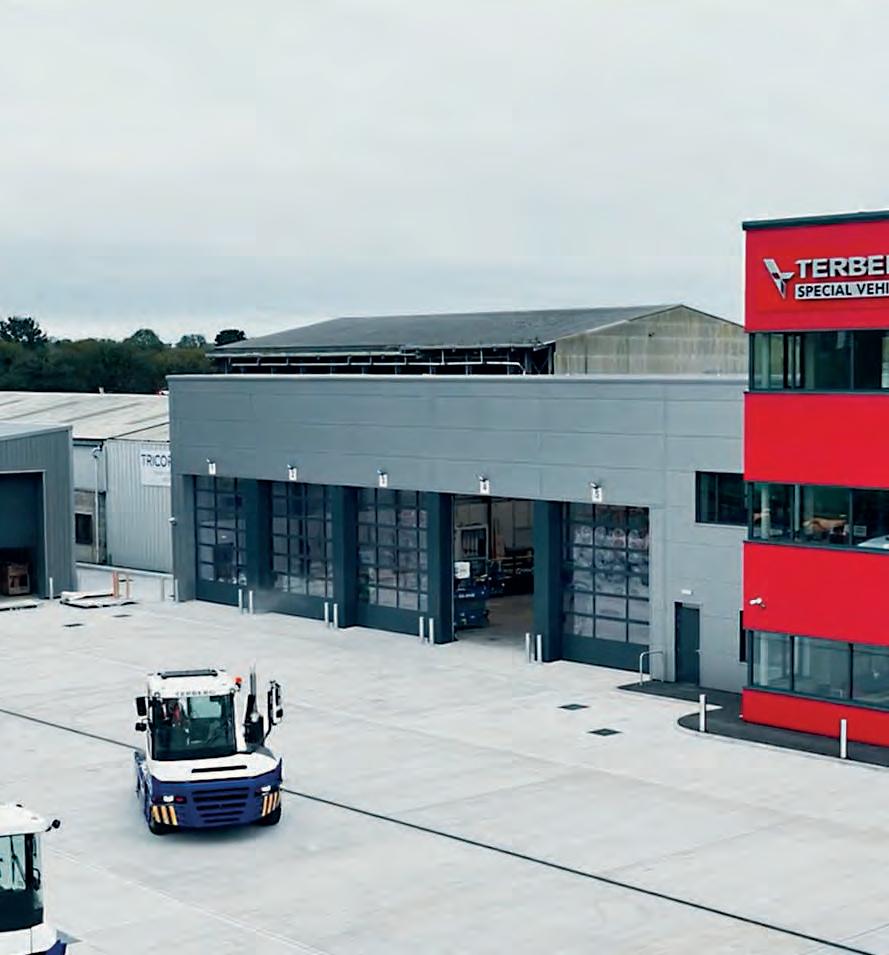
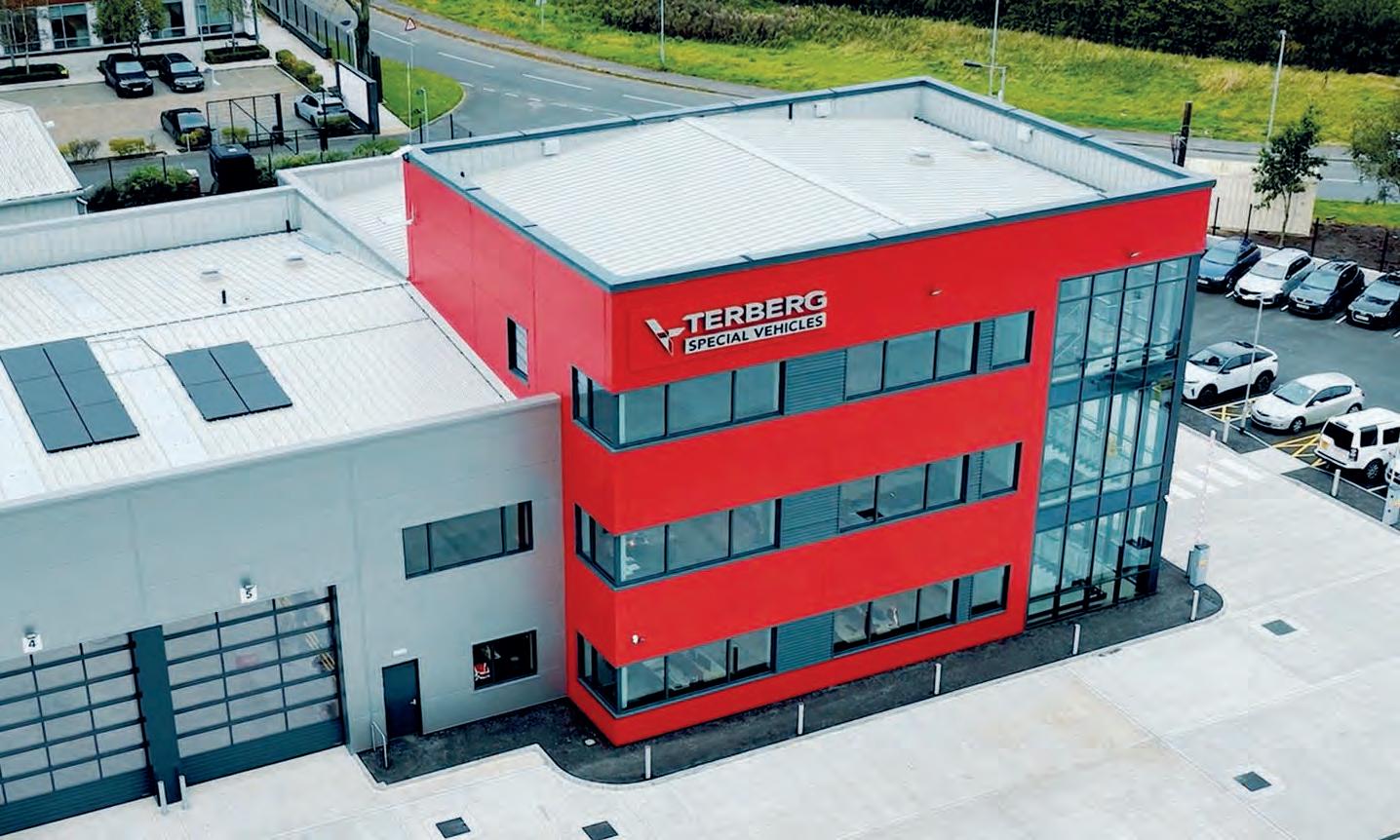
With a brand-new, state-of-the-art facility in one of Ireland’s most strategically placed business locations, a healthy order book and a highly skilled and motivated team, Terberg MPM is a company firmly on the move.
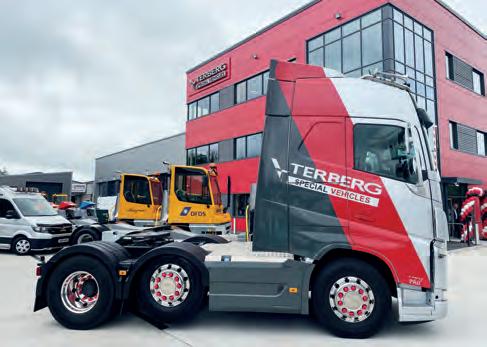
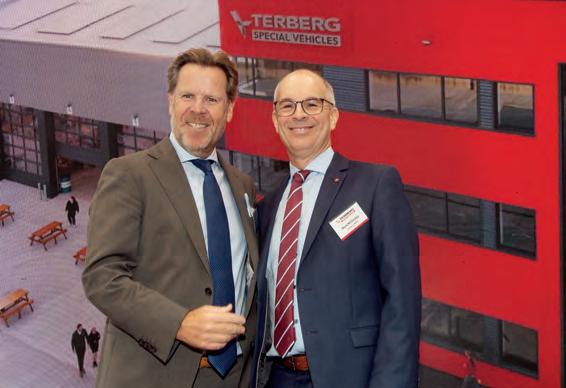
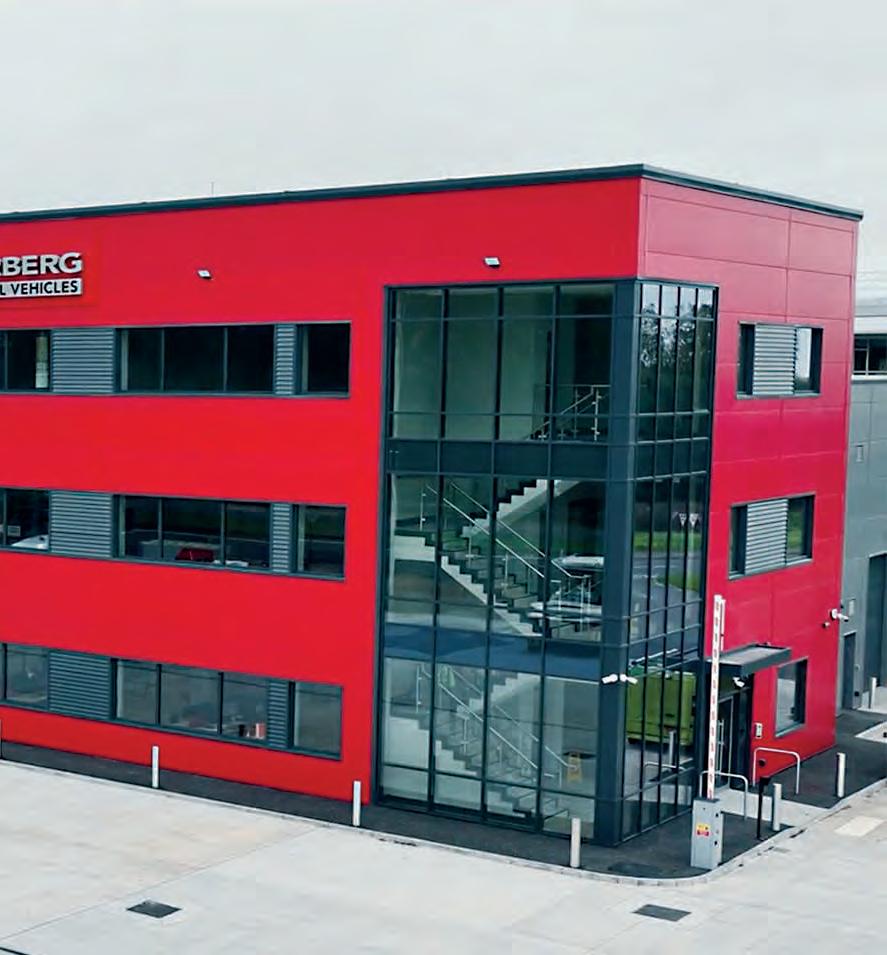
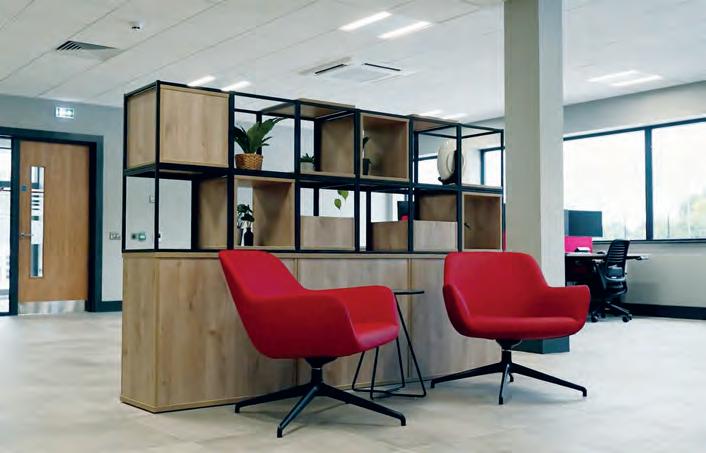
A subsidiary of the Terberg Special Vehicles division - part of the internationally respected, family-owned Royal Terberg Group - Terberg MPM Ireland delivers world-class specialist vehicle solutions to the transport, construction and fire and rescue sectors. Since its establishment in 2010, the business has grown from a start-up operating out of the McCluskey family garage in Hillsborough into a 30-strong operation based in an impressive new 1,650m² facility alongside the main A1 Belfast–Dublin corridor.
On Thursday, 9th October, Terberg MPM Ireland officially opened its new state-of-the-art facility in Hillsborough. The opening ceremony was attended by MPM employees, customers, the Extended Board of Directors and members of the Terberg family.
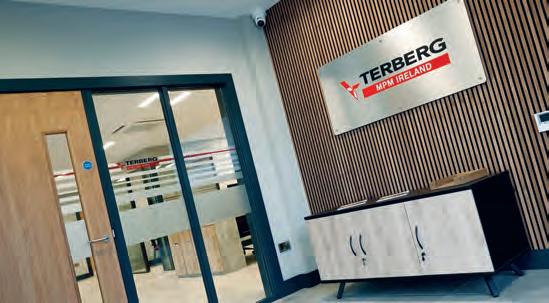
Speaking at the official opening of the new headquarters in October 2025, Managing Director Mark McCluskey talked about the company’s journey to date. “This new facility means growth for the team. It provides space for new staff to join, more opportunities to
develop, and a workplace designed with the future in mind. It’s an exciting time for everyone.”
He said he often gets asked what MPM stands for? MPM stands for ‘McCluskey Plant and Machinery’, and when he and
his wife established the business the plan was to be brokers and consultants for people buying and selling machinery; to work less hours, to carry no stock, to employ no people and continue to work from the office at home…. “How do you think that’s going” he asked his guests. The turning point for the business came when a chance conversation with industry contacts Richard Woodings led to an informal meeting over the family breakfast table - and ultimately, to MPM becoming the authorised Terberg distributor for Ireland. What began as a small partnership has since evolved into a long-term collaboration and a significant market presence, with Alaistair, one of the original visitors, now serving as a director of Terberg MPM.
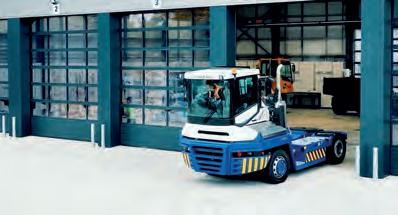
Terberg MPM is the sole distributor for Terberg products across Ireland, supplying the full RT, YT and DT tractor ranges.
RT Series (4x4 RoRo Tractors): Built for demanding port and industrial environments, with robust driveline technology ideal for steep ramps and heavy-duty operations.
YT Series (Distribution Tractors): Favoured by major retail chains including Tesco and Asda, with diesel options and growing demand for the electric YT variant—six of which are currently operating in Ireland.
DT Series (Low-Entry Distribution Tractors): Designed for multi-drop operations, with a low-entry cab that reduces driver fatigue during frequent stops.
As the Terberg brand accelerates its electric transition, the RT253EV— Terberg’s first all-electric 4x4 RoRo tractor—is nearing production.
Recent nationwide roadshows generated strong customer interest ahead of market launch in 2026, with deliveries expected early 2027. In addition to new tractors, Terberg MPM provides high-quality refurbished Terberg vehicles.
“These trucks are built to last. The vehicles can be reconditioned and refurbished by our engineers
thereby extending its service life by up to ten years,” Mark explains. The company also maintains an extensive rental fleet, offering both short- and long-term solutions across Ireland, supported by full maintenance packages.
“Whether it’s for a short period, such as while a customer’s truck is being repaired or for a longer period of time our rental fleet is there and can be delivered to any location in Ireland whenever it’s needed” said Mark McCIuskey.
Terberg MPM now works with many of Ireland’s leading transport operators. Recent highlights
include supplying Stena Line in Belfast with RT223 RoRo tractors to support routes to Cairnryan, Liverpool and Heysham. Guinness in Dublin has also added three electric YT tractors to its fleet. Other major names such as Manfreight continue to rely on Terberg MPM for specialist vehicle support.
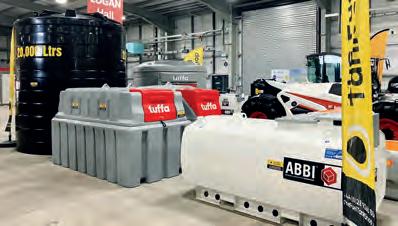
Beyond transport tractors, the company operates a Fire and Rescue division supplying PPE and right-hand-drive fire engines for export markets. Through its online retail platform, The Fuel Tank Shop, Terberg MPM also supplies steel, plastic and mobile fuel storage solutions from top manufacturers including Western Global, Tuffa and Cemo.

OUR SERVICES INCLUDE:
Commercial Vehicle Accident Repairs
From vans and pickups to HGV cabs and fleet vehicleswe handle repairs of all sizes with precision.
Advanced Bodyshop & Paint System
State-of-the-art facilities delivering factory-finish results on all makes and models.
Panel Work, Chassis Alignment & Structural Repairs
Expert technicians ensuring your vehicles return to full safety and performance standards.
Fleet Support & Priority Turnaround
We know downtime impacts delivery schedules - our priority services help keep your fleet running efficiently.
Insurance-Approved Repair Centre
We deal directly with your insurer for a seamless, stress-free process.
Courtesy Vehicles Available
Stay operational while repairs are underway.
In transport and logistics, time is everything. When a vehicle comes off the road, it costs you - in schedules, in service levels, and in reputation.
At Alan Croskery Accident Repairs NI, we understand the pressures facing the commercial transport sector, and we specialise in fast, high-quality repairs that get your vehicles back on the road where they belong.
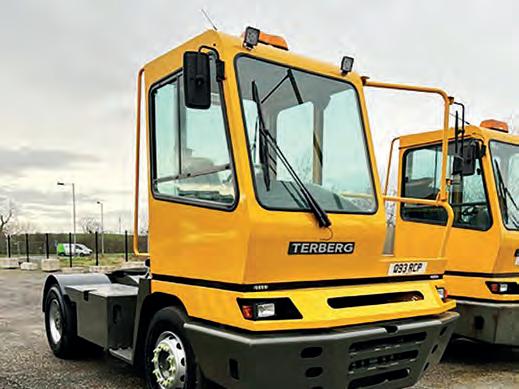
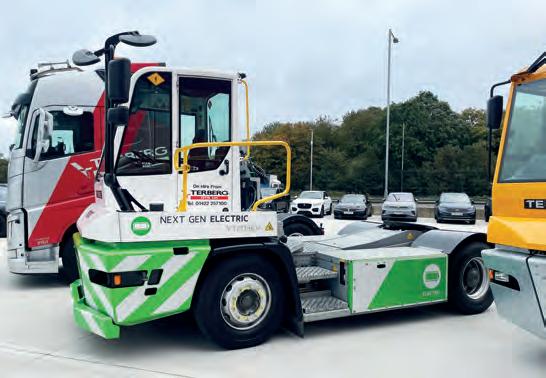
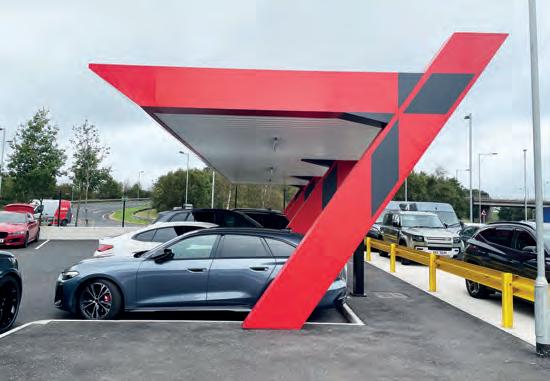
On Thursday, 9th October, Terberg MPM Ireland officially opened its new state-of-theart facility in Hillsborough. The fabulous new premises, which took 56 weeks to complete, is in a prime business location situated beside the busy A1 Belfast to Dublin road.
Some key facts and figures about the new Terberg MPM facility.
The building spans 1,650 m² on a twoacre site and includes a modern workshop, parts warehouse, and office space.
The workshop covers 545 m², the parts store 270 m² across two floors, and the offices occupy 800 m² over three floors.
Construction of the building took 56 weeks to complete.
The new facility enhances Terberg MPM’s
ability to serve customers throughout Ireland and supports future growth, offering capacity for up to 60 employees - double the current workforce of just under 30.
Sustainability is integral to the building’s design, in line with Terberg Special Vehicles’ environmental policy. Features include EV charging points, solar panels with battery storage, water recycling systems, high-grade insulation, and a heat-recovery system.
“Ireland represents a strategic opportunity for Terberg,” noted Godfried Terberg, CEO of
Royal Terberg Group, who was among several members of the Terberg family in attendance at the official opening of the new building. “With this new facility, we are strengthening our ability to support customers across the island with sustainable, high-performance solutions. It’s a proud moment for our Group, and we greatly value the dedication of the Terberg MPM team.”
This expansion follows the opening of a Customer Support Centre in Dublin in 2024, further reinforcing Terberg’s footprint and customer service capabilities in Ireland.
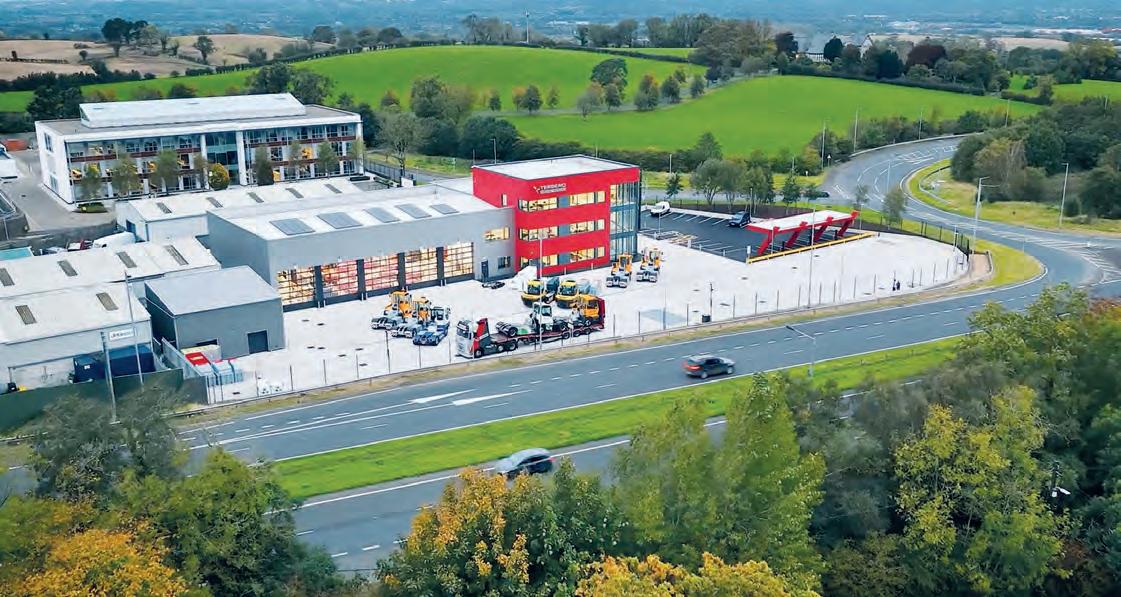
Signtime (NI) is proud to have delivered professional, high-impact signage solutions for Terberg - a brand recognised across the freight, logistics, and industrial sectors for strength, reliability, and performance.
From large-format branding to safety and wayfinding signage, our work for Terberg reflects the same attention to detail and durability demanded in busy industrial environments.
We specialise in the design, manufacture, and installation of signage for:
AND TERMINALS
WAREHOUSES AND DISTRIBUTION CENTRES
TRANSPORT DEPOTS AND INDUSTRIAL FACILITIES
LOGISTICS AND COMMERCIAL E NVIRONMENTS

All signage is produced to meet compliance standards, withstand harsh conditions, and clearly communicate your brand and safety messages.
Get in touch to discuss your signage requirements today.
028 2582 1000 (4)

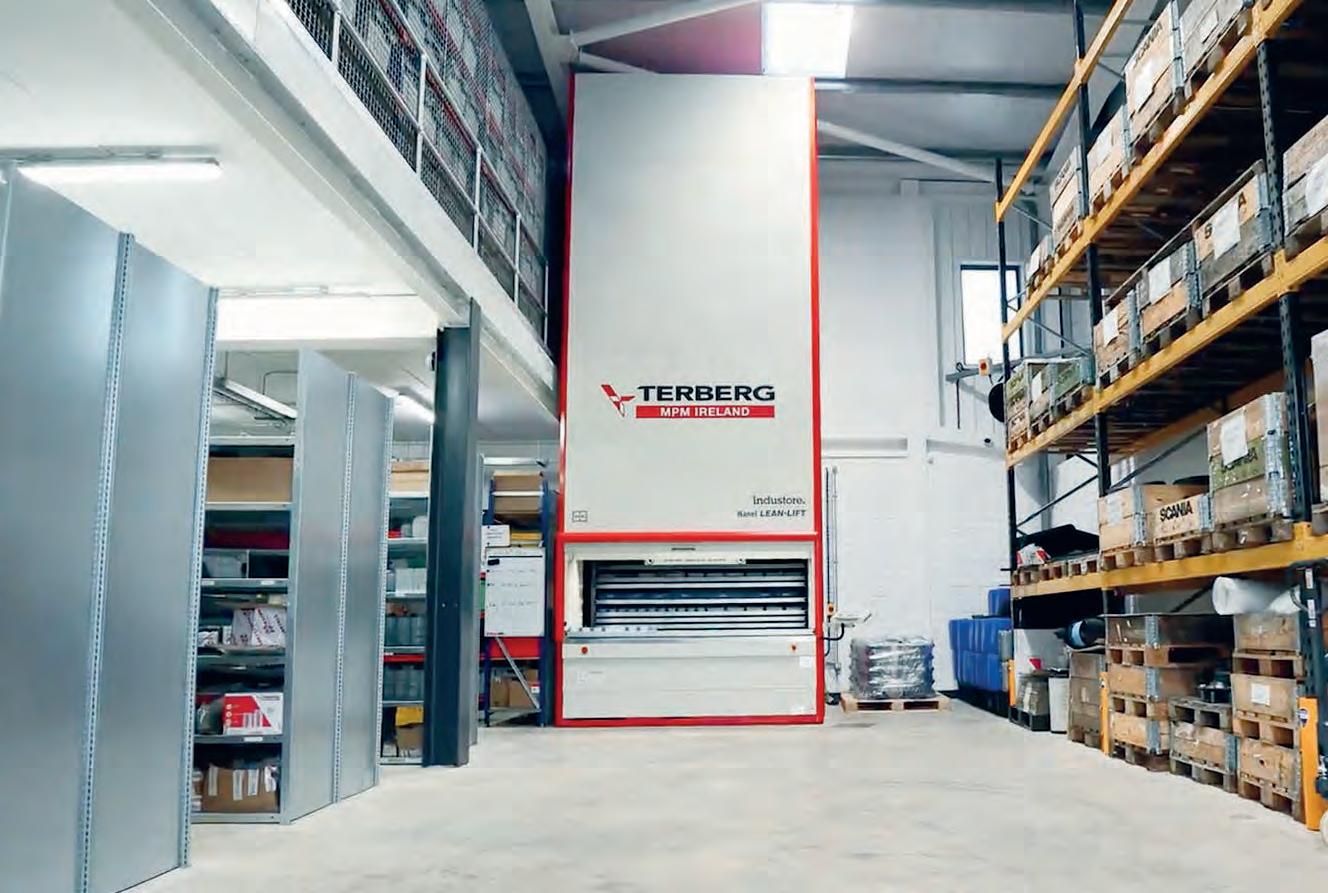
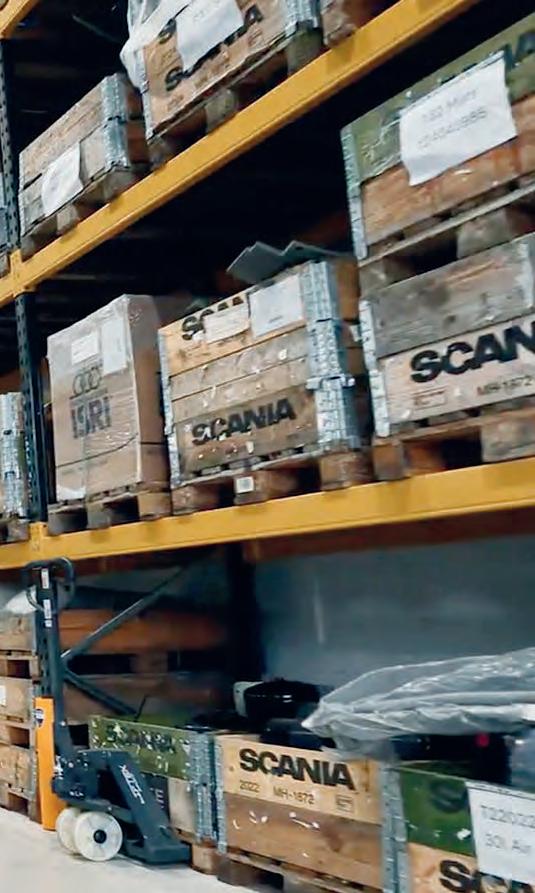

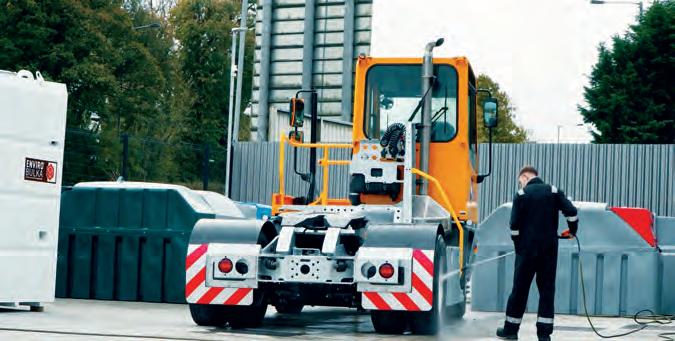




Terberg MPM know that performance, precision, and reliability start with the people behind the machines.
At their new Hillsborough offices, Terberg MPM are proud to have created a workspace that supports the health, wellbeing, and productivity of their team. The new facilities aimed to promote staff health, well-being and productivity include: A fully equipped gym – free for all staff to use - encouraging fitness and healthy habits. Standing desks throughout the office – giving everyone the option to move more and work in the way that suits them best.
Terberg MPM believe that when people feel their best, they perform their best. Investing in health and movement, is an investment in our
team’s happiness and long-term success. It’s all part of creating a workplace where staff can thrive, physically, mentally, and professionally.
At Terberg Special vehicles it’s not just about engineering machines that move the world, they empower the people who make it happen.
Mark and the team at Terberg MPM are proud to share that a new public access defibrillator (AED) has been installed at the front gate of our Hillsborough offices. This lifesaving device is available 24/7 for both the Terberg team and the local community. In an emergency, dial 999 and the operator will provide the access code and direct you to the defibrillator.
It feels especially fitting to have this here in Hillsborough, the birthplace of Professor Frank Pantridge, the

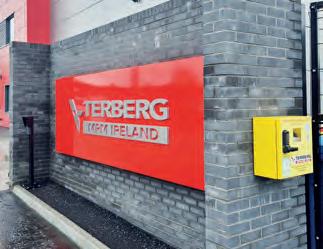
inventor of the portable defibrillator and a pioneer in emergency medicine. The nearby Pantridge Link stands as a reminder of his incredible contribution and now, thanks to his legacy, this equipment continues to save lives right on our doorstep.
While it is hoped this life-saving device is never needed, it is reassuring to know its there, ready to keep the local community safe.
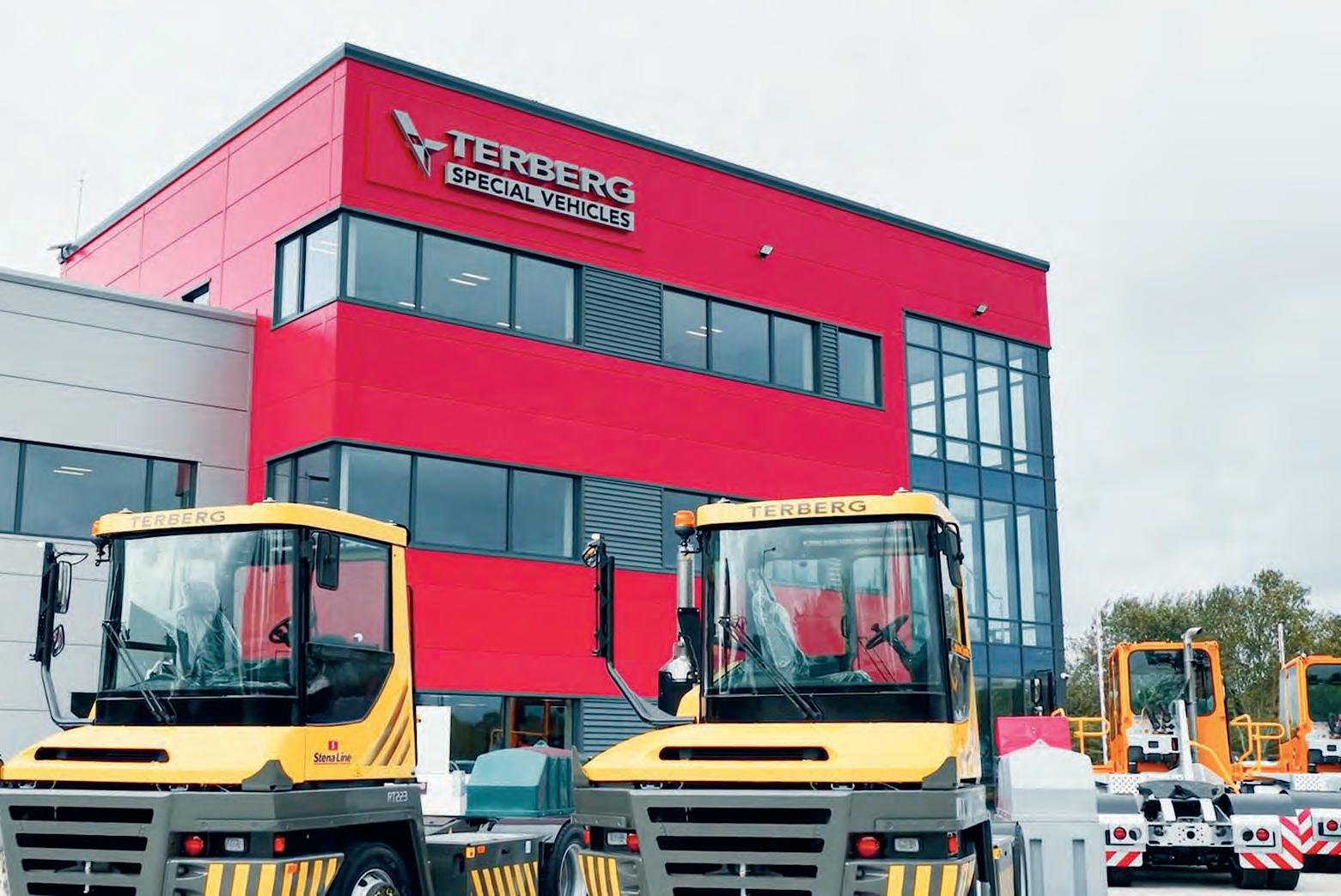
RELIABLE TRANSPORT ACROSS NORTHERN IRELAND, THE UK & IRELAND.
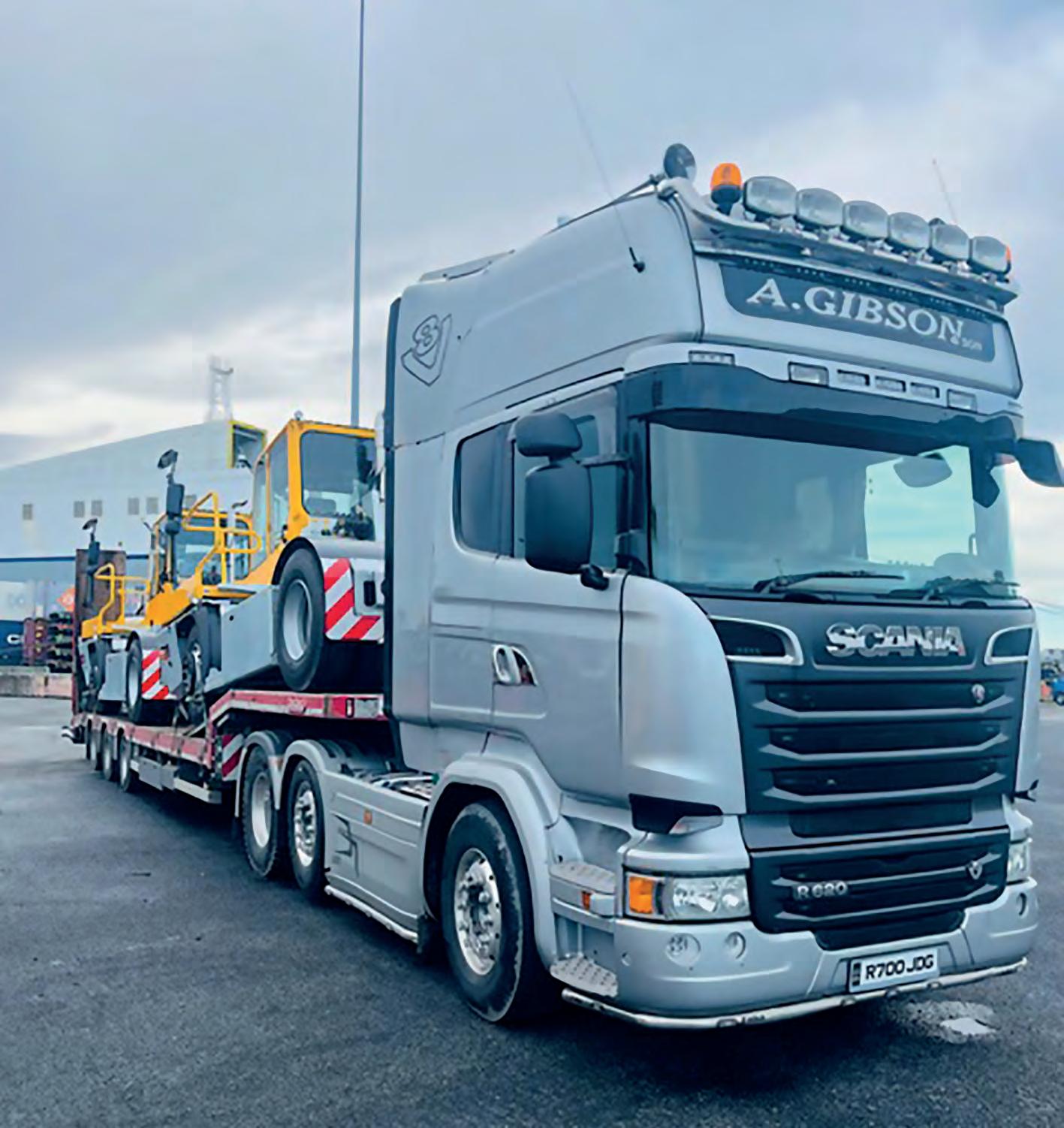
LOW LOADER HAULAGE MADE
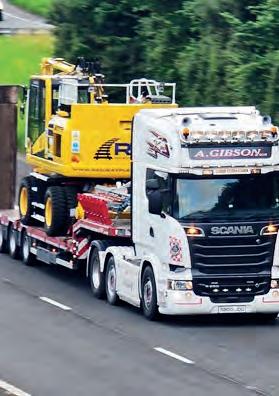
LOW LOADER HAULAGE FOR MACHINERY & VEHICLES
CONSTRUCTION, AGRICULTURAL & INDUSTRIAL EQUIPMENT
FLEXIBLE ONE-OFF OR REGULAR TRANSPORT
“YOUR TRUSTED PARTNER IN LOW LOADER HAULAGE.”
DELIGHTED TO SUPPORT MARK & TERBERG MPM
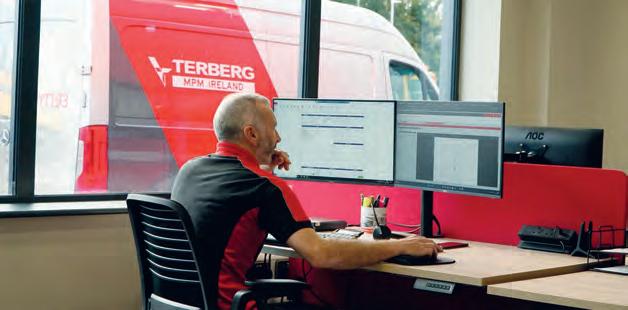
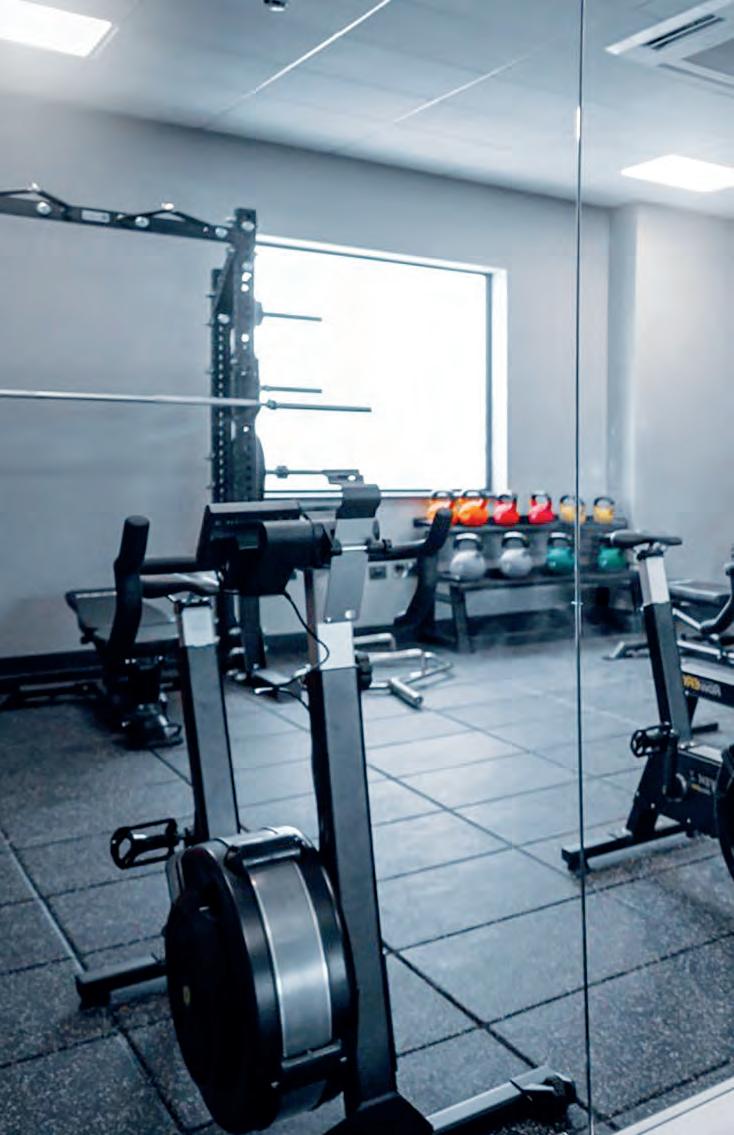
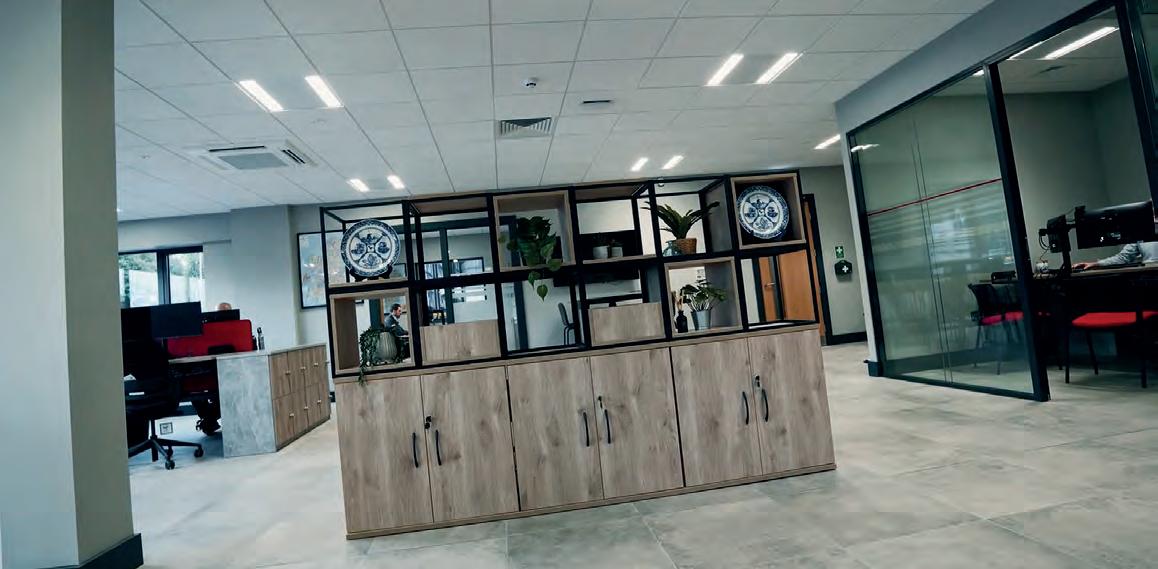
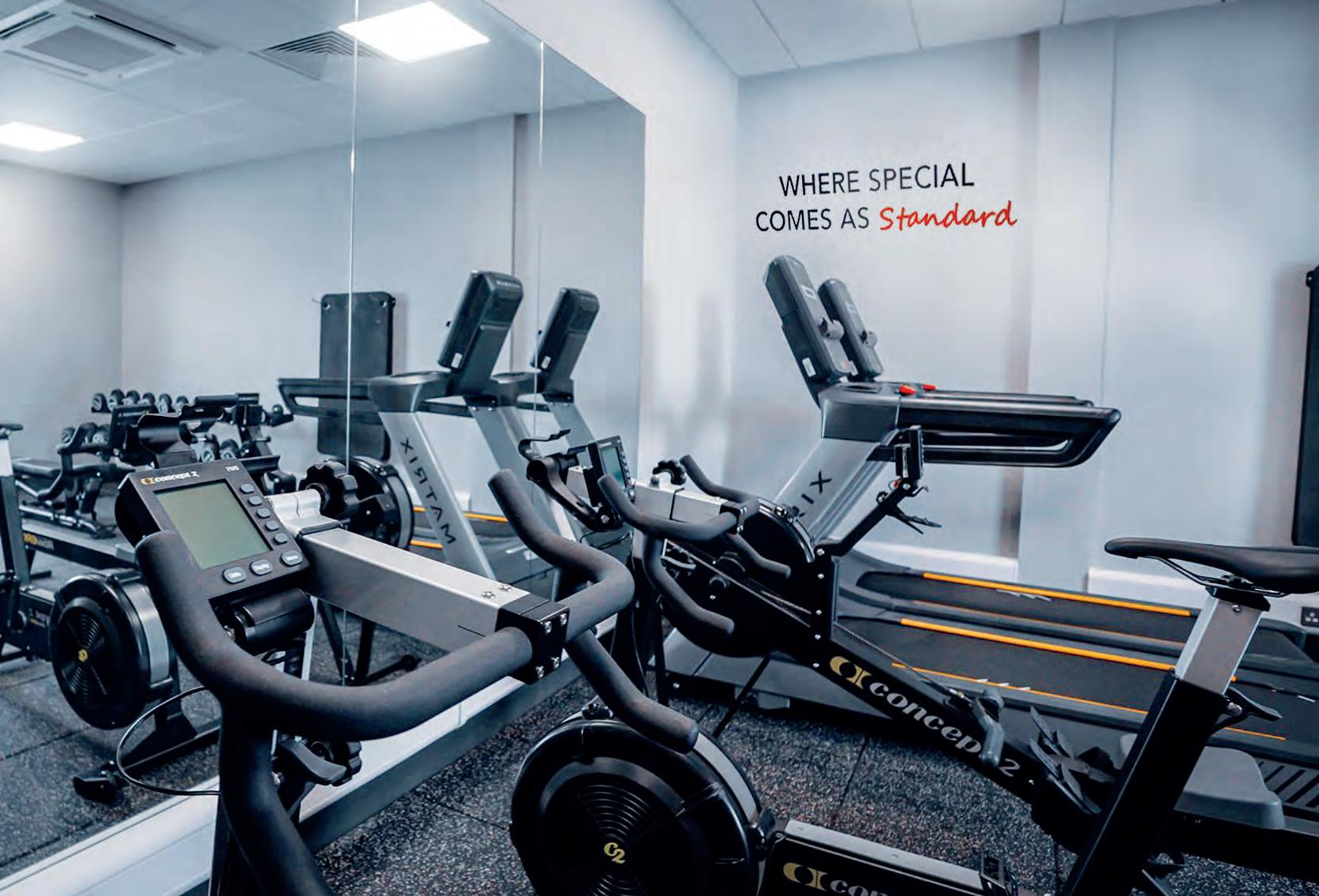

THIS NEW FACILITY MEANS GROWTH FOR THE TEAM. IT PROVIDES SPACE FOR NEW STAFF TO JOIN, MORE OPPORTUNITIES TO DEVELOP, AND A WORKPLACE DESIGNED WITH THE FUTURE IN MIND. IT’S AN EXCITING TIME FOR EVERYONE. Since
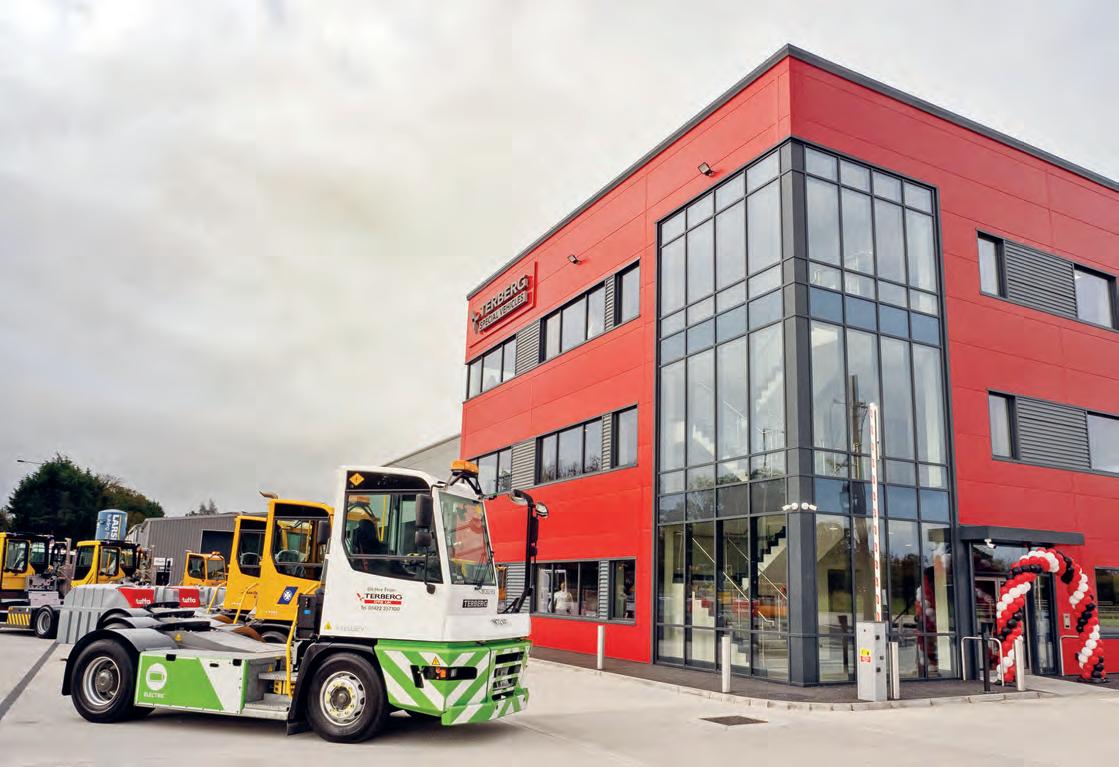
With
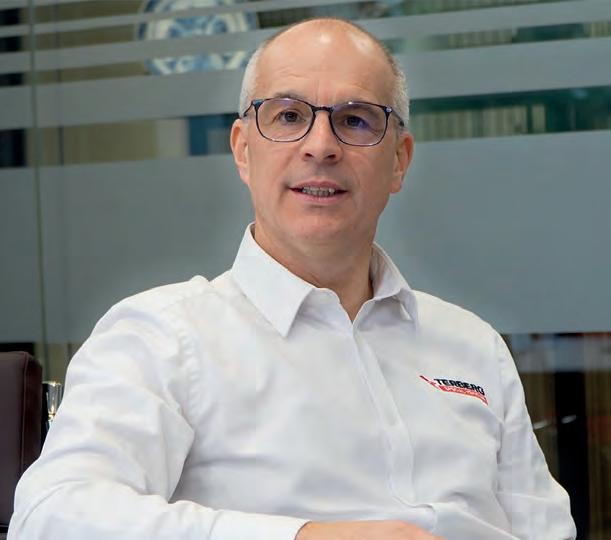
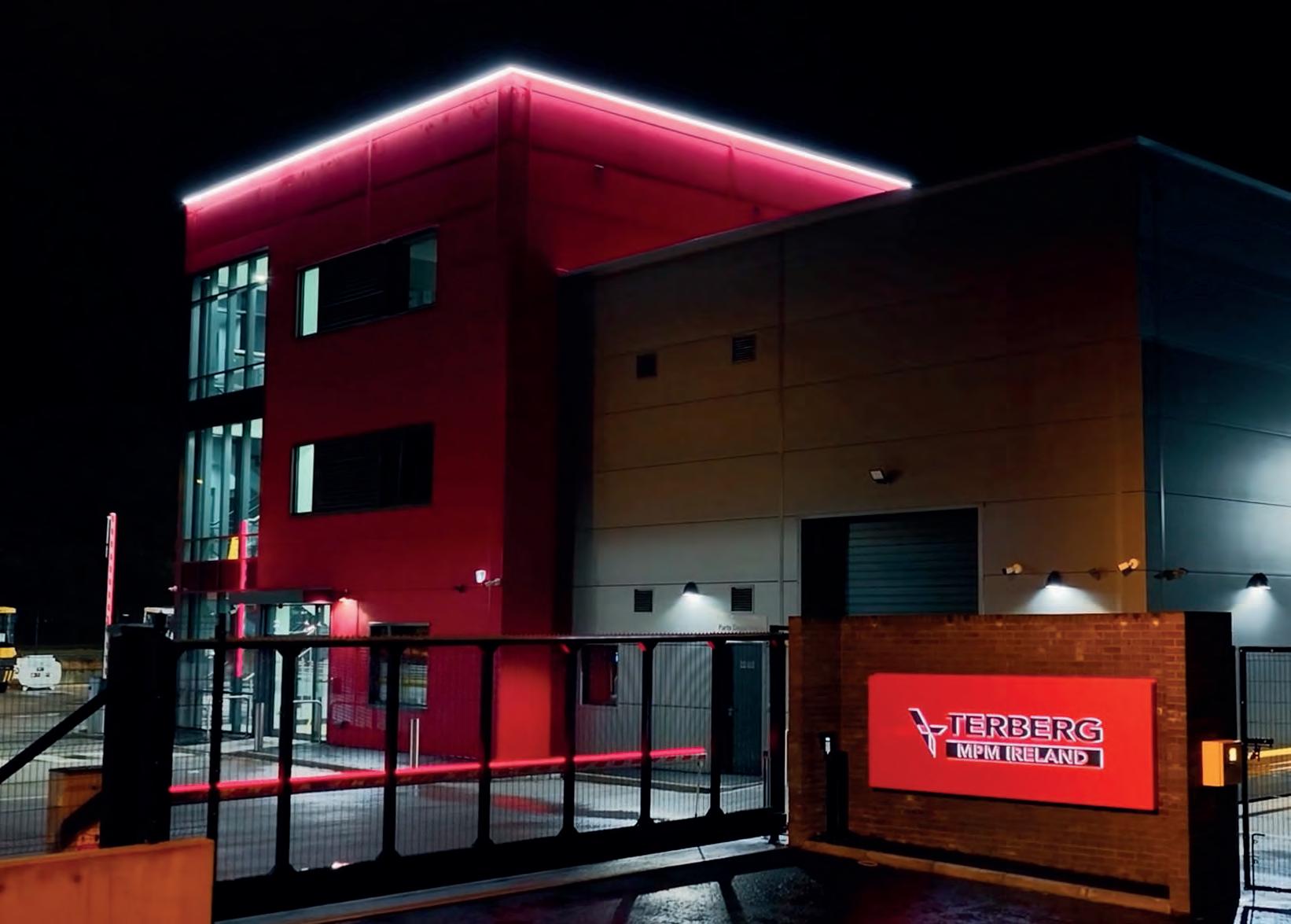

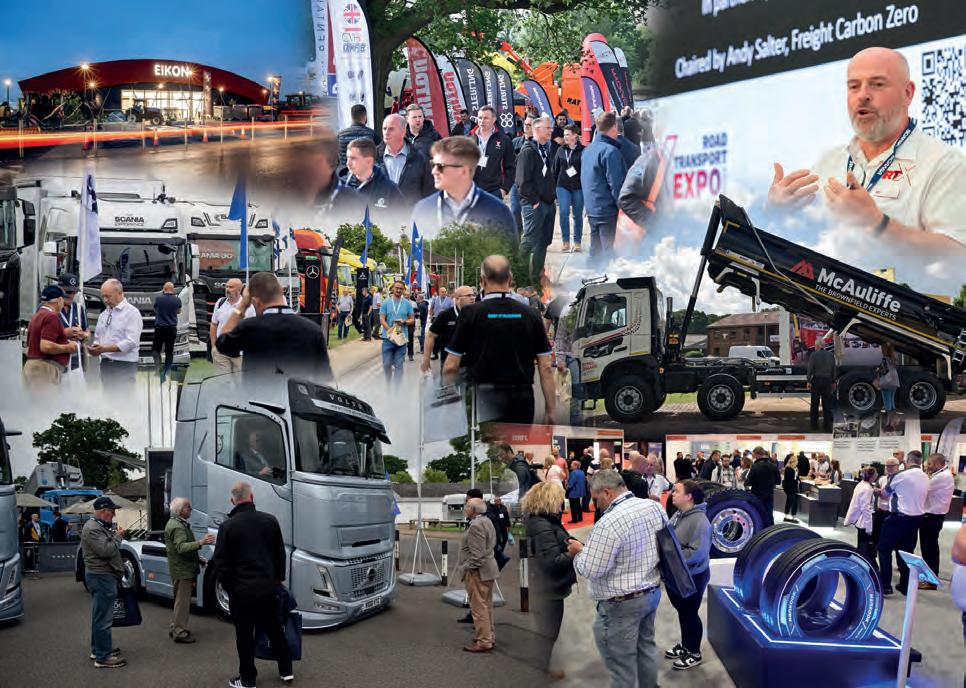



International development organisation, Transaid, is calling on supporters from across the transport and logistics industry to saddle up for its next cycle challenge, pedalling 217km from London to the Isle of Wight, between 14-17 May 2026.
The ride will begin on Box Hill, which featured in the London 2012 Olympics road race, before navigating 110km through the beautiful Surrey Hills countryside. Participants will enjoy a sustained climb up Leith Hill – the highest point in Surrey – before crossing the South Downs National Park to reach the Portsmouth to Fishbourne ferry, with just a short cycle remaining to reach the hotel.
Day two in the saddle will feature a bucket list loop around the Isle of Wight, taking in 107km of rugged island scenery and challenging climbs that pass through charming villages, chalk coastlines, wooded glens and historic sites, returning to the hotel to celebrate
the conclusion of the event.
Maddy Matheson, Head of Fundraising for Transaid, says:
“As our shorter European rides have grown in popularity, we thought it would be a great opportunity to take on a route that is on so many people’s bucket list: the Isle of Wight loop. This is a ride that combines demanding ascents with breathtaking views and will offer our riders an unforgettable journey through some of England’s most scenic and historic landscapes.”
Cycle challenges have long been a staple of Transaid’s fundraising income, helping to raise vital
unrestricted funds that can be deployed to test new programmes that will improve road safety and access to healthcare.
Matheson adds: “In today’s climate, with international development funding under increasing pressure across the charity sector, events like this cycle challenge are essential to sustaining Transaid’s work and driving our life-saving programmes forward. We’re really excited about this ride, and we are determined to make this one of our most memorable UK cycling events yet.”
Entries are encouraged from both teams and individuals. The registration fee is £149 per
person, and participants are asked to raise a minimum of £1,550 in sponsorship. The costs include accommodation, meals and luggage transport, with an additional supplement payable of £295 for riders preferring a single room. Participants also have the option to bring a non-cycling guest to share their room for a £500 total supplement. Coach transfers have been arranged to bring participants back to the starting point in Dorking on 17 May, sponsored by Lucketts Travel. Riders preferring a 2026 adventure further afield are invited to sign up for Transaid’s next international adventure, Cycle Tanzania, which will run from 17-26 September. This challenge will see a team of riders pedal 454km from Mount Kilimanjaro to Pangani on the Tanzanian coast. Limited spaces remain, and as such Transaid is encouraging prompt registration.
To sign up for either event, or find out more information, please contact Anna Giavedoni, Events Manager for Transaid, via anna@transaid.org or by calling +44 (0)20 7387 8136.
For more information and to find out how you can support the organisation visit www.transaid.org.
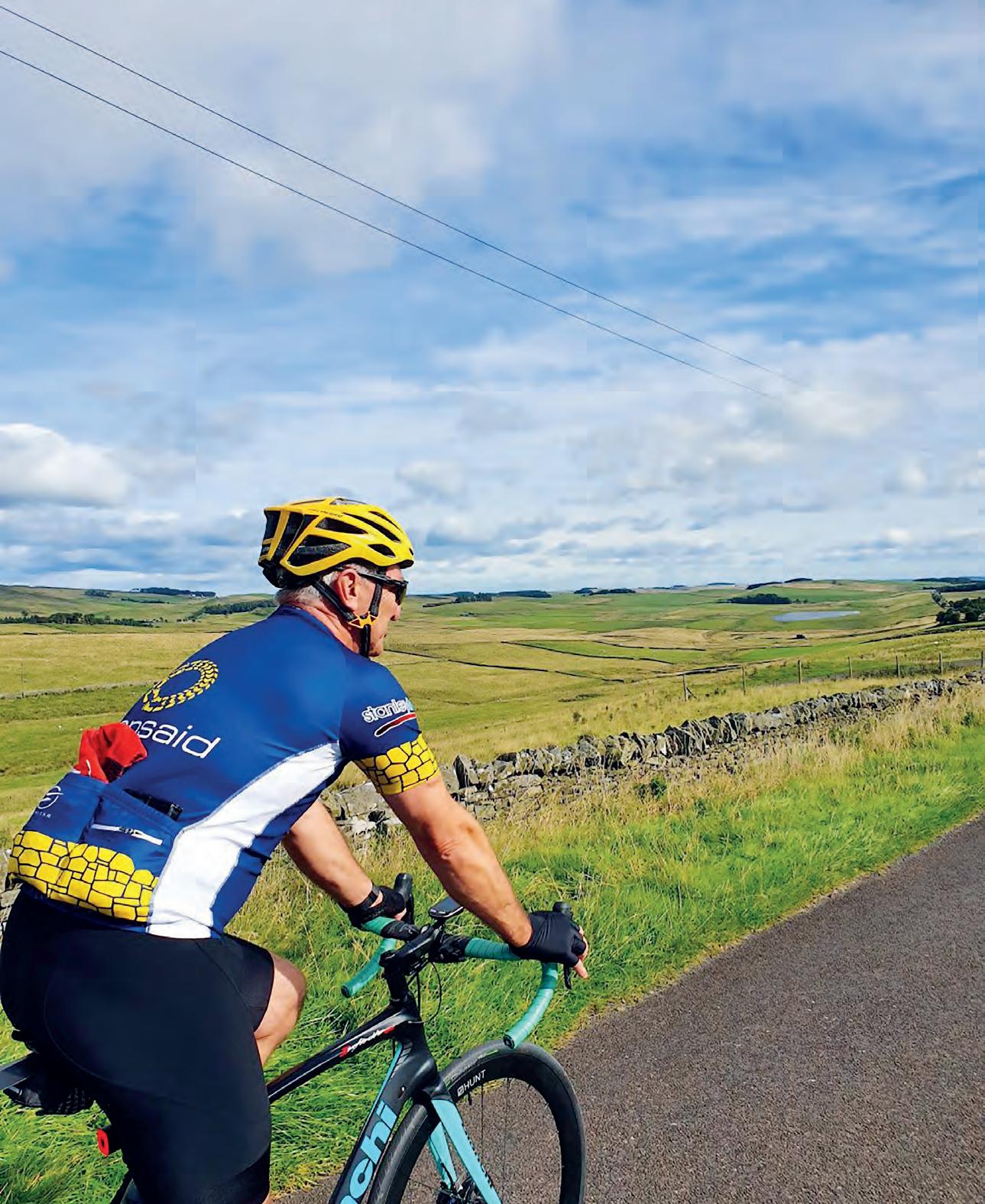

Harris MAXUS Ireland has announced the appointment of Hutton & Meade as the latest member of its expanding, nationwide, light commercial vehicle (LCV) dealer network.
The new Hutton & Meade MAXUS dealership, located on a 2.3-acre site in Ballycoolin, Dublin, brings together three names synonymous with trust, quality and local expertise; Hutton & Meade, Harris Group and MAXUS
Each name carries an enviable reputation built over decades. Hutton & Meade, an established motoring name in Dublin since 1994; the Harris Group, one of Ireland’s most respected automotive distributors; and MAXUS, the award-winning LCV brand renowned for innovation and reliability. Together, the partnership is founded on experience, integrity and a shared commitment to delivering exceptional service to Irish businesses. Hutton & Meade will enjoy exclusive representation for MAXUS in North Dublin, and extending into Meath and Louth. Its Ballycoolin site is situated within the Dublin Enterprise Zone; a strategically prime location for light commercial vehicle sales and service. Positioned adjacent to Amazon Web Services and surrounded by other major logistics operators, the site offers easy access to Dublin’s main arterial routes, while providing a convenient hub for businesses across the wider region. The location features a dedicated MAXUS


sales office and comprehensive EV workshop capability, reflecting MAXUS’ leadership in nextgeneration electric vans and supporting Ireland’s transition to zero-emissions transport solutions. For more than three decades, Hutton & Meade has built its success on customer trust and service excellence. Established by Joseph Hutton and Jonathan Meade in 1994, the company has focused exclusively on the Hyundai brand since 2018 – a partnership that has seen it become the largest individual Hyundai dealer in the Irish network. The addition of the MAXUS marque now enables Hutton & Meade to re-enter the LCV sector after a few years hiatus, with a brand that complements its existing business.
Nigel Brennan, General Manager at Hutton & Meade, has been with the business for 19 years, and describes the partnership as both strategic and deeply rooted in shared values, “This collaboration with MAXUS is built on trust and proven reputations,” he said, “Each name carries significant weight in the Irish motor industry, and together we bring our customers something genuinely special; a partnership that combines local experience, national reach and global brand strength.
“We’ve been looking for the right LCV partner for some time – one that reflects the quality and service standards our customers expect.
From our very first conversations with Harris MAXUS Ireland, it was clear that this was a perfect fit. There’s a real alignment in our approach to business, a shared focus on reliability and a customer-first mindset,” he said.
Hutton & Meade MAXUS joins the expanding MAXUS Ireland network at a time of strong momentum for the brand, with more commercial vehicle operators turning to MAXUS for its forward-thinking range of LCVs including the all-electric eDELIVER 3, eDELIVER 7 and eDELIVER 9, and the popular DELIVER 7 and DELIVER 9 diesel models.



































A County Tyrone Operator was convicted at Belfast Magistrates’ Court and fined a total of £1,850 for tachograph offences. The conviction arose when DVA Enforcement Officers were conducting compliance checks in the Belfast area, when they encountered a 3 axle Scania in combination with a 3 axle trailer.
The tachograph vehicle unit was downloaded and this analysis showed that the vehicle unit had not been downloaded as required and there were
18 periods of driving without a card.
On a later date, a vehicle from the same operator was stopped by officers of the PSNI, the tachograph vehicle unit from
this vehicle also downloaded and analysis showed that the vehicle unit had not been downloaded as required and there were 4 periods of driving without a card.
A County Down Operator was convicted at Newry Magistrates’ Court and fined a total of £300. The conviction arose when DVA Enforcement Officers were conducting compliance checks on the A1 near Loughbrickland.
A 2 axle Scania heavy goods vehicle in combination with a 3-axle curtain side trailer was directed for compliance checks at DVA weighbridge check site at Loughbrickland. The vehicle had a gross vehicle weight of 40,000kgs. It was noted that the vehicle was not listed on an operator’s licence, the driver card had not been downloaded in 136 days, the vehicle unit tachograph had not been downloaded in 1,143 days and
the vehicle had no valid goods vehicle test certificate in force.
The operator was cautioned and interviewed for the following offences: 1) no driving licence 2) driving a relevant vehicle without
A County Armagh Operator was convicted at Newry Magistrates’ Court and fined a total of £500. The conviction arose when DVA Enforcement Officers were conducting compliance checks and stopped a 3 axle Scania articulated lorry in combination with a 3-axle curtain side trailer.
having successively completed the appropriate CPC training 3) failure to use record sheets or driver card, 4) no valid goods vehicle test certificate. 5) exceeding number of vehicles on operator’s licence. 6) failure to download data from tachograph vehicle unit. 7) failure to download data from a driver card. 8) failure to take sufficient daily rest.
It was noted the vehicle had a gross train weight of 44,000kgs requiring the use of a tachograph to record the driving activities. On analysis of the driver’s digital smart card, it was noted it had not been downloaded in 357 days, 329 days outside the 28-day limit as per the tachograph regulations. It was also noted the vehicles tachograph data had not been downloaded in 1,145 days, 1055 days outside the 90-day limit as per the tachograph regulations.
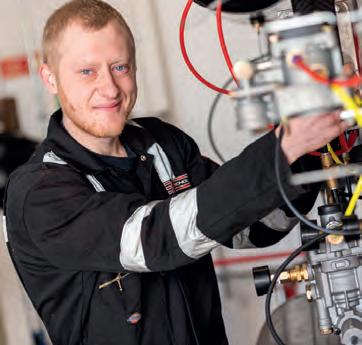

When it comes to keeping fleets on the move, tyres are often the most overlooked yet most essential component of any vehicle. They are the only part of a truck or trailer that actually touches the road - and their condition, quality and suitability directly influence safety, performance, and efficiency across the transport sector.
For fleet operators, the right tyre choice can mean the difference between profit and loss. Tyres affect everything from fuel consumption and handling to downtime and maintenance budgets.
In today’s competitive logistics market, where every mile and every litre of fuel counts, that’s a critical consideration. With winter upon us and road conditions becoming more demanding, tyre
management and correct seasonal selection are more important than ever. The industry continues to evolve rapidly. From smart tyre technologies that monitor pressure and wear in real time, to the growing emphasis on sustainability and retreading, manufacturers and suppliers are investing heavily in innovation. These advances promise not only longer lifespans and lower costs but also
reduced environmental impact - a vital goal as transport and logistics businesses move towards net-zero operations.
In this special tyre feature, Export & Freight takes a closer look at the latest products, services and insights from leading tyre brands, distributors and service providers. We explore how operators can maximise safety and compliance, extend tyre life, and improve wholelife cost efficiency through smarter selection, maintenance and monitoring. Whether you’re running a small fleet or managing hundreds of vehicles, understanding what’s happening in the world of tyres could keep your business rolling smoothly - and profitably - through whatever lies ahead on the road.
Michelin is continuing its advocacy for extending the life of commercial vehicle tyres – as it makes its own processes even more sustainable – an approach that can lower cost of ownership and help operators reduce their carbon footprints.
Single-use, budget tyres are not sustainable by their nature, and therefore as a product cannot unlock the benefits that a true ‘multi life’ tyre can through regrooving and retreading.
Andrew French, B2B Sales Director for the UK & Ireland at Michelin, says: “In the last eight to 10 years there’s been an increase in singleuse tyres in the European market. That’s bad for the environment and not a good deal for operators.
“At Michelin we promote a multilife approach: regroove, retread
and regroove again. The process improves fuel economy as the rolling-resistance of regrooved tyres is lower than when new and allied to good tyre-husbandry the multi-life approach can increase tyre longevity by up to 150%.”
Michelin has been retreading commercial vehicle tyres at its factory in Stoke-On-Trent in Staffordshire since 1968. Having produced more than 10 million UK retreads to date, the manufacturer is confident that the model works and can deliver
a win for both the environment and operators’ bottom lines. Michelin’s approach – almost all its truck tyres are retreadable – sees tyres regrooved once the tread depth reaches 3-4mm, helping to extend each casing’s life in its most fuel-efficient state. Once the regrooved fitments have worn, they are retreaded into Michelin Remix tyres. This process requires, on average, only 20kg of raw materials to be added to the worn casing, compared with around 70kg of materials per new tyre.
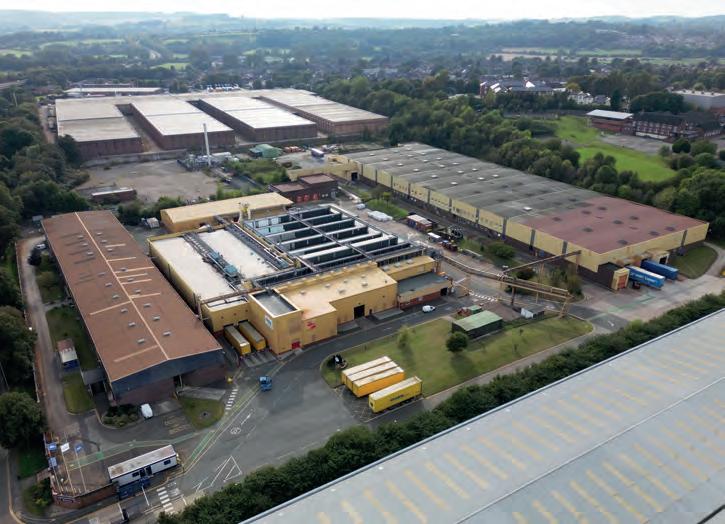
After being remanufactured, all tyres are subject to a final quality inspection which involves inflation to 140psi to confirm the product’s integrity. Those that have had any casing repairs carried out also go through a secondary test, which sees 50,000 Volts passed through the tyre to detect any penetrations to the casing. Casings from other manufacturers are accepted at Stoke too – although they must pass the same rigorous assessment and testing as the manufacturer’s own products –and emerge as Encore tyres. Boosting its own environmental credentials further, Michelin adopted a ‘local to local’ approach in 2024 and is making
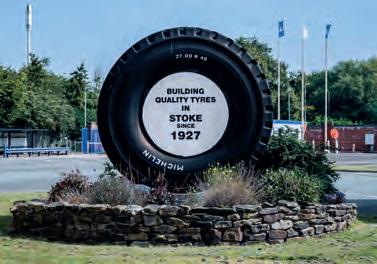

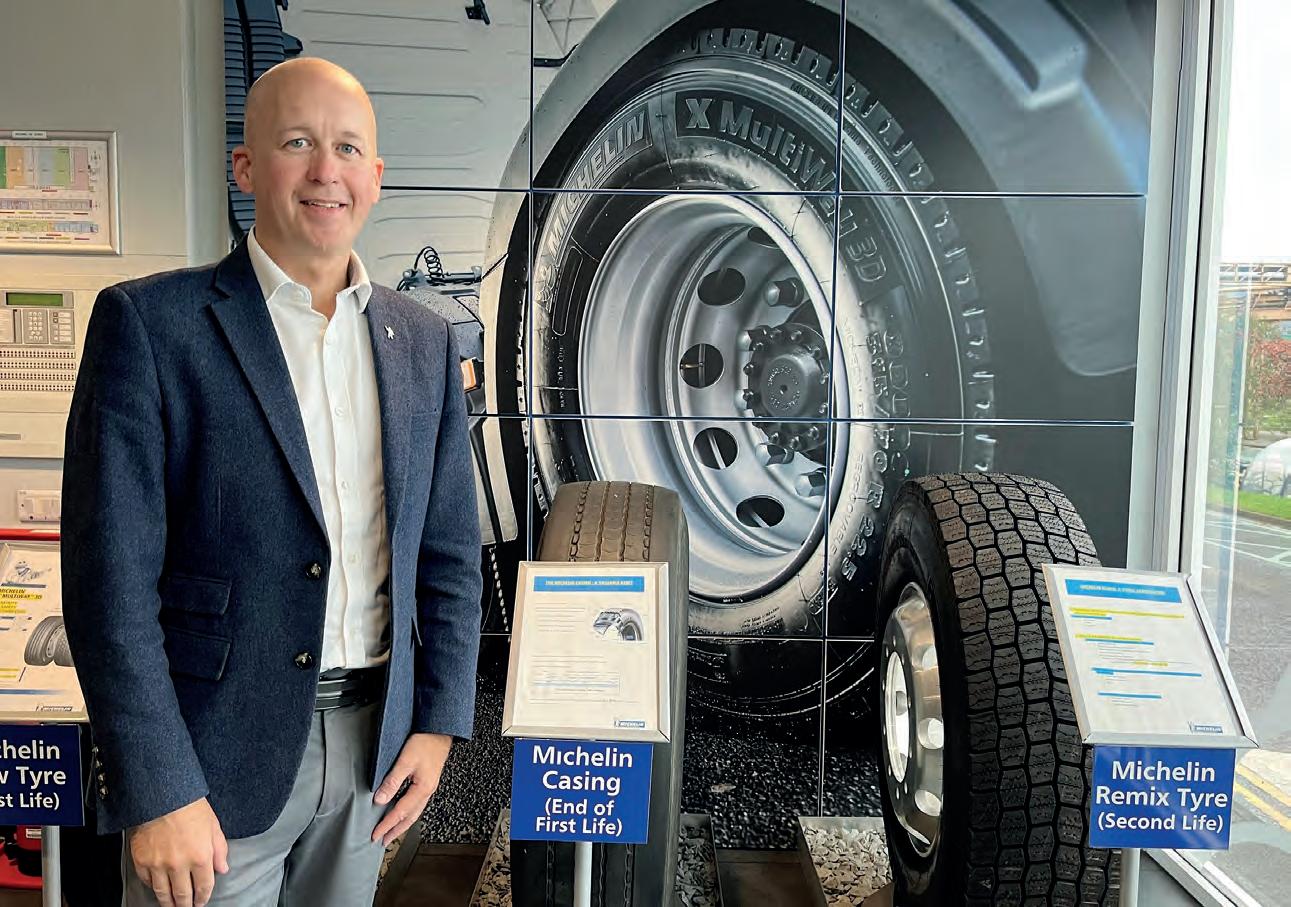
strong progress towards its ultimate ambition to have every tyre produced in Stoke used within the UK or Ireland. This supports skilled jobs at the site and reduces CO2 emissions further by cutting the amount of kilometres products travel.
“Done correctly it’s a virtuous circle for operators – lower tyre costs due to an extended lifespan and a reduced impact on the environment, supporting firms’ green initiatives – so why wouldn’t you adopt a multi-life policy?” asks French.
Never one to rest on its laurels –the manufacturer spends more than €800m (£699m) on research and development annually –Michelin and Murfitts Industries are underway with a groundbreaking project that will see the partners establishing the UK’s first end-of-life material reclamation plant at Stoke later this year.
The cutting-edge tyre pyrolysis process developed by Murfitts
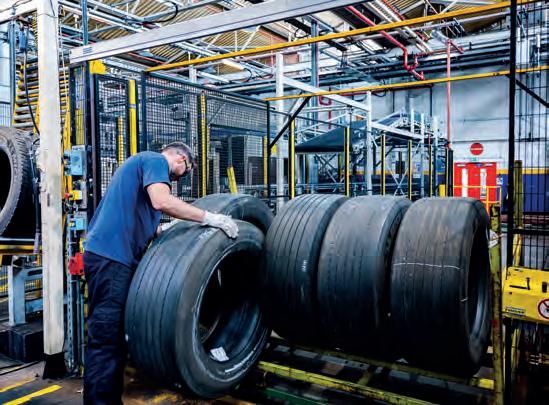
Michelin retreads are as safe and durable as a new tyre, with low rolling resistance and good grip. Key benefits of retreading include:
• 85% of the worn-out tyre is reused in a retread
• Retreading doubles the casing lifespan
• 95% of truck retreads used in the UK are made in the UK
• Every 100 Remix tyres save 5 tonnes of raw materials and prevents more than 6 tonnes of CO2 being released.
Industries will generate energy that will be used to power Michelin’s production site, thereby lowering CO2 emissions from the plant by 1,500 tonnes per year. In addition to the energy, the approach will produce recovered carbon black, which can be used for a wide range of products, including new tyres, reducing the need for virgin material. Tyre pyrolysis oil will also be produced, and this can be used for other materials and for alternative fuels, reducing the need for virgin petroleum feedstock.
Ultimately, extending the lifespan of tyres is crucial for reducing CO2 emissions and lowering resource consumption. Michelin believes it completely and invites operators and politicians to get in touch to learn more, as part of our collective efforts as an industry to deliver a sustainable future. With Michelin’s move to use end of life tyre reclamation as a power source, it has fully embraced the principles of the circular economy and continues to drive positive change within the UK’s road transport sector.
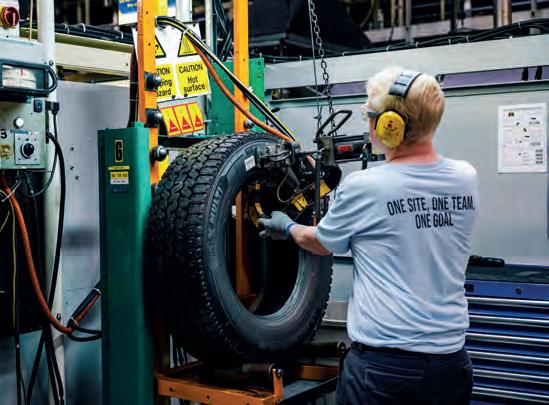

With misinformation and misconceptions about retread tyres prevalent across the commercial vehicle sector, Continental Tyres UK has recently launched ‘Respect for Retreads’ – a new education and awareness campaign that seeks to confront operators’ remanufactured rubber concerns.
Commercial vehicle fleet operators are avoiding retreads, despite two major benefits – mileage performance and price – proving to be the most commonly used tyre selection criteria. In a Continental-commissioned survey of more than 700 UK-based fleets, over half of respondents (56.7%) said that mileage performance was one of the most important factors when choosing rubber. A similar number (56.3%) said that retail price was a major consideration. Other key decision points for fleets included damage resistance (51.6%) and whole life ownership costs (50.2%).
The same survey revealed only a third (33%) said that they fit retread tyres to their vehicles. Of those who opt not to, two thirds (62.5%) admitted their decision was based on the perceived quality of retreads. Almost half (46.5%) also reported concerns about retread durability as a reason to exclusively specify new tyres. Although the image and reputation of retread tyres have improved significantly in recent years, Continental’s data proves that a lack of trust is limiting their adoption. “Experience tells us that retread tyre opinions are often handed down from generation to generation,” said Tony Mailing, Head of Hot Retread Production EMEA at Continental Tyres and Plant Manager of ContiLifeCycle Ivybridge and Stöcken.
“Historically, retreads have been seen as a lesser product and assumptions about their quality and durability are made because they use reused parts. We hear stories of drivers mistakenly believing that retreads are the reason rubber chunks can be found at the side of the road. This simply isn’t the case. We’re here to reassure operators that retreads from reputable brands are just as good as a new tyre. In many cases, retreads offer benefits that new tyres simply cannot match.”
The campaign will see


Continental bolster its Tyre IQ education portal, which is freely accessible on the Continental website, with additional content focused specifically on retread tyres. A dedicated content series on Continental’s social media channels will seek to debunk the many myths circulating about retreading. Further research and thought leadership will be shared with the media and directly to customers in the coming months.
Pete Robb, Marketing Director at Continental Tyres UK, said: “Retreading is long overdue its moment in the spotlight. Businesses are too often missing out on reducing their operating costs and enhancing their environmental credentials because of a perception that remanufactured tyres are inferior. With hundreds of truck tyres replaced every day in the UK, retreading
not only benefits fleets, but helps to reduce the number of tyres being disposed.”
“Our research shows that fleets are actively seeking out tyres that offer value for money,” continued Pete Robb. “Retread tyres are a sweet spot for so many businesses, they can provide a lower upfront purchase price and like-for-like mileage capabilities matching that of an equivalent new tyre. However, a historic reluctance to embrace retreads is pushing operators to use cheaper, sometimes single-use new tyres that will likely not offer the same holistic operational benefits as using a quality retread tyres from a renowned manufacturer.”
Not only can high quality retread tyres be regrooved, extending their overall mileage capability, it can potentially continue to be retreaded for a second, or even third time. In practice, this means hundreds of thousands of miles of service over its lifetime.
Retread manufacturers invest heavily in research, development and engineering to produce the highest quality product. This is upheld by stringent regulations serving as a benchmark for manufacturers to follow. To ensure that the performance, dimensions, and tyre wall markings are comparable to those of a new tyre, manufacturers are required to conform to the UN’s ECE Regulation 109.
All ContiLifeCycle retreading plants, manufacturing ContiRe and Bandvulc tyres, operate in line with ISO auditing criteria, ensuring consistently high production standards.
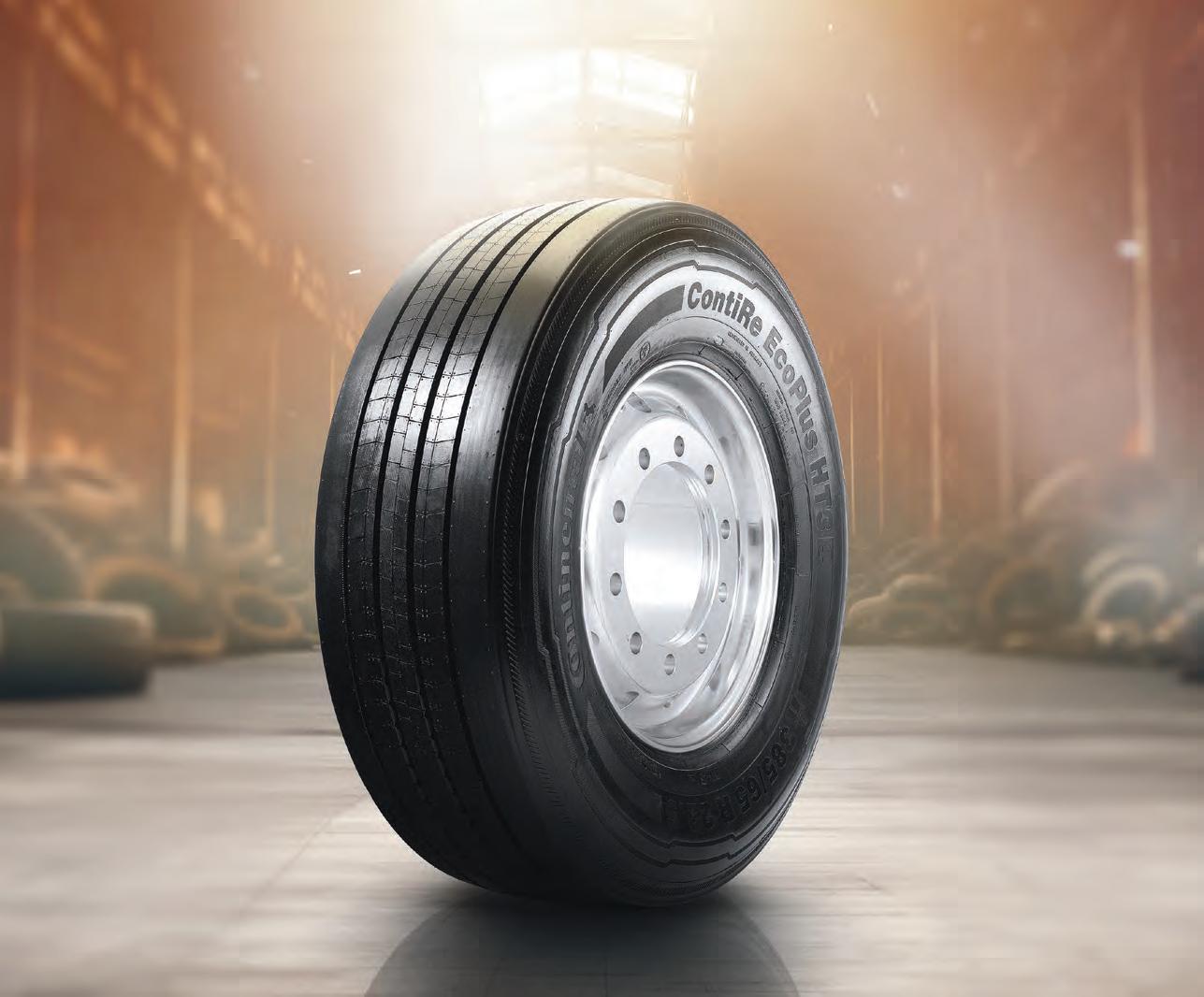
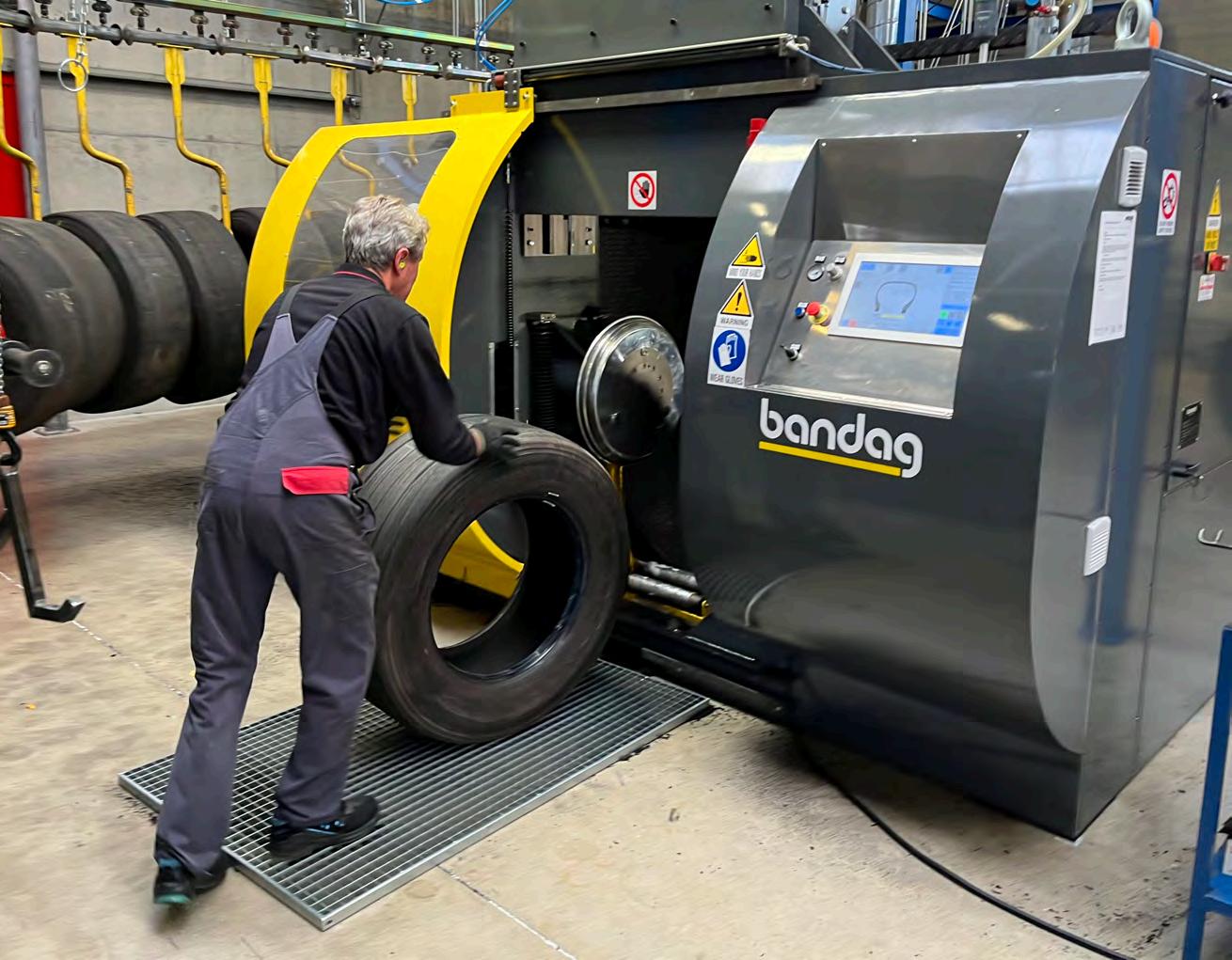
Bridgestone’s retread business, Bandag, is ready for the road ahead with a reenergised proposition designed to help fleets and dealers achieve greater sustainability and cost efficiency.
Built on a foundation of trust and performance, the Bandag model is anchored in three essential pillars: Bridgestone’s premium casing supply and products, world-class commercial fleet partnerships, and a network of expert Bandag dealers with the local insight and agility to keep fleets moving.
This powerful three-way approach has already proven its value in some of the world’s most competitive markets. In the United States, for example, Bandag holds a remarkable 60% share among the largest fleets—a testament to the enduring strength and futureready direction of the business.
Ben Rosenblum, Vice President of Bridgestone Bandag, said: “Bandag has always been known for premium quality and range of solutions, but we want to build upon this with something even more compelling. There are a number of exciting opportunities in front of us and we’re determined to help our partners
make the most of them.”
“Our United States success is the engine of our business and proves what’s possible when you combine premium products, strong fleet relationships and a committed dealer network.
We’re looking to replicate these wins in Europe, underpinned by industry leading technology and data, which can track the life of each and every casing.”
With the influx of low-cost Chinese tyres into Europe, Bandag is positioning itself as a smarter, more sustainable alternative. Its retreading solutions are designed not just to compete on price per kilometre, but to outperform in terms of quality, security of supply, and environmental impact.
“If you believe in circularity, product security, local supply chains and lower costs per kilometre, then Bandag is the solution,” Rosenblum adds. “We’re the perfect antidote to cheap imports.”
Production of Bandag products has been moved to Bridgestone’s state-of-the-art truck and bus radial facility in Poland, where advanced technologies once reserved for new tyres are now being applied to retreads. These include cap/ base extrusion and next-level mixing technologies, delivering a significant leap in performance.
The result? Retreads with longer wear life, better fuel efficiency and performance that rivals new tyres.
Rosenblum adds: “We’re building the next generation of retreads; tyres that give fleets everything they expect from a new Bridgestone tyre, with all the added value and sustainability benefits of a retread product.”
“Our vision extends far beyond the tyre itself. Through tools like BASys Global, which already manages over seven million tyres worldwide, fleets can track casings from collection to retread to delivery, ensuring maximum usage and efficiency. Drive-over tread readers
and digital platforms also give operators real-time insights into tyre performance, helping them make smarter replacement decisions.”
Working in tandem with Bridgestone’s Fleetcare team, Bandag helps fleets build tailored tyre programmes with measurable performance goals and continuous improvement at their core. “The end result is simple,” Rosenblum adds. “Fleets buy fewer tyres, spend less money, and achieve better outcomes. That’s why we have such loyal customers.
“Retreading has always been the cornerstone of the most successful tyre dealers and fleet operations. With our renewed focus, advanced products and proven route to market, we’re demonstrating that there’s a smarter, more sustainable and more cost-effective way forward.”
For more information about Bandag, visit https:// www.bandag.eu/


Gasrec has officially opened its second large-scale, open access biomethane refuelling facility. The state-of-the-art site at Hams Hall, near the M6 and M42, is now supporting fleet operators in making the switch to low-carbon fuels.
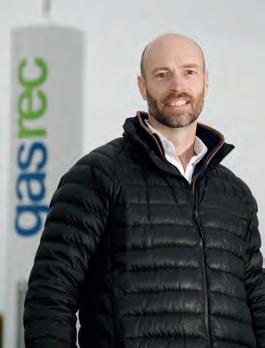
Gas-powered trucks from DHL, Nestlé, Arla Foods and Nicholls Transport have been among the first to refuel at the facility with throughput expected to rise steadily over the coming months.
Hams Hall currently provides capacity for up to 300 trucks to refuel on Bio-LNG every day, with that set to be expanded to accommodate up to 1,000 trucks daily over the next few years.
James Westcott, Chief Commercial Officer of Gasrec, says: “Hams Hall is a milestone for the industry and for operators who want to cut emissions without
compromising reliability. We are seeing record levels of demand for biomethane from fleets, and this new facility provides the scale and resilience they need.”
Hams Hall is the first of a new suite of public biomethane stations being rolled out by Gasrec across the UK. The business will be opening further facilities in Warrington, Avonmouth, and other locations to be announced, in the next 18 months.
These new sites will complement the company’s flagship site at the Daventry International Rail Freight Terminal (DIRFT), along with the numerous other accessible Bio-
LNG facilities it operates across the country. In addition, Gasrec is assessing opportunities to develop new Bio-CNG offerings in line with local demand.
Gasrec currently operates 18 refuelling stations, with a mix of Bio-LNG and Bio-CNG sites, serving some of the UK’s largest fleets, including Asda, Tesco, B&Q, DHL and Ocado, as well as an increasing number of small to medium-sized operators.
Westcott adds: “Our network is expanding at pace. With Hams Hall now open, we’re not only easing pressure on existing sites but also laying the foundations for a national refuelling infrastructure that can support operators of every size in moving to cleaner, greener fuels.”
November 2025 marked the one-year anniversary since MAN Financial Services UK successfully integrated into TRATON Financial Services, the global financial services arm of the TRATON Group.
This milestone reflects a year of growth, resilience, transformation, and deeper collaboration with MAN Truck & Bus UK, delivering finance solutions designed to support customers across the UK transport and logistics sectors.
Peter Collins, Managing Director, MAN Financial Services UK, commented: “Like any period of change, the first months brought their share of adjustments, but through collaboration, teamwork, openness, and commitment to the company’s shared values, the team demonstrate responsibility, respect, and team spirit.
“The early phase of integration was a learning curve for everyone, but our colleagues embraced the change, supported one another, and emerged stronger. We’ve forged new collaborations across the TRATON Group and built lasting connections that make us part of a truly global network, and in doing so built closer relations with our customers and gained a greater level of understanding as to their business wants and needs.”
Over the past year, MAN Financial Services UK has achieved several milestones that underscore its ongoing commitment to customers and colleagues alike: Enhanced customer experience through the introduction of new digital tools and improved operational efficiency.
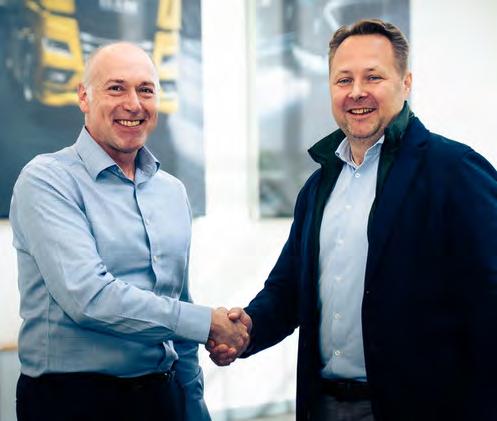
Strengthened collaboration with MAN Truck & Bus UK, offering a more integrated finance and vehicle solution.
Team growth and new leadership roles established to support an expanding business and evolving customer needs.
People and culture initiatives celebrating shared values of responsibility, respect, and team spirit.
Peter continued, “This first year has been about building stronger connections with our customers, our colleagues, and the wider TRATON network. Joining TRATON Financial Services has opened new opportunities for us to deliver even greater value alongside our trusted MAN brand partners.”
The collaboration between MAN Financial Services UK and MAN Truck & Bus UK has continued to evolve, enabling customers to benefit from a fully integrated experience, from vehicle acquisition to finance, maintenance, and lifecycle support.
Jan Kohlmeier, Managing Director, MAN Truck & Bus UK, added: “Working closely with MAN Financial Services UK ensures our customers enjoy a seamless and efficient journey, supported by two teams working with the same goal in mind.
“This connected approach ensures we partner our customers and help them keep their businesses moving. The past year has strengthened that relationship, and the benefits are already clear in how we serve our customers.”
As MAN Financial Services UK enters its next chapter, the focus remains on driving innovation, sustainability, and customer-centric service. Continued investment in people, digital transformation, and process efficiency will underpin its mission to simplify business for transport professionals across the UK.
Peter concluded, “The progress we’ve made in just one year is a testament to our teams’ hard work and collaboration. We’re proud of what we’ve achieved and even more excited about what’s ahead.”
Manfreight has welcomed five new Volvo FH500 Aero trucks into its fleet - representing the latest arrivals from its 50-truck order and marking another key step in the company’s continued investment in innovation, sustainability, and operational excellence. As one of the most advanced models on the market, the FH500 Aero brings a new level of efficiency and technical sophistication to Manfreight’s operations across the UK and Ireland.
Designed around Volvo’s new Aero platform, the FH500 delivers significant fuel gains through a redesigned aerodynamic profile that reduces drag and improves airflow across the vehicle. Paired with Volvo’s highly efficient Turbo-Compound I-Save engine, the Aero delivers notable reductions in fuel consumption and CO2 emissions - supporting Manfreight’s wider sustainability commitments and the company’s drive to build one of the most efficient fleets in Ireland and the UK. Each of the new units also features Volvo’s Camera Monitoring System (CMS), replacing traditional mirrors with high-definition cameras to enhance visibility, eliminate blind spots and boost safety in all driving conditions. The removal of external mirrors not only improves
driver awareness but also contributes to the truck’s aerodynamic efficiency.
Inside the cab, the FH500 Aero is engineered around driver comfort and wellbeing, offering upgraded ergonomics, digital instrumentation, improved insulation, and a suite of advanced driver assistance technologies. Features such as I-See predictive cruise control, adaptive high beam, and intelligent braking systems support consistent, efficient longhaul performance while reducing fatigue. For Manfreight, this latest delivery is part of a long-term, strategic programme to strengthen fleet performance, optimise fuel efficiency, and further elevate safety standards. With more units due throughout 2025, the 50-truck order reinforces Manfreight’s position as one of the UK
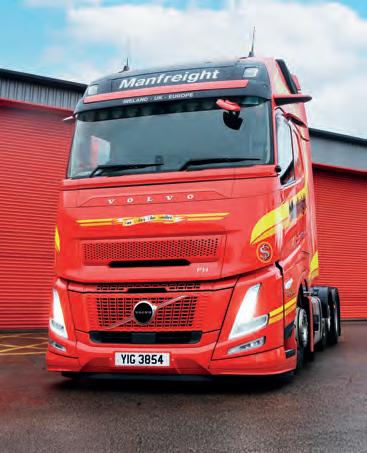
and Ireland’s most progressive logistics operators. Manfreight remains firmly focused on building a fleet that is smarter, greener, and more connected.
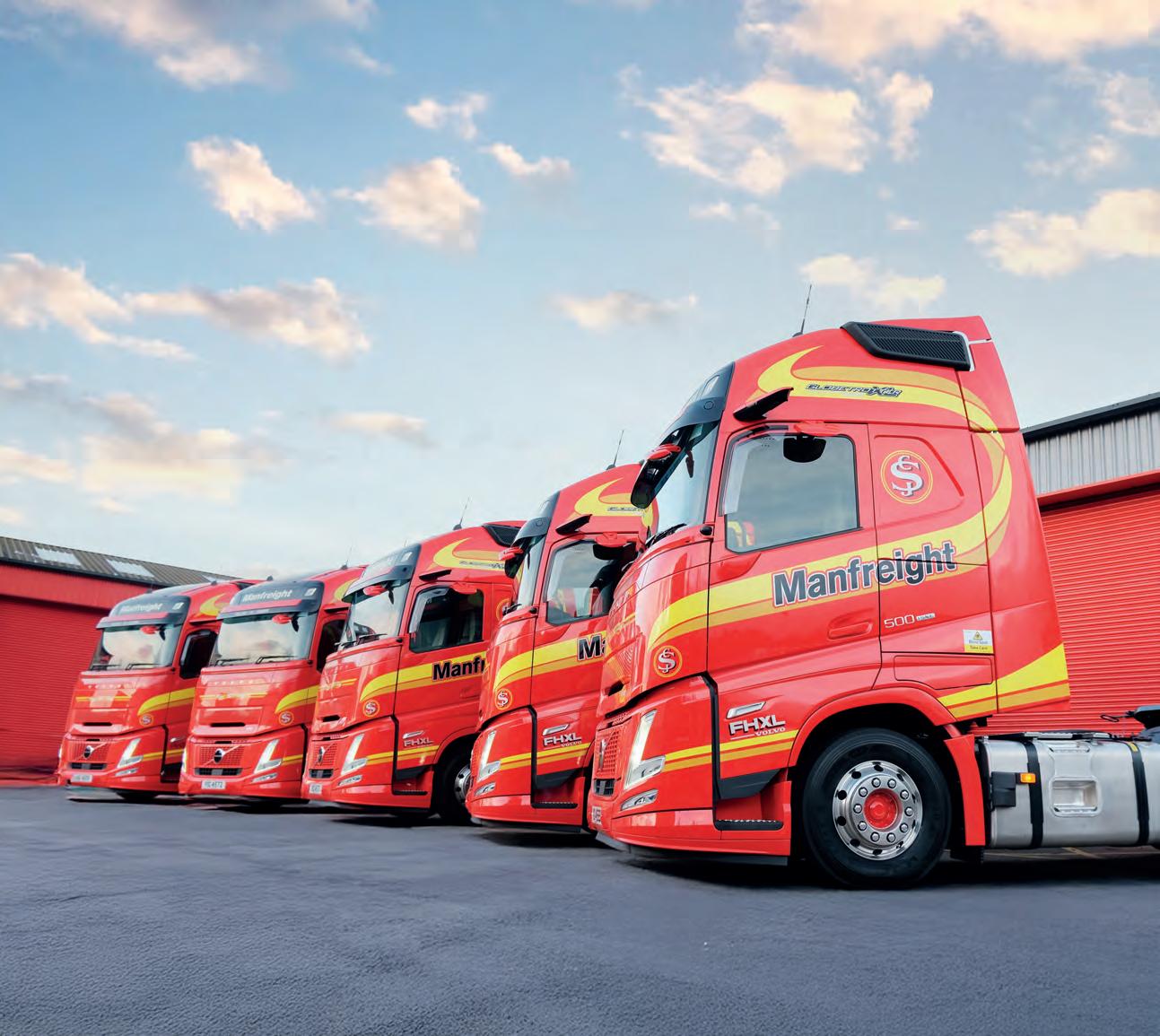

Haulage businesses in Northern Ireland are often family enterprises built on personal relationships, reputation, and decades of operational knowledge.
Those strengths can become structural weaknesses when ownership or key leadership transitions arise without a clear and legally robust succession plan. Increasing regulatory pressures, insurance requirements, contractual obligations and lender expectations mean that
Legal component
Wills and estate planning
Shareholders’ agreement
Articles of association
Director appointment and removal provisions
Partnership or LLP agreement (if relevant)
continuity is not merely desirable but essential.
Northern Ireland road transport operators sit within a legal environment shaped by company law, Northern Ireland succession and property law, UK-wide tax rules, and sector-specific regulation including goods vehicle operator licensing. A failure to prepare for succession can expose operators to regulatory interruption, loss of value and avoidable disputes.
This article examines succession planning through a Northern Ireland legal lens, with specific reference to haulage and logistics operators.
Purpose in a haulage business
Ensures shares and business interests pass to intended beneficiaries, and can be aligned with shareholder arrangements.
Regulates transfer, valuation and compulsory purchase of shares on death, incapacity, retirement or dispute.
Embed governance rules consistent with the shareholders’ agreement, including director appointment and decision-making.
Allow timely appointment of replacement directors and clarify decision-making authority at board level.
Sets out what happens on retirement, death or expulsion of partners or members.
Transport manager continuity planDemonstrates how the business will maintain access to a professionally competent transport manager in line with regulatory requirements.
Key person and shareholder protection insurance
Business powers of attorney
Provides funding to buy out shares or stabilise cash flow after the loss of a key director or shareholder.
Enable trusted individuals to make decisions and sign documents if an owner or director loses mental capacity.
• the sector is heavily regulated, and continuity of compliant operation is central to maintaining a goods vehicle operator’s licence;
• key individuals often hold essential roles, including directors, shareholders and professionally competent transport managers;
• many operators are family owned, so management change is usually linked to inheritance and family governance issues;
Typical issues if absent or outdated
Intestacy rules may transfer control to individuals with no interest or experience in the business, or create fragmented ownership across family members.
No clear mechanism for the continuing shareholders or the company to acquire the shares of a deceased or exiting owner, leading to stalemate or litigation.
Legacy or generic articles may conflict with bespoke succession arrangements or fail to provide appropriate powers during transition.
Risk of a “board vacuum” where no one has clear power to authorise payments, contracts or regulatory notifications.
Without clear terms, disputes can arise over entitlement to capital, goodwill and ongoing profit shares.
Loss of the nominated transport manager without a ready successor can prompt regulatory concern and jeopardise the operator’s licence.
Surviving owners may be unable to fund a buyout or cover short-term cash flow needs, forcing distressed sales of assets.
Without such authority, it may be difficult or impossible to operate bank accounts, refinance, or complete transactions at a critical time.
Structure
Strengths
Single-family owned private companyStrong identity and clear vision, often with longterm commitment to customers and staff.
Multi-director board (family and non-family)
Holding company with trading subsidiary
Management buy-out or staged management shareholding
• banks, asset finance providers and insurers increasingly expect demonstrable continuity planning
• major customers, including public sector contract holders, expect evidence of resilience in their supply chain.
Broader perspective, clearer segregation of roles, and better resilience if one director is lost.
Permits separation of trading risk from key assets such as depots or property, and may assist with succession and investment.
Can align long-serving managers with shareholders, providing a pathway where family successors are not available or suitable.
Potential weaknesses
Concentration of control in one generation; risk of disputes between heirs or passive minority shareholders if shares are divided on death.
Requires careful definition of authority; risk of deadlock or drift without agreed decision-making processes.
More complex structure and administration; needs careful drafting of intra-group agreements and security packages for lenders.
Requires funding and clear valuation; may dilute family control sooner than originally envisaged.
licensing system, so an operator must be able to demonstrate that it has the necessary professional competence at all times.
• A practical succession plan for the transport manager role will usually cover:
• identifying a deputy or successor who holds, or can obtain, an appropriate certificate of professional competence
Operator licensing risk: in Northern Ireland, goods vehicle operator licensing is implemented by the Department for Infrastructure (DfI) under the Goods Vehicles (Licensing of Operators) Act (Northern Ireland) 2010, through the Transport Regulation Unit. The system assumes stable and continuous management. The unexpected loss of a controlling mind or transport manager, with no documented succession, can lead to regulatory scrutiny and potential curtailment of operations. Corporate governance failures: where the only or main director dies or becomes incapacitated, Companies House filings may be missed, banking arrangements may be frozen, and commercial contracts may lack a person with clear authority to sign.
Intestacy and ownership disputes: if shares are not dealt with under a valid will or succession arrangement, they pass in accordance with Northern Ireland intestacy rules, which may allocate ownership in ways that are commercially unhelpful or inconsistent with the founder’s expectations. Financing and leasing disruption: lending and hire purchase agreements for vehicles and depots frequently include change-ofcontrol or key-person clauses. A disorganised change in ownership can trigger covenant breaches or demands for repayment.
Employment law liabilities: an unmanaged leadership transition can lead to abrupt changes in structure or roles, generating risk of unfair dismissal, constructive dismissal or redundancy claims if proper procedures are not followed.
A workable succession plan is built by aligning personal estate planning, company documentation and regulatory compliance. The following elements are typically relevant for Northern Ireland haulage operators:
Northern Ireland has implemented Regulation (EC) No 1071/2009, which establishes common rules on access to the occupation of road transport operator, including the requirement for professional competence. Local regulations tie this into the goods vehicle operator
• documenting responsibilities in contracts and job descriptions, including time commitment and authority over operational compliance
• ensuring that systems for maintenance, drivers’ hours, tachograph analysis, training and record-keeping are not dependent on a single individual
• having a clear internal process for notifying the Department for Infrastructure of changes to the nominated transport manager within required timescales.
Governance structures should match the commercial and family realities of the business. The following models are common in the haulage sector:
Changes in ownership or senior management can have employment law consequences that must be planned for in advance. Points commonly relevant to Northern Ireland haulage operators include:
• restructuring or reallocation of duties for senior staff should follow a fair process and be documented to minimise risk of unfair dismissal claims
• where roles are genuinely redundant as part of a reorganisation, statutory and contractual redundancy obligations must be met
• if business assets or contracts are transferred between entities as part of a succession or group reorganisation, the Transfer of Undertakings (Protection of Employment) Regulations (TUPE) may apply
• changes to reporting lines, bonuses, commission or on-call arrangements for transport and depot staff should be reflected in updated contracts or written statements of particulars.
Succession planning for a haulage business in Northern Ireland will normally consider UK Inheritance Tax and the availability of Business Relief (previously Business Property Relief) for qualifying business assets. Where the statutory conditions are met, relief can
reduce the value of qualifying business assets that is chargeable to Inheritance Tax, in some cases by up to 100 per cent.
A joined-up approach between legal and tax advisers can help to ensure that: any lifetime gifts of shares or partnership interests are consistent with the shareholders’ agreement and company constitution shares that qualify for Business Relief are not inadvertently converted into non-qualifying assets as a side effect of a reorganisation or refinancing wills dovetail with any shareholders’ agreement, cross-option or insurance arrangements, so that the intended beneficiaries receive appropriate value without destabilising the business.
A practical, legally grounded succession roadmap for a haulage operator might include:
• mapping ownership, directorships, key management roles and the nominated transport manager, and identifying where there is single-point dependency;
• putting in place or updating wills, shareholders’ agreements and articles of association to deal with death, incapacity, retirement and dispute scenarios;
• agreeing a plan for transport manager succession and documenting internal compliance systems so they can be handed over smoothly;
• reviewing finance, lease and key customer contracts for change-of-control or keyperson provisions and deciding how these will be managed during a transition;
• considering appropriate insurance and funding so that shares can be bought out without damaging working capital;
• embedding a regular review, for example every 12 to 24 months, or following major events such as acquisition, substantial borrowing or significant fleet expansion.
For Northern Ireland haulage companies, succession planning is both a legal discipline and a commercial risk-management exercise. At Spencer West we can assist haulage companies by addressing ownership, governance, regulatory compliance and tax in a single, coherent plan assisting business owners to preserve value, protect family relationships and give staff, customers and lenders confidence that the fleet will keep moving even when key individuals change.
John.McMahon@spencer-west.com spencer-west.com
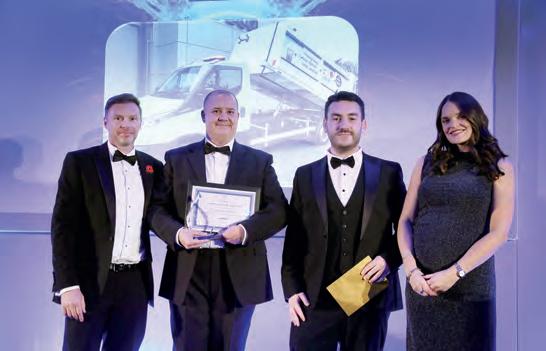

The IVECO Mission Awards has been celebrating the most capable IVECOs on the roads since 2021, but this year it returned bigger than ever.
The 2025 Awards, which were hosted by sports broadcaster Laura Winter, were held in November at the Belfry Hotel & Resort in Birmingham, UK and celebrated companies in the commercial transport sector for their commitment to sustainability and innovation. For the first time, the awards, were expanded to cover the full IVECO range, from the 3.5t Daily to 44t S-Way trucks. Seven pieces of silverware were handed out throughout the evening attended by 150 guest, celebrating entries in Construction & Utilities, Grounds Maintenance & Waste Management, Alternative Fuels, and Delivery & Distribution categories – with additional awards being presented for Bodybuilder of the year, an Innovation Award, and the grand prize of overall Mission Award winner.
Top honours went to Keenan Recycling – a Scottish food waste collection operator whose fleet of IVECO Eurocargo CNG run on biomethane derived from the waste they collect, reducing carbon emissions by up to 95% versus an equivalent diesel truck. Judges were impressed by the carbon reduction, mission-ready specification of the vehicles, and the circular economy Keenan Recycling employs.
Mike Cutts, Business Line Director Full Range UK & ROI at IVECO UK, said: For four years now, the IVECO Mission Awards has put the spotlight on some amazing machines and the people behind them. The introduction of the full range for 2025 makes this instalment our biggest ever “Another year brings us another fantastic IVECO Mission Awards season – this year covering our entire LCV and HGV range.
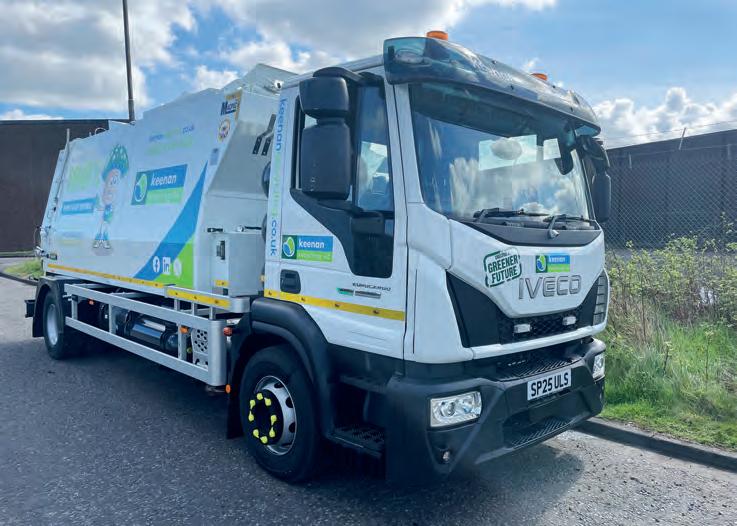

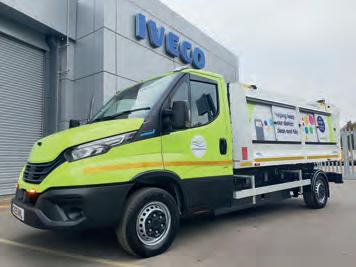
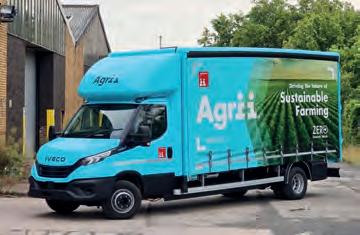



BY AUSTIN LYNCH
The pick-up truck has evolved a lot over the past number of years – certainly in this part of the world.
What was once the rough vehicle for running about a farm with a bale of hay and a dog in the back is now a totally mainstream vehicle with room for five and all the latest equipment, comfort and technology.
And this evolution has broadened the appeal of the pick-up from those looking for a tough commercial vehicle to anybody who is looking for a large, comfortable four-wheel drive vehicle with room for five adults.
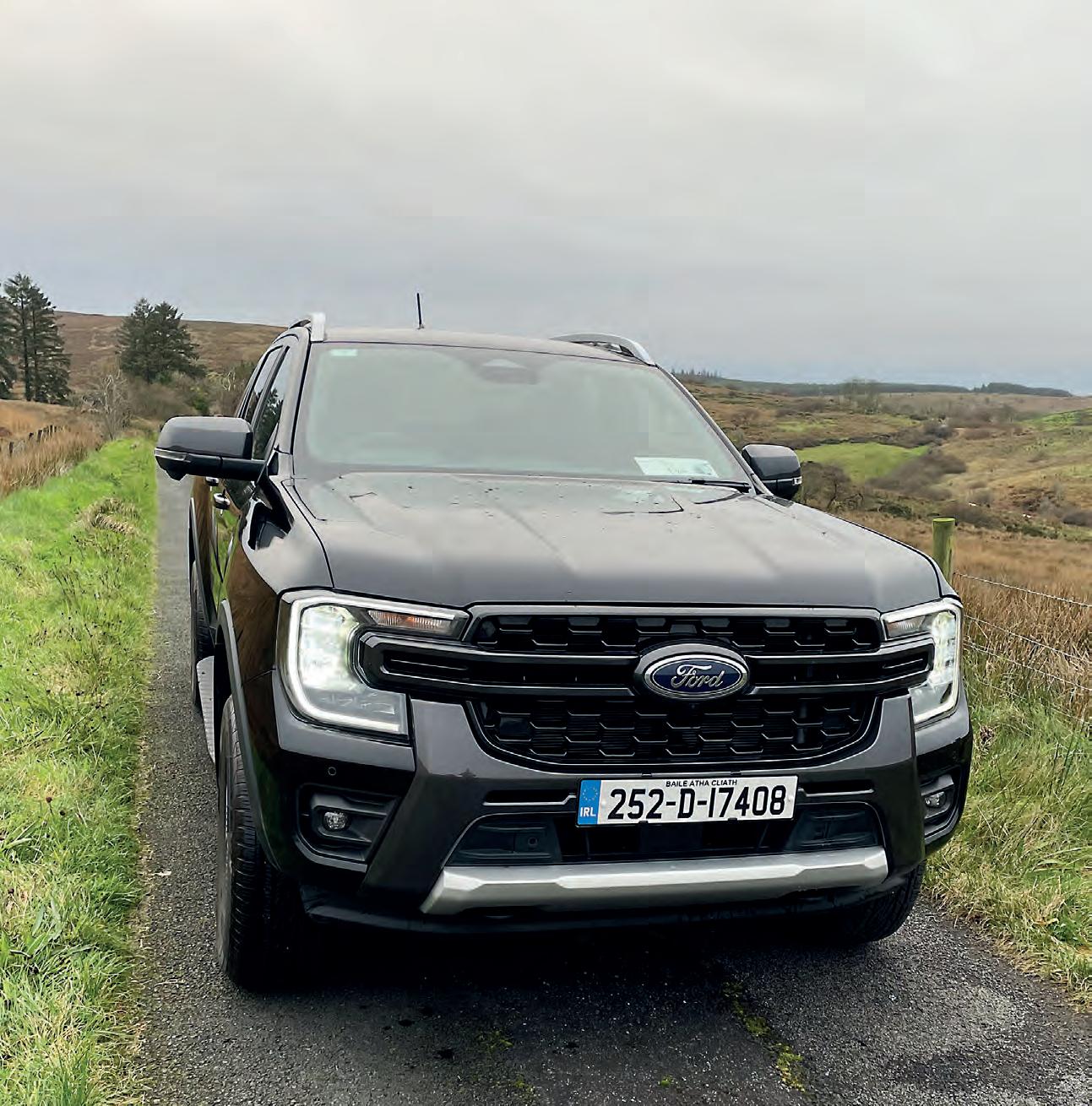
I have driven pick-ups before but never the Ford Ranger, so when I got the opportunity to take one for a long-term test drive, thanks to Brian and the team at Harris PR, Dublin, I jumped at the chance.
The vehicle was prepared and provided by the Automotive Team in Sandyford, Dublin and the model I was given for my test drive was the new Ford Ranger PHEV (Plug-in Hybrid) ‘Wildtrack’.
The Ranger PHEV uses a 2.3 L EcoBoost petrol engine combined with a 75 kW electric motor. These combine seamlessly through a 10-speed automatic transmission to give power output of over 280hp and up to 697NM of torque, making this the most torque of any production Ranger.
Finished in striking black paint the Ranger has serious kerb presence and is a very good looking vehicle, in my opinion. It’s large but neat at the same time.
But it wasn’t until I went to climb in that I realised just how big this thing is – the Ranger sits so high off the ground that you’re far better using the side step to get aboard, otherwise you end up awkwardly sliding up and into the cab.
Once inside you quickly realise why there are so many of these vehicles on the road – not just Ranger’s but new pick-ups from the major manufacturers. They have evolved from basic workhorses to very comfortable, and very refined workhorses – complete with all the toys!
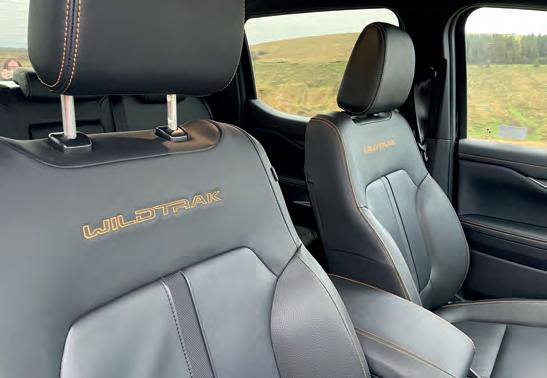
The Ranger’s interior is pure luxury – from the comfortable leather heated seats with ‘Wildtrack’ sewn into the back, to the huge level of kit, with many of the onboard systems controlled by a tablet sized screen in the centre console. The driving position is excellent as you sit pretty high up in a Ranger. From the driving seat it certainly felt like I was higher up than most of those around me on the road - including those in their shiny SUVs.
If you are waiting for the engine to roar into life when you press the ‘start’ button, you’re going to be disappointed. This is a hybrid electric vehicle so once the start button is pressed the only clue you have this thing is ready to go is the word ‘READY’ on the dashboard. Slide the gear selector to D and press the accelerator and you are on the move –very quietly at first it has to be said. Depending on how much charge you have in the battery, or how quickly you speed up, will determine when the petrol engine kicks in –but I can confirm it is so smooth you would do well to identify the point the electric motor gives way to the EcoBoost petrol power plant.
This is a big vehicle, and you certainly know all about it when driving down the road – but you soon get used to its size and dimensions. And I also came to the realisation I like driving the Ranger – a lot.
I have never had the desire to join the ranks of those sitting up high behind the wheel. But, for the first time, I think I am starting to see the attraction. Not that I particularly want to be looking down on my fellow motorist, but the view in the Ranger is excellent and you feel very safe and secure behind the wheel. With this, of course, must come a heightened awareness that you are driving a much larger vehicle than other road users and therefore must exercise that bit more caution.
The Ranger has been with me now for about two weeks but I still haven’t got around to figuring out some of the modes and features. For instance there is both an ‘Eco’ and ‘Normal’ driving mode but I am yet to drive in full ‘Eco’ mode to see what sort of a saving that will give me on running costs.
I have discovered there are a number of EV modes you can choose from by twisting a little dial down beside your left hand. These include ‘Auto EV’, ‘EV Now’, ‘EV Later’ or ‘EV Charge’. The full EV range, as far as I can see, is less than 20 miles but that’s not what this vehicle
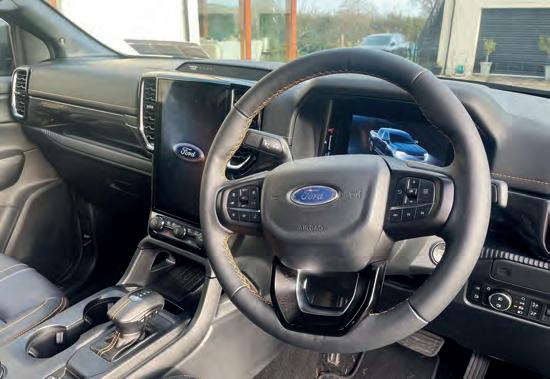
is about. The point is to use the electric motor to combine with the petrol engine to improve efficiency, which is probably why ‘Auto EV’ is the mode the Ranger defaults to each time you start up – and the one that probably gives the most efficient results.
‘EV Now’ is full electric – something I imagine you might press when trying to sneak home at night and not wake up the kids, or when driving through an EV zone. ‘EV Later’ saves your battery for a later time while ‘EV Charge’ using the engine to actually put some charge back into the battery.
On a recent return trip to Belfast I managed to recoup about 20% battery capacity, which I thought was pretty decent.
To fully charge the battery in the Ranger PHEV, from a domestic socket, takes upwards of 6 hours but unlike a fully electric vehicle ‘range anxiety’ doesn’t come as standard as you can run the battery flat in a PHEV and still drive normally with the petrol engine. It is just advisable – and more efficient – to have charge in the battery.
The PHEV is every bit as capable as its diesel brothers when it comes to towing, payload and off-road ability - not that I have had the
chance to get its wheels too muddy just yet.
The Ford Ranger PHEV uses an e-4WD (electric 4WD) system with a dual-range transfer box and a rear differential lock. And the driver can select from a range of Terrain/drive modes: including NORMAL, ECO, SPORT, TOW HAUL, SLIPPERY, MUD/RUTS, and SAND.
The Ranger PHEV also introduces ‘Pro Power Onboard’, letting you use the battery to power tools or other devices through the back of the truck. This is something I think will soon appear in other similar vehicles, but could be a game changer for some tradesmen. Perhaps most importantly, my children love this thing and no longer want to be taken to school in mammy’s ‘boring’ car - so the Ranger is getting a lot of use.
Another thing you notice when driving around in the Ranger is that pick-ups are everywhere. We are not quite up to American levels of pick-up adoption just yet but there certainly are a lot of them on the road. And I am starting to understand why. Our adventure with the Ford Ranger continues, and I will give a further update on life with a PHEV in the next issue.
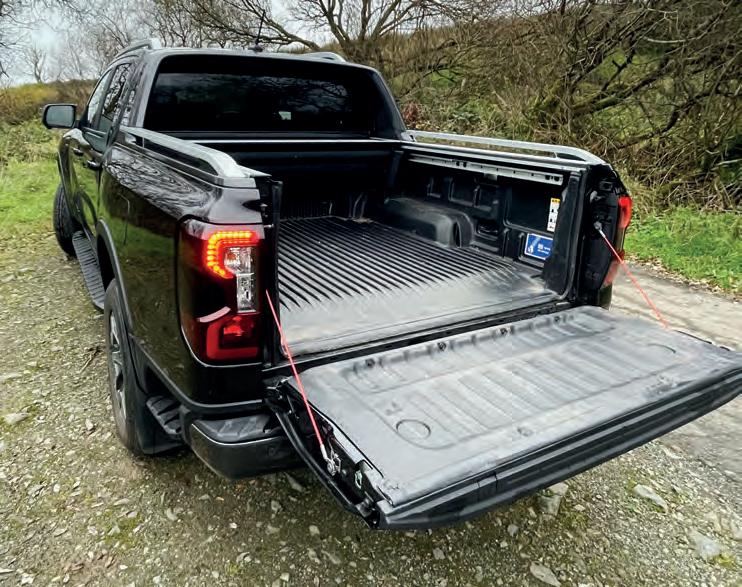
This state-of-the-art hybrid freight ferry marks a significant milestone in Stena Line’s 30-year partnership with Belfast and its ambitious journey toward sustainable shipping.
The 147-metre Stena Futura is the first of two next-generation “NewMax” freight vessels purpose-built for the busy Belfast–Heysham route.
Designed with cutting-edge technology, the ship is methanolready and equipped with hybrid propulsion systems, including battery capability and shore power connectivity. These innovations will help Stena Line achieve its goal of reducing CO2 emissions by 30% by 2030.
‘Today we are celebrating a remarkable milestone for Stena Line and a major transformation for the freight ferry industry. We are here today to name Stena
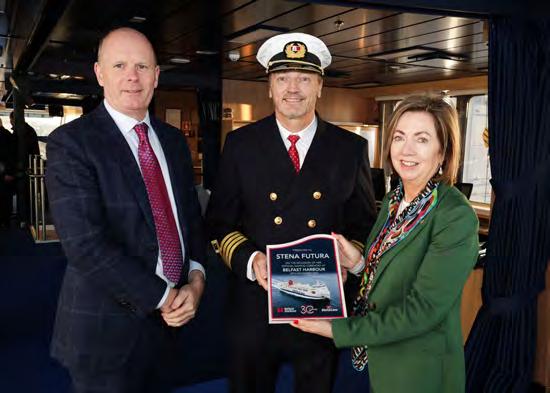
Futura, Stena Line’s first new Max, multi-hybrid ferry which will operate on the Belfast to Heysham freight route,” said event MC James Nesbitt.
“Stena Line has a clear vision to connect Europe for a sustainable future. Shipping is vital to the global economy, but it must play its part in
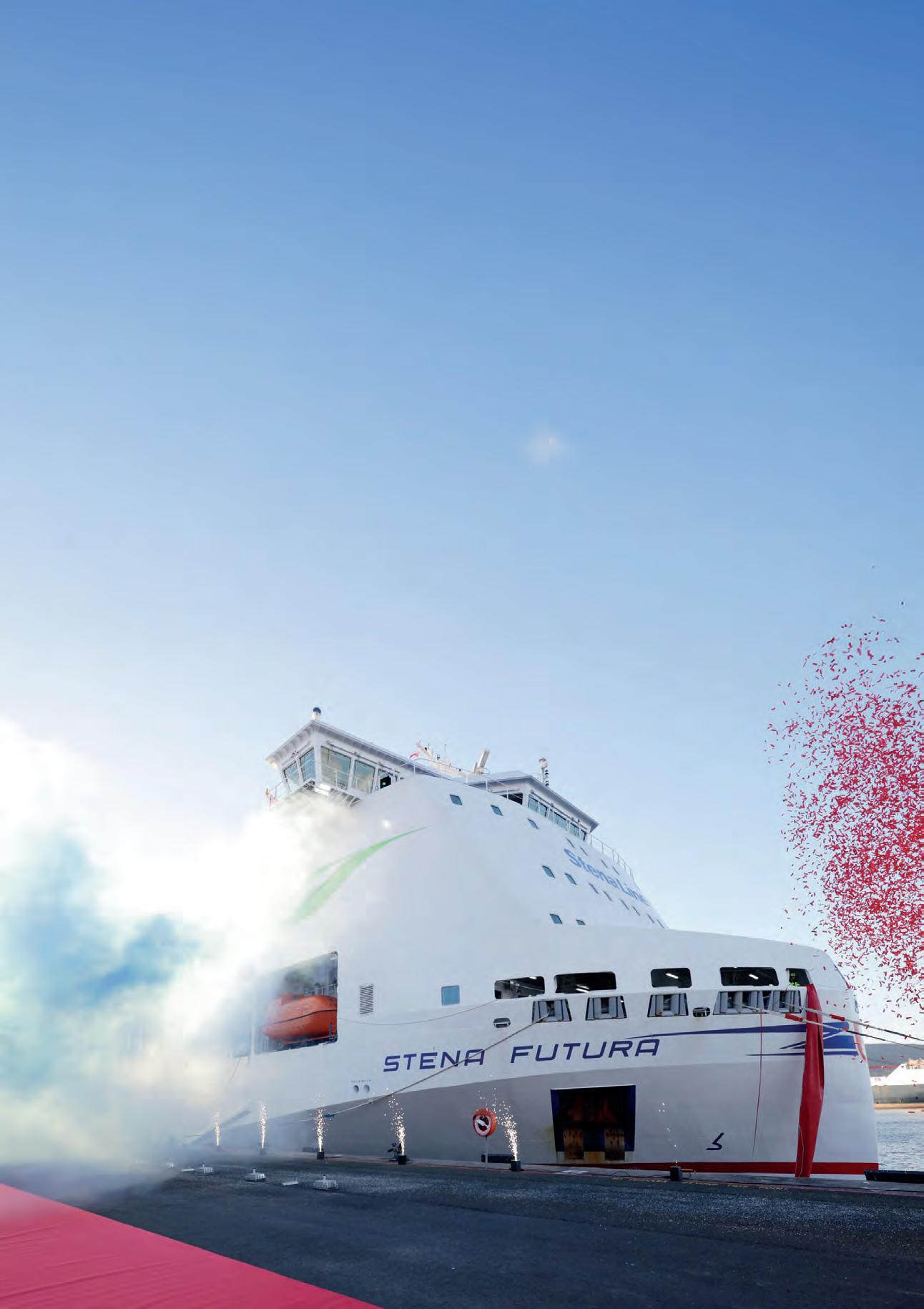
reducing the emissions. Stena Futura and her sister ship on the route Stena Connectawhich will launch early next year – are a major step towards sustainable shipping.”
Welcoming guests to the event on a bright, sunny November day Paul Grant, Trade Director for Irish Sea North said, “We’re marking a milestone here (today), the official ship naming, and the first official ship naming here in Belfast for 20 years. We’re making history here today and it’s quite an event. “We’re also celebrating our third in a series of four brand new ships specifically built for our Belfast routes since 2020. What support and investment in Northern Ireland (by Stena Line).”
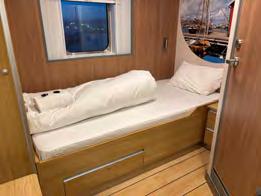
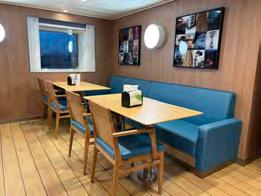
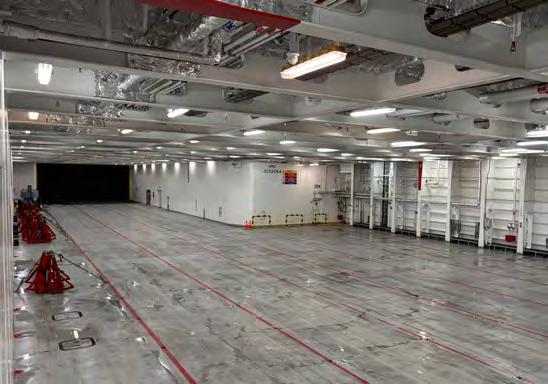
Mr Grant said the event celebrates the future of new beginnings; the naming of this remarkable ship and the start of something great.
“Ship naming is a tradition created in hope – hope for safe seas, hope for fair winds and hope for good business. Stena Futura represents an investment in the future. It represents faith in the region and strong commitment to delivering excellence for many years to come.”
The naming ceremony was carried out by the ship’s Godmother, Dr Madeleine Olsson Ericksson, a member of the Olsson family, owners of Stena Line and guests included Deputy Lieutenant of the Borough of Belfast, Dr Philip McGarry, Deputy First Minister,
Emma Little-Pengelly and Dr Theresa Donaldson, Chair of Belfast Harbour Commissioners.
The ceremony also marked the key milestone for the company, celebrating 30 years of Stena Line operations in Belfast since moving their services to the city in 1995.
Also speaking at the event, Stena Line CEO Niclas Mårtensson said: “The naming of Stena Futura is a proud moment for Stena Line and Belfast Harbour. This vessel along with sister ship Stena Connecta represents over £100 million investment in our Irish Sea network and clearly demonstrates our ongoing commitment to meeting growing freight demand, while leading the way
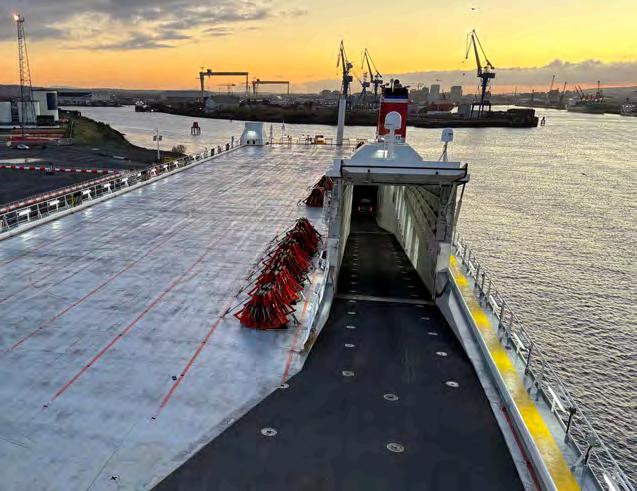
in sustainable shipping.”
Deputy First Minister, Emma Little-Pengelly said: “Stena Line has been part of the fabric of the Northern Ireland economy for decades, connecting people, goods, and opportunities between Northern Ireland, GB and beyond.
“This investment of over £100 million is a testament to Stena’s belief in our potential and confidence in our region. This is a proud moment for our maritime sector, and for Northern Ireland. I thank Stena Line for its continued commitment, and I wish Stena Futura and sister ship Stena Connecta safe and successful voyages ahead.”
Joe O’Neil, Chief Executive of Belfast Harbour, added: “We were proud to host the naming of Stena Futura at Belfast Harbour and to welcome the Olsson
family for this special occasion, marking 30 years of strategic partnership that we truly value.
“The new vessel is already proving successful on the Belfast–Heysham route, and we can see significant potential for further growth in freight volumes when Stena Connecta enters service next year. We look forward to building on the incredibly strong ties we have with Stena Line, strengthening our collaboration and further enhancing the connectivity that drives long-term economic growth for the region.”
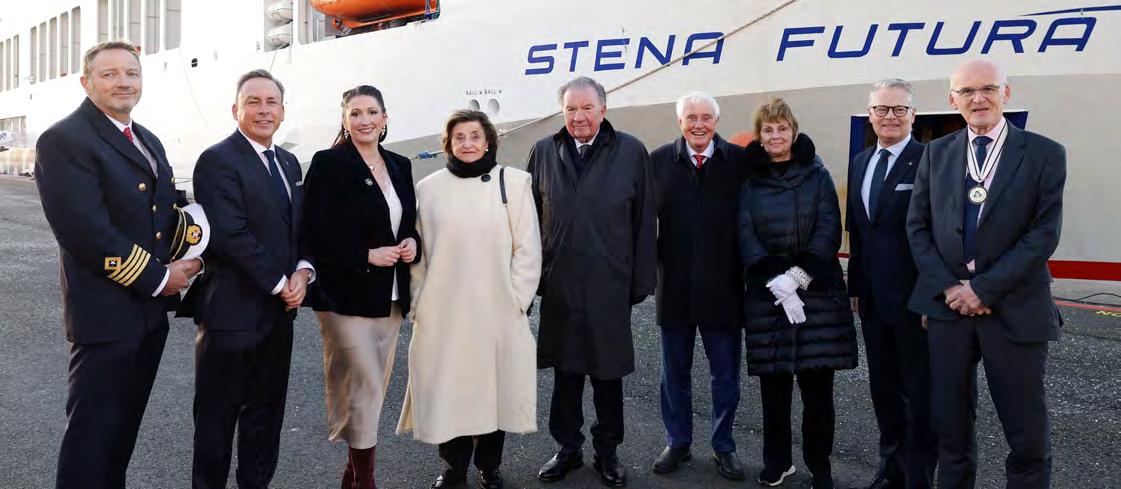
Belfast Harbour has been awarded Platinum Level status by Business in the Community (BITC) in the 2025 Northern Ireland Environmental Benchmarking Survey for the 17th consecutive year.
The annual survey rates more than 150 organisations against sector peers and leading Northern Ireland organisations based on environmental management and performance in key areas, as well as the extent to which environmental business practices have been embedded within corporate strategies.
Simon Gibson, Marine, Environment and Biodiversity Officer at Belfast Harbour said:
“Belfast Harbour is proud to once again achieve Platinum status in the BITC Environmental Benchmarking Survey. Participating in this survey provides a valuable opportunity to gain meaningful

insights and feedback on how our performance compares with peers and counterparts across Northern Ireland’s business community.
“Having taken part in this survey for 25 years, our continued Platinum level status reflects our long-term commitment to sustainability
and responsible growth, and the dedication of our people and partners in building a greener, more resilient Belfast Harbour.
“Accelerating our journey to net zero and supporting others to do the same is at the heart of our transformative plans in our 2025-29 strategy to Advance Regional Prosperity. Sustainability is equally central to our Draft Masterplan 2025-50, which is open for consultation until January. This bold, long-term vision for the Port and Estate places environmental responsibility as a key pillar in our plans for the future of Belfast Harbour.”
Regular ferry services between the Isle of Man and Irish ports are set to begin next year as part of an expanded schedule by the operator.
The Isle of Man Steam Packet Company said former flagship vessel the Ben-my-Chree would carry out three sailings to Larne along with two to Dublin each week in the peak season, with the three trips to Northern Ireland continuing during the off season. Changes to the 2026-27 schedule would see other vessels in the fleet freed up for more sailings on core routes to Liverpool and Heysham, the firm said.
The government-owned operator said the initial commitment to the increased routes to Irish ports was for two years but it was “a case of use it or lose it”.
The new timetable marks the first time in 15 years that three vessels would be regularly operated by the firm outside of the TT period. The schedule would include additional summer daytime sailings to the Manx-owned Liverpool ferry terminal by the fast craft Manannan with the Manxman continuing winter weekend sailings to the port.
The Ben-my-Chree, sailing out of
Douglas Bay. It is black, white and red with Steam-Packet.com written on the side along with the firm’s logo.
The introduction of sailings to Larne, in Northern Ireland, comes after a trial sailing to the port by the Ben-my-Chree last month.
The Steam Packet said the use of the vessel would also see the Dublin timetable “massively enhanced”.
The Ben-my-Chree became the fleet’s backup vessel when the Manxman took over as the flagship vessel in August 2023 and is currently on a five-week charter by Stena Line. While sailings to Larne are set to begin in April, the Ben-my-Chree is not listed on the route until July, with the Manxman and Manannan carrying out scheduled journeys to Ireland until then.
The Steam Packet said the use of the back-up vessel would “allow for the development of freight and commercial links” between the two countries.
Managing director Brian Thompson said
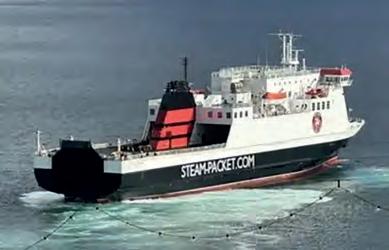
recent growth in ferry travel following new pricing initiatives, such as children travelling free of charge, had been “very positive”.
The firm was “investing heavily in growing our business”, he said, which was increasing the economic and social opportunities for the island.
“What I would say, though, is this is a case of use it or lose it. We cannot, as a company, afford to back an initiative that loses money over the long term,” he said.
Support from businesses and residents would be needed to “make sure it succeeds”, he added.


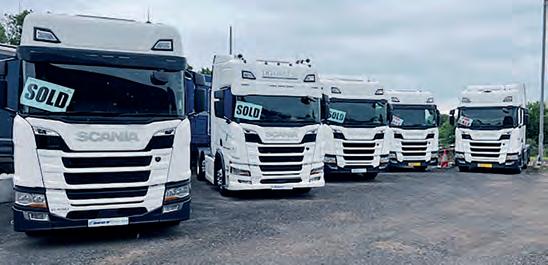
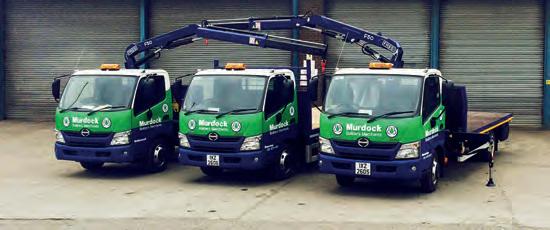
















Transport Supplies now has over 12,000 product lines in stock from all the leading specialist brands. Plus there’s our fast delivery direct to you provincewide as well as free collection from our stores.




















Our network of 18 routes links key ports and road connections across northern Europe.
With more routes and sailings than any other ferry company on the Irish Sea, we offer the most convenient and reliable way to reach your destination.
At Stena Line, we’re committed to providing safe, comfortable and sustainable journeys.
7 ROuTES to Britain and France
12 VESSELS in operation
uP TO 38 daily departures