The True Steward
Hands Together for the Gospel
Broken Shells
The Gift of Sabbath Rest
Exiles for the Sake of Redemption
Thinking Bigger About Ministry Giving

•






The True Steward
Hands Together for the Gospel
Broken Shells
The Gift of Sabbath Rest
Exiles for the Sake of Redemption
Thinking Bigger About Ministry Giving
•
BY ERIC K. THOMSEN
A ragged newsprint clipping* caught my eye while sorting my grandmother Lillie’s papers shortly after her death in 2011: “Janitor Leaves Fortune to Bible College.”
Intrigued, I looked closer.
The brief report from Ankeny, Iowa, shared the intriguing life story of Christian Thomsen (a distant cousin, according to Grandma’s extensive family tree). Born in 1897, Christian immigrated to the U.S. from Denmark after World War I to pursue theological training.
Though he returned to Denmark briefly, Christian came back to the States in 1927, settling in Des Moines, Iowa. He spent the next 56 years employed as a janitor for Northwestern Bell Telephone Company, working well into his 80s. He never married, never owned a car (never even learned to drive). He lived simply, quietly, and frugally, going to work, attending church, and taking frequent nature walks.
Most would describe his life as unremarkable.
Perhaps that is why the community expressed amazement when, after his death at age 101, this unassuming man left $1.1 million to a nearby Bible college and another undisclosed “substantial sum” to his church. The

article quoted his friend and executor Craig Hastings, who mused, “We are reaping the benefits of a man who dedicated his entire life to the Lord.”
Wow! What an epitaph.
I’ve kept that worn clipping on my desk for more than a decade as a reminder not to overlook the “janitors” in my life. I’m afraid we sometimes embrace cultural ideals of success — prestige, power, looks, wealth, public generosity, influence, communication skills, awards — over quiet faithfulness.
Jesus never made that mistake. He pointed to an unnamed widow’s coins as an example of faithful and sacrificial giving (Luke 21:1-4), used a young lad’s lunch of fish and bread to demonstrate the amazing things God can do with the least amount offered freely to Him (Matthew 14), and taught His disciples to be faithful in small things (Luke 16:10), so they would be prepared for more.
Jesus values everyday faithfulness.
The older I get, the more I, too, appreciate the quiet — and sometimes not-so-quiet — people who faithfully carry out the work of the Lord. They sit with the homebound, unlock doors and turn on lights, clean bathrooms, prepare snacks, teach Sunday School, comfort the grieving, mow the church grounds, tithe faithfully, and share Christ unashamedly.
(This list of “little” tasks could go on for days.) Best of all are those who serve faithfully with no desire for recognition.
I have a feeling Jesus has placed a “gold star” beside their names as good and faithful servants.
I wish I could have met Cousin Christian, the theologicallytrained janitor who probably cleaned toilets every day of his working life yet never forgot his real Employer. Sounds like my kind of guy, and I’m glad he was in my family.
Make it your ambition to lead a quiet life, mind your own business, and work with your hands, as we instructed you. That way your daily life will win the respect of the world around you (paraphrased from 1 Thessalonians 4:11-12).
About the Columnist: Eric K. Thomsen is managing editor of ONE Magazine. Email: eric@nafwb.org.
* Please note: the clipping contained only title and text. A thorough Web search failed to provide a coordinating paper for citation.
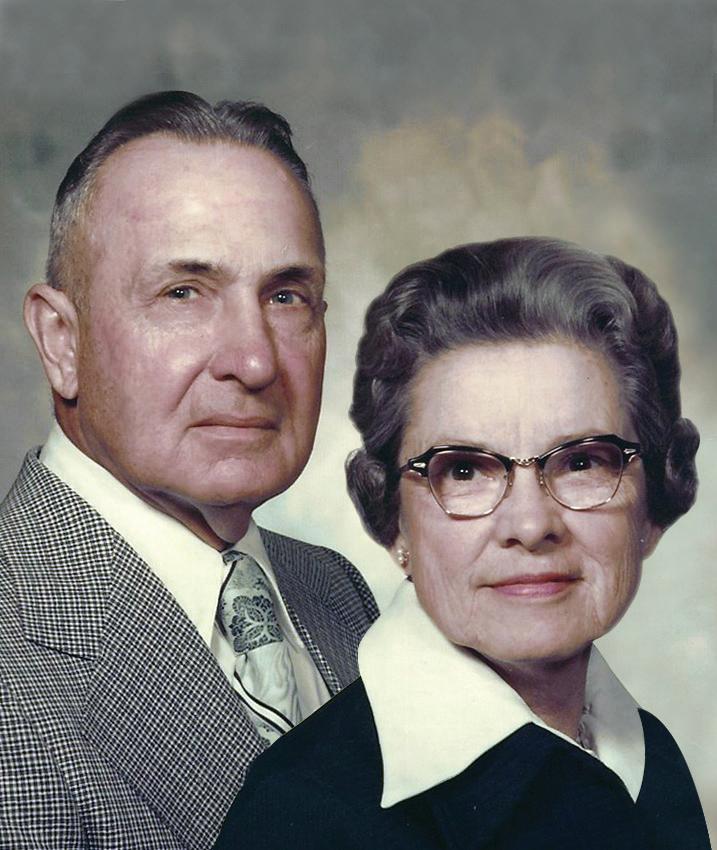


It all started with $100. On September 30, 1982, the Executive Office received a $100 check from Wilbur and Alma Worthington. Originally known as the Worthington Trust, today, this fund has been renamed the Free Will Baptist Endowment. Currently at $1.2 million, the endowment will begin providing $250,000 annually (at 5% interest) to national ministries once it reaches its $5 million goal. The funds are never touched, but the earnings can be used for ministry, to help Free Will Baptist agencies avoid crippling debt and relieve financial pressure.
Why not join the Worthingtons in creating a legacy that lasts through the FWB Endowment?

fwbgifts.com | 877-336-7575 (or scan the QR code)







BY BRENDA EVANS
Site X was shrouded in secrecy — government secrecy. Soon after, Site X was called Clinton Engineer Works and six years later, in 1949, first appeared on Tennessee maps as Oak Ridge. Its nickname was Atomic City. By then, most people knew it had been one of three main sites for the Manhattan Project that made the atomic bombs dropped on Hiroshima and Nagasaki in August 1945. Los Alamos, New Mexico, and Hanford, Washington, rounded out the trio.
My father was at Site X for only a few weeks in 1943. The previous fall, General Leslie Groves, director of the Manhattan Project, approved the acquisition of 59,000 acres along the Clinton River, 20 miles west of Knoxville. By spring 1943, construction for Site X began on a clandestine crash schedule. Fenced, with guards and five security gates, it was top secret. By 1945, it had become the fifth largest city in Tennessee with a population of 75,000. Residents had no idea why Site X was there, nor did most workers until after Hiroshima and Nagasaki.
In The Devil Reached Toward the Sky, Garrett Graff relates nuclear engineer Edward S. Bettis’ experience: “I was told absolutely nothing….My interview for the job took place on a fire escape in the old Empire Building in Knoxville.”
When Bettis asked, “What will I be doing?” The man who hired him said, “We won’t tell you. Ever.”
Early on, Site X had no sidewalks, no pavement, only memorable mud. One day Karl Z. Morgan heard a “plaintive call from a young lady,” stuck in the mud to the top of her work boots, unable to move. “Some of us got her out, but her boots are still there…buried under the highway, I guess.”
Within months, Site X became home to enormous nuclear plants: K-25, Y-12, S-50, and X-10, along with 300 miles of paved roads, water and sewer plants, thousands of houses and dorm rooms, schools, trailers, bath houses, cafeterias, grocery stores, churches, a jail, a steam power plant, telephone service, and 55 miles of L&N and Southern Railroads. By 1945, Site X used more electricity than New York City.
Of course, my father, Guy Hampton, who was there in June and July 1943 also had no clue. He had taken a carpentry correspondence course and was employed by DuPont in 1934, at age 24. He continued with them off and on through mid-1943 in three states: Tennessee, Indiana, and Alabama. When I was growing up, he simply called those Dupont construction jobs “defense work.”
From its founding in 1802, Dupont was best known for producing war material. Later, they invented and developed many other products, including nylon. The X-10 complex at Oak Ridge and the Hanford complex DuPont began building in late 1943 were for extraction of plutonium, which eventually led to the Fat Man Atomic Bomb dropped on Nagasaki, August 9, 1945. K-25, Y-12, and S-50 at Oak Ridge produced uranium for Little Boy, the bomb dropped on Hiroshima, August 6, 1945.
Last August, as the 70th anniversary of the bombings of Hiroshima and Nagasaki approached, memories about my father and Site X surged back full force. For about a month, Guy did carpentry work for DuPont somewhere on the X-10 plutonium complex that eventually occupied 112 acres at Site X. The X-10
complex included research labs, waste storage, training facilities, administrative area, laundry, cafeteria, first aid center, and fire station. More importantly for the Manhattan Project, by early 1944, X-10 had fulfilled its purpose to convert uranium-238 into tiny amounts of plutonium-239. After that, fuller production of plutonium moved to Hanford, Washington.
Sometime in June 1943, my family and I moved to the area. I don’t know where we lived, perhaps inside the fenced and guarded gates of Site X, perhaps not. As I grew older, I learned the story of my father’s brief “defense work” at Site X. Sometime in July, Guy collapsed to his knees at work. For weeks, he had suffered from excruciating headaches and occasional double vision. That day was the worst ever. He crumpled and could not rise. A fellow carpenter drove him home. Doctors at a Knoxville hospital suspected a neurological problem and urged him to see Dr. Cobb Pilcher, a renowned neurosurgeon at Vanderbilt Hospital in Nashville.
Guy was transported by ambulance to Nashville, and on July 22, 1943, Dr. Pilcher diagnosed the problem: an orange-sized tumor in the right back quadrant of Guy’s brain. Surgery and pathology followed. The tumor was malignant. The bad news? You didn’t survive brain tumors in 1943, much less malignant ones. The good news? According to the Nashville Tennessean newspaper, Dr. Pilcher was a world-renowned neurosurgeon. Radiation began, along with a long recuperation. It was a year, Mother said, before Guy could work again, yet he lived 37 more. A true miracle!
But while Guy’s brain tumor was horrible, the war and the bombs were even more horrible. When Adolph Hitler committed suicide in April 1945, my parents did not mourn. In May 1945, when the war in Europe ended, and in August when the war in Japan ended, they were jubilant, along with the rest of the nation.
So, what about Guy Hampton after the war? As if that miracle of survival and recuperation from a malignant brain tumor were not enough, my father soon came to the Lord in faith, repentance, baptism, and became a member of Rock Springs Free Will Baptist Church in Charlotte, Tennessee. He served as the song leader and a deacon until shortly before his death in 1980 by a second brain tumor.
God gifted my father with two kinds of life, physical and spiritual. Physically, after the brain tumor, the additional 37 years. Spiritually, an everlasting newcreation life. I was gifted, too, because as I grew from infancy to womanhood, Guy Hampton, my good father, modeled many Christian virtues. I am so grateful.
Guy liked to laugh, and he did — a lot. He often used the word jolly to describe friends and acquaintances who were happy and cheerful. People whom he was glad to be around, and I’m sure were glad to be around him because he was also jolly. Gloomy, miserable complainers were not on his jolly-list.
Speaking of songs, music was in Guy’s bones. In his youth, my paternal grandmother’s diary often noted, “Guy went to the dance tonight.” After salvation, he sang in trios, quartets, and led music at church. When I was ten, he bought my sister Grace and me a piano after selling a white-faced heifer. He also paid for lessons. After supper, we sang. I played the tall, black piano and took soprano, Grace carried a beautiful alto, and Guy sang tenor from our worn, soft-back song books. He practiced Paul’s commands in Ephesians 5:19 to sing and make melody in our
hearts. When I was 11, our church pianist moved away. He “nominated” me. The church agreed.
Loyal friendship was high on Guy’s list. He testified as a character witness for a neighbor accused of murdering his wife. The man was acquitted. He spent many hours of the night talking an alcoholic friend into soberness. He helped build homes for two families shunned by the community because of their race. For days, weeks, over many years, he took in Shine, a transient who appeared unannounced, and later disappeared unannounced.
Guy was wise in judgment, able to see two sides. “That’s six of one and half a dozen of the other,” he often said. He paid attention to Jesus’ warning about specks and planks in Matthew 7. He went to funerals, spoke up, carried the heavy end of the log, didn’t yarn (lie), visited long after church ended, tended to widows, gave and didn’t take, helped and didn’t hurt. Guy Hampton — my Christian father, my model.
About the Writer: Brenda Evans lives in Ashland, Kentucky. Contact her at beejayevans@windstream.net.


BY RON HUNTER JR., PH.D.
Leaders rarely stumble over strategy; they stumble over the crucial words they cannot bring themselves to say. Over the next five issues, we will explore twenty statements that reveal character, build trust, and foster a strong culture. Each column will feature four challenging phrases and demonstrate how courageous leaders make them an everyday practice. The first four phrases center on courage, clarity, and integrity — core characteristics required when decisions carry weight and consequences.
When a leader says, “I don’t know, but I will find out,” the room feels a surprising shift. People lean in. Though pretending drains trust, admitting uncertainty builds it. The healthiest teams do not follow leaders who claim to have all the answers. They follow leaders who invite others into discovery. Trust deepens when the leader names uncertainty, seeks wisdom, and chooses clarity over posturing. It is a phrase leaders and parents should use more often. This simple confession creates oxygen for honest dialogue.
The statement “I made a promise I cannot keep” expresses a deep level of humility. Many leaders overestimate their capacity or underestimate the cost of a commitment. Admitting a promise cannot be fulfilled requires courage. It also protects team culture from slow erosion. Leadership credibility does not weaken when we name our limits. Credibility is weakened when we pretend we have no limits.
To say, “I did not communicate clearly,” demands a leader who resists the temptation to blame others for confusion. Communication failures rarely belong to the listener; they often belong to the communicator. Small misunderstandings can produce large consequences. Leaders who take responsibility for clarity prevent unnecessary frustration, reduce wasted energy, and create alignment faster. They choose accuracy over assumption, and everyone benefits.
Finally, “This decision will upset some people, but it is the right call,” marks a leader who understands the cost of conviction. Every meaningful decision creates discomfort, and no leader can deliver an outcome where everyone wins or feels at ease. Leaders who avoid disruption eventually compromise their mission. Those who courageously make the call and allow the culture time to adjust will earn more

respect in the long run. Strong leaders refuse to trade longterm health for short-term peace. They pursue what is right, not what is popular.
These four phrases point to a single truth: leadership requires honesty before it requires expertise. Leaders who speak truthfully about limitations, broken promises, unclear communication, and difficult decisions build a culture stronger than any strategic plan. Followers often spot a leader’s limits first, and when both sides name the truth, trust grows, and the culture strengthens. When leaders speak with courage, people follow with confidence.
About the Columnist: Ron Hunter Jr. has a Ph.D. in leadership and is CEO of D6 Family Ministry. You may contact him at ron.hunter@ d6family.com.

BY JOHN BRUMMITT
Procrastination: putting off today what you could do tomorrow or next week or later. For example, I have been planning to write this article for several weeks, but now it is past due, and I have asked the editor to give me a couple of extra days to complete it. It would be great if this were not true, but sadly, it is.
But, hey! It gave me a great introduction.
As someone who works in the financial world, I often encounter procrastination. And unfortunately, the consequences of procrastination have compounding effects not only for the procrastinator, but for friends and loved ones as well.
Sure, I had good reasons for putting off writing this article: the workload has been greater than normal over the last several months, life in general delivered extra demands, and I have allowed myself to be distracted or pulled in other directions, and this article slid down my list of priorities. But the more something gets pushed off until later, the bigger the procrastination elephant becomes, and the more it will cost.
Though I had good reasons for procrastination, the delay created consequences, and not just for me. I had to ask for grace from the editor. I had to delay other items to write this article. I also had to ask for grace from the editor, lessening my credibility for meeting deadlines. My procrastination also holds consequences for the editor, who now must rush to meet his own deadlines. The proofing team and designers who make
these articles attractive and attention-grabbing — all will have less time to hit deadlines down the road. (Sorry, everyone!) The results of procrastination are like the ripples from a pebble tossed in a pond — they just keep growing.
In the world of finance, everyone likes to talk about the power of compounding, but procrastination also has compounding effects. Procrastination on setting up retirement savings (or savings in general) has the same compounding effect as saving…in reverse. The longer you procrastinate, the larger the contributions necessary to meet the retirement number you need. Unlike my editor and this article, time does not provide grace for our procrastination. Time is relentless, and procrastination is a thief.
If you were to consider the potential earning power of your retirement account from the time you should have started saving versus your actual start date, you would see somewhere on average a 7 to 9% return per year. So, for a 50-year-old just making his first retirement contribution of $250, the potential

earning power of that $250 over the 25 years since he should have started would be $1,462.12 with an 8% average return. In simple terms, procrastination stole $1,400 from the first contribution, and then each additional contribution added to that.
If that individual consistently put in $250 per month for 25 years, he or she would have deposited $75,000 by age 50. With compounding, the account would have $219,000, with $144,000 of earnings. Even at a 3% annual return, the potential loss of return on investment was $34,000 over that 25-year period.
The consequences of procrastination are significant, but you can take actions to mitigate those consequences, such as increasing your monthly contributions or delaying your retirement date to help build your savings. These are not a “magic bullet” by any means, but at least you have options to move
forward. Breaking out of the procrastination cycle sometimes feels overwhelming.
Procrastination is prevalent in our daily lives, often for compelling, real-life reasons. Sometimes, grace can be given, like with an article, if it isn’t too late, but there will always be consequences for procrastination. Next time you are tempted to put off until tomorrow what should be done today, try the “3-2-1 rule.” Give yourself a countdown, then take the first step. When you need to “eat an elephant,” you must do it one bite at a time. But that first bite is important.
So, if you have been procrastinating, whether on saving for retirement or on writing an article, finish this sentence, then count down 3-2-1, and take the first step!
About the Writer: John Brummitt became director of Richland Ave Financial in January 2016. He graduated in 2011 with an MBA from Tennessee Tech University. A 2004 graduate of Welch College, John has served with Richland Ave Financial since spring 2006.
TBY CHRIS COMPTON
If someone asks what it means to be a good steward, what would you say? Most of us in the church world would probably think of money — things like giving, tithing, saving, or budgeting. And we would be right to think of that, but we should think about more than that. Stewardship is broader than finances, deeper than giving.
Scripture teaches the core principle of stewardship: God owns everything — every moment, every gift, every dollar, ever talent, every resource. Everything we possess is the Lord’s, and He has entrusted us to manage these things. Our time, talents, and treasure are not given to us for selfish gain, but for the glory of God and the good of others.
Time is our most precious and valuable resource. Life is scarce and limited. Once a moment is spent, it’s gone. James says our life is like a vapor that appears for a little time, and then, poof, it is gone. Wise stewardship begins with realizing our time is not really our own but God’s. It is given to us as a trust. We are simply stewards of it.
Practically speaking, this means looking at our calendars through the lens of God’s Word. We must ask tough questions: Are we spending our hours on what matters most to the Kingdom, or just on what feels fun or comfortable? Are our days filled with the immediate or the eternal? I know time management often feels impossible with our busy lives. But stewardship of time is not about doing more or cramming more into our busy schedules. It is about making intentional choices and doing what matters most.
The Lord gives us time for His good purposes. That might mean spending more time with family, managing money well, committing the necessary time to grow in the Lord, or giving time to disciple another believer. Stewardship of time invites us to align our days with what truly matters most, to invest in things that last eternally.
Every believer has been gifted by God. Each of us has spiritual gifts and abilities meant for God’s purposes. Peter wrote, “As every man hath received the gift, even so minister the same one to another, as good stewards of the manifold grace of God” (1 Peter 4:10). Our talents are gifts from God intended to bless others and advance the gospel.
We all have unique gifts. No gift is more special than another. In God’s economy, every believer is part of the Body of Christ and has an important role to play in advancing the mission. Some gifts are more visible while others work behind the scenes. The key is not what you’ve been given, but how well you use it. Whether teaching a lesson, greeting guests, singing in the choir, caring for little ones, or repairing things behind the scenes, your gift matters and is to be used for the glory of God.

This is being a good steward of God’s grace.
We should start by recognizing our gifts through prayer and reflection, develop them through learning and practice, and use them to their fullest in service to God in every area of our lives. It is amazing what God can do through us when we use our gits for His good purposes.
Money is a major topic in Scripture, with much teaching regarding the wise stewardship of money. This teaching doesn’t start with a budget but with the belief everything we “own” belongs to God. Our spending, saving, and giving acknowledge this truth. Our actions also reveal the things we truly value. Jesus said, “Where your treasure is, there will your heart be also” (Matthew 6:21).
Stewardship of our treasure is an act of worship and a declaration of trust in God. When believers live with this perspective, it changes everything. We give joyfully, not grudgingly. We budget prayerfully, not carelessly or selfishly. Whether giving to the church, supporting missions, or helping someone in
need, every act of generosity reflects our trust in God and echoes our eternal perspective.
Stewarding well in finances involves developing a spending plan, living within our means, giving regularly, and planning for the future. It also involves faith. As we carefully steward the money God has given us, we trust Him to provide our needs and do great things for eternity.
God has called believers to be good stewards. It is the Christian way of life. Stewardship touches every aspect of life, using time, talent, and treasure faithfully for God’s good purposes. Being a good steward is not about perfection. It is about being intentional in honoring God and blessing others with what God has given us. When we steward these things well, our lives become a reflection of His grace, and our faith becomes visible to a watching world.
That’s true stewardship.
About the Writer: Chris Compton is the CFO for Richland Ave Financial. He graduated in 2007 with an M.A. in Bible Exposition from Columbia International University. A 1998 graduate of East Tennessee State University, he has over two decades of administrative and financial experience in various fields, along with seven years in pastoral ministry.

BY DOUG LITTLE

“Make all you can; save all you can; give all you can.” — John Wesley
Tithing to your local church is the first step of biblical stewardship. However, giving above the tithe from your monthly income provides consistent, dependable funding for ministries. Spontaneous giving, such as love offerings, offers an additional opportunity to respond to immediate needs when your heart is moved. Also, be generous with direct gifts from your checking or savings for ministry operations and projects. Stay informed about needs and opportunities to impact Free Will Baptist causes:
• Your local church
• Education (Christian schools and colleges)
• Missions and church planting
• Youth ministries (camps, retreats, conferences)
• Social ministries (family services, crisis centers, counseling services)
• Disaster relief
• The Free Will Baptist Endowment (benefits all national agencies)
Giving beyond your lifetime is a great way to continue supporting the Lord’s work after you have gone to your eternal reward. Consider the various types of legacy giving:
Establish and contribute to an endowment to perpetually benefit your cherished ministries.
Designate a bequest in your will or trust to specific ministries.
3. Establish a charitable gift annuity providing guaranteed income for you and leaving a significant ministry contribution at your death.
4. Set up a charitable unitrust.
When visiting aunts and uncles on their farms as a child, most had no running water in the house. We pumped water from a well near the house and carried it inside. My boyhood sense of adventure thought it great fun to help. But my cousins who lived on these farms had a different take on the situation. To them it was a chore! Rain or shine, blazing heat or bone-chilling cold, they had to have water in the house. And that meant going to the well. It was a happy day when indoor plumbing made the outdoor pump a novelty rather than a necessity. These days, turning the tap for water requires little effort. We forget how blessed we are to have such time and labor-saving convenience.
The ministries of the gospel cannot function without water, that is, the finances required to operate and achieve their purpose. In most cases, they must send someone to the well to get the water they need. Missionaries travel to churches asking
for support. Colleges send staff and students out to raise funds and recruit other students. Other ministries hire representatives to oversee and conduct the work of raising funds to underwrite the annual operating budget.
We Free Will Baptists are used to doing nearly all our giving through the offering plate (the pump). Perhaps it’s time to take the next step, giving past the plate and bringing the water inside. Consider these simple steps to greater ministry giving:
1. Pray for the Lord’s wisdom to guide your giving, both current and legacy.
2. Consider unexpected or supplemental income, such as tax refunds or required minimum distributions from an IRA, as sources of additional ministry giving.
3. Seek counsel from trusted advisors.
4. Contact the Free Will Baptist Foundation for information and assistance in creating a giving strategy to accomplish your personal goals and maximize the legacy impact for ministries you care about through estate planning and planned giving options.
About the Writer: Doug Little is the field manager for Free Will Baptist Foundation. Learn more: FWBGifts.com/.
One of the sweetest gifts you can give your valentine this year is a well-prepared plan for your future. Since 2013, the Free Will Baptist Foundation and Cornerstone Estate Planning have helped thousands of families avoid the legal and financial nightmares of probate court. An estate plan is a gift to be enjoyed long after the chocolate has been eaten. Learn how we can we help you:


foundation@nafwb.org 877-336-7575 www.fwbgifts.com
A few years ago, as we prepared to start Hope Alive Church, we visited area churches and saw Japanese pastors boldly proclaiming the gospel. We asked how they raised up leaders in their churches. The answer was always the same. Leaders are developed through prayer. They told us they prayed for leaders, so we began praying for God to send local leaders who felt called to pastor.
One of the main answers to this prayer has come through internship. People serve for a year, learn about ministry, try different roles, discover their gifts, and experience what daily ministry looks like.
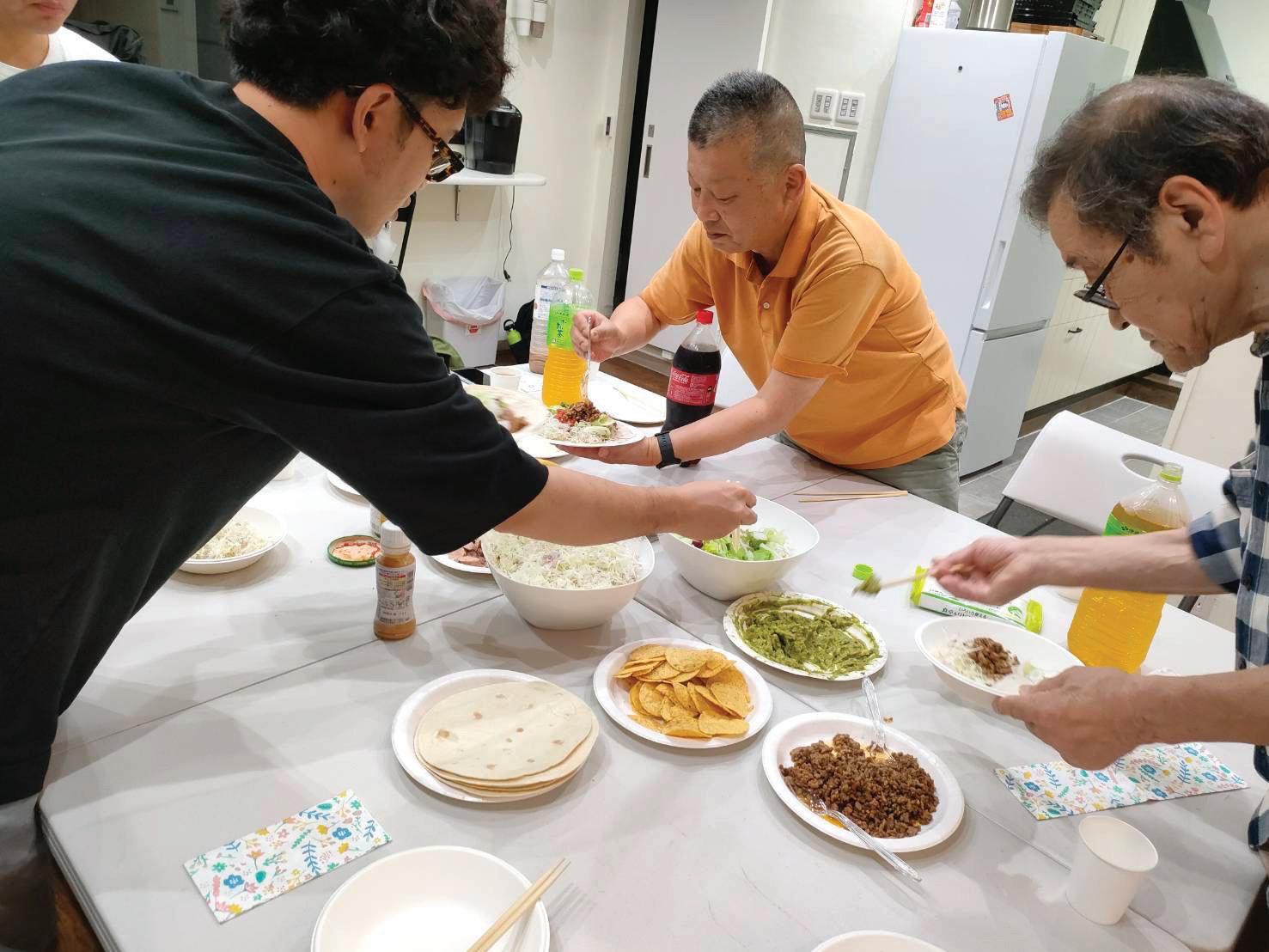
Masatoshi was a translator at our church. One day, he told me he felt God calling him to pastor, so he began the internship. One of his responsibilities was leading a small group. We assigned him a few guys for a discipleship group, and he asked if he could invite more. The group has grown. They meet every other Saturday night, cook a meal, and study God’s Word together. The group has become a source of real encouragement for everyone involved.
One of the participants is not a believer yet, though he has been at our church for a while. At an outreach event, someone asked him why he joined a discipleship group if he was not a believer. He said he is part of the group, but it is more than Bible study. It is a study about life, and it gives him courage for the week.

This is the answer to our prayers — people responding to the gospel and local leaders helping others follow Jesus. We celebrate answered prayers as leaders are developed and as they share the gospel and help others grow.
We have been entrusted with many blessings as followers of God. As we minister in Japan, we want to be faithful stewards of all our resources, using them to encourage, teach, and train others in growing and supporting the Body of Christ.
— Heath Hubbard

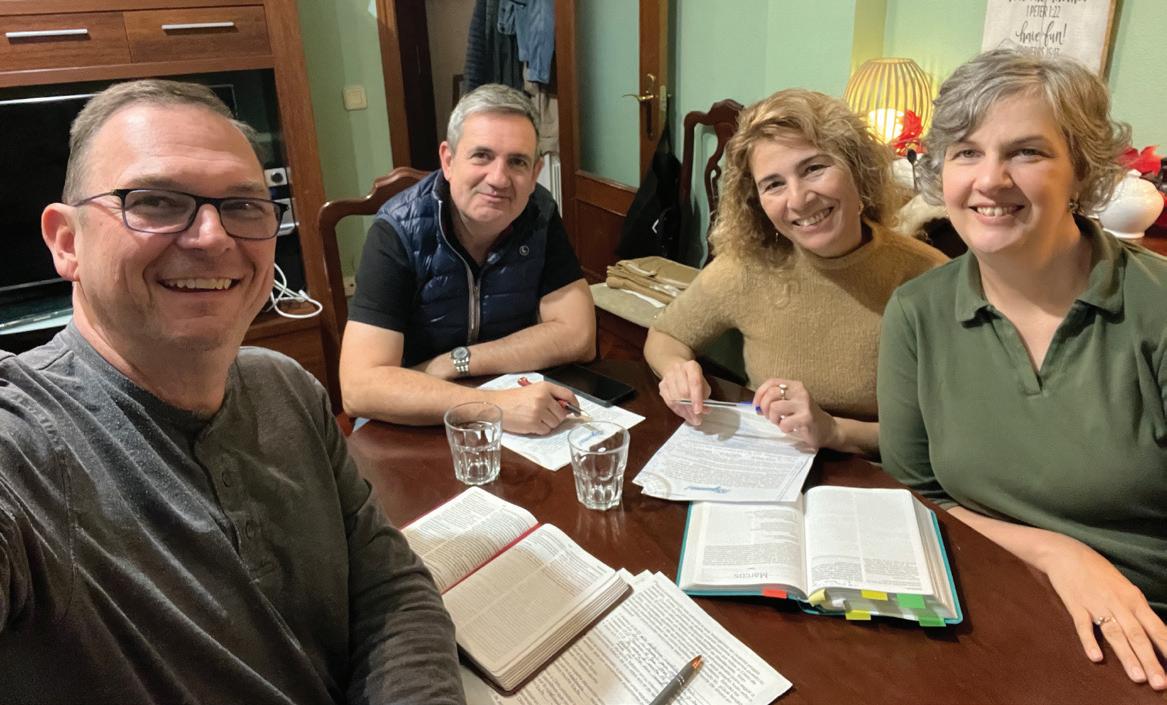
In mid-December 2021, a middle-aged Spanish couple walked into the Alpedrete Church — the first Protestant church they’d visited. They were on a journey, searching for God and the truth. After attending a short time, they asked my wife Lea and me to visit their home and explain what it means to be “born again.”
Not long after, they came to understand Jesus Christ and the Word of God held the answers to their search. On June 11, 2023, they publicly identified with Christ through believer’s baptism. Lea and I continue meeting with them for home Bible studies. We often spend a couple of hours around the table learning what it means to be a disciple of Christ and discussing their many thoughtful questions. It’s such a joy to see God at work in their hearts, bringing about true transformation.
As their faith and relationship with the Lord have grown, so has their desire to serve in their local church. José Luis and Rafi beautifully demonstrate what the often-overlooked spiritual gift of helps looks like in our context.
For the past few years, Rafi has volunteered at Vacation Bible School, assisting and even leading children’s snack time. Though she and her children never experienced VBS growing up, she helps the church carry out this ministry with joy and dedication.
José Luis is also eager to serve in practical ways. He faithfully ensures the church is stocked with cleaning supplies, paper goods, and ink cartridges. He takes responsibility for turning off lights and locking up after services. With his flexible morning schedule, he’s often available to run errands or meet repairmen for the church’s needs.
Recently, our church launched a new ministry — a welcoming team. I knew right away José Luis and Rafi would be perfect for it. They are compassionate and understanding toward those who are searching for truth like they once did. It’s inspiring to hear them share with others the scriptural truths that have changed their lives.
Deeply touched by how the Alpedrete congregation embraced them like family, they sincerely want others to experience the same love and belonging. After serving just one Sunday each of the past two months, they’ve both expressed how much they love being part of this ministry — greeting everyone with a smile, helping visitors, and building relationships within the Body of Christ.
We look forward to seeing how God continues to use José Luis and Rafi as they serve the church through their gift of helps, and how He will continue to develop new gifts in them for His glory.
— Anthony Edgmon
When most people hear the word stewardship, they immediately think of money, time, or talents. Sermons often focus on giving generously, managing resources wisely, or investing our abilities for God’s glory. These are important, but stewardship is far broader. At its heart, stewardship is about faithfully managing everything God entrusts to us — including spiritual gifts He provides for the building up of the Body of Christ.
Paul’s letters (Romans 12:6-8; 1 Corinthians 12:7-10, 28-30; Ephesians 4:11) remind us these gifts are diverse, and each is important. Some, like leadership or prophecy, are often spotlighted. But others, quieter and less celebrated, are no less essential. These less-noticed gifts often sustain the life of the church and encourage weary hearts.
I think of Ophélie, a woman who, despite having an established life and a child, chose to follow Christ in a society where doing so is far from easy. One of the first gifts we noticed in her was a heart for service. Even as a new believer, she quietly took the church keys and cleaned the building — without telling anyone or expecting anything in return. Today, she continues to dedicate much of her Sundays to serving, despite being a mother of a young child and working all week. Her weekends are not about herself. They are devoted to God.
Tim also serves with great enthusiasm. Whenever I mention something needs repair, he shows up with his tools and a solution. His eagerness to help is truly encouraging. Tim plays the drums in the worship team, teaches Sunday School, and when asked to volunteer in the youth group, immediately agreed. When we thanked him, he replied, “I should be thanking you for the opportunity to serve and for the trust you’ve placed in me.”
Stories like these remind me stewardship is not about managing resources alone. It is about recognizing, nurturing, and deploying the gifts God has placed in His people. Encouragement, teaching, and service may not draw attention, but they sustain the life of the church.
As a missionary planting a church in western France, these people are vital. French culture does not emphasize verbal encouragement, yet we are deeply strengthened by the devotion believers demonstrate. Their faithfulness creates a culture

of serving essential for growth. (Nevertheless, we have been blessed to hear, “If you hadn’t become missionaries, we would never have heard the gospel,” or “If it wasn’t for this church, I don’t know if I would still be following the Lord.” That is part of what helps us keep going when things are difficult.)
These brothers and sisters putting their gifts to work encourage me to steward my own gifts faithfully, but also to steward the gifts of others, creating space for them to flourish, affirming their value, and celebrating their contribution.
Stewardship is the church at work as ordinary people use God’s gifts in extraordinary ways, so His Kingdom advances.
— Joel Teague

BY PAUL V. HARRISON
Samuel Wesley, alongside his wife Susanna, ministered in various English villages. Over the years, the couple grieved the loss of four sets of twins and wept over another baby accidentally smothered by their maid. Susanna gave birth to her 19th child in 1709. With little income and so many children, they lived under constant financial strain. Samuel once spent several months in debtor’s prison.
Susanna had a mind of her own. The daughter of a wellknown minister who rejected the Church of England, she decided at age 12 her father was wrong. Years later, that independent spirit caused trouble in her marriage. One night, when her husband said the family prayers, he asked for blessings on England’s monarch, William III. Believing him to be a usurper, Susannah refused to say “Amen” to the prayer, explaining, when asked, that her beliefs were a matter of conscience.
She later described her husband’s reaction: “He immediately kneeled down and imprecated the divine Vengeance upon himself and all his posterity if ever he touched me more or came into a bed with me before I had begged God’s pardon and his, for not saying Amen to the prayer for the K(in)g.” Their son John reported his father’s words as, “You and I must part: for if we have two kings, we must have two beds.” After six long months of sleeping apart, the pastor acquiesced.

The couple struggled in other ways. While Samuel was absent from his home and parish for some time, Susanna began reading published sermons and discussing them with her children on Sunday evenings. When neighbors learned of this, they began attending. These weekly gatherings swelled to over 200 people. Some started skipping morning church services. When Samuel heard about this, he complained. Susanna responded in a letter: “In your absence I cannot but look upon every soul you leave under my care as a talent committed to me under a trust by the great Lord of all the families of heaven and earth.” Such disagreements led this pastor’s wife to confess to one of her children: “‘Tis an unhappiness almost peculiar to our family that your father and I seldom think alike.”
In 1725, the Wesleys’ good-looking daughter Mehetabel (1697–1750), whom they called Hetty, ran off with a lawyer. She soon found herself unmarried, abandoned, and pregnant. Samuel, devastated and embarrassed, persuaded a local plumber to marry her. The baby came four months after the wedding.
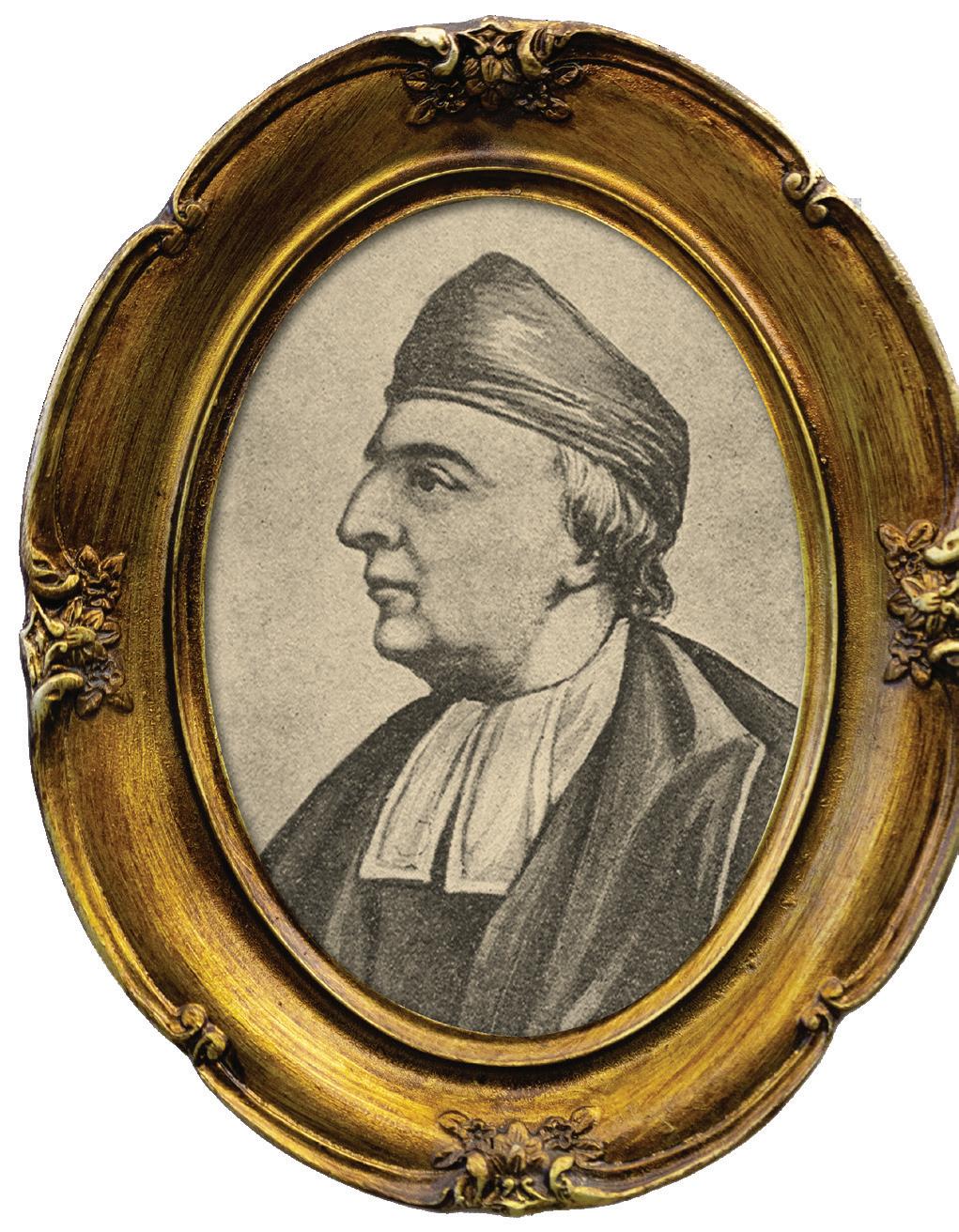
The Wesleys’ son John, of future Methodist fame, was away studying at Oxford when Hetty eloped. He sent word of his plans to come home. On April 16, 1726, Susanna responded to his letter: “Do not propose to yourself too much satisfaction in coming hither; for what the world calls joy lives not within these walls. But if your heart be right and you can rejoice in God whether you have or have not anything else to rejoice in; if he be the pleasure of your mind, so that you can feel delight in each perception of his presence, though encompassed with (poverty, reproach) and shame, then you may spend a few months in Wroot as happily as in any place of the world.”
About the Columnist: Paul V. Harrison has pastored Madison FWB Church in Madison, Alabama, since 2015. Previously, he pastored Cross Timbers FWB Church in Nashville, Tennessee, for 22 years. He was an adjunct professor at Welch College for 17 years, teaching church history and Greek. Paul is the creator of Classic Sermon Index, a subscription-based online index of over 66,000 sermons, with clients including Harvard, Baylor, and Vanderbilt, among others: www.classicsermonindex.com/.
BY LAUREN BIGGS

IM Director Clint Morgan often quotes an old African proverb: “The load is lighter when two people carry it.” This phrase not only provides a great word picture for sharing physical labor, but it also lends itself to sharing the burden of reaching the unreached and fulfilling the Great Commission.
It takes all “hands” working together to carry the load, whether going in person, clasping hands in prayer, or sacrificially opening our hands to give generously. Jesus commanded all believers to carry the gospel to the ends of the earth. Let’s join our hands to reach the world together. Hannah’s little hands never stopped moving. Whether she was coloring with markers, molding Play-Doh™, or chasing butterflies, her hands were always busy. On Sundays, she always carried her children’s Bible to church. As she sat in the pew one Sunday morning, she listened to a recent ETEAM high school student share about his summer missions trip. At the end, she put her hands together in applause after hearing the amazing stories of God’s love shared with others around the world. It’s about the gospel!
Touchdown! David, a young dad of three boys, was tackled by his sons as they played football in the backyard. After a long workday, he always took time to play with his boys. Afterwards, they headed inside to get ready for bed, where David tucked them in and prayed with them — prayers for everyday things and prayers for the mission field. They chose an IM prayer card to learn about a missionary family. The children especially loved seeing the missionary kids


on the cards. Then they clasped their hands, closed their eyes, and prayed. It’s about the gospel!
The computer keyboard clicked furiously as the financial assistant entered monthly gifts to IM missionaries and partnerships. These gifts arrived in the morning mail, and she was delighted to see the generosity of churches and individuals across the denomination. As the day’s total grew, her heart filled with gratitude for the support helping missionaries and ministries around the world. It’s about the gospel!
The offering plate passed hand to hand down the pew and was handed to an usher. He collected it and made his way to the back, where he and another usher counted each coin, bill, and check. Together, they accounted for the church’s World Missions Offering that day. He was excited as he saw the total grow, imagining what missionaries could do with the money. How many Bibles could they buy? What medical supplies could help the hurting? Could this money pay the electricity bill for the community outreach facility in Bangladesh? It’s about the gospel! She lifted her hand and waved goodbye to her parents and friends as she headed to the airport gate with her young family.
Sunni and her husband were “fully funded” and finally headed to Japan. Her hands wiped away tears as she realized she would not see her family for years. Those same hands would soon wave hello to a mission family, a waiting church, and a language school tutor in her new culture. It’s about the gospel!
What about YOUR hands? How many gospel stories can be shared when you use them for God’s glory? How many people can you reach through your prayers, your offerings, and your sending? It’s about the gospel!
About the Writer: Lauren Biggs serves as the development communications manager for IM, Inc. Lauren is passionate about using her creativity to equip believers in missions and discipleship. She enjoys marketing, creating digital media content, and working in creative teams. Her favorite roles are wife and mom to two beautiful girls.





Togo, West Africa — October 17, 2025, representatives of four partners signed a Memorandum of Understanding (MoU). Ivory Coast Association of Free Will Baptists, St. Nazaire FWB Church (France), Fleur de Sel (a FWB non-governmental association created in Togo), and IM, Inc. joined to establish a partnership in Togo.
The partnership is the culmination of two years of preliminary work, testing the viability of opening Togo to Free Will Baptist efforts. Though around 11% of the population professes Christ as Savior, many follow the health, wealth, and prosperity teachings. Free Will Baptists can meet the urgent need for sound theological training.
The partnership interviewed prospective leaders and selected ten local leaders with whom to work. These leaders will undergo further training under the leadership of
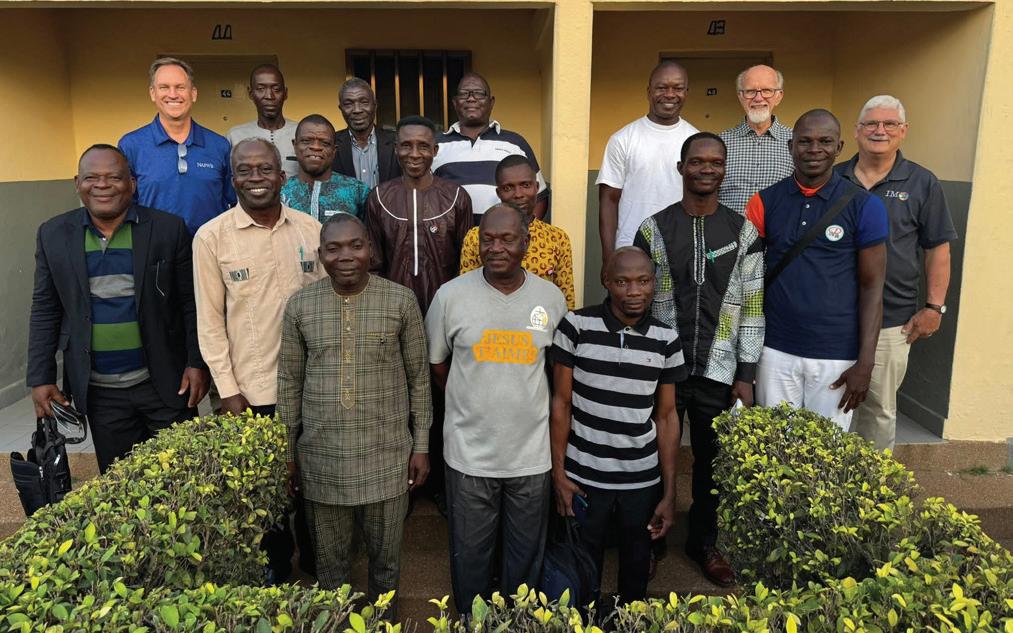
pastor Samuel Ouattara and his wife Nina, missionaries from Ivory Coast to Togo. Those being trained will form the nucleus of the Free Will Baptist movement in Togo.

Mexico — In October, IM partnered with a Cuban couple to establish Free Will Baptist work in Merida, a metropolitan area of 1.25 million people on the Mexican Yucatán Peninsula. Yucatán, one of three states on the peninsula, is home to 2.4 million people with no Free Will Baptist church. The largest ethnic group is Mayan or Mestizos (a mixture of Mayan and Spanish). Some still practice the ancient Mayan religion. Roman Catholicism is the dominant religious influence with 78% of the population practicing. About 10% of people claim to be Evangelical Protestant.
Pastor Samuel Ramos and his wife Ana Belkis immigrated from Cuba to Mérida, Yucatán, in 2018. In recent months, the couple began holding services in their home. About 30 people gather in their backyard each week. They want to see this group become the core of a FWB church.
The partnership aims to establish a church in this strategic city to then reach other parts of the Yucatán state. Pastor Samuel has a passion for training leaders in Bible and ministry.
Antioch, Tennessee — November 7, 2025, IM announced the IM Board, upon the recommendation of the IM Leadership Team and in accordance with its authority to commission and recall missionaries, officially released Eddy and Amanda Simmons from service with IM.

Though thankful for the Simmons’ dedicated ministry and gospel witness among the Samburu people of Kenya, Africa, the IM Leadership Team, following a period of prayerful evaluation and consultation, determined service with IM no longer aligned with the spirit of unity, cooperation, and accountability essential to our shared mission.
The couple’s years of service in Kenya produced lasting results for God’s Kingdom. The Simmons moved oversight of the Samburu ministry to IM Global Partners, effective January 31, 2026.
General Director Clint Morgan urged, “Refrain from speculation or divisive discussion. Let’s continue to reflect the love, humility, and integrity of Christ. Thank you for your continued trust, prayers, and partnership in IM’s global mission of equipping the saints to reach the world.”
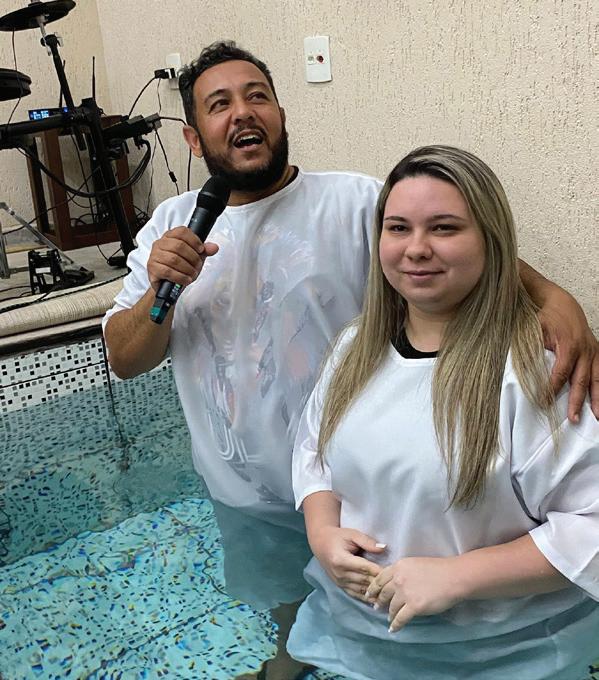
Cuba — Sunday, October 5, ten members of the Jibacoa Free Will Baptist Church publicly declared Jesus Christ as Lord through baptism.
Bulgaria — Trif Trifonov led E. in a prayer of repentance on September 10. A Russian from Germany, he started reading the New Testament at the drug and alcohol rehab center.
Japan — September 7, Daniel Speer joyously baptized his daughter Analeigh at New Life Church in Hokkaido, Japan. He affirmed, “She has learned much about Jesus over the years at church, and through our regular Scripture reading and discussion around the family dinner table. She said she loves Jesus and wants to follow Him all the days of her life.”

Bangladesh — A new church was dedicated in early November in Bangladesh, on land donated by a recent convert. This is the third church planted by the church planter this year.
Côte d’Ivoire — On September 3, the Témoins de Christ (Witnesses of Christ) held an evangelistic campaign in Oumé, Côte d’Ivoire. Many received the gospel message.
France — September 28, the St. Nazaire church began a new member’s class with around 25 people attending the first class.

Asia — A Hindu priest in an Asian country came to Christ and was baptized by an IM partner. As a result of his testimony, many others came to Christ. In October, 37 others were baptized and a church established in the village.
Spain — The Alpedrete women’s Bible study resumed in September after its summer hiatus with ten women meeting each Tuesday morning. Lea Edgmon asked, “Would you pray for this group of women each Monday night as you go to bed? Ask God to provide encouragement through His Word and that each of us will be eager to obey what we are learning and be excited to share the Word with those He places in our paths.”
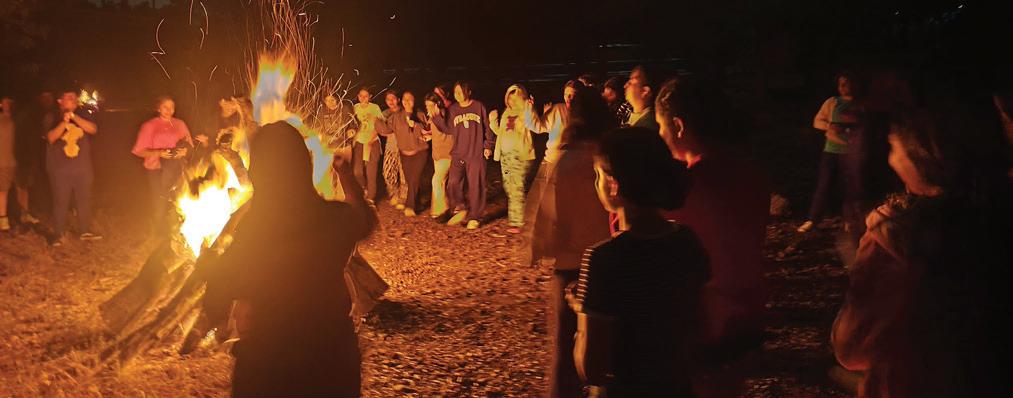
El Salvador — Panamanian missionaries to El Salvador Edwin and Jessica work with IM partner Bright Hill Collective. Edwin is school chaplain. Together they disciple students, visit parents in their homes, teach a marriage course, and hold services at the school on Monday evenings. They average 60 adults in the services, with several coming to Christ. The end of November he baptized six people plus 11 teens during a youth camp.


Joshua and Kimberly Hampton cannot remember life without ministry. Preachers’ kids who followed their parents into the ministry themselves, their entire lives have been centered around Christ and the church and the people they serve. Their own journey in ministry has taken them from pastoring to church planting with North American Ministries, and most recently, into the ministry of chaplaincy. In a candid interview, this remarkable couple opens up about their lifelong ministry adventure.
How did you come to understand God’s calling on your lives?
Joshua: Kimberly and I were both Free Will Baptist preachers’ kids, and we both had a front row seat to see how faithful service and commitment looked. Both sets of parents modeled this lifestyle for us. Responding to God’s calling on our lives came second nature to us because we witnessed their faithful obedience throughout our childhood.
Who most influenced your understanding of what it means to be called by God in living out your faith in relationship with others?
Joshua: Once again, I would say my dad influenced me when it came to discerning God’s calling on my life. I have seen this faith lived out from generation to generation in my family, from my grandfather, Ralph Hampton, to my father, Clayton. Now, I am trying to continue living out this generational cycle by modeling faithful obedience for my family as well.
Joshua, can you share about your call to full-time ministry?
I answered the call to preach as a young teenager at a Monday night youth service at the National Convention in Anaheim,
California. In 2007, shortly after Kimberly and I were married, I fully surrendered to God’s calling to full-time ministry. This was not just my commitment; it was our commitment to serve God wherever He called us: Alabama, Tennessee, Montana, and now the U.S. Navy.
Kimberly, how did you discern your role in that calling?
When Josh and I were dating, we talked a lot about church planting and our desire to see churches planted where there was truly a need. We both said then, “If God is calling us into church planting one day, we pray it will be where there are few Free Will Baptist churches, so we can help expand the Kingdom.” When we were having these conversations, I never really knew how much God was already moving in our lives and preparing us for the journey ahead. From those first conversations, God has continued to move our hearts toward “going.”
What did God’s calling look like as you entered marriage together? How did your understanding of that calling grow or change as you became parents?
Kimberly: When we first married, we sensed God’s calling primarily as a call to build a Christ-centered home and to serve
Him side-by-side. It meant learning to love each other sacrificially, making decisions together in prayer, and viewing our marriage as something God could use to bless others, not just ourselves. When we became parents, our understanding of God’s calling expanded. It wasn’t just about our marriage anymore, but about shaping a family that points our children to Christ. We realized God wasn’t calling us to be perfect parents but faithful parents — repenting when we fail, asking for help, and creating a home where God’s presence, grace, and truth are real. Our calling became less about what we could accomplish and more about who we were becoming in Him, together with our kids.
Did you both sense a calling to church planting at the same time?
Joshua: While dating, I told Kimberly I felt God might be calling me into church planting just like my dad. From that first moment, Kimberly has been 100% supportive of church planting and going wherever God called us to go.
How did the call to church planting shape your marriage, your family rhythms, and your approach to discipling others?
Both: We were forced to clarify we were not just “married to each other” but “called together” to a specific work. Even now we must ask regularly, “Are we still saying yes to this together?” We make big decisions (moves, jobs, finances) in unity and prayer, not just by whatever is easiest.
The vulnerability of starting something from nothing exposed our fears, insecurities, and idols. It pushed us to pray together more, not just individually, taking our financial concerns, struggles with relationships, and vision questions to God as a couple.
We learned to see our home as a “base of mission,” not a separate world from church. That meant things like regularly opening our home for meals, small groups, or informal hangouts and letting our kids see and participate (in age-appropriate ways) in hospitality and serving.
At the same time, we also learned that because ministry can become all-consuming, we had to be intentional about:
• Sabbath rhythms (a weekly day with no church work).
• Family nights where our kids received undivided attention .
• Expressing clear signals to our kids that they were not in competition with the church for our love and time.
We also realized our “primary discipleship responsibility” was our own children, so we established these simple daily practices:
• Simple family devotions or prayer times.
• Talking about where we saw God at work at church and in daily life.
• Letting our kids see us repent, reconcile, and depend on God, so the gospel felt real, not just something they heard at church.
What emotions or questions did you experience when you began sensing God’s calling toward the chaplaincy?
Joshua: “Why us? Why now? Isn’t there someone else?” Summit Church currently has so much momentum, and we were closing in on our goal of becoming self-supporting. To be frank, this just did not fit into my timeline. But the more we wrestled with this calling, God made it clear He wanted us to serve in the chaplaincy.
Kimberly, what was your initial reaction to this call to the chaplaincy?
I always knew Josh felt “called to serve.” From our first date in 2006, it was clear he felt it was something he was supposed to do. I selfishly didn’t want it to happen, especially not now. Yet even though I selfishly wanted to say no, I knew God was leading us towards chaplaincy, and that this would be an amazing opportunity to live out God’s calling for our children to see. That does not mean it is easy, but our goal is always to be in the center of God’s will for our family, and the chaplaincy is that.
Did God use particular people or experiences to help confirm this chaplaincy calling?
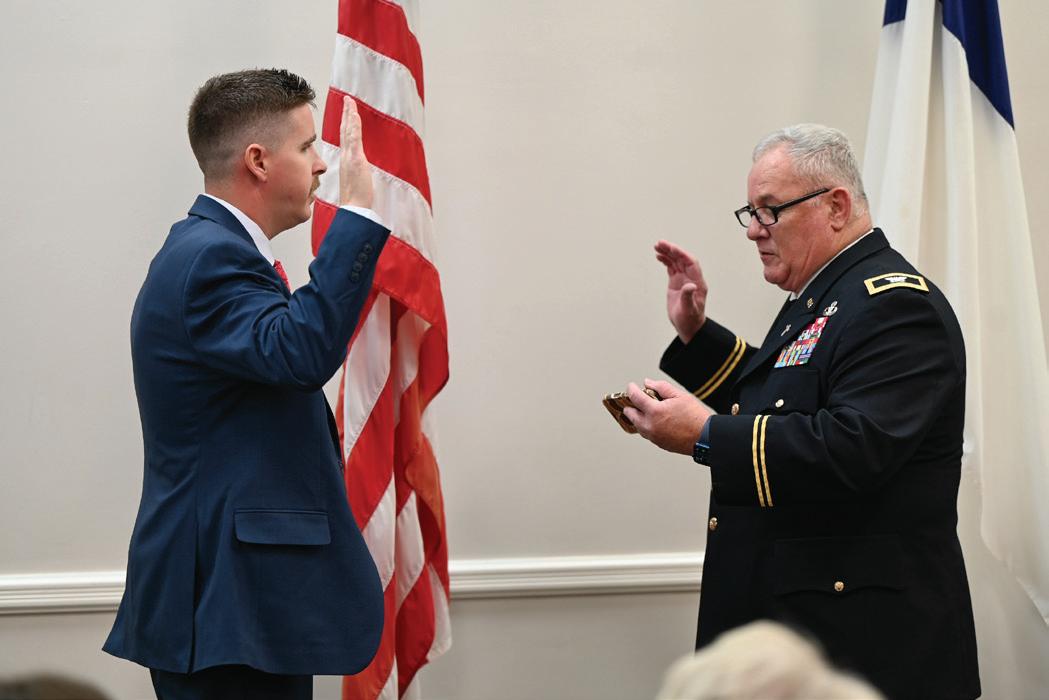
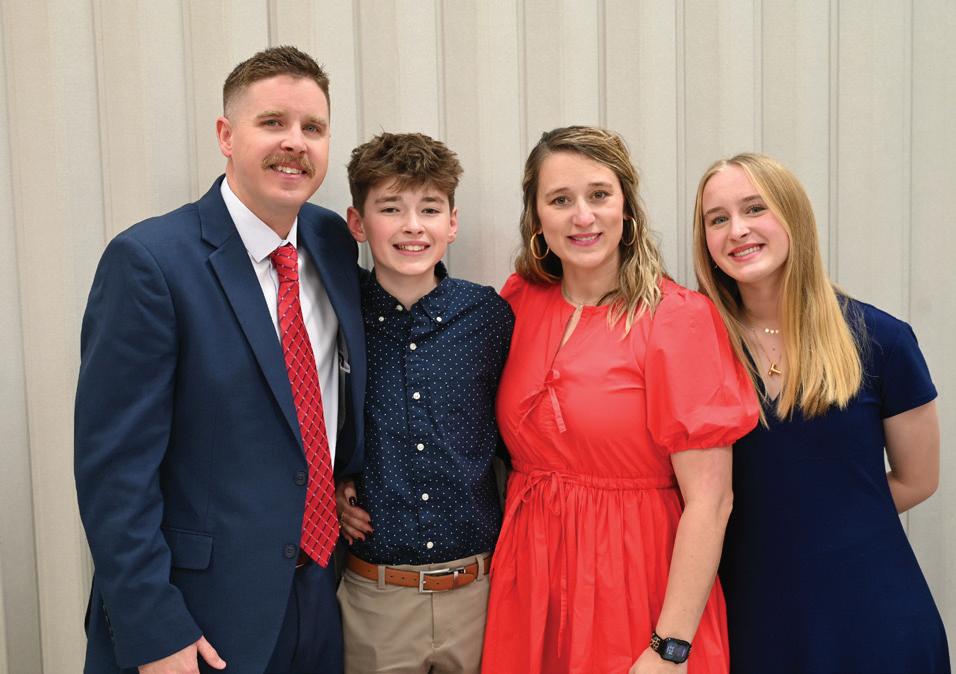

Joshua: I have known Chaplain Terry Austin since I was 12 years old. He attended our church plant in Clarksville, Tennessee, while stationed at Ft. Campbell, Kentucky. I did not realize it at the time, but Bro. Terry had a huge influence on my calling. Over the last 14 months, he has walked beside me through this process, helping me discern God’s will.
What sacrifices came with answering this latest step in God’s call?
Kimberly: The hardest sacrifice is seeing our kids have to say goodbye. Summit Church finally has a thriving youth group that meets weekly and has monthly activities. Taylor and Colton absolutely love it. Now, they are giving it up to follow their dad into the Navy. They are being great sports about it, but I know they will miss it. This is probably the most bittersweet part — all those tough early years with no kids’ classes or youth activities — and when we finally reached that point, God is calling us to move. What fruit have you seen from walking in obedience to God’s calling?
Joshua: We have seen so many volunteers at Summit Church step up. It has been amazing to see the church rally around Pastor Clayton and step up their leadership. We have been amazed

to see how God is already using this step to further His Kingdom at Summit.
What would you say to a young person who wants to follow the Lord faithfully but isn’t sure where to start?
Joshua: Early in our marriage, Kimberly and I “put our yes on the table for Jesus.” (We still talk about this with our kids today.) We told God yes to anything He wants us to do, and we don’t pick and choose. We just say, “Yes, Lord, whatever you need from us; we will do it.” I advise any young person to do the same. It’s not so much what God wants us to do but our attitude as we do it. I encourage them to just say yes to Jesus and worry about the details later.
As you look ahead, how do you pray for God to use you in whatever comes next?
Joshua: I pray God will give me and my family the strength and courage to share the love of Christ everywhere we go and that we will continue to faithfully serve Him wherever He takes us.
Learn more about Joshua, Kimberly, and the ministry of Free Will Baptist chaplains at fwbnam.com/chaplaincy/.
At Welch College, every facet of life, from academic programs and spiritual formation to campus activities, is designed to develop the whole person. With more than 60 undergraduate, graduate, and online programs, you will be prepared to serve Christ in the field you choose.
Learn more about Welch College today!

March 1 • God Restores His People • Ezekiel 36–37
March 8 • Lessons From the Life of Esther • Esther
March 15 • Christ Reigns Supreme • Hebrews 1–4
March 22 • Faith in Action • Hebrews 11:1–40
March 29 • Preparation for the Cross • Luke 22:1–65
April 5 • The Risen Savior • Luke 22:33–56; 24:1–12
April 12 • The Great Commission • Luke 24:36–49
April 19 • Lessons From the Life of Timothy • 1 & 2 Timothy
April 26 • Grounded in God’s Truth • John 17:6–19

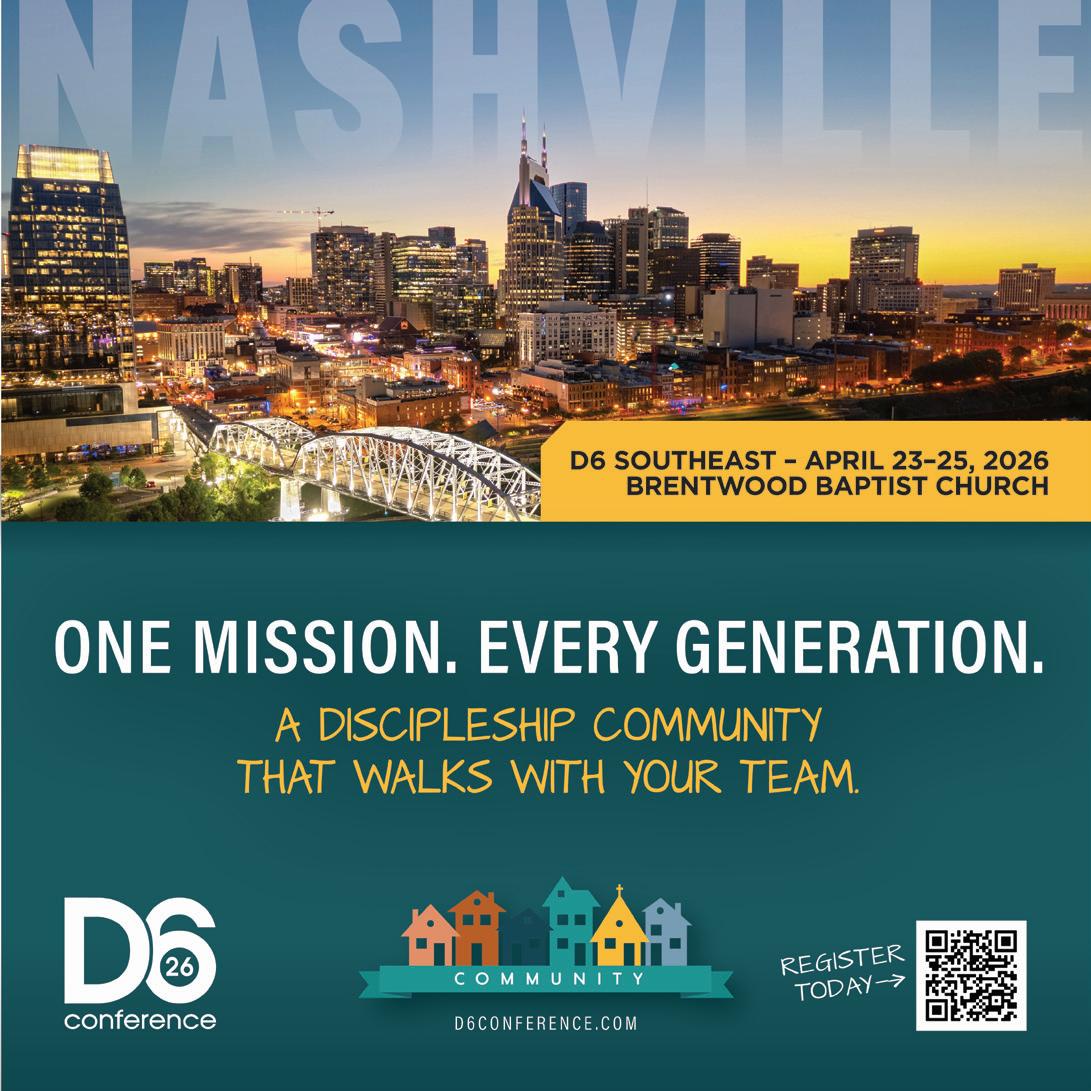
Nashville, TN — After seven fruitful years in Orlando, Florida, the D6 Conference is returning to the heart of the Southeast in 2026 when it meets in Tennessee. This location is closer to home for many Free Will Baptist pastors, leaders, and churches. Since 2009, D6 has strengthened families and equipped ministry leaders in Dallas, Louisville, Greensboro, and Orlando. Now, the conference will be located in a city many Free Will Baptists can reach with a single tank of gas.
Nashville, Tennessee, will be the home of D6 Conference 2026! Mark your calendars for April 23-25, 2026, and make plans to join us for D6 Southeast.
Nashville offers the perfect blend of accessibility, hospitality, and energy, making it easier than ever for an entire ministry team to attend the D6 Conference together. Whether you are a longtime D6 leader or planning your first experience, this is the year to attend the conference. Pack your bags (or your car) and get ready for D6 to come to Nashville.
BY BRAD RANSOM
As I’ve coached leaders and traveled around the denomination, I have heard many pastors say, “I’ve been praying God would send us more leaders.”
I know everyone who says this means well. (I probably said it often in my early ministry.) Most churches are desperate for help, and often the pastor feels the gaps most. All churches need strong, capable, spiritually-mature leaders to help carry the weight of ministry with the pastor. While it’s true God can and does bring people into our churches from the outside, here’s the truth many church leaders overlook: the leaders you’re praying for may already be sitting in your pews every Sunday.
We don’t need to stop praying altogether, but we need to change the way we pray. Instead of asking God to send leaders, we should ask Him to help us identify, shape, and develop the leaders already among us.
Jesus didn’t go town to town looking for famous rabbis to build His team. He found fishermen, tax collectors, and zealots — ordinary people with untapped potential. The same is true in your church. Many people have the capacity to lead, love, and grow if someone would only challenge them and invite them to join the team. Instead of praying for God to send new leaders, start praying for discernment to recognize the leaders you already have. Look for potential instead of a finished product.
The leaders you’re praying for may already be sitting in your pews every Sunday.
One of the biggest challenges in assimilating new leaders from outside is alignment. They may have passion and experience, but they don’t understand the culture or DNA of your church: your history, people, and way of doing things. Leaders from the congregation, on the other hand, have lived it. They know the worship style, the community quirks, the values, and the struggles and issues of the past. They don’t just agree with your DNA; they embody it.
Developing leaders from within means raising up people already walking in step with your church’s vision and mission. When someone has been under your teaching, participating in your ministries, and serving on your teams, their heart beats with the same purpose. They’re not just executing your vision. They’re participants in it. That level of alignment can’t be bought or easily taught.
Let’s be honest, not every leader who comes from outside is in it for the long haul. Some are testing the waters. Some need a break from burnout. Some bring baggage or expectations that don’t match your church’s reality.
Leaders raised from within tend to have a deeper sense of commitment because they’ve grown with the church. They’re not looking for a stepping stone or to be a big shot. They’re already rooted in your church and not looking to be in charge.
When I was a pastor, I was always leery of those who came from another church and quickly volunteered. In my experience, they usually left their old congregation because they didn’t agree with the pastor or didn’t get their way. These types of people can cause serious problems and usually move on to another church as quickly as they arrived.
Jesus didn’t call mature men to be His disciples. He developed uneducated, unskilled, and unworthy misfits who were willing. Being a leader isn’t only for the skilled or equipped, but also for the faithful and willing. Paul told Timothy to entrust what he had learned to other faithful men who would, in turn, teach others (2 Timothy 2:2). Leadership development isn’t optional. It is part of the Great Commission. When you shift from praying for leaders to developing them, you’re stepping into the very rhythm of discipleship Jesus modeled and the Apostle Paul encouraged.
When people in your congregation see others like them stepping into leadership roles, it creates a ripple effect. It
Instead of praying for God to send new leaders, start praying for discernment to recognize the leaders you already have.

tells your church, “God can use you, too.” A culture of empowerment is contagious. It fosters growth, maturity, and ownership. If leadership is always outsourced, you risk creating a consumer church rather than an empowered church. But when you invest in the potential of your own people, others are likely to rise to the occasion as well.
Churches that depend on outsiders to fill leadership gaps are constantly in maintenance mode. But when you invest in multiplying leaders from within, you position your church with a more sustainable model. A trained, empowered leader doesn’t only serve; he or she also raises up other leaders (2 Timothy 2:2). Leadership development becomes a pipeline, not a bottleneck, and the more leaders you have, the more people you can reach.
Praying for God to send leaders isn’t wrong, but it is not the best way for your church to get new leaders. What if, instead of waiting for leaders to walk through the doors, you start equipping the ones already seated in the pews? What if you see potential where others see pew-warmers? What if you believe your church isn’t lacking leaders but simply lacking leadership development?
God has entrusted your church to you for a reason. That includes the people already there. Stop waiting for outside reinforcements. Look around, and start recruiting and training people God has already placed under your care. The leaders for which you’ve been praying may already be in your church, just waiting for someone to ask, train, and release them to serve.
For more information about developing leaders, visit https://www.fwbnam.com/revitalization/.
About the Columnist: Brad Ransom is the chief training officer for Free Will Baptist North American Ministries.
When you shift from praying for leaders to developing them, you’re stepping into the very rhythm of discipleship Jesus modeled and the Apostle Paul encouraged.
BY CH (LTC) KEVIN W. TRIMBLE
Who has the greatest influence in your life? Some might say a coach or a teacher. Others might think of an author or mentor who provided direction, instruction, or leadership.
Modern-day “influencers” use their online presence, fame, and credibility on social media platforms to promote products, services, or ideas to followers. A 2025 report from Collabstr claims there are 127 million influencers on social media, and Pew Research cites 40% of U.S. adults follow influencers.
Again, I pose the question, who has the greatest influence in your life? Can I go a step further? Who are you influencing? All of us influence others, whether we realize it or not. When you pause to consider those who influenced you, you might be surprised at who had a tremendous impact. Think about your parents, who may have taught you a love for God’s Word or taken you to church. What about a nursery worker who, with simple stories, opened your eyes to Daniel in the lion’s den or Moses and the Red Sea crossing?
The list goes on and on: Sunday School teacher, children’s church leader, youth pastor, or the senior pastor. Think about where and how you were influenced by these people: a story, adventure, youth camp, sermon, and especially the moment you gave your life to Christ.
Sergeant Major Kenneth Farley would say, “The power of influence is not something that automatically comes with the
position of leadership.”1 Most are actively looking for someone who powerfully leads and provides influence, whether in Sunday School or the corporate world.
The Scriptures provide clear examples of this power of influence. Matthew 5:14-16 reminds us we are each influencing others every day. “Ye are the light of the world. A city that is set on an hill cannot be hid. Neither do men light a candle, and put it under a bushel, but on a candlestick; and it giveth light unto all that are in the house. Let your light so shine before men, that they may see your good works, and glorify your Father which is in heaven.”
Notice the text begins with the words, “Ye are.” This means each of you. Every one of you. All of you. No one is left out. We are given the light of Christ and now provide influence in the places we serve. Pastoring in a forgotten field, mothering small children, working in a factory — you get the picture. And where do we provide this light? The world. Everywhere. Everyone, providing light, everywhere. May I stretch your thoughts? Every believer is providing influence for the Kingdom in every place on the planet.
As believers, we light the way for others to see the Christ who gave us life. A battle between good and evil is on display in our world. Those in your schools, in your neighborhood, in your family, and at your work are hungry for your Christian influence.
1 Farley, Kenneth. n.d. “The Value of Influence.” NCO Journal. May, 2019.
I see the power of influence in three metaphors.
Window. The window is a period of possibility, a moment in time when influence is open. Consider the few years your children are young, and parents have a window to influence their love for God and shape their hearts to bend toward God.
In the military, we often serve a duty station for a specific period. We have a limited window to make a difference in that command or unit. As chaplains, we influence soldiers in a battalion of up to 1,200 people, or even a brigade of 4,500 or more.
Door. Influence can also be seen as a door. The most familiar door in Scripture is found in Revelation 3:20, “Behold, I stand at the door, and knock: if any man hear my voice, and open the door, I will come in to him, and will sup with him, and he with me.” Christ is certainly the divine influencer in this case.
Another door is found in Revelation 3:8, “Behold, I have set before thee an open door, and no man can shut it.” God has opened doors for your influence. I think of the doors God has opened for our family as we serve the U.S. Army. The ministry philosophy God has provided is to provide the greatest influence conceivable, to the largest number of soldiers available, for the longest period possible. God has provided that open door and continues to bless through His plan.
At our last duty station in Columbia, South Carolina, I wrote curriculum for first-term chaplains after they graduated from Chaplain Officer Basic Course. With this open door, my small team not only accomplished this assigned task but also wrote a curriculum for chaplain candidates in the Guard and Reserves, along with a supervisor’s course. This was an open door, the chance to write a curriculum that would touch every chaplain in the Army. During that time, I also partnered with another Free Will Baptist chaplain, (MAJ-P) Lee Frye, and between us, we had opportunity to influence several Free Will Baptist chaplains through training, mentorship, and fellowship.
Season or opportunity. I cannot recall the number of times the Holy Spirit has pressed me to speak up, speak out, or just be a light. A season is an advantageous or favorable circumstance or combination of circumstances. Add this definition to the power of influence and you find the times you have an opportunity to influence others.
How many of you were saved at a youth camp? Opportunity. How many of you were in the right place at the right time for God to do something magnificent? Opportunity. The cool thing about opportunity is that it can arise any time.
As believers, we currently are facing a window, a door, and an opportunity unlike any other in our lifetime. Each of us has the power to influence.
Like many of you, I watched with horror when Christian conservative Charlie Kirk was assassinated September 10, 2025. Kirk was a strong advocate for free speech and Christian values. His life was marked by a strong biblical stance for the family and faith in God. He truly was a great influencer. He took advantage of the door, the window, and the opportunity shaped by God and opened to him, to be a voice for many.
Across the globe, Christians are engaged in a war of good and evil. We must use the power of influence to change the world for good, even if the consequences are great. How are you influencing others today?
Those in your schools, in your neighborhood, in your family, and at your work are hungry for your Christian influence.
You may not have a pulpit in a prominent church or be a national personality, yet you influence someone. Your words, actions, and life are, in some way, an influence for the Kingdom of God. What are you doing to be that positive influence? What platform has God provided for you to influence others? Understand the power of influence and take advantage of every window, door, and opportunity today.
About the Writer: CH (LTC) Kevin Trimble and his wife Darla make their home in Washington, D.C. Trimble is the Deputy Command Chaplain for the Joint Task Force, National Capital Region and Military District of Washington. He and Darla both enjoy staying active through running each day and exercising with their dog Royal.
Pueblo West, CO — Lory and Danielle Rawlinson have been appointed to serve as lead church planters at the Free Will Baptist Church in Pueblo West, Colorado. The church was established by veteran NAM planters Mark and Donna Thomas, who retired at the end of 2025 and turned over leadership to the Rawlinsons at that time. The Pueblo plant will continue as a joint project between NAM and Florence First Free Will Baptist Church (South Carolina), where Lory previously ministered as a children’s pastor for eight years and where their family served faithfully. Lory and Danielle have four children: Wade, Blakeley, Wesley, and Wally.
Pueblo, a high-desert region known as the “Home of Heroes,” is home to more than 170,000 people, yet only about
8% attend a biblicallybased church. Please pray for the Rawlinsons and their church family as they labor to bring gospel transformation to their community and advance God’s Kingdom in Colorado.
Visit fwbnam.com/ rawlinson/ to learn more and support the Rawlinsons and their work.

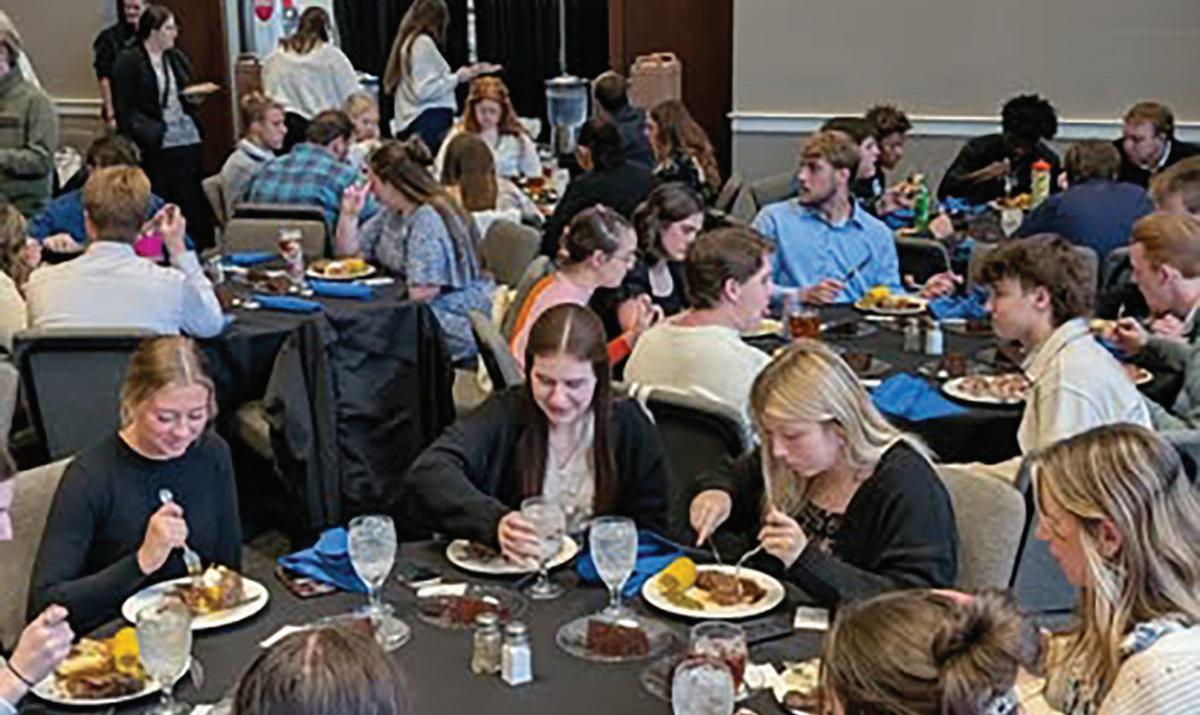
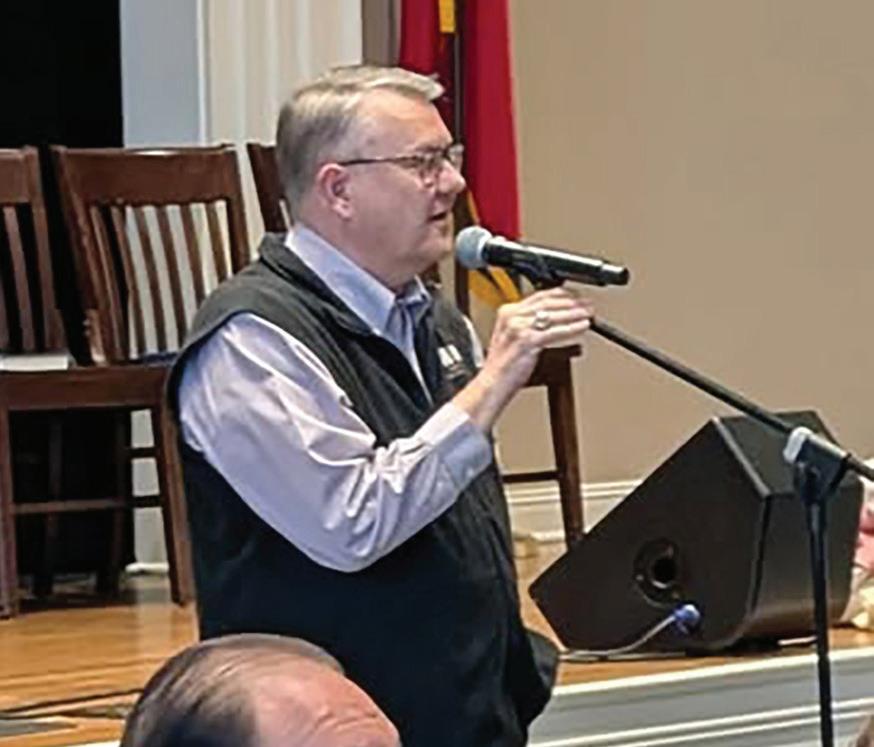
Gallatin, TN & Wendell, NC — It’s always a blessing to spend time on the campuses of our denominational colleges! Last fall, North American Ministries had the privilege of participating in chapel services and lunches at both Southeastern Free Will Baptist College and Welch College. We’re grateful to the faculty, staff, and students for the warm welcome we received. It’s clear God is at work in these institutions and in the lives of their students, and we’re excited to see how He continues to use them. We’re also looking forward to visiting Randall University this spring!

Nashville, TN — Thank you for your generous gifts to the Mission North America Offering last November! Our current offering total has grown to over $600,000 and counting as we work to reach our goal of $750,000. Because of your generosity to our department, North American Ministries can continue equipping leaders, planting churches, supporting chaplains, and meeting needs in places where Christ is needed most. Your faithfulness helps fuel ongoing ministry and gospel impact across North America. We’re so grateful for every person who chose to give and stand with us in this mission.
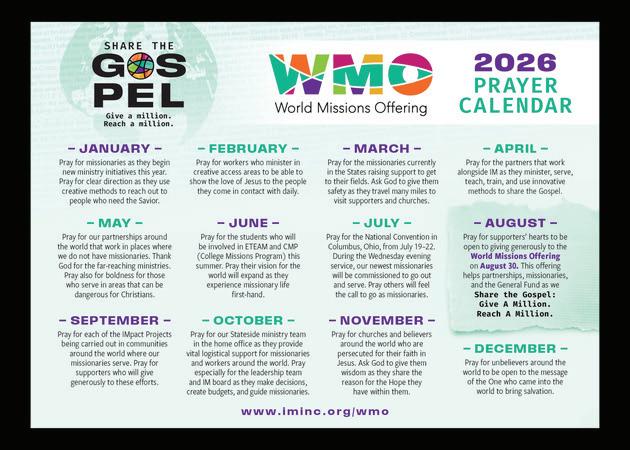
Save the date now for this year’s Mission North America Offering November 22, 2026!
Missoula, MT — North American Ministries is proud to share a bittersweet update about a leadership transition at the Summit FWB Church plant in Missoula, Montana. Associate planter Joshua Hampton has been accepted into the U.S. Navy as a chaplain. And, while this means he will be stepping down from his role as a Free Will Baptist church planter, we are deeply proud of his obedience to the Lord’s calling and grateful he will continue serving both our denomination and his fellow service members as a Free Will Baptist chaplain.
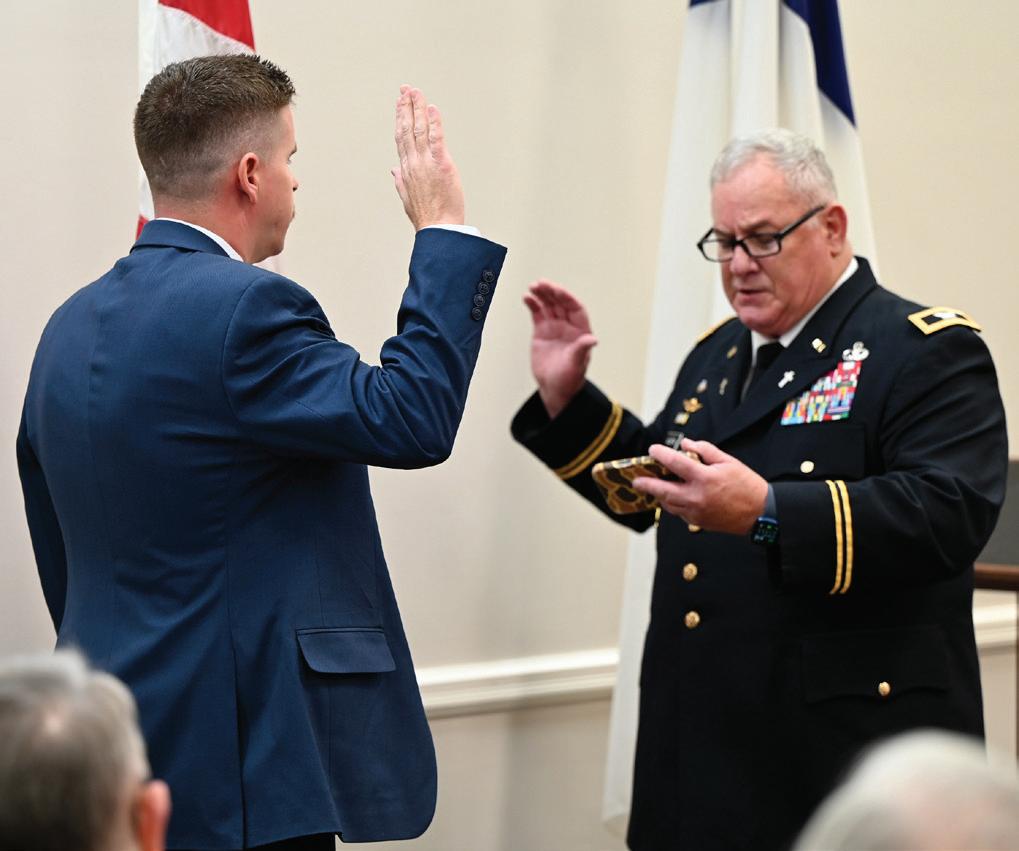
Joshua began chaplaincy training in January, and Kimberly, along with their children, Taylor and Colton, will join him in April when they move to their first duty station.
The Hampton family has been a key part of “Team Montana,” the original group that moved to Missoula to plant Summit Church in 2017. While they will be greatly missed, the church is excited to see how God continues to use them in this next chapter of ministry.
Clayton and Tammy Hampton will continue leading the work in Missoula, supported by associates Daniel and Darby Lindsay, as Summit Church presses forward in its mission to reach the community. We are encouraged by the church’s strong momentum and greatly anticipate what God has in store for the work.
“We are grateful for the many ministry partners who have faithfully supported Summit Church,” the leadership team shared in a recent newsletter. “Your prayers, encouragement, and financial support have sustained this work from the beginning. As we move into a new season, we ask you to continue standing with us as we work toward becoming a self-supporting church that impacts lives for Christ.”
Please join us in praying for Josh, his family, and the Summit team as this leadership transition takes place and the Hamptons enter an exciting new season of ministry through naval chaplaincy.
BY PHILLIP MORGAN
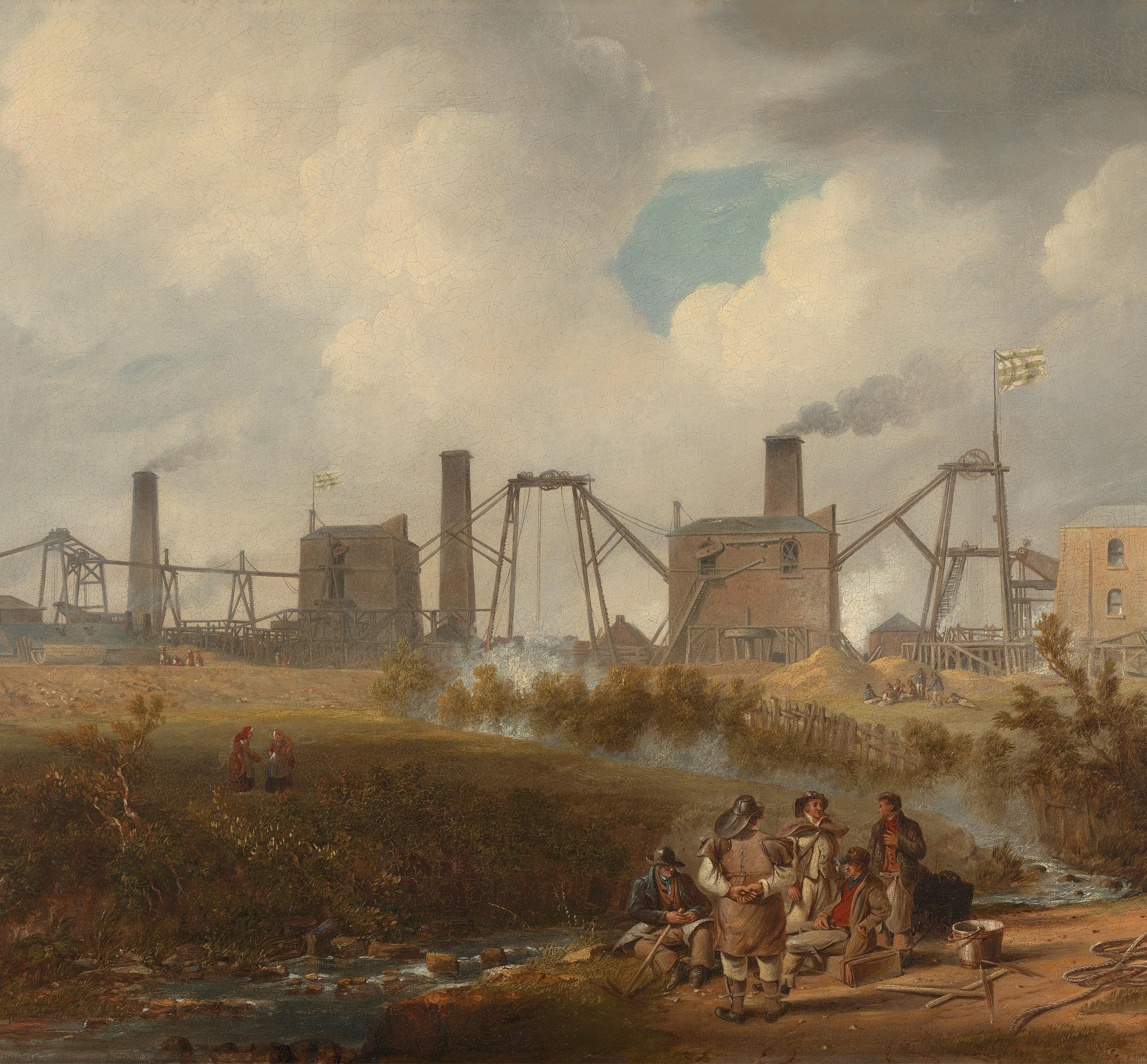
Political and cultural conservatives have spent several decades sounding alarms about the state of the family in our society. A slew of articles or podcasts bemoan the rise of single motherhood, sexual libertinism, pornography, and abortion. However, as Wendell Berry noted in the early 1990s, these conservative defenses of the nuclear family have generally rung hollow because they fail to address the whole problem, specifically skirting the “economic integrity of the household.”
For Berry, any attempt to respond to the current cultural crisis surrounding the nuclear family must address the implications of women’s liberation from the home and full entrance into the public sphere of the workplace.1 Together, let’s consider the technological and economic changes that made this fundamental social transformation possible and now make it so difficult to imagine any other world.
As I have written before, while many women involved in early feminist activism had good cause to be suspicious of men and marriage based on their own experiences with wicked men (and women), their attempts to address specific problems often led to personally and socially destructive relationships with men.
The early-feminist, abstract ideas of Mary Wollstonecraft, Olympe de Gouges, and Elizabeth Cady Stanton faced significant hurdles when applied to the real lives of women. Most nineteenth-century women rejected feminism outright for a host of religious, philosophical, and cultural reasons.2 However, even women inclined to embrace feminist ideas recognized the practical dangers of single motherhood and the severe social exclusion resulting for them and their children in the nineteenth century.3
Even if a woman remained chaste, she had few ways to provide a living without the support of the family structure. Unless a woman came from a very wealthy background, the burdens of providing the income to acquire and care for a home, homemade clothing, homemade food, and the other (often homemade) necessities of life required the combined labor of a family. For these practical reasons, few women could follow the feminist calls for the destruction of the family.
Philosopher Charles Taylor explains how the images, stories, and legends celebrated by societies shape the imaginations of individuals, making specific ideas and practices legitimate while excluding others.4 Economic arrangements and technological innovations also play a key part in shaping the social imagination (though we should never see them as deterministic). Rather, as historians of technology and economics demonstrate, these systems are shaped by the cultures that create them, and then influence and respond to the societies they inhabit.5
The Industrial Revolution that swept Europe and the U.S. over the nineteenth century is among the most dramatic periods of economic and technological transformation in human history.
This social, economic, and technological revolution was shaped by specific assumptions about the unfettered benefits of institutional and social change and organization for the sake of efficiency.6
In addition, the expansion of the market into every area of life served to commodify not only goods but also the whole range of human experience. These changes altered the social imagination of the West, making it feasible for women to live and define themselves as individuals without reference to family.7 While most women still pursued marriage and children, these fundamental social commitments became increasingly a matter of choice rather than necessity.
No area of life evaded the influence of the industrial revolution. The most direct change came in the exit of men from the daily affairs of the home. Prior to the industrial revolution, most men farmed, manufactured goods in their homes, or served as merchants in shops with their families. This system of labor was not organized for efficiency and work schedules. These labors were arranged to serve the needs of the family. They thought of time according to “human rhythms and seasonal variations.” This also meant men played a significant role in household chores.8 Once men began submitting to the the factory clock, leaving their families early in the morning and returning exhausted late at night (many worked 12- to 14-hour days), the whole structure of life changed.
Pre-industrial family life was filled with hard work, but it was accompanied by communal leisure activities: regular community and church events where people shared food and played games, and folks of all ages danced to reels and jigs. Less formal and private leisure time was casual and noncommercial. Regular family entertainment included, among other things, walks through the countryside or city park, visiting friends, reading as a family, listening to street musicians, playing cards, weaving, sewing, and quilting.9 Those in urban centers enjoyed occasional trips to amusement parks, movie theatres, or trolley rides across town. Regardless of the activity, they were family-centered. As late as the early twentieth century, two-thirds of skilled workmen claimed they spent leisure time with their families.10
However, at the turn of the twentieth century, these modes of life began to change significantly. Many male factory workers began using wages to engage in non-family leisure: bowling alleys, pool halls, shooting galleries, gyms, smoke shops, barber shops, lodges and clubs, and saloons where women and children were unwelcome (unless the women were prostitutes). These
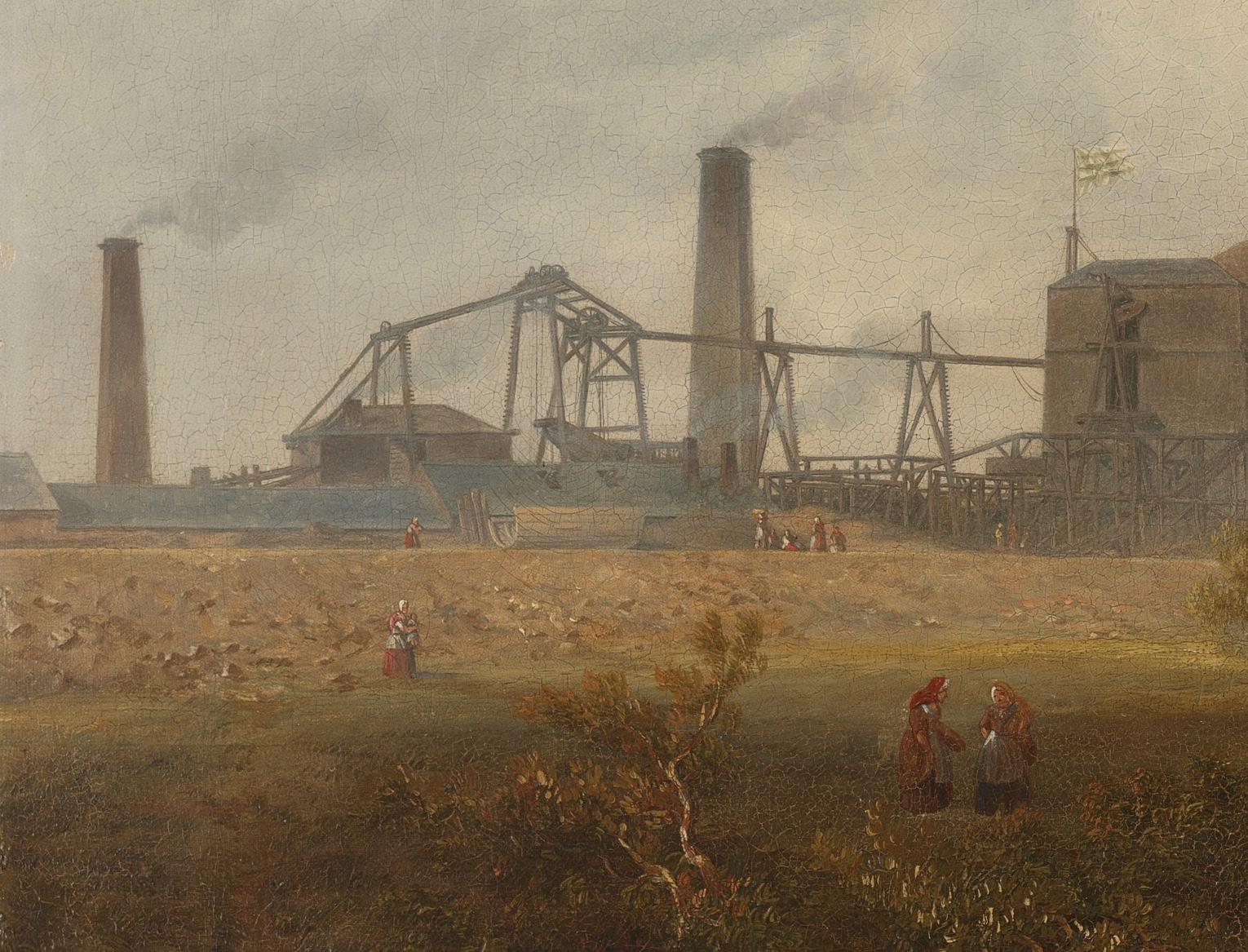
places of “leisure” advertised bright, open, clean spaces filled with entertainment to men seeking relief from loud, dangerous factory work and overfilled, dingy, and cramped tenements with family and chores. They spent scarce free time and money commiserating with fellow laborers about the floor boss at work or the ever-looming threat of layoffs.11
Married women were left home to shoulder the entirety of household chores and to care for children. Though housework began to be mechanized, and more food and clothing could be purchased outside the home, the standards of cleanliness also rose, meaning the overall time women committed to housework remained close to fifty hours a week, even into the mid-twentieth century.12
Women’s leisure was largely limited to the home. In urban centers, they visited with other women at the window or doorstep, walked in the park, visited relatives and friends, attended occasional dinner parties, decorated the home, or took part in ladies’ organizations.13 Many of these same activities were also available in rural areas, along with traditional communal activities like quilting circles.
However, with the birth of modern suburbia in the late 1940s, the married woman was “abandoned” by her husband, who took the family car to work while the children went to school, and she remained isolated in an abstracted housing allotment without tradition, family, or communal identity. Betty Friedan’s rant against the life of a housewife in The Feminine Mystique was informed by these detrimental changes to society brought on by industrialization.
Many women agreed with her assessment and began joining the workforce, though the shift was slow to gain momentum. In fact, Friedan found women so unenthusiastic about the prospects of working outside the home that she began working through the state to undermine the financial security of
marriage by eliminating barriers to divorce and promoting the Equal Rights Amendment.
Perhaps this glimpse of how our society was transformed by industrialization helps to explain why those wishing to defend the nuclear family cannot ignore the economic assumptions of our day. Preserving the family requires more of us than careful voting or family prayer time, though both of those activities are necessary.
Rather, we need to assess how the marketplace has invaded our homes and atomized our families into free-floating individuals who come together only briefly each day and primarily sleep in our own rooms.
As much as I might wish we could somehow return to a preindustrial world, I do not think we will see that until Jesus returns (though I do suspect the New Earth will be a pre-industrial earth).
In the meantime, here are some recommendations for dealing with the realities of our current life:
• Seek jobs and careers that allow for family time and flexibility.
• Carefully consider living on a single income, at least while children are living at home. This does not mean wives and mothers cannot or do not contribute to the family income, only that their contribution will be largely carried out from the context of the home and often include the children.14
• As much as possible, make financial decisions family decisions rather than individual ones, even if both parents work outside the home.
• Be intentional when it comes to sharing the burdens of housework.
• Celebrate and make the most of family leisure time (and strictly limit screen usage during these treasured moments).
• Give serious consideration to homeschooling.
To be clear, these are recommendations only, with significant room for disagreement on these matters. Further, each family will look different based on individual context. Still, I think these are good starting points for counteracting the destructive changes flowing from the Industrial Revolution.
About the Writer: Phillip Morgan is History Program coordinator and Humanities and Arts coordinator at Welch College: welch.edu/. This article is adapted from an essay previously published on Helwys Society Forum: TheHSF.com/
1 Berry observes that no one has ever claimed men were liberated by entering the workforce away from home. Wendell Berry. Sex, Economy, Freedom, and Community: Eight Essays (New York: Pantheon, 1993),122-23.
2 For an overview of female anti-feminist thought and activity, see Thomas Jablonsky. “Female Opposition: The Anti-Suffrage Campaign,” in Votes for Women: The Struggle for Suffrage Revisited, ed. Jean H. Baker (New York: Oxford University Press, 2002); and Sally G. McMillen. Seneca Falls and the Origins of the Women’s Rights Movement (New York: Oxford University Press, 2008), 136-39.
3 Even Mary Wollstonecraft and John Godwin decided it was better to abandon their libertine sexual ideals and wed one another in the face of the practical results of having children out of wedlock. See Carrie Gress, The End of Woman: How Smashing the Patriarchy Has Destroyed Us (Washington, D.C.: Regnery, 2023), 11.
4 Charles Taylor, A Secular Age (Cambridge, MA: Belknap, 2007), 171-72.
5 See Thomas P. Hughes, Human-Built World: How to Think about Technology and Culture, Science.culture, ed. Steven Shapin (Chicago: University of Chicago Press, 2004); Beth Moreton, To Serve God and WalMart: The Making of Christian Free Enterprise (Cambridge, MA: Harvard University Press, 2009); David E. Nye, American Technological Sublime (Cambridge, MA: MIT Press, 1994); David E. Nye, Consuming Power: A Social History of American Energies (Cambridge, MA: MIT Press, 1998); Emily S. Rosenberg, Financial Missionaries to the World: The Politics and Culture of Dollar Diplomacy, 1900–1930 (Durham, NC: Duke University Press, 2003); and Arnold Toynbee, Lectures on the Industrial Revolution of the Eighteenth Century in England: Popular Addresses, Notes, and Other
Fragments, 2nd ed. (London: Rivingtons, 1887).
6 Thomas J. Schlereth, Victorian America: Transformations in Everyday Life, 1876–1915 (New York: Harper Perennial, 1991), 63-64; and Gavin Weightman, The Industrial Revolutionaries: The Making of the Modern World, 1776–1914 (New York: Grove, 2007), 3.
7 This new independence was grounded in a sense of autonomy that had not existed in the Roman Catholic convents that provided a means for women to live independent of familial connections but still within the context of a tight-knit community.
8 Nye, Consuming Power, 52, 153.
9 Peiss, Cheap Amusements, 13.
10 Ibid,15–16.
11 Ibid, 16-18, 21. The prohibitionist social reformers were not exaggerating when they claimed many men spent and drank the family’s rent and food money.
12 Nye. Consuming Power, 153.
13 Peiss. Cheap Amusements, 22–26.
14 Part of our culture’s dismissive attitude toward homemakers is grounded in the false determination that housework is not productive because it does not include a paycheck. Interestingly, American communist women in the 1940s (looking to overthrow the free market and the American government) had an extended debate about the value of housework. They concluded housewives were not producers of wealth, thus housework was rejected as legitimate labor. See Gress, The End of Woman, 69.

Gallatin, TN — Welch College recently announced that enrollment of ministerial students in the 2025 fall semester reached the highest number in 40 years. This parallels the college’s overall fall enrollment, which was also the highest in 42 years.
Welch has 118 students training for ordained local church ministry. Ninety-five are degree-seeking students, while 23 are studying for the online ministry certificate.
This represents an increase in the enrollment of ministerial students resulting from the awarding of a $10,000-per-year scholarship for every Free Will Baptist ministerial student, which the Welch Board approved just weeks before the COVID pandemic. Welch’s recently started M.Div. degree program is also growing, with more than 25 students enrolled.
President Matt Pinson said, “The National Association of Free Will Baptists has more open pulpits than ever before, and we need more pastors than ever. But God is still calling young men to the ministry, and we are so thankful to our Free Will Baptist churches for sending them to Welch!”
To recommend potential ministerial students to Welch, please email recruit@welch.edu.
Gallatin, TN — Dr. Jon Forlines has retired after more than 24 years of full-time service as vice president for student services and dean of students. He will continue as special advisor to the college president, according to Welch President Matt Pinson.
Forlines has been on leave of absence from Welch since suffering a stroke in July 2025. “Welch is so thankful for the prayers of its alumni and supporters for our dear friend Jon Forlines for the past few months,” Pinson said. “Dr. Forlines has been such a key member of the Welch leadership team for nearly a quarter century, and such a loving, Christlike mentor to our students. It’s going to be hard to replace him.”
A 1980 Welch graduate, Forlines grew up on the Welch campus, the son of theology professor Leroy Forlines and his wife Fay. Following graduation, he served as an associate and youth pastor in North Carolina for many years. After that, he began doctoral studies in psychology while living in Polston Hall, the women’s residence hall on the West End campus, where his wife Susan, dean of women, served as women’s resident director. Completing a Ph.D. from Tennessee State University in 1998, Jon served as a psychological examiner in the Tennessee Prison system until beginning his current role in 2001. Jon and Susan have four children: Stephen, who died in childhood, Joel, Jared, and Anna — all three Welch graduates.
“No one is more committed to Welch than Dr. Forlines,” Pinson said. “Having served as president of the student body as a student and as president of the Alumni Association for the last few years, he has always been one of the college’s greatest supporters. He brought this love and commitment for his alma mater to his work as vice president and dean of students.”
“His quiet, kind, and affable manner, together with his Christ-centered love for students and desire to see them grow in their faith and commitment to Holy Scripture, has been nothing short of life-changing for countless Welch students.” Pinson continued. “He will be sorely

Jon Forlines
missed, and we ask the wider Welch family to continue praying for him as he recovers.”
“Compassionate, concerned, and committed are three descriptors that come to mind when I think about Dr. Jon Forlines,” Welch Provost Matthew McAffee said. “Over the years that I’ve known and worked with Dr. Forlines, he has consistently shown deep compassion and concern for students, faculty, and staff alike. One major unifying thread running throughout his life’s work and ministry here has been his loyal commitment to our rich institutional heritage and its ongoing investment in the transformation of students for Christ’s Kingdom. We will miss him deeply and pray for God’s blessings upon him and his family in this new season of life.”
Dr. Daniel Webster, director of enrollment services, will serve as interim director of student services, with the assistance of Susan Forlines, Whitney Lute, and additional support staff.
Pinson said, “Welch College extends its heartfelt thanks to Dr. Forlines for his dedicated service to this institution. We will be praying for him and supporting him in the days ahead.”
March 8–10, 2026
conference speakers:





BY BARRY RAPER
2 CORINTHIANS 5:1-10
What “sounds” do we expect from a church? Have you ever thought about it? If someone eavesdropped on your next worship service, what would he or she hear? No doubt the happy conversations before the service starts, music and singing, prayer and preaching, and — depending on the day — maybe even some amens. But would he ever hear the congregation groaning?
Sounds odd, doesn’t it? But here’s the point. In this passage, Paul observed that in this world, in these human bodies, we groan. This word can also be translated sigh. You know it as that deep, slow, exasperated exhale when completely frustrated by something you cannot figure out, or maybe when you discover your child or pet made a mess. But what are we groaning or sighing about? The great Baptist preacher Charles Spurgeon once remarked, “You can judge a man by what he groans after.”
Our world is full of groaning these days, about the economy, about politics, about inflation, about the moral state of our nation. And while these might be worthy of our sighs, the text indicates Christians really groan for Heaven, for eternity.
Present Assurance (verses 1-5). Paul said our bodies themselves are groaning…and all readers over a certain age said, “Amen!” Aging constantly reminds us our bodies are, as Paul said in the previous chapter, “wasting away.” He contrasted our current condition with our eternal condition in Heaven by comparing our earthly bodies to tabernacles or tents, temporary dwellings. In contrast, our heavenly home is eternal and not made with hands.
We long for this permanent dwelling, clothed with immortality. The Spirit of God prepares us for this and is our pledge or down payment for the redemption of God’s possession. While living in this temporary human “tent,” we find assurance in knowing this house, this eternal dwelling, is already ours. We have the deed already, as it were, guaranteed through the life, death, and resurrection of Jesus and pledged to us by the Holy Spirit.
In eternity, we will not exist as disembodied spirits or float around on clouds playing harps. We will have glorified bodies. “The trumpet shall sound, and the dead shall be raised incorruptible, and we shall be changed” (1 Corinthians 15:52b). This is how God made us, in His image, and in bodies. Paul described our groaning as a longing to be clothed with immortality.
In Mere Christianity, C.S. Lewis described it this way: “If I find in myself desires which nothing in this world can satisfy, the only logical explanation is that I was made for another world.”
Paul described the eternal bodies or dwellings we will experience “someday,” and then he pointed to the Spirit as our guarantee.
Present Experience (verses 6-8). While Christians remain in this earthly body, we are away or absent from the Lord. We walk by faith and not by sight. This is what Paul meant by being “absent from the Lord” (verse 6). It isn’t that God is not with us now. Quite the contrary! He has promised to be with us, and His Holy Spirit dwells within us. We simply aren’t in His presence fully, but we have assurance, one day, we will see Him face to face.
Until that glorious day, we walk by faith. Verse 8 has become one of the most common and beloved verses at Christian funerals. Why? For the Christian, to be absent from this body is to be present with the Lord. Death is the doorway to our eternal home.
In his letter to the Philippians, Paul shared his internal conflict, desiring to be at home with the Lord, yet knowing it was also crucial for him to remain with young believers and develop their faith: “For to me to live is Christ, and to die is gain. But if I live in the flesh, this is the fruit of my labour: yet what I shall choose I wot not. For I am in a strait betwixt two, having a desire to depart, and to be with Christ; which is far better” (Philippians 1:21-23).
Back in the “dark ages” before the invention of apps like FaceTime and Zoom, if we wanted to hear someone’s voice
For now, believers live with eyes of faith, looking toward eternity with the Lord with the help of the Holy Spirit.

in his or her absence, we relied on the telephone. Your excitement about hearing that person’s voice might have been expressed by, “It is so good to hear you!” These days, the experience is even better, because you can both see and hear the person in real time. But as great as these new apps might be, they are far inferior to having the person with you, right next to you, speaking face-to-face.
For now, believers live with eyes of faith, looking toward eternity with the Lord with the help of the Holy Spirit.
Future Appearance (verse 10). We must all appear before the judgment seat of Christ. Let me be clear: this judgment does not determine whether we are saved; that is determined in this life. Many commentators down through the years have distinguished between this judgment and the Great White Throne judgment described in the book of Revelation. I am not entirely sure the two are different, but it doesn’t matter because Revelation makes it clear all whose names are not written in the Lamb’s Book of Life will be thrown into the lake of fire.
How do you get your name into the Lamb’s Book? By trusting in the Lamb, Jesus, to save you. Believers in Jesus will not be condemned at the judgment seat of Christ. However, according to this verse, we will stand before Him in judgment, and we will be rewarded according to what we have done in our earthly bodies.
This should serve as a motivation for the Christian life. Of course, the judgment shouldn’t be our only motivation. We live our Christian lives with motives of love, gratitude, respect, and duty, but here, Paul used the judgment as motivation.
Paul’s instructions were clear and simple: whether in our present body or present with the Lord, we must make it our aim to please Him. That’s it! Our aim for time and eternity is simply to please Him. One day, we will stand before the righteous Judge, and this life is our only chance to please Him. Our entire motivation in life is to please the Lord.
This is also why we cannot walk with the world as a church congregation. If we seek to please men with our doctrine or lifestyle, we are no longer living to please God but appeasing the crowd. Sadly, many churches and even entire denominations have compromised in crucial and fundamental areas. No matter what others do, our task is to remain faithful to what the Bible teaches and to please the Lord.
I have faced more medical tests in the last year than in my entire life previously as doctors sought to identify the cause of some troubling symptoms. Because I dread going to the doctor to be poked, prodded, and examined, at times, I have been tempted to delay, or even to cancel the appointment.
But the appointment Paul described cannot be rescheduled or ignored. The Bible says it starkly: "It is appointed unto men once to die, but after this the judgment" (Hebrews 9:27). Soon, you and I must put off our “tent.” In comparison to eternity — considering how short life is — I wonder if you are prepared. Are you ready?
If your faith rests in Christ, you have assurance in life…and in death.
About the Columnist: Dr. Barry Raper pastors Bethel FWB Church near Ashland City, Tennessee, and teaches ministry at Welch College.

BY W. JACKSON WATTS
“Not another meeting!”
So goes the sentiment of millions of busy Americans every day. In the wake of COVID-19, “Zoom fatigue” has become a problem responsible companies must guard against. The current weariness with meetings is perhaps rivaled only by our wariness toward meetings. If we are not exhausted by them, we are certainly skeptical of their importance and benefits.
Religious people have good reasons to second-guess their exhaustion or skepticism about meetings. For example, most churches use confessions, constitutions, and/or covenants that express a commitment to gather regularly as the local body of Christ. While this commitment is first to come together for worship, the congregation experiences other kinds of gatherings.
Most Christians identify other meetings or gatherings as business meetings, member meetings, and/or denominational meetings. Such gatherings are at least implied in their church’s stated commitments. For example, here is an excerpt from the covenant of a historic Baptist church:
We will walk together in brotherly love, as becomes the members of a Christian Church, exercise an affectionate care and watchfulness over each other and faithfully admonish and entreat one another as occasion may require….We will work together for the continuance of a faithful evangelical ministry
in this church, as we sustain its worship, ordinances, discipline, and doctrines.1
Where does this endeavor happen? In a church hallway? During an in-home visit? Over the phone or through a text thread? Most would answer, “All of the above.” However, what about a special-called meeting? That is to ask, are there times the church family needs to come together to care, faithfully admonish, or work together to sustain our discipline or doctrine? Can we imagine a pressing question to be answered, a dispute to be resolved, or a crossroads to navigate? For whatever difficulties accompany meetings with our church family or sister churches, gathering to express our obedience to God and commitment to one another is essential. Wherever we differ on the how, when, or what, we should not doubt the why
In the face of our weariness or wariness, I suggest four reasons why we meet as churches, reasons that clarify both the what and the why.
Strengthen Ties. It is next-to-impossible to grow together in love if we are never together in person. How often do preachers challenge those attending online church to return to
1 “Church Covenant,” Capitol Hill Baptist Church: https://www. capitolhillbaptist.org/about-us/what-we-believe/church-covenant/. Accessed May 30, 2025 (emphasis added). Capitol Hill notes their ministry has functioned with a covenant since 1878.
in-person services? How often have they privately or publicly questioned absentee members’ commitment to grow and serve? Yet the same could be said of countless Christian leaders and laymen with respect to meetings. When we neglect meetings, we undermine our ability to strengthen relationships. Relational ties do more than help us stay informed, as valuable as that is. They help us grow in understanding, sympathy, concern, and trust.
Sometimes, the most surprising opportunity for strengthening these bonds is not even the meeting itself. Traveling to and from meetings with others provides personal opportunities to get to know one another better. Often, as we head home from a meeting, we need help thinking through what we have heard and seen. Sometimes the “water cooler” conversations during breaks provide similar opportunities to exchange notes. Whenever or wherever, no one would be coming together were it not for the meeting.
Discern and Decide. Most organizational documents require constituents to be physically present to make decisions. Some things simply cannot be mailed in.
Meetings give constituents, delegates, or members a chance to participate in a public hearing where a question, problem, or opportunity is presented. The issue can be debated, supported, opposed, or investigated. The toxicity of online culture does not provide adequate space for such deliberations. We need to be together. The closer the proximity, the less likely words will be twisted, nuance will be abandoned, and vital context will be overlooked.
The alternative is hearing everything second-, third-, or fourth-hand, and expecting to know what really happened and what was really said. Discernment and decision-making require presence. While we may not understand the stakes of every issue, we have no grounds to complain about decisions made in meetings we did not attend. Meetings provide the occasion to execute the will of a group of people — that is to say, the group that shows up.
Yet, showing up does not automatically convey we are already entrenched on any one side of the issue. Showing up conveys we cared enough to attend. Ideally, it shows we are prepared to be good-faith participants in the discussion and discernment of weighty concerns. We need to meet to discern and decide in wise, transparent, and healthy ways.
Clarify and Guard Identity. Assumed in a meeting is that it exists for a specific group of people. Presbyterians do not attend Baptist meetings and vice versa. Democrats do not attend Republican meetings and vice versa. Notwithstanding
the handwringing over identity issues in the modern world, we would not have debates, conferences, podcasts, and publications if we did not think identity was somehow real and observable.
However, identity is not always static. It is dynamic, changing as the individuals who comprise the group change. Depending on the type of entity, the group likely has a core document to ground their identity over time. Still, anytime people and circumstances change, perspectives change. Focus shifts. Priorities migrate. Whether this reality is ideal or desirable is an entirely different question. Identity must be clarified, maintained, and even guarded.
A commitment to a Christian organization is not only a commitment to God. It is also a commitment to others and generations yet unborn.
How can we clarify and guard our identity if we never gather? If we never gather, how can we say with one voice, “This is where we stand,” or, “This is where we’re headed”? And, if we never gather, how do we know who “we” even is?
Test Ideas and Build Consensus. Many opt out of meetings because of the messiness and complexity of difficult issues. However, the stakes are not always high or overly ambiguous. Sometimes, a meeting agenda is not full of potential landmines. Instead, a regularly scheduled meeting is an opportunity for people to gather to test ideas and potentially build consensus.
Recently I enjoyed Cal Newport’s book Slow Productivity. 2 Newport emphasizes the need for those in “knowledge work” to do fewer things and work at a natural pace (opposed to a frenetic one). This approach paves the way to focus more on quality not quantity. The author provides numerous examples of some of the greatest and most fruitful breakthroughs happening through a slower, more deliberate process. Meetings provide space for that deliberation.
Unfortunately, people often attend a meeting without a clear agenda, and they leave frustrated or bored. Other times, people are not prepared to participate in an honest exchange of ideas on substantive issues. They just want to move quickly through an agenda, enjoy a free meal and fellowship, and head home.
2 Cal Newport, Slow Productivity: The Lost Art of Accomplishment Without Burnout (New York: Portfolio, 2024).
This mindset misses the vital opportunity to test ideas and build consensus.
Perhaps one of the greatest challenges to meeting is not simply the lack of a clear why but the who. Three groups exist in most every Christian entity, whether church, denominational body, or parachurch organization.
First, the establishment shows up for everything, seldom rocks the boat, and often pays the minimal dues (literally or otherwise). If nothing else, they are reliable. But their greatest weakness is to assume the organization will always be around. They often exist blissfully unaware as problems slowly multiply below the surface.
Second, the disengaged take part in as little as possible. They are often uninformed or misinformed. When asked to participate, they ask — aloud or to themselves — “What’s in it for me?” Their greatest weakness is a willingness to benefit directly or indirectly from something to which they are unwilling to commit, while withholding valuable input, energy, and resources.
The final group holds the most promise but may be at most risk: leaders. They are involved. They contribute. They labor.
They care. But they are tired, pulled in too many directions. They try to pick up more and more slack while the establishment gradually recedes from participation and the disengaged remain skeptical, cynical, or aloof on the sidelines.
The strengths and contributions of leadership are clear, but the weaknesses nearly overshadow them: if something does not change, leaders will transition to the establishment, or worse yet, disengage completely. This is a direct result of divided focus, frustration, and disappointment. Without a clear understanding of meetings and their purpose, no one will be a healthy, long-term participant at the table.
A commitment to a Christian organization is not only a commitment to God, but is also a commitment to others and generations yet unborn. If we do not steward our ministries wisely, caring especially about the parts that require patience, organization, and vision (meetings), then we will not leave healthy ministries for our descendants to steward. We owe our descendants more than that.
About the Writer: W. Jackson Watts (Ph.D., Concordia Seminary) has been the pastor of Grace FWB Church in Arnold, Missouri, since 2011. He and his wife Mckensie have two children. His other writings can be found at www.churchatopia.com.

BY JENNIFER THOMSEN
One of my favorite things to do is walk along the sandy beach or in the shallows and hunt for shells. My husband and I have done this for years, and our collection of treasured shells has grown. When we first started, we brought home every shell. But over the years, we have grown pickier about “the keepers.” We are quick to discard broken, scarred, or ugly shells. Because we have so many, we often leave behind shells that aren’t perfect. This started us thinking. Aren’t you glad God doesn’t discard us broken humans?
We have been beaten up by the storms and surf of life. Some of us show our age, and even if our barnacles aren’t always visible, we are left with scars from life and its challenges. Sometimes, our own decisions leave us ragged and broken. Other times, the circumstances of life itself wear us down. Either way, we end up feeling less than useful, and certainly not beautiful. But those are lies from the evil one. Psalm 139:13-14 reminds us God formed us even before we were born, and we are beautifully and wonderfully made — His design on display. Broken shells still hold great beauty.
Thankfully, we don’t have to be perfect to be used by God. The Bible is filled with stories of people nowhere close to perfect, but God still used them in mighty ways. God called David a

man after His own heart, even though David committed adultery and murder. We find Rahab, a woman of questionable background (to say the least), in the lineage of Jesus. Before he became the Apostle Paul, Saul went on a rampage of persecution against followers of Christ. All broken — all still beautifully used by God.
When you feel too old, that you are not good enough or have ruined your life, and you question how God could use someone who keeps messing up, just remember the broken seashells and remember you are still beautiful. You don’t have to be perfect, just willing. When you allow God to use you despite your imperfections, you will be amazed by what He can do with a broken shell.
Our testimonies of perseverance can encourage others powerfully. We don’t always know why the waves crash over us, break us, and wear us down. But when we tell our stories of how God provided in our times of need and carried us through trouble, we can help others facing their own difficult days. We don’t always know where people are in their life journeys, but our story of God’s faithfulness may be the very thing they need to hear.
Wherever you find yourself in your journey of life, God loves you, cares about you, and wants you to continue serving Him. You may be a broken shell, but you are still beautiful and have a place to serve God.
About the Writer: Jennifer Thomsen and her husband Eric live in Joelton, Tennessee, with their flop-eared, mischievous mutt Honey. Their favorite “shell beach” is Lido Key, off the southwestern coast of Florida.

BY DIANA POSTLEWAITE
When you think of the Sabbath or the Lord’s Day, do you think of rest?
Or does it suggest a day packed with church responsibilities and household chores? Some people view the Sabbath as a legalistic drudge that drains the weekend of fun, while others label it an Old Testament relic to cast aside.
Perhaps, like me, you sometimes feel guilty because your own observance of the Sabbath doesn’t “measure up.” The purpose of this article is not to promote a legalistic list of “musts and must-nots” or to provoke guilt. The purpose is to examine the Sabbath’s biblical foundation, reflect on how Jesus observed the Sabbath during His earthly ministry, and consider simple ways we can make the Sabbath what God intended it: a gift, a celebration, a feast!
The Sabbath started at the beginning. Before Eve listened to the serpent in the garden, before the first sacrifice was offered, and before the Ten Commandments were etched on stone tablets by God Himself, the Sabbath precedent was set. “And on the seventh day God ended his work which he had made; and he rested on the seventh day from all his work which he had made. And God blessed the seventh day, and sanctified it: because that in it he had rested from all his work which God created and made” (Genesis 2:2-3). God consecrated a holy day of rest — not because He was weary, but because He knew humans needed a day of restoration and rest.
Two millennia later, three months after the children of Israel were miraculously delivered from slavery in Egypt, God called Moses to meet Him on Mount Sinai. There, He spoke the Ten Commandments and inscribed them onto stone tablets. It was a dramatic scene accompanied by smoke, lightning, thunder, and trumpet blasts and witnessed by the multitude below. His fourth commandment? “Remember the sabbath day, to keep it holy” (Exodus 20:8). The purpose was to remind the people of God’s work at Creation followed by His rest. He gave this command to rest to a people who had been laboring seven days a week in Egypt. He recalled them to His plan for rest. Later, after forty years of desert wandering, Moses repeated this commandment in his farewell speech before he died, commanding Israel to observe the Sabbath as a reminder of their deliverance from slavery in Egypt.
The fourth commandment received additional significance as the first of seven feasts God instructed the Israelites to observe throughout the year (Leviticus 23:1-3). God appointed the feast of the Sabbath as a “holy convocation,” or a gathering for corporate worship and fellowship.
Bible scholars tell us the English word translated sabbath is derived from the Hebrew verb sabat, which means to stop, cease, or keep. God was serious about ceasing from labor and resting in Him. Old Testament Jews viewed the Sabbath as a mitzvah, or duty, and the death penalty could result for one profaning the day (Exodus 31:14; 35:2; Numbers 15:32-36). Old Testament prophets pointed to idolatry and Sabbath-breaking as the primary reasons Israel and Judah were judged by the Lord, conquered, and forced into captivity.
The Sabbath, however, is not simply a day when labor should cease. It is also a day of joy and delight (Isaiah 58:13-14). As Charles Spurgeon once remarked, “Time is a ring, and these Sabbaths are the diamonds set in it. The Sabbaths are the beds full of rich choice flowers.” Yes, the Sabbath includes rest from labor, but it is also a day to delight in the goodness of God.
Some might argue we no longer need the Sabbath, because Jesus fulfilled the Old Testament law. But His own example of keeping the Sabbath and His teachings on the topic throughout His earthly ministry make it clear all generations should participate in observing the Sabbath.
He attended the synagogue. One does not read far into the first chapter of Mark’s Gospel before encountering Jesus on the Sabbath. “And they went into Capernaum; and straightway on the sabbath day he entered into the synagogue, and taught” (Mark 1:21). Luke 4:16 tells us it was His “custom” or habit to attend the synagogue. The Gospels record many occasions when Jesus entered the synagogue on the Sabbath.
The Sabbath is not simply a day when labor should cease. It is also a day of joy and delight.

He read the Scripture and taught. Jesus not only attended the synagogue; He also actively participated in worship. On at least ten occasions, He read Scripture and taught. Sometimes, He read an Old Testament messianic prophecy and then proclaimed He was the fulfillment of the prophecy (Luke 4:1621, among others).
Jesus also answered questions or responded to accusations. Once, Jesus encountered a man with a withered hand at the synagogue. The Pharisees in attendance asked Jesus whether it was lawful to heal on the Sabbath. Jesus responded by asking what they would do if one of their sheep fell into a pit. He then indicated humans are of far greater worth than sheep (Matthew 12:1-12).
On another occasion, the Pharisees criticized Jesus’ disciples for picking and eating grain on the Sabbath. After recounting two Old Testament events when revered leaders “broke” the Sabbath of necessity, Jesus shared a profound truth: “The sabbath was made for man, and not man for the sabbath:
Therefore, the Son of man is Lord also of the sabbath” (Mark 2:27-28). He did not say, “The Sabbath was made for Jews.” He, the Lord of the Sabbath, made it for all people of all generations.
Jesus healed and did other good works on the Sabbath. The New Testament records seven miracles performed by Jesus on the Sabbath:
• Simon Peter’s mother-in-law (Mark 1:29-31)
• A man with a withered hand (Mark 3:1-6)
• A man born blind (John 9:1-16)
• A crippled woman (Luke 13:10-17)
• A man with dropsy (Luke 14:1-6)
• A man with an evil spirit (Mark 1:21-28)
• A lame man at the pool of Bethesda (John 5:1-18)
Baptist pastor Brandon Rhea shared the following viewpoint regarding Charles Spurgeon: “Spurgeon did not view the Christian Sabbath as a day of inactivity. Rather, a person should rest from his normal labors to labor for the Lord….The sum of our Lord’s teaching was that works of necessity, works of mercy, and works of piety are lawful on the Sabbath” (founders.org).
When we serve others on the Sabbath, we are following the example of Jesus.
I am certain most of us truly desire to keep the Sabbath holy and to accept the Sabbath as a gift, celebrating it as a feast unto the Lord. However, if you are in a pastor’s family or a church leader in any capacity, Sunday often becomes the busiest day of the week. How can we possibly make it a day of rest and worship? Below are suggestions gleaned from various sources over the years, along with my own meditation on this question.
1. Prepare your heart. Appreciate Sunday as a gift from God. Determine to make it different from the other days and anticipate it like a holiday. Leave everyday tasks — cleaning, laundry, yard work — for other days. Trust God to multiply your efforts from the other six days.
2. Play worship music while the family is getting ready for church.
3. Worship or serve together in church. Even if you are not in the same room, coming together as a family to worship and serve God sets this day apart.
4. Abstain from social media and news but connect through calls or texts with people you care about: children, grandchildren, family members, friends, work colleagues.
5. Write notes of gratitude or encouragement. Maybe start with your pastor(s).
6. Read for your own enjoyment and edification. Also, read aloud with children, grandchildren, or with older adults.
7. Spend time praying or writing out prayers of thanksgiving.
8. Practice hospitality. Host a new family from the church or neighborhood. This does not have to be fancy or expensive, or even a meal. S’mores over a backyard firepit are a great way to connect.
9. Visit seniors or keep the kids of a young mom who desperately needs a nap. Perhaps host a song service or worship service at a local care home.
10. Take a nap.
11. Enjoy a prayer walk and pray for your neighbors or sit on the porch and simply give thanks.
12. Initiate a spiritual conversation with a family member or friend. Listen more than you talk but embrace every opportunity to share the gospel.
God never intended the Sabbath to be boring or legalistic. On the contrary, the prophet Isaiah made it clear the Father desires us to celebrate the Sabbath: “Call the sabbath a delight, the holy of the Lord, honourable…not doing thine own ways, nor finding thine own pleasure, nor speaking thine own words: Then shalt thou delight thyself in the Lord; and I will cause thee to ride upon the high places of the earth” (Isaiah 58:13b-14a).
This week, let’s celebrate the incredible gift of the Sabbath!
About the Writer: Diana Postlewaite met her husband Sam at Welch College, and the couple married in 1978. They have served at Gateway Church and Christian Academy in Virginia Beach, Virginia, since 1984. After working as a classroom teacher for nearly four decades, Diana currently works in the office at the Academy and teaches a class for four and five year olds on Sundays.
By Marianne Howard

BY AARON PONTIOUS
As a kid, did you regularly visit a place that seemed almost magical to you? For me, it was my grandparents’ home. We visited them each summer, and I always made incredible memories. However, as I grew older, things changed. Cousins grew distant, marriages in our extended family fell apart, hardships changed family dynamics, and then my grandparents passed away. Returning for a visit as a young adult, I remember thinking, “This is not how I remember it. I don’t recognize this place anymore. I wish I could go back to the way it used to be.”
I believe many of us battle these same feelings and emotions toward our world today. Things have changed in so many ways, much of it at warp speed. It is almost like we have “cultural whiplash,” causing confusion, shock, surprise, and sadness. It is like we don’t even recognize where we live anymore.
These shifting sands of culture have a profound impact on many Christians. The easiest thing to do is respond with disgust, anger, disappointment, judgment, disdain, and bitterness. It seems our world has turned upside down. However, we must remember no one in history was there at the wrong time. Every believer exists when and where for a reason. Consider Jeremiah.
Jeremiah was an Israelite priest who lived and worked in Jerusalem during the final decades of Judah. He was called as a prophet to warn Israel about the consequences of breaking their covenant with God through idolatry and injustice. Jeremiah predicted the Babylonian Empire would bring God’s judgment on Israel by destroying Jerusalem and taking the people into exile. Sadly, his words proved true. Jeremiah lived through the destruction of Jerusalem and experienced the exile personally. His message of judgment tore down his listeners, but his words also built them up. He confronted Israel’s sin and warned them of God’s impending judgment, but he also delivered a grace-filled message of hope for the future.
Jeremiah 29 is a letter from God through Jeremiah, a message to the exiles already in Babylon. Babylon conquered Judah in waves, three successive attacks. With each stage, a new group of captives was carried away into exile. Those to whom Jeremiah wrote in this chapter had been carried away in the first and
the second attacks. Jeremiah and the survivors of the first two attacks remained in Jerusalem.
It was not easy for those who found themselves enslaved in a strange land, with strange leaders, and a strange culture. It was not a place they wanted to be, and it was not a land they recognized. They wanted to leave. But in verses 4-6, Jeremiah delivered a shocking message: prepare to prosper in this world where you don’t belong.
This had to feel like a step backward. Babylon was not part of any Israelite’s plan. It was not a place to settle down and raise children, let alone prosper. But Babylon, the place they longed to leave, would become their home for 70 years (Jeremiah 29:10). We may not be Israelites living in Babylon, but Jeremiah’s letter to the exiles still speaks to those who find themselves stuck in a place they don’t belong.
At first glance, it appeared the Babylonian King Nebuchadnezzar sent Israel into exile, not God. He was a pagan, an evil king with evil and cruel agendas. Surely, he caused this undesirable situation. Not so fast! Jeremiah made it clear God worked His will through the pride and madness of Babylon’s king. God’s sovereign hand sent the people into exile.
We, too, need this reminder. We live in this place we don’t recognize, ultimately, because God has sent us to this place and time in history. And the providential hand of God never moves without purpose. We are not here alone. Our Master is present, even when we feel like strangers and exiles.
We are not here alone. Our Master is present, even when we feel like strangers and exiles.
And what was the message to the exiles (and consequently to us)? Build houses, plant gardens, marry and raise families, and lead your families to faith in a strange place that “ye may be increased there, and not diminished” (Jeremiah 29:5-6).
I imagine a stir ran through the exiles as they read these words. Some false prophets had told them they were going home soon (Jeremiah 29:8-9). I’m sure thoughts of home consumed them, kept them from putting down roots. But 70 long years would pass before God’s people would return home. So, God instructed them to settle into the place they wanted to leave. God said: “Sink your roots into this soil, as hard as it may be, and dare to believe fruit can grow even here.”
Jeremiah did not stop there. He also urged the exiles to seek the peace of Babylon, to pray for the peace of their captive city (29:7). God did not tell them to bring Babylon down from the inside, to plot, to protest, to show resistance. Instead, God told the exiles to pray for their captors, to seek peace for them and with them, to be good citizens, to be kind and gracious, and to serve them. Ultimately, God sent them to Babylon, and He reminded them to be a blessing while there.
Exiled people longing for home understandably focus on a small set of priorities: protect your family, make a living, and find every small measure of happiness. But God called his people to look farther and higher, to actively seek the welfare of the place they found themselves.
As believers in this world we no longer recognize, some days we long to be with Jesus, for His return, simply because we are done with this place. However, God has us here for a reason. Wherever you live, people need to hear what God has done for you, and what He can do for them. Jesus gives us a greater purpose to transform dry and barren ground into a fertile field awaiting harvest.
In longing for what used to be, we may have adopted a “let’s just get through this” mentality. Survival mode. “Hunker in the bunker,” so to speak. This is especially tempting for parents and grandparents. Admittedly, the next generation is growing up in a scary world. And yes! We must warn them about the dangers, traps, and lies the culture will put before them. But we also must teach our kids we are not here by accident. God has called them, and us, to “such a time as this” (Esther 4:14). He commands us to influence culture with His truth, settle in, and seek the welfare and peace of this place.
Whether we realize it or not, kids today influence culture tomorrow. If we can help them see the world around them clearly and biblically, we can help them build a foundation to become world changers. (And to be blunt, sometimes our knee-jerk reactions to the culture aren’t the best example.)
For many Christians, “the culture” has become synonymous with the alternative lifestyles and immoral behavior tempting young people to abandon their morals and faith. If we see people as culture, and culture as the enemy, we’ll come to see people as the enemy. However, Scripture reminds us we do not wrestle with flesh and blood, but against the powers and the rulers of the darkness of this world (Ephesians 6:12). We must live out that verse before our kids and show them how it looks to be ridiculed, persecuted, and berated by people, and yet respond with the gentleness of Christ and the truth of the gospel.
It is tempting to become bitter, wondering, “Have we lost our culture?” But if we despair over “losing” our culture, we’ll lose sight of our responsibility to the culture. Christians throughout history have found themselves in cultural breakdowns, many far worse than the one we face today. In those moments, Christians often became forces of restoration, hope, and redemption — light in dark times.
When we allow ourselves to be shaped by the redemptive promise of God, we approach culture with a gospel-heavy heart rather than an “us versus them” attitude. A gospelcentered heart is vital to show our kids how to react to the world around them biblically. Christ saved us from our sin, not to hide our salvation and retreat, but to share our redemption and thereby redeem our broken world with the gospel.
If older generations in the church only complain to our kids about how bad the culture is now, and how great it used to be, it sends mixed messages about faith. We are not called to escape from the broken world around us. No, we are called to live out our faith in our time, not another. Our culture is where God has given us the opportunity to bring life to His world.
Protecting our children is a godly endeavor, but sheltering them is not. Like all Christ followers, they are called to redeem the culture where God has placed them. By all indications, they’ve got quite a moment in history ahead, so they must be prepared. Safety is never the goal for the Christ follower but faithfulness.
When mature Christians seek the welfare of the towns and cities where God has placed us and engage the culture fully, deeply, and wisely, the godless culture won’t corrupt us. The opposite happens. We change culture. We teach it what is good, true, and beautiful. We need to show our kids how to be culturally successful ambassadors of truth, deeply engaged in this moment, courageously navigating threatening cultural currents, knowing we serve a cause and a God far greater than ourselves.
Christianity isn’t just about how to behave; it’s about knowing who we are and living God’s call to its fullest.
As painful as the word exile may have sounded to Israelites in Babylon, the word brought them to face a reality they struggled to remember at home. God, not Jerusalem, was their true dwelling place. They had always been “strangers and sojourners,” even in Jerusalem. Though the word exile felt like a sting, it was also a gift.
In Christ, we are also strangers and sojourners, exiles in a land we no longer recognize. But Christ, and Christ alone, remains our true dwelling place. One day soon, we will wake up in that place we long for, and we will live there forever. But for now, dear Christian exile, trust the wisdom of the Father. Unpack the suitcases. Settle into the here and now. Make disciples. Love people in Jesus’ name, even the people who hate you. Build, plant, and seek peace.
When we do this, the world around us will begin to see the Prince of Peace at work among us. Exiles…for the sake of redemption!
About the Writer: Aaron Pontious and his wife Casey have served in local church ministry since 2006. They have a heart for the community and for families and long to see the current generation, and generations to come, know Jesus and the power of His gospel.


Jesus gives us a greater purpose to transform dry and barren ground into a fertile field awaiting harvest.

BY DEREK ALTOM
My family and I recently had the opportunity to visit Washington D.C. for a few days. What a city! Regardless of your political persuasion or opinions, our nation’s capital is rich with history, and every American should visit. One of the museums we toured was the Bible Museum. As I walked through rooms filled with ancient Bibles, manuscripts, and parchments, I was reminded of a story from the Gospels I have probably read hundreds of times: Jesus’ feeding of the five thousand.
In John 6, Jesus asked His disciples where they could buy bread for all the people who had gathered to hear Him teach. The disciples were dumbfounded. They knew it would take a great deal of money to feed a crowd that size. Then Andrew spoke up. I assume Andrew did not think his offer was actually a good solution, but he told Jesus a boy in the crowd had five barley loaves and two small fish. Of course, these paltry amounts would not feed a crowd of that magnitude — not even close. Yet, Jesus took what the young boy had to offer, and He did the miraculous. He multiplied the lad’s offering and fed 5,000 men, plus women and children. What an incredible story!
To be clear, Jesus could have done this miracle even if the young boy had not been there to give Him the barley loaves and fish. However, I cannot overlook the fact the boy saw the need and willingly gave what he could to Jesus, no matter how small his offering.

I often hear from potential donors (around here, we call them D6 Heroes) that they would love to give financially to D6 Family Ministry, but they could not give enough to really make a difference. I love it when someone makes this statement, because it gives our team the opportunity to share the need with them.
We get to tell them students are leaving the church post-high school at alarming rates, and something must be done to stop the exit. We get to share that Free Will Baptist students involved in the programs of D6 — CTS, Truth & Peace, and YET — are much more likely to retain their faith after high school. We get to share about the countries around the world where the message of Deuteronomy 6 is taking root, and pastors, ministry leaders, parents, and volunteers are being influenced.
The need is great. Individuals all over the world need what God is doing through D6 Family Ministry. Here is the question: Are you willing to give what you can to help foster and create the necessary resources to meet this need?
Are you willing to give what you can — big or small — and let the Lord do the miraculous?
Are you willing to give what you can — big or small — and let the Lord do the miraculous? If each of us offers what we can, together we will have enough to meet the needs of those for whom Jesus instructed us to care.
About the Writer: Derek Altom is the director of events and development at D6 Family Ministry. You can reach out to Derek through email at derek.altom@d6family.com.
Antioch, TN — The 2025-26 Nominating Committee has presented the following nominees to be considered for the 2025 Convention election, according to Clint Adams (GA), committee chair. The following boards do not elect members in 2026: Richland Ave Financial, FWB Foundation, North American Ministries. Note: bios are included only for new board and commission nominees, not for returning members.
2032 Chris Todd (OK)
Rick Cason (GA)
Steve Reeves (MO)
Steve Reeves is the director of Missouri Free Will Baptist Missions. A graduate of Randall University with a B.A. in theology and a minor in missions, Steve has a wide range of ministry experience. After 17 years of pastoring, he and his wife served as missionaries to Spain for a decade before returning to Missouri to plant Rejoice FWB Church in Columbia. Steve has served in various state leadership positions, including moderator, as a member of the Executive Committee, and as a member of the Missions Board.
2032 Jeff Manning (NC)
Ben Eskola (TN)
Chris Truett (NC)
Jeff Manning has pastored Unity FWB Church in Greenville, North Carolina, for 35 years. He holds a B.A. degree from Welch College, an M.Div. degree from Bob Jones University, and the D.Min. from the Southern Baptist Theological Seminary. Jeff has served various state and national positions, including ten years on the Commission for Theological Integrity and 15 years on the board of IM, Inc.
Ben Eskola is the principal partner in Eskola Roofing, LLC, which has locations in 24 states and more than 750 employees. A graduate of Walters State Community College, Eskola is a deacon and Sunday School teacher at Peace FWB Church in Morristown, Tennessee. Active in the work of Berea Ministries, Ben has led numerous missions trips.
2032 Jessica Edwards (TN)
Brenda Bunch (MO)
Dusty Harrison (OK)
Brenda Bunch and her husband Stan served as missionaries to Panama for nearly three decades. A graduate of Central State University (OK) with a B.A. degree in elementary education, Brenda holds an additional degree in missions from Randall University (OK). Active in WNAC and women's ministries since 1973, she is currently involved in developing a ladies ministry at Calvary Chapel FWB Church in Buffalo, Missouri. She additionally serves as a crisis pregnancy counselor.
Dusty Harrison serves as an elementary school principal in Ada, Oklahoma. She earned a B.A. degree in psychology from Northeastern State University, an M.Ed. degree in education administration from University of Oklahoma, and currently is completing the D.Ed. degree in education administration and curriculum supervision from University of Oklahoma. Dusty serves as the vice president of Oklahoma WAC and has held various positions at the district and state levels. She and her husband attend First FWB Church in Ada, Oklahoma.
2032 Gary Clark (FL)
Dick Terry (OK)
Rick Taylor (AL)
Gary Clark is a Florida Public Service Commissioner, a position he has held since 2017. Previously, he served as Deputy Secretary of Land and Recreation for the Florida Department of Environmental Protection. A graduate of Chipola College, Clark also holds a B.S. degree in Business Administration from University of Phoenix. Clark has served (and chaired) numerous boards of civic organizations. He is a member and Sunday School teacher at Chipley Free Will Baptist Church, a church which utilizes D6 Family curriculum.
Dick Terry has been the pastor of First FWB Church in Sulphur, Oklahoma, since 2007. He earned a B.A. degree in theology along with an A.A. degree in church music from
Randall University. A former member of the Free Will Baptist Executive Committee, Terry also has served 11 years on the Trustee Board of Randall University, five as chairman. His church led co-op giving in Oklahoma four of the last five years, regularly numbers among the top twenty highest giving churches to the World Missions Offering, and is a budgetary supporter of D6 Family Ministry.
Music Commission
2031 Sam Harris (NC)
Media Commission
2031 Adrian Holland (TN)
Theological Commission
2031 Jeremy Craft (FL)
Historical Commission
2031 Jesse Owens (TN)
Jesse Owens has been the pastor of Immanuel FWB Church in Gallatin, Tennessee, for nine years and serves as a member of the Welch College faculty. He holds a B.A. degree in pastoral ministry from Welch College, and an M.Div. in ministry and Ph.D. in historical theology from The Southern Baptist Theological Seminary. Owens has contributed chapters to five books and writes and presents frequently regarding subjects of theology and history.
2029 Ken Simpson (MO)
Larry Reynolds (MS)
Jimmy Lawson (MI)
Ken Simpson has pastored Calvary Fellowship FWB Church (MO) for 16 years. He earned a B.A. degree in biblical studies and pastoral training from Welch College and the M.A. in theological studies from Covenant Theological Seminary. Simpson has been a member of the Welch College Board of Trustees and the Executive Committee of Missouri Free Will Baptists. He additionally served as the moderator of the Missouri State Association, the St. Louis District Association, and the Greater Kansas City District Association.
Larry Reynolds has pastored Cotton Heights FWB Church in Buckatunna, Mississippi, for 18 years. He holds an A.A. degree in biblical studies from Alabama Bible College, an A.A. degree in education from Mesa Community College, a B.A. degree in education from University of Alabama,
an M.A. in theology and ministry from Welch College, and the D.Min. from Lake Charles Bible College. A former NAM church planter, Reynolds is a member of the General Board of the National Association and served as a member of the Mississippi State Missions Board. He also served as the moderator of the Mississippi State Association.
Jimmy Lawson has been the pastor of Community FWB Church in Westland, Michigan, since 1998. He earned a B.A. degree in Bible and pastoral theology from Southeastern FWB College, an M.A. in biblical studies from Virginia Beach Theological Seminary, and currently is completing the D.Min. with an emphasis in ministry leadership from Liberty University. Lawson is a General Board member of the National Association and additionally serves as the promotional director for the Michigan State Association. He is a member of the Southeastern FWB College Board.
2027 Assistant Moderator: W. Jackson Watts (MO) Clerk: Randy Bryant (FL)
2029 Moderator: Tim York (TN) Assistant Clerk: Ernie Lewis (IL)
Submitted by the Nominating Committee: Clint Adams, chair (GA); Brenda Bunch (MO); Josh Hampton (MT); Gary Hill (VA); Barry Long (KY); Terry Pierce (MS); and Ivan Ryan (IL).

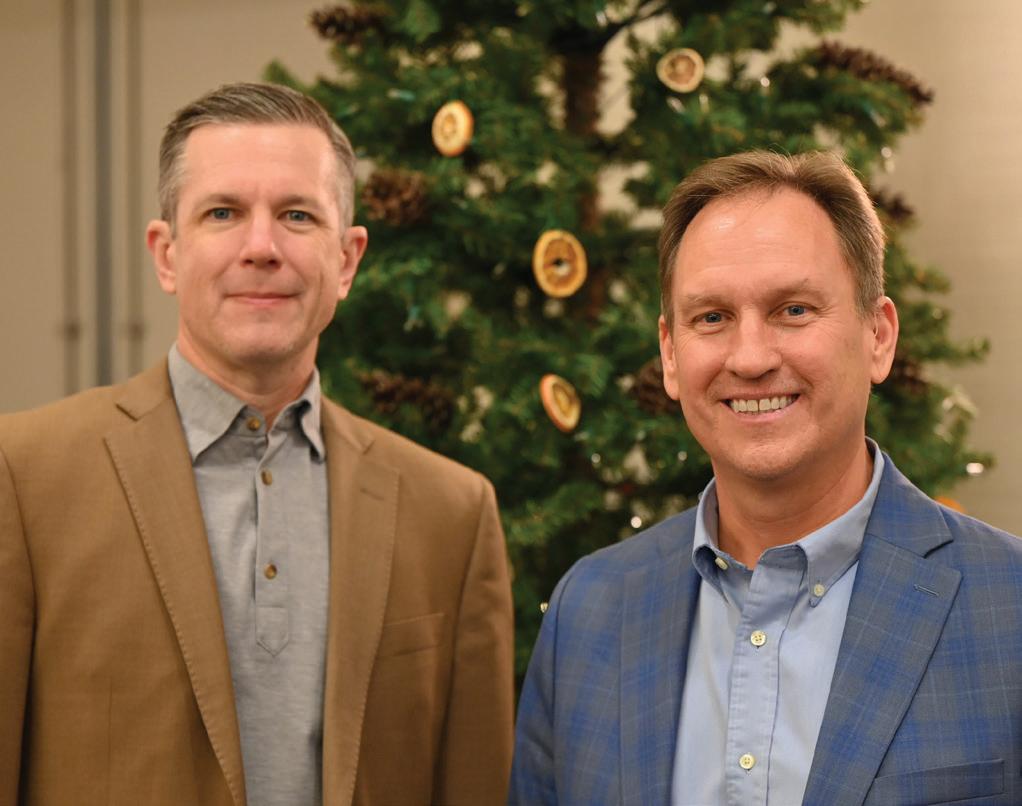
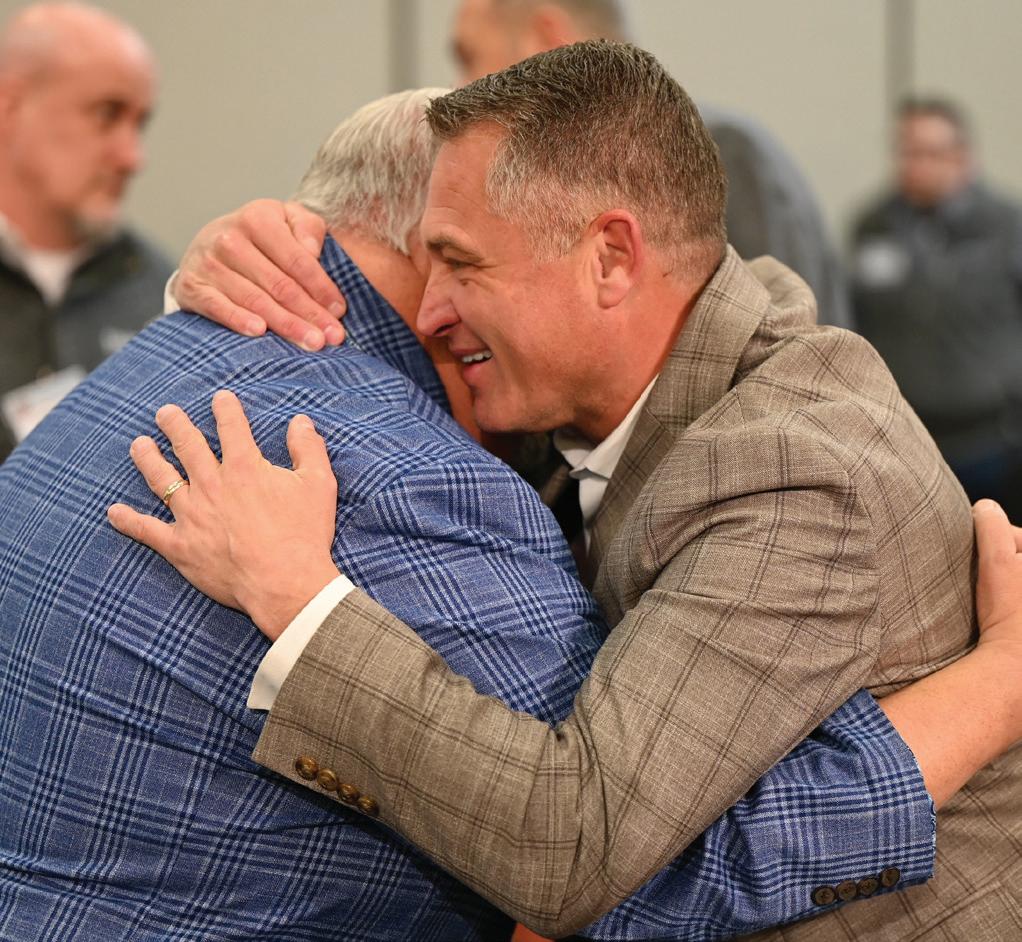
Antioch, TN — Two hundred Free Will Baptist pastors and ministry leaders from 25 states gathered December 8-9 at Sonesta Nashville Airport in Nashville, Tennessee, for the annual Free Will Baptist Leadership Conference.
Keynote speaker Dr. Sam Rainer explored the theme, “The Neighborhood Church,” identifying the traits and strategies to develop a church that is loved and valued by its community. “Your church is not at its address by accident,” he challenged listeners during his opening session. “If God can save any person, then He can save any church.... This should be the heart of our ministry.”
The president of Church Answers and the lead pastor at West Bradenton Baptist Church in Bradenton, Florida, Rainer writes, teaches, speaks, and consults on many issues surrounding church health. The author of nine books and hundreds of articles, he is a frequent speaker and co-hosts the podcast Rainer on Leadership. Rainer spoke five times during the conference: twice during Monday and Tuesday evening keynote sessions and three sessions on Tuesday:
• Session 1: The Surprising Return of the Neighborhood Church
• Session 2: The Trends That Can Make or Break Your Next 10 Years
• Session 3: Proven Approaches From Churches Reaching Young Families
• Session 4: Why Churches Are Targets (Keeping Your Congregation Safe)
• Session 5: How to Get Everyone in Your Church Inviting Someone
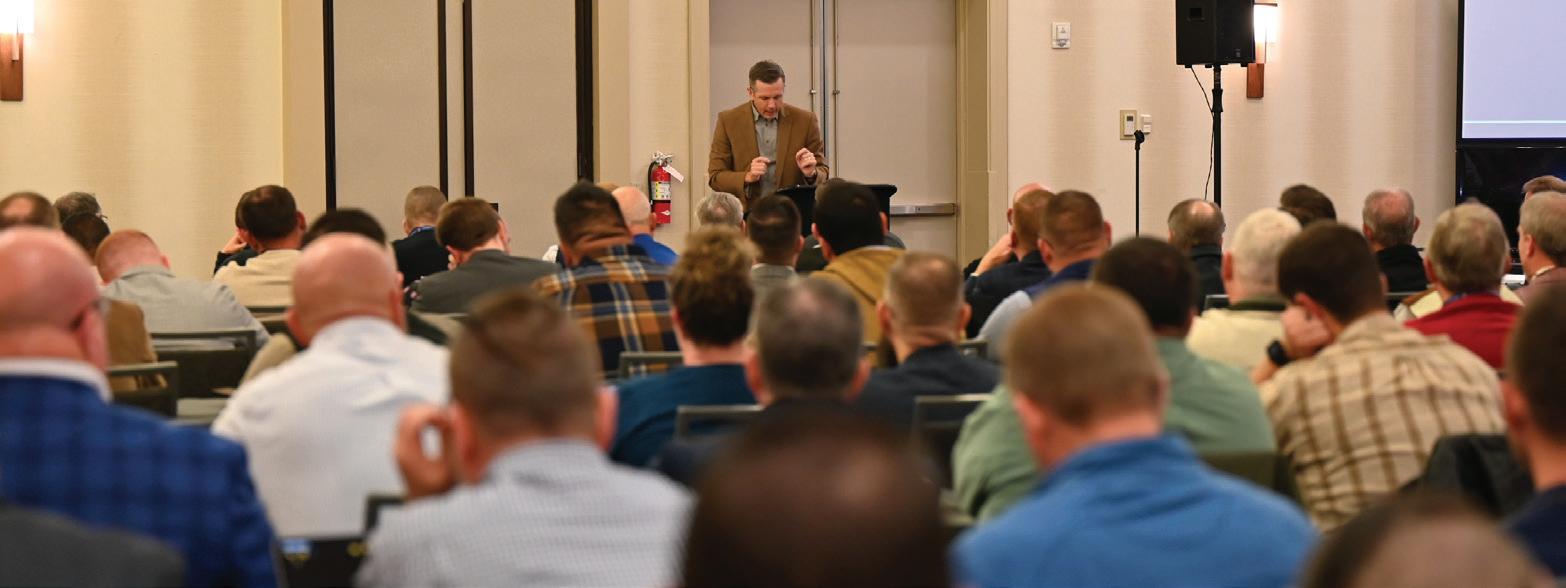

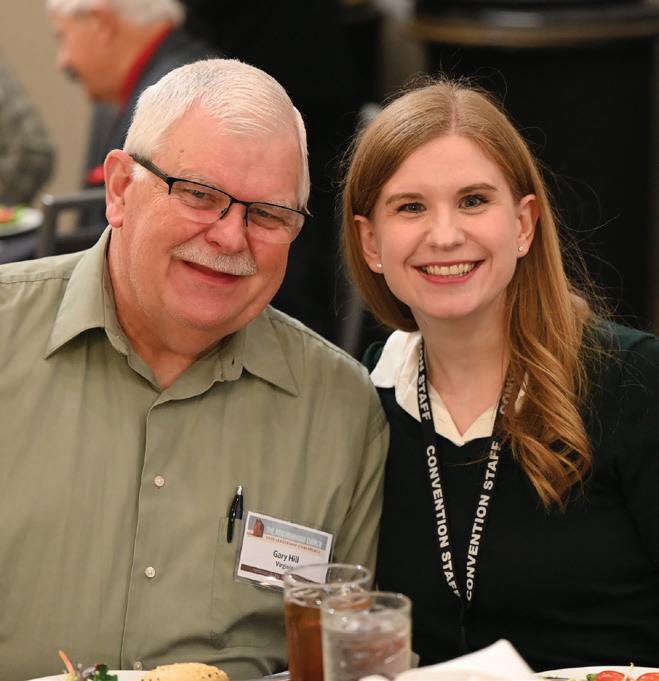
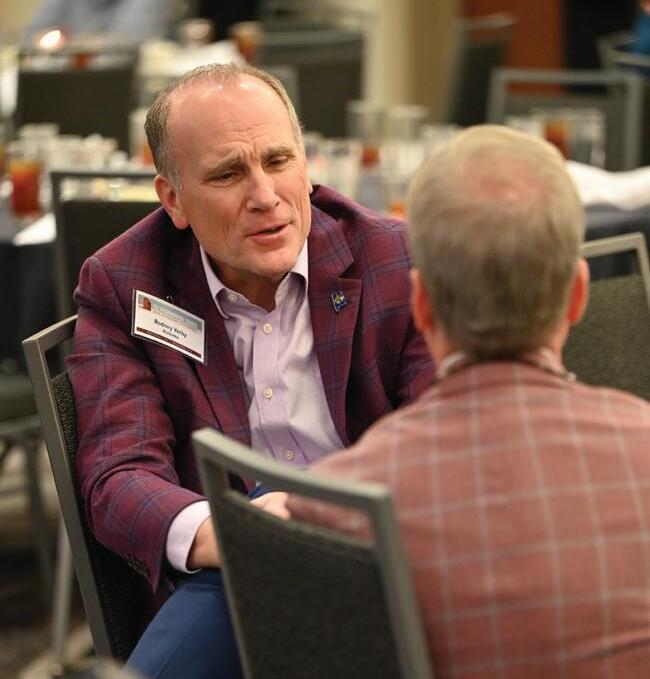
Washington pastor Brent Nix shared his thoughts regarding both the conference and what he heard during keynote sessions: “The Leadership Conference has been a source of encouragement and inspiration for me every year I’ve attended. This year’s sessions with Sam Rainer’s insightful, practical, and passionate teaching have been a wonderful blessing to me and, hopefully, to my church when I get home.”
Tuesday afternoon, additional seminars offered practical instruction on building and maintaining a healthy church.
• From Hello to Home: Dynamic First Impressions Ministry, Dr. Shiloh Hackett (TN)
• Ministering to People Who Didn’t Plant Their Own Olive Trees, Jon Forrest (TN)
• Revitalization: Lessons From a Water Bottle and the Bible, Travis Alexander (AR)
• Small Groups Make Big Steps, Kevin Barnett (AR)
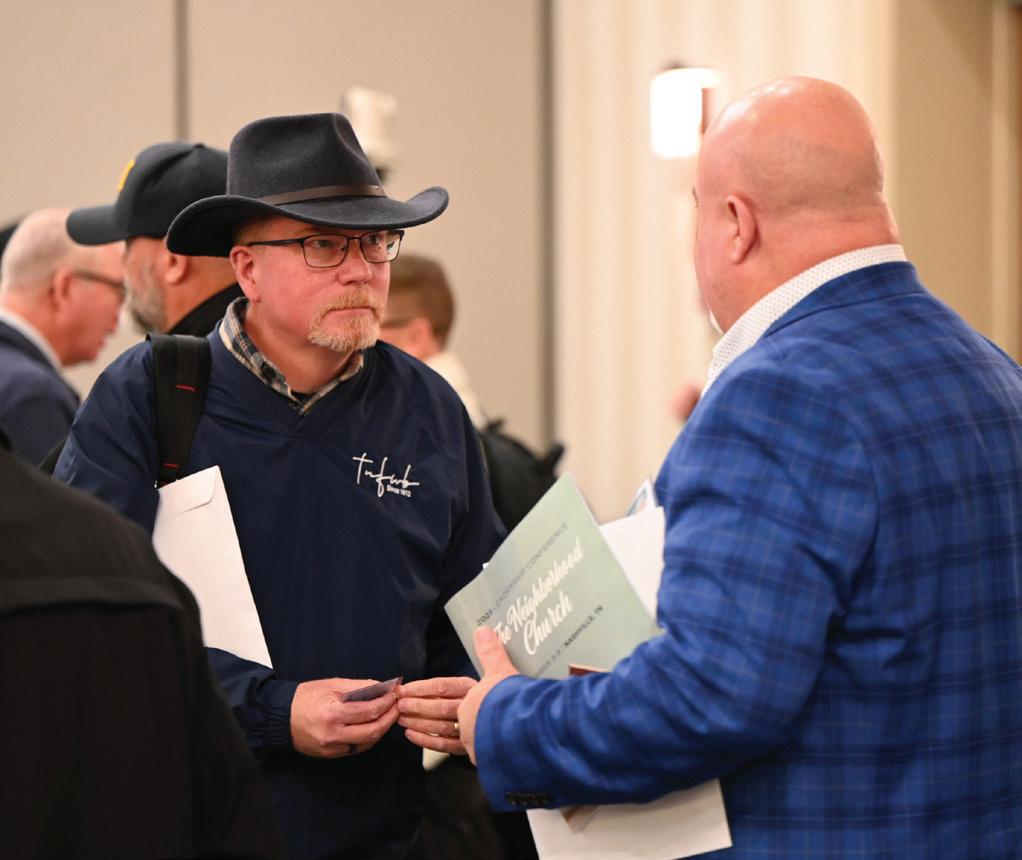
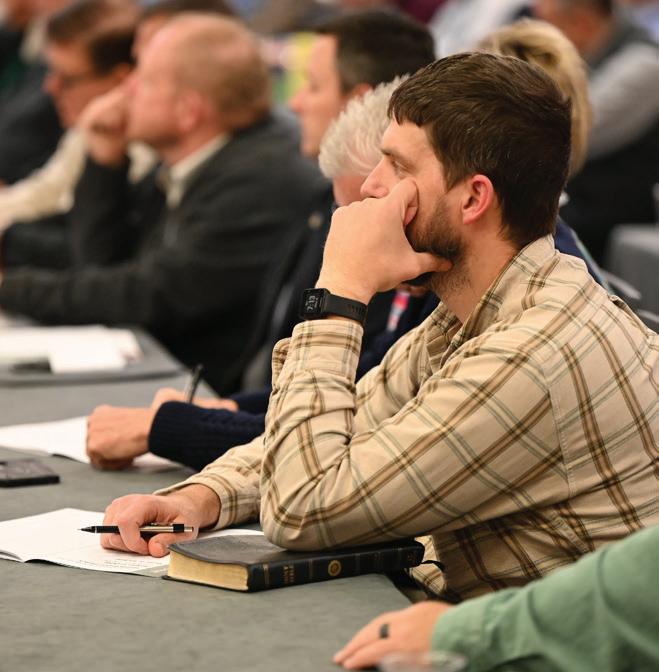



As always, the Leadership Conference featured more than sessions and training. Attendees enjoyed conversations over banquet-styled meals, explored resources from national ministries, and talked long after sessions reached a conclusion. This year, the Leadership Conference also hosted a Funding Summit to explore ways to address the challenges of financing crucial denominational ministry without overburdening Free Will Baptists.
Various boards and committees met in conjunction with the conference, including the Executive Committee; D6 Family Ministry; FWB Foundation; IM, Inc.; North American Ministries; Richland Ave Financial; Welch College; the Historical Commission; and state leaders and promotional directors.
“I left this year’s leadership conference with a lot of hope for our local churches," said Florida pastor John Howell. "We received practical tools and resources to help us reach our communities with the gospel of Jesus Christ!”
As the conference concluded, Executive Director Eddie Moody challenged attendees to set four specific goals for their states, associations, and churches: 1) pray for neighbors (nafwb.org/bless); 2) increase the number of churches using The Hope Initiative (nafwb.org/hope); 3) refocus on Sunday School and discipling others in the faith; and 4) pray for the harvest and harvesters.
“We must be outward focused to reach the community,” Moody concluded. However, we must be inward focused as we pray for and look for harvesters. Who within your church can teach a class? Who meets the criteria to be a pastor, and who might God be calling?”
Moody announced December 7-8, 2026, as the dates for next year’s meeting, which will explore the theme, “Church Tools: Basics for Effective Ministry.” Visit nafwb.org/leader throughout the year for updates regarding the 2026 conference.
When you provide regular, monthly support to The WNAC Giving Tree, you grow the "fruit" of Free Will Baptist Women's Ministry: PROVISION CLOSET | STUDENT SCHOLARSHIPS
SHINE! | TREASURE | ONE MAGAZINE FLOURISH | EVENTS | SPECIAL PROJECTS
Support The Giving Tree and keep bearing the fruit of these crucial ministries: wnac.org/giving-tree
MATTHEW 5:1–16, 43–48
JULY 19-22, 2026 • COLUMBUS, OH
BY EDDIE MOODY
This issue focused on stewardship. May we all steward leadership opportunities well. Whether a pastor, church leader, parent, grandparent, student, or worker, we all have opportunities to influence and lead.
We all lead. The 12 Hebrew spies were all leaders (chiefs or heads) of their tribes (Numbers 13:2-3). Take time to assess who you lead. Ask, “Who do I influence through what I say, write, or post online?” The list will likely include people from your church, family, workplace or school, and community. The truth is, we all lead more people than we think.
Leaders follow through. Though we typically think ten of the 12 spies were failures, they led well initially. They fulfilled the task they were given, to spy out the land (Numbers 13:17-19). The assignment was difficult and dangerous and required great courage (Numbers 13:20), but they did it (Numbers 13:21, 25-27). Fulfilling responsibilities well is an important part of leadership. Whether preparing a message or Sunday School lesson or spending time with children and grandchildren, we cannot lead if we do not follow through (Proverbs 18:9).
Leaders look past obstacles. The unfaithful spies went awry when they saw the obstacles as impossible to overcome. Leaders point out obstacles, but they also stress how an all-powerful God can enable us to overcome them (as demonstrated by Caleb and Joshua). The unfaithful spies discouraged the people, and their influence led an entire generation to their eventual death in the wilderness.
Leaders use words (or social media posts) well. Negativity is contagious, so Caleb asked the unfaithful to be quiet (Numbers 13:30). This was like the command in Psalm 46:10 to “be still.” During a crisis, it is good to pause and remember God is in control. However, the unfaithful spies kept talking, and their words discouraged the people (Numbers 13:31-33). Statements like, “We’ve never done it that way, before!” or, “It won’t work!” or disparaging others on social media are actions like those of the unfaithful spies. If we are not careful, we forfeit our leadership opportunities.
Good leaders keep leading, even when the majority does not follow. Caleb challenged the people to go up at once (Numbers 13:30). He knew if they simply obeyed, the battle would be won (Numbers 14:8). But the people would not listen; some even wanted to stone Caleb and Joshua (Numbers 14:10). We risk God’s judgment when we fail to step out in faith. Even worse, we lead others into dangerous decisions. As a result, we miss the blessings of obedience — the Promised Land in Israel’s case (Numbers 14:32). In contrast, God honored Caleb and Joshua’s faithfulness and gave them the opportunity to lead the next generation (Numbers 14:24) into the Promised Land.
Though good leadership may not be recognized and rewarded immediately, it will be rewarded eventually, even if it is in the life to come. May we all steward our leadership opportunities well for the sake of God’s Kingdom.

Eddie Moody Executive Director, National Association
of Free Will Baptists