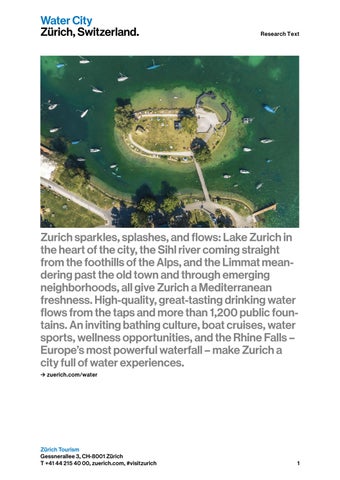
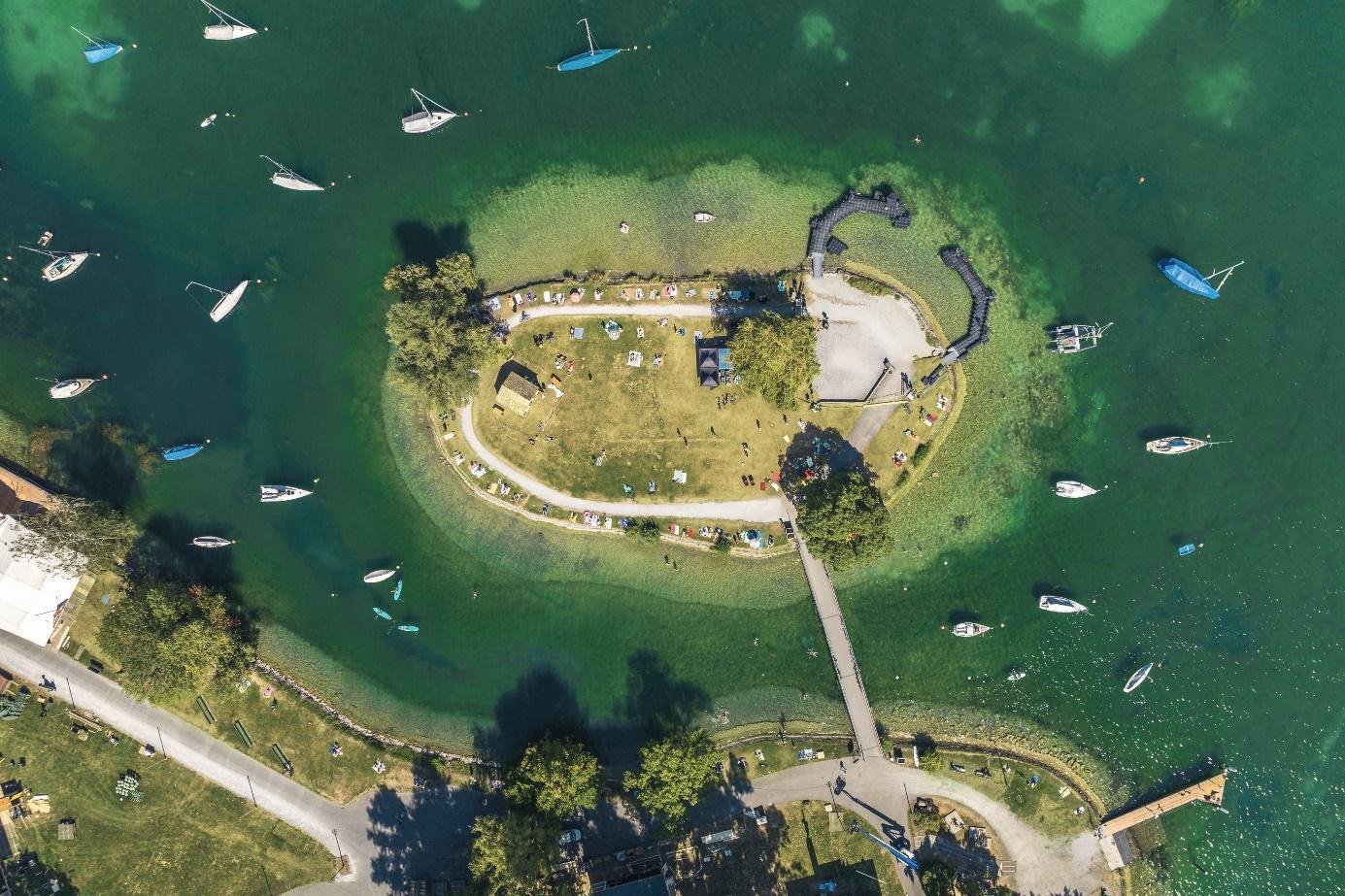
Zurich sparkles, splashes, and flows: Lake Zurich in the heart of the city, the Sihl river coming straight from the foothills of the Alps, and the Limmat meandering past the old town and through emerging neighborhoods, all give Zurich a Mediterranean freshness. High -quality, great -tasting drinking water flows from the taps and more than 1,200 public fountains. An inviting bathing culture, boat cruises, wat er sports, wellness opportunities, and the Rhine Falls –Europe’s most powerful waterfall – make Zurich a city full of water experiences.
➡ zuerich.com/water
Water City Zürich, Switzerland.
Mediterranean Freshness and Relaxation
The Development of Zurich’s Bathing Culture
The history of Zurich’s “Badis,” as locals affectionately call their public baths, is as much about architecture as it is about culture. Given the city’s location, water is omnipresent. Zurich’s bathing culture was founded by the Romans, who built the firs t bath over 2,000 years ago at today’s Weinplatz – remnants of which are still visible In the early 19th century, hygiene became a public concern, and the city began building numerous bathhouses since fitting every household with running water was too expensive: 60% of Zurich apartments had no bathroom. By 1900, 20 bathhouses had been built – strictly segregated by gender and limited to one hour of bathing per person. During the subsequent bathhouse boom, public bathing became a regular part of Zurich life. Time limits were removed, and sunbathing spaces were introduced. A true revolution arr ived in 1922 with the opening of Seebad Mythenquai. The emerging body culture and medical advice encouraged exercise and relaxation in nature as a form of self -care. No wonder bathing has become a cherished ritual among locals. Zurich residents love their Badis, but visitors also find a wide variety to choose from. At the “Frauenbadi,” only women enjoy sunbathing with views of the Grossmünster. Built in 1837 as a small “bathhouse for ladies,” it still serves female guests exclusi vely. The riverside Schanzen graben bath, in contrast, is menonly during the day. After dusk, both baths open to all – perfect for winding down by the shimmering water.
At a Glance
With the highest density of public baths in Europe, Zurich is a true paradise for water lovers – and no two Badis are alike. Spanning 150 years of history, they serve as cultural landmarks scattered across the city. Zurich has six open -air pool complexes, six lake/strand baths, five river baths, and one thermal bath. In addition, there are numerous air and sunbathing facilities, kilometers of natural swimming spots around the lake and river, and seven indoor pools – some with sunbathing lawns. These 24 publ ic baths are complemented by school swimming pools that open to the public at certain hours. Most outdoor pools are open from May to September. In summer, Zurich transforms into an urban water park. But it’s not just about swimming – activities on and near the water make Zurich a dynamic travel destination with something for everyone.
A Versatile Offering on, in, and around the Water
“Walking on Water” is a special city tour conducted on a stand -up paddleboard , offering a unique water-level view of Zurich’s historical sites. Stand -up paddleboards can be rented at various locations –for private fun, beginner lessons, yoga classes, or moonlight sessions
➡ Stand Up Paddle
Urbansurf celebrates surfing culture in the trendy Gerold district near Hardbrücke station. Surf enthusiasts pursue their passion right in the city, and beginners can try the sport for the first time. If the wave
Water City Zürich, Switzerland.
pool feels too adventurous, wakeboarding on Lake Zurich is another great option. This sport also requires balance: standing on a board, you hold onto a rope pulled by a boat and ride its wake – a fun workout with breathtaking views.
➡ Urbansurf
In addition to cruise ships, pedal boats and rentals are very popular. Lago at Utoquai offers Zurich’s first solar -powered rental boat, along with motorboats, sailboats, aquascooters, electric boats, and more. Other rental stations include “Pier 7” at Quaibrücke, and the boat rentals at Bürkliplatz and Zurich -Enge.
➡ Lago boat rental
➡ Pedalo und boat rental Enge
For a more relaxed experience, locals jump into the Limmat at Platzspitz Park behind the main train station with a dry bag and float downriver to Schlieren. Floating – drifting downstream for about two hours in colorful inflatables – is especially popular with Zurich residents.
Complete relaxation can be found at the lake baths Enge and Utoquai, with saunas and massage options right by the water. Many mid -range hotels have in -house spas or steam baths, while luxury hotels feature spacious wellness areas with views. One hot tip: the sauna boat on Lake Zurich. Enjoy four hours of private sauna time (for 2 –6 people) with panoramic views of the city and Alps. Bathrobes, slippers, and drinks can be booked or brought along. No boating license required.
➡ Sauna boat
Zurich’s only thermal bath , Hürlimann, offers 27°C thermal spring water. Its unique Roman -Irish spa ritual combines ancient bathing cultures into a distinctive cleansing and relaxation experience – one of a kind in Switzerland.
➡ Thermal bath Hürlimann & Spa Zürich
Further relaxation awaits at the Hammam in Stadtbad, inspired by traditional Turkish baths, offering sauna, treatments, and spa packages. KEEN Wellbeing introduces a new kind of social wellness, combining sauna, ice baths, and active experiences for body and mind.
➡ KEEN Wellbeing
➡ Hammam Stadtbad
Even in winter, Zurich’s water experiences continue: cold -water swimming in Lake Zurich or the Limmat is a New Year’s tradition. Some lake and river baths, such as Tiefenbrunnen, Mythenquai, Letzigraben, and Allenmoos, stay open as public parks in winter.
Zurich’s Drinking Water: From Over 1,200 Fountains
Delicious drinking water flows from over 1,200 fountains throughout Zurich. Most fountains deliver the same blend as tap water: 70% lake, 15% groundwater, and 15% spring water. About 400 fountains are
Water City Zürich, Switzerland.
supplied directly with spring water – such as the one at Napfplatz. These spring -fed fountains are especially eco -friendly, using untreated, non -pumped water, and they provide an independent supply in emergencies.
Some 80 of these emergency fountains, designed in 1973 by interior architect Alf Aebersold, are scattered across the city. In terms of hygiene, Zurich fountain water is as clean as bottled mineral water –only with slightly fewer minerals. Environmentally, it’s far superior, requiring up to 1,000 times less energy than bottled water.
Zurich’s fountain history dates back around 500 years. Once simple water dispensers and social meeting spots, many fountains today are beautifully crafted public artworks. In the past, Zurich was known as “Limmat -Athens” for its classical Greek -style fount ains – until Reformer Huldrych Zwingli condemned their Catholic -inspired ornamentation and had many destroyed or removed.
➡ zuerich.com/fountains
Boat Cruises: From Nostalgic Steamers to Solar -Powered Rentals
Those who prefer to take it easy on the water can explore Zurich’s lush riverbanks or old town along the Limmat by boat. A lake cruise with a gentle breeze and green scenery is especially rewarding in spring and summer. The Lake Zurich Navigation Company (ZSG) offers daily cruises between Zurich and Rapperswil, ranging from one to seven hours. Boats depart from the Bürkliplatz pier and include modern motorboats and nostalgic paddle steamers. A highlight is the historic st eamer “Stadt Rapperswil”, one of the last paddleboats built by Escher Wyss in Zurich -West. Its sister ship, “Stadt Zürich”, was also built there in 1909. For variety, themed “Dream Cruises” combine boat rides with culinary experiences – like lunch, brunch, BBQ, or fondue cruises. Party cruises with oldies, schlager, or salsa music invite guests to dance the night away.
Events on the Water
Lake Crossing:
Once a year, thousands of Zurich residents swim the 1,500 meters from Mythenquai Bath to Tiefenbrunnen Bath. About two dozen buoys and balloon columns mark the way, and swimming aids are not allowed. Three summer dates are scheduled, but the event only hap pens if the water reaches at least 21°C. The first lake crossing took place in 1985. Participation is limited to 9,000 people.
➡ Lake Crossing
Limmat Swimming:
First organized in 1945 by the swimming club Zürileu, this event takes place on the last weekend of the school summer holidays. Swimmers journey from the Frauenbadi down the Limmat to Oberer Letten –a route only open to the public once a year. Over 4,000 people took part at the 50th anniversary in 2013.
➡ Limmat Swimming
Samichlaus (Santa Clause) Swim:
Water City Zürich, Switzerland.
Brave swimmers welcome winter in early December by crossing 111 meters from Pier 7 to the Frauenbadi, with water temperatures between 6 and 8°C. The record was set in 2018 with 352 participants. Neoprene suits or grease (like udder balm) are allowed – though considered the “warm shower” option. Costumes, such as Santa Claus outfits, are welcome. At the finish, hot tea and barley soup await the swimmers.
➡ Santa Clause swim
Refreshing Excursions
In 1983, the remains of the Roman baths of Turicum were discovered and excavated beneath modern buildings at Weinplatz. Mosaic fragments and wall painting remnants indicate a luxurious establishment. Today, the ruins can be viewed on a metal walkway in The rmengasse, near St. Peter’s Church. Information boards and displays explain Zurich’s Roman bathing traditions.
By contrast, Alpamare in Pfäffikon SZ celebrates modern water fun. Europe’s largest indoor water park offers 11 giant slides, a wave pool, outdoor thermal baths, and a wellness area – fun for all ages.
Not far from Pfäffikon, Switzerland’s longest wooden bridge links Rapperswil and Hurden, inviting a romantic 20 -minute walk across Lake Zurich. From the bridge, you can see the picturesque islands of Lützelau and Ufenau, accessible by boat – ideal for a re laxing day surrounded by lake waters.
Other nature escapes include Lake Zug, the Neeracherried (one of Switzerland’s last lowland moors), and Seleger Moor near Rifferswil, known for its blooming beauty.
Water’s raw power is most impressively felt at the Rhine Falls, Europe’s largest waterfall. Adventurous visitors can take a boat close to the roaring cascade – up to 600,000 liters per second plunge into the depths.
Just 30 minutes by train from Zurich Main Station lies Switzerland’s most mineral -rich thermal spring. The “Fortyseven” wellness spa in Baden, designed by star architect Mario Botta, is located right on the Limmat. Highlights include a spacious sauna area and the immersive “Kosmos” experience zone, featuring sound design by Boris Blank (Yello). A wide range of massages, beauty treatments, and wellness packages complete the experience.
Contact
Zürich Tourismus
Media Relations
Gessnerallee 3
CH -8001 Zürich
T +41 44 215 40 96
➡ media@zuerich.com
➡ zuerich.com/media
Images & Text
In our media database, you have access to our multifaceted world of images.