Sustainability in Zürich Green quality of life in the city on the Limmat
Zurich is renowned worldwide for its exceptional quality of life, captivating both visitors and locals alike. But what makes this city in the heart of Europe so unique? Is it the balance between urban flair and nature? The vibrant arts and culture scene? Or perhaps its innovative culinary landscape? Above all, it’s the seamless interplay of environmental, social and economic factors. Zurich Tourism, the city and canton, along with forward -thinking brands, are committed to sustainability and are pursuing a long -term strategy to sha pe the future.
➡ zuerich.com/ sustainability
Sustainability Definition
The term sustainability is ubiquitous, but what does it actually mean to act sustainably? Zurich follows the definition from the 1987 Brundtland Report: “Sustainable development is development that meets the needs of the present without compromising the ability of future generations to meet the ir own needs.” This approach gives equal importance to three dimensions: economy, society, and the environment. The following topics are each aligned with one of these pillars. However, it's important to note that many aspects overlap and touch on multiple areas. The →Sustainable Development Goals (SDG’s) are not explicitly referenced.
Economy
Zurich, the largest city in Switzerland, boasts a highly developed and well -connected infrastructure. As a major economic, financial, and cultural hub, the city offers outstanding quality of life. Here are some key aspects of Zurich’s infrastructure:
Transport ation & Mobility
For the third year in a row, Zurich’s main train station (Hauptbahnhof or HB) has been ranked the best railway station in Europe by the European Railway Station Index. The ranking considered factors ranging from the number of services available at the station to accessibility and national as well as local rail coverage. Zuri ch HB is not only Switzerland’s most important transport hub but also a key node in the European rail network. With excellent train connections and comfortable night trains, arriving in Zurich is both easy and environmentally friendly. When it comes to mob ility, Zurich is a model for other cities: a dense public transport network, bike - and pedestrian -friendly infrastructure, and thoughtful urban planning ensure a seamless and sustainable system. In fact, a 2023 survey by the City of Zurich found that only about half of the population owns a car. Trams, buses, and trains run on electricity, and the city is steadily expanding bike lanes and car -free zones (Urban Mobility Readiness Index, 2024).
Zurich is also a city of short distances, where traffic -calmed areas invite people to stroll and explore at a relaxed pace.
➡ Public Transportation in Zurich
Urban Development
With its well -developed infrastructure, close connection to nature, and central location, Zurich already offers a strong foundation for sustainable urban growth. Yet the city is actively shaping its future through forward -thinking urban development – designed to meet the needs of a growing population, rising environmental standards, and an evolving economy. Zurich is investing in green spaces, modern architecture, and sustainable building projects to further improve the quality of life.
We Care, Zürich, Switzerland.
Urban Development in Action: SBB
Werkstadt
Where is Zurich’s favorite coffee ground? In the “Werkstadt Zürich”, a former industrial site that’s been transformed into a vibrant hub for innovation, local production, and leisure. Located on a site with over 100 years of history, this former SBB (Swiss Federal Railways) area is now home to local brands crafting everything from coffee machines and soaps to gin. Another highlight is the Transa Repair Workshop, where outdoor enthusiasts can get the zipper on their favorite jacket fixed or patch up their beloved down sleeping bag. In collaboration with the City of Zurich, the Swiss Federal Railways developed a master plan for the Werkstadt with a strong emphasis on local production and sustainability. It’s a space where people can experience hands -on craftsmanship, r ight in their own neighborhood.
➡ Video Werkstadt & Made in Zurich
Made in Z urich initiative
"In the Werkstadt Zürich, we want to create space for creative and forward -thinking solutions, and provide a platform for sustainable production."
Gabriele Bühler, Project Manager , Swiss Federal Railways
In 2023, Zurich became the first Swiss city to officially commit to promoting the circular economy (CE) by signing the “Circular City Declaration.” To achieve the set goals, collaboration among various stakeholders is crucial, including urban producers. Ma de in Zurich fosters knowledge exchange and networking among producers in the city, working together to advance the circular economy.
➡ Made in Z urich Initiative (in German)
From bean to bar : laflor
Switzerland without chocolate? Unthinkable. The "Bean to Bar" movement is growing, with more and more producers controlling the entire production process. Laflor focuses on organic products, transports cocoa by sea (sometimes even using sailing ships), and repurposes by -products. Direct imports ensure transparency, and processing, except for peeling, takes place in the SBB Werkstätte in Zurich Altstetten.
➡ laflor
White Vision instead of Greenwashing : maison blanche
In 2022, Yannik Zamboni won the American reality TV show "Making the Cut" with Heidi Klum. Since then, Zamboni has been a sought -after name in the fashion industry, and with their own label, maison blanche, they embrace sustainability as a holistic approach. Only plastic -free, vegan, and natural
We Care, Zürich, Switzerland.
fabrics are used in their creations. Zamboni also frequently incorporates Bananatex®, developed by QWSTION in Zurich, which is the world’s first durable and biodegradable fabric made from Abacá (banana plant fibers). Maison blanche follows an inclusive design philosophy: the clothing is made for all sizes, body types, and abilities. The goal is fashion for everyone. Even the smallest details reflect a commitment to both the environment and society: the labels are made from cotton instead of the usual polyester and carry a message that clothing can serve as important evidence in the case of sexual assault. At maison blanche, fashion is a statement, sparking thought and conversation.
➡ maison blanche
➡ Video Yannik Zamboni
Sustainability in Zurich: Measurability and International
Recognition
The diverse aspects of sustainability make it particularly challenging to ensure a consistent and objective measurement. However, it is essential to define standards in order to make progress visible and identify areas for improvement. To meet this challen ge and gain an external perspective on the city’s sustainable development, Zurich, in collaboration with Zurich Tourism, became the first destination in Switzerland to undergo the EarthC heck certification. Zurich also consistently ranks at the top of international sustainability ratings. One example is the Mercer study, which annually assesses the quality of life in cities around the world.
➡ Mercer Studie
➡ Earth Check
Education & Research
Zurich is a hub for research and innovation. ETH Zurich is ranked among the top universities in the world, particularly in the fields of engineering and natural sciences. The University of Zurich is also one of Europe’s leading research institutions. These universities continuously produce groundbreaking spin -offs, such as Planted the first company to create plant -based chicken without additives or binders. Another example is the clean -tech company Synhelion, which specializes in develo ping solar fuels. Their goal is to replace fossil fuels with CO ₂-neutral alternatives, a crucial step towards sustainable mobility.
➡ Planted
➡ Synhelion
➡ Here’s the link to the interview with climate researcher Prof. Dr. Reto Knutti. The ETH professor develops computer models that simulate climate change. “For a global problem, everyone must contribute , regardless of their size. ”
Prof. Dr. Reto Knutti, Environmental Systems Sciene , ETH Zürich
We Care, Zürich, Switzerland.
Ecology
The city aims to balance nature, urban life, and environmental awareness. Through green infrastructure, the preservation of nature reserves, sustainable energy policies, and innovative mobility concepts, Zurich contributes to enhancing the quality of life for its residents while protecting the environment. Numerous parks, restored riverbanks, and sustainable construction projects make Zurich a city that harmoniously blends nature with urbanity.
Water City
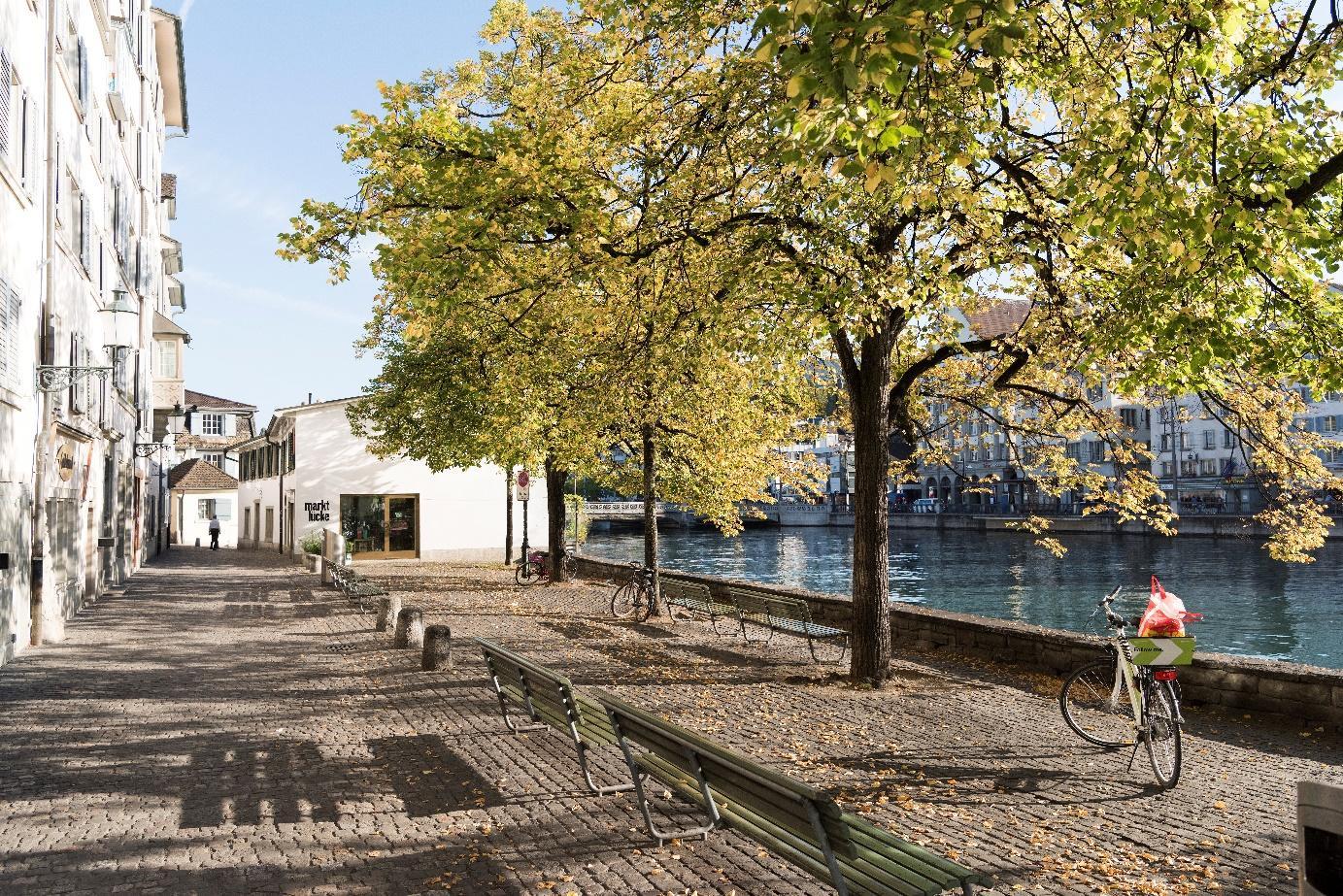
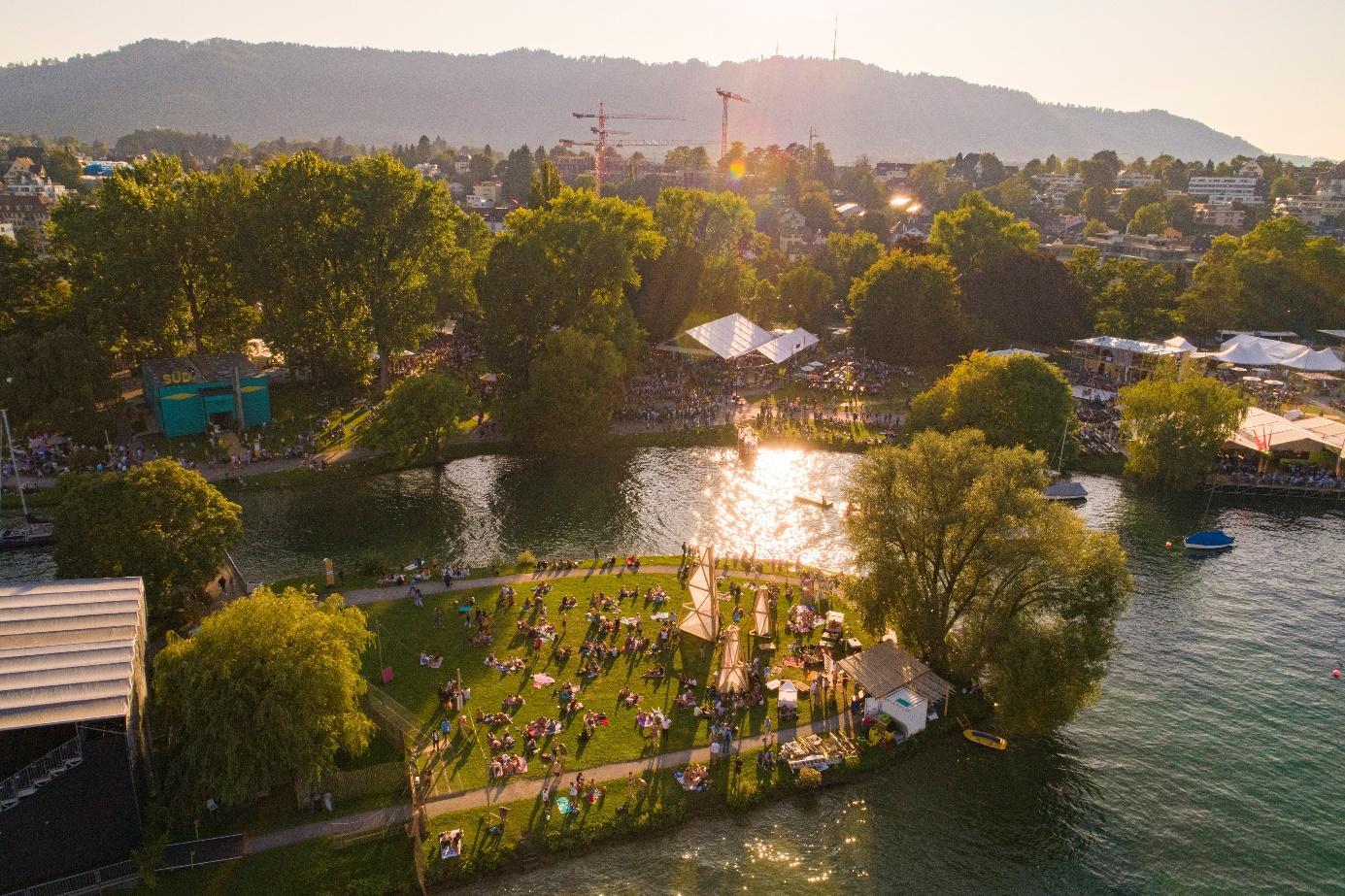
Water is everywhere in Zurich. The Lake Zurich, around which the city is built, and the Limmat River, which winds its way past the buildings of the old town, give the city a Mediterranean feel. High -quality drinking water flows from the city’s taps as well as from over 1,200 public fountains. In the summer, Zurich transforms into a water park with around 30 lake and river baths and nearly 20 additional outdoor swimming pools. No other city in Europe has such a high density of bathing facilities p er capita. Lake Zurich is also a source of renewable energy for the city. To date, the lake has provided cooling and heating for several buildings around the lake basin (including the Congress House). In the future, a large area of the city center will be connected t o this renewable energy supply. Furthermore, Zurich uses the unique method of monitoring water quality with tiny crustaceans. The small daphnia (water fleas) help keep Zurich’s waters in ecological balance.
➡ Fountain City Zurich
Urban Development: Green Spaces
Zurich has more than 70 publicly accessible parks and green areas. Nearby forests, numerous green spaces, and abundant water resources further enhance the city’s high quality of life. The planning of urban nature and the improvement of the city’s climate a re continually advancing: dozens of fruit trees are planted each year, and over the past ten years, around 2,000 new trees have been added along roads, with additional trees planted in newly developed parks.
Biodiversity: city bees
Over 215 species of wild bees have been recorded in the city of Zurich, which corresponds to more than a third of the 600 species native to Switzerland. According to the Green city of Zurich this diversity is remarkable, as wild bees play a central role in pollinating both wild and cultivated plants. This highlights the importance of diverse urban habitats in promoting biodiversity. The honeybee also calls the city home. Bee hotels and urban beekeeping, which produce honey within the city, are not uncommon in Zurich.
➡ Wild Bee Excursions Through the City
Switzerland.
Zurich on the Plate: Rechberg 1837
In this restaurant, you won’t find coffee or chocolate. After all, coffee and cocoa beans don’t grow on local soil, so they don’t appear on the menu at Rechberg. Awarded the green Michelin star, the kitchen at Rechberg uses exclusively products that are ne ither industrially bred nor cultivated. The owners focus on heirloom varieties and sustainable farming. Animal products are carefully selected and thoroughly processed, with, for example, trimmings being turned into spices. It goes without saying that no processed products or artificial additives are used at Rechberg.
➡ Rechberg 1837
➡ Video Carlos Navarro
Social
“Biodynamics and permaculture are not buzzwords for us, but the foundation for meaningful nutrition.”
Carlos Navar ro, Co -owner Rechberg 1837
Zurich is a diverse and multicultural city, known for its international orientation and openness to various cultures and ways of life. The city actively promotes social sustainability and high quality of life for all through targeted inclusion initiatives.
Lived Tolerance in Zurich
Zurich has a lively LGBTQ+ scene that goes back decades of fighting for equality. Switzerland was a pioneer, decriminalizing homosexual acts in 1942. Zurich, in particular, played a central role: The organization “Der Kreis” (1943 –1967) had a significant impact on the Western LGBTQ+ movement. After its dissolution, other organizations e merged, and in 1978, they organized Switzerland’s first Christopher Street Day, later joining together under the umbrella organization Pink Cross. Since 2007, samesex couple s in Zurich have been able to officially register their partnership. Zurich embraces openness towards homosexuals. Venues such as “Barfüsser”, Europe’s oldest gay bar, along with numerous other bars and clubs, are an integral part of Zurich’s nightlife. Si nce 2021, “Regenbogenhaus” has served as a cultural space and resource center for the LGBTQ+ community.
➡ LGBTQ+
➡ Pride Festival
Barrier -free & Accessible
Zurich places great importance on accessibility and is continuously working to make the city accessible to all. In accordance with the Disability Equality Act, the city is committed to taking measures that prevent, reduce, or eliminate discrimination. The city promotes accessibility in public spaces,
We Care, Zürich, Switzerland.
particularly in public transportation , tram and bus lines are largely accessible. This also applies to institutions such as the Swiss National Museum and the Kunsthaus Zurich. Other offerings, such as city tours for people with visual impairments, can also be found in Zurich.
➡ Ginto App (provides information on the accessibility of localities)
Z urich’s Lifestyle
Sustainability must be lived by the people. The natural oases, the lake, and the rivers define the city and its residents. In Zurich, one can enjoy the sunrise from Uetliberg in the morning and float home in the clear waters of the Limmat after work. Natur e and the city go hand in hand , one reason why original concepts are especially well -received by Zurich’s residents. The city also offers short distances, which are perfect for getting around by public transport or bike, enhancing both mobility and quality of life. In addition to its na tural surroundings, Zurich is also known for its vibrant arts and culture scene.
Museums, galleries, and theaters support both local and international artists. Events such as Theater Spektakel and Pride promote cultural exchange and create spaces for share d experiences and understanding. In Zurich, art becomes an important tool for social integration and cultural diversity.
➡ Sustainable Travel
➡ Video Sustainability Zurich
Titel Untertitel
Contact
➡ zuerich.com
Zürich Tourismus
Media Relations
Gessnerallee 3
CH -8001 Zürich
T +41 44 215 40 96
Titel (Untertitel)
➡ media@zuerich.com
➡ zuerich.com/media
Titel (10_ZT_Text, fett)
Text (10_ZT_Text)
➡ URL
Images and Videos
In our media database, you have access to our multifaceted world of images.