Hi! My name is Zoya Salam, a third-year coop student currently pursuing a Bachelor of Architectural Sciences at Toronto Metropolitian University.
As an aspiring architect I dedicate myself to designing experiential, community-centric architecture that aims to improve the lives of all Toronto citizens.

TMU Department of Arch tectural Science
Responsible for the installation of ga lery exhibitions in the Paul H. Cocker gal ery. Assist n communications between art sts and faculty curators Greeted guests and organ ze DAS event n ghts inc uding gallery open ngs
Ontario Legislative Assembly
Architectural Intern - Archives
Transported, organized and d gitally logged assets in the Precinct Property Arch tectural
Inventory management of furniture from the Archives of Ontar o. Asset management of artwork
of Ontario in the Ontario Legis ative Chamber and LAO MPP offices
Art Gallery of Mississauga
Auction Assistant
Responsible for communication between the community ga lery and local art sts Packaging valuable artwork for transportation and d splaying pieces for auction. Communication between gallery and customers Accountable for financial transactions.
Rona
Sales Associate
Greeting and ass sting customers through product recommendat ons. Operating cash
relations. Fulfill ng onl ne orders and employee event coordination.
noceros Autodesk Revit Autodesk SketchUp
Photoshop
Indesign
Illustrator
Toronto Met. University - Architectural Science
Gallery Assistant Student Mentor
Student Union
Present - 2027
FEAS - Deans List
2025 - Present
Project design and fabrication
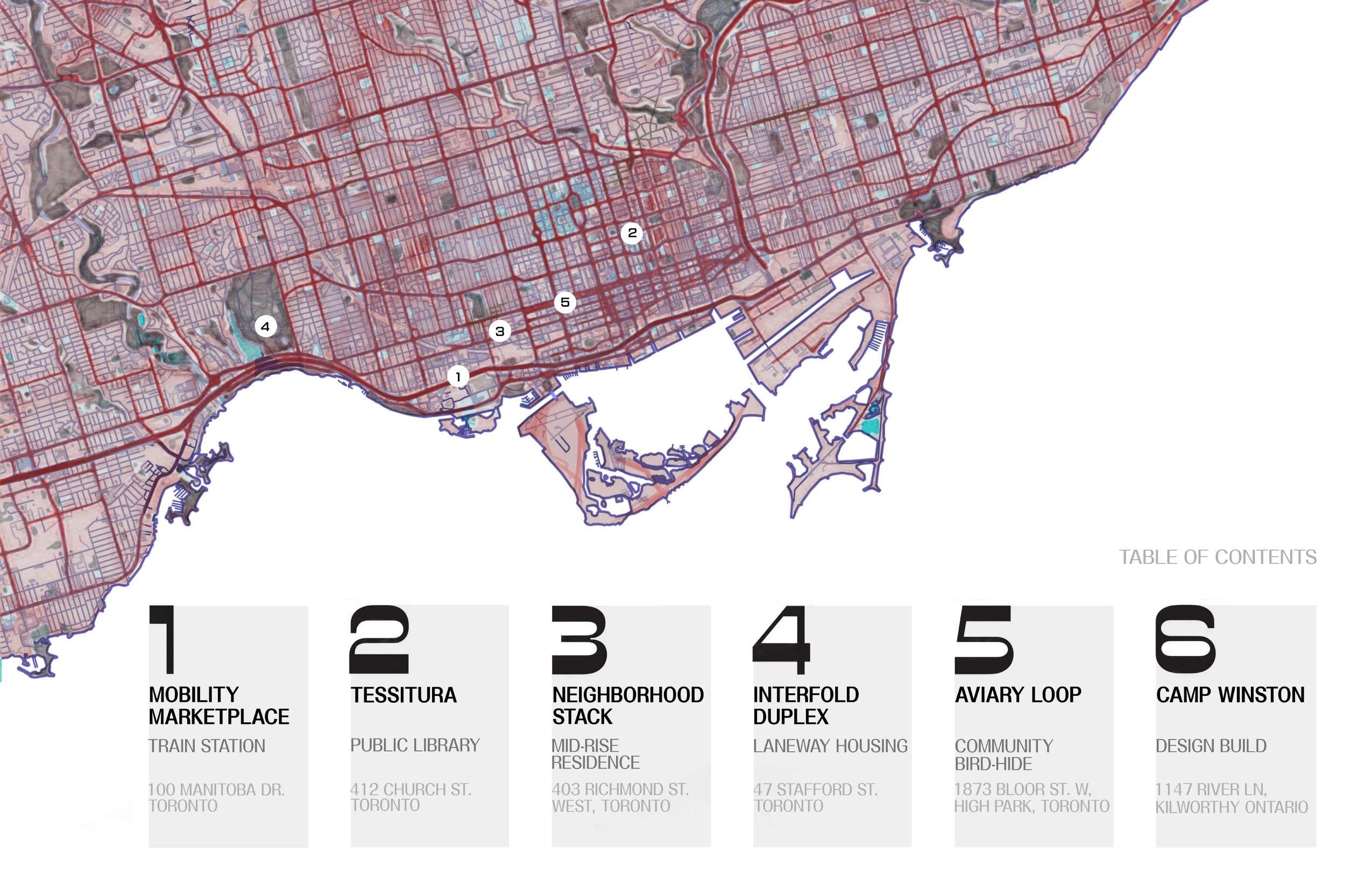
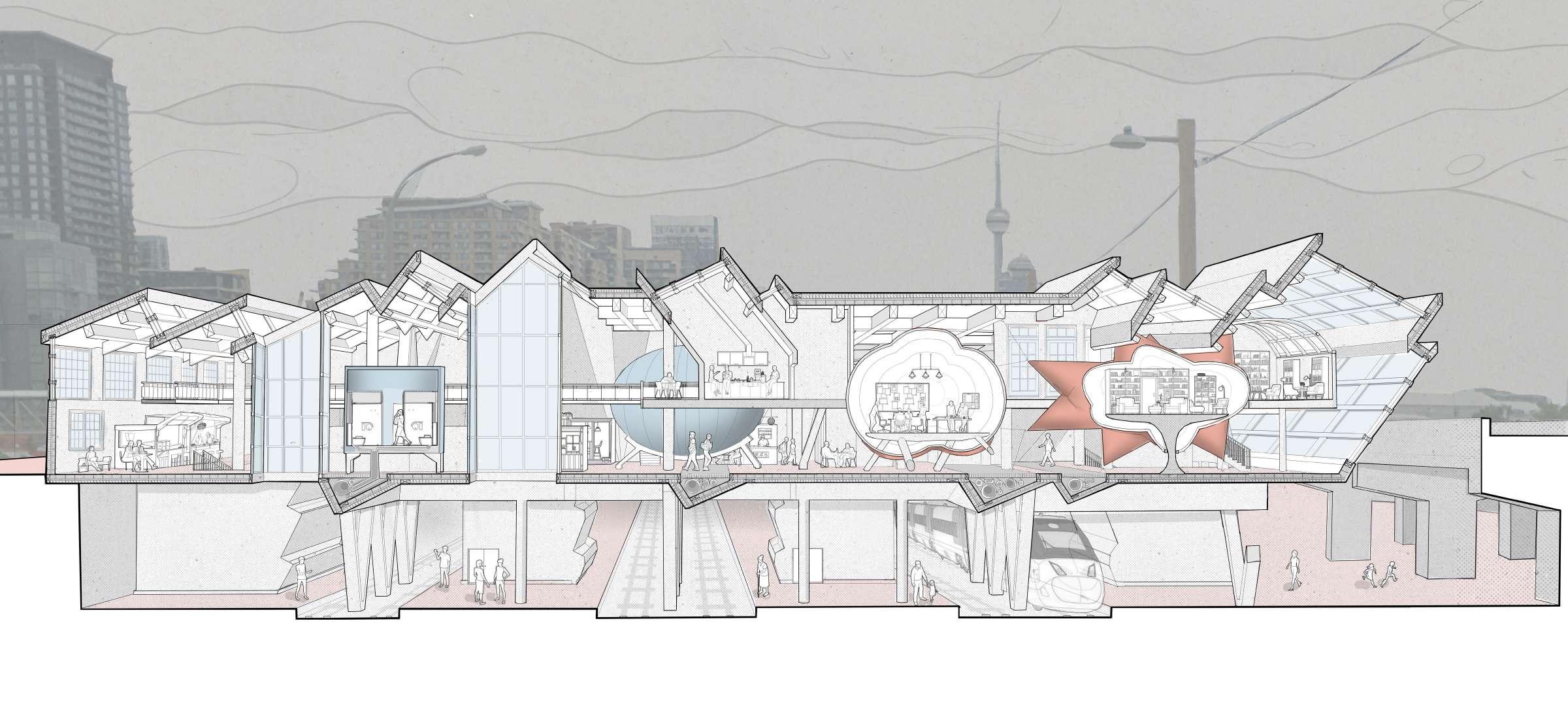
The Exhibition Station is imagined as a piece of civic infrastructure that stretches along the rail corridor to create continuity where the city usually breaks apart. It isn’t a single object but a field of crossings. The building is a way to disperse the heavy flow of people leaving Exhibition Place and fold it back into the neighbourhood. The brick base carries the weight of Liberty Village’s industrial past, acting as a grounded layer that absorbs the movement above it. A steel frame rises from this base and holds a series of modular rooms that include shops, classrooms, and studios
each slightly offset, yet tied together by the same structural form.
The building shows how it’s made. Beams, joints, and bolts remain exposed, turning construction into part of the experience. Light moves through the gaps between modules, softening the scale of the frame and letting air pass through the structure. Rather than appearing as a finished object, the station reads as something that can keep growing or adapting with the city. Between the weight of the brick and the lift of the steel, it finds balance.
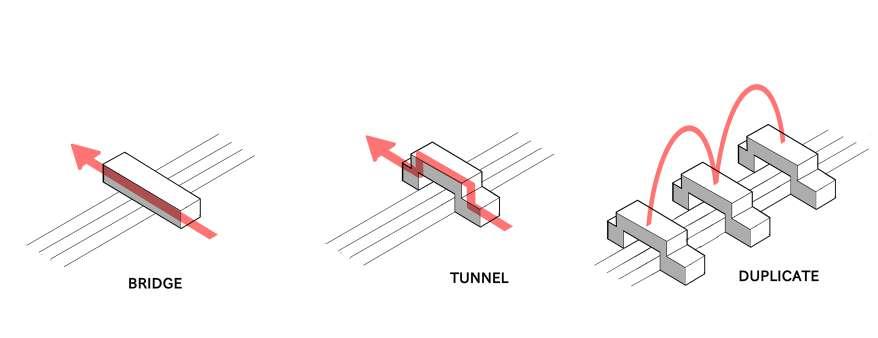
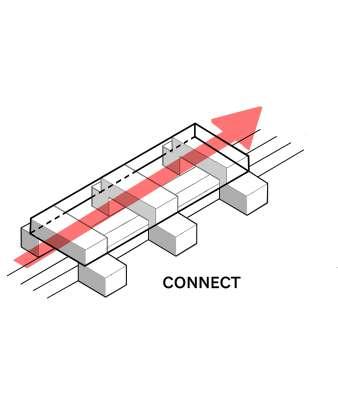
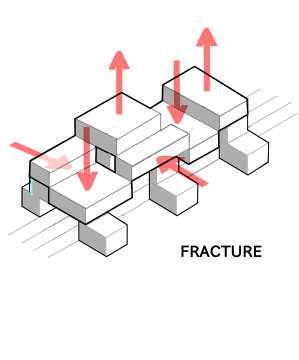
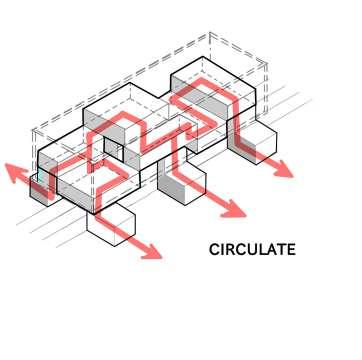
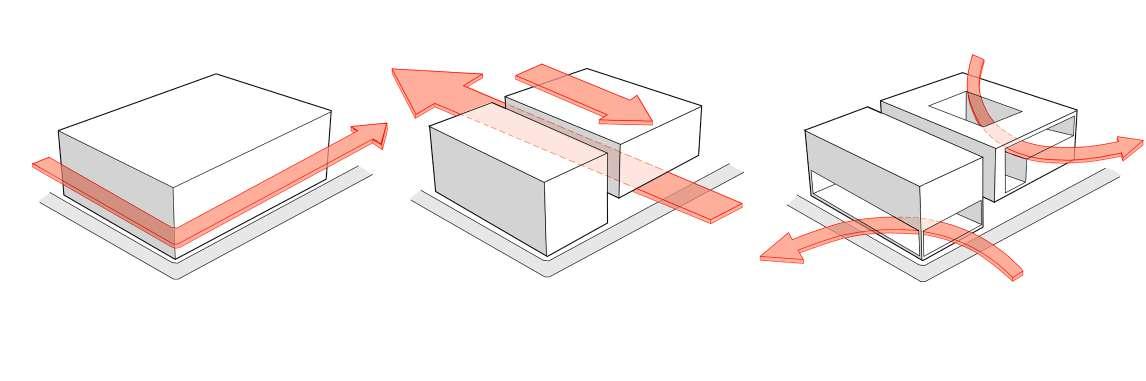
The parti diagram outlines a sequence of spatial operations that transform the station from a single crossing into a distributed field of movement. Beginning as a bridge and tunnel, the form duplicates and fractures to accommodate multiple paths across the rail corridor. These shifts allow the building to connect neighbourhoods while dispersing pedestrian flow. Circulation is pulled through, around, and between volumes, producing a porous infrastructure that prioritizes continuity, adaptability, and layered movement rather than a singular architectural object.
Modular community centres can keep the neighbourhood’s social life moving with its changing population.
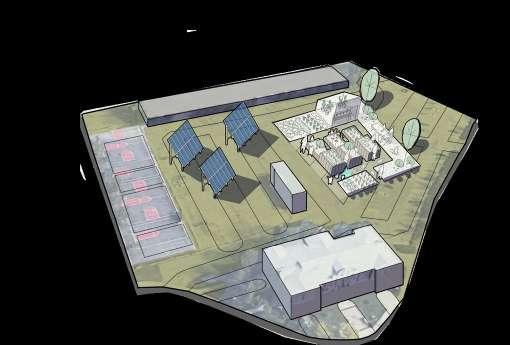
Pockets of energy and food also steady daily life during disruptions and create a neighbourhood that can support itself
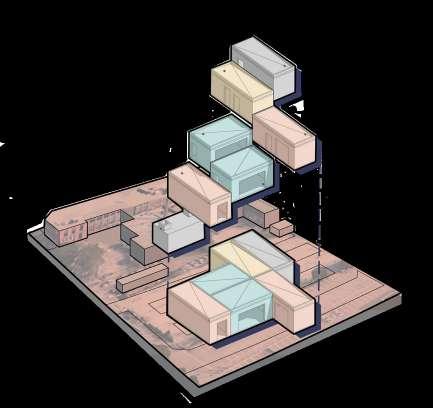
Gentle height increases pull more residents into the district, support local services, and make daily trips walkable.
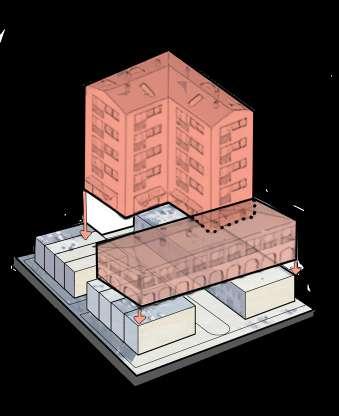
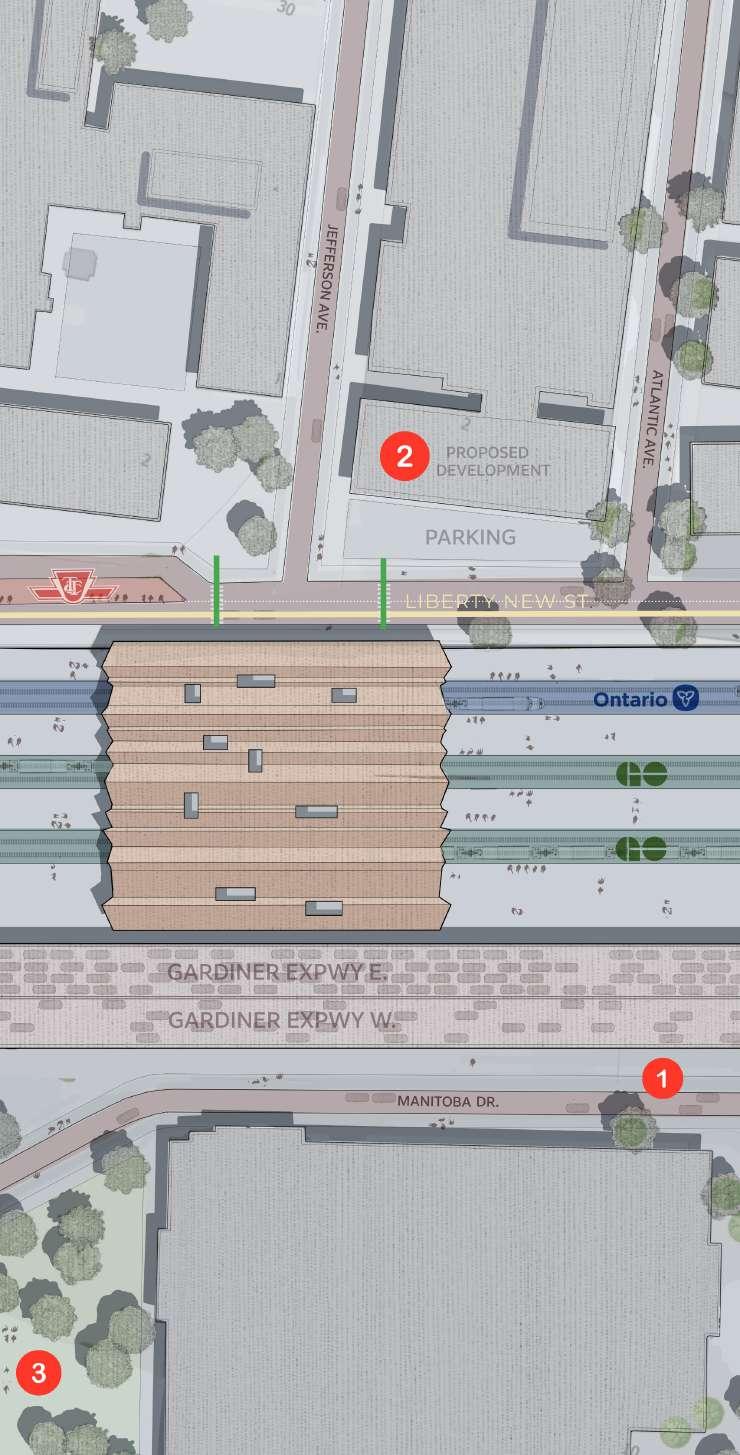
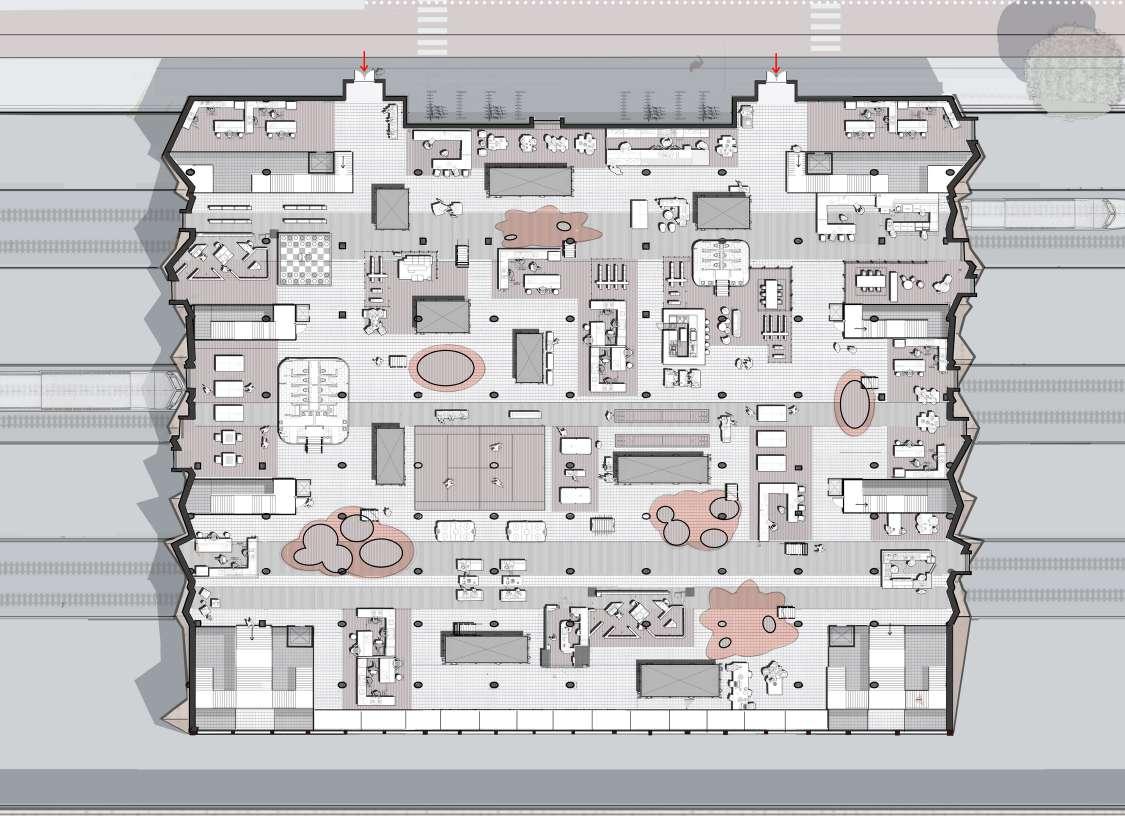
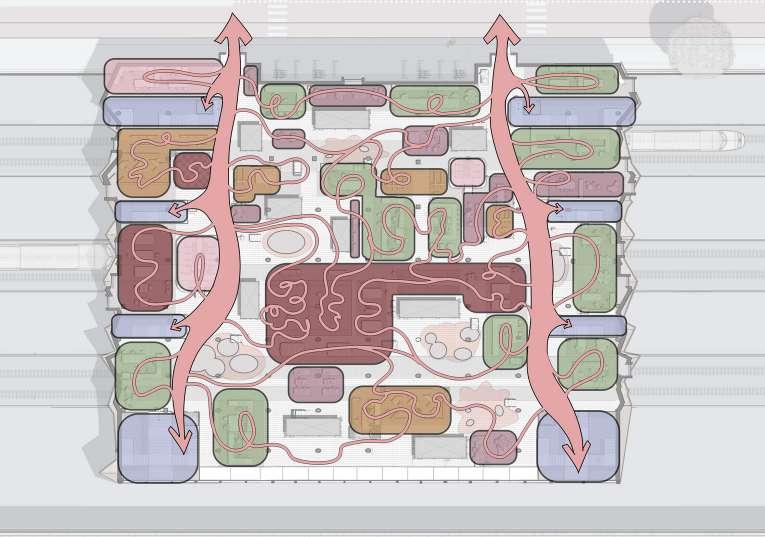
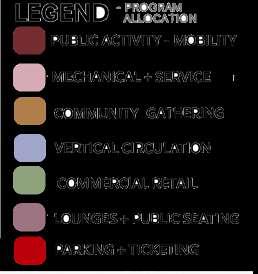
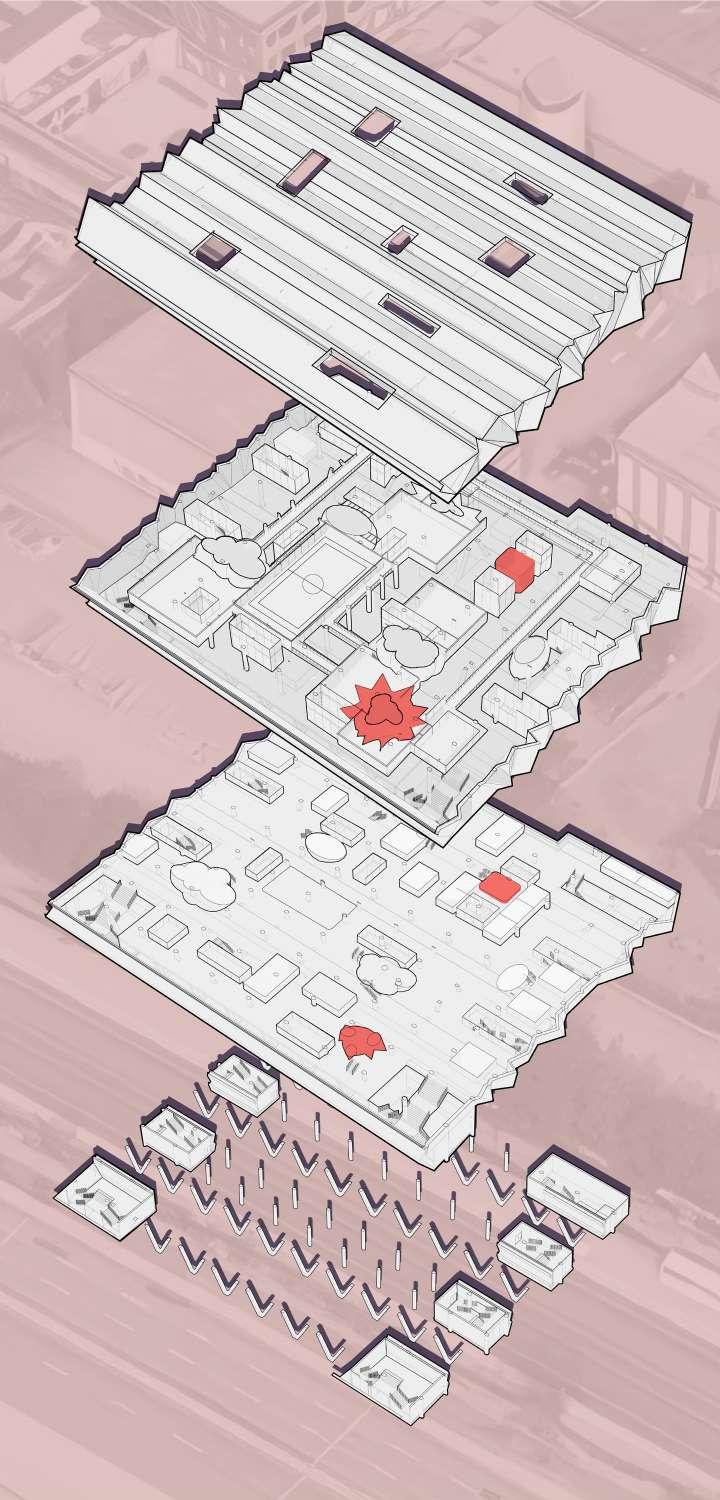
The station is a continuous field of movement rather than a single linear path. Public mobility routes form the primary spine, branching into secondary loops that pass through commercial, community, and lounge spaces. Vertical circulation anchors these flows at key nodes, allowing movement to shift between levels.
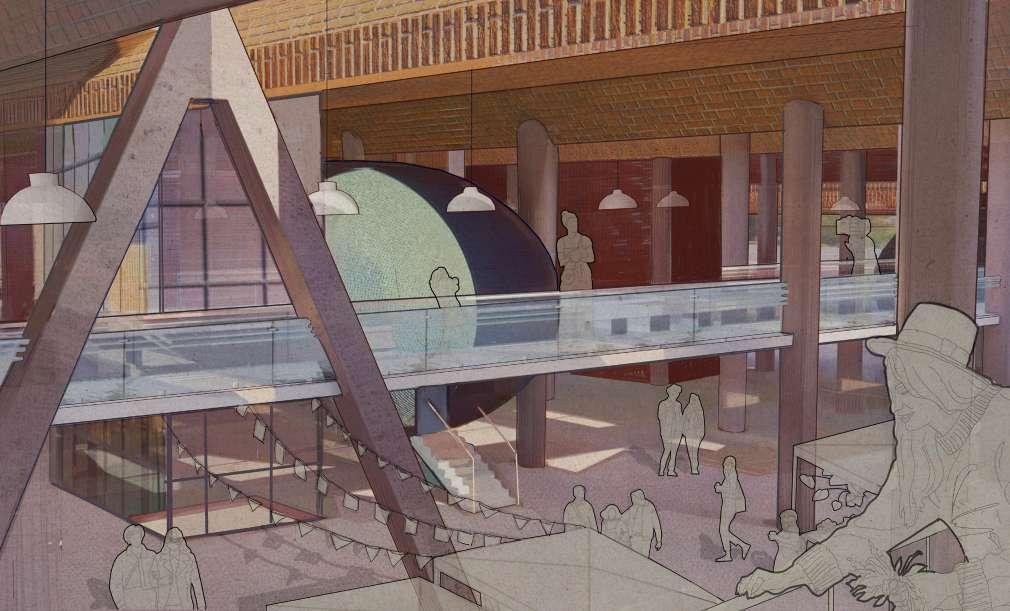
INTERIOR PERSPECTIVE - SECOND FLOOR
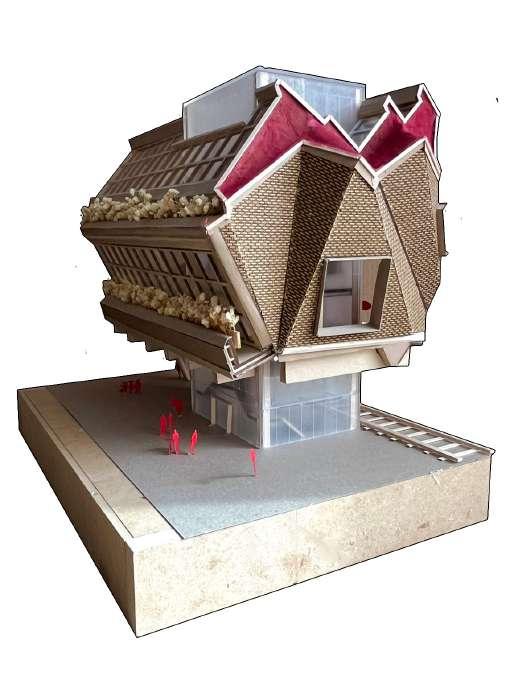
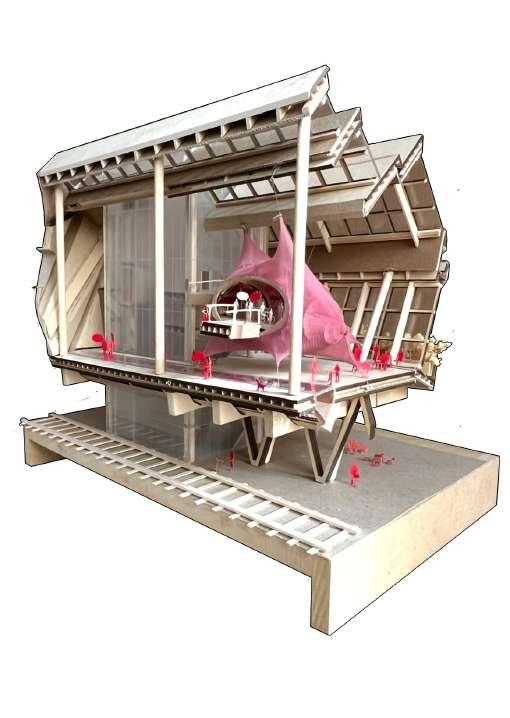
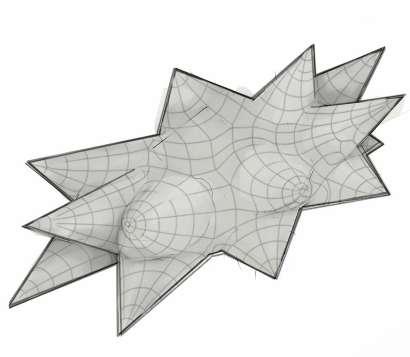
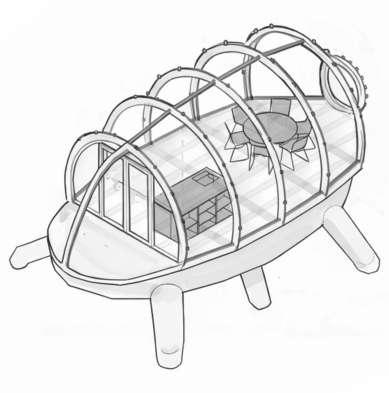
The sawtooth form allows daylight to penetrate deep into the station while reinforcing the rhythm of movement along the rail corridor. Its repeated geometry breaks down the building’s scale and supports natural ventilation between modules. The tensile modular spaces introduce flexibility, allowing programs to expand, contract, or shift over time. Together, these systems create a lightweight, adaptable architecture that balances structural clarity with spatial permeability and user comfort.
TENSILE MODULE COVER: MANIPULATING FORM

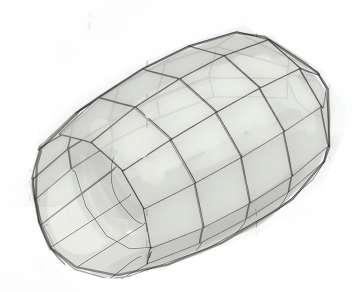
MODULE STRUCTURE AND FRAMING

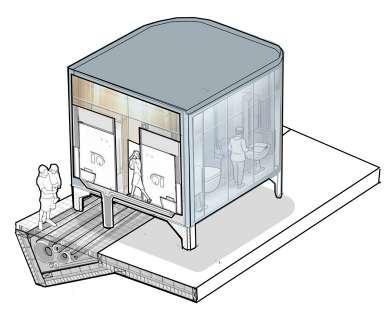
SERVICE SPACES AS SCULPTURAL: TRANSLUCENT BATHROOMS
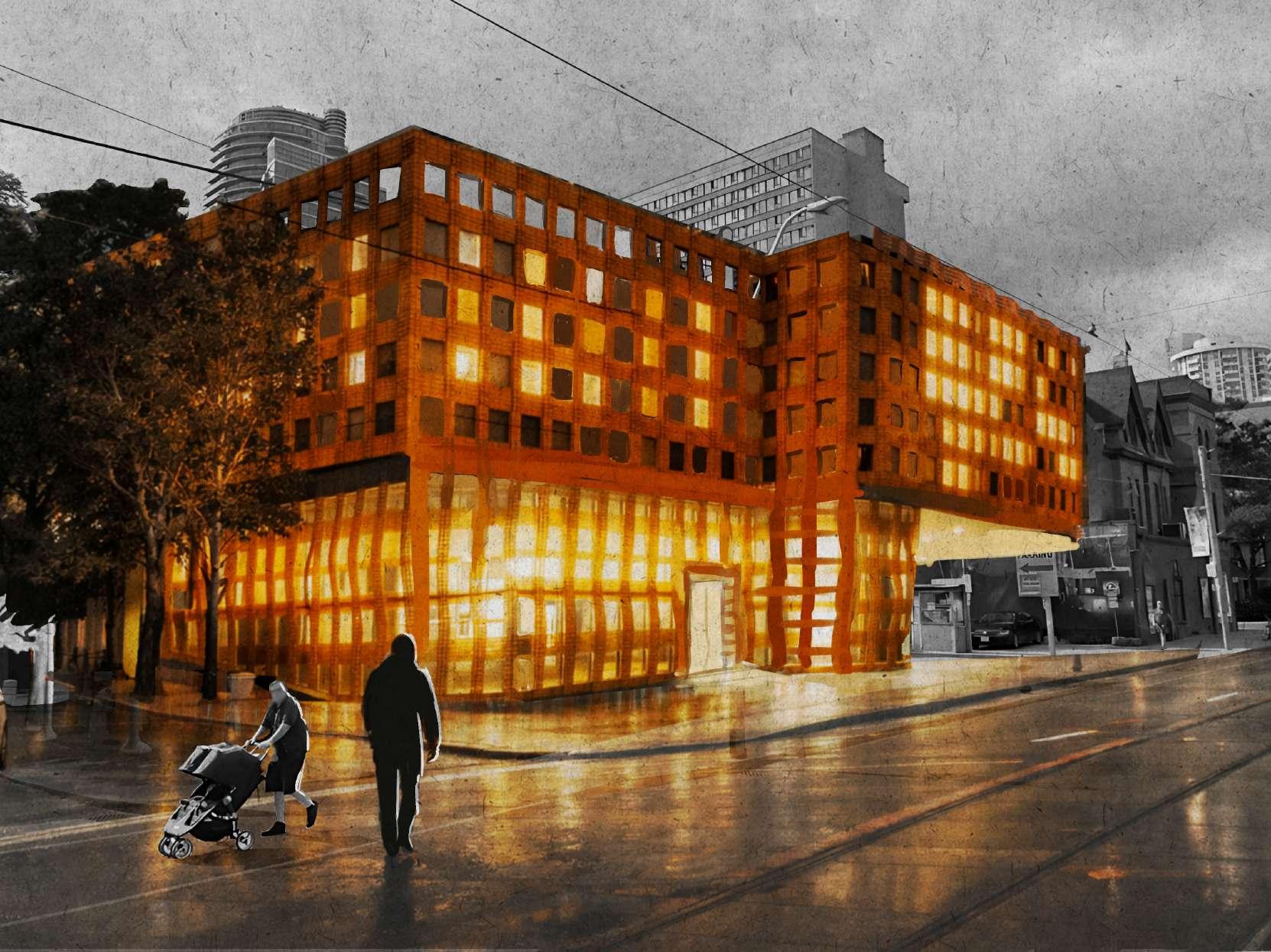

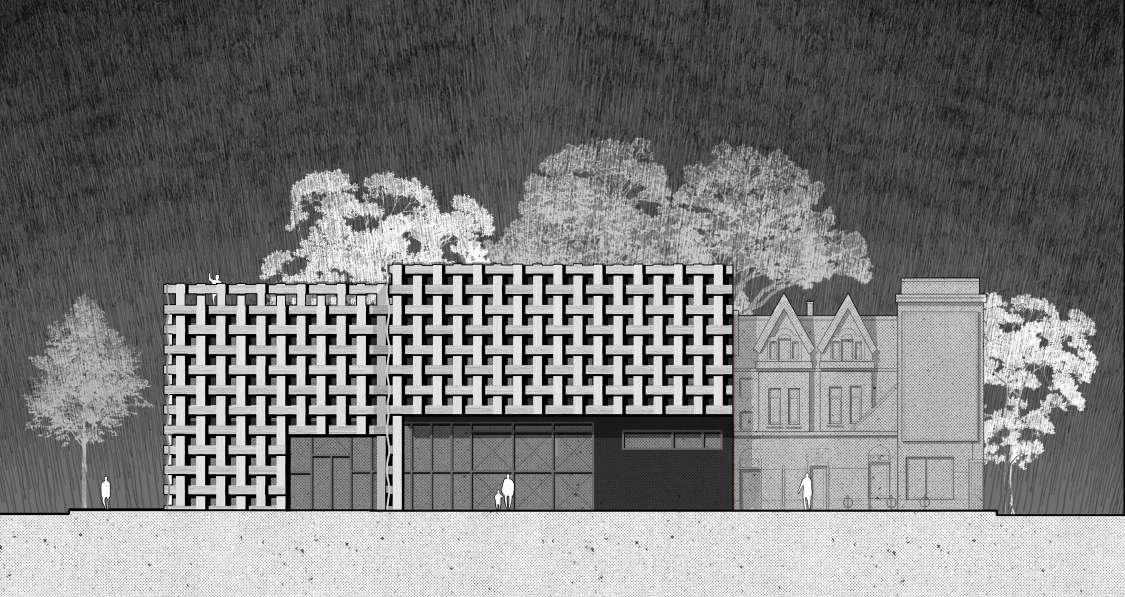
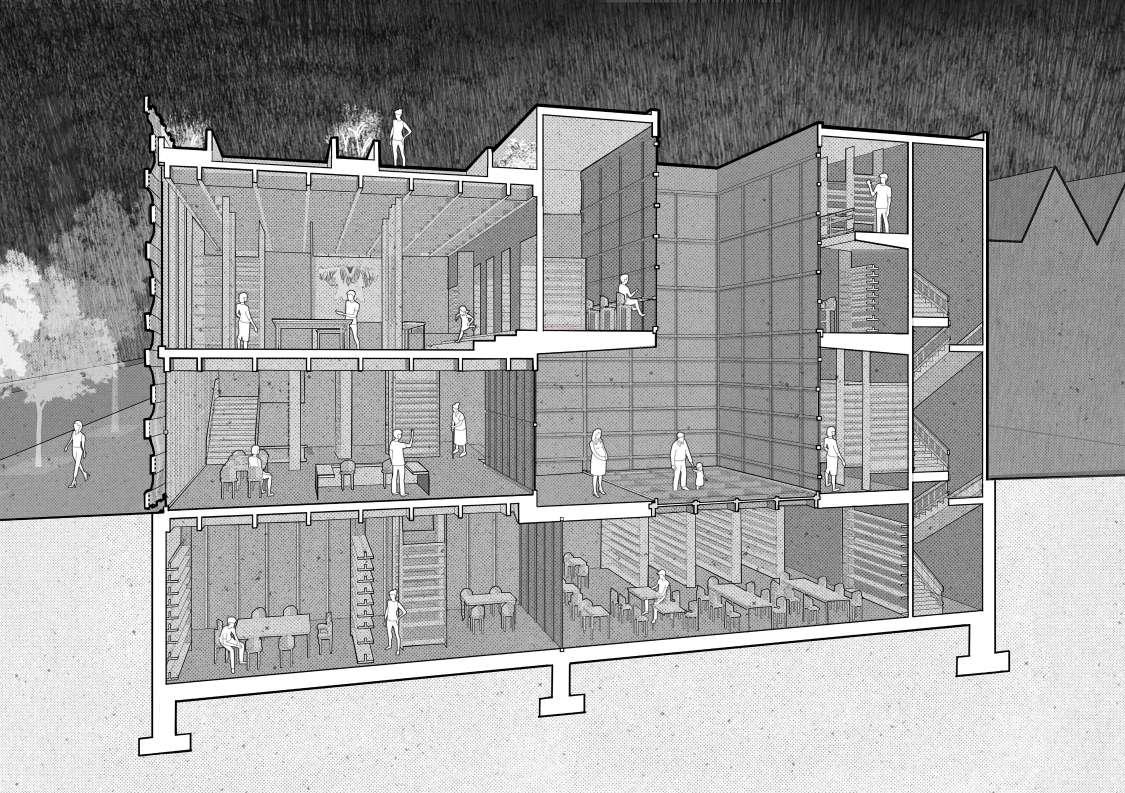
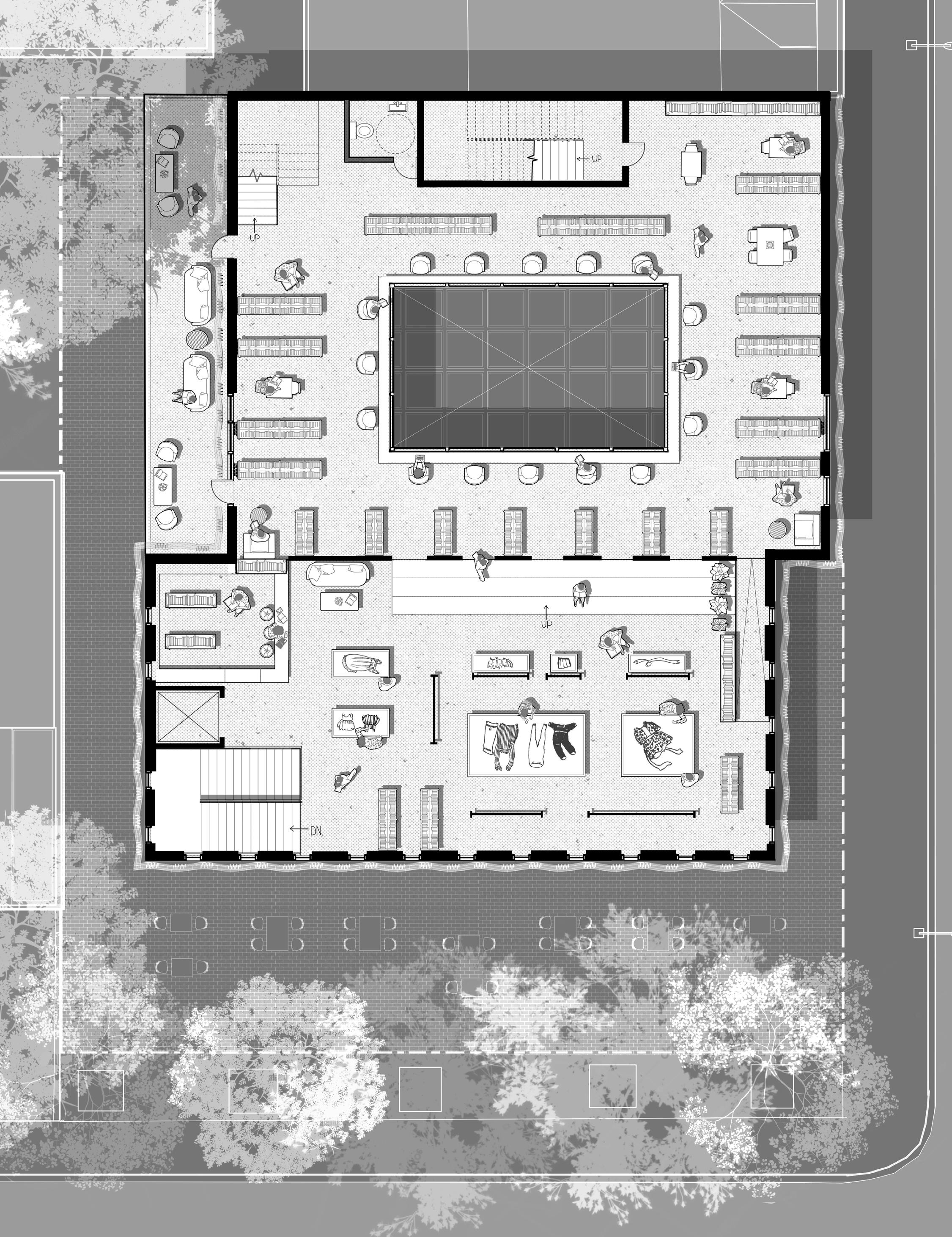
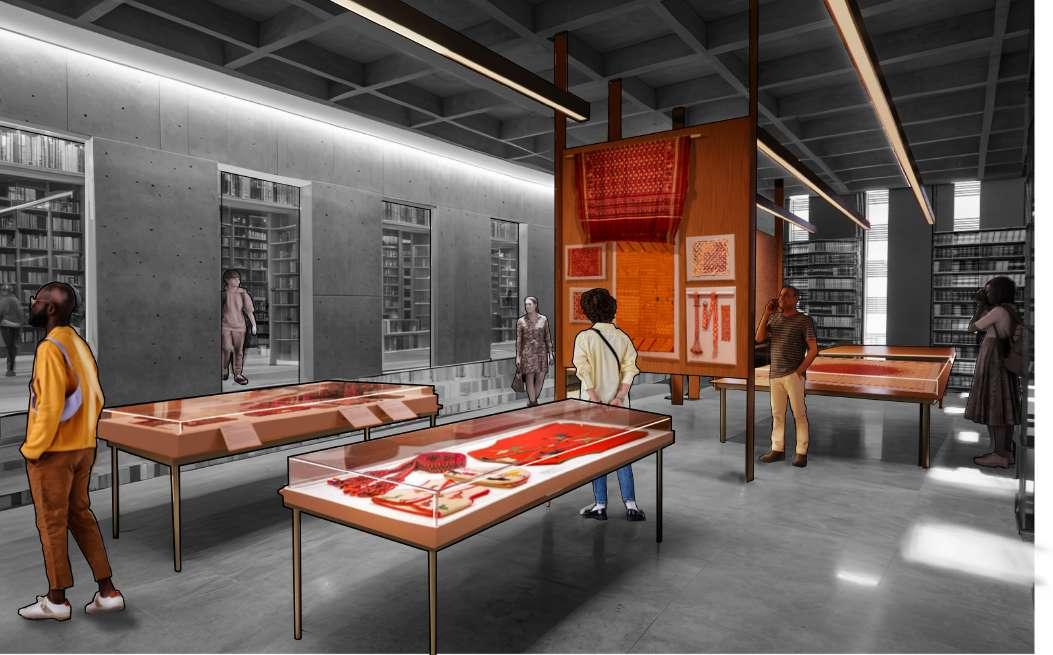
Tessitura is a small-scale community library designed to weave together people, craft, and place. Its name, meaning “texture” or “weave,” reflects the building’s concept of interconnection.
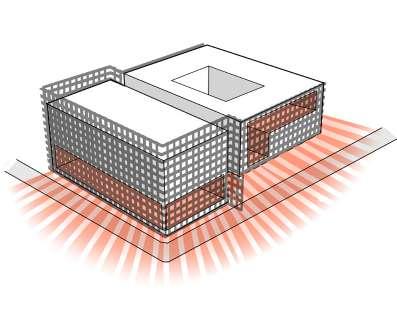
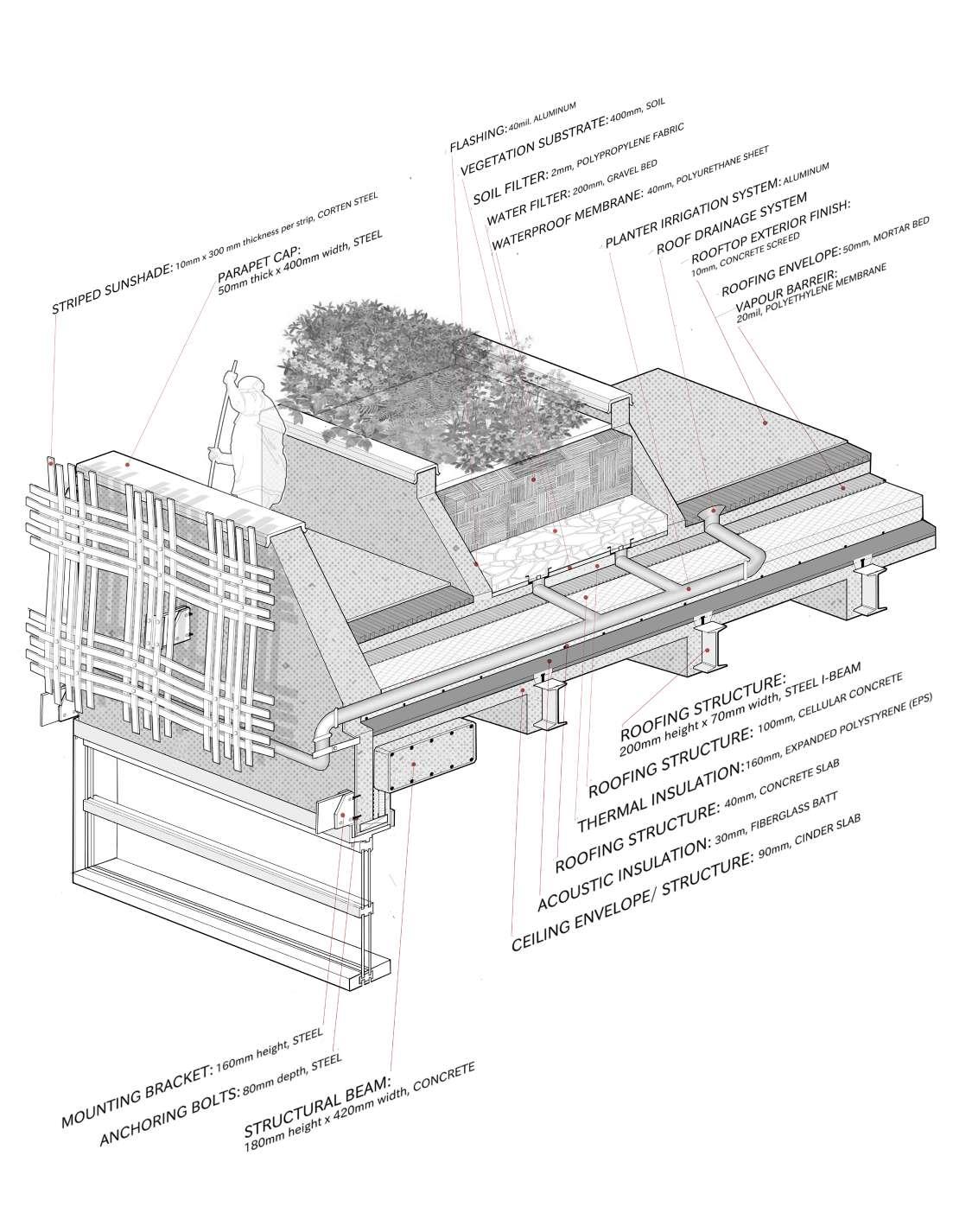
The simple concrete form is enlivened by strips of corten steel that layer across the façade like threads in a textile, filtering sunlight and creating a sense of movement. Inside, warm wood tones and a dedicated textile collection celebrate making, materiality, and community heritage.
Tessitura is both a library and a loomt that binds together learning, creativity, and belonging within
within the evolving fabric of its neighbourhood. The interior is organized as a sequence of intimate reading rooms and open workspaces that encourage both quiet study and collective making. Views between programs reinforce visual connectivity, while the steel screen mediates the boundary between public and private. Together, these strategies position the building as a civic anchor that supports everyday use while allowing the architecture to quietly express its craft-based identity.
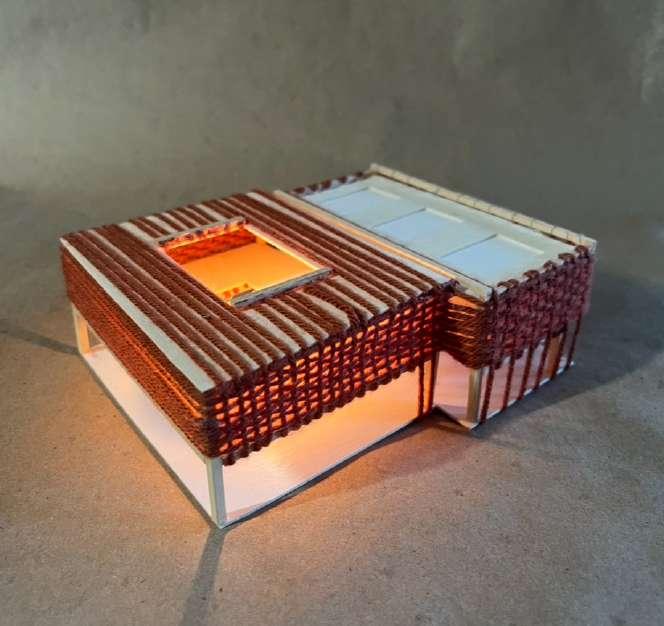
MODELS: EXPERIMENTS IN MATERIALITY
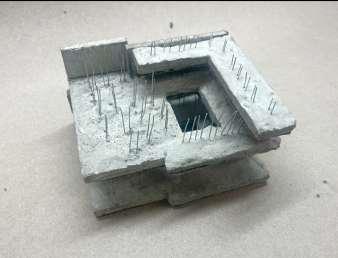
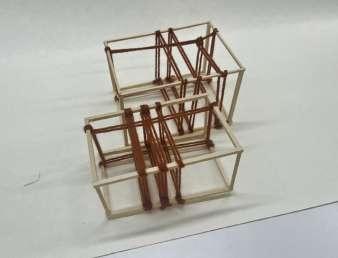
The design of Tessitura emerged through a hands-on iterative modeling process that tested material and light. A concrete sketch model established the building’s mass and solidity. This was followed by a loose thread model woven around wooden sticks, exploring porosity and movement. A tighter weave then refined the system, directly informing the corten façade. This process clarified how light could be filtered and revealed, shaping the building’s final daylighting and tectonic expression.
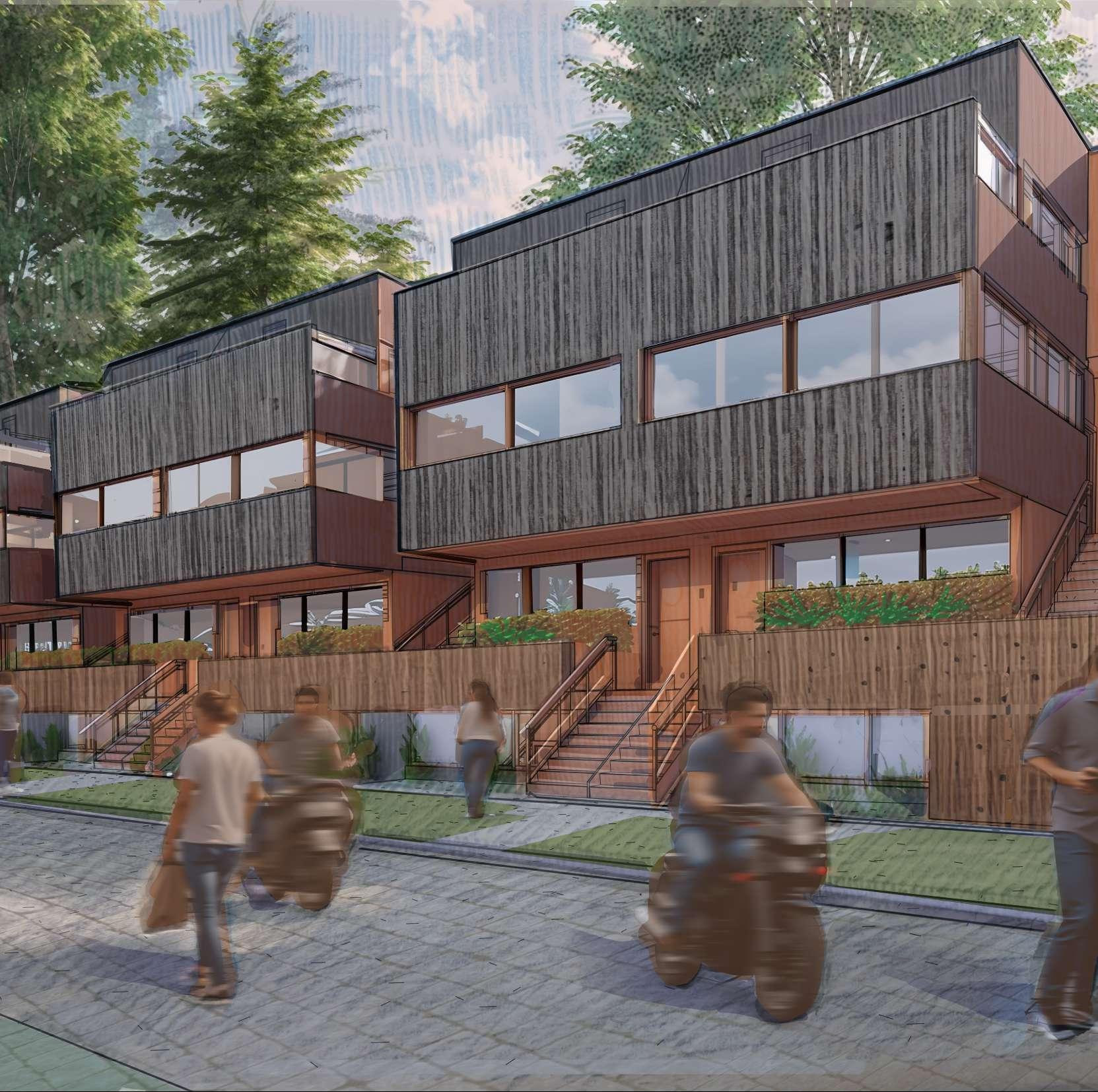

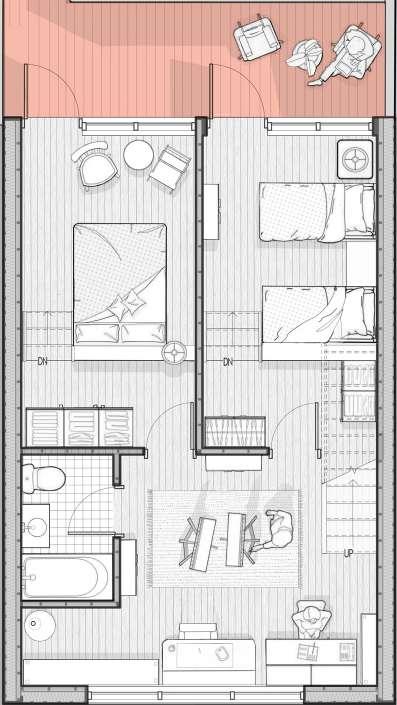
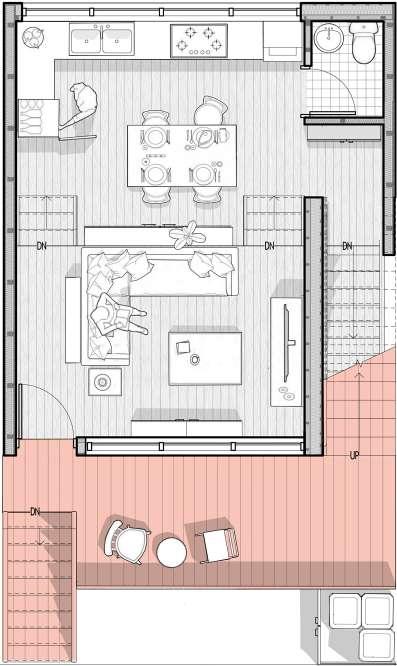
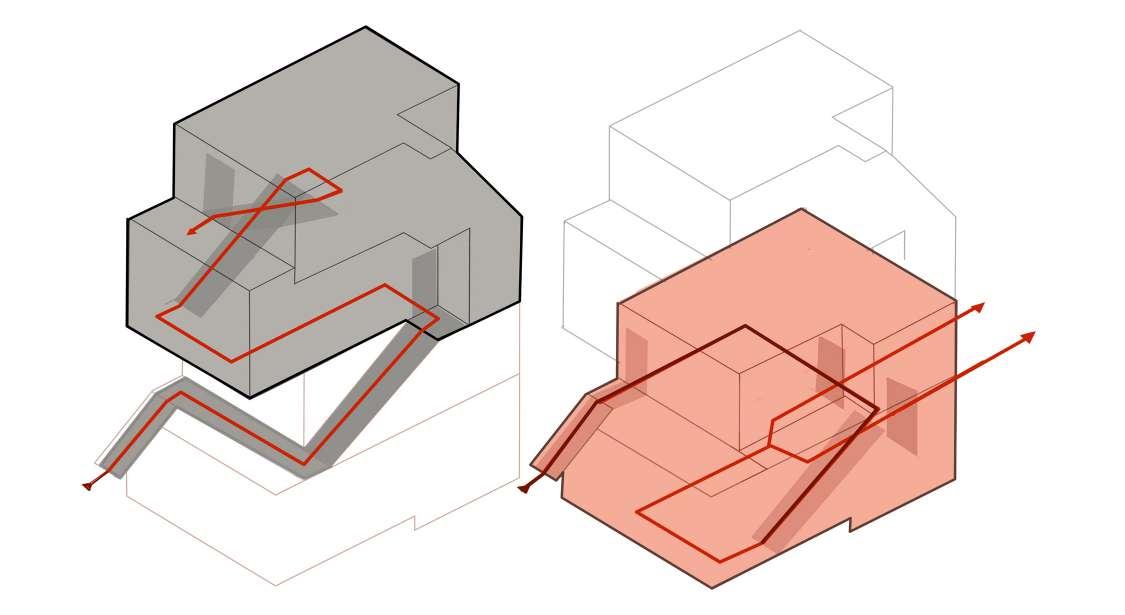
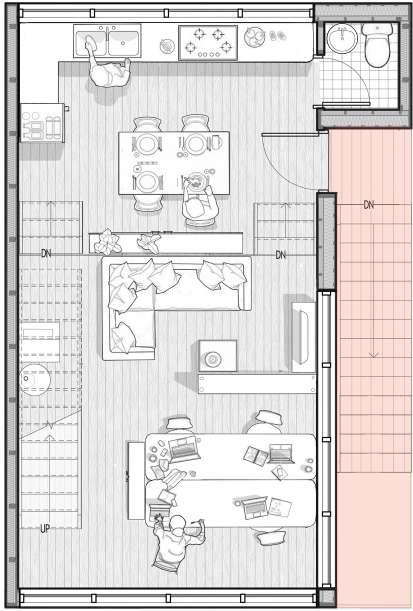
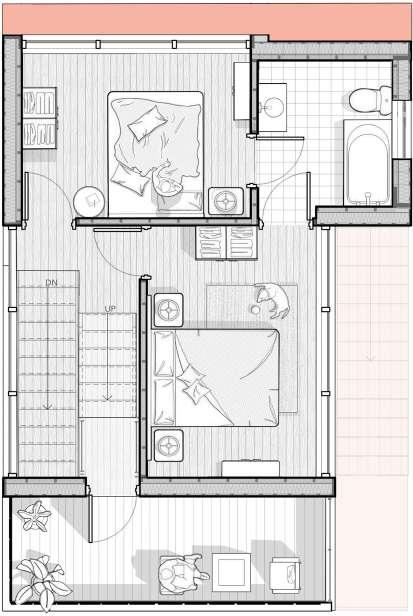
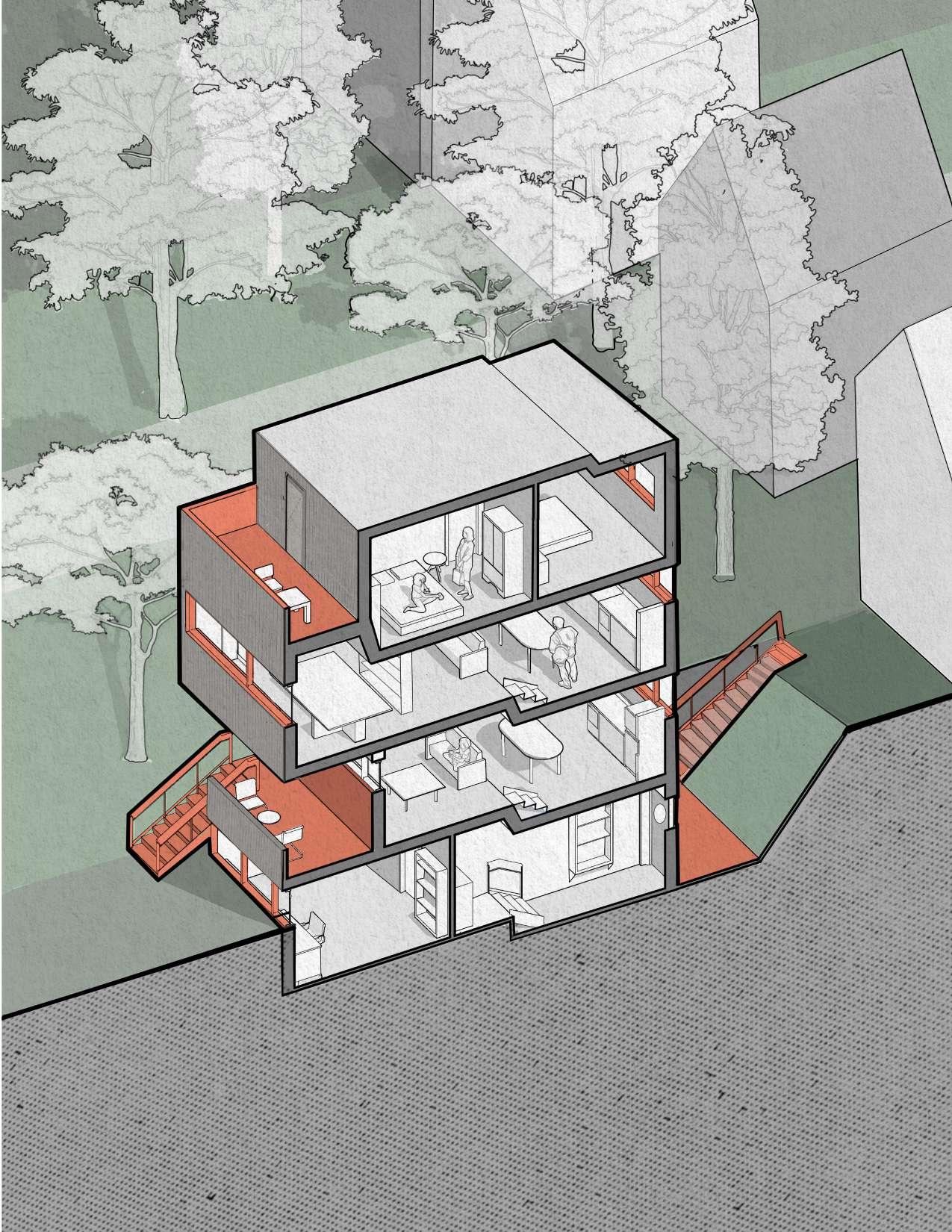
This infill housing project aims to create highdensity housing in the Trinity Bellwood neighborhood in Toronto. The 4-floor building incorporates walk-up housing, aimed towards the student population in the area. The materiality of the building aims to bridge the private and pedestrian realms through the extensive exterior sitting spaces and long, horizontal lines throughout the building facade. The organic materiality of the building, being a mix of ash treated oak and redwood provide warmth to the overlooked street, bolstering the pedestrian
experience of the area.
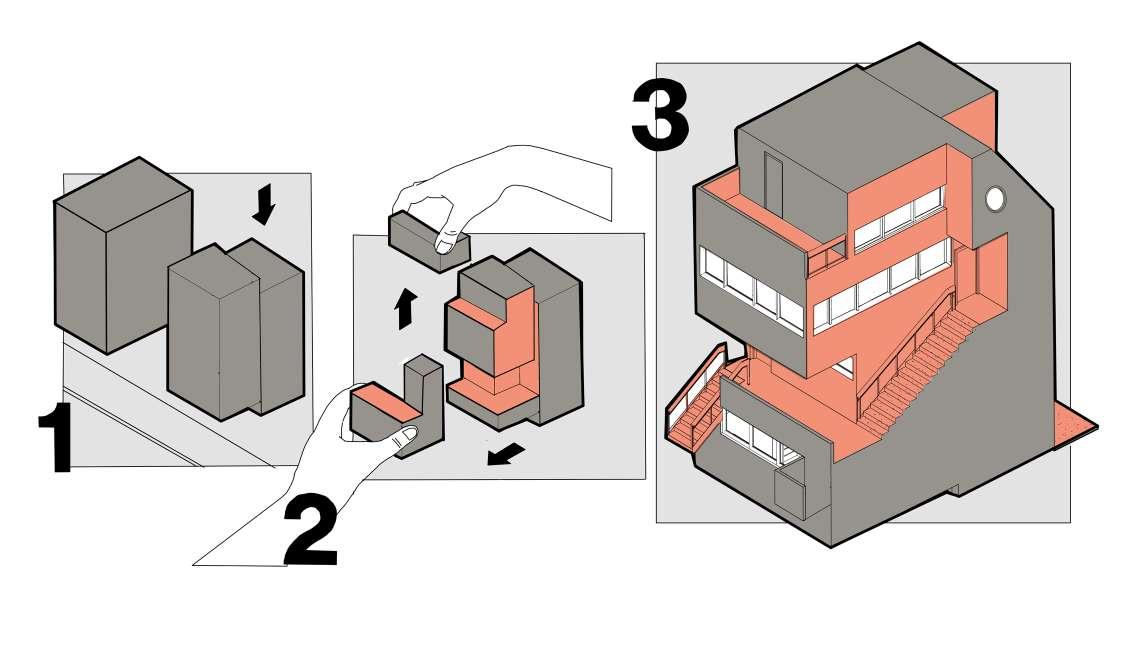
The project looks to the future of the streetscape, creating a duplex that can be terraced to create a high-density housing block while maintaining a human-scaled rhythm along the sidewalk. This approach allows the typology to adapt to varying lot sizes and urban conditions, offering a flexible framework for incremental densification without disrupting the character of the surrounding residential fabric.
UPPER UNIT
Student Residence
Family Residence
CIRCULATION DIAGRAM
SITE OBSERVATION:
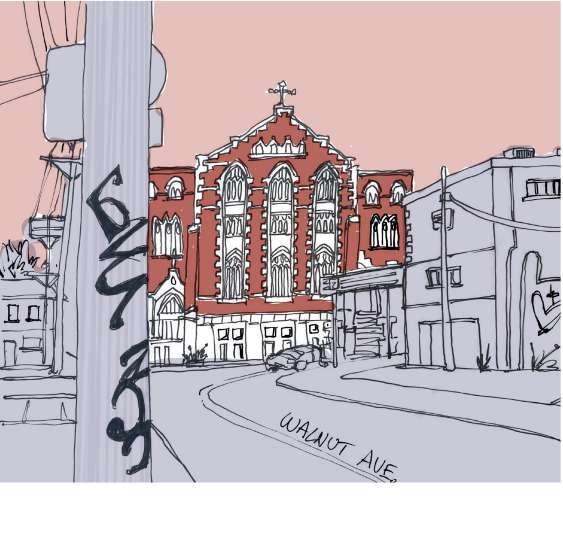
The presence of St. Mary’s Parish Church informed the project’s scale and material sensitivity, encouraging a restrained massing and warm façade treatment. Its civic role reinforced the importance of creating a respectful streetscape that supports gathering, pause, and everyday pedestrian life.
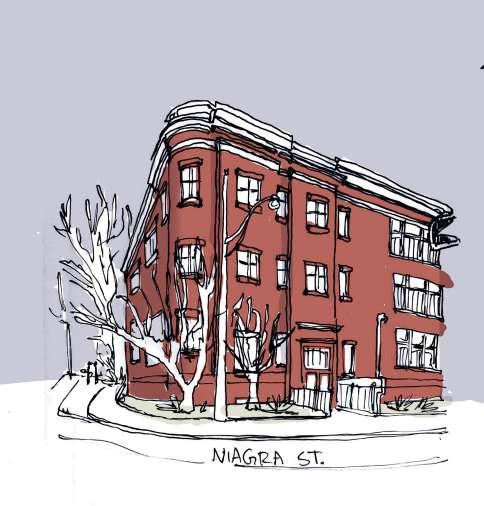
The proximity of Niagara Street Junior Public School influenced the project’s scale and material choices, encouraging a quieter residential expression, increased passive surveillance, and generous sidewalk setbacks that support student movement, safety, and everyday community activity along the street.
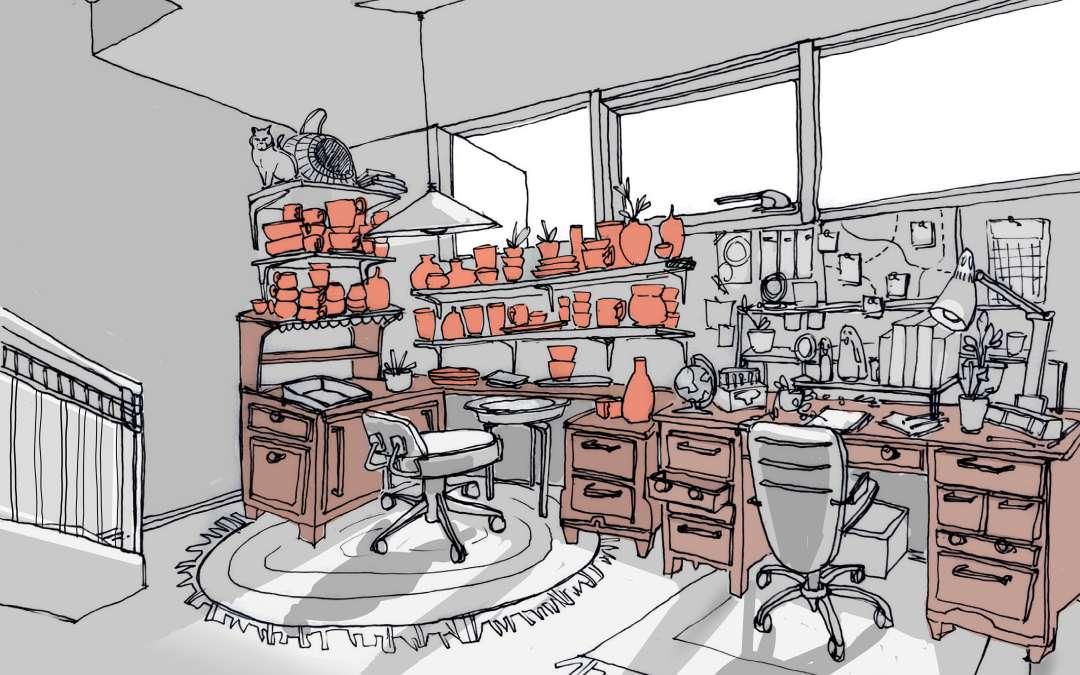
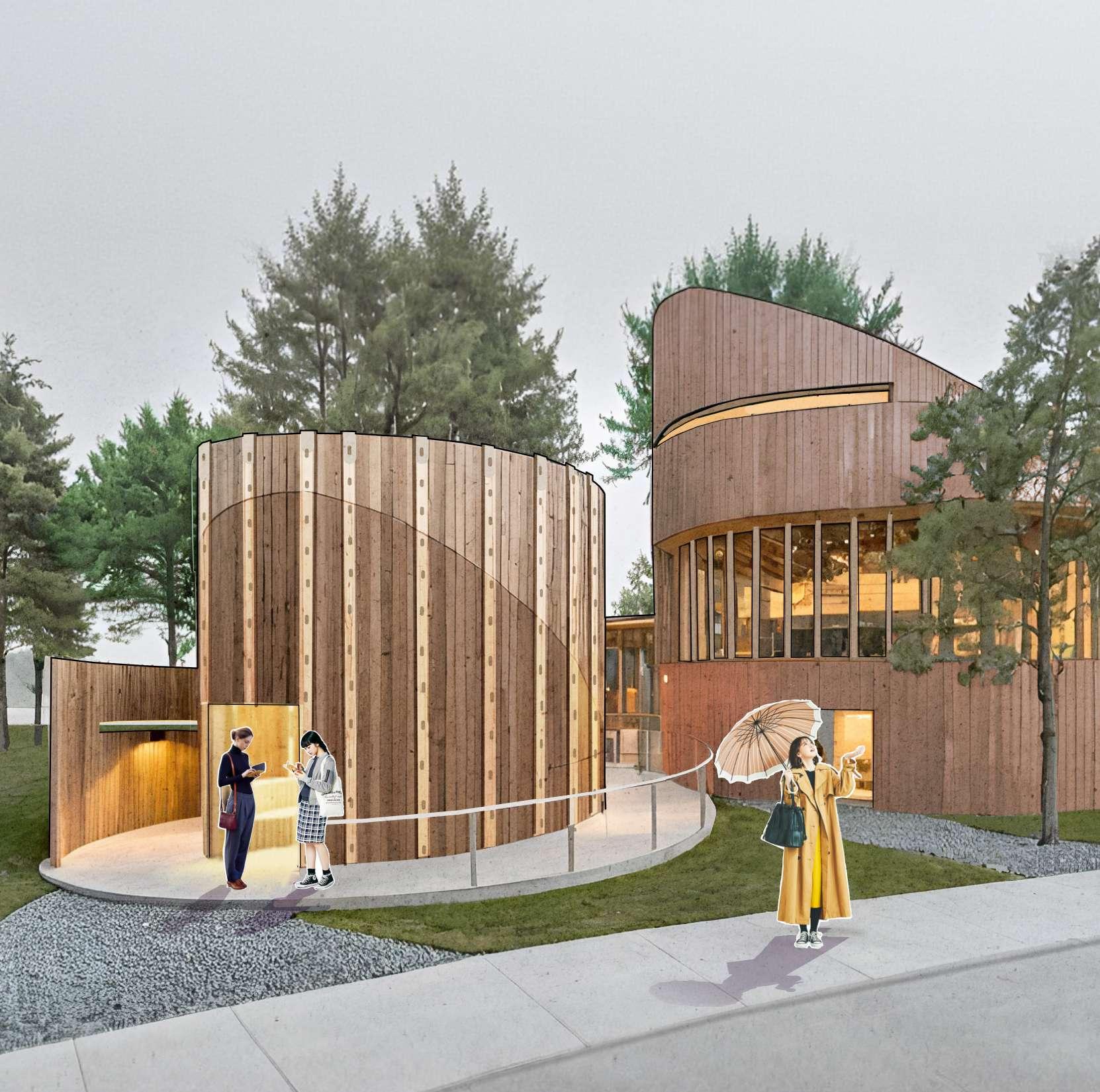

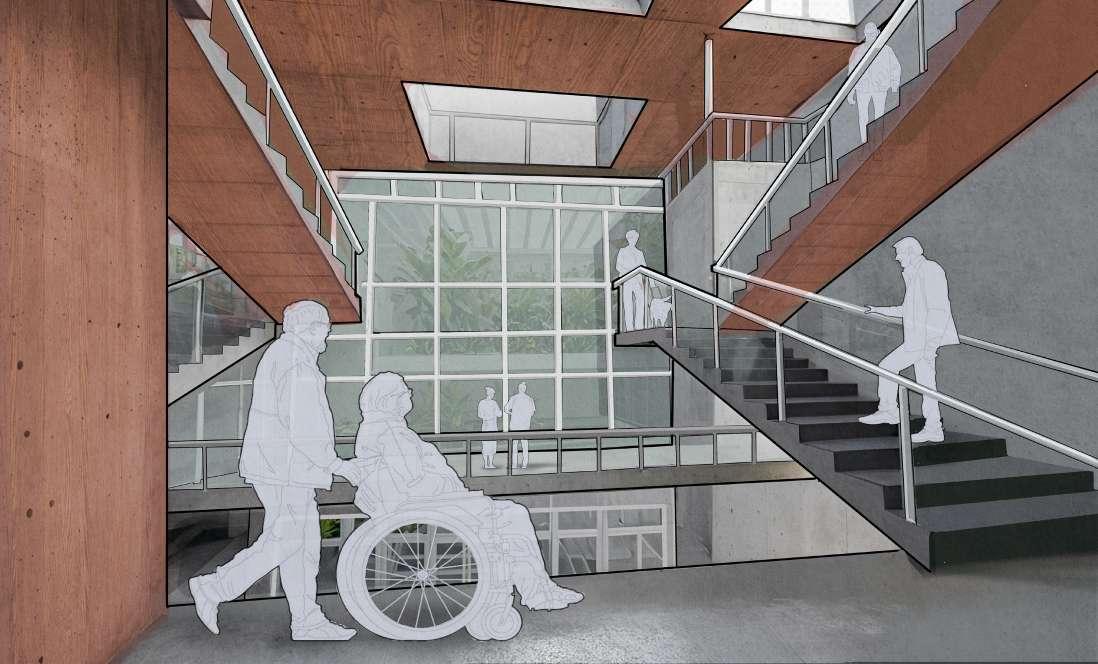
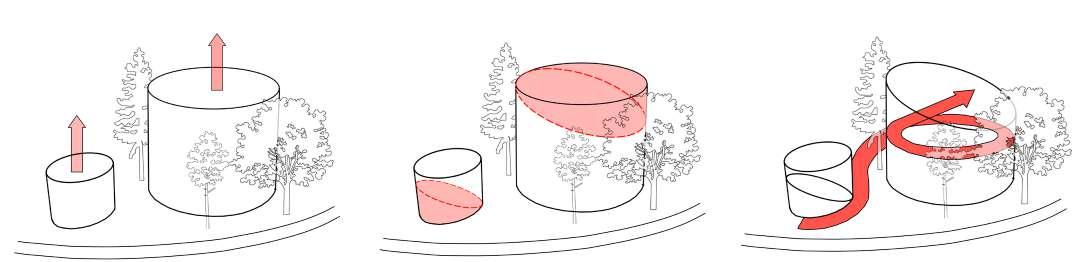
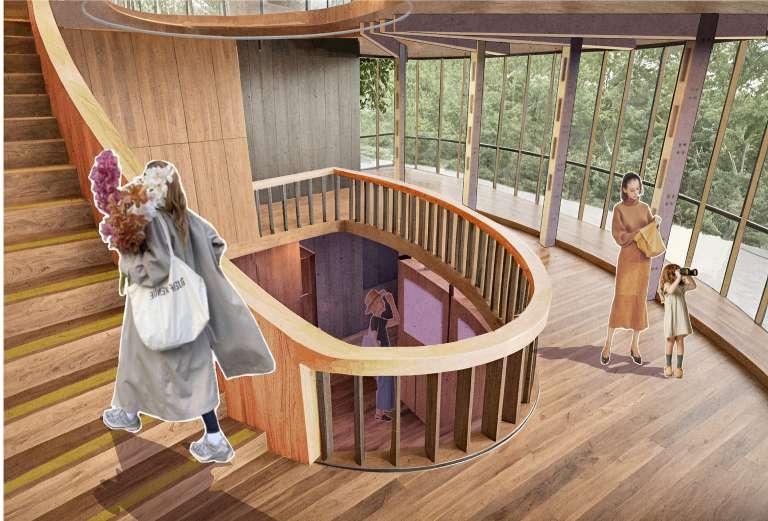
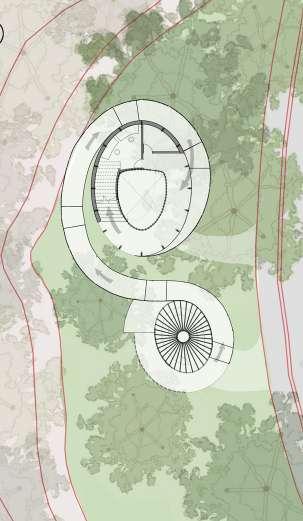
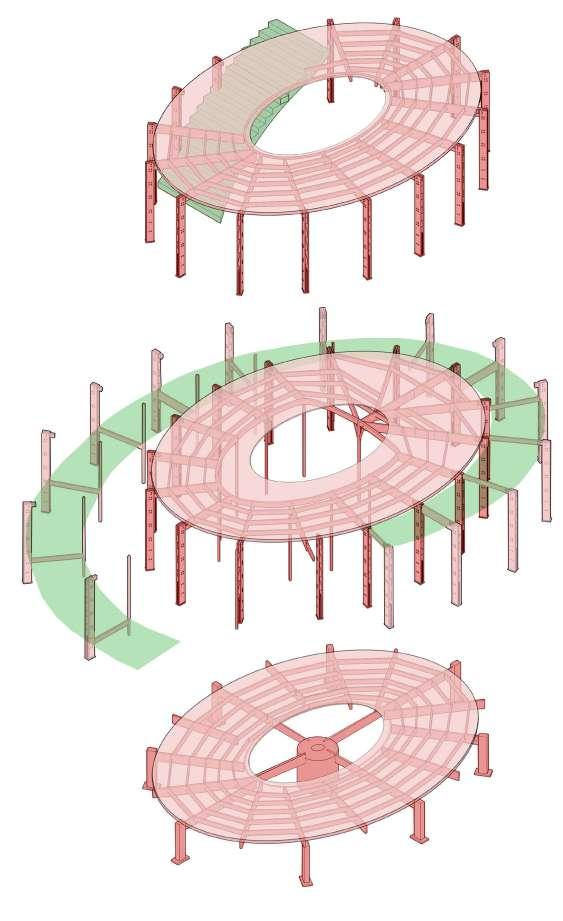
This community space acts as a respite for the pedestrians of High Park, housing a community gallery and primary student learning centre. The looping form of the community centre invites visitors on a journey that culminates in a view of the Humber River.
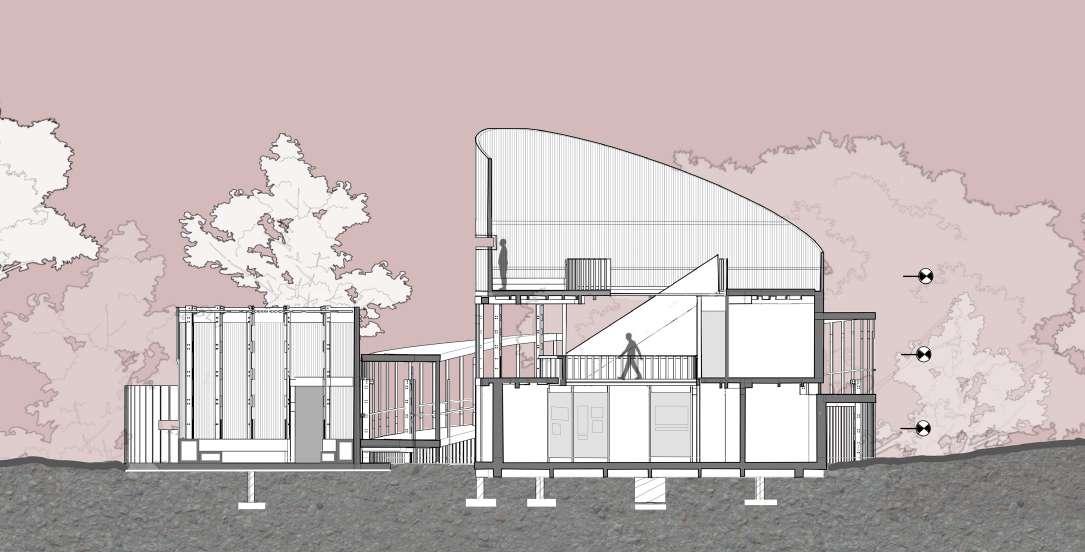
The materiality of the structure emulates the colours and smells of the immediate greenscape, using Red Oak and Sugar Maple structural and cladding elements to form the building. This lowimpact building aims to blend into the surrounding foliage, a place for visitors to hike up and explore,
like a natural feature of the urban park. The building is organized around a gentle ramp system that ensures universal accessibility while reinforcing a continuous spatial experience.
Openings are carefully positioned to frame views of the landscape and modulate daylight throughout the interior. Construction strategies prioritize minimal site disturbance, with prefabricated timber elements reducing on-site impact and allowing the park’s ecological systems to remain largely intact.
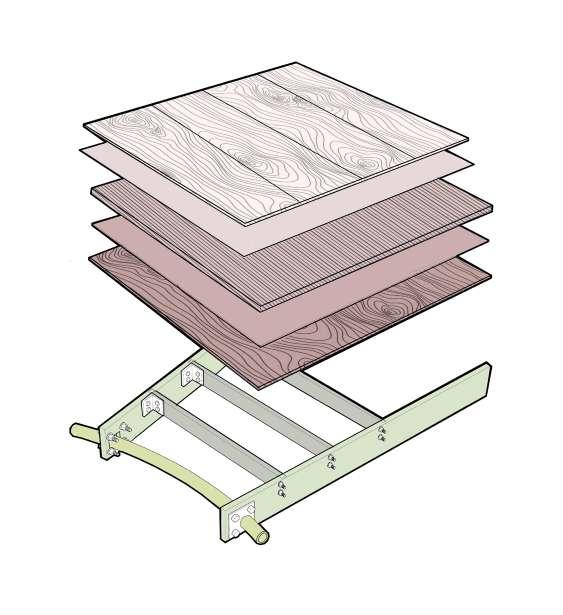
6.
FLOOR DETAIL (TOP TO BOTTOM)
1. RED OAK FLOORING
2. MOISTURE BARRIER
3. HIGH DENSITY FIBERBOARD
4. FIRE RETARDANT
5. PLYWOOD SUBLAYER
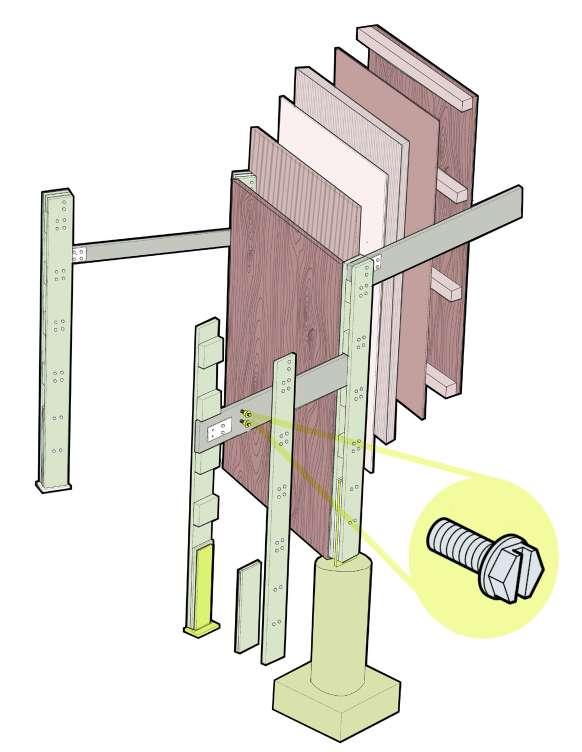
7.
8.
WALL STRUCTURE DETAIL (INTERIOR TO EXTERIOR)
2.
3.
4. INSULATION BOARD
5. FIRE RETARDANT
6. PLYWOOD SHEATHING
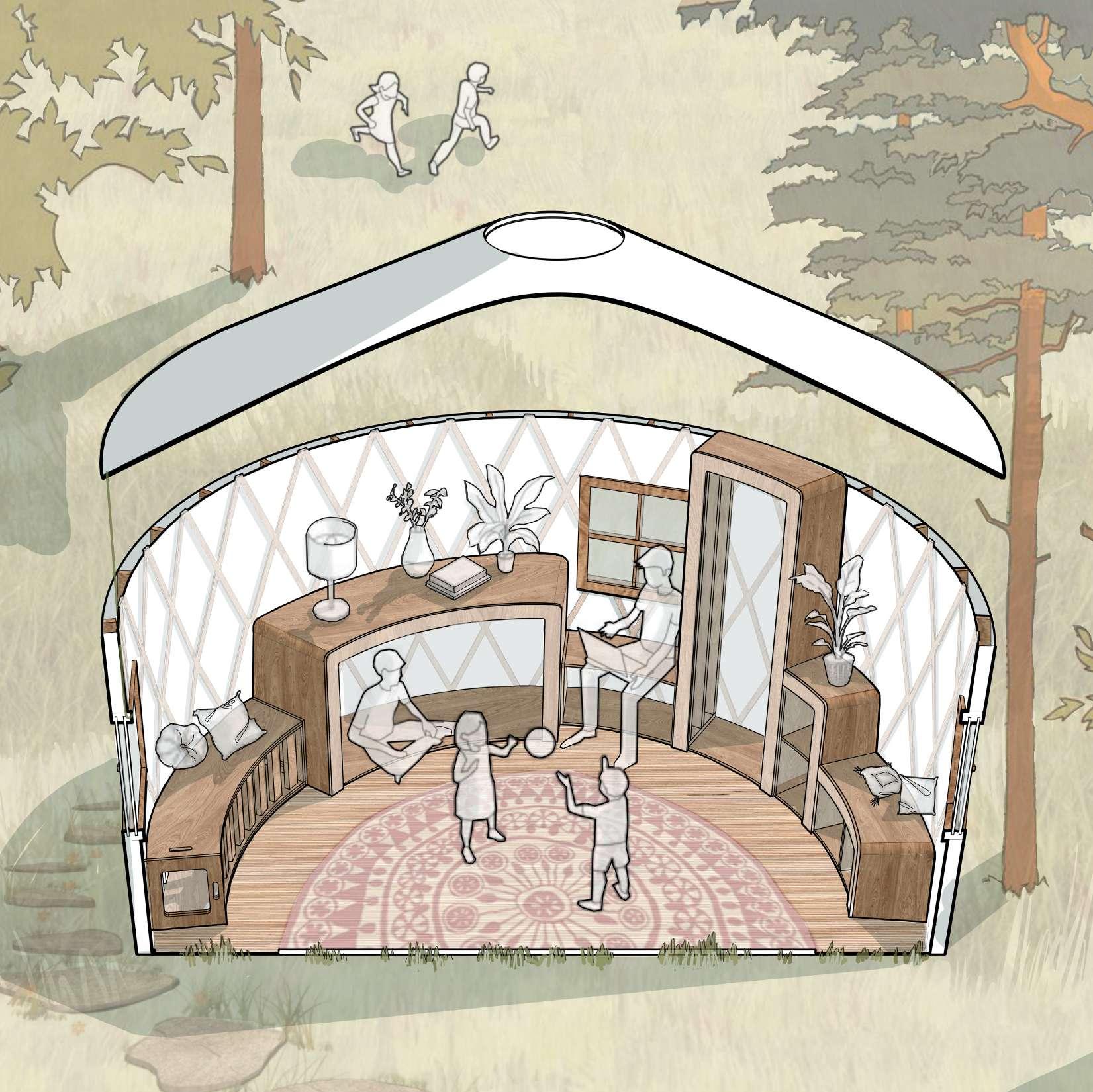
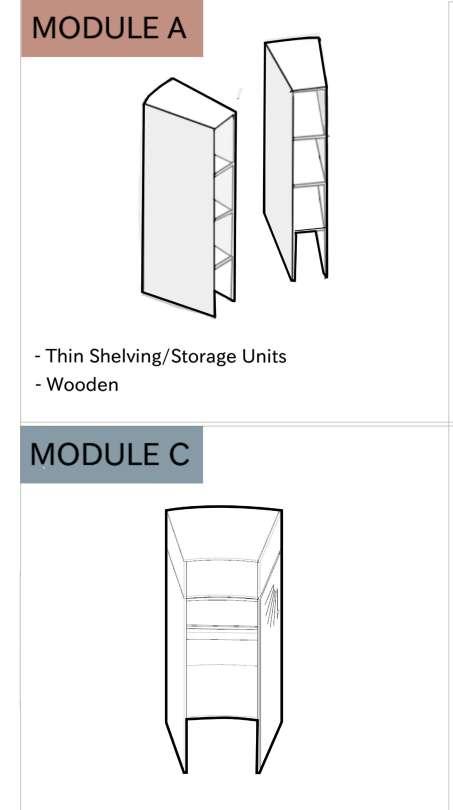
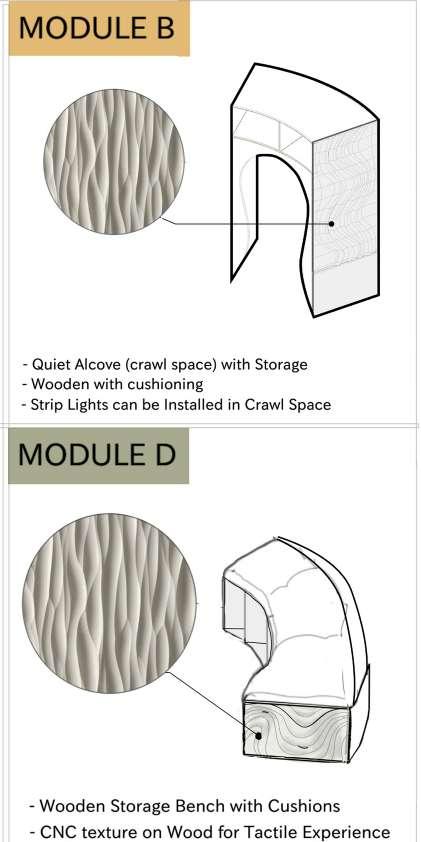
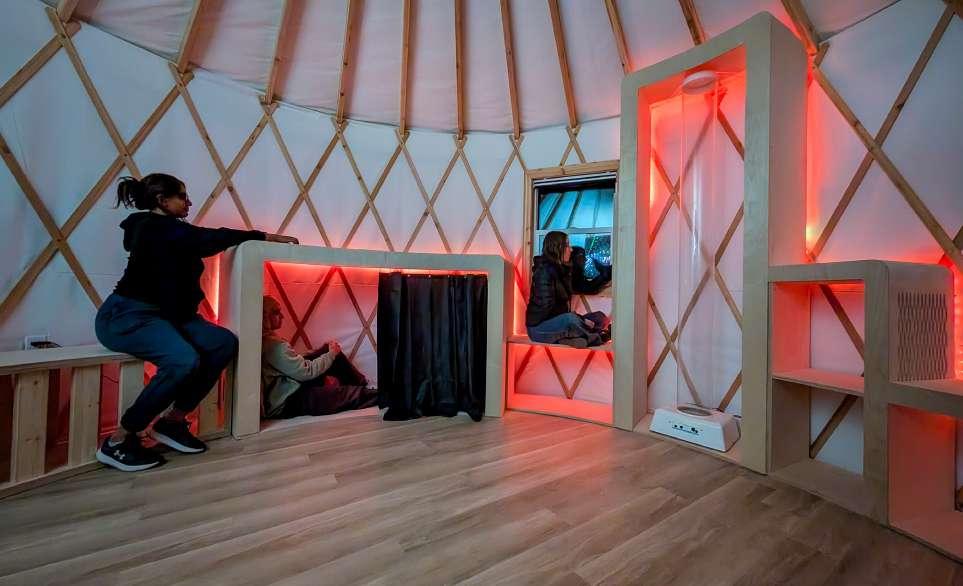
This design-build project for Camp Winston is currently in fabrication, focused on creating an inclusive, sensorily considerate interior for a yurt to be used by children with developmental disabilities.
The design lines the perimeter with modular wooden shelves, benches, and alcoves that can be rearranged to accommodate a wide range of sensory needs and preferences. This flexibility allows the space to adapt between calm retreat and active engagement, reflecting the camp’s commitment to comfort, creativity, and

accessibility through thoughtful design. Material choices prioritize tactile warmth, durability, and safety, with rounded edges and natural finishes supporting a calming environment.
The construction process emphasizes hands-on fabrication and collaboration, allowing the design to be tested and refined at full scale. By combining adaptability with careful detailing, the project demonstrates how small interventions can meaningfully support inclusive play, learning, and rest within a shared community space.
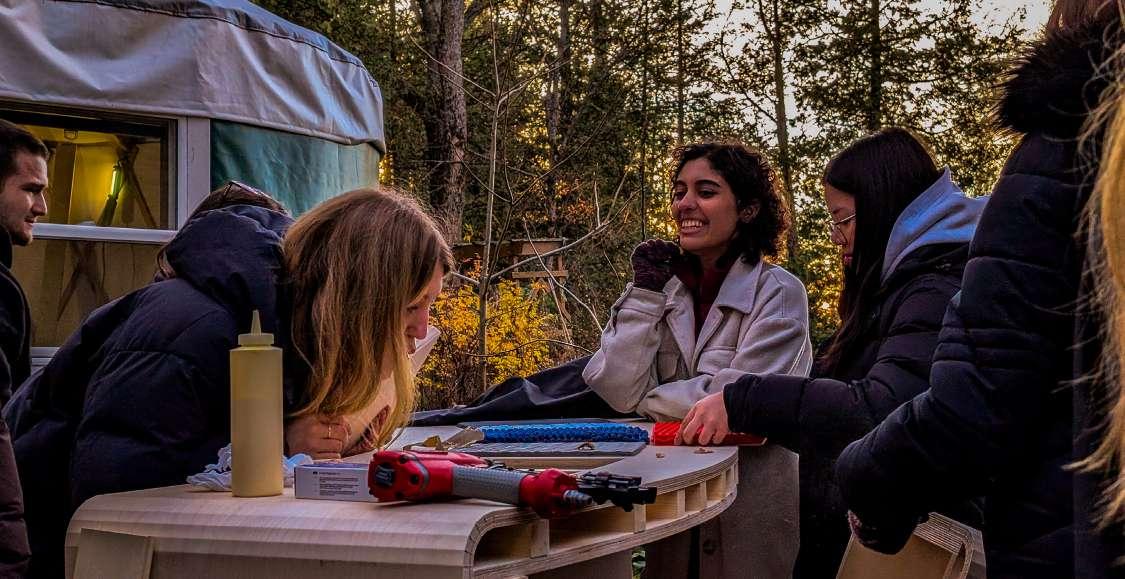
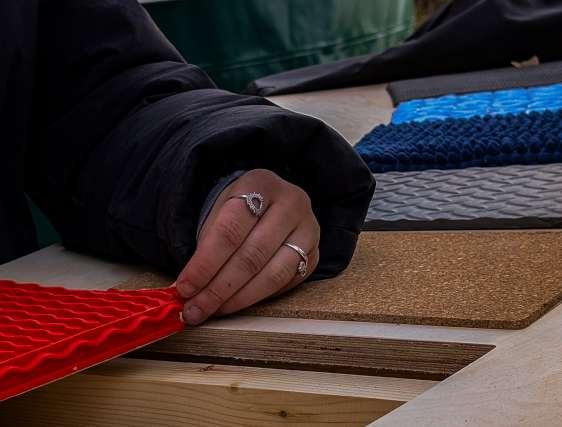
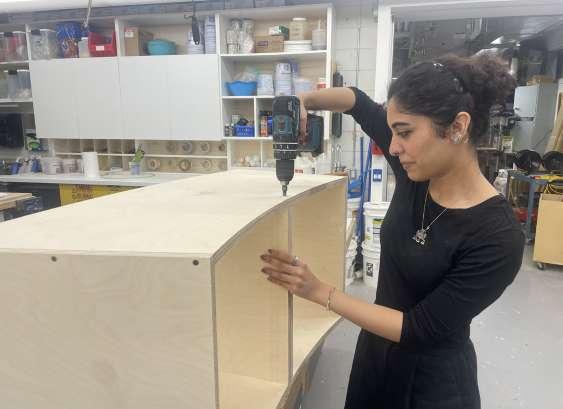
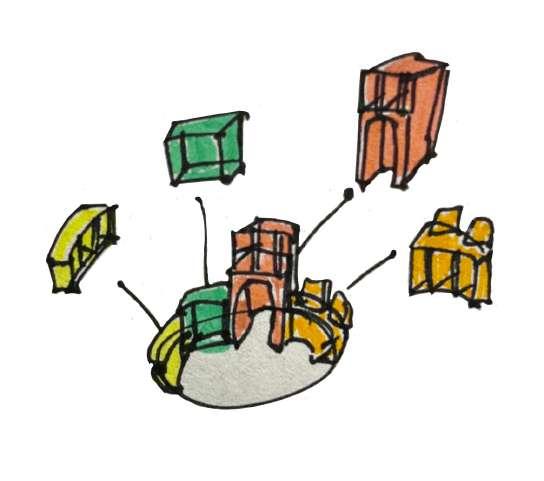
The Camp Winston project involved an on-site trip that informed both design and fabrication decisions. Measurements, user needs, and spatial constraints were documented directly within the yurt. Fabrication was completed through handson prototyping and full-scale mock-ups, allowing details to be tested, adjusted, and refined. This process strengthened the connection between design intent, material behavior, and inclusive construction methods.
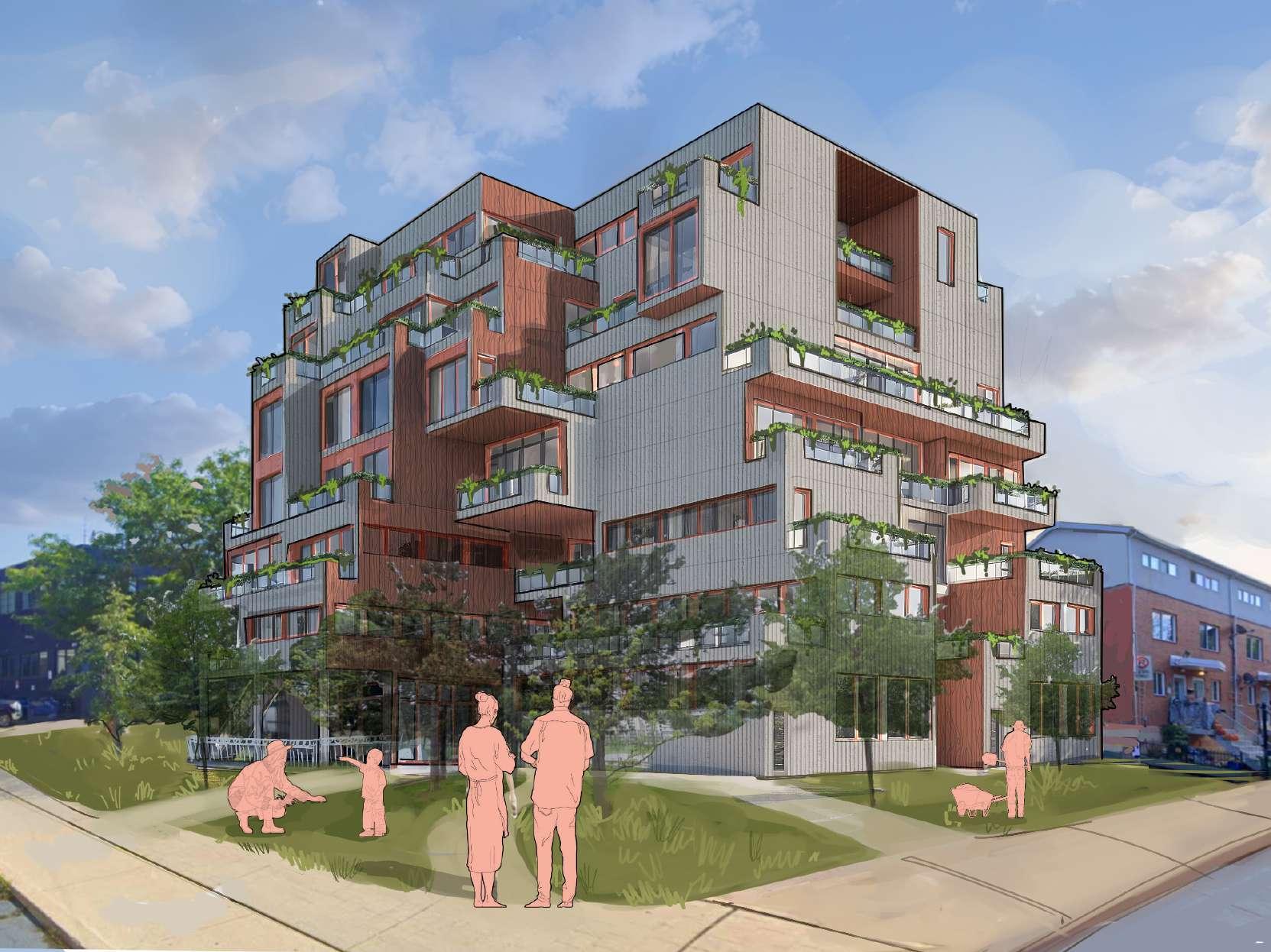
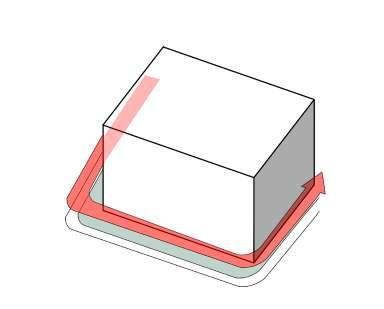
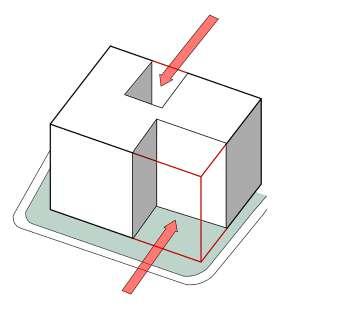
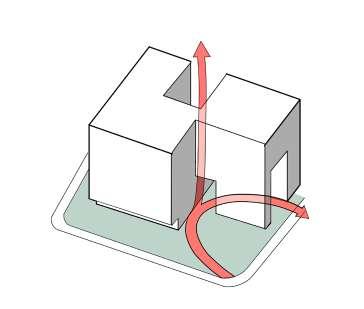
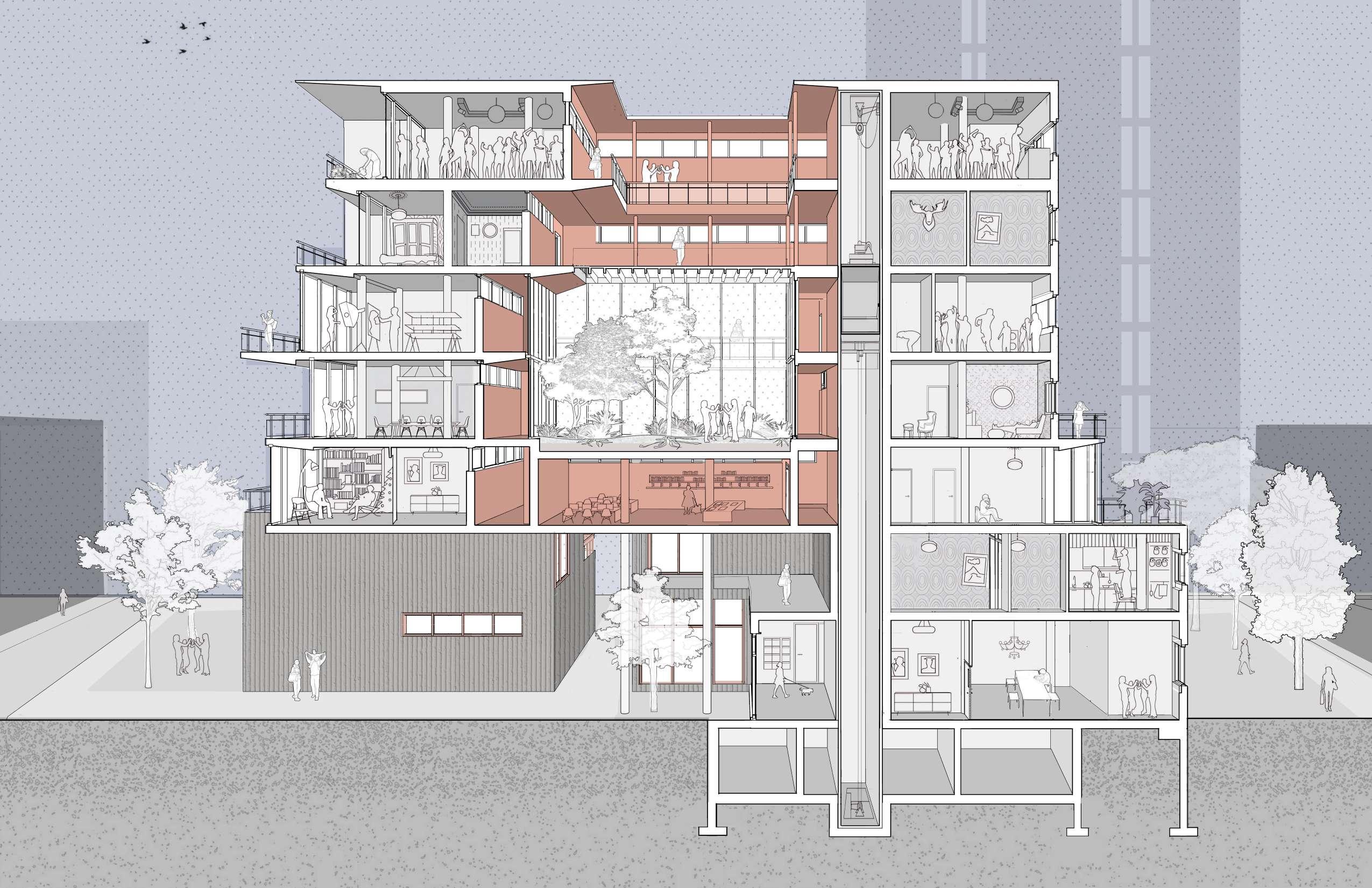
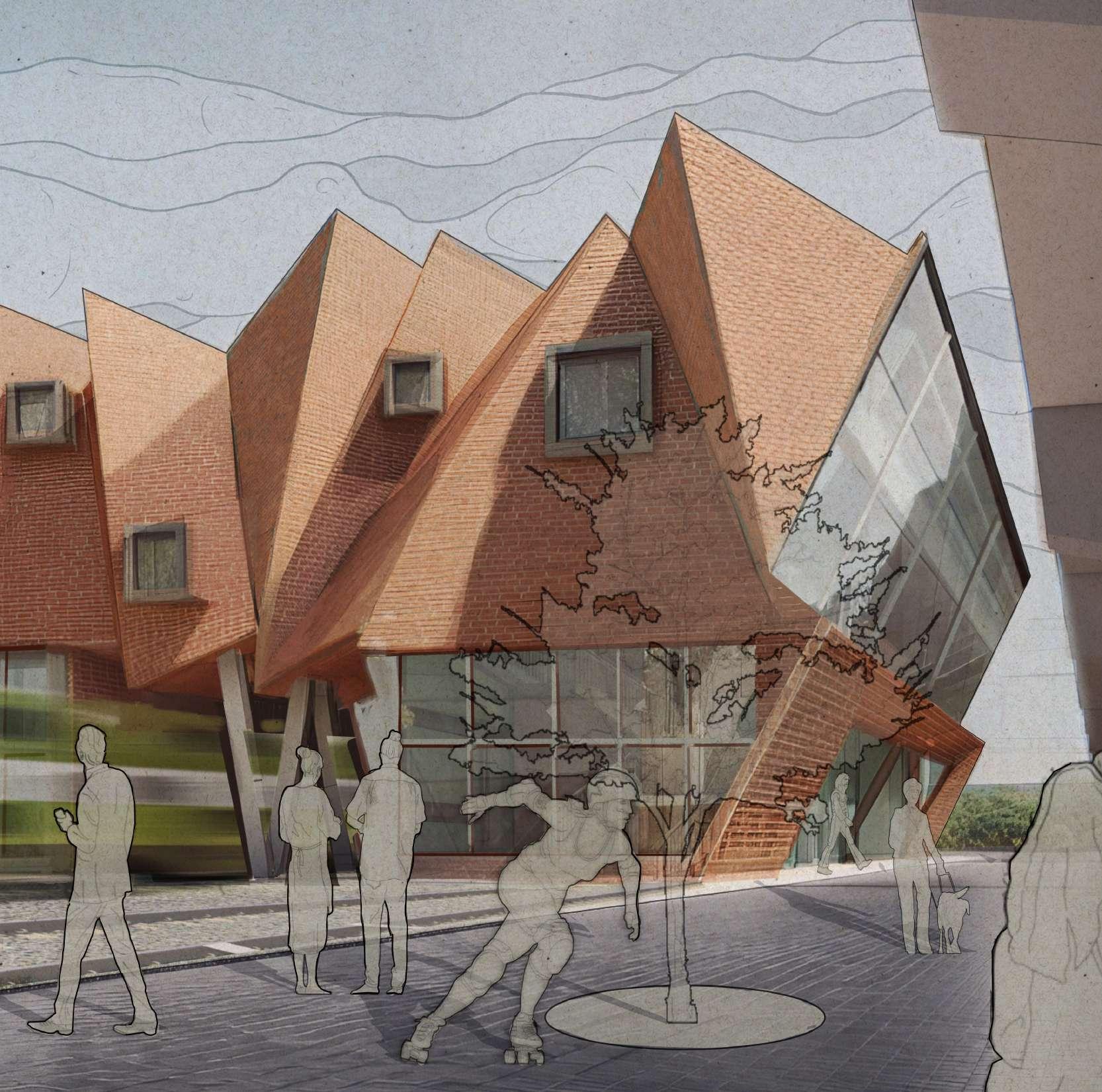
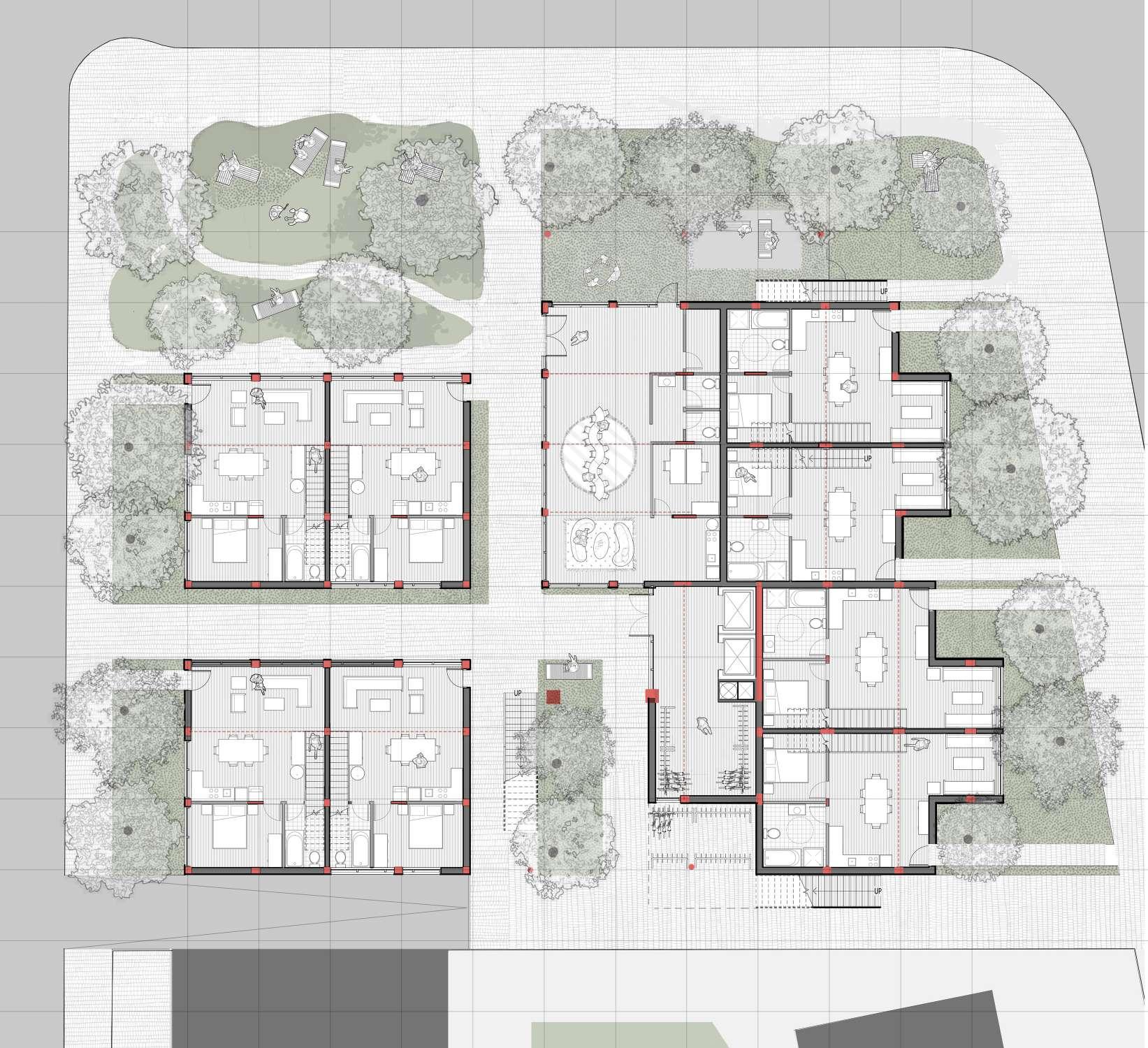
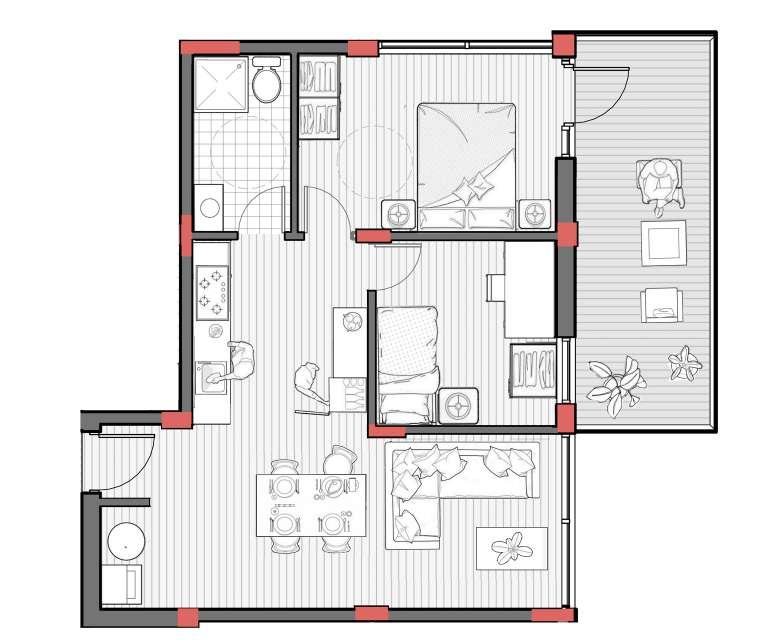
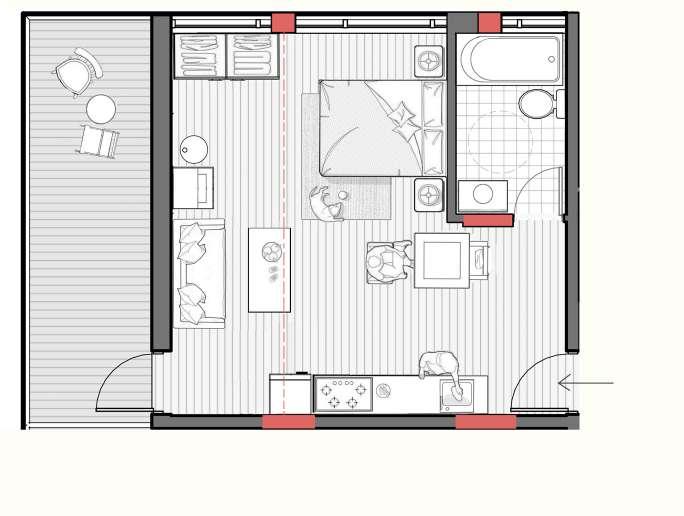
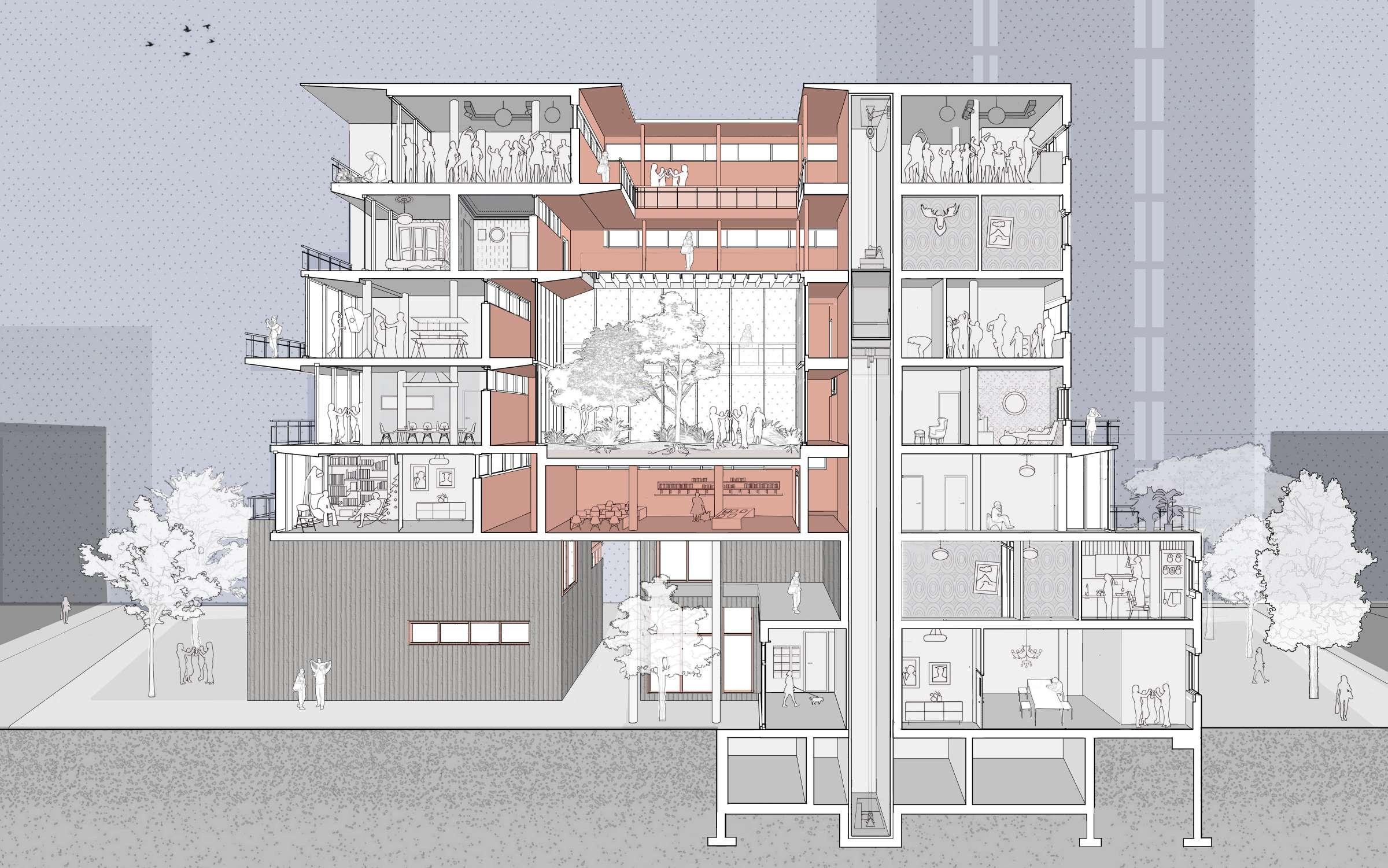
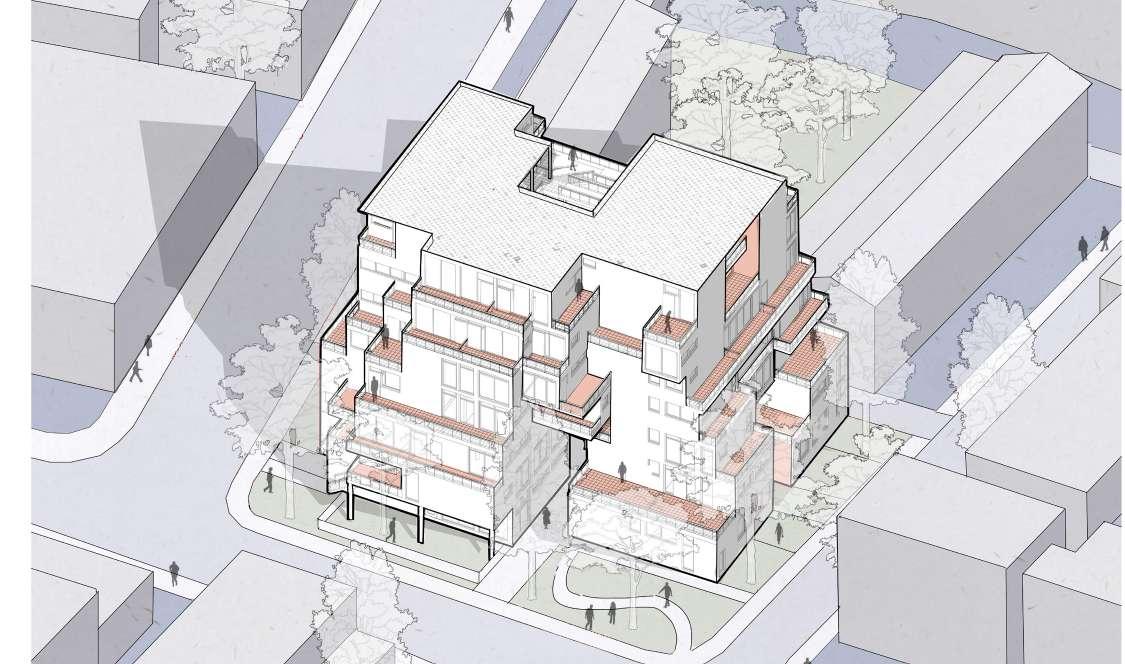
A 47-unit mid-rise housing concept aims to address the missing middle housing crisis in Toronto. The building hosts 3 bedroom townhomes to studio units, housing a wide demographic of local residents. Units on the ground floor are 2-stories, emulating the townhouse streetscape. The circulation for this housing model is based around outdoor, communal circulation pathways and addresses the sites’ critical location, having three street-facing facades along pedestrian walkways. Variation in the building form and courtyard

throughout the building massing aim to a smooth pedestrian experience through the intersection while improving daylight penetration, natural ventilation, and visual connections between units and public space. These strategies help reduce perceived building scale, support passive environmental performance, and encourage informal social interaction within shared circulation areas, reinforcing the project’s integration with the surrounding urban fabric.
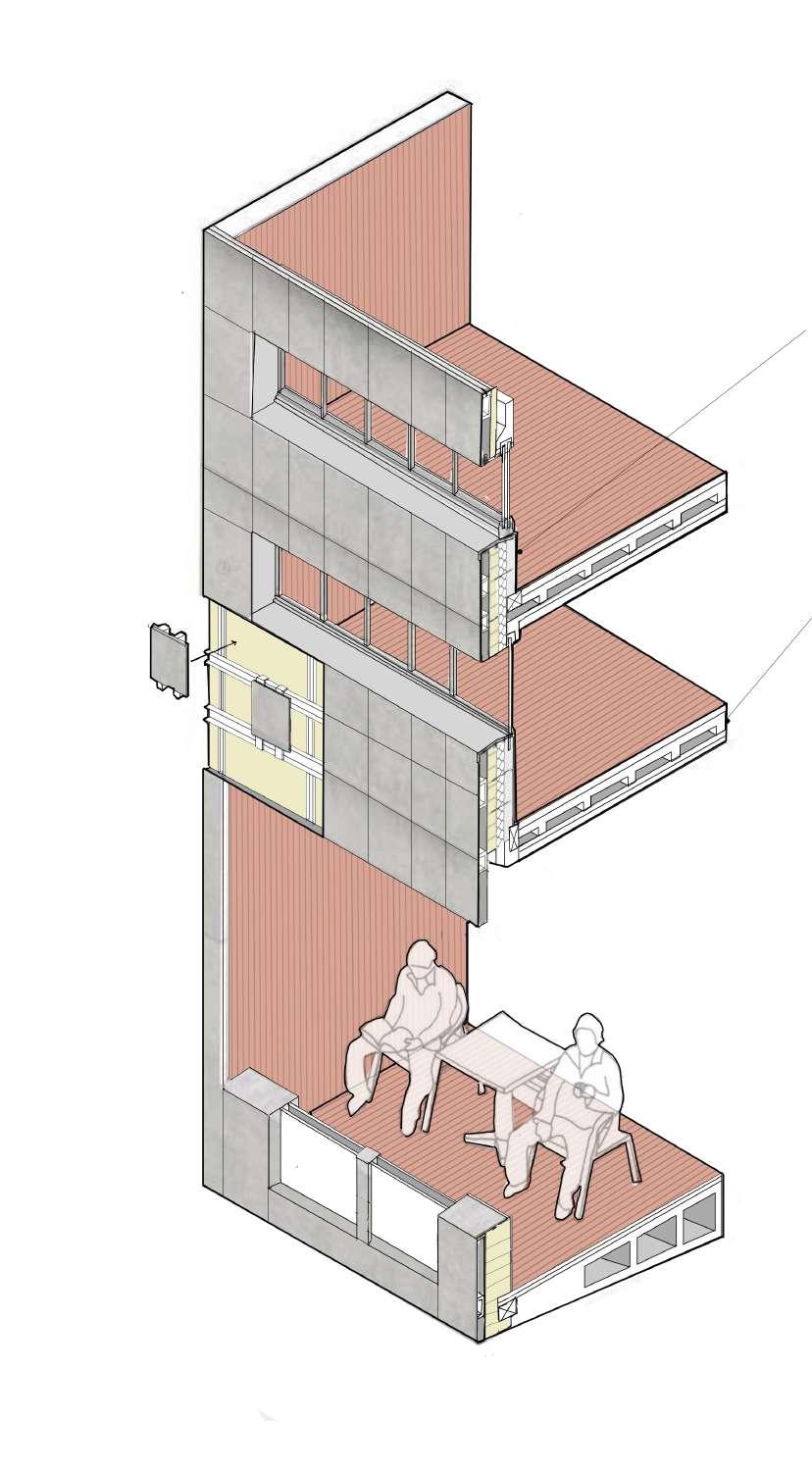
WALL
(EXTERIOR TO INTERIOR)
1. Porcelain Tile Cladding
2. Aluminum Substructure Grid
3. Thermal Insulation
4. Masonry Wall
5. Rigid Insulation
6. Gypsum + Interior Finish
FLOOR
(TOP TO BOTTOM)
1. Wood Floor Finish
2. Concrete Subfloor
3. Insulation (Exterior)
4. Aluminum Desking
5. Ceiling Finish