Periodico mensile registrato presso il Tribunale di Firenze al n. 6215 in data 10/03/2025
Iscrizione al ROC n. 42813
Spedizione in Abbonamento Postale Aut. n° CN-NE/00754/04.2025
Art Direction and layout Pilar Roca – pilarroca.com
Printer
Faenza Printing Via Vittime Civili di Guerra, 35 48018 Faenza (RA), Italy
All rights of reproduction and translation of the published articles are reserved. Any reproduction, even partial, is strictly prohibited without the publisher’s prior written authorization. All content is protected under copyright law. The editorial board assumes no responsibility for the opinions expressed by the authors of editorial and advertising texts.
Zootecnica ensures the confidentiality of personal data collected for subscriptions and purposes related to specialized publishing, in compliance with the General Data Protection Regulation (GDPR – EU Regulation 2016/679). Subscribers have the right to access, modify, or delete their personal data by submitting a written request to the publisher. Personal data will not be shared with third parties without explicit consent.
Scan to visit our website
EDITORIAL
GLP-1 therapies are moving beyond the healthcare domain and are beginning to influence food consumption patterns. Changes are already visible in how consumers eat, what they purchase, and overall intake volumes.
Available evidence points to lower total food intake, reduced portion sizes, and declining expenditure on categories such as sugary drinks, baked goods, and high-fat, highly processed products. Protein intake, however, remains relatively stable. Within this context, poultry continues to hold a solid position in consumer choices, supported by its perceived nutritional profile and affordability.
Current data do not indicate a meaningful contraction in poultry demand. Consumption appears resilient across income groups, and the overall impact of GLP-1 adoption on food spending remains limited. When these medications are discontinued, purchasing behaviour generally returns to previous patterns.
Changes in consumption are not uniform. Categories associated with higher levels of fat, sugar, or processing show more evident declines, while simpler, protein-oriented foods remain aligned with the dietary patterns observed among GLP-1 users.
For the poultry sector, the available evidence points to continuity rather than disruption. Demand remains stable, although consumption choices are gradually shifting. The extent and durability of these changes will depend on factors such as duration of use, pricing, and access to GLP-1 therapies.
The situation is still evolving, but the link between healthdriven dietary changes and protein demand is already emerging. For the sector, the priority is to monitor these developments closely and respond where necessary.
➤ Marianna Caterino
COMPANY FOCUS
Clean drinking water, clear rules
REPORTAGE
Sharan Panta: making an impact is the meaning of business
REPORT
European Union: Poultry and Products Semi-annual. The new report is out
DOSSIER
Overview of worm infestations in chickens: integrated control, preventive strategies, and novel diagnostic tools
DOSSIER
Hatching egg quality – The real foundation behind every hatchery KPI
FOCUS
Summer heat stress is detrimental to broiler chickens
FOCUS
GLP-1 drugs and poultry: a health revolution with direct implications for the poultry chain
MARKETING
The role of the G20 group in global meat production and trade – Part 2: global meat exports
TECH COLUMN
Hatching egg cracks: reducing losses along the production continuum
MANAGEMENT
Sustainable animal welfare implementation for more efficient poultry farming
MARKET GUIDE
UPCOMING EVENTS
INTERNET GUIDE
CLEAN DRINKING WATER, CLEAR RULES
Hygiene meets compliance in poultry farming
There are some interesting developments taking place in Europe regarding the cleaning of drinking water in poultry production, particularly when it comes to treating the drinking water while the animals are present in the house. The government is increasingly keeping a close watch on farmers when they use products at the farm such as cleaning and disinfection agents.
The government is very clear about which products may or may not be used at a poultry farm. This is regulated at the European level by ECHA (the European Chemicals Agency) . For the poultry sector, ECHA recognises two key types of registrations :
PT03: Products that may be used for cleaning and disinfecting animal housing, equipment, and vehicles; PT05: Products that may be used to treat or disinfect drinking water for poultry.
This means that when a farmer uses a cleaning or disinfecting product, it should have an ECHA registration for the correct PT category. This ensures:
• The product is officially approved and tested for use around animals.
• The farmer is compliant with EU legislation and won’t face regulatory issues. No risk of a fine or a recall.
• There is traceability and safety assurance for food production and animal welfare. Put simply, products registered under PT03 are only intended for use when poultry houses are empty.
Only products holding both PT03 and PT05 approvals can be safely and legally applied in empty houses and while birds are present.
Real hygiene happens during the cycle
People often say: “a chain is only as strong as its weakest link”. Interestingly, the same applies to your animals’ drinking water system. There can be a significant difference between the quality of the water coming from the first nipple and that from the last one. Contamination and microbial growth rarely originate from the water source itself — they develop within the system.
This means that while the water from the first nipple may still be of very high quality, the water further down the line can already be of poor quality.
There are several possible reasons why contamination occurs within the system. One common cause is the use of additives in the drinking water. Nutritional supplements such as organic acids, vitamins, and medications can leave
behind a biofilm inside the drinking system. And no matter how small that biofilm is, it often serves as a breeding ground and hiding place for bacteria, fungi, and viruses. It’s also observed that the water temperature gradually increases as it moves through the drinking system. This too affects the growth of microorganisms, as they thrive particularly well at slightly higher temperatures. Therefore, this is another important factor contributing to the greater likelihood of microbial contamination towards the end of the drinking system.
It is therefore of great importance to regularly clean the entire drinking water system to remove all microorganisms — with particular emphasis on cleaning all the way to the last nipple.
Only PT05-approved products belong in the drinking
line during the cycle
Intra Hydrocare was the first product in Europe to receive, in addition to PT02, PT03, and PT04 also a PT05 registration from the ECHA. This made Intracare the first company able to offer a product that can be used to clean and disinfect drinking water systems while animals are still present in the barn. This is a major advantage, especially for livestock farmers with long production cycles or those who regularly administer additives via the drinking water. Another major advantage of Intra Hydrocare is that it is extremely stable and it allows the use of an effective working concentration up to the very last nipple. For more information, please visit www.intracare.nl
SHARAN PANTA: MAKING AN IMPACT IS THE MEANING OF BUSINESS
Interview with Mr. Sharan Panta, a pioneer of modern poultry farming in Nepal and founder of Uttam Poultry Farm. His enterprise leads the national market in Kuroiler chick production, renowned for their resilience and productivity. Through quality breeding, wide distribution, and community-focused initiatives, Panta has advanced rural livelihoods and food security. Uttam provides integrated poultry services including training, consultancy, and health management. His sustainable business model exemplifies how agribusiness can drive both economic growth and social impact in Nepal.
➤ Mainbayar Badarch Market analyst
The poultry farming industry, which contributes approximately 8% to Nepal's total agricultural economy, provides employment for around 1.5 million people nationwide. Initially, the sector was limited to backyard operations. However, over the past five decades, it has evolved into a rapidly growing commercial sector. This business has strong potential not only to replace the import of poultry products but also to increase national income by competing in regional and global markets. Currently, there are 16,000 registered poultry farms and 9 chicken meat processing industries in Nepal. Modern poultry farming in Nepal expanded significantly between 2000 and 2020, with key developments in 2014 and 2017 focusing on importing high-yield exotic breeds such as the Black Minorca, New Hampshire, Rhode Island Red, and White Leghorn. The establishment of a central hatchery in Parwanipur, Bara district, further boosted
meat and egg production by distributing improved chicks to farmers, facilitating the transition toward modern poultry production.
Mr. Sharan Panta is one of the pioneers of modern poultry farming in the country. He entered the poultry business in 2000. Initially, he was involved in broiler and layer farming, but eventually shifted his focus to hatchery management, establishing Uttam Poultry Farm in 2009.
Uttam is now a leader in Nepal's poultry industry, specializing in the countrywide supply of day-old Kuroiler (Giriraja) chicks. The farm is located in Bharatpur, in the Chitwan district of Nepal, and its chicks are known for their exceptional health, rapid growth, and resilience, making them ideal for both meat and egg production.
The Kuroiler breed
It is a branded dual-purpose bird developed through selective and controlled crossbreeding of high-yielding
indigenized poultry germplasm. This bird was developed by KeggFarms of India and authorized by the Government of Nepal and the Food and Nutrition Security Enhancement Project (FANSEP).
Kuroiler chickens have been acclimatized to Indian tropical and subtropical conditions for several decades, thriving in harsh rural environments similar to non-descript local flocks. This low-input, hardy bird combines high productivity with the desirable traits of indigenous breeds.
The males are tall, majestic, and agile, reaching over 4 kg at full maturity. The females are large and active, weighing over 2.5 kg and producing more than 150 eggs, primarily by scavenging agricultural and natural waste.
This bird enables households to achieve nearly four times higher production of eggs and meat compared to nondescript poultry stock, while being maintained under similar conditions. It retains the color, agility, and disease resistance characteristics of traditional village chickens, with meat and egg quality that reflects their unique heritage. With proven results, rural poultry farming is increasingly recognized as a viable meat production activity. As people prioritize short-term benefits, the Kuroiler breed has become the preferred choice for small-scale farmers. The genetic potential of these birds can be fully realized through proper nutrition, healthcare, and management. Careful preparation of the brooder house and strict adherence to management practices are essential for achieving optimal outcomes.
These chicks are renowned for their rapid growth rates. They reach maturity quickly, enabling farmers to benefit from their meat and eggs sooner. This efficient growth helps manage feed costs and optimize the overall profitability of the poultry operation. The chicks' robust health ensures steady growth, allowing them to achieve the desired size and weight without unnecessary delays.
Business prospects
Uttam Poultry Farm has 12,000 chickens and produces between 960,000 and 1,100,000 chicks annually, supplying them to over 150 small farmers. Some of these farmers raise the chicks for 10 to 15 days before distributing them further to broader agricultural communities.
I interviewed Mr. Sharan Panta, who stated: “My business strategy focuses on three pillars: quality production, wide distribution, and community impact. Through Uttam, I supply Kuroiler chicks to both urban and rural markets. Additionally, I collaborate with marginalized families by providing small poultry units to enhance food security and generate income”.
His work has contributed to broader food security efforts through
collaboration with development-focused projects. By distributing day-old chicks and promoting small-scale poultry rearing, he has helped underprivileged families improve household nutrition and build financial security. Furthermore, it has particularly empowered low-income households, with a focus on providing opportunities for women to achieve financial independence. Beyond building a successful and tax-compliant poultry enterprise, his greatest achievement lies in transforming poultry farming into a practical tool for community
development. Today, his model serves as an example of how agriculture, when guided by vision and commitment, can uplift rural communities and create a lasting social impact. His experience and dedication to the industry fuel his passion for sustainable, high-quality poultry production. He emphasized that his long-term strategy focuses on sustainable growth by strengthening farmer support, enhancing biosecurity standards, and expanding partnerships with government and development organizations. Integrated services
Currently, Uttam Poultry Farm offers seven types of poultry-related services: wholesale supply of poultry products, hatchery services, poultry farm consultancy, customized feeding solutions, training and workshops for farmers, disease management and biosecurity services, and poultry health monitoring.
The farm adheres to strict quality-control measures to ensure each batch meets the highest industry standards, guaranteeing reliable and healthy stock for its clients. The company provides guidance on infrastructure, brooding, housing, and feed management, helping farms establish a strong foundation for success.
In addition to setup optimization, Uttam focuses on providing solutions for day-to-day farm management practices. Its consultancy services encompass every aspect necessary to ensure the well-being and productivity of clients’ flocks, including nutrition plans, health management, and disease prevention. They provide customized feeding solutions designed to meet the specific nutritional needs of clients, ensuring optimal growth and productivity. Uttam also helps identify and address potential challenges that could affect farm performance, offering strategies to improve production efficiency and profitability.
Moreover, Uttam offers specialized training sessions and workshops for farmers to enhance their knowledge and skills in poultry farming. These programs are designed to empower farmers with the latest techniques in poultry management, covering areas such as nutrition, disease prevention, biosecurity, and sustainable farming practices. Uttam’s client, Yaadhav Jamarkatel from Nuwakot District, highlighted: “Uttam Poultry Farm has been a game changer for my poultry business. The day-old Kuroiler chicks I received were of exceptional quality, and the support from the team has been outstanding. Their guidance on brooding, feeding, and health management has helped me improve my farm’s productivity and profitability. I highly recommend Uttam Poultry Farm to anyone looking to start or enhance their poultry venture”.
Mr. Sharan Panta advised that the quality and quantity of feed for each Kuroiler chick should vary according to the season and the chick's body weight. Use 5 kg of finely ground maize for the first 4-5 hours, then switch to chick starter feed. Feed the chicks four to five times a day, mixing any leftover feed in the feeder with fresh feed each time. For parent stock, the farm feeds them once a day, providing 110 grams of feed. The farm uses natural methods, such as covering the ground with rice husks, to keep the chickens warm during the cold season. At Uttam Poultry Farm, the male-to-female ratio is 1:10 (rooster to hen).
“Running a hatchery is like gambling with cards: one wrong move can cost your house. There used to be 300 hatchery businesses in Nepal; now, only 100 are still operating. Rising feed and veterinary medicine prices, along with high labor costs, are currently challenging our business” Mr. Sharan Panta explained. However, he remains optimistic about the market outlook and plans to expand his farm to accommodate 10,000 more chickens, featuring facilities equipped with automatic chicken drip cups. Since the establishment of Uttam, the company has primarily conducted business in central Nepal, which is the most densely populated region. Over the past eight years, its operations have expanded into breeder farming and marketing in eastern Nepal. Mr. Sharan Panta is setting industry standards of excellence nationwide.
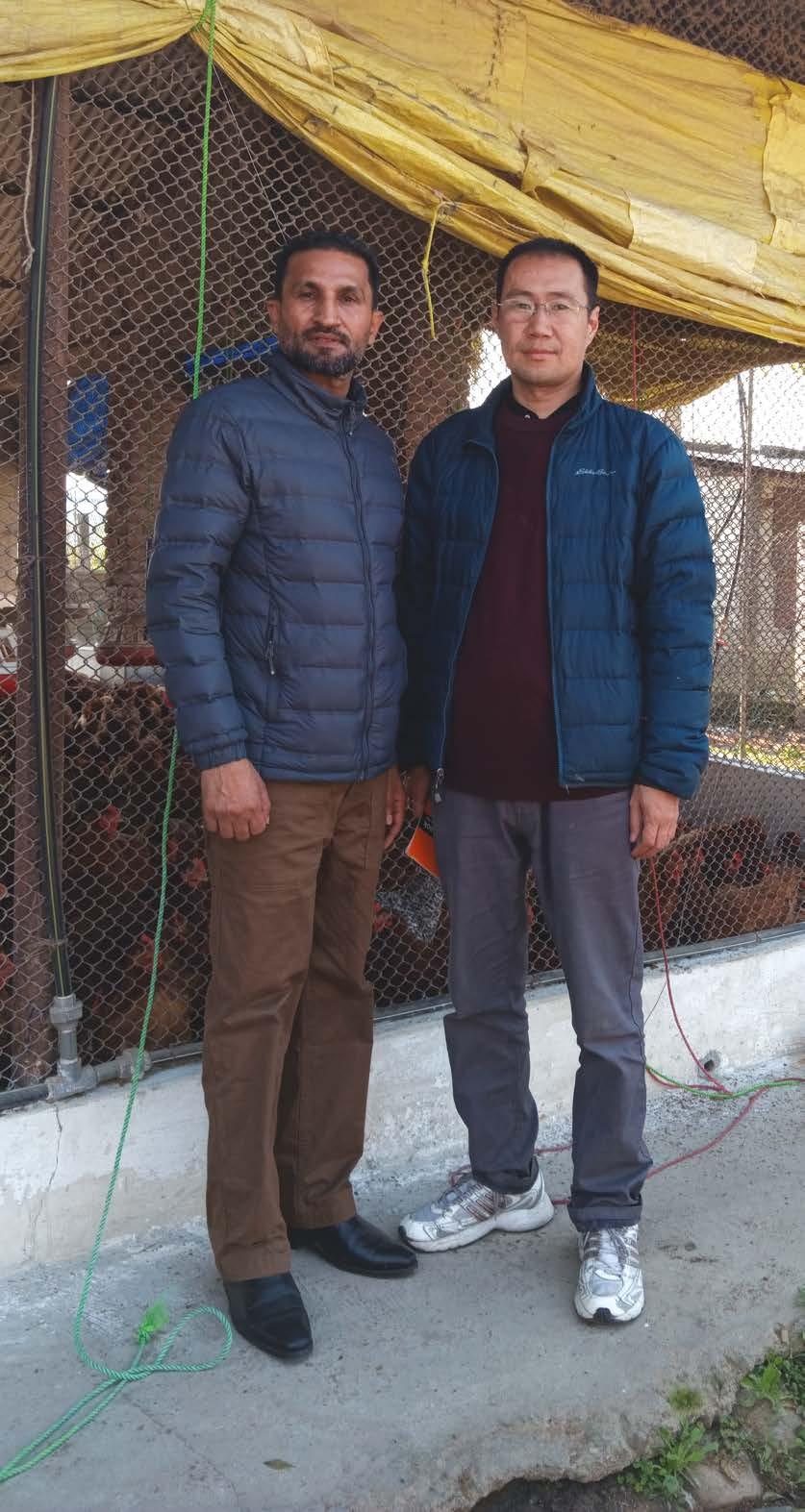
▲ On the left Mr. Sharan Panta, on the right Mr. Mainbayar Badarch
EUROPEAN UNION: POULTRY AND PRODUCTS
SEMI-ANNUAL. THE NEW REPORT IS OUT
The USDA semi-annual report on EU poultry forecasts growth in chicken meat production for 2026. It highlights production gains amid easing disease pressures and steady demand.
Production growth
EU chicken meat production is projected at 12.25 million metric tons (MT) in 2026, up from 12.09 MT in 2025 and 11.73 MT in 2024 (Table 1). This uptick stems from robust domestic demand, fewer high-pathogenicity avian influenza (HPAI) outbreaks, and lower energy and feed prices supporting producers’ income, especially in top producers Poland, that holds over 22% of total EU output despite health challenges.
Environmental caps limit gains in the Netherlands, Belgium, and Germany via nitrogen emission rules.
Rising consumption
Domestic consumption climbs 1.4% to 11.235 MT in 2026, fueled by retail and HRI (hotels, restaurants, institutions) sectors. Chicken’s appeal as an affordable, healthy, versatile protein persists over red meats, aligning with long-term trends in price sensitivity and wellness. HRI demand particularly lifts per-capita intake across the EU.
Trade dynamics
Imports edge up 1% to 760,000 MT in 2026 after a 5.4% growth in 2025, driven by HRI needs. The UK remains top supplier but faces post-Brexit checks and imports declined by 8% in 2025; Ukraine stabilizes at 136,000 MT under revised DCFTA (Deep and Comprehensive Free Trade Agreement) quotas from October 2025, curbing sensitive products. Thailand (+16%) and China (+36%, over 55,000 MT for Asian HRI) gain share thanks to lower competition from Ukraine, while Brazil hits EU quota limits.
Lower-priced Ukrainian chicken meat and ongoing HPAI and ND outbreaks may continue to restrain EU exports, while lower production costs support competitiveness.
In 2026 exports are expected to rise by 2% to 1.775 MT, rebounding from 2025’s 2% dip due to HPAI/ND curbs. Losses in Vietnam (-14%) and Saudi Arabia (-21%) are offset by gains in Ghana (+15%), DR Congo (+23%), and Philippines (+65%). The UK leads markets; low costs could boost dark meat competitiveness in sub-Saharan Africa.
The EU has recently finalized and rolled out several free trade agreements (FTAs) that include concessions on livestock products. First of all, Mercosur, for whom negotiations wrapped up in December 2024, leading to formal signatures in January 2026 in Asunción, Paraguay, by representatives from the EU and the Mercosur countries
(Argentina, Brazil, Paraguay, and Uruguay). The deal splits into an Interim Trade Agreement covering trade and investment, plus a broader Partnership Agreement. It features strong bilateral safeguard clauses to shield EU agriculture from market disruptions, with the European Parliament approving rules in February 2026 that allow tariff suspensions if sensitive product imports rise more than 5% above a three-year average. Duties will phase out gradually on 91% of EU exports to Mercosur and 92% of their exports to the EU, though the agreement is now under legal review by the European Court of Justice at Parliament’s request to check treaty compatibility.
For Ukraine, the EU offered temporary trade liberalization through Autonomous Trade Measures (ATMs) from June 2022 until June 2025. After that, relations reverted to the original 2014 DCFTA under Regulation 1132/2025, reimposing quotas on Ukrainian agricultural goods until late October. The revised DCFTA then took effect on October 29, 2025 (Regulation 2025/2199), expanding mutual market access beyond 2014 levels while capping EU imports of sensitive products compared to the ATM period. It adds a new safeguard mechanism and aligns Ukrainian production standards with EU rules.
Key EU policies
CAP simplification (May 2025) simplify administrative burdens and environmental requirements linked to eco-payments, effective 2026. Omnibus food safety law (December 2025) includes provisions requiring imported products to meet EU environmental, food safety, and animal welfare standards, in line with the “mirror clause” approach.
On the trade front, significant shifts are underway: the revised Ukraine DCFTA introduces caps on sensitive imports, while the Mercosur deal (formally signed in January 2026) includes agricultural safeguards like tariff suspensions if imports exceed 5%. Meanwhile, EUDR deforestation rules have been delayed until December 30, 2026, with simplifications for EU operators.
Sector implications
The report points to continued growth in 2026 for EU poultry, with export growth of around 2% and production growth of 1.3%. Poland remains the leading producer, although disease and environmental constraints persist in parts of the EU.
Source
European Union: Poultry and Products Semi-annual, USDA Foreign Agricultural Service (FAS). https://apps.fas.usda.gov/newgainapi/api/Report/ DownloadReportByFileName?fileName=Poultry%20 and%20Products%20Semi-annual_Paris_European%20 Union_E42026-0019.pdf
OVERVIEW OF WORM INFESTATIONS IN CHICKENS: INTEGRATED
CONTROL, PREVENTIVE STRATEGIES, AND NOVEL DIAGNOSTIC TOOLS
The transition toward alternative and free-range housing systems has led to a renewed increase in helminth infection pressure in poultry production. Intestinal worms not only cause direct gastrointestinal damage but also impair immune competence and productivity, emphasizing the need for accurate diagnosis, monitoring, and flock-specific control strategies. Integrated prevention, evidence-based deworming programs, and continued research into novel diagnostic and control approaches are essential for sustainable helminth management in modern poultry systems.
➤ Hilde Van Meirhaeghe1 , 2, Swati Karki1,3 , Giuditta Tilli1, Maarten De Gussem1 , 2
Re-emergence of worm infestations in modern poultry production
Back in time, the shift from extensive, free-range keeping on the farmyard or in pens to intensive poultry production with permanent housing and the use of battery cages has largely eliminated worm diseases1. Due to consumer demand for higher animal welfare standards, the trend has now reversed: chickens are once again spending time outdoors, and following the EU ban on conventional battery cages, the prevalence of worm infections has increased. This higher risk applies not only to free-range chickens but to all housing systems where birds can scratch and peck, thereby coming into contact with feces. According to a recent study looking at the prevalence of worms in worldwide poultry production, the most prevalent worm species are the large roundworm (Ascaridia galli), the small roundworm (Heterakis gallinarum), hairworms (Capillaria spp.), and the large tapeworm (Raillietina cesticillus), out of more than 30 worm species detected2. Other species are less common in industrially housed chickens, such as the
small tapeworm (Davainea proglottina) and the gape worm (Syngamus trachea).
What should be taken into account for an effective deworming program
To assess and control worm infections, it is essential to understand different key aspects of worms:
Life cycle
The roundworms (Ascaridia, Heterakis, and Capillaria) have a direct life cycle: the worm eggs develop in the external environment, and after 1–2 weeks, a larva forms inside the egg. When the egg is ingested by a chicken, the larva is released and begins its migration through the various stages of the parasite within the gastrointestinal tract. Some larval stages embed in the intestinal wall, while the adult worm resides in the intestinal lumen or in the folds of the mucosa.
The tapeworms (Raillietina, Davainea) have an indirect life cycle: the eggs develop into larvae (cysticercoids) within an intermediate host such as beetles or flies. Chickens ingest the infected intermediate host and the larva is released in the intestine, attaches to the intestinal wall, and develops into an adult worm. After 2–3 weeks, mature segments containing eggs (proglottids) are excreted in the feces and can be ingested by the intermediate host again.
Prepatent period
The prepatent period is the time between ingestion of an infective egg by a chicken and the shedding of worm eggs by the same chicken. This period should be known,
as it varies by worm species and is a critical factor when designing a control program.
Mechanisms of resistance in the environment
Worm eggs are highly resilient and, under favorable conditions of temperature, relative humidity, and oxygen availability, can remain infective for months or even years. If the life cycle also involves an intermediate or transport host, such as an earthworm, the parasite’s survival chances are further increased. A transport host serves as a protective carrier for the parasite but is not essential to complete the life cycle. Table 1 summarizes the key aspects for the main worm species.
Main problems in poultry production caused by worm infestations
Young birds are particularly susceptible to worm infections; in older birds, the effects are often less severe, suggesting the development of a certain degree of natural immunity. The impact also largely depends on the worm burden and on the level of infection pressure.
Direct damage caused by worms
• Ascaridia galli causes inflammation and bleeding in the intestinal wall due to larvae penetrating the mucosa of the small intestine. This results in damage to the intestinal lining, which can lead to diarrhea and reduced nutrient absorption. In cases of heavy infestation, intestinal obstruction may occur due to tangles of roundworms. In laying hens or breeding birds, sudden drops in egg production may be observed. Very rarely, but occasionally reported, worms may reach the egg via migration through the abdominal cavity to the oviduct or via the cloaca. While this does not pose a significant public health risk, it can understandably alarm consumers.
• Heterakis gallinarum generally causes limited direct damage, as the worms primarily reside in the cecal lumen and larvae remain in the cecal wall only briefly. Nevertheless, the ceca may exhibit localized inflammation and mucosal thickening. Importantly, Heterakis gallinarum acts as the intermediate host for Histomonas meleagridis , a flagellated protozoan responsible for blackhead disease. Histomonas is an example of a “superparasite”: it not only requires an intermediate host ( Heterakis gallinarum ) but can also persist in a transport host, such as earthworms, for extended periods, greatly enhancing its spread. Blackhead, well known in turkeys, can also cause severe diseases in laying hens or breeding birds, primarily through cecal inflammation.
Nematodes (roundworms)
(tapeworms)
spp. Caeca (lumen) 10
(?)
(link with Histomonas meleagridis)
■ Table 1 – Summary of the main characteristics of the different worm species
• Capillaria spp. may be found in the crop and esophagus, but primarily in the small intestine. Mild infections cause thickening and inflammation of the crop and esophagus. Severe infections of the small intestine result in bloody diarrhea, weight loss, and anemia. In free-range or litterreared chickens, the number of Capillaria eggs can increase significantly, leading to heavy infestations. In laying hens, this may cause reduced egg production and vitamin A deficiency, and in breeding birds, hatchability can be compromised.
• Raillietina cesticillus infection can lead to weight loss, weakness, impaired growth, and decreased egg production. This tapeworm resides in the intestinal lumen, and damage is primarily due to competition for nutrients with the host. Eggs are shed in feces approximately two weeks after ingestion of an infected intermediate host, and if an intermediate host is present, it can facilitate new infections. Under favorable conditions, infection pressure can increase rapidly, and eggs can survive for extended periods within the intermediate host.
Indirect damage caused by worms
Beyond the direct damage caused by worms, primarily in the gastrointestinal tract, worm infections also affect the overall health status of chickens. Typically chronic rather than acute symptoms are observed. Worms compete with the host for feed nutrients, which can lead to deficiencies resulting in growth retardation, reduced production, and decreased immunity. In general, infested chickens are less active; however, they may also exhibit more aggressive behavior and take more dust baths. Because chickens infested with worms have reduced resistance, they are more susceptible to other pathogens, including bacteria and viruses. Local intestinal damage caused by worms facilitates the entry of organisms through the gut wall, increasing their pathogenic potential. Moreover, bacteria or viruses may be present on or within worm eggs, contributing to their spread. This has been reported, for example, with Salmonella and adenoviruses and reoviruses.
Is there natural resistance to worms?
Worm infestations trigger a broad range of immune responses. This is due not only to the parasite’s complex antigenic structure but also to the presence of different developmental stages (larvae and adult worms) located in various tissues. Chickens can develop protective immunity against worms, which helps maintain infection at a low level. Such immunity reduces egg production by the worms, prolongs the prepatent period, and limits worm growth. However, under heavy infection pressure, natural resistance may be insufficient to provide protection. Natural resistance depends on factors such as age, genetic predisposition, hormonal status (e.g., onset of laying), stress, and nutrition.
Diagnosis and monitoring: old and new tools
To determine when a flock should be treated and how it responds to treatment, it is essential to use a reliable method for diagnosis and monitoring. The goal is to identify which
worm species are present and to assess the severity of the infestation. On top of the traditional methodologies, new diagnostic and monitoring tools linked to early detection of roundworm infestations are currently being used. A full overview of all the tools is presented in Table 2. Before deciding to initiate treatment, one should consider not only the results of fecal and post-mortem examinations but also the overall health status of the flock.
Treatment options
A good anthelmintic for poultry should be effective against adult worms, larval stages, and eggs, and should cover the different helminth species commonly found in chickens. All birds within the flock must ingest an adequate amount of the product. For this reason, treatment is administered over several consecutive days. Currently in Europe only two active substances are approved for deworming in chickens: flubendazole and fenbendazole. Both can be administered either via feed (powder formulation) or drinking water (oral suspension/emulsion). There is no withdrawal period for eggs. Additional active substances that can be used outside Europe are albendazole, piperazine, and levamisole. Most helminth species become clinically relevant only when present in large numbers. It is also important to consider the specific worm species identified, as their pathogenicity varies and the prepatent period differs among species.
Different deworming strategies
The goal of an effective control program against worm infections is to maintain infection pressure on the farm as low as possible. Even after deworming, litter or outdoor areas remain contaminated with worm eggs and, in some cases, with intermediate or transport hosts, resulting in continuous reinfection. Two main approaches can be applied: “monitored” or “strategic” monitoring programs. Monitored treatment involves regular monitoring and intervention only when infection is detected. This carries the risk that significant damage may already have occurred by the time treatment is applied. Strategic treatment involves deworming at regular intervals before eggs can develop into new worms (i.e., within the prepatent period).
In theory, this means:
• Large roundworm: every 6 weeks
• Small roundworm: every 4 weeks
• Hairworms: every 3 weeks Typically, it is recommended to deworm young birds every 6-8 weeks. As hens age, longer intervals can be implemented, because the prepatent period tends to increase. Pullets intended for production should ideally be dewormed before entering lay. This prevents harmful effects of worms during the period when hens are most susceptible, at the onset of laying.
Prevention of worm infestations
As with any infection, preventing introduction is essential in controlling worm infestations. Worm eggs are highly
■ Table 2 – Summary of the main monitoring and diagnostic tools for worm infestations in poultry
Diagnostic tool Description Pros Cons
Observation of clinical symptomatology from the flock.
Clinical symptoms
Direct detection of worms
Tip for success: start the visit by observing the whole flock signals (What am I seeing, hearing, smelling, feeling? What is the signal behind?).
Post-mortem examination of the gut. Qualitative and quantitative assessment can be done (i.e., which worms are present and how many).
Tip for success: proper selection of birds in the barn and examination of the gut throughout its whole length. For round worms: counting of the worms; for tapeworms: counting of the heads (scolex) attached to the intestinal lumen.
Non-invasive, minimal equipment needed, could be frequently done.
Confirmation of the presence of the worms, species identification, quantification of worm infestation burden.
Very non-specific symptoms (e.g., inactivity, weight loss, increased FCR, drop in production, anemia, ruffled feathers) or no measurable symptoms.
Requires training, valuable birds could be euthanized, small sample size.
Indirect detection of worms
Serology
Fecal examination allows determination of the worm species present in the flock. By counting the number of worm eggs per gram of feces (EPG, eggs per gram), an estimate of infestation intensity can be obtained.
Tip for success: collection of representative samples from the flock (mixture of fresh faeces and droppings collected proportionally from different parts of the barn).
ELISA assays designed for the early detection of roundworm infestations are based on the identification of parasite-specific antigens that elicit an immune response in the chicken.
Tip for success: start monitoring the flocks at six weeks.
resistant and can survive for extended periods under favorable conditions, such as in free-range environments. Complete disinfection of outdoor areas is practically impossible, but rotation of grazing areas and proper drainage can reduce infection risk.
Feces or litter from infested farms can be introduced via trucks, visitors, or other fomites. Therefore, decontamination measures before entering in contact with the birds (e.g., hygiene locks) should be thoroughly implemented. Another critical point is the control of pests, insects, and wild birds, which is particularly challenging in free-range systems.
Take-home messages
Nearly all floor-housed poultry farms are affected by helminth infections, and the increasing adoption of alternative and free-range systems is expected to further raise infection pressure across the sector. Beyond gastrointestinal damage, helminths impair general health and immune competence, contributing to production
Non-invasive methodology, confirmation of the presence of the worms.
High sensitivity and specificity, early detection, flock surveillance.
Requires training, late diagnosis, difficult to differentiate eggs from some species (e.g., A. galli vs. H. gallinarum), intermittent shedding of eggs (prepatent period) and in varying numbers (immune status).
Limited quantification of worm burden, laboratory requirements and costs.
losses through nutrient competition and interaction with other pathogens.
Effective control requires a flock-specific, evidencebased deworming strategy integrated into overall farm management and guided by accurate diagnosis and monitoring. Given the renewed relevance of helminth infections under modern housing conditions, further research into resistance, alternative control measures, vaccination, and environmental management is essential for sustainable long-term control.
Bibliography
1 Janssens, P. G., Vercruysse, J., & Jansen, J. (1989). Worms and worm diseases in humans and domestic animals
2 Shifaw, A., Feyera, T., Walkden-Brown, S. W., Sharpe, B., Elliott, T., & Ruhnke, I. (2021). Global and regional prevalence of helminth infection in chickens over time: A systematic review and meta-analysis. Poultry Science, 100(5), article 101082. https://doi.org/10.1016/j.psj.2021.101082
HATCHING EGG QUALITY – THE REAL FOUNDATION
BEHIND
EVERY HATCHERY KPI
In today’s global poultry industry, hatchery performance is increasingly measured through precise key performance indicators (KPIs) such as fertility, hatchability, hatch of fertile, embryonic mortality pattern, chick uniformity, first week mortality, chick yield and overall incubation efficiency.
➤ Rasel Ahmed Incubation & hatchery management specialist
While modern hatcheries are investing in advanced incubators, automation and digital monitoring systems, one fundamental truth remains unchanged: hatching egg quality is the single most influential factor behind every hatchery KPI. No technology, no machine and no incubation profile can compensate for poor quality hatching eggs. If the biological starting material is compromised, downstream outcomes will always suffer. Therefore, egg quality must be managed as a strategic pillar, not just an operational step.
show that approximately 40-70% hatchery performance depends on egg quality and egg handling before incubation. So, if we want strong KPI, the first thing we must protect is the egg.
Why does hatching egg quality determine hatchery performance?
A hatching egg is not just a shell; it is a living biological system containing a highly sensitive embryo that requires optimal structural, physical, microbiological and physiological conditions. When egg quality is good, the embryo develops smoothly, the hatch window stays narrow, chicks come out strong, uniform, active and healthy. When egg quality is poor, hatchability drops, mortality increases, chicks become weak and field performance goes down. Many studies and years of hatchery experience clearly
What does a good hatching egg look like?
A good hatching egg has a clean, strong shell, proper shape, correct size for the breeder strain and age and no visible crack. Inside, it should be fresh, with good albumen
■ Haugh Unit (HU): the global standard for albumen quality
quality and stable yolk and air cell. The egg should be microbiologically clean, not heavily contaminated and not too old.
In a few words: a good egg is clean, fresh, strong, uniform and biologically healthy. This egg gives the embryo the best chance to survive and develop well.
Internal egg quality: the hidden driver of hatchery KPIs
Shell quality is only the visible part of egg quality. The real biological performance is determined by the internal egg quality-albumen, yolk and air cell. Which directly control embryo survival, growth rate and chick vitality.
Albumen quality
Albumen (egg white) is the primary water, protein and antimicrobial source for the developing embryo. Poor albumen quality leads to higher early embryonic mortality, and weak CAM (chorioallantoic membrane) development.
With poor storage, high temperature, or long holding time, HU drops rapidly and directly, reducing hatchability and chick quality.
Yolk quality
The yolk supplies energy, fat, vitamins and minerals to the embryo. Good yolk quality characteristics are a round, firm yolk, a strong vitelline membrane, stable yolk position, high balanced fatty acid profile, and high vitamin A, E, and carotenoid content. Poor yolk quality causes early embryonic death, weak chicks with low energy, poor immune development, and higher first week mortality.
Air cell quality
The air cell reflects the egg age and the storage quality: fresh eggs have a small, stable air cell; old or poorly stored eggs have a large, unstable air cell. A large air cell causes excessive moisture
loss, delayed internal pipping, weak and dehydrated chicks and higher dead-in-shell rates.
This is why hatching egg quality is the real biological foundation behind every hatchery KPI.
Eggs that should never go into the incubators
Every hatchery should be very strict rejecting unsuitable eggs. Setting bad eggs is not saving eggs, it is actually damaging hatchability, increasing contamination risk and harming overall chick quality.
Eggs that should not be set include:
• Floor eggs
• Dirty or manure-stained eggs
• Cracked and hairline cracked eggs
• Very misshaped eggs
• Double yolk eggs
• Very small or underweight eggs
• Eggs with thin or porous shells
• Very old storage eggs without the proper condition
When these eggs are set, we actually see higher rates of early
deads and late dead-in-shell, more contaminated eggs, more exploding eggs, poor chick quality, weak immunity and higher first week mortality. So, rejection is not loss, rejection is protection.
What really happens when poor quality eggs are set?
Let's examine some common bad egg categories and their impact.
Dirty or contaminated eggs
These eggs carry heavy bacterial and fungal load
from feces, litter or environment. Inside the incubator heat and humidity create perfect conditions for bacteria to multiply. Infection spreads to nearby eggs through air movement, leading to contaminated eggs, rotten eggs, bad smell, exploding eggs and unhealthy chicks. These chicks often develop yolk sac infection and die early.
Floor eggs
Floor eggs absorb moisture, ammonia, dirt and microbes. They usually have weaker shells. These eggs have lower hatchability and produce weak, stressed chicks.
Cracked and hairline cracked eggs
Even very small invisible cracks disturb gas exchange, cause moisture loss and allow bacteria to enter. Embryos in such eggs usually die early or fail to hatch properly. Many fully developed chicks remain dead in shell.
Misshaped or abnormal eggs
If the egg is too round, too long, wrinkled or misshapen, heat transfer becomes uneven and the embryo often malpositions, leading to higher mortality and deformities in hatchlings.
When poor eggs enter the setter, the problem multiplies, not just stays in a single egg. This is why egg selection is a critical biosecurity and performance decision.
How to protect egg quality from farm to incubator?
Egg quality management is not only the hatcheries' duty. It is a full-chain responsibility starting from the breeder farm and continuing until the egg enters the setter.
1.
At the breeder farm
Egg quality is built, not repaired, at the breeder farm.
Nest hygiene and design
Good nest hygiene, comfortable nesting systems and correct nest design are essential. A clean, dry nest reduces dirty eggs and floor eggs. A comfortable nest encourages hens to lay in the nest instead of the floor, which protects shell quality and internal egg quality.
Lighting and flock management
Proper lighting programs and good farm management help hens lay eggs in the nest at the correct time of day. This reduces floor eggs and minimizes the risk of contamination and mechanical damage.
Breeder nutrition and health
Breeder nutrition and health programs play a major role in producing strong shells and high internal egg quality. Balanced calcium, phosphorus, Vitamin D3, trace minerals and good gut health ensure optimal shell strength and albumen quality.
Male management
Male management has a direct impact on fertility and hatchability.
Correct male body weight, uniformity, health and mating activity ensure high fertile egg output and reduce early embryonic losses.
2.Egg collection and on-farm handling
Frequent and gentle egg collection
Eggs should be collected gently and frequently, then placed into clean, disinfected trays. Rough handling causes microcracks and internal damage that are often invisible but significantly reduce hatchability and chick quality.
Correct egg orientation
Eggs should always be kept large end up to protect the air cell and embryo position. They should never be stored or transported small end up.
Egg washing and sanitation
Eggs should never be washed in an uncontrolled manner. If washing is required, it must follow a strict validated procedure with the correct water temperature, sanitizer concentration, and drying; otherwise shell pores open and bacteria penetrate.
3.Automatic/robotic egg collection and handling systems
With automatic or robotic egg collection systems, mechanical precision becomes a major egg quality risk factor.
Key concerns and control points
1. Conveyor speed and drop heights. Excessive speed or long drop distances cause hairline cracks and internal shell damage. All transfer points must be cushioned and optimized for minimum impact.
2. Roller alignment and belt condition. Misaligned rollers, worn belts or damaged cushions increase vibration and impact stress. Regular inspection and maintenance are essential.
3. Egg jams and back-pressure. Mechanical faults that cause egg congestion lead to collision damage and cracked shells. Sensor alarms must be functional, and staff trained to respond immediately.
4. Gentle robotic gripping pressure. Robotic pick and place systems must use correct suction or grip pressure. Too much pressure causes invisible shell damage; too little pressure causes drops and cracks.
5. Environmental control during collection. Temperature and humidity around the collection system should prevent condensation. Sudden temperature changes increase bacterial penetration and internal egg contamination.
Transport from farm to hatchery
Transport systems must be clean, disinfected, and temperature controlled. Sudden temperature changes, vibration and shocks can damage internal egg structures and encourage condensation. Maintain 18–20 °C and 70–75% RH to prevent shell sweating and moisture-loss shock. Avoid vibration, rough roads, and sudden braking, which cause internal damage.
Egg storage and pre-incubation holding
Egg storage is a critical control point because this is where internal egg quality can either be preserved or lost. The goal of storage is to slow embryo development without damaging albumen quality or increasing microbial risk. For eggs stored for up to 7 days, a temperature of 16 to 18 °C is recommended. If storage extends beyond seven days the temperature should be reduced to 15 to 16 °C to further slow embryonic metabolism and protect albumen quality.
Relative humidity should be maintained between 75 and 80% to prevent excessive moisture loss while avoiding condensation. Too low humidity causes rapid air cell enlargement and dehydration while high humidity increases the risk of sweating and bacterial penetration.
For eggs held longer than seven days, regular turning during storage is essential. Turning prevents the yolk and embryo from sticking to the shell membrane and supports better embryo viability after setting.
Before eggs enter the setter, they must be gradually prewarmed to 24-26 °C. Slow and uniform warming prevents condensation and thermal shock and allows the embryo to restart development in a controlled manner. Proper storage and pre-incubation holding protect internal egg quality and directly improve hatchability, chick quality, and hatch window uniformity.
Egg grading and sorting
Before setting, eggs must be carefully graded. Modern hatcheries around the world now use technology such as automatic graders, crack detectors, vision systems and scanners to support human decision-making. Grading helps maintain uniform egg size, remove defective eggs and support more synchronized hatches.
What happens to KPIs when egg quality is ignored?
When egg quality is not properly managed, hatcheries face lower hatchability, higher early or late mortality, poor hatch window, weak chicks, greater chick culling, more sanitation problems and higher costs. This problem does not end in the hatchery; it follows the bird into the farm, affecting growth, health, feed conversion ratio (FCR), and overall profitability.
Poor egg quality is not just a hatchery issue; it is full-chain economic loss.
Conclusion
In a world where poultry businesses compete on efficiency, biosecurity and performance, hatching egg quality remains the most powerful driver of hatchery success. The journey to a strong chick begins at the breeder house and continues through every handling step and ends inside the incubator. Healthy, uniform, high quality chicks are always the result of healthy, clean, well-handled eggs.
Hatcheries that truly respect egg quality will always achieve better hatchability, stronger chicks, improved field results and higher profitability.
In the end, the rule is always true: great chicks start from great eggs.
SUMMER HEAT STRESS IS DETRIMENTAL TO BROILER CHICKENS
Summer heat stress severely harms broiler chickens, impairing production performance, gut health, immune function, and meat quality. The article examines physiological effects (panting, reduced feed intake, metabolic changes), worsened by relative humidity and stocking density, with annual U.S. losses of $128-165 million.
➤ Tom Tabler, Professor and Extension Poultry Specialist, Department of Animal Science, University of Tennessee Institute of Agriculture
Yi Liang, Associate Professor, Department of Biological and Agricultural Engineering/Center of Excellence for Poultry Science, University of Arkansas
Logan Lewis, Extension Agent, University of Tennessee Extension, Montgomery County
Tanner Thornton, Graduate Research Assistant, Department of Animal Science, University of Tennessee Institute of Agriculture
Jonathan Moon, Extension Instructor, Department of Poultry Science, Mississippi State University
The effects of heat stress resulting from high environmental temperatures continue to threaten poultry production in the United States and around the globe. Heat stress (HS) is a condition in which animals are unable to dissipate excess heat in their bodies to the surrounding environment, resulting in an increase in body temperature (Sugiharto, 2020). Poultry are homoeothermic; however, modern-day
broiler and layer chickens are highly susceptible to HS due to their inefficiency in dissipating heat from their bodies because of feather cover and the lack of sweat glands. During HS, the heat load is higher than the chickens’ ability to regulate it. As a result, this can disturb normal physiological functioning, affect metabolism and cause behavioral changes, respiratory alkalosis and immune issues in poultry. These adverse effects can reduce nutrient absorption and energy metabolism, consequently reducing production and causing economic losses (Mangan and Siwek, 2024).
Heat stress can be described as acute (short and sudden periods of extremely high temperatures) or chronic (extended periods of increased environmental temperatures) (Kpomasse et al., 2021). Both types can lead to serious physiological problems, immune suppression and gut microbial imbalance (Sohail et al., 2012; Lara and Rostagno, 2013; Attia et al., 2018; Chang et al., 2020; Wasti et al., 2021). Because birds lack sweat glands, they resort to reducing their physical and behavioral activities (less walking, increased resting, wing spreading and dustbathing), reducing feed intake to reduce heat production as well as increasing their panting and water consumption to dissipate heat loss by evaporation (Renaudeau et al., 2012).
Source: Nawaz et al., 2021.
These detrimental effects reduce production performance, health and food safety, subsequently causing high morbidity, mortality and consequently leading to economic losses. It is reported that in the United States, an estimated $128 to $165 million is lost annually by the poultry industry due to heat stress effects (St-Pierre et al., 2003; He et al., 2018; Kim et al., 2021), making it essential to find mitigatory strategies that will help ameliorate the detrimental effects of heat stress.
Heat stress factors to consider
Climate factors
Seasonal variations in poultry production occur in relation to the cyclical changes and fluctuations in the output of poultry over different seasons of the year. Seasons characterized by high temperatures (late spring, summer, early fall) present a series of obstacles for poultry growers. Lara and Rostagno (2013) discussed many of the consequences resulting from HS, including diminished meat quality, poor feed efficiency, altered behavior and increased mortality. Heat stress further compounds the variety of problems that poultry growers must overcome (Apalowo et al., 2024). Lin et al. (2005) emphasized that broilers exhibit increased water usage to adapt to elevated
temperatures. Genetic aspects of heat tolerance introduce an additional level of intricacy, necessitating meticulous breeding programs and selection processes to improve overall resistance to HS (Lara and Rostagno, 2013). Broiler production is significantly impacted by seasonal HS, which adversely affects health, performance and economic outcomes. Therefore, it is critical that integrators and growers implement comprehensive management strategies, wise selection of genetic stock and advanced ventilation/ cooling systems (adequate wind speed, sprinkler cooling, evaporative cool cells) to ensure sustainability and profitability of broiler production.
Temperature plays a major role in flock performance. Birds are homeothermic animals, possessing the capability to regulate their internal body temperature within a relatively constant range. The ability to regulate temperature occurs quite effectively when the birds are kept within a thermoneutral zone, ranging from 21 to 28 °C (~70 to 82 °F) (Soliman and Safwat, 2020), allowing them to maintain a stable internal temperature. A fluctuation in the environmental temperature above the upper limits of the thermoneutral zone leads to heat stress (Purswell et al., 2012), which affects the overall performance of the bird and can result in mortality. Due to their genetic potential for a high level of production,
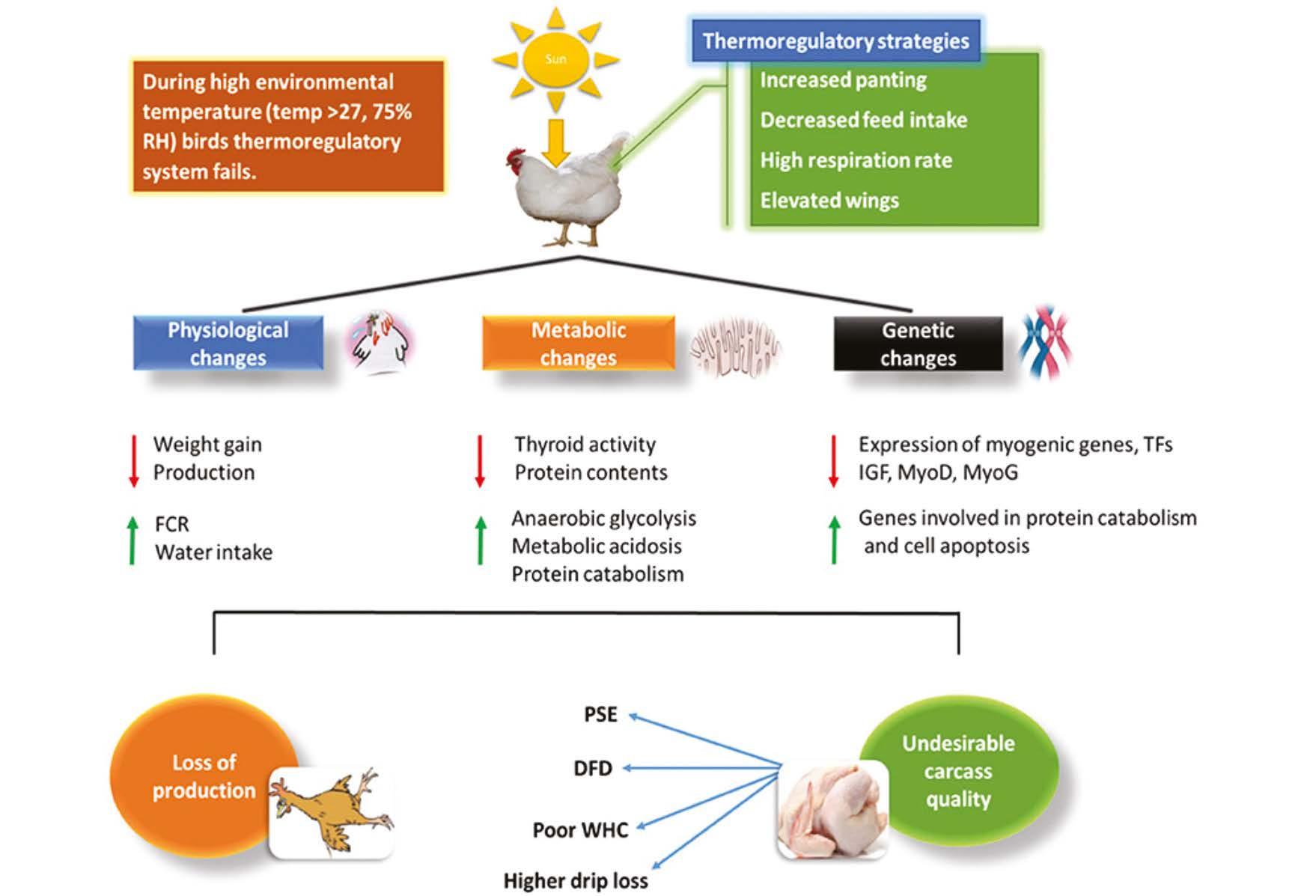
▲ Figure 1 – Relationship of heat stress with physiological and biochemical changes in chicken and how it affects broiler chicken meat quality
fast-growing broilers with a substantial body weight are extremely susceptible to HS when environmental temperatures exceed the bird’s thermoneutral zone. While in the absence of fully developed thermoregulatory organs, neonatal chicks are vulnerable to cold stress. The optimal temperatures at which the bird can function most effectively are determined by its age, body weight, housing system, feeding level, relative humidity, air velocity and overall health (Olanrewaju et al., 2010). Chickens in high ambient temperature situations have greater energy requirements than those under thermoneutral conditions.
Relative humidity plays a key role in mortality losses during high environmental temperature periods. It is not high temperature alone that kills chickens in summer. It is the lethal combination of high temperatures and high humidity. Chickens can tolerate some fairly high temperatures if the humidity can be maintained at or below 70 percent. Heat dissipation is an additional aspect of heat management that is subject to the influence of several variables, in addition to heat production. Evaporative heat dissipation is a critical mechanism significantly influenced by the relative humidity of the surrounding environment (Apalowo et al., 2024).
Elevated humidity reduces evaporative heat loss. The effect of humidity on the thermal regulation response of broilers is
affected by the age of the birds and air temperature (Lin et al., 2005). To optimize the thermal comfort and well-being of broilers under a variety of climatic situations, it is critical to control these climate variables.
Management factors
The adverse effects of heat stress on poultry production are a global concern. Chickens are particularly susceptible to environmental heat stress, owing to their physiological characteristics, which include a lack of sweat glands, panting to lose body heat and metabolic heat loads associated with rapid growth (Chowdhury et al., 2012; Vandana et al., 2021). While temperature has been the focus of most studies, both temperature and relative humidity of the inhouse environment are major factors that cause thermal stress (Zhou et al., 2019).
Housing. Proper management of poultry housing is critical in reducing heat stress. Previous research has highlighted the importance of ensuring adequate temperature regulation and ventilation controls in environmentally-controlled housing for preventing HS (Saeed et al., 2019; Rostagno, 2020). There are multiple factors (outside conditions, stocking density and heat produced by the birds, internal environment, the roof and the degree of insulation, the process of fecal matter biodegradation, etc.) that contribute to the overall HS load on chickens, which is reflected in the internal environment of the poultry house. Addressing these factors to the extent possible is critical for maintaining a healthy environment for the birds and avoiding heat stressrelated problems, particularly in near-market-age flocks. Achieving effective HS management in poultry production requires examination of the various heat generation sources present in the broiler house, as well as development of solutions to alleviate the detrimental effects these sources have on the birds (sprinklers, cool cell pads, fans and tunnel ventilation are common methods to reduce heat stress).
Water. It is critical to take into consideration the availability, temperature and quality of water when growing broilers, especially when HS is a factor. Water that contains harmful bacteria or other contaminants can affect the digestive system and weaken the immune system (Martinez et al., 2021). Birds drink more water when they are hot as a natural cooling mechanism, but any contaminants in the water might worsen health conditions and lower productivity. An increase in water temperature in the drinker lines may occur because of HS and high ambient temperatures (Yahav, 2009). Hot water in the drinker lines can cause birds to drink less water, which can make them even more dehydrated and increase the adverse effects of HS (Wilson and Edwards, 1952). Sufficient water is necessary for broilers to regulate their body temperature and keep their physiological functions operating smoothly. Lack of water intake because of HS can make it harder for nutrients to be absorbed, which can affect growth and performance. During periods of heat stress, it is vital to have an adequate water supply for drinking and cooling
use and control the temperature of drinking water to offset detrimental HS impacts.
Welfare . Heat stress has detrimental effects on the welfare of broiler chickens. Heat stress can be divided into two categories depending on the duration and intensity of the stressor. Acute HS refers to a sudden increase in temperature and humidity over a short period of time while chronic HS occurs when there is a sustained period of high temperature and humidity. In poultry, HS can range from 27 C to 38 C (~81 F to 100 F) for one to 24 hours (acute), seven days (moderate), and more than seven days (chronic) (Vandana et al ., 2021). Poultry are most susceptible to HS because of their inability to dissipate heat due to the presence of feathers and the lack of sweat glands (Zhang et al ., 2017). Multiple studies have shown that HS can negatively affect the health, physiology and efficiency of broilers (Quinteiro-Filho et al ., 2012; Hosseini-Vashan et al ., 2020; Hu et al ., 2022; Sun et al ., 2023), laying hens (Deng et al ., 2012), ducks (Oluwagbenga et al ., 2022; Ma et al ., 2014) and turkeys (Farghly et al ., 2017). Broiler stocking density is often reduced throughout the warmer months to lessen HS and prevent overcrowding. Research has indicated that broilers are more likely to experience the effects of HS due to overcrowding, including decreased digestion and absorption, mucosal injury and compromised intestinal processes (Li et al ., 2019). Intestinal mucosal injury in broilers is closely linked to the increase in corticosterone, which is caused by stress connected to high stocking density, including factors like competition for feed and water space, elevated ambient house temperature and increased litter moisture and ammonia levels (Law et al ., 2019).
Meat quality
The broiler industry faces a serious challenge from HS each summer, which increases production costs and can severely damage the meat quality due to poultry’s susceptibility to heat because of their rapid metabolic rate and high growth potential (Nawaz et al., 2021). Metabolic changes occur in broilers reared in a HS environment, causing a considerable decrease in breast muscle size (Nawaz et al., 2021). In addition, HS is also responsible for the reduction in the protein content of muscles (Zhang et al., 2012). Both acute and chronic HS may cause a sharp decline in the metabolism of broilers, which in turn will induce serious complications regarding growth and performance, such as a change in meat color, a decline in muscle pH, water-holding capacity and juiciness of chicken meat (Song and King, 2015; Gonzalez-Rivas et al., 2020). Numerous studies have revealed that high ambient temperature causes oxidative stress by producing reactive oxygen species (ROS, Reactive Oxygen Species). These ROS have severe implications on skeletal muscle development, as they are responsible for lipid peroxidation in muscles (Altan et al., 2003; Kumar, 2012). Thus, understanding the underlying mechanisms, the causes and the effects of HS and strategies that can
be put into place to control its effects can be beneficial in addressing global food insecurity issues. Figure 1 illustrates the physiological, metabolic and genetic changes amid HS and its relation to meat production and quality in chicken.
Heat stress can impact meat production in multiple ways (Nawaz et al., 2021) including:
• Reduction in feed intake and poor weight gain
• Increase in fat and reduction in protein contents of poultry meat
• Excessive production of ROS impairs meat quality
• Acidosis lowers water-holding capacity and damages meat texture
• Thyroid hormone imbalance under HS impairs skeletal muscle development
• Drip loss
• Development of pale, soft, and exudative meat
• Production of protein carbonyls
Heat stress is becoming more challenging for the poultry industry to overcome. Genotype selection in broilers for higher growth rates to meet the ever-increasing food requirement has made broilers increasingly vulnerable to HS. It is increasingly difficult for modern broilers to withstand HS, resulting in substantial economic losses to the industry, triggering increasing food security issues. Genetic selection for heat tolerance in poultry will be critical to addressing the negative implications of HS.
Effects of heat stress on gut health and the immune system
Gut health plays a vital role in ensuring efficient digestion and absorption of feed, water and electrolyte balance as well as in immune system development (Rostagno, 2020). Heat stress can alter the gut microbiota, therefore, leading to gut dysbiosis (an imbalance of the types of organisms present in the gut) and subsequently affects gut barrier functions (Brugaletta et al., 2022). Multiple studies have demonstrated the effects of HS on the gut microbiota composition and health of birds (Ringseis and Eder, 2022).
The precise mechanisms underlying the effects of HS on the structure and function of the gut microbiota remain elusive (Kers et al., 2018), however, it is well-known that the intestinal tract is extremely sensitive to HS and all other forms of stress (Slawinska et al., 2019). Poultry production requires the birds to have an efficiently functioning intestinal tract because the intestinal tract greatly affects the birds’ overall well-being and productivity (Kadykalo et al., 2018).
The integrity of the intestinal barrier is compromised by HS, leading to an increase in intestinal permeability.
Alhenaky et al. (2017) indicated that an increase in permeability and localized inflammation along the small intestine are significant consequences of HS on the intestinal barrier. Heat stress causes morphological alterations and mucosal damage in the intestines of chickens because it reduces blood flow, nutrient and oxygen availability, and feed intake (Quinteiro-Filho et al., 2017).
Knowing how HS impacts the immune response in chickens is the subject of much research. Multiple studies have shown that HS weakens the immune system of both broilers and laying hens (Apalowo et al., 2024). As previously mentioned, when birds experience severe heat stress, their bodies produce more ROS, which causes oxidative stress. Reactive oxygen species overproduction causes oxidative stress by taxing the bird’s immune system to the breaking point. The immune system responds by producing heat shock proteins (HSP). These HSP aid in the correct folding of other proteins, stop misfolded proteins from clumping together, and speed up the breakdown of damaged proteins, and they are necessary for cell production (Apalowo et al., 2024). The primary function of these HSP is to allow cells to deal with and recover from stress.
Concentrations of HSP tend to rise when HS is applied to broilers and laying hens. This suggests that their cells are responding by reducing the harmful effects of ROS (Prieto and Campo, 2010).
Future directions
Extensive research across numerous studies consistently demonstrates that HS negatively impacts various aspects of poultry production, including production performance. The poultry sector’s transition towards environmental sustainability and resource-efficient practices highlights the role that precision livestock farming (PLF, Precision Livestock Farming) practices will play in the future.
Resolving HS issues in broiler production in the future will require combining intelligent sensors and real-time data analytics along with other PLF practices that optimize environmental conditions for the comfort and performance of broilers. Environmental stewardship and sustainable practices are evolving as guiding principles of poultry production going forward. The environmental well-being and longevity of broiler production are enhanced by the implementation of sustainable measures such as optimized feed formulas and waste management systems (Boliko, 2019). In addition, future research into more climateresilient genetics and more water-efficient broilers must continue and even increase. Addressing HS in poultry today requires a multifaceted, complex approach and is a journey that, from this point forward, will be built on precision agriculture techniques, genetic selection and sustainable practices.
References are available on request
By courtesy of The University of Tennessee Institute of Agriculture and UT Extension
GLP-1 DRUGS AND POULTRY: A HEALTH REVOLUTION WITH DIRECT IMPLICATIONS FOR THE POULTRY CHAIN
GLP-1 weight-loss drugs are reshaping how consumers eat, prioritising lean protein and reducing appetite for high-fat, processed foods. For poultry producers and feed suppliers, this shift may reinforce structural advantages already present in the sector. The key question is not whether GLP-1 will matter, but how the poultry chain responds.
➤ Aidan Connolly, AgriTech Capital Camila Ulloa, Purdue University
Few developments in recent years have carried such far-reaching implications for the global food system as GLP-1 medications. Originally developed to treat diabetes, drugs such as semaglutide are now widely prescribed for weight management (U.S. Food and Drug Administration, 2022). Their impact is no longer confined to healthcare. By reducing appetite and lowering calorie intake, these medications are beginning to reshape food consumption patterns across developed markets (Dilley et al., 2025; Reiley, 2025; Kritzer & Cullen, 2025). For poultry professionals, the issue is not medical, but economic. How will changing consumer behavior influence protein demand, product positioning, feed use and long-term production strategy?
GLP-1 drugs mimic the glucagon-like peptide-1 hormone, increasing feelings of fullness and slowing digestion. Clinical data show users often reduce calorie intake by 15% to 20%, equivalent to roughly 500 to 800 kilocalories per day, depending on diet and body weight (Stankiewicz, 2024). Surveys in the United States estimate that roughly 15 million adults have already used GLP-1 medications, while investment bank projections suggest adoption could approach 7–9% of the U.S. population over the next decade, depending on pricing, supply and regulatory expansion
(Morgan Stanley, 2023). The global GLP-1 market, valued at roughly $62 billion in 2026, is forecast to exceed $157 billion by 2035, underscoring the scale and durability of this trend (Research and Markets, 2026).
Changing consumer preferences and lean protein
The significance lies not only in reduced consumption, but in altered preferences. Many users report diminished desire for high-fat, sugary and heavily processed foods.
1 Aidan Connolly, President, AgriTech Capital, is described by Forbes as “a food/feed/farm futurologist”. He is the author of the book The Future of Agriculture, now in 4 languages, and a recent White Paper on AI in Agri-Food systems.
Household panel data indicate that GLP-1 users reduce spending sharply on calorie-dense snacks and bakery items, while yogurt and select protein-focused products show modest gains (Hristakeva et al., 2025). This matters for poultry. OECD-FAO projections indicate poultry will account for 62% of additional global meat consumption growth through 2034 and deliver 45% of total meat protein, underscoring its competitive foundation (OECD & FAO, 2025). Its dominance reflects affordability, feed efficiency and a favourable protein-to-fat ratio. In a market increasingly attentive to health and environmental signals, poultry is well positioned if consumers reduce calorie intake while prioritising nutrient density.
Unlike sectors that depend heavily on fat content for product differentiation, poultry’s core offering is already lean. Chicken breast, turkey, and eggs fit comfortably within dietary frameworks that emphasize protein intake without excessive fat (U.S. Department of Agriculture & U.S. Department of Health and Human Services, 2020). In that sense, GLP-1 may accelerate an existing structural advantage rather than create a new one. However, it would be a mistake to assume all poultry products benefit equally from this trend. Processed poultry items high in added fat, salt or sugars could face softer demand if consumer behavior continues to shift toward simpler, minimally processed meals. Value-added segments may need reformulation, repositioning or portion control strategies to remain aligned with evolving preferences.
Implications for production, feed and market strategy
The implications extend beyond retail. Changes in consumption patterns ripple backward through the production chain. If GLP-1 adoption reinforces demand for lean protein while moderating appetite for caloriedense foods, poultry producers may experience relatively stable or even strengthened demand compared with other animal protein sectors. Feed strategy is unlikely to change dramatically, but the emphasis may sharpen. Poultry production is already among the most feed-efficient forms of animal protein (Tavárez & Solis de los Santos, 2016). Continued focus on nutrient conversion efficiency, amino acid optimisation and health management will remain central (Alabi et al., 2025). Systems that deliver consistent lean muscle growth with minimal waste will align well with a consumer base increasingly attentive to nutrition.
From a land-use perspective, poultry’s shorter production cycle and superior feed conversion ratio position it favourably in a world where both health and sustainability influence purchasing decisions (Nassar, 2026). While GLP-1 drugs are primarily a medical intervention, they intersect with broader conversations about obesity, health costs and environmental responsibility.
Measured expectations and strategic discipline
It is also important to keep the scale of change in perspective. Even if 9% of U.S. adults adopt GLP-1 medications by 2035, that still represents a minority of total consumers. Widespread global uptake will depend heavily on price reductions and expanded access. Research suggests substantial price declines would be required for mass adoption in lower-income markets ( The Economist , 2024). As long as costs remain high, early adopters are likely to be concentrated among higher-income consumers. Yet influence does not require majority adoption. Early adopters often shape retail trends, restaurant menus and product innovation. Food manufacturers are already responding with higherprotein, lower-fat offerings across multiple categories (Mintel Group Ltd., 2026; Watson, 2024). If these preferences diffuse socially, the impact on protein markets could extend well beyond the direct user base.
For poultry exporters, this may reinforce demand in markets where health-conscious consumers drive retail innovation. For feed suppliers, stable or rising poultry output relative to other livestock sectors could influence long-term demand patterns for soybean meal and balanced feed formulations (Corredor, 2025). Producers should avoid overreaction, but they should not ignore the signal. Dietary shifts linked to GLP-1 drugs sit alongside other powerful drivers: ageing populations (World Health Organization, 2025), rising healthcare costs (Khan et al., 2024), environmental scrutiny (OECD & FAO, 2025) and evolving consumer expectations (Kalaitzandonakes et al., 2025). The poultry sector has historically adapted quickly to change, whether through genetics, housing systems, or feed innovation. The current moment is no different.
Strategically, three priorities stand out. First, protect efficiency. In a world where consumers may eat slightly less but expect higher quality, cost discipline and feed conversion performance remain decisive. Second, align product portfolios with health narratives. Lean cuts, portion-controlled offerings and transparent labelling will gain importance. Third, monitor demand data closely. Understanding whether calorie reduction translates into absolute declines in meat consumption, or simply rebalancing among protein sources, will shape investment decisions. GLP-1 adoption is accelerating rather than fading (Witters & James, 2025), forming part of a broader redefinition of how consumers manage weight, health and diet (Hristakeva et al., 2025). For poultry, this redefinition does not signal structural decline. On the contrary, it may validate the sector’s long-standing strengths.
The poultry chain, from breeder to feed mill to processor, is built on efficiency, speed, and protein density. In an environment where lean protein becomes more central to
consumer diets, those characteristics matter. The real risk is complacency. Markets rarely change overnight, but they do change. Poultry’s competitive position appears strong in the context of GLP-1 adoption. Maintaining that advantage will depend on continued innovation, disciplined cost management and careful attention to shifting consumer signals.
GLP-1 medications may have originated in medicine, but their consequences reach into agriculture. For poultry professionals, the question is not whether demand will vanish. It is whether the sector recognizes that a healthdriven market may increasingly reward exactly what poultry already does well.
Bibliography
Corredor, D. (2025). Poultry demand boosts feed output aviNews. https://avinews.com/en/poultry-demandboosts-feed-output/
Dilley, A., Adhikari, S., Silwal, P., Lusk, J. L., & McFadden, B. R. (2025). Characteristics and food consumption for current, previous, and potential consumers of GLP-1s. Food Quality and Preference, 129, 105507
https://doi.org/10.1016/j.foodqual.2025.105507
Hristakeva, S., Liaukonytė, J., & Feler, L. (2025). The no-hunger games: How GLP-1 medication adoption is changing consumer food demand. Journal of Marketing https://doi.org/10.1177/00222437251412834
Kalaitzandonakes, M., Ellison, B., Malone, T., & Coppess, J. (2025). Consumers’ expectations about GLP-1 drugs economic impact on food system players. farmdoc daily, 15(49). Department of Agricultural and Consumer Economics, University of Illinois at Urbana-Champaign. https://farmdocdaily.illinois.edu/2025/03/consumersexpectations-about-glp-1-drugs-economic-impact-onfood-system-players.html
Khan, H. T. A., Addo, K. M., & Findlay, H. (2024). Public Health Challenges and Responses to the Growing Ageing Populations. Public Health Challenges, 3(3), e213. https://doi.org/10.1002/puh2.213
Kritzer, J., & Cullen, J. (2025). GLP-1 medications and shifting consumer behavior. Morgan Stanley. https://www. morganstanley.com/im/en-us/financial-advisor/insights/ articles/medications-and-shifting-consumer-behavior.html
Mintel Group Ltd. (2026, February 18). Impact of weight loss drugs on consumer-facing industries. Mintel. https://www.mintel.com/insights/consumer-research/ impact-of-weight-loss-drugs-in-consumer-facingindustries/
Morgan Stanley. (2023). Could obesity drugs take a bite out of the food industry? https://www.morganstanley.com/ideas/ obesity-drugs-food-industry
Nassar, F. S. (2026). Strategic role of poultry production sciences in shaping the future of global food security and strengthen sustainability. Poultry Science, 105(5), 106617. https://doi.org/10.1016/j.psj.2026.106617
OECD & Food and Agriculture Organization of the United Nations. (2025). OECD-FAO agricultural outlook 2025–2034. OECD Publishing. https://www.oecd.org/ agriculture/oecd-fao-agricultural-outlook/
Reiley, L. (2025). Ozempic is changing the foods Americans buy. Cornell Chronicle. https://news. cornell.edu/stories/2025/12/ozempic-changing-foodsamericans-buy
Research and Markets. (2026). GLP-1 market trends and global forecasts report 2025: A $157.5 bn market by 2035. GlobeNewswire. https://finance.yahoo.com/news/glp-1market-trends-global-143700405.html
Stankiewicz, K. (2024). Eli Lilly CEO says people on GLP-1 weight loss drugs eat 800 calories less per day. CNBC. https://www.cnbc.com/2024/08/20/eli-lilly-ceosays-people-on-glp-1-weight-loss-drugs-eat-800-caloriesless-per-day.html
Tavárez, M. A., & Solis de los Santos, F. (2016). Impact of genetics and breeding on broiler production performance: A look into the past, present, and future of the industry. Animal Frontiers, 6(4), 37–41. https://doi.org/10.2527/ af.2016-0042
The Economist. (2024). The economics of thinness (Ozempic edition). https://www.economist.com/financeand-economics/2024/10/24/the-economics-of-thinnessozempic-edition
U.S. Department of Agriculture & U.S. Department of Health and Human Services. (2020). Dietary guidelines for Americans, 2020–2025. https://www.dietaryguidelines. gov/sites/default/files/2020-12/Dietary_Guidelines_for_ Americans_2020-2025.pdf
U.S. Food and Drug Administration. (2022, June 16). FDA approves first treatment to reduce risk of serious heart problems specifically for adults with obesity or overweight. https://www.fda.gov/news-events/press-announcements/ fda-approves-first-treatment-reduce-risk-serious-heartproblems-specifically-adults-obesity-or
Watson, E. (2024). From 'GLP-1 companion foods’ to 'Nature’s Ozempic…’: What the new breed of weight loss drugs means for the food industry. AgFunderNews. https://agfundernews.com/from-glp-1-companion-foodsto-natures-ozempic-what-the-new-breed-of-weight-lossdrugs-means-for-the-food-industry
Witters, D., & James, M. P. (2025). Obesity rate declining in U.S.; Use of GLP-1 injectables for weight loss has more than doubled since early 2024. Gallup. https://news.gallup. com/poll/650321/obesity-rate-declining.aspx
World Health Organization. (2025). Ageing and health. https://www.who.int/news-room/fact-sheets/detail/ ageing-and-health
THE ROLE OF THE G20 GROUP IN GLOBAL MEAT PRODUCTION AND TRADE
Part 2: global meat exports
A previous article analysed the role of the G191 countries in the global meat industry (Windhorst, 2026). This revealed the significant role of this group of countries, as they accounted for approximately 70% of the production volume of the four most important types of meat. Within the group, the most populous countries dominated, with China, the USA, Brazil, India, and Russia holding the leading positions. Two subsequent articles will explore whether a similar situation existed in the trade of the meat types analyzed here. This article focuses on the role of the G19 in global meat exports.
➤ Hans-Wilhelm Windhorst Professor Emeritus at the University of Vechta, Germany
Exports increased faster than production
A comparison of the long-term development of global meat production and meat exports reveals that trade volume increased faster than the production volume. Between 2010 and 2024, global production increased by 28.4%, while meat trade grew by 36.5%. The development was even more dynamic among the G19 countries. Here, production rose by 34.3%, but trade increased by 61.3%. This had a significant impact on the G19's share in global production and exports. The G19's share of production grew from 72.3% to 75.7% during the period under review, and its share in trade increased from 51.4% to 60.7%. Figure 1 shows that meat exports increased particularly sharply after 2010, especially poultry meat. The increase in pig meat production was interrupted from 2020 onwards due to the massive outbreaks of African swine fever in Asia and Eastern Europe.
▲ Figure 1 – The development of global meat exports between 1999 and 2024, by meat types
Design: A. S. Kauer based on FAO data.
A comparative analysis of the dynamics, broken down by meat type, from 2010 onwards is interesting (Table 1).
Globally, poultry meat showed the highest absolute increase in both production and exports, but the relative increase was higher for beef, sheep, and goat meat exports. However, the significantly lower starting values must be taken into account. This pattern is repeated in the G19 group. Here, too, the production volume of poultry meat increased much faster than that of the other three meat types. The high export volume of pig meat is surprising at first glance. The production slump in China following the massive outbreaks of African swine fever and the resulting imports caused pork
1 The following analysis considers only the 19 member countries. The population and economic output of the EU (27) and the African Union are not included.
■ Table 1 – Changes in meat production and meat trade of the G 19 countries between 2010 and 2024 in comparison to the global development
Source: own calculation based on FAO data.
trade to rise sharply for several years. This will be discussed in detail in the following article on import development. The shortage of pig meat in the countries affected by African swine fever also impacted beef trade and explains the high absolute and relative increases observed there.
It is noteworthy that despite the high absolute increase in poultry meat production among the G19 countries, which accounted for almost 94% of the global increase, the relative rise in exports was significantly lower than both the absolute and relative global figures. It must be considered that the strong production increase occurred primarily in some Asian countries where demand rose sharply due to higher disposable incomes and production was therefore mainly for domestic consumption. Exports, dominated by Brazil and the USA, which accounted for over 40% of global poultry meat trade in 2024, did not increase as sharply in their respective markets as in some emerging and developing countries outside the G19.
Significant differences between production and exports at country level
A comparison of countries rankings in meat production and meat exports reveals similarities but also significant differences depending on the meat type. For poultry meat (Figure 2), regional concentration in exports was much higher than in production. Brazil and the USA together accounted for over two-thirds of the group’s total exports, but contributed only 31.5% to production. China, which accounted for almost a quarter of global production in 2024, lagged significantly behind the other two countries with a share of less than 10%. Production primarily focused
on supplying its own population. The sharp decrease in pig meat production due to African swine fever resulted in consumers increasingly favoring the cheaper broiler meat over beef. Germany, which was not among the top ten G19 producers, ranked fourth.
A detailed look at the development of poultry meat exports from the four leading countries between 2010 and 2024 reveals some notable differences. Overall, exports from the G19 countries increased by 2.25 million tons. Of this, Brazil accounted for 1.22 million tons, or 54.2%, and China for 568,000 tons, or t.2%. In contrast, the US export share declined by 200,000 tons, or 5.4%, despite a significant increase in production. The rising per capita consumption of broiler meat and the recurring outbreaks of the avian influenza virus since 2015, which resulted in high losses (Windhorst, 2025), were the decisive steering factors.
The export volume of pig meat from the G19 countries increased by 3.64 million tons between 2010 and 2024 (Figure 2). The USA saw the highest absolute increase at 1.1 million tons, representing a rise of 62.0%. However, the highest relative increase was in Brazil at 143.7%, resulting from an expansion of exports by 900,000 tons. Canada also recorded a significant growth in exports of 297,000 tons, or 28.9%. These three countries together shared 63.6% in the G19’s total export growth. In Germany, which still ranked third among the leading exporting countries in 2024, exports have declined by 528,000 tons, or 25.0%, since 2020. The reasons for this decline were, firstly, a decrease in the per capita consumption, with pork losing significantly to broiler meat, and secondly, outbreaks of African swine fever in wild boar populations. These outbreaks led some major importing countries to either
■ Figure 2 – The development of the meat exports from the four leading G19 exporting countries between 2010 and 2024, by meat types
Design: A. S. Kauer based on FAO data.
drastically reduce or even completely stop their imports. Furthermore, declining profits caused numerous pig farmers to abandon pig fattening. The unresolved situation regarding eligible housing systems for financial support by the government also deterred many pig farmers from investing. In France, pork exports fell by 88,000 tons during the period under review, resulting in a drop to seventh place among the leading G19 exporting countries. Export growth was particularly dynamic in the four leading cattle meat exporting countries, as can be seen from the graphs in Figure 2. Exports from the G19 countries increased by 5.02 million tons between 2010 and 2024, thus tripling. Brazil
recorded the largest absolute increase at 2.15 million tons, representing a relative increase of 144.5%. Argentina followed with 717,000 tons. With an increase of 217.6%, Argentina had the highest relative growth rate of the four countries. Australia expanded its beef exports by 635,000 tons, or 45.8%, while the USA only showed an increase of 274,000 tons. The USA also recorded the lowest relative growth rate at 22.5%.
A comparison of the four countries’ shares in the overall increase in cattle meat exports for the G19 shows that Brazil contributed the largest share at 42.7%, followed by Australia at 18.6% and Argentina at 14.3%. The USA, at 4.9%, lagged significantly behind the other three countries. In total, the four countries accounted for 74.5%. Looking at the overall dynamics across the three meat types, it becomes obvious that Brazil, Australia, and Argentina were the big winners in meat exports for the G19. The USA lost market shares in poultry, pig meat, and cattle meat, while Germany lost ground primarily in pig meat. China began to expand its position in poultry meat exports. Brazil is positioned to become the dominant power in the meat trade, not only within the G19 but also globally (see Windhorst, 2025a).
Summary: higher concentration in exports than in production
The preceding analysis of the G19’s role in global meat trade focused on the question of whether the countries dominating production also played a leading role in exports.
Figure 3 shows the share of the top 10 exporting countries in the total exports of each of the four meat types considered here. It is apparent that there was a strong concentration in a few countries for all meat types, but significant differences existed nonetheless. This concentration was very high for sheep and goat meat as well as poultry meat, and lower for pig meat and cattle meat. To answer the initial question, Table 2 compares the top five countries in production with those in exports.
Even a cursory glance at the data reveals that for all four meat types, the five countries' share in exports was significantly higher than their share in production. With the exception of poultry meat, shares of nearly 90% or even more were achieved. However, a more detailed analysis of the composition and ranking of the countries reveals remarkable differences. For poultry meat, Brazil accounted for only 12.9% of production but 39.8% of exports. The opposite was true for China. It is evident that Brazil was heavily focused on the global market, while China primarily on its domestic demand. This was also the case for Russia and India.
In pork production, China held a dominant position but played no role in exports; Russia also produced almost exclusively for its own population. The USA, Canada, and Germany were more strongly oriented towards the global market, although, as already mentioned, Germany has lost considerable market share in recent years. It is worth noting that Brazil accounted for over a third of cattle meat exports but only for 21.1% of production. Here, too, the focus on the global market was evident, as it was in Argentina and
▲ Figure 3 –The share of the ten leading exporting countries in the overall meat exports of the G19 group (2024), by meat types
Design: A. S. Kauer based on FAO data.
Australia. The ratio between production and exports in the USA requires explanation. The analysis of imports, which follows in the third section, will show that despite its high production volume, the USA imported a considerable amount of high-quality beef but exported lower-value cuts.
China and India, which together produced nearly threequarters of the G19’s sheep and goat meat, played no significant role in exports because both meat types were
almost exclusively used by their own populations. Overall, it should be noted that while populous countries also played an important role in meat exports, they were not as dominant, and countries with smaller populations, such as Canada, Australia, Saudi Arabia, and South Africa, were also able to break into the top group. The importance of the top five countries in each meat type, not only within the G19 group but also in global meat trade as a whole, is evident in the fact that they accounted for over 50% of the meat reaching the world market.
Data source and supplementary literature
Food and Agriculture Organization of the United Nations. (n.d.). FAOSTAT https://www.fao.org/faostat
Windhorst, H.-W. (2025a). Der Seuchenzug im Winter 2024/2025. Vierte AI-Epidemie in den USA innerhalb des zurückliegenden Jahrzehnts. Fleischwirtschaft, 105(9), 33-36.
Windhorst, H.-W. (2025b). Fourth AI epidemic in the USA in the past decade – The epidemic in winter 2024/25. Zootecnica Poultry magazine, 1(7/8), 22-27.
Windhorst, H.-W. (2025c). The dynamics of global meat trade. Part 1: Exports. Meatingpoint, (63), 34-37.
Windhorst, H.-W. (2026). Die Rolle der Gruppe der G20 in der Weltfleischerzeugung und im Weltfleischhandel. Teil 1: Weltfleischerzeugung. Fleischwirtschaft, 106.
Windhorst, H.-W. (2026). The role of the G20 group in global meat production and trade – Part 1: meat production. Zootecnica Poultry magazine, 2 (4), 28-33.
■ Table 2 – A comparison of the shares of the five leading G19 countries in the country group’s overall production and export, by meat type (2024)
Source: own calculation based on FAO data.
Poultry meat
HATCHING EGG CRACKS: REDUCING LOSSES ALONG THE PRODUCTION CONTINUUM
Hairline cracks are an important area to investigate when hatchability decreases or contamination increases. To understand the impact of cracked eggs on hatchability, a trial was conducted comparing cracked eggs with non-cracked eggs.
➤ Cobb technical services team
As shown in Table 1, cracked eggs decreased hatchability and increased 2nd grade chicks, cull chicks, embryonic mortality and contamination. The data clearly indicate that shell damages cause great losses. Therefore, it is extremely
important to manage all processes, from the farm to the hatchery, in order to identify where cracks are occurring.
Considering the impact of hairline cracks on production, identifying and correcting the sources of cracked eggs can
■ Table 1 – Difference in hatching results between good and hairline crack eggs Cobb-Vantress. Unpublished data.
▲ This double belt egg collection system has two belts, each measuring 25 cm. Compared single belt systems, double belts reduce hairline cracks and allow more eggs to accumulate on each belt which is important when working with egg packers
improve hatchability and chick quality. From the farm to the hatchery, there are multiple areas in the production continuum to investigate.
On the farm
Hens
If the hens were not in the correct condition before light stimulation, they may have abnormal nesting behaviors. This can include hens dropping eggs from a standing or even walking position, which can cause eggs to crack on impact.
Hens may also cause cracks by pecking at eggs. Pecking at eggs occurs primarily with floor and slat eggs. There are multiple reasons for egg pecking including the house configuration, slat type and design, nest quality and management related issues.
Team member handling
The care taken in egg collection can have a big impact on the quality of eggs. Whether in manual or mechanical nests, collection is a critical control point. It is important to observe the frequency, duration and time interval between collections. If eggs are accumulating in the nests, or on the collection belt and tables, the number of cracked eggs is likely to increase. After feeding, the hens will begin laying eggs. Time collection accordingly and keep in mind as
hens get older, they lay eggs later in the day. Monitor egg production and adjust collection times to align with peak laying periods.
In manual nests collect eggs 4 times each day. Three collections before midday, with a fourth collection in the late afternoon to ensure all nests are clean. If there are more than three eggs in a nest, revise the egg collection schedule.
With manual collections, extreme care should be taken when transporting eggs from different nest rows or houses to a central on-farm location. It is very important that eggs are protected from sun and rain. Like collection, the packing process requires care and it is important to prevent the accumulation of eggs, excessive egg rolling and rough handling.
In mechanical nests, where eggs are collected on a belt and sent to an egg collection table, the number of collections depends on environmental house temperature and the belt capacity. However, typically a minimum of 3 collections per day is sufficient. Activating the conveyor belt system only once per day is not recommended, as 7 to 8 hours of production will accumulate on the belt system and increase the risk of cracked eggs.
If eggs are accumulating on the collection tables, reduce the speed of the egg transport belt to prevent accumulations. It is important to have belts that are wide enough (25 cm for each nest side is ideal) so that eggs can collect on the belts without microfractures.
Equipment maintenance
As automation increases, equipment maintenance is critical as it can have a big impact on the number of cracked eggs. An electronic egg can be used to measure the G-forces applied to the eggshells along the transport system. Areas in the transport system where eggs are more likely to crack can be identified and addressed.
For nests, check the nest pads and replace them before they become excessively worn. Also ensure that the nest pads are installed correctly. In community nests, if the plastic flaps between the nest pads and the egg belt are damaged and curling, hens may peck at eggs when the conveyor belt is visible.
Egg yolk present on the belt can be an indication of broken and shell-less eggs. If eggs are breaking, it is also likely that eggs are cracking.
Conveyor belts moving eggs to a packing unit or a central collection table must be wide enough to support a large quantity of eggs. Systems that have only one conveyor belt in the center that is shared by nests on both sides are more prone to egg damage. In poorly adjusted systems, eggs can roll to the center of the belt, hitting each other.
Check that the mechanical community nests are level, collection belts are not warped, and clamps are holding the belt in place. Adjust the tension on the belt so that the eggs are evenly distributed on the belt. The belt should not sag which will cause eggs to bunch together, nor should it be too tight as this can cause eggs to bounce. These items should be part of a regularly scheduled maintenance program, which includes replacing parts before they fail.
When designing a new system, factors to consider include the number of birds per nest, the system being used (manual or mechanical) and flock density.
Feed and nutrition
It is difficult to correct eggshell quality once it deteriorates considerably. Regularly evaluate eggshell quality and if issues occur, check calcium availability and particle sizes, as well as phosphorous and vitamin D3 levels in the diet.
• An imbalance of calcium, phosphorous and vitamin D3 can cause weak eggshells.
• If the hens deplete calcium reserves, eggshell quality decreases and more cracked eggs occur. This could be the result of low or fluctuating calcium levels. Test the feed and determine if the formulation is correct. If so, mixing or milling inaccuracies may be an issue.
• If limestone particles in the feed are too fine, calcium uptake may be reduced. This issue is more common in pelleted and crumbled feeds.
• Feed contaminants including Nicarbazine and mycotoxins may have a negative effect on eggshell color, quality and hatchability.
Environmental issues
Ventilation issues that cause the house temperatures to rise above the thermo-neutral zone of the birds can induce heavy respiration. As a result, respiratory alkalosis can occur. In this condition, the blood pH rises above normal, the kidneys attempt to compensate by excreting bicarbonate and calcium levels are depleted. Ultimately eggshell quality is reduced.
▲ Check eggs at the hatchery to determine the source of hairline cracks. Cracks can be visualized by candling
Disease challenges
Disease challenges can have a negative effect on the uterus and/or oviduct of the bird and ultimately impact the eggshell quality. Eggs should have a uniform color and a shiny appearance if the cuticle is formed correctly. If the oviduct is impacted by disease, the shell cuticle may be malformed or absent.
Transportation
Transporting eggs is critical and must be consistently monitored. Evaluate the condition of roads and transportation vehicles. Supervise employees and prevent rough handling. Make drivers aware of the fragility of the eggs. In order to assess the care and quality of transport, communicate with the hatchery regarding the number of cracked eggs before and after delivery.
Hatchery
In the hatchery, monitor the egg quality weekly, evaluating a sample of at least 600 eggs per breeder flock, divided among the houses. Evaluate and record the number of cracked, upside down, dirty and thin shelled eggs. Sample eggs or trays per house, when it is possible to track the
house origin of the eggs. Remove the eggs from the tray and evaluate them individually by candling.
If the eggs are evaluated on the farm and arrive at the hatchery in incubation trays, ready to incubate, cracked eggs can be counted and removed. However, if the eggs are sorted in the hatchery, the evaluation will be more complicated and must consider how to identify cracked eggs and their sources. Note that the automated equipment used for classification must be closely monitored, as it can be an important cause of cracks if machines are not adjusted correctly. By evaluating and sorting cracked eggs, the hatchery can communicate with the farm and work together to improve the quality of the eggs.
Conclusions
A fundamental factor of success is monitoring critical control points in the egg production process. Assessing and auditing the process along the production continuum will provide information about where the operation should focus to reduce losses from cracked eggs. Consistent communication between the farm and hatchery is also very valuable to improve the quality and reduce damage to hatching eggs.
SUSTAINABLE ANIMAL WELFARE IMPLEMENTATION FOR MORE EFFICIENT POULTRY FARMING
Over the last decades, there have been increasing attempts to implement animal welfare standards within the food production systems, aiming to prevent unnecessary suffering for animals. Particularly as regards poultry production, both for meat and eggs, many non-governmental campaigns have put birds’ welfare under the spotlight with the goal of improving their living conditions. They also made consumers more aware of some poultry production practices, stimulating their demand for greater welfare standards to be met by all stakeholders involved in the production chain, from farms to slaughterhouses. At the same time, it is beneficial for industry stakeholders to guarantee animal welfare: not only will they satisfy both market demands and legal requirements but they will also witness better animal performances and reduced losses, leading to substantial economic gain.
Economic benefits coming from animal welfare implementation: what do we know?
Despite the widely shared consensus on the financial returns coming from improved animal performances and reduced losses thanks to animal welfare implementation, the scientific community has not been providing the number of related studies one would expect, given the importance of the topic, especially for broiler producers. A systematic search of the relevant scientific literature (1982–2022) revealed that, although there was a significant and increasing number of articles addressing animal welfare, only a few of them focused exclusively on chicken production. These studies were mainly coming from
North America, Europe, and Australia. Only seven articles, while also directly or indirectly evaluating what variables influenced the welfare of broilers, considered the economic impact of applying or failing to apply animal welfare principles without, however, specifically evaluating and estimating the economic returns coming from these welfare practices.
Guaranteeing a comfortable environment for birds is paramount to reduce mortality, as well as food and water wastage and, thus, increase profitability per bird. Comfort on a poultry farm is affected by many different factors that, in turn, are strictly intertwined: stocking density, litter and air quality, temperature, lighting, nutrition, and overall management practices. A quality litter, for instance, is influenced by variables such as inadequate ventilation, intestinal health, feed composition, stocking density, season, and bird live
weight. Furthermore, there is a relevant body of studies that investigated the impact of stocking density on animals’ body weight gain, feed conversion ratio, and mortality, which would be worsened due to increased litter moisture, air ammonia concentrations, microbial loads in the environment, and cortisol levels associated with stress. Although mainly associated with high growth rate, lameness incidence also appears to be related to population density, as well as to diseases such as footpad dermatitis and hock burns, nutritional deficiencies, air quality, lighting and circadian rhythms, age, and management practices, including bird genetics. Animal comfort should be maintained also during transport to the slaughterhouse, including during handling and loading. Poor animal handling strategies at these stages, such as loading from different farms, are highly stressful for birds, resulting in increased mortality. Birds that die during transport are referred to as dead-on-arrival (DOA) and such deaths are considered to be caused by factors that act during the transportation process. Both DOA and other slaughter condemnations, greater in high-DOA flocks, carry clear economic consequences, and they may be related to both pathological or non-pathological causes. Research has demonstrated that DOA rates may be influenced by extreme climatic conditions, such as those in summer and winter, for which alternative transport management practices need to be implemented to keep animals within their thermoneutral zone. However, the stress suffered by birds during harvesting and transport remains one of the most harmful factors. Studies have reported a greater incidence of lung congestion and trauma in DOA birds, which can be directly related to stressful catching and transportation. Nonetheless, higher DOA rates may also be due to pre-existing diseases, such as ascites and osteomyelitis, and to a greater incidence of sudden death syndromes.
The Poultry Chain Management platform for a more efficient and sustainable poultry production chain
Regardless of the fact that mortality is recorded on farm or at arrival, all causes of death represent a financial loss that needs to be addressed. Aware of the great relevance of the topic, researchers have developed the Poultry Chain Management platform — an automated monitoring tool collecting data from the entire poultry production chain, from the arrival of the birds at the farm to the slaughterhouse. Data are then divided according to four production stages:
1. Breeding: temperature, humidity, luminosity, CO2, and ammonia levels are recorded every 30 seconds;
2. Loading: monitoring of how batches are loaded into cages and trucks according to the operators’ arm swinging recorded by electronic bracelets;
3. Transport: mortality, duration of transportation, temperature, humidity, acceleration, ammonia, and CO2 levels;
4. Slaughterhouse: number of animals killed and their physical conditions (broken wings, contusions, bruises, other broken bones), processing and packaging procedures (percentage of poorly eviscerated and poorly washed birds), quality of the meat (classified as “A” if most of the final meat is of high quality and “B” if otherwise).
Thanks to this integrated data collection, Key Performance Indicators could be identified and analyzed to highlight critical issues within each stage and, thus, improve the overall management of the chain.
Consumers’ perspectives
It is interesting to note that, although concerns about animal welfare are nowadays an established reality among both the stakeholders of the sector and the general public, no final consensus is shared by consumers towards what animal welfare is exactly and what ensures ethical living conditions for animals. There has been a study that divided consumers into three main categories depending on their perceptions of animal welfare in the broiler production systems. A first group (39% of involved individuals) “focused on space” as the main welfare factor, considering elements such as access to open air and low animal stocking density crucial to birds’ welfare. A second category of individuals (14%) “focused on the slaughter method” and, particularly, whether stunning was used. These first two consumer profiles had a more speculative view of the poultry rearing systems and, likely, a “one-dimensional” view of animals. Only about half (47%) of involved consumers “focused on multiple attributes”, demonstrating a balanced and comprehensive perspective on the complex concept of animal welfare. They seemed to hold a more nuanced perception of what the different broiler production systems are and, therefore, to be aware that animal welfare needs to be ensured through a wide range of different standards.
Final considerations
Especially in light of the expected increase in world population and, as a consequence, in the demand for animal food, poultry and, even more, broiler production is bound to play a crucial role in the global food security and protein supply, particularly in developing countries. Ensuring animal welfare, therefore, needs to go hand in hand with the growth of the sector. Not only because of ethical considerations but also due to the economic implications associated with poor welfare practices, such as reduced farm performances and consumer acceptance, and greater carcass condemnations. However, deeper considerations should be made in research to evaluate and describe the financial impact of welfare issues, especially for farmers, so as to raise their awareness on the benefits coming from good and sustainable animal welfare implementation while, at the same time, help them navigate their options to change their management strategies or, possibly, farm facilities. In fact, it should be acknowledged that ensuring higher welfare standards usually comes with greater production costs that farmers might not be willing to accept, especially in a highly competitive sector such as that of poultry farming, unless compensated by market mechanisms such as price premiums on the final products.
Source
Barbosa, D.K.; Heiss, V.A.R.C.; Burbarelli, M.F.C.; Seno, L.O.; Garcia, R.G.; Pietramale, R.T.R.; Caldara, F.R. Relationship Between AnimalWelfare Metrics, Production, Slaughter, and Economic Gain in Poultry Farming. Poultry 2025, 4, 48. https://doi.org/10.3390/poultry4040048
Licensed under the Creative Commons Attribution 4.0 International License (CC BY 4.0) (http://creativecommons.org/licenses/by/4.0/).
Text summarized and editorially adapted by the Zootecnica –Poultry Magazine editorial team.
Hatcheries
Breeders
◗ Upcoming Events
2026
MAY, 8 to 10
Agro & Poultry Uganda 2026 –5th Edition
UMA Multipurpose Hall, Kampala, Uganda african-fairs.com/agropoultry_ uganda2026
MAY, 13 to 14
British Pig and Poultry Fair 2026
Halls 6 and 20, NEC Birmingham B40 1NT Tel.: +44 02477 351 045 pigpoultry@rase.org.uk pigandpoultry.org.uk
JUNE, 2 to 4
VIV Europe 2026
Jaarbeurs Exhibition Centre Jaarbeursplein 6 NL-3503 RM Utrecht The Netherlands www.viveurope.nl
JUNE, 21 to 24
ESPN 2026
25th European Symposium on Poultry Nutrition Palais 2 l’Atlantique, Bordeaux, France wpsafrance@wpsa.fr espn2027.fr
JUNE, 28 to 30
MEP 2026
Middle East Poultry Expo 2026
Riyadh International Convention and Exhibition Center
Riyadh, Saudi Arabia info@mep-expo.com www.mep-expo.com
JULY, 13 to 17 WPC 2026
World Poultry Congress Metro Toronto Convention Centre (MTCC) Toronto, Canada info@wpc2026toronto.com www.wpc2026toronto.com
AUGUST, 20 to 22
10th INTERNATIONAL AGRO & POULTRY AFRICA 2026
Sarit Expo Centre, Nairobi, Kenya +9714 454 9868 info@mxmexhibitions.com www.mxmexhibitions.com/ agroPoultryKenya/index.html
AUGUST, 26 to 28
Livestock Cambodia 2026
World Poultry Congress DIECC (Koh Pich), Phnom Penh, Cambodia Tel: +84 28 3848 8561 | 62 | 63 info@veas.com.vn livestock-asia.com
SEPTEMBER, 7 to 10
WEO Global Leadership Conference 2026 Singapore www.worldeggorganisation. com/es/events/future-events/