Periodico mensile registrato presso il Tribunale di Firenze al n. 6215 in data 10/03/2025
Iscrizione al ROC n. 42813
Spedizione in Abbonamento Postale Aut. n° CN-NE/00754/04.2025
Art Direction and layout Pilar Roca – pilarroca.com
Printer
Faenza Printing Via Vittime Civili di Guerra, 35 48018 Faenza (RA), Italy
All rights of reproduction and translation of the published articles are reserved. Any reproduction, even partial, is strictly prohibited without the publisher’s prior written authorization. All content is protected under copyright law. The editorial board assumes no responsibility for the opinions expressed by the authors of editorial and advertising texts.
Zootecnica ensures the confidentiality of personal data collected for subscriptions and purposes related to specialized publishing, in compliance with the General Data Protection Regulation (GDPR – EU Regulation 2016/679). Subscribers have the right to access, modify, or delete their personal data by submitting a written request to the publisher. Personal data will not be shared with third parties without explicit consent.
Scan to visit our website
EDITORIAL
➤ Marianna Caterino
The poultry sector often talks about new technologies, automation, and digitalisation. Far less attention is given to something more basic, but just as important: the precision with which production processes are managed.
This issue reflects that idea across several articles. Incubation, nutrition, environmental control, health monitoring, and production persistency all now require a very high level of precision.
In many cases, even small variations can affect the final result. A difference of just a few tenths of a degree during incubation can influence chick quality and uniformity. A feed formulation that is not perfectly balanced may affect both performance and emissions. The interpretation of health data is becoming increasingly important too, especially on farms where rapid intervention can make a real difference.
The European Interreg NWE OMELETTE project featured in this issue illustrates this complexity well. The aim is not to identify a one-size-fits-all solution, but to understand how different factors — from pullet quality and lighting to ventilation, stress management, and continuous monitoring — interact over longer production cycles.
Digital systems are also taking on a bigger role in everyday farm management. Monitoring tools, in particular, can help producers better understand flock trends and intervene earlier when needed.
On many farms, the margin for error is getting smaller. Today, every technical decision tends to have consequences on several levels. For that reason, attention to detail is becoming one of the most important parts of effective technical management.
4
8 10 14 18 22 26
NEWS
Petersime launches UniStreamer™: intelligent incubators engineered for chick uniformity and full traceability
The role of the G20 group in global meat productio n and trade – Part 3: global meat imports
TECH COLUMN
Optimizing egg size in commercial layers
TECH COLUMN
32 34 36 40 44 47 48 JUNE 2026
Incubator temperature accuracy: the 0.2 °C that determines your chick quality
MANAGEMENT
The first week as therapy: rethinking the broiler neonatal phase with a preventive approach
MANAGEMENT
Lowering ammonia emissions through nutrition
NUTRITION
The effect of bakery byproducts on digestion, hen health, and egg-laying performance
NUTRITION
Feeding the modern turkey breeder
VETERINARY
Beyond detection: how to interpret Salmonella results in breeder flocks and egg production
MARKET GUIDE
UPCOMING EVENTS
INTERNET GUIDE
PETERSIME LAUNCHES UNISTREAMER™: INTELLIGENT INCUBATORS ENGINEERED FOR CHICK UNIFORMITY AND FULL TRACEABILITY
Petersime proudly announces the launch of UniStreamer™, its next-generation range of single-stage incubators. Designed to meet the poultry industry’s rising demand for product consistency, transparency and performance, UniStreamer™ combines unmatched chick uniformity with end-to-end traceability in one intelligent, future-ready solution.
Retailers are raising the bar: they demand consistent volumes, perfectly sized fillets and table eggs that meet ever-stricter quality criteria. At the same time, pressure is mounting for full transparency on product origin and processing. As a world leader in incubation, Petersime has responded with a new generation of intelligent single-stage incubators –UniStreamer™ – engineered to meet today’s market demands with confidence.
What truly sets UniStreamer™ apart is its breakthrough in chick uniformity. Designed to deliver maximum uniformity in day-old chicks, Petersime’s new incubator lays the foundation for optimal, uniform flock growth in later life. Powered by nature-inspired technologies like HatchSound™ and HatchScan™, UniStreamer™ delivers tighter hatch windows and stronger hatch and post-hatch performance. These innovations are the latest evolution of Petersime’s EmbryoResponse Incubation™, a proven approach to automatically adapt the incubation environment to the needs of each specific batch of eggs – now taken to its highest level yet.
UniStreamer™ also introduces a new benchmark in traceability. Using unique trolley identification and Eagle Trax™ cloud software, hatcheries can keep a record of every trolley’s journey throughout the entire process, providing full transparency of internal operations while uncovering opportunities to boost performance. Even the farm storage and transport trucks can be included. The result: a complete, digital overview of egg and chick movement improving biosecurity, enabling data-driven performance optimization and ensuring full audit-readiness.
“At Petersime, innovation isn’t about adding features for the sake of it – it’s about delivering measurable results for our customers,” says Rudy Verhelst, business development manager at Petersime. “With UniStreamer™, hatcheries can count on consistently high chick uniformity and full traceability across their operations. A predictable output of uniform, highquality chicks is only possible when nothing is left to chance. By monitoring every step – from breeder farm to grow-out farm – hatcheries gain the clarity and control to maximize results. And that pays off across the value chain with more uniform growth on the farm, smoother processing and a more profitable, efficient, and transparent production process overall.”
With UniStreamer™, Petersime introduces a new generation of single-stage incubators that combine maximum chick uniformity with full traceability, laying the foundation for more consistent flock performance and greater overall transparency and efficiency across the poultry value chain
UniStreamer™ is available in multiple configurations, including UniStreamer™ HD, which offers a 12% higher egg capacity per incubator without compromising performance. Complementary systems such as Re-Store and ChickStore, also part of the UniStreamer™ family, ensure optimal conditions before and after hatching. From egg reception to chick storage, the entire ‘ecosystem’ is designed to deliver consistent, high-performance results.
With this launch, Petersime once again redefines the standard for single-stage incubation. Hatcheries looking to meet tomorrow’s demands in productivity, performance, traceability and predictable output now have a powerful, proven solution in UniStreamer™.
For more information, please visit: www.petersime.com
HEATWAVE EXPOSES VENTILATION RISKS IN POULTRY PRODUCTION
The recent heatwave affecting parts of India has highlighted the risks associated with ventilation failure during extreme temperatures. In Odisha, more than 5,300 chickens reportedly died within a few hours after a power outage interrupted ventilation systems during temperatures exceeding 40 °C, according to local media reports. Similar heat-related poultry losses have also been reported in other parts of the country in recent weeks.
Poultry farms operating in hot-climate regions remain highly dependent on continuous ventilation and cooling. Under hot and humid conditions, interruptions in airflow can rapidly create critical conditions inside the house.
Broilers and layers are particularly sensitive to high temperatures because of their limited ability to dissipate body heat. During periods of high humidity, broilers may begin to experience severe heat stress at temperatures around 30–32 °C, particularly in heavy birds close to market weight. Under these conditions, birds reduce feed intake in an attempt to lower internal heat production, resulting in poorer growth, reduced feed efficiency and lower egg production. In severe cases, mortality can increase rapidly.
Modern poultry houses rely heavily on electrically powered environmental control systems. Ventilation, cooling and automated controllers are essential to maintain stable conditions inside the house, especially during summer. Even brief interruptions can become critical within minutes under extreme heat.
In many hot-climate regions, poultry houses now depend on tunnel ventilation, cooling pads and automated environmental control systems. However, these technologies are only effective when supported by reliable backup systems and emergency procedures. Generators, alarm systems and regular maintenance of ventilation equipment are essential to reduce the risk of large-scale losses during power failures or equipment breakdowns.
Heat stress also affects feed conversion, hydration status, shell quality and immune response, increasing birds’ vulnerability to health challenges.
Although the losses were reported in India, the same risk applies to poultry farms operating under high summer temperatures in many parts of the world. Effective contingency plans and reliable backup power systems are essential to reduce losses during periods of extreme heat.
The European Interreg NWE OMELETTE project from 2023 wants to make poultry more sustainable and resilient by integrating longevity into farm management with the participation of Belgium, the Netherlands, France, Germany and Switzerland.
At the mid-term TransRegional Eggspert Panel meeting in Ploufragan, France, the OMELETTE project presented its first results, highlighting how a more proactive and data-driven approach can support longer and healthier laying cycles. The event gathered 48 participants from five countries and 11 organisations, reflecting the broad European interest in improving hen longevity.
The OMELETTE project is part of the European Interreg North-West Europe programme and runs from 2023 to 2028 with a total budget of over €6.3 million, including €3.7 million EU funding. The project brings together partners from Belgium, the Netherlands, France, Germany and Switzerland to address one central challenge: how to
keep laying hens productive for longer while maintaining animal health, welfare and farm profitability.
The project’s ambition is to make egg production in NorthWest Europe more sustainable and resilient by integrating longevity into everyday farm management. This requires not only technical innovation, but also better monitoring, knowledge exchange and behavioural change among farmers and advisors.
A first important theme presented during the meeting was lighting management. Dynamic lighting systems can influence behaviour by alternating between cold and warm white light. Cold light stimulates activity, while warm light
supports rest and calm behaviour. Within OMELETTE, a decision-tree approach was developed to help farmers adjust lighting in response to pecking or aggression. However, researchers emphasised that lighting should be seen as a supportive tool, not a substitute for addressing underlying issues in the barn.
A second focus was enrichment materials. Trials showed that enrichment plays a key role in preventing harmful behaviour by satisfying natural pecking and foraging needs. Not all materials were equally effective: refillable enrichments performed best, as hens regained interest after refilling, while some objects quickly lost their appeal or even increased aggression. These insights underline the importance of active management, including rotation and renewal of materials.
Digitalisation is another cornerstone of the project. Tools presented by project partners combine production data, health indicators and behavioural monitoring into integrated dashboards. These systems help farmers detect problems earlier and shift from reactive to preventive management. Camera-based monitoring further enhances this approach by enabling automated detection of feather condition, piling behaviour and other welfare indicators.
This strong focus on smart monitoring reflects the broader OMELETTE strategy, which combines digital
technologies with practical farm management to support early detection and continuous improvement. By integrating real-time data and structured decision-making, the project aims to improve both individual animal followup and overall flock management.
Beyond technology, OMELETTE also addresses the systemic barriers to longer laying cycles. Interviews with farmers in Belgium and France show that profitability remains the key driver, but that success depends on a combination of factors such as pullet quality, vaccination strategies, nutrition, ventilation, heat stress management, and consistent lighting.
To bring these elements together, the project is developing a cross-border Longevity Action Plan. This plan is being tested on pilot farms across participating countries and combines structured farm visits, data collection, welfare scoring and tailored advice. The goal is to translate research findings into practical, farm-specific solutions that can be widely adopted across the sector.
In addition, OMELETTE places strong emphasis on training and communication. By sharing knowledge with farmers, advisors, authorities and consumers, the project
OMELETTE
OptiMise and Extend hen Longevity to Expedite the Transition to susTainable Eggs
Project objectives
Poultry farmers and sector in the NWE region take on board solutions to actively contribute to an improved hen longevity with ensured animal health and welfare, egg quality and economic viability as major premises for a future-proof resilient sector.
Project funding
The OMELETTE project is co-funded by the European Union through the Interreg NWE programme. NWE 0200174 OMELETTE.
Project partners
11 partners from 5 different countries are working closely on the OMELETTE project
https://omelette.nweurope.eu/partners
Contact details
Project Coordinator: Nathalie Sleeckx
Experimental Poultry Centre (Proefbedrijf Pluimveehouderij VZW),
Poiel 77, 2440 Geel (Belgium)
E-mail: nathalie.sleeckx@provincieantwerpen.be
Telephone: +3214562887
Website: https://omelette.nweurope.eu/
aims to bridge gaps in understanding and build trust in the egg production chain. Demonstrations on pilot farms and targeted communication campaigns are key tools in this process.
The mid-term results confirm that extending the productive life of laying hens is feasible, but requires an integrated approach combining management, monitoring and collaboration. OMELETTE shows that with the right tools and support, hen longevity can become a realistic pathway towards more sustainable egg production in North-West Europe.
THE USE OF ENZYMES IN BROILER CHICKEN DIETS
The use of exogenous enzymes in broiler nutrition is a well-established strategy to enhance feed efficiency, reduce production costs, and mitigate the environmental impact of poultry systems. Phytases, carbohydrases, and proteases contribute to increasing nutrient availability and digestibility, counteracting the anti-nutritional effects of plant-based feed ingredients and supporting the productive performance of broiler chickens.
➤ Francesca Leone
Degree in Animal Science
PhD student in Environmental Sciences
Introduction
In recent decades, broiler nutrition has seen a substantial increase in the use of exogenous enzymes aimed at improving feed efficiency, reducing production costs, and limiting environmental impact. Market analyses indicate that more than 45% of poultry feeds now incorporate enzymatic additives, with forecasts predicting continued growth driven by the widespread inclusion of phytases, carbohydrases, and proteases in feed formulations. Beyond productive outcomes, enzyme supplementation provides benefits to the intestinal microbiota and reduces nutrient excretion, underscoring its central role in the sustainability of the entire poultry sector. The enzymes most commonly used in broiler feeding include phytases, carbohydrases (arabinoxylans, β-mannans, and β-glucans), and proteases. Each of these categories performs specific, often complementary, functions that enhance nutrient availability and digestion.
Phytases
Phytase is the most widely used enzyme in broiler feed. Its catalytic action involves the hydrolysis of phytic acid, the main storage form of phosphorus in plant-derived ingredients, which is poorly bioavailable to monogastric animals due to their limited endogenous phytase activity. The inclusion of phytase in the diet enables the release of bound phosphorus, as well as complexed calcium, trace minerals, and amino acids, thereby reducing the need for supplementation with inorganic mineral sources and markedly decreasing fecal phosphorus excretion. Currently, phytases account for more than 39% of the global feed enzyme market, representing the dominant segment in both volume and economic value; their adoption continues to expand owing to their substantial productive, economic, and environmental benefits. At high inclusion levels, phytase supplementation can restore productive and physiological parameters in broilers fed low-phosphorus diets, achieving
performance comparable to that obtained with nutritionally adequate formulations, while simultaneously improving feed efficiency and significantly reducing the environmental impact associated with phosphorus emissions.
Carbohydrases
Carbohydrases represent a key class of exogenous enzymes used for the degradation of non-starch polysaccharides (NSPs), such as arabinoxylans, β-mannans, and β-glucans, which are structural components of the cell walls of plant-derived feed ingredients. In broiler chickens, these NSP exert anti-nutritional effects by increasing intestinal viscosity and limiting the activity of digestive enzymes, ultimately reducing nutrient digestion and absorption. The inclusion of exogenous carbohydrases helps decrease intestinal viscosity, improve nutrient availability and absorption, increase metabolizable energy, and favorably modulate the intestinal microbiota. Among the most widely used carbohydrases, xylanases are particularly effective in degrading arabinoxylans. These enzymes, produced mainly by fungi and bacteria (e.g., Aspergillus spp. and Bacillus spp.), promote the hydrolysis of insoluble fiber present in cereals such as wheat, barley, and rye. The chemical structure of arabinoxylans has been shown to vary considerably among cereal species and even among varieties within the same species, influencing the response to xylanase supplementation and the extent of intestinal viscosity reduction. The degradation of NSP improves energy digestibility, limits undesirable fermentative processes, and reduces the risk of proliferation of intestinal pathogens associated with high digesta viscosity. Numerous studies have also demonstrated that xylanase supplementation can improve feed efficiency even under reduced dietary energy levels. In trials conducted on Cobb 500 broilers, diets formulated with lower metabolizable energy resulted in impaired productive performance; however, the inclusion of xylanase derived from Bacillus subtilis partially compensated for the energy reduction, improving growth and feed conversion ratio (FCR) during the final stages of the production cycle. β-Mannanase, although less widely used than xylanase, plays an important role in the degradation of mannans and galactomannans, non-starch polysaccharides primarily
found in legumes (soybean, pea, guar) and in various plant by-products used in poultry feeding. These compounds, part of the hemicellulosic fraction of cell walls, exert marked anti-nutritional effects in broilers by increasing intestinal viscosity, reducing nutrient digestibility, and interfering with protein utilization. A distinctive feature of β-mannans is their ability to non-specifically stimulate the intestinal immune system by mimicking pathogen-associated molecular patterns, triggering an unnecessary inflammatory response. This immune activation entails an energetic cost that diverts resources away from growth and tissue accretion, thereby impairing feed efficiency. The inclusion of exogenous β-mannanase enables the hydrolysis of mannans, reducing intestinal viscosity and mitigating the anti-nutritional effects of these polysaccharides. Numerous studies have shown that β-mannanase supplementation improves crude protein and metabolizable energy digestibility, reduces unnecessary immune activation, and enhances growth and FCR, particularly in diets containing high levels of legumes or by-products rich in galactomannans.
β- Glucanases constitute another nutritionally relevant class of carbohydrases in broiler diets, especially when barley and oats are included. These enzymes specifically hydrolyze β-glucans, non-starch polysaccharides
composed of glucose units linked by β-1,3 and β-1,4 bonds, located in the cell walls of plant ingredients.
β- Glucans also exert strong anti-nutritional effects by increasing intestinal viscosity, slowing digesta transit, and impairing the interaction between nutrients and digestive enzymes. High intestinal viscosity particularly interferes with lipid emulsification, hindering the action of bile salts and pancreatic lipases and reducing the formation of micelles required for fatty acid absorption. These alterations promote conditions conducive to dysbiosis, with increased proliferation of undesirable microbes and reduced absorption of energy and nutrients. The inclusion of exogenous β-glucanases enables the breakdown of high-molecular-weight β-glucans into shorter, more soluble fractions, resulting in a significant reduction in intestinal viscosity. This leads to improved energy and lipid digestibility, as well as enhanced feed efficiency and growth performance. Numerous studies have shown that the effects of β-glucanases are particularly pronounced in high-barley diets and that, when used in combination with other carbohydrases, they contribute to a synergistic reduction in intestinal viscosity and optimization of nutrient utilization, supporting intestinal health and microbiota stability in broilers.
Overall, the use of carbohydrases represents a targeted nutritional strategy to optimize the utilization of alternative feed ingredients and improve the productive and physiological efficiency of broilers, particularly in feeding systems oriented toward cost reduction and the use of ingredients with high compositional variability.
Proteases
Proteases are exogenous enzymes responsible for the hydrolysis of proteins, with significant effects on the release of digestible amino acids and on the reduction of protein-based anti-nutritional factors present in plant feed ingredients, such as trypsin and chymotrypsin inhibitors, lectins, and antigenic proteins, which can impair protein digestion and stimulate intestinal inflammatory responses. In broiler chickens, dietary inclusion of proteases improves protein digestion by facilitating the action of endogenous proteases, reducing the amount of undigested protein reaching the distal intestinal tract, and increasing the ileal availability of essential amino acids. The use of proteases is particularly advantageous in formulations characterized by reduced dietary protein or amino acid levels, as well as in the presence of alternative protein sources to soybean
meal, which are often associated with greater compositional variability and lower digestibility. In such contexts, protease supplementation helps release essential amino acids and maintain adequate productive performance, while also contributing to cost reduction through more efficient feed formulation. Furthermore, recent evidence indicates that protease supplementation may exert positive effects on meat quality parameters, improving technological traits such as water-holding capacity and pH stability in the pectoralis major muscle. These effects contribute to better final product quality and greater carcass uniformity.
Conclusions
In conclusion, the use of exogenous enzymes in broiler diets enhances digestive efficiency and nutrient utilization by counteracting the anti - nutritional factors present in plant - based feed ingredients. Phytases, carbohydrases, and proteases exert complementary actions that support productive performance and intestinal health, contributing to the environmental sustainability of poultry production systems.
THE ROLE OF THE G20 GROUP IN GLOBAL MEAT PRODUCTION AND TRADE
Part 3: global meat imports
Two previous articles examined the role of the G191 countries in global meat production and exports (Windhorst, 2026, 2026a). These studies highlighted the significant role of this group of countries, as they accounted for approximately 70% of the production volume of the four most important meat types2 and 55% of global meat exports. Another article analyses whether a similar dominance of a few countries existed in trade involving the meat types considered here. The findings revealed that exports increased faster than production, indicating a growing demand for meat. Furthermore, it was found that the concentration of exports to just two countries was very high for poultry meat, and to just one country for sheep and goat meat, while for pork and beef, four countries each accounted for over 80% of the export volume. This article aims to analyse whether there are corresponding patterns in meat exports and in meat imports, or whether they differ.
➤ Hans-Wilhelm Windhorst Professor Emeritus at the University of Vechta, Germany
Imports rose faster than production
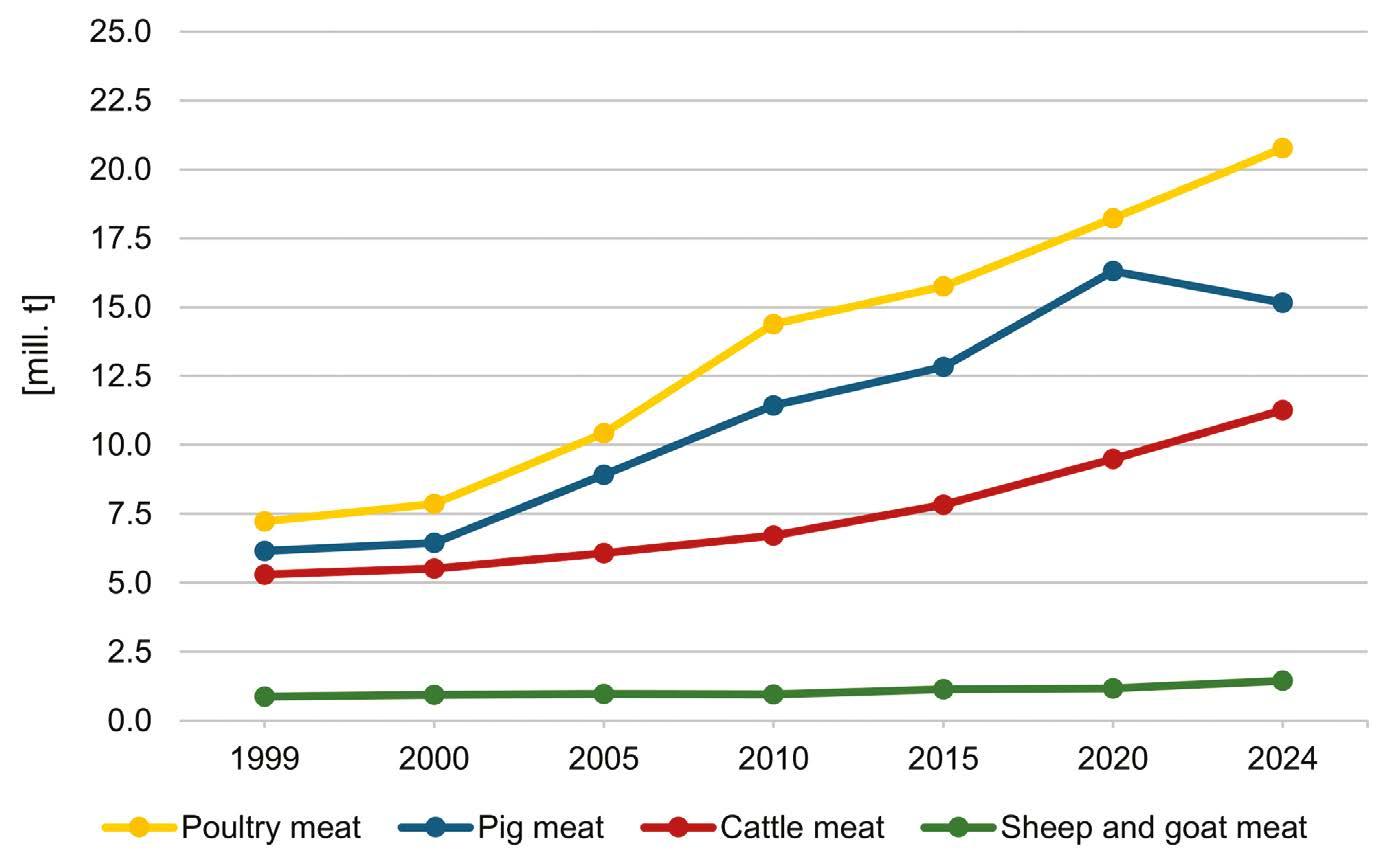
A comparison of the long-term development of global meat production and meat imports reveals that the trade volume has increased more sharply than the production volume. Between 2010 and 2024, global production increased by 28.4%, while meat imports grew by 45.2%. The development was similar in the G19 group. Here, production increased by 34.3%, but imports by only 42.5%, remaining below the global average. This had impacts on the G19's share of global production and imports. The G19's share of production grew from 72.3% to 75.7% during the period under review, but its share of imports increased only from 51.4% to 52.7%. Figure 1 shows that meat imports increased, in particular between 2000 and 2005, and then again after 2010, especially for poultry meat. A comparative analysis of the dynamics, broken down by meat type, from 2010 onwards is interesting (Table 1). Globally, poultry meat showed the highest absolute increase in both production and imports, but the relative increase was higher for beef, sheep and goat meat exports. However, the significantly lower starting values must be taken into account. This pattern was repeated in the G19 group. Here, too, the production volume of poultry meat increased much faster than that of the other three meat types. The
high import volume of pork is surprising at first glance. The collapse in pork production in China following the massive outbreaks of African swine fever and the resulting supply problems led to a sharp increase in imports of other meat types for several years. The shortage of pork in other Asian countries, which were also affected by the disease, had a similar impact on beef trade and explains the high absolute and relative growth rates.
It is noteworthy that despite the high absolute increase in poultry meat production among the G19 countries, which accounted for almost 94% of the global increase, the relative increase in imports was roughly in line with the global average. It must be taken into account that in some G19 countries in Asia, Europe, and in Mexico, demand rose significantly, and production was insufficient to meet the domestic needs, thus increasing imports became necessary (see also Table 2).
Significant differences between exports and imports at the country level
A comparison of the composition and ranking of countries in meat exports and meat imports reveals similarities, but also significant differences depending on the meat type. For poultry meat, the regional concentration in imports was considerably lower than in exports. While Brazil and the USA accounted for over two-thirds of the export volume,
1 Only the 19 member states are considered in the analysis, not the EU (27) and the African Union.
2 Poultry meat, pork, beef, as well as sheep and goat meat.
imports were more evenly distributed. The five leading countries accounted for 65.8% of the import volume (Table 2).
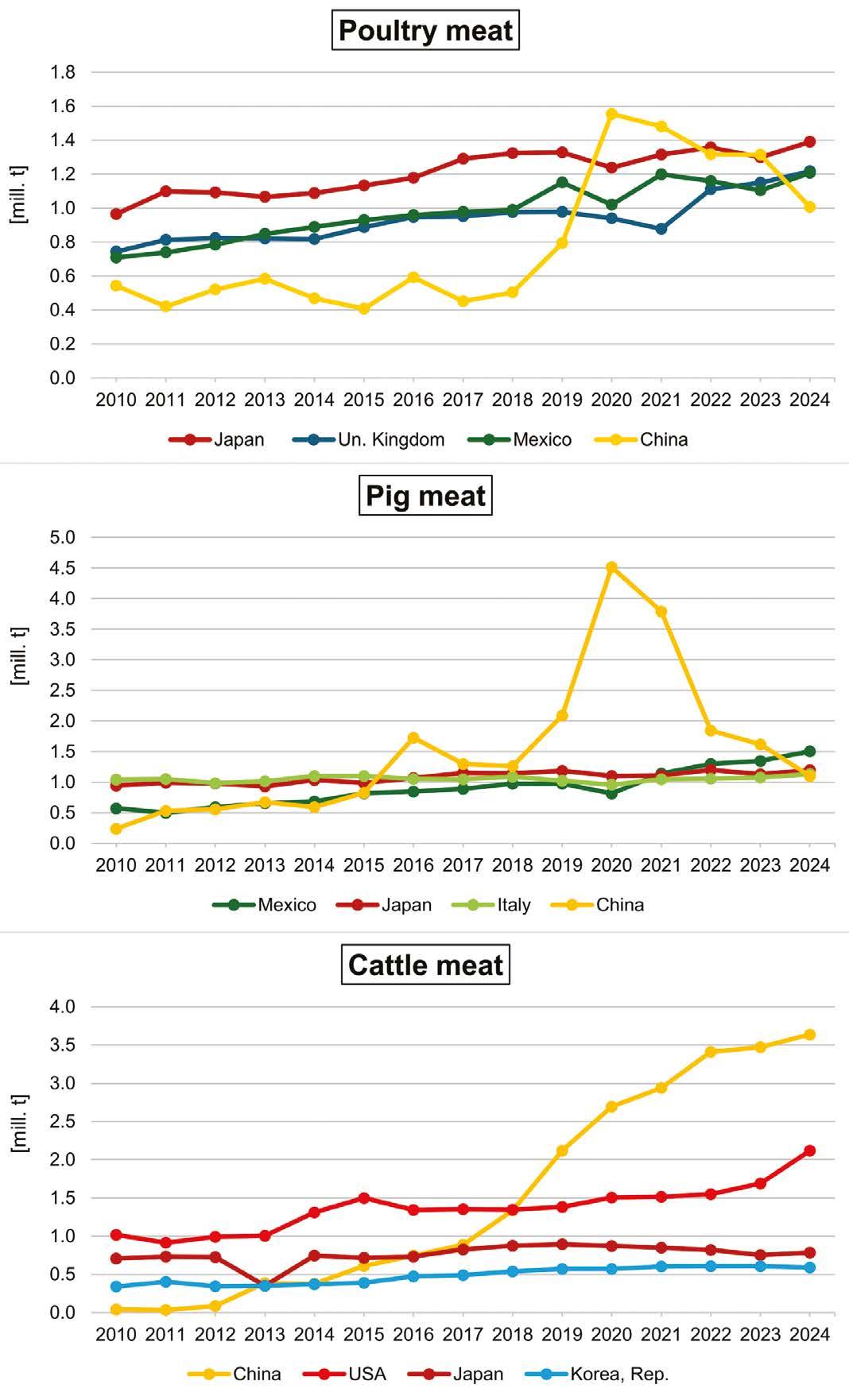
A detailed analysis of the development in the four leading importing countries (Figure 2) reveals a remarkable correlation in the absolute increase in their import volumes between 2010 and 2024, with values ranging from 425,000 tons to almost 500,000 tons. However, the relative growth rates differed significantly, with Japan‘s increase at 44.0% compared to China‘s at 85.5%. The graph for China reveals that the outbreaks of African swine fever in China triggered a doubling of imports starting in 2019, but that these imports declined significantly once the disease was contained.
▲Figure 1 – The development of global meat imports between 1999 and 2024, by meat types Design: A. S. Kauer based on FAO data.
Germany’s imports are attributable to the steadily increasing per capita consumption of chicken, which led to a drop in its self-sufficiency rate below 100%. The significant undersupply of duck and goose meat also contributed to the rising imports.
The pattern was repeated for pork. Here, too, the concentration of imports in just a few countries was about 25% lower at 64.9% than at exports.
A closer look at the import trends of the four leading countries reveals significant differences, as reflected in the respective graphs in Figure 2. While Italy‘s imports remained very consistent over the period under review, increasing by only 8.5%, Mexico‘s imports rose by
■ Table 1 – Changes in global and G19 meat production and imports between 2010 and 2024 Source: own calculation based on FAO data.
930,000 tons, or 163%. China experienced particularly large fluctuations. Imports roughly quadrupled between 2010 and 2024. A relatively steady increase until 2018 was followed by a dramatic rise between 2019 and 2021. The peak was reached in 2020 at over 4.5 million tons, representing a relative increase of 1,800% compared to 2010. With the successful control of African swine fever, imports fell by 3.4 million tons, 76% since 2021. This unusual dynamic had far-reaching consequences for the global pork trade. Rapid gains in exports to China by some countries, e.g. Spain, were offset by equally rapid declines in exports and caused economic problems.
In the beef sector as well, regional concentration was 13% lower for imports than for exports. However, there were significant differences in the spatial pattern. While four countries in the Americas, in addition to Australia, led the export markets, three Asian countries were leading in the import rankings, with China, for the reasons already mentioned, ranking first by a considerable margin. Surprisingly, the USA, despite its high domestic production and substantial exports, ranked second among importing countries. The unusual dynamics are reflected in the import trends of the four leading countries. While Japan’s import volume changed only slightly, increasing by 76,500 tons or 10.8%, it rose by 3.6 million tons or 9,150% in China and by 1.1 million tons or 109% in the USA. The dynamics in China are particularly interesting. Imports saw a slow increase until 2017, after which they rose significantly faster, reaching a preliminary peak of 3.6 million tons in 2024. In addition to supply problems resulting from the collapse in pork production, which led to compensatory imports of other meat types, the increasing consumption of beef by higher-income groups, which is regarded as an indicator of wealth and a status symbol, was also an important steering factor.
The trade in sheep and goat meat also showed a considerable imbalance between exports and imports. Here, Australia, the dominant exporter, contrasts with China, two European countries, and the USA as the main importers. It is noteworthy that the United Kingdom and France were represented in both top groups. Looking at the overall dynamics across the four meat types, it becomes obvious that China, Japan, and Mexico were the most significant importing countries within the G19 group. The USA was only a major destination for beef. Several European countries imported larger quantities of poultry meat and pork; however, trade within the EU (27) was more significant than trade with other G19 countries. A detailed analysis of trade flows would document this.
▲ Figure 2 – The development of the meat imports of the four leading G19 importing countries between 2010 and 2024, by meat types
Design: A. S. Kauer based on FAO data.
Summary: lower concentration in imports than in exports
The preceding analysis of the role of the G19 countries in global meat imports focused on whether the countries that dominated exports also played a leading role in imports. It was shown that, overall, the degree of concentration in imports was lower than in exports, and the composition of the leading importing countries differed considerably
■ Table 2 – A comparison of the shares of the leading five countries in the overall meat exports and imports of the G19 country group (2024)
Source: own calculation based on FAO data. Poultry meat
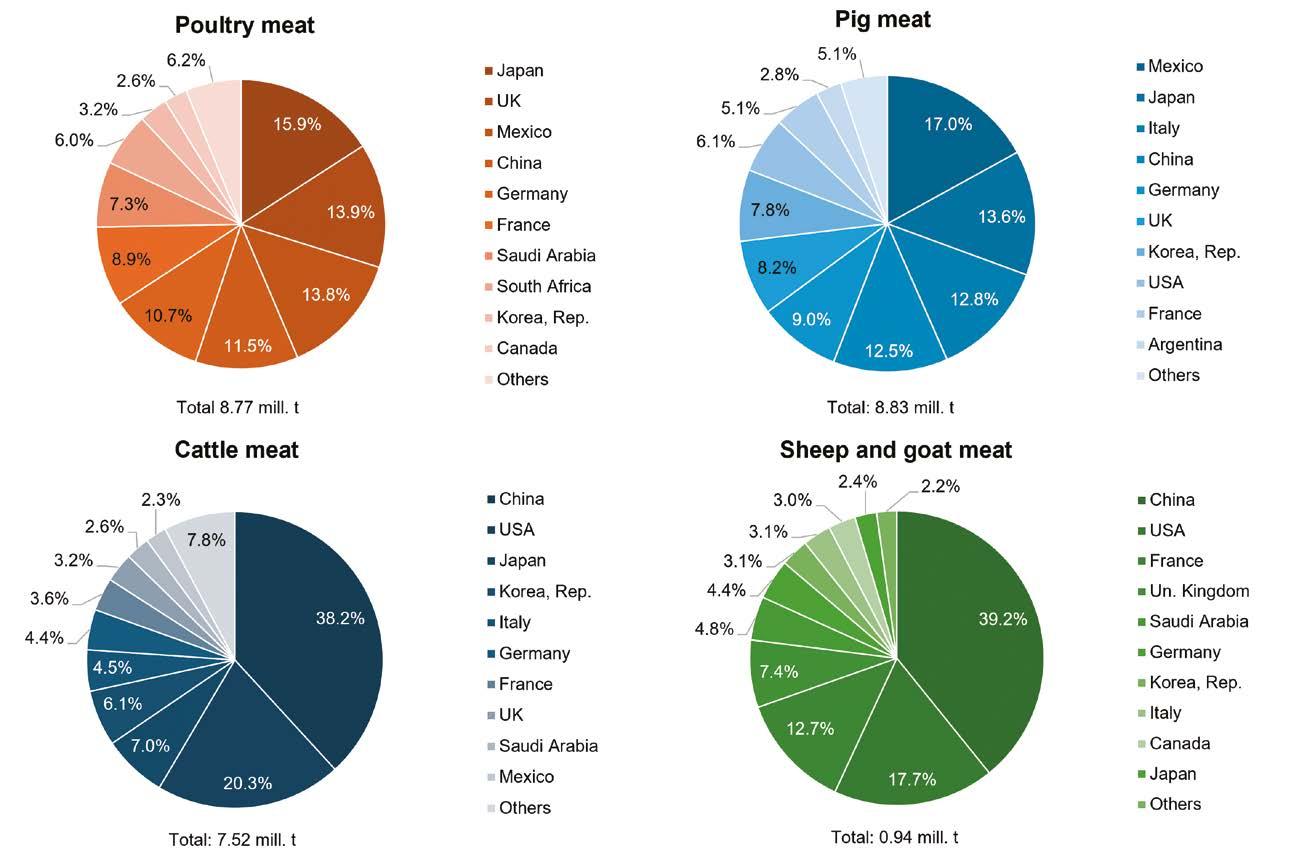
from that of the exporting countries. Figure 3 shows the share of the top ten importing countries in the total imports of the group for each of the four meat types. For poultry meat and pork, there was no high concentration in just a few countries. For beef, sheep, and goat meat, however, the concentration was significantly higher due to the large shares of China and the USA.
▲ Figure 3 – The share of the ten leading importing countries in the overall meat imports of the G19 group (2024), by meat types
Design: A. S. Kauer based on FAO data.
In conclusion, it can be noted that the G19 countries dominated meat production and exports. Regarding imports, it became clear that, in addition to trade between member countries, sales to countries outside the group were of great importance for countries with a production surplus.
Data source and supplementary literature
Food and Agriculture Organization of the United Nations. (n.d.). FAOSTAT. https://www.fao.org/faostat Windhorst, H.-W. (2026). The role of the G20 countries in global meat production and trade. Part 1: Production. Zootecnica Poultry magazine, (4). Windhorst, H.-W. (2026). The role of the G20 countries in global meat production and trade. Part 2: Global meat exports. Zootecnica Poultry magazine, (5).
OPTIMIZING EGG SIZE IN COMMERCIAL LAYERS
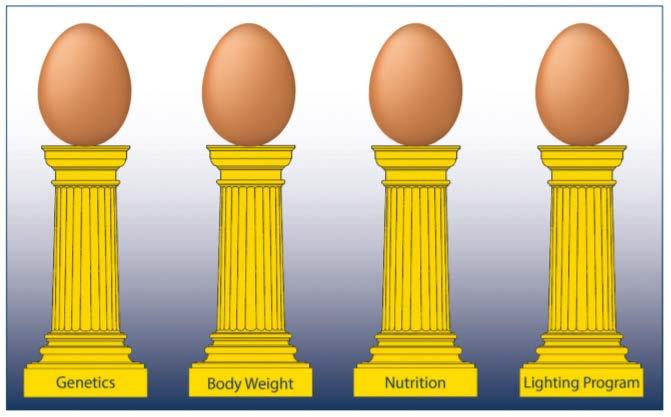
Each commercial variety has a genetically determined range of egg size, and within this range, environment plays an important role in the expression of egg size. Genetics, body weight management, nutrition, and lighting programs are the four pillars of egg size and are useful tools for the egg producer to change egg weight profiles to best supply the optimum egg size to a market.
The four pillars of egg size
1) Genetics
Hy-Line is working at the genetic level to create commercial lines that have different egg size ranges. Egg weight is a heritable trait (~40%) that responds well to genetic selection. About 60% of egg size variation, however, is due to non-genetic factors (nutrition, management, etc.).
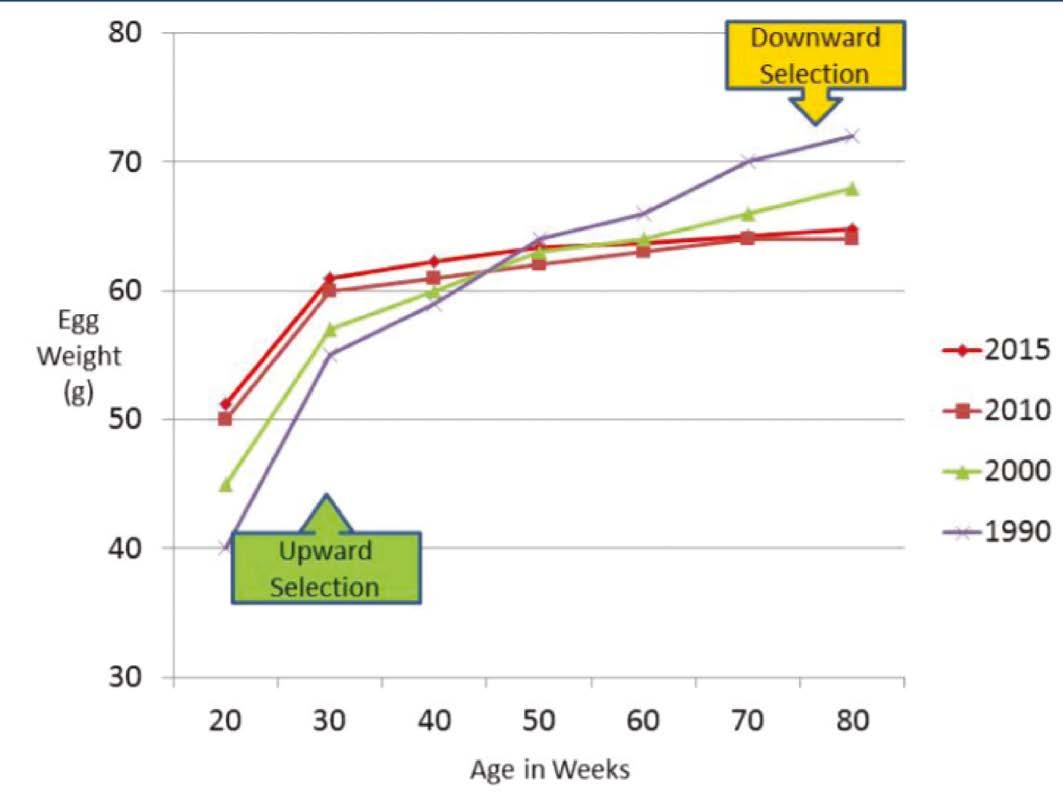
These non-genetic factors can be manipulated by egg producers to achieve the desired egg size profile. Hy-Line has been collecting egg weight data and selecting on egg weights for decades. Historically, egg weights have been collected periodically throughout a hen's lifetime. Currently, Hy-Line weighs the first three eggs a hen lays, eggs laid mid cycle, and eggs laid late in the cycle. The Hy-Line Research department uses these egg weights to select for a more desirable shape to the egg weight curve. Specifically, they select to increase early egg weights, hold mid-cycle egg weights constant, and decrease late egg weights (Figure 1). Egg numbers and breaking strength have a negative correlation with late egg weight. As Hy-Line varieties continue to improve late persistency and shell strength, the egg sizes at later ages will come down. To help adapt to this selection pressure, Hy-Line is relaxing the selection pressure to reduce late egg
weight to ensure that sufficient egg size and egg mass are available in the genetic potential of the birds.
2) Body weight
An important factor in egg weight is the pullet’s body weight at maturity. Heavier hens tend to lay more eggs throughout the production period and will have greater flexibility in adapting different egg size profiles. Body weight is affected by many factors, including beak trimming, vaccination program, transfer, disease challenges, pullet lighting program, space allotment, and nutrition. Due to the direct effect of body weight on egg weight, the achievement of flock target body weight with good flock uniformity is important for egg size management.
3) Nutrition
Nutrition during the rearing and laying period has a critically important role in egg weight. Proper rearing nutrition allows the hen to achieve or exceed the
standard body weights. Changing the rearing diets based on attaining body weight standards (and not bird age) will best match the diet to the actual nutritional needs of the pullet.
During the laying period, the specification of diets can be used to manage egg size. Energy, methionine/cystine, other digestible amino acids, linoleic acid, and total fat can directly affect the egg size. These components can be specified in layer diets to influence egg size downwards or upwards.
The protein content of the diet should be balanced to ensure the amino acids are utilized efficiently by the bird. Unbalanced protein can result in poor utilization of amino acids and suboptimal egg size. Bregendahl (2008) estimated the “ideal amino acid profile” and determined that the ratio of methionine to lysine should be a minimum of 47:100 to support maximum egg mass. All other amino acids should be balanced relative to lysine to ensure egg size is optimized as efficiently as possible.
To avoid excessively large egg size and weak egg shells later in the laying period, these nutrients are gradually reduced after peak egg production (30 weeks of age). Pushing nutritionally for greater egg size could result in thinner shells and more cracked eggs if mineral requirements of the bird are not adequately provided for.
Management for larger egg size should include nutritional considerations in rear for subsequent shell quality and bone strength (i.e. pre-lay diet).
Egg weight can be regulated through use of a phase feeding regime. Optimal egg weight will be easier to achieve when formulating feed according to egg weight or egg mass and constantly updating the formulas according to these parameters. This tool can be very helpful either to increase egg weight on earlier production or to control egg weight on late production.
Be aware that not only nutritional levels, but all aspects of nutrition management can affect egg size. Feed particle size,
water intake, water temperature, and feeding schedule can affect daily feed intake and nutrient intake as a consequence. Heat stress can depress egg weight. High environmental temperature above the thermoneutral zone (>33 °C) has a depressing effect on the bird’s feed intake. The result can be a shortfall in nutrients like protein (amino acids) and energy, which will decrease egg weight. It is common to see decreased egg size as a consequence of heat stress. Appropriate adjustments in feed formulation to match the actual bird feed intake and mitigation of heat stress conditions can minimize this depression of egg size. In environmentally controlled houses, lowering the environmental temperature will increase feed intake and support egg weight.
4) Lighting programs
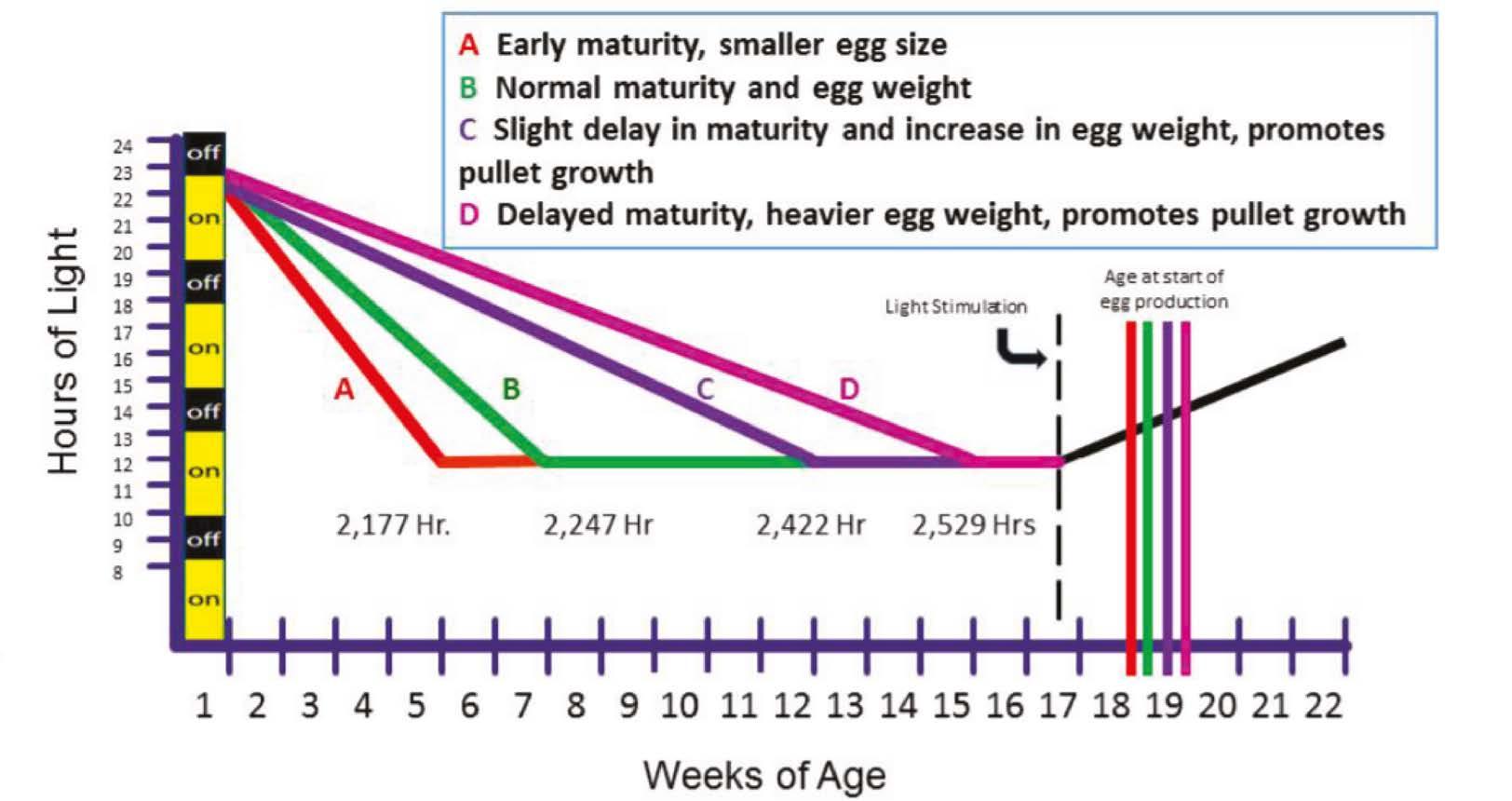
Chickens are responsive to changes in day length, and this has a significant effect on egg production and egg size (Figure 2). Slow step-down lighting programs (C and D) during the rearing period provide the pullet with more light hours to eat and grow. At the same time, these slow stepdown lighting programs can also delay maturity and increase egg size.
Faster step-down lighting programs (A and B) provide fewer light hours and slower growth but earlier sexual maturity with smaller egg size.
Age of light stimulation and body weight are interacting factors that help determine the onset of egg production, as well as egg size. Light stimulation should be done based on the flock’s body weight and uniformity. Generally, early light stimulation at lighter body weights will accelerate maturity and decrease egg size; while later light stimulation at heavier body weights will delay maturity and increase egg size. Generally, the hen has the ability to produce a certain egg mass. As egg weight is changed, the egg number tends to change inversely to keep the egg mass constant.
Management tips to optimize egg size in a market
Management for larger egg size
1. Select a commercial variety with a heavier egg weight profile. Hy-Line W-80 Plus is the large egg version of W-80. The Hy-Line Brown can be customized to influence the egg weight profile.
2. Use a slower step-down lighting program in rear (12 weeks).
3. Light stimulation at a heavier pullet body weight (W-80 Plus: 1.25 kg; Hy-Line Brown: 1.40 kg; W-36: 1.27 kg).
4. Make smaller, gradual reductions in energy and methionine/cystine during the phase feeding program.
a. Use feed formulation that provides 10–15% higher digestible amino acid intake (mg of digestible amino acid per bird per day) than recommended in the Hy-Line guide. Increase the ratio of methionine + cystine to lysine to be >90%.
b. Linoleic acid has a positive impact on egg size. For increased egg size, use 1.5 g linoleic acid per bird per day. Use sources of supplemental oil which are higher in linoleic acid, like soybean oil or flaxseed.
c. Increase total and supplementary fat content in the diets. Studies have shown that at the same linoleic acid levels, birds consuming a higher amount of total fat will produce larger eggs.
d. Keep an optimal energy intake. In situations of deficient energy intake, laying hens will utilize protein and amino acids as an energy source, resulting in less amino acids
available for optimal egg size. Many situations of low egg weight are due to low energy intake. Overfeeding energy above recommended amounts tends to depress egg weights, as a consequence of lower feed intake.
Management for smaller egg size
1. Select a variety that has a regular egg weight profile (HyLine Brown, Silver Brown, W-80, or W-36).
2. Use a faster step-down lighting program in rear (7 weeks).
3. Light stimulation at a lighter pullet weight (W-80: 1.17 kg; Hy-Line Brown: 1.30 kg).
4. Make larger gradual reductions in energy, methionine/ cystine, and total digestible amino acids during the phase feeding program.
a. Nutritional management for controlling egg size is more complex and generates slower results than managing for increased egg weight.
b. Reduce methionine + cystine to lysine ratio (<84%). This reduction should be done gradually to avoid reduction of egg production as well.
c. Control total digestible amino acid intake. Studies have shown that a reduction of intake of all amino acids can be more effective in controlling egg weight than reducing only methionine and methionine + cystine.
d. Limit linoleic acid intake to 0.9 g/day per bird. Change to an oil source with lower linoleic acid content, such as palm oil.
e. Start to control egg weight with phase feeding at least 2–3 g before the desired egg weight. Provide clear objectives of the amount of cumulative amino acid intake per egg weight phase you desire.
For more information, please visit www.hyline.com
▲ Figure 2 – Effect of different lighting programs on total hours of light, age of sexual maturity, and egg weight
INCUBATOR TEMPERATURE ACCURACY: THE 0.2 °C
THAT DETERMINES YOUR CHICK QUALITY
Walk into any technologically advanced hatchery today and you will see sophisticated single-stage/multistage incubators, automatic controllers, modern ventilation systems, smooth-running fans, and digital touchscreens displaying seemingly perfect readings. Yet, behind these impressive systems lies a biological reality more delicate than any technology: the embryo’s absolute dependence on precise temperature. What is often underestimated is how small a temperature change can make a big biological difference. A deviation of only 0.2°C can change embryo development, widen the hatch window, increase mortality, and silently reduce chick quality even when machines appear to be working normally. This article explains why this small temperature difference is not a tolerance margin but a deciding factor between success and loss in incubation.
➤ Rasel Ahmed
Incubation & hatchery management specialist
Why does such a tiny temperature change matter so much?
The avian embryo is a highly sensitive biochemical system. Its growth is controlled by enzyme-driven reactions that work best in a very narrow temperature range. Even a tiny change affects the whole process.
Research shows that an increase of 0.1 °C can raise embryo metabolic rate by 7–8%. At 0.2 °C higher temperature, the heart beats faster, heat production increases, oxygen demand rises and carbon dioxide builds up more quickly. Development is pushed too fast and organs may not form correctly.
A 0.2 °C lower temperature slows metabolism. Development is delayed, hatching is late and chicks lose uniformity and strength.
Unlike mammals, the embryo cannot control its own temperature. It depends on the incubator microenvironment.
Therefore, 0.2 °C is not a small number – it decides whether development is balanced or stressed, whether the hatch is uniform or spread out and whether chicks are strong or weak.
How 0.2° C influences embryo development across incubation
Embryo development is a temperature-driven biological process. Enzyme activity, cell division, vascular growth, and organ formation all depend on a very narrow thermal range. A deviation of only 0.2 °C changes metabolic
rate enough to shift the entire developmental pathway. The effects are different at each phase of incubation, but the consequences always appear later as chick quality problems.
Early phase (days 0–7): the foundation of life
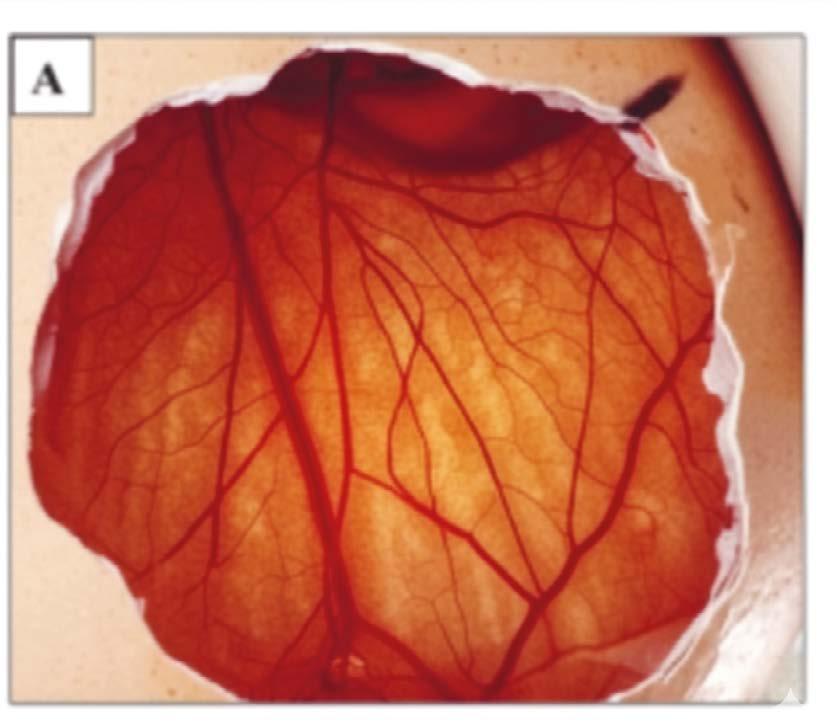
The first week of incubation is when the embryo starts forming heart, brain, neural tube, blood vessels, early organs, and the chorioallantoic membrane (CAM). This stage is very sensitive. Even small temperature changes can have lasting effects.
If the incubator is slightly too warm, development speeds up too quickly. Early structures may form abnormally, organs may lose symmetry, and the embryo can become stressed. The CAM may be weaker, limiting oxygen supply later. This small 0.2 °C difference can affect the embryo all the way to hatching.
If the temperature is slightly too low, development slows; cell division and milestones are delayed. Embryos survive but hatch later, may struggle with temperature regulation, and the batch can become uneven. This can affect chick performance after hatching.
In summary, the first week sets the stage for life. Keeping the temperature precise ensures healthy, uniform embryos and gives every chick the best start.
Mid incubation (days 7–14): when growth accelerates
By the second week, the embryo grows rapidly. Metabolism increases, the CAM works fully, and bones and muscles develop
quickly. Temperature and oxygen supply must be carefully balanced because the embryo is very sensitive.
If the incubator is slightly too warm, the embryo produces more heat. This raises internal egg temperature, increases oxygen demand, and CO2 builds up. Then the CAM cannot keep up, blood vessels may develop poorly, muscles and bones remain weak, and some embryos may die.
If the temperature is slightly too low, growth slows. Embryos stay smaller, muscles and blood vessels are underdeveloped, and energy use is inefficient. They may hatch weaker, take longer to emerge, and struggle after hatching.
Mid incubation is a critical stage. The embryo is growing fast and the margin for error is small. Keeping temperature precise ensures proper growth and prepares chicks to perform well after hatching.
▲ CAM
Final stage (days 15–21): the survival phase
In the last phase, the embryo produces the most metabolic heat. Temperature control is very important. Small changes can stress the chick.
If it is slightly too warm, the embryo cannot release heat. Body temperature rises, the heart beats faster, and oxygen demand may exceed supply. Chicks may hatch early, dehydrated, thin, and with poorly absorbed yolk. Navels can be red or black. Immunity is weak, vitality is low, and first-week growth suffers.
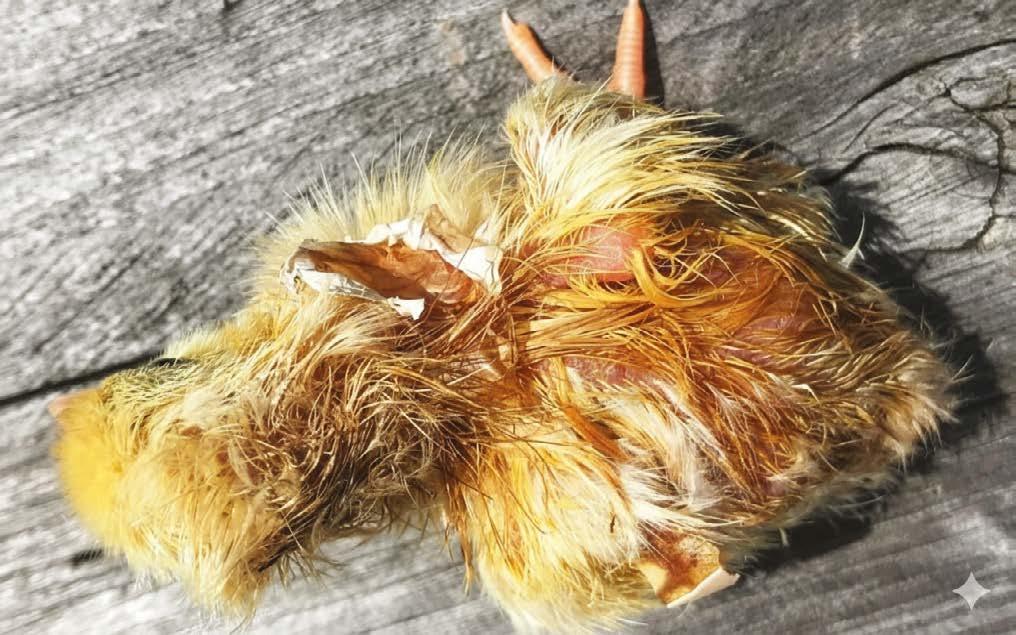
If it is slightly too cool, development slows. Chicks hatch late, tired, sticky, and weak, with residual yolk. Their digestive system adapts slowly, reducing nutrient absorption and early growth.
Even in this stage, the margin for error is very small. Keeping temperature precise and stable ensures chicks hatch healthy and ready to thrive on the farm.
The hatch window: the practical reflection of temperature accuracy
A well-managed hatch produces most chicks within 12–24 hours. When temperature varies by only 0.2 °C, the hatch window can stretch to 36–48 hours. Early chicks dry out and dehydrate. Late chicks are weak and underdeveloped. Uniformity drops and farm performance suffers. Often this happens even when the machine display looks perfect. Microclimates inside the incubator mean the embryo does not always experience what the sensor shows.
Eggshell temperature and airflow uniformity are therefore essential to monitor.
Why does temperature deviate even in advanced incubators?
Even advanced machines are affected by:
• Sensor calibration drift of 0.2–0.4 °C
• Poor airflow and blocked filters
• Incorrect loading density
• Room temperature fluctuations
• Heat contribution from embryos in multistage systems
These factors create hot and cold zones inside the incubator.
Maintaining temperature accuracy: a scientific hatchery strategy
Sensor calibration: calibrate regularly with certified instruments and do not trust the screen alone.
Eggshell temperature (EST): the best indicator of embryo comfort. Target 37.8–38.2 °C across many tray positions. Airflow management: clean filters, correct loading, and proper fan speed ensure uniform temperature. Stable room conditions: large room temperature swings force machines to over-compensate and create instability. Temperature mapping: identify hot and cold zones and correct them before losses occur.
Economic impact: the profit power of 0.2 °C
Accurate temperature control improves hatchability, chick quality, uniformity, first-week performance and livability. Across millions of eggs this small difference becomes a large
▲ Sticky chicks
economic gain. In practice, even a 0.2 °C deviation can separate profit from loss.
Conclusion
Incubation is not only running a machine. It is managing a living embryo. A difference of 0.2 °C can decide whether chicks are strong or weak, uniform or uneven, and ready to perform or already stressed.
Precise temperature keeps metabolism balanced, oxygen supply adequate, organs developing correctly, and the hatch window tight. For modern hatchery success, temperature accuracy is not optional, but it is the foundation of chick quality and farm performance.
References
Decuypere, E., & Michels, H. (1992). Incubation temperature as a management tool: A review. World’s Poultry Science Journal, 48(1), 28–38. https://doi. org/10.1079/WPS19920004
French, N. A. (1997). Modeling incubation temperature: The effects of incubator design, embryonic development, and egg size. Poultry Science, 76(1), 124–133. https://doi. org/10.1093/ps/76.1.124
Lourens, A., van den Brand, H., Meijerhof, R., & Kemp,
B. (2005). Effect of eggshell temperature during incubation on embryo development, hatchability, and posthatch performance. Poultry Science, 84(6), 914–920. https://doi. org/10.1093/ps/84.6.914
Meijerhof, R. (2009). The influence of incubation on chick quality and broiler performance. In Proceedings of the Australian Poultry Science Symposium (pp. 1–8). University of Sydney.
Tona, K., Malheiros, R. D., Bamelis, F., Careghi, C., Moraes, V. M. B., Onagbesan, O., ... & Decuypere, E. (2003). Effects of egg storage time and incubator temperature on chick quality. Poultry Science, 82(7), 1271–1279. https://doi.org/10.1093/ps/82.7.1271
Aviagen. (2022). Ross Broiler Management Handbook: Incubation guidelines. Aviagen Group. Cobb-Vantress Inc. (2021). Cobb Hatchery Management Guide. Cobb-Vantress.
THE FIRST WEEK AS THERAPY: RETHINKING
THE BROILER NEONATAL PHASE WITH A PREVENTIVE APPROACH
The first 7–10 days of life represent the biologically most critical phase of the entire commercial broiler production cycle. Within this narrow timeframe, the chick undergoes an extreme physiological transition: from lipid-dependent embryonic metabolism (yolk-sac resorption) to exogenous carbohydrateprotein nutrition, while simultaneously developing thermoregulatory, digestive and immune systems. Modern fast-growth genetic lines (Ross 308/708, Cobb 500/700, Hubbard) exacerbate this fragility, making any management error physiologically amplified. This article analyzes, with an integrated veterinary approach, the pathophysiological mechanisms underlying the main first-week syndromes (omphalitis/YSI, starve-outs, early ascites, SDS, aspergillosis and early rickets) specifying correct chick placement management, providing reference tables for environmental and productive parameters, necropsy diagnostics and troubleshooting protocols useful for field veterinarians and poultry sector operators.
➤ Luca Bianco Veterinarian
The neonatal window: a critical phase
First week mortality (FWM) is the quintessential sentinel parameter for evaluating hatchery efficiency and placement practices. An FWM exceeding 1% must be considered a clinical alarm signal requiring systematic diagnostic investigation. Modern commercial hybrids (selected for an exceptional ratio between muscle growth and feed consumption) possess growth rates that translate into extremely high metabolic and cardiopulmonary demand even in the first week.
From a thermoregulatory perspective, a chick at hatching is essentially a poikilothermic organism: hypothalamic maturation, necessary for autonomous thermoregulation, is completed only around 7–10 days of life. In parallel, the intestine is morphologically immature, with short villi and low pancreatic enzymatic activity, and the mucosal immune system (GALT, gut-associated lymphoid tissue) depends on early antigenic stimulation provided by exogenous feeding. These three variables converge in a temporal window where any management or infectious
Temperature under radiant heaters (°C)
Air speed at chick level (m/s)
°C (center)
°C (edge)
m/s
Ammonia – NH₃ (ppm)
error produces irreversible consequences on the flock’s productive and sanitary development.
Environmental management: target parameters for the first week of life
Constructing an adequate microclimate is the most effective preventive measure available to the veterinarian and the farmer. House pre-heating must begin 24–72 hours before placement, with particular attention to litter temperature (measured at multiple points, at different levels, with a contact thermometer), which is the most frequently overlooked critical parameter in field practice. Synthetic operational guidelines are reported in Table 1
Monitoring animal behaviour
Chicks should be left undisturbed for the first few hours post-placement to facilitate acclimatization; meanwhile, certain environmental parameters should be verified (light intensity and uniformity, minimum ventilation, and correct opening of vents).
Avoid direct drafts on chicks. Minimum ventilation indispensable even in cold conditions
Above 3,000 ppm, immunosuppression and predisposition to early ascites due to pulmonary vasoconstriction are recorded
NH₃ ≥25 ppm paralyzes the mucociliary apparatus and favors entry of Mycoplasma spp. and viral respiratory agents
Intense light in early days stimulates exploration, access to water and feed. Evaluate shaded areas for chick rest
Cold water (<15 °C) reduces intake. Warm (>25 °C) promotes bacterial growth (biofilm) in lines. Sanitize with appropriate disinfectant.
Instrumental evaluation doesn’t replace observation of animal behavior; chicks distributed uniformly in the brooding area, active vocalization and regular access to water and feed indicate correct thermal comfort. Huddling beneath heat sources is the earliest and most reliable signal of hypothermia; peripheral dispersion with wings drooping and open-beak breathing indicates hyperthermia. Integrating both sources of information (instrumental + behavioral) is essential for clinically rigorous management. Covering the brooding area with biodegradable paper on which starter feed is distributed must cover at least 70–80% of the surface, facilitating visual identification of food by chicks in the first hours of life, when the ability to locate traditional feeders is not yet fully developed. Like feed, water represents one of the key factors for chick weaning: from its quality (interpreted as physico-chemical parameters) and temperature, one moves to systematic control of drinking lines (including nipples and cups) for correct filling and delivery, as well as verifying drinker height at all points in the brooding area. This also contributes to maintaining correct environmental humidity (expressed as Relative Humidity, RH), favouring animal acclimatization while preventing dehydration and starve-out phenomena (starvation due to lack of feed consumption).
Early feeding, GALT and nutritional transition phase
Immediate access to feed and water at the time of placement (defined in literature as early feeding) is a biological requirement, not merely a good practice. Feed intake within the first few hours triggers a cascade of interdependent physiological events:
• Pancreatic enzymes secretion (lipase, protease, amylase), necessary for the blood absorption of the residual yolk sac.
• Proliferation of intestinal villi: delays exceeding 24 hours induce irreversible atrophy, reducing intestinal absorption area and causing chronic malabsorption.
• GALT maturation: early antigenic stimulation is necessary for the development of the Bursa of Fabricius and spleen, and for antibody production in response to vaccination prophylaxis.
• Microbiota colonization: early microbial competition (principle of competitive exclusion) reduces colonization by pathogenic agents such as Salmonella spp. and Clostridium perfringens.
The crop filling control (crop check) is the management thermometer: monitoring crop filling at 2, 8–12 and 24 hours post-placement is the most immediate and reliable clinical tool to evaluate early feeding efficacy. A full and soft crop indicates combined intake of feed and water; an empty crop indicates starvation (starve-out); a hard crop indicates feed intake with insufficient water supply.
Chick quality verification: main parameters
Evaluating chick quality at the time of placement represents a fundamental diagnostic moment, capable of predicting group’s productive performance and promptly identifying critical issues related to incubation, hatching egg management or transport. The main morphological and behavioral parameters to examine include: navel closure and abdominal quality (absence of residues, scabs or signs of omphalitis; palpable and dry abdomen; absence of swellings), leg color and integrity (uniform yellow color, absence of lesions/inflammation or joint swellings), eye appearance (liveliness, full opening), beak conformation (absence of defects, clean nostrils), postural tone and reactivity level to stimuli. Added to these is the evaluation of vocalizations, an indirect indicator of the group’s welfare status and vitality. The Pasgar Score uses these criteria, divided into five macrocategories — lower limbs, beak, abdominal quality (intended as complete yolk sac resorption and navel closure with full healing) and reflexes — assigning each a value from 0 to 2, to assign a total maximum of 10. Animal groups with a score ≥8 are considered good quality; values between 6 and 7 indicate acceptable quality but require monitoring; scores ≤5 signal poor quality requiring investigation into causes.
At the time of unloading, it is important to record the rectal temperature of subjects, taking individual measurements from different points/zones of the transport vehicle, using
appropriate instrumentation (e.g. thermoscan): this allows evaluation of group dispersion and any deviations from the expected range of 39.5–40.5 °C. If the latter is low, subjects will struggle to consume water and feed in the first hours, with potential development heterogeneity and phenomena of failed yolk sac resorption and related mortality. Conversely, if elevated, chicks may undergo dehydration phenomena, with depressed/lethargic profiles. Similarly, another fundamental parameter to detect upon animal arrival is body weight. This should be measured by individually weighing at least 100 chicks, taken randomly from the crates. Individual data must be processed to calculate mean weight and uniformity, parameters useful for calculating the coefficient of variation (CV): generally, a CV between 6% and 7% is good (corresponding to approximately 85-90% uniformity); there should be no differences between the initial CV and that detected at 7 days (if over 3–4%, it is a signal of worsening management in the first days of rearing). Furthermore, body weight is a predictive factor (under good conditions) of weight at 7 days of age: the latter should approach a minimum of 4.5 times the initial weight.
Key points: performance and corrective actions
The veterinarian and operators must have a quantitative reference system to evaluate the week’s progress and identify deviations from the norm early. Table 2 summarizes the main performance indicators and operational thresholds requiring immediate corrective action.
Etiopathogenesis and diagnostics of main issues
First-week broiler pathologies often share a multifactorial pathophysiology where management stress, immune immaturity and infectious challenges intersect synergistically. Among infectious conditions, we find Yolk Sac Infection (YSI) which, in complicated omphalitis profiles, represents one of the most frequent neonatal septicemic problems, sustained in 70–87% of cases by Escherichia coli and more rarely by Staphylococcus aureus, Salmonella spp., and Enterococcus spp. Failure of navel closure allows ascending bacterial contamination of the yolk sac, determining a profile of lethargy, distended abdomen and bluish skin with exitus within the first 3–7 days of life. Necropsy examination reveals an enlarged yolk sac, caseous or watery consistency and fetid odor, frequently associated with fibrinous peritonitis, pericarditis and perihepatitis in cases of systemic colibacillosis. This pathology merits specific clarification for its implications regarding antimicrobial resistance management. In Italy and Europe, acquired resistance of avian E.coli to β-lactams (ESBL-producing strains), tetracyclines and fluoroquinolones is widely documented
Crop check at 2 h
Crop check at 8–12 h ≥80–85% <75%
Crop check at 24 h ≥95% full crops
Body weight at 7 days ≥4.0–4.5 × arrival weight < 3.5 × arrival weight
Immediately verify water/feed distribution, litter temperature and nipple function
Correct radiant heater temperature, increase paper coverage with starter feed, add supplementary drinkers
Identify starve-outs; electrolyte integration. Urgent revision of all environmental parameters
Complete audit: thermal profile, starter feed quality, group uniformity, health data recording. Hatchery feedback. Cumulative mortality at 7 days
High FCR in week 1 indicates insufficient ingestion of thermal dispersion. Re-evaluate feed physical form (fine-crumble) Flock uniformity
week 1
High variability = nonhomogeneous resource distribution. Increase density of water and feed access points
Note on first week feed conversion ratio. Under optimal conditions, the Feed Conversion Ratio (FCR) of the first week is less than 1.0 (often 0.85–0.95), because chicks efficiently use every gram of feed for net body growth.
A weekly FCR higher than 1.10 should induce suspicion of energy dispersion due to thermoregulation (cold environment), insufficient energy quality of the starter feed or subclinical pathology reducing intestinal absorption.
and directly correlated to indiscriminate preventive antibiotic use in the first week of chick life. Antibiotic therapy in subjects with severe YSI septicemia is frequently ineffective: tissue concentrations at the yolk sac level (an anaerobic, nutrient and rich substrate) are rarely sufficient to eradicate the infection, and mortality follows its course independently of treatment. The correct approach is therefore preventive, based on systematic hatchery audit (hatching temperature and humidity, hygiene of beaktrimming equipment, tray sanitation), elimination of hygienically poor eggs, litter pre-heating, and rigorous biosecurity at house entry. Any use of antimicrobials via drinking water must always be supported by culture and antibiogram, in compliance with principles sanctioned by EU Regulation 2019/6 and the PNCAR.
Of non-infectious nature but with high productive impact are starve-outs and early dehydration, conditions determined exclusively by management factors: lack of access to feed and water in the first 24 hours of life induces severe glycogen depletion, detectable at crop check as an empty or hard-consistency crop. Necropsy findings evidence a pale liver with glycogen exhaustion, pale kidneys and urate deposits (uricosis). Immediate correction of environmental parameters (temperature and relative humidity) together with increasing paper coverage surface to 70–80% and integration of drinking water with
electrolytes and vitamins for 3–5 days, constitutes the reference management protocol. Among cardiovascular and metabolic pathologies, ascites originates from pulmonary hypertension secondary to hypoxia (Pulmonary Arterial Hypertension, PAH), determined by insufficient temperatures or elevated CO₂ concentrations and/or an excessively rapid growth rate. Right ventricular overload results in the production of citrine-colored abdominal transudate, with right ventricular hypertrophy, hepatic congestion and edematous lungs at necropsy. Similarly, Sudden Death Syndrome (SDS, or flip-over) predominantly affects fast-growing male subjects through fatal ventricular arrhythmias, with a mortality peak between 14 and 28 days of life (anticipated in super-early hybrids) and absence of macroscopic visceral lesions at anatomo-pathological examination. For both conditions, there are no effective therapies: prevention is based on optimizing ventilation and temperature, reducing stocking density, and, in the case of SDS, modulating early growth speed through reduced starter nutritional programs. Regarding other infectious pathologies, aspergillosis caused by Aspergillus fumigatus represents a diagnostic urgency, as there are no practicable therapeutic protocols in farming situations: triazoles (itraconazole, voriconazole) present prohibitive costs for mass use and scarce evidence of efficacy in production animal avian medicine. Massive inhalation
Problem detected Field signs
Insufficient Crop Check (<90% at 24h)
High cumulative mortality with omphalitis lesions
Starve-outs and dehydration
Weight at 7 days <4× arrival + poor uniformity
Early respiratory signs + wet litter
Skeletal issues/ splay legs
Empty/hard crops; dispersed, inactive chicks
Open navel, tense abdomen; pathological yolk sac, peritonitis
High RH; insufficient minimum ventilation; drinker leaks; excessive water pressure; poor litter quality
Wet litter; smooth surfaces in transport crates; unbalanced starter nutrition; excessive density
of conidia in the first 24–72 hours of life determines a profile of severe dyspnea, gasping, and beak cyanosis, with mortality that can reach 50% in declared outbreaks. The pathognomonic lesion is represented by multifocal whitish granulomatous nodules at the level of lungs, trachea and air sacs, with mycelium visible under UV light. Prevention requires systematic mycological analysis of litter before placement (via plating on Sabouraud agar and incubation at 37 °C for 48–72 hours) as a routine protocol in houses with anamnestic history of early respiratory problems, as well as a rigorous hatchery audit. Finally, skeletal pathologies like rickets and dysmorphism such as splay legs and tibial dyschondroplasia recognize a nutritional etiopathogenesis or malabsorption secondary to early enteritis, with deficit of calcium, available phosphorus and vitamin D₃. The necropsy profile evidences rib deformities, distorted cartilage growth and enlarged epiphyses, confirmable by bone diaphanization. Optimal starter formulation (Ca 1,0%; available P 0.45%; vitamin D₃ ≥2000 IU/kg), combined with maintaining dry and non-slippery litter, constitutes the fundamental preventive measure.
Veterinary troubleshooting guide
Clinical diagnosis in the first week is essentially a diagnosis of management issues. The veterinarian must be able to correlate farm clinical signs with predisposing factors and translate them into precise, rapid, and measurable
Veterinary
Increase paper coverage ≥70%. Lower nipples to chick eye-level. Water T° 18–21°C. Check radiant heaters and litter T°
Hatchery audit (hatching temperature/humidity, beak-trimming hygiene, equipment sanitation). Pre-heat litter to 30°C. Rigorous biosecurity. Targeted antibiotic based on antibiogram: avoid indiscriminate prophylaxis.
Electrolytes + vitamin C in water for 3–5 days. Add supplementary drinkers. Correct T° and RH. Verify water system pressure and nipple cleanliness.
Re-evaluate temperature profile over the entire week. Audit equipment density (min. 1 nipple/8–10 chicks). Starter feed analysis. Review vaccination status and health protocol.
Increase minimum ventilation maintaining target temperature; Adjust drinker height to reduce leaks. Manage RH at 50–70%. Perform tracheal swabs if persistent. Check litter depth and humidity.
Verify Ca/P/Vit D₃ formulation in starter feed. Improve litter management and ventilation. Litter of absorbent material (wheat straw or dry wood shavings)
corrective actions. Table 3 provides an operational scheme for the main scenarios encountered in the field.
Conclusions
The productive and sanitary success in broiler farming is built in the first 7 days of life. Correct management and careful monitoring in the first week by involved operators are of fundamental importance. The approach to this phase cannot be reduced to managing pathological emergencies: it must be structurally preventive, quantitative and integrated between hatchery, transport and farming. Literature data converge unequivocally: every extra gram of weight gained at 7 days translates into 5–10 grams more live weight at slaughter, with significant impacts on conversion ratio, total mortality and overall carcass quality. The chick’s behavioral thermoregulation – not the thermometer – is the earliest and most reliable clinical indicator of environmental comfort. Systematic necropsies, weekly biometry, and a rigorous crop check at 24 hours are the fundamental diagnostic tools that every veterinarian and poultry operator must master and document. Equally effective in interrupting recurrent cycles of neonatal pathology is a structured partnership with the hatchery, based on quantitative feedback (cumulative mortality, chick quality upon arrival, percentage of red hocks, etc.). Finally, in a European regulatory context, increasingly stringent regarding the fight against antimicrobial resistance, environmental and structural prevention is no longer an option: it is the only clinically sustainable response.
LOWERING AMMONIA EMISSIONS THROUGH NUTRITION
Livestock activity accounts for most of the total ammonia release worldwide, highlighting the call for implementing more environmentally friendly solutions. Also, prolonged exposure to high amounts of ammonia indoors may threaten the well-being and health of staff and birds if the ventilation rate fails to control ammonia concentration within safety thresholds. To reach this goal, feeding strategies can mitigate ammonia emissions from poultry barns.
➤ Aitor Arrazola Research biologist, Ph.D. in Animal Behaviour & Welfare
How ammonia is produced in poultry barns
Upon digestion, proteins are broken down into amino acids for absorption and, then, reassembled again into proteins to support body functions. Once protein needs are satisfied, amino acids that are no longer needed are metabolised for carbohydrates and lipid synthesis by removing their amino group. Due to potential toxic effects at high concentrations, birds get rid of the amino groups in a timely manner through the urine (as uric acid). Upon excretion, faecal content and urine get together resulting in a high-quality manure with low water content and rich in biodegradable nitrogen. Yet, uric acid is quickly converted to ammonia once exposed to air and moisture.
Manure and litter cannot be removed daily from poultry barns, and the nitrogen in poultry urine is decomposed soon after excretion leading to ammonia formation. Studies indeed suggest that more than 50% of manure nitrogen becomes ammonia. Certainly, warm temperatures, moist manure (>50% water content), and litter pH around 8 are the best conditions to speed up the conversion of uric acid to ammonia (which are standard housing conditions for broiler and layers). For example, ammonia production increases exponentially when indoor temperature rises above 22 ºC and relative humidity is high (>70%). Given that lowering indoor temperature can jeopardize flock performance and is not practical, recommended management practices to mitigate ammonia emissions include addition of dry bedding materials (e.g., wood shavings) to absorb water content and reduce humidity, prevention of water spillage, and litter acidification. Under normal litter pH (7.5–8.5),
ammonia is volatile whilst an acidic environment (pH <7 at conventional room temperatures) stops this process. However, dropping litter pH enough to halt full ammonia release may also bring welfare and health concerns due to high prevalence and severity of foot lesions, hock burns, and breast blisters if birds are in touch with acidic litter for long time.
How nutrition can mitigate ammonia emissions
From a feeding management standpoint, cutting down the amount of nitrogen excreted by birds is key to curb ammonia production in poultry houses. The first step is to reduce high protein intake and improve protein efficiency (e.g., amount of protein consumed to gain one kilogram of body weight). Protein-rich ingredients are costly, and excess of amino acids are metabolised into wasteful nitrogen compounds that turn into ammonia under warm humid conditions. Research on poultry nutrition reported that ammonia emissions can decline up to 10% when the crude protein content in conventional diets lowers 1%. Best available techniques indeed encourage producers to feed low-protein diets as a cost-effective practical strategy to mitigate ammonia emissions. Still, a survey from the European Environment Agency estimated that less than 30% of poultry producers implemented low-protein feeding strategies across European countries.
Feeding poultry diets with low crude protein reduces undoubtedly ammonia production in poultry houses although this drop must not come at the expense of flock performance. To prevent this problem, poultry diets must be designed to meet amino acid requirements at an ideal ratio between them. The content of dietary amino acids, both essential and non-essential, has to be well-balanced
since the first limiting amino acid can halt protein synthesis. Particularly when feeding low-protein diets, birds can metabolise essential amino acids into non-essential ones if their concentration has been overlooked during formulation. The amino acid profile of poultry diets is therefore crucial to enhance protein efficiency and ensure daily amino acid needs are fulfilled. For this reason, low-protein diets are commonly supplemented with amino acids to achieve a well-balanced amino acid profile.
On top of these protein-efficiency feeding strategies, phase feeding plays a crucial role at tailoring amino acid intake to metabolic requirements according to age and performance goals. As birds age, their nutritional requirements for protein and amino acid intake increase to support maintenance, growth rate, and laying persistency in hens but also their feed intake. So, starter diets have high content of crude protein and amino acids to account for low feed intake during their first weeks of age, and dietary protein and amino acid levels decrease progressively in grower and
finisher diets. Within this interplay, the nutritional content in poultry diets should be refined accordingly throughout development and production phases to maximize protein efficiency. Certainly, implementation of phase feeding in broilers and layers is estimated to reduce ammonia emissions by 20%.
Minimizing the environmental footprint of poultry industry is becoming a hot topic due to its impact on the health of neighbouring ecosystems. Efforts in this regard also bring new opportunities for producers to become more protein efficient and create safer indoor conditions for birds and staff. As a take-home message, application of phase feeding strategies using low-protein diets with a well-balanced amino acid profile can reduce ammonia emissions while improving flock performance and well-being. In addition to these feeding mitigation strategies, refining litter management practices and housing conditions are also crucial to control ammonia production in poultry barns.
THE EFFECT OF BAKERY BY-PRODUCTS ON DIGESTION, HEN HEALTH, AND EGG-LAYING PERFORMANCE
There is a growing interest from the global animal-feed industry to lower the carbon footprint of the production of eggs or poultry meat via the feed. As feed has the highest impact on the carbon footprint of egg production, there is great potential to make a significant reduction by including cost-effective and sustainable feed ingredients. When looking at alternative ingredients, the overall goal of the diet should be the same: it should not compromise on egg production, nor have negative consequences on the overall health and well-being of the chickens. In particular, the chicken’s gut health should be maintained. One of the more recent alternatives that are being looked at to include in today’s chicken diets are the so-called bakery by-products, like bread and cookie meal. Various bakery by-products can be interesting alternative feed ingredients, as these bakery by-products offer a rich source of carbohydrates and fats. However, prior to including bakery by-products in any laying hen diet, you need to be aware of their effects on digestion, microbial populations, gut health and overall performance.
Bakery by-products like bread and cookie meal contain significant amounts of rapidly digestible sugars and carbohydrates. The digestion rate of these carbohydrates directly affects the energy utilization and the microbial balance in the gastrointestinal tract. Unlike complex carbohydrates such as fiber, simple sugars that can often be found in bakery by-products are absorbed quickly. Rapid digestion of sugars may increase metabolic energy availability but could also result in inefficient nutrient absorption if not properly balanced with other dietary components. Furthermore, the digestibility of most of the bakery byproducts is lower. Let’s take maize as an example. On average, the digestibility of bread meal, cookie meal and maize is 83%, 78% and 83% for protein and 78%, 82% and 84% for fat, respectively (CVB, 2023).
Impact on chicken gut health: the role of gut microbial populations
In chickens, the gut microbiota plays a crucial role in digestion and overall hen health. The inclusion of highsugar diets from bakery by-products can alter microbial populations, potentially favouring pathogenic bacteria
when not managed correctly. Rapid fermentation of simple sugars in the hindgut can lead to dysbiosis, where beneficial bacteria such as Lactobacillus and Bifidobacterium decline while opportunistic pathogens like Clostridium perfringens proliferate. This imbalance can increase the risk of enteric diseases that compromise nutrient absorption, negatively impacting egg production, egg quality, manure quality, feather cover, and livability.
Variation and potential risks in bakery by-products
Due to the diverse raw materials and processing techniques involved in bakery by-products, there is a considerable variation in nutrient composition, moisture content, and shelf life stability. As highlighted in Smith et al. (2004), bakery products range from low to high moisture and high moisture products have increased susceptibility to microbial contamination, including mold and yeast growth. This variability introduces potential risks when formulating poultry diets, as inconsistent nutrient profiles could result in under- or over-supply of critical nutrients. In Table 1, the average levels and the variation (expressed as standard deviation) is shown for bread meal, cookie meal and maize. The variation in bakery by-products is higher compared to maize. In general, variation is between batches and between suppliers. As an example, it really depends whether cookies, that are high in sugar, or rice waffles are being included in the poultry diets, as the source of the bakery by-product has a huge effect on the sugar content. It is highly recommended to aim for a consistent composition and nutritional value during the entire laying cycle to minimize the impact on chicken health and performance between the various chicken feed batches.
There is a risk of oxidative rancidity in bakery by-products if they are high in fat content. As bakery products age, unsaturated fats may degrade, causing rancidity that could impair feed palatability, but also taste, thereby reducing overall feed intake. Proper handling and proper storage of bakery by-products are both essential to mitigate the risk of the occurrence of oxidative rancidity.
The role of fatty acid composition in bakery by-products
Bakery by-products contain a mix of unsaturated and saturated fatty acids. Unsaturated fatty acids (C16:1 + C18:1 + C18:2 + C18:3), particularly originating from vegetable
■ Table 1 – Comparison of bread meal, cookie meal, and maize and their average nutrient values and standard deviation (in g/kg) (CVB, 2023)
oils, have a higher fat digestibility compared to saturated fats (C16:0 + C18:0). Saturated fats predominantly originate from animal sources. An optimal U:S ratio is important to optimize the digestion and therefore dietary energy, which is even more important in chickens during the rearing period of birds compared to older laying hens. Therefore it matters to know the ingredient composition of the bakery by-products. Cookie meal can be given as a clear example to highlight the importance of understanding the ingredients. As dairy butter and margarine differ in their U:S ratio, and thereby will also in digestibility of the cookie meal.
Effect on performance and egg production
Scientific research about the use of bakery by-products in laying hen diets is limited or only very recent, but if properly formulated, bakery by-products can be included in pullet and laying hen diets at moderate inclusion levels (5–10%) without affecting performance negatively. However, excessive inclusion may lead to energy imbalances, resulting in overweight hens, or altered speed of digestion, resulting in chicken gut health issues or an increased risk for overall egg-laying performance when purchasing a variable product. Furthermore, the particle size of bakery by-products is extremely fine, reducing the overall feed particle size of the chicken feed. Management applications, like empty feeding technique, need to be considered to prevent selective eating by the pullets or laying hens.
Conclusion
Bakery by-products, like bread and cookie meal, can serve as valuable alternative feed ingredients for laying hens when included in appropriate amounts. The rapid digestion of sugars (cookie meal) necessitates careful diet formulation to avoid metabolic imbalances and microbial dysbiosis. Furthermore, the fatty acid profile of the bakery by-products must be considered, with a preference for unsaturated fats, as the unsaturated fatty acids will promote better health and productivity of the laying hens; as the inclusion of bakery by-products can lower the overall carbon footprint of poultry diets, the strategic use of these bakery by-products can enhance sustainability in poultry nutrition whilst maintaining optimal egg-laying performance and overall hen wellbeing. Overall sustainability of poultry diets will be further improved as a growing amount of research is conducted on the inclusion of bakery by-products and alternative feed ingredients in poultry diets.
References
CVB. (2023). CVB Veevoedertabel 2023Chemische samenstellingen en nutritionele waarden van voedermiddelen. Stichting CVB. Smith, J. P., Daifas, D. P., El-Khoury, W., Koukoutsis, J., & El-Khoury, A. (2004). Shelf life and safety concerns of bakery products—A review. Critical Reviews in Food Science and Nutrition, 44(1), 19-55.
FEEDING THE MODERN TURKEY BREEDER
The modern breeder is capable of expressing excellent productivity; however, achieving this is contingent on providing the breeder with sufficient nutrients in both the rearing and laying period to support its genetic potential.
➤
Marcus Kenny Aviagen Turkeys Ltd, www.aviagenturkeys.com
Body-weight management
Maintaining breeding birds to the breed body-weight standard at all ages is critical in order to achieve production targets. Flocks that are excessively over or under bodyweight target are less likely to achieve their reproductive potential. However, maintaining flocks to target bodyweight in rear can be challenging with some flocks experiencing significantly higher body-weight relative to the breed standard. Analysis of flock data shows growth can be as much as 20% to 25% in excess of the bodyweight standard in the early rearing period. This reflects the continuous improvement in genetic progress for higher and more efficient growth at the commercial generation. The impact of excessive growth in the early rearing period on reproductive function has been quantified (Ramsay, L., 2026); every 100 g of excessive growth at 6 weeks of age relates to 3.2 eggs lost in the production period (see Figure 1). This negative relationship between excessive growth and egg production has been identified across a range of ages, from 4 to 9 weeks of rear. Attempts to control such excessive body-weight usually involve introduction of lower density diets at earlier ages. This aggressive approach is considered to have a negative impact on system development, more particularly reproductive organ development. Avoiding excessive early growth through use of lower density starter diets is becoming more common with reductions in protein and amino acid density proving effective in controlling growth. Table 1 shows a typical starter diet nutrient specification level and an adjusted diet specification with a 3.5% reduction in protein and amino acid density.
Use of mini-pellets in the first few weeks of rear tends to stimulate feed intake but can also be associated with excessive growth. High quality crumb-based starter diets, containing minimal levels of fine particles (<1mm), help to ensure consistent feed intake while maintaining stable growth.
Transition from the starter crumb diet to the next stage diet (lower nutrient density) should be supported through use of a short-cut pellet. The objective is to maintain feed intake during the transition from one diet to the next; this will support consistent growth during this period. Dynamic changes in growth rate, either positive or negative, should be avoided as these periods need to be corrected through use of different density diets to force growth back to the target objectives. This results in aggressive changes in nutrient intake in rear during periods in which critical systems are developing. Figure 2 shows the impact of early introduction of low-density diets on essential amino acid intake during periods of development of the skeletal and reproductive system.
Farm managers should monitor and adapt the feeding programme based on the flock’s actual body-weight. Growth through the rest of the rearing period should be controlled
▲ Figure 1 – Number of hatching eggs (24 weeks) and 6-week bodyweight
■ Table 1 – Standard and reduced density starter diet specifications 1Higher tryptophan levels can support more positive behavioural attributes.
through adjustment of the feeding programme. Heavy flocks should move to the next stage diet sooner, while lighter flocks should stay on the higher density diet for longer. The decision to move to the next stage diet should be based on a defined threshold, for example a 5% deviation relative to the breed target is typically used as a “cue” for a diet change. Table 2 shows an approach to managing body weights in rear.
Achieving consistent growth from 22 weeks of age through to light stimulation is critical as this is a period in which reproductive tissue matures and the bird becomes conditioned for the laying period. Consistent growth can be achieved through continued use of a low-density feed from 22 weeks of age onwards. Aim to achieve an average body-weight gain of 0.53 kg per bird per week. The emphasis in this period is on achieving consistent growth, if body-weights are above target at the beginning of this period, then continue to keep to target body-weight gain. Aiming to control excessive growth through introduction of a lower density diet at this age can be problematic. Providing a 9% to 11% low protein density diet is challenging as, typically, there are limited materials available in the feed mill that can provide the degree of nutrient dilution
required. If such materials are available, there are sometimes issues with their consistency which may result in a more variable finished product. This emphasises the need to avoid excessive growth in earlier periods in order to avoid reliance on introduction of lowdensity diets later in rear.
Entering the laying period, the key focus is on supporting production and body condition as much as possible. Young breeding birds tend to be less efficient in transferring nutrients to the egg/embryo relative to older breeders. Use of elevated levels of vitamins can assist in supporting hatchability and poult viability of young breeders. Table 3 shows a comparison of a typical commercial breeder vitamin specification along with additional vitamins. Many flocks are highly productive in this period, laying above the breed standards, such flocks may require additional support to maintain persistency in lay. An assessment of top-performing flocks in Europe suggests that higher performing flocks tend to feed higher density breeder diets; energy density averages 1.5% higher while amino acid density averages 4.0% higher relative to lower-performing flocks. Provision of a higher density breeder diet may be necessary to support the bird’s genetic potential; a typical specification is provided below.
Males continue to perform well when fed to achieve the target body-weight at selection and subsequently fed a quantitatively controlled diet in the breeding period. Incorporation of organic trace minerals in male diets is advisable given the benefits on fertility and overall health of males.
▲ Figure 2 – Estimated changes in amino acid intake (mg/bird/day) during the rearing period
■ Table 2 – Actions related to different bodyweight scenarios in the rearing period
1 Never revert to a previous, higher density diet, such an approach can lead to uncontrolled growth and, potentially, complications in reintroduction of a coccidiostat.
Scenario Observation Action
1 Body weights are within +/5% of target. Stay on the standard feeding programme.
2 Body weights are more than 5% above target. Move to the next stage diet on the programme.
3 Body weights are more than 5% below target1. Stay on the existing feed until bodyweights recover1
Summary
• The modern breeder is capable of achieving higher production than ever before; this genetic capability must be supported with a well-managed feeding programme in rear and adequate nutrient provision in the breeding period.
• Along with improvements in higher productive traits the breeder is also capable of expressing higher growth more efficiently in rear.
■ Table 3 – A typical commercial vitamin premix specification and additional vitamin levels 1 ,2ensure compliance to regulatory levels of vitamins.
• Rearing diets and feeding programmes must be arranged to manage the propensity for more efficient growth in modern breeders.
• Anecdotal evidence shows higher nutrient density breeding diets are associated with top performing flocks.
Table 4 – A comparison of a standard breeder 1 diet and a higher density breeder diet specification
Digestible amino acids
• Use of organic trace minerals in breeder diets will contribute to reproductive performance and poult viability.
Source Ramsay, L. (2026). Managing bodyweight in the modern female turkey breeder: Effects on growth and egg production Proceedings of the 18th Turkey Science and Production Conference (pp. 91–96), March 10–12, 2026.
SALMONELLA RESULTS IN BREEDER FLOCKS AND EGG PRODUCTION
Salmonella infections in poultry production represent a turning point rather than a simple laboratory finding. In breeder and egg production systems, the identification of Salmonella Pullorum, Salmonella Gallinarum, or Salmonella Enteritidis triggers distinct epidemiological, economic, and public health consequences. This article presents a practical and science-based framework linking laboratory diagnosis with farm-level management decisions. Unlike many poultry pathogens that primarily affect bird health, Salmonella directly links flock productivity, hatchery performance, and public health. A single diagnostic report can influence egg flow, vaccination strategy, biosecurity level, and in certain cases the future of the flock itself.
The critical issue, therefore, is not only detection, but interpretation. Misreading laboratory data may lead either to costly overreaction or to dangerous inaction. The role of diagnostics is to guide decisions, not to trigger panic.
➤ Nader Rangsaz
Poultry Veterinarian (DVM), Faculty of Veterinary Medicine, Azad University, Shahrekord, Iran, Member of Young Researchers club, n.rangsaz@gmail.com
Stepwise diagnosis: from suspicion to confirmation
Field diagnosis usually begins with rapid screening tests. These tools are valuable for early warning, but they should not be treated as definitive evidence. A positive rapid result indicates possible exposure, not confirmed infection. At this stage, the correct action is increased sampling, review of hygiene weaknesses, and progression toward serology and bacteriology, not immediate drastic interventions. Serology, particularly ELISA, adds another layer of information by describing the flock’s immune response. In vaccinated breeders, antibody levels typically follow a predictable and relatively uniform pattern. When titers rise clearly above baseline values provided by commercial kits and variation among samples increases, interpretation shifts toward field challenge rather than vaccine response alone. The coefficient of variation (CV) becomes a practical field indicator. Lower CV values generally reflect uniform vaccine-induced immunity. Increasing CV suggests uneven exposure within the flock and supports suspicion of active infection pressure. ELISA therefore helps determine whether the immune system is reacting abnormally and whether confirmatory testing is required. Definitive interpretation depends on bacteriological isolation and
molecular detection. At this stage, serovar identification determines the management pathway.
Why the serovar changes the decision
Not all Salmonella findings have the same meaning. S. Pullorum and S. Gallinarum are host-adapted and capable of vertical transmission. Their invasion of reproductive tissues allows infection to pass through eggs to the next generation. Because of this long-term epidemiological impact, their detection in breeder flocks often justifies eradication-oriented decisions.
S. Enteritidis, in contrast, is primarily a food safety concern. Adult breeders may remain clinically normal while eggs become internally contaminated. Management therefore focuses on risk mitigation: vaccination, egg monitoring, environmental testing, and reinforced biosecurity, rather than automatic depopulation.
Other serovars frequently indicate environmental contamination rather than systemic infection, directing attention toward sanitation and hygiene improvement.
Microbiology explains persistence
The biological behavior of Salmonella explains why flocks may show repeated immune stimulation. These Gramnegative bacteria can survive for weeks or months in litter, dust, feed systems, drinker lines, and equipment surfaces. Moisture, organic matter, and biofilms create protective niches where bacteria persist despite routine disinfection. Even well-vaccinated flocks may therefore remain under
environmental challenge if reservoirs such as feed bins, egg belts, rodents, or insects are not controlled. Salmonella is susceptible to many disinfectants when cleaning removes organic matter first. Effective agents include formaldehyde and glutaraldehyde, oxidizing compounds such as hydrogen peroxide and peracetic acid, chlorine-based disinfectants in low organic loads, phenolic compounds, and quaternary ammonium compounds on clean surfaces. Heat above 70 °C rapidly inactivates the organism. Suboptimal concentrations, insufficient contact time, or heavy organic contamination allow survival, particularly in biofilms. Drying and downtime between flocks significantly reduces environmental burden.
Transmission dynamics
Test result pattern Likely meaning Recommended action
Rapid test positive
High ELISA CV
High ELISA mean + low CV
PCR+ / Culture
Culture + S. Pullorum/S. Gallinarum
Culture + S. Enteritidis
Vertical transmission defines the severity of S. Pullorum disease and fowl typhoid. Infection of the ovary allows bacteria to enter eggs before shell formation, producing infected chicks and sustaining infection cycles. S. Enteritidis also contaminates internal egg contents, linking poultry infection to human outbreaks. Horizontal transmission occurs via fecal contamination, feed, rodents, insects, equipment, and personnel. Environmental persistence means that infection pressure may continue long after clinical signs disappear. Understanding which pathway dominates helps managers prioritize hatchery sanitation, egg safety monitoring, or environmental hygiene.
Clinical and pathological features: supportive but not definitive
Breeder infections are frequently subclinical. Subtle indicators such as decreased egg production, poorer shell quality, or declining hatchability may be the first field signs.
Possible exposure
Uneven flock exposure
Confirm with ELISA + culture/ PCR
Suspect field infection, increase sampling
Vaccine response Continue monitoring
Contamination or early stage
Repeat test, check environment
Vertical risk Eradication strategy
Egg safety risk Vaccinate + egg monitoring
S. Pullorum disease predominantly affects young chicks, causing depression, white diarrhea, pasted vents, and high mortality. Fowl typhoid in older birds leads to septicemia, reduced egg production, and mortality. S. Enteritidis infection is often subclinical in adult breeders, making surveillance essential.
Necropsy commonly reveals enlarged liver and spleen, bronze liver discoloration, ovarian regression, caseous cecal cores, and peritonitis, especially in host-adapted infections.
Laboratory diagnosis as a management decision point
Isolation confirms Salmonella presence, but serotyping defines risk category. Detection of S. Pullorum or S. Gallinarum typically necessitates eradication due to vertical transmission. Identification of S. Enteritidis requires risk-reduction measures including vaccination, intensified biosecurity, egg testing, and trace-back. Thus, laboratory findings guide management philosophy.
Impact on hatching and table eggs
In breeder operations, S. Pullorum and S. Gallinarum infections compromise hatchability and chick viability. S.
Enteritidis poses a major risk in table eggs, directly affecting public health and regulatory compliance.
Vaccination strategies
Live attenuated and inactivated vaccines reduce colonization and organ invasion, particularly against S. Enteritidis. However, vaccination does not eliminate infection and must complement surveillance and biosecurity.
Limitations of antimicrobial treatment
Antibiotics may reduce mortality but rarely eliminate carriers, interfere with monitoring, and promote resistance. Therefore, treatment is not a sustainable control strategy.
Prevention as a multi-layered system
Effective control integrates Salmonella-free chick sourcing, hatchery sanitation, heat-treated feed, rodent control, environmental monitoring, and strict biosecurity. Routine bacteriology and serology support early intervention.
Diagnostics as a decision tool: not just a test result
The real value of diagnostics lies in linking data to action. Rapid tests raise suspicion. ELISA describes immune dynamics. Culture and PCR identify the agent that
determines the management response. When interpreted correctly, these tools prevent unnecessary treatments, poorly timed vaccination changes, and missed infections. In breeder production, laboratory results are not the end of the process but the beginning of structured decision making. Interpretation is not detection alone, but protects productivity, reduces costs, and safeguards public health.
Practical field interpretation
When a Salmonella-related result appears, decisions should follow interpretation rather than reaction. A rapid positive slide agglutination test should not immediately trigger drastic measures, as it primarily reflects exposure to Salmonella antigens and may include maternal antibodies or vaccine-induced responses. Instead, it should trigger expanded investigation, acting as an early screening signal that identifies flocks requiring deeper evaluation through serology, bacteriology, or molecular testing.
ELISA patterns above kit baselines combined with rising CV suggest active field exposure rather than simple vaccine response. Uniform titers with low variability are more consistent with controlled vaccine immunity, whereas heterogeneous titers across the flock indicate uneven bacterial circulation. In this context, ELISA serves as a flock-level epidemiological tool rather than proof of bacterial presence.
PCR using commercial diagnostic kits provides rapid and sensitive detection of Salmonella genetic material and is particularly valuable in hatcheries, environmental monitoring, and early infection stages. However, PCR positivity should be interpreted carefully, as it may detect DNA from nonviable organisms after disinfection. A PCR-positive, culture-negative result therefore suggests contamination pressure or early-stage presence rather than confirmed active infection, and must be evaluated alongside serology and flock history.
Culture or PCR confirmation identifies the serovar that defines the management pathway. Isolation of hostadapted serovars such as S. Pullorum or S. Gallinarum indicates systemic and vertically transmissible infection with high management impact, while detection of S. Enteritidis signals zoonotic risk and egg-safety implications. Environmental serovars may point to hygiene gaps rather than flock infection. Laboratory findings always gain meaning when matched with vaccination history, production performance, clinical signs, and environmental conditions. Only through integrated interpretation can veterinarians avoid overreaction, prevent unnecessary losses, and implement proportional control measures that protect both breeder productivity and public health.
References
Barrow, P. A., & Freitas Neto, O. C. (2011). Pullorum disease and fowl typhoid – new thoughts on old diseases: A review. Avian Pathology, 40(1), 1–13. https://doi.org/ 10.1080/03079457.2010.542575
BioChek. (2023). BioChek Salmonella ELISA test kit manual. BioChek BV.
Davies, R., & Wales, A. (2010). Salmonella contamination of cereal ingredients for animal feeds. Food Research International, 43(2), 626–631. https:// doi.org/10.1016/j.foodres.2009.07.014
Desin, T. S., Köster, W., & Potter, A. A. (2013). Salmonella vaccines in poultry: Past, present and future. Expert Review of Vaccines, 12(1), 87–96. https://doi. org/10.1586/erv.12.138
Gantois, I., Ducatelle, R., Pasmans, F., Haesebrouck, F., Gast, R., Humphrey, T. J., & Van Immerseel, F. (2009). Mechanisms of egg contamination by Salmonella Enteritidis FEMS Microbiology Reviews, 33(4), 718–738. https://doi.org/10.1111/j.15746976.2008.00161.x
International Organization for Standardization. (2017). ISO 6579-1:2017 Microbiology of the food chain — Horizontal method for the detection, enumeration and serotyping of Salmonella — Part 1: Detection of Salmonella spp. ISO.
Shivaprasad, H. L. (2013). Fowl typhoid and pullorum disease. Revue Scientifique et Technique (OIE), 19(2), 405–424.
Zhang, Y., Chen, Y., Gu, T., Xu, Q., Zhu, G., & Chen, G. (2019). Effects of Salmonella enterica serovar Enteritidis infection on egg production and the immune response of the laying duck (Anas platyrhynchos). Poultry Science. Advance online publication. https://doi. org/10.3382/ps/pey532
Hatcheries
Breeders
◗ Upcoming Events
2026
JUNE, 21 to 24
ESPN 2026
25th European Symposium on Poultry Nutrition
Palais 2 l’Atlantique, Bordeaux, France wpsafrance@wpsa.fr espn2027.fr
JUNE, 28 to 30
MEP 2026
Middle East Poultry Expo 2026
Riyadh International Convention and Exhibition Center Riyadh, Saudi Arabia info@mep-expo.com www.mep-expo.com
JULY, 13 to 17
WPC 2026
World Poultry Congress Metro Toronto Convention Centre (MTCC) Toronto, Canada info@wpc2026toronto.com www.wpc2026toronto.com
AUGUST, 20 to 22
10th INTERNATIONAL AGRO & POULTRY AFRICA 2026
Sarit Expo Centre, Nairobi, Kenya +9714 454 9868 info@mxmexhibitions.com www.mxmexhibitions.com/ agroPoultryKenya/index.html
Vencomatic Group B.V. info@vencomaticgroup.com www.vencomaticgroup.com
Victoria victoria@victoria-srl.com www.incubatricivictoria.com
VIV Europe viv.europe@vnuexhibitions.com www.viveurope.nl
VIV worldwide www.www.viv.net
Publisher Administration and Editorial Office Zootecnica di Marianna Caterino Via del Forestello n. 8
50063 Figline Incisa Valdarno (FI) Italy
VAT number IT 07439250486
Subscription
Each copy 10,00 € (1 year / 11 issues): Print Subscription € 99,00
Digital Subscription € 49,00
Print + Digital € 109,00
To subscribe online by credit card, visit: zootecnicainternational.com/ subscription
If you prefer choosing other methods of payment please send an e-mail to: subscription@zootecnica.it
Stay connected with us and follow us on social media:
English edition Year II • June 2026
Linkedin
Facebook
Telegram
Zootecnica is the leading magazine for the poultry industry, published monthly in both Italian and English. With over 25,000 readers worldwide, it delivers cutting-edge insights and updates on genetics, incubation, management, nutrition, processing, veterinary advancements, and market dynamics.
YOUR GATEWAY TO THE LATEST INNOVATIONS IN THE POULTRY INDUSTRY