Periodico mensile registrato presso il Tribunale di Firenze al n. 6215 in data 10/03/2025
Iscrizione al ROC n. 42813
Spedizione in Abbonamento Postale Aut. n° CN-NE/00754/04.2025
Art Direction and layout Pilar Roca – pilarroca.com
Printer
Faenza Printing Via Vittime Civili di Guerra, 35 48018 Faenza (RA), Italy
All rights of reproduction and translation of the published articles are reserved. Any reproduction, even partial, is strictly prohibited without the publisher’s prior written authorization. All content is protected under copyright law. The editorial board assumes no responsibility for the opinions expressed by the authors of editorial and advertising texts.
Zootecnica ensures the confidentiality of personal data collected for subscriptions and purposes related to specialized publishing, in compliance with the General Data Protection Regulation (GDPR – EU Regulation 2016/679). Subscribers have the right to access, modify, or delete their personal data by submitting a written request to the publisher. Personal data will not be shared with third parties without explicit consent.
Scan to visit our website
EDITORIAL
Modern poultry production cannot afford to compromise on biosecurity. Throughout 2025, avian influenza outbreaks, increasing regulatory pressure and growing attention to food safety have made one principle abundantly clear: prevention is more effective, and less costly, than intervention. In 2026, this principle must translate into systematic action across the entire value chain.
This is nothing new. Producers, system designers and animalhealth analysts know it well: biosecurity is not optional; it is the minimum requirement for the sector’s very survival. Today, however, it is also much more than that.
In recent years, we have learned that biosecurity protects not only animals but also businesses, the supply chain and the market itself. It reduces disease spread, improves production performance, lowers the use of veterinary medicines, safeguards animal welfare and strengthens both animal-health and economic sustainability.
We open the year with a technical contribution that clearly shows, supported by data, how correct cleaning and disinfection (C&D) of poultry houses can have a tangible impact on performance, even under low infection pressure. It is a clear example of how biosecurity is not only preventive, but also a real driver of performance.
The real challenge, however, is cultural: turning biosecurity from a compliance obligation into a shared operating discipline. Achieving this requires training, data, best practice and a strong alliance among all stakeholders in the poultry value chain.
In a context where avian influenza remains a recurring threat and international markets are increasingly sensitive to animal-health risk, prevention is non-negotiable. Investing in biosecurity means ensuring production continuity, maintaining market access and building credibility with consumers. Above all, it means being prepared for the future.
➤ Marianna Caterino
4 10 14
20 24 28
REPORTAGE
Floor eggs in Australian flocks of cage-free brown egg-laying hens
FIELDCASE
A European campaign for a successful French poultry label
DOSSIER
Is biosecurity a driver for improved poultry performance?
FOCUS
Overcoming frontiers in environmental sustainability
MARKETING
The U.S. poultry industry under stress: a turbulent decade in retrospect. Part 2 –Poultry meat production
34
TECH COLUMN
Achieving good welfare outcomes for broiler breeders begins at placement
MANAGEMENT
Common mistakes in turkeys breeder farms
NUTRITION
Effect of some biological factors on the performance of broiler breeder hens
MARKET GUIDE
38 42 44 47 48 JANUARY 2026
UPCOMING EVENTS
INTERNET GUIDE
SENEGAL’S EGG PRODUCTION TO IMPROVE WITH BACKING OF NEW FACILITY
Senegal’s table egg market has received a major boost after a subsidiary of French Development Agency (AFD) announced new financing for a leading egg producer in a drive to improve food security and expand commercial poultry production in the West African country.
➤ Shem Oirere
Contributing correspondent for Africa
Société de Promotion et de Participation pour la Coopération Economique (PROPARCO), in which AFD holds an 85.21% stake, says it has granted Gade Gui €4 million (USD 4.6 million) in long-term structured loan “for the construction and operation of a laying hen farm (growing, laying, sorting, and packaging) that will eventually produce over 80 million high-quality eggs.”
Proparco, which terms the new funding a ’first direct transaction’ with a Small and Medium-sized Enterprise (SME) in West Africa, has entered the Senegal poultry market when farmers, including egg producers such as Gade Gui, are grappling with inadequate financing or lack of access to credit, according to previous reports.
such as banks.
Proparco said the new credit facility for Gade Gui would help Senegal expand its table egg production capacity, especially “in a context of demographic growth and rapid urbanization, ensuring access to affordable and highquality animal protein is a key factor for food security”.
Gade Gui’s President Adama Sène Cissé said the new partnership with Proparco will contribute to an increase in Senegal’s egg production and hence promote the country’s food security.
“Gade Gui has demonstrated its ability to operate according to the highest international standards and reaffirms its daily commitment to providing quality food products to Senegalese consumers while creating jobs” she said.
According to a previous study on the Senegalese poultry value chain by the Netherlands Enterprise Agency, poultry farmers in Senegal “are unaware of available financing products” especially those offered by commercial lenders
“They (farmers n.d.) also have a tendency to rely on private financing from friends, neighbours and family rather than the formal lending”, with a recent study suggesting that only 3% of Senegalese get credit from the formal sector” the study adds.
“This gap in awareness of financing and its associated costs versus benefits has resulted in a low uptake rate of available financing products limiting the potential of farmers to expand production, either through increasing the number of production cycles per year, or the size of the flock per cycle, which is important to get traders interested” it said.
Proparco’s partnership with Gade Gui comes nearly six months after after the World Bank’s International Finance Corporation (IFC) announced a €4.7 million (USD 5.4 million) partnership with L’Africaine de Production Animale (APRAN), a local poultry company for the expansion of its integrated facility including a feed, breeder and broiler operation in Senegal.
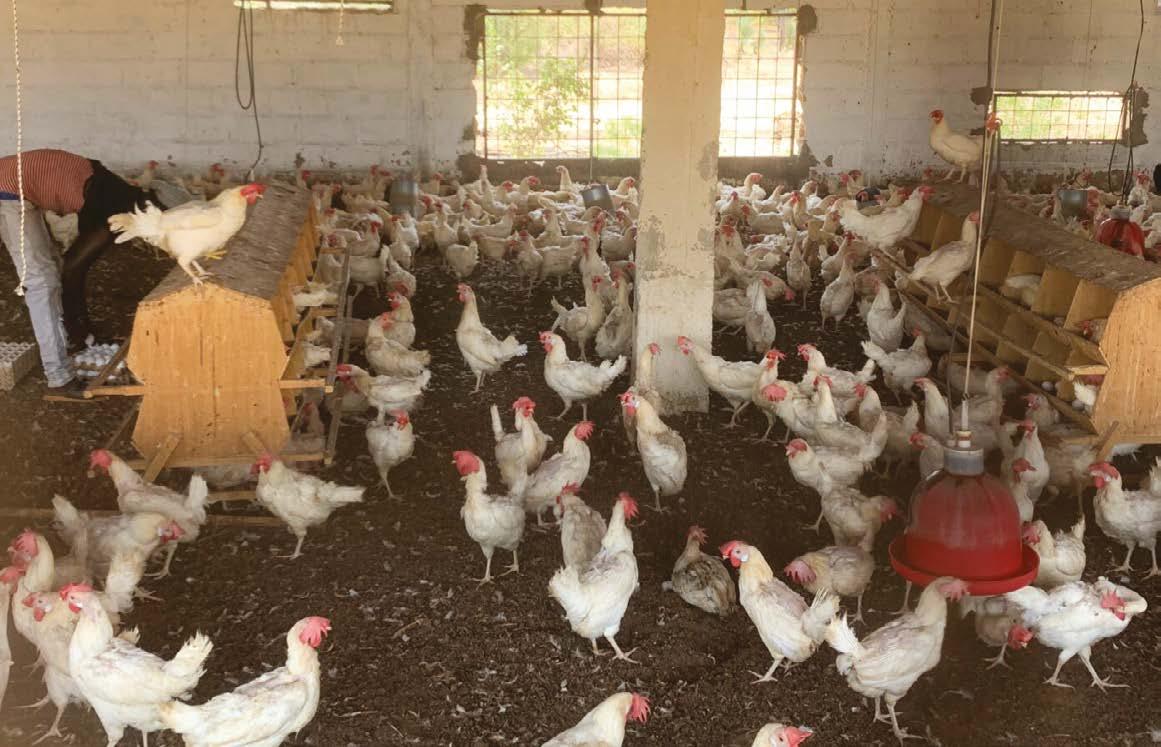
Photo credit: CGIAR
“This integrated approach will help meet Senegal’s growing demand for poultry, and increase the availability of affordable, protein-rich food for consumers” IFC added.
IFC explained APRAN’s integrated poultry project would create at least 1,600 jobs “across Senegal’s poultry value chain and is expected to reach more than 2,300 smallholder farmers by 2029, including 1,400 women, through access to day-old chicks, veterinary services, technical training, and affordable feed.”
Other key poultry market players in Senegal include Angel Eggs BV, a Dutch egg exporter, Sedima, Avi Boye and Jailaxmi. The latter three firms are said to compete for approximately 82% of the market.
Although there are no precise statistics on current egg production in Senegal, a country with an estimated population of 18.8 million people and a real gross domestic product value of USD 83.183 billion, some reports indicate growth in production and consumption.
For instance the US Department of Agriculture (USDA) estimates table egg production in Senegal to have reached 850 million, of which 60% was produced by commercial poultry farms, while 40% is accounted for by smaller farms/informal operations.
Fresh eggs and egg products destined for domestic consumption market are among the products the government of Senegal listed under banned imports since 2005 initially to prevent the spread of the highly pathogenic avian influenza (HPAI). Other banned imports include
chick meat, uncooked poultry meat and poultry cuts. However, market reports indicate day-old chicks for breeding and eggs for hatching along with a health certificate and a certificate of origin can be imported, a business dominated by West Africa-based specialist in animal health and feed, Afitex as well as InvervoLife. Afitex says on its profile page: "from our base in Brazil, we organize our logistics by air transport, so that you will receive your hatching eggs and day-old chicks in optimal transport and storage conditions".
Access to long-term financing from international lenders in support of Senegal’s private sector investment in the poultry sub-sector would likely improve the country’s egg production, consumption levels, processing capability and the country’s food security.
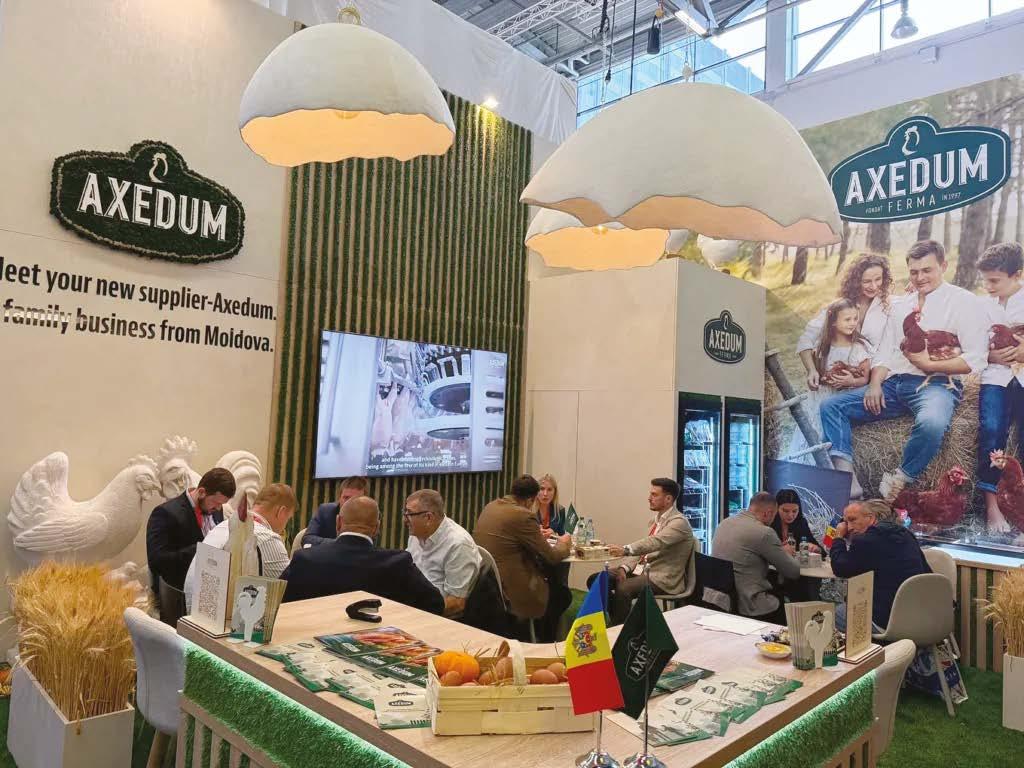
AXEDUM: MOLDOVA’S FIRST EU-APPROVED POULTRY EXPORTER BUILDS GROWTH ON QUALITY AND MODERNIZATION
For Moldova’s poultry sector, the last decade has been defined by rapid modernization, stricter production standards and a growing ambition to access new international markets. Axedum, a family-owned company founded in 1997, has become one of the leading examples of this transformation. What began as a small local business has evolved into the first Moldovan producer authorized to export chicken meat to the European Union, marking a milestone for the country’s agri-food industry.
According to Executive Director Dumitrița Cojocaru, the company’s evolution has been guided by a simple but demanding principle: quality at every stage of production. “Axedum started with chicken meat products and later expanded into eggs, canned foods and ready-to-eat products. Throughout this journey, our values have remained the same: care for animals, responsibility toward consumers and a commitment to offering fresh, safe and flavorful products.”
Quality and welfare at the center of production
Axedum places strong emphasis on high production standards, particularly in animal welfare and feed quality. The company states that its farms follow strict welfare rules, with carefully selected feed free from harmful additives, antibiotics or growth hormones. “Quality starts at the bird-rearing stage,” Cojocaru explains. “The eggs produced have a balanced nutritional profile and maintain the natural taste consumers expect from clean, high-standard systems.”
Production processes are monitored across the entire chain — from chick selection and feed control to packaging and
delivery. Digital technologies and modern climate-control systems help maintain stable conditions and reduce the risk of human error, supporting both welfare and consistency of product quality.
A structured path to international expansion
As Moldovan producers increasingly look to foreign markets, the Invest Moldova Agency has intensified
export promotion efforts through trade missions and participation in major fairs. More than 200 Moldovan companies across various sectors have benefited from these initiatives.
Axedum participated in export missions to Düsseldorf (4–6 November 2025) and Bucharest in 2024, and exhibited at ANUGA 2025, one of the world’s leading food industry events. Participation, co-financed by Invest Moldova Agency, helped the company gain visibility and connect with new partners. “These events allowed us to expand our client portfolio and better understand what international buyers expect,” says Cojocaru.
In June 2024, Axedum became the first Moldovan poultry producer authorized for exports to the European Union, an important step that required full alignment with EU food safety, animal welfare and traceability standards.
The company aims to strengthen its presence in the EU market while exploring opportunities in the Middle East and Central Asia. Long-term plans focus on maintaining high standards and consolidating partnerships built during trade promotion activities.
Public–private cooperation to support growth
In April 2025, Axedum became a beneficiary of a state aid program for strategic investments. The project, valued at 180 million MDL, includes a 50% state contribution (90 million MDL). This partnership aims to support technological upgrades and expansion capacity.
“Public–private partnership is essential for promoting Moldovan products globally,” Cojocaru explains.
“Our experience shows that when the state and the business community work together, results come quickly and sustainably.”
A growing role for Moldovan poultry exports
Moldova’s poultry sector has seen notable growth. In the first half of 2025, the country exported nearly 11 million table eggs to the EU — an increase tied to its 2023 authorization to supply the European market. The agri-food sector remains a driving force for Moldovan exports, with strong potential for continued expansion. Axedum’s trajectory illustrates how investment in technology, adherence to high standards and collaboration with national institutions can help Moldovan producers strengthen their competitiveness abroad.
This article is based on material from the “From Moldova. To the whole world” campaign, an Invest Moldova Agency initiative to promote Moldovan producers on international markets.
EFSA: UNPRECEDENTED HPAI SURGE IN WILD BIRDS ACROSS EUROPE
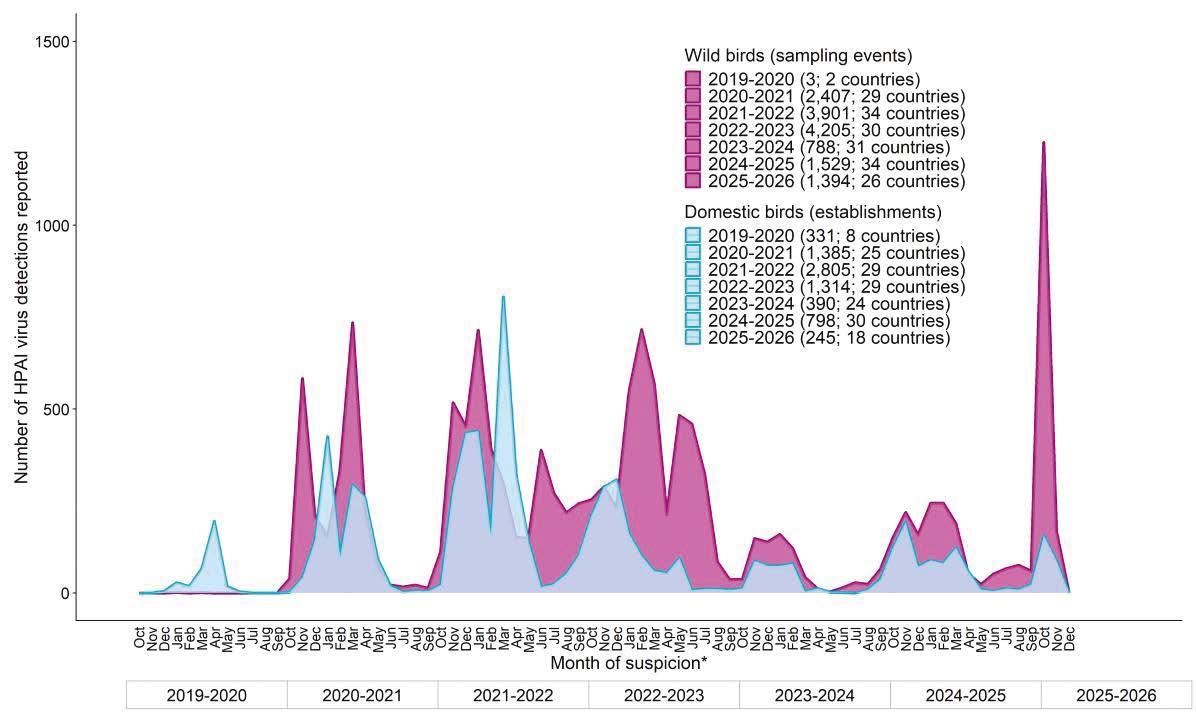
On November 24, EFSA released a report on the spread of highly pathogenic avian influenza (HPAI) in Europe. The data are alarming, particularly when compared to the previous year.
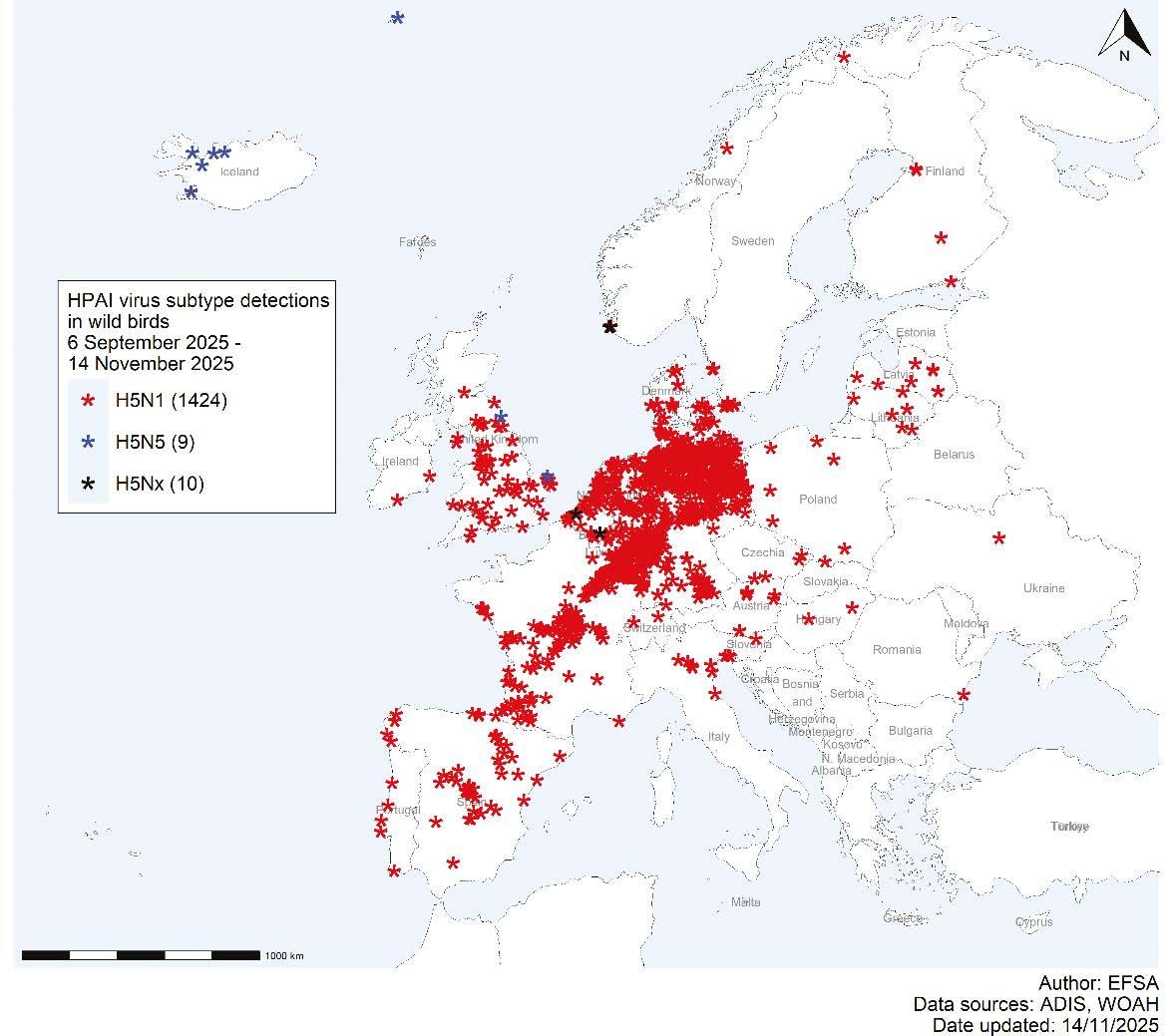
“Unprecedented high level of highly pathogenic avian influenza in wild birds in Europe during the 2025 autumn migration” is the title of the report published by the European Food Safety Authority (EFSA) on November 24. Drawing on data from September to November 2025, it documents 1,443 HPAI virus detections in wild birds across 26 countries — four times higher than the prior year and the most since at least 2016. Cases spanned Germany (909), France (165), Netherlands (78), UK (60, excluding Northern Ireland), Spain (48), Denmark (28), Austria (24), Belgium (22), Luxembourg (17), Italy (16), Norway (14), Latvia (9), Sweden (9), Iceland (7), Lithuania (6), Poland (6), Portugal (5), Finland (4), Hungary (3), Slovenia (3), Czechia (2), Ireland (2), Romania (2), Switzerland (2), Slovakia (1), and Ukraine (1). Nearly all cases (99%) were HPAI A(H5N1), mainly a recently evolved variant, alongside HPAI A(H5N5) and A(H5Nx). Waterfowl (ducks, geese, swans) and common cranes along migration routes were hit hardest, with fewer in colonial seabirds (gulls) and raptors (common buzzards). Researchers warn of elevated environmental viral loads raising risks to domestic poultry and mammals.
EFSA recommendations
▲ Figure 1 - Distribution of the number of HPAI virus detections in wild birds (cumulative number n = 14,227) (pink) and establishments keeping domestic birds (cumulative n = 7,268) (blue) reported in Europe during seven epidemiological years by month of suspicion, from 1 October 2019 to 14 November 2025 (total n = 21,495)
To curb spread, EFSA urges strict biosecurity, prompt removal of infected wild bird carcasses, and housing orders for poultry in high-risk zones. Tools like EFSA’s Bird Flu Radar aid monitoring of HPAI incursion risks in wild populations. Additional steps include banning artificial feeding of wild birds (cranes, swans) during peaks and minimizing disturbances (hunting, tourism, drones).
Bibliography
EFSA (European Food Safety Authority), EURL (European Union Reference Laboratory for Avian Influenza), Ducatez M., Fusaro A., Gonzales J. L., Kuiken T., Ståhl K., Staubach C., Terregino C. and Kohnle L., 2025. Unprecedented high level of highly pathogenic avian influenza in wild birds in Europe during the 2025 autumn migration. EFSA Journal 2025;23(11):9811, 9 pp. https://doi.org/10.2903/j.efsa.2025.981
▲ Figure 2 - Geographic distribution, based on available geocoordinates, of HPAI virus detections in wild birds (1,443), reported by virus subtype, in Europe from 6 September to 14 November 2025
Notes: The unit reported is the number of HPAI virus detections at outbreak level and not the total number of HPAI virus detections in wild birds (as more than one species can be involved in one single HPAI virus detection reported).
*This designation is without prejudice to positions on status and is in line with United Nations Security Council Resolution 1244 and the International Court of Justice Opinion on the Kosovo Declaration of Independence.
Source: ADIS, EFSA and WOAH (data extraction carried out on 14 November 2025).
FLOOR EGGS IN AUSTRALIAN FLOCKS OF CAGE-FREE BROWN EGG-LAYING HENS
During recent years cage-free egg production systems have increased in numbers throughout Australia, and currently dominate Australian egg sales. However, with increasing consumer demand for protein, cage-free egg farming faces the challenge of meeting the increasing demand for food. Mislaid or floor eggs (FE), which are laid outside of the designated nest boxes, may limit the potential to increase productivity and are a challenge for cage-free egg farmers. This scoping survey study, which included 39 flocks, was designed to explore factors that influence FE prevalence in cage-free egg systems within Australia. The percentage of FE ranged from 0.01% to 17%. There was a notable increase in labour costs for flocks with higher levels of FE (p = 0.04). Additionally, flocks in sheds which utilised tunnel ventilation had significantly lower FE prevalence compared to sheds that used other forms of ventilation (p = 0.0127). There was a negative correlation between flock size and number of FE and, the farmer’s acceptable level of FE (r = -0.4993, p = 0.001; r = -0.4870, p = 0.001 respectively). This suggests that flock size plays an influential role in FE prevalence. Additionally, flocks experiencing higher FE values can expect it will affect labour related costs. This study emphasizes the variability of FE laying, which is affected by various factors related to the design and management of cage-free systems.
➤ Ruby Putt1, Hubert Brouwers1, Peter J. Groves2 and Wendy I. Muir1
1 School of Life and Environmental Sciences, Poultry Research Foundation, Faculty of Science, The University of Sydney; ruby.putt@sydney.edu.au, hubert.brouwers@sydney.edu.au, wendy.muir@sydney.edu.au
2 Sydney School of Veterinary Science, Poultry Research Foundation, Faculty of Science, The University of Sydney; peter.groves@sydney.edu.au
Introduction
The production of fresh table eggs plays a crucial role in meeting the global demand for food. The Australian egg industry is shifting towards cage-free systems, including free range and barn-laid systems, which accounted for 71.7% of egg sale volume in 2023 (Australian Eggs, 2023). Traditionally, caged systems can achieve a more efficient use of resources per unit of production (Sumner, 2011). Therefore, egg production in cage-free systems raises challenges for productivity and food safety compared to traditional caged systems (Sumner, 2011). Floor eggs are also a major challenge for cage-free systems. They can represent a significant loss of up to 10% of total daily egg production. They also require intensive labour for staff to encourage the movement of hens towards the nesting boxes as well as any floor egg collection (Bist et al., 2023; Brannan & Anderson, 2021; Vroegindeweij et al., 2018).
Environmental factors within sheds, such as ventilation and temperature control, can influence laying behavior and egg production. Under stressful environmental conditions (for example hot or poorly ventilated sheds), hens avoided upper levels of the shed; concurrently with a higher incidence of eggs laid on the floor areas (Biswal et al., 2022).
Furthermore, small egg producers face financial constraints that limit their ability to invest in advanced monitoring and management practices, potentially exacerbating FE issues when compared to larger operations (Dhillon & Moncur, 2023; Rada & Fuglie, 2019).
Recent findings on FE in Australian flocks (Ciarelli et al., 2024) were opportunistic evaluations and not drawn from studies specifically designed to evaluate FE. Therefore, purpose-designed studies to explore possible relationships between FE and features of the cage-free systems, including breed-specific behaviours, environmental stressors, and management practices are required. By improving our understanding of factors that contribute to the incidence of FE, targeted solutions for the minimization of FE can be implemented to optimise egg production efficiency while meeting evolving consumer and regulatory expectations. Hence, a survey was designed to capture a snapshot of the current demographics of cage-free egg production in Australia. The incidence of FE together with flock size, housing system, ventilation system and the impact of FE on on-farm labour costs was ascertained.
Method
Initially mediated through Australian Eggs, a not-forprofit company providing marketing and research & development (R&D) services for Australian egg farmers each participant received an information statement about the study, an outline of the survey questions and a consent form. Once consent was received the farmer was contacted and completed a short 16 question phone-based survey that established features of the farm system and shed design, flock demographics (i.e. breed, age, size), floor-egg prevalence at peak lay and flock health status.
Survey responses were entered into REDCap, a secure web application for building and managing online surveys and databases. Each farm and flock had a unique identifier. Data were separated by flock, i.e. where a farm had multiple flocks, a separate survey was completed for each flock. Farms were not identifiable in the output and the original data is encrypted and stored securely in REDCap. The survey responses were tabulated automatically using REDCap ’Data Export’ function. T-tests, correlation and regression equations were generated using SPSS. The data are presented as mean values ± standard error of means. Statistical significance is set at p < 0.05.
Results
This study encapsulated data from 39 flocks within Australia. Their locations included New South Wales (n = 29), Queensland (n = 5), Tasmania (n = 2) and Western Australia (n = 3). Among these 39 flocks, the majority identified as a free-range system (n = 31) followed by cage-free (n = 2) and pasture (n = 2). The production system was not identified for 4 flocks. There were 3 hen breeds being Hy-Line Brown (n = 15), Lohmann Brown (n = 5) and ISA Brown (n =19). There was no significant difference between FE prevalence (%) for the three breeds (p = 0.49) (Table 1). Flock size varied, ranging from 200 to 33300 hens.
The percentage of floor eggs at peak lay ranged between 0.01–17%, with a mean of 3.53% and median 2.49%. The level of floor eggs at peak lay that the farmer identified as being acceptable ranged from 0.20-10%, with a mean of 4.48% and median 2.00%.
Across the 39 flocks, 9 (23%) experienced an increase in labour costs due to the level of floor eggs, with no effect on labour costs in the remaining 30 flocks (p = 0.04). The average incidence of FE in the former was 5.95%, and 2.81% in the latter.
When flock size was broken into quartiles (Q) from smallest to largest, the occurrence of FE at peak lay was; Q1 = 7.20%, Q2 = 3.77, Q3 = 1.70 and Q4 = 1.26%, illustrating a negative correlation of FE with flock size (y = 6.1268-0.0002*x; 0.95 confidence interval, r = -.50, p
= 0.001) (Table 1). That is, as FE at peak lay increased, flock size decreased. Similarly, the level of FE at peak lay considered to be acceptable by the farmer had a negative correlation with flock size (y = 18850.87182261.5721*x; 0.95 confidence interval, r = -0.49, p = 0.001). That is, the acceptable level of FE at peak lay increased as flock size decreased.
■ Table 1 – Floor egg prevalence in flocks housed in sheds with or without tunnel ventilation, flock size between quartiles and hen breeds.
Flock size (Q3, 1000020000)
Flock size (Q4, 2410033300)
Brown
The type of shed ventilation impacted the level of FE. Specifically, flocks in sheds which were ventilated tunnel (mechanical) had significantly lower FE prevalence compared to sheds that were ventilated by other mechanisms (P = 0.0127) (Table 1).
Discussion
ab and AB rows with different superscripts are different at p<0.05. N = number of flocks.
Consistent with other research this study found the proportion of FE from cage-free egg-production systems to vary significantly between 0.01-17%. Earlier scientific evidence from Dorminey et al. (1970) reported large variation in FE of the same flock, ranging from 3.5 up to 22.9%. Hence, to maintain consistency between flocks the level of FE at peak lay was used in this survey. The variability in the levels of FE is likely due to multifaceted factors including the design and management of a cagefree system.
As flock size increased, FE prevalence and the level of FE that was acceptable to the farmer also decreased. For the flocks involved in this survey, the larger flocks had lower incidence of FE (p = 0.005). Smaller enterprises, in contrast, may face challenges in managing FE due to more limited finances for investment in data collection, technology and research (Oliveira et al ., 2022). This can also result in less stringent monitoring and fewer interventions for the minimization of FE (Blasch et al ., 2022; Mizik, 2022). Overall, adaptability, research, and technology play crucial roles in egg production efficiency, with larger farms benefiting from better resources and more rigorous data collection practices.
It is not surprising that the farming operations that reported an increase in labour costs to address FE also reported higher levels of FE than those that did not experience an increase in costs due to FE. Other research supports this notion as FE must be collected manually, which is labour intensive and time consuming, creating a financial burden for the business (Chai et al., 2023). Additionally, collecting eggs can account for up to 37% of the work of a farm hand (Matthews & Sumner, 2015). Oliveira et al. (2019) indicated that 5% FE is not uncommon in a cagefree system, while others report 10% (Chai et al., 2023), or as high as 28% (Ciarelli et al., 2024). Therefore, FE are a cost to the farming operation, in both direct costs and lost product.
Flocks housed in sheds with mechanical tunnel ventilation produced less FE. Tunnel ventilation maintains a lower temperature during hotter ambient climates compared to naturally ventilated sheds (Silva et al., 2013), and the airflow facilitates convective heat loss from the surface of the bird’s body (Tong et al., 2019). Without appropriate ventilation, the presence of heat stress has detrimental consequences on a bird’s productive efficiency, health and welfare (Biswal et al., 2022). Under conditions of heat stress birds will prioritise biological functioning, and thermoregulation to reduce their core body temperature (Farag & Alagawany, 2018), spending less time walking and using enrichments (i.e. perches and ramps) and more time drinking and resting (Biswal et al., 2022). This can increase the likelihood of FE as birds utilise the floor areas and avoid more elevated areas including the nesting boxes.
This survey is the first phase of a larger study designed to identify solutions for the mitigation of FE in cage-free egg production systems. A subsequent, more in-depth survey of these flocks is currently being undertaken, with results to follow.
Acknowledgement: we thank Australian Eggs for funding this project and the egg farmers that participated in the survey.
From the proceedings of the Australian Poultry Science Symposium 2025, by courtesy of the Professor Ruby Putt.
References
Australian Eggs (2023) Australian Eggs. Retrieved 20/09/2024 from https://www.australianeggs.org.au/ egg-industry
Bist RB, Yang X, Subedi S & Chai L (2023) Poultry Science 102: 1027-1029.
Biswal J, Vijayalakshmy K, Bhattacharya TK & Rahman H (2022) World Poultry Science Journal 78: 179-196.
Blasch J, van der Kroon B, van Beukering P, Munster R, Fabiani S, Nino P & Vanino S (2022) European Review of Agricultural Economics 49: 33-81.
Brannan KE & Anderson KE (2021) Journal of Applied Poultry Research 30: 1001-1018.
Chai L, Dunkley C & Ritzs C (2023) University of Georgia Extension. 1: 1-6.
Ciarelli C, Groves PJ & Muir WI (2024) Journal of Applied Poultry Research 33: 1004-1064.
Dhillon R & Moncur Q (2023) Sustainability 15: 154178.
Rada NE & Fuglie KO (2019) Food Policy 84: 147-152. Silva GF, Pereira DF, Bueno LGF, Santos TS & Tavares, BO (2013) Italian Journal of Animal Science 12: 286-294.
Sumner DA, Gow H, Hayes D, Matthews W, Norwood B, Rosen-Molina & Thurman W (2011) Poultry Science 90: 241-250.
Vroegindeweij BA, Blaauw SK, Ijsselmuiden JMM & Van Henten EJ (2018) Biosystems Engineering 174: 295-315.
A EUROPEAN CAMPAIGN FOR A SUCCESSFUL FRENCH POULTRY LABEL
The European communication campaign launched in autumn 2025 by SYNALAF follows the economic recovery of the sector which began in 2024.
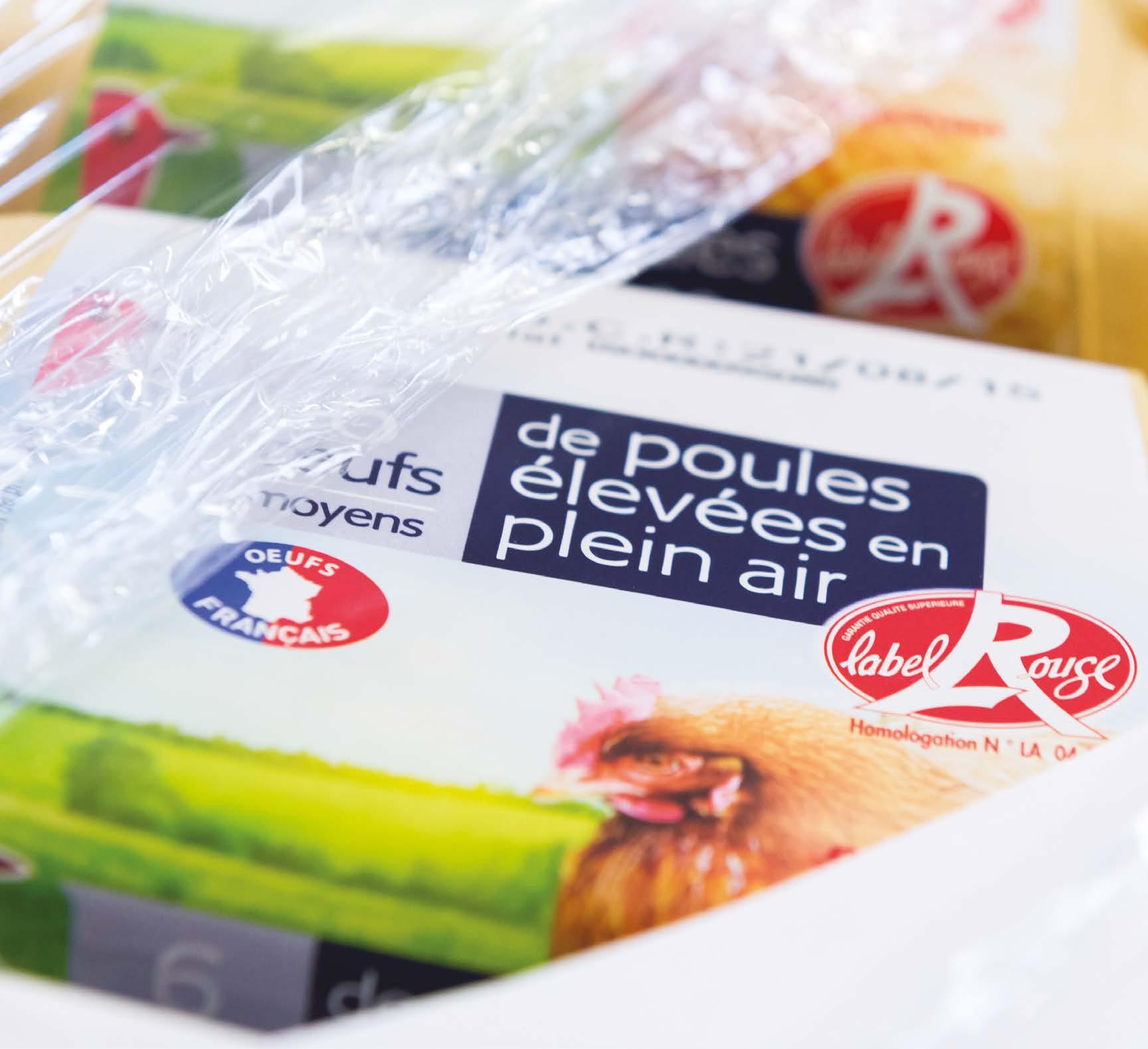
Label Rouge egg box
➤ Philippe Caldier Independent journalist ph@caldier.fr
On October 8, 2025, SYNALAF (Syndicat National des Labels Avicoles de France or National Union of Poultry Labels of France) launched a communication campaign in France, Germany, and Belgium, co-financed by the European Union, to remind the fundamental attributes of Label Rouge free-range eggs and chickens. This largescale information campaign, targeting more than 180 million contacts (consumers and professionals), consists of a three-year action plan that includes radio spots and posters in numerous shopping malls and train stations. It is part of the economic recovery that began in 2024 in the sector. Indeed, figures presented by SYNALAF show a 9.5% increase in egg sales and a 5% increase in Label Rouge free-range chicken sales.
Label Rouge free-range poultry: continuous growth since 2024
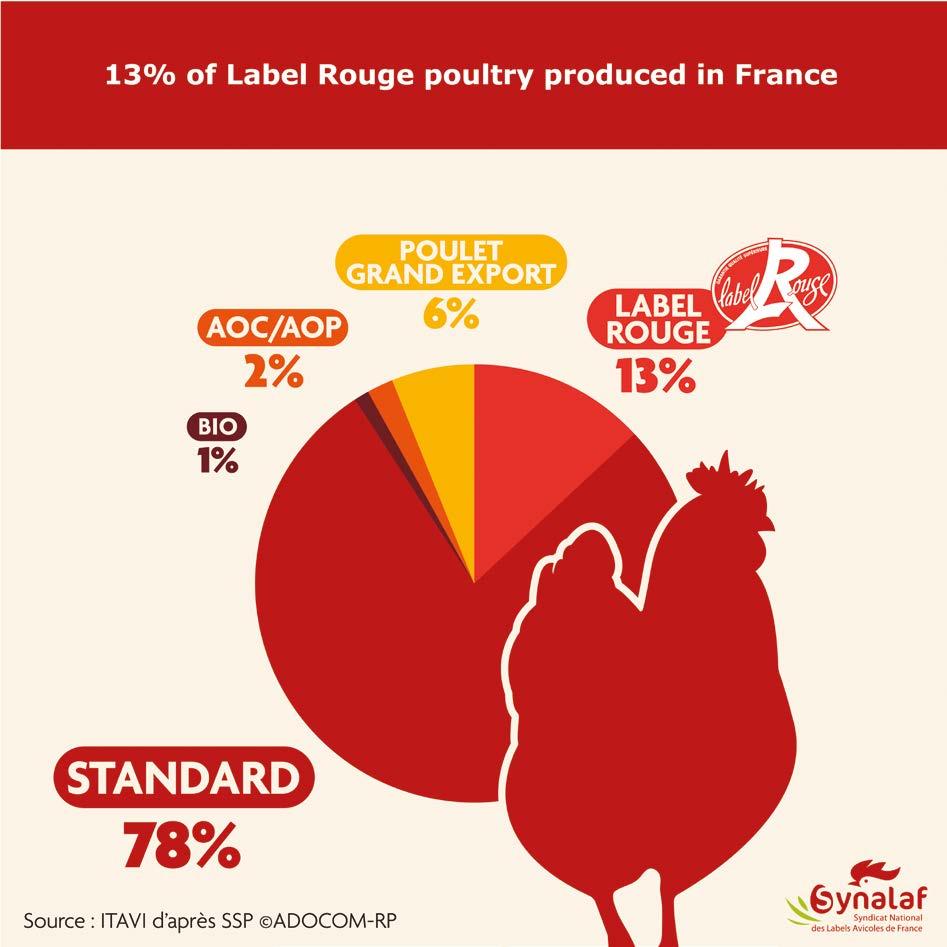
▲ Figure 1 – The Label Rouge represents 13% of French poultry
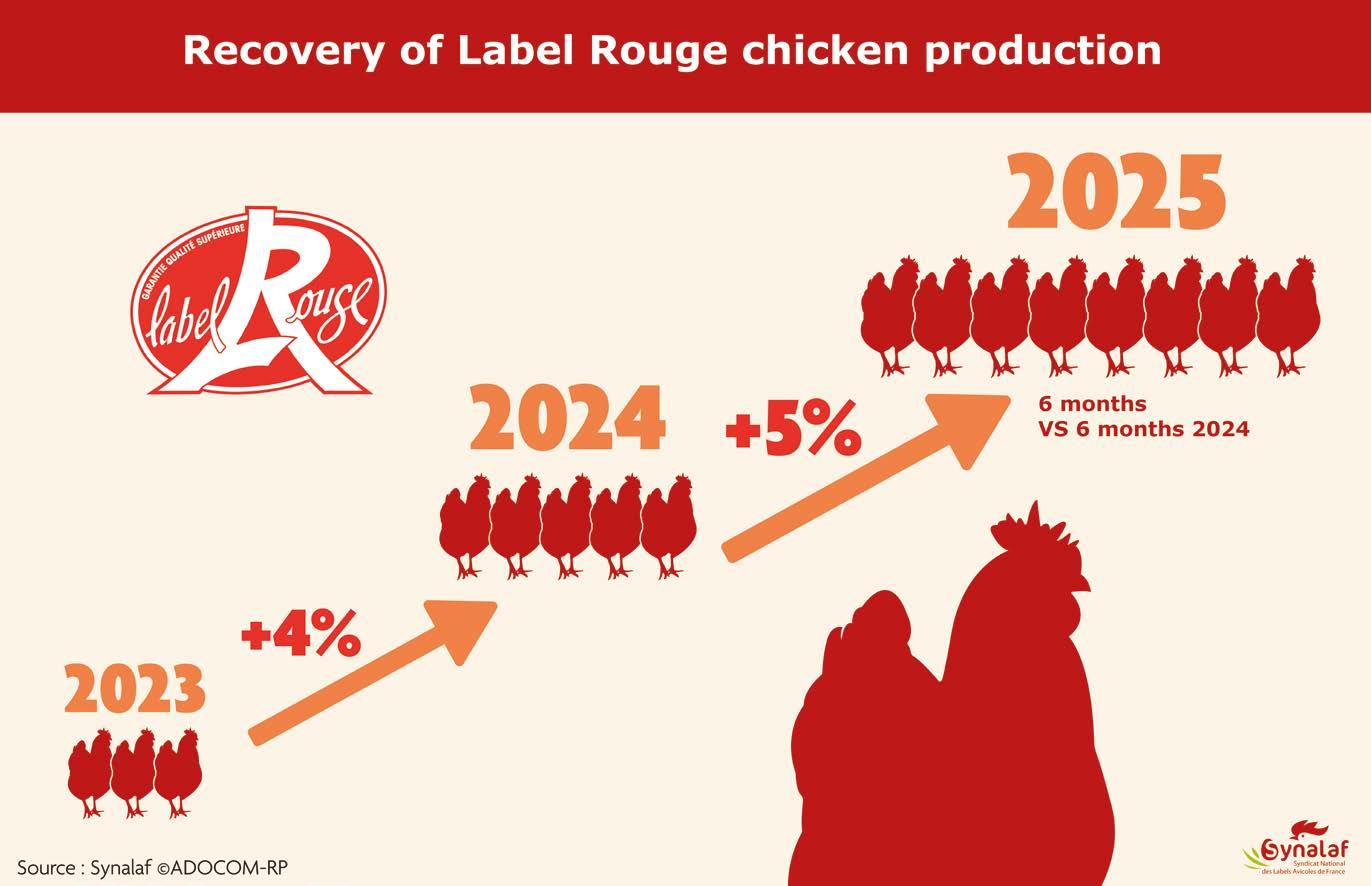
After the decline caused by COVID, then avian influenza and inflation, the production of Label Rouge free-range poultry (of which more than 9 out of 10 are chickens) resumed its growth trajectory last year. Data presented by SYNALAF indicate a 4% increase Label Rouge poultry marketed in 2024. Growth continued in the first six months of 2025, with a 4% increase in freerange poultry certifications compared to the same period in
2024. However, these labels remain down 10% compared to 2019. Furthermore, Label Rouge free-range chickens, which represent the majority of labeled poultry, are up 5% over 6 months, but remain down 6% compared to 2019. This increase is mainly due to a decrease in the average retail price. Indeed, in supermarkets, the average price of a
Figure 2 – The production of Label Rouge chickens has been growing continuously since 2023
▲
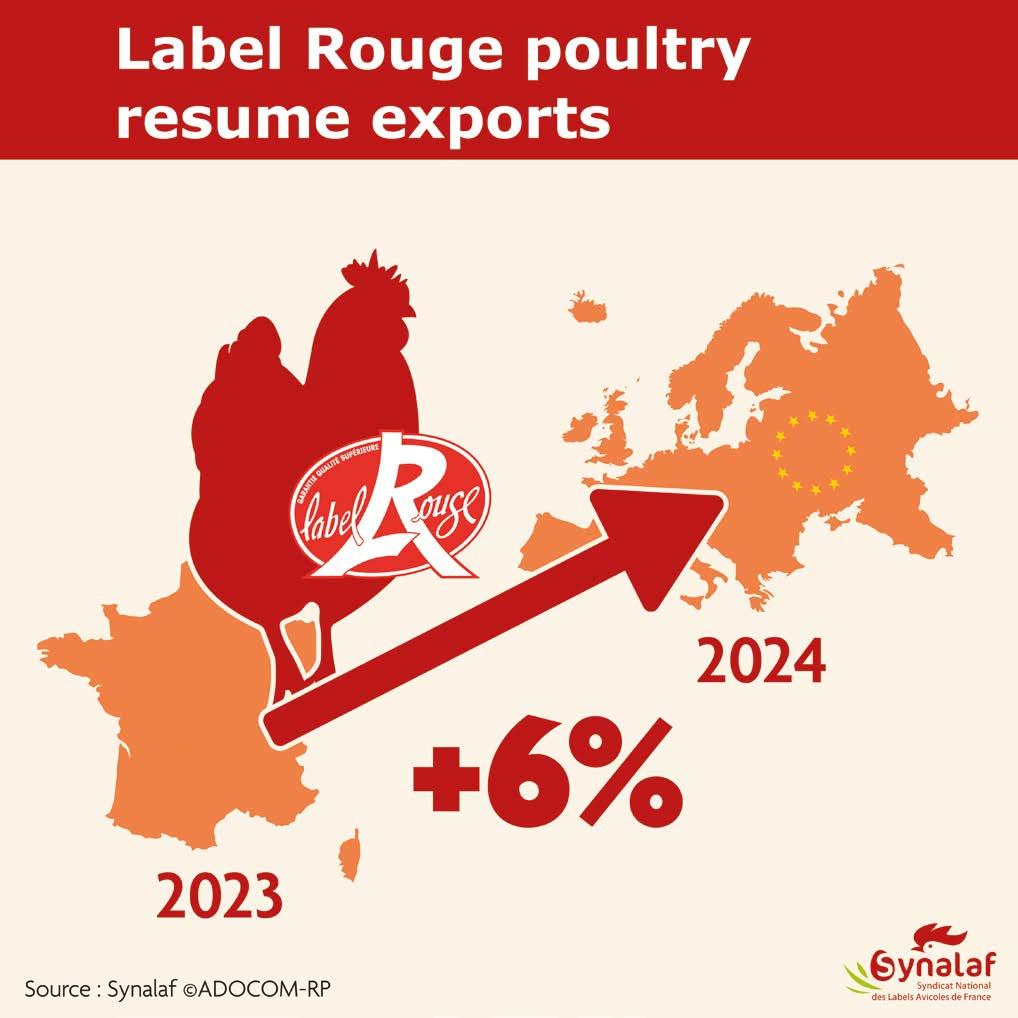
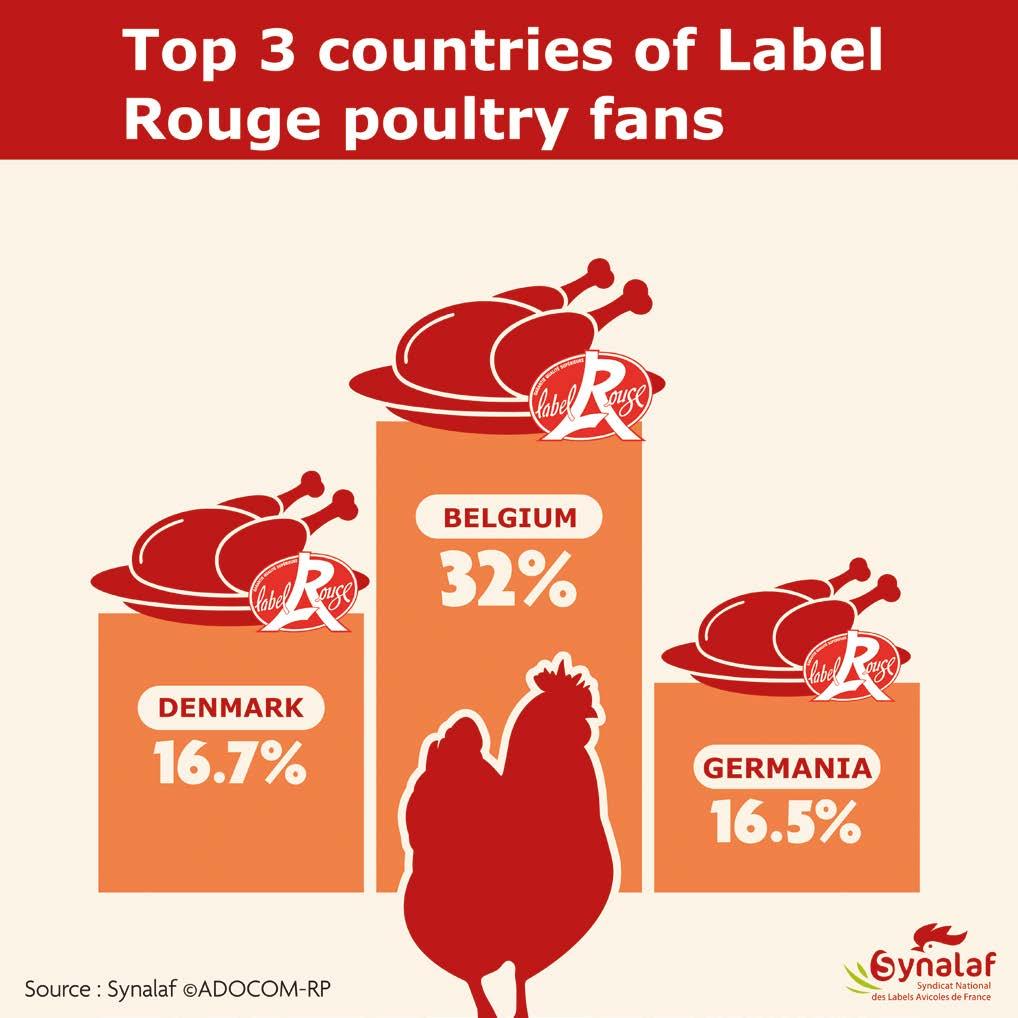
ready-to-cook Label Rouge free-range chicken fell by 5.6% in 2024 compared to 2023. By mid-September 2025, the average price of a Label Rouge free-range chicken had fallen by 6.5% compared to the same period in 2023. Exports of Label Rouge free-range poultry also rebounded, rising by 6% in 2024 compared to 2023. Belgium, Denmark, and Germany are the main importing countries of Label Rouge free-range poultry. The recovery particularly concerns whole poultry exports, with an increase of 8% compared to 2023. This recovery comes after a decline in exports since 2021, mainly due to avian influenza and inflation.
Label Rouge eggs: strong sales growth and lower prices
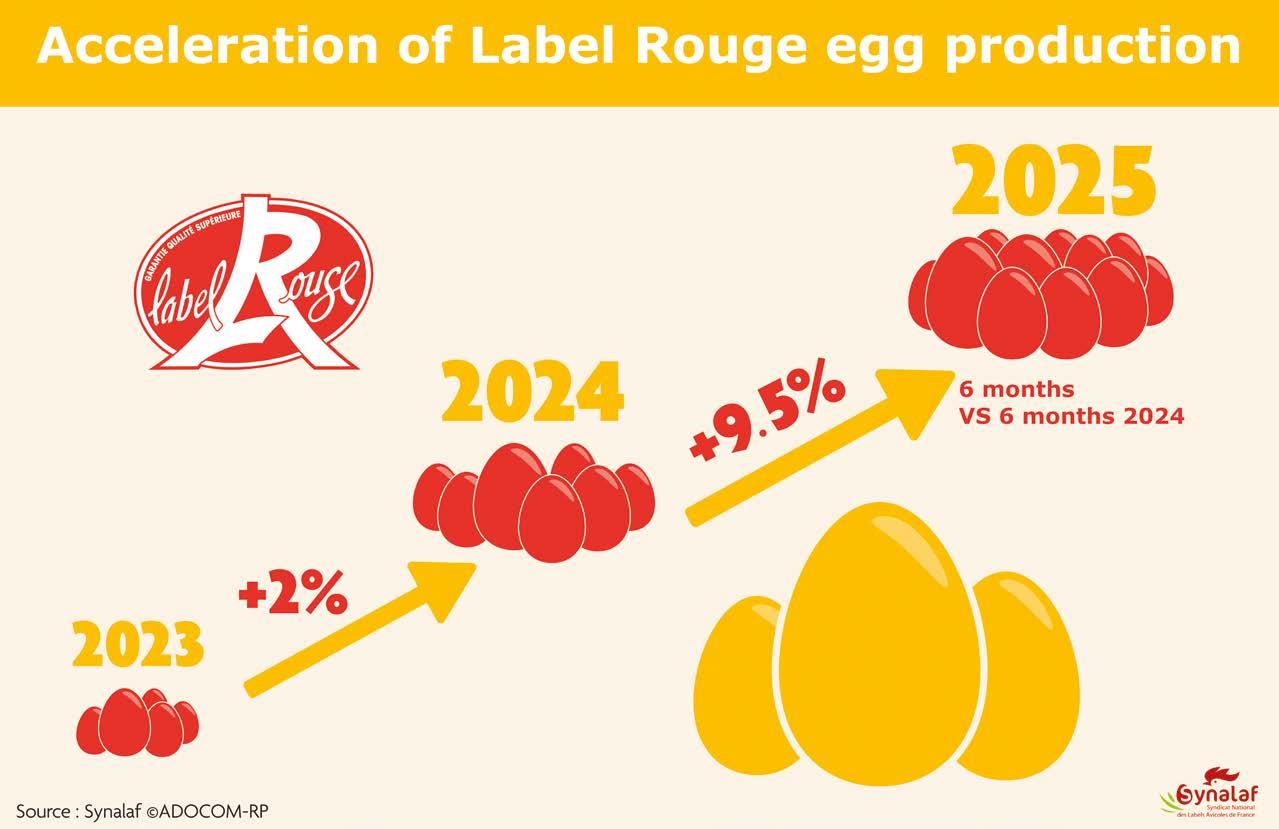
Like Label Rouge free-range poultry, Label Rouge eggs are seeing an acceleration in sales. SYNALAF data indicates a 2% increase in Label Rouge eggs laid in 2024 compared to 2023, and a 9.5% increase in the first six months of 2025 compared to the same period in 2024. This increase is reflected in higher domestic consumption in stores, commercial and institutional catering, and agri-food companies. This rise in consumption is especially due to lower consumer prices. Indeed, Label Rouge egg prices in stores fell by 1.8% over 12 months in 2024 compared to 2023. This decline continued over the first seven months of 2025. As a result, a 15% increase was recorded in in-store purchases of Label Rouge eggs. SYNALAF today emphasizes the need to offer attractive retail prices to consumers while ensuring sufficient remuneration for farmers in order to guarantee the sustainability of the sector and accelerate the growth of Label Rouge certification. It also points out that this label has everything it takes to meet the expectations of consumers who want to eat locally, responsibly, well, and with respect for animal welfare. To date, there is significant development potential for Label Rouge egg products, which are constrained by extremely strict specifications that limit their market reach.
Label Rouge: a recognized sign of trust
Label Rouge is an official French quality label that was created in 1960 on the initiative of chicken producers. The first chickens were labeled in 1965 and the first eggs in 1998. Today, Label Rouge has reached a record awareness rate of 97%.
Label Rouge is the most widely represented quality
▲ Figure 3 – Exports of Label Rouge poultry increased by 6% from 2023 to 2024
label among poultry produced in France, accounting for 13% of the French poultry market. Like all Label Rouge products, free-range poultry and eggs meet the requirements defined in a set of specifications validated by the National Institute for Origin and Quality (INAO) and
approved by an interministerial decree. The specific farming conditions for Label Rouge products are strictly and regularly monitored, notably by accredited independent external organizations, which conduct unannounced visits to farms to ensure complete transparency on the part of farmers. Label Rouge is the only official quality mark guaranteeing superior quality. Label Rouge specifications require, in particular, that the products taste better than “standard” products. Label Rouge freerange egg and poultry producers are men and women committed to animal welfare, the environment, biodiversity, and the preservation of a traditional, family-based model of agriculture.
Label Rouge is a trusted mark recognized for its many benefits. In fact, nearly one in two shoppers bases their product choices in stores on the presence of labels or certifications. Furthermore, it’s one of the best-known designations and labels among French consumers, with 97% awareness. Consumers also place a high level of trust in it, giving it a trust rating of 7.7/10.
Characteristics of Label Rouge free-range chickens:
• A wide variety of poultry species: chickens, guinea fowl, turkeys, geese, etc.
• Breeds adapted to outdoor life
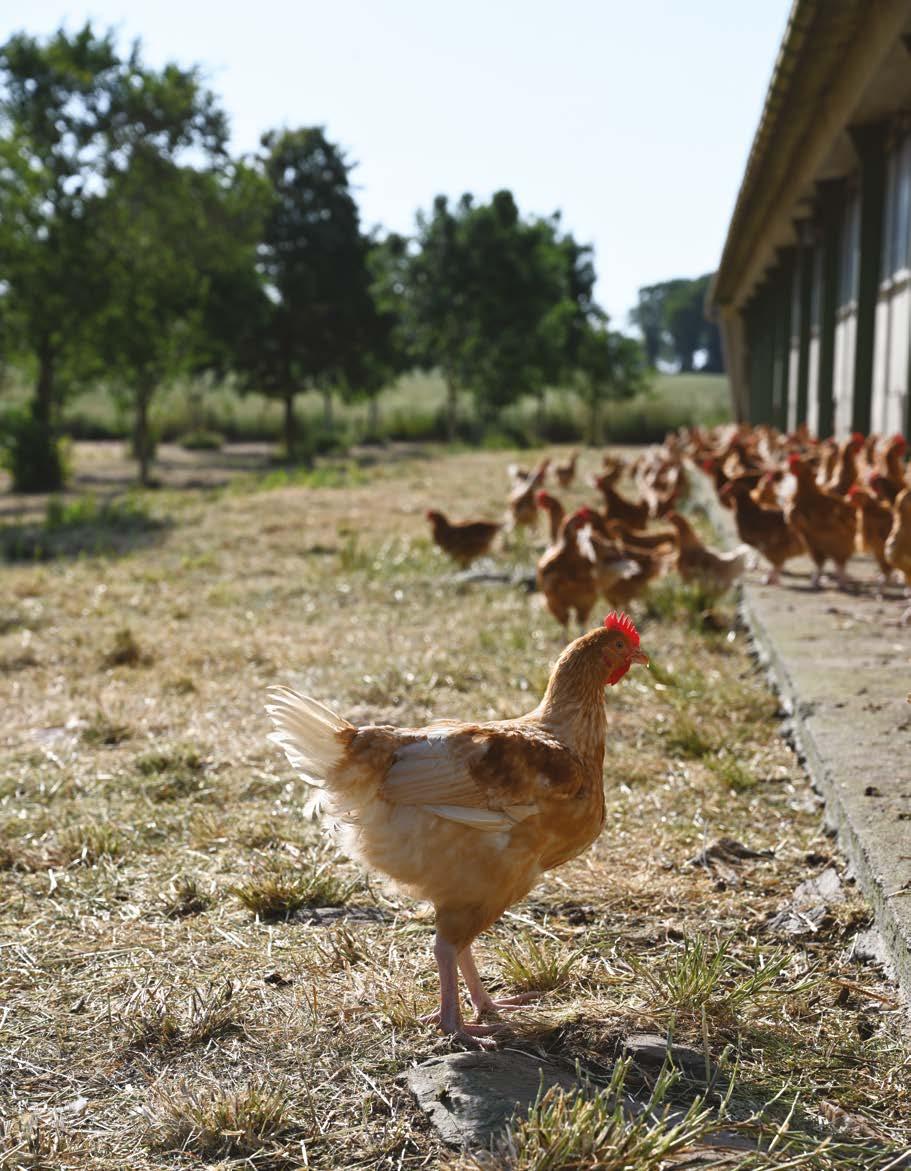
• Free-range or open-air farming
• A 100% plant-based diet rich in grains
Characteristics of Label Rouge eggs:
• Small-scale free-range farms
• A natural and controlled diet
• Eggs collected twice a day
• Mandatory labeling
▲ Figure 5 – Label Rouge egg production increased by nearly 10% in the first six months of 2025
▲ Figure 4 – Belgium, Denmark, and Germany are the main buyers of French Label Rouge poultry
IS BIOSECURITY A DRIVER FOR IMPROVED POULTRY PERFORMANCE?
EXPERIENCES FROM A FIELD TRIAL
Maintaining strict biosecurity is vital in poultry farming, with cleaning and disinfection (C&D) serving as a cornerstone for flock health and performance. On-field evidences show that well-implemented C&D can generate a return on investment and improve the performance of the flock even when infection pressure is low.
➤ Giuditta Tilli1, Hilde Van Meirhaeghe1, Hedia Nasri Smaili2 , Ana Mansilla2, Giulia Graziosi3 , Tiago Prucha1, Maarten De Gussem1,4
▲ Figure 1 – Example of surface being tested with ATP swab (the area swabbed is an area of around 10x10cm)
Maintaining high biosecurity and hygiene standards in poultry production is essential for animal health, welfare, and production efficiency. When considering the wide range of biosecurity measures applicable to poultry farms, cleaning and disinfection (C&D) procedures stand out as a fundamental decontamination tool between two consecutive flocks, limiting the persistence of viral and bacterial pathogens, and creating the conditions for optimal flock performance.
Looking at the evidence available today, some scientific studies show how certain biosecurity measures can have a positive impact on key technical parameters. In the specific case of C&D, recent research indicates that well-implemented C&D protocols can positively influence flock performance (increase in weight gain) (Ngom et al.,
2025), reinforcing the idea that biosecurity is not only a preventive measure but also a factor that can positively support productive outcomes. However, beyond applying these measures, it is equally important to understand how their effectiveness can be evaluated on-farm. For this reason, assessing C&D efficacy is a crucial component of any biosecurity program. In terms of what can be practically adopted, several methodologies are available to verify whether C&D have been carried out successfully, ranging from visual inspection to microbiological sampling and ATP bioluminescence testing to samples for bacterial load. Each method provides a different level of sensitivity and can be used to monitor compliance, identify critical points, and guide continuous improvement.
No.
1
Method used for assessment Description
Non-microbiological assessment methods
1A Visual inspection of the farm
1B Ultraviolet (UV) fluorescence
1C Adhesive tape evaluation
Quick visual examination of the cleanliness of the barn. Could be supported by a scoring tool
Use of markers that emit visible fluorescence under UV light but are easily removed by mopping
Pressing adhesive tape onto a surface to collect residual particles, both organic and inorganic, which are subsequently visually inspected or microbiologically cultured
Rapid, economical
Easy to apply, low costs, no impact on surface, operators or animals
Detection of ATP (energy source in living cells) through bioluminescent reaction that releases light that can be measured
Detection of all forms of adenylates (not only ATP, but also ADP and AMP). Same principle of ATP swabs
Same principle of ATP swabs, but targeting specific agents (e.g., Salmonella spp., Listeria spp., E. coli)
2D Rapid protein tests
Detection of protein residues through chemical reactions that cause a color change
Rapid detection (results in 5-10 seconds)
Might be more reliable than ATP only, rapid detection
High specificity (targets viable pathogens rather than general organic material), results within hours
Rapid assessment of surface cleanliness (results within 15 minutes)
3 Chemical assessment methods
3A Redox potential measurement
Detection of bacteria presence through chemical (redox) reaction
Detection of microbial activity within 16 h, can be tailor-made it to different bacterial species
4 Microbiological assessment methods
4A Agar contact plating methods (hygienograms)
4B Swabs or cloths targeting a specific pathogen
Collection of samples by just putting the plate in direct contact with the surface
Collection of samples by swabbing different parts of the environment
Standardized sampling, possibility to directly enumerate the colonies
Possibility to take samples from different parts of the environment (pool), cost
5 Molecular assessment methods
5A Swabs collected from the environment or from the birds
Collection of swabs to perform PCR
Highly sensitive and specific
Human factor (subjectivity, perception), external factors (light, surface color, etc.)
Manpower to apply it, UV light source, depending on the operator
Collection of contaminants from small surfaces, depending on the operator
Lack of thresholds to define cleanliness, negative impact of residues of the products (mostly disinfectants)
Less common and more expensive than ATP swabs, interpretation might not be straightforward
Complex, time consuming, expensive (if compared to ATP swabs)
Human factor (subjectivity to the interpretation of the color), no detection of non-organic substances or chemical residues, variable sensitivity
Complex indicator influenced by various factors, careful interpretation needed
Effective in smooth and dry surfaces, difficult application in curved, uneven or porous surfaces
Labor-intensive, variability in sampling technique
Costs, time for the results
Table 1 summarizes the main approaches currently used to assess the effectiveness of C&D procedures according to recent scientific literature (adapted from Makovska et al., 2025).
These methods represent what is currently available and practical for evaluating the effectiveness of C&D according to the scientific literature. Field validation, however, is a different challenge: commercial farms are dynamic environments where structural differences (e.g., coated vs. uncoated floor in the poultry barn), management routines, and daily variability can influence the outcomes of the assessment. For this reason, an integrated approach that combines different assessment methods is recommended when assessing C&D, as it provides a complete and reliable picture of how effective the procedures truly are.
On-field application
To give a practical example on the efficacy of C&D, a field trial was carried out on a set of commercial broiler farms in Belgium. The goal was to compare the microbiological situation in the poultry barn environment before and after introducing a different hygiene protocol and training on how to properly apply it, with the final purpose of measuring the impact of a complete hygiene program on production results. The products used were a strong alkaline detergent composed of sodium hydroxide and potassium hydroxide (1.5% dilution), and a broad-spectrum disinfectant composed of quaternary ammonium and glutaraldehyde (1% dilution).
The tested hygiene program is reported below:
1. Dry cleaning: removal of organic matter from the barn environmental surfaces
2. Wet cleaning: application of detergent foam with highpressure foam lance (50-150 bar) and cold water, 30 minutes contact time
3. Rinsing with water
4. Drying
5. Disinfection: application of disinfectant foam application with high pressure foam lance (50-150 bar)
6. Drying
7. Ventilation (after 24 h from the application of the disinfection)
The measurement of the efficacy of the C&D procedures was performed by assessing the barn environment subject to the application of the different products during the downtime. Seven different areas of the empty barn were sampled: floor, feeders, drinkers, walls, ceiling, air inlets, and feed hoppers. From each of the surfaces, the level of C&D was measured by adopting some of the methods reported in Table 1, in particular: ATP swabs (no. 2A, Figure 1), bacterial count (no. 4B), enterococci count (no. 4B), and screening for E. coli and fungi (no. 4B). Finally, performance parameters of the flock starting after the sampled downtime period were statistically correlated to look for the efficacy of C&D in the cleanliness of the environment with how the flock was performing. Considering this specific study, the application of such protocol resulted in increased average daily gain (+ 0.00165 kg/day), and a reduction of around 7% relative mortality when compared to a different C&D program.
Looking ahead
When it comes to biosecurity, one of the biggest challenges is creating real awareness and helping people appreciate its importance. This becomes even harder when measures are applied over and over again, and their effects are not immediately visible or easy to quantify. After a while, it is natural for farmers and staff operating in the farms to wonder whether implementation and compliance with biosecurity truly makes a difference. That is why having clear, concrete results is so valuable: they help show that biosecurity is a practical tool that protects the flock and supports the farm’s performance. The present small-scale trial adds field-based evidence from commercial farms, indicating that the implementation of structured C&D procedures can yield measurable performance improvements, corresponding in this case to an increase of up to 2.41 in economic return after accounting for the cost of application, and considering the positive reduction of mortality and increase of average daily gain. Providing such practical, data-driven metrics may support broader adoption of biosecurity measures and targeted training, reinforcing the concept that biosecurity interventions are not only biologically effective but also operationally advantageous under commercial conditions. Within the broader effort to promote biosecurity education among poultry-sector stakeholders (farmers, managers, veterinarians, and others), it is essential to ensure that these types of data are collected and disseminated. Such evidence-based information supports informed decision-making and contributes to strengthening the overall perception and understanding of biosecurity.
Bibliography
Makovska, K., et al. (2025). Assessment of cleaning and disinfection efficiency in poultry farms: Current methods and field perspectives. Frontiers in Veterinary Science, 12, article 1581217. https://doi.org/10.3389/ fvets.2025.1581217
Ngom, S., et al. (2025). Effect of biosecurity practices on broiler performance under low infection pressure. Veterinary Medicine and Science, advance online publication. https:// doi.org/10.1002/vms3.70526
OVERCOMING FRONTIERS IN ENVIRONMENTAL SUSTAINABILITY
Recent concerns about the impact of the poultry industry on the environment and natural resources are putting pressure on the supply chain to produce efficiently, mitigate their footprint, and improve waste management while satisfying the growing demand for poultry products. To achieve this objective, advancements along the supply chain are essential to become more environmentally friendly, from crops harvested for poultry feed to poultry farming and processing.
➤ Aitor Arrazola Research biologist, Ph.D. in Animal Behaviour & Welfare
Where to start?
Raising awareness about environmental sustainability seeks to integrate poultry industry activity within their surroundings while safeguarding already threatened natural resources, biodiversity, and ecological services. Besides concerns regarding habitat and biodiversity loss, natural ecosystems help neighbouring communities and businesses cope with climate change adversity (such as alleviating
severe weather conditions), purify air and water, mitigate noise and light pollution, and buffer human activity footprint among others. Such services are often taken for granted, and efforts to become more environmentally sustainable intend to preserve such benefits for current and future generations.
To do so, reducing reliance on natural resources, producing efficiently, and lowering outputs generated across the supply chain are key steps to foster sustainable practices in the poultry industry. Within this context, addressing process efficiency issues goes beyond feed efficiency to how natural resources (energy, groundwater, chemical compounds) are employed throughout the entire production cycle. Beside finding solutions to improve efficiency and lower resource
use, efforts to reduce environmental footprint and waste must come along as well.
Improving efficiency and resource use
Land use change, from natural habitats to urbanization and industrial development, is a major concern in highly deforested areas because of the already damaging impact on the environment and natural resources. The pressure to produce efficiently is paramount in these regions to balance human needs and environmental protection. The poultry sector has become very efficient at producing meat for human consumption due to successful breeding programs, development of high-quality diets, and improvements in management and husbandry practices to increase poultry welfare and health. Nonetheless, there is room to enhance the use efficiency of feed, water, and energy for poultry production.
Feed production, transportation, and management impact significantly on the environmental footprint of the poultry industry. For example, importing feedstuff from far away (e.g., soy) increases hugely the footprint due to transportation emissions while sourcing local feed ingredients and by-products can be a better alternative to be more sustainable. In addition to feed-related impact, avoiding feed spillage should be a priority and automatizing feeding systems in mills and barns can help producers become more feed efficient. Feeder troughs with grids can also prevent birds from wasting feed while optimising feeder space. When it comes to feeding strategies, matching protein content and amino acid concentration to flock can further improve protein use efficiency and reduce ammonia indoor concentration. Extra protein no longer needed for growth and metabolic requirements is excreted as uric acid which can lead to ammonia in litter. These strategies at the barn level can help producers achieve low feed conversion ratio and high protein efficiency, while lowering ammonia emissions and supporting local economy by prioritising feed ingredient sourced nearby.
filtered water for pre-cleaning. For large operations, water recycling and rainwater harvesting systems can further release pressure on ground water reservoirs and decrease clean water use.
High demand for clean groundwater and low infiltration rate results in quick depletion of aquifers worldwide, highlighting the need for implementing water-saving technologies throughout the supply chain. At the barn level, nipple drinkers are more efficient to supply fresh water to poultry flocks while reducing water spillage and wet litter than watering cups and bell drinkers. Cooling systems can also reduce excessive drinking and increased pecking at drinkers during hot summertime. Yet, most water consumption in poultry barns takes place during deep cleaning. New technology and mindfulness practices can help bring down water usage during wet cleaning, disinfection, and rinsing. For example, pressure washers with low-flow and high-pressure settings and foam cleaning systems can save clean water during the entire process. Additional tips include dry cleaning first and reuse
Adopting renewable, clean energy systems on-farm support low grid dependency, reduce power demand during peak hours, and save on electricity bills. These on-site microgrids using solar panel and windmills can help isolated barns operate independently and decrease emissions from fossil fuel or biomass energy systems. In addition to energy sourcing, energy-efficient lighting, ventilation systems, and barn infrastructure can additionally lower the energy consumption of poultry farms and become more energy efficient. In barns located in temperate climates, wellinsulated walls, ceiling, and windows can reduce heat loss during cold winters and reflective roofing can alleviate cooling demand during hot summertime. Overall, these energy-efficient approaches at the barn level can reduce power demand and operate sustainably with a low environmental impact.
Mitigating waste and emissions
Poultry barns have low environmental impact on their own, but poor waste and manure management results in environmental deterioration due to ammonia
and greenhouse gas emissions, soil acidification, and eutrophication of nearby water bodies. Litter management can be a hotspot for soil and water pollution but at the same a valuable fertilizer opportunity for agriculture and forestry. Composting poultry litter, and other organic byproducts, is a feasible solution to promote a circular economy, boost soil health, and reduce the need for chemical fertilizers by generating high-quality organic fertilizer. Nonetheless, to manage waste sustainably, poultry composters must be covered to prevent additional release of greenhouse gas and ammonia emissions, on concrete to prevent nutrient runoff and soil pollution, and for long enough time to kill potential pathogens and break down antibiotic residues before application as fertilizer.
Additional innovative solutions to composting includes biogas chambers where organic matter is processed to produce methane for renewable, energy production and the digestate solids can also be used as fertilizers. Same as feed, another option is pelleting litter to reduce odour, kill potential pathogens, and remove water for easy storage and transport (which is ideal for areas with high livestock density). Both require high investments in infrastructure and high volume of litter supply regularly to be profitable at a commercial scale.
At the barn level, best management practices to reduce ammonia concentration include proper management of
litter to reduce excessive moisture by adding wood shavings (or similar) as bedding material and, if needed, increasing ventilation rate & temperature to dry it up. Also, installing scrubbers or biofilters in outside fans help substantially improve the air quality released from poultry barns by capturing dust particles, bacteria in air, bad odour, ammonia, and potentially greenhouses gases too. Filtering wastewater before discharge is also recommended for proper water management since untreated wastewater contains high concentration of organic matter, microorganisms, and other residues that can contaminate drinking water reservoirs, disrupt soil health, and disturb nearby aquatic ecosystems. Environmentally friendly solutions must also be economically viable and socially acceptable to become truly sustainable in the long run. Indeed, some of the above strategies are likely to save operational costs by lowering resource use, valuing byproducts of poultry farming and processing, and enhancing productivity outcomes. However, poultry farmers and companies should evaluate what management practices can particularly yield the greatest impact at reducing their environmental impact, improving resource use efficiency, and enhancing waste management with the highest investment revenue. Implementing altogether can help the poultry industry transition toward more sustainable practices while adding value along the way.
THE U.S. POULTRY INDUSTRY UNDER STRESS: A TURBULENT DECADE IN RETROSPECT
Part 2 – Poultry meat production
Between December 2014 and July 2025, the U.S. poultry industry has been hit by four devastating outbreaks of avian influenza (AI). In total, the highly pathogenic AI virus (HPAI) was diagnosed on 1,043 commercial poultry farms (1,932 total farms, including backyard flocks). A total of 221.7 million poultry died due to viral infection or preventive culling. Of these birds, 178.8 million were laying hens, 25.7 million turkeys and 13.2 million broilers (Table 1). In a first paper (Zootecnica Poultry magazine, December 2025) the impacts of the epidemics on the egg industry were analysed. In this article, the temporal and spatial spread of the disease, its economic impact on poultry meat production and the responses of the industry and the government are documented.
➤ Hans-Wilhelm Windhorst Professor Emeritus at the University of Vechta, Germany
Major differences in the number of outbreaks and animal losses
■ Table 1 – HPAI outbreaks and animal losses in the USA between April 2015 and July 2025; data in mill. birds
Source: APHIS.
A comparison of outbreaks and animal losses in turkey and broiler production reveals major differences. 611 outbreaks occurred on turkey farms, compared to 67 on broiler farms. In total, 25.7 million turkeys fell either victim to the disease or to preventive culling and 13.2 million broilers were lost. The differences between the four epidemics are remarkable (Table 2). While the number of infected broiler farms was still quite low in the first three epidemics, it more than tripled in the last one. Outbreaks in turkey flocks were very high in all four epidemics, but declined during the last two. This trend is also reflected in animal losses. Among broilers, losses increased sharply between 2023/24 and the following epidemic, while among turkeys they decreased.
1 Windhorst 2023, 2024 2025.
The reasons for the differences cannot be discussed in detail here, but are discussed in another paper1. In addition to the types of housing, important reasons included the size of the flocks, the different lengths of the fattening periods, the regional patterns of turkey and broiler growing, the flyways of wild birds and the susceptibility of poultry species to the AI virus. While turkeys for meat production were still housed in open barns in the middle of the last decade, especially in the northern Midwest, closed facilities were only gradually becoming established. In contrast, broilers in large flocks had always been kept in closed barns. In the south-eastern United States, the centre of broiler growing, they were frequently kept however on small farms in so-
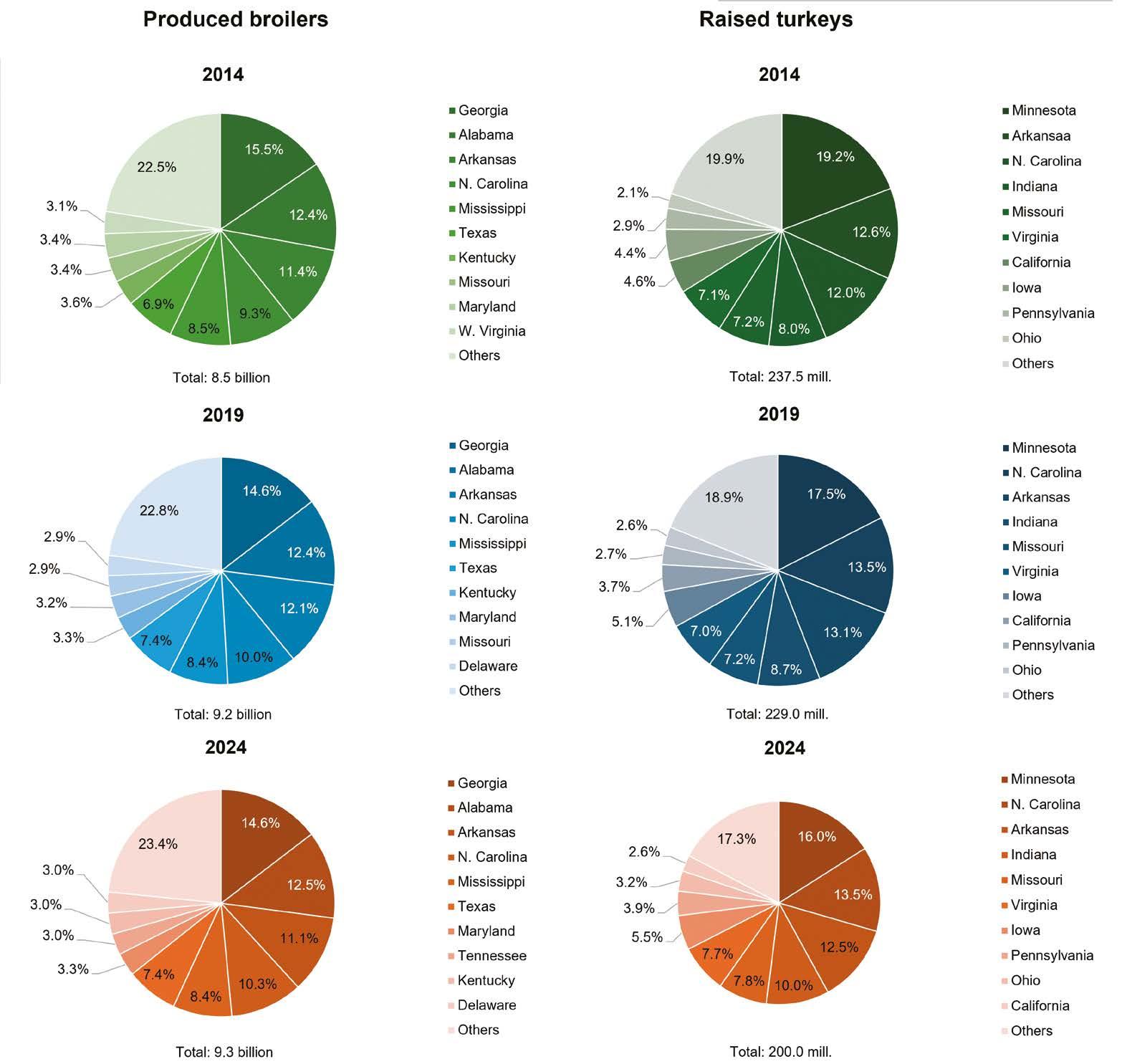
▲ Figure 1 – The changing contribution of the ten leading states in broiler and turkey production in the overall production of the USA between 2014 and 2024
Design: A. S. Kauer based on data of USDA, NASS Poultry Production and Value
■ Table 2 – HPAI outbreaks and animal losses during the four epidemics in the USA between 2015 and 2025; data in mill. birds
Source: own calculations based on APHIS data.
called Louisiana houses, whose side walls could be closed with curtains. The flyways preferred by wild birds played an important role.
The flyways along the Pacific coast (Pacific Flyway) and in the Mississippi Valley (Central Flyway) were highly frequented, in contrast to the flyway along the Atlantic coast. The southeastern United States and the states in the Lower Mississippi Valley were only rarely reached by wild birds. Where the centres of production coincided with the flyways, large numbers of infections and high animal losses occurred, as was the case in 2015 and in 2022/23 in the Midwest and in 2024/25 in the Pacific states.
■ Table 3 – The development of broiler meat production in the USA between 2014 and 2024
Source: USDA NASS. Poultry Production and Value.
Different impacts on production
Changes in the regional pattern of production
Considering the high animal losses, one might have expected that this would have led to a fundamental change in the spatial structure of poultry farming in order to reduce the risk of infection. However, as Figure 1 shows, this has only happened to a limited extent so far. Broiler farming continues to be dominated by the states on the Mid-Atlantic Coast, in the Southeast and in the Lower Mississippi Valley. In addition, a secondary centre has formed in California. In turkey farming, the Midwest and some states on the MidAtlantic coast occupy the leading positions. Here, too, a sub-centre has developed in California. Why these centres have formed cannot be explained in detail here, but can be found in two papers of the author (Windhorst 2002, 2025b).
The regional focus of poultry farming reflects the location of the leading companies in slaughtering and processing. Vertical integration, which usually combines all phases from hatchery via contract fattening to slaughtering and processing under one company umbrella, has resulted in regional concentration. Capital investment, labor availability, and grower expertise cannot be easily relocated. Although Minnesota has suffered high losses in turkey farming and Georgia in broiler farming, little has changed in the basic spatial structure, with the exception of California. There, massive animal losses in the winter of 2024/25 brought broiler farming production to a virtual standstill and almost halved the share of turkey farming in U.S. production.
In a further step of the analysis, the impacts of the four epidemics on turkey and broiler production will be analysed. Table 3 shows that the number of broilers produced has increased steadily over the decade under review, apart from a slight dip in 2021 as a result of the COVID-19 pandemic. The production volume increased from 8.5 billion to 9.3 billion birds, or by 9.2%. Similarly, broiler meat production also grew. Here, a slight decline occurred in 2021. The impact of the epidemic in the winter half-year 2024/25 on meat production can only be estimated as no precise data is available yet. The loss of 7.7 million broilers and the fact that some barns stood empty for months, because they were not approved for restocking, are likely to reduce the number of animals produced to less than 9.3 billion by the end of 2025 and meat production by around 80,000 tonnes. The value of produced broiler meat fluctuated considerably during the decade analysed here. At $21.3 billion, the lowest value was achieved in 2020 towards the end of the COVID-19 pandemic, while the highest value of $50.4 billion was achieved in 2022 during the second AI epidemic. Changes in domestic demand and on the global market were the most important steering factors.
In 2014, before the first major AI epidemic, 237.5 million turkeys or 3.27 million tonnes of turkey meat worth $5.3 billion were produced (Table 4). The outbreaks caused production to decrease by around 4 million animals or 81,000 tonnes. In the following years, production rose again to 244 million, but then collapsed again during the
■ Table 4 – The development of turkey meat production in the USA between 2014 and 2024
Source: USDA NASS. Poultry Production and Value.
*Live weight
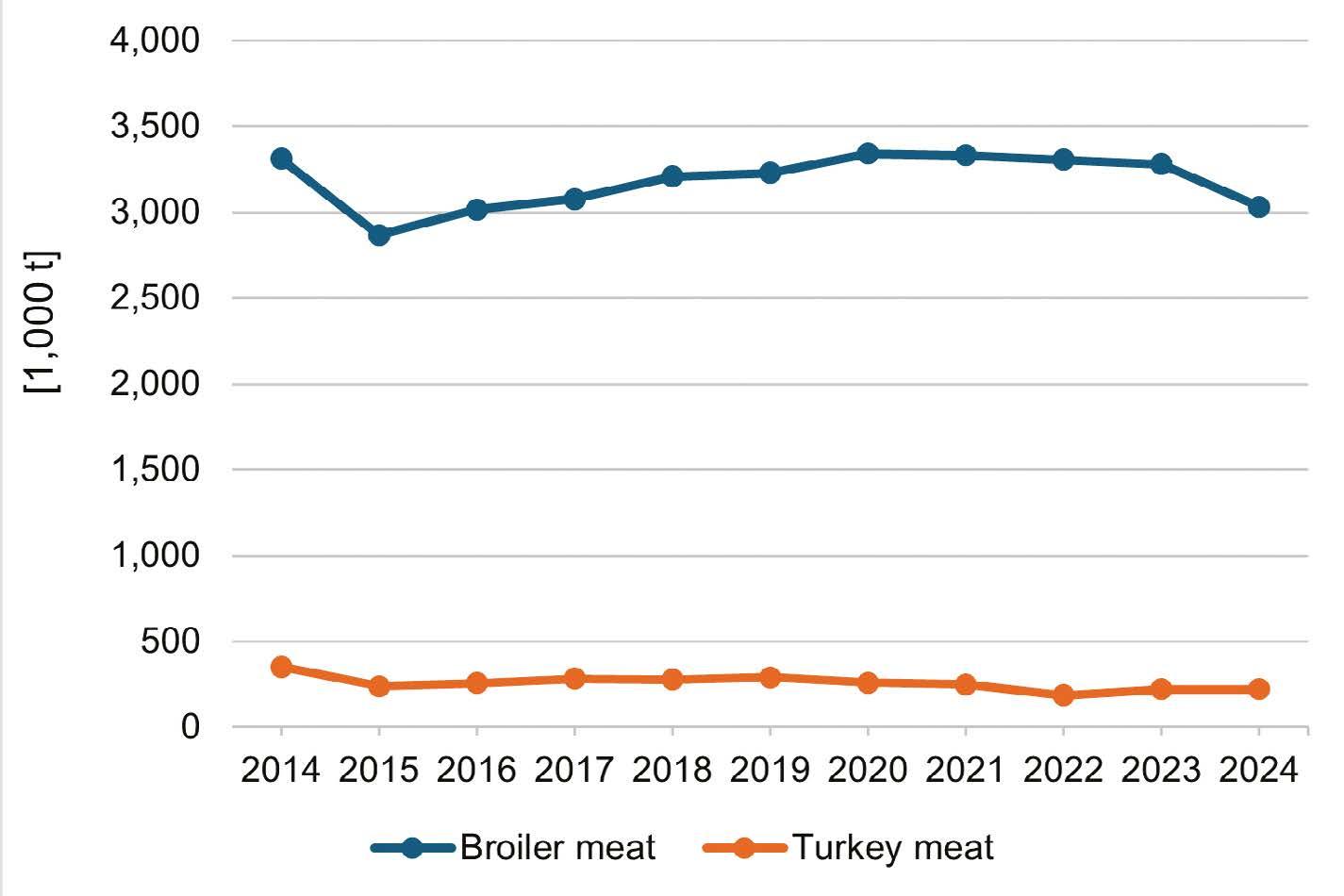
▲ Figure 2 –The development of broiler and turkey meat exports of the USA between 2014 and 2024 Design: A. S. Kauer based on data of USDA FATUS GATS.
COVID-19 pandemic and fell to only 200 million due to the two subsequent epidemics. Between 2018 and 2024, turkey production decreased by 18.1% and meat production by 12.9%. Due to the shortage in supply, the production value rose to $7.1 billion in 2022, but then fell to just $3.7 billion by 2024, a decline of 48.0%. Another reason for the continuing downward trend was certainly the decrease in per capita consumption from 7.2 kg in 2016 to only 6.3 kg in 2024. For 2025, the USDA predicts a decline in production to 2.27 million tonnes.
Considerable decline in poultry meat exports
The four AI epidemics had massive impacts on exports of broiler and turkey meat, as leading importing countries immediately stopped their imports. While the poultry industry was able to recover relatively quickly after the 2015 epidemic, this was not the case with the three epidemics that followed in quick succession from 2022 onwards, because a number of countries did not reopen their borders to imports over the whole time period. A comparison of export trends for broiler and turkey meat (Figure 2) reveals some notable differences. Exports of broiler meat fell by more than 440,000 tonnes, or 13.4%, between 2014 and 2015, only returning to their initial level in 2019. The value of exports decreased by $1.2 billion between 2014 and 2016. Between 2023 and 2024, exports fell again by 250,000 tonnes, but higher average prices were achieved in the remaining markets. While only about $950 per tonne was earned in 2016, the average value per tonne rose to $1,400 in 2024. However, only those farms that were not affected by an infection were able to benefit from this increase. The extent to which exports slumped after the outbreak wave in the winter half-year 2024/25 will only become obvious in a few months’ time when detailed statistics are available.
Turkey meat exports fell by 111,500 tonnes or by 31.7% between 2014 and 2015, with the export value decreasing by $177.3 million. Although the export value fluctuated considerably in the subsequent years, partly due to the COVID-19 pandemic, it did not reach the initial level again. There was a further significant decline in exports of 64,000 tonnes as a result of the AI outbreaks in 2022. As with broiler meat, the export value only decreased by $25
million. Here, too, a much higher price of $3,470 per tonne was achieved on the world market than in 2015, when the price was as low as $2,455. However, this value could not be maintained in the following two years.
Considering the expected increase in global demand for broiler meat, export volumes are likely to rise in the coming years, unless another wave of AI outbreaks restricts export opportunities. However, the USA faces increasing competition from Brazil and some EU member countries. Turkey meat exports will continue to decline in view of the high animal losses caused by the epidemic in the winter of 2024/25. The situation is exacerbated by the fact that import restrictions in important buyer countries remain in place because further AI outbreaks occurred in Arizona and Pennsylvania in June and July 2025.
The legislature responds
Although it was primarily the shortage of eggs in food retail stores and the sharp rise in egg prices that led to protests among the population and forced the government to take action, the high animal losses caused by the AI virus and the extensive preventive culling also led to a critical attitude. There was also a lack of understanding that individual farms and companies, which were repeatedly affected by infection, were nevertheless compensated for their losses with tax money.
In December 2024, APHIS responded with a new guideline that makes future compensation payments for animal losses due to AI infection subject to certain conditions2. For example, it requires that a farm can only be restocked if an improvement in biosecurity has been demonstrated. This has to be verified by an APHIS audit. The new legal regulation is intended to improve the biosecurity on poultry farms3
On 18 February 2025, a group of 16 senators from both parties sent a letter to the Secretary of Agriculture calling for the development of a forward-looking strategy in the development of vaccines and their use in laying hen and turkey farming4
In response, the US Department of Agriculture provided $100 million in April 2025 to enable scientists to develop new vaccines to protect poultry stocks and to research
5 Irritating in this context are statements by the Secretary of Agriculture, Rollins, and the Secretary of Health and Human Services, Kennedy, who no longer favoured the development of vaccines and preventive vaccination to combat AI. Secretary Kennedy suggested that herds should not be culled preventative but be infected so that breeding lines could then be established with the surviving animals because they had apparently developed resistance. There was massive opposition to this from the poultry industry. See The Highly Pathogenic Avian Influenza (HPAI) Outbreak in Poultry, 2022-Present, p. 10, https://www.congress.gov/crs_external_products/R/PDF/R48518/R48518.1.pdf
6 Personal information from Dr. Denise Heard, Vice President Research, U. S. Poultry & Egg Association (July 7th, 2025).
the transmission routes of the AI virus in wild birds and its spread in poultry and livestock. The aim is to limit the extent of recurring epidemics, if not prevent them altogether. In addition, $500 million was allocated to improve biosecurity on farms and $400 million to support farms that were particularly affected5. In March 2025, a working group, consisting of representatives from industry, trade organisations and state veterinarians, met to develop a plan for the vaccination of poultry. It is to be published in July 2025 and sent to the Secretary of Agriculture and industry organisations in the poultry sector for comment6. So far, nor results have been available. Whether broiler farmers will give up their resistance to vaccination, which they have justified since 2014 with fears of import bans by leading buyer countries, remains an open question.
Summary and outlook
Four epidemics of the highly pathogenic avian influenza have affected poultry farmers in the United States over the past decade. A total of 1,043 outbreaks in commercial farms resulted in the loss of almost 222 million animals, either due to infection or by preventive culling. The high economic losses suffered by farms and the processing industry, as well as supply problems for the population, forced the government to take action. In addition to providing research funds for the development of vaccines, a plan for preventive vaccination is to be developed and adopted in consultation with the poultry industry. However, the leading poultry meat companies are unlikely to give their approval unless it can be guaranteed that vaccination will not result in import bans by the most important receiver countries. The ongoing threat to poultry stocks will force the poultry industry to improve the biosecurity of their barns. This will require a reorientation on the part of the small farmers as well as the managers of large farm complexes, as they have for a long time felt a false sense of security and underestimated the threat posed by the AI virus.
Data sources and supplementary literature
Congressional Research Service. The Highly Pathogenic Avian Influenza (HPAI) Outbreak in Poultry, 2022–Present. Washington, D.C., 2025. Available at: https://www. congress.gov/crs_external_products/R/PDF/R48518/ R48518.1.pdf
National Chicken Council. Industry Facts and Stats. Available at: https://www.nationalchickencouncil.org/ industry/statistics
National Turkey Federation. Annual Reports. Available at: https://www.eatturkey.org/category/annual-report USDA, FAS. U.S. Foreign Agricultural Trade. Available at: https://apps.fas.usda.gov/gats/default.aspx?publish=1 USDA, NASS. Poultry Production and Value. Annual Summaries. Available at: https://www.nass.usda.gov/ Publications/Todays_Reports/reports/plva0425.pdf
U.S. Poultry & Egg Association. Economic Data. Available at: https://www.uspoultry.org/economic-data
Windhorst, H.-W. (2002). The Old South goes poultry and pigs – Neuausrichtung der Agrarproduktion im Alten Süden. In W. Klohn & H.-W. Windhorst (Eds.), Die Land- und Forstwirtschaft im Alten Süden der USA (Vol. 23, pp. 113–150). Vechta.
Windhorst, H.-W. (2023). Two waves, different routes and changing dynamics: The avian influenza outbreaks in the USA in 2022. Poultry World, 39(2), 8–11.
Windhorst, H.-W. (2024). Third avian influenza outbreak in the USA within 10 years: The 2023–2024 epidemic. Zootecnica International, 46(9), 28–33.
Windhorst, H.-W. (2025a). Fourth AI epidemic in the USA in the past decade: The epidemic in winter 2024/25. Zootecnica International, 46(7–8), 20–26.
Windhorst, H.-W. (2025b). Fleischerzeugung und -handel der USA. Teil 1: Dynamik und Struktur der Fleischerzeugung der USA zwischen 2019 und 2024. Fleischwirtschaft, 105(6), 30–34.
Windhorst, H.-W. (2025c). Fleischerzeugung und -handel der USA. Teil 2: Dynamik und Struktur des Fleischhandels zwischen 2019 und 2024. Fleischwirtschaft, 105(6), 22–25.
Windhorst, H.-W. (2025). The U.S. poultry industry under stress. Part 1 - The egg industry. Zootecnica Poultry magazine, December.
ACHIEVING GOOD WELFARE OUTCOMES FOR BROILER BREEDERS BEGINS AT PLACEMENT
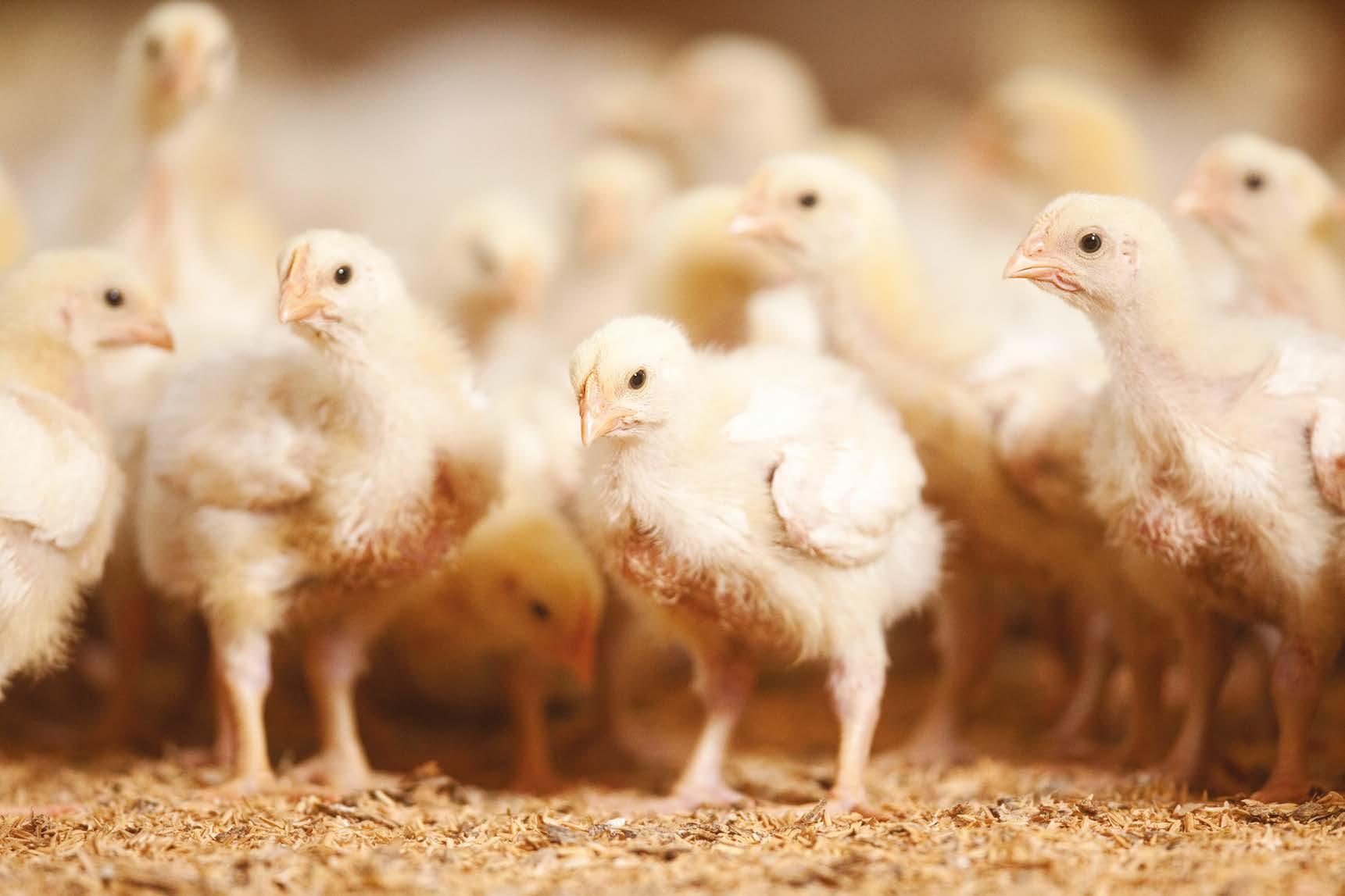
Brooding is the critical early stage of a chicken’s life, typically covering the first few weeks after hatching. During this time, chicks are highly vulnerable and require careful management to ensure their health and development. By focusing on welfare during brooding, producers lay the foundation for healthier, more productive birds throughout their lifecycle.
Observation of chick distribution and activity can be used to assess their comfort level
➤ Cobb Technical Services Team
Biosecurity
Daily flock monitoring is an important part of biosecurity and welfare programs. Flock managers should evaluate
bird appearance and flock behavior each time they enter a house. A record of daily mortality and culls should be kept to indicate issues that may be related to the introduction of a disease. Flock managers should also know when and how to notify a supervisor or veterinarian to verify the health status of the flock and begin treatment if necessary.
House preparation
The chick is highly dependent upon the manager to provide the correct litter temperature. Chicks do not have the ability to regulate body temperature for the first 5 days and thermoregulation is not fully developed until 14 days of age. If the litter and air temperatures are too cold, internal body temperature will decrease, leading to huddling, decreased activity, reduced feed and water intake, stunted growth, susceptibility to disease, and loss of flock uniformity. Begin heating the brooding area 48 hours prior to chick placement. If the house setup does not allow brood chamber curtains to be used, the entire house should be heated and ventilated to optimize chick comfort and temperature needs. If brooder guards (paper, metal or wire partitions) are used, they should be constructed and positioned to prevent chick entrapment and injury. Ideally, litter should be used to fully cover the bottom of the brooder guard and stable partitions should be used to ensure the divider remains vertical. Bird comfort, water and feed access are critical to ensure optimal welfare outcomes for new chicks. Adjust the height of the feeder and drinkers for chicks. Supplementary drinkers can be used but do not place them under the heat source. The water will become too warm and evaporate quickly, increasing the risk of chicks becoming dehydrated. Pre-fill drip plates under nipples with water to stimulate water consumption. Supplementary feeders can be used for the first 7 days to ensure easy access to feed and good feed intake.
Enrichments
Typical enrichments that can be used in broiler breeder farms include physical enrichments such as ramps, perches, platforms, slats or items that provide additional shelter (small huts/tents). Nutritional and social enrichments stimulate foraging or dust-bathing activity and include items like bales, pecking blocks, or scattering feed. It is important to note that not all enrichments can be used in both rearing and production and should therefore be carefully planned and implemented for the age and type of chicken. Some enrichments, such as slats and perches, may be used in both rearing and laying farms but should be lowered for chicks to access and raised to the appropriate height in the laying house.
Transporting and unloading
A primary objective should be to prevent transport delays of chicks from the hatchery to the farm. Although the yolk sac provides nutrition and hydration for the chick, efficient placement on the farm is critical to a good start for the flock.
On arrival at the farm, face the vehicle into the prevailing wind to prevent wind chill on the chicks during unloading. Before unloading chicks at the farm, the floor and ambient temperature should be verified. If the house is too cool, chicks should remain within the climate-controlled chick truck to prevent thermal stress.
After unloading, the chicks should go straight to the brooding area. Do not stack chick boxes outside of the house. If doing a quality check and count sample, it should be done simultaneously with unloading by trained personnel.
Placement
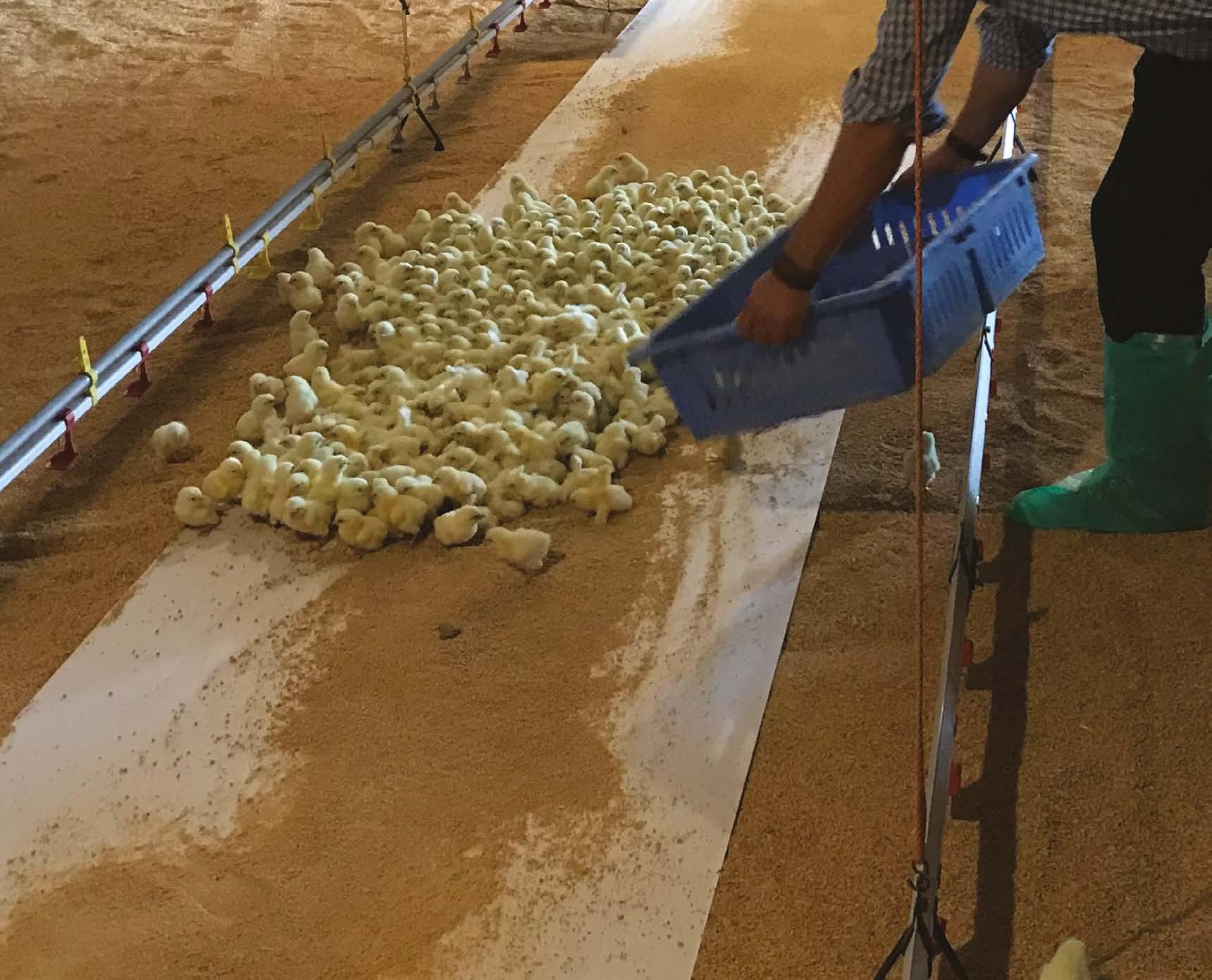
Careful and strategic placement of chicks in the brood area is important for animal welfare. When placing chicks take into consideration where and how chicks will be placed to optimize chick comfort, security, and welfare. All staff should take care when handling chick boxes during unloading from the truck, when transporting them within the house, and during the placement process. The goal should be to prevent rough movement such as tilting or dropping chick boxes, since this can potentially injure chicks. Ideally, boxes should always remain level until each individual box is tipped for chick placement.
Farm staff must gently place the chicks in accordance with company drop height limits. The drop height should be no greater than 15 cm (6 in) for chicks. This means that the person must hold the box securely with both hands and the tipping should minimize the drop distance from the bottom of the box to the litter.
The location where chicks are placed is critically important. Chicks should be gently placed directly on litter, supplementary feed trays, or the paper that has feed. Do not place chicks on top of solid equipment or on top of other chicks. When placing chicks on the litter, chicks should have easy access to water and feed, and should be near but not directly underneath the heat source (brooders). Ideally, chick unloading should be quick and efficient to minimize exposure to external climates that may result in thermal stress for the chicks. Place all boxes in the house or brood area so that chicks will be evenly distributed from the first moment of placement. Once boxes are distributed, begin at the back of the house or brood area and place chicks in a careful and calm manner moving towards the
Chicks should be gently placed directly on litter, supplementary feed trays, or the paper that has feed
front of the house. This will help prevent chick injury and chicks being around the feet of the staff during the reception process. Remove all paper liners and chick boxes during the process to prevent areas of potential entrapment for the chicks and dispose of these items in a biosecure manner. After placement, all staff should leave the house for 2 hours to let the chicks become acclimated to the reception area.
Post-placement
If lighting and temperature in the brooding area are optimal, chicks should naturally and quickly explore the brooding area to find feed and water. Evaluating chick behavior regularly within the first 24 hours of placement and objectively measuring crop fill is an easy way to verify correct setup and optimal conditions for chick comfort. If too many crops are hard, evaluate water availability, water temperature, and flow rate to determine why chicks may not be accessing water in the brood area. If too many crops are soft, evaluate feed availability, location and presentation and verify that the correct feed was delivered to the farm.
Hatched chick internal temperature should be 40 to 40.6 °C (104 to 105 °F). Chick internal temperature above 41 °C (106 °F) in the first 4 days can lead to panting and temperature below 40 °C (104 °F) indicates that the chick is too cold. Chick internal temperature can be measured using a small thermometer with a soft tip. Quickreading, digital thermometers are recommended for these chick checks. When sampling chicks to verify body temperature, it is important to prevent stress and injury to the chick. If using a quick-reading, digital thermometer for cloacal temperatures, carefully insert the metal tip of the thermometer into the cloaca. Securely hold the chick while supporting the entire body of the chick during the verification process. Every time you enter a poultry house, you should see some birds eating, playing, drinking, chirping, and resting. Birds should never be huddling. Careful observation of chick distribution within the brooding area and observation of chick activity can assess the comfort level of the chicks. If distribution is irregular, if activity level is extremely low, or if chicks are extremely noisy, these
can be signs of possible stress and the reason(s) should be investigated immediately.
Expanding the brooding area
As the brooding area is expanded, observe chick distribution and behavior. Chicks are naturally curious and will want to explore, but will still need to have the correct temperature, lighting and ventilation to ensure they are comfortable, remain active, and can easily find feed and water within the expanded area. If supplemental drinker and/or feeder trays are used during brooding, they should be gradually removed from the brooding area over the period of several days before the house is completely opened.
Conclusions
Animal welfare directly supports good flock performance by creating conditions that promote health, reduce stress, and improve productivity. When birds are raised in clean, comfortable environments with proper nutrition, ventilation, and space, they are less likely to suffer from disease or injury. Reduced stress levels facilitate good immune development and consistent growth rates. Additionally, flocks with good welfare outcomes have low mortality and good uniformity, which are essential for efficient farm operations.
MANAGEMENT COMMON MISTAKES IN TURKEYS BREEDER FARMS
PART 1
In turkey breeder farms, very different tasks have to be performed in a daily routine, which, both in terms of variety and number, may confuse or tire the staff. Doing these everyday tasks usually leads to dullness and mistakes can occur, which might seem to be of little importance. Unfortunately, we become accustomed to situations over time, and if a mistake is repeated for more than a few days, it is no longer considered a mistake in our minds, but part of a common routine. Therefore, it is very important to have an appropriate monitoring system and correction tools to avoid such situations. A very effective method could be to use a knowledgeable visitor or inspector weekly. In this article, the author aims to review some of these common issues that he faces in his visits, even in good farms, which are neglected or considered to have low impact on flock performance.
➤ Dr. Makan Hooshangi (DVM)
Veterinarian and turkey management specialist
Construction and design issues
Usually, each farm has its own specific structural or design issues. However, many such issues can be corrected through gradual modifications over time. The key is not to become accustomed to them. I always suggest farm managers should have some long-term plans for such issues. To give an example, I used to visit a farm that was in the middle of a forest, with no effective barrier to keep wild animals away from the breeder houses. It had always been a big challenge to maintain the demanding biosecurity protocols. The company could not afford the costs of constructing a suitable wall or even a fence around the biosecurity zone. For ten years they had been working that way, and that was considered a normal way of working. A very common mistake in every job is getting used to deficiencies! One day I asked: “Can you afford to buy a single concrete block every day?”. The big boss
was confused. I continued: “What if you had bought only one concrete block every day and put them together over these ten years? That would have been around 150 meters of wall”. The main idea is that getting used to mistakes or deficiencies and allowing them to grow into a chronic pain is a big mistake. Getting used to mistakes or deficiencies will lead to considering the issues “unimportant”, while every little issue matters in our job! You may ignore it and not see a big impact in the short term, but someday, at the worst time and situation, that might ruin what you have built over the years.
Farm outdoor area order and discipline
The arrangement and cleanness of the outdoor areas of each farm can affect the farm’s overall performance. Storing excess or defective supplies and equipment around
the houses is a common mistake in breeder farms, which, in addition to having an unpleasant visual impact and instilling a sense of indiscipline in the staff, increases the population of undesirable animals such as mice and other rodents, which can jeopardize the biosecurity of the farm.
Trimming and maintaining vegetation is no exception to this rule and should be scheduled regularly to prevent it from becoming a habitat for rodents and other unwanted animals.
Discipline
In many farms, most routine tasks are explained to the staff verbally and in general terms. For example, "Drinkers should be cleaned in the morning", or "Ventilation fans should be cleaned once a week" and so on. Not specifying the time and details of the task on the one hand and the lack of written instructions and work procedures on the other causes confusion, disorganization and, of course, a haphazard implementation of tasks.
To prevent this, one of the most effective ways is to have a written or printed daily and weekly work schedule and routine, which, in addition to making it easier for the farm manager to monitor its proper implementation, will create order and discipline on the farm. When the time and details of each task are included in this plan, it creates ease and order in doing things and allows workers to focus their energy solely on doing the predetermined tasks instead of spending energy on planning things (see Zootecnica International, Sep. 2023, p. 12 for a sample of a daily schedule chart).
Feeders
I have regularly seen in farms that the workers adjust the height of feeder higher than usual to prevent the litter from entering the feeders. Although this may not significantly reduce the flock’s feed consumption in statistics, I believe it will have an impact on weaker birds, especially those nearing the broody stage, and will increase the broody rate. To have clean feeders, you may schedule one hour with no feed during the day, which I call “zero feed hour”. I ask the farmers to manage feed distribution in such a way that there is no feed left in the feeders at a specific time, say 2-3 pm. This is when the least amount of feed is consumed and the hens are busy playing in the litter and resting. Also, most contamination of feeders with litter occurs during these hours. Zero feed hour allows you to accurately determine the feed consumption for the 24-hour period, while being able to clean the feeders accurately and thoroughly. The level of feed in feeders is very important, especially when using mesh feed. When feeders are overstocked, the stronger birds consume the coarser feed, leaving the finer
Two service rooms from the same farm, taken at almost the same time, yet so different due to the lack of a written schedule and clear instructions. The messy service room worker said: "I was just about to tidy up the service room when you arrived!".
feed for the smaller and weaker ones. In addition to causing a non-uniform flock, this can cause the stronger birds (which have consumed the coarser feed) to be at a disadvantage in terms of receiving essential micronutrients, which are usually in the form of powder, and to suffer nutritional deficiencies. On the other hand, the weaker birds that have eaten more fine feed will also suffer from energy and protein deficiencies, and consequently from impaired growth during rearing and a drop or cessation of laying during production. To prevent this, the feed level in feeders should be checked at least twice a day.
I personally prefer to activate the feeder lines every hour so that fresh feed is distributed properly and fairly to the flock. That would have an extra bonus for us during the broody peak time. The sound of the feeder lines conditions the turkeys, and by starting the feeder lines every hour during the broody peak period, we can somehow encourage the flock to consume as much feed as needed. The more feed is consumed by the fatigued turkeys, the fewer broody birds we will have.
EFFECT OF SOME BIOLOGICAL FACTORS ON THE PERFORMANCE OF BROILER BREEDER HENS
This study was carried out at the Poultry Research and Development Unit, El Wadi Company Farms and Poultry Nutrition Laboratory, Environmental Studies and Research Institute, Minufiya University, El Sadat Branch.
➤ Dr. Mahmoud Eladawy PhD in Environmental Science, hatcheries project consultant mahmoudeladawi4@gmail.com
Preparation of feed additives
L-carnitine (LC) used in the experiment (Carniking®) was 3-carboxy-2-hydroxypropyl trimethylammonium hydroxide manufactured by Lohmann Animal Health GmbH & Co. KG, Germany; the inner salt was obtained
from the International Free Trade Company (IFT). The herbal mixture (HM), composed of 6 different medicinal and aromatic plants, was purchased commercially in dried form as a supplement and consists mainly of thyme (Thymus vulgaris L.), oregano (Origanum vulgare L.), clove (Syzygium aromaticum L.), marjoram (Origanum marjorana L.), rosemary (Rosmarinus officinalis) and peppermint (Mentha piperita), that were mixed and ground to become a fine powder, then kept in clean, dry, sealed plastic bags.
The mixture was supplemented during the preparation of the experimental diets.
■ Table 1 – Performance of broiler breeder hens as affected by laying periods
a , b , c , d: Means followed by different superscripts in the same row are significantly different (p <0.05). NS: not significant; SEM: standard error of the mean.
The objective of this investigation was to study the productive and reproductive performance of broiler breeder hens as affected by LC, as an artificial antioxidant, and HM, as a natural antioxidant, supplementation during the period from 40 to 52 weeks of age in laying hens.
A total of 462 Ross 308 broiler breeder hens at 40 weeks of age were used to evaluate the effect of dietary supplementation with LC and HM on productive and reproductive performance, egg quality traits, blood parameters, microbiological status and economic efficiency.
Feed was restricted according to the breeder program.
Water was supplied ad libitum. All hens were kept under the same managerial, hygienic and environmental conditions throughout the entire experimental period, which lasted for 12 weeks.
The corn-soybean meal basal diet was formulated to cover the nutrient requirements recommended for the breed and served as the control diet; 3 supplemented levels of L-carnitine (10, 20 and 30 mg/kg diet) respectively for T1, T2 and T3, and 3 supplemented levels of herbal mixture (5, 10 and 15 g/kg diet) respectively for T4, T5 and T6.
Initial body weight, final body weight, body weight change, egg production, egg production rate, egg weight, egg mass, feed efficiency ratio, hatchability, egg quality and composition analysis were determined. Blood parameters, microbiological and immunological studies, embryonic studies were determined and economic efficiency was calculated.
The results indicated that:
1. Addition of HM as a natural antioxidant to laying hens diets increased egg number and improved feed conversion more than LC, used as an artificial antioxidant.
2. Addition of HM tended to improve fertility,
hatchability and hatchability of fertile eggs, and decreased both embryonic early and late dead compared to LC supplemented groups.
3. Inclusion of dietary levels of HM in broiler breeder hens’ diets up to 15 g/kg significantly improved internal and external egg quality parameters.
4. Addition of HM increased antioxidant capacity in blood plasma while decreased LDL, HDL, total cholesterol, triglycerides and total lipids in blood plasma.
5. The combination of 15 g HM/kg diet is the most successful additive for improving hatchability under the condition of this study.
6. Further studies must be carried out to investigate the possibility of using natural antioxidants in commercial broiler breeder hens’ diets for a long period of time during laying periods.
In general, based on the experimental results obtained herein and from an economic point of view, it may be concluded that supplementation with the herbal mixture at a level of 15 g/kg diet in broiler breeder hens improved productive and reproductive performance, as well as economic efficiency, compared to the artificial antioxidant L-carnitine during the 40–52 week laying period.
Economic efficiency
The economic efficiency of the study was calculated based on an analysis of outputs and inputs, considering the total revenue per hen per period and the total cost per hen per period. Calculations were made according to market prices during the experimental period: 1 kg of L-carnitine = 500 EGP, 1 kg of herbal mixture = 5 EGP and the price of one day-old chick = 2.5 EGP.
■ Table 2 – Reproductive performance of broiler breeder hens as affected by dietary levels of L-carnitine and herbal mixture
a , b , c , d: Means followed by different superscripts in the same row are significantly different (p <0.05). NS: not significant; SEM: standard error of the mean.
Hatcheries
Breeders
◗ Upcoming Events 2026
JANUARY, 25 to 26
IPC Annual Meeting 2026
International Poultry Council
Georgia World Congress Center
Andrew Young International
Atlanta, Georgia USA
Tel.: +353 874735976
Email: caroline@ internationalpoultrycouncil.org
Web: www.internationalpoultrycouncil. org
JANUARY, 27 to 29
IPPE
International Production & Processing Expo
Georgia World Congress Center
Atlanta, Georgia, USA
For information contact: Anne Sculthorpe, CEM, Senior Exhibit Manager
Email: asculthorpe@ippexpo.org
Kris Early, Media/Press/Sponsorship Coordinator
Tel.: +1 770 493 9401
Email: kearly@uspoultry.org
Email: info@ippexpo.org
Web: www.ippexpo.org
FEBRUARY, 4 to 7
FIERAGRICOLA
117th International Agricultural Technologies Show Veronafiere, Verona, Italy
Email: customercare@fieragricola.it
Tel.: +39 04511176091
Web: www.fieragricola.it
FEBRUARY, 9 to 11
37th Annual Australian Poultry Science Symposium
University of Sydney Business School – Belinda Hutchinson Building (H70)
Sidney, Australia
Web: www.apss.sydney.edu.au
MARCH, 10 to 12
18th Turkey Science and Production Conference
Carden Park Hotel and Golf Resort
Chesire, United Kingdom
Web: www.tspc-turkeys.com
MARCH, 10 to 12
Victam Asia 2026
BITEC Exhibition Center
Bangkok, Thailand
Email: expo@victam.com
Web: www.victamasia.com
MARCH, 16 to 18
WPDC
Western Poultry Disease Conference Hyatt Regency Mission Bay
Spa and Marina
San Diego, CA, USA
Web: www.wpdcfoundation.org
APRIL, 14 to 16
PEAK 2026
Minneapolis Convention Center
Minneapolis, MN, USA
Tel.: +1 763 284 6763
Email: info@midwestpoultry.com
Web: www.midwestpoultry.com
APRIL, 22 to 24
9th International Conference on Poultry Intestinal Health
Haliç Congress Center
Istanbul, Turkey
Tel.: +1 763 284 6763
Email: info@icpih.com
Web: www.icpih.com
APRIL, 28 to 30
NIPOLI EXPO 2026
Nigeria Poultry and Livestock Expo
NCRI
Ibadan City, Oyo State, Nigeria
Tel.: +234 80 3191 9662
Email: info@nipoliexpo.com
Web: https://nipoliexpo.com/
JUNE, 2 to 4
VIV EUROPE
Jaarbeurs Exhibition Centre
Jaarbeursplein 6
NL-3503 RM Utrecht
The Netherlands
Web: www.viveurope.nl
JUNE, 28 to 30
MEP 2026
Middle East Poultry Expo 2026
Riyadh International Convention and Exhibition Center