NEWCASTLE DISEASE VIRUS EVOLUTIONAND CONTROL STRATEGIES
THE ROLE OF THE G20 IN GLOBAL MEAT PRODUCTION AND TRADE
Poste Italiane SpA - Spedizione in Abbonamento PostaleAut. n° CN-NE/00754/04.2025 - Tassa Pagata/Taxe Perçue/Economy/Compatto - ISSN 3035-4986
Feeders Gió: the originals without grill
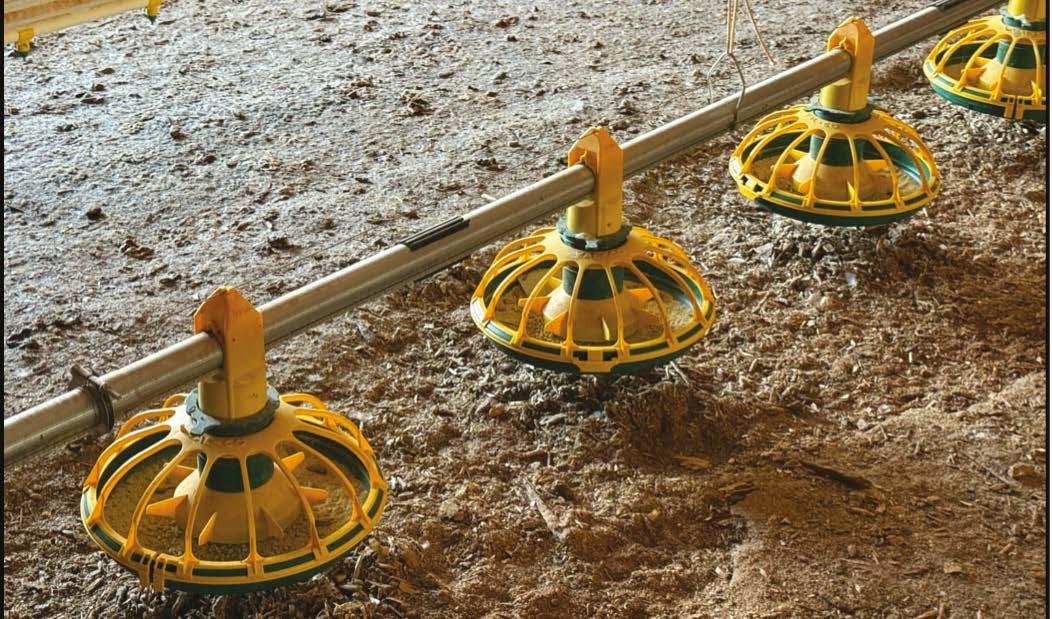
Specifically developed for great poultry farms, thanks to the easiness in the regulation of the feed and to the absence of grill (that avoid chicks perching) have many advantages: they are easy to use and their cleaning is extremely easy and fast too, leading to an overall reduction in labour costs.
for the rearing phase (first 30 days of life) for the growing phase (no anti-waste ring)
Publisher Administration and Editorial Office
Zootecnica di Marianna Caterino Via del Forestello n. 8
Periodico mensile registrato presso il Tribunale di Firenze al n. 6215 in data 10/03/2025
Iscrizione al ROC n. 42813
Spedizione in Abbonamento Postale Aut. n° CN-NE/00754/04.2025
Art Direction and layout Pilar Roca – pilarroca.com
Printer
Faenza Printing Via Vittime Civili di Guerra, 35 48018 Faenza (RA), Italy
All rights of reproduction and translation of the published articles are reserved. Any reproduction, even partial, is strictly prohibited without the publisher’s prior written authorization. All content is protected under copyright law. The editorial board assumes no responsibility for the opinions expressed by the authors of editorial and advertising texts.
Zootecnica ensures the confidentiality of personal data collected for subscriptions and purposes related to specialized publishing, in compliance with the General Data Protection Regulation (GDPR – EU Regulation 2016/679). Subscribers have the right to access, modify, or delete their personal data by submitting a written request to the publisher. Personal data will not be shared with third parties without explicit consent.
Scan to visit our website
EDITORIAL
Newcastle disease is once again drawing the attention of the European poultry sector. After years of relative stability, recent developments confirm that the virus has continued to circulate in niches and wildlife reservoirs, re-emerging when production conditions, biosecurity, or local density create favourable opportunities for the virus.
Since January 2026, between 20 and 28 outbreaks of Newcastle disease have been confirmed in commercial farms in Poland, leading to the culling of hundreds of thousands of birds, with more than 500,000 head affected in single operations. Spain is facing a similar pattern, with multiple outbreaks in broilers and layers, particularly in the eastern regions, and new cases still being reported in March. Notably, the reappearance of the disease in Germany after nearly three decades highlights the persistence of underlying risk across Europe.
What makes the current situation particularly relevant is not only the scale of the outbreaks, but also the context in which they are occurring. In several cases, affected flocks had reportedly been vaccinated. This is consistent with the known characteristics of Newcastle disease vaccination: live attenuated vaccines do not fully prevent infection or viral circulation, but they play a key role in reducing clinical disease, mortality, and viral shedding.
As highlighted in both scientific literature and field experience, Newcastle disease control relies on a combination of measures. Vaccination remains a cornerstone, but its effectiveness depends on correct administration, monitoring, and integration within a broader strategy that includes biosecurity, sanitation, movement control, and farm management.
The critical issue emerging from the current outbreaks is therefore not vaccine failure, but variability in implementation, whether in application protocols, farm-level consistency, or coordination across production systems. In high-density poultry areas, even limited gaps can allow the virus to circulate. This renewed epidemiological pressure underlines the need for alignment across the poultry value chain. Effective control is not achieved at the level of individual farms alone, but through consistent and coordinated measures at regional level.
➤ Marianna Caterino
NEWS
REPORTAGE
Chinese poultry sector looks towards future with optimism
REPORTAGE
Broilernet and the future of slow-growing broilers in Europe: animal welfare, sustainability, and economic challenges
DOSSIER
Layer production cycle: reaching week 100
DOSSIER
Comparison of litter, subjective moisture and friability scores to measured litter moisture content
FOCUS
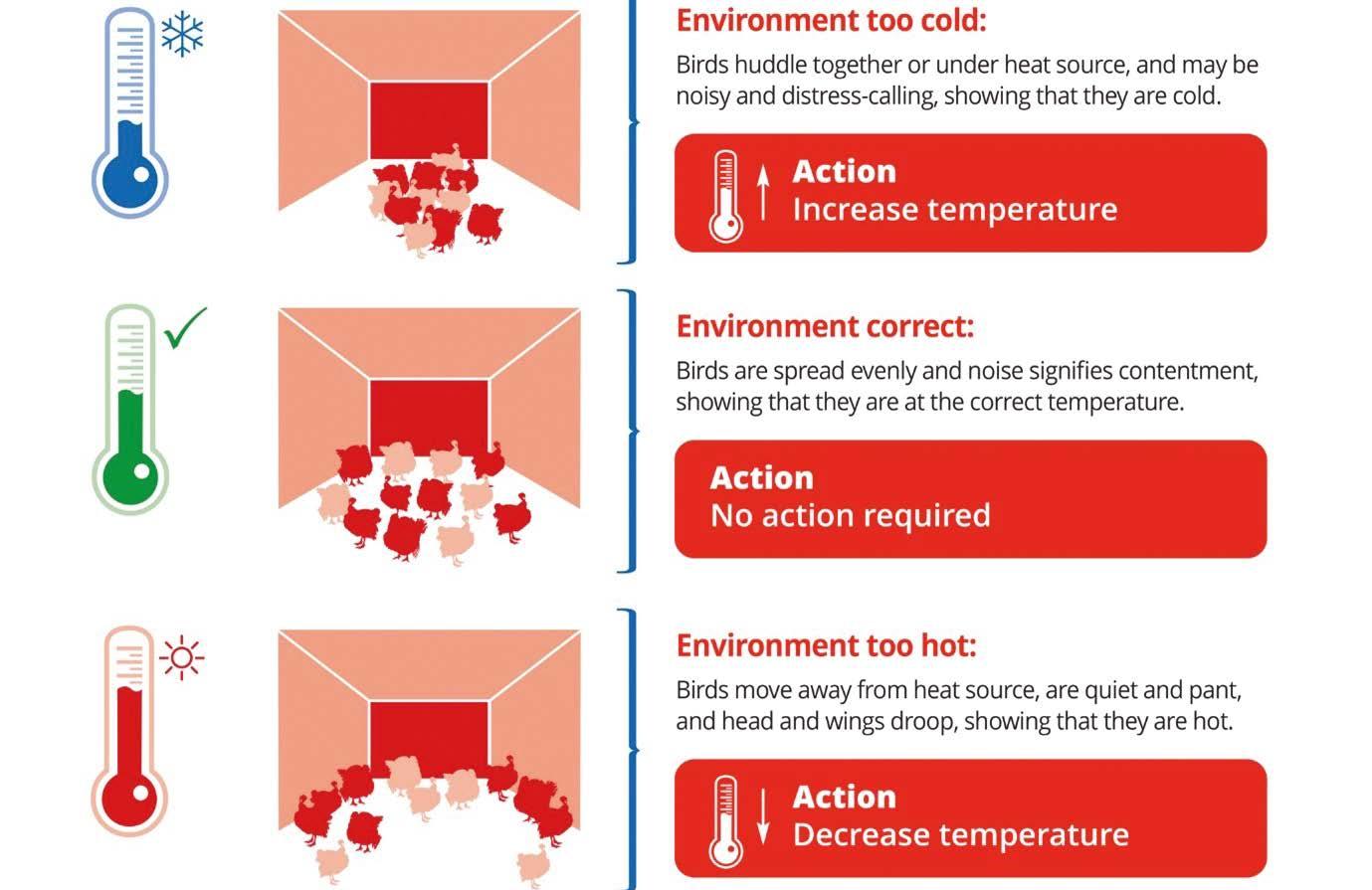
Keeping birds warm and comfortable with dry litter
FOCUS
Hot weather management and nutrition for commercials
MARKETING
The role of the G20 in global meat production and trade –Part 1: meat production
MANAGEMENT
Optimising welfare and production in laying hens through precision glycans
NUTRITION
Feed management and feeding techniques explained
VETERINARY
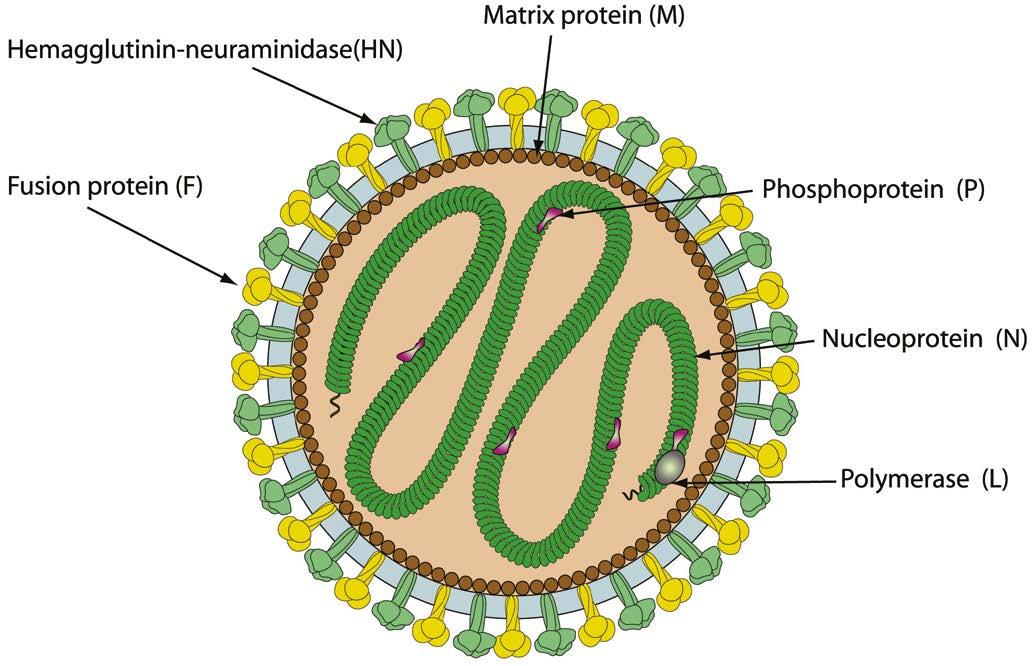
Newcastle disease virus evolution and control strategies
MARKET GUIDE
EVENTS
HUBBARD INVESTS R$ 60 MILLION TO INCREASE
ITS PRODUCTION IN
BRAZIL
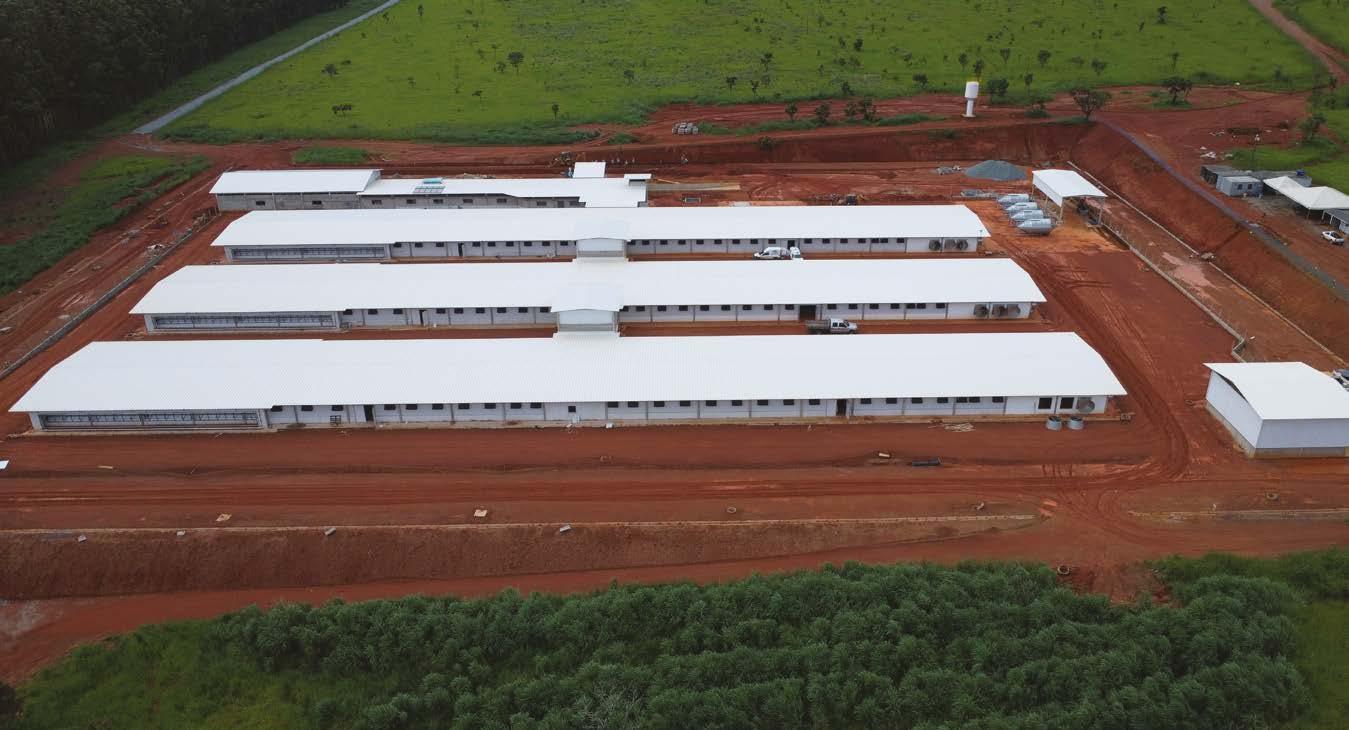
Campinas, SP, Brazil – Responding to growing demand from poultry producers, Hubbard®, an international broiler breeding company, has announced a strategic investment of R$ 60 million (~US$ 11.4 million) to increase its Grandparent operation in Luziânia, Goiás. This investment will increase the production capacity in Brazil to meet rising demand for the Hubbard Efficiency Plus breed.
Listening to producers, responding with action
The growth follows a year in which field performance confirmed what many farms were already seeing in practice. Customers reported consistent results, particularly in achieving a strong balance between chick output and improved feed conversion. That combination – strong productivity alongside good animal welfare and enhanced feed efficiency – reinforced confidence across the market and signalled the need for additional supply.
For Carlos Antônio Costa, Hubbard’s General Manager in Brazil, progress in breeding must remain closely aligned with on-farm realities. «Breeding progress should reflect what farmers are experiencing every day. Right now, that means continually improving welfare, achieving better feed efficiency, and delivering consistent, predictable breeder and broiler performance” said Costa. «This expansion in Luziânia ensures the sector has the support it needs to continue producing affordable chicken protein in a responsible way.»
Efficiency drives sustainable broiler production
Across Brazil and South America, feed efficiency has become a defining priority – not only for economic performance, but also as part of a broader commitment to responsible broiler production. Producing healthy chickens with greater feed efficiency supports affordability for consumers and responsible use of natural resources. Improved feed conversion reduces the need for agricultural land, while lowering the carbon footprint associated with feed production. At the same time, well-balanced birds are better positioned to maintain uniform growth and overall flock health from hatch onward.
By strengthening the production capacity in Goiás, Hubbard reinforces its long-term commitment to Brazilian broiler production and to supporting a stable, sustainable supply of high-quality chicken protein for growing communities.
«Our focus is simple: continuous improvement that helps farmers raise efficient, healthy birds» Costa concludes. «When producers succeed, they help make nutritious protein more accessible while caring for the resources future generations depend on.»
Source: Hubbard press release
Construction in progress in Goiás
NORWAY: TRANSITION TO SLOWER-GROWING
GENETICS AND PHASE-OUT OF CONVENTIONAL BROILERS BY 2027
Norway’s poultry sector has announced a structured transition towards slowergrowing broiler genetics, with a complete phase-out of conventional fast-growing strains scheduled by 31 December 2027. The initiative, formalised in January 2026 through a voluntary agreement between Nortura SA and the Norwegian Meat and Poultry Industry Association (KLF), involves the majority of the national production system.
Norway produces over 70 million broilers annually, with conventional strains currently accounting for approximately 60% of output. Under the agreement, no new placements of fast-growing lines will take place after the second quarter of 2026, allowing for a gradual transition as existing flocks are phased out.
The decision reflects a combination of market requirements, retailer specifications and evolving production standards. In recent years, increased attention has been given to the performance and robustness of different genetic lines under commercial conditions, particularly in relation to leg health, cardiovascular disorders and overall flock uniformity.
Conventional broilers typically reach slaughter weight (2.3–2.5 kg) within 35–42 days, whereas slower-growing strains require 56–63 days. Comparative data collected under European production systems indicate improvements in locomotion, lower incidence of pododermatitis and reduced mortality during rearing and transport when slower-growing genetics are adopted.
The transition is aligned with the criteria of the European Chicken Commitment (ECC), which defines thresholds for growth rate, stocking density and environmental enrichment. Approved strains include Hubbard JA787, Rustic Gold (Sasso) and Ranger Gold, all characterised by reduced daily weight gain and extended rearing periods. From an operational perspective, the shift requires adjustments in housing management, nutrition programmes and production planning. Lower stocking densities, environmental enrichment and revised feeding strategies are necessary to optimise performance under longer production cycles. Training programmes and advisory support are being implemented to assist producers during the transition phase.
The Norwegian government has adopted a supportive role, allocating approximately NOK 500 million (€42 million) in funding for farm upgrades and technical adaptation, while maintaining a non-regulatory approach. This framework is
intended to facilitate industry-led implementation without the introduction of mandatory bans.
Experience from early adopters provides practical insight into the feasibility of the transition. Norsk Kylling, which introduced slower-growing genetics in 2018, reports stable production volumes with a reduced number of birds, alongside lower mortality rates and improved product positioning. The company has also recorded reductions in ammonia emissions and resource use per unit of output. Similarly, Steinsland & Co. has expanded its market presence through the integration of in ovo sexing technology, in line with national measures to phase out male chick culling by 2027. These developments highlight the broader restructuring of the production system, extending beyond genetics to include hatchery practices and supply chain organisation.
Economic considerations remain central to the transition. Longer production cycles are associated with increased feed consumption; however, these costs may be partially offset by lower mortality, reduced veterinary interventions and the availability of differentiated market segments. In Norway, retail pricing and consumption levels have remained stable, supported by strong consumer confidence in domestic production.
At European level, the Norwegian model is being closely monitored as an example of coordinated, industrydriven change. While production systems, regulatory frameworks and market conditions vary across countries, the initiative provides relevant data on the technical and economic implications of shifting towards slowergrowing broiler genetics.
The transition underway in Norway illustrates how genetic choices, management practices and market requirements are increasingly interconnected. Its outcomes will contribute to the ongoing evaluation of production strategies within the European poultry sector.
UK LAUNCHES NEW HPAI VACCINE TRIALS IN TURKEYS
New trials evaluating vaccines against highly pathogenic avian influenza (HPAI) have officially started in England, marking an important step in ongoing efforts to control the disease and protect both commercial poultry and wild bird populations. According to a press release from the UK Department for Environment, Food & Rural Affairs (DEFRA), the Animal and Plant Health Agency (APHA) and the Office of Baroness Hayman of Ullock, the targeted study began on 5 March 2026 and will focus specifically on turkeys.
The initiative aims to evaluate the effectiveness of authorised vaccines under controlled conditions and to gather practical data on vaccine performance in the field, as well as on how surveillance systems could be maintained to safeguard international trade.
Over the past few years, outbreaks of HPAI across the United Kingdom and Europe have reached unprecedented levels. Since 2020, the virus has had a major impact on both captive and wild birds globally. In the UK alone, the economic cost of recurring outbreaks is estimated at up to £174 million per year for government and industry combined.
Turkeys were selected as the focus species for the trial because of their high susceptibility to avian influenza. In this species, infections often lead to severe clinical signs and rapid mortality, making them particularly relevant for vaccine efficacy studies.
The trial will involve a small number of birds monitored under strict veterinary supervision. It has been approved by the Veterinary Medicines Directorate (VMD) and will use vaccines already authorised for use in the UK or the European Union. Vaccination of poultry against avian influenza is not currently permitted more widely in the UK. Biosecurity Minister Baroness Hayman stated that the trials represent a significant advance in the fight against avian influenza, noting that the disease continues to impose a heavy burden on farmers and the poultry sector. She added that vaccination could eventually become an additional tool to strengthen the country’s biosecurity and protect food supply.
UK Chief Veterinary Officer Christine Middlemiss emphasised that the study will be essential for
understanding how vaccines could be applied effectively within the UK’s disease control framework. However, she also stressed that strict biosecurity remains the primary defence against the virus.
Professor Ashley Banyard, avian influenza specialist at APHA, explained that evaluating the immune response generated by vaccines in turkeys will help determine their potential effectiveness against H5N1.
The research programme will run for 24 weeks and aims to produce data on vaccine performance, surveillance implications and practical implementation. These findings will contribute to the recommendations of the UK HPAI Vaccination Taskforce and to the broader international research effort on avian influenza vaccination.
Several countries are currently exploring similar strategies. In Europe, vaccine trials against HPAI are also underway in Italy and the Netherlands.
Source: UK Government press release
CHINESE POULTRY SECTOR LOOKS TOWARDS
FUTURE WITH OPTIMISM
China’s poultry sector is growing steadily, driven by strong demand, lower feed costs, and government support for self-sufficiency, while major producers expand and imports diversify to meet consumer preferences.
➤ Eugene Gerden Freelance writer
The Chinese poultry sector is steadily growing thanks to a stable demand and consumption, which stimulates local farmers to expand their capacities.
The recent trade wars between the US and China resulted in a significant decline in imports to China and affected the country’s poultry market. In contrast to the previous years, the trade disputes with the US forced the Chinese authorities to pay more attention to the development of domestic poultry sector. That also involves a more active search for alternative suppliers. In general, since the beginning of 2025, the diversification of supplies in the field of poultry has become one of the priority goals for the Chinese authorities, while the government plans to continue implementation of this policy in years to come.
Major progress
Overall, since the beginning of the 2020s, the Chinese poultry sector has achieved significant progress. An official spokesman for Han Jun, the Chinese Minister of Agriculture and Rural Affairs, said in an exclusive interview, China is the world’s largest producer and consumer of poultry and plans to retain its status in years to come. According to the
Ministry, this is despite the ongoing volatility in the global markets and a new wave of tariff wars.
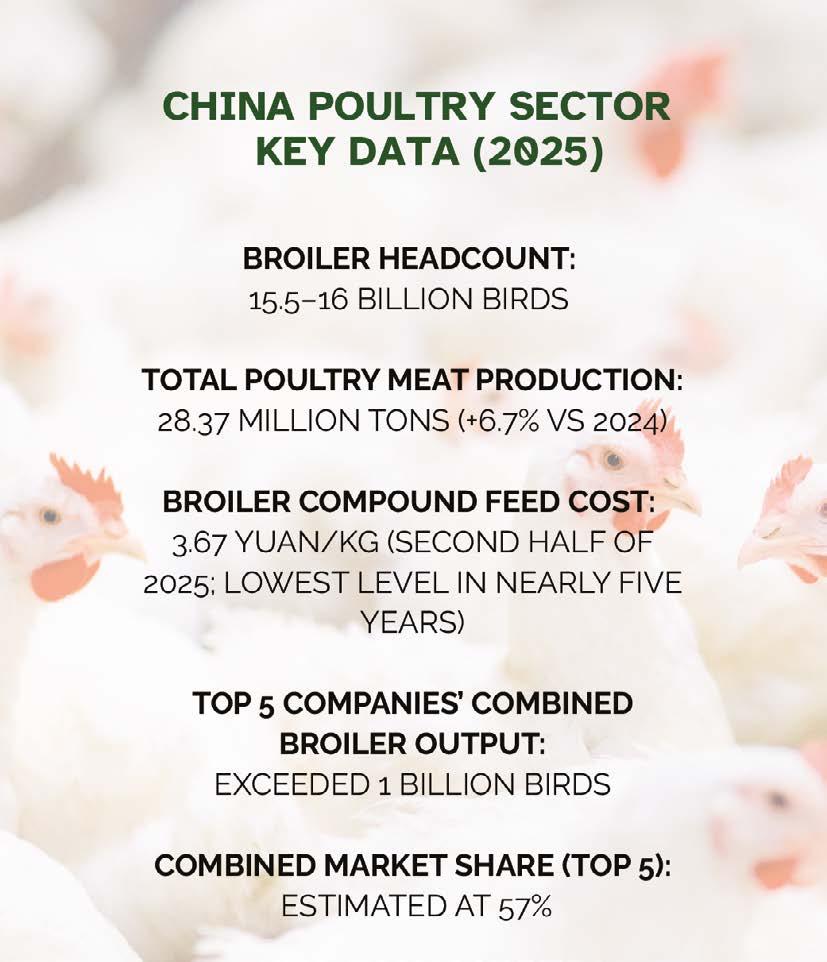
The current situation in the Chinese poultry sector remains stable, while the market is largely dominated by broiler chickens. According to data from the Chinese National Bureau of Statistics and Ministry of Agriculture, China’s broiler headcount amounted to 15.5–16 billion in 2025, with total production reaching 28.37 million tons of poultry meat (+6.7% vs. 2024). Chicken now accounts for over 20% of per capita meat consumption in the country, while these figures continue to grow.
Largest players looking for expansion
In terms of market structure, among the leading local players are Wens Foodstuff Group, Lihua Group, Xiangjia Group, Dekang Group, and Liyuan Group. In 2025, their total broiler output exceeded 1 billion birds, with the combined market share estimated at 57%.
In recent years, many of the leading local players have announced their plans for further expansion in the domestic market.
As for Wens Foodstuff Group, the company currently remains a major player in the market with annual sales of up to 600 million broiler chickens per year and the annual growth rates of 9–10%.
Founded in 1983 as a small Leizhou chicken farm, the company has since become a leading player in China’s poultry sector. In recent years the company has expanded cooperation with several global companies to ensure a stable supply of raw materials for its needs. For this purpose, Wens recently signed a strategic agreement with Cargill Investment, the Chinese subsidiary of the US company Cargill. The agreement gives Wens an opportunity to optimize its feed supply chain and improve efficiency.
As Sun Fen, Vice President and Minister of Procurement Center of Wens Foodstuff Group, told during the press conference following the signing of the agreement, Wens has high hopes for its future collaboration with Cargill, as it will ensure a stable supply of raw materials.
In the meantime, Lihua Group, another major player in the Chinese poultry sector, also considers the acceleration of expansion in the domestic market this year. The company showed positive dynamics in 2025, demonstrating strong growth momentum with 260 million chickens sold, representing an 11% increase over 2024. It currently focuses on operations in the chilled yellow-feather chicken segment. In recent years it has significantly strengthened its positions in this segment and now ranks among the leading local players.
As the Chinese Xinhua media announced earlier, citing the company, last year it achieved strong results in the domestic market. According to official data, it processed approximately 90 million fresh chicken products in 2025, accounting for about 15.87% of total chicken sales volume in China last year. As the company’s spokesman said, this represents a year-over-year increase of approximately 50%, compared to 2024.
Analysts from the Chinese Ministry of Agriculture and Rural Affairs believe the current success of both Wens and Lihua in the domestic market is mainly due to the companies’ production and development strategies, which have been introduced by their managements in recent years. According to the Ministry’s analysts, this involves the innovative “company + farmer” model, which allows both companies to organically combine their technological, financial, and market advantages with farmers’ breeding resources. This integration ensures the development of a close and efficient supply chain, in which companies implement strict management of the breeding process, controlling every detail from feed selection to disease prevention, thus ensuring product quality and supply stability.
In the meantime, Ministry analysts also believe the rise of large-scale farming will remain one of the major drivers for growth of the poultry sector of China. In major poultryproducing areas such as Shandong and Guangdong, the “company + farmer” model has effectively integrated the resources of small and medium-sized farmers. For example, Fujian Sunner Development Co., Ltd. remains the world’s largest broiler chicken industrial park, with an annual output exceeding 500 million birds.
Future prospects
Regarding future prospects, much will also depend on future trends in feed costs for Chinese poultry farmers. The recent decline in feed costs has had a positive impact on China’s poultry industry (with the sharpest drops observed in corn and soybean meal prices), but it remains unclear whether these trends will continue throughout 2026.
According to official data from the Chinese government, broiler compound feed costs dropped to 3.67 yuan/kg in the second half of 2025, the lowest level in nearly five years. This resulted in higher profits for local poultry farmers.
Plans for imports
Despite a significant increase in domestic production, China continues to import certain volumes of poultry going forward.
As Chinese consumers increasingly favor specific poultry cuts, the country is actively seeking to expand its poultry import portfolio with products whose domestic production remains relatively limited.
As part of this strategy, China recently reached an agreement with the Georgian government to import chicken legs and necks, products that remain in high demand among Chinese consumers. This move reflects China’s ongoing strategy to diversify poultry import sources and to avoid any dependence on a single major supplier.
According to Zurab Uchumbegashvili, Head of the Georgian Poultry Development Association, the agreement aligns well with China’s consumption trends, as chicken legs and necks, while undervalued in Georgia, are highly prized in China.
BROILERNET AND THE FUTURE OF SLOW-GROWING BROILERS IN EUROPE: ANIMAL WELFARE, SUSTAINABILITY,
AND ECONOMIC CHALLENGES
The European broiler production sector stands at a crossroads. On one hand, growing demand for animal protein drives the need for efficiency; on the other, regulatory and consumer pressure for a shift toward more sustainable practices and higher animal welfare standards. Against this backdrop, slow-growing broiler breeds represent a promising alternative, provided they are applied within large-scale, sustainable models that balance economic implications with strategies to reduce environmental impact. The sector’s success will depend on integrating science, market, and communication.
➤ Annunziata Palamara e Paolo Ferrari CRPA – Centro Ricerche Produzioni Animali, Reggio Emilia
Innovation and new challenges for the European poultry chain
Today the European broiler production sector stands at a crossroads. On one hand, growing demand for animal protein continues to drive the need for efficiency; on the other, regulatory and consumer pressure for a shift toward more sustainable practices and animalfriendly approaches. In Italy, as in many other European countries, conventional intensive farming systems are often associated with high resource use and greenhouse gas emissions, as well as concerns about animal welfare and meat quality. Nevertheless, it is worth noting that broiler production systems are among the least impactful within livestock production in terms of greenhouse gas emissions (de Vries & de Boer, 2010; Poore & Nemecek, 2018), although they contribute significantly to nitrogen and phosphorus emissions, which may lead to acidification and eutrophication. Within the European Union, poultry and pig production systems are estimated to account for approximately 85% of total ammonia emissions. Against this backdrop, it is essential to identify strategies that can reduce environmental impact, improve animal welfare, and meet consumer demands. Slow-growing chicken breeds represent a promising alternative. Although they require longer production cycles, they offer significant benefits in terms of animal welfare and meat quality, while also presenting new challenges in resource management.
The European thematic network BroilerNet
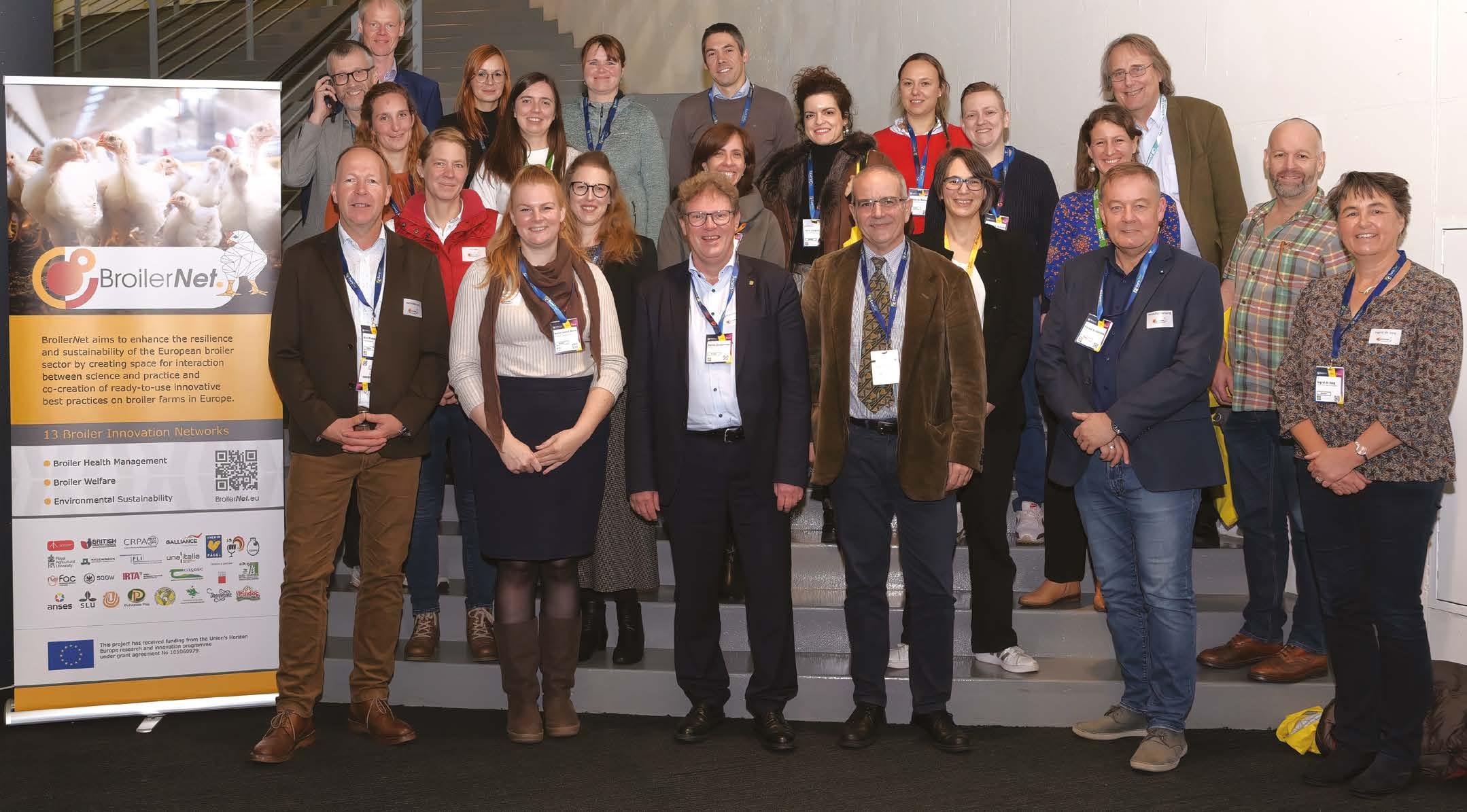
The BroilerNet thematic network for innovation in broiler production (https://broilernet.eu) brings together farmers, researchers, veterinarians, and advisors from 13 European countries. Funded by the Horizon Europe research and innovation programme, the initiative aims to enhance the resilience and sustainability of the European broiler sector by creating a platform where science and practice can interact, fostering the co-creation of ready-to-use innovative best practices for broiler farms across Europe. Italian partners in the project include CRPA in Reggio Emilia (leader of the work package on environmental sustainability) and Unaitalia.
BroilerNet has identified and assessed the feasibility of innovative best practices and ready-to-apply research solutions addressing the most urgent innovation needs in three key areas: environmental sustainability, animal welfare, and health management. The use of slowgrowing broiler breeds emerged as one of the poultry sector’s main challenges, a finding also confirmed through consultations with breeder associations in the BroilerNet partner countries. The use of such breeds is required under European organic production rules and recommended in free-range farming.
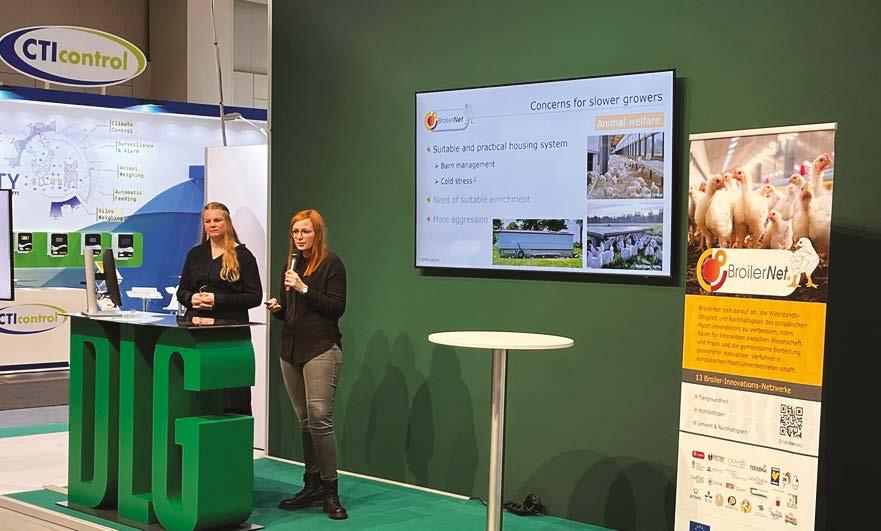
Presentation by the Friedrich Loeffler Institute at EuroTier on the use of slow-growing broilers
Ingrid de Jong and Jamie Kater of Wageningen Livestock Research organised a BroilerNet workshop on the topic of slow-growing breeds on November 15, 2024, in Hannover (Germany), during the international EuroTier fair. The event served as an important forum for discussion among researchers, farmers, and industry stakeholders, with the aim of identifying key innovation needs and sharing best practices to support the sustainability of production systems based on slower-growing chicken strains. Several priority needs emerged from the workshop. These included the need to define a clear maximum growth rate, establish shared metrics to assess animal welfare benefits associated with different genetic lines, and develop common tools and indicators for comparing the sustainability of various production systems. Participants also underscored the importance of reliable auditing procedures to certify slow-growing poultry systems.
Another central issue concerned the design of environmental enrichments and outdoor spaces, such as verandas or “winter gardens”, for organic and free-range farms, as well as the optimization of ventilation and heating in low-density housing. Participants also emphasised the need for vaccination programmes tailored to slow-growing breeds, together with strengthened biosecurity measures, which must be maintained for longer periods in outdoor
systems where there is a higher risk of contact with wild birds or predators.
From a nutritional standpoint, it was reiterated that slowgrowing breeds require specific feeding programmes that ensure gradual yet consistent growth while safeguarding bone, muscle, and immune health. From a management and economic perspective, participants identified financial uncertainty, investment risks, and competition from imported meat as key barriers to the large-scale adoption of these production systems.
Communication with consumers also emerged as a crucial factor. Participants expressed the need to educate the public on the sustainability attributes and ethical values associated with poultry meat from slow-growing breeds, using supply chain data to enhance product value and differentiate it from conventional production.
To address the most pressing challenges, the workshop proposed several best practices, including increased investment in staff training and capacity building in animal welfare, biosecurity, and management of birds in alternative systems. Economically, the group suggested developing fairer value chain agreements to distribute margins more evenly, alongside adopting cost-reduction strategies such as using alternative feed ingredients or producing raw materials on-farm, solutions that could also improve the overall environmental footprint of poultry farms.
European Chicken Commitment: higher welfare standards
In parallel with the research and experimental activities promoted by BroilerNet, market players and civil society organisations are also driving change in the sector. The European Chicken Commitment (ECC), an initiative launched by more than 30 animal protection organisations and endorsed by over 300 retailers and food companies (source: Chicken Watch), plays a key role.
The ECC has introduced farming standards that go beyond the minimum requirements laid down in European legislation, including the use of slow-growing breeds, increased space allowances, access to natural light, environmental enrichment and more welfareoriented slaughter methods. Slow-growing breeds reduce common health issues seen in conventional genetic lines, such as skeletal deformities and lameness, and support the expression of natural behaviours like foraging and dust bathing.
By contrast, fast-growing lines show higher post-mortem rejection rates due to “technopathies” such as ascites, discolouration, cellulitis, perihepatitis, and pectoral muscle
myopathies (Barbut, 2020; Baxter et al., 2021; Rayner et al., 2020). Improving welfare can therefore also have positive effects on environmental impact by reducing mortality and carcass rejection at slaughter (Kyriazakis et al., 2024).
Pros and cons of slow-growing chickens
Slow-growing breeds offer clear advantages: enhanced animal welfare, fewer health issues, expression of natural behaviours, and superior organoleptic meat qualities. However, they require longer production cycles and greater resources to reach slaughter weight, resulting in increased feed and water consumption, as well as effluent production and nitrogen/phosphorus emissions.
From an economic perspective, higher costs translate into elevated retail prices, limiting adoption without market support or incentives. As reported by Sell-Kubiak et al (2017), genetic selection for better feed efficiency in broilers has yielded benefits in faster growth, lower feed conversion ratio, and environmental sustainability through reduced greenhouse gas emissions.
Progress requires more than general efficiency gains; understanding genes influencing nutrient utilisation is key. For example, selecting chickens with an improved capacity
Workshop organized at EuroTier in Hanover to discuss slow-growing broiler farming strategies
to digest wheat can cut solid droppings by up to 61%, liquid by 56%, nitrates by 13%, and phosphates by 30%
(De Verdal et al., 2011).
The gut microbiota plays a pivotal role by recycling nitrogen through uric acid breakdown and converting ammonia
into bacterial proteins, promoting sustainable nutrient use in poultry farming. Better insights into microbiota-host interactions could enhance feed digestion, further cutting waste and associated greenhouse gas emissions.
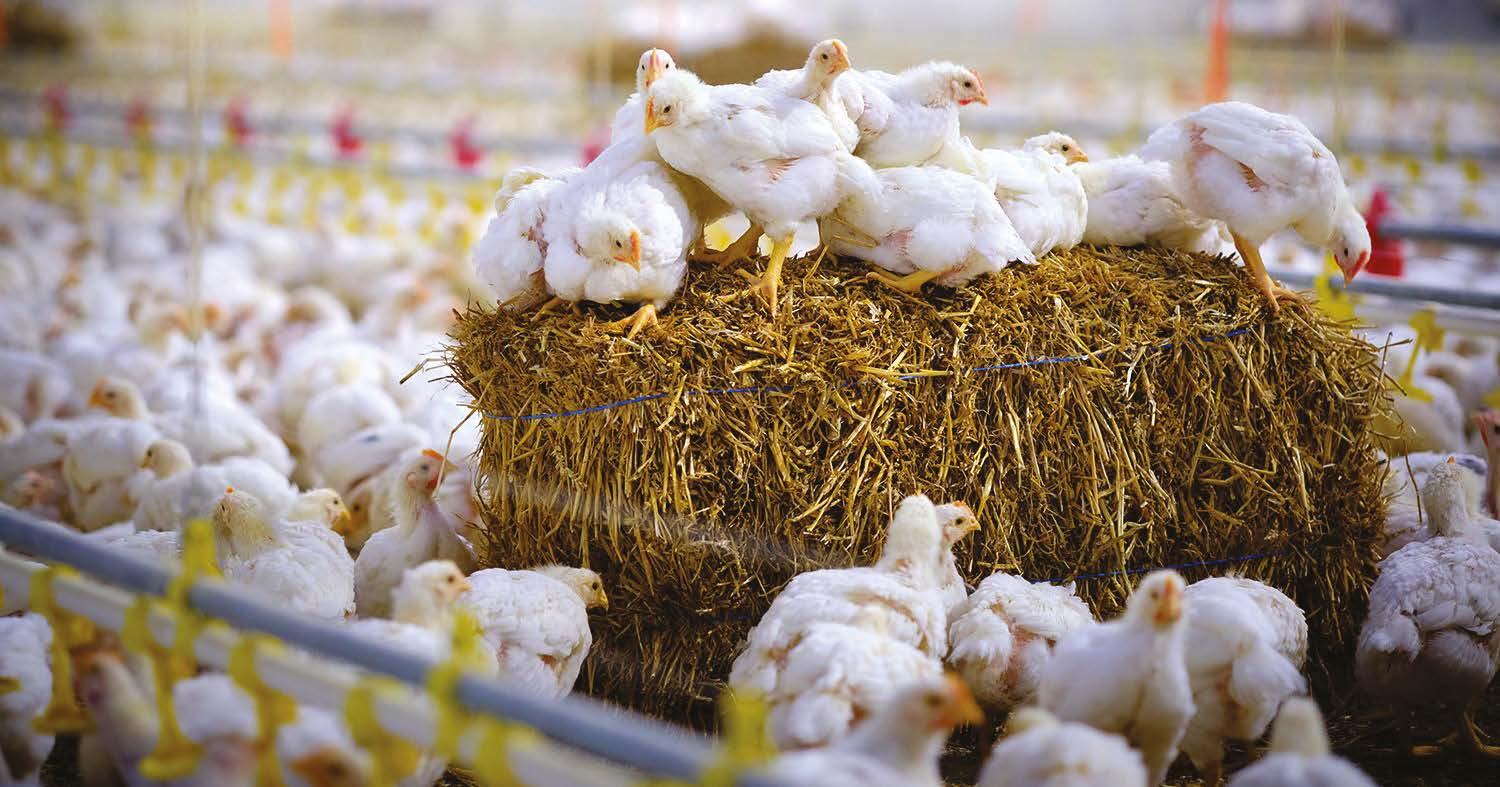
Bale of straw for environmental enrichment
Source: Wageningen Livestock Research.
Environmental and economic impacts: ECC and WUR study results
Environmental assessments highlight the complexity of the issue. Several studies have produced variable results on the carbon footprint impact of slow-growing farming, depending on the methodological approach adopted.
A recent study commissioned by AVEC and conducted by the UK agriculture consultancy ADAS estimated that adopting ECC standards in European broiler systems would increase greenhouse gas emissions by 24.4%, rising from 6.68 to 8.31 kg CO₂e per kilogram of produced meat. This increase is largely due to the longer growth cycle of slowgrowing chickens, higher feed consumption, and lower meat yield compared to conventional broilers. In other words, more time and resources are needed to produce the same amount of final product, raising emissions per kilogram of saleable product.
A more moderate estimate comes from Wageningen University & Research’s (WUR) Greenwell Project, which calculates an average emissions increase of about 6.3% compared to conventional broilers. In the Dutch model, higher-welfare systems show slightly lower feed efficiency, but the emissions rise is less pronounced than in the ECC study.
The difference between the two results largely depends on methodological differences. The ECC analysis measures impact per kilogram of saleable meat, including post-farming stages like slaughter and processing, and accounting for lower yields from slow-growing breeds. In contrast, WUR uses liveweight kilogram at slaughter as the reference, without post-slaughter losses.
From an economic standpoint, adopting ECC standards would significantly raise production costs, estimated by ADAS on behalf of AVEC (the EU umbrella association for national poultry sector representatives) at ~+37.5% per kilogram of meat versus conventional systems. Beyond this operational hike, maintaining current EU chicken production levels under ECC standards would require building about 10,000 new barns, with an estimated investment of €8.243 billion based on ~€420 per m² of production space.
Studies by Wageningen University & Research (WUR) under the Greenwell project confirm cost increases but at a lower level (+19% at farm level). However, the higher market value of products from higher-welfare systems can partially offset these costs, allowing farmers to maintain profitability levels comparable to those of conventional systems.
Conclusion
The future of broiler production in Europe will increasingly be shaped by consumer choices. A portion of these consumers is sensitive to sustainability issues but also to market prices, which remain one of the main purchase factors alongside taste and food safety (Ferrari, 2024). Slow-growing broiler farming can offer a practical solution that balances animal welfare and meat quality. Achieving sustainability at scale requires an integrated approach that also addresses economic implications and strategies to mitigate environmental impact. Only by combining science, market dynamics, and effective communication can slow-growing poultry become a benchmark model for more ethical and sustainable food production in Europe.
LAYER PRODUCTION CYCLE: REACHING WEEK 100
The production cycle of laying hens conventionally ends before 80 weeks old as laying persistency declines rapidly, and cumulative egg production takes a toll on birds’ health, robustness, and egg quality. However, maintaining optimal performance until week 100 can be done due to recent advancements on genetic improvement, layer nutrition, and poultry welfare.
➤ Aitor Arrazola Research biologist, Ph.D. in Animal Behaviour & Welfare
Common endpoints of layer production cycles
Layer flocks are often replaced before week 80 as saleable egg production declines due to lower laying persistency over time (below 80% after this time) and high cumulative mortality/removal rate. A healthy, well-nourished hen can lay (almost) one egg daily, yet laying ceases if birds struggle
to keep up with this laying rate over a long period of time. Thus, laying persistency goes down rapidly as the number of birds capable of retaining such performance shrinks over time. Due to genetic improvement, current commercial lines of laying hens reach higher peaks of laying rate (>95%), sooner (<20 weeks of age), and for longer (>90% until week 60). To achieve this genetic potential, a clear understanding of the interaction between environment, metabolic status, and nutritional demands is paramount to sustain poultry health, liveability, and production outcomes as flocks age.
Laying one egg daily for more than a year is nutritionally challenging, and hens carry on with such demand
by mobilizing nutrients from body reserves and feed intake. Therefore, developing and maintaining a proper body condition during rearing and lay is the first step to achieve high laying persistency in old flocks. Failure to do so results in poor egg quality (e.g., breakable eggshell and soft eggs), skeletal disorders, and cessation of laying. Feeding programs should then ensure that hens consume and satisfy their nutritional needs particularly as they age since old hens lay heavier and bigger eggs over time. This raises daily nutritional requirements and the risk of complications during late lay. From pre-lay to late lay, the liver regulates nutrient mobilization for steady, long-term egg production while excessive liver fattening and other disorders jeopardize egg quality leading to laying cease and sudden death in severe cases. Also, high mineral demand for eggshell formation weakens hens’ skeleton over time resulting in locomotory difficulties and bone disorders (e.g., fractures and deviations) as hens age. Besides feeding strategies to ameliorate this problem, designing facilities to prevent collisions, avoiding competition for resources, and facilitating bone-loading exercises before bone calcification are practical solutions to reduce these osteoporosis-related problems and associated mortality.
How to support laying hens’ longevity
Extending the production cycle of laying hens must come along management and nutritional improvements that boost hen longevity and long-term performance without jeopardizing their health or well-being. To attain this goal, proper caretaking of layer flocks must start during early rearing since last minute improvements benefit old flock performance in the short term. Birds start aging at hatch, and lifetime stress accelerates this process lowering lifetime expectancy and survival odds. Physical, emotional, and nutritional stress trigger metabolic mechanisms to help cope with immediate challenges but may carry negative long-term effects, especially in immunocompromised and poorly resilient individuals. Stress prevention, stress-relief practices, physical activity, and nutritional supplementation with vitamins, antioxidants, and immunostimulants are powerful tools to support poultry longevity and lifetime performance by increasing resilience and robustness. Optimal skeleton and muscle development during early rearing is crucial to sustain long-term egg production. Providing quality diets and stimulating feed intake during the rearing help pullets reach target body weight, support proper organ development, build up nutrient reserves, and enlarge feeding capacity before lay onset. Compromising any of these aspects during development puts at risk the end goal of accomplishing long-living, productive hens. For example, implementing chick feeding strategies that support feeding patterns with two peaks, at dawn and dusk, promotes feed intake before lights go off during lay, facilitating nutrient availability when
the egg forms. The rearing phase is also a sensitive phase for strengthening the pullets’ immune system through a thoughtful vaccination plan and provision of probiotics and dietary immunostimulants, on top of complying with high biosecurity practices throughout the production cycle. Management practices that support liver health, bone strength, and muscle development in laying hens are paramount for long-term egg production. During lay, phase feeding helps birds meet the increasing demands for minerals, protein, and fat required to sustain a long-term laying rate. The liver mediates this nutrient turnover, and employing feeding strategies to safeguard proper liver functioning prevents performance decline and high mortality as the flock ages. Up-to-date studies suggest that adequate layer nutrition (well-balanced diets, proper fatty acids profile, and dietary supplementation with vitamins, minerals, and phytogenics to lower inflammation and oxidative stress) can prolong hen lifetime performance and longevity.
Long-term egg production cycles can benefit poultry egg industry to produce more efficiently and sustainably due to improved lifetime egg production per hen and a lower flock replacement rate. Still, the decision-making process behind increasing the production cycle of laying hens up to week 100 must align with proper hen quality (physically healthy, resilient, and robust), good egg quality, and optimal laying persistency. Otherwise, production efficiency drops, welfare concerns may rise, and replacing flocks sooner becomes cost-effective.
COMPARISON OF LITTER, SUBJECTIVE MOISTURE AND FRIABILITY SCORES TO MEASURED LITTER
MOISTURE CONTENT
Describing and scoring litter moisture and friability can be achieved using consistent terminology as defined in the Litter Guide, which was developed for the Australian chicken meat industry. In this study, we compared the Litter Guide’s litter scores to litter moisture content (%, determined with a standardised oven-drying method). Demonstrating the relationships between litter scores and moisture content (%) may reduce the need to oven-dry litter samples and enable more regular assessment of litter quality, with the added benefit of assessing litter friability.
➤ Mark Dunlop and Claire-Marie Pepper Department of Primary Industries, Qld Government, Toowoomba 4350, Australia mark.dunlop@dpi.qld.gov.au
Introduction
Moisture content and friability are important properties that are commonly used to describe ‘litter conditions’ and ‘litter quality’. They influence how chickens interact with the litter and affect litter thermal properties; microbiome; odour and ammonia production; the weight and volume of spent litter; in-poultry house relative humidity, ventilation and heating requirements; chicken comfort, and risks associated with pathogens, contact dermatitis, foot and joint health.
Researchers measure litter moisture content by drying the litter in an oven until it is completely dry. They then calculate the relative weight of the water compared to the total weight of the litter, reporting this as the percentage moisture content. Poultry growers, on the other hand, do not collect samples of litter from their sheds or determine the oven-dried moisture content. Instead, they assess and describe the litter condition qualitatively based on its appearance, feel, smell and friability.
Meaningful assessment of litter moisture is challenging because conditions vary throughout the shed, at various depths (from the litter surface to the earth/concrete floor) and over time (within each day and over the course of the grow-out). But what measure of litter moisture relates to the risks associated with wet litter? Should the focus be on specific places in the shed, times of the day/batch,
how much of the floor is affected and should there be any different approach to assessing friable or caked areas? Is the moisture of small areas of the wettest litter the most important, or is the minimum moisture content of the driest areas? Research papers investigating litter conditions often report the shed-average litter moisture content, for example, 25%, but in reality it would likely have ranged from 15% to 45% at any point in time, and almost certainly changed hour-to-hour and day-to-day. If 25% is regarded as the threshold for wet litter (Collett, 2012), how should growers assess litter moisture and then respond with management actions to minimize potential risks?
Litter friability is another property that is commonly associated with litter quality. It is important because it
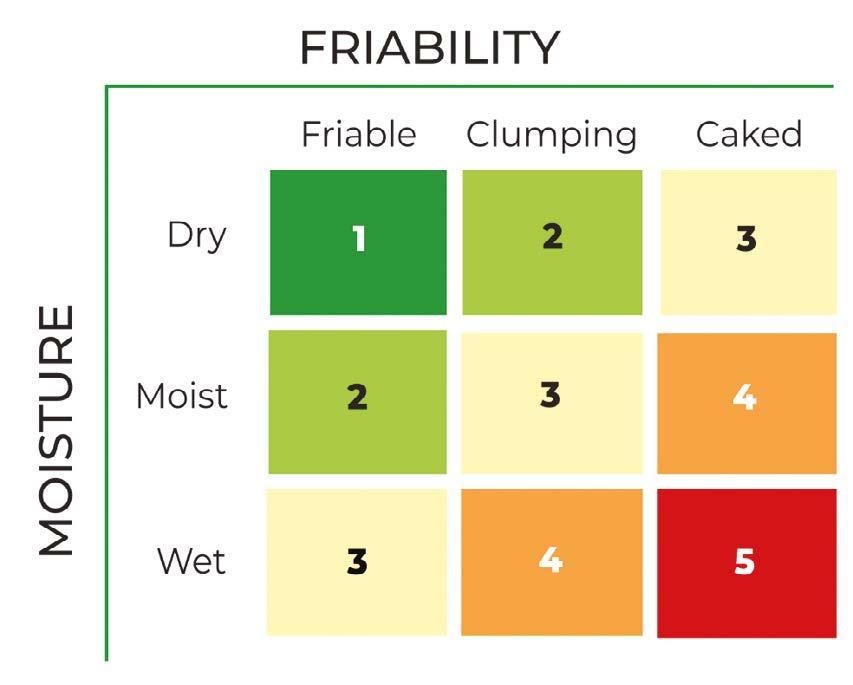
▲ Figure 1 – Litter assessment scoring matrix (AgriFutures Australia and DAF Qld, 2020)
affects how easily the chickens can ‘work’ the litter (Lister, 2009). Keeping litter ‘working’ is important for breaking up and diluting fresh excreta as well as accelerating litter drying by bringing moist litter to the surface where the water is removed by ventilation. Friability tends to be measured qualitatively (using descriptors) on a spectrum from completely friable to completely caked/capped/ crusted. Trying to quantify litter friability (with an absolute measurement) is difficult because it would require quantifying a combination of parameters inducing particle size, aggregation, compaction and cohesiveness.
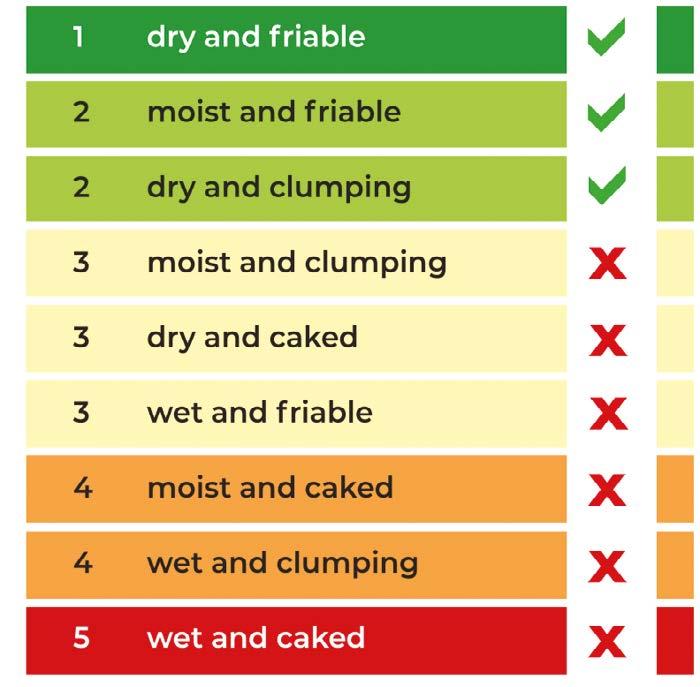
To provide easy-to-use and consistent descriptors of litter moisture and friability, a litter assessment method was developed by a committee of Australian poultry industry representatives and researchers (AgriFutures Australia and DPI Qld, 2020) and is called the Litter Guide. It uses a matrix table (Figure 1) that enables litter to be assessed in terms of moisture (using the descriptive terms ‘dry’, ‘moist’, and ‘wet’) and friability (using the descriptive terms ‘friable’, ‘clumping’, and ‘caked’). The unique combination of each moisture and friability description relates to an ‘overall litter score’ from 1 to 5 (Figure 2) that in a general sense relates to: (a) potential risks associated with the litter condition for the chickens; (b) the urgency required for corrective actions; and (c) the likelihood for the litter condition to deteriorate and require corrective action. The overall litter condition score should not be applied directly as an absolute assessment of risk or trigger for action because the quantity and duration of litter
▲ Figure 2 – Litter scores (1–5) and their descriptors The ✓ or X indicates if corrective action is required.
being described by the litter score needs to be factored in, as does any potential risk associated with undertaking corrective actions.
The objective of a recent research study (Dunlop and Pepper, 2023) was to determine relationships between litter condition scores (as described in the Litter Guide) and oven-dried moisture content .
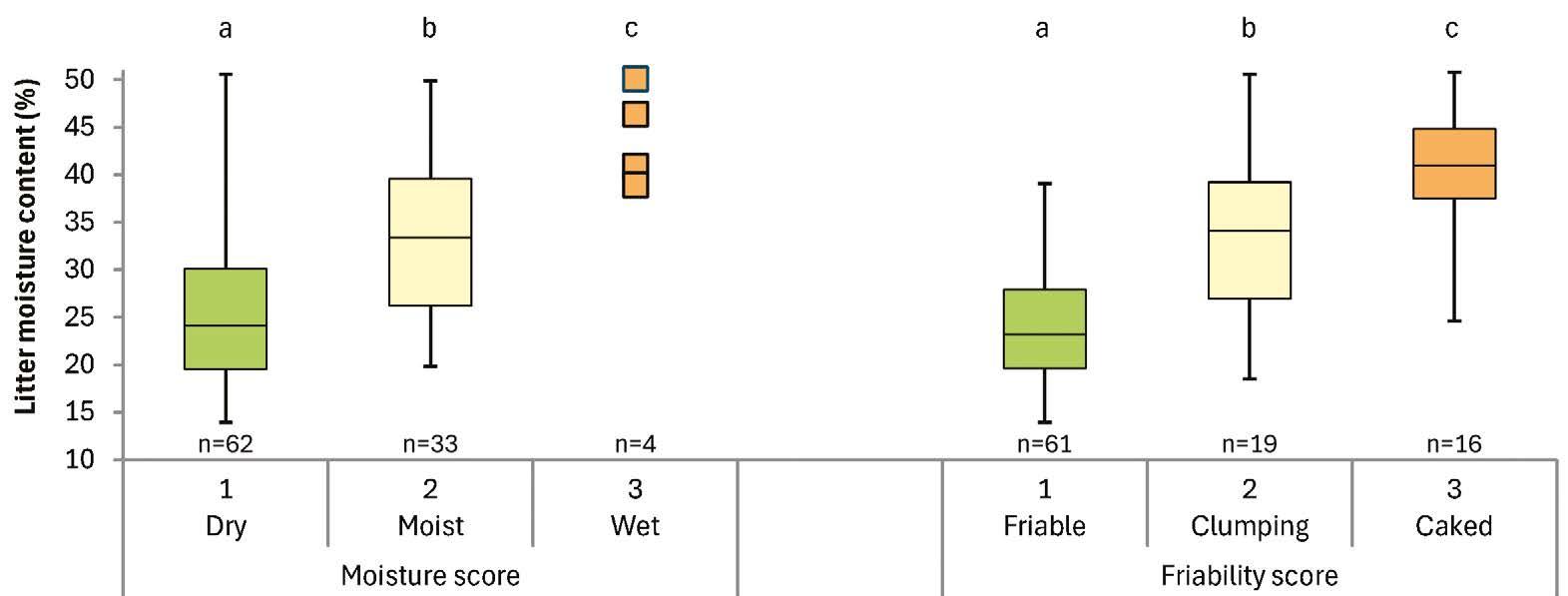
▲ Figure 3 – Boxplot showing moisture content (%) for litter moisture and friability scores. Moisture scores and friability scores with a common letter had means that were not significantly different (P<0.05) (Boxes represents the 25th to 75th percentile; the line in the middle of the box is the median value and the whiskers represent the maximum and minimum values. Individual data points were shown if there was insufficient data to produce a box with whiskers.)
Method
Litter samples were assessed on selected occasions at 22 meat chicken farms with chicken age ranging from 14 d to 51 d. No formal experimental design was used, rather, this was an observational study aimed at assessing the range of litter conditions found in commercial meat chicken farms. More specifically, the focus of this activity was to compare the relationships between quantitative, laboratorybased determination of litter moisture content (%) and qualitative, rapid assessments using moisture and friability scores. Potential variability between the assessment methods because of different farms, in-shed sampling location, bedding material types, chicken age, litter reuse or individual assessors’ scoring were not investigated because commercial application of litter scoring would not be able to adjust based on these and many other affecting factors.
Litter was based on pine or hardwood bedding materials and some had been reused for multiple grow-out cycles. On each occasion, litter samples were collected for moisture content analysis, with litter conditions scored in terms of moisture and friability using the Litter Guide definitions. Litter was assessed before any kind of mechanical disturbance (e.g. litter tilling or catch-out events). Litter was collected from discrete locations or from four sampling transects (two in the front half of the shed and two in the rear). At the transects, multiple small samples were collected from the surface 1–2 cm of the litter along each transect. The surface litter was collected because chickens directly interact with the surface. These samples were then combined to create a representative sample of the respective area within the shed. For each transect, additional samples were collected of visibly dry and visibly damp litter (or from under the drinker lines if there was no visibly damp litter). For each discrete or transect litter sample, moisture
content (%) was determined by oven drying the samples to constant weight at 105 °C.
The litter assessment process was performed by two people, with a single score being agreed by consensus for each sampling location. Litter moisture, friability and overall score were compared to the measured moisture content. Data were analysed using Genstat (2022). General linear models were used to assess the differences and relationships between the measured variables, and whether any factors had additional influences. In all models, the different sheds, batch-ages and locations were pooled into the random error term, as there was no interest in compartmentalising these effects.
Results
There were highly significant, positively correlated relationships between each of the litter scores and litter moisture content (%) (P<0.001). Litter moisture scores
tended to increase with moisture content (%). Transitions from dry to moist scores occurred at 26–30% moisture content and moist to wet occurred at 38–40% moisture content (referring to the 25th to 75th percentile range displayed by the boxes in Figure 3). Similar differences occurred for the friability scores, with transitions from friable to clumping occurring at 27–28% moisture content and clumping to caked occurring at 38–39% moisture content (Figure 3).
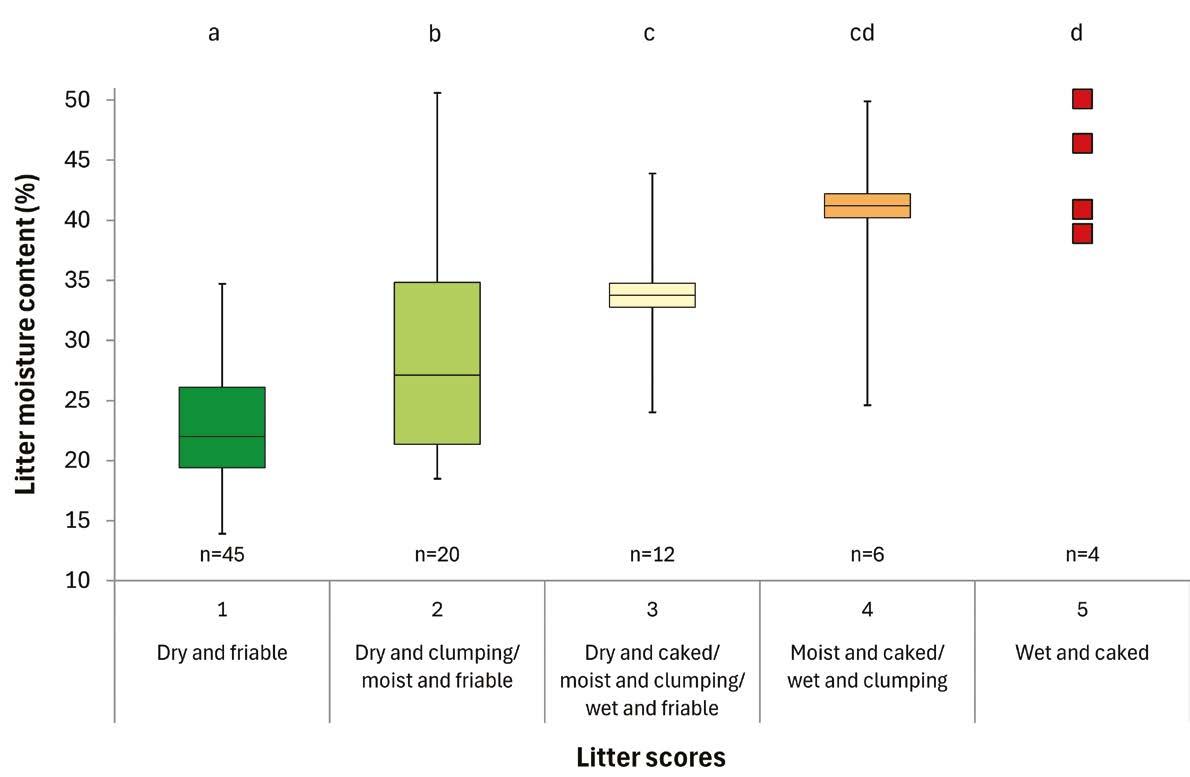
Litter scores tended to increase with moisture content as they transitioned from dry and friable (score 1) to wet and caked (score 5) (Figure 4). Most litter in this study had a score of 1 or 2, and there were only limited occurrences of scores 3, 4 or 5.
Discussion
▲ Figure 4 – Boxplot showing moisture content (%) for litter score. Litter scores with a common letter had means that were not significantly different (P<0.05) (see note in Figure 3 for interpreting boxplots)
The significant, positively correlated relationships between moisture content (%) and the litter scores described in the Litter Guide support the scores to be used to assess litter conditions on commercial farms or research situations. The litter described as dry and friable (score 1), with some occurrences of dry and caked or moist and friable (score 2), is very likely to have moisture content less than 25-35% and therefore considered to be ‘good litter’ (Lister, 2009) and not require urgent corrective actions.
Based on our observations, the low occurrence of litter with scores 3, 4 or 5 was due to growers actively managing litter to keep it dry and friable. Scores 2, 3, and 4 showed wide ranges of moisture content from approximately 18% to 50%, which was not surprising, given that they included multiple litter combinations from dry through to wet and each of the friability scores. For describing the general risks, management requirements and likely persistence of litter conditions, we suggest that the 1 to 5 score is probably sufficient; however, in research settings, there would be benefits to recording the individual moisture and friability scores, or assigning a unique score for each litter combination in the Litter Guide matrix (Figure 1), for example, assigning score 1 to dry and friable up to score 9 for wet and caked. We suggest that in research trials, moisture content (%) should still be the primary measure of litter moisture, but moisture and friability scoring should be used to record additional information about temporal, daily or spatial variability of litter conditions that may be influential in health, welfare, performance or microbial outcomes being measured.
While this study focused on comparing the relationship between litter moisture content (%) and scores for litter moisture, friability and overall condition, future studies should focus on relating litter scores to measurable health, welfare and production outcomes.
ACKNOWLEDGEMENTS: We thank the AgriFutures Australia Chicken Meat Program and the Department of Primary Industries, Queensland Government for funding this research (PRJ-011502) and supporting the production of the Litter Guide. We also thank the people who contributed to developing the litter guide and the growers and integrators who contributed to this research.
References
AgriFutures Australia & DAF Qld (2020) Litter Guide, https://chicken-meat-extension-agrifutures.com.au/ resource/litter-guide-and-poster/ Collett SR (2012) Animal Feed Science and Technology, 173: 65-75
Dunlop M & Pepper C-M (2023) Litter management to support chicken meat production and industry growth. https://agrifutures.com.au/product/litter-managementto-support-chicken-meat-production-and-industrygrowth/
Lister SA (2009) Proceedings of 17th European Symposium on Poultry Nutrition, Edinburgh, Scotland. (WPSA), http://www.cabi.org/Uploads/animal-science/worldspoultry-science-association/WPSA-scotland-2009/5_ lister_nutrition2009.pdf
KEEPING BIRDS WARM AND COMFORTABLE WITH DRY LITTER
Though controlling litter moisture is crucial for limiting ammonia production in houses, it also helps keep birds warm during cold weather.
➤ Michael Czarick
Extension engineer, University of Georgia
Brian Fairchild
Extension poultry scientist, University of Georgia
One of the key functions of litter is to protect birds from the cold, hard clay or concrete floors in a house. Essentially, the litter serves as a blanket that helps minimize heat loss from the undersides of their bodies. The R-value of sawdust is about 2.5 per inch—roughly the same as blown fiberglass, which means the floor beneath the birds is nearly as well insulated as the ceiling above them. You can often see birds taking advantage of the insulating ability of dry litter when they bed down in it if house temperatures become too cool.
The insulating ability of any insulator is highly affected by
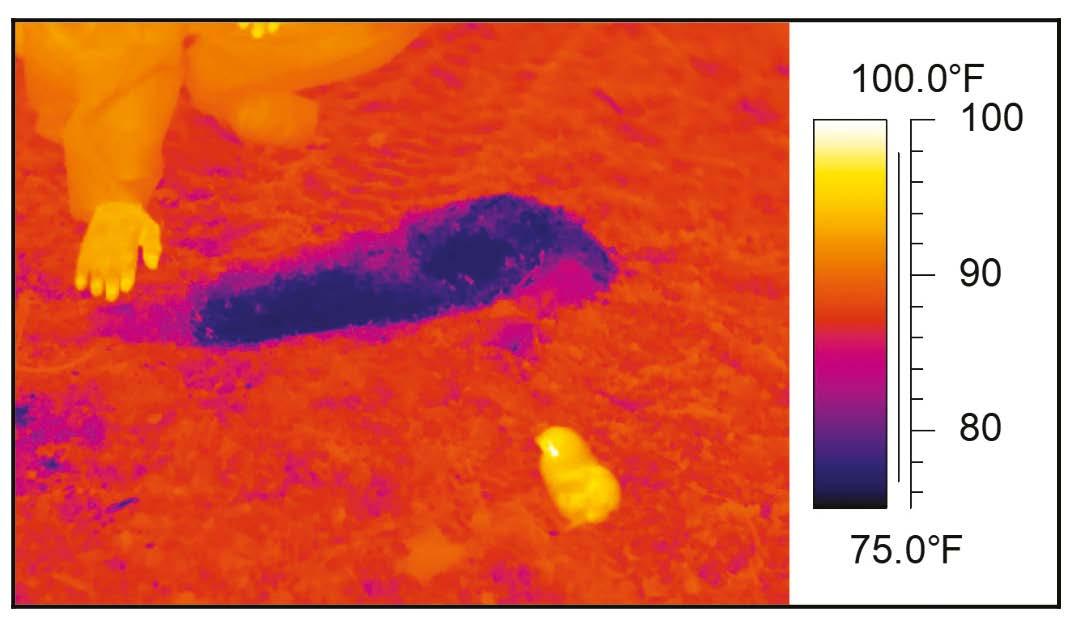
▲ Figure 1 – The top inch of fresh pine shavings is dry, making it a good insulator. The problem is that the remaining four inches are damp, making them a poor insulator and thereby reducing the overall insulating ability of the fresh bedding material
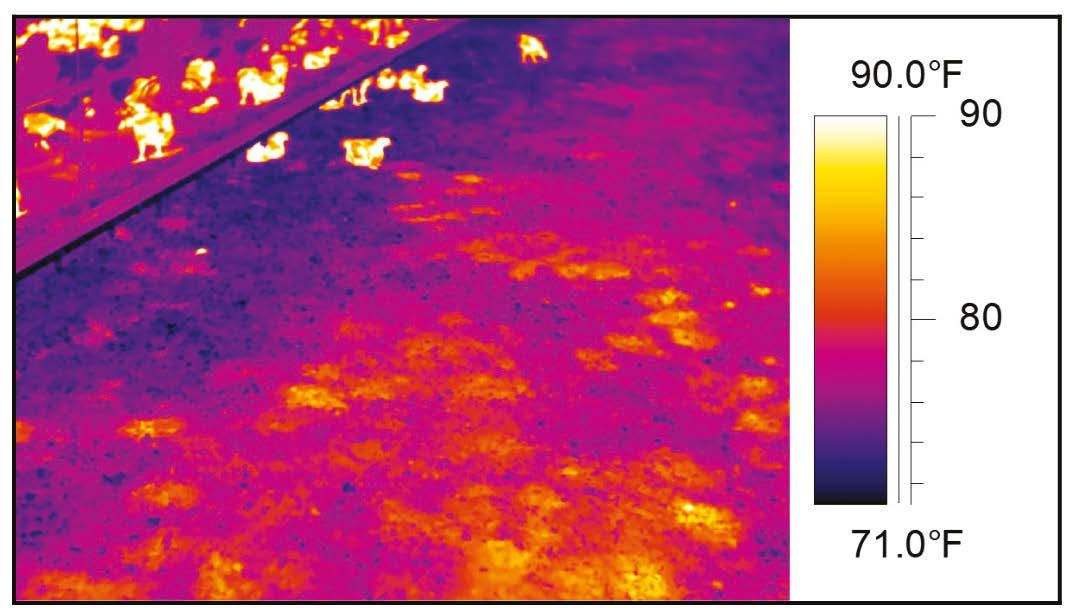
▲ Figure 2 – Damp, cool, caked litter a couple of feet from the feeders and warm, dry litter near feeders
3
moisture. For instance, just a 10% moisture content of fiberglass insulation can cut its R-value in half! While no study has measured how moisture impacts the R-value of built-up litter, it’s reasonable to assume that insulation decreases rapidly as litter becomes wetter, underscoring the need to keep litter as dry as possible during cold weather. The fact that damp litter is a poor insulator is commonly demonstrated when a house is cleaned out and built-up litter is replaced with the fresh, damp, pine shavings. If the house is not properly preheated and the damp pine shavings are not occasionally turned to facilitate drying, chick performance often suffers due to the fact that
they are being raised on a cool, damp “blanket” instead of a warm, dry blanket. Though this tends to occur more often in houses with fresh pine shavings, it can still be an issue in houses with built-up litter when it isn’t properly dried between flocks and/or during preheating (Figure 1).
Even if the chicks are placed on dry litter it is important that the litter remains dry for the remainder of the flock. If moisture builds up in litter to the point that it cakes over, it increases the difficulty of keeping birds warm during cold weather (Figures 2 and 3). A broiler generates about 5 Btu/ hr of essentially waste heat per pound of body weight as it digests feed. So, 25,000 birds weighing three pounds each
▲ Figure
– Cool, damp litter near drinkers and warm, dry litter a couple of feet away
produce nearly 400,000 Btu/hr—the same as ten radiant brooders. We use this waste heat to keep our houses warm during cold weather. What we don’t want to do during cold weather is to remove heat directly from the bird, as can happen when the litter cakes over. While dry litter is an insulator, dense, caked litter is more of a conductor, increasing heat transfer from the birds to the floor. Try this. If you are in a kitchen with stone countertops, place your hand on a dish towel sitting on the counter. Then put your hand on the countertop. Though the towels and the countertop will be essentially the same temperature as the air in the kitchen, the countertop will feel colder because it is a conductor, allowing heat from your warm hand to be drawn into the countertop. When birds sit on dense, caked litter, heat can be drawn from the bird to the floor, making the bird feel cooler. The bird will tend to eat more feed to stay warm, resulting in a higher feed conversion rate.
The situation can become even more dire if the caked litter is damp; the birds are now essentially sitting on an evaporative cooling pad. As air moves over the floor, moisture evaporates, lowering its temperature, much as air moving through an evaporative cooling pad reduces the temperature of the pad and the air moving through it. Now the birds are not only sitting on a conductor, but on one that can be 10 degrees or more cooler than room air temperature, significantly increasing the amount of heat removed from a bird. Is it any wonder that birds tend to avoid sitting on caked litter, especially if it is damp?
To optimize bird comfort and health during cold weather, we need to ensure we are ventilating enough to keep our litter dry, maximizing its insulating ability, and minimizing the risk of ammonia formation. To accomplish this goal, minimum ventilation rates during cold weather shouldn’t be based
▲ Figure 4 – Cool, caked litter near drinkers and warm, dry litter near feeders on current litter conditions. The fact is, we don’t want to wait until litter becomes damp and bird performance is adversely affected before increasing our minimum ventilation rates; we want to operate in a more preventive mode. This is why we should base our minimum ventilation rates on the relative humidity of the air in the house. If the relative humidity of the air is increasing over time, this means our litter moisture is increasing over time. You may not be able to see it, but it is increasing. The ideal relative humidity is between 40 and 60%. Below 40% litter can become too dry, resulting in potentially excessive fuel usage and dusty conditions. If the relative humidity is above 60%, moisture levels in the litter will tend to build, resulting in increased ammonia production and, as noted previously, the increased potential to cool the birds. Think of the relative humidity of the air as an indirect rough measure of litter moisture. The higher the relative humidity, the higher the litter moisture will tend to be and the more bird performance and health will tend to suffer.
Source: Poultryventilation.com
▲ Figure 5 – Birds avoiding sitting on the caked litter near the drinker lines
HOT WEATHER MANAGEMENT AND NUTRITION FOR COMMERCIALS
This document provides practical advice for managers to reduce the effects of heat on flocks by modifying management and nutritional practices to improve bird comfort and reduce the impact on flock performance.
The following points instigate the main factors of management and nutrition to help support commercial birds:
Management
Monitor birds closely
Watch for signs of heat stress like panting, wings spread, reduced activity, or not eating. Take quick action if you see these signs.
Increase ventilation
Make sure all fans are working and clean, and lower thermostat settings during cooler times to help birds recover from heat. Ensure all fan belts are tightened and fan housings are kept free of dust.
Use fans and air movement
Provide extra fans or circulatory fans to increase air speed over the birds, which helps them lose heat and feel cooler. (1 fan per 120m² floor space, spaced 10–15m apart).
Use evaporative cooling
In dry weather, use misting or fogging systems to reduce air temperature in the house. Only use when humidity is not too high.
Offer plenty of fresh, cool water
Check water lines and drinkers regularly, and increase water availability as birds will drink more in hot weather (can be double). Water can be cooled by flushing water lines at regular intervals.
Reduce bird density
If possible, lower the number of birds in the house at placement to help keep temperatures down and improve airflow as the majority of heat is produced by the birds themselves.
Insulate houses
Make sure the house is well insulated to prevent heat from building up inside. Poor roof insulation can create an “oven” effect so even if the air temperature isn’t too warm then it can heat the house up.
Keep litter dry
Avoid wet litter, as wet litter can make heat stress worse and increase humidity in the shed.
Work schedule
Avoid handling or moving birds during the warmest time of day. If required, events such as bird movements, weighing, vaccination, re-bedding/litter tilling etc. should be done at cooler times of the day.
Encourage feeding
Encourage feeding behaviour in the morning and evening and/or feed during the night during the cooler periods.
Nutrition
Assess the degree of reduction in feed intake during the period of warm weather and calculate the degree of increase in feed nutrient density required to compensate for the reduction in feed intake. Feed intake can reduce by as much as 30% during warm weather. Intake of critical nutrients associated with growth is affected. Provide higher density diets to support performance in warm weather conditions. Increase the digestible amino acid density and mineral density of the diets. Focus dietary changes on the grower and finisher diets. Heat output is highest in larger, faster growing birds. Maintain the energy density of diets, higher energy density can tend to reduce feed intake which compromises performance.
Reduce the proportion of starch in the diet. Starch has a higher heat increment of feeding than lipids. Increase oil addition to the diets, oils have a higher effective energy value and hence are metabolized without the same degree of metabolic load on the bird as carbohydrates.
Minimize excess dietary crude protein. Minimising excess crude protein reduces the metabolic load on the bird during heat stress and will reduce the energy cost of excreting surplus nitrogen. A reduction in dietary crude protein level of as little as 0.5% (while maintaining amino acid density and balance) has been associated with improved production during hot weather.
Maintain the amino acid balance of the diet, especially lower order amino acids.
Supplement the diet with increased electrolytes, this will help replace electrolytes lost during a heat stress period. Supplementing the feed with vitamins A, D, C, E and B group vitamins can support performance and liveability. Increase the micronutrient intake by the bird at the onset of warm weather and maintain intakes through the period of heat stress.
Provide trace minerals in an organic form as these are considered more bioavailable than inorganic forms and will support the bird during heat stress periods.
Optimise feed physical quality, both crumb and pellet quality, in order to facilitate efficient feed intake and reduce the time and energy spent eating a meal.
THE ROLE OF THE G20 IN GLOBAL MEAT PRODUCTION AND TRADE
Part 1: meat production
An analysis of regional meat production patterns strikingly highlights the exceptional global and group-level importance of the populous G19 countries. The population and economic output of the EU (27) and the African Union are not included in the following analysis.
➤ Hans-Wilhelm Windhorst
Professor
Emeritus at the University of Vechta, Germany
The G20 is an informal association of the 19 most important industrialized and emerging economies and the EU (27), with the African Union as an associate member. It was founded in Berlin in 1999, in response to the economic and financial crisis in Asia at the end of the 1990s. The association aims to coordinate economic and financial policies, as well as to exchange information on other policy areas, such as climate change, terrorism, and migration. The presidency rotates annually. A meeting of the respective heads of government, finance ministers, and central bank governors takes place in the country holding the presidency. The agenda is set by the chairman. The goal of the conference is to adopt a final declaration. The objectives adopted there are not legally binding under international law with regard to implementation, but rather should be seen as a voluntary commitment. The objectives are widely implemented and also influence decisions made by the World Bank and the
World Trade Organization. The USA will hold the presidency in 2026. It is important to note the different political systems. Alongside democracies, authoritarian systems exist, ranging to dictatorships. Despite these differences, it is usually possible to formulate final declarations that contribute to the economic and financial stability of the global economy.
Significant differences in population size and economic output
The 19 member countries differ considerably in both population size and economic output (Table 1). In 2025, of the group‘s 4.76 billion inhabitants, 2.88 billion lived in India and China alone, representing 60.5% of the group‘s total population and 34.8% of the global population. The G19 countries collectively accounted for 57.7% of the world’s population. If the EU (27) and the African Union were included, it would exceed 80%.
In 2024, the GDPs (Gross Domestic Product) of the member countries ranged from US$29.3 trillion (USA) to just
■ Table 1 – Population (2025) and gross domestic product of the G19 (2024)
Source: Worldometers and World Bank.
US$401 billion (South Africa). The four leading countries alone accounted for 51.1% of global GDP in 2024, while the group as a whole accounted for 78.3%. These figures clearly demonstrate that only a few countries have a decisive impact on the value of production and on global trade. In three articles, the role of the G19 group as a whole and of its individual member countries in the production of the four most important meat types and in the trade of these products will be analyzed. This introductory article addresses the importance of this country group in global meat production.
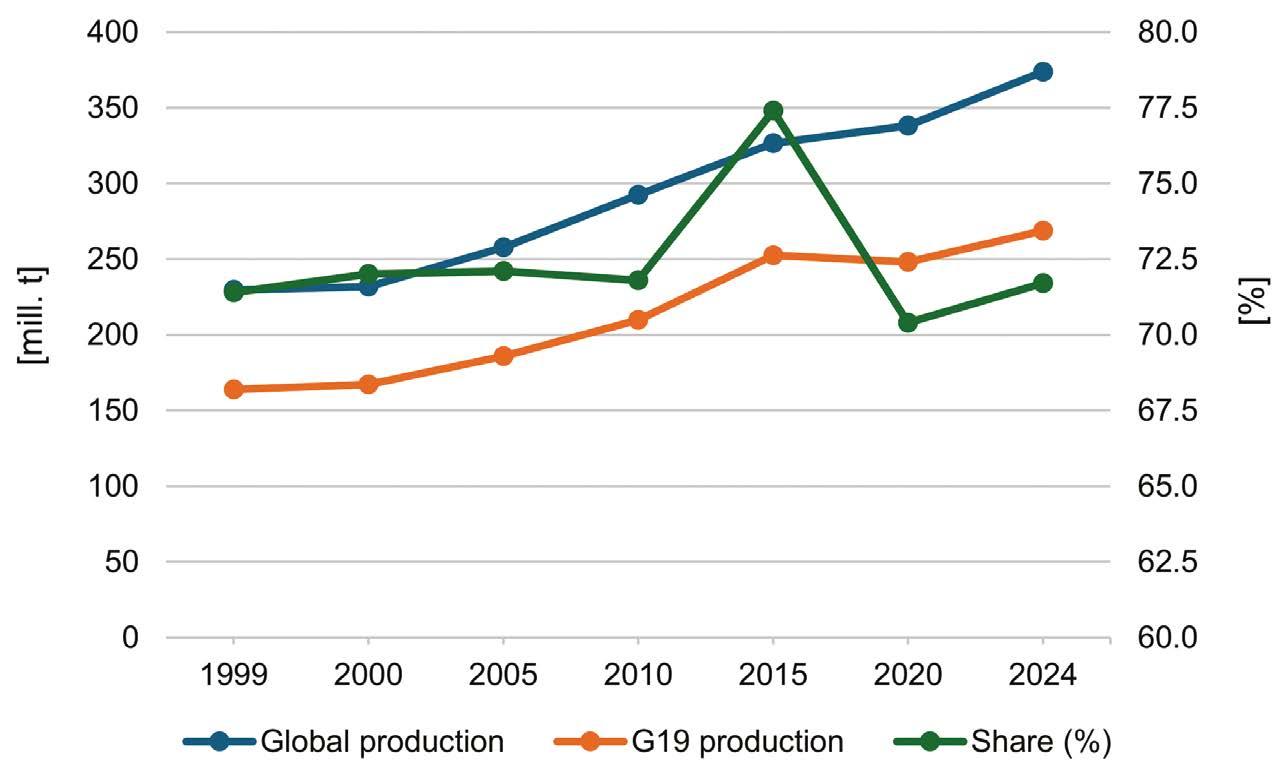
▲ Figure 1 – The development of global meat production and in the G19 countries between 1999 and 2024 and the share of the country group in global production Design: A. S. Kauer based on FAO data.
Parallel increase in global and G19 meat production
Global meat production increased by 144 million tons, corresponding to 62.8%, between 1999 and 2024. Growth rates slowed down between 2015 and 2020 in consequence of the COVID-19 pandemic and massive outbreaks of the avian influenza virus in North America and Europe, as well as of the African swine fever in Eastern Europe and Asia. In parallel, meat production of the G19 countries increased by 105 million tons or 63.9%. It is noteworthy, however, that production decreased by approximately 14 million tons between 2015 and 2020, which almost exactly matched the decline in pork
production in China. With the successful containment of the African swine fever outbreaks, the production volume rose significantly again, reaching a new peak of 268.70 million tons. The share of the G19 countries in global meat production ranged between 70.4% (2020) and 77.4% (2015) during the period under review, with both years representing exceptional situations (Table 2, Figure 1).
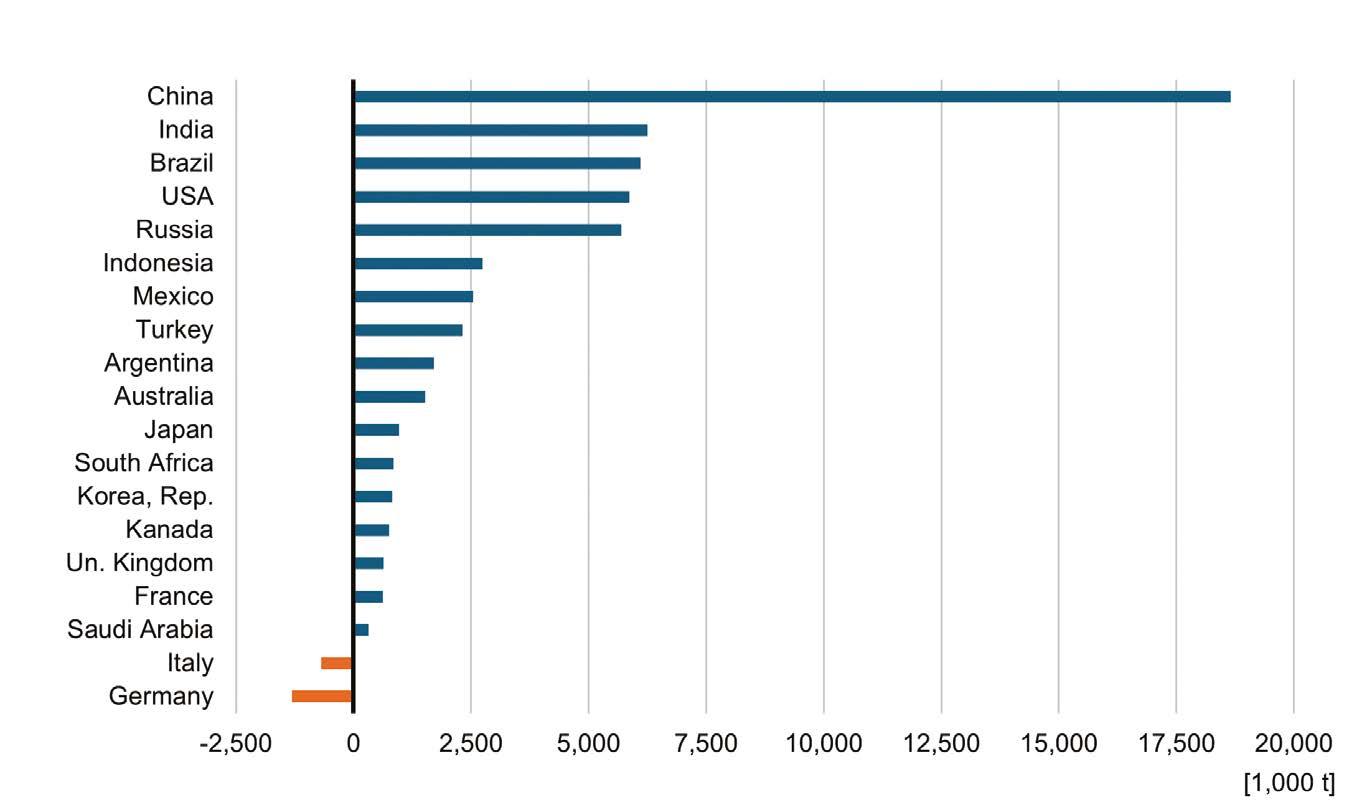
Figure 2 – The increase and decrease of meat production in the G19 countries between 2010 and 2024
Design: A. S. Kauer based on the author's calculations using FAO data.
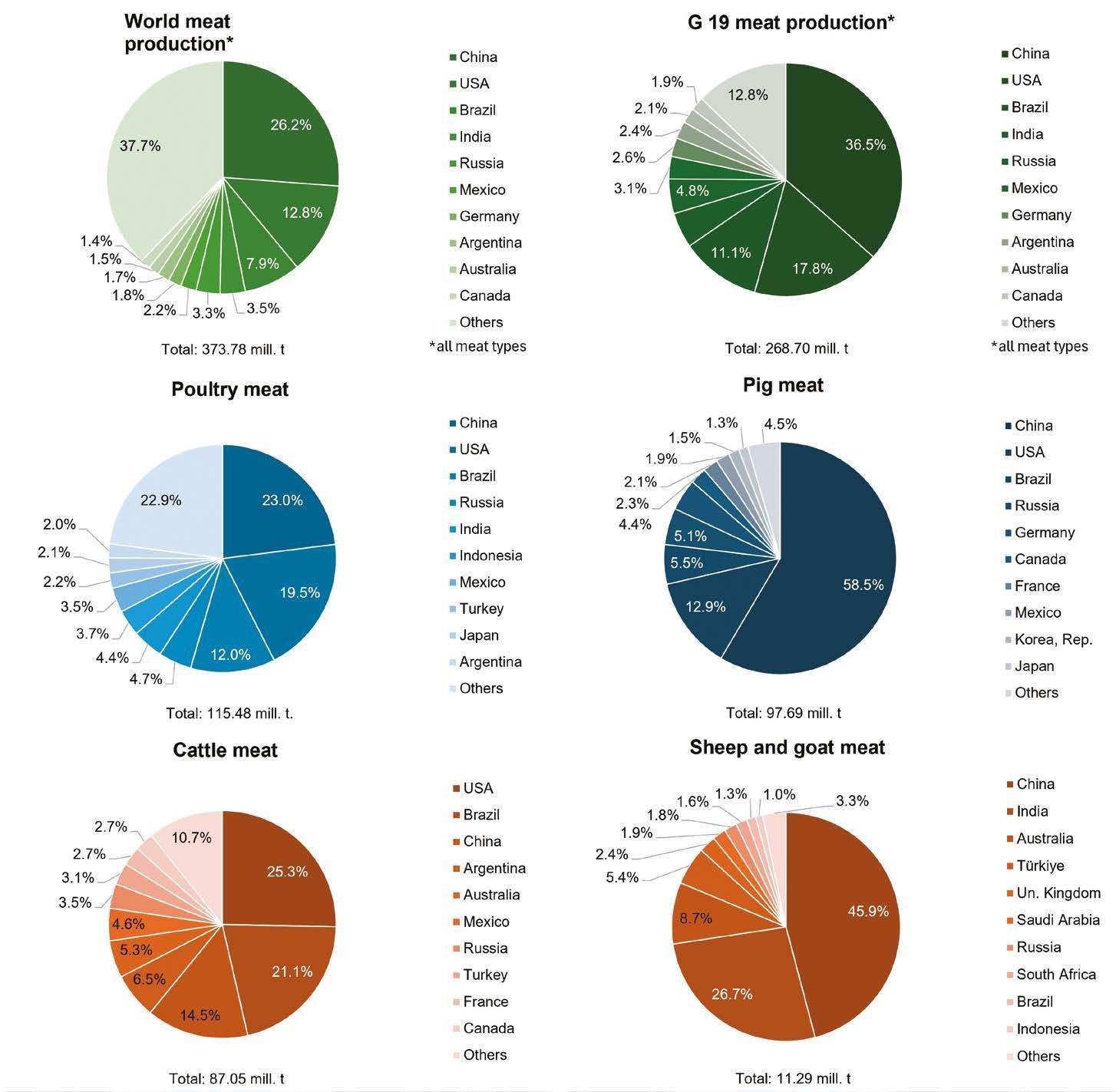
▲ Figure 3 –Shares of the 10 leading G19 countries in global meat production, total production of the country group and the four most important meat types (2024)
Design: A. S. Kauer based on author’s calculation using FAO data.
Remarkable shifts in the shares of meat types
An analysis of the changes in the shares of the four main meat types in global meat production and within the group of the G19 reveals remarkable shifts from red to white meat (Table 3).
■ Table 2 – Development of global meat production in the G19 countries between 1999 and 2024 and the group's share of global production; data in million tons
Source: FAO.
Globally, the production volume of the four meat types increased by 80 million tons, or 28.4%. It is worth noting that all four types showed an absolute increase. Poultry meat had the highest growth at 47 million tons, followed by pig meat at 17 million tons. In contrast, cattle meat production rose by only 10 million tons, and sheep and goat meat by 5 million tons. This differing dynamic is reflected in the changes in the shares of the individual meat types in total production. Poultry meat increased its share by 5.2%, and sheep and goat meat by 0.3%. In contrast, pig meat lost 3.7% and cattle meat 1.9%. The trend toward white meat is evident. The author has characterized this as a red-white shift in meat production and consumption (Windhorst 2021, 2025).
A comparison with the development within the G19 group offers some interesting insights. Meat production in this country group increased by 70 million tons, or 34.3%, between 2010 and 2024, thus growing faster than the global average. It is worth noting that of the 80 million tons increase recorded worldwide, 70 million tons, or 87.5%, was attributable to the G19 countries. Poultry meat production increased by almost 44 million tons, representing over 93% of the global growth. The other three meat types also saw significant increases: pig meat by 14 million tons (82.4% of the global increase), cattle meat by 8 million tons (80.0% of the global increase), and sheep and goat meat by 3.9 million
tons (78.5% of the global increase). Here too, the differing dynamics resulted in a significant change in the shares of the different meat types in total production. The share of poultry meat increased by 7.1%, and that of sheep and goat meat by 0.5%. In contrast, pig meat and cattle meat declined by 5.3% and 2.2%, respectively.
It can therefore be summarized that the G19 countries accounted for over 70% of global meat production during the period under consideration. The relative increase within this country group was higher than the global average, and there was a clear shift from red to white meat, excluding sheep and goat meat. This reflects both the more efficient feed conversion of poultry species and a change in consumer behaviour. The following section examines which countries were primarily responsible for this shift.
Different developments at country level
An analysis of meat production trends reveals some remarkable insights. Between 2010 and 2024, meat production, including all meat types, in the G19 countries increased by 52.5 million tons, or 26.6%.
■ Table 3 – Changes in the shares of the four main meat types in global meat production and in the G19 group between 2010 and 2024
Source: own calculations based on FAO data.
Figure 2 shows that meat production increased in 17 countries, while it decreased in two. China held the undisputed top position with an increase of 18.7 million tons. Four other countries followed with increases between 5.7 million and 6.3 million tons. China alone accounted for 35% of the total growth in the G19 countries, while the five leading countries had a share of 79.8%. Of the four European member countries, only the United Kingdom and France showed a positive growth, while Italy and Germany experienced a decline in production. The specific meat types affected will be explained later in this article. A comparison of the absolute and relative increases in production reveals significant differences (Table 4). Countries that ranked lowest in terms of the absolute increase showed considerably higher growth rates than the leading countries. It is quite obvious that in these emerging countries the demand for meat increased as a result of the economic development and a growing purchasing power among the population.
Differing dynamics in poultry and pig meat production
Meat type
It has already been mentioned that the highest absolute increase in meat production during the period under consideration was observed in poultry and pig meat. Despite some similarities regarding the importance of individual countries, characteristic differences were evident. A closer look at the comparison of the countries in Table 5 reveals that the predominant religion in each country clearly played a role. Because no religious barriers restrict the consumption of poultry meat, all G19 countries showed an increase in both production and consumption. Since pig meat, on the other hand, was either not produced at all or only in very small quantities in both predominantly Islamic and Hindu countries, this type of meat was insignificant in India, Indonesia, and Turkey.
Summary. The dominance of populous countries
A final analysis of the regional pattern of meat production impressively demonstrates the outstanding importance of the populous G19 countries, not only within the group but also globally (Figure 3).
The five leading countries held the top positions both in terms of their share in global meat production and within the group. This also applies to poultry meat, while India was not among the top ten pig meat producers due to the consumption barriers faced by some religious groups. For cattle meat, Argentina and Australia ranked third and fourth, respectively. The decisive factor here was the availability of
■ Table 4 – The ten leading G19 countries with the highest relative increase in meat production between 2010 and 2024
Source: own calculation based on FAO data. Country
Korea,
natural grasslands that allowed for extensive grazing. The United Kingdom’s ranking in fifth place in sheep and goat meat production is surprising at first glance. This reflects the long tradition of sheep farming, which, however, was initially focused on wool production for the textile industry rather than on meat production. The question of whether the dominance of these countries in meat production was also reflected in the meat trade will be analysed in two further articles.
Data sources and supplementary literature
Food and Agriculture Organization of the United Nations. (n.d.). FAOSTAT https:// www.fao.org/faostat/ World Bank. (n.d.). World Bank Open Data https://data.worldbank.org
Windhorst, H.-W. (2021). Geflügel auf der Überholspur. Die Rot-Weiß-Verschiebung in der globalen Fleischerzeugung (1). Fleischwirtschaft, 101(2), 24–27.
Windhorst, H.-W. (2025). Die Dynamik der Weltfleischerzeugung. Fleischwirtschaft, 105(12), 32–35.
The welfare of laying hens is often compromised by feather pecking, a phenomenon that leads to injuries, high mortality, and poor performance. In this study, conducted on 16,000 Lohmann Brown, the supplementation of precision glycans capable of modulating gut microbiota metabolism was evaluated. The results showed improved laying persistency, lower mortality, and better feather and footpad conditions. The data obtained suggest that precision glycans may contribute to support welfare of barn-raised hens.
➤ Francesca Leone
Degree in Animal Science
PhD student in Environmental Sciences
Introduction
In recent years, the transition from cage systems to alternative housing systems has become a priority in Europe, driven by consumer demands and scientific recommendations (EFSA, 2023). However, this transition introduces new management challenges, particularly an increased incidence of feather pecking, a behaviour characterised by the removal of feathers by some individuals at the expense of conspecifics (Dixon, 2008). This behaviour,
often associated with stress and frustration due to the inability to express speciesspecific behaviours, can lead to wounds, pain, cannibalism, and reduced performance (Schreiter et al., 2019). Several factors influence feather pecking, including genetics, lighting management, stocking density, and also nutrition (Rodenburg et al., 2008). In fact, nutritional imbalances or alterations in the intestinal microbiota have been shown to promote this behaviour, as they affect anxiety, locomotor activity, stress response, and the serotonergic and dopaminergic systems, thereby influencing hens’ ability to cope with environmental challenges (Mens et al., 2020; Van der Eijk et al., 2019). Advances in molecular biology are helping the scientific community to better understand the functioning of the gut microbiota and its metabolic pathways in the animal gut (Sergeant et al., 2014; Glendinning et al., 2020). Substances known as microbiome metabolic modulators have been identified and synthesised; these are able to influence specific metagenomic functions of intestinal bacteria, modifying metabolite production in the gut with the ultimate goal of providing benefits for animals and the environment (Walsh et al., 2021). Within this context, precision glycans represent a novel approach.
These carbohydrates, characterised by specific glycosidic linkages, are able to direct microbial metabolism towards more favourable pathways, improving protein utilisation and reducing the production of harmful metabolites (Walsh et al., 2021; Jacquier et al., 2022).
In light of the positive results already observed in broiler chickens in terms of performance and welfare (Jacquier et al., 2022; Bortoluzzi et al., 2023), the present study evaluated whether the addition of precision glycans in laying hens diet could improve performance and reduce reactivity, thereby limiting feather pecking.
Materials and methods
The study was conducted in a commercial farm, involving 16,000 beak-trimmed Lohmann Brown laying hens from 48 to 78 weeks of age, housed in two houses with similar environmental conditions and fed ad libitum:
• the treated group (T) that received a corn- and soybeanbased diet supplemented with precision glycans; • the control group (C) that received the same diet without glycans supplementation.
During the trial, all production parameters (egg production, discarded eggs, mortality rate) were recorded
WHERE THE GLOBAL POULTRY INDUSTRY FINDS ITS TECHNICAL DEPTH
Science-based insights for professionals across the global poultry sector.
daily. Animal welfare was assessed monthly according to the Welfare Quality ® Protocol (2019), which assigns scores to feather condition and lesions in different body areas (head, back, tail, cloaca, and comb), as well as scores for footpad condition. To assess animal reactivity, two behavioural tests were applied: the Novel Object Test (NOT) and the Avoidance Distance Test (ADT). The NOT evaluates hens’ reactions to a novel object introduced into the environment, measuring curiosity or fear based on approach or avoidance behaviour. The ADT measures the distance at which hens move away when an observer approaches, indicating their level of fear or confidence towards humans. Finally, metagenomic analyses of intestinal contents from a sample of animals were performed to evaluate changes in metabolic pathways.
Results
Egg production remained consistent with the genetic line standards, showing a physiological decline due to age. However, from week 72 onward, hens in the treated group showed higher laying persistency, a result of interest in the context of longer production cycles aimed at reducing costs (Bain et al., 2016). No substantial differences were observed in the percentage of discarded eggs, except during
Zootecnica – Poultry Magazine connects research, innovation and field application for professionals who shape the future of poultry production
www.zootecnicainternational.com
to the
periods of heat stress, known to reduce shell quality (Mashaly et al., 2004), when group T showed a lower proportion of rejects. Moreover, cumulative mortality was lower in hens receiving precision glycans (2.9% vs 4.3%), suggesting a positive effect on intestinal and immune health, in line with findings from other studies (Yadav and Jha, 2019; Lobo et al., 2023). The results of the welfare assessments were also in line with previously found outcomes: hens of the treated group exhibited more intact plumage and fewer footpad lesions. This effect is attributed to reduced nitrogen excretion and, consequently, improved litter quality, as demonstrated by a previous study by Jacquier et al. (2022). Welfare assessment results were supported by behavioural tests: hens in group T showed greater curiosity towards the novel object and greater confidence towards humans, reducing their distance from observers. A positive human–animal relationship is a key management factor with beneficial effects on welfare and productivity (Papageorgiou et al., 2023). Moreover, reduced fear and stress have often been associated with a lower propensity for feather pecking in several studies (Uitdehaag et al., 2008; Hüttner et al., 2023). Finally, metagenomic analyses showed improved protein utilisation and confirmed the favourable effect of precision glycans on microbiota metabolic pathways. These metabolic changes translate into improved gut health and a potential reduction in reactivity and, consequently, in undesirable behaviours such as feather pecking.
Conclusions
Bortoluzzi, C., Tamburini, I., & Geremia, J. (2023). Microbiome modulation, microbiome protein metabolism index, and growth performance of broilers supplemented with a precision biotic. Poultry Science, 102, 102595. https://doi.org/10.1016/j.psj.2023.102595
Dixon, L. M. (2008). Feather pecking behaviour and associated welfare issues in laying hens. Avian Biology Research, 1(2), 73–87. https://doi. org/10.3184/175815508X363251
EFSA Panel on Animal Health and Animal Welfare (AHAW), Nielsen, S. S., Alvarez, J., Bicout, D. J., Calistri, P., Canali, E., Drewe, J. A., Garin-Bastuji, B., Gonzales Rojas, J. L., Gortázar Schmidt, C., Herskin, M., Miranda Chueca, M. Á., Padalino, B., Pasquali, P., Roberts, H. C., Spoolder, H., Stahl, K., Velarde, A., Viltrop, A., Winckler, C., ... Michel, V. (2023). Welfare of laying hens on farm. EFSA Journal, 21(7), e07889. https://doi.org/10.2903/j. efsa.2023.7789
Glendinning, L., Stewart, R. D., Pallen, M. J., Watson, K. A., & Watson, M. (2020). Assembly of hundreds of novel bacterial genomes from the chicken caecum. Genome Biology, 21 , 34. https://doi.org/10.1186/ s13059-020-1947-1
In the present study, dietary supplementation with precision glycans in laying hens improved laying persistency, reduced mortality and feather pecking, and supported intestinal health. These results pave the way for further investigations into the potential of precision glycans as a tool to optimise welfare and performance in laying hens.
References
Bain, M. M., Nys, Y., & Dunn, I. C. (2016). Increasing persistency in lay and stabilising egg quality in longer laying cycles: What are the challenges? British Poultry Science, 57(3), 330–338. https://doi.org/10.1080/000716 68.2016.1161727
Hüttner, J., Clauß, A., Klambeck, L., Andersson, R., Kemper, N., & Spindler, B. (2023). Association with different housing and welfare parameters on results of a novel object test in laying hen flocks on farm. Animals, 13(13), 2207. https://doi.org/10.3390/ani13132207 Jacquier, V., Walsh, M. C., Schyns, G., Claypool, J., Blokker, B., Bortoluzzi, C., & Geremia, J. (2022). Evaluation of a precision biotic on the growth performance, welfare indicators, ammonia output, and litter quality of broiler chickens. Animals, 12(3), 231. https://doi. org/10.3390/ani12030231
Lobo, E., Bajagai, Y. S., Kayal, A., Ramirez, S., Nikolić, A., Valientes, R., & Stanley, D. (2023). Precision glycan supplementation improves gut microbiota diversity, performance, and disease outbreak resistance in broiler chickens. Animals, 14(1), 32. https://doi.org/10.3390/ ani14010032
Mashaly, M. M., Hendricks, G. L., Kalama, M. A., Gehad, A. E., Abbas, A. O., & Patterson, P. H. (2004). Effect
of heat stress on production parameters and immune responses of commercial laying hens. Poultry Science, 83(6), 889–894. https://doi.org/10.1093/ps/83.6.889
Mens, A. J. W., Van Krimpen, M. M., & Kwakkel, R. P. (2020). Nutritional approaches to reduce or prevent feather pecking in laying hens: Any potential to intervene during rearing? World’s Poultry Science Journal, 76 (3), 591–610. https://doi.org/10.1080/004 39339.2020.1772024
Papageorgiou, M., Goliomytis, M., Tzamaloukas, O., Miltiadou, D., & Simitzis, P. (2023). Positive welfare indicators and their association with sustainable management systems in poultry. Sustainability, 15(14), 10890. https://doi.org/10.3390/su151410890
Rodenburg, T. B., Komen, H., Ellen, E. D., Uitdehaag, K. A., & van Arendonk, J. A. M. (2008). Selection method and early-life history affect behavioural development, feather pecking and cannibalism in laying hens: A review. Applied Animal Behaviour Science, 110(3–4), 217–228. https://doi.org/10.1016/j.applanim.2007.09.009
Schreiter, R., Damme, K., von Borell, E., Vogt, I., Klunker, M., & Freick, M. (2019). Effects of litter and additional enrichment elements on the occurrence of feather pecking in pullets and laying hens: A focused review. Veterinary Medicine and Science, 5(4), 500–507. https://doi.org/10.1002/vms3.184
Sergeant, M. J., Constantinidou, C., Cogan, T. A., Bedford, M. R., Penn, C. W., & Pallen, M. J. (2014). Extensive microbial and functional diversity within the chicken cecal microbiome. PLoS ONE, 9(3), e91941. https://doi.org/10.1371/journal.pone.0091941
Uitdehaag, K., Komen, H., Rodenburg, T. B., Kemp, B., & van Arendonk, J. (2008). The novel object test as predictor of feather damage in cage-housed Rhode Island Red and White Leghorn laying hens. Applied Animal Behaviour Science, 109(2–4), 292–305. https://doi. org/10.1016/j.applanim.2007.03.008
Van der Eijk, J. A. J., de Vries, H., Kjaer, J. B., Naguib, M., Kemp, B., Smidt, H., Rodenburg, T. B., & Lammers, A. (2019). Differences in gut microbiota composition of laying hen lines divergently selected on feather pecking. Poultry Science, 98(12), 7009–7021. https://doi. org/10.3382/ps/pez336
Walsh, M. C., Jacquier, V., Schyns, G., Claypool, J., Tamburini, I., Blokker, B., & Geremia, J. M. (2021). A novel microbiome metabolic modulator improves the growth performance of broiler chickens in multiple trials and modulates targeted energy and amino acid metabolic pathways in the cecal metagenome. Poultry Science, 100, 100800. https://doi.org/10.1016/j.psj.2020.10.054
Yadav, S., & Jha, R. (2019). Strategies to modulate the intestinal microbiota and their effects on nutrient utilization, performance, and health of poultry. Journal of Animal Science and Biotechnology, 10(1), 2. https://doi. org/10.1186/s40104-018-0310-9
Welfare Quality® Consortium. (2019). Welfare Quality® assessment protocol for laying hens. Lelystad, The Netherlands: Welfare Quality®.
FEED MANAGEMENT AND FEEDING TECHNIQUES
EXPLAINED
Feed management and feeding techniques will help to provide the right amount of nutrients at the right time. Although we are talking in this article about feed, please do not forget about drinking water management. If birds don’t drink well, they will not eat according to their needs, nor grow or produce according to their genetic potential. Other influencing factors on feed intake are feed structure, healthstatus, and the environment.
➤ Diogo Ito Nutritionist, Hendrix Genetics Layers
Feed management starts at the time when the chicks or pullets arrive at the poultry house. The feeders and drinkers should be filled and easily accessible to attract the day-old chicks or pullets. To monitor if the feeders and drinkers are easy to find, you can check the crop filling of the young chicks. After 10 hours, around 80% of the chicks should have a crop filled with both water and feed, after 24 hours this percentage should go up to a minimum of 95%. Especially for day-old chicks it will help to add extra feeders and drinkers in the first week, or to make smaller pens to find the drinkers and feeders more quickly. Don’t forget to provide more floor or cage space as soon as they are growing. Make sure the extra drinkers and feeders are removed gradually, so there is time enough to find the automatic feeding and drinking equipment. As the chicks get older, please do pay attention to the height of the water lines and correct this when needed. Always make sure that the birds can drink and eat comfortably! In the picture of the wrong example below, you see the birds bend forward to have water intake, but they turn their head to swallow the water. Obviously, this is more time
As mentioned above, drinking water is an important and probably the most important nutrient. In general, birds consume 1.5 to 2.0 times as much water as feed. A lower ratio often results in lower feed intake levels with its consequences on growth and egg production, but also on reproduction. Drinking water should be easily accessible, clean, fresh, tasteless and free from contaminants.
Feed structure
If you only check the label of the feed delivered, you might forget about the feed structure, which can have a massive impact on feed intake as well as on nutrient utilisation. For mash diets it is easy to perform a sieve analysis to check the feed structure from the feed entering the feeding system. For pelleted or crumbled diets this is a bit more difficult, and a wet sieve is recommended to check the feed structure. As a quick test you might dissolve some pellets or crumbles in water and check the coarser particles after the feed is dissolved, as dissolving also happens in the crop after ingesting the feed.
and energy consuming compared with drinking from the right water system height.
You might wonder, why is feed structure that important? Well, too fine feed (under 0.5 mm) can lead to underconsumption, as it is more time consuming and more difficult for the birds to consume those dusty-like particles. Besides, chicks, pullets and laying hens do have a gizzard, which is the muscular grinding machine specific in poultry. A muscular organ is only developing if it gets stimulated. Therefore the gizzard should be stimulated by coarse (over 1.0mm) particles. Besides a more stimulated gizzard results in a lower pH level in this organ. As protein digestion starts in the gizzard under a low pH, a well developed gizzard with enough stimulation via coarse diets will help protein digestion and consequently your hens have a better feed efficiency.
On the other hand, too coarse diets can have negative consequences as well. This can easily lead to non-uniform feed which results in segregation during transport, within the silo or feeding system or in selective eating by your birds. The risk on selective eating is even higher with nonbeak trimmed birds. In short, most of the feed should be between 1.0 and 3.2mm with preferably an even smaller range of particle size distribution. You can find our recommendations in the Table 1
Feeding times
With your feeding times, it is good to take into account the “natural” feed intake. This means that it is advised to provide 60% of the feed in the afternoon, while the minority is fed in the morning. For Parent Stock farmers, remember to take into account the mating behaviour of the flock, mating mainly takes place in the afternoon and should not be disturbed too often by the feeding runs.
Feeding technique
The empty-feeder technique is important to prevent the accumulation of the smaller feed particles in the feeding system. By applying the empty-feeder technique you are sure that the birds consume their complete diet as a daily ration. Feed uniformity, as mentioned above, and feeder space are also influencing the total daily ration consumed. Often in cage systems there is not enough feeder space to have all the birds consuming feed at the same time. Block feeding, which is basically two feed runs shortly after each other can improve uniformity in case
of feeding space competition. With block feeding you will first feed the dominant birds, and as soon as they start drinking and the less dominant birds are able to eat, they will receive a new ration with coarse particles. Otherwise, the more dominant birds often consume the coarser material, which mainly contains energy, while the less dominant birds will receive more protein and the amino acids, which are the smaller particles. Consequently, the more dominant birds have a higher risk of fat deposition, while they produce smaller eggs due to the lower amount of protein intake. The same can happen with extreme long feeding chains in alternative housing systems, as this often results in segregation of the feed particles.
Feed intake
If the feed is provided in a uniform way towards the birds, we hit the last factor of uniform and sufficient feed intake: the daily feed intake. Feed intake is affected by a lot of different factors: including climate, health status, breed, feed specifications and feeding techniques. In general feed intake is decreased in areas at higher temperature or humidity, but it is also decreased if the birds have a lowered health status. With the exception of an increased feed intake with chronic enteritis, as the digestion rate is reduced. To prevent the negative effects of this reduced feed intake, you might increase the feed concentration. In general, unless prevented by external factors such as climate or health, laying hens eat according to the energy and amino acid levels present in the diet. The last factor includes feeding techniques, we already discussed feed structure and the empty feeding techniques. Additionally, if legislation allows, a midnight feeding can help to stimulate feed intake and egg shell quality. Just provide 1.5 to 2 hours of light in the middle of the night, while the birds do have access to feed and water. As you are feeding the hens during cooler temperatures and as their digestive system will be emptier, the daily feed intake will be increased.
Of course floor and feeder space and the amount of nipples per bird is totally different in cage and in alternative housing systems and each with its own challenges. However there is also a difference in energy requirement and often in feed intake. Comparing both the white and the brown breeds with cage as a reference (100%) with the other systems. The main influencing factors increasing energy requirement are activity as well as temperature variation. As brown laying hens have higher body weight, they require more energy for activity and daily maintenance compared to white laying hens. In cage housing these differences are not so big, as there is a lack of activity, but as soon as you go to cage-free these differences in feed intake become clearly visible, we have tried to visualize this in the Table 1. As egg mass production is similar, the amino acid requirement is not changing too much between the systems.
NEWCASTLE DISEASE VIRUS EVOLUTION AND CONTROL STRATEGIES
Newcastle disease virus is continuously evolving, and molecular techniques allow the classification of vaccine and field strains in numerous genotypes and subgenotypes, although a unique serotype is currently recognized. Control measures and strategies include biosecurity protocols, usually combined with vaccination programs designed with different types of vaccines and schedules.
➤ Francesco Prandini
Doctor
in Veterinary Medicine cesco.prandini@gmail.com
Newcastle disease virus
The first documented outbreaks of Newcastle disease (ND) occurred exactly a century ago, in 1926, in Java, Indonesia, and Newcastle-upon-Tyne, England. The disease, in its highly pathogenic form, is listed in the World Organisation for Animal Health (WOAH) Terrestrial Animal Health Code, and must be reported to the WOAH.
It is a devastating poultry disease that can reach 100% mortality in immunologically naive poultry, and it is caused by virulent strains of Newcastle disease virus (NDV) (Figure 1).
This virus species, recently renamed Avian orthoavulavirus 1, is a member of the family Paramyxoviridae, commonly known as Avian paramyxovirus 1 (APMV-1). ND viruses are enveloped and have a single stranded, non-segmented, negative sense RNA genome, with six genes encoding for at least six structural proteins. Each protein plays a distinct role in the life cycle of NDV: the fusion (F), hemagglutinin-neuraminidase (HN), and large RNA polymerase (L) proteins, have been shown to contribute to the overall pathogenicity of NDV. The HN and F glycoproteins facilitate attachment and membrane fusion and play a central role in inducing virus-neutralizing antibody responses essential for effective protection in poultry. The HN protein is responsible for binding to cell receptors containing sialic acid and the F protein enables viral entry. As with other RNA viruses, the RNA polymerase is
error prone, facilitating the generation of genetic diversity. Virulent strains are defined by WOAH as viruses that have an intracerebral pathogenicity index (ICPI) of 0.7 or higher (2.0 is maximum) or a fusion cleavage site with multiple basic amino acids and phenylalanine at position 117 1
Newcastle disease virus genotyping and evolution
All ND viruses are regarded as members of a single serotype as they elicit antibodies that provide a certain level of cross-protection against any NDV. However, there is considerable genetic diversity among NDVs, with a differentiation in strains of class I (mainly avirulent
▲ Figure 1 – Virion scheme
Source: ViralZone – SIB Swiss Institute of Bioinformatics, Creative Commons CC BY 4.0 license
isolates from wild waterfowl) and class II, detected in poultry and further divided into at least 21 genotypes (I to XXI). There are at least 10% amino acid (aa) sequence differences between genotypes, which are further divided in subgenotypes (a to i, etc.), based on complete F gene sequencing, as proposed by Dimitrov et al., 20192. Indeed, the broad circulation of NDV in poultry populations leads to significant genetic diversity of the virus and constant evolution, with emergence of novel NDV variants. Naturally occurring low virulent APMV-1 viruses found in poultry and wild birds, and vaccines, are limited to genotypes I and II, whereas the most common circulating virulent strains currently belong to genotypes V (North America and Africa), VI and VII (worldwide), XI (Madagascar), XII (Asia, South America), XIII (Asia), and XIV (Nigeria), and recently designated genotypes XVI (Dominican Republic) and XVII and XVIII (Africa).
Pathology and diagnosis
Newcastle disease is among the most important poultry diseases worldwide and remains endemic in many countries throughout Asia, Africa, and the Americas, with sporadic incursions in Europe as well. Chickens infected with NDV show a wide spectrum of clinical signs that vary with different virus strains and can be categorized into three main pathological groups: lentogens are avirulent and cause mild enteric, respiratory or subclinical disease; mesogens cause disease and death primarily in chickens younger than 8 weeks; velogens induce severe systemic infections and lesions in different organs and tissues, with mortality rates approaching 100% in unprotected flocks (Figures 2, 3 and 4). Egg production can be severely affected in laying birds, with egg drops and shell quality problems commonly reported.
▲ Figure 2 – Necrotic-haemorrhagic gut lesions
▲ Figure 3 – Hemorrhagic lesions of the proventriculus
Experienced poultry veterinarians and technicians can put forward a hypothesis of diagnosis of Newcastle disease, based on clinical and postmortem observations. However, several in vivo and in vitro lab methods are available, and normally required, to confirm the diagnosis and to characterize the agent of the disease in terms of pathogenicity and genome sequencing as related to virulence and genotyping. This can be achieved through virus isolation and an in vivo pathogenicity test to define the ICPI of the isolate, and/or by detection of NDV by polymerase chain reaction (PCR) possibly followed by sequencing of the F protein gene, particularly of its cleavage site. Samples for PCR tests can be brought to the lab as “fresh” or frozen tissues and organs, but it is currently very common and convenient to ship samples to a lab using FTA cards (Figure 5).
Additionally, the detection of an immune response to natural NDV infection and/or vaccination, can be accomplished using serological tests based on the enzyme linked immunosorbent assay (ELISA) or the haemagglutination inhibition (HI) test.
Control measures and strategies against Newcastle disease
The control of ND necessarily includes strict biosecurity protocols to prevent the introduction of virulent NDV (vNDV) onto poultry farms, usually combined with effective surveillance programs, as well as with the administration of different vaccines, according to their efficacy and availability in the relevant areas worldwide. In certain countries a stamping-out policy is in place, with the necessary resources available for surveillance and depopulation of affected farms and related compensation of poultry producers.
Current vaccination programs are based on conventional live attenuated and inactivated vaccines, as well as on vectored products mostly based on herpesvirus of turkeys (HVT) as the vector, with the insertion of the F gene, taken from a NDV donor and used as such or artificially modified, into the HVT genome.
The individual protection against ND can rely on diverse immune mechanisms, differently triggered according to the type of vaccines used. Live attenuated vaccines induce the quickest response, mainly based on cellular and local immunity, the latter related to production of local antibodies, IgA class, at the sites of replication of the vaccine, particularly in the respiratory and intestinal mucosa, and in the conjunctiva. With this type of vaccines, usually administered by mass spray or drinking water or eye-drop when possible, production of humoral antibodies, IGM and IgY, is detectable but at relatively low titres.
The peak of protection is normally achieved around 2-3 weeks after vaccination, but the duration after a single dose is limited to further few weeks. On the other hand,
inactivated vaccines induce predominantly humoral antibodies, though at high levels, with their peak around 3-5 weeks after individual parenteral injection, and persistence for several months.
Vectored vaccines, as single HVT-ND or as double HVTND-IBD or HVT-ND-ILT or HVT-ND-AI, administered at the hatchery via in-ovo or subcutaneous injection, can induce good level of circulating antibodies, as of 3-4 weeks of age, besides limited cell-mediated immunity, with the longest duration of protection as supported by the longlasting replication and expression of this type of vaccines. It is therefore clear that vaccination programs with the combination of live attenuated ND vaccines, and a vector HVT-ND vaccine, will consolidate all the respective advantages in terms of early onset and spectrum of immunity, with the longest achievable duration. Equivalent effects can be achieved combining live and inactivated vaccines, although with a shorter duration of immunity. An additional advantage of live vaccines is represented by the most effective decrease of viral shedding after NDV challenge, when they are combined with vectored or inactivated products, as compared with the latter vaccines used without a live priming (Table 1).
▲ Figure 4 – Tracheal infiammation
Many studies show that properly designed vaccination programs can provide robust protection against the different genotypes and subgenotypes circulating worldwide.
According to the immune mechanisms described above, it is recommended to include live vaccines in the programs, to induce an early onset of immunity and a solid local protection at the sites of entry and replication of NDV.
An additional relevant factor for designing vaccination programs against ND, is the duration of life of poultry flocks to be vaccinated: long-living birds, such as breeders or commercial layers, normally require one or more doses of live vaccines, particularly during the rearing period, boosted with a vectored HVT-ND-vaccine at the hatchery, and/or an inactivated ND vaccine before the onset of lay: such strategy can protect this type of birds against clinical signs and egg production problems all along their production cycles.
Vaccines and vaccination programs can be effective or doomed to failure, depending on the quality of the whole vaccination process and on a suitable monitoring of the vaccination effectiveness.
All that said, the control measures and strategies described above can lead to an effective control of ND in the production units and integrations where they are normally implemented. However, the same programs may not always be successful when in the same area different poultry farms co-exist without a homogeneous and consistent level of their respective control programs. This is particularly evident in countries or areas with high density of poultry farms, especially when they belong to different organizations. Such critical point could effectively be managed if a comprehensive set of measures and protocol was defined and timely adjusted and coordinated by an authority or an entity designated and recognized at country and/or regional level, with the appropriate profile, decision-making power and resources: this would possibly minimize the risks associated with not homogeneous and not comprehensive ND control plans, particularly where vND is endemic or occurs rather frequently.
References
1. World Organisation for Animal Health. (2024). Manual of diagnostic tests and vaccines for terrestrial animals: Newcastle disease. OIE.
2. Dimitrov, K. M., Afonso, C. L., & Miller, P. J. (2019). Newcastle disease: Current status and our understanding of the virus evolution. Infection, Genetics and Evolution, 74, 103383. 10.1016/j.meegid.2019.103917
▲ Figure 5 – FTA card
■ Table 1 –
Hatcheries
Breeders
◗ Upcoming Events 2026
MAY, 8 to 10
Agro & Poultry Uganda 2026 –5th Edition
UMA Multipurpose Hall, Kampala, Uganda african-fairs.com/agropoultry_ uganda2026
MAY, 13 to 14
British Pig and Poultry Fair 2026
Halls 6 and 20, NEC Birmingham B40 1NT Tel.: +44 02477 351 045 pigpoultry@rase.org.uk pigandpoultry.org.uk
JUNE, 2 to 4
VIV Europe 2026
Jaarbeurs Exhibition Centre Jaarbeursplein 6 NL-3503 RM Utrecht The Netherlands www.viveurope.nl
JUNE, 21 to 24
ESPN 2026
25th European Symposium on Poultry Nutrition Palais 2 l’Atlantique, Bordeaux, France wpsafrance@wpsa.fr espn2027.fr
JUNE, 28 to 30
MEP 2026
Middle East Poultry Expo 2026
Riyadh International Convention and Exhibition Center
Riyadh, Saudi Arabia info@mep-expo.com www.mep-expo.com
JULY, 13 to 17 WPC 2026
World Poultry Congress Metro Toronto Convention Centre (MTCC) Toronto, Canada info@wpc2026toronto.com www.wpc2026toronto.com
AUGUST, 20 to 22
10th Agro & Poultry Africa 2026
Sarit Expo Centre, Nairobi, Kenya +9714 454 9868 info@mxmexhibitions.com www.mxmexhibitions.com/ agroPoultryKenya
AUGUST, 26 to 28
8th Livestock Cambodia 2026 08th Floor, Room 803, Citilight Tower, 45 Vo Thi Sau Str., Tan Dinh Ward, HCMC, Vietnam +84 28 3848 8561 info@veas.com.vn livestock-asia.com
SEPTEMBER, 8 to 10
4th International Avian Mycoplasma Conference Sao Paulo, Brazil www.poultrymycoplasma.com
SEPTEMBER, 15 to 17
SPACE 2026
Rue Maurice le Lannou, CS 54239
35042 Rennes Cedex - France
Tel. +33 (0)2 23 48 28 80
info@space.fr www.space.fr
SEPTEMBER 27 to 30
8th Mediterranean Poultry Faculty of Economics, Business and Tourism (FEBT), University of Split split2026@mpn-wpsa.org www.mpn-wpsa.org/split2026