Rob
Tami
2026 ASSOCIATE BOARD
Brandon

Rob
Tami
Brandon

T his past year, and the path ahead, has been defined by togetherness. Together, we completed Adventure Africa and brought guests closer than ever to the species of the savanna right here at the Milwaukee County Zoo. In this issue, you’ll read about collaborative elephant conservation efforts in Tanzania, decades of reptile fieldwork on Grand Cayman Island and the ways our teams are connecting Zoo guests to the veterinary care that supports every animal in our Zoo’s care.
Together we hold hope for the future with the birth of Remi the bonobo, an endangered great ape, here at our Zoo. We are especially proud that one of our own Society staff members is leading Bonobo SAFE (Saving Animals From Extinction), advancing conservation for one of our closest animal relatives and reinforcing the global impact of the work rooted right here in Milwaukee.
We know that our greatest potential is realized together — as one Zoo Coalition. As we move forward, the Milwaukee County Zoo and the Zoological Society of Milwaukee remain deeply committed to a shared mission, vision and strategic plan: “Our Zoo, Our Future.” This plan guides not only what we build, but how we Care, how we Connect and how we Conserve for generations to come.
encourage you to take in these stories of impact that highlight the dedication of Zoo and Society teams. This work is strengthened by the support of our board, donors, members and volunteers. We are deeply grateful for the trust you place in us and proud of what we can accomplish together. As you read this issue of Alive, we hope you feel connected to the people, purpose and shared future that unites us all.
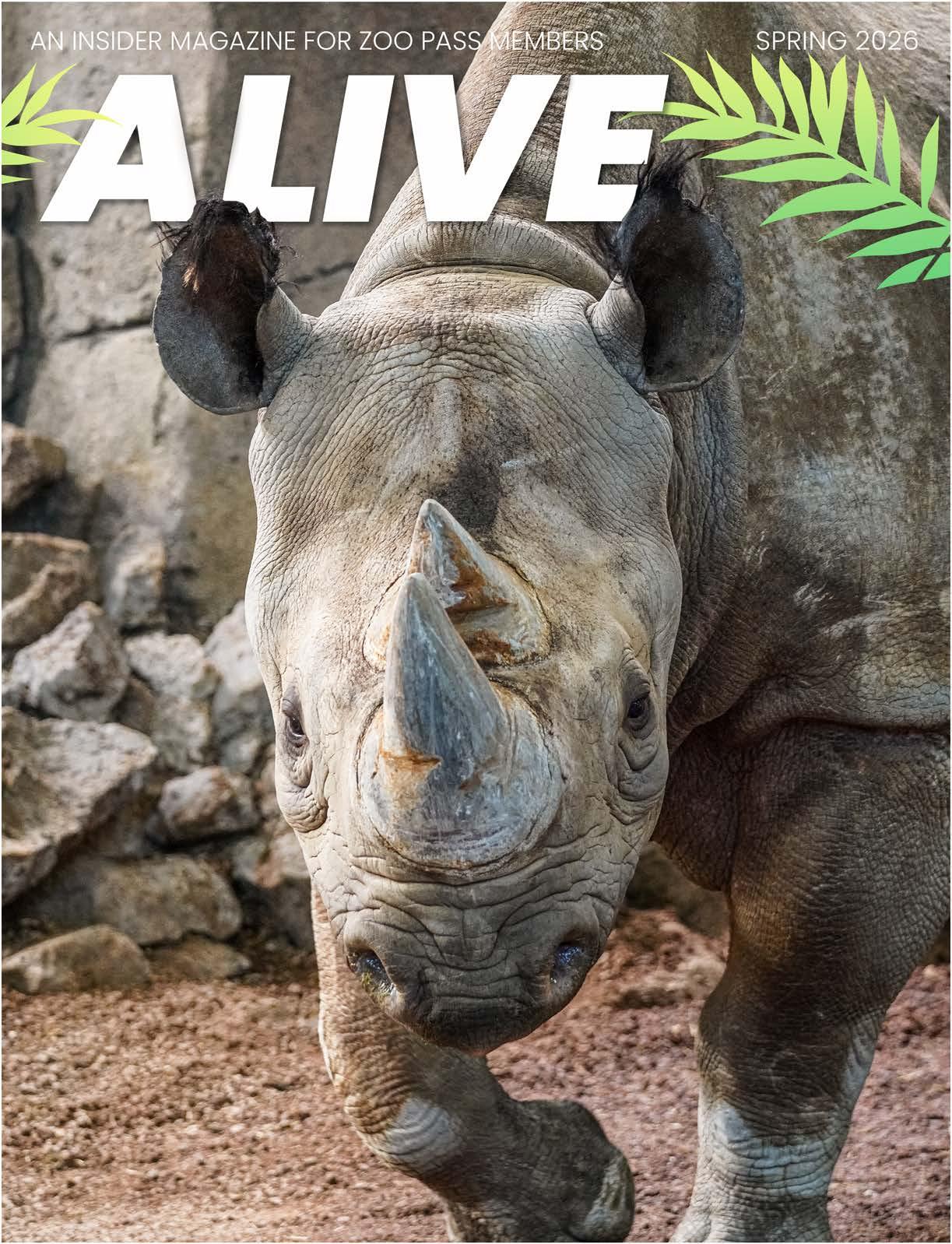
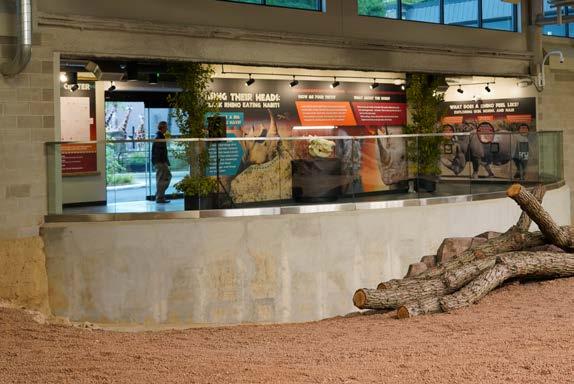
The native Eastern black rhinoceros calls Africa’s grasslands, savannas and shrublands home. At the Milwaukee County Zoo, the new Ladish Co. Foundation Rhino Care Center gives a nod to that iconic environment. The natural wall and warm, indoor close-up space are inspired by South African landscapes, designed to resemble rocks along the edge of a riverbed. It’s a calm, welcoming place to see a rhino up close — right here in Milwaukee.
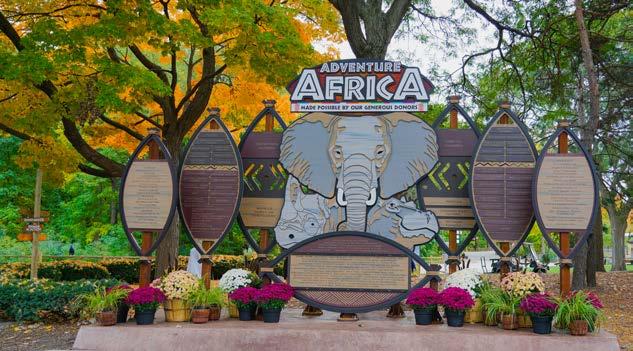
For Tim Wild, the Zoo’s large mammal curator, the Adventure Africa project has been part of his career from the start. Starting his position in 2011, Wild recalls, “We were reviewing the former elephant and rhino habitats, Adventure Africa was just starting.” This multi-phase project has been one of the biggest changes in the Zoo’s recent history as it reimagined 25% of the developed Zoo footprint.
Phase I brought elephants back to the center of Adventure Africa and created spaces that set a new benchmark in elephant care.
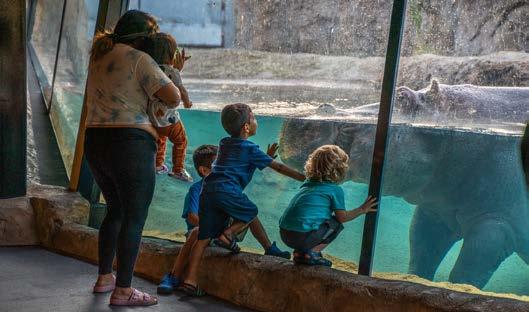
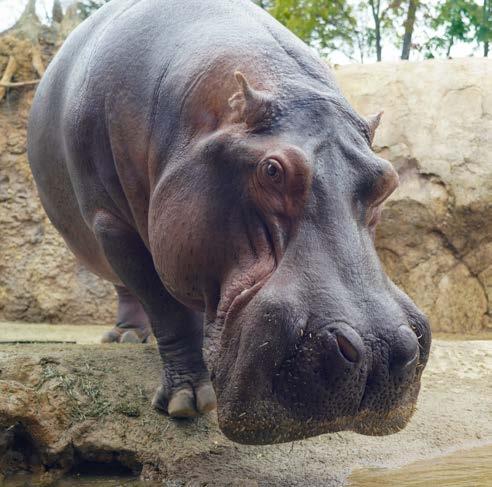
Phase II transformed the hippo habitat, giving guests an opportunity to see Happy the hippo up close with underwater viewing while enhancing his welfare and care. The Dohmen
Family Foundation Hippo Haven now includes an indoor habitat and pool for our resident male.
Now complete after Phase III, Adventure Africa’s final phase allows for rhinos to return to the Zoo. The Rhino Care Center is a 61,000-square-foot building that is home to two Eastern black rhinos as well as the Robert Dohmen Hippo Indoor Haven, zebras and red river hogs.
Special to this habitat is the new Peck Foundation, Milwaukee LTD Hippo Learning Center on the hippo side of the building which allows children and families to experience our mission by bringing our education programs directly into our animal habitats.
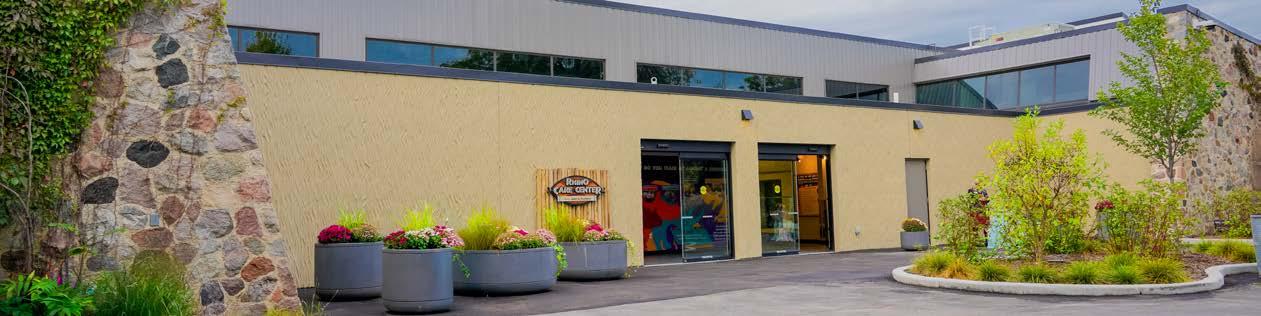

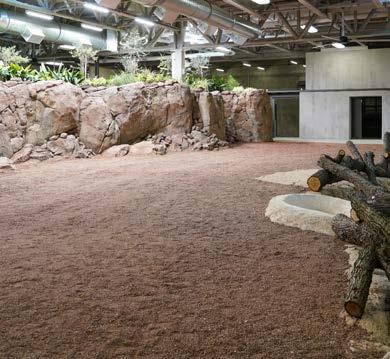
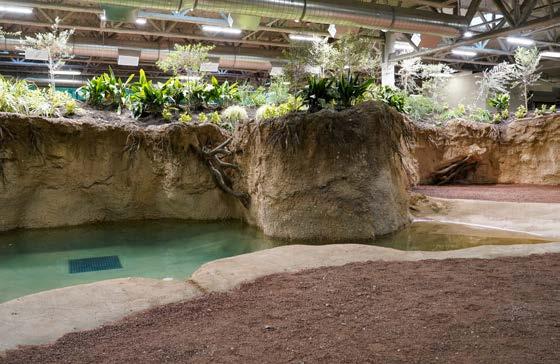

The Rhino Care Center was designed not only with modern zoological standards — every decision made during its design and construction centered around one thing: exceptional care.
Zookeepers and veterinarians were involved in many steps of planning this space. When the private training spaces were being designed, the team wanted to swap solid doors for see-through barriers. This allows closer access while keeping the rhinos and animal care team safe.
Joan Stasica, Giraffe, Rhino and Hippo area supervisor, says, “Both rhinos are trained for behaviors that help us and the vets care for them. They can hold still for blood draws, open their mouths on command, lean in for skin checks and lift their feet for nail and pad inspections.” The care team checks the rhinos’ skin every day and follows a consistent routine to keep them healthy.
Fun fact: Rhinos have sensitive skin. Zookeepers are planning to start doing specialized clay baths!
Rhino habitat highlights our care team loves:
• The outdoor yards and indoor habitats with space for rhinos to engage with enrichment. “We have a variety of large objects for the rhinos to push around; many double as feeders and can be filled with chow or chopped veggies that the rhinos can get by moving the feeder around,” says Stasica.
• Hooks on the walls for the animal care team to hang enrichment foods. “They love to eat browse (tree branches), either with or without leaves!” says Stasica. These hooks were a recommendation from the zookeeper staff!
• The east yard can alternate holding zebras and rhinos, so the team cares for different species in one building.
• The west yard is exclusively for rhinos and features the required space for a breeding pair and a calf.
The connection does not stop once you leave the new Rhino Care Center. Near the outdoor yard, a new learning area lets the rhinos decide when they want to say hello. Guests can watch them up close during zookeeper chats and see training demonstrations in the We Energies Foundation Rhinos in Action area. These moments give a sneak peek into the rhinos’ daily lives — and their unique personalities!
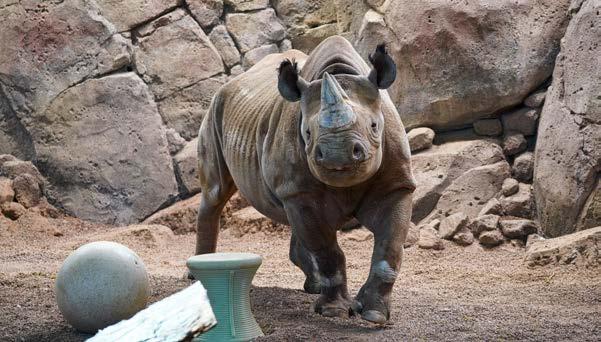
16-year-old Zuri came from the Cincinnati Zoo & Botanical Garden. Born September 28, 2009, she has a big sweet tooth and can’t resist fruit!
What’s
Both rhinos enjoy a daily diet of mixed grass hay, alfalfa, a specialized zoo rhino chow and some fruits and veggies. “We also give them lots of logs and branches of different sizes,” says Stasica. “They push them around, scratch them and chew on them. Sometimes they even eat the smaller ones completely!”
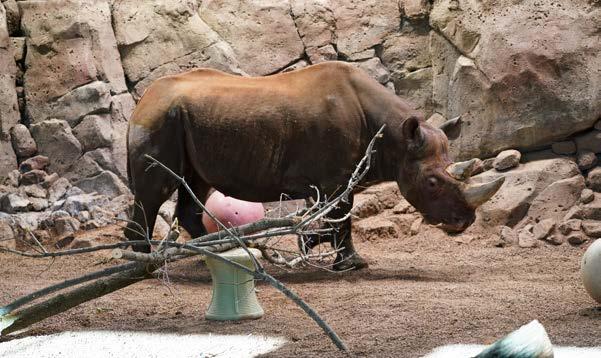
22-year-old Kianga arrived from Racine Zoo. Born September 19, 2003, he’s a food-loving go-getter who vacuums up everything he’s given.
Wildlife cannot protect themselves from the threats they face and with rhino numbers shrinking in the wild, Association of Zoos & Aquariums (AZA) institutions step in to support their fragile populations.
The hope is that when people connect with the mighty rhino at the Zoo’s new Rhino Care Center, they are inspired to conserve this animal and their home. With around 55 Eastern black rhinos living in human care across North America, Zuri and Kianga’s arrival is a testament to the Zoo’s critical role in the global conservation network.
Eastern black rhinos are classified as Critically Endangered by the International Union for the Conservation of Nature (IUCN). In their natural range, they face threats from poaching and habitat loss. Research conducted with rhinos in human care, at institutions like our Zoo, contributes valuable knowledge that informs conservation strategies and helps protect native populations.
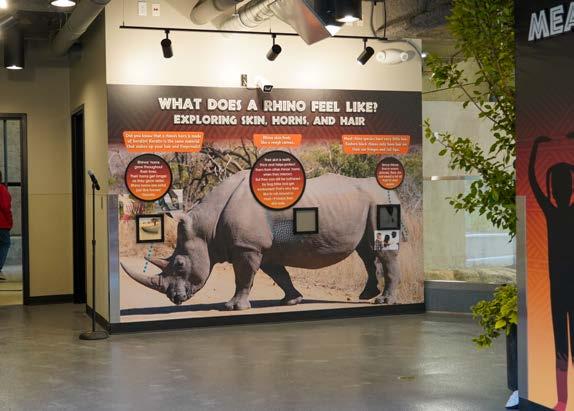
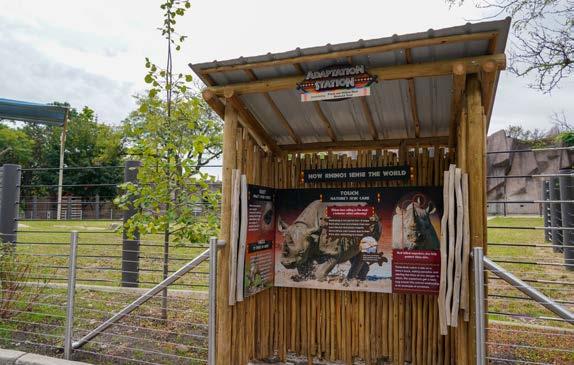
When the weather is nice, stop at our hands-on learning installations, Adaptation Stations, located along the paths around the Rhino Care Center. Learn about animal survival skills and the adaptations that help them thrive. The John & Patricia Konkel Family Adaptation Station includes a 3D-printed replica of a rhino horn, scanned from a real horn, giving guests the rare chance to touch and better understand what makes these animals both magnificent and vulnerable.
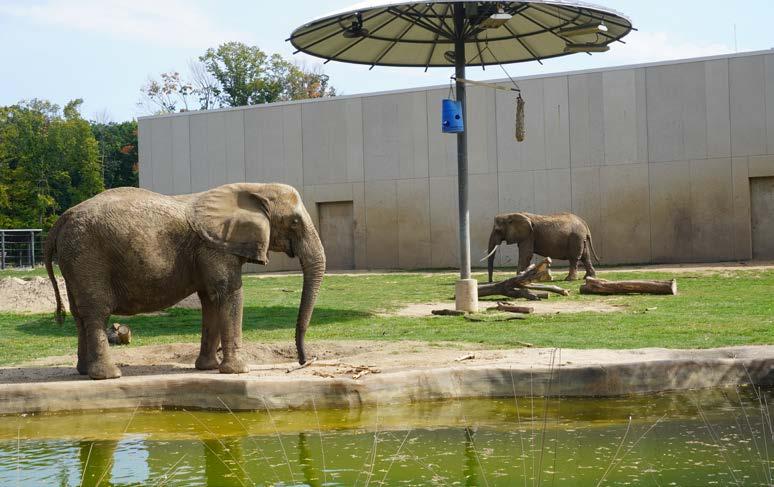


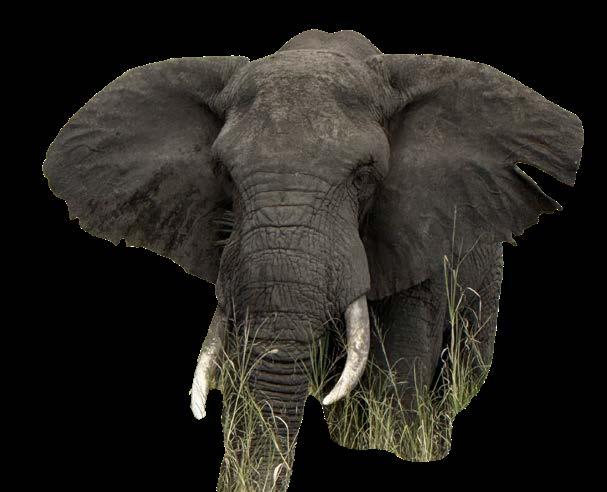
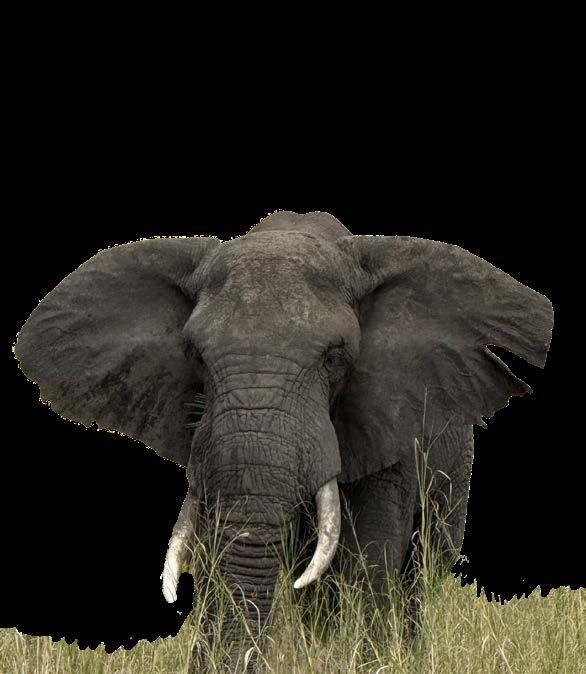
The African savanna elephants at the Milwaukee County Zoo help connect our guests to wildlife every day. Half a world away, their wild relatives face growing challenges. According to the Tanzania Elephant Foundation (TEF), Tanzania is home to the third-largest population of African savanna elephants on the continent. That is where global partnerships and people committed to caring for these incredible mammals make a real difference.
In 2025, the Milwaukee County Zoo partnered with the Tanzania Elephant Foundation (TEF) to support an important elephant collaring project in Tanzania. TEF, founded and led by PhD candidate Lameck Mkuboro, works closely with local communities living near protected areas that are home to native African savanna elephants. These elephants are some of the largest animals on Earth and are deeply connected to the land they walk on. They are migratory, sharing paths from generation to generation.
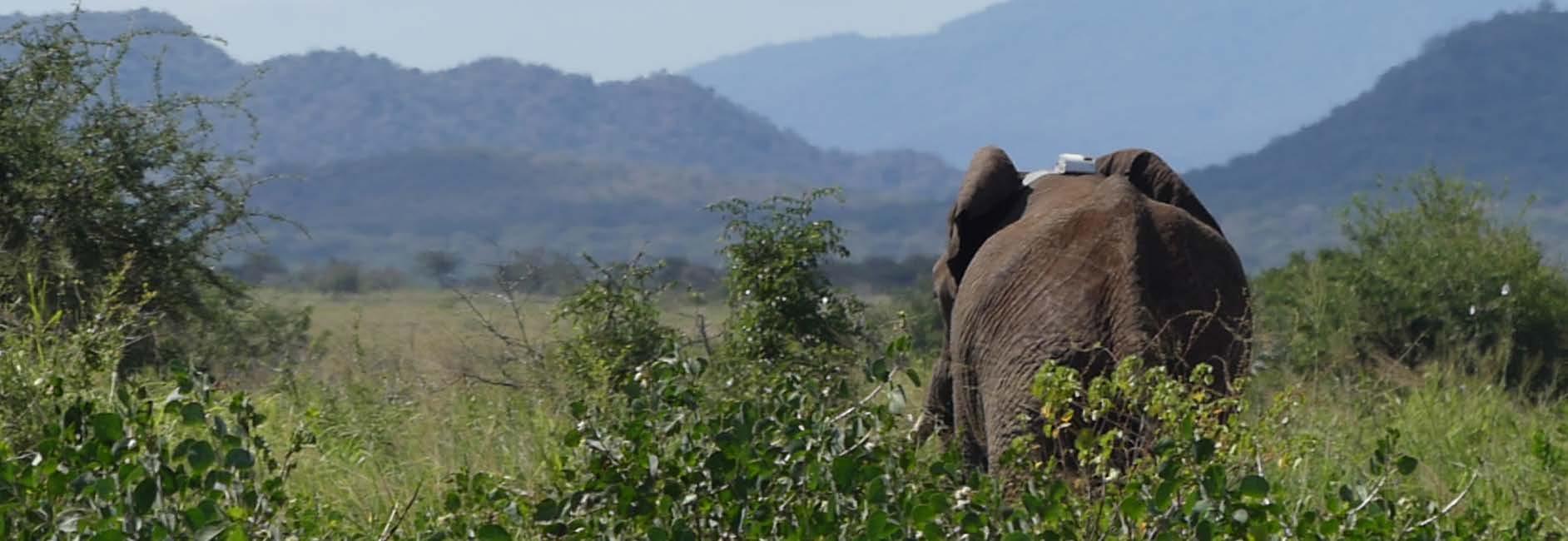
While movement data exists for wild elephants in Mkomazi National Park, this 2025 GPS collaring project — run by TEF and significantly funded by the Milwaukee County Zoo and the Zoological Society of Milwaukee — sought to expand that knowledge by collaring five elephants: three females and two bulls.
Funding also supported the processing and analysis of data from the newly collared elephants. This information helps TEF better understand elephant home ranges, habitat use, migratory routes, distribution and activity patterns. More data means better-informed conservation decisions for these giants.
Joining the project from the Milwaukee County Zoo, Tracey Dolphin, director of animal management and health, explained, “A wild African savanna elephant will not know where the wildlife preserve they live on ends, and a human village starts.”
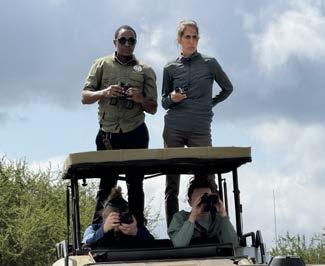
A day in the field followed the elephants, not a schedule, which meant being ready for whatever the landscape and the moment required. Also joining the multidisciplinary field team was Erin Dowgwillo, elephant care coordinator from our Zoo. Dowgwillo and Dolphin were joined by other elephant managers, zookeepers, a veterinarian, a bee
scientist, students, as well as Tanzanian community scouts and government officials.
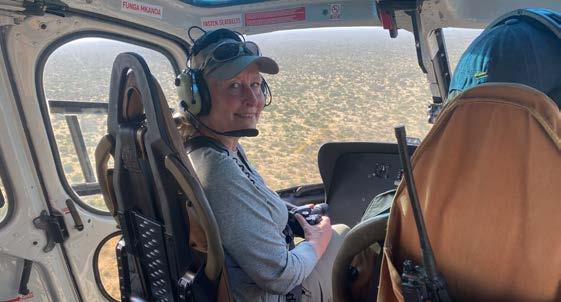
Sometimes waking at dawn, the team rolled out into the savanna bush landscape, their clothes treated for zebra ticks and lunches packed for long days tracking elephants from field vehicles. TEF’s research department identifies regions where additional movement data is needed and works with nearby villages that know the local herds best. A wildlife veterinarian then darts the selected individual elephant from a helicopter.
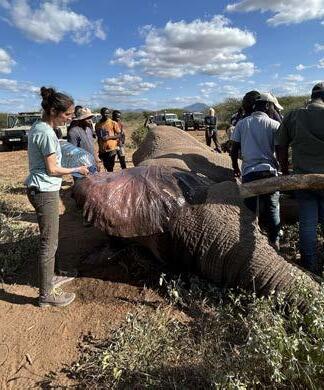
moment as she poured water over a wild elephant’s ear to help keep them cool during the collaring process:
“I enjoyed being with other elephant people who do the same work I do every day and have the same level of care.”
TEF’s approach focuses on both elephants and people, with the goal of human–elephant coexistence. By working closely with local communities, conservation becomes something everyone can take part in. During the elephant fieldwork, village members often gathered around the immobilized elephant to help where they could.
Reflecting on the excitement within the villages when TEF arrived, Dolphin said,
“We went out to save elephants. But this work goes deeper than elephants, it lives in the connections we made with the community.”
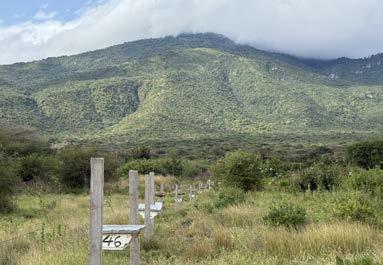
One mitigation method Dolphin and Dowgwillo participated in during the trip was the installation of beehive fencing, a proven tool to promote human–elephant coexistence. Using GPS collar data to identify elephant movement routes, TEF installs lines of suspended beehives connected by wire along village borders. When an elephant bumps the wire, the hive shakes and bees
emerge, stinging elephants in sensitive areas. Elephants remember the experience and learn to avoid those areas in the future, associating the beehive boxes with the stinging insect.
Beehive fences are deeply communitydriven. Families help maintain them and can sell the honey for income, creating shared benefits for both people and wildlife.
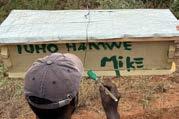
During this trip, Dolphin and Dowgwillo helped create a beehive marked with a regional dialect phrase “Tuho Hamwe,” meaning “together.”
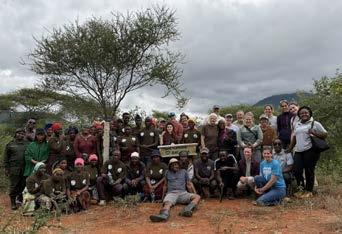
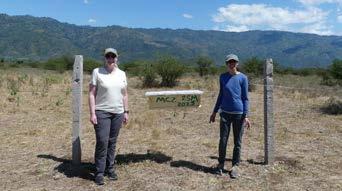
By tracking wild giants alongside TEF — whose mission is to promote elephant conservation and coexistence between people and elephants — the Zoo and Society’s shared mission to inspire people to conserve wildlife and wild places becomes a reality.
Once an elephant was safely immobilized, the team worked quickly and carefully on the ground. Tanzania community scouts and government officials established a wide safety perimeter around the site. Dowgwillo reflected on the emotion of the
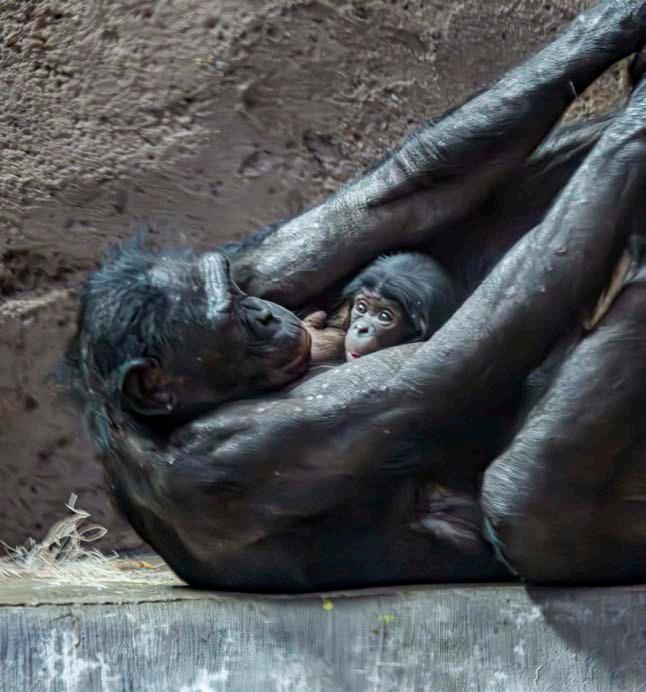
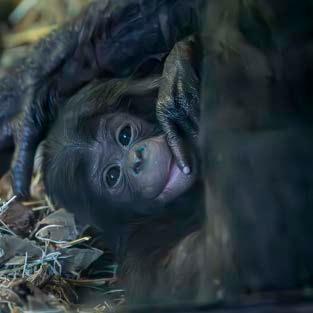
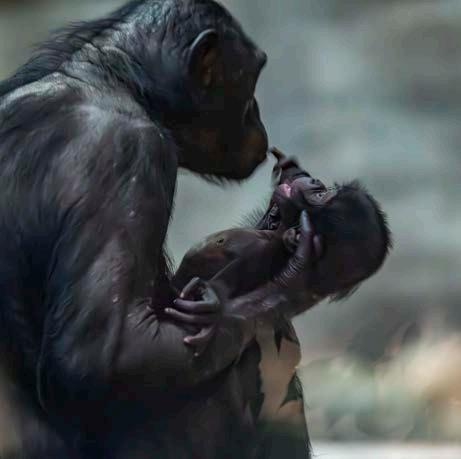
Remi, a baby bonobo born at the Milwaukee County Zoo in 2025, has started to explore life beyond his mother Elema’s arms. Around the pair, the Zoo’s bonobo troop observes, sniffing or holding Remi’s foot or hand. For Stacy Whitaker, lead bonobo zookeeper, these early moments are especially meaningful.
“The first time he looked at me and vocalized, he made a little ‘hoo’ questioning noise, and it was so cute,” Whitaker said. “I can’t even describe how exciting it is to watch him grow up healthy and happy. The troop loves babies. They are over the moon to have a baby again.”
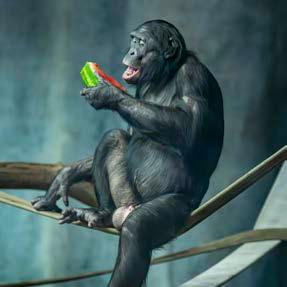
Each bonobo birth in human care is celebrated with joy, but it also serves as a reminder of the challenges their wild relatives face. Bonobos are endangered, with populations threatened by habitat loss, poaching and disease within their native range in the Democratic Republic of Congo (DRC).
Remi’s birth marks the tenth bonobo born at the Milwaukee County Zoo, an important milestone rooted in a long
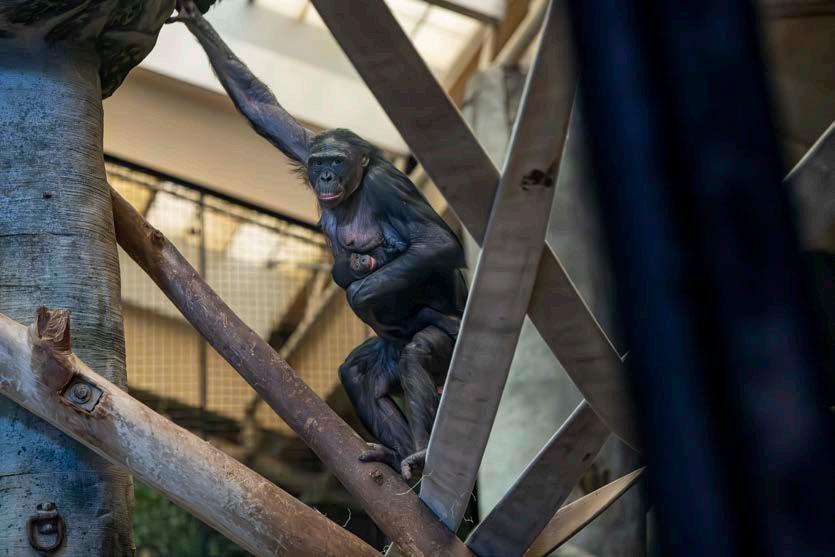
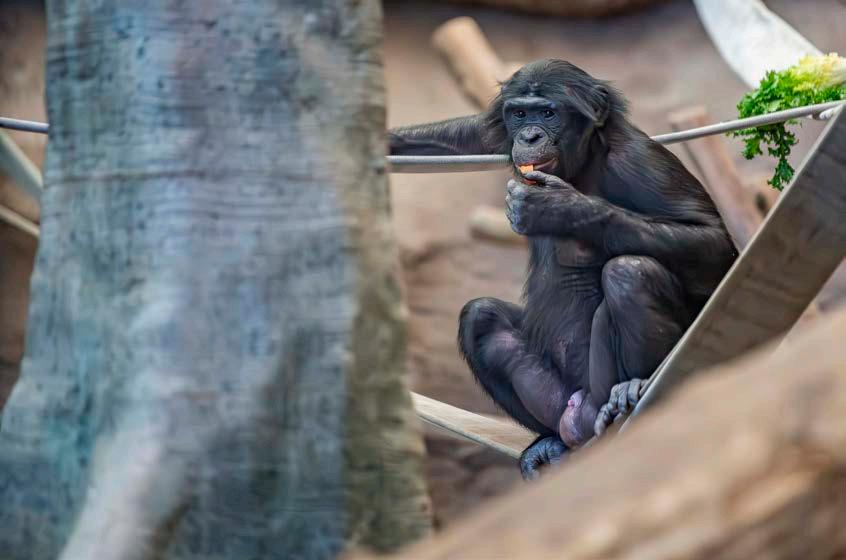
history of bonobo care and conservation leadership. The Zoo was one of the first institutions in the United States to house these lesser-known great apes and launched the U.S. Bonobo Management Program (formerly known as the Bonobo SSP) in 1988.
That history continues today through the Association of Zoos and Aquariums’ (AZA) SAFE: Saving Animals From Extinction program for bonobos — Bonobo SAFE — now the 51st SAFE program established by AZA.
Bonobo SAFE is a collaborative initiative focused on preventing the extinction of bonobos in the wild. Found only in the forests of the DRC, this species benefits greatly from coordinated conservation efforts that bridge AZA professionals and boots-on-the-ground conservation partners. Leading Bonobo SAFE is Auriana Donaldson, conservation manager at the Zoological Society of Milwaukee. Donaldson also serves as secretary of the Bonobo Management Partnership, which coordinates bonobo care and population management across North American zoos.
“My role in bonobo conservation happens at the Zoo, across North America and their native range,” Donaldson explains.
“Every bonobo you see here in Milwaukee is connected to a much bigger conservation effort in the DRC.”
This connection between animals in our care and their wild counterparts strengthens the Zoo’s mission to Care, Connect and Conserve. When guests learn the stories of
the bonobos they see, they are more likely to feel invested in protecting them. Awareness leads to action and connection inspires conservation.
With the involvement of professionals who work at AZA institutions, Bonobo SAFE builds an action plan. Scheduled for publication in early 2026, this plan will include goals such as increasing public awareness of bonobos and their conservation status among both Zoo audiences and communities in the DRC, and reducing the main threats to the bonobo by providing targeted funding to field partners.
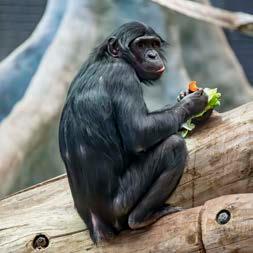
Friends of Bonobos operates Lola Ya Bonobo Sanctuary which is the only bonobo sanctuary in the world, and Ekolo ya Bonobo, a release site for rehabilitated bonobos. They rescue orphaned or trafficked bonobos. Lola Ya releases bonobos and prepare them for life in the forests of the DRC.
“If you want to save bonobos, you need to preserve the Salonga,” Donaldson says.
If you’ve visited the Zoo recently, you’ve already begun supporting the SAFE species programs we are part of! The next time you walk through the apes building, take a moment to notice the maps and interpretive installations surrounding the bonobo habitat. These elements are homages to Salonga National Park, the largest tropical rainforest reserve in Africa and a critical stronghold for wild bonobos that is home to up to 60% of the world’s bonobo population.
Bonobo SAFE works alongside trusted partners who monitor, protect and study bonobos in the DRC:
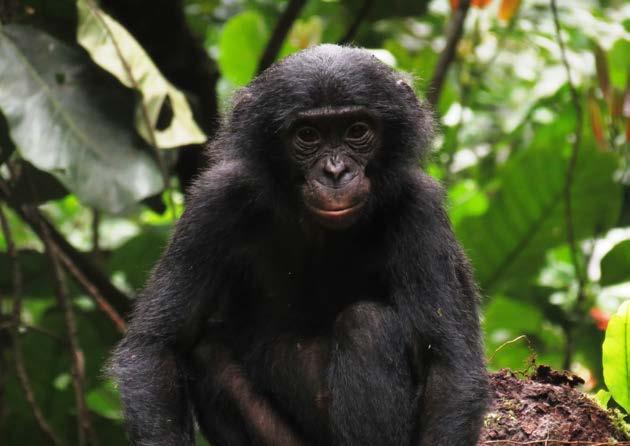
The Salonga Conservation Initiative supports anti-poaching efforts, biomonitoring, forest conservation and local communities within and around Salonga National Park.
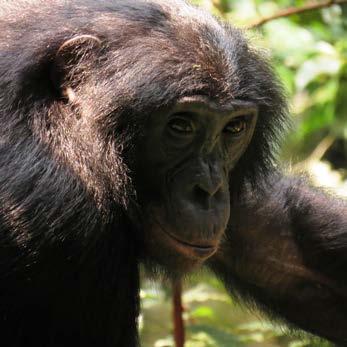
The Wamba Field Station is the world’s first bonobo research site. Decades of study there have deepened scientific understanding of bonobo behavior and ecology, while also supporting nearby villages to prevent and resolve human–bonobo conflict.
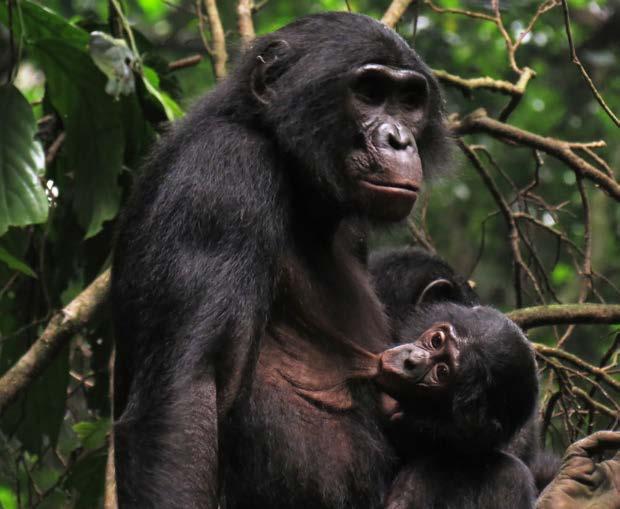
Conservation success depends on long-standing relationships with local communities, and all three Bonobo SAFE field partners provide support in the form of schools, employment, and infrastructure development to those coexisting with bonobos.
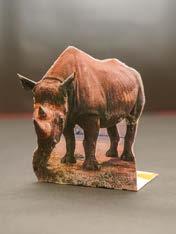
Let your imagination stomp around with this DIY savanna diorama, complete with custom animal cutouts that you can make in just five steps. You’ll create a mini landscape where rhinos and their animal neighbors can roam, rest and splash at the watering hole.
This project was created by Molly, one of our Education Department’s early childhood educators. Love this activity? Our Zoo Classes and Camps are full of hands-on crafts and playful learning!
Conservation tip: This entire activity is made with recyclable materials!
Directions

Build the Landscape
Glue blue construction paper inside the back of the box for the sky. Add green paper along the bottom to create the ground.
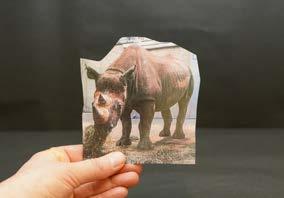
Print out animal photos. Roughly cut around each animal, leaving a small border and a flat edge along the bottom.

Make Them Stand
Carefully detail-cut around the animal shape. Example: You can get very detailed with the second cut, or you can just make a shape around the animal!
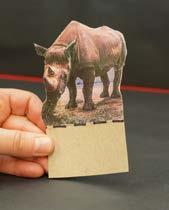
Fold the tab backward so your animal can stand upright.
Cardboard box with flaps
Thin cardboard from a cereal/cracker/soda box
Printed photo of animals printer paper preferred
Construction paper (green, blue, yellow, brown) Glue stick
“Fill
1. Adjective (describing the morning):
2. Name (for the rhino):
Color: 4. Verb (ending in –ing):
Noun (part of the landscape):
6. Sound:

7. Adjective (describing the horn or body):
8. Verb (an action the rhino does):
9. Animal (seen briefly):
10. Adjective (describing the land):
Make Them Strong
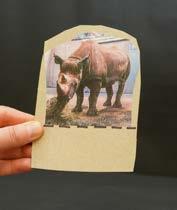
Glue each animal onto thin cardboard. Cut it out again, making sure to leave a small tab at the bottom.
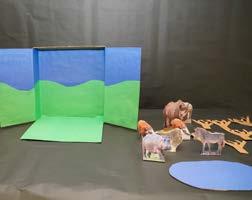
Set the Scene
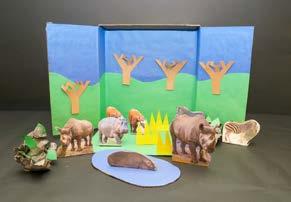
Place your animals inside the box and arrange your savanna!
of the landscape
In the morning light, a rhino called stands on the African savanna beneath a sky. The rhino moves slowly, across the land. Strong feet press into the soil, forming paths near a . Each step makes a “ ” as grass bends and earth moves. With a horn, the rhino shrubs and tall grasses. This movement opens space for new plants to grow and allows other animals to pass through the area. Nearby, a watches before moving away. As the day continues, the savanna is left , shaped by the rhino’s steady movement through the land.
Habitat Add-Ons! Take your diorama to the next level by adding: Did you
Bonus: Can you design a safe place for your rhino to rest?
Rhinos help shape the savanna by creating trails, trimming plants and making room for new growth.
Eat Like Zoo Rhinos, Zuri and Kianga!
Eastern black rhinos use their upper lip to grab and grip leaves and branches to eat. Have an adult help you make a snack plate and try to only eat with your lips – no hands!
Some snacks to put on your plate to make you feel like a rhino:

Because the Milwaukee County Zoo feels even more magical after hours.
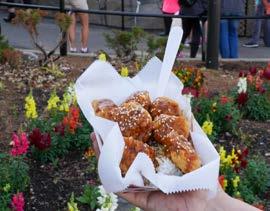
As a Zoo Pass member, you’re invited to a series of members-only summer nights designed just for you. Warm evenings, music in the air, your favorite Zoo animals and a relaxed, festive feel you won’t find during the day. Plus, a portion of food truck and beverage proceeds support our Sponsor an Animal program.

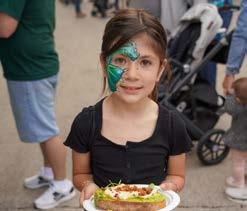
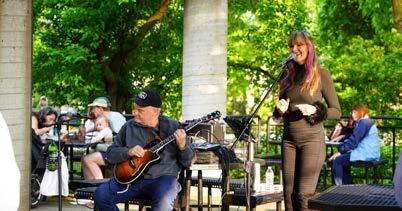
Nights in June
June 2–4, 2026
Sponsored by Habush Habush & Rottier S.C.®
Kick off summer with three unforgettable evenings celebrating Zoo Pass and Platypus Circle members.
• Live music and entertainment sponsored by North Shore Bank throughout the Zoo
• Local Milwaukee food trucks
• Craft activities and interactive fun — for kids and kids at heart
• A relaxed, grown-up-friendly atmosphere with room to explore
• Appearances and programs from Kohl’s Wild Theater
Kids Nights
July 14–16, 2026
Sponsored by Lifeway Kefir
These July evenings are all about celebrating your favorite little Zoo fans — with plenty to enjoy for adults, too.
• Family-friendly live music and performances sponsored by Great Clips and Children’s Wisconsin
• Appearances and programs from Kohl’s Wild Theater
• Hands-on learning at biofact carts throughout the Zoo
• Delicious eats from local food trucks
