


Why we need alignment and integration between environmental agendas
Nathalie Pettorelli1,2, Hollie Folkard-Tapp1,2, Jake Williams1,2, Lindsay C. Stringer3, Gretta T. Pecl4,5, Peter Bridgewater6, Sander Chan7, Kripal Singh8, Laura Pereira9,10, Bethan Laughlin11, Alice C. Hughes12, Cate Macinnis-Ng13, Paul Hagenström14,15, Dirk S. Schmeller16, Zoe G. Davies17, Johan Olofsson18, Stacy D. VanDeveer19, Rosie Hails20, Mark Dickey-Collas21,22, Nakul Chettri23, Sunita Chaudhary24
1 Institute of Zoology, Zoological Society of London, London, UK
2 University College London, London, UK
3 Department of Environment and Geography, University of York, UK
4 Centre for Marine Socioecology (UTAS), University of Tasmania, Australia
5 Institute for Marine and Antarctic Studies (IMAS), University of Tasmania, Hobart, Tasmania, Australia
6 Centre for Applied Water Science, University of Canberra, Bruce, 2617, ACT, Australia
7 Radboud University, Nijmegen, The Netherlands
8 Department of Ecology, Evolution, and Genetics, Institute of Biological Sciences, Federal University of Minas Gerais, Belo Horizonte, Brazil
9 Global Change Institute, University of the Witwatersrand, South Africa
10 Stockholm Resilience Centre, Stockholm University, Sweden
11 Conservation Programmes, Zoological Society of London, UK
12 School of Biosciences, University of Melbourne, Melbourne, Vic, Australia
13 School of Biological Sciences, Waipapa Taumata Rau University of Auckland, Auckland, NZ
14 German Institute of Development and Sustainability (IDOS), Bonn, Germany
15 School of Sustainability, Leuphana University of Lüneburg, Germany
16 Centre de Recherche sur la Biodiversité et l´Environnement (CRBE, UMR 5300), Université de Toulouse, CNRS, Toulouse INP, IRD, Toulouse, France
17 Durrell Institute of Conservation and Ecology (DICE), University of Kent, UK
18 Department of Ecology, Environment and Geosciences, Umea University, Sweden
19 McCormack School of Policy & Global Studies, University of Massachusetts Boston, USA
20 The National Trust, Kemble Drive, Swindon, UK
21 DickeyCollas Marine, London, UK
22 Institute for Aquatic Resources, Technical University of Denmark, Lyngby, Denmark
23 Ashoka Trust for Research in Ecology and the Environment (ATREE), India
24 International Centre for Integrated Mountain Development (ICIMOD), Nepal
Pettorelli, N., Folkard-Tapp, H., Williams, J., Stringer, L.C., Pecl, G.T., Bridgewater, P., Chan, S., Singh, K., Pereira, L., Laughlin, B., Hughes, A.C., Macinnis-Ng, C., Hagenström, P., Schmeller, D.S., Davies, Z.G., Olofsson, J., VanDeveer, S.D., Hails, R., Dickey-Collas, M., Chettri, N., Chaudhary, S. (2026) The risks of climate-nature silos - Why we need alignment and integration between environmental agendas. A report from the Zoological Society of London (ZSL), London, UK.
This report was made possible thanks to BioCAM4, a consortium project funded by the Government of Canada’s New Frontiers in Research Fund (NFRF), the German Research Foundation (DFG) and UKRI (grant number ES/Z000092/1). The authors are grateful to Marcel Kok and Oscar Widerberg for their review of an earlier version of this report. Views expressed in this report are those of the authors and do not necessarily represent the views of their affiliated institutions or funders.









This report makes a simple case: because the environmental crises we face are intertwined, our responses to them must be integrated. The predominant policy framing of these crises through the lenses of a suite of climate, biodiversity and land or ocean metrics currently obscures the reality of a single nature-climate system that critically determines human wellbeing; the challenge for humanity is to manage this complex system in ways that reduce overall risks. Addressing one crisis within that system (be it climate change, biodiversity loss or land degradation) won’t stop the others, while addressing them in isolation is both perilous and inefficient.
While many have highlighted the benefits of integrated environmental agendas, few have comprehensively detailed the risks of silos. This report addresses this gap by documenting how innovation, narratives, incentives and management approaches to address just one environmental crisis can exacerbate another, leading to negative feedbacks that hamper progress on all fronts. The outcome is not only a failure to address the underlying challenge, but also a failure to meet international commitments and legally binding environmental targets – efforts designed to help us secure a liveable, sustainable future for all.

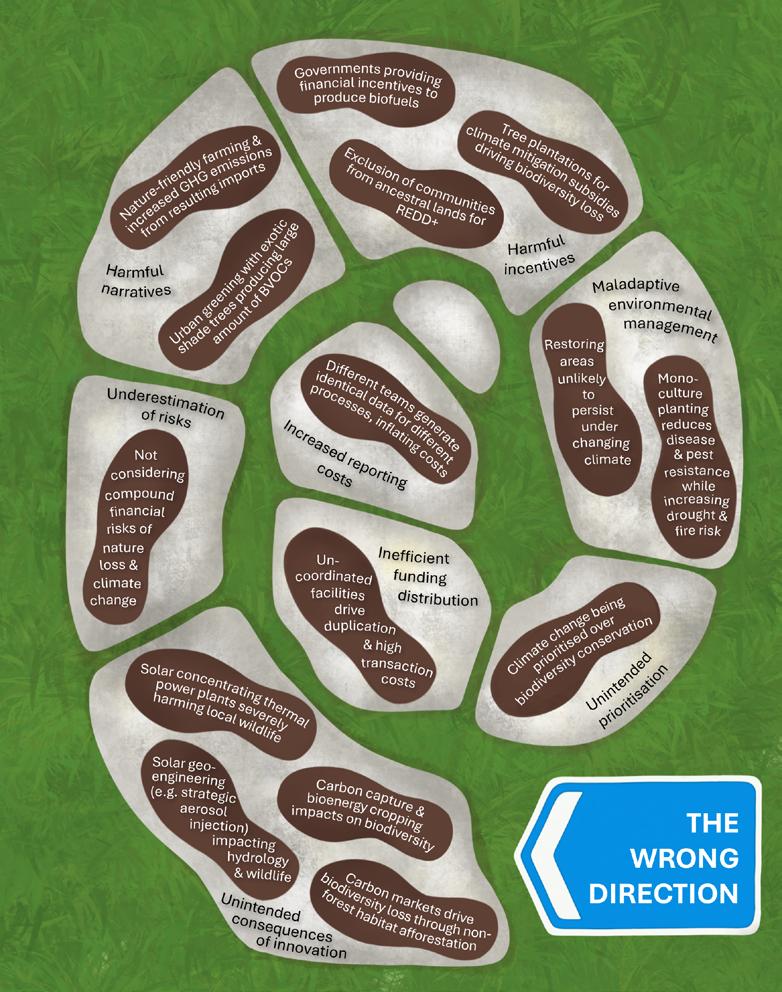
Our business-as-usual, siloed approach to intertwined crises is costly, can duplicate activities, undermine the other environmental agendas, and can lead to wasteful spending and fragmented, financially inefficient responses (Figure 1). The benefits of a synergistic approach, on the other hand, are expected to be substantial: acting on climate and human development together, for example, could deliver nearly 40% greater efficiency in government spending compared to pursuing them in isolation (United Nations 2025). It is therefore vital to harness synergies, particularly when faced with escalating food and energy costs, rising debt burdens, a USD 700 billion biodiversity finance gap and a USD 187–359 billion adaptation finance gap (United Nations 2025). The year 2026 presents the ideal opportunity for unified action against environmental degradation as the three Rio Conventions on climate change, biodiversity and land degradation assemble.
Coordinated action is needed at both international and national levels for environmental policies to efficiently and cost-effectively address the climate, biodiversity and land crises. Internationally, we recommend Rio Conventions’ reporting mechanisms and action agendas to be aligned and coherent; scientific evidence and consensus on issues relevant to jointly addressing the environmental crises we face to be built; and funding for projects and programmes that offer synergies to be increased and prioritised. Nationally, integrated and inclusive spatial planning strategies need to be adopted; environmental risk and volatility need to be mainstreamed into economic forecasting; and conditions for private capital mobilisation and multiple returns need to be enhanced to address collective challenges.
Figure 1: The wrong direction. Figure illustrating how innovation, narratives, incentives and management approaches to address just one environmental crisis can exacerbate another, leading to negative feedbacks that hamper progress on all fronts. Details and associated references pertaining to the examples highlighted in this figure are provided in Table 1, where additional examples across a broader range of themes and processes are introduced.
Policy alignment and coherence are clearly not a trivial matter and require an inclusive, whole-of-society approach to deliver on their promises. While governments and their agencies carry the ultimate responsibility for unlocking synergistic action and avoiding the worst consequences of siloed approaches, donors, NGOs, businesses, scientists and other stakeholders play a critical facilitative role, supporting coordination and technical assistance. There is broad consensus that aligning environmental agendas and harnessing synergies is no longer a merely desirable option but an urgent imperative. The knowledge, tools and shared understanding are already in place—what is needed now is the collective will to act decisively and move from agreement to integrated implementation.
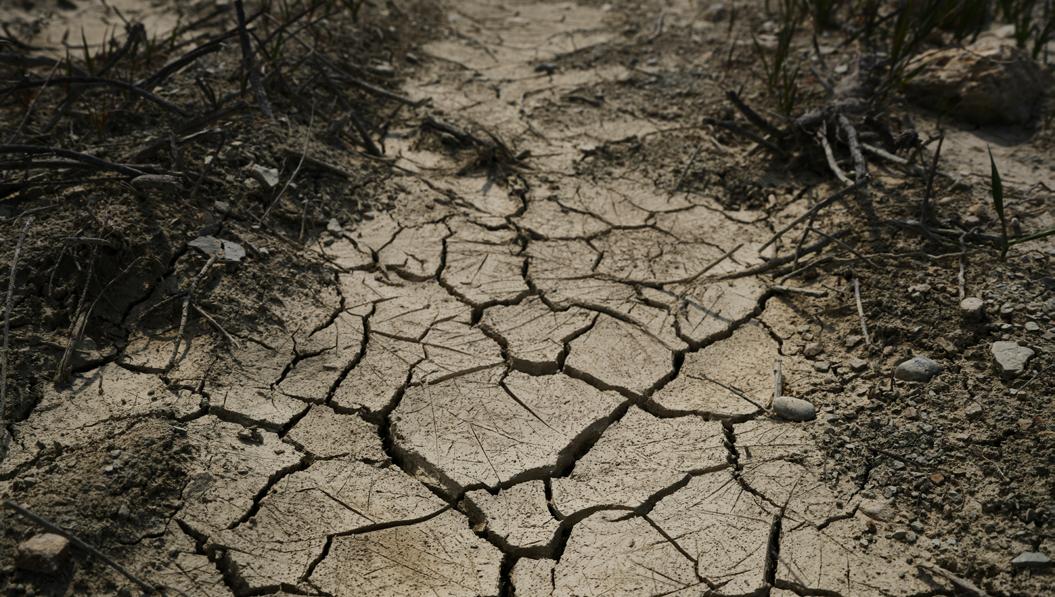
The year 2025 was one of the three warmest years on record, while average global temperature over the past three years (2023-2025) was more than 1.5°C above the pre-industrial era, temporarily exceeding the long-term safe level targeted by the Paris Agreement (Copernicus 2026). It was also a year where roughly 1.7 billion people were found to be living in areas where crop yields are failing due to human-induced land degradation (FAO 2025). Meanwhile, the World Economic Forum’s newly released Global Risks Report now ranks biodiversity loss among the most severe global threats by 2036, second only to extreme weather events (World Economic Forum 2026). The pace of biodiversity loss (at the genetic, species and ecosystem levels) is worryingly fast. For example, over the past 50 years alone, the average size of monitored wildlife populations has shrunk by 73% (1970-2020; WWF 2024).
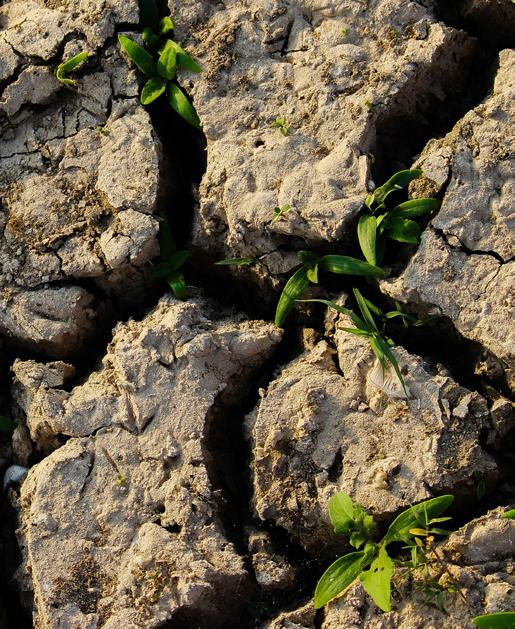
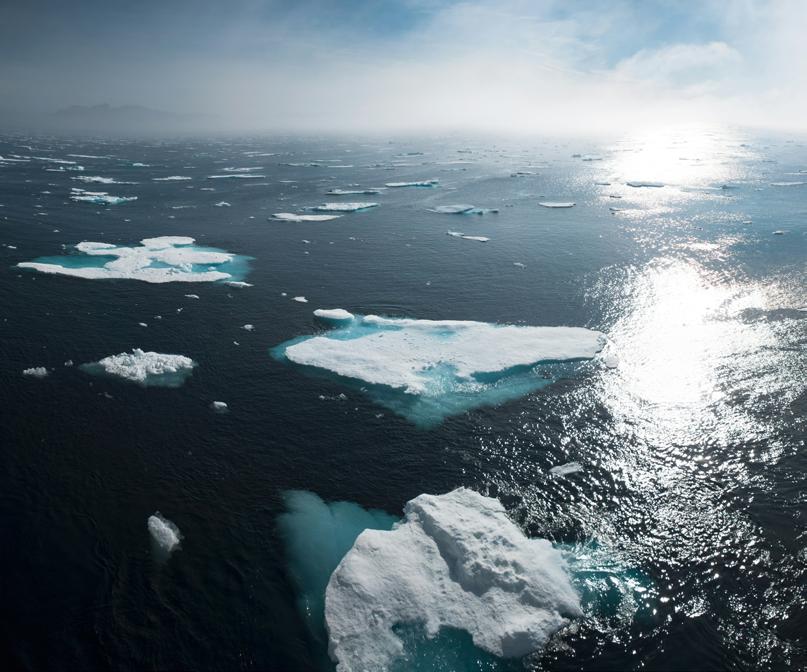
The climate change, biodiversity loss and land degradation crises we face pose some of the biggest existential risks to humanity. These crises are not siloed; they are interdependent. They share some of the same drivers, with unsustainable land use, overexploitation of natural resources, economic pressures and governance failures consistently emerging as key contributors across global assessments. These crises moreover interact and exacerbate one another (IPBES 2024a). Rapidly changing climatic conditions are threatening the long-term survival of many species. At the same time, global redistribution of biodiversity that results from climate change and human agency is escalating, further disrupting the functioning of ecosystems worldwide. The loss of biodiversity is then deepening the climate crisis. Reduced species abundance, local extinctions, and the rapid degradation and/or loss of ecosystems all reduce our planet's ability to store carbon, while hampering the ability of people and the rest of nature to cope with changing climatic conditions (Pörtner et al. 2021). Land degradation, driven by soil erosion, deforestation, nutrient depletion, overgrazing, and unsustainable farming, undermines the Earth’s ability to maintain stable climate systems and support biodiversity. Similarly, degradation of marine and coastal ecosystems (through overfishing, pollution, habitat destruction, and ocean warming and acidification) erodes the ocean’s capacity to regulate climate, sustain biodiversity, and support human livelihoods and wellbeing. Changing cryosphere systems (driven by climate change-fuelled glacier retreat, permafrost thaw and reduced snow cover) also disrupt climate regulation, biodiversity and human wellbeing by degrading ice habitats and increasing risks to species and communities reliant on glacial water while contributing to rising sea levels (ICIMOD 2023).

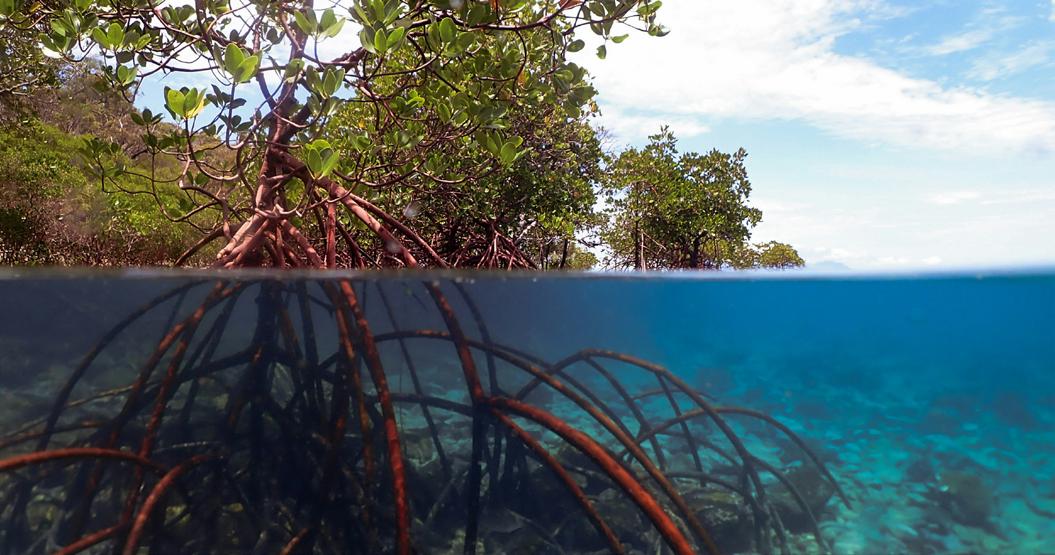
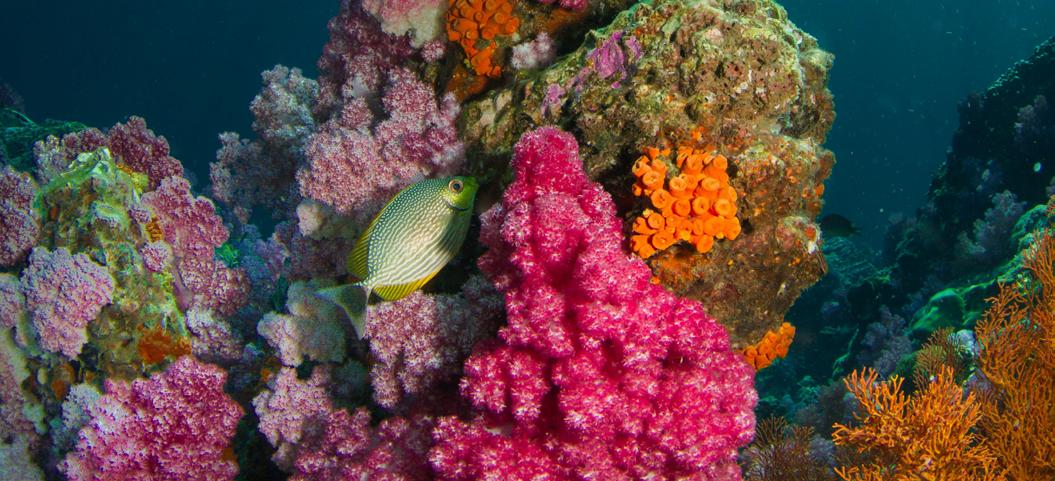
Oceans and coastal systems are central to the functioning of the climate-nature system, yet they remain systematically underrepresented in climatebiodiversity integration efforts. Covering over 70% of the planet, the oceans moderate global temperatures by absorbing over 90% of excess heat generated by greenhouse gas emissions and act as a major carbon sink through physical, chemical, and biological processes. At the same time, marine ecosystems, including coral reefs, kelp forests, seagrasses, mangroves, and open ocean support biodiversity, food security, livelihoods, and cultural values for billions of people.
Climate change is driving particularly rapid and extensive redistribution of life in the ocean, reshaping species ranges, fisheries productivity, ecosystem functioning, and the geopolitical distribution of benefits (and risks). These changes interact with existing pressures, such as overfishing, pollution, and habitat degradation, creating compounding challenges and risks that cannot be adequately addressed through siloed policy responses.
Despite this centrality, marine and ocean systems often fall between institutional mandates: climate policy largely focuses on terrestrial carbon and energy systems; biodiversity policy has historically emphasised land-based conservation; and ocean governance itself is fragmented across sectoral regimes for fisheries, shipping, conservation, and seabed activities. This fragmentation makes the ocean a critical test case - and cautionary examplefor why integrated governance of the climate-nature system is urgently needed.
While governments have access to a wide range of information and approaches to develop and implement environmental policies to tackle these interlinked environmental crises, key environmental governance decisions have taken place through United Nations (UN) processes. This guidance has been shaped by actions and discussions in three conventions ideated at the World Conference on Environment and Development in Rio de Janeiro in 1992. These three “Rio Conventions” are the United Nations Framework Convention on Climate Change (UNFCCC); the Convention on Biological Diversity (CBD); and the United Nations Convention to Combat Desertification (UNCCD). Both the CBD and the UNFCCC have made decisions associated with landmark agreements, namely the Paris Climate Agreement adopted by the UNFCCC in 2015 and the Kunming-Montréal Global Biodiversity Framework (KM-GBF) adopted by the CBD in 2022. At the same time, the UNCCD has established the Land Degradation Neutrality Target Setting Programme linked to the Sustainable Development Goal (SDG) 15.3 to strive towards a land degradation neutral world. These conventions have strongly shaped global responses to climate, biodiversity and land degradation in the terrestrial realm, while marine systems have largely been addressed through separate, more fragmented governance frameworks (Box 1).
With linkages between biodiversity loss, climate change and land and marine degradation well established, the importance of stronger integration of environmental policy agendas is increasingly recognised as a critical step towards sustainability and meeting international goals. Because of this, steps have been taken by Parties to increase communication between UN conventions over the past years. For example, recent CBD negotiated texts agreed by Parties led to the establishment of a series of Technical Information Exchanges to explore options for enhanced cooperation and policy coherence among the
Rio Conventions. In November 2025, a high-level political statement on synergies, known as the “Belém Joint Statement on the Rio Conventions” (UNCCD 2025), was issued by current and incoming Conference of the Parties (COP) Presidencies for the UNFCCC, CBD and UNCCD, encouraging synergies in the implementation of the Rio Conventions and the development of a workplan.
Despite some positive steps taken to strengthen synergies, concrete policy linkages on climate, biodiversity and land degradation remain broadly weak (UNEP 2025), with
plans to address the climate and biodiversity crises, in particular, continuing to be primarily developed in isolation. This fragmentation is even more pronounced for marine and coastal systems, where climate, biodiversity and resource-use decisions are frequently governed through separate, sector-specific international and national processes. This is a barrier to simultaneously tackling the interwoven crises, creating policy and implementation gaps whereby (i) some problems are inadequately tackled by existing plans, and (ii) solutions developed to tackle one crisis can inadvertently make another worse.
To date, no policy mechanisms have been agreed by Parties across all three Rio Conventions to formally assess coherence in reporting and promote policy integration, and most nations across the world continue to separately report their actions and outcomes on climate, biodiversity, and land. A notable exception to this pattern is Panama, a country that has pioneered a new approach to the development of integrated plans for climate, nature and land through its "Nature Pledge" (Pacto de Panamá con la Naturaleza). Though no policy mechanisms for assessing coherence in reporting by Parties exist, it is also worth mentioning that there are jointly agreed indicators, notably under SDG Target 15.3, with the UNCCD, the CBD, and the UNFCCC having all agreed on the adoption of three indicators, namely land cover, land productivity and soil organic carbon.
Tackling intertwined environmental crises in isolation reduces efficiency, raises costs and limits countries’ ability to meet their international commitments. This is due to:
(i) feedbacks: delivery on each agreement depends on the other’s implementation success (e.g., climate change is exacerbated by biodiversity loss);
(ii) priority reversals: some of the challenges arising, for example, from the connections between climate and biodiversity might be inadequately prioritised by a narrowly climate-focused or a biodiversity-focused plan, and
(iii) trade-offs: solutions developed to tackle one crisis can inadvertently make another worse.
In Table 1, we provide examples for each category, documenting how innovation, narratives, incentives and management approaches to address just one environmental crisis can exacerbate another, leading to negative feedbacks that hamper progress on all fronts.
These feedbacks, priority reversals and trade-offs are not independent: siloed framings can close down opportunities for a more comprehensive approach to prioritisation in the face of multiple crises, encouraging simplistic narratives and the consideration of only a narrow set of options. Prioritisation decisions stem from differential perceptions about the level of risk each crisis poses to humanity, as assessed within the boundaries of each institutional mandate. Such perceptions are partly underpinned by how scientists communicate these risks, as well as people’s underlying attitudes, values, politics and philosophies. With respect to risks, research has for example shown how the climate change crisis “feels” urgent and globally threatening, whereas biodiversity loss is often communicated through species stories, which may reduce, in certain circumstances, both its perceived immediacy and significance (Roe 2019; Tobias et al. 2025).
Importantly, reduced national coordination, underpinned by inter-ministerial incoherence and national policy fragmentation (Gupta 2024; OECD 2025) as well as gaps in expertise within delegations at international treaty negotiations and agreements (Rietig 2014; Chan 2021; Tessnow-von Wysocki & Vadrot 2024) are structural deficiencies that compound the fragmentation of international environmental governance. Such effects materialise, for example, when Parties’ positions are not aligned across responsible ministries, or when Parties’ delegations filled with diplomatic generalists are sent to negotiations that require advanced ecological and social science literacy.

Table 1: Examples illustrating some of the consequences of a siloed approach to managing environmental priorities. The table differentiates the type of action from the processes leading to negative impacts on biodiversity, climate and/or land and sea. Individual examples are inevitably context-dependent: they serve to illustrate the types of risk, and should not be taken as universal outcomes.
Type Process
Harmful incentives Incentives (e.g., tax credits, direct payments, mandates) to adopt a solution to one crisis worsens another crisis
Harmful incentives Incentives (e.g., tax credits, direct payments, mandates) to adopt a solution to one crisis worsens another crisis
Harmful incentives Incentives (e.g., tax credits, direct payments, mandates) to adopt a solution to one crisis worsens another crisis
Harmful incentives Incentives (e.g., tax credits, direct payments, mandates) to adopt a solution to one crisis worsens another crisis
Harmful narratives Narratives promoting the adoption of a solution without considering impacts on other crises
Harmful narratives Narratives promoting the adoption of a solution without considering impacts on other crises
Example
Governments providing financial incentives to produce biofuels such as ethanol and biodiesel, driving biodiversity loss
Exclusion of communities from ancestral lands for REDD+ forest conservation, driving biodiversity loss
Blue carbon projects prioritising carbon over ecosystem integrity and equity
References
Wiens et al. (2011)
Bayrak & Marafa (2016)
Alongi (2023)
Underestimation of risks
Unintended prioritisation
Unintended consequences of innovation
Unintended consequences of innovation
Unintended consequences of innovation
Unintended consequences of innovation
Risks associated with one crisis are underestimated because how another crisis shape these risks is being ignored
Unbalanced distribution of resources towards efforts to address different crises, creating more impetus to address some over others
Innovation to tackle one crisis worsens another
Innovation to tackle one crisis worsens another
Innovation to tackle one crisis worsens another
Innovation to tackle one crisis worsens another
Subsidies for tree plantations for climate mitigation driving biodiversity loss from ecosystems to be afforested
Organic farming leading to increased greenhouse gas emissions through increased imports to make up for lower organic yields
Urban greening programmes to increase biodiversity by planting large numbers of exotic shade trees producing large amounts of Biogenic Volatile Organic Compounds (BVOCs), leading to increased ozone formation
Underestimated financial risks associated with climate change, due to a lack of consideration for how biodiversity loss exacerbates these risks
Climate change being prioritised over biodiversity conservation, increasing risks of further biodiversity loss
Carbon capture and bioenergy cropping, and associated impacts on biodiversity, ecosystem services and adaptation
Carbon markets driving biodiversity loss through afforestation of biodiversity-rich habitats
Concentrated solar power plants severely harming local wildlife, both directly (burning) and indirectly (water stress)
Solar geoengineering such as strategic aerosol injection potentially significantly impacting hydrology and wildlife
Heilmayr et al. (2020)
Smith et al. (2019)
Schlaerth et al. (2023)
Kedward et al. (2023)
Veríssimo et al. (2014)
Smith et al. (2022); Prütz et al. (2026)
Bond et al. (2024)
Kaplan (2025)
Tang & Kemp (2021)
Table 1 continued: Examples illustrating some of the consequences of a siloed approach to managing environmental priorities. The table differentiates the type of action from the processes leading to negative impacts on biodiversity, climate and/or land and sea. Individual examples are inevitably contextdependent: they serve to illustrate the types of risk, and should not be taken as universal outcomes.
Type Process
Unintended consequences of innovation
Innovation to tackle one crisis worsens another
Regulatory conflict Conflicting legal mandates and conservation zoning stall climate mitigation and adaptation efforts
Regulatory conflict Conflicting mandates creating inconsistencies between energy development and conservation efforts
Regulatory conflict
Maladaptive environmental management
Maladaptive environmental management
Increased reporting costs
Perceived trade-offs between global climate goals and local environmental protection lead to project gridlock
Maladaptive restoration efforts
Example
Ocean solutions to address climate change, such as albedo enhancement, potentially degrading marine ecosystems
Species protection mandates delaying, limiting, or blocking the deployment of wind energy infrastructure
Offshore renewable energy deployment conflicting with marine biodiversity protection and fisheries
"Green versus green" trap where local environmental objections and permitting hurdles derail the rollout of renewable energy projects
Restoration of ecosystems in areas unlikely to be able to host such ecosystems in the near future due to climate change, leading to increased emissions and loss of naturebased adaptation opportunities
References
Gattuso et al. (2018)
Voigt et al. (2024)
Renaldo et al. (2024)
Doukas et al. (2020)
Tölgyesi et al. (2025)
Loss of adaptive capabilities
Misaligned reporting cycles and lack of awareness of similarities in reporting needs
Stakeholder fatigue Repetitive and disconnected consultation processes erode community trust and participation
Inefficient funding distribution
Missed co-benefits
Fragmented funding architecture
Narrow focus on single-metric engineering solutions ignores multifunctional ecological alternatives
Monoculture planting reducing resistance to disease and pests, and increasing drought and fire risks, ultimately leading to increased emissions and loss of nature-based adaptation opportunities
Different teams generating the same information to inform different processes to address different crises, inflating reporting costs
Citizens and communities experiencing "consultation fatigue" from being subjected to separate, overlapping engagements for regional climate and local biodiversity planning
Uncoordinated facilities drive duplication and high transaction costs
Investing in conventional "grey" infrastructure for climate adaptation while missing the broader climate and biodiversity benefits of green infrastructure
Smith et al. (2024)
U.S. Government Accountability Office (2023)
Reed (2008)
Drechsler & Wätzold (2017)
Choi et al. (2021)
Table 1 continued: Examples illustrating some of the consequences of a siloed approach to managing environmental priorities. The table differentiates the type of action from the processes leading to negative impacts on biodiversity, climate and/or land and sea. Individual examples are inevitably contextdependent: they serve to illustrate the types of risk, and should not be taken as universal outcomes.
Missed co-benefits
Reduced scientific understanding and predictive capabilities
Reduced scientific understanding and predictive capabilities
Failure to integrate cross-cutting approaches leads to inefficient solutions
Physical climate models fail to incorporate complex biological responses, creating forecasting blind spots
Siloed scientific paradigms prevent a holistic understanding of intertwined crises
A damaging consequence of siloed approaches relates to the reinforcing of feedback loops that ultimately accelerate environmental degradation and climate change. For example, subsidies for monoculture tree plantations to mitigate climate change can encourage afforestation of existing species-rich habitats such as native grasslands, driving biodiversity loss and land degradation. In addition, ecologically inappropriate afforestation schemes (e.g., using unsuitable species) will disturb existing habitats and can create additional decaying matter that might ultimately increase greenhouse gas emissions. Comparable feedbacks arise in marine and coastal systems, where climate-focused
Example
Missed opportunity to deploy integrated nature-based solutions that simultaneously deliver on climate mitigation, adaptation, and biodiversity targets
Earth system models missing dynamic ecological feedbacks, such as how marine biological changes impact the ocean carbon sink
Disjointed research communities resulting in fragmented assessments and policy frameworks that fail to identify and address coupled climate-biodiversity risks
References
Seddon et al. (2020)
Armstrong et al. (2021)
Pörtner et al. (2023)
interventions - such as ocean-based carbon sequestration or offshore infrastructure deployed without biodiversity safeguards - risk degrading habitats and eroding ecosystem resilience (Morrison et al. 2025; see also Box 2). Monocultures can also be more susceptible to pests and diseases, while displaying lower resistance to abiotic disturbances aggravated by changing climates (Liu et al. 2018). Afforestation thus needs to find the sweet spot: increasing carbon sequestration and reducing greenhouse gas emissions (Liang et al. 2025), while decreasing (or at least not exacerbating) biodiversity loss and not closing down climate change adaptation options.

Marine and ocean-based interventions increasingly feature in climate mitigation and adaptation strategies, yet many are being pursued through narrow, singleobjective lenses that risk exacerbating biodiversity loss and undermining marine ecosystem resilience (Morrison et al. 2025).
Examples include:
• Ocean-based carbon dioxide removal: Strategies such as large-scale seaweed cultivation, ocean alkalinity enhancement, and fertilisation are increasingly discussed as climate mitigation tools, yet their ecological consequences remain poorly understood. Without robust biodiversity safeguards and governance frameworks (Ogier et al. 2025), such interventions risk repeating the mistakes of land-based monocultures (Burns & Boyd 2024).
• Offshore renewable energy expansion: Rapid deployment of offshore wind and other marine energy infrastructure can reduce fossil fuel dependence, but may also displace sensitive species, disrupt migration routes, and intensify conflicts with fisheries if biodiversity considerations are not embedded from the outset (Renaldo et al. 2024).
• Blue carbon initiatives: Mangrove, saltmarsh, and seagrass restoration can deliver substantial climate and biodiversity benefits, but poorly designed projects risk restricting access to coastal commons (‘coastal enclosure’), inequitable outcomes, or carbon-focused metrics that overlook ecosystem integrity and longterm adaptation potential (Ogier et al. 2025).
• Marine protected areas (MPAs): Conservation targets that fail to incorporate climate-driven species redistribution risk locking protection into static spatial configurations that may not safeguard biodiversity or ecosystem services over time (Bonebrake et al. 2018).
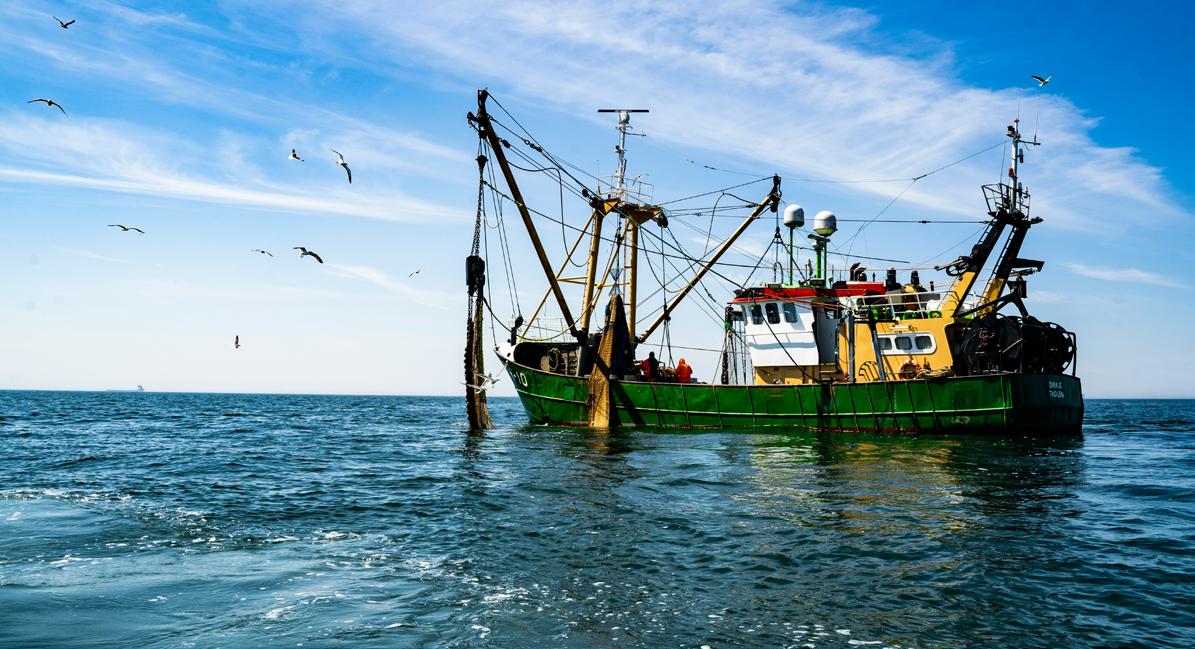
• Fisheries management: Efforts to maximise short-term yields or address food security in isolation can undermine climate resilience if changing productivity, ecosystem interactions, and cumulative stressors are ignored (Pecl et al. 2017; IPCC 2022).
These examples highlight how the risks identified in this report are relevant to the ocean: when climate, biodiversity, and resource management agendas proceed in isolation, feedbacks, trade-offs, and unintended consequences proliferate, often at scales and speeds that outpace governance responses.
When policy domains are connected, such as those related to climate, biodiversity and land degradation, there is potential to leverage synergies through alignment and mutually supportive actions. Policy alignment refers to efforts to enhance coordination and coherence in reaching environmental objectives; it can be achieved by a more integrated approach to environmental planning and decision making, strategies and policies. Aligned policy frameworks are characterised by high levels of synergy and consistency between objectives, instruments and implementation modalities, and reduced conflict and competition for resources.
Policy alignment can be increased in multiple ways, including through:
(i) a more strategic use of current frameworks and obligations to implement options for existing commitments on climate and nature to reinforce one another;
(ii) joint monitoring and reporting;
(iii) enhanced scientific support through knowledge sharing and cross-fertilised data access and advice;
(iv) increased access and mobilisation of finance and resources for synergistic projects;
(v) new governance mechanisms that better promote synergistic planning processes and cross-sectoral coordination; and
(vi) increased capacity-building efforts to support national investment and promote synergistic projects and programmes.
All these options have been previously suggested as ways to increase alignment of environmental agendas (Boran & Pettorelli 2024; UNEP 2025; Pettorelli et al. 2026).
Alignment happens when agendas all target common issues or address common processes, within the boundaries of institutional mandates. One area
of common ground is recognition of the importance of ecosystems for meeting policy targets related to biodiversity, food production, climate change mitigation, adaptation to climate change, land degradation neutrality and disaster risk reduction (Pettorelli et al. 2025). However, alignment also requires us to address conflict and balance trade-offs between the objectives, instruments and implementation modalities of different policy domains; this requires deliberation, democratic procedures, inclusion, representation, active listening and compromise, among other things. Trade-offs may require additional regulation and structural policy changes to minimise the adverse effects that policy domains have on each other when attaining their goals (Wiegant et al. 2024) or amelioration through additional mechanisms (e.g., compensation).
The practicalities of policy alignment are thus not trivial, going beyond a coordination problem and challenging existing sectoral public institutions and administrative processes (Wiegant et al. 2024). It is an inherently political undertaking due to the complex trade-offs that need to be negotiated and the building of consensus on how interactions between targets can best be approached in policy-relevant ways: who defines priorities, whose knowledge counts, and who bears the costs of the identified “solutions” are all important considerations (Pereira et al. 2025). Alignment also requires clear platforms and frameworks to govern the integrated implementation of environmental targets and needs to permeate beyond government-led initiatives and placebased solutions (Folkard-Tapp et al. 2025). This cannot be achieved under the current siloed approach.
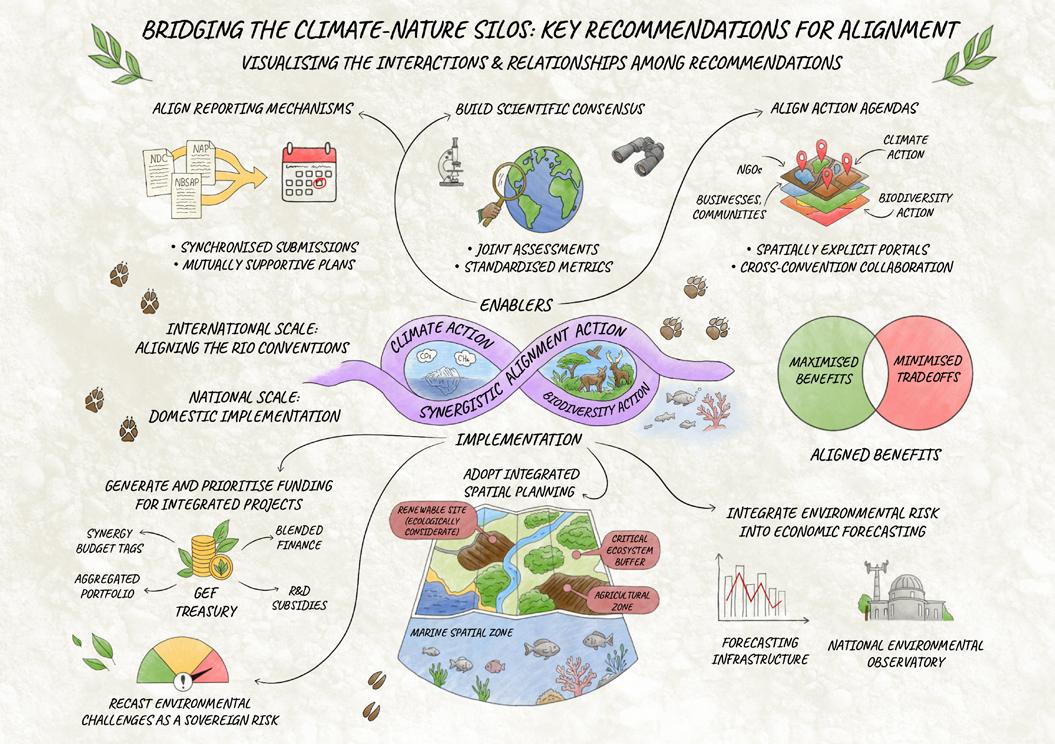
Aligning environmental policy agendas is more than a technical exercise in efficiency and cost saving; it is about governing a single, dynamic climate-nature system that spans land, freshwater, coasts, oceans, and atmosphere. This requires coordinated international and national processes capable of anticipating feedbacks, negotiating trade-offs, and responding adaptively to rapid environmental change (IPBES 2024b). This must be done, among other things, within the context of institutional legacies and cost savings, implying that an adaptive approach to alignment (that is, a flexible, iterative "learning by doing" approach that adjusts plans based on feedback) is likely to work best. Some actions towards alignment are easy wins that could rapidly be implemented; others will require more subsequent structural and procedural changes. Achieving alignment demands attention not only to climate, biodiversity, and land degradation, but also to marine and ocean systems, whose governance is among the most fragmented and whose climate-biodiversity interactions are among the most acute. Here, we build on previous recommendations and focus on those actions that could help kickstart international and national alignment in a meaningful, coordinated, and feasible way. These are summarised below and detailed in Table 2.
The Rio Conventions are independent global governance structures for specific environmental dimensions (climate, biodiversity, land), each associated with its specific planning instruments, metrics, finance interfaces, and reporting regimes. At the core of the functioning of these conventions are (i) the UNFCCC’s Nationally Determined Contributions (NDCs) and National Adaptation Plans (NAPs); (ii) the CBD’s National Biodiversity Strategies and Action Plans (NBSAPs); and (iii) the UNCCD’s National Action Programmes and Drought Management Plans for affected countries and voluntary Land Degradation Neutrality Target Setting reports. Together, these reports reflect how each country engages with the Rio Conventions.
Conventions being political agreements, the first step towards environmental agenda alignment is for the COP of each convention to agree to align strategies across the Rio Conventions. Once the strategies are aligned and supporting resourcing is in place, coherence in the contributions to the resulting plans made by Parties will be expected to increase, hopefully leading

to these contributions being (i) drawn from interoperable data on e.g., the state of biodiversity, carbon sinks and reservoirs and green infrastructure and (ii) mutually supportive, working in unison towards environmental sustainability. Increased coherence could be facilitated by the synchronisation of reporting periods, which would encourage government departments and ministries to communicate about state of play and ways forwards on common timelines while preventing selective framing of progress within each silo.
Securing agenda alignment through COP decisions for each convention is, however, challenging and unlikely to happen quickly. As a result, other routes to alignment should also be explored. For example, opportunities for joined-up thinking on climate, biodiversity and land may emerge with newly launched Measurement, Reporting, and Verification frameworks, such as the UNFCCC's Enhanced Transparency Framework, which could provide an interesting platform for aligning CBD's NBSAPs with UNFCCC's NDCs and NAPs (Pettorelli et al. 2026). Some progress could also be achieved through the Joint Liaison Group, Environmental Management Group and new Synergies Collaboration Platform, as these already have a mandate (either through COP decisions or Presidency statements) for promoting alignment across conventions. These entities could, for example, support the emergence of a process that would require each convention to consider the implications of their decisions for the implementation of the other two conventions. To boost opportunities through this route, however, (i) mandates may need to be strengthened; (ii) compositions may need to be broadened to ensure that these entities have access to the right level of expertise and experience for ensuring that the scientific, technical, and administrative strategies on biodiversity, climate change, and land degradation are aligned, and (iii) objectives may need to be articulated around clear timeframes.
Similarly, some alignment could be secured through Agenda 2030 and the associated SDGs, which was meant as an integrative agenda directly targeting the climatenature system. Under Agenda 2030, countries are asked to submit comprehensive reports, called Voluntary National Reviews (VNRs) detailing their progress towards the SDGs and the challenges they face. Though having important limitations, VNRs arguably are among the most integrative reporting mechanisms in global sustainability governance. Making VNRs more actionable, more standardised (so that they can be better compared between Parties) and more aligned with reporting under the Rio Conventions, under Agenda 2030 and its successor, could be another way to improve alignment across the climate, biodiversity and land agendas. Interestingly, several studies have proposed a series of tools and approaches for managing complex interactions that create synergies and trade-offs between SDGs (see e.g., Moallemi et al. 2022; Kuc-Czarnecka et al. 2023), which could also be used to align Rio Conventions’ agendas and reporting.
Finally, while the Rio Conventions were not designed with marine governance at their core, their strategies and reporting instruments increasingly shape actions affecting coastal and ocean systems—from blue carbon and fisheries adaptation to offshore energy and marine conservation. Alignment efforts must therefore explicitly incorporate land-sea interactions and ocean-relevant indicators. Aiming to create a comprehensive framework for ocean health, the coming into force in January 2026 of the Agreement under the United Nations Convention on the Law of the Sea on the Conservation and Sustainable Use of Marine Biological Diversity of Areas beyond National Jurisdiction (BBNJ Agreement) offers hope for more integrated marine biodiversity and climate discussions in the future.
A clear challenge is to build consensus on harmful actions, as well as those approaches that carry benefits for climate, nature, land and people; this requires, among other things, the scientific and practitioners’ communities supporting each convention to intensify their level of collaboration. In that respect, increased information exchange between these communities could be facilitated by existing structures, such as more joint assessments by the scientific panels informing the Rio Conventions (including, for example, the Intergovernmental Panel on Climate Change (IPCC) and Intergovernmental Science-Policy Platform on Biodiversity and Ecosystem Services (IPBES)), or the setting up of new joint programmes across the Rio Conventions (Boran & Pettorelli 2024).
A related challenge resides in agreeing robust, spatially explicit, standardised and verifiable biodiversity metrics across terrestrial, freshwater and marine ecosystems; such an agreement is critical to operationalise nature-friendly policies and funding mechanisms for synergistic projects. In that context, including indigenous knowledge in such discussions presents an interesting opportunity to engage marginalised communities who have wholistic world views (Sherpa et al. 2026). Collaborative inclusion of Indigenous knowledge and leadership also addresses another set of unacceptable trade-offs; those between the rights and wellbeing of Indigenous communities and the global ‘greater good’ sought by conservation activities such as Nature-based Solutions (Cottrell 2022). As biodiversity is critical to the work of all Rio Conventions, the identification of these metrics will facilitate their implementation, separately and jointly. Technical exchanges, particularly at Subsidiary Body meetings, could represent a means to build consensus on metrics to be used, foster a common understanding of technical measures and share best practices, including for ocean-based climate and biodiversity actions. The Rio Conventions have already established coordination mechanisms and joint meetings that facilitate technical exchanges. However, these can be hindered by differing mandates, bureaucratic hurdles, and resource constraints. Enhancing coordination, standardising reporting formats, and investing in capacity building are crucial steps to improve the effectiveness of technical cooperation.
The need for alignment is not restricted to state-led processes. Non-state action is recognised by the Rio Conventions as a critical component in achieving the goals of the Paris Agreement, KM-GBF and other environmental treaties. Interventions by NGOs, community groups, and individuals would also hugely benefit from being steered by integrated Action Agendas that work together to minimise trade-offs and maximise the positive impact achieved by actors, amplifying existing integrated stakeholder efforts across terrestrial, coastal and marine systems (Folkard-Tapp et al. 2026). Such alignment could be facilitated through the mandatory submission of spatially explicit information on climate and biodiversity action through the Action Agenda Portals, enabling more credible and participatory monitoring, analysis, and collaboration across the Rio Conventions (Hagenström et al. 2025). Another option for alignment resides in adjusting the criteria and metrics frameworks used by mobilisation campaigns, such as Race to Zero and the Race to Resilience, so that they promote more effectively actions that deliver for climate, nature and people (Boran et al. 2024). Finally, ensuring that each action agenda actively works with the action agendas of other UN conventions is an important step for improving alignment. This could be achieved through an exchange of representatives from the High-Level Champions teams for whole or part of their term, or for some of the Champion Team members’ roles to be designed to straddle more than one convention.
Aligning finances for environmental action is a key step towards policy alignment. To date, finance for climate, biodiversity and ecosystem restoration remains largely unbalanced and siloed (UNEP 2025). When investment in environmentally harmful activities is thirty times greater than that spent on conservation, even highreturn conservation projects struggle to deliver net gains for nature (UNEP 2026). Foreign aid cuts and shifting domestic priorities away from environmental issues in some countries threaten to exacerbate this issue (Xuefei & Hatlebakk 2025). However, this context may also strengthen the case for integrated approaches. While "integration" should not become a marketing-friendly stand-in for the deprioritisation of environmental issues, integrated projects offer potential to achieve more effective and efficient action with increasingly limited resources. Globally, institutions such as the Global Environmental Facility (GEF) are starting to target projects that develop integrated responses to biodiversity loss, climate change and land degradation (GEF 2026), but this prioritisation is not yet happening at the necessary scale. Nationally, the development and implementation of environmental or “synergy” budget tags could help reinforce collaboration across departments, while helping track cross-sector spending, and reveal overlaps and cost-sharing options (UNEP 2025).
Tackling intertwined environmental crises ultimately requires a whole-of-society approach that considers both formal and informal institutions. Finance alignment is needed in both public and private sectors, while
international and national efforts need to be well integrated. Fragmented financial architectures, low standards, insufficient nature-based criteria crafted into financial regulation and perceived risks are all among the known challenges to making private finance work for synergistic action on climate, biodiversity and land. Addressing such challenges is not straightforward and may require, among other things, (i) the development of targeted policy signals that create enabling conditions for private capital mobilisation (e.g., through insurance and guarantees); (ii) a better use of blended finance and risk sharing mechanisms; and (iii) portfolio aggregation (Asian Infrastructure Investment Bank, European Bank for Reconstruction and Development and the Paulson Institute 2025; Hagenström et al. 2025; UNEP 2025).
In the last two decades, targeted national policy decisions have supported innovations in renewable technologies that have reduced global electricity carbon intensity by over 10% since its peak in 2007 (EMBER 2024). This has been the result of (i) supply-side support, including heavy public investment in research and development and manufacturing subsidies (e.g., tax credits) pushing down the cost of renewable technologies; and (ii) demand-side creation, including price guarantee instruments like Feed-in Tariffs and Contracts for Difference, which de-risked private investment by guaranteeing a market for renewable electricity. Governments should transfer lessons from climate to nature and apply the same approach to reduce the land use intensity of food production, in particular. This could support the objectives of the CBD’s KM-GBF while reducing trade-offs with climate and supporting livelihoods through productivity increases.
Integrated spatial planning is a strategic, multilevel approach to coordinating land and ocean use, infrastructure, and environmental policies to foster sustainable development; it is a decision-support tool that can help identify and resolve conflicts over trade-offs among policy priorities before they occur (UNDP 2023). Climate and nature goals inevitably involve trade-offs as land is a finite resource required simultaneously for carbon sequestration and climate change adaptation, renewable energy generation, food production, housing and biodiversity conservation (Pettorelli et al. 2024). These competing demands are often managed by separate departments and agencies, leading to land-use conflict and suboptimal outcomes. Integrated national land use frameworks that overlay climate risks, biodiversity and agricultural needs into a single spatial strategy should be developed and adopted. By explicitly mapping trade-offs spatially, temporally and in relation to different sectors and stakeholder groups, governments can, for example, identify sites for renewable infrastructure that do not compromise food, land access or ecological security, while strictly protecting critical ecosystem services that act as natural buffers against climate shocks. A big challenge to integrated national spatial planning lies in the siloed nature of institutional structures within countries. Without strong communication channels between different parts of government and well-resourced cross-agency and cross-ministry platforms, integrated plans are likely to have little influence. As such, addressing the institutional side of spatial planning development is as critical as the development of the framework itself.
Degradation of the climate-nature system increases risks and unpredictability around the foundations of national prosperity. However, most central government finance departments and treasuries with the power to change society-wide incentive structures (and so behaviours) continue to consider environmental challenges and responses only in terms of spending to be allocated to delivery departments. These departments, and related institutions including Central Banks and statutory fiscal watchdogs, must better integrate environmental risk and volatility into their economic forecasting. This will improve the reliability of medium- and long-term forecasts, make the costs of action/inaction equally clear, and ensure that accountability for outcomes sits with departments that have the agency to change them.
International Align Rio Conventions’ reporting mechanisms
CBD, UNFCCC and UNCCD COPs and secretariats, supported by UNEP
Joint Liaison Group Environment management Group
Align strategies across the Rio Conventions
Same deadline for NDCs, NAPs, NBSAPs and UNCCD report submission
Same data used to inform same layer or process across conventions
Ensure that NDCs, NAPs, NBSAPs and UNCCD reports are well integrated and supportive of each other using approaches that respect the legal sovereignty of the conventions
Strengthening of the Joint Liaison and Environment management Groups
International Build scientific evidence and consensus on issues relevant to addressing climate change, biodiversity loss and land degradation
International Align Rio Conventions’ action agendas
CBD, UNFCCC and UNCCD COPs and secretariats
Joint Liaison Group
International and National Generate and prioritise funding for integrated projects that generate the biggest co-benefits
CBD, UNFCCC and UNCCD secretariats
Joint Liaison Group
Action agenda champions
GEF (international)
World Bank (international)
Development banks (international)
Finance/treasury departments (national)
National Adopt an integrated spatial planning strategy Government departments relevant to the management of landscapes and seascapes
National Integrate environmental risk and volatility into economic forecasting
Finance/treasury departments
Central Banks
Statutory fiscal watchdogs
Creation of a Joint Work Programme
CBD, UNFCCC and UNCCD COPs mandate more joint scientific assessments by IPCC and IPBES
Definition of robust, spatially explicit, standardised and verifiable biodiversity metrics to be adopted by all Rio Conventions
Require submission of spatially explicit information on all action agenda portals
Adjust criteria and metrics frameworks used by mobilisation campaigns so that these promote more effectively synergistic actions
Require champions for each Rio Convention among each convention’s champions team
Increase overall funding for, and prioritise, projects that develop integrated responses to biodiversity loss, climate change, and land degradation (international)
Development and implementation of environmental or “synergy” budget tags (national)
Enhanced conditions for private capital mobilisation (national)
Transfer lessons from climate to nature, including the deployment of more public investment in R&D and manufacturing subsidies and the strategic use of price guarantee instruments (national)
Identify and map areas where trade-offs among policy priorities are likely to occur
Establish a national environmental observatory Build a land/sea use forecasting infrastructure
Fragmented approaches cannot match the scale or speed of the climate, biodiversity and land degradation crises, which reinforce one another and demand integrated solutions. By bringing policies aiming to address these crises into a single, coherent, environmental agenda, we can amplify benefits, minimise trade-offs, reduce costs, and accelerate real progress. But doing so is not easy, given the diverse mandates, timelines, and priorities of institutions working across climate, biodiversity, and ocean and land use domains. These barriers reflect long-standing structural silos that make collaboration difficult, even when organisations share similar goals. Overcoming these challenges requires sustained commitment, transparent communication, and mechanisms that incentivise cooperation rather than competition (Figure 2).
It will also require acknowledging the rights, values, visions, knowledge, and needs of local communities in policies, while ensuring inclusive and participatory decision-making processes (Pereira et al. 2024).
While alignment demands effort, the shared understanding of its importance is growing rapidly across scientific, policy, and practitioner communities. The task ahead is to translate this consensus into action by building the institutional capacity, cross-sector partnerships, and integrated frameworks needed to move forward quickly. The benefits of doing so cannot be overstated: increasing the coherence and effectiveness of environmental policies to address the climate and nature system could transform today’s fragmented efforts into a powerful, coherent response, at the scale required to secure a thriving future. The knowledge, tools, and shared understanding are already in place—what is needed now is the collective will to act decisively and move from agreement to implementation.
Alongi (2023) Current status and emerging perspectives of coastal blue carbon ecosystems. Carbon Footprints 2:12.
Armstrong et al. (2021) Resolving ecological feedbacks on the ocean carbon sink in Earth system models. Earth System Dynamics 12: 797-818.
Asian Infrastructure Investment Bank, European Bank for Reconstruction and Development and the Paulson Institute (2025) Unlocking Private Finance for Nature as Infrastructure - A Public-Private Partnership. Available at https://www.aiib.org/en/news-events/ news/2025/_pdf/Unlocking-Private-Finance-for-Natureas-Infrastructure11.15.pdf
Bayrak & Marafa (2016) Ten Years of REDD+: A Critical Review of the Impact of REDD+ on Forest-Dependent Communities. Sustainability 8: 620.
Bond et al. (2024) Carbonservation with Demonstrated Biodiversity and Carbon Gains: Carbon Can Pay But Biodiversity Must Lead. Environmental Management 73: 742-752.
Bonebrake et al. (2018) Managing consequences of climate-driven species redistribution requires integration of ecology, conservation and social science. Biological Review 93: 284-305.
Boran & Pettorelli (2024) The Kunming-Montreal Global Biodiversity Framework and the Paris Agreement need a joint work programme for climate, nature and people. Journal of Applied Ecology 61: 1991-1999.
Boran et al. (2024) Making Global Climate Action work for nature and people: Priorities for Race to Zero and Race to Resilience. Environmental Science & Policy 159: 103803.
Burns & Boyd (2024) Marine-Based Carbon Dioxide Removal: The Promise and Perils of Ocean Fertilization. In: M. Lackner et al. (eds.), Handbook of Climate Change Mitigation and Adaptation. https://doi.org/10.1007/978-14614-6431-0_195-1
Chan (2021) Beyond delegation size: developing country negotiating capacity and NGO ‘support’ in international climate negotiations. International Environmental Agreements 21: 201–217.
Choi et al. (2021) The climate benefits, co-benefits, and trade-offs of green infrastructure: A systematic literature review. Journal of Environmental Management 291: 112583.
Copernicus (2026) Global Climate Highlights 2025. Available at https://climate.copernicus.eu/copernicus2025-was-third-hottest-year-record
Cottrell (2022) Avoiding a new era in biopiracy: Including indigenous and local knowledge in nature-based solutions to climate change. Environmental Science & Policy 135: 162-168.
Doukas et al. (2020) The green versus green trap and a way forward. Energies 13: 5473.
Drechsler & Wätzold (2017) Costs of Uncoordinated Site Selection with Multiple Ecosystem Services. Natural Resource Modelling 30: 10-29.
EMBER (2024) Global Electricity Review 2024. Available at https://ember-energy.org/app/uploads/2024/05/ReportGlobal-Electricity-Review-2024.pdf
FAO (2025) The State of Food and Agriculture. Available at https://www.fao.org/publications/fao-flagshippublications/the-state-of-food-and-agriculture/en
Folkard-Tapp et al. (2025) Beyond Nature-based Solutions: The case for Integrated Nature-Climate Action. Journal of Applied Ecology 62: 2478-2486.
Folkard-Tapp et al. (2026) Assessing the Robustness of the Action Agendas of the Rio Conventions. Frontiers in Environmental Sciences 14: 1698286.
Gattuso et al. (2018) Ocean Solutions to Address Climate Change and Its Effects on Marine Ecosystems. Frontiers in Marine Science 5: 337.
GEF (2026) GEF approves $372 million in funding to tackle environmental challenges worldwide and gears up to new cycle of investments. Available at https://www.thegef. org/newsroom/press-releases/gef-approves-372-millionfunding-tackle-environmental-challenges-worldwide
Gupta (2024) Bridging Science and Policy for Integrated Action on Climate and Biodiversity (UNU-IAS Policy Brief). Available at https://unu.edu/sites/default/files/2024-01/ UNU-IAS-PB-No45-2024.pdf
Hagenström et al. (2025) From pledges to places: action agendas need spatial data to integrate climate and biodiversity action. Npj Climate Action 4: 100.
Heilmayr et al. (2020) Impacts of Chilean forest subsidies on forest cover, carbon and biodiversity. Nature Sustainability 3: 701–709.
ICIMOD (2023) Water, ice, society, and ecosystems in the Hindu Kush Himalaya (HI-WISE). International Centre for Integrated Mountain Development. https://hkh.icimod.org/hi-wise/
IPBES (2024a) Summary for Policymakers of the Thematic Assessment Report on the Interlinkages among Biodiversity, Water, Food and Health of the Intergovernmental Science-Policy Platform on Biodiversity and Ecosystem Services. IPBES secretariat, Bonn, Germany.
IPBES (2024b) Summary for Policymakers of the Thematic Assessment Report on the Underlying Causes of Biodiversity Loss and the Determinants of Transformative Change and Options for Achieving the 2050 Vision for Biodiversity of the Intergovernmental Science-Policy Platform on Biodiversity and Ecosystem Services. IPBES secretariat, Bonn, Germany.
IPCC (2022) Climate Change 2022: Impacts, Adaptation and Vulnerability. Working Group II, Sixth Assessment Report. Cambridge University Press.
Kaplan (2025) Human-Caused High Direct Mortality in Birds: Unsustainable Trends and Ameliorative Actions. Animals 15(1): 73.
Kedward et al. (2023) Biodiversity loss and climate change interactions: financial stability implications for central banks and financial supervisors. Climate Policy 23: 763–781.
Kuc-Czarnecka et al. (2023) SDGs implementation, their synergies, and trade-offs in EU countries – Sensitivity analysis-based approach. Ecological Indicators 146: 109888.
Liang et al. (2025) A meta-analysis of afforestation impacts on soil greenhouse gas emissions. Journal of Environmental Management 386: 125709.
Liu et al. (2018) Mixed-species versus monocultures in plantation forestry: Development, benefits, ecosystem services and perspectives for the future. Global Ecology and Conservation 15: e00419.
Moallemi et al. (2022) Eight Archetypes of Sustainable Development Goal (SDG) Synergies and Trade-Offs. Earth’s Future 10: e2022EF002873.
Morrison et al. (2025) Governing novel climate interventions in rapidly changing oceans. Science 389: eadq0174.
OECD (2025) Government at a Glance 2025, OECD Publishing, Paris, France. Available at https://doi.org/10.1787/0efd0bcd-en
Ogier et al. (2025) Enhance responsible governance to match the scale and pace of marine-climate interventions. Nature Climate Change 15: 356–357.
Pecl et al. (2017) Biodiversity redistribution under climate change: Impacts on ecosystems and human well-being. Science 355: eaai9214.
Pereira et al. (2024) Equity and justice should underpin the discourse on tipping points. Earth System Dynamics 15: 341–366.
Pereira et al. (2025) Six principles to get natural climate solutions right in Africa. Nature Sustainability 8: 1238-1241.
Pettorelli et al. (2024) Prioritising Land Use in the Midst of a Climate and Nature Emergency - Ten Key Messages for Scientists, Civil Society, and Policy Makers. A report from the Zoological Society of London (ZSL) and the British Ecological Society (BES), London, UK.
Pettorelli et al. (2025) Aligning Environmental Agendas for Nature Recovery – Unlocking synergies through an ecosystem approach in the UK. A report from the British Ecological Society (BES) and the National Trust (NT), London, UK.
Pettorelli et al. (2026) Could the enhanced transparency framework help align the climate and biodiversity agendas? Ecological Solutions and Evidence 7: e70226.
Pörtner et al. (2021) IPBES-IPCC co-sponsored workshop report on biodiversity and climate change; IPBES and IPCC. DOI:10.5281/zenodo.4782538
Pörtner et al. (2023) Overcoming the coupled climate and biodiversity crises and their societal impacts. Science 380: eabl4881.
Prütz et al. (2026) Biodiversity implications of land-intensive carbon dioxide removal. Nature Climate Change 16: 155–163.
Reed (2008) Stakeholder participation for environmental management: a literature review. Biological Conservation 141: 2417-2431.
Renaldo et al. (2024) Balancing Offshore Renewable Energy and Marine Conservation in the Blue Economy. Journal of Applied Business and Technology 5: 116-122.
Rietig (2014) ‘Neutral’ experts? How input of scientific expertise matters in international environmental negotiations. Policy Sciences 47: 141–160.
Roe (2019) Biodiversity loss—more than an environmental emergency. The Lancet Planetary Health 3: e287 - e289.
Schlaerth et al. (2023) Characterizing Ozone Sensitivity to Urban Greening in Los Angeles Under Current Day and Future Anthropogenic Emissions Scenarios. JGR Atmospheres 128: e2023JD039199.
Seddon et al. (2020) Understanding the value and limits of nature-based solutions to climate change and other global challenges. Philosophical Transactions of the Royal Society B: Biological Sciences 375: 20190120.
Sherpa et al. (2026) Recommendations for the Ethical and Equitable Engagement of Indigenous Knowledge Systems within the IPCC. University of British Columbia, Assembly of First Nations, International Work Group for Indigenous Affairs and Tohu Indigenous Analytics.
Smith et al. (2019) The greenhouse gas impacts of converting food production in England and Wales to organic methods. Nature Communications 10: 4641.
Smith et al. (2022) How do we best synergize climate mitigation actions to co-benefit biodiversity? Global Change Biology 28: 2555–2577.
Smith et al. (2024) Dealing with the risk of fire in carbon sequestration strategies: Diverse forests or plantation monocultures? Conservation Science and Practice 6: e13201.
Tang & Kemp (2021) A Fate Worse Than Warming? Stratospheric Aerosol Injection and Global Catastrophic Risk. Frontiers in Climate 3: 720312.
Tessnow-von Wysocki & Vadrot (2024) Pathways of scientific input into intergovernmental negotiations: a new agreement on marine biodiversity. International Environmental Agreements 24: 325-348.
Tobias et al. (2025) Biodiversity conservation requires integration of species-centric and process-based strategies. Proceedings of the National Academy of Sciences USA 122: e2410936122.
Tölgyesi et al. (2025) Limited carbon sequestration potential from global ecosystem restoration. Nature Geosciences 18: 761–768.
UNCCD (2025) Belém Joint Statement on the Rio Conventions. Available at https://www.unccd.int/sites/ default/files/2025-11/Belem%20Rio%20statement.pdf
UNDP (2023) Integrated Spatial Planning Workbook. United Nations Development Programme: New York. Available at https://www.undp.org/publications/ integrated-spatial-planning-workbook
UNEP (2025) From silos to synergies. Available at https:// www.bundesumweltministerium.de/fileadmin/Daten_ BMU/Download_PDF/Europa___International/white_ paper_siloes_synergies_bf.pdf
UNEP (2026) Nature in the red – powering the trillion dollar nature transition economy. Available at https://www.unep. org/resources/state-finance-nature-2026
United Nations (2025) Harnessing Climate and SDG Synergy - Quantifying the benefits. Available at https:// pure.iiasa.ac.at/id/eprint/20894/1/2025%20UN%20 Synergy%20Solutions%20coversFinal-111225.pdf
U.S. Government Accountability Office (2023) Government Performance Management: Leading Practices to Enhance Interagency Collaboration and Address Crosscutting Challenges. Available at https://www.gao.gov/ assets/830/825808.pdf
Veríssimo et al. (2014) Has Climate Change Taken Prominence over Biodiversity Conservation? BioScience 64: 625-629.
Voigt et al. (2024) Toward solving the global green–green dilemma between wind energy production and bat conservation. BioScience 74: 240-252.
Wiegant et al. (2024) Alignment mechanisms to effectively govern the sustainable development goals. World Development 182: 106721
Wiens et al. (2011) Biofuels and biodiversity. Ecological Applications 21: 1085-1095.
World Economic Forum (2026) Global Risks Report 2026. World Economic Forum, Cologny/Geneva, Switzerland.
WWF (2024) Living Planet Report 2024 – A system in peril. WWF, Gland, Switzerland.
Xuefei & Hatlebakk (2025) Assessment of the Impact of Aid Cuts on Climate and Nature Action. World Wide Fund for Nature (WWF). Available at https://media.wwf.no/assets/ article_images/Assessment-of-the-Impact-of-Aid-Cuts-onClimate-and-Nature-Action-2025.pdf