











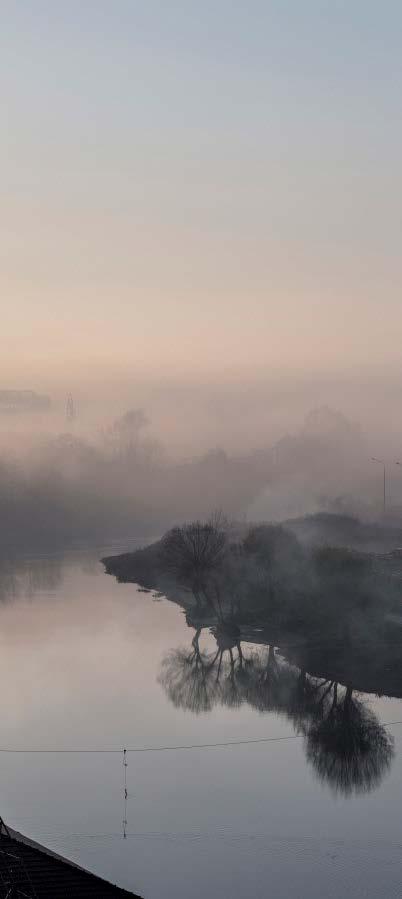
Air pollution is the second deadliest health risk worldwide and responsible for at least 7 million deaths each year.
99% of the global population is exposed to air pollution levels exceeding those recommended by the WHO 2021 guidelines.
The majority of negative health effects are caused by particulate matter, for which the total number of deaths has risen 93% from 1990 to 2021. Fossil fuels – accounting for 80% of the world’s energy mix in 2023 – are driving both air pollution and climate change.
The world is paying USD 8.1 trillion annually to address the health impacts of air pollution, yet less than 1% of global development aid is invested to improve air quality in low- and middle-income countries, where the people most at risk reside. With detrimental impacts to human well-being, the global health community is making an urgent call to action for clean air.
Reducing air pollution is crucial for achieving the 2030 Agenda for Sustainable Development, specifically the Sustainable Development Goals (SDGs) related to health and sustainable cities, while also
impacting SDGs related to food security, clean energy, responsible consumption and protecting ecosystems, reducing inequalities and mitigating the effects of climate change.
Urban air pollution causes elevated concentrations of ground-level ozone in sub-urban areas, which negatively affect both ecosystems and crop yield.
Air quality has a significant potential impact on health equity: deaths from solid fuel combustion for heating and cooking disproportionally affect the most vulnerable groups, and are more than 10 times more frequent in lowand medium-income countries in the WHO European Region.
Air pollution reduction
Agenda 2030 aims to significantly reduce the number of deaths and illnesses from hazardous chemicals and air, water and soil pollution and contamination (SDG 3.9).
SDG 11.6 aims to reduce the adverse environmental impact of cities, including by paying special attention to air quality.
The renewable energy share in the Western Balkans ranges between 24% (Kosovo1) and 42% (Albania), including firewood and biomass, the most important heating energy source in the region. Shifting to cleaner energy reduces greenhouse gas emissions, promotes more efficient and responsible use of resources, and ensures sustainable access to modern energy.
1 References to Kosovo shall be understood to be in the context of UN Resolution 1244 (1999)
11,4
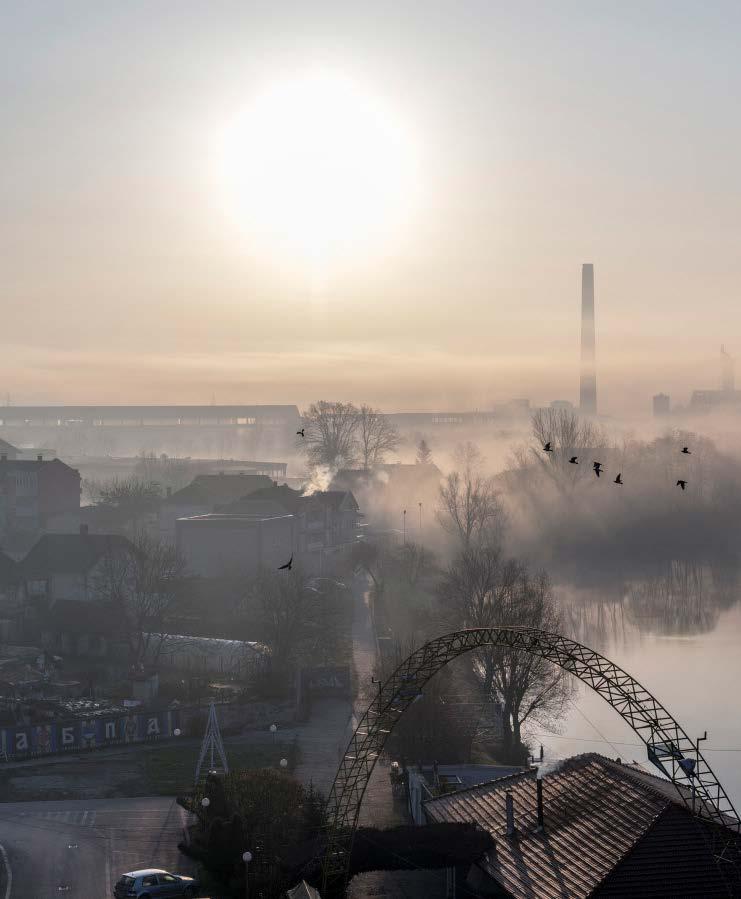
The Western Balkan region (WB6) is one of Europe’s air pollution hotspots. Estimates suggest that air pollution causes more than 7,000 premature deaths each year in cities across the region, costing each city more than 300 million euros on average.
The mortality rate attributed to particulate matter (PM) is up to four times higher in the Western Balkans than in the EU, and 99% of children are exposed to air pollution, seriously jeopardizing their health and future.2
In 2023, WB6 coal plants included in National Emission Reduction Plans emitted 5.7 times as much sulphur dioxide as allowed and 1.75 times as much dust pollution. For the first time, they also collectively emitted 1.3 times the level of permitted nitrous oxides. Many cities had average concentrations of PM2.5 over 25 µg/m3, the current limit in the EU and WB6, and all were over the WHO guideline value of 5 µg/m3. The situation is most alarming in Brod, Ži
vinice and Tuzla (BiH), Pljevlja (MNE) Skopje, Strumica, Prilep, Berovo and Tetovo (NMK), Novi Pazar, Užice and Valjevo, (SRB) where the annual average goes over 30 µg/m3.
1. Lukavac (BiH)
2. Zenica (BiH)
3. Banja Luka (BiH)
4. Sarajevo - Ilidza (BiH)
5. Gnjilane (XK)
1. Lukavac (BiH)
2. Zenica (BiH)
6. Bijelo Polje (ME)
7. Gostivar (MK)
8. Skopje - Lisice (MK)
3. Banja Luka (BiH) 4. Sarajevo - Ilidza (BiH) 5. Gnjilane (XK)
9. Smederevo (RS)
6. Bijelo Polje (ME)
1. Lukavac (BiH)
7. Gostivar (MK)
10. Beograd 3 (RS)
8. Skopje - Lisice (MK)
2. Zenica (BiH)
11. Pirot (RS)
Banja Luka (BiH)
Smederevo (RS)
Sarajevo - Ilidza (BiH)
Gnjilane (XK)
13. Nis (RS)
12. Pancevo (RS)
Bijelo Polje (ME)
Beograd 3 (RS) 11. Pirot (RS) 12. Pancevo (RS) 13. Nis (RS)
14. Kosjeric (RS)
WB Cities with annual concentrations of PM2.5 over 30 µg/m3 (2023)
14. Kosjeric (RS)
Gostivar (MK) 8. Skopje - Lisice (MK)
15. Novi Sad - Kac (RS)
15. Novi Sad - Kac (RS)
Smederevo (RS)
16. Krusevac (RS)
16. Krusevac (RS)
Beograd 3 (RS)
Pirot (RS)
Pancevo (RS)
Nis (RS)
1. Brod (BiH)
Kosjeric (RS)
1. Brod (BiH)
2. Zivinice (BiH)
Novi Sad - Kac (RS)
3. Tuzla (BiH)
2. Zivinice (BiH)
4. Pljevlja (ME)
5. Tetovo (MK)
3. Tuzla (BiH)
6. Berovo (MK)
7. Prilep (MK)
4. Pljevlja (ME)
5. Tetovo (MK)
6. Berovo (MK)
8. Strumica (MK) 9. Skopje-Rektorat (MK) 10. Novi Pazar (RS)
7. Prilep (MK)
11. Valjevo (RS)
16. Krusevac (RS) 1. Brod (BiH) 2. Zivinice (BiH) 3. Tuzla (BiH) 4. Pljevlja (ME) 5. Tetovo (MK)
8. Strumica (MK)
12. Uzice (RS)
Berovo (MK)
Prilep (MK)
9. Skopje-Rektorat (MK)
Strumica (MK)
10. Novi Pazar (RS)
Skopje-Rektorat (MK)
11. Valjevo (RS)
Novi Pazar (RS)
12. Uzice (RS)
Valjevo (RS)
Uzice (RS)
Children are uniquely vulnerable to the impacts of air pollution on their health and development, with the greatest vulnerability during development in the womb and during the first days of life. Approximately 17% of total infant deaths in five countries in the Western Balkans reported by the Institute for Health Metrics and Evaluation were linked to air pollution in 2021, more than double the average rate for EU countries.3
Key sources of PM2.5
Residential stationary plants, road transport, and production of energy and commercial stationary plants (83.2%)
Air quality policy documents are strongly driven by the EU accession process. All Western Balkan economies have adopted National AQ Strategies and Action Plans , and the air quality strategy for FBiH is a part of an overall Environment Protection Strategy. Legislative frameworks in the region are generally harmonized with EU acquis, but all WB6 economies require further assistance to align with the new European Air Quality Directive and achieve more stringent standards to be introduced by 2030.
National Emission Reduction Plans (NERPs) are flexible implementation mechanisms under the Energy Community Agreement aimed at reducing emissions from large combustion plants (LCPs). Under the NERPs, Western Balkan economies could plan gradual achievements of emission limit values from LCPs by totalling their combined emissions. However, at the end of 2023 none of the WB6 had complied with their NERP ceilings.
Pollution knows no borders; therefore, regional initiatives are essential in fighting pollution. The WB6 are participating in a few regional activities such as EU4Green and Regional Cooperation Council support to the implementation of the Green Agenda for the Western Balkans.
As EU candidates, the WB6 are members of the EU Environment Partnership Programme for Accession and implement various projects supported through the Instrument for pre-accession assistance funds.
UNICEF, through support from SIDA and in cooperation with Swedish EPA and HMI, focuses on two key aspects: strengthening formal education systems through curricula review, educational materials and teacher training (reaching more than 32,000 teachers
and 260,000 children)5; and mobilizing 2,500 young people on this issue through 79 youth-led community actions and advocacy for air quality actions plans through digital campaigns.
UNECE, providing the secretariat to important multilateral environmental agreements on air quality supports Eastern European countries through technical assistance and capacity building activities. This includes improving air emission inventories, establishing Pollutant release and transfer registers and conducting regular Environmental Performance Reviews of the Western Balkan economies. In addition, UNECE facilitates the work of experts that have developed policy guidance and practical tools to measure and reduce methane emissions from coal mines and the gas sector, and Eastern European countries in adopting them.
Improved air quality in the Western Balkans (SIDA -SwEPA, SMHI, UNICEF)
Integrating Western Balkans in the Work of the European Environment Agency (EU & EEA)
EU4Green: Support to the implementation of the Green Agenda for the Western Balkans (EU & UBA)
Enhancement of Pollutant Release and Transfer Registers (PRTRs) in the Western Balkan economies and the Republic of Moldova (Germany & UNECE)
While the scale of investment is significant, most funding (60%) comes from loans, with limited national co-financing. Moreover, although projects have helped modernize heating systems, improve green transport, and strengthen institutional capacities, the overall impact on air quality remains uneven across the region. The heavy reliance on capacity-building projects, with fewer large-scale implementation measures suggests that more systemic and sustained action is needed. Going forward, stronger domestic funding commitments, better integration of projects into national air quality strategies, and mechanisms to evaluate project effectiveness will be crucial to ensure lasting, sustainable results.
5 Four-year joint programme (2022 to 2026)
Currently, there are 17 ongoing projects tackling air pollution in WB6, including 4 regional initiatives. 10 projects are focused on capacity building activities, while 89% of funding is directed into investments in heating systems and green transportation.
The UN has taken an active role on global air quality improvement: establishing air quality guidelines, coordinating implementation of international conventions, recognizing the right to a safe, clean, health and sustainable environment, and implementing numerous regional and local initiatives. They have also played an active role in the Western Balkans, such as through:
• Resource efficient and cleaner production in Albania through business partnerships and solutions;
• Capacity development for environmental management in Bosnia and Herzegovina to integrate global environmental commitments into national policies and support decision making;
• Support to Kosovo6 on the transition to a more resilient society by assisting health institutions to address environmental health threats, including air pollution;
• Strengthening capacities for increasing energy efficiency in the residential sector in Montenegro;
• Investment in green infrastructure and technology, green transport and air quality monitoring in North Macedonia;
• Capacity development on coal mine methane (CMM) monitoring, mitigation and integration of reduction targets into NDCs 3.0;
• Promoting green infrastructure and other nature-based solutions while fostering innovative and cost-efficient ideas, technologies, and business models that will lead to improving social, economic and environmental conditions through Innovation Challenge in Serbia;
• Efforts focused on youth engagement, education systems, policy development, monitoring enhancements, business sustainability, and public awareness activities resulting in development of inclusive local air quality polices, curriculum changes and education programs on air quality and motivating thousands of young people all over the region to actively participate in air protection activities;
• General and regular convening enabled by the Southeast Europe Platform to Beat Pollution to discuss all pollution-related matters in the Western Balkans including air pollution; and
• Support to the observance of the International Day of Clean Air for Blue Skies.
Together, these initiatives demonstrate the UN’s broad engagement in the Western Balkans, ranging from policy development to direct investments and community-level action. However, the fragmented nature of interventions and the relatively modest funding levels compared to the scale of the air pollution challenge mean that measurable improvements in air quality are still limited. Most projects remain pilot in character, with strong potential for replication and scaling-up if adequate resources are mobilised. The future challenge is therefore to move from isolated successes towards coordinated, region-wide programmes with clear monitoring frameworks, sustained financing, and stronger links between air quality, health, and energy transition policies.
6 References to Kosovo shall be understood to be in the context of UN Resolution 1244 (1999)
As a trusted global facilitator with deep technical expertise, the UN offers an integrated and impartial platform to support the Western Balkans in tackling air pollution.
The UN’s comparative advantages enable it to act across sectors, borders, and stakeholder groups to deliver sustainable, inclusive solutions backed by scientific and policy expertise, through:
• driving policy and legal alignment leveraging its global expertise and normative mandate,
• building capacities across society through its wide-reaching networks,
• mobilizing finance for scalable impact and enabling regional and cross-sectoral cooperation,
• raising awareness and strengthening the education system through trusted communication, promoting equity and just transition, advocating for the protection of vulnerable groups, and for leaving no one behind.
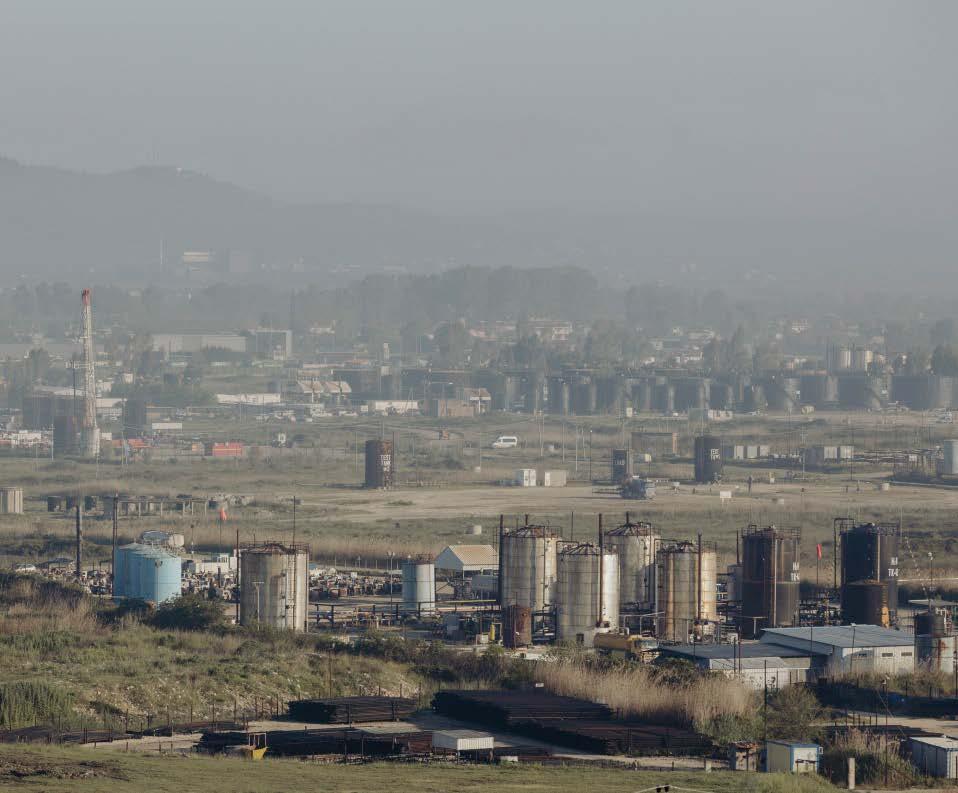
In order to respond to the major threat of air pollution in the Western Balkans, the region needs support to develop effective pollution reduction plans and abide by the stricter WHO and EU standards approaching in 2030. Some priority areas for intervention are:
• Strengthening environmental rights and governance by integrating air quality measures into national legislation, ensuring public participation in environmental decision-making. Particular attention should be given to vulnerable and marginalized groups.
• Developing and implementing air quality action plans that are aligned with WHO Air Quality guidelines and provide concrete roadmaps for implementation.
• Ensuring that plans include targeted measures to protect populations at higher risk, such as children, the elderly, and those with chronic health conditions.
• Enhancing air quality monitoring & data transparency by investing in modern monitoring infrastructure and ensuring real-time public access to air pollution reliable data.
• Accelerating the Green Energy Transition: Phase down coal, incentivize renewable energy, and improve energy efficiency in industries and households.
• Improving public health responses through strengthened healthcare capacity to manage pollution-related illnesses and integrate air quality considerations into health policies.
• Developing green skills and encourage private sector engagement by supporting businesses in adopting cleaner technologies, including Best Available Technique-compliant solutions, through targeted incentives and capacity-building, and training the workforce in sustainable practices.
• Investing in sustainable transport with integrated transport planning, public transportation promotion, electric mobility, and non-motorized transport options to reduce emissions.
The Western Balkans faces serious threats related to air pollution: high mortality rates, environmental degradation, and other serious health concerns for vulnerable populations. Recognizing the urgency of these challenges, the United Nations plays a vital role in supporting governments, regional institutions, and civil society to strengthen policies, build capacity, and promote coordinated action. Through these joint efforts, lasting improvements in air quality can be achieved, leading to a healthier and safer environment for all.
To find out more information on air pollution and activities in the Western Balkans, you may consult these relevant resources:
Relevant reports
• Status of Environment and Climate in the Western Balkans, JRC 2024
• Assessment of health impacts and costs attributable to air pollution in urban areas using two different approaches. A case study in the Western Balkans
• Air Pollution in the Western Balkans: Key Messages for Policy-Makers and the Public
• Briefing no. 21/2024 Harm to human health from air pollution in Europe: burden of disease status, 2024
• Air Quality Management in the Western Balkans, World Bank 2020
• State of Global Air - Trends in Air Quality and Health in Southeast Europe
UN resources
• UN Sustainable Development Group Data Portal
• UN SDG Global Database
• WHO - The Global Health Observatory/ Air pollution data portal
• WHO – One Health
• UNECE Environmental Policy/Air
• Breathless beginnings | UNICEF Europe and Central Asia
Other resources
• EIONET Central Data Repository
• CEIP - EMEP Centre on Emission Inventories and Projections
• Clean Air Regions Initiative Energy Community
• EU4Green: Support the implementation of the Green Agenda for the Western Balkans