Mountains of Central Asia
Ecosystem Profile
Visual Summary
The Critical Ecosystem Partnership Fund (CEPF) is a joint initiative of l’Agence Française de Développement, Conservation International, the European Union, Fondation Franklinia, Fondation Hans Wilsdorf, the Global Environment Facility, the Government of Canada, the Government of Japan, the Hempel Foundation and the World Bank. CEPF supports civil society to conserve the world's biodiversity hotspots, build stronger organizations and help communities thrive. More information: www.cepf.net
© CEPF and Zoï Environment Network, 2026
This visual summary of the CEPF Ecosystem Profile for the Mountains of Central Asia presents a simplified and condensed overview. For full references and additional details, please consult the full version and technical summary available at: www.cepf.net/our-work/ biodiversity-hotspots/mountains-central-asia
CEPF supervisors: Brecht Verhelst, Daniel Rothberg
Zoï contributors: Viktor Novikov, Firuza Illarionova
Illustrations and layout: Dina Adylova, Alexandra Povarich
Mountains of Central Asia
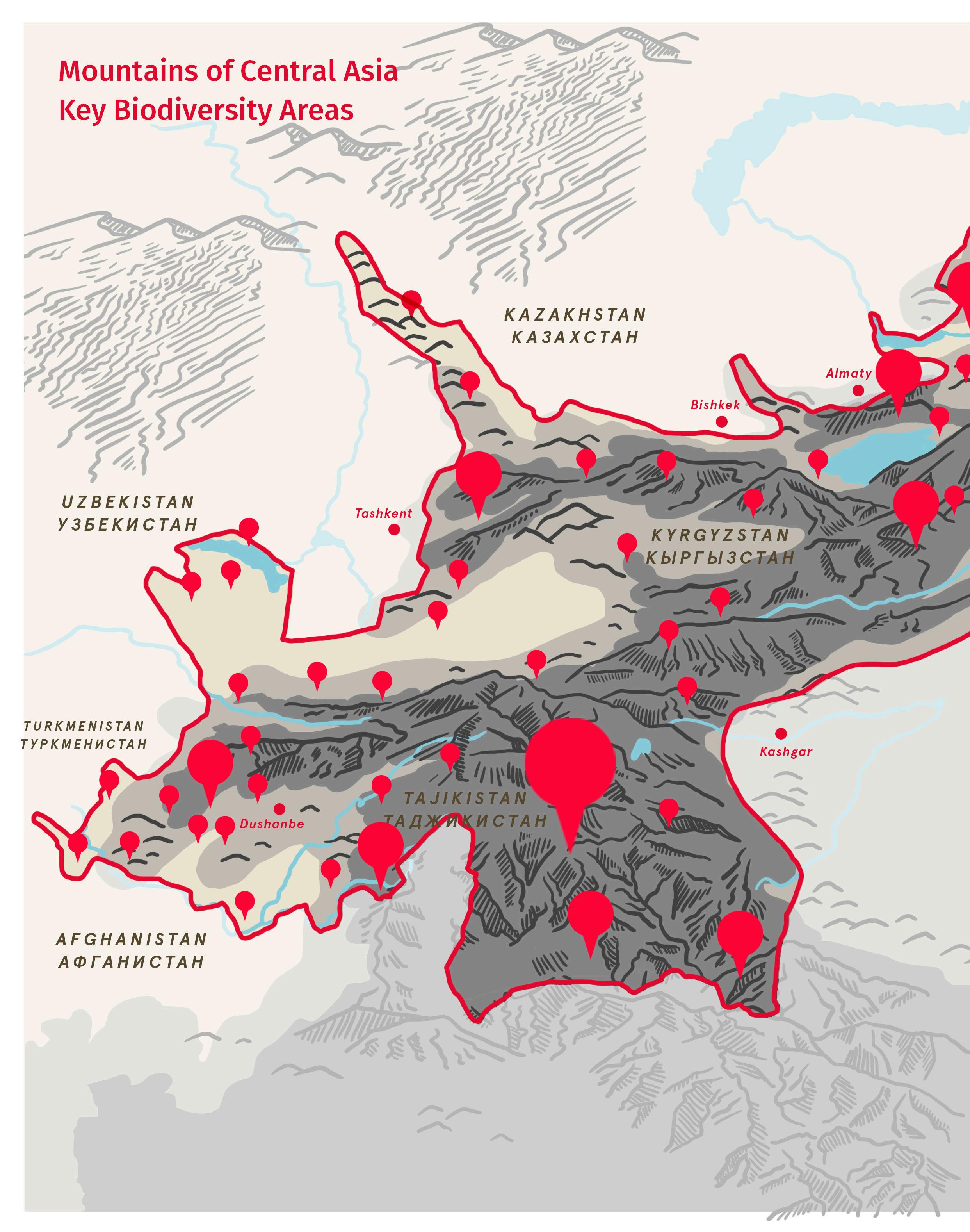
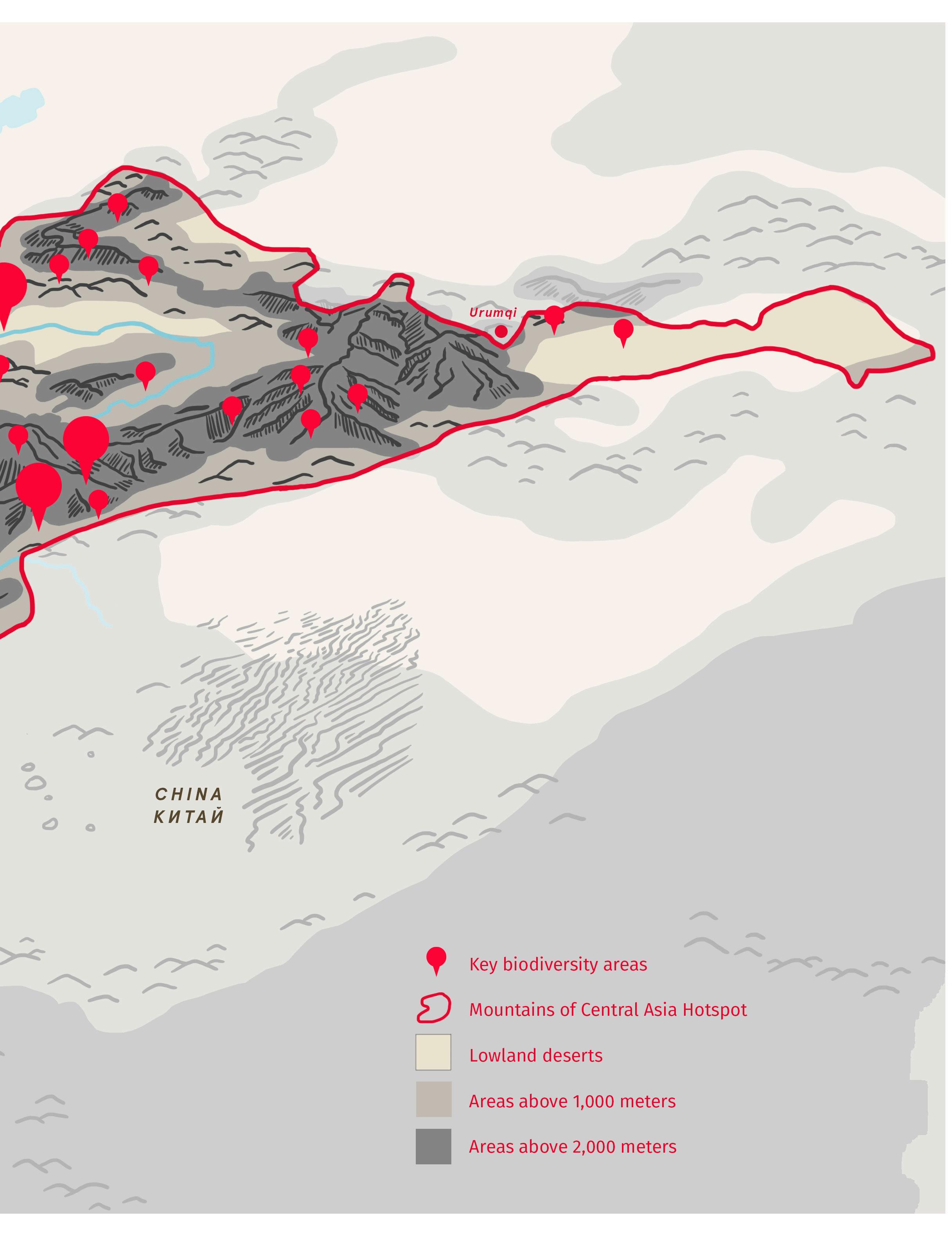
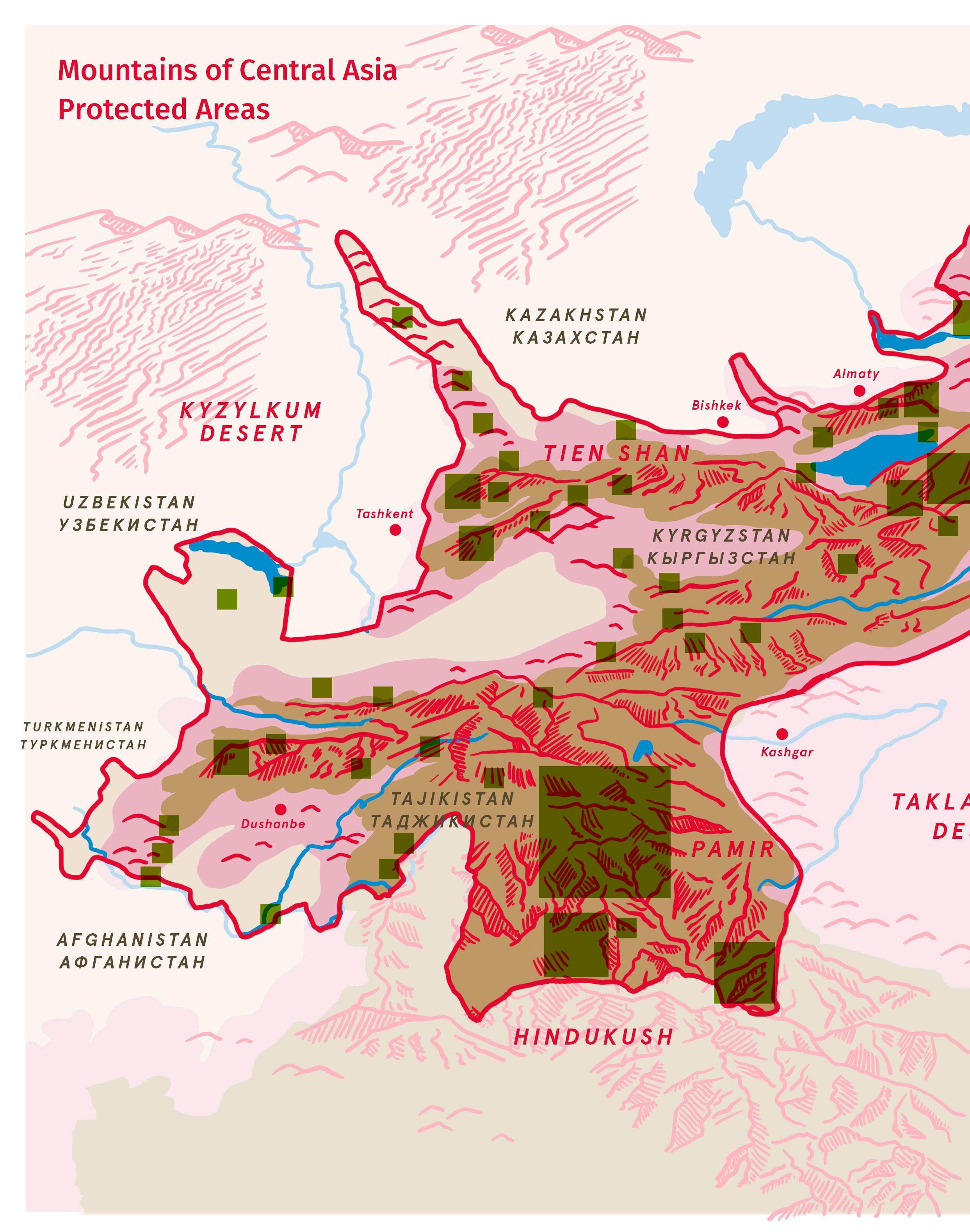
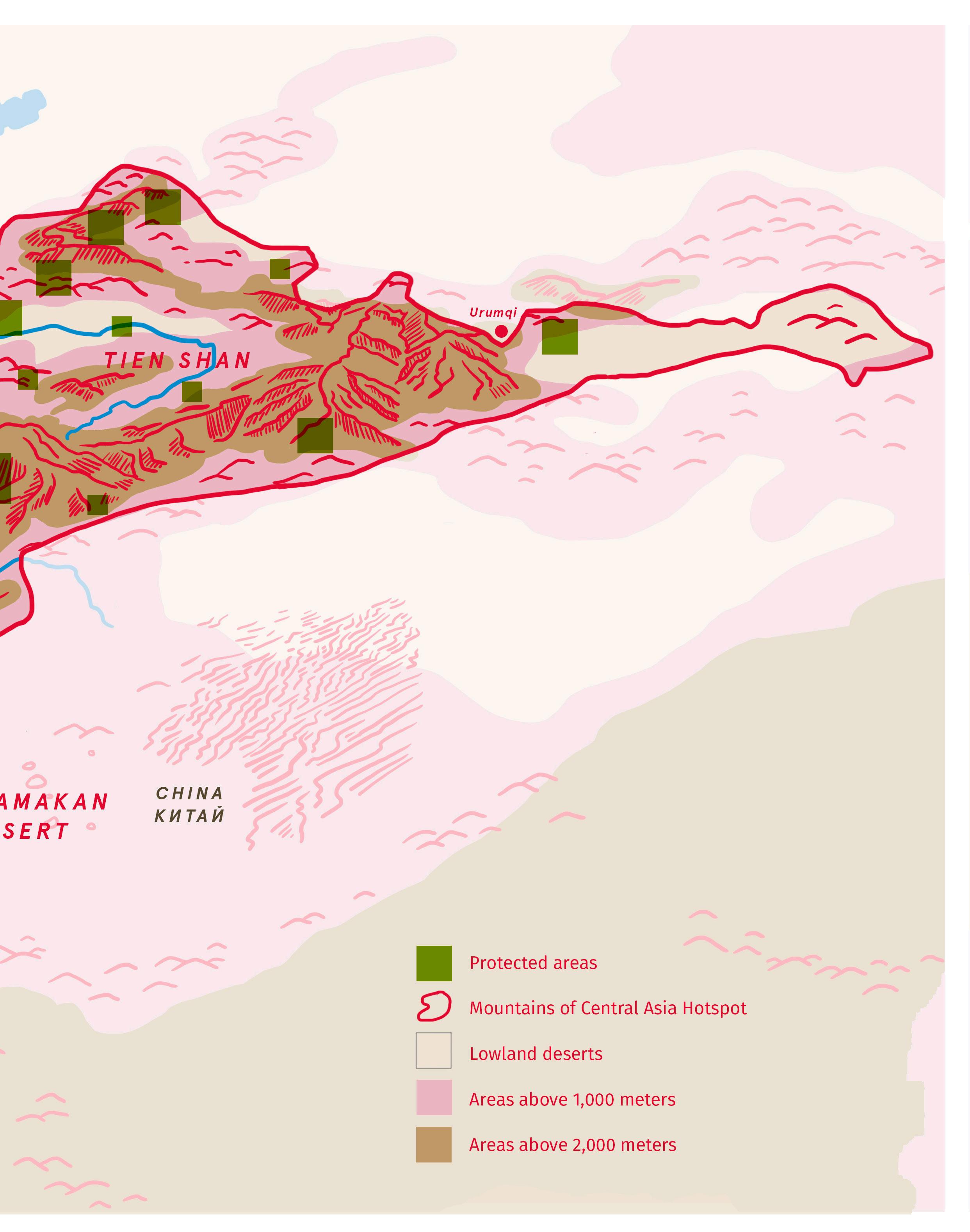
The Mountains of Central Asia hotspot spans about 860,000 km² across parts of Kazakhstan, Kyrgyzstan, Tajikistan, Uzbekistan, Turkmenistan, Afghanistan, and China, encompassing the spectacular Pamir Mountains and Tien Shan ranges. Recognized as one of the world’s 36 biodiversity hotspots, the region is rich in unique plant and animal life yet increasingly threatened by human activity. Its glaciers and seasonal snow help sustain river systems, freshwater ecosystems, and wetlands that provide water for drinking, hydropower, and agriculture while supporting millions of people downstream.
The hotspot is home to about 77 million people, many of them young and living along rivers and in oases. In countries such as Kyrgyzstan, Tajikistan, and Afghanistan, many rural communities depend directly on ecosystems for water, food, fuelwood, medicinal plants, and pasture.
CEPF's 2026 Ecosystem Profile for this region was developed through:
• A rapid scientific analysis building on the results of the previous 2017 profile, the 2019–2025 grant program and available up-to-date biodiversity science data;
• In-person national stakeholder consultations held in five countries (Kazakhstan, Kyrgyzstan, Tajikistan, Turkmenistan and Uzbekistan) in May–June 2025, bringing together approximately 200 participants including civil society organizations (CSOs), researchers, government officials, and international donors;
• An online survey to update the database of conservation partners and gather new data on key biodiversity areas, threats, and priorities.
The profile will form the basis for CEPF's grant-making strategy for the region over the next five years (2026–2031), directing funding toward the species, sites, and civil society organizations most in need of support.
Mountains of Central Asia Biodiversity Hotspot

Biological Richness
Species at Risk
species identified (up from 68 in 2017)
The hotspot is one of the planet’s most important reservoirs of genetic diversity. It is the center of origin for many crops and fruit trees that now feed the world, including wild relatives of apricots, apples, pears, plums, grapes, pistachios, walnuts, almonds, wheat, and barley. These wild relatives carry valuable genetic traits — such as drought tolerance, pest resistance, and disease resilience — that are critical for adapting food systems to climate change.
The hotspot supports more than 6,000 species of vascular plants, nearly one quarter of which are found nowhere else on Earth. The vertical distribution of species across elevations creates an extraordinary diversity of ecosystems within a relatively compact area: from desert and semi-desert lowlands, through the wild fruit-and-nut forests, to spruce, birch, and juniper forests, and finally to alpine meadows and cold- and drought-tolerant cushion plants.
29 Critically Endangered species
The hotspot is also home to 140 mammal species — including the iconic snow leopard, the magnificent Marco Polo sheep, and the unique Menzbier’s marmot and Ili pika — together with 530 bird species. About 30 native freshwater fish species inhabit the region’s rivers, at least five of which are endemic and highly sensitive to habitat change. More than 30 reptile species thrive in this region, including 10 endemics. In total, the 2025 profile update identified 126 globally threatened species — nearly double the 68 identified in 2017 — reflecting both improved scientific assessment and genuine biodiversity loss. In other words, both our knowledge and the crisis itself have grown.
Species at Risk
Species at Risk
globally threatened species identified (up from 68 in 2017)
29 Critically Endangered species
Threats to Biodiversity
The updated profile identifies several interconnected threats affecting different ecosystems across the hotspot. Their intensity varies by country and ecosystem.
Habitat Change and Fragmentation
Habitat Change and Fragmentation
Overuse of Natural Resources
Habitat Change and Fragmentation
The expansion of irrigation, hydropower, mining, roads, and settlements is one of the pervasive long-term drivers of biodiversity loss. Tugai (riparian) forests — ribbons of woodland along major rivers — have been drastically reduced by land development, irrigation and dams. The rapid growth of trade, energy and transport infrastructure is opening previously remote habitats to development pressure and affecting migratory routes. Small-scale hydropower — highlighted in nearly all national consultations — is adding to the cumulative pressures on mountain river ecosystems.
Overuse of Natural Resources
Change
Overuse of Natural Resources
Habitat Change and Fragmentation
Invasive Species and Gene Pool Erosion Pollution
Change
Habitat Change and Fragmentation
Overuse of Natural Resources
Overgrazing is the leading pressure, affecting forests, pastures, and buffer zones around protected areas. It contributes to soil erosion, reduces pasture productivity, and can facilitate the spread of invasive species. High livestock densities and increased contact with wild species may elevate the risk of disease transmission. In addition, the unsustainable harvesting of wild plants — including endemic tulips collected for sale and medicinal species gathered for household use or export — poses a threat to a range of native plants. Traditional seasonal livestock movement, which once helped balance grazing pressure across landscapes, has been disrupted by changes in land tenure systems and increasing economic pressures.
Habitat Change and Fragmentation
Climate Change
Overuse of Natural Resources
Climate Change
Invasive Species and Gene Pool Erosion Pollution
Overuse of Natural Resources
Climate Change
Over the past 60-70 years, temperatures across the hotspot have increased by 0.2–0.4°C per decade. Glaciers are retreating, snowpack is declining, and river runoff patterns are shifting — threatening both the freshwater supply on which millions depend and the cold-adapted species of high-altitude ecosystems. Extreme weather events (heatwaves, droughts, floods) are intensifying. Mountain forest productivity is expected to decline.
Invasive Species and Gene Pool Erosion Pollution
Change
Pollution
Water pollution from industrial discharge, abandoned mining sites, and the overuse of agri-chemicals poses growing risks to freshwater ecosystems, particularly in the Ferghana Valley, around Issyk-Kul Lake, and in Xinjiang. Plastic waste and illegally dumped solid waste in rivers and mountain streams were raised as a concern in every national consultation. Agrichemicals threaten raptor populations.
Invasive Species and Gene Pool Erosion Pollution
Invasive Species and Gene Pool Erosion
Invasive Species and Gene Pool Erosion
Invasive alien species are particularly damaging to isolated mountain freshwater ecosystems, where endemic fish have nowhere to retreat. In wild fruit and nut forests — the evolutionary cradle of many modern food crops — hybridization with domesticated varieties and the spread of non-native species are eroding the genetic distinctiveness of wild populations.
Conservation Actions and Civil Society
In response to growing threats, conservation efforts across the region have increased significantly. All seven hotspot countries participate in multilateral environmental agreements, update and implement National Biodiversity Strategies and Action Plans (NBSAPs). A robust network of protected areas has grown considerably: Tajikistan leads the region in protected area coverage; Uzbekistan has recently expanded and strengthened its network of nature reserves; Afghanistan designated the Wakhan Valley as a national park; and Kyrgyzstan has introduced micro-reserves and ecological corridors into legislation, inspired and informed by the work of CEPF grantees. Several sites in the Western and Eastern Tien Shan and Pamir have been nominated as UNESCO World Heritage Sites.
The Global Environment Facility (GEF) is the main multilateral donor supporting conservation across the hotspot, with projects implemented through international partners. GEF-funded activities have supported initiatives including sustainable forestry and protected areas in Kyrgyzstan, snow leopard landscape and agrobiodiversity conservation in Tajikistan, and sustainable management of mountain ecosystems and wetlands in Uzbekistan. The GEF Small Grants Program (GEF SGP) is also active in the region, providing support to local CSOs engaged in nature- and land-related activities. In addition, initiatives such as BIOFIN and the World Bank’s RESILAND+ program represent important frameworks for better aligning development finance with conservation objectives.
Bilateral donors active in the region’s environment and biodiversity include the EU, AFD, the UK, Germany, Switzerland, Japan, Korea, Finland, and Norway. These investments are diverse and substantial, though support for civil society — particularly smaller local organizations — is often limited. CEPF complements donor efforts by working closely with such organizations, strengthening their capacity to carry out conservation activities effectively.
Even with growing international support, conservation efforts remain uneven, and the involvement of local authorities and communities in environmental decision-making and NBSAP implementation remains limited. Governments often have limited capacity for on-the-ground biodiversity monitoring, while local actors in many areas play a key role in species monitoring, habitat protection, community work, environmental education, and advocacy.
Civil society organizations (CSOs) help fill this gap by leading protected area campaigns, monitoring endangered species, and advocating for stronger integration of biodiversity into development planning. International initiatives such as the Global Snow Leopard and Ecosystem Protection Program (GSLEP) and the Central Asia Mammals Initiative (CAMI) bring together governments, donors, and civil society across range states, highlighting the transboundary nature of conservation.
The conditions for civil society vary across the hotspot countries. Kyrgyzstan stands out for its open and diverse civil society, with many organizations engaged in conservation and environmental initiatives. Kazakhstan also has an active civil society with relatively strong institutional capacity, although only a limited number of national and local organizations focus primarily on conservation. In Tajikistan, Turkmenistan, and Uzbekistan, the regulatory environment for CSOs is more limited, and differences in technical and organizational capacity among local CSOs can limit the scale and effectiveness of conservation efforts.
Across the hotspot, attention is often uneven, with high-profile species — particularly large mammals — receiving more focus than less visible but equally threatened species, especially endemic plants. Geographic constraints add to conservation challenges, including rugged terrain, harsh climate and seasonality, restricted border zones, weak infrastructure in remote valleys, and high transport and reporting costs. Despite these challenges, civil society organizations have demonstrated a clear capacity to deliver conservation outcomes. Notable contributions include community-based wildlife monitoring, the establishment of micro-reserves, environmental education initiatives, and advocacy for biodiversity-sensitive planning.
Lessons from CEPF Phase I (2019–2025)
CEPF's first investment phase provided 96 grants worth approximately USD 7.4 million to 69 unique organizations, over half of which were local groups. Key outcomes included conservation benefits for 42 globally threatened species, improved management of 2.6 million ha across 55 Key Biodiversity Areas (KBAs), structured training for approximately 8,600 people, and the creation or strengthening of 37 conservation partnerships and networks.
The independent evaluation identified lessons that shape Phase II strategy:
• Local CSO capacity remains a key constraint, with many groups limited to small grants or acting as sub-grantees under international organizations;
• The KBA concept is not yet widely understood across the region, limiting community and CSO engagement in site-based conservation;
• Collaboration among local CSOs remains limited — networks exist but are not yet translating into coordinated action;
• Land-use and nature resource management plans represent only a first step, with implementation and follow-up still weak;
• Private sector engagement has been minimal, despite the scale of mining, hydropower, and tourism development;
• The innovative use of technology has proven effective in reaching remote communities and should be expanded.
CEPF Investment Strategy
CEPF’s investment priorities for Phase II (2026–2031) are grouped into six broad strategic directions, based on an analysis of conservation needs, an assessment of the capacity of civil society, an overview of threats to biodiversity, and a review of current conservation investments. CEPF identifies conservation outcomes at three scales: globally threatened species; sites that contribute significantly to the global persistence of biodiversity (Key Biodiversity Areas, or KBAs); and corridors and landscapes necessary to maintain the ecological and evolutionary processes upon which those sites and species depend.
From 126 globally threatened species occurring within the hotspot, 22 are defined as priority species for CEPF investment in Phase II. From 153 confirmed KBAs, 40 priority sites covering approximately 3.9 million ha have been selected, with preference given to sites under significant threat, sites with endemic species lacking protection, and sites where Phase I investment provides a foundation for follow-up. On a larger scale, 10 priority conservation corridors spanning 192,000 km² have been identified, focusing on areas where civil society engagement in landscape-scale conservation is both feasible and urgently needed.
Strategic Direction 1: Address Threats to Priority Species
Actions under this strategic direction include strengthening species monitoring and data collection, supporting enforcement of protection measures, and developing or implementing species action plans. It also involves working with local communities to reduce overexploitation, promote sustainable alternatives where relevant, and increase awareness of species conservation. Support may extend to improving compliance with national regulations (including Red Lists and quotas) and contributing to national and regional biodiversity and migratory species initiatives.
Strategic Direction 2: Improve Management of Key Biodiversity Areas
This direction targets unprotected or partially protected KBAs facing significant threats, new sites with endemic species, and areas where previous investments provide a foundation for follow-up. Success means a KBA is safeguarded—whether through tighter oversight, the expansion of protected areas, or the launch of more effective conservation plans. Actions focus on bridging the gap between local communities and protected area managers, developing sustainable nature-use models, and putting wildlife monitoring in the hands of the community. Сoordinating with GEF projects and other donors anchors the KBA approach into national policies, setting a new standard for how countries in the region protect their nature.
Strategic
2:
Areas
Strategic Direction 3: Conservation in Priority Corridors
Overuse of Natural Resources
Strategic Direction 3: Conservation in Priority Corridors
Strategic Direction 1: Protect Priority Species
Strategic Direction 4: Engage Economic Actors and Production Landscapes
Strategic Direction 2: Improve Management of Key Biodiversity Areas
Habitat Change and Fragmentation
Climate Change
Overuse of Natural Resources
Strategic Direction 5: Strengthen Civil Society Organisations
Strategic Direction 3: Conservation in Priority Corridors
Corridor goals are achieved when a conservation landscape maintains natural processes and contributes to the ecological connectivity of species and KBAs. The 10 priority corridors were selected based on biodiversity value, threat levels, and the opportunity for meaningful civil society engagement. Investment priorities include developing protocols and demonstration projects for ecological restoration; integrating biodiversity and ecosystem services into landuse and development planning; supporting CSOs to analyse infrastructure projects and propose biodiversity-sensitive alternatives; and promoting cross-border cooperation on migratory species and connected habitats.
Strategic Direction 1: Protect Priority Species
Strategic Direction 6: Regional Implementation Team
Strategic Direction 4: Engage Economic Actors and Production Landscapes
Habitat Change and Fragmentation
Climate Change
Strategic Direction 4: Engage Economic Actors and Production Landscapes
Strategic Direction 2: Improve Management of Key Biodiversity Areas
Strategic Direction 5: Strengthen Civil Society Organisations
Invasive Species and Gene Pool Erosion Pollution
Overuse of Natural Resources
Strategic Direction 3: Conservation in Priority Corridors
Strategic Direction 1: Protect Priority Species
Strategic Direction 6: Regional Implementation Team
Habitat Change and Fragmentation
Strategic Direction 4: Engage Economic Actors and Production Landscapes
Strategic Direction 2: Improve Management of Key Biodiversity Areas
Engaging communities of interest and economic sectors in improved biodiversity management is essential, given the scale of mining, hydropower, and tourism development across the hotspot. Investment priorities include working with hunting associations, tourism operators, and infrastructure planners and developers to integrate biodiversity safeguards into their activities; establishing valuation mechanisms for biodiversity; promoting the mainstreaming of conservation into livestock and agricultural practices and policies; and supporting CSOs in engaging with government and the private sector on biodiversity-sensitive planning. Particular attention will be given to the growing renewable energy sector, which poses risks but also offers new opportunities for mobilizing sustainable finance for conservation.
Invasive Species and Gene Pool Erosion Pollution
Climate Change
Overuse of Natural Resources
Strategic Direction 5: Strengthen Civil Society Organisations
Strategic Direction 3: Conservation in Priority Corridors
Strategic Direction 5: Strengthen Civil Society Organizations
Strategic Direction 6: Regional Implementation Team
Strategic Direction 4: Engage Economic Actors and Production Landscapes
Strategic Direction 5: Strengthen Civil Society Organisations
Invasive Species and Gene Pool Erosion Pollution
Climate Change
CEPF will support the organizational capacity of CSOs as a key foundation for long-term conservation in the region. This includes strengthening core skills such as project and financial management, monitoring and evaluation, strategic planning, and science communication for selected organizations with strong potential for impact. Investment will also focus on improving collaboration between civil society and government biodiversity agencies, and fostering stronger networks among CSOs and public-sector partners. Particular attention will be given to organizations in more constrained operating environments, as well as to developing skills for engagement with private sector actors and development financiers.
Strategic Direction 6: Regional Implementation Team
Strategic Direction 6: Regional Implementation Team
Invasive Species and Gene Pool Erosion Pollution
A Regional Implementation Team (RIT) will provide strategic leadership, coordinate the grant portfolio, facilitate cross-border cooperation, and support communications and knowledge-sharing across the hotspot. The RIT will act as a liaison to relevant donor and conservation networks throughout the region, and will build a broad constituency of CSOs working across institutional and national boundaries toward shared conservation goals. It will seek synergies with major funders including the GEF, the Green Climate Fund, the World Bank RESILAND+, the EU, and bilateral donors. The RIT will also update data on conservation actions and results, maintain the database of conservation partners, and promote the overall conservation agenda — amplifying the impact of individual grants through strategic coordination.
Sustaining Conservation Efforts
Sustaining conservation results beyond the grant cycle remains an important consideration in the hotspot. CEPF’s Phase I experience — where monitoring, micro-reserves, and CSO networks established with CEPF support continued to function after grants ended — shows that lasting change happens when organizations, not just projects, are supported. Phase II will focus on strengthening long-term sustainability by supporting local organizations as lead grantees, integrating biodiversity considerations into planning processes, and strengthening CSO networks to contribute to the Kunming–Montreal Global Biodiversity Framework targets and the Sustainable Development Goals (SDGs), and beyond. Ultimately, protecting these mountains means protecting the food, water, and livelihoods of tens of millions of people — and the irreplaceable wild heritage of all humanity.
CEPF grant program in the Mountains of Central Asia
CEPF donors
l’Agence Française de Développement, Conservation International, the European Union, Fondation Franklinia, Fondation Hans Wilsdorf, the Global Environment Facility, the Government of Canada, the Government of Japan, the Hempel Foundation, the World Bank
Regional Implementation Team Partners from civil society organisations
CEPF Secretariat
Mountains of Central Asia
Pamir and Tien Shan — a world of life worth protecting
Afghanistan • China • Kazakhstan • Kyrgyzstan • Tajikistan • Turkmenistan • Uzbekistan
860,000 km² across 7 countries home for endemic plant species
WHY IT MATTERS
77 million people
1,500 globally threatened species 126
Snow leopard Marco Polo sheep Endemic tulips Wild fruit and nut forests
Juniper forests Alpine meadows Glacier-fed rivers Wild crop relatives
UNDER PRESSURE
Nature at a crossroads
Habitat Loss and Fragmentation • Overgrazing • Unregulated Tourism • Pollution
Mining and Infrastructure • Waste • Climate Change • Invasive Species
CEPF PHASE II: 2026–2031
Targeted. Collaborative. Lasting.
SD 1
Protect Priority Species
Species Monitoring • Enforcement
Community Incentives • Anti-Poaching Micro-Reserves For Plants • Carnivore Conflict Mitigation
SD 3
Conservation In Priority Corridors
Ecological Connectivity • Habitat Restoration
Cross-Border Cooperation • Biodiversity-Sensitive Infrastructure • Landscape Planning
SD 5
Strengthen Civil Society Organizations
Organizational Capacity • Advocacy Skills
Government Engagement • Local Leadership
CSO Networking • Financial Management
22 priority species
40 priority KBAs
WHY CIVIL SOCIETY MATTERS
SD 2
Improve Management Of Key Biodiversity Areas
KBA Protection • Community Monitoring
Sustainable-Use Models • KBA Awareness Protected Area Partnerships
SD 4
Engage Economic Actors
Sustainable Tourism • Responsible Mining Renewable Energy • Sustainable Grazing Biodiversity Valuation • Private Sector Dialogue
SD 6
Regional Implementation Team
Strategic Coordination • Donor Synergies
Knowledge-Sharing • Regional Grant Portfolio Conservation Constituency
7 countries
Local hands. Global stakes. Protecting mountain ecosystems means protecting the food, water, and livelihoods of tens of millions of people — and the irreplaceable wild heritage of all humanity.
1 shared vision