
SIPRA Hotline: When Field Teams
Can’t Reach Farmers, A Phone Line Can.
How the SIPRA Hotline delivered agricultural extension to smallholder farmers across four Sudanese states despite active conflict.

The Challenge
Since April 2023, Sudan has been engulfed in a nationwide conflict between rival military factions. The fighting has killed tens of thousands of people, displaced more than 12 million, and driven what the United Nations has described as one of the world’s worst hunger crises In contexts like Sudan where climate vulnerability, fragile infrastructure, and active conflict intersect, the systems that smallholder farmers depend on have been dismantled Extension workers cannot travel. Supply chains are disrupted. And hundreds of thousands of farmers in rainfed areas have been cut off from the practical, timely agricultural guidance they need to plant, grow, and harvest Estimates suggest that cultivated areas have shrunk to just 35% of their pre-war levels, with some reports indicating that the area actually farmed in irrigated and rain-fed sectors is less than one-tenth of peacetime levels.
Across the states of Gedaref, White Nile, Blue Nile, and South Kordofan, smallholder farmers have limited access to reliable information on soil health, pest management, and market timing This kind of practical, timely guidance determines whether a season ends in food or failure A farmer who misses the window for land preparation or plants without knowing current soil conditions doesn't get a second chance that season
The Solution: A Toll-Free Voice Hotline
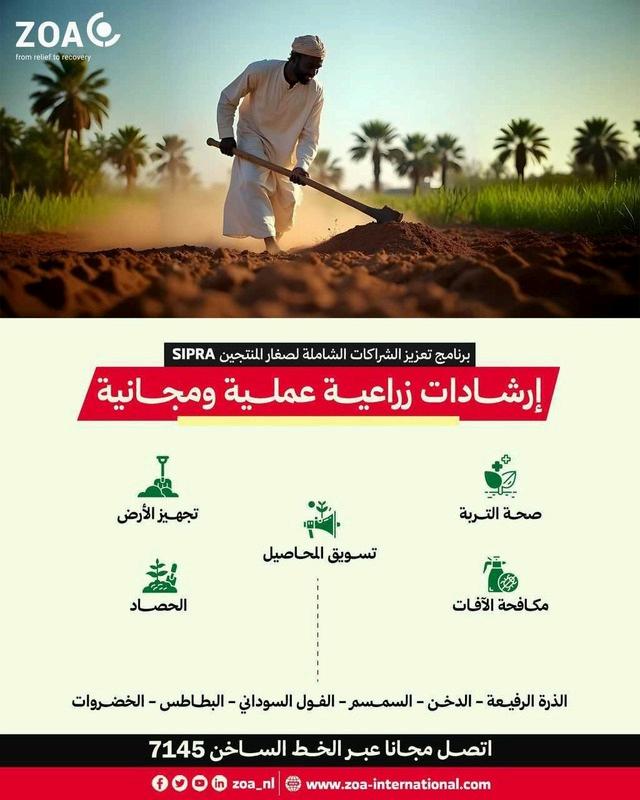
The Strengthening Inclusive Partnerships for Smallholders in Rainfed Areas (SIPRA) program is a multi-year program being implemented by a consortium of ZOA (lead), World Relief, SOS Sahel and WSER and funded by the Ministry of Foreign Affairs of the Netherlands. The project focuses on strengthening food security and market access for smallholder farmers in Sudan As part of this program, ZOA partnered with Viamo to launch the SIPRA Hotline: a free, voice-based agricultural information service accessible from any basic mobile phone No internet, smartphone, or literacy needed
Launched in May 2025, the hotline delivers pre-recorded, cropspecific guidance in Sudanese Arabic The messages are structured around three key stages of the farming cycle: land preparation and sowing, crop care, and harvest and selling. Content was codeveloped by ZOA, World Relief and SOS Sahel and Viamo to ensure messages were clear, actionable, and tailored to the specific crops grown in each state State agricultural departments validate key content before going live,.
The system was built for engagement Farmers call the toll-free shortcode 7-1-4-5, select their state, choose a crop, and navigate voice menus using their phone keypad. A built-in feedback channel allows them to leave voice messages, which are triaged and responded to by trained moderators This transforms the hotline from a one-way push of information into a two-way communication platform that listens and adapts to needs
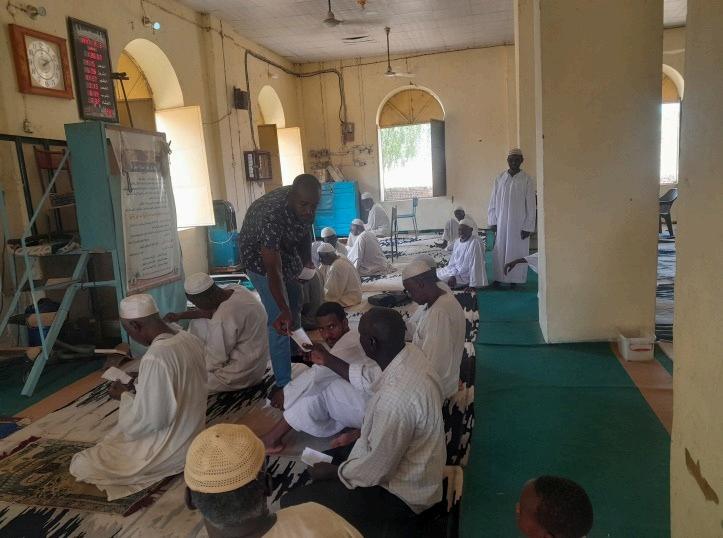
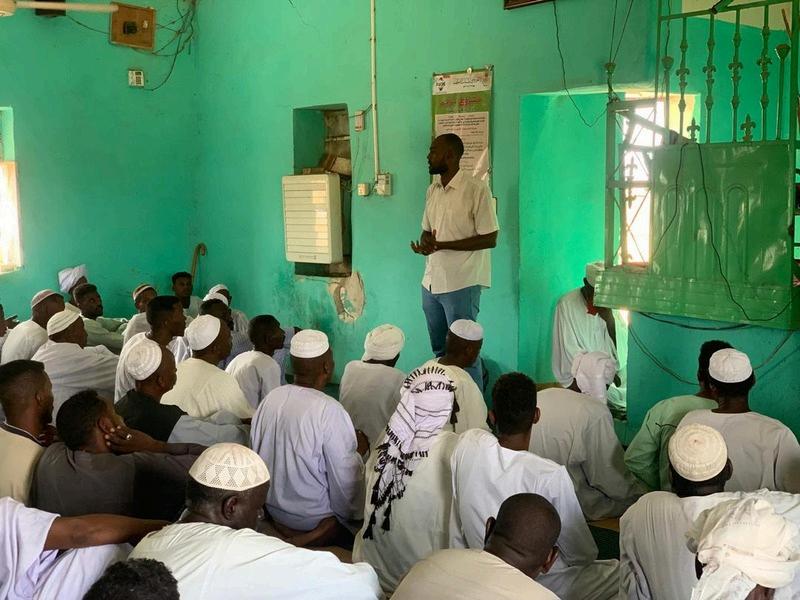
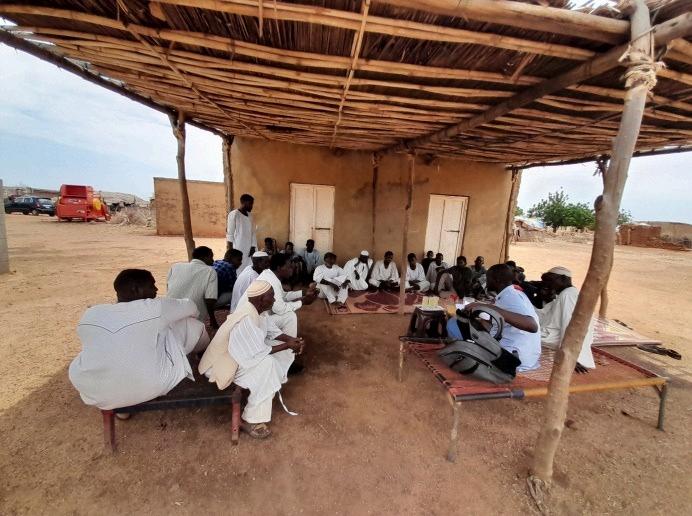
Adoption was driven by a multi-channel awareness campaign combining community listening groups, mosque and market-based outreach, meetings with agricultural associations, radio broadcasts, social media campaigns, and over 2,200 printed flyers distributed across target communities. More than 35 community engagement activities were conducted
The Impact: Farmers Are Calling, and Calling Back

total calls, with 13,700 unique callers, and 11,151 messages listened to 38,200
messages per listener, with high replay and return usage 5 to 6
Between May and December 2025, the SIPRA Hotline recorded strong adoption and sustained engagement across all four states Farmers are not calling once and hanging up. They are returning an average of nearly 18 times, exploring multiple crop topics, and listening to 5–6 messages per session Land preparation was the most accessed farming stage across all crops, meaning farmers are reaching for the hotline at the exact moment they need to make planting decisions
A farmer in Gedaref dials 7145, selects sesame, and listens to land preparation guidance before the season starts When it's time for crop care, they call back. And again at harvest. Farmers are coming back at each stage of the season for the next piece of guidance they need That pattern tells a clear story: the demand is real, the content is trusted, and the model works. The question now is what it takes to scale it Most
Lessons Lear
1
IVR Delivers in Conflict, but Sensitisation is the Catalyst for Adoption
The hotline successfully delivered agricultural extension during active conflict, but the technology didn't drive adoption on its own Engagement surged in August 2025, directly corresponding with the peak of on-ground awareness campaigns, including listening groups, mosque and market outreach, agricultural association meetings, and radio adverts The lesson is clear: IVR can function where field teams cannot, but community trust is what gets farmers to pick up the phone Where conflict and escalating insecurity made sensitisation impossible, like in South Kordofan, the state accounted for less than 4% of total listeners. For humanitarian and development organisations working in fragile contexts, IVR should be a standard component of crisis-resilient programming, but only alongside investment in the local partnerships that make adoption possible
Farmers Want Dialogue, Not Just Information
The 1,337 feedback submissions represent farmers actively seeking conversation. Farmers called asking how to treat disease in their sesame crops, how to store groundnuts without them rotting, and whether guidance on chickpeas could be added to the system These are real-time production decisions that determine whether a harvest succeeds or fails, and farmers are making them daily with or without guidance. With over half of submissions classified as complaints, it signals that farmers view the hotline as a legitimate channel for voicing needs and expect responsive action This desire for a conversational tool has direct implications for where this service goes next.
Gender-Intentional Design Requires More Than Access
Women represented just 184% of unique listeners The hotline itself removes many common barriers to access: it is free, voice-based, and requires no travel But as lesson one demonstrated, the technology only works when paired with deliberate sensitisation through trusted community channels Conflict can compound existing barriers to women's access, making phone ownership, mobility, and participation in agricultural networks even more difficult Reaching women will require equally intentional investment in channels where women are already present such as womenled listening groups, female community champions, content tailored to the crops women cultivate, and outreach through networks women already trust
What’s Next: From Information Push to Intelligent Dialogue
The SIPRA Hotline has been extended into 2026, with two priorities shaping the next phase of implementation.
1. Introducing AI Content via Ask an Expert (AAE).
The most significant evolution ahead is the integration of Viamo’s Ask an Expert platform a voice AI system that provides personalised, on-demand agricultural advice in local languages via the same toll-free IVR channel AAE moves the hotline from pre-recorded content delivery to real-time, intelligent dialogue A farmer can ask a specific question about their crop in Sudanese Arabic and receive tailored guidance generated in real-time. Under the current system, when that farmer in White Nile sees disease in their sesame crop, they navigate menus, listen to general crop care guidance, and hope it covers their problem With AAE, they describe what they're seeing and get a direct answer
AAE is built on Retrieval Augmented Generation (RAG), which means it only draws from content that ZOA has approved and built into the system If a farmer asks something outside that knowledge base, the AAE does not guess or give generalised advice Before launch, ZOA then tests the AI methodically, rating its responses on accuracy, relevance, length, and quality This shift from pre-recorded content to open dialogue represents the next frontier of digital extension in fragile contexts, where information needs change as quickly as the conflict or the weather Real-time feedback loops are critical for the SIPRA project because:
Agility in Crisis: Captured in real-time, farmer feedback allows project managers to identify emerging issues such as a localised pest outbreak or a sudden supply chain disruption. Using AAE, the messages and knowledge adapt in real time in addition to pushing out emergency broadcasts within hours, rather than weeks
Data-Driven Adaptation: By analysing voice submissions and AI query trends in real-time, the project can "listen" to the needs of farmers at scale. Under the current system, when farmers repeatedly asked for guidance on chickpeas, that required new content to be produced, recorded, and added to the IVR menu With AAE, that gap can be addressed the moment a farmer asks the question
2. Strengthening Women’s Outreach.
Developing targeted strategies to increase female participation, including women-led listening groups, community champion networks, and culturally appropriate sensitisation approaches In a conflict context where displacement and restricted movement have further driven the digital gender divide, these strategies must account for how and where women can safely and realistically be reached.
A Replicable Model for All Contexts
The SIPRA Hotline was not built on infrastructure unique to Sudan It runs on basic mobile networks, requires no internet connectivity, and uses a toll-free shortcode that removes cost as a barrier to access The content is voice-based and delivered in local language, bypassing literacy requirements entirely. These are conditions that exist across most fragile and conflict-affected contexts where agricultural extension has collapsed
Beyond the technology, what made the SIPRA hotline work was the combination of trusted local partnerships, trained moderators managing farmer feedback, and sustained community sensitisation running alongside the hotline. The addition of the AAE layer strengthens the replicability further Pre-recorded content requires significant upfront production for each new context. A generative AI voice system can adapt to new geographies and information needs faster and at lower marginal cost
The SIPRA Program is funded by the Ministry of Foreign Affairs of The Netherlands