Date of Birth: 12th January, 2004 Tel: +86 18952574115 Email: zijiey2004@163.com
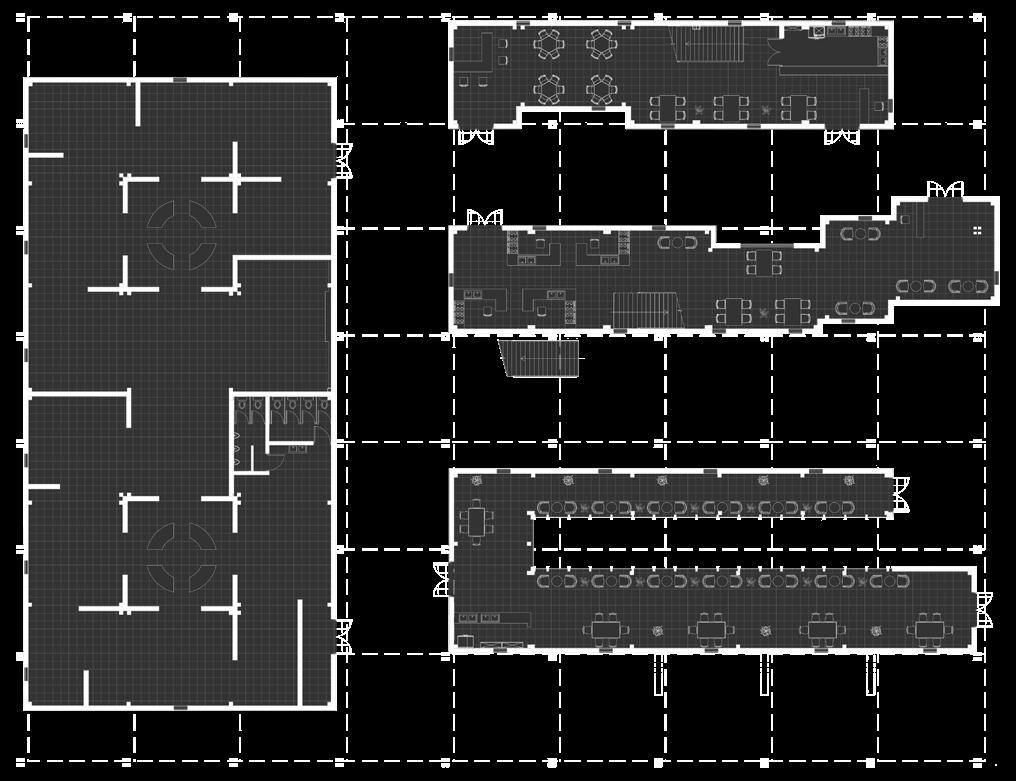
• Participated in the design of split-level villa, mainly responsible for schematic design and floor plan development;
• Conducted preliminary research, analyzed the flow of the family activities, studies relevant cases through ArchDaily and Gooood to provide a basis for design;
• Measured the key data of existing model structure, drew initial functional zoning plans and plan sketches, indicated the preliminary position of doors and windows;
• Performed detailed plan modifications, added accurate dimensional annotations;
• Crafted circulation analysis diagrams and a series of conceptual diagrams.
Yangzhou Architecture Design&Research Institute Co., Ltd.
• Participated in the bidding project for the Jiangxin Island in Lhasa
• Learned to use SketchUp for modeling
• Carried out several architectural sketching exercises Yangzhou Life Network Media Co., Ltd.
• Produced many videos and participated in multiple filming mission
• Have created several videos that received over a thousand likes in Tiktok
• Has appeared in several videos that received over a thousand likes on various platforms
COMPETITION EXPERIENCE
The Aurelia Prize in Design for Space Urbanism
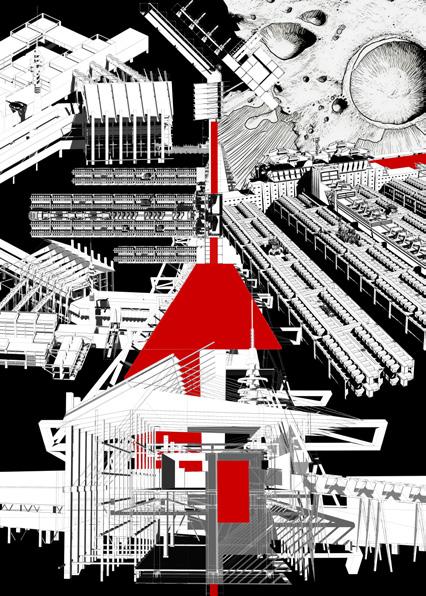
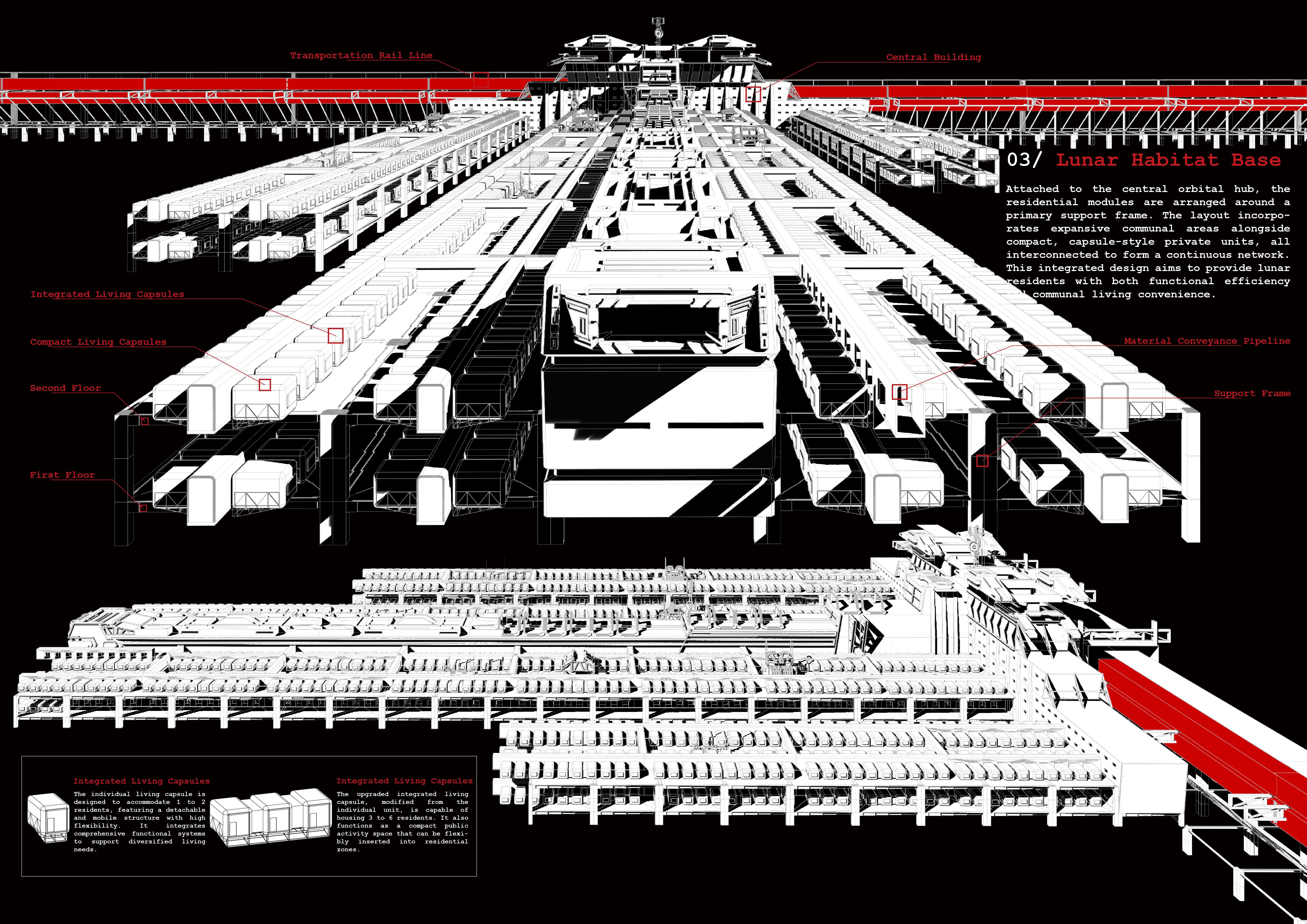
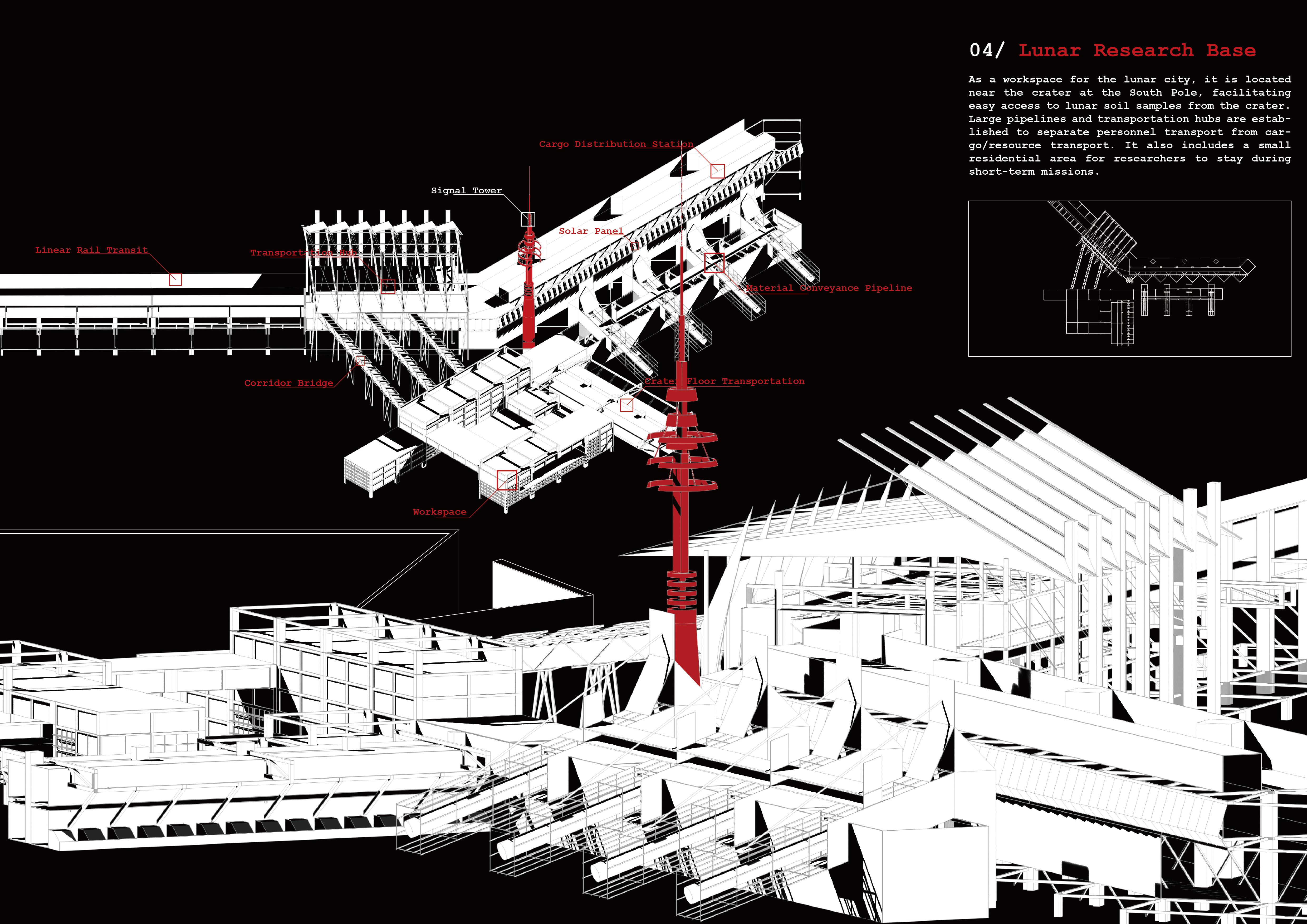
• Based on the concept of linear urban planning, the lunar space station at the lunar south pole is divided into launch and landing zones,residential zones, work zones, and energy supply zones, proposing a conceptual hypothesis for a sustainable and self-sufficient lunarcity.
PROJECTS
Revitalization Design of Nanchang Street Historical District, Liangxi District, Wuxi
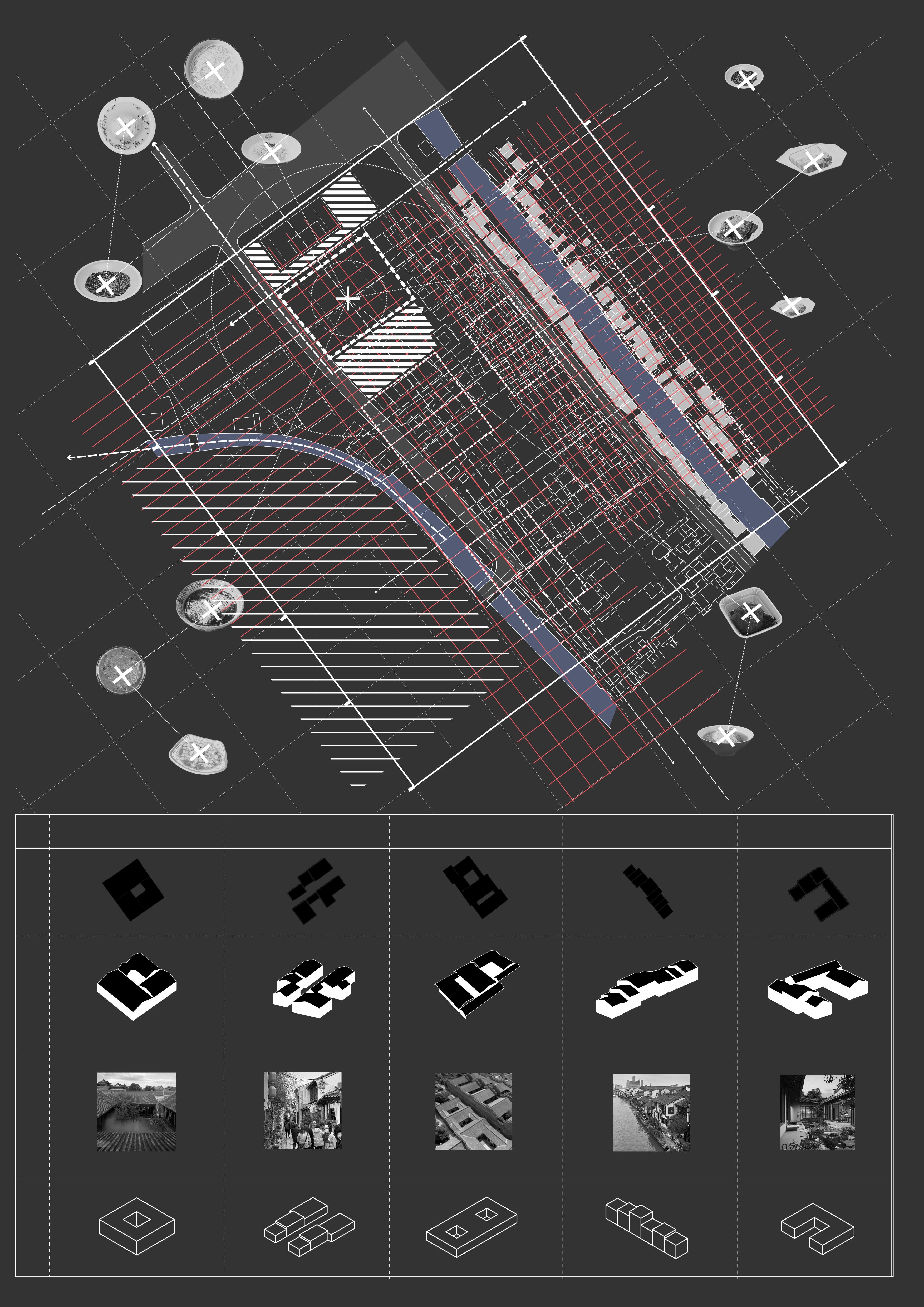
• Through immersive field research, analyzed the site's spatial and social patterns to design a key district node. The proposal balances traditional fabric with contemporary needs, translating historical elements into a modern design that enhances accessibility, engagement, and cultural continuity.
Status : Individual work
A Residential Design for the Individual Era
Status : Individual work
FRAMING THE VERNACULAR
A Translucent Insert in Nanchang Street A Sanctuary from the Ashes
REBIRTH FROM THE ASHES
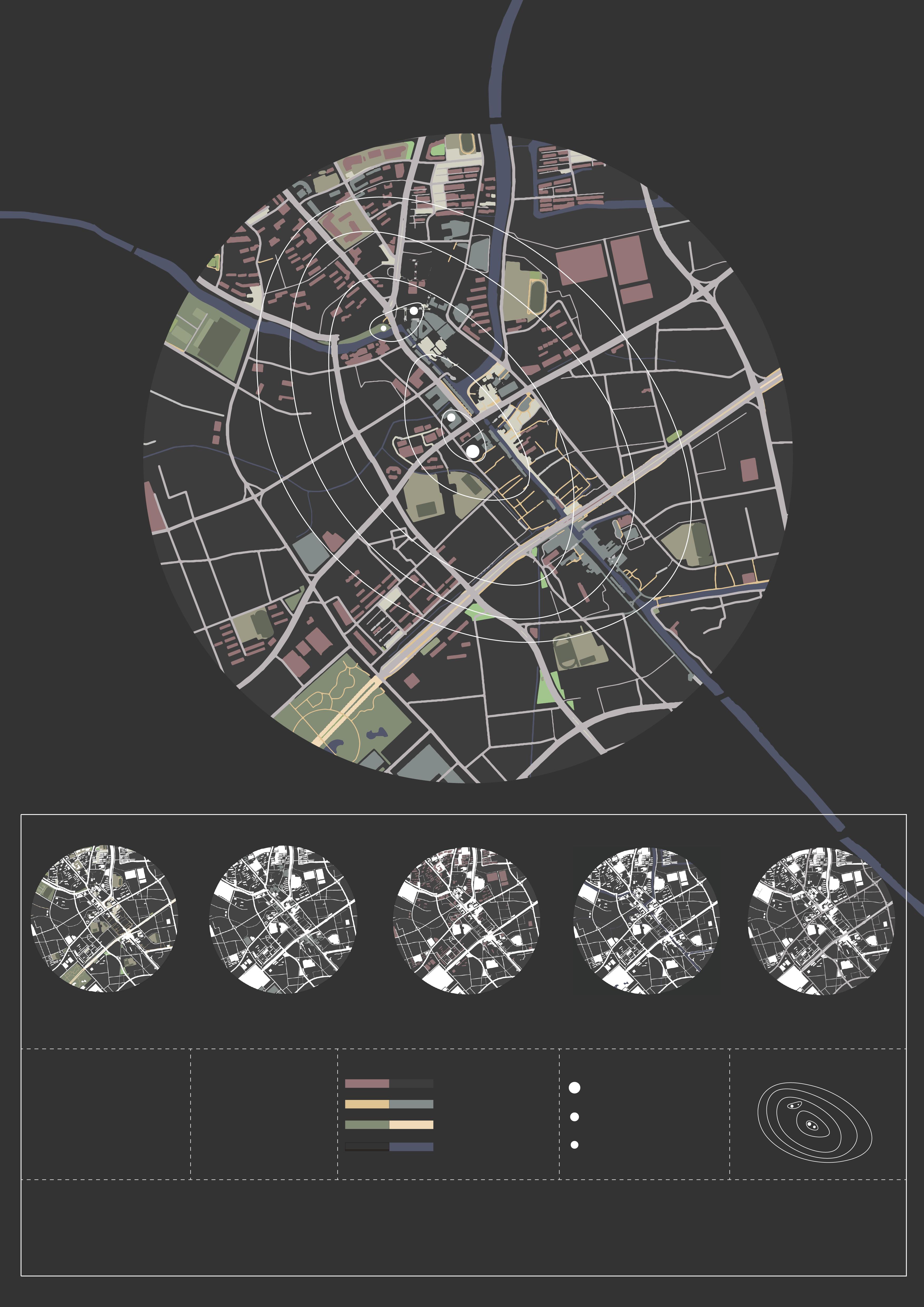
• Based on a comprehensive site assessment of transportation, pedestrian flow, visual corridors, microclimate, and typologies, I developed systematic diagrams to identify gaps and opportunities. This informed a design strategy to "stitch the city to the riverfront," transforming underused areas into integrated public realms.
Suzhou Gusu District Old Textile Factory Renovation Project
• Through on-site surveys documenting building conditions, circulation, functional areas, and resident interviews, I gathered insights into community needs. This informed a residential design focused on preserving historical memory, fostering integration, and promoting adaptive reuse.
OTHERS
Language: Native speaker of Chinese,proficient in English Software: Rhinoceros 3D, Adobe Illustrator, Adobe Photoshop, D5 Render, V-Ray, SketchUp, AutoCAD Research on the Development of Vacant Land in Putuo District, Shanghai
Status : Individual work Status : Group work
LINEAR URBAN NEXUS FOR AXIAL HABITATION
Lunar Space Fantasy
ATOMIZED LIVING
A Residential Design for the Individual Era
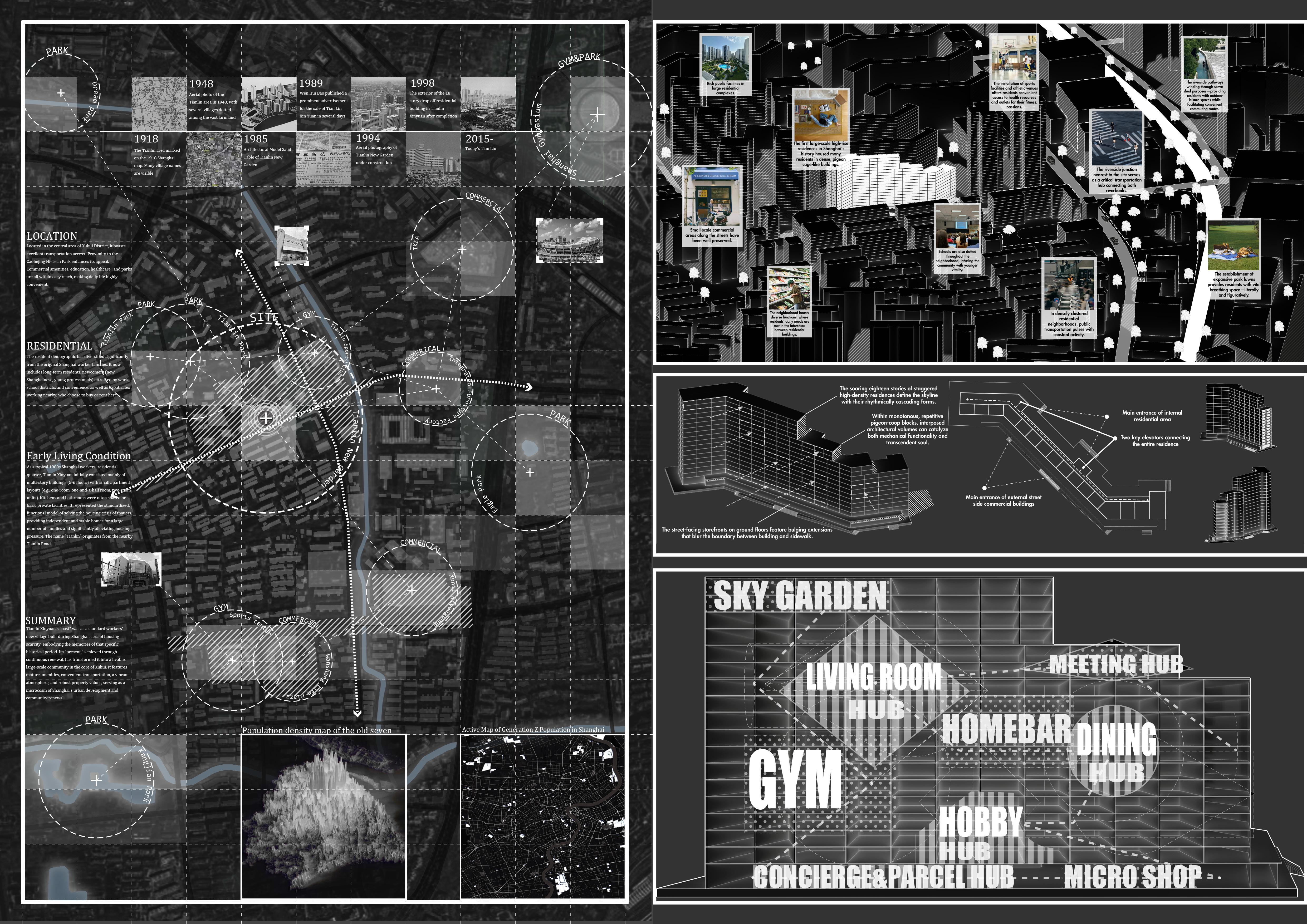
Location : Tianlin, Xuhui District, Shanghai, China
Date : 2025/6-2025/8
Status : Individual work
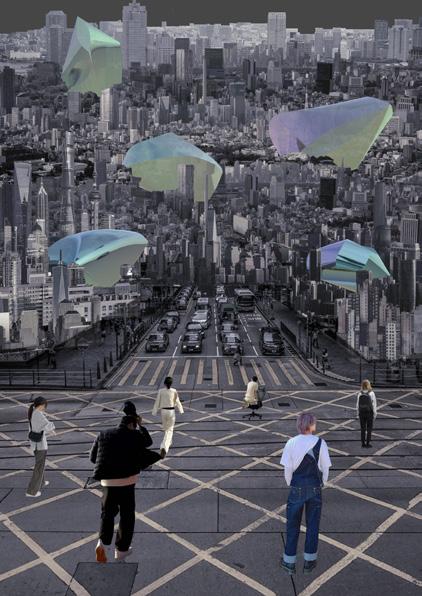
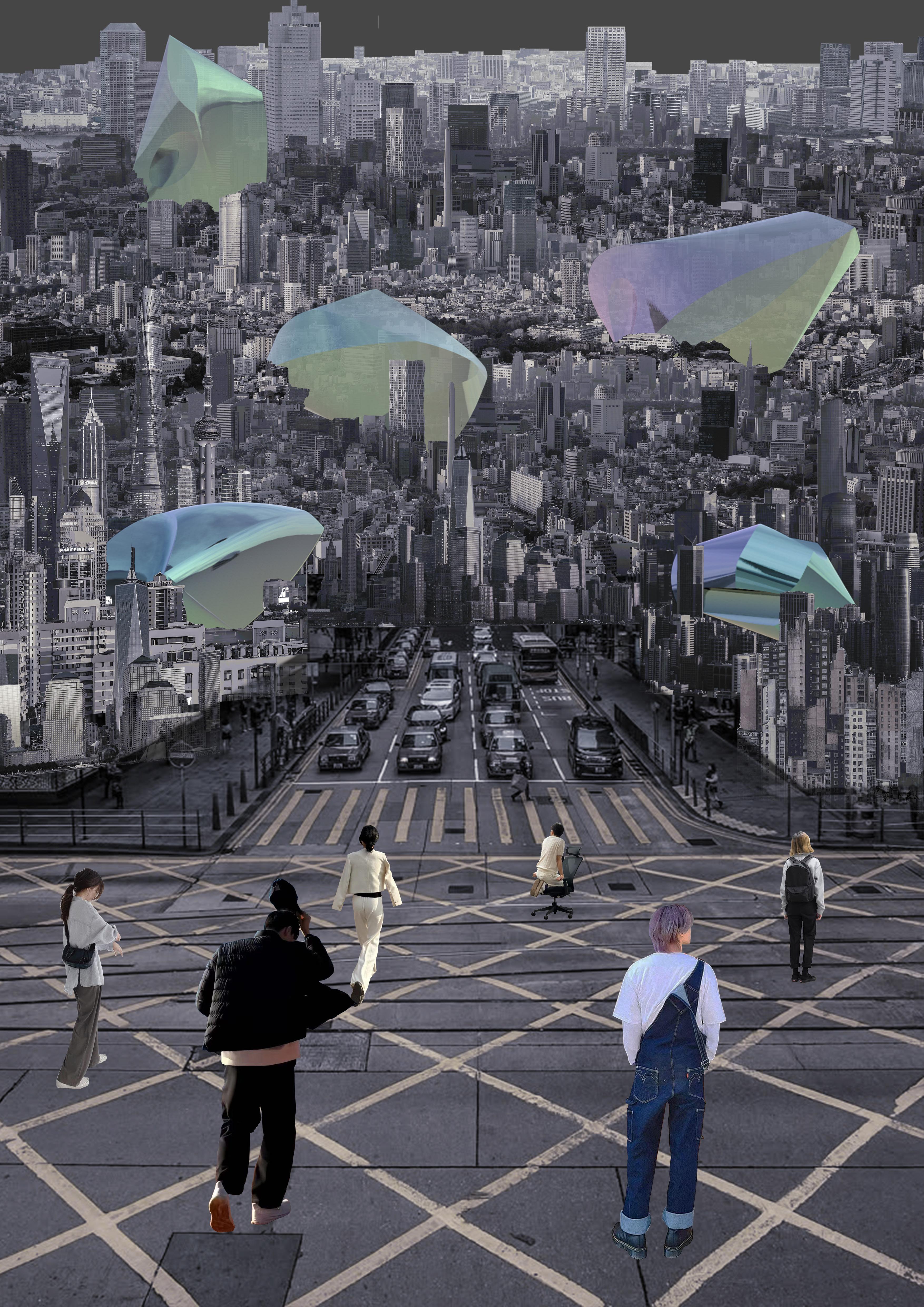
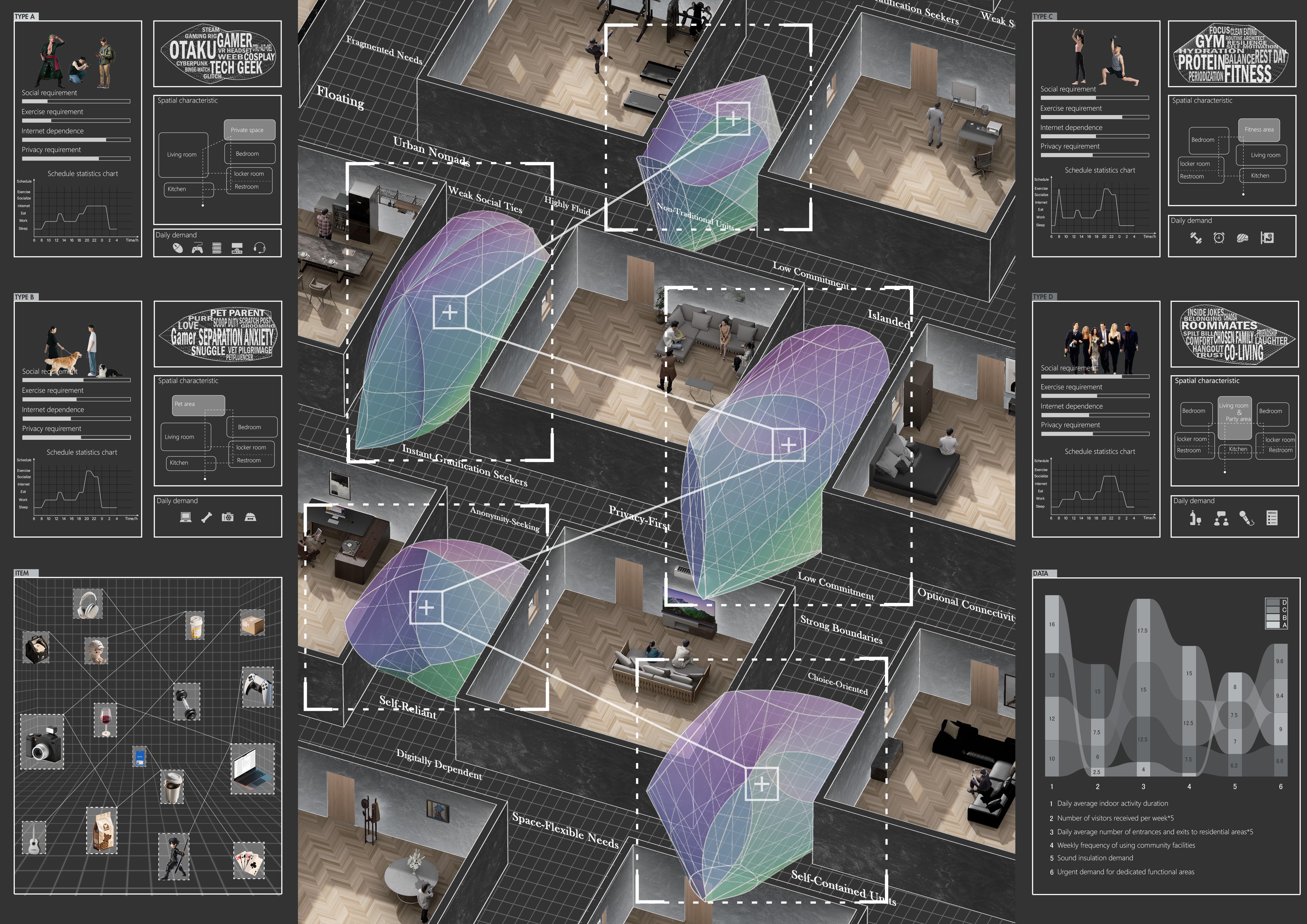
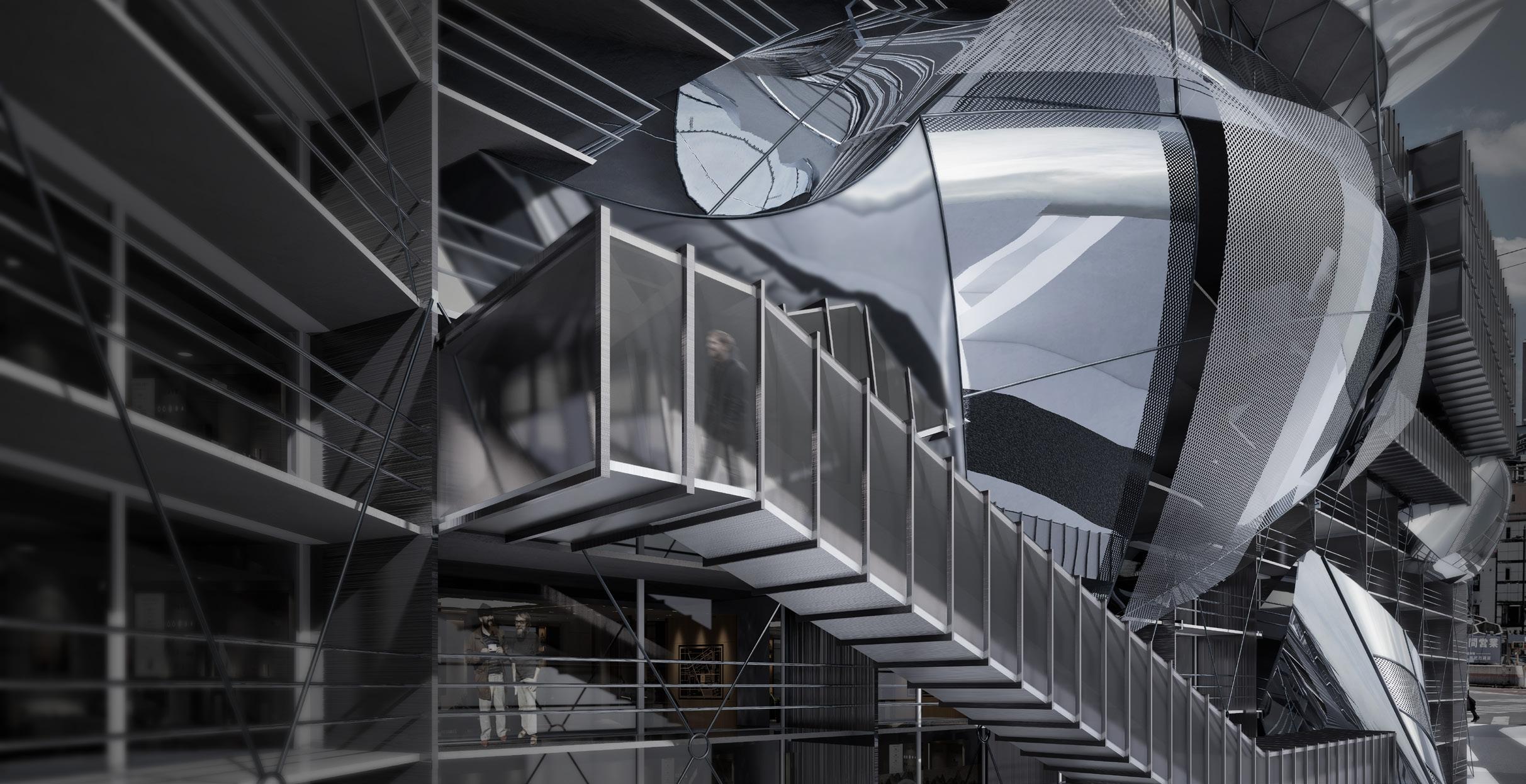
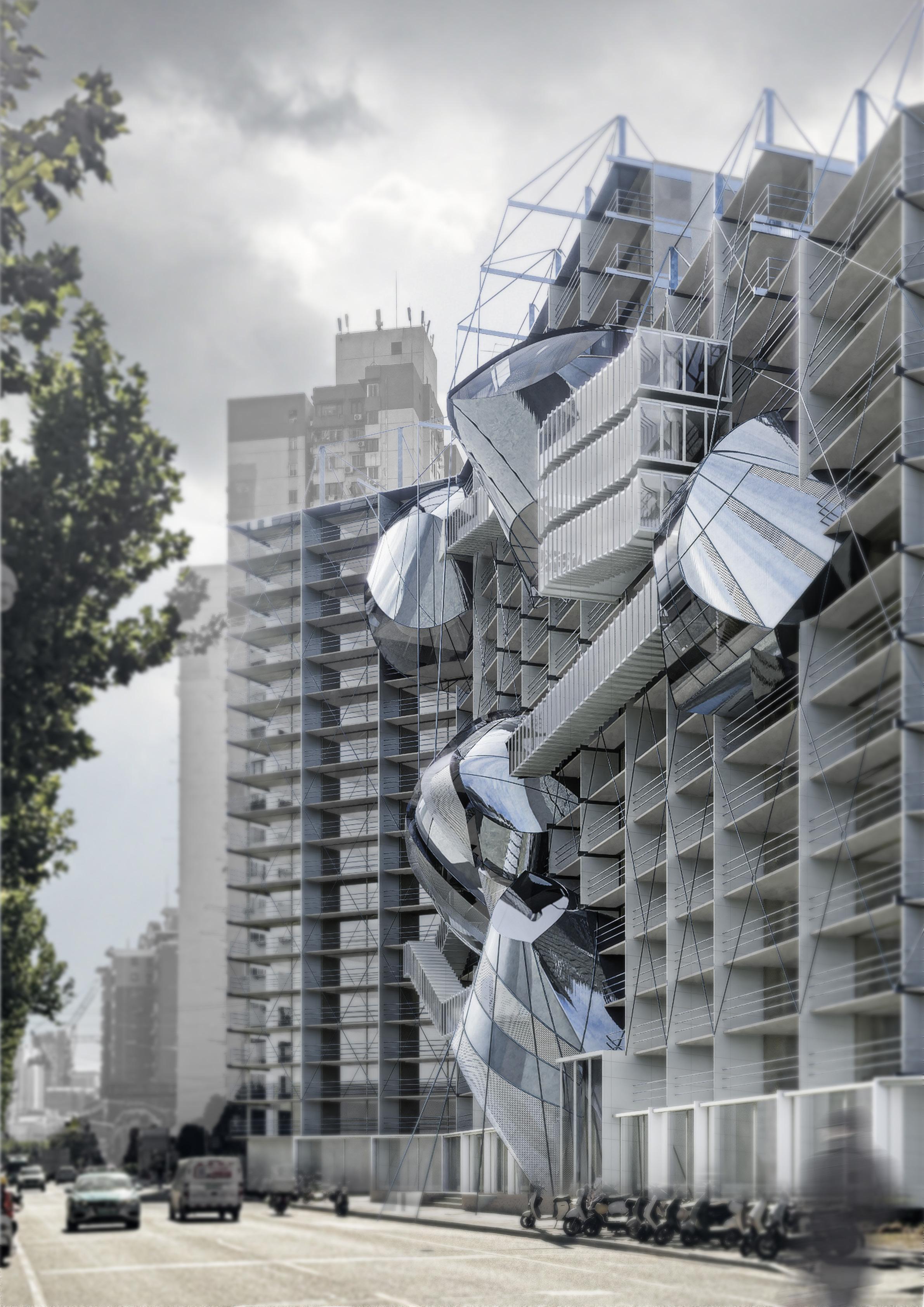
In the process of modernity and social transformation, traditional communities have gradually declined, and individuals have become “dis-embedded” from inherent social ties, evolving into independent, atomized beings. However, in the absence of new, more advanced forms of social integration, interpersonal alienation and egoism have emerged as symptoms of this transitional era.
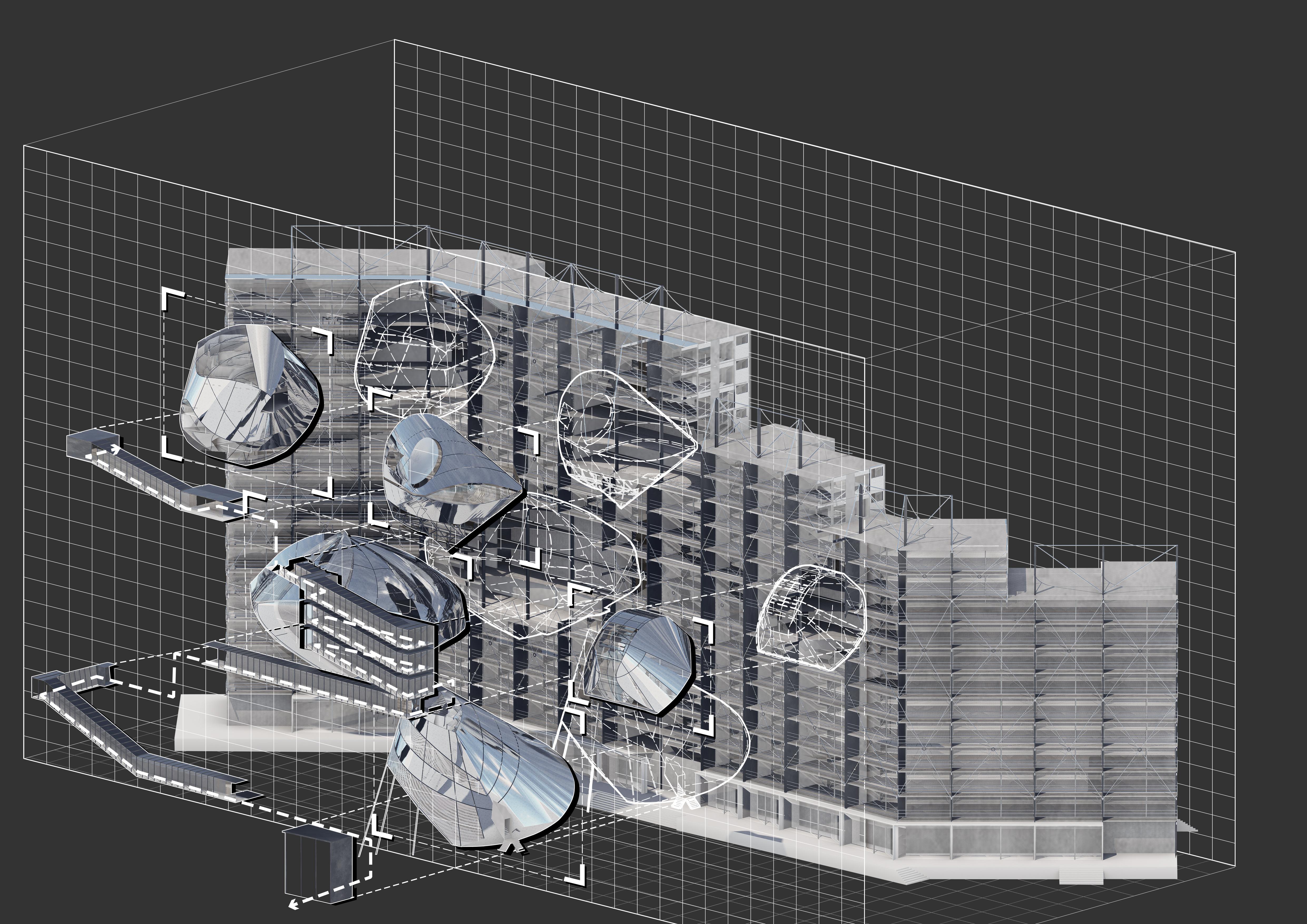
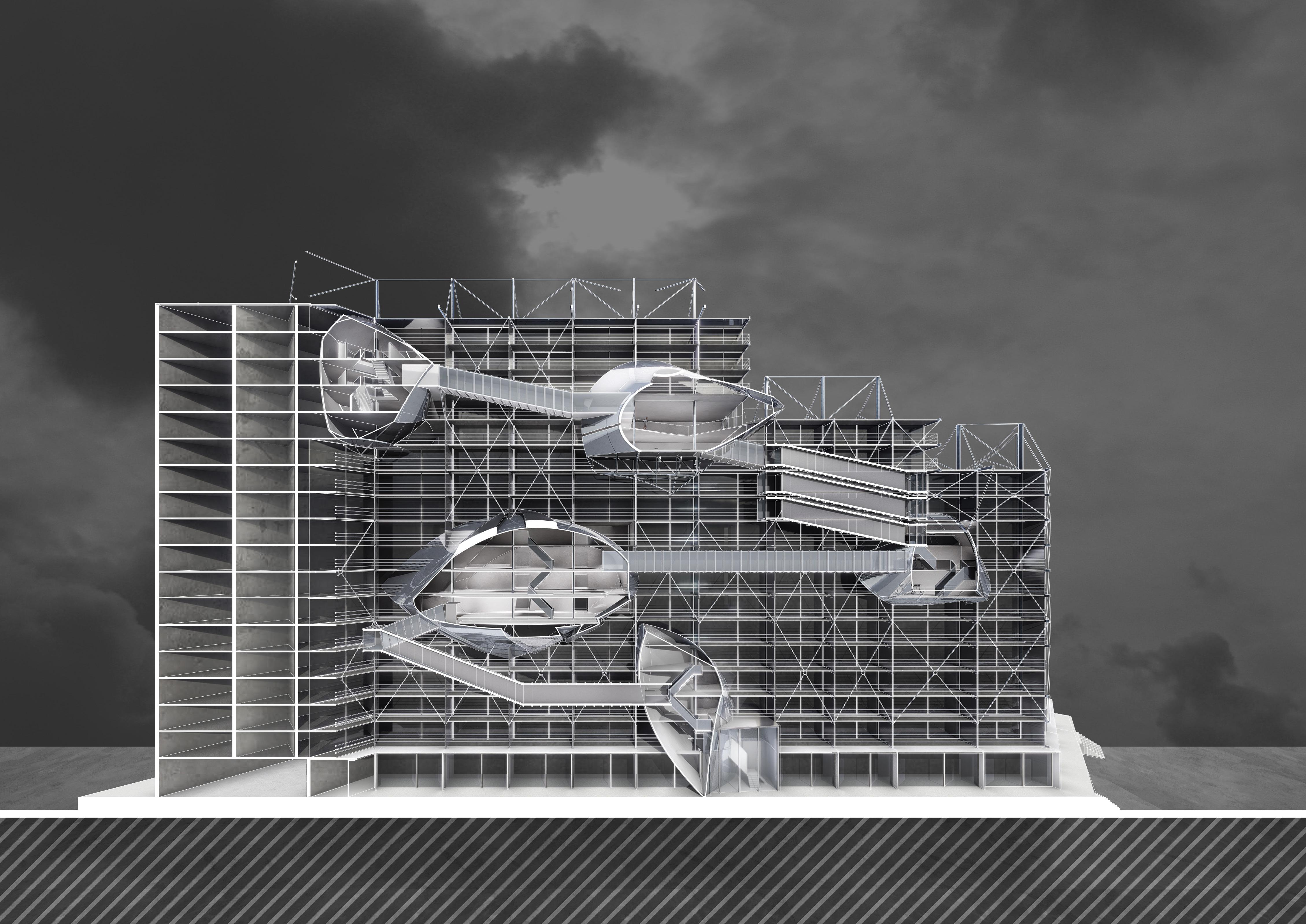
This project is an architectural response to this social condition. Through an indepth analysis of atomized individuals, meticulous site research, and rigorous optimization of apartment functions and circulation, unique “surreal inserted volumes” are introduced to shape the communal spaces. This design breaks through physical and psychological boundaries, aiming to provide a spiritual “second home” for modern individuals who find themselves detached from traditional clan relationships.
Mapping
Adaptive Reuse Analysis
Z Style Funtion Program
Residential Function Analysis
Theory Research
Lebbeus Woods focused on “architecture of crisis,” using fragmented, angular forms to challenge conventional order. His methodology prioritized radical experimentation over function, exploring spatial possibilities via drawings, to rethink architecture’s role in social/political change.
Anti-Atomization Aggregation
Deconstruction of Segmented Grid
Newly Implanted Interactive Nexus
Traffic Linkage to Surrounding Units
LOUNGE
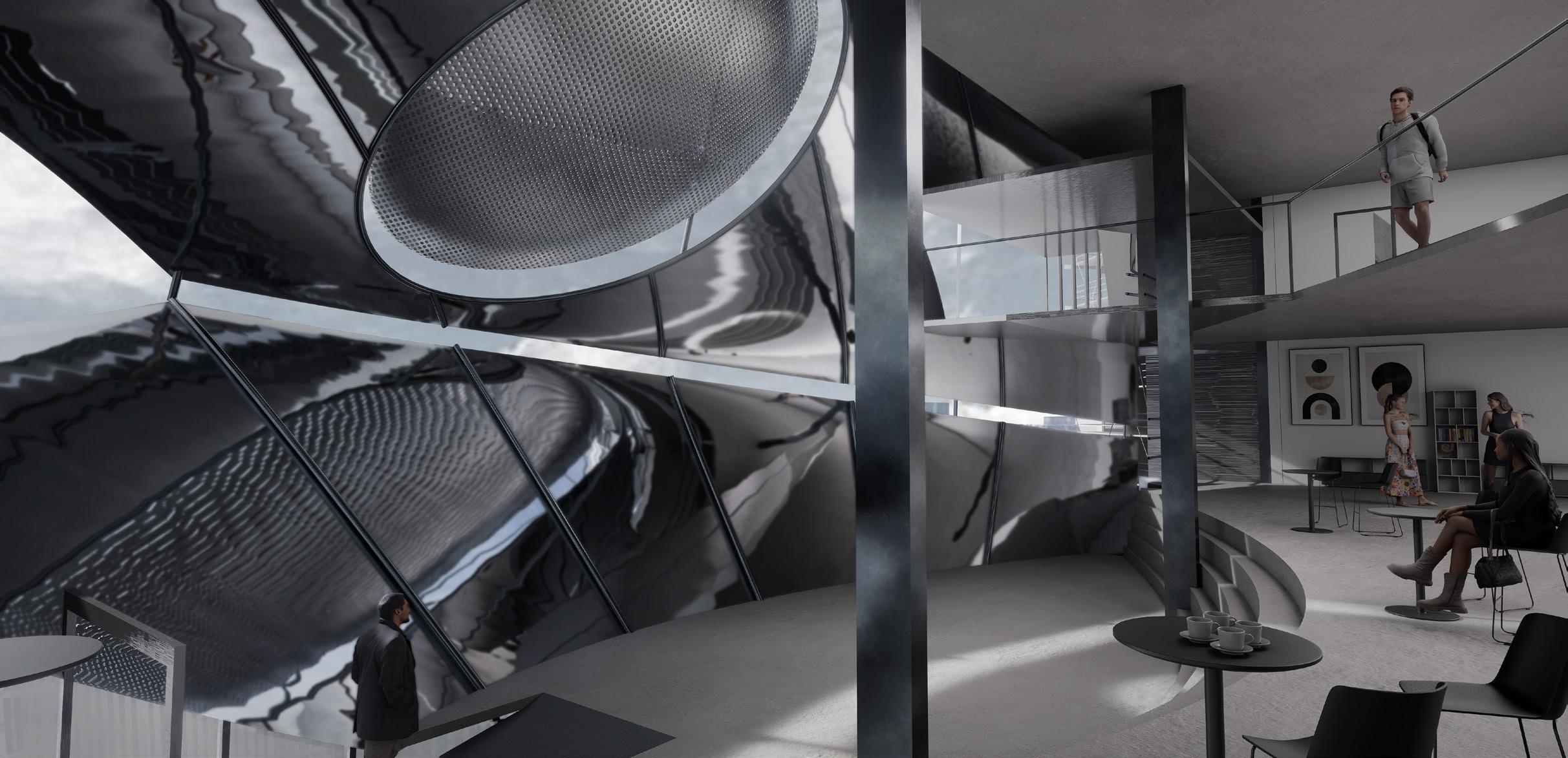
Tailored to young residents, the lounge enables socializing (small gatherings) and relaxation (quiet reading). It has modular sofas, a reading nook, power outlets, soft lighting and warm accents—ideal for connecting or unwinding.
Sectional Analysis UNITS
MEETING ROOM
Designed for modern professionals, the meeting room enables focused work (remote deep work) and collaborative sessions (team brainstorming). It features modular furniture, a large display, writable walls and adjustable lighting—ideal for achieving flow alone or building ideas together.
ENTRANCE LOBBY DINING GYM LOUNGE MEETING ROOM
GYM
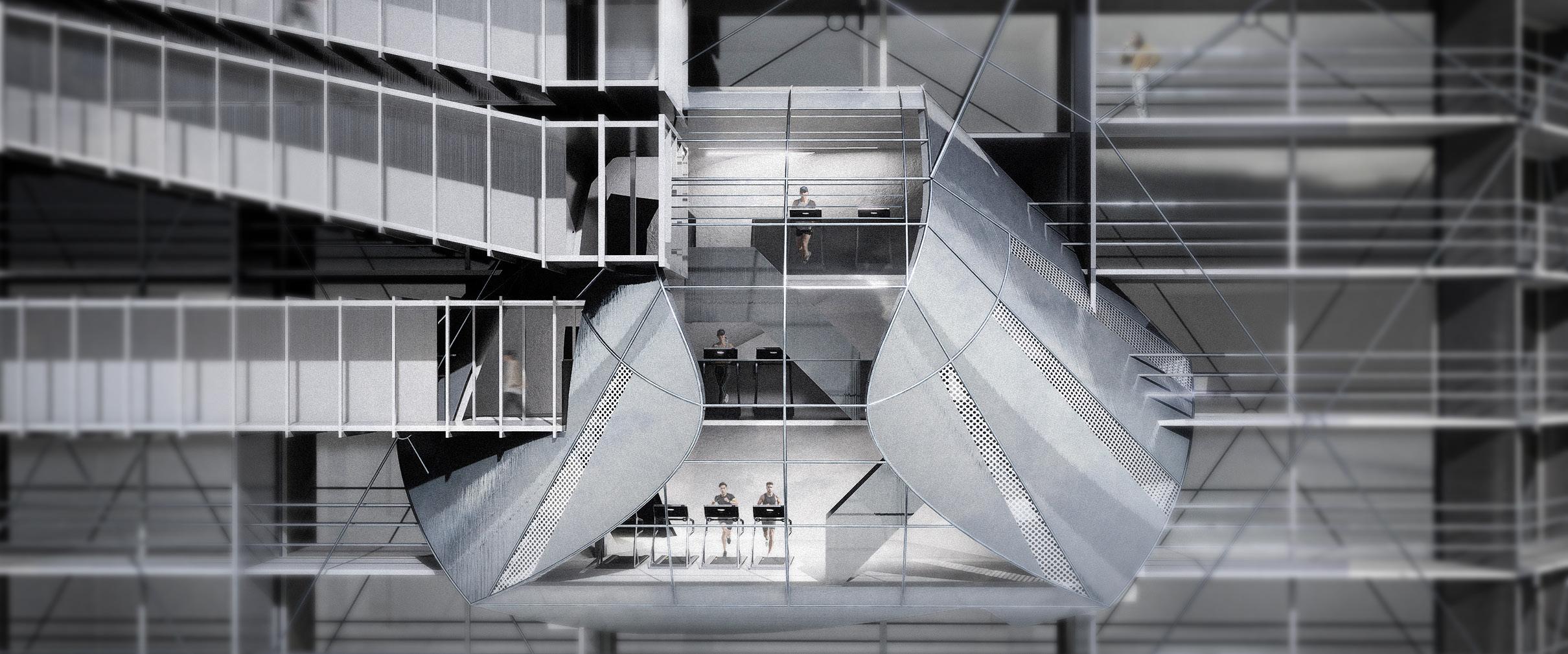
Catering to all fitness levels, the gym enables personal training (solo workouts) and small group sessions (yoga classes). It features modular equipment, a functional training zone, fitness mirrors and vibrant accents—ideal for pushing limits alone or finding motivation in a community.
DINING
Tailored to diverse schedules and tastes, the restaurant enables effortless dining (individual meals) and spontaneous networking (chef’s table gatherings). It features flexible seating, a central communal table, quick-grab counters and curated lighting—ideal for refueling alone or connecting over food.
ENTRANCE LOBBY
Serving as the architectural welcome, the lobby enables seamless transition (arrival experience) and chance encounters (casual greetings). It features a statement art piece, comfortable seating clusters, an interactive info desk and layered lighting—ideal for a dignified homecoming or the start of a new connection.
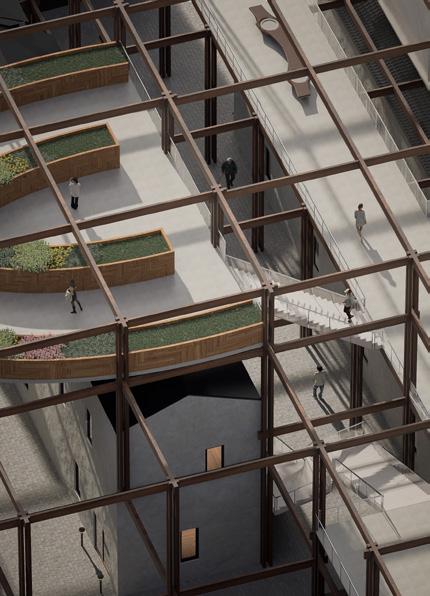
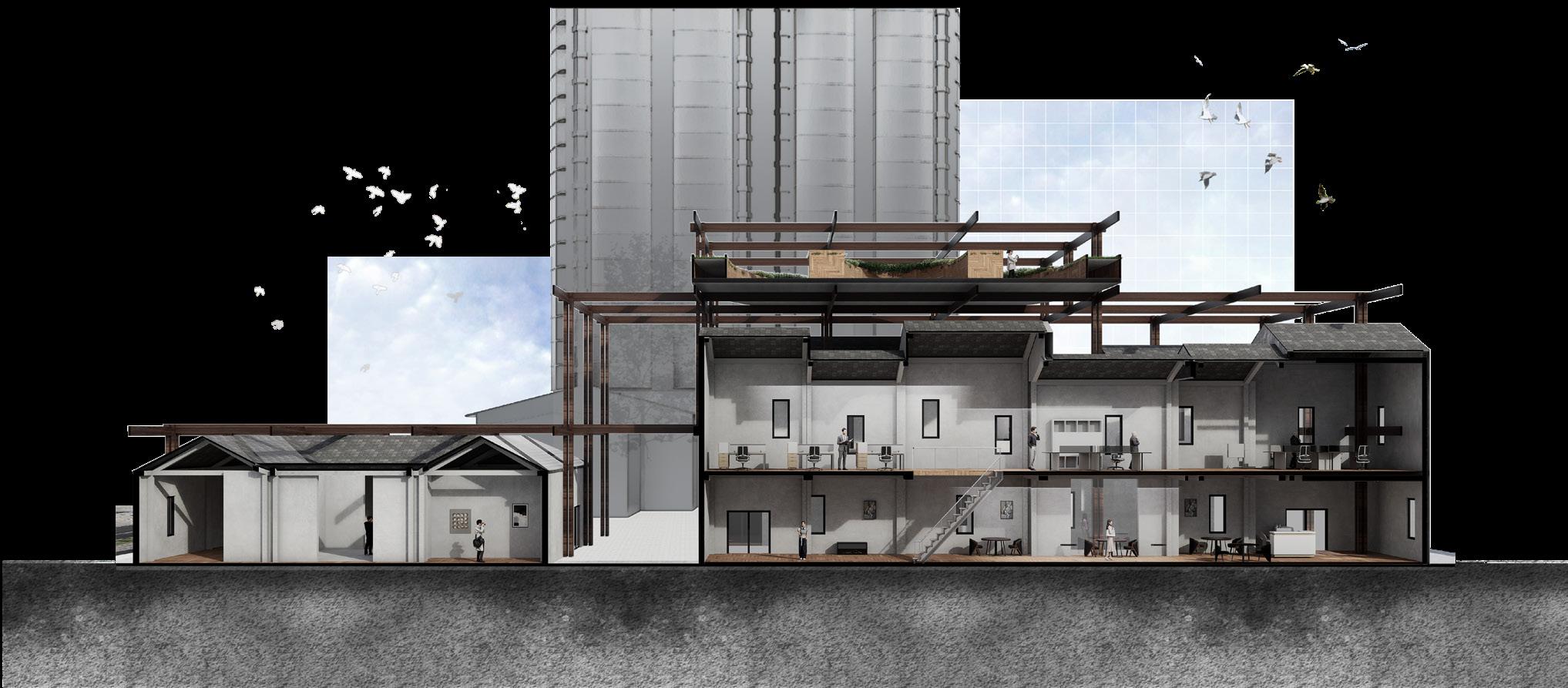
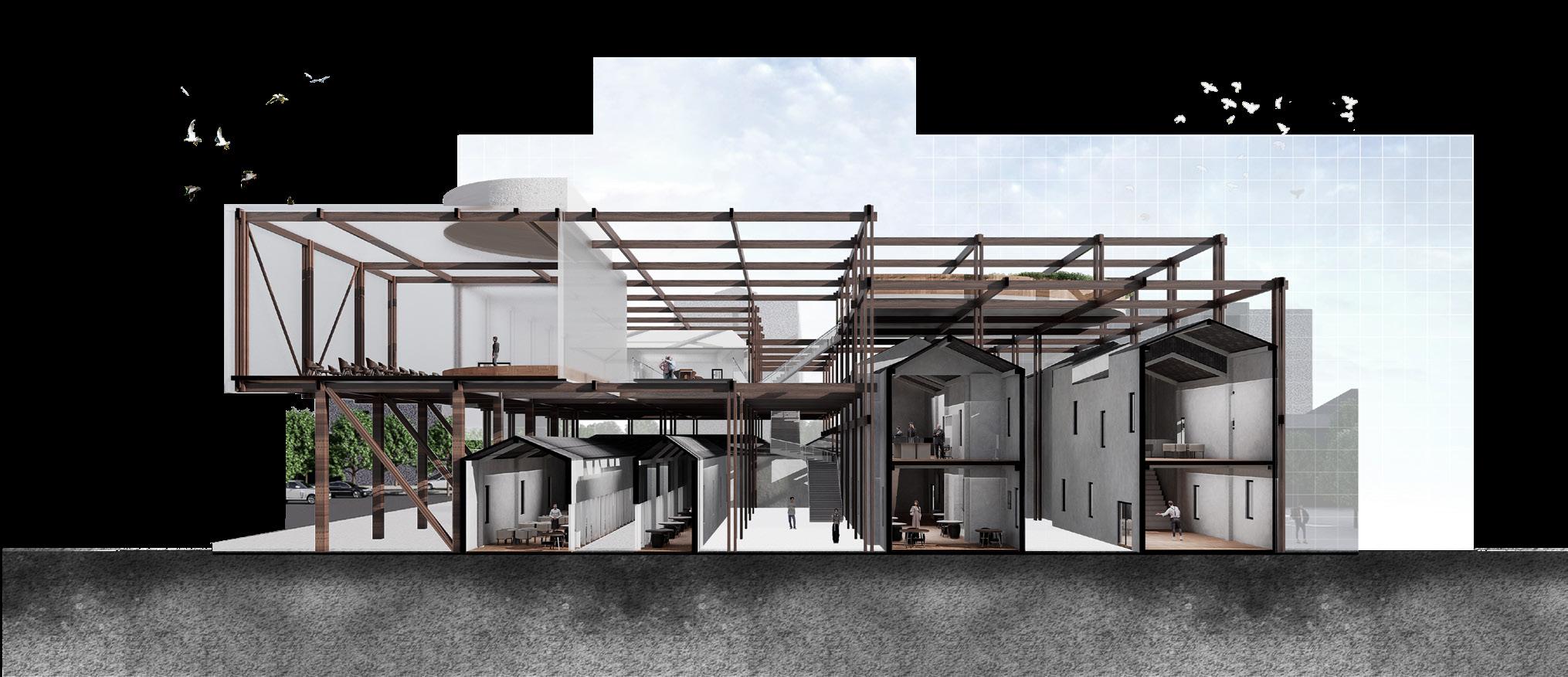
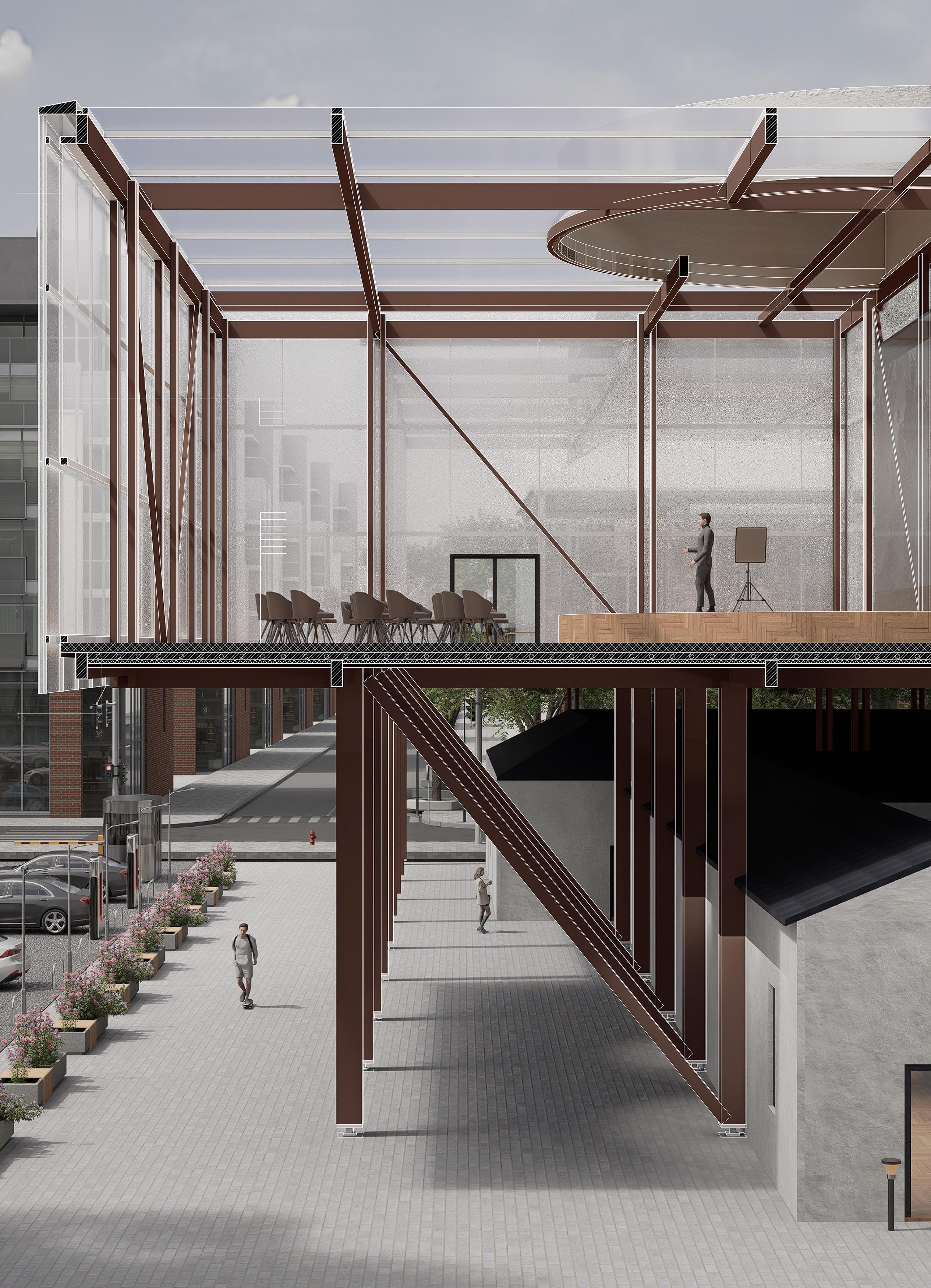
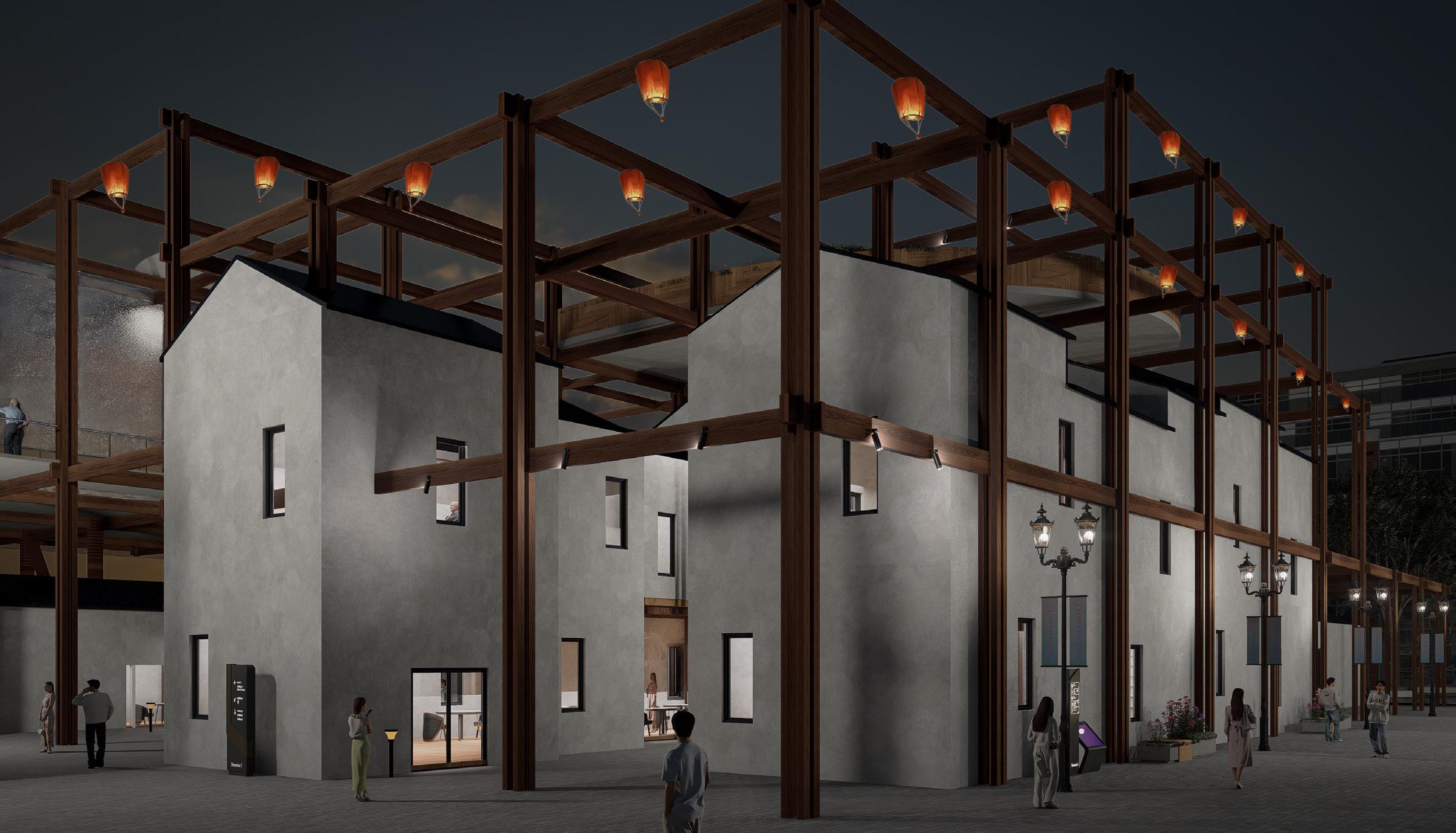
This project proposes a Semi-Open Jiangnan Culinary Cultural Hub for the historic Nanchang Street in Wuxi. The architectural concept executes a clear vertical material transformation to manifest the dialogue between heritage and innovation.
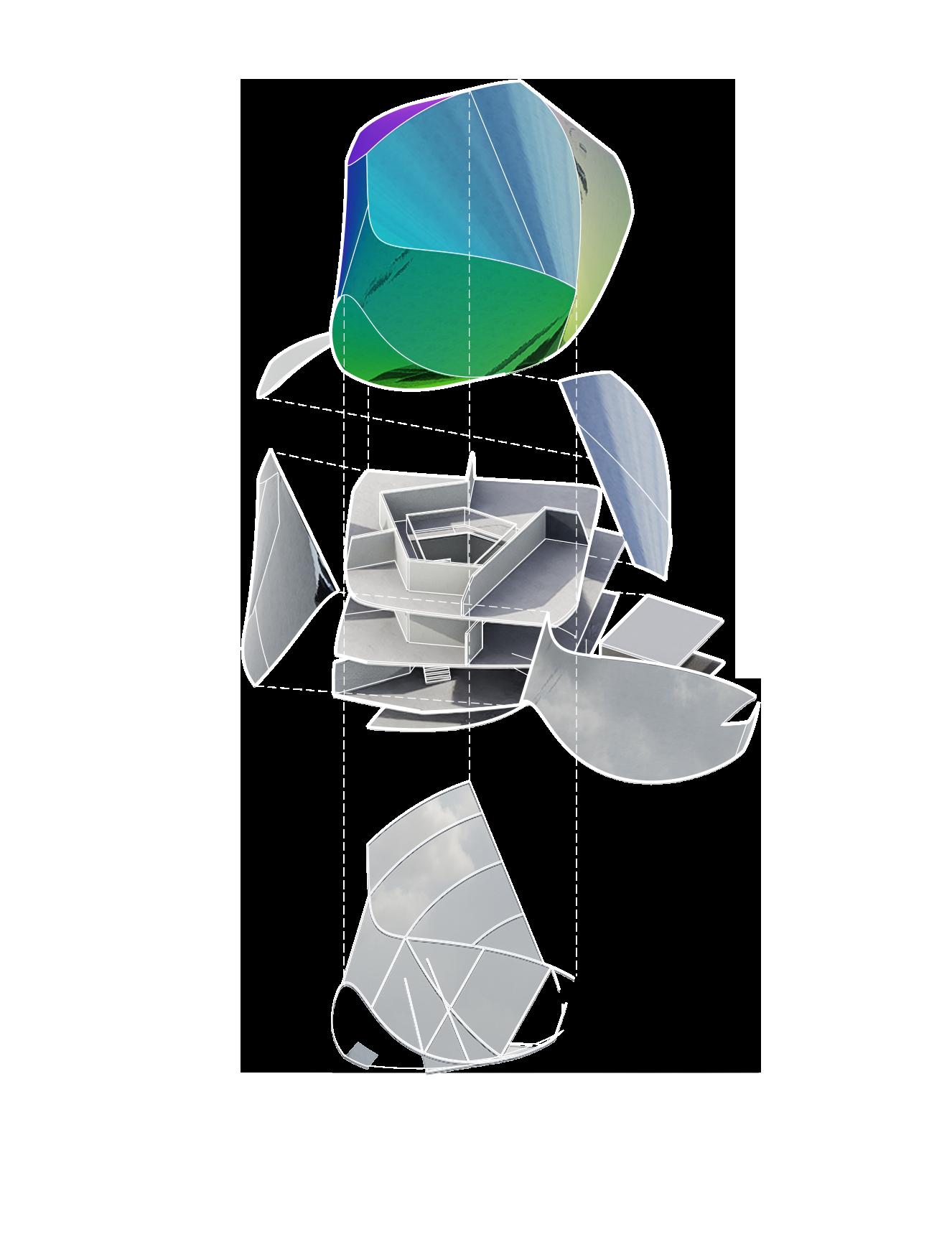
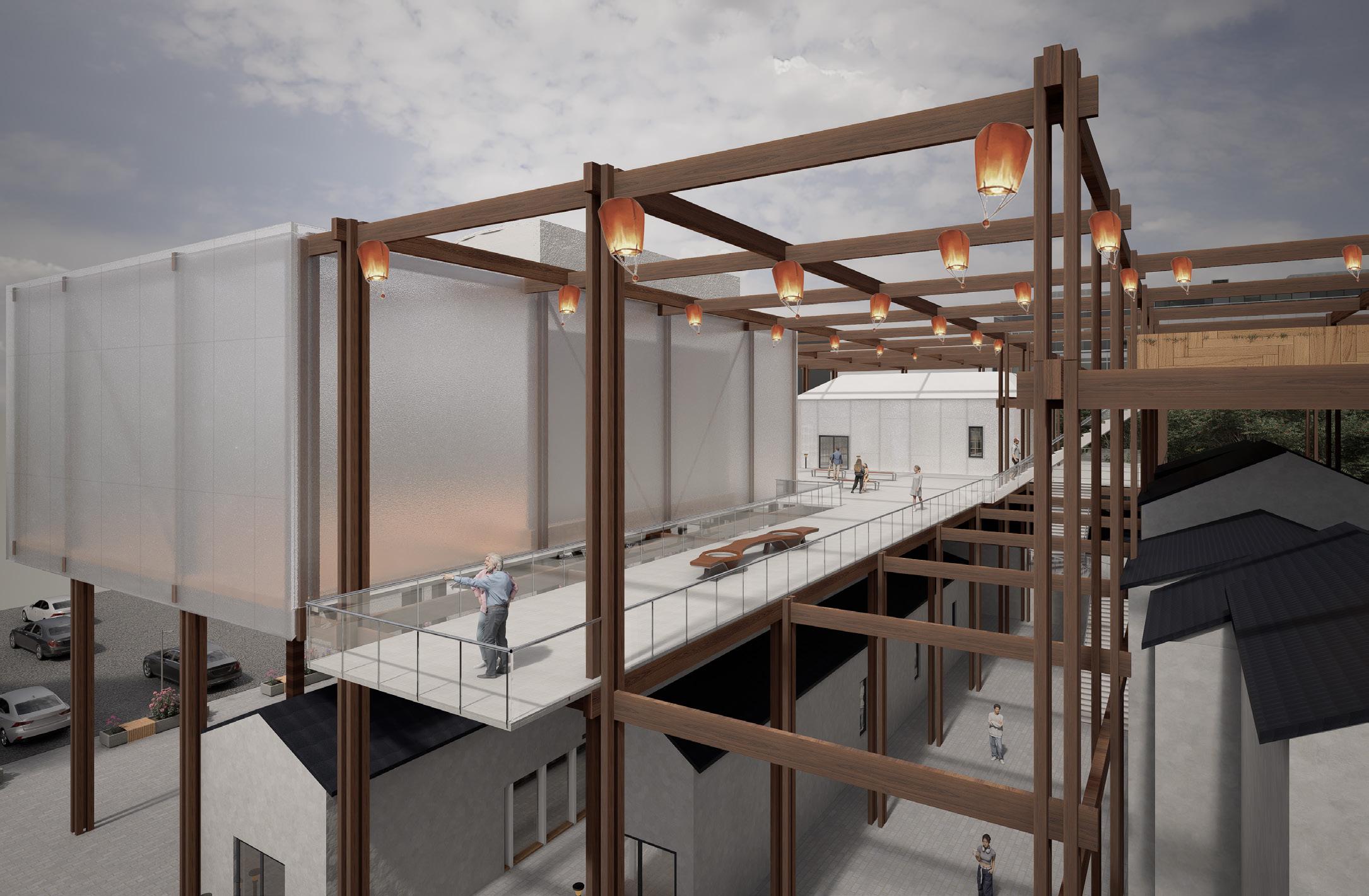
The building is structured around a pragmatic wooden frame. At street level, its expression is solid and contextual, rendered in the white brick and blue tile vernacular. The true conceptual shift occurs above. Here, the entire volume is enveloped in a continuous, innovative semi-translucent shell. This luminous veil dematerializes the upper floors, transforming the exhibition spaces, theatre, and rooftop garden within into a soft, glowing landmark by night and a filtered, ethereal presence by day.
This is an architectural filter. It receives the tangible craft and social rituals of culinary culture at its base and outputs a diffused, contemporary cultural experience at its crown. The project inserts not just a program, but a new atmospheric condition and a beacon for collective life into the historic fabric.
Coutyard Alley
Connected coutyard Rowhouse Open coutyard
Green Commercial
Taihu Avenue
City
Province
This architectural project is situated at the entrance of Nanchang Street, a characteristic historical district in Liangxi District, Wuxi City, Jiangsu Province, China. Located in a central urban area, it is surrounded by diverse functional zones including residential and commercial districts. With high pedestrian flow, the site holds significant potential to
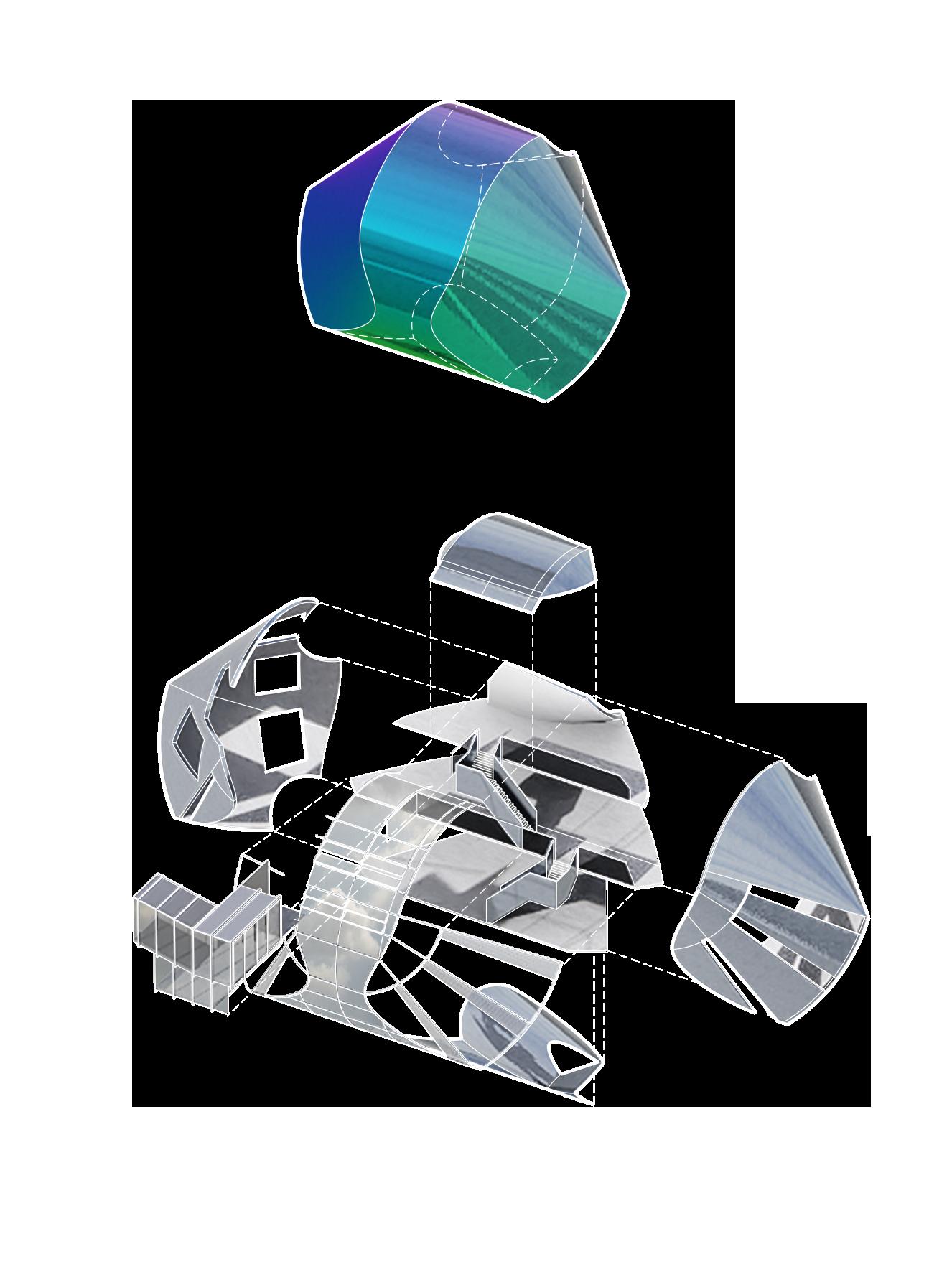
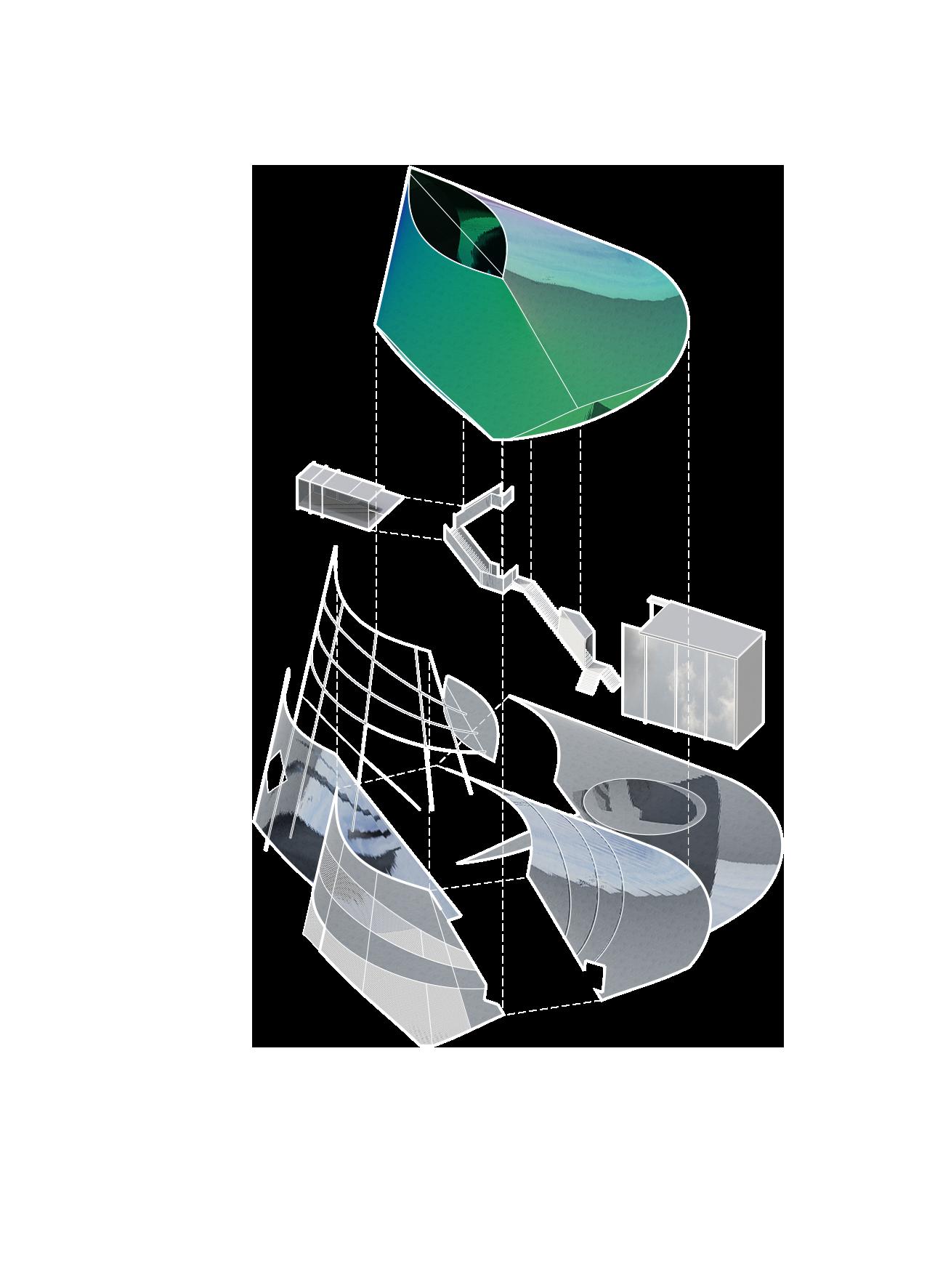
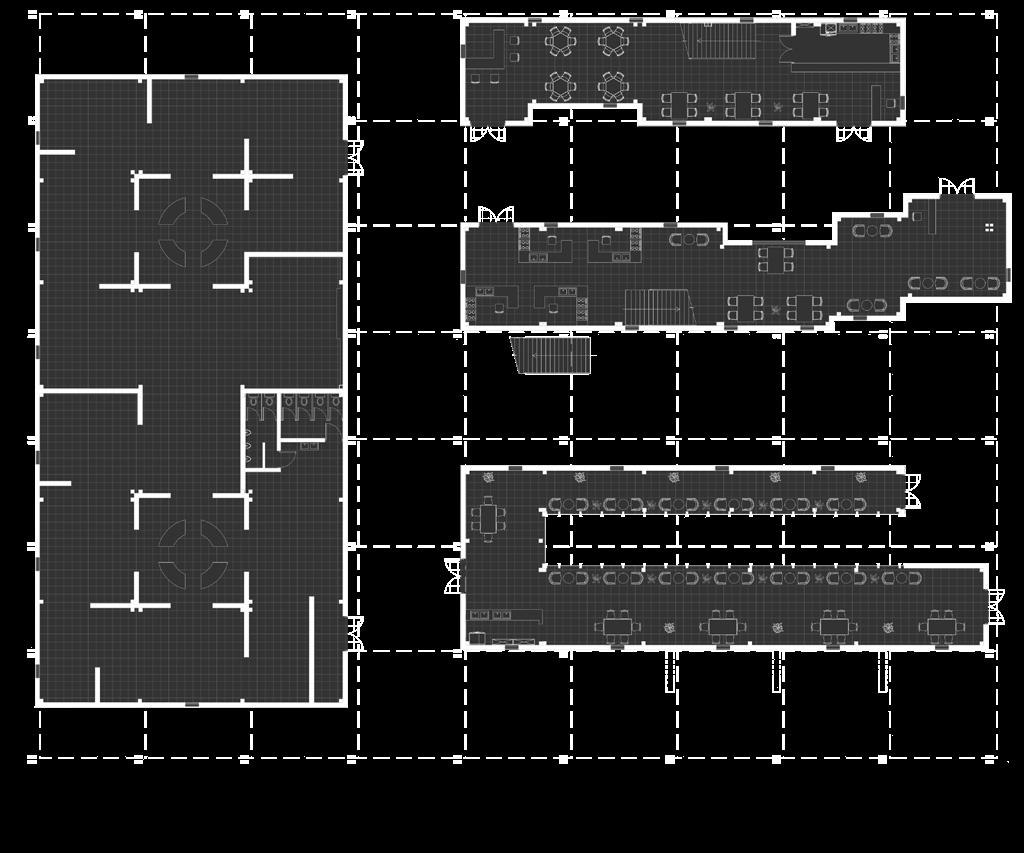
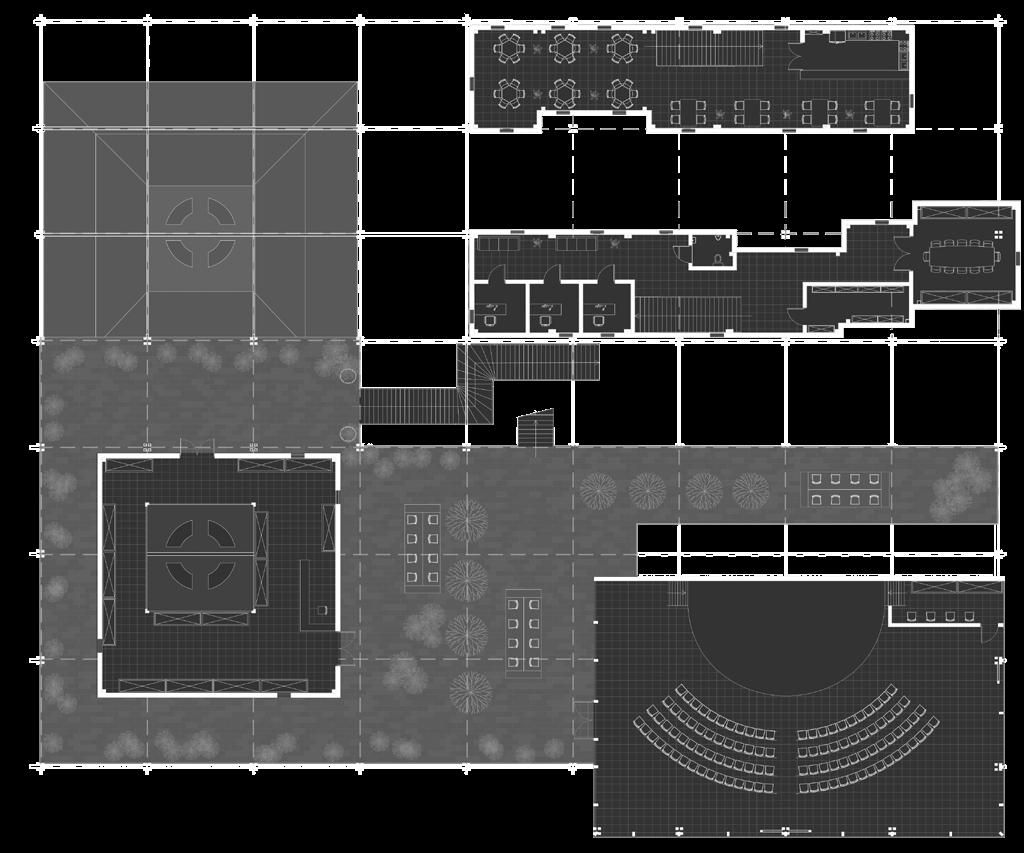
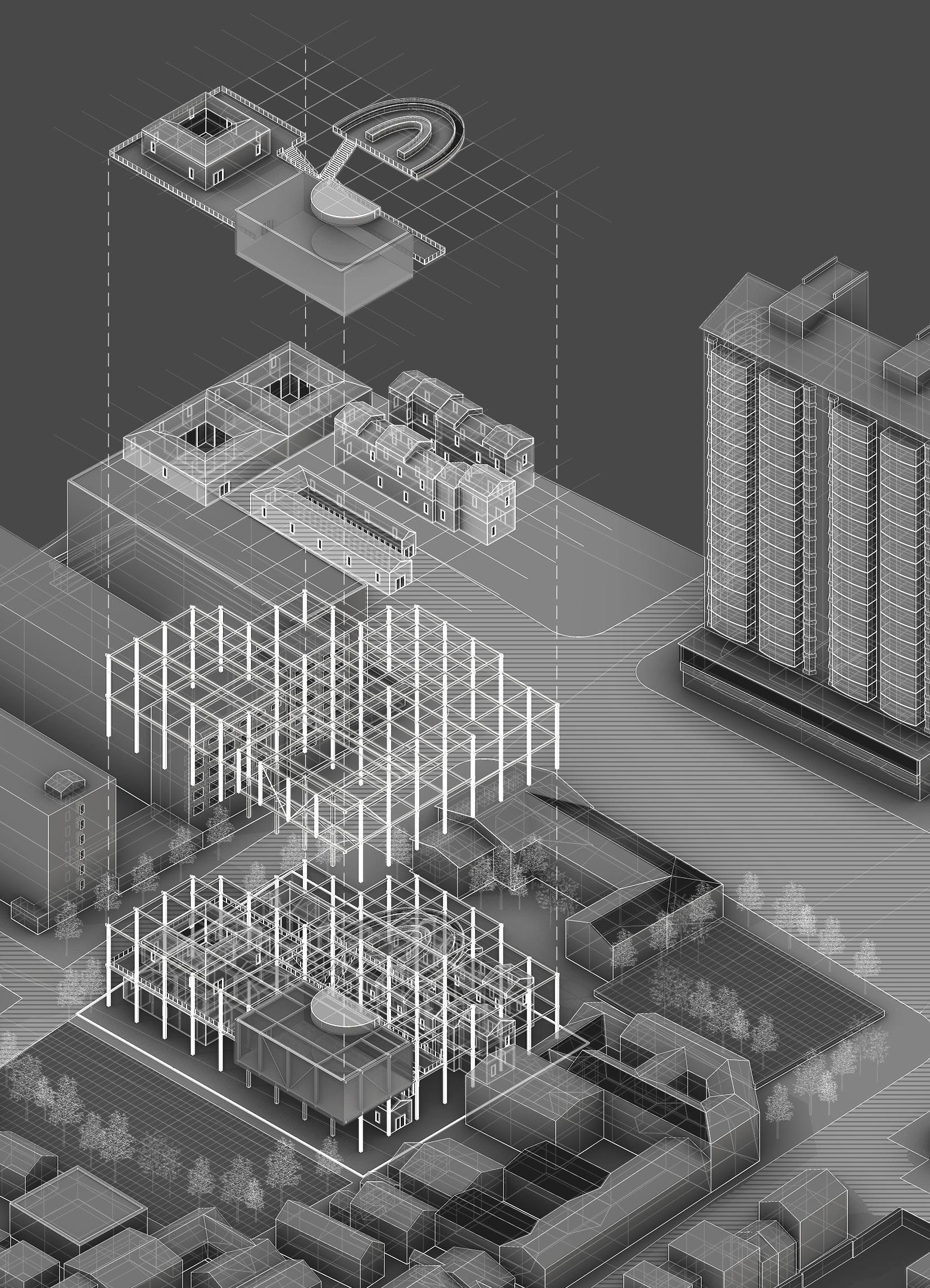
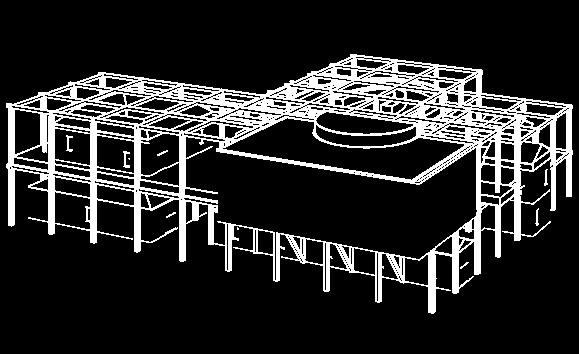
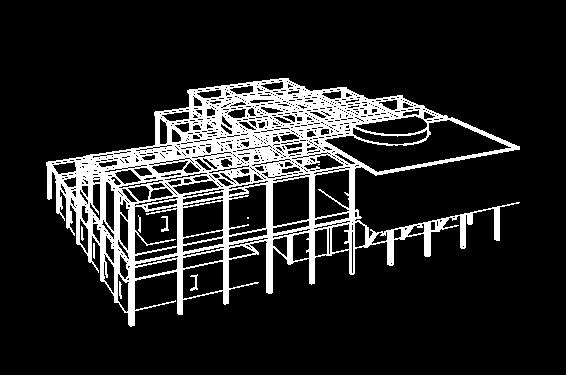
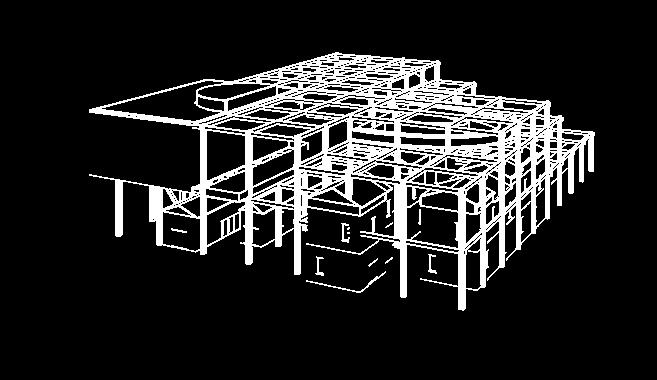
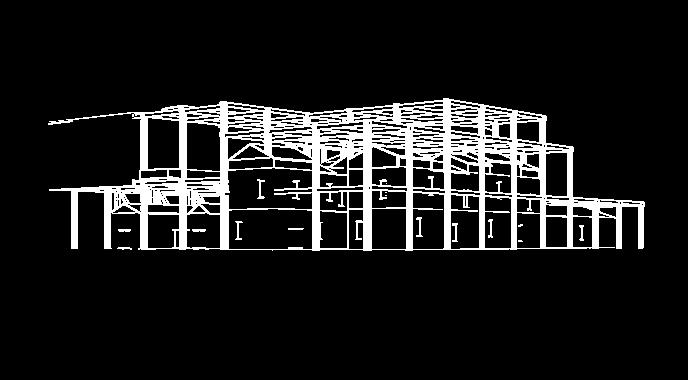
From the exploded axonometric diagram, it is clear that the building is organized into three interconnected levels.
The ground floor cluster deconstructs and reinterprets the typology of traditional architecture, reassembling it into a contemporary reinterpretation that integrates seamlessly into the surrounding context.
On the second level, two volumes—housing a theater and surrounding retail spaces—are clad in a semi-translucent material for their facades. These are linked by a central staircase atrium.
Spiraling upward from this level is the third floor: a rooftop garden offering the building’s finest vantage
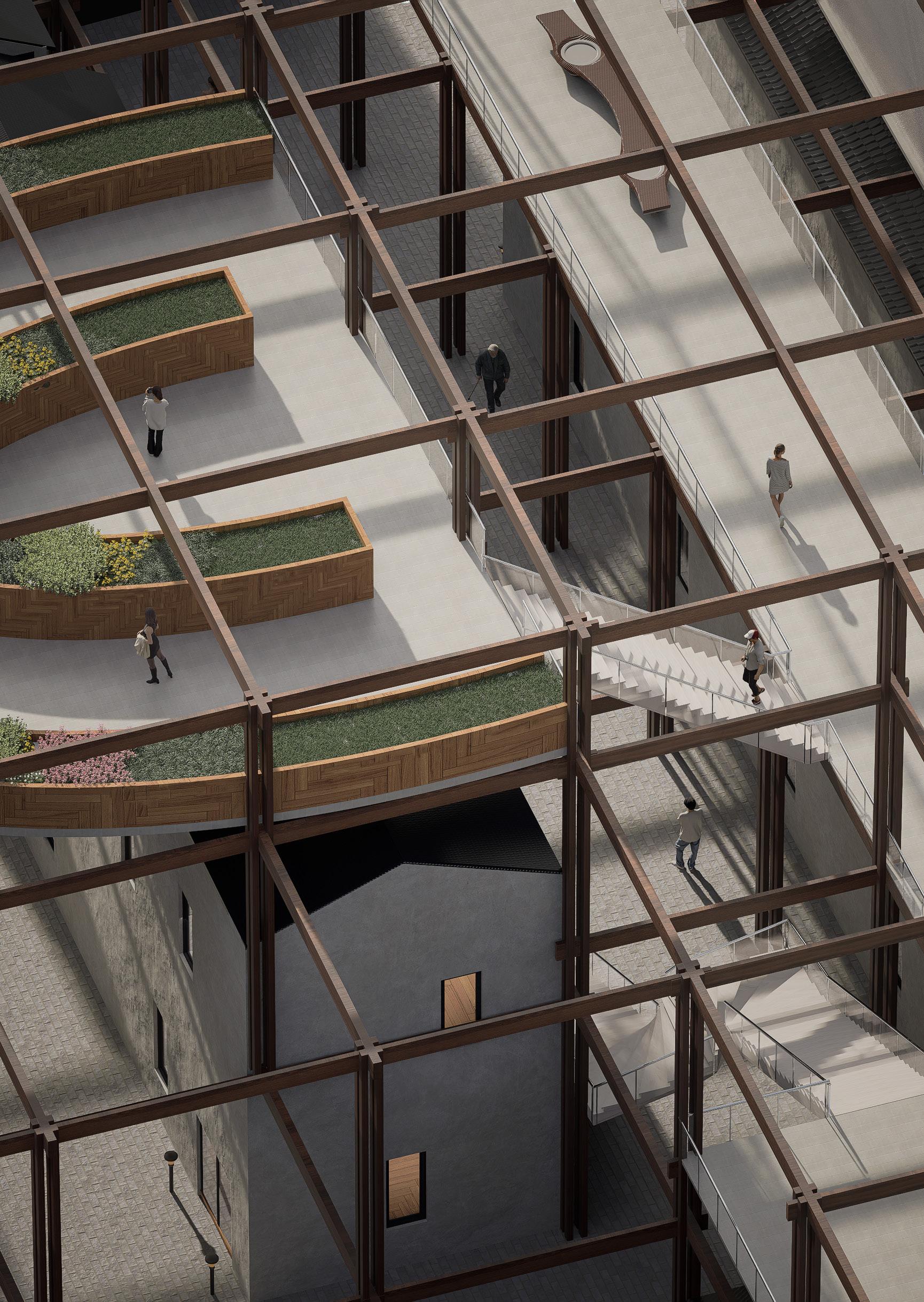
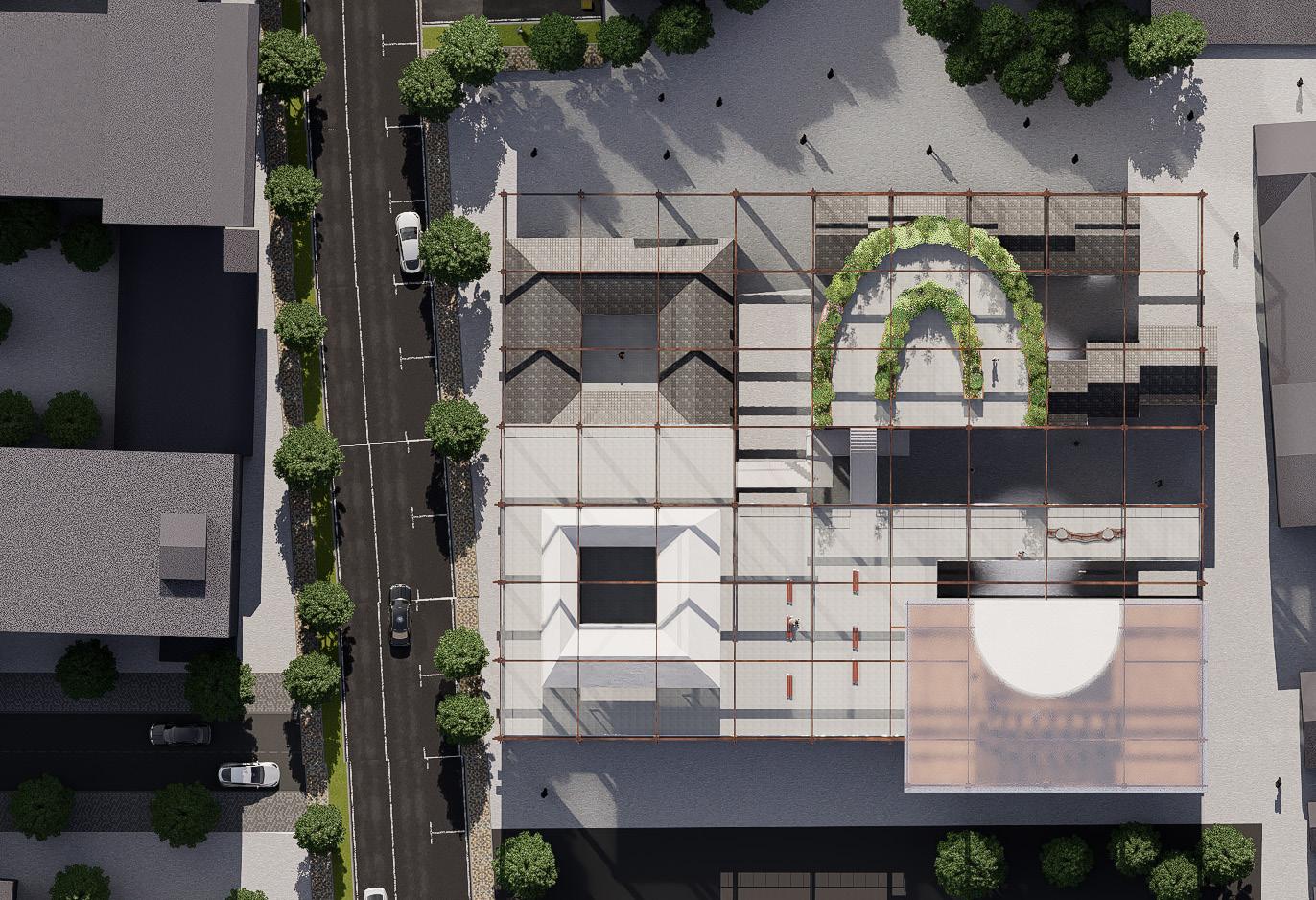
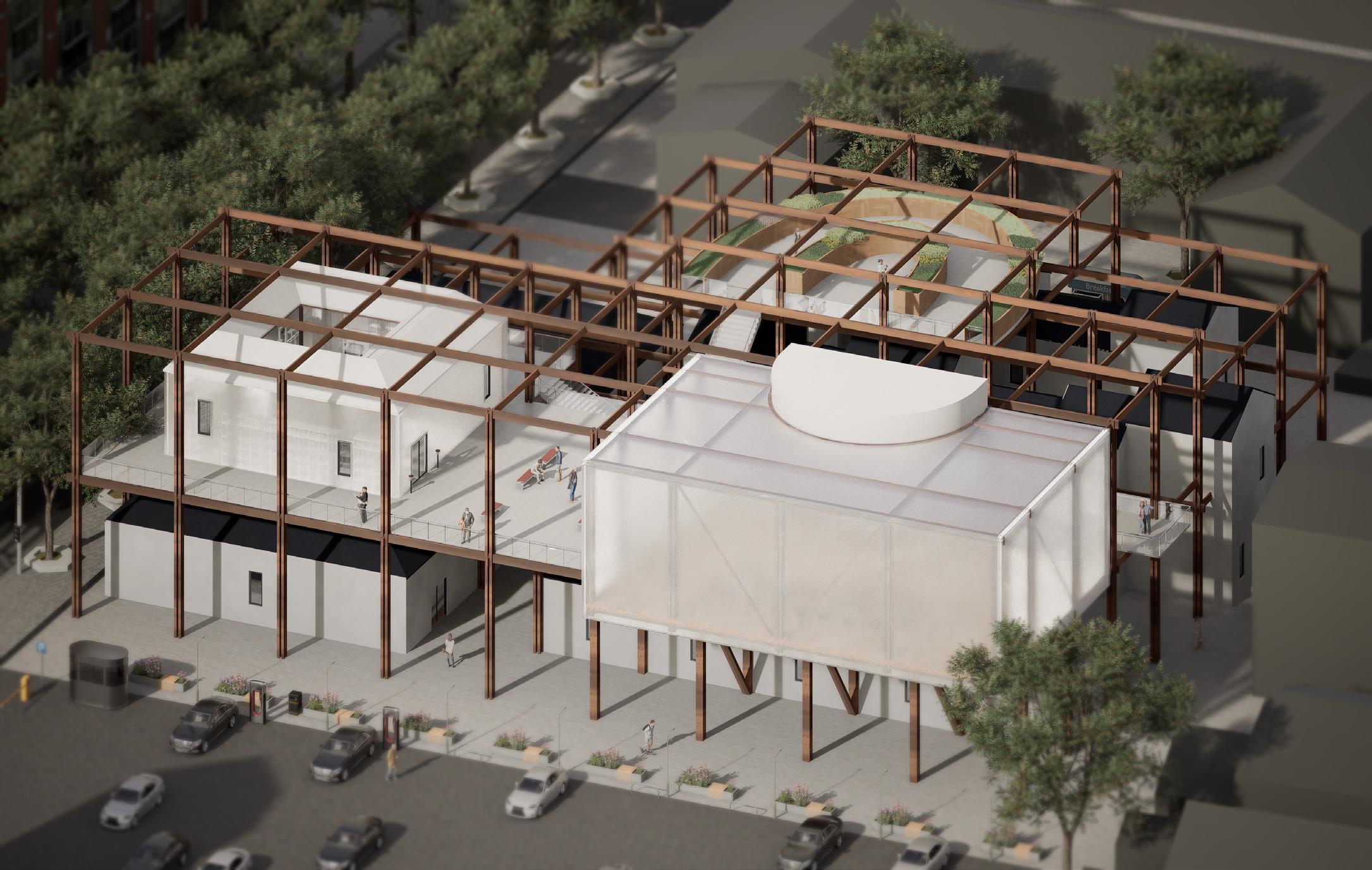
This aerial view illustrates the project’s holistic stance. The semi-transparent theater on the second level draws visitors from the urban plaza. The building’s timber framework aligns with the scale of the ancient town, seamlessly integrating into the fabric of the streets and alleys.
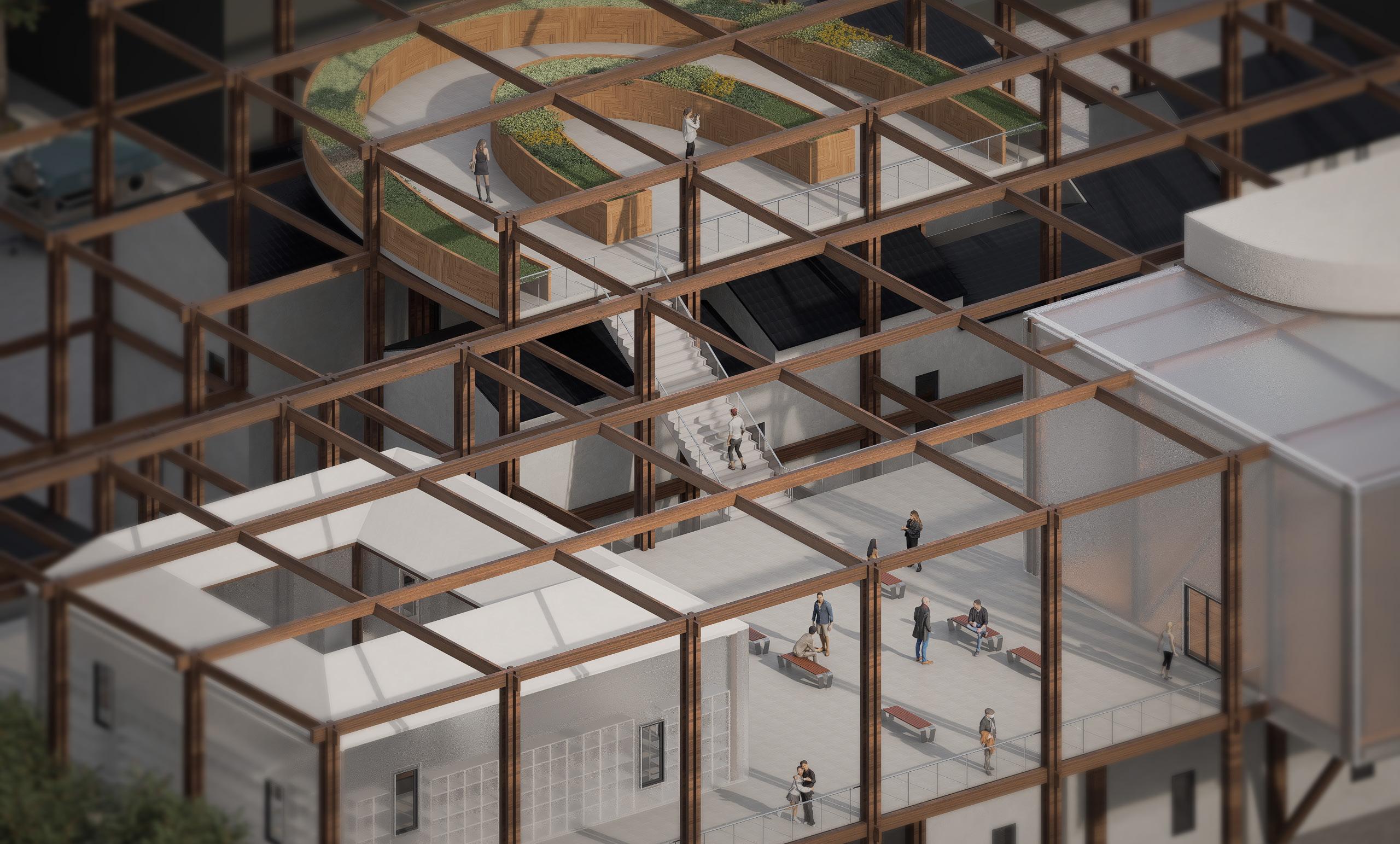
This aerial view reveals the intricate details of the second- and third-floor platforms as seen from a distant urban perspective. Human social activity, functional architectural spaces, and urban scenery blend seamlessly. Light and shadow, humanistic ambiance, and architectural layering together demonstrate the building’s exceptional integrative capacity.
Rendering Visualization
REBIRTH FROM THE ASHES
A Sanctuary from the Ashes
Location : The Altadena area in California, USA
Date : 2025/9-2025/12
Status : Individual work
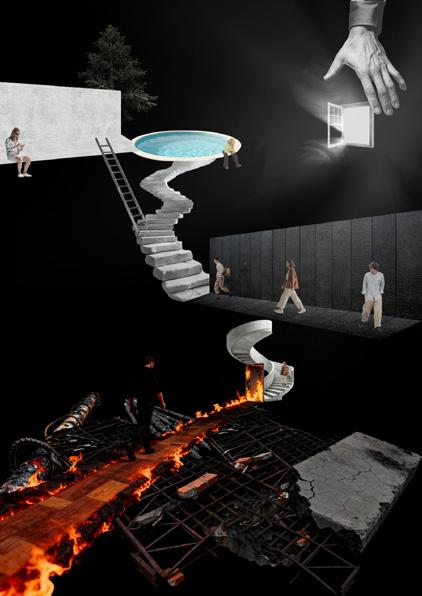
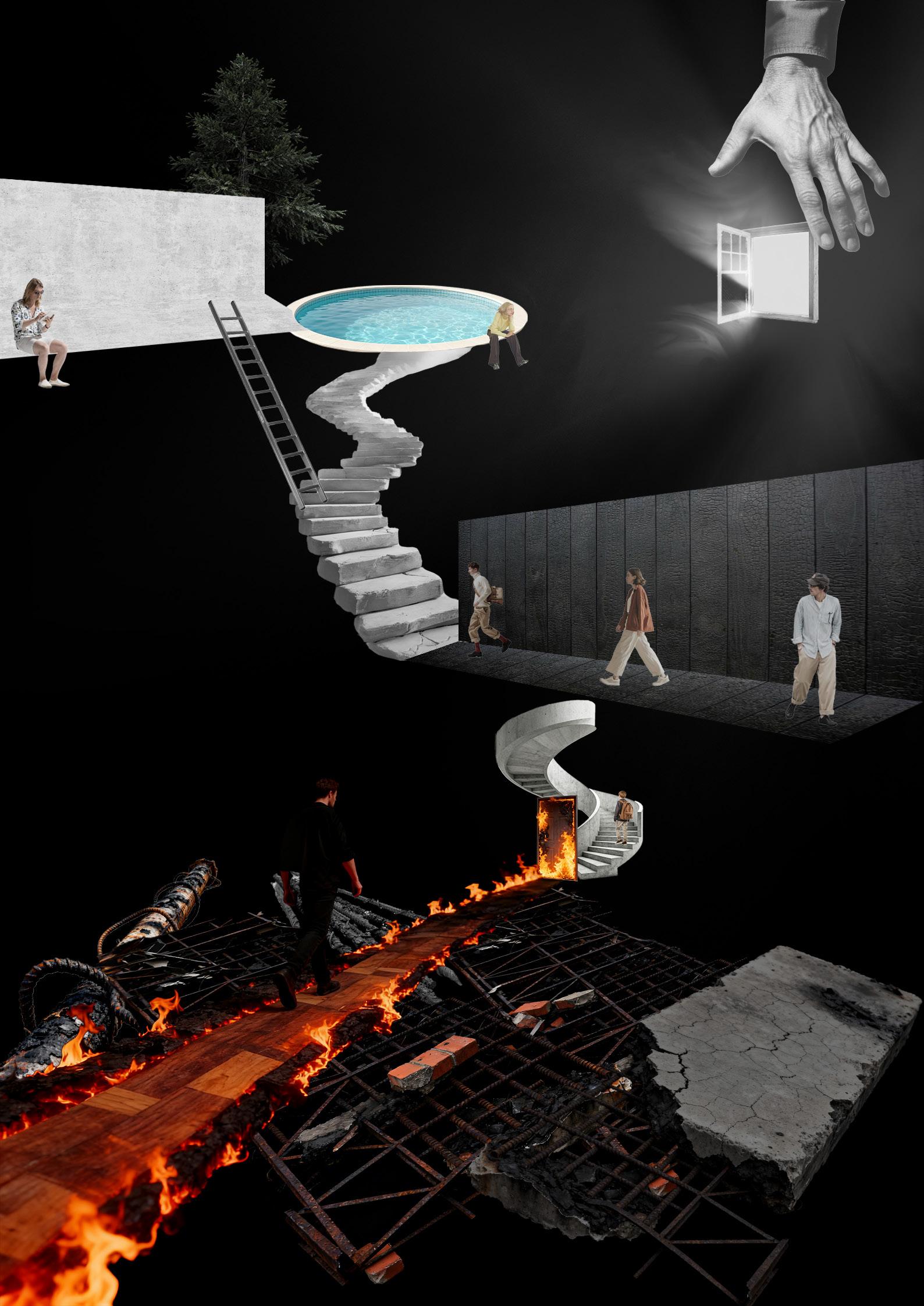
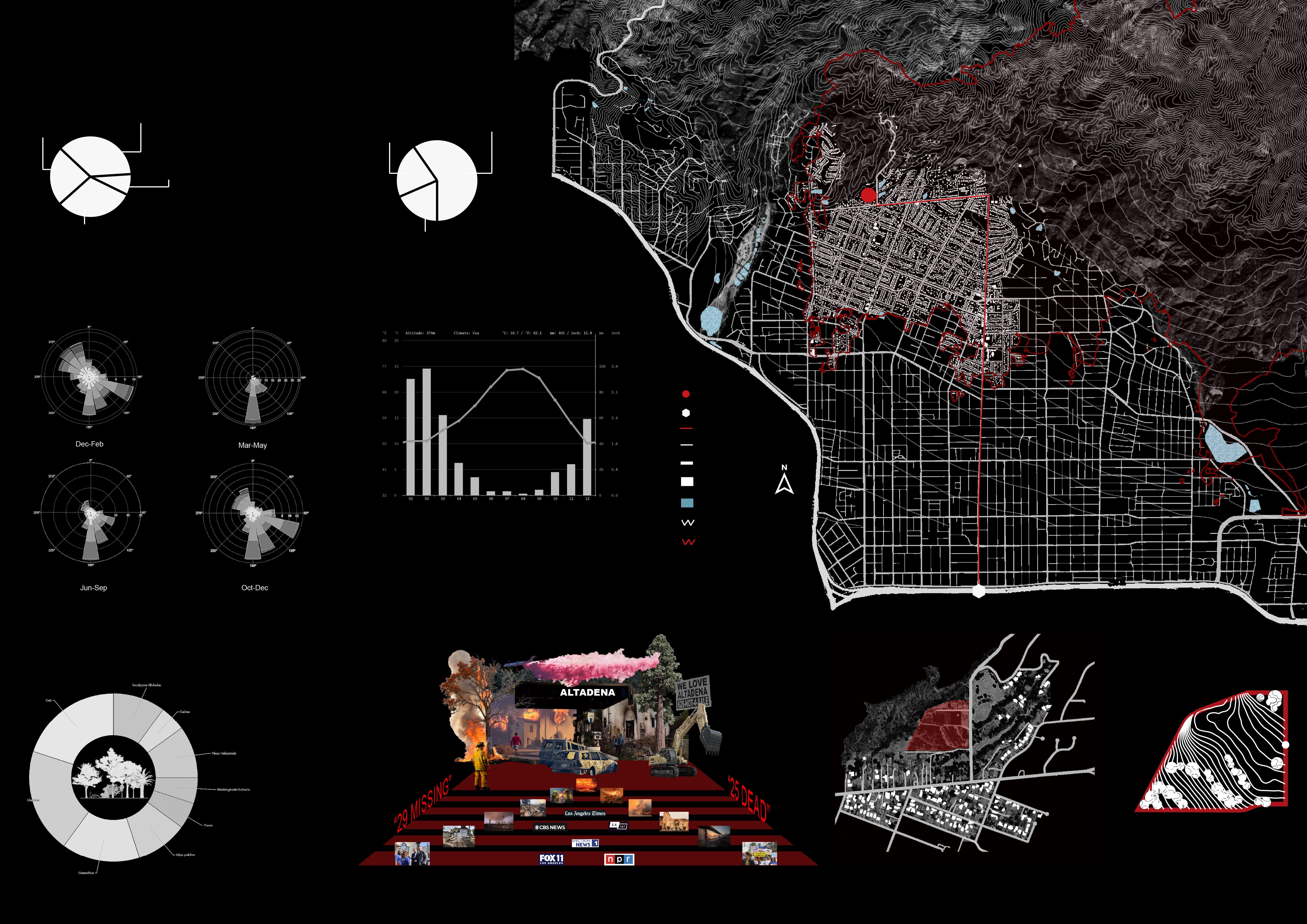
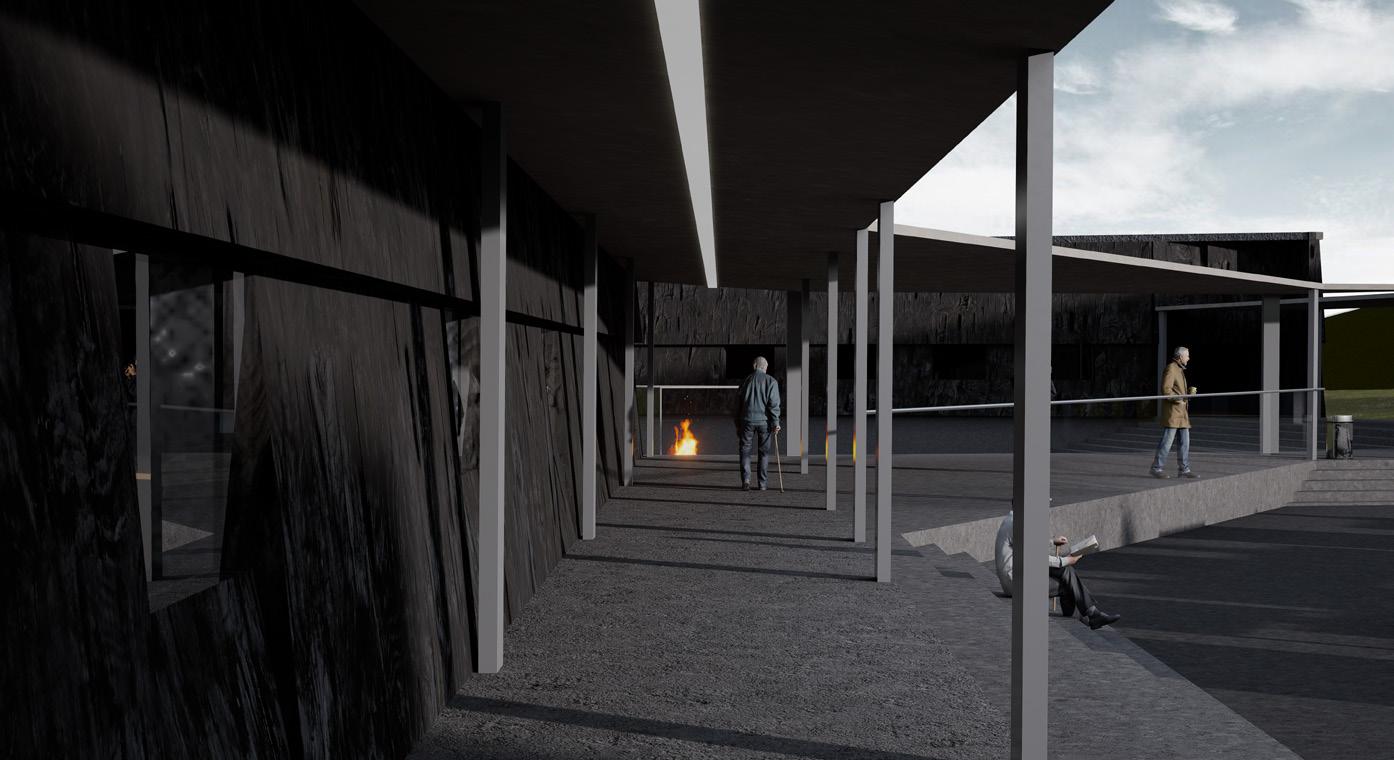
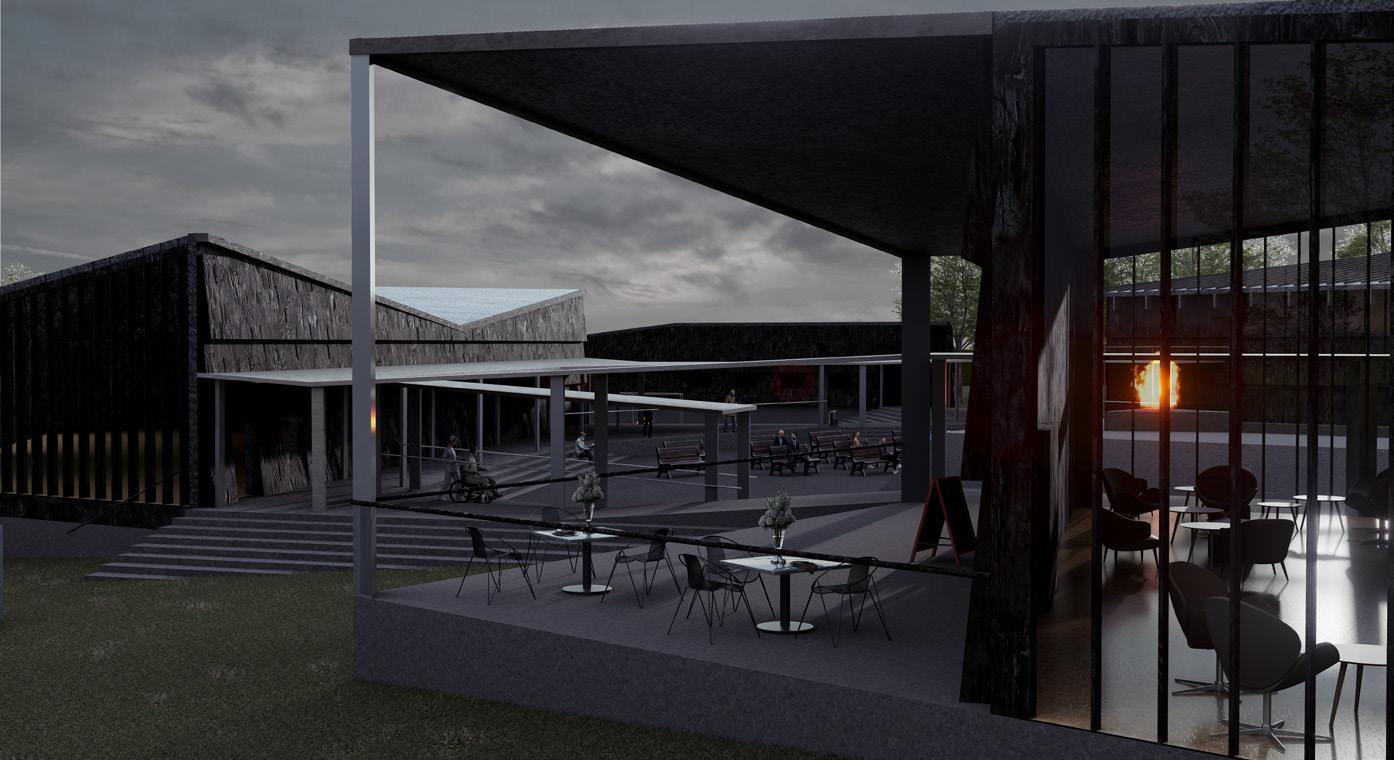
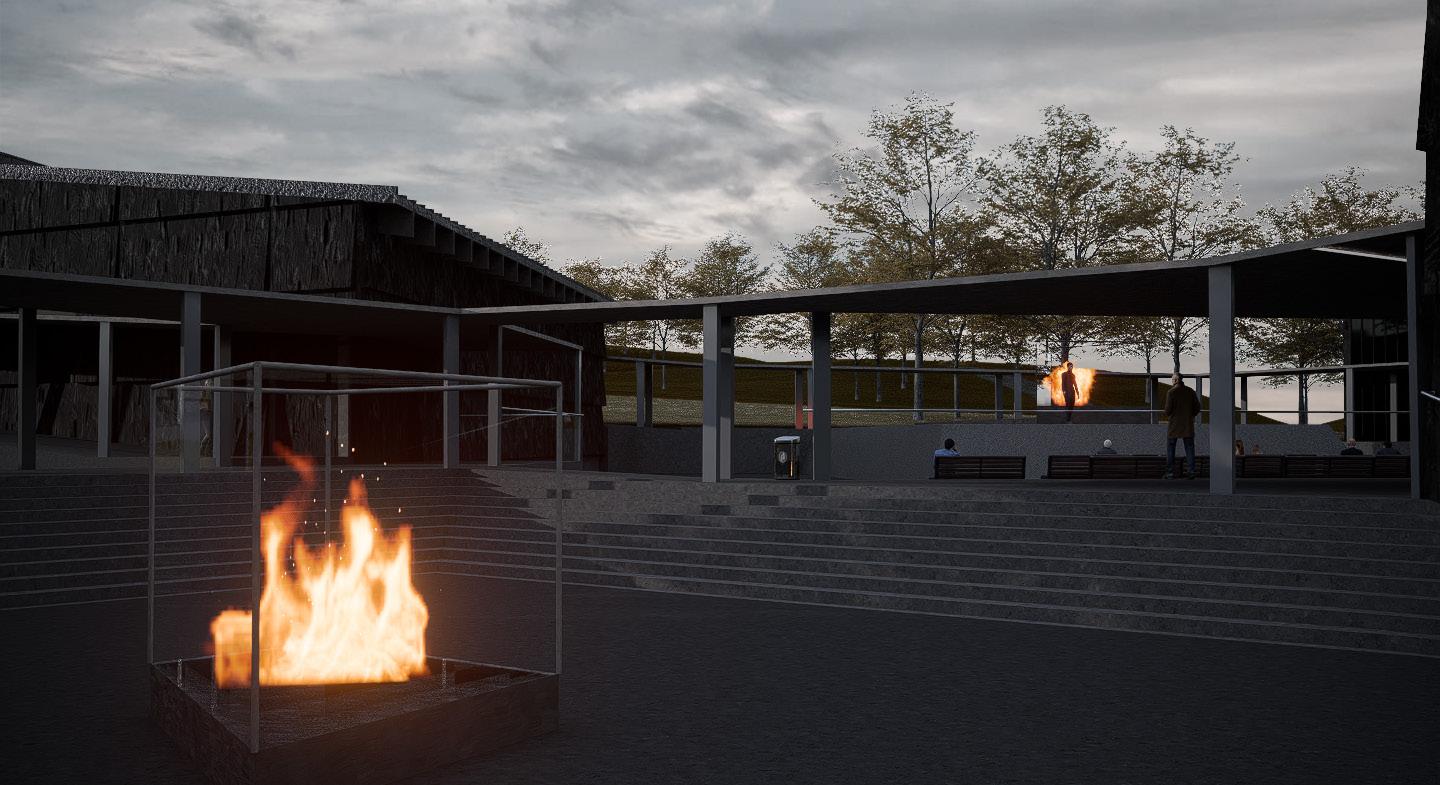
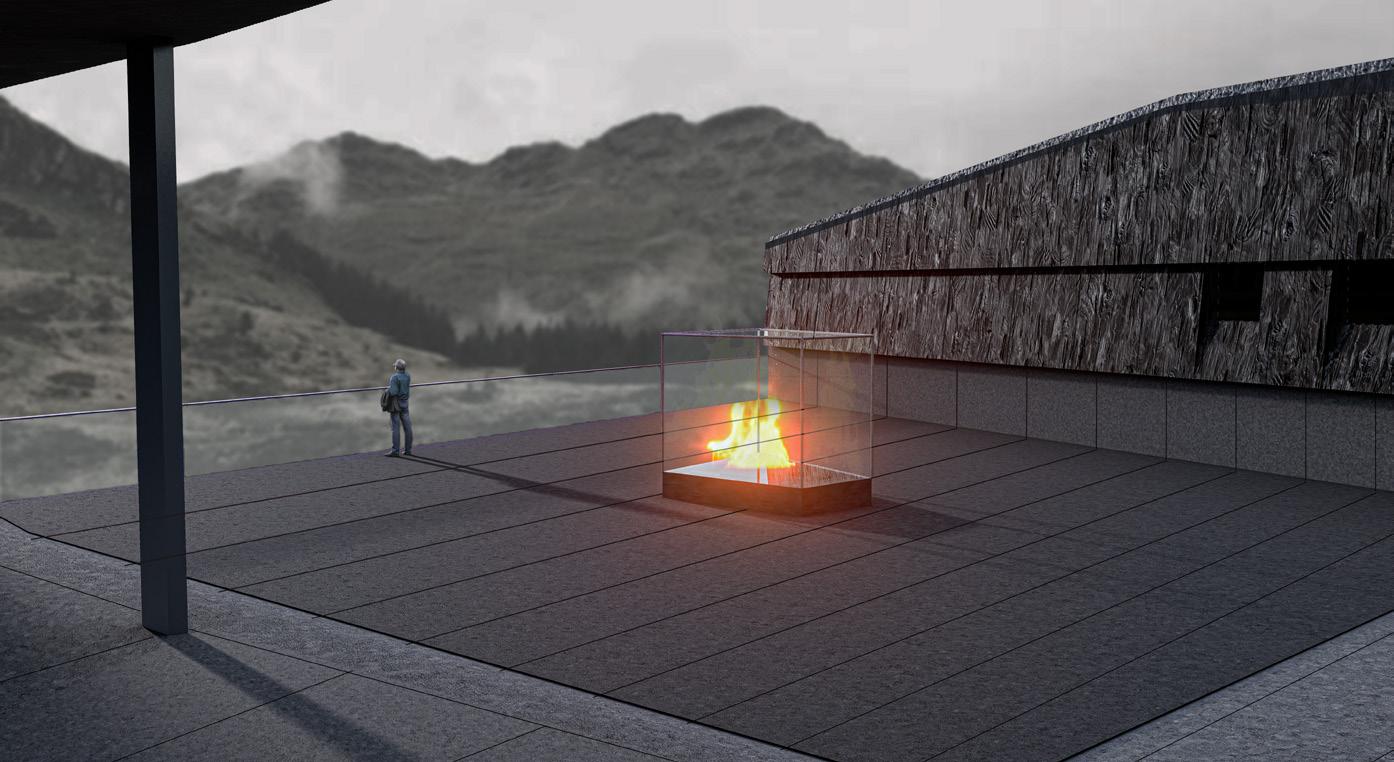
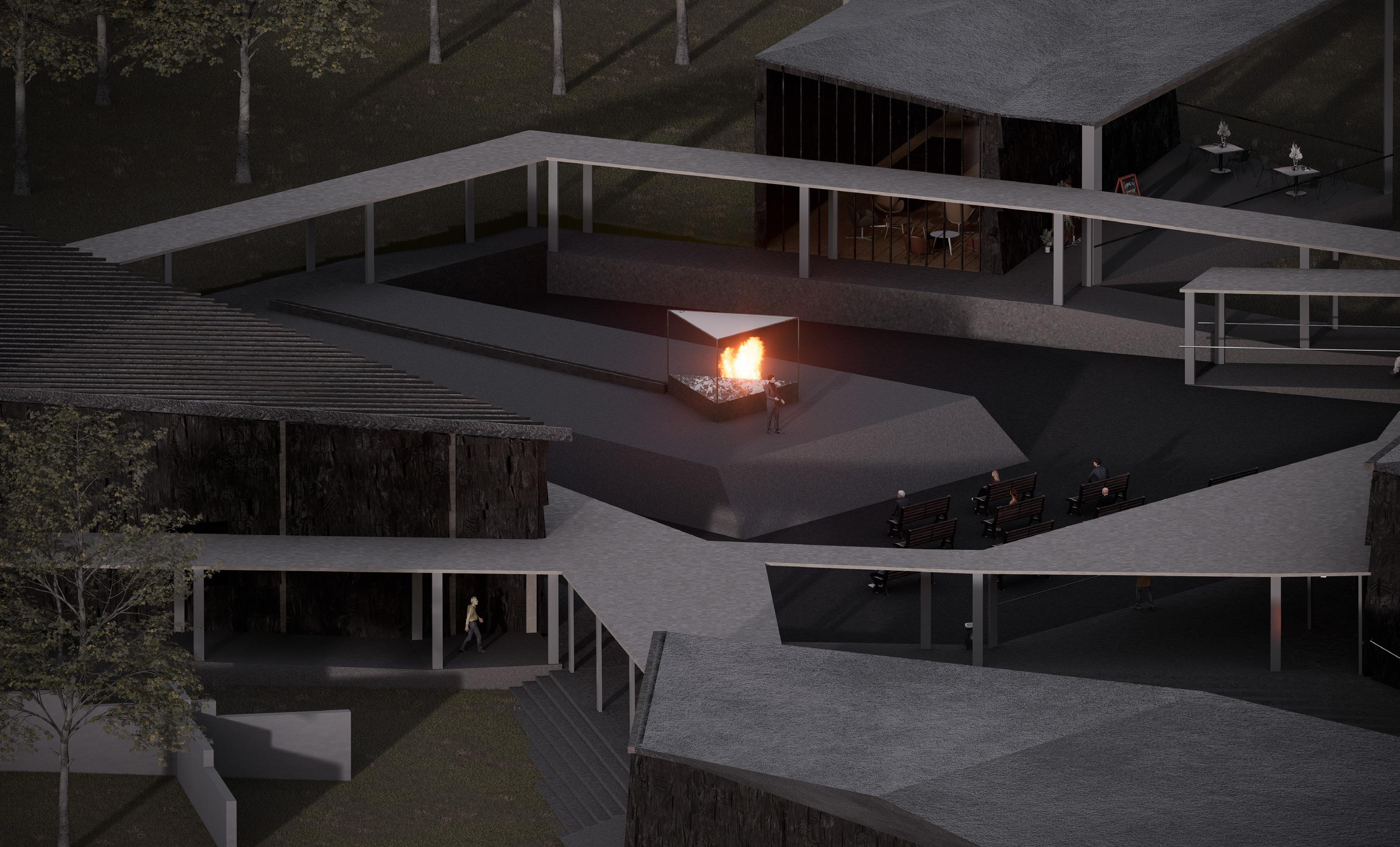
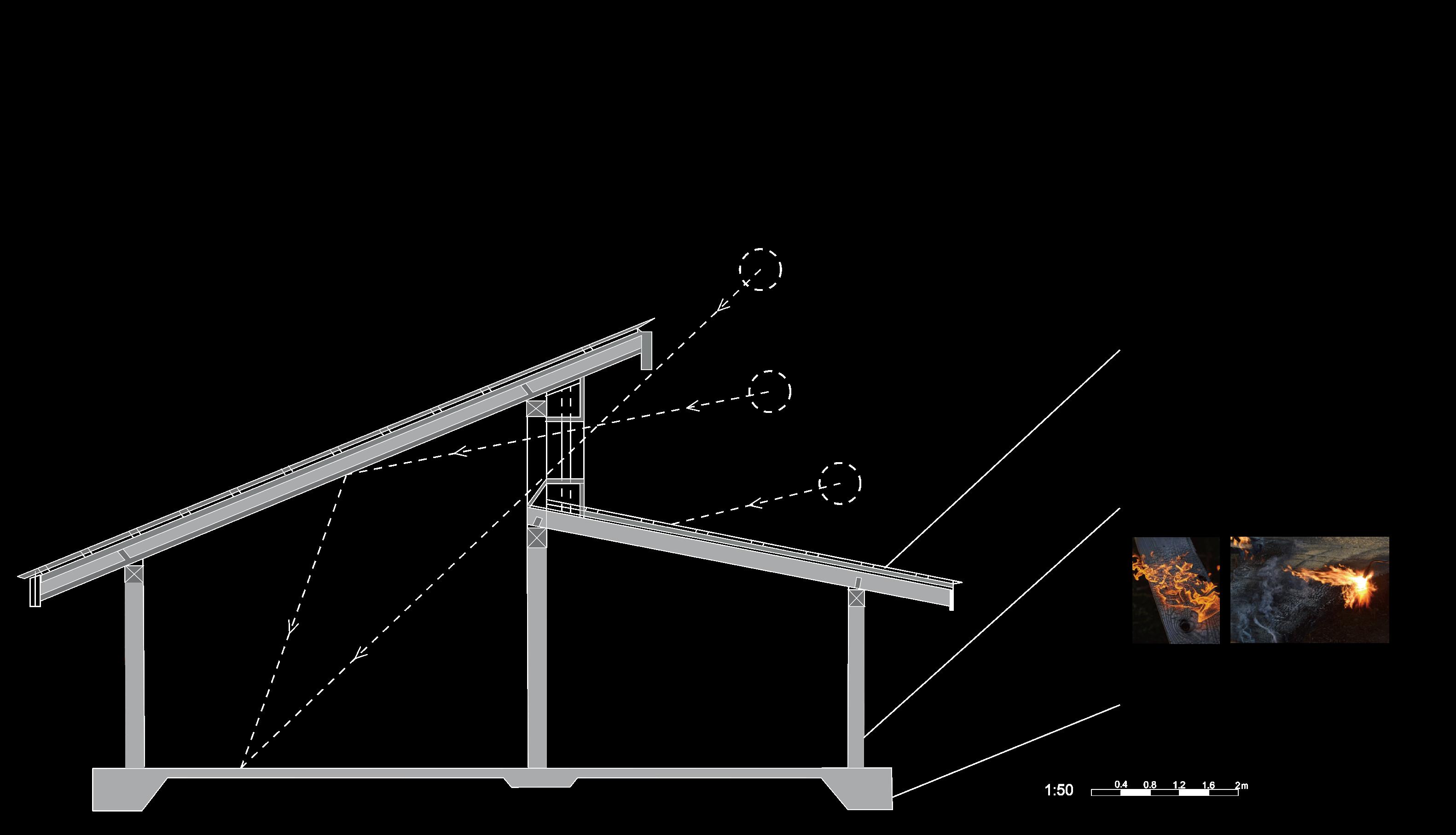
This project proposes a mental health sanctuary in Altadena, conceived as a direct architectural response to the collective trauma of California’s wildfires. The design employs the principles of exposure therapy, materializing the journey from trauma to resilience. The building itself becomes the therapeutic medium. Charred and reclaimed materials, most prominently Shou Sugi Ban, are woven into the fabric of the exterior and initial interior spaces. These elements serve as tangible, yet safe, representations of the fire’s memory. The architectural sequence deliberately guides individuals from compressed, darkened volumes— where light enters through narrow fissures—towards progressively open, lightfilled spaces that seamlessly merge with regenerative landscapes.
Ultimately, the sanctuary does not erase the memory of disaster but transforms it. It stands as a testament to healing, where the very symbols of destruction become the foundation for peace, fostering a profound dialogue between loss, memory, and the enduring power of renewal.
DRAWINGS
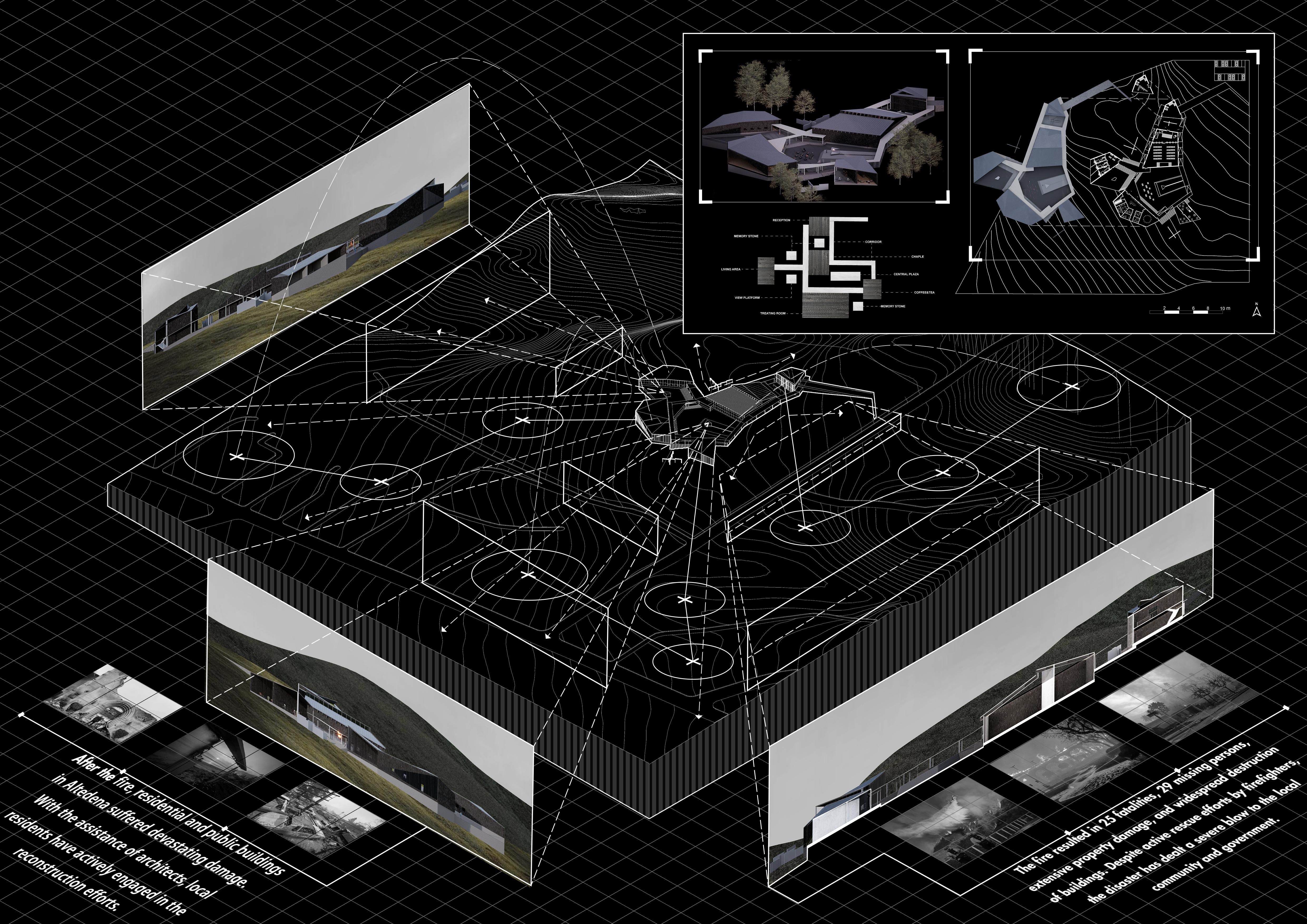
The site is located at the foot of a hill in Altedena, with a natural slope. The building entrance is positioned alongside the hillside road for convenient access. The circulation design guides users through the building’s functional spaces while leading them toward two internal plazas. These plazas offer optimal vantage points for viewing the surrounding architectural landscape and serve as key connectors within the building. Users can enjoy distinct architectural views whether they are engaged in residential activities, therapeutic sessions, or leisure moments in the café.
AXONOMETRIC
FUNCTION PLAN
The
LINEAR URBAN NEXUS FOR AXIAL HABITATION
Lunar Space Fantasy
Location : Plain near Shackleton crater, Moon
Date : 2026/1.21-2026/1.30
Status : Group work/Zijie Ye & Haoyang Gao
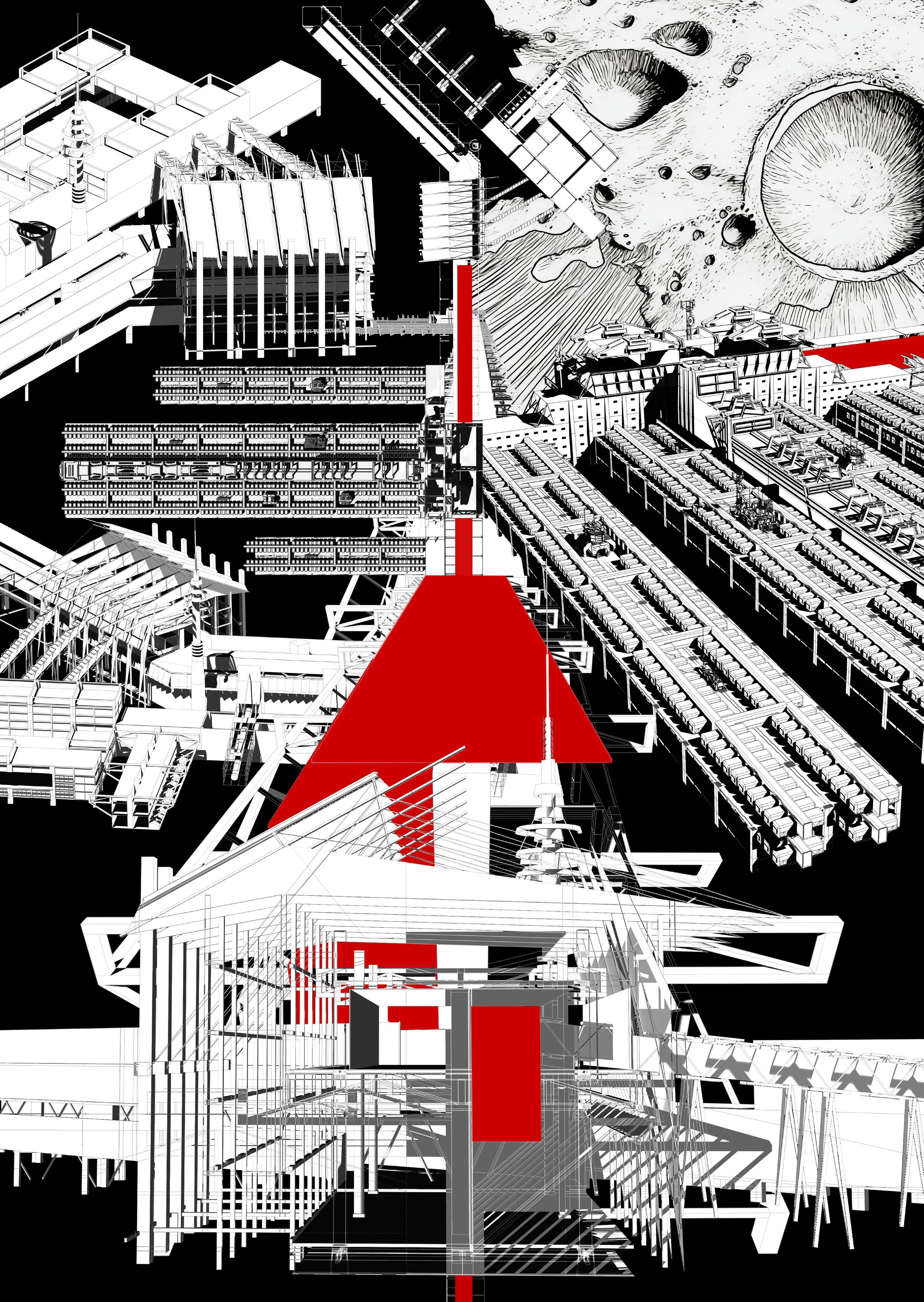
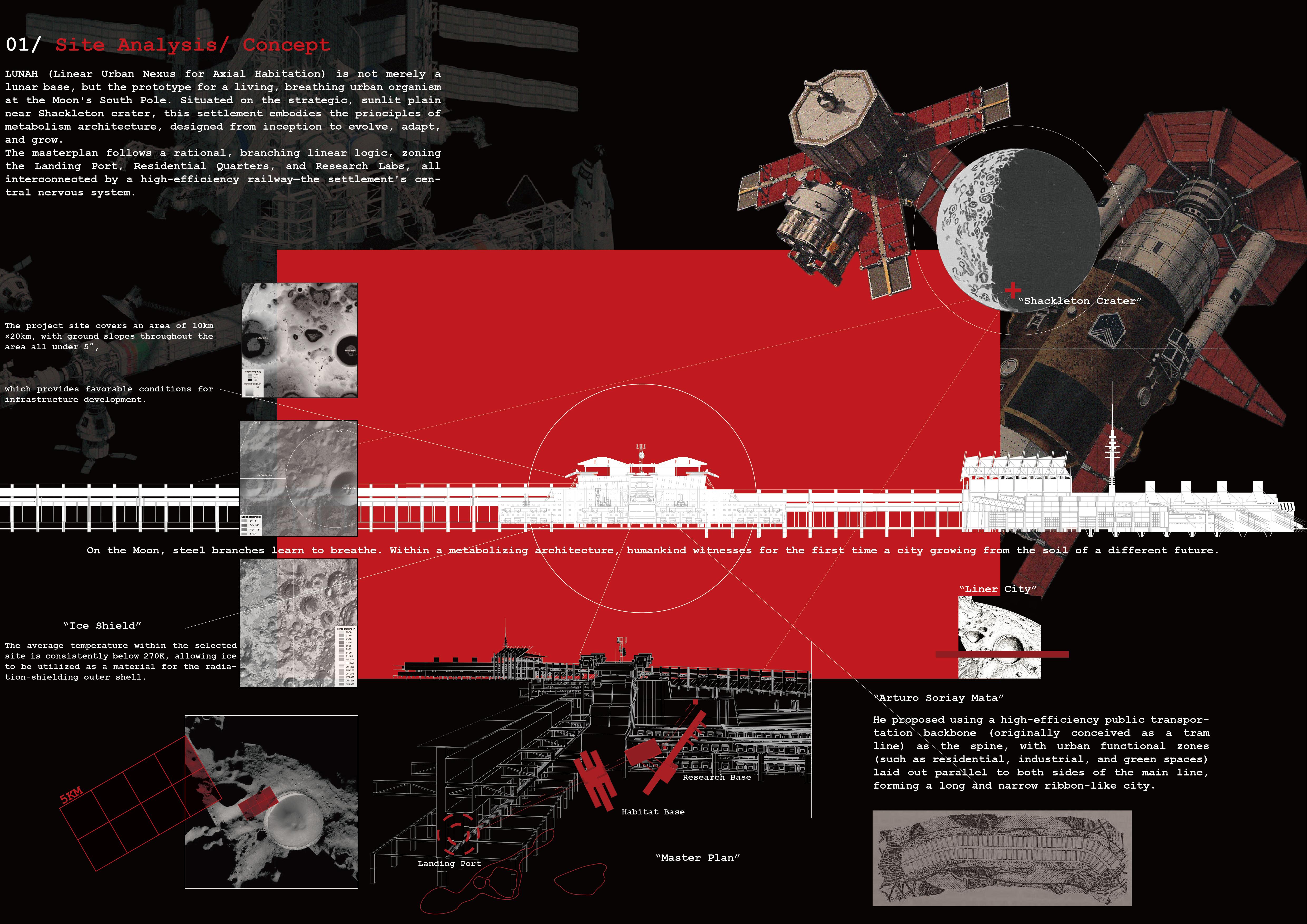
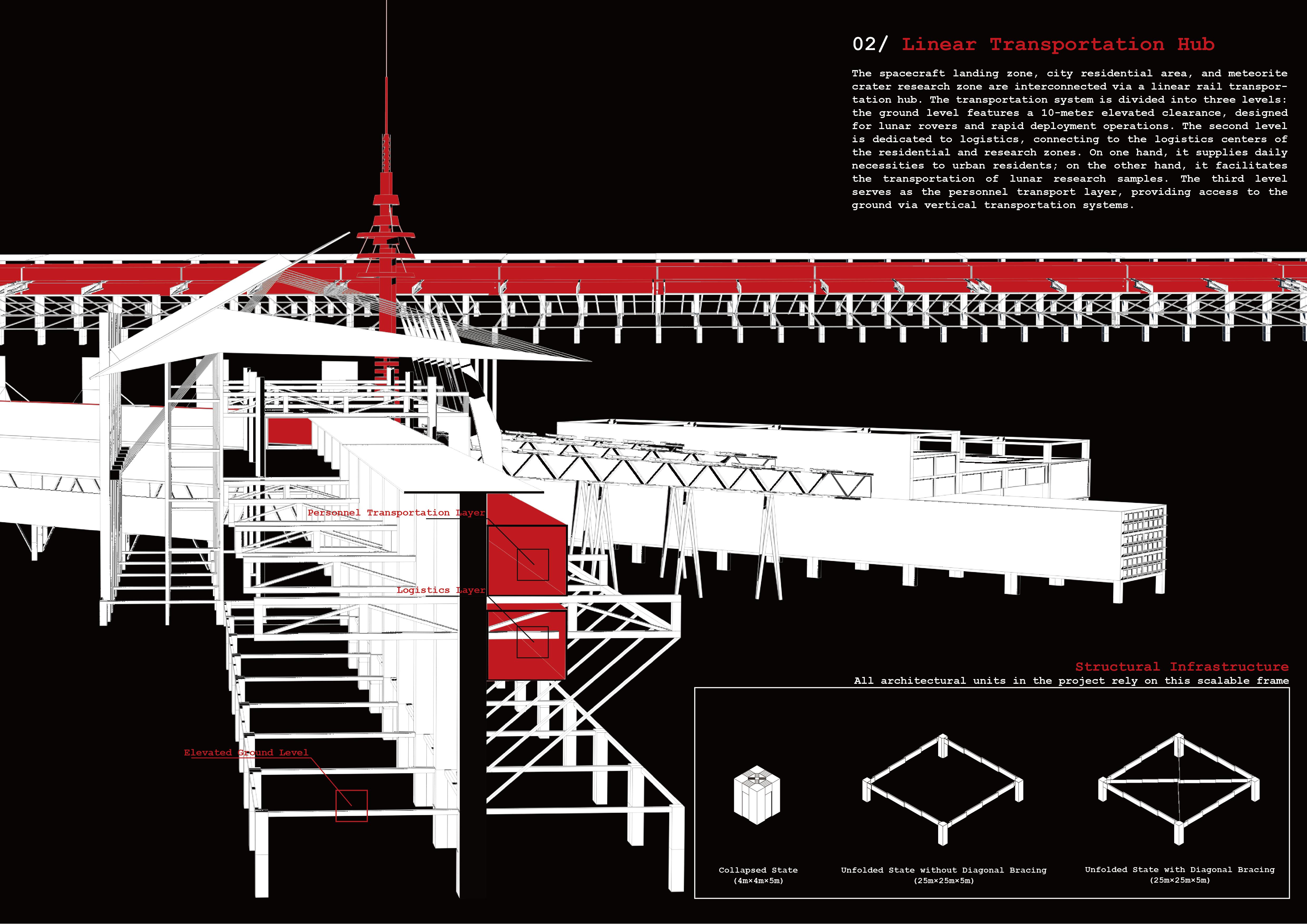
LUNAH is a modular, metabolic lunar settlement designed for continuous, dynamic evolution. Situated within a permanently sunlit zone near the rim of Shackleton Crater, the habitat leverages near-constant solar energy while maintaining access to nearby water-ice reserves. Its organizational core is a central railway artery, which circulates along a robust, prefabricated skeletal frame, efficiently connecting all vital functional sectors.
The settlement’s architecture is fundamentally cellular, comprised of reconfigurable, cell-like living and working modules. These units can be autonomously docked, swapped, or upgraded, allowing the colony to physically adapt to changing population needs and technological advancements. The entire structure is encased within a layered, regolith-composite radiation shield, ensuring long-term resident safety.
Beyond mere survival, LUNAH incorporates an active perimeter defense system using directed laser arrays to mitigate micro-meteoroid threats. By synthesizing in-situ resource utilization, closed-loop life support, and scalable urban planning, LUNAH transforms the vision of sustainable off-world habitation into a tangible reality. It represents a resilient and adaptable prototype for a future where humanity not only survives but thrives on the new lunar frontier.
In this project, I was responsible for the design modeling of the residential zone and the creation of the cover “hero image.” From compact living units to largescale residential clusters, I crafted a grand lunar visionary architecture.