

Inspiration and ideas for your big day































Inspiration and ideas for your big day
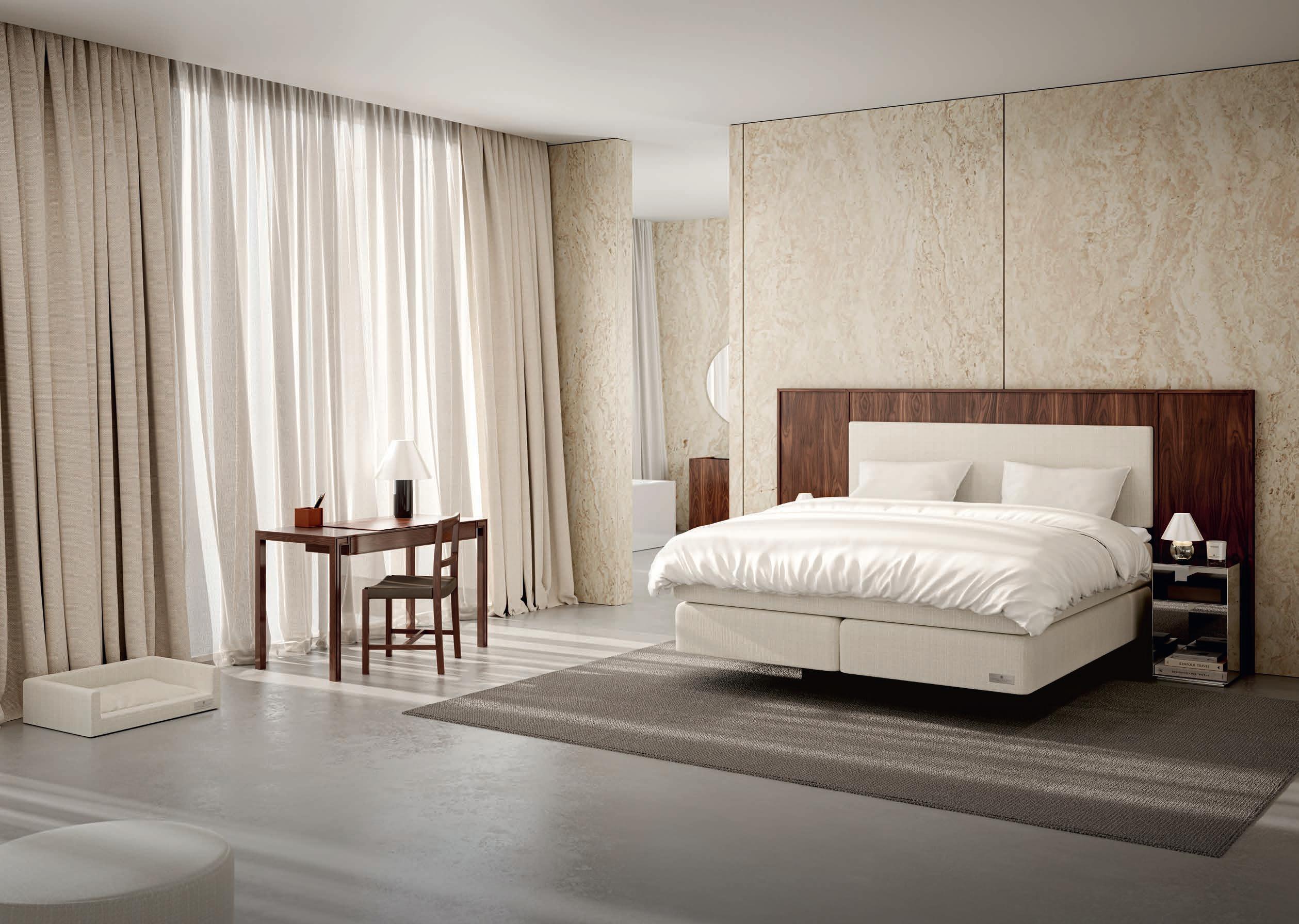
Inspired by our heritage, designed for the modern bedroom. The Iconic Collection features floating beds with unparalleled comfort and exclusive fabrics. Handmade in Sweden





ABSOLUTELY’S May issue highlights

It is nice to be right sometimes. Back in 2021, I had the pleasure of interviewing St Albans local, Asha Banks, who was just starting out in the world of acting. There was something about her that I thought made her stand out, ending the interview predicting big things for her. Fast-forward to 2026 and not only has she starred in some top TV shows and films, but she is now making quite the name for herself in the music industry. With a new EP out it was time for a revisit.
Talking big things, our wedding special returns this month, which we hope has everything you need to help and inspire towards that most important day. Doing our regular weddings venue round up is always a lot of fun, a chance to go behind the scenes of those places with a bit of va va voom about them – it was tough, but we have selected ten of the best.
Trend




Then from big to small, the eyes of wildlife lovers everywhere are currently trained on Hertfordshire Zoo and the birth of two black and rufous sengi there. Not sure what they are? Turn to page 82 and prepare to go 'aah'. Little things that certainly pack a punch.
MARK KEBBLE EDITOR









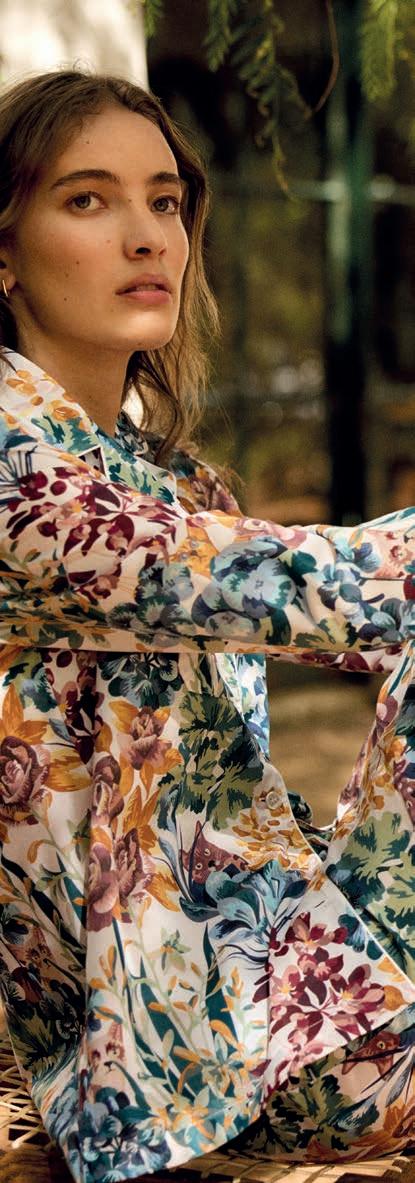
This Mythical Garden collared buttonup with long gathered sleeves and a cropped, curved hem from Mother Denim features colorful fl owers on the front and a forest scene on the back. motherdenim.com


EDITOR’S PICK

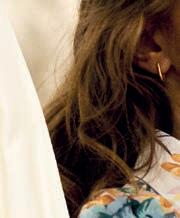

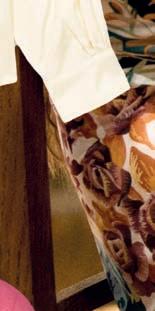
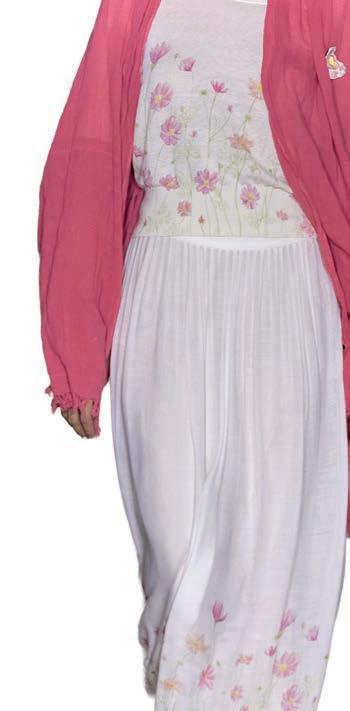
Agnes B's French chic dates back to 1973 and alongside a recurring collection of stripes and monochrome classics, SS26 brings a fresh look at fl orals too. agnesb.com


Derek Rose's new prints for summer include the London Garden, a mix of hand-drawn fl orals and hidden cats that represents an urban garden in bloom. These pyjamas are so and airy in lightweight cotton. derek-rose.com




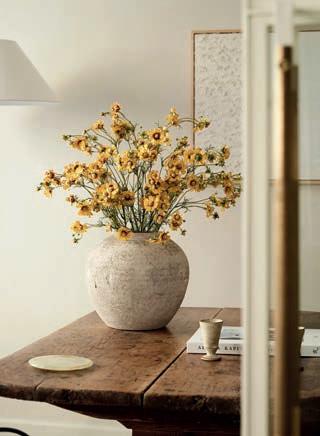
Faux blooms are easy and beautiful –and the collection at Fake It includes houseplants and even trees too. Can you even tell they're not real? fakeitfl owers.co.uk

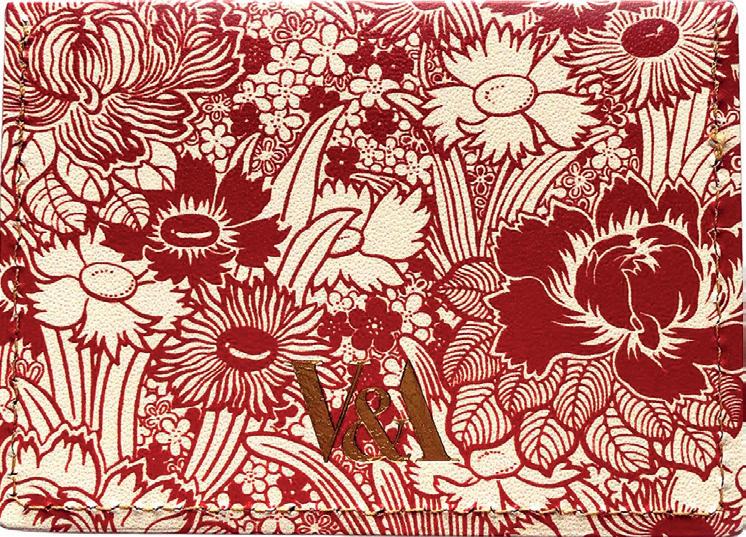

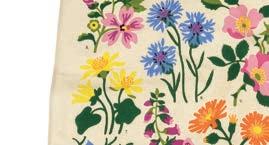
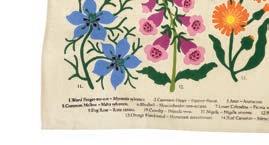
This fl oral pattern was adapted from an 1899 furnishing fabric by Steiner & Co. Lancashire, and now adorns a pouch at the V&A shop. vam.ac.uk
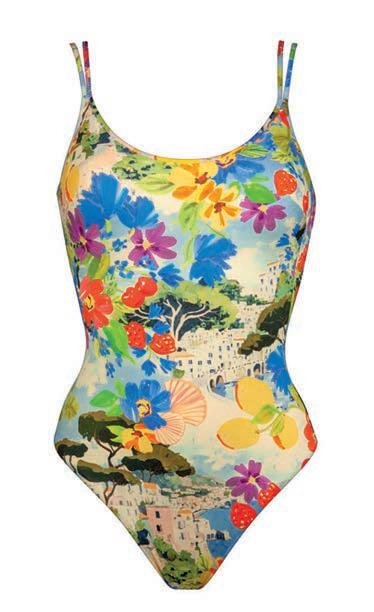
For a wide range of swimwear in all shapes and colours, visit Amelie's Follies website. They're all about fl oral one-pieces this season. ameliesfollies.co.uk

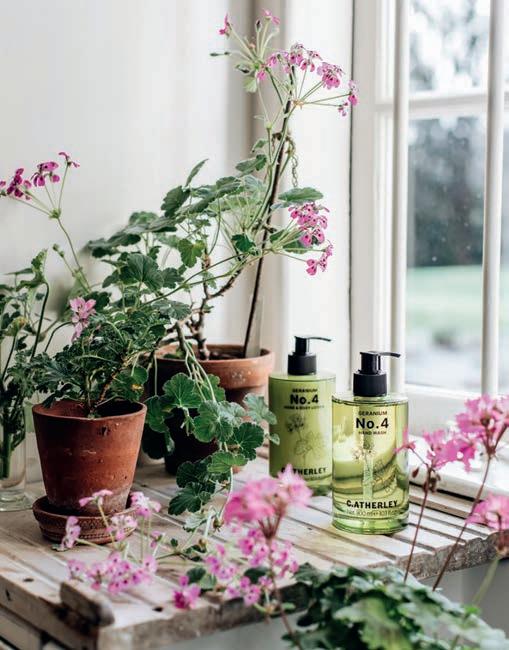
C. Atherley's new Geranium No. 4 is hand-blended with pure Rose Absolute, revealing notes of Cedarwood, Rosemary, Corn Mint and Spikenard.And for the fi rst time, there's a face oil too. c-atherley.com
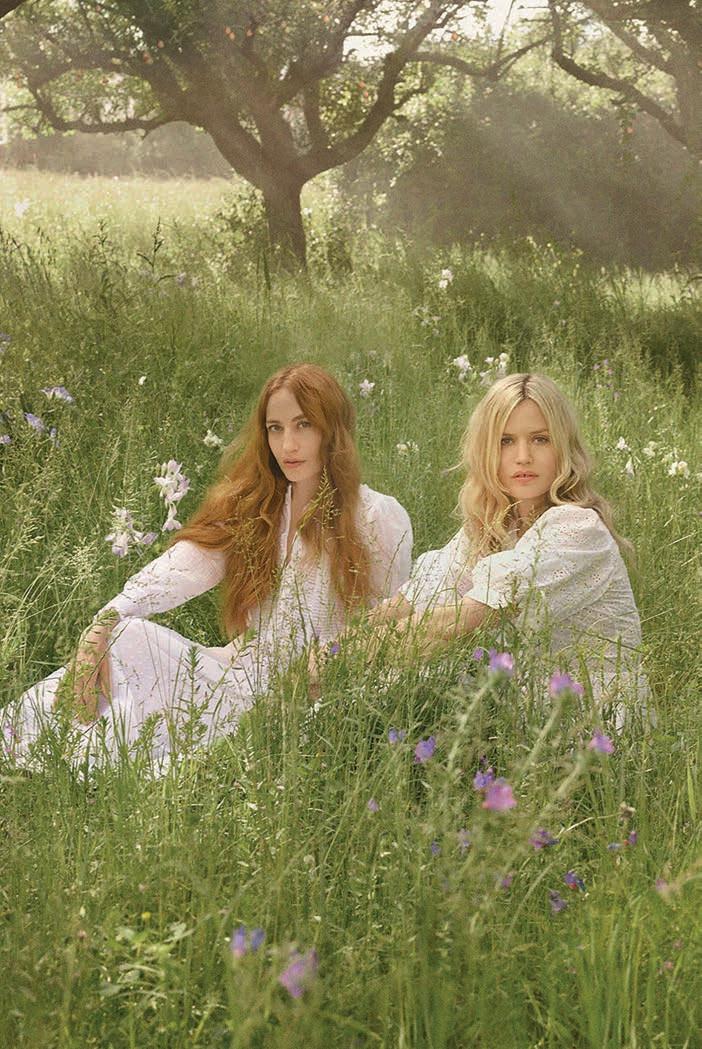
Georgia-May and Lizzie Jagger are the new faces of Jo Malone London's new spring fragrance, English Pear and Sweet Pea, which comes as a hand cream and a hair mist as well as the classic cologne. jomalone.co.uk








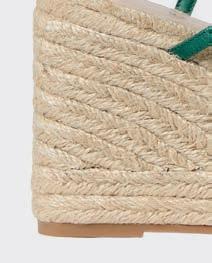


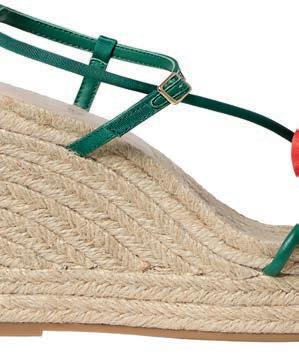






















Loeffl er Randall’s sandals evoke a fl ower in bloom. Slender grosgrain straps curve into a vine-like silhouette, crowned with a sculptural grosgrain blossom and fi nished with subtle leather trims. net-a-porter.com




With its vintage vibe and screen -printed fl oral detail, Pink City Prints' Ava dress is an enduring favourite. Versatile and effortless, it's just as stylish with sandals for a picnic, or with heels for a party. pinkcityprints.com
















Foodies Festival, a ectionately known as “Gastro-Glastonbury”, announces a turbo-charged 21st birthday tour for 2026, bursting with new features, headline music acts, star chefs and bakers, kids’ activities, wellbeing experiences and dog-friendly fun. Local chefs, bakers and producers will also take centre stage, celebrating the very best of St Albans’ food scene. foodiesfestival.com EVENT
29-31 May
OAKLANDS COLLEGE
31 MAY, WATFORD PALACE THEATRE
He’s back – and he’s unstoppable. Gyles Brandreth just can’t stop talking. The jumper-loving This Morning star, who keeps popping up on Pointless, QI, Would I Lie To You?, Sunday Brunch, and The One Show, has been burbling and babbling since he was a baby, and in this hilarious one-man show the award-winning raconteur (and holder of the world record for the longest-ever after-dinner speech – 12 and a half hours!) is trying to work out why.
watfordpalacetheatre.co.uk
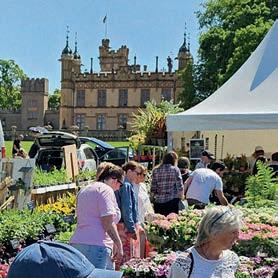
Set against the backdrop of Knebworth House, this popular show will bring together a wide range of exhibitors o ering plants, garden furniture, water features, decorative accessories and more. The show provides plenty of inspiration for visitors looking to refresh their outdoor spaces. knebworthhouse.com EVENT
Hertfordshire Garden Show
2-4 May
KNEBWORTH HOUSE


MUSIC


24 May

2-9 May
COWBRIDGE HALLS
The 73rd Hertford Art Society Open Exhibition will take place at Cowbridge Halls this month. One of the most prestigious Open Exhibitions in the South East, it welcomes amateurs and professionals alike. What’s guaranteed is a week of amazing art of all mediums, perfect for enthusiasts or casual viewers. hertfordartsociety.co.uk

St Albans Spring Festival returns on 17 May, the perfect opportunity to embrace something new


SERIC MORECAMBE CENTRE


Prepare for a night re-living the sounds of the 1970s and beyond. When Lindisfarne first emerged they quickly carved out a unique place for themselves as one of British rock’s most original bands. Their pioneering sound, combining acoustic instruments with their electric blues roots, proved the perfect medium to deliver their catchy, memorable songs. everyonetheatres.com







30 MAY, BEAM
hat happens when Britain's sharpest political impressionist steps out from behind the masks? For four decades, Rory Bremner has been the voice of our times – quite literally. Now, following a thrilling sold-out 2025 tour, the master satirist is back to combine his signature stand-up with candid conversation, accompanied by a rotating cast of special guest hosts. beamhertford.co.uk

t Albans Spring Festival returns to the city centre, transforming St Peter’s Street into a lively, traffic-free celebration of food, wellbeing, community spirit and sustainability. From midday to 6pm, thousands join the vibrant street party, enjoying live music, street theatre, arts and cra s, and a wide range of stalls serving delicious takeaway food, drinks and locally produced goods. Showcasing local talent and championing green initiatives, the festival offers hands-on activities, creative workshops and plenty of family-friendly fun. Expect more than 100 traders offering food, gi s, and cra s from around the world, plus a full programme of games, activities, sports, challenges, and arts and cra s. There will be a whole host of zones and arenas, such as the Experience Zone, where you can take part in a salsa demo class, Bollywood taster, circus skills, gardening for biodiversity, sensory story telling, seated FitSteps, and taster tennis sessions. Or get in touch with nature at the Earth Zone, which features several showcases: Being waste aware, St Albans City & District Council waste team; Pond dipping, St Albans Cathedral; Ocean and whale activity, St Albans Greenpeace; Mindful trees, Youth Talk; and much, much more. enjoystalbans.com




When Absolutely last spoke to Asha Banks in 2021, she was 17, juggling college with a rapidly accelerating career and already learning the emotional realities of the business. “This industry is full of ups and downs,” she said at the time. “You do have to be very resilient as an actor.” That resilience has become a defining trait.
used to having to dive into a character and their way of thinking and their unspoken thoughts that when I come back to myself I can almost apply the same tactic.”
That crossover works both ways. Songwriting, she says, o ers a necessary reset. “Writing for myself is even more therapeutic as it allows me to return to myself fully in between being with characters.”
Five years on from an interview with us, Asha Banks’ career is truly hitting the heights, just as predicted for the St Albans native back in 2021
Now, with major screen roles, a record deal and her debut EP How Real Was It?, she reflects on the intervening years with a mixture of disbelief and gratitude. “Goodness! So much has happened since then,” she says. “It’s been busy – but wonderful.”
Back then, she spoke openly about the emotional rollercoaster of auditioning, including being held for weeks for a “lifechanging” Netflix lead before ultimately losing the role. It was, she admitted, “devastating for a few days” – but also formative. That ability to recalibrate quickly has clearly served her well.
In the years since, she has stepped into major roles in My Fault: London and A Good Girl’s Guide to Murder, while quietly building a parallel career in music that now feels anything but secondary. If anything, the two strands are increasingly intertwined.
“I think being an actor has an influence on me as a songwriter,” she explains. “I’m
Her new EP, How Real Was It?, builds directly on her earlier release Untie My Tongue, but she is quick to point out that the shift is less about reinvention than refinement. “To be honest a lot of the music was written not that far apart from each other,” she says. “So the writing felt like such a continuation, but just with a more reflective outlook on a lot of the same situations.”
That reflection is key. Where earlier work captured emotions in real time, these songs revisit them with distance – turning immediacy into something more considered. “It was more so just everything else being the second time around,” she continues. “The second time finishing a project and understanding that more… I felt more in the know the second time around which was nice.”
She has always written from a deeply personal place, but this EP leans even further into that instinct.
“I really struggle to write music that isn’t super real and truthful of what is
“I love music that both hits me in the gut and can also make me spin around or scream it out”

happening, or has happened to me,” she says. “And being honest is vulnerable and can definitely be scary.”
Across the record, that vulnerability is front and centre. The songs revisit relationships, hindsight and emotional residue with striking openness, often reframing past experiences rather than reliving them. At the same time, she remains acutely aware of the need to balance emotional weight with musicality.
“It’s funny because generally I think I’m a very excitable person, but often my lyrical content is more introspective and sad, frankly,” she says. “But for me music has always been an outlet and writing a form of therapy. So getting the best out of a troubling or personal situation always helps. But then I love music that both hits me in the gut and can also

make me spin around or scream it out loud. So I love to try and achieve both.”
Among the many developments since 2021, signing with Island Records stands out as a particularly surreal milestone. “Very crazy!” she smiles. “I feel like signing a record deal is one of those things that growing up always felt like – a far, far away surreal concept.”
The moment itself only added to that feeling. “I’d just come o stage at Hyde Park BST supporting Noah Kahan when I signed my deal,” she recalls. “So that definitely added to the dream of it all.”
That sense of momentum – of one opportunity flowing directly into the next – has been a defining feature of the past few years. Collaboration has become an increasingly important part of that journey, particularly her work with Holly Humberstone on Dive
“I’ve loved her music forever,” Asha says. “When she put out Dive in 2024 I naturally listened on repeat and at the same time I was filming My Fault: London.” What followed felt almost accidental. “I then posted a picture with the song playing, which the movie editor saw and thought would make the perfect song for the credits.”
The connection quickly deepened. “Somehow I ended up having my song Feel The Rush play after hers in the credits… but then Holly and I met to write together and soon after she asked if I’d like to be a part of this collaboration. Of course I absolutely jumped at the chance. That will always be a very special moment for me. One that Asha a few years ago wouldn’t believe!”
If recording music is an introspective process, performing it live has introduced a new dimension entirely. “It’s so surreal going from writing music in a room with one other person to playing them live to a room of people – and them singing back,” she says.
That audience connection is already feeding back into her creative process. “There’s an awareness now
when in the studio about what it will be like live and how di erent songs will connect in di erent ways.”
Some tracks have taken on a particular significance on stage. “Opening with Rerun on tour has been so much fun – it’s one of my highest energy songs, so to start with it feels amazing to get everyone on the same level,” she says. But it’s often the quieter moments that stay with her.
“Playing both Done Is Done and Mascara Tears have been memorable,” she continues. “They’re two songs that are very honest, so watching and hearing everyone sing along to those especially always make me emotional. It’s also always in those moments that I feel the weight of what’s happening and find myself feeling so, so grateful to be there with everyone.”
For all the forward motion, there is a clear sense of grounding that hasn’t shifted since those early days. She is, she confirms, still living in St Albans. “I feel so lucky to live in St Albans – it’s always so comforting to come back here after being away and just breathe out.” It’s a reminder that, despite the scale of her career, there are still constants – places and habits that anchor everything else.
Looking ahead, her goals remain simple but telling. “Definitely to collaborate with another of my favourite artists,” she says. “And to just write better music than I have before. To keep on saying the scary things and go with my gut.”
That instinct – to lean into honesty, even when it feels uncomfortable – has been present from the start. Back in 2021, she spoke about learning to cope with disappointment, to “pick myself up and move on to the next thing”. Now, that same mindset is paired with a clearer sense of identity and creative direction.
Five years on, the promise is no longer hypothetical. Asha isn’t just one to watch – she’s already proving why.
ashabanks.co.uk
HansonsHertfordshire auctioneers and valuers are pleased to invite you to our regional valuation days. We are currently consigning jewellery, watches, antiques and collectibles for our monthly auctions. Our experienced valuers would be delighted to meet and advise you on auction estimates. We also offer FREE home visits if you are unable to attend our valuation days.


EVERY Wednesday at Burston Garden Centre, North Orbital Road, St Albans AL22DS
10am – 1pm
EVERY Thursday at The Kings Arms, 147 High Street, Berkhamsted HP43HL 10am – 1pm


EVERY Friday at our auction house
Hansons
Hertfordshire Unit 1, Lumen Road, Royston, Hertfordshire SG8 7AG 10am – 1pm
EVERY third Thursday at Saracens Head Hotel, High Street, Great Dunmow, Dunmow CM6 1AG 10am – 2pm
AND the last Wednesday of every month at The Acorn Room Pendley Manor Hotel Cow Lane, Tring, Hertfordshire HP23 5QY 10am –2pm

From Harry Potter to Vicarage Road, exploring the many di erent facets that makes Watford so special

For many people passing through Watford on the train or heading to the famous Harry Potter studios, it can appear to be simply another commuter town. Spend a little time here, however, and Watford reveals itself as a place with deep history, green landscapes, a lively cultural scene and a surprising number of attractions nearby. From medieval markets to modern entertainment complexes, the town has continually reinvented itself while retaining a strong local identity.
A potted history
Watford’s story begins long before it became a modern suburb of London. Archaeological finds suggest that people passed through the area in prehistoric and Roman times, but the settlement itself grew around a natural crossing point over the River Colne. The town’s name likely comes from the Old English words for a ford or crossing place, reflecting its importance on an ancient route through the area.
By the early medieval period, Watford was developing as a small settlement
under the control of St Albans Abbey. In the 12th century the Abbot was granted the right to hold a market here, which became the centre of the town’s life for centuries. St Mary’s Church, whose earliest parts date back to the 13th century, was built beside the market and remains one of the town’s most historic landmarks.
The town grew gradually thanks to its strategic location on routes linking London with the Midlands and the Chiltern Hills. Travellers heading to royal sites such as Berkhamsted Castle and Kings Langley passed through Watford, bringing trade and activity. In the early 18th century, writer Daniel Defoe described Watford as a “genteel market town” consisting largely of one long street, a reference to what is now the High Street.
The biggest transformation came in the 19th century. The arrival of the Grand Union Canal and, later, the railway in 1837 connected Watford to London and other major cities, encouraging industry and rapid population growth. What had once been a modest market town began to evolve into a thriving commuter hub, a process that accelerated throughout the 20th century.
The Watford of today
One of the most beloved places in Watford is Cassiobury Park, a vast green space of around 190 acres that was once part of the estate belonging to the Earls of Essex. Today it is considered one of the finest parks in the region, featuring woodland, open fields, playgrounds and walking routes along the Grand Union Canal. Families are drawn by its miniature railway and splash pools, while walkers and cyclists appreciate the extensive trails and wildlife. Just beyond the park lies Whippendell Wood, an ancient woodland famous for its spring displays of bluebells and peaceful natural scenery.
For those interested in entertainment and culture, Watford o ers several venues worth visiting. Watford Palace Theatre is a wellknown community hub that hosts classical music, comedy and touring performances. Football fans will gravitate towards Vicarage Road, home of Watford FC. Founded in 1881, the club has spent much of its history climbing through the English football leagues and remains a central part of the town’s identity. Matchdays bring thousands of supporters into the area, filling pubs and streets with the distinctive yellow colours of the team known as the Hornets.
Arguably the most internationally famous attraction associated with Watford lies just outside the centre: the Warner Bros. Studio Tour London – The Making of Harry Potter. Visitors can step onto the real film sets used in the movies, explore Diagon Alley, see the Hogwarts Express and discover how the magical world was created behind the scenes. It has become one of the UK’s most popular tourist experiences and draws fans from around the world.
Watford’s location makes it a convenient base for exploring some of the most appealing destinations in southern England. Within a short distance lies St Albans, a historic city famous for its magnificent cathedral and Roman heritage. Visitors can explore the remains of the Roman city of Verulamium, wander through medieval streets or enjoy the lively market that still operates in the centre.
Another nearby highlight is the countryside of the Chiltern Hills, an Area of Outstanding Natural Beauty. Rolling hills, traditional villages and miles of walking routes make it ideal for outdoor adventures. The area o ers a dramatic contrast to London’s urban landscape and is easily accessible from Watford.
Watford’s dining scene has grown dramatically in recent years, reflecting the town’s diversity and increasing popularity as a place to live and visit. The High Street and the surrounding roads o er everything from casual cafés to refined restaurants. For traditional British pub fare, The Essex Arms is a long-standing favourite among locals. The pub combines historic charm with hearty food, making it an excellent place to stop after a walk in Cassiobury Park. Another popular spot is The One Crown, known for its cosy
interior and gastropub-style menu that blends classic dishes with modern twists.
If you are looking for Italian cuisine, L’Artista is widely praised for its authentic pizzas and relaxed atmosphere. Run by a family with Italian roots, the restaurant has built a loyal following and is often busy on weekend evenings.
For something more contemporary, Tarboush o ers Middle Eastern flavours in a stylish setting, serving dishes such as grilled meats, mezze platters and fragrant rice dishes. It reflects the international character of Watford, where di erent cultures and cuisines come together in one town centre.
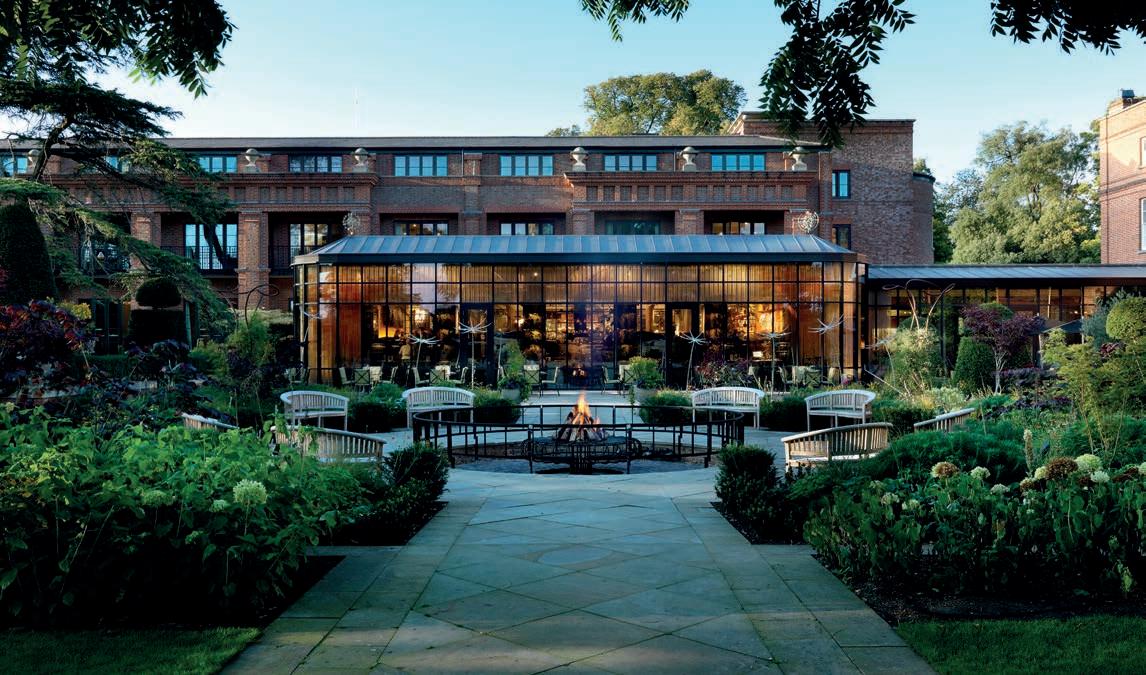
Meanwhile, The Grove’s Glasshouse restaurant provides a more luxurious dining experience. Located within the grounds of the historic estate, it o ers a bu et-style approach featuring high-quality dishes from around the world. The setting alone makes it a memorable place for a meal.
Cafés are also plentiful, particularly around the High Street and shopping areas. Independent co ee shops sit alongside familiar chains, providing plenty of opportunities to pause for a drink while exploring the town.
One little-known fact is that Watford played a role in the famous World War II “Dambusters” raid. In the Garston area, engineers built a replica of Germany’s Möhne Dam to test the bouncing bombs that would later be used in the attack. The experimental structure still exists today as a reminder of the town’s wartime contribution.
Another intriguing connection is with music legend Elton John. The singer has long been associated with Watford Football

Club and even served as chairman during one of the club’s most successful periods. His passion for the team helped elevate Watford’s profile and he remains an honorary figure in the club’s history.
Watford also once held its market continuously for centuries. Established in medieval times under the authority of St Albans Abbey, the market continued until 1928, reflecting how central trade and commerce were to the town’s development.
Few visitors realise that Cassiobury Park was once part of an enormous aristocratic estate. The Cassiobury House mansion, former home of the Earls of Essex, was demolished in the early 20th century, but the surrounding parkland was preserved for public use and eventually became the town’s main green space.
Finally, Watford has been shaped by its location as a gateway between London and the countryside for centuries. What began as a simple crossing point on an ancient route eventually grew into a market town, then an industrial centre and finally a thriving modern community linked closely with the capital.

Set in pine-clad hills, Zeus Eleva Ajul o ers an idyllic setting for weddings, wellness and a relaxed Mediterranean break, where nature, design and hospitality come together in e ortless harmony
Set amid pine-clad hills overlooking the Aegean, Zeus Eleva Ajul feels as though it was designed with life’s most meaningful moments in mind. Weddings, rather apt considering Absolutely’s special this month, take centre stage here. Whether it’s an intimate barefoot ceremony by the water or a larger celebration framed by golden Mediterranean light, the resort o ers a setting that feels both e ortlessly elegant and deeply personal. There’s a sense that everything unfolds naturally – the sea shimmering in the distance, the scent of herbs in the air, and a calm, unhurried rhythm that invites you to savour each moment.
It’s this atmosphere that makes Ajul such a compelling destination for couples seeking something more than a traditional venue. Ceremonies are tailored with care, from bespoke menus inspired by local flavours to thoughtful details that reflect each couple’s story. And beyond the wedding itself, there’s the added appeal of a place where guests can truly unwind – turning a single day into an extended celebration of connection, relaxation and shared experience.
Located in Agia Paraskevi on the Kassandra peninsula of Halkidiki, Ajul occupies a stretch of coastline where forested hills meet crystalline waters. The setting is quietly spectacular. Pine trees roll down towards the sea, and the light shifts throughout the day – soft and silvery

in the morning, rich and golden as evening approaches. It’s a landscape that encourages you to slow down, breathe deeply and tune into the simple pleasures of being here.
Arriving at the resort, the sense of space is immediate. Pathways wind through greenery, opening onto views of pools, terraces and the distant shoreline. The main building is airy and contemporary, with warm tones and natural materials that echo the surrounding environment. There’s a calm, understated luxury to it all – nothing feels overdone, yet every detail has been carefully considered.
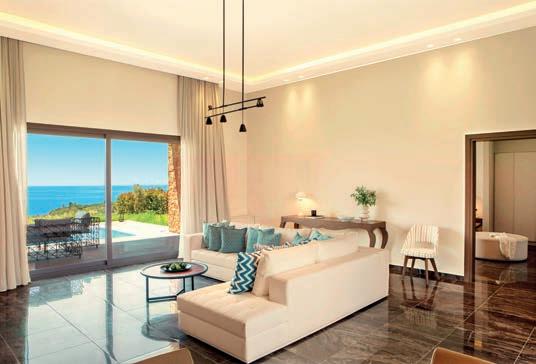
Our room continues this theme of relaxed elegance. Designed in a soft Mediterranean palette, it’s both spacious and soothing, with clean lines, tactile fabrics and thoughtful lighting that shifts with the day. Floor-to-ceiling doors open onto a private terrace overlooking the landscape, where the horizon stretches out towards the sea. Many of the resort’s rooms and villas feature private or shared pools, and it’s easy to see the appeal – a quiet, personal space where you can begin or end the day in complete tranquillity.
Inside, the comforts are all there: a generous bathroom with premium amenities, plush robes and slippers, and a well-stocked minibar alongside co ee and tea facilities. It’s the kind of space that encourages lingering – a place to retreat to after a day in the sun or a long, leisurely dinner.
Food, as you might expect in this part of Greece, plays a central role in

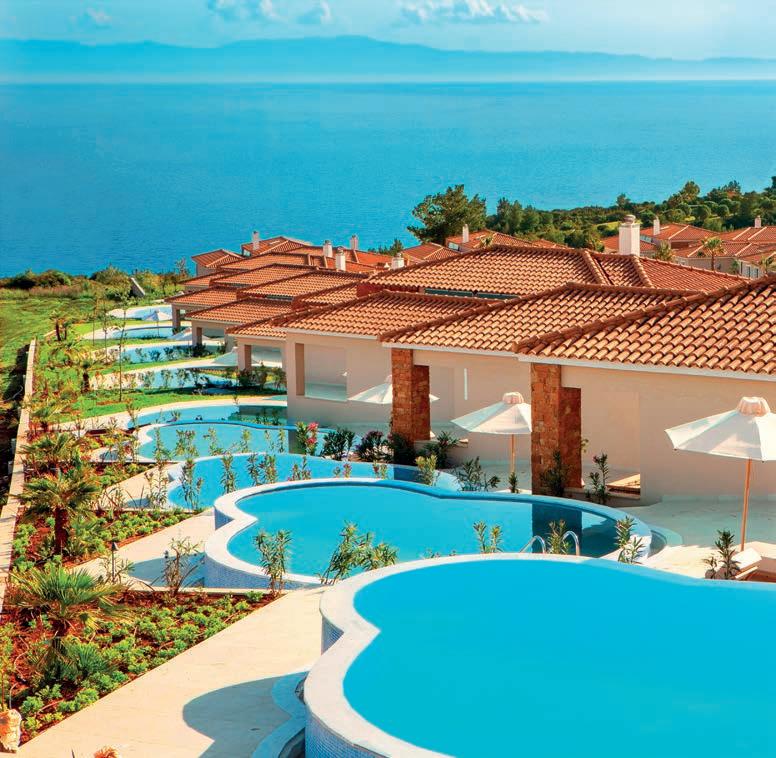
Ajul reveals itself as a resort designed for a wide range of experiences
the experience. Ajul’s three restaurants o er distinct yet complementary approaches to Mediterranean dining. At Infinity, dishes are served with a light, contemporary touch, celebrating seasonal ingredients and clean flavours. Thimari draws more directly on Greek tradition, reimagining familiar recipes with a refined, modern sensibility. Meanwhile, Ambrosia brings Italian influences into the mix, with fresh, vibrant plates that feel both comforting and elevated.
Dining here is less about formality and more about atmosphere. Lunches stretch lazily by the pool, accompanied by chilled wine and the sound of water lapping nearby. As evening falls, the mood shifts – golden hour drinks give way to dinners under the stars, where the air is warm and the conversation flows easily. There’s a strong emphasis on local produce throughout, from sun-ripened vegetables and fragrant herbs to freshly caught seafood and exceptional olive oil. It’s food that feels rooted in place, yet thoughtfully interpreted.
The six bars dotted around the resort each o er their own distinct setting. There’s something undeniably appealing about a cocktail at the beachfront Enki bar, where the rhythm of the waves provides a gentle backdrop. Elsewhere, the swim-up

Ananas bar brings a more playful energy, while the Lounge Bar o ers a quieter, more intimate space for evening drinks. Wherever you choose, the emphasis is on relaxed enjoyment rather than spectacle.
Beyond the dining and social spaces, Ajul reveals itself as a resort designed for a wide range of experiences. Wellness, in particular, is woven into the fabric of the place. The spa draws inspiration from the region’s longstanding tradition of healing, incorporating natural elements such as olive oil, honey and aromatic herbs into its treatments. There’s a sense of quiet restoration here – a chance to step away from the pace of everyday life and reconnect with yourself.
The facilities extend beyond the treatment rooms. A heated indoor pool, sauna and steam areas provide additional space to unwind, while yoga sessions and fitness options cater to those seeking a more active approach to wellbeing. It’s a holistic o ering, one that feels aligned with the surrounding environment rather than imposed upon it.
For those drawn to activity and exploration, the resort o ers plenty to discover. Scenic trails wind through the surrounding hills, inviting leisurely walks or more energetic hikes. Sports courts provide opportunities for tennis, padel,
basketball and volleyball, while the coastline opens up possibilities for snorkelling and diving in the clear, inviting waters.
Families are equally well catered for. A dedicated kids’ club and a variety of activities ensure that younger guests are engaged and entertained, while spaces such as the adventure park encourage a sense of play and discovery. The waterpark, in particular, brings a lively contrast to the resort’s otherwise tranquil atmosphere. Slides, pools and shaded lounging areas create a space where laughter and movement take centre stage – a reminder that relaxation can take many forms.
Yet even with all these options, there’s no pressure to fill every moment. Ajul excels in o ering the freedom to do as much or as little as you wish. Seven outdoor pools are scattered across the property, each with its own character, from lively social hubs to quieter corners designed for contemplation. It’s always possible to find a spot to settle into, whether with a book, a drink or simply your own thoughts.
For guests who wish to explore beyond the resort, a complimentary shuttle provides easy access to nearby beaches. Halkidiki is known for its stunning coastline, and the stretches of sand here are no exception –soft, pale and lapped by clear, gently sloping
waters. It’s the perfect setting for a day by the sea, whether you’re seeking solitude or a more sociable beach atmosphere.
Back at Ajul, evenings often take on a gentle, celebratory tone. Open-air cinema screenings and entertainment spaces add variety to the nights, while the warm hospitality of the sta ensures that every interaction feels genuine. There’s an ease to the service here – attentive without being intrusive, always anticipating what you might need before you have to ask.
And it all circles back, inevitably, to those defining moments – the weddings and celebrations that bring people here in the first place. Ajul has a way of elevating these occasions without overwhelming them. The natural beauty of the surroundings does much of the work, while the team ensures that every detail is handled with care and precision. The result is an experience that feels both polished and deeply authentic.
As our time here draws to a close, it’s this sense of harmony that lingers. Ajul is not about grand gestures or dramatic statements. Instead, it o ers something more subtle and, ultimately, more lasting – a place where nature, design and hospitality come together in quiet balance. Whether you arrive for a wedding, a family holiday or simply a few days of rest, it’s a destination that encourages you to slow down, reconnect and savour the beauty of the Mediterranean at its most refined.
zeusintl.com
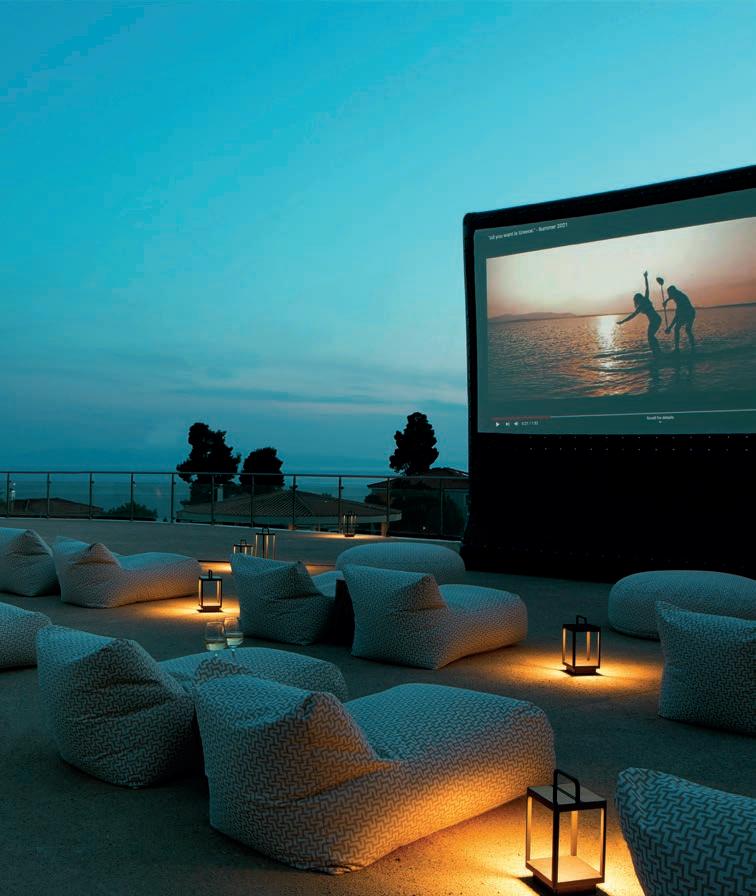

Ajul excels in o ering the freedom to do as much or as little as you wish



Three courses at £29? Yes please… The Fox & Hounds in Barley are offering more reasons to go out midweek with this new set menu, available WednesdayFriday, 12pm-3pm, and Wednesday-Thursday, 5.30pm-6.30pm. Enjoy a proper lunch or early supper, at a price well worth making the most of. foxandhoundsbarley.com














Matt Larcombe, Chef Patron of WILD Restaurant in Berkhamsted, tells Absolutely about experimenting with flavours and whole animal cookery
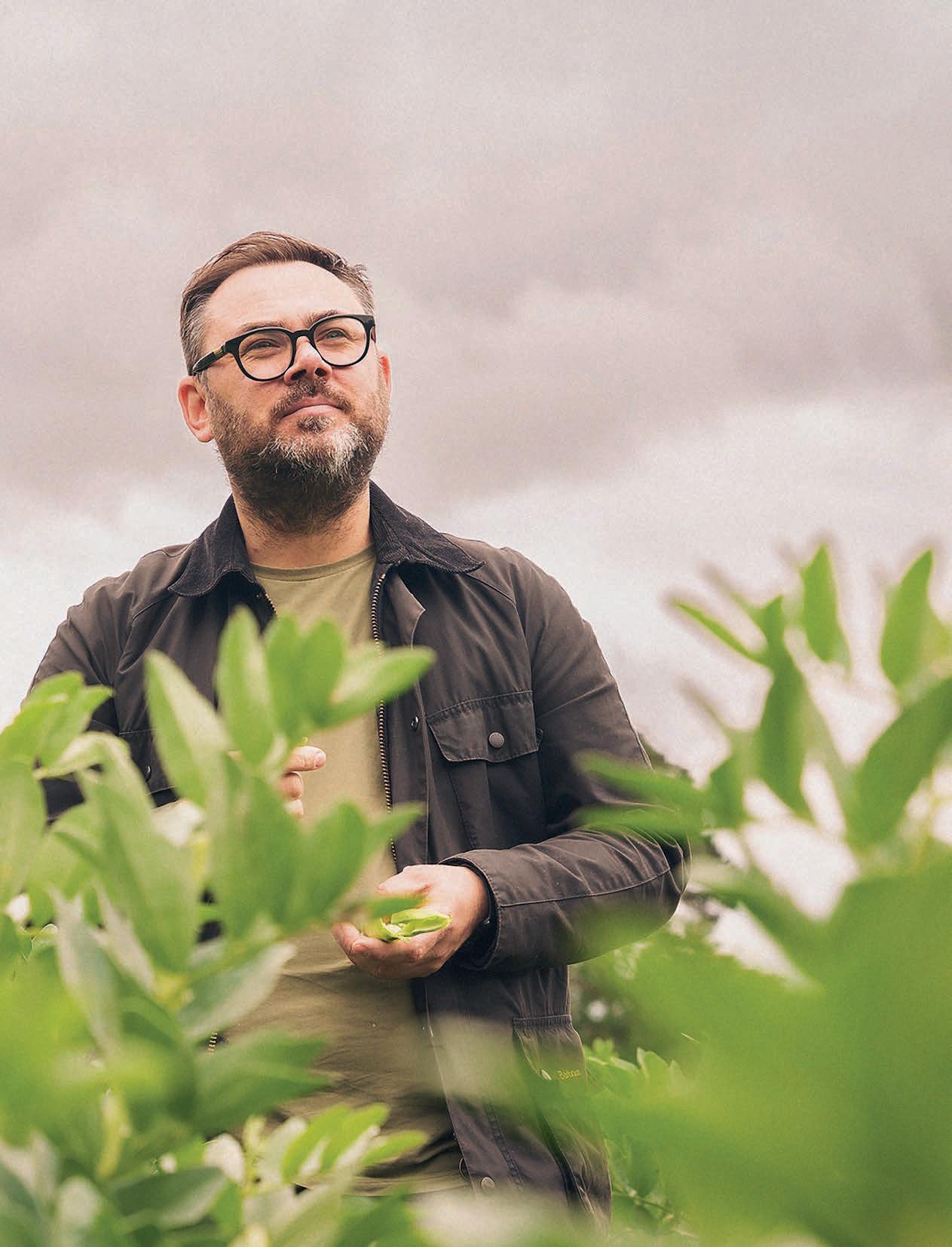
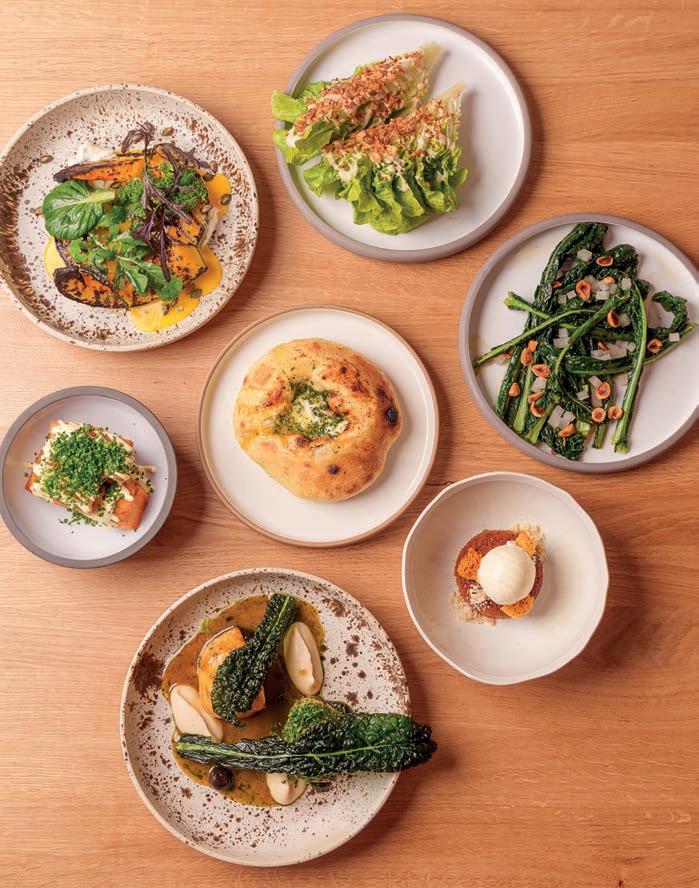
WILD Restaurant in Berkhamsted, led by Chef Patron Matt Larcombe, is celebrating its first spring season since opening on Berkhamsted High Street in October 2025. At the heart of WILD is a deep commitment to farm-to-fork cooking, sustainability and low food miles. Much of the restaurant’s produce is drawn from its own nearby farm project, Wild Farm in Radlett, just minutes from the restaurant. As spring arrives, the first harvests of the season begin to shape the menu.
Wild Farm supplies a growing proportion of the vegetables, herbs and honey used in the kitchen. The farm follows regenerative farming principles, focusing on soil health, biodiversity and crop rotation to create a resilient ecosystem that nurtures both the land and the produce grown upon it. The connection between farm and restaurant runs deeper still. WILD Restaurant’s distinctive logo is inspired
by the topography of the land at Wild Farm itself, the contours of the fields reflected in the brand identity as a visual reminder that every dish begins in the soil.
For Matt, who previously worked under Heston Blumenthal at The Crown at Bray and later served as Chef Director at The Victoria in Oxshott, the arrival of spring marks an exciting moment for the young restaurant. “At WILD, the seasons guide our kitchen,” says Matt. “Every ingredient has a story, and our job is to let it speak on the plate.” He sits down with Absolutely to tell us more.
Q Your background includes working under Heston Blumenthal. How did that experience shape your cooking?
A Working in a kitchen connected to Heston was a huge influence. There were various other amazing chefs around in the company as well. There’s an always real curiosity there about flavour and why things work the way they do. It encourages you to question everything and think about food
in a slightly di erent way. Even though what we do at WILD is very seasonal and ingredient focused, that mindset of being curious and always looking for new flavour combinations has definitely stayed with me. One of the most important things I learnt there was about consistency and how important that is in everything you do.
Q What inspired you to launch WILD?
A The idea behind WILD was to build a restaurant that feels closely connected to where the ingredients come from. Having that direct relationship with a farm means the menu can be shaped by what’s actually being grown and harvested rather than forcing ingredients to fit a menu. It makes the food feel more honest and more reflective of the seasons and the place we’re cooking in.
Q WILD has a close relationship with Wild Farm in Radlett. How does that shape the way you design your menus?
A It completely changes the way we think about menus. We’re in constant conversation with the farm, so we know what’s coming through the seasons and what’s looking particularly good. Sometimes a dish will exist purely because something amazing has just come out of the ground. It keeps the kitchen creative because you’re always adapting to what nature is giving you at that moment.
“You are always adapting to what nature is giving you at that moment”
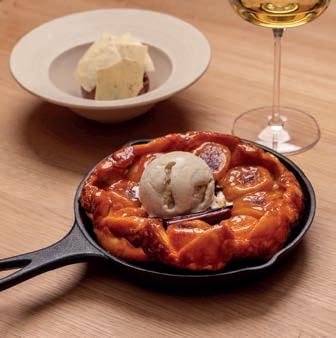
Q Spring is an exciting time for seasonal cooking. Which ingredients from the first harvest are you most excited to cook with this year?
A Spring is one of the best times of year in the kitchen because everything starts to feel lighter and greener again. I always look forward to the first asparagus, wild garlic, peas and young herbs coming through. After a winter of root vegetables and slower cooking, those fresh flavours feel really exciting.
Q Whole animal cookery plays an important role at WILD. Why is this approach important to you?
A If an animal has been raised well I think it’s important to respect it by using the whole thing rather than just a few popular cuts. It also opens up a lot of really interesting flavours and textures.
Sometimes guests might be slightly surprised by certain dishes at first, but once they try them they usually love them. It becomes part of the experience.
Q Vegetables are clearly central to the menu. Why do you think vegetables deserve to lead the plate more often?
A When vegetables are grown properly and picked at the right moment they can be incredible. Working so closely with the farm means we’re getting produce that’s really fresh and full of flavour, so it makes sense to let it take centre stage. I think people are also becoming much more open to vegetables being the star of the dish rather than just a side.
Q As WILD continues to grow, how do you see the relationship between the restaurant and the farm evolving in the future?
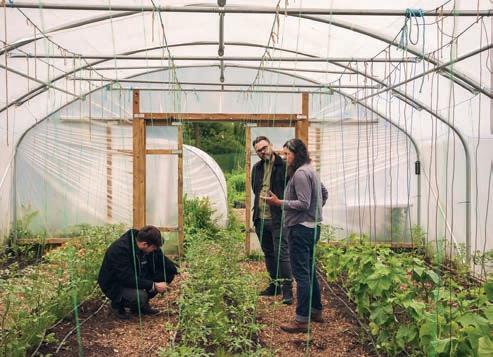
A I think the closer that relationship becomes, the more interesting the food will be. We have an amazing Head Grower called Jude who we speak to every day. This will naturally evolve and she is amazing at telling us what’s going on there, but also we regularly visit the farm to catch up and see what’s going on. What’s really interesting about this year is we plan together everything that we’re going to grow. As we choose all the varieties and all the di erent things that we want to grow, we also talk a lot about successions, planting them in stages so that we start to prolong the seasons of certain things.
wildrestaurant.co.uk


Sainsbury’s Taste the Di erence Côtes de Gascogne Sauvignon Blanc punches well above its price point, delivering lively citrus, a hint of white peach, and a crisp, clean finish. The smartest buy on the bank holiday table, £7.50. sainsburys.co.uk

Abingworth Vineyard’s newly released Pinot Noir is English winemaking at its most promising. Delicate red cherry, a whisper of earth, and silky texture make it a refined pour for May lunches and long weekends that deserve something special, £28. abingworthvineyard.com











May deserves something a little special, and Morellino di Scansano Riserva Roggiano delivers. Rich cherry fruit, earthy depth, and Maremma sunshine in every glass. Serve alongside grilled lamb or slow-cooked ragu for a bank holiday that feels celebratory, £14. waitrosecellar.com
By NATALIA SUTA








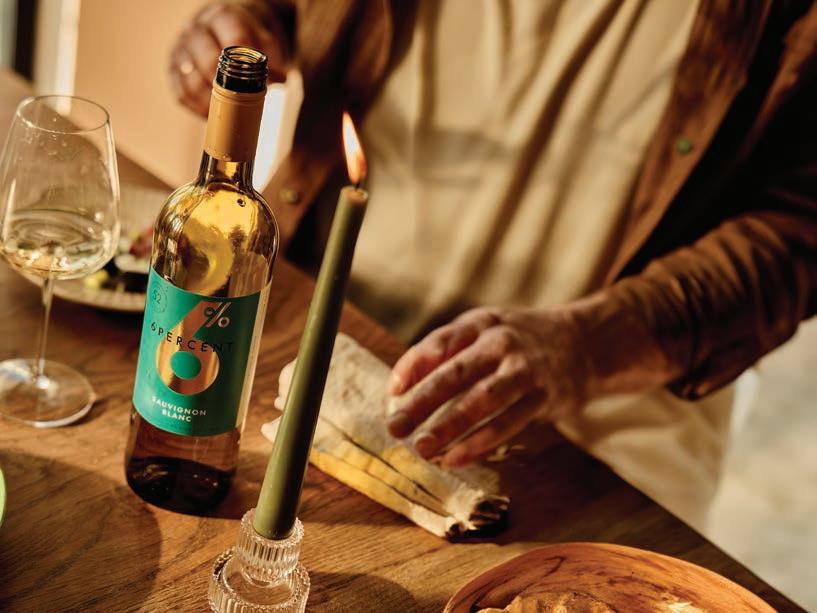
6Percent’s newly released Sauvignon Blanc is the bank holiday bottle you didn’t know you needed. Its crisp citrus, green herb, and a clean finish will keep you coming back, and at just 6% abv, it’s made for the long game, £15.99. 6percent.wine











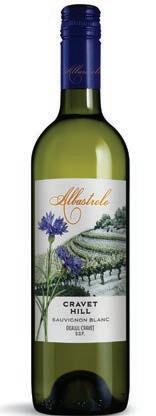
Albastrele’s Cravet Hill
Sauvignon Blanc is the wildcard your May bank holiday deserves. Hailing from Moldova, it brings bright lemon, green herb, and a lively mineral finish that punches well above expectations. Fresh, distinctive, and genuinely surprising, £11.99. laithwaites.co.uk
Natalia Suta is a WSET-certified wine writer and educator with a knack for making wine accessible and fun. When she is not writing, she’s busy curating wine experiences and offering consultancy to help others discover the joy of wine. Follow Natalia on Instagram @_winerocks_



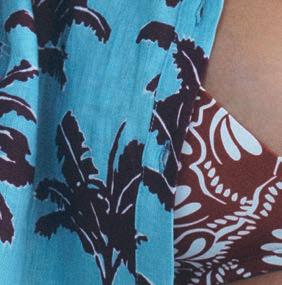








Boden's summer collection – available at stockists across Hertfordshire – is full of colour and joy, with standout dresses, polished tailored two-pieces and vibrant knitwear BODEN.COM









1 3 2 4 5








MR MARVIS
For SS26, the Mr Marvis collection expresses a subtle nod to the 80s while refi ning new classics in seasonal colourways. New pieces include the wrinkle-resistant Techwools and The Zip Cardigan. mrmarvis.com
For the Sunglasses Collection 2026, Kapten & Son combines new styles with trusted favourites, and an improved fit. This is the Zurich oversized aviator, which comes in several colourways. kapten-son.com
The new Relaxed Super jacket is a longer classic shape with pockets and a zip. It comes in a stylish raw wash. wrangler.com
The Swiss-born design visionary Le Corbusier's unique and striking approach to architecture has been captured in a new collection of special-edition Rado timepieces. We absolutely love. rado.com 1 3 4 5 2
JOHN LEWIS
John Lewis has expanded its branded menswear offer with the arrival of Parlez, Patagonia, Percival, Belstaff and Stetson. Joining them is premium resort wear label OAS, whose signature printed shirt stands as a seasonal hero piece. johnlewis.com

INNA VORONOVA
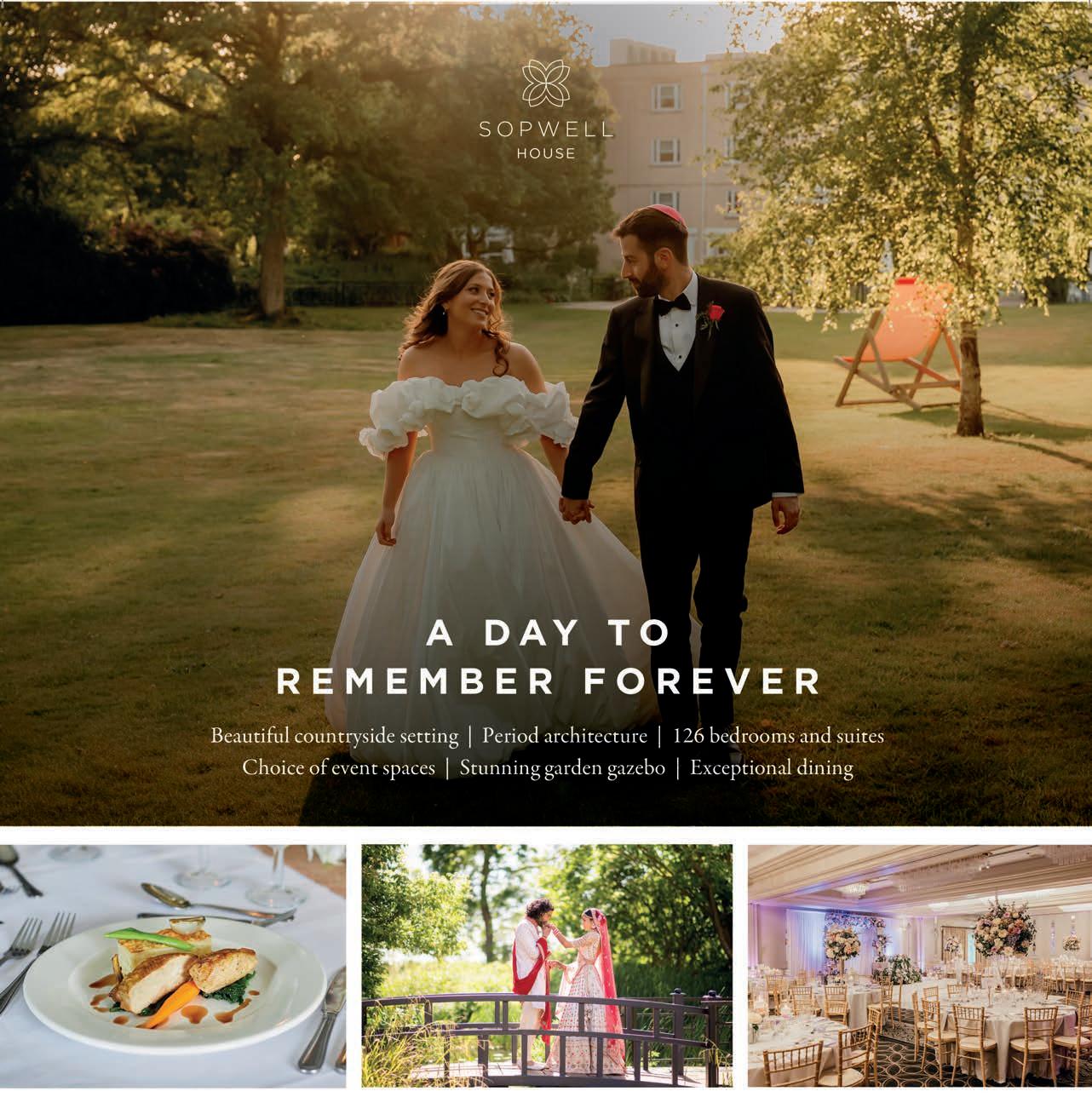
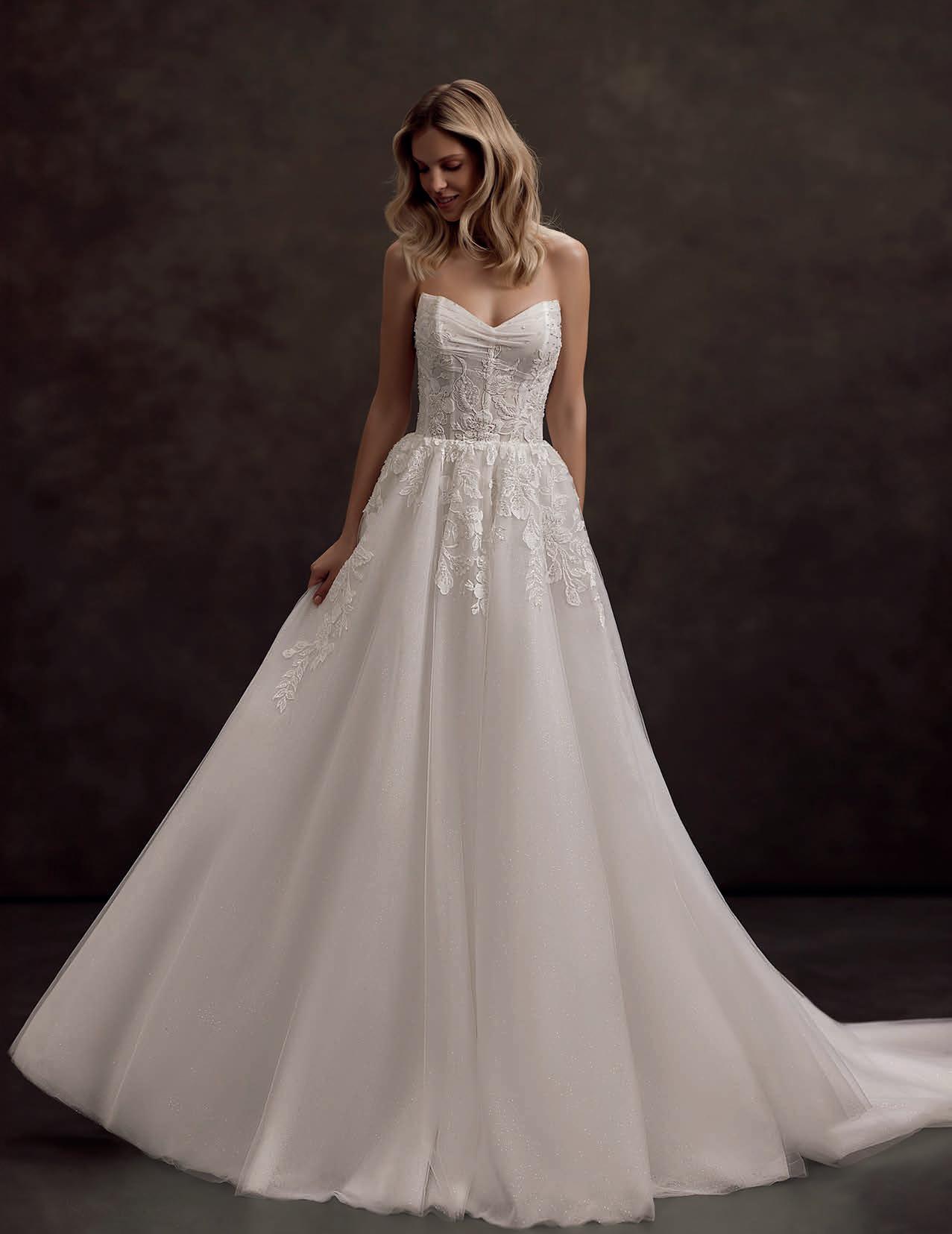
Inna Voronova is where romance meets elegance. You’ll find catwalk quality and a bespoke bridal gown service at a ordable prices, plus a wide choice of sophisticated evening dresses. Collections o er stunning silhouettes, gorgeous necklines, delicate details and dream-worthy materials guaranteed to turn heads – as we discover inside this special. inna-voronova.co.uk





Emily Sorrell sources vintage jewellery to create a collection that embodies timeless charm and individuality. Pick a relevant charm from her extensive collection. sorrelljewels.com

























These heart-shaped earrings will add a touch of summer fun to your big day, whether for bridesmaids, flower girls or the bride herself. oliverbonas.com







Savannah Miller’s eponymous bridal collection uniquely captures a fashion voice within the bridal world. The new Equilibrium collection draws inspiration from early modernist architect Max Bill and his fluid, sculptural forms. savannahmiller.com




Chanel No5 is a classic choice for a wedding, with its enduring appeal and romantic floral elegance. It's a timeless fragrance in an iconic bottle. chanel.com






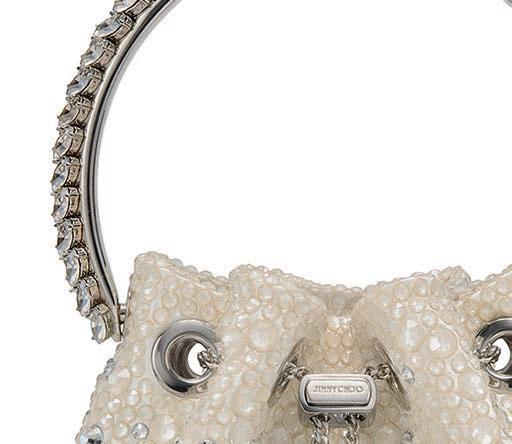
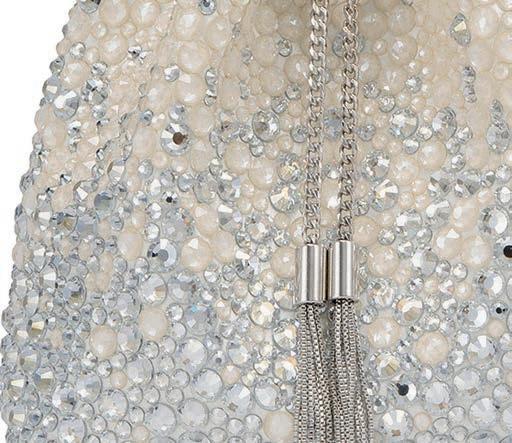
For a real princess-style look, the ivory crystal Bon Bon bag is a dazzler. It earns its iconic status with a contemporary bucket silhouette that is crowned with a crystal bracelet handle. jimmychoo.com


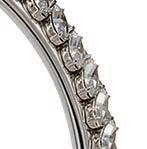





These Italian-made kitten heels are designed for dancing with their memory foam cushioning, perfect 5cm height and structure designed for stability. You'll never need to take them off. nomasei.com









Nothing says 'I love you' like... a pair of heart-shaped sunglasses. Matching ones for bride and groom are a cute addition to a summer wedding. oliverbonas.com




Embrace the romance of your special day with Celia 0.5 inch nude wedding flats, intricately embroidered with ivory lace vines on a subtly tinted nude mesh. bellabelleshoes.com








Inspired by tuberose, Fleur de Nuit is a floral amber scent that evokes summer nights and true romance. selfridges.com





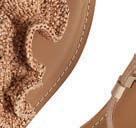









are with any outfit. monsoon.co.uk









Fom


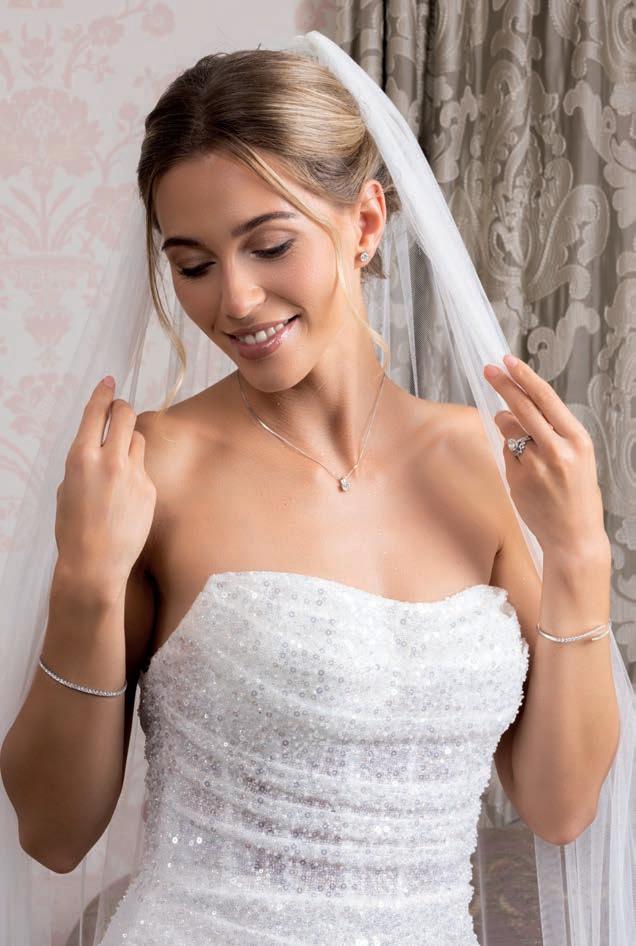


rom the excitement of a proposal to the elegance of a wedding day, jewellery plays a defining role in life’s most meaningful celebrations.
Engagement rings and wedding bands are often the first pieces chosen, symbols of commitment worn every day. Alongside them sit the jewellery selected for the wedding day itself, necklaces that complement the dress, earrings chosen for the occasion and cu inks worn for the ceremony.
Each piece marks a moment within the wider celebration, yet many continue to hold meaning long after the day has passed. Rings become part of daily life, while the jewellery worn on the wedding day is often returned to for anniversaries, special occasions and other meaningful moments.
For many couples today, choosing these pieces begins long before stepping inside a jeweller’s boutique. Inspiration is discovered online, favourite styles are saved and shared, and conversations begin about the shapes and designs that feel right. Some couples explore these ideas



Jewellery chosen for an engagement or wedding is not simply worn for a single day
together, while others arrive alone with a plan to create a moment of surprise.
At Baker Brothers in Bedford, these early ideas are carefully guided into something lasting.
For more than 180 years the independent family jeweller has helped couples choose engagement rings and wedding bands that mark the beginning of a lifetime together. The elegant St Peter’s Street boutique o ers a calm and welcoming


setting where the process of choosing a ring becomes an experience to enjoy.

Specialists share their knowledge with clarity and warmth, guiding customers through diamond shapes, coloured gemstones and craftsmanship, so every decision feels considered. Some couples discover a ring within the boutique’s curated collections, drawn to the quiet beauty of a classic diamond solitaire or a contemporary design. Others work with the team to commission a bespoke piece, creating something entirely personal.
What unites each of these pieces is the intention behind them. Jewellery chosen for an engagement or wedding is not simply worn for a single day. It becomes part of everyday life, carrying memories that deepen over time.
At Baker Brothers, craftsmanship, care and independent expertise guide every choice, ensuring that each ring is created to be worn and loved for generations to come.
bakerbrothersdiamonds.com

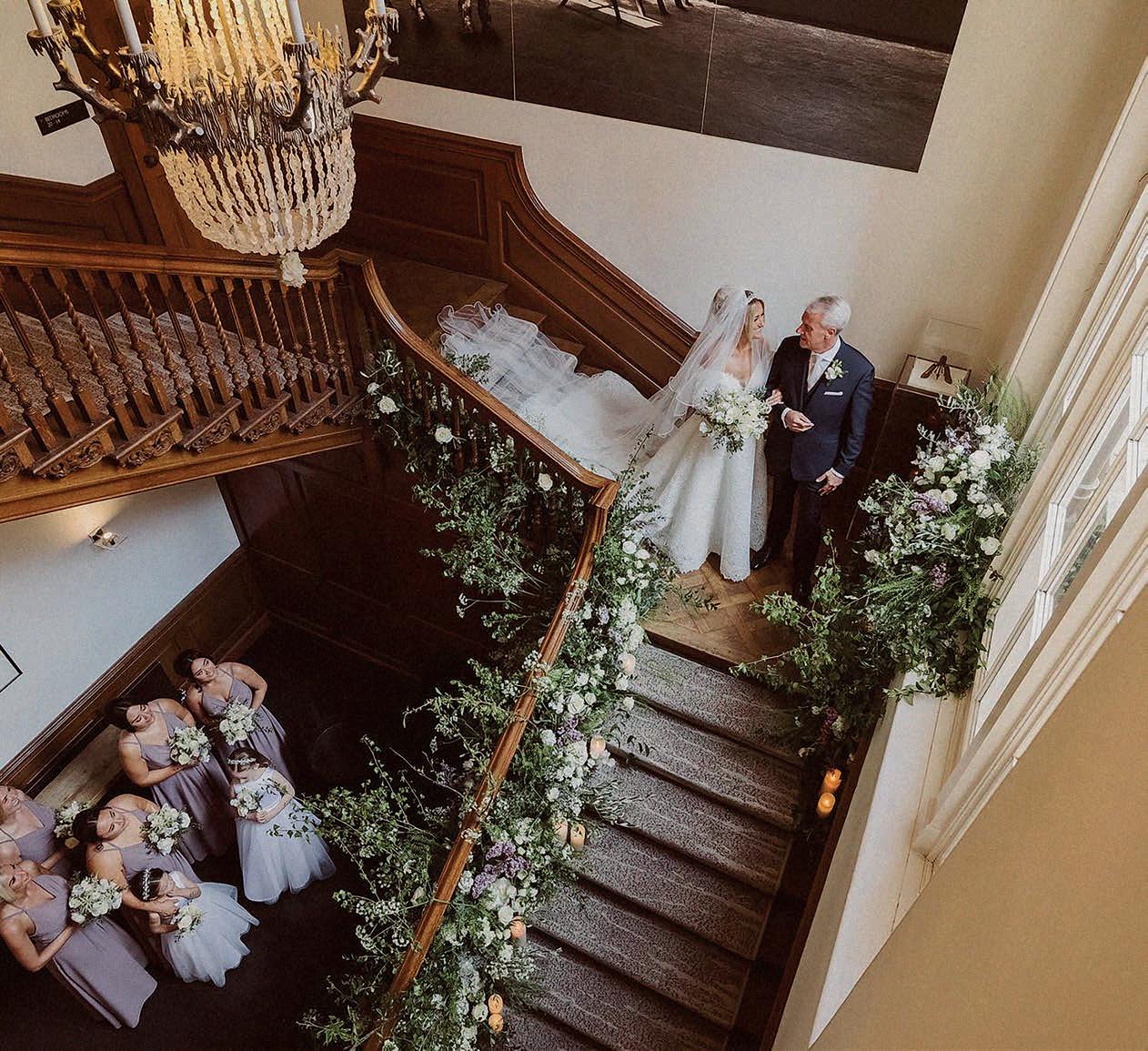
From grand estates to hidden gems, Hertfordshire o ers a host of stunning settings for your perfect “I do”
Why it is special: Historic courtroom venue blending heritage architecture with modern cultural spaces
St Albans Museum + Gallery o ers a wedding venue that is both culturally rich and architecturally distinctive, set within the city’s historic Town Hall. The building dates back to the 19th century and retains many original features, most notably the grand courtroom, which provides a striking setting for ceremonies. With its high ceilings, wood panelling and sense of history, the space creates an atmosphere that feels both intimate and significant. Beyond the courtroom, the venue also includes contemporary gallery spaces and the Assembly Room, allowing couples to move between traditional and modern environments throughout their celebration. stalbansmuseums.org.uk
Why it is special: Historic Jacobean manor with romantic Japanese gardens and secluded grounds Hidden among 27 acres of Hertfordshire countryside near Ware, Fanhams Hall is a venue where architectural character and romantic garden design combine to create something genuinely distinctive. The Grade II* listed country house began life as an 18th century Queen Anne residence before being expanded in the early 20th century into the Jacobean-style mansion seen today. Couples are drawn not only by the historic interiors – complete with carved oak
panelling, ornate fireplaces and a dramatic Great Hall – but also by the extraordinary range of backdrops within the grounds. One of the venue’s most memorable quirks is its Japanese garden, featuring a tea house and zig-zag bridge, o ering an unusual ceremony or photography setting that feels almost transported from another continent. exclusive.co.uk/fanhams-hall
Why it is special: Blending heritage with contemporary flexibility
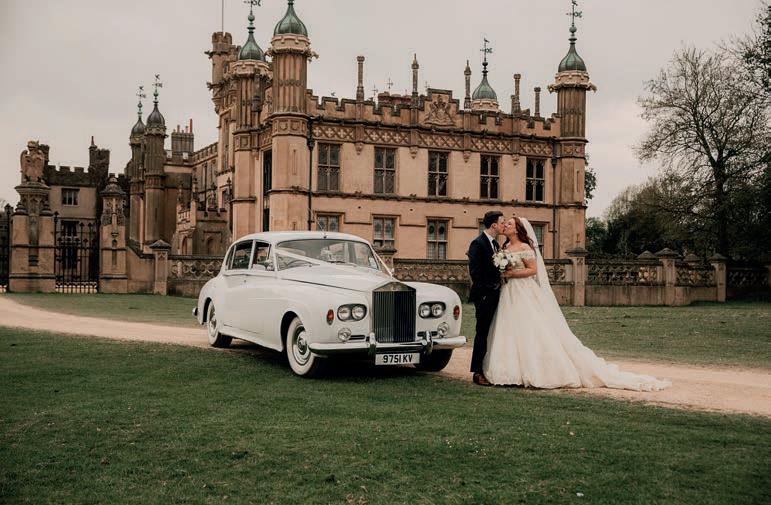
In an era where couples are seeking weddings that feel both personal and visually unforgettable, Ware Priory emerges as one of Hertfordshire’s most compelling venues. It speaks directly to today’s biggest wedding trends: meaningful settings, bespoke experiences, and Instagram-worthy backdrops.
Modern couples are increasingly moving away from one-size-fits-all celebrations, favouring venues that can adapt to their story. Ware Priory excels here, o ering everything from intimate ceremonies to larger, fully tailored receptions, all supported by an experienced team dedicated to personalisation.
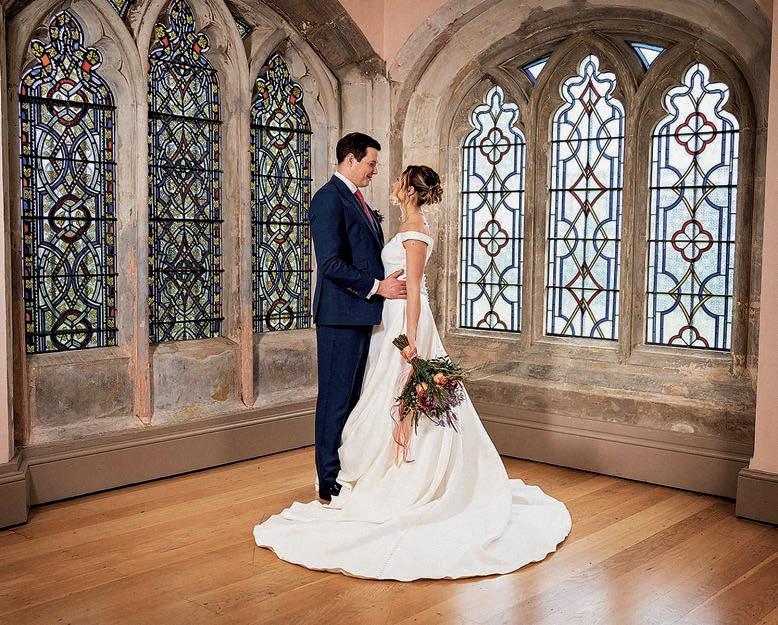
Equally important is the demand for character and authenticity. With origins dating back to the 14th century, the Priory’s gothic architecture, stained glass, and historic interiors provide a timeless aesthetic that feels both romantic and distinctive. Yet, crucially, it balances this with modern event spaces, allowing couples to design celebrations that feel current as well as classic.
Outdoor and nature-led weddings continue to dominate, and Ware Priory delivers with seven acres of landscaped riverside gardens – ideal for relaxed drinks receptions, candid photography, and open-air moments that define today’s celebrations.
For couples seeking a venue that reflects both tradition and trend, Ware Priory o ers something rare: a wedding that feels e ortlessly timeless, yet unmistakably of the moment. warepriory.co.uk
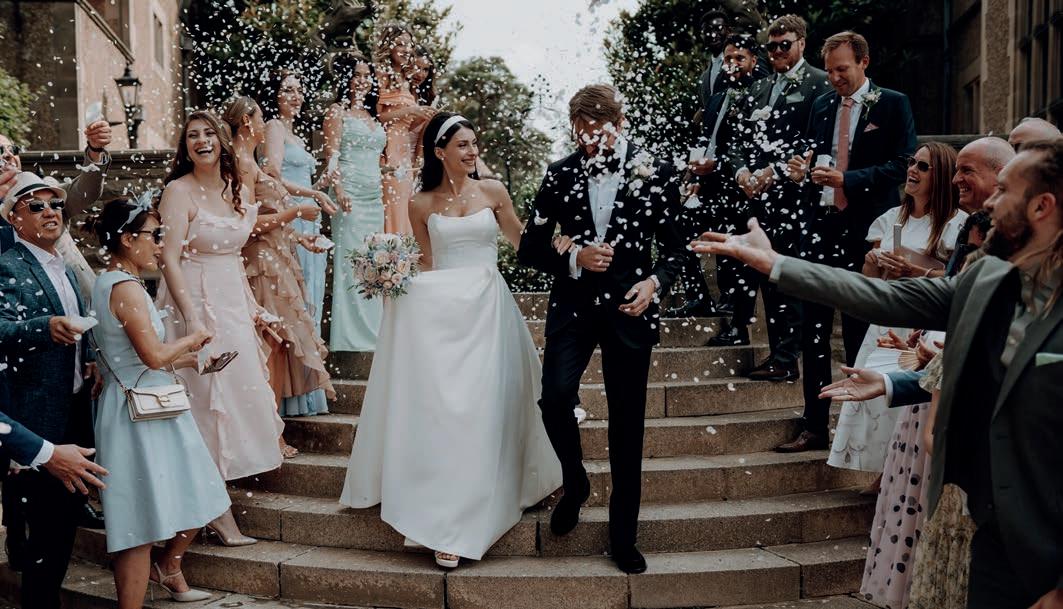
Why it is special: Majestic Jacobean palace steeped in royal history and sweeping parkland Few venues in Hertfordshire carry the same sense of historic drama as Hatfield House. Built in 1611 by Robert Cecil, the Jacobean palace is one of England’s most famous stately homes and is surrounded by sweeping parkland, formal gardens and ancient woodland. The estate’s wedding spaces are as varied as its history. Couples may marry in the elegant Riding School or celebrate in grand marquees overlooking the gardens, while receptions can unfold within magnificent historic rooms lined with portraits and tapestries. hatfield-house.co.uk
Why it is special: Characterful rustic barns set within the historic Knebworth estate Knebworth Barns o ers a relaxed and characterful wedding setting within the grounds of the historic Knebworth Estate. Unlike the dramatic Gothic house nearby, the barns provide a more informal and intimate atmosphere, centred around a collection of rustic buildings and courtyards. The surrounding parkland adds depth to the setting, o ering open views and a connection to the wider estate without overwhelming the intimate feel of the barns. knebworthhouseandbarns.com
Why it is special: Five-star country estate combining luxury hospitality with landscaped parkland
The Grove is widely regarded as one of Hertfordshire’s most luxurious wedding venues. Set within 300 acres of landscaped parkland near Watford, the estate combines the elegance of an 18th century mansion with the amenities of a modern luxury hotel and spa. Couples can host ceremonies in refined historic rooms within the mansion or in contemporary glass-fronted spaces overlooking the gardens and golf course. thegrove.co.uk
Why it is special: Contemporary barn venue overlooking countryside Essendon Country Club o ers a wedding setting that feels both modern and rural. Located within a 400-acre estate in the Hertfordshire countryside, the venue is best known for its golf courses but has become equally admired for its stylish wedding spaces. The barns combine rustic timber beams and exposed brick with sleek contemporary interiors, creating a relaxed yet elegant atmosphere. Outdoor ceremonies and sunset photographs overlooking the countryside are particularly popular here. essendoncc.co.uk
Why it is special: Spectacular Gothic Revival mansion surrounded by ancient woodland Ashridge House is one of the most architecturally dramatic wedding venues in Hertfordshire. Originally the site of a medieval monastery, the estate was transformed in the 19th century into a grand Gothic Revival mansion. The result is a building that feels almost cathedral-
like in scale, with intricate stonework, towering windows and ornate vaulted ceilings. Weddings often take place in the magnificent Main Hall or near the sweeping grand staircase, where the architecture itself creates a breathtaking sense of arrival. ashridgehouse.org.uk
Why it is special: Intimate lakeside manor with romantic gardens close to St Albans Tucked away just outside the centre of St Albans, St Michael’s Manor o ers a wedding venue defined by intimacy and charm. The historic manor house has been carefully converted into a boutique hotel, preserving many traditional features while creating a warm and welcoming atmosphere. Its greatest asset is the garden. Sloping lawns lead down to a tranquil private lake, crossed by a small ornamental bridge and surrounded by colourful flowerbeds. stmichaelsmanor.com
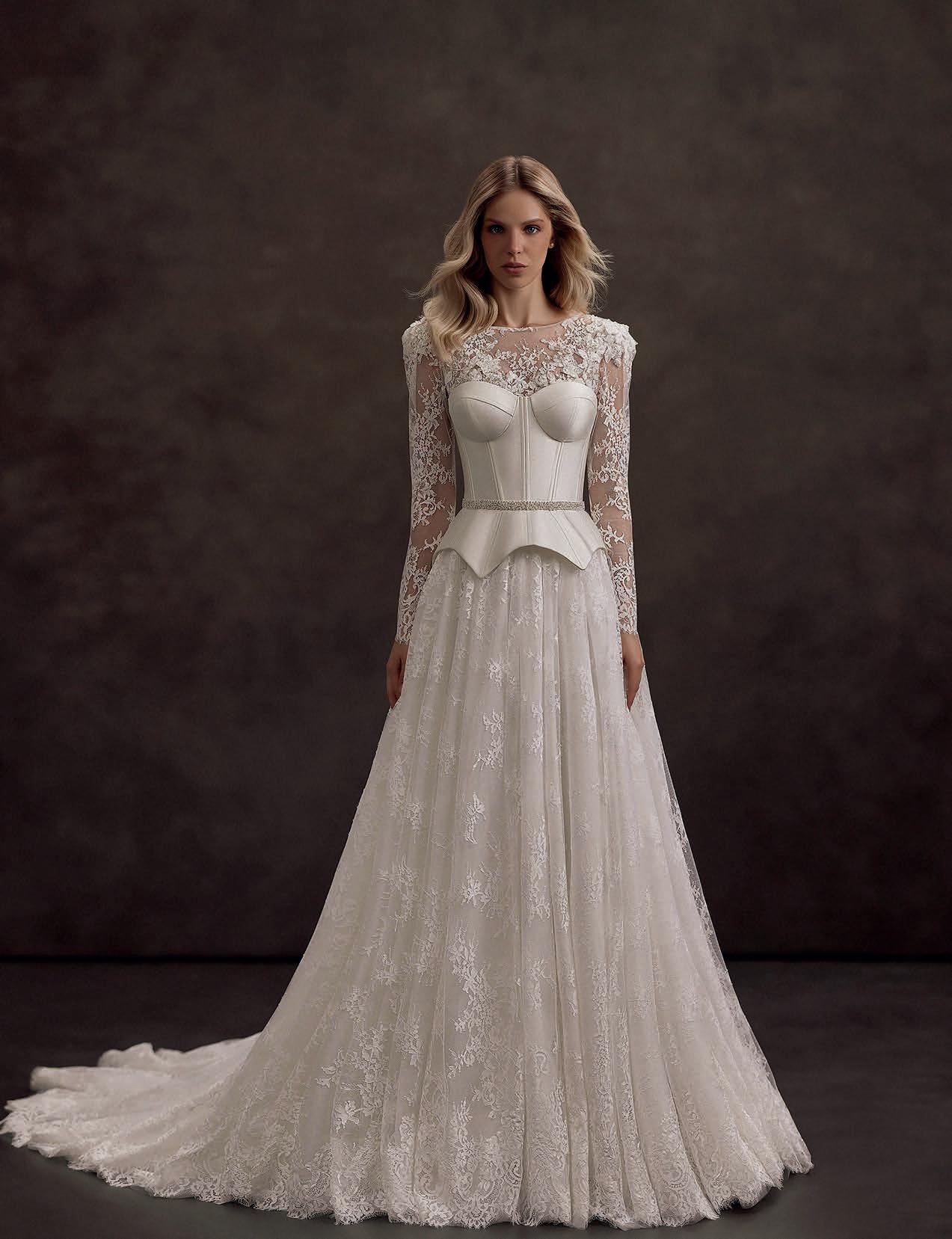
Why it is special: To give your big day that royal occasion feel Boasting a royal connection as the country home of Princess Alice, mother of the late Duke of Edinburgh, Sopwell Houseis set within 12 acres of scenic countryside. With period architecture, beautiful interiors and picturesque gardens, this magnificent Georgian country house creates a stunning backdrop for your special day. Sopwell House’s Wedding Coordinators are on hand so you and your guests are looked after from beginning to end, and S stunning guestrooms are also available. sopwellhouse.co.uk


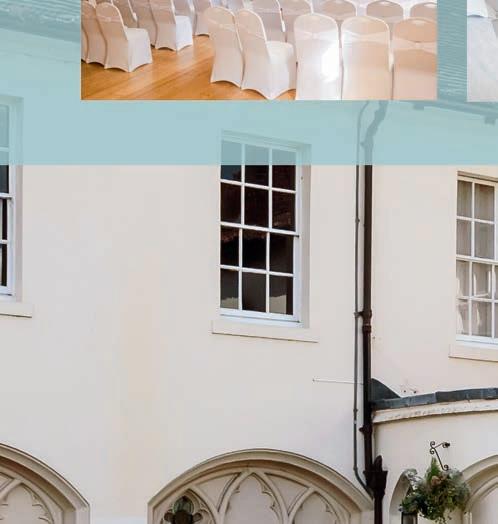
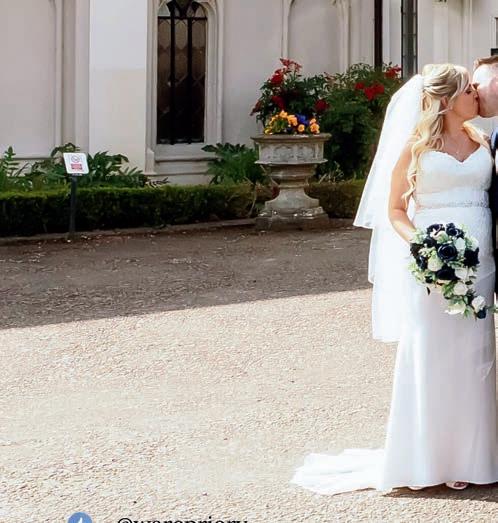

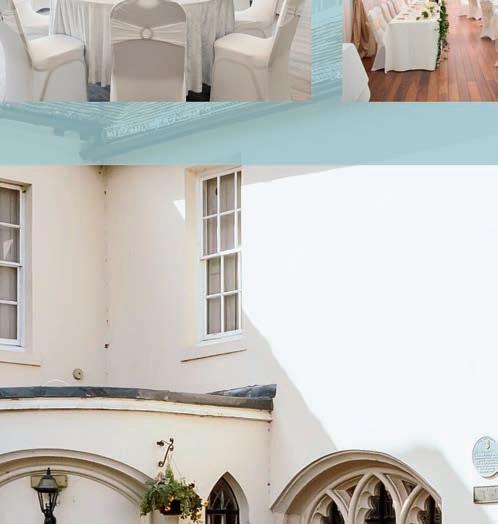
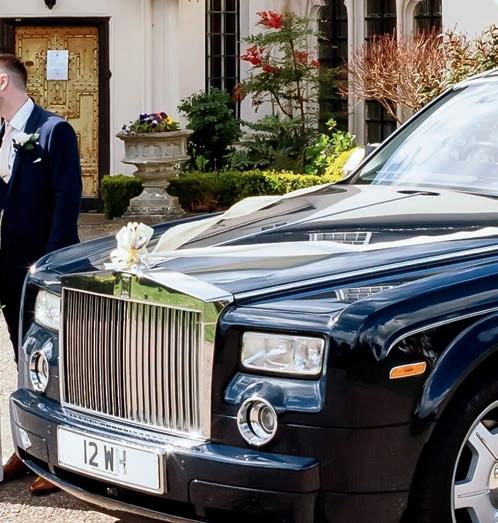



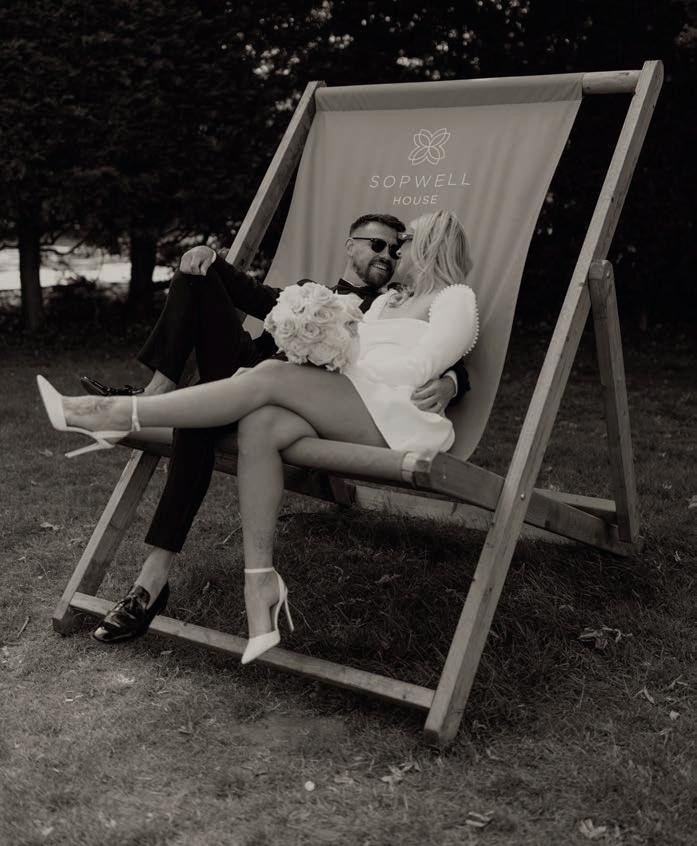

Sopwell House is an enchanting countryside wedding venue that o ers comprehensive wedding packages and bespoke wedding services tailored to every bride’s dream day.
The dazzling white 18th century manor house comprises 12 acres of private gardens, The Brasserie and Omboo restaurants, Octagon bar bringing the London cocktail scene firmly to St Albans, the awardwinning Cottonmill Spa, 15 elegant and adaptable banqueting rooms for up to 300 guests, 126 recently renovated guestrooms including their corner suites and a collection of 16 privately accessed Mews Suites.
Originally an old stable block, the Mews is situated in stunning botanical gardens with a ceramic detailed infinity hydrotherapy pool in the centre of this bespoke and secluded space. Accessible only via private gates and surrounded by
two-metre pleached hornbeam, the Mews Suites is an ideal environment for the bride and groom to spend their first night as man and wife. Alternatively, this whole area can be taken exclusively as a peaceful sanctuary for the wider wedding party.
It is important the entire wedding experience is thoughtfully planned, which extends to the days before and after the wedding. Sopwell House is home to the Cottonmill Spa, which was designed to provide guests with the ultimate global spa experience, an ideal environment for the bride and groom to relax and enjoy together after the big day.
From Alpine infinity pools and German thermal baths to hillside medispas, Himalayan wellness retreats and Moroccan riads to Japanese sleep pods and cli top Californian spas, Cottonmill has taken inspiration from around the world to create a world class facility combining relaxation, connection with nature and restoration of the senses.
The extensive Sopwell House manicured lawns are the perfect setting for a truly unforgettable summer wedding. A Koi Carp pond and charming arched bridge provide the perfect spot for wedding photography, while an enchanting raised gazebo in the centre of the lawns boasts its own wedding license for magical al fresco ceremonies.
A dedicated wedding co-ordinator and event manager work with guests to plan every detail in the run up to their big day, as well as being on-hand at the wedding itself. The hotel also boasts a private wedding parking area and reception entrance, plus private staircases to wedding party guestrooms.
The hotel o ers bespoke wedding packages on request, and special guest rates and menus for children. Dry hire (no catering or drinks) of the St Albans Suite seating up to 280 guests with dancefloor is available.
Sopwell House
Cottonmill Lane, St Albans, AL1 2HQ For reservations, call 01727 864477 or visit sopwellhouse.co.uk
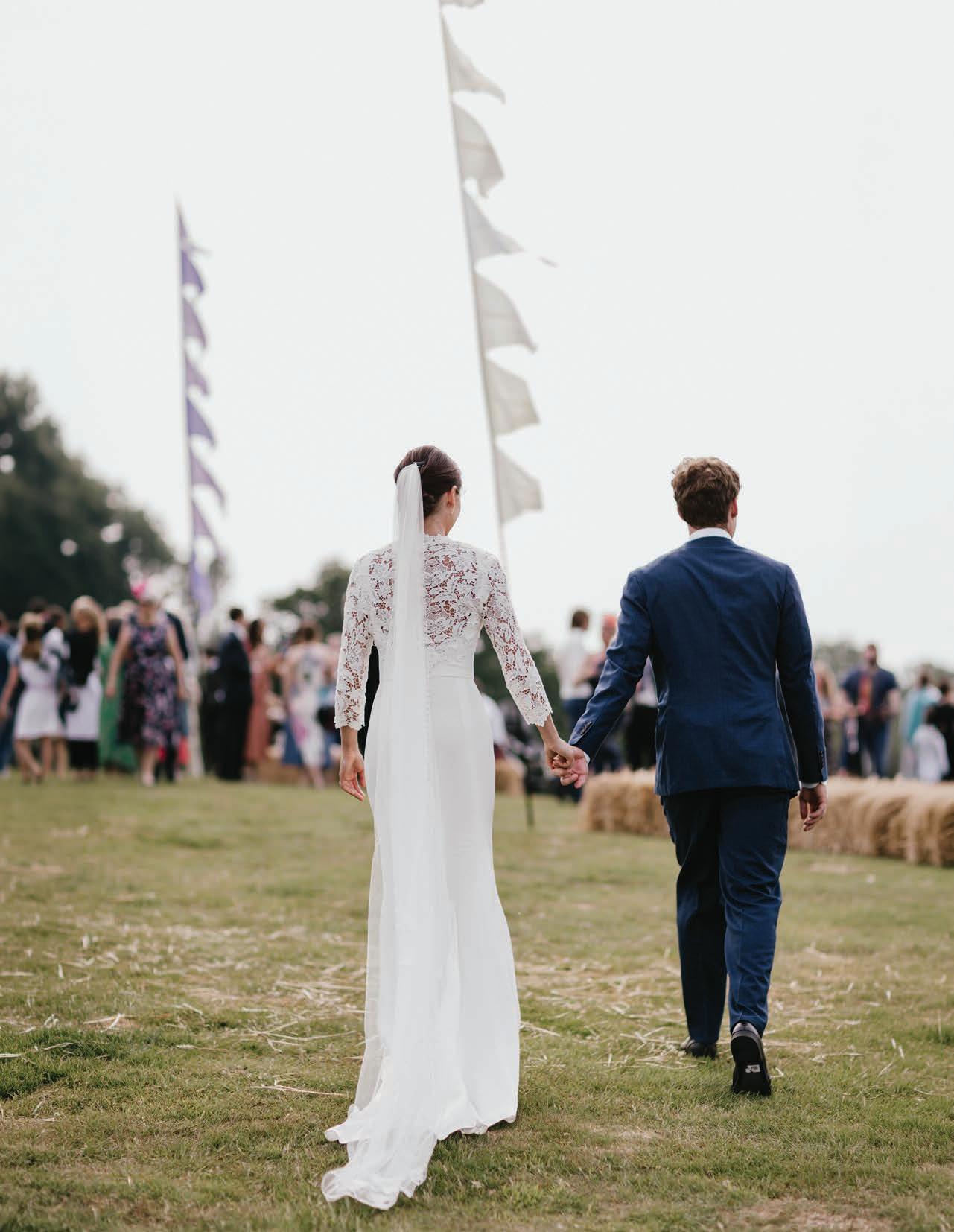
Exploring 2026 wedding trends – and how to ensure your day remains personal
By MATTHEW SHAW
When planning a wedding, couples often begin by looking for inspiration online –Pinterest and similar platforms are full of ideas, and trends inevitably play a role. At Sauveur, however, we try to avoid trends. They tie couples to formats and aesthetics that may not be truly them and encourage copy-and-paste weddings. Undoubtedly they’re everywhere and when looking for florals, decor and table settings etc it can seem a daunting task. The wealth of imagery available online can be both inspirational and distracting. Keeping your wedding day personal is hugely important and here are some tips to go your own way and avoid cliché.
Sometimes it can be di cult to find any inspiration at all or to think about how you might do things di erently. If we are working with a couple who are struggling with this it can be helpful to take things back to basics. It can be helpful to select a couple of key colours that you and your partner love that spark some ideas – and let’s be bold. Embrace aesthetics and visuals that you want and work with your planner to achieve an interesting and loud design. Embrace colour, texture, scent, and scale – there are numerous di erent ways to excite your guests, create comfort, and emphasise partying that di er from the norm and ensure your wedding celebrations feel uniquely you. Recently we produced a wedding where the task was to creatively tie together the couple’s cultures. Floral arrangements were swapped for boldly coloured Mexican paper flowers, and the sweet station featured di erent sweets and delicacies from the countries the couple were connected to.


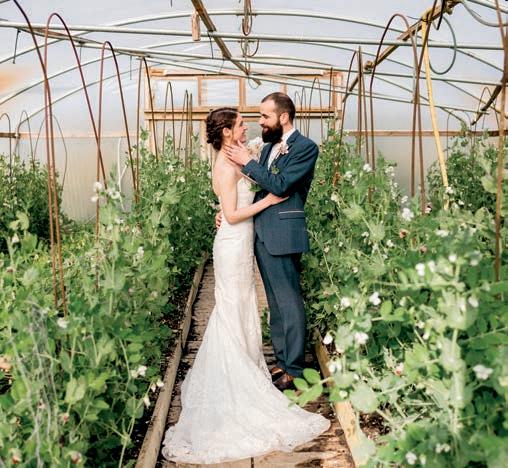

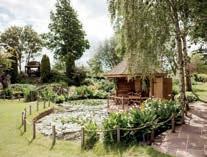



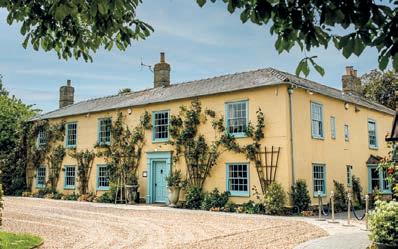
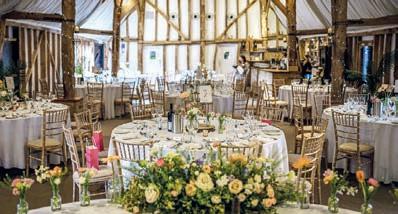
Stunning gardens encircle a host of enchanting indoor and outdoor ceremony and reception spaces
A diverse range of delicious menus with seasonal home-grown and locally sourced food
Wildower meadows and orchards create the perfect wedding backdrop and a haven for wildlife
Impeccable service from our friendly, professional and experienced team

Texture is playing a key part in wedding design in 2026. When it comes to fabrics we’re seeing lace, crochet, and ruched tablecloths as people move away from the rustic table look. When it comes to florals, people are incorporating more than just flowers in the arrangements. Fruits, metal decorations, and fabric have been introduced into arrangements.
Personalisation can also go beyond monograms and guest names. A couple we worked with recently had a collection of poems selected for them by friends and family. Extracts were then printed on napkins used throughout the celebrations. You should also discuss together a rough design route you want to go down. It may be more pared back or maximalist, traditional or modern. You can then share these colours and keywords with your planner, florist, or caterer and they can help you develop this into an overall look.
The most successful and helpful inspiration images we use often have nothing to do with weddings. This is where Pinterest can be a very useful tool, you just need to know what to search. Try and take a step back from using ‘wedding’ in your searches and use terms like set design, restaurant, interior and then add in your colour or design ideas. Once you start to fine tune your search this way you
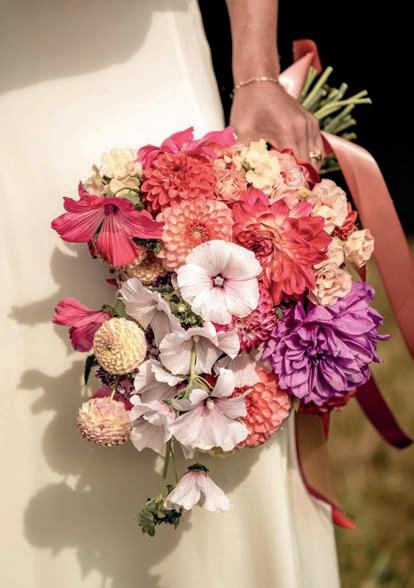
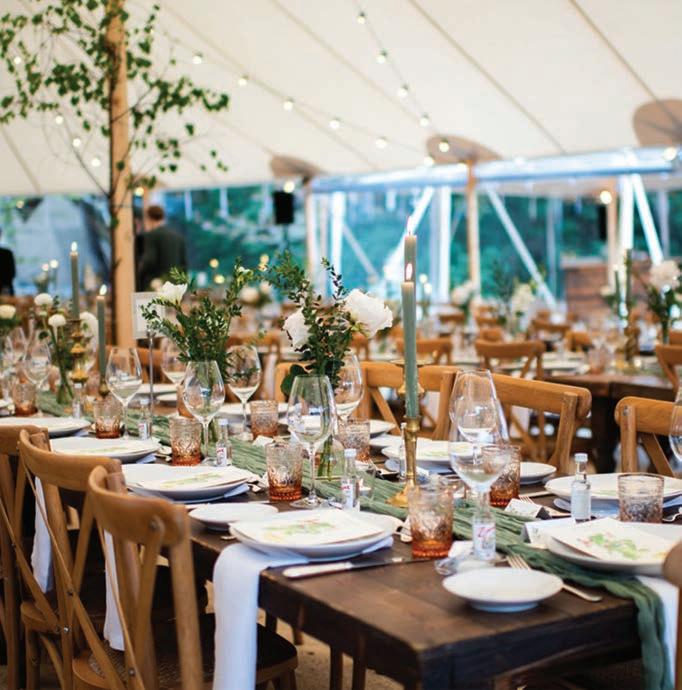
will come across some fantastic ideas that should sit within what you are looking for. Whatever you do, don’t just search “wedding table idea”! Your suppliers will also thank you for this as they will be able to be more creative and unique in what they suggest to you.
There is an increasing tendency to just share a selection of images with your suppliers and ask them to recreate exactly that. Whilst you should certainly be working closely with them to achieve your vision, your wedding design will be much more special if you share some initial thoughts with them and let them come up with suggestions and ideas. Make the most of their creativity and let them help you inspire you as well.
My camera roll is filled with photos from restaurants, gardens, and shop fronts. There is so much inspiration out there that doesn’t just follow wedding trends and this is a really good place to start. I suggest putting together a small selection of images, textures, colours that you can share with your florist and your caterer if they are helping with your tableware. It’s always best to keep your selection of images relatively snappy so you have a clear vision and don’t get too distracted with lots of di erent designs and options.
Playful nostalgia is also making a comeback when it comes to catering, and also at weddings. Think elevated prawn cocktail, trifles, or chicken kiev. Most notable of the bunch is jellies, which are getting more creative than ever. We’ve seen spectacular wobbling retro jellies as well as jelly shots designed to look like jewels or delicate French patisserie. Finally, there is absolutely nothing wrong with finding your inspiration on Pinterest or elsewhere online, but I would suggest being targeted. Try and focus on a couple of ideas that you can pull out and put your own spin on instead of completely recreating images you have seen. When browsing for inspiration the questions I would always ask are ‘does this represent us’, ‘what’s the reason I want this’, and ‘does this work in our venue’. Asking yourself why you are doing or choosing something is one of the best things you can do. It may be that it makes sense within the venue setting, you’ve always dreamed of it, or it just feels very you. Always stick to your guns and don’t worry if it doesn’t feel ‘wedding-y’ or you haven’t seen other people do it. Your wedding will be all the more unique, and also exciting for your guests, because of it!
Matthew Shaw is the founder of Sauveur, a leading luxury wedding and events studio. Find out more by visiting sauveurstudios.com























By PENDLE HARTE

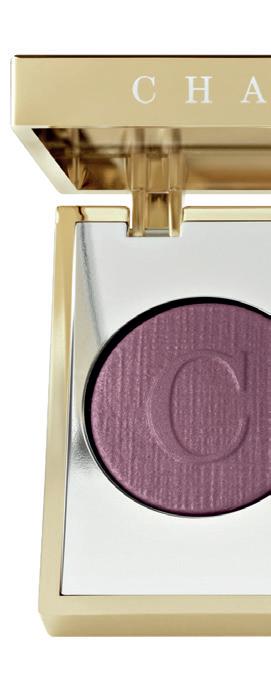
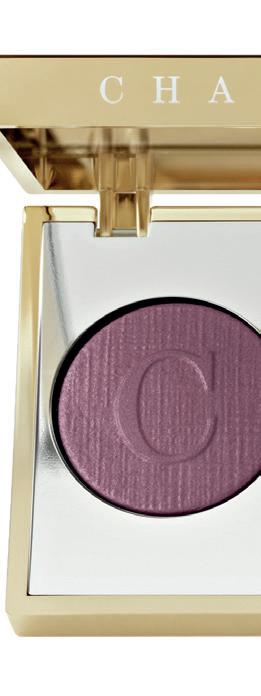
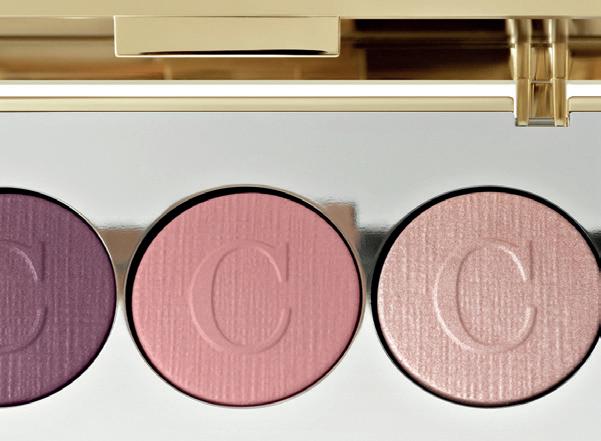
Chantecaille’s newest limitededition makeup is the Flamingo collection, with 5% of every piece sold supporting Amazon Conservation Team’s Ancestral Tides program to protect the American Flamingos and their fragile wetland habitat on Colombia’s Caribbean coast. chantecaille.co.uk

EDITOR’S PICK
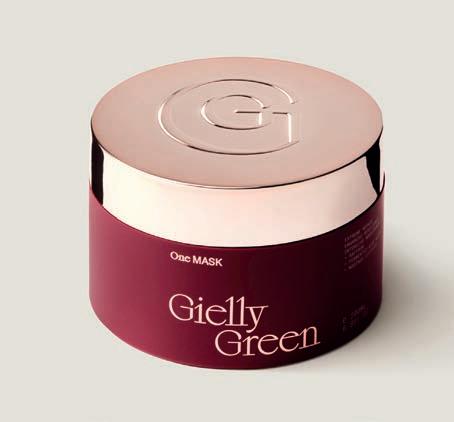
Gielly Green’s The One System is a highperformance, streamlined haircare ritual born from decades of salon expertise. The Salon has created a core trio of essentials: One Shampoo, One Conditioner, One Mask - paired with four targeted leave-in boosters that meet well over 80% of hair needs with elegance, precision, and ease. giellygreen.co.uk
Quick and easy food allergy testing
CSURI
B-Corp brand Suri’s electric toothbrush uses sonic technology for great performance and is a joy to use for its good looks, four week battery life, handy travel case and magnetic bracket. And now there’s a new colour too: Canyon Sunrise. We are fans. trysuri.com

ould I have a food intolerance? I wasn’t sure. Vague symptoms might appear and disappear, and it’s hard to know what steps to take. So when someone suggested an at-home test, I was sold. What could be simpler? York’s tests arrive quickly with simple and clear instructions, though there’s no getting away from the fact that you do have to draw blood. Still, it’s a simple pinprick and it’s easy to do two at once: the Premium Food Intolerance Test and the Food and Environmental Allergy Test come as a bundle, and they can identify all four types of immunoglobulin. I send o my samples, and within a few days I receive an intriguing set of results via email. The format is simple, using a tra c light system: red for high reactivity, orange for borderline and green for low. As I suspected, I am showing high reactivity (albeit at the very bottom of the scale) for cow’s milk in the intolerance test – but also for coriander/cumin/dill, which is a surprise. Happily, I have normal reactivity to everything from wheat to walnut, via Sauvignon Blanc. I’m clear of all allergies, happily, though there is a medium reactivity to horse dander and cockroach. Well, who wouldn’t react to a cockroach? Fascinating stu .
YORK TEST
Food intolerance and allergy bundle, £230 yorktest.com




























1 3 2 4 5




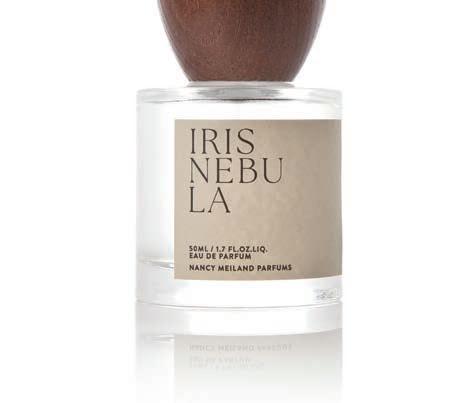
Iris Nebula is described as a love potion, a warm and velvety mix of luscious white pear and iris butter with intriguing notes of anise, caramel and cedar, plus a violet current, £135. nancymeiland.com
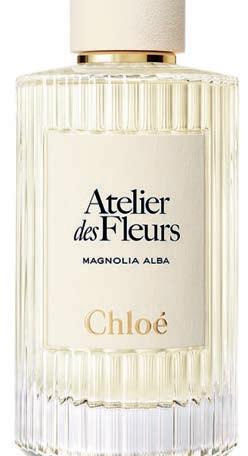
The Atelier des Fleurs collection is designed to be layered, though Magnolia Alba is lovely on its own too. A fl oral, green fragrance with subtly lemony notes of magnolia, this is feminine, light and full of romance, £231. selfridges.com
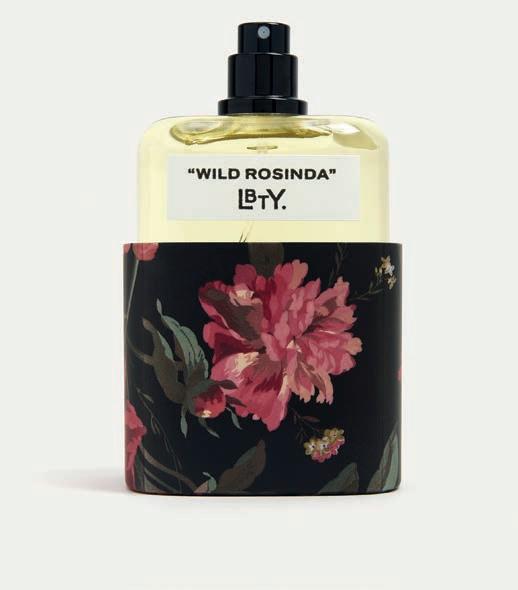
This scent indulgence features rose blooms entwined with the juicy sweetness of wild currant, green ivy, and a hint of saff ron. Smouldering woods lend an enigmatic, carnal depth – creating a fl oral like no other, £225. libertylondon.com
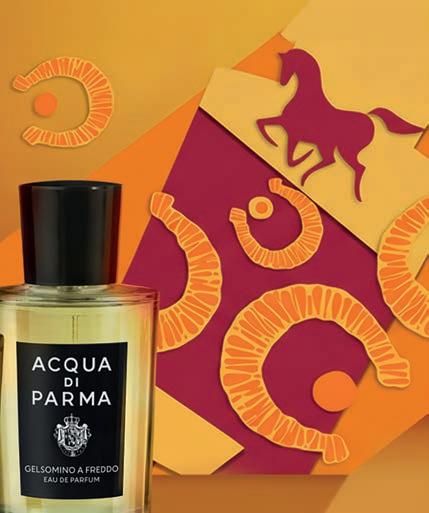
Acqua di Parma has collaborated with Shanghai-based artist Lea Woo for a special limited edition of their Signatures of the Sun fragrance, Magnolia Infi nita. It is reimagined through a contemporary visual narrative inspired by the Year of the Horse. acquadiparma.com 1 3 4 5 2
This sophisticated rose combines absolute and extract of damascena and centifolia roses with essence of the fi rad rose, with its unexpected accents of chamomile and artichoke, £170. diptyqueparis.com
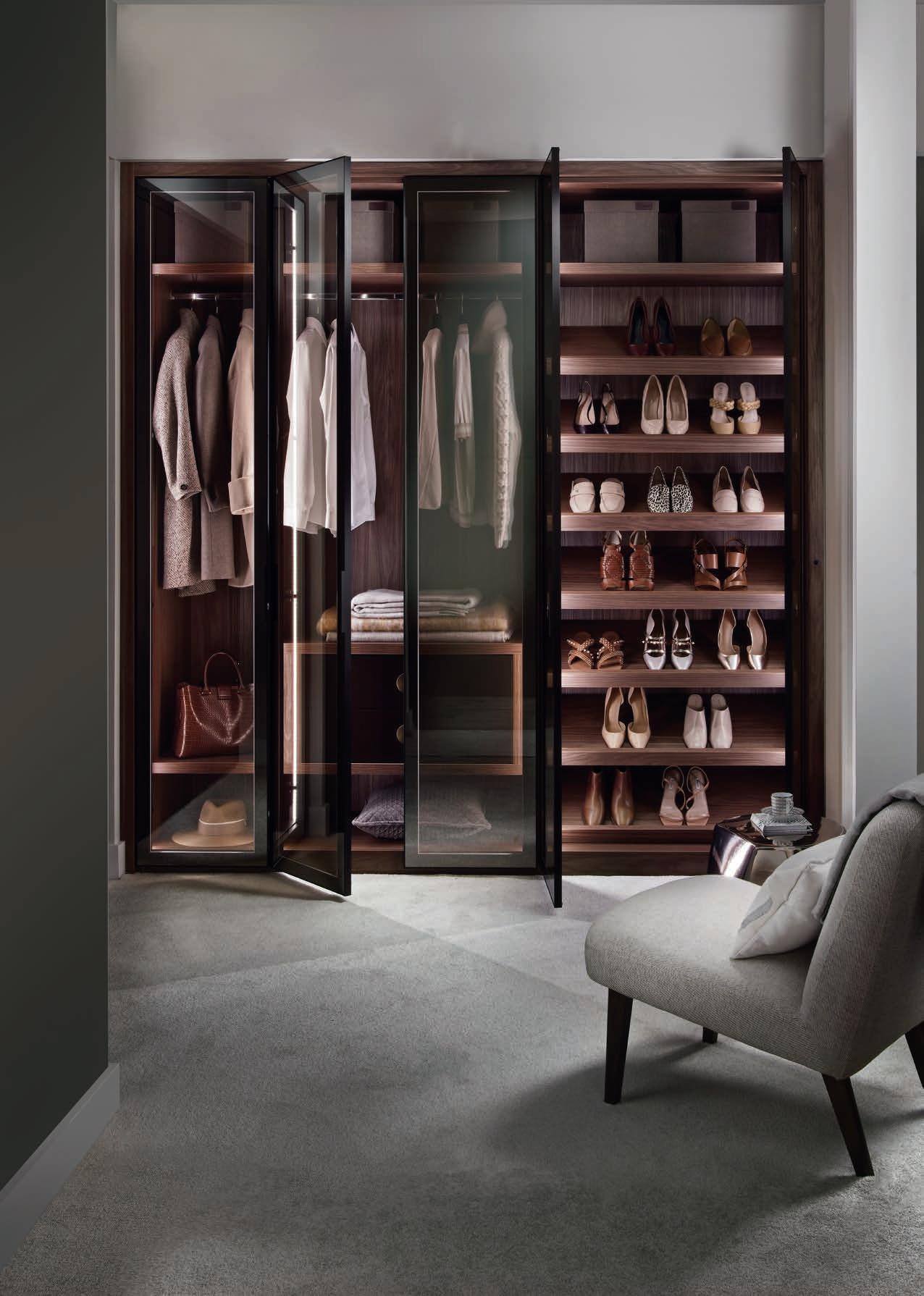


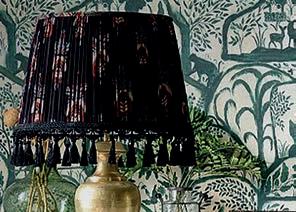
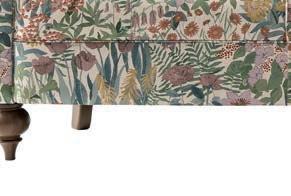
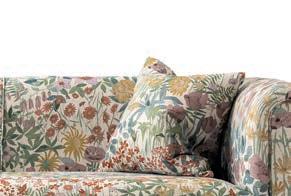
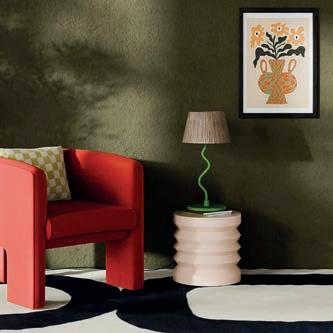
Biophilia in the home is the design approach of incorporating natural elements – such as plants, light, water, and organic materials – into living spaces to improve wellbeing, reduce stress, boost mood, and strengthen the human connection to nature in everyday indoor environments. We explore its evolution inside.
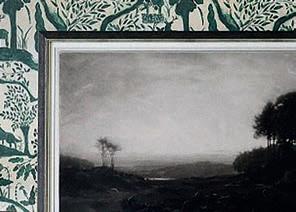

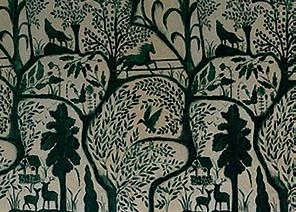
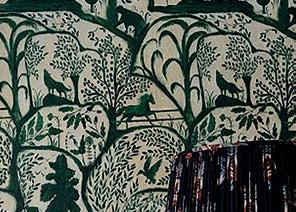
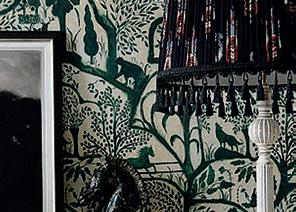


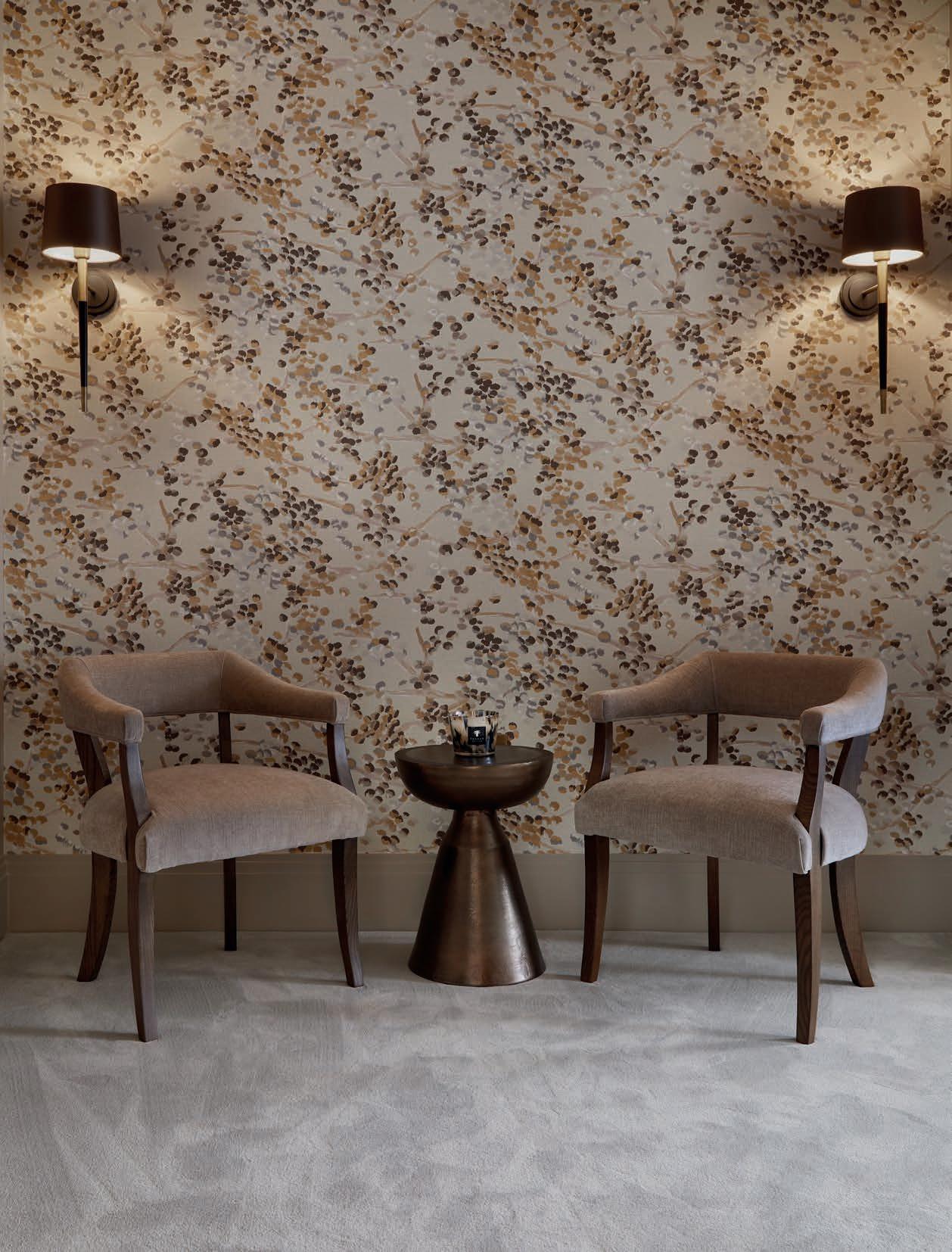
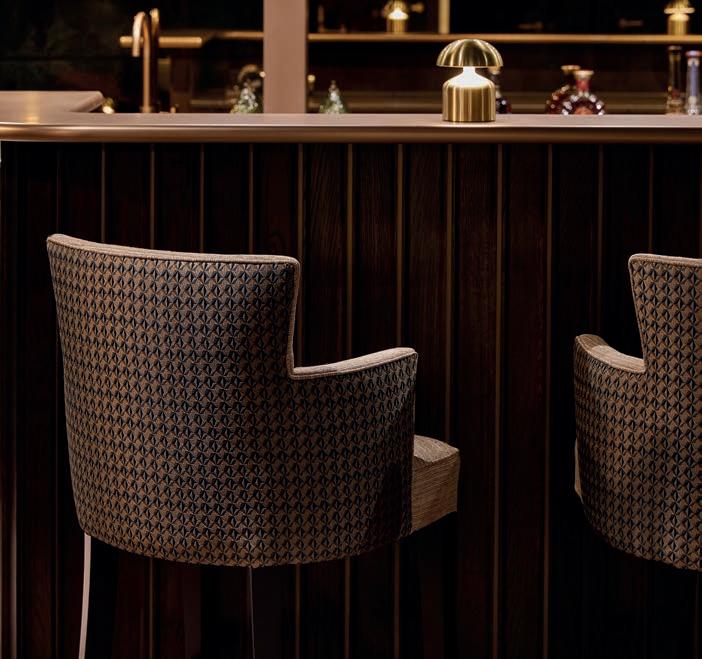
Absolutely meets St Albans local Katherine Varnava to discuss her interior design business, Hertfordshire homes and going global
Q What first drew you to interior design?
A I’ve always been fascinated by how spaces shape the way we live. Even growing up, I was drawn to homes – the materials, the atmosphere, the details that make a space feel special.
After more than a decade working on high-end residential projects, launching my own studio felt like the natural next step. It was something I had always envisioned, and eventually I realised the only way to truly shape my own design philosophy was to build a studio that reflected it.
Q How has your interior design business evolved since you started?
A Starting your own studio is both exciting and challenging. When you leave an established company, you suddenly take on every role – designer, project manager, business owner.
The focus for me has been building strong foundations: refining the brand, developing clear processes and delivering projects that reflect the level of quality I want the studio to represent. Seeing the studio grow and clients trust us with their homes has been incredibly rewarding.
Q How would you describe your signature style, and what principles guide your design decisions on every project?
A My work is centred around timeless, elegant interiors with strong architectural foundations. I’m drawn to clean lines, beautiful natural materials and carefully considered lighting.
For me, the success of a space often lies in the details: proportion, craftsmanship and how materials are layered together. The goal is always to create interiors that feel calm, refined and e ortless.
Q How do you balance your own creative vision with a client’s personal needs?
A Interior design is always a collaboration. Every client lives di erently, so understanding how they want their home to function is key. I spend a lot of time listening early in the process, then translating those ideas into a design that feels cohesive and elevated. The best interiors are those that reflect the client’s personality while benefiting from thoughtful design direction.
Q Can you tell us about a recent project you’re especially proud of?
I’m also constantly inspired by materials. Stone, timber and textiles and how they can be combined to create depth and character within a space.
Q Does designing homes in Hertfordshire bring any recurring themes or challenges compared with projects elsewhere?
A Homes in Hertfordshire are often generous in scale and designed for family living, which creates wonderful opportunities to design elegant, functional spaces. The key is balancing luxury with practicality ensuring homes feel beautiful but also work seamlessly for everyday life.
Q What do you love most about living in St Albans?

KATHERINE VARNAVA
A One of the projects I’m most excited about at the moment is a large private residence on The Bishops Avenue in London, which is nearing completion. It’s been an incredible opportunity to design a home at scale, with bespoke joinery, carefully selected materials and a huge level of detail throughout. Seeing everything come together after months of design and construction is always the most satisfying part of the process.
Q What’s the trickiest design challenge you’ve had to solve recently?
A Often the biggest challenge is aligning ambitious design ideas with the realities of construction and architecture. On a recent project we had to rethink several key spaces due to structural constraints. Rather than forcing the original concept, we redesigned the layouts and joinery to work with the architecture. Those moments often lead to the most interesting solutions.
Q Where do you typically find inspiration?
A Inspiration often comes from architecture, travel and materials. Visiting beautifully designed buildings, hotels and restaurants always sparks ideas.
A It o ers a lovely balance between countryside and city life. It’s peaceful and green, yet still close to London. That contrast is something I value.
Q Has being an interior designer changed the way you approach your own home?
A Like most designers, my home is always evolving. I notice details more than I used to!
Q How do you feel about interior design trends?
A I tend to focus on timeless design rather than trends. When the architecture, materials and proportions are right, a space will always feel relevant. Trends can be incorporated through smaller elements, but the core design should stand the test of time.
Q What’s next for you and your business?
A The focus now is continuing to grow the studio and take on more exceptional residential projects both in the UK and internationally. Next stop: UAE!
katherinevarnava.com












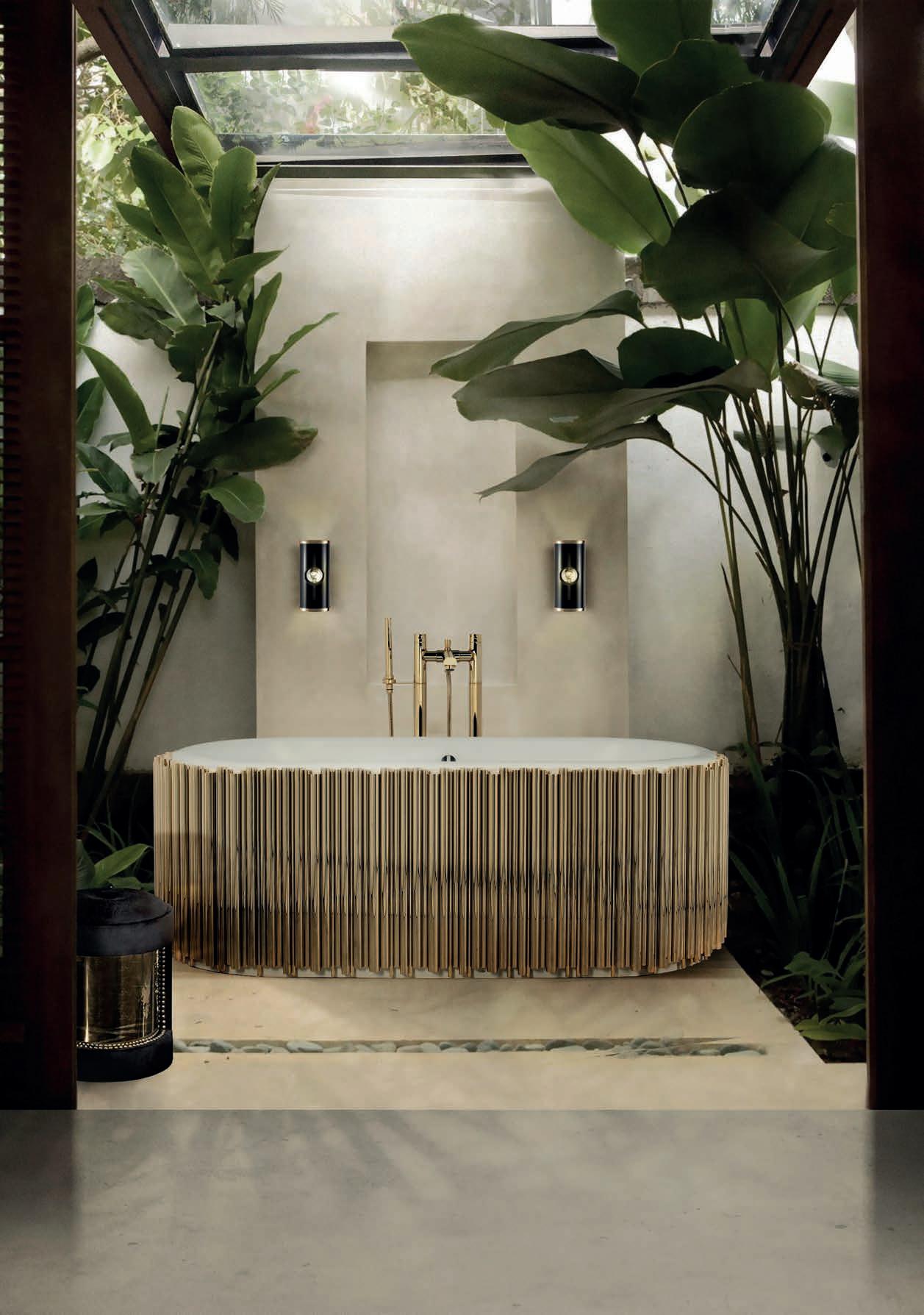


In recent years, few ideas have reshaped interior design as profoundly as biophilia. More than a stylistic preference, it signals a deeper cultural shift: a desire to restore a sense of connection to the natural world within increasingly urban, technologydriven lives. By 2026, biophilic design has matured into a sophisticated, multi-layered approach that influences not just how homes look, but how they function, feel and support wellbeing.
The concept of biophilia has its roots in psychology and biology rather than design. First introduced by psychoanalyst Erich Fromm in the 1960s, the term described an inherent human attraction to life and living systems. It was later developed by biologist Edward O. Wilson, whose “biophilia hypothesis” proposed that this a nity for nature is not merely cultural but biological – a product of human evolution. This foundation is crucial because it positions biophilia as something more fundamental than an aesthetic trend. It suggests that our relationship with nature is tied to our mental and physical wellbeing. Yet throughout much of the 20th century, architecture and interiors moved away from this connection. Modernist design, with its emphasis on e ciency, industrial materials and minimal ornamentation, often prioritised function over emotional resonance. Homes became cleaner and more streamlined, but in many cases also more detached from natural rhythms and textures. Biophilia, when it began to re-emerge, did so partly as a response to this imbalance – a way of reintroducing warmth, variability and life into built environments.
When biophilic ideas first entered interior design, they did so in a relatively literal and accessible way. In residential spaces, this typically meant the introduction of houseplants, natural materials such as timber and stone, and colour palettes
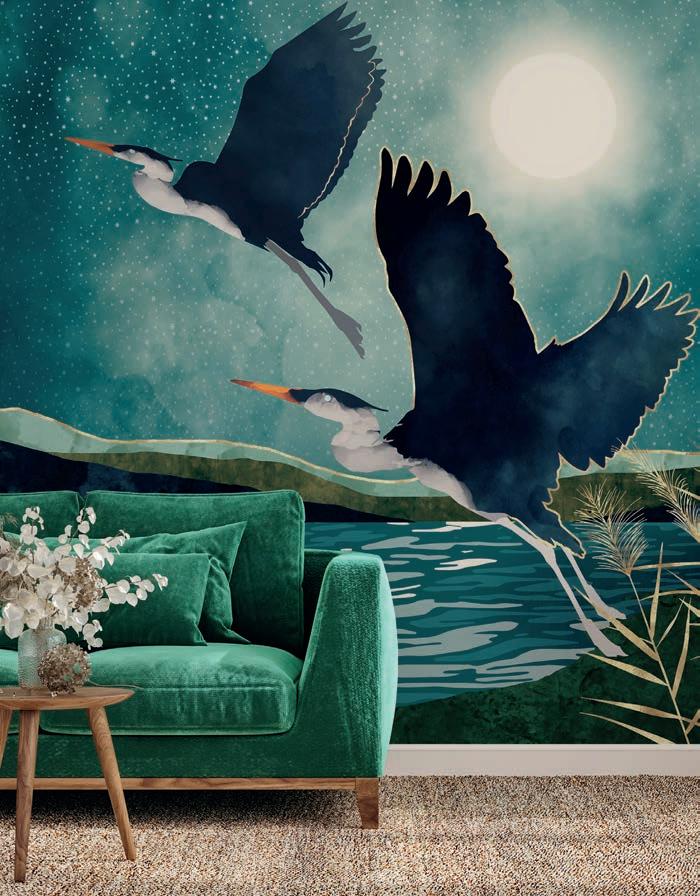
inspired by the earth. Large windows and an emphasis on daylight also became associated with a more “natural” home environment.
At this stage, biophilia was often interpreted visually rather than structurally. A room might be considered biophilic because it contained greenery or organic textures, even if the overall architecture remained unchanged. This approach gained particular traction during the COVID-19 pandemic, when homes became central to daily life and people sought comfort, calm and a sense of escape within their own walls.
As the concept matured through the mid-2020s, biophilia evolved from a decorative layer into a guiding principle embedded within the design process itself. Rather than being applied at the end of a project, it began to shape decisions from the outset, influencing layout, structure and the relationship between interior and exterior spaces.
One of the most important developments was the integration of natural elements into architecture. Designers increasingly considered how a home could be oriented
to maximise natural light, how internal spaces could open onto gardens or courtyards, and how transitions between indoors and outdoors could feel seamless rather than abrupt. This shift marked a move away from simply “adding” nature to a space, towards designing with nature as a central organising idea.
At the same time, biophilia became closely aligned with the broader wellness movement. Homes were no longer seen purely as functional or aesthetic environments, but as spaces that should actively support mental and physical health. This led to greater attention being paid to air quality, lighting conditions, acoustics and thermal comfort. The idea of the home as a restorative environment – one that could reduce stress and enhance wellbeing – became increasingly influential. Sustainability also played a critical role in this evolution. Natural materials were no longer chosen solely for their appearance, but for their environmental impact and longevity. Reclaimed timber, locally sourced stone and low-impact
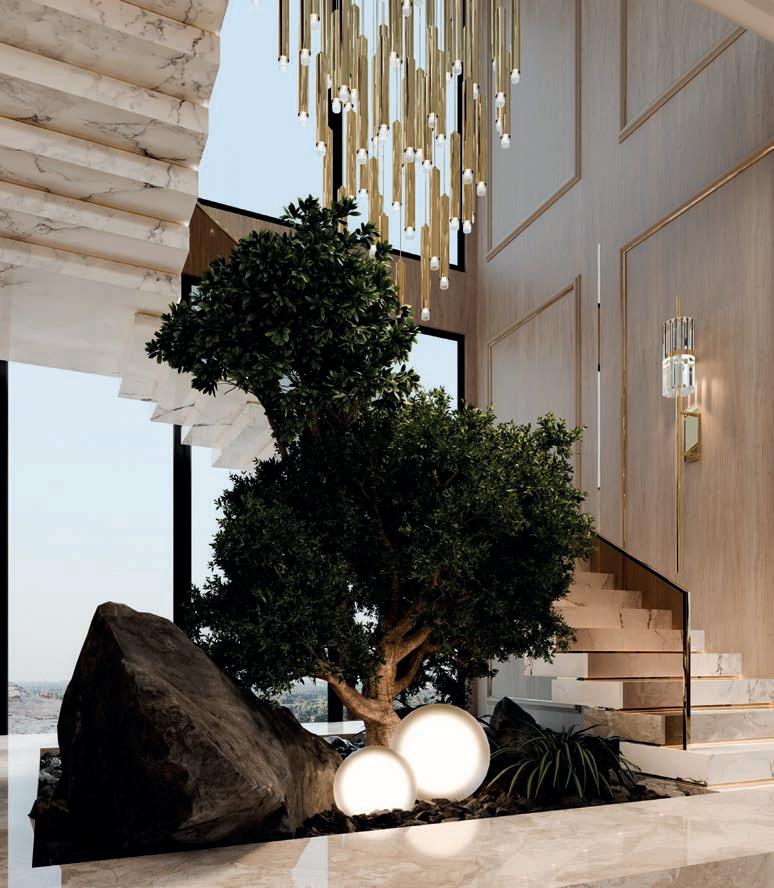
finishes became more desirable, reflecting a growing awareness of the ecological footprint of design choices. In this context, biophilia and sustainability became deeply interconnected, each reinforcing the other.
Perhaps the most significant shift, however, was the move towards a more sensory understanding of space. Designers began to think beyond how interiors look, focusing instead on how they feel. Texture, sound, scent and light all became part of the biophilic experience, creating environments that engage multiple senses and foster a deeper connection to the natural world.
By 2026, biophilic design has reached a level of maturity that sets it apart from earlier interpretations. It is no longer defined by obvious gestures or visual cues, but by a more subtle and integrated approach. Nature is not imposed upon the home; it is embedded within it.
At the same time, the sensory dimension of biophilia has become more pronounced. Materials are chosen not only for their visual qualities but for their tactile richness – linen, wool, raw timber and stone all contribute to a layered sensory experience. Sound is also considered, whether through the gentle presence of water features or through acoustic design that reduces harsh echoes and creates a more comfortable
auditory environment. Even scent plays a role, with natural materials and planting contributing subtle, ambient fragrances.
Colour, too, has evolved. The stark whites and cool greys that once dominated contemporary interiors have given way to warmer, more nuanced palettes. Greens, browns, terracottas and soft neutrals are applied in tonal layers, creating depth and a sense of continuity throughout a space. These colours do not simply reference nature; they help to recreate its atmosphere within the home.
Planting remains central, but its use is more deliberate than in earlier phases. Rather than filling rooms with greenery, designers curate plants carefully, integrating them into joinery or using them to define specific areas. There is a greater emphasis on longevity and appropriateness, with species selected for their ability to thrive in particular conditions rather than for purely decorative impact.
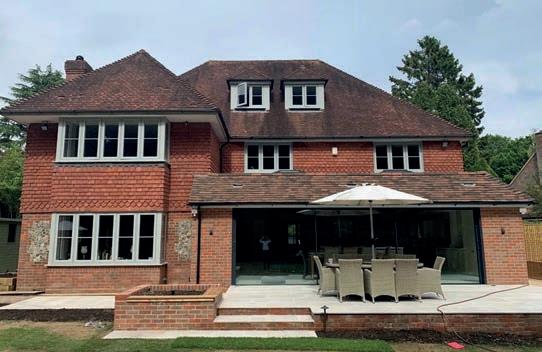
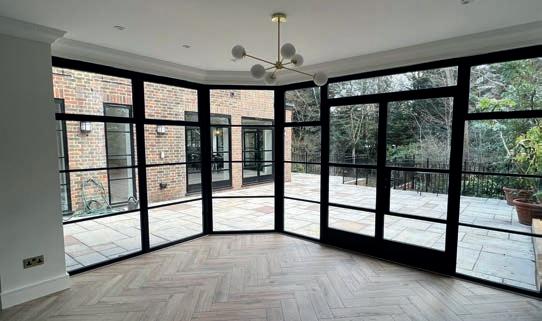
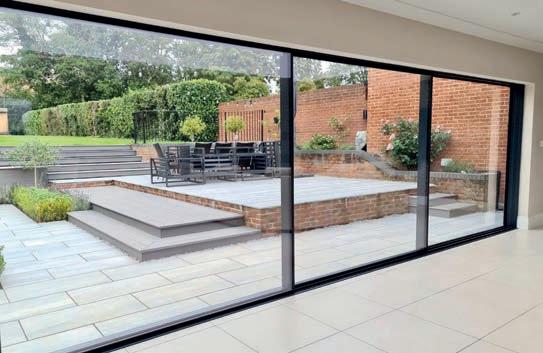
The relationship between indoor and outdoor space has also become more fluid. Advances in architectural design allow for large openings, continuous flooring and adaptable layouts that blur the boundary between inside and outside. Gardens, terraces and even balconies are treated as extensions of the home, designed with the same level of care and intention as interior spaces. This creates a sense of continuity that reinforces
the biophilic principle of connection. Another defining aspect of biophilia in 2026 is its alignment with wellbeing. Homes increasingly include dedicated areas for rest and reflection, whether in the form of spa-like bathrooms, calming bedrooms or quiet corners for reading and meditation. These spaces are designed to support daily rituals and provide a sense of retreat from the demands of modern life. Interestingly, technology has begun to play a complementary role in this process. Rather than competing with nature, it is used to enhance the biophilic experience. Lighting systems that mimic natural daylight cycles, smart climate control and even digital simulations of natural environments all contribute to a more responsive and adaptive home. This represents a nuanced shift, where technology supports human needs without overshadowing the natural elements at the heart of the design.
The prominence of biophilia reflects a convergence of broader societal trends. As urban living becomes more prevalent, access to nature is often limited, increasing the importance of bringing natural elements into the home. At the same time, growing awareness of environmental issues has led to a greater emphasis on sustainable living. Perhaps most significantly, there is an increasing recognition of the importance of mental health and wellbeing, and the role that our surroundings play in shaping our daily experience. Biophilic design addresses all of these concerns simultaneously. It o ers a way of creating homes that feel grounded and restorative, while also being environmentally responsible and adaptable to modern lifestyles. In doing so, it shifts the focus of design away from purely visual or status-driven considerations and towards a more holistic understanding of what makes a space truly liveable.



















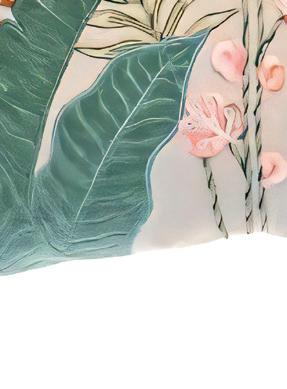








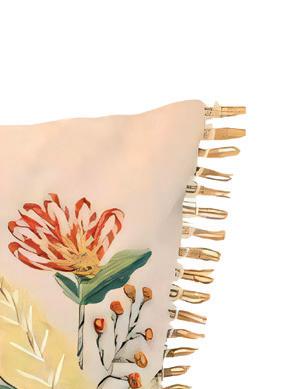










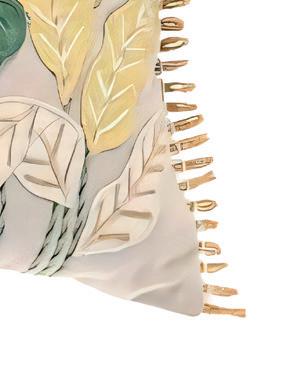




By PENDLE HARTE
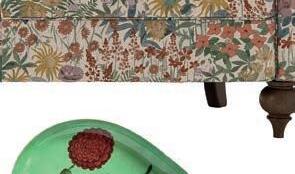



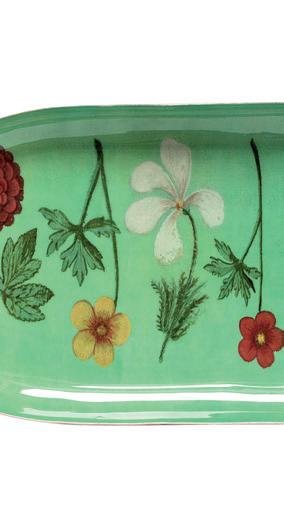
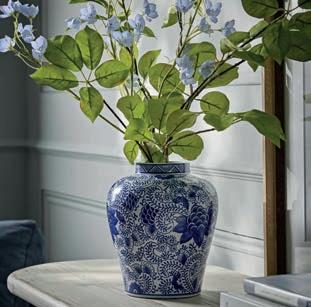




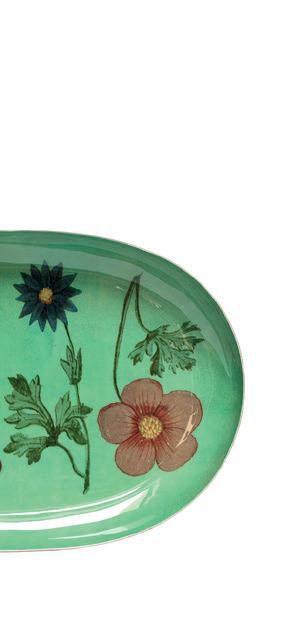
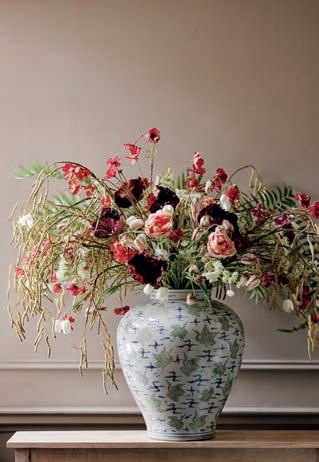


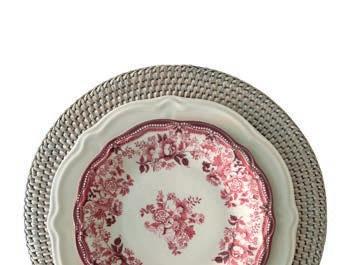












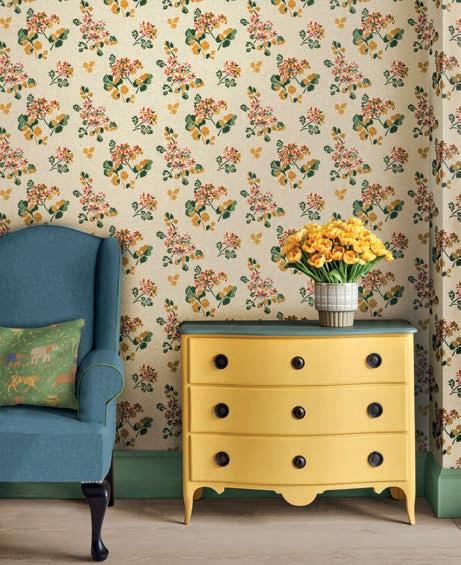










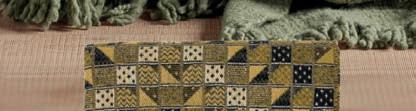








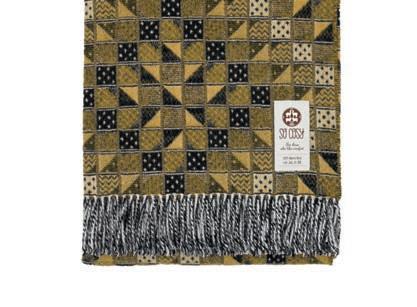
£198 socosy.co.uk







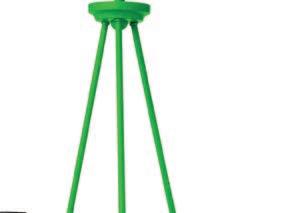
pooky.com








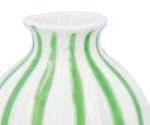
GISELA GRAHAM Stripe balloon vase, £7.49 giselagraham.co.uk






By PENDLE HARTE























HABERDASHERS’ ELSTREE SCHOOLS
Haberdashers’ Elstree Schools (Habs) has been awarded the highest possible Gold AI Quality Mark from the Good Future Foundation for its strategic integration of AI technology in relation to the development of its students. As one of only five independent schools in the UK to have received this level of international accreditation, the gold award recognises schools that take the integration of AI technology beyond simply learning how to use tools appropriately. habselstree.org.uk

With Mental Health Awareness Week falling in May, we take a look at how schools are putting their pupils’ wellbeing first
Mental Health Awareness Week, which in 2026 runs from 11th-17th May, has become a significant moment in the UK school calendar and reflects a much broader shift in how schools think about pupil wellbeing. Today, most schools approach mental health not as an isolated issue, but as something embedded across the whole school experience. This is often described as a “whole-school approach”, where leadership, teaching, pastoral care, and external services all work together to support pupils’ emotional wellbeing. In practice, this means that mental health is now integrated into everyday school life through the curriculum, sta training, and structured support systems.
During Mental Health Awareness Week itself, schools typically organise a range of activities designed to raise awareness and encourage open conversations. Assemblies often focus on themes such as resilience, belonging, or managing stress, while lessons – particularly within PSHE – explore topics like anxiety, self-esteem, and coping strategies. Many schools take part in national initiatives such as “Wear it Green Day”, alongside running mindfulness sessions, creative arts activities, and sports events that emphasise the link between physical and mental wellbeing. Increasingly, pupils themselves play an active role, leading peer-support schemes or awareness campaigns that help reduce stigma and encourage others to seek help.



Beyond this specific week, there has been a marked expansion in everyday mental health provision within schools. It is now common for schools to have a designated mental health lead and, in many areas, access to NHS-supported Mental Health Support Teams. On-site counselling, wellbeing rooms, and early intervention programmes are becoming more widespread, and sta are routinely trained to recognise and respond to mental health concerns. Importantly, there is a cultural shift towards normalising discussion of mental health so that pupils feel able to speak openly about their experiences.
This represents a significant change from earlier decades. Before around 2010, mental health support in schools tended to be limited and reactive. Provision was often focused on behaviour management or triggered only when di culties became severe enough to require external intervention. There was relatively little emphasis on prevention,
Mental health is now commonly viewed by schools as one of their most important responsibilities
and mental health was not widely seen as central to a school’s educational mission.
During the 2010s, however, growing awareness of rising levels of anxiety and other mental health issues among young people began to drive change. Schools started to introduce more structured wellbeing programmes and expand the role of PSHE, while national frameworks and awards began to recognise good practice.
The most substantial transformation has taken place from the late 2010s into the

present decade. Government policy and NHS involvement have helped embed mental health more firmly within the education system, with initiatives such as Mental Health Support Teams and the inclusion of mental wellbeing in the statutory curriculum. As a result, mental health is now widely regarded as a core component of school e ectiveness rather than an optional add-on. By 2025 and 2026, it is commonly viewed by schools as one of their most important responsibilities, closely linked to both academic outcomes and overall pupil development.
Across England, a number of schools have developed particularly strong reputations for their approach to pupil mental health. In Hertfordshire, schools such as Rickmansworth School, Watford Grammar School for Girls, and St Albans Girls’ School are known for their well-established pastoral systems.
Taken together, these developments illustrate a clear evolution in the role of schools. Where mental health was once addressed only when problems arose, it is now actively cultivated as part of a positive school culture. The emphasis has shifted from reacting to di culties to building resilience, promoting wellbeing, and ensuring that all pupils are supported to thrive both academically and emotionally.






Gender bias continues to influence subject choice, confidence and classroom dynamics in schools, albeit often in subtle ways. In the case of St Albans School, which has historically been a boys’ school from 11–16 years, but with a co-educational sixth form for the last three decades, it is clear to see how perceptions around STEM, creative subjects and leadership roles can shape students’ self-belief. Over recent years, teaching in schools has had to adapt proactively to combat gender bias particularly under the spotlight of AI, by scrutinising participation data, challenging stereotyping through curriculum design, and ensuring positive visible role models across various disciplines.
Pastoral care systems in schools are equally important in reducing gender bias; as teachers we must address confidence gaps, encourage intellectual risk-taking, and promote respectful dialogue in our classrooms. As our school moves towards full co-education in 2026, adopting a deliberate, research-informed approach to balance is absolutely central to our planning and sta development.
Gender bias in the context of AI operates on two levels. First, there is the issue of access and confidence: if particular groups feel less entitled to experiment with emerging technologies, this can subtly influence attainment, subject choice and

Navigating gender bias under the spotlight of AI
By GARETH NICHOLS

future pathways. Secondly, AI systems themselves are trained on vast datasets that may contain historical bias, which can inadvertently reinforce stereotypes in areas such as career suggestions, language patterns or representation. If left unexamined, this risks narrowing aspiration. However, when addressed explicitly in teaching, AI becomes a powerful lens through which students can interrogate bias, develop critical literacy and strengthen, rather than diminish, their learning outcomes.
Students are partially aware of algorithmic bias, though their understanding is often less secure than assumed. There is a common narrative that young people, as digital natives, instinctively grasp how technology works. However, research conducted by our AI Strategy Lead as part of her Master’s project, suggests that many students are comparatively naïve
about the underlying methodology, data training and potential embedded bias within AI systems. Awareness varies with age: sixth form students tend to demonstrate a more sophisticated grasp of the ethical and societal implications, while younger pupils are often surprised to discover how outputs are shaped. Encouragingly, once these mechanisms are explained, students respond thoughtfully and with genuine curiosity. Importantly, e ective education around gender bias and AI in school must be explicit rather than incidental. For instance, within our PSHEE curriculum, we address aspects such as digital literacy, ethical technology use and the social implications of emerging tools, including discussion of algorithmic bias and data training. As part of our current curriculum review, AI education will be further integrated into school-designed courses launching in September 2026, ensuring structured progression in critical engagement. Sta development has also been central: we began exploring AI through CPD (Continued Professional Development) in summer 2024, and it now features regularly in sta meetings, Teaching and Learning INSET, and specialist sessions led through our Teaching, Learning and Assessment Group. This whole-school approach ensures coherence and confidence.
Gareth Nichols is Deputy Head – Sta at St Albans School. Find out more at st-albans.herts.sch.uk
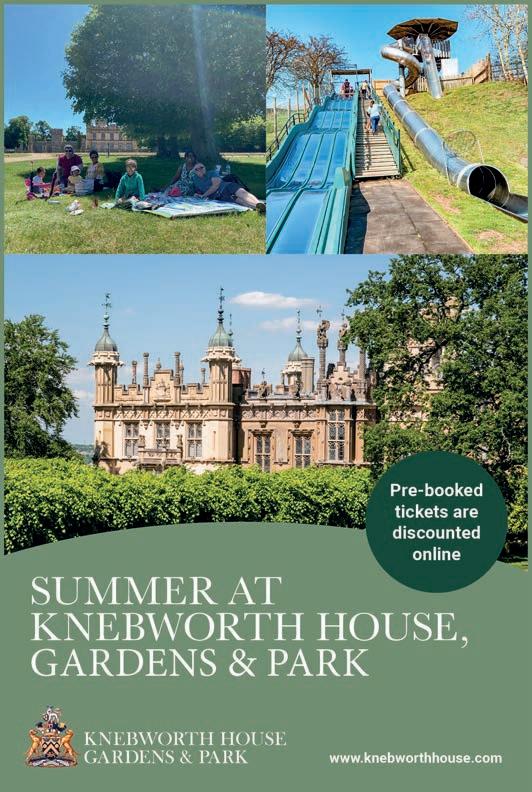
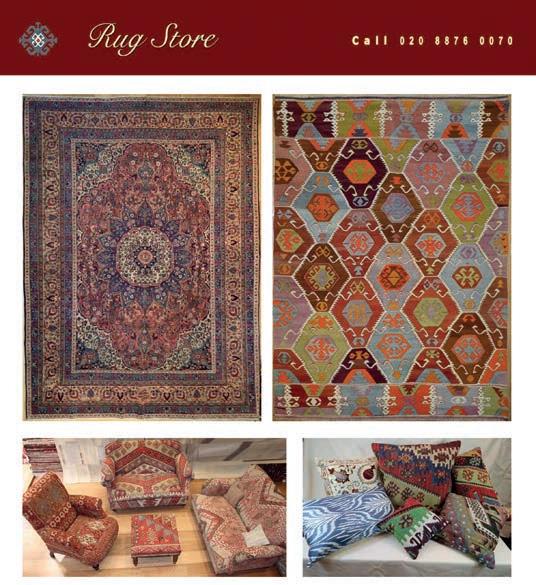


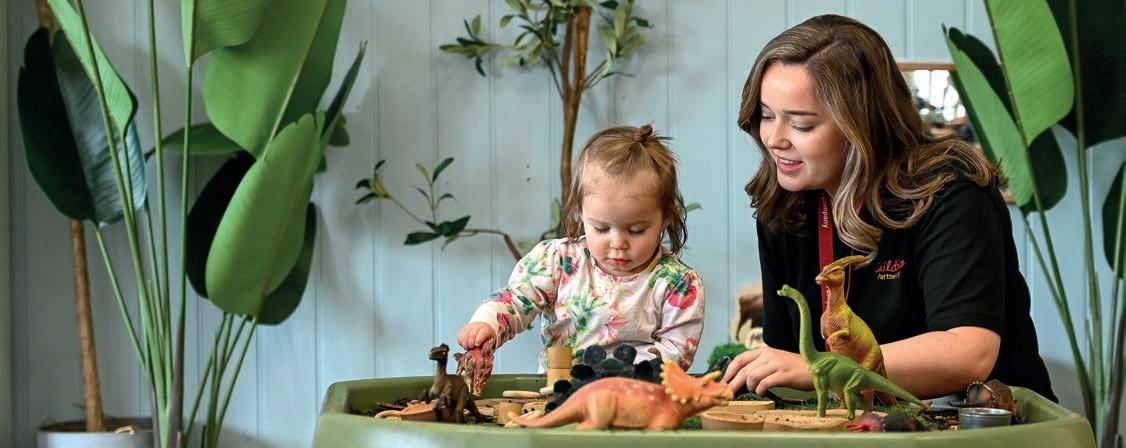

latest from schools across the county
The Saint John Henry Newman Catholic School in Stevenage has been formally recognised as outstanding in every area by the Catholic Schools Inspectorate (CSI) following its most recent inspection. The report awarded Grade 1 judgements across Catholic life and mission, religious education and collective worship, describing the school as a beacon of Catholic education where faith, learning and life are united in joyful witness. Inspectors praised the school’s deeply embedded Catholic identity, rooted in Gospel values and lived daily by pupils and staff. They highlighted an inclusive community where every person is known, valued and loved, and where prayer, liturgy and service are central to school life.
The report also commended the school’s commitment to Catholic social teaching, noting how pupils are inspired to live out their faith through social justice, charitable action and service to others. Teaching in religious education was praised as inspirational, too. jhn.herts.sch.uk




Berkhamsted U19A netball team has celebrated unprecedented success this year, becoming the first school team ever to complete an unbeaten season while securing four national titles. Berkhamsted School emerged winners of SNS nationals, the ISNC Cup, the ISL tournament and National Schools 2026.
Co-captain Niamh commented:
“Winning National Schools 2026 is an incredible achievement for our U19 team, and to add SNS Nationals, the ISNC Cup, and the ISL Tournament to that makes this season truly unforgettable. What makes it even more special is how we’ve managed to balance the demands of being student-athletes, showing commitment both on the court and in the classroom. Our success comes from more than just talent: it’s built on our close bond as a team, the trust we have in each other, and a relentless work ethic.” berkhamsted.com
Pupils at Edge Grove School near Radlett have had a once-in-a-lifetime opportunity to experience the magic of filmmaking first-hand, as their school recently transformed into a live movie set. Over the course of four days, classrooms, corridors, and outdoor spaces were brought to life by a Not Thought Through Productions shooting scenes for an upcoming movie, God of Mischief. A group of 16 pupils from the school were also invited to take part in the filming, giving them a unique behind-the-scenes insight into the world of cinema.
The movie – written, directed and starred in by Edge Grove alumni

Christian Stevens – tells the story of young Ed, a cheeky 10-year-old boy who sets his sights on playing Loki in the school play but his over-the-top confidence costs him the role, so he hatches a mischievous plan to prove he’s the real god of mischief a er all. edgegrove.com
why everyone is talking about…
Hertfordshire Zoo is celebrating an historic first UK birth of a rare species
Hertfordshire Zoo recently announced a monumental milestone for the zoo: the birth of two black and rufous sengi, marking the first time this unique species has ever successfully bred in the UK.
The two tiny arrivals, also known as Elephant Shrews, were born on 23rd February to the zoo’s resident breeding pair. Parents Nuru and Malaonly arrived in the country a few months ago and are one of only four black and rufous sengi in the UK. Weighing a mere 30g at birth, roughly the weight of a standard AA battery, the youngsters are so diminutive that they initially evaded the eyes of the expert keeper team. It was only when reviewing overnight CCTV footage that the historic moment was discovered.
This successful breeding is a significant victory for Hertfordshire Zoo and the wider zoological community. With only a handful of black and rufous sengi currently residing in the UK, this birth aids education and provides the continued study of this unusual African species.
Tyler Whitnall, Managing Director at Hertfordshire Zoo, says: “To have the first-ever black and rufous sengi birth in the UK right here at Hertfordshire Zoo is an incredible feeling. We knew when we welcomed the pair last October that we were part of something special, but to see them successfully breed so quickly is a testament to the world-class care provided by our team. These pups are growing incredibly fast and are already showing the same high-energy, inquisitive traits as their parents.”
Hertfordshire Zoo’s black and rufous sengi have captured the hearts of millions online

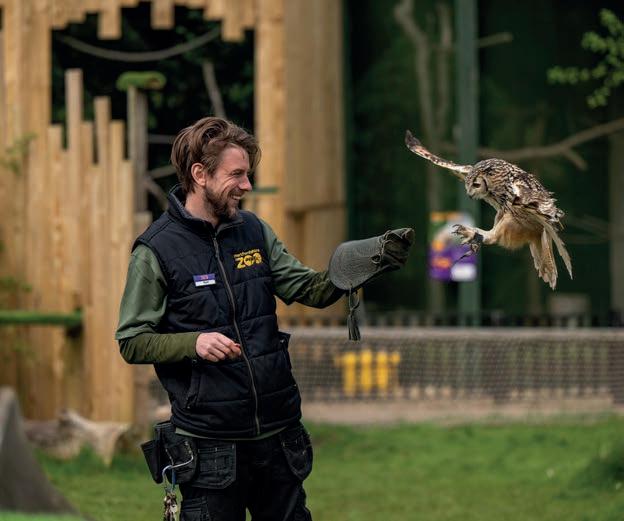
in recent years, with their twitching “minitrunk” noses and lightning-fast movements, making them a viral sensation. Hertfordshire Zoo anticipates that these two new arrivals will be a major draw for visitors, o ering a rare opportunity to see one of the internet’s most beloved small mammals in person.
The newborns are currently being closely monitored by the zoo’s veterinary team and are thriving under the diligent care of their parents. While they are spending much of their time in their nesting area, they are expected to be fully active and on view to the public in the coming weeks.
hertfordshirezoo.com
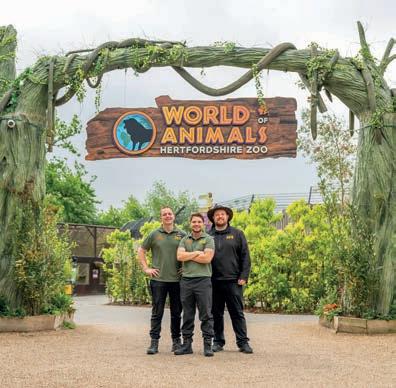



the traditional sauna experience, upgraded


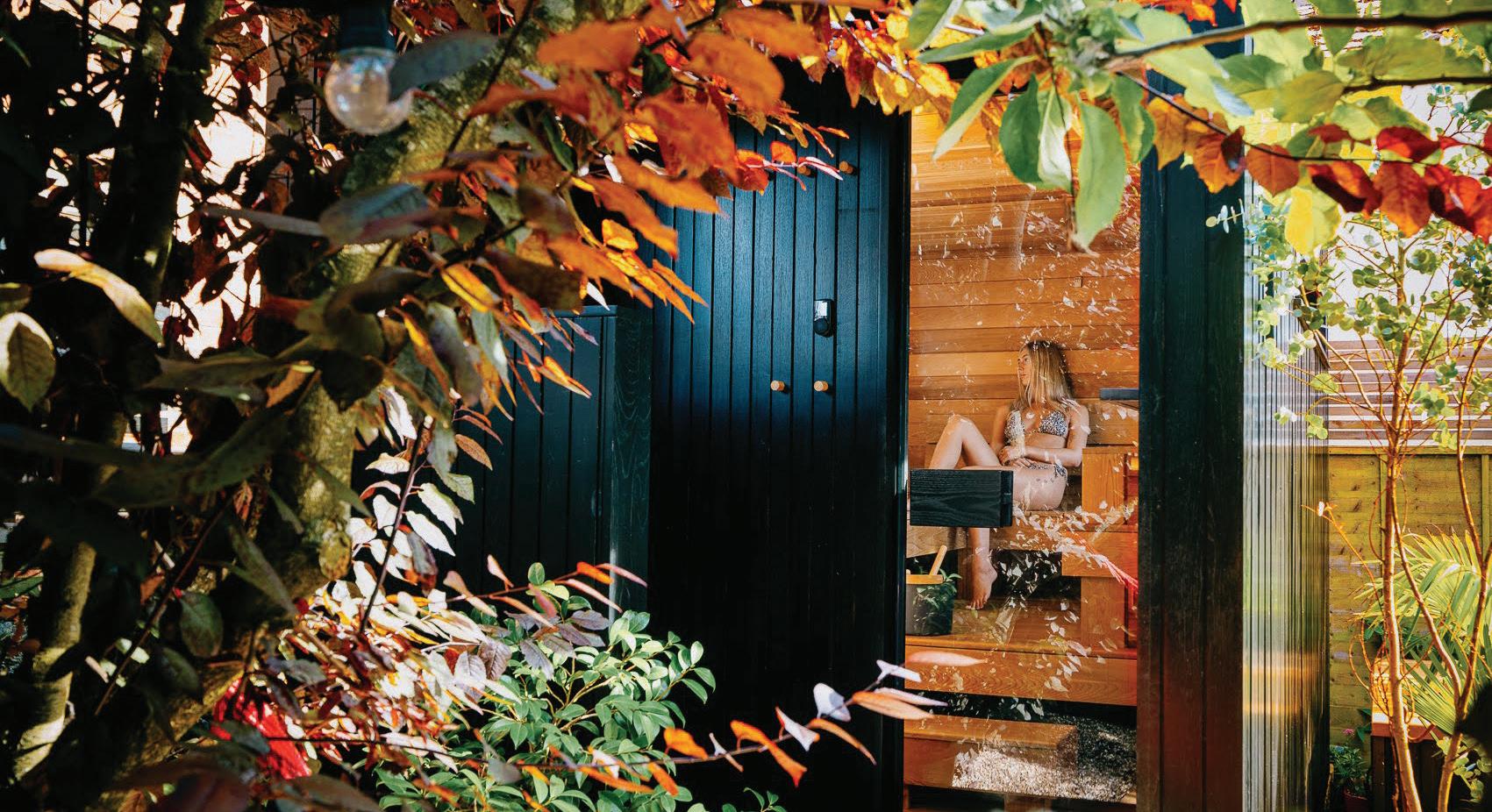

CLEVERLY COMPACT FOR THE CITY





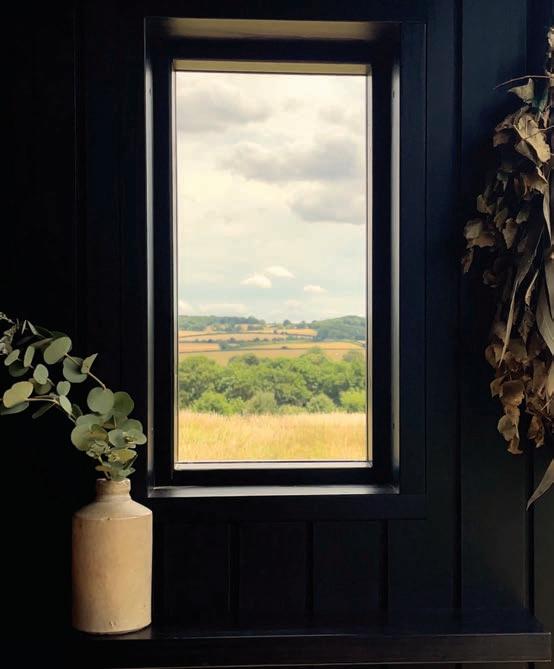

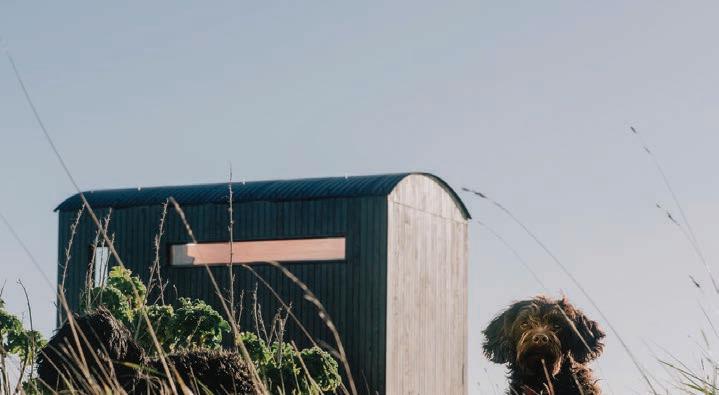


LUXURIOUSLY LARGE IN THE WILD
classic design, best in class, built to last