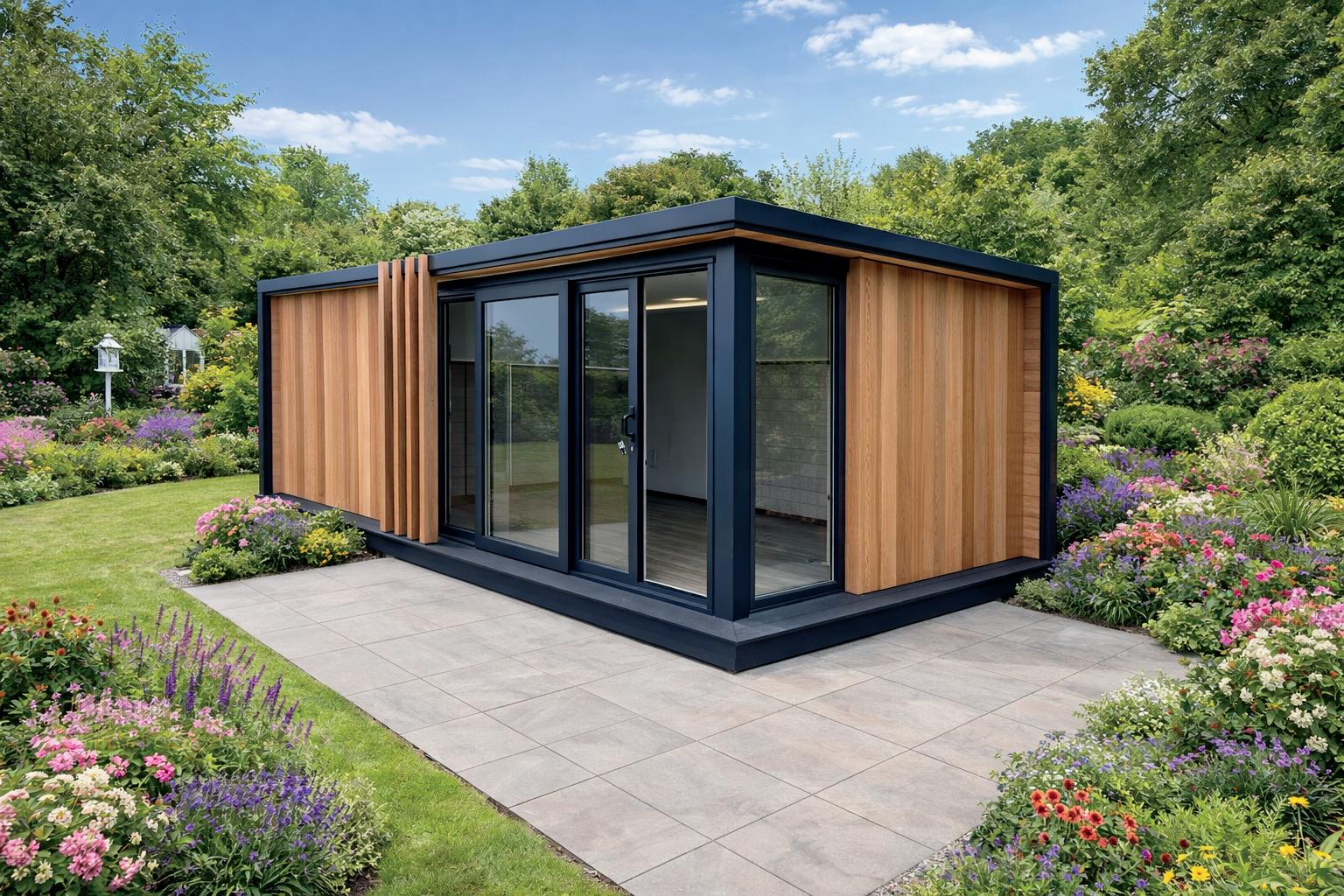
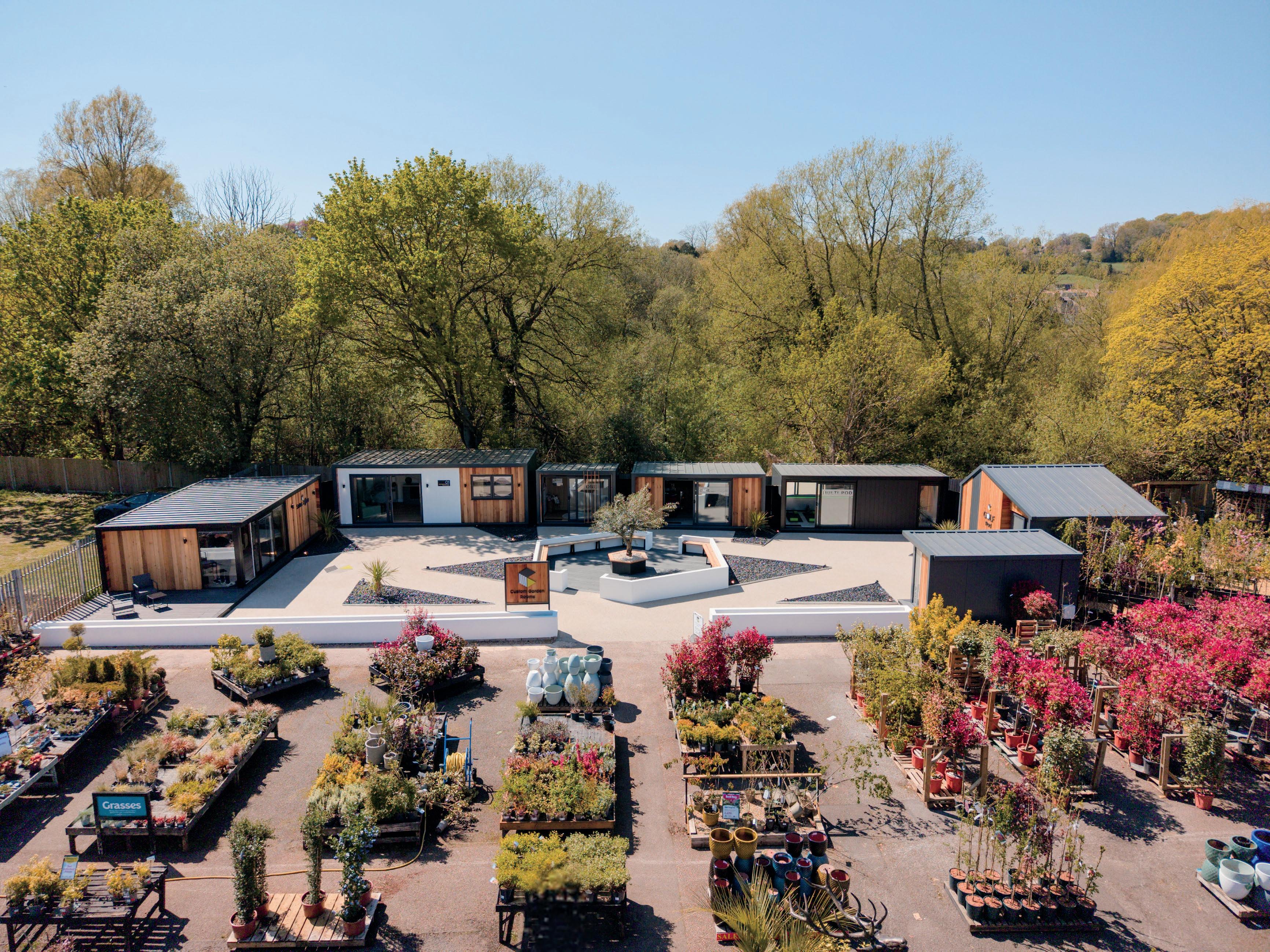
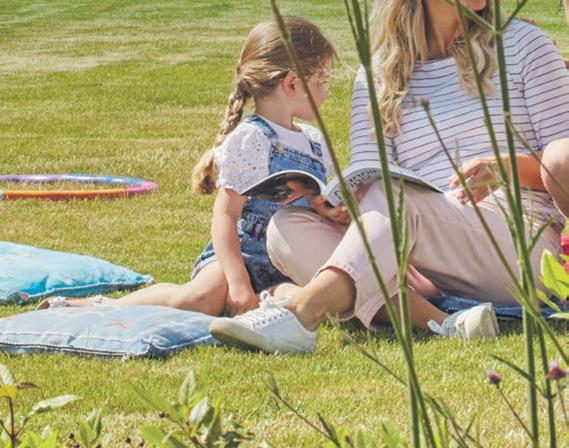
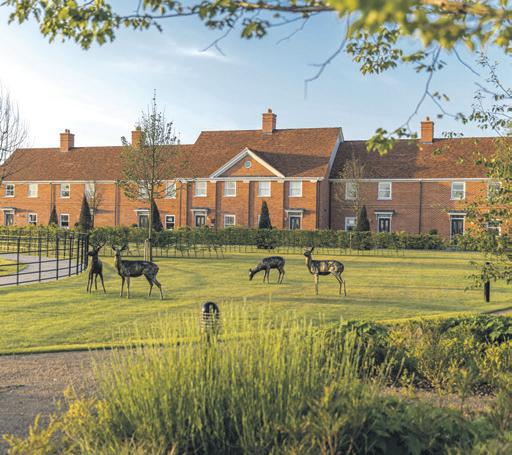
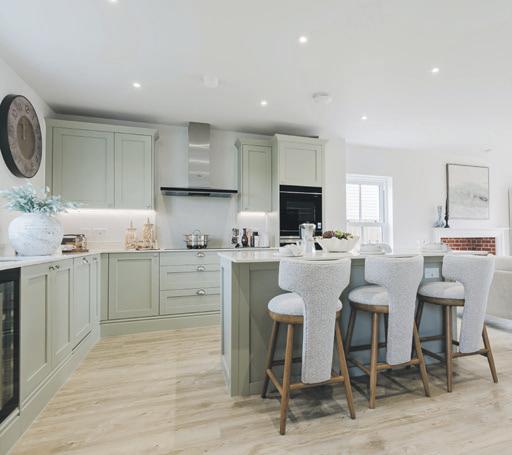
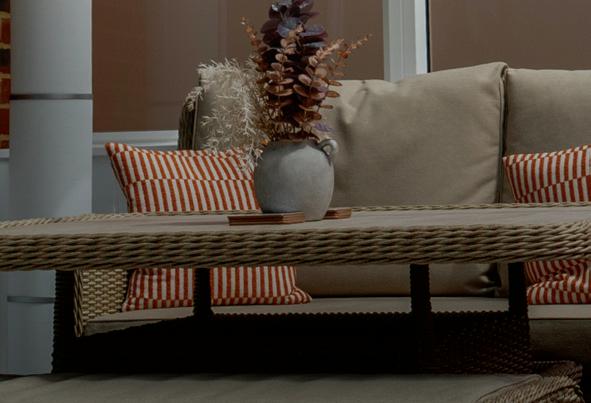
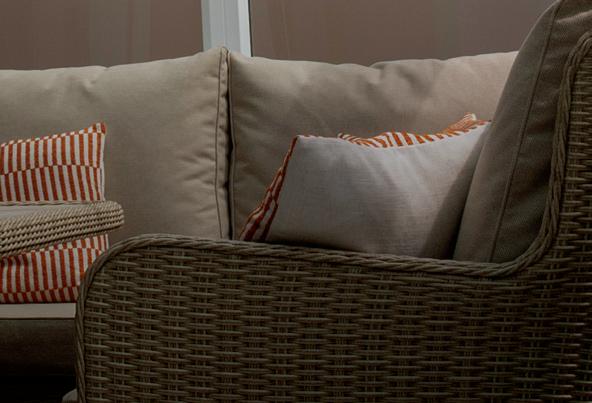
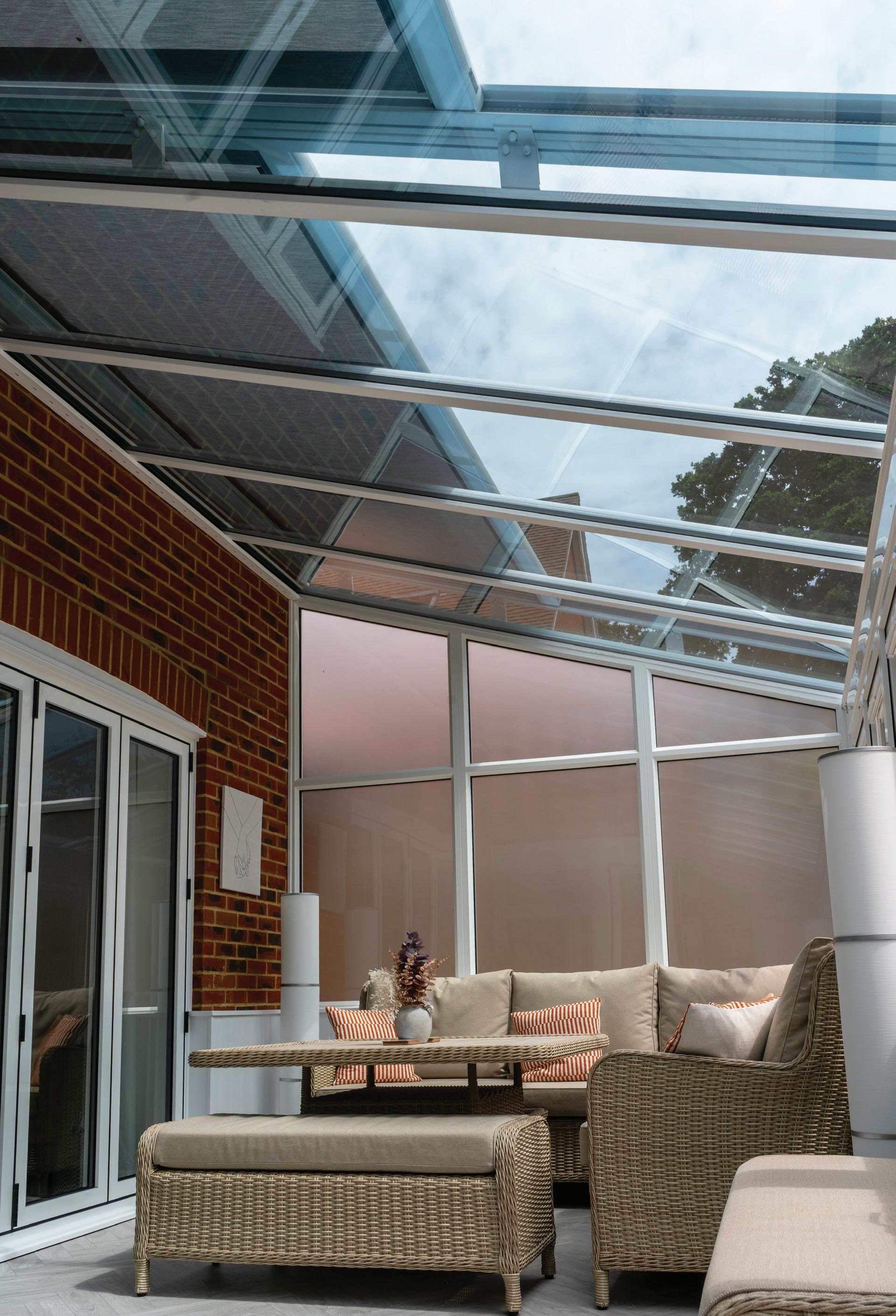
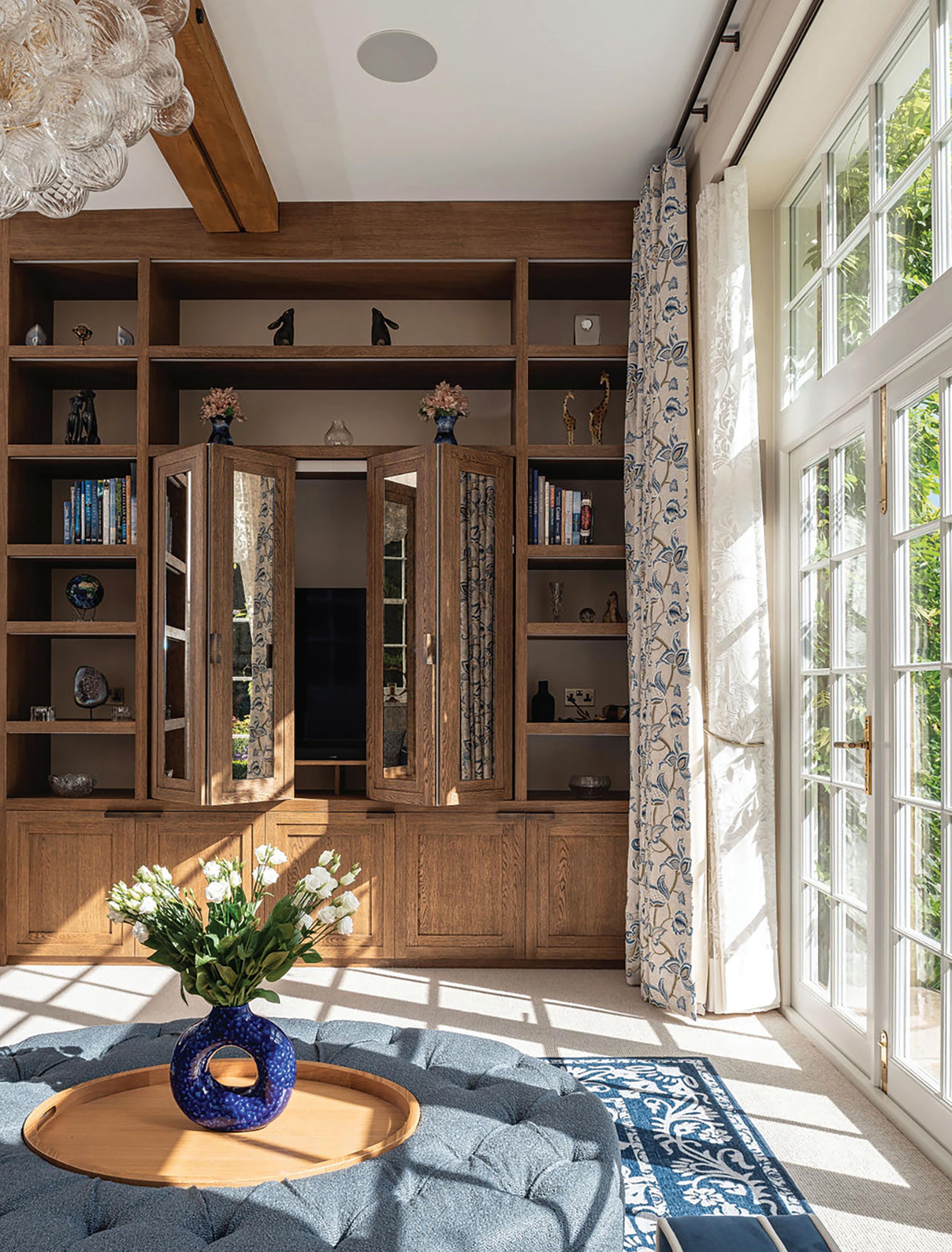
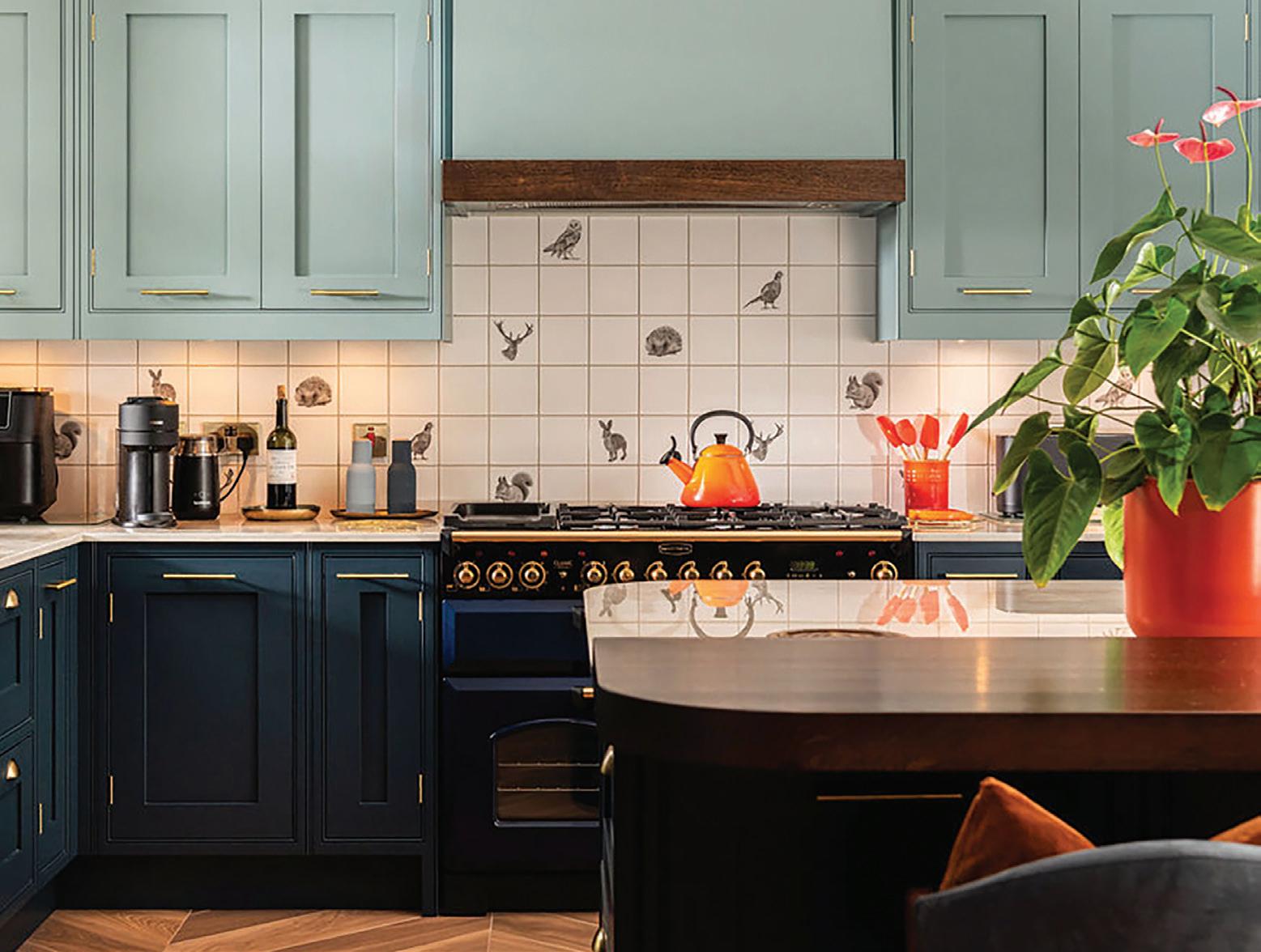
Just steps from your home. A world away from the everyday. uxury ust
Exceptional Garden Rooms and Annexes for discerning Essex homeowners.
Beautif ully craf ted, f ully insulated, and designed to enhance your home and the way you live
Download brochure for designs, pricing, and inspiration
L i f e , b e a u t i f u l l y e x t e n d e d .
ur Hertfordshire luxury show village to receive an ive £500 visitor incentive on your chosen Garden or Annexe. Offer ends August 31st 2026.
l Hempstead Garden Centre, r's Hill, Great Gaddesden, ordshire, BY
m - 5:00 pm Mon-Sat am - 4:30 pm Sunday
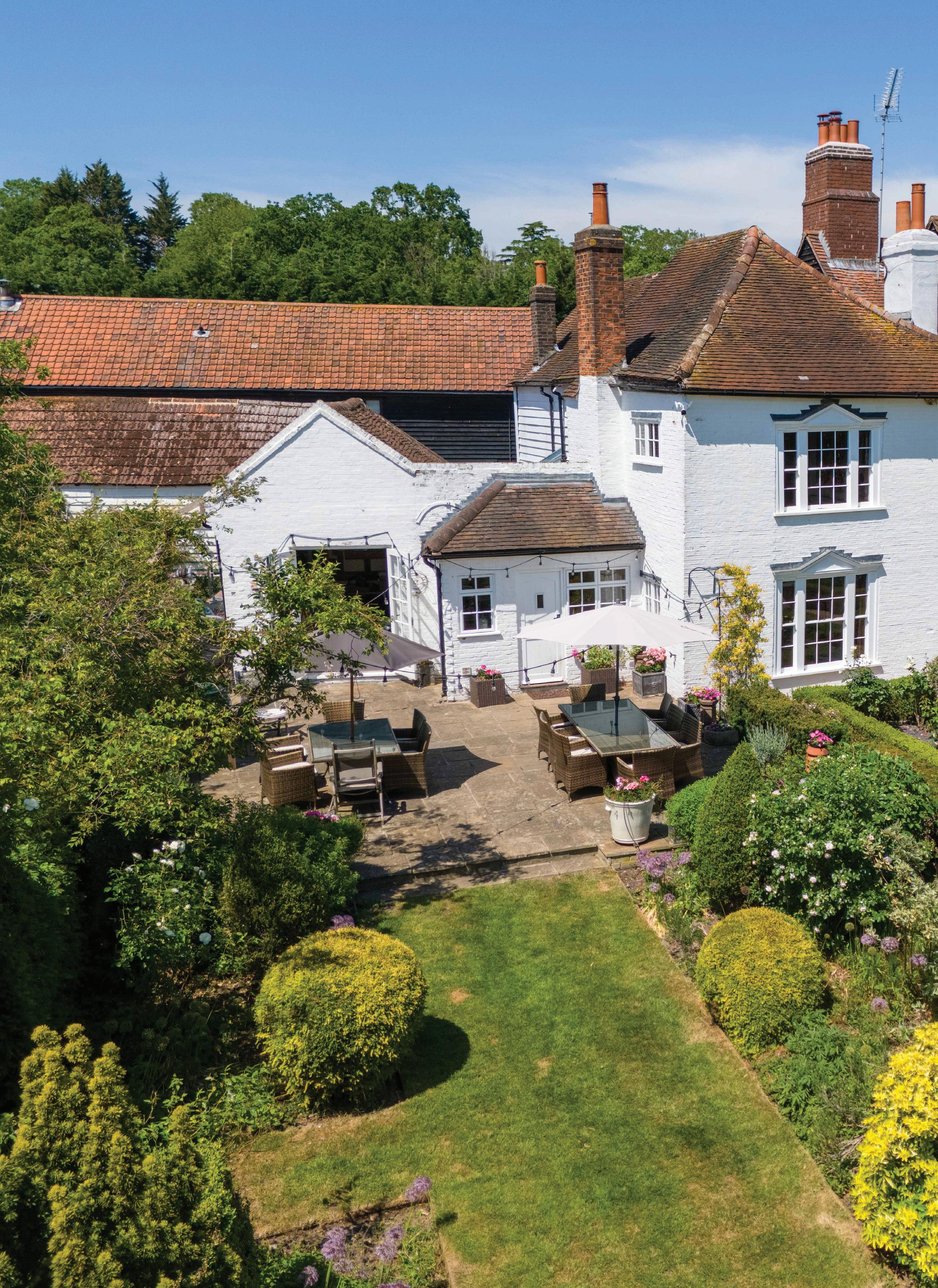
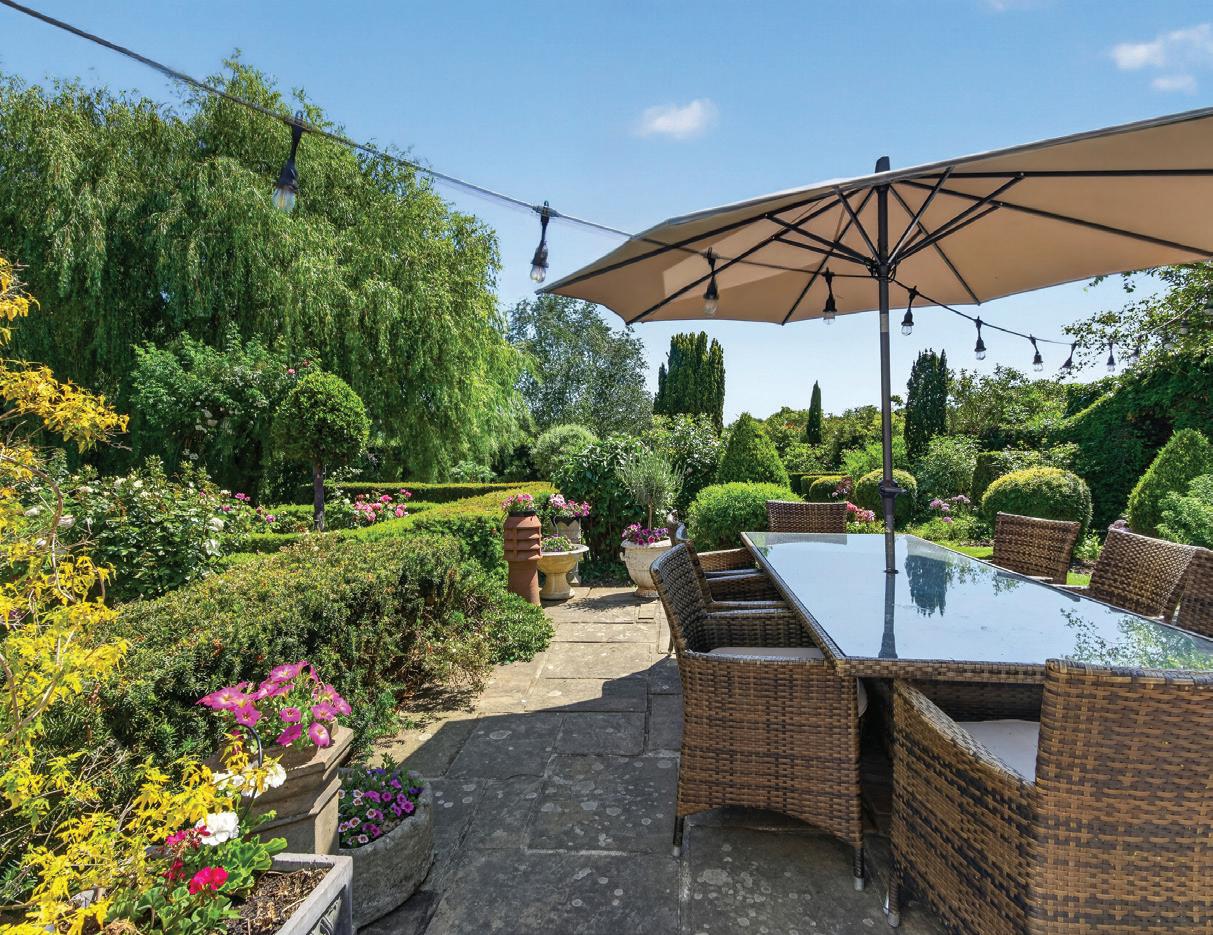
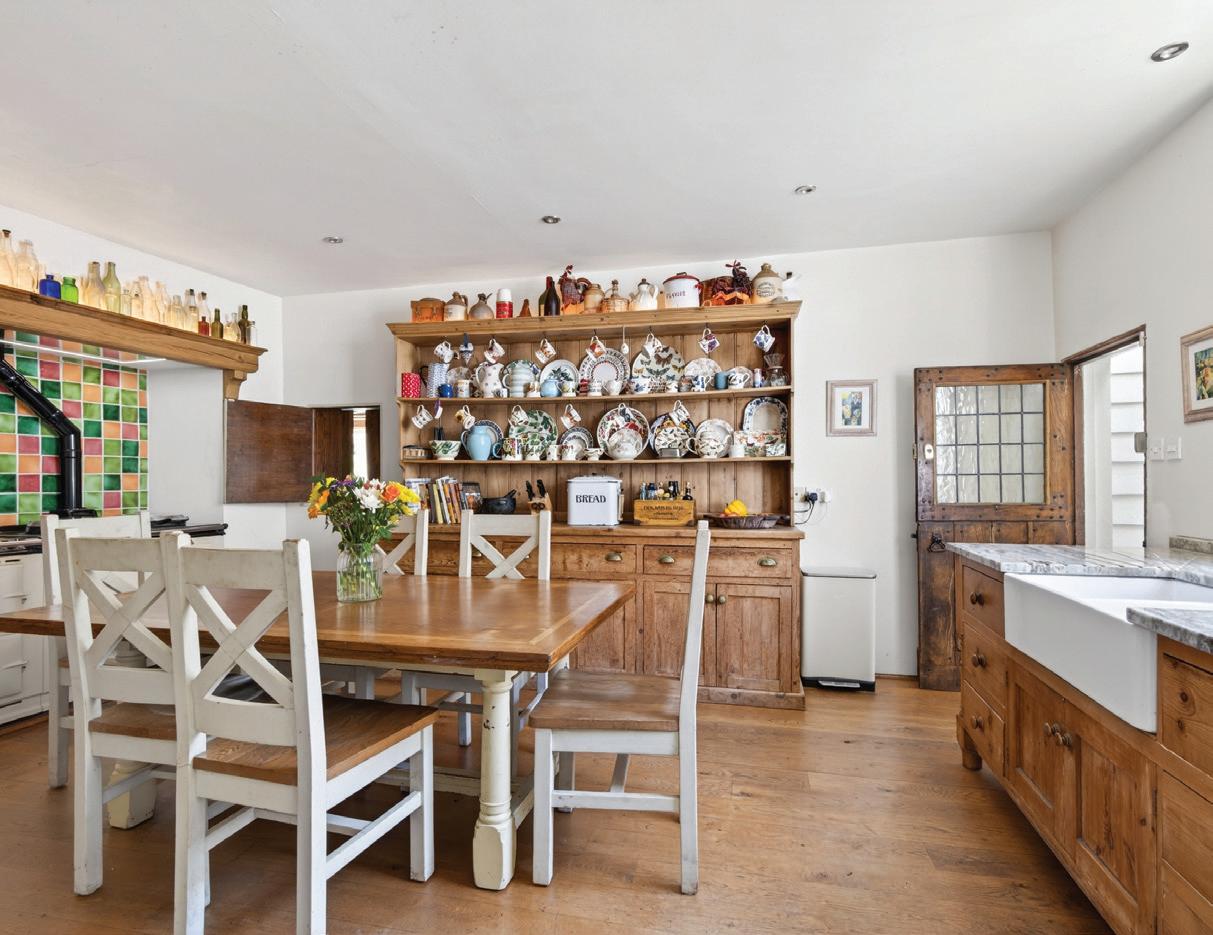
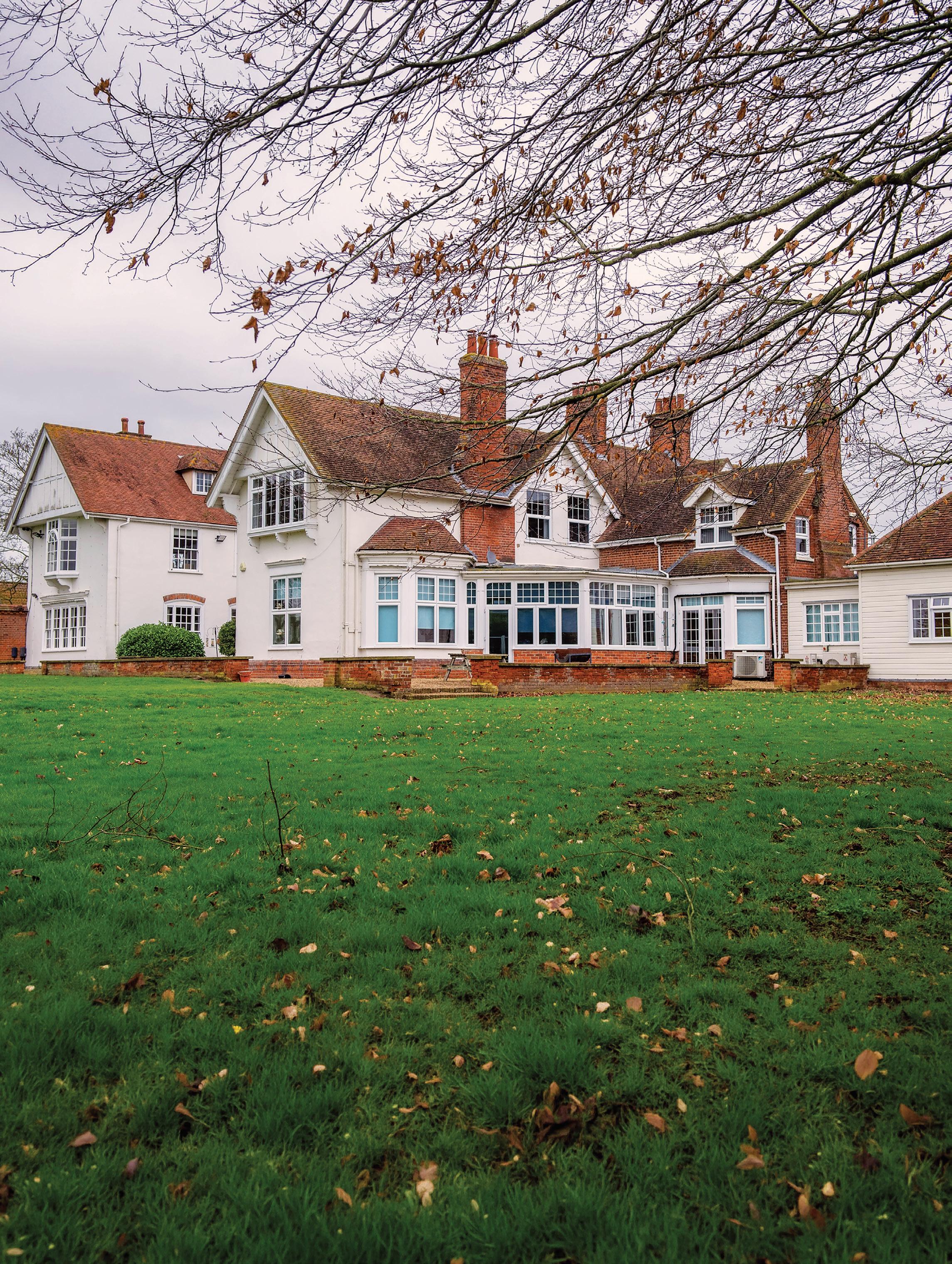
An outstanding five-bedroom home situated in a prime location within three miles of Loughton town centre and Central Line tube station. With accommodation spanning 4,200 sq ft, Springfield Farm House has a wealth of character including exposed timbers, vaulted ceilings, open fireplaces and large sash windows that flood rooms with natural light. Arranged into different areas separated by manicured box hedging, the magnificent grounds include a paved sun terrace, mature flower beds and a separate driveway.
CULTURE
14 Agenda Top events for all the family across the county in August
16 San B The Essex artist doing something completely di erent
20 Mersea Island Exploring everything the area has to o er
FOOD & DRINK
30 Lot 14 Behind the scenes at the Theydon Bois favourite
33 Drinks Five Pinot Noirs to indulge in this month
FASHION
36 The Shoot Bags to cap o your summer look from Radley
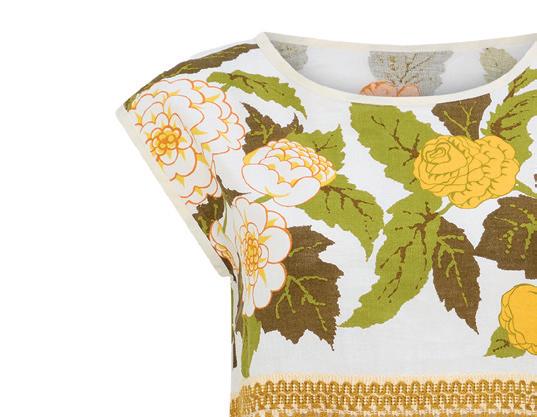
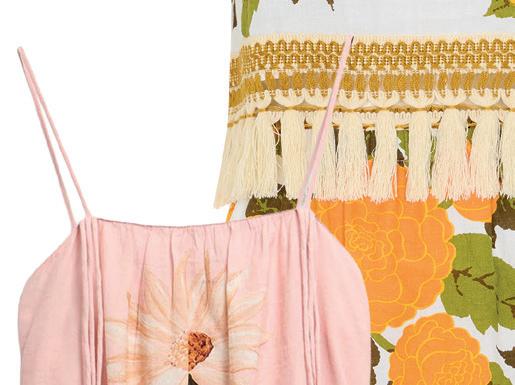
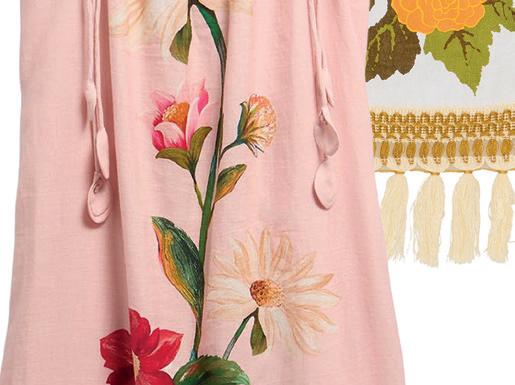
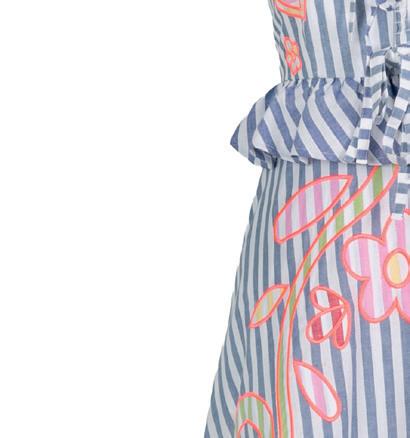
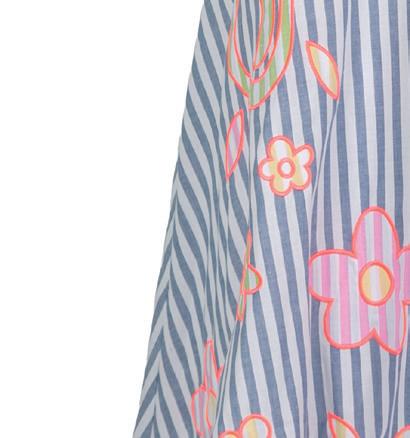
39 Dresses Plenty of inspiration for your holiday wardrobe
HEALTH SPECIAL
42 Sam Jones The Essex padel star on the rise and rise of the sport
46 Dr Leah Totton The Apprentice winner on Essex's changing face
52 10 Of The Best Outdoor workouts anyone can enjoy
For editorial enquiries please email: mark@zest-media.com
For advertising enquiries please call 07861 994764 or email: claire@zest-media.com
zest.london
INTERIORS
72 Kate Malik Interviewing the acclaimed Essex designer
76 Outside In How to bring plenty of light into your home
78 Products Why August is perfect to feel blue
81 Tiles Ideas for the perfect finishing touch
ON THE COVER Radley SS26 (radley.co.uk)
LETTER Editor’s
ABSOLUTELY’S August issue highlights
Ihave been obsessed with my health and fitness for over three decades now. It's fair to say I was a chunky child who heartily enjoyed school dinners (one of the few) and then went home to tuck into a couple of corned beef sandwiches, before dinner a couple of hours later.
The turning point was football. I joined a club, still a tad overweight, at around 15, and by the time I was 17 we were a very good team full of players who were much more talented than me, so I needed some kind of reason for the manager to pick me. So I decided to get super fit.
Things have changed a lot over 30 years. Back then I used to drive my mum potty by running up and down the living room, whereas now I constantly pore over the latest fitness fads and try most out. If I miss a gym session I am miserable for the rest of the day, and even though I am now classed as a 'super vet' in football terms, I still want to test myself against players 20 years younger than me.
5
But that's me. We all have our different approaches to our health and none are the correct way, it's what works for you. I would never impose my beliefs onto someone else, just as I ignore the 'old man' jibes at football training. It is what makes you feel good and hopefully, in our health special, we have something that will make you tick.
EDITOR
San B
On his iconic Marilyn Monroe artwork (p16)
Katie Malik Exploring the work of the Essex interior designer (p72)
Drinks 5 of the best Pinot Noirs (p33)
Lot 14 Visiting the Theydon Bois favourite (p30)
Wish LIST
ROCK STAR
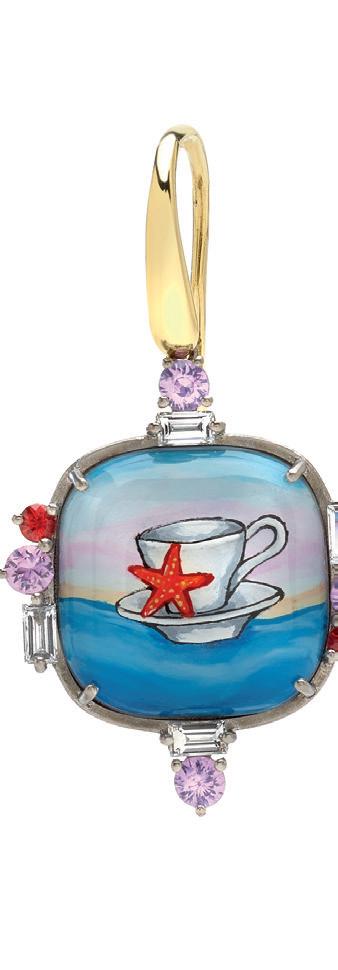
Italian jewellery designer Francesca Villa's Close Encounters collection features hand-carved and reverse-painted rock crystal intaglios. Blending antique carving techniques with richly coloured gemstones, the collection combines traditional cra smanship with playful, contemporary narratives. francescavilla.it
gemstones, the collection combines
EDITOR’S PICK
JOE COOL
One of the most exciting things about Essentiel Antwerp's new summer launches is the brand's fabulous Peanuts collab. We love the oversize knits and sweatshirts, as well as the cute earrints too. essentiel-antwerp.com
DRESS UP
Celia B is the Spanish queen of joyful dressing. For summer, think frills, patterns and creative shapes – plus lots of colour and texture, of course. celiab.com
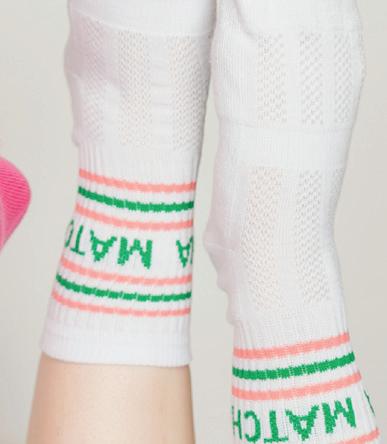
HAPPY FEET
Pilates instructor Anna Cornwell has launched a sock brand that combines playfulness with functionality. There's padding, for comfort, and slogans, for fun. mardybumactiveclub.co.uk
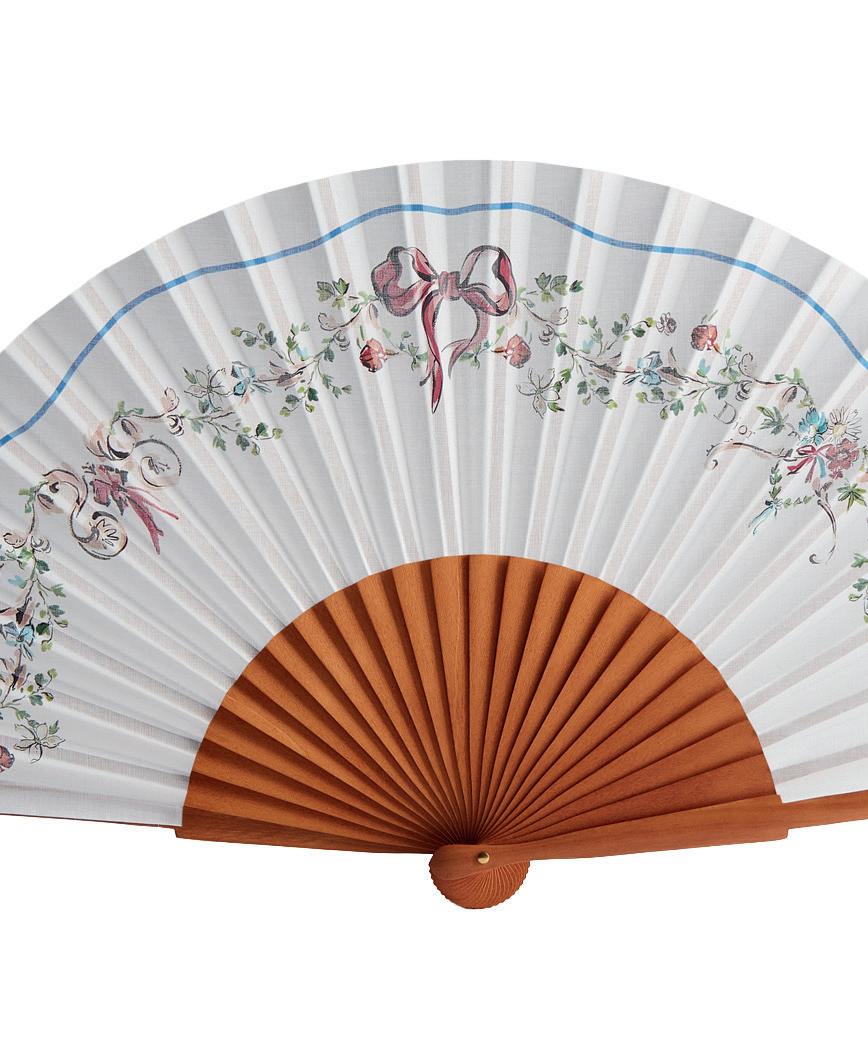
FAN CLUB
YOU & ME
Gracefully radiant, this 18ct yellow gold green oval tourmaline and diamond dress ring from Berry's Jewellers "Toi et Moi" collection is designed to enchant from every angle. berrysjewellers.co.uk
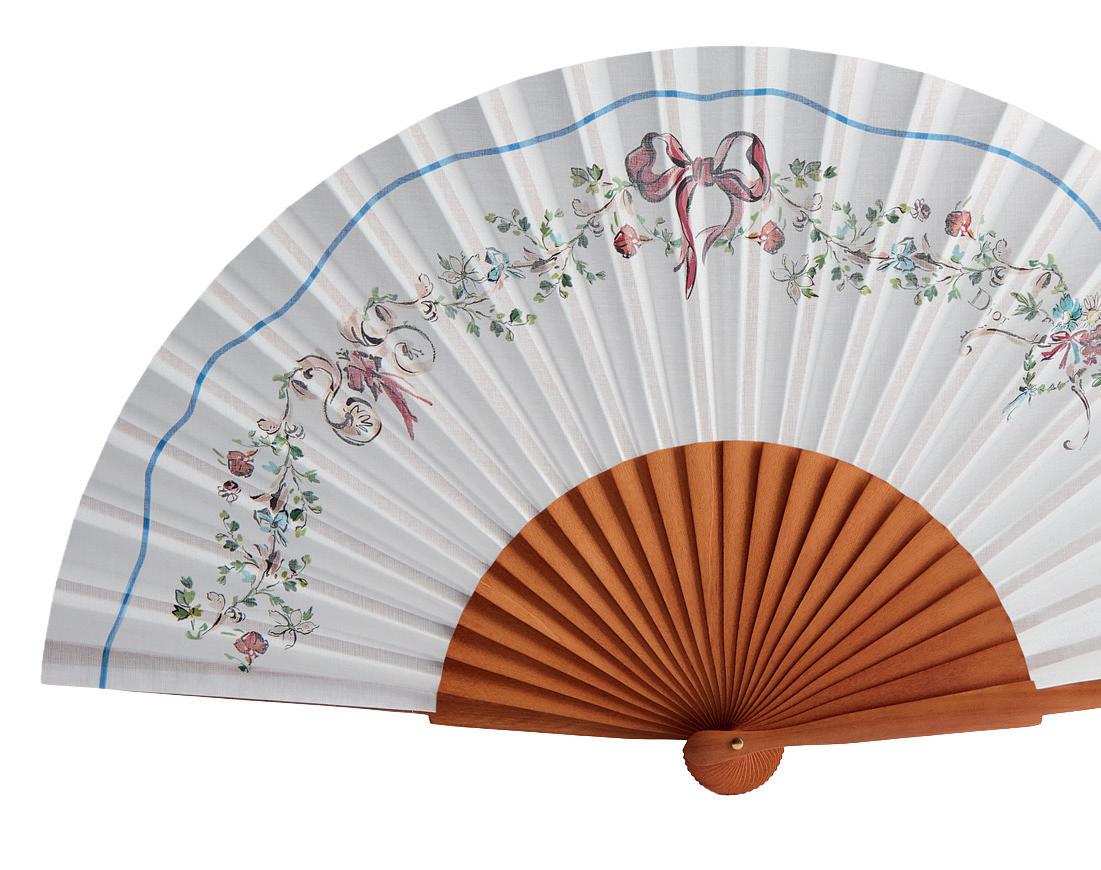
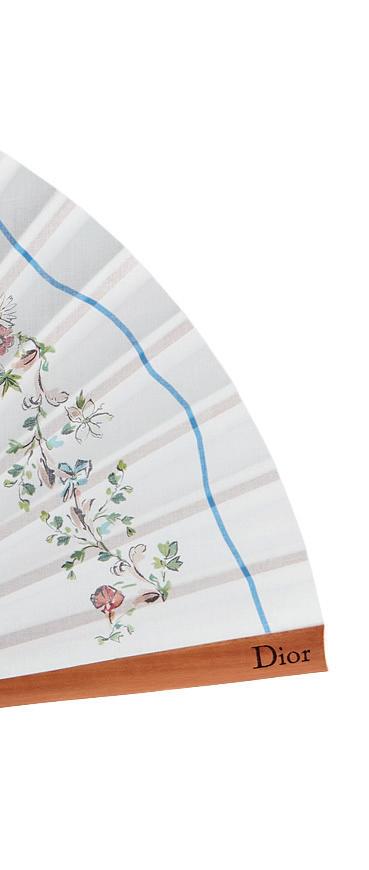
Stay cool in style with this Dior fan with a colourful floral pattern inspired by the work of artist Christian Bérard. Cra ed in pearwood and white cotton, it's a style icon in itself. dior.com avour
DOUBLE TAKE
Exclusive to KOIBIRD, Coser i Cantar's sets are cra ed from reused fabrics and fi nished in vibrant prints, pairing conscious cra smanship with effortless style. koibird.com
GREEN WITH ENVY
Celebrating the entrancing green tourmaline gemstone, this elegant gemstone and diamond ring is a unique and colourful addition to any growing jewellery collection. berrysjewellers.co.uk
DARK ART
Fatso's chunky dark chocolate bars are made from the fi nest, ethically sourced, Colombian dark chocolate and packed with bold fl avour combinations. Our favourite is the cherry, almond and shortbread. sofatso.com
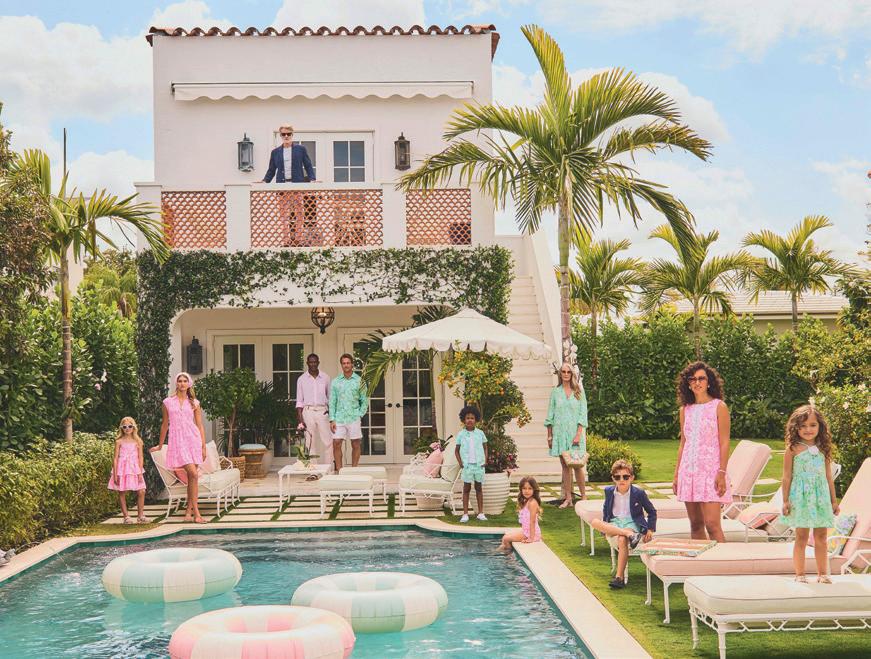
MATCH POINT
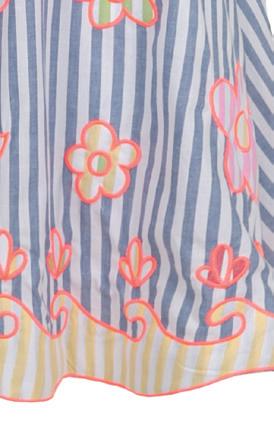
Lilly Pulitzer, the iconic American lifestyle brand celebrated for its timeless prints and signature Palm Beach colour palette, has teamed up with children’s clothing brand Janie and Jack to create a collection that celebrates joyful, multi-generational style. janieandjack.uk
AUCTIONEERS VALUERS
HansonsHertfordshire auctioneers and valuers are pleased to invite you to our regional valuation days. We are currently consigning jewellery, watches, antiques and collectibles for our monthly auctions. Our experienced valuers would be delighted to meet and advise you on auction estimates. We also offer FREE home visits if you are unable to attend our valuation days.
EVERY Wednesday at Burston Garden Centre, North Orbital Road, St Albans AL22DS
10am – 1pm
EVERY Thursday at The Kings Arms, 147 High Street, Berkhamsted HP43HL 10am – 1pm
EVERY third Thursday at Saracens Head Hotel, High Street, Great Dunmow, Dunmow CM6 1AG 10am – 2pm
AND the last Wednesday of every month at The Acorn Room Pendley Manor Hotel Cow Lane, Tring, Hertfordshire HP23 5QY 10am –2pm
CULTURE
7 AUGUST, WIVENHOE HOUSE HOTEL
Wivenhoe House Hotel welcomes Enchanted Cinema to its grounds for an evening of cinematic magic under the stars. Settle down on the sunken lawn for an al fresco screening of the beloved classic stage show and now smash hit blockbuster, Wicked. wivenhoehouse.co.uk
The Agenda
AUGUST'S
Operation Mincemeat
31 AUGUST-5 SEPTEMBER, CLIFFS PAVILION
The year is 1943 and right now we’re losing the war. Luckily, we’re about to gamble all our futures on a stolen corpse… Singin’ in the Rain meets Strangers on a Train, Operation Mincemeat is the fast-paced, hilarious and unbelievable true story of the twisted secret mission that won World War II.
trafalgartickets.com
HOTTEST HAPPENINGS
The
Stow Maries Air Show
16 August STOW MARIES GREAT WAR AERODROME
This celebration of all things aviation will include an amazing programme of flying (subject to weather and operational reasons). One of the highlights of the show is expected to be a flyover by a 1943 Mk9 Spitfire, LZ842, the only one of its kind still flying that was originally painted in desert camouflage, and the only Spitfire flying in the world with a Rolls Royce Merlin 63 engine. stowmaries.org.uk
23 August
COLCHESTER CASTLE PARK
From massive chart-toppers including Pompeii, Good Grief and Happier to fan favourites from across their incredible catalogue, Bastille’s setlist promises a journey through more than a decade of songs that have defined a generation. Since bursting onto the scene in 2013, Bastille have become one of the UK’s most successful bands. colchestercastlesummerseries.co.uk
THEATRE
EVENT
ECM
22 August
EVENT
Smoke and Fire Festival
15-16 August
PROMENADE PARK MALDON
Award-winning Smoke & Fire Festival celebrates its 10th anniversary in 2026, marking a decade of showcasing the art of cooking with fire. This year’s festival brings together more live fire cooking demonstrations from top chefs, hosted by Samantha Evans and Shauna Guinn, the acclaimed BBQ experts, cookbook authors, and stars of the BBC series Sam and Shauna's Big Cook-Out, alongside pop-up restaurants in BBQ Alley, award-winning street food, and interactive workshops to help visitors elevate their own BBQ skills. smokeandfirefestival.com
Eden Camp shed light on the women who played key roles during wartime Britain
This summer, families are invited to uncover the extraordinary stories of the women who helped Britain during World War II with Eden Camp’s Women at War summer programme –running throughout the school holidays until 31st August.
BEECHWOOD EQUESTRIAN CENTRE
Experience the thrill of automotive excellence while celebrating 10 years of ECM at “The Big One”, the most anticipated car show of the year, presented by ECM Events. Held at Beechwood Equestrian Centre in Chelmsford, this event promises to be an exhilarating celebration of supercars, sports cars, modified vehicles, classics and everything in between. eventbrite.co.uk
This Month’s Must See W
The Choir Of Man
4-8 AUGUST, MERCURY
elcome to The Choir Of Man, the best pub in the world. Brimming with hits from artists such as Queen, Luther Vandross, Sia, Paul Simon, Adele, Guns & Roses, Avicii and Katy Perry, to name but a few, this is a pub like no other. A wildly talented group of incredible instrumentalists, worldclass wordsmiths, and sensational singers, this cast of nine (extra) ordinary guys serve it all… live! mercurytheatre.co.uk
The immersive programme brings to life the courage, determination, and resilience of the women who stepped into important roles across Britain during wartime. From the fields and factories to hospitals and military bases, visitors will discover how women helped keep the nation running during its darkest hours through interactive activities, workshops, and live experiences. Families can follow a fun and educational trail inspired by the work of the Women’s Land Army. Families can meet Connie from the Women’s Land Army and learn about the role women played in wartime farming, and try their hand at milking a model cow, and traditional wartime games will be set up for families to challenge each other at sack races, three-legged races, hopscotch, skipping, marbles, and other activities that entertained children during the 1940s.
The popular Living History Weekend also returns on 29th-30th August, welcoming reenactors as they bring wartime Britain to life across the museum. History fans can meet medics, explore a Sherman Tank, sample authentic wartime ration recipes, and enjoy live music. Visitors are encouraged to come in 1940s attire to become part of this immersive experience.
edencamp.co.uk
Essex artist San B is redefining contemporary portraiture with dazzling works that blend precision and emotion
By MARK KEBBLE
Born in Forest Gate and now based on the Essex border, contemporary artist San B has built a career on seeing beyond the surface. While his striking crystal-encrusted portraits immediately command attention through scale, craftsmanship and sparkle, it is the stories beneath them that have made collectors, galleries and cultural institutions take notice.
His latest work, Marilyn Monroe: Immortal, may be his most ambitious statement yet. Created to commemorate what would have been the Hollywood legend’s 100th birthday, the monumental museum-grade artwork is an officially approved contemporary tribute supported by Marilyn Monroe’s estate. It is an extraordinary achievement for the 38-year-old artist, who has painstakingly transformed one of the world’s most recognisable faces into a work composed of more than 150,000 Swarovski® crystals and Swarovski® Created Diamonds, each one individually positioned over the course of more than 1,000 hours.
For San B, however, the attraction was never simply about recreating the glamour that made Monroe a global icon. Instead, he was drawn to Norma Jeane – the vulnerable woman behind one of popular culture’s most enduring personas.
“My initial reaction was excitement, but also a real sense of responsibility,” he explains. “Marilyn Monroe is not just an icon, she is one of the most recognisable and emotionally loaded figures in culture. I knew immediately that if I was going to do it, the artwork had to be at the highest level.”
That sense of responsibility shaped every decision throughout the creative process. Rather than producing another glamorous portrait, San wanted to explore the contrast between public image and private reality – the delicate balance between beauty and heartbreak that has
fascinated audiences for generations.
“What interested me the most was the woman beneath the image,” he says. “Norma Jeane represents the private self behind the myth, and I wanted to show the tension between public projection and private vulnerability. That emotional fragility is what gives the work depth and humanity.”
It is this emotional storytelling that elevates his work beyond technical brilliance. Every crystal serves a purpose. Every shade has been selected with intention. Even the areas left untouched tell their own story.
Perhaps the most striking example is the deep black background surrounding Monroe, deliberately left free from crystals. Rather than acting simply as negative space, it represents emotional emptiness – the unseen struggles hidden behind the world’s most famous smile.
“Symbolism is central to my work,” he explains. “I never want the work to exist only on a decorative level. The black void represents Norma Jeane, the private self and the psychological weight behind the public image.”
That philosophy has become central to San B’s artistic identity. His work isn’t simply designed to be admired from across a gallery. Instead, it invites viewers to step closer, allowing the changing light to reveal different moods and emotions as thousands of crystals refract and shimmer. The finished result is breathtaking, but achieving it demands extraordinary discipline.
“I enter an almost meditative state,” he says of the painstaking process. “The work is slow, repetitive and very demanding, but that’s where the connection deepens. You have to surrender to the discipline. It’s never just about placing crystals, but about building presence and emotion.”
That relentless attention to detail perhaps isn’t surprising given his background. Growing up in Forest Gate before later making his home near Brentwood and Upminster, San credits East London with
“I WANT PEOPLE TO FEEL THEY ARE STANDING IN FRONT OF MORE THAN AN IMAGE”
instilling both resilience and ambition.
“Growing up in East London gave me grit, hunger and a real understanding of contrast,” he says. “It was a melting pot of cultures, personalities and perspectives that shaped the way I see people and energy.
Even now, that background still lives in the discipline and ambition behind my work.”
His upbringing also introduced him to entrepreneurship from an early age.
Watching his father run his own business planted the belief that creating your own path, while challenging, was possible. “His example taught me that building something for yourself takes sacrifice, discipline and belief,” San says. “Even though art is a creative path, I’ve always approached it with that same drive to build something real and lasting.”
Like many children, however, art wasn’t necessarily viewed as the obvious career choice. Instead, San initially pursued architecture – a profession that felt more secure while still allowing him to express his creativity. In hindsight, that decision proved invaluable. “I always knew I was creative, but I didn’t always believe fine art could be the path,” he says. “Architecture made sense on paper, but eventually I realised I had to back what felt true creatively.”
Far from being wasted years, his architectural studies continue to influence every aspect of his work. Structure, proportion, tonal planning and precision all remain fundamental to the way he constructs each portrait.
The breakthrough came unexpectedly through a moment of curiosity at home. “I was watching rhinestones being applied to fabric,” he recalls. “That was the spark when I realised I could use crystals not just decoratively, but as a serious visual language.”
Today that distinctive combination of architectural precision and crystal artistry has become unmistakably his own. It hasn’t always been an easy journey. Early on, convincing the art world that crystal portraiture deserved to be taken seriously proved one of his greatest challenges. “People often saw the work as only decorative,” he explains. “I had to prove this was serious craftsmanship and not novelty. That took
consistency, risk and building a body of work strong enough to shift perception.”
His perseverance has paid off spectacularly. Previous commissions have included a portrait of Queen Elizabeth II for Rolls-Royce alongside works depicting figures including Anthony Joshua and Bruno Mars. His pieces have appeared in prestigious venues including Christie’s and The Savoy, helping establish him as one of Britain’s most distinctive contemporary artists.
Yet despite growing international recognition, San remains committed to ensuring his work has impact beyond gallery walls. To date, his artwork has helped raise more than £500,000 for charitable causes, with proceeds from the auction of Marilyn Monroe: Immortal supporting children’s charities including Caudwell Children and the Caudwell Youth Foundation.
That philanthropic focus has become increasingly personal. “Since becoming a parent, and especially after my daughter was born prematurely, children’s causes have become deeply personal,” he says. “Supporting others through what I do gives the work another level of meaning.” Ultimately, San hopes visitors encountering Marilyn Monroe: Immortal experience far more than admiration for its technical achievement. “I hope they
feel presence first,” he says. “Then I hope they feel the tension in the work – the glamour, the sadness, the strength and the vulnerability. I want people to feel they are standing in front of more than an image.”
It’s an ambition that perfectly encapsulates his wider artistic philosophy. While thousands of crystals create extraordinary beauty, it is emotion that remains the true medium. And as impressive as Marilyn Monroe: Immortal already is, San sees it less as a career pinnacle than the start of an entirely new chapter. “Monroe is a major moment, but it is also the beginning of something bigger,” he says. “My work is moving into a deeper study of permanence, symbolism and immortality. I want to continue creating one-of-one works that feel culturally and emotionally lasting.”
For an artist whose journey began in East London before flourishing in Essex, that ambition feels entirely fitting. San B has spent years refining a signature style unlike any other. Now, with official recognition from one of Hollywood’s most iconic estates and a growing international reputation, his vision is becoming every bit as enduring as the legendary subjects he chooses to immortalise.
artbysanb.com
SAN B
Essex’sTidal TREASURE
The Mersea Island Festival takes place this month – and there is plenty more to entertain you
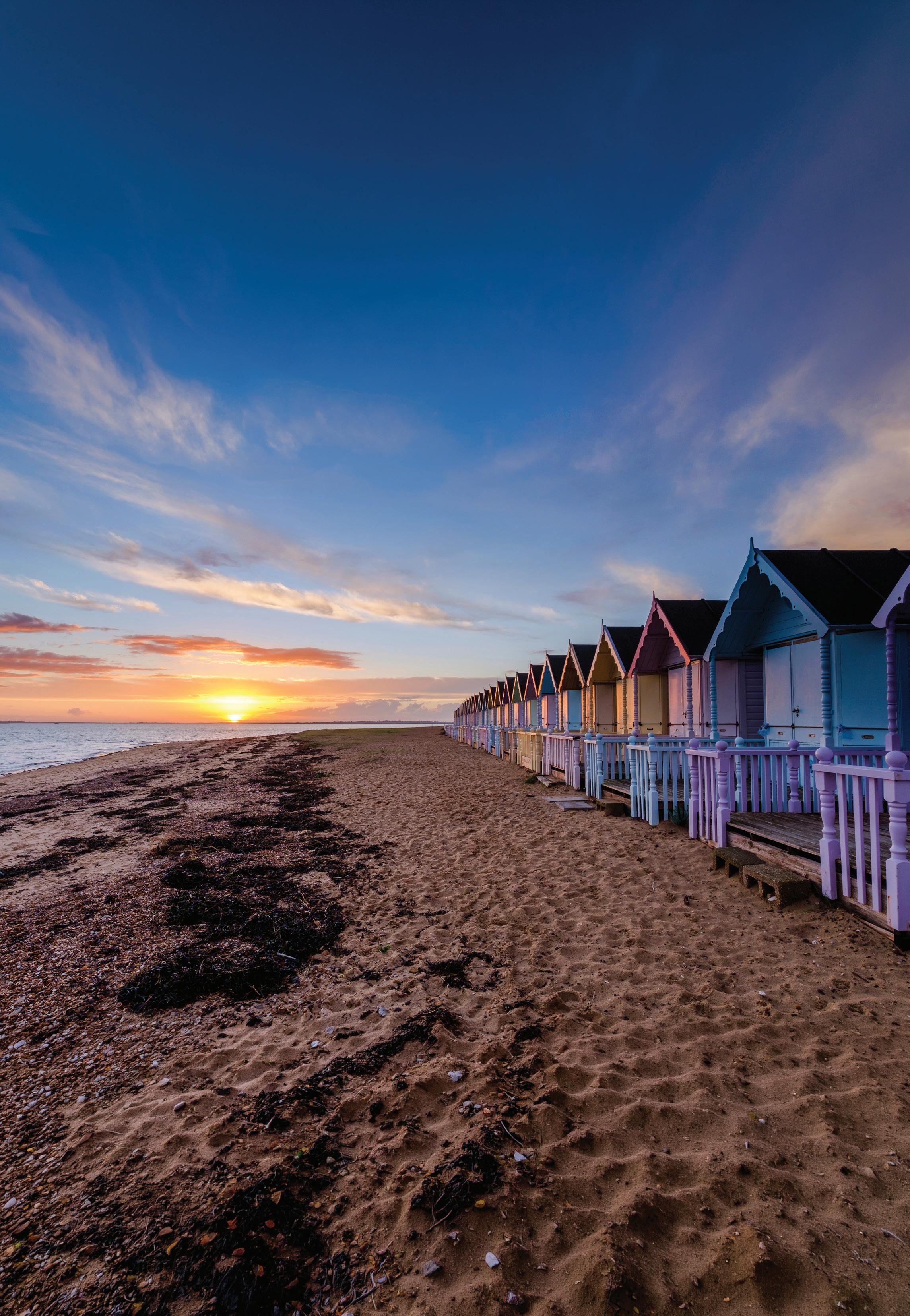
There is something wonderfully reassuring about Mersea Island. Perhaps it is the knowledge that twice a day nature still has the final say. Connected to the Essex mainland by the Strood, an ancient causeway that disappears beneath the water at particularly high tides, Mersea remains one of those increasingly rare places where life moves to its own rhythm. Just nine miles south of Colchester, the island feels a world away from modern pressures, a place of wide skies, saltmarshes, fishing boats and a community whose identity remains deeply tied to the sea.
For many visitors, the journey across the Strood is part of the experience. As the road stretches over the marshes towards the island, the landscape opens into a vast panorama of creeks, mudflats and estuary waters. It is a scene that changes with every tide and every season, creating a constantly shifting backdrop that has attracted artists, sailors, walkers and food lovers for generations.
Mersea is often described as Britain’s most easterly inhabited island, but labels tell only part of the story. What makes the island special is not simply its geography but its character. This is a place where fishing boats still land their catches, where oysters remain a source of pride, and where visitors can spend a morning watching seabirds before settling down to some
of the freshest seafood in the county. With the Mersea Island Festival opening on 23rd August, now was the perfect time to see what else this fascinating part of Essex has to offer.
A BRIEF HISTORY
Mersea’s story stretches back thousands of years. Archaeological evidence suggests people were living and working here long before the Romans arrived, with traces of ancient salt production still visible in the form of distinctive "red hills" scattered across parts of the island. These mounds are the remains of early salt-making operations, a reminder that Mersea’s relationship with the sea has always been central to its survival.
The Romans certainly recognised the island’s appeal. Evidence suggests Mersea was a retreat for wealthy residents of nearby Camulodunum, modern-day Colchester. Excavations have uncovered Roman villas, mosaics and burial sites, including the famous Mersea Barrow, a Roman burial mound that yielded an extraordinary collection of artefacts and remains when excavated in the early 20th century.
The island’s most famous feature, the Strood, was long believed to be Roman in origin. However, modern archaeological investigations suggest the present causeway dates from the late seventh century, making it an extraordinary example of Anglo-Saxon engineering. Timber remains discovered beneath the causeway have been
scientifically dated to between AD 684 and 702, revealing the immense effort required to maintain a permanent connection between the island and the mainland.
During the medieval period, Mersea prospered through fishing and farming, while its strategic position on the Essex coast ensured it played a role in national events. Smuggling flourished between the 16th and 19th centuries, aided by the maze of creeks and inlets that characterise the coastline. Tales of illicit cargoes and moonlit landings remain part of local folklore today.
The sea continued to define island life through the centuries. Oysters harvested from local beds became renowned far beyond Essex, creating an industry that still survives. Fishing fleets once filled the waterfront, while sailing and boatbuilding became integral parts of the local economy. Even during both World Wars, Mersea’s coastal position gave it strategic importance, and traces of military defences can still be found around the shoreline.
WHAT TO SEE AND DO TODAY
Mersea Island is not a destination of grand attractions or theme parks. Its appeal lies in simpler pleasures and the opportunity to slow down.
Walking is one of the best ways to explore. Miles of coastal paths circle much of the island, leading visitors past beaches, saltmarshes and estuary views that seem to stretch endlessly towards the horizon. Monkey Beach, near West Mersea, is
a favourite spot for families, while the shoreline offers excellent opportunities for beachcombing and wildlife watching.
For nature lovers, Cudmore Grove Country Park is a must-visit. Situated at the eastern end of the island, it combines open grassland, coastal habitats and historic features with magnificent views across the estuaries. Birdwatchers are particularly well served, with migratory species regularly appearing throughout the year.
Sailing is woven into the fabric of Mersea life. The island has long been regarded as one of the country’s premier sailing centres, with yacht clubs, marinas and racing events forming a major part of the annual calendar. During the summer, the famous Mersea Week brings together sailors from across the region for a week of competitive racing and social events.
The Mersea’s maritime heritage is explored in detail at the local museum, where exhibits tell the story of oyster fishing, boatbuilding, Roman settlement and everyday island life. It provides a fascinating introduction to the people who have shaped Mersea over the centuries. Those looking for adventure can try paddleboarding, kayaking, sailing lessons or boat trips around the estuaries. From the water, visitors gain an entirely different perspective on the island’s remarkable landscape of creeks, mudflats and hidden channels.
WHERE TO EAT AND DRINK
No visit to Mersea would be complete without sampling the island’s culinary heritage. Seafood dominates many menus, reflecting centuries of fishing tradition and the proximity of some of Britain’s most productive oyster beds.
Among Mersea’s standout destinations is the historic White Hart Inn. Parts of the building date back to the 15th century, and after an extensive restoration it has once again become a focal point of island life. Located in the heart of West Mersea, the inn combines stylish accommodation with a welcoming restaurant and pub atmosphere. Seasonal menus showcase local produce, while its position close to the waterfront makes it an ideal base for exploring the island.
Seafood lovers should also seek out Mersea’s celebrated oyster establishments. Fresh oysters remain the island’s signature delicacy, continuing a tradition that can be traced back to Roman times. The taste is unmistakably linked to the unique conditions of the surrounding estuaries, where generations of oystermen have worked the beds.
Elsewhere, visitors will find waterside cafés, traditional pubs and independent eateries serving everything from freshly landed fish to classic Essex fare. Many enjoy views across the Blackwater and Colne estuaries, making even a simple lunch feel like a special occasion.
Island
Five things you may not know about Mersea
1. The Strood is not Roman after all. Scientific dating has shown that the timber foundations beneath the causeway were constructed during the AngloSaxon period, making it one of Britain's oldest surviving causeway structures.
2 . The island's name is believed to derive from an old word meaning "island of the pool", reflecting its close relationship with surrounding waters.
3. Mersea was once notorious for smuggling. Hidden creeks and isolated shoreline locations made it an ideal landing point for contraband arriving from across the Channel.
4. Beneath the island's peaceful appearance lies evidence of significant military activity. Coastal fortifications built during the Tudor period and later conflicts can still be found by those who know where to look.
5. Mersea's famous oysters have been prized for so long that the Romans are believed to have exported them across their empire, helping establish a reputation that continues nearly two millennia later.
DINNER WITH A VIEW AT THE WHITE HART INN
BARKING UP THE RIGHT TREE
International Dog Day is celebrated this month, but Essex has plenty to treat your furry friend all year round
Essex has quietly become one of the UK’s most dogfriendly counties. While its coastline, country parks and sprawling countryside have long attracted walkers and their four-legged companions, there is now a growing number of pubs, hotels, cafés and experiences that actively cater for canine guests.
So, for International Dog Day on 26th August, why not go beyond the usual game of fetch in the park and treat your dog to something a little more memorable? From luxury stays and waterside walks to dog-friendly dining and some of the county’s finest outdoor adventures, here are some of the best places in Essex to spoil your pooch.
Few venues in the region have embraced dog-friendly hospitality quite as enthusiastically as Down Hall, located on the Essex-Hertfordshire border. Set within 110 acres of landscaped gardens, woodland and parkland, the grand country house hotel offers the perfect countryside retreat for owners who don’t want to leave their dogs behind. The grounds
provide ample opportunities for long walks, while the hotel itself welcomes canine guests as part of the experience rather than simply accommodating them.
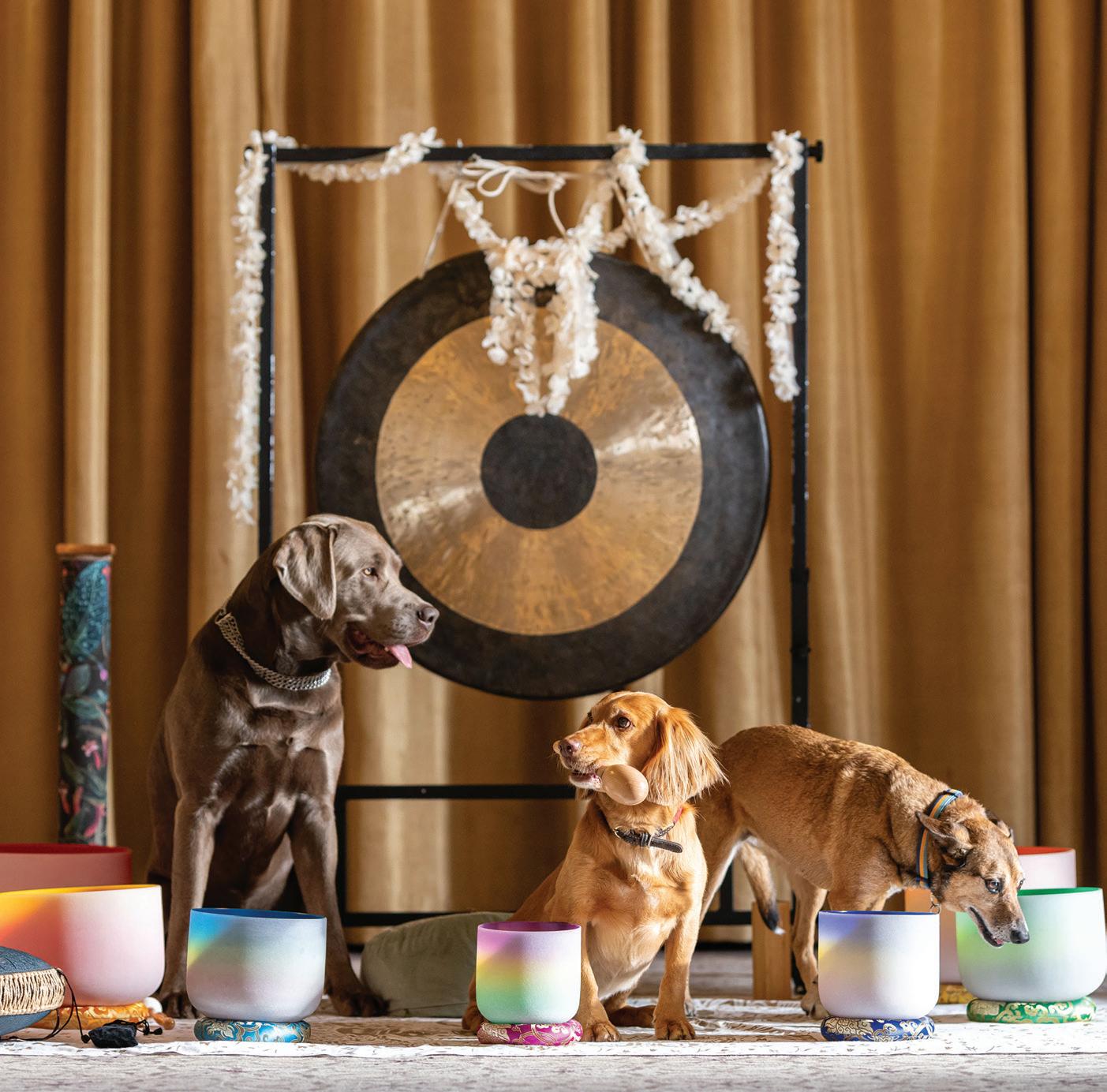
One of its most unique offerings is the Doggy Yoga Retreat, a wellnessfocused escape designed for both owners and dogs. Guests can enjoy yoga sessions, woodland walks, sound baths and photo opportunities, all aimed at helping humans and their pets relax and reconnect. It’s an experience that perfectly reflects the growing trend towards pet-inclusive travel and wellbeing.
Essex boasts one of the longest coastlines of any county in England, meaning there are plenty of opportunities for dogs who love the beach. Mersea Island remains one of the county’s most popular dog-friendly destinations. Outside seasonal restrictions, dogs can enjoy stretches of beach while owners take in the coastal scenery. The island’s network of footpaths, marshes and shoreline walks offers plenty of variety for adventurous pups.
Further south, the beaches and promenade at Southend-on-Sea provide opportunities for seaside walks, while nearby Two Tree Island Nature
In Essex, there are plenty of opportunities for dogs who love the beach
Reserve offers a quieter alternative, with miles of trails winding through salt marshes and coastal habitats.
For those seeking dramatic estuary views, the coastline around Maldon and Heybridge Basin provides scenic waterside routes where dogs can enjoy fresh sea air while owners watch boats navigate the historic waterways.
After a long walk, few things are more satisfying than settling into a welcoming pub with your dog at your feet. The Shepherd & Dog at Langham has built a reputation as one of Essex’s most charming country pubs, offering excellent food and a relaxed atmosphere for walkers – and, as suggested by the name, dogs too. Its rural setting makes it an ideal stop after exploring the surrounding countryside.
The Sun Inn at Dedham, located in the heart of Constable Country, is another favourite among dog owners.
Surrounded by some of the county’s most picturesque landscapes, it provides the perfect base for a leisurely day exploring the Stour Valley. Meanwhile, The Anchor at Hullbridge combines riverside views with a welcoming atmosphere, allowing visitors to enjoy the scenic River Crouch while their dogs relax nearby.
Essex’s independent café scene has expanded rapidly in recent years, and many businesses now welcome dogs as enthusiastically as they do their human customers.
Market towns such as Saffron Walden, Maldon and Braintree are filled with cafés where dogs can join their owners for coffee and lunch. Many provide outdoor seating, while some have designated dog-friendly indoor areas, ensuring that a rainy day doesn’t spoil the outing.
Along the coast, numerous cafés and kiosks cater to dog walkers, particularly
around Mersea Island and Southend, where a day at the beach often ends with refreshments for both owner and pet.
For owners who love spoiling their pets, Essex offers a growing number of specialist retailers. Independent pet boutiques across towns such as Chelmsford, Colchester and Brentwood stock everything from gourmet treats and natural foods to handmade collars and luxury dog beds. Many focus on premium products and personalised service, helping owners find something special for their four-legged family members.
Essex’s greatest strength may be the variety of outdoor spaces available to explore. Epping Forest, stretching across the south-west of the county, is
Few venues have embraced dog-friendly hospitality quite as enthusiastically as Down Hall
one of the finest dog-walking destinations in the country. Covering thousands of acres, it offers ancient woodland, open grassland and countless trails where dogs can roam and explore.
Weald Country Park near Brentwood is another favourite. Its combination of open parkland, woodland and lakes creates an ideal environment for dogs of all ages, while the extensive path network makes it easy to tailor walks to suit different abilities.
For coastal adventures, Two Tree Island Nature Reserve near Leigh-onSea offers a unique landscape of salt marshes, mudflats and estuary views. The peaceful setting makes it particularly popular with owners seeking quieter walks away from busy beaches.
Dedham Vale, part of the area that inspired artist John Constable, provides some of the most beautiful countryside in Essex. Rolling meadows, riverside paths and picturesque villages combine to create a perfect setting for long walks with a dog.
Meanwhile, Hadleigh Country Park offers open hillsides and panoramic views across the Thames Estuary, providing plenty of space for energetic dogs to burn off energy while owners enjoy the scenery.
This International Dog Day, Essex proves that some of the best experiences are the ones shared with a fourlegged companion by your side.
HERE AND BELOW, DOGGY RETREATS AT DOWN HALL
FOOD & DRINK
Seasoned to taste
Galvin Restaurants has announced the return of its much-loved Taste of Summer menus, available until 15th September. Celebrating the very best of the season, each restaurant will offer a specially curated Mediterranean-inspired menu, showcasing exceptional produce and outstanding value across Galvin La Chapelle, Galvin Bistrot & Bar and Essex’s Galvin Green Man. galvinrestaurants.com
14 At Theydon 30 • Drinks 33
GALVIN GREEN MAN
PLENTY on the plate
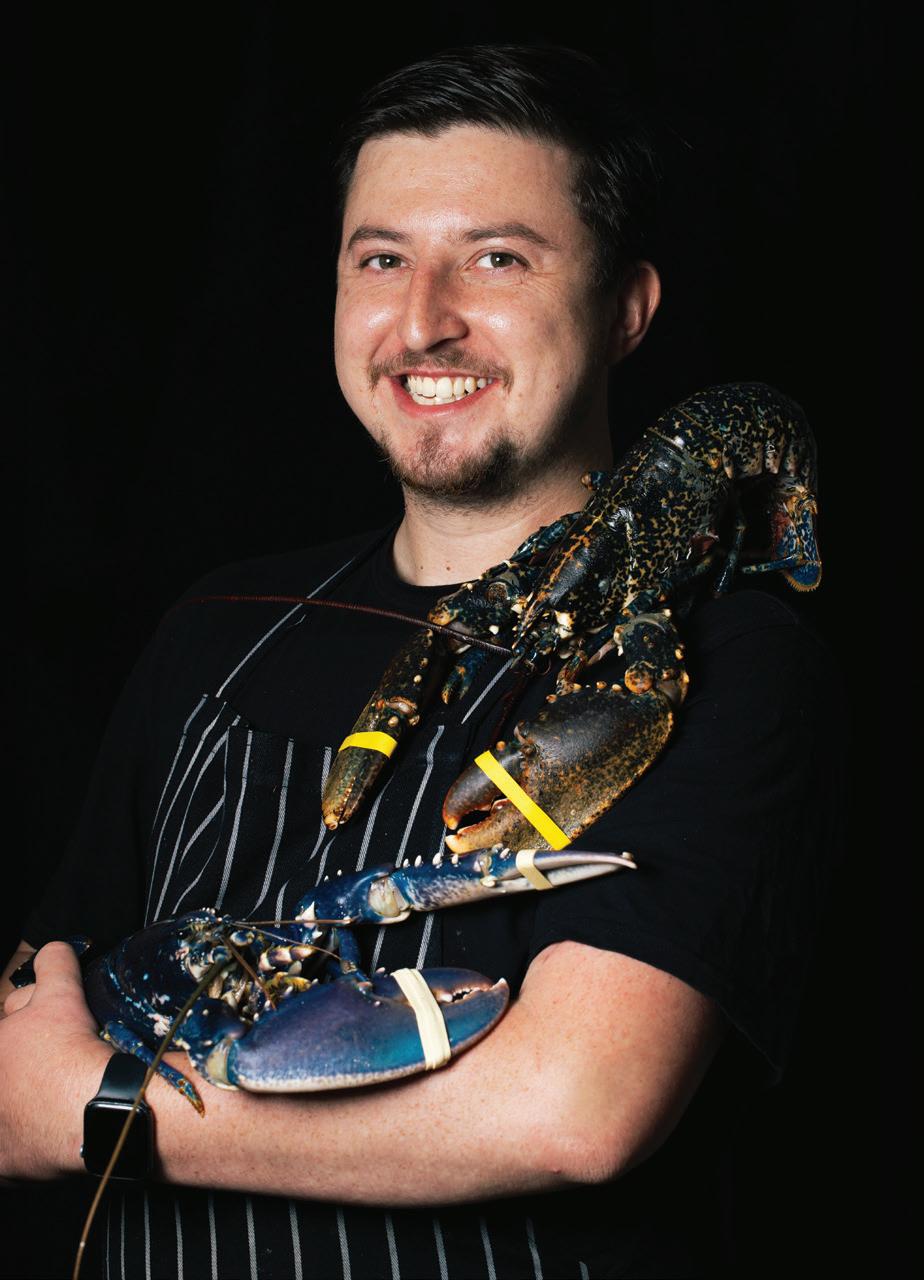
Ben Garnett-Sinclair, head chef at Lot 14 at Theydon, on making the most of what Essex has to offer
“Our job is to respect the ingredient, use good technique and let the quality speak for itself”
Q What was the inspiration behind the new summer menu, and what dishes best capture the season for you?
A Summer is always one of the most exciting times of year because the produce does so much of the work for you. The inspiration behind the new menu was to showcase the best of what’s available across Essex and the East Coast right now. We wanted dishes that feel fresh, vibrant and full of colour, while still letting the quality of the ingredients take centre stage. For me, dishes featuring local asparagus, heritage tomatoes and line-caught fish really capture the season. We’re also leaning into lighter sauces, fresh herbs and citrus flavours. Summer dining should feel relaxed and joyful, and that’s exactly what we’ve tried to reflect on the plate.
Q Seafood is a major part of the restaurant’s identity. What trends are you currently seeing in how people want to eat fish and seafood?
A Guests are becoming much more knowledgeable about seafood. They’re interested in where it’s come from, how it’s been caught and whether it’s sustainable. That’s something we welcome because provenance has always been important to us.
We’re also seeing people become much more adventurous. Prawns and scallops will always be popular, and I don’t think that will ever change, but diners are increasingly willing to trust chefs and try lesser-known seafood. Razor clams have become incredibly popular with our guests, and we’re seeing more interest in fish such as hake and whole skate wings rather than just the usual salmon or sea bass. At the same time, people still want familiar flavours and recognisable dishes, but they’re looking for something they couldn’t necessarily recreate at home. That’s where we like to put our own spin on classics. We might serve mussels in a fragrant Thai-inspired broth, monkfish in tacos, or take something that’s currently trending, like a Caesar
salad, and create our own version using fresh crab. They’re all dishes people understand, but approached in a way that feels fresh and exciting.
I think another trend is that guests increasingly want to see authenticity and craftsmanship. At Lot 14, all our fish arrives fresh and is prepared by our chefs in-house. We fillet everything ourselves, and guests can choose their seafood directly from the display – whether that’s a particular wing of Guernsey skate, a lobster or whatever has come in fresh that day. That level of transparency is something people really appreciate. Ultimately, though, the biggest trend is that people still want fish cooked properly. Great seafood doesn’t need to be overcomplicated. Whether it’s a perfectly cooked piece of cod or fresh Maldon Oysters, our job is to respect the ingredient, use good technique and let the quality speak for itself.
Q What challenges and opportunities come with running an independent restaurant outside London in a village like Theydon Bois?
A The challenge is that expectations are incredibly high. Guests have access to some of the best restaurants in the country in the surrounding area, so you must deliver a consistently excellent experience every single day. The opportunity is that communities like Theydon Bois genuinely support independent businesses. We have loyal local guests who champion what we’re doing, but we’re also attracting people from across Essex and London who are looking for something different. Being outside London gives us the freedom to create our own identity while remaining accessible, but does have challenges such as recruiting new staff.
Q Diners no longer feel they have to travel into London for a memorable meal. How has that shift changed the restaurant landscape in Essex?
A It has transformed it. Essex now has a growing number of ambitious independent restaurants
that are focused on quality, local sourcing and hospitality.
Guests are increasingly willing to seek out destination restaurants closer to home, and that’s raised standards across the board. The result is a more exciting food scene where local operators can build something distinctive without feeling they need a London postcode to be taken seriously.
Q How do you ensure the restaurant reflects its local surroundings while still offering something that feels distinctive and destination-worthy?
A Our connection to Essex is a huge part of who we are – it’s where we all grew up! We draw inspiration from local produce, East Coast seafood and the surrounding countryside, while working closely with suppliers who share our commitment to quality.
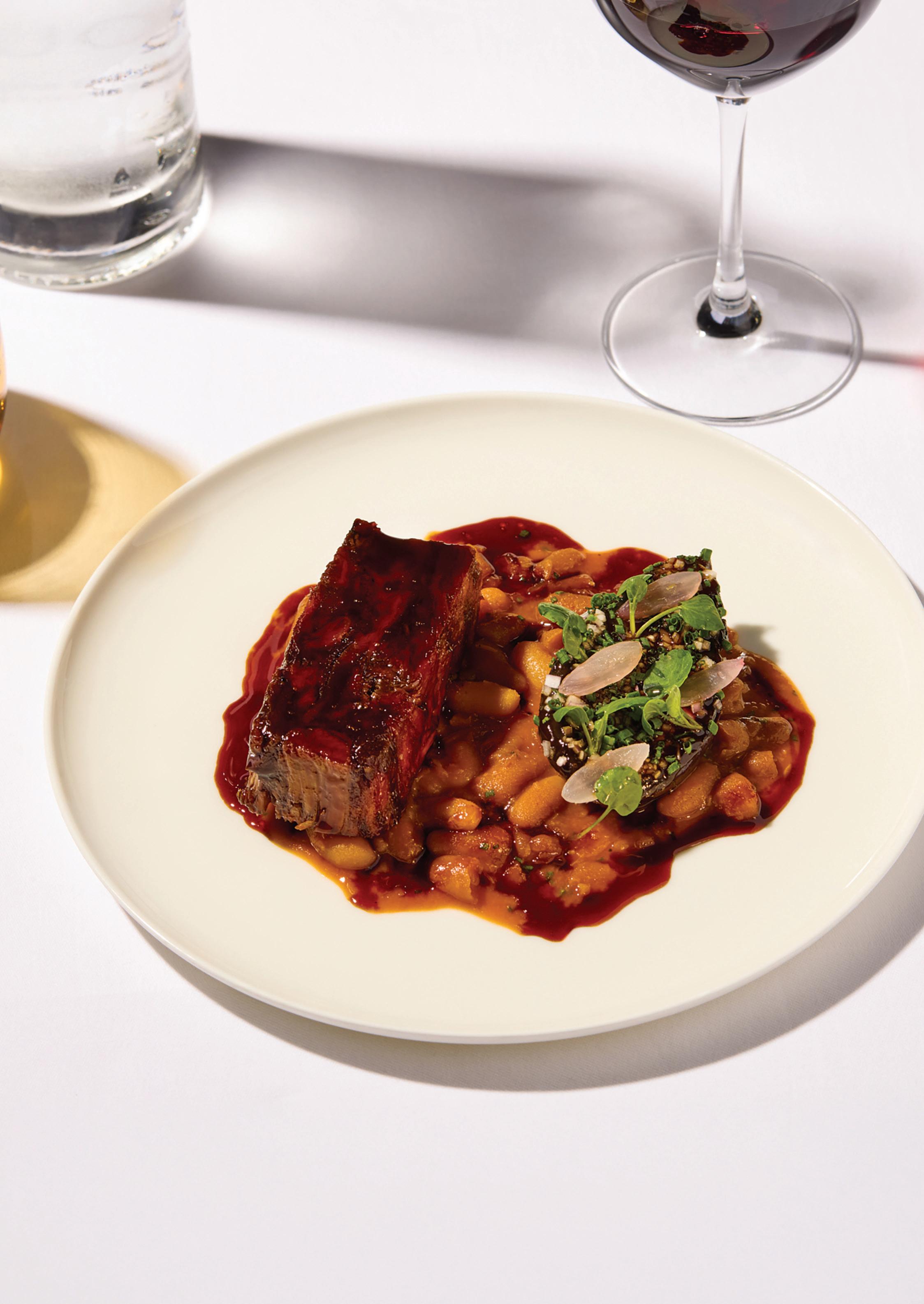
Our meat comes from The Old Street Butcher in Buckhurst Hill, an award-winning independent butcher that has been recognised as Best Butcher in London and Essex and Best Butcher in East London, with a reputation for exceptional quality, dry-aged beef and carefully sourced produce. That attention to provenance and craftsmanship mirrors exactly what we’re trying to achieve at Lot 14.
The goal is to create something that feels rooted in Essex while still giving guests a dining experience they won’t find anywhere else. If people leave feeling they’ve enjoyed the very best of the area, presented with a bit of creativity and personality, then we’ve done our job.
lot14.co.uk
BEN GARNETT-SINCLAIR
Classic ACT
fragrant finish
Burgundy is Pinot Noir’s spiritual home, and Louis Jadot's Couvent des Jacobins is the classiest bottle on the table. Plump red fruit, silky texture, gentle tannins, and a fragrant finish that only comes with 160 years of practice, £24. vinvm.co.uk
ALTITUDE ATTITUDE
Tip Top
English cool-climate Pinot Noir has arrived for good, and Sussex has the proof. Mousehall's Tidebrook The Tipping Point delivers wild strawberries, ripe hedgerow fruit and morello cherry, layered with toasty oak and forest floor, £36. mousehall.com
Cool nights and highaltitude vineyards give Giant Steps' Yarra Valley Pinot Noir a precision that's hard to match. Red cherry, redcurrant, and violet, with white pepper and leathery depth carrying it to a long finish, £35. laithwaites.co.uk
perfection PINOT
Five
Pinot Noirs worth celebrating this August
By NATALIA SUTA
SOUTHERN STAR
Hailing from New Zealand’s first Māori-owned winery, this Pinot Noir comes with a real pioneering spirit. Aromatic layers of red fruit and spicy florals lead to cherry, plum, and finely integrated French oak. Precise and characterful, £20.50. ocado.com
California
Crush
The Sonoma Coast is one of California's greatest Pinot Noir regions and La Crema's expression captures it beautifully. Juicy cranberry, cherry, and blood orange are lifted by violet and white pepper into a vibrant and elegant tipple, £33. hedonism.co.uk
Natalia Suta is a WSET-certified wine writer and educator with a knack for making wine accessible and fun. When she is not writing, she’s busy curating wine experiences and offering consultancy to help others discover the joy of wine. Follow Natalia on Instagram @_winerocks_
FASHION Feeling confident
ELOISE
Bring effortless elegance to summer dressing with Eloise’s Calvia Mastectomy Swimsuit. Designed to offer confidence, comfort and contemporary style, it features a flattering silhouette in a fresh seasonal print. Pair it with the matching cover-up for a beautifully coordinated beach or poolside look. Calvia Mastectomy Swimsuit, £92, eloise.co.uk
BAGS APPEAL of
Cap off that summer beach look with the latest from Radley Braintree
MONSOON
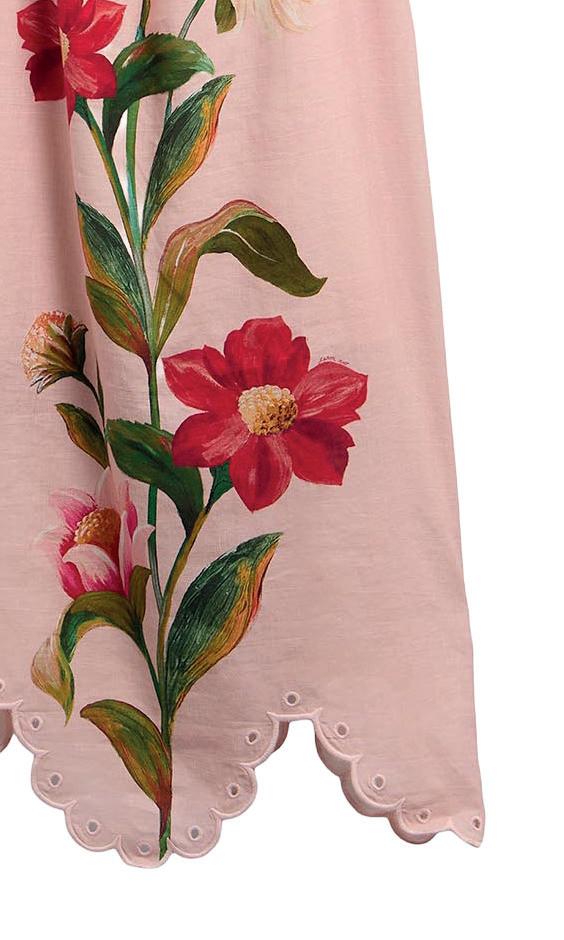
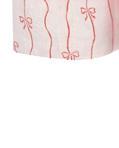
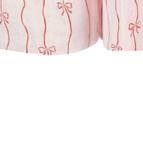
Sophie embroidered midi cami dress, £99 monsoon.co.uk
COSER I CANTAR
Let's Cook Together
fl oral set, £450 koibird.com
CELIA B
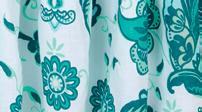
Kailen dress, £301 celiab.com
Summer frocks for all occasions
HEIDI KLEIN Kos mini dress, £250 heidiklein.com
BARBOUR
Barbour FARM Rio Bromelia midi dress, £269 barbour.com
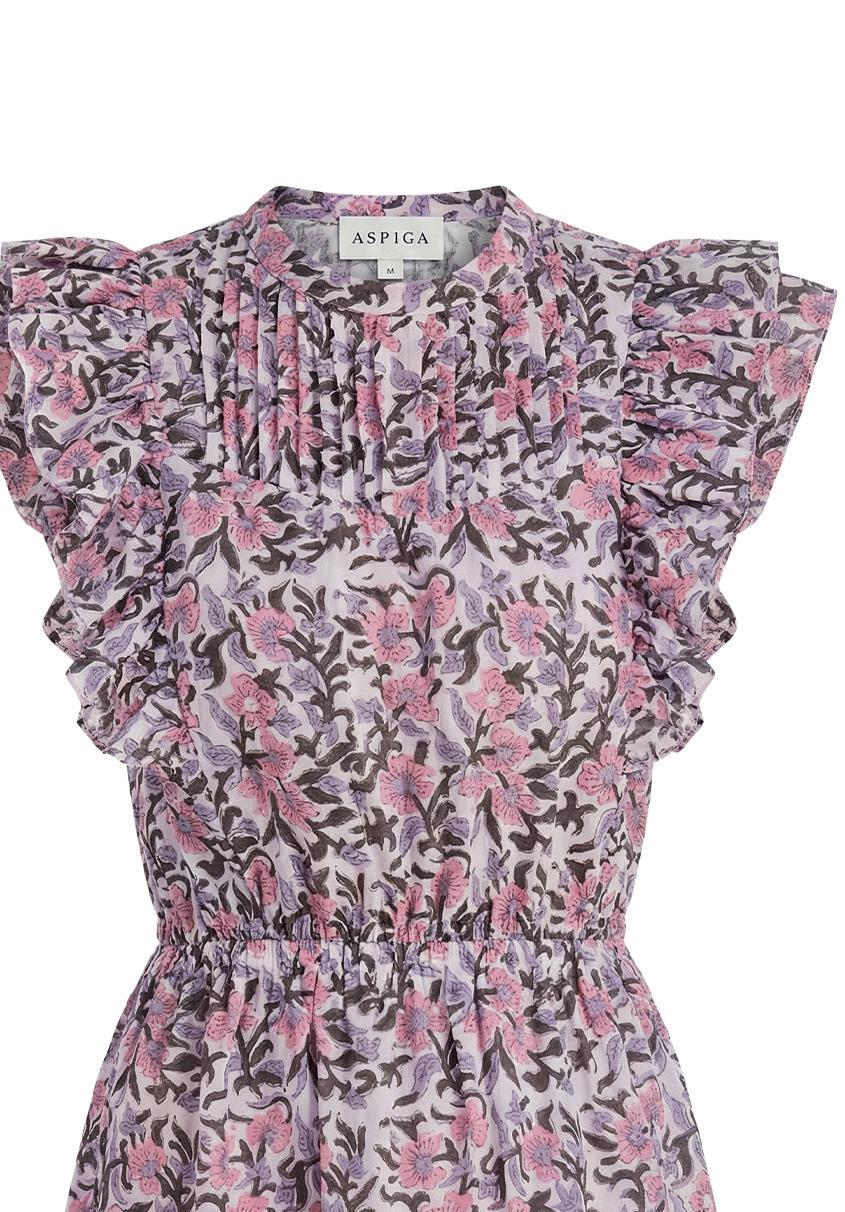
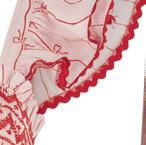
ASPIGA Rose frill mini dress, £95 aspiga.com
By PENDLE HARTE
SUZANNAH The Italian Postcards cotton set, £792 suzannahlondon.com
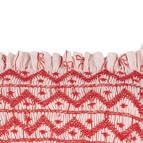
SMOCK LONDON Octavia Hill dress, £275 smocklondon.com
POETRY
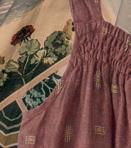
Dobby-weave strap dress, £195 poetryfashion.co.uk
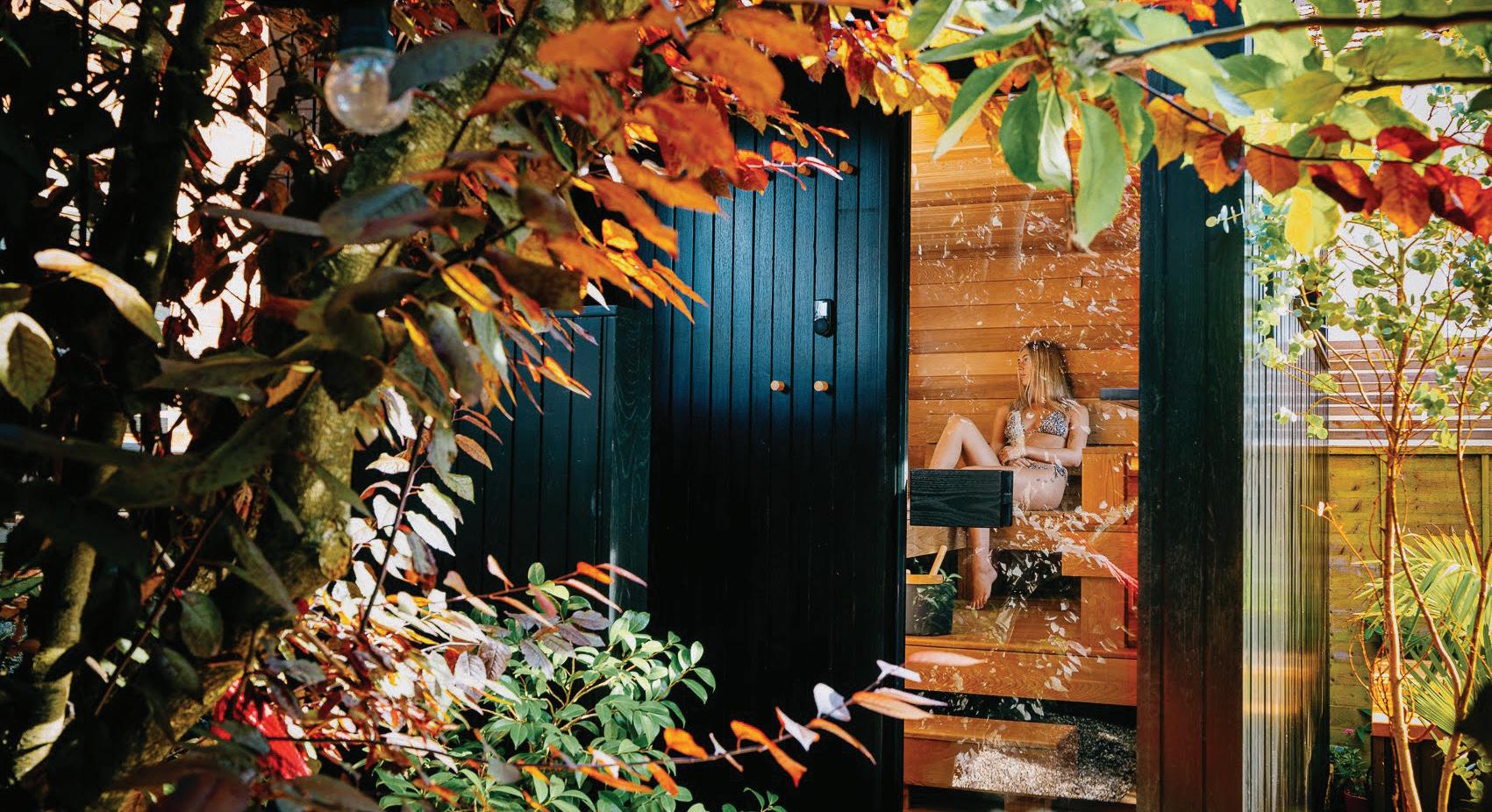
the traditional sauna experience, upgraded
CLEVERLY COMPACT FOR THE CITY
LUXURIOUSLY LARGE IN THE WILD
classic design, best in class, built to last
FEELGOOD FACTOR
We live in a stressful world right now, from financial strains to global concerns, so every now and again we just need to click the reset button. Inside this special section, we speak to local people who can help change your outlook on life, and also offer up top tips for your peace of mind. Sit back and relax...
GAME CHANGER
Essex-born padel star Sam
Jones is helping to take Britain’s
fastest-growing racket sport into an exciting new era
By MARK KEBBLE
There are not many sportspeople who can say they have shared a court with Prince William, David Beckham, Stormzy and World Cupwinning footballer Andrés Iniesta. Then again, Sam Jones is not exactly following a conventional sporting path.
The Essex-born padel player has emerged as one of the leading figures in a sport that, until relatively recently, many people in Britain would have struggled to explain. Now padel courts are appearing across the country, clubs are filling up and a new generation of players are discovering why the fast-paced racket sport has become a global phenomenon.
For Sam, who has represented Great Britain and achieved a string of firsts for British padel, the sudden surge of interest is hugely exciting. Yet, unlike the thousands of newcomers now picking up a racket for the first time, he has witnessed the sport’s rise at close quarters, watching each small step gradually build into something much bigger.
“I wouldn’t say the growth has surprised me, but it’s definitely great to be at the top of a game that people are now obsessed with and hooked on,” he says. “Although padel has come out of nowhere for most people, I’ve seen the small progress in its growth each year, with little milestones being achieved. Slowly but surely, I’ve seen it get bigger and bigger, but in the last year the growth has been insanely fast.”
It has been quite the journey for a player who still considers Essex home, regardless of how far his career takes him. His family and friends remain there and, when the demands of travelling and competing allow, returning to the county gives him the chance to switch off.
“Essex is my home, where my family live and where my friends are,” Sam says. “I feel so comfortable and relaxed there and I think, because it’s such a friendly, relaxed place, it has helped me to be quite chilled and calm on court.”
There is another, perhaps more characteristically Essex quality that Sam believes has served him well. Padel may now be fashionable, but backing yourself in the sport before everyone else had
heard of it required a certain amount of self-belief. “I think in Essex people don’t really care what other people think,” he laughs. “That helped in the early days when no one really knew what padel was.”
Those days increasingly feel like a different era. Padel’s appeal lies partly in its accessibility. Usually played as doubles on an enclosed court, it is fast, social and competitive without demanding years of technical experience before a newcomer can begin enjoying themselves. That combination has helped the sport find an audience far beyond traditional racket sport circles.
Sam certainly does not think Essex residents need much persuading to try it these days. But if he had to make the sales pitch, it would be a simple one. “There is a reason why everyone loves it,” he says. “For me, the biggest thing is that anyone can play. Whether you’re old, young, male or female, you can still have a great time. It’s very fun and light-hearted in a competitive way, where you are exercising with a smile on your face.”
That sense of fun has undoubtedly helped padel attract some high-profile converts. Sam’s own ability has given him access to an extraordinary collection of famous playing
“Padel is fun in a competitive way, where you are exercising with a smile on your face”
“I am enjoying all the new experiences I am getting to do because of padel”
partners, and he admits that meeting household names has been one of the more unexpected bonuses of his career.
“Meeting all these cool people has definitely been one of the perks of being a good padel player,” he smiles.
“Because most of them are athletes, they all have a great base level, but I must say Prince William and David Beckham were big surprises. Then I found out they both have a history of playing tennis, which would make sense.”
For Sam, however, celebrity matches are merely one entertaining element of a career built on serious achievement. Representing Great Britain remains among his proudest moments, while becoming the first British player, alongside his partner Christian, to win a match on padel’s premier tour was a landmark that carried significance far beyond one result.
Recognition has followed. Being crowned LTA Player of the Year in 2024 underlined his position as one of the country’s most important padel players, but his career has coincided with a fascinating period for the sport itself. British padel is growing at speed, although Sam is clear-eyed about the work still required if the UK is to catch some of its European neighbours. “For me, in the UK, we are actually still behind some of the other European countries,” he says. “They have big TV contracts to show padel, which is something we are still working towards.”
There are, though, signs of significant progress. London hosting a P1 event –one of the biggest tournaments on the international calendar – represents precisely the sort of landmark Sam once hoped British padel might reach.
Sam’s role in this new era increasingly extends beyond his own results. As padel’s profile has risen, so has his. Television and radio appearances, fashion campaigns and matches with major
public figures have introduced him to audiences who may never have watched a professional padel tournament.
For a sportsman who has spent much of his life focused on the confines of the court, this new world has proved refreshing. “Yes, most definitely,” he says when asked whether building the profile of padel has become as important as winning matches. “It’s fun to do something outside of the court, as most of my life has been inside those four walls. I am enjoying all the new experiences I am getting to do because of padel.”
Yet there is still an obvious competitive drive. Essex, Sam believes, has long had a knack for producing sporting talent, and he sees the county’s facilities and emphasis on sport in schools as significant advantages for youngsters with ambition.
“I think Essex being one of the wealthier counties means it has some of the best facilities in the country, which really helps,” he says. “The fact that schools make a big effort to push sport from a young age is great too. Other successful people being from Essex, who people can look up to, obviously helps as well.”
Sam himself is rapidly becoming one of those sporting role models. His path demonstrates that opportunities do not always arrive through the sports that dominate back pages and television
schedules. Sometimes the smartest move is to recognise the potential in something before the rest of the world catches up.
Padel’s current trajectory suggests the next five years could be transformational. More courts and clubs will inevitably help, but Sam is particularly interested in the infrastructure developing around the game. He points to apps such as Seed, which connect players with courts and coaches, as an important way of making padel easier to access, particularly for complete beginners.
“I truly believe British padel will have grown massively, with more courts and clubs than ever,” he says. “Apps like Seed are connecting people to courts and coaches, which is opening the sport up to even more people, including novices, which is great. We aim to make it accessible for all. With the courts, clubs and apps, it will encourage huge numbers of players, with a proper system and pathway to help players reach their goals.”
If Sam’s predictions are correct, padel’s biggest days in this country are still to come. And one of Essex’s own will be able to say he was there, racket in hand, long before everybody else joined the queue for a court.
Find out more at seed-the-app.com and samjonespadel.com
Changing APPEARANCES
The face of Essex is changing –Dr Leah Totton reveals why
As a renowned medical doctor and highly accomplished cosmetic specialist, faces and looks are at the heart of what I do.
After winning BBC’s The Apprentice in 2013 and launching my first aesthetics clinic in 2014 with the backing of Lord Sugar, the looks that people wanted to achieve in terms of beauty and aesthetics were very different to what they are now. Back then there was a focus on injectables such as Botox and fillers which people used to achieve plump lips and wrinkle-free faces.
Botulinum toxin works by blocking certain chemical signals from nerves that cause muscles to contract, leading to temporary muscle paralysis. When injected into targeted areas of the face, commonly the forehead, brow and around the eyes, it can relax facial muscles and reduce wrinkles.
Injectable fillers are gel-like substances that are injected beneath the skin to address volume loss, wrinkles and facial contour changes that are caused by the natural ageing process and weight loss.
Changing faces
In the last few years the aesthetics and beauty industry has experienced a huge shift that has been informed by treatment advances, greater awareness and also patient demands.
At the moment we are in the midst of the biggest transformation in the aesthetics industry since I started my career. This is driven by the fact that people are starting to appreciate the need to address their skin health, rather than just their looks. Thanks to increased education and awareness on this issue there is a greater understanding about the fact that the two are intrinsically linked, and by addressing the health of their skin they can also optimise their looks. I like to think of it as wellness from within, and one treatment at the heart of this change is biostimulators.
Biostimulators
Biostimulators are injectable products that stimulate the body’s natural production of collagen and elastin, which are essential for maintaining the skin’s integrity, elasticity and strength, but which decline as we age. One of the fastest growing areas in aesthetics medicine, biostimulators introduce biocompatible substances into the deeper layers of the skin, the
dermis, which trigger a controlled biological response. This activates fibroblasts, which are cells responsible for synthesising new collagen and elastin. Not only does this process reinforce the skin’s foundation, improving texture, elasticity and skin quality, but they also help to address signs of ageing and improve the quality of skin across different areas of the body. They offer a more natural and long-lasting rejuvenation and regeneration, which in turn benefits skin quality and looks. There are many different brands of biostimulators that all offer unique ingredients and collagen-stimulating properties. At Dr Leah Clinics we use Ellanse and we’ve recently launched Sculptra, which contains poly-L-lactic acid (PLLA), gradually stimulating collagen production over several months for natural-looking volume and skin texture improvement. Sculptra helps to gradually rebuild collagen from within, creating subtle, long-lasting improvements in skin quality and facial support.
Collagen banking
Treatments such as biostimulators that work to help the body’s natural collagen regeneration lead onto the subject of another wider skincare and very current wellness trend, which is collagen banking. Our collagen levels start to decline in the mid to late 20s and this decline can be accelerated by a number of factors such as UV exposure, stress, poor sleep, and sugar intake. There’s no denying the importance of collagen for the health of our skin and looks, and so it’s no surprise that collagen banking is becoming more popular. Collagen banking is a proactive skincare strategy aimed at preserving and protecting the body’s natural collagen reserves.
The idea behind it is that by boosting collagen production we can support the body’s natural regeneration and repair, helping to keep reserves high and slowing down the ageing process. Collagen banking can take a multifaceted approach which involves prevention and protecting, and it’s important to look at lifestyle factors and address these alongside an expert-led regime of targeted in-clinic treatments to support this.
The future
Things have come on a lot since I started out in aesthetics, and I feel fortunate that we are now living in an age where we have more knowledge and treatment options available to us than ever. The key is taking a proactive stance which helps the body to create and maintain collagen, supporting the natural rejuvenation and regeneration that helps to keep our skin healthy from the inside out. The face of Essex is changing, and I’m honoured to be at the heart of it.
DR LEAH TOTTON
is a renowned medical doctor and highly accomplished cosmetic specialist and founder of award-winning Dr Leah Clinics, in Loughton, Essex. @drleahtotton / drleah.co.uk
DR LEAH TOTTON
DR LEAH CLINIC, LOUGHTON
GUT
Instinct
Health holiday hacks: The Natural Way in Braintree on how to stay balanced
Travel is one of life’s greatest pleasures. Whether you’re exploring a new city, lounging on a tropical beach, or visiting family and friends, every journey comes with exciting culinary experiences. From local delicacies to indulgent vacation treats, food often takes centre stage. However, your gut thrives on consistency. When you travel, several factors can influence the balance of your gut microbiome, such as changes to your diet and meal timing, increased consumption of rich or processed foods, dehydration and travel-related stress. These changes can lead to common digestive complaints such as bloating, constipation, diarrhoea, indigestion, and stomach discomfort. With a few smart strategies, you can keep your digestive system happy while still savouring every bite of your adventure.
BEFORE YOU GO
Support your digestive health with a good postbiotic supplement before and when you travel. Molkosan Fruit Drink for example can help establish the right
environment within which important infection-fighting bacteria can flourish, revitalising your digestive system.
STAY HYDRATED
Proper hydration supports digestion, nutrient absorption, and regular bowel movements. Dehydration is one of the biggest contributors to digestive issues when you travel. Airplane cabins, hot climates, and busy sightseeing schedules can all reduce hydration levels. To stay hydrated, drink water before, during, and after flights, only drink bottled water and carry a reusable water bottle, and don’t assume the tap water in your hotel is safe to drink. Limit excessive alcohol and sugary beverages and add electrolytes when travelling in hot climates or after long flights. Remember also not to use ice in your drinks.
PACK GUT-FRIENDLY SNACKS
Travel often means limited access to healthy food options. Packing nutritious snacks can help prevent overeating and reduce the temptation to rely on processed convenience foods. Great travel-friendly options include mixed nuts and seeds, fresh fruit and protein bars with minimal added sugar.
FEED UP ON FIBRE
Fibre helps feed beneficial gut bacteria and promote regular digestion. Look for opportunities to include fresh fruits and veg, wholegrains and nuts and seeds. A fibre-rich breakfast can set you up for healthier digestion throughout the day, but do remember to drink enough fluids to keep things moving. Constipation is never enjoyable, no matter where your travels take you.
ENJOY LOCAL FOODS MINDFULLY
One of the best parts of travel is experiencing local cuisine. Instead of restricting yourself, focus on balance. Sample specialties without overindulging at every meal. The goal is moderation, not deprivation. Share rich dishes when possible, and eat slowly, making sure to chew your food properly to keep indigestion to a minimum. If you do overindulge and wind up with bloating and indigestion associated with feelings of fullness and wind, there’s Digestisan from A.Vogel. It contains Cynara (Artichoke), Dandelion and Boldo to help stimulate digestive enzymes, and Peppermint to help reduce the symptoms of colic and wind.
INCLUDE PROBIOTICRICH FOODS
Probiotics can help support the diversity and balance of your gut microbiome. Seek out foods such as yogurt with live cultures, kefir, fermented vegetables and kimchi. If these aren’t on the menu a good probiotic supplement before and when you travel can help. Try Optibac’s Travel Abroad.
PROTECT YOUR SLEEP SCHEDULE
Sleep and gut health are closely connected. Travel-related sleep disruptions can affect digestion, appetite, and overall well-being. To support better sleep, adjust to the local time as quickly as possible, stay hydrated and avoid large meals right before bedtime.
KEEP TRAVEL
STRESS IN CHECK
Travel can be stressful, and anxiety and stress have a direct impact on the digestive system. For a little herbal assistance try Passiflora. Passiflora tablets and drops can be used when a period of stress is anticipated or encountered. A handy spray is also available – perfect for travelling, and when that car journey becomes unbearable. You know the one.
Supporting gut health doesn't mean missing out on foods
BE SMART ABOUT FOOD SAFETY
Once abroad, don’t eat anything that looks undercooked or raw, and avoid buffet food that may not have been kept at the right temperature. Where possible choose freshly prepared foods and wash hands frequently. If you do succumb to ‘holiday tum’, drink plenty of water to help prevent dehydration; experts recommend between two and three litres daily, especially if you’re in a hot climate. For diarrhoea, nausea and stomach ache, silicolgel, a liquid silicic acid supplement, three times daily, can help. Children with diarrhoea must consult a healthcare professional and medical advice must always be sought if symptoms
do not improve within 24 to 36 hours, or if diarrhoea is accompanied by severe pain, vomiting, fever or loss of blood.
TRAVEL WELL, EAT WELL, FEEL WELL
Remember, travel offers an opportunity to explore new cultures, create lasting memories, and enjoy incredible food experiences. Supporting your gut health doesn’t mean missing out on the foods you love – it simply means making choices that help your body feel its best along the way. Bon voyage!
For further information, visit The Natural Way, 82 High Street, Braintree
Beat the
HEAT
Struggling to sleep in the heat?
Here are some very useful tips to ensure proper shut eye
Sleeplessness has become one of society’s biggest problems. At any given time, up to 40% of adults and 50% of children in the UK are struggling with their sleep, a problem which is often made worse during the summer months when the warmer weather can make it harder to sleep. The ideal temperature for a bedroom is between 16 and 18°C. When your body is cool and rested, it triggers the production of melatonin, the sleep-promoting hormone. During the evening, your body temperature naturally drops, and as morning approaches it rises again, getting ready for the day. This is all part of the shutdown and repair process. If you are waking up in a bog of sweat then your bedroom may be too hot or you need to ditch that high TOG duvet.
Cool yourself down before going to bed with a lukewarm shower or bath. Resist the temptation to have an ice-cold shower as your body will just increase its core temperature to counter the effect of the cold water. An ice cold shower will also wake you up.
Dim the lights and keep those curtains closed! If you keep your blinds or curtains
closed during the day, the temperature in your bedroom will drop. Minimise the number of lightbulbs you have on as they can generate a surprising amount of heat. Choose natural fibres to sleep in and sheets over duvets to help increase airflow and circulation. And don’t lose the PJs –sleeping without any clothes on could make you even hotter. Pyjamas help to absorb sweat, allowing moisture to evaporate between your body and the bed sheets.
Again choose loose fitting natural fibres over synthetic ones. Light cotton or silk pyjamas are best, as the fibres will draw moisture and heat away from your body.
Keep your feet cool. Feet regulate body temperature. Even if you just poke your tootsies out from under the covers, by keeping your feet cool, you can help to keep the rest of your body cool. Bed socks are a definite no-no.
Try not to eat too late and make your last meal of the day as light as possible. Your body uses less energy, and therefore generates less heat, to digest salads and fish.
Stay well hydrated throughout the day and into the evening, but resist the night-time tipple. Your liver creates heat in the process of detoxifying alcohol. Plus bear in mind that alcohol is actually a stimulant. Try a refreshing infusion made with cooling herbs such as sage instead.
Sleep in the coolest room. Heat rises, so if you have the option to sleep in a lower-altitude room in your house, do so, you’ll probably be cooler. If not, you could consider moving your mattress to the floor or even sleeping in a hammock.
Kick out your partner! Not the friendliest of suggestions, granted, but we humans generate a huge amount of heat, and
Avoid sharing beds on really warm nights if you can
more bodies in bed means more heat. Avoid sharing a bed on really warm nights if you can, and don’t share your sleeping quarters with any of your furry friends. For some natural support to help you sleep better at any time of the year try A.Vogel’s Dormeasan Sleep. With fresh Valerian and Hops it can help you get to sleep and also stay in the deeper stages of sleep for longer. Take 30 drops in a little water half an hour before bedtime. For a water-free solution that can be taken even in the middle of the night, there’s Sleep Well Dissolvable Granules, with extracts of Lettuce, Lemon Balm, Magnesium and L-Tryptophan. These plant-based ingredients work to promote a calm, restful sleep, are non-addictive and fast-acting, and won’t leave you feeling groggy in the morning.
‘Hamster-wheel’ mind that won’t switch off? Relax Passiflora Spray, taken during the day, can help to calm mental overactivity and ease anxiety, which in turn helps promote a more restful night’s sleep. It can also be used alongside herbal sleep remedies if needed.
Finally, fall in love with lavender. Lavender is a naturally cooling and sleep-supportive herb. Try spraying your pillow and bedding with lavender before bedtime, or dabbing a little lavender on your wrists, temples or neck.
CUTE... BUT NOT WISE IN THE HEAT
DON'T WEAR BED SOCKS AS YOUR FEET CAN HELP KEEP YOUR BODY COOL
10 OF THE BEST
Outdoor workouts
Longer days, warmer weather and an abundance of green spaces make summer the perfect time to take your fitness routine outdoors
Swapping the gym for the fresh air can do more than simply add variety to your workouts. Studies have shown that exercising in nature can help reduce stress, improve mood and make physical activity feel less like a chore, meaning you’re more likely to stick with it over the long term. Whether you’re training for an event, looking to improve your overall fitness or simply searching for enjoyable ways to stay active over the holidays, the great outdoors offers something for everyone.
PARK BODYWEIGHT CIRCUITS
One of the simplest and most effective outdoor workouts requires no equipment at all. A local park provides everything you
need for a full-body session using your own body weight, making it ideal whether you’re a beginner or an experienced exerciser. Create a circuit that includes squats, walking lunges, push-ups, planks, mountain climbers and burpees, moving from one exercise to the next with minimal rest. Add park benches for tricep dips or step-ups, while grassy areas provide a softer landing for core exercises.
Because you’re constantly moving between exercises, bodyweight circuits improve cardiovascular fitness while building muscular endurance and strength. Better still, they’re easy to adapt to suit any ability level, with each exercise offering simpler or more advanced variations.
TRAIL RUNNING
Forget pounding the pavements. Trail running is one of the fastest-growing forms of exercise in the UK, offering a gentler alternative on joints while introducing constantly changing terrain that challenges balance, coordination and endurance.
Woodland paths, country parks and coastal trails all provide opportunities to escape traffic while enjoying spectacular scenery. The uneven ground naturally recruits stabilising muscles that aren’t worked as much on roads, making trail running an excellent all-round workout.
You don’t have to tackle mountain trails either. Many National Trust estates, forests and local nature reserves have wellmaintained routes suitable for beginners, while experienced runners can seek out hillier terrain for an extra challenge.
OUTDOOR YOGA
There’s something particularly calming about practising yoga surrounded by nature. Whether it’s on a beach at sunrise, in a quiet garden or beneath the shade of mature trees in a park, taking your mat outside can enhance both the physical and mental benefits of the practice. Yoga improves flexibility, balance, posture and mobility while encouraging slower, deeper breathing that helps reduce stress. During summer, many instructors also host outdoor classes in parks and botanical gardens, creating a welcoming social atmosphere for newcomers.
PADDLEBOARDING
Stand-up paddleboarding has become one of Britain’s favourite summer activities, and with good reason. Although it appears relaxing, maintaining your balance on the board constantly engages your core, while every paddle stroke strengthens your shoulders, arms, back and legs. Unlike high-impact sports, paddleboarding is gentle on the joints, making it suitable for people recovering from injuries or looking for lower-impact exercise. It’s also surprisingly accessible, with hire centres now found on rivers, lakes and sheltered coastal locations across the country. As confidence grows, longer paddles provide an excellent endurance workout while allowing you to explore beautiful waterways from an entirely different perspective.
OUTDOOR STRENGTH TRAINING
Who says strength training belongs indoors? Resistance bands, kettlebells and
suspension trainers have made outdoor strength sessions easier than ever.
Many parks now feature outdoor gyms equipped with pull-up bars, parallel bars and resistance stations, while a pair of adjustable dumbbells or kettlebells can transform any open space into an effective training environment.
Strength training supports bone health, boosts metabolism and helps preserve muscle mass as we age. Combining compound exercises such as squats, presses, rows and carries creates a balanced workout that develops functional strength for everyday life.
OPEN WATER SWIMMING
Wild swimming continues to attract thousands of newcomers every summer.
Lakes, reservoirs, rivers and coastal swimming spots provide a refreshing alternative to indoor pools while delivering an excellent full-body workout. Swimming challenges almost every major muscle group while placing very little stress on the joints. The cooler water can also feel particularly invigorating during hot weather. Safety should always come first. Choose designated swimming venues, never swim alone and wear a brightly coloured tow float to remain visible. Many venues also offer introductory sessions for beginners who are curious about trying open water for the first time.
CYCLING ADVENTURES
Cycling is one of the most versatile forms of outdoor exercise, suitable for every age
and fitness level. Whether you’re enjoying a leisurely ride along canal towpaths, tackling country lanes or venturing onto mountain bike trails, cycling delivers an excellent cardiovascular workout without the impact associated with running.
Summer is also the perfect time to explore new routes. Britain’s expanding network of traffic-free cycle paths, former railway lines and National Cycle Network routes makes planning longer adventures easier than ever.
BEACH WORKOUTS
If you’re lucky enough to spend time by the coast this summer, make the beach your outdoor gym. Running on sand demands greater effort than running on firm ground, strengthening calves, glutes and stabilising muscles while increasing calorie burn. Soft sand is also ideal for circuit training, including shuttle sprints, bear crawls, lunges and bodyweight exercises. Afterwards, cool off with a swim or enjoy a relaxing walk along the shoreline. Just remember to stay hydrated and avoid the hottest part of the day when temperatures are at their highest.
HIKING WITH HILLS
Walking remains one of the most underrated forms of exercise, yet adding hills transforms a leisurely stroll into a highly effective cardiovascular workout. Climbing gradients increases heart rate, strengthens the lower body and improves endurance, while descending carefully develops balance and stability. From rolling countryside and woodland trails to more challenging national park hikes, there are countless routes to suit every ability.
OUTDOOR HIIT SESSIONS
High-intensity interval training (HIIT) is perfect for people short on time. Short bursts of maximum effort followed by brief recovery periods create efficient workouts that can improve fitness in as little as 20 minutes. A grassy field or athletics track provides plenty of space for sprint intervals, shuttle runs, jumping exercises and agility drills. Mixing explosive movements with bodyweight exercises keeps sessions varied while developing speed, power and cardiovascular fitness. Because HIIT is demanding, limit sessions to two or three times a week and allow adequate recovery between workouts.
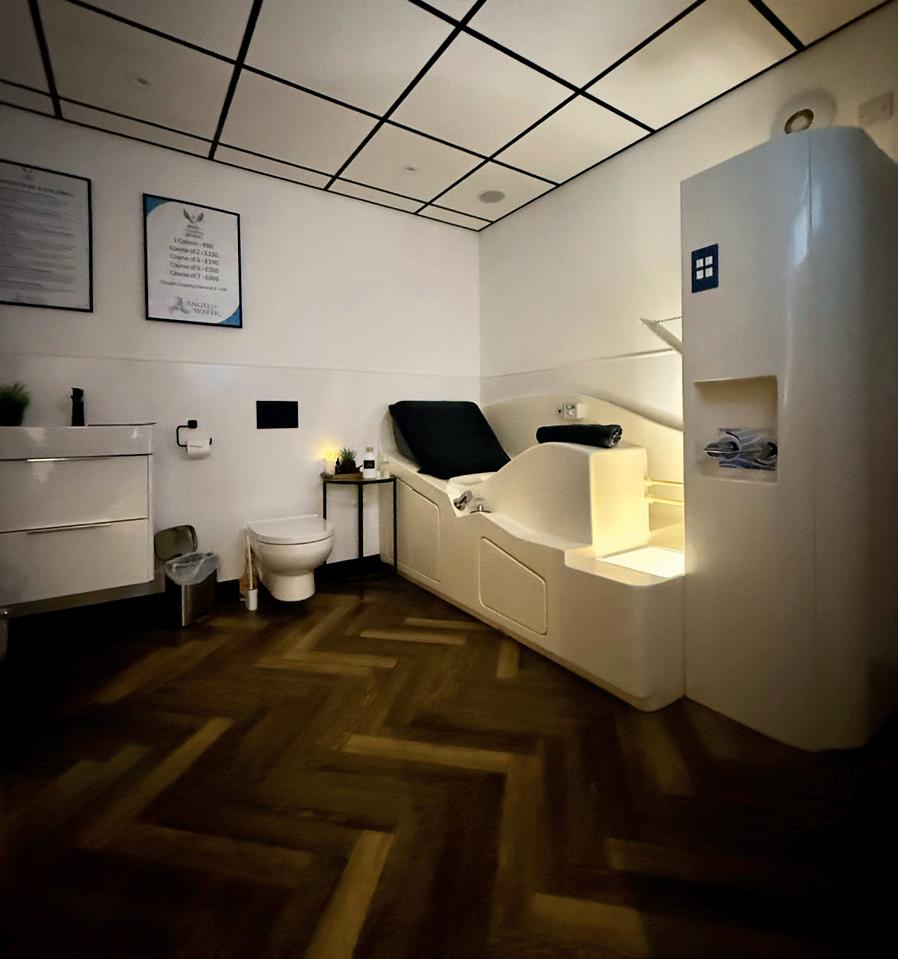
We o er a range of gut health packages tailored to your individual needs. Whether you’re looking for a gentle reset or a deeper cleanse, our treatments are designed to support your body from the inside out.
Our Gut Health Services Include:
• Gut Reset
• Colon Stimulation Massage
• Parasite Zapping & Cleanse
ABSOLUTELY READERS’ DISCOUNT: ANGEL20
• Colonic Irrigation with the Angel of Water
• Lymphatic & Colon Stimulation Massage
• Detox Juice Package
ANGEL OF WATER (COLONIC IRRIGATION)
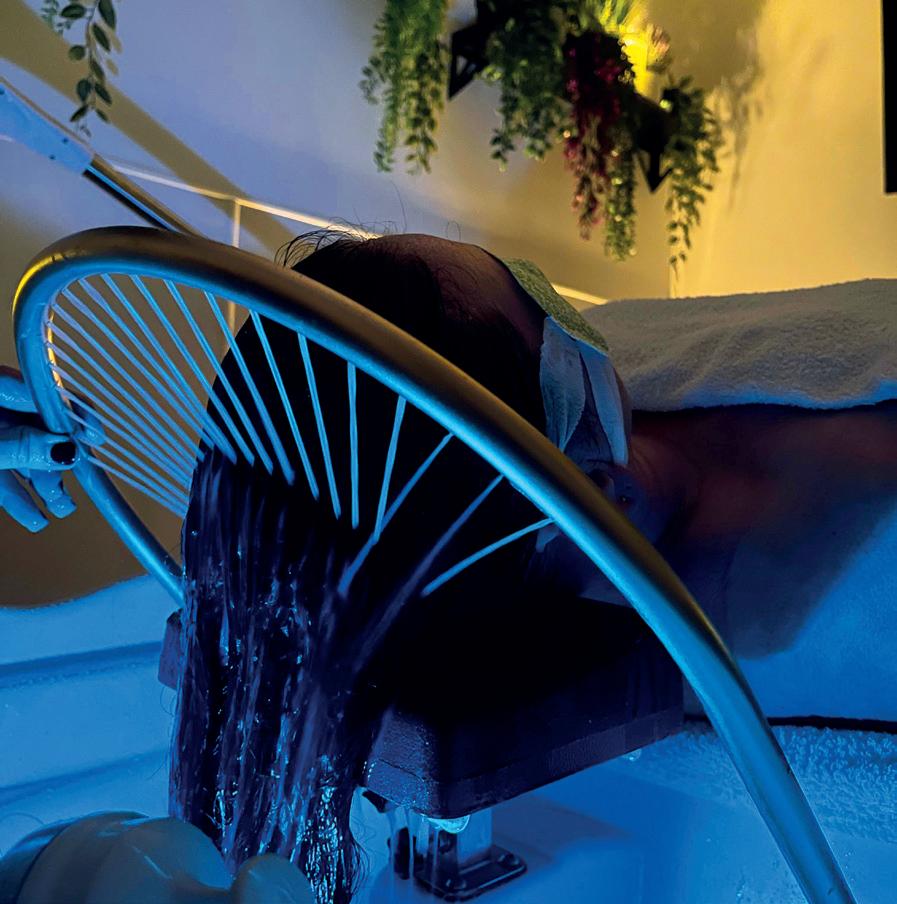
JAPANESE HEAD SPA
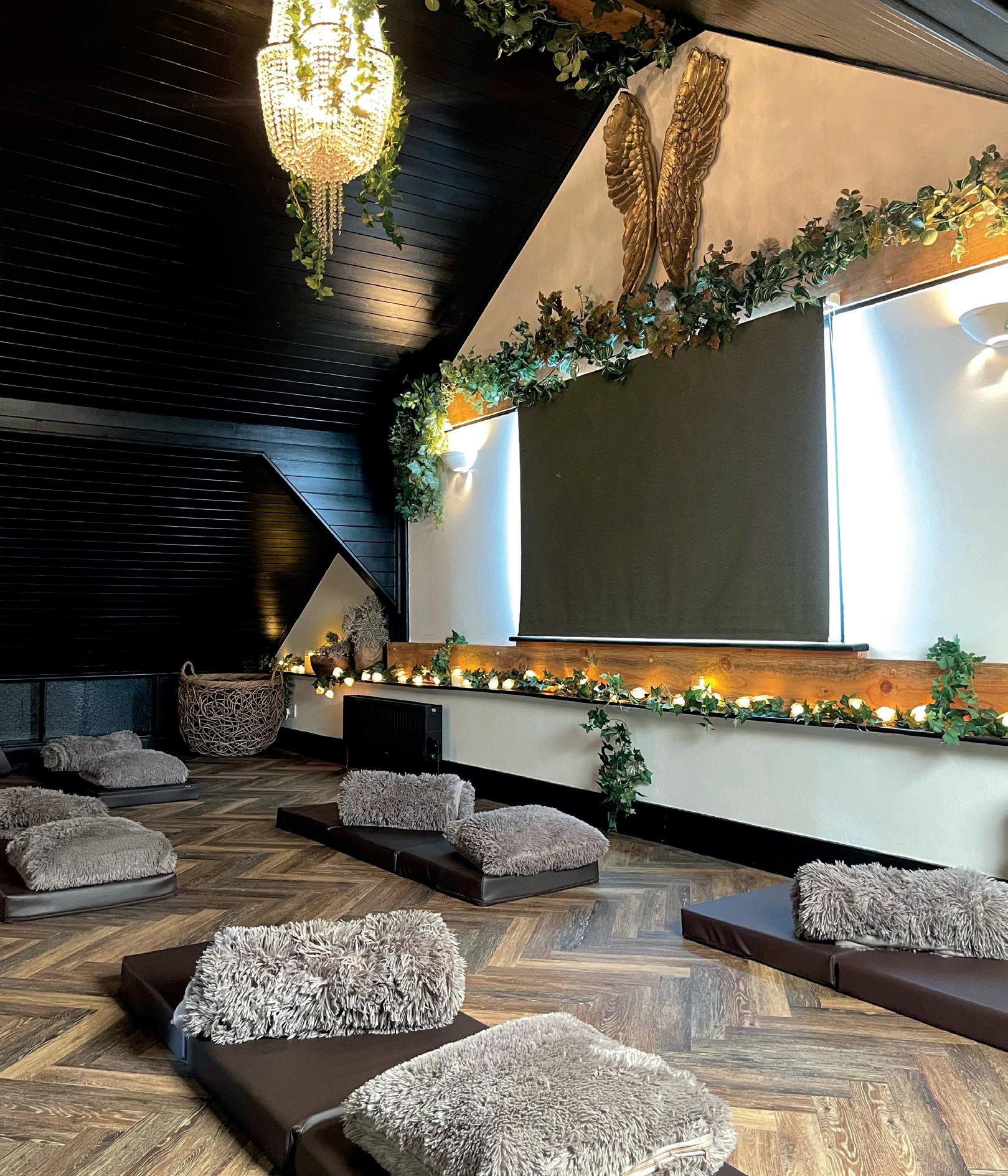
HEALING LOUNGE (AVAILABLE TO HIRE)
BEAUTY
NOTES
The latest in luxury makeup and skincare
By CARLY GLENDINNING
BRONZE AWARD
CHANTECAILLE
Chantecaille’s popular Real Bronze is back in two effortless shades for a natural, so ly sunlit glow. The light-as-air, creamy gel-powder formula melts seamlessly into skin for a secondskin sheen, leaving the complexion looking smooth, luminous and naturally bronzed, £56. chantecaille.co.uk
EDITOR’S PICK
COVER UP
LAURA MERCIER
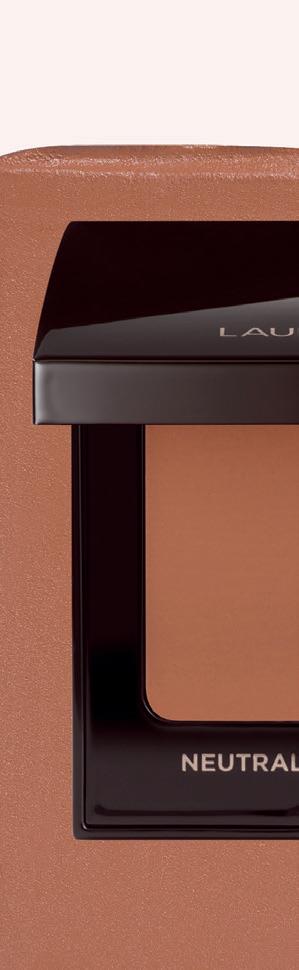
Laura Mercier’s new Secret Camouflage Complexion Perfector is a modern revamp of the cultfavourite complexion hero that makeup artists and beauty insiders have relied on for years. Now reimagined in three adjustable shades, the waterproof, full coverage formula instantly conceals all flaws, £29. lauramercier.co.uk
SPA DAY
LA PRAIRIE
La Prairie is the hottest name in spa treatments right now. The Swiss skincare experts o er a personalised and results-led treatment experience focused on tailoring, precision and expert technique.
FOCUS
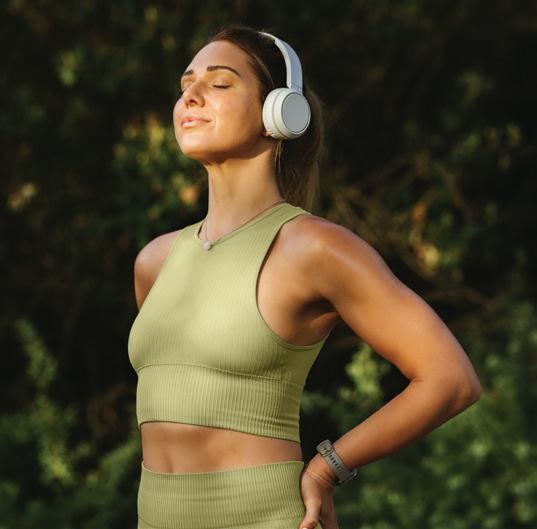
The importance of International Relaxation Day
ITaking slow, deliberate breaths
n a world of constant notifications, overflowing inboxes and an almost irresistible urge to check our phones, true relaxation can sometimes feel surprisingly di cult to achieve. International Relaxation Day on 15th August o ers the perfect excuse to slow the pace and rediscover the benefits of simply switching o . A digital detox is a good place to start. Even a few hours away from phones, tablets and laptops can help create valuable breathing space, reducing distractions and allowing us to reconnect with the people and places around us. Then, a quiet walk in nature can work wonders for a busy mind. Whether it is a woodland trail, a peaceful park or a stroll beside the water, gentle movement and fresh air o er an opportunity to focus on the sights, sounds and sensations of the moment. There is no step target to hit and no personal best to chase – the aim is simply to walk. Deep breathing can also provide a moment of calm during even the busiest day. Taking slow, deliberate breaths and paying attention to each inhale and exhale encourages the body and mind to settle. This International Relaxation Day, perhaps the greatest luxury is giving yourself permission to do less. Put down the phone, step outside and breathe. Sometimes, slowing down is exactly what we need.
Q Your background is packed with awards, from King’s College London accolades to being named Best Young Dentist London 2020. How have those achievements shaped the way you approach patient care at Omnia Clinics?
A My background and training have definitely shaped the standards I hold myself to, but more importantly they’ve reinforced the importance of delivering dentistry that is both clinically excellent and genuinely patient-focused.
Studying at institutions like King’s College London and being recognised with awards such as Best Young Dentist London 2020 gave me exposure to advanced techniques, mentorship and a culture of continual improvement early in my career. That experience taught me that great dentistry is not just about technical outcomes – it’s about communication, trust and understanding what matters most to each patient.
At Omnia Clinics, we try to combine that high clinical standard with a calm, personalised experience. Whether it’s a routine check-up, cosmetic treatment or more complex restorative work, the goal is always the same: to make patients feel listened to, informed and confident in their care.
Awards are incredibly appreciated, but the most meaningful achievement is seeing patients regain confidence in their smile and continue to trust us with their long-term dental health.
Meet the expert
We chat to Bal Sohal of Omnia Clinics (formerly the Loughton Dental Centre) about awards, choice and ambitions
Q The clinic offers everything from Invisalign and implants to facial aesthetics and specialist dentistry. How important is it for patients to have multiple treatments and specialists available under one roof, rather than visiting separate practices?
A Modern patients value convenience, continuity, and trust more than ever. Having multiple treatments and specialists available under one roof creates a much smoother and more reassuring experience for them.
Dentistry today is highly interdisciplinary – cosmetic dentistry, orthodontics, implants, facial aesthetics, hygiene and restorative care often overlap. When clinicians collaborate closely within the same environment, treatment planning becomes far more cohesive and patientcentred. It allows us to look at the bigger picture rather than treating isolated issues.
For patients, it also removes the stress of being referred between different practices, repeating their concerns multiple times, or feeling disconnected throughout their journey. There is a greater sense of confidence when they know their entire care team is aligned and communicating effectively.
From a clinical perspective, collaboration elevates outcomes. Complex cases especially benefit when specialists can discuss and plan together in real time. It creates a more seamless experience and ultimately leads to better long-term results for the patient. Most importantly, it helps build lasting
relationships. Patients want to feel understood and cared for in one trusted environment, and a multidisciplinary clinic allows that level of personalised care to happen naturally.
Q Looking ahead, what’s your vision for your work at Omnia Clinics?
A My vision for my work at Omnia Clinics is centred around delivering modern, patientfocused dentistry that combines clinical excellence with a genuinely personalised experience. I want patients to feel that they are receiving care that is not only technically advanced, but also thoughtful, honest, and tailored specifically to them.
A major focus for me is continuing to develop minimally invasive cosmetic dentistry – creating highly aesthetic results while preserving as much natural tooth structure as possible. I believe the future of dentistry lies in treatments that are conservative, functional, and long-lasting, rather than simply cosmetic for the sake of appearance.
I’m also passionate about building an environment where patients feel comfortable and confident throughout their journey. Dentistry can often feel intimidating, so creating trust, transparency, and strong communication is incredibly important to me. When patients feel listened to and involved in the process, the outcomes are always more meaningful. Looking ahead, I hope to continue growing alongside a multidisciplinary team that values collaboration, innovation, and education. Being able to learn continuously, share ideas, and provide comprehensive care under one roof ultimately leads to a better experience for patients and a higher standard of dentistry overall.
loughtondental.co.uk
BAL SOHAL
Choosing a care home is one of life's most important decisions. In this special section, Absolutely explores the key factors to consider, from exceptional care and outstanding facilities to lifestyle, wellbeing and location, helping you find a setting where comfort, independence, peace of mind and laughter come first.
Choosing
Looking at care homes, but don’t know where to start? Here, Platinum Years offers up some top tips on what to consider
Moving into a care home is one of life’s biggest decisions, both for the person making the move and for the family supporting them. It is a choice that is often driven by changing health needs, but it can also be about improving quality of life, reducing isolation and creating a safer, more enjoyable future.
The image of care homes has changed dramatically over the past decade. Today’s premium care communities bear little resemblance to outdated stereotypes, with many offering beautifully designed private suites, landscaped gardens, wellness programmes, cinema rooms, salons, fine
dining restaurants and packed social calendars. Rather than simply providing care, many now focus on helping residents continue living rich, independent and fulfilling lives. With so much choice available, taking the time to ask the right questions can make all the difference. Here are five key considerations before making the move.
LOOK BEYOND CARE NEEDS
While understanding current healthcare requirements is naturally the starting point, it’s equally important to think about future needs. A home that provides residential care today may also be able to offer nursing, dementia or specialist care later, allowing residents to remain in familiar surroundings if circumstances change. Equally important is the philosophy of the home. Does it encourage independence wherever possible? Are residents supported to continue hobbies, interests and daily routines? The very best homes focus on enabling people to live well rather than simply being looked after.
Families should also ask about staff continuity, training and how personalised care plans are developed. Feeling known as an individual, rather than simply another resident, makes an enormous difference to everyday life.
LIFESTYLE MATTERS MORE THAN EVER
One of the biggest shifts in the modern care sector has been the emphasis on lifestyle. Luxury care homes increasingly resemble boutique hotels or exclusive
retirement clubs, with hospitality sitting alongside exceptional care.
Residents may enjoy chef-prepared seasonal menus, elegant cafés, libraries, fitness studios, cinema rooms and beautifully furnished lounges designed for entertaining family and friends. Many homes organise everything from gardening clubs and yoga classes to live music, visiting speakers, excursions and art workshops.
For prospective residents, it’s worth spending time observing the atmosphere during a visit. Are people genuinely engaged? Does the home feel vibrant rather than quiet? The best communities create opportunities for friendships to flourish.
Many families are pleasantly surprised to discover that moving into the right environment can actually increase social interaction and improve overall wellbeing after years of living alone.
THE ENVIRONMENT SHOULD FEEL LIKE HOME
First impressions count. A welldesigned care home should feel warm, welcoming and comfortable from the moment you walk through the door.
Private bedrooms have evolved significantly in recent years, with many luxury providers offering spacious ensuite accommodation, tasteful interiors and opportunities for residents to personalise their rooms with treasured furniture, artwork and photographs.
Outdoor spaces have become equally important. Secure landscaped gardens,
The right environment can offer renewed confidence and greater social connection
courtyards, walking paths and terraces encourage residents to spend time outside, while family-friendly cafés and comfortable communal areas make visiting enjoyable for all generations. It’s also important to know if residents can bring their pets with them, too.
Location also deserves careful thought. Being close enough for regular visits from family and friends can help maintain important relationships and ease the transition into a new chapter of life.
UNDERSTAND THE COSTS
Care home fees represent a significant financial commitment, making transparency essential. Families should ensure they understand exactly what is included within the weekly fee and whether additional services carry separate charges.
Some homes include meals, activities, laundry, housekeeping and transport within one comprehensive package, while others may charge extra for hairdressing, therapies or outings.
It’s also sensible to ask how fees may change over time and what financial advice or support is available. Many providers are happy to explain funding options, deferred payment arrangements and eligibility for local authority support where appropriate.
Choosing solely on price can sometimes prove a false economy.
A higher-quality home that delivers exceptional care, enriching activities and outstanding facilities may provide far greater value through improved health, happiness and peace of mind.
VISIT MORE THAN ONCE
Brochures and websites provide a useful introduction, but nothing replaces visiting in person. Better still, visit at different times of the day.
Observe how staff interact with residents. Do team members know residents by name? Does the atmosphere feel relaxed? Happy residents and engaged staff often
tell you more than any marketing material ever could. Ask if you can sample a meal, speak with current residents or meet family members who already have loved ones living there. Many luxury homes actively encourage this openness because they understand how important reassurance is before making such a significant decision. Trial stays or respite care can also be an excellent way to experience daily life before committing to a permanent move.
A NEW CHAPTER
Perhaps the biggest change in recent years is the perception of what moving into a care home actually means. Rather than marking a loss of independence, the right environment can offer renewed confidence, greater social connection and freedom from the worries of maintaining a property alone.
With concierge-style service, restaurantquality dining, wellness facilities and thoughtfully designed living spaces becoming increasingly common across the luxury care sector, today’s residents often enjoy a lifestyle that would have been unimaginable just a generation ago. Ultimately, choosing a care home is about far more than finding somewhere safe. It is about finding somewhere that feels like home, supports independence, and enables people to continue living life to the fullest. By taking time to research carefully, and focusing on both care and quality of life, families can make a decision that brings reassurance, confidence and genuine excitement for the future.
Oaks Hospital, Rivers Hospital & Springfield Hospital
Fast and convenient access to treatment, so you can get back to doing the things you love.
We offer a range of ways to pay including selffunding and using your private medical insurance. Contact our team on 0808 258 3918 or scan the QR code for more information.
Gold STANDARD
Supporting health and wellbeing in later life
When it comes to ageing well, health and wellbeing are about much more than medical care alone. They are shaped by the everyday moments that bring comfort, purpose and connection, whether that is spending time with friends and family, enjoying favourite hobbies or simply knowing support is available when it is needed.
Across Essex, families are increasingly recognising the importance of finding environments that are right for their loved ones to maintain not only their health, but also their independence, confidence and quality of life.
Staying active, engaged and connected to others can have a significant impact on later life. Regular social interaction, meaningful activities and opportunities to remain involved in the local community can all contribute to a greater sense of
happiness and fulfilment. For many older people, maintaining these connections is just as important as receiving the right level of care and support.
At Gold Care Homes, this holistic approach to wellbeing is reflected across their Essex homes, including Peverel Green Care Home and Wickham Care Home in Hatfield Peverel, alongside The New Deanery Care Home and St Mary’s Court in Braintree. Together, these homes provide a range of residential, dementia, nursing, palliative and respite care options, supporting individuals with different needs and circumstances.
While every resident’s journey is unique, the goal remains the same: to create a welcoming environment where people feel valued, respected and supported to live as fully as possible. This means encouraging independence where appropriate, promoting meaningful experiences and ensuring residents have opportunities to enjoy companionship, laughter and everyday moments of joy.
For families exploring care options, choosing the right support can feel like a significant decision. Taking the time to visit homes, meet the teams and understand the different services available can provide valuable reassurance and help families make informed choices for the future.
As we celebrate the platinum years, it is a reminder that wellbeing has no age limit. With the right support, strong community connections and opportunities to remain engaged, later life can continue to be a time of enjoyment, fulfilment and purpose.
FOR MORE INFORMATION OR TO ARRANGE A VISIT, PLEASE CALL
Peverel Green Care Home 01245 945053
Wickham Care Home
01245 945433
St Mary’s Court 01376 311346
The New Deanery Care Home 01376 312740
PEVEREL GREEN CARE HOME
RIGHTSIZING just for you
Discover
a world of possibilities at The Beacons and Piers Lodge, beautifully designed communities where independent living, connection and wellbeing come together
For many homeowners, the next chapter of life is an opportunity to focus on what matters most. Whether that’s spending more time with family and friends, pursuing new interests or enjoying life at your own pace, rightsizing is about choosing a home that supports those ambitions – offering the freedom, flexibility and peace of mind to make the most of every day.
At Life in Place from Anchor, their Essex developments, The Beacons in Chelmsford and Piers Lodge in Southendon-Sea, have been thoughtfully designed for people who want to embrace the future with confidence and enjoy a lifestyle that reflects how they live today. Offering beautifully designed homes for over 55s, they combine contemporary
living with welcoming communities in two of Essex’s most desirable locations.
At The Beacons, one and two-bedroom apartments are perfectly positioned within the thriving Beaulieu Park community, surrounded by green open spaces, amenities and excellent transport links. Meanwhile, at Piers Lodge, two-bedroom apartments provide the perfect setting to embrace the very best of coastal living, combining contemporary comfort with the vibrancy, convenience and charm of Southend-on-Sea’s seafront lifestyle.
Both developments have been carefully created to support independent living whilst encouraging connection, wellbeing and enjoyment. Thoughtfully designed interiors, spacious layouts and private outdoor spaces provide all the comfort of home, while a range of shared facilities help residents make the most of later life.
Enjoy a coffee in the welcoming café, catch up with neighbours in the comfortable residents' lounge, or relax amongst the beautifully landscaped gardens. Additionally, the dedicated guest suites allow family and friends to stay close, while the on-site hair and beauty salon adds an extra touch of convenience to everyday life.
Backed by more than 60 years of experience, Anchor understands what truly matters in later life. That’s why every detail of their Life in Place developments has been carefully considered – helping you spend less time maintaining a home and more time enjoying the lifestyle you’ve worked hard to create.
Because rightsizing isn’t about having less – it's about living more!
DISCOVER MORE TODAY
The Beacons, Chelmsford 1 & 2-bedroom apartments for sale 01245 960 887
Piers Lodge, Southend-on-Sea 2-bedroom apartments for sale 01702 884 290
INTERIORS
KEEPING COOL
As summers become hotter, preventing overheating before it happens is an essential part of home design. External blinds from solar shading specialist Caribbean provide an effective barrier against intense sunlight, helping to reduce solar gain and maintain more comfortable indoor temperatures. By stopping heat before it reaches the glass, they offer a practical way to create cooler living spaces while helping homeowners rely less on expensive cooling systems during hot periods. cbsolarshading.co.uk
CARIBBEAN BLINDS
DESIGNING Harmony
Award-winning Essex interior designer
Katie Malik creates beautiful, restorative homes where luxury, wellbeing and craftsmanship work together seamlessly. She tells Absolutely more
Award-winning interior designer Katie Malik has built a reputation for creating homes that are every bit as restorative as they are beautiful. After studying linguistics at Cambridge and beginning her career in education, she followed her creative instincts, retraining in interior design before founding Katie Malik Design Studio in 2014. Today, the Essex-based designer leads an awardwinning practice specialising in high-end residential projects, from listed country homes to contemporary new builds, with a philosophy centred on wellbeing, thoughtful design and exceptional craftsmanship. Accredited by both the BIID and SBID, and the recipient of multiple UK Property Awards, Katie is also known for her holistic 'House Whispering' approach, helping clients create homes that support both their lifestyle and emotional wellbeing. Here, she reflects on her unconventional journey into design, the evolution of her studio and why the best interiors are those that genuinely improve the way we live.
Q You originally studied linguistics before retraining in interior design. What inspired that career change, and what drew you to interiors as a profession?
A Indeed, my path into interior design wasn’t entirely conventional, but looking back, it makes perfect sense. I originally studied linguistics at Cambridge University and spent my early career in education. However, design has always been in my blood. My father was a furniture and joinery designer and maker, so I grew up completely immersed in craftsmanship, appreciating the care and detail that goes into creating beautiful pieces.
While I loved my time in education – and those skills still shape how I communicate with clients and run my coaching platform, Interior Design Deconstructed – I felt a strong pull toward my creative roots. I realised I wanted to shape the environments people live in and bring real joy to people’s lives, so I retrained at the Chelsea College of Art and the National Design Academy. What drew me to interiors was the profound impact our surroundings have on our wellbeing. It’s not just about aesthetics; it’s about creating spaces that truly support and nurture the people who live in them.
Q You launched your studio in 2014 and have since built an award-winning business. What were the biggest challenges in those early years, and what helped you gain momentum?
A When I founded Katie Malik Design Studio in 2014, I had gained invaluable experience working in high-end London studios, but stepping out on my own was still a leap of faith and it was quite wobbly. In those early years, the biggest challenge was simply building trust and establishing a reputation from the ground up. You are wearing every single hat – designer, project manager, marketer, and accountant – which can be incredibly demanding. What really helped me gain momentum was a relentless focus on our clients’ experience and delivering a highly personalised service. I poured my energy into understanding not just what clients wanted their homes to look like, but how they wanted them to feel. As I began to transform stressful spaces into restful ones, word of mouth naturally followed. Earning accreditations from the BIID and SBID, and eventually winning industry awards, provided wonderful validation, but our true momentum has always been
driven by the relationships I build with our clients and the emotional connection they feel to their finished homes.
Q Your studio talks about creating homes that feel as good as they look. How would you describe your design philosophy, and why is wellbeing such an important part of your work?
A My studio’s philosophy is rooted in the belief that a home should be a sanctuary. I sometimes use the phrase "harmony and luxury, by design". To me, true luxury isn’t just about expensive finishes or striking aesthetics; it’s about ease, comfort, and how a space makes you feel on a daily basis. Wellbeing is central to my work because our environments profoundly influence our mental and emotional states. A poorly laid out room can cause subtle, daily stress, whereas a thoughtfully designed space can actively nurture you. My approach combines active listening, empathy, and technical skill to transform awkward, stressful spaces into restful ones. Me and the team want to create homes that are not simply beautiful to look at, but are deeply, emotionally connected to the people who live in them. When a home truly supports your lifestyle and wellbeing, it elevates your entire quality of life.
Q You’ve developed the concept of ‘House Whispering’. Can you explain what that means in practice and how it influences the way you approach a project?
A 'House Whispering' is an exclusive and deeply holistic approach we offer at the studio. I didn’t develop it, but I trained specifically in this discipline because I realised that spaces are so much more than just walls and furniture. In practice, it is essentially a therapeutic process for the home, addressing both its physical
“We create spaces that don't just look stunning, but actively empower the people living within them”
design and its emotional energy.
'House Whispering' recognises the profound interconnection between our psychological, emotional, and spiritual wellbeing and our living spaces. When I approach a project through this lens, we explore how your home reflects your current life and how it might be either hindering or supporting your health, wealth, success, and relationships. It allows us to go beyond traditional interior design. We look at the flow of energy, the history of the space, and the emotional resonance of the environment. By aligning the home’s energy with your aspirations, we create spaces that don’t just look stunning, but actively empower the people living within them.
Q Looking back across your portfolio, is there a particular project that stands out as a defining moment for your studio?
A It’s always difficult to choose just one, as every home has its own unique narrative. However, the projects that stand out as truly defining moments for the studio are often the complex properties or listed buildings we’ve had the privilege to restore and reimagine. There was a turning point when our work began to be recognised on a larger scale –being named a finalist for the Grand Designs Live and SBID Awards, and eventually winning multiple UK Property Awards. If I had to pinpoint a defining theme rather than
a single project, it would be the moments when we successfully blended rigorous architecture (thanks to our amazing partnership with 3S Architects) with our 'House Whispering' philosophy. Seeing a historic, perhaps awkward or disjointed house transformed into a harmonious, luxurious, and emotionally resonant modern family home is a profound milestone. Those are the projects that truly encapsulate what Katie Malik Design Studio is all about.
Q Your work has earned industry recognition and accreditation from leading professional bodies. What achievements are you most proud of so far?
A I am incredibly proud of the formal industry recognition we’ve received. Becoming fully accredited by both the British Institute of Interior Design (BIID) and the Society of British and International Design (SBID) was a major milestone, as it reflects a rigorous standard of professional excellence. Winning seven UK Property Awards and seeing our work featured in publications like Architectural Digest and House & Garden still feels wonderfully surreal. However, beyond the accolades, I am immensely proud of the community we’ve built. Growing our studio’s platform to over 84,000 followers and launching Interior Design Deconstructed, where I coach and educate other interior designers,
has been deeply fulfilling. Returning to my roots in education to help others build their own successful practices is a different kind of achievement, but one that brings me just as much joy as seeing a beautifully completed design project.
Q Essex has a diverse mix of period properties, rural homes and modern developments. What do you enjoy most about working with clients in Essex, and are there any design trends emerging in the county?
A What I love most about working in Essex is exactly that diversity. On any given day, we might be designing sensitive architectural updates for a beautiful, centuries-old listed building, and the next, we are conceptualising the interiors for a completely blankcanvas modern development. The clients here appreciate quality, craftsmanship, and spaces that facilitate both relaxed family living and elegant entertaining. In terms of emerging trends in the county, I’m seeing a strong move away from stark, overly clinical minimalism toward what I would call "warm, grounded luxury". Homeowners are increasingly prioritising wellbeing and comfort. There is a huge appetite for tactile materials, natural textures, and bespoke joinery that adds character to newer builds. People also want their homes to feel deeply personal rather than like a show home, which aligns perfectly with our holistic, emotionally connected approach to design.
katiemalik.co.uk
KATIE MALIK, PHOTO BY COLLEZIONE IN CANTO
Inside OUT
How bringing the outside in has become one of the defining interior design trends for modern British homes
The relationship between our homes and the natural world has never been more important. As our houses increasingly become places where we work, entertain and unwind, creating interiors that feel brighter, calmer and more connected to nature has become one of the biggest priorities in modern design. The concept of "bringing the outside in" has evolved far beyond adding a few houseplants to a windowsill.
LET THERE BE LIGHT
Nothing transforms a home quite like natural light. It’s the foundation of almost every successful interior scheme, making rooms feel larger, enhancing colours and textures, while boosting wellbeing throughout the day.
One of the biggest trends in British homes has been replacing traditional rear walls with expansive glazing. Slim-framed sliding doors, oversized bifold doors and floor-to-ceiling windows dissolve the barrier between house and garden, creating uninterrupted views even during the colder months. Rather than simply opening onto
a patio, these glazed walls become living artwork, changing with the seasons. Rooflights are equally transformative. Whether incorporated into kitchen extensions, loft conversions or central hallways, they flood spaces with daylight that would otherwise rely on artificial lighting. Long roof lanterns over kitchen islands remain particularly popular, creating bright entertaining spaces while adding striking architectural interest.
For homes where structural changes aren’t possible, carefully placed mirrors opposite windows help bounce natural light throughout a room. Choosing lighter wall colours, reflective finishes and sheer window treatments also maximises every available ray of sunshine without sacrificing warmth or personality.
NATURE'S PALETTE
Colour plays a powerful role in strengthening the connection between indoors and outdoors. Designers are increasingly moving away from stark
whites in favour of earthy, calming tones inspired by the British landscape.
Soft sage greens, warm clay, sandstone, oatmeal, muted terracotta and gentle olive shades create an immediate sense of tranquillity while complementing views of gardens beyond. Rich woodland greens continue to work beautifully in studies and dining rooms, while pale moss tones add subtle freshness to bedrooms and bathrooms.
These colours are often layered together rather than used in isolation, creating interiors that feel organic and timeless rather than trend-led. The result is a home that changes naturally with the seasons instead of feeling disconnected from them.
NATURAL MATERIALS THAT AGE BEAUTIFULLY
Bringing nature indoors isn’t simply about what you see – it’s also about what you touch. Texture has become every bit as important as colour, with homeowners embracing authentic materials that improve with age.
Oak flooring remains a firm favourite, while limewash walls, natural stone, exposed brick and handcrafted ceramics all introduce subtle imperfections that add warmth and character. Linen upholstery, wool throws, boucle fabrics and woven rattan furniture soften contemporary interiors while creating inviting spaces that encourage relaxation.
Timber slatted wall panels have also grown in popularity, adding architectural detail while introducing warmth to otherwise minimalist spaces. Whether used as feature walls, room dividers or bespoke cabinetry, they create visual rhythm inspired by the natural world.
The emphasis is firmly on sustainability too. Investing in quality materials that last decades rather than seasons aligns perfectly with the wider move towards thoughtful, slower interior design.
HOUSEPLANTS WITH PURPOSE
Plants have evolved from decorative accessories into integral design features. Rather than scattering small pots throughout a room, many homeowners are creating dedicated planting moments that make a genuine statement.
Large specimen plants such as olive trees, fiddle-leaf figs, kentia palms and bird of paradise plants bring sculptural form into living spaces while naturally softening clean architectural lines. Bathrooms filled with ferns and tropical greenery become spa-like retreats, while trailing plants cascading from shelving introduce movement and softness.
Built-in planters, indoor herb gardens and even living walls are appearing in contemporary homes, particularly where kitchens open directly onto gardens. Not only do plants enhance visual appeal, but they also contribute to a greater sense of wellbeing.
BLURRING THE BOUNDARIES
Perhaps the biggest shift in contemporary interior design is the way homes now flow seamlessly into outdoor spaces. Gardens are increasingly being designed as extensions of interior rooms rather than separate destinations.
Using the same flooring material both inside and out creates visual continuity, particularly when paired with flush thresholds that eliminate changes in level. Outdoor kitchens, covered terraces, fireplaces and comfortable garden furniture allow entertaining to continue long after summer has faded. Even smaller gardens and courtyards can benefit from this approach. Aligning sightlines from key rooms, framing attractive planting and carefully positioning outdoor lighting ensures gardens remain part of the home’s atmosphere after sunset.
HOUSE OF CAPRICORN Freixo fl oor lamp, £490 fashionclinic.com
Indoor watering can, £18 shop.kew.org
Tarma sofa, £2,195 oka.com
& MIRTH Hand tu ed cat rug, £250 fableandmirth.com ROYAL BOTANIC GARDENS KEW
MONKEY PUZZLE TREE
CULT FURNITURE
NYC Sunset Society graphic print, from £35 cultfurniture.com
Mottled blue ceramic fruit bowl, £45 grahamandgreen.co.uk DANETTI Frances swivel chair, £529 danetti.com
By PENDLE HARTE
GRAHAM & GREEN
DARLINGS OF CHELSEA
Weybridge sofa, from £1,850 darlingsofchelsea.co.uk
All Tomorrow's Futures fabric, £192 themonkeypuzzletree.com
LIGNE ROSET Taru settee, from £5,834 ligne-roset.com
Delight in the service, confidence in the things you buy, and the satisfaction of being able to find exactly what you want.
To mark our 60th year of service, we’re extending our offer of triple glazing for the same price as double glazing on windows, doors and extensions.
AND orders over £5,000 include a smart-activated, security alarm system for free.
Well worth celebrating.
By PENDLE HARTE
WOODBRIDGE
Woodbridge
Something SPECIAL
Hatfield Wick Education founder Adam Smyth explains why a therapeutic, child-first approach is transforming SEND education in Essex
HATFIELD WICK
Q Where is the current SEND system struggling most, and how is Hatfield Wick filling those gaps?
A We don’t see behaviour as the problem. We see behaviour as communication. The biggest issue isn’t a lack of commitment from professionals – it’s that support often arrives too late. Families can spend months, or even years, trying to prove what they already know about their child. Hatfield Wick was created for children who are no longer thriving in a traditional setting. Rather than recreating mainstream education on a smaller scale, we build learning around each child, taking into account their emotional wellbeing, sensory needs, relationships and interests. Once children feel safe, understood and respected, learning becomes possible again.
Q What does a typical day look like, and why is "regulation before education" so important?
A Regulation isn’t a reward after learning. It is the doorway into learning. Every child arrives in a different emotional state, so we begin by understanding what they need. That could mean outdoor learning, sensory support, quiet time or simply a calm start to the day. If a child is anxious or overwhelmed, their brain isn’t ready for learning. Pushing harder academically usually increases the pressure. By creating the right conditions first, we can then introduce therapeutic support, life skills and core academic lessons. It’s not about lowering expectations – it’s about making them achievable.
Q What stories do you hear most often from families arriving at Hatfield Wick?
A By the time families arrive, they’re rarely looking for perfection. They’re looking for hope. Parents often tell us
their child was once curious and confident before school became associated with anxiety, shame or failure. We hear about Sunday-night dread, reduced timetables, school avoidance and children believing they’re "difficult" or "bad".
Many families feel they had to reach crisis point before anyone truly listened. Our role is to change that conversation by asking not how a child can fit the system, but what they need to feel safe enough to grow.
Q What does Essex and the wider education sector need to rethink about SEND education?
A Inclusion is not just a place. It is whether the child genuinely belongs. Mainstream education works brilliantly for many children, but inclusion can’t simply mean being physically present in a classroom.
A child also needs to feel emotionally safe, understood and able to participate.
Sometimes that happens in mainstream education, sometimes in specialist provision or through more flexible pathways. The conversation needs to move away from whether a child "should" cope and focus instead on what genuinely helps them thrive.
Q Are you seeing trends in anxiety and emotionally based school avoidance?
A Many children are not avoiding learning. They are avoiding repeated distress. We’re seeing increasing levels of anxiety and emotionally based school avoidance. I don’t like the phrase "school refusal" because many young people aren’t rejecting education –they’re responding to an environment that has become overwhelming. We also see pupils who have spent years masking, particularly autistic children and those with ADHD. The positive news is that when the environment becomes calmer,
more predictable and more relational, many begin to trust adults again, and that’s often the first step back into learning.
Q What can you tell us about your new Essex campus?
A This is not just about creating more places. It is about creating the right kind of place. Subject to Department for Education approval, our new Terling campus will open in January 2027 for 36 pupils aged seven to 16. Classes will have no more than six pupils, each supported by a specialist teacher, learning support assistant and daily access to therapeutic practitioners. The extensive outdoor space and woodland will play a key role, recognising how important the physical environment is for many neurodivergent children. Our aim is to give more Essex families access to a specialist setting where education looks and feels different because that’s what allows many children to succeed.
Q What would success look like for Hatfield Wick and SEND education in Essex over the next decade?
A The ambition should be simple: fewer children reaching crisis before the right support arrives. For Hatfield Wick, success means growing carefully while keeping the personal, relationship-led approach that defines us. More broadly, I’d like to see earlier intervention, more flexible pathways and stronger partnerships between schools, specialist providers, health services and families. Ultimately, success shouldn’t just be measured by the number of places created. It should be measured by happier children, stronger independence and more young people leaving education feeling optimistic about their futures.
For more information about Hatfield Wick, visit hatfieldwickeducation.co.uk
“Many children are not avoiding learning. They are avoiding repeated distress”
ADAM SMYTH
Ease the STRAIN
How to ensure a smoother summer for children with SEN
By RACHEL FROST
For many families, the summer holidays bring a sense of excitement and freedom. But for children with special educational needs (SEN), the loss of school routines can make the transition challenging. The predictability of a school day offers comfort and security, and without it, some children may experience increased anxiety. While the needs of every child are different, with preparation you can make the transition smoother for your child and enjoy the summer together.
PREPARING FOR THE TRANSITION
Changes are often easier to manage when children have time to prepare for them. Helping your child understand what the summer holidays might look
like can reduce uncertainty and make the transition feel more manageable.
At Lakelands Primary School, we prepare something called transition books for periods of change – a collection of visual cues that help children understand what is coming to reduce anxiety. For the transition into the holidays, this might include countdowns to help them track the passage of time, photos of your home or places you plan to visit, and a loose breakdown of the activities ahead.
It’s worth noting that this works in both directions. When children return in September, we give families a transition book with photographs of their new teacher, classroom and even the door they will walk through on their first morning back. Preparing children visually for change helps them process anxiety in advance, so the transition to a new daily structure feels far less daunting.
STRUCTURING THE DAYS
The shift from a timetabled school day to loosely planned summer days is difficult for many children with SEN who can struggle with unpredictability. That doesn’t mean that parents need to have a regimented schedule for every hour, but maintaining a soft structure can make a significant difference.
I always recommend that parents protect three to five predictable routine elements throughout the summer. These
LAKELANDS PRIMARY SCHOOL
can be tailored to your child’s specific needs, but good starting points are morning routines and lunchtimes, which can be carried over from their school day. These act as anchors that help children feel secure, calm and in control, even when the wider day is unplanned.
It is also worth planning for days when this softer routine will be disrupted –such as a long day out, family visits or holidays. Having a strategy ready in advance, rather than adapting on the fly, can prevent worry for everyone.
DAYS OUT AND TRIPS
The summer holidays bring anticipated family days out to the zoo, beach and theme parks, but also introduce unfamiliar environments and sensory challenges that can overwhelm and dysregulate children with SEN.
At Lakelands Primary School, before any school trip, we prepare social stories. These are personalised narratives designed to help children understand and navigate unfamiliar situations and function as almost a rehearsal for the day. I recommend parents do the same for summer holiday days out. Social stories
The summer holidays can introduce unfamiliar environments and sensory challenges
typically include photographs of the location and activities, an outline of how the day will go, and practical details such as what food options will be available. Depending on the setting, it might also cover what behaviour is expected in that environment. Even with preparation, some spaces may simply be too overwhelming for your child on that particular day. If you are looking for family friendly SEN activities across Essex, I would recommend exploring the Essex SEND Local Offer directory and SENDIASS, as well as attending Active Essex SEND holiday clubs and local community centres. Our closest community centre, Lakelands Centre, runs SENfriendly discos and even has a sensory room open to families, which is invaluable if your child needs access to regulated sensory environments outside of school.
SUPPORTING SENSORY NEEDS AT HOME
During term time, children with SENrelated sensory needs are supported through therapeutic support built into the school day, such as sensory rooms and sensory circuits, which are tailored sequences of activities that help children regulate and prepare for learning.
At home, you can create something similar without specialist equipment. First, it’s important to recognise what your child needs in each moment; the Zones of Regulation framework, which groups emotions and alertness levels into colour-coded zones, can be useful. Are they overstimulated and in need of a calm space (breathing exercises, a quiet space or a weighted blanket), or understimulated and seeking sensation (physical activity, fidget tools or outside play equipment)? Simple low-cost options can go a long way, such as a visit to the local playground, textured fabrics or even a designated quiet corner with comforting objects. While not a replica of the support they receive in school, your child should always have ways to regulate themselves during the summer holidays. Summer can be a wonderful time for your family – it simply takes a little more intention! With the right preparation, structure and support in place, everyone can enjoy a more relaxed and rewarding break.
Rachel Frost is SENCo at Lakelands Primary School in Colchester. Discover more at lakelandsprimary.com
why everyone is talking about…
NEW HALL
School
Tudor tunnels and artefacts were recently discovered at the historic school
Exciting new discoveries have been made at New Hall School in Chelmsford during ongoing repair works to part of the historic ha-ha. Previously unknown tunnels, believed to date back to the reign of King Henry VIII, have been uncovered beneath the grounds of the former Tudor Palace of Beaulieu.
Initial inspections of the tunnels have revealed a range of remarkable artefacts, offering a glimpse into Tudor life. Among the items discovered are what appear to be Tudor-era pots and pottery, alongside bones, glass bottles, fragments of glass, and pieces of lead. These finds are currently being carefully examined, with plans underway to display selected artefacts in the future.
Katherine Jeffrey, Principal of New Hall School, says: “This is a remarkable discovery and an extraordinary opportunity for our students and the wider community to engage directly with the Tudor past. The uncovering of these tunnels brings history to life in a way few sites can offer. The artefacts hint at the richness of what may lie beneath, and we are excited to continue exploring and sharing these findings. At New Hall, history is not just studied in the classroom; it is part of the very fabric of our school.”
Sarah Garside, Head of History, adds: “Finds of this nature are exceptionally rare within a school setting, so this is particularly exciting for our students. The tunnels and artefacts offer an invaluable opportunity to connect documentary history with physical evidence.”
New Hall School occupies the site of the magnificent former Palace of Beaulieu, a property steeped in national historical significance. The estate, approached via a mile-long tree-lined avenue, includes a Grade
I listed main building, while the surrounding grounds and avenue are designated as a Grade II registered park and garden. Recognised by English Heritage as being within the top 2% of heritage buildings in the country, New Hall stands as a unique architectural and historical landmark.
The estate was owned by Sir Thomas Boleyn, father of Anne Boleyn, before being acquired by King Henry VIII in 1517. The King transformed the site into one of his earliest great palaces, Beaulieu, which served as the model for Hampton Court Palace.
As part of the school’s ongoing engagement with its heritage, New Hall recently welcomed the Vice Lord-Lieutenant of Essex, Dr James Bettley. An esteemed architectural historian known for his work on the Pevsner Architectural Guides, Dr Bettley was hosted by the school’s archivist, Stella Beer.
Dr Bettley also met with Sixth Form student Tabitha, discussing her passion for history and her aspirations to share this enthusiasm more widely. The visit concluded with a tour of the ha-ha wall currently undergoing repair, where the newly discovered tunnels are located.
These discoveries mark an important moment in the ongoing exploration of New Hall’s rich past, reinforcing its significance as a site of national heritage and historical interest.