






























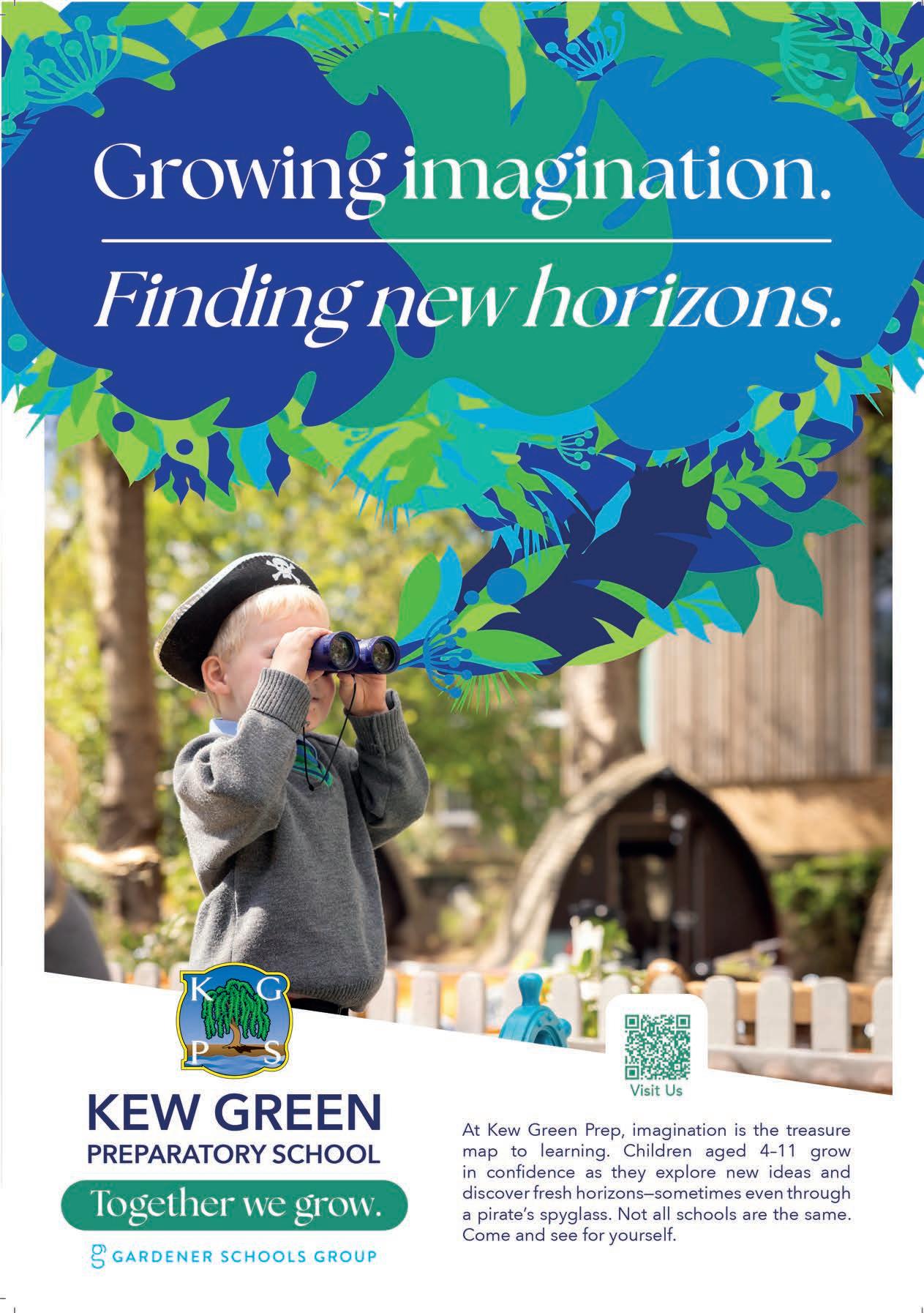
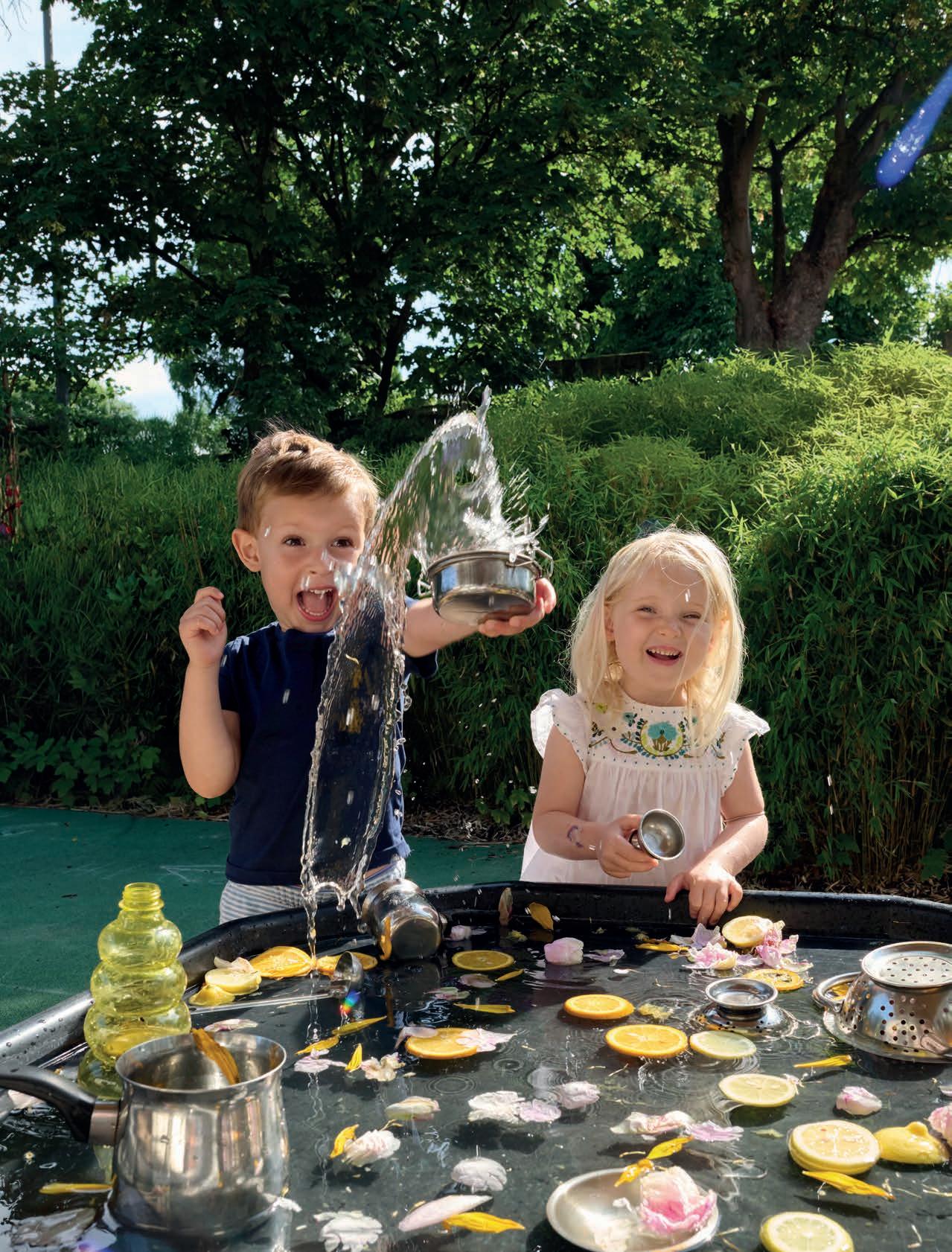

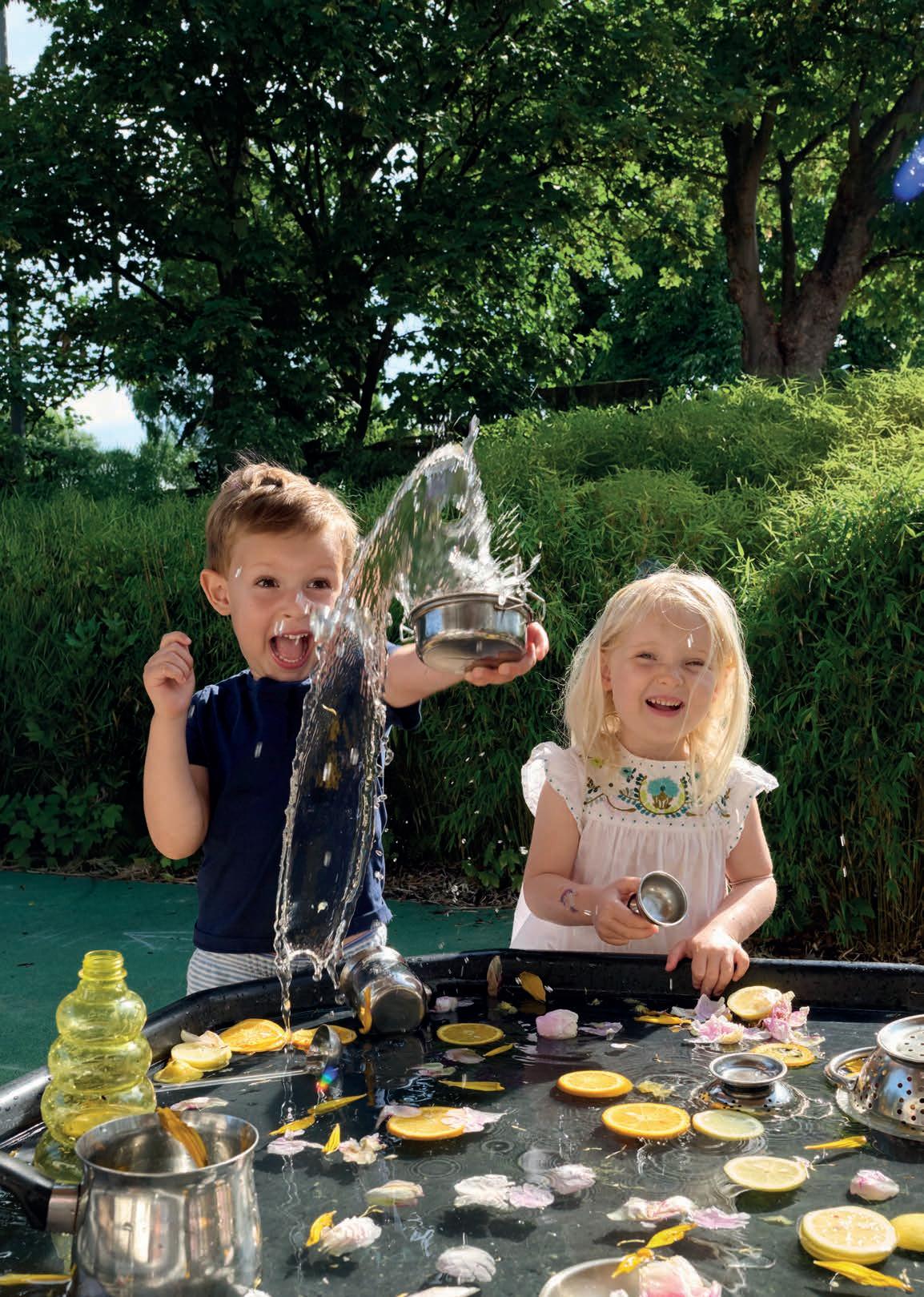










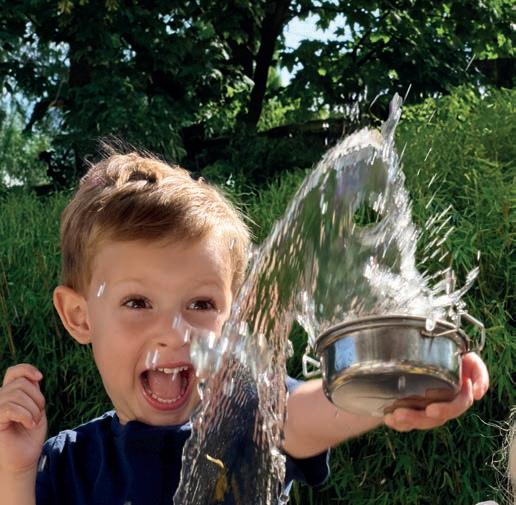







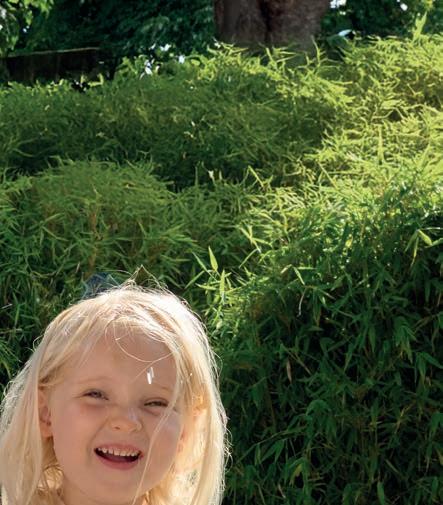



At Kew Green Nursery, children learn through play, exploration and discovery. From their very first steps, they grow in confidence as they investigate the world around them — splashing, creating and imagining every day. Every moment is a milestone. Come and see for yourself. Visit Us




Headmaster, Cumnor House Sussex
Educated at Sherborne and University of London, Fergus Llewellyn started his career at King’s Bruton and Haslemere Prep before spending a decade as Head of English and Drama and Housemaster at Cheltenham College. He joined Cumnor in 2000, a er five years as Head of St Andrew’s Prep School, Turi, Kenya. In this issue, he talks about the importance of teaching children how to tell truth from fiction in a complex world of rolling news and information.

Singer, songwriter and children’s author
Corinne Bailey Rae, an English graduate from Leeds University, rose to international stardom with her eponymous debut album. With four critically acclaimed studio albums, two Grammy Awards, two MOBO Awards and two Mercury Prizes, she has sold over ten million albums worldwide. In this issue, she talks about her new book celebrating the idea behind “Put Your Records On”, the joyful 2006 song that found a global audience.

Journalist and writer
British-American journalist Benjamin Hall attended Ampleforth and City of London School before studying at Duke University and receiving his degree from Richmond American University of London. He joined Fox News Channel in 2015 and has covered conflicts around the world. He wrote two bestsellers, Saved and Resolute, a er he was critically injured while on assignment in Ukraine in 2022. In this issue, he tells the story behind his first children’s book.



With so much concern about our children’s wellbeing right now, it’s always a pleasure
to see the positive side of young lives. Visiting St Christopher’s The Hall in Beckenham – this issue’s Focus feature –was a tonic (page 16). Head Tom Carter leads a happy school, where children fulfil their potential without losing their innate joy for life. I am particularly impressed by the Horizon Project – what he describes
there’s a book for every reader – we just have to tap into their interests to make it worth their while.
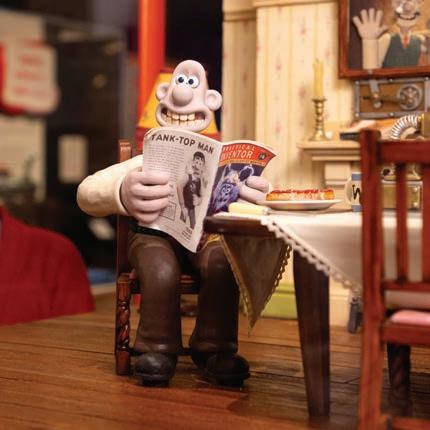
If you want to fire up imagination at an exhibition this spring, head to Young V&A’s exploration of the animated universe created by Bristol-based Aardman. Here are Wallace & Gromit, Shaun the Sheep and a host of other unforgettable characters. It is highly interactive, so perfect for budding filmmakers, engineers, designers and actors (page 62).
It was a pleasure to chat to journalist Benjamin Hall about the story behind
“ THERE’S A BOOK FOR EVERY READER – WE JUST HAVE TO TAP INTO THEIR INTERESTS TO MAKE IT WORTH THEIR WHILE”
as “our mission against tech” – teaching analogue skills that will be incredibly useful for future life.
We catch up with wonderful singer and songwriter – and now children’s author – Corinne Bailey Rae to discuss the emotional power of music (page 36) and talk to two schools about their imaginative approach to helping children discover the pleasures of reading (page 40). Both schools share the view that
his first children’s book (page 72). And I’m absolutely certain Ruth Lauren’s new Hotel Marvelo series is going to attract legions of fans (page 74). Wizardly characters, mystery and magicide add up to a cauldron’s worth of fun – and there’s everything to love about that.
Libby Norman EDITOR
Out and about in the world of education
St Christopher’s The Hall o ers an outstanding education where everyone runs their own race 23
Haberdashers’ Elstree on how parents can help their children become keen readers
Restore the Music’s work to bring the sound of music back into schools










Insights from an early-years expert to help you navigate the toddler tears
Royal Russell Junior School’s new building is already inspiring the whole community
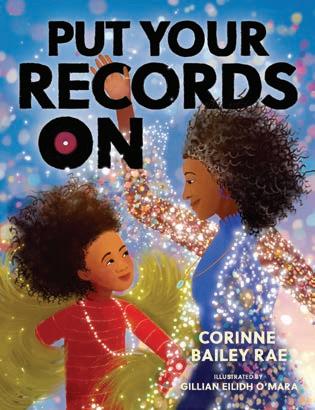
Corinne Bailey Rae’s children’s book celebrates the record that changed everything
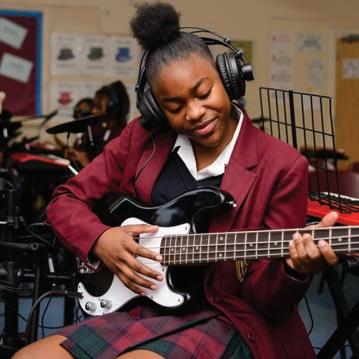







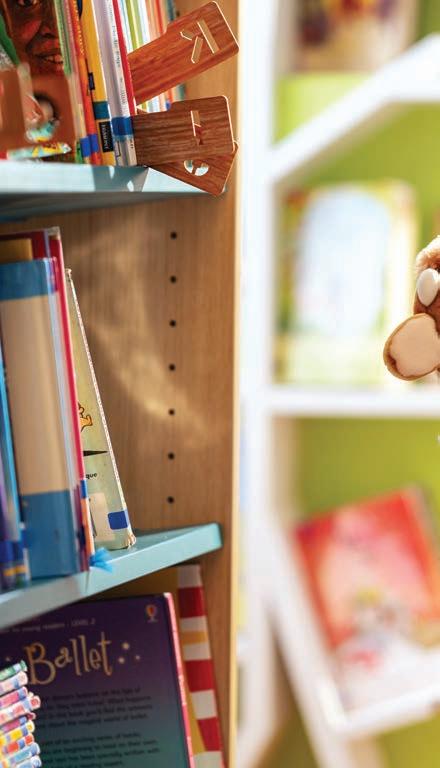
Sidcot School is preserving the magic of childhood
St Catherine’s Prep, Bramley on the value of MFL 49
Framlingham College Prep on supporting success for every pupil through tailored support
Cumnor House Sussex on helping children to separate truth from fiction
The Downs Malvern Headmaster Andy Nuttall on his background and educational philosophy


School’s Out 62 ANIMATION SENSATION
Wallace & Gromit and friends at Young V&A is
66 BOOK REVIEWS
Our pick of brilliant spring reads
Benjamin
Roth Lauren’s gripping novel features wizards, mystery and magicide
82 SIBLING TROUBLE
Why can’t the kids just get along?





Pawel Kuba MAGAZINE
Mariana Suzuki
Pamella Moreno
Bruna Faccin
Danica Brodie
Jerrie Koleci CREDIT
Alexandra Hvid DIRECTORS
Craig Davies, James Fuschillo
MANAGING DIRECTOR
Sherif Shaltout


Stephen Campbell becomes Head of The King Alfred School from September, succeeding Robert Lobatto, who is retiring this summer a er 11 years at the helm. The new Head’s experience spans educational settings in the UK and internationally. He is currently Chief Strategy Officer at Pymble Ladies’ College, in Sydney, Australia.

St Dunstan’s Education Group and West Lodge School have announced a merger, from the end of August. The schools share south-London heritage, with locations in Catford and Sidcup. “West Lodge is a superb school, and I have no doubt that we will enjoy learning from one another,” says Group Head Nick Hewlett.
Oakham has appointed Lucy Pearson as Head, the first female in the Rutland school’s 440-year history. An Old Oakhamian Head Girl and former England cricketer, she has served as Deputy Head at Wellington College, led Cheadle Hulme School and, most recently, was Director of FA Education at the Football Association. She joins in September, succeeding current Head Henry Price.

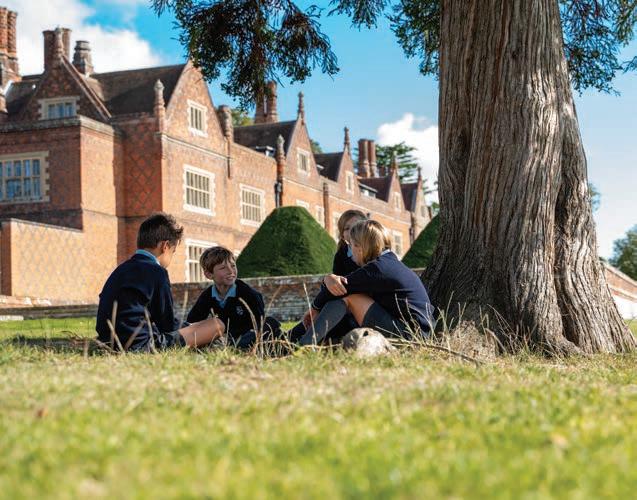
Framlingham College is to join Mill Hill Education Group, in a partnership designed to build on the College’s strengths and support its continued success into the future. The announcement was made with unanimous agreement by the Governors and fully supported by the Principal and Head of the Prep School.
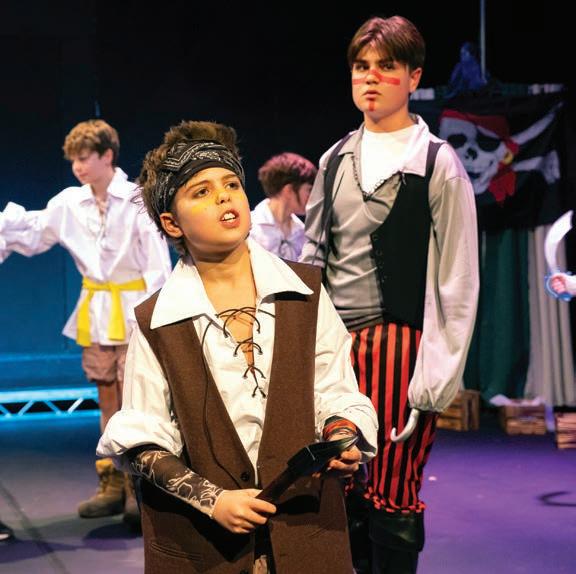
Reed’s School’s Junior Production of Peter Pan, presented in a fresh and fast-paced new version by Evan Placey, was a celebration of creativity and teamwork. Highlights included a scary crocodile, lively musical numbers with the pirates and Lost Boys, thrilling fight scenes and a cleverly designed boat which delighted the audience.
Staff at Sarum Hall School held a sponsored halfmarathon walk from Big Ben to Hampstead to raise funds for their chosen charity, Noah’s Ark Children’s Hospice. It was initiated by three staff members who wanted to personally contribute. The school community has already exceeded its initial £10,000 fundraising target.

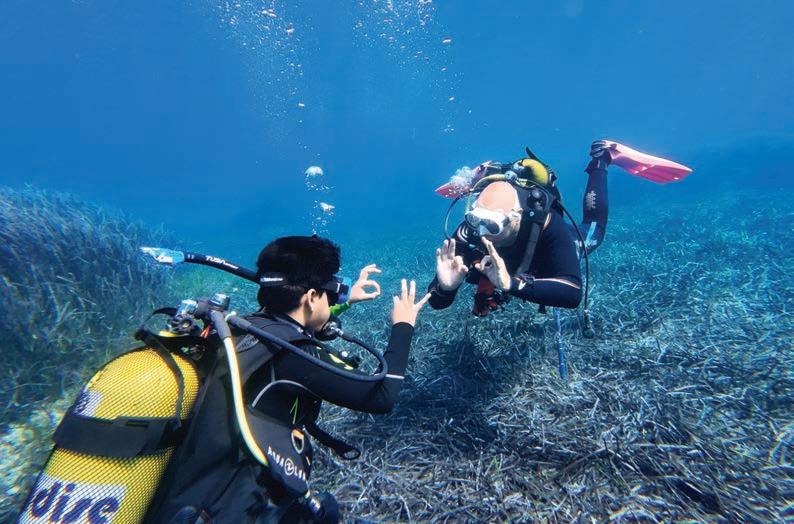
A group of Year 6 and Year 8 pupils from York House Prep, Hertfordshire enjoyed a week-long scuba diving trip to Malta, having achieved their PADI Scuba Diver or Junior Open Water qualifications at the school. Led by the school’s Outdoor Learning Lead, the trip offered brilliant underwater experiences, as children notched up seven dives over four days.
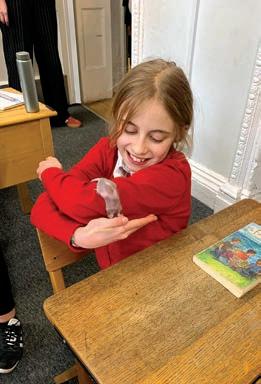
Beech Hall School in Cheshire marked Children’s Mental Health Week by hosting special visitors from Inspiring Animal Therapy. Pupils interacted with everything from rabbits and guinea pigs to gecko, bearded dragons and a snow corn snake called Forest. The aim was to help children understand how connecting with animals supports wellbeing.
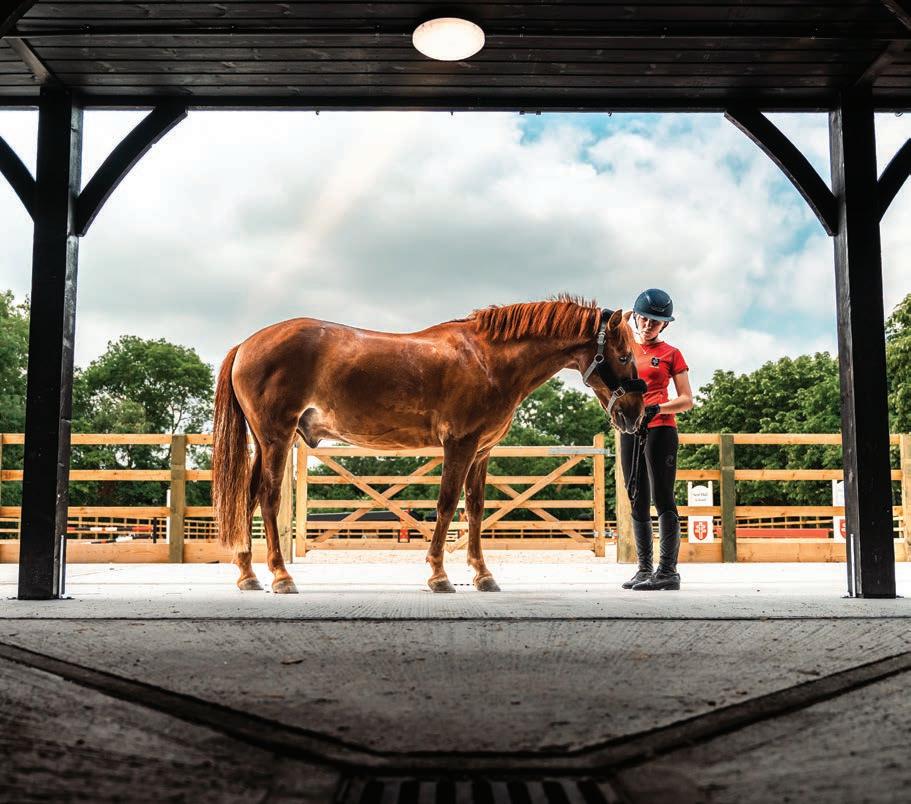
New Hall School in Chelmsford has appointed Rebecca Kennedy as Head of Equestrian. Last May, the school opened a Learn-toRide centre, including Racewood simulators, arena and stables. Originally from Arran, Rebecca Kennedy is a British Horse Society Coach and was previously Head of Equestrian at Gleneagles Hotel.
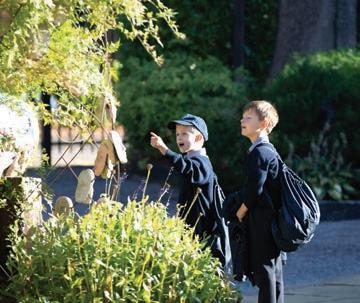
Oliver Barrett will be the new Head of School at Feltonfleet, the co-ed boarding prep school in Cobham, Surrey. He takes up the new role in 2027, succeeding Shelley Lance. He is the currently Head of Twickenham Prep and has held senior leadership roles at St George’s Junior School.
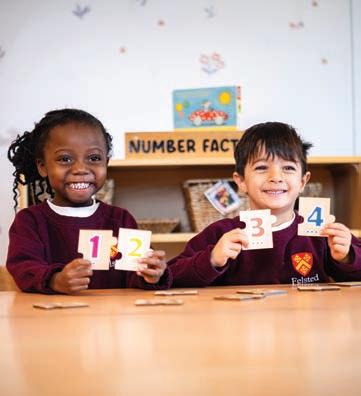
The first class of three-yearolds is set to join Felsted School in September 2026, when the school’s new Pre-Reception opens. The early learners will join the co-ed independent in north Essex in a new learning environment purposedesigned for this age group. Children will be able to participate in morning or fullday sessions.
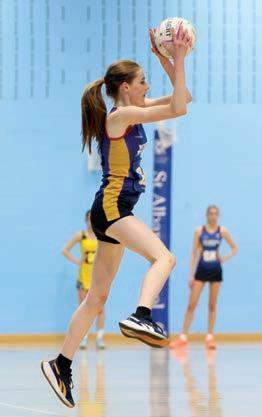
St Albans School has appointed Christy O’Donnell as Director of Sport. It comes at a pivotal moment as the school welcomes the first cohort of Year 7 girls this September. Vicky Sandell, Assistant Director of Sport and Head of Girls’ Games, is leading on the design of new girls’ kit following consultation with students and parents.

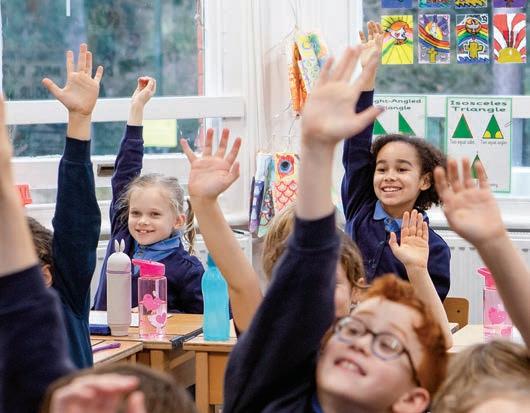
Unicorn, the co-ed prep school in Kew for children aged 3-11 is celebrating its ‘Class of 2026’. The Year 6 pupils have received 66 Senior offers, a number with scholarships, from a wide variety of schools around the capital, including St Paul’s, Kingston Grammar, Latymer, King’s College Wimbledon, Thomas’s and St Catherine’s.
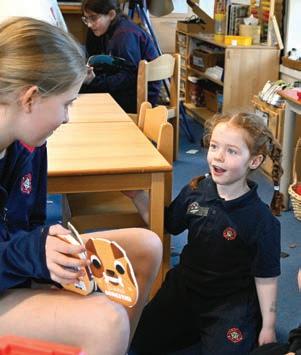
Children’s fundraising platform SuperKind has topped £1m in donations since its launch two years ago. More than 10,000 children have used the platform. Big fundraisers include Lyra F, who raised £1,685 for Cats Protection by walking the Isle of Wight and Alicia who raised £251 for Battersea Cats and Dogs Home a er forgoing sweets.
Berkhamsted Pre-Prep celebrated Languages Day, assisted by Prep and Senior pupils. The day included a theatre workshop about Ghanaian culture and the oral histories of Anansi. Pupils also learnt about the sign language Makaton and covered world languages from Mandarin and Spanish to Polish and Cornish.


your child the best chance of success for the 4 Plus Assessments
Avoid the 7 plus or 11 plus stress by getting your child an all through offer to schools like Highgate, Alleyn’s or Westminster with the 4 Plus assessment. At Mentor Education, we 4 Plus experts and have helped hundreds of families over the past three years.
We offer:
• A proven 4 Plus programme created around your child
• 1-2-1 and group classes dependent on need
• Behavioural and academic sessions
• Experienced teachers from 4 Plus Schools
• Sites in Hampstead, Westminster and Dulwich
• Standardised maths and literacy testing with Cambridge University
• Standardised language testing with Oxford University
• 60—70% success rate vs a normal 10-20% success rate
• Capped student numbers
hello@mentoreducation.co.uk or 0208 883 2519 Find out more at www.mentoreducation.co.uk


At St Christopher’s The Hall, a capital location and country-prep feel create a setting where children achieve great things by running their own race
LIBBY NORMAN
Arrive at St Christopher’s The Hall School and you could be forgiven for feeling you’ve left the capital behind. It is in that leafy quarter of Beckenham where handsome villas and a slower pace draw in families. Head Teacher Tom Carter was certainly struck by this when he took on the Head role in 2021, following 15 years teaching and leading at innerLondon schools. “Here we have space,” he says. “Because it’s got a Kent postcode, it feels like it’s miles away but we are so close to central London.” Indeed, fast rail connections mean you can be standing in Victoria Station in a little over half an hour.
Tom Carter says St Christopher’s The Hall is seen by many families as delivering the best of both worlds – the aspirations and opportunities of a London school, with the feel of a village setting. Many parents still walk their children to school here before heading o to work in The Smoke. It’s an old school with an interesting back story. The handsome Georgian main
building, originally owned by the Cator family, became a girls’ school – St Christopher’s – in 1893. Alumna included Enid Blyton, who became Head Girl around the start of WW1. The St Clare’s series is said to draw closely on her own happy school days in this very place. In 1926, St Christopher’s merged with nearby boys’ school The Hall to form a co-ed prep community.
It’s a school with a strong past but definitely not stuck there. Last year, it joined St Dunstan’s Education Group, a move that brings added strength and a guaranteed place at St Dunstan’s Senior if families choose. But being part of the wider family is more about a shared progressive ethos and south-London roots. “It was about finding a partnership that felt genuinely aligned with our values and our vision for the future,” says Tom Carter. Alongside expertise and resource sharing, benefits include more of that prized space that is such a notable feature of the school. Now, alongside the generous playing grounds and all-weather courts, pupils at St Chrisopher’s The Hall get access to the Old St Dunstonian’s Club pitches. “Serious space,” says Tom Carter. “It’s transformative
for your sports curriculum when you’ve got properly laid out pitches at a prep school.”
A new Head of Sport joined two years ago and had reinvigorated provision by the time those new pitches came into play. Now, there’s a rich blend, including football, netball, cricket and rugby. PE includes dance, swimming, athletics and fitness. There are fixtures and competitive opportunities for all levels, plus before and after-school clubs and training.
The Head sees equality of opportunity as essential to the school’s sports o er. “Why can’t girls play rugby and why can’t boys play netball?” he says. These opportunities have been good for everyone – and transformative for some. “This year, we’ve had the most sports scholarships ever, with 12 in all.”
The opportunity-rich approach in sports is carried across the curriculum and with a clear purpose. “I want to make sure every child has the opportunity to run their own race.” Tom Carter sees these vital formative years as the place to instil in children the mindset that they have the possibility to do anything. Last year’s ISI Inspection reflected the success of this can-do approach, awarding a rare Significant Strength in



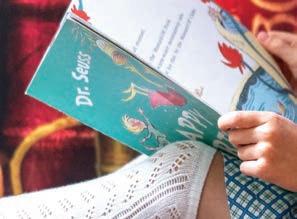

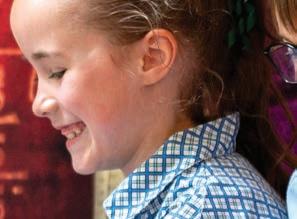


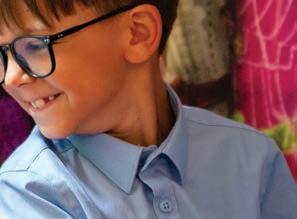





“The library at St Christopher’s The Hall is simply fabulous, with cosy chairs and nooks for books – it feels like it belongs to the pupils”



“We’ve got such a big part to play in children’s formative years in making them feel good about themselves”
leadership of teaching and learning. Other areas highlighted include strong academic progress, the ambitious academic programme and pupils’ independence as learners –also the joyful school environment. The curriculum here is certainly stimulating, with extensive specialist provision in Modern Foreign Languages, Music, Drama and Art. The school’s 2016 extension has added cool specialist classrooms and child-friendly group learning spaces. Display walls are testament to the good work going on, with walls displaying colourful projects and artworks.
New sits surprisingly easily alongside old –thanks in part to an inspired rethink of colour palettes and ambiance in the main building. Now the Georgian entrance hall is bright and welcoming, with a delightful flower-trail mural winding up the main staircase (masterminded by the Head and Head of Art). School values are tucked among those blooms to remind pupils of the ideas they live by every day.
The library is fabulous, with cosy chairs and nooks for books – it feels like it belongs to
pupils. And the Head’s o ce is a child-friendly zone, too, for Tom Carter’s open-door policy encourages children to stop by for a chat or biscuits and a game of Connect 4 if they have won a team award at the Friday Celebration Assembly. The Head’s o ce overlooks the recently installed Pre-Prep playground with trim trail and climbing frame (Prep pupils have their own trim trail), which means a buzzy soundtrack of imaginative play outside.
Having taught and led in a variety of settings, Tom Carter says hothousing is not the route to happy children or good outcomes in Year 6, so there’s no relentless slogging over past papers here. “It’s about delivering a skills-based curriculum. If you teach children well, they will be able to tackle those exams,” he says. No sets either. Instead, individualised teaching delivers support and stretch so children can “run their own race” and succeed.
As an English teacher by training, he’s spent a lot of time with the pupils working on that cornerstone of 11+ testing
– comprehension. “You want to give them that freedom, that love of words,” he says. “I’ll say, ‘so what do you think we did in today’s lesson?’ And they’ll say, ‘we were just chatting about books’. And I’ll say, ‘that is what comprehension is’.”
E ort is recognised here, but individual prizegiving has been replaced by Character Counter prizes, celebrating school values such as independence and integrity. And children earn them on behalf of their school House. “We want to build good people,” says Tom Carter. Speaking to the impressively


articulate Head Pupil
and
Deputy Head
Pupil (elected on pupil votes), it’s clear that this approach of doing your best for the team means a lot to pupils. There is also a highly active School Council here, giving children agency and the understanding that they have a voice in decision-making.
The school has firm policies on phone use – Year 6 only, and for those who walk to school, with phones dropped in at Reception for the day. Sta have also done a lot of work with children and parents on e-safety. AI is employed as a teaching tool, but for thrilling endeavours such as exploring Tutankhamun’s Tomb. As an antithesis, the school recently introduced the Horizon Project. “It’s an enshrined hour – our mission against tech,” says Tom Carter. Here, pupils learn analogue skills – tying a tie, brewing a cup of tea, cutting bread, making a bed. They even (so
20th century, this) learn how to wire a plug. Sustainability initiatives and community work are also integral to a programme designed as a means of helping children to build attention, focus and practical skills, plus the confidence and empathy needed for future life.
Building resilience and character have always been important elements of education in the prep years, but Tom Carter believes they are now critical. “Mental health is now such a widespread concern. When I started teaching 25 years or so ago, it just wasn’t a thing. I think we’ve got such a big part to play in children’s formative years in making them feel good about themselves,” he says. “Today’s children have got a hard world to navigate through.”
St Christopher’s The Hall is doing its bit for onward navigation with its highly focused approach to choosing the right senior. Having that guaranteed place at St Dunstan’s in Year 7 – awarded in Year 5 –makes a big di erence and parents welcome that certainty. “We have the best of both worlds. But even though St Dunstan’s is a wonderful option, it may not be right for every pupil, and I’m very clear with parents that
we’ve got to be actively choosing somewhere where their child will find success.”
There are many senior success stories in the academic, music, art and drama scholarships, alongside sports awards, in the past few years. Sitting on the border with Kent means some pupils head to its state and grammar options, but the majority move on to London and Home Counties independents. Tom Carter says that shortlisting what’s going to work best for each child avoids testing and interview overload. And that, in turn, helps ensure the smooth transition that builds success in the next phase of school life.
This clear-eyed and nurturing approach reflects the wider philosophy at St Christopher’s The Hall – that of putting children first and doing what’s best for each individual. For Tom Carter, that’s what the ‘Excellence, di erently’ school mantra is about. “We champion children. We want our children to do well – it’s about creating a positive environment where that happens.”
* St Christopher’s The Hall, 49 Bromley Road, Beckenham BR3 5PA. stchristophersthehall.org.uk




















































Fiona Read, Head of Bedales Pre-prep, on delivering early education that ignites curiosity and sets children up for lifelong learning in an interconnected world
So often the all-important early years of education are sidelined by discussions of exam systems and transition to work. Having seen the ebb and flow of policies and initiatives over the last 25 years of teaching in the UK and internationally, I feel now is the time to ask fundamental questions about how we educate our youngest learners to foster a genuine love of learning.
Many of today’s classroom practices were shaped by the Industrial Revolution, when education was designed to prepare children for a hierarchical, conformist workforce. Rows of children seated passively, absorbing knowledge dictated by an authoritative figure at the front of the classroom, are relics of this era.
Today, the education pendulum has swung too far in favour of testing. A preoccupation with preparation for the next stage means young children face a plethora of standardised
“Even the youngest students are active participants in shaping a rounded education deeply connected with the world”
tests, such as SATs, throughout primary school, narrowing the curriculum by directing teaching towards preparing for assessments.
This rigid focus continues with a GCSE curriculum discredited by many educationalists, including the Rethinking Assessment group and former education secretaries across the political divide. Like SATs, GCSEs have become too restrictive and fail to nurture 21st-century skills increasingly valued by employers – notably flexibility, resilience and critical thinking.
The National Curriculum in England was last reformed in 2014, but its roots lie further back. Much of the content is outdated, failing
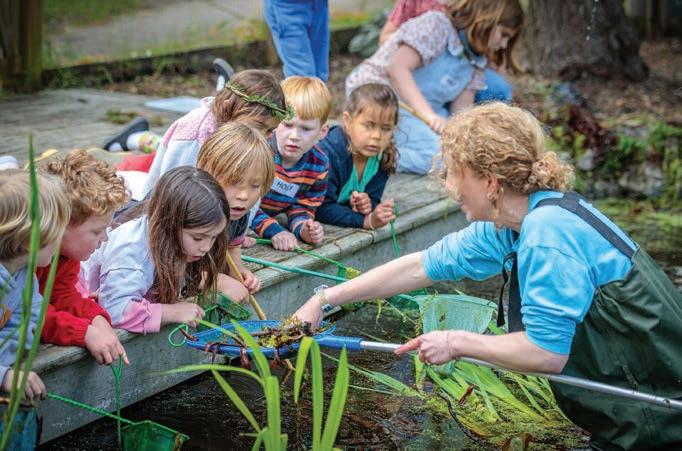
to reflect the latest developments in science and technology and stifling young people’s creativity. Too often, students are confined to traditional classrooms, with four walls and teacherled instruction. Nature, imaginative play and hands-on exploration are relegated to the periphery of learning as occasional outdoor lessons or extracurricular activities.
There is much to learn from overseas, combining the best of the National Curriculum with global pedagogies to create a meaningful and engaging educational experience. We need a curriculum that focuses on concepts and skills that encourage independence, creative thinking and interdisciplinary connections. Embracing inquiry-based approaches would ensure that what we teach is not only academically rigorous, but also culturally responsive and globally minded, preparing our children to thrive in an interconnected world.
At Bedales, curiosity is nurtured at every stage of the learning journey. From the very youngest years, students are active participants in shaping a rounded education


that is personal, purposeful and deeply connected with the world. An inquiry-based approach enables children to explore topics in a hands-on, integrated way – extending understanding through questions and scenarios that lay the foundation for a lifetime of learning.
Unbound by the Common Entrance syllabus, Bedales Prep’s broad, balanced curriculum also gives children the space to think, ask questions and pursue ideas – encouraging them to take ownership of their learning without fear of failure and the pressure of unnecessary testing.
At the Senior School, many GCSEs are replaced by Bedales Assessed Courses (BACs), UCAS-recognised qualifications that prioritise broader assessment methods and focus on learning with realworld relevance.


Children aren’t passive vessels to fill with knowledge, but inquisitive, social beings who thrive on collaboration and discovery. To truly revolutionise education, we must move from decades of talk to decisive action – rethinking how we teach, the environments we create and the relationships we nurture.
The Head of Prep Reading and Librarian at Haberdashers’ Elstree on how parents can help their children make the great escape into books
In a world dominated by screens and technology, books can easily be overshadowed. Yet building a genuine love for reading is vital for development and imagination. One of the most e ective ways to encourage children to pick up a book is through shared reading experiences.
Children who are read to by their parents are significantly more likely to develop an interest in reading independently. Beyond tangible educational benefits, this shared time encourages escape into stories, creates lasting memories and deepens the parentchild bond. In fact, multiple studies have revealed that the brain waves of parents and children can sync during reading, highlighting the intimate connection through this shared activity.
Parents can also turn reading sessions into a fun joint activity. For instance, taking turns reading or assigning di erent characters to each other can enhance engagement. Children may relish the opportunity to create the voices of their favourite characters. This not only boosts their confidence in reading aloud but also allows them to immerse themselves more deeply in the narrative.
Understanding what excites your child paves the way for a more meaningful reading journey. Whether that is a novel based on a film they love, the autobiography of their favourite footballer or subscribing to a comic or magazine, identifying and acknowledging what kinds of stories children enjoy tends to spark curiosity.
Creating a ‘book club’ atmosphere at home can also deepen a child’s relationship
“Multiple studies have revealed that the brain waves of parents and children can sync during reading”
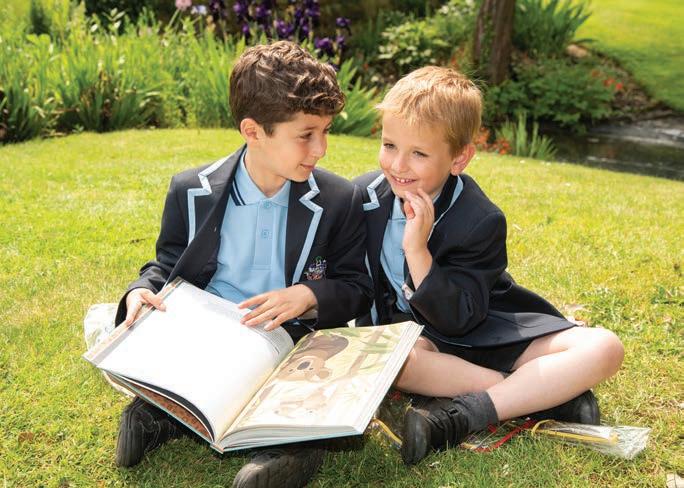
ABOVE
with reading. Gather drinks and snacks and create a warm space where family members discuss what they are reading. This can lead to conversations about dialogue, characters, plot twists and endings, encouraging children to think. Asking questions like ‘what was your favourite part?’ builds comprehension, as children learn to organise and articulate their thoughts. Incorporating reading into daily routines without presenting it as a chore can help to normalise it as an enjoyable pastime. It is important to avoid associating reading with punishments – such as banning screens or devices in favour of reading a book. Leaving various age-appropriate books and magazines around the house can encourage spontaneous reading. Visiting local libraries to borrow new books can also provide a fresh influx of stories, and children will enjoy discovering new materials.
LIBRARIAN RECOMMENDED
• For ages 3-5, Danny McGee Drinks the Sea, by Andy Stanton and Neal Layton, is a whimsical, rhyming wonder. The story’s premise of a boy betting his sister that he can drink the entire sea
captures young children’s imaginations and invites lots of giggles.
• For ages 5-7, Wigglesbottom Primary: The Popcorn Puppy, by Pamela Butchart and Becka Moor, o ers relatable characters in a laugh-out-loud narrative. When Lauren brings her new puppy to school, the resulting chaos is both entertaining and accessible for newly independent readers.
• For ages 8-12, I Survived the Destruction of Pompeii AD 79, by Lauren Tarshis and David Shephard, blends history and fiction in a brilliant graphic novel. It captures the dramatic eruption of Mount Vesuvius through the eyes of Marcus, who tries to escape, in a book delivering tension, jeopardy, emotion and fantastic detail.
• For reluctant or dyslexic readers aged 8+, Blitzers, by Alastair Chisholm, explores contemporary themes, including peer pressure and technology. Its accessibility makes it a brilliant choice for engaging readers who avoid traditional texts.
CLARE ZINKIN
Head of Prep Reading and Librarian Haberdashers’ Elstree Schools

















Bringing live music making back into schools is a mission for Restore the Music, and it has plenty of proof of the impact on student outcomes

atch any toddler take to the dance floor or teenage band in rehearsal and you just know this brings something special – something beyond the immediacy of notes and rhythms. But the sad fact is that there is a severe shortage of music making in many schools, making teaching music almost impossible. In some, they lack even the basic resources for engagement.
Restore the Music has been on a mission, since 2013, to deliver the tools and the inspiration to redress that – focusing on some of the most music-depleted parts of the country. The first pilot project was, says CEO Polly Stepan, a wake-up call for her on how bad things were. "We hadn't actually realised the extent of the problem – we literally had no idea," she says. She grew up enjoying the benefits of a full musical education at Wimbledon High School. "There were no limits to the musical opportunities that I could access." She studied piano and clarinet and enjoyed orchestra and choir tours. In common with most school children of her generation, she saw music as a birthright. After a first career as a commodity broker, she stepped back to raise her twin children and, when she began to think of what to do next, it was a colleague – knowing her love of music – who pointed out the huge problem in schools. "Our model is so apt for today," she says. "Increasingly, we need a language that all young people can speak, that everybody can access, that unifies, that brings harmony and delivers all sorts of skills."


“Often the brains of students drawn to DJing are also numerically highly proficient, which makes them hugely employable”


Restore the Music works with schools in areas of high deprivation –50% free school meals is the entry point, but it rises to 95% in some areas. Originally it was piloted and embedded in London, but as it has gained traction it has expanded to Birmingham, Manchester and Newcastle.
The thinking here was that it makes more sense to deliver in areas of denser population, and all these cities also have strong musical heritage. "It's much more sensible to build hubs within the cities where you have a denser footprint and the impact of the








investment within these schools is far greater," says Polly Stepan. "And schools then start to collaborate."
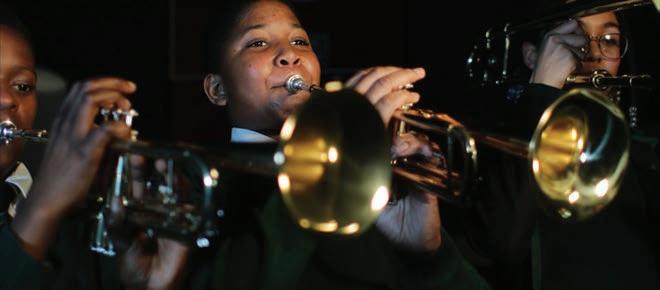
When schools start working with Restore the Music, they get an initial package of musical instruments and resources. From there, they can come back and request specialist instruments and support – for instance for a brass or jazz band. "We've delivered just about every musical instrument there is," she says. The impact of tapping into local heritage and children's own cultural heritage and interests can be immense. From
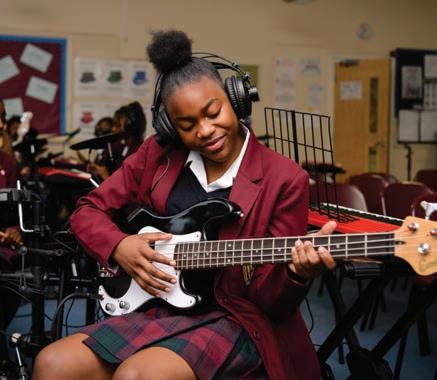
brass to steel pan bands to gospel choirs, there are many inspiring music making collectives thanks to these packages.
Music technology is a big area where Restore the Music is supporting schools, and it is working up some interesting data about the correlation between musical and numerical proficiency – especially in DJing, where beatmaking and ratioing (aka phrasing and beatmatching) are essential skills. "Often the brains of students drawn to DJing are also numerically highly proficient, which makes them hugely employable," says Polly Stepan. "The problem for employers these days is that these are the children they can't reach – often these are the students who are highly disengaged from education."
This is the overriding purpose of Restore the Music – helping students engage with education and achieve in school – and it has an impressive impact report, published last year, showing how the schools it supports have improved educational outcomes through music. "Our three goals are attendance, engagement and attainment. What we're able to do is build those pathways, bring the children into education, and the ripple e ect of a positive music department across the whole school means that the levels across the whole school improve."
Restore the Music's work has drawn in generous supporters – from Warner Music, Universal Music and Sony Music Social Justice Fund to Bowers & Wilkins, The Childhood Trust and The Fishmongers

"They play every single piano as loud or as quiet as they want. And the Steinway people are relaxed and happy to see them enjoying themselves"
Company. One of the earliest to come on board was Steinway & Sons. That was the call Polly Stepan made when she had a blank notebook in front of her and the seeds of a plan.
"It struck me that throughout my childhood playing piano – and I got to Diploma level – I always wanted a Steinway. That was my dream, a Baby Grand. I didn't get it, but I thought if I wanted one that's going to be other kids' dream, too."
Steinway couldn't have been more open, or more generous in fuelling kids' dream. Early and ongoing support has morphed into annual masterclasses for primary and secondary children, held at its Marylebone showroom. "Often these kids are learning on keyboards. I've got a kid in Greenwich who is learning Rachmanino on a keyboard," she says. "They run round the showroom and they play every single piano as loud or as quiet as they want. And the Steinway people are relaxed and happy to see them enjoying themselves."
A telling moment on the power of playing on proper instruments came at the end of one session when a little boy pointed at the
price ticket on a Steinway and asked if it said £1,000. Polly Stepan helped him count the extra zeros. Enthusiasm undimmed, he said: 'One day, I'm going to buy a Steinway'.
Alongside the corporate, charity and trust supporters, are Restore the Music's Ambassadors. Andrew Levy of The Brand New Heavies, Cary Powell of The Libertines and PMR Records' A&R manager Sachin Johal have, she says, championed Restore the Music ever since they discovered its good work for music.
There are also Junior Ambassadors, paying it forward as mentors and examples to younger children. All are taking music to a higher level – and who knows where that will lead. "We've followed their journey and, out of all the students, these have been the most engaged." she says. "They represent everything I want Restore the Music to be."
Thanks to the networks Restore the Music has developed, it has associations with cool venues – Band on the Wall in Manchester and The Lower Third in London, for example. It is always looking out for more partners –more people to join the bandwagon. "We're always trying to find ways to collaborate with partners on initiatives that make sense and add another dimension," she says. "We can't do everything, but we can be a facilitator and an introducer as we're regularly in touch with so many schools."
Polly Stepan points to the value of music –in and of itself but also as teacher of so many transferable skills for life and career. It helps children build teamwork, listening skills and the ability to work at speed processing multiple strands of information. "Music was invaluable in my career," she says. "And music brings joy."
restorethemusicuk.com







BOARDING FROM AGE 7 TO 18 FLEXI, WEEKLY OR FULL OPTIONS AVAILABLE
A WELCOMING HOME-FROMHOME FOR PUPILS TO GROW, ASPIRE AND ACHIEVE
A SPRINGBOARD FOR INDEPENDENCE, FRIENDSHIP AND OPPORTUNITY
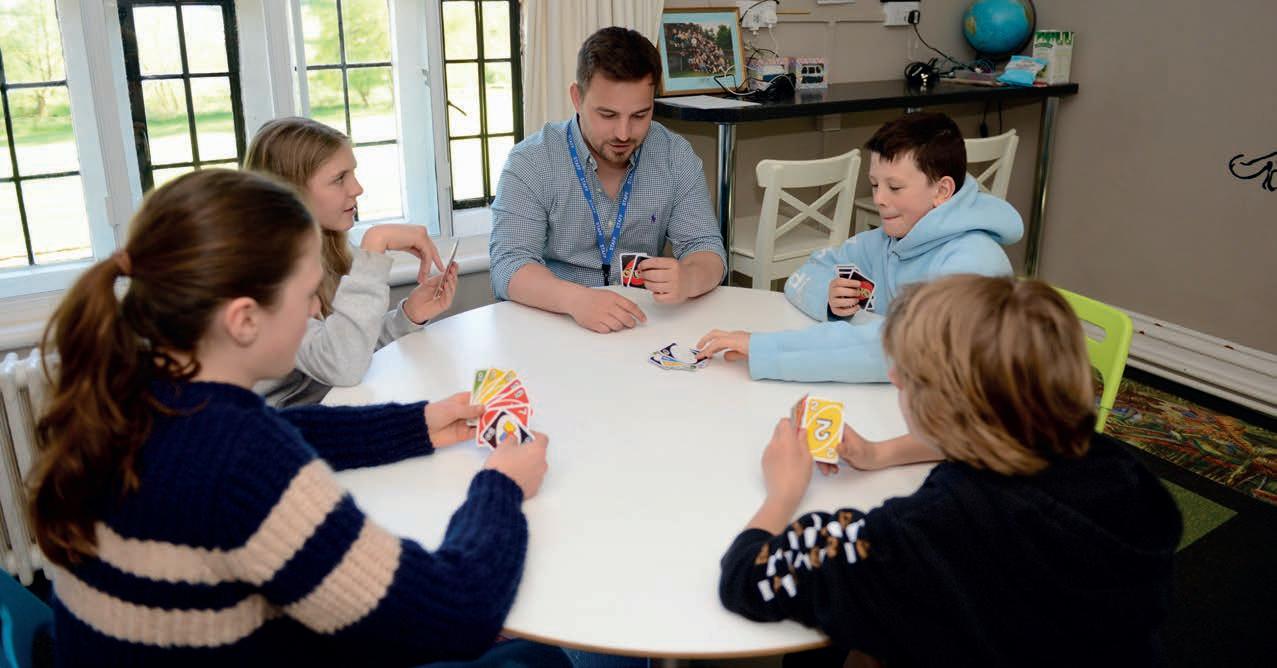
Boarding at Framlingham offers stability and continuity in a welcoming home-away-from-home environment. Our Flexi, Weekly and Full boarding options are tailored to suit the needs of the modern family. From age 7 (Year 3) at our Prep School to 18 (Year 13) at our Senior School, our boarding provision provides a vibrant, supportive environment where every pupil can grow, thrive, aspire and achieve.
START
Discover Framlingham College on one of our Open Days or book a private visit today. Open Morning bookings now available for May 2026. Visit framlinghamcollege.co.uk/openmornings, contact admissions@framlinghamcollege.co.uk or call +44 (0) 1728 685331.

Page 36
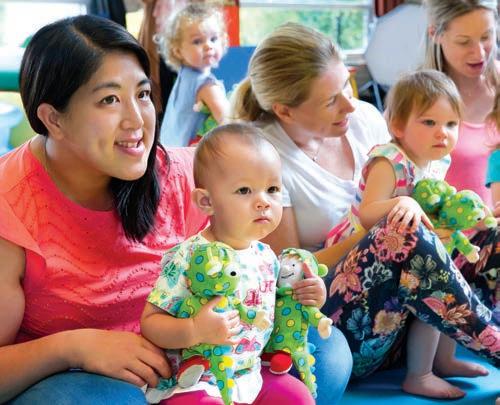
We all know the toddler years bring joy and tantrums, but how best to manage the meltdowns? Dr Lin Day, Founder of ToddlerSense, gives expert advice
Tantrums are one of the most common behaviours in children between 18 months and three years of age – they are also a normal part of child development. These outbursts are the result of complex interactions between the two hemispheres of your child’s brain, temperament and the environment.
As toddlers acquire communication skills, they become more able to manage their emotions and find more appropriate ways of expressing their feelings. But factors such as tiredness, boredom, hunger, jealousy or lack of attention may still result in uncooperative behaviour or an emotional outburst. If parents understand what the typical triggers are and can read their child’s body language and verbal cues, they are better able to minimise the factors that trigger a tantrum. Tantrum reactions may range from screaming, hitting, kicking, pushing and pulling to a milder response such as whining or crying. Some toddlers have very few outbursts, while others may experience several a day. Duration can


also vary from less than a minute to 40 minutes plus. Despite their challenges, tantrums do provide an opportunity to learn more about your child. You can observe events that led up to the behaviour and find ways of understanding and di using situations. Taking this approach also means you can help your child to develop self-control skills and, over time, manage emotions in a more positive way.
In the second year of life, the brain undergoes rapid development. The frontal lobes associated with speech and language mature, and vocabulary become more expressive. In the third year, medial-temporal lobes undergo rapid change and toddlers gain more control of emotions. But communication between these important brain areas still remain limited. This is one reason why toddlers may have rapid mood swings. Genetic inheritance, health and environmental influences play a role in emotional behaviour. Some children are more prone to stubbornness, determination,
and persistence than others. While the resulting outbursts may be challenging, these same personality traits can be beneficial to intellectual and future creative development over the longer term. Health di culties or developmental di erences also drive emotional outbursts. Toddlers with speech or hearing di erences sometimes throw tantrums because of communication challenges and frustration in getting their needs understood. Research from Northwestern Universiy in the US found that toddlers with fewer spoken words had more frequent and severe temper outbursts compared to peers with more typical language skills. This highlights the importance of consistent work on language development as a tool for managing tantrum behaviours.
Tantrums and challenging behaviours are also caused by stored anxieties or emotions. For example, some children find it hard to adjust to changes, such as starting nursery or preschool, moving to a new house or the arrival of a sibling. Waking in


the night, thumb-sucking, and unsettled behaviour during the day may suggest that a toddler is experiencing emotions they are finding di cult to manage.
Other typical scenarios leading up to an outburst may include tiredness, hunger, boredom, lack of physical activity, criticism and lack of attention. Likewise, a child who feels under pressure to do something that they are not mentally ready for or is frustrated at being misunderstood can react badly. Toddlers may also struggle if there’s unwanted interference from someone in an activity they are enjoying or they are told to stop doing something before they are ready. Other factors include frustration if they are not able to achieve something they have set out to do.
When it comes to managing an outburst, some toddlers accept being held close, while others do their best to avoid any contact. That familiar toddler emotional response of flailing arms and legs and lying on the floor can embarrass parents and caregivers when it happens in public. In that situation, reasoning or remonstrating tend to escalate and prolong the outburst.



“For parents, understanding the things that typically trigger a tantrum can help bypass trouble in the fi rst place”

The best solution is to try calmly moving the upset child to a safe space where they can release their feelings, at which point the situation can be calmed and the child reassured.
Sadness and attempts to gain reassurance are emotions frequently presented at the end of a tantrum. A physical hug provides reassurance and comfort for the child. It also promotes trust, security and a feeling of emotional stability.
Parents can try and bypass trouble in the first place. For example, if your child has a tantrum when they are asked to put their toys away, advance warning will give them the chance to wind down before the end of play and cooperate more willingly. By the same token, a toddler who is fed and rested when they are taken shopping and made to feel they have an active part in the activity will be less likely to feel bored and frustrated.
If you know you are going to be tied up in a meeting, an important phone call or something else that will divert part of



your attention away from your child, it helps if you plan activities in advance to keep them busy.
Getting out their favourite construction or mechanical toys, colouring kit or modelling dough are good ways to capture interest and reduce the likelihood of an outburst when you have to give something or someone else your time.
Until children learn to regulate their emotions, tantrums will still erupt from time to time. But there’s no doubt that a caring. supportive and loving approach plays an important role in reducing outbursts and helping a child to develop the emotional skills to cope with life’s daily frustrations and setbacks.
The most positive reaction to a tantrum or outburst is to be loving, reasonable and consistent in your expectations of your toddler. When you stay in control of your own emotions, you not only model positive behaviour to your child but are also far better equipped to manage emotional outbursts e ectively.
* toddlersense.com
Alex Murphy, Acting Head of St Dunstan’s College Junior School, on how this award-winning prep school prepares young people for the world of tomorrow
In independent education, parents understandably want to see value for money. With rising fees driven by VAT changes and a cost of living higher than many have ever known, the return on investment in private schooling is under greater scrutiny than ever. Schools often point to league tables, exam results, and university destinations to highlight their success – but do these metrics tell the full story? And are they overshadowing something just as important: the development of the individual?
Academic achievement matters. It equips children with the knowledge and skills to access broader opportunities beyond school. Yet on its own, it is not enough. Without the ability to think critically, collaborate, and self-reflect, academic results risk becoming hollow credentials. Today’s employers are less interested in specific exam grades and more focused on whether young
people can learn independently, adapt to change, and lead with confidence and integrity. Given the unpredictability of the future job market and the rapid pace of change, two skills stand out in particular – critical thinking and problem solving.
These human and cognitive skills aren’t easily measured. They don’t fit neatly into a spreadsheet or performance report. Instead, they are embedded in classroom interactions, pastoral care, and the broader educational ethos, from the earliest years onward. Schools that embed this philosophy early, rather than waiting until secondary education, are becoming increasingly attractive to families. More

parents are choosing schools not just for their rankings, but because the school’s values resonate with their own.
Junior school pupils are at a formative stage. Every interaction, whether it’s navigating a playground disagreement or reflecting on a mistake, shapes their character. These early years are when empathy, resilience, and integrity take root. If schools focus solely on academic benchmarks, they risk producing high-achieving children unprepared for life’s complexities. However, schools that recognise this need and adapt their curriculum to include life and metacognitive skills give children the space to forge their own path. They help them find their voice, understand who they are, and build the character needed to make a meaningful impact beyond education. A rich character education nurtures emotional intelligence, moral awareness, and a sense of purpose – all qualities that matter just as much as grammar or times tables. These qualities must not be treated as tokenistic extras. When integrated meaningfully into a learning journey, they help children discover who they are, what they value, and how they can contribute to the world. That is the true value of education and, honestly, the greatest return on investment.
* St Dunstan’s College Junior School has limited places left in all year groups for September 2026 start. Find out more at the upcoming open event on Thursday 30 April. stdunstans.org.uk
“Parents are choosing schools not just for their rankings, but because the school’s values resonate with their own”
The Headmaster of Royal Russell Junior School on the excitement of its new state-of-the-art building set within the school’s 110-acre campus
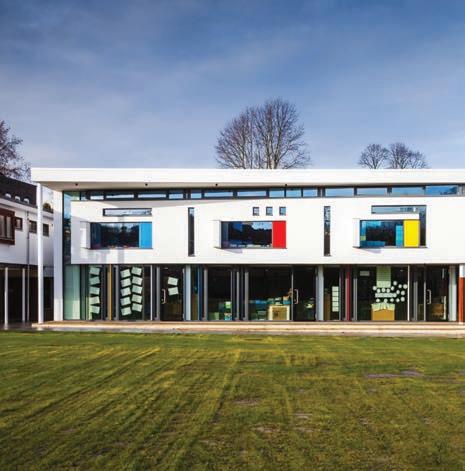
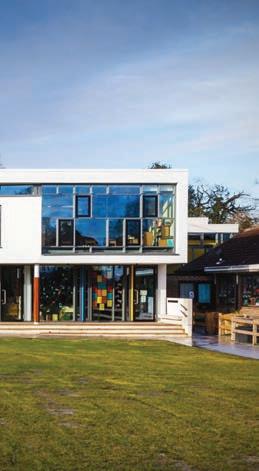
Delivering a new building project is an inspiring moment for any school community. Years of planning, research and design culminate in the first opening of the doors to our young people, families and colleagues. At Royal Russell, as the New Junior School reaches completion, excitement is rising.
Our community is looking forward to the many benefits our new home will bring –state-of-the-art design, enhanced teaching and learning, improved wellbeing, a strong sustainability commitment.
While the true heart of any school is its people and shared values, purpose-built facilities play a vital role in how those values are lived. Our principles of being open, courageous, distinctive and ambitious are strengthened when the physical environment enables them to flourish. Children have been part of this building journey from the outset, watching the project take shape and gaining a unique learning experience along the way. When they step into their completed Junior School, the sense of connection and ownership will be tangible.
“When they step into their completed Junior School, the sense of connection and ownership will be tangible”
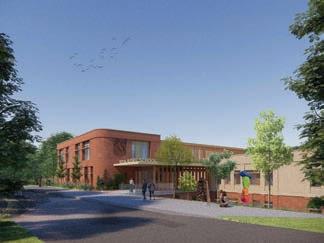
gymnasium and music centre – demonstrate our commitment to providing a rich, rounded education. Classroom design maximises flexible learning and gives teachers the freedom to create warm, inspiring environments.
The impact of physical surroundings on child development is undeniable. A school building must support engagement, opportunity, security and comfort. The new Junior School has been meticulously planned so that its orientation, layout, insulation, natural light, solar gain, internal temperature and use of space support progress and wellbeing. Security has also been carefully considered, with controlled access points for both the building and the wider site.
Clear wayfinding, thoughtful signage and a purposeful colour palette help pupils navigate independently. Specialist areas – including a new library, drama studio, science laboratory, art and design suite,


Wide corridors and open circulation spaces allow for small group work and breakout activities as part of everyday practice. These shared spaces encourage independence, collaboration and a culture of being mindful of others – themes that are woven through the entire school experience. Generous outdoor spaces, particularly in Early Years, support continuous provision and free-flow learning. The Junior School's location on our beautiful campus strengthens pupils’ connection to nature and encourages stewardship over our surroundings. Sustainability has been a driving force, reflected in minimised energy usage, photovoltaic energy generation and high standards for ecology, biodiversity, wholelife building performance and green spaces. Importantly, the new building sits in harmony with its setting. Nestled alongside our listed Aston Webb buildings, architects Jestico + Whiles designed by balancing modern e ciency with sensitivity to this natural and historic environment. Now the result is clear: an inspiring new home for our community, brought to life through the clear articulation of why a Royal Russell education will make a di erence in our young people’s lives.
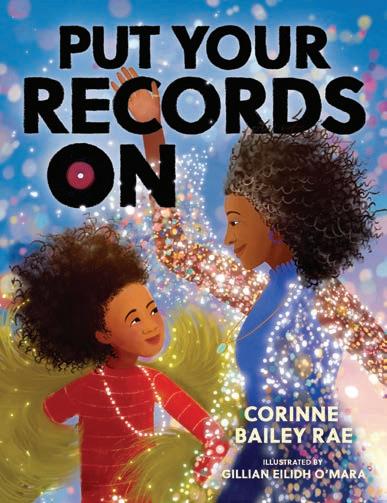
The Grammy Award winner Corinne Bailey Rae is marking a milestone in her musical career with a book to inspire the next generation to find music that moves them
Corinne Bailey Rae is marking an important anniversary this year. The single that helped launch her global career as a singer and songwriter is 25 this year. “Put Your Records On”, from her 2006 debut album, is a very special record for the artist and her audience, so it’s fitting that she has passed it forward in a book, hoping to inspire young readers to find their music.
She began thinking about the book while she was looking after her children. “I was breastfeeding the two kids and that was taking up a lot of time. When you’re feeding there’s just loads and loads of thinking time,” she says. “I was just thinking about music and emotions and how linked they were for me and how everything you’ve ever felt is in a song somewhere. I remember as a kid thinking, ‘how does Bananarama know how I feel?’” What she was mulling over was that sense of connection songs can give us – the realisation that someone else has been here. “It makes you feel less alone in the world.”
So, Put Your Records On is the culmination of a lot of hard thought – both for the story and the songs within it. The story is about a little girl called Bea who goes to visit her glamorous Aunt Portia every weekend. Then one day she is taken up to the attic – a wondrous room packed with rare treasures,
including a vinyl collection. “I liked the idea of this intergenerational story – to have a bridge from your world and your everyday to someone else’s.”
Aunt Portia adds a distinctive voice to this story – she’s had a rich and interesting life and she’s happy to share wisdom. As the story progresses, she becomes more magical, more exotic – her cape positively sparkles. “I had that. I’ve got loads of aunts that I really love – between my Dad’s sisters and my Mum’s sisters and the uncles that have married. They were shiny and exciting to me and they shared a lot of things with me,” she says. “So I loved the idea that this woman could be that for Bea.”
Growing up in Leeds, Corinne Bailey Rae remembers music as just a normal thing you did at school. “Everyone sang. There were music lessons when you picked up a percussion instrument and played.” She loved the violin, and was given bigger instruments as she grew, but it became more di cult. Then her sister brought home a classical guitar from school – at around the time Nirvana where getting popular. Music making
“I remember as a kid thinking, 'how does Bananarama know how I feel?’”
was there to see on MTV Unplugged, and that started something because she could deconstruct what was being played. “I saw bar chords visually for the first time. And I thought, ‘I want to try that’.” DIY and real, Corinne Bailey Rae was starting her music journey. “Indie was really important to me –that you could make this music yourself.”

It was a church leader who helped her acquire her first guitar. “He showed me an advert in the paper and it was something like £110 or £120 and I couldn’t a ord to pay that. So he bought it for me and I paid him back over about two years. I’d bring in £7 and he’d just say ‘oh, just buy me a pizza’. It was really good to have that instrument and just to feel the world was my oyster – to be set o on that journey.”
That combination – a generously supplied secondhand guitar, MTV Unplugged and Nirvana made Corinne Bailey Rae feel she belonged in music. “That grunge scene was
coming to the fore. It was so important for me. As a working class kid, to be able to say, ‘Mum, I’m not going to keep bugging you now about getting a £50 Nike rucksack, which you can’t a ord. Now I can go to the Army & Navy and I’m going to buy a blue canvas bag, bleach this bit and stick my old Brownie badge on it’. And suddenly I’ve got the coolest bag in school.”
Now, all those years on, in helping other children find their own inspiration, she’s chosen a shortlist of four songs in the book, each one describing a particular emotion and place in time. Harry Belafonte’s “Jump
in the Line” reminds her of the fun they all had dancing round the kitchen. “There’s a crazy energy to it,” she says. At the other end of emotion is “Bridge Over Troubled Water” – not the original but the powerful Aretha Franklin cover. “I wanted to have an Aretha Franklin because I connect so deeply with her voice,” she says. “She’s just one of the greatest singers of all time.” But that song is also important –she hopes it might be a “trail of breadcrumbs” for children who decide to check out the songbook of Simon & Garfunkel, and then maybe move on to Paul Simon.
Writing sparely comes more naturally for a songwriter – used to distilling down – and Corinne Bailey Rae’s English degree came into play. “It helped me put a focus on particular moments or particular phrases and keep it going.” But it wasn’t all straightforward. She credits her US Editor, Lauri Hornik for keeping things on track. “I’d send her these big drafts and she’d come back and say, ‘Remember, it is a children’s book – we don’t need all this description because there will be drawings’.”
It was Lauri Hornik who helped pair author and illustrator, after presenting a shortlist of three. “Instantly, I fell in love with Gillian’s work. She had done a lot in nature, she’d done a lot that I think is magical.” Indeed, Gillian Eilidh O’Mara’s textured and rich illustrations add much to the magic of this narrative, which transports readers from a cluttered attic room to somewhere truly magical.
Corinne Bailey Rae is also reader of the audiobook, something she found very moving. “I put a lot of time into it. I wanted to get the tone right. It was a really serious undertaking. I’m reading some kids to sleep around the world that I’ll never meet.”
Behind the book there remains the song, “Put Your Records On”, now the grand old age of 25 but freeze-framing a moment in time. It still resonates for the singersongwriter, capturing an emotion, a joy, from her own past.
Corinne Bailey Rae believes it’s important for children to know what music can do –helping us to navigate complex feelings, from joy to sadness, and know that other people have felt this way too. “Music just puts its finger on something in you that you didn’t know was there. It’s painful, but it’s healing, it’s beautiful, it’s transformative. I wanted to talk about that in kids’ language.”
* Put Your Records On by Corinne Bailey Rae, illustrated by Gillian Eilidh O’Mara, is published by Fox & Ink Books (£8.99).

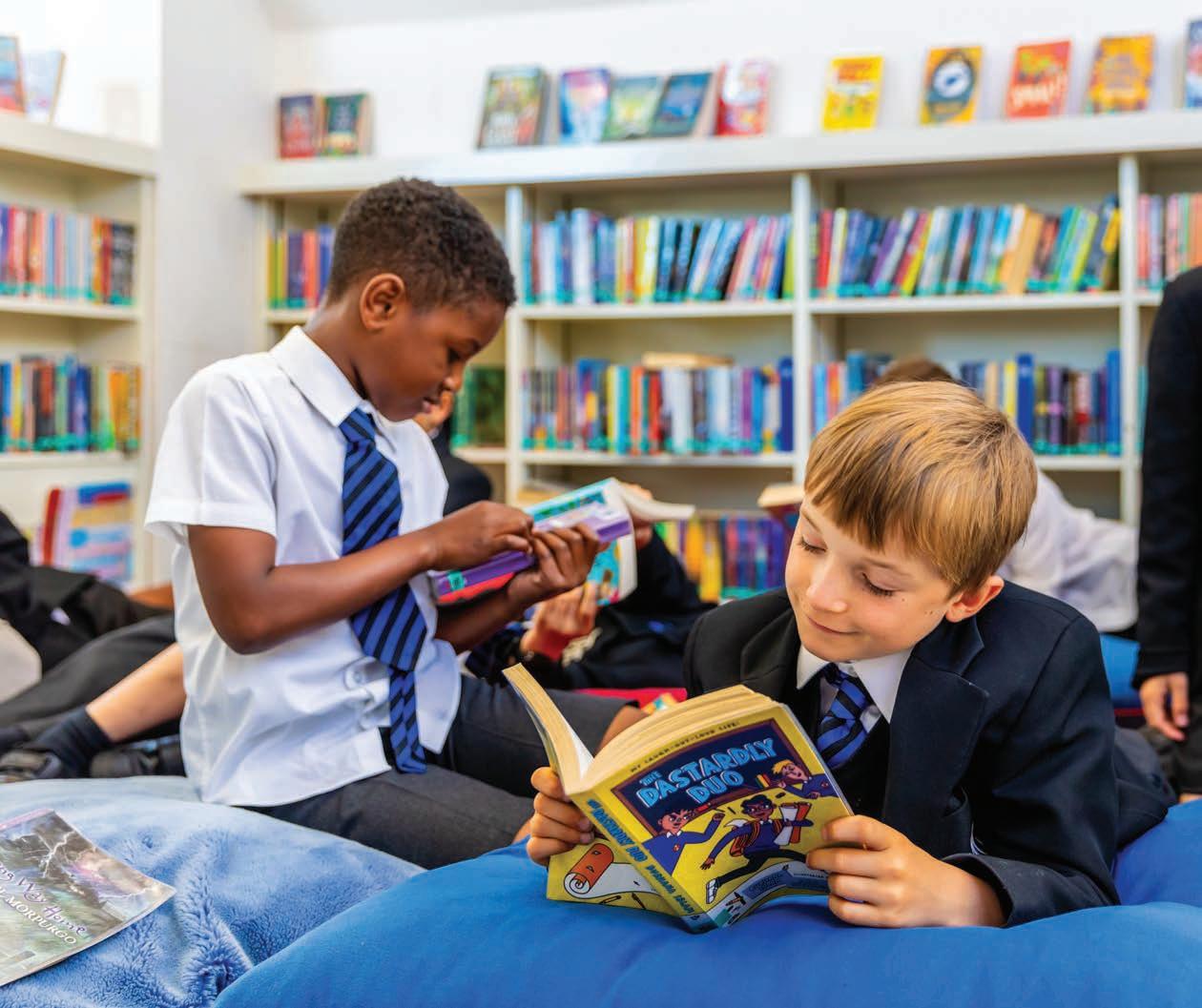
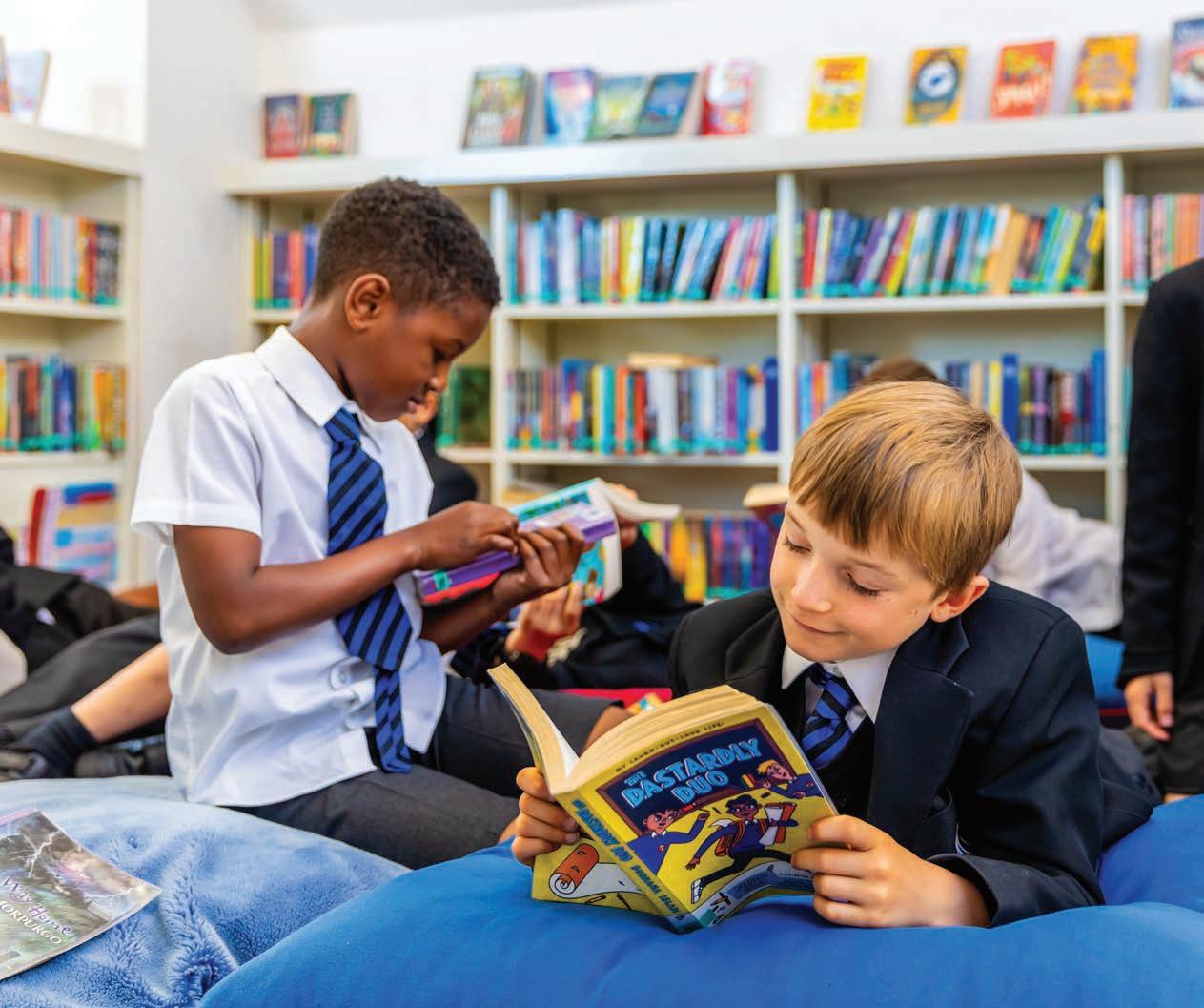
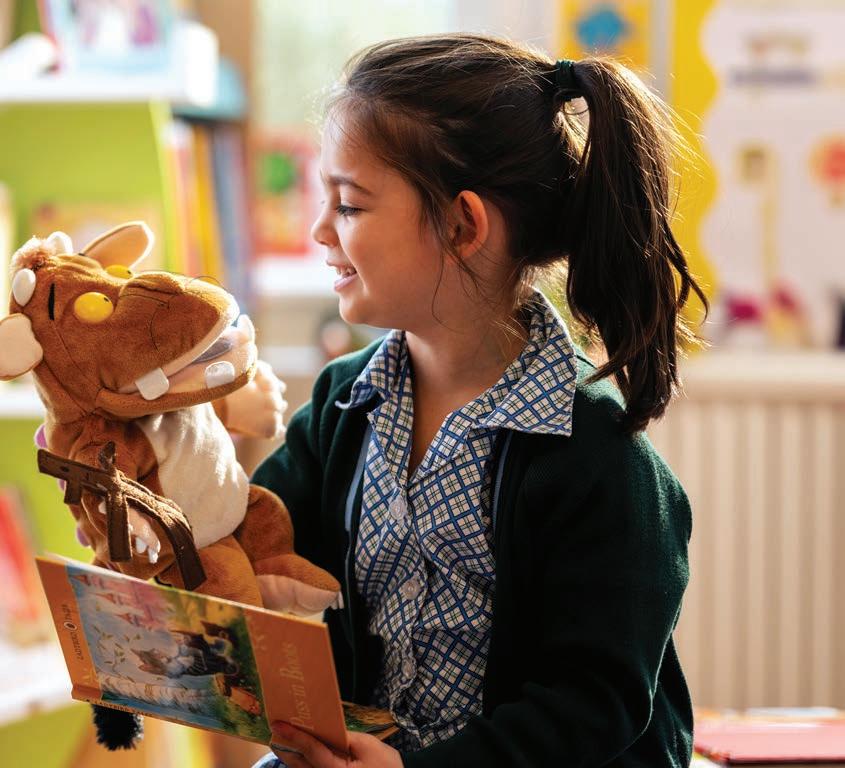
All children love stories, but not all are drawn to books. So how do we stimulate their interest, build reading skills and nurture a mindset in which turning the page to find out more is a pleasure not a chore? Two schools share how they champion reading
Boys are often seen as more reluctant readers than girls, but at Dulwich College Junior School, they overturn that assumption – and it all centres on the library. “Parents and pupils often tell us that there is a ‘magic’ in the Junior School library,” says Junior School Librarian Hazel Forbes. “There is most certainly a certain magic in books and reading,” she adds. But the team here don’t leave discovering the magic to chance and have clever strategies for embedding positive ideas around books and reading as early as possible.
Even before joining the College, children and their parents are invited along to the library for an introductory evening. Parents are also asked to send a photo of their child reading during the summer holidays. Photos are then
displayed outside the library so that pupils feel welcome – this is their space. There are practical ways in which this welcome is reinforced, with Library Induction Sessions and generous opening hours (8:30am-5pm every day). “It is a popular place for our pupils to come and sit, rest and relax – they have a variety of books and activities to choose from,” says Hazel Forbes. Forget the three Rs, at the Junior School Library they live by six of them – Read, Return, Renew, Reserve, Respect and Relax.
“We believe there is no such thing as a child who does not read. It is simply a question of finding the right book”
Once Dulwich College Junior School pupils get to Year 3, they are introduced to the ‘Rumbustious Reading Challenge’. For this, they are asked to read eight books and will get rewards for each milestone. Once four books are read, the children are presented with a certificate by the Head of the Junior School at a whole school Celebration Assembly. Around 70% of pupils complete this challenge, with many reading all eight books.
Children are given plenty of agency to inspire their skills as both readers and critics. At the start of every library lesson, there are Book Talks where children talk about what they are reading, if they are enjoying it and, if so, why. Peer-to-peer recommendations are welcomed, and Year 6 librarians take their role of helping younger children select books at lunchtimes and breaks extremely seriously.
“We also recommend di erent genres and new authors and encourage children to take a chance and read the first 30 pages,” adds Hazel Forbes. With stock updated constantly to ensure the latest and greatest is on the shelves, the team are firm believers in choice determining outcome. “We believe there is no such thing as a child who does not read. It is simply a question of finding the right book.” There is material to entice SEND readers and those who don’t gravitate towards the more typical fiction and chapter book formats.
Book Week is a big deal at Dulwich College Junior School, with a whole host of activities. The school welcomes authors to speak to di erent age groups, plans workshops and has a dress-up day, where children come as a favourite fictional character. There is also ‘Drop Everything and Read’ day, where the whole school pauses to sit and read for a few minutes. And the annual short story House competitions are designed to inspire readers to put pen to paper and become writers.
While marking that annual celebration is important, author visits take place throughout the year. The school works closely with its local
independent bookshops to set these up and other nearby schools are often invited along. “The children love meeting real authors,” says Hazel Forbes. “In the past year we have welcomed Alexander Armstrong, Hamza Yassim, David Baddiel, AF Steadman, Rosss MacKenzie, Serena Patel and Greg James.”
The weekly school newsletter includes children’s book reviews, as well as forthcoming events and news on all things bookish. The Junior School also gives parents bespoke book recommendations, drawing on what their children have previously enjoyed. This is especially useful to keep the reading going during school holidays. As are holiday Reading Challenges, with pupils asked to read for ten minutes a day. There are prizes in the mix and parents often report that children read for much longer – sometimes it turns into a whole-family reading session.
The importance of the library can’t be underplayed here, helping children to catch and keep the reading bug.
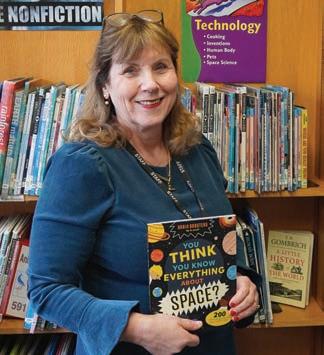
“As librarians, we are constantly reading, recommending, listening, and personalising suggestions while being aware of new books, following trends and authors on social media and in the news,” says Hazel Forbes. “This is a vital part of keeping the library buzzing and up to date.”
At Moor Park in Shropshire, they believe that reading starts long before children even decode their first word. “Books are not simply tools for learning, they are gateways to imagination, language, confidence and connection,” says Headmaster James Du eld.
“Literacy is not a single skill or a standalone lesson. It is the foundation upon which all learning is built,” he adds. “In an increasingly digital world, the ability to read deeply, write clearly and think critically has never been more important.”

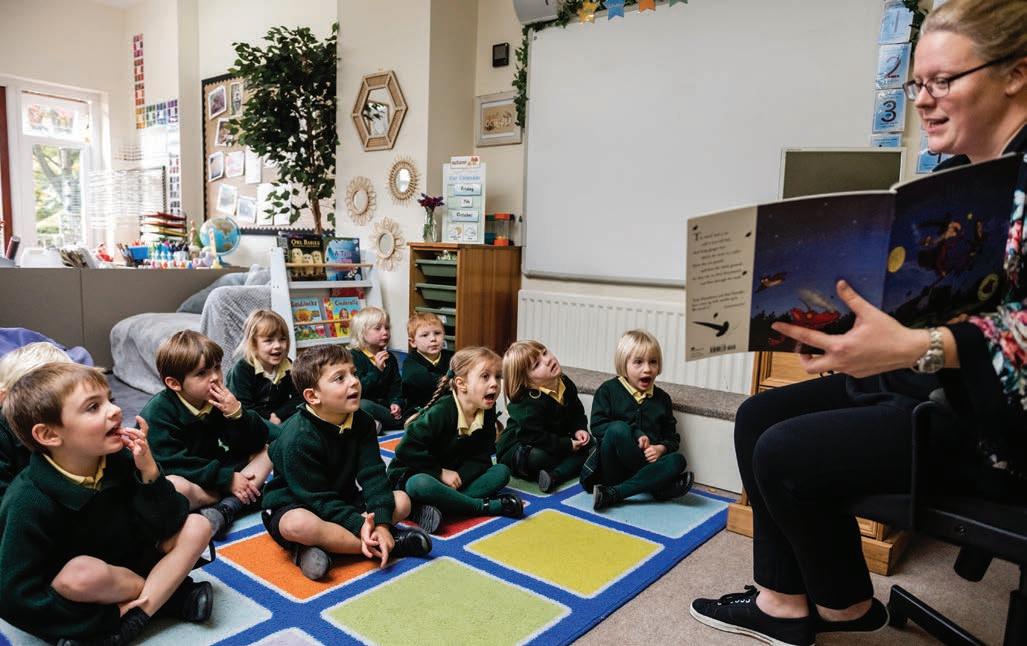
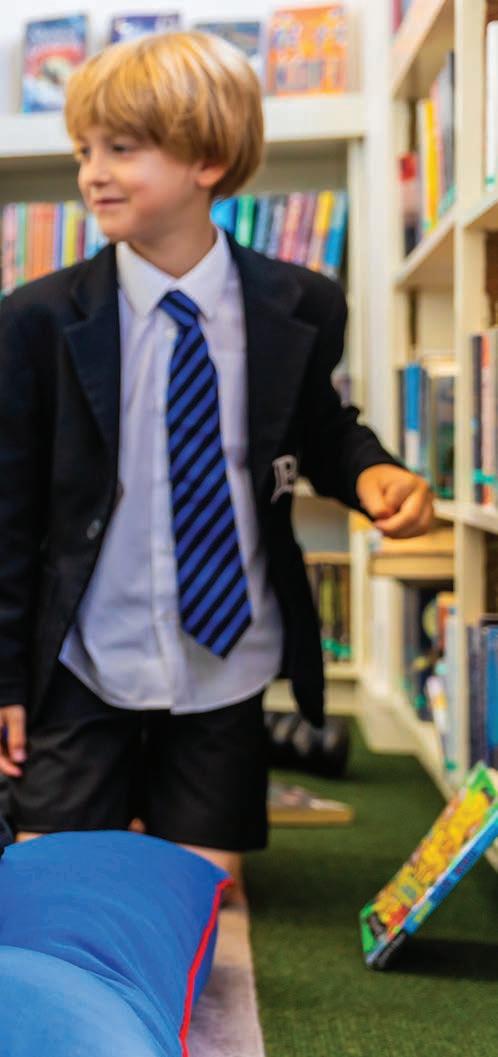
In Early Years, children are immersed in stories from the outset. Classrooms are full of picture books – from traditional tales to modern favourites –and story time is a hugely popular daily ritual. There is plenty of storytelling within and beyond books to support early phonics and help children on the journey to reading for themselves.
Visits to the school library – a wellstocked standalone space – are seen as vital for inspiring future readers. Pupils can visit during break times and there are comfortable spaces to sit and browse the options. This is in addition to libraries in each class stocked with age-appropriate books covering di erent areas of interest. “Giving children the freedom to choose their own books helps them feel ownership over their reading and turns it into something personal and enjoyable rather than simply a classroom task,” says James Du eld. There is a firm belief at Moor Park that every child can become a
confident reader, even if the journey looks di erent for each individual. Simple approaches, like encouraging children to carry a book with them at all times and handing out bookmarks, help support that connection with reading. Early identification of barriers to reading and SEND support are seen as critical. There are targeted interventions – including multi-sensory phonics, one-to-one reading time and adapted texts – led by the Head of Learning Support in liaison with families and teachers.
“The aim is always to develop independence and a sense of achievement,” says James Du eld. “Success is sca olded carefully so pupils experience progress without feeling overwhelmed. Above all, our inclusive ethos ensures that children feel safe, understood and valued. By combining high expectations with personalised support, we help every child at Moor Park see themselves as a reader.”
Special events such as author visits,
“Giving children the freedom to choose their own books helps them feel ownership over their reading and turns it into something personal and enjoyable”
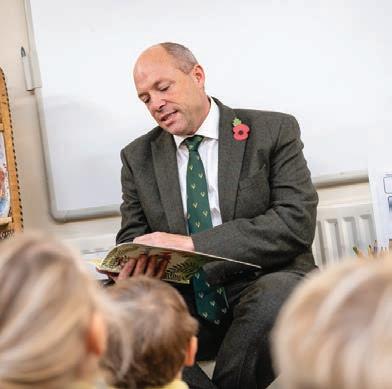
World Book Day, National Poetry Day and National Storytelling Week are celebrated, transforming reading into a shared and celebratory activity. Author visits make the creative process real and this, says the school, encourages children’s deeper questioning about characters, plots and endings.
Parents are encouraged to become part of the reading journey, so that it is viewed as a pleasure out of school, not a chore. There is plenty of guidance on shared reading, plus book recommendations. “We also celebrate reading at school through events, book fairs, and family reading challenges, creating a strong home-school connection,” adds James Du eld.
Pupils, of course, play a vital role in helping reading to stick, with mentoring and peer-group behaviour influencing how books are viewed. Children from every year group read together regularly, with older pupils modelling positive reading habits and enthusiasm to inspire younger ones. This cross-age approach at Moor Park helps to build a genuine sense of shared enjoyment and community – championing the value of books and reading, for life, and not just for school.












































































































Handmade, for you.









Merchant Taylors’ Prep is renowned for its outstanding academic education. Our mission is to truly know each pupil. We support them to develop their unique talents, grow in confidence, and ensure they leave well-prepared for life at our senior school.













Open Morning: 8 May 2026







Vist our website to book your place and register for entry at 3+, 4+, and 7+.










The Head of Sidcot Junior School Cath Dykes on how home and school can unite to help deliver childhoods where screens are tools, not masters
This spring, the Department for Education (DfE) publishes long-awaited guidance on screen use for underfives. This marks a pivotal moment for educators and parents. Recent DfE research reveals a startling reality – the average two-year-old now spends over two hours a day in front of a screen. The conversation is shifting to how we can protect the sanctity of a screen-free childhood.
The government’s upcoming guidance is expected to reinforce a philosophy we have long championed at Sidcot Junior School. We know that sedentary screen time can displace the activities that build essential neural pathways. When a child swipes a screen, they are a consumer; when they build a den, they are an architect.
“When a child swipes a screen, they are a consumer; when they build a den, they are an architect”
At Sidcot Junior School, we view the digital landscape not as an enemy, but as a tool that must be introduced responsibly. But for our youngest learners, the most vital 'hardware' isn't a tablet but a pair of muddy boots, a paintbrush and an open field. We operate a mobile-free environment to ensure social times remain truly social. By removing 'digital noise', we create space for students to discover passions –whether in the art studio or on the sports pitch – and build the increasingly vital soft skills that allow them to develop into great learners.
While we champion a 'back to basics' approach, we recognise that technology is an integral part of the modern world. The solution is not total avoidance, but a responsible, age-appropriate introduction.
In our youngest year groups, screens are strictly a teacher-led educational resource, used purposefully to enhance the curriculum. As children progress to Year 6, we transition them toward digital independence.
Pupils learn on their own devices within a highly monitored environment. This allows them to master essential computer skills while learning digital responsibility. By the time they leave us, they view that device as a tool for creation and research, rather than a source of passive entertainment.
The most e ective antidote to 'screen creep' is a robust outdoor provision. Located in 150 acres of Somerset countryside, Sidcot is able to o er just that. Our students engage in weekly Forest School sessions from PreSchool onwards. Outdoor time isn’t a break but another classroom, fostering resilience, imagination and sensory integration.
However, schools cannot work in a vacuum. A partnership between parents
and educators is vital to safeguard a child’s development. We recognise that the school holidays are often the most challenging time for parents to maintain these boundaries.
In a recent poll we undertook with Ocean Adventurers, 65% of parents said they rely on screens simply to ‘get things done’. This is why we have partnered with Ocean Adventurers to launch the O ine Adventure initiative. This provides a toolkit of screen-free activities and support, bridging the gap between term-time structure and holiday freedom.
We must empower our children to become the masters of technology, rather than its subjects. By prioritising play and adventurous exploration, we aren't just protecting childhoods but building the cognitive and emotional foundations needed to thrive in a digital future.
Let’s give our children the gift of being bored, the joy of getting muddy, and the freedom to look up, not down at a screen.


The Head of MFL at St Catherine’s Prep School, Bramley on the far-reaching benefits of learning other languages from an early age
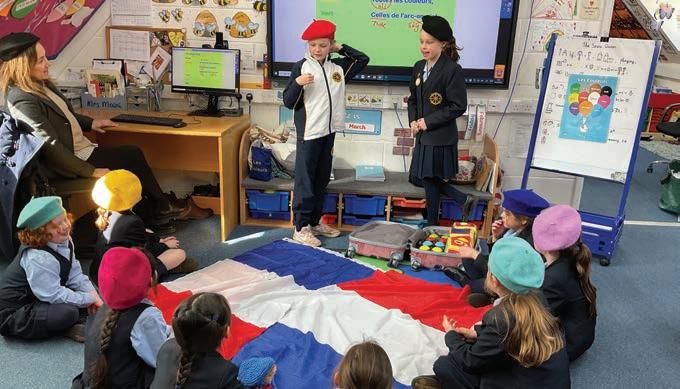
Learning a language from a young age is more than just acquiring vocabulary and grammar; it’s about shaping the brain, expanding empathy, and unlocking a lifetime of opportunity.
Children’s brains are uniquely wired for language acquisition. During the critical period of early development, they absorb sounds, structures and patterns with astonishing ease. Studies show that bilingual or multilingual children often outperform their monolingual peers in tasks involving problem-solving, multitasking and memory.
Learning an additional language also strengthens the brain’s executive functions, laying a foundation for academic success across disciplines. It reinforces, deepens and develops skills in language-learning at school generally, with many opportunities for cross-curricular work in primary language studies, maths, and humanities.
At St Catherine’s, we aim to encourage all our pupils and students to see themselves as plurilingual. We are explicitly preparing our pupils for their lives in a diverse world beyond school. Children naturally find this exciting, and we wish to harness and cement this outward-looking perspective.
We have vibrant language departments in both the Prep and Senior schools, with active links between both, enabling girls to learn from each other and follow role models. We celebrate languages and culture across the world, with special activities at the beginning of every academic year.
Our Sixth Form linguists have led a range of informal language clubs in the Prep School, creating a wonderful space where Prep and Senior girls come together to share phrases from their own languages including, for example, Welsh and Ukrainian. We have also welcomed visiting family members to share childhood storybooks and cultural traditions. School Language Monitors help with structured role plays to support learning and lead in our school entries to external language competitions.
“Children’s brains are uniquely wired for language acquisition – they absorb sounds, structures and patterns with astonishing ease”
It has been inspiring to see the younger students not only embracing these opportunities but working hard to participate and acquire new knowledge. Ongoing crossyear-group exchanges naturally open up conversations about cultural traditions, giving the girls a deeper appreciation of the rich diversity within our own school community. Language is a key to understanding culture. When children learn another language, they don’t just learn how to speak, they learn how to see the world through di erent eyes. They gain insight into traditions, values and perspectives that may di er from their own. This fosters empathy and tolerance, as well as promoting independence and confidence.
Children learn to take risks, to experiment, and to accept mistakes as they grow in proficiency and understanding.
The benefits extend far beyond childhood. Those who have acquired additional languages tend to have better communication and interpersonal skills, deeper relationships with people from di erent backgrounds, and even delayed onset of age-related cognitive decline.
Perhaps most importantly, learning a language early teaches children that communication is more than words – it’s connection. It shows them that the world is vast and varied, full of voices worth listening to. In a time when division often dominates the headlines, raising a generation that can speak – and listen – across boundaries is a powerful act of hope.


With SEN reforms on the cards, Framlingham College Prep School discusses the ways in which its specialist provision supports every child’s success
Figures from gov.uk show that over 1.7 million (1 in 5) pupils in England had identified Special Education Needs (SEN) in the academic year 2024/5, which is a 5.6% increase from the previous year. Government forecasts suggest a substantial rise in coming years and, even with additional spending announced in last year’s budget, the deficits in local authority budgets could amount to over £8 billion by 2027. With major reforms announced in a recent White Paper, more parents are now considering independent schools because they can provide significant additional SEN support. This ranges from individualised educational learning plans and customisable curriculums to technology resources and expert sta in areas such dyslexia, autism and ADHD.
At Framlingham College Prep School, from the very first meeting we take time to understand the whole child – not just their academic profile, but their strengths, interests,challengesand aspirations. Careful observation, open dialogue with parents and close collaboration with teaching sta allow us to build a clear picture. Thisapproach allows us to create a plan that is flexible and responsive, ensuring that strategies,adjustmentsand interventionsevolve as the child grows. We o er a highly personalised level of care and support. Small class sizes mean sta know each child well, enabling early identification of needs and tailored support.As an independent school, we
“One of the most persistent myths is that children with SEN are less capable or less ambitious”
have the flexibility to innovate, respond swiftly to individual needs and create an environment where each child is supported and challenged appropriately.
Pastoral care is central to school life here, and we have specialist wellbeing provisions such asLego-based therapy, helping to develop communication,collaborationand social confidence. Our much-lovedtherapy Labrador Walter is available for emotional support for all pupils across the school.
One of the most persistent myths is that children with SEN are less capable or less ambitious. In reality,eachchildhasexceptional strengths,creativityand resilience – they may simply learn or process information di erently. Another misconception is that SEN support lowers expectations, when the opposite is true. E ective provision, with the right sca olding in place, allows childrenhigh expectations. SEN is not a limitation – it’s just a di erent starting point.
A particularly inspiring example is a Year 6 pupil who joined Framlingham with low confidence and significant
di culties with literacy. Through targeted support, adaptive teaching, and consistent encouragement (including one-to-one and small-group interventions, pre-teaching of key vocabulary, visual supports, task variation,additionalprocessing time and sca olded tasks) they were able to grow in confidence and engagement. Now this pupil is confidently contributing to class discussions and enthusiastically embracing all that our school has to o er.
A strong SEN provision lays the foundation not only for academics but also for confidence,independenceand resilience. A child who feelsunderstood and supported is more likely to engage positively with learning, take risks and develop the skills they need to thrive. Most importantly, e ective SEN support empowers pupils to recognise their strengths, advocate for themselves and approach the future with optimism – all essential forfuturesuccess.
NATALIE SKILTON Head of Learning Support
Framlingham College Prep School
John Chapman’s Jonnie Rocket adventures capture his own dreams and escapism as a boy, and also his part in movie history
John Chapman made it to the stars. As a young man, he fancied doing some acting so he went to Pinewood to see if he could get a job. They told him he really needed an agent, so he went to London, found an extras agency, did a few acting exercises and a week later he was on the cast of a production happening over at Elstree called Star Wars. “We were all told it was going to be a TV series,” he says. Of course, it was to be much more than that, and he counts himself privileged to have been
part of film history as the X-Wing pilot Red 12 Drifter in a movie franchise that is lodged deep in the imaginations of three generations now.
While he’s proud to have been part of that moment, looking to the stars was something John Chapman also did a lot as a boy. He had what was identified (years later) as dyslexia. “I did feel a bit of a dunce,” he says. “The only thing that got me through my school days was fashion and music, so I could keep some sort of credibility.
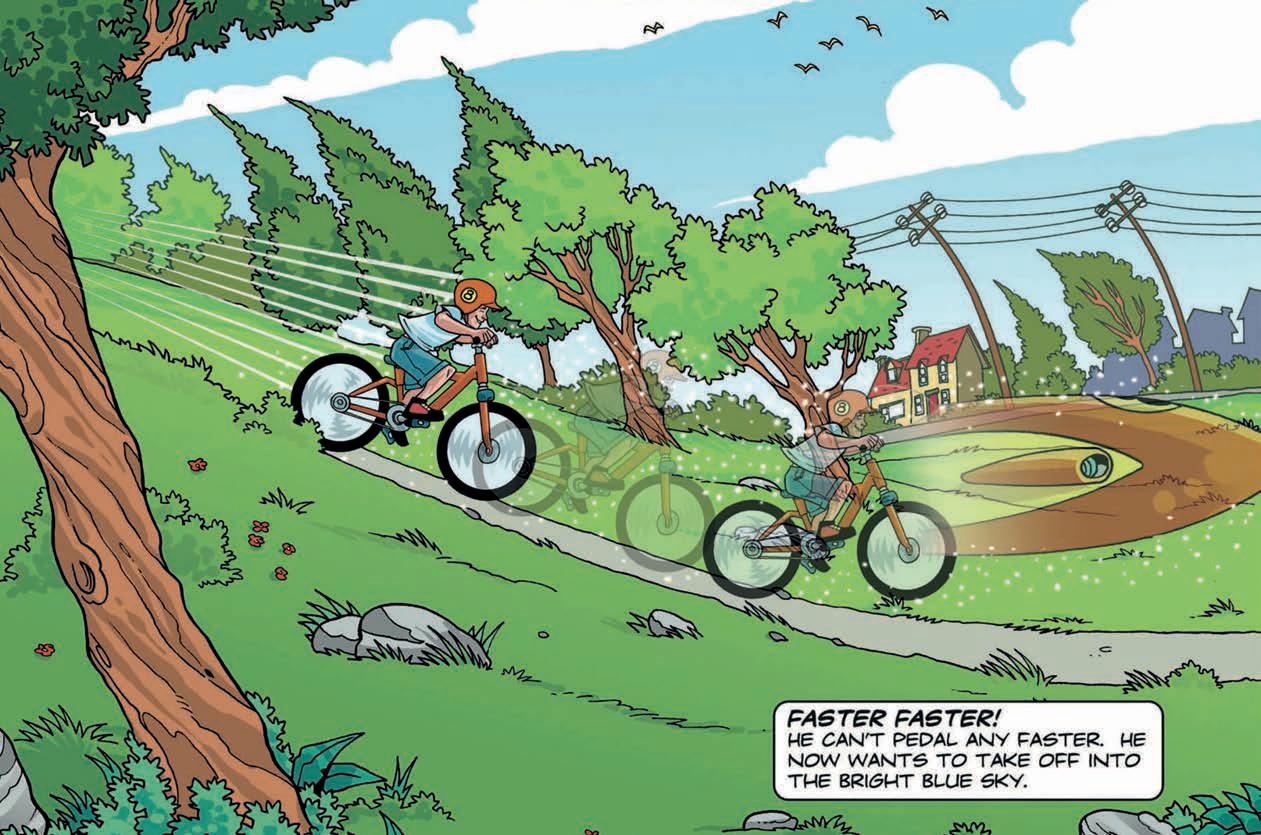
“The other thing that I did, especially when I was very young, was that my bike was a complete fantasy for me – escapism.
Lying in the garden at my parents’ house and staring at the stars I would think, ‘there’s got to be something better out there than what I’m trying to deal with at the moment’.”
Jonnie Rocket came to life as part of that childhood memory of his great bike expeditions. First dreamed up by John Chapman in the late 1990s during conversations with his family, the four books in the series centre on a boy whose bike has magic powers and takes him far into the universe. Bringing the books to life was a labour of love. Chapman wanted them to be imaginative and with educational

“My bike was a complete fantasy for me – escapism. Lying in the garden and staring at the stars I would think, ‘there’s got to be something better out there”
value – but also fun and accessible, even to reluctant or struggling readers.
“The font is cursive form which teachers and educationalists like for dyslexia,” he says. “And I’ve made the speech bubbles a creamy yellowy background in the Sagas that follow on from the first book. From my perspective, if I read on a yellow background the words stay where they are and don’t jump around.” Just as important, the books are big and bold, packed with colour and vivid illustrations to fire imagination.
Bringing this young superhero to life was critical. “I had a vision of what I wanted Jonnie to look like, and it was quite a retro look – an iconic look.” He sat down with Anthony Williams (now well known for his work with Marvel) who got the look just right.
In the first book, Jonnie decides to head o on his bike, with his mother’s reminder about his grandma’s birthday forgotten when the bike lifts o and takes him far into space. There, he encounters villains, but also friendly aliens who help him pick some very weird flowers. When he gets home, the exotic bouquet delights his grandma, and he realises that in earth time he’s only been away for ten minutes. The three books that follow see even more ambitious adventures on far o planets.
Now Jonnie Rocket has taken to the airwaves with a new podcast available on GoKidGo. This features Jonnie and introduces some fun new characters and, with 15 in the series, it’s another way for

children to access the adventures. As with the books, John Chapman hopes to inspire children with positive messages – and help them make a transition from listening to stories to becoming readers. As a dyslexic himself, he’s well aware of the barriers to reading, but comic books and podcasts have the benefit of letting children use their imagination and build stories beyond what they hear and see. And, despite the barriers of his own childhood, John Chapman’s dyslexia didn’t stop him. After Star Wars, he went on to build a successful family business – occasionally dipping his toe in the water of the vibrant Star Wars fan scene by attending conventions in Japan, the US and across Europe. “The
people are wonderful who turn up there. There’s so much camaraderie. They are taking their grandchildren along now.”
He’s grateful for the youthful chutzpah that got him a role on Star Wars, and for the whole experience of finding his way into a galaxy far, far away. “It feels like it was yesterday,” he says. “I thought that if I could do some acting I could be someone that I’m not in real life – I could be that cowboy and ride o into the desert!” And in Jonnie Rocket, he’s returned to that superhero idea, hoping to inspire a new generation to dream of wild adventures in a wide-open universe.
Jonnie Rocket books are available at jonnierocket.com and the podcasts are on gokidgo.com


The Head of Holmewood School – part of Cavendish Group – on the overlap of ADHD and autism, and how to support young people through self-awareness
AuDHD is a term sometimes used to describe the experience of having both ADHD and autism and reflects how traits of neurodivergence are interwoven. These characteristics do not operate independently – they interact, overlap and sometimes pull in di erent directions.
A helpful way to understand AuDHD is through a Venn diagram, with autism in one circle and ADHD in the other. The overlapping middle is AuDHD. For each individual with both diagnoses, that middle section looks di erent. Some children and young people show the ADHD drive for speed, spontaneity and novelty, while also having an autistic need for predictability and calm. Others experience intense focus (often called hyperfocus) but find transitions between activities exhausting. In
“For parents, AuDHD can help explain why their child copes brilliantly one day and unravels the next”
some cases, autistic hyperfocus may lock onto a single interest, while ADHD attention shifts rapidly between tasks.
From the outside, this can look ba ing. It might be the child who creates a detailed dinosaur dossier at 6am but cannot finish two sentences at school at 10am. Or the teenager who can game for 12 hours straight yet struggles to load the dishwasher.
For parents, AuDHD can help explain why their child copes brilliantly one day
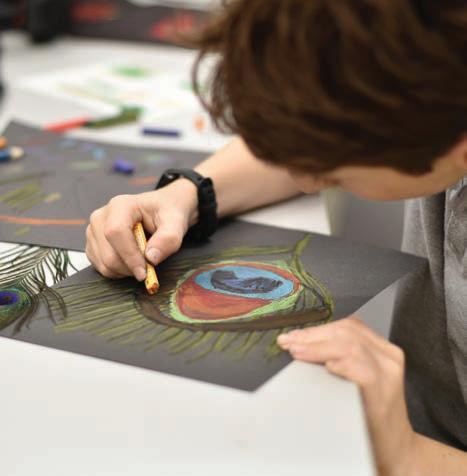
and unravels the next. It can also clarify why school may describe a pupil as distracted, while at home they appear able to focus for hours (or vice versa).
This apparent inconsistency is a common feature of AuDHD. As one young person at Holmewood put it: “My ADHD keeps writing cheques that my autism just can’t cash.” ADHD can lead a young person to impulsively say yes to the task, plan or promise, but when it is time to deliver, the autistic side may be overwhelmed. This is not about motivation or e ort; it is about capacity under specific conditions.
Supporting an AuDHDer starts with understanding the individual child or young person: what motivates them, what drains them, and what helps them to regulate. Building self-knowledge is


particularly important. When young people begin to recognise which traits trip them up and which unlock their focus and creativity, adults, too, can anticipate challenges. Self-awareness also gives everyone a shared language for what is happening, making it easier for young people to explain how they feel and what they need. In essence, this is about understanding what sits in the middle of that individual’s Venn diagram. Motivation in AuDHD is best understood as circumstantial. It is rarely about whether a young person can do something, and much more about under what conditions they can do it. Helping an AuDHDer connect deeply with the 'why' of a task is often key to successful completion. Practical strategies to support motivation include linking tasks to interests, using body doubling (another person there while a task is completed independently) and o ering structure with flexibility. Urgency and rewards may be helpful when used thoughtfully. Crucially, rest and breaks are part of strategy, not a reward for finishing. When adults take on the role of positive strategy suggester and motivational support, something shifts. Often, task completion becomes the quickest route for a young person to regain autonomy. In a nutshell, we do not want children and young people with AuDHD to stop writing cheques. Instead, we want to help them understand their own capacities and conditions, so that the cheques don’t bounce.
In today’s complex online world, we must coach pupils to help them distinguish truth from fiction, says Cumnor House Sussex Head Fergus Llewellyn
Like many people across the country, I loved watching The Traitors series earlier this year. Edge-of-your seat moments, great intrigue, high levels of dramatic irony – it contained all the ingredients of must-watch TV. Yet underpinning it are issues that are relevant to what we are all exposed to in modern life. Trust. Manipulation. Friendship. Honour. Conviction. And above all: truth.
From a young age, children have always had to learn that the world is not perfect and that things are not always what they seem. I am dreading the moment that my daughter finds out that the tooth fairy is not real. This kind of thing is not new. What is new is the proliferation of lies, misinformation, disinformation and the sophistication of the manipulation children now experience through social media and AI.
To simply observe the way in which reactions to events in Trump’s America
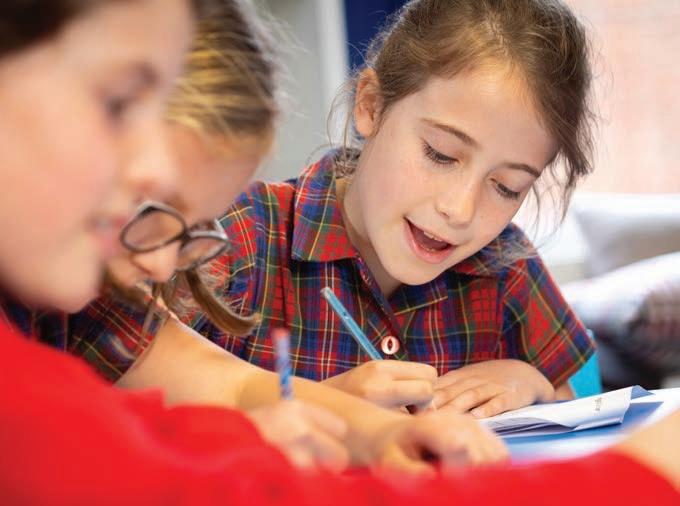
have been so starkly di erent and so compellingly expressed is to see this issue writ large. Relative truth and absolute truth, or indeed relative truth and absolute lies, have become so entangled that a young mind is going to find it harder and harder to navigate. We need to teach our children about the truth more than ever.
At Cumnor, we see this as a threefold problem and, while I cannot claim to have solved things by any stretch of the imagination, we have begun a journey to be more overt in our teaching about truth. The first issue can be summarised by ‘know your enemy’, or as Sun Tzu once wrote, ‘If you know the enemy and know yourself, you need not fear the result of a hundred battles’. Explicit teaching to educate our young people in how social media algorithms work, as well as working with our parents to help them set clear boundaries at home, are well established at Cumnor.
Looking ahead, we are developing a range of o -timetable, practical activities, such as giving our children the opportunity to take part in ‘be an influencer for a day’ simulations to give them real-world experience of the pros and cons of running a business on social media. We are also expanding our programme of speakers to include digital ethicists, data scientists and journalists. The second skill is not new – but more vital than ever before – namely, critical thinking. This starts right from a young age when we help children to di erentiate
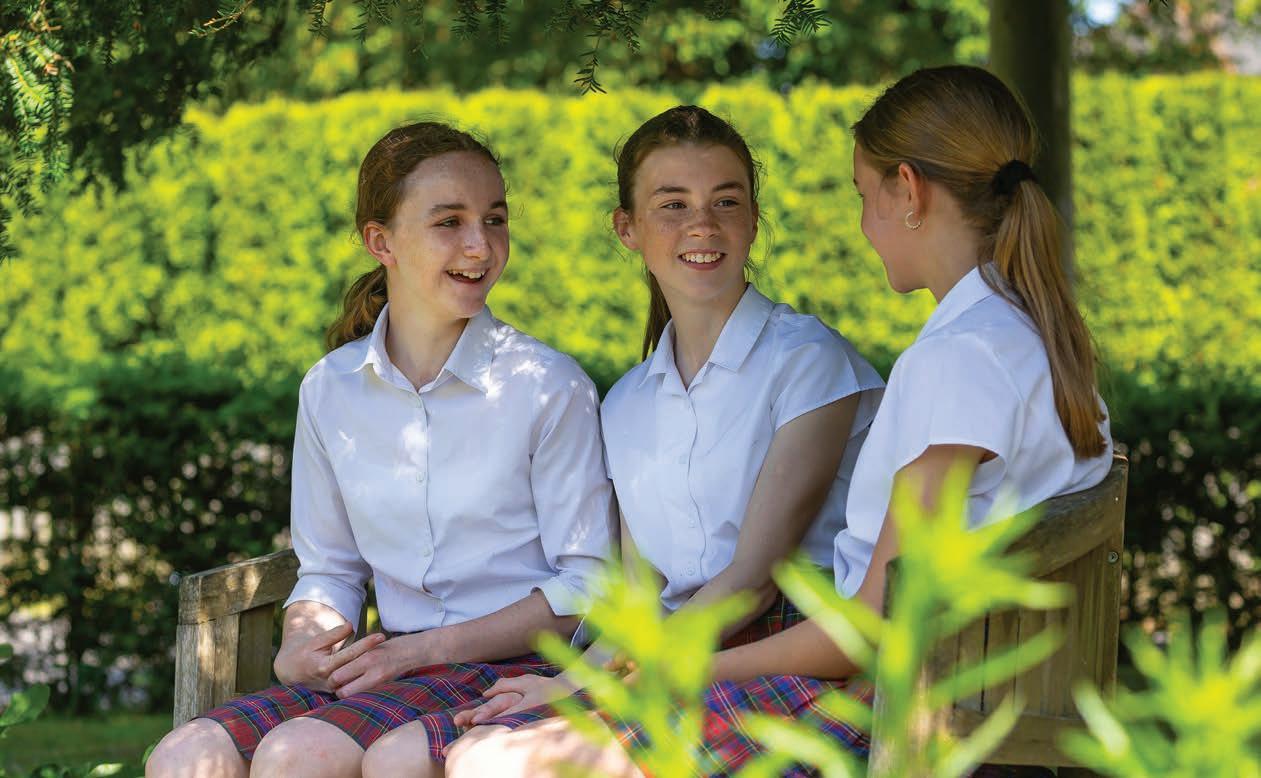
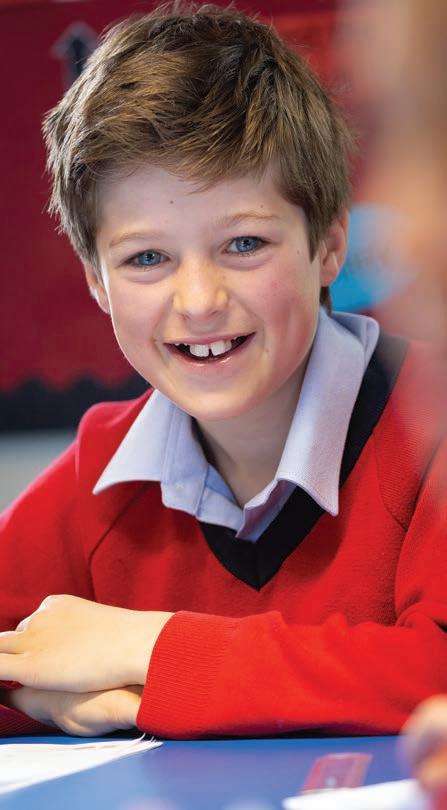
fact from opinion or fiction. It includes developing more sophisticated reading skills and a critical mindset that allows them to ask the right questions and create a healthy scepticism about the information they receive.
One of the key components of our Year 7 and 8 curriculum, Kudos, centres on self-reflection. This is not simply reviewing the outcome of a project, but actively noting what was challenging, the dynamics of working with others, adaptations for next time and new targets. Cumnor pupils build familiarity with regular reflection from an early age. Year 3 sees the introduction of STEER Tracking, a digital mental health tool used to delve beneath the surface and support wellbeing. Pausing to be more aware of ourselves and our own biases or influences – to really think – is vital. Finding the time for reflection in an outcomefocused world is important. E ciency is highly prized, but not always helpful.
The third is perhaps hardest to achieve, but possibly the most important – and that is creating a culture of passionate curiosity for the truth. Watching The Traitors, admittedly only a game, you are struck by the vehemence and determination of the contestants as they seek the truth, the deep disappointment when they get it wrong, and the joyous celebration when truth is


“Relative truth and absolute truth have become so entangled that a young mind is going to fi nd it harder and harder to navigate”
revealed. Schools have had this culture in various fields – including scientific enquiry, philosophical debate, historical source evaluation and geographical data analysis. Last term, one of our phrases for the week was ‘The only thing that can be improved upon is the truth’.


FERGUS LLEWELLYN Headmaster Cumnor House Sussex
Ultimately, for culture to shift, it has to come from the top, and a curriculum development project is underway at Cumnor to meet this aspiration. This is not about scepticism or distrust, but empowering with understanding and educating for truth, wisdom and responsible citizenship. Our world is far from full of grace and truth right now, but our children deserve practical measures that can help them try and achieve it.
Ben Evans of Windlesham House in West Sussex on the pleasures – and benefits – of a diverse co-curricular programme
Having access to a varied range of co-curricular activities in school helps to develop a child’s character. These o -timetable sessions allow children to safely take risks and try new things, developing both their physical and emotional skills. By taking part in new activities, children often realise what they are capable of achieving – learning that they can do more than they had thought. This positivity feeds back into risk taking and self-belief in the classroom and in other aspects of life. As well as building self-esteem, co-curricular activities stimulate children to think creatively, see things di erently and approach problem solving in alternative ways.
“Having a range of unusual activities stimulates children to think more widely, to challenge themselves both physically and intellectually”
Co-curricular activities such as The Duke of Edinburgh's Award (DofE) and Combined Cadet Force (CCF) foster belonging and identity, which are crucial in these formative years. Ultimately, this is about providing every child with opportunities to thrive. Children who don't shine in class or on the sports field have myriad opportunities to do so here. Many schools now o er more choice than ever. School location may bring extra benefits,
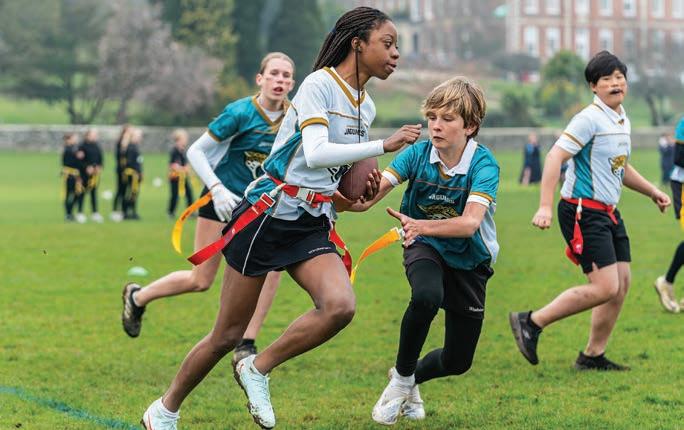
with some able to provide sailing, surfing and climbing. But outdoor pursuits, academic skill enhancement, creative arts and popular games are all on the menu. For example, First Lego League and Warhammer o er those with problem-solving, strategy and technical abilities a way to improve their skills.
Increasingly, schools are looking for clubs attractive to pupils from around the world and those that develop skills parents would like their children to learn – diving courses, clay pigeon shooting, polo, archery and fencing are all becoming popular. These sit alongside a trend for clubs developing more traditional skills – from weaving, knitting and crochet to ballroom dancing. Nothing is o the table provided the school has the space, can a ord the equipment, and can get the necessary risk assessment approved.
Having a range of unusual activities stimulates children to think more widely, to challenge themselves both physically and intellectually, to problem solve and master their fears.


They develop skills and strategies that they will take with them into their adult lives. With the landscape of careers changing rapidly, the children of today will need to be prepared to try anything and to adapt over the course of their careers. Learning to try new things without fear will be vital in the working landscape that they will enter.

Extra sports are most commonly requested at Windlesham House. We have introduced Flag Football, which has been extremely popular. We also receive requests for sports such as basketball, golf and horse riding. Clubs that involve technology – for example, coding, Lego, Vex Robotics and stopmotion animation – remain extremely sought after.

We are also seeing a trend of children wishing to spend co-curricular time inventing their own games and enjoying the freedom of playing in the woods. In essence it is those activities that are not always possible at home which are most appealing.

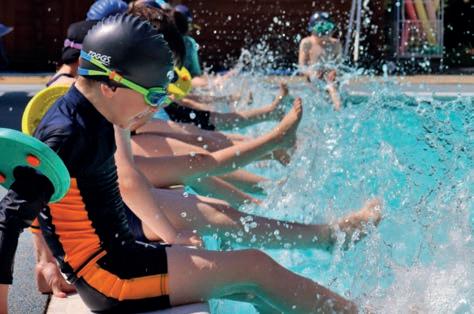

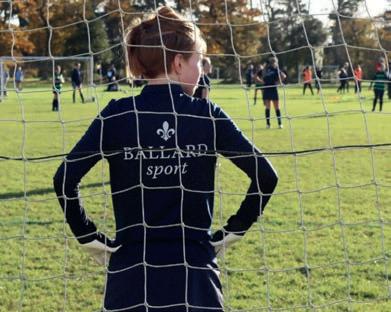
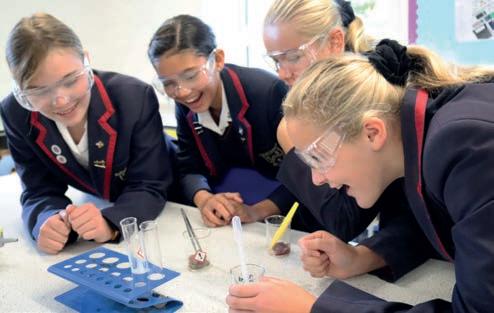
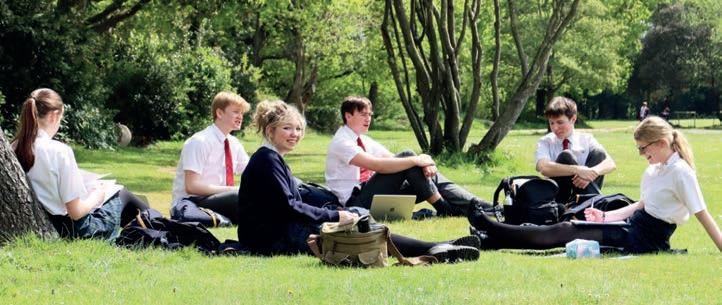

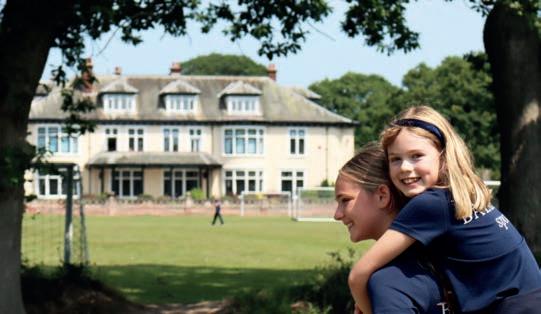
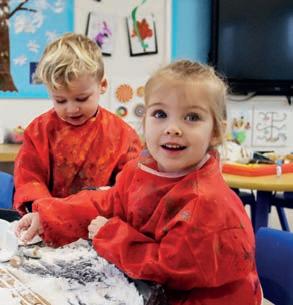
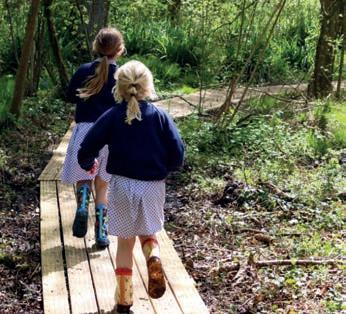






seconds with 60
The Headmaster of The Downs Malvern on his background and educational philosophy
What is your background?
I grew up and was educated near Bath before reading Biology at Imperial College London. During my time at university, I was fortunate to receive an Army bursary, and my attachments to my sponsor regiment provided experiences that complemented my academic studies and broadened my perspective considerably.
These experiences ultimately led me into education. I went on to complete a Secondary Science PGCE and later a Master’s in Educational Leadership and Management, beginning what has become a deeply rewarding career in teaching and school leadership.
What excites you most about your role?
The chance to influence young lives and provide children with opportunities to discover their talents is an ongoing privilege. Seeing children work, learn, play and perform with unbridled enthusiasm, supported by the whole school community, motivates us to continually improve the education we provide.
What is your academic philosophy?
I am a strong believer that children thrive when they are stretched from a position of security. If a child feels supported in their environment, they are far more willing to embrace challenge. Strong relationships inside and outside the classroom create that foundation.
Time spent understanding a child’s ideas, thoughts and motivations is never wasted, and the best teachers guide them so that they can take ownership of their learning and make the most of every opportunity.
Can you tell us about one pivotal moment in your career?
After four years of teaching, I stepped firmly outside my comfort zone and applied for a Head of Department role at The Banda School in Kenya. The experience was, without question, life-defining. Living and working in a di erent cultural context reinforced for me the universal importance of education and the power of schools to

bring communities together. It shaped my perspective as both a teacher and a leader.
What is your school’s approach and what sets it apart?
We o er many of the opportunities you would expect from a leading prep school, but what truly sets us apart is the strength of our community and the breadth of experience beyond the classroom. All pupils are free to pursue their personal interests and excel, which is instrumental in the high levels of success each pupil enjoys. Our connection to
our outdoor environment is critical in providing pupils with a healthy lifestyle for body and mind.
What makes a great student?
Being curious, positive and willing to have a go. The greatest progress comes from those who embrace challenge, welcome constructive feedback and work well with others. They are confident enough to be themselves and open-minded enough to keep learning, and that attitude undoubtedly contributes to an ethos of pursuing endless possibilities.
From your experience, what makes a great school environment?
A great school environment is about far more than buildings and facilities. It is about creating spaces where children feel ownership and a strong sense of belonging. Well-designed classrooms and strong pastoral care matter, but so too do outdoor areas where children can explore and collaborate. A rich childhood is shaped by imaginative play and meaningful relationships, with the freedom to grow in confidence within a supportive community.
“If a child feels supported in their environment, they are far more willing to embrace challenge – strong relationships create that foundation”






















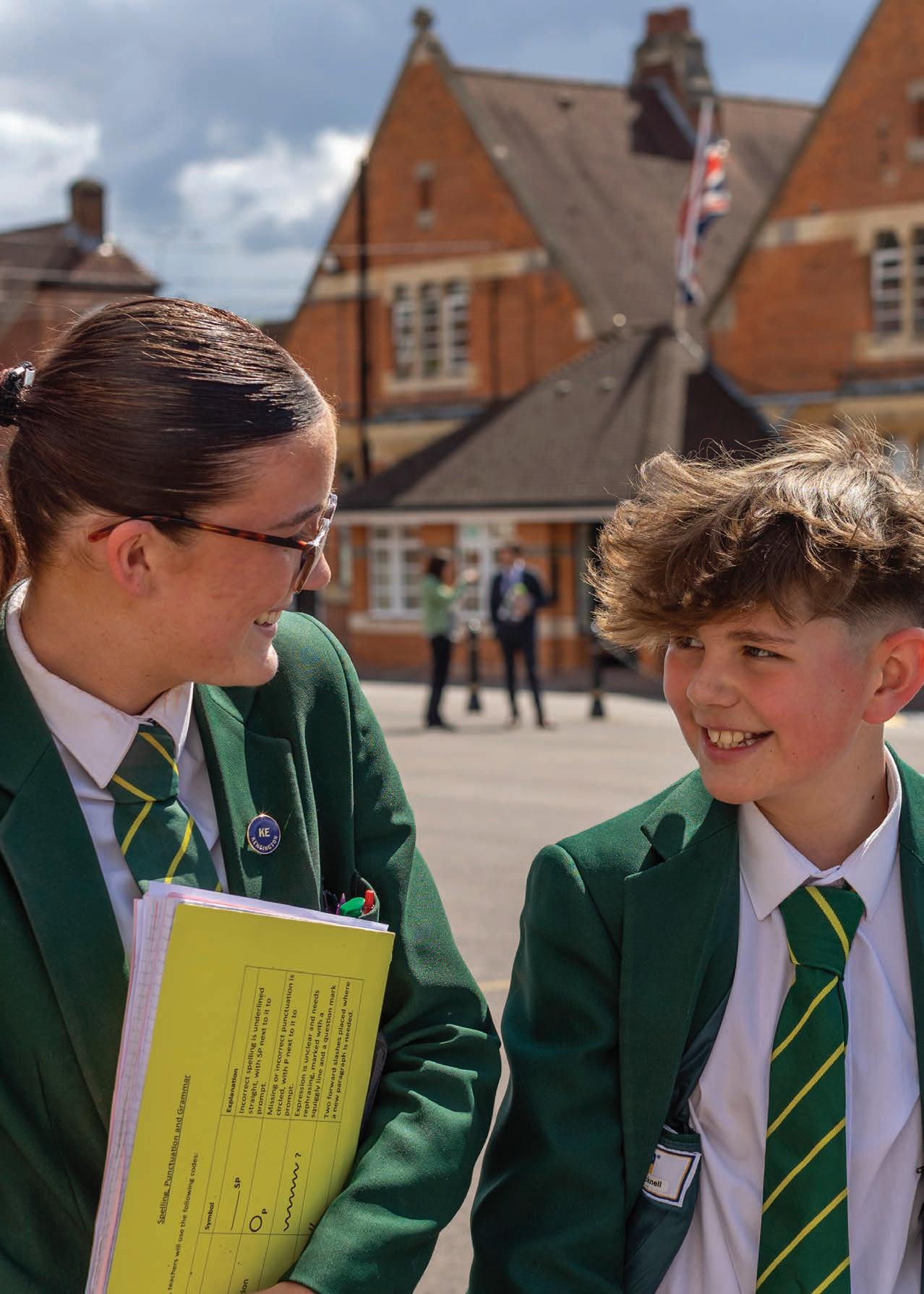
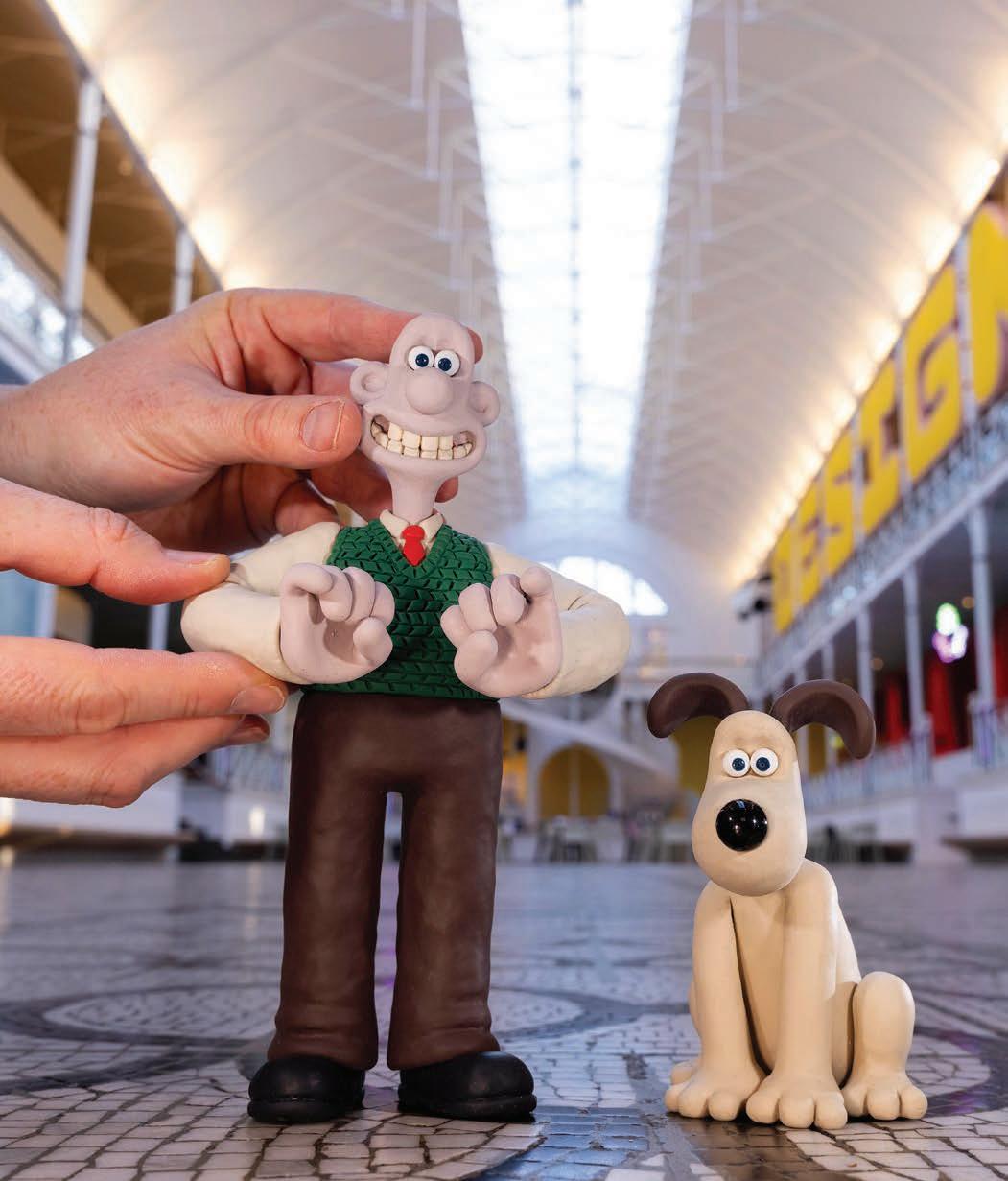
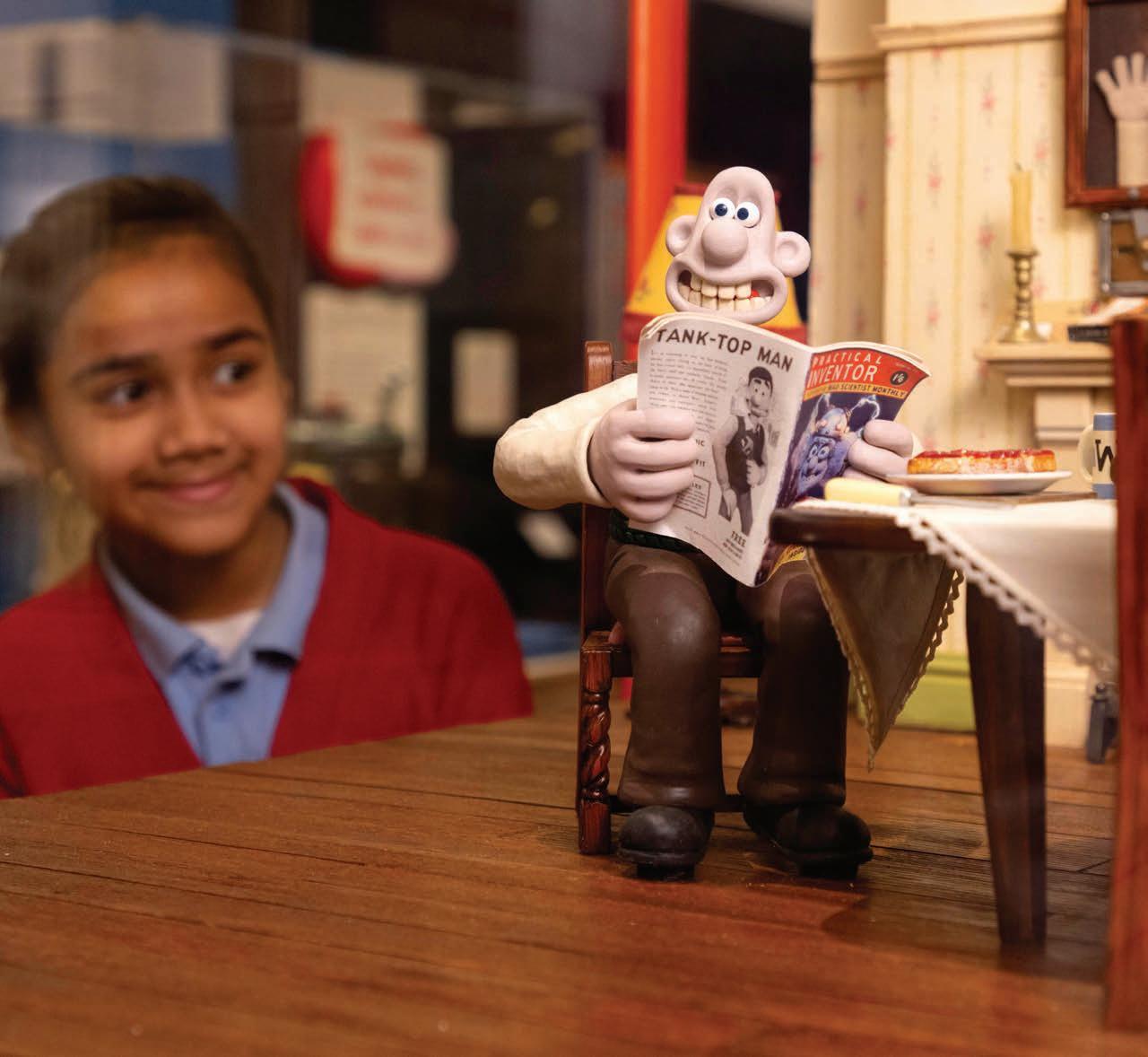

“Visitors have the opportunity to create their own stop-motion sequences, as well as lighting a set and filming live-action-videos”

Young V&A’s exhibition about great British film maker Aardman Animation is a treat – an opportunity to get up close to Wallace & Gromit, Morph and other national treasures
LIBBY NORMAN
There is everything to love about Inside Aardman: Wallace & Gromit and Friends, the Young V&A’s major new exhibition. For one thing, it’s about as multi-generational a day out as you can get in a museum. Grandparents and aunties can wax lyrical about the now truly vintage Morph (remember his first incarnation in Vision On?). Meanwhile, three generations can enjoy getting up close to Shaun the Sheep, the chickens from Chicken Run and, of course, those ‘cracking’ creations who delighted everyone, brought home a sidecar full of Oscars and other gongs and – so legend has it – worked wonders for sales of Wensleydale cheese around the globe.
Aardman, the Bristol studio, is celebrating its 50th anniversary this year, so it’s a really timely retrospective. Particularly welcome considering it lost a fair bit of its precious archive in a storage facility fire back in 2005. Thankfully, there is still plenty of treasure here on display, with over 150 exhibits, many of which have never been showcased before. For children – actually
for any age – it’s an eyeopener on the painstaking craft that goes into stop-motion animation. And, given Young V&A’s remit to keep things interactive, there are lots of practical ways to learn more about the elements involved in an animated film.
The first section of the exhibition explores developing ideas and storylines. Works in this section include development sketches for Morph and some of the original sketched incarnations of Wallace & Gromit. There’s also a hand-drawn storyboard for the train chase scene in The Wrong Trousers, while an interactive praxinoscope shows how images are stacked in quick succession to create a stop-motion sequence.
From here, the exhibition moves on to the business of model making, showing how characters, plots and miniature sets have been created. Highlights include Lady Tottington, the rocket from Wallace & Gromit: A Grand Day Out, and also the living room that is epicentre of Wallace’s inventive musings. The duo’s never-before-displayed motorcycle and sidecar is also here, along with the galleon from 2012’s The Pirates! In an Adventure with Scientists! – still the largest model Aardman has ever made.
ABOVE
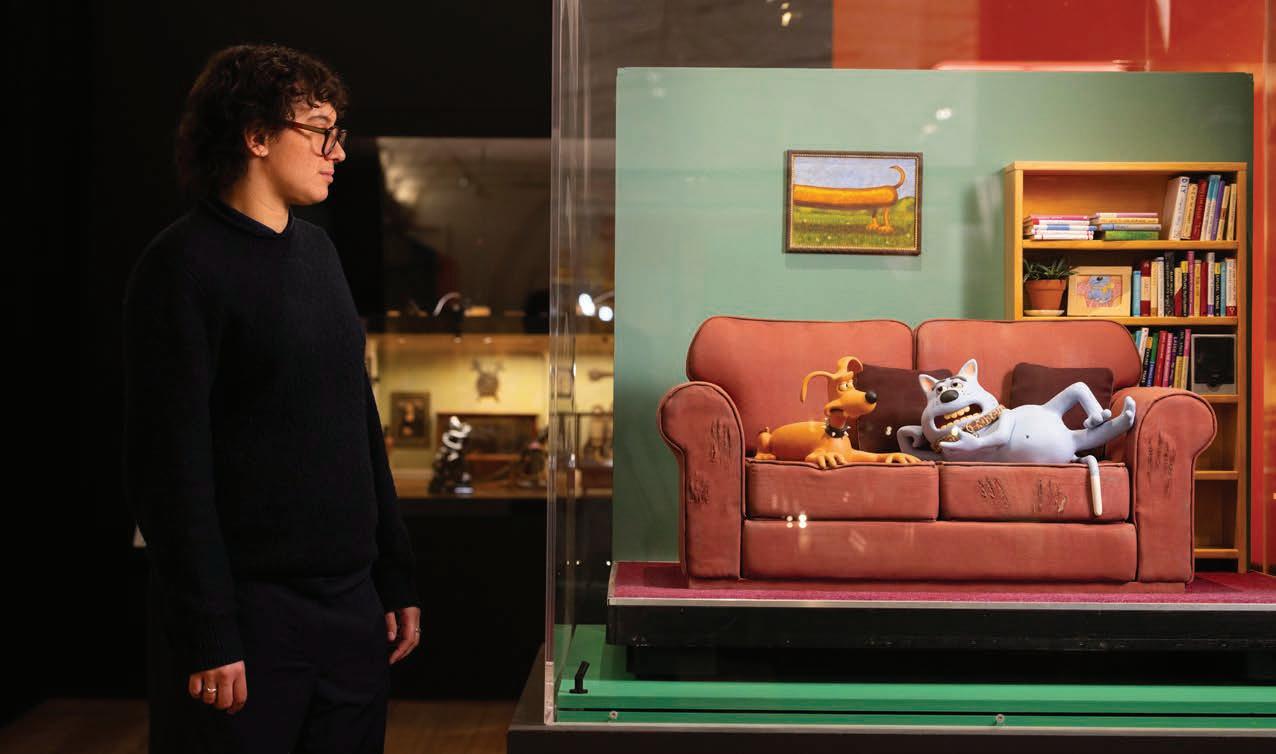
Other sections of the exhibition explore how all the elements of animation fit together, including lighting, sound and voice acting –and with behind-the-scenes videos and a daily planner to demonstrate how a filming schedule works. Visitors have the opportunity to create their own stop-motion sequences here, as well as lighting a set and filming live-action-videos – a technique used by animators to block out realistic movement for an animated scene.
The final section of the exhibition looks at what happens after the production is wrapped, including adding music and special e ects. Have-a-go moments here include creating Foley sound-design additions, such as the noise of footsteps, drawing, and so on.
With a new Shaun the Sheep film scheduled for release in the autumn, it’s good to know that Aardman is still hard at work creating movies and shorts to delight all ages. Going behind the scenes in this depth to see the many strands that make up an animated film is a rare treat. So too the chance to get right up close to the models from some of our favourite films. And for children and teenagers, it shines a light on the accessibility of this form of filmmaking. Inspiring stu indeed or, as Wallace himself would say, a ‘cracking’ creation.
* Inside Aardman: Wallace & Gromit and Friends is at Young V&A until 15th November 2026. An exhibition pass allowing repeat visits is £11; under 5s and V&A members go free, and concessions are available. vam.ac.uk/young
“For children,– actually for any age, it’s an eyeopener on the creative work and painstaking craft that goes into stop-motion animation”
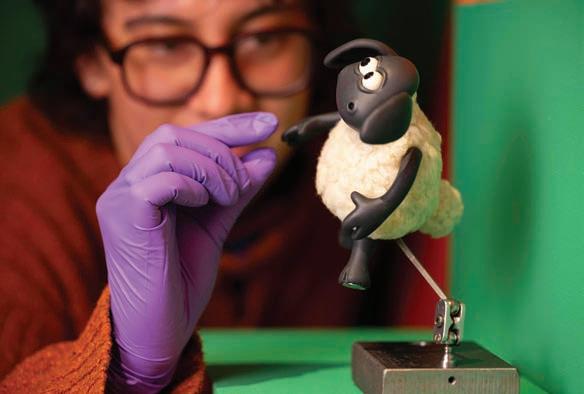




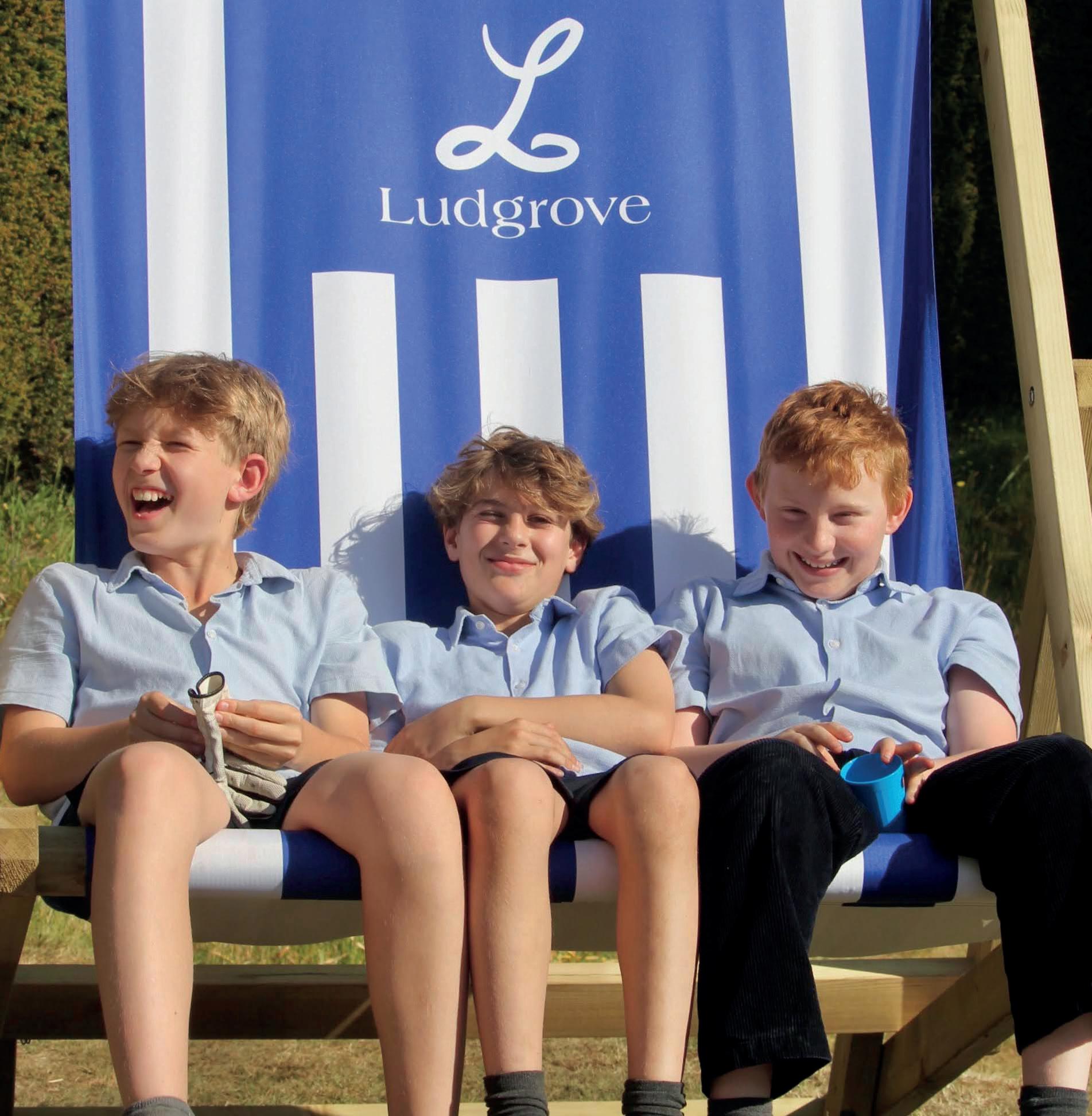
l Simon Barber, voted Best Head of a Prep School in the Tatler Schools Awards 2026
l Boys’ 100% boarding prep with fortnightly exeats
l Bus to Fulham and Newbury on exeat weekends and start/end of Half Term
l The majority of boys go on to Eton, Harrow, Marlborough, Radley and Winchester
l Ranked one of the Top 50 Prep Schools in The Cricketer Schools Guide
l 130 acres of grounds l Bursaries available
To book your private tour with the Headmaster, please contact registrar@ludgroveschool.co.uk
6+
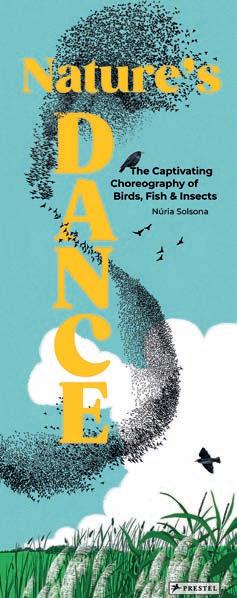
by Núria Solsona PRESTEL, £14.99
In a slimline format, and including six spreads that fold out, Nature's Dance captures the choreography evident in the natural world. What may seem random is a pattern that helps species fulfil important tasks and, ultimately, survive. The book profiles sky displays of birds through the formation flight of geese and murmuration of starlings, before moving on to the waggle dance of bees, in-line antics of ants, spiralised swimming of sardines and the 'domino dive' of huddles of penguins. Beautifully drawn, it raises big questions for nature lovers and mathematicians alike.
From a tour of world cities and a robot who forgets to recharge batteries to the life of insects and a pictorial history of great locomotives, our pick of brilliant spring reads

4+
by Molly Harris
illustrated by Jacob Souva HARPERCOLLINS CHILDREN'S BOOKS, £14.99
Whirby is a robot who loves nothing more than going to school and taking part in his favourite subject gadgeteering – especially bot battles. The problem is, he gets so excited about a forthcoming competition he stays up all night practising his best moves and building clever contraptions to ensure victory. Then, when it's time to compete, he has completely run out of battery. This engaging picture book is for lovers of all things robotic – and with a valuable message about powering down every so often to rest and recharge.
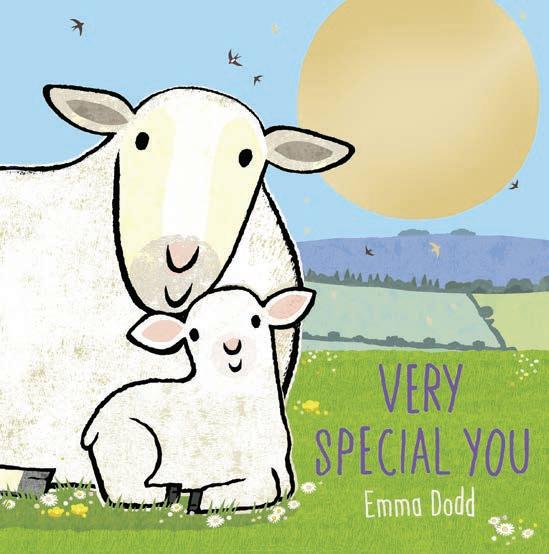
by Olivia Wakeford
illustrated by David Litchfield
HARPERCOLLINS CHILDREN'S BOOKS, £7.99
An inspired choice for children who enjoy both animal stories and mysteries, Olivia Wakeford's novel centres on family bonds, the uncertainties of growing up, and discovering true loyalty. Evan hates change, and yet that's just what he's facing in a big way. His family is split down the middle and Grandad Harry hasn't been the same recently. Only his dog Okie Dokie remains constant friend and companion. Then Evan finds out that something from Grandad's past haunts him still – even as he is forgetting so much in the present.
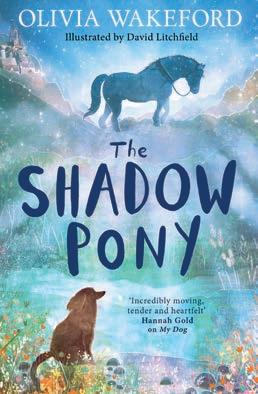
by Emma Dodd
TEMPLAR BOOKS, £7.99
Bestselling children's author and illustrator Emma Dodd delivers a delightful book about the power of a mother's love for their child – the latest in her colourful series celebrating the parent-child bond. With simple rhyming text and large-scale illustrations, some textured with gold, it describes the ewe's joy and wonder at her beautiful new lamb, perfect in every way, even when it's feeling a bit grumpy. This is a reassuring bedtime story and also a great pick for spring, with young lambs and their mothers much in evidence in the fields.
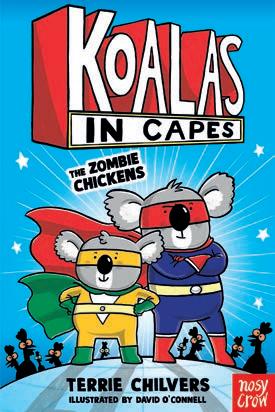
by Terrie Chilvers illustrated by David O'Connell NOSY CROW, £7.99
Take one supervillain ostrich and a flock of zombie chickens de-mummified by evil Dr Colossus and you have a recipe for feathered mayhem across the city of Pawtonia. Thankfully, our two superhero koalas Bob and Archie have their capes on standby. The first in this new series has easy-read text with lots of illustrations by David O'Connell. Laugh-out-loud jokes and asides from Terrie Chilvers (author of Snails of the Unexpected and other treasures) come pretty much guaranteed.
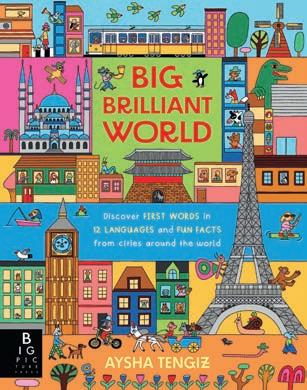
by
Matt Ralphs illustratedby Aysha Tengiz
BIGPICTUREPRESS, £12.99
This introduction to 12 great cities around the world will inspire young globetrotters. London, Paris and Rome are in the mix, along with more far-flung destinations, including Istanbul, Seoul and Mexico City. Aysha Tengiz' illustrations take you to the heart of each metropolis, while the text introduces useful words and phrases in home language, local foods, historical landmarks and notables – from famous artists to important alley cats. A book to pore over again and again, as there will definitely be a detail missed last time round.


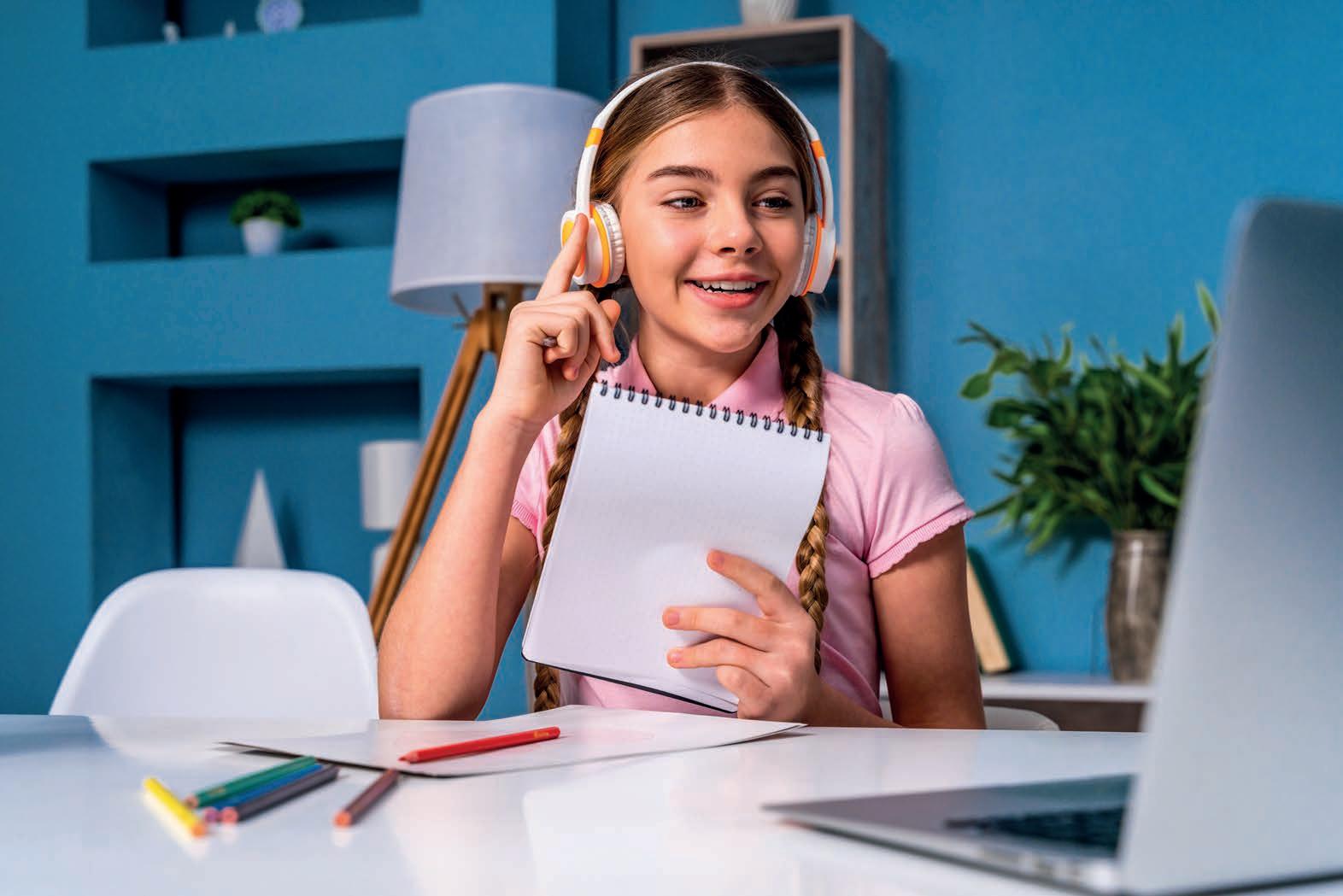
Shapingmindsforaglobalfuture. ABritisheducationonlineforpupilsaged8–18. Live,teacher-ledlessonsinsmallclasses,personalisedsupport,andflexible timetablesthatfitfamilylife—whereveryouareintheworld. Ledbyteachers|Lovedbystudents|Trustedbyparents.
www.oxfordonlineschool.org|admissions@oxfordonlineschool.org





by Cath Howe illustrated by Miguel Bustos NOSY CROW, £7.99
The author of Ella on the Outside returns with a novel about school transitions, kindness, the complexities of family life and friendship. Although Hattie has always wanted a sister, when her Mum's goddaughter arrives it turns out to be no picnic – and could it even be they prefer Seren to their own daughter? Dad seems to have forgotten his promise to give her her own room, she's starting secondary school and everything seems to be imploding. So where does she fit in – and can she and Seren ever become friends?
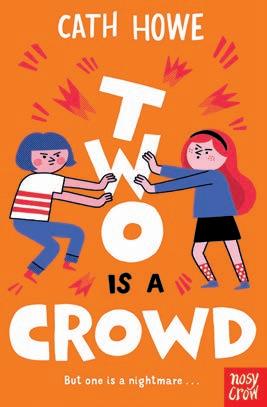
by Britta Teckentrup PRESTEL, £11.99
This much-loved series returns with a tale about anticipation, community and a big surprise. It's Little Hedgehog's birthday and. although there's a lovely red balloon from Big Hedgehog, no one else is around to even say 'happy birthday'. As the day draws on, Little Hedgehog thinks everyone has forgotten and becomes sad. Arriving home at dusk, the hedgehogs discover a huge surprise party has been organised by all their friends. With gorgeous illustrations, this is a reassuring story about big feelings – and it makes a great birthday gift for a friend.
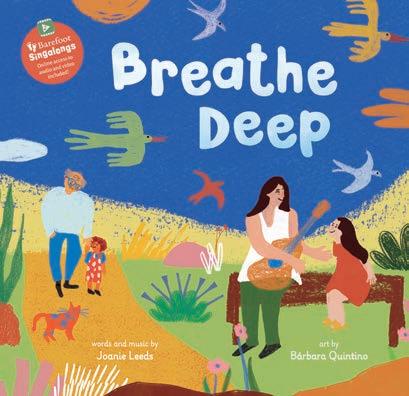
by Joanie Leeds
illustrated by Bárbara Quintino BAREFOOT BOOKS, £7.99
The Grammy Award-winning children's songwriter and singer Joanie Leeds has created this new singalong book to help encourage relaxation among the youngest readers. There's access to both an audio and video included with the book and Bárbara Quintino's vivid nature-inspired illustrations and the rhythmic text make this one to have to hand at bedtime or post meltdown. The soothing reminders to relax and breathe deeply, help to encourage a focus on the present. While excellent for embedding mindfulness, it's also a useful way of helping children practise their counting.
7+
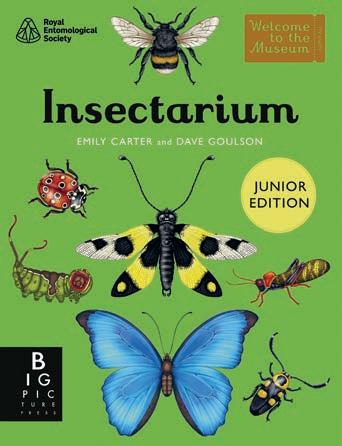
by Dave
This handbook explores the wonderful world of insect life. With at least one million species, making up 80% of life on earth, there's a lot of ground to cover. The book is organised by group, beginning with ancient insects (dragonflies, cockroaches, and so on) and ending with an exploration of wasps, ants and bees. Painterly illustrations and informative text about the insects and their habitats make this a reference to return to and, while it's accessible for the 7+ age group, it will have a much longer shelf life.
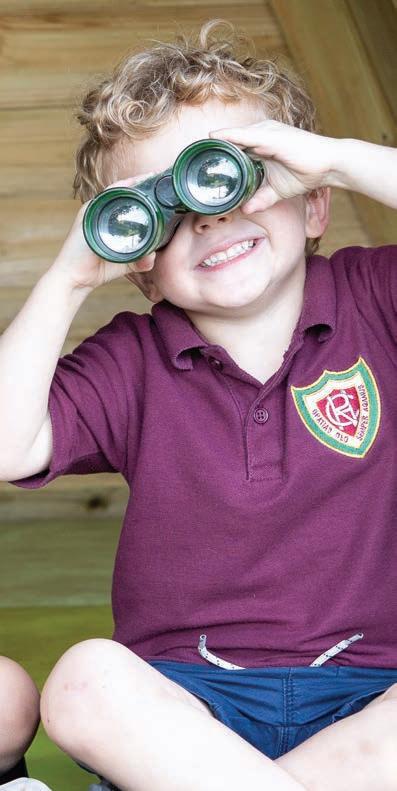



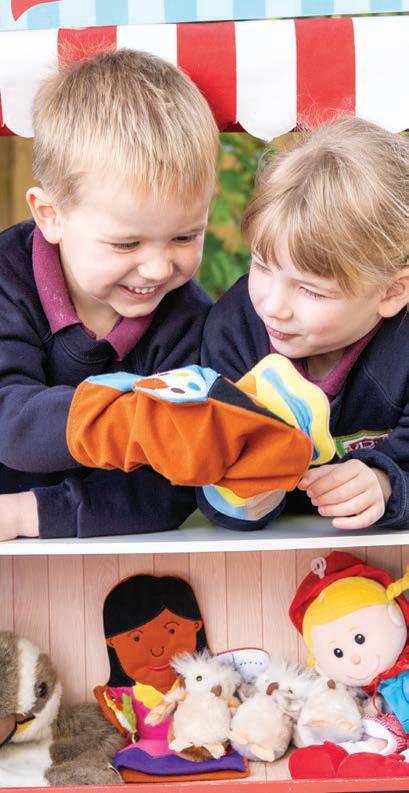


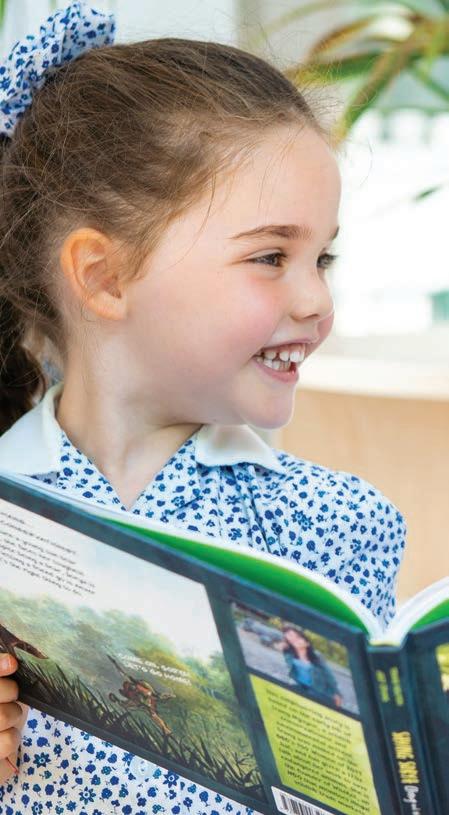

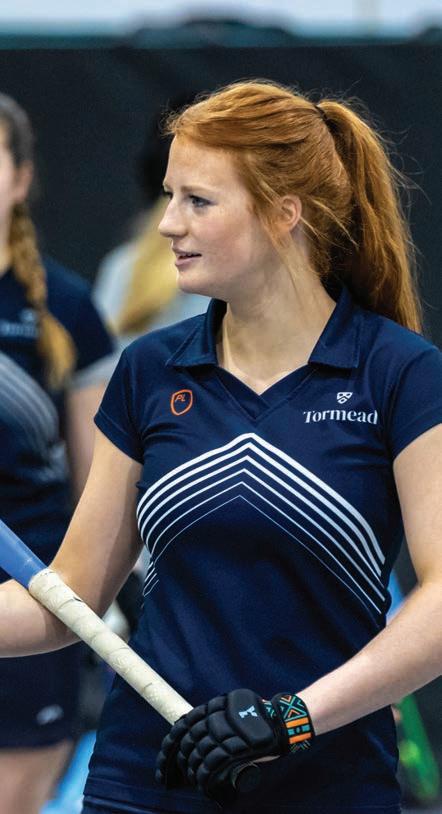
by Fátima Ordinola POST WAVE, £12.99
The latest picture book from rising star author-illustrator Fátima Ordinola (author of Our Love) centres on the delicious night-time ritual of settling down to rest. Readers are lulled with the thought that 'dreams arrive with the falling of night'. And this happens no matter who we are and where we lay our heads – with vivid illustrations of pandas, sloths, big cats, sheep and tiny caterpillars in dreamland. The restful palette and lush images are a treat, and there's a surprise gatefold of assorted animal slumberers right at the last.
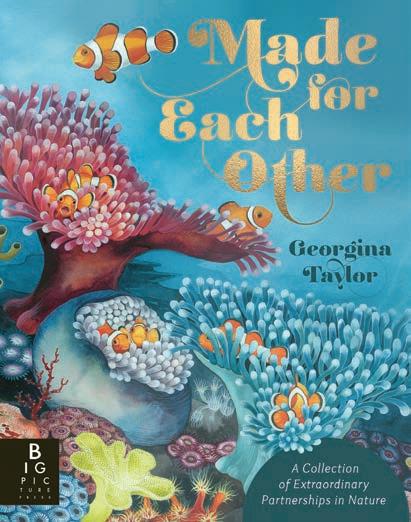
for Each Other
by Georgina Taylor
BIGPICTUREPRESS, £10.99
This richly illustrated book looks at the specifics of symbiotic relationships – the close relationships that have evolved among all sorts of organisms. From the monarch butterfly that feeds exclusively on milkweed to the bacteria that enables bobtail squid to put on a memorable lightshow, there are some wonderful examples. While some relationships are pretty clear cut, others are more convoluted. For instance, Brazil's hyacinth macaw relies on the toco toucan's energetic seed dispersal to ensure the continued growth of the only tree where the macaw likes to build its nest.
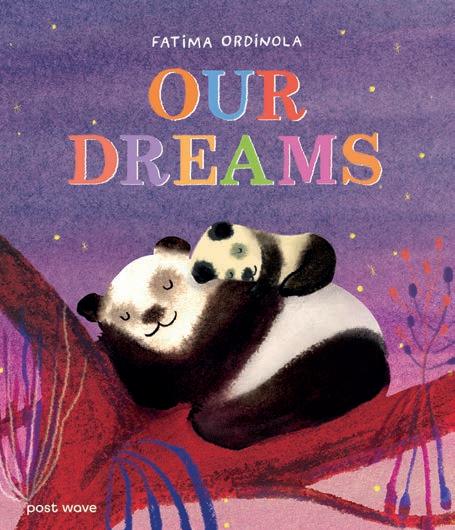
by Alastair Steele illustrated by Ryo Takemasa
BIGPICTUREPRESS, £10.99
Part of a series for transport bu s, Locomotion is beautifully illustrated by Ryo Takemasa and takes readers on a journey through the history of rail travel. Beginning in the steam days, it moves through diesel and electric, sky lines and mass transit – then on to the future of track and engine. Train fans will enjoy the sections highlighting great world journeys – from the Ffestiniog Railway in Snowdonia and California's Zephyr to Japan's Shinkansen. There's detail, too, on stations, the wartime role of railways, plus record breakers around the world.

9+

by Craig Steele
We all use the internet, but how does it work? Written by a computer scientist and educator, this guide goes behind the scenes to give a breakdown of the technologies that increasingly power our world. Beginning with a brief history of the internet, it moves on to explore infrastructure, data transmission, programming language and the professionals who keep us connected. We particularly like the 'data blast' boxes that demystify key phrases and concepts and the sections exploring positives and negatives of the internet – from rescuing the missing to cybercrime.

When journalist Benjamin Hall put on a new hat as a children’s author, a family mascot became central – so too themes about personal responsibility and honesty
LIBBY NORMAN
Benjamin Hall is frank about the challenges of writing his first ever children’s book, Read All About it!. Yes, he may have been a journalist for many years, reporting from some of the most dangerous places on the planet. And when, in 2022, he su ered devastating injuries in an explosion outside Kviv, he not only survived to tell the tale but did so in two New York Times bestsellers –Saved and Resolute
None of this quite prepared him for distilling big ideas into such a very few words in a story that young children can relate to. “Can I just say it’s very, very, very di cult,” he says. “I’m a journalist and if you give me facts and I speak to a few people I can put it together. Even the books I wrote before, the non-fiction, the same idea. But when you have such a short few pages to create a story that hopefully flows and has morals and a character – it was di cult.”
Not that he didn’t enjoy it. It was a closeto-home idea that came about when he
was talking to his publisher HarperCollins about a hedgehog gifted by his children, his companion on every foreign assignment.
“Wherever I was reporting round the world, wherever I was covering wars, I had this little hedgehog,” he says. “I had it in my pocket and I always used to travel with it.”
A reminder of home and his daughters, certainly, but it became more than that. “Then when I was in these really bad places, I wanted to tell my children what was going on but they were really young at the time. I thought
“Wherever I was reporting round the world, wherever I was covering wars, I had this little hedgehog”
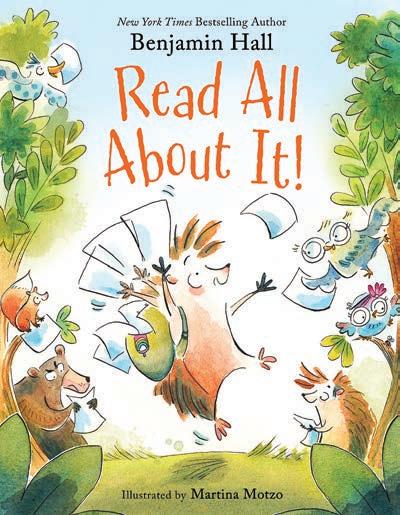
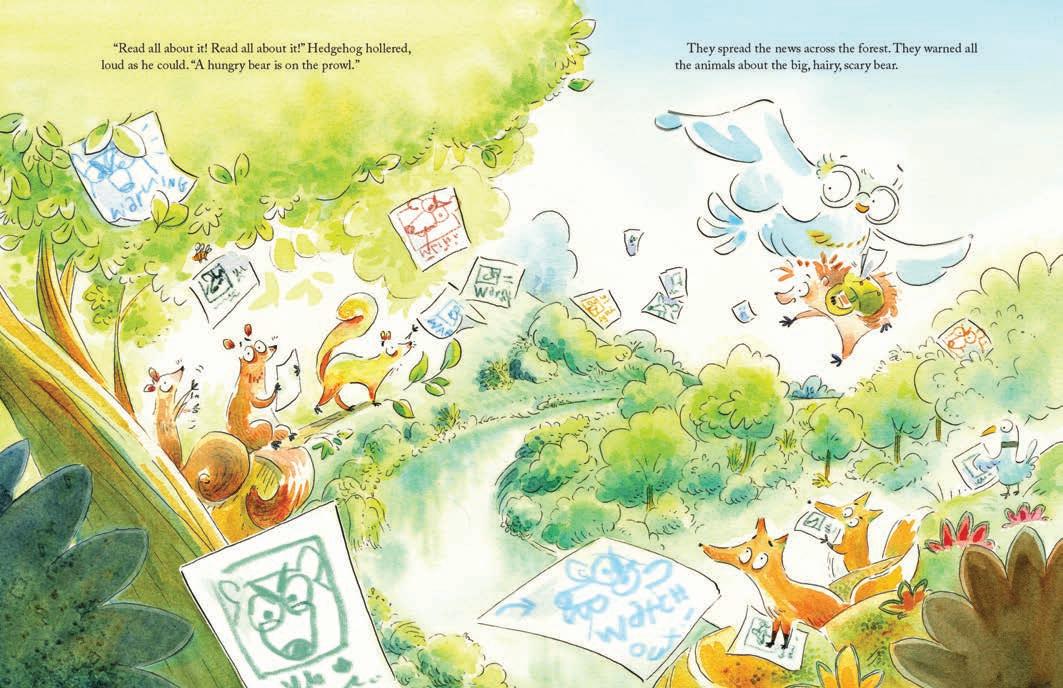
the hedgehog would send home these really small snippets of where I was, what I was doing and what the hedgehog was doing with me.” It was a way of making things relatable for his three young daughters (he now has four daughters) but grew into a means of communicating in a reassuring way across miles and time zones.
That little hedgehog was with Benjamin Hall in Kviv, tucked into his body armour, when the explosion happened. “Even when I was trying to be evacuated to hospital, I had this hedgehog in my hand, and it just reminded me of so many amazing things. It gave me the strength to think about my children – it reminded me of home.”
Evacuated to a military-base hospital in America, he had a gruelling recovery journey ahead. Communicating with his family back home in London was essential, but he and his wife Alicia didn’t want his facial injuries to upset the children. “It was the hedgehog who started to send these stories and videos home at first. I didn’t want them to see my face. The main thing for us is that we didn’t want them to be overly traumatised – we didn’t want them to see something that might really haunt them.”
It’s not hard to see why HarperCollins felt the family mascot made a good hero. And there was no doubting what the story would centre on because Benjamin Hall is a journalist to his bones. Hedgehog not only has a father who is a newspaper editor, but in his own quest to save the
animals in the forest from the bear he makes sure he gets the news out there. “One of the reasons that I wanted somewhere in the story to talk about his Dad being a journalist, and how the news, the truth, can save the animals and the forest, is because I think journalism is more central now than it has ever been,” he says. With the ongoing march of AI, social media and all the rest, he knows news gathering’s primary purpose needs to be made clearer – separate – from the rest. “That very basic idea of journalism, which is of someone going out there to see what is happening with their own eyes, that is what journalism must be about. Our kids must be encouraged to do that.”
As a reporter, Benjamin Hall is clear on his role, and as a parent and seasoned bedtime-story reader to small children, he’s keen on books with a point – a positive life lesson. “I want parents to be able to say: ‘what did you learn; why did the hedgehog do that; why do you want to stand up if people are doing bad things to you?’’ Hedgehog does the right thing, but in doing so he believes he has broken his father’s golden rules – crossing the river, talking to strangers and losing his bag.
Benjamin Hall felt this transgression for the right reasons was an important plotline. “You have to stand up if something is not right. It can be as simple as helping someone across the road – we have to remind kids
of that.” All’s well in the end and Hedgehog becomes hero of the hour, and front-page news. It’s a fitting starring role for a furry mascot who supported the Hall household in so many ways.
Benjamin Hall is full of admiration for his family’s courage over the months he was in hospital. “I’ve got the most incredible wife. Through the most di cult moments, our priority was the children – that their lives weren’t disrupted, that they stayed going to school. They kept their life going.
“Kids in themselves are incredibly resilient. They can pick themselves up. They can get through some of the most di cult moments,” he says. “One example of that was that my wife and I weren’t sure when we were going to tell them I had prosthetic legs. And some people had said that’s a real hit for some children.” In the end, his wife told them the news – simply saying that Daddy now had robot legs. “And they were like, ‘Oh, ok’ – all that worry that we had!”
The Hall family story of working through the most di cult of times chimes with another key message of Read All About It! –the strength of working as a team. “We get through things because we work together with other people – and you can’t do it by yourself,” says Benjamin Hall.
Read All About It! by Benjamin Hall, illustrated by Martina Motzo, is published by HarperCollins (£14.99).
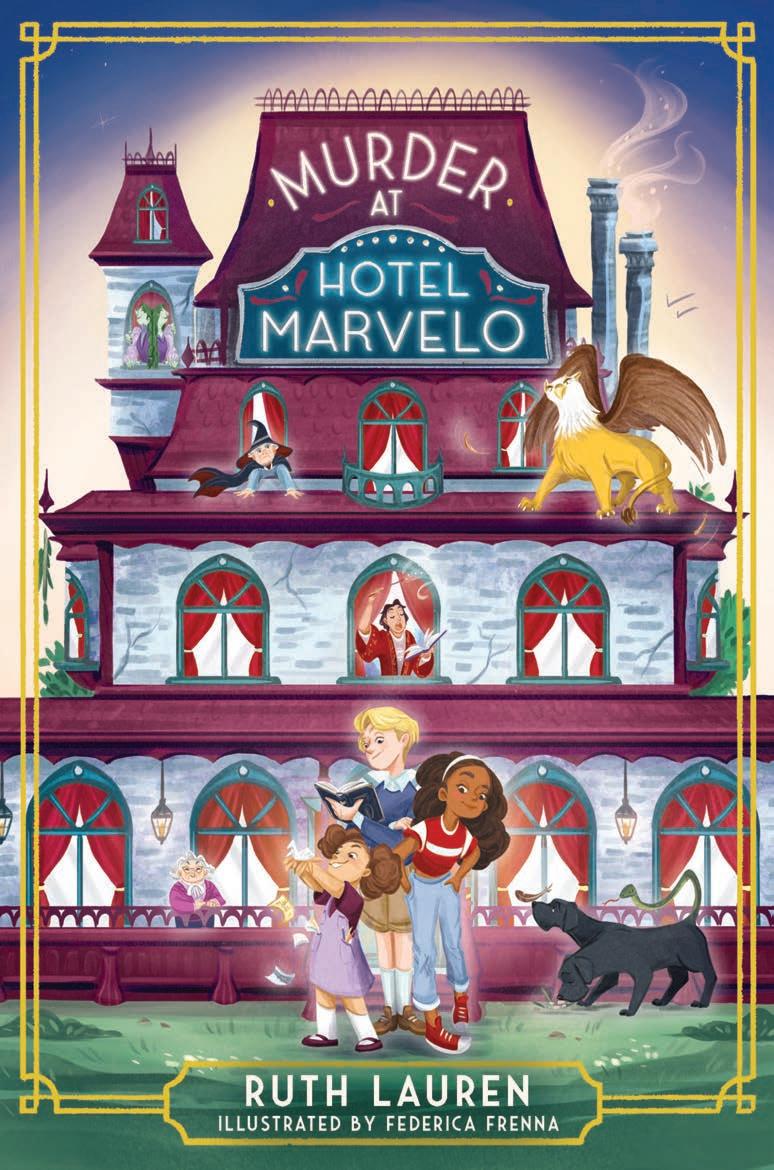
Magic, crime and three children on the quest for justice – Ruth Lauren’s series debut is an otherworldly feast
Where do witches, sorcerers, sprites and the rest go on holiday? Why, Hotel Marvelo of course, a super-discreet and family-owned luxury retreat where – provided they hang up spell-making powers at the door – they can enjoy time out from hubble and bubble. It’s a brilliant conceit in a novel that delivers magic and mystery in cauldrons.
But how did the idea begin – because it is, let’s face it, out there? “The first inkling of Hotel Marvelo came to me when I was watching a John Wick film,” says author Ruth Lauren. The show she was watching featured The Continental, a place where hitmen went for R&R. It certainly was not suitable for 8+ viewers but did fire up a brilliant idea. “What if there was a hotel for worn out witches who just need a break? What if no magic was allowed in the hotel so overworked gri ns could relax? And what if a magicide happened in this supposed haven?” she says.
Ruth Lauren is no stranger to magical tales, and she works quickly – typically over three to four months from idea to completion and with no fixed map at the start. But she’s painstaking in pulling all that together. There’s a real sense of place in Hotel Marvelo – useful plans, maps of the grounds and forest, and a ‘who’s who’ of key characters to set the scene. The hotel internal plans, in particular, are a pleasure, giving wouldbe detectives a way of systematically navigating spaces and places integral to the crime scene.
“The hotel is as much a character as the Marvelo children are. It’s integral to the plot, so I wanted the reader to feel as though they’re right there, checking in to Hotel Marvelo,” she says. “A murder mystery is all about who was

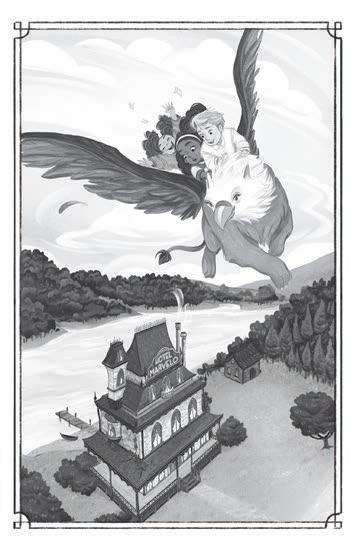
where at what point in order for the case to be solved so I wanted readers to be able to picture Hotel Marvelo with as much clarity as possible.”
There are also background details adding a frisson of otherworldliness – the Wardings at the hotel doors and runes in the grounds to prevent covert magic-making among guests, plus accommodation to suit every wizardly preference – a turret for sibling witches to haunt, for instance, and ‘aquatic chambers’ for worn out sprites on vacay.
When the crime happens – to a hapless wizard dressed in pedestrian sports gear and enjoying spa time – the investigation begins. Detective Bianco from Magicide, a faun with neatly trimmed hooves, a smart suit and o cious manner, is quick to draw conclusions. Hotel Marvelo proprietors Ida and Caspian are carted o for further questioning. The Marvelos, after all, are the only ones who know how to circumvent the runes and Wardlings and perform magic in this space.
This leaves our three young protagonists with the task of solving the magicide to save their parents. Finnian, the oldest, is the methodical one, also most invested in the hotel, which one day he hopes to run – just like his ancestors. Juniper is fast
“The hotel is as much a character as the Marvelo children are. It’s integral to the plot, so I wanted the reader to feel as though they’re right there”
and fearless – sometimes a bit scatty – while their little sister Teddy doesn’t speak but is awfully good at detail.
The trio are part of a blended family – so recognisably normal in this otherworldly place – and also neurodiverse. “The fact that Finnian, Juniper and Teddy are so di erent and yet such a great team is created in part by their sibling bond and in part by their neurodiversity (Juniper is coded ADHD and Teddy coded autistic). The Marvelo siblings wouldn’t solve the mystery and (spoiler) save the day, if they weren’t a neurodiverse trio,” says Ruth Lauren.
“Finnian’s caution, logic and knowledge complements Juniper’s full-of-ideas enthusiasm and energy. And neither of them would get anywhere without Teddy and the way she views the world, the details she notices and the connections she makes that no one else does.”
It is no coincidence that neurodiverse children are central characters. Ruth Lauren was diagnosed autistic shortly before she embarked on the story and her four children are also neurodivergent. “So I suppose you could say that creating diverse characters is something that it finally felt ok for me to do – in fact more than ok, something that I felt was deeply important. Kids need a variety of exciting, thought-provoking, engaging stories, with both neurotypical and neurodivergent characters, because in the real world that’s what the rest of their lives will look like.”
Just as Finnian, Juniper and Teddy have their foibles, so too Hotel Marvelo’s residents – the romantic yearnings of alchemist Miss Romunculus, the indeterminate age and wizardly status of concierge Mortimus and the weird sounds made by the longtime-guest banshee. It adds layers of fun and loads on the intrigue.
There’s rich use of language – with complex words for this age group – as Juniper regularly tries out spectaculars (almost Mrs Malaprop style) and Finnian then helps by confirming the exact right word. For Ruth Lauren, this is critical for a good story. “I often learn new words when I’m reading. So when I’m writing, I use a word because it’s the right one for the job,” she says.
“Using words is a delight, and it can be a joy to find a delicious new word just as much as it is to read the next twist in a murder mystery.”
Words add rich layers, but this is at heart a classic story of magic, family and good triumphing over evil. The author makes no apology for that. “Decades later, I still want to visit Narnia, the Faraway Tree, The Hundred Acre Wood,” she says. “Those places, those adventures, captured my imagination.”
So too, Hotel Marvelo – this world’s wildest hotel experience. Who wouldn’t love to pack their bags, hang up their spell-making kit at the door and check in?
* Murder at Hotel Marvelo by Ruth Lauren, illustrated by Federica Frenna, is published by Piccadilly Press (£7.99).
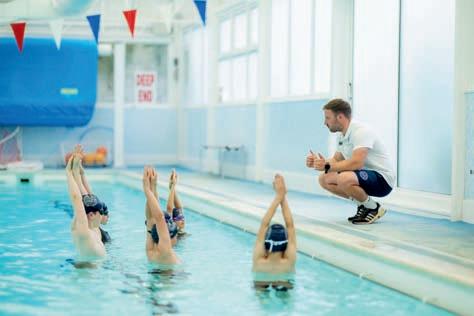
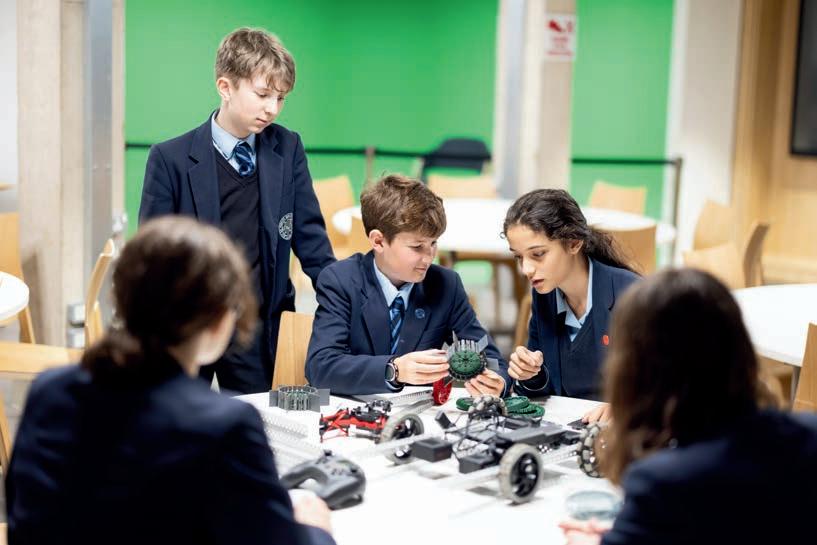
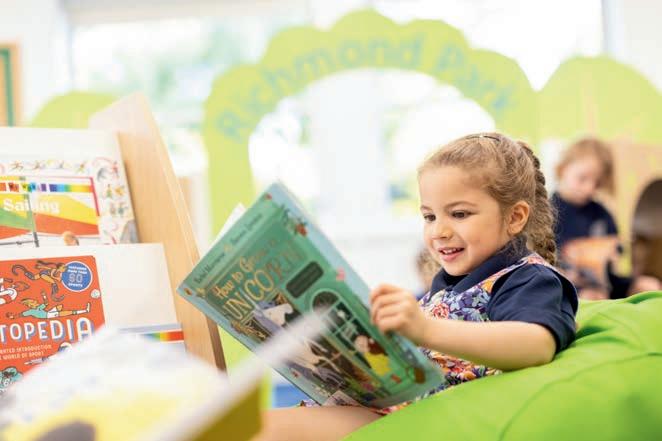



Leave the famous bits of Florida behind and head west to Pensacola for culture, sublime food and fantastic beaches

The charming Florida Gulf Coast city of Pensacola boasts a vibrant tapestry woven between sun-kissed shores and historical streets. It’s both the most westerly city in Florida and the first European settlement in the United States –and its past feels ever-present. This is a place with layers, including Spanish, French and Creole, all leaving their own unique imprints.
Here, stately buildings and cobbled lanes whisper tales of old-time settlers and sailors, while colourful galleries, playful pelican sculptures and eclectic shops speak to the city’s flourishing creative spirit. The food scene, too, tells a delicious story.
Glorious Gulf seafood, Southern comfort food and bold international flavours come together on a single plate. And the beaches? They are some of the most breathtaking we have ever laid eyes on.

“Winding, scenic trails fringed with trees and swaying grasses lead to untouched beaches”

Our adventure begins, as all the best ones do, by the sea. The moment we arrive at The Pensacola Beach Resort, there’s a gentle exhale. Our room is light and airy, with doors that open out onto a balcony overlooking miles of soft, sugar-white sand and a sea that changes colour with the sun. The blues and greens are so vivid they look brushed on by hand. There’s salt in the air, warmth on our skin, and that rare sense of having nowhere else to be. Not for a while, anyway. Morning dawns bright and brilliant, and we’re ready to explore. First stop: the Gulf Islands National Seashore, where we
wander through Fort Pickens, a hulking, pre-Civil War fortress once home to Union troops, and later, Apache leader Geronimo. The weight of history hangs thick in the brick walls, and yet just outside, nature is doing its gentle, calming work.
This unspoilt park is full of winding, scenic trails fringed with trees and swaying grasses that lead to untouched beaches. We pause to watch the legendary aerial acrobatic jets, the Blue Angels, cut across the sky in heart-racing, high-speed formation. It’s loud, it’s bold, and it’s pure Pensacola. While we’re talking aviation, the National Naval

Aviation Museum just down the road is one of the largest and most immersive aviation museums in the world and is home to over 150 beautifully restored aircraft.
Pensacola is also the winter training home for American Magic, the US America’s Cup syndicate. So, unsurprisingly, a lot centres around water in this seaside heaven. There are plenty of opportunities to swim in the warmth of the Gulf, snorkel around the reefs or go paddleboarding. We take a slower route, setting sail with Condor Sailing Adventures, an intimate experience on board a rare racing trimaran with room for just six guests. As we glide across the bay enveloped in its tranquility, dolphins play around us and time seems to stand still.
It’s the kind of place that invites you to linger but there’s more to explore beyond the shoreline and it’s time to move Downtown, just a 15-minute drive

STAY
The Pensacola Beach Resort –thepensacolabeachresort.com Lily Hall – lilyhall.com
SEE Fort Pickens – nps.gov/guis/ planyourvisit/fort-pickens-area.htm Historic sites – historicpensacola.org Condor Sailing Adventures –condorsailingadventures.com
The Blue Angels – blueangels.navy.mil
DINE
Brother Fox – brotherfoxsisterhen.com
The Grand Marlin – thegrandmarlin.com Flounders – flounderschowderhouse.com Crabs – crabsonthebeach.com
The Wharf Fish and Oyster Company –thewhar shco.com
Jaco’s Bayfront Bar and Grill –jacosbayfrontbarandgrille.com

away. We’re staying at the elegant boutique hotel Lily Hall conveniently located on the edge of the area we want to explore.
Downtown is centred around the beautifully preserved and vibrant Palafox Street (regularly named one of the best in America). Here, the Historic Pensacola Village, America’s First Settlement Trail and the Pensacola Museum of History bring the city’s past to life, while the streets buzz with independent shops, welcoming cafés, buzzing bars and a truly impressive line-up of restaurants. Which is handy, because all this exploring and salty air works up a healthy appetite. Pensacola’s food scene is flourishing – from easy-going beachside bites to sophisticated seafood spots and innovative fine dining. It is one of the unexpected highlights of our trip.
In fact, there are many unexpected high points. One moment we’re strolling the waterfront, sea breeze in our hair, the next we’re tucking into just-caught snapper, the freshest of oysters, blackened shrimp with creamy, cheesy grits and the legendary local crab cakes. We’re drifting through shady lanes lined with oak trees and wrought iron balconies, dipping into shops and cafés filled with local treasures and wondering how this place has managed to stay such a well-kept secret. Pensacola may not shout about itself like some of Florida’s flashier destinations. But it is authentic, uncrowded, unspoilt and quietly dazzling. There’s history around every corner, soul in every bite, and the kind of warm Southern welcome that stays with you long after you’ve left. And it’s just waiting for you to discover it.
Flights to Pensacola with Virgin Atlantic from £576 per person, including a transfer in Atlanta. virginatlantic.com Find out what to do and see in Pensacola at visitpensacola.com
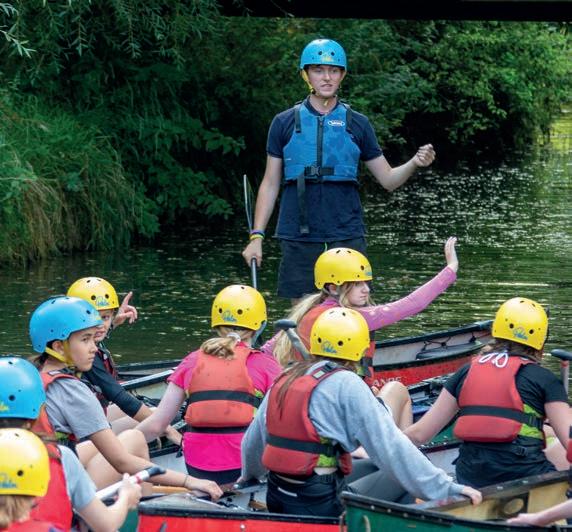

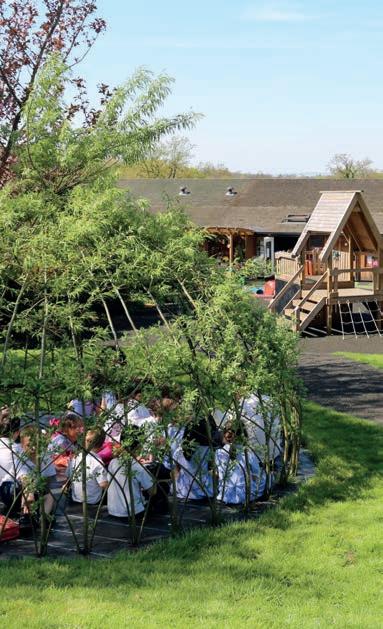
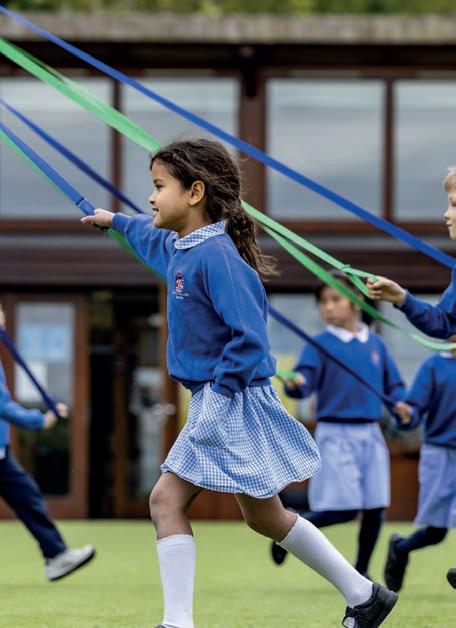
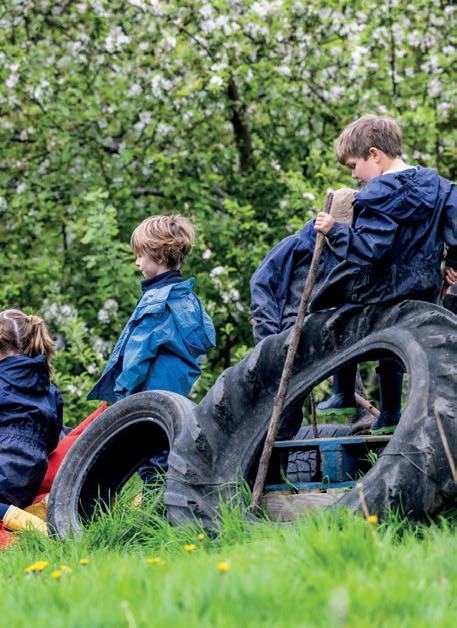
Arguments between siblings are hardly news, but techniques for keeping the peace are something every parent needs to know
By RACHEL
WEBB

Sibling rivalries have been going on since at least the time of Cain and Abel, and there’s no comfort in that particular Bible story. The fights in the back of the car, the hysterical meltdown over a small word or act and – worst of all – the smash and grab over a toy or treasure one possesses and the other wants. Every parent’s fear is that baby squabbles grow into toxic teen grudges. Why can’t the kids just get along?
While it’s normal to fear the worst, sibling rivalry is completely normal, logical even. Babies are pre-programmed to demand parental attention and love, and also to assert their own place within the family. The arrival of a younger brother or sister often causes outbursts of jealousy as feelings of insecurity rise to the surface. Rivalries tend to be more heated at a young age and when siblings are close in age. Among older children, causes can include the extra time and attention one
child gets due to illness or special needs. As to twins, trouble may follow if they feel they are not being treated as individuals.
Helping children to understand and manage normal human emotions is part of parenting, but keep expectations age appropriate. Calling time out on fights and acting as ringmaster when it comes to sharing a toy, for instance, teaches them about consideration. The calmer you are the more time they have to let anger subside and kindness kick in.
Taking sides if you didn’t see the microaggression or hear the insult is a bad idea, But when it comes to possessions, it’s OK to ask a child to give way to their little brother or sister, provided it’s done carefully – appealing to their family status as the senior and more responsible one. It’s also good to remind children that life is about compromise and sometimes they have to be the bigger person and move on.
Teaching them to share is vital, but sometimes it can be a good idea to consider if siblings would be better on
“REMIND CHILDREN THAT LIFE IS ABOUT COMPROMISE AND SOMETIMES THEY HAVE TO BE THE BIGGER PERSON AND MOVE ON”
a separate pathway. Don’t assume they will enjoy the same clubs, shine at the same sports – or even thrive at the same school. Sometimes, giving children space to grow by themselves is helpful for their psyche and for long-term family bonds. Thankfully, most children switch from fighting to defending each other against the world (including you, the parent). Help sibling solidarity along by celebrating when they work as a team. Honesty can work wonders, so if you can bear to divulge your childhood atrocities against their beloved auntie or uncle that might help them understand that fights are all part of the journey of growing up together.