








Over 30 pages of inspiration and insight SPECIAL




PLUS SHANAY HOLMES

From Bucks to a star of the West End
• LIGHTEN UP


The best of spring, from Waddesdon to Amersham


• HEAD CHEF
Meeting Simon Bonwick of The Crown at Bray




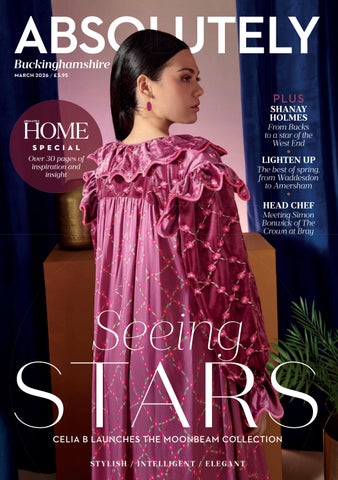
Over 30 pages of inspiration and insight SPECIAL
From Bucks to a star of the West End
• LIGHTEN UP
The best of spring, from Waddesdon to Amersham
• HEAD CHEF
Meeting Simon Bonwick of The Crown at Bray










EDITOR
MARK KEBBLE
ART DIRECTOR
PAWEL KUBA
MAGAZINE DESIGNER
MARIANA SUZUKI
DESIGNER
BRUNA FACCIN
PRODUCTION MANAGER
DANICA BRODIE
MEDIA CONSULTANTS
LOUISE PEARSON
STELLA ADAMS
FINANCIAL DIRECTOR
JERRIE KOLECI
CREDIT CONTROL MANAGER
ALEXANDRA HVID
DIRECTORS
CRAIG DAVIES
JAMES FUSCHILLO
ABIGAIL GARDNER
NON-EXECUTIVE DIRECTOR
ALEXANDRA HUNTER
MANAGING DIRECTOR
SHERIF SHALTOUT





ABSOLUTELY’S
March issue highlights
1
Ah, March. It's arguably my most favourite month of the year, not because my birthday falls during it (hint), but because it welcomes in spring and we can, finally, say cheerio to winter. This one has felt particularly bleak, with so much rain and dark skies, so I for one can't wait for warmer weather and lighter days. Berkshire and Buckinghamshire are both perfect counties, too, to mark the changing of the seasons. There is so much beautiful landscape to get out into and enjoy, but there are also so many venues that seem to wait until spring to really get their yearly events up and running. We take a tour of some of the finest spots.
That's not to say that the rainy days stop completely in March – spring showers and all that – so we do have some suggestions to stay indoors. There's the wonderful contemporary circus act, Ockham's Razor, heading to Newbury, plus we interview Bucks' local Shanay Holmes, fresh off a West End award win and the person behind a boozy brunch all about musical theatre. We love that.
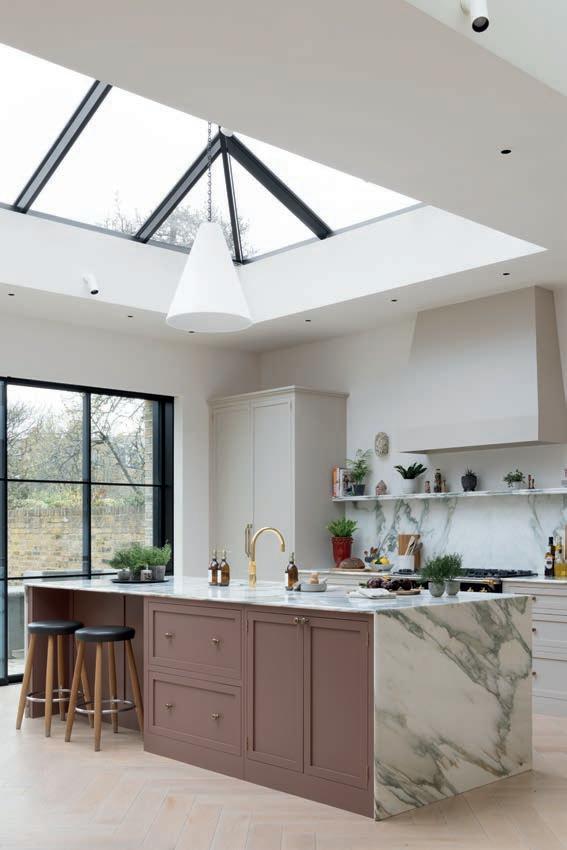
And as it's the month of the spring clean, the first Absolutely Home of 2026 arrives, and as always we have interviews and top tips, including why this year is all about statement lighting. Bright days ahead, indeed.










St George's School
Windsor Castle
2

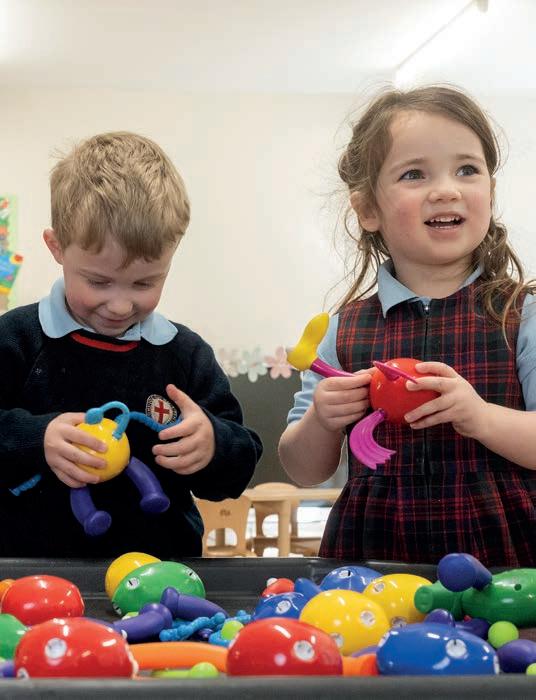
Exploring their IB curriculum (p111) 3







Rouge Noir is back – if it ever went away – and the new incarnation is a collection of shades that combine red and black. chanel.com
































Penelope Chilvers might be known for her boots, but her brogues and loafers are lovely too. We are loving the tan and white Morrell, from the Bloomsbury collection, £289. penelopechilvers.com










focuses of Daisy Duck, and her
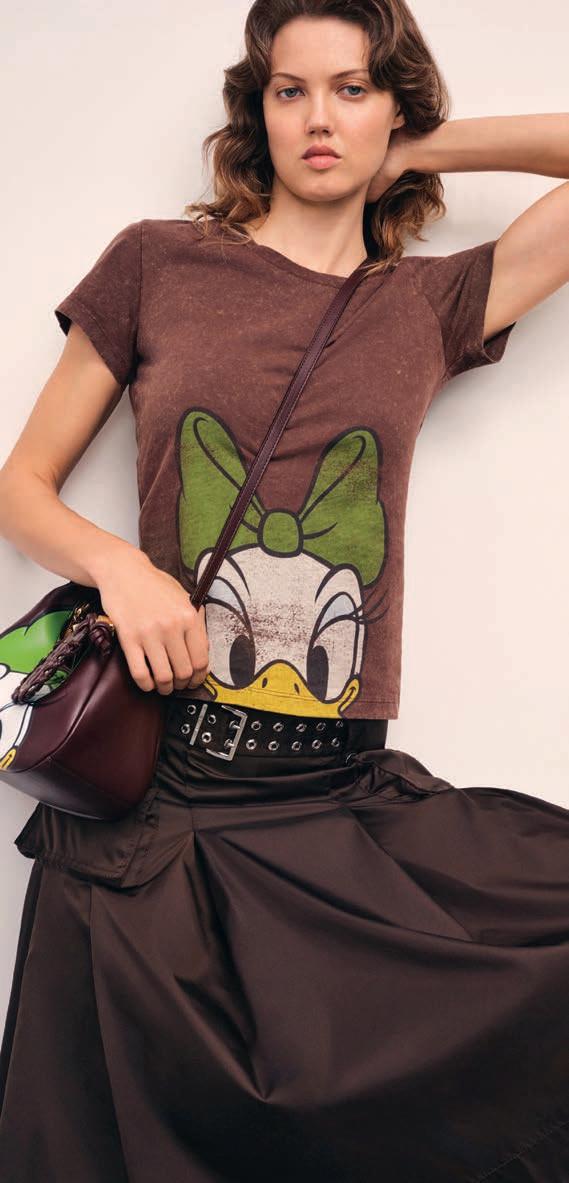
Danish fashion brand Ganni has teamed up with American giant Disney in a slightly unlikely but auspicious collaboration that focuses mostly on the lesser-known character of Daisy Duck, and her adventures in Copenhagen. ganni.com

















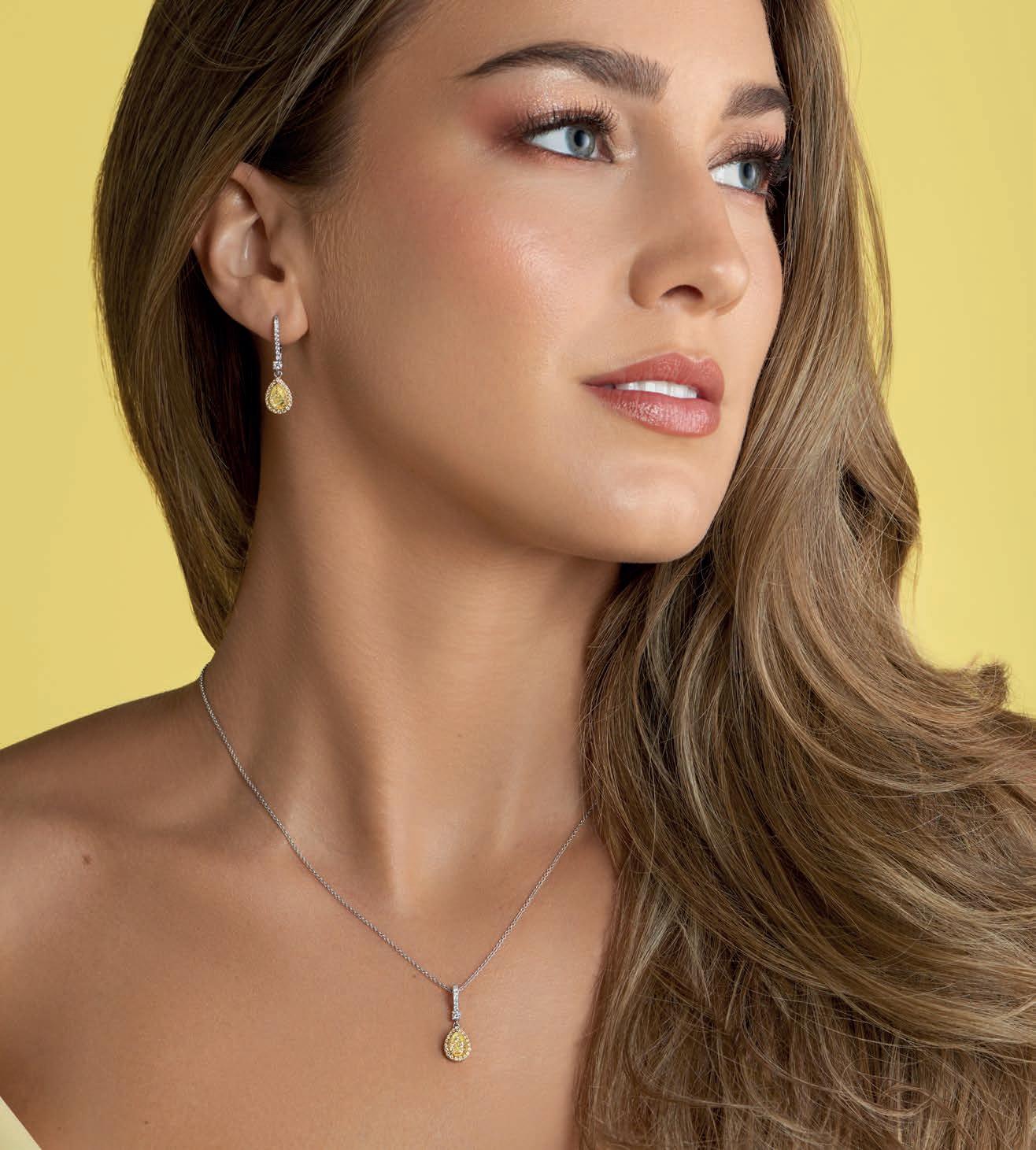
A modern twist on the elegant Art Deco style, the Nouveau diamond jewellery collection from Berry’s is a striking and versatile range that is perfect for both day and night. berrysjewellers.co.uk

















EDITOR’S PICK












Iolla's stylish Bonnie frame channels the 1970s with its oversized, square shape and chocolate brown lenses. Add your prescription if you need to. iolla.com
Ferm Living's SS26 collection launches on 5th March, with a focus on creating homes that feel composed, relaxed, and shaped by everyday life. fermliving.co.uk



















The Ember collection from Berry’s Jewellers, with its dynamic interplay of spark and fl ame, invites wearers to embrace jewellery as an experience and a statement. berrysjewellers.co.uk


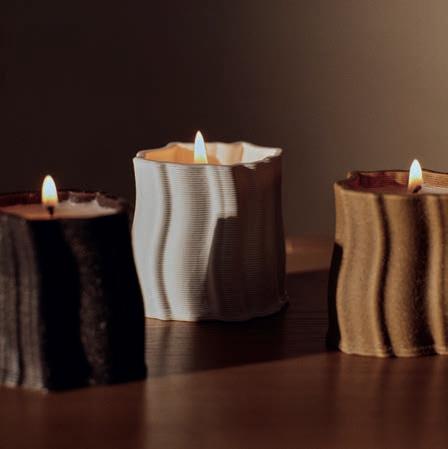










Bella Freud's theme for SS26 is Miami Vice, featuring sleek lines and slick tailored trousers, alongside the iconic slogan knits. bellafreud.com


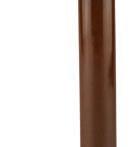
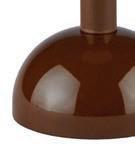

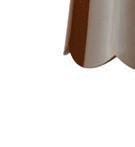
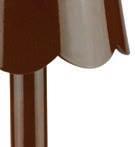
Addison Ross' new Scallop Lamp collection adds a small, portable light to the range of stylish and useful rechargeable lamps. We love the chocolate one, £125. addisonross.com
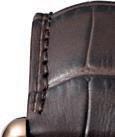

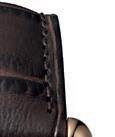




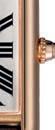
The Cartier Tank Louis Cartier 18ct Rose Gold Large Model Leather Strap Watch has a silvered dial with black roman numerals and blue steel hands. berrysjewellers.co.uk


















Do














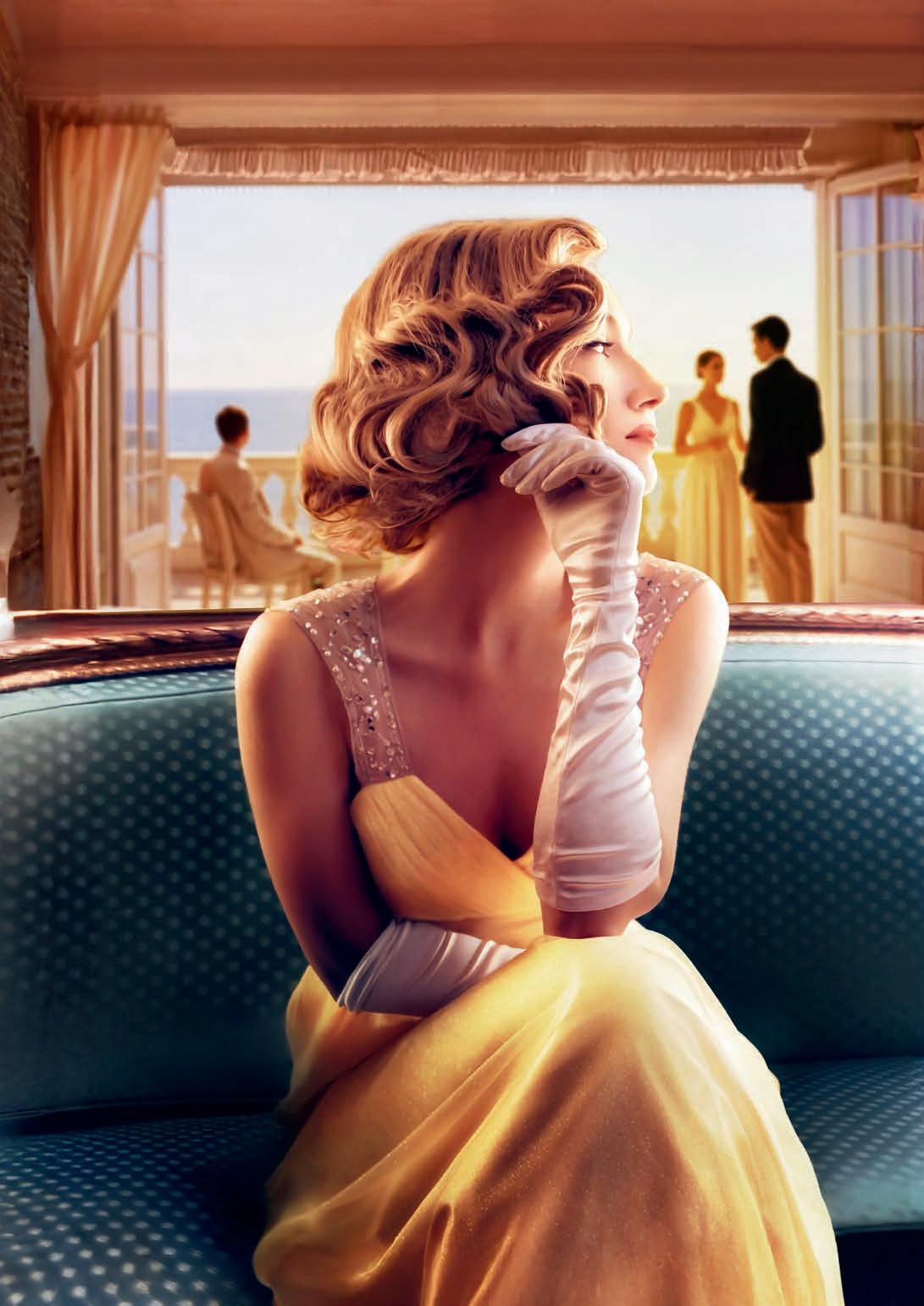
16 APRIL-9 MAY
READING REP THEATRE
Noël Coward’s Private Lives sparkles onto the Reading Rep stage. Olivier Award nominee Amy Di Bartolomeo stars as the fiercely independent Amanda, alongside returning favourite Orla O’Sullivan as Sybil.
Directed by Matthew Forbes, this razor-sharp comedy promises glamour, passion and deliciously witty drama. Tickets from £5. readingrep.com









13 MARCH, NORDEN FARM CENTRE
Daliso Chaponda has been writing jokes about the news for over a decade, and he’s even been the news himself, making headlines across the world after his unforgettable run on Britain’s Got Talent. Now he is about to hit the road with his brand-new show Topical Storm. Recently, Daliso has found the headlines so absurd, chaotic and overwhelming that they’ve started to mock themselves. In his new show, he asks; where do we go from here?
norden.farm


25 March
KENTON THEATRE
The queen of comedy, renownedbroadcaster, actor, and mental health campaigner Ruby Wax has announced a brand new UK tour with Ruby Wax: Absolutely Famous, also featuring her long-time collaborator Clive Tulloh. Audiences will have the chance to see Ruby’s provocative, hilariously abrasive and incomparable style for themselves in this brand-new live show. thekenton.org.uk


10-14 March
MK THEATRE
This ultimate feel-good rom-com follows Elle Woods on her transformation from ‘It Girl’ fashionista to legal ace at Harvard Law School. Elle must prove she is more than blonde ambition, swap the changing rooms for the courtroom and learn that being true to yourself never goes out of style. atgtickets.com





UNTIL 31 MAY, MK GALLERY





Euan Uglow: An Arc from the Eye will be the first major UK exhibition in 20 years of one of Britain’s most important figurative artists. Bringing together over 70 of Uglow’s paintings and drawings, produced over 50 years, the exhibition revisits the artist’s distinctive practice, contextualising his work alongside his influences Paul Cézanne and Alberto Giacometti, and tutors, friends and colleagues William Coldstream, Victor Pasmore and Claude Rogers. mkgallery.org



8 March
GLEE CLUB
In 2024, John Tothill nearly died. In 2025, he went on an underwhelming cruise. Both events were equally life changing. Join John in his own personal paradise as he attempts to monetise what life he has left. He returns to the stage with This Must Be Heaven – a show about bodily betrayal, moral misadventure, and the loud indignity of being heckled on-stage on a cruise ship. glee.co.uk






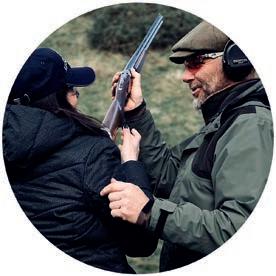
When spring calls for more time outdoors and less time on screens, this is one to note. E.J. Churchill, known as The Home of Shooting in Buckinghamshire, has long been part of the Chilterns landscape, yet it still offers something new for those who have never set foot on a shooting ground before.




UNTIL 16 AUGUST, THE ASHMOLEAN MUSEUM
ow much do we really know about the plants and flowers in our gardens, allotments and vases? Beyond their beauty, many have long and surprising histories: stories of exploration, exchange, passion and discovery. In Bloom is a new exhibition that takes visitors across the world and back, tracing the routes that some of Britain’s most familiar blooms travelled to get here. ashmolean.org

The Family Have-A-Go experience offers strong value at £120 per couple, with children going free, and is thoughtfully designed for beginners. Expect clear instruction, patient coaching and an atmosphere that feels welcoming rather than daunting. No prior experience is required, just an openness to trying something different. It is as much about building confidence as it is about hitting clays, with instructors who understand that first impressions matter.
The setting adds to the appeal. Rolling Chiltern hills create a sense of quiet retreat, far removed from the rush of daily life. A er time on the stands, families can head to the clubhouse for lunch or browse the on-site shop, turning a first lesson into an easy half-day out. For anyone curious but unsure where to begin, it is a straightforward introduction to the sport that could soon become a regular weekend fixture, and perhaps even a new family tradition.
With Easter around the corner, there has never been a better time to try something new.
ejchurchill.com; 01494 883227

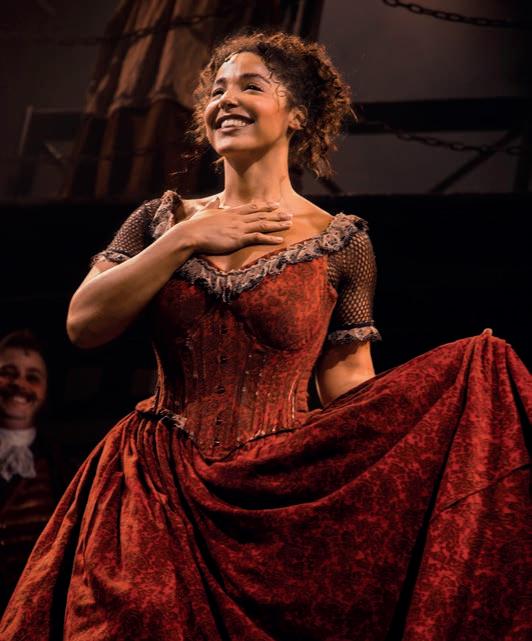
Shanay Holmes is a powerhouse West End actress, riding on the crest of a wave thanks to a starring role in Oliver! She tells Absolutely about fighting the odds, fan conventions and staying grounded in Buckinghamshire
By MARK KEBBLE
Shanay Holmes’ talent, drive, and infectious love for musical theatre have made her one of the most exciting figures on the contemporary stage. Born and raised in Buckinghamshire –where she still resides – Shanay’s journey from local beginnings to major theatrical acclaim is a testament to her dedication and artistry, and an ability to overcome obstacles the world may throw at her.
“I love Buckinghamshire, but being raised here did not come without its challenges and it definitely shaped the person I am today,” she says looking back. “Growing up being the only mixed raced black child in school was extremely di cult, but those experiences made me who I am today. I became very resilient. I also found an appreciation for the things that made me di erent. Singing was how I expressed myself and that came out through performing. As
a kid growing up here, I was always out in nature. I loved that it was where I found a lot of joy and as an adult it brings me that same sense of peace. I have and will always love the beauty of Buckinghamshire. So, while my dreams led me to the bright lights of the West End, my downtime is spent enjoying being surrounded by nature. It clears my mind. I feel grounded here.”
She may need a little of that considering how hot she is right now in the industry. Shanay won rave reviews for her performance as Nancy in Oliver!, culminating in her winning the Black British Theatre Award for Best Female Lead Actor in a Musical late last year. “There is something so incredible about being fully seen by your community,” she smiles. “I understand I have a responsibility to not only little Shanay, but to every little girl who looks like me following a dream that seems impossible. To win for playing Nancy also means a lot to me. I really feel like my experience of playing her forged the women I have become today, I poured everything into
her. I wanted my interpretation of her to feel completely original and I understood the only way to do that was to embrace everything I am. There’s a fearlessness I found with her that I hope stays with me forever.”
Shanay’s career spans a rich variety of productions, showcasing her versatility across genres and styles. Her credits include Miss Saigon at the She eld Crucible, the electrifying Bob Marley musical Get Up, Stand Up! at the Lyric Theatre, and the global phenomenon Thriller Live, also at the Lyric. Each role has further highlighted her ability to command the stage, connect deeply with audiences, and bring authenticity to every character she inhabits – but there’s no doubting the stand out moment. “I’ve waited almost 15 years for it,” she says on when she really felt like she belonged on stage.
“It was the night I won the award for Best Female Lead in a Musical at the Black British Theatre Awards. It was then that I felt truly seen for the first time. I can’t explain what it fully means to me, but I know everything

is possible if you fully give yourself over to it and that happened to me that night.”
Shanay is truly mesmerising on the stage, made all the more remarkable when you consider she had no formal training. What was the biggest thing to overcome on her journey? “Self-belief,” she states. “You have to believe in yourself wholeheartedly. That’s a lot easier said than done. I know deep down in my soul this is something I’ve always ‘had’ to do. It was never a choice. I always knew this was going to be what I did with my life or I would die trying. You have to have that blind faith and keep going despite the ‘nos’. You have to believe. Faith in yourself is a very powerful thing.”
Her heart and soul has certainly been poured into musical theatre, especially when considering the other elements of her career. First of all, she is co-founder of Musical Con, now the world’s biggest musical theatre fan convention. “My brother inspired the idea when he asked me to attend a Star Wars
“I always knew this was going to be what I did with my life”
fan convention,” Shanay explains. “The thing that struck me the most was that thousands of people gathered to celebrate each other and the thing they love. There’s something very moving and healing about being in spaces where you’re fully seen, it’s empowering and that is what we [she founded the event alongside her husband, Chris Steward] wanted to create.”
Then there is the hugely popular West End Musical Brunch. “I can’t believe this year will be its eighth year,” she grins. “I love that people come back time and time again. I knew day brunches were becoming very popular in London. I think people make the mistake of not thinking of musical theatre as a genre of music and that it was key to create a space solely for people who love show tunes – who doesn’t?”
It’s amazing that she does have time to spend in Buckinghamshire, but it is clear how important the county is to her. “My
favourite Buckinghamshire days are spent walking my dogs,” she says. “I love the walk through Shardeloes and into one of the little Missenden pubs there, a roast at the Gri n in Old Amersham and a trip to my local café at Peterley Farm. I love living here.”
Despite what she achieved last year, there’s no chance that Shanay is resting on her laurels. “They say the top of one mountain is the bottom of the next so keep climbing and that’s what I intend to do,” she says with a real air of determination. “Keep climbing.”
Shanay Holmes is a West End Performer, actor and producer working across musical theatre and live performance. Find out more at shanayholmes.com





























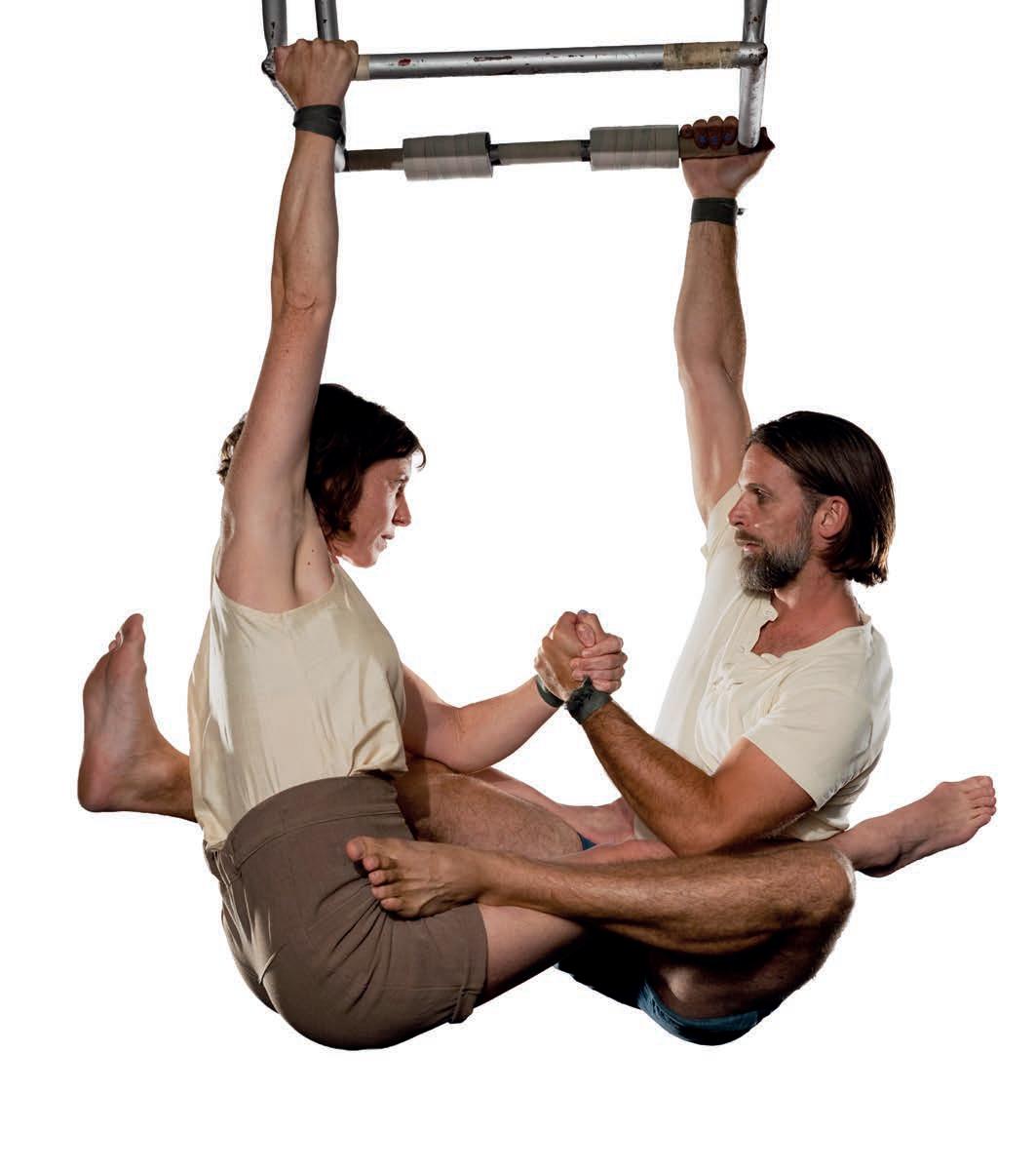
For 20 years, Charlotte Mooney and Alex Harvey have led the way in contemporary circus with Ockham’s Razor –but it’s time to say farewell, Absolutely discovers
“We want to make circus from the vulnerability, trust and reliance that exists between people doing such risky work”
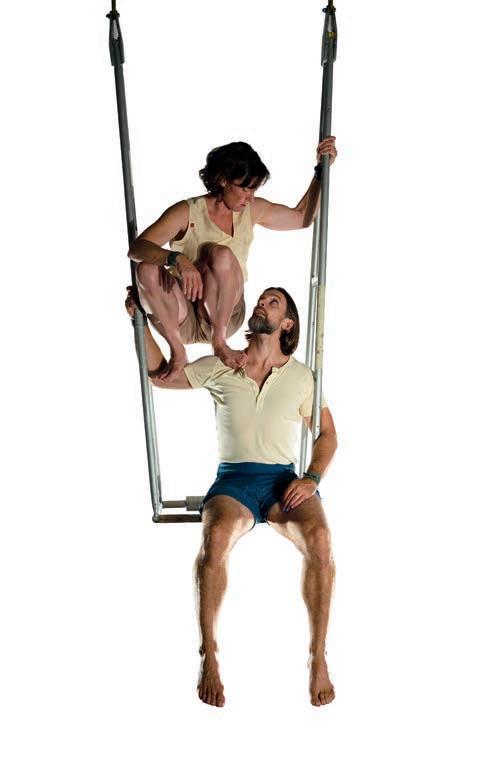
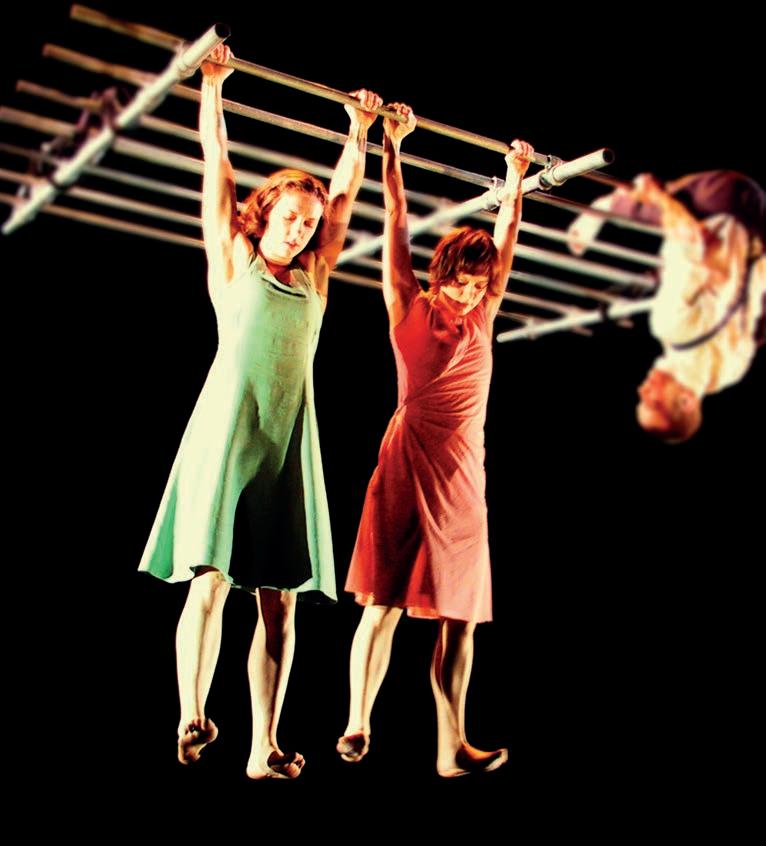
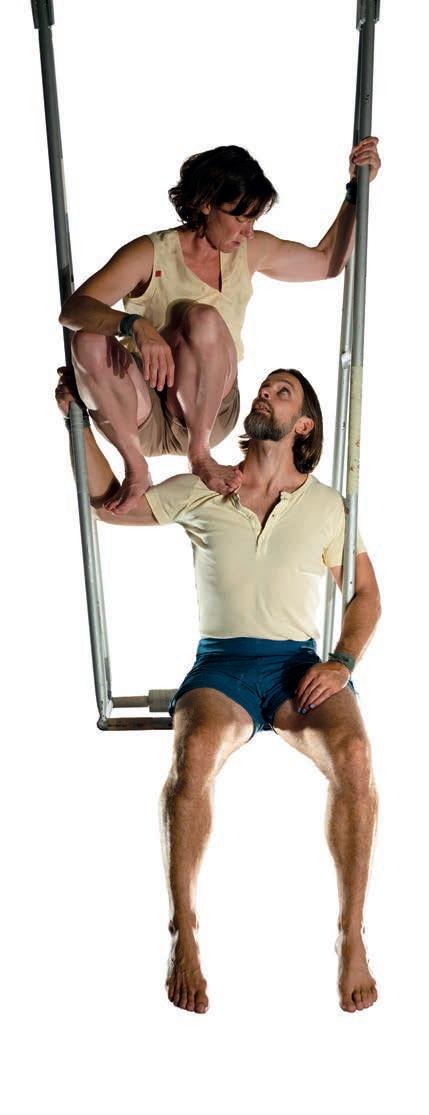
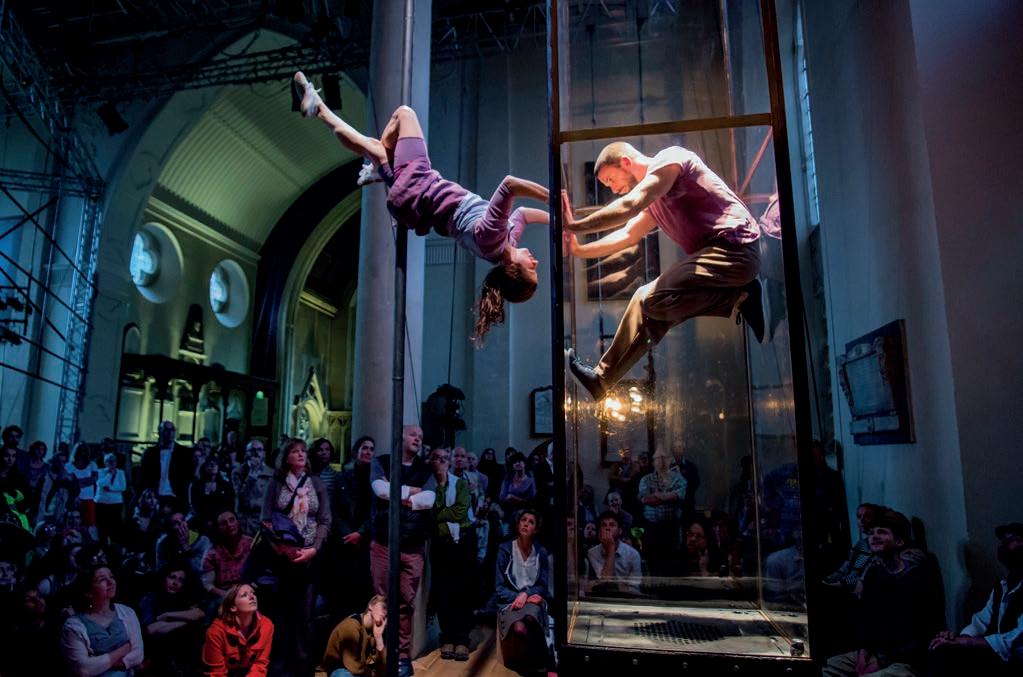
Charlotte Mooney and Alex Harvey are the co-founders and co-artistic directors of Ockham’s Razor, one of the UK’s most distinctive contemporary circus companies. For over two decades, they have been at the forefront of a practice that fuses aerial circus, visual theatre and bespoke apparatus to create work of striking physicality and emotional clarity. Known for their ambitious scale and sculptural imagination, Ockham’s Razor’s productions place human connection at their centre, drawing stories from trust, dependence and the vulnerability of bodies in motion. Touring extensively in the UK and internationally, the company has built a reputation for work that is both visually bold and deeply human, often described as full of joy, wonder and delight. Their new show, Collaborator, marks a significant and intimate moment in the company’s evolution. After decades of creating large-scale ensemble works, Charlotte and Alex return to duo form, performing together in an aerial duet that examines the ‘cost’ of working with another person. Performed on a suspended metal frame, the piece is an irreverent, highly physical and heartfelt exploration of creation, compromise and negotiation. With choreography by Nathan Johnson and costume design by Tina Bicât, Collaborator distills the shared history, artistic trust and lived experience that have shaped their practice over 20 years.

With the show coming to the Corn Exchange Newbury in March, Absolutely sat down with the duo – and husband and wife team – to talk about two decades of amazing audiences all over the world.
Q Collaborator marks 20 years of you working together. When you look back to the very beginning of Ockham’s Razor, what core ideas or instincts are still present in your work today?
CHARLOTTE: We called the company Ockham’s Razor after a philosophy by William of Ockham – he said that if you have two theories to explain a possible problem the simplest will most likely be the truest. The philosophy is called Ockham’s Razor because it’s about cutting away unnecessary details. We chose it as the name of the company 20 years ago as this simple approach really appealed to us. We use the movement of circus to tell stories and try not to put extra and unnecessary tricks in
there. We have also always been drawn to a really simple design aesthetic with only a few things on stage used imaginatively. However, over the years the irony has not been lost on us that it’s a pretty complicated way of saying keep it simple!
ALEX: Indeed! It’s true though, this simple approach has really stayed with us. Also the thing we said at the beginning that has also stayed true is that we want to make circus from the vulnerability, trust and reliance that exists between people doing such risky work. It’s about human connection.
Q Performing suspended in the air demands immense trust. How has your trust in one another evolved over two decades of pushing physical and emotional boundaries together?
ALEX: Weirdly I think we always had immense trust in each other physically, but certainly over the years this has deepened. We know each other’s bodies now so well
and how they move – I know on a cellular level almost how much force Charlotte will give to a movement and how much I would need to brace against it. It’s a long practice.
CHARLOTTE: When we work with performers we spend a lot of time working on building trust. It’s something that has to exist in all aspects of the relationship. We have lots of practices in our rehearsal rooms to help the company build kindness and respect and I think over the years this has become the norm for us at home as well. It’s nice!
Q This is being framed as your final performance as a duo. When did you realise that Collaborator needed to be a kind of farewell – and how did that shape the creative process?
CHARLOTTE: We have a daughter together. While she was little it was actually really fun to still perform in shows and have her with us on the road. But there came a time where she really needed stability so we began to direct shows rather than perform in them so we could be at home more. We were very happy with this as we love directing. Then someone asked us if we had retired from performing and we realised that we had never made a conscious decision to do that. It had just happened. So we decided to make one last show, a farewell to performing if you
like. If we decided to stop after that we had done it deliberately. And this is that show.
Q Ockham’s Razor has always blurred lines between circus, theatre and live art. Do you feel the company helped redefine what contemporary circus could be in the UK?
CHARLOTTE: We are definitely drawn to the crossover of circus, theatre and live art – also possibly you could throw in dance and kinetic sculpture in there. This is what we love about contemporary circus, the fact that it is such an inventive, renegade art form. We would be honoured to think we had added to the ranks of companies helping to define and hold the banner for it in the UK.
Q How has the landscape of physical theatre and circus changed since you first started, and where do you see Ockham’s Razor fitting into that evolution?
CHARLOTTE: To start with a positive, the profile of circus has grown over the past 20 years. The understanding among directors and other creatives of what circus can be is increasingly passing into the theatre and dance world. We made a decision 20 years ago to take our work predominantly to mid scale touring theatres and to try and showcase contemporary circus in that environment and show it in a new light.
I hope that we managed to pave the way for other circus companies to take their shows into theatres and for programmers to see that there is an audience for it.
ALEX: And to be depressing for a moment it has also become a lot harder since we started. We used to tour widely internationally, especially across Europe. The combination of Brexit and Covid absolutely wiped out that touring. We are hoping that slowly we can rebuild those links, but touring is certainly tough right now.
Q Collaborator is produced by Turtle Key Arts. How did that partnership support the intimacy and scale of this particular piece?
ALEX: We have been working alongside Turtle Key Arts as our producers for 20 years, so it’s an equally long relationship. We have absolute trust in each other and it’s a rare and wonderful thing. They help us create work at scale with all the unbelievable support we get for all angles of making, planning and touring the work. And they absolutely trust us
































artistically – we know they will always have our back, which undoubtedly helps us to make such personal, intimate work.
Q As founders, collaborators, and performers, how did you negotiate authorship and decisionmaking over the years?
CHARLOTTE: We come from a training in devised theatre and both genuinely believe that you get a great group of people in a room and then show up, pay attention, tell the truth, don’t be attached to the results and the work will happen around you. It’s madness to try and claim authorship,

you made it together. This show is called Collaborator and ostensibly that’s about Alex and me, but really this show is also made by the designer Tina and the choreographer Nathan and the lighting designer Catja and her associate Jenny and Holly the composer with her associate Arianna and the equipment designer Nick… I could go on!
Q Risk has always been central to your work. At this stage in your careers, does risk feel di erent than it did 20 years ago?
ALEX: I think it does a bit. But the risk changed not as we grew older (we are both 46 now), but more as soon as we had our daughter. It enters your head that there are some tricks now that are simply not worth it. We have a greater incentive to go home safe at the end of the night.
Q Looking back, what have been the stand out moments for you over the last 20 years and why?
CHARLOTTE: Oof that’s too long a time period! I guess all the touring. Getting to really travel the length and breadth of the UK. It’s a great feeling to return to venues and meet audiences who have been following our work for years.
Q What do you hope audiences at The Corn Exchange Newbury take away from experiencing Collaborator live?
CHARLOTTE: We hope they will laugh and be moved and also that they might see something in there that they recognise – that might chime with them from their own experiments of making a life with someone else.
Q How does performing in more intimate venues a ect the way this piece is received, compared to larger-scale
productions you’ve made in the past?
ALEX: It’s always wonderful when the audience can be close. It gives them a chance to see the holds and the connection and communication between us.
Q Looking ahead, what does the future hold for each of you individually after stepping away from performing together?
ALEX: We will still be directing together – which is equally as wonderful. We are about to embark on a new show called Greed, which is a version of a Greek story from Ovid’s metamorphoses. It’s about a power mad King who wants to devour the world and ends up devouring himself. Pretty strong and timely stu that we can’t wait to get our teeth into.
Q Finally, if Ockham’s Razor’s 20-year journey could be distilled into a single principle or lesson, what would that be?
CHARLOTTE: Kindness prospers.
Collaborator heads to The Corn Exchange Newbury on 11th March. Buy tickets at cornexchangenew.com/ events/collaborator














As the new season arrives, it’s a time when Berkshire and Buckinghamshire truly bloom

Spring suits Berkshire and Buckinghamshire in di erent ways. In Berkshire, the Thames begins to sparkle again, riverside towns shake o their winter stillness, and grand parks and gardens burst into colour. In Buckinghamshire, the Chiltern Hills soften from grey to green, bluebells spill through ancient woodland, and market towns hum back into life.
Together, the two counties o er a quietly compelling picture of spring in southern England: landscapes shaped by rivers and rolling hills, a food scene rooted in local produce and seasonal cooking, family attractions that thrive outdoors, and communities that feel newly energised by longer days and warmer weather. Whether you’re planning scenic walks, long lunches, or relaxed family days out, spring is when both counties show themselves at their very best.
Spring in Berkshire and Buckinghamshire is less about distance covered and more about what you notice along the way. This is the season when gardens burst into colour, town centres soften with blossom, and landmarks that lie dormant through winter open their gates once again.
Communities feel energised by longer days and warmer weather
In Berkshire, few places mark the arrival of spring quite as confidently as Windsor Great Park. While its scale is impressive year-round, spring is when the park truly shows o , with carefully planted avenues filled with da odils and tulips, and blossom appearing along its formal walkways. The reopening of seasonal areas and cafés gives the park a renewed sense of life, making it feel less like a winter landscape and more like a living, breathing garden.
Spring also brings a renewed buzz to Berkshire’s towns, especially around local markets. Reading and Newbury both see their farmers’ markets flourish at this time of year, as stalls fill with early seasonal produce, fresh bread, local cheeses and flowers. These markets feel distinctly springlike: lighter, brighter, and full of the sense that the year has properly begun.
Across the county, private gardens and historic houses begin to reopen or extend their visiting hours in spring, turning previously quiet estates into colourful destinations. From carefully planned borders to looser, meadow-style planting, spring brings a visual richness that defines the season – Cliveden is certainly one landmark whose outside spaces are worth exploring.
Buckinghamshire o ers a slightly di erent but equally rewarding spring spectacle. The county’s gardens and estates take centre stage as soon as temperatures rise, with
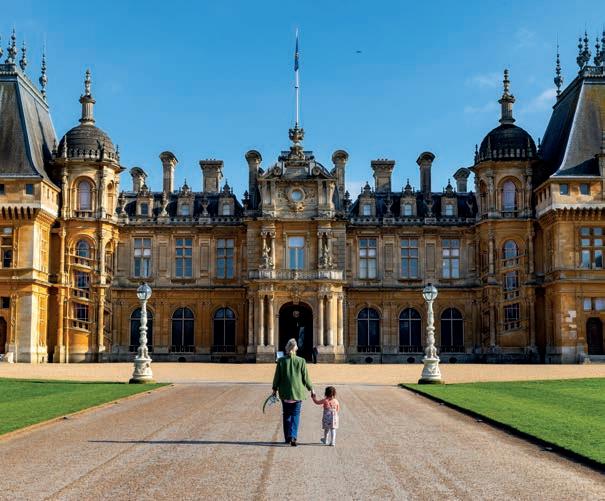
places like Waddesdon Manor becoming almost theatrical in their use of spring colour. Formal beds burst into life with tulips and early blooms, while woodland areas soften with fresh green growth. The reopening of cafés, garden areas and seasonal exhibitions adds to the sense that the estate has fully reawakened.
In market towns such as Marlow and Amersham, spring brings blossom-lined streets and a noticeable lift in atmosphere. Pavements fill with people lingering over co ee, while weekly markets expand with stalls selling plants, flowers and locally produced food. These towns feel at their most sociable in spring, when life naturally spills outdoors.
Garden centres and plant nurseries across Buckinghamshire also become destinations in their own right during the spring months. More than just places to shop, they o er cafés, events and seasonal displays that turn a practical errand into a relaxed day out. Surrounded by fresh planting and the optimism of a new growing season, they embody the quieter pleasures of spring.
Together, Berkshire and Buckinghamshire mark the season not through spectacle, but through detail: colour returning to familiar places, seasonal food appearing on market stalls, and landmarks reopening with a renewed sense of purpose. It’s a softer, slower celebration of spring – but one that feels all the more rewarding for it.
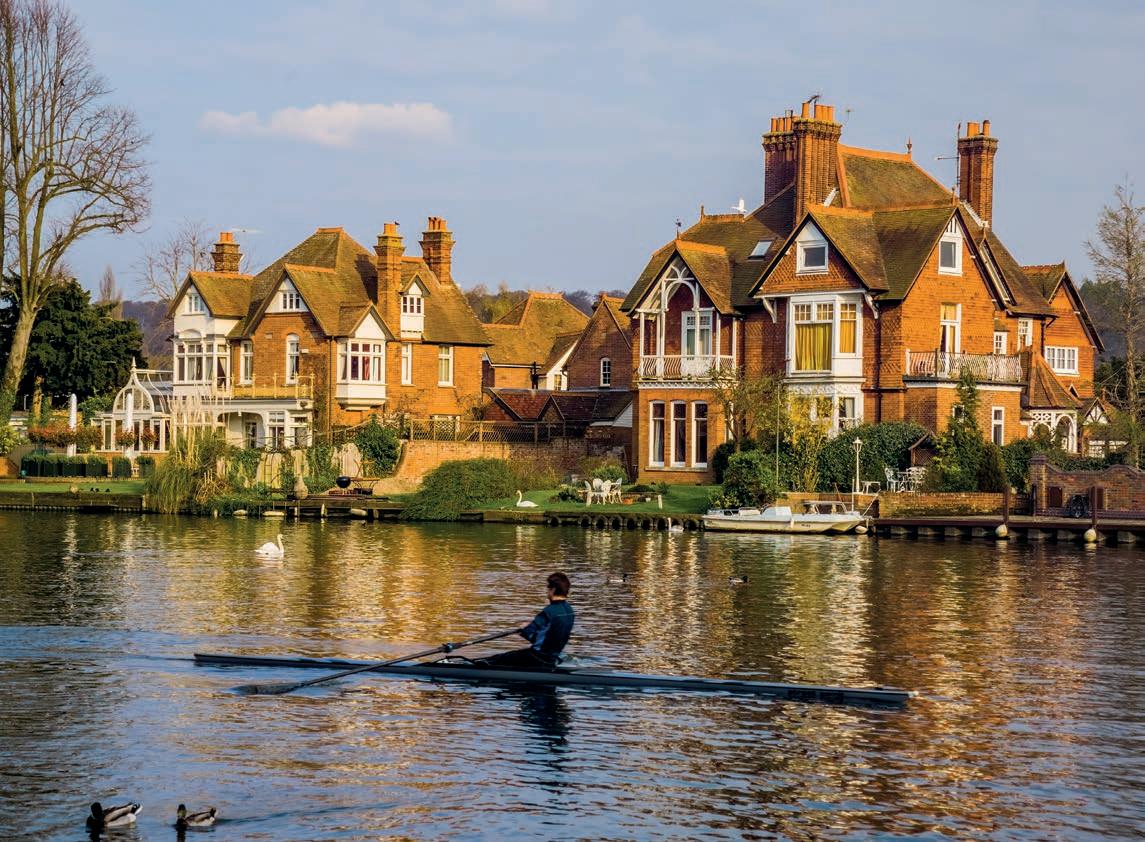
Spring in Berkshire and Buckinghamshire is often announced not by temperature, but by movement. The rivers stir, boats return to the water, and familiar stretches of the Thames begin to feel sociable again after months of winter quiet. It’s the season when being beside the water becomes an experience in itself – something to sit with, watch and savour, rather than pass through.

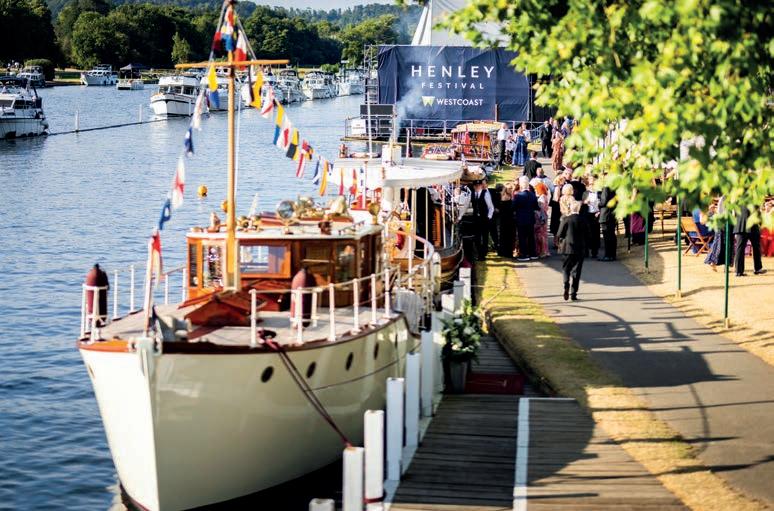
In Berkshire, this renewal is most visible along the Thames in towns such as Henleyon-Thames. As spring settles in, rowing crews reappear on the river at dawn, pleasure boats drift back into moorings, and the riverbanks become places to linger rather than hurry past. Benches that sat empty through winter fill again with people nursing co ee cups, watching the steady choreography of river life unfold.
Downstream, the village of Sonning feels especially springlike, with boats idling near the bridge and outdoor tables reopening along the water’s edge. Here, spring is about slowing your pace – sitting by the river with a drink, watching the light change on the water, and feeling the season arrive almost without noticing.
Buckinghamshire o ers a similarly gentle relationship with the Thames, particularly in Marlow. In spring, the river becomes the town’s social spine once more. Rowers cut clean lines through the water, paddleboarders return on calmer days, and cafés along the banks reopen their terraces. It’s a place where you don’t need an itinerary –simply being by the river is enough.
Locks and weirs also come back into focus at this time of year. Places like Boulters Lock and Marlow Lock become quietly absorbing spring spectacles, as boats queue, gates creak open, and river life resumes its slow rhythm. These are places to pause and watch – reminders that spring doesn’t always announce itself loudly. Beyond the Thames, canals and smaller waterways across Buckinghamshire also reawaken in spring. Narrowboats emerge from winter moorings, towpath cafés reopen, and waterside pubs begin to feel like destinations again rather than afterthoughts. Even brief moments beside the water – a co ee overlooking a lock, a drink beside a marina – feel heightened by the season. What makes spring by the water so compelling in these counties is its ordinariness. There’s no need for spectacle or e ort. The pleasure lies in observation: the return of colour, the movement of boats, the quiet hum of life resuming. It’s the kind of spring experience that asks nothing of you except time – and rewards you generously for giving it.
Are you self-employed or a landlord? Be ready for the new tax changes this Spring.
From April 2026, Making Tax Digital for Income Tax (MTD IT) applies if your self-employment or property income is £50,000 or more. You’ll be required to keep digital records and submit quarterly MTD returns. A big shift from annual tax reporting.
Need help getting ready? We’ll handle the reporting so you can stay focused on earning, not admin. 01932 830664 enquiries@wardwilliams.co.uk

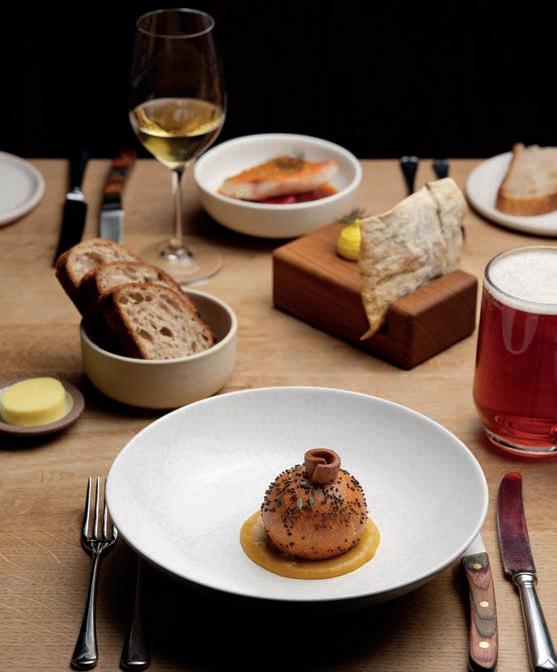
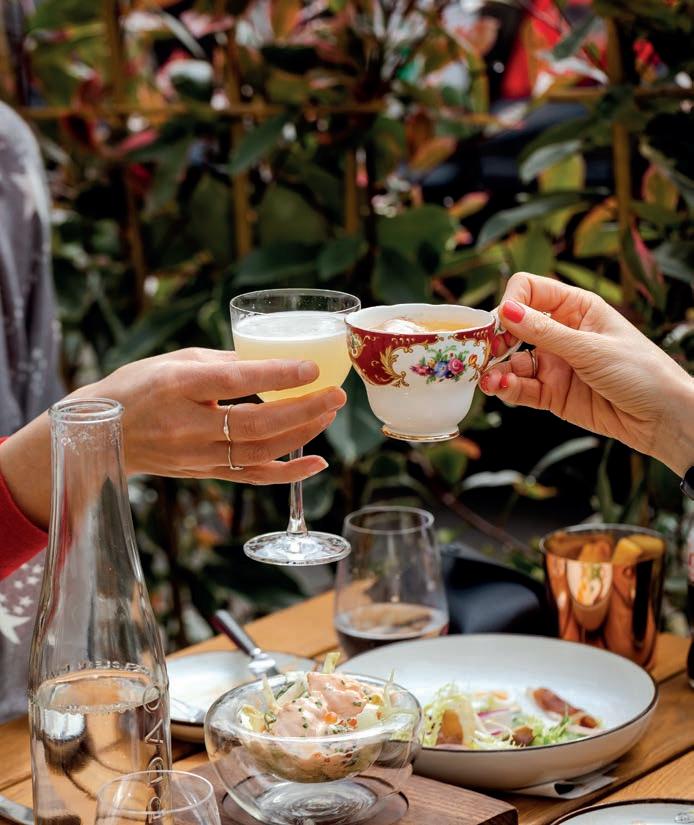
Spring is when the food and drink scene across Berkshire and Buckinghamshire truly shifts gear. Heavy winter menus give way to lighter, brighter plates, pub gardens reopen almost overnight, and restaurants begin to celebrate the first truly seasonal British produce of the year.
In Berkshire, riverside dining feels especially tempting as soon as the sun appears. In Bray, spring brings a renewed buzz to one of the country’s most famous food villages. Restaurants such as The Waterside Inn feel particularly fitting at this time of year, when refined, seasonal cooking mirrors the freshness of the landscape outside. Nearby, The Fat Duck may be known for its theatrics, but spring menus often lean into lighter, more playful flavours that feel well suited to the season.
For something more relaxed but no less atmospheric, The Hind’s Head is a springtime favourite, combining classic British dishes with a setting that encourages lingering lunches and post-walk pints in the sunshine.
Elsewhere in Berkshire, The Crown at Bray and The Great House at Sonning both come into their own in spring, when
riverside terraces reopen and menus begin to showcase asparagus, lamb and fresh greens. These are places where the season shapes the entire experience, from what’s on the plate to where you choose to sit.
Buckinghamshire’s spring food scene is more rural in feel, but no less appealing. Many of the county’s best pubs and restaurants are positioned perfectly for spring walks, making them natural destinations rather than simple stopping points. The Hand & Flowers in Marlow is a standout example, o ering beautifully executed seasonal dishes in a setting that feels especially inviting after time spent by the river or in the hills.
In the Chilterns, The White Hart and The Greyhound attract walkers and food lovers alike, particularly in spring when pub gardens begin to fill and menus focus on British produce at its peak.
Farm shops and garden centre cafés across both counties also play a starring role in spring. Surrounded by fresh planting and the gentle hum of seasonal activity, they o er an atmosphere that feels inseparable from the time of year. This is when co ee tastes better outdoors, lunches stretch longer, and food feels rooted in the landscape rather than simply served within it.
Spring is also the season when family attractions across Berkshire and Buckinghamshire feel most alive.
In Berkshire, Beale Wildlife Park becomes a hub of activity as animals emerge into outdoor enclosures and riverside paths fill with families enjoying the warmer weather. The combination of wildlife, play areas and open space makes it an ideal spring destination.
Nearby, Basildon Park o ers a gentler family experience. Its parkland is perfect for spring picnics and relaxed exploration, while seasonal trails and open lawns give children the freedom to roam.
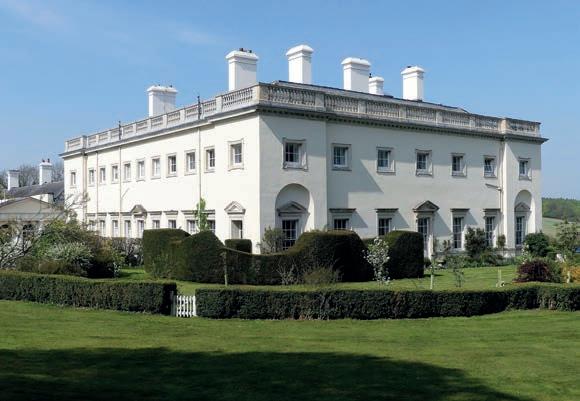
In Buckinghamshire, Waddesdon Manor is at its most impressive in spring. Formal gardens burst into colour, woodland walks feel newly inviting, and the wider estate o ers space for families to explore at their own pace.
Odds Farm Park also comes into its own during the spring months, when animal encounters, outdoor play areas and seasonal activities turn it into one of the county’s most popular family destinations.
Across both counties, spring marks the moment when days out move firmly outdoors – and everything feels easier, brighter and more enjoyable as a result.



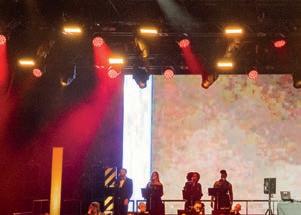

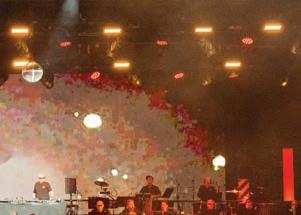
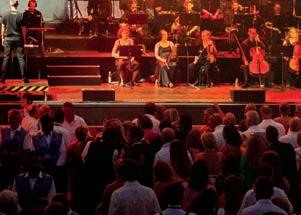
The headliners for the returning Henley Festival this summer have been announced. Absolutely highlights why this could be the best year yet
Henley Festival
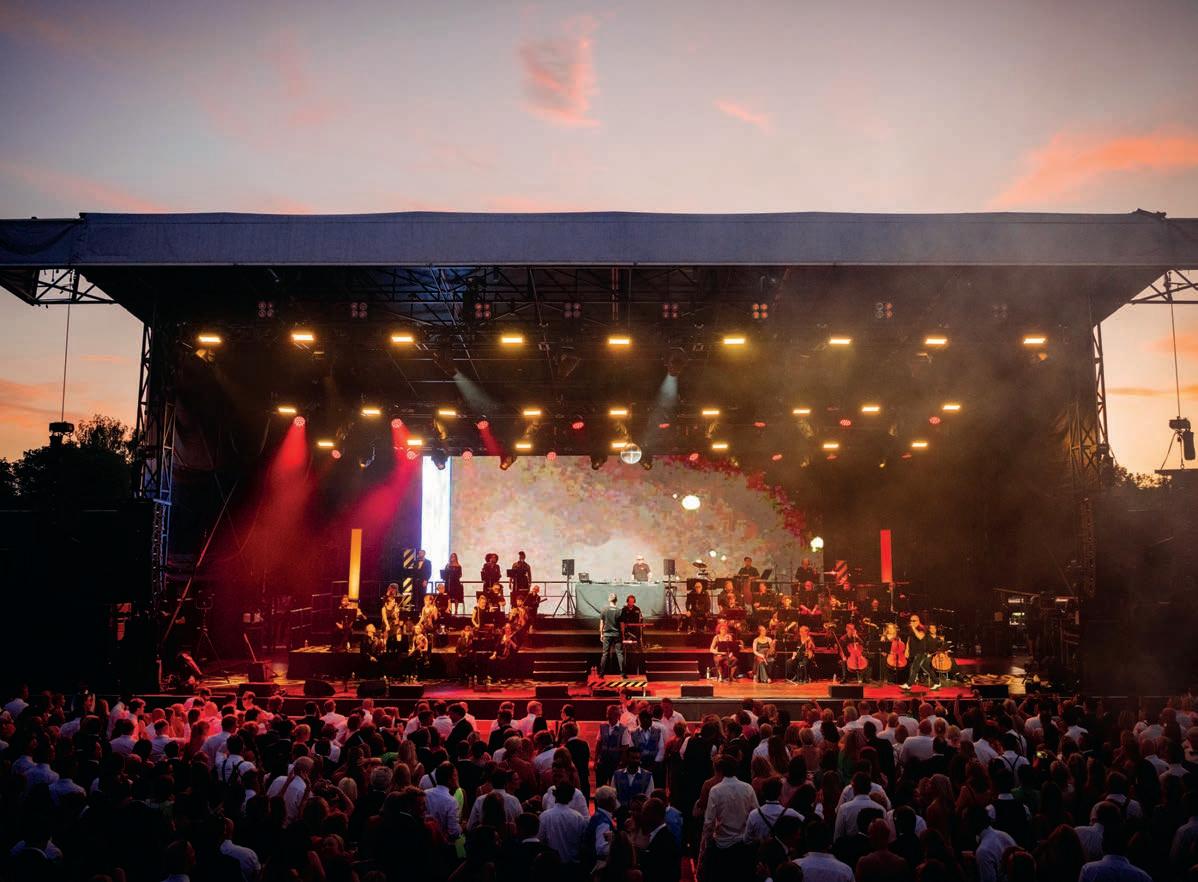
Presented by Hemani has revealed a dazzling line-up for five magical summer nights from 8th-12th July with headliners on its iconic Floating Stage including Boy George & Culture Club, Sugababes, Lulu, and Alex James’ Britpop Classical.
Hemani, a Berkshire-based company with a mission to empower innovation by investing in pioneering technologies shaping the future, were recently announced as Henley Festival’s new headline sponsor. Their support also ensures that the RISE charitable programme continues to nurture the next generation of talent.
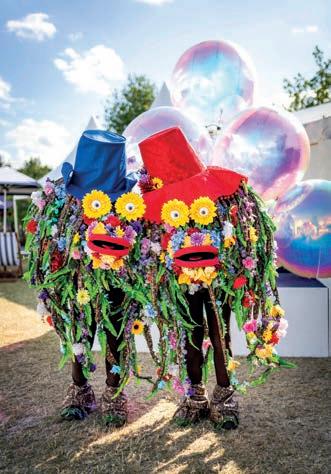
The UK’s only black-tie music and arts festival, Henley Festival is truly an experience like no other: a worldclass music programme of pop, world, classical, folk and jazz set alongside stellar comedy, stunning art galleries and sculpture installations, roving performers, as well as dining, drinks, dancing and spectacular fireworks shows.
Kicking o this year’s Henley Festival on the Floating Stage are icons that need little introduction: Boy George & Culture Club. With careers spanning over 40 years, the Grammy Award-winners first shot to international stardom in the 1980s as one of the UK’s biggest exports of the 20th century. When Boy George and Culture Club exploded on the scene in 1982, they changed popular culture forever. Over the next three decades, they simultaneously shifted perception in music, fashion and art. Winning the Grammy Award for Best New Artists, and BRIT Awards for Best British Group and Best British Single, Culture Club became the first group since The Beatles to have three Top 10 hits in America from a debut album, the first group in music history to have an album certified diamond in Canada, and went on to achieve numerous international Top 10 singles including Karma Chameleon and Do You Really Want to Hurt Me
As the sun sets on Wednesday evening, join trailblazing London jazz band Ezra



Collective in Pure Heaven to experience the unifying power of dance. Dance, No One’s Watching is a documentation of the many dance floors they encountered in 2023, an ode to the sacred, yet joyous act of dancing, an album that musically guides you through a night out in the city, from the opening of possibilities as a new evening spans out ahead, to dawn’s final hours as the night comes to a close.
On Thursday, pop brilliance Sugababes take to the Floating Stage. Since their formation in 1998, Sugababes have cemented their place as one of the most successful and critically acclaimed British girl bands of the 21st century. They have scored six Number One singles, had millions

Our

of global sales and multiple multi-platinum albums. Their recent comeback – as the original line-up of Keisha Buchanan, Mutya Buena and Siobhan Donaghy – was solidified with their now legendary 2022 and 2024 Glastonbury performances, where both fields were at record-breaking capacity.
Henley Festival welcomes the queen of festivals and the 90s, Jo Whiley, back to Pure Heaven on Thursday night. The ultimate authority on British music – and the voice and face of a generation – is headed your way with a dazzling new show as she rummages through her record bag to dig out the very best of 90s Anthems. No-one knows the 90s like Jo – she was right there on the cutting-edge, leading the charge as Britpop blew up, dance music exploded and indie went wild. Now you can relive those magical memories on a dancefloor once again. From Oasis
to Blur, The Chemical Brothers to The Prodigy, let Jo take you on a personal tour of her finest musical memories of the decade that defined them all. Bringing the Friday feel to Henley Festival is the UK’s greatest female rock and roll legend: Lulu. Hailing from Glasgow, Lulu’s career has transcended generations with a lifetime of global success, including winning Eurovision, singing a Bond theme, and receiving an OBE. Most recently, Lulu released her candid memoir, completed her sold-out Champagne for Lulu! tour, joined Robbie Williams on his stadium tour, and shared the Glastonbury stage with Sir Rod Stewart.
Ending the night of stellar performances on the Floating Stage is the original Australian ABBA homage, Björn Again. Created in 1988 in Melbourne by Rod

Stephen, the band rapidly garnered a global cult status and critical acclaim as a humorous, rocked-up, tonguein-cheek satirical ABBA homage.
On Saturday, Blur’s Alex James brings the unforgettable anthems of the 90s to Henley Festival with Alex James’ Britpop Classical, fusing the raw energy of the era’s biggest hits with the breathtaking power of a full orchestra. Featuring special guest performances from Phil Daniels, Sa ron (Republica) and Gary Stringer (Reef), this unique concert reimagines the songs that defined a generation, delivering an electrifying blend of melodies and stunning classical arrangements.
Rounding out the Festival is the ultimate ode to The Beatles, Bootleg Beatles. Formed in 1980 from the West End cast of Broadway hit musical Beatlemania, the Bootleg Beatles were at the very origins of the tribute band scene. From Love Me Do to Let It Be, the world’s premier Beatles band returns to take you on a whistle-stop journey through the most vibrant revolutionary and divisive decade of all - the Swinging Sixties.
Find out more at henley-festival.co.uk

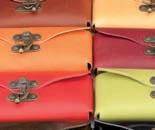








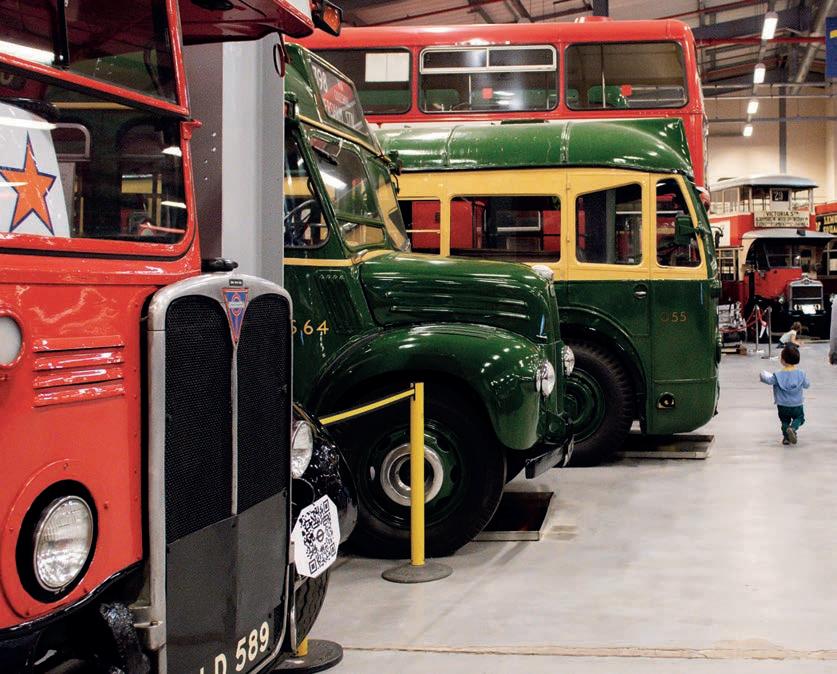
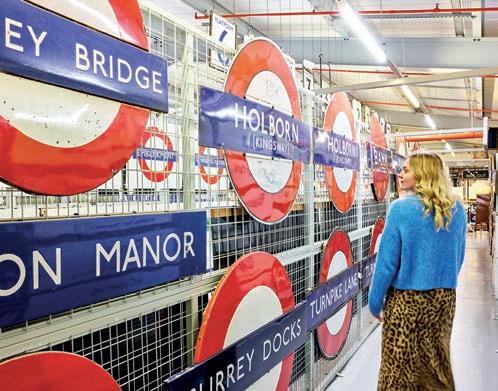
This Easter, London Transport Museum is opening the doors to its Museum Depot in Acton for the first open days of 2026. This o ers a rare chance to explore a transport treasure trove that’s only available to the public on select dates throughout the year.
The April event celebrates several remarkable milestones: 120 years of the Bakerloo line, 10 years of the Night Tube and 70 years since the Routemaster first took to London’s streets. Visitors will be able to discover the Museum’s vast collection of more than 320,000 objects not on display in the Covent Garden Museum and uncover transport icons that have shaped the capital’s identity.
Across all four days visitors can enjoy talks from curators, historians and experts from the transport industry and handson activities from colouring Routemaster badges to crafting a pop-up picture celebrating 120 years of the Piccadilly line. They can also test their knowledge
by matching iconic moquette patterns and take part in a London Transport pop quiz aboard a historic rail vehicle.
Heritage demonstrations will o er rare close-up encounters with original equipment, including the chance to try out some vintage ticket machines at the object handling trolley, watch live demonstrations of historic signalling equipment and meet Museum volunteers to learn how they support the preservation of the capital’s transport history.
Alongside the lively programme, visitors can climb aboard historic trains including the 1927 standard stock and art deco-style 1938 stock, get up close to the pioneering RM1 and RM2 buses, and explore rare signalling equipment, models, maps, station architecture and the Museum’s world-famous poster collection. Vendors will be at the Depot serving up delicious food and drinks each day and visitors can browse in the shop for exclusive gifts and souvenirs, from moquette pattern socks, scarves, and cushions, to posters, prints, and authentic Tube station signs and collectables.
Adult tickets £19; children’s tickets £10; free entry for children aged three and under. Dates: Thursday 9 April to Sunday 12 April 2026 ltmuseum.co.uk/whats-on/depot-open-days
Over at the Museum in Covent Garden… Easter fun: Future London 28 March-12 April
Step into the future with a day of creativity and discovery for the whole family. Inspired by Montague Black’s 1926 poster London 2026, visitors can imagine what the city might look like 100 years from now. Build futuristic vehicles from recycled materials, design a skyline for London in 2126 and meet a time-travelling Montague Black to learn the story behind his famous artwork. Drop-in activities run all day and are included with Museum admission – and kids go free.

Marking International Women’s Day this month, we chat to six locals who are leaders in their field
Claire Gilding-Brant
Head, Luckley House School luckleyhouseschool.org
Q Tell us about yourself…
A I model a form of leadership that is simultaneously strong, visible and compassionate whilst also being deeply rooted in service. My purpose has always centred on lifting others up. In schools, when we invest generously in others, the whole community becomes stronger whether through line-managing female members of sta , mentoring aspiring female leaders or championing sta well-being. My approach is both evidence informed and relational and shows women that gain occurs not just through personal success, but by lifting others and transforming communities they belong to.
Q Where has your career taken you to date?
A I began my career as a PE teacher at Oxford High School before progressing into Head of Girls’ Games and later significant pastoral and safeguarding leadership positions. Alongside teaching, I’ve gained extensive experience in operations, change management, and child protection as a DSL. I’ve also worked in educational holiday provision, managing multiple camps and overseeing large sta teams.
Q What attracted you to Luckley House?
A Stepping into senior leadership simply felt the right thing to do. I wanted to shape school culture at a strategic level, which became a reality during my MA research on change management, particularly around mobile phone use and discretionary screen time. Ultimately, I was driven by the belief that schools can be transformative places for young people, and that strong, values-led leadership creates the conditions for everyone to succeed.
Q What makes you di erent?
A What sets me apart most is my ability to lead change with humanity: balancing rigour with warmth, high expectations with genuine care, and strategic vision with deep knowledge of the day-to-day realities of school life.
Q How was 2025 for you?
A It was a defining year. I was appointed permanent Head at Luckley House School and completed the London Marathon. I talk about these two achievements in parallel because during this time, it rea rmed how much I valued my school community. Training runs early in the morning whilst also influencing the direction of the school could only have been achieved through the partnerships and camaraderie of the sta , pupils and families. During both, when I needed support and felt out of depth, it was this that I lent on, because someone at Luckley will always believe in you.
Q What does 2026 hold in store?
A We are continuing to develop some additional land through our philanthropic vision which will provide enhanced sporting provision for both the school and wider community. The school is also undergoing an ambitious programme of implementing the ten Principles of Instruction codified by Rosenshein.
Q What dreams do you have for 2026?
A Professionally, I am continuing to progress my EdD proposal, which will deepen my academic contribution to behaviour and change management. I’m excited to develop my research further so will be looking to make my formal application this year. Alongside I shall continue to shape school culture and embrace opportunities that stretch and inspire me.
Q What do you like to do outside of work?
A Outside of work, I’m looking forward to taking part in more races (Oxford half booked) and achieving my sub 1-hour 10k which I think I shall get at Dorney Lake. Boating season is always something to look forward to and as a regular Clay Pigeon shooter, I plan to visit more shooting grounds in the country.
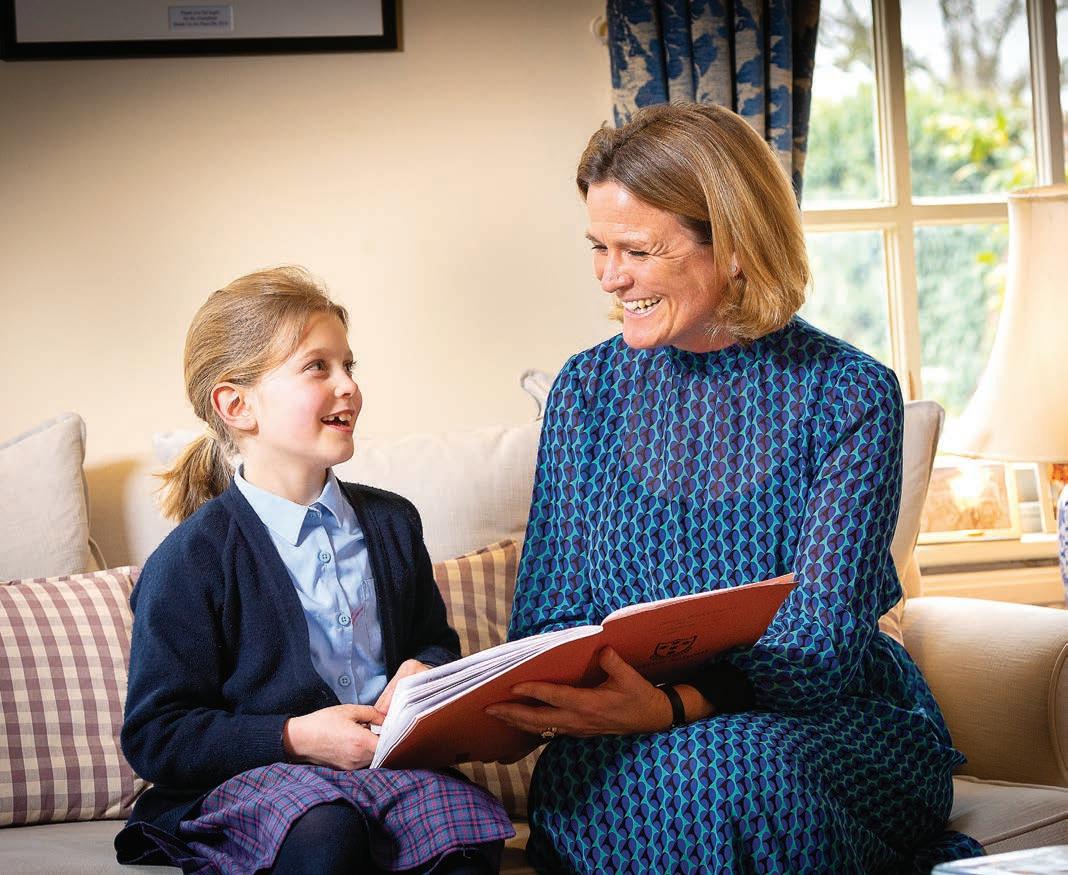
Headmaster’s wife, Elstree School elstreeschool.org.uk
Q Before working at Elstree School, what was your working background?
A My early career was in Marketing. This led to a position as Premium Brands Director in a small Luxury Brand Development agency overseeing the strategy for brands including Red Bull, Veuve Clicquot and Boodles. I loved working both strategically and creatively on these brands and learnt a huge amount about strategic vision, clear communication, and e ective collaboration. It was a lot of fun!
Q What inspired you to move to Elstree School?
A When I met my husband, Sid, he was Joint Headmaster at Ludgrove. I was inspired by his ability to understand what it takes to make a child flourish. Seeing children grow in ability and confidence is something to treasure; to take responsibility for that is a privilege. When Sid was appointed Headmaster at Elstree, I was excited to join him and work together in building our
own vision and ethos for childhood and education – one that we both take pride in today. It is quite rare for a husband and wife to work so closely together, and I absolutely love the opportunity that doing so gives in creating a strong family feel at Elstree.
Q What do you think makes you di erent?
A My role is incredibly varied – I relish this! Schools are all about people – the children, their families and the sta who work here. I enjoy getting to know people and making them feel welcome and part of the Elstree Community. Whether it is uniting parents and sta to form committees that create wonderful events that do so much to support local charities, preparing pupils for church readings, Senior School and Scholarship interviews, teaching French to our Year 8s, or managing the Dining Room Committee to ensure that the children enjoy nutritious, tasty and varied meals – no two days are the same!
Q How was 2025 for you?
A It was a really exciting year. We are so lucky that Elstree is a thriving school and the number of children joining us has grown, so there were lots of new families to settle into
life here! We also completed several exciting projects to expand on our facilities, these included a new Art Centre, refurbishing our netball and tennis courts, and creating a fabulous new adventure playground.
Q Are you introducing anything new for 2026?
A There is lots to look forward to. We will continue to improve our facilities with a new IT Centre and we are also developing our co-curricular and enrichment programme, streamlining the opportunities we provide to ensure they have a purpose as the children progress in their time at Elstree.
Q On a personal level, what are your hopes and dreams for 2026?
A Sid and I have three children at university, and I want to support them with the next stage of their lives as they begin their own careers.
Q Outside of work, what are you looking forward to this year?
A I can’t wait for a holiday with my family – spending time together is something that I always really look forward to!

Lindsay
Founder, Frances Lindsay & Co franceslindsay.co.uk
Q Give To Gain is the IWD theme in 2026. How do you feel you encourage women?
A Beyond my work as a Solicitor, Mediator, and Arbitrator, I am passionate about the future of the profession. I have trained six graduates to become solicitors – four of whom are women. One of my proudest moments was hiring a woman for an admin role, spotting her potential as a graduate, and o ering her a trainee position on the spot. Today, she is one of two former trainees who now run their own successful practices.
Q Before launching your business, what was your working background?
A My path to becoming a solicitor was far from traditional. In a previous life, I worked as a software trainer (back when computers were "coal-fired") and later as a headhunter in the financial sector. Following my own divorce, I decided to "change horses" and pursue a career in law. I qualified as a solicitor while raising five children including two babies, giving me first-hand experience of the immense pressure of divorce and the challenges of being a single, working parent.
Personal history is why I approach every case with genuine empathy – I know exactly what it feels like to be in my client's shoes. With over 30 years of experience in family law, I have seen almost everything that can happen when people separate. I started the practice to provide a di erent and more compassionate way of finding solutions for the family in di cult times. Whether couples are married or unmarried, facing a complex high-net-worth divorce, or navigating the greater challenges of a smaller case, my goal remains the same: to find the right outcome while smoothing out the inevitable "bumps in the road".
Q What do you think makes you di erent?
A I have been described by some as a "Rottweiler" for my fearless advocacy, though I like to think of myself more as a spaniel – loyal, hardworking, and deeply committed to my clients. My true expertise lies in financial remedy cases, particularly those involving complex assets.
I am often up against large London firms, but I firmly believe that the name on the letterhead doesn't determine the outcome. As I often say: "We have all done the same training; what matters is what you do with it." My focus is on using that training to provide top-tier legal support without the unnecessary stress often associated with big-city practices.
Q Are you introducing anything new for 2026?
A The legal landscape is changing, and I am proud to be at the forefront of that evolution. This year, I have introduced two specialised services designed to give clients more control and clarity, alongside expanding our team with an additional mediator.
One is Hybrid Mediation. This combines the best of traditional mediation with the support of legal advisors present in the room, allowing for faster, more robust agreements in complex scenarios.
The other specialised service is Single Solicitor Service. Ideal for couples who want to work together toward a fair outcome with one legal professional guiding the process, significantly saving time, cost, and emotional conflict.
Q Outside of work, what are you looking forward to as the year progresses?
A Despite the rigors of family law, I haven't lost my faith in the institution; I happily "took the plunge" again and remarried in 2007. Today, my life is full and busy with my husband, nine grandchildren, a couple of dogs, and four chickens.
I never feel that I am just dealing with legal files; I feel that I and my team are helping real people find their way through di cult times.

Founders, Ginger Fig Club gingerfigclub.com
Q Give To Gain is the IWD theme in 2026. How do you feel you encourage women?
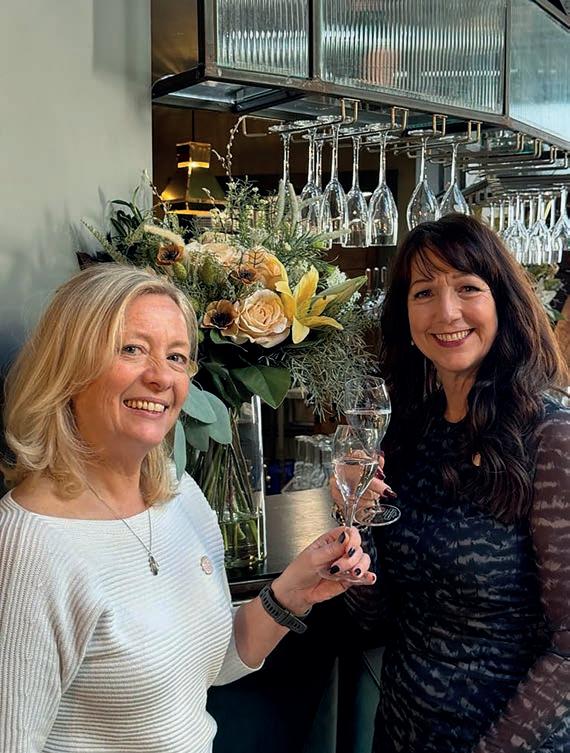
SALLY We like to feel we bring ladies together who may be a bit lost having hit 50, work from home and miss company, don’t meet so many people now the children have left the nest, are widowed or divorced and even hectic with their own social life – but just fancy something for themselves.
Q What inspired you to launch your business?
VIV We had always ended up on the same school committees and said how we would like to work together. Our skill sets complement each other perfectly!
Q What is the Ginger Fig Club?
SALLY The Ginger Fig Club is a social club for ladies and we create events to suit all tastes and budgets for ladies in Berkshire, Surrey and the surrounding area. We encourage ladies to feel safe coming along on their own, and always meet them
Head, The Abbey, Independent Girls’ School theabbey.co.uk
Q How do you feel you encourage women?
A I’m so proud to be the Head of The Abbey, a wonderful school in Reading for girls between 3 and 18. We unabashedly put girls first. I believe that, together with my colleagues in the wider school community, we encourage girls and women every single day. Adolescence can be a tough time, perhaps even more so in 2026 than ever before. Girls’ schools allow girls to be themselves, free from gendered expectations. Abbey girls can say, think, and be what they want. That’s a priceless gift to give a young woman. The school’s values are the pursuit of academic excellence together with, and underlain by, confidence, purpose and joy. It delights me to see our students not only achieving superb results, but doing so whilst laughing and having fun every day.
Studies have found that girls who graduate from girls’ schools are more likely to study STEM subjects, to play competitive sport, and even to be confident. Boys in coeducational classrooms benefit from an average of 30% more teacher attention than girls. Female judges are, devastatingly, three times more likely to be interrupted in their own courtrooms than their male peers. None of that happens at The Abbey.
Q Are you introducing anything new for 2026?
A We have an exciting focus on future-readiness. That means teaching the skills that will help pupils thrive in an uncertain and highly competitive future world. By that, of course we mean equipping them with technical skills, including the e ective use of AI, and the ability in our computing workshop to build, network, and experiment with real server hardware and systems. Even more importantly, however, we will equip them with the character, resilience and human intelligence that will be even more necessary to stand out in 2040 or 2050.
at the door. To find out more, why not come along to our monthly 'New Faces co ees or wine' and visit our website to sign up to our mailing list and book our events. We can’t wait to meet you!
Q What do you think makes you di erent?
VIV We like to feel we are unique as we are very community focused and not only do we bring the ladies together, but we also highlight local businesses and shopping #local and partnering with them on our GF Club Card. This gives access to anyone (male or female) who lives locally to access over 100 o ers and discounts.
Q How was 2025 for you?
SALLY Fabulous. The club is growing all the time and we have lots of local businesses contacting us now with o ers and invitations to our ladies.
Q Are you introducing anything new for 2026?
SALLY Yes three new clubs within our community – GF Wellbeing, Theatre Group and Book Club.
Q On a personal level, what are your hopes and dreams for 2026?
VIV To invite other ladies around the country to be our Ambassadors and set up their own Ginger Fig Club regional areas with our help.








The founder of TRIPLA on why your holiday shouldn’t be hard work





To me, true luxury is when everything on the holiday flows
We’ve all been there. Ten-tabs deep in-flight options, hotel reviews, and “must-see” lists. Why does organising time away so often feel like a job in itself? We sat down with Carsten Lund, founder of TRIPLA, to hear why he believes travel should feel e ortless, and how his own experiences have inspired a di erent approach.
Q Carsten, you’ve spent a lifetime travelling. What stands out most from those experiences?
A I’ve been lucky to see the world through both a luxury and practical lens, from barefoot escapes on private islands to cultural weekends in Europe, and even multi-generational cruises or villas. And what always stands out is how much detail matters. The transfer that’s waiting without fuss or the restaurant that actually lives up to its promise. It’s these little things that turn a good trip into a truly memorable one.
Q Many of us know the stress of planning holidays. What do you think makes it so challenging?
A Time, mostly. People are busy, and while travel should be restorative, organising it often isn’t. I’ve seen clients arrive exhausted before their holiday even begins because they’ve spent weeks trying to piece it all together online. One family I worked with wanted a milestone birthday in Tuscany. They’d been overwhelmed by villa choices and didn’t know which were genuinely right for them. We stepped in, found a villa with space for grandparents, teenagers, and young children, complete with a private chef for a celebratory meal
and a private wine tasting. For them, it turned from a logistical headache into a celebration they’ll never forget.
Q When we were chatting before this interview, you said luxury is about “ease.” What does that mean to you?
A To me, true luxury is when everything flows. That doesn’t always mean extravagant, but it does mean thoughtful. A wellness retreat in the Alps where transfers, spa treatments, and mountain hikes are seamlessly coordinated. Or a short city break where the flights, hotel, and a hard-to-get dinner reservation are already sorted. We do work with hightouch experiences, but it’s not about the price tag, it’s about removing stress and creating something that feels personal.
Q In your experience as a traveller and industry professional, have you noticed travel needs changing in recent years?
A Very much so. People are no longer just looking for a nice hotel or a beautiful view, they often want something deeper, something that resonates. I’ve noticed a real shift towards travel that feels meaningful. For some, that means behind-the-scenes cultural access; meeting local artisans, exploring places tourists don’t usually see. For others, it’s culinary journeys, connecting with a region through its food and wine. And increasingly, it’s about restoration: wellness retreats, mindful escapes, and time to simply switch o in a way daily life doesn’t allow. Travel has become less about ticking o a destination and more about creating experiences that inspire, enrich, and stay with you long after you’ve returned home.
Q With travel uncertainty on the rise, how can travellers be sure their money is safe?
A At TRIPLA, protection isn’t an add-on – it’s the foundation of everything we do. All flightinclusive holidays are fully ATOL protected, and every client payment is held securely in Trust by NatWest Bank and the Travel Trust Association. This means client money is safeguarded from the moment they book, even in the unlikely event that a supplier or TRIPLA were to fail. In a landscape where reassurance matters, TRIPLA ensures every journey is 100% financially secure.
Q What’s the best way to start planning a trip with TRIPLA?
A Everything begins with getting to know you. When clients connect with us, it gives us a sense of their travel style and helps us start shaping ideas that are genuinely personal. Joining our mailing list also keeps you in the loop with tailored inspiration, updates and occasional o ers, including the chance to win a £500 travel voucher. It’s a simple first step toward creating a journey designed entirely around you.
Q And finally, what do you hope clients feel when they travel with TRIPLA?
A Peace of mind, really. That feeling of being looked after so they can just enjoy the experience. Whether it’s a river cruise with private excursions, a birthday in Tuscany, or a quick Parisian escape between board meetings, I want them to feel it was designed just for them. And that they never had to worry about the details.
Visit hellotripla.com/march, WhatsApp 07822 034871 or call 020 3026 9936 for more









THE GYM RAT























































Wine recommendations for the month
By THE WINE SOCIETY


A Fistful of Schist Chenin Blanc, Swartland 2025









The latest launches and news from across the county
By MARK KEBBLE
This juicy stone-fruit and tropical-flavoured chenin blanc is a great value introduction to the Swartland. Riebeek produces a wide range of wines, often from older bush vines which deliver greater complexity at very modest prices.
Arbois Chardonnay, Fruitière Vinicole d'Arbois 2022
£14.50
This chardonnay from the Jura is the perfect balance of introducing lesserknown regions whilst playing it safe with a well-liked and well-known international grape variety. Expect attractive stone fruits and white flowers, supported by citrus notes and a juicy core.
Quinta da Alorna ‘Lutra’ Tinto, Tejo 2024
£8.75
A supple and generous red hailing from the Tejo region of central Portugal, blending indigenous Portuguese grape varieties showcasing a medium-bodied profile with soft tannins and vibrant red-berry notes, making it approachable and enjoyable for anyday drinking.
Since it was founded back in 1874, The Wine Society has dared to do business a little differently. Bringing together a community united by a shared love of wine, The Society is a co-operative and owned by its members. This means there is no requirement to pump profit into annual dividends or bonuses for shareholders – all profits go back into the business.
The Wine Society welcomes all wine lovers. Become a member today and receive £20 off toward your first order. thewinesociety.com
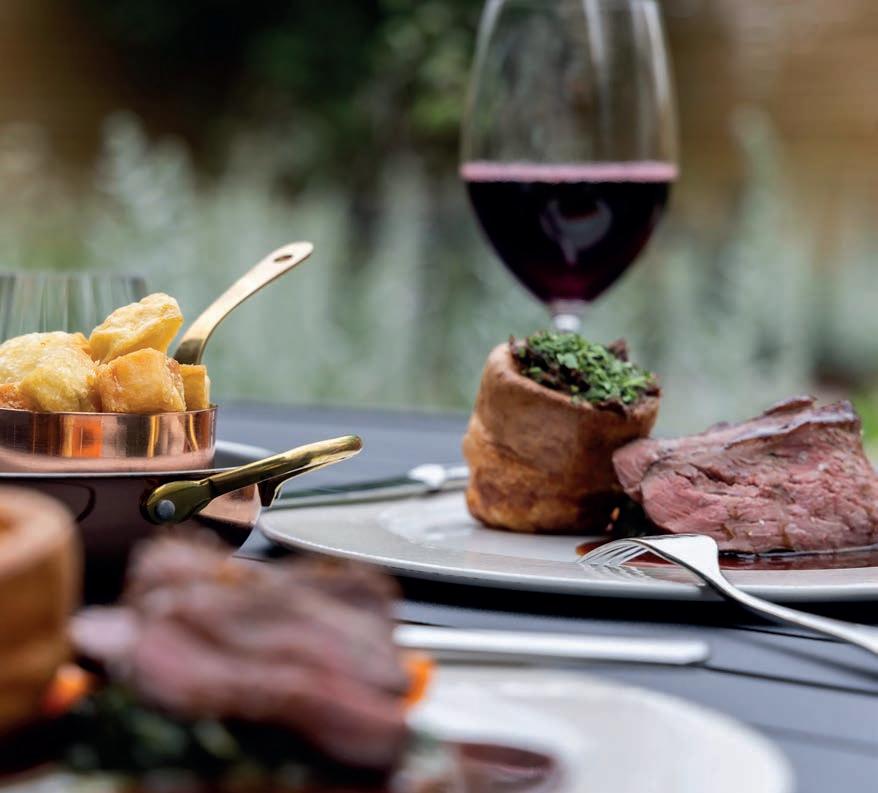
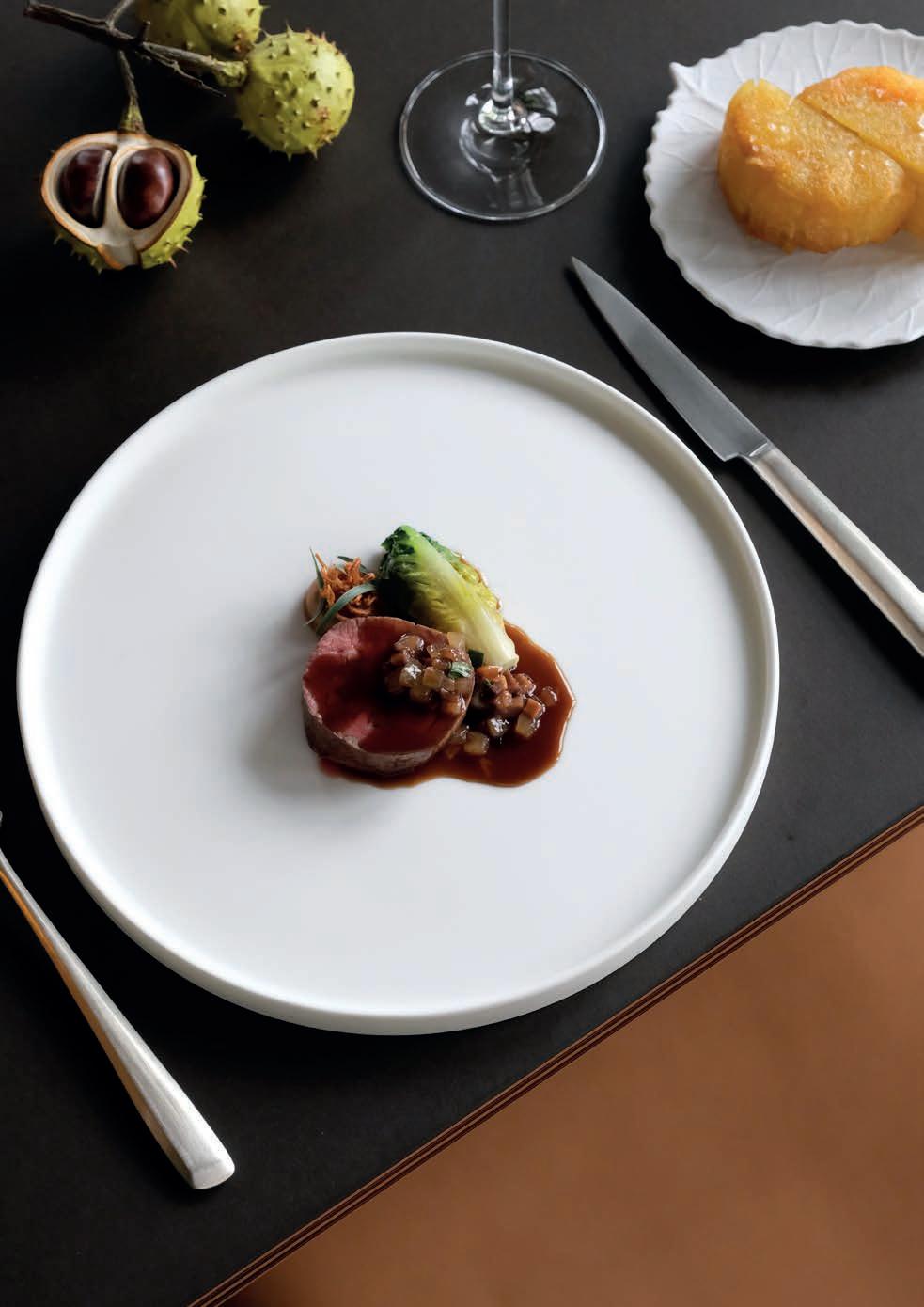
The Braywood in Maidenhead came up trumps this Valentine’s Day with a series of sharing specials. They o ered a romantic menu designed for two, including lobster raviolo with champagne sauce and leek, a Beef Wellington to share, and a chocolate sou é with strawberry ripple ice cream and chocolate sauce. We look forward to what spring brings.
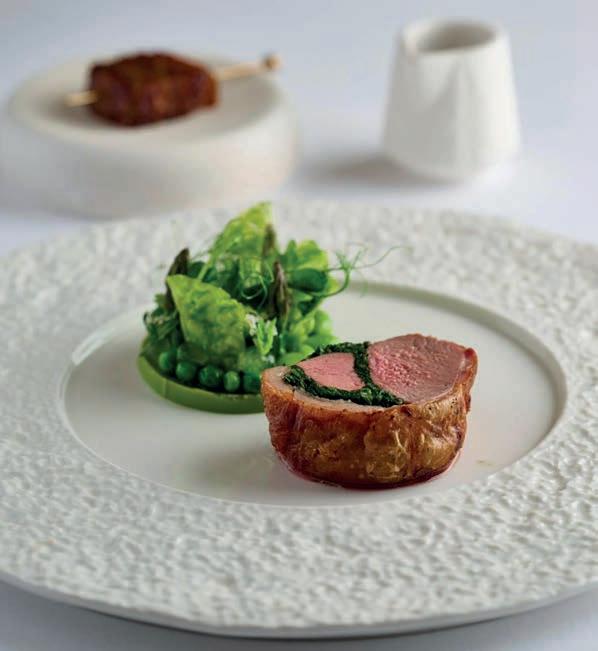
The Greyhound has been ranked at number 7 in Squaremeal’s Top 100 UK Restaurants. Husband and wife team Daniel and Margriet honed their skills at Petrus and Restaurant Gordon Ramsay, so it’s no surprise this Beaconsfield gastropub nails all the small details, from pitch-perfect service to delicious food. greyhoundbeaconsfield.co.uk


SIX BRASSERIE

This Mother’s Day, guests can celebrate in style with panoramic views from SIX Brasserie at The Varsity Hotel & Spa, whilst enjoying sharing dishes. Back by popular demand are the hotel's pop-up igloo domes on the iconic Roof Terrace. These cosy private dining spaces o er warmth, comfort and breathtaking views. thevarsityhotel.co.uk
The ingredients spring is made for

Early strawberries are lighter and more aromatic than summer ones. Chefs showcase them beyond dessert, pairing strawberries with balsamic, black pepper, or herbs, and serving them alongside cheeses or cured meats.

Asparagus is one of the earliest spring vegetables, prized for its tender texture and fresh, grassy flavour. Chefs keep preparations simple, blanching or grilling it lightly to highlight its natural sweetness and seasonal delicacy.

Spring radishes are crisp, juicy, and mildly peppery compared to later harvests. Chefs celebrate them raw with butter and salt, thinly sliced in salads, or lightly roasted to mellow their bite while retaining freshness.

KENNET CRAYFISH
Kennet Crayfish Spiced Rum is out now, crafted using crayfish claw shells and a blend of aromatic spices. The distilling process from the Thatchambased business releases the sweet, delicate flavour of the claws, resulting in a smooth and warming golden spirit infused with orange, nutmeg and cinnamon.
WADDESDON MANOR
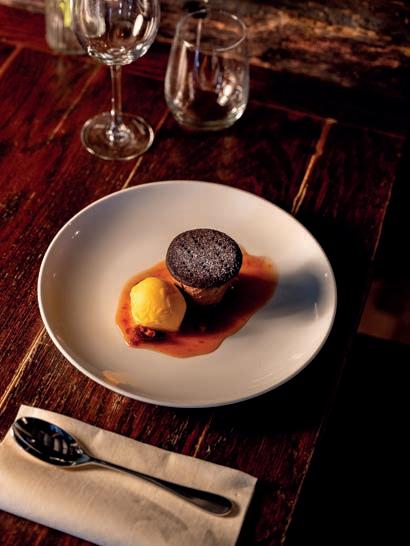
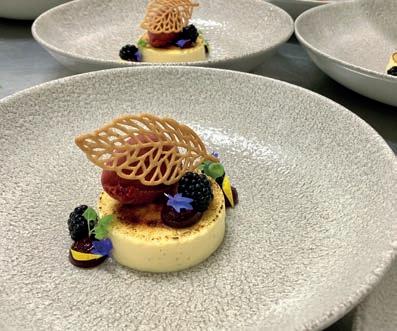
Waddesdon’s Pudding Club on 14th March flips the saying “save the best until last” on its head by showcasing not one, but three fabulous desserts created in-house by their talented Head Pâtissier. This is a celebration of the rich tradition of British desserts. waddesdon.org.uk kennetcrayfish.com

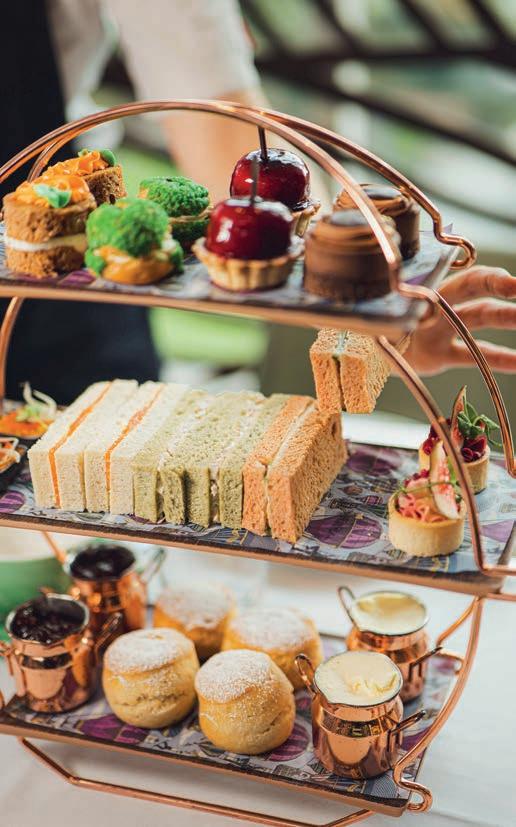



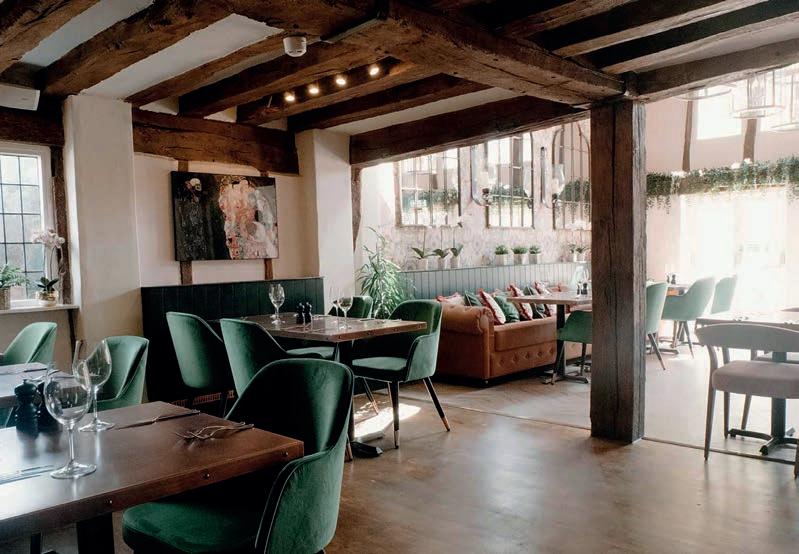
The Crown at Bray is the latest chapter in Simon Bonwick’s journey of culinary excellence. Here, he discusses pressure, pretension and doing things properly
Simon Bonwick is a British chef best known for applying rigorous classical French technique to the seemingly informal setting of the English pub. Born in Croydon and trained early on at Boston College in Lincolnshire, he built his craft through high-end kitchens before committing to pubs as his long-term canvas.
Simon’s reputation crystallised at The Crown in Burchetts Green, a village pub he opened in October 2013 and ran with an unusually stripped-back brigade – famously cooking largely on his own for years, with family support around him. The food was
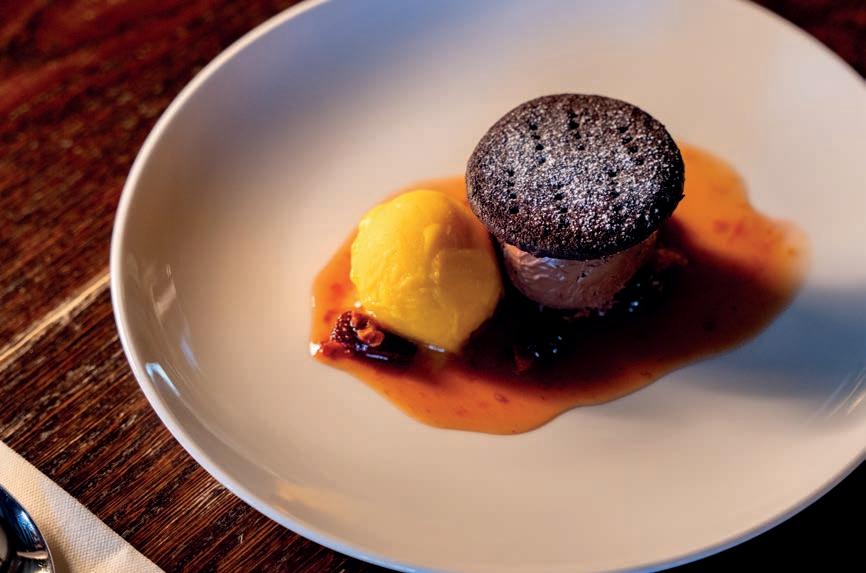
deliberately “obvious” in the best sense: pâtés, reductions, immaculate fish cookery, and sauces with the kind of sheen that only comes from repetition and discipline. That stubborn commitment to timeless French cooking earned major recognition, including The Good Food Guide’s Best Pub Restaurant award (2018), strong Guide ratings, and a place in wider “best restaurant” conversations. Along the way, he also put his philosophy into print with Cooking in Pubs (2021), reinforcing the idea that pub cooking can be precise, ambitious and deeply personal.
After the family sold The Crown in 2022, Simon remained active locally, including reopening The Dew Drop Inn in Hurley in early 2023, which quickly drew Michelin Guide attention.
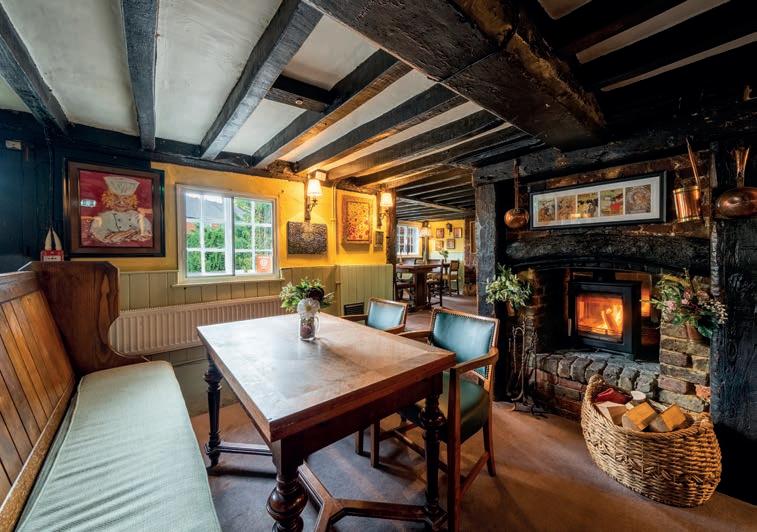
The Crown at Bray marks the next, high-profile chapter – one that drops him into a village synonymous with destination dining, while still keeping him in a pub. In March 2025, Simon and his wife Deborah became custodians of the historic venue, taking over from the Tru e Hunting team and positioning the venue as a more serious
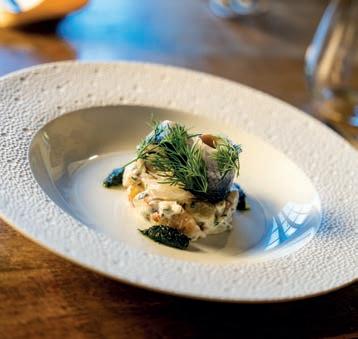
food-led inn. The o ering is explicitly framed around his “cooking wisdom” and classical French repertoire: an à la carte menu of confident staples (think pickled herring with potato and dill, French country pâté, carefully sourced smoked salmon), alongside a Sunday roast that leans into comfort without dropping standards. What’s striking is how the Bray operation scales up the things that made him cultfamous at Burchetts Green. The Crown at Bray presents his food with more room, more polish and more infrastructure: he’s spoken about the pleasure of working in a “phenomenal kitchen”, suggesting an environment that supports his exacting style rather than forcing it into heroic constraint. Critical and guide-world interest has followed – and Absolutely sat down with chef to find out more about his ambitions in Bray.
Q Your cooking is often described as instinctive and uncompromising – how do you balance that creative freedom with the expectations that come with running a destination restaurant?
A I don’t really believe in balancing it, if I’m
honest. The instinct comes first, always has. If you start cooking to please expectations, you’re already lost. What people expect when they come here is honesty. They don’t want tricks or theatre; they want food that makes sense and tastes of something real. My job is to stay true to that instinct every day, whether the room’s full or empty. If I lose that, then it doesn’t matter how “destination” the restaurant is, it’s pointless.
Q The Crown has earned a reputation for serious food without pretension. How intentional is that tone, and how do you protect it as the restaurant evolves?
A I don’t sit around thinking about tone, I’d lose my mind if I did. It’s not a strategy, it’s just how I am. I’ve never been interested in dressing things up to make them look cleverer than they are. The food’s serious because we care about it, not because we want to impress anyone. Pretension creeps in the moment you start trying to be something, rather than just doing the work properly.
Q You’ve worked in some famously demanding kitchens. What lessons from those early experiences still shape how you cook today?
A Be on time. Be ready. Good old-fashioned mise en place, properly prepared, no excuses. Those kitchens taught me that cooking isn’t romantic; it’s practical. There’s nothing glamorous about being unprepared. You don’t get to improvise if you haven’t done the groundwork. That discipline stays with you forever. You earn your freedom through preparation.
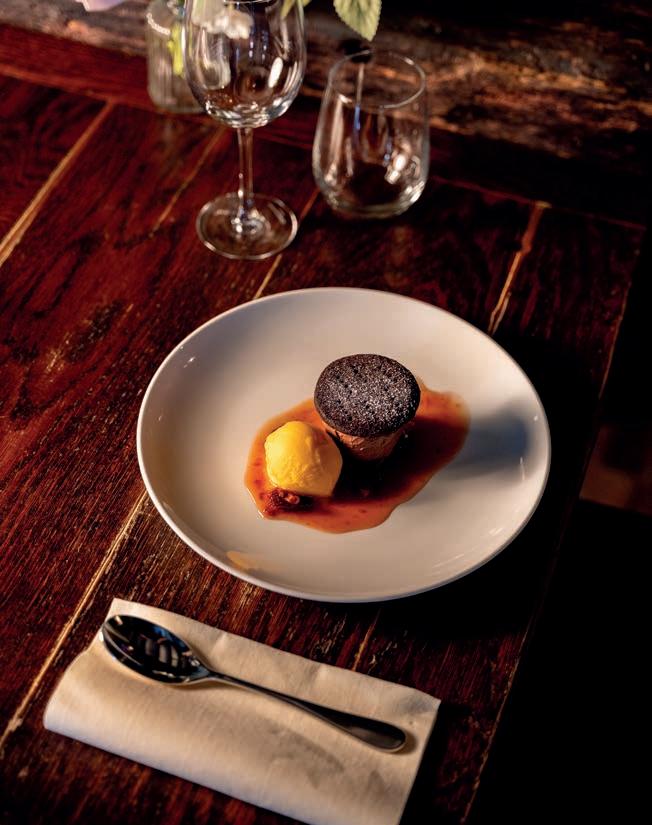
Q Can you describe how a dish usually begins for you?
A It starts nowhere sensible. It’s dreams, thoughts, half-formed ideas knocking around in my head. Sometimes it’s something I ate years ago, sometimes it’s just the look of an ingredient. I don’t sit down and design dishes, that feels forced. The ingredient tells you what it wants if you listen.
Q What dish or dishes at The Crown do you think really highlights what your cooking is all about and why?
A The crab dish, without question. It’s ridiculously simple, o ensively simple, almost. It’s pretty, it’s clean, and it’s vulgar in how little there is to hide behind. That’s what I love about it.

“Bray has a standard, it always has. Cooking here keeps you sharp”
Q Bray is synonymous with culinary excellence. Does cooking in the village add pressure, or does it push you creatively?
A Pressure isn’t a bad thing. Bray has a standard, it always has. Cooking here keeps you sharp. You’re surrounded by history and heavy hitters. Some people crumble under that. I quite like it.
Q What role does discipline play in your kitchen culture, and how do you balance intensity with sustainability for your team?
A We’ve got a very mature brigade, there’s no testosterone left, really. No shouting, no chest-beating. We’re all in the same culinary trance, aiming for the same thing. It’s a quiet
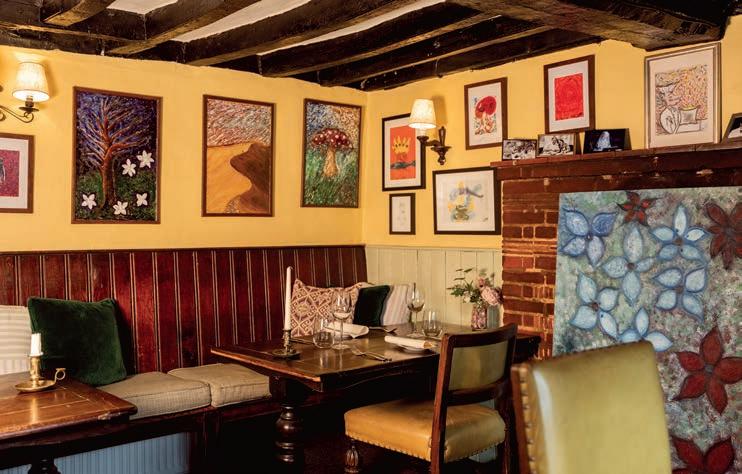
kitchen, a bit boring on the surface, but excitingly boring. The intensity is internal. That’s how we make it sustainable.
Q Have your ideas about success changed over time – especially as the industry grapples with burnout and changing expectations?
A Not really. If anything, I’m working harder now than I ever have. The climate’s tougher, margins are tighter, and you’ve got to be sharper. Success, for me, is still about consistency and standards. Turning up every day and doing it properly. That hasn’t changed, and I’m not sure it ever will.
Q This interview will appear in our spring issue, so what kind of ingredients are you looking forward to working with?
A Morels, asparagus, spring chicken, all the good stu . I want to make something clean, pure, exciting. And then, with the leftovers, turn it all into a deep, intense spring soup, something hearty and grounding.
Q Looking ahead, what excites you most about the next chapter – refining what you already do, or exploring something entirely new?
A Building on what we’ve got. Elevating consistency. Making sure The Crown is recognised as a proper hard hitter in Bray, up there with the likes of the Fat Duck, The Hinds Head and the Waterside Inn.
thecrownatbray.com
























































The Shoot: Celia B 54
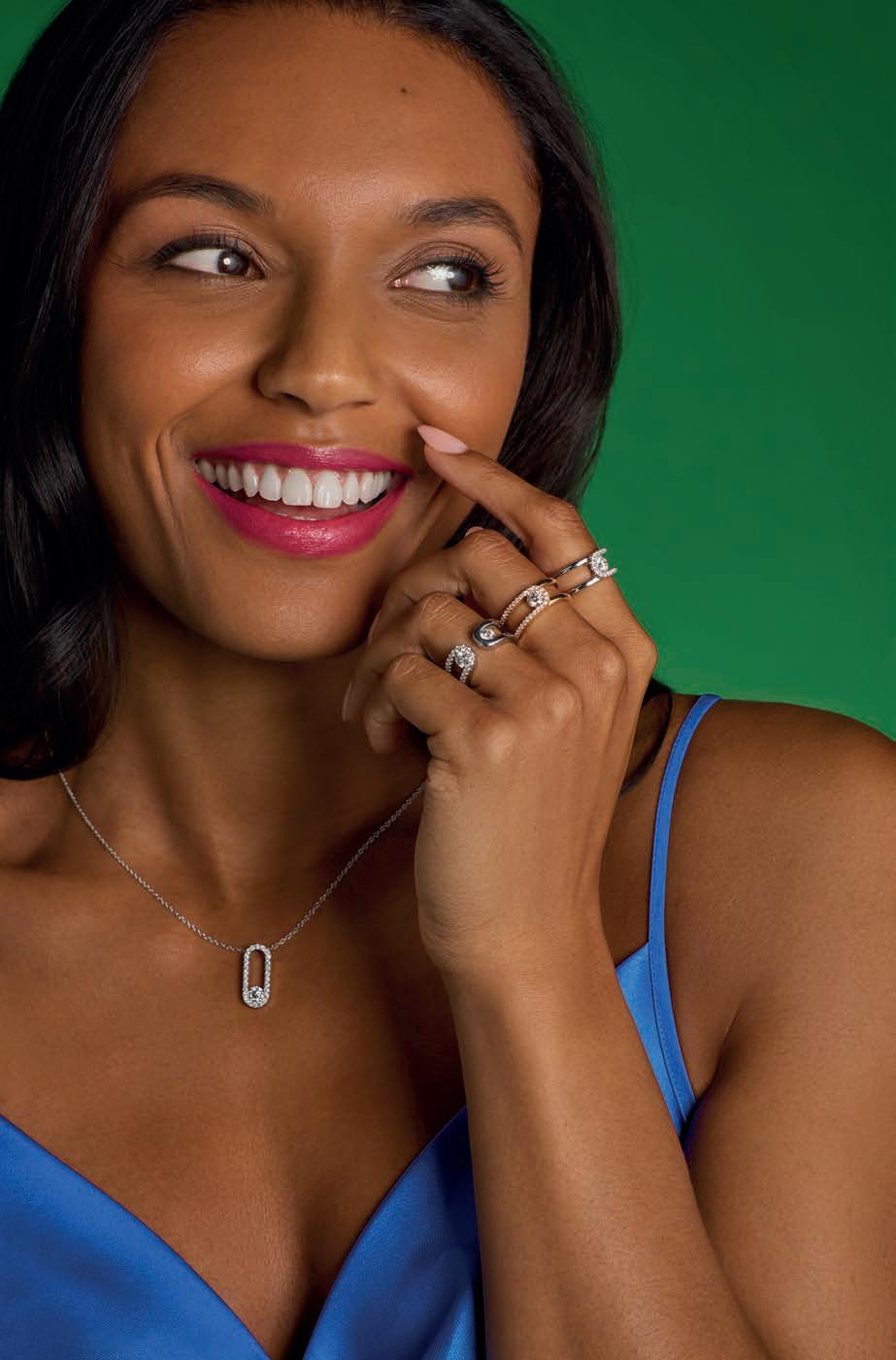
BERRY’S JEWELLERS At the heart of the VERVE Collection by Berry’s Jewellers lies wearable fine jewellery, effortlessly transitioning from day to night with timeless elegance. Flowing, simple designs adorned with highly-polished metals are strikingly complemented by the mesmerising allure of diamonds, making VERVE the perfect accessory to your spring wardrobe. Discover the collection at your nearest Berry’s showroom or at berrysjewellers.co.uk


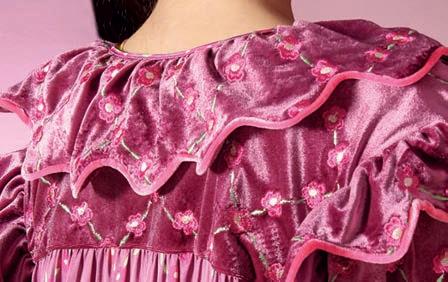
Celia B’s Moonbeam capsule focuses on elevated evening dresses inspired by lunar cycles, the perfect event occasionwear
CELIAB.COM



Growing old is optional at Castle View, to us age is just a number!
Getting older doesn’t mean giving up your independence or the things you love. If you want to live well, stay active, and keep control of your own life, an integrated retirement community like Castle View could be exactly what you’re looking for.


Discover Castle View Windsor... Scan the QR Code to discover more, or call Nicky, our Later Living Advisor on 01753 378127, to discuss how your lifestyle can flourish at Castle View, Windsor. Purchase from £350,000* or Rent from £2,663 monthly *Other charges apply


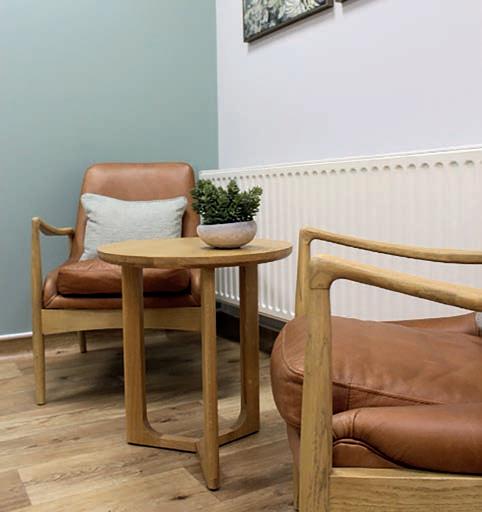
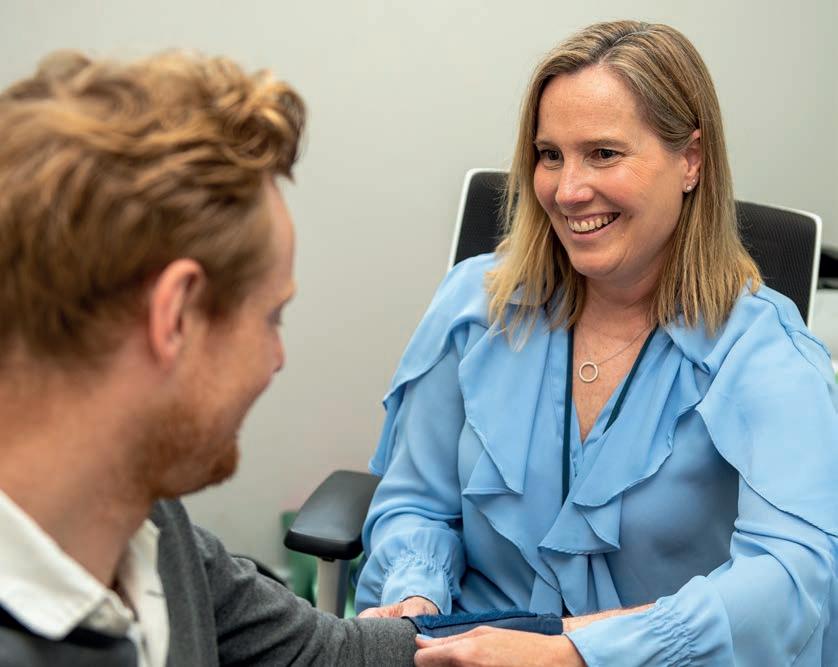
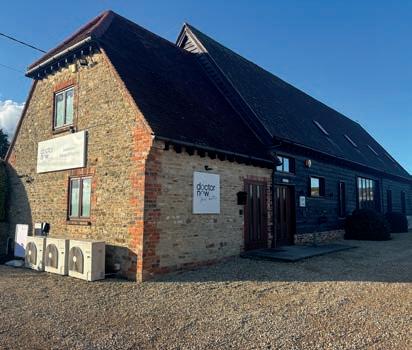
DoctorNow has opened a new private GP practice in Thame, expanding the reach of its acclaimed healthcare
Thame has welcomed a new addition to its local healthcare community as DoctorNow opens a private GP practice in the town. Already known for its established clinic in Beaconsfield, DoctorNow’s expansion into Oxfordshire brings its hallmark blend of clinical expertise, convenience, and genuine personal care to a new community.
DoctorNow was founded on the principle that great healthcare is built on relationships. For more than 23 years, this philosophy has resonated with patients seeking a more personal and proactive approach to their health, whether as an alternative to, or working alongside, traditional NHS services. The new Thame practice builds on that long-standing
success, o ering residents convenient access to private GP care closer to home.
DoctorNow o ers a comprehensive range of services designed to fit seamlessly around modern life. Patients benefit from rapidaccess appointments and longer, unhurried consultations. Alongside GP appointments, the practice provides comprehensive health checks, vaccinations, dedicated women’s and men’s health clinics, mental health support and the long-term management of chronic illness. When specialist care is needed, DoctorNow ensures timely referrals and coordinated follow-up. Another distinguishing feature of DoctorNow is the time it gives to each patient. Appointments are designed to allow more time, enabling doctors to look beyond immediate symptoms and consider the wider context of a person’s health, lifestyle and goals. This more considered approach
supports preventative care and early intervention, helping patients stay well rather than simply responding when problems arise.
Thame, with its strong sense of community and growing population, is a natural fit for DoctorNow’s model of care. DoctorNow aims to become a familiar and trusted local presence, building lasting connections with patients and contributing positively to the community’s health and wellbeing.
Increasingly, private GP practices are seen as a valuable addition to the healthcare landscape, o ering greater flexibility and capacity. For many patients, this means peace of mind, quicker access when it matters, and the reassurance of seeing a doctor who knows them well.
As DoctorNow opens its doors in Thame, it brings with it an established reputation, a friendly and professional team, and a clear commitment to patientcentred care. For residents seeking timely appointments, comprehensive services, and a more relaxed, personal approach to healthcare, the new practice is set to become a welcome part of town life.
To celebrate the opening of their Thame practice, DoctorNow is o ering £200 o its joining fee for a limited period making it an ideal time to join.
For more information, call 01844 395988 or visit doctornow.org





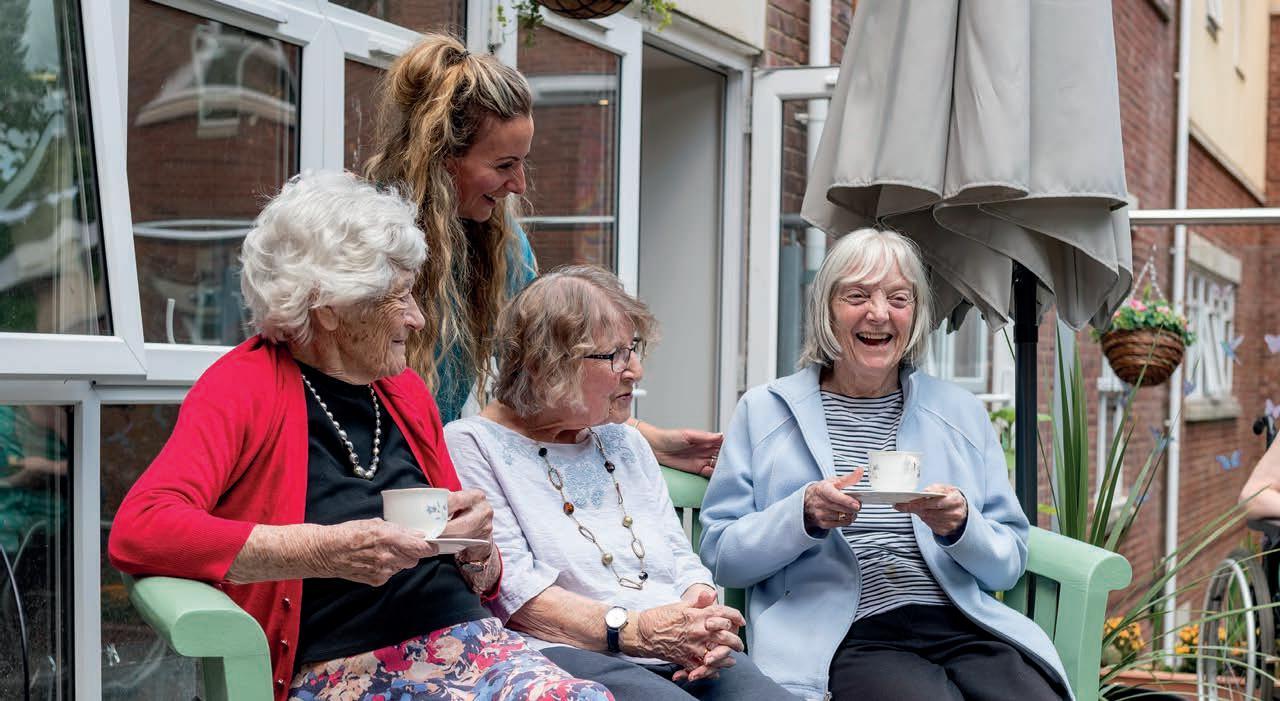
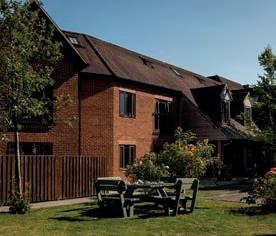
Aria Care provides exceptional care and a quality lifestyle to the residents in our communities, delivering a service which our residents and families can trust. We believe in delivering person-centred care with empathy, always being committed to our residents to make a positive difference to their lives. We know choosing a care home for yourself or your loved one can be a difficult decision. By far the best way to get a feel for our homes is to visit us and meet our colleagues. We’ll be delighted to show you around.
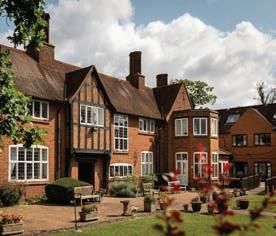








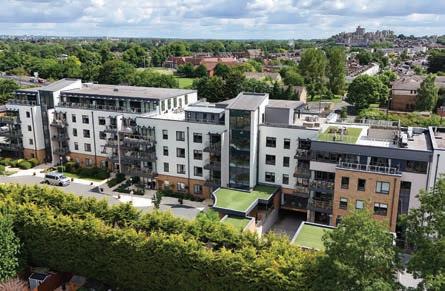
When Lin moved into her Castle View independent living apartment in the autumn of 2025, she wasn’t simply switching addresses, she was, in her own words, “opening the door to a new chapter of comfort, companionship, and peace of mind”. For anyone considering a property move later in life, Lin’s journey echoes many of the big questions Castle View Windsor hear every day…
Q Why Move? The Turning Point
A After the passing of her husband, Lin found daily life overwhelming in the family home of 66 years. Though surrounded by generations of memories, she faced di cult nights, anxiety about safety, and the burden of a house that suddenly felt too big and too empty. “The house was full of memories, but it was time to start a new chapter,” Lin recalls. Initially hesitant, Lin visited Castle View at her daughter’s insistence. From her very first step inside, she sensed a warmth and vibrancy she hadn’t expected. “As soon as I walked through the door, I thought, this is rather
From loneliness to a new lease of life: Lin’s story at Castle View
nice,” she shares. What sealed it was the view from her new third-floor apartment – Windsor Castle, her old church, her daughter’s school – landmarks woven through her life’s story.
Q Settling In: Overcoming Challenges
A Downsizing after so long in one house wasn’t easy. Letting go of treasured items brought moments of sadness, but knowing family would cherish many of them brought comfort. The big surprise? The welcome. “As I came through the door on moving day, everyone clapped! It made me feel so welcome.”
Since moving, Lin describes her life as “transformed”. She now relishes the security of the Castle View building, even sleeping soundly in the dark for the first time since her loss. With 24-hour reception, triple glazing, and warm, quiet apartments, Lin feels entirely secure – something that has made a world of di erence to her wellbeing. The social life has also brought unexpected joy. Lin has become a regular at cinema nights, themed dinners, Saturday brunches, and friendly get-togethers in the Sky Lounge. “If you feel a bit fed up, you just go downstairs, and there’s always someone to talk to,” she enthuses.
A Lin’s days are now sprinkled with family visits – her daughter Wendy joins her for breakfast most mornings before work – and with community events that keep her active and engaged. She takes part in group physio sessions, enjoys walks, and loves experimenting with her new air fryer at mealtimes. “It is a good life here. I have met lovely people, and I have a new life – which I did not have the prospect of, before,” Lin says.
To those on the fence about leaving their longtime home, Lin’s advice is simple: “Come along for a look, it is so far removed from what people might think – it is definitely NOT a care home! It is a big step, but once you are here, you will wonder why you waited.” Lin hopes her journey may help others see that change, while challenging, can bring laughter, friendship, and a genuine new lease of life.
The dedicated later life advisers at Castle View are always on hand to help guide you and your family – whether it’s answering questions, o ering support, or arranging a personal visit. Simply give Nicky a call on 01753 378127












PFEIFFER DESIGN








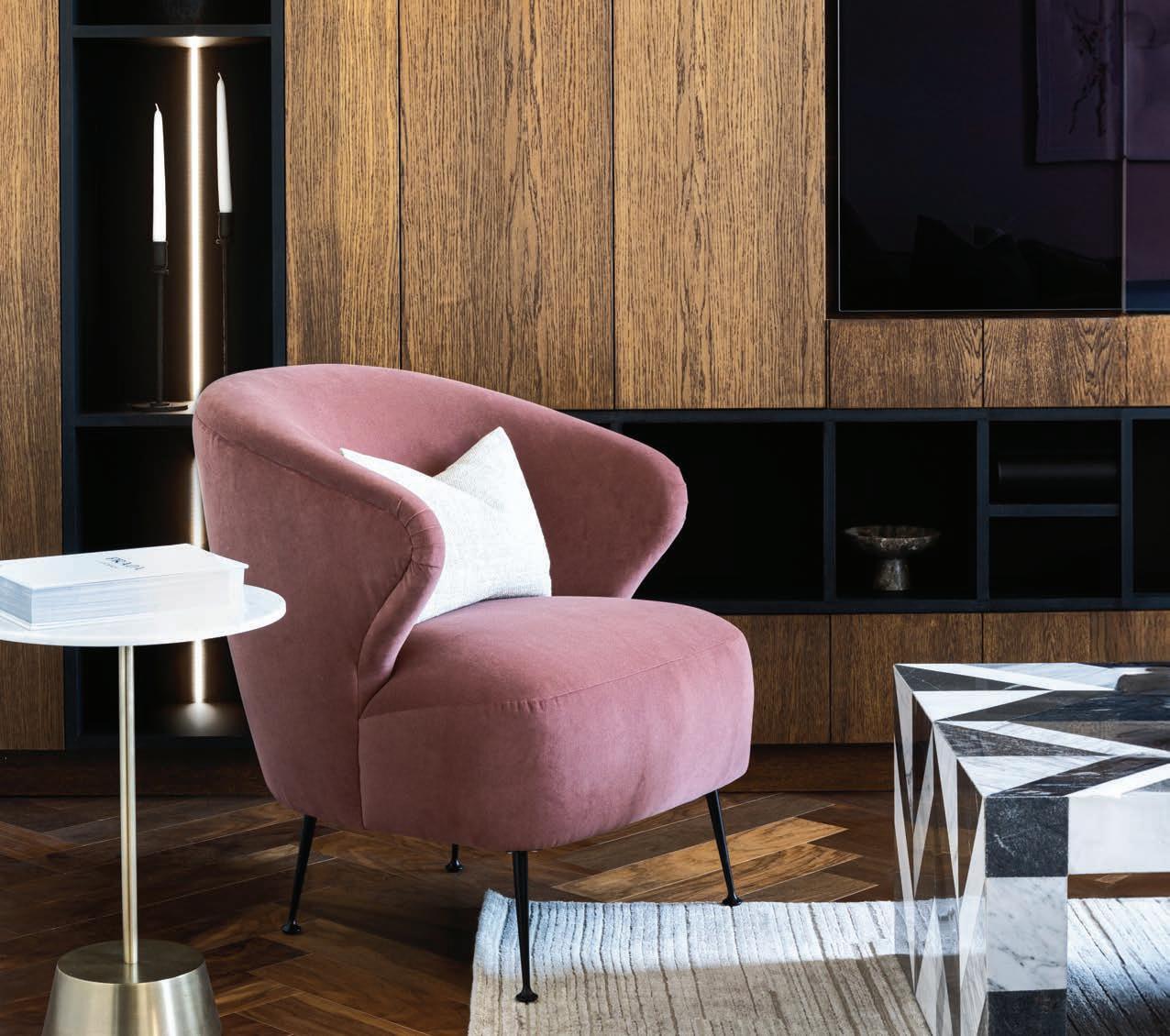




Pfeiffer Design offers truly bespoke design solutions tailored to your vision and space. With award-winning expertise in residential and commercial interiors across London and the South East, their team manages everything from initial concept through technical planning to final installation, crafting personalised, functional and beautiful environments that exceed expectations. pfeifferdesign.co.uk











In a truly exceptional setting within the village of Cookham Dean, Moonraker is a stunning, architecturally designed and highly individual residence with gardens on the River Thames. The property was built in 2017 by a renowned local developer and has been significantly updated over the years, inside and out, to create this stylish, high specification home with no expense spared. The contemporary house has a thoroughly modern design, with high ceilings, large windows and a use of clean lines to further highlight the sense of light and space, with all the floors connected by a spiral staircase. Internally the standard of finish is immaculate and the house is fitted with all the expected modern conveniences, including underfloor heating throughout and a security system with an alarm and CCTV.
The accommodation is arranged over three floors and extends to about 5,035 sq ft, with the main reception rooms on the ground floor comprising a large drawing room, an inviting reception hall and an expansive kitchen/dining room. The entire rear wall is lined with bifold doors opening to the garden, creating a fabulously light feel throughout. Within the kitchen there is attractive cabinetry, fitted appliances and a stunning view across the rear garden.
At basement level there is a home cinema, playroom, gym and sauna with shower facilities. The bedrooms are located together on the first floor and comprise a principal bedroom with dressing room and en-suite bath/shower room, with the remaining four bedrooms all en-suite with built-in storage. All of the bedrooms have a beautiful rear aspect towards the river and have access to a balcony.
Moonraker is tucked away in a very secluded position on a private no-through lane. Though the views to the rear over the River Thames and beyond are spectacular, the house feels exceptionally well screened from the front and sides via mature trees and hedging, with no neighbours overlooking the house or gardens. To the front, a gated entrance opens to a large driveway and a gravel terrace which wraps around the front of the house; a separate gated entrance on the lane opens to a further driveway and a detached garage, which is large enough to be used as a workshop for the car enthusiast. The gardens extend from the rear of the house, and lead down to the water's edge where there is a private mooring ideal for a personal craft for exploring the river. Property agent Richard Maby, Head of Office at Savills in Marlow, tells Absolutely more about the finer elements of the property over the page.

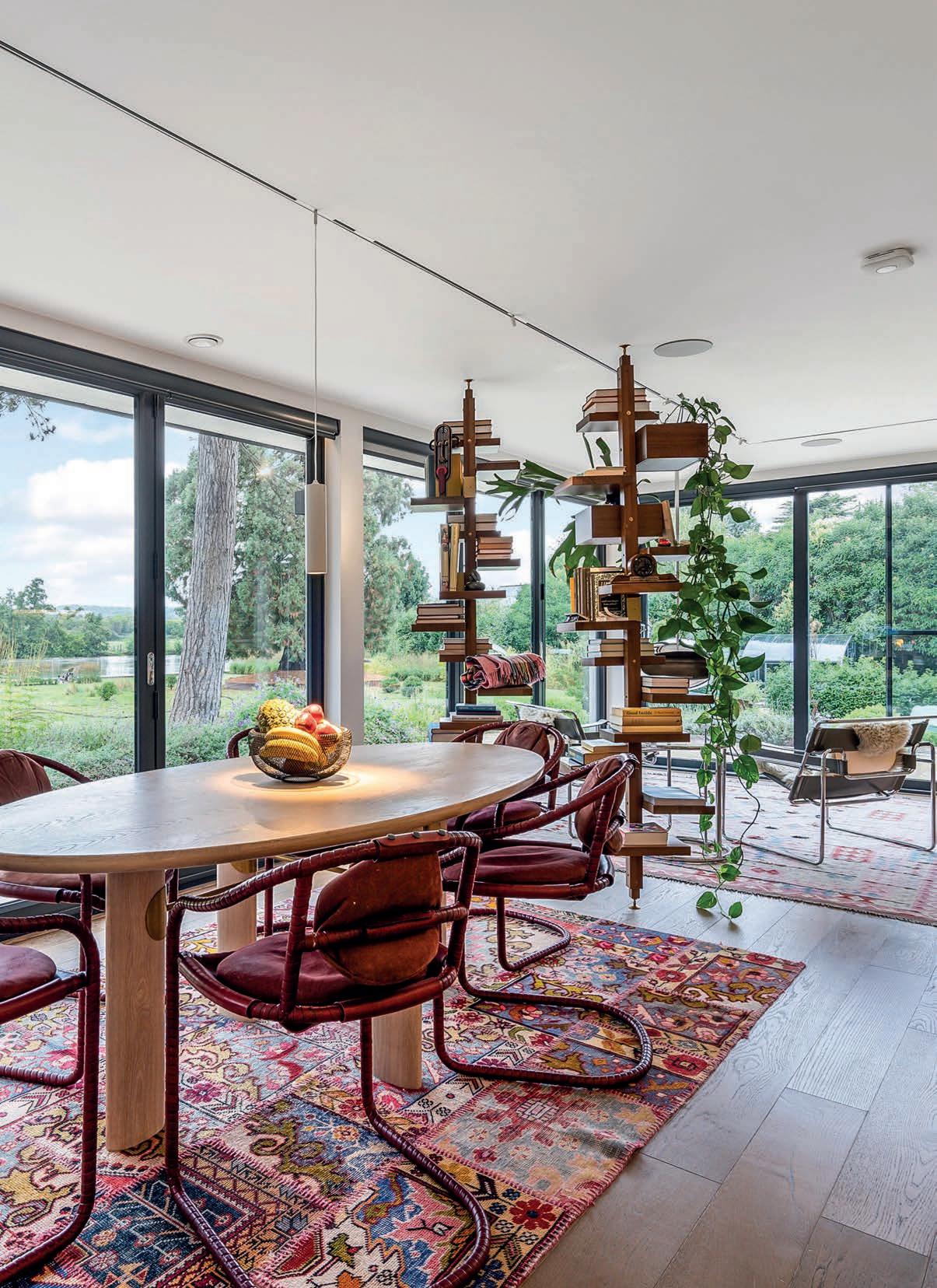
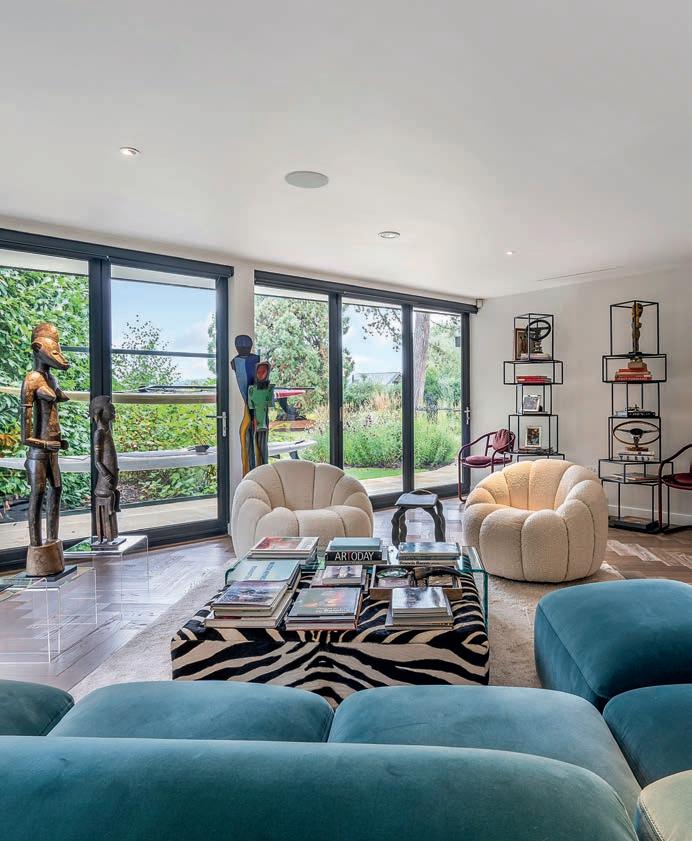
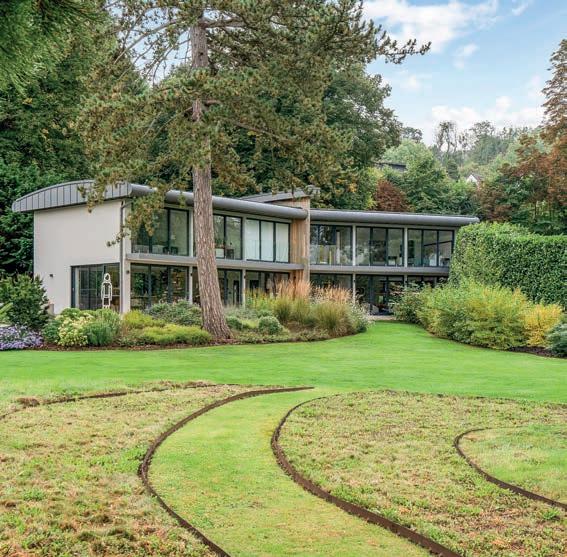
The garden is designed to complement the curves and flow of The Thames, and has a private mooring at the water's edge
Q Who was the architect behind the build and subsequent updates?
A The property was designed by Howard Hyde and built by a local developer. By all accounts it was a real labour of love –modelled around aviation and drawing inspiration from various aeronautical themes. Over the years it’s been significantly updated to create a stylish and highly individual home that takes full advantage of its wonderful surroundings.
Q Are there any bespoke design features that catch the eye?
A There’s lots of bespoke fixtures and fittings – including some exceptional tamo ash cabinetry in the kitchen by Blakes London. The playroom, designed by Tiger Play, seven-seater home cinema, gym and sauna are also first class. It’s a property of the highest quality and great for those who like to entertain. Unlike some riverside homes there’s plenty of parking for guests, while the property also has a fully insulated garage that could be turned into an independent annexe with heating, cooling, polished concrete floors and an acoustic ceiling for music lovers.
Q Can you describe the materials and finishes used throughout the house?
A The standard of finish is immaculate. The wood floors were sustainably sourced from flooring specialists Ted Todd, including a special end grain floor in the basement. The outdoor patio is limestone and all decking is millboard for longevity. The house is also fitted with underfloor heating throughout and a security system with an alarm and CCTV. Ceiling speakers are operated by Control4 audio, while smart lighting and comfort heat exchanger systems can be remotely controlled. No expense has been spared.
Q How does the natural lighting change throughout the day?
A High ceilings, large windows and use of clean lines highlight the sense of light and space. The entire rear wall is lined with bifold doors from top to bottom –opening out to the garden and creating a fabulous feel throughout that floods the house with natural light. The electric blinds can also be programmed to shield from the afternoon sun. It’s spectacular.
Q How does the indoor/outdoor connection work beyond the bifold doors?
A The garden is designed to complement the curves and flow of The Thames – with a flat stretch that connects around the house, giving a circular feel with sweeping pathways and substantial planting beds. Other features of note include a kitchen garden with corten raised beds, a greenhouse designed by Hartley Botanic and a number of seating areas – including a firepit and private mooring at the water’s edge that’s perfect for enjoying sunsets over the river. Wood fencing, cladding, gates and a shed also all carry the same lines, using western red cedar wood for an eventual grey look that will complement the zinc roof of the main house.
Q What is your favourite element of the property?
A Aside from the stunning design, it has to be the location. The house is in a wonderfully private position on a highly coveted stretch of the River Thames, with magnificent views over its gardens, the Gibraltar Islands and farmland beyond. There’s also excellent access to local footpaths and bridleways on Winter Hill and the surrounding protected National Trust land. This part of the river is the longest section without a lock – so ideal for those who want to be out on the water. It’s also renowned for its sailing due to the prevailing winds.
Moonraker has a guide price of £5,650,000. For more information, contact Savills Marlow on 01628 499900 or visit savills.co.uk

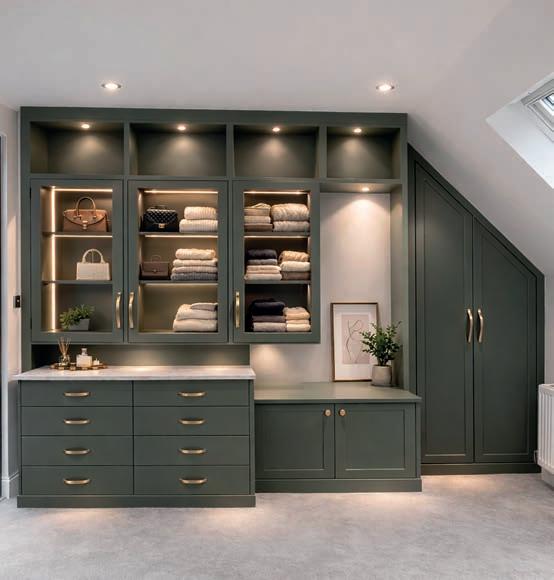
A stunning Shaker unit in our popular Heritage Green, designed to make perfect use of an awkward corner. The colour draws inspiration from the greenery just outside the patio, creating a seamless indoor–outdoor feel.
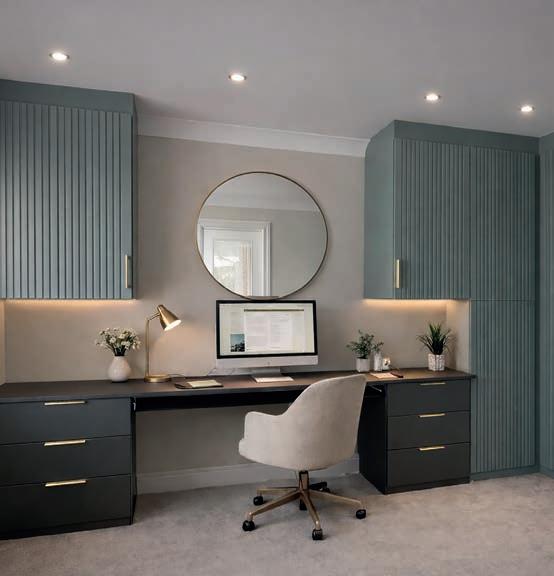
A stunning home style featuring our Reed Green stockhome doors, perfectly complemented by a dark graphite desk. The ideal blend of warmth, depth and modern detail.
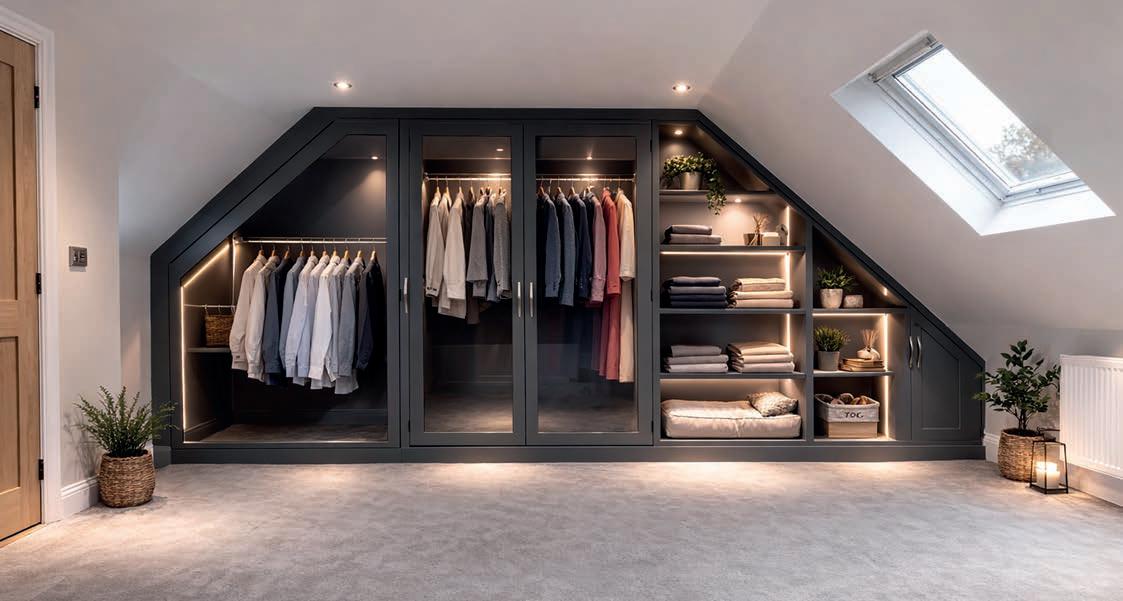
A great example of how we tailor our designs to sloped bedrooms. We’ve completed the look with matt black glass doors and a matching carcass, while soft LED lighting adds a warm, inviting glow.
Jensen Beds on the importance of a good night’s rest –throughout life
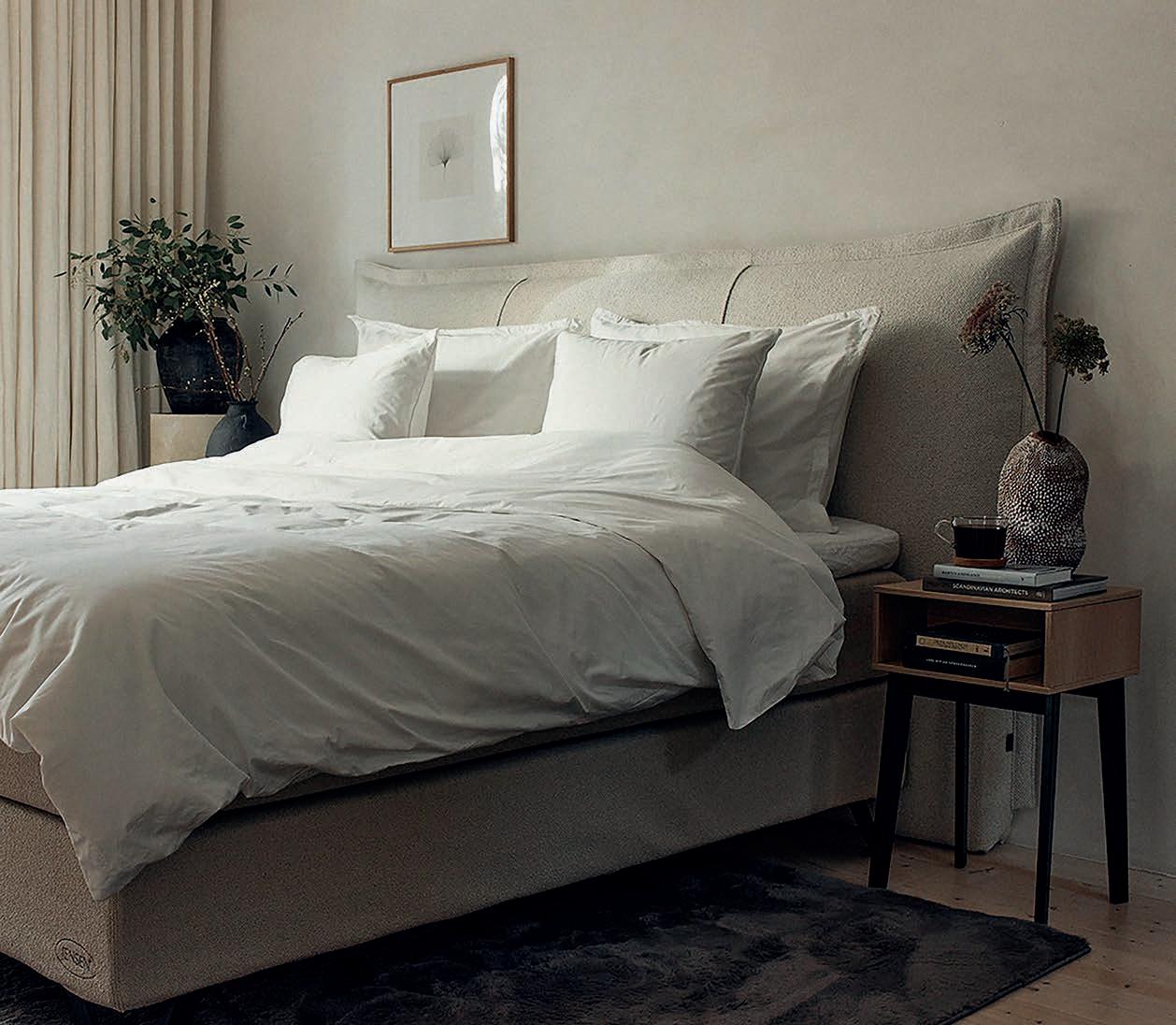
Sleep is not a pause from life – it is a vital process during which the body repairs itself
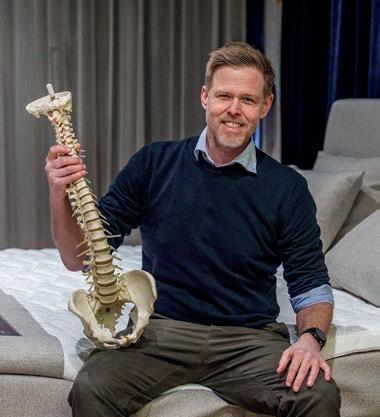
No matter who you are, sleep plays a crucial role in your health. Our needs change throughout life, but one thing remains constant: quality sleep is the foundation for development, performance, recovery and overall quality of life. In fact, we spend around one third of our lives in bed. That means a 75-year-old has spent roughly 25 years asleep. Sleep is not a pause from life – it is an active and vital process during which the body repairs itself, the brain processes impressions, and energy is restored.
In connection with World Sleep Day 2026, the global theme “Sleep Well, Live Better” highlights how essential quality sleep is for both physical and mental health. Initiated by the World Sleep Society, the day serves as a reminder that sleep is not a luxury – it is a biological necessity.
THE FOUNDATION IS LAID EARLY
Sleep plays a decisive role in a child’s development from the very first day. The brain grows rapidly, and during deep sleep growth hormones are released that are essential for both physical and cognitive development. Children who get enough sleep have better concentration, find it easier to regulate emotions and have stronger conditions for learning. Good routines start early. Putting away digital devices well before bedtime and reading a book together instead can help establish healthy sleep habits that last a lifetime.
A VULNERABLE PHASE
The teenage years bring major physical and mental changes. The body clock naturally shifts, and many adolescents become more evening-oriented. At the same time,
demands from school and social life increase. Lack of sleep during this period can reduce cognitive performance, impair learning and increase the risk of mental health challenges. In fact, sleep deprivation affects reaction time almost as much as alcohol. After around 18 hours without sleep, reaction time can resemble that of someone over the drink-drive limit.
WHEN BALANCE IS CHALLENGED
As work, family and responsibilities fill everyday life, sleep is often the first thing to be sacrificed. Yet this is precisely when the body needs recovery the most. Too little sleep over time can increase stress levels, reduce productivity and raise the risk of lifestyle-related illnesses such as obesity, diabetes and cardiovascular disease. At the same time, research shows that people who sleep well make better decisions, have stronger concentration and experience a higher quality of life.
SLEEP CHANGES
As we grow older, our sleep patterns change. Many people experience lighter sleep and more frequent awakenings. Nevertheless, the need for good sleep remains just as important. Quality sleep supports memory and cognitive function, strengthens the immune system and contributes to emotional balance. Investing in good sleep is an investment in quality of life – even in later years.
For many, good sleep has become a symbol of control. We measure sleep scores, optimise routines and adjust lighting, temperature and screen habits. Yet many overlook the most fundamental factor.

When we sleep, the body is meant to recover. Muscles relax, the spine should rest in a natural position, and pressure points must be relieved. If the bed does not provide proper support, the body may work throughout the night instead of recovering. Body temperature also drops as we fall asleep, and materials that breathe and regulate heat can make a greater difference than many realise.
Naprapath Truls Hotvedt at Jensen explains that the bed and mattress you sleep on largely determine the position your body chooses – and therefore how well you are set up for a good night’s sleep. “If you change position constantly throughout the night, it may be a sign that the pillow, bed or mattress is not providing the right support.”
When the body cannot fully relax, it cannot recover properly. Over time, this can lead to stiffness, pain and reduced sleep quality – and ultimately less energy in everyday life.
NORWEGIAN-MADE JENSEN BEDS
For nearly 80 years, Jensen has had one clear goal: to develop beds that provide
optimal support and create the best possible conditions for a truly restorative night’s sleep.
Proudly designed and manufactured in Norway, every Jensen bed reflects decades of craftsmanship, innovation and expertise in sleep comfort. From the internal spring systems to the finest finishing details, each component is carefully engineered to deliver lasting quality and personalised support – night after night.
JENSEN BEDS CHELSEA HARBOUR
Visit the official Jensen Beds showroom located in Chelsea Harbour Design Centre on Lots Road in London. Here you can see a wide range of Norwegian-made Jensen beds, try different models for comfort and support, and get professional advice on choosing the right bed for your sleep needs.
This is the main physical Jensen presence in the UK and a great place to experience first-hand how their beds are designed to improve your sleep.
Discover more at jensen-beds.com/uk
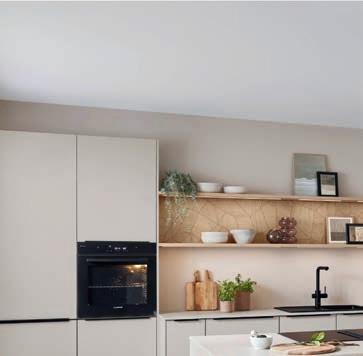




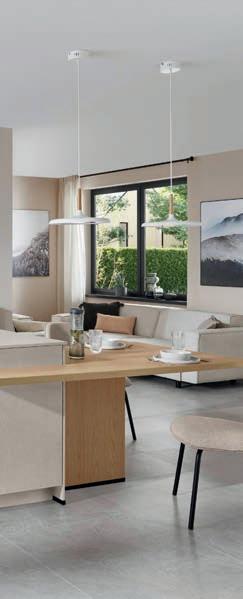






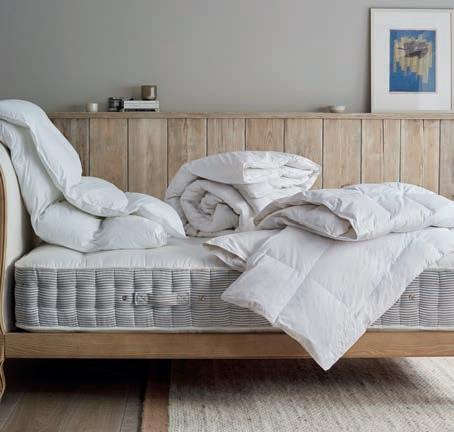
















Loaf's wide selection of mattresses, toppers, duvets and bed linen makes it a onestop-shop for reliable, high quality bedroom essentials. loaf.com

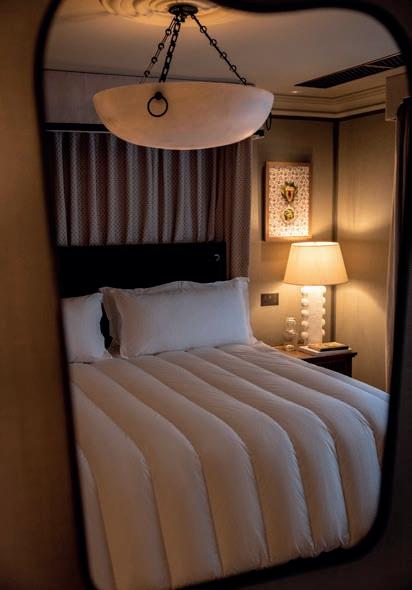
A Hastens bed is the ultimate in Swedish sleep luxury, and the brand's distinctive check pattern also adorns these fabulous cotton pyjamas, available in store only. hastens.com
Shleep’s merino wool bedding is designed for year-round comfort. Trans-seasonal bedding is essential to quality sleep and the exceptional properties of Australia’s fi nest Merino Wool combine with cutting-edge sleep science to deliver just that. shleep.co 1 3 4 5 2
The Customfl ex pillow has an adjustable inner layer that allows you to personalise its support levels. Choose from three different options, depending on your sleep position and preferences. A good night's sleep is guaranteed, £159. simbasleep.com
BED TIME WITH NATIONAL SLEEP DAY ON 13 MARCH, HERE ARE SOME BEDROOM ESSENTIALS 1 3 2 4 5
Norvegr makes the world’s fi nest down duvets, loved by royals, rock stars and interior designers. Part of its success is down to a sleep consultation to tailor-make the perfect, forever duvet for every customer. Both halves of a couple can complete the consultation to fi nd their perfect dual fi ll-power. norvegr.com



the traditional sauna experience, upgraded


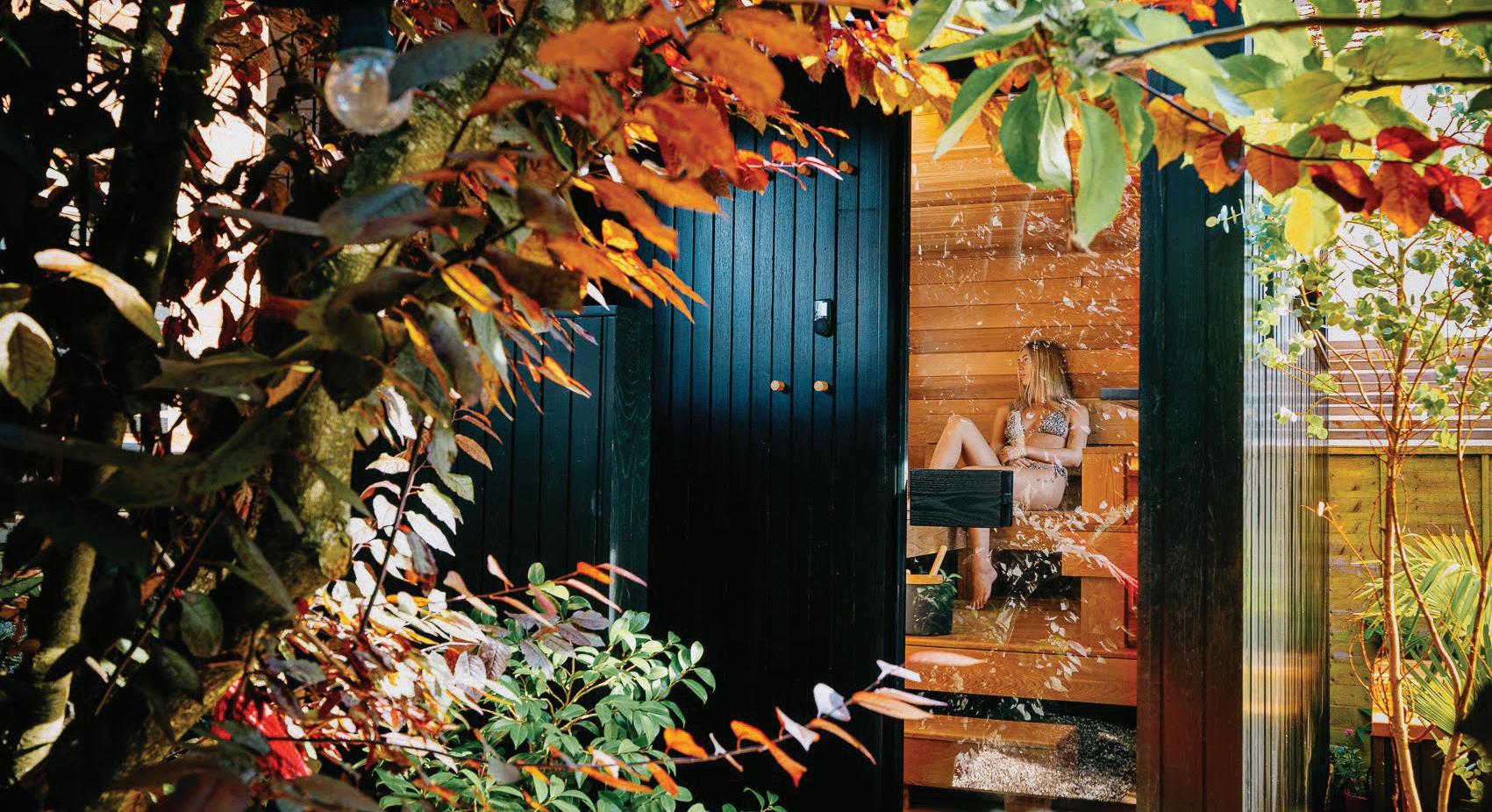

CLEVERLY COMPACT FOR THE CITY




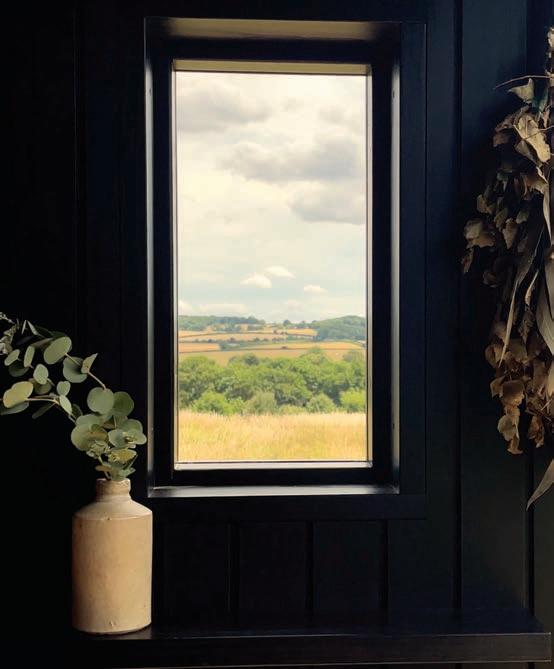




LUXURIOUSLY LARGE IN THE WILD
classic design, best in class, built to last





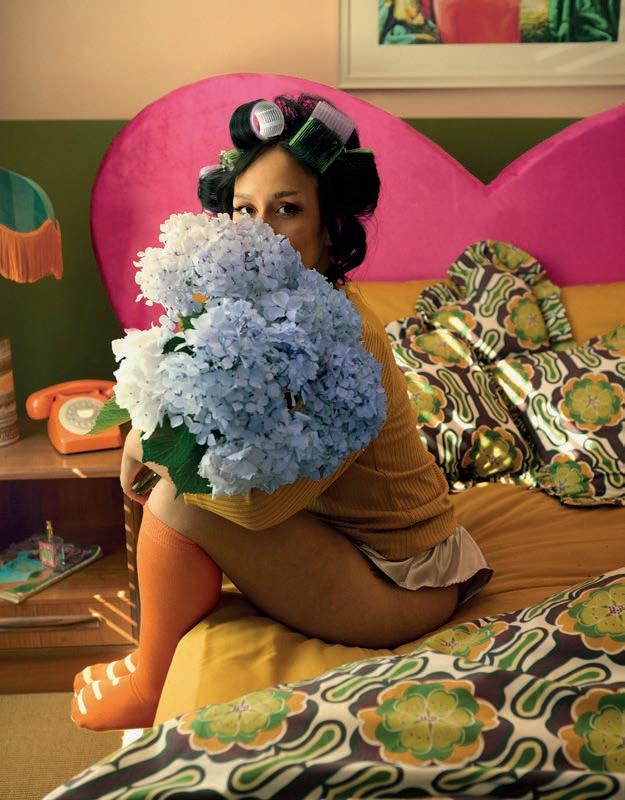
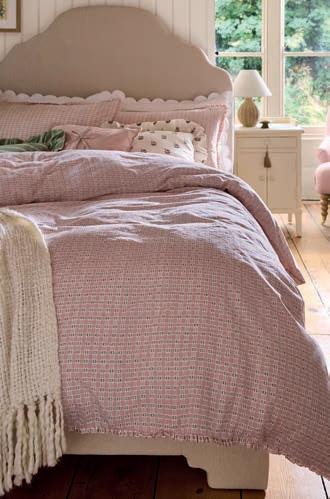







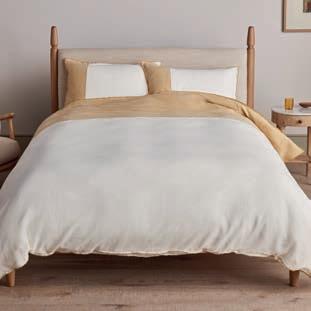
By PENDLE HARTE



























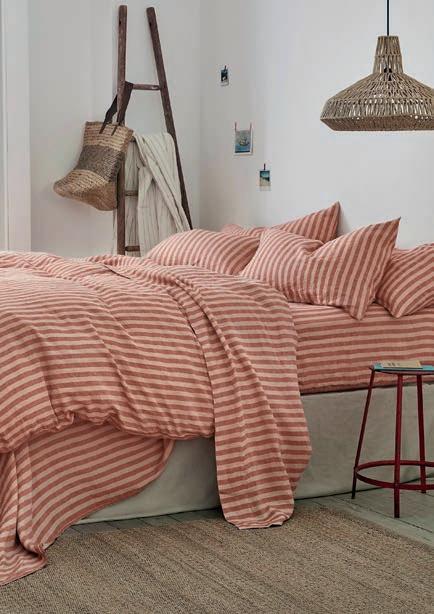
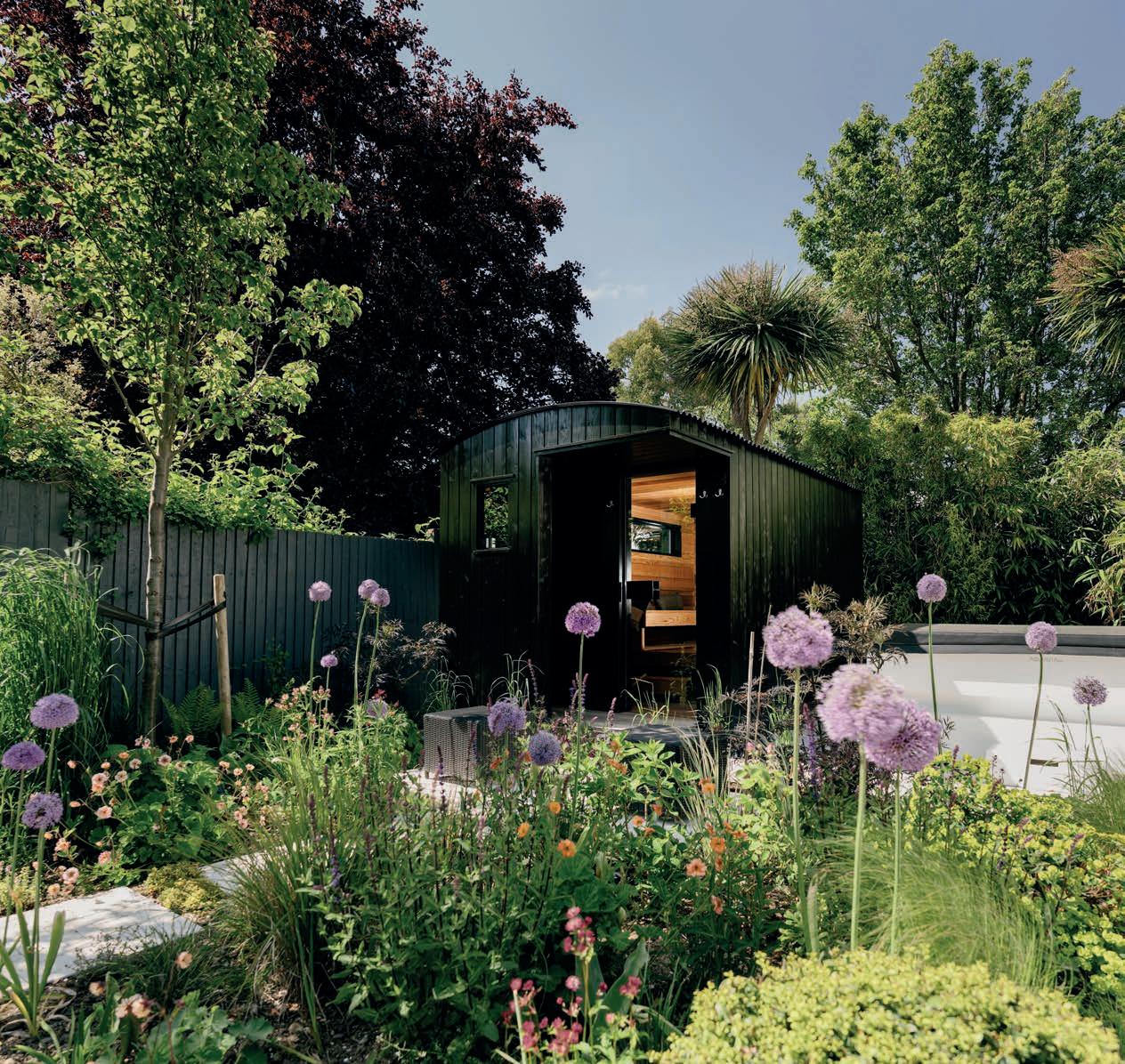
Even the smallest of gardens can be a wellbeing sanctuary
As we emerge from winter and yearn for spring sunshine, our thoughts turn to our gardens and how we can make better use of them. Landscape and garden designer
Melissa Morton is creating a feature garden for the Association of Professional Landscapers at the Harrogate Spring Show in April, featuring a small sauna from luxury sauna company Wildhut.
“I’m increasingly asked about garden saunas,” she says. “It’s a fabulous way to add value to gardens particularly in the colder, darker months, when gardens are underused. People are wanting to create places to nurture wellbeing and connect with nature, year-round. This small show garden at just 4m x 5m is centred around a small, beautifully crafted garden sauna for two – a place of warmth, ritual and quiet restoration.”
The sauna on show is Wildhut’s two-person OHK. Melissa was drawn to Wildhut for its timeless design and high-quality finish, with an outdoor shower that she felt added another dimension to the garden. It’s based on the traditional Nordic sauna, but designed and built to the highest standards using cutting-edge construction techniques.

There’s a plethora of saunas available, ranging from £4,000 for a DIY kit to over £100,000 for a premium sauna. So how do you decide what’s right for you? Founder and co-director of Wildhut, Lisa Deller, sets out the key considerations:
SET YOUR BUDGET ALONGSIDE YOUR LONG-TERM GOALS
“A sauna is an investment that can add value to your property and, in all honesty, you get what you pay for. Cheap saunas use low-cost materials that just won’t stand the test of time in our climate. We set out to create premium saunas that meet the highest standards in every aspect, from slow-grown thermotreated timber, using cross-laminated timber construction, to marine-grade fittings. We also created specialist supports for perfect installation and excellent stability, meaning you can relocate your sauna if you move.”
WILDHUT’S SAUNAS ARE ARCHITECT AND STRUCTURAL ENGINEER APPROVED
“But it’s not just about the build quality. It’s about how you feel in your sauna, so the ambience is really important. I’d recommend aromatic cedar for the best sauna experience and specialist sauna lighting to set the right mood.”
“Another aspect of our saunas that our clients love is the optional shower porch, where you can hang robes and shower in private, but if space is tight, the integrated external shower on the OHK (used in Melissa’s show garden) is perfect.”
TRADITIONAL OR INFRARED?
Infrared saunas offer a cost-effective route to the home sauna, but the heat method and experience is very different to the traditional Nordic sauna, as Lisa explains:
“Infrared saunas heat the body directly through infrared rays, resulting in a more targeted heat exposure, regardless of how close you sit to the heat lamps. This leads to a less intense sweat and a different sensation on the skin.”
“A traditional Nordic sauna uses an electric or wood-fired heater with sauna stones to heat the room. Traditional saunas are known for their high temperatures and humidity, created by steam when water is poured over the stones. This steam helps bathers sweat profusely, which cleanses, comforts and releases a range of health benefits, like boosting your cardiovascular health, lowering your blood pressure and improving your blood circulation.”
“At Wildhut we only build authentic outdoor saunas in the traditional Nordic style, because the experience is incomparable and the health benefits long-established.”
A large, purpose-built garden sauna may need planning permission, but most saunas fall within an ‘outbuilding’ category and are generally considered to be ‘permitted development’ subject to certain height restrictions.
“Groundworks for a Wildhut include a level and pre-prepared concrete surface alongside a power source, if you want an electric heater. For off grid locations, a wood-fired heater is ideal. Pipework for water too if you want a shower,” Lisa explains.
“Ventilation is vital: you need a flow of fresh air in and exhaust air out to ensure a relaxing, healthy sauna experience. Installation depends on the location. Vehicle access close to the sauna location is ideal, as our saunas are usually delivered fully assembled and lifted into position. Where access is an issue, we can deliver the sauna in modular form and assemble on site.”


“In terms of timing, that very much depends on whether or not you are designing a new garden, redesigning an existing one, or simply slotting your sauna into an existing space. We work closely with garden designers and homeowners to plan the sauna installation alongside other works. I’d recommend a four-to-sixmonth lead time for planning a high-end sauna in your garden.”
SLOW DOWN, TUNE IN AND RELAX
In a fast-moving world, time in a garden sauna is hugely beneficial. Just being situated in nature will lower stress and hormone levels, reduce blood pressure and calm our nervous systems. Add a traditional outdoor sauna and the outcomes can be even more powerful: enhanced stress reduction, relaxed muscles, improved skin health and sleep, reduced risk of cardiovascular disease, depression and dementia… the scientific evidence is building.
But above all, it offers quality downtime. A place to relax, recover and connect with friends and family.





Established in 2004, Enjoy the View (1st Folding Sliding Doors) is a West London based reputable glazing company offering bespoke architectural glazing solutions, including sliding doors and glass roofs.



We provide design consultations, skilled installations, and dedicated after-sales support, backed by a 10-year warranty. For inspiration, visit our Instagram @enjoy_the_view_glazing

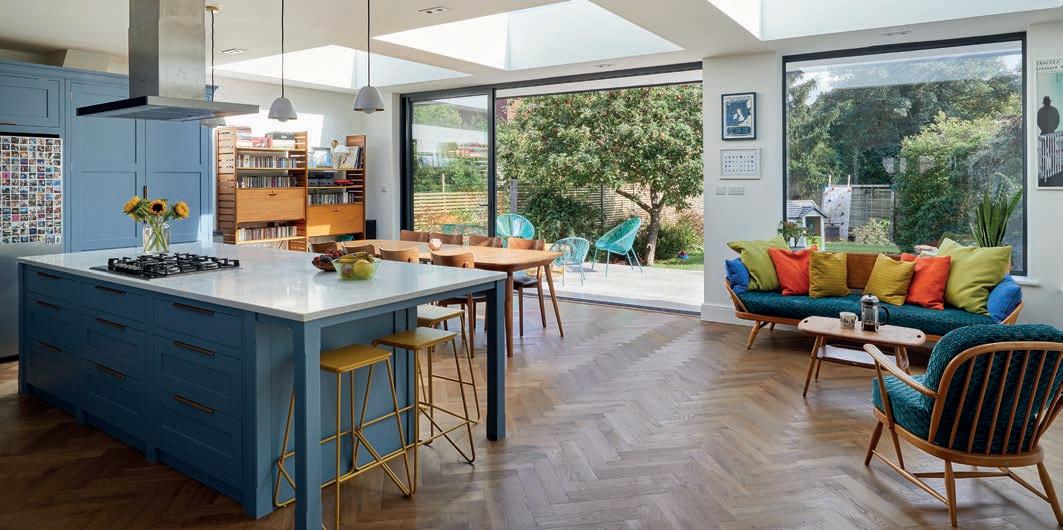
To find out more about our company and discuss your glazing requirements, please contact us 0208 997 2448 • sales@1stfoldingslidingdoors.co.uk • www.enjoytheview.co.uk
Flagship Showroom: 113-117 Gunnersbury Avenue, London , W5 4LR
Surbiton Showroom: 141 Hook Road, Surbiton, KT6 5AR

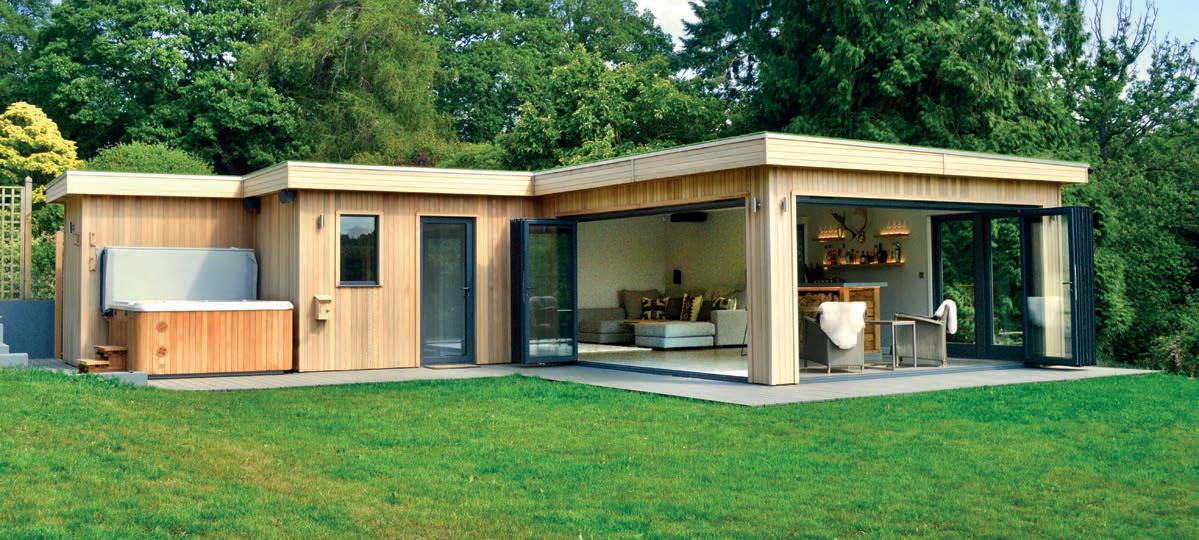
Agarden room should be more than additional space, it should feel like a seamless extension of your home. At Crown Pavilions, true luxury lies not only in appearance, but in craftsmanship, thoughtful design and enduring quality.
As garden rooms continue to grow in popularity across the UK, so too does the variation in finish and construction. While many may look appealing in photographs, the real difference lies in the details – in the materials selected, the care taken during construction and the overall standard of the build.
Comfort throughout the seasons is key. Crown Pavilions garden rooms are constructed with insulated walls, roof and flooring to support year-round use, creating a space that feels inviting whether used as a home office, gym or private retreat.
Equally important is the structure itself. Strong timber frameworks and high-quality roofing systems are chosen to provide durability and resilience in the British climate. Every stage of the build reflects a commitment to precision and longevity.
Glazing and door systems play a defining role in both performance and aesthetics. Contemporary aluminium doors and quality glazing maximise natural light while enhancing the connection between home and garden.
Experience the cra smanship firsthand and explore luxury garden buildings, gazebos, summerhouses and garden rooms with expert guidance throughout at these show sites:
• Chessington Garden Centre, London
• Longacres Garden Centre, Bagshot, Surrey
• Van Hage Garden Centre, Ware, Hertfordshire
• Alton Garden Centre, Essex
• Frosts Garden Centre, Woburn Sands, Milton Keynes
• Bridgemere Garden Centre, Cheshire
For a limited time, Absolutely readers will receive an exclusive 10% OFF, applicable to all installations completed before March 2026.
To invest in Crown Pavilions is to invest in a lifestyle, one defined by elegance, excellence and enduring luxury.
DISCOVER MORE
crownpavilions.com crown-equestrian.com Call: 01491 612 820
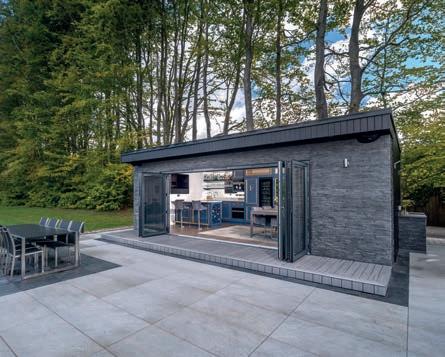
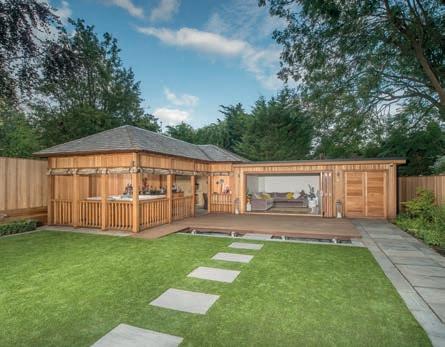
Inside, attention to detail is evident in the finishes and fittings. Clean internal lines, carefully considered lighting and refined design touches create a cohesive space that complements the main residence. With bespoke sizing and layout options available, each garden room is tailored to suit individual properties and lifestyles. When designed and built with care, a garden room becomes more than an addition – it becomes a considered investment in your home and the way you live
Exploring how the kitchen has evolved to become a space to eat and entertain TIME
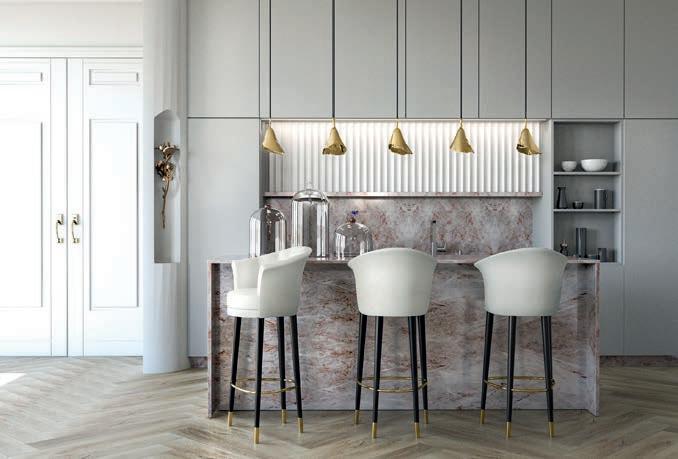
For most of human history, “the kitchen” wasn’t a place you ate so much as a place you worked. Cooking happened near heat, smoke, and storage – often in a separate room, a lean-to, or outdoors – while eating took place where it was clean, communal, and warm. In medieval Europe, for example, large households gathered in halls where food arrived from a distant hearth; the separation was practical as much as social. Even in smaller homes, the boundary between cooking and eating was often drawn by the simplest of technologies: a table that could be moved, a bench near daylight, or a corner away from soot.
As homes industrialised and urbanised, kitchens moved inside and became more specialised. Cast-iron ranges, chimneys, gas lines, and later electricity made heat controllable, and with control came design.
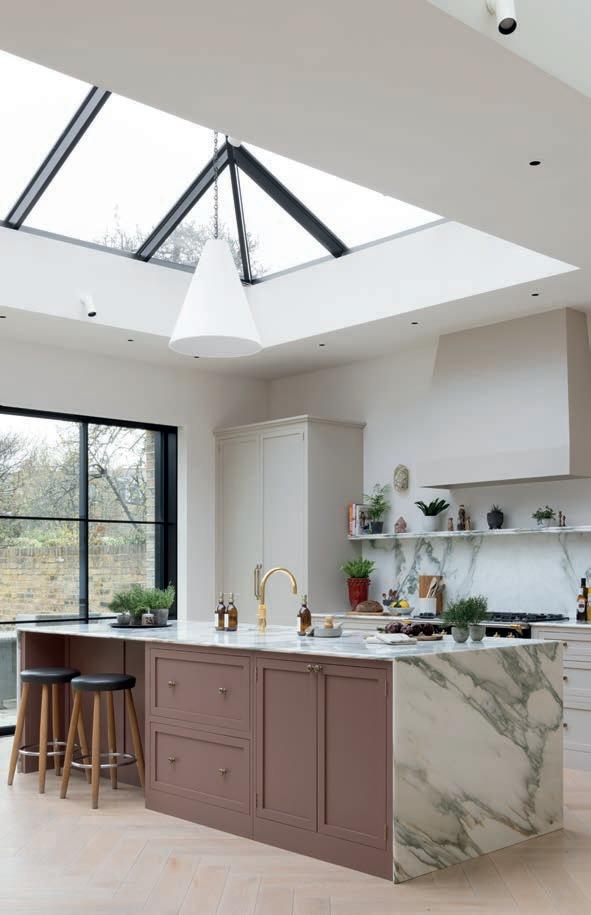
The kitchen gradually shifted from a hidden service area to a domestic machine: efficient, wipeable, and organised. Eating still belonged elsewhere, even if it was only a small dining room or the best table in the main room. When breakfast nooks appeared, they were a compromise: a tidy corner that acknowledged everyday meals without fully collapsing the distinction between preparation and dining.
Smaller homes and new family routines made casual eating more common, and the kitchen became the stage for it. Built-in cabinetry and laminate surfaces suggested permanence and ease; refrigerators and freezers changed shopping patterns, which changed the rhythms of meals. The kitchen table – once the informal cousin of the dining room table – grew in importance as a place for homework, paperwork, conversation, and snacking as much as for meals. As more households embraced convenience foods
and quicker cooking, the kitchen became less a workshop and more a hub: a spot you passed through repeatedly, not just when it was time to cook.
Late 20th century open-plan living accelerated the transformation. When walls came down, the kitchen gained an audience. Cooking became performative – something you could do while talking to guests, keeping an eye on children, or watching TV. The “kitchen-diner” became an aspiration, a signal of modernity and togetherness, and eating in the kitchen shifted from necessity to preference.
That change sets up the latest looks today, where the question is no longer whether people eat in the kitchen, but how that eating space expresses style and supports real life. The dominant design move is zoning: kitchens are planned like mini landscapes with distinct areas for prep, cooking, serving, and dining.
The kitchen island is the emblem of the modern era, but its role has expanded
The kitchen island is the emblem of this era, but its role has expanded. It’s no longer just extra counter space; it’s a dining surface, a homework desk, a buffet line, and a conversation magnet. Many islands now have “waterfall” edges, furniture-like legs, or contrasting materials that signal they belong to the living space as much as the kitchen. Seating has become more considered too: rather than a row of identical stools, you’ll see mixed silhouettes,
softer upholstery, and heights chosen for comfort over bar-like perching.
Alongside islands, the return of the dining table inside or adjacent to the kitchen has taken on a distinctly contemporary feel. Instead of a tucked-away breakfast nook, today’s kitchen dining often uses a fullsize table – sometimes vintage, sometimes built-in as a banquette, sometimes a sleek rectangle that aligns with cabinetry lines. The table is treated as a piece of furniture with its own identity, not just an accessory. That might mean warmer woods against pale stone counters, or a bold, chunky pedestal base that makes the dining zone feel grounded. Banquettes, in particular, are having a moment because they solve modern constraints: they maximise seating, reduce chair clutter, and create a cozy “room within a room” even in open-plan layouts. Another defining look is the “invisible kitchen” approach: storage walls, integrated
appliances, and concealed pantries keep the mess out of sight so the eating area feels calmer. When the dining table and island share a line of sight, visual quiet matters. You’ll see fewer items left on counters, more dedicated zones for coffee stations and small appliances, and more emphasis on cabinetry that reads like furniture.
Finally, today’s kitchen eating spaces are designed for flexibility. Islands are sized for both prep and serving; tables are chosen with extension leaves or easy circulation; stools slide under overhangs; banquettes incorporate hidden storage. The overall aesthetic – warm, integrated, and social – reflects how eating has evolved: from a separate ritual performed away from the work of cooking, to a daily practice embedded in the home’s busiest, most connected room. The modern kitchen doesn’t just feed people; it hosts the whole life around the meal.
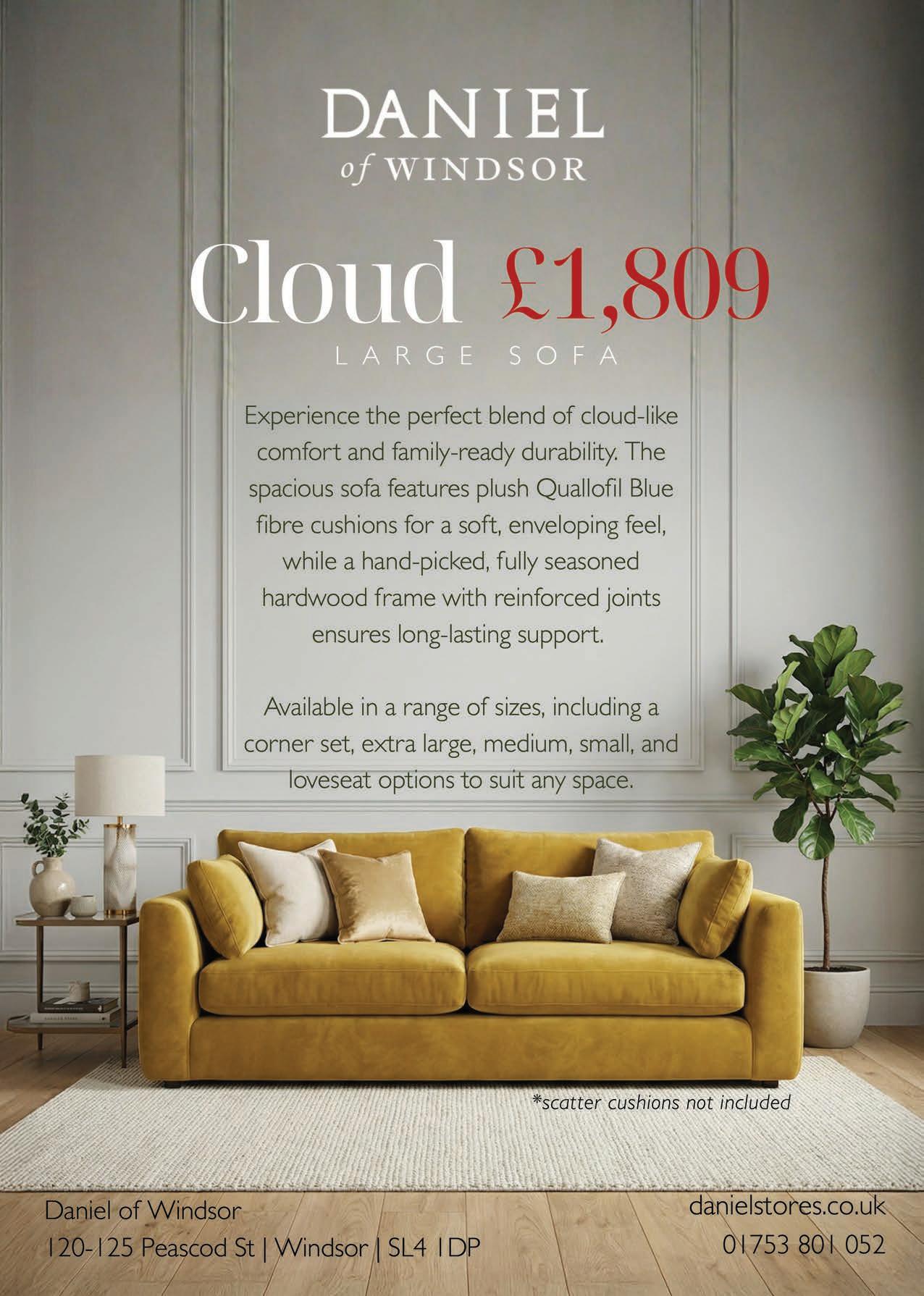
The latest must-have trends and styles for kitchens, courtesy of five local businesses

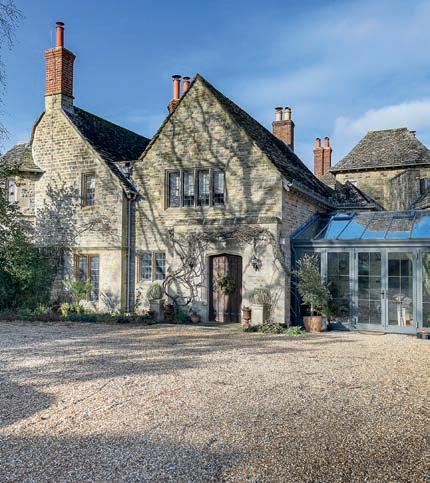
Founded over 18 years ago, Ridgeway Interiors has earned a reputation across Oxfordshire and Buckinghamshire for beautifully crafted British and German kitchens, supported by a fully managed concept-tocompletion service. From bespoke in-frame and Shaker designs to sleek, handleless German furniture, the company combines craftsmanship with precise project coordination, overseeing building works, plumbing, electrics and installation to ensure a seamless experience.
Their latest project in Cumnor perfectly illustrates this approach. Set within a remarkable Cotswold stone estate that has undergone a meticulous full renovation, the kitchen was designed to reflect the exceptional quality achieved throughout the home. Created by Sarah and installed by Ridgeway’s
experienced team, the space balances architectural confidence with warmth and texture.
Handleless Häcker Systemat doors in grey cement are paired with real wood veneer in nougat wild oak, introducing depth and natural character. At the heart of the room, a striking island in Caesarstone Striata porcelain is built up to a bold 50mm profile, complete with a seamless waterfall edge and integrated seating for entertaining and everyday living.
Gaggenau appliances, including a steam oven, warming drawer and induction hob with downdraft extractor, are integrated with precision. A Blanco sink in Tartufo with Quooker Fusion tap and patinated brass details completes the refined scheme.
The result is a kitchen that not only enhances an extraordinary home, but stands as a testament to thoughtful design, meticulous coordination and inspiring craftsmanship from concept to completion.
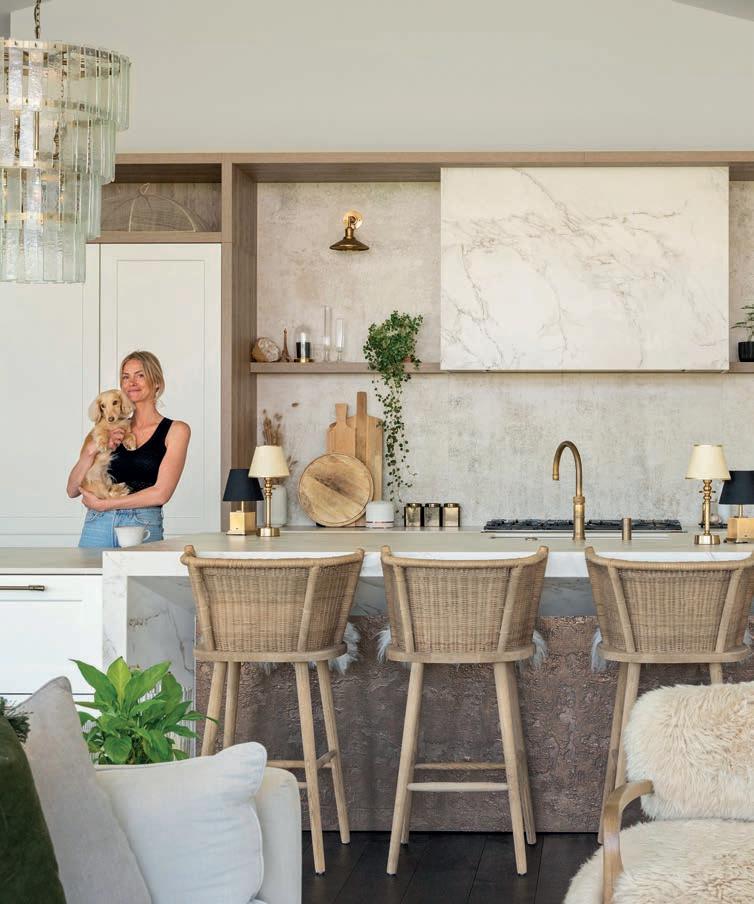
Take a curated approach to material and colour this year, as the best- dressed kitchens are intentionally more personal! Featuring key design elements in a range of neutral tones and stand- out textures, Et Lorem says material and colour is what matters when creating luxurious and characterful kitchen living spaces inspired by nature.
When approaching material, think about introducing kitchen furniture in wood, stone and liquid metal, as these are more attuned to the senses and will create a more sensory, emotionally engaging living environment. In terms of colour scheme, then the neutral palette has emerged as a perfect match for material rich décors, with the most popular kitchen schemes making a return to warm whites and taupe, light mocha shades with subtle notes of coffee and cream, paired with bespoke luxury details.
The company recently created a kitchen for homeowner and interior designer, Jade Glynn of Willow Home Design, which is a true reflection of the thoughtful planning and quality craftsmanship that goes into every project by Et Lorem. The result, a contemporary and characterful kitchen with hidden pantry that blends beautiful oak cabinetry with white classic-style framed doors, a bespoke liquid metal island unit, and luxury sintered-stone surfaces.
Et Lorem’s Reading studio is based on the 2nd Floor, Saxon House, 44-52 Oxford Road, RG1 7LA, and their Beaconsfield studio at 45 Station Road, Buckinghamshire HP9 1QG.
ASHFORD KITCHENS & INTERIORS
ashfordkitchensandinteriors.co.uk
A defining trend for 2026 is the move towards “Forever Design” – kitchens created to last both stylistically and structurally – as Ashford Kitchens highlight. With homeowners prioritising quality and longevity over short-lived trends, the focus has shifted to craftsmanship, durability and thoughtful features that support everyday living.
Forever Design begins with well-made cabinetry, robust materials and timeless colours that won’t date. Warm neutrals, ocean blues and soft greens continue to lead the way because they’re versatile and age beautifully. When paired with premium worktops and classic hardware, these schemes feel just as relevant years from now as they do today.
Functionality is just as important. Rather than filling the space with features that lose appeal quickly, homeowners are choosing well-planned larders, hidden pantries, bespoke drawer layouts and practical utility areas. These elements work quietly in the background, keeping the kitchen organised and enjoyable to use day after day.
This trend is ideal for families who want a kitchen that grows with them. A forever kitchen isn’t just stylish on day one; it’s a space that still feels right in 10 or 15 years, offering comfort, quality and a sense of lasting character.
To explore this trend further or start planning your own project, visit Ashford Kitchens & Interiors at their Ashford, Surrey or Farnham Common, Bucks showrooms.
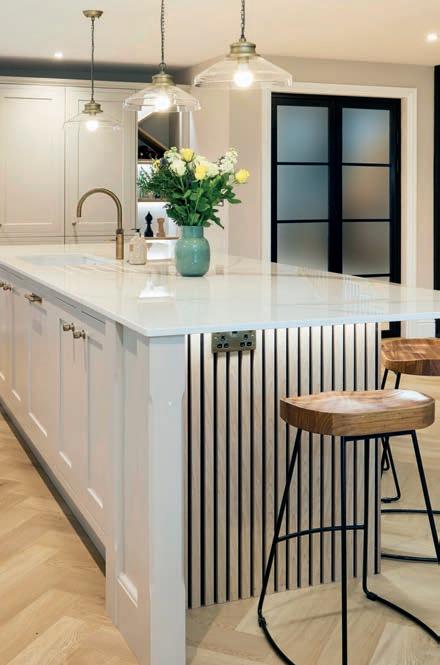
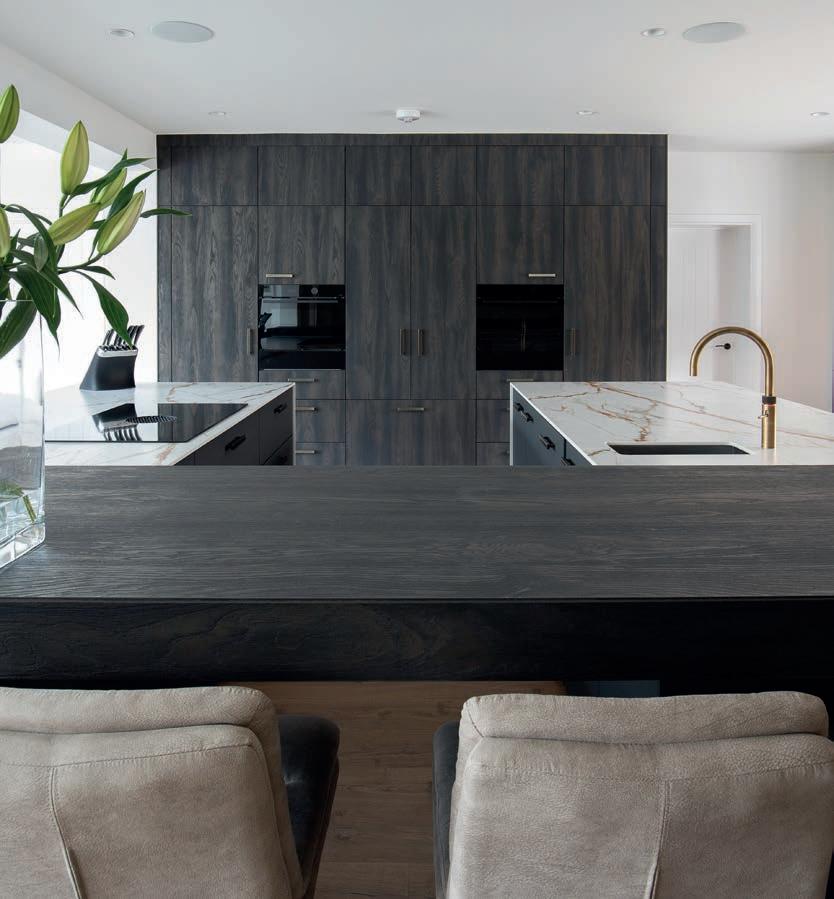
KCA (KITCHEN CONNECTION OF ASCOT)
k-c-a.co.uk
In 2026, kitchen design is moving towards spaces that feel architectural, calm and deeply considered. The contemporary farmhouse aesthetic continues to evolve, free from heavy ornamentation or overtly rustic detail. Classic shaker cabinetry is reinterpreted with finer proportions and subtle beading, creating structure and enduring appeal. Painted finishes in soft, nature-led tones such as sage and warm mineral neutrals provide a versatile backdrop, establishing a sense of quiet and balance within the home.
Stone is playing a more confident and sculptural role, not simply as a work surface but as a defining architectural feature. Expressive slabs are carried into full-height splashbacks and waterfall islands, where strong vertical veining enhances height and proportion. Traditional elements are sharpened rather than embellished. Range cookers remain popular, paired with cleanly integrated extraction and simplified architectural boxing. Aged brass hardware and boiling-water taps introduce warmth and patina, selected for longevity rather than short-term trends.
Refined, enduring kitchen design has long been central to KCA’s approach. Established in 1993 and based in Berkshire, the studio works closely with homeowners undertaking significant renovations and extensions, where thoughtful planning and design expertise make all the difference.
In today’s luxury homes, the kitchen continues to evolve as both a hardworking hub and a social centrepiece. One of the most exciting trends we are seeing is the rise of the double island kitchen, a design statement that blends practicality with architectural presence. At Elysee Kitchens & Interiors, incorporating two islands has become something they are doing frequently as clients look for spaces that support both entertaining and serious cooking.
The appeal of two islands lies in flexibility and performance. Both islands can focus fully on preparation and cooking, often including a hob or sink, creating an efficient and highly functional workspace. A dedicated bar table then becomes the relaxed social space, allowing you to keep guests comfortable without interrupting the working zones.
From a design perspective, two islands create balance and visual harmony, particularly in generous open plan kitchens. Timber cabinetry, expressive stone worktops with striking veining, and warm metallic accents such as brushed brass taps add richness. Ultimately, this approach reflects modern living, where cooking, hosting, and everyday life blend seamlessly within one beautifully considered kitchen space.
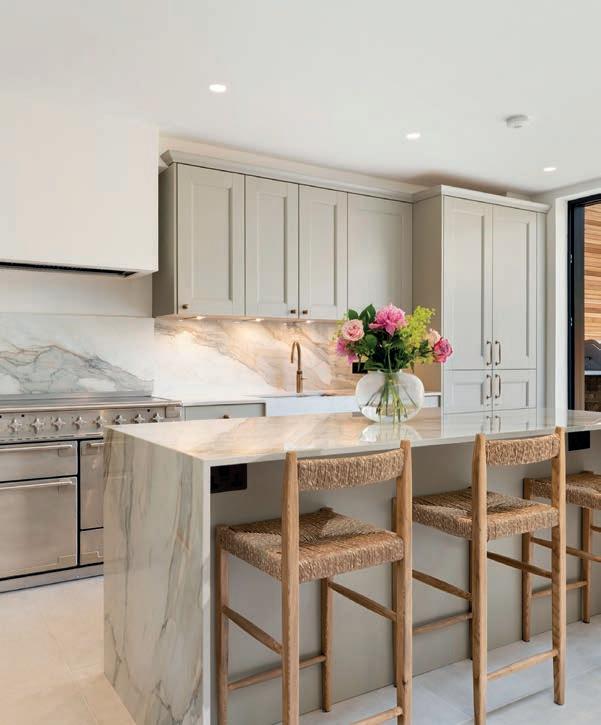
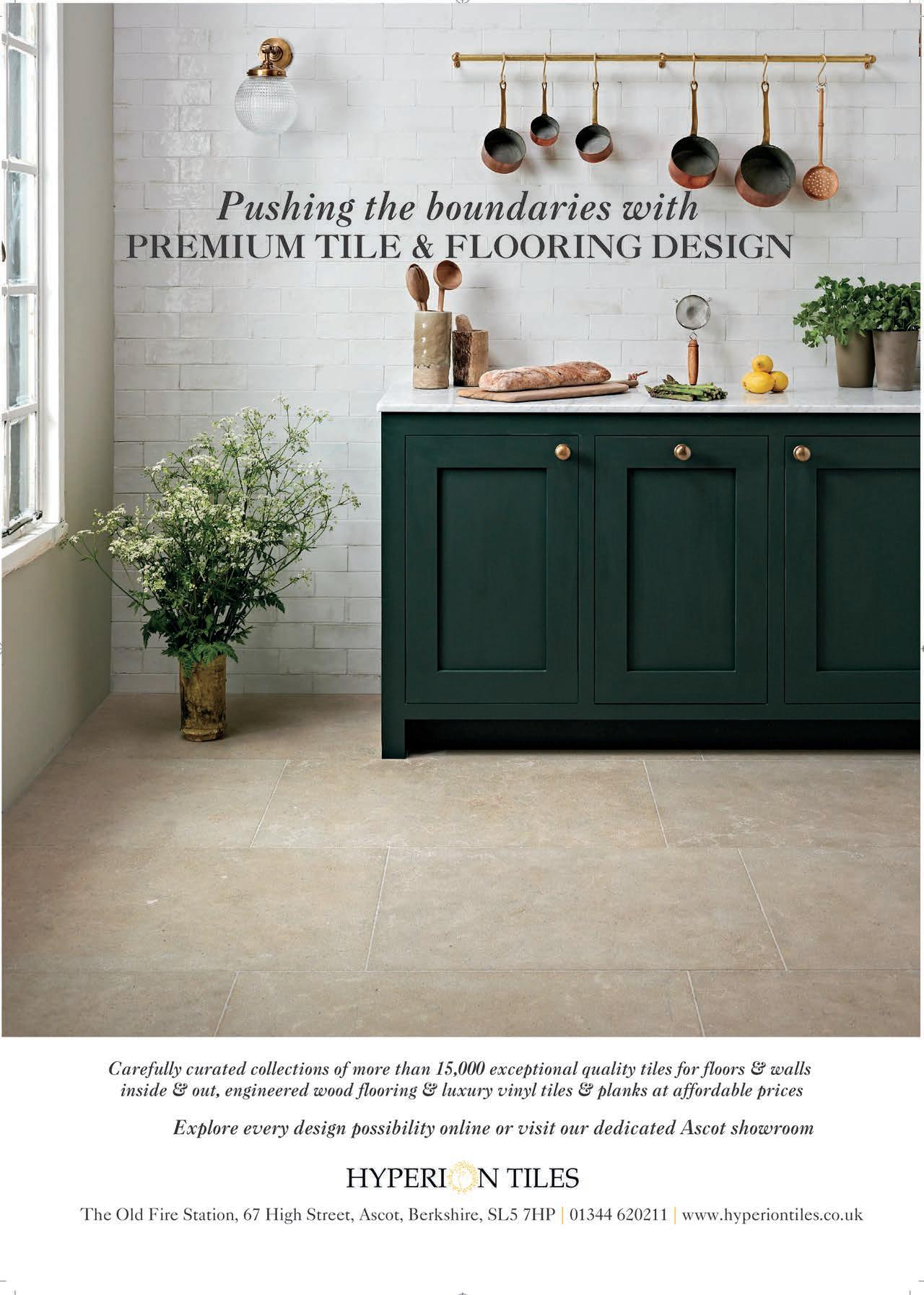
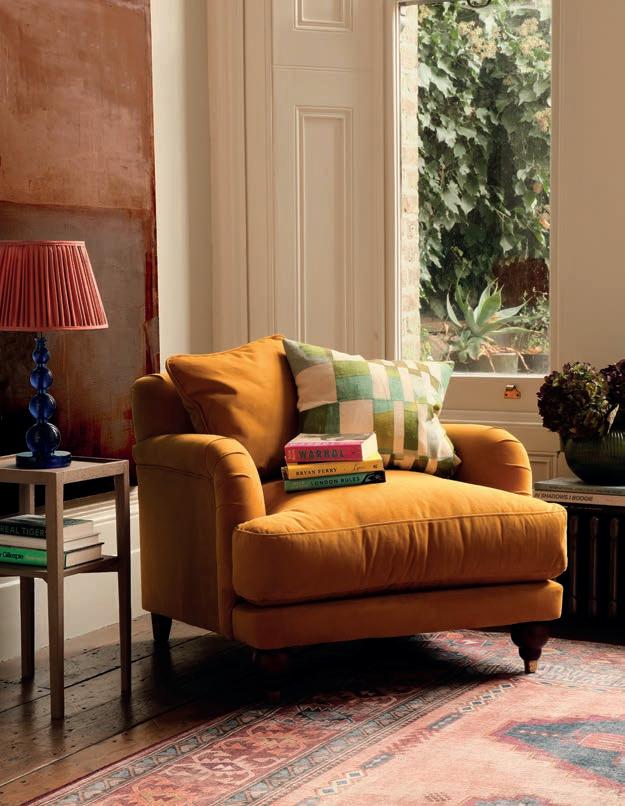
SWOON
Chorley armchair, £1,019 swooneditions.com
OAK & MORE
Ferm green fabric armchair, £629 oakandmore.co.uk


CONRAN SHOP
Tamilla armchair, £1,595 theconranshop.com















SWOON
Linton armchair, £689 swooneditions.com



DARLINGS OF CHELSEA
Notting Hill armchair, from £1,619 darlingsofchelsea.co.uk
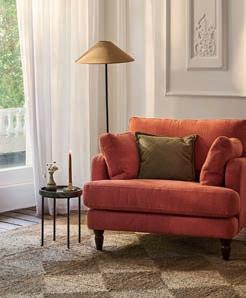

OKA

Coleridge Areca linen armchair, £1,495 oka.com








JOHN LEWIS
Suffolk Windemer chair, £1,199 johnlewis.com



By PENDLE HARTE

SOFA.COM
Hockney armchair, £1,050 sofa.com



FERM LIVING Rico armchair, £1,835 fermliving.co.uk



JULIETTES INTERIORS Leather occasional armchair, £6,846 juliettesinteriors.co.uk

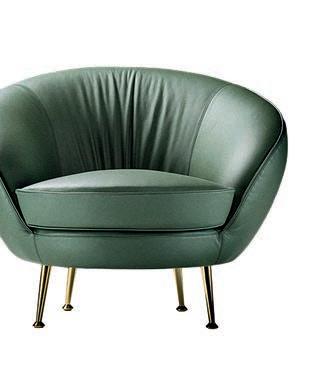
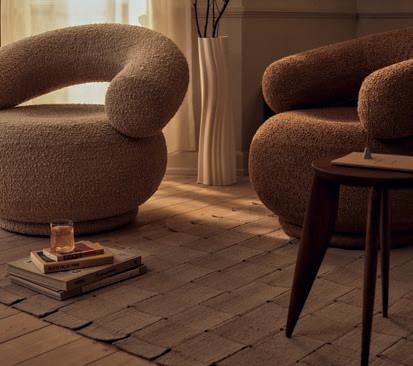


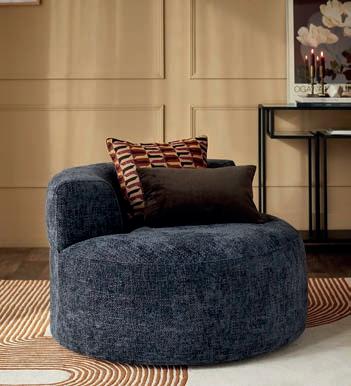
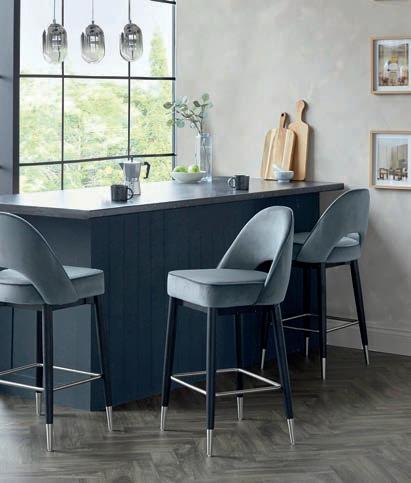
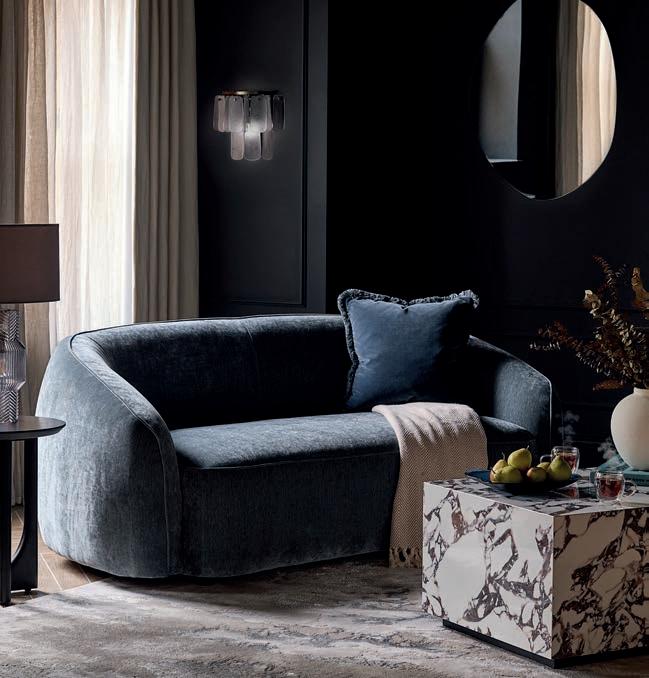
Embracing saturated colour is a shortcut to creating a room with drama and depth. The idea that dark walls make a space look smaller or gloomy is a common misconception. In reality, a deep pigment adds a sense of permanence and weight. It stops a room from feeling transient and instead makes it feel like a scheme that has been properly considered and finished.
A heritage grey-blue is a particularly smart choice because it acts as a more sophisticated alternative to a standard neutral. It’s a grounded, honest colour that brings a sense of history into a home, even in a new build. Unlike a flat navy or a cold slate, it has a dusty quality that feels lived-in from the moment it goes on the walls. It’s about choosing a shade that feels established rather than just on trend.
When you work with a deep palette, the silhouette of your furniture has to work harder. It isn’t about utility, it’s about how shapes interact with the colour. Using pieces with softer, organic lines, like a curved sofa, is a simple way to ‘un-box’ a room. Rounded edges break up the visual weight of dark walls, making the space feel fluid and welcoming.
The secret to keeping a dark room from looking one-dimensional is in the layering of materials. You need materials that truly have something to say – elements that act as a visual anchor rather than just blending into the background. A natural veined marble, for instance, provides a sharp, bright contrast against a blue or black backdrop, adding a bit of life and movement to the scheme.
Lighting is the other half of the equation. Harsh, bright lights make dark tones look flat or clinical. Using frosted glass fittings
helps to diffuse the light, creating a gentle, low-level glow that keeps the mood soft. When you pair that with tactile finishes like velvet upholstery or linen throws, you create balance. It’s about creating a space that feels grounded, but never heavy.
Ultimately, moving away from a safe, triedand-tested palette requires a bit of courage. White will always make a space feel open, but leaning into saturated colour proves there are other ways to create a sense of scale. You are essentially trading that airy, neutral quality for something with more character, moving from a cool, open atmosphere to something more cosseting. It’s a choice that works beautifully with natural light, too. In the height of summer, the sun reveals the hidden pigments in the paint, while the grey undertones keep the room feeling composed.
The initial step can seem like a risk, but once the colour is on the walls and the textures are layered in, the room starts to show its soul. It’s about trusting that a bit of depth won’t just change the look of a space – it will change how you feel when you’re in it.
Daniel Smith is the founder of Danetti, who have a showroom in Berkshire. See more at danetti.com
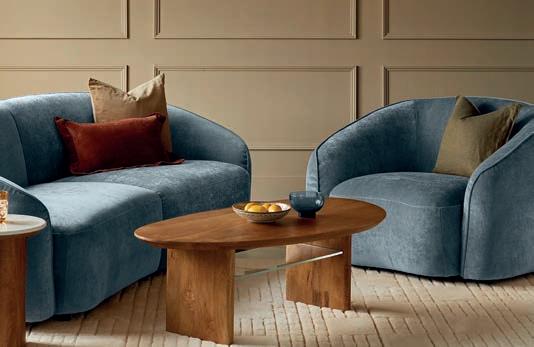

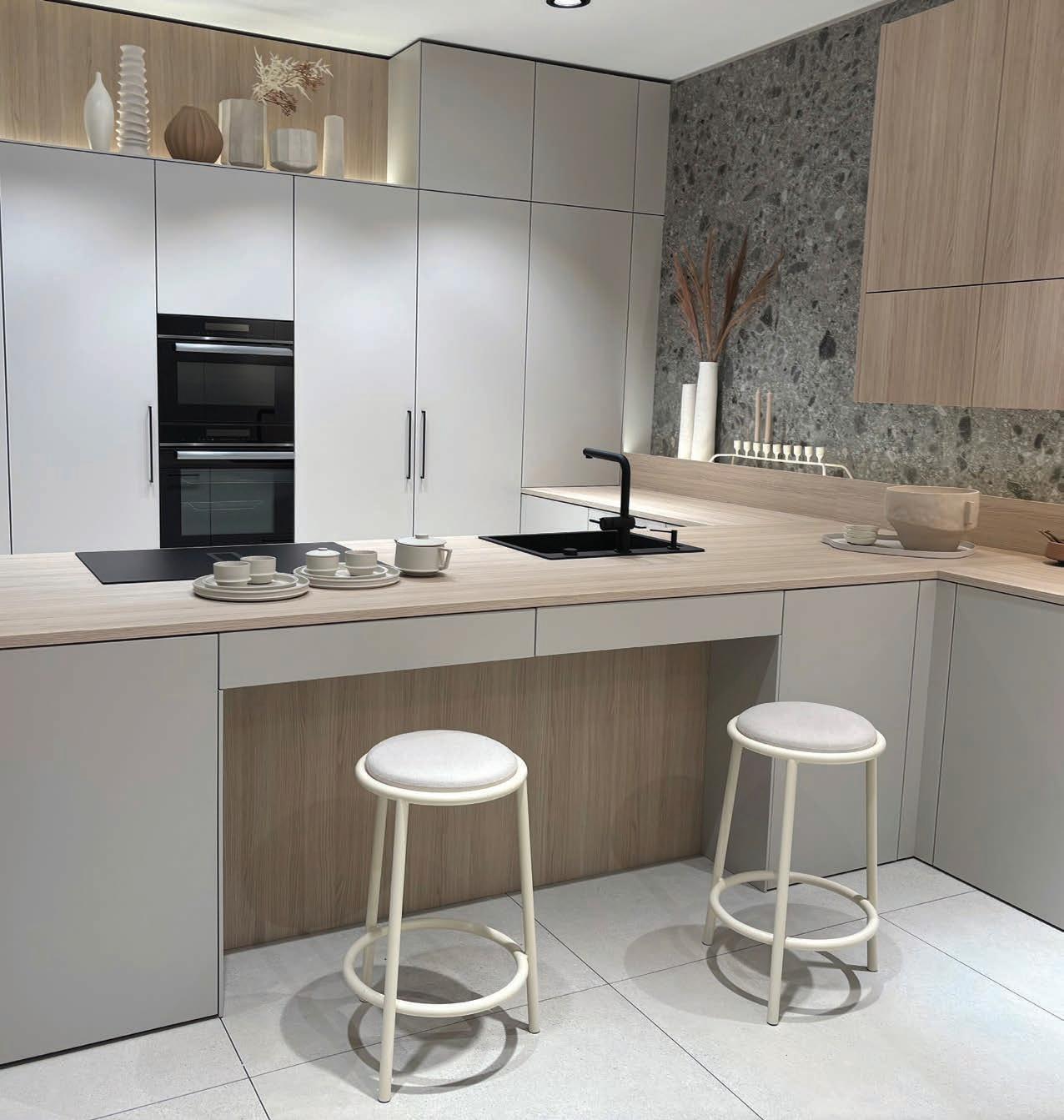






Plain white and grey have gone from being contemporary to looking boring and passé. People are getting bored with playing safe and are looking for ways to add excitement to their homes and to express their personality.
Warm colours and natural materials are coming to the fore, with stone the obvious choice as a durable, practical material that will stand the test of time, while offering a huge choice and variety of colours. Patterns are preferred to plain colour, and once again stone is perfect for this, with marble veining creating visual interest.
One of the things that is changing is that wet rooms are no longer in fashion, and showers are separated from the rest of the room. The freestanding bath is also on its way out. Baths are being recessed
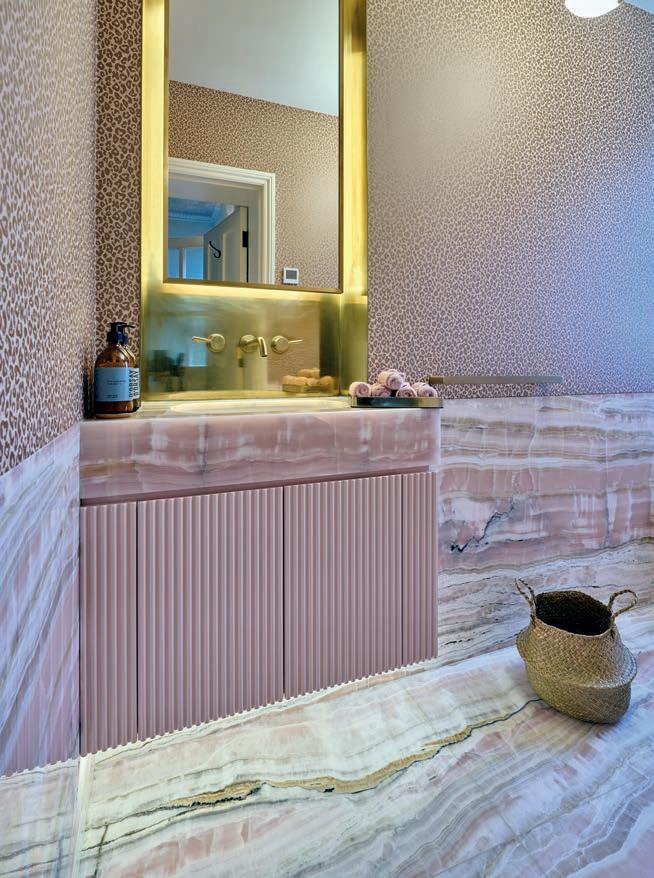

into nooks that are tiled or clad in stone with generous ledges allowing items to be placed around the bath in easy reach while bathing.
Double vanity tops have dominated for a long time, but two single vanity units are becoming more common, allowing the space to be used more efficiently, and broken up in a different way.
Niches are also less popular. Increasingly a false wall is used to create a ledge instead of a small niche in the shower. This allows the veining in the stone to flow down the wall and looks less fiddly and cramped than a niche.
stoneCIRCLE has been fabricating stone for interiors since 1968, and works with top architects and interior designers on some of the most desirable residences. They have their own teams of installers working across the south of England fitting the stone they fabricate. Please contact them to discuss how you could use stone to transform your home.
For more information on stoneCIRCLE’S range of stone and services, visit stone-circle.com or call 0125 685 0380

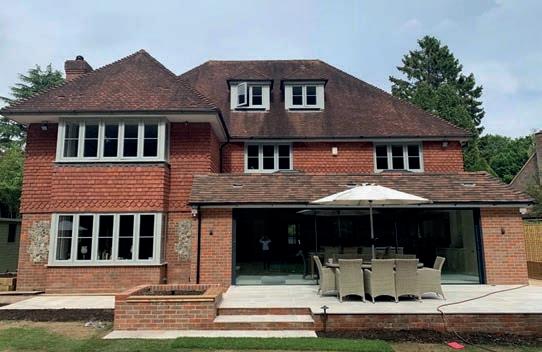
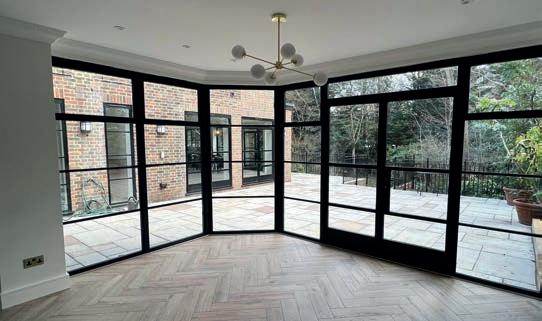
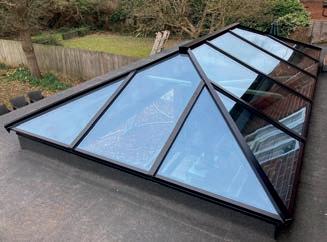
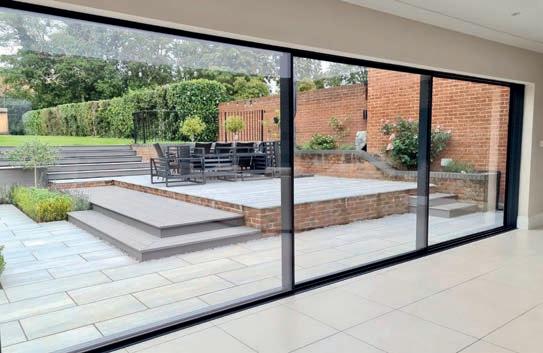
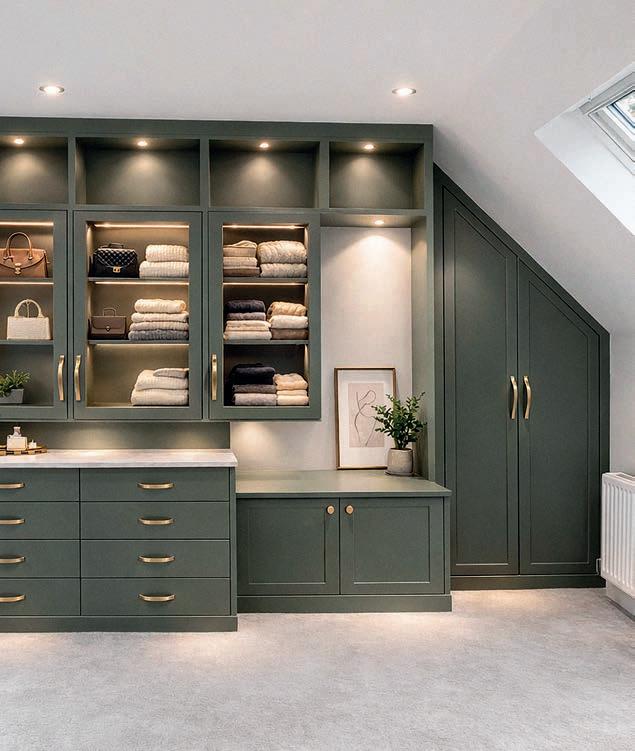
Q What was the original vision behind Complete Fitted Bedrooms?
A Complete Fitted Bedrooms began as a genuine family story. It goes back to my dad, Richard, who stepped into the world of bedroom design in his early 20s. He loved the idea of helping people create spaces that felt calm, personal and truly their own. In 1978, he and my mum, Julie, took a leap of faith and opened their first showroom in Watford. Their vision was simple but meaningful: to design bedrooms with care, honesty and a real understanding of how people live. That’s the foundation the whole business is built on – and the heart of what we still do today.
Q How has the company evolved from its first showroom to today?
A From that first little showroom, the business has grown in the most natural way – through family. Today, my four siblings and I all work in the company, each of us bringing different strengths across design, customer service, installations and showroom support. We now have warm, welcoming showrooms in Amersham and Berkhamsted, and we’re proud to serve homes across Hertfordshire and Buckinghamshire. The business has grown, but the feeling behind it hasn’t changed.
JESSICA
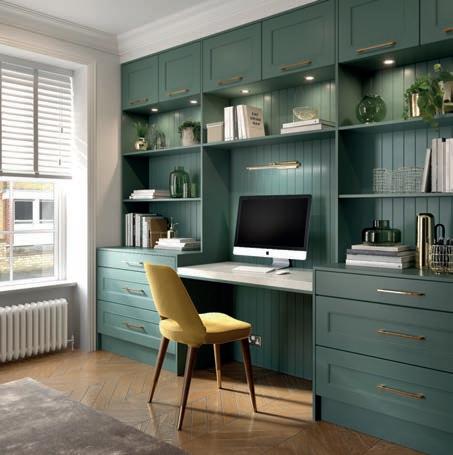
Q What role does being a family-run business play in shaping the company’s culture and values?
A Being a family-run business shapes absolutely everything. We were raised in a home where making people feel comfortable and cared for mattered – and that comes through in the way we work. We don’t rush anyone, and we don’t treat people like numbers. We take time to listen, to understand how they live, and to create a space that feels right for them. That sense of warmth and sincerity is part of our culture because it’s part of our family.
Q What sets the business apart?
A What sets us apart is that our customers don’t just walk into a show -
room – they walk into a family. There’s a genuine, homely atmosphere that you simply can’t manufacture. We love what we do, and we love doing it together. People can feel that from the moment they meet us. It’s personal, it’s heartfelt, and it’s honest – and that makes all the difference.
Q What does “turning houses into homes” mean to you?
A For us, “turning houses into homes” is really about creating spaces that feel lived-in, loved and completely personal to the people who use them. Because we’re a family business, everything we do comes from a place of care – we take the time to listen, to understand how someone truly lives, and to make sure the room reflects that. It’s not just about fitted furniture. It’s about warmth, comfort, and the feeling you get when you walk into a space that fits you perfectly. That’s the part we love most: helping people create a bedroom that doesn’t just look beautiful, but genuinely feels like home.
354 High Street, Berkhamsted, HP4 1HU 01442 777111
completefittedfurniture.com
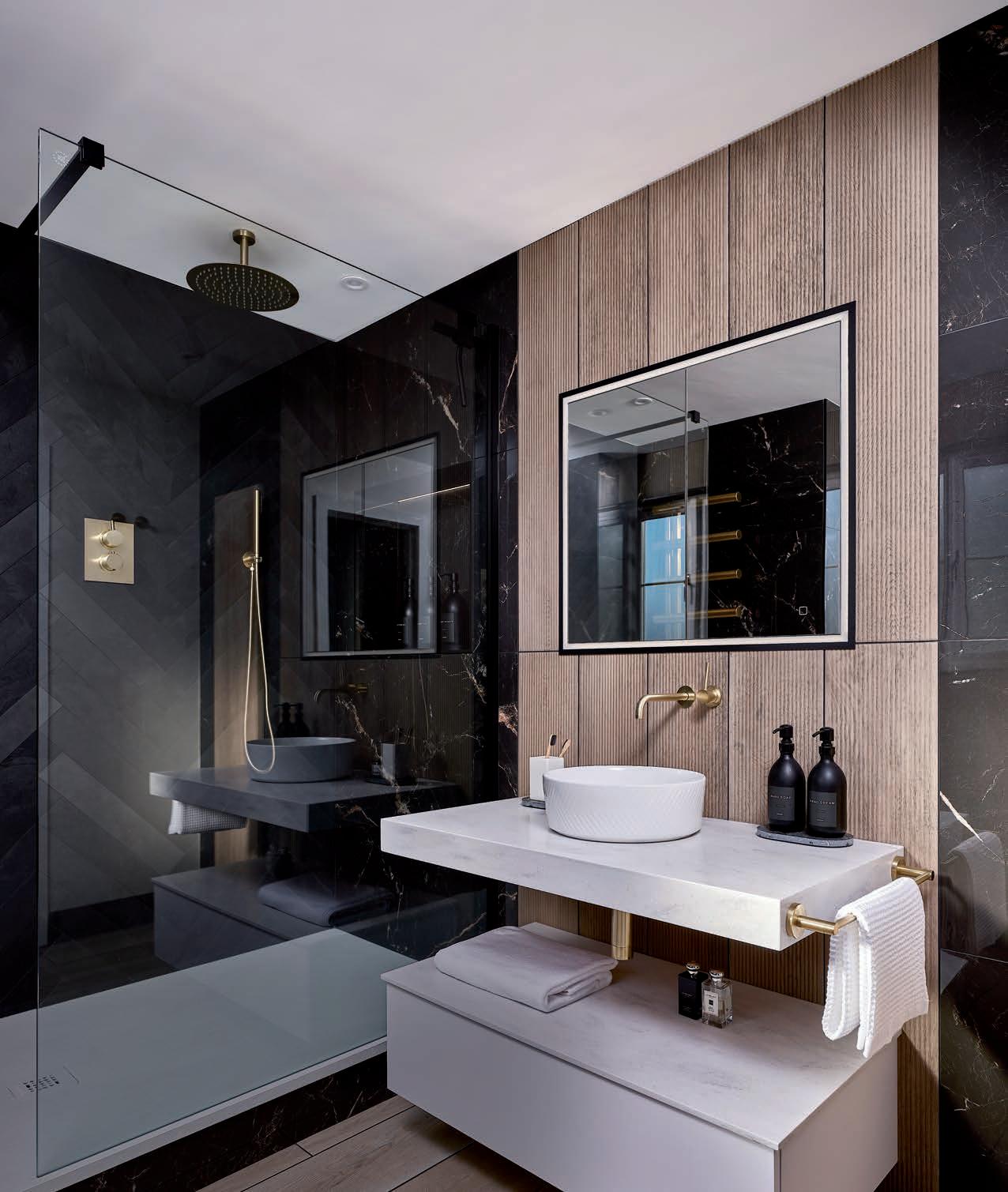

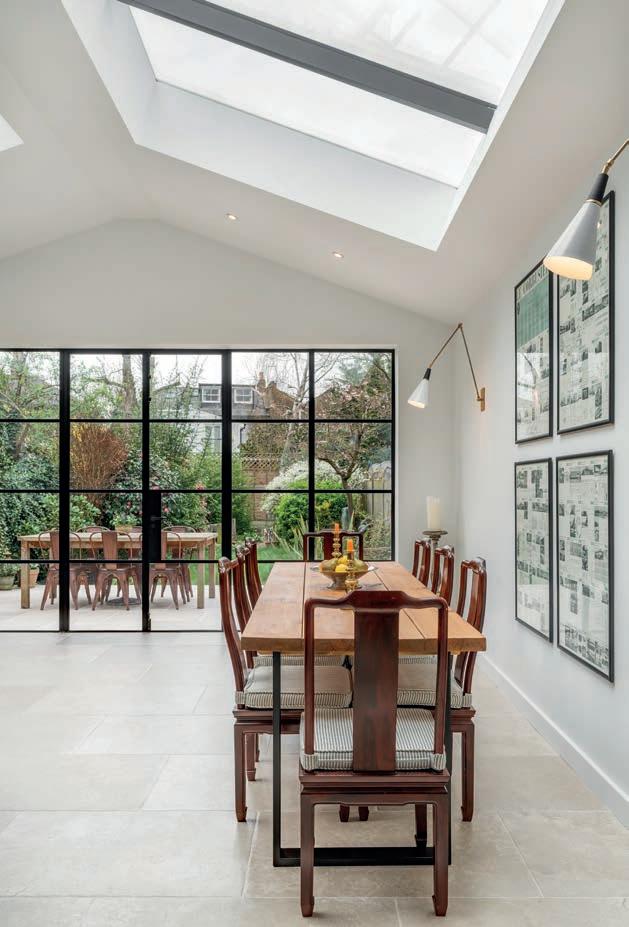
“Their home feels brighter, more open and they finally to get to enjoy the view”
1st Folding Sliding Doors have a new name, so it’s the ideal time to take advantage of their expertise in transforming homes
West London glazing business with more than 20 years’ experience is quietly continuing to shape the way local homeowners think about light, space and everyday living.
Enjoy The View is the established glazing company previously known as 1st Folding Sliding Doors – the same business, trading continuously under the same ownership and management team that has delivered hundreds of projects across West London and beyond.
“People always tell us the same thing,” says Director Daniel Creese. “That their home feels brighter, more open, and that they finally get to enjoy the view.”
Having completed projects ranging from London terraces and family extensions to sensitive countryside schemes, the company has built a reputation for combining technical expertise with a thoughtful, design-led approach.
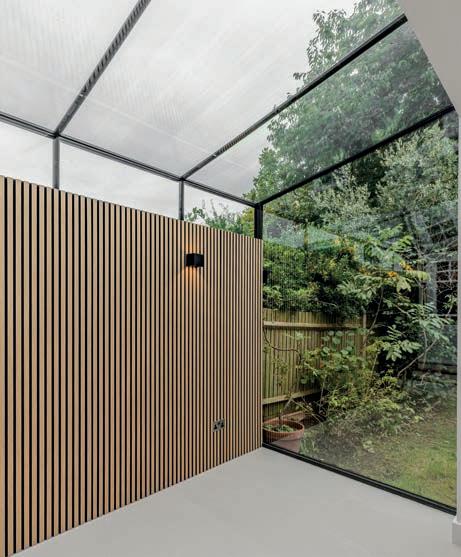
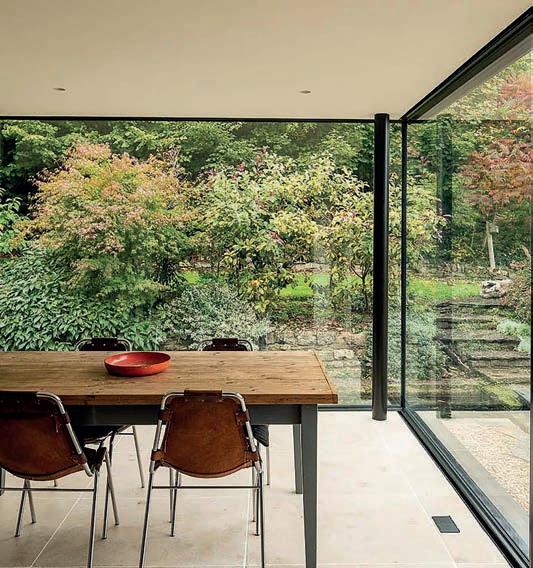
One recent award-winning installation near the 15th-century Watercress Cottage in Bath shows how contemporary glazing can sit comfortably alongside historic architecture. Closer to home, many local families are using glazing to transform kitchens, create open-plan living spaces and strengthen their connection to the outdoors.
As the company continues to grow, it has recently invested significantly in its West London presence with the opening of a new showroom on Gunnersbury Avenue, Ealing. Rather than a traditional retail display, the space has been designed to feel like a real home – allowing visitors to see how glazing works in everyday settings, from sliding doors opening
onto a garden to skylights drawing daylight deep into the centre of a house.
The business remains independent and owner-run. All products are made to measure, fully certified and backed by industry guarantees, reflecting a long-standing focus on craftsmanship and reliability.
The Ealing showroom is now open seven days a week, making it easy for homeowners, builders and architects to drop in for inspiration or technical advice at a time that suits them.
ENJOY THE VIEW
113–117 Gunnersbury Avenue, Ealing, W5 4LR sales@1stfoldingslidingdoors.co.uk 020 8997 2448

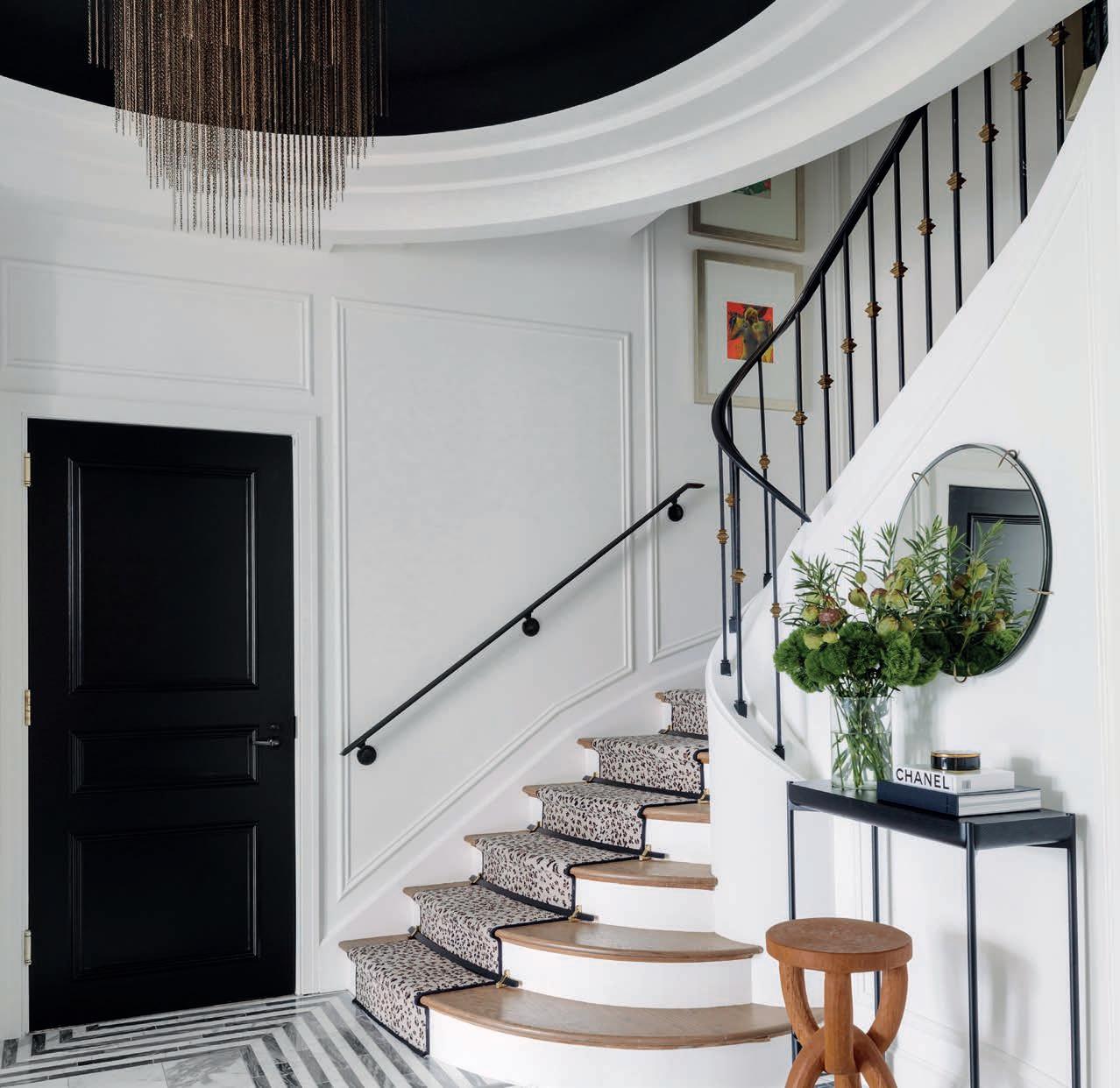
Statement lighting is being used to transform design in our homes, as the founder of Gabriel Scott, Scott Richler, writes
Homes are increasingly treated as long-term sanctuaries rather than trend-led showcases, and that shift naturally elevates lighting to a more central role. Statement ceiling lights bring clarity and confidence to a space; lighting defines a room instantly, rather than quietly receding into the background. There’s also a renewed appetite for craftsmanship and architectural presence; people want to see how something is made and to feel its material weight. The ‘big light’ answers that desire by of-
fering both function and identity, acting as an anchor that brings cohesion to the entire interior.
When we design large statement fixtures, scale is always our starting point. A light should respond to the architecture around it, the volume of the room, ceiling height, sightlines and how the space is actually lived in. Quite simply, the larger the room, the more confidently a light can occupy it. That said, scale isn’t just about size; it’s about proportion and balance. We often remind clients that small rooms can look extraordinary with oversized pieces too, as long as the design has refinement and clarity. A bold light in
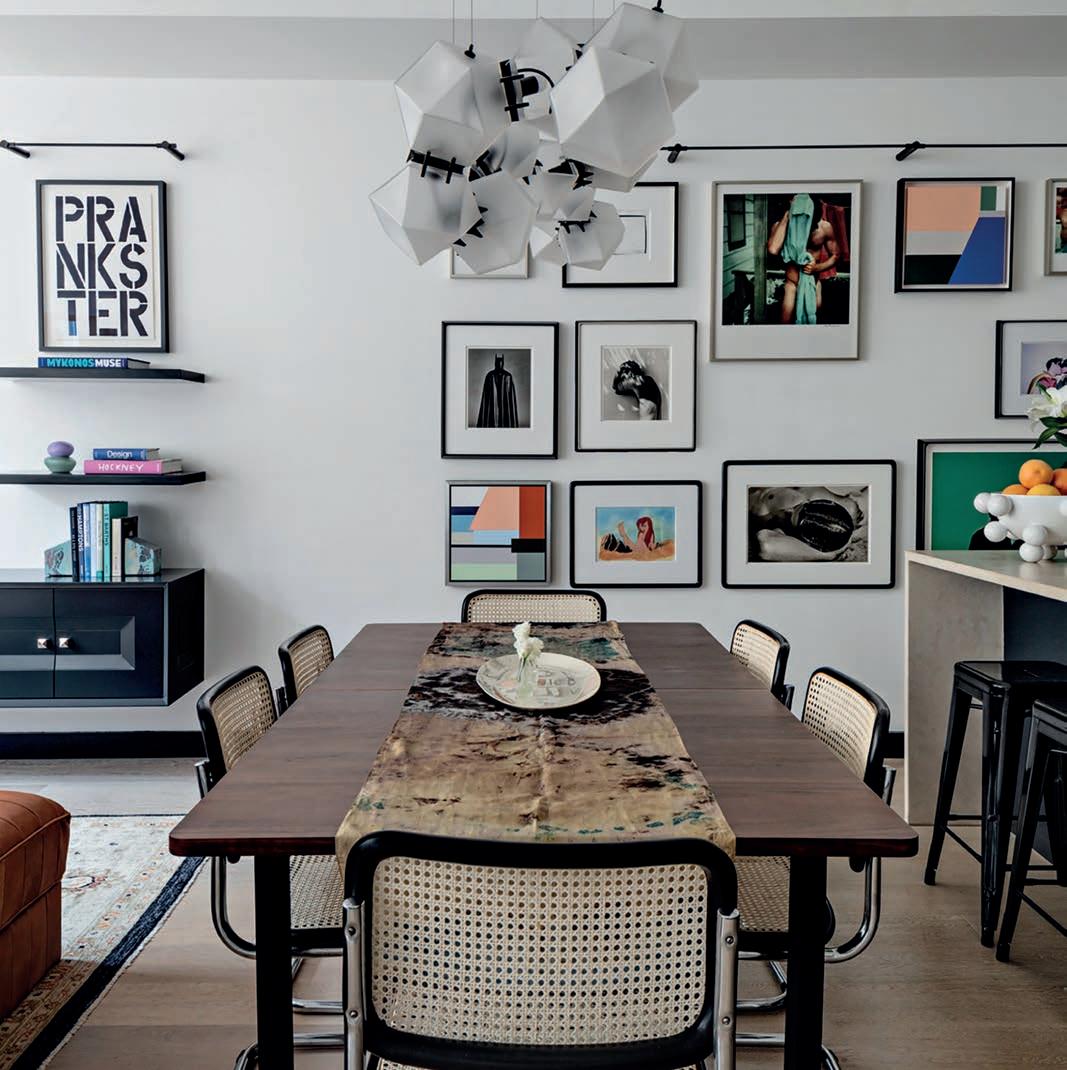
a compact space can create tension and drama, rather than overwhelm, when it’s thoughtfully placed.
Lighting creates emotional resonance because it directly influences how we feel in a space, not just how we see it. A subtle shift from bright, task-focused light to something dimmed and warmer can instantly signal calm, comfort or intimacy. Much like changing pace at the end of the day, lighting helps us transition emotionally between moments, from focus to relaxation, from energy to rest. When lighting is layered and adjustable, it allows a home to support different moods throughout the day.
Mood plays a fundamental role in our design philosophy. We believe lighting should respond to how people actually live, not just how a room looks in photographs. Dimmable systems and thoughtful combinations of ambient, task and accent lighting give homeowners control over their environment, allowing them to tune a space to how they want to feel in that moment. Ultimately, the most successful lighting doesn’t announce itself, it quietly enhances wellbeing, making a home feel intuitive, personal and emotionally supportive.
At Gabriel Scott, materials are never an afterthought, they are central to both the
visual language and the longevity of every piece. Our approach is rooted in the belief that lighting should feel substantial, tactile and enduring, with materials chosen not just for how they look on day one, but for how they age over time. Glass is one of our defining materials. Many of our collections use hand-blown or double-blown glass, which gives each piece a subtle individuality. The layered construction softens the light, creating a warm, atmospheric glow rather than a harsh source. This quality of light is crucial to emotional comfort, it’s what makes a sculptural fixture feel inviting and lived-in, rather than purely architectural.
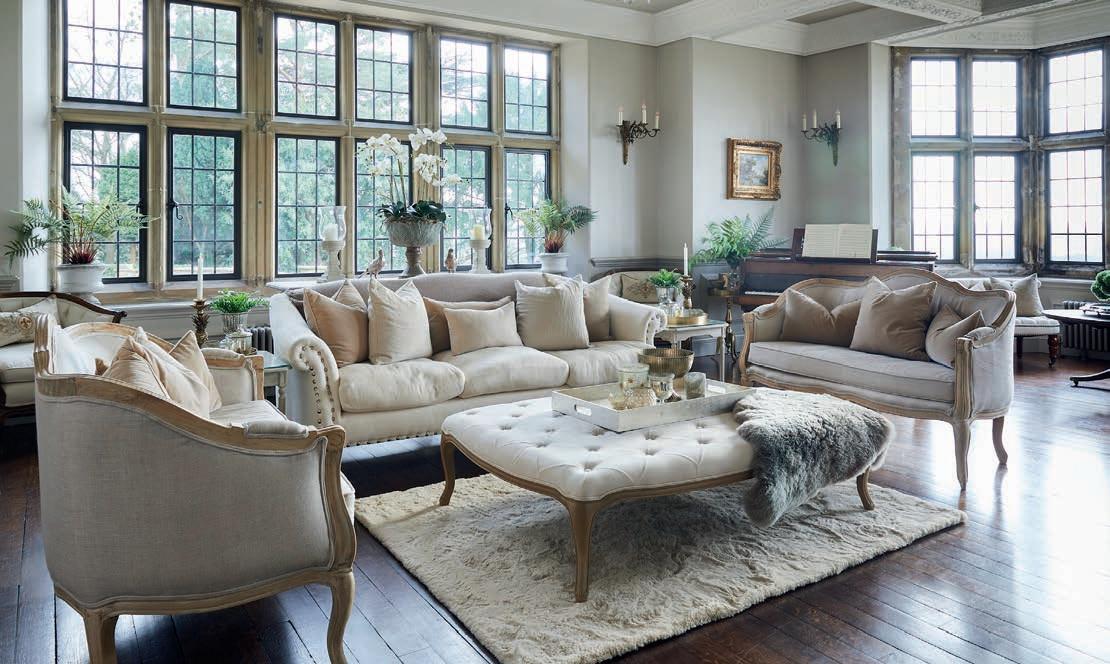
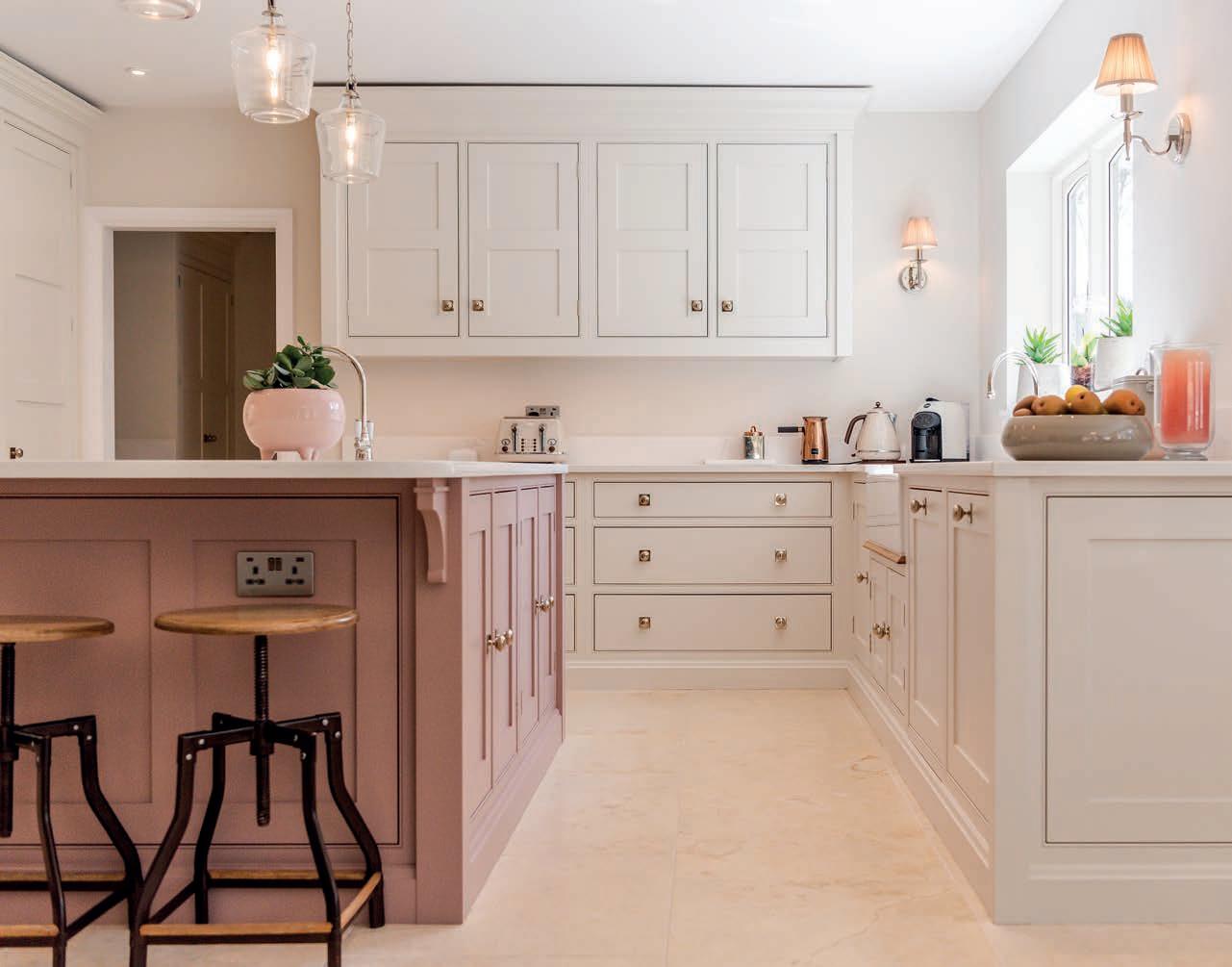
Renowned for our handmade kitchens, but also create stunning bespoke furniture for other rooms in your home.
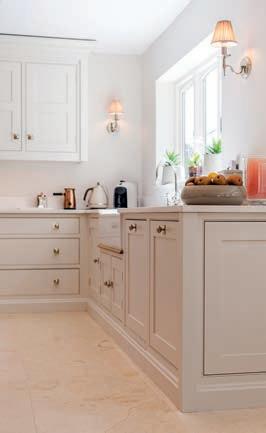
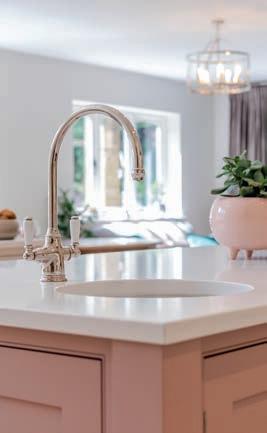
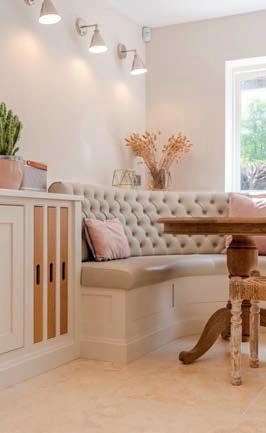
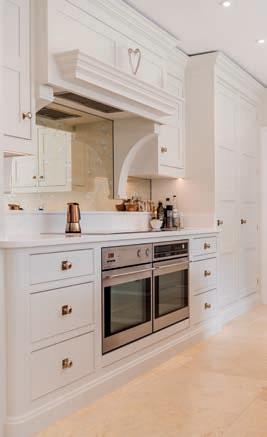
woodwisekitchens.com 01235 555502
info@woodwisekitchens.com



Equally important are our metals. We work with finishes such as satin brass, satin bronze, satin nickel, satin copper and blackened steel, chosen for their depth and quiet refinement. These finishes are deliberately understated; they catch the light without dominating it, allowing the form and the glass to take centre stage. Over time, they develop character rather than wear, reinforcing the idea of lighting as a long-term investment rather than a seasonal purchase.
Statement lighting has increasingly replaced traditional focal points because it offers both visual impact and flexibility. Feature walls, wallpapers or built-in joinery are fixed to a specific home; lighting, by contrast, is something you can take with you. That sense of portability has become incredibly important to homeowners who move more frequently or see their interiors as evolving rather than permanent.
We also see lighting being treated as a true investment. When clients fall in love with a piece, it becomes part of their personal design language. That light will move homes with them, adapting to new spaces and contexts, rather than being left behind. In that sense, statement lighting has become a modern heirloom, an object that holds meaning, delivers impact, and offers longevity in a way that many traditional focal points simply can’t.
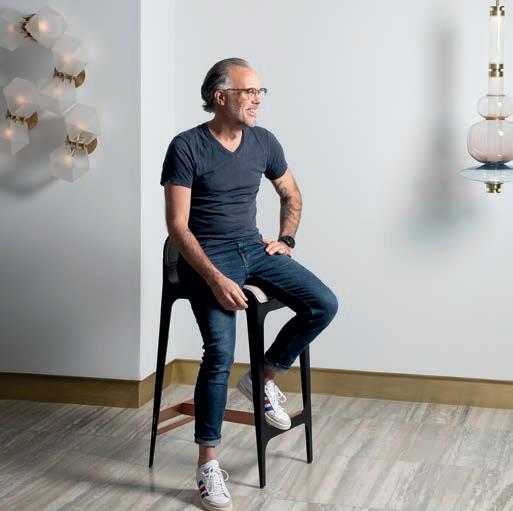
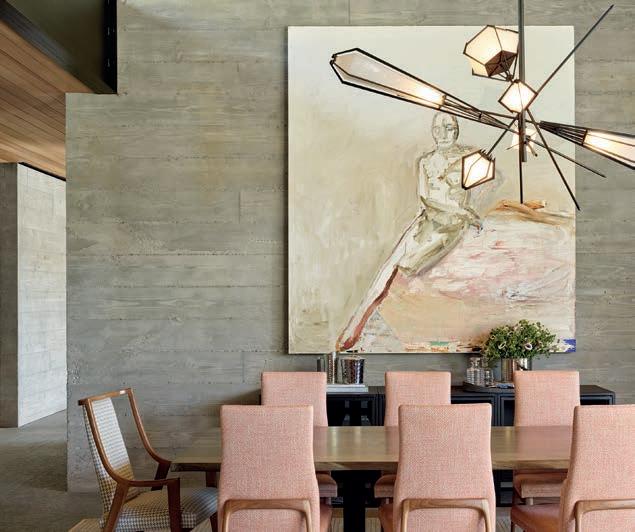
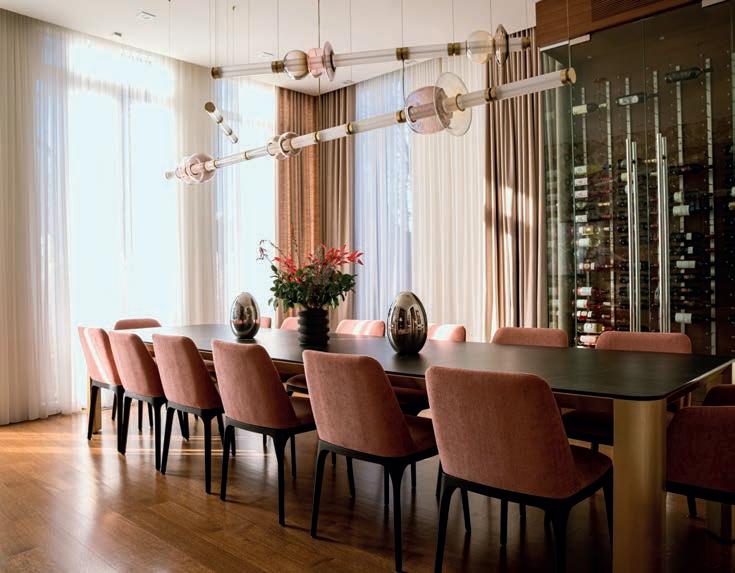
Lighting has moved far beyond simply complementing architecture, it now actively shapes how a space is experienced. Rather than being applied at the end of a project, lighting is increasingly considered at the same moment as the architecture itself. It defines volume, guides movement and influences how we perceive scale, proportion and flow within a room.
As homes become more fluid and multifunctional, lighting is also taking on a greater role in shaping how spaces are used throughout the day. Architecture may remain fixed, but lighting allows the same room to shift in character, from energetic and open to calm and cocooning. Ultimately, the relationship has become collaborative. Architecture provides the framework, but lighting brings it to life. When designed together, lighting doesn’t just support a space – it defines its atmosphere, identity and emotional impact.
gabriel-scott.com
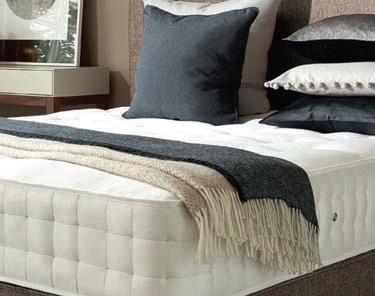



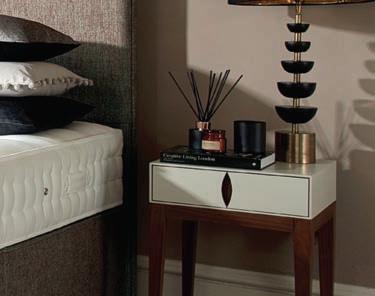



Wellness is no longer viewed as an occasional indulgence reserved for spas or retreats. In 2026, it has become something people actively seek and genuinely need in their daily lives, and nowhere is this more apparent than in the bathroom. Once considered purely functional, this space is now being reimagined as a restorative sanctuary that supports balance, wellbeing and everyday self-care. At Ripples, this shift shapes every project, with carefully considered layouts, tactile materials and calming aesthetics working together to elevate daily routines into moments of quiet luxury and essential pause. This evolution has been driven by how we live today. Busy schedules, constant connectivity and a growing awareness of mental and physical wellbeing have changed what we expect from our homes.
We’re no longer just asking our interiors to look good; we want them to actively support how we feel. The bathroom, with
its natural connection to water, warmth and routine, has become the heart of this movement. So, what does bathroom wellness look like in 2026? It’s not about gimmicks or indulgence for indulgence’s sake. Instead, it’s a careful layering of atmosphere, comfort, and intelligent design choices that turn everyday rituals into moments of restoration.
Light is one of the most powerful tools in a wellness-led bathroom. Natural daylight remains highly desirable, but where that isn’t possible, carefully planned artificial lighting can have a profound effect.
Layered lighting, combining ambient glow, soft task lighting and subtle accent lighting creates a soothing environment and avoids the harsh, clinical feel traditionally associated with bathrooms. Warm, adjustable lighting allows the space to respond to different times of day and different moods. Warmth and comfort are equally important. Features such as underfloor heating, warm surfaces and
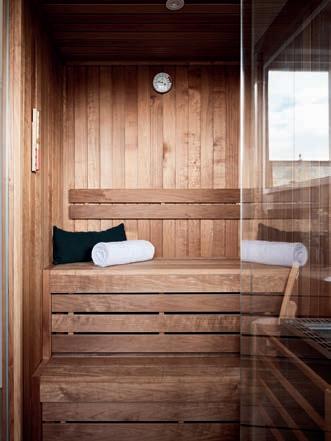
gentle ambient heat help the body relax, particularly in the colder months. These elements encourage you to linger rather than rush, shifting the bathroom from a purely functional space into one that feels nurturing and restorative.
Material choice also plays a key role in today's wellness-focused bathrooms. Tactile, natural finishes are favoured over high-gloss surfaces, creating spaces that feel grounded and calm. Stone, softly textured tiles, wood-effect finishes and muted colour palettes all contribute to an atmosphere that feels reassuring rather than overstimulating.
Technology, when used thoughtfully, enhances the wellness experience without dominating it. Integrated features such as steam, infrared warmth and lightbased innovations are becoming more discreet, allowing homeowners to benefit from them without compromising on design. The emphasis is on wellness that fits effortlessly into daily life – no extra steps, no added complexity.
Finally, wellness-led bathrooms prioritise clarity and calm. Considered layouts, well-proportioned fittings and concealed storage help keep surfaces clear and the space visually restful. A bathroom that feels organised and intentional has a direct impact on how relaxing it feels to use.
True bathroom wellness in 2026 isn’t about following trends – it’s about creating a space that genuinely supports how you live. With thoughtful design, the bathroom becomes more than just a room; it becomes a daily opportunity to pause, reset and restore.
ripplesbathrooms.com
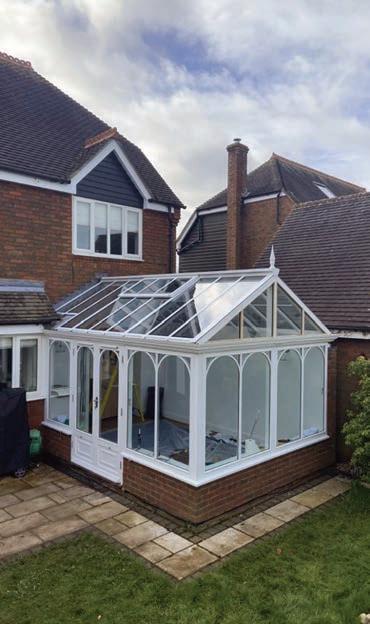
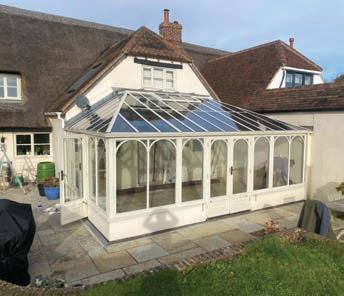
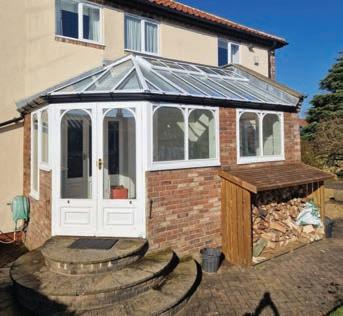



Experts in bespoke timber conservatory refurbishment for over 30 years. We deliver exceptional craftsmanship with a personal touch, specializing in Amdega Solid Roofing Systems, glazing, installations, repairs, and restorations. Our skilled team ensures stunning, durable results across the UK for Amdega and other hardwood conservatories, orangeries, and Glasshouse projects.











CHRISTOPHER FARR CLOTH
Christopher Farr Cloth has launched a distinctive range of fabrics and wallpapers in collaboration with German artist Olaf Hajek. His intricate, dreamlike imagery, rooted in folklore and surrealism, is translated into wallpaper for the fi rst time. christopherfarrcloth.com


Compiled by PENDLE HARTE
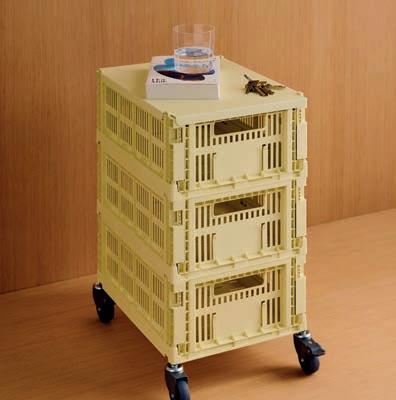
ADDISON ROSS
The ever-growing collection of colourful, stylish homewares now includes these cute rechargeable scallop lamps, which come in lots of glossy lacquer colours and have a distinctly spring-like feel to them, £125. addisonross.com
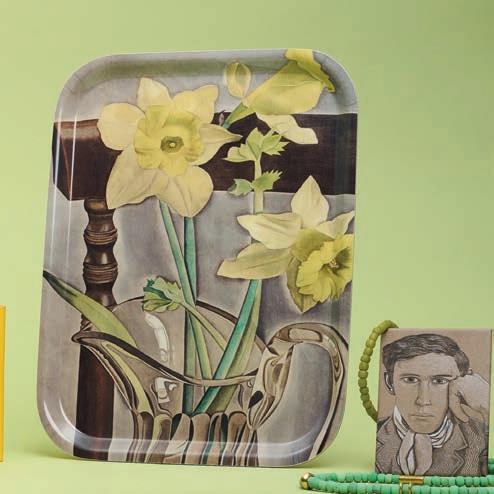
TOAST
HAY
Hay's endlessly versatile storage crates come in lots of sizes and colours – and not only can you stack them up, but you can also attach wheels to create useful, fl exible storage. hay.com
NPG/BELLA FREUD
Accompanying the Lucian Freud exhibition at the National Portrait Gallery is a range of homewares designed by the artist's daughter Bella. You'll fi nd them in the gallery shop.





The star of Toast's beautiful new collection of textiles and bedding is this Bristol Weaving Mill Block Stripe Blanket, knitted in a blend of wools for a stylish, Bauhaus-style look, £215. toa.st




















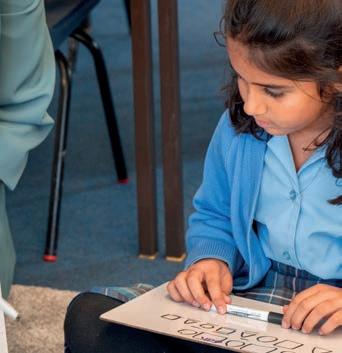







LUDGROVE SCHOOL



Ludgrove School in Wokingham is a leading independent preparatory school for boys, renowned for academic excellence, character development, and traditional values, set within beautiful Berkshire countryside. Head Simon Barber was recently recognised at the Tatler Schools Awards – read more on page 118.






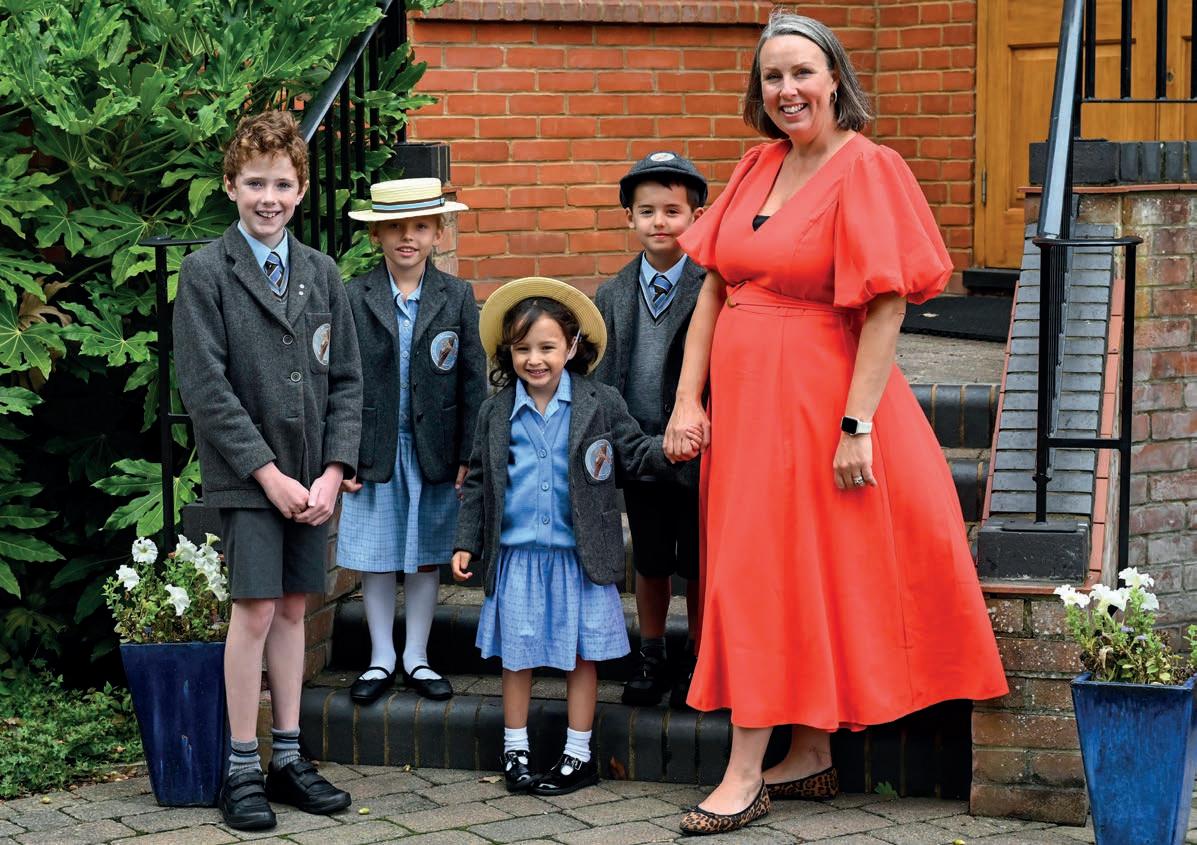
Absolutely talks to Eton End Prep School’s Sarah Bond about how her first year at the helm has been so far
Q Can you tell us a little about your journey to becoming Head at Eton End? What inspired you to pursue a career in education?
A My journey to Headship was not something I consciously set out to pursue – until I found myself becoming a Head. Throughout my career, I have been fortunate to experience a wide range of roles, from Form Teacher and Head of Key Stage to, most recently, Deputy Head. Each role has shaped my understanding of children, sta , and school life and has deepened my appreciation of what strong, thoughtful leadership looks like in practice. When the opportunity arose to become Head at Eton End, after eight and a half years as part of the school community, it felt like
a natural and very personal step. My love for the school, the children, and the wider community, alongside a strong desire to honour and build upon the legacy established by the Heads over the past 90 years, gave me both the confidence and the motivation to take on the role. It is a privilege to lead a school I know so well and care about so deeply.
Q What has been the most rewarding part of your role as Head so far?
A A standout moment for me was welcoming everyone back to school at the start of the academic year; my first September as Head. It was a wonderful moment for me – full of anticipation and excitement as well as a healthy dose of responsibility and an awareness of all that lies ahead.
Q How would you describe your leadership style, and how do you bring it to life at Eton End?
A I would describe my leadership style as very much based on leading by example. I believe strongly that credibility as a leader comes from being prepared to do what you ask of others, and I am conscious at all times that my actions, attitudes, and standards set the tone for the whole school. I would never expect a member of sta to do something that I would not be comfortable doing myself. At Eton End, this means being visible, involved, and fully engaged in the life of the school. I make knowing the children and their families well a priority, as well as understanding the realities of the classroom

and being present for sta on both a professional and human level. Whether that is stepping into lessons, supporting with lunch duty in the Dining Room, engaging with parents, or taking time to listen when challenges arise, I believe leadership is shown through everyday behaviour rather than position alone.
I also try to model the values I want to see across the school: respect, integrity, humility and perseverance and high expectations balanced with care. By demonstrating commitment, resilience, and a willingness to reflect and improve, I hope to create a culture where sta feel supported, trusted, and motivated to give their best. In this way, leadership at Eton End is not about authority, but about shared purpose and mutual respect.
Q What makes Eton End unique compared to other schools in the area?
A What truly sets Eton End apart is the clarity of its values and the way these are lived out every day. Our motto, “I am, I can, I ought, I will”, captures the essence of the school and provides a framework that underpins everything we do. It reflects our commitment to developing confident, capable, and principled young people who understand their own worth, recognise their responsibilities to others, and have the ambition and determination to shape their own futures. Children leave Eton End with a strong sense of self-belief, coupled with an understanding of right and wrong and a readiness to take on new challenges. This balance of confidence and character is central to our approach and is something we work hard to nurture from the very earliest years. We want our pupils not only to achieve academically, but also to be kind, reflective, and resilient individuals.
A defining strength of Eton End is the attention given to each individual child. Our small, close-knit community allows
Our motto, "I am, I can, I ought, I will", captures the essence of the school
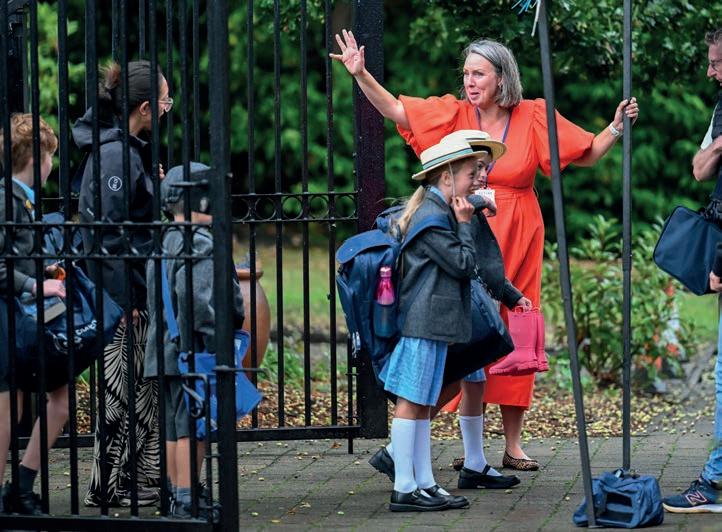
sta to know pupils exceptionally well, both academically and personally. This deep understanding enables teaching to be carefully tailored, ensuring that every child is supported, challenged, and encouraged to make excellent progress across the curriculum. Parents consistently comment on how well known their children are, and this level of care and insight is something we are immensely proud of.
Q Are there any exciting projects or initiatives currently happening at the school that you’re particularly proud of?
A When I became Head, I wanted to make sure that our whole community felt seen, heard and supported and so projects were paused for a time. We are now super excited to be developing our Nursery provision and the Early Years outdoor area as well as upgrading our Music Department and Library. Each of these projects will support the learning across the school from our youngest Eton Enders in the Nursery to our leavers in Year 6.
Q How does Eton End balance academic excellence with creativity, wellbeing, and extra-curricular opportunities?
A We have an amazing curriculum which is peppered with wonderful learning experiences both in and out of the classroom. We place great importance on our academic progress, but we also celebrate the arts, sport and our learning values. The children are able to choose from a wide range of clubs and activities which might support their current learning or encourage them to branch out and try something new.
Q If the students at Eton End were to describe you in three words, what do you hope they would say?
A I hope the children would say that I am kind, supportive and a good listener. They would also tell you that my favourite saying is ‘if you can choose to be anything, choose to be kind’.
etonend.org





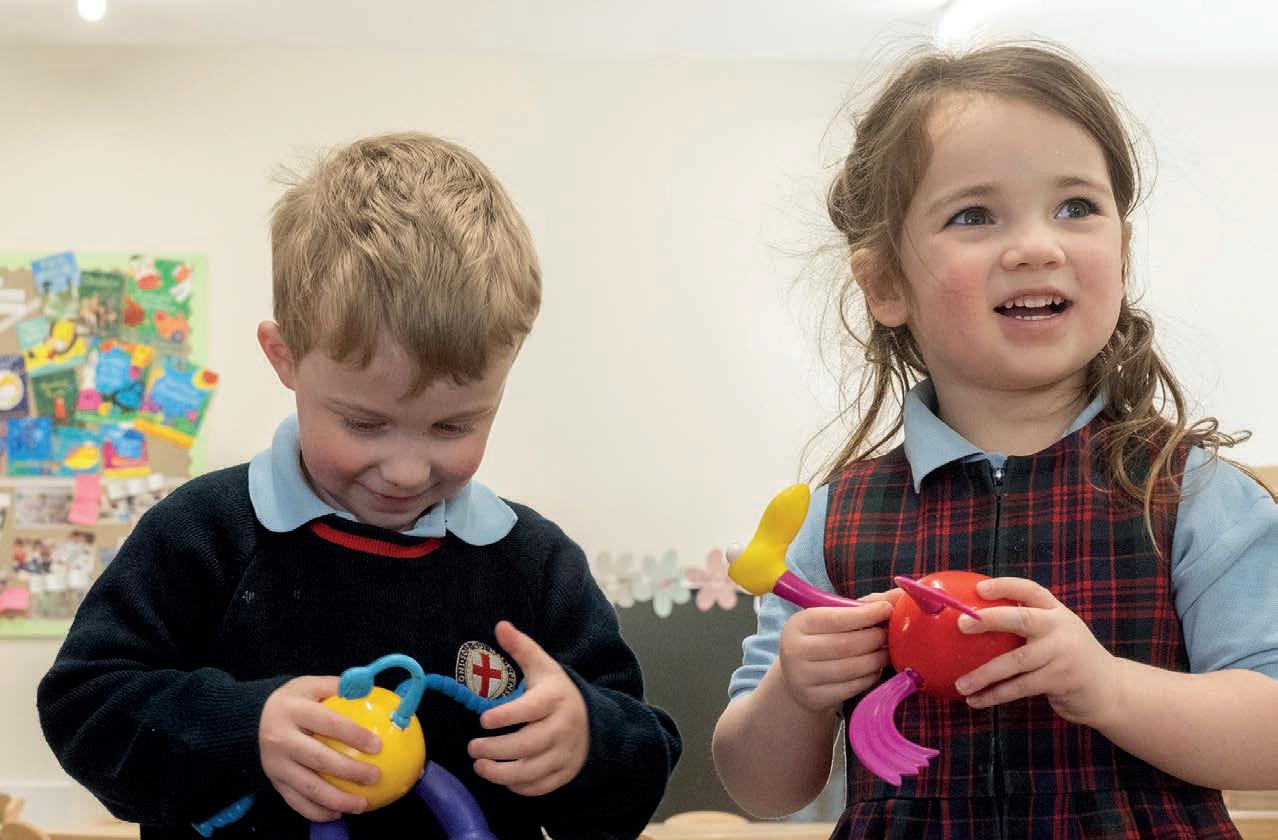






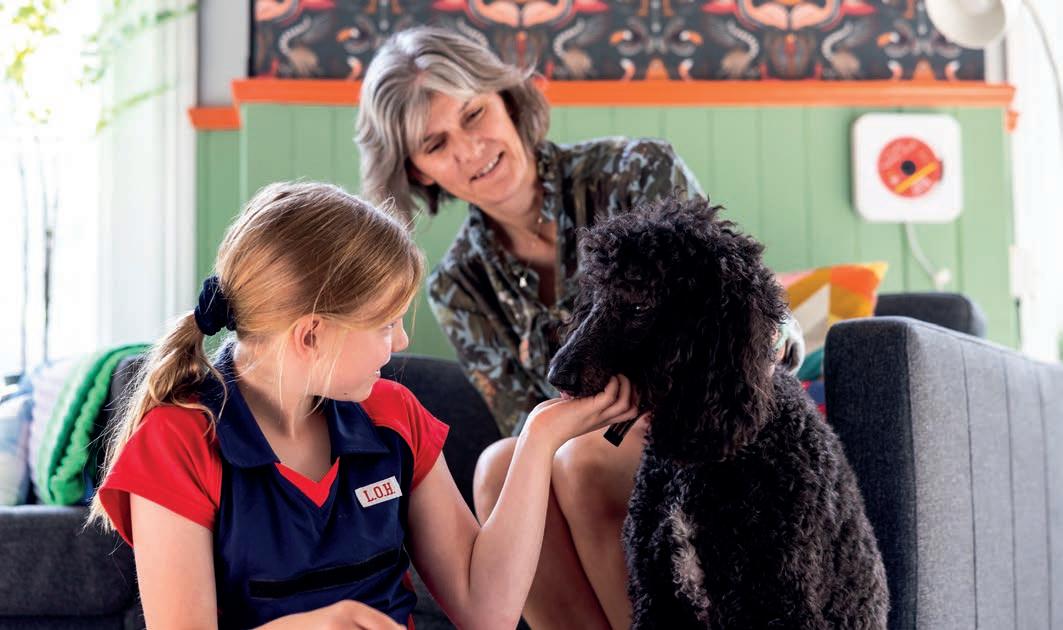
The International Baccalaureate curriculum at St George’s School Windsor Castle o ers a uniquely individual approach to learning
At St George’s School Windsor Castle, the International Baccalaureate (IB) Primary Years Programme underpins an approach to education that is both structured and distinctly individual. Moving beyond a one-size-fits-all model of learning, the school’s innovative curriculum instead nurtures individual strengths and interests. By positioning each child as an active participant in their own learning, the programme ensures that lessons are meaningful, engaging, and tailored to each child. The result is an environment where academic rigour and personal development sit very comfortably side by side.
One of the most significant benefits of the IB is its so-called ‘inquiry-based’ approach. Instead of passively receiving information from teachers, students are encouraged to ask questions, investigate ideas and construct their own understanding. Step into a St George’s classroom and you are unlikely to find rows of silent children copying from a whiteboard. Instead, you might see small groups deep in discussion, children sketching ideas, building models, experimenting, or preparing to present their findings. For the child, this transforms learning into an active process. Curiosity is not treated as a distraction, but as a starting point. When a student explores a concept through discussion, research or experimentation, the knowledge gained is more likely to be retained and understood at a deeper
level. This fosters critical thinking skills from an early age, rather than simply a dependence on memorisation.
Students are also able to approach their learning from di erent angles, depending on their interests and prior knowledge. Within a unit about ecosystems, one student might focus on animal habitats while another explores human impact on the environment. This flexibility makes learning more relevant and personalised, allowing children to pursue areas that spark their curiosity.
Learners are further encouraged to take ownership by setting goals, reflecting on their progress, and making choices about how they demonstrate understanding. This might involve selecting the format of a final project, such as a presentation, model, video, or written report. For a child, this sense

of ownership is powerful. When students understand that their ideas matter, they become more engaged and resilient. They are also more willing to take intellectual risks, an essential part of meaningful learning. Rather than teaching each subject in isolation, learning at St George’s is organised around broad themes, such as “Who We Are” or “How the World Works”. Within these themes, traditional subjects are woven together, allowing students to make authentic connections across the curriculum. Rather than simply learning about the Great Fire of London from a textbook, at St George’s, students may study the features of timber-framed buildings in art, construct replica models in design technology, then set them alight in a controlled science experiment, using mathematical concepts to measure the speed at which the fire spreads.
Assessment within the IB reflects the same philosophy. While academic rigour remains a focus, progress is measured in more meaningful ways than a single test score. Ongoing assessment – through observation, discussion, written feedback and portfolio work – provides a detailed picture of each child’s development. Feedback is regular, specific and constructive. Rather than being defined by a single grade, students receive guidance that
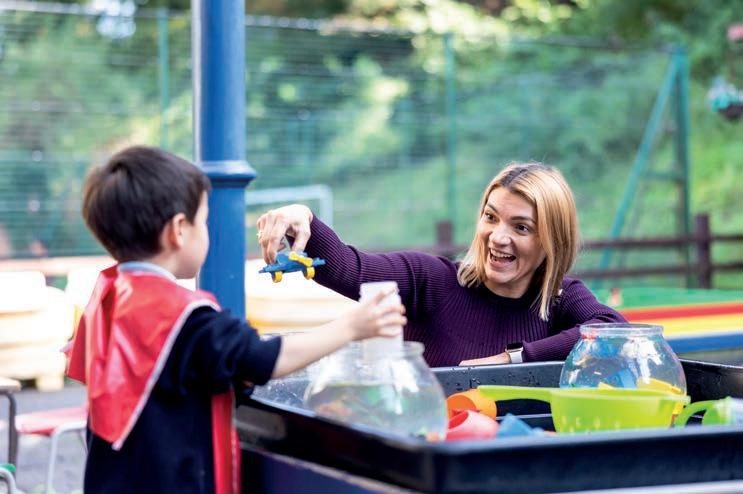
helps them understand what they are doing well and where they can improve, focusing on progress rather than comparison. The curriculum also recognises that education extends beyond academic achievement. Through the IB Learner Profile, students at St George’s are encouraged to become not only knowledgeable, but also principled, caring, open-minded and reflective. Children learn to collaborate e ectively, respect di ering perspectives and manage challenges constructively. Academic success is of great importance; so too is empathy, resilience, and a sense of belonging. In an age when education can feel
pressured and prescriptive, the IB curriculum at St George’s o ers something refreshingly di erent. A model which maintains academic ambition while recognising that children learn in di erent ways. An environment where students are encouraged to discover their own strengths and passions. Students leave St George’s Real World Ready – not only with exceptionally strong academic foundations, but also with the independence, resilience and skills needed for future success.
To find out more, register for a place at the school’s upcoming open event on Friday 20th March. Visit stgwindsor.org/joinus

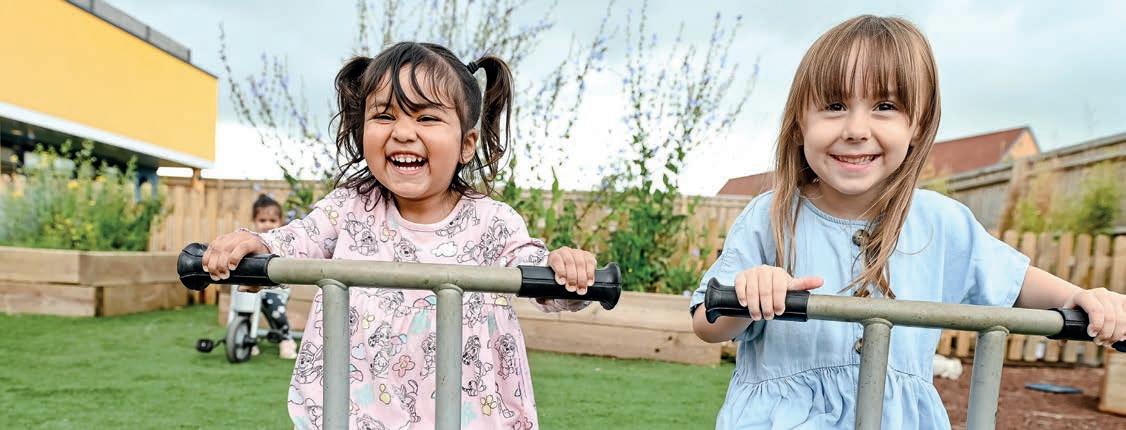









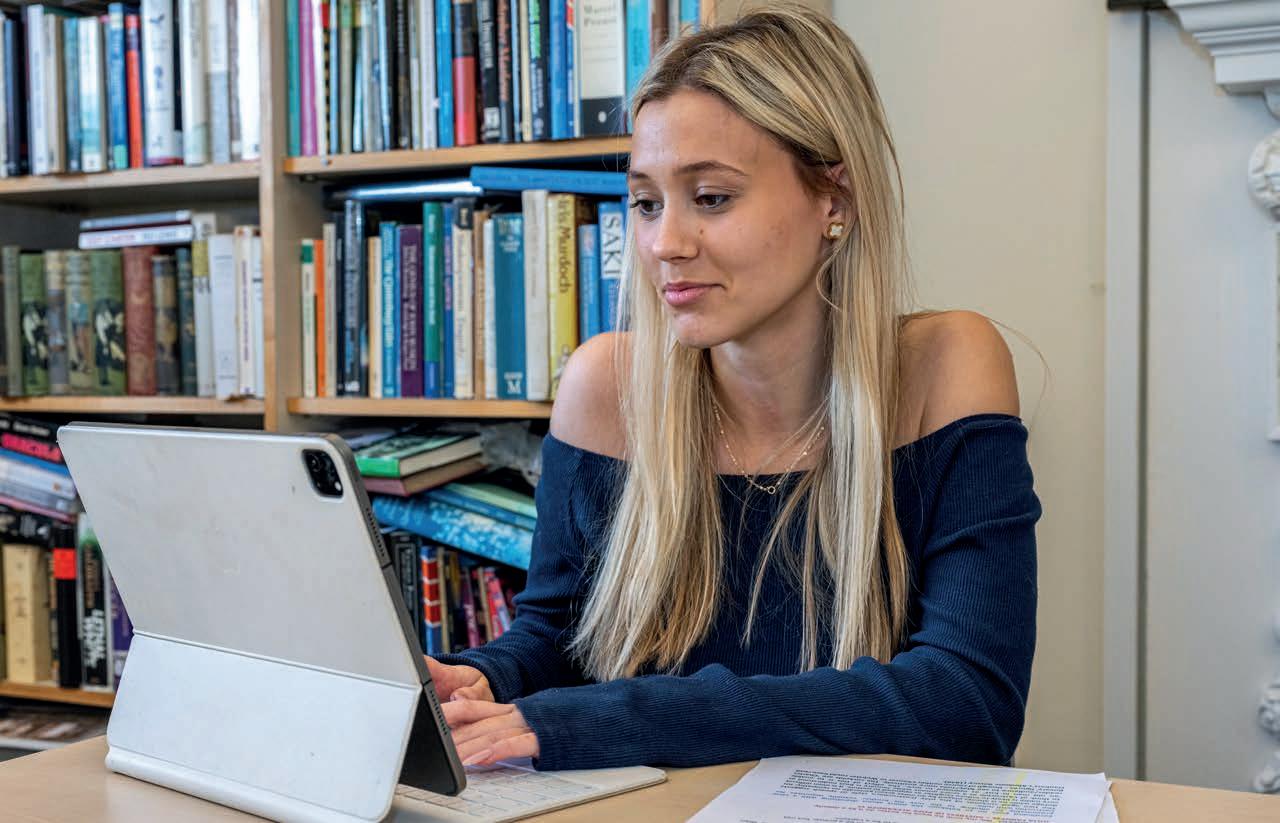
James Barton of MPW Group on why AI is a powerful and positive force in education, but always in a supporting role
Would Shakespeare have been more or less powerful with an AI copilot? Would his output have multiplied, or would the poetry have thinned? To prompt or not to prompt is not the point – the question is whether the tool serves learning or takes over.
From the Jacquard loom to Babbage and Lovelace, from Mary Shelley’s laboratory to Turing’s conversational test, we’ve seen radical technologies since before the Bard. In education it feels novel because the AI rollout is happening now. The present twist is scale. Large language models can draft, summarise and simulate at speed.
The parental voice of concern is justifiable. If a machine performs the
heavy lifting, does our own intelligence slacken? Struggle is part of learning and the temptation to outsource that struggle is real. Institutions harbour their own fears. What if AI becomes so fluent that erroneous or inauthentic submissions slip past detection, eroding trust in assessment? These risks are not imaginary but call for design, not drama. Education is not the e cient production of tidy answers, but the formation of curiosity, integrity and judgement. Keep that in view and AI remains a tool, and even a co-pilot, but not the tutor. Ring-fence its use through transparent prompts, declared outputs and clear limits. Build assessments that prize process as well as end product – more in-class writing, viva-style orals, iterative portfolios and applied tasks that require students to show their working as well as their results. Good design makes
misuse harder and learning stickier. Used well, AI is genuine value-added. In secondary schools, it can generate retrieval practice, adapt reading levels and o er immediate, low-stakes feedback. For pupils learning in another language, it can clarify instructions without lowering the bar. In universities, it can annotate articles, propose code comments, draft lab pre-work and produce alternative explanations for stubborn concepts. Think of AI as a rehearsal room – a place to try an argument, hear it back and refine it before the performance that counts.
AI will certainly replace tasks. Marking routine quizzes, preparing di erentiated materials and providing first-pass feedback are jobs machines already handle well. But no model reads a room and spots the student who hides brilliance behind quietness or turns a near-miss into an ‘aha’ moment. This means the teacher role shifts from solo lecturer to conductor of attention and designer of practice – teacher-led, now tool-enabled. Prospero keeps command of the stage not because he owns the book, but because he understands the play.
In the workplace, large firms now deploy secure, white-labelled models to cut drudgery and raise quality. Graduates will meet such systems on day one. Failing to teach AI literacy would leave them under-prepared. If Shakespeare had an AI co-pilot, the task would still be his – he would choose the question, test the line and own the judgement.
At MPW we learned during the pandemic that technology can preserve momentum, but teachers sustain learning. That lesson now shapes a clear approach. We use AI where it demonstrably adds value –personalising practice, widening timely feedback and supporting EAL learners –while keeping authorship, fairness and the teacher-student relationship at the centre. Tools extend us, teachers transform us. Keep the craft in charge and Shakespeare’s co-pilot earns a seat but not the quill.

Book onto one of our events to see why.
Senior Schooland
Sixth Form Open Day
Saturday 9 May

Junior School Open Morning
Saturday 16 May









By SARAH EIFION-JONES
In an age when children are encouraged to grow up faster than ever, there is something quietly radical about giving them time. Years 7 and 8 (ages 11 to 13) are often seen as transitional spaces between childhood and adolescence, where pupils move into much larger schools before they may be emotionally, socially or academically ready to. Yet for many pupils, this period between 11 and 13 is formative –academically, socially and emotionally. They are years of grounding, growth and confident preparations, in which young people have more opportunities to discover who they are before they leave for their Senior School.
In a Prep School setting, pupils benefit from academic stretch within a community
that knows them well. Teachers understand how each child learns, where confidence may waver and how to nurture resilience. This continuity allows pupils to take intellectual risks, to ask questions, to make mistakes and to grow – habits that underpin longterm success. The Pre-Senior Baccalaureate – the assessment framework used at Swanbourne – reflects this philosophy. It combines academic rigour with creativity and critical thinking, preparing pupils not only for examinations but for the demands of modern senior schools. Subject knowledge remains central, yet pupils are also challenged through research projects, presentations, debate and problem-solving. They learn how to communicate ideas, collaborate e ectively and reflect on their own progress. Assessment is purposeful and personalised. Alongside examinations, pupils receive regular feedback that develops independence and metacognitive awareness – the ability to understand how they learn best. These skills smooth the transition to larger senior schools, equipping pupils with confidence and organisation. Crucially, academic ambition is balanced by strong pastoral care. Small tutor groups ensure every child is known as an individual. A structured, no-phone school day reduces distraction and social pressure, allowing focus, friendships and character to flourish. Leadership roles, competitive sport, performances and residential experiences provide challenges within a supportive framework.
For families seeking space, perspective and the opportunity to board within a nurturing rural setting, these years can be transformative, and the result is simple yet powerful: pupils leave Swanbourne not rushed, but ready and excited for the next stage of their journey.
Swanbourne House is an independent boarding and day prep school for children aged 3 to 13 years in Buckinghamshire (with pupils being able to board from Year 3) and is part of The Stowe Group of schools.
Sarah Eifion-Jones is Deputy Head Academic, Swanbourne House, The Stowe Group, Buckinghamshire. Find out more at swanbourne.org or email admissions@swanbourne.org
latest from schools across the county
St George’s School Windsor Castle recently welcomed Professor Anica Zeyen, disability inclusion expert and volunteer for Guide Dogs, along with her guide dog Maisie. A er learning about the vital role of guide dogs as part of their Unit of Inquiry into ‘Light and Sound’, the school’s Year 1 children held a bake sale to raise money for the lifechanging charity. Their array of home made treats the following week generated a very welcome £300 towards the cause.
Dogs are clearly close to the St George’s students’ hearts, with regular cuddles welcomed from school dog, Olive, and new boarding dog Tibby causing great excitement. In the same week as Maisie’s visit, both Olive and Tibby were entered into the Boarding Schools’ Association’s Bru s competition, highlighting the vital role they play in enhancing student wellbeing, bringing moments of connection, comfort and joy to the children and staff alike. stgwindsor.org

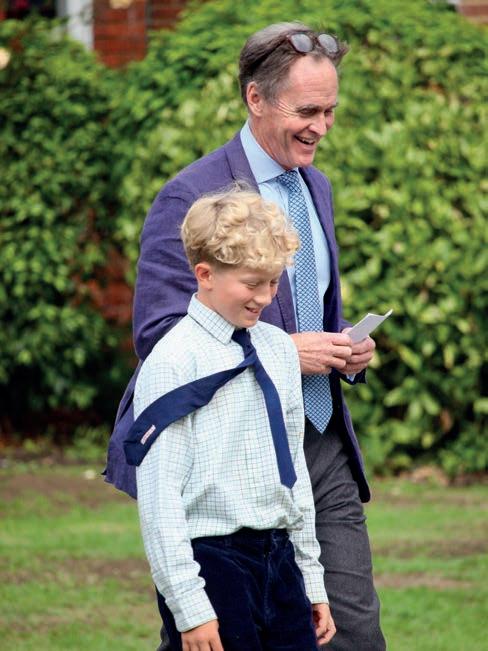
A Head that goes above and beyond for their prep school. That it is just one of the reasons Simon Barber of Ludgrove School was recognised as the Best Head of a Prep School in the prestigious Tatler Schools Awards 2026. Totally bowled over by the accolade, Simon said with typical modesty: “It’s only because we have the best staff and the best boys...”
This year the awards attracted nominations from far and wide, reflecting both public opinion and insider expertise. With over 14,000 votes counted, the categories attracted huge interest from across the independent schools sector. Simon is at the very core of everything at Ludgrove. From sitting with a table of boys every lunchtime and supporting them from the sidelines on match days, to teaching Latin and PSHE and helping families navigate the move to senior school, the Headmaster supports the school community every step of the way. ludgrove.net
St George’s Ascot is launching a new dedicated bus route serving Wokingham, Finchampstead and Crowthorne, strengthening access to the school for local families. The route supports families seeking flexibility, whether pupils attend as day girls, explore the growing SGA Stays boarding options, or step into SGASixth.
Transport continues to be absolutely key for the SGA community, particularly as pupils progress into senior years and Sixth Form. The new route reflects the school’s commitment to accessibility, community connection and ensuring girls can benefit from the tailored approach to learning, pastoral care and future
pathways that St George’s offers Don’t miss the upcoming Open Mornings at St George’s Ascot, running on 5th and 17th March, 23rd April and 7th May. Find out more at stgeorges-ascot.org.uk