https://doi.org/10.1007/s10103-019-02845-x
Theimpactofphotobiomodulationofmajorsalivaryglands oncariesrisk
LidijaNemeth 1,2 & MajaGroselj 1,2 & AljazGolez 3 & AnaArhar 3 & IgorFrangez 4 & KsenijaCankar 5
Received:22November2018/Accepted:11July2019 # Springer-VerlagLondonLtd.,partofSpringerNature2019
Abstract
Dentalcariesisacomplexmultifactorialchronicinfectiousdiseaseguidedbyseveralriskorprotectivefactors.Salivahasan importantroleincariesandtheremineralizationprocess.Cariesriskassessmentisdefinedastheprobabilityofnewcarieslesion developmentortheexistinglesionprogressioninagiventimeperiod.Cariesdiagnosticsandriskfactorassessmentarefollowed bytargetedeliminationofriskfactorsandlessconservativebutabundantpreventivetherapeuticmeasures.Theaimofour prospectiverandomizedstudywastoelucidateonhowphotobiomodulationofmajorsalivaryglandswithpolychromaticlight orLEDlightaffectscariesriskfactorsinhighcaries-riskpatients.Thirty-sixpatientswereassignedtooneofthefollowingthree experimentalgroups:thefirst,irradiatedwithpolarizedpolychromaticlight(40mW/cm2,wavelengths480–3400nm);the second,acontinuousLEDlight(16mW/cm2,wavelengths625,660,850nm);thethird,sameLEDlightinapulsedmode. Thefourthgroupwasthecontrol,forwhichanon-therapeuticvisiblelightwasused.Lightwasadministeredextra-orally bilaterallyabovetheparotidandsubmandibularglandsfor10minandintra-orallyabovethesublingualglandsfor5min,3 timesaweek,for4consecutiveweeks.Eachpatient’scariesriskwasassessedaccordingtoCariogrambeforeandaftertherapy. Cariesriskfactorsweredeterminedfromsamplesofsalivabeforetherapy,twoweeksafteritcommenced,attheendoftherapy, andfourweeksaftertheendoftherapy.Attheendoftreatment,thefollowingfindingswereobtained:Inthegroupirradiatedwith polarizedpolychromaticlightandinthegroupirradiatedwithcontinuousLEDlight,the Streptococcusmutans and Lactobacillus countsdecreasedandsalivarybufferingcapacityincreased( p <0.05).InthegroupirradiatedwithpulsedLEDlight, Streptococcusmutans countsdecreasedandunstimulatedsalivaryflowandsalivarybufferingcapacityincreased(p <0.05).In allthreeexperimentalgroups,cariesriskwaslower(p <0.05).Intheplacebocontrolgroup,therewerenostatisticallysignificant differencesbetweenparametersbeforeandaftertherapy.Weconcludedthatphotobiomodulationofmajorsalivaryglandsinhigh caries-riskpatientscanreducethecariogenicbacteriainsalivaandimprovesomesalivaryparameters,thusreducingcariesrisk.
Keywords Photobiomodulationtherapy . Low-levellasertherapy . Dentalcariessusceptibility . Saliva
* LidijaNemeth lidija.nemeth@mf.uni-lj.si
MajaGroselj maja.groselj@mf.uni-lj.si
AljazGolez aljaz.golez@gmail.com
AnaArhar ana.arhar18@gmail.com
IgorFrangez ifrangez@gmail.com
KsenijaCankar ksenija.cankar@mf.uni-lj.si
1 DepartmentofDentalDiseasesandNormalDentalMorphology, FacultyofMedicine,UniversityofLjubljana,Hrvatskitrg6, Ljubljana,Slovenia
2 DivisionofStomatology,UniversityMedicalCentreLjubljana, Ljubljana,Slovenia
3 OrthosInstitute,Ljubljana,Slovenia
4 DivisionofSurgery,UniversityMedicalCentreLjubljana, Ljubljana,Slovenia
5 InstituteofPhysiology,FacultyofMedicine,UniversityofLjubljana, Ljubljana,Slovenia
Introduction
Dentalcariesisoneofthemostprevalentchronicdiseases worldwide.Itisacomplexmultifactorialchronicinfectious diseasethatmayaffectgeneralhealthaswellasqualityoflife [1].Moderncariesmanagementstrategiesaredesignedtoprevent,arrest,orreversethedemineralizationofdentalhard tissues[2].
Thedynamicprocessofdemineralizationand remineralizationisguidedbyseveralriskorprotectivefactors. Therateandtheseverityofcariesareaffectedbythesalivary flow,itspHandbufferingcapacity,oralhygienehabits,dietaryhabits,toothresistance(morphology,crowdingdefects, restorations),theuseofprotectivefluoridesupplementsand themaincariesriskfactors,thepresenceofacidogenicbacteriainthedentalbiofilm plaque[ 3 ].Thequantityof Streptococcusmutans and Lactobacillus inplaqueisstrongly relatedtothestartandtheprogressionofthecariesprocess[4].
Saliva,itsqualityandquantity,playsanimportantrolein bothcariesdevelopmentandtheremineralizationprocess.
Manyconditions,diseases,andmedicationsaffectsalivary production.Thesequelofhyposalivationisoftenreducedsalivarybufferingability[5].AlowsalivarypHvalueforseveral hourscausesanearlyonsetofthedemineralizationprocess, thusenablingthedevelopmentofnewandtheprogressionof existingcariouslesions[6].
Apatient’scariesriskassessmentisdefinedastheprobabilityofnewcarieslesiondevelopmentand/ortheexisting lesionprogressionoveragiventime[7].Cariesriskassessmentandcariespredictioncanbedemonstratedthroughan open-sourceprogram,Cariogram[8].Theprogramcontains analgorithmthatpresentsa “weighted” analysisoftheinput data,mainlybiologicalfactors.Intheliterature,Cariogramis describedasoneofthemostaccuratecariesprediction methods[9].
Phototherapyisatreatmentwithdifferentmodalitiesof lightsources,suchaslaser,light-emittingdiode(LED)light, halogenlight,orothers.Theauthorsagreethattheeffectsof polychromaticlight,LED,andlaserlightsarecomparable, sincethecoherencyoflightsourcedoesnotinfluenceitstherapeuticeffect[10].Photobiomodulation(PBM)isatypeof phototherapyusinglow-powerlight.Itsprimaryeffectisa physiologicresponseoftissueinsteadofathermalorcytotoxiceffect[11].Intheirradiatedtissue,theabsorbedphotonsof lightchangetheformorfunctionofchromophores[12].The maineffectofPBMisthestimulationoftheenzymecytochromeCoxidaseinthemitochondria,resultinginactivated cellsignallingpathways.Thefinaleffectsareanaccelerated cellmetabolism,increasedATPproduction,anddiminished oxidativestress,whichresultinbettercellviability[13, 14]. Irradiatedareashavealsobeenassociatedwithimprovedperfusion,betterimmuneresponse,andfasterwoundhealing [15–17].
Discussionontheuseofdifferentmodalitiesoftherapeutic lightsuggeststhattheeffectsofpulsedandcontinuousmodes ofsamelightarenotequal[18].TheadvantageofLEDlight irradiationisthepossibilityofusingaspecificandmostappropriatewavelength onewithoptimalpenetrationdepth andtherapeuticeffect.Ithasbeenreportedthatthelightcan penetrate23cmdeepintoatissue,thusallowingtheirradiationofalargerareawithnegligiblethermaleffect[14, 19].
PBMalsohassomesystemiceffects,whenthetargettissue hasnotbeendirectlyreachedbyphotons.Theseeffectsare causedbytheautocrine,paracrine,andendocrinebioactive moleculesreleasedfromtheirradiatedtissues[20].
Indentalmedicine,PBMhasbeenfoundtobeeffectivein relievingthesideeffectsofcancertreatment,alleviatingfacial pain,relievingthesymptomsofSjögren’ssyndrome,andreducingtheamountofperiodontalpathogenicbacteria.Itstimulatessalivaryglands,enhancestheregenerationofthenondamagedglandulartissueaftercancerirradiationtherapy,improvestheantimicrobialpropertiesofsaliva,andalleviatesthe harmfuleffectsofhyposalivationonoralmucosa[20–23].
Therehavebeensomestudiesontheimpactof photobiomodulationoncariesriskfactors,researchingits effectonsalivaryglandsandoralbacteria.Animalstudies havepointedoutthegrowthofsalivaryductalepithelium andincreasedsalivaryflowafterPBM.Increasedsalivary enzymaticactivitiesofperox idasesandcatalaseshavealso beendetectedwithoutevidenceofimprovedsalivaryflow [ 24 – 27 ].Giventhepositiveresultsbutrelativelyminimal understandingachievedbyresearchthusfar,furtherinvestigationintotheimpactofPBMisneededandlong-term follow-updesired.
Incontrasttophotodynamictherapyantimicrobialeffects, stilllittleisknownabouttheantibacterialactivityofPBM, wherenoadditionalpigmentisneeded[28].Ithasbeenreportedthatlightcanslowdownthegrowthofthebacteria Escherichiacoli and Streptococcusaureus ininflamedskin wounds[29].Oneinvitrostudydemonstratedthat,incontrast tophotodynamictherapy,PBMdidnotinducedirectbacteriolysisbutcauseddamageinthebacterialcellwall[ 30 ]. However,amorerecentinvitrostudyonsingle-anddualspeciesoralmicrobialbiofilmfoundnochangesinbacterial cellmorphologyafterPBMbutonlydisrupted Streptococcus mutans aggregation[31].Despitethenon-bactericidaleffect on Streptococcusmutans and Candidaalbicans inbiofilms, theirsuppressedgrowthhasbeenobserved[31].
Thusfar,therehasbeennostudyonthedirecteffectsof PBMontheoccurrenceandtheprogressionofcaries.Some studieshavealreadyestablisheditsfavorableeffectonasingle cariesriskfactor,suchasincreasedsalivaryflow,improved salivacharacteristics,andthepossibleeffectofreducingbacterialgrowthinplaquebiofilm.Theseconclusionspointtoa possibleadvantageofPBMtherapyinhighcaries-riskpatients [31–33].
Theaimofourstudywastoelucidateonhow photobiomodulationofmajorsalivaryglandsbyuseofpolychromaticlightorLEDlightaffectscariesriskinhighcariesriskpatients.Wealsowantedtocomparetheeffectsofoneor moredifferentwavelengthsand,ontheotherhand,theeffects ofpulsedincomparisontocontinuousmodeofthesame wavelength.
Methods
Thirty-sixparticipantswereincludedinaprospectiverandomizedclinicalstudy.Theywerenormallymobileoutpatients, whousedtocometoourdepartmentseveraltimespermonth toreceiverestorativetreatmentatstudents’ dentalclinical practice.Eachparticipantsignedaninformedconsentform afterthecourseoftheresearchwasexplained.InclusioncriterionwashighcariesriskasshownbyCariogram.TheresearchwasapprovedbytheRepublicofSloveniaNational MedicalEthicsCommittee,approvalnumber0120-539/ 2016-2KME40/11/16.
Foreachparticipant,generalanddentalhistoriesweretaken.Dietaryandoralhygienehabitswereassessed,andadetaileddentalclinicalstatuswasregistered;dentalcarieswas assessedbytwocalibratedexaminersinaccordancewith ICDAScriteriaanddentalplaqueinconformancewith SilnessandLöe[34, 35].
Theimpactofeachparticipant’soralhealthontheirquality oflife(QoL)wasrecordedbyuseofthestandardizedmodifiedlong(49questions)OralHealthImpactProfile(OHIP) questionnaire[36].Eachquestionwasformulatedsuchthat theparticipantmadeacheckmarkbytheindicatedfrequency he/sheencounteredacertainproblem[37].Asummaryscore oftheanswercategorieswascalculated.WiththeOHIP,we evaluatedcategories,suchaslimitedfunctionality,psychologicalissues,physicaldisability,psychicdisability,andgeneral disability.Withtwoaddedquestions,weevaluatedtheparticipant’sself-perceivedoralhealthandappearance.
Salivaryparametersofstimulatedandunstimulatedsaliva weredetermined.Unstimulatedsalivasampleswerecollected duringa5-minperiod,gatheredintoalabelledcontainer.For thestimulatedsalivasamples,aparticipantchewedapelletof medicalparaffinduringa5-mingatheringperiod.Thevolume ofcollectedsalivawasmeasuredusingastandardmedicinal syringe,andsalivaryflowrateinmilliliterperminute(mL/ min)wascalculated.SalivarypHvaluesweremeasuredwith theVariopHdevice(WTWGmbH,Weilheim,Germany), withmeasuringaccuracyof+0.01.Bufferingcapacitywas determinedwiththeCRTbuffertest(IvoclarVivadent, Schaan,Liechtenstein).Colonydensitiesof Streptococcus mutans and Lactobacillus bacteriaweredeterminedsemiquantitativelywiththeCRTbacteriatest(IvoclarVivadent, Schaan,Liechtenstein).
Withregardtounstimulatedsaliva,theflowrateandpH valueweredetermined.Forstimulatedsaliva,theflowrate, pHvalue,bufferingcapacity,andcolonydensitiesof Streptococcusmutans and Lactobacillus weredetermined. Thecollectionofsalivaandthetestassessmentwereperformedbythesametrainedperson,whousedthestandardized protocol;allwasdoneinaccordancewiththemanufacturer ’s instructions.
AtthebaselineandattheendofPBM,cariesriskwas evaluatedwithCariogram.Itevaluatedthefollowingmain recordedcariesriskfactors:eatinghabits,theamountofdental plaque,bacterialcountsof Streptococcusmutans and Lactobacillus, salivaryflow,preventivefluorideuse,andpast cariesexperiences.Cariogramidentifiedcariesriskfactorsas wellascalculatedanindividual’scariesriskandthepossibility ofavoidingnewcaries.
PatientswerereferredtotheDepartmentofDental Diseases,MedicalFaculty,UniversityofLjubljana,toreceive cariestreatment.Patientswhohadhighcariesriskdetermined accordingtoCariogramwereofferedtoparticipateinthetrial. Patientswererandomizedamonggroupsintheirsequenceof entryinthetrial,eachbydrawingenclosedenvelopeprepared byaneutralpersonandcontainingthenumberofbelonging experimentalgroup[38].Forirradiationtherapy,theparticipantswererandomlyassignedinto4groups.Inthefirstexperimentalgroup,9participantswereirradiatedwithpolarized polychromaticlight,BioptronAG,Zepter,Wollerau, Switzerland.
Inthesecondexperimentalgroup,8participantswereirradiatedwithalight-emittingdiode(LED)lightincontinuous modeusingOrtholummML5/1,Votand.o.o.,Ljubljana, Slovenia.
Inthethirdexperimentalgroup,7participantswereirradiatedwithLEDlightinpulsedmodeatwavelengthsof625, 660,and850nmandanaveragepowerdensityof16mW/cm2 usingOrtholummML5/1(samedevicewiththatpreviously mentioned).
Thefourthgroupof12participantswasthecontrolgroup, andtheywereirradiatedwithaplacebodeviceusinganontherapeuticlow-energyvisiblelight.Othertechnicaldataof therapeuticlightsareinTable 1.NoneofthePBMdevices containedtheultraviolet(UV)spectrumoflight.
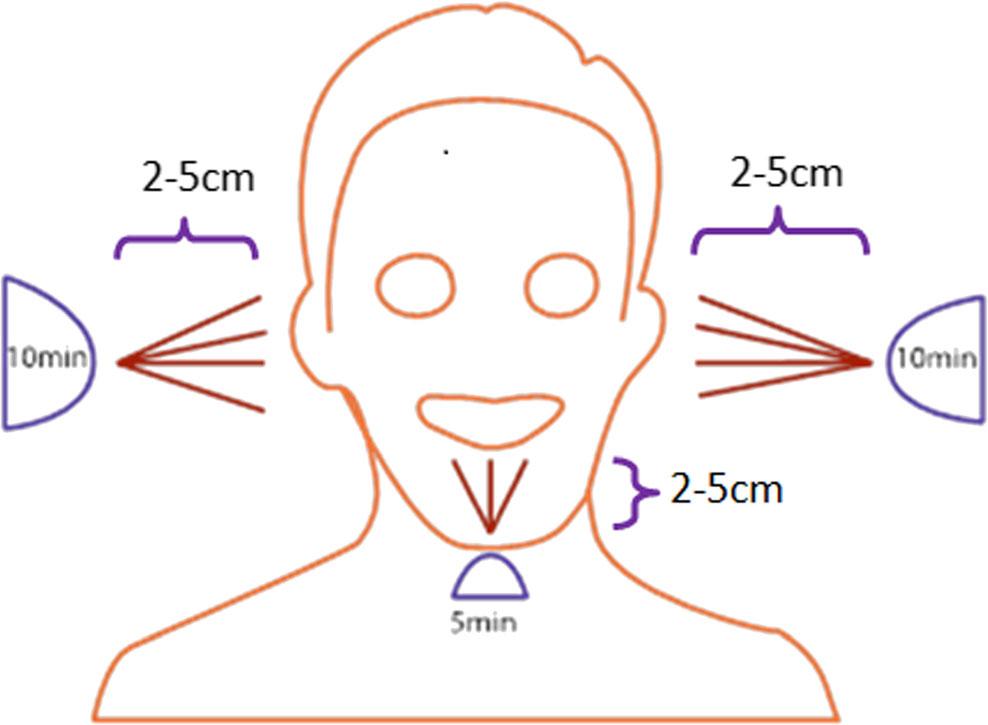
Forallpatients,thelightwasadministeredextraorallyand bilaterallyabovetheparotidandsubmandibularglandsfor 10minandintraorallyabovethesublingualglandsfor5min foratotalof25minpersession(Fig. 1),3timesaweek,for 4weeks.ThePBMparticipantsworeprotectiveeyeglasses duringtheprocedure.
Dentalcarieswasreassessedattheendoftherapy,and salivaryriskfactorswerere-evaluatedaftertwoweeks,at theendoftherapy,andfourweeksaftertheendoftherapy. TheOHIPquestionnairewascompletedbeforethecommencementandaftertheendoftherapy.
Table1 Technicaldataof therapeuticlightsused Experimentalgroups
Bioptron
Polarizedpolychromatic light(N =9)
Ortholumm ContinuousLED light(N =8)
Ortholumm PulsedLED light(N =7)
Wavelengths480nmto3400nm625,660,and850nm625,660,and850nm
Average-specificenergy/density40mW/cm2 16mW/cm2 16mW/cm2
Power 50W 10W 10W
Lightenergyperminute2.4J/cm2 1Jcm2 1Jcm2
Spotsize 95cm2 92cm2 92cm2
AveragepolarizationrateOver95%
Program1,292Hz
Other Dutycycle50%Acceleratedflashing frequencyfrom 50to2000Hz
Pulsedurationfrom 10to0.25ms
Themethodsusedintheresearchdidnotpresentanyhealth risktotheparticipants.NosideeffectsofPBMwerenoted duringand/oraftertheresearch.
ThedatawereanalyzedusingtheSPSSprogram(IBM SPSSStatistics22,USA).Statisticaldifferencesamongthe experimentalgroupsbeforetherapywerecomparedbya one-wayanalysisofvariance(ANOVA,Dunnett’stest, p < 0.05).Theparametervaluesobtainedaftertwoweeksofirradiationtherapy,attheendoftherapy,andfourweeksafterthe endoftherapywerecomparedtothepre-therapyvaluesbya one-wayanalysisofvarianceforrepeatedmeasurements(RM ANOVA;Dunnett’stest, p <0.05).Thedifferencesincaries risk,cariesprediction,andOHIPquestionnairescoresbefore andafterthetherapywereanalyzedbyapaired t testor Wilcoxontest.OHIPquestionnairescoresforthegroupof allpatientsincludedinourstudywerecomparedtothegeneral populationscores[36, 37]bya t test.
Allresultswereexpressedasmeanvaluesandstandard deviationofmeans,withthecriterionofsignificanceat p < 0.05(Table 2).
Results
Beforetherapy,therewerenostatisticallysignificantdifferencesamongtheexperimentalgroupsandcontrolwithregard toageandgender,dentalstatus,cariesrisk,salivaryflowrate, salivarypHvalueanditsbufferingcapacity,andcountsof cariogenicbacteria Streptococcusmutans and Lactobacillus (CFU/mL)inKruskal – WallisANOVA(Dunnett ’stest) (Tables 3 and 4).InTable 2,thereisinformationregarding baselinediseases.
Theparticipantsandtheirnumbersduringthetrialarepresentedinflowdiagram(Fig. 2).Mostprevalentreasonsfornot completingthestudywerepersonalorpracticalreasons(trial demandingtoomuchoftheirtime),andfourpatientshad contraindicationsforPBM.
Theeffectofphotobiomodulationtherapyinmajor salivaryglands
Experimentalgroupirradiatedwithpolarizedpolychromatic visiblelight
Attheendoftherapyand4weeksafter, Streptococcus mutans and Lactobacillus countsweresignificantlyreduced(RMANOVA,Dunnett ’stest, p <0.05).Salivary bufferingcapacitywassignificantlyincreasedaftertwo weeks,andthedifferencesremainedsignificantuntilfour weeksaftertheendoftherapy(Dunnett ’stest, p <0.05).
Table2 Groupdescription basicdataofbaselinediseases
ControlExperimentalgroups
1234
Placebogroup(N =12)Bioptron Polarizedpolychromaticlight(N =9)
Ortholumm ContinuousLEDlight(N =8)
PeriodontaldiseaseSjögren’ssyndrome,dermatomyositisPeriodontaldisease,rheumatism, heartfailure
Statuspost-OPcarcinoma lingue,thyroiddisorders afterirradiation
Statuspost-OPcarcinomanasopharynx andneck(irradiation35timesand chemotherapy),dermatomyositis
Sensitiveteeth,varicoseveinsStatuspost-OPsquamouscellcarcinoma (irradiation30times64Gyand chemotherapy)
Gastroesophagealrefluxdisease, breastcancer,gastritis
Gastroesophagealrefluxdisease, multiplesclerosis,epilepsy
Malignoma,thyroiddisordersafter irradiation(32timeswith64Gy)
Ortholumm PulsedLEDlight(N =7)
Periodontaldisease,highblood pressure,diabetestypeII
PeriodontaldiseaseSensitiveteeth,Myelodysplastic syndrome
Sensitiveteeth,gastroesophageal refluxdisease,xerostomia
Sjögren’ssyndrome a
Asthma,breastcancer
Meningioma,asthma,kidneystonesXerostomia,epilepsy
Osteoporosis a Myastheniagravis a 7yearsafterTIA,congenital artherio-veinfistuleonhand finger a
a Otherpatientshavenobaselinediseases
Attheendoftherapyandcomparedtothevaluesprior toit,cariesriskasassessedbyCariogramwaslower (Wilcoxontest, p =0.016)aswasalsothepredictionof newcariesdevelopment(paired t test, p =0.00172) (Table 4 ).
Incontrast,comparedtothevaluesobtainedbeforetherapy, therewerenosignificantdifferencesinunstimulatedandstimulatedsalivaryflowratesandpHvaluesafter2weeksof therapy,atitsend,and4weeksafteritsend.
Table3 Groupdescription basicdataofclinicaldentalstatus
ExperimentalgroupirradiatedwithcontinuousLEDlight
Attheendoftherapyand4weeksafterthat, Streptococcus mutans countsdecreased(RMANOVA,Dunnett’stest, p < 0.05).Lactobacilluscountsdecreasedafteronly2weeksof therapyandremainedsignificantlydecreased4weeksafter theendoftherapy(Dunnett’stest, p <0.05).Salivarybufferingcapacitysignificantlyincreasedbytheendofphototherapy(Dunnett’stest, p <0.05).Attheendoftherapy,cariesrisk
ControlExperimentalgroups
*Statisticallysignificantdifferenceamonggroups
Table4 Bacterialcounts,bufferingcapacity,andcariesriskaccordingtoCariogrambeforetherapy,after2weeks,attheend,and4weeksaftertheend oftherapyinexperimentalgroupirradiatedwithpolarizedpolychromaticvisiblelight
Experimentalgroup (polarizedpolychromaticvisiblelight)
BeforetherapyAfter2weeks oftherapy
Attheend oftherapy 4weeksafterthe endoftherapy
Streptococcusmutans(CFU/mL)3.67±0.502.89±1.052.00±1.12*2.56±1.13*
Lactobacillus (CFU/mL)3.78±0.443.00±0.711.89±0.78*2.56±0.73*
Bufferingcapacity1.89±0.602.67±0.50*2.56±0.53*2.67±0.50*
Carieslesions7.00±5.81
CariesriskaccordingtoCariogram2.67±0.50
WithoutnewcarieslesionsaccordingtoCariogram0.15±0.12
*Statisticallysignificantdifferenceincomparisontovaluesbeforetherapy
accordingtoCariogramwaslower(Wilcoxontest, p =0.008) asalsothepredictionofnewcariesdevelopment(paired t test, p =0.000239)ascomparedtothevaluespriortotherapy (Table 5).
After2weeksoftherapy,theunstimulatedsalivahada significantlyhigherpHvalue(Dunnett’stest, p =0.031).In contrast,comparedtothevaluesobtainedpriortotherapy, therewerenosignificantdifferencesinunstimulatedorstimulatedsalivaryflowrateorinthepHvalueofstimulated saliva,after2weeksoftherapy,atitsend,and4weeksafter itsend.
ExperimentalgroupirradiatedwithpulsedLEDlight
After2weeksoftherapy,atitsend,and4weeksafterthat, Streptococcusmutans countsdecreased(RMANOVA, Dunnett’stest, p <0.05).Salivarybufferingcapacitysignificantlyincreasedattheendoftherapy(Dunnett’stest, p = 0.015).Inaddition,attheendoftherapy,bothcariesriskas assessedbyCariogram(Wilcoxontest, p =0.031)andthe
predictionofnewcariesdevelopment(paired t test, p = 0.00838)werelower,comparedtothevaluesbeforetherapy (Table 6).
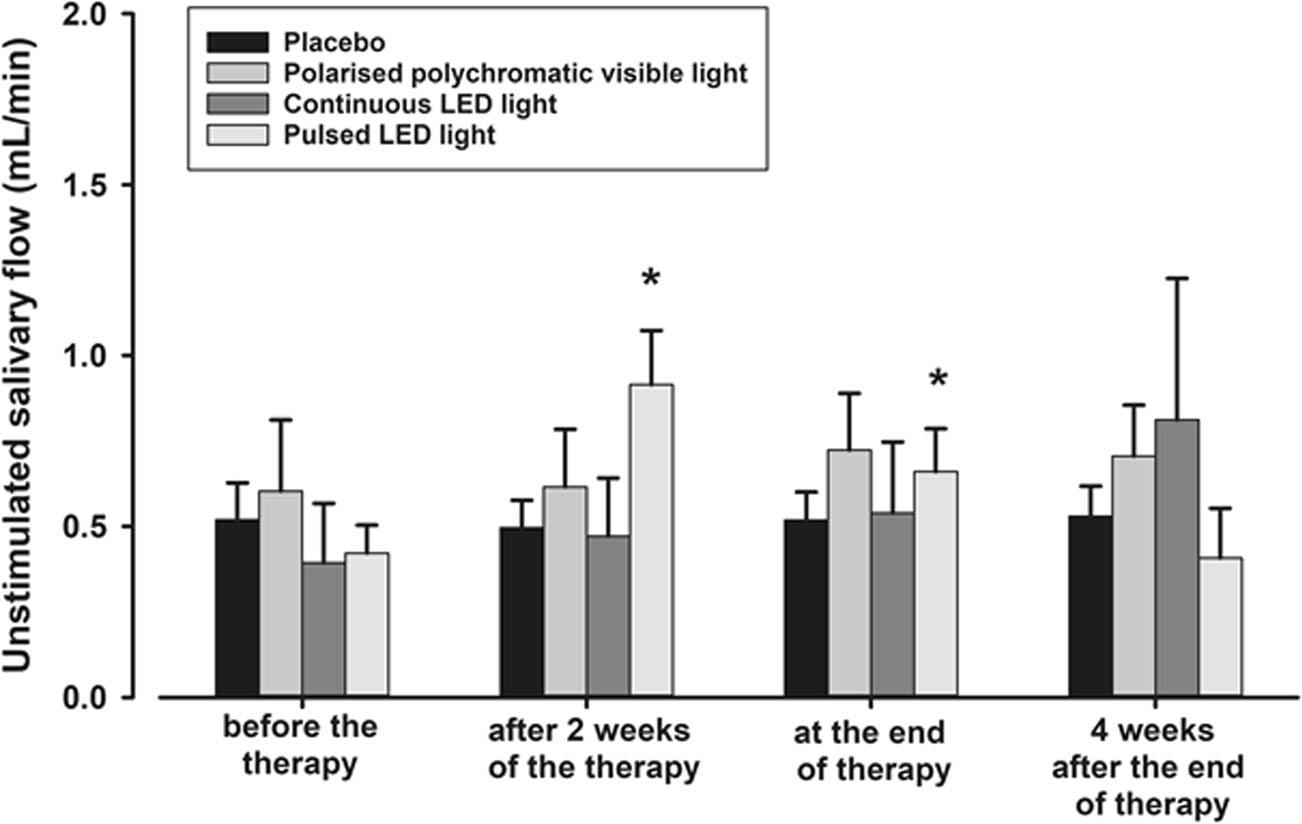
After2weeksoftherapy,therewasasignificantlyhigher unstimulatedsalivaryflowrate(Dunnett’stest, p =0.005), whichalsoremainedhigherattheendofthetreatment (Dunnett’stest, p =0.016)(Fig. 3).However,in4weeks,the salivaryflowreturnedtothebasallevels.Incontrast,comparedtothevaluesobtainedpriortotherapy,therewereno significantdifferencesinthepHofunstimulatedsalivaorin thestimulatedsalivaryflowrateanditspH,after2weeksof therapy,atitsend,and4weeksafteritsend.
Controlgroupirradiatedwithplacebolight
Inthegroupirradiatedwithplacebolight,therewerenodifferencesinanyobservedmeasurementsatanygiventime duringthestudy.Therewasalsonochangeincariesriskand thepredictionofnewcariesdevelopmentaccordingto Cariogram(Table 7).
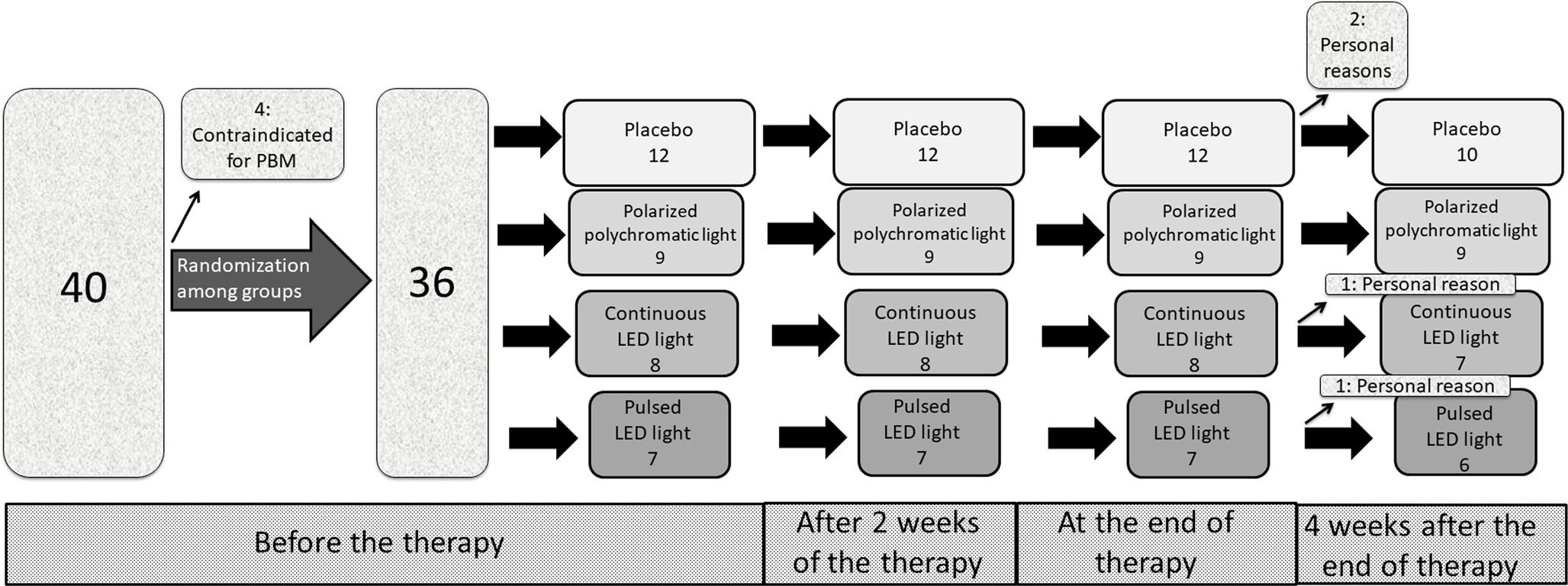
Fig.2 Flowdiagramofnumberofpatientsduringthetrial.*Statisticallysignificantdifferenceincomparisontovaluesbeforetherapy
Table5 Bacterialcounts, bufferingcapacity,andcariesrisk accordingtoCariogrambefore therapy,after2weeks,attheend, and4weeksaftertheendof therapyinexperimentalgroup irradiatedwithcontinuousLED light
Experimentalgroup (continuousLEDlight)
BeforetherapyAfter2weeks oftherapy Attheend oftherapy 4weeksafterthe endoftherapy
Streptococcusmutans(CFU/mL)3.00±0.932.13±1.461.50±1.19*1.71±1.38*
Lactobacillus (CFU/mL)3.25±0.891.63±1.30*1.88±0.83*2.14±1.34*
Bufferingcapacity2.14±0.692.57±0.792.86±0.38*2.67±0.52
Carieslesions8.13±15.07 – 8.13±14.72 –
CariesriskaccordingtoCariogram3.75±0.46 – 2.12±0.64* –
Withoutnewcariouslesions accordingtoCariogram 0.19±0.10 – 0.47±0.12* –
*Statisticallysignificantdifferenceincomparisontovaluesbeforetherapy
ThequalityoflifeduetoOHIPquestionnaire
Beforetherapy,therewerenodifferencesamonggroupswith regardtosubjectiveparametersinqualityoflifeassessedby theOHIPquestionnaire.Allthepatientswithahighcariesrisk (N =36)hadstatisticallymorefunctionallimitations(t test, p =0.0301),higherpsychologicaldiscomfort( t test, p = 0.000225),morephysicaldisability(t test, p =0.00808),more psychologicaldisability(t test, p =0.00893),andmoregeneral disability(t test, p =0.00481)incomparisontothegeneral population.Aftertherapy,therewasnostatisticallysignificant improvementforanygroupinanyparameterofqualityoflife perthequestionnaire.
Discussion
ResultsofourstudyshowthatafterthePBMofmajorsalivary glandsofallthreetherapeuticgroups,thecolonydensityof Streptococcusmutans wasreducedandsalivarybufferingcapacityimproved.Ourfindingsconfirmtheresultsofsimilar studiesandsupporttheideathatPBMcouldaffectsomecaries riskfactors[33, 39, 40].Redvisiblelightandnearinfrared light(NIR),regardlessofitssource,areknowntopenetrateat leastafewcentimetersundertheskin[19].Usingtranscutaneousandintraoralirradiation,wewereabletoreachmostof
Table6 Bacterialcounts, bufferingcapacity,andcariesrisk accordingtoCariogrambefore therapy,after2weeks,attheend, and4weeksaftertheendof therapyinexperimentalgroup irradiatedwithpulsedLEDlight
Experimentalgroup (pulsedLEDlight)
themajorsalivaryglandtissue.Resultsofourstudyareinline withresearchthatobtaineddifferenteffectsofcontinuousversuspulsedmodalityoflight[18].WediscoveredthatthecontinuousLEDlightmostlyaffected Lactobacillus countswhile thepulsedLEDlightmostlyinfluencedsalivaryflow.
Streptococcusmutans colonydensityiscorrelatedwithinitialcarieslesions[41].Inourstudy,itwasreducedinall therapeuticgroups.Significantchangeswerenotedafter 2weeksinbothgroupsirradiatedwithLEDlightandafter 4weeksinthegroupirradiatedwithpolarizedpolychromatic light.Itisnotablethat Streptococcusmutans countsremained lowerforanothermonthaftertheendofPBM.Thismay suggestthelong-termeffectofPBMoncariogenicbacteria. Ourresultsshowthattimeneededtoachieveaneffectwas likelylowerforLEDtherapeuticlightcomparedtopolarized polychromaticlight.
Lactobacillus colonydensitieswereonlyreducedingroups irradiatedwithapolarizedpolychromaticandacontinuous LEDlight.Similarresultshavebeenobservedinaninvitro studyusing780nmlow-levellasertherapy(LLLT).Lowenergylightreducedtheaerobicmetabolismof Streptococcusmutans biofilmanditsgrowthonselectiveagar [31].PBMcauseddisaggregationofthemicroorganismsand disturbedtheiradherencetothesubstrate.Reductionof Escherichiacoli and Staphylococcusaureus growthinvitro usingabroadspectrumoftherapeuticlights,400–800nm,and
BeforetherapyAfter2weeks oftherapy
Attheend oftherapy
4weeksafterthe endoftherapy
Streptococcusmutans(CFU/mL)2.71±1.701.43±1.13*1.86±1.57*1.50±1.38*
Lactobacillus (CFU/mL)3.14±0.901.71±0.492.14±0.692.50±1.22
Bufferingcapacity2.28±0.492.86±0.383.00±0.00*2.83±0.41 Carieslesions10.00±13.69 – 8.00±11.17 –
CariesriskaccordingtoCariogram3.57±0.79 – 2.00±1.00* –
Withoutnewcariouslesions accordingtoCariogram 0.25±0.22 – 0.49±0.19* –
*Statisticallysignificantdifferenceincomparisontovaluesbeforetherapy
LLLTwithwavelengthsof660,830,and904nmwerealso confirmed[29, 42].
Salivarybufferingcapacitysignificantlyincreasedinall therapeuticgroups.Thechangecouldbeattributedto changesinsalivarycontents,suchashigherconcentrations ofbicarbonate,phosphate,andproteinbuffers.Intheplacebogroup,asexpected,thebufferingcapacityremained thesame.
Unstimulatedsalivaryflowratesignificantlyimprovedin thegroupirradiatedwithapulsedLEDlight.Theresultswere short-termonly.ReportsintheliteratureonPBMimproving salivaryflowvary.PBMofrats’ sublingualsalivaryglands using660and780nmlaserlightdidnotimprovesalivary flow[27].However,inaclinicaltrial,Simoesdetectedincreasedsalivaryflowusinga660and808nmlaser[24]. Therehavealsobeenencouragingreportsfromstudieson patientswithhyposalivation.PBMwithlow-energylaser wavelengthsat660,685,830,and904nmresultedinimprovedsalivaryflow.Thepossibilityofpartialsalivarygland existencehasevenbeenmentioned[32, 33,and, 40].Claims arefoundedonbasicresearch.IthasbeennotedthatPBMwas abletoimprovelocalmicrocirculationandoxygenationby
vasodilatationandacceleratedangiogenesis[11, 17, 43,and, 44]consecutivelywithpossibleincreasedsalivaryproduction.
Inourresearch,thevariationinsalivaryflowcanbeattributedtothehighvariabilityofsalivaryflowintheresearch groups.Itispossiblethattheamountofatrophiedacinartissue insomeoftheparticipantswassohighthatadditionalstimulationcouldnotbringanotableincreaseinsalivaryflow.The factthatatrophiedsalivaryglandscannotbestimulatedusing PBMhasbeendescribedbydeJesus[27].Ontheotherhand, Loncaretal.concludedthatPBMcouldimprovesalivaryflow inpatientswithxerostomia[32].Itwasproposedthatthe effectofPBMwascorrelatedtotheamountoffunctional acinarsalivarycells.ThemaindifferencesbetweenourresearchandthatofLoncararetheinclusionofparticipantswith differentmedicalconditionsandtheuseofadifferentPBM device.Loncarexcludedfromhisresearchparticipantswith xerostomiaafterheadandneckcancertherapy,patientstaking specificmedications,andthosewithSjögren’ssyndrome.All theseareknowntohavemoresalivaryglandatrophythan thosewithoutsuchcharacteristics.Loncaruseda904nm low-energylaser.Higherwavelengthsareknowntopenetrate deeperintothetissue[45].
Table7 Bacterialcounts,bufferingcapacity,andcariesriskaccordingtoCariogrambeforetherapy,after2weeks,attheend,and4weeksaftertheend oftherapyinexperimentalgroupirradiatedwithplacebolight
Controlgroup(placebolight)BeforetherapyAfter2weeks oftherapy Attheend oftherapy 4weeksafterthe endoftherapy
Streptococcusmutans(CFU/mL)2.83±1.342.91±1.223.00±1.213.00±1.33 Lactobacillus (CFU/mL)2.92±1.083.00±1.093.17±0.833.00±1.05
Bufferingcapacity2.25±0.622.27±0.472.17±0.582.10±0.57
Carieslesions14.25±18.97 – 14.58±19.37 –
CariesriskaccordingtoCariogram3.42±0.67 – 3.50±0.67 –
Withoutnewcarieslesionsaccording totheCariogram 0.25±0.12 – 0.25±0.13 –
SalivarypHvaluesatthebaselineofourresearchwere ratherhighcomparedtoresearchwithpatientswhohadhad headandneckradiotherapy[46].Incomparisontotheresults ofourstudy,thechangeinpHvaluewaslesspronounced,and theeffectofPBMwasshort-termonly.Ourresultsvaried amongexperimentalgroups.InthegroupirradiatedwithcontinuousLEDlight,thepHvaluewashigherafter2weeksof PBM.SalivawithahigherpHvalueisbetterabletoprotect hardtoothsubstancesfromdemineralization.Priortoourresearch,wedidnotfindanystudiesontheeffectofPBMon salivarypHvalues.However,asnotedinsomeresearch, higherpHisconsideredtobemostlikelyduetoachangein thecompositionofsaliva,wherehigherconcentrationsofbicarbonateandchangedenzymaticactivitywerefound[24, 25].AhigherpHandchangedsalivarycontentscouldindicate theregenerationofductalepithelialcellsinasalivarygland.
Thenumberofactivecarieslesionswasdeterminedby clinicalexaminationaccordingtoICDAScriteriaatbaseline andafter4weeksofPBM[35, 47].Therewerenosignificant changesinthenumberofactivecariouslesionsinanyofthe groups.Thisfindingcouldbeduetotherelativelyshortdurationofourresearch,ascariesisknownasaprocessthatmay takelongertodevelop[48].Inordertodetermineaccurately changesinthenumberofactiveorarrestedcarieslesions, longerfollow-uptimeswouldbeappropriate.
AsassessedbyCariogramattheendofPBM,cariesrisk andtheprobabilityofnewcarieslesiondevelopmentdecreasedinalltherapeuticgroups.Sucharesultisalsoconsistentwithourfindingthatseveralseparatecariesriskfactors improved.Therearenoreportsofresearchontheeffectsof PBMoncariesrisk.Thereis,however,agooddealofevidenceofPBMinfluencingseparatecariesriskfactors,suchas oralbiofilmgrowthorsalivaryflow[31–33].
Thegoldstandardofcariestherapyafterdiagnosingstatus, character,andtheprogressofcariesanddeterminingitsrisk factors,firstofall,includesallnecessaryrestorativemeasures, suchaspreparationandsealingofcariouscavities.Restorative therapyisfollowedbytargetedpreventivemeasures,suchas theuseofmouthwasheswithchlorhexidine,topicalapplicationoffluorides,oralhygieneimprovement,dietmodification,andsalivasupplementsifnecessary.Thepatientsfrom ourstudyreceivedallthenecessarystandardcariestherapy aftertheendofthestudyasthetreatmentandpreventive strategiessuggestedbyCariogram.Incausativetherapyof caries,PBMcouldbehelpfulasasupplementarymethod andcouldnotsubstitutethegoldstandard.PBMaddresses tooneofthemajorriskfactors,whichgoldstandardofcaries managementcannot salivaqualityanditssecretion.Our findingsaredirectedtopatientswithdrymouthsyndrome, whowouldmostlybenefitfromPBMasasupplementaryor apreventivemeasuretohelpindecreasingcariesrisk.
TheweaknessofthismethodisthatthePBMshouldbe administeredfrequentlytoachievetheeffectandthelong-
termeffectisnotyetknown.Nextmorelong-termresearch shouldaddressthequestionwhatistheoptimumprotocolto achievethebestresults,howmanyirradiationsareneededfor stabileimprovementoflowcariogenicbacterialcountsand increasedsalivaryflow,andhowoftenthetherapyneedsto berepeated.
Thequalityoflife(QoL)inourparticipantswasfound significantlylowerbothatthebeginningandattheendof PBMcomparedtothegeneralpopulation.Theresultwasexpected;systemicdiseases,suchasSjögren’ssyndrome,and sideeffectsfromheadandneckcancertherapycontributedto individuals’ highcariesriskandwereinthemselvesamajor causeofalowerlifequality.TherewasnosignificantimprovementofQoLafterPBM.Thelatterfactsuggeststhat theeffectsofPBMaremostlyphysiologicalandnotbased onpsychologicaleffects.
Conclusion
WedeterminedthatPBMofmajorsalivaryglandswithpolychromaticpolarizedlightorwithLEDlightcanreducecariogenicbacteriacountsandimprovesalivarybufferingcapacity andthereforemayreduceoverallcariesriskinhighcaries-risk patients.
Compliancewithethicalstandards
Conflictofinterest Theauthorsdeclarethattheyhavenoconflictsof interest.
Themanuscriptrepresentsvalidwork;neitherthismanuscriptnorone withsubstantiallysimilarcontentunderthisauthorshiphasbeenpublishedorisbeingconsideredforpublicationelsewhere(exceptasdescribedinthemanuscriptsubmission);andcopiesofanycloselyrelated manuscriptsareenclosedinthemanuscriptsubmission.
Roleoffundingsource Nofundingwasreceivedforthestudybyany sources.
Ethicalapproval ThestudywasapprovedbytheRepublicofSlovenia NationalMedicalEthicscommittee(Nr.0120-539/2016-2KME40/11/ 16).
Informedconsent Eachparticipantsignedaninformedconsentform afterthecourseoftheresearchwasexplained.
References
1.GarciaR,BorrelliB,DharVetal(2015)Progressinearlychildhoodcariesandopportunitiesinresearch,policy,andclinicalmanagement.PediatrDent37(3):294–299
2.BeiklerT,FlemmigTF(2011)Oralbiofilm-associateddiseases: trendsandimplicationsforqualityoflife,systemichealthandexpenditures.Periodontol200055(1):87–103
3.RodriguesJA,LussiA,SeemannRetal(2011)Preventionof crownandrootcariesinadults.Periodontol200055(1):231–249
4.BurtBA,LoescheWJ,EklundSAetal(1983)Stabilityof Streptococcusmutansanditsrelationshiptocariesinachildpopulationover2years.CariesRes17(6):532–542
5.JensenME,SchachteleCF(1983)PlaquepHmeasurementsby differentmethodsonthebuccalandapproximalsurfacesofhuman teethaftersucroserinse.JDentRes62(10):1058–1061
6.CavasinFilhoJC,GiovaniEM(2009)Xerostomy,dentalcariesand periodontaldiseaseinHIV+patients.BrazJInfectDis13(1):13–17
7.HausenH(1997)Cariesprediction stateoftheart.Community DentOralEpidemiol25(1):87–96
8.BratthallD,HanselPeterssonG(2005)Cariogram amultifactorialriskassessmentmodelforamultifactorialdisease.Community DentOralEpidemiol33(4):256–264
9.ZukanovicA,KobaslijaS,GanibegovicM(2007)CariesriskassessmentinBosnianchildrenusingCariogramcomputermodel.Int DentJ57(3):177–183
10.CorazzaAV,JorgeJ,KurachiCetal(2007)Photobiomodulationon theangiogenesisofskinwoundsinratsusingdifferentlight sources.PhotomedLaserSurg25(2):102–106
11.HuangYY,ChenAC,CarrollJDetal(2009)Biphasicdoseresponseinlowlevellighttherapy.DoseResponse7(4):358–383
12.MasonMG,NichollsP,CooperCE(2014)Re-evaluationofthe nearinfraredspectraofmitochondrialcytochromecoxidase:implicationsfornon-invasiveinvivomonitoringoftissues.Biochim BiophysActa1837(11):1882–1891
13.KaruT(2010)Mitochondrialmechanismsofphotobiomodulation incontextofnewdataaboutmultiplerolesofATP.PhotomedLaser Surg28(2):159–160
14.DesmetKD,PazDA,CorryJJetal(2006)ClinicalandexperimentalapplicationsofNIR-LEDphotobiomodulation.PhotomedLaser Surg24(2):121–128
15.OzcelikO,CenkHaytacM,KuninAetal(2008)Improvedwound healingbylow-levellaserirradiationaftergingivectomyoperations: acontrolledclinicalpilotstudy.JClinPeriodontol35(3):250–254
16.MarcosRL,LealJuniorEC,MessiasFdeMetal(2011)Infrared (810nm)low-levellasertherapyinratachillestendinitis:aconsistentalternativetodrugs.PhotochemPhotobiol87(6):1447–1452
17.FrangezI,CankarK,BanFrangezHetal(2017)TheeffectofLED onbloodmicrocirculationduringchronicwoundhealingindiabetic andnon-diabeticpatients aprospective,double-blindrandomized study.LasersMedSci32(4):887–894
18.HashmiJT,HuangYY,SharmaSKetal(2010)Effectofpulsingin low-levellighttherapy.LasersSurgMed42(6):450–466
19.KimWS,CalderheadRG(2011)Islight-emittingdiodephototherapy(LED-LLLT)reallyeffective?LaserTher20(3):205–215
20.CarrollJD,MilwardMR,CooperPRetal(2014)Developmentsin lowlevellighttherapy(LLLT)fordentistry.DentMater30(5):465–475
21.MaiaML,BonjardimLR,QuintansJdeSetal(2012)Effectoflowlevellasertherapyonpainlevelsinpatientswithtemporomandibulardisorders:asystematicreview.JApplOralSci20(6):594–602
22.MoritzA,GutknechtN,DoertbudakOetal(1997)Bacterialreductioninperiodontalpocketsthroughirradiationwithadiodelaser:a pilotstudy.JClinLaserMedSurg15(1):33–37
23.ZechaJA,Raber-DurlacherJE,NairRGetal(2016)Low-level lasertherapy/photobiomodulationinthemanagementofsideeffectsofchemoradiationtherapyinheadandneckcancer:part2: proposedapplicationsandtreatmentprotocols.SupportCare Cancer24(6):2793–2805
24.SimoesA,GanzerlaE,YamagutiPMetal(2009)Effectofdiode laseronenzymaticactivityofparotidglandsofdiabeticrats.Lasers MedSci24(4):591–596
25.SimoesA,NicolauJ,deSouzaDNetal(2008)Effectofdefocused infrareddiodelaseronsalivaryflowrateandsomesalivaryparametersofrats.ClinOralInvestig12(1):25–30
26.OnizawaK,MuramatsuT,MatsukiMetal(2009)Low-level(gallium-aluminum-arsenide)laserirradiationofPar-C10cellsandacinarcellsofratparotidgland.LasersMedSci24(2):155–161
27.DeJesusVC,BeanesG,ParaguassuGMetal(2015)Influenceof laserphotobiomodulation(GaAlAs)onsalivaryflowrateand histomorphometryofthesubmandibularglandsofhypothyroidrats. LasersMedSci30(4):1275–1280
28.ColuzziDJ(2008)Anoverviewoflasersindentistry.Alpha Omegan101(3):125–126
29.Masson-MeyersDS,BumahVV,BienerGetal(2015)Therelative antimicrobialeffectofblue405nmLEDandblue405nmlaseron methicillin-resistantStaphylococcusaureusinvitro.LasersMedSci 30(9):2265–2271
30.DworkinM(1958)Endogenousphotosensitizationina carotenoidlessmutantofRhodopseudomonassperoides.JGen Physiol41(6):1099–1112
31.BassoFG,OliveiraCF,FontanaAetal(2011)Invitroeffectoflowlevellasertherapyontypicaloralmicrobialbiofilms.BrazDentJ 22(6):502–510
32.LoncarB,StipeticMM,BaricevicMetal(2011)Theeffectoflowlevellasertherapyonsalivaryglandsinpatientswithxerostomia. PhotomedLaserSurg29(3):171–175
33.VidovicJurasD,LukacJ,Cekic-ArambasinAetal(2010)Effects oflow-levellasertreatmentonmouthdryness.CollAntropol34(3): 1039–1043
34.LoeH(1967)Thegingivalindex,theplaqueindexandtheretention indexsystems.JPeriodontol38(6):Suppl):610–616
35.PittsN(2004) “ICDAS”—aninternationalsystemforcariesdetectionandassessmentbeingdevelopedtofacilitatecariesepidemiology,researchandappropriateclinicalmanagement.Community DentHealth21(3):193–198
36.Rener-SitarK,CelebicA,PetricevicNetal(2009)TheSlovenian versionoftheoralhealthimpactprofilequestionnaire(OHIPSVN):translationandpsychometricproperties.CollAntropol 33(4):1177–1183
37.Rener-SitarK,PetricevicN,CelebicAetal(2008)Psychometric propertiesofCroatianandSlovenianshortformoforalhealthimpactprofilequestionnaires.CroatMedJ49(4):536–544
38.TenisCA,MartinsMD,GonçalvesMLLetal(2018)Efficacyof diode-emittingdiode(LED)photobiomodulationinpainmanagement,facialedema,trismus,andqualityoflifeafterextractionof retainedlowerthirdmolars.Arandomized,double-blind,placebocontrolledclinicaltrial.Medicine(Baltimore)97(37):e12264. https://doi.org/10.1097/MD.0000000000012264
39.SimoesA,PlateroMD,CamposLetal(2009)Laserasatherapy fordrymouthsymptomsinapatientwithSjogren'ssyndrome:a casereport.SpecCareDentist29(3):134–137
40.SimoesA,deCamposL,deSouzaDNetal(2010)Laserphototherapyastopicalprophylaxisagainstradiation-induced xerostomia.PhotomedLaserSurg28(3):357–363
41.PowellLV(1998)Cariesprediction:areviewoftheliterature. CommunityDentOralEpidemiol26(6):361–371
42.DeSousaNT,GomesRC,SantosMFetal(2016)Redandinfrared lasertherapyinhibitsinvitrogrowthofmajorbacterialspeciesthat commonlycolonizeskinulcers.LasersMedSci31(3):549–556
43.ColomboF,NetoAdeA,SousaAPetal(2013)Effectoflow-level lasertherapy(lambda660nm)onangiogenesisinwoundhealing:a immunohistochemicalstudyinarodentmodel.BrazDentJ24(4): 308–312
44.ZandN,FatehM,Ataie-FashtamiLetal(2012)Promotingwound healinginminorrecurrentaphthousstomatitisbynon-thermal,nonablativeCO(2)lasertherapy:apilotstudy.PhotomedLaserSurg 30(12):719–723
45.BarunVV,IvanovAP,VolotovskayaAV(2007)Absorptionspectra andlightpenetrationdepthofnormalandpathologicallyaltered humanskin.JournofApplSpectrosc74(3):430–439
46.CankarK,FinderleZ,JanJ(2011)Theeffectofhyperbaricoxygenationonpostradiationxerostomiaandsalivainpatientswith headandnecktumours.CariesRes45(2):136–134
47.NyvadB,MachiulskieneV,BaelumV(2003)Constructandpredictivevalidityofclinicalcariesdiagnosticcriteriaassessinglesion activity.JDentRes82(2):117–122
48.PittsNB(2011)Modernperspectivesoncariesactivityandcontrol. JAmDentAssoc142(7):790–792
Publisher ’ snote SpringerNatureremainsneutralwithregardto jurisdictionalclaimsinpublishedmapsandinstitutionalaffiliations.