February Issue 2026

Page 1


www.channelpostmea.com

EAST AND AFRICA

STAY AHEAD OF THE CURVE WITH CHANNEL POST MEA

THE YEAR THE CHANNEL REWROTE ITS FUTURE

As we step into February 2026, one truth has become impossible to ignore: the channel ecosystem in the Middle East is not merely evolving — it is reinventing itself at a pace unmatched in its history. The stories in this issue capture a region in motion, propelled by AI, shaped by digital ambition, and strengthened by a partner community that refuses to stand still.

Across every conversation, whether with distributors, vendors, MSPs, or industry leaders, a common thread emerges: AI is now the foundation, not the frontier. It is reshaping customer expectations, redefining partner capabilities, and forcing every organization — from the smallest reseller to the largest hyperscaler — to rethink how value is created, delivered, and sustained.

We see this vividly in HP’s “Better Together” vision, where AI-driven ecosystems and agentic workflows are transforming the very definition of workplace technology. Westcon-Comstor echoes this shift, emphasizing the urgency of upskilling partners for AI-ready networking and next-generation cybersecurity. Meanwhile, Veeam, Pure Storage, and others highlight how resilience, data intelligence, and sustainable infrastructure are becoming inseparable from business continuity.

Our feature on MSPs reveals a market entering a new era — one where managed services are no longer reactive support models but strategic engines of cyber risk management, AI-powered operations, and digital continuity. Vendors across the region are responding with platforms, partner programs, and intelligence-driven architectures designed to help MSPs scale with confidence.

“AI is no longer the next big thing — it is the operating system of the channel’s future”

Equally compelling is the transformation of channel marketing. Once a support function, it has now become the new engine of ecosystem growth — data-driven, always-on, and deeply integrated into partner success. Marketing leaders across the region are orchestrating value across the lifecycle, aligning MDF to outcomes, and using automation and analytics to drive measurable impact.

And then there are the human stories — the leaders whose journeys mirror the region’s own evolution. From the Dubai Computer Group’s expanding influence to the personal reflections of industry veterans who built their careers alongside Dubai’s rise, these narratives remind us that technology ecosystems are ultimately built by people, passion, and purpose.

As the Middle East accelerates toward an AI-first digital economy, one thing is clear: the channel is not adapting to the future — it is building it. And in this pivotal moment, every partner, every innovator, and every leader has a role to play.

Here’s to a year of reinvention, resilience, and remarkable possibility.

Sanjeev
TM ROH MOSTAFA KABEL

Westcon-Comstor Introduces Meter’s Enterprise Networking Solution

Westcon-Comstor has signed a new distribution agreement with Networking-as-a-Service (NaaS) pioneer Meter for EMEA, allowing channel partners to leverage a disruptive, fullstack networking solution that offers rapid onboarding, simple deployment and a fast route to profitability.

By adding Meter to its networking vendor portfolio Westcon is enabling partners to generate new opportunities and unlock budgetconstrained deals, capturing margin-rich recurring revenue in the growing NaaS market without needing to invest in additional skills and go-to-market resource.

Westcon will scale adoption of Meter’s NaaS solution by upskilling and enabling partners

through its range of value-added services, from training and education to data-led insights and solution lifecycle management.

Meter is reimagining and redefining networking with a fully unified offering that bundles hardware, software and managed services into a single subscription.

Its model simplifies pricing by basing it on a customer’s site size instead of the number of individual devices, making costs predictable and scalable while eliminating the need for upfront capital investment.

Meter differentiates from traditional network vendors due to its vertically integrated, full-stack approach to delivering enterprise networks. Its solution is engineered from the ground up with a single operating system powering its entire technology stack of switching, Wi-Fi, unified security and power – making it ideal for organisations with distributed environments in sectors like retail, logistics and higher education.

Meter’s service includes co-managed deployment, ongoing support and lifecycle upgrades, removing hidden costs and operational burdens for partners and their customers. “Meter offers a fresh, simple and profitable approach to networking that directly addresses the needs of partners, while adding a new dimension to our networking vendor portfolio,” said Daniel Hurel, Senior Vice President, Westcon EMEA Go-To-Market at Westcon-Comstor. “This is a true utility network model, perfect for the channel. The combination of Meter’s innovative technology and our value-added distribution capabilities will unlock growth potential for our partners across the entire EMEA region, enabling us to drive partner success in underserved markets.”

Commenting on their partnership with Westcon-Comstor, Adam Ulfers, Head of Sales and Channel at Meter. “Their channel reach, networking expertise and data-driven approach make them the ideal distribution partner to help us scale our presence and deliver our vision of simpler, more secure and more scalable networking to businesses across the region.”

Khazna Data Centers Achieves IDCA Grade 1 Certification

Khazna Data Centers announced that it has achieved Grade 1 (G1) Certification from the International Data Center Authority (IDCA), following an independent and comprehensive evaluation of Khazna’s portfolio and service delivery capabilities against IDCA’s global standards and benchmark requirements. This milestone positions Khazna as the first data center operator in the Middle East and Africa to earn this prestigious certification, underscoring its leadership in operational excellence and digital infrastructure maturity.

The certification is the result of a rigorous multi month assessment conducted by IDCA auditors and examiners. It follows Khazna’s July 2025 announcement of a strategic global benchmarking agreement with IDCA, designed to align the company’s operational practices with internationally recognized best in class standards. As part of the program, IDCA carried out detailed reviews of Khazna’s service delivery processes, operational protocols, governance frameworks, and supporting corporate systems across its entire data center portfolio.

“G1 certification is an external validation of the standards we hold ourselves to across service delivery and operations,” said Hassan Alnaqbi, CEO of Khazna Data Centers. “As the region rapidly scales digital infrastructure for cloud and AI, alignment with recognized global benchmarks is more important than ever. This certification reinforces our focus on consistent execution, safety, and reliability at scale, and it supports our commitment to build infrastructure and operational capability that customers can trust.”

Mehdi Paryavi, Chairman and CEO of IDCA, added: “Independent certification helps clients and partners distinguish between stated intent and verified capability. Khazna’s achievement reflects

disciplined service delivery and operational maturity, and it signals that the region is moving in lockstep with global expectations for reliability, scalability, security, and operational effectiveness.”

Headquartered in Washington, D.C., IDCA provides standards, education, and certification programs for digital infrastructure worldwide, including data centers supporting cloud, AI, and mission critical workloads. Its certification framework evaluates performance across availability, sustainability, scalability, reliability, operational effectiveness, security, and safety at both site and portfolio levels.

Khazna will continue aligning future developments and operational practices with its IDCA benchmarking program, reinforcing its long term focus on predictable performance, resilience, and operational excellence as it supports the region’s accelerating digital transformation.

Palo Alto Networks Announces New NextWave Partner Program

Palo Alto Networks has announced the next generation of its NextWave Partner Program, marking a significant shift in how partner profitability is defined in the AI era. The updated program moves beyond traditional transactional volume and instead rewards partners who deliver platform centric security outcomes. This evolution reflects the company’s belief that the future of cybersecurity lies in unified platforms rather than fragmented point products, and it positions partners to help customers simplify their environments while unlocking higher value service opportunities. The enhanced program enables the broader partner ecosystem to break free from the long

standing “point product” trap that often increases complexity and reduces operational efficiency. By emphasizing platformization across the network, cloud, and security operations center, Palo Alto empowers partners to integrate and modernize their customers’ security stacks. This approach not only reduces operational friction but also expands the potential for high margin, partner led services that support long term customer resilience.

The new NextWave Partner Program is built on extensive feedback from partners around the world and focuses on improving margins, accelerating deal velocity, and reinvesting in partner growth. Streamlined rebates now center on Next Generation Firewalls, Next Generation Security, and platform adoption, ensuring that partners with strong technical expertise are rewarded for driving meaningful customer outcomes. Enhancements to Configure, Price, Quote processes, along with automated deal registrations and improved service delivery tools, are designed to reduce friction and shorten sales cycles. Additionally, a new Partner Development Fund reinvests earned rebates directly into partner led demand generation, training, and solution development, helping partners differentiate and scale more effectively.

The program also introduces tailored paths for different partner types. Managed Security Service Providers benefit from predictable, tiered pricing that supports the development of high margin managed services. Distributors gain enhanced governance and support to accelerate Distributor Managed Partner growth. Global System Integrators will soon have access to a dedicated Global Path that recognizes multi theater influence and strategic consulting capabilities. Authorized Services partners receive real time deployment assistance to ensure first time right customer implementations.

Simone Gammeri, Chief Partnerships Officer at Palo Alto Networks, emphasized the strategic importance of the shift, noting that the partner ecosystem plays a critical role in meeting the rising demand for AI driven security platforms.

NTT DATA Acquires Zero&One to Accelerate Cloud Growth in the Middle East

NTT DATA has acquired Zero&One in a move that significantly strengthens its cloud capabilities and positions the company to capture a larger share of the rapidly expanding Middle East cloud services market. The acquisition reflects NTT DATA’s strategy to deepen its regional presence at a time when cloud adoption across the Middle East is accelerating, driven by large scale digital transformation initiatives and increasing demand for advanced cloud native solutions.

Founded in 2017 and headquartered in Dubai, Zero&One has quickly established itself as one of the region’s leading cloud consultancies. The company holds nine AWS competencies and was among the first in the Middle East to achieve the AWS Generative AI Competency, underscoring its technical depth and early leadership in AI driven cloud innovation. In 2025, Zero&One was named AWS’s MENA Consulting Partner of the Year and also received the Rising Star Partner of the Year (Consulting) and Design Partner of the Year awards at the EMEA level, further cementing its reputation as a top tier AWS specialist.

The acquisition aligns with NTT DATA’s broader growth ambitions as the Middle East cloud market enters a period of substantial expansion. Saudi Arabia’s cloud services market alone was valued at $4.77 billion last year and is projected to more than double by the early 2030s. By integrating Zero&One’s capabilities, NTT DATA is better

positioned to support organizations preparing for this next phase of cloud maturity.

“This acquisition enables us to deliver high impact solutions and enhance the value we bring to organizations in the Middle East. Zero&One’s expertise strengthens our ability to deliver the speed, scale, and technical depth clients need in today’s cloud first environment,” said Burcak Soydan, Managing Director for the Middle East at NTT DATA.

“Joining NTT DATA is the natural next step in our growth journey,” said Ali El Kontar, CEO of Zero&One. “We’ve built our reputation on delivering world-class cloud expertise to organizations across the Middle East. As part of NTT DATA, we can now combine our regional knowledge and AWS specialization with global resources, expanded service offerings and the ability to support clients on an even larger scale. Our teams share a commitment to innovation and client success, making this an ideal partnership”

Pure Storage Unveils New Enhancements to Its Partner Program

Pure Storage has announced a series of updates to its reseller, managed services, and distributor programs, introducing a more differentiated, solutions led partner experience with deeper enablement and new program tiers. The enhancements reflect Pure Storage’s continued investment in helping partners build high value services and embed Pure more deeply into their solutions.

“The evolution of our partner program builds on the foundational updates we introduced last year, reflecting Pure’s continued investment in enabling partners’ success. The introduction of the Ambassador tier is a key step in helping our partners embed Pure into their solutions. We are also focusing intensely on services, and simplified engagement, while strengthening our dedica-

tion to an indirect-first business model,” said Amy Fowler, General Manager, Commercial Line of Business, Pure Storage.

The updated program is designed to differentiate Pure Storage in the market by prioritizing verified technical expertise, solution specialization, and operational impact rather than volume based participation. Solution Practice Designations and the new Ambassador tier recognize partners with deep knowledge of the Pure Storage platform who deliver outcomes across multiple solution areas, including AI and analytics, cyber resilience, cloud, and application modernization. This shift supports partners in building more advanced, data centric services that align with evolving customer needs.

Pure Storage is also sharpening its focus on the Managed Services Provider ecosystem by emphasizing offerings where data and storage play a foundational role, such as private and sovereign cloud, Storage as a Service, and backup and disaster recovery. MSPs will benefit from clearer program structure and closer collaboration with Pure Storage to deliver predictable, high value services built on the Pure platform.

Distributors will play an expanded role in scaling partner readiness, with new growth incentives, increased marketing investment, and broader authority to deliver training to reseller partners. These updates are designed to accelerate partner enablement, improve time to productivity, and support the development of differentiated, outcome driven solutions.

Overall, the enhanced partner program strengthens Pure Storage’s indirect first strategy by giving partners clearer pathways to specialization, stronger incentives tied to technical excellence, and the tools needed to build scalable, services led offerings. The result is a more streamlined, solutions focused ecosystem designed to meet rising customer expectations and drive long term growth for partners and Pure Storage alike.

Omnix to Offer Digital Twin Consulting Services Across the GCC

Omnix International announces the launch of its Digital Twin consulting service line to its consulting portfolio. This strategic expansion reinforces Omnix’s ambition to strengthen its regional leadership in Digital Twin by complementing its deep technoXlogy capabilities with structured, businessfocused consulting services.

Digital Twins have emerged as a critical enabler for organizations seeking to improve performance, resilience, and sustainability across complex assets and operations. However, many initiatives struggle to move beyond isolated pilots or technology-driven proofs of concept. Omnix’s new consulting offerings is designed to address this challenge by adding Digital Twin initiatives into business strategy, identify measurable outcomes, and long-term operational models.

Walid Gomaa, CEO of Omnix International, said, “Our mission is to expand Omnix’s leadership in Digital Twin by bridging technology excellence with strategic consulting. We want to help organizations translate Digital Twin potential into tangible business outcomes that will drive innovation, efficiency, and growth across the region.”

The launch is built on three core pillars. First, Omnix leverages its deep technology expertise developed through long-standing partnerships with leading vendors in the Industry X ecosystem. Second, the company capitalizes on its proven delivery experience as a trusted implementation partner for major enterprises across the GCC. Finally, Omnix introduces a structured advisory capability grounded in real industry challenges, helping clients define clear Digital Twin visions, prioritize high-value use cases, and develop executable roadmaps that deliver measurable impact.

In the GCC, many organizations are still developing the internal capabilities required to autonomously design and sustain Digital Twin programs aligned with national agendas. As a result, Digital Twin initiatives often remain frag-

mented or disconnected from broader business objectives.

Tommaso Stefano Tini, Senior Manager Digital Twin Market Growth & Consulting, said, “Omnix Digital Twin Consulting is designed to guide clients along an end-to-end journey that starts with business strategy rather than technology, ensuring scalability, adoption, and long-term value creation.”

Omnix Digital Twin Consulting services will primarily support organizations operating in the GCC, with a strong focus on industries such as construction, manufacturing, energy, healthcare, and large asset portfolios. Looking ahead, Omnix expects Digital Twins in the Middle East to move rapidly from experimentation to execution, shifting from isolated assets to connected, enterprise-level platforms that support performance, sustainability, and ESG reporting.

Halcyon Unveils New Ransomware Incident Response Partner Program

Halcyon has launched its Incident Response (IR) Partner Program in collaboration with Beazley Security and Booz Allen Hamilton, combining its antiransomware platform with the expertise of leading IR providers. The program unifies prevention and response through shared threat intelligence, coordinated workflows, and joint gotomarket efforts. Customers gain continuous ransomware protection across every stage of an attack—from initial access and data theft to attempted encryption—while significantly accelerating recovery when incidents occur. This integrated approach helps organizations avoid ransom payments, maintain business continuity, and reduce recovery timelines from weeks to hours.

Early customer pilots have already shown strong results. Recovery efforts were cut by more than 90%, with some organizations restoring operations in under 24 hours. Shared intelligence between Halcyon and its partners has also surfaced emerging ransomware variants before they reached widespread use, giving defenders a critical early advantage. Together, the program demonstrates the power of pairing Halcyon’s technology with proven IR expertise. “Ransomware is the most urgent threat to enterprise resilience today. By uniting Halcyon’s dedicated antiransomware platform with the incident response expertise of Beazley Security and Booz Allen Hamilton, we are delivering customers the confidence that they can detect, disrupt, and defeat ransomware without paying a ransom or suffering prolonged downtime,” said Jon Miller, CEO and Co-founder, Halcyon.

“Ransomware is a growing global issue, something we deal with literally every day. Over the past eight years, we’ve experienced tens of thousands of claims and incidents, each contributing to a rich data repository on tools, tactics, and remediation costs that we use to help guide and support clients,” said Alton Kizziah, CEO, Beazley Security. “We are now working closely with our partners at Halcyon to utilize their advanced tools in ransomware incidents to help clients mitigate these crippling events.”

“By partnering with Halcyon, we are combining their dedicated anti-ransomware platform with Booz Allen’s decades of experience responding to cyber incidents for both government and Fortune 500 organizations. This collaboration enables commercial customers to minimize operational disruption and avoid ransom payments, while strengthening long-term business resilience.” — Ben Denkers, Senior Vice President of Commercial Strategy, Product, and Growth, Booz Allen Hamilton. The Halcyon IR Partner Program is one of the first industry initiatives to directly integrate a ransomware-specific platform with leading IR and cyber risk partners, including Beazley Security and Booz Allen Hamilton. Expanding on this foundation, Halcyon also partners with additional incident response leaders, including Alvaka, Asceris, Atmos Group, Blue Team Alpha, Cysiam, and Morae, further strengthening its collaborative ecosystem, eliminating ransom payments, ensuring operational continuity, and advancing resilience across the industry.

Cisco Unveils New Cisco 360 Partner Program for the AI Era

Cisco has launched the Cisco 360 Partner Program after fifteen months of co design with partners worldwide. The program strengthens Cisco’s partner ecosystem as customers face rapidly evolving AI driven demands. Designed for developers, consultants, managed services providers, resellers, and other partner models, the program simplifies engagement and equips partners to deliver outcomes across AI ready data centers, future proof workplaces, and digital resilience.

A core objective is to provide greater clarity and enable more predictable profitability for partners. Cisco is also introducing the Cisco Partner Locator tool, allowing customers to easily find partners with the right expertise across key portfolios such as Security, Networking, Collaboration, Services, Splunk, and Cloud and AI Infrastructure.

“With our partners, we’ve strengthened what is already a worldclass ecosystem to deliver even greater value and help our mutual customers connect, protect and thrive,” said Tim Coogan, Senior Vice President of Global Partner Sales at Cisco.

Cisco’s recent AI Readiness Index highlights that AI readiness is becoming a competitive differentiator for organizations. Meeting these needs requires expert partners who can deliver the infrastructure, services, and AI native capabilities customers depend on. The Cisco 360 Partner Program recognizes partner expertise and rewards value creation across the customer lifecycle, empowering partners to deliver secure, agile solutions that support customers through transformation.

The program introduces several major enhancements aligned with partner and customer priorities. The Cisco Partner Incentive

(CPI), now live, streamlines previous program elements and provides clearer, more predictable earnings across Cisco’s portfolio. New partner designations help customers identify partners with the right capabilities, from registered Cisco Partners to Cisco Portfolio Partners and Cisco Preferred Partners, who demonstrate advanced technical skills and strong lifecycle practices.

Cisco is also expanding resources available to partners, including new CPI bonuses, Partner Value Indexes tailored to different partner types, a Distributor Development Fund to strengthen alignment, and an enhanced Cisco AI Assistant within the Partner Experience Platform to help partners work more efficiently.

“The Cisco 360 Partner Program was designed with partners to foster collective success, enable differentiation, and help partners scale with confidence. It’s about making our ecosystem’s unique value clear to the market and our customers,” said Elisabeth De Dobbeleer, Senior Vice President, Cisco Partner Program.

DXC Launches Amazon Quick Practice

DXC Technology has announced the completion of DXC’s enterprise-wide deployment of Amazon Quick, the agentic AI-powered digital workspace, across its global workforce of 115,000 employees operating in 70 countries and the launch of the DXC Amazon Quick Practice, a new business unit focused on helping customers worldwide operationalize AI at scale across multivendor enterprise ecosystems.

The announcement represents one of the largest enterprise deployments of Amazon Quick to date and underscores DXC’s Customer Zero approach. By first operating new technologies internally at true enterprise scale, under real-world security and governance requirements, DXC validates what works before helping customers deploy and scale those capabilities in their own environments. Drawing on the same experience, operating models, and governance frameworks used inside DXC, the company helps customers move AI from pilot programs into full scale production with greater speed and confidence.

Enterprise AI, Proven Inside DXC

DXC deployed Amazon Quick to improve how its employees access information, collaborate, and deliver work across a highly distributed, global enterprise in all lines of its business. The platform connects employees to trusted data across systems while maintaining enterprise-grade security, access controls, and compliance requirements. As part of the rollout, DXC introduced an AI Advisor

Agent that provides employees with a single access point for AI-related knowledge, tools, prototypes, and feedback and is now used by more than 40,000 engineers. The rollout also includes rolebased AI advisors, such as a Supply Chain Advisor that delivers fast, trusted operational guidance by connecting employees directly to validated knowledge, enabling teams to move faster with confidence.

By reducing friction across disparate systems and simplifying access to information, the deployment has helped speed up decision-making, improve productivity, and accelerate the building of ideas into real customer solutions.

The initiative is led by DXC’s Chief Digital Information Officer Russell Jukes, reflecting a tightly aligned execution model across technology, delivery, and operations that unifies DXC’s digital, information, and AI agenda to accelerate enterprise scale AI. Deployed first within DXC, the approach is designed to translate directly into how DXC supports customer AI transformation at scale.

“Deploying Amazon Quick across DXC’s global workforce gave us the opportunity to pressure-test at true enterprise scale. We’ve seen firsthand how AI, when connected to the way people work and the processes they rely on, can reduce friction, improve decision-making, and help teams operate more effectively with the right guardrails in place. That experience now directly informs how we help our customers move beyond pilots and activate AI

across their enterprises,” commented Russell Jukes, Chief Digital Information Officer, DXC.

Launch of the DXC Amazon Quick Practice

Building on its proven internal deployments, DXC is launching the DXC Amazon Quick Practice to help enterprises deploy AI with greater speed, confidence, and control. Powered by more than 10,000 Amazon-certified professionals with over 1,000 trained and certified across Amazon AI specializations and DXC’s enterprise AI delivery programs, the practice combines proven deployment methodologies, Amazon-native frameworks, and governance models validated within DXC’s own operations. This foundation, attested by the achievement of multiple AWS AI competencies, enables enterprises to move beyond experimentation and responsibly operationalize AI, delivering measurable productivity gains while maintaining enterprise-grade security, compliance, and reliability.

Cross-functional teams of AI architects, automation designers, and adoption leads partner with customers to identify high-impact use cases and rapidly deploy secure, pre-built AI capabilities spanning AI-powered research, advanced business intelligence, and agent-ready automation. Designed to scale with enterprise needs, the practice also supports co-investment with Amazon in targeted industry solutions across sectors such as financial services, insurance, and manufacturing, accelerating time to value and driving measurable business outcomes.

“Many enterprises are eager to use AI but struggle to turn pilots into real business impact. The DXC Amazon Quick Practice combines our enterprise delivery experience and proven operating models to help customers deploy AI responsibly, accelerate modernization, and achieve measurable results. This is more than a partnership, it’s a launchpad for AI-powered enterprise transformation, with a focus on making AI practical, scalable, and embedded into day-to-day operations, not just another tool sitting on the sidelines,” said Ramnath Venkataraman, President of Consulting & Engineering Services, DXC.

“Amazon Quick is designed to enable enterprisegrade AI directly where people work. DXC has proven the power of Quick by successfully integrating into the day-to-day workflows of 115,000 employees across 70 countries.

Together, through the DXC Amazon Quick Practice, we’re well positioned to provide enterprises a proven, confident path to roll out AI at scale within the systems and data they already use,” said Jose Kunnackal John, Director, Amazon Quick.

RAMNATH VENKATRAMAN PRESIDENT OF CONSULTING & ENGINEERING SERVICE AT DXC
RUSSEL JUKES CHIEF DIGITAL INFORMATION OFFICER AT DXC

HOW DUBAI SHAPED MY JOURNEY AND THE REGION’S DIGITAL FUTURE

Uma Shankari, Managing Director of Luckystar Computers, pauses amid a hectic professional life to look back and reflect on how Dubai’s vision, infrastructure, and innovation culture shaped her three-decade journey.

“Looking back, my journey mirrors Dubai’s journey.”

When I say those words, they come from a place of deep reflection. Over more than three decades, I have watched Dubai transform from a modest trading centre into one of the world’s most ambitious technology and innovation hubs. In many ways, my own professional path has unfolded alongside that transformation.

I arrived in Dubai in 1993, at a time when the IT industry was still in its infancy. The market was small, fragmented, and largely unexplored. There were no glossy technology parks, no global hyperscalers, and no talk of artificial intelligence or cloud computing. Yet what the city lacked in scale, it more than made up for in ambition.

“I arrived when the IT industry was still forming. The city had ambition, but the scale of what it would become was unimaginable. Yet even then, Dubai had a spirit that made you believe anything was possible.”

That belief — that sense of possibility — is what convinced me to build my future here.

The Early Years: Building an Industry from the Ground Up

The early 1990s were defined by raw opportunity. The IT market was driven by fundamentals: desktops, printers, monitors, spare parts, and accessories. Business was deeply personal. Deals were made face to face, often over long conversations rather than formal contracts. Trust, reputation, and reliability mattered more than scale.

One of the most defining milestones of that era was the launch of Computer Plaza. For those who were part of the industry at the time, Computer Plaza was not just a building — it was the heartbeat of Dubai’s IT trade.

“Computer Plaza was where everything happened. It wasn’t just a commercial centre; it was a community. Traders, customers, and tech enthusiasts gathered there. We learned from each other, built relationships, and laid the foundation for what would become a thriving IT ecosystem.”

Those early years demanded resilience. Long working hours were the norm, margins were tight, and competition was intense. But there was also camaraderie. The industry grew together, learning

“My journey and Dubai’s journey have grown together - and as the city enters its next chapter, I believe the best is still yet to come.”
Managing Director of Luckystar Computers
UMA SHANKARI

through trial and error, solving problems collectively, and slowly professionalising the market.

Dubai’s Vision Begins to Take Shape

As Dubai’s leadership articulated a clearer longterm vision, the technology sector began to mature. Infrastructure improved, regulations became more business-friendly, and international companies started to look at Dubai as a serious regional base.

The launch of Dubai Internet City marked a defining turning point. It was a bold statement to the world — Dubai was no longer just a trading hub; it wanted to be a global technology destination.

“Dubai Internet City changed everything. It showed the world that Dubai was serious about innovation and global collaboration.”

This was followed by government-led initiatives that pushed digital adoption across sectors. Programs such as Smart Dubai fundamentally changed how public services were delivered and how private enterprises thought about technology. Demand shifted away from standalone hardware toward integrated solutions, connectivity, cybersecurity, and managed services.

“What set Dubai apart was its willingness to embrace change. The city kept evolving, and as business owners, we had to evolve with it.”

For companies like Luckystar, adaptation was not optional — it was essential for survival.

From Hardware Trading to the Digital and AI Era

The arrival of the internet marked the next major transformation. Customers became better informed. Pricing became more transparent. Competition intensified, and differentiation based purely on products became increasingly difficult.

“The shift from selling boxes to delivering solutions has been one of the biggest transformations I’ve seen. Today’s customers are informed, digitalfirst, and value long-term partnerships.”

Over time, the industry expanded into cloud services, cybersecurity, enterprise solutions, e-commerce platforms, and now artificial intelligence. Each wave brought both opportunity and disruption. Businesses that resisted change faded

away. Those that invested in skills, partnerships, and innovation continued to grow.

Dubai’s regulatory environment played a critical role in enabling this transition. Rather than slowing innovation, regulations were designed to encourage growth while maintaining stability. Combined with world-class logistics and connectivity, this allowed companies to pivot quickly and scale confidently.

Building a Resilient Business Through Strategy and Values

Longevity in a fast-moving industry is never accidental. It requires strategic clarity and disciplined execution. Early on, we made a conscious decision to diversify Luckystar across Retail, Corporate, Export, and Service segments.

“This strategy gave us balance. When one segment slowed, the others kept us stable.”

Diversification protected us from market cycles and allowed us to serve a broader customer base. But strategy alone was not enough. Equally important was our commitment to values.

I deliberately chose not to engage in destructive price wars or short-term tactics that compromised trust. Instead, we focused on consistency, ethical business practices, and long-term relationships.

“Technology changes rapidly, but values should not. Staying grounded in our principles helped us remain relevant year after year.”

Customers remember reliability. Partners remember integrity. Over time, those intangibles become a company’s strongest competitive advantage.

The Role of Government, Infrastructure, and Industry Bodies

Dubai’s success story is inseparable from its probusiness ecosystem. Institutions such as Dubai Customs, Dubai Chamber, and free zones like JAFZA and DAFZA created an environment where businesses could operate efficiently and expand globally.

“Dubai’s logistics infrastructure is world-class. Efficient ports, airports, and customs systems allowed us to focus on growth rather than bureaucracy.”

Equally important was the role of industry

bodies such as the Dubai Computer Group (DCG). DCG helped unify the IT community, represented traders’ interests, and created platforms for collaboration and dialogue with regulators and global vendors.

This sense of collective progress strengthened the entire ecosystem.

Redefining the IT Trader in a DigitalFirst World

Today, the role of the IT trader looks very different from the 1990s. E-commerce has intensified price competition, and global platforms have reshaped customer expectations. Yet Dubai’s market remains unique.

“Despite digitalisation, customers here still value the ‘touch and feel’ experience. Relationships still matter.”

This has led to a hybrid business model. Successful traders must be digitally strong — with online platforms, digital marketing, and datadriven decision-making — while also maintaining physical retail presence and personalised service.

“To succeed today, you must bridge both worlds: offline trust and online convenience.”

Continuous learning has become non-negotiable. Technology cycles are shorter, customer demands are higher, and skills must be constantly upgraded.

Looking Ahead: Dubai’s Next Chapter

As I look to the future, I remain deeply optimistic.

“Dubai is not just a trading hub anymore — it is a technology enabler. The city is shaping the future through innovation, AI adoption, and smart infrastructure.”

National AI strategies, smart city initiatives, and investments in sustainability will define the next phase of growth. Dubai is positioning itself not just as a consumer of technology, but as a creator and exporter of innovation.

For Luckystar Computers, the journey continues. We move forward guided by experience, strengthened by trust, and inspired by a city that refuses to stand still.

“My journey and Dubai’s journey have grown together. And as the city enters its next chapter, I believe the best is still yet to come.”

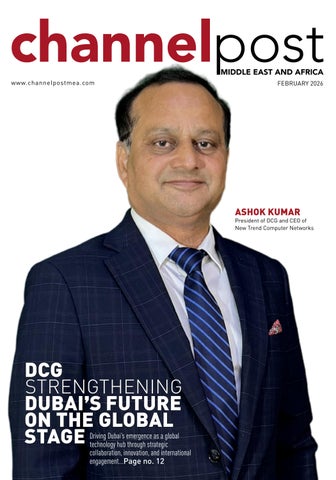
DCG STRENGTHENING DUBAI’S FUTURE ON THE GLOBAL STAGE

Driving Dubai’s emergence as a global technology hub through strategic collaboration, innovation, and international engagement.

Dubai’s rise as a global technology hub has been shaped by bold vision, strategic investment, and a relentless commitment to innovation. As the emirate accelerates toward a digitally driven future, the organizations that support and empower its technology ecosystem have become increasingly vital. Among these, the Dubai Computer Group (DCG) stands out as one of the most influential and enduring pillars of the ICT community. Established under the umbrella of Dubai Chambers, DCG has spent years uniting technology businesses, fostering collaboration, and shaping the policies and practices that define the region’s ICT landscape. Today, under the leadership of its President, Ashok Kumar, the organization is entering a new era of growth, modernization, and global engagement.

Ashok Kumar is no stranger to the ICT community in Dubai. He has been an active and respected member of DCG for many years, contributing to its initiatives, supporting its mission, and helping strengthen its role in the industry. Before assuming the presidency last year, he served as the Vice President of DCG, a role in which he helped drive several key initiatives and deepen the organization’s engagement with both industry and government stakeholders. Beyond his leadership within DCG, Ashok Kumar is also the CEO of New Trend Computer Networks, a leading distributor of networking products in Dubai since 1998. His decades of experience in the ICT sector, combined with his long-standing involvement in DCG, have positioned him as a trusted voice and a visionary leader capable of guiding the organization into the future.

Under Ashok Kumar’s leadership, DCG continues to represent a broad and diverse community of ICT companies. According to the President’s remarks in the attached interview, the organization currently represents “a vibrant community of 230 member companies across the ICT ecosystem.” This membership includes vendors, distributors, resellers, system integrators, and emerging technology firms, reflecting the full spectrum of the ICT value chain. The President also emphasizes that DCG aims to grow this network by 20 to 25 percent by 2026, a goal he believes is achievable through stronger engagement, meaningful collaborations, and the inclusion of innovative technology companies that bring fresh ideas to the market. This growth ambition aligns with Dubai’s broader digital transformation agenda, which seeks to position the emirate as a global leader in technology, innovation, and smart solutions.

As Dubai to position a global hub, in facilitating cross-border collaboration become important.

President New Trend ASHOK

ASHOK KUMAR

Dubai continues position itself as global technology DCG’s role facilitating cross-border collaboration will become increasingly important.

President of DCG and CEO of Trend Computer Networks

The expansion of DCG’s membership is not simply a matter of numbers; it reflects the organization’s commitment to building a more connected, collaborative, and future-ready ICT community. Dubai’s technology landscape is evolving rapidly, with new sectors such as artificial intelligence, cloud computing, cybersecurity, and health technology gaining prominence. DCG’s efforts to welcome emerging technology companies into its network demonstrate its forward-looking approach and its recognition that the future of ICT lies in diversification and innovation. The President notes that the group has already begun exploring opportunities in the health and medical technology sector, which he describes as an important avenue for expanding business opportunities for members. This strategic expansion into new verticals underscores DCG’s role as a catalyst for growth and transformation within the ICT industry.

One of DCG’s most significant contributions to the ICT ecosystem is its strong collaboration with government entities. The organization maintains active engagement with Dubai Customs,

ing operational barriers and enhancing the ease of doing business for ICT companies in Dubai. Under Ashok Kumar’s leadership, these relationships have only deepened, as he brings decades of industry experience and a strong understanding of the challenges faced by ICT businesses.

Beyond government engagement, DCG plays a vital role in fostering collaboration within the ICT industry itself. The organization serves as a unified platform where vendors, distributors, and resellers can come together to discuss common challenges, share insights, and develop practical solutions. The President highlights that DCG connects stakeholders “who often face similar industry challenges” and encourages open discussions that help members find collective solutions.

This collaborative environment is particularly valuable in an industry where supply chain disruptions, credit risks, insurance issues, and compliance requirements can significantly impact business operations. By facilitating dialogue and cooperation, DCG helps strengthen trust across the ICT value chain and promotes a more resilient and sustainable business environment.

tion to e-Invoicing represents a significant shift for businesses, requiring changes to accounting systems, ERP integrations, tax reporting processes, and supply chain documentation. Recognizing the importance of preparing members for this transition, DCG plans to host seminars and webinars with industry experts and tax professionals who will provide guidance on compliance and best practices. The President emphasizes that DCG is committed to ensuring that members are well prepared for e-Invoicing and that the transition is as smooth as possible. This proactive approach demonstrates DCG’s dedication to supporting members through regulatory changes and helping them maintain compliance in an evolving business environment.

Digital transformation is another key priority for DCG, reflecting the broader shift toward digitalization across industries in Dubai and the UAE. The organization plans to organize training sessions, workshops, and expert-led discussions to help members understand digital tools, compliance requirements, and emerging industry trends. The President notes that DCG aims to equip

the Department of Economy, Dubai Chambers, and other regulatory bodies. These relationships are essential in a sector where regulatory clarity, compliance, and operational efficiency directly influence business performance.

As the President explains, DCG “maintains active and ongoing dialogue with key government entities… to help clarify regulations and contribute to creating a more supportive business environment for the ICT sector.” This collaborative approach ensures that the concerns and challenges faced by ICT businesses are communicated effectively to policymakers, enabling the development of regulations that support growth, innovation, and competitiveness.

DCG’s partnership with Dubai Customs has been particularly impactful. The group has worked closely with customs authorities to address issues related to import procedures, documentation, and compliance, helping members navigate the complexities of international trade. Similarly, DCG’s engagement with Dubai Trade through RCM initiatives has strengthened the organization’s ability to support businesses involved in cross-border commerce. These collaborations reflect DCG’s commitment to reduc-

DCG’s international outreach efforts further enhance its value to members. The organization has actively participated in overseas trade missions and global technology events, including GITEX-focused initiatives in Morocco and Nigeria. These international engagements have opened new avenues for business expansion and global partnerships, enabling Dubai-based ICT companies to tap into emerging markets and strengthen their global presence. The President notes that these initiatives have “opened new global connections,” reflecting DCG’s commitment to supporting members in exploring international opportunities. As Dubai continues to position itself as a global technology hub, DCG’s role in facilitating cross-border collaboration will become increasingly important.

Looking ahead, DCG has outlined an ambitious strategic plan for 2026 that focuses on strengthening industry connections, enhancing member engagement, and addressing key challenges facing the ICT sector. One of the flagship initiatives planned for 2026 is the DCG Conclave, a major event designed to bring together vendors, distributors, resellers, business leaders, and government representatives. The Conclave will

serve as a platform for discussing market trends, exploring partnerships, and addressing industry challenges such as insurance, credit awareness, and business sustainability. By creating a space for meaningful dialogue and collaboration, DCG aims to foster a more connected and forwardthinking ICT community.

In addition to the Conclave, DCG plans to organize a series of dedicated networking events throughout the year. These events will provide members with opportunities to build stronger business relationships, share knowledge, and stay informed about the latest developments in the ICT sector. Networking has always been a core component of DCG’s value proposition, and the organization’s renewed focus on creating more frequent and impactful networking opportunities reflects its commitment to supporting the growth and success of its members. Under Ashok Kumar’s leadership, these events are expected to become even more strategic, engaging, and aligned with the evolving needs of the ICT community.

Another major focus area for DCG in the coming years is regulatory compliance, particularly in relation to the upcoming implementation of mandatory e-Invoicing in the UAE. The transi-

members “with the knowledge and confidence needed to thrive in an increasingly digital business landscape.” These capacity-building initiatives will help businesses adopt new technologies, improve operational efficiency, and stay competitive in a rapidly changing market.

DCG’s commitment to digital readiness extends beyond training and education. The organization also plays a role in promoting the adoption of advanced technologies such as artificial intelligence, cloud computing, cybersecurity solutions, and data analytics. By encouraging members to embrace digital transformation, DCG supports the development of a more innovative and future-ready ICT ecosystem. This focus on digital readiness aligns with Dubai’s broader vision of becoming a global leader in digital innovation and smart technologies.

Sustainability is another area where DCG is making a meaningful impact. As the UAE advances its Net Zero 2050 initiative, the ICT sector has an important role to play in promoting environmentally responsible practices.

DCG supports sustainability efforts by raising awareness about energy-efficient technologies, e-waste management, and green data center

initiatives. By encouraging members to adopt sustainable practices, DCG contributes to the development of a more environmentally conscious ICT industry that aligns with national sustainability goals.

DCG’s digital presence, as reflected on dcgdubai.com, highlights the organization’s mission to promote the growth and competitiveness of Dubai’s ICT sector. The website outlines DCG’s commitment to fostering collaboration, supporting business development, and providing members with access to valuable resources and opportunities.

Through its online platform, DCG offers information about membership benefits, upcoming events, industry news, and initiatives designed to support the ICT community. This digital presence enhances the organization’s ability to engage with members and provide timely and relevant information.

As Dubai continues its journey toward becoming a global digital economy leader, the role of DCG will become increasingly important. The organization’s ability to unite the ICT community, foster collaboration, support regulatory compliance, and promote digital transformation

positions it as a key driver of Dubai’s technological advancement. Under the leadership of Ashok Kumar—an industry veteran, long-time DCG contributor, and CEO of one of Dubai’s most established networking distributors—the organization is poised to reach new heights. His deep industry knowledge, decades of experience, and unwavering commitment to the ICT community make him uniquely qualified to guide DCG into the future.

In conclusion, the Dubai Computer Group stands as a cornerstone of the emirate’s ICT ecosystem. Through its strategic initiatives, government collaborations, capacity-building programs, and commitment to industry development, DCG is helping shape a future where technology drives economic growth, innovation, and global competitiveness. As the organization continues to expand its reach and influence, it remains dedicated to supporting the success of its members and contributing to Dubai’s vision of becoming a global leader in digital innovation.

Under the steady and visionary leadership of Ashok Kumar, DCG is not only preserving its legacy but also charting a bold new path for the future of Dubai’s ICT sector.

CHANNEL MARKETING IN THE MIDDLE EAST: THE NEW ENGINE OF ECOSYSTEM GROWTH

From data driven enablement to ecosystem orchestration, marketing heads reveal how the channel is transforming to meet the demands of a cloud and AI first era.

Channel marketing in the Middle East has entered a defining moment. What was once a support function— focused on events, promotions, and vendor funded activities—has evolved into a strategic discipline that shapes partner ecosystems, accelerates digital transformation, and drives recurring revenue. As cloud adoption surges, subscription models dominate, and AI becomes embedded in every layer of the technology stack,

marketing leaders across the region are rethinking how they engage partners, build demand, and deliver measurable business impact.

Across the Middle East, Turkey, and Africa, the channel is no longer just a route to market. It has become a complex, interconnected ecosystem where vendors, distributors, and partners must collaborate more closely than ever. Marketing sits at the center of this shift, orchestrating value across the customer lifecycle—from awareness and edu-

cation to adoption, retention, and expansion. To understand how this transformation is unfolding, Channel Post MEA spoke with marketing leaders from AmiViz, ASBIS Middle East, ASUS Business, BMC Helix, Mindware, SentinelOne, and Western Digital. Their perspectives reveal a channel landscape that is maturing rapidly, demanding new skills, new tools, and a new mindset.

Dharmendra Parmar, VP Marketing & Vendor Alliances at AmiViz, describes the evolution suc-

than activity volume. In a region as competitive as the Middle East, this approach builds trust and strengthens vendor–partner alignment.

Faraz Ali Khan, Marketing Director at ASBIS Middle East, echoes this sentiment but adds that the role of marketing has expanded into strategic guidance. With cloud and AI reshaping customer expectations, partners need more than promotional support—they need clarity. Marketing must help them navigate complexity, understand emerging technologies, and translate innovation into business value. Khan notes that ASBIS positions marketing as an enabler that helps partners build confidence in their go to market motions. In a region as diverse as the Middle East and Africa, understanding local dynamics is essential. When vendors and distributors invest in shared goals and collaborative planning, alignment strengthens and pipeline growth accelerates. For ASBIS, this partnership driven approach is central to supporting the ecosystem.

For ASUS Business, the shift is even more pro-

nounced. Amrita Nag, Country Marketing Manager for the Middle East & East Africa, explains that marketing has moved from one off promotions to orchestrating ecosystem growth. With partners transitioning to cloud and subscription models, ASUS focuses on helping them tell outcome centric stories and run continuous demand through their digital channels. Nag highlights a major shift in how Market Development Funds (MDF) are allocated. Instead of funding activities, ASUS ties MDF to recurring metrics such as pipeline quality, win rates, retention, and lifetime value. Automation and first party data play a critical role in measuring impact while respecting privacy regulations. This data driven approach ensures that marketing investments deliver long term value rather than short term spikes.

Nag also emphasizes the importance of structured planning. ASUS builds 12 month plans with partners and reviews progress quarterly, focusing on shared KPIs such as partner influenced pipeline and retention. Their through channel

cinctly. He explains that marketing in the channel has moved from running activities to delivering clear value. As partners shift to cloud, subscription models, and AI driven solutions, marketing must support the full customer journey rather than simply generating short term pipeline. This means using data, automation, and customer insights to connect vendor solutions to real business needs. Parmar emphasizes that the most effective strategies today are those that equip partners with the right capabilities, align messaging to customer priorities, and measure success through deal progress, conversion, and retention rather

COUNTRY

FARAZ ALI KHAN
MARKETING MANAGER OF ASBIS MIDDLE EAST

demand programs are always on, partner branded, and locally tailored. ASUS also invests heavily in strengthening partners’ digital presence—from product pages and reviews to content and social channels. This holistic approach ensures that partners are equipped to compete in a digital first market where customers research extensively before engaging.

At BMC Helix, the evolution of channel marketing is tied closely to partner success. Udita Vasishth, Senior Field Marketing Manager for META, explains that marketing’s role has shifted from pure lead generation to enabling partners to sell and monetize complex AI and cloud platforms. This requires clear value stories, strong partner readiness, and targeted enablement. Vasishth stresses that the most effective programs are built with partners, not for them. Joint planning, localized demand programs, and measurable co marketing initiatives create clarity around audience, offer, and success metrics. In a region as diverse as MEA, everything starts with local context—partner type, market maturity, and priority industries. BMC tailors programs country by country, ensuring that KPIs and pipeline attribution prove ROI and sustain long term engagement.

Mindware’s Strategy & Marketing Director, Varuna Shah, describes a similar transformation but with an emphasis on orchestration. She explains that marketing in the channel has evolved from campaign execution to growth orchestration. In a cloud and AI led world, marketing must drive adoption and recurring revenue. At Mindware, marketing sits at the intersection of vendors, partners, and end customers, enabling solution positioning, demand creation, and partner readiness. Shah notes that partners differ widely in maturity, technical readiness, and go to market capability. As a result, Mindware deploys tailored enablement and demand programs aligned to each partner’s stage and strategic focus.

Shah also highlights the importance of integrated, multi touch campaigns. Single touch activities rarely deliver ROI. Instead, Mindware combines digital engagement, telemarketing, partner led outreach, and events to drive stronger pipeline conversion. To scale this approach, Mindware leverages MAGIC, its Aggregation Gateway for Innovation and Collaboration, which uses AI driven insights, solution mapping, and industry specific use cases to guide partners. Every initiative is tied to clear KPIs, with continuous performance tracking and feedback loops ensuring sustained engagement and measurable ROI.

For SentinelOne, the shift toward cloud and AI has fundamentally changed how partners engage with customers. Uzma Yusuff, Senior Field & Channel Marketing Manager, explains that channel marketing has moved from generating leads to delivering value across the lifecycle. Partners need help telling compelling cloud and AI value stories, positioning themselves as trusted advisors, and driving adoption. Yusuff emphasizes that the most effective strategies combine data driven co marketing, clear vertical use cases, and joint business planning. Consistency in messaging and outcome focused campaigns builds credibility and helps partners differentiate in a crowded market. SentinelOne segments partners by maturity, industry focus, and market dynamics, tailoring programs accordingly. ROI is measured through clear KPIs, shared dashboards, and closed loop reporting, ensuring transparency and long term engagement.

Western Digital offers yet another perspective, rooted in the storage and data infrastructure space. Safak Ozgun, Channel Marketing Lead for METAI and Enterprise Marketing for Europe, explains that as AI and cloud models accelerate, marketing in the channel is shifting from product led selling to education and enablement. Partners need to understand why a solution exists, where it fits, and how it is deployed. This requires targeted,

context specific programs that support advisory conversations rather than product pushes. Ozgun highlights the importance of in person engagement—partner events, workshops, and on site discussions that build trust and alignment. These interactions create meaningful moments that tie marketing efforts to real opportunities. Western Digital tailors its programs to local market dynamics, customer needs, and partner priorities, ensuring that initiatives are co developed, clearly scoped, and regularly reviewed to deliver mutually beneficial outcomes.

Across all these perspectives, several themes emerge. First, channel marketing has become deeply strategic. It is no longer about activities; it is about outcomes. Second, data and automation are now essential. Marketing leaders are using first party data, analytics, and AI to measure impact, personalize engagement, and optimize campaigns. Third, partner segmentation is critical. Not all partners have the same capabilities, maturity, or market focus, and marketing programs must reflect these differences. Fourth, collaboration is the new currency. The most successful programs are co created, co executed, and co measured. Finally, the Middle East’s rapid digital transformation demands localized execution. Each country has its own dynamics, and marketing must adapt accordingly.

The channel ecosystem in the Middle East is evolving at remarkable speed. As cloud, AI, and subscription models reshape customer expectations, marketing leaders are stepping into a more influential role—one that blends strategy, data, creativity, and ecosystem orchestration. The companies that succeed will be those that treat marketing not as a support function but as a growth engine that empowers partners, accelerates adoption, and delivers measurable business impact. In this new era, channel marketing is not just part of the ecosystem—it is the force shaping its future.

VARUNA SHAH STRATEGY & MARKETING DIRECTOR, MINDWARE
SAFAK OZGUN
MARKETING MANAGER EMEA AT WESTERN DIGITAL
UZMA YUSUFF SENIOR FIELD & CHANNEL MARKETING MANAGER, SENTINELONE

WESTCON COMSTOR: BALANCING EXPANSION AND EXCELLENCE

Renton D’Souza, Managing Director, Gulf at Westcon‑Comstor, with his new mandate to lead the region, is driving strategic growth while strengthening partner capabilities across a rapidly evolving Gulf technology landscape.

Congratulations on your new role. How do you plan to balance strategic growth and operational execution as Westcon Comstor expands its footprint in the Gulf?

Thank you. Stepping into this role at such a pivotal moment for the Gulf’s technology landscape is both energising and motivating. For me, balanc ing strategic growth with operational excellence starts with a simple principle: deliver exceptional results today while preparing for tomorrow’s opportunities. That dual focus shapes how I lead. Partner success remains our anchor, guiding every investment and capability we build. We are not pursuing growth for its own sake; we are creating sustainable value aligned with the evolving needs of our partners and their customers.

To achieve this, we are strengthening regional capabilities through targeted talent develop ment, enhanced digital platforms, and deeper vendor collaborations. These investments ensure we stay agile, efficient, and responsive as the market evolves. At the same time, every initia tive—whether geographic expansion or portfolio enhancement—must translate into measurable outcomes for partners. That discipline keeps our strategy grounded.

Our physical presence across the Gulf is a major advantage. Fully licensed entities in mul tiple countries allow us to operate locally, main tain full tax compliance, and offer local‑to‑local billing. This accelerates deal cycles and builds trust with customers who value local engagement. Ultimately, strategic growth and operational excellence work hand in hand: strategy sets the direction, and execution delivers results with pre cision and reliability.

You’ve been with Westcon Comstor for nearly two decades. How has your journey prepared you for this new role, particularly in navigating diverse partner ecosystems?

It has been an incredible journey, and each chapter has shaped my understanding of the channel in meaningful ways. Over the years, I’ve had the privilege of working across multiple roles, regions, and business units within West

“Our goal is to give partners the confidence and capability to deliver next generation solutions that drive real business outcomes.

con‑Comstor. Most recently, as Vice President for the Middle East and Africa at Comstor—our Cisco‑focused business—I managed a diverse set of markets, each with its own partner ecosystem, regulatory landscape, and technology maturity. That experience was invaluable.

Working across such varied environments taught me the importance of staying close to partners, listening to their challenges, and under standing the nuances that influence their success.

It also helped me build strong relationships across the channel and deepen my appreciation for the technologies driving transformation, from cyber security and networking to cloud and AI. This perspective helps me anticipate where the market is heading and how to position partners to lead.

Equally important, my journey has given me a solid operational foundation. Collaborating with sales, operations, logistics, and enablement teams has strengthened my ability to drive efficiency and

Managing Director, Gulf at Westcon‑Comstor
RENTON D’SOUZA

alignment. In a region as dynamic as the Gulf, partners expect both strategic guidance and flaw less execution, and I feel well‑prepared because I’ve seen how powerful that combination can be.

The Gulf region is witnessing rapid technology adoption. What key trends do you see shaping channel opportunities over the next 12–24 months?

The Gulf has become one of the world’s fastest‑moving technology markets, with gov ernments and private‑sector organizations accel erating investments in digital transformation, cloud adoption, and AI‑driven innovation. This rapid momentum is creating major opportunities for the channel, but it also brings new challenges that partners must be prepared to navigate.

Cyber resilience is emerging as one of the most critical trends. As digital adoption expands, so does the attack surface, and threats are becoming more sophisticated. Cybersecurity has shifted from an IT concern to a board‑level priority, with AI intensifying both the scale of attacks and the sophistication of defenses. In this environment, the channel plays a vital role in delivering inte grated, intelligence‑driven security solutions.

Another defining trend is the move toward services‑led and recurring‑revenue models. Cus tomers increasingly expect ongoing value through managed services, automation, and data‑driven insights. At the same time, AI‑powered and cloud‑first solutions are moving from hype to real impact, driving demand for partners who can modernize, optimize, and secure complex hybrid environments. Distributors add value not only through technology, but through enablement— helping partners build the skills and capabilities needed to stay ahead.

With growing demand for cybersecurity, cloud, and networking solutions, how is Westcon Comstor helping partners build competencies and stand out in these areas?

This is a core priority for us as we look toward 2026. As a value‑added distributor, our mission is to ensure partners stay technologically ahead— not only by mastering today’s leading solutions, but by preparing for the emerging technologies that will shape the future. We are investing heavily in enablement, technical depth, and digital plat forms that help partners stand out in an increas ingly competitive market.

A key differentiator is our 3D Lab, a virtual demo and proof‑of‑concept environment that allows partners and customers to validate multi‑vendor security and networking solutions before purchasing. This accelerates deal cycles, reduces risk, and helps partners demonstrate value more effectively.

Our Tech Xpert community is another essen tial pillar, bringing together partners, vendors, and our engineers to co‑develop architectures and share expertise. This collaborative ecosystem accelerates skills development and supports the delivery of complex, integrated solutions.

We are also enhancing our digital platforms. Partner Central consolidates tools, insights, and training in one place, while Intelligent Demand provides analytics and marketing automation to convert insights into qualified opportunities. Together, these capabilities strengthen partner competencies and drive measurable business growth.

Your appointment coincides with increased investment in the Gulf, including expanded physical presence. How important is local presence to partner engagement and long term growth?

Local presence is absolutely essential. Even in an industry driven by technology, personal relation ships remain at the heart of the channel business. Partners want to work with organizations that understand their markets, speak their language, and operate with the same sense of urgency and accountability that they do. Our regional foot print allows us to do exactly that.

Having fully licensed entities across the Gulf enables us to support partners through seamless local to local billing and tax compliant operations. This not only enhances speed and convenience but also provides the transparency and assurance that both global vendors and local partners value. It strengthens trust, accelerates transactions, and ensures that we can respond quickly to market needs.

Our Gulf and broader MEA teams take pride in their local identity and deep rooted relationships. This local presence, combined with global scale, is a powerful combination. It allows us to deliver the best of both worlds: global expertise and local execution.

Channel partners continue to face skills and readiness gaps, particularly around AI driven networking. What is your perspective on this?

This is one of the most important challenges—and opportunities—facing the channel today. Our recent research shows that partners across the Gulf recognize the need to build AI driven net working capabilities, but many are still early in their journey. In the UAE, for example, nearly half of partners are actively developing AI capabilities, but around 28 percent remain in the early explo ration phase. More importantly, approximately 80 percent of partners reported that they are not yet confident in designing and delivering AI ready

networking solutions.

This gap is not a weakness; it is a tremendous opportunity. AI driven networking will funda mentally reshape how organizations design, oper ate, and secure their infrastructure. Partners who invest early in building these capabilities will be well positioned to lead the market. Our role is to support them through this transition by provid ing the training, tools, and collaborative environ ments they need to accelerate their readiness. Initiatives such as our Tech Xpert community and 3D Lab environments are designed specifically to help partners build confidence and competence in emerging technologies.

What role do you see Westcon Comstor playing in upskilling the channel for emerging technologies?

As a value added distributor, we have a respon sibility to equip our partners with the technical skills, solutions, and insights needed to succeed in an era of rapid technological change. Emerg ing technologies such as AI, automation, and advanced cybersecurity are reshaping business models and customer expectations. Our focus on partner enablement is therefore more important than ever.

We are continuously evolving our enablement programs to ensure that partners are future ready. This includes technical training, certifications, hands on labs, digital learning platforms, and col laborative engineering environments. Our goal is to give partners the confidence and capability to deliver next generation solutions that drive real business outcomes. We take this responsibility seriously, and we will continue to invest in the programs and platforms that help our partners grow.

Looking ahead, what does success look like for Westcon Comstor in the Gulf by the end of 2026—for both your partners and the company?

By the end of 2026, success will be defined by two outcomes: empowered partners and sustained growth. For our partners, success means being future ready—delivering secure, scalable, and profitable solutions that meet evolving customer demands. It means having the skills, tools, and confidence to lead in areas such as cybersecurity, cloud, AI, and advanced networking.

For Westcon Comstor, success means deep ening our regional presence, strengthening our vendor relationships, and maintaining our growth trajectory. It means cementing our position as the go to distributor for next generation technologies and continuing to help our ecosystem reach new heights. Ultimately, our success is measured by the success of our partners. If they grow, innovate, and lead, then we have achieved our mission.

BUILDING ENERGY-EFFICIENT, SUSTAINABLE DATA CENTERS FOR THE FUTURE

A look at how next generation cooling, storage, and compute technologies are reshaping data center sustainability across the Middle East.

The Middle East is in the midst of one of the fastest data center build outs anywhere in the world. Fueled by cloud expansion, AI adoption, sovereign digital economy mandates, and a surge in hyperscale investment, the region is transforming into a global hub for compute power. Yet beneath the excitement lies a challenge that is becoming impossible to ignore: the region’s data center growth is colliding with unprecedented energy and cooling pressures.

In a region where summer temperatures routinely exceed 50°C, where water scarcity is a national priority, and where governments are pushing aggressively toward net zero commitments, the question is no longer whether data centers can scale — but whether they can scale sustainably. The next decade will be defined not by how much capacity the Middle East can build, but by how efficiently it can operate.

Across the ecosystem, from cooling specialists and storage innovators to compute leaders and engineering firms, the message is consistent: sustainability is no longer a side initiative. It is the foundation of future data center design, investment, and competitiveness.

Cooling in a 55°C Climate: The First Frontier of Sustainability

Few regions test the limits of cooling technology like the Middle East. For Daikin MEA, this challenge is central to its mission. Laila Sahaf Amin, Director for Sustainability & ESG, explains that traditional cooling strategies simply cannot keep pace with the region’s climate and the rising thermal load of AI driven workloads. Daikin is responding with high efficiency, AI ready cooling systems engineered specifically for GCC conditions, where ambient temperatures can push cooling infrastructure to its limits.

She emphasizes that the company’s approach goes beyond hardware. Real time optimization, predictive maintenance, and the use of low GWP refrigerants are becoming essential tools for operators seeking to reduce energy consumption while maintaining thermal resilience. Daikin’s systems are designed to reduce Power Usage Effectiveness and support operators as they scale, ensuring that sustainability and performance advance together rather than in conflict.

Sahaf Amin notes that the region’s rapid digital transformation is creating a new urgency. As governments push for greener infrastructure,

Daikin is helping partners transition from legacy cooling systems to modern, efficient, and scalable technologies through education, technical enablement, and phased migration roadmaps. The company’s lifecycle model ensures that sustainability is not a one time upgrade but a continuous operational commitment.

Storage Density as a Sustainability Strategy

While cooling often dominates sustainability conversations, storage efficiency is emerging as a powerful lever for reducing energy consumption. Western Digital’s Regional Lead and Sales Director for the Middle East, Turkey, Africa and the Indian Subcontinent, Owais Mohamed, explains that increasing storage density is one of the most effective ways to reduce power and cooling requirements without compromising performance.

He points out that moving from 26TB to 32TB drives can reduce rack counts by nearly 20 percent for the same petabyte of storage. This reduction translates directly into lower energy consumption, reduced cooling demand, and improved total cost of ownership. In a region where data

gravity is increasing rapidly — driven by AI, IoT, and cloud adoption — the ability to store more data using fewer drives is becoming a sustainability imperative.

Mohamed highlights innovations such as Helium sealing, UltraSMR, and next generation recording technologies like HAMR as key enablers of this shift. By increasing areal density and delivering more bytes per drive, Western Digital is helping operators reduce their physical footprint while supporting scalable growth. He emphasizes that this system level approach aligns with regional sustainability goals and regulatory frameworks, ensuring that data center expansion does not come at the expense of environmental responsibility.

Flash Efficiency and the End of Rip and Replace Cycles

Pure Storage’s VP for METCA, Omar Akar, believes that sustainability must be embedded at every layer of the data center stack. He argues that energy efficient servers, flash storage, and intelligent networking are essential to reducing power consumption, but the real transformation comes from rethinking how infrastructure is built, maintained, and upgraded.

Akar explains that Pure Storage’s technology is engineered to take up less space and use significantly less power, reducing data center footprint by up to 77 percent and cutting energy use by as much as 85 percent. Data reduction techniques such as compression and deduplication further minimize the amount of physical storage required, reducing both power draw and cooling needs.

One of Pure Storage’s most impactful contributions to sustainability is its Evergreen architecture, which eliminates disruptive rip and replace cycles. Instead of discarding entire systems, customers can upgrade components incrementally, extending product lifespans and reducing e waste. Akar notes that this approach not only supports sustainability goals but also improves operational efficiency and long term cost management.

Pure Storage also provides carbon footprint reporting tools that help customers analyze and reduce emissions associated with storage operations. As sustainability reporting becomes mandatory across more jurisdictions, this visibility is becoming a critical part of data center governance.

Intelligent Data Management and the Fight Against Dark Data

NetApp’s Senior Manager for Solutions Engineering-MEA, Walid Issa, believes that sustainability is as much about data management as it is about hardware. He explains that eliminating unused “dark data,” automating tiering, and improving visibility into energy use can significantly reduce

environmental impact across hybrid data estates. NetApp’s intelligent data infrastructure combines analytics, automation, and cloud optimization to help customers reduce power draw and cooling demand. Issa highlights the BlueXP sustainability dashboard as a key tool for improving visibility and enabling measurable improvements. He notes that NetApp’s own emissions reductions — a 6 percent year over year decrease in Scope 1 and Scope 2 emissions — demonstrate that smarter design and operational practices can deliver meaningful results even as workloads grow.

As governments across the Middle East push for greener infrastructure, NetApp is helping organizations transition from legacy systems to modern, energy efficient architectures. Issa emphasizes that science based emissions reduction targets and advisory services are essential to guiding customers through consolidation, modernization, and long term sustainability planning.

Liquid Cooling and the Rise of AI Optimized Data Centers

The rise of AI is reshaping data center design globally, and the Middle East is no exception. Hewlett Packard Enterprise’s Chief Technologist for HPC & AI Global Sales, Mohammad Al Jallad, explains that the region’s extreme heat makes precision cooling and real time telemetry indispensable. As AI workloads intensify, traditional air cooling methods are becoming insufficient.

Hewlett Packard Enterprise is deploying advanced cooling methods such as adaptive cascade cooling and direct liquid cooling, including 100 percent fanless DLC architectures. These systems dramatically reduce energy use and cooling overhead, enabling higher compute densities and improved performance. Al Jallad notes that HPE’s modular AI Mod POD systems, which support densities up to 400 kW per rack, illustrate how liquid cooling and modular design can transform data center efficiency.

Digital twins are also becoming a critical part of HPE’s strategy. By simulating thermal behavior before hardware is installed, operators can optimize efficiency and avoid costly design errors. Al Jallad emphasizes that transparency is essential, and HPE proactively reports on metrics such as PUE, CUE, and WUE to give organizations a complete view of their environmental impact.

Engineering for Extreme Environments

Engineering firms like AESG are rethinking data center design from the ground up. Nicholas Byczynski, Director of Building Services, notes that the Middle East remains one of the toughest environments globally for efficient operations, with average PUEs still significantly higher

than global norms. He argues that sustainability begins with systems thinking — accurate IT load forecasting, optimized airflow, and cooling strategies that work with the environment rather than against it.

Byczynski highlights the growing importance of water stewardship. Research shows that cooling related water demand in the Middle East and Africa could exceed 426 billion liters by 2030 as capacity expands. Low water and water positive cooling solutions are becoming essential to meet national water security goals.

He also emphasizes the importance of off site strategies such as waste heat recovery, district cooling integration, and renewable energy adoption. With the UAE’s rapidly expanding solar capacity, integrated renewables are becoming a powerful tool for reducing carbon impact while maintaining resilience.

AI Factories and the Future of High Density Compute

REGIONAL LEAD AND SALES DIRECTOR FOR THE MIDDLE EAST, TURKEY, AFRICA AND THE INDIAN SUBCONTINENT AT WESTERN DIGITAL

OWAIS MOHAMED

NVIDIA’s Regional Director for EnterpriseMETA, Marc Domenech, believes that accelerated computing and liquid cooled architectures are essential to overcoming power and cooling constraints. He explains that NVIDIA’s platforms deliver up to 30 times higher performance per watt than CPU only systems, and that liquid cooled Grace Blackwell systems can support 120 kW racks while reducing energy use by up to 25 times.

Domenech notes that operating at 45°C coolant temperatures enables closed loop dry coolers with no water use — a critical advantage in water scarce regions. NVIDIA is collaborating with Middle Eastern partners such as Khazna, HUMAIN, and Ooredoo to design Blackwell ready AI factories optimized for liquid cooling and renewable energy. Digital twin planning tools and validated reference architectures are helping operators migrate from legacy systems to modular, high efficiency sovereign AI platforms.

Maximizing GPU Utilization to Reduce Energy Waste

Storage performance is also evolving to meet AI’s demands. DDN CTO Sven Oehme explains that maximizing GPU utilization is one of the most effective ways to reduce energy waste. When GPUs sit idle waiting for data, they consume power without delivering performance. By ensuring that GPUs stay fully fed with data, operators can avoid unnecessary hardware expansion and reduce heat output.

Oehme points to deployments like Yotta’s sovereign AI cloud as proof that high performance, software defined architectures can deliver both sustainability and scale. He emphasizes that unified, scalable platforms purpose built for AI can help organizations modernize incrementally, reducing operational waste and aligning with national sustainability goals.

A Region Redefining the Future of Sustainable Compute

Across the Middle East, a clear pattern is emerging. Sustainability is no longer a compliance exercise — it is a competitive advantage. Governments are pushing for greener infrastructure, and operators are responding with smarter cooling, denser storage, liquid cooled compute, intelligent data management, and holistic design strategies.

The region’s data center leaders are proving that high performance and environmental responsibility are not opposing goals but interconnected pillars of the digital future.

As AI accelerates demand for compute power, the Middle East has an opportunity to lead the world in building data centers that are not only powerful and scalable but also efficient, resilient, and sustainable.

The next decade will determine whether the region becomes a global benchmark for sustainable digital infrastructure.If the momentum seen today continues, the Middle East may well define what the future of responsible, high density computing looks like.

MOHAMMAD AL-JALLAD
CHIEF TECHNOLOGIST &
FOR HPC & AI GLOBAL SALES AT HEWLETT PACKARD ENTERPRISE

SUCCESSFUL AI WILL BE SIMPLY A PART OF LIFE

TM Roh, President and CEO of Samsung Electronics, explains that great technology is intuitive, seamlessly integrating into infrastructure and consistently delivering reliable results without constant intervention.

New technologies follow a familiar arc. They begin as marvels— expensive, experimental and full of fanfare. As the excitement settles, the technologies that truly change society fade into the background. That isn’t because they become less powerful but because they become dependable, affordable and broadly usable—quietly triumphant and easily overlooked. As Amara’s Law says, we overestimate technology’s short-term impact and underestimate its long-term effects.

Today, artificial intelligence is the great newcomer, as loudly proclaimed as the mobile phone or the internet was. Being mindful of Amara’s Law in its case means advancing AI while never losing sight of what makes it scalable as a practical, everyday innovation. That’s what distinguishes mere invention from infrastructure.

Infrastructure is something people count on to work—reliably, universally and without the need for outside expertise. The core question isn’t awareness of AI. Recent research shows that 86% of mobile users already use it. What matters is how practical and helpful AI is in real life. Does it understand users’ context and intent well enough to earn their trust?

Language was an early proving ground. Translation isn’t useful if it works well in a handful of standard global languages but fails among dialects, accents and real-world contexts. That’s

precisely where misunderstandings have real-life consequences.

Accessibility is equally important. Features like real-time captions, image descriptions and simplified summaries are more than nice to have. They’re foundational to understanding and action while delivering what infrastructure is built for: consistency.

Another key measure is trust. AI exists in the most personal areas of our lives—among our messages, photos, documents, finances and even health. People rightly ask if giving up control is necessary to take advantage of AI’s benefits. If it feels like the answer is yes, adoption slows. This isn’t fear of technology, it’s a rational response to risk.

AI infrastructure comes with responsibilities for its builders. Infrastructure must be designed to work reliably in real-world conditions and serve everyone, including the most vulnerable users. By that standard, engineering and design should give priority to reach, openness and confidence.

A clear measure of meaningful innovation is how many people use the technology every day. To become a default experience for the majority, AI has to reach more devices and more people with a consistent high-quality experience.

For AI to be universal, it must work equally well across languages, cultures and contexts, delivering the same level of accuracy, fluency

TM ROH
President and CEO of Samsung Electronics
“The real challenge for the industry isn’t improving AI literacy; it’s designing AI that people can use without having to make a project of it.”

and cultural nuance no matter who is using it or where. But openness goes beyond languages. For AI to be used comfortably by more people, it must be intuitive enough that it doesn’t require learning on the user’s part. People shouldn’t have to think about how to operate AI to benefit from it. That is why the best AI often stays in the background. The less visible AI becomes, the more universal the experience feels.

AI gains confidence by delivering dependable performance that is consistently fast and responsive and by making clear that privacy and security are built in. Secure data and transparent information control, grounded in user choice, shouldn’t be optional. They are essential for AI to function as true infrastructure.

The real challenge for the industry isn’t improving AI literacy; it’s designing AI that people can use without having to make a project of it.

The idea of AI as infrastructure must also shape the coming phase of agentic AI, which will carry tasks through to completion, not merely provide answers. Done well, this shift will further reduce friction by handling routine actions and organizing what matters without requiring technical commands or constant intervention.

The real value for AI won’t be found in benchmarks or model comparisons. It will show up in everyday moments, when more people can understand, participate and move through the world with ease.

HP’S BETTER TOGETHER VISION IS REDEFINING THE FUTURE OF WORK

“Peter Oganesean, Managing Director for the Middle East and East Africa at HP, highlights how the company is transforming the modern workplace through integrated ecosystems, AI driven insights, and seamless end user experiences.”

HP has been introducing a wide range of new technologies recently. What is driving this rapid evolution, and how do you ensure customers understand the pace of change?

I see an enormous amount of transformation happening across the technology landscape, and many customers are not fully aligned with the speed of this progress. For me, the conversation is never just about HP; it is about what is happening in the market as a whole. My goal is always to educate, guide, and help customers understand developments that they may not yet be aware of but will soon need. AI is moving incredibly fast, and every day brings a new capability or a new opportunity. When I speak with customers, I want to give them clarity, direction, and a hands on understanding of how these technologies work. It is difficult to reach everyone individually, so I focus on sharing as much insight as possible whenever I have the chance. Once customers engage with us, I want them to experience the technology directly, see the demos, and understand how these solutions can transform their operations.

When you showcase technology, what exactly are you presenting? Is it about new products or something broader? I have moved away from simply displaying hardware. Today, it is about showing customers how we can improve their operations through complete solutions. I often talk about what I call “Better Together,” which is essentially the idea that when all of our products work in harmony, they become a powerful solution on their own. Many customers still look at printing, PCs, collaboration tools, and peripherals in isolation, but I want them to see the bigger picture. It is all about the end user experience, endpoint devices, computing power, and the backbone that connects everything. AI helps us bring this vision to life by enabling personalization and, eventually, agentic AI systems that can connect and automate workflows across the entire ecosystem.

So this is more of a conceptual

Managing Director for the Middle East and East Africa at HP

“The future channel landscape will be a mix of

large integrated partners and highly specialized tactical partners.”

approach—linking your products into a unified experience?

Exactly. Today, nearly half of Fortune 500 companies are already piloting agentic AI, which shows how quickly the world is moving in this direction. What we are doing is connecting experi-

ences across different areas so that the combined ecosystem becomes far more powerful than individual components. A great example is our WXP platform. With hybrid work, employees are using different devices, networks, and environments, and this creates enormous complexity for

PETER OGANESEAN

IT managers. As a vendor focused on endpoint devices, I have a responsibility to give IT teams the tools they need to manage this new user centric infrastructure. WXP brings multiple tools together into one platform, allowing IT managers to monitor connectivity, device performance, user satisfaction, and potential failures. It gives them a complete view of the user ecosystem and helps them make smarter decisions about device usage and future investments.

Many companies use a mix of brands. How does WXP function in such environments?

WXP is not limited to HP devices. It is designed to run across different products within a customer’s ecosystem. I want IT managers to have the ability to evaluate whether their existing investments make sense, regardless of the brand. The tool provides insights into usage patterns, device health, and performance across the entire environment. WXP is a standalone software product with licensing options, and we offer proof of concept trials so customers can test it just as they would test any of our hardware. My goal is always to show value first and let the customer decide based on real experience.

HP has long been known as a hardware company. Are you shifting your focus toward software?

I do not see it as a shift; I see it as building on our strengths. We have always created exceptional hardware, but AI has changed user expectations dramatically. Personalization is now essential, and you cannot deliver that through hardware alone. You need AI enabled software working alongside powerful devices. Agentic AI will allow systems to act on behalf of users, and our role is to provide the right hardware foundation combined with the software tools that enable these capabilities. Our new Nano workstation is a perfect example. As cloud based AI becomes more expensive, enterprises will need a hybrid approach that balances cloud and edge computing. We are building products that support this transition and enable advanced AI applications directly on devices.

How are customers responding to these new tools and technologies?

Customers are excited, but they are also overwhelmed. The pace of innovation is unprecedented. Every day brings a new AI capability, a new performance level, or a new use case. Many customers tell me they do not know where to start because they fear adopting something today that might be outdated tomorrow. I see a lot of proof of concept testing and conversations with ISVs as customers try to understand what can be built using agentic AI. I recently saw a live demo where an AI agent was created on a device in just five minutes, and it was incredible. Despite the excitement, there is a real concern about the speed of change. My message to customers is simple: do not wait. Start now, learn continuously, and evolve as the technology evolves.

HP relies heavily on channel partners. How do you help them keep up with these rapid changes?

We have introduced several AI tools for our channel partners, including AI agents that automate many of the operational tasks traditionally handled manually. But tools alone aren’t enough— education remains our top priority. Partners need to understand AI, adopt new technologies, and transform their own organizations if they want to support customers effectively.

Across the region, we’re investing heavily in training, mini-events, and one-to-one engagements. Some partners are moving quickly, even hiring AI specialists to build internal capability. Others remain more transactional, and over time those partners may naturally phase out as customers increasingly expect deeper expertise. This evolution is normal, and we’re committed to helping every partner grow and adapt alongside us.

With partners evolving, what kind of new partners are you looking to engage with?

We recently introduced the One HP, which rewards partners for selling across our entire portfolio. This aligns perfectly with the Better Together concept. Today, partners need broader capabilities—they must understand collaboration tools, AI, computing, and endpoint management. Transactional partners will continue to play a role, but the future belongs to partners who can scale,

integrate solutions, and understand AI deeply. I also see tremendous potential for specialized partners in areas like retail, healthcare, and collaboration solutions. The future channel landscape will be a mix of large integrated partners and highly specialized tactical partners.

HP has expanded its processor portfolio with Qualcomm and AMD. How does this change your customer engagement?

We have never been exclusive to any vendor. My approach is simple: I offer what the customer wants. Qualcomm appeals to customers who prioritize mobility and battery life, while AMD and Intel offer advantages for traditional applications and x86 compatibility. Customers today test everything through proof of concepts, and I encourage them to try all available options. I do not see major differences in customer profiles across processor brands; it is always about evaluating capabilities and choosing what fits the use case. My job is to provide options and support customers in making informed decisions.

Does offering multiple processor options create logistical challenges for partners?

Not really. Most real customer business is handled through back to back orders rather than large stockpiles, so the logistical impact is minimal. We manage regional inventory carefully and bring in products based on demand. Partners are comfortable with this approach, and we ensure that the supply chain remains efficient and responsive.

Are there new territories you are focusing on for expansion?

Yes, we have recently established a full fledged office in Egypt, complete with a local team engaging directly with customers. This has been a major milestone for us. We are also exploring opportunities in Iraq and re engaging with Syria following the lifting of embargoes. While we may not establish offices in every market, we are actively developing these territories through channel partnerships and exploring emerging opportunities across the region. Our goal is always to expand responsibly and sustainably while supporting customers wherever they are.

RESPONSIBLE BY DESIGN: HOW TECH PARTNERS MUST RETHINK AI DEPLOYMENT

Mostafa Kabel, CTO, Mindware Group, outlines why partners must embrace legal, ethical, and operational accountability to deploy AI responsibly and sustain trust in an increasingly regulated, rapidly evolving landscape.

Artificial intelligence is no longer an experimental technology confined to innovation labs. It is actively shaping customer experiences, automating business decisions, and generating original content at scale. As adoption accelerates across industries, tech partners sit at the centre of this transformation responsible not only for deployment, but for ensuring AI is used legally, ethically, and transparently.

The new phase of AI adoption demands more than technical expertise. It requires partners to

rethink legal frameworks, intellectual property models, service accountability, and ethical responsibility. Those who fail to adapt risk regulatory exposure, reputational damage, and erosion of customer trust.

Navigating Legal and Licensing Complexity

One of the most critical areas partners must address is licensing and legal compliance. AI models particularly generative ones are only as deployable as the rights that govern them. Partners must ensure that models are autho-

MOSTAFA KABEL
CTO, Mindware Group
“Looking ahead, the partner ecosystem must take a proac‑ tive approach to AI governance, investing in governance platforms, continuous monitoring, and bias‑detection tools.”

rised for commercial use and that the outputs they generate do not infringe on copyright, privacy, or data sovereignty regulations.

This becomes especially important in automated decision-making scenarios such as hiring, credit assessments, or fraud detection, where accountability must be clearly defined. Contracts should outline liability boundaries and compliance obligations under frameworks such as GDPR or regional equivalents. Auditability and bias mitigation are no longer optional safeguards; they are legal necessities, particularly in regulated sectors. Adding another layer of complexity is the infra-

structure underpinning AI. The growing reliance on high-performance GPUs introduces exposure to export controls, sanctions, and hardware usage restrictions. In regions with geopolitical sensitivities, partners must ensure AI infrastructure deployments align with government regulations and vendor licensing requirements.

Defining IP Ownership in an AI-Driven World

Intellectual property ownership in AI is rarely straightforward. Partners must clearly distinguish between ownership of the base model, the training data, and the resulting outputs. This becomes especially nuanced in co-development or white-label arrangements.

If a partner fine-tunes a model using a customer’s proprietary data, ownership of that model variant and its outputs must be explicitly defined. Agreements should also cover redistribution rights, commercial usage, and branding controls. Addressing these questions early not only avoids disputes but establishes trust and alignment between partners and enterprise clients.

Ethical Responsibility as a Business Imperative

When AI influences hiring decisions, financial outcomes, or customer interactions, ethical responsibility becomes inseparable from technical delivery. Partners have a duty to ensure systems are fair, transparent, and non-discriminatory.

sibilities should be reflected in service agreements. Clients should have the right to human oversight, audit AI-driven decisions, and request corrective action when unintended outcomes arise. Ethical guardrails are no longer philosophical ideals they are essential to regulatory compliance and longterm adoption.

Updating SLAs for Generative AI Reality

Traditional service level agreements were never designed for systems that learn, adapt, and sometimes behave unpredictably. Generative AI introduces challenges such as hallucinations, data drift, and inconsistent outputs, all of which must be acknowledged contractually.

Partners should update SLAs to include AIspecific performance benchmarks, monitoring mechanisms, and escalation procedures. Risk disclaimers must clearly state that AI-generated content may not always be accurate or contextually appropriate. Regular model reviews and updates should also be built into agreements to ensure sustained performance over time. Just as important is educating customers setting realistic expectations is foundational to responsible deployment.

Building Trust Through Transparency

ties all contribute to greater accountability. Many organisations are also adopting ethical AI frameworks or certifications as a way to formalise best practices. Ongoing education and openness about AI capabilities and limitations are key to building durable client relationships.

Preparing for a More Regulated Future Looking ahead, the partner ecosystem must take a proactive approach to AI governance. Standardised AI clauses will increasingly become part of contracts, addressing IP rights, data privacy, explainability, and liability. On the technical side, partners must invest in governance platforms, continuous monitoring, and bias detection tools.

Ethically, alignment with global regulations such as the EU AI Act will be critical, even for organisations operating outside Europe. Shared codes of conduct, regular training, and collaboration with policymakers will define the next generation of responsible AI partnerships.At Mindware, we are already supporting partners on this journey.

With deep experience across AI infrastructure, software, and compliance services, we help organisations build secure, scalable, and responsible AI frameworks. From compliant GPU deployments and AI-ready data platforms to ethical governance advisory, we work closely with partners across the MEA region to navigate evolving regulatory and technological demands.

This means investing in diverse training data, conducting regular bias assessments, and enabling explainable AI outputs. Importantly, these respon-

Trust in AI begins with transparency. Partners reselling or customising third-party models should disclose the model’s source, version, training scope, and known limitations. Any modifications or fine-tuning must be documented and shared with clients.

Labelling AI-generated content, enabling explainability tools, and offering audit capabili

STAY AHEAD OF THE CURVE WITH CHANNEL POST MEA

As AI continues to reshape industries, success will belong to those who can deploy it not just quickly but responsibly, transparently, and

Lucend raises $3.3 million to maximize data center efficiency

Dutch startup, Lucend, formerly known as Coolgradient, announced that it has successfully raised $3.3 million in seed funding led by Remarkable Ventures Climate (RVC) and joined by Mitsubishi Electric Innovation Fund, New Climate Ventures, Avesta, Stepchange, and existing investor 4impact capital.

With more than half of global data centers located in the U.S., Lucend will utilize the funding to scale its operations and customer support to meet rising demand in America.

With demand for AI ready capacity surging, Lucend is introducing a new standard of operational intelligence—one built on transparency, verifiability, and measurable efficiency gains.

Lucend’s Transparent AI platform connects to existing infrastructure, no new hardware required, to transform static systems into adaptive, self-learning environments. The software takes existing sensor data to see connections across 300 billion sensor readings. Lucend’s AI analyzes billions of data points daily and provides prescriptive recommendations. The intelligence that Lucend’s platform delivers “shows its work,” empowering operators and delivering verifiable impact across enterprise environments that demand both performance and trust.

“Lucend’s Transparent AI platform analyzes

billions of data points daily and provides prescriptive recommendations that data center operators can review and choose whether or not to implement,” said Jasper de Vries, co-founder of Lucend. “Lucend’s human-in-the-loop approach removes risk by ensuring human oversight as operators develop trust in our recommendations that increases efficiency and reliability, and enables new approaches to maintenance and replacement decisions.”

Lucend has been implementing its AI solution across dozens of data centers since it started in 2023, spanning Melbourne, Singapore, Paris, London, Amsterdam and Chicago. Working with global data center operators like Digital Realty, Global Switch and T5, Lucend has collected data

from different climates and designs, working with closed-loop systems, adiabatic cooling designs, cooling and electrical assets like chillers, IACs, UPSs and generators or data points like valve openings, fan speeds, temperature setpoints and pressures.

“As AI’s demand for data centers grows, data center operators need to prioritize efficiency and uptime while also conserving resources like energy and water,” said René Gompel, co-founder, “Lucend and our Transparent AI platform open a pathway to consistent, measurable efficiency improvements while increasing uptime, without new CapEx, and without disrupting existing operations, while saving some of our customers millions in annual operating cost.”

Red Sea Global and Bunat VC to launch AI venture fund

Red Sea Global (RSG), the developer behind regenerative tourism destinations The Red Sea and AMAALA, has partnered with Bunat Ventures Limited (Bunat VC) to launch a first-of-its-kind venture fund focused on artificial intelligence (AI)-driven startups in Saudi Arabia.

The AI Venture Fund will invest in early- and growth-stage startups that are either AI-native or leverage AI as a core enabler of their business models. Over the next three years, the Fund aims to support approximately 25 startups through both pre-seed and growth-stage investments. Beyond capital, the Fund will provide investee companies—particularly those based in Saudi Arabia—with access to world-class infrastructure and a state-of-the-art environment to pilot and validate their technologies within RSG’s real-world operations. This partnership is designed to accelerate the development of these startups into national and regional champions in the

AI ecosystem.

“At Red Sea Global, we view innovation as a catalyst for a regenerative future. This partnership with Bunat VC reflects our belief that technology is fundamental to sustainability, enabling us to invest in bold ideas that will accelerate the Kingdom’s digital transformation and inspire global progress”, said Sultan Moraished, Group Head of Technology and Corporate Excellence at Red Sea Global.

With a focus on Saudi-based entrepreneurs and Saudi-founded global ventures expanding into the Kingdom, the Fund aims to unlock new pathways for innovation, job creation, and digital excellence. It is expected to act as a catalyst for the local innovation ecosystem, fostering collaboration between investors, academia, and technology partners. It will also attract global talent and promote knowledge exchange to ensure long-term value creation and sustainable growth.

Khaled Zainalabedin, CEO and Managing Partner at Bunat VC, added: “Our collaboration with Red Sea Global brings together visionary development and agile venture capital. Together, we are building a platform to empower the next generation of Saudi AI pioneers who will redefine industries, shape communities, and strengthen Saudi Arabia’s leadership in the global innovation arena.”

RSG welcomed its first guests to The Red Sea in 2023 and now operates 10 resorts, as well as Red Sea International Airport (RSI), which receives regular flights from Riyadh, Jeddah, Dubai, and Doha. This year, Shura Island, the heart of The Red Sea, is opening its first resorts, as well as Shura Links, an 18-hole championship golf course.

Rubrik Promotes Jesse Green to Chief Revenue Officer

Rubrik announced the promotion of Jesse Green to Chief Revenue Officer, marking a significant step in the company’s continued global expansion. Green, who most recently served as President of Rubrik Americas, will now lead the company’s worldwide revenue organization as it accelerates its rapid growth and deepens its position as a leader in cyber resilience. He succeeds Brian McCarthy, who is departing for another opportunity after building a strong, high performing organization that delivered consistent results and helped shape Rubrik’s go to market culture.

Green brings nearly 25 years of go to market leadership experience, including almost three years at Rubrik. Throughout his career, he has demonstrated a proven ability to scale teams and drive sustained growth at high velocity technology companies such as MongoDB, AppDynamics, and BMC Software. His leadership at Rubrik Americas has been instrumental in expanding the company’s footprint and strengthening customer relationships during a period of significant market momentum.

“This is an exciting moment in time for Rubrik. Following our record third quarter, we just delivered a very strong fourth quarter with preliminary financial results exceeding all guided metrics,”

said Bipul Sinha, Rubrik’s Chief Executive Officer, Chairman, and Co Founder. “Under Jesse’s leader-

ship the team has realized exceptional growth, and I am confident our momentum will continue as we grow and expand our business around the world.”

Green expressed enthusiasm for the road ahead, noting the company’s unique position in the market. “I am proud to lead a world class team into our next phase of growth,” he said. “Our customers benefit from a proven platform that delivers reliable cyber resilience across data, identity, and AI. We look forward to helping our customers and partners deliver trusted AI transformation and agentic work at scale.”

Rubrik continues to expand rapidly as organizations prioritize cyber resilience and prepare for AI driven operations. The company delivers Cyber Resilience and AI Agent Operations platforms that enable secure, confident AI transformation and large scale agent deployment. Rubrik is growing both organically and through strategic acquisitions, including Predibase and Laminar, which have strengthened its capabilities across data security and AI. The company was recently recognized as a Leader in the IDC MarketScape: Worldwide Cyber Recovery 2025 Vendor Assessment, underscoring its continued industry leadership.

Veeam Appoints Amin Hanafieh as New Sales Director for Middle East & CIS

Veeam Software has announced the appointment of Amin Hanafieh as Sales Director for the Middle East and CIS region, marking a significant step in the company’s continued investment in regional growth and customer success. This strategic hire reflects Veeam’s commitment to strengthening its leadership team as demand for advanced data protection, cyber resilience, and AI ready solutions accelerates across key markets.

Amin Hanafieh brings more than two decades of enterprise technology leadership, with a strong track record of building high performing teams and driving customer outcomes across the Middle East, CIS, and Africa. Throughout his career, he has held senior roles at VMware by Broadcom, Hewlett Packard Enterprise, Injazat Data Systems, and Cisco, where he led regional expansion initiatives, professional services organizations, and large scale sales operations. His experience spans data center infrastructure, hybrid cloud, and enterprise transformation, and he is widely recognized for his ability to develop markets, strengthen partner ecosystems, and deliver measurable business impact.

team. His extensive experience and leadership in the region will be instrumental as we continue to strengthen our customer and partner ecosystem. The Middle East and CIS region is at the forefront of digital transformation, and with the rapid adoption of AI, our focus is on accelerating safe AI at scale for our customers. Amin’s market insight and commitment to excellence align perfectly with Veeam’s vision for radical resilience and innovation, ensuring organisations across the region can seize new opportunities securely and confidently.”

Reflecting on his appointment, Amin Hanafieh added, “I’m thrilled to join Veeam in the Middle East and CIS region, working alongside an incredibly talented team. The company’s strong focus on customers, partners, and innovation truly stands out. There are tremendous opportunities for growth in this dynamic region, especially as organisations embrace AI and advanced data resilience solutions. I look forward to building on Veeam’s success and driving continued growth together in 2026, helping our customers accelerate their digital journeys safely and at scale.”

Mena Migally, Regional Vice President for EMEA East at Veeam Software, said, “We are delighted to welcome Amin to the Veeam

THE MIDDLE EAST ENTERS A NEW AGE OF MSP INNOVATION

From cyber risk management to AI powered operations, MSPs transform into essential engines of digital continuity and innovation.

The Managed Service Provider (MSP) landscape in the Middle East is undergoing one of the most significant transformations in its history. What was once a market dominated by traditional IT support and infrastructure maintenance has rapidly evolved into a sophisticated ecosystem of

cybersecurity guardians, cloud orchestrators, AI driven operations specialists, and strategic digital transformation partners. As organisations across the region accelerate cloud adoption, embrace AI, and confront an increasingly hostile cyber threat environment, MSPs have become indispensable to how businesses operate, scale, and protect

themselves. This shift is not merely technological—it is structural. The Middle East is experiencing a convergence of regulatory pressure, talent shortages, digital first government initiatives, and a surge in cyberattacks that has forced organisations to rethink how they manage IT. MSPs are no longer

optional; they are the operational backbone of modern enterprises. To understand how this evolution is reshaping the market, Channel Post MEA spoke with leading technology vendors, cybersecurity companies, and digital transformation specialists who are building the tools, platforms, and partner programmes that empower MSPs to deliver next generation services.

Their insights reveal a region where MSPs are stepping into a new era—one defined by intelligence, automation, resilience, and business aligned outcomes.

From IT Support to Strategic Cyber Risk Partners

Few companies articulate this shift as clearly as

Qualys. Ivan Milenkovic, Vice President of Cyber Risk Technology for EMEA, explains that MSPs in the Middle East have moved far beyond traditional IT security support. They are now expected to act as strategic cybersecurity and compliance partners, helping organisations navigate escalating threats and increasingly complex regulatory frameworks.

According to Milenkovic, the rise of sophisticated ransomware, nation state attacks, and stringent data protection laws has fundamentally changed customer expectations. Clients no longer want reactive support; they demand proactive, security first service models that reduce risk and ensure compliance. This is where Qualys’ Risk Operations Center (ROC) and the newly

DIGITAL SOLUTIONS MANAGER AT

launched managed ROC (mROC) Partner Alliance come into play. The ROC is not just a platform—it is a philosophy built on people, processes, and technology. While Qualys provides the technology layer, MSPs deliver the expertise and strategic alignment required to turn risk insights into actionable outcomes.

Milenkovic notes that many organisations struggle with the basics of cyber risk management, from quantification to remediation. The mROC Partner Alliance, which already includes regional partners such as Teksalah and Security Matterz, enables MSPs to deliver business aligned cyber risk management at scale. It empowers them to offer tailored consulting services, integrate industry aligned risk models, and provide continuous monitoring—ensuring customers benefit from all three pillars of the ROC framework.

AI Driven Managed Services Take Center Stage

At Omnix, the evolution of MSPs is closely tied to

FOR

BASSEL KHACHFEH
OMNIX

the rise of AI enabled operations. Bassel Khachfeh, Digital Solutions Manager, describes a market where organisations are no longer satisfied with operational support alone. They want intelligence led services that deliver continuous optimisation, predictive insights, and measurable business outcomes.

Khachfeh explains that MSPs are becoming strategic extensions of enterprise IT, especially as governments and large enterprises pursue ambitious digital transformation programmes. Omnix has positioned MSPs as a core pillar of its business strategy, with a portfolio that spans cloud platforms, cybersecurity, digital infrastructure, IT service management, and AI driven operations.

The company is investing heavily in AI enabled MSP solutions, including conversational AI for service desks, intelligent automation for incident and change management, AIOps for predictive monitoring, and orchestration layers that unify multi vendor environments. These capabilities allow MSPs to move beyond device and server management into higher value domains such as digital operations, business process automation, and AI powered customer experience services.

To support MSPs, Omnix operates a UAE based Centre of Excellence (CoE) that provides service design frameworks, governance models, cloud and cybersecurity advisory, and AIOps enablement. This is complemented by an offshore delivery centre in Egypt, enabling MSPs to scale efficiently while maintaining high service quality.

Application Security and SaaS Driven Services Reshape the Market

F5, a long standing leader in application delivery and security, sees the MSP market shifting toward SaaS and AI based services. Mustapha Hlil, Director of Channel Sales for the Middle East, Türkiye, and Africa, notes that partners increasingly recognise the power of software defined

solutions deployed on hyperscaler clouds. While this reduces traditional hardware opportunities, it opens new avenues for managed services.

Hlil highlights the F5 Application Delivery and Security Platform (ADSP) as a key enabler for MSPs. Modern infrastructures are complex, distributed, and API driven, creating what he describes as a “ball of fire” that organisations struggle to manage. ADSP provides unified visibility, operational simplicity, and consistent performance across applications and APIs—capabilities that are as critical for MSPs as they are for end customers.

F5 has also launched the ADSP Partner Program, designed to cultivate an ecosystem of technology partners who can extend the platform’s capabilities. Hlil emphasises that in the SaaS world, success is not just about onboarding customers—it is about retaining them and ensuring they derive continuous value from the platform. MSPs play a vital role in this lifecycle, making them central to F5’s regional strategy.

Cybersecurity Becomes the Core of Managed Services

Cybersecurity is now the defining pillar of MSP offerings in the Middle East, and Cloud Box Technologies is one of the companies leading this charge. Managing Director Ranjith Kaippada describes a market where reactive IT support has given way to proactive, outcome driven managed services. MSPs are expected to ensure business continuity, support hybrid work, mitigate cyber threats, and enable cloud transformation—all while adapting to a rapidly evolving IT landscape.

Cloud Box Technologies offers a comprehensive portfolio tailored for MSPs, with cybersecurity at its core. Solutions such as XDR, MDR, SOC, NOC, SIEM, SASE, and email security have become non negotiable. The company also provides AI driven capabilities including enter-

prise data management, algorithm as a service, automated threat remediation, and AI powered monitoring and analytics.

Kaippada explains that Cloud Box Technologies follows a strict evaluation process before onboarding MSPs. Once aligned, partners gain access to advanced programmes, shared threat intelligence, certifications, and automation tools. Through co selling, joint go to market activities, workshops, and strategic briefings, the company helps MSPs enhance service delivery and expand their capabilities.

Prevention First Security and Unified Visibility Drive MSP Success

Check Point, a global cybersecurity leader, sees the MSP landscape shifting decisively toward security driven managed services. Check Point Software’s Channel Leader for UAE, Prashant Menon said that with organisations in the region facing an average of 2,262 attacks per week, MSPs have become essential partners in delivering prevention first security and continuous operations.

Check Point’s portfolio for MSPs is built around four pillars: network, cloud, workspace, and security operations. Through the Infinity Platform and AI driven Exposure Management, MSPs gain unified visibility, real time threat intelligence, and automated remediation. This allows them to deliver scalable, efficient, and prevention focused managed security services across hybrid and cloud environments.

The company supports MSPs through its MSSP Partner Program, which provides multitenant management, AI driven threat prevention, automation tools, and global intelligence feeds. Training, certifications, and co selling opportunities further empower partners to scale their services and deliver measurable outcomes.

AI Driven IT Operations and Service

PRASHANT MENON
CHANNEL LEADER, UAE AT CHECK POINT SOFTWARE TECHNOLOGIES
MUSTAPHA HLIL
CHANNEL DIRECTOR FOR MIDDLE EAST, TURKEY & AFRICA, F5

Management Fuel MSP Growth

BMC Helix, a leader in IT service and operations management, sees MSPs as vital partners in helping organisations modernise and optimise hybrid IT environments. Salman Kazmi, Area Vice President for META, explains that MSPs are essential for implementing and managing platforms like BMC Helix, especially as enterprises embrace AI driven operations.

MSPs leverage BMC’s portfolio in two primary ways. First, they use Helix ITSM to manage SLAs and deliver consistent service quality. Second, they build new services around operational capabilities such as inventory, monitoring, and capacity management—creating additional revenue streams and expanding their customer base.

BMC supports MSPs through comprehensive partner programmes that include onboarding, certifications, technical and sales training, co selling, and access to demo tools and documentation. These resources help MSPs strengthen service delivery, expand capabilities, and drive shared success.

Cyber Protection and Integrated Recovery Become MSP Essentials

Acronis, a major player in cyber protection, sees the MSP market in the Middle East maturing rapidly. General Manager Ziad Nasr explains that customers now expect MSPs to take responsibility

for availability, security, and recovery—not just IT support. With rising regulatory requirements, skills shortages, and sophisticated attacks, MSPs have become the execution layer of cybersecurity and resilience.

Acronis’ most relevant solutions for MSPs include backup and disaster recovery, Microsoft 365 backup, endpoint protection, and EDR. Nasr emphasises that MSPs need security tightly integrated with backup and recovery to ensure coordinated detection, response, and restoration.

Acronis supports MSPs through automation, integration, training, certifications, threat intelligence, and co managed service models. This allows partners to deliver advanced services such as EDR and disaster recovery without building full SOCs or specialist teams.

Multi Tenant Security and Local Expertise Strengthen MSP Capabilities

SecureNet Distribution sees MSPs as strategic partners in extending market reach and delivering scalable managed services. Founder and CEO Melwin Dsouza explains that the MSP landscape is maturing quickly due to cloud adoption, regulatory mandates, and rising cyber threats. MSPs are evolving into trusted security advisors, and SecureNet’s portfolio is designed to support this shift.

The company offers managed SOC and MDR

services, SIEM, cloud security, identity protection, and compliance solutions—all built for multi tenant environments and subscription based models. SecureNet supports MSPs through training, certifications, joint go to market initiatives, threat intelligence sharing, and automation enabled platforms.

A New Era for MSPs in the Middle East

Across all these perspectives, one theme is clear: MSPs are no longer service providers—they are strategic partners shaping the future of digital operations, cybersecurity, and business resilience in the Middle East. The region’s rapid digital transformation, combined with rising cyber threats and regulatory pressure, has created unprecedented demand for intelligent, automated, and outcome driven managed services.

Technology vendors and distributors are responding with platforms, programmes, and ecosystems designed to empower MSPs to deliver more value with greater efficiency. From AI driven operations and unified security platforms to cyber risk management frameworks and multi tenant architectures, the tools available to MSPs have never been more advanced.

As the Middle East continues its digital acceleration, MSPs will play an even more critical role in enabling organisations to innovate securely, operate efficiently, and scale confidently.

STAY AHEAD OF THE CURVE WITH CHANNEL POST MEA

SALMAN KAZMI
AREA VICE PRESIDENT, META- BMC HELIX
ZIAD NASR GENERAL MANAGER FOR ACRONIS ME - NEW

FROM IT SOLUTIONS TO CRICKETING GLORY: 111 TROPHIES NOT OUT

A 25-year journey where Syed Parvez Ahmed balanced IT leadership and cricketing passion, building a championship club in Dubai and achieving an extraordinary milestone of 111 trophies.

On most days, Syed Parvez Ahmed is immersed in the fast-moving world of enterprise technology — strategy discussions, solution architectures, partnerships, and leadership decisions that define his role as Managing Director of Infinity Data Systems. But strip away the corporate titles, and

you find a man whose heart has always belonged to cricket.

For more than 25 years, cricket has been his constant companion in Dubai — not just as a sport, but as a way of life. What began as a modest team formed among friends has grown into one of the most decorated amateur cricket clubs in the

UAE. Today, Ausaf XI stands proudly with 111 trophies — 86 championship titles and 25 runnerup finishes — a rare achievement in any cricketing ecosystem.

This is the story of passion, perseverance, leadership, and legacy — the story of Syed Parvez Ahmed.

A Cricketer Before a Corporate Leader

Long before boardrooms and balance sheets, Parvez was a cricketer.

Back in India, he played second-tier, club-level, and university cricket — competitive, structured, and deeply rooted in discipline. Cricket shaped his early years, instilling habits that would later define his professional life: resilience, teamwork, accountability, and strategic thinking.

When he moved to Dubai in 1993, he carried that passion with him. Naturally, he searched for opportunities to continue playing. He joined a few local teams and played several matches, but something felt incomplete.

“The experience was not very fulfilling,” he recalls. “The structure, the seriousness, the team culture — it wasn’t what I was used to.”

Gradually, cricket took a backseat as he focused on building his career. But the love for the game never faded.

The Birth of a Club: 2000

By the year 2000, Parvez had reached a point of relative stability in his professional life. With that stability came clarity — and courage.

“When God blessed me with some success and

I was able to handle the financial side of running a team, I decided to start one,” he says.

It wasn’t a grand vision at first. The idea was simple: form a cricket team with friends and likeminded individuals who genuinely wanted to play the game — competitively, respectfully, and with commitment.

That decision marked the birth of what would eventually become Ausaf XI.

In the early years, the club went through several identities, playing under different banners. Resources were limited, facilities were basic, and tournaments were inconsistent. But what the team lacked in infrastructure, it made up for in intent.

Early Struggles and the First Turning Point

The first few years were challenging.

Despite strong effort and commitment, success remained elusive. The team reached a few quarterfinals and semifinals but failed to make it to a final for nearly three years. For many teams, that kind of run leads to disbandment or burnout.

Instead, Parvez chose to evolve.

In 2003, he made a decisive move — selecting four players who played on a match-fee basis. It

was a calculated risk, but one rooted in realism. Competitive cricket required investment.

That year, the team reached two finals — finishing runner-up in both.

“Those two runner-up trophies changed everything,” Parvez says.

They weren’t wins, but they were validation. From that point onward, the team’s trajectory shifted. Confidence grew. Standards rose. A winning culture slowly took shape.

Fast forward to today, and those early runnerup finishes are seen as the foundation stones of a trophy cabinet that now boasts 111 pieces of silverware.

A Club Dedicated to a Father’s Legacy

In 2018, the club underwent its most emotional transformation.

When Parvez’s father, Ausaf, passed away, he made a deeply personal decision — to dedicate the club to his memory. From that point on, the team would be known as Ausaf XI.

“It was my way of honoring him,” Parvez reflects. “This club means everything to me, and I wanted his name to live on through something built with love, discipline, and values.”

The renaming was more than symbolic. It reinforced the emotional anchor of the club — transforming it from a sporting outfit into a legacy-driven institution.

Business and Cricket: A Shared Playbook

Parvez’s professional journey in the IT distribution and solutions industry ran parallel to his cricketing commitments. Over the years, he held leadership roles across organizations such as Almasa, Global Distribution, and now Infinity Data Systems.

Rather than viewing cricket as a distraction, he saw it as a leadership laboratory.

“Running a cricket club with 20 players involves finance, logistics, human relations, discipline — the same ingredients needed to run a successful company,” he explains.

His business partners played a critical role in enabling this balance. Their understanding and support allowed him to integrate both worlds seamlessly.

Working in distribution also offered practical advantages. Many players were hired within logistics departments, and company resources such as vans were occasionally used for team requirements. In return, the club carried the company’s name — offering branding and visibility.

“It was a win-win,” he says. “The company sup-

ported the team, and the team gave back through branding and loyalty.”

The Captain Who Plays

One of Ausaf XI’s most defining characteristics is also its rarest: the owner is also the captain and a playing member.

“Touch wood, I still captain the side on the ground,” Parvez says with pride.

This gives him an unmatched understanding of player capabilities, form, temperament, and dynamics. Decisions are not made from the sidelines but in the heat of the game — fostering trust and accountability.

The second pillar of success is minimal player turnover.

“We keep our core intact,” he explains. “That creates better team spirit, a healthier dressing room, and a winning habit.”

From 2019 onwards, post-COVID realities forced a strategic shift. The club now plays seasonally — from October to April — focusing on quality rather than quantity.

“So far, by God’s grace, we’ve managed.”

Corporate Sponsorships and the New Reality

In the early days, corporate association opened doors to sponsorships from technology giants such as HP, ATI, Brother, AMD, and Intel. These partnerships helped sustain the club’s competitive edge.

Today, the landscape has changed.

Infinity Data Systems operates as a solutionsdriven, value-focused organization, rather than a volume-based distributor. Marketing budgets are tighter, and sponsorships harder to secure.

Yet the commitment remains.

National Recognition and Looking Ahead

Among the club’s proudest achievements is the fact that four players from Ausaf XI have gone on to represent the UAE national team, competing in international tournaments, including the World Cup.

“That is something no trophy can match,” Parvez says.

Each season, only one or two new players are introduced. With eight or nine players carrying forward from the previous year, integration is seamless.

Even players who have moved on remain connected through the club’s WhatsApp group — still emotionally invested, still celebrating victories.

Adapting to Dubai’s Evolving Cricket Ecosystem

Dubai’s cricket landscape today is unrecognisable from what it was in 2000.

Facilities now rival international standards. Matches are played on world-class grounds with large screens, live streaming, instant replays, and professional officiating.

“These changes have been fantastic,” Parvez says. “But they have also made cricket much more expensive.”

Looking ahead, he dreams of taking the club to A-Division cricket. But the financial demands of that level are significant.

“As an individual, it’s beyond my capacity,” he admits. “But with the right sponsorship or partnership, I would love to take Ausaf XI to the next level.”

Legacy Beyond Trophies

At 111 trophies, Ausaf XI is already a phenomenon. But for Syed Parvez Ahmed, success has never been about numbers alone.

It’s about loyalty. Discipline. Continuity. Pride. It’s about proving that passion and professionalism can coexist — that a cricket club can be run with the same rigor as a technology enterprise.

And above all, it’s about legacy.

A legacy built on a leather ball, carried forward through leadership, and immortalised in the name Ausaf XI.

STAY AHEAD OF THE CURVE WITH CHANNEL POST MEA

CAREER

TIME TO DECODE YOUR STARS FOR THE COMING MONTH

Aries (Mesha) Gemini (Mithuna)

High-pressure deadlines and performance reviews dominate. Leadership roles or critical tasks may come your way—handle authority calmly to gain senior appreciation.

LOVE

Emotional impatience may cause misunderstandings. Singles may reconnect with someone from work or past networks.

FINANCE

Stable but expenses on gadgets, travel, or certifications rise. Avoid risky investments.

HEALTH

Headaches, eye strain, or BP-related issues due to long screen hours. Regular breaks are essential.

LUCKY PERIOD: FEB 11 – FEB 18

LOVE LIFE CAREER BOOST FINANCE HEALTH

Cancer (Karka)

CAREER

Office politics or team dependency may slow progress. Work-from-home or backend roles suit you better this month.

LOVE

Emotional sensitivity increases; avoid assuming things. Family support remains strong.

FINANCE

Mixed—unexpected household expenses possible. Avoid impulsive spending.

HEALTH

Digestive issues, acidity, or water retention—follow a disciplined diet.

LUCKY PERIOD: FEB 20 – FEB 26

LOVE LIFE CAREER BOOST FINANCE HEALTH

CAREER

A steady month with scope for project stabilization. Ideal time to strengthen technical foundations or mentor juniors.

LOVE

Emotional security improves. Married natives feel support from partner; singles attract mature connections.

FINANCE

Favorable for savings and clearing dues. Avoid lending money to friends.

HEALTH

Minor throat, neck, or thyroid-related sensitivity— maintain routine and hydration.

LUCKY PERIOD: FEB 6 – FEB 14

LOVE LIFE CAREER BOOST FINANCE HEALTH

Leo (Simha) Taurus (Vrishabha)

CAREER

Communication, client interaction, and presentations bring visibility. Avoid overcommitment or multitasking errors.

LOVE

Flirtatious energy is high, but emotional depth may be lacking. Clarify intentions to avoid confusion.

FINANCE

Income steady; sudden short-term gains possible through incentives or bonuses.

HEALTH

Nervous fatigue, sleep irregularities, or anxiety due to mental overload. Meditation helps.

LUCKY PERIOD: FEB 3 – FEB 9

LOVE LIFE CAREER BOOST FINANCE HEALTH

Virgo (Kanya)

CAREER

Recognition, appraisals, or leadership acknowledgment likely. A good month to assert authority without ego clashes.

LOVE

Romance improves; partners appreciate your confidence. Singles may attract attention easily.

FINANCE

Strong; potential for incentives, bonuses, or side income.

HEALTH

Good vitality, but avoid burnout and irregular sleep cycles.

LUCKY PERIOD: FEB 12 – FEB 19

LOVE LIFE

CAREER

Heavy workload and debugging-type responsibilities increase. Accuracy brings long-term rewards, though appreciation may feel delayed.

LOVE

Over-analysis may affect relationships. Let emotions flow naturally.

FINANCE

Stable but slow; avoid unnecessary micro-expenses.

HEALTH

Gut health, skin issues, or vitamin deficiency may surface—routine care is needed.

LUCKY PERIOD: FEB 7 – FEB 13

LOVE LIFE CAREER BOOST CAREER BOOST FINANCE FINANCE HEALTH HEALTH

CAREER

Favorable for collaborations, HR discussions, and role negotiations. Creative IT roles benefit most.

LOVE

Harmony improves; proposals or commitments favored. Workplace romance should be handled discreetly.

FINANCE

Balanced; good for financial planning rather than expansion.

HEALTH

Lower back or kidney-related sensitivity—maintain posture and hydration.

LUCKY PERIOD: FEB 15 – FEB 22

LOVE LIFE CAREER BOOST

Capricorn (Makara)

CAREER

Responsibility increases significantly. Seniors rely on you, but pressure is high—pace yourself.

LOVE

Emotional distance possible due to work focus. Quality time is needed.

FINANCE

Strong for long-term planning, PF, insurance, or investments.

HEALTH

Joint pain, stiffness, or fatigue—maintain ergonomic work habits.

LUCKY PERIOD: FEB 18 – FEB 25

Scorpio (Vrishchika)

Libra (Tula) Sagittarius (Dhanu)

CAREER

Sudden changes in project direction or management. Adaptability brings power and strategic advantage.

LOVE

Intense emotions—avoid possessiveness. Honest conversations strengthen bonds.

FINANCE

Gains possible through past efforts or long-pending payments.

HEALTH

Hormonal imbalance, fatigue, or reproductive health sensitivity—do not ignore symptoms.

CAREER

Learning, certifications, and foreign-client projects favored. Avoid overconfidence in technical decisions.

LOVE

Long-distance or online connections strengthen. Married natives may feel lack of time together.

FINANCE

Average; avoid speculative investments or crypto risks.

HEALTH

Hip, thigh, or liver-related strain—exercise moderately, avoid excess.

LUCKY PERIOD: FEB 9 – FEB 16

LUCKY PERIOD: FEB 4 – FEB 10

LOVE LIFE CAREER BOOST CAREER BOOST

LOVE LIFE

FINANCE

FINANCE HEALTH

Aquarius (Kumbha)

CAREER

Innovation, automation, and new tech initiatives bring success. Ideal for role change discussions.

LOVE

Unconventional attractions possible. Avoid emotional detachment with committed partners.

FINANCE

Income steady; expenses on technology or travel increase.

HEALTH

Circulation issues, leg pain, or irregular sleep— maintain routine discipline.

LUCKY PERIOD: FEB 1 – FEB 7

Pisces (Meena)

CAREER

Confusion or lack of clarity in expectations. Best month for backend work rather than visibility.

LOVE

Emotional bonding deepens, but avoid unrealistic expectations

FINANCE

Expenses exceed income slightly—budget carefully.

HEALTH

Low immunity, allergies, or water-related ailments— rest is crucial.

LUCKY PERIOD: FEB 21 – FEB 28

Christian Ali Bravo, editor for WeLiveSecurity by ESET, warns that once again, data reveals an uncomfortable truth: the habit of choosing highly hackable passwords is alive and well.

OLD HABITS DIE HARD: 2025’S MOST COMMON PASSWORDS WERE AS PREDICTABLE AS EVER 1

23456’ continues to reign supreme as the most commonly-used password among people across the world, according to two reports, from NordPass and Comparitech, respectively. A full 25 percent of the top 1,000 most-used passwords are made up of nothing but numerals.

In addition, ‘123456’ appealed to people of various age cohorts, as it was the most-favored option among millennials, Generation X and baby boomers alike, and the second most-popular option among Generation Z and the Silent Generation (after ‘12345’).

This is according to NordPass’ analysis, which is based on billions of leaked passwords and sheds light on password trends among people in 44 countries.

Another all-too-predictable choice, ‘admin’, trailed close behind, with ‘12345678’, ‘123456789’ and ‘12345’ coming next, as many people clearly continue to favor convenience, putting their personal data, money and possibly reputations at risk. In the US and the UK, the overall picture was just as grim, with ‘admin’ taking the top spot in both countries. In the US, the one and only ‘password’ and ‘123456’ took the second and third spots, respectively; in the UK, the two just swapped places.

Much the same picture is painted by Comparitech’s research into two billion real account passwords leaked on data breach forums in 2025, as it had ‘123456’, ‘12345678’ and ‘123456789’ atop its list.

Same old, same old

Using an easily-guessable password is tantamount to locking the front door of your house with a paper latch.

It offers no actual resistance, and attackers can use brute-force or credential stuffing techniques that allow them to make quick work of such weak or reused passwords at scale.

It goes without saying, therefore, that if your password made it among those most common password choices, you would be very well advised to change it immediately. Use a strong and unique password or passphrase for each account and ideally, store them in a reputable password manager.

No matter how stubborn, however, a password is still only a single barrier between your account and a hacker. That’s why two-factor authentication (2FA) as an extra layer of security is a nonnegotiable line of defense these days, particularly for accounts that contain Personally Identifiable Information (PII) or other important data.

The risks rise sharply in corporate environments. Weak, obvious, or reused passwords can expose not only individual employees, but entire organizations, their customers, and their partners. Indeed, in many cases, the initial point of entry is neither sophisticated nor novel; instead, it’s simply a password that should never have been trusted in the first place.

The consequences, meanwhile, are rarely trivial and span financial loss, operational disruption, regulatory scrutiny, and long-term reputational damage. Which is why companies need a combi-

CHRISTIAN ALI BRAVO
editor for WeLiveSecurity by ESET
“Use a strong and unique password or passphrase for each account and ideally, store them in a reputable password manager.”

nation of technical safeguards and ongoing security awareness training programs for employees.

Meanwhile, the technical barriers for ne’er-dowells have never been lower. Modern tools can test countless combinations of login credentials in minutes, so the odds are firmly stacked in the attacker’s favor. Plus, in the digital ecosystem built on interconnected services and shared identities, the damage stemming from one account takeover is unlikely to stay contained for long.

Also, passkeys are rapidly becoming commonplace, and many major platforms, including Apple, Google, and Amazon, now offer them as a primary login method.

You might have had many New Year’s resolutions heading into 2026. But if your own passwords appear on either list above, improving your account security should be one of the most important of them.

D-LINK UNVEILS NEW 5G/4G MOBILE ACCESS SERIES

D-Link announced its expanded 5G/4G Mobile Access Series, a comprehensive lineup designed to meet the growing demand for flexible, high-speed connectivity. The new portfolio empowers users to overcome the limitations of fixed-line Internet and unreliable public Wi-Fi, offering robust connectivity for an increasingly mobile world. The 5G/4G Mobile Access Series reflects our commitment to delivering reliable connectivity that adapts to the needs of a mobile-first era. The mobile hotspot range delivers powerful and flexible mobile connectivity for every lifestyle. The flagship F530 5G NR AX3000 Wi-Fi 6 Mobile

Hotspot is a premium choice for on-the-go professionals, combining robust 5G performance with an intuitive touchscreen for easy control and builtin file sharing for collaborative use. For those who prioritize endurance, the F518 5G NR AX1800 Wi-Fi 6 Mobile Hotspot features a high-capacity battery that delivers all-day connectivity and doubles as a power bank, making it an indispensable tool for long-haul travelers. The DBR-330-G 5G NR AX3000 Wi-Fi 6 Mobile Router is designed for both home and remote office use, offering powerful 5G with VPN support for secure remote access and file sharing for teams and families. The

lightweight DWR-932W 4G LTE AX300 Wi-Fi 6 Mobile Hotspot completes the lineup, providing everyday users with a simple, portable way to stay connected with modern Wi-Fi security.

The series offers two streamlined solutions for users who prefer seamless USB connectivity. The D501 5G NR USB Adapter, with its innovative foldable antenna, provides strong 5G reception for laptops and PCs via a direct USB connection, ensuring reliable performance on the go. Completing the lineup, the DWM-222W 4G LTE AX300 Wi-Fi 6 USB Adapter is a versatile and affordable plug-and-play 4G option that can add Wi-Fi capability to multiple devices. Both adapters offer broad compatibility across platforms, making them ideal for users who value simplicity and convenience.

The new lineup complements D-Link’s Fixed Wireless Access (FWA) portfolio, offering a tiered range of solutions that balance performance, portability, and affordability. As demand for mobile broadband surges, D-Link continues to expand product innovations while shaping the future of seamless connectivity. Guided by the vision of “One Connection • Infinite Possibilities,” D-Link remains dedicated to empowering people and businesses with intelligent, sustainable networking solutions that unlock new opportunities in an increasingly connected world.

INTRODUCES POWERUPS 200 SERIES FOR BACKUP POWER

Vertiv introduced a new generation of compact uninterruptible power supply (UPS) systems for connected homes and workspaces. The Vertiv PowerUPS 200 family, available in 600 to 2200 VA capacities, combines modern design with enhanced usability for workstations, point-of-sale (POS) systems, gaming consoles, smart devices, and home entertainment setups. Now available in Europe, the Middle East and Africa (EMEA), the series expands Vertiv’s single-phase UPS portfolio for home, office, and retail environments.

“As digital demand accelerates, users are increasingly looking for reliable power solutions, with-

out operational complexity,” said Giuseppe Leto, senior director, IT Systems for Vertiv in EMEA. “The Vertiv PowerUPS 200 family combines solid engineering expertise with an intuitive design tailored for the modern spaces where people live and work today.”

Designed for ease of use and everyday reliability, the Vertiv PowerUPS 200 Standard Line Interactive Series (230V) and Vertiv PowerUPS 200 Essential Line Interactive Series (230 V) include practical benefits that make power protection simpler and more intuitive. Among the most notable features are user-replaceable batteries, which allow users to safely extend product life, and a straightforward interface featuring runtime LED indicators on Vertiv PowerUPS 200 Essential Line Interactive Series models, and a color LCD display on Vertiv PowerUPS 200 Standard Line Interactive Series models for clear system status visibility. Models 1000VA and higher include Type-A and Type-C USB charging ports, providing convenient power for mobile and connected devices. The new design also integrates details such as a dedicated mute button for alarm management

and recyclable packaging, complementing proven performance features including automatic voltage regulation (AVR) for stable output, and optimized internal design for consistent performance across a wide voltage range.

The Vertiv PowerUPS 200 Essential Line Interactive Series (230 V) and Vertiv PowerUPS 200 Standard Line Interactive Series (230 V) include models with up to eight total outlets, depending on configuration. Compact dimensions and recyclable packaging make them suitable for modern workspaces, while the two-year warranty (Essential Series) and the three-year warranty (Standard Series), including battery coverage, provides added confidence for users.

The Vertiv PowerUPS 200 Series renews Vertiv’s single-phase desktop portfolio, delivering reliable and efficient power protection for home, office, and small IT environments. Together with the network models such as Vertiv Edge LineInteractive UPS and Vertiv Liebert GXT5 UPS, the series is part of Vertiv’s comprehensive power management ecosystem, supporting future-ready digital operations.

ASUS UNVEILS ITS NEXT-GENERATION EXPERTBOOK ULTRA

ASUS unveiled its next-generation ExpertBook Ultra, designed for modern hybrid work environments. The all-new ASUS laptop’s design embodies quiet sophistication tailored for nextgeneration business elites, featuring a sleek, minimalist chassis with a premium finish available in two shades — Jet Fog and Morn Grey.

Meticulously crafted using precision CNC engineering, the ExpertBook Ultra combines a durable, 9H-hardness magnesium-aluminum alloy, finished with a Nano Ceramic Technology coating. This delivers exceptional rigidity and a refined aesthetic without adding additional weight. The result is a lightweight device starting at 0.99kg, with US military-grade durability and security. Unlike other ultralight laptops, ExpertBook Ultra makes no compromises, integrating a full suite of I/O ports and a 70Wh long-lasting battery to power professionals through an entire day of work and beyond.

At its core, ExpertBook Ultra is an AI powerhouse, powered by the latest Intel Core Ultra X9 Series 3 processor with up to 50 TOPS of NPU performance. This combination effortlessly handles multitasking, demanding AI workloads, and critical business applications. The ASUS ExpertCool Pro thermal solution supports up to 50W TDP, ensuring robust performance even under intensive workloads.

The ExpertBook Ultra further delivers an exceptional user experience. Its 3K tandem OLED touchscreen protected by scratch-resistant Corning Gorilla Glass delivers up to 1400 nits HDR brightness. This provides crisp, vivid visuals for both detailed work and immersive media, with an anti-glare finish for added clarity and comfort.

Complementing this is a six-speaker system tuned with Dolby Atmos, delivering clear, surround-sound audio quality for presentations and conference calls. Navigation and typing are equally refined, with a haptic-force touchpad and a keyboard featuring a skin-friendly excimer coating for enhanced comfort.

Security is also a priority for the ExpertBook Ultra. ASUS ExpertGuardian is built on the principles of stringent NIST SP 800-193 guidelines,

safeguarding firmware by preventing unauthorized changes, detecting attacks, and automatically restoring trusted versions. This reduces downtime, preventing failure and ensuring governmentgrade reliability for enterprise continuity.

Central to the ExpertBook line is ASUS MyExpert — an all-in-one AI platform that boosts productivity, improves work quality, and streamlines everyday tasks for working professionals. MyExpert unifies five intelligent features within a single, intuitive interface, including AI Chat, Knowledge Hub, Advanced Tools with AI Writer and Mail Master, ASUS AI ExpertMeet with automated follow-up lists, and File Search for instant retrieval. All the functions are supported by reliable data protection, ensuring smooth and secure collaboration across local and cloud environments.

AOC PARTNERS WITH COUNTER-STRIKE 2 TO LAUNCH NEW GAMING MONITORS

AOC has partnered with esports powerhouse Counter-Strike 2 (CS2) in a landmark collaboration that marks a pivotal moment in competitive gaming. This strategic alliance introduces specialized gaming monitor: the performance-focused CS25G.

As the first gaming monitors with official CS2-authorized features and optimizations, the display unites AOC’s cutting-edge technology with CS2’s thriving community of over 1 million active players since mid-February 2025. The monitor features CS2’s official authorized design and exclusive built-in optimization functions, providing players with unprecedented competitive advantages in a game where milliseconds determine victory.

Carol Anne Dias, Director, Middle East & Africa for AOC Monitors, said, “Our collaboration brings together AOC’s technical expertise and CS2’s competitive legacy, resulting in the collab monitor – purpose-built tools that demonstrate our commitment to serving this passionate community.”

Featuring a comprehensive suite of gamespecific optimizations, CS25G is the first purpose-built gaming monitors specifically for Counter-Strike 2. At their core, the dedicated CS2 Mode automatically configures display settings essential for competitive play - brightness, contrast, color, and input lag settings - ensuring peak performance without manual tweaking. The immersive CS2 Light Effects System transforms each match by synchronizing RGB (Red, Green, Blue) lighting with key game moments, flashing during bomb plants and pulsing with explosions. Completing the experience, the user interface features a CS2 branded Boot Screen and a gamethemed OSD (On-Screen Display, the menu system for adjusting monitor settings), creating an

immersive competitive environment from startup to shutdown.

Precision-engineered for esports, these monitors integrate powerful technologies to bring a competitive edge. The Advanced MBR Sync Technology combines MPRT (Moving Picture Response Time) with Adaptive Sync, eliminating screen tearing and motion blur during fast-paced action. Shadow Control and Dark Boost enhance visibility in dark areas, revealing hidden enemies and crucial details that might otherwise be missed. The Sniper Scope feature completes this tactical arsenal, providing precision targeting capabilities.

The CS25G showcases a 24.5” IPS panel, balancing competitive edge with visual brilliance. It delivers a swift 300Hz refresh rate (overclockable to 310Hz) and 0.5ms MPRT, while the IPS technology ensures superior color accuracy. Complete with an ergonomic design, it offers the perfect blend of competitive performance and visual fidelity.

The CS25G monitor is available in the UAE through Asbis Middle East.

Turn static files into dynamic content formats.

Create a flipbook