EAST

![]()


AInnovation across the Middle East continues to accelerate, transforming the region into one of the most dynamic technology hubs in the world. This issue highlights the people, ideas, and partnerships powering that momentum — from the groundbreaking energy of GITEX Global to the strategic growth stories shaping the regional tech landscape. The stories showcased here reflect a region that is embracing technology not just for advancement, but as a driver of economic growth, social progress, and global competitiveness.
At GITEX, the convergence of global innovation and regional ambition was on full display. AI, cybersecurity, cloud computing, and sustainability dominated conversations, underscoring how the UAE and the wider region are redefining the global digital economy. The event once again proved to be more than an exhibition — it was a vision of the future, where bold ideas meet real-world implementation, and collaboration fuels progress. Startups, enterprises, and government delegates engaged in knowledge sharing, live demonstrations, and strategic discussions that showcased both technological excellence and market relevance.
“The Middle East’s tech narrative today is defined by ambition and agility — by companies and innovators willing to experiment, invest, and collaborate for measurable impact.”
Meanwhile, ASBIS Middle East continues to exemplify the spirit of forward-looking innovation. With its strategic expansion, growing portfolio, and strong emphasis on enabling advanced technologies, ASBIS is empowering partners to lead in AI, cloud, and digital infrastructure. The company’s journey reflects the growing maturity of the regional channel ecosystem — one that is evolving from traditional distribution to full-scale digital transformation enablement. Through initiatives in robotics, AI-powered solutions, and advanced IT infrastructure, ASBIS is helping enterprises across the region scale operations, adopt emerging technologies, and deliver tangible business impact.
Throughout this edition, readers will find insights into how enterprises, governments, and technology leaders are aligning innovation with purpose — building smarter cities, stronger cybersecurity frameworks, and more resilient digital economies. These stories highlight a region that is not merely adopting emerging technologies but actively shaping how they are applied for sustainable growth, efficiency, and long-term value.
The Middle East’s tech narrative today is defined by ambition and agility — by companies and innovators willing to experiment, invest, and collaborate for measurable impact. As the ecosystem deepens its global relevance, one thing is clear: the region’s future is being forged not just through technology, but through vision, collaboration, and collective determination.
This issue celebrates that momentum — a story of innovation with intent, where progress is measured not by scale alone, but by the difference it makes, both regionally and globally.


5 THINGS TO DO AFTER DISCOVERING A CYBERATTACK ASBIS MIDDLE EAST EXPANDING HORIZON

DECODING THE AIFIRST APPROACH

MIDDLE EAST STRENGTHENS REGIONAL CYBERSECURITY ECOSYSTEM


HELPS MIDDLE EAST BUSINESSES UNLOCK THE TRUE VALUE OF RESPONSIBLE AI


Titan Data Solutions has expanded its successful partnership with Parallels, a global leader in virtualisation and end-user computing, into the Middle East and North Africa (MENA). Building on a three-year collaboration in the UK, the expansion underscores Titan’s commitment to empowering regional partners with secure, scalable, and innovative desktop virtualisation technologies. Under the agreement, Titan will offer Parallels Remote Application Server, Parallels Secure Workspace, and Parallels Browser Isolation—supported by enablement, training, and technical resources.
“Our partnership with Parallels in the UK has been hugely successful,” said Anand Chakravarthi, Regional Director – MENA, Titan Data Solutions. “Expanding this relationship into the region is a natural next step, as organisations seek modern, cost-effective alternatives to legacy virtualisation platforms while advancing digital transformation.”

NETGEAR has introduced the NETGEAR Drive Partner Success Program, a global initiative designed to strengthen collaboration, simplify engagement, and expand enablement for its channel partners. Aligned with NETGEAR’s enterprise growth strategy, the program empowers integrators, MSPs, and VARs through streamlined tools, enhanced support, and expanded go-tomarket resources.
“The goal of our Drive Partner Success Program is simple: make it easier for our partners to succeed and grow,” said Pramod Badjate, President and GM of NETGEAR Enterprise. “Partners are the center of everything we do.”
Drive features three tailored tiers — IGNITE, APEX, and APEX MSP — offering rewards, training, certifications, and co-investment opportunities. The program, supported by a new partner portal, will roll out globally with full partner migration by January 1, 2026.

Zoho has launched the enhanced Zoho Scanner, an AI-powered scanning app offering a smarter and more intuitive document management experience for personal and business users. Now supporting Arabic, it enables users across the UAE and the wider Middle East to seamlessly digitise, translate, and manage documents. The app uses AI for automatic edge detection, image enhancement, background noise removal, and high-accuracy OCR, while its built-in translation supports multiple languages, including Arabic. With AI-based auto-tagging, categorisation, and integration across Zoho’s ecosystem—such as Zoho CRM, WorkDrive, and Expense—users can easily manage documents across devices. Aligned with the UAE Paperless Strategy 2021–2025, Zoho Scanner delivers a secure, privacy-first, and affordable solution, available at AED 79 annually, empowering businesses and individuals to embrace digital efficiency.

Seiko Epson Corporation announced that its EcoTank inkjet printers, L6390 and L6360, have received the 2025 Good Design Award, recognising their contribution to enriching everyday life through thoughtful design. Created for small offices and home users, the printers address growing demands for productivity, comfort, and harmony within modern living spaces.
Both models feature a modular, space-saving design where components can be stacked for different functions. The cleverly engineered folding cover doubles as a paper cassette and folds flat for convenience. Environmentally conscious and more durable than previous models, the printers also reduce noise and user fatigue through ergonomic features and improved visibility. With their compact form and wellness-oriented approach, Epson redefines business printing by combining productivity, sustainability, and user comfort in one elegant design.

Nutanix has launched Nutanix Partner Central, an intelligence-driven platform designed to streamline and enhance the partner experience. The platform unifies critical resources, insights, and engagement tools, enabling partners to sell faster, operate more efficiently, and unlock new growth opportunities.
“Nutanix has always been a channel-first company, committed to empowering our partners,” said Dave Gwyn, SVP Worldwide Channels. “With Partner Central, we’re raising the bar – helping partners make faster, betterinformed decisions.”
The platform offers dashboards for sales opportunities, Elevate program tracking, and rebates, giving partners real-time visibility into performance and potential. Built around “The Big Four” pillars—Profitability, Product, Long-Term Commitment, and Trust—Partner Central provides a secure, transparent hub for collaboration, insights, and innovation. Future updates include AI-powered PartnerGPT, role-based views, and demand-generation insights, further strengthening partner growth.

Integrated Automotive, a leading commercial trucking solutions provider in Jordan, has partnered with Truecaller to elevate customer engagement and communication standards in the automotive sector. By integrating Truecaller’s Customer Experience Solution suite, the company can now deliver calls with Verified Business Caller ID, Video Caller ID, Call Reason, and more—instantly recognizable with the company’s name, logo, and green verification badge in Arabic.
“This partnership reinforces our commitment to trust and transparency,” said Ahed Sukhon, General Manager, Integrated Automotive. Customers receive context before answering calls through the Call Reason feature, fostering informed and confident interactions. Priyam Bose, Global Head at Truecaller, added that the collaboration ensures secure, culturally relevant, and trustworthy communication, setting a new benchmark for customer engagement in Jordan’s trucks and heavy equipment sector.

Darktrace has announced the opening of a new office in Riyadh, expanding its presence in Saudi Arabia and the wider MENA region. The Riyadh office, located in the iconic Kingdom Centre, will provide local expertise, customer engagement, and technical support for Darktrace’s 280 regional customers.
“Saudi Arabia’s investment in AI and cybersecurity makes this a pivotal market for us,” said Nicole Eagan, Co-Founder and Strategic Advisor. “Our Riyadh office ensures we can support organizations in one of the most dynamic and fast-evolving markets in the world.”
Since establishing its Dubai office in 2017, Darktrace has achieved over 40% average annual growth in MENA. With a growing team of around 30 employees and strong channel partners like Alnafitha IT and Innovative Solutions, the Riyadh office underscores Darktrace’s commitment to delivering AI-powered cybersecurity solutions across the region.

Barco has appointed Martin Professional Middle East (MPME) as its distributor for mid-range projection solutions across the region, reinforcing its commitment to expanding its Middle East presence. The partnership builds on a long-standing relationship, combining Barco’s advanced projection technology with MPME’s market expertise and distribution network.
“This milestone is more than just a partnership renewal; it cements our commitment to delivering world-class visual technologies,” said Bilal Assidi, Sales Director, Martin Professional ME. Together, the companies will bring Barco’s G-series and I600 projection platforms to sectors including entertainment, corporate, and live events, backed by MPME’s service and support.
Domien De Witte, VP Sales & Marketing, Barco, added that the collaboration aims to raise standards for innovation and customer satisfaction, empowering clients across the Middle East with cutting-edge visual technology and exceptional experiences.


CyberKnight Technologies has partnered with National Bank of Fujairah (NBF) to introduce specialised distribution financing solutions for the cybersecurity sector. This collaboration addresses the growing need for flexible, secure, and compliance-driven financing amid rising digital transformation and cybersecurity investments in the Middle East.
The partnership bridges technology enablement with financial support, providing channel partners and vendors access to tailored financial models while ensuring operational and financial security. NBF’s reputation as a secure and compliant bank complements CyberKnight’s leadership in Zero Trust Security 2.0, setting a new benchmark for cybersecurity financing in the region.
“Through this partnership, CyberKnight aims to empower the regional cybersecurity channel with greater financial flexibility,” said Vivek Gupta, Co-Founder and COO, CyberKnight Technologies. The initiative supports scalable, secure growth across the UAE and wider Middle East.

In the fast-evolving 5G economy, telecom providers must balance capacity, cost, sustainability, and speed. Ericsson has validated its dual-mode 5G Core and Cloud Native Infrastructure solutions on AMD EPYC processors, demonstrating up to 40% improved power efficiency and consolidation of seven servers into as few as four. This reduces TCO, carbon footprint, and accelerates next-generation services like network slicing and edge applications.
Security is strengthened with AMD Infinity Guard, providing hardwareenabled protection for critical workloads. “By leveraging AMD EPYC, we offer high-performing, scalable, and energy-efficient 5G deployments,” said Joao Monteiro Soares, Ericsson. The collaboration supports sustainable growth, cost predictability, and innovation, showcasing a resilient, secure, and efficient foundation for telecom operators worldwide, ready to meet the demands of tomorrow’s connected economy.

Cloudflare announced that its connectivity cloud platform is now available natively on Oracle Cloud Infrastructure (OCI), enabling customers to leverage Cloudflare’s security, performance, and resiliency across hybrid, multicloud, and OCI-hosted applications. The integration addresses the growing complexity of multicloud environments and the increasing adoption of AI workloads, providing unified visibility, control, and protection.
“We all see how AI is transforming the way organizations operate, and we need to ensure workloads are secure and performant,” said Tom Evans, Chief Partner Officer, Cloudflare. David Hicks, Oracle, added that the partnership will help organizations protect critical workloads while enhancing resilience and performance.
The collaboration allows joint customers to accelerate applications, strengthen AI security, enable hybrid and multicloud architectures, safeguard APIs, and meet compliance requirements with a globally distributed, security-first platform.

Commvault has partnered with MDS Systems Integration Group to address the rising demand for cyber resilience solutions across the Gulf, focusing on Saudi Arabia, the UAE, Qatar, and Oman.
“Through Commvault’s cyber resilience platform and MDS Systems’ strong regional presence, we anticipate significant benefits for our joint customers as we support continuous business operations,” said Fady Rachmany, Corporate VP, Emerging Markets, Commvault.
The partnership will explore joint go-to-market initiatives and technical collaboration, aligned with national cybersecurity strategies. It will also develop an Advanced & Regional Services capability, enabling both companies to offer higher-value consulting, managed services, and cyber resilience solutions.
“Our partnership with Commvault strengthens cyber resilience across the region,” said Sami Abi Esber, President of MDS. “Together, we empower enterprises with the intelligence, agility, and security needed to protect critical assets and ensure business continuity.”

Artefact, a global leader in data and AI consulting, has officially expanded into Qatar, bringing its full suite of data-driven and AI-powered services to local organizations. The move supports Qatar’s national digital transformation goals and aims to empower public and private sectors with advanced analytics capabilities.
“Qatar is at a pivotal moment in its growth journey, and we see tremendous opportunity to partner with organizations,” said Rahul Arya, CEO, Artefact MENA. The Doha entity will offer Artefact’s global services, including AI solutions, advanced analytics, data strategy and governance, cloud infrastructure consulting, and customer experience optimization, delivered by a skilled local team of data scientists, engineers, and AI consultants.
With this expansion, Artefact strengthens its presence in 27 countries, combining global expertise and local insights to help Qatari organizations turn data into measurable business impact.

Nozomi Networks has introduced the industry’s first cybersecurity solution to safely automate threat response in operational environments with its latest Nozomi Arc release. Originally launched in 2023, Arc extends Nozomi’s award-winning OT and IoT security to Windows, Mac, and Linux endpoints, now adding active threat prevention to complement passive monitoring.
“Industrial networks are under escalating attack, and traditional IT automation tools aren’t safe for OT,” said Andrea Carcano, Co-founder and CPO, Nozomi Networks. Arc enables organizations to safely block or contain threats automatically at the endpoint in three modes: Detection, Quarantine, and Delete, tailored to operational risk tolerance.
Fully integrated with the Nozomi platform and powered by threat intelligence from Mandiant, Arc provides unified detection, response, and orchestration, helping industrial organizations protect mission-critical assets while minimizing disruption and improving compliance.

Zoom and NVIDIA are collaborating to enhance AI
Companion
3.0 with faster, higher-quality, and customizable AI for
enterprise use across finance, healthcare, and government. The partnership leverages NVIDIA’s Nemotron open technologies and Zoom’s federated AI architecture, enabling a hybrid model approach that intelligently routes queries between Zoom’s proprietary Small Language Models (SLMs) and fine-tuned Large Language Models (LLMs) for complex reasoning.
“Our collaboration with NVIDIA accelerates AI workflows and optimizes cost, quality, and latency,” said X.D. Huang, CTO, Zoom. The integration supports enterprise productivity tools including Microsoft 365, Teams, Google Workspace, Slack, Salesforce, and ServiceNow, while maintaining strong data privacy and security standards.
According to Kari Briski, VP of Generative AI, NVIDIA, the partnership provides enterprises with powerful, private, and personalized AI-driven work environments, laying the foundation for responsible and scalable AI deployment.

Cequence Security has expanded and formalized its Partner Program, reinforcing its commitment to a channel-only business model, with 74% of net-new revenue already generated through partners. The enhanced program empowers partners to tackle key enterprise cybersecurity challenges, including API security complexity, limited in-house expertise, and fragmented protection approaches.
“We are dedicated to a channel strategy that delivers value for all stakeholders,” said Sydney Weber, Director of Channel Sales, Cequence Security. The program offers structured tiers, deal registration and protection, partner enablement resources, and growth incentives to maximize partner success and profitability.
By providing comprehensive support, training, and incentives, Cequence’s channel-first approach allows partners to capture growth in the rapidly expanding API security market while delivering unified, AI-driven protection for enterprise customers, accelerating deal velocity and enabling strong pipeline growth.


Celebrating Women Achievers
Honoring Their Contributions to Society
Empowering Women.
Inspiring Change.
Creating The Future.

Knowledge Beam, a Moodle Certified Partner in Jordan since 2020, is expanding its operations into Iraq, strengthening access to world-class digital learning solutions across the Middle East. This expansion comes amid growing demand for scalable, flexible, and locally relevant eLearning platforms in the region.
“Becoming a Moodle Certified Partner in Iraq is a perfect recognition of our success in Jordan,” said Jamal Qaffaf, CEO, Knowledge Beam. “It validates the quality and impact of our work and strengthens our ability to support educational institutions and corporations in Iraq with world-class eLearning solutions. This milestone confirms our commitment to driving digital transformation in the region.”
Knowledge Beam has built a strong track record in Jordan, serving major
organizations such as the Ministry of Education of Jordan, Central Bank of Jordan, University of Jordan, Crown Prince Foundation, JORAMCO, MedLab Academy, and the National eLearning Center in Saudi Arabia. Its expansion into Iraq arrives at a critical time as the region increasingly seeks accessible, scalable, and culturally relevant digital learning solutions.
In Iraq, Knowledge Beam will deliver the full portfolio of Moodle services, including installation, hosting, consulting, integrations, and localized content development. Special emphasis will be placed on training educators and administrators, developing Arabic-language courseware, and offering scalable hosting solutions designed for universities, schools, and corporate clients. These initiatives aim to help institutions implement flexible and effective digital learning strategies that improve student engagement and learning outcomes.
The expansion underscores Knowledge Beam’s position as a trusted leader in digital education across the Middle East. By combining Moodle’s globally recognized platform with local expertise, the company delivers high-quality, user-focused learning experiences that meet the unique needs of each institution.
Through its operations in Iraq, Knowledge Beam seeks to enhance the educational ecosystem, enabling organizations to leverage technology for more effective teaching, learning, and training, while fostering a digitally empowered workforce capable of meeting the region’s evolving educational and professional challenges.
SUSE announced the launch of SUSE Linux Enterprise Server (SLES) 16, the industry’s first enterprise Linux distribution integrating agentic AI, delivering deeper insights, automation, and faster time-to-market for missioncritical applications. SLES 16 incorporates the Model Context Protocol (MCP) standard, providing a secure, extensible framework for connecting AI models with external tools and data sources, while allowing enterprises to choose and extend their preferred AI providers without vendor lock-in.
“Every CIO and CTO needs to leverage AI to get more from existing infrastructure without being locked into a single ecosystem,” said Rick Spencer, GM of Business Critical Linux at SUSE. “SLES 16 delivers built-in, open, and extensible AI infrastructure within the OS, combining innovation with SUSE’s historic commitment to security, compliance, and a 16-year lifecycle.”
The agentic AI framework enables AI-powered local administration through the Cockpit web console and command line, reducing operational overhead, while bridging to any Large Language Model (LLM) provider. SLES 16 is designed to be future-ready, with standards-based architecture prepared for the next generation of agentic AI.
Additional features include instant rollback, enabling granular OS-level recovery for system upgrades, patches, or configuration changes; reproducible builds, allowing customers to independently verify or rebuild the distribution while remaining fully supported; and Software Bills of Materials (SBOMs) for transparency and high-level security compliance (EAL4+). The platform also reduces the skills gap for administrators transitioning from other distributions.
SLES 16 comes with one of the longest support lifecycles in the market, spanning 16 years and extending post-2038, making it ideal for long-term enterprise deployments.
The launch includes tailored solutions for specific workloads: SUSE Linux

Enterprise Server for SAP Applications 16, optimized for SAP HANA and S/4HANA; SUSE Linux Enterprise High Availability Extension 16, providing automated failover and clustering for critical services; and SUSE Linux Micro 6.2, a resilient, transactional OS ideal for edge, embedded, and distributed deployments with automated DevOps capabilities.
SLES 16, including its agentic AI capabilities, is generally available to SUSE customers and partners from November 4, 2025, offering enterprises a secure, flexible, and future-ready platform to harness AI and automation while ensuring long-term stability and compliance.

HP has released the third annual HP Work Relationship Index (WRI), a global study examining how people feel about their relationship with work. The 2025 findings reveal a historic low in fulfillment, with only 20% of knowledge workers reporting a healthy work relationship—a decline of 8 points from 2024. The drop is most pronounced among business leaders, highlighting a crisis of connection and confidence at the top. Yet the study shows that 85% of workplace fulfillment factors are within an organization’s control, presenting a major opportunity for businesses to improve employee engagement and rebuild strong work relationships.
The Index highlights key gaps: only 44% of knowledge workers feel their work provides purpose, and just 39% believe their contributions are recognized. Peter Oganesean, Managing Director of HP Middle East and East Africa, said, “As younger professionals set new expectations around
flexibility, autonomy, and purpose, business leaders must create environments where people feel connected, valued, and empowered. Fulfillment at work isn’t a nice-to-have—it’s a business imperative.”
Employees report increasing pressure and disconnection: over 60% of desk-based workers say company expectations have risen, while nearly half feel employers prioritize profit over people. Yet research confirms that fulfilled employees drive business success; workers in the “Healthy Zone” are three times more likely to feel connected, achieve work-life balance, and contribute to growth.
AI emerges as a key enabler, with four in ten knowledge workers using AI daily. Those with access to employer-provided AI tools are twice as likely to report a healthy relationship with work. However, proficiency gaps remain, with only 21% of knowledge workers feeling skilled in AI compared to 56% of IT decision-makers.
The Index also emphasizes generational change. Gen Z and Millennials, now the majority workforce, are reshaping work expectations. Over 50% of Gen Z maintain side hustles, and 80% would trade salary for flexibility and autonomy. Younger workers are leading AI adoption, demanding purpose-driven leadership, and leaving organizations that fail to adapt.
HP’s 2025 WRI underscores the urgent need for businesses to prioritize fulfillment, purpose, and innovation to engage employees and drive growth in a rapidly evolving work landscape.
Submer, a global leader in sustainable data center infrastructure, has strengthened its regional operations with the establishment of its subsidiary in the Kingdom of Saudi Arabia. The expansion will be led by Khalid Aljamed, focusing on positioning Submer MEA as a design-build and sustainability partner for AI-ready datacenters, blending business development with ecosystem growth, local partnerships, and operational execution.
This move reinforces Submer’s commitment to supporting regional digital transformation initiatives, including Saudi Arabia’s Vision 2030 and UAE Vision 2031, and positions the company as a key player in datacenter sustainability, AI innovation, and digital infrastructure. Khalid will lead the regional go-to-market strategy, align global and local resources, ensure delivery excellence, and establish Submer MEA as a hub for talent and advanced technologies.
The Middle East is emerging as a datacenter powerhouse, with regional capacity projected to triple from 1GW in 2025 to 3.3GW over five years. Saudi Arabia’s datacenter market, valued at USD 1.33 billion in 2024, is expected to reach USD 3.90 billion by 2030, while the UAE market is predicted to grow from USD 1.26 billion to USD 3.33 billion, reflecting robust CAGR figures of 19.64% and 17.64%, respectively. These trends highlight the region’s commitment to technology, sustainability, and innovation-driven growth.
“Establishing a strong local presence with our regional headquarters in Saudi Arabia allows us to bring Submer’s expertise in sustainable, liquid-cooled AI datacenters directly to a region

leading global innovation,” said Patrick Smets, CEO, Submer.
Khalid Aljamed added, “The MEA region is rapidly building AI-ready, sovereign, and sustainable digital ecosystems. We’re collaborating with hyperscalers, telecoms, and government-backed programs to deliver infrastructure that is faster, smarter, scalable, and resilient.”
Submer MEA aims to drive lighthouse projects showcasing efficiency, sustainability, and TCO optimization. These projects serve as blueprints for AI-ready liquid-cooled datacenters, setting global benchmarks while fostering an ecosystem of partners, skills, and talent. Through these efforts, Submer is accelerating the region’s digital transformation and establishing sustainable datacenters as the foundation for an AI-driven future.
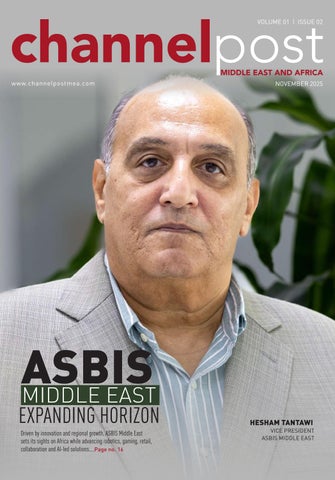
VICE PRESIDENT ASBIS MIDDLE EAST

“Africa represents one of the most dynamic regions for digital transformation. By entering markets like Ghana and the Ivory Coast, we’re not only expanding our footprint but investing in the continent’s digital future.”
Driven by innovation and regional growth, ASBIS Middle East sets its sights on Africa while advancing robotics, gaming, retail, collaboration and AI-led solutions.
ASBIS Middle East, a leading valueadded distributor for IT, IoT, AI, and consumer technology solutions, is entering a pivotal phase in its growth journey. Renowned for its extensive distribution network, diverse brand portfolio, and ability to identify emerging opportunities across the EMEA region, the company is now turning its focus to Africa — a region rich in innovation, youthful energy, and digital potential.
With plans to open offices in Ghana and the Ivory Coast in the coming months, ASBIS is accelerating its strategy to expand across the continent. The move reflects the company’s confidence in Africa’s growing digital economy and its commitment to fostering local enablement, infrastructure development, and access to global technology.
According to Hesham Tantawi, Vice President of ASBIS Middle East, the company’s expansion marks a pivotal step in extending ASBIS’s operational reach and establishing a sustainable foundation for future growth.
“Africa represents one of the most dynamic regions for digital transformation,” says Tantawi. “We are witnessing massive investments in connectivity, infrastructure, fintech, and education. By entering markets like Ghana and the Ivory Coast, we’re not only expanding our footprint but investing in the continent’s digital future.”
Africa’s tech landscape is changing rapidly. A youthful population, improving connectivity, and increased access to smartphones are propelling demand for hardware, cloud services, and intelligent technologies. Governments are also rolling out national digital strategies, encouraging startups, and inviting international investors to participate in the continent’s digital acceleration.
For ASBIS, which already has a strong distribution presence across the Middle East and Eastern Europe, Africa offers the perfect mix of opportunity and growth potential. The decision to establish physical offices in Ghana and the Ivory Coast signals a strategic shift — from remote operations to direct engagement and localized execution.
“These new offices will serve as regional hubs,” explains Tantawi. “They will allow us to work more closely with partners, resellers, and system integrators while ensuring faster access to technology and more efficient supply chain support. Africa’s growth story is just beginning, and ASBIS wants to be part of that journey from the ground up.”
As part of its regional roadmap, ASBIS will also take part in major continental technology showcases — including GITEX Kenya and AI Everything MEA Egypt in 2026. Both events are expected to be landmark gatherings for Africa’s emerging digital ecosystem, bringing together government leaders, global brands, and homegrown innovators.
“These events are key engagement platforms,” says Tantawi. “They help us understand the pulse of local markets, connect with decision-makers, and demonstrate how our solutions can address Africa’s specific needs. Our participation in GITEX Kenya and AI Everything MEA Egypt is about listening, collaborating, and co-creating the future with our partners.”
Through these events, ASBIS aims to highlight its expanding technology ecosystem — from AI and gaming to robotics and smart solutions — while forging stronger relationships across East and North Africa.
ASBIS’s push into Africa builds upon years of success in the Middle East, where the company has become synonymous with innovation-driven distribution. From infrastructure solutions to retail and gaming, ASBIS has consistently evolved its product lines and go-to-market strategies to meet shifting customer expectations.
Under Tantawi’s leadership, the company has diversified its regional operations and transformed itself from a pure distributor to an ecosystem enabler, connecting global technology brands with local demand. Its strength lies not just in the breadth of its portfolio but in its ability to custom-
ize solutions for every market it enters.
“Our success in the Middle East has come from being close to our partners, understanding local challenges, and adapting quickly,” Tantawi remarks. “That same formula will guide us in Africa. We don’t believe in a one-size-fits-all approach — each market has its own rhythm, and we intend to move in sync with it.”
One of the company’s key areas of focus in 2025 and beyond is gaming. The gaming sector in both the Middle East and Africa is undergoing a remarkable transformation, driven by a youthful population, esports investments, and growing retail demand.
ASBIS has identified gaming as a major growth vertical, expanding its product portfolio to include high-performance PCs, consoles, peripherals, and components from leading global brands. The company’s aim is to create a complete gaming ecosystem — one that serves professional gamers, content creators, and everyday enthusiasts alike.
“The gaming community in Africa is growing at an unprecedented pace,” Tantawi observes. “With increased broadband access, esports tournaments, and a passion for technology, the region is ready for the next phase of gaming evolution. ASBIS will play a central role in supplying the tools and hardware that fuel that momentum.”
ASBIS’s deep partnerships with vendors and retailers also give it a competitive advantage, allowing the company to offer tailored solutions that meet local market preferences.
Complementing its gaming expansion is ASBIS’s renewed focus on the retail technology segment. As consumer lifestyles become more connected and digital-first, the demand for smart devices, accessories, and lifestyle technology continues to climb.
ASBIS is enhancing its retail product portfolio to include a diverse range of electronics — from wearables and accessories to smart home solutions. The goal is to deliver an immersive retail
experience that connects technology with everyday life.
“Consumers today are looking for products that enhance how they live, work, and play,” says Tantawi. “Our role as a distributor is to make these innovations accessible — whether it’s a gaming console, a smart display, or a connected device. We bring technology to life, not just to shelves.”
Another strong pillar of ASBIS’s growth strategy is its expanding video conferencing and collaboration business. Partnering closely with Logitech, ASBIS is addressing the growing regional demand for hybrid work solutions, online education tools, and digital communication systems.
As hybrid work models continue to reshape global business, organizations are investing heavily in reliable video collaboration tools. Logitech’s innovative products — combined with ASBIS’s strong channel network — are helping businesses across the Middle East and Africa communicate more effectively.
“Video collaboration has become essential to business continuity and productivity,” says Tantawi. “Through our partnership with Logitech, we are delivering powerful yet simple conferencing solutions that connect people seamlessly, whether they’re in boardrooms, classrooms, or home offices.”
AROS
Next Big Leap
ASBIS is advancing its innovation-driven vision with AROS (ASBIS Robotics Solution), a strategic initiative to accelerate robotics adoption across industries such as retail, hospitality, logistics, healthcare, and education. AROS underscores the company’s commitment to integrating intelligent automation into everyday operations, transforming service delivery and customer experiences.
ASBIS has already demonstrated the potential of robotics through projects like Robo Café, an AI-powered concept that merges automation with
human-centric service, redefining the customer experience. Building on that success, AROS will serve as the cornerstone of ASBIS’s long-term roadmap, focusing on scalable robotics solutions that blend AI, machine learning, and precision engineering to meet real-world needs.
“Robotics is the future,” says Tantawi with conviction. “It’s not just about automation — it’s about intelligence, service, and creating meaningful human-machine interactions. Through AROS, we’re shaping this vision into reality by partnering with innovators who share our belief in robotics as the next decade’s defining technology.”
While Africa offers new opportunities, ASBIS continues to record strong growth in its established Middle East markets. The region remains a cornerstone of the company’s business, driven by accelerating digital transformation, smart infrastructure projects, and a thriving enterprise ecosystem.
Over the past few years, ASBIS has deepened relationships with partners and customers across the GCC, Egypt, and the Levant, supporting national agendas for digitization and innovation. Its focus on cloud, data center infrastructure, cybersecurity, and AI-powered solutions has reinforced its reputation as a trusted technology partner for both public and private sectors.
“The Middle East remains one of the most dynamic regions for innovation,” says Hesham Tantawi, Vice President, ASBIS Middle East. “From smart cities to AI adoption, the pace of transformation is remarkable. Our mission is to ensure our portfolio and services evolve with market demands.”
ASBIS’s agile business model allows it to quickly adapt to market changes, whether by expanding product categories or optimizing logistics and distribution. By combining regional expertise with global partnerships, the company delivers scalable and flexible solutions — a key advantage in fast-

moving markets like the UAE and Saudi Arabia. Partner enablement is central to ASBIS’s strategy. Through training, certification, and marketing support, it empowers resellers and integrators, strengthening technical capabilities and fostering a collaborative ecosystem.
“Our success is tied to our partners’ success,” Tantawi emphasizes. “We aim to build long-term relationships and provide the tools and knowledge partners need to thrive across the Middle East and Africa.”
Central to ASBIS’s regional strategy is local empowerment. The company approaches new markets not just as a distributor, but as a partner committed to long-term development.
“We want to grow with the regions we serve, not just within them,” says Tantawi. “That means building capacity, supporting entrepreneurship, and transferring skills. When we enter a market, we create value for our partners, employees, and communities.”
ASBIS will launch training and certification programs for resellers, system integrators, and channel partners to deepen technical and sales expertise. By investing in education and enablement, the company strengthens local value chains and fosters a sustainable technology ecosystem.
ASBIS’s vision for expansion also integrates sustainability and corporate responsibility. The company is embedding ESG principles into its operations — from eco-friendly logistics to promoting energy-efficient products and reducing waste in the supply chain.
“As distributors, we play a key role in shaping how technology impacts the world,” says Tantawi. “Our growth must go hand in hand with responsibility — toward the environment, society, and future generations.”
This commitment extends to ASBIS’s social initiatives, which often focus on education, youth empowerment, and innovation-driven community projects.
As ASBIS Middle East enters its next chapter, the focus is clear: connect markets, empower people, and drive innovation. Expanding into Africa, enhancing its product portfolio, and investing in technologies like robotics, ASBIS is building a continental vision.
“Africa is the next big opportunity, but the Middle East remains our strongest pillar,” says Tantawi.
From gaming to AI and robotics, ASBIS continues bridging regions, redefining distribution, and unlocking new markets.
Rajesh Kandaswamy, Distinguished VP Analyst at Gartner, emphasizes that adopting an AI-first strategy—a deliberate approach to prioritizing AI in decision-making and innovation—can yield 25% better business outcomes by 2028, driving agility, literacy, and cross-functional transformation.

A’s transformative and vast potential is reshaping the business landscape, compelling executive leaders to consider whether they are truly leveraging AI for maximum benefit. Adopting an AI first strategy means making a deliberate commitment to explore and evaluate AI’s capabilities in critical areas of investment and application. Gartner predicts that by 2028, enterprises that adopt and sustain an AI-first strategy across their organization will achieve 25% better business outcomes than competitors that do not.
For enterprises to embody AI-first thinking in their strategy and related investment, portfolio, and execution management practices, it is important to understand the true meaning of the AI-first approach.
AI-first is a strategic approach that guides the use of AI technology in an enterprise, or for a unit within, to maximize the benefits of AI. Rather than treating AI just as a tool, AI first means always considering its full potential and possibilities against other choices and using it where it makes the most sense.
AI-first accelerates AI adoption, improves AI literacy, fosters continuous learning and helps uncover new possibilities that might otherwise be missed. Most importantly, an AI first strategy is not a rigid mandate to always
use AI, it’s a commitment to exploring its merit in every situation.
Organizations can implement AI-first in various ways, from an enterprisewide transformation to focusing on specific areas like product development, IT systems, or HR practices. The greatest benefits come when organizations break down silos and maximize cross-functional opportunities.
Adopting an AI-first strategy requires commitment from senior leadership, clear communication and robust support system for change management. It also demands new ways of measuring success—tracking shifts in behaviors, mindsets and the quality of learning—while maintaining rigorous standards around ethics, bias management and security.
Determining the right time to adopt an AI-first strategy is critical for organizations seeking to maximize the value of their AI investments. While organizations are investing in AI, they consistently struggle to maximize its value.
An AI-first approach becomes especially urgent when there is a widening gap between the perceived promise of AI and the value delivered by current use cases, or when existing systems and mindsets are barriers to meaningful change.
Key Indicators for Adoption
RAJESH KANDASWAMY
Distinguished VP Analyst at Gartner,
“An AI first strategy is not a rigid mandate to always use AI, it’s a commitment to exploring its merit in every situation.”
Consider moving towards an AI-first Strategy when:
l The gap between AI’s perceived potential and the value of currently proposed use cases is widening.
l The potential for large-scale disruption or transformation due to AI is high.
l Executive leadership is ready to encourage and enable transformational changes, but the remainder of the organization is illprepared and unable or unwilling to conceive broad change.
It’s important to remember that “AI-first” does not mean “AI always.” Forcing adoption where it isn’t merited can lead to wasted resources, failed projects and diminished organizational support. Leadership must clearly define what being “AI-first” means within their context—including its scope and limitations—to set realistic expectations.
A careful strategic assessment should guide when and how to commit to an AI-first path. Moving too soon can result in wasted effort if the organization isn’t ready. Likewise, waiting too long risks falling behind competitors or missing out on market opportunities. While there are similarities with cloud-first strategies, such as elevating technology as a key decision factor, adopting an AI-first mindset goes further by challenging entrenched beliefs and fostering innovation across all business areas, not just infrastructure.
Subela Bhatia, Founder and Sales Director of Imperium Middle East, explains how the company is empowering enterprises, partners, and academia across the region — from upskilling programs to advanced human risk management solutions — to strengthen cybersecurity resilience.
How would you describe the current cybersecurity landscape in the Middle East, and what specific gaps or challenges is Imperium Middle East aiming to solve?
The Middle East is undergoing rapid digital transformation — from accelerated cloud adoption and remote or hybrid work models to the rise of mega-projects like smart cities and large-scale energy infrastructures. But with that progress comes a corresponding increase in the region’s exposure to cyber threats. We’re seeing more state-sponsored attacks, sophisticated phishing campaigns, ransomware, and social engineering tactics. Vulnerabilities in legacy and OT/ICS systems also continue to pose risks, especially in critical infrastructure sectors.
At the same time, regulatory frameworks and data protection laws are evolving rapidly across the region, which is both a challenge and an opportunity. The key gaps we’ve identified include a significant shortage of trained cybersecurity professionals, weak security awareness among employees, and insufficient coverage for modern threat vectors — such as application security, cloud-based attacks, and AI-driven threats.
At Imperium Middle East, we’re focused on addressing these gaps through a combination of upskilling and re-skilling initiatives, human risk management simulations, and application security platforms. Our approach integrates both the human and technical layers of cybersecurity, helping enterprises and government organizations build long-term digital resilience.
Can you walk us through Imperium’s cybersecurity products and services portfolio, and how it’s designed to meet the evolving needs of enterprise and government clients?
Our portfolio is structured to serve clients across three primary dimensions — learning and development, human risk management, and security technology solutions.
Through our Learning and Development Solutions, we focus on cybersecurity, data, and

Founder and Sales Director of IMPERIUM Middle East
“Our goal is to build a holistic cybersecurity ecosystem that empowers people, strengthens organizations, and enhances
the region’s digital
resilience..”
technology training programs that lead to globally recognized certifications. These courses are vendor-neutral and are designed for IT specialists who want to strengthen their expertise in ethical hacking, threat management, cloud security, and OT/ICS systems. We’ve seen a growing demand in these areas, especially as enterprises look to build in-house expertise.
Beyond technical skills, we also deliver soft skills programs covering leadership, conflict management, and emotional well-being — areas where organizations are increasingly investing to enhance workforce performance and resilience.
Our Human Risk Management offering leverages partnerships with Gartner leaders like KnowBe4, enabling organizations to test and train
employees using AI-driven simulated phishing campaigns and adaptive learning. The system assesses individual risk scores and tailors awareness programs accordingly, making the process more targeted and effective.
In our Security Solutions portfolio, we provide INvicti DAST for dynamic web vulnerability assessment and ImmuniWeb for dark web threat intelligence and application security. We also offer Risk Management Automation solutions that simplify compliance, governance, and vulnerability management — all designed to help clients stay a step ahead of evolving threats.
What is Imperium’s go-to-market strategy in such a competitive cybersecurity environment, and how are you positioning the brand for long-term trust and impact?
Our brand is built on trust, relationships, and a deep understanding of client needs. We operate across two main verticals — Trainings and Solutions — both of which are aligned with our mission to deliver tailored cybersecurity outcomes rather than one-size-fits-all offerings.
Our go-to-market strategy is focused on identifying and engaging with our Ideal Customer Profile (ICP) — clients whose needs align with our expertise in human risk management, application security, and compliance automation. The regional cybersecurity environment is rapidly evolving, driven by cloud transformation, application-centric attacks, and the need for compliance with tightening regulations.
To stand out, we combine skills development, awareness programs, and security technology — offering an integrated approach that addresses both the human and technological aspects of cybersecurity. Our current customer base spans government, large enterprises, and academia, but we are now sharpening our focus on BFSI and healthcare sectors, where data protection and compliance are paramount.
We are also investing in AI-driven tools and algorithms to identify and engage our ideal customers more efficiently. As we scale, our marketing and SEO strategies will reinforce our brand’s focus on AI-based human risk management and hybrid security solutions, positioning Imperium as a trusted partner for long-term digital
resilience.
With cyber skills in high demand, how is Imperium approaching training, upskilling, and certification—both internally and for clients or partners?
Our approach to training and upskilling is highly personalized and outcome-oriented. We specialize in bespoke training programs, not offthe-shelf courses. Every organization has unique needs, and our training is tailored accordingly — for example, Data Analytics with AI, Power BI, and AI-driven dashboards for specific functions like finance, operations, legal, and HR.
We offer everything from two-hour workshops for employees and students to comprehensive six- to twelve-month postgraduate programs that cover advanced topics such as ethical hacking, digital forensics, AI in cybersecurity, cloud, and OT/IoT systems. Our vendor-neutral approach ensures that learners acquire knowledge that’s practical and widely applicable, and our partnerships with global leaders such as EC-Council, KnowBe4, Invicti, and ImmuniWeb add strong credibility to our certification portfolio.
We also work closely with universities to bridge the gap between academia and industry. Through MoUs with leading educational institutions, we conduct hackathons, cybersecurity bootcamps, and GenAI-focused workshops to equip students with relevant, employable skills. These initiatives are designed to prepare the next generation of cybersecurity professionals and, in many cases, lead directly to job placements.
Internally, we believe in continuous learning. Our teams undergo regular knowledge refresh sessions, assessments, and simulated phishing exercises to ensure that awareness remains high and skills stay sharp. Cybersecurity is not a onetime effort — it’s a continuous journey of learning, adapting, and evolving.
How do you ensure that your solutions stay ahead of increasingly sophisticated threat actors, especially with the rise of AI-powered attacks?
The rise of AI-driven threats has completely changed the cybersecurity landscape. At Imperium, we stay ahead by embracing AI — not fearing it. We integrate AI-based tools across our
solutions to strengthen detection, response, and prediction capabilities.
We also place a strong emphasis on training employees and students on how to use AI in their respective job roles, helping them adapt to an evolving digital environment. Rather than viewing AI as a threat to existing roles, we encourage organizations to prepare for the new roles that will emerge as automation takes over repetitive tasks.
In parallel, we’re expanding our Risk Management and Governance Automation Platforms, helping enterprises gain visibility into their risk posture and compliance obligations. This not only reduces operational friction but also helps organizations stay proactive in identifying and mitigating potential threats before they escalate.
What are your strategic growth plans over the next 12 to 24 months, and which markets or sectors are key to your expansion roadmap?
Our growth plans revolve around constant evolution. Over the next two years, we intend to expand our footprint in both the cybersecurity and data analytics domains. The demand for data-driven insights is skyrocketing, and we see tremendous opportunity in integrating AI and analytics solutions alongside our training and cybersecurity offerings.
A major area of focus will be Risk Management and Compliance Automation, particularly in Third-Party Risk Management (TPRM). With supply chain vulnerabilities becoming more prominent, we aim to partner with established global players to deliver solutions that mitigate risks across interconnected ecosystems.
We are also expanding our Learning and Development portfolio to include globally recognized certifications such as ISO standards and SOC 2 compliance programs, which are increasingly in demand among enterprises in the Middle East.
In essence, our goal is to build a holistic cybersecurity ecosystem — one that empowers people, strengthens organizations, and contributes to the region’s digital resilience. By continuously evolving with market trends and technology shifts, Imperium Middle East is committed to being at the forefront of cybersecurity innovation, education, and trust-building across the Middle East and Africa.


A global stage for innovation and collaboration, GITEX 2025 brought together the world’s leading technology companies, visionaries, and disruptors to showcase breakthroughs in AI, cybersecurity, cloud, and digital transformation—reinforcing the Middle East’s rise as a global technology powerhouse.
GITEX 2025 once again reaffirmed its status as the Middle East’s largest and most influential technology event, bringing together global innovators, industry leaders, startups, and government delegations under one roof to celebrate, explore, and shape the future of digital transformation. From its early days as a regional trade show, GITEX has grown into a global platform where technology, business, and innovation converge, and this year’s edition demonstrated that growth in every sense. The event drew thousands of participants from across the world, offering a stage to present cutting-edge solutions across artificial intelligence, robotics, cybersecurity, cloud computing, IoT, and next-generation enterprise solutions. Beyond the dazzling exhibits, the energy on the floor was palpable, reflecting the region’s rapid digital evolution and its ambition to emerge as a global technology powerhouse.
For companies like Hewlett Packard Enterprise, GITEX represented the culmination of meticulous planning and a chance to demonstrate both global technological leadership and regional relevance. Michael Langeveld, Head of Technology & Business Development for Emirates and Africa, described the event as “probably the biggest IT event on the planet.” He highlighted that months of preparation went into curating a showcase that would resonate with the Middle East and Africa markets. “Between eight and ten months before the event, we start evaluating all our global innovations. We look at what is trending in AI, cloud, data, and robotics, and then we cherry-pick the solutions that will resonate with customers here in the Middle East and Africa. It’s not just about technology—it’s about relevance, local market understanding, and practical impact,” he explained. HPE brought its Capitan supercomputer, modular AI-powered data centers capable
of rapid deployment, and robots ranked among the world’s best in competitive soccer, creating an exhibition that highlighted not just technological prowess but practical business application for regional enterprises. Langeveld emphasized that GITEX offered the opportunity to bridge global capabilities with local business needs, showing customers how these solutions could be implemented quickly and efficiently.
Similarly, Pankaj Chaudhary, Regional Head of Sales-IMEA for HID, viewed GITEX as a strategic platform to engage partners, demonstrate innovative track-and-trace solutions, and explore untapped markets across the Middle East and Africa. “GITEX continues to be one of the region’s largest technology events, bringing together global innovators, startups, and enterprises. For HID, it’s not just about exhibiting products—it’s about connecting with our partners, understanding market demands, and exploring opportunities for growth

in emerging markets,” he said. HID showcased its portfolio of RFID and barcode technologies, real-time location systems, and automated asset tracking solutions, emphasizing operational efficiency, cost reduction, and digitization for sectors like healthcare, retail, oil and gas, and government. Chaudhary noted that GITEX allowed HID to meet directly with distributors, channel partners, and end customers, providing insights into regional trends and generating leads that would translate into long-term business opportunities. The event, he said, enabled the company to strengthen relationships, understand client needs in depth, and demonstrate practical solutions that enhance efficiency and accountability across industries.
For companies operating in the data and storage sectors, GITEX provided a dynamic platform to highlight new technologies and expand regional influence. Mohit Pandey, Head of Sales for the Middle East, Turkey, and Africa at Seagate, described the exhibition as a unique convergence of industry leaders, innovators, and customers. “GITEX has always been a premier platform for
showcasing new technologies. For us, it’s not just about displaying products—it’s about engaging with partners and customers, understanding their challenges, and building solutions that meet regional needs,” he noted. Seagate leveraged the event to present advancements in data storage, management, and enterprise infrastructure, demonstrating how scalable and secure solutions can enhance operational efficiency. Pandey reflected on the value of live engagement with customers and partners, saying that every interaction at GITEX offered an opportunity to learn, share, and grow, while building connections that would ultimately strengthen their footprint in the Middle East and Africa markets.
Cybersecurity remained at the forefront of GITEX 2025, with companies underscoring the event’s role in shaping conversations around AIdriven threats, digital resilience, and regulatory compliance. Fady Younes, Managing Director for Cybersecurity at Cisco, emphasized the evolution of GITEX from a regional trade show to a global stage where cybersecurity and AI converge to shape the future of digital transformation. “Each year, we see more engagement, more complex discussions, and more collaboration. GITEX allows Cisco to demonstrate our cybersecurity frameworks, AI-driven security solutions, and enterprise-grade networking technologies in a live environment. It’s also an opportunity to understand how customers across industries— government, healthcare, finance—are approaching digital transformation,” Younes said. Elias Samarani, Manager for System Engineering at Proofpoint, echoed this sentiment, describing GITEX as the epicenter of innovation and digital resilience. He noted that the event went beyond product showcases to serve as a hub for knowledge exchange, partnerships, and shaping the next phase of enterprise transformation across AI, cloud, and cybersecurity sectors.
Mark Dellavalle, SVP of Global Systems Engineering at Extreme Networks, highlighted

MICHAEL LANGEVELD HEAD OF TECHNOLOGY & BUSINESS DEVELOPMENT (EMIRATES & AFRICA) AT HPE

REGIONAL HEAD OF SALES-IMEA INDIAN SUBCONTINENT, MIDDLE EAST AND AFRICA REGION, HID
the event’s role as a stage for technological evolution. “GITEX has become the definitive stage for technology evolution, where innovation meets impact. It brings together global leaders and disruptors to showcase advances in AI, networking, cloud, and cybersecurity. The event reflects how far the Middle East has come as a digital powerhouse and provides a platform to forge partnerships that will redefine industries,” he said. Similarly, Alexandros Gkindis, Regional Director MENA at Genesys, described GITEX as a platform that fosters human-centric technological innovation. “It’s a place where AI-driven customer experience solutions meet real business needs. We are able to connect with clients, explore emerging opportunities, and demonstrate how human-centric automation can transform operations and enhance customer satisfaction,” Gkindis explained. The emphasis on collaboration, knowledge sharing, and live demonstrations illustrated how GITEX creates opportunities for exhibitors to educate, inspire, and influence the market.
For Hewlett Packard, GITEX also underscored the power of channels and partnerships. Narayanan Venkataraman, Head of Channel for the Middle East, Saudi Arabia, and Africa at

MOHIT PANDEY HEAD OF SALES, MIDDLE EAST, TURKEY & AFRICA AT SEAGATE

FADY YOUNES
MD
HP, explained that the event was instrumental in fostering relationships with partners and distributors, highlighting new offerings, and reinforcing brand trust. “GITEX is truly a celebration of technology, innovation, and collaboration. It brings together innovators, customers, and partners to exchange ideas, explore opportunities, and inspire progress. It’s more than an exhibition—it’s where the IT community connects, evolves, and celebrates the spirit of digital transformation across the region and beyond,” he said. Remi Vacher, Sales Engineering Manager at Zscaler, pointed to the event as a space to demonstrate cybersecurity solutions, engage directly with customers, and explore trends like Zero Trust frameworks, AI integration, and secure connectivity. “GITEX fosters meaningful conversations about how digital transformation is redefining industries across the Middle East and Africa. It’s where innovation meets real-world application, driving partnerships and highlighting the region’s rapid evolution as a global technology powerhouse,” Vacher explained.
Emad Haffar, Head of Technical Experts META at Kaspersky, described GITEX as a platform to present cybersecurity innovations such

ALEXANDROS
GKINDIS REGIONAL DIRECTOR MENA, GENESYS

ELIAS SAMARANI
MANAGER FOR SYSTEM ENGINEER, PROOFPOINT MIDDLE
as AI-powered threat detection and cyber immunity systems. “It provides a powerful platform for industry leaders to showcase breakthrough technologies while engaging directly with customers and partners. GITEX highlights how rapidly the region is embracing next-generation digital resilience and secure infrastructure,” he said. Ahmed El Saadi, Vice President for the Middle East, Africa, Turkey, Romania, and CIS at Splunk, emphasized that the event was more than a technology showcase. “GITEX reflects the convergence of AI, cybersecurity, and data intelligence. For us, it’s an opportunity to engage with customers, partners, and regulators driving the region’s digital future. It is where the Middle East continues to embrace next-gen solutions with agility and vision, making GITEX the heartbeat of progress and collaboration in technology,” El Saadi noted.
GITEX 2025 also provided a stage for innovation in cybersecurity analytics and threat intelligence. Dr. Emad Fahmy, Director of Systems Engineering, Middle East at NETSCOUT, highlighted the growing sophistication of AI-driven cyberattacks and the critical need for adaptive defenses. “Netscout showcased AI-powered

NARAYANAN VENKATARAMAN HEAD OF CHANNEL FOR THE MIDDLE EAST, SAUDI ARABIA AND AFRICA AT HP

MARK DELLAVALLE
SVP GLOBAL SYSTEMS ENGINEERING AT EXTREME NETWORKS
adaptive DDoS and Adaptive Threat Analytics designed to detect and mitigate dynamic threats in real time. The event underscored the critical role of collaboration between vendors, customers, and global networks to strengthen security posture,” he said. Prashant Menon, Channel Leader, UAE at Check Point Software Technologies, reinforced the importance of GITEX in enabling partners to stay ahead of evolving threats, gain hands-on insights, and explore new revenue opportunities. “GITEX highlights the latest in AI-driven security, threat intelligence, and unified architecture, allowing partners to see solutions in action and enhance their capabilities, profitability, and relevance,” Menon explained.
Fady Richmany, Regional Vice President at Commvault, noted the growth and strategic value of GITEX as a hub for business expansion and market insight. “It continues to offer unmatched exposure, networking, and engagement opportunities. Over the years, GITEX has evolved into a global platform, helping companies showcase critical solutions in data protection, cyber resilience, and AI-driven security. The event allows participants to engage directly with partners, customers, and industry leaders, fostering col-

REMI VACHER
SALES ENGINEERING
MANAGER
AT ZSCALER FOR THE MIDDLE EAST AND AFRICA

HEAD OF TECHNICAL EXPERTS META, KASPERSKY
laboration and awareness of emerging threats,” Richmany said. Vikas Panchal, General Manager of Tally Solutions MENA, observed that GITEX provided a platform to showcase innovations for SMEs and enterprise solutions. “For Tally, GITEX allows us to highlight new releases like version 7.0, e-invoicing readiness, and cloud access while educating businesses and startups on compliance and digital transformation. It’s an essential hub for networking, learning, and growth,” he said.
Across the board, exhibitors reflected on the collaborative energy and forward-looking spirit of GITEX 2025. Mohit Pandey of Seagate and Fady Younes of Cisco emphasized that the event was more than a showcase; it was a convergence point for learning, partnerships, and growth. Michael Langeveld of HPE noted that beyond the technology, it was the conversations, relationships, and knowledge exchanges that truly defined the event. Exhibitors observed that GITEX provided an opportunity not only to demonstrate innovation but to understand market needs, explore new regions, and create solutions that were locally relevant yet globally competitive.
GITEX 2025’s expansion into Expo City, along with its continued focus on AI, cybersecurity,


VP
cloud, and data-driven solutions, underscores its trajectory as the Middle East’s premier technology event. The exhibition demonstrated how global innovation could be localized, how partnerships could drive adoption, and how emerging technologies could be applied to solve real-world problems across sectors. For participants, it was clear that the event was not simply about showcasing technology; it was about shaping markets, building ecosystems, and driving growth across the region.
The energy on the GITEX 2025 floor was a testament to the Middle East’s ambition and its emergence as a global technology hub. Exhibitors, partners, and attendees engaged in robust discussions, exploring AI-driven automation, secure digital infrastructures, enterprise-grade cloud and storage solutions, and advanced cybersecurity frameworks. From supercomputers and modular data centers to AI-powered analytics and robotics, the range of innovations on display highlighted the region’s capability to adopt and implement next-generation solutions. For the companies involved, GITEX 2025 was a launchpad for strategic engagement, knowledge exchange, and brand reinforcement.

FADY RICHMANY REGIONAL VICE PRESIDENT, COMMVAULT

DIRECTOR
In the final analysis, GITEX 2025 reaffirmed its position as the definitive platform for technological evolution in the Middle East and beyond. By bridging global innovation with regional relevance, fostering collaboration between enterprises, partners, and governments, and highlighting breakthrough solutions across AI, cloud, cybersecurity, and enterprise infrastructure, GITEX continues to be a critical catalyst for growth. For exhibitors, it was a space to showcase leadership, connect with decision-makers, and explore emerging markets. For visitors, it was an opportunity to learn, experience, and engage with technologies that are shaping the future.
As technology accelerates and industries embrace digital transformation, GITEX will continue to evolve, remaining a must-attend event where innovation meets impact, ideas turn into partnerships, and technologies translate into tangible business outcomes. The collaborative spirit, the diversity of solutions, and the scale of participation ensured that GITEX 2025 was not just an exhibition—it was a celebration of progress, a hub for innovation, and a launchpad for the next wave of technological advancement in the Middle East, Africa, and beyond.

VIKAS
PANCHAL GENERAL MANAGER OF TALLY SOLUTIONS MENA
Shure has announced the appointment of Ekta Shetty as Senior Sales Director for Africa, the Middle East, India, Southeast Asia, and the Pacific. Based in Shure’s Dubai office, Ekta will lead the Sales Management, Market Development, Channel Marketing, and Customer Experience teams across Dubai, India, Singapore, and Australia.
In her new role, Ekta will be responsible for driving revenue growth, strengthening distribution and channel partnerships, and advancing Shure’s go-to-market strategies and marketing initiatives across these high-priority regions. Her leadership is expected to accelerate Shure’s market penetration in the Collaboration and Conferencing sector, while further expanding opportunities in professional audio and unified communications solutions.
Ekta brings over 15 years of international leadership experience in the AV and Unified Communications (UCC) industries. She previously held a senior role at Barco, leading Sales and Marketing across the Middle East, Africa, and Asia Pacific. During her tenure, she streamlined operations, optimized channel programs, and enhanced regional performance, delivering consistent business growth and operational excellence.

Her appointment highlights Shure’s commitment to strengthening its presence and accelerating growth in critical markets across
MEA, India, Southeast Asia, and the Pacific. By leveraging Ekta’s experience, Shure aims to foster stronger partner relationships, expand channel engagement, and deliver innovative solutions that address evolving customer needs.
“I am proud to welcome Ekta to Shure,” said José Rivas, Vice President and Chief Sales Officer. “Her proven expertise in sales and marketing, extensive regional experience, and strong network within the AV and UCC industries will be instrumental in shaping our future growth strategy across these regions.”
Reflecting on her role, Ekta Shetty stated: “Joining Shure feels like embarking on a new adventure with a close-knit team ready to make meaningful impact and lasting success across Africa, the Middle East, India, Southeast Asia, and the Pacific markets. I am thrilled to be part of Shure’s vibrant community, where collaboration turns ideas into reality and challenges into opportunities.”
Ekta’s appointment is expected to drive stronger regional engagement, bolster channel performance, and support Shure’s mission of delivering high-quality audio solutions and unified communications technologies to businesses and organizations across the globe.
Commvault has announced the appointment of Dr. Mazen Abduljabbar as Country Manager for Saudi Arabia, strengthening its leadership team in the region. With over 25 years of experience in business development, strategic leadership, and customer engagement, Dr. Mazen brings a wealth of expertise to drive Commvault’s mission of advancing cyber resilience across the Kingdom.
Dr. Mazen has held several high-profile roles, including Executive Customer Director at Alstom Saudi Arabia and Executive Director of Business Development at Siemens KSA, covering both Saudi Arabia and Bahrain. In these positions, he successfully led major projects, cultivated strong customer relationships, and fostered a customercentric culture that emphasized innovation, operational excellence, and measurable business outcomes.
Commenting on his appointment, Dr. Mazen said, “I’m delighted to join Commvault at such a pivotal time for both the company and the region. Cyber resilience is no longer optional; it’s a business imperative. Commvault plays a vital role in helping enterprises achieve continuous business

operations, and I look forward to collaborating closely with our customers and partners to strengthen cyber resilience across Saudi Arabia.”
Yahya Kassab, Senior Director and General Manager, Gulf & KSA, Commvault, added, “We are thrilled to welcome Dr. Mazen to Commvault. His proven leadership, strategic insight, and customer engagement expertise make him the ideal leader to guide our initiatives in Saudi Arabia and support organizations in building stronger, more resilient infrastructures.”
Dr. Mazen holds a Doctorate in Business Administration from University Technology MARA, Malaysia, and an MBA from King Abdulaziz University, Saudi Arabia. His extensive academic background, combined with his practical leadership experience, equips him to drive sustainable growth, enhance customer value, and deliver innovative solutions tailored to the Kingdom’s evolving cybersecurity landscape.
In his new role, Dr. Mazen will focus on expanding Commvault’s footprint in Saudi Arabia, strengthening partnerships, and supporting enterprises in implementing robust, futureready cyber resilience strategies. His appointment underscores Commvault’s ongoing commitment to empowering organizations across the Gulf region with comprehensive data protection and cybersecurity solutions.
This strategic move positions Commvault to further accelerate the adoption of advanced cyber resilience practices, helping organizations navigate increasingly complex digital and regulatory environments while safeguarding their most critical business assets.
Axis Communications has announced the appointment of Loubna Imenchal as its new Regional Director for the Middle East, Turkey, Central Asia, and Africa (META). This strategic leadership appointment underscores Axis’s commitment to accelerating growth, strengthening partnerships, and driving sustainable long-term expansion across one of the most dynamic and diverse regions globally.
Loubna brings over 20 years of executive leadership experience with global technology companies, including Honeywell, Johnson Controls, and Logitech. She has held senior roles across sales, operations, and business development, consistently delivering double-digit growth while transforming complex markets. Most recently, she led Logitech’s Enterprise Business across META and previously managed Johnson Controls’ EMEA operations, aligning global strategies with local market dynamics and fostering robust ecosystems of partners and customers. Her extensive experience navigating the region’s unique business landscape positions her to drive Axis’s growth and further strengthen its competitive position.
Beyond her corporate achievements, Loubna is a passionate advocate for diversity and inclusion in the technology sector. She founded Con-

nect2Elevate, a non-profit platform dedicated to empowering and connecting women in tech, reflecting her commitment to greater representation, mentorship, and leadership opportunities for underrepresented groups in the industry.
Her efforts have been recognized internationally, earning multiple awards for her impact on inclusion and business leadership.
“Joining Axis at this moment is a true privilege,” said Loubna. “The META region presents tremendous opportunities and unique challenges. With Axis’s innovation, strong partner ecosystem, and commitment to excellence, I look forward to working closely with our teams, partners, and customers to accelerate growth, drive innovation, and create sustainable, long-term impact across the region.”
Verena Rathjen, Vice President Sales EMEA at Axis, added: “We are thrilled to welcome Loubna to our leadership team. Her deep META regional expertise, proven track record in transforming complex markets, and ability to build trusted, long-term partnerships make her the ideal choice to lead Axis in the region.”
Loubna’s appointment reflects Axis’s ongoing commitment to long-term growth in the Middle East and Africa. Under her leadership, the company will continue strengthening its regional presence, supporting local teams and partners, and ensuring that customers across the META region receive the highest standards of service, support, and innovative solutions.
Halcyon announced the appointment of Dave Pawlowski as Worldwide Vice President of Channels and MSSP. With more than two decades of global channel and go-to-market leadership, Pawlowski will spearhead Halcyon’s partner ecosystem strategy to accelerate growth, expand global reach, and enable partners to provide nextgeneration ransomware defense at scale.
Pawlowski brings deep expertise in building and scaling diverse partner ecosystems spanning Managed Service Providers (MSPs/MSSPs), Value-Added Resellers (VARs), Distributors, National Partners, and Global System Integrators (GSIs). His leadership has consistently enabled organizations to achieve transformative results by designing innovative go-to-market strategies that empower partners to deliver differentiated, services-led cybersecurity solutions.
“Dave has a remarkable track record of enabling partners to succeed in some of the most competitive markets in cybersecurity. His vision and leadership will be instrumental in expanding Halcyon’s channel program and equipping our partners with the tools they need to help customers strengthen their resilience against ransomware.”

– Jon Miller, CEO and Co-founder, Halcyon.
“Halcyon is changing the game in ransomware defense, and their channel-first strategy stands out in a market where too many vendors still treat the channel as an afterthought. With a proven leader like Dave Pawlowski driving their global channel program, Halcyon is the kind of partner BlackLake Security relies on to deliver resilience
against the threats keeping our customers up at night.”– Mark Jones, CEO, BlackLake Security
Equally recognized for his leadership in organizational development, Pawlowski has built and led high-performing channel sales organizations, cultivating top talent and aligning global ecosystems to meet enterprise customer needs. He is widely respected for fostering high-impact alliances that extend beyond traditional resale models, including services integration, co-innovation, and outcome-based delivery.
“Halcyon is redefining how organizations approach ransomware defense, and I’m excited to join the team at such a pivotal moment. Partners play a critical role in extending this mission globally, and I look forward to working with our ecosystem to accelerate growth, drive innovation, and deliver unmatched value for our customers.” – Dave Pawlowski, Worldwide Vice President of Channels and MSSP, Halcyon.
Pawlowski’s appointment underscores Halcyon’s commitment to building a partner-first business model and scaling its global footprint to meet the growing demand for advanced ransomware defense.
Hadi Kobeissi, Partner – Digital & Technology Consulting at PwC Middle East, emphasizes a balanced approach to AI, combining innovation with responsibility, robust governance, and human-centric design, to help Middle East businesses move from hype to sustainable, scalable transformation.
Are Middle East businesses investing in the right AI systems — or are many still chasing the hype without a clear strategy or ROI?
In a space evolving as fast as AI, it’s hard to say what the “right” systems even are as they’re constantly changing. What really matters is not chasing the latest tool, but building the culture, skills, and agility to keep adapting as AI advances. A strong AI strategy is not just about technology choices; it’s about aligning innovation with business outcomes and measuring success beyond direct or short-term ROI, through long-term value, adaptability, and impact. We’re seeing more Middle Eastern businesses take this approach, focusing less on hype and more on purposedriven adoption, using AI to power specialized offerings, sector-wide and even national transformations. At PwC, we help clients put that strategy into action, ensuring their AI investments are both relevant today and resilient tomorrow.
What are the biggest blind spots companies face when adopting AI, particularly around data readiness, governance, and talent alignment?
One of the biggest blind spots is underestimating the impact of foundations like data quality and governance are to AI success. Many organisations still operate in silos where data is inconsistent, inaccessible, or lacks a unified governance model. Without this foundation, even advanced AI systems fail to scale. Another challenge lies in human capability, bridging the gap between technical understanding and strategic application. Companies often overlook the need to upskill or reskill employees and embed cross functional collaboration. As a firm, we advise clients to treat AI readiness as a business transformation, not a technology implementation. This means assessing data maturity, governance frameworks, and workforce readiness simultaneously to ensure sustainable value creation.
How does PwC view the balance between innovation and responsibil-

HADI KOBEISSI
Partner, Digital & Technology Consulting at PwC Middle East
“The Middle East is not just adopting AI; it is shaping up to be a global player in the
AI
dialogue
on how to innovate responsibly and at scale..”
ity — especially as AI rapidly evolves beyond traditional business use cases?
Balancing innovation with responsibility is at the heart of PwC’s approach to AI. We believe that rapid progress must be matched with ethical foresight and sound governance. As AI extends into decision making and citizen facing services, organisations must ensure that innovation is transparent, fair, and explainable. Our Responsible AI framework helps clients embed these
principles from the outset, assessing potential risks, addressing bias, and ensuring accountability across every stage of the AI lifecycle. Responsible innovation is not about slowing progress; it is about building systems that people can trust and depend on for years to come.
What happens when people, processes, and technology aren’t aligned for AI integration? How can organizations
correct course?
When alignment is missing, AI projects tend to stay in pilot mode or fail to demonstrate tangible real-world outcomes. We often see strong technologies being deployed without sufficient process reengineering or cultural readiness. Correcting course requires leadership focus on three dimensions: purpose, process, and people. Leaders need to define a clear problem statement for AI to solve, redesign workflows to support the transformation, and upskill people to operate in AI augmented environments.
What practical steps can businesses take to move from AI experimentation to responsible, secure, and scalable implementation?
To move from AI experimentation to responsible, secure, and scalable implementation, organizations need to start with clarity and intent. That means defining the opportunity or problem statement, setting measurable outcomes, and knowing what success looks like, as well as when a pivot is needed. Additionally, responsibility must be built in from the start, not added later. Embedding governance, safety, and security features, such as human oversight, bias auditing, and explainability, early in the design ensures that AI solutions can scale without compromising trust or compliance. Equally important is designing with humans at the center. Even automation-focused AI impacts people, whether employees, customers, or decision-makers. Systems that ignore human experience and context rarely succeed in

real-world environments. Finally, organizations must design for agility and continuous evolution. In a field where today’s innovation becomes tomorrow’s legacy, scalable AI requires adaptable architectures and a culture of ongoing learning.
How can leaders build governance and trust frameworks that ensure AI innovation remains sustainable and ethical? Building sustainable and ethical AI starts with trust by design. Leaders need to establish governance frameworks that are not separate from innovation but embedded into every stage, from solution design to deployment and ongoing monitoring. Effective AI governance blends clear accountability, transparency, and human oversight. This means defining who is responsible for outcomes, ensuring AI decisions can be explained, and continuously auditing for bias, security, and compliance. Governance should enable innovation, not restrict it, by giving teams the confidence and structure to experiment responsibly. Equally important is creating a culture of ethical awareness. Policies alone are not enough; leaders must foster cross-functional collaboration between technologists, risk managers, and business strategists, so that ethical considerations are built into decision-making early on.
From PwC’s perspective, what does “responsible reinvention” truly mean — and how can organizations use AI to create real business value, not just headlines?
Responsible reinvention means leveraging technology to create enduring value, not short-term visibility. It is about embedding technology, such as AI, into the DNA of the business, aligning it with strategy, performance, and purpose. Building on our regional experience, we view responsible reinvention as a journey that redefines how organisations think, operate, and deliver value. This involves using AI to solve real business problems such as improving public services, optimising supply chains, and enhancing citizen experiences, while ensuring decisions remain explainable and outcomes equitable. In essence, responsible reinvention ensures innovation contributes to both economic growth and societal progress.
What trends or priorities do you see shaping AI investment and transformation strategies across the Middle East in the next 12 to 18 months?
The next 12 to 18 months will be a defining period for AI in the Middle East. We expect increased investment in national AI infrastructure, sovereign data platforms, and Generative AI use cases across government and other sectors. Countries are focusing on building local capabilities, leveraging and building on global advancements, and strengthening their data ecosystems. The Middle East is not just adopting AI; it is shaping up to be a global player in the AI dialogue on how to innovate responsibly and at scale. PwC is proud to be part of this transformation, helping clients design strategies and implementing solutions that are both ambitious and grounded in long term value.

Phil Muncaster, guest writer at ESET, explains that when every minute counts, preparation and precision can mean the difference between disruption and disaster.

Network defenders are feeling the heat. The number of data breaches Verizon investigated last year, as a share of overall incidents, was up 20 percentage points on the previous year. This need not be as catastrophic as it sounds, as long as teams are able to respond rapidly and decisively to intrusions. But those first minutes and hours are critical.
Preparation is the key to effective incident response (IR). Although every organization (and incident) is different, you don’t want to be making stuff up on the fly once the alarm bells have begun ringing. If everyone in the incident response team knows exactly what to do, there’s more chance of a swift, satisfactory and low-cost resolution.
The need for speed
Once threat actors get inside your network, the clock is ticking. Whether they are after sensitive data to steal and ransom, or want to deploy ransomware or other malicious payloads, the key is to stop them before they’re able to reach your crown jewels. This is becoming more challenging.
The latest research claims that adversaries progressed from initial access to lateral movement
(aka “breakout time”) 22% faster in 2024 than the previous year. The average breakout time was 48 minutes, although the fastest recorded attack was almost half that: just 27 minutes. Could you respond to a security breach in under half an hour? Meanwhile, the average time it takes global organizations to detect and contain a breach is 241 days, according to IBM. There’s a major financial incentive for getting IR right. Breaches with a lifecycle under 200 days saw costs drop by around 5% this year to US$3.9 million, while those over 200 days cost over US$5 million, the report claims.
5 steps to take following a breach
No organization is 100% breach-proof. If you suffer an incident and suspect unauthorized access, work swiftly, but also methodically. These five steps can help guide your first 24 to 48 hours. Be aware too that some of these steps should happen concurrently. The focus should be on speed but also thoroughness, without compromising accuracy or evidence.
1. Gather information and understand scope
The first step is to understand exactly what just happened and set to work on a response. That
means activating your pre-built IR plan and notifying the team. This group should include stakeholders from across the business, including HR, PR and communications, legal and executive leadership. They all have an important part to play post-incident.
Next, work out the blast radius of the attack:
l How did your adversary get inside the corporate network?
l Which systems have been compromised?
l What malicious actions have attackers done already?
You’ll need to document every step and collect evidence not just to assess the impact of the attack, but also for forensic investigation, and possibly legal purposes. Maintaining chain of custody ensures credibility if law enforcement or courts need to be involved.
2. Notify relevant third parties
Once you’ve established what has happened, it is necessary to inform the relevant authorities.
l Regulators: If personally identifiable information (PII) has been stolen, contact relevant authorities under data protection or sector-specific laws. In the U.S., this may include notification under SEC cybersecurity

detections from June 2024 to May 2025 (source: ESET Threat Report H1 2025)
disclosure rules or state-level breach laws.
l Insurers: Most insurance policies will stipulate that your insurance provider is informed as soon as there has been a breach.
l Customers, partners and employees: Transparency builds trust and helps prevent misinformation. It’s better that they don’t find out what happened from social media or the TV news.
l Law enforcement: Reporting incidents, especially ransomware, can help identify larger campaigns and sometimes yield decryption tools or intelligence support.
l External experts: External legal and IT specialists may also need to be contacted, especially if you don’t have this kind of resource available in house.
3. Isolate and contain
While outreach to relevant third parties is ongoing, you’ll need to work fast to prevent the spread of the attack. Isolate impacted systems from the internet, but don’t turn off devices in case you destroy evidence. In other words, the goal is to limit the attacker’s reach without destroying valuable evidence.
Any backups should be offline and disconnected so your attackers can’t hijack them and ransomware can’t corrupt them. All remote access should be disabled, VPN credentials reset, and security tools used to block any incoming malicious traffic and command-and-control connections.
4. Remove and recover
Once containment is in place, transition to eradication and recovery. Conduct forensic analysis to understand your attacker’s tactics, techniques and procedures (TTPs), from initial entry to lateral movement and (if relevant) data encryption or exfiltration. Remove any lingering malware, backdoors, rogue accounts and other signs of compromise.
Now it’s time to recover and restore. Key actions include:
l removing malware and unauthorized accounts.
l verifying the integrity of critical systems and data
l restoring clean backups (after confirming they’re not compromised).
l monitoring closely for signs of recompromise or persistence mechanisms.
Use the recovery phase to harden systems, not just rebuild them. That may encompass tightening privilege controls, implementing stronger authentication, and enforcing network segmentation. Enlist the help of partners to accelerate restoration or consider tools like ESET’s Ransomware Remediation to speed up the process.
5. Review and improve
Once the immediate danger has passed, your work is far from over. Work through your obligations to regulators, customers and other stakeholders (e.g., partners and suppliers). Updated communications will be necessary once you understand the extent of the breach,
potentially including a regulatory filing. Your PR and legal advisors should be taking the lead here.
A post-incident review helps transform a painful event into a catalyst for resilience. Once the dust has settled, it’s also a good idea to work out what happened and what lessons can be learned in order to prevent a similar incident occurring in the future. Examine what went wrong, what worked, and where detection or communication lagged. Update your IR plan, playbooks, and escalation procedures accordingly. Any tweaks to the IR plan, or recommendations for new security controls and employee training tips, would be useful.
A strong post-incident culture treats every breach as a training exercise for the next one, improving defenses and decision-making under stress.
It’s not always possible to prevent a breach, but it is possible to minimize the damage. If your organization doesn’t have the resources to monitor for threats 24/7, consider a managed detection and response (MDR) service from a trusted third party. Whatever happens, test your IR plan, and then test it again. Because successful incident response isn’t just a matter for IT. It requires a number of stakeholders from across the organization and externally to work together in harmony. The kind of muscle memory you all need usually requires plenty of practice to develop.
CAREER
Dynamic changes — possible role shifts or new projects. Avoid conflicts with management.
LOVE
Partner may seek more emotional attention. Surprise conversations may rekindle affection.
FINANCE
Gains from side projects or freelance work. Avoid impulsive online spending.
LUCKY PERIOD: NOV 22–28
CAREER BOOST LOVE LIFE FINANCE
CAREER
CAREER
Steady progress. Recognition from senior leaders likely. Good time for certifications.
LOVE
A calm and grounded connection — new love possible for singles via work circle.
FINANCE
Safe investments and savings give stability. Avoid lending money to colleagues.
LUCKY PERIOD: DEC 2–7
CAREER BOOST LOVE LIFE FINANCE
CAREER
Mercury energy helps in multitasking; you’ll shine in communication and AI-related projects.
LOVE
May reconnect with someone from your past. Avoid overthinking.
FINANCE
Unexpected expenses on gadgets or travel. Moderate growth in savings.
LUCKY PERIOD: NOV 15–20
CAREER BOOST LOVE LIFE FINANCE
Pressure increases — handle team politics wisely. Good time for remote work or learning.
LOVE
Relationship may feel distant due to work stress. Communicate gently.
FINANCE
Good inflow, but savings get used in home or health matters.
LUCKY PERIOD: NOV 27–DEC 5
CAREER BOOST LOVE LIFE FINANCE
CAREER
Strong leadership phase — you’ll impress managers. New project responsibilities likely.
LOVE
Romantic outings strengthen bonds; singles may attract someone through networking.
FINANCE
Bonus or salary revision possible. Plan longterm investments.
LUCKY PERIOD: DEC 4–9
CAREER BOOST LOVE LIFE FINANCE
CAREER
Excellent month for analytics, coding, or software architecture roles.
LOVE
Deep emotional understanding with partner — commitment talks possible.
FINANCE
Investments in tech stocks or learning bring returns.
LUCKY PERIOD: NOV 18–26
CAREER BOOST LOVE LIFE FINANCE
CAREER
Harmony and teamwork increase productivity. Avoid legal or HR disputes.
LOVE
Passion returns. Couples may plan travel or relocation.
FINANCE
Balanced month. Do not invest in cryptocurrencies.
LUCKY PERIOD: NOV 21–DEC 1
CAREER BOOST LOVE LIFE FINANCE
CAREER
Transformation period — switch to new technology or department possible.
LOVE
Emotional intensity high; avoid possessiveness.
FINANCE
Gains through sudden opportunities or refunds.
CAREER
LUCKY PERIOD: NOV 30–DEC 8
CAREER BOOST LOVE LIFE FINANCE
Excellent expansion period. Job abroad or project upgrade likely.
LOVE
Long-distance love thrives; communication clears confusion.
FINANCE
Good month to clear debts and save.
LUCKY PERIOD: NOV 16–25
CAREER BOOST LOVE LIFE FINANCE
CAREER
Hard work pays off. Recognition from top management expected.
LOVE
Practical approach to love stabilizes your relationship.
FINANCE
Avoid overspending on luxuries; savings will grow.
LUCKY PERIOD: NOV 23–DEC 3
CAREER BOOST LOVE LIFE FINANCE
CAREER
Network expansion — great time for job change or international clients.
LOVE
Friendships turn romantic. Stay honest and open.
FINANCE
New opportunities for side income or freelance projects.
LUCKY PERIOD: NOV 20–29
CAREER BOOST LOVE LIFE FINANCE
CAREER
Spiritual and creative growth. Focus improves in design, UX, and data visualization.
LOVE
Emotional understanding increases; couples may heal past issues.
FINANCE
Regular income steady; avoid emotional shopping.
LUCKY PERIOD: DEC 1–7
CAREER BOOST LOVE LIFE FINANCE

AOC announced the launch of its new Q27G4ZD gaming monitor. Designed exclusively for the most dedicated competitors, this 27-inch QDOLED display combines the pinnacle of display innovation with e-sports performance to deliver a visually stunning and ruthlessly responsive gaming experience.
The Q27G4ZD is built around a state-of-theart QD-OLED panel, offering a blistering 240Hz refresh rate, an incredible 0.03ms response time, and true per-pixel lighting control certified for DisplayHDR True Black 400. This monitor is engineered to provide gamers with the ultimate competitive edge.
“We designed the Q27G4ZD for one purpose: to win,” said Carol Anne Dias, Deputy Sales Director, Middle East & Africa for AOC Monitors. “This isn’t just another gaming monitor; it’s a statement.
By merging the unparalleled color and contrast of QD-OLED with the raw speed demanded by professional e-sports, we’ve created a display that truly connects a player’s reflexes to the game world. It’s the visual equivalent of a precision instrument, allowing the true valiant to explore the limits of their performance.”
The AOC Q27G4ZD is packed with elite features designed for victory:
l QD-OLED Panel with DisplayHDR True Black 400: Experience perfect blacks, infinite contrast, and breathtaking color with 100% sRGB and 99% DCI-P3 coverage. Quantum Dot technology ensures remarkable luminance and color purity.
l Blur-Free E-Sports Performance: An ultrafast 240Hz refresh rate and near-instantaneous 03ms response time eliminates motion blur and

ghosting, ensuring every frame is rendered with crystal clarity.
l Adaptive-Sync Technology: Flawless smooth, tear-free gameplay at virtually any framerate, compatible with both AMD and NVIDIA systems.
l Fully Adjustable Stand: Find the perfect ergonomic position with height, pivot, swivel, and tilt adjustments.
l 3-Sided Virtually Frameless Design: Offers an immersive viewing experience and a nearseamless look in multi-monitor setups.
l Advanced Game Enhancements: Features like Shadow Control brighten dark scenes to reveal enemies, Dial Point provides custom on-screen crosshairs, and Game Color allows for saturation adjustment to spot finer details.
l Comfort for Marathon Sessions: Flicker-Free technology and a Low Blue Mode minimize eye strain during extended gaming sessions.
l Versatile Connectivity: Includes 2 signal inputs HDMI 2.0 and DisplayPort 1.4 input to connect to PCs and modern gaming consoles, along with a 4-port USB 3.2 Gen1 hub.
The AOC Q27G4ZD is set to become the new centrepiece for gamers who refuse to compromise between visual fidelity and competitive performance.
The AOC Q27G4ZD QD-OLED gaming monitor is available with SDC FZE in the UAE. All AOC monitors come with a 3-year warranty, ensuring peace of mind for users.

