STAY AHEAD OF THE CURVE WITH CHANNEL POST MEA


Sanjeev
Editor
![]()


Sanjeev
Editor
Welcome to the April 2026 edition of Channel Post MEA, arriving at a time when the region’s technology landscape is accelerating with unprecedented momentum. AI adoption is scaling, sovereign cloud strategies are maturing, and the channel ecosystem is undergoing one of its most significant shifts in years. This month’s issue captures that transformation across every section, offering a panoramic view of the innovation shaping the Middle East and Africa.
Our cover feature explores how outcome based MDF is becoming the new standard across the region. With insights from Bitdefender, BMC Helix, ESET, Palo Alto Networks, and SecureNet, the story examines how MDF is evolving from activity based spending to performance linked investment — rewarding digital innovation, partner maturity, and measurable business outcomes. It’s a timely look at how vendors and partners are redefining collaboration in a digital first era.
Beyond MDF, this issue brings together some of the most compelling voices in the industry. Our Zero Trust and Identity Security feature gathers experts from Censys, Infoblox, SANS, Delinea, Sophos, SentinelOne, ESET, and others to unpack why identity, privilege, and visibility now sit at the core of modern cybersecurity. Meanwhile, our Expert View on the cybersecurity fallout of the Iran conflict offers a sobering reminder of how geopolitical tensions increasingly spill into digital domains.
“How MDF is evolving from activity based spending to performance linked investment — rewarding digital innovation, partner maturity, and measurable business outcomes”
We also explore the region’s AI and cloud evolution through a series of high impact interviews — from Core42’s vision for AI consumption models, to Nintex’s automation strategy, SUSE’s skills driven channel expansion, VAST Data’s AI ready ecosystem, and NVIDIA’s blueprint for cognitive cities.
Our product pages spotlight the latest innovations from HP, LG, Acer, NetApp, and Giga Computing — showcasing the tools and platforms redefining performance, mobility, and AI driven workflows. And in our Product Review, we take a closer look at SanDisk’s latest Extreme Fit USB C drive, offering readers a practical assessment of its design and performance.
The news and appointments section highlights the leaders and organizations shaping the region’s next phase of digital growth — from Cisco and GBM to Presight, Cloudera, Alteryx, and Cloud Box Technologies.
And as always, we round out the issue with something lighter. Our monthly horoscope, a long standing reader favorite, returns to offer a moment of reflection amid the fast paced world of MEA technology.
Thank you for joining us for another month of insight, innovation, and transformation. The region is moving fast — and we’re here to help you stay ahead.

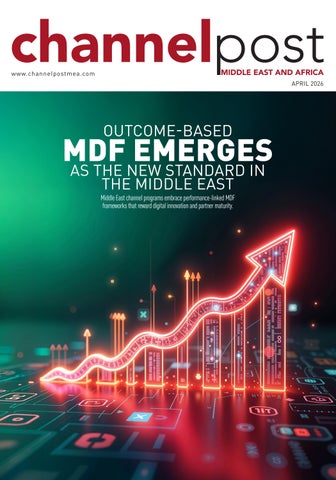
OUTCOME-BASED MDF EMERGES AS THE NEW STANDARD IN THE MIDDLE EAST

ZERO TRUST AND IDENTITY BECOMING THE CORE OF MODERN SECURITY IN 2026


SUSE EXPANDS MEA FOOTPRINT WITH A MODERNISED, SKILLS-DRIVEN CHANNEL STRATEGY CORE42 HIGHLIGHTS HOW AI CONSUMPTION IS RESHAPING CHANNEL ROLES


Swiss GRC has introduced a major update to its GRC software platform, further strengthening its position as a modern, data driven solution for governance, risk, and compliance. The latest release brings together advanced quantitative risk analysis, expanded AI powered capabilities, and deeper regulatory support—particularly for the Digital Operational Resilience Act (DORA). These enhancements reflect the growing need for organizations to manage risk with greater precision, agility, and regulatory readiness in an increasingly complex environment.A key highlight of the update is the platform’s enhanced quantitative risk analysis engine. The GRC Toolbox now incorporates sophisticated modelling techniques, includ-
ing Monte Carlo simulation, enabling organizations to move beyond traditional qualitative scoring methods. By quantifying risks through probability distributions and scenario based analysis, users gain a more accurate understanding of potential financial impacts, tail risk exposure, and loss scenarios. This shift toward quantitative modelling supports more defensible decision making and helps organizations better anticipate and mitigate high impact risks.
The release also strengthens third party collaboration, an area of growing importance as vendor ecosystems expand and supply chain risks intensify. New external user management capabilities allow organizations to onboard and manage vendors, partners, and other external stakeholders in a structured and secure manner. This enhancement improves visibility, accountability, and communication across the third party landscape, supporting more robust and efficient Third Party Risk Management (TPRM) practices.AI continues to be a central pillar of Swiss GRC’s product evolution. The upgraded AI Assistant now supports a wider range of tasks, including research, content creation, and analytical workflows. These capabilities help teams accelerate daily operations while maintaining accuracy and consistency. Built in governance controls ensure that AI usage remains compliant, transparent, and aligned with internal policies. Additionally, integrated web search brings real time external data directly into the platform, enabling AI driven insights to reflect current developments and improving the relevance and timeliness of risk assessments.
From a regulatory standpoint, the update deepens support for DORA compliance. The new DORA Information Register provides a centralized, structured way to manage regulatory data, streamline reporting, and enhance audit readiness—helping organizations meet the Act’s stringent operational resilience requirements.Overall, the release underscores Swiss GRC’s commitment to delivering an integrated, intelligent, and regulation ready platform that supports resilient, future focused GRC programs.
Acronis has launched Acronis MDR by Acronis TRU, a globally available 24/7/365 managed detection and response service designed specifically for managed service providers (MSPs) of all sizes. The new offering delivers continuous threat detection, rapid incident response, and enhanced cyber resilience powered by the Acronis Threat Research Unit (TRU). By introducing this service, Acronis enables MSPs to expand their security portfolios without the cost, complexity, or staffing requirements associated with running an in house security operations center.
As cyberattacks grow more sophisticated, many MSPs face mounting pressure to deliver advanced security capabilities despite limited resources. Acronis MDR by Acronis TRU addresses this challenge by providing round the clock monitoring, rapid threat containment, and expert-led incident response. The service is built to reduce operational burdens while strengthening the security posture of MSP clients, offering a practical path to scalable protection in an increasingly volatile threat landscape.
Unlike traditional MDR solutions that rely on multiple disconnected tools for detection, remediation, and recovery, Acronis MDR by Acronis TRU delivers an integrated approach optimized for MSP environments. The platform combines endpoint detection and response with proactive protection features such as patch management, attack rollback, and built in business continuity. This unified model enables faster response times, simplified management, and improved resilience across customer environments.
Gaidar Magdanurov, President at Acronis, emphasized that the service was created to make advanced detection and response accessible to MSPs worldwide. He noted that by combining proactive

protection, integrated continuity, and Acronis’ deep expertise, MSPs can deliver high quality MDR services while minimizing operational complexity and cost.
Acronis MDR by Acronis TRU allows MSPs to broaden their service offerings with a scalable and cost efficient solution that integrates detection, response, and recovery within a single platform. The service’s continuous monitoring, rapid triage, and swift isolation capabilities are supported by the Acronis Threat Research Unit, enabling critical incidents to be addressed quickly. Its built in patching and rollback features further streamline protection and recovery, while flexible pricing and simplified onboarding make adoption easier for MSPs seeking to scale.
The new service also fits within Acronis’ broader MDR ecosystem, which includes delivery through trusted managed security service provider partners. This approach ensures MSPs worldwide can offer compliant, localized, and high quality MDR services. With Acronis MDR by Acronis TRU at the core, the company aims to empower MSPs globally to deliver secure, resilient, and efficient cyber protection.

Westcon-Comstor announced that Cato Networks, a global leader in Secure Access Service Edge (SASE), has joined its AWS Marketplace programme, creating new growth opportunities for channel partners and accelerating Cato’s cloud marketplace momentum. The move strengthens Westcon-Comstor’s cloud-focused go to market strategy and supports partners as demand rises for cloud-delivered security and networking solutions.
Launched in 2024, Westcon-Comstor’s AWS Marketplace programme enables partners to benefit from faster deal cycles and reduced procurement friction by transacting directly through AWS Marketplace. The pro-
gramme supports multi-currency transactions and multi-product solutions—an AWS Marketplace enhancement that allows partners to bundle multiple products and services into comprehensive, industry-specific offerings. Partners also receive guidance, enablement, and advisory support from a dedicated in-house team as they scale their AWS Marketplace business.
Since its introduction, the programme—built on the AWS Designated Seller of Record (DSOR) model—has facilitated more than 100 deals worth tens of millions of dollars. It forms a core part of Westcon-Comstor’s broader AWS strategy, which includes marketplace execution, AWS solution distribution, and AWS consulting services, helping partners simplify procurement while building scalable cloud propositions.
Cato Networks’ addition to the programme follows the distribution agreement signed between the two companies last November. Partners across key markets in Europe, the Middle East, and Africa (EMEA) can now procure Cato software products from Westcon-Comstor through private listings and sell directly to customers via AWS Marketplace. This frictionless procurement model enables customers to use pre-committed AWS budgets, supporting partners’ land and expand strategies as they deliver Cato’s AI native, Gartner-recognised, single-vendor SASE platform.
With Omdia forecasting that the IT channel will drive 59% of the projected $163 billion in hyperscaler marketplace spending by 2030, the agreement underscores Westcon-Comstor’s commitment to ensuring partners capture a meaningful share of this growth.
“Welcoming Cato Networks into our AWS Marketplace programme further strengthens the commercial proposition we offer,” said Daniel Hurel, Senior Vice President, Westcon EMEA Go-ToMarket at Westcon-Comstor. “Partners want faster routes to revenue and buying models that match how customers fund cloud programmes. Enabling Cato procurement through AWS Marketplace helps partners shorten sales cycles and align with committed cloud spend while scaling adoption of a channel-friendly SASE platform that meets real customer demand.”
OPSWAT has introduced OPSWAT Predictive Alin AI, its first proprietary AI based threat detection engine for the MetaDefender Platform, marking a significant expansion of the company’s prevention focused cybersecurity capabilities. The new engine adds a high confidence predictive layer that works alongside MetaDefender’s existing detection and prevention technologies.
According to OPSWAT, Predictive Alin AI is designed to enhance, not replace, security teams by delivering machine learning verdicts in milliseconds. Benny Czarny, Founder and CEO of OPSWAT, said the engine reflects the company’s long standing belief that effective cybersecurity begins with prevention and the assumption that every file may be malicious. He noted that by providing rapid, pre execution insights, the technology eliminates hesitation and equips security teams with the clarity needed to make confident decisions at enterprise speed.
Predictive Alin AI is a machine learning driven static analysis engine that evaluates file structure, entropy patterns, and semantic relationships to determine whether a file is likely to behave maliciously. It does not rely solely on signatures or runtime execution and is engineered for sub 100 millisecond inference with a small memory footprint. The engine performs consistently across online and offline environments, making it suitable for highly regulated or air gapped sectors.
In internal efficacy testing, OPSWAT reported that Predictive Alin AI achieved 99 percent precision in identifying safe files, validated across months of production traffic to minimize noise and false positives. When the engine encounters uncertainty, the MetaDefender Platform automatically triggers additional workflows for deeper analysis, reinforcing a defense in depth approach. OPSWAT stated that the engine delivers measurable efficiency gains when integrated into multi engine deploy-

ments, particularly in environments where false positives can disrupt operations or delay critical processes.
Yiyi Miao, Chief Product Officer at OPSWAT, emphasized that the engine was built with precision as its primary objective. He noted that operational value depends on confidence, not raw detection rates, and that customers can rely on the engine’s verdicts in high stakes enterprise environments.
Predictive Alin AI integrates with MetaDefender’s existing technologies, including Metascan Multiscanning, Deep CDR, and adaptive sandboxing. Developed entirely in house, the model is trained on curated, privacy safe datasets sourced from MetaDefender Aether telemetry, OPSWAT Threat Intelligence, and Unit 515 research.
Predictive Alin AI is available now through MetaDefender Core for Windows and Linux, as well as MetaDefender Cloud.

Axis Communications has partnered with 360 Security Systems, expanding the availability and support of its intelligent security solutions as well as strengthening the market coverage.
Axis will leverage 360 Security Systems’ multi country footprint, established logistics network, and proven channel development capabilities to enhance product accessibility and deployment consistency across key MEA markets, include Afghanistan, the UAE, Egypt, Qatar, Kuwait, Oman, Bahrain, Jordan, Iraq, Lebanon, Libya,
Pakistan, Palestine, Sudan, and Yemen. Customers in these markets will benefit from improved product availability, localized technical expertise, and stronger pre and post sales support, enabling faster and more reliable implementation of Axis solutions.
With more than 20 years of industry experience, 360 Security Systems has built a strong reputation for delivering end to end IP surveillance and security solutions. The company combines deep expertise in solution design and system architecture with access to leading technologies from global manufacturers. Supported by accredited professionals, 360 Security Systems provides intelligent security solutions, professional services, and ongoing operational support that help organizations enhance situational awareness, protect critical assets, and improve overall operational performance.
The company works closely with system integrators, consultants, and technology vendors, playing a key role in bridging strategy and execution for complex security deployments. Its partner centric approach has enabled it to support a wide range of sectors, including government, critical infrastructure, transportation, energy, commercial real estate, and large enterprise environments.
“This partnership represents a strategic step forward in how we support customers and partners across the Middle East and Africa,” said Loubna Imenchal, Managing Director for the Middle East, Türkiye, Central Asia and Africa at Axis Communications. “The region continues to invest heavily in national infrastructure, smart cities, and digital transformation initiatives. To support this growth, customers need advanced technology paired with strong local execution. 360 Security brings the scale, technical capability, and channel maturity that align with Axis’ long term vision for the region.”Abd Houri, CEO of 360 Security Systems, said the partnership will extend Axis’ industry leading solutions across the company’s regional network, supported by deep technical expertise and a strong service structure.
“As we look ahead, 2026 will be an important year for Axis,” Imenchal added. “Together with strong partners like 360 Security Systems, we are turning our long term vision into reality.”
ESET has expanded its security portfolio with the launch of ESET Cloud Workload Protection, introduced as part of a major update to the ESET PROTECT Platform. The new module extends protection beyond traditional endpoints and servers to include cloud workloads, giving organizations unified visibility and consolidated security management across both on premises and cloud environments through a single interface. The company positions this as a critical step for businesses accelerating their cloud adoption and seeking stronger detection and response capabilities.
Michal Jankech, Vice President for Enterprise & SMB/MSP at ESET, said the shift reflects how organizations are increasingly relying on virtual machines to support digital initiatives. He noted that nearly 80 percent of businesses consider the public cloud essential to their operations. By adding cloud workload protection for virtual machines running in AWS, Azure, and Google Cloud, ESET aims to reduce customers’ attack surfaces while strengthening their ability to detect and respond to threats across hybrid environments.
The Cloud Workload Protection module ingests cloud VM telemetry directly into the ESET PROTECT XDR Platform, giving security teams extended visibility and richer context for investigations. Unlike many competing solutions that charge separately for cloud workload protection, ESET includes the module at no additional cost for most ESET PROTECT sub-

scriptions. The company highlights that this approach helps organizations simplify their security stack while improving coverage.
With the average cost of a public cloud data breach reaching $5.17 million per incident, ESET emphasizes that the new module is designed to reduce complexity through AI driven automation and lightweight performance. It also helps IT teams validate controls and generate audit evidence for regulatory frameworks such as NIST, CIS, HIPAA, and PCI DSS.
The broader ESET PROTECT update introduces several enhancements. ESET LiveGuard Advanced now includes AI powered reporting that provides detailed behavioral insights from cloud sandbox analyses, along with autonomous remediation. For customers using EDR and XDR capabilities, improved incident graphs and advanced investigation features offer clearer visualizations of attack chains, enriched identity related context, and faster ways to trace entry points and progression. Advanced Search has also been strengthened to support deeper, cross environment investigations.
ESET has additionally integrated ESET AI Advisor directly into the ESET PROTECT console, making the assistant more accessible and improving overall usability.

Meta has unveiled Muse Spark, the first model in a new series of large language models developed by Meta Superintelligence Labs, marking what the company describes as a major step toward “personal superintelligence.” The launch introduces a redesigned AI architecture, upgraded Meta AI experiences, and expanded multimodal capabilities that will roll out across Meta’s apps and devices in the coming weeks.
According to Meta, Muse Spark is the result of a rapid nine month development cycle in which the company rebuilt its AI stack from the ground up. The model is the first in the new Muse series, a structured, scientific approach to scaling where each generation is validated before expanding in size and complexity. Although intentionally compact and optimized for speed, Muse Spark is designed to handle advanced reasoning tasks across science, mathematics, and health.
The model now powers the Meta AI assistant in both the Meta AI app and on meta.ai, enabling more sophisticated reasoning, planning, and multimodal understanding. Meta confirmed that the next generation of Muse models is already in development.
Alongside the model launch, Meta introduced a redesigned Meta AI experience with a new interface and expanded functionality. Users can now switch between different modes depending on the complexity of their task. The assistant can also deploy multiple sub agents in parallel, allowing it to break down and solve multi part queries more efficiently.
Meta offered an example of planning a family trip to Florida: one sub agent can draft an itinerary, another can compare Orlando with the Florida
Keys, and a third can identify kid friendly activities. The system then synthesizes the results into a single, more comprehensive answer.
A major focus of Muse Spark is enhanced multimodal perception. Meta emphasized that real world questions often extend beyond text, and the new model is designed to interpret images, objects, and scenes with greater accuracy.
Users can take a photo of an airport snack shelf and ask Meta AI to identify the highest protein options, or scan a product and request comparisons with alternatives. Meta says this shift represents a move from AI systems that rely solely on user descriptions to assistants that can “look at the world with you.”
These capabilities will become even more significant as Muse Spark is integrated into Meta’s AI glasses, enabling the assistant to interpret surroundings in real time.Meta highlighted health as one of the most common categories of user queries. With Muse Spark, Meta AI can now provide more detailed responses to general health questions, including those involving images, charts, or visual data. The company worked with physicians to refine the model’s ability to deliver helpful, responsible information while maintaining safety boundaries. Meta stressed that the assistant is not a medical professional but can help users better understand common health topics.
Muse Spark also introduces stronger visual coding capabilities. Users can ask Meta AI to generate custom websites, dashboards, or mini games directly from a prompt. Meta showcased examples such as a party planning dashboard, a retro arcade game, or a whimsical flight simulator—all of which can be shared with friends. The company sees this
as part of a broader push to make coding and digital creation more accessible.
Meta AI now includes features designed to help users make decisions about fashion, home styling, and shopping. A new shopping mode, initially launching in the United States, draws on creator content and brand storytelling across Meta’s platforms to surface personalized recommendations. When users search for places or trending topics, Meta AI can provide contextual information drawn from public posts and community insights. For example, tapping on a location may reveal posts from locals, while asking about a trending topic may surface a curated snapshot of what people are discussing.
The upgraded Meta AI experience—featuring Instant and Thinking modes—is now live in the Meta AI app and on meta.ai in existing markets, with a U.S. rollout beginning first and additional countries to follow. Meta plans to extend Muse Spark’s capabilities across Instagram, Facebook, Messenger, WhatsApp, and its AI glasses, where enhanced perception features will play a central role.
Meta is also opening access to the underlying technology, offering Muse Spark in a private API preview for select partners and expressing interest in open sourcing future versions.
The company says this launch marks the start of a shift toward more contextual, visually rich AI interactions. Upcoming updates will integrate Reels, photos, and posts directly into responses, with creator attribution. Meta also highlighted strengthened safety and privacy measures as it positions Muse Spark as the foundation of its long term vision for deeply personalized AI.

Cloudflare has announced the developer preview of EmDash, a new open source content management system (CMS) designed to rethink how websites are built, secured, and scaled for the modern internet. Developed entirely in TypeScript and architected for serverless environments, EmDash represents Cloudflare’s most ambitious attempt yet to challenge long standing limitations in legacy CMS platforms—particularly WordPress—while introducing a new model for secure, AI native web development.
WordPress remains the dominant force in web publishing, powering more than 40 percent of all websites globally. Its success as an open source platform is unmatched, but Cloudflare argues that its underlying architecture, created more than two decades ago, no longer aligns with today’s security expectations, performance requirements, or developer workflows. In its announcement, Cloudflare noted that “WordPress enabled a generation of publishers and creators, but the web has fundamentally changed—and so must the systems we use to build it.”
A central focus of EmDash is addressing what Cloudflare describes as the “plugin security crisis.” The company highlights that an estimated 96 percent of WordPress vulnerabilities originate from plugins, many of which have unrestricted access to a site’s database and filesystem. EmDash introduces a fundamentally different approach: every plugin runs inside an isolated environment known as a Dynamic Worker. These sandboxed plugins must explicitly declare their permissions, limiting their access and significantly reducing the risk of security breaches. Cloudflare believes this model eliminates the need for centralized plugin marketplaces to act as trust arbiters. Developers can publish plugins under any license, while users
gain confidence through enforced isolation and strict security boundaries.
EmDash is built on Astro 6.0 and runs natively on Cloudflare Workers, enabling a serverless architecture that scales automatically based on demand. Websites built with EmDash can “scale to zero,” meaning they incur compute costs only when serving traffic. This approach offers a more efficient and cost effective alternative to traditional hosting models that require persistent servers. Unlike PHP based CMS platforms, EmDash embraces modern JavaScript and TypeScript development, aligning with contemporary developer ecosystems and workflows. Cloudflare also emphasizes that EmDash is not locked into its infrastructure; it can be deployed on any Node. js compatible environment, giving organizations flexibility in how and where they host their sites.
A defining feature of EmDash is its AI native design. The platform includes built in support for AI agents, a command line interface, and an integrated Model Context Protocol (MCP) server. These capabilities allow developers and organizations to automate content workflows, manage sites programmatically, and integrate intelligent tooling directly into their publishing processes. Cloudflare positions EmDash as a CMS built not only for human creators but also for AI driven development and operations, reflecting a broader industry shift toward automation and machine assisted software creation. Recognizing the enormous ecosystem surrounding WordPress, Cloudflare has introduced migration tools to ease the transition for organizations interested in adopting EmDash. Existing WordPress sites can be imported using standard WXR files or through a dedicated exporter plugin. This allows teams to migrate content, media, and site structures with
minimal friction, although Cloudflare acknowledges that EmDash is still early in its lifecycle and lacks the extensive theme and plugin ecosystem that has made WordPress so dominant.
EmDash is currently available as a v0.1.0 developer preview, signaling that the platform is in its infancy. While it introduces significant architectural innovations, Cloudflare is transparent about its limitations. The company notes that EmDash is not yet positioned to replace WordPress for most production environments. Instead, it represents a forward looking alternative for developers and organizations seeking a more secure, scalable, and AI integrated foundation for future web projects. Industry analysts observing the launch have echoed this sentiment, describing EmDash as a promising but early stage platform that will require time, community adoption, and ecosystem growth to reach its full potential.
With EmDash, Cloudflare is not simply releasing another CMS; it is proposing a redefinition of how content platforms should operate in an era shaped by escalating security threats, serverless computing, and artificial intelligence. By combining sandboxed plugin execution, modern developer tooling, and AI native capabilities, Cloudflare aims to lay the groundwork for the next generation of web publishing—one that prioritizes security, flexibility, and automation.
As EmDash evolves, its success will depend on developer adoption, community contributions, and its ability to deliver on the promise of a safer and more future ready CMS. Cloudflare’s long term vision is clear: a modern content platform built for a modern internet, where security is foundational, performance is inherent, and AI is woven directly into the fabric of site creation and management.

H.E. Sheikh Nahyan bin Mubarak Al Nahyan, Minister of Tolerance & Coexistence, inaugurated the SAMENA Telecommunications Council Leaders’ Summit 2026 in Dubai, setting the tone for a high level regional dialogue on digital sovereignty, intelligent networks, and sustainable technological futures. The summit, held at Atlantis The Palm under the theme “Intelligent Networks for Sovereign and Sustainable Futures,” convened at a pivotal moment for the region, drawing leaders from telecommunications, technology, policy, and investment sectors.
Organized in strategic collaboration with Huawei and under the patronage of the Telecommunications and Digital Government Regulatory Authority (TDRA), the event reinforced the UAE’s position as a global hub for digital cooperation and forward looking policy development. The summit saw broad in person and virtual participation, reflecting the growing urgency of coordinated action across the digital ecosystem.
In his keynote address, Sheikh Nahyan congratulated the SAMENA Council on its twentieth anniversary, praising its role in shaping regional dialogue and advancing digital transformation. He noted that when the Council was founded, broadband was a luxury and smartphones were not yet ubiquitous, emphasizing how dramatically the digital landscape has evolved. “The Council’s success and its growing relevance year after year reflect the clarity of its vision and its ability to evolve without losing its core purpose,” he said. Addressing the broader geopolitical context, Sheikh Nahyan acknowledged that the summit was taking place during a period of heightened regional tensions. He underscored the UAE’s
steadfastness and resilience, built on decades of strategic planning and visionary leadership. “Regardless of the pressures or challenges, the UAE will remain steady, capable, and forward looking. We will continue to protect our nation and preserve peace,” he affirmed, highlighting the leadership of His Highness Sheikh Mohamed bin Zayed Al Nahyan and His Highness Sheikh Mohammed bin Rashid Al Maktoum.
Sheikh Nahyan emphasized that the summit’s theme reflects the inseparable link between digital systems, economic growth, national security, and societal well being. He stressed that digital sovereignty is not about isolation but about ensuring nations retain the ability to make secure, lawful, and strategic decisions regarding their digital infrastructure. “Our world is interconnected, and our prosperity depends on cooperation, investment, openness, and exchange,” he said.
He further highlighted the SAMENA region’s unique position—home to advanced infrastructure, ambitious digital transformation agendas, smart cities, and growing investments in artificial intelligence. These strengths, he noted, come with responsibilities that require practical policies, robust regulation, and strong regional coordination.
Reflecting on the role of digital infrastructure during times of conflict, Sheikh Nahyan warned that the digital domain increasingly forms part of the battlefield, making resilience essential. He pointed to the UAE’s investments in digital government, AI powered public services, and future ready governance as examples of national preparedness.
He concluded by outlining four principles
essential for the region’s digital future: resilience, trust, partnership, and wisdom. These, he said, must guide technology policy to ensure dignity, stability, prosperity, and peace.
The summit featured specialized sessions led by telecom operators, regulators, global technology providers, and international organizations. Discussions explored the evolution of advanced 5G technologies, the integration of AI into networks and industrial systems, and the rise of hybrid connectivity models combining terrestrial and non terrestrial networks.
Participants highlighted the increasing complexity facing telecom operators, driven by surging demand for data, rising investment needs, evolving regulatory frameworks, and the search for sustainable revenue models. The consensus: operators must move beyond traditional connectivity and focus on enterprise solutions, digital platforms, and specialized applications.
Artificial intelligence was a central theme, with sessions examining its shift from experimentation to real world deployment. The concept of “sovereign AI” emerged as a key framework for balancing innovation with regulatory sovereignty and national priorities.
The summit also addressed the growing convergence of terrestrial and satellite networks and the emergence of direct to device connectivity, which promises enhanced coverage and resilience but requires coordinated spectrum management. The upper 6 GHz band was highlighted as a critical area for future spectrum policy alignment.
Bocar BA, CEO and Board Member of the SAMENA Council, emphasized that hosting the summit amid current regional conditions underscores the necessity of continued dialogue and coordination. He noted that developing digital infrastructure is a “necessity that cannot be postponed,” and that the summit’s outcomes will help shape regional and international discussions on spectrum policy, AI governance, and investment in digital infrastructure.
The summit concluded by reaffirming the SAMENA Council’s role as a unifying platform for public private collaboration, supporting innovation, and ensuring that technological advancements translate into meaningful economic and societal value.

The cybersecurity workforce has a bigger problem than headcount: the people already on the team don’t have the skills to match today’s threats. That is the tone of the central findings of the 2026 SANS | GIAC Cybersecurity Workforce Research Report, unveiled at RSAC 2026 by SANS Institute CEO James Lyne and Chief AI Officer & Chief of Research Rob T. Lee.
Drawing on responses from almost 1,000 practitioners, leaders, and HR professionals across six global regions, the report reveals an industry at an inflection point: AI is automating the entry-level work that has historically trained cybersecurity’s next generation, regulatory compliance is forcing the most dramatic hiring overhaul in years, and the widening skills gap is producing real, measurable security failures.
For the first time in the report’s three-year history, skills gaps decisively overtook headcount shortages as the industry’s top workforce challenge. When asked to choose between “not having the right staff” and “not enough staff,” 60% of organizations identified skills gaps as the greater problem, compared to 40% citing staff shortages. That 20-point gap has widened sharply from just four points a year ago, signaling a fundamental shift in how the industry defines its workforce crisis.
“This is no longer a story about filling seats,” said Rob T. Lee, SANS Chief AI Officer & Chief of Research. “Organizations have people. But those people are overwhelmed, under-resourced, and unable to develop the capabilities they need because they’re too busy running today’s operations. The industry needs to stop counting open positions and start investing in the skills of the people it already has.”
The report documents the workforce in active transformation. 74% of organizations report that AI is already impacting their cybersecurity team size and role structures. Yet governance lags far behind deployment: only 21% have a comprehensive AI security framework in place, while 7% have no AI policy at all. More than half of organizations (54%) report having AI governance policies on paper, but only 38% actually provide comprehensive AI security training to staff.
“Policy without practice is just paper,” Lee told the packed RSAC audience, pointing to recent incidents including Meta’s internal AI agent triggering a data breach on March 19 and Codeway’s
chat app exposing 300 million private messages from 25 million users. “What does your policy say about agentic AI? Can people use agents in your organization? What are they connected to? These are the questions organizations should be answering right now.”
The data reveals that AI’s primary impact is on efficiency, not elimination. 49% of organizations report reduced manual analysis time, and 48% cite workflow automation gains. Only 16% report actual headcount reduction. But the structural implications run deeper: among organizations experiencing role changes, SOC and security analysts lead reductions at 32%, followed by threat intelligence analysts at 26% and incident responders at 22%. These are precisely the entry-level positions where the next generation of cybersecurity leaders has traditionally learned their craft.
At the same time, entirely new job categories are emerging. Among organizations adding roles, 34% have filled AI/ML security specialist positions, 32% added AI security engineers, and 30% employed AI governance analysts. Rob T. Lee reported finding more than 2,500 active AI/ML security engineer postings on job platforms as of March 21, a category that barely existed three years ago.
The report’s most dramatic year-over-year shift is in regulatory impact. In 2025, 40% of organizations reported that regulatory directives were affecting their hiring practices. In 2026, that number surged to 95%, a 55-point increase that represents the fastest acceleration of any metric in the report’s history.
“That is a pretty fascinating shift,” said James Lyne, CEO of SANS Institute. “This isn’t mild compliance adjustment. Organizations are building entirely new specialist positions, restructuring teams around regulatory requirements, and facing real enforcement consequences if they don’t.”
The regulatory pressure is coming from multiple directions. NIS2 leads at 30% of organizations reporting hiring impact, followed by CMMC at 29%, DORA at 26%, DoD 8140 at 24%, and SEC regulations at 21%. NIS2 is now in active enforcement mode, with approximately 19,000 companies estimated non-compliant as of March 6, 2026, and fines up to €10 million or 2% of global turnover in play. Personal liability for executives adds urgency: the U.S. Department of Justice settled seven cybersecurity fraud cases in 2025 under the False Claims Act.
The demand for new specialist roles nearly doubled, jumping from 23% to 53% year over year. Framework adoption is accelerating in parallel: 56% of organizations now use NICE or ECSF workforce frameworks to define cybersecurity roles, up from 46% in 2025.
The consequences of widening skills gaps are no longer theoretical. The report documents that 27% of organizations have experienced actual security breaches as a direct result of workforce capability gaps. Skills shortages also drive delayed projects (57%), increased team burnout (47%), slower incident response (47%), inability to adopt new technologies (42%), and reduced monitoring capabilities (42%).
Budget limitations (36%) and time constraints (21%) account for 57% of the primary obstacles preventing organizations from closing those gaps. Sixty (60%) cite lack of time due to workload as their single greatest training barrier. Teams caught in operational firefighting simply cannot pause to develop the skills they need to keep pace with evolving threats.
“The industry has been running around saying there are millions of unfilled cybersecurity jobs,” Lee said from the RSAC stage. “That narrative misses the more fundamental problem. If everyone walks away with one thing from this room, it’s this: it is more about skills now than headcount.”

JAMES LYNE CEO at SANS Institute
Unclear career progression tripled as a hiring obstacle, surging from 9% to 32% year over year, making it the third-largest challenge organizations face in attracting talent. It also ranks as the thirdlargest retention obstacle at 31%. Yet only 24% of organizations report providing well-defined and clearly communicated cybersecurity career paths.
Organizations are rebuilding from the top down, hiring experienced professionals to meet immediate compliance and capability demands rather than investing in junior talent development. Senior executives and CISOs now control 53% of hiring decisions. Expert-level roles (15+ years of experience) are the hardest to fill at 27%, and 55% of senior hires take six months or longer. Entry-level positions, by contrast, present mini-

at hiring (49%) and internal evaluations (48%). When evaluating cybersecurity staff, 58% of organizations consider certifications either very important or extremely important. Academic degrees, meanwhile, rank last among hiring priorities at just 17%.
Technical capability now leads all hiring criteria at 55%, followed by work experience at 46%, attitude at 37%, and aptitude at 34%. The question hiring managers are asking has shifted from “What credentials do you hold?” to “Can you demonstrate competency?”
Team Stress Rises as Burnout Compounds the Skills Gap
61% of organizations report increased stress within cybersecurity teams over the past two years. The top drivers mirror the report’s central findings: workload and understaffing (46%), budget constraints (40%), and threat complexity (40%). James Lyne flagged emerging research on “AI fry,” where productivity tools paradoxically increase burnout through constant context switching. “I rarely talk to teams that aren’t running some version of 100%,” he told the audience. “This suggests an enhanced risk that leaders need to pay more attention to than in prior years.”
The 2026 report outlines nine strategic recommendations for cybersecurity leaders, including: develop an AI governance program and provide baseline AI security training for all employees; build a pipeline of entry-level talent equipped to work alongside AI tools through structured mentorships and on-the-job rotations; use workforce frameworks such as NICE, ECSF, or SCyWF to define job qualifications; create and strengthen career paths for security team members and individual contributors; validate and document team skills to meet regulatory requirements; and develop a cyber incident response plan that involves stakeholders beyond the security team.
mal recruitment challenges at just 4%.
“Cybersecurity practitioners who use AI are quite likely to replace those who don’t,” said Lyne. “We have to be very careful. If we signal that the lower end of cybersecurity is going to be replaced by AI, even if that’s not the truth, and we don’t end up with enough practitioners learning foundational skills, we won’t have seniors and experts
later. We all end up pointing at everyone else, and we end up with a gap in the future.”
In a decisive shift, cybersecurity certifications now rank as the industry’s leading skill validation method at 64%, ahead of skills assessments
The report features three in-depth case studies from organizations navigating these challenges at scale. Microsoft Federal’s Jay Bhalodia describes how the company frames AI as an accelerator for human development, not a replacement: “The real risk isn’t the AI itself. It’s using AI to automate these growth pathways instead of focusing on accelerating them.” Bayer’s Global CISO Dr. Kevin Jones details the company’s radical shift from hierarchy to a skills-based operating model across 90,000 employees. And Singapore’s Cyber Security Agency (CSA) shares its national approach to workforce development, having trained over 22,000 individuals since 2020.
Samir Akel, Regional Vice President of Emerging Markets at Nintex, says MEA growth is being powered by a strengthened channel ecosystem, with partners delivering industry-specific automation, governance, and cloud-first transformation at scale.
How would you describe Nintex’s current business momentum globally, and what role do the Middle East and Africa play in your growth strategy?
Nintex is experiencing strong global momentum as organisations move from isolated automation projects to enterprise wide transformation programmes. Executive teams are prioritising measurable efficiency gains, stronger governance, and clearer operational visibility, making intelligent process automation essential to achieving these goals. This is driving sustained demand for platforms that standardise processes, orchestrate cross department workflows, and provide the transparency required for compliance and performance management.
In the Middle East, this momentum is amplified by national digital transformation agendas in the UAE and Saudi Arabia, where governments and enterprises are investing heavily in AI, cloud modernisation, and service transformation. Initiatives such as the UAE Digital Government Strategy and Saudi Vision 2030 are accelerating automation adoption as organisations scale services, enhance citizen and customer experience, and strengthen operational resilience.
For Nintex, the GCC has become a strategic growth engine, prompting expanded regional capabilities, a stronger partner ecosystem, and deeper collaboration with customers modernising mission critical workflows.
Nintex is known for process automation and workflow intelligence. How is your technology evolving to support increasingly complex, cloud-first enterprise environments?
Enterprises in the UAE and Saudi Arabia are modernising ERP platforms, moving workloads to the cloud, and integrating an expanding ecosystem of SaaS applications. While this accelerates innovation, it also creates new complexity around approvals, data governance, and cross system visibility. Nintex is addressing these needs by strengthening its cloud native automation

Regional Vice President of Emerging Markets at Nintex
“Nintex is investing heavily in partner enablement, including advanced training, structured certification programmes, and industry aligned solution frameworks that help partners deliver specialised automation outcomes. .”
capabilities and ensuring seamless integration across hybrid and multi cloud environments. The platform delivers enterprise grade governance, auditability, and security while orchestrating workflows that span multiple systems and stakeholders. In regulated sectors such as banking, automation must provide clear audit trails and structured approvals, while large enterprises and
government entities require flexible yet compliant orchestration. Nintex’s enhanced end to end capabilities ensure workflows run reliably and transparently, enabling rapid modernisation without compromising governance or operational integrity.
AI is rapidly transforming automation
platforms. How is Nintex embedding AI into its solutions to drive smarter decision-making and operational efficiency?
AI adoption in the UAE and Saudi Arabia is accelerating rapidly, supported by national AI strategies, strong executive sponsorship, and significant investment in digital infrastructure. However, organisations in the region are prioritising practical, governed AI use cases that deliver measurable value rather than experimental deployments. Nintex is embedding AI across the entire automation lifecycle to support this shift.
The platform now incorporates AI assisted process mapping, enabling organisations to identify inefficiencies and opportunities for improvement more quickly.
Intelligent document automation enhances the processing of high volume forms, contracts, and customer submissions, improving accuracy and reducing manual effort. AI driven insights help identify bottlenecks before they impact performance, enabling proactive optimisation.
These capabilities are particularly valuable in environments such as financial services onboarding, public sector service approvals, insurance claims processing, logistics operations, and enterprise shared services, where accuracy, speed, and compliance are essential. Nintex’s focus is on delivering enterprise ready AI that supports governance, data protection, and responsible implementation across mission critical workflows, ensuring that organisations can scale AI safely and effectively.
What differentiates Nintex’s automation platform from other low-code and workflow competitors in the market?
Transformation programmes in the UAE and Saudi Arabia are often large scale and multi entity, spanning ministries, holding groups, and diversified enterprises. These organisations require automation platforms that can support enterprise complexity, regulatory requirements, and long term scalability.
Nintex differentiates itself through comprehensive process lifecycle capabilities that cover discovery, mapping, automation, optimisation, and governance within a single platform. This unified approach enables organisations to standardise workflows across shared services, HR, finance, compliance, and customer facing functions. Enterprise grade security, governance, and auditability make the platform well suited to sectors such as energy, healthcare, and banking, where oversight and regulatory alignment are essential.
Nintex’s strong regional partner ecosystem further strengthens its differentiation by bringing deep knowledge of local operating models and
sector specific requirements, ensuring automation programmes deliver sustained value rather than isolated improvements.
How important is the channel ecosystem to Nintex’s go-to-market strategy, and what investments are you making to strengthen partner enablement and specialization?
The channel ecosystem is central to Nintex’s go to market strategy, particularly in the Middle East and Africa, where enterprise transformation projects are often delivered through system integrators and consultancies with deep industry expertise. In markets such as the UAE and Saudi Arabia, partners play a critical role in aligning automation initiatives with regulatory requirements, sector specific processes, and national digital transformation priorities.
Nintex is investing heavily in partner enablement, including advanced training, structured certification programmes, and industry aligned solution frameworks that help partners deliver specialised automation outcomes. In Saudi Arabia, where localisation and long term capability building are national priorities, partner development is especially important. In the UAE, where innovation cycles move quickly, joint go to market initiatives allow Nintex and its partners to respond rapidly to customer demand.
Partners also play a vital role in private sector transformation across banking, telecoms, logistics, and other industries where automation is often part of broader digital transformation strategies. By strengthening partner specialisation, Nintex ensures that customers receive not just a platform, but a tailored automation strategy aligned to their sector’s unique requirements.
Which industry verticals are driving the strongest demand for process automation, and are there sectors you see as high-growth opportunities?
Government, financial services, healthcare, and energy continue to drive the strongest demand for automation across the GCC. In the UAE, digital government initiatives are focused on improving service delivery, citizen experience, and operational efficiency. In Saudi Arabia, large scale transformation under Vision 2030 is creating demand for process standardisation, compliance, and performance optimisation across ministries, state backed entities, and national programmes.
Large private sector organisations are also accelerating automation to streamline operations, strengthen governance, and enhance customer experience. Sectors such as logistics, aviation, and smart city development are experiencing rapid growth as organisations seek to orchestrate processes across multiple stakeholders and systems.
The region’s emerging fintech ecosystems present additional opportunities, particularly in onboarding, compliance, and transaction workflows that require automation at scale. Across Africa, financial services and public sector digitisation remain strong growth drivers as organisations seek to formalise processes, improve service delivery, and expand access to digital services.
In terms of geography, which key markets are currently priorities for Nintex, and where do you see emerging market potential?
The UAE and Saudi Arabia remain Nintex’s highest priority markets, with both countries leading the region in AI adoption, service modernisation, and regulatory frameworks that enable digital innovation. Alongside major public sector transformation programmes, Nintex is seeing strong momentum across large private sector organisations in banking, telecoms, aviation, and logistics, where automation is becoming a strategic driver of operational excellence.
Beyond the UAE and Saudi Arabia, Nintex sees growing opportunity in Qatar and other GCC markets as national transformation initiatives mature. In Africa, South Africa remains a strategic hub, particularly in banking and telecommunications, while East and West Africa are experiencing rapid digitisation in financial services and public administration. Nintex’s strategy focuses on scaling through strong regional partners and cloud deployment models that accelerate adoption while respecting local regulatory frameworks and data governance requirements.
Africa is undergoing rapid digital transformation. What is Nintex’s strategy for expanding across the continent, and how are you aligning investments to support long-term growth there?
Africa’s digital transformation is accelerating, driven by financial inclusion, public sector modernisation, and enterprise digitisation. Organisations across the continent are seeking scalable platforms that formalise, automate, and optimise core processes as they expand. Nintex’s strategy focuses on partner led growth supported by cloud based automation that reduces deployment complexity and speeds time to value.
The company is strengthening regional hubs such as South Africa while expanding into high growth markets across East and West Africa. Investments emphasise partner enablement, skills development, and long term customer capability building to ensure sustainable scaling.
This includes supporting government igitalisation, financial services modernisation, and private sector efficiency initiatives, all aligned with local compliance and data governance requirements.

Middle East channel programs embrace performance-linked MDF frameworks that reward digital innovation and partner maturity.

The Middle East technology landscape is evolving at unprecedented speed. Cloud adoption, cybersecurity modernization, AI driven automation, and digital first customer engagement are reshaping how vendors and partners go to market. In this environment, Marketing Development Funds (MDF) have become one of the most strategic tools in any channel program. Once used primarily for events or branding, MDF has transformed into a performance driven engine that fuels demand generation, partner enablement, and long term ecosystem growth. As partners face rising competition and customers demand measurable outcomes, MDF is now central to how vendors and distributors support, scale, and differentiate their channel ecosystems.

This feature explores how MDF programs are evolving across three major themes: modernization for a digital first market, simplification to reduce partner friction, and strategic alignment with regional priorities and partner maturity. Insights from leading vendors and distributors across the Middle East illustrate how MDF is being re engineered to deliver measurable impact.
Across the region, vendors are rethinking MDF to support digital marketing, AI driven campaigns, and outcome-based engagement. Bitdefender is among the companies leading this shift. Sumit Kumar, Channel & Distribution Manager for the Middle East at Bitdefender explains that MDF is no longer tied to traditional activities alone but is now directly connected to measurable business outcomes. “Instead of funding events or collateral only, MDF is increasingly tied to specific pipeline and revenue outcomes,” he says, noting that qualified leads, booked demos, and SQLs are now core performance indicators. Bitdefender’s Mind Matrix Portal gives partners access to digital marketing resources and MDF submission tools, while higher tier partners receive expanded support and higher funding ceilings. This ensures that partners can execute multi touch digital campaigns that directly contribute to pipeline acceleration.
BMC Helix is also prioritizing digital first and AI enabled initiatives. Pablo Legarda, South and East EMEA - Channel leader, BMC Helix explains that the company is encouraging partners to shift from one off activities to integrated campaigns powered by automation and intent data. “MDF is increasingly tied to pipeline influence, customer engagement quality, and long-term demand generation rather than pure activity volume,” he says. This reflects a broader industry shift toward

measurable, data driven marketing that aligns with customer lifecycle engagement.
ESET is similarly adapting its MDF programs to support digital first execution. Ali AlJuneidi, Regional Sales and Business Development Manager at ESET Middle East notes that partners now require flexible co marketing resources and guided support to run AI driven campaigns that generate measurable engagement. “Our MDF programs are adapting to a digital-first environment, integrating AI-driven campaigns and outcome-focused initiatives,” he explains. This ensures that partners can scale their marketing capabilities and compete effectively across diverse markets in the region.
Palo Alto Networks is taking a platform centric approach to MDF evolution. The Senior Director for Channel Sales Emerging Markets at Palo Alto Networks, Eyad Aleriksousi explains that the company is incentivizing AI driven, outcome based engagements that move beyond point products. “By providing pre-packaged platformcentric toolkits, we empower partners to lead with high-margin services,” he says, emphasizing the shift toward integrated, AI native resilience. This approach positions partners to deliver long term security outcomes rather than transactional sales.
As a distributor, SecureNet Distribution is also evolving its MDF strategy to support digital first initiatives. Founder and CEO Melwin Dsouza explains that SecureNet is prioritizing data driven campaigns and outcome based engagement. The company supports partners with flexible funding models and co created campaigns that align MDF investments with measurable demand generation and long term brand positioning. This ensures that partners can execute modern marketing strategies that scale with customer needs.
Simplifying MDF Access, Utilization,

EYAD ALERIKSOUSI
SENIOR DIRECTOR, CHANNEL SALES
EMERGING MARKETS AT PALO ALTO NETWORKS
While MDF is essential, partners often struggle with administrative complexity. Vendors across the region are addressing this challenge by modernizing workflows, automating approvals, and improving reporting transparency.
Bitdefender has significantly streamlined its MDF processes through the Mind Matrix platform. Kumar explains that partners can now submit proposals online, track approvals, and manage reporting through a unified dashboard. “Proposals can be submitted online, reviewed faster, and tracked in a single MDF dashboard — reducing cycles and friction,” he says. Bitdefender also provides certification resources, onboarding support, and technical guides through the PAN Portal, ensuring partners have the knowledge to plan and execute campaigns effectively.
BMC Helix is tackling similar challenges by introducing standardized templates, clearer guidelines, and expedited approvals. Legarda notes that complicated approvals and disjointed reporting have historically slowed partners down. By aligning MDF tracking with CRM and pipeline metrics, BMC Helix ensures that partners spend less time on administrative tasks and more time generating qualified demand. This streamlined approach guarantees that MDF investments deliver quantifiable impact.
ESET has also focused on reducing friction by offering streamlined processes, automated tracking tools, and proactive advisory support. AlJuneidi explains that partners often struggle with navigating approvals and reporting, and ESET’s goal is to ensure that MDF “drives pipeline and tangible results rather than becoming an administrative burden.” This simplification helps partners focus on execution rather than paperwork.Palo Alto Networks is addressing MDF complexity through automation. Alerik-

MELWIN DSOUZA FOUNDER & CEO OF SECURENET DISTRIBUTION
sousi explains that partners often struggle with complex reporting that distracts from selling. The company’s automated deal registration and AI driven self service model approve deals instantly, while the new Partner Development Fund reinvests rebates directly into demand generation and training. This replaces administrative friction with transparent workflows that prioritize pipeline building.
SecureNet is simplifying MDF access through streamlined workflows, clearer guidelines, and standardized reporting frameworks. Dsouza explains that partners often face challenges related to complex approval processes and unclear ROI metrics. SecureNet’s approach ensures that MDF is easy to use, transparent, and focused on driving tangible business outcomes rather than administrative overhead.
As the Middle East channel ecosystem becomes more competitive, vendors are aligning MDF with regional priorities, partner maturity levels, and long term growth objectives.
Bitdefender recognizes that partners at different stages require different types of support. Kumar explains that developing partners receive guidance on multi touch campaigns tied to customer lifecycle stages, while advanced partners benefit from co invested initiatives such as demand generation and field marketing. Account and marketing managers work closely with partners to ensure MDF aligns with regional demand signals and long term roadmaps.
BMC Helix segments partners based on capability and maturity, ensuring that MDF investments support sustainable growth. Legarda explains that emerging partners receive foun-

dational enablement, while advanced partners benefit from strategic co investment. This ensures that MDF fuels long term ecosystem value rather than short term spend.
ESET focuses on scalable initiatives and measurable outcomes to maximize ROI. AlJuneidi explains that by tailoring campaigns to partner maturity and regional priorities, ESET strengthens its presence across both emerging and established markets. This ensures that MDF supports sustainable partner development and long term market growth.
Palo Alto Networks aligns MDF with regional priorities such as data sovereignty and the emerging AI factory concept. Aleriksousi explains that the company rewards partner maturity through specialized tracks for MSSPs and distributors, focusing on lifecycle management and long term ecosystem readiness to defend against AI driven threats.
SecureNet aligns MDF investments with regional priorities, partner maturity, and strategic growth objectives. Dsouza explains that by segmenting partners and focusing on scalable, repeatable initiatives, SecureNet ensures that MDF supports sustainable growth and meaningful engagement across the Middle East.
As the Middle East technology market continues to evolve, MDF has become a strategic catalyst for partner success. Vendors and distributors are modernizing MDF programs to support digital first execution, simplifying processes to reduce friction, and aligning investments with regional priorities and partner maturity. The result is a more empowered, competitive, and future ready channel ecosystem—one where MDF is not just a budget line, but a driver of measurable growth, innovation, and long term value.
Cisco today announced a key leadership appointment for its operation in Saudi Arabia. Bader Almadi will join as Vice President, Cisco Saudi Arabia.
Based in Riyadh, Bader will lead Cisco’s strategy and commercial operations to help customers unlock the full potential of technology to support Vision 2030. He will build key partnerships to drive critical AI infrastructure across the Kingdom’s priority industries– including financial services, sports, entertainment, hospitality and energy –drawing on Cisco’s extensive partner ecosystem to ensure organizations have the technology and capabilities to compete and thrive.
Bader has over 20 years of experience in technology and sales leadership. As Managing Director for Google Cloud Saudi Arabia, he spearheaded digital transformation plans for the Saudi market across sectors including finance, healthcare, entertainment, and telecom. He delivered major achievements, including the launch of Google Cloud in Saudi Arabia (2023) and Google Pay (GPay, 2025). Previously, he held senior leadership positions at Dell Technologies, Oracle, and EMC.
The Middle East is a vibrant hub of innovation and digital progress, and its momentum has been further accelerated by Saudi Arabia’s strategic focus on digitization. Bader brings a wealth of leadership experience, a deep connection to the Saudi technology ecosystem, and a strong record of driving impactful digital initiatives that will be vital to steer our next phase of growth in the country,” said Gordon Thomson, President, Europe, Middle East, and Africa (EMEA), Cisco.
“I am honored to join Cisco at such a pivotal moment for Saudi Arabia. Cisco has been fundamental in building the digital infrastructure that helps power Saudi Arabia’s progress. As the Kingdom advances

towards Vision 2030, our technological leadership, talent, and partner ecosystem position us well to empower Saudi Arabia’s digital economy and AI leadership,” said Bader Almadi, who began his career with Cisco in 2006.
Beyond his corporate achievements, Bader has helped in shaping the Kingdom’s technology landscape, serving as an advisor to the Ministry of Communications and Information Technology (MCIT) on international partnerships. He also represented Saudi Arabia at the G20 Summit’s Digital Economy Taskforce and spearheaded initiatives at the World Economic Forum (WEF).
Gulf Business Machines (GBM) today announced the appointment of Ashesh Mukhopadhyay as the General Manager for its Bahrain operations. This promotion reinforces GBM’s commitment to cultivating internal talent, ensuring its pivotal work in advancing the Kingdom’s digital transformation continues under trusted and experienced leadership.
A 30-year industry veteran, Ashesh has been an integral part of GBM Bahrain for over two decades. His promotion from Director of Sales and Technology follows a successful tenure where he was instrumental in driving sustained revenue growth. His leadership has expanded the company’s portfolio and solidified its position as a strategic technology partner for Bahrain’s most critical public and private-sector institutions.
In his new role, Ashesh will spearhead GBM Bahrain’s overall strategy and operations. He takes over from Abdulla Ishaq, who retires after a distinguished 35-year career with GBM. Ishaq’s leadership was pivotal in advancing GBM’s initiatives and cementing its legacy in the Kingdom.
Marwan Faraj Bin Hamoodah, Chairman of GBM, said: “We are delighted to announce Ashesh’s appointment as General Manager. His deep understanding of the market, proven leadership, and customer-centric approach make him an ideal successor to continue our trajectory of growth. We extend our sincerest gratitude to Abdulla Ishaq for his dedicated service and invaluable contributions. We have full faith that Ashesh will build upon the strong foundation Abdulla has established.”
Under Ashesh’s leadership, GBM Bahrain aims to build on its legacy of delivering innovative technology solutions in areas such as cloud, cybersecurity, and AI, while aligning with Bahrain’s national priorities for digital advancement.

Ashesh Mukhopadhyay added: “I am honoured to lead GBM Bahrain, an organization I have been a part of for over 20 years. I have a deep appreciation for our exceptional team, our valued customers, and our legacy of excellence.I look forward to continuing working closely with our clients and partners to deliver solutions that not only address their strategic needs but also contribute to Bahrain’s continued economic growth and digital future.”
Cloud Box Technologies has unveiled its AI first strategy, introducing a focused three pillar framework led by Laxmi Nageswari, the company’s newly appointed Chief AI Officer (CAIO). This marks a significant evolution in the company’s journey—from a traditional IT infrastructure provider to a comprehensive digital transformation partner with deep capabilities in AI, automation, and cybersecurity.
The creation of the CAIO role signals Cloud Box Technologies’ commitment to embedding AI at the core of its portfolio. Laxmi will lead strategy, innovation, partnerships, and capability development, ensuring AI becomes an integrated layer across all offerings rather than a standalone service. Her mandate includes aligning AI investments with business priorities, driving scalable solutions, and strengthening governance through structured innovation.
The company’s AI strategy is built on three interconnected pillars. The first focuses on embedding AI across cybersecurity, data analytics, automation, and cloud integrated intelligence, ensuring every service benefits from intelligent capabilities. The second pillar introduces an Algo as a Service (AaaS) model, enabling customers to deploy reusable, scalable AI models that accelerate time to market and ensure consistent outcomes. The third pillar, a dedicated Centre of Excellence (CoE), acts as the engine for governance, research, best practices, and talent development, ensuring responsible and future ready AI adoption.
Together, these pillars transform AI from isolated initiatives into a unified capability that enhances scalability, accelerates delivery, and strengthens long term competitiveness. Designed as an integrated innovation ecosystem, the strategy connects hardware, applications, and talent to create a cohesive platform for enterprise wide AI adoption.
Ranjith Kaippada, Managing Director at Cloud Box Technologies, said, “The introduction of the three-pillar framework, and the strategic move to appointing Laxmi Nageswari to lead it strengthens our ability to deliver scalable AI-driven solutions and

aligns our vision with the UAE’s National Strategy for Artificial Intelligence 2031. This will have a significant impact on how Cloud Box Technologies transforms into an all-encompassing digital transformation partner and harness AI effectively.”
Laxmi added, “Our mission is to bridge business and technology to drive innovation and deliver measurable outcomes. We focus on translating strategy into execution, turning emerging technologies into scalable, production-ready AI solutions that unlock efficiency and new opportunities.”
With this strategic shift, Cloud Box Technologies reinforces its commitment to the UAE market and positions itself at the forefront of AI driven transformation in the region.
Core42 today announced the appointment of Sherif Tawfik as Chief Business Officer (CBO). In his new role, Sherif will lead the company globally, with end-to-end responsibility for all global revenue-generating functions, including global sales and marketing, business development, partnerships, and both professional and managed services. His mandate includes expanding Core42’s global commercial reach and accelerating adoption of its sovereign AI cloud and infrastructure platforms across international markets.
Sherif joins Core42 with nearly three decades of leadership experience in the global technology sector, including more than 25 years at Microsoft where he held senior executive roles across the Middle East, Africa, and Europe. Throughout his career, he has built and scaled technology businesses, led complex multinational partnerships, and supported large-scale cloud and AI adoption across emerging markets.
“Sherif brings deep commercial leadership and a strong track record building technology partnerships at global scale,” said Talal M. Al Kaissi, Chief Executive Officer (Interim), Core42. “Having played a pivotal role in shaping the G42–Microsoft partnership, he understands both the global technology landscape and the national infrastructure ambitions driving AI adoption today. As Core42 continues expanding internationally, Sherif will help scale our global commercial platform and deepen engagement with governments, enterprises, and partners deploying AI at production scale.”
Most recently, he served as Chief Partnership Officer for the G42 & Microsoft Global Alliance, leading one of the most significant AI and sovereign public cloud partnerships globally. In that role, he drove strategic alignment across markets, enabling sovereign cloud deployments, responsible AI adoption, and large-scale digital transformation initiatives across governments and enterprises.
Commenting on his new role, Sherif Tawfik, said, “Core42 is building the digital infrastructure

backbone that will power the next generation of AI economies. I am excited to join at a moment when nations and enterprises are moving from ambition to large-scale AI deployment. My focus will be on expanding our global commercial reach and helping customers deploy AI and cloud infrastructure that is trusted, sovereign, and built for production.”
Sherif is also the Co-Founder and CEO of Fusion Minds AI; an initiative focused on advancing responsible AI adoption and applying generative AI to sustainability challenges.
With this appointment, Core42 continues expanding its global AI cloud footprint, building on its UAE foundation to support governments, enterprises, and research institutions deploying AI infrastructure worldwide.
Cloudera has appointed Nick Loumakis as Vice President (VP) for the UAE and Turkey, strengthening its regional leadership team and reinforcing the company’s commitment to accelerating AI driven data transformation across the Middle East. A seasoned executive with more than two decades of experience in data, analytics, and enterprise software, Loumakis brings deep expertise from his work across the Europe, Middle East, and Africa (EMEA) region.
Throughout his career, Loumakis has played a pivotal role in reshaping go to market strategies, driving commercial growth, and building long standing C level relationships with major enterprises. He holds a Master of Business Administration from the London Business School and has extensive experience in open source platforms, enterprise sales, and large scale digital transformation programs. His background positions him strongly to advance Cloudera’s vision and support customers in the UAE and Turkey as they scale their data and AI capabilities.
“I’m excited to join Cloudera at a time when organizations across the region are accelerating their data and AI ambitions. Cloudera’s hybrid data platform is uniquely positioned to help enterprises unlock the full value of their data while meeting the security, governance, and scalability requirements of today’s most demanding environments. I look forward to working with our customers, partners, and teams across the region to help drive the next wave of data driven innovation,” said Nick Loumakis, Regional Vice President, Cloudera Middle East.
Loumakis’s appointment comes at a defining moment for the company. Cloudera recently entered its 2027 fiscal year following the momentum of its ELEVATE27 Sales Kickoff event, which celebrated a record breaking financial performance. The company reported more than 50% year over year growth in new and expansion business, alongside over 100% growth in new customer acquisitions during the fourth quarter—underscoring the rising demand for hybrid data platforms and AI ready architectures.

“The Middle East represents one of the most dynamic and fast growing markets for data and AI innovation. With Nick stepping into this role, we are confident that his leadership will help accelerate our regional momentum, deepen strategic partnerships, and support organisations across the region in unlocking the full value of their data. His appointment reinforces Cloudera’s long term commitment to empowering businesses and governments with the platforms and expertise needed to drive AI led transformation,” said Ahmad Shakora, Group Vice President South META, Cloudera Middle East.
Alteryx today announced the appointment of Sabya Sen as Vice President, IMEA & APAC, to lead its business across India, the Middle East, Africa, and Asia-Pacific (IMEA & APAC). In this role, Sen will focus on accelerating customer outcomes and scaling adoption of the Alteryx One platform across some of the world’s fastest-growing markets for AI and data innovation.
Sen brings deep regional expertise and a strong track record of execution to this role. Most recently, he served as Vice President, Head of UKI & Emerging Markets Europe at Alteryx, where he drove consistent growth, built high-performing teams, and strengthened customer relationships across global markets.
The appointment comes at a critical phase for AI adoption globally and across IMEA and APAC, where governments and enterprises are increasing investments in digital transformation. In the Middle East, national strategies like Saudi Arabia’s Vision 2030 and UAE’s We the UAE 2031 are accelerating innovation agendas. The region’s AI market is projected to reach $320 billion USD, while globally, 89% of leaders plan to maintain or increase AI budgets in 2026. Despite this momentum, many organizations remain in pilot phases, underscoring the need for scalable, governed analytics solutions that can support enterprise-wide AI adoption.
“It is my priority to continue delivering meaningful outcomes for our customers and community,” said Sabya Sen, Vice President, IMEA & APAC. “Across the Middle East, India, and Asia-Pacific, we are seeing unprecedented momentum driven by ambitious national transformation agendas. These efforts are accelerating economic diversification, advancing digital innovation, and firmly positioning these regions as global hubs for data and AI-led growth.”
Prior to joining Alteryx, Sen spent 11 years at Salesforce in a variety of leadership roles, supporting customers across the insurance, financial services, and healthcare industries, where he helped organizations leverage data and technology to transform their operations. In his new

role, Sen will focus on helping organizations move beyond experimentation to enterprise-scale AI adoption by delivering trusted, AI-ready data and analytics through the Alteryx One platform.
“Over the past few years, Sabya has had a tremendous impact on Alteryx and has demonstrated a remarkable level of focus, discipline, and strong commercial execution,” said Jason Janicke, Senior Vice President, EMEA & APJ at Alteryx. “He has delivered results, built a strong team culture, and consistently raised the bar. We can’t wait to see the impact that Sabya has in this next role.”

Driven by credential theft and privilege abuse, Zero Trust and Identity Security are now central to how enterprises prevent, detect, and contain modern cyberattacks.
For more than a decade, Zero Trust has been the cybersecurity philosophy that everyone endorsed but few truly implemented. It promised a world where no user, device, or workload was trusted by default; where access was continuously verified; where privileges were tightly controlled; and where lateral movement was contained before it could cause harm. Yet for many organisations, Zero Trust remained a conceptual ambition rather than a functioning architecture. It lived in strategy decks and conference keynotes, not in
day to day operations.
In 2026, that gap is finally narrowing. Not because the concept has changed, but because the threat landscape has forced a reckoning. Attackers no longer rely on breaking in. They simply log in. Stolen credentials, misused privileges, and ungoverned identities have become the primary pathways into critical systems. In a region like the Middle East and Africa, where digital transformation, cloud migration, and AI adoption are accelerating at unprecedented speed, this shift is particularly stark. Identity has become the new
perimeter—and the new battleground.
Across the Middle East, Africa, and Türkiye, security leaders describe the same pattern: organisations are not short of tools, but they are short of clarity. They try to implement Zero Trust as a big bang transformation, only to discover that complexity becomes the enemy of progress. The ones that move forward are those that start with fundamentals: visibility into what exists, identity as the control plane, and privilege as the line between resilience and catastrophe.
Meriam ElOuazzani, Vice President for Middle East, Turkey, and Africa at Censys, sees the same story play out across the region. Boards and CISOs talk confidently about Zero Trust, but when you look under the hood, the basics are missing. “Most organisations plan to implement Zero Trust, but very few have a mature program,” she explains. “The problem is trying to do everything at once. Zero Trust is more than securing identity and access; focusing only on protecting known assets misses a larger category of threats targeting shadow IT or Shadow AI assets that security does not manage.”
For her, the first discipline of Zero Trust is not policy—it is visibility. You cannot remove implicit trust from what you don’t even know exists. “At Censys, we provide that starting baseline,” she says. “You cannot protect what you cannot see.” In a world of cloud sprawl, unmanaged SaaS, and experimental AI projects, that statement is less cliché and more survival rule.
Mohammed Al Moneer, Senior Regional Director at Infoblox, takes that idea and grounds it in the fabric of the network. He argues that Zero Trust collapses without foundational controls that see everything, and DNS is one of the few layers that truly does. “Stop treating Zero Trust as a PowerPoint project and start with your basics,” he says. “Map every identity and asset, lock down DNS as an enforcement point that sees everything, and automate deny by default policies from that context.”
For Al Moneer, DNS is not just plumbing; it is a strategic enforcement point that reveals how identities behave, where assets communicate, and where trust is being assumed without verification. When DNS, identity, and asset visibility align, Zero Trust stops being a slogan and becomes a set of enforceable controls.
Ismael Valenzuela, Senior Instructor at SANS, sees the same problem from an architectural lens. He spends his time teaching defenders how to build defensible security architectures, and Zero Trust is a recurring theme. “The biggest mistake I see is treating Zero Trust as a product you buy rather than an architecture you build,” he says. He insists that organisations must start with data flow mapping: understanding how data moves, who touches it, and where trust is implicitly granted. “You cannot enforce Zero Trust policies if you don’t know how data moves through your environment,” he warns.
For Valenzuela, Zero Trust is not about buying a ZTNA solution or an identity platform and declaring victory. It is about doing the architectural homework first—identifying crown jewels, mapping dependencies, and then building controls outward from what truly matters.
Identity: The New Perimeter, the New Control Plane, and the New Attack Surface
Once visibility is in place, the conversation inevitably shifts to identity. Identity is now the control plane that touches everything: users, devices, workloads, APIs, and increasingly, AI agents. It is also the primary attack vector.
Biju Unni, Vice President at Cloud Box Technologies, sees identity as the natural starting point for Zero Trust in real deployments. “It begins with a structured, identity first strategy,” he explains. “Companies should map users, devices, applications, and data flows to understand the boundaries of trust. It is very important to have proper identity and access management with continuous verifying.”
For Unni, Zero Trust is not a single product or a one time project. It is a phased deployment approach that prioritises measurable outcomes while minimising disruption to business processes. Cloud native security platforms and SASE frameworks, he notes, are helping organisations extend Zero Trust into hybrid environments without adding operational complexity. The key is to make identity the lens through which access decisions are made, everywhere.
Mortada Ayad, VP of Sales for META at Delinea, has a similar view but focuses on the reality check that comes when organisations actually map access. “The organisations that move the fastest resist the urge to start with shiny new infrastructure and instead begin with identity,” he says. “When you sit down with customers and really map out who — or what — has access to what, especially privileged and machine identities, there are often a few uncomfortable surprises.”
Over privileged accounts, forgotten service identities, and machine to machine access that no one owns are common findings. Once those are surfaced, applying least privilege and just in time access becomes far more practical and far less disruptive than people fear. “The key is progress over perfection,” Ayad adds. “Integrate identity controls into the tools you already have and focus on small, meaningful wins rather than trying to flip everything to Zero Trust overnight.”
Jay Reddy, Head of Growth at ManageEngine, pushes the identity conversation into the future that is already arriving. He points to AI agents and automated workflows as the fastest growing identity layer—and the least governed.
“In the GCC, where AI adoption is accelerating under Vision 2030, organisations must extend least privilege and continuous verification to every identity, as ungoverned agentic identities are where identity entropy begins.” For Reddy, Zero Trust that only covers human users is already outdated. Machine identities, service accounts, and AI agents must be treated as first class citizens in

PRESIDENT META AT CENSYS
identity governance and access control.
Ezzeldin Hussein, Regional Senior Director at SentinelOne, frames identity as a security pillar in its own right. “Companies should really start considering identity security as a new security pillar,” he says. “They should use proper identity governance, MFA, and least privilege access. It is always important to keep an eye on identity behavior.”
For Hussein, identity is not just about who can log in; it is about how identities behave over time. Integrating identity signals with XDR allows defenders to detect compromised credentials, lateral movement, and privilege escalation far earlier than endpoint telemetry alone.
Harish Chib, Vice President for Emerging Markets at Sophos, adds the operational dimension: identity cannot be separated from device health and network posture. “At Sophos, we advise organisations to adopt Zero Trust by implementing network micro segmentation, continuously verifying identities and device health, and enforcing policies via Sophos ZTNA within Workspace Protection,” he explains. For Chib, Zero Trust

SENIOR DIRECTOR, TURKEY, FRANCE, AFRICA AND MIDDLE EAST AT INFOBLOX


works when identity, device posture, and network segmentation operate as a unified system. “Integrated visibility ensures consistent policy enforcement across hybrid environments, preventing lateral attacks and granting access only to trusted, compliant users and devices.” Identity is the decision point, but it must be informed by context.
As identity becomes the new perimeter, authentication becomes the new choke point—and attackers have learned to exploit it. MFA fatigue, push bombing, token theft, and session hijacking have become mainstream attack techniques, turning what was once a strong control into a new social engineering channel.
ElOuazzani captures the shift in a single line: “Attackers are not breaking in. They are logging in.” Most intrusions today use stolen credentials, not custom malware. MFA helps, but adversaries have adapted through token theft, push bombing, and

session hijacking. The answer, she argues, is phishing resistant MFA, continuous credential monitoring, and session level detection. Authentication can no longer be treated as a one time gate; it must be part of a continuous verification loop.
Unni sees organisations moving toward adaptive authentication—analysing user behaviour, device health, and location to determine when MFA is truly necessary. Passwordless authentication and biometrics are gaining traction, while AI driven identity threat detection helps identify anomalous login attempts. The goal is to reduce friction for legitimate users while increasing friction for attackers.
Ayad believes MFA fatigue is often a sign that MFA has been deployed too bluntly. “If the user behaviour looks normal, the device is healthy and the context makes sense, you don’t need to constantly ask the users for MFA,” he says. Risk based enforcement reduces fatigue while strengthening security. When something feels off—an unusual location, elevated privileges, or odd behaviour—

VICE PRESIDENT EMERGING MARKETS, MIDDLE EAST & AFRICA, SOPHOS
that is when MFA should be applied.
Valenzuela is blunt: push based MFA is a known exploitable control. “If your organisation is still on SMS or basic push, you are running with a known exploitable control,” he warns. He points to recent breaches where attackers simply bombarded users with push notifications until they tapped “approve.” Phishing resistant MFA, conditional access, and continuous session evaluation are now table stakes. He also stresses the importance of security awareness: if employees do not recognise MFA bombing as an attack, even the best controls can be undone by a single tap.
Hussein adds that identity threat detection and response (ITDR) is becoming a critical layer. By correlating identity signals with endpoint and network telemetry, organisations can detect authentication anomalies before privilege escalation occurs. Chib reinforces this with a focus on contextual access: Sophos uses adaptive MFA and continuous monitoring to reduce unnecessary prompts while ensuring that only verified, low risk


PRESALES CONSULTANT FOR


sessions are allowed to proceed.
Privilege: Where Breaches Escalate or Die
If identity is the new perimeter, privilege is the new blast radius. Across all interviews, one theme stands out: privileged access determines whether a breach becomes an incident or a catastrophe.
Muhammad Zubair, Presales Consultant for Cybersecurity at Omnix International, sees PAM as the single most decisive control in modern cyber defence. He believes the region’s rapid digital transformation has created an environment where privileged credentials are proliferating faster than organisations can govern them. “Forrester estimates 80% of security breaches involve privileged credentials — that number should keep every CISO up at night,” he says. Zubair argues that PAM is not merely a compliance requirement but a strategic safeguard that determines whether attackers can escalate, persist, and cause real damage. “A solid PAM strategy enforces least privilege, vaults credentials, enables just in time access, and records privileged sessions for forensics,” he explains. He emphasises that PAM is also a resilience mechanism: when a breach does occur, PAM limits its reach by reducing both blast radius and attacker persistence. In his view, organisations that fail to modernise PAM are effectively handing attackers the master key and hoping they never use it.
Ali AlJuneidi, Regional Sales Manager at ESET Middle East, believes PAM is the anchor that stabilises Zero Trust in real world environments. He sees privileged access as the point where identity, device posture, and network controls converge— and where attackers focus their efforts. “Privileged Access Management (PAM) is critical in preventing breaches by controlling and monitoring access to sensitive accounts,” he says. For AlJuneidi, PAM is not just about restricting access; it is about ensuring that every privileged action is inten-
tional, authorised, and observable. “By enforcing least privilege policies, session monitoring, and credential rotation, organisations reduce the risk of insider threats and compromised accounts,” he explains. He also highlights the importance of integrating PAM with endpoint, cloud, and application security to ensure consistent enforcement across hybrid environments. In his view, PAM is the control that transforms Zero Trust from a conceptual model into a measurable, enforceable security posture that auditors, regulators, and boards can actually understand.
Jay Reddy highlights the risk of third party and contractor identities, especially in large infrastructure projects. Just in time access and zero standing privileges, he argues, dramatically shrink the attack surface. Organisations that rely on permanent privileged accounts are creating unnecessary risk, particularly when those accounts are shared, poorly monitored, or tied to external vendors. Ezzeldin Hussein notes that combining PAM with endpoint telemetry helps detect privilege abuse and prevent attackers from gaining full control of critical systems. Privileged activity must be monitored continuously, not periodically. Suspicious commands, unusual access times, and atypical resource usage are all signals that something is wrong.
Ismael Valenzuela adds a final warning: non human identities—service accounts, API keys, machine identities, and AI agents—are increasingly the privileged identities attackers target because they are often excluded from PAM programmes entirely. Zero Trust, he argues, must treat every privileged identity as high risk, regardless of whether it belongs to a human or a machine.
Tidiane Lo, Vice President for Westcon Comstor MEA, brings the channel perspective into sharp focus. He believes the region is entering a new phase of Zero Trust adoption—one where organisations are prioritising operational simplic-
ity and rapid deployment. “Privileged access management is foundational to Zero Trust, limiting standing privileges and enforcing least privilege access across hybrid environments,” he explains. Lo sees a growing shift toward cloud delivered PAM solutions that are easier to deploy, integrate, and scale. “Through the channel, organisations are increasingly adopting modern, cloud delivered PAM solutions that are faster to deploy and easier to operationalise at scale,” he says. He emphasises that channel partners play a critical role in helping organisations move from proof of value to full operationalisation, ensuring that PAM becomes a living control rather than a one time project. For Lo, the future of PAM lies in automation, cloud native architectures, and integrated identity ecosystems that reduce complexity while strengthening security.
Across all these perspectives, a clear picture emerges. Zero Trust in 2026 is not defined by tools, but by discipline. It is built on identity as the new perimeter, visibility as the foundation, and privilege as the decisive control. It recognises that MFA alone is no longer enough, that machine identities are the next frontier, and that Zero Trust is not a product but an architecture.
The organisations making real progress are not those with the biggest budgets, but those that start with fundamentals: mapping identities, understanding data flows, eliminating standing privileges, and enforcing continuous verification. They are the ones that treat Zero Trust as a journey rather than a destination, and identity as a living system rather than a static directory.
In a world where attackers log in rather than break in, Zero Trust is no longer optional. It is the architecture of modern defence—and identity, in all its human and machine forms, is its foundation.
Charbel Aoun, Smart Spaces Lead, EMEA at NVIDIA, says the Middle East is rapidly advancing Cognitive Cities powered by AI, simulation, and real-time intelligence to transform urban operations and citizen services.
How is NVIDIA seeing the Middle East shift from traditional smart cities to truly “Cognitive Cities” driven by AI, simulation, and real-time intelligence?
The Middle East is rapidly shifting from traditional smart cities to fully cognitive, AI driven urban ecosystems. The transition begins with sentient cities—urban environments densely equipped with sensors, cameras, and connected systems that provide “real-time situational awareness.” This foundation enables the next phase: cognitive cities that move from reactive monitoring to proactive, predictive intelligence. The shift is accelerating through major AI infrastructure investments and regional partnerships. HUMAIN’s work with NVIDIA Omniverse Cloud, SDAIA’s Blackwell based GPU deployments, and G42’s sovereign AI platforms allow governments to fuse video, sensor, and geospatial data at massive scale. These systems detect anomalies, predict risks, and recommend optimal responses, helping control rooms “orchestrate emergency services more effectively” and enabling adaptive, learning cities that protect citizens and infrastructure.
What role do Digital Twins play in transforming the region’s built environment, from early planning to long-term operations and lifecycle optimisation?
Digital twins are becoming the operating system of the Middle East’s built environment, linking early design decisions with daily operations and long term asset value. They allow developers to simulate massing, traffic, shading, and energy performance before construction—critical for GCC giga projects.
During construction, live twins connected to BIM and site data support virtual inspections, clash detection, and coordinated execution while maintaining accurate as built records. Once operational, they ingest IoT, BMS, and security data to optimise HVAC, lighting, safety, and predictive maintenance. As noted, an Omniverse powered twin at SNCF Gares & Connexions achieved “a 100% on time preventive maintenance completion rate and around 20% energy reduction,” a

“The region is pioneering City Brains—sovereign vision language models fine tuned on each city’s own IoT and sensor data,
running locally within sovereign AI factories.”
benchmark now targeted by GCC developers seeking maximum efficiency and sustainability.
How are governments and developers in the GCC using simulation platforms such as NVIDIA Omniverse to accelerate urban planning, infrastructure design,
and city scale decision-making?
GCC governments are transforming urban planning into a continuous, simulation driven process rather than relying on static masterplans. Using platforms like NVIDIA Omniverse, they can stress test future cities virtually before investing real capital. The city scale digital twins model
traffic, public transport, flooding, and emergency response, compressing “years of scenario analysis into weeks.”
This simulation first approach now underpins major initiatives across Dubai and Saudi Arabia’s giga projects. Physics based simulation is applied from the outset to design resilient, energy efficient, human centric urban systems. A shared virtual environment lets architects, engineers, utilities, and regulators collaborate on one model, ensuring designs meet performance, sustainability, and localisation requirements before construction begins.
What are the biggest technical challenges in creating large-scale, citywide Digital Twins, and how is NVIDIA addressing them through its platform and ecosystem?
Building city scale digital twins presents three major challenges: fragmented municipal data, the computational scale required for real time processing, and interoperability with legacy systems. City information is often siloed across transport, utilities, public safety, and private operators, stored in different formats and refresh cycles. The first step is to fuse this into a “governed, near–real time data layer” that can support high stakes decisions while still integrating with existing SCADA, BMS, CCTV, and command and control systems. NVIDIA addresses these challenges through the Omniverse Blueprint—a full stack platform combining Omniverse for real time 3D simulation, Cosmos for physical AI, NeMo for language models and agents, and Metropolis for vision AI. This enables partners to build twins that ingest live sensor and video feeds, process “around 50 billion pixels per second,” and deliver actionable insights and “what if” scenarios without requiring cities to replace their current infrastructure.
How can AI-powered Digital Twins improve sustainability, energy optimisation, and climate resilience across Middle Eastern cities?
AI powered digital twins enable cities to manage sustainability and resilience as continuous, data driven processes. They optimise HVAC, lighting, and equipment schedules based on occupancy, weather, and tariffs, typically reducing energy use by “20–30% when fully deployed at scale.” They also detect performance drift and trigger predictive maintenance to prevent long term inefficiencies. For climate resilience, twins simulate urban heat islands, cooling strategies, and water network behaviour before construction, helping planners choose better materials, shading, vegetation, and network designs.
At city and national levels, they support decarbonisation by linking renewables and storage
to urban and compute loads, creating a live control room for balancing growth with emissions reduction.
Where do you see the strongest demand for Smart Spaces in the region — airports, retail, industrial zones, or mixed-use developments?
The strongest near term demand for Smart Spaces is emerging in industrial zones and logistics, followed closely by major airports. These environments involve high value assets, complex operations, and significant energy use, making them ideal for digitalisation, physical AI, and robotics. Industrial and logistics hubs are increasingly built around autonomous mobile robots, robotic picking and palletising, and AI driven orchestration of people, machines, and inventory. Physical AI optimises flows across yards, warehouses, and production lines to reduce downtime and boost throughput. Airports are adopting robotics for baggage handling, inspection, and cleaning, alongside AI for passenger flow and asset health management. Retail and mixed use destinations are beginning to deploy service robots, smart shelving, and AI guided operations to achieve double digit efficiency gains and enhanced customer experiences.
How are regional partners and system integrators contributing to the adoption of Cognitive City technologies, and what capabilities are most critical for their success?
Regional partners and system integrators are essential to turning Cognitive City strategies into operational reality, bridging global technologies with local regulatory, cultural, and technical requirements. Organisations such as Solutions by STC, Beyon Solutions, SADAIA, and G42 provide critical capabilities including Arabic LLM integration, sovereign AI deployments that keep sensitive data in region, and structured knowledge transfer programs to close the region’s 5–10 year AI talent gap.
System integrators must design API first, composable architectures that avoid vendor lock in while meeting local privacy and compliance needs. The most effective partners shift from implementation to co creation, helping cities build indigenous capabilities, IP, and long term operating models.
How is NVIDIA ensuring that Cognitive Cities and large-scale Digital Twins are built on secure, trusted AI frameworks that protect citizens, data, and critical infrastructure?
NVIDIA embeds security through sovereign AI architectures that ensure models and data remain
in region. Partnerships with SDAIA and the Technology Innovation Institute support localized AI development, alongside GDPR compliant video analytics and anonymized data platforms such as Project Hafnia and IKM. For the GCC, this enables strict data residency controls, explainable AI for transparency, and federated learning that trains models without centralizing sensitive information. NVIDIA’s hardware, software, and AI frameworks allow nations to operate securely under their own compliance and governance standards.
What new safety and cybersecurity risks emerge when cities become fully AI-driven, and how can Digital Twins help governments simulate, predict, and mitigate these threats before they occur?
AI driven cities face a dramatically expanded attack surface. Compromised sensors can manipulate traffic systems, spoofed data can trigger emergency responses, and AI model poisoning can corrupt decision making at scale.
Digital twins provide a powerful defence by enabling continuous adversarial simulation. The autonomous red teams can test “thousands of attack scenarios daily,” validating whether security controls block threats in realistic environments. Governments can simulate infrastructure failures, test incident response protocols, and identify cascading vulnerabilities before deployment. This shifts cybersecurity from reactive patching to proactive threat modelling.
What does the next wave of AIenabled urban innovation look like for the Middle East, and how is NVIDIA preparing for this shift through its Smart Spaces strategy?
The Middle East’s next wave of AI driven urban innovation is centred on physical AI—robots and autonomous systems designed and stress tested inside city scale digital twins before real world deployment. Saudi Arabia’s $600 billion AI opportunity reflects this shift, with robotics and advanced manufacturing hubs using Omniverse environments to validate safety and performance. Building on this, the region is developing City Brains: sovereign vision language models trained on each city’s IoT and sensor data, enabling operators to query infrastructure in natural language and receive real time, context aware insights.
This evolution paves the way for agentic AI managing traffic, infrastructure, and emergency response end to end, while humans maintain oversight through intuitive conversational interfaces. It marks a fundamental transition toward self optimising urban systems powered by sovereign, city specific AI.

Behind the region’s record breaking data center growth lies a critical shortage of talent capable of operating next gen infrastructure.
The Middle East and Africa are in the middle of a historic data center expansion. Hyperscalers are building at unprecedented speed, sovereign cloud mandates are reshaping national digital strategies, and AI factories are emerging as the new engines of economic competitiveness. From Saudi Arabia’s giga projects to the UAE’s AI driven national transformation, the region is positioning itself as a global hub for digital infrastructure. Yet beneath this momentum lies a challenge that is far less visible than the cranes, concrete,
and cooling towers rising across the region: a deepening shortage of specialized talent capable of designing, deploying, and operating the next generation of AI ready data centers.
This is not a shortage of general IT staff. It is a shortage of cross disciplinary, automation literate, cloud native, AI fluent engineers who can manage the complexity of modern digital infrastructure. As data centers evolve into high density, software defined, AI powered environments, the expertise required to build and operate them has become far more specialized. The region’s talent pipe-
line is struggling to keep pace with the speed of infrastructure growth, and the consequences are already visible.
Daikin’s Serdar Lulecioglu, Consultant for Business Development in Data Centers, describes the issue with striking clarity. He explains that the skills shortage “cause project delays, flawed design decisions, improper equipment sizing, and integration challenges,” noting that modern cooling systems and dynamic power infrastructures demand significantly higher levels of expertise than traditional facilities. According to Lule-

cioglu, the impact extends beyond deployment timelines. Operational inefficiencies arise when teams lack the skills to adopt automation and data driven tools, leading to reactive maintenance and increased risk of service interruptions. In his view, the region is missing critical opportunities to improve cybersecurity and energy efficiency simply because the expertise to optimize these systems is not yet widespread.
Danfoss’ Moath Shanaah, Business Development Manager for Data Centers in the TMA region, sees similar challenges in high density AI environments. He notes that skills shortages are “impacting deployment timelines and operational resilience,” particularly as AI driven data centers require advanced cooling, power, and reliability expertise. Shanaah emphasizes that without certified engineers, achieving international design and facility certifications becomes difficult, and meeting stringent SLAs becomes a challenge. The region is addressing this gap through imported expertise and partnerships with global technology leaders, but the long term solution requires local
capability development. As he puts it, the region must invest in knowledge transfer and training if it hopes to keep pace with the demands of AI ready infrastructure.
From a networking and cloud operations perspective, HPE Networking’s Ahmed ElSayed, Channel Sales Lead for the Middle East and Africa, warns that automation, cloud, and AI ready infrastructure require a fundamentally different skill set than traditional server and storage administration. He explains that modern data centers demand expertise in infrastructure as code, software defined networking, container orchestration, and AI data pipelines. The result, he says, is slower deployment cycles, inconsistent operational practices, higher risk of configuration errors, and underutilized technology investments. In sectors such as energy, finance, and government—where uptime and compliance are non negotiable—these gaps can delay projects and increase exposure to security and regulatory risks. ElSayed stresses that enabling partners and customers with practical, role based skills is central to HPE’s regional strategy because the region’s digital ambitions cannot be realized without a workforce capable of operating modern infrastructure.
NetApp’s Walid Issa, Senior Manager for Solutions Engineering in the Middle East and Africa, highlights the operational consequences of the talent gap. He notes that NetApp’s Data Complexity Report found that 79 percent of technology leaders view data unification as vital, yet many organizations struggle with siloed systems and lack the expertise to manage them effectively. Issa explains that this shortage “slows deployment, spikes operational risk and forces IT teams to manage complex ‘plumbing’ instead of focusing on actual innovation.” As AI and automation become central to business strategy, the inability to manage data efficiently becomes a major barrier to progress. Issa believes that simplifying operations through intelligent automation and unified management is essential for helping organizations operate securely and efficiently even with lean teams.
For NVIDIA, the challenge is even more acute. Marc Domenech, Vice President Enterprise, META & Southern Europe at NVIDIA, describes the shift from traditional data centers to AI factories as a fundamental architectural transformation. He explains that the region’s push for AI sovereignty has created a surge in demand for architects who understand “the full stack, from InfiniBand networking to GPU clusters.” Domenech emphasizes that the shortage is not in general IT talent, but in accelerated computing expertise—engineers who can optimize hardware and software in tandem for maximum AI performance. These skills are essential for training large language models, deploying inference

at scale, and building sovereign AI capabilities. Domenech sees this as an opportunity for the region to redefine its capabilities, but only if it invests aggressively in training and ecosystem development.
Schneider Electric’s Hady Stephan, Vice President for Secure Power and Data Center Business in MEA, highlights that global talent shortages are affecting the design, construction, and operation of AI ready facilities. He explains that as data centers rapidly expand, the region must rely on digital training, remote expertise, and automated platforms to streamline deployment and enhance workforce capabilities. Stephan notes that Schneider Electric is focused on accelerating organizational readiness for future ready data center growth, particularly as facilities become more software defined and AI driven. He believes that digital twins, simulation tools, and prefabricated modules will play a critical role in helping organizations scale even when specialized talent is scarce.
Vertiv’s Mahmoud Abdelmoneim, Sales Director for the Middle East and Levant, echoes this


SALES
FOR
sentiment. He explains that technology across automation, cloud, and AI ready infrastructure is progressing at a tremendous pace, and training talent at the same speed requires thoughtful, long term planning. With data center infrastructure set to grow rapidly through large scale projects, Abdelmoneim stresses that the industry must work together to bridge the talent gap and support the expertise needed to deliver projects efficiently and on time. He believes that continuous learning, hands on training, and managed services will be essential for helping organizations operate modern infrastructure with confidence.
Western Digital’s Owais Mohammed, Regional Lead and Sales Director for the Middle East, Africa, Turkey, and the Indian Subcontinent, points to the UAE as a prime example of a market where data center expansion is outpacing the available talent pool. He explains that demand for engineers skilled in automation, cloud architecture, and AI ready infrastructure far exceeds supply, slowing deployment timelines and driving up operational costs. Mohammed emphasizes

REGIONAL LEAD AND SALES DIRECTOR FOR THE MIDDLE EAST, TURKEY, AFRICA AND THE INDIAN SUBCONTINENT AT WESTERN DIGITAL

MARC DOMENECH VICE PRESIDENT ENTERPRISE, META & SOUTHERN EUROPE AT NVIDIA
that bridging this gap requires investment in workforce development, ecosystem partnerships, and infrastructure platforms designed to reduce operational complexity. He believes that solution validation labs and real world workload testing environments are essential for helping partners build confidence in deploying AI ready storage infrastructure.
Despite the challenges, the industry is responding with aggressive upskilling, ecosystem partnerships, and new operational models. Daikin is simplifying complexity through advanced selection software that matches units to each project’s technical and operational requirements. Danfoss is investing in R&D driven innovation, training, and knowledge transfer. HPE Networking is building role based learning journeys, hands on labs, and cloud sandboxes. NetApp is expanding its Learning Services division with certifications in hybrid cloud, automation, AI, and cyber resilience. NVIDIA is partnering with national institutions to train thousands of engineers in accelerated computing and quantum develop-

SERDAR LULECIOGLU CONSULTANT, BUSINESS DEVELOPMENTDATA CENTER, DAIKIN

BUSINESS DEVELOPMENT MANAGER AT
ment. Schneider Electric is equipping partners through certifications, digital twins, and prefabricated modules. Vertiv is expanding its training ecosystem through the Vertiv Academy and managed services. Western Digital is enabling partners through solution validation labs and architecture guidance.
Across all eight organizations, a consistent message emerges: the skills gap is now the biggest barrier to data center growth. The Middle East is building some of the world’s most advanced data centers—AI factories, sovereign clouds, hyperscale campuses, and high density edge facilities. But infrastructure alone is not enough. The region must cultivate the workforce capable of designing, operating, and securing these environments. The leaders featured in this story are not just technology providers; they are domain experts, ecosystem builders, and long term capability partners. Their message is clear: the next phase of the Middle East’s digital transformation will be defined not by hardware, but by human expertise. And the race to build that expertise has already begun.

SENIOR MANAGER, SOLUTIONS ENGINEERING - MIDDLE EAST & AFRICA, NETAPP

Ismail Ibrahim, General Manager for CEMEA at SUSE highlights strong MEA growth driven by a modernised, skills-focused channel strategy that deepens partner expertise, accelerates hybrid cloud and Kubernetes adoption, and expands regional impact across emerging markets.
How would you assess SUSE’s business performance in the Middle East over the past year, and what key growth drivers are shaping your regional strategy?
Over the past year, SUSE has recorded strong and sustainable growth across the Middle East, with Saudi Arabia and the UAE standing out as the most dynamic markets. The region’s technology landscape continues to evolve at remarkable speed, driven by national digital transformation agendas, sovereign cloud initiatives, and the rapid adoption of AI enabled platforms.
The broader Middle East and Africa cloud computing market is projected to grow from about USD 104.2 billion in 2025 to roughly USD 179.5 billion by 2032, and this trajectory is reflected in the increasing demand for hybrid, multi cloud and data driven architectures. Organisations across the region are modernising core infrastructure, strengthening cybersecurity postures and building resilient platforms capable of supporting AI, analytics and mission critical workloads.
These shifts are directly shaping SUSE’s regional strategy, which is anchored in delivering secure, scalable and open source foundations that give customers the control, sovereignty and operational continuity they need as workloads move from experimentation to production. The appetite for open, interoperable and enterprise grade platforms continues to grow, and SUSE’s portfolio is well aligned with the region’s ambition to build future ready digital economies.
What are the core pillars of SUSE’s channel program in the Middle East, particularly in terms of partner enablement, specialization, and profitability?
SUSE’s channel programme in the Middle East is built on three core pillars: enablement, specialisation and shared commercial success. The company has invested heavily in structured technical training and certification pathways across SUSE Linux Enterprise, Rancher and hybrid cloud technologies to ensure partners can build deep, in region capabilities. This focus on enablement

“By building a strong ecosystem of partners and skilled professionals, SUSE is reinforcing its regional presence and enabling customers to adopt open source technologies with confidence.”
is essential in a market where customers expect partners to deliver not only technology but also strategic guidance, regulatory alignment and long term operational support.
Specialisation is another critical pillar, particularly in sectors such as government, financial services, energy and telecom, where regulatory expectations, data sovereignty requirements and infrastructure modernisation initiatives are accelerating. SUSE equips partners with the expertise needed to deliver high value solutions in these environments, ensuring they can address complex customer needs with confidence.
Profitability remains central to the programme, with recurring subscription models and margin structures designed to support long term engagement and predictable revenue streams. In a region characterised by growing IT budgets and ambitious digital agendas, partners who understand local market dynamics and can align technology to strategic outcomes are essential to SUSE’s continued success.
How is SUSE evolving its channel strategy to address the growing demand for hybrid cloud, Kubernetes, and edge solutions across the region?
The Middle East is moving rapidly beyond early cloud adoption and into a phase defined by hybrid architectures, Kubernetes enabled environments and distributed edge deployments. SUSE’s channel strategy is evolving in parallel, with a strong emphasis on deepening technical specialisation and expanding partner capabilities across the full lifecycle of Kubernetes management and secure hybrid operations. As organisations scale cloud native workloads and integrate AI driven applications, the need for consistent, secure and automated management across environments becomes increasingly important.
SUSE is investing in partner readiness to ensure they can support customers across this journey, from initial design and deployment to ongoing optimisation and governance. Edge computing is another major area of focus, particularly as industries such as energy, manufacturing, logistics and smart cities accelerate their adoption of distributed digital infrastructure.
The acquisition of Losant strengthens SUSE’s industrial edge and IoT orchestration capabilities, enabling partners to deliver real world outcomes across environments ranging from traditional data centres to remote operational sites. This holistic approach ensures that organisations can modernise comprehensively rather than in isolated pockets, with partners positioned to deliver end to end value across cloud, edge and on premises environments.
Which Middle East markets are cur-
rently delivering the strongest growth for SUSE, and where do you see the greatest untapped potential?
Saudi Arabia and the UAE continue to deliver the strongest growth for SUSE, driven by large scale digital economy investments, sovereign cloud initiatives and the expansion of national data infrastructure. The Middle East data centre colocation market was valued at around USD 2.6 billion in 2024 and is projected to exceed USD 7.7 billion by 2030, fuelled by smart city programmes, cloud adoption and AI driven transformation. These developments create significant demand for secure, scalable and open source platforms that can support mission critical workloads.
Beyond the Gulf’s largest markets, countries such as Qatar, Oman and Kuwait are accelerating enterprise modernisation and investing in cloud native capabilities, creating strong opportunities for SUSE and its partners. North Africa also represents meaningful untapped potential, particularly as banking, public services and telecom sectors adopt hybrid cloud and container based architectures to improve service delivery and operational resilience. Across these emerging markets, enterprises are prioritising infrastructure modernisation and secure hybrid platforms, and SUSE sees substantial opportunity for partners to lead with best practice deployment and governance models.
How is SUSE investing in skills development, local partnerships, and ecosystem expansion to strengthen its regional footprint?
Skills localisation is a foundational element of SUSE’s regional strategy, as sustainable digital transformation depends on the availability of skilled talent capable of managing modern, cloud native and open source environments. SUSE is investing in region specific training programmes, certification tracks and hands on workshops designed to elevate expertise across Linux, Kubernetes and hybrid cloud management. These initiatives align closely with national priorities in markets such as Saudi Arabia and the UAE, where workforce development and localisation are central to long term economic strategies.
Beyond skills development, SUSE is expanding its partnerships with system integrators, cloud service providers and independent software vendors to ensure customers have access to robust, locally anchored support ecosystems. This multi tier collaboration strengthens delivery capability, accelerates adoption and ensures that organisations can translate infrastructure investments into measurable business value.
By building a strong ecosystem of partners and skilled professionals, SUSE is reinforcing its regional presence and enabling customers to adopt open source technologies with confidence.
Africa presents significant digital transformation opportunities. What is SUSE’s strategy for expanding across African markets, and which countries are priorities?
Africa’s digital transformation is accelerating, driven by expanding cloud adoption, the rise of fintech ecosystems and ongoing public sector modernisation. SUSE’s strategy focuses on markets where enterprise digitalisation is progressing rapidly and where open source technologies can deliver meaningful impact. South Africa, Kenya and Egypt are among the priority markets due to their strong ICT sectors, growing digital economies and increasing demand for secure, scalable and cost efficient infrastructure. Egypt’s ICT sector alone is projected to grow from around USD 23.6 billion in 2025 to over USD 53.1 billion by 2030, reflecting the scale of opportunity across the continent.
SUSE’s expansion strategy is partner led and locally grounded, emphasising capability building, regulatory alignment and ecosystem collaboration. Open source solutions offer African organisations the flexibility and cost efficiency needed to innovate while maintaining governance, sovereignty and operational resilience.
By working closely with local partners and investing in skills development, SUSE aims to support the continent’s digital evolution in a sustainable and scalable manner.
How do you see the Middle East and Africa contributing to SUSE’s global growth ambitions?
The Middle East and Africa are becoming increasingly strategic to SUSE’s global growth ambitions. The region’s IT market is expanding rapidly, with cloud spending, cybersecurity investment and AI adoption accelerating in response to national digital economy priorities. The Middle East and Africa AI, cybersecurity and analytics market is expected to reach approximately USD 30.9 billion in 2026, highlighting the convergence of security, data and intelligence initiatives.
Organisations across the region are prioritising hybrid and sovereign cloud environments to retain control of data, optimise performance and meet regulatory requirements. As digital agendas mature and production deployments scale, the region is poised to play a significant role in SUSE’s contribution to global open source transformation.
With strong demand for secure, scalable and interoperable platforms, the Middle East and Africa will continue to be central to SUSE’s mission of enabling organisations worldwide to innovate with confidence and build resilient digital foundations for the future.

Tomáš Foltyn, security writer at ESET, highlights that the cybersecurity implications of the war in the Middle East extend far beyond the region and explains where enterprises in the region should focus their defences.
The war in Iran was less than 24 hours old when it produced a historic first: the deliberate targeting of commercial data centers. On March 1st, Iranian drones hit three Amazon Web Services (AWS) facilities in the United Arab Emirates and Bahrain, disrupting core cloud infrastructure and knocking out finance apps and enterprise tools not only across the Gulf, but also far away from the region. The attacks showed that physical distance from a conflict zone is no guarantee of insulation from the impacts of kinetic warfare.
For most organizations, however, the more immediate risk plays out in cyberspace and involves all manner of threat actors. Within hours of the US-Israel ‘Operation Epic Fury’ (‘Operation Roaring Lion’) on February 28th, Iran-nexus cyber-actors mobilized in large numbers – Palo Alto Networks’ Unit 42 counted more than 60 active pro-Iranian hacktivist groups. Also within hours, cybersecurity agencies in the United Kingdom and Canada both warned about heightened threat levels. Before long, similar warnings were echoed by Europol and the US Department of Homeland Security.
The outbreak of a kinetic conflict often broadens both the volume and the cast of cyberactors involved. Hacktivist activity – noisy and often wrapped in bluster and bravado – often surges first. Advanced Persistent Threat (APT) operations involving reconnaissance and initial access run in parallel or closely behind. Once footholds are established and targets are mapped, the stage is set for whatever the operation was actually designed to accomplish, be it espionage, disruption, sabotage or other goals.
The lines aren’t necessarily clear-cut, of course, and some tactics can be deployed in tandem: a website defacement or distributed denial-of-service (DDoS) attack that looks like a nuisance-level hacktivist operation might be a deliberate distraction from an actual attack that’s quietly exploiting the target through a different vector.
Iran-nexus groups rank among the most active and resourceful state-aligned groups worldwide, and their offensive cyber-capabilities and toolsets have matured recently. The threat is especially acute for organizations with supply chain relationships in the Middle East or other ties to the region,
not to mention those with cloud dependencies there.
The CyberAv3ngers group’s campaign against water and wastewater utilities in the US and other countries in 2023 illustrated how that targeting logic is operationalized. The ominous message that the bad actor left on compromised systems – “You have been hacked, down with Israel. Every equipment ‘made in Israel’ is CyberAv3ngers legal target” – read like hacktivist output, but the group was quickly found to be operating under Iranian state direction. This blurring of hacktivist identity and state-aligned operations, whose roots may well go back to the Saudi Aramco incident in 2012, has a name, too: “faketivism.”
Operational overlaps among distinct groups run even deeper than that, however. ESET researchers have previously documented close links between several Iran-aligned APT actors. Notably, MuddyWater has worked closely with Lyceum, a subgroup of OilRig, as well as probably acted as an initial access broker (IAB) for other Iran-aligned groups.
Muddying the waters further, several pro-Russian hacktivist groups have now apparently joined the fray in support of Iran, and there are reports

Sectors targeted by Iran-aligned APT groups from April to September 2025 (source: ESET APT Activity Report Q2 2025-Q3 2025)
of Iran-linked groups engaging with IABs on Russian cybercrime forums. This effectively expands both the available tools and the range of reachable targets. Critical infrastructure is one of the most coveted ‘trophies’ by all manner of adversaries, and recent ESET telemetry shows that Iranaligned actors disproportionately target entities that operate in engineering and manufacturing.
Also, whenever the goal is retaliation, destruction tends to take priority over, say, ransomwarefueled extortion. Data-wiping malware is a consistent feature of modern conflict-adjacent operations – Russia-aligned groups have demonstrated this pattern repeatedly in Ukraine.
When it comes to attacks that give bad actors a lot of bang for their buck, supply chain compromise typically reigns supreme. Back in 2022, ESET Research documented how the Iran-aligned Agrius group deployed a destructive wiper called Fantasy through a supply-chain attack that abused an Israeli software developer, hitting targets in various verticals and well beyond Israel. The blast radius of a supply-chain attack could reach organizations that were never directly targeted and have no obvious connection to the conflict.
A related risk concerns managed services providers (MSPs) and their customers. Also in 2022, ESET documented a campaign where the adversary compromised an MSP in order to gain access to their end targets. They didn’t need to infiltrate their targets directly; instead, they let the MSP’s access pathways do the legwork for them. The campaign was orchestrated by the MuddyWater cyberespionage group, recently a powerhouse in Iranian APT circles that has undergone a notable evolution.
Once known for loud, automated attacks, MuddyWater is now increasingly leaning towards more stealthy and refined operations involving ‘hands-on-keyboard’ activities in targeted environments. Much like some other Iran-aligned collectives, MuddyWater has also pivoted to the
tried-and-tested technique of abusing legitimate Remote Monitoring and Management (RMM) software. That way, the group can blend into legitimate network traffic and complicate detection.
The group is also known to favor internal spearphishing from already-compromised inboxes – emails from a colleague’s account rather than an external sender – with a high success rate, for obvious reasons. Spearphishing attachments and links have long been the most popular initial access techniques among most Iran-aligned APT groups, including OilRig and APT33. However, exploitation of known software vulnerabilities isn’t unheard of, either, as seen in a recent Ballistic Bobcat campaign.
MuddyWater remains very much active in 2026 – last month, security researchers at Broadcom’s Symantec and Carbon Black identified the group in the networks of multiple US entities, including an airport, a bank, and a software firm with ties to Israel. Still, the overall volume of offensive cyber-activity from Iran-aligned actors generally is so far no match to the flurry of activity observed by ESET researchers after the attack on Israel on October 7th, 2023. This may partly be a by-product of Iran’s largely self-imposed, neartotal internet blackout.
At any rate, as Google’s Threat Analysis Group (TAG) also said in its analysis of cyber-activity around the Israel-Hamas war, “cyber capabilities […] are a tool of first resort.” This observation remains relevant today – and was exemplified by the first major cyberattack, on March 12th, since the war began. A data-wiping attack, courtesy of pro-Iranian hacktivist group Hamdala, on US-based medical technology company Stryker, reportedly caused the company’s systems to shut down globally.
Staying resilient: where to focus Threats range from opportunistic DDoS and defacement campaigns to targeted data-
wiping incursions and cyberespionage with long dwell times, all the way to supply-chain damage that wouldn’t spare organizations with no direct connection to the conflict. The measures outlined below will be familiar to most security teams. The focus is on where Iran-aligned actors have historically found the weak spots.
Know what’s exposed
Start with identifying and securing anything internet-facing: remote access, web applications, VPN gateways, and internet-connected OT/ICS devices if your organization operates such systems. Default credentials should be changed on all devices. If a device doesn’t support strong authentication, consider whether it should be connected to the public internet at all.
The CyberAv3ngers’ campaign in 2023 targeted programmable logic controllers (PLCs) that still had factory-default passwords. CISA’s advisory discusses the specific techniques used and is worth reviewing in detail if your organization runs industrial control systems.
Limit the attack surface
OT/ICS environments pose a specific challenge: devices deployed decades ago without security requirements in mind and rarely ever inventoried. Default credentials and internet exposure are the most obvious problems, but the wider issue is that many of these systems were never designed to be secured after deployment.
Disconnect OT/ICS devices from the public internet wherever operationally feasible. Wherever possible, apply all available patches, as vulnerable internet-facing devices remain one of the most reliable entry points available to attackers. Where that’s not possible, enforce network segmentation between IT and OT environments and establish behavioral baselines for industrial protocols so that anomalous traffic can trigger alerts.
Close the gaps
Most Iranian state-sponsored groups have
“The organizations that fare best in this environment are generally those that had already closed the basic gaps before the threat became acute.”

made identity compromise their consistent focus. A joint CISA/FBI/NSA advisory from October 2024 documented a year-long campaign in which Iranian actors used password spraying and multi-factor authentication (MFA) push-bombing (flooding users with login requests until someone approves one) to breach organizations across healthcare, government, energy and IT. Once inside, they modified MFA registrations to lock in persistent access and sold harvested credentials on criminal forums.
To counter the threat, enforce phishing-resistant MFA across all external-facing systems, and audit existing MFA configurations for unauthorized registrations.
Audit your supply chain and third-party access
Audit all third-party and other remote access pathways. With groups like CyberAv3ngers specifically hunting for Israeli-made OT equipment, review whether any of your equipment falls into that category.
If you rely on MSPs, inquire about how they secure their remote access tools and whether they’ve reviewed their own exposure in light of the conflict. MuddyWater’s exploitation of the SimpleHelp tool at MSPs showed that your provider’s security posture is effectively part of your attack
surface.
Watch out for phishing
As MuddyWater and other groups often rely on human-centered approaches, most notably spearphishing messages from compromised internal accounts, employees need to verify all requests through separate channels, particularly those involving credentials, access changes, urgent “security updates” and anything referencing the current conflict.
Adversaries use common AI tools not only to generate nuanced phishing lures, but also for other steps throughout the attack lifecycle, including to research vulnerabilities and support malware development.
Map which software-as-a-service (SaaS) providers you depend on and find out where their infrastructure is hosted. Even if you don’t run workloads in the Middle East, your providers might. Following the AWS strikes, multiple vendors, including Snowflake and Red Hat, issued failover advisories, thus effectively reminding their customers that regional cloud disruptions propagate through the supply chain in ways that aren’t always visible until something breaks. AWS, for one, has explicitly advised customers with Middle East work-
loads to migrate them.
Prepare for destruction, not just theft
During conflict-adjacent operations, statealigned actors tend to favor wipers over ransomware. Either way, make sure that at least one copy of critical backups is offline and airgapped, rather than just replicated to another cloud region that might share the same underlying dependencies.
Test whether your disaster recovery plan covers a full-region cloud outage, because most plans are built around single-zone failures. Importantly, verify that your backups actually restore, because wiper and other malware sometimes targets backup systems specifically.
Everything is fair game
The threat picture will continue to shift as the conflict develops. Hacktivist noise may intensify or fade, while APT operations tend to move more slowly and surface later. The organizations that fare best in this environment are generally those that had already closed the basic gaps before the threat became acute. If basic work (such as an asset inventory) is still outstanding, the current situation is grounds enough to accelerate it.If your organization has access to best-of-breed threat intelligence and research, now is the time to keep a close eye on it.

With the adoption of USB-C ports on tablets and laptops, memory makers are now focused on releasing USB-C drives. We got a chance to try out the Sandisk Extreme Fit USB-C, and here are our thoughts about this flash drive.
The new Extreme Fit USB-C is the smallest drive that SanDisk has ever made, capable of holding high-capacity memories. The drive features an extremely small and compact black structure. The front side of the drive comes with the Sandisk logo, along with a reflective and color-focused

background. The drive weighs only 3 grams, and the dimensions are 18.542 mm x 13.716 mm x 16.002 mm.
The rear side of the drive features the USB-C male connector, which appears to be firmly designed, with no signs of wobbling as seen on other USB-C drives. The flash drive is designed in such a way that it fits easily in with tight spaces where multiple USB-C ports are seen, such as on laptops. SanDisk mentions that the drive is compatible with Windows devices, MacOS 12+ devices, and iPadOS 15+ tablets.
While SanDisk doesn’t officially mention Android compatibility, the drive is fully compatible with modern Android tablets and smart-
phones. As for its performance, the device uses a USB 3.2 Gen 1 USB-C port, capable of achieving read speeds up to 400 MB/s. The Extreme Fit comes in 64GB, 128GB, 256GB, 512GB, and 1TB capacities, and we got the 256GB model for review. SanDisk also provides an app called the SANDISK Memory Zone, where you can set up the drive to backup your data and restore them when needed. We tested the drive using CrystalDiskMark application, and here are the results.
If you’re looking for a high-speed and compact USB-C drive for daily use, then the Sandisk Extreme Fit is a good choice. The drive is very light and compact and comes in capacities up to 1TB.
8.5
The drive weighs only 3 grams and can fit easily on laptops, tablets, smartphones and more.
The flash drive also has a reflective coating on the outer side with the Sandisk logo for a unique design. The drive uses a USB 3.2 Gen 1 USB-C port that can achieve read speeds up to 400 MB/s. Users will also be able to back up their data using the SANDISK Memory Zone application.

Raghu Chakravarthi, Chief Product and Technology Officer and General Manager of USA at Core42 highlights that AI’s usage‑driven economics demand new partner capabilities, with Core42 enabling the channel to manage cost predictability, lifecycle billing, and workload optimisation across train ing, fine tuning, and inference.
How does AI billing fundamentally differ from traditional IT consumption models?
AI billing fundamentally changes how organizations manage and optimize technology spending. Traditional billing models often rely on manual processes, static pricing structures, and periodic reconciliation, which can lead to delays, inefficiencies, and billing errors.
AI-driven billing systems automate the entire process from invoice creation and usage tracking to payment reconciliation and compliance management. This makes billing real-time, datadriven, and far more accurate, while significantly reducing administrative overhead.
Automation also allows organizations to detect billing anomalies, track usage trends, and forecast future costs more effectively. Companies adopting AI-powered billing systems have reported up to a 30% reduction in billing errors and around 25% greater operational efficiency compared to traditional billing approaches.
At Core42, we are applying these principles within our AI Cloud platform. With the R5 release, we introduced a Wallet capability that enables organizations to manage AI consumption through a centralized billing mechanism. Building on this, the R6 release introduced Auto-Topup, allowing enterprises to set automated funding triggers so their AI models and cloud workloads remain continuously operational without the risk of interruption due to insufficient balance.
What are the primary cost drivers in AI workloads - data, compute, inference, or orchestration, and how should enterprises think about each?
AI spending is largely shaped by where organizations are in the AI lifecycle. In the early stages, compute and data preparation tend to be the dominant cost drivers. Training models require significant GPU resources and large volumes of high-quality data, which means both infrastructure and data engineering investments are substantial.

Chief Product and Technology Officer and General Manager of USA at Core42
“As
AI workloads grow, MSPs, VARs, and integrators have an opportunity to move beyond traditional infrastructure resale and deliver higher-value services around AI deployment, optimization, and lifecycle management.”
As organizations move toward production, the cost profile shifts. Inference becomes the long-term driver, particularly when models are deployed across high-volume applications that require consistent, low-latency responses. At that stage, efficiency and workload optimization become critical to maintaining sustainable costs. Orchestration and infrastructure management also play a key role in enabling resources to be scheduled efficiently and clusters are fully utilized. Enterprises should approach this strategically across the AI lifecycle. First, align infrastructure with the specific requirements of training, finetuning, and inference workloads. Second, optimize data pipelines and workload orchestration to enable compute resources to be used efficiently. Third, implement financial governance and consumption visibility to allow spending to remain controlled as AI deployments scale.
How predictable is AI spent compared to traditional cloud or on prem IT, and what mechanisms does Core42 offer to improve cost predictability?
AI spending can be more difficult to forecast than traditional IT infrastructure because AI workloads tend to evolve rapidly. During model development, teams often run multiple training experiments, adjust datasets, and scale compute resources depending on performance needs. This can create increase resource consumption, which are less predictable than the steady workloads typically seen in conventional cloud or on-prem environments.
Improving predictability requires organizations to have clear visibility into how resources are being used and mechanisms allow them to manage spending as workloads grow. This includes monitoring usage patterns, allocating budgets across projects, and implementing centralized controls that help teams track and manage consumption more effectively.
At Core42 we address this through capabilities built into our AI Cloud platform. With the R5 release, we introduced the Wallet capability, which allows organizations to manage AI consumption through a centralized balance and allocate spending across different workloads or teams. In R6, we expanded this with Auto-Topup, enabling customers to configure automatic funding triggers so critical AI workloads remain continuously operational while maintaining clear oversight and control of their AI spend.
How does Core42 differentiate between training, fine tuning, and inference billing, and what guidance do you give enterprises to avoid runaway costs?
Training, fine-tuning, and inference represent distinct stages of the AI lifecycle, each with dif-
ferent infrastructure and cost dynamics. Training involves teaching a model using large datasets, which typically requires significant bursts of GPU compute. Fine-tuning is a more targeted process that adapts a trained model to specific enterprise datasets or business use cases. Inference is the stage where the trained model is applied to new data, generating predictions or responses in real time and often becoming the ongoing operational cost once systems move into production.
At Core42, we structure AI infrastructure and consumption models around these lifecycle stages so organizations can align workloads with the right compute environments. This helps enterprises maintain visibility over usage, optimize resources across training and inference workloads, and scale AI deployments without unnecessary cost escalation.
What architectural choices (model size, modality, latency requirements, on prem vs cloud) have the biggest impact on AI cost efficiency?
Several architectural decisions influence the cost efficiency of AI deployments. Model size directly affects compute demand, as larger models require significantly more resources for both training and operation. Modality can also increase complexity, particularly in multimodal systems that process text, images, audio, or video simultaneously. Latency requirements further shape infrastructure design, especially for real-time applications that require optimized environments to maintain performance.
The deployment model - cloud or on-prem also influences cost depending on workload scale and duration.
However, in practice model size tends to have the biggest impact. Many organizations default to the largest available models, but in many enterprise scenarios smaller or specialized models can deliver strong results while dramatically reducing compute requirements and overall operational costs.
How are enterprises restructuring budgets and governance to accommodate AI’s variable and usage driven cost model?
AI is pushing organizations to rethink how technology spending is planned and governed. Traditional IT budgets were built around fixed infrastructure investments and predictable capacity planning. AI, however, operates on a usagedriven model, where costs fluctuate depending on experimentation cycles, model development, and production demand.
In response, many enterprises are shifting toward more dynamic budgeting frameworks, where AI spending is allocated across innova-
tion programs, product teams, or business units rather than managed through a single centralized infrastructure budget. Governance models are also evolving to bring together technology, data science, and finance leaders to monitor consumption, measure business impact, and guarantee responsible scaling.
This shift reflects a broader realization that AI is becoming a strategic capability that requires continuous oversight, financial discipline, and alignment with business outcomes.
What new opportunities or risks does AI consumption create for channel partners, especially MSPs, VARs, and integrators?
AI consumption is reshaping the role of channel partners across the ecosystem. As AI workloads grow, MSPs, VARs, and integrators have an opportunity to move beyond traditional infrastructure resale and deliver higher-value services around AI deployment, optimization, and lifecycle management.
However, AI also introduces new complexities. Variable compute consumption, evolving regulatory expectations, and the need for responsible AI governance mean that partners must develop deeper expertise in managing performance, cost efficiency, and security. Those that can build capabilities around AI architecture, operational management, and governance will be well positioned to help organizations scale AI effectively while maintaining control over rapidly expanding workloads.
How does Core42 envision the role of channel partners evolving as AI becomes embedded in every workflow - resellers, co builders, managed AI service providers?
As AI becomes embedded across enterprise workflows, the role of channel partners will naturally expand beyond traditional resale. Organizations increasingly need support not only with infrastructure, but also with integrating AI into their applications, data environments, and operational processes.
At Core42, our focus is on providing the AI infrastructure and platform capabilities that enable organizations to build and scale AI solutions. Channel partners play a critical role in extending that value by acting as integrators, co-innovation partners, and managed AI service providers.
They help organizations deploy AI in real business environments, integrate models into existing systems, and manage AI workloads over time. Together, this ecosystem allows enterprises to adopt AI faster while enabling solutions to be tailored to their industry and operational needs.
Phil Manez, Vice President of GTM Execution at VAST DATA, says the VAST Cosmos Partner Program gives partners the structure and governance required to scale AI transformation across the Middle East.
How is VAST Data evolving its global go to market strategy to meet the needs of high growth markets like the Middle East?
VAST Data’s global go to market strategy has undergone a significant evolution as high growth markets such as the GCC accelerate their national AI agendas. These markets are no longer simply adopting cloud or experimenting with AI; they are operationalising AI at national scale, embedding it into government services, regulated industries, and large enterprises. This shift demands more than a traditional vendor customer relationship. It requires a coordinated ecosystem with clear standards, predictable delivery, and the ability to support sovereign, hybrid, and hyperscale environments.
Through the VAST Cosmos Partner Program, which sits within the broader Cosmos Community, the company has unified its global partner framework to bring structure, clarity, and consistency across channel partners, cloud providers, hyperscalers, and technology alliances. This unified model ensures that partners in the Middle East can build, validate, and deliver AI ready solutions on the VAST Data Platform with confidence, whether the deployment is in a sovereign cloud, a hybrid environment, or a large scale AI factory. The strategy ultimately focuses on enabling trusted local delivery while maintaining global alignment, ensuring that customers benefit from both regional expertise and the strength of a globally consistent operating model.
What role does the channel play in VAST Data’s overall GTM execution, and how central is it to your expansion strategy?
The channel is not just an element of VAST Data’s strategy; it is the backbone of the company’s expansion model. AI infrastructure is never deployed in isolation. It is delivered through a complex ecosystem of integrators, service providers, cloud partners, and advisory led transformation specialists.
The VAST Cosmos Partner Program was

“The channel is not just an element of VAST Data’s strategy; it is the backbone of the company’s expansion model.”
intentionally designed to support multiple routes to market within a single, cohesive framework. This allows partners to participate in one or several motions—whether that is resale, managed
services, cloud delivery, or integration—while benefiting from shared governance, enablement, and go to market structure. In the Middle East, where AI initiatives are often partner led and tied
to national digital strategies, the channel becomes the primary engine for delivery.
VAST expects partners not only to sell technology but to knit together multiple components, build applications, and deliver end to end solutions that help customers move from pilot projects to production scale AI environments. The company’s focus is on equipping partners with validated architectures, repeatable sales plays, technical enablement, and commercial structures that allow them to deliver confidently and profitably in a rapidly evolving AI landscape.
Can you outline the key pillars of VAST Data’s channel program and how it differentiates from traditional storage vendor models?
The VAST Cosmos Partner Program is built around five foundational principles: unified engagement, validated architectures, structured enablement, tiered progression with transparent benefits, and a centralized partner portal that consolidates training, governance, deal registration, and joint go to market assets. What sets Cosmos apart from traditional storage vendor programs is its focus on AI outcomes rather than hardware transactions.
The storage industry has historically centered its partner programs around product resell motions, but real AI deployments require orchestration across compute, data, networking, and software. VAST Data has deep experience in enabling these complex environments, and Cosmos was designed to reflect that reality. The program brings together hyperscalers, ISVs, platform vendors, GSIs, and resellers under one inclusive ecosystem model. This ensures that delivery standards remain consistent, deployments are repeatable, and customers achieve success at scale.
How are you strengthening relationships with distributors and value added partners across the Middle East to accelerate regional adoption?
VAST Data has placed significant emphasis on strengthening relationships with distributors and value added partners across the Middle East by focusing on clarity, predictability, and structured engagement. Partners consistently express the need for a clear framework that defines how they engage with vendors—from technical validation through to delivery and long term support.
Cosmos formalizes this through structured onboarding, defined routes to market, and clear expectations around validation, enablement, and delivery quality. This eliminates ambiguity and makes growth repeatable. In a region where AI adoption is accelerating at unprecedented speed, predictability and alignment become essential. Cosmos provides the foundation for partners to
scale confidently, ensuring that every engagement follows a consistent methodology and that partners have the tools and support required to deliver high quality outcomes.
What specific enablement, training, or co selling support does VAST Data provide to help partners build profitable practices around your platform?
Enablement is a core pillar of the Cosmos program, and VAST Data has invested heavily in building structured pathways for sales, technical, and services readiness. These pathways include role based learning tracks designed to help partners develop repeatable AI practices rather than bespoke, one off deployments.
The company is launching new certifications at VAST Forward, its global user conference, and will roll these out worldwide shortly thereafter. In addition, VAST has aligned technical validation, architectural guidance, and joint go to market resources within a single partner portal, eliminating the friction of navigating disconnected systems.
The overarching goal is to make AI solution delivery scalable, predictable, and profitable for partners. By providing validated architectures, repeatable sales plays, and integrated co selling support, VAST ensures that partners can build sustainable practices that grow alongside the region’s AI ambitions.
How are you adapting your GTM motions to align with the region’s shift toward AI, data intensive workloads, and sovereign cloud requirements?
The Middle East is prioritizing AI at a national level, with sovereignty and governance requirements that are particularly stringent in government and regulated industries. VAST Data has been an early partner of Core42, supporting the development of sovereign AI environments that operate under local jurisdiction and meet national compliance requirements. More broadly, the Cosmos program aligns hyperscalers, cloud service providers, infrastructure vendors, and integration partners within a single framework, enabling validated architectures that operate seamlessly across sovereign, hybrid, and on premises environments.
AI workloads are inherently data intensive and often compliance sensitive, requiring architectures that deliver extreme performance while respecting locality and governance requirements. VAST’s ecosystem approach ensures that partners can deliver solutions that meet these demands, enabling customers to operationalize AI securely and at scale.
What investments is VAST Data
making to ensure partners can deliver consistent customer experience, from pre sales to deployment and long term support?
Consistency is achieved through standards, enablement, and accountable delivery. VAST Data already maintains industry leading NPS scores and exceptional customer retention rates, but the introduction of Cosmos formalizes the processes that underpin this success. The program includes structured onboarding, tiered benefits, aligned governance, and centralized enablement resources that ensure partners follow consistent methodologies. By unifying alliance, cloud, and channel tracks, VAST reduces variability in how solutions are positioned, validated, and delivered. This alignment ensures that customers experience the same architectural standards and delivery quality from pre sales through deployment and long term optimization.
A key addition is the Authorized Services Partner initiative, which expands installation and services capacity through trained and validated partners globally. This not only scales delivery but also diversifies partner led services revenue. The result is a predictable, high quality customer experience across the entire lifecycle—from discovery and design to deployment, adoption, and ongoing optimization.
Looking ahead to 2026, what are your top priorities for expanding VAST Data’s channel ecosystem in the Middle East, and where do you see the biggest growth opportunities?
As VAST Data looks toward 2026, the company’s priorities center on deepening local alignment rather than broadening partner volume. The focus is on strengthening relationships with sovereign AI initiatives, expanding reference architectures with regional vendors and integrators, and enhancing collaboration with GSIs and service providers capable of operationalizing AI at scale.
Over the past two years at GITEX, VAST has signed multiple MoUs to support these efforts, and more recently, ahead of VAST Forward, Kerno announced a new agreement to explore joint opportunities. The biggest growth opportunity in the region lies at the intersection of AI infrastructure, hybrid cloud modernization, and national data strategy.
As governments and enterprises continue to build AI ready infrastructure, the demand for data platforms, GPU optimized architectures, and sovereign cloud capabilities will only intensify. Cosmos provides the structure to scale responsibly and consistently across these domains, ensuring that partners can meet the region’s rapidly evolving requirements with confidence and precision.

Lenovo announced new enhancements to its global channel framework, Lenovo 360, building on the success of its channel-centric model to further simplify and accelerate partner growth.
The Lenovo 360 has become the foundation for how Lenovo enables, connects with, and grows alongside its global partner ecosystem. These latest updates reflect Lenovo’s continued commitment to evolving the partner experience and creating more intuitive, scalable paths to growth.
“The channel is central to how we do business,” said Pascal Bourguet, Chief Sales Strategy & Channels Officer at Lenovo. “It’s how we scale, how we innovate, and how we grow together. With these latest enhancements to Lenovo 360, we’re making it simpler, more predictable, and more rewarding for partners to build their business with us. From services-led growth to new technical communities and streamlined tiering, we’re focused on giving partners clear pathways to expand their capabilities, drive profitability, and deliver greater value to their customers in a rapidly evolving market.”
What’s new with Lenovo 360
Simplifying Lenovo 360 Tiers for Greater Predictability and Growth
Lenovo is simplifying its partner Tiers to create a more transparent and predictable path to growth, making it easier for partners to understand how they progress, earn, and scale.
The updated model reduces complexity by streamlining tiers and aligning incentives more closely to overall partner performance, combining revenue growth with capability development through skills and accreditations, with a clear progression from Authorized to Gold to Platinum and beyond.
All partners begin at the Authorized level, gaining access to Lenovo 360 Elevate, a reimagined growth engine designed to activate engagement
and accelerate partner development.
As partners progress to Gold and higher tiers by growing their business, building skills, and achieving accreditations, they unlock enhanced financial incentives, co-selling opportunities, and expanded access to Lenovo resources, with advanced levels offering increasing recognition and collaboration across Lenovo’s global ecosystem.
To support this journey, Lenovo has introduced an enhanced digital experience through the Lenovo 360 Partner Hub, providing real-time visibility into performance, accreditations, and progression milestones, giving partners greater control and predictability over their growth.
This simplified structure reflects Lenovo’s ongoing commitment to reducing complexity and delivering a more intuitive, rewarding partner experience.
Coming April 13, Lenovo will expand its servicesled strategy with Lenovo 360 for Services, a structured pathway designed to help partners support the shift to recurring, outcome-based business models.
As customer demand shifts toward lifecycle services and end-to-end solutions, many partners are looking to build new capabilities while scaling profitability. Lenovo 360 for Services addresses this by providing a clear, flexible framework that enables partners to attach services to every deal and evolve toward higher-value solutions over time.
Through a combination of ready-to-sell attached services and advanced solutions— including digital workplace, hybrid cloud, AI, and Lenovo TruScale as-a-service offerings—partners can expand their portfolios, increase deal value, and create predictable recurring revenue streams.
The pathway integrates enablement, sales tools, and incentives into a single experience, giving partners access to training, marketing resources, and guided selling platforms that simplify how they build and deliver services-led solutions.
Lenovo’s momentum in this space reflects growing partner demand, with the company’s services business expanding at twice the rate of the overall IT services market, underscoring the opportunity for partners to accelerate growth through services-led transformation.
Building on this momentum, Lenovo is also expanding its Lenovo 360 for Managed Service Providers (MSPs) pathway in additional markets, reflecting strong partner adoption and growing demand for as-a-service delivery models.
By providing MSPs with tailored tools, training, and incentives, Lenovo enables partners to integrate Lenovo solutions into their own managed service offerings, helping them scale recurring revenue, increase profitability, and deliver outcome-based services more efficiently.
Beginning its rollout in April, Lenovo is also launching Lenovo 360 Tech Connect, a global technical community designed to help partners build deeper expertise and deliver more complex, solution-led outcomes for customers.
As demand for AI, hybrid cloud, and advanced infrastructure solutions accelerates, partners face a growing need for deeper technical expertise. Lenovo 360 Tech Connect addresses this by bringing together presales engineers, solution architects, and technical specialists in a collaborative, community-driven environment.
Through the community, members gain access to tailored technical enablement, curated learning resources, and direct engagement with Lenovo experts, enabling them to design, position, and deliver solutions with greater confidence and speed. The community also introduces new opportunities for recognition and career development, rewarding technical contribution and expertise while strengthening partners’ credibility with customers.
By fostering collaboration and continuous learning, Lenovo 360 Tech Connect reflects Lenovo’s broader commitment to building a more connected, capable partner ecosystem—where technical excellence becomes a key driver of growth and differentiation.

Presight has signed separate Memoranda of Understanding (MoUs) with the governments of Burkina Faso, Côte d’Ivoire, and Gabon to support each country’s national digital transformation priorities, marking a significant expansion of the company’s footprint across the African continent. These agreements reinforce Presight’s strategy of partnering with governments to design and deploy intelligent digital systems that embed data, analytics, and automation directly into public-sector operations. By working closely with national institutions, Presight aims to strengthen digital infrastructure, modernize administrative processes, and enhance the delivery of essential government services.
In Côte d’Ivoire, Presight has deepened its collaboration with the Government through two MoUs signed with the Ministry of Digital Transition and Digitization and the Ministry of State, Public Services and Modernization of the Administration. These agreements focus on developing advanced digital platforms that enable government institutions to manage data more effectively, improve inter-agency coordination, and streamline public administration. The initiatives are aligned with Côte d’Ivoire’s ambition to position itself as a leading regional hub for digital innovation and technological advancement in West Africa.
Her Excellency Anne Désirée Ouloto, Minister of State, Public Services, and Modernization of the Administration of Côte d’Ivoire, emphasized the transformative nature of the partnership, stating: “This strategic collaboration marks a critical turning point in the digital transformation of our public administration, laying the foundation for a long-term partnership that’s decisively futurefocused. With this alliance, Côte d’Ivoire is poised
to become the leading hub for Artificial Intelligence and tech innovation across West Africa. We are deeply grateful for Presight’s exceptional dedication to sharing its cutting-edge technological expertise. Together, we are building a modern, data-driven, and citizen-centric administration –one that exemplifies high performance, transparency, and forward-thinking governance.”
In Burkina Faso, Presight has signed an MoU with the Ministry of Digital Transition, Posts and Electronic Communications to support the country’s national digital transformation agenda and strengthen its digital infrastructure. The collaboration will explore the deployment of AI-enabled systems designed to improve public service delivery, enhance financial transparency, optimize treasury management, and establish a robust cybersecurity framework to safeguard critical national systems. These initiatives aim to reinforce institutional resilience and support the government’s broader objective of achieving digital sovereignty.
The partnership also includes programs dedicated to nurturing local innovation and developing national talent. Key initiatives include the establishment of an AI Expert Factory to train engineers and digital specialists, as well as the creation of the Ouaga Granit Valley Centre—an innovation hub designed to accelerate the growth of Burkina Faso’s emerging AI startup ecosystem.
Her Excellency Dr Aminata Zerbo/Sabane, Minister of Digital Transition, Posts and Electronic Communications of Burkina Faso, highlighted the importance of the collaboration, noting: “Presight’s leadership in AI make them an ideal partner to support our vision of digital sovereignty. This collaboration reflects Burkina Faso’s commitment to building a secure, inclusive,
and innovation-driven digital future that empowers citizens, strengthens institutions, and unlocks new economic opportunities.”
Most recently, in February 2026, Presight renewed and expanded its partnership with the Government of Gabon through an MoU with the Ministry of Digital Economy and Innovation. The agreement reaffirms the shared commitment to accelerating Gabon’s digital transformation and modernizing public services through the application of artificial intelligence and advanced analytics.
Dr Adel Alsharji, Chief Operating Officer of Presight, underscored the company’s long-term vision for the continent, stating: “Across Africa, governments are increasingly exploring how artificial intelligence can support economic development, strengthen institutions, and modernize public services. At Presight, our focus is on designing and deploying intelligent systems that integrate data, automation, and advanced analytics directly into the operational environments governments rely on every day. Our partnerships with these governments across Africa reflect a shared ambition to build national digital platforms that operate at scale, strengthen institutional capability, and enable faster, more informed decision-making across government systems. By working closely with our partners, we aim to support long-term digital transformation that strengthens institutions and delivers tangible benefits for citizens.”
These agreements build on Presight’s expanding presence across Africa, where the company continues to advance AI-driven initiatives with governments and public institutions. Beyond its work in Burkina Faso, Côte d’Ivoire, and Gabon, Presight is also developing partnerships, pilot projects, and digital innovation programs in Angola, the Republic of Congo, Gambia, Mauritius, Seychelles, Tanzania, Zambia, and Uganda.
The company’s expansion comes at a time when artificial intelligence is attracting unprecedented investment across the continent. The African Development Bank Group and the United Nations Development Programme recently launched a $10 billion initiative to accelerate responsible AI adoption and inclusive digital economic growth. This complements the UAE’s AI for Development initiative, announced in 2025 with $1 billion in funding to support AI projects in African countries.

NetApp has introduced the next generation of its EF Series storage systems, unveiling the EF50 and EF80 to support the world’s most performance intensive workloads. Designed for enterprises and neocloud providers, the new systems target the rapidly expanding demands of AI, high performance computing (HPC), transactional databases, and emerging use cases such as sovereign AI clouds and AI driven manufacturing environments.
Data is the key component to delivering business value for enterprises, underpinning performance hungry workloads like AI or databases,” said Sandeep Singh, Senior Vice President and General Manager of Enterprise Storage at NetApp. “As businesses contend with everincreasing data volumes and performance-intensive applications such as AI model training, AI inferencing and high-performance computing, they need infrastructure that delivers speed, scalability and efficiency without added complexity. NetApp delivers a comprehensive portfolio that addresses every stage of the AI data pipeline from collecting and preparing data to feeding it to GenAI models that produce business insights. With the new EF-Series systems, purpose-built for extreme performance, we’re enabling customers to deploy and
scale high-throughput, low-latency workloads quickly and efficiently, while reducing data center footprint and operational overhead.”
When paired with high performance parallel file systems such as Lustre or BeeGFS, the EF50 and EF80 accelerate HPC simulations and ensure GPUs remain fully utilized with high throughput scratch space. NetApp says this combination enables organizations to unlock new competitive advantages, whether they are neocloud providers driving AI innovation or media studios managing massive content libraries. The systems also incorporate robust security features to protect sensitive data and prevent loss in mission critical environments.
The new EF Series delivers more than 110 GBps of read throughput and 55 GBps of write throughput, representing a 250 percent improvement over previous generations. With a power efficiency of 63.7 GBps per kilowatt and up to 1.5 petabytes of storage in a compact 2U form factor, the systems are engineered to provide high performance with efficient rack density and a cost effective footprint. NetApp highlights that the EF Series allows organizations to scale capacity for data intensive workloads without sacrificing latency or efficiency, while also simplifying management through streamlined deployment and support from NetApp’s technical teams.
With the EF50 and EF80, NetApp aims to give enterprises the performance headroom required for next generation workloads while reducing operational overhead and enabling faster, more informed decision making across data driven environments.

Giga Computing has introduced a new portfolio of rack scale solutions engineered for high performance workloads where throughput, density, and predictable performance are essential. Rather than focusing on individual servers or standalone platforms, the company is shifting the conversation toward full rack architectures that allow organizations to determine how many racks—not which machines—are required to meet their performance targets. This reflects a broader industry transition driven by the explosive growth of AI and high performance computing, where networking bandwidth, latency, and system level orchestration increasingly define overall capability. As AI model training, inferencing, and HPC simulations continue to push infrastructure limits, network-
ing has emerged as a critical bottleneck. High speed interconnects remain vital, but Giga Computing emphasizes that true performance now depends on a holistic approach that considers compute, memory, storage, and power delivery together. Next generation processors have improved performance per watt, yet their rising power requirements have transformed data center design. Racks that once operated at 10 to 20 kW now routinely exceed 50 to 100 kW, prompting a shift toward dense, highly optimized rack scale systems.
In this new paradigm, the focus has moved away from managing individual servers and toward orchestrating entire racks as unified compute resources. Modern workloads require pooled compute, storage, and memory that can be dynamically allocated and fully utilized. This system level approach integrates networking, centralized orchestration, and optimized topologies to ensure that resources such as CPUs, GPUs, and storage devices can be deployed in tightly integrated configurations tailored to specific workload demands.
Giga Computing’s rack scale designs incorporate advanced cooling technologies, including management nodes, manifolds, and support for high efficiency liquid cooling. They also include network switches, power distribution units, cooling distribution units, and optional management software to streamline deployment and ongoing operations. By combining these elements into pre validated, high density racks, the company aims to deliver predictable performance and simplified management for organizations scaling AI and HPC environments.
The shift to rack scale orchestration enables the high density infrastructure required for next generation workloads. By integrating advanced cooling with pooled resource management, Giga Computing’s solutions provide the throughput, efficiency, and power handling necessary for modern data centers. The company positions its rack scale portfolio as a foundation for organizations seeking to meet the escalating demands of AI and HPC while reducing complexity and maximizing resource utilization across the entire compute stack.
LG Electronics is bringing its new 27-Inch UltraGear Gaming Monitor (27GX790B-B) to the Middle East, engineered for those who demand supreme performance and responsiveness. Packed with gaming-centric innovations, such as a refresh rate up to 720Hz and Dual Mode FPS/ RTS, this monitor offers customizable gameplay settings for rapid transitions and dominating speed.
The UltraGear Monitor is available in UAE retail markets, delivering unmatched speed, stunning visuals, and genre-specific optimizations for gamers aiming to redefine competitive excellence.
The latest in LG’s UltraGear lineup, features a Dual Mode that provides the flexibility to choose between QHD resolution with a refresh rate of 540Hz or HD resolution at an industry-leading 720Hz, all accessible via a hotkey. Whether targeting razor-sharp picture quality or outrageous speed for strategic edge, gamers can craft their ideal setup for split-second decisions and fluid gameplay.
This feature is designed for competitive domination, letting players excel in high-stakes matches where precision and responsiveness are key.
The UltraGear Monitor’s OLED panel brings stunning realism to every frame with vivid colors, infinite contrast ratios, and remarkable brightness. Equipped with HDR10, gamers can enjoy lifelike graphics that enhance immersive storytelling and cinematic gameplay.
Whether navigating expansive environments or perfecting tactical moves, QHD resolution (2560 x 1440) combined with Pixel Dimming Precision ensures unmatched visual clarity.
With its 720Hz refresh rate, the UltraGear Monitor eliminates motion blur while delivering lightning-fast 0.03ms GtG response time for seamless transitions during high-speed gameplay. Players experi-

ence precise reactions, fluid visuals, and an immersive edge that keeps them ahead in competitive scenarios.
Adaptive NVIDIA G-Sync and FreeSync Premium compatibility eliminate screen tearing, ensuring consistent performance whether engaging in fast-paced battles or navigating complex strategy games.
LG ensures gamers stay comfortable during extended sessions with the UltraGear Monitor’s ergonomic adjustable stand, offering customizable positioning to maximize comfort. The DisplayHDR 10 expands brightness and color depth, making intense cinematic moments feel alive and vibrant.
Meanwhile, modern design elements like narrow bezels and sleek finishes elevate gaming setups while delivering practicality and style.
As gaming culture grows strongly in the UAE, the UltraGear Monitor sets new benchmarks for performance and speed. With the flexibility to toggle between visual clarity at 540Hz and unprecedented speed at 720Hz, LG’s latest gaming monitor empowers gamers to pursue victory without compromise.

Acer announced the launch of its latest TravelMate laptop series, designed to enhance productivity, enable seamless collaboration, and support today’s hybrid work environments. The new lineup includes four AI-powered models — TravelMate P4 14 AI, TravelMate P4 Spin 14 AI, TravelMate P2 16 AI, and TravelMate P2 14 AI— bringing next-generation performance and intelligent capabilities to business users.
As organizations across the region continue to adopt flexible work models, businesses are increasingly looking for reliable and secure devices that empower employees to remain productive whether working remotely or in the office. Acer’s latest TravelMate lineup addresses these
evolving workplace needs by combining performance, portability, and enterprise-grade security features.
The new TravelMate laptops are engineered to streamline workflows and improve efficiency, offering powerful performance and intelligent features that support multitasking and business applications. Powered by up to the latest Intel Core Ultra Series 3 processors with Intel vPro, the devices also introduce Windows 11 Copilot+ PC experiences, enabling advanced on-device AI capabilities that enhance productivity and reduce everyday complexity.
In addition, the new series integrates a range of Acer’s proprietary and enterprise-focused innovations, including TravelMateSense for system optimization, Acer PurifiedVoice and PurifiedView for AI-enhanced conferencing, and Acer Office Manager (AOM) to simplify device monitoring and IT management. The laptops are also equipped with Commercial BIOS for enhanced control and security at the firmware level, alongside features such as TPM 2.0, fingerprint sensors, and camera privacy shutters.
The launch also highlights Acer’s continued growth in the commercial technology segment, as the company expands its portfolio of solutions designed specifically for business professionals. By focusing on innovation that supports real workplace needs, Acer aims to provide organizations with technology that enhances employee productivity while simplifying IT management.
Michele Montecchio, General Manager, Acer Middle East & Africa, said: “With businesses embracing more flexible and hybrid ways of working, the need for reliable, intelligent, and secure computing devices has never been greater. Our latest TravelMate laptops combine AI-powered performance with enterprise-grade security and manageability, empowering professionals to stay productive wherever work takes them.”
Acer continues to strengthen its role as a trusted technology partner for businesses, providing solutions that help organizations adapt to evolving workplace demands while enabling employees to work smarter and more efficiently.
CAREER
Work pressure remains intense, but recognition follows if you stay composed. Expect involvement in critical decision-making or client-facing roles.
LOVE
Short temper may create friction. Workplace interactions can spark attraction for singles.
FINANCE
Balanced flow, though spending on tech upgrades or courses increases.
HEALTH
Eye strain and headaches due to overwork. Maintain proper sleep.
LUCKY PERIOD: APRIL 10 – APRIL 16
LOVE LIFE CAREER BOOST FINANCE HEALTH
CAREER
Recognition from seniors possible. You may handle team responsibilities or mentoring roles.
LOVE
Emotional bonding strengthens. Married individuals feel more secure.
FINANCE
Financial stability with minor gains. Avoid lending money.
HEALTH
Digestive sensitivity—eat light and avoid stress.
LUCKY PERIOD: APRIL 20 – APRIL 27
LOVE LIFE CAREER BOOST FINANCE HEALTH
CAREER
Stability improves. Long-pending projects start yielding results. Opportunities for role change or internal movement may arise.
LOVE
Supportive partner energy. Singles may meet someone through professional circles.
FINANCE
Gradual financial growth. Good time for savings and structured investments.
HEALTH
Minor throat or digestion issues—watch diet.
LUCKY PERIOD: APRIL 18 – APRIL 25
LOVE LIFE CAREER BOOST FINANCE HEALTH
CAREER
Leadership opportunities increase. However, ego clashes at the workplace must be avoided.
LOVE
Passionate but slightly dominating energy—balance is key.
FINANCE
Good inflow, but luxury expenses rise.
HEALTH
Back pain or fatigue from long hours.
Fast-paced environment with multiple responsibilities. Communication skills bring success, but avoid overpromising.
Fluctuations due to mixed priorities. Keep communication clear.
Income stable but inconsistent expenses may arise.
Mental fatigue and sleep disturbances likely.
LUCKY PERIOD: APRIL 5 – APRIL 11
LOVE LIFE CAREER BOOST FINANCE HEALTH
Detail-oriented tasks bring success. Promotions or recognition for precision work likely.
Practical approach may seem cold—express emotions more.
Strong month for savings and financial planning.
Skin or allergy issues possible.
LUCKY PERIOD: APRIL 12 – APRIL 18
LOVE LIFE
LUCKY PERIOD: APRIL 8 – APRIL 14
LOVE LIFE CAREER BOOST CAREER BOOST FINANCE FINANCE HEALTH HEALTH
CAREER
Collaboration brings success. Teamwork will be crucial for achieving targets.
LOVE
Romantic energy improves. Singles may find meaningful connections.
FINANCE
Balanced, but avoid impulsive spending.
HEALTH
Stress-related fatigue—practice relaxation techniques.
CAREER
Intense work phase. You may face hidden competition—stay strategic.
LOVE
Emotional depth increases, but avoid possessiveness.
FINANCE
Sudden expenses may disturb plans.
HEALTH
Energy fluctuations—focus on fitness routine.
CAREER
Opportunities for learning and expansion. Overseas or remote projects may come.
LOVE
Light-hearted and positive phase. Good for dating and bonding.
FINANCE
Gains through side projects or freelance work.
HEALTH
Overall good, but avoid overexertion.
LUCKY PERIOD: APRIL 15 – APRIL 22
LOVE LIFE CAREER BOOST
FINANCE
HEALTH
LUCKY PERIOD: APRIL 3 – APRIL 9
LUCKY PERIOD: APRIL 21 – APRIL 28
LOVE LIFE CAREER BOOST
LOVE LIFE
CAREER
Hard work pays off slowly. You may feel pressure, but persistence leads to growth.
LOVE
Time constraints affect relationships—make effort.
FINANCE
Stable with gradual improvement.
HEALTH
Joint pain or stiffness possible.
CAREER
Innovation and new ideas bring recognition. Good time for tech advancements or certifications.
LOVE
Unpredictable emotions—stay grounded.
FINANCE
Sudden gains possible, but equally sudden expenses.
HEALTH
Nervous stress or irregular routine.
CAREER
Creative and intuitive thinking helps solve complex problems. Appreciation from seniors likely.
LOVE
Emotional connection deepens. Singles may find meaningful bonds.
FINANCE
Stable with small gains. Avoid emotional spending.
HEALTH
Good overall, but maintain routine.
LUCKY PERIOD: APRIL 6 – APRIL 13
LUCKY PERIOD: APRIL 17 – APRIL 24
LUCKY PERIOD: APRIL 19 – APRIL 26

HP announced a new generation of HP Z Workstations and AI solutions to give people world-class high-performance compute, while also helping IT organizations modernize their infrastructure for a hybrid future.
Across industries, power users such as engineers, architects, product designers, AI developers, and professional creators are facing unprecedented pressure as workflows grow more complex and performance demands accelerate. At the same time, IT leaders must balance these needs against cost, security, and manageability. HP’s latest Z portfolio addresses both challenges and delivers uncompromising performance, future proof design, and solutions that help customers deploy the right compute in the right place at the right time.
“Technology and high-performance workflows are evolving faster than ever,” said Jim Nottingham, SVP and Division President, Advanced Compute Solutions. “HP Z workstations are built to equip the best and brightest professionals with the tools they need for specialized workflows and AI at the edge, while giving IT decision makers the ability to scale performance responsibly.”
The HP Z8 Fury G6i is designed to meet the most demanding compute and AI workloads. With support for up to four NVIDIA RTX PRO 6000 Blackwell Max-Q Workstation Edition GPUs and next-generation workstation Intel processors, the Z8 Fury is purpose-built for high performance for advanced AI development, visual effects, and simulation workloads, and is purpose-built to be
the ideal host for sharing scarce GPU resources with HP ZBoost.
HP is also introducing the HP Max Side Panel for Z8 Fury and Z4 workstations, an industry first chassis expander that increases internal volume by 15 per cent. The new HP Max Side Panel allows power users and IT to install larger graphics cards tool free, while maintaining thermal performance and IT approved serviceability.
For professionals who need workstation-class performance on the move, HP announced updates to its mobile portfolio with the HP ZBook X G2i, HP ZBook 8 G2i, and ZBook 8G2a. These powerful, lightweight mobile workstations deliver next-generation AI workstation performance, with AMD and Intel options, integrated or discrete graphics, scalable memory, and improved portability without sacrificing battery life.
The HP ZBook X is the world’s most powerful 16” mainstream mobile workstation, and features powerful 3000-level graphics and 128GB RAM, eliminating bottlenecks during rendering. This kind of performance helps shorten project timelines for architects, engineers, and designers by accelerating photorealistic renders and realtime reviews.
Collaborating with industry leaders like Intel and Autodesk empowers our customers to iterate quickly and reduce time to real results, driving business outcome, faster. A mobile engineer using Autodesk Inventor on a ZBook 8 G2i can render designs 3.3x faster. The ZBook 8‘s fast 3D design capabilities and a compact form factor is
enhanced by a new GaN adapter that’s up to 40% smaller and 50% lighter, boosting portability for professionals on the move.
Together, the HPZBook X and HP ZBook 8 enable architects and engineers to run complex, multi-software workflows wherever work happens.
HP is also bringing updates to HP Z Boost, a GPU sharing solution that turns workstations into on-demand, shared resources, removing the limits of local devices. Initially introduced for AI workloads, HP Z Boost is now expanding to rendering, helping increase GPU utilization and accelerate productivity without moving files or disrupting creative flow.
HP customers using ZBoost for AI workflows have enabled hundreds of additional AI training runs by sharing GPUs. With ZBoost expanding to support rendering workflows, initial customer deployments show up to 5.7x faster rendering in applications such as Catia and Siemens NX. The HP ZBook mobile workstations serve as ideal Boost clients, and HP Z desktops serve as ideal hosts, delivering an ecosystem for accessing strong local performance anywhere.
As organisations rethink their reliance on cloudonly approaches, HP’s expanded Advanced Compute Solutions ecosystem supports hybrid AI strategies that balance local and cloud compute. HP Z Workstations and AI Stations, from the deskside ZGX Nano to the upcoming ZGXFury, deliver scalable, high-density local performance for AI inference and finetuning, while integrating seamlessly into managed IT environments.
With support for large-scale models, advanced workstation management, and rack-ready designs, HP enables IT leaders to give their best and brightest talent more control and performance without compromising security or efficiency.
As AI workflows evolve beyond inference, customers are beginning to experiment with agentic systems that can take action across data, tools, and code. Emerging platforms and open source stacks such as OpenClaw and NVIDIA NemoClaw are accelerating this shift by working to deliver policy and governance enterprises need to trust AI agents at scale.

