
ZACK CLEMONS
ZACK CLEMONS
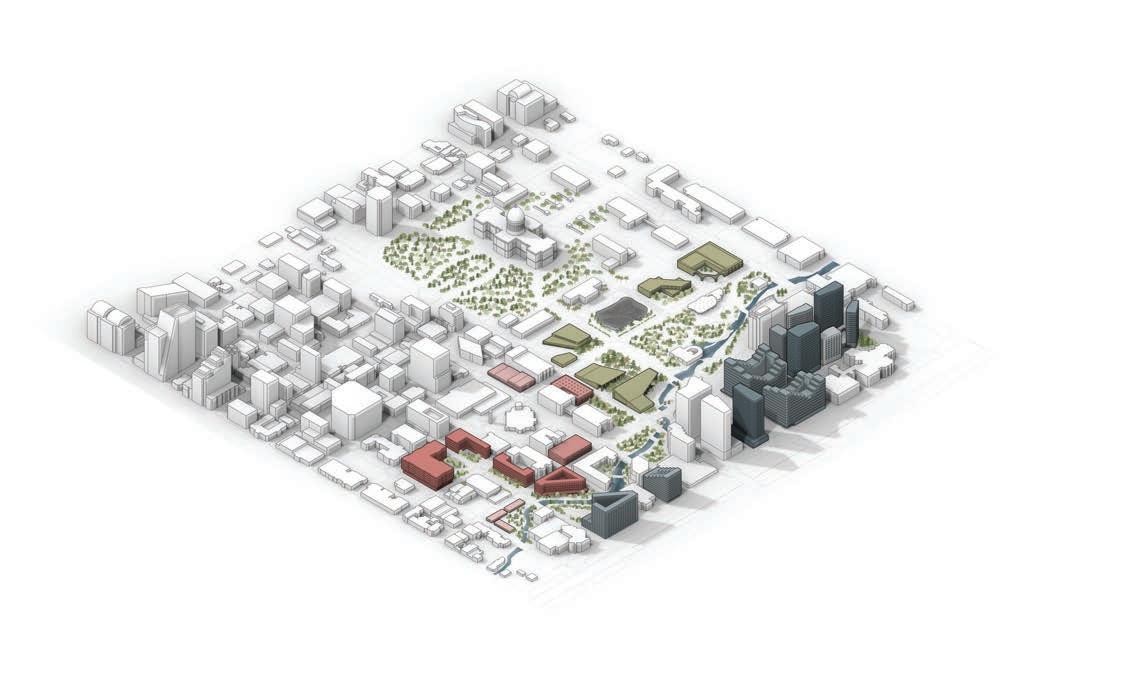
Columbus, GA
Fall 2025
5th Year Studio
Montgomery, AL
Mass Timber Design
Competition – 1st Place
Spring 2023
Dubai, UAE
Buildner House of The
Future Competition
Fall 2023
Nashville, TN
Civic Design Center Parklet
Design Competition
Summer 2025
STUDIO WORK
UNDERGRADUATE ARCHITECTURE
2023 – 2025
ACADEMIA
READING WELL
AN EXPLORATION OF LIGHT AND SPACE
01
READING WELL
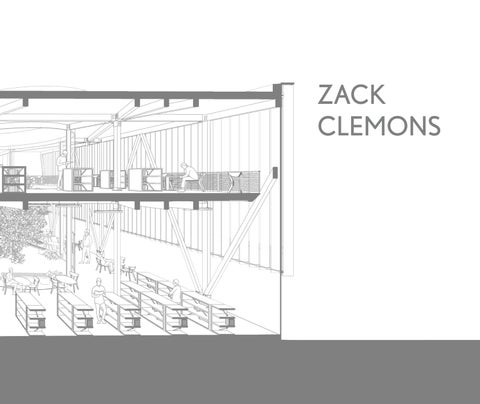
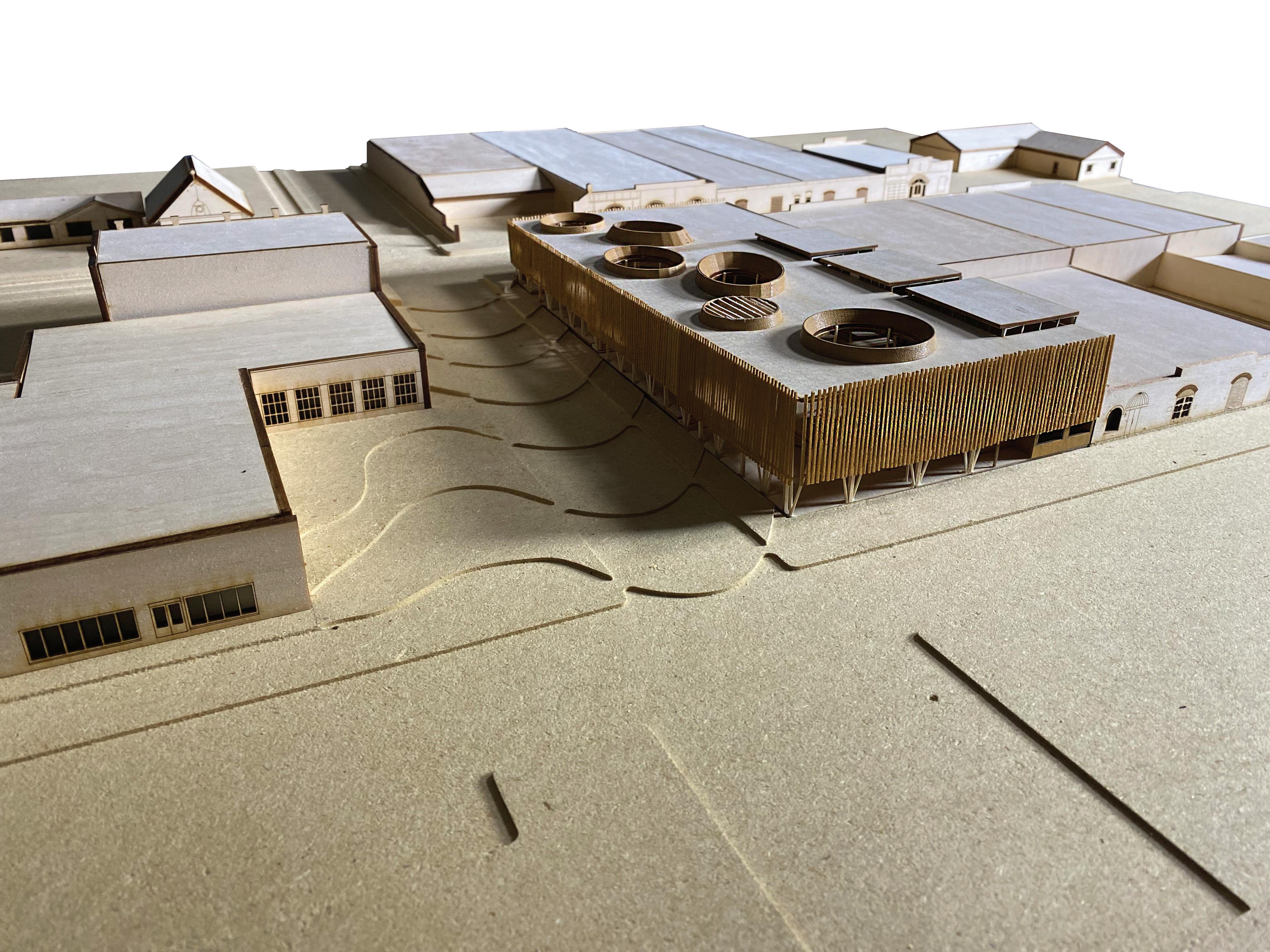
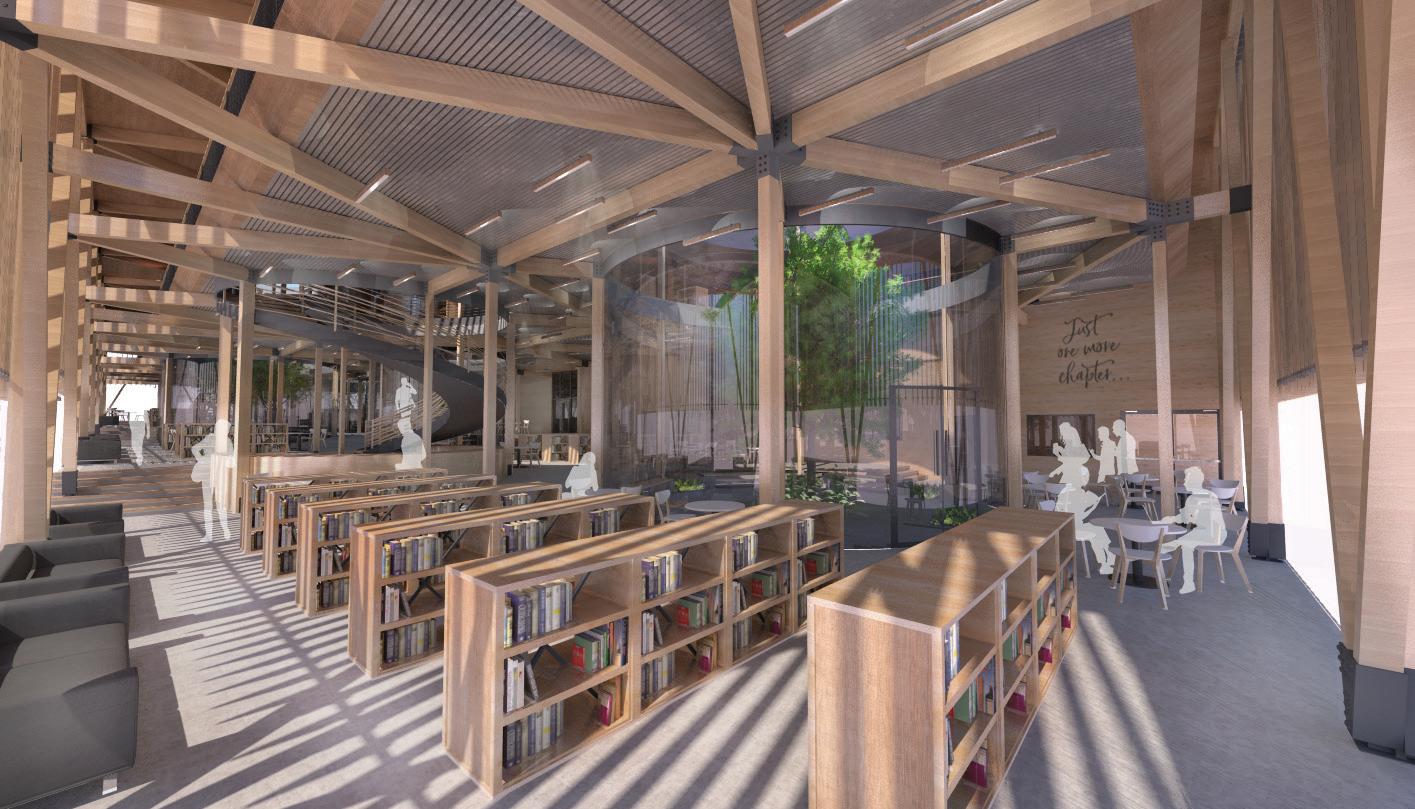
Modern libraries have evolved into community centers with purposes extending beyond the simple act of finding a book. This design is organized around a clear spatial division— between planned and freely explored space. Community-oriented programs occupy a slender rectangular volume, leaving the rest of the building open and inviting for reading and relaxation.
The façade takes inspiration from the axiom “never judge a book by its cover.” From afar, the library appears as a simple rectangular prism, offering only subtle hints of its interior through vertical shading elements. Upon entry, visitors discover a rich spatial experience that reveals the building to be far more than its minimalist exterior suggests.
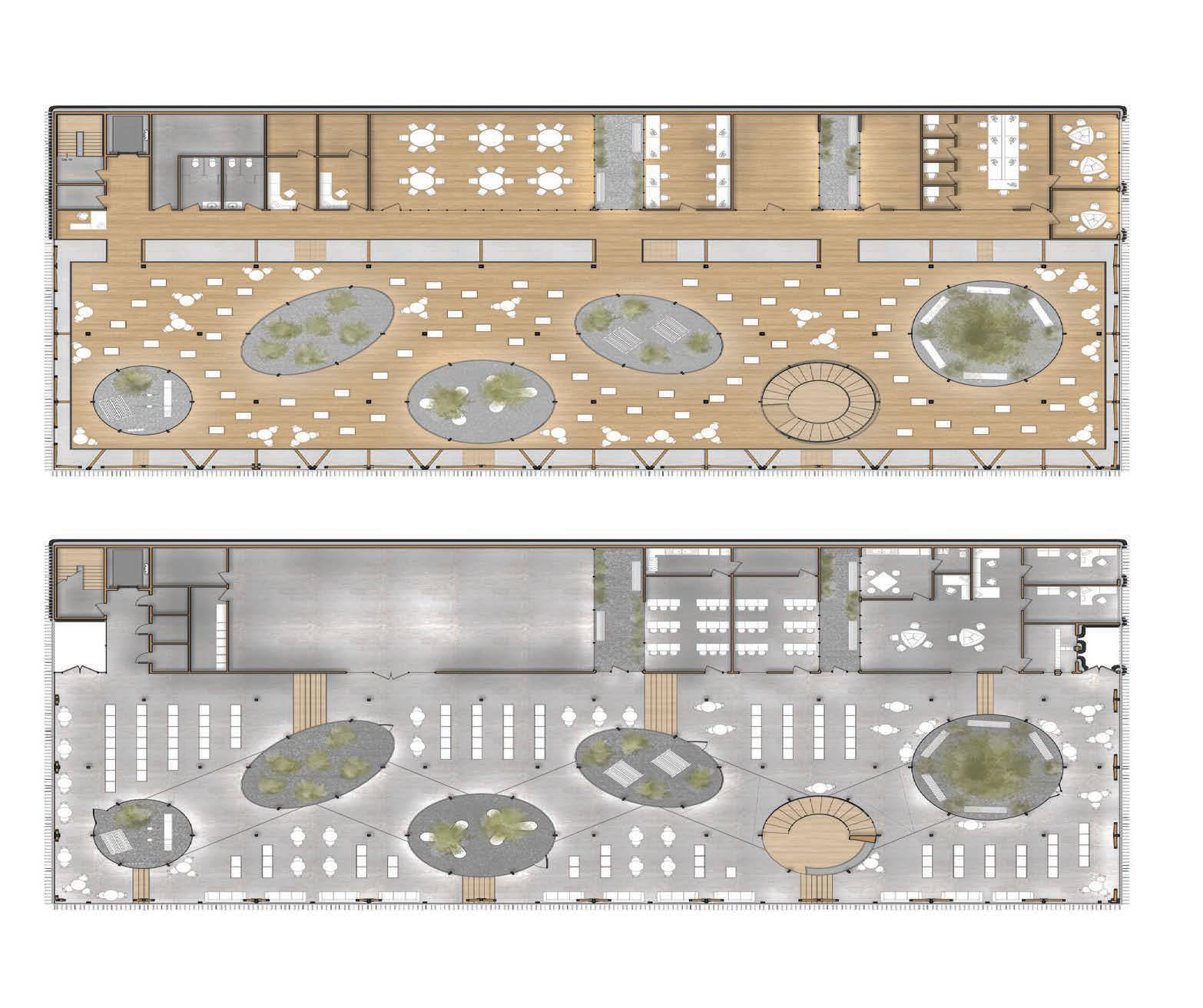
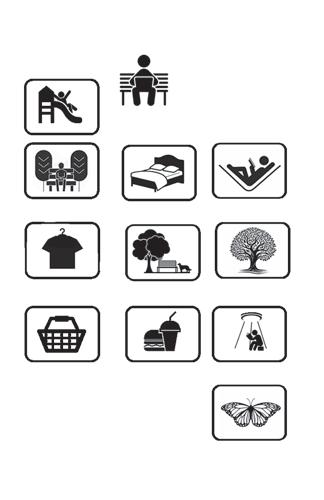
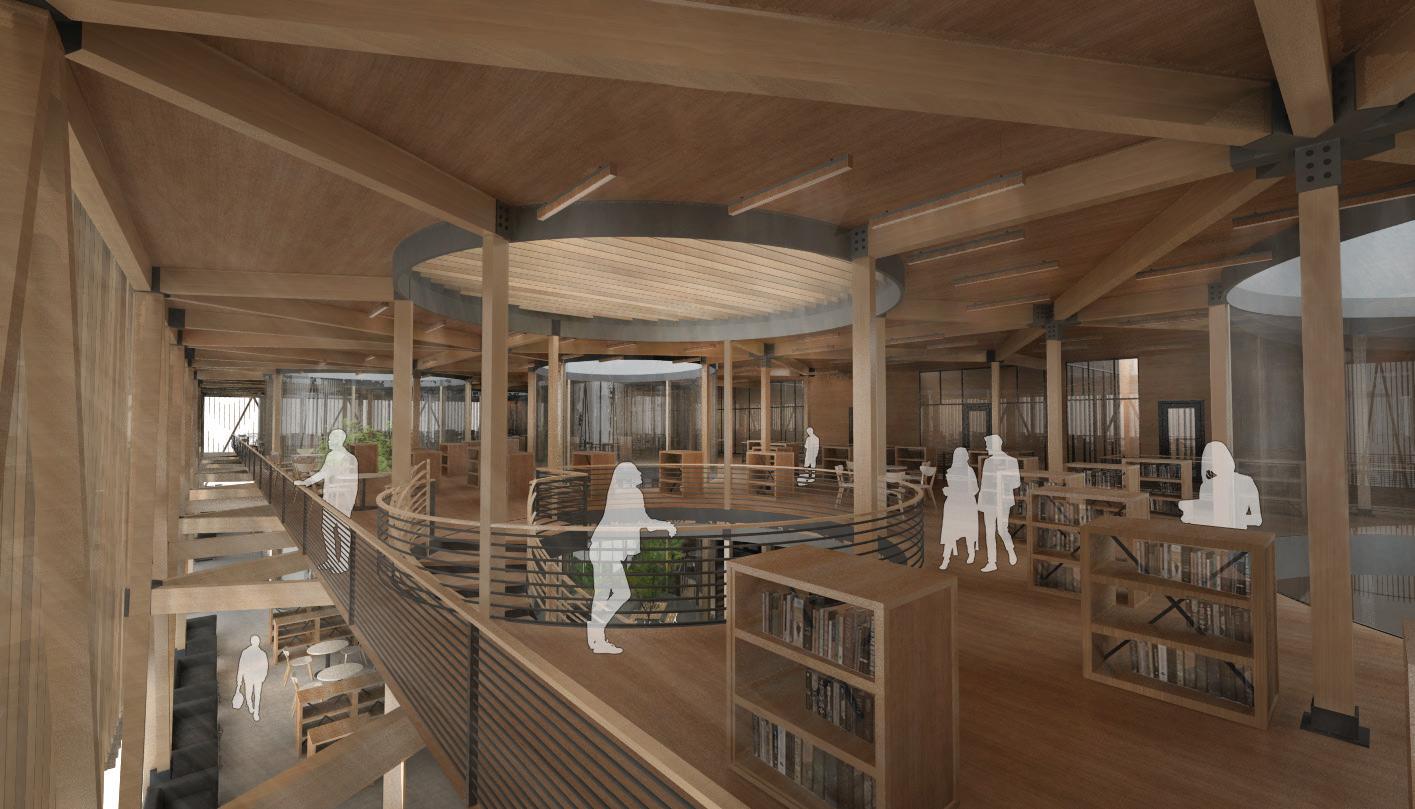
Each light well offers a space suited to every visitor—some for gathering, others for quiet reflection, and some for children to play and explore.
Butterfly Garden Quiet shaded

Picnic tables + collaborative space
circulation
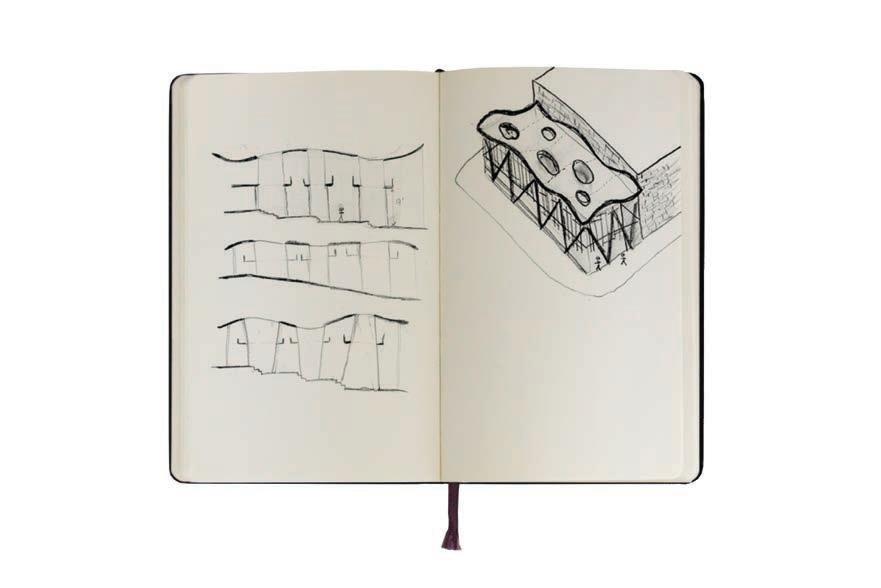
Conceptual section and axonometric drawings detail the initial experimentation of form influenced by light (above)
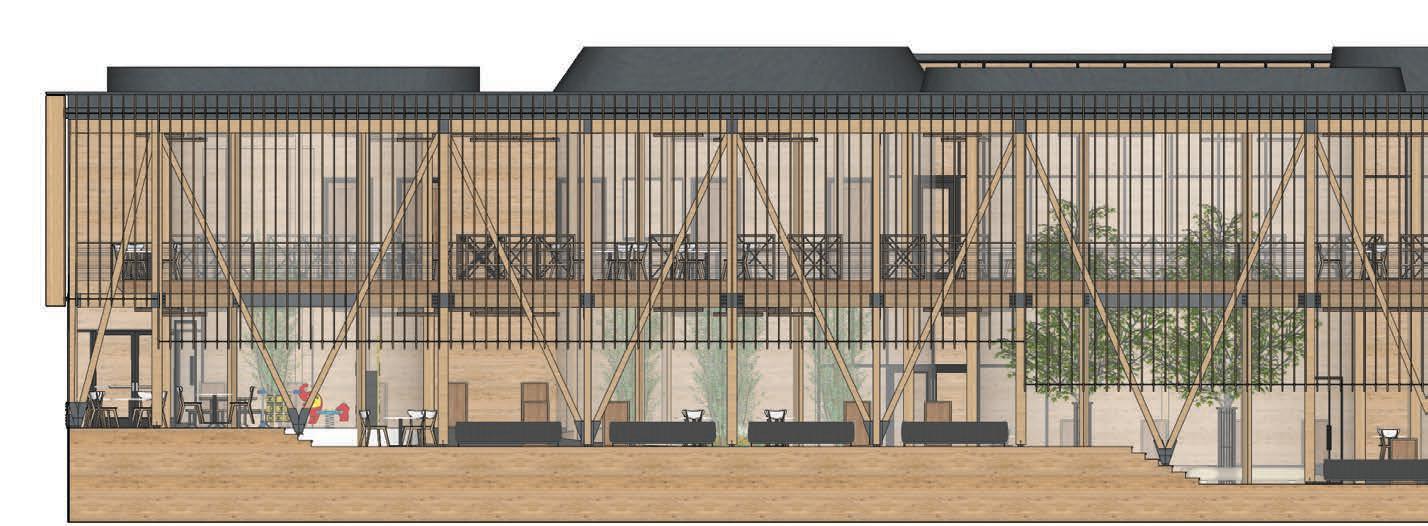
The final elevation expresses a practical reading of the conceptual ideas above. The form becomes more regular while the interior maintains irregularity through the use of light wells (below)
The spiral stairwell, acting as a faux lightwell, becomes a means of circulation and comfort. (right)

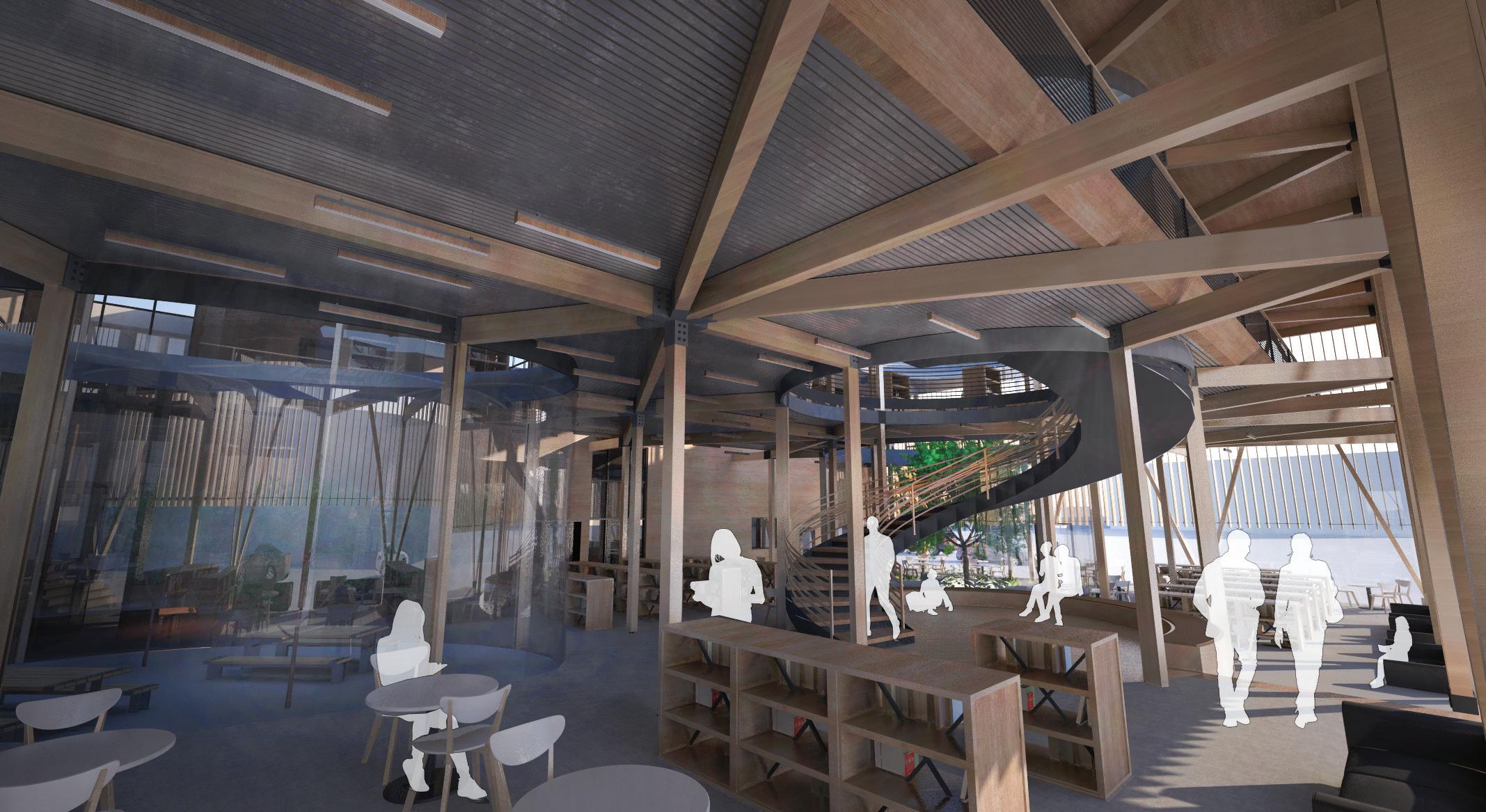
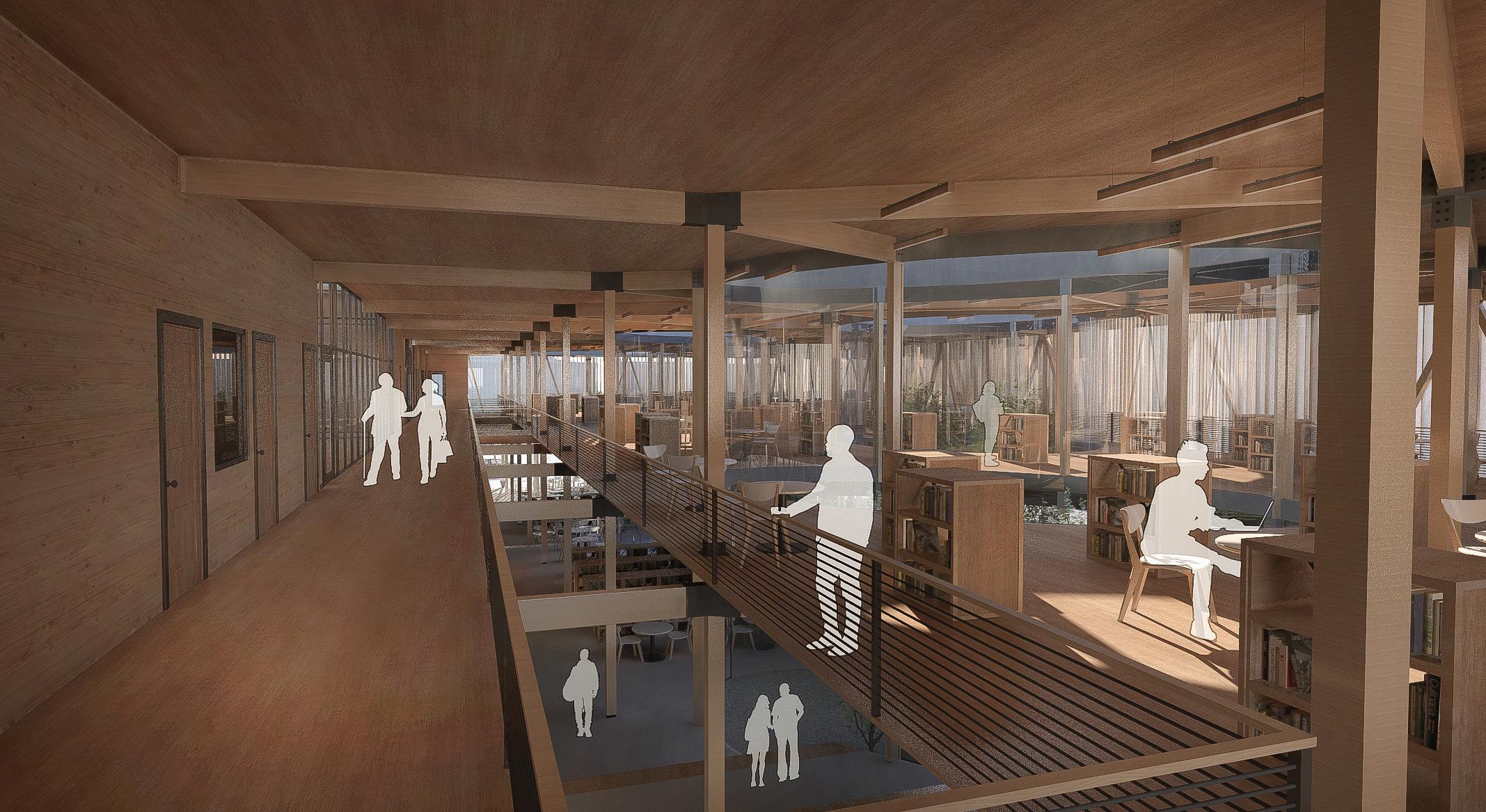
The upper reading space appears to suspend over the ground, developing a sense of weightlessness (above)
Circulation becomes a means of exploration rather than direction (previous)
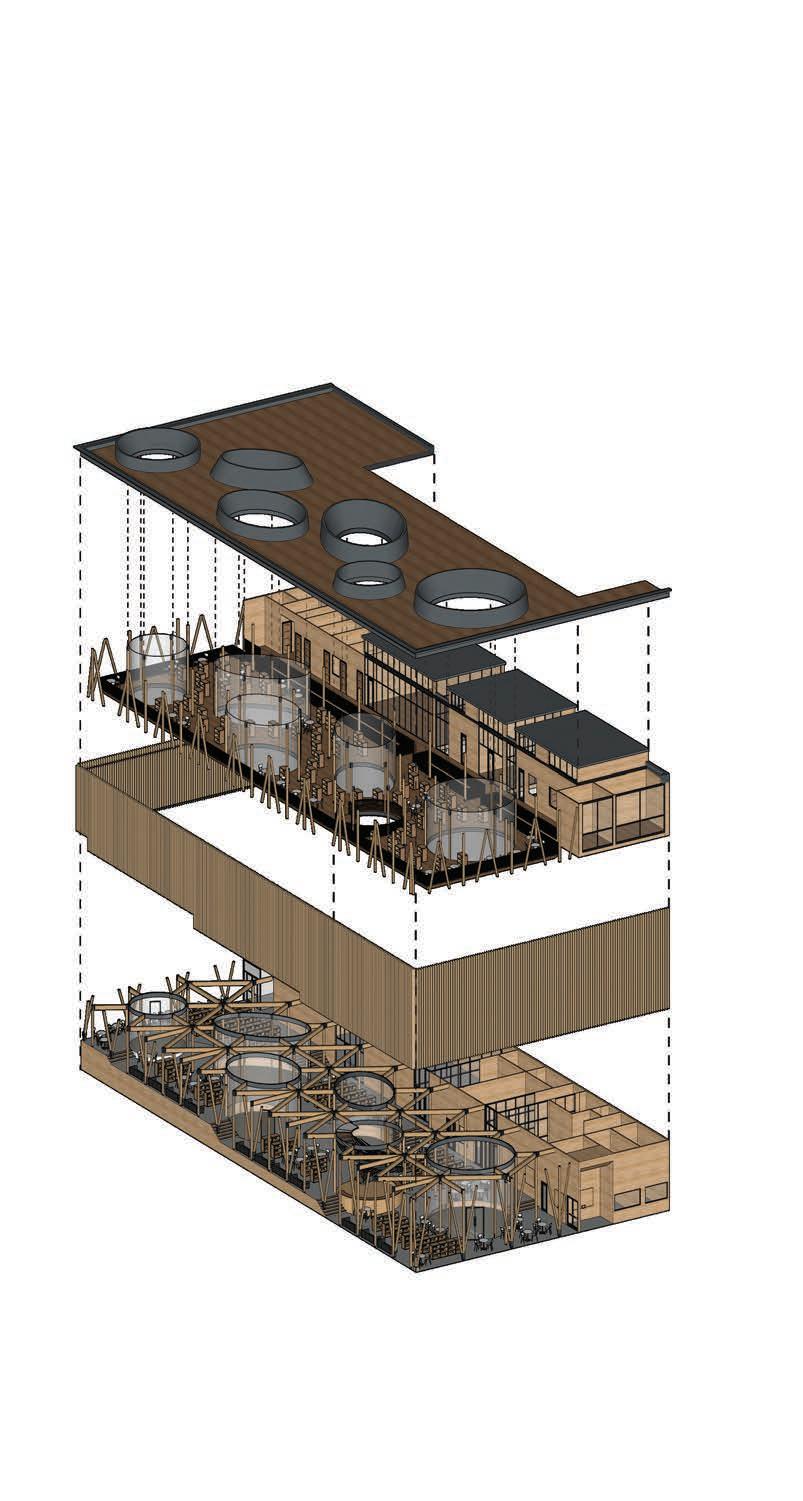
The light wells become expressed in the roof plane, but are perspectively hidden from street view by the facade system
Clerestory windows provide light into the above activity rooms. The first floor receives light through courtyards that visibly connect the upper and lower programmatic bars
The upper reading space appears to suspend over the ground, developing a sense of weightlessness
The skin acts as a permeable membrane into the library. It allows the building to blend into the surrounding context while being unique inside
The structure is a geometric mimicry of tree canopies. It is a way of connecting the vegetative elements within the wells
Each unique light well presents a unique opportunity for community through the biophilic environments within
RESHAPING AN URBAN LANDSCAPE THE SPACE BETWEEN
THE SPACE BETWEEN 02
RESIDENTIAL + COMMERCIAL — 2023
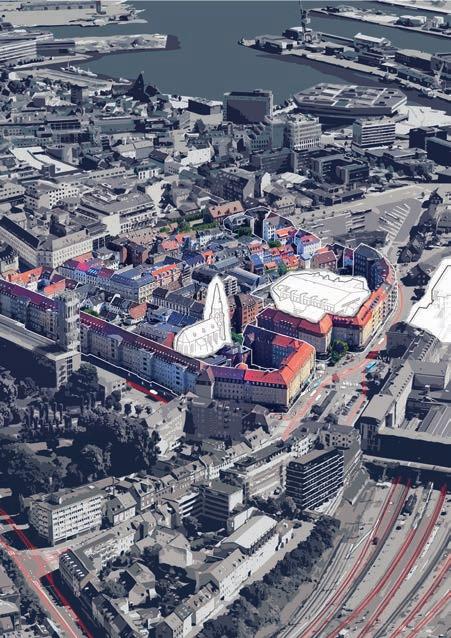
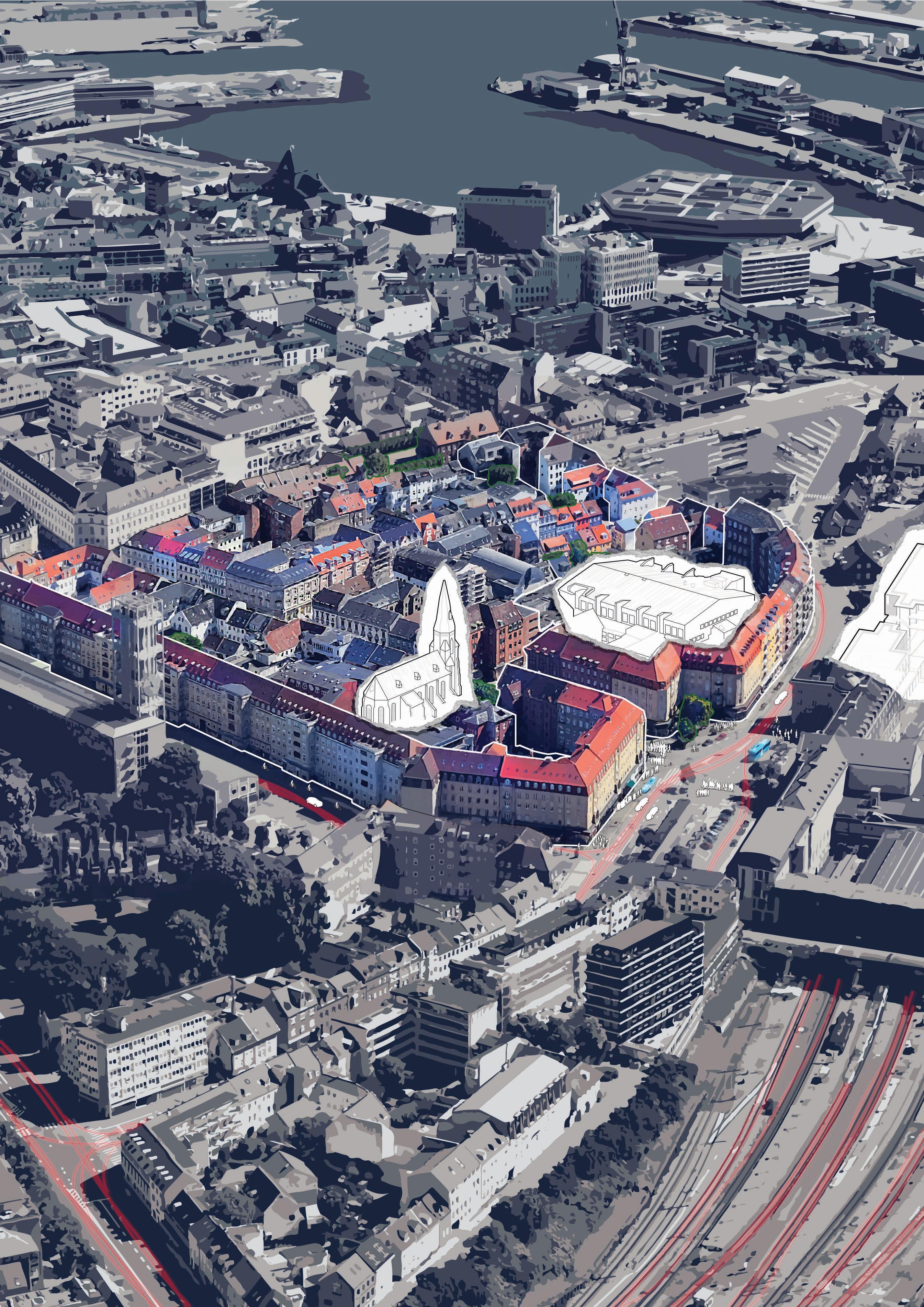
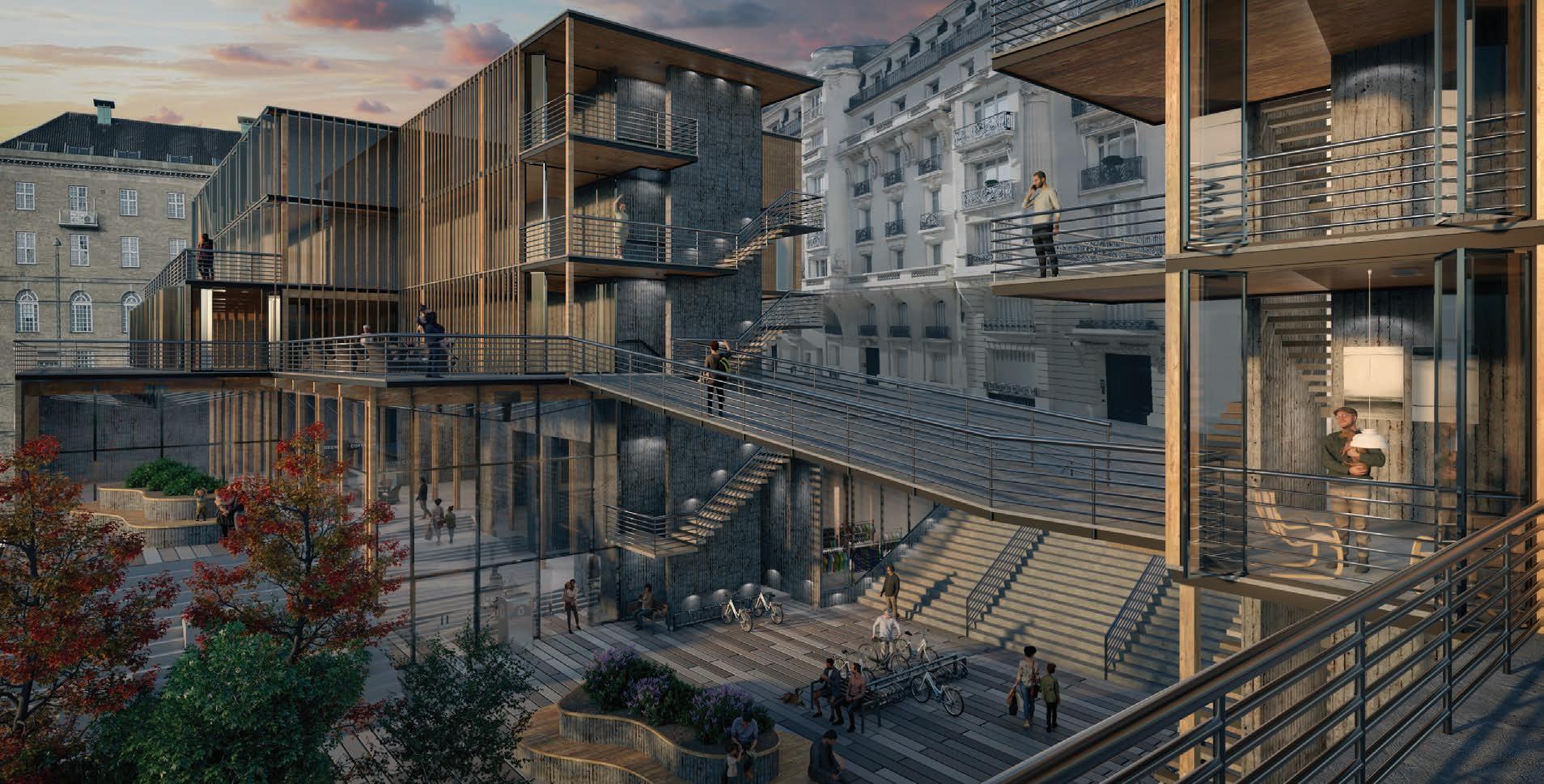
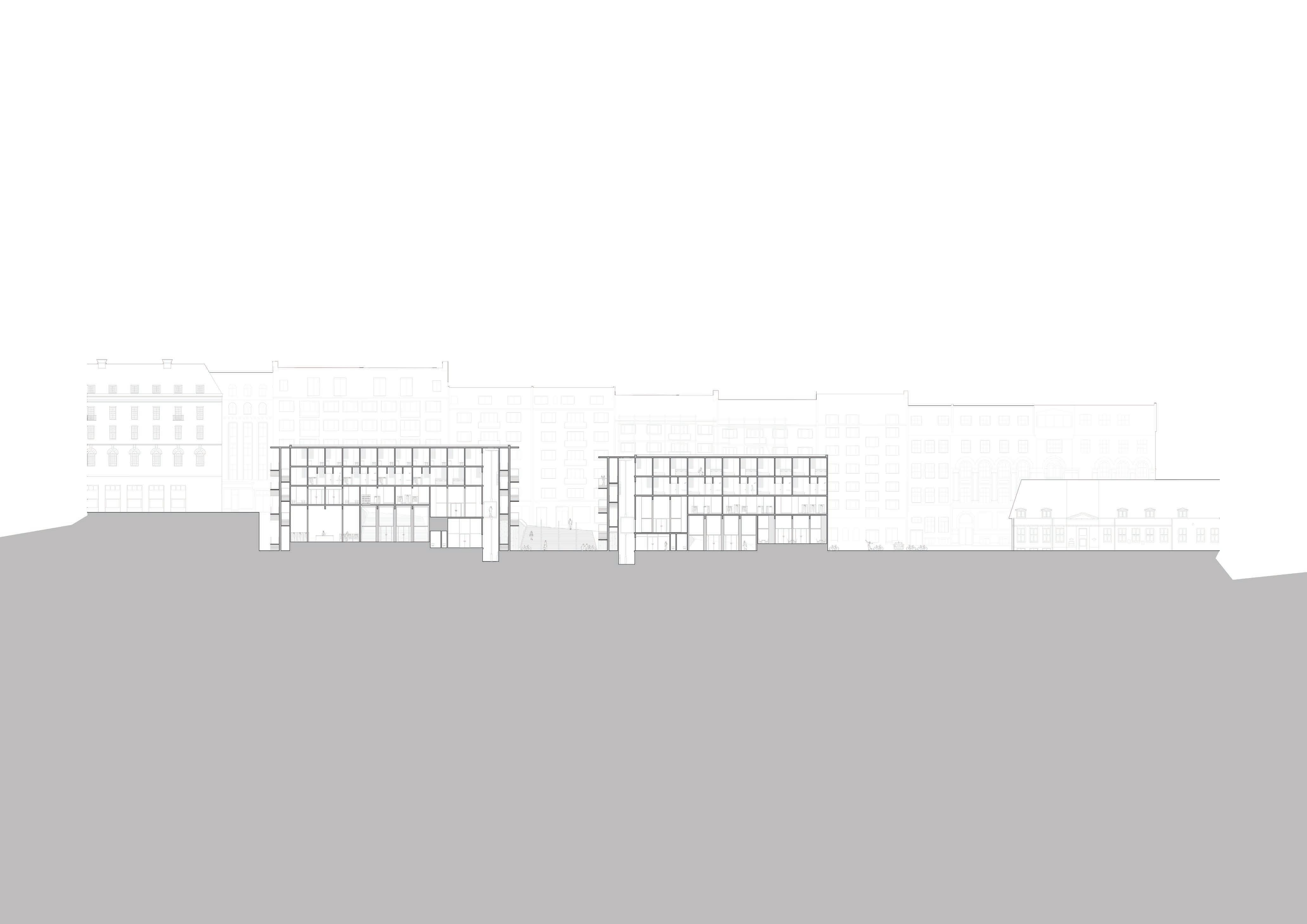
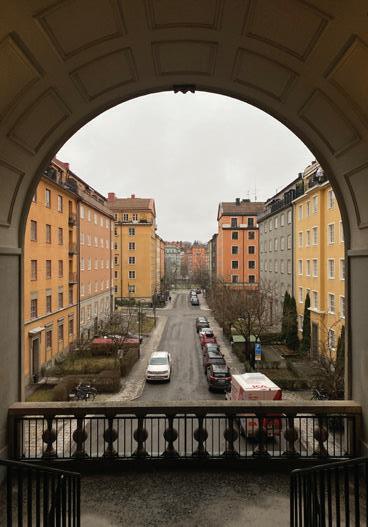
“This Space Between” is a multi-use housing and commercial proposal located adjacent to the Central Station in Aarhus, Denmark. The site is a 300’x100’ plot with a twenty-six foot change in topography. The main challenge of the design is deciding how to handle the slope while also adjoining the project to a well preserved, homogeneous European context. As opposed to selecting a few points along the street to bridge into the building, this project engages the entire 300’ length thereby merging street and building.
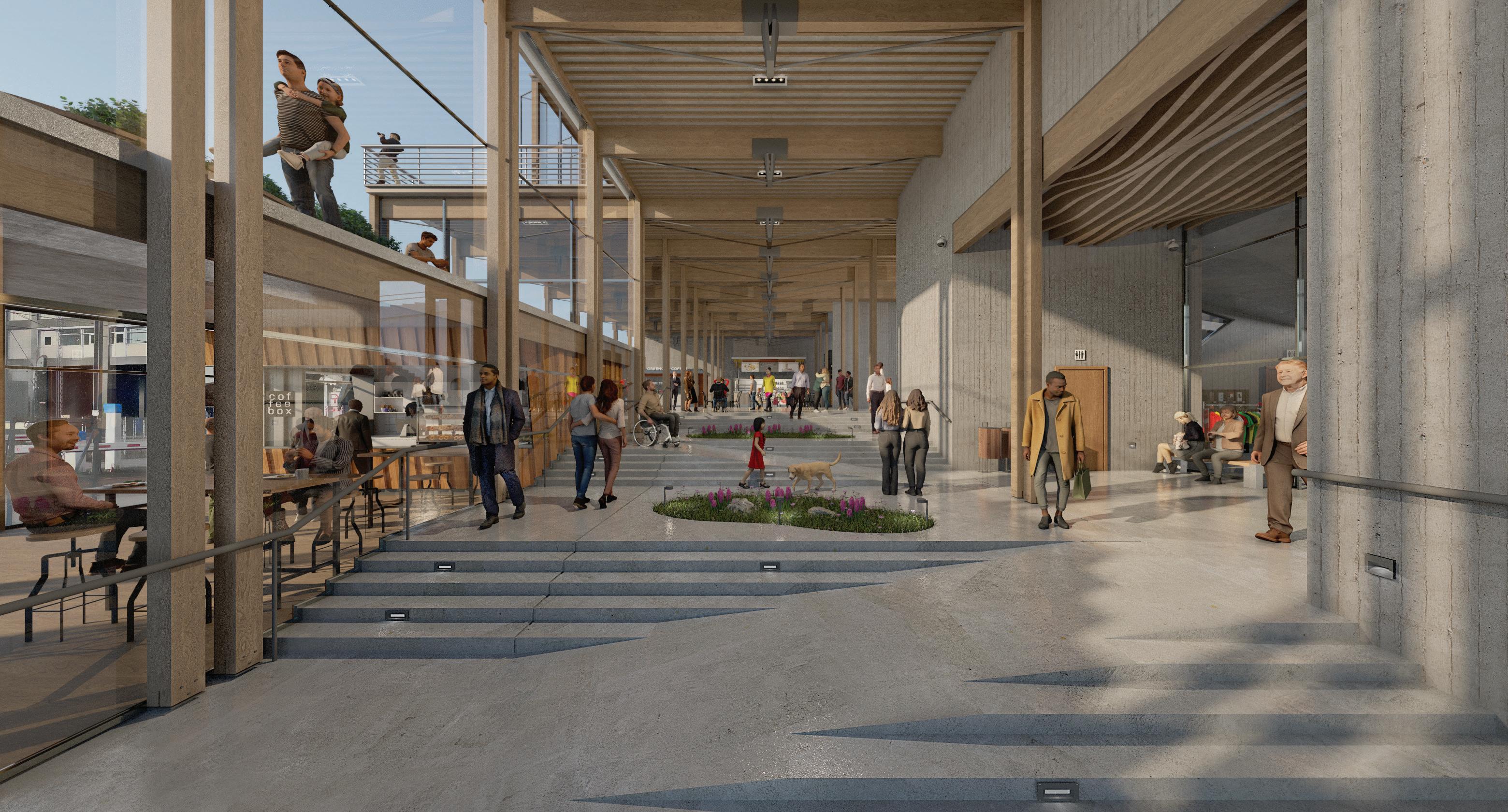
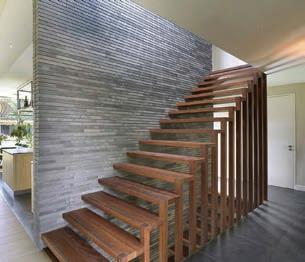
Mass timber encompasses the lightweight frame of the building around a sturdy board-formed concrete core. The harmony between light and heavy materials makes for a refreshing and inviting interior environment. This reinforces the purpose of the design to subconsciously draw pedestrians into the inner retail spaces.
The project exists within a defined grid consisting of columns every ten feet. Mass timber beams additionally span only north to south. The purpose of this is to create perspectival guidelines that flow horizontally into the retail spaces. The intention in influencing perspective is to create a subconscious desire to want to enter the retail space defined by visual guidelines. This language is continued in material and facade using vertical elements in board-form concrete and timber slats that appear to wrap from where horizontal elements end.
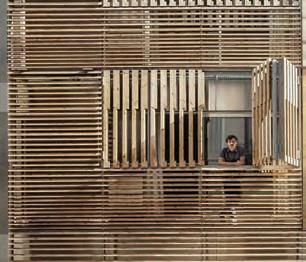
The north and south facade both contain operable bifold windows to allow access to natural ventilation into units and increase the quality of living. Additionally both wings have private balconies for the residential sphere to create a comfortable divide between public and private.
The form of the building is a result of a contextual response to the street. Connecting to the grade of the street as opposed to subtracting from it, a hierarchy of space through elevation is formed. The diverging steps thereby delineate between commercial and residential units.
The open corridor presents a place for residents to commune, play and rest . It is intended to become an inviting environment suitable for all seasons (right)
“Space Between” Recreation + Community
Studio Apartment
Two Bedroom Unit
Three Bedroom Unit
Exterior Circulation
Elevator
Patio
Ground Circulation Up
Ground Circulation Down
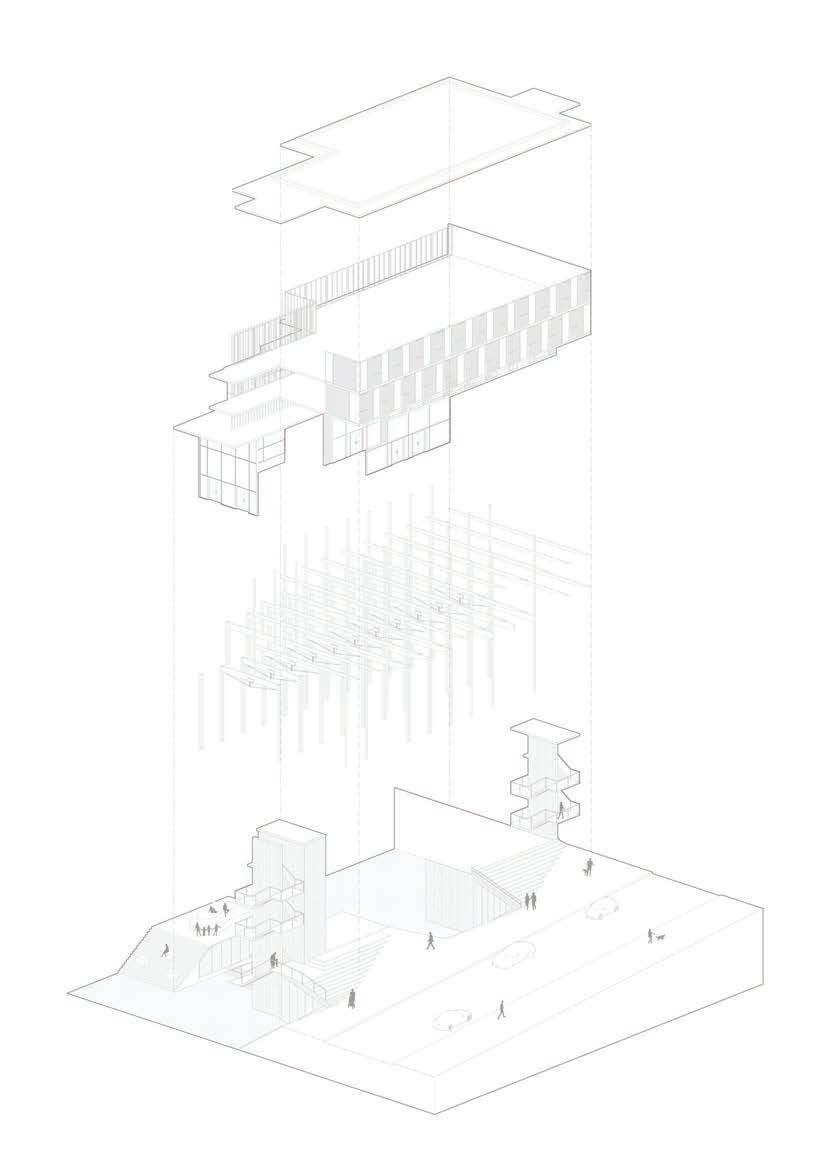
Flat roof plane with recessed parapet hidden from view from the street
Tectonic wood building skin as a lightweight frame
Mass timber structural system utilizes deep beams spanning one direction to act as a visual guide into the building
Stereotomic concrete foundation visibly ties the building into the ground plane
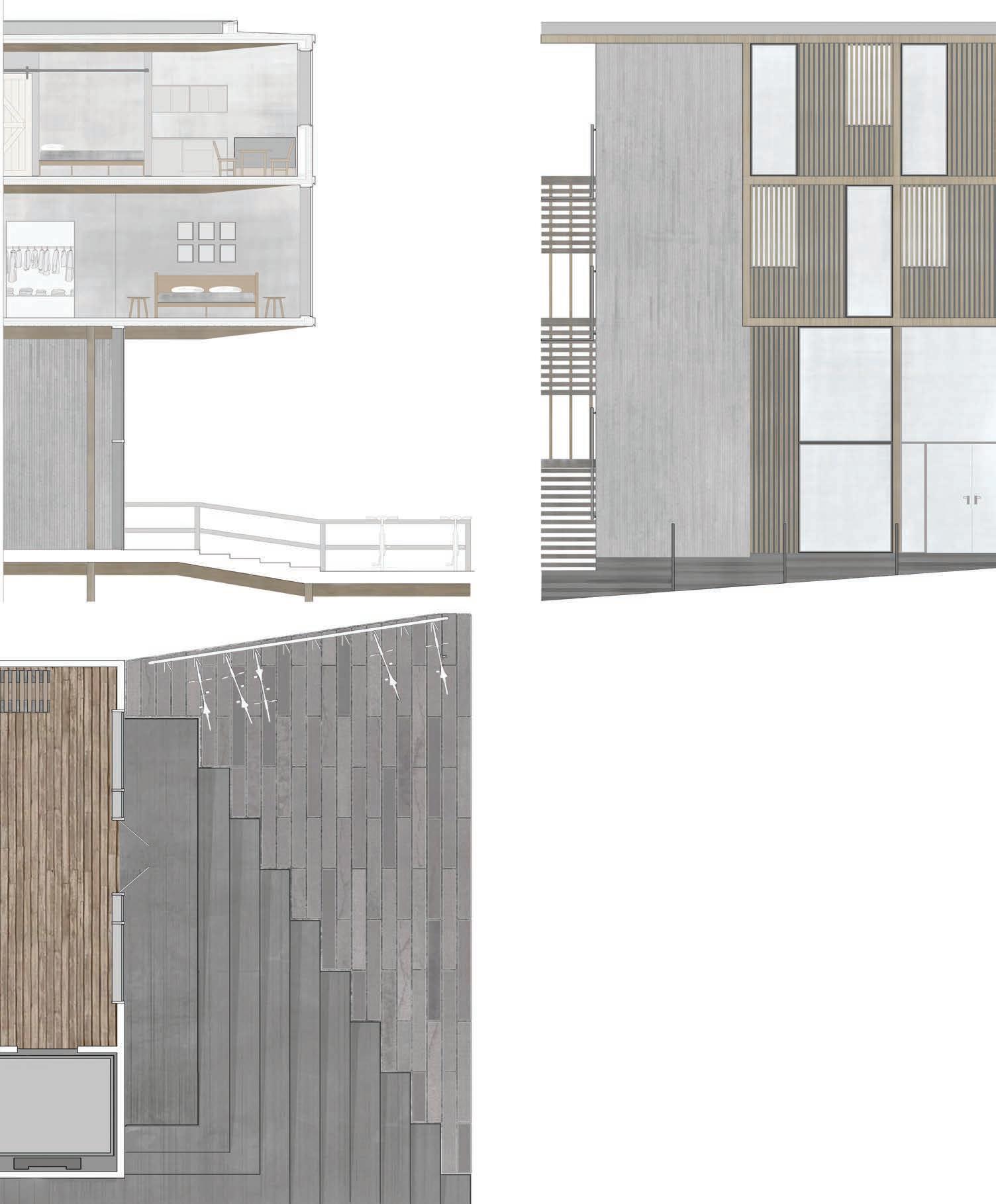
The threshold between street and building designed to be read as mesh (left)
Public interaction and retail hierarchy throughout interior street (right)

This project is a test of quality over quantity. Instead of providing the maximum leasable space for retail, there exists a divide between the two halves of the design. The intention is to create a welcoming public space that gives reason for pedestrians to want to exist within the space rather than to enter by necessity.
The ground floor becomes a social web through interconnected retail spaces that develop a kind of “interior street”. The form of topography provides a sense of exploration through circulation, depending on where one chooses to enter the site from. Grade change forces a hierarchy of retail through stepped levels.
Partial section showing the overlap of residential and public space (left)
Partial elevation highlighting the wood siding as a tectonic element versus the stereotomic board-form concrete (right)
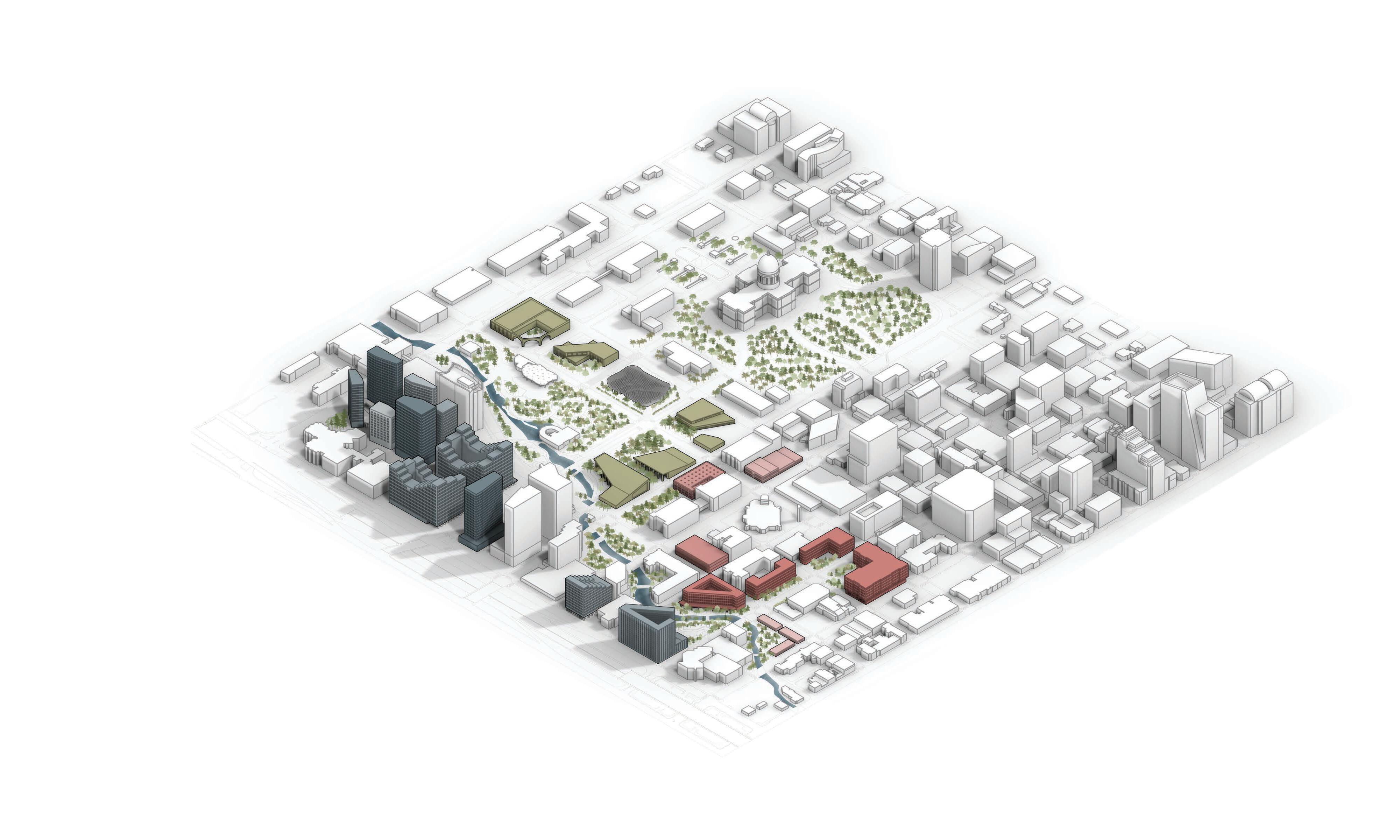
OF AND ABOVE DEVELOPING EXPERIENCE THROUGH PERMEABILITY
OF AND ABOVE
NATURAL FLORA MUSEUM — 2024
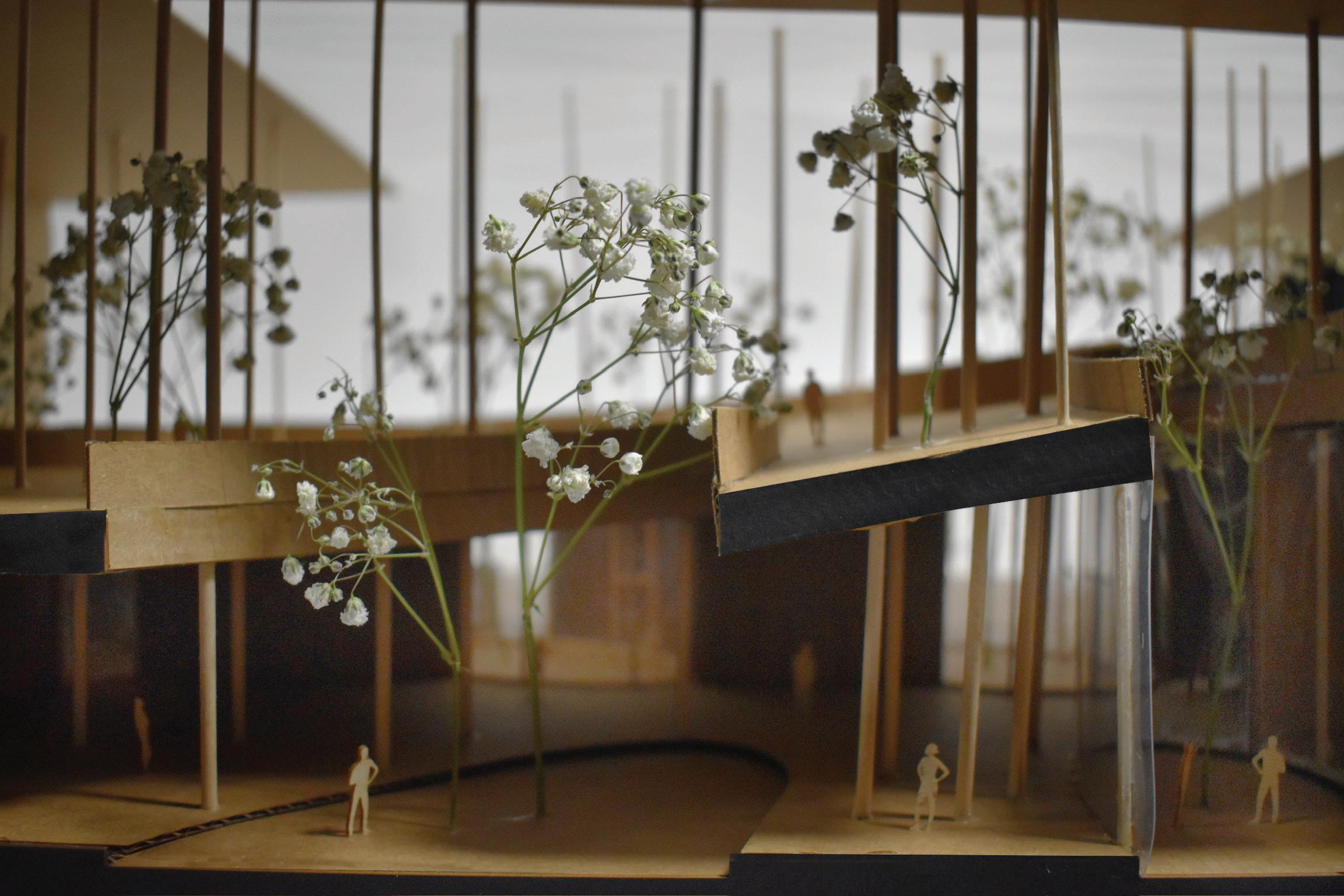
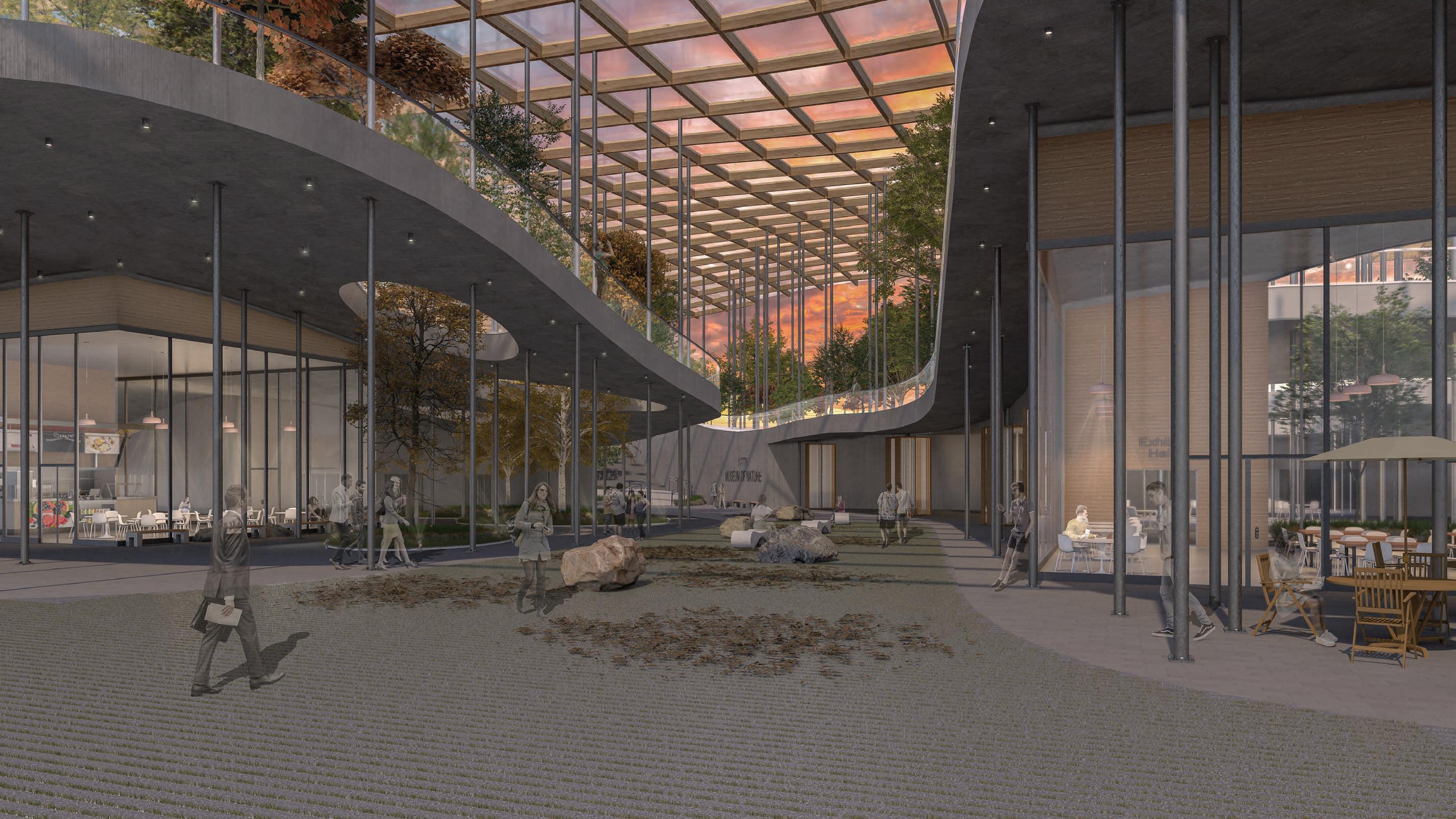
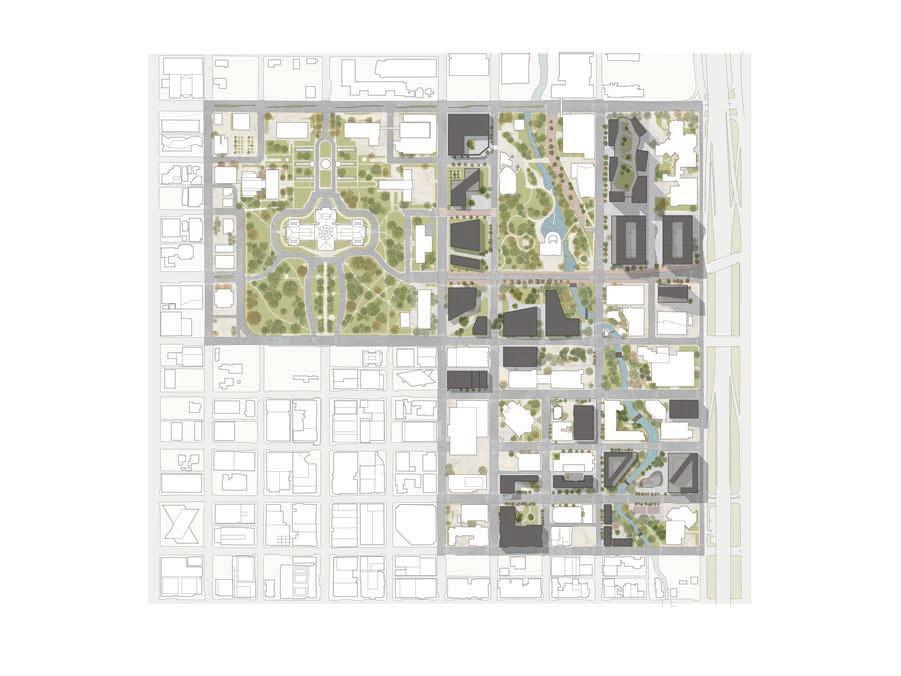
This project is an experiment between what is above and below. It is a museum entirely concealed under a built-up landscape that in itself becomes an exhibition space. The purpose of the museum is to highlight the natural flora of Austin while also serving as an element of revitalizing the adjacent, unused community park. The museum operates within two experiential zones: the above condition, where cross breeze, humidity, and light are directly felt; and the below condition, where air is funneled in, light comes through wells, and temperature is dropped.
The project itself is protected by a large, wavy glass canopy that responds to the building form. Each low point in the canopy serves as a catch basin that redirects rainfall through the columns and into an integrated irrigation system. From above, the canopy meshes into the diverse Austin cityscape, yet from below, the museum form is unique to its surroundings.
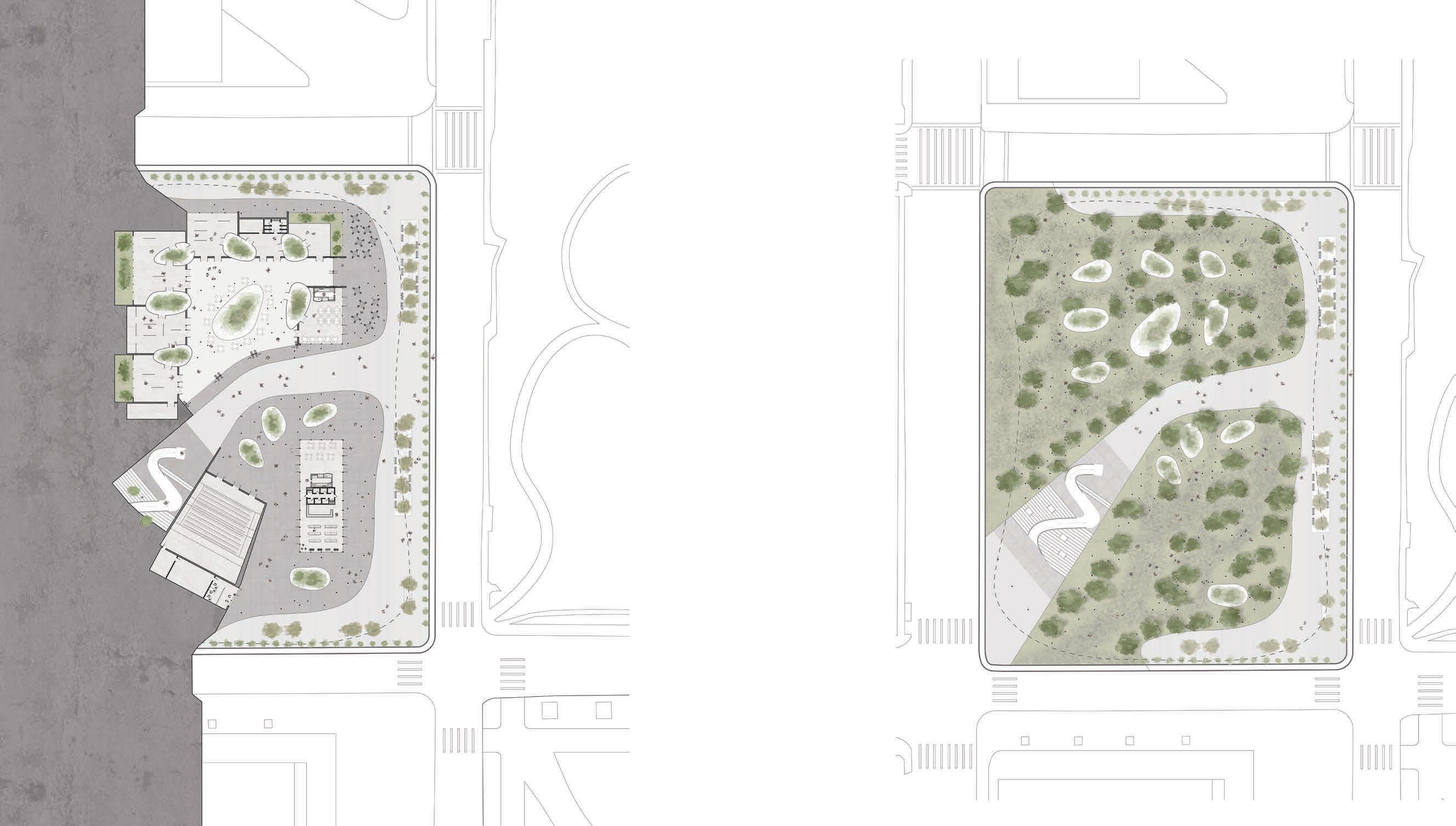
The excess of columns and clustering of such is intended to celebrate the artificial nature of the building. The columns and trees combine to form a new tree canopy that is neither fully artificial nor fully natural. The reason behind this is to represent the sustainable goals of the building through biomimicry and to become a precedent for future green initiatives in Austin. The main exhibit is intended to be the exterior greenspace. The level housing the auxiliary exhibits and program space is purposely buried underground so that the building appears to be an intentional extension of the adjacent Waterloo Park.
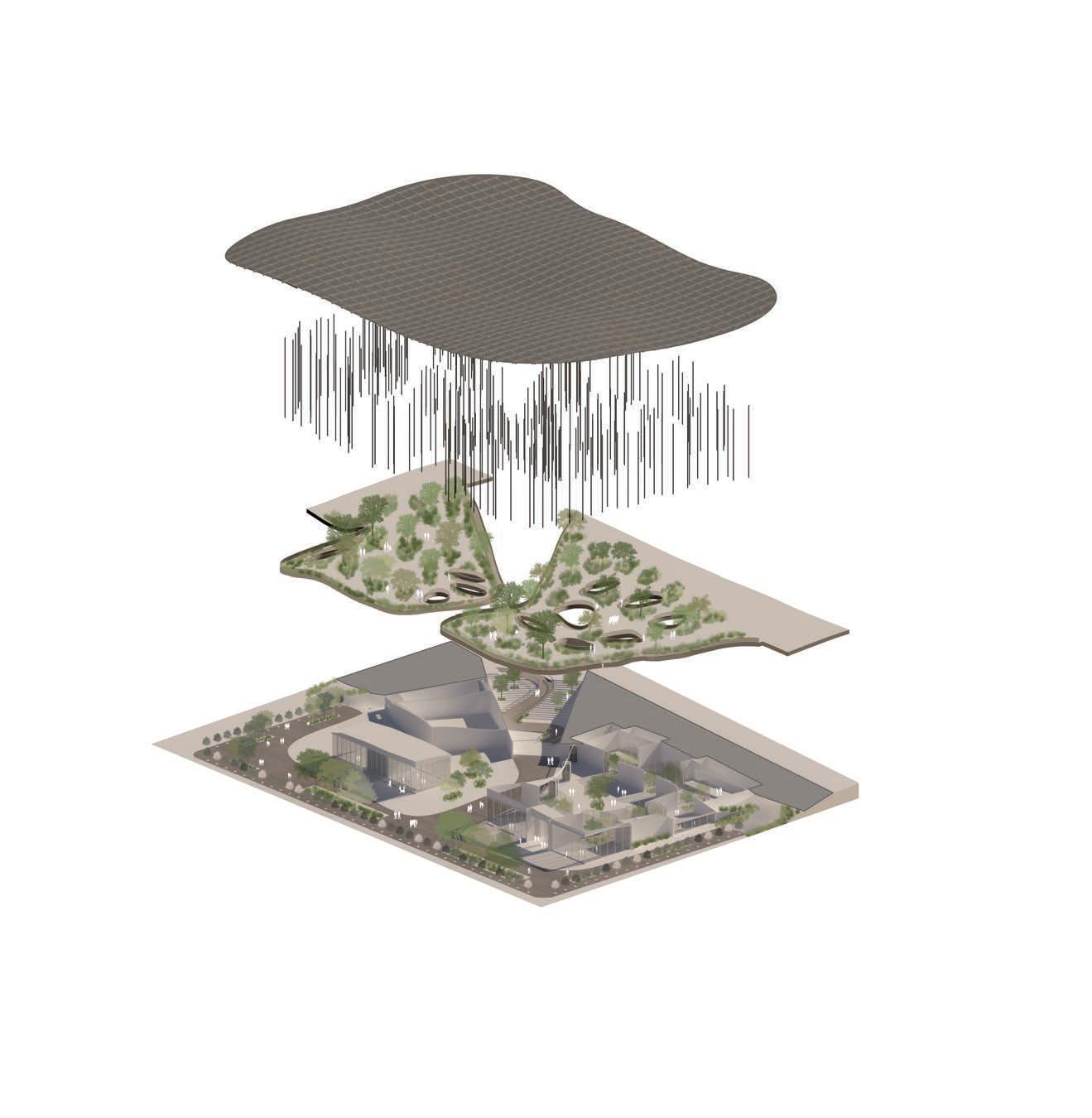
Undulating roof plane acts as a rainwater catch basin that retains water on site Wood lattice structure that frames the artificial canopy and provides partial shading below
“Forest of columns” that doubles as an irrigation and filtration system using rainwater
Artificial ground plane that houses the exterior permanent exhibitions and creates an inviting community space
“Below ground” condition containing permanent and temporary exhibitions and a separate experiential zone through light, air, and temperature control
The exploded axonometric drawing relates the layers of the artificial forest from the roots to the canopy (left)
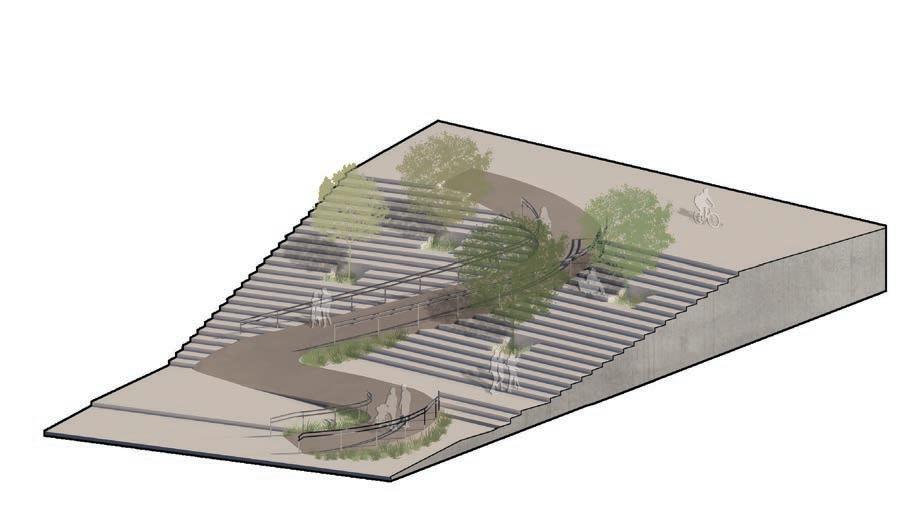
The northeast corner of the site is designed with an exaggerated scale to invite and intrigue visitors. It is a place for community, contemplation, and rest (right)

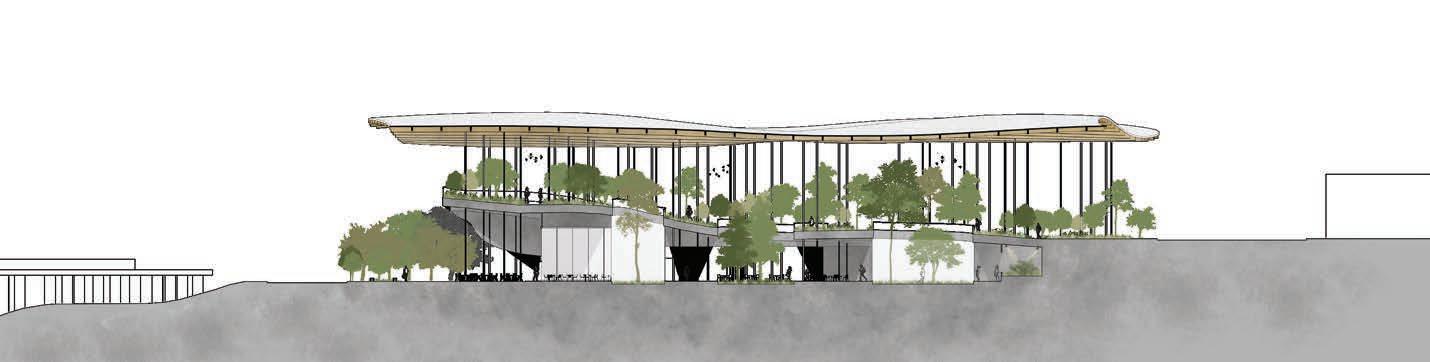
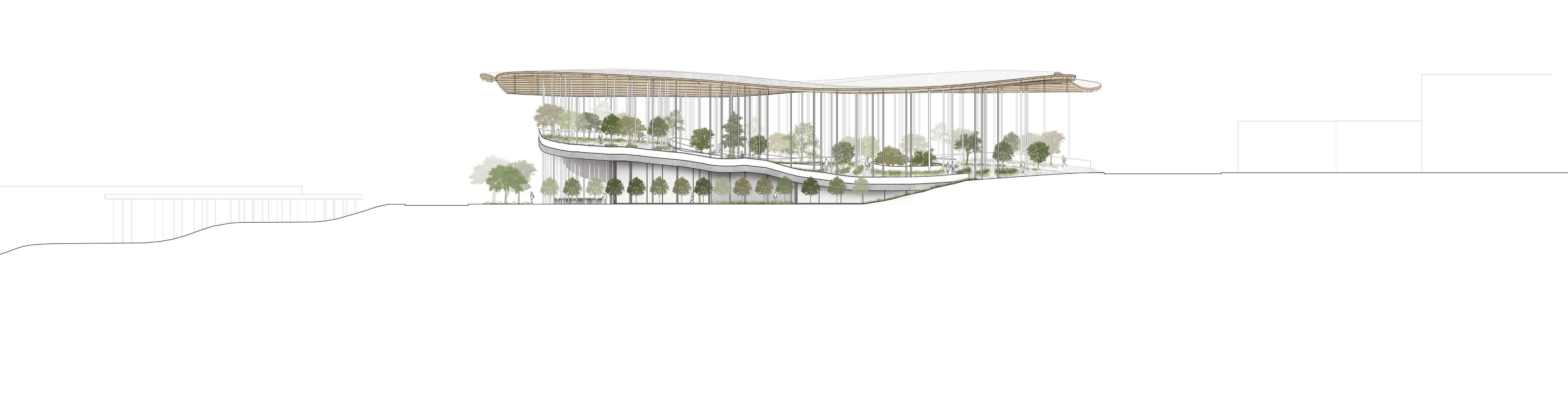
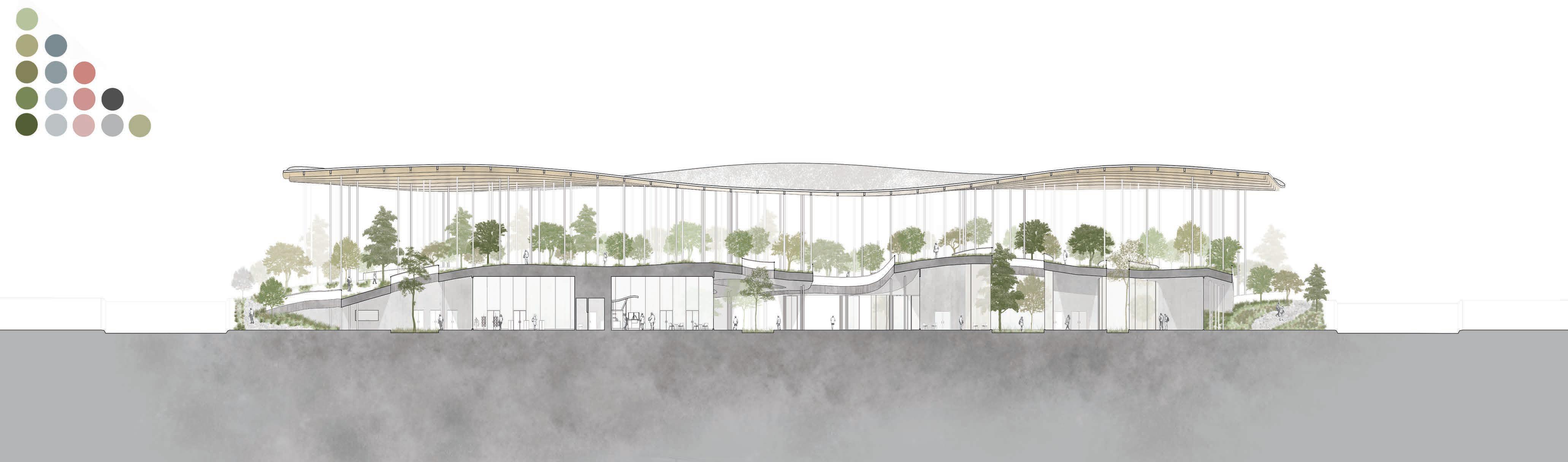
The longitudinal section of the project best expresses the of the ground and above the ground relationship. The way the lightwells interact and play with the programmatic space below is a means of developing the experiential zones between each condition
Exhibition Space
HUNTSVILLE DANCE + COLLECTIVE
ESTABLISHING A TRANSPARENT
CORNER COMMUNITY
DANCE + COLLECTIVE 04
PERFORMING ARTS CENTER — 2025
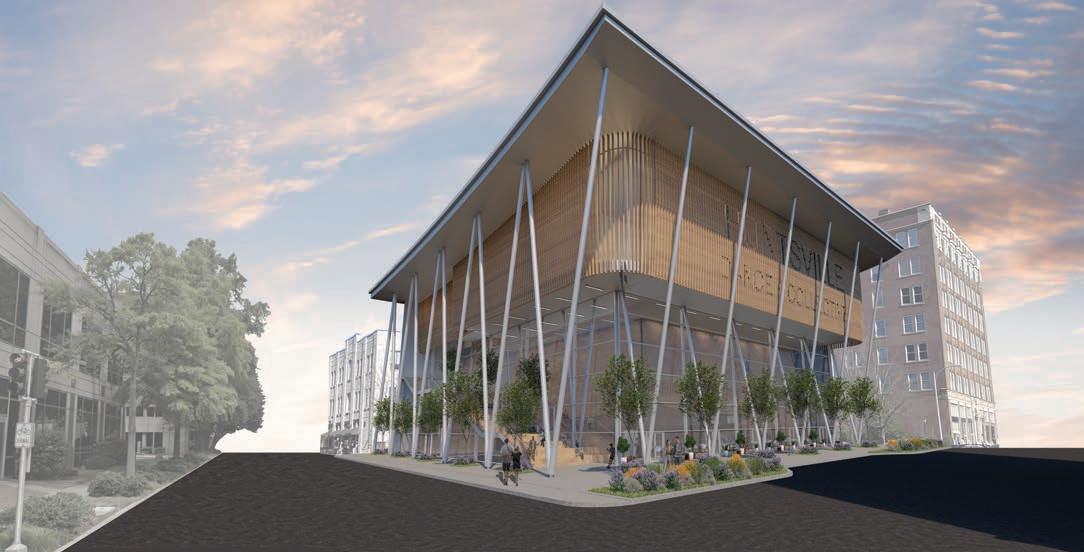
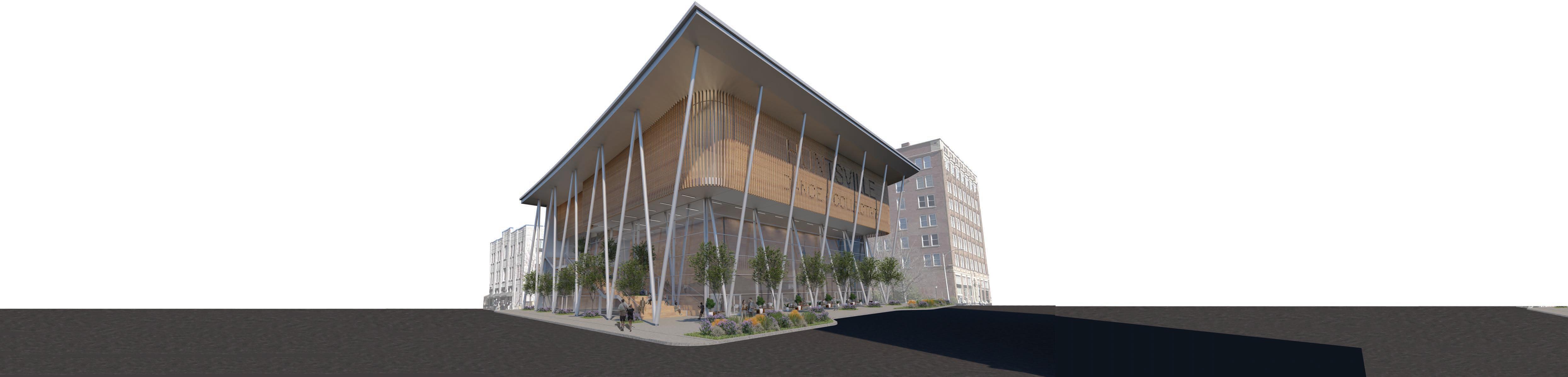
This project is a performing arts center and small dance school in the heart of Hunstville, Alabama. The challenge of the project is to design a public gathering space, theatre, and school with degrees of access to section off zones not in use. The focus of the project is also to design and integrate an HVAC, structural, life safety, and building performance plan.
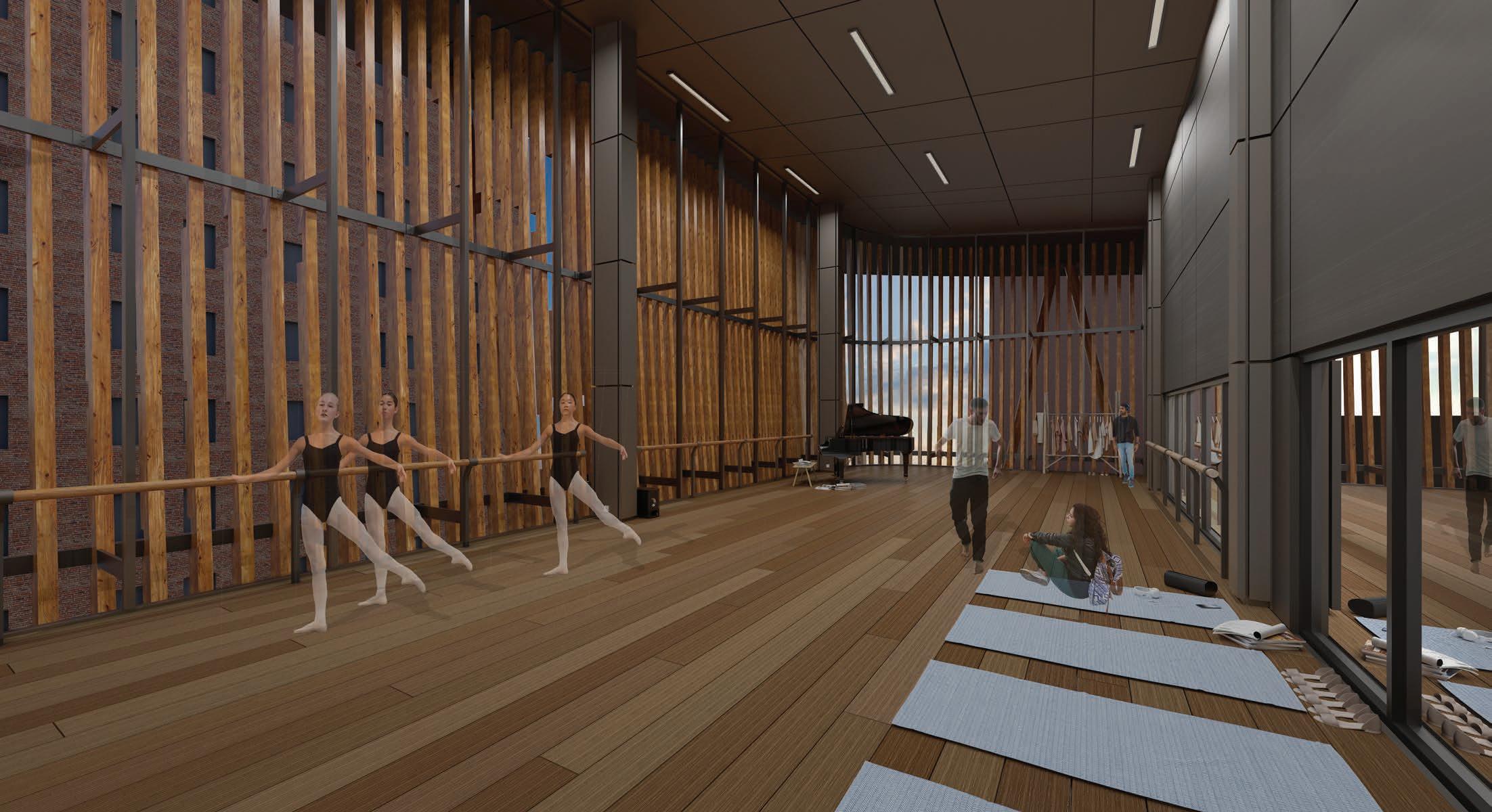
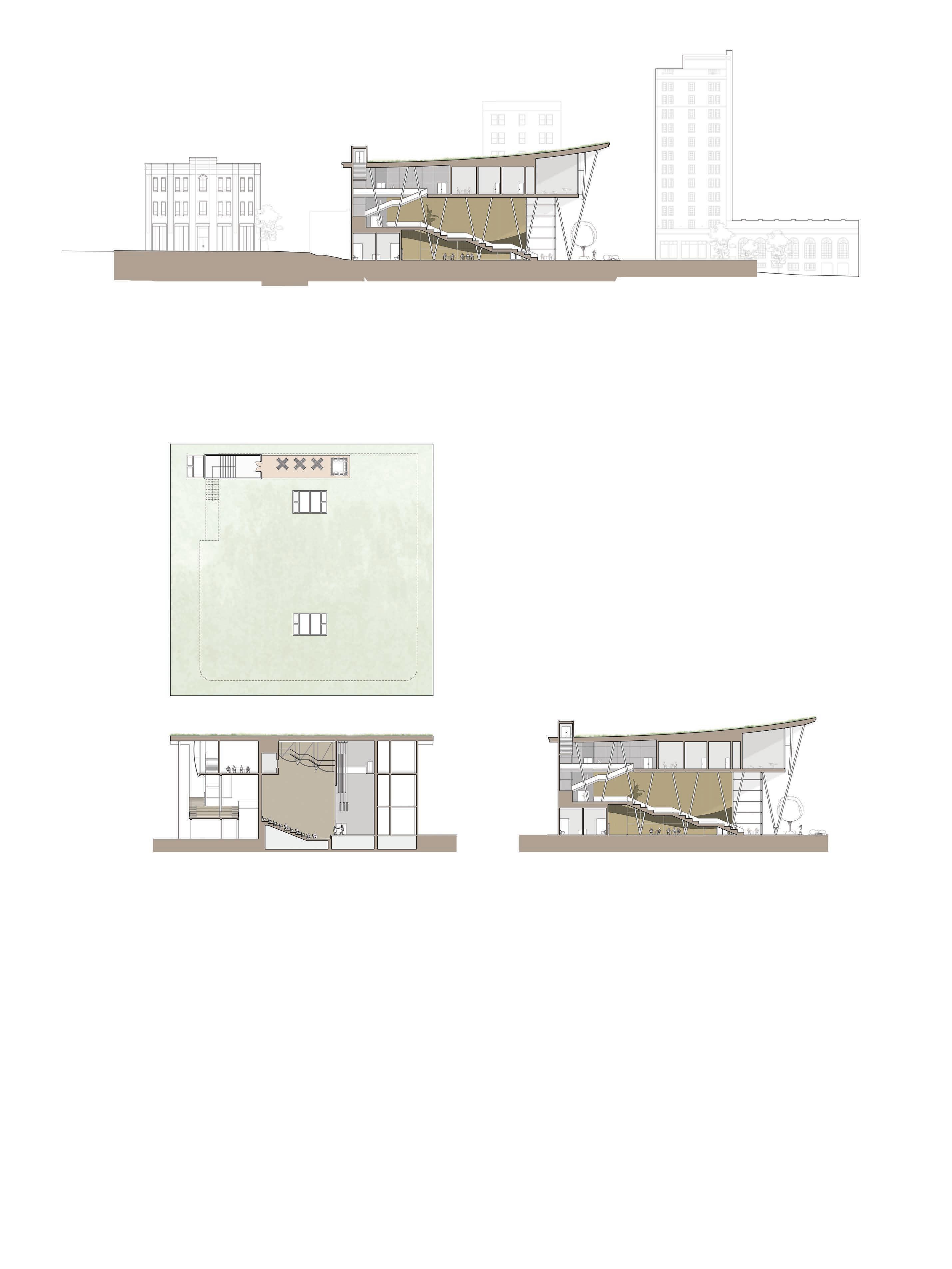
The challenge of a small site footprint is solved by raising the dance studios to the third floor and reaching them through a winding staircase along the facade. This strategy additionally allows for the theatre to be closed off when not in use while still providing access to the offices and dance studio above. Placing the studios above makes it so the building further engages the primary street facade where most pedestrians enter.
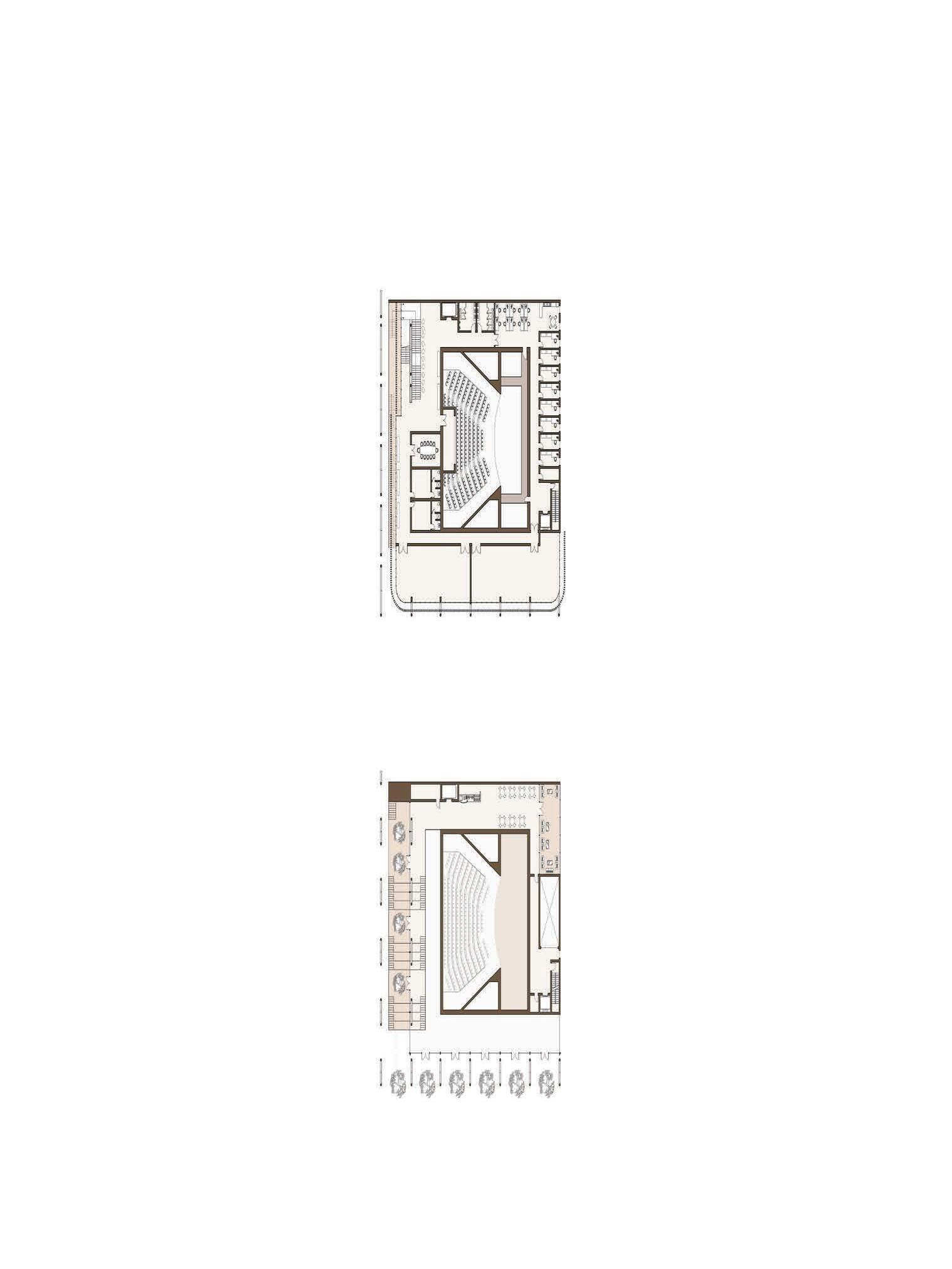
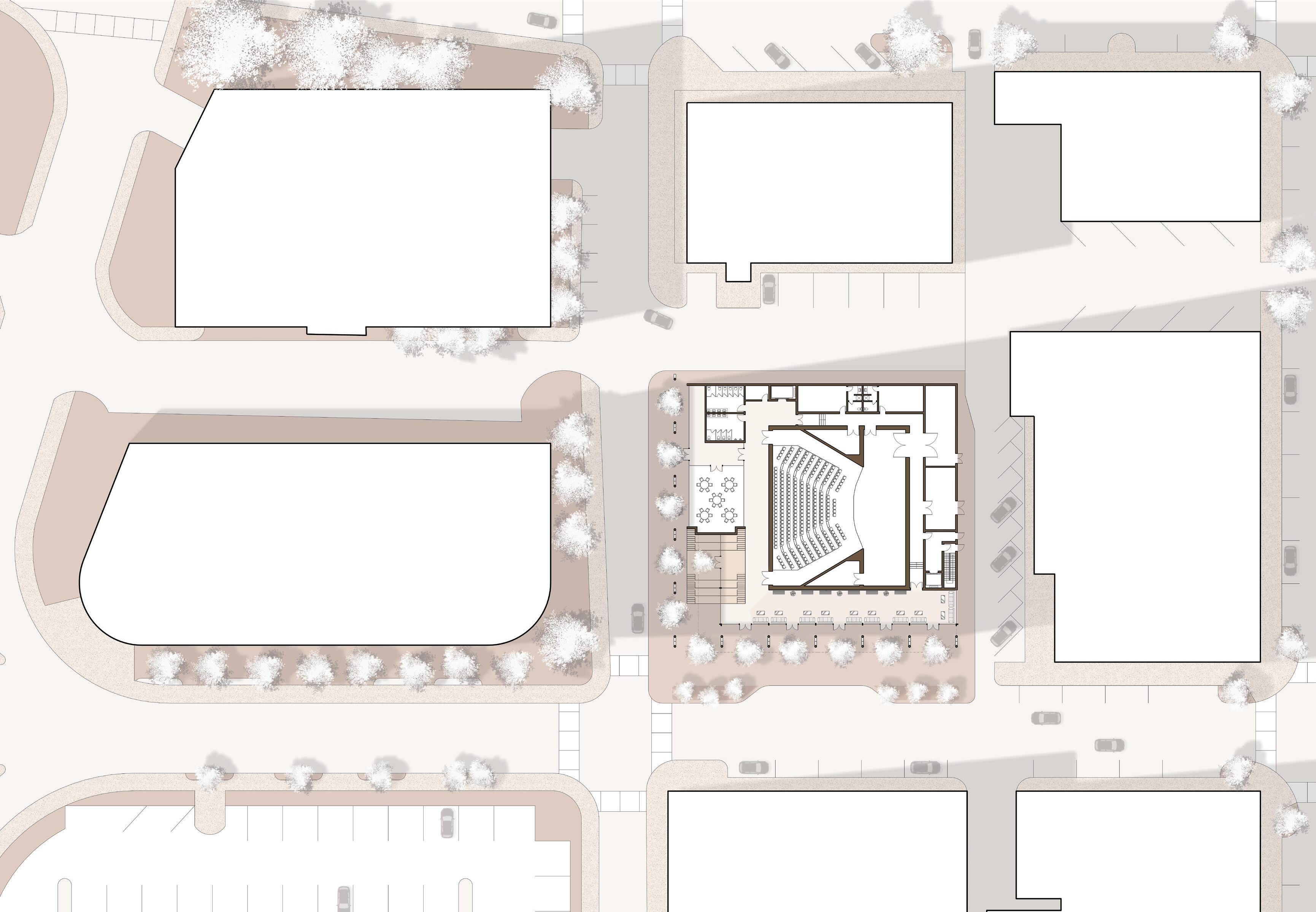
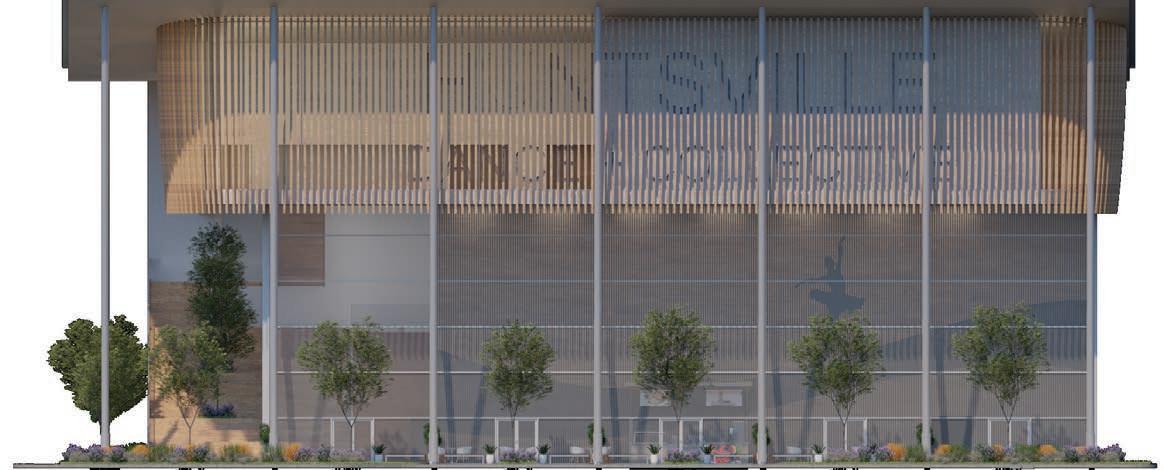
The south elevation shows the transparency of the building. From the outside, the form of the theatre is still clearly perceivable. The rehearsal studios appear to then float above the theatre and mezzanine below.
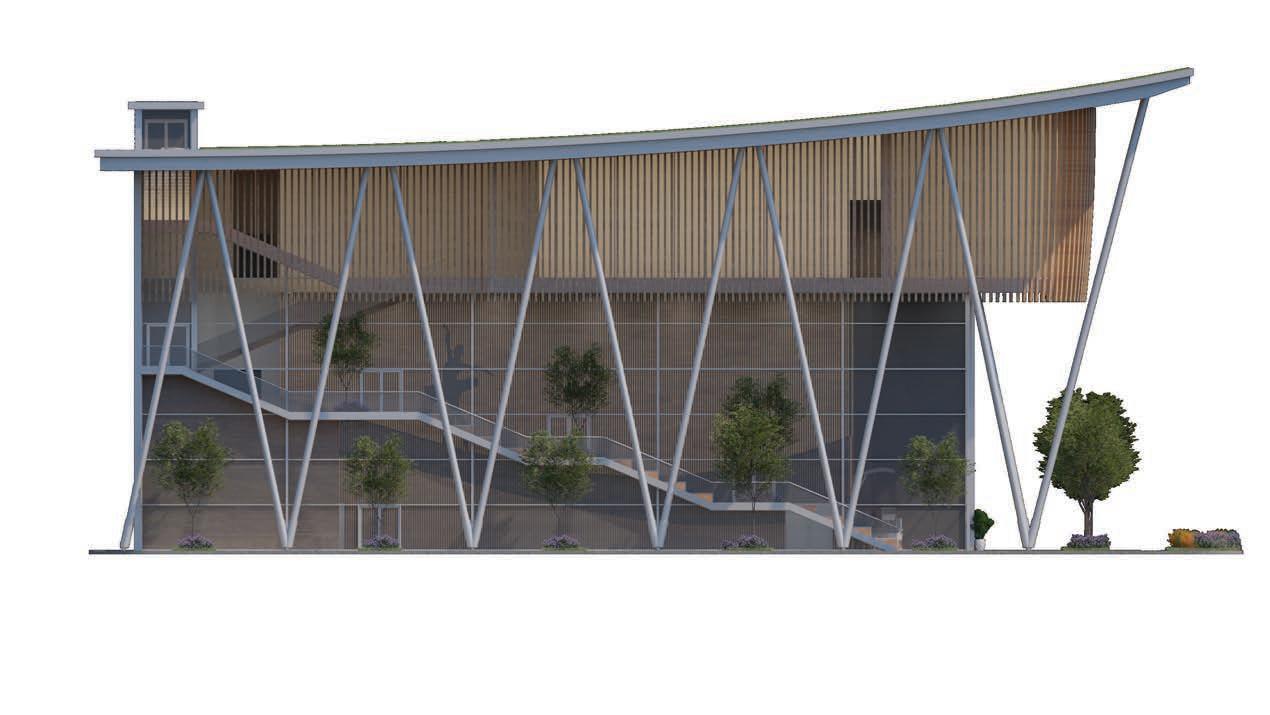
The west elevation highlights the primary circulation through the program. From the ground floor, the public stair provides access to a second story cafe, third story rehearsal studios and offices, and a rooftop terrace.
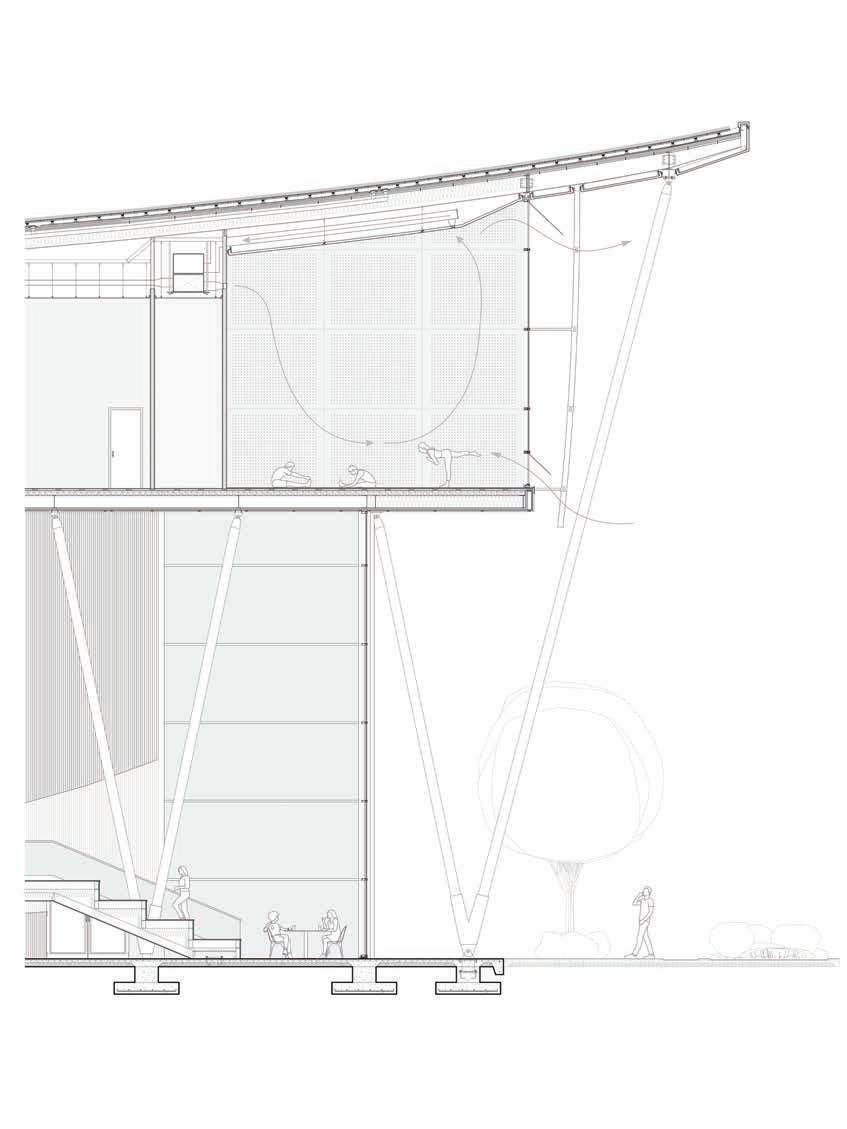
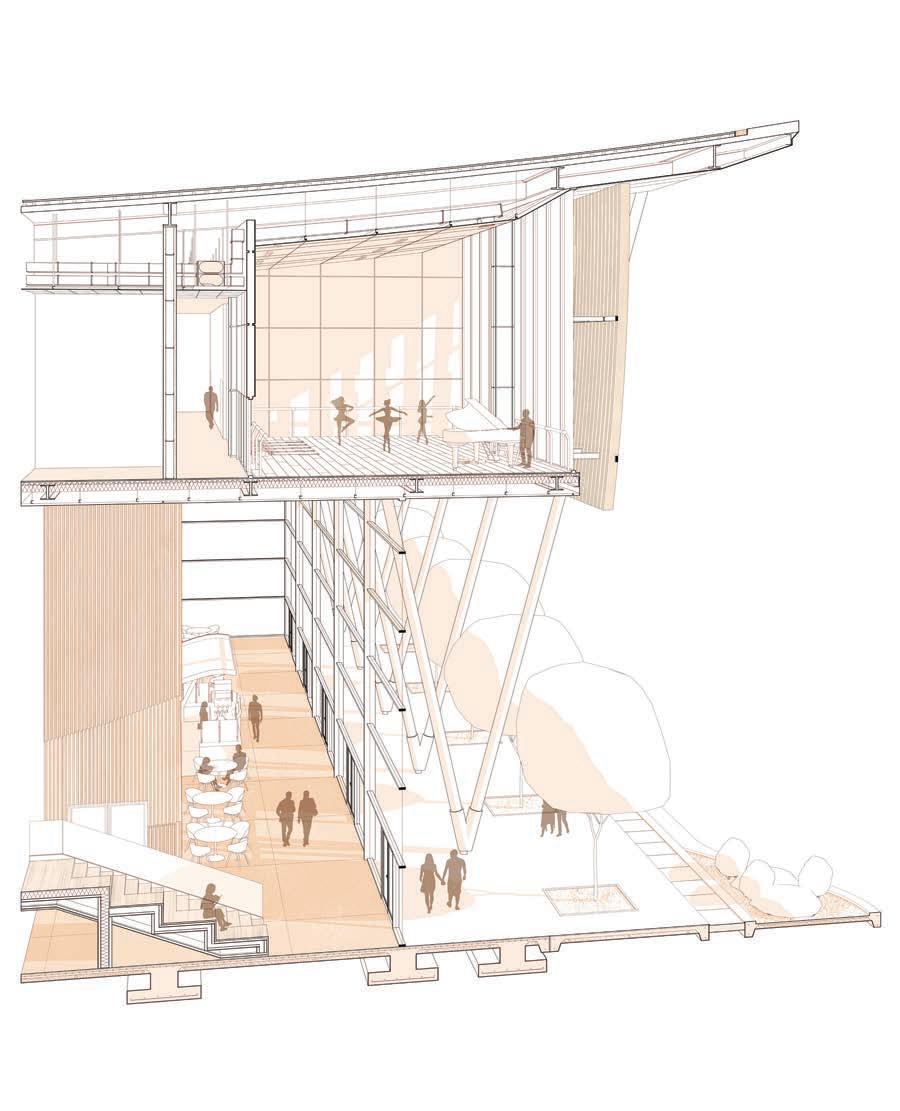
Section perspective through rehearsal studio and mezzanine diagrams the HVAC, structural, and screen systems while also showing the generous pedestrian walkway below (left)
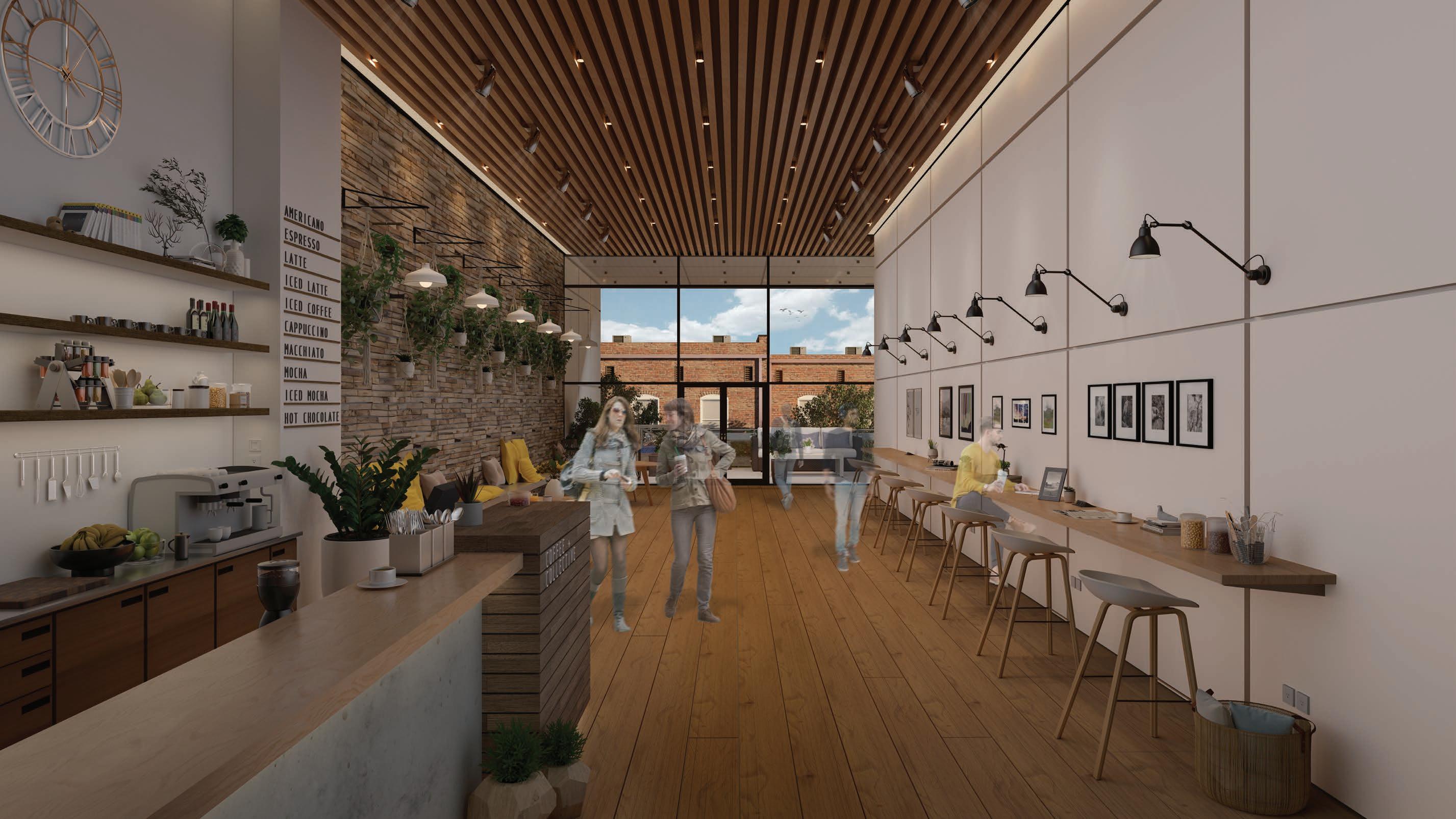
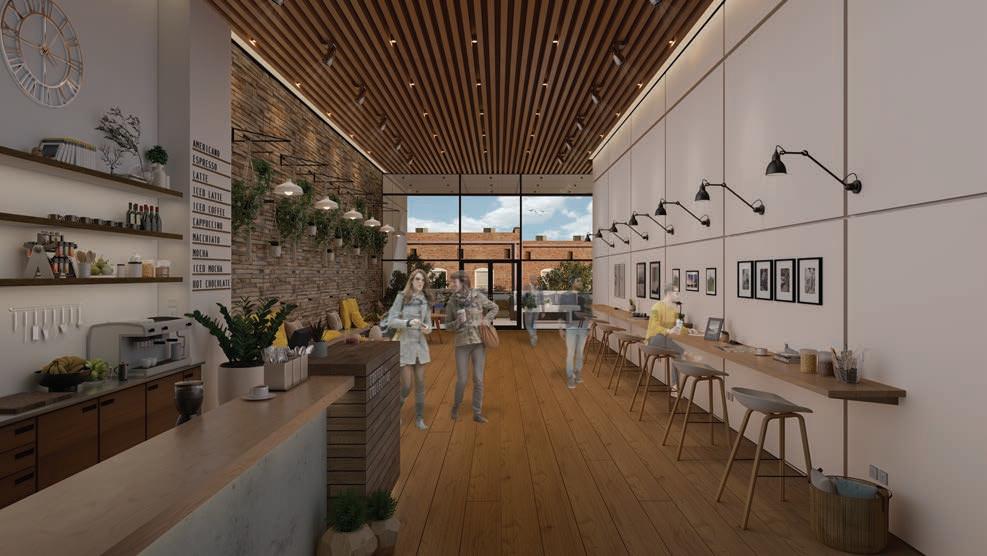
Mezzanine perspective showing a preliminary design option with an integrated coffee shop (right)
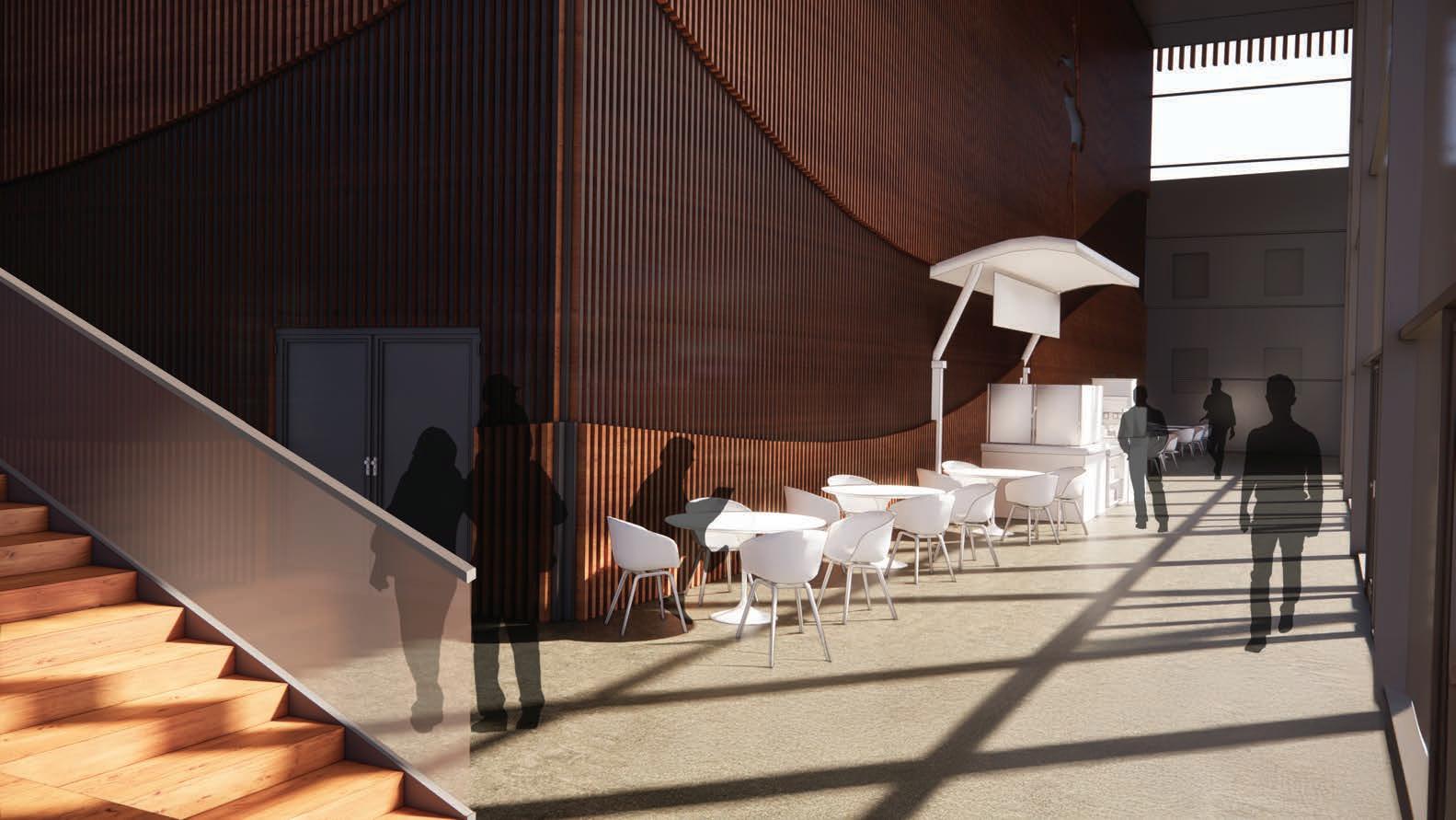
Perspective of second floor cafe design along the north side of the building (next page)
CREATING AN ARCHITECTURE OF GATHERING ATLAS
ATLAS
ADVANCED TECHNOLOGY LABORATORY FOR AEROSPACE SCIENCE — 2025
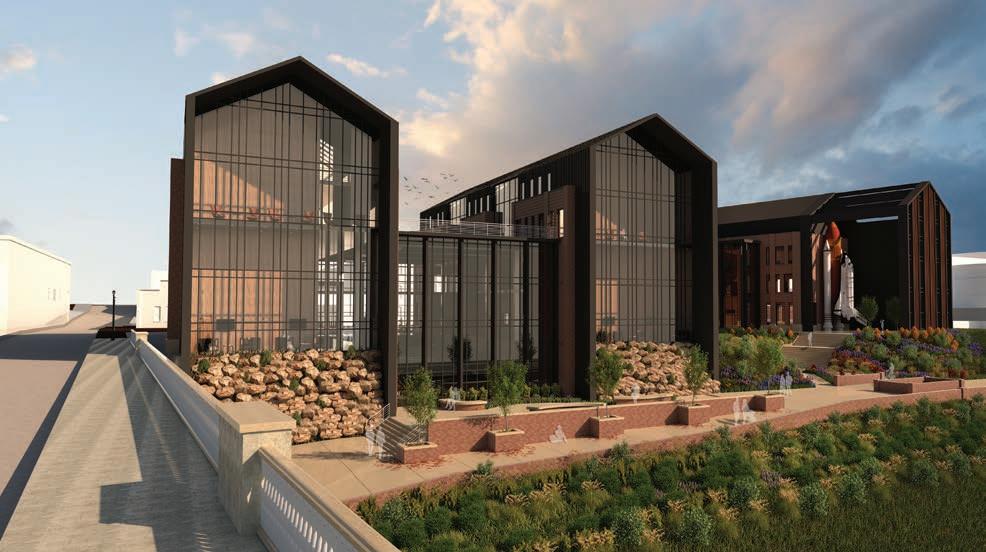
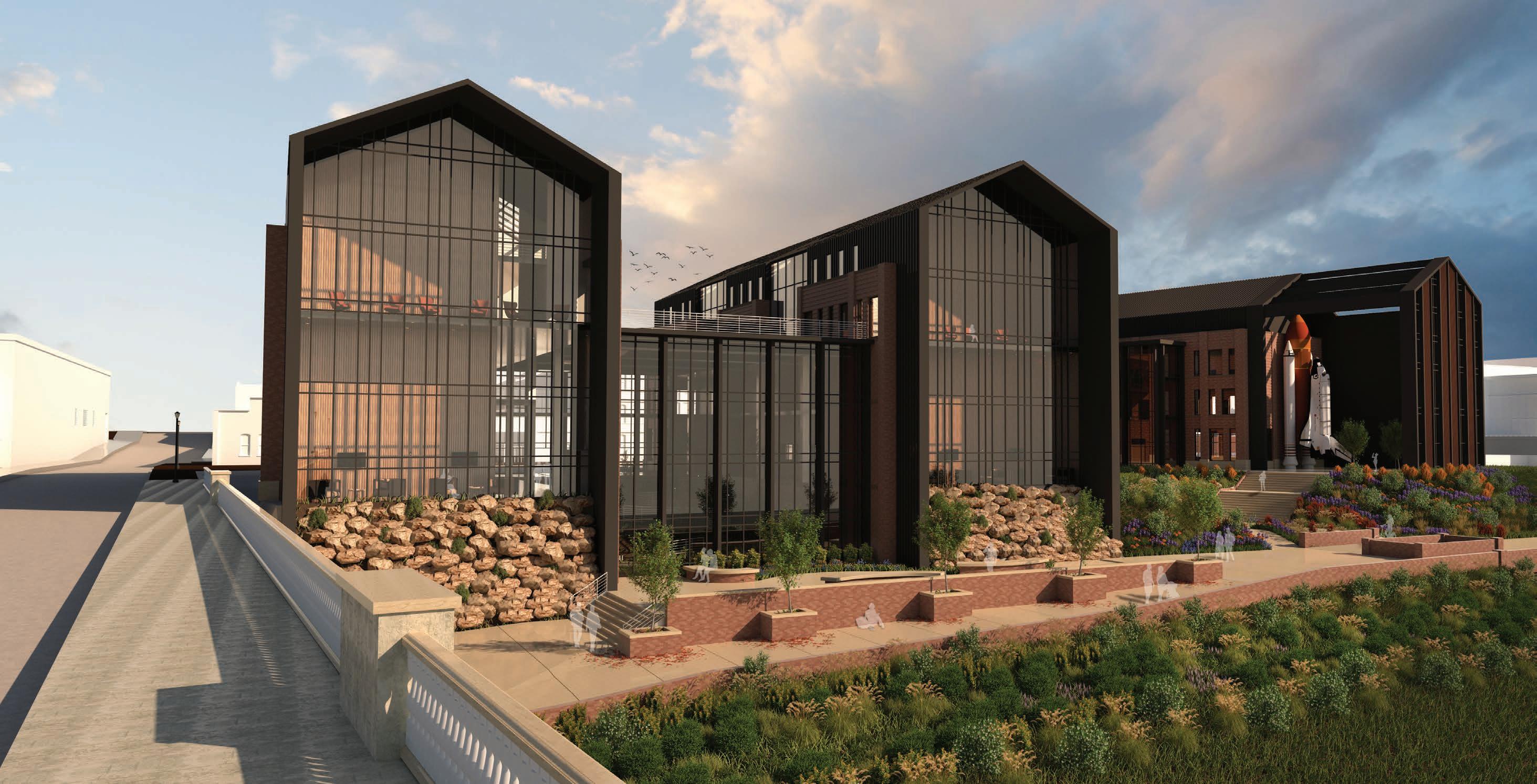
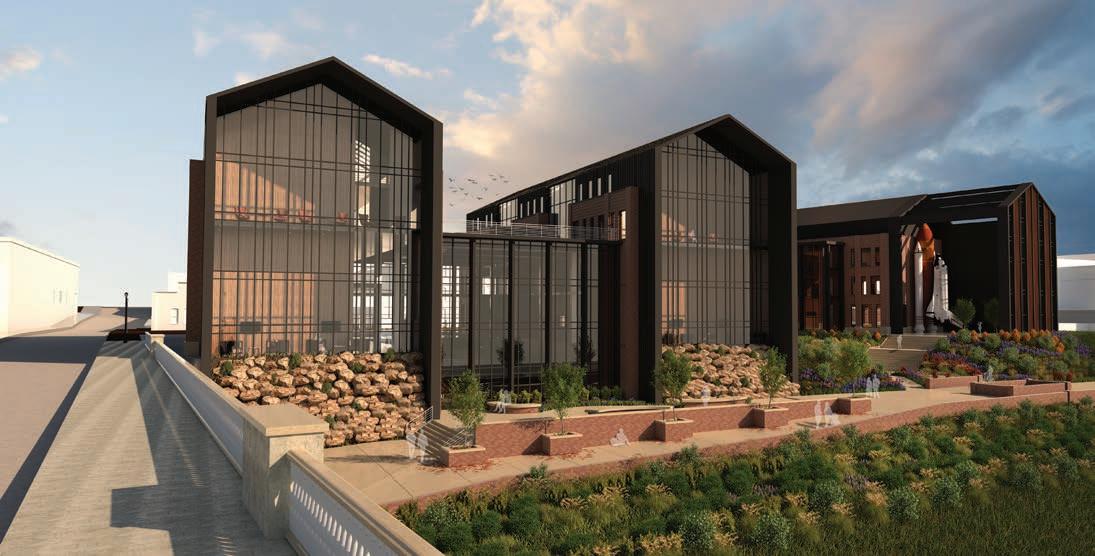
ATLAS is a robotics and space sciences center situated along the Chattahoochee River in Columbus, Georgia. The building is designed to provide students and staff with spaces to study and relieve stress between classes. Although the site serves as an extension of Columbus State University, it is located five miles off campus. Because of this separation, developing a strong sense of place within the building became essential, as students will likely spend their entire academic day here. The large atrium that connects the street to the riverwalk establishes this sense of place by reflecting the building’s earth-and-space identity-incorporating natural elements at the ground level and displaying aerospace artifacts overhead. This space functions as both a study area and an escape. The connection to nature continues through a bioswale that divides the building, designed to absorb rainwater collected on-site and channel the excess into the river.
Programmatically, the building is organized into three primary zones: Space Science, Robotics, and Multi-Use. Between each programmatic block lies a spatial irregularity—the atrium between Space Science and Robotics, and the bioswale between Multi-Use and Robotics. Both figuratively and literally, these interstitial spaces give the building life. The arrangement allows for moments of play and flexibility without diminishing the academic rigor of its environment.
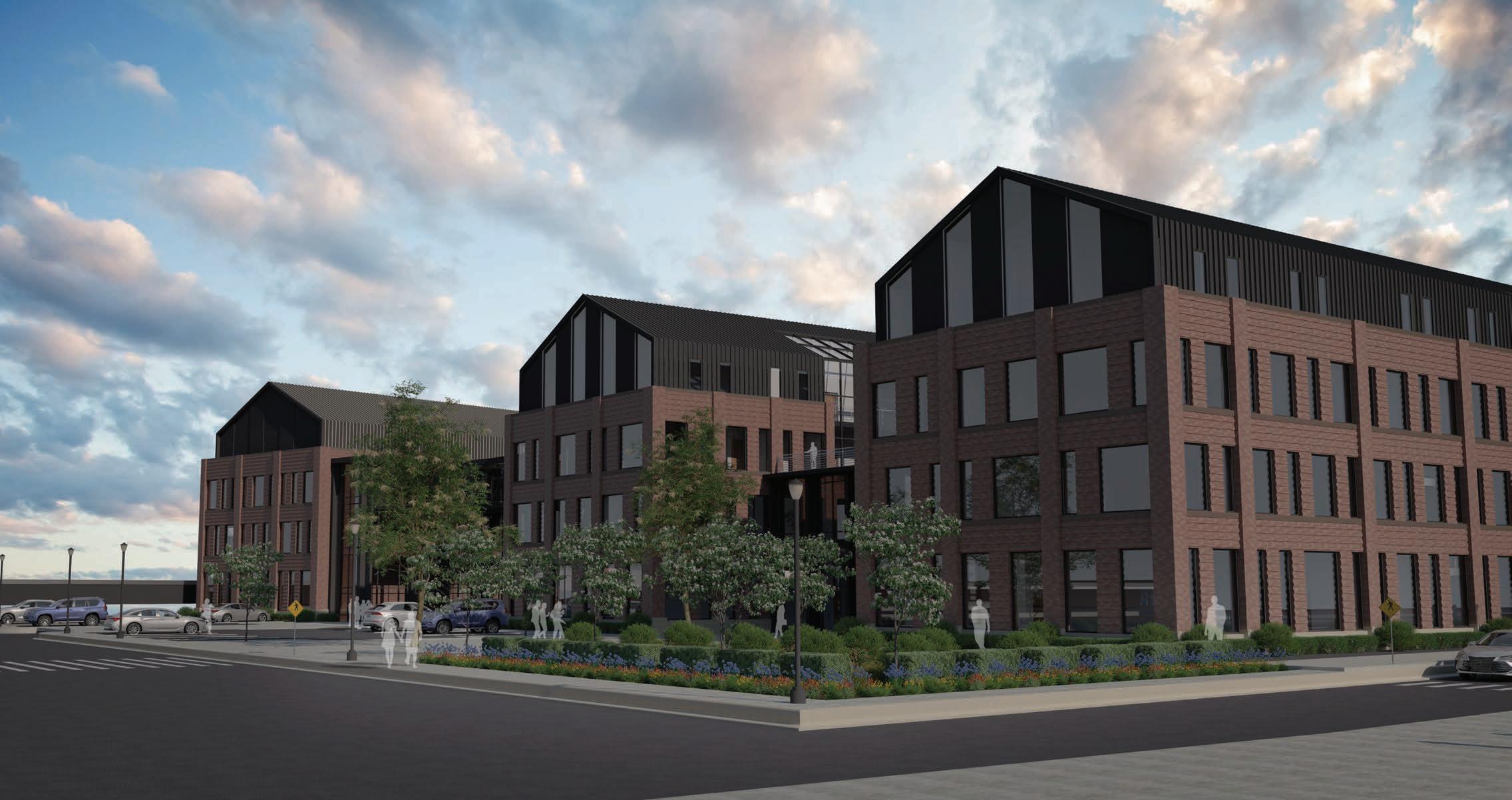
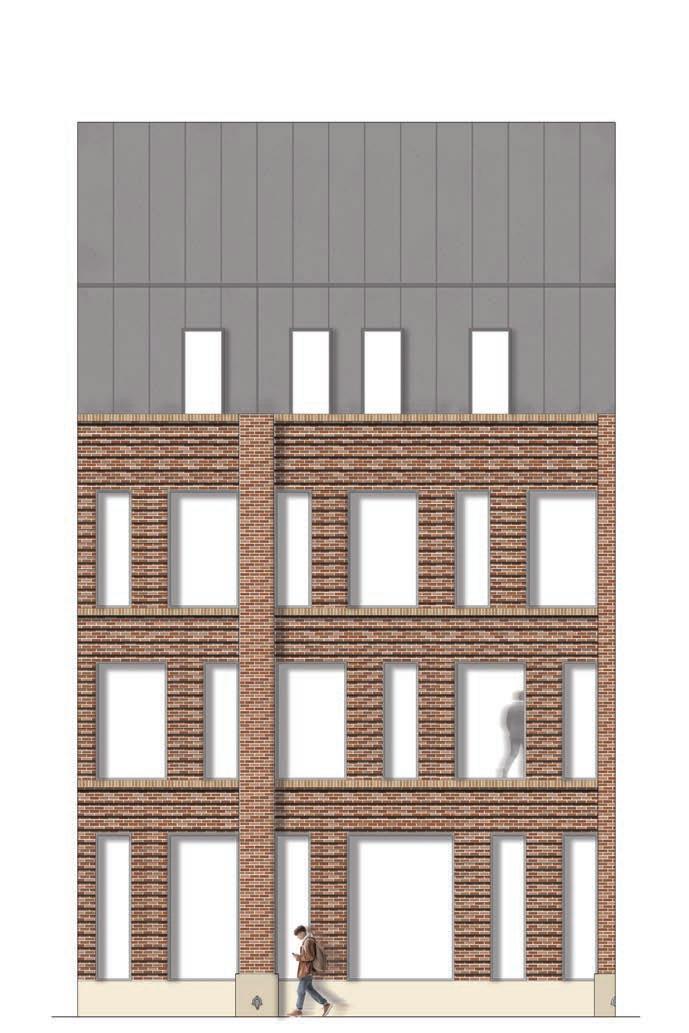
The building’s form emerges directly from its context. In dialogue with the structure
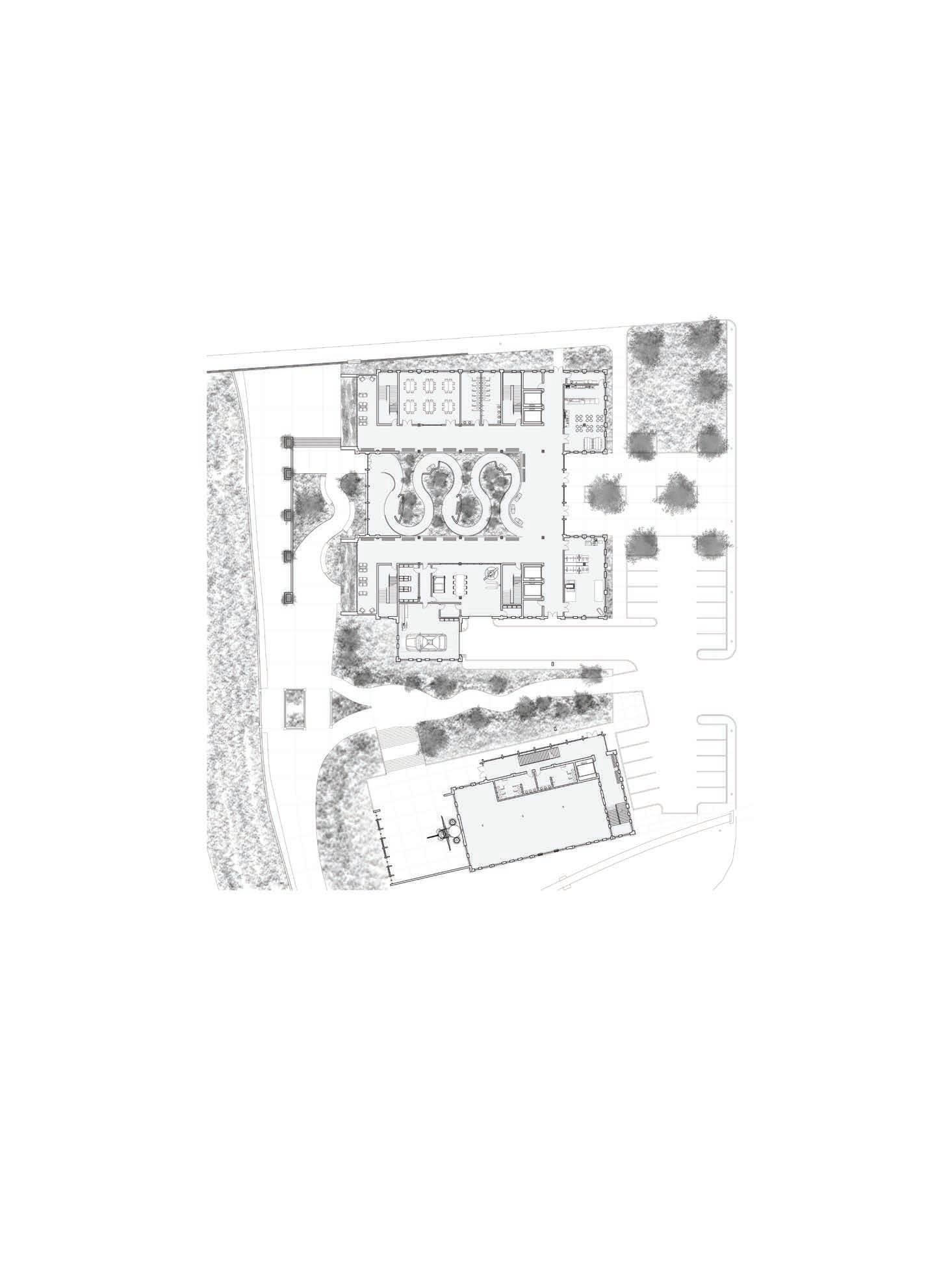

10 5 21/2 0 that invite moments of rest and reflection. Like the atrium, the façade is anchored by a contextual brick base and capped with a modern metal roof. This design strategy conceals the planetarium and observatory within the multifunctional complex while visually distinguishing staff offices from student spaces. Symbolically, the façade reflects the evolution of Columbus— rooted in its historic fabric yet oriented toward modernity and progress.
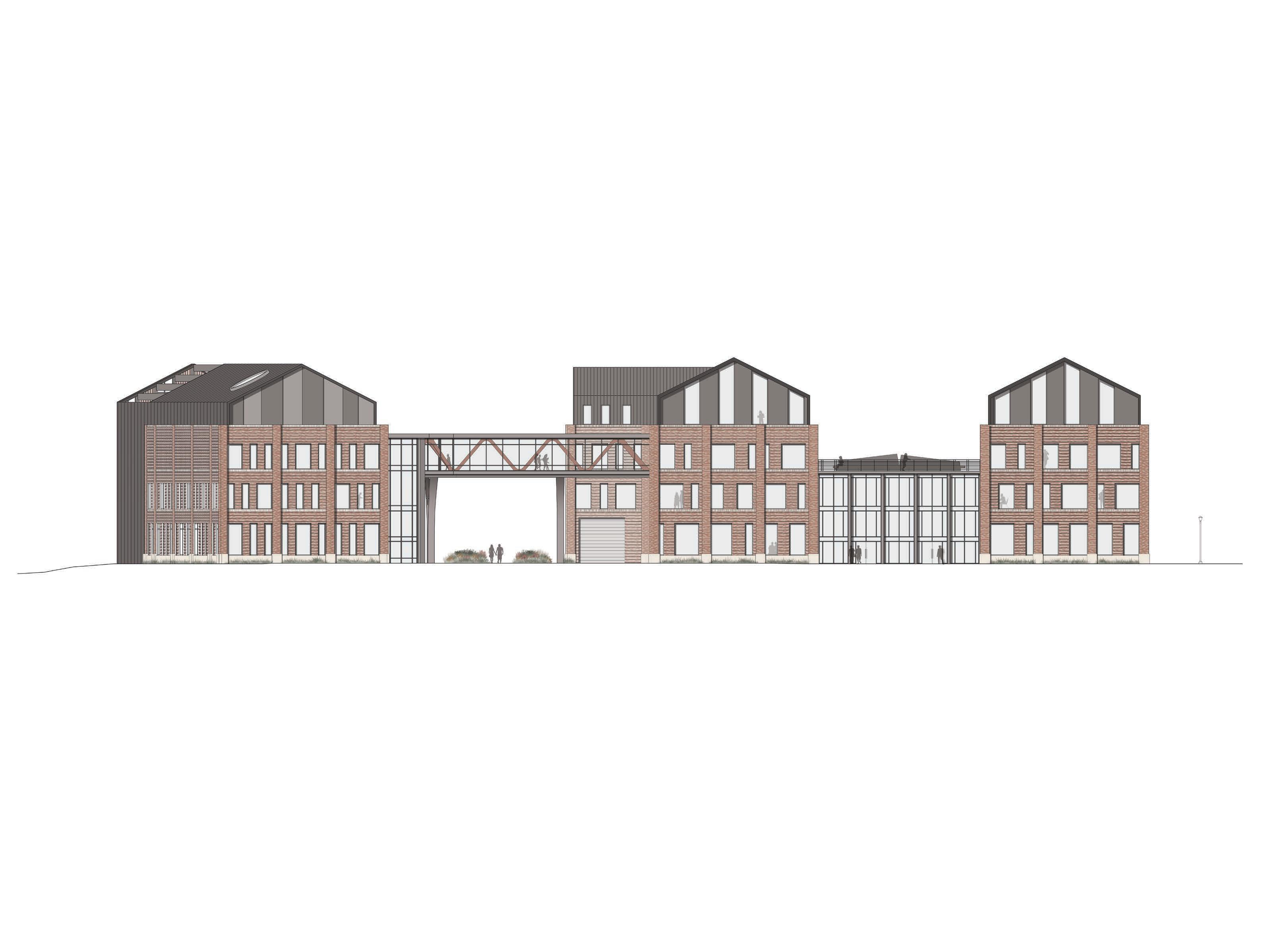
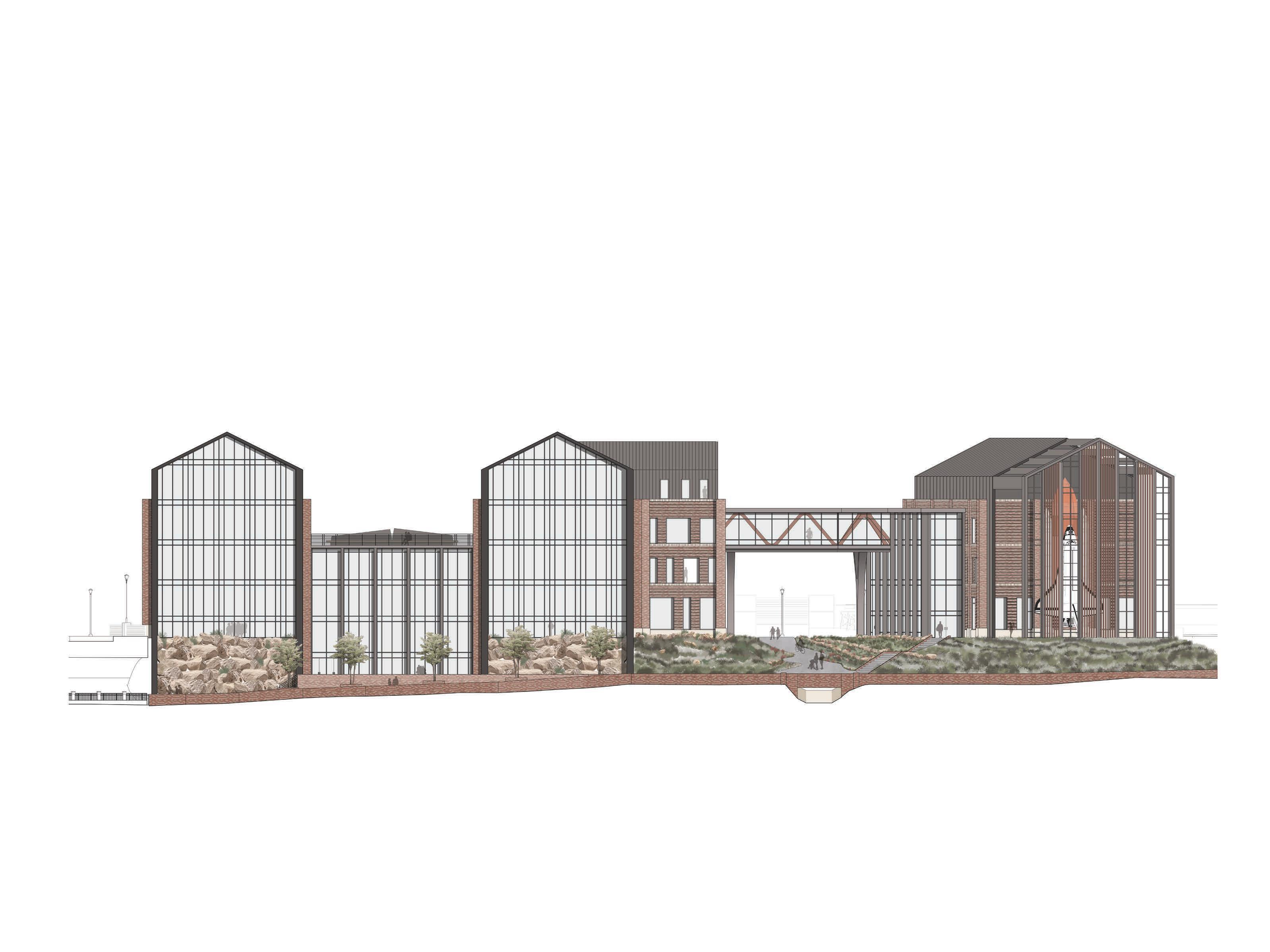
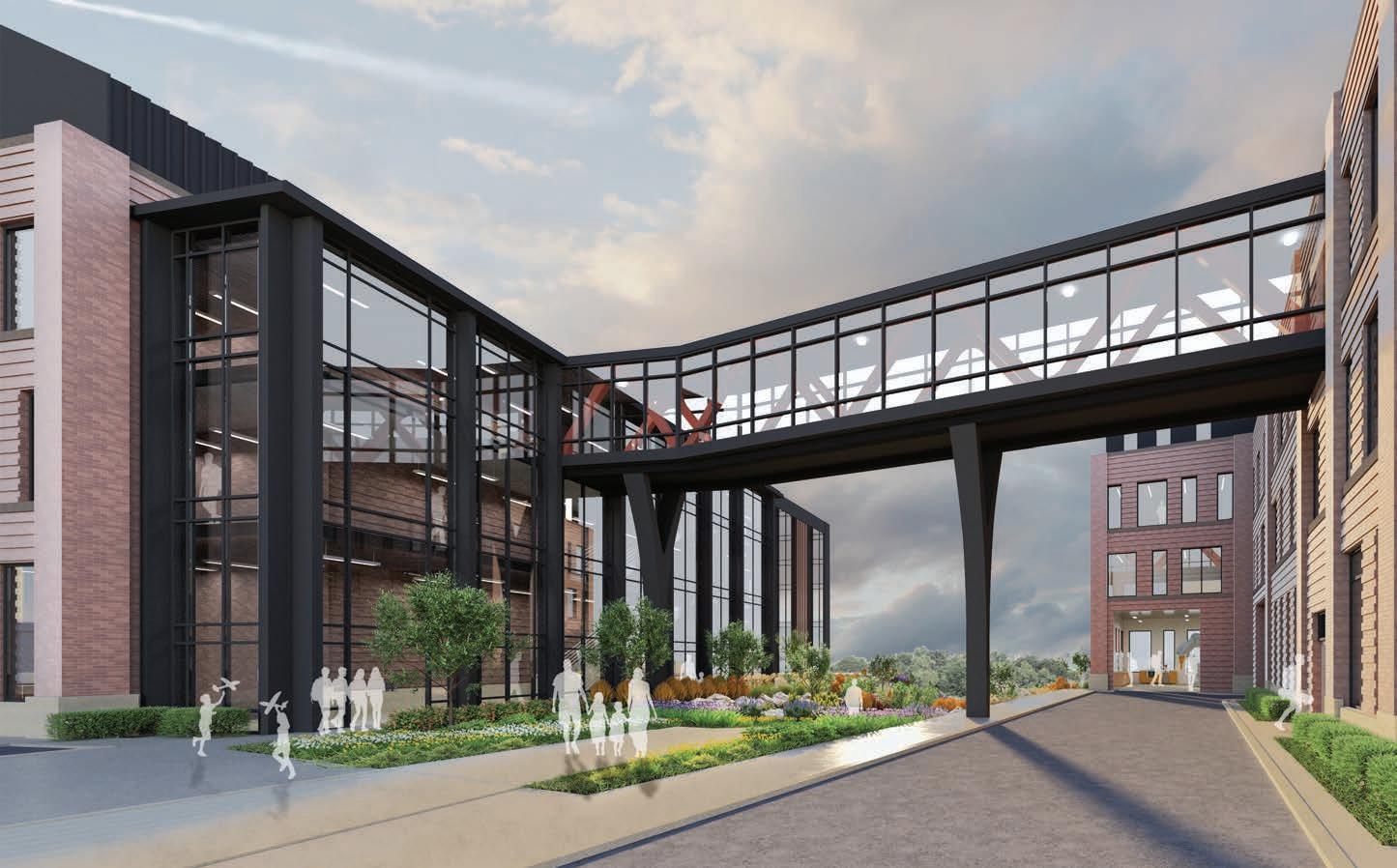
The bioswale opens the west edge of the site to the riverwalk. Its vibrant, colorful plant life showcases the beauty of native Georgian flora while simultaneously mitigating
00 COMPETITION WORK
STUDENT AND INTERNATIONAL COMPETITIONS 2023 – 2025
COMPETITION
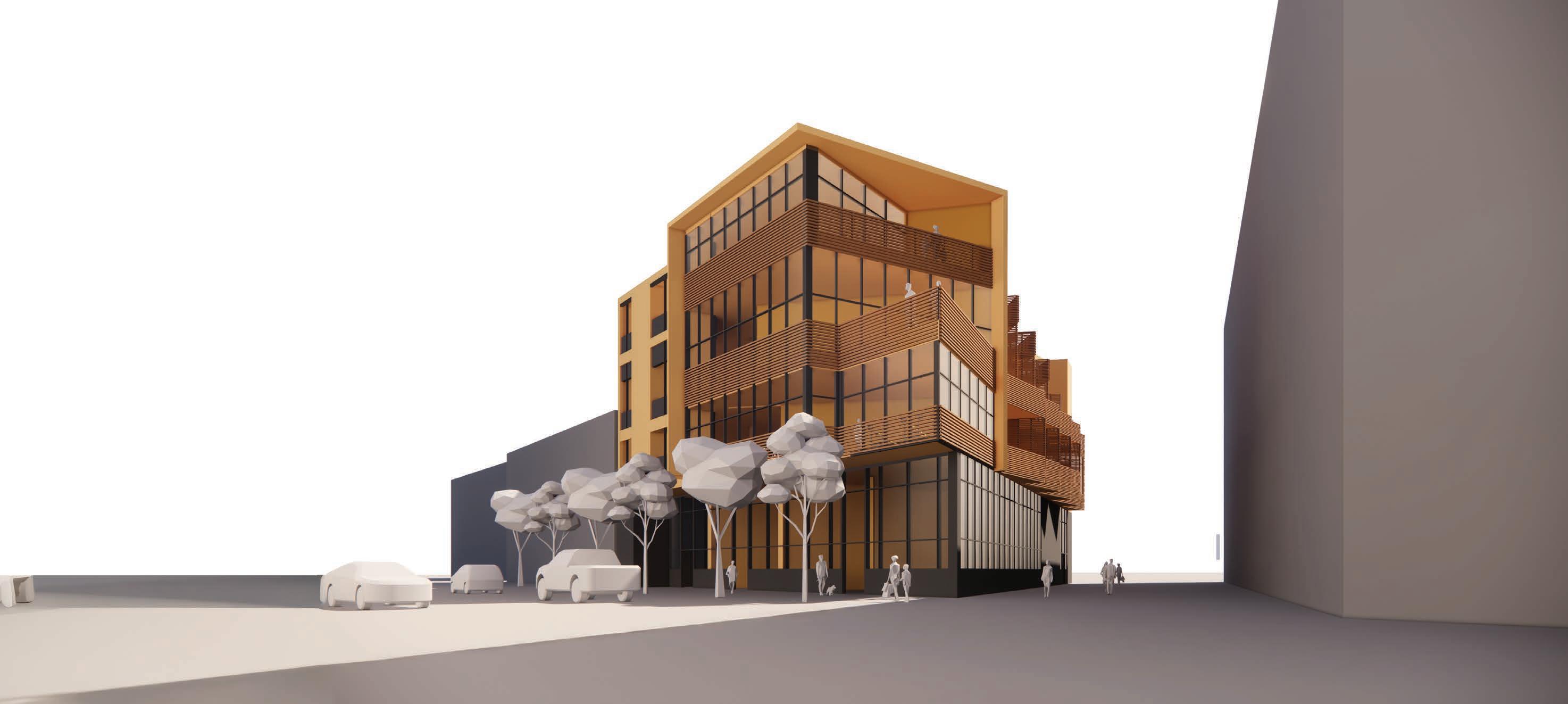
SHIFTING SPACE
REDEFINING BOUNDARIES
BETWEEN PUBLIC AND PRIVATE
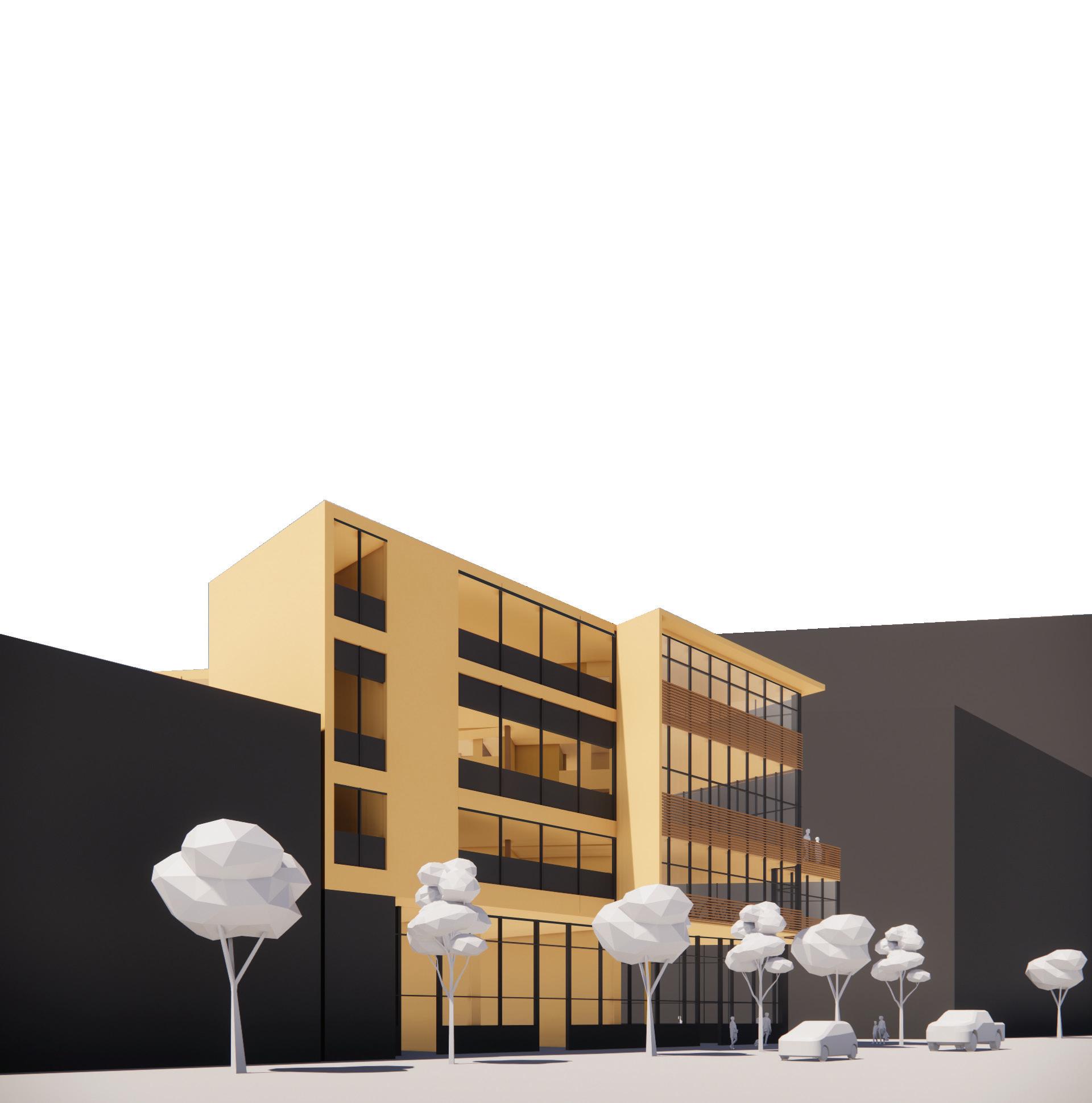
SHIFTING SPACE
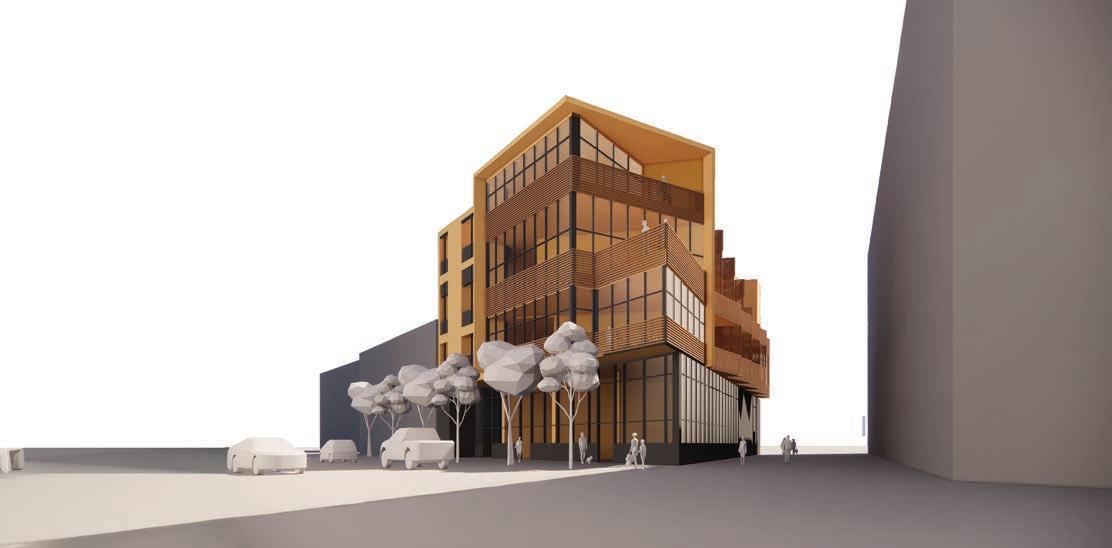
RESIDENTIAL + COMMERCIAL — 2023 ALABAMA FORESTRY STUDENT DESIGN COMPETITION — FIRST PLACE PRIZE
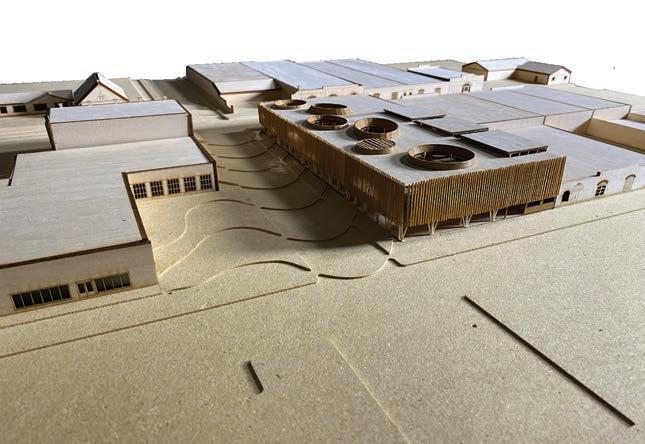
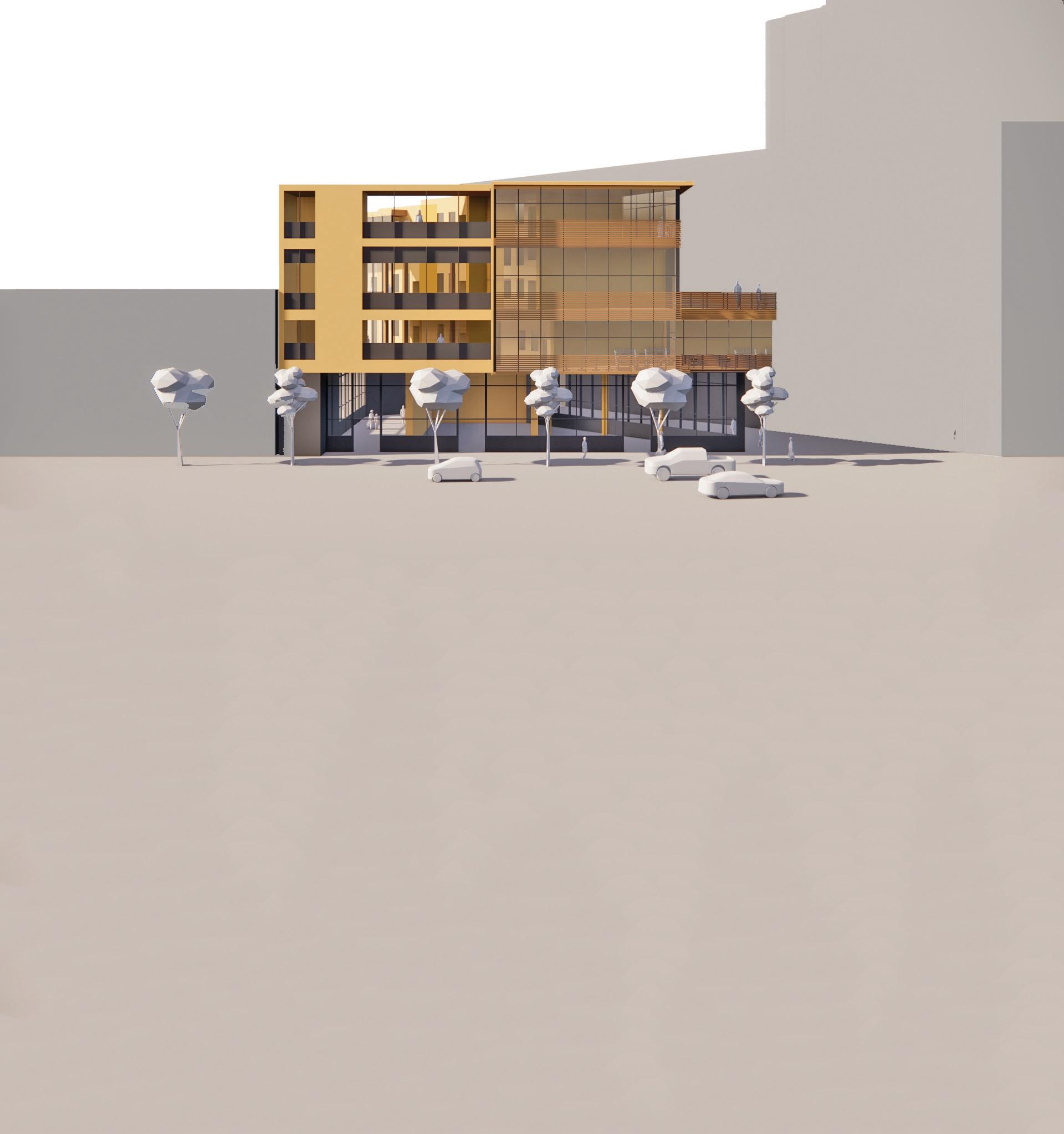
The project is a mixed-use commercial and residential development located in the heart of Montgomery, Alabama. Conceived as part of a design competition, it explores the potential of mass timber construction to address sustainability and energy efficiency challenges within the southeastern United States.
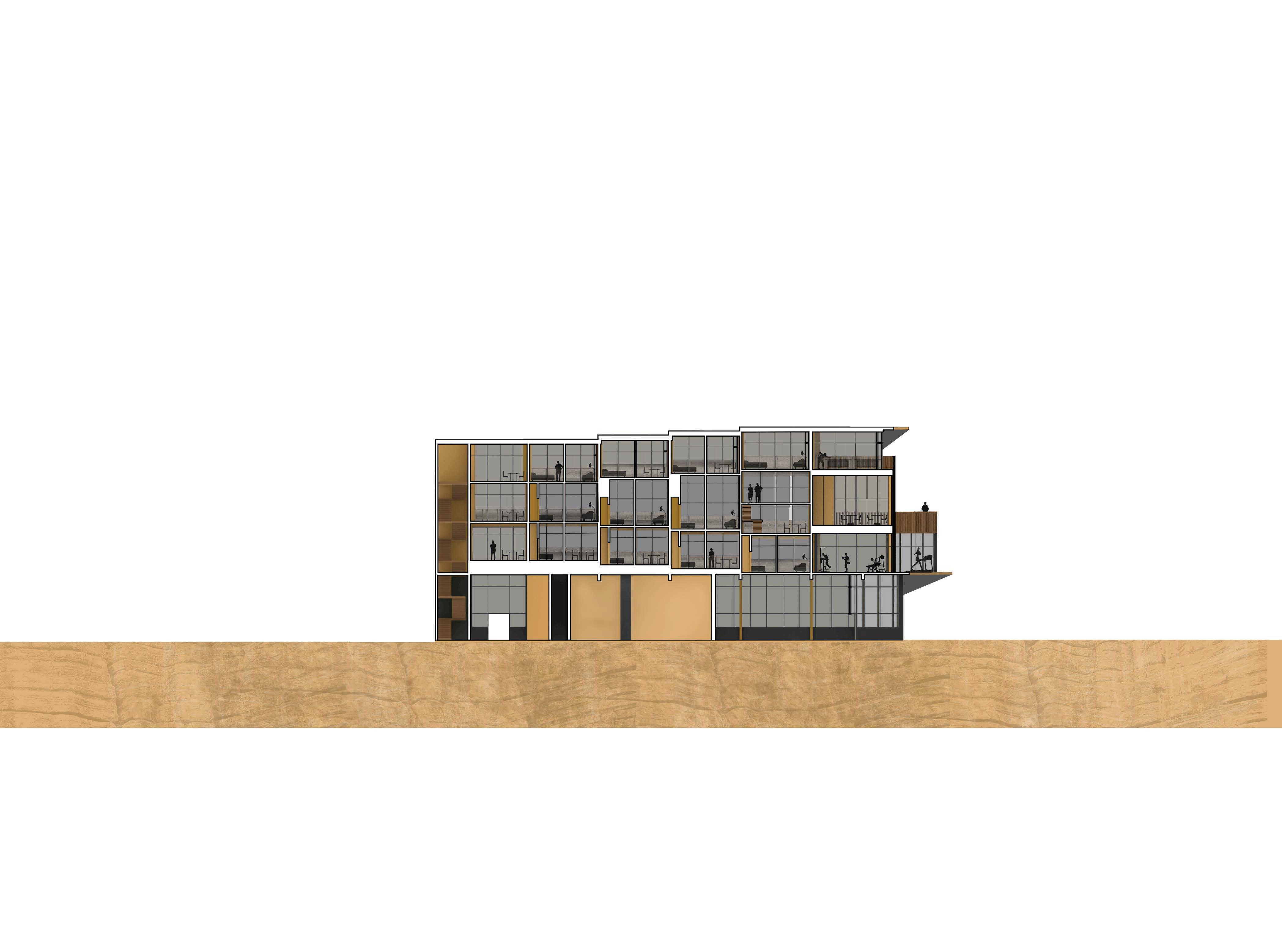
The proposed design weaves public and private realms through a system of shifted walls and staggered floorplates. Gradual height changes between units create spatial variation and enhance the sense of privacy on each balcony. Angled walls expand the balcony footprint while shielding adjacent spaces from direct view.
All residential public areas are elevated above street level, providing both privacy and openness. These spaces remain open-air, softening the boundary between interior and exterior while reducing the building’s conditioned footprint.

MODULARITY AS A FUNCTION OF PRIVACY AND CULTURE
Group Members:
Rebecca Assen
Zack Clemons
Ethan Edwards
Claire Hardin
Responsibilities:
Conceptual Design
3D Modeling
Renderings
BUILDNER HOUSE OF THE FUTURE INTERNATIONAL DESIGN COMPETITION — 2023
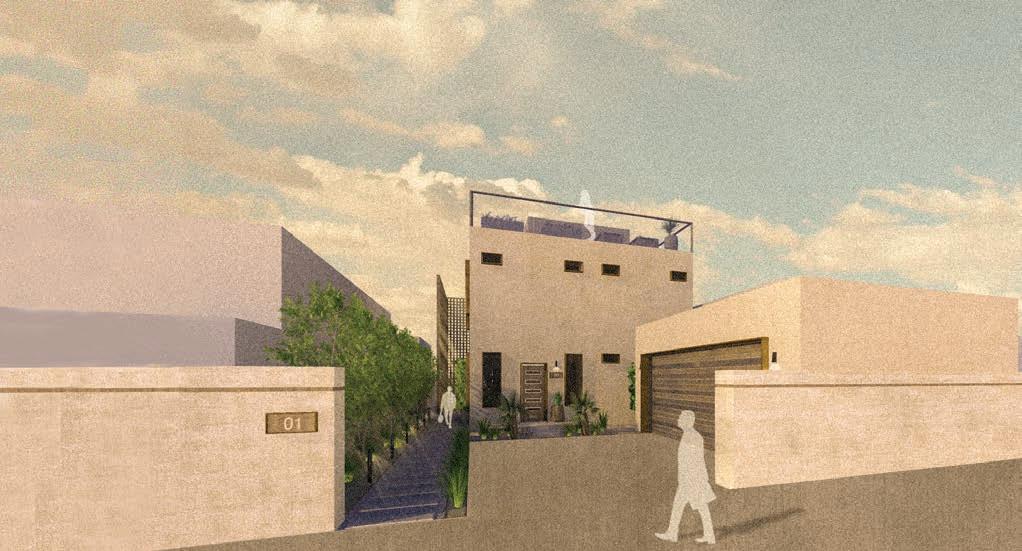
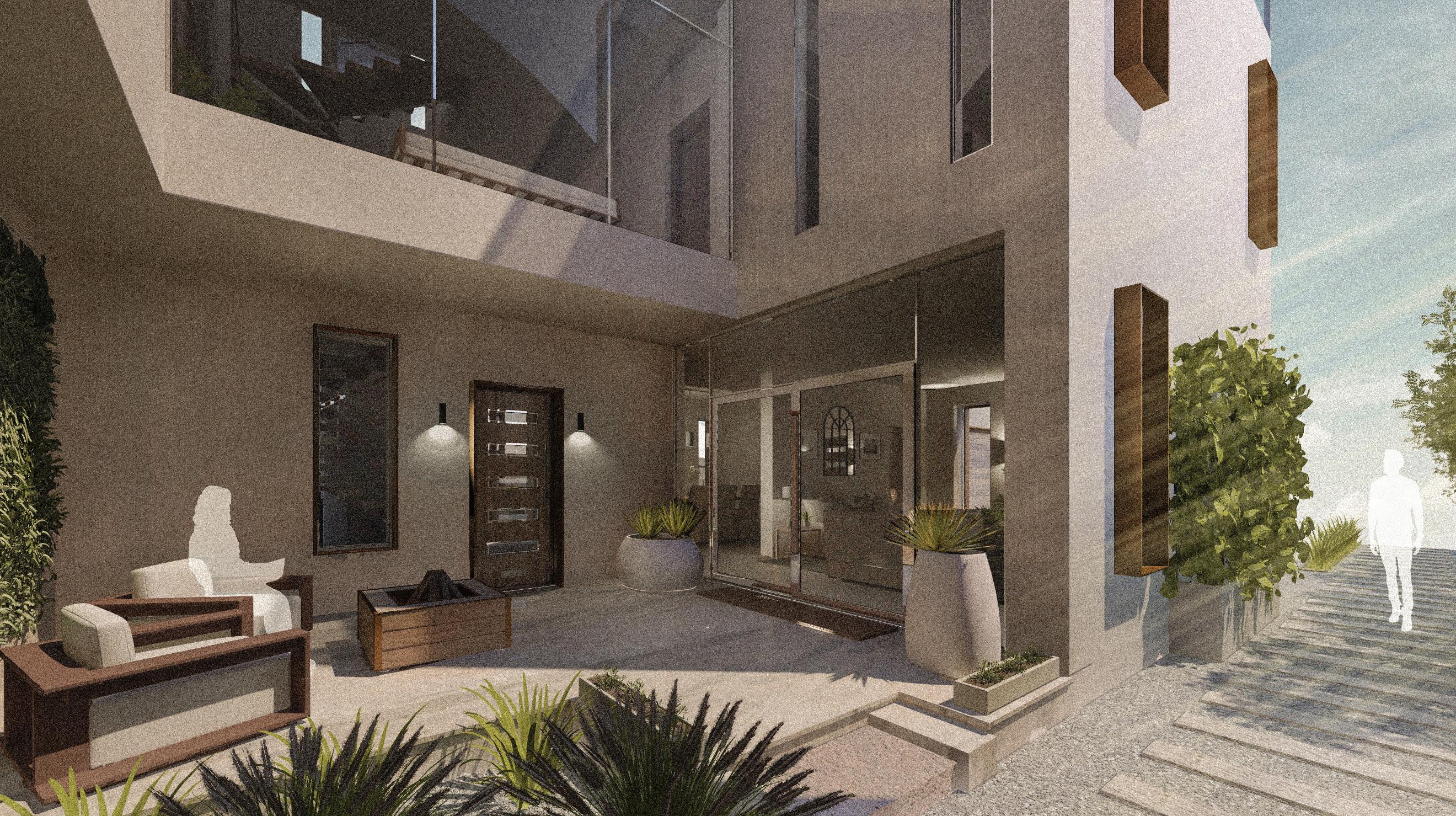
This competition called for the design of a residence within a 15-by-30meter plot, adaptable to any site orientation. The proposal was required to meet a $270,000 budget and include four to six bedrooms along with servant quarters. The challenge encouraged a design that thoughtfully merges modern and traditional architectural ideas.
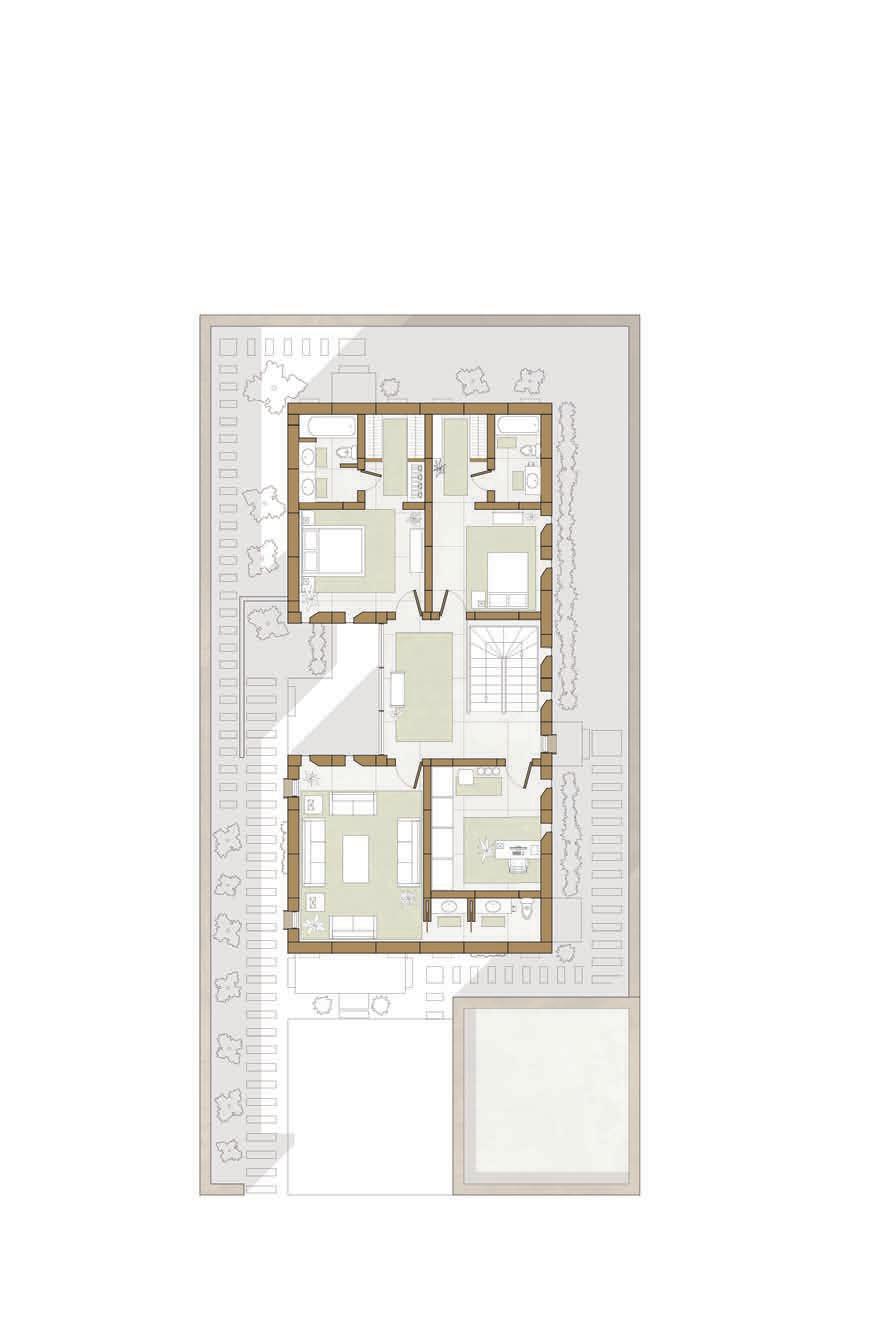
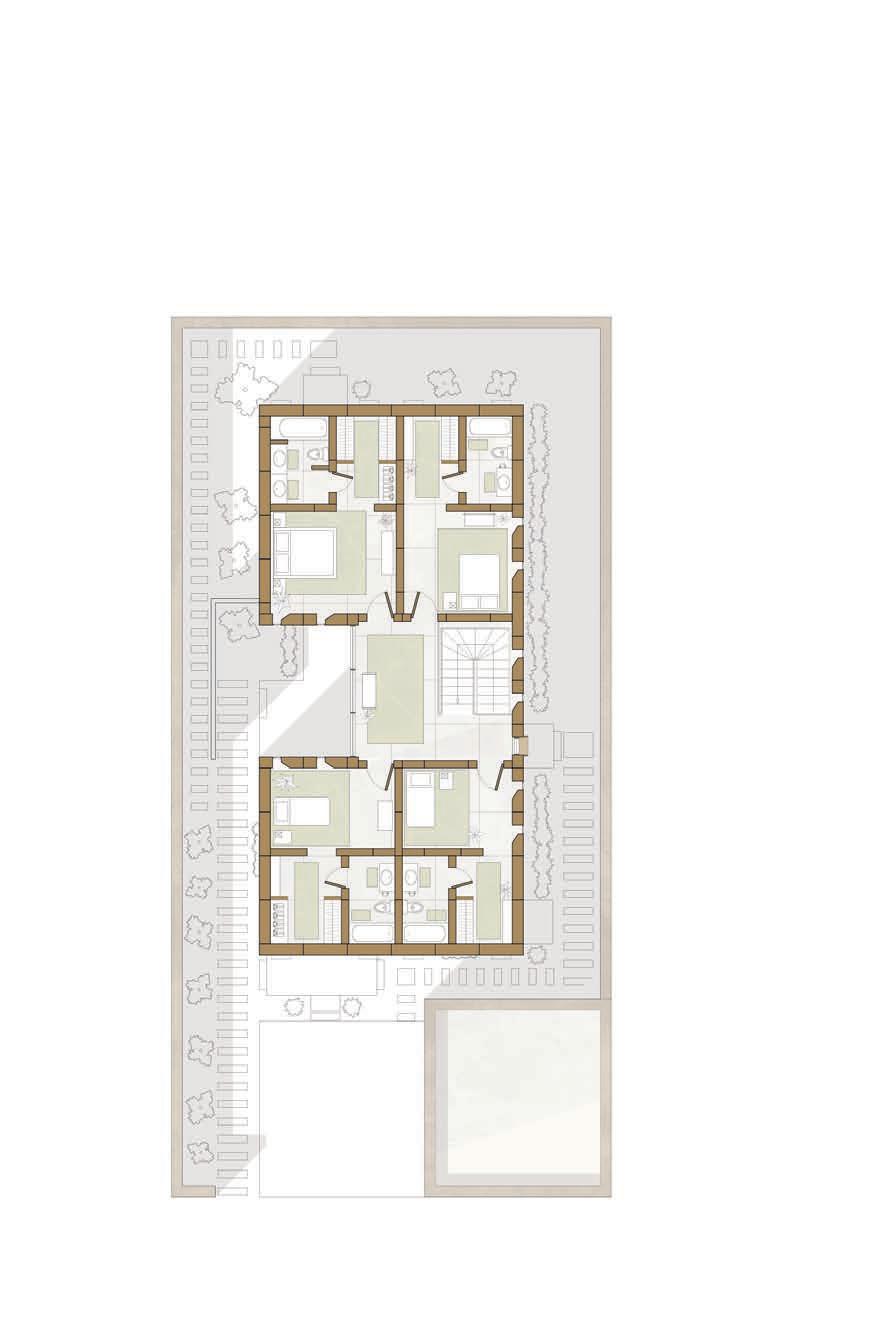
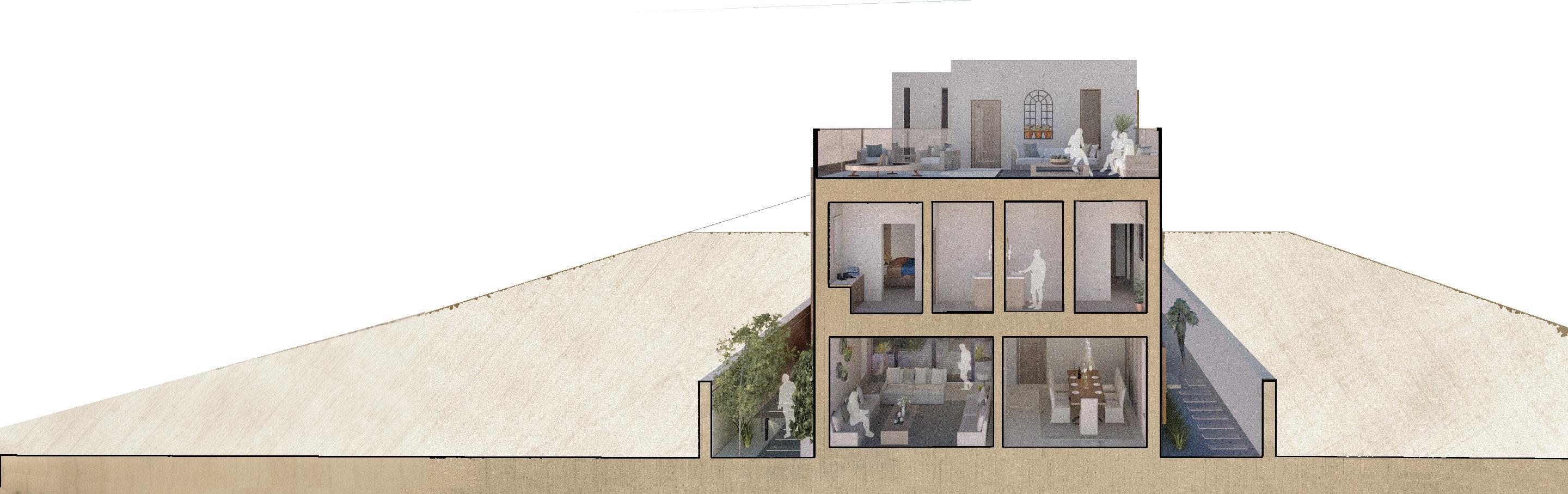
The design is organized with layers of privacy through a modular system of adaptable functions. Centered around a standardized circulation core, the modules allow for interchangeable layouts tailored to each resident’s unique needs.
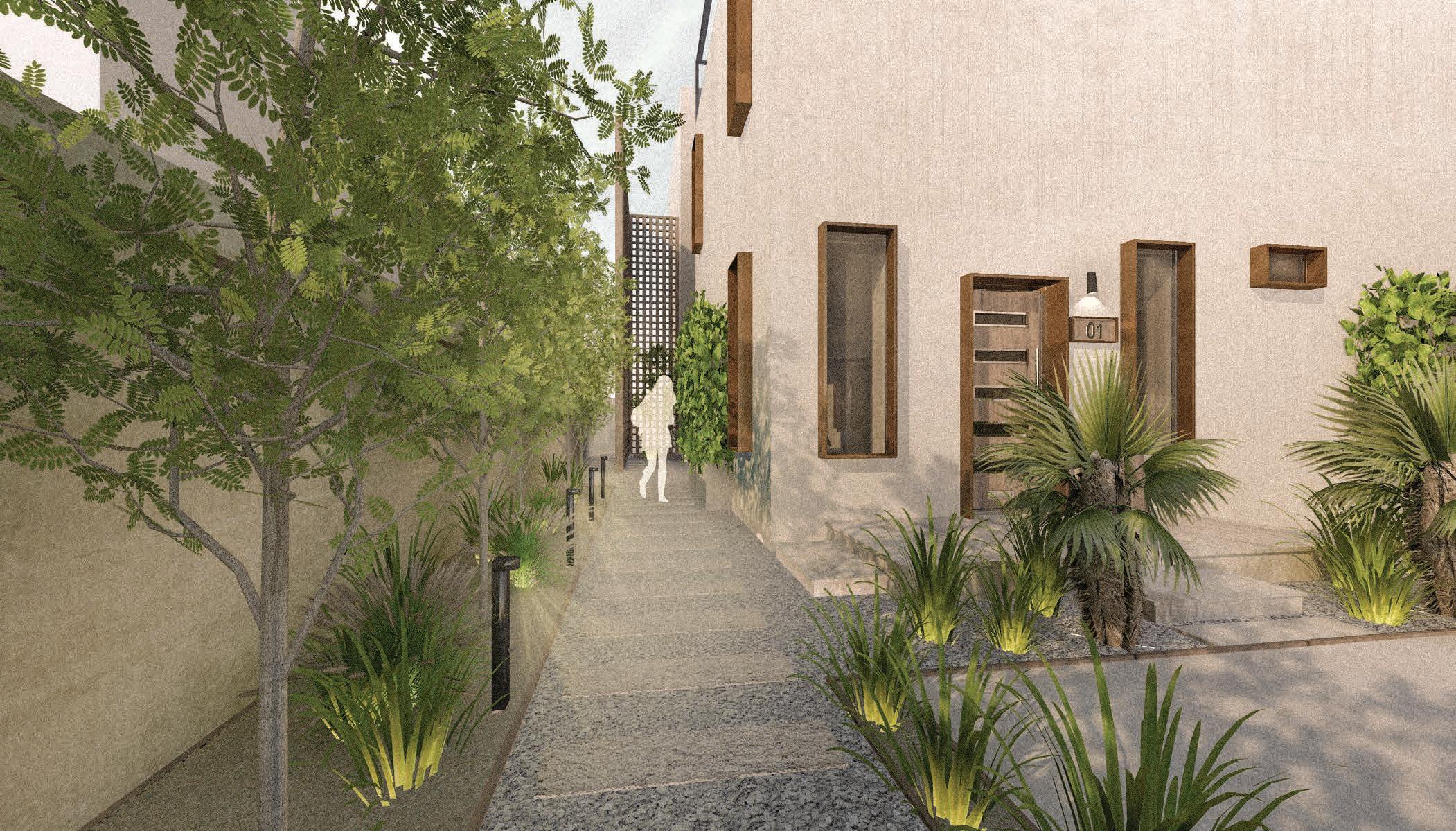
Distinct circulation sequences define the social and private zones, with an exterior courtyard reinforcing this separation while linking communal spaces through a series of articulated entrances. Window systems respond to the layered spatial organization, reflecting regional cultural values that distinguish between what is public and what is private.
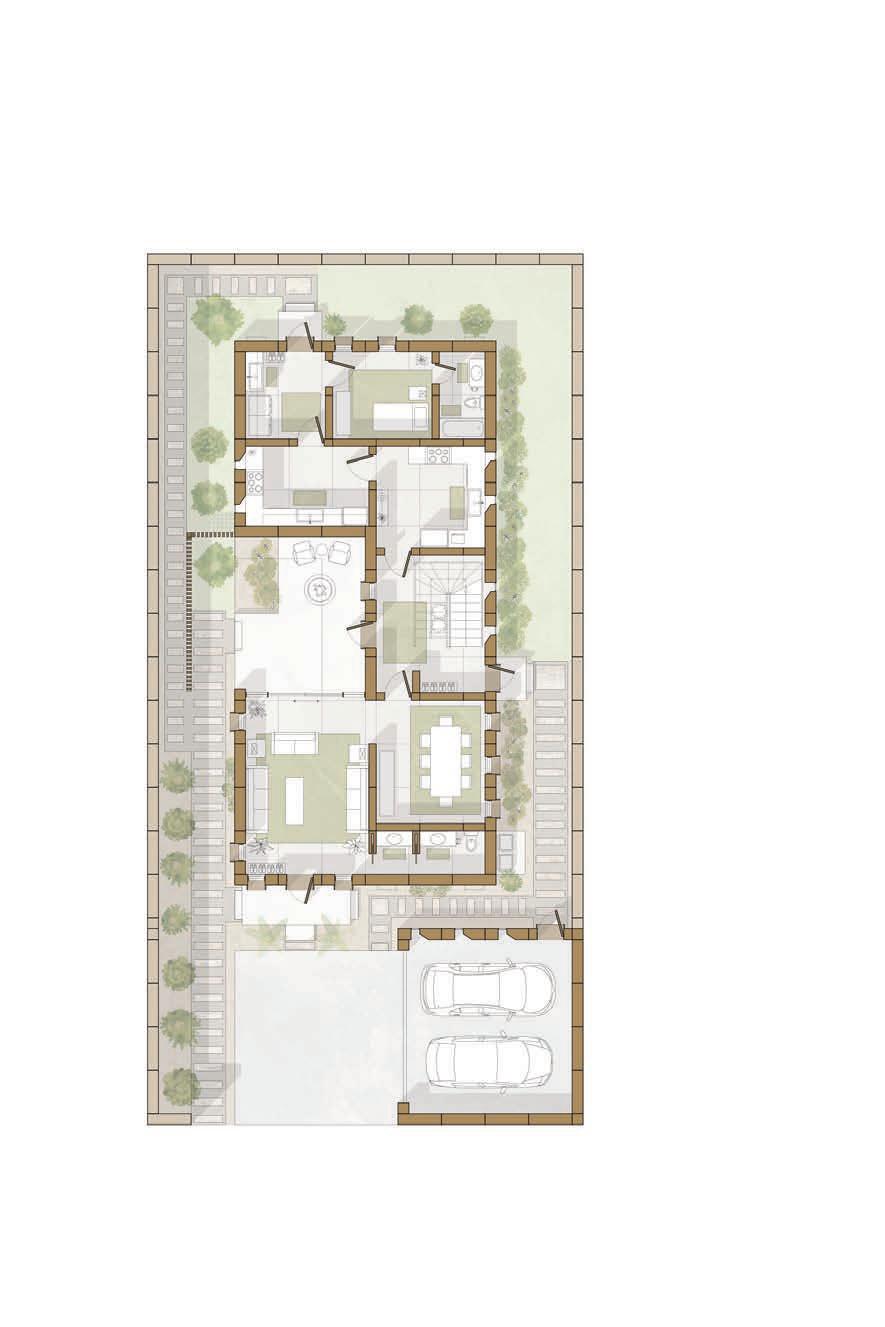
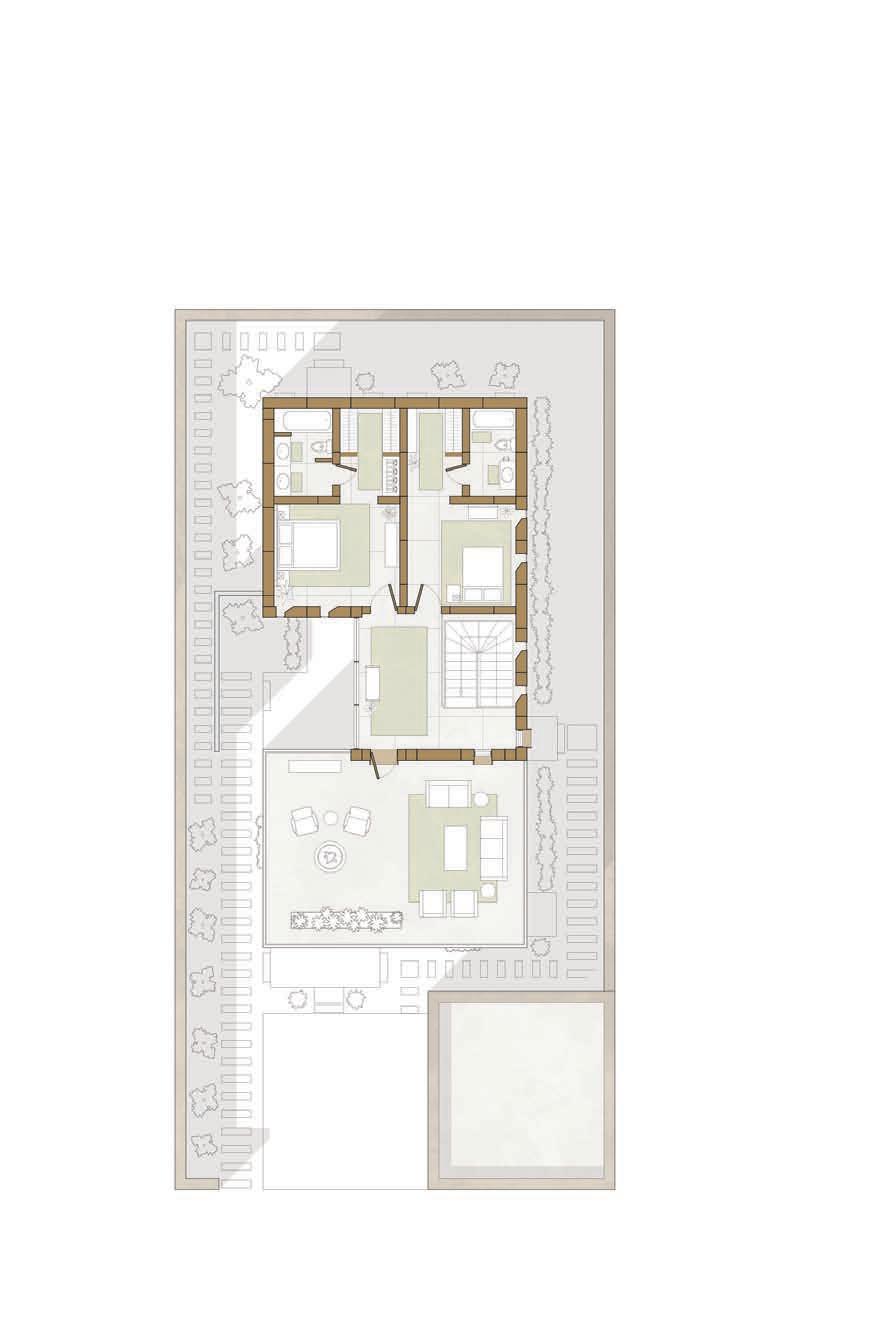
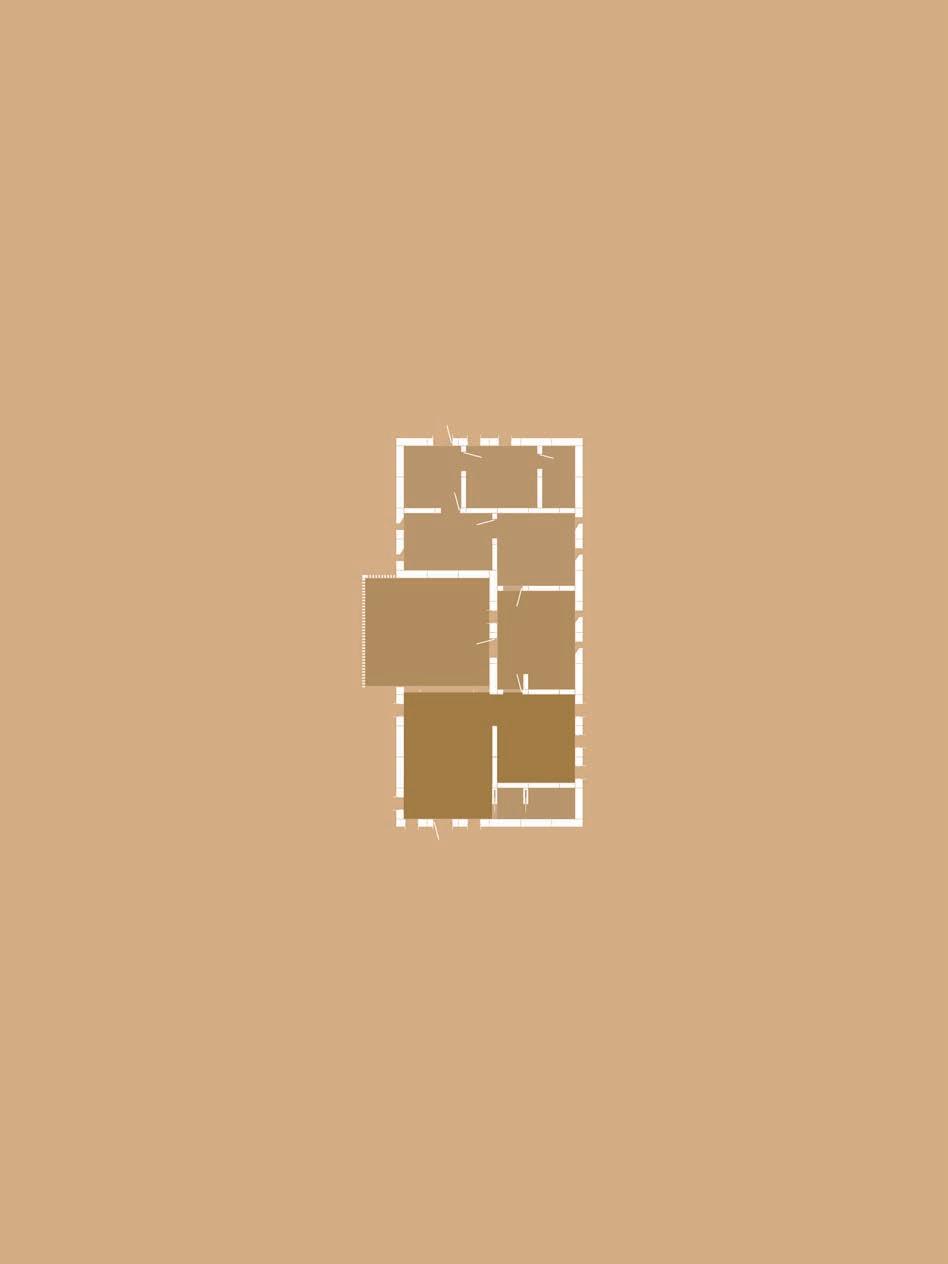
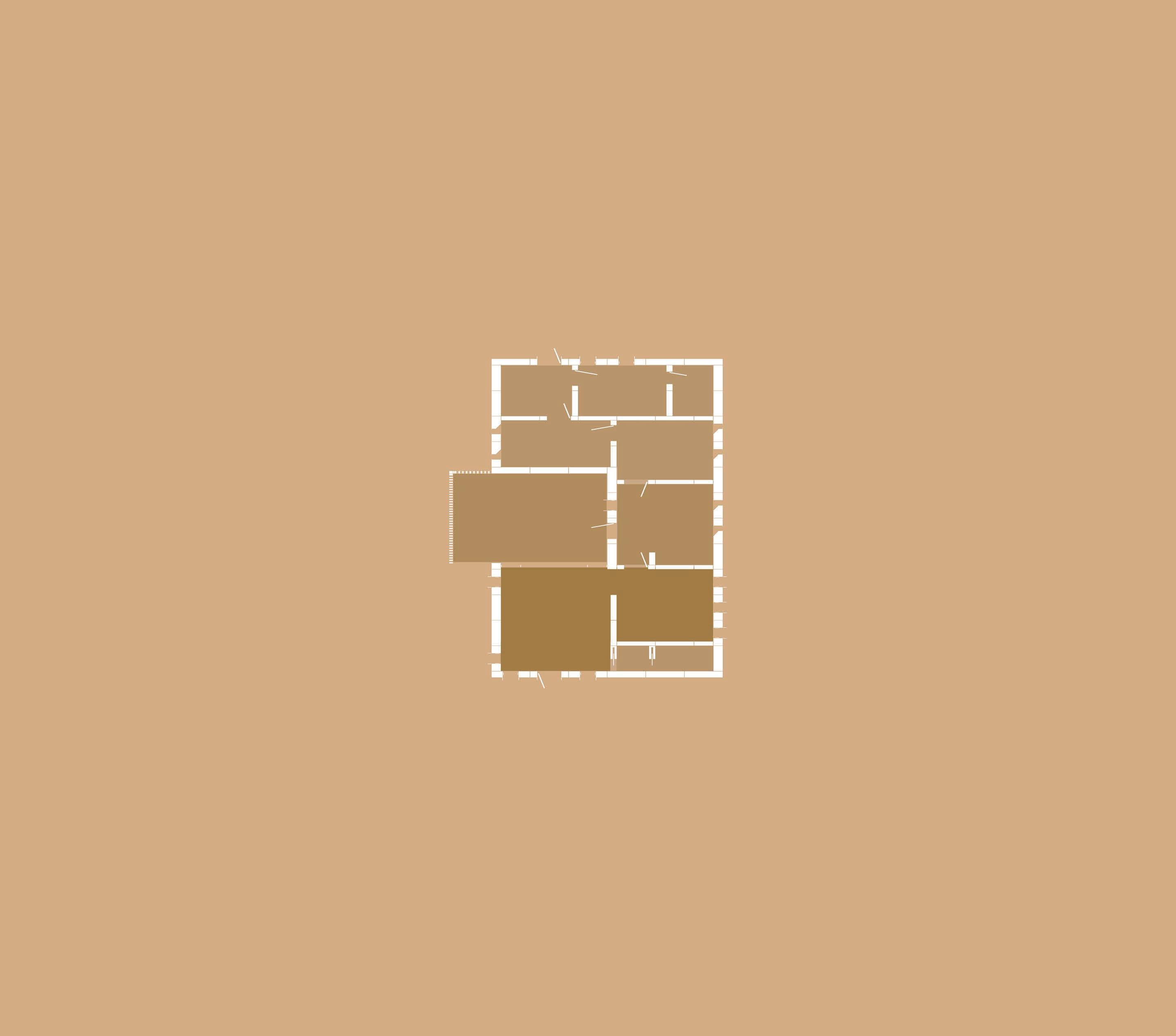
The ground floor is standard for all transfigurations. Public space is placed at the forefront while private is in the rear (left)
Plan A includes a secondary living room (majilis) and two bedrooms (right)
Study Majilis
Terrace
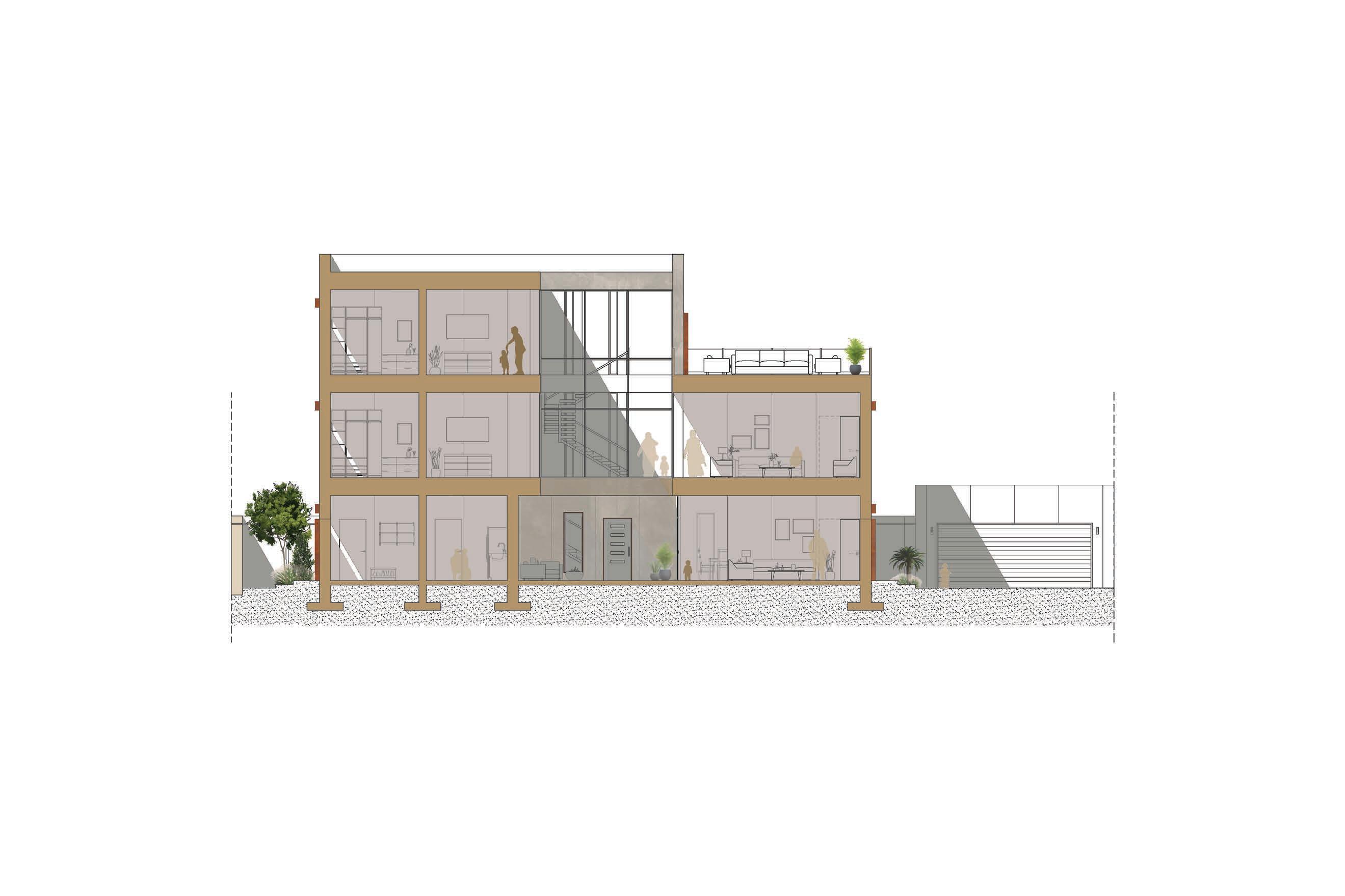
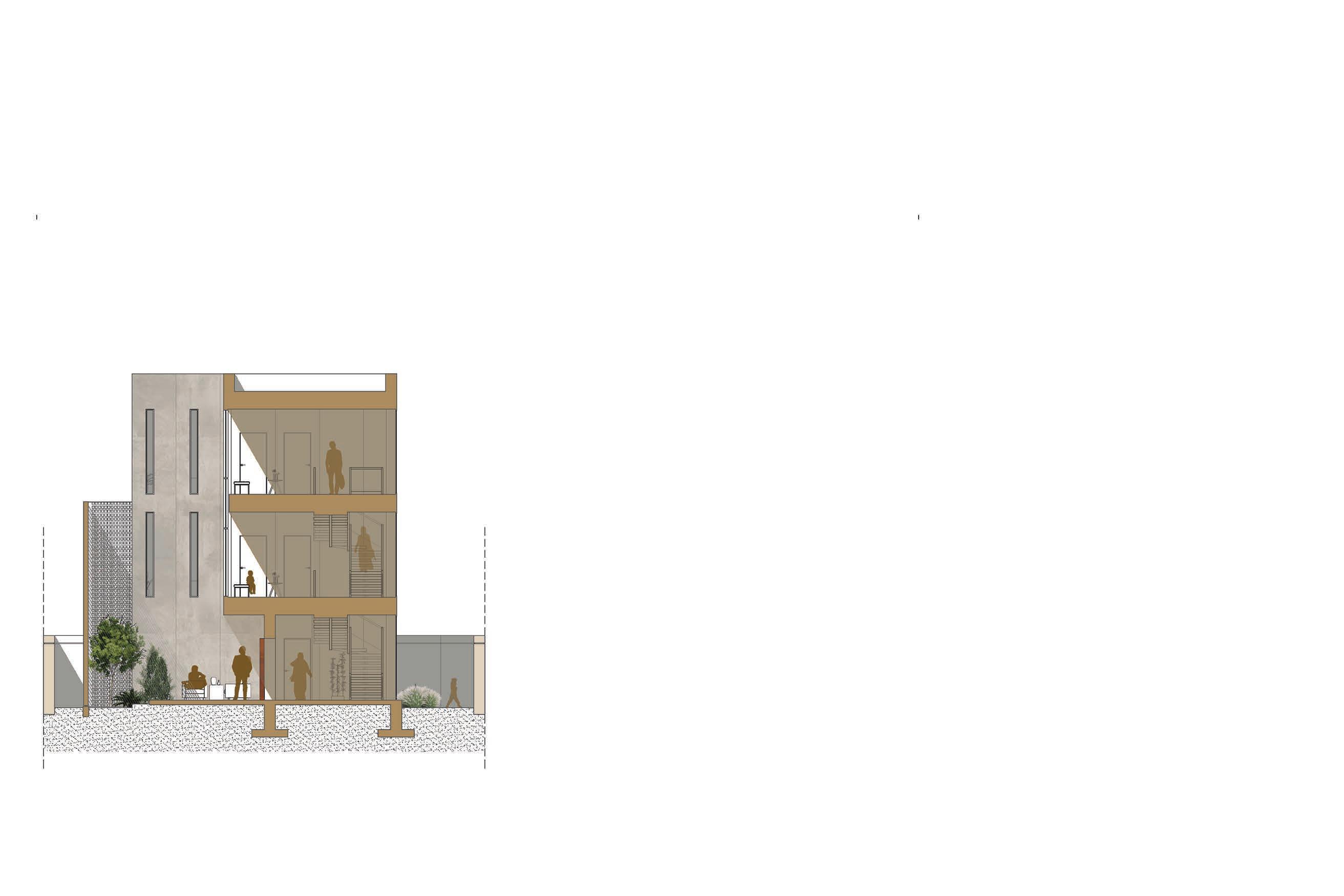
Longitudinal section showing the interplay between levels through the center courtyard (left)
Transverse section conveys the facade construction and simple form of the building (middle)
Plan diagram shows the gradient of privacy echoed throughout the floors (right)
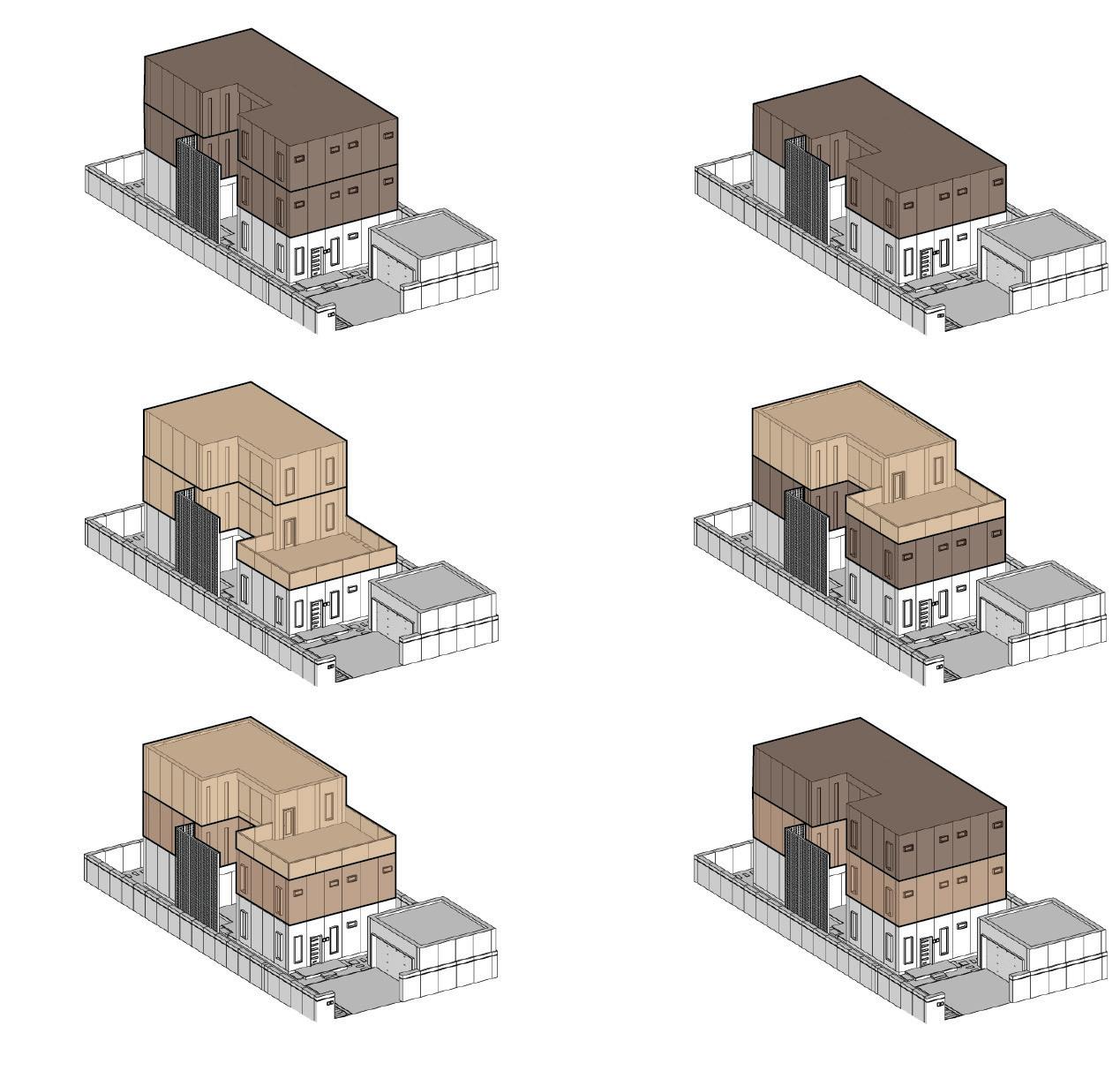
Design AC
6 bedrooms + terrace
Design CB
Four bedrooms, majilis, study, and terrace
Design CC
Four bedrooms + terrace

Steel and Glass Guardrail
Tile Flooring
Concrete Floor Slab
Angled Window
Concrete Enclosure Module
Thermal Insulation
The circulation to the private area and courtyard is masked along the side of the house (left)
Sliding Glass Door
Double-Glazing in Steel Frame
Concrete Enclosure Module
Tile Flooring
Thermal Insulation
Concrete Floor Slab
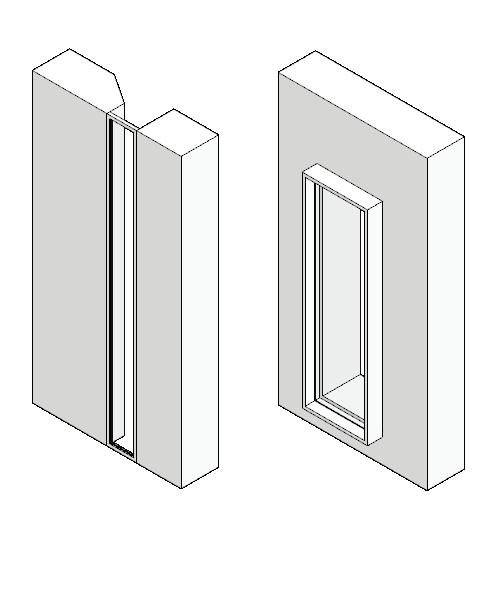
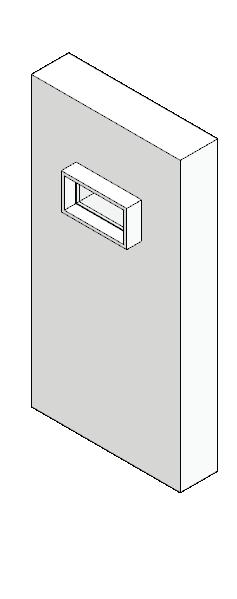
Window modules narrow depending on the level of desired privacy (above)
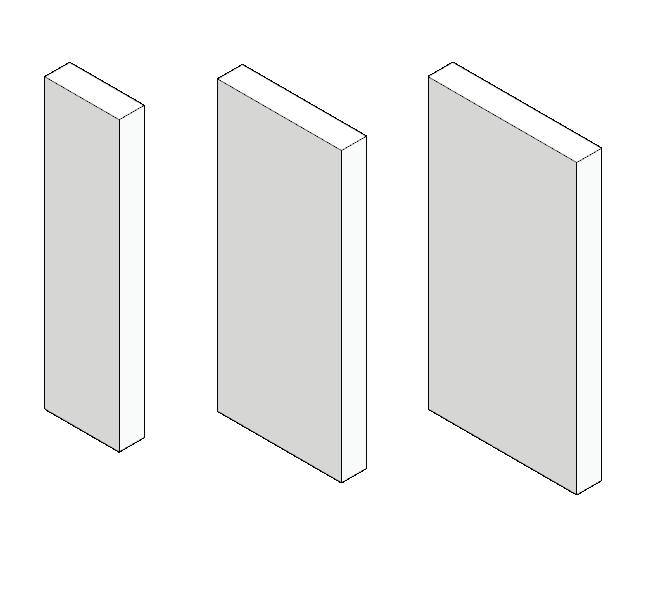
Standard wall modules are divided into three widths to minimize variance in prefabrication modules (middle)
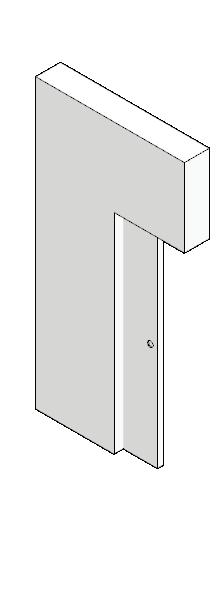
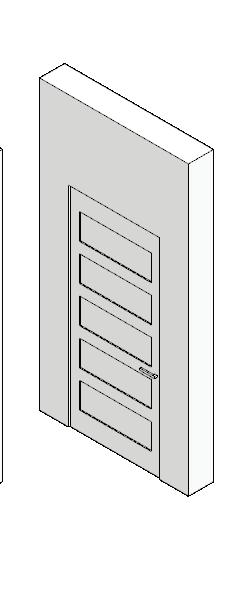
Door modules are kept to three distinct variations depending on space and privacy concerns (below)
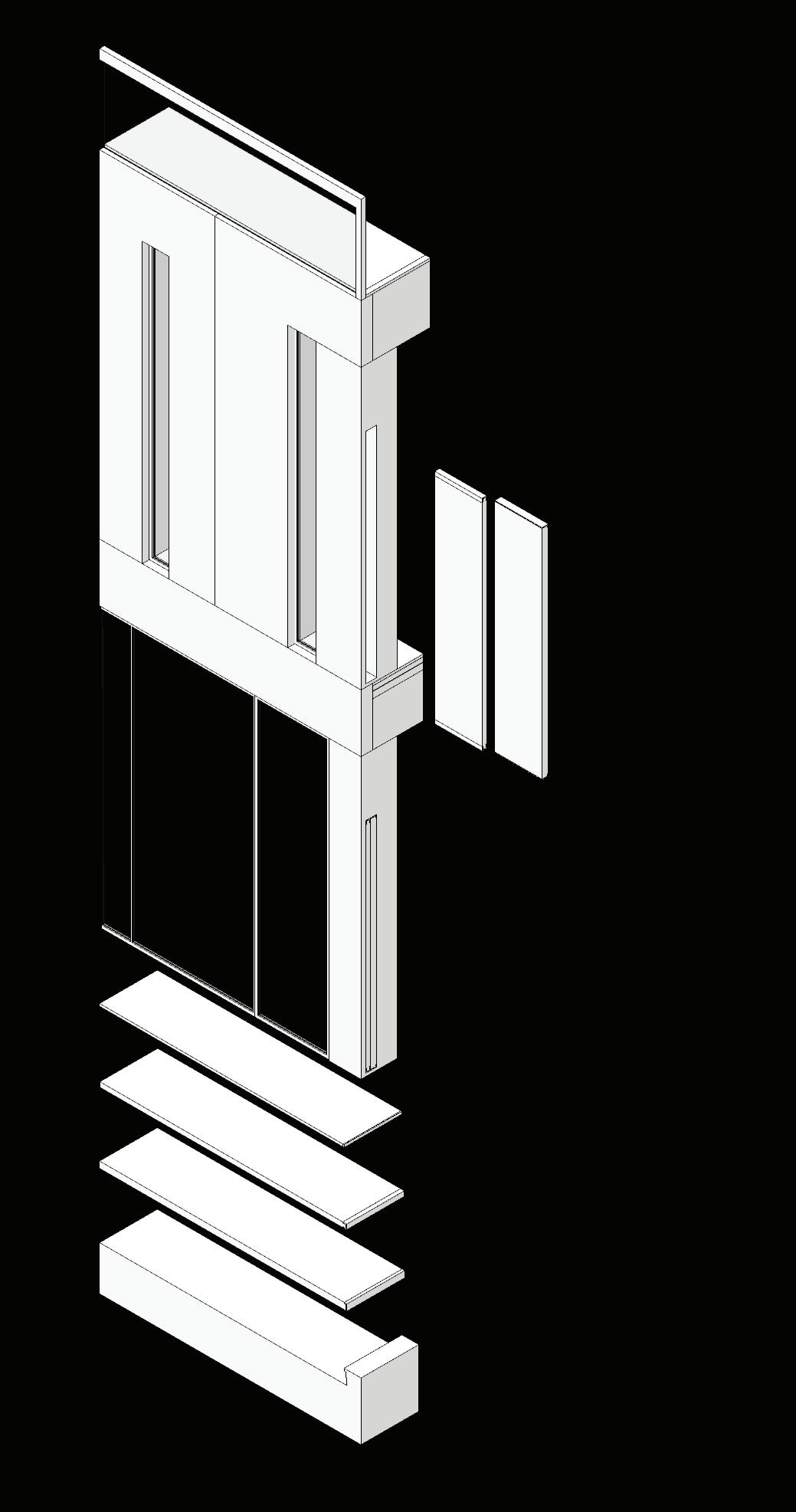
Exploded concrete wall assembly diagrams the typical construction of exterior walls (right)
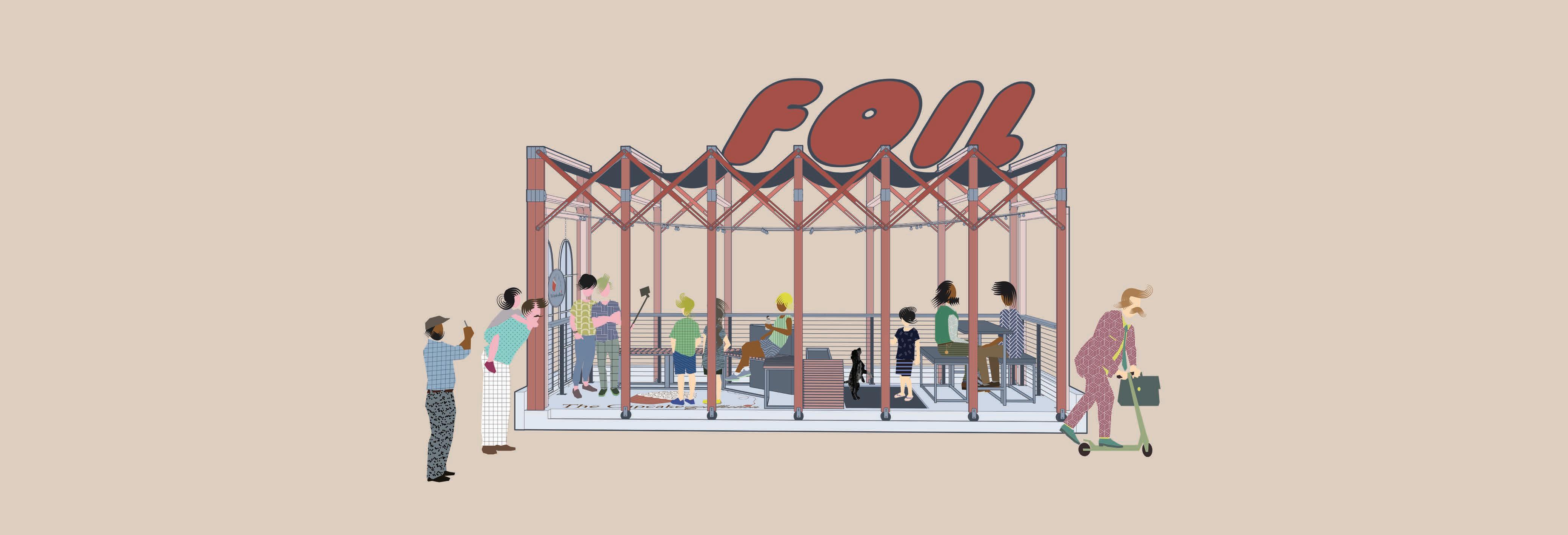
FOIL ENGAGING THE STREET WITH LAYERS OF INSULATION
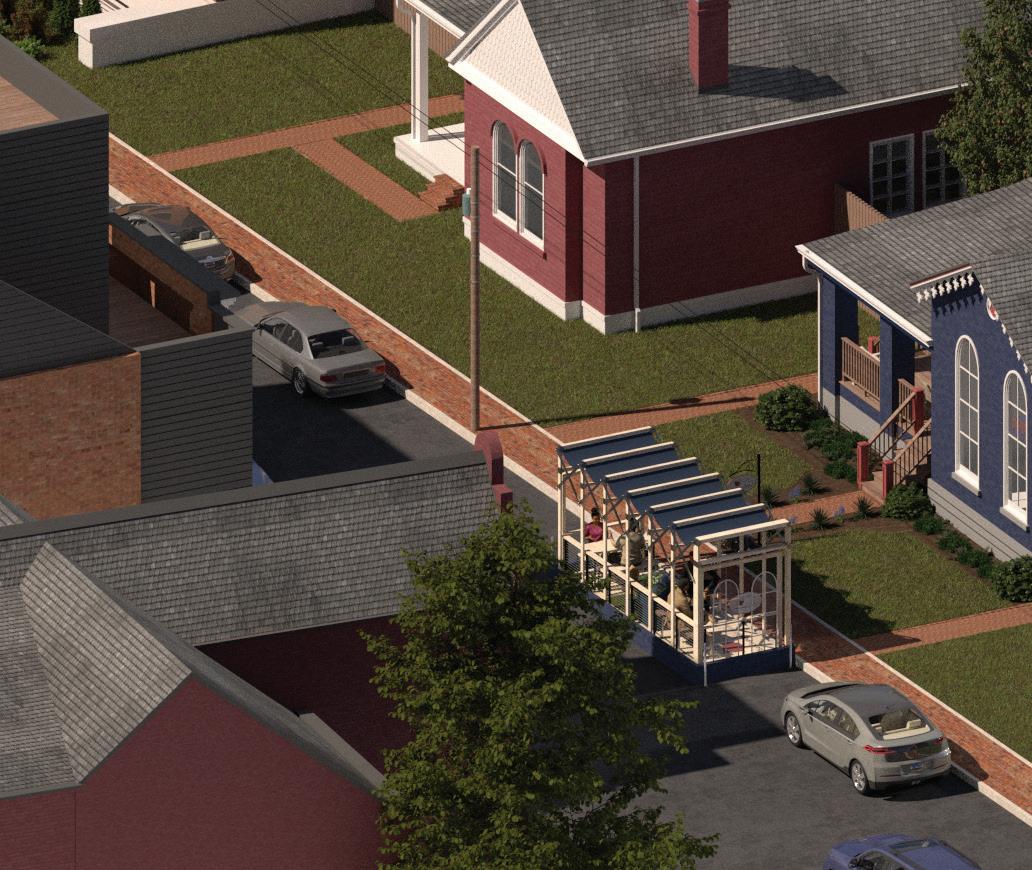
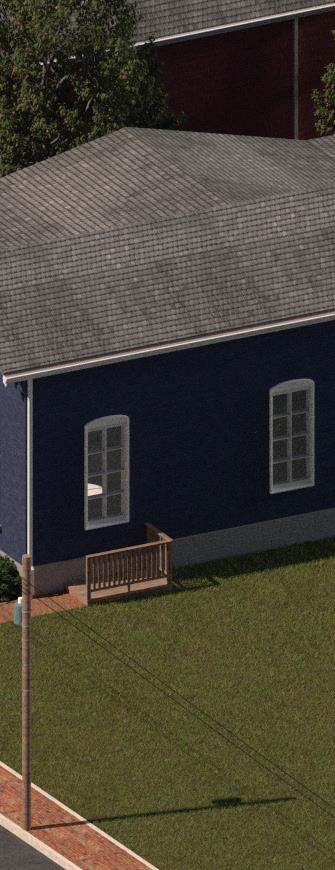
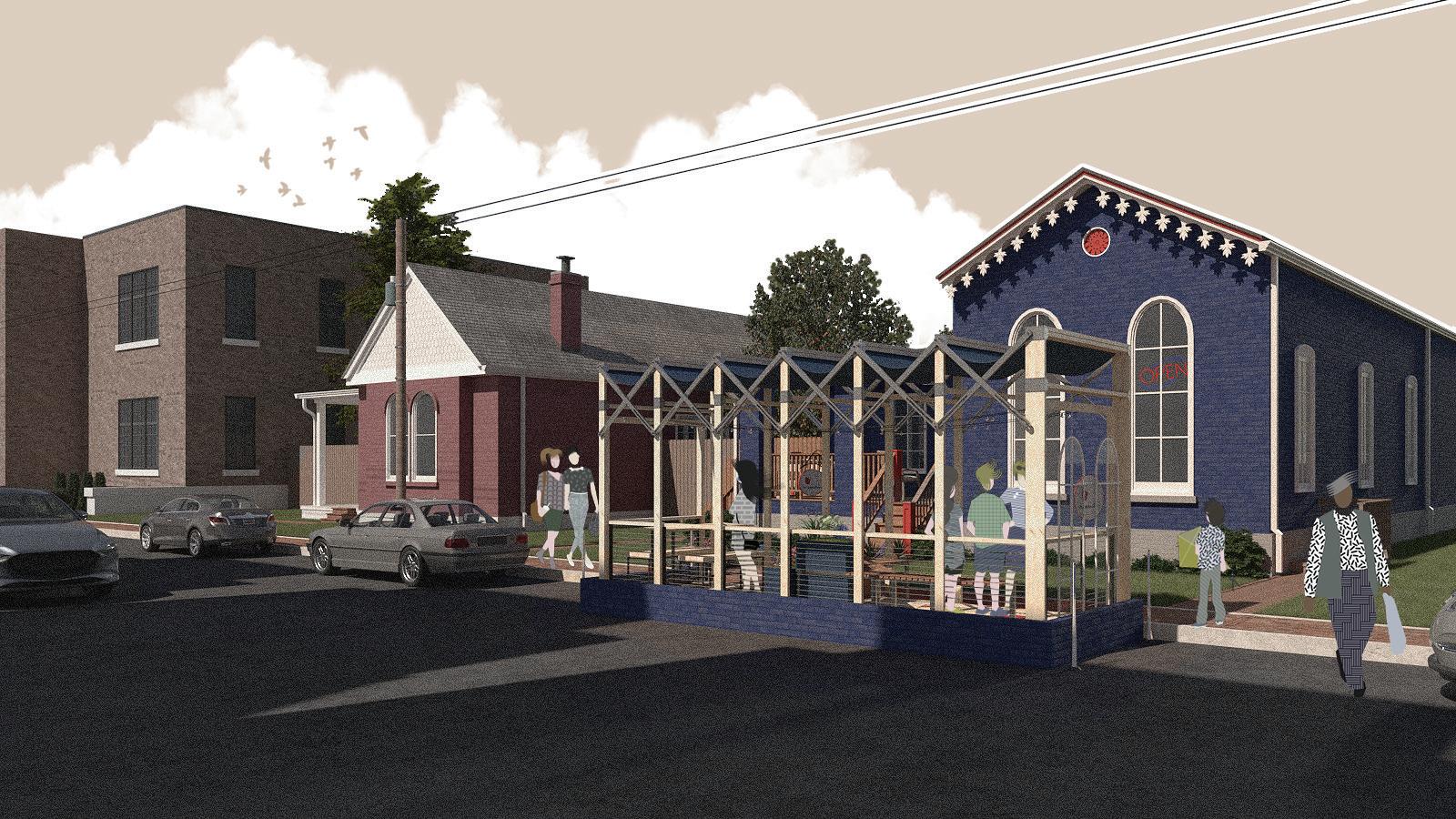
NASHVILLE CIVIC DESIGN CENTER ANNUAL PARKLET DESIGN COMPETITION — 2025
Designed as a playful response to the character of Germantown, Foil celebrates the neighborhood’s tightknit community through its compact and engaging form. Intended to remain open throughout the day, the canopy can fold inward during inclement weather, adapting to changing conditions. The design incorporates layered protection reminiscent of a cupcake liner—a foundation that holds something delightful within. A low brick wall defines the perimeter, providing a sense of enclosure, while cable railings ensure safety without obstructing views of the street.
Positioned as both complement and counterpoint to its urban context, Foil transforms an overlooked streetscape into a welcoming space for gathering, relaxation, and connection.
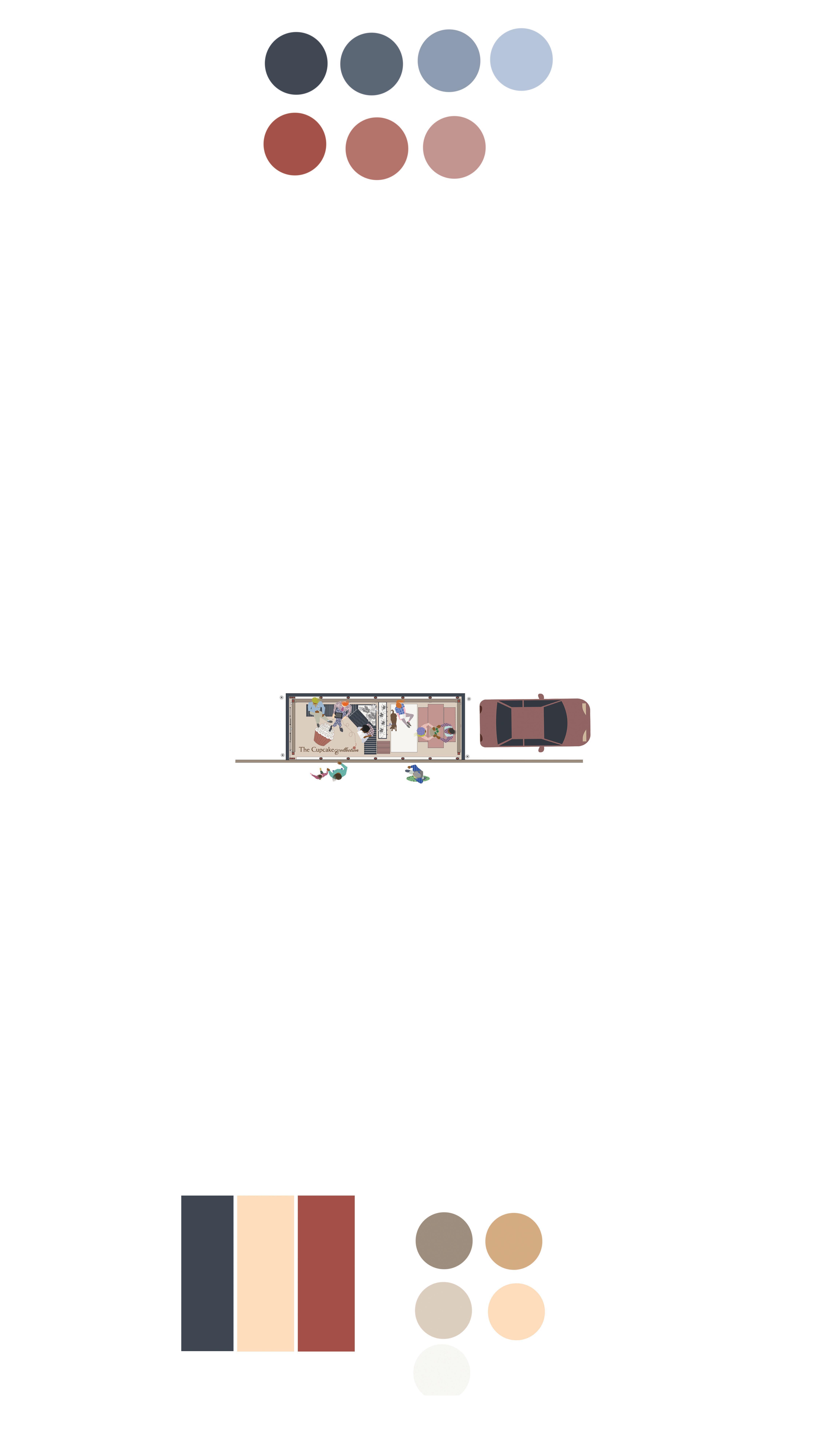
Though compact, the parklet maintains distinct zones of experience. At one end, a communal bench anchored by a hanging photo feature invites social interaction and connection among visitors. At the other, a turf dog mat and table arrangement accommodates families and their pets, reinforcing the parklet’s inclusive and playful character.
4 2 1 1/2 0
Artistic plan illustrating the intended interaction between the parklet’s design and the surrounding community (left).
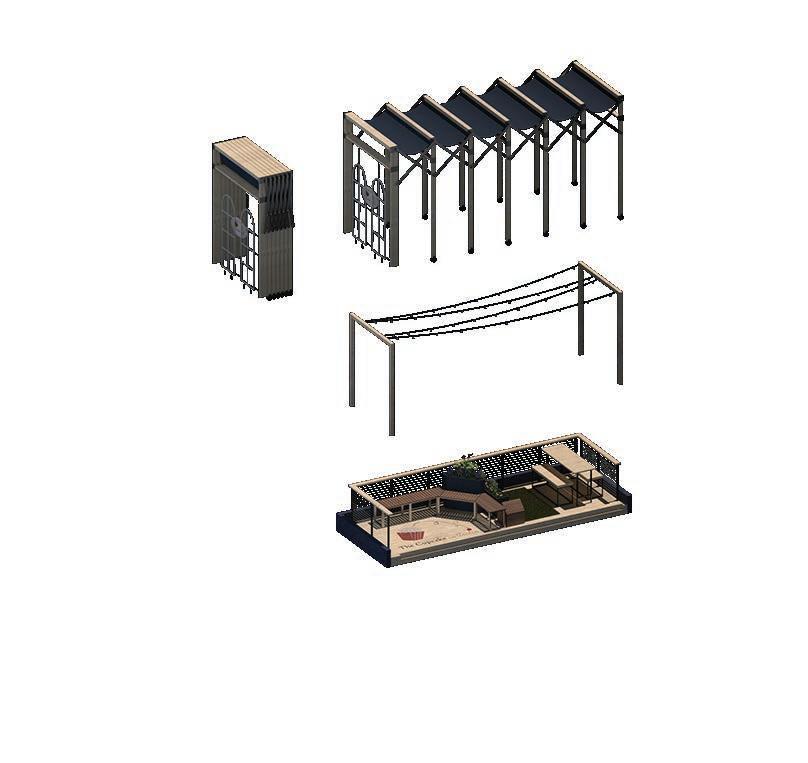
Exploded axonometric revealing the collapsible canopy system and its adaptable form (right).
Wheel Track
Doghouse
Removable Turf Pet-Pad
Steel Cable Railing and Low Brick Wall
2x4 Lumber Boards String Lights
Hanging Photo Moment
Collapsible Canopy
Water Resistant Canvas
STUDIO PROJECTS AND PHOTOGRAPHY 2022 – 2025
PROJECT CHRONOLOGY
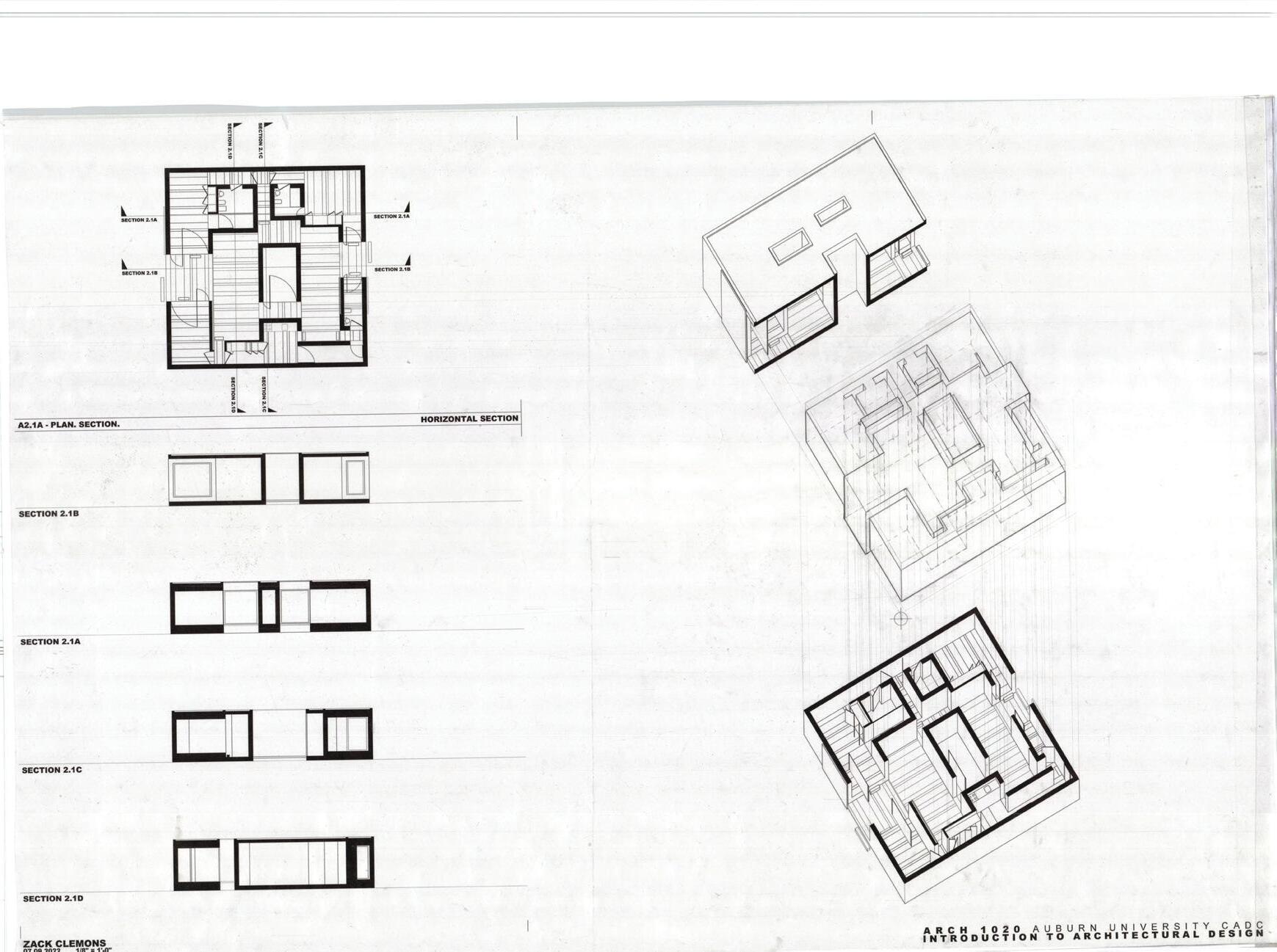
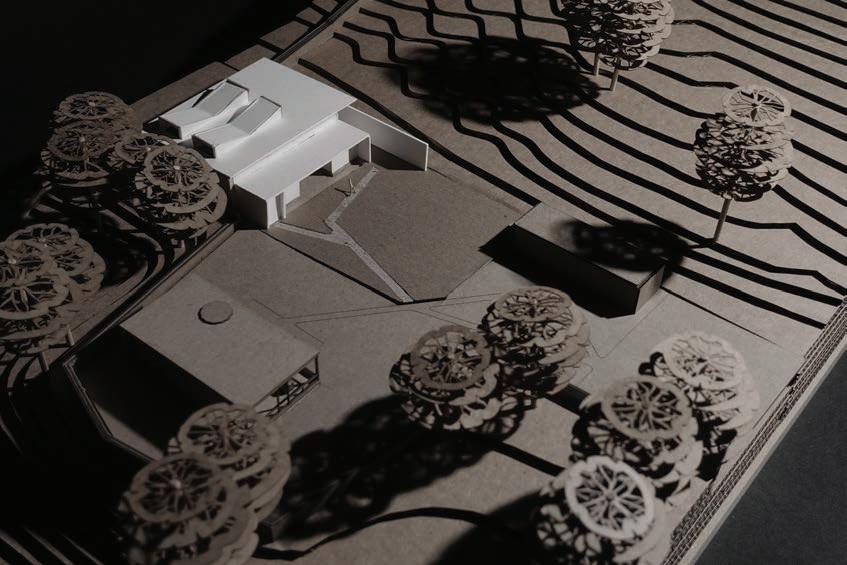
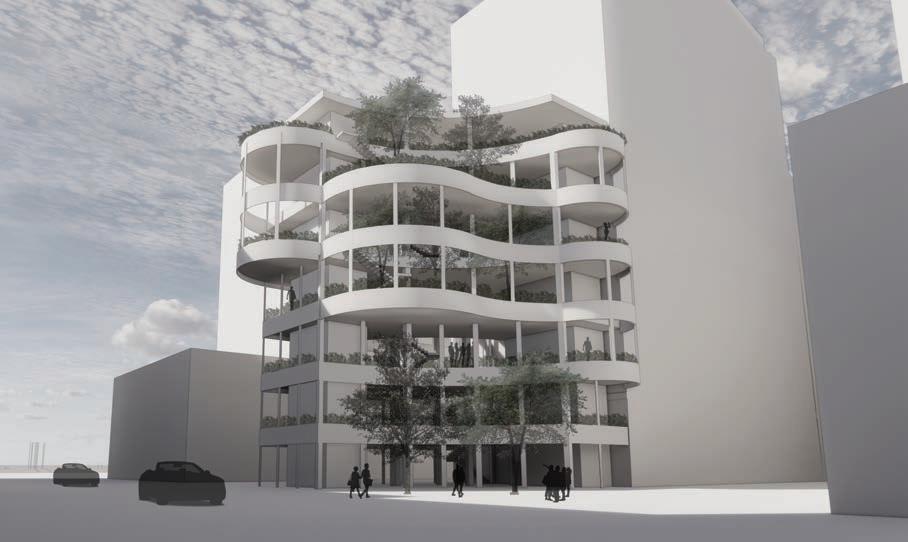
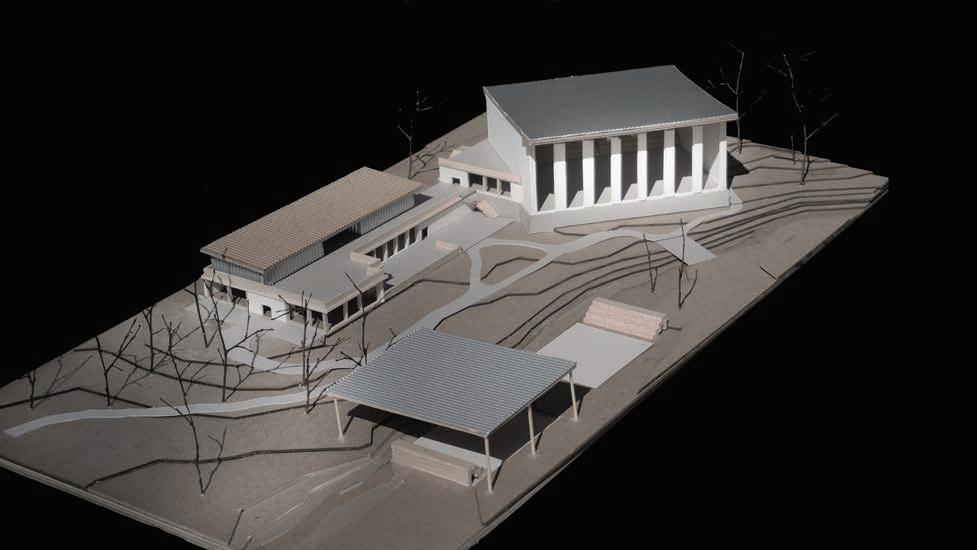
Vertical Park Center for Youth Natural Exhibit Building Blocks
1st Year Studio 2022
Auburn, Alabama
Summer Design 2022
New Haven, Connecticut
Summer Design 2022
1st Year Studio
Auburn, Alabama Fall 2022 2nd Year Studio
Chicago, Illinois
Fall 2022
2nd Year Studio
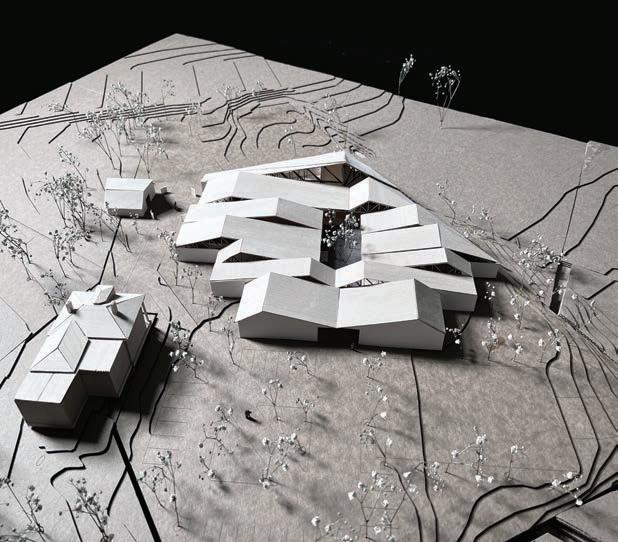
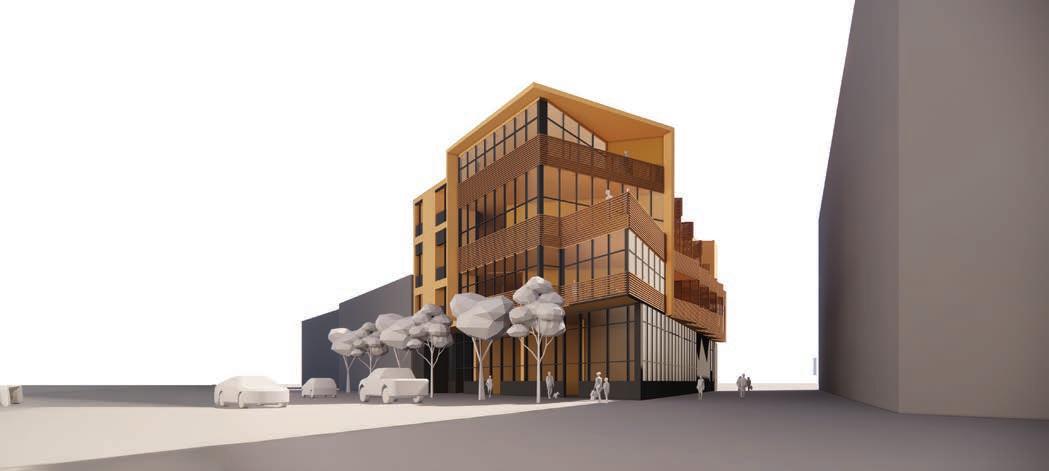
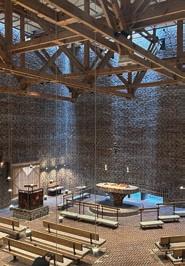

The Space Between
Of and Above Axis Amplified Abroad Studio
3rd Year Abroad Studio 2024 24 – 39 40 – 53
Aarhus, Denmark Spring 2024
Aarhus, Denmark Spring 2024
3rd Year Abroad Program
Austin, Texas Fall 2024 4th Year Masterplan
Austin, Texas Fall 2024 4th Year Studio
01 02 03 Dance + Collective
54 – 67
Huntsville, Alabama Spring 2025 4th Year Integrated Studio
FOIL ATLAS
Nashville,