
馬雨錚 YUZHENG MA
“Every spirit builds itself a house, and beyons its house, a world, and beyond its world, a heaven. Know that world exists for you, Build, therefore, your own world.”
Ralph Waldo Emerson
Northeastern University 2025 BS. Architectural Studies
Honors and Awards
榮譽
The Excellence in Architectural Design Award, Northeastern 2022
The Saint Bonaventure Award 2021 National Honor Society 2019-2021 Honor rRoll 2018-2021
Skills 技能
Rhino (Rhino.Inside)
Adobe Photoshop
Adobe Illustrator
Adobe InDesign
Adobe Bridge
Adobe XD
AutoCAD
Revit
Reference 推薦人
Zorana Matić Isautier z.maticisautier@northeastern.edu
Chris Schaffner c.schaffner@northeastern.edu
Kate Kennen k.kennen@northeastern.edu
Work Experience 工作經歷
VBC Studio Intern project designer 7/2024 - 12/2024
Knack Tutoring Tutor 1/2024 - 12/2025
Voluntary Engagement 志願活動
The Cat Connection Voluntary Cat Caretaker September 2024-present
C&T Dadao Foundation Voluntary Student Team Coordinator August 2019-May 2021
China Youth Business League Participant and Voluntary Assistant 2018-2019
National Honor Society Member and Event Volunteer 2019-2021
St. Peter’s Evangelical Lutheran Church Voluntary Assistant 2019
Revival Crossings
Archit, Infrastructure & City
Professor Zorana Matic
This project is developed within a studio that examines the architectural and urban implications of large-scale infrastructure embedded in the contemporary city. Focusing on the spatial, social, and ecological consequences of transit systems, the project explores how urban design frameworks can be translated into implementable guidelines at the scale of the block and the public–private interface. Through the integration of infrastructure, housing, and landscape systems, Revival Crossings reclaims residual land along a sunken subway corridor and repositions it as a connected network of housing, public space, and ecological remediation.
*This group project has been completely revised to a self project
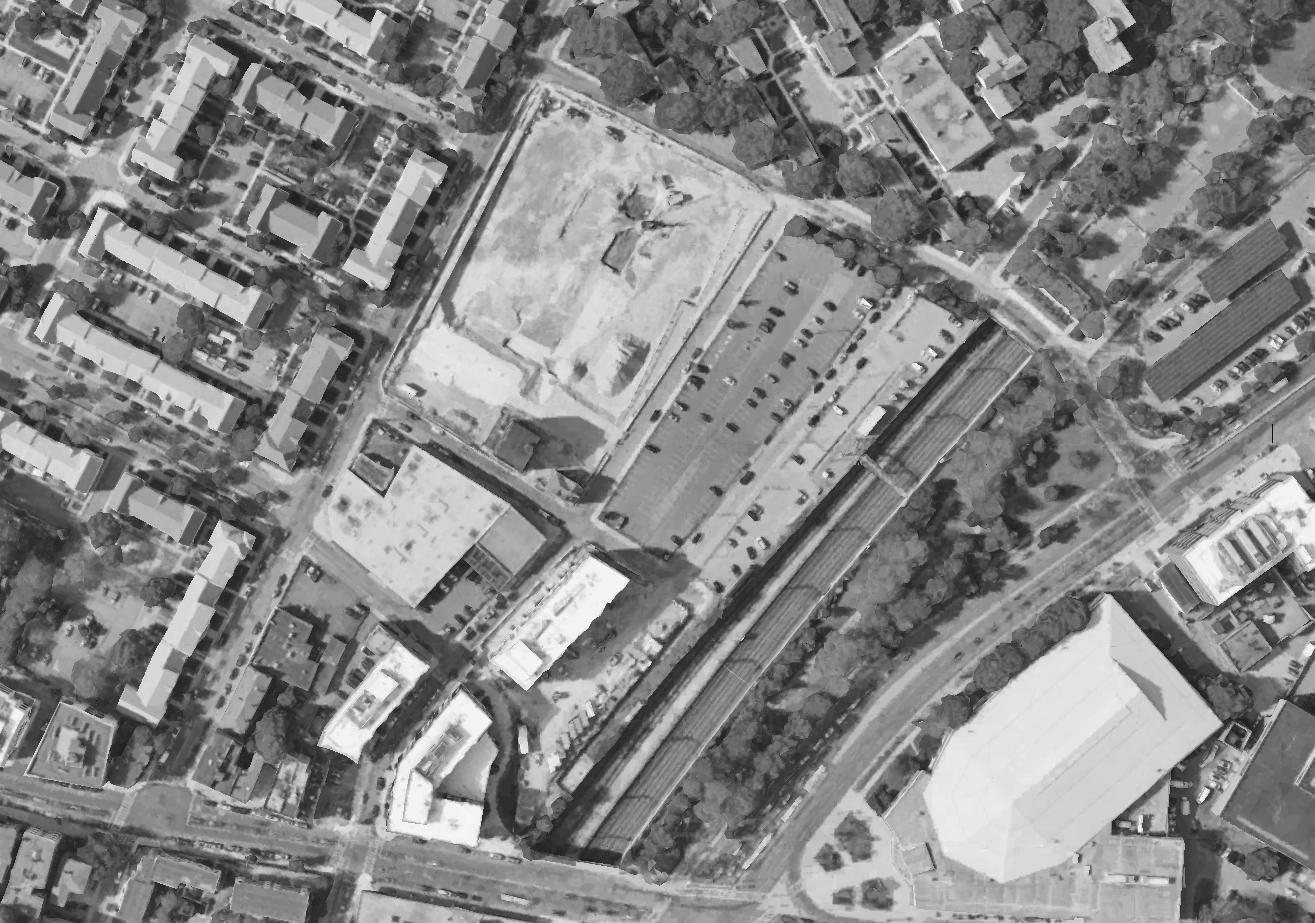
Site: 1-99 Mindoro St, Boston, MA 02120
site analysis
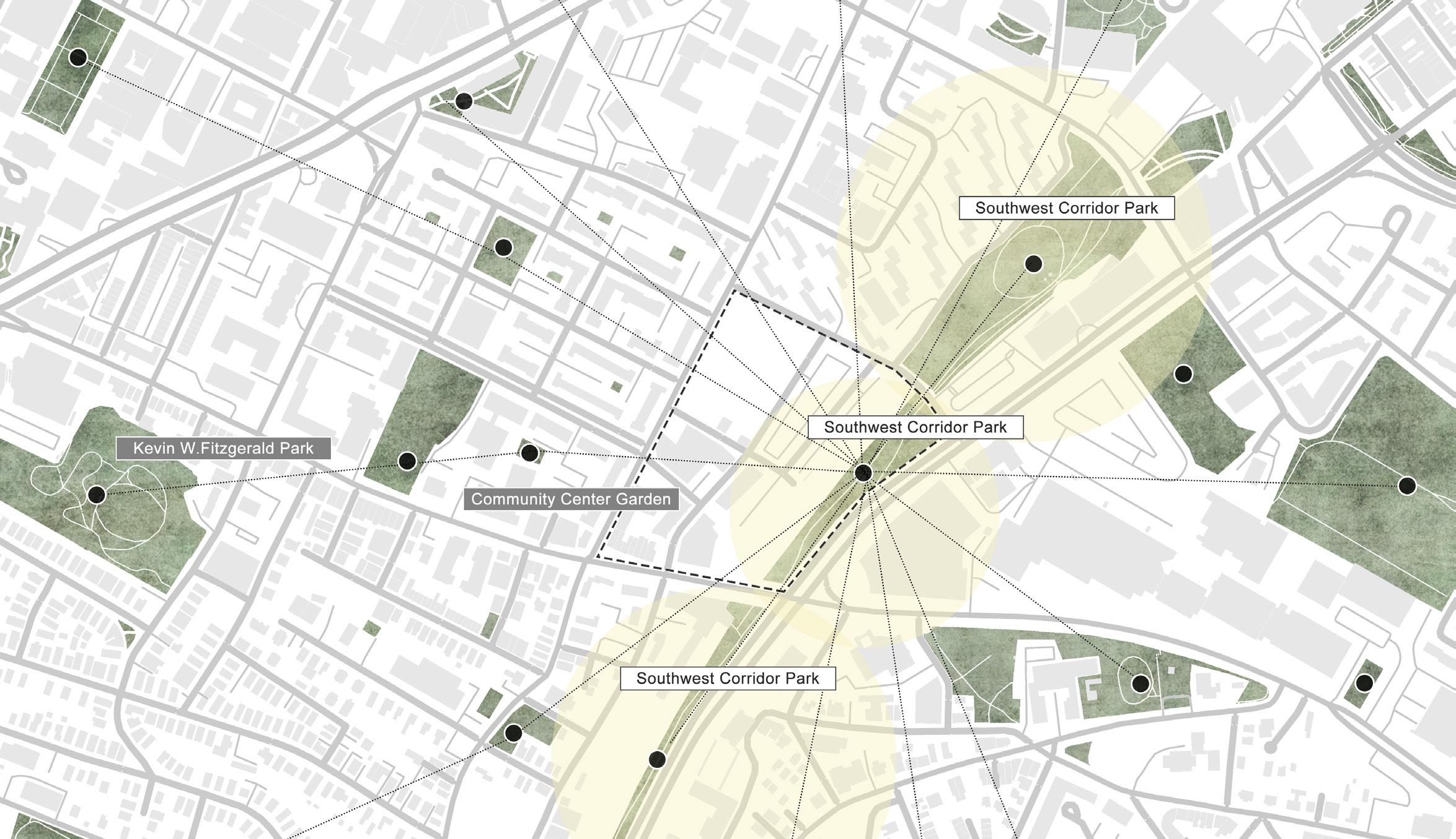
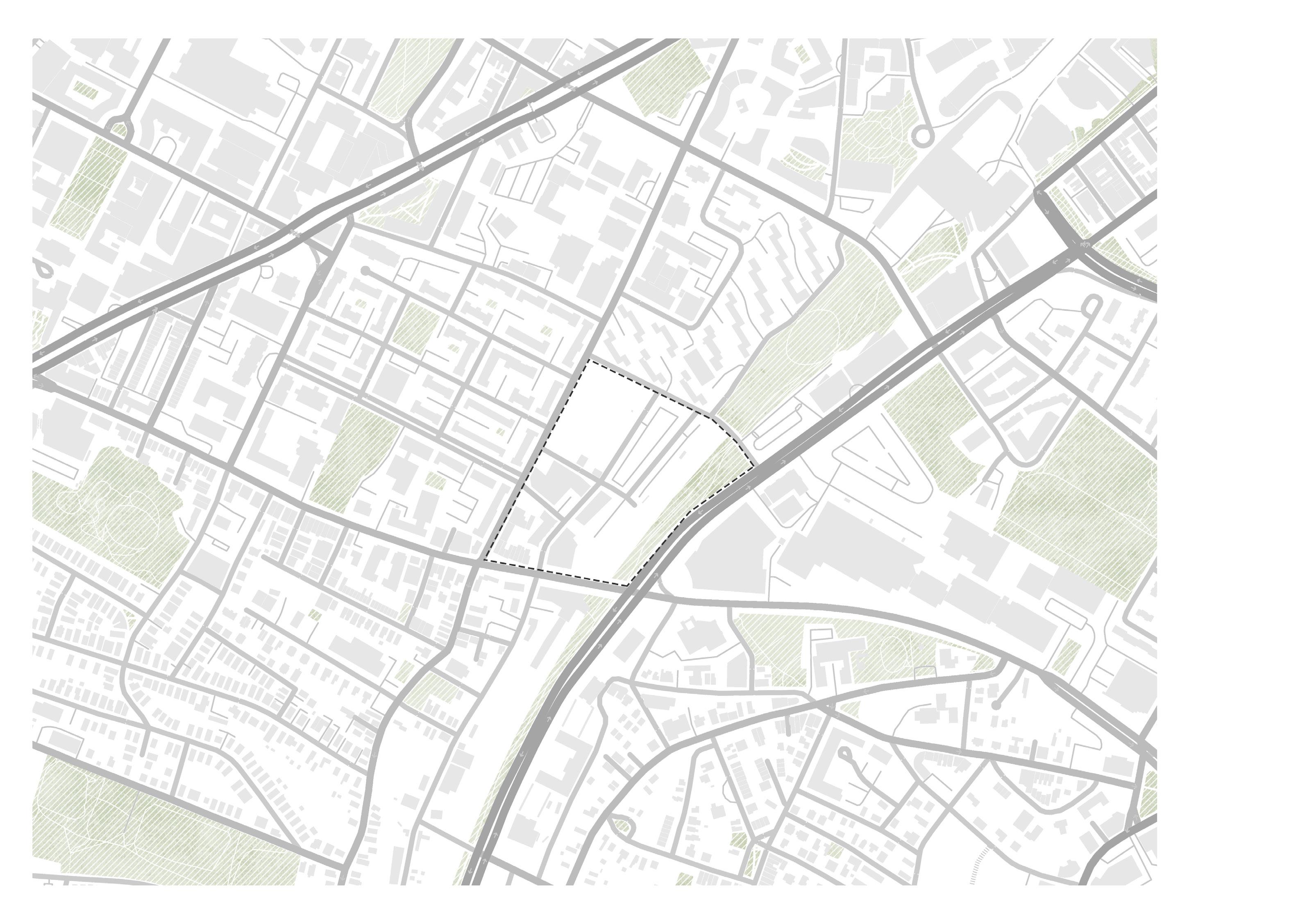
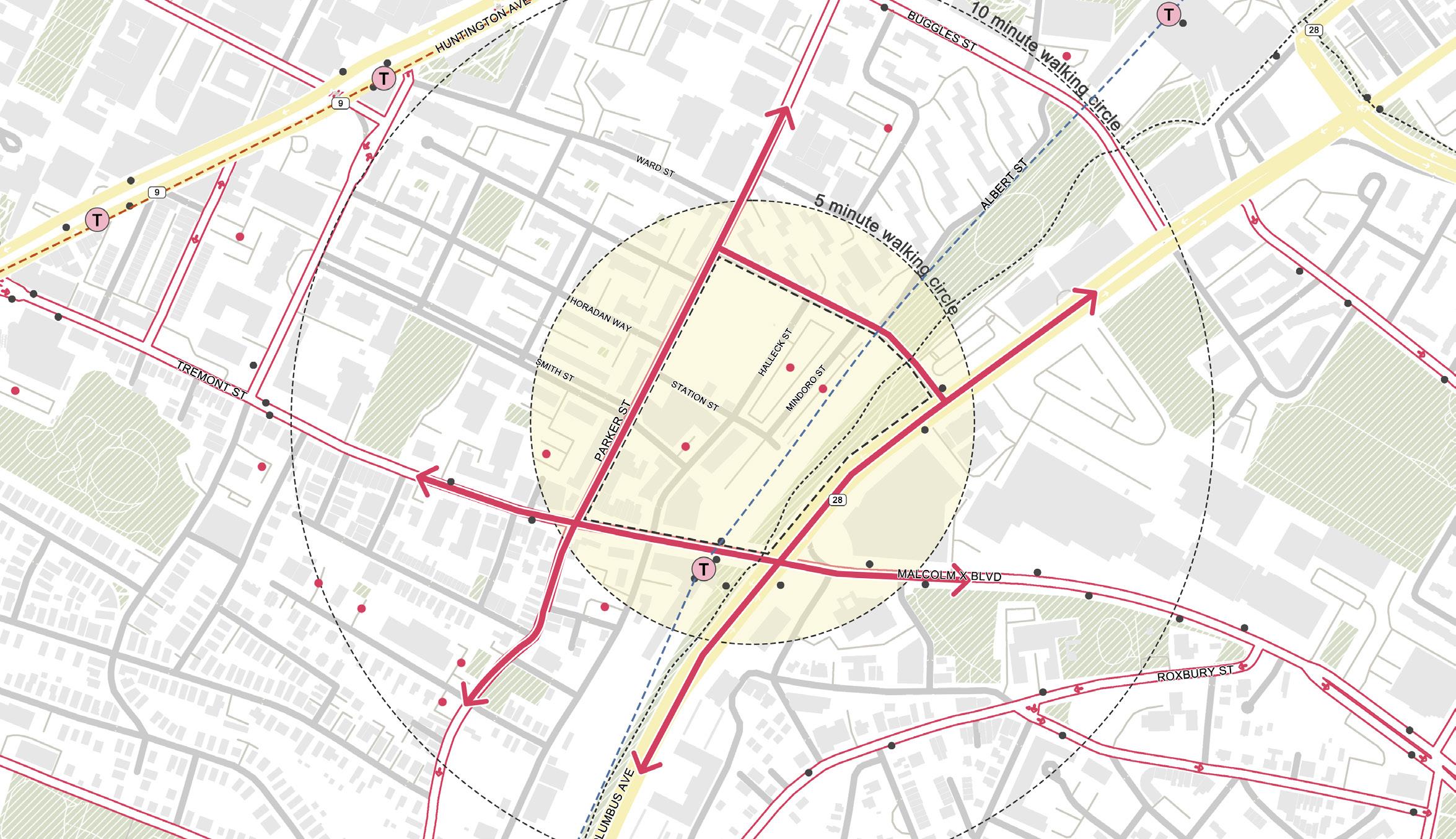
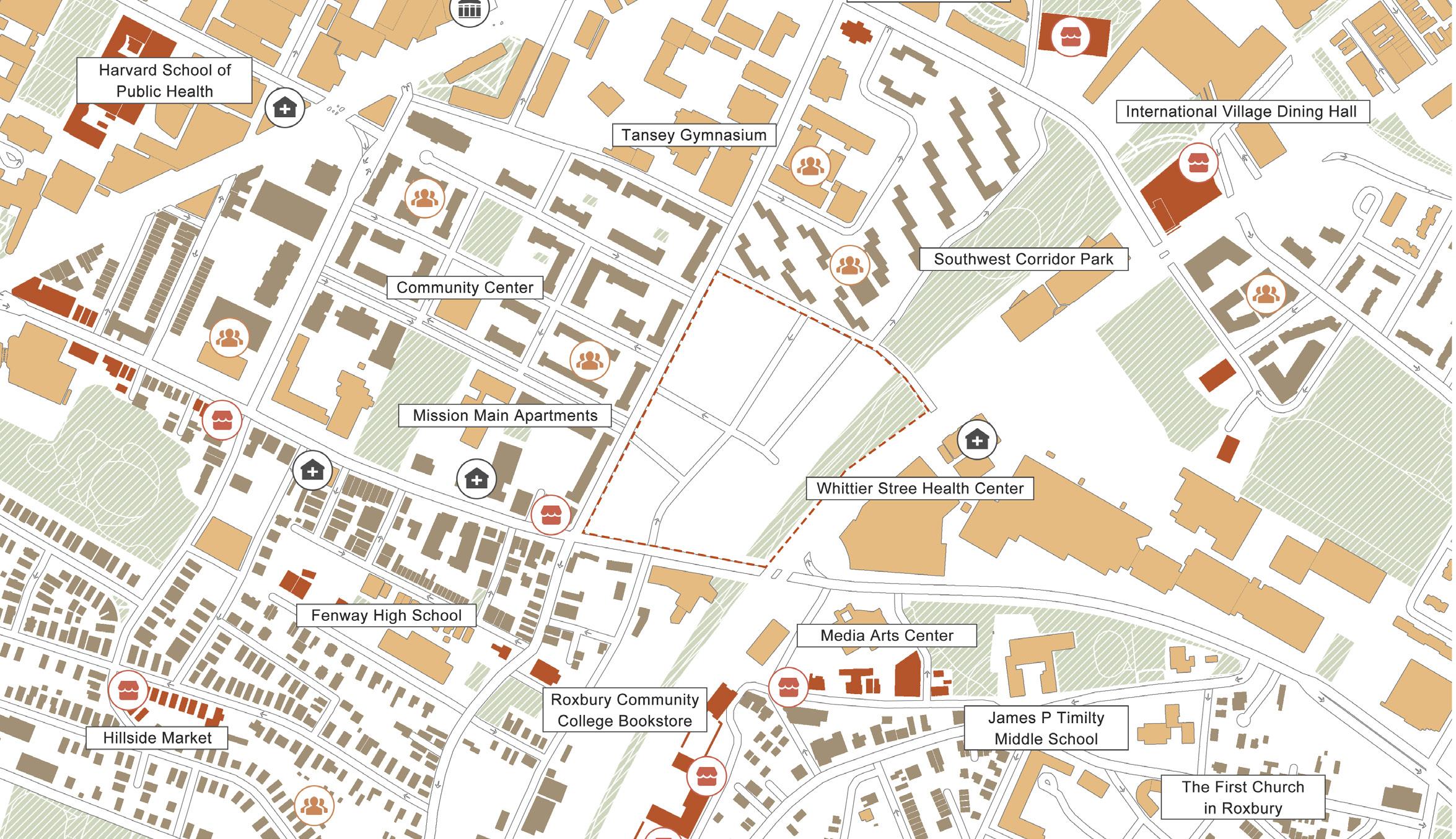
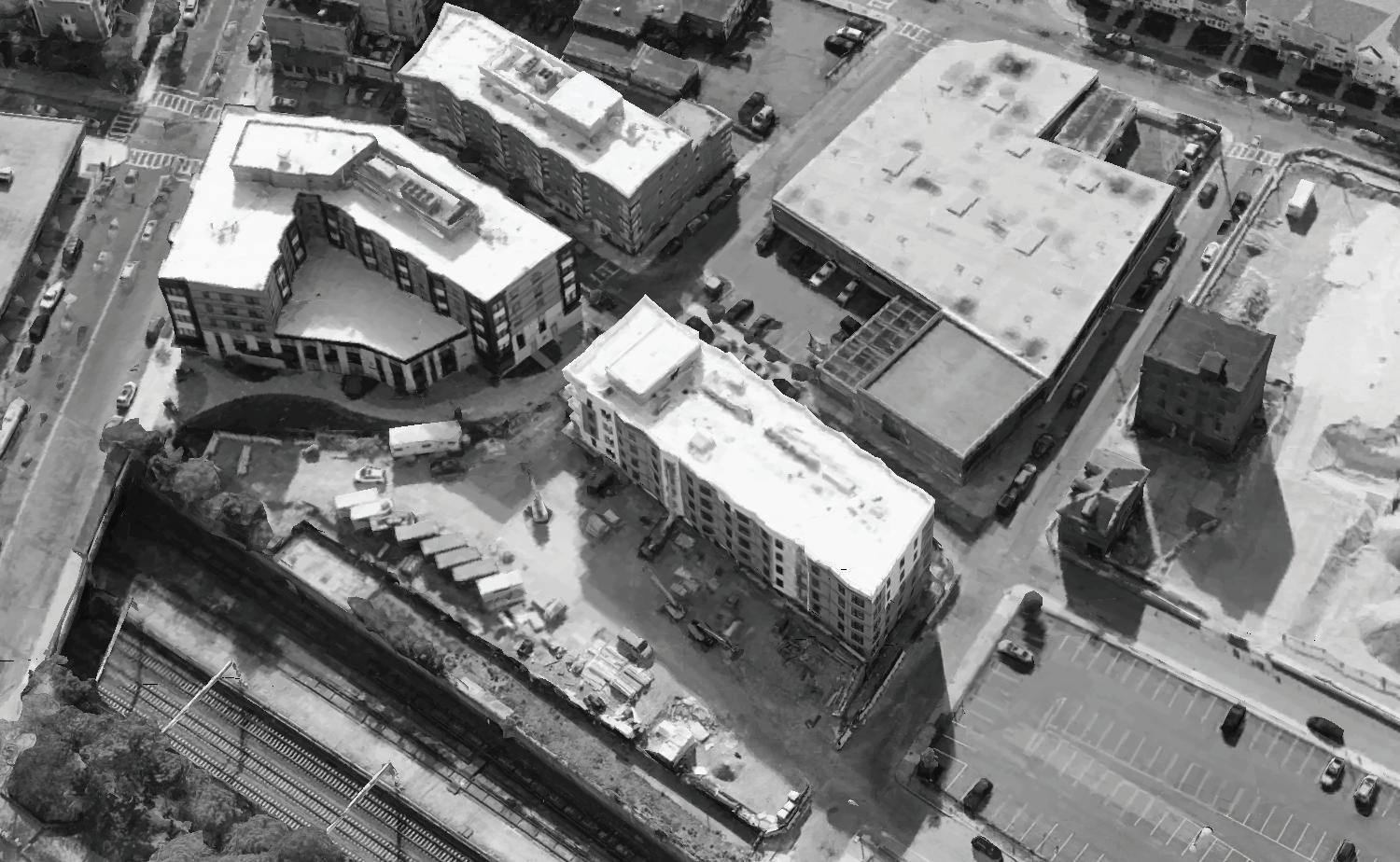
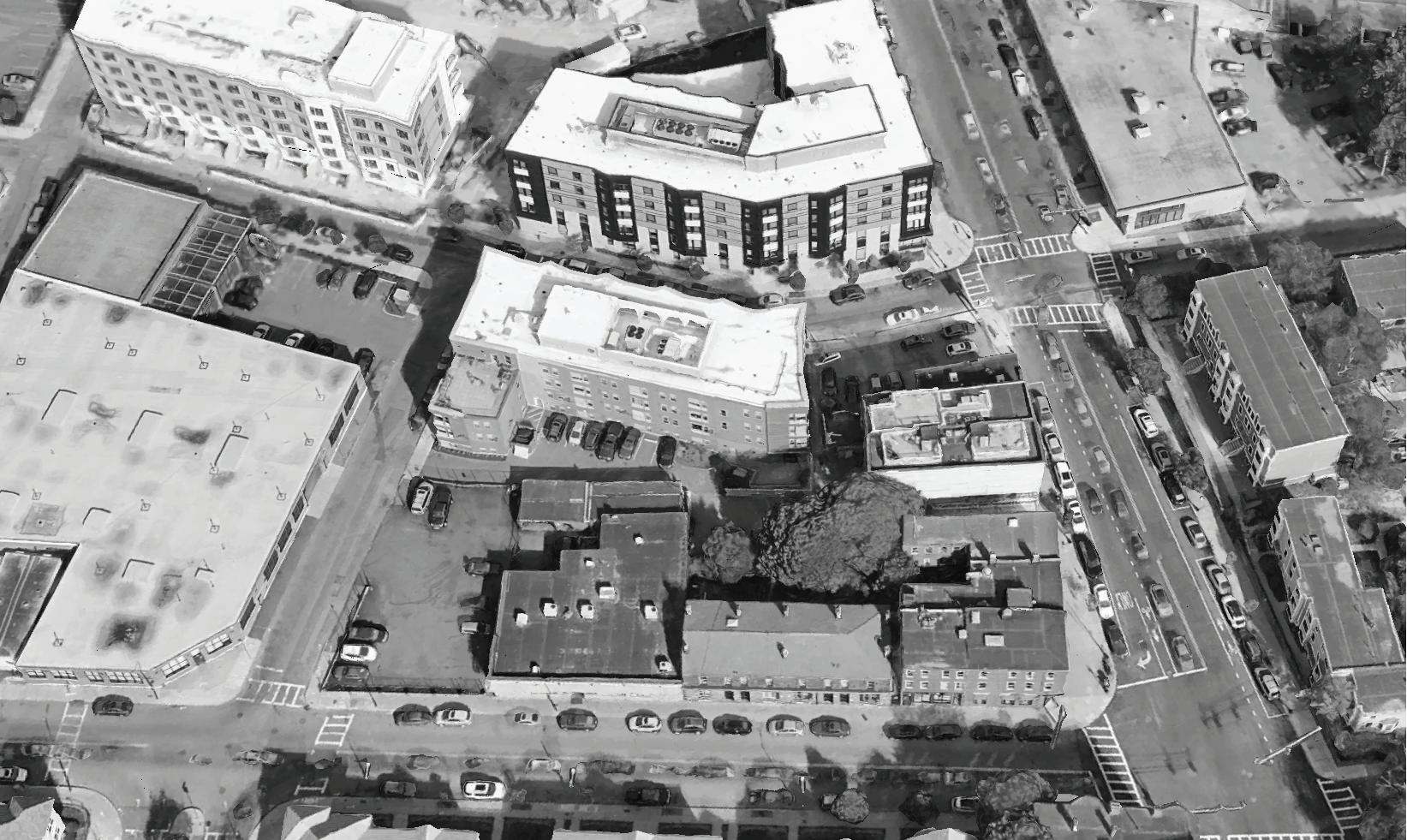
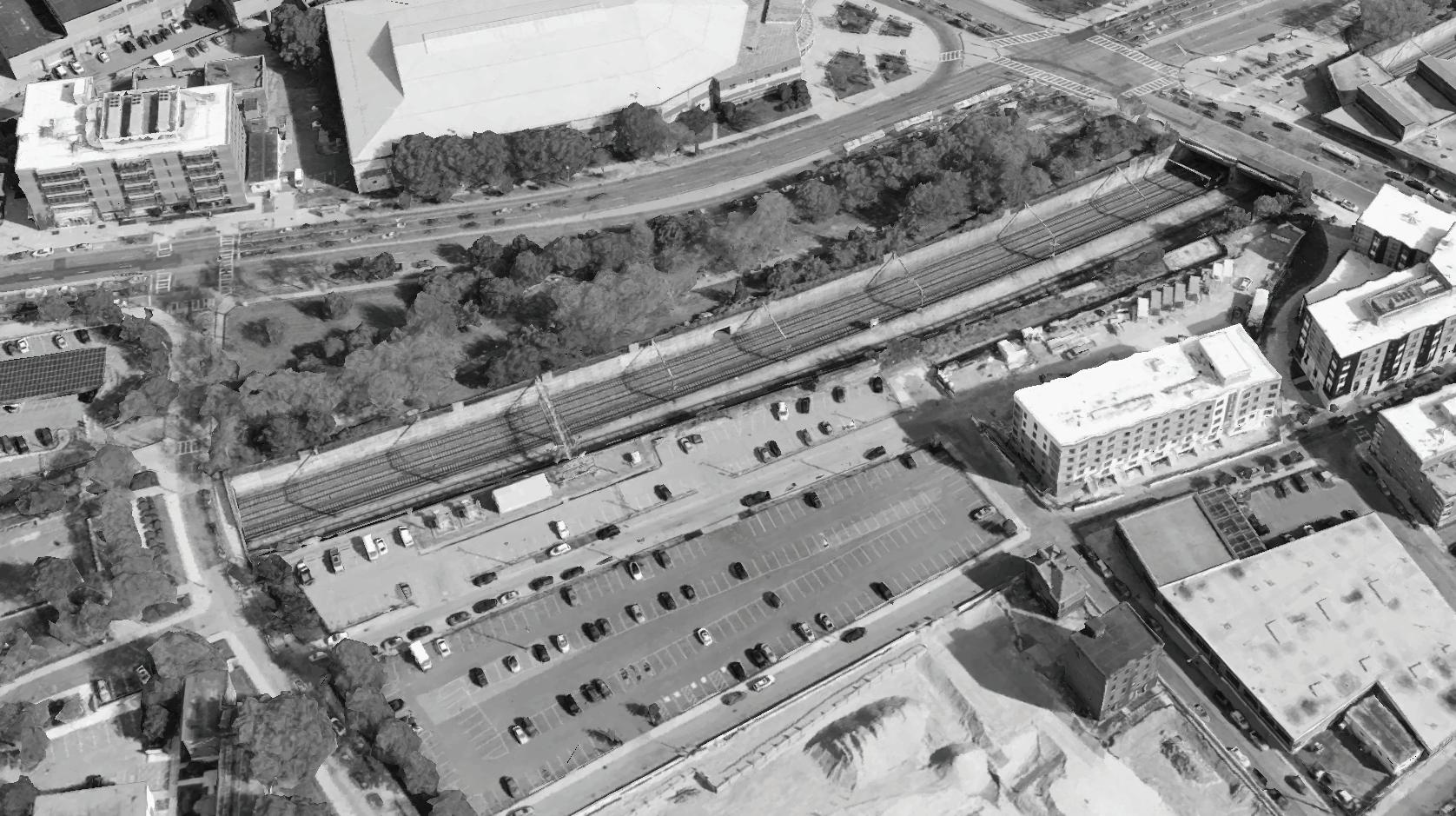
The site is located along a sunken subway corridor defned by fragmented parcels, infrastructural barriers, and underutilized open space. Surrounding conditions include a heterogeneous mix of residential, commercial, and institutional buildings, as well as both public- and city-owned lots. While transportation analysis reveals strong regional connectivity through subway lines, bus routes, and roads, local circulation remains discontin uous, particularly across the rail corridor.
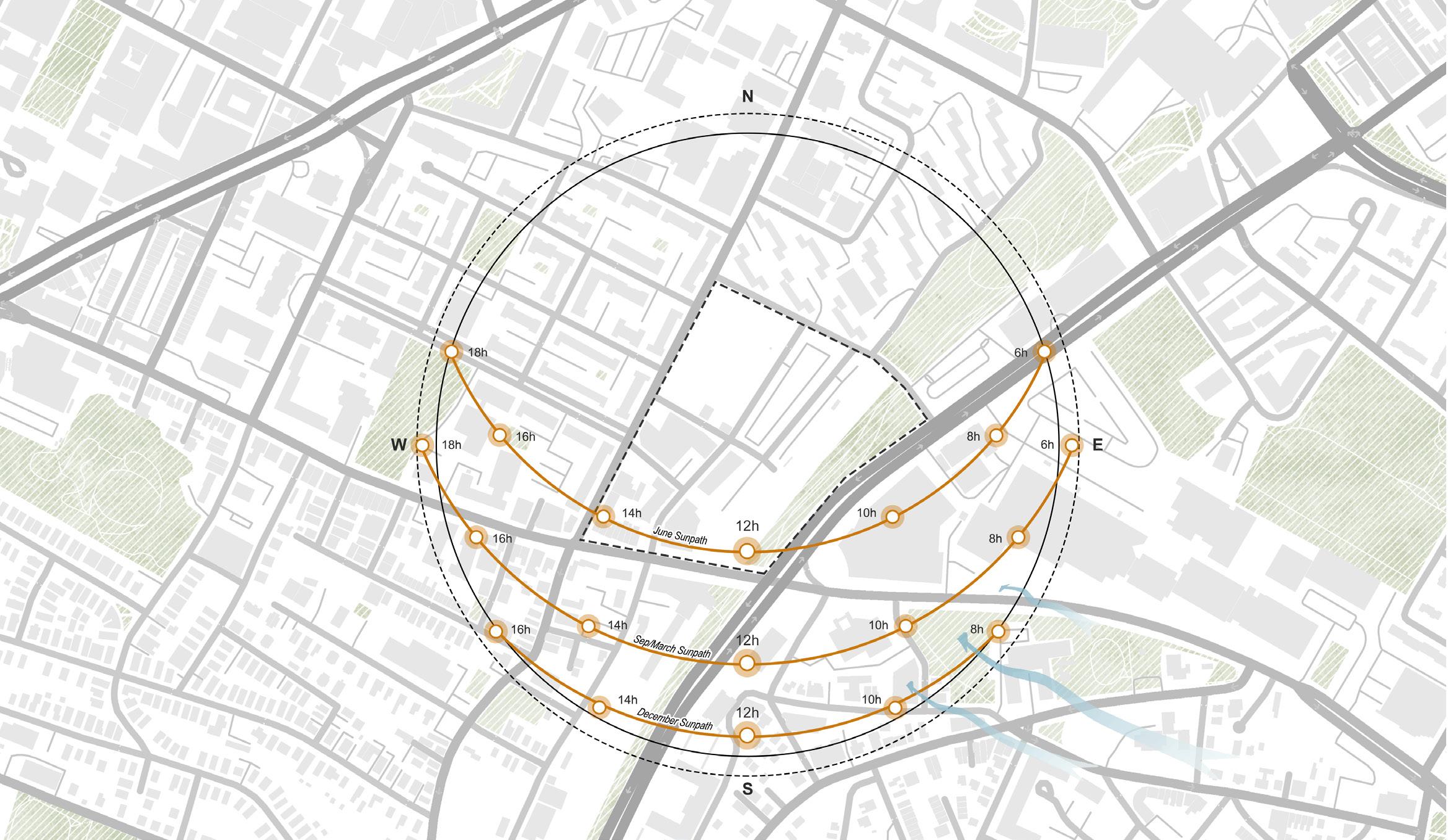
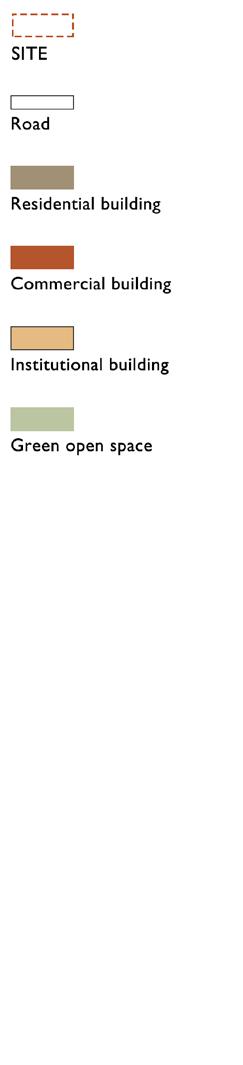
The green adjacency analysis further reveals a lack of continuous, accessible landscape within the site, highlighting the need for both environmental repair and public realm reinforcement. Building type analysis highlights the abundance of insitutions and residents in the neiborhood. Sun studies indicate high solar exposure along open rail-adjacent zones, ideal for placing open space planning along rails. Together, these conditions frame opportunities for spatial continuity, ecological intervention, and social activation that drives my further design.
design guidelines
The following design objectives guide the development of this project:
* Affordable housing should provide a sense of comfort by making new buildings and additions inviting, human-scaled, and compatible with their surrounding context.
* New buildings and additions should be harmonized in appearance and scale with historically signifcant structures to reinforce neighborhood identity.
* Housing, landscape, and circulation systems should promote interaction between residents, commuters, and visitors while maintaining clear gradients of privacy.
* Building stepbacks should be used to relate new construction to the scale of the street and to provide a transition between taller buildings and lower surrounding fabric.
Additional landscape design objectives:
* The site should contribute to Roxbury Crossing as a sustainable and resilient community by minimizing the urban heat island effect through preservation of mature canopy trees and the strategic planting of new shade trees for buildings, open spaces, and paved surfaces.
* Public art should be incorporated as an integral component of both the architectural and landscape design.
* Common and shared spaces should be incorporated to foster social interaction and a sense of community.
programmatic framework
fnal design
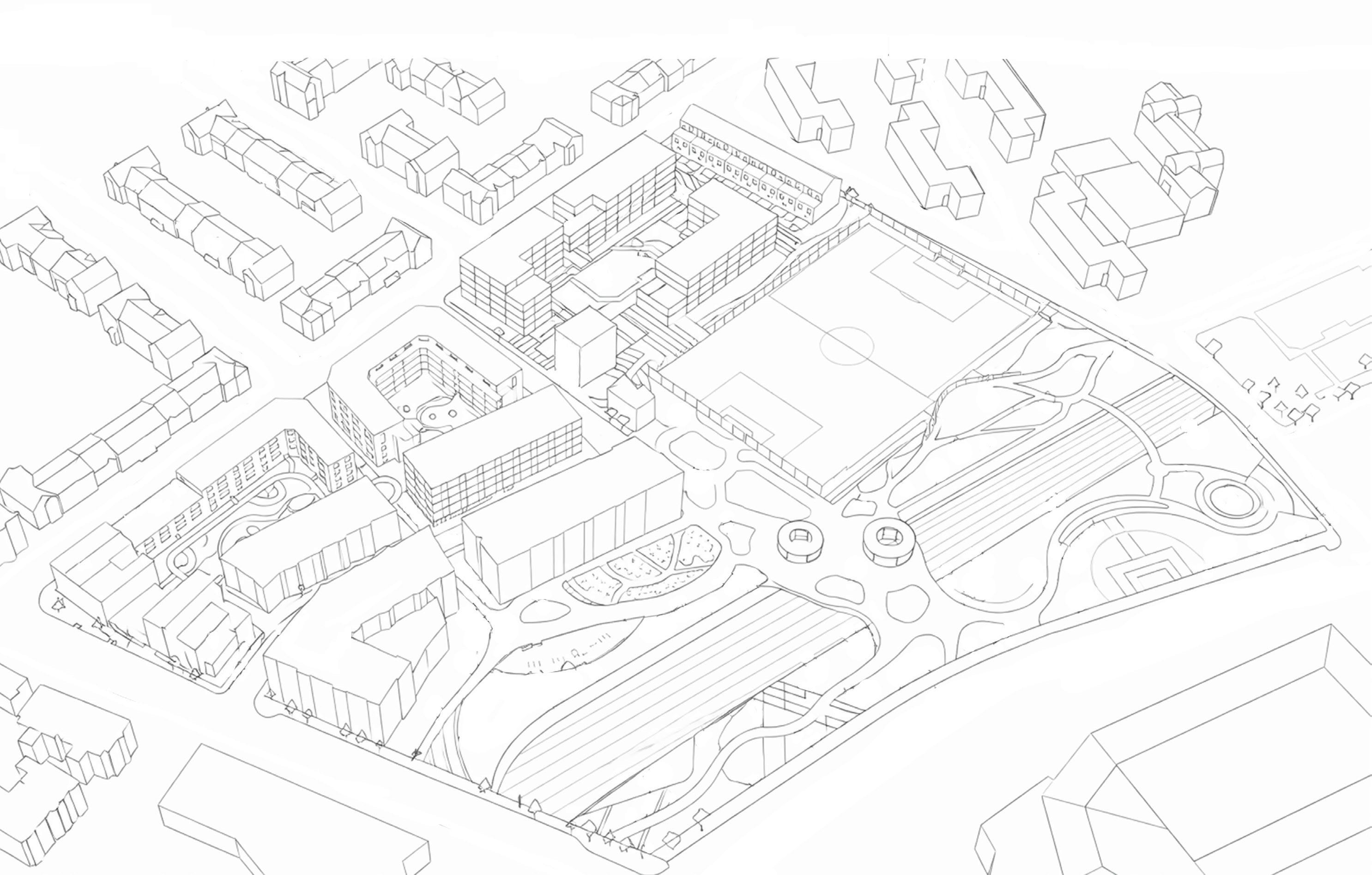
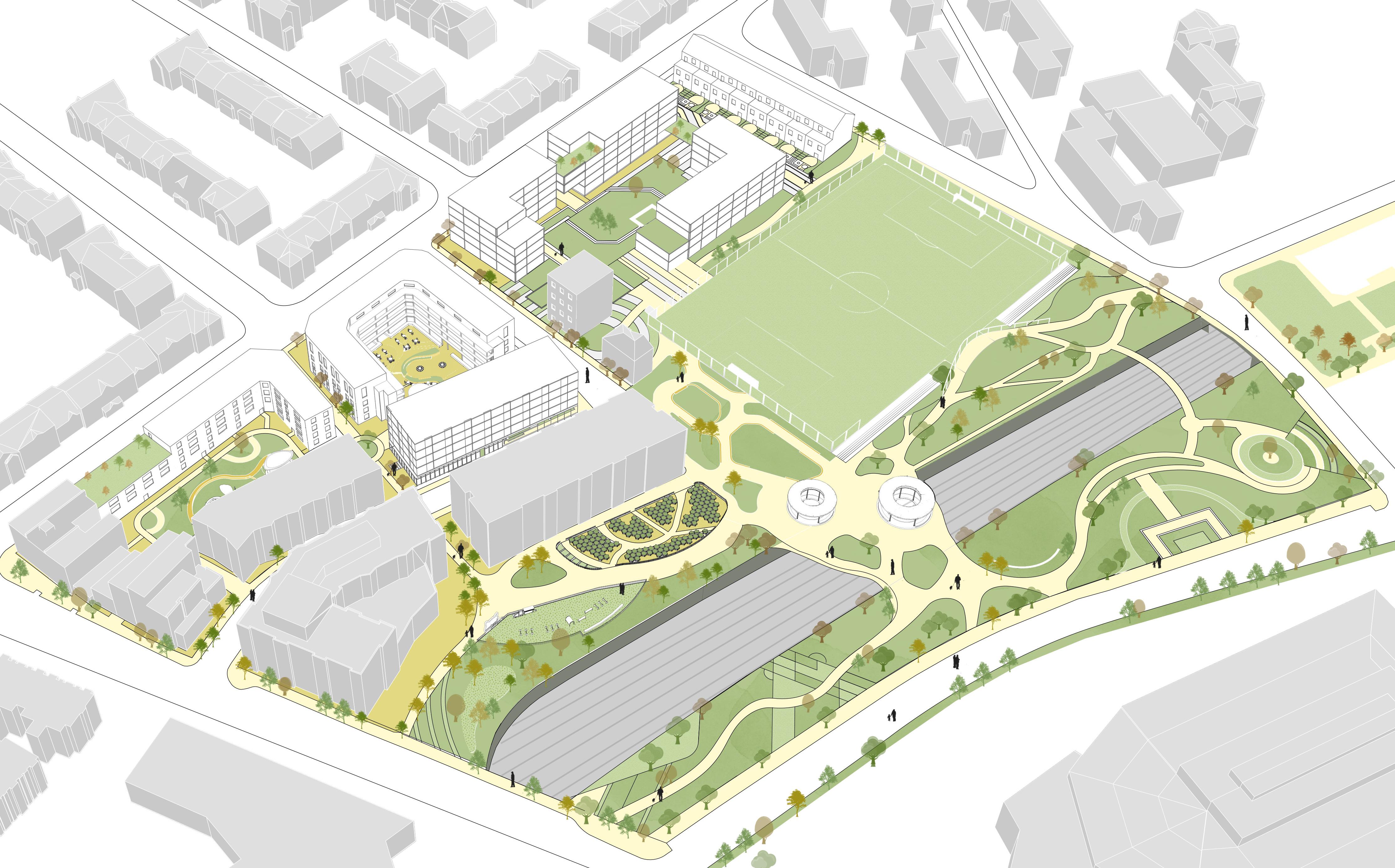
The fnal design is represented through an integrated master axonometric that coordinates buildings, open space, and infrastructure. Residential blocks are organized around shared courtyards and plazas, ensuring proximity to semi-private and communal spaces. Public pathways traverse the site, reconnecting surrounding streets to the expanded green corridor and re-establishing continuity across former infrastructural barriers.
Perspectives:
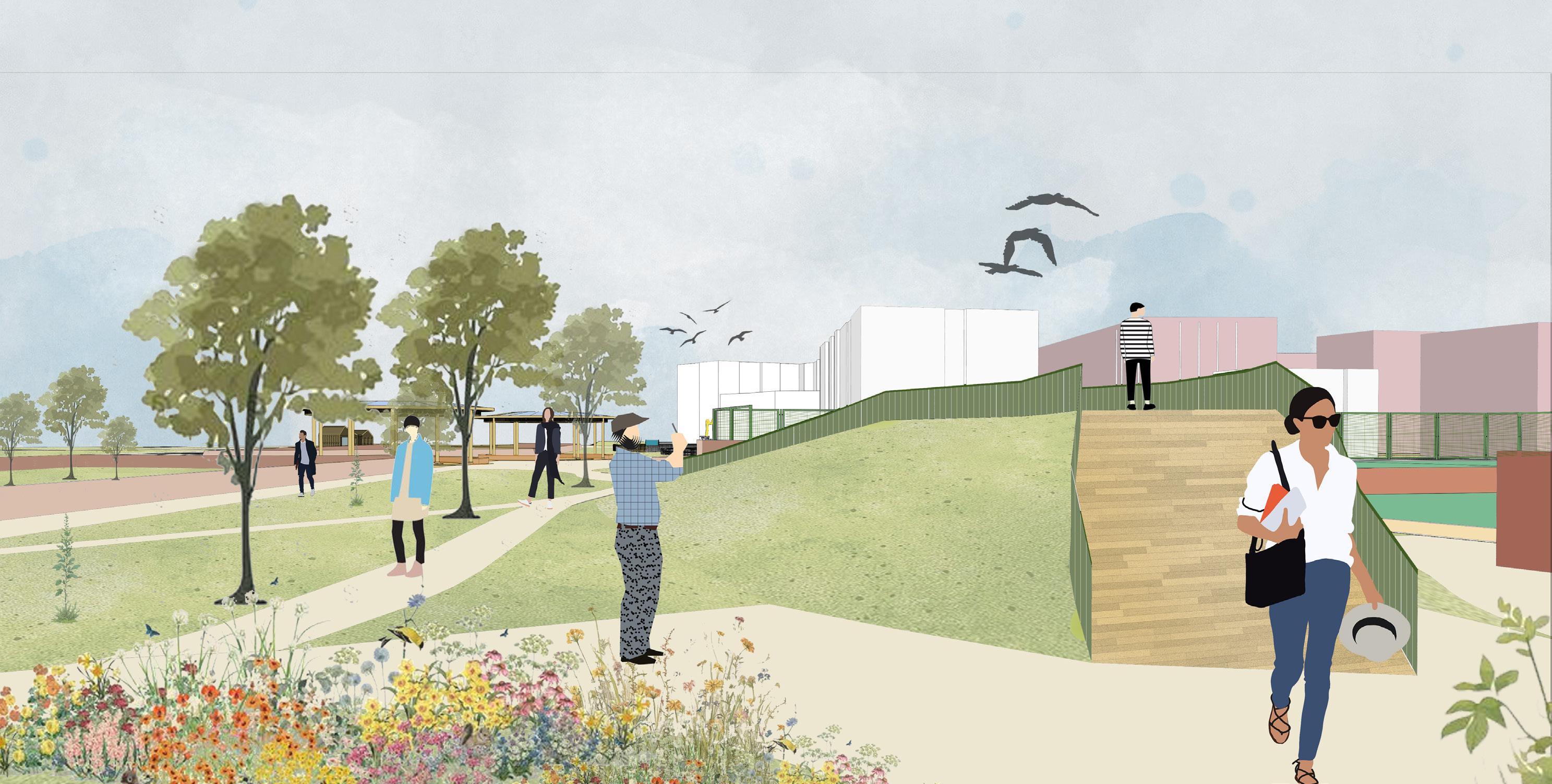
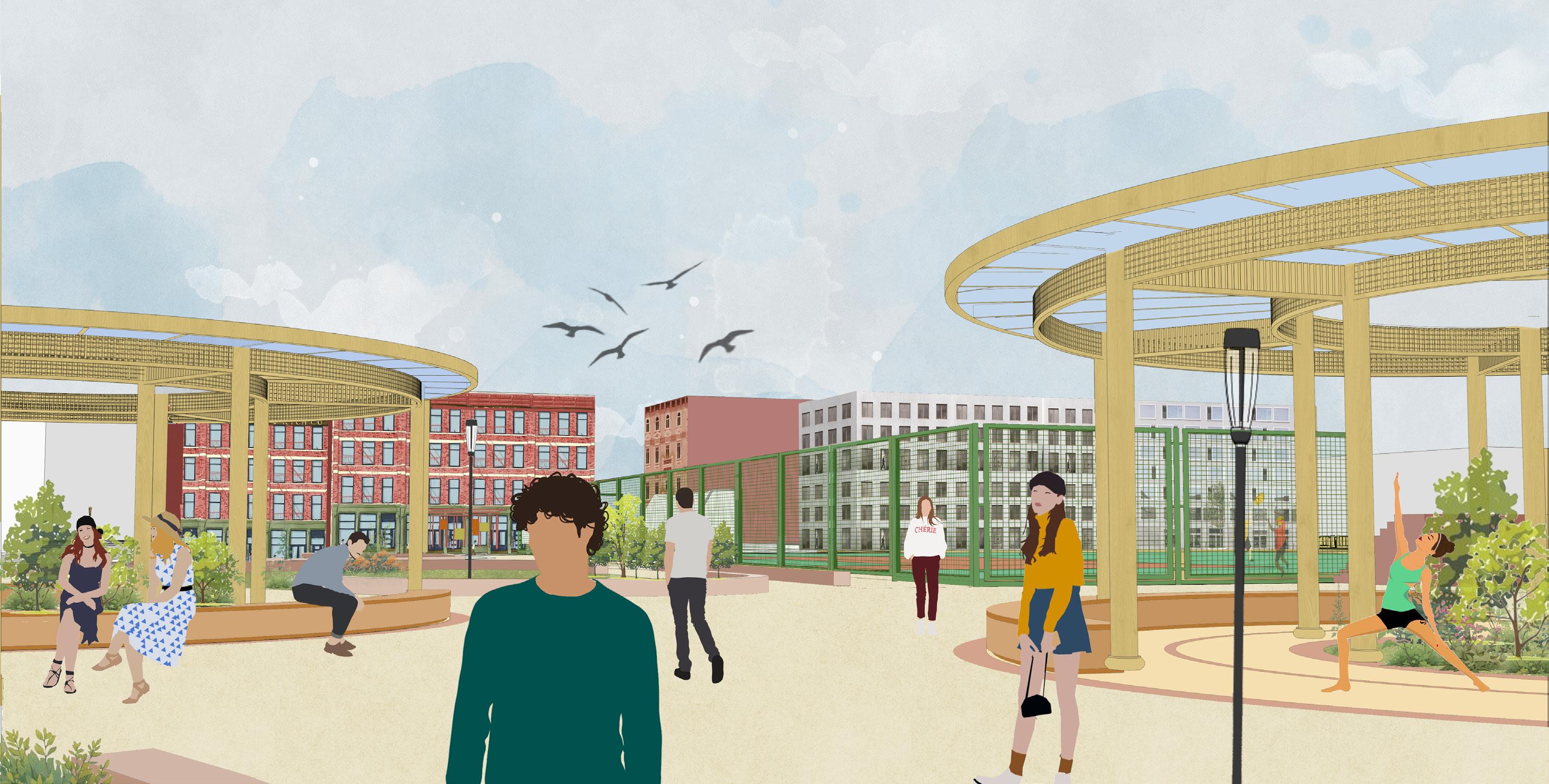
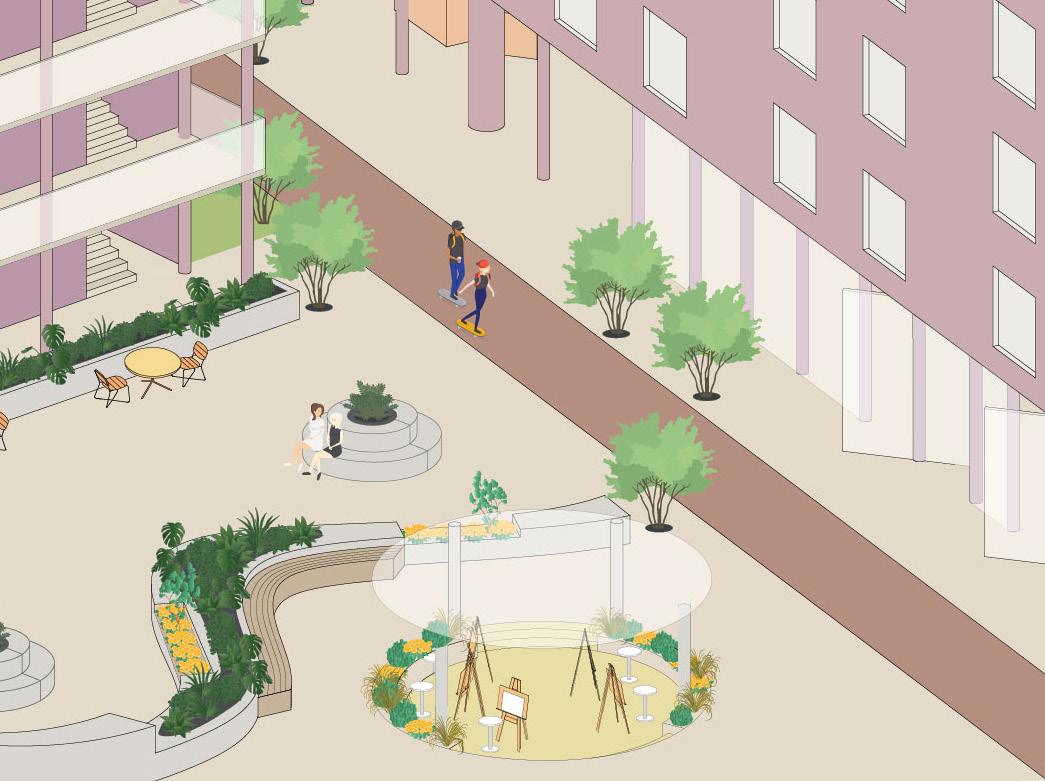
Perspective 1 & 2 illustrate how a ctive experiences take place within the green corridor, including walking, gathering, resting, and playing, reinforcing the corridor’s role as both a social and ecological spine. (see square location mark on axon)
ARCHITECTURAL
(* indicates existing buildings)
1. TOWNHOUSE
Traditional 3-story family houses
2. STUDENT HOUSING
Double-loaded
3. *COMMUNITY CENTER
Reuse of historical landmarkbuilding
4. *ART CENTER
Reuse of historical landmark building
5. ARTIST STUDIO
Single-loaded, exterior hallway
6. GENERAL HOUSING
Double-loaded, affordable housing
7. GENERAL HOUSING
Single-loaded, interior hallway
8. *GENERAL HOUSING
Double-loaded, affordable housing
9. *OFFICE BUILDING
LANDSCAPE
1. BACKYARD
2. GREEN ROOF BALCONY
3. CENTER LAWN
4. EVENT PAVILLION
5. COMMUNITY PLAZA
6. RESIDENTIAL COURTYARD Covered Art Space, Seatings, planters
7. RESIDENTIAL COURTYARD Children’s playground, Rain Gardens
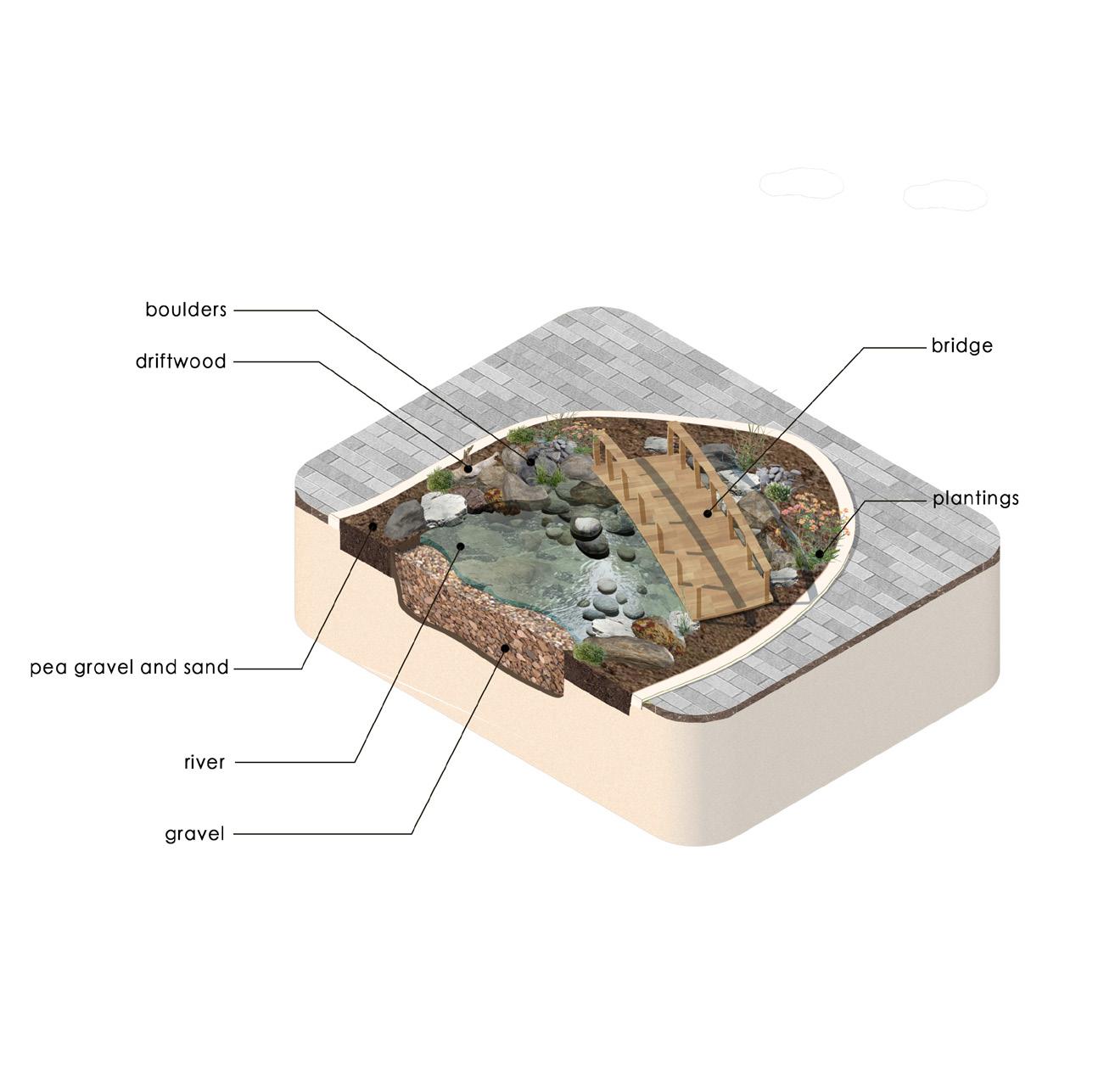
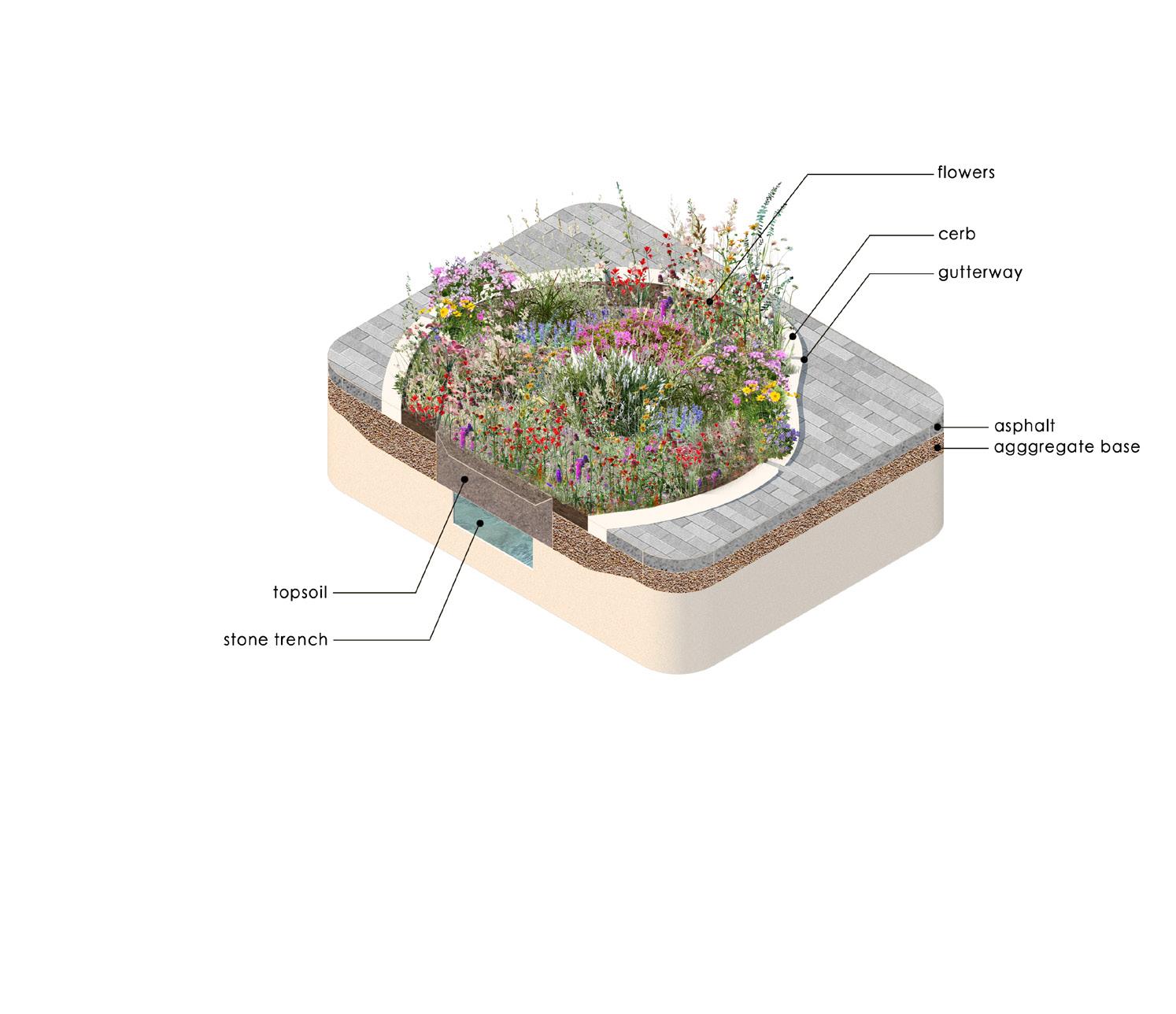
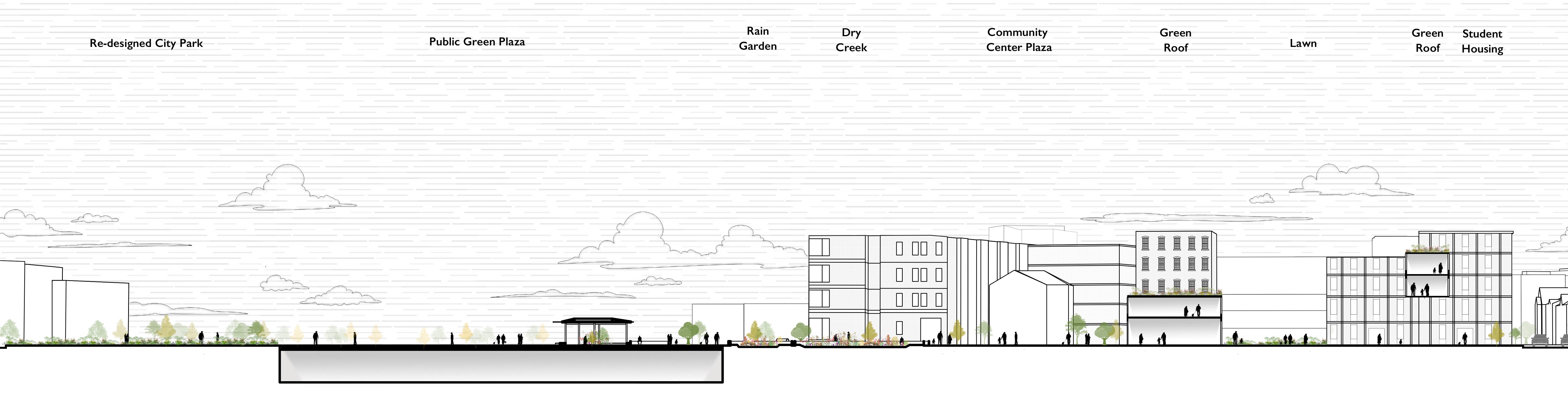
9. GREEN INFRASTRUCTURE PLAZA Permeable Pavement, Rain Gardens, Dry Creeks
10. CENTER PLAZA Covered Seatings
11. COMMUNITY GARDEN
12. DOG PARK
13. PHYTOREMEDIATION PARK
14. RE-DESIGNED CITY PARK
15. COMMUNAL PLAZA
16. CONNECTING BRIDGE
8. WENTWORTH FIELD(required)
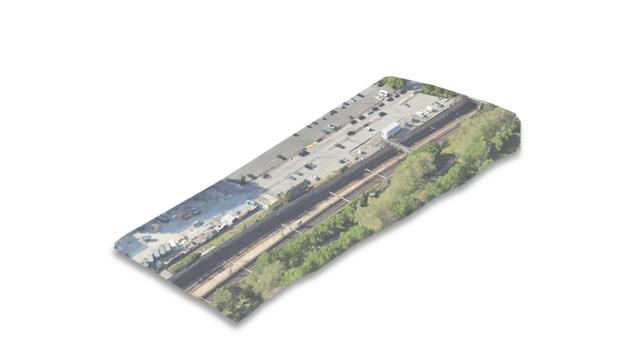
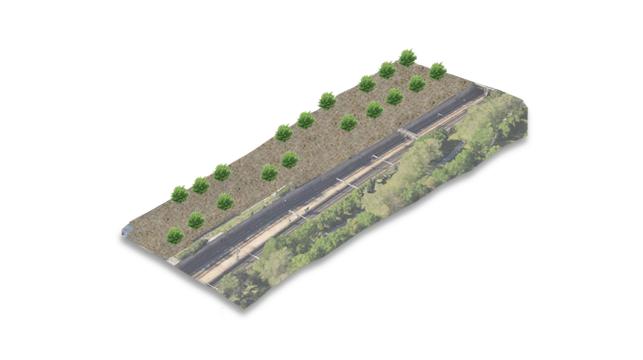
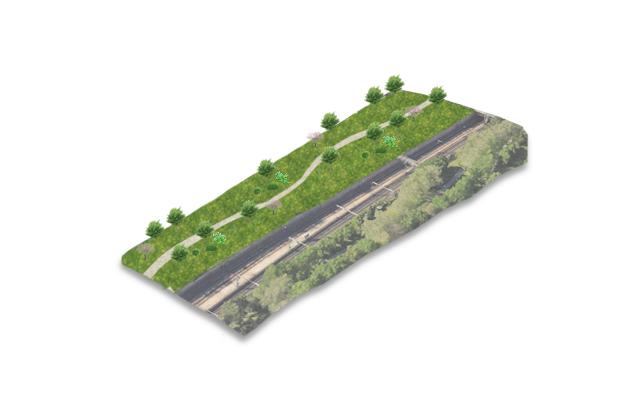
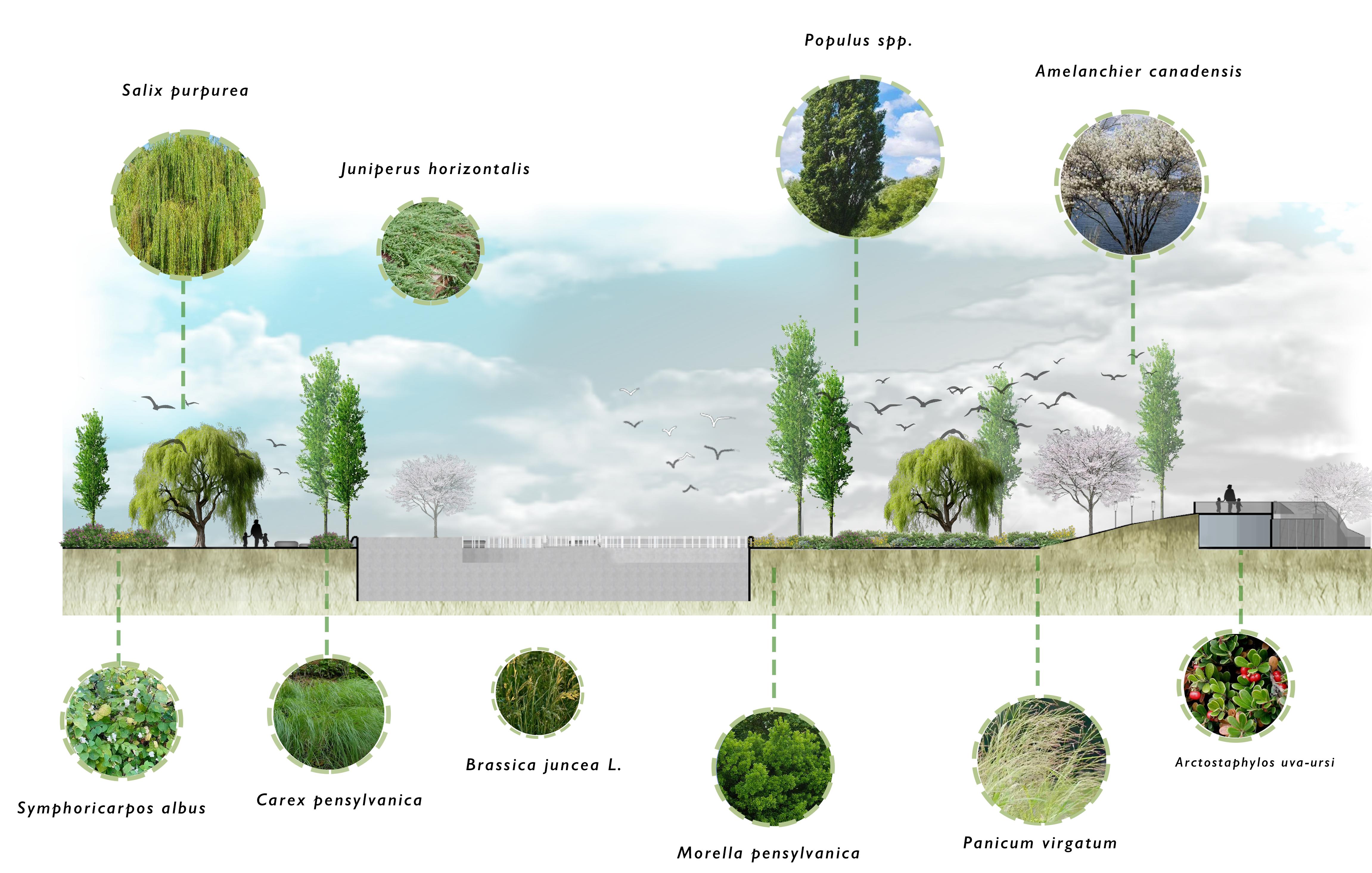
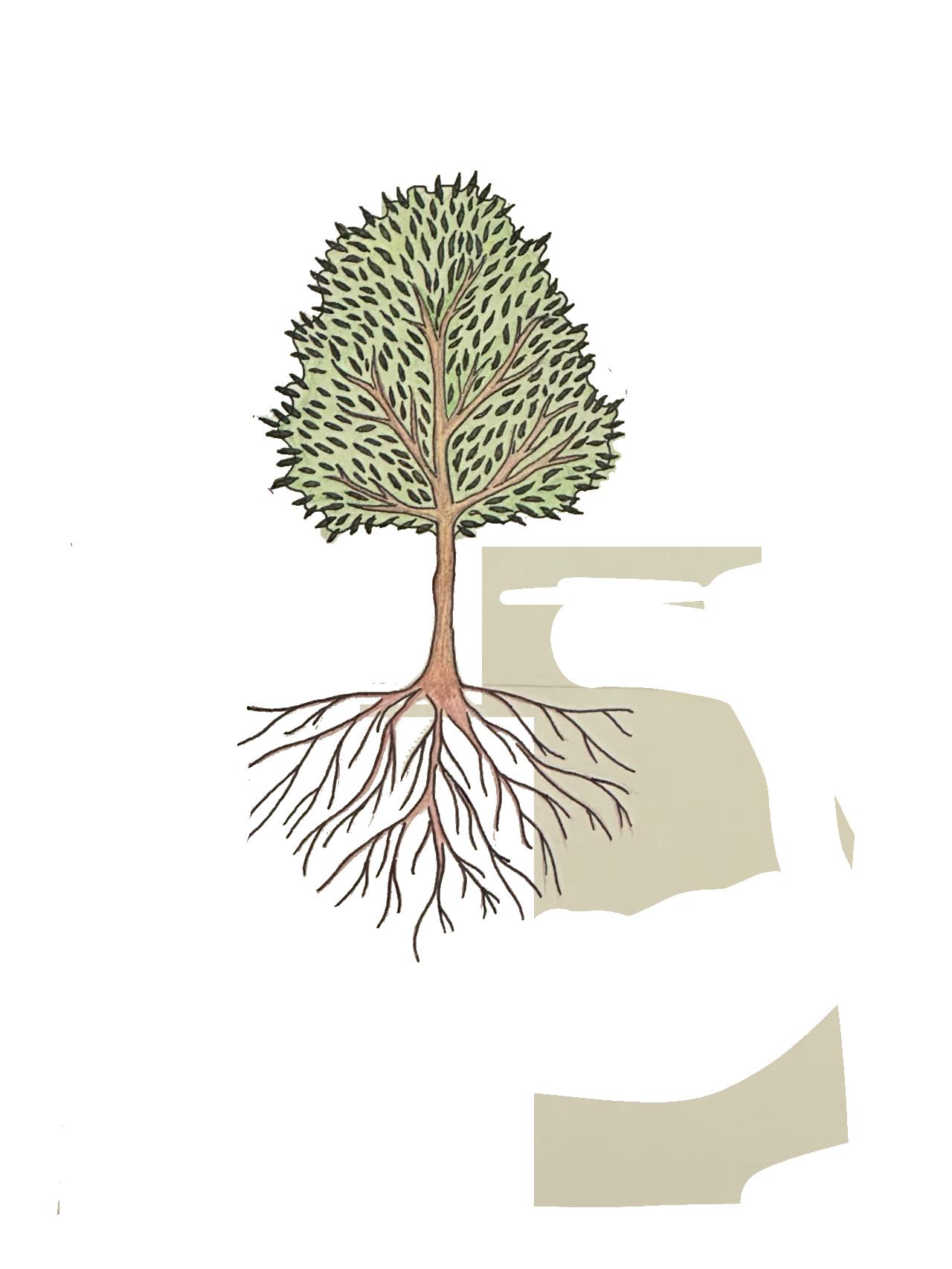
In response to contamination commonly associated with subway infrastructure—including petroleum hydrocarbons, heavy metals, PAHs, and salt accumulation—the project integrates phytoremediation as a longterm ecological strategy.
The green corridor is designed to:
* Stabilize and gradually reduce soil contaminations
* Mitigate dust and noise generated by rail infrastructures
* Improve microclimate performance and urban biodiversity
Species selection supports phytostabilization, phytoextraction, and phytodegradation while remaining compatible with urban use, salt exposure, and low-maintenance requirements.
CONDITIONS
PROPOSED INTERVENTION
STAKING OF SALT-TOLERANT POPLAR PLANTED
OTHER PHYTOREMEDIATION SPECIES PLANTED
PUBLIC OWNED LOT DISMANTLED
STAKING OF SALT-TOLRANT POPLAR PLANTED
OTHER PHYTOREMEDIATION SPECIES PLANTED
CITY OWNED PARK REMAIN NEW URBAN-TOLERANT SPECIES ADDED CITY OWNED LOT DISMANTLED
Phytovolatilization
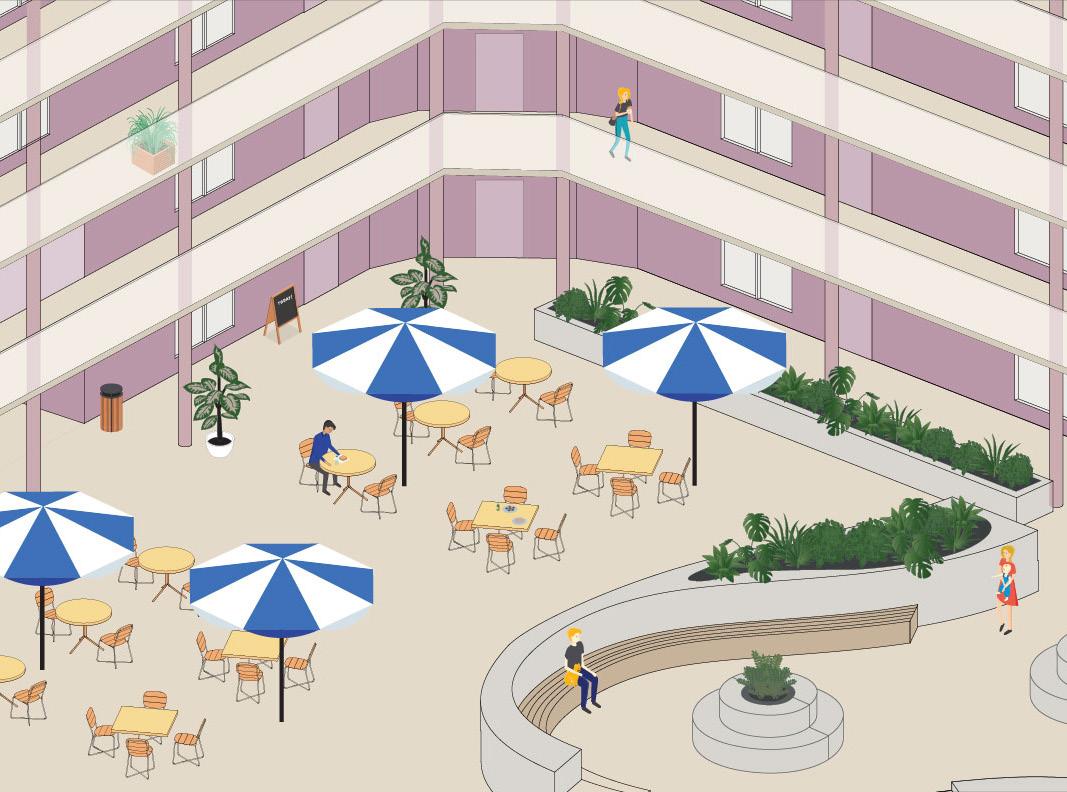
The transect study focuses on the threshold condition between two residential typologies: a C-shaped artist studio building and a bar-shaped general housing block. This interstitial zone is conceived as a fexible mixing space accommodating commercial seating, informal gathering, and art-related activities.Design guidelines emphasize:
* Clear spatial transitions between public, semi-public, and private realms
* Strategic use of planters and trees to defne programs and provide visual and acoustic privacy
* Adaptability of open space to accommodate changing community needs over time
* Integration of exterior art spaces to support public art and cultural activities
ZOOMIN 1
ZOOMIN 2