Weekly Reset
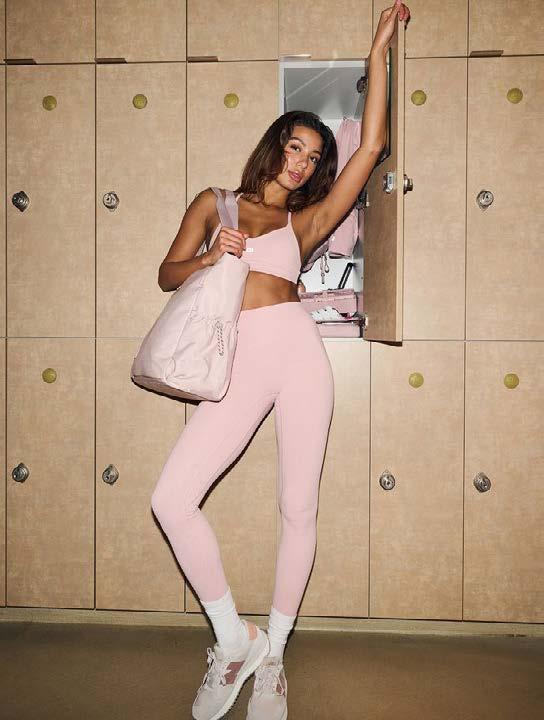
“This is her era.”
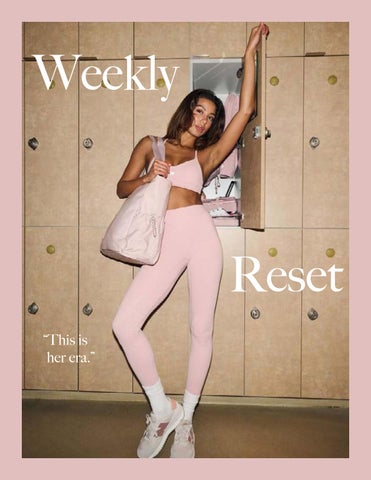
“This is her era.”
Tired of punishing workouts that leave you sore, stressed, and still searching for results? Enter Pilates—a deceptively gentle yet deeply powerful practice that’s reshaping bodies, minds, and the entire ftness landscape. Whether you’re a gym rat looking for a new challenge or a beginner craving a more mindful approach to movement, Pilates might just be the secret weapon you didn’t know you needed. In this deep dive, we unpack why this century-old method is having a major modern moment—and how it can change the way you move, feel, and live.
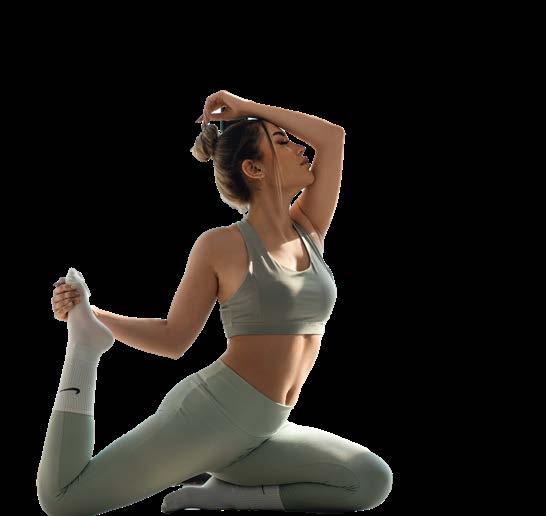
physical training. During World War I, while interned in a British camp, he began to experiment with exercises designed to improve physical health, eventually using hospital beds and springs to help injured soldiers recover strength and mobility.
“Contrology,” a method centered on the tness is achieved through the mastery of controlled, precise movements that engage both body and mind. He later opened a studio in New York City with his wife Clara, and it was there that his method took root among dancers and performers who sought exibility, and injury prevention without bulking up or wearing down their Today, Pilates has evolved but remains grounded in Joseph’s original principles: centering, concentration, control, precision, ow. While many think of Pilates as a “core workout,” the core in Pilates isn›t just about getting six-pack abs. It›s about the powerhouse—a term used in the practice to describe the group of muscles encompassing the abdominals, lower back, hips, and glutes. Everything in Pilates begins and ends with
the powerhouse. Each exercise, whether performed on a mat or a reformer machine, is designed to strengthen this deep core network and build functional strength that supports everyday movement—from carrying groceries to sitting at a desk with better posture.
Mat vs. Reformer: What’s the Diference?
One of the frst questions newcomers ask is: Should I do mat Pilates or reformer Pilates?
Mat Pilates is ofen more accessible, requiring only a mat and perhaps some light props like a Pilates ring or small ball. Te exercises use body weight for resistance and focus on fundamental movements, breathwork, and control.
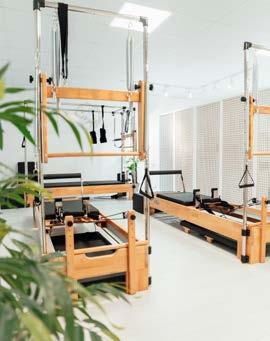
Reformer Pilates, on the other hand, involves a specialized apparatus with springs, straps, and a sliding carriage. It looks a bit intimidating at frst, like a medieval torture device, but the reformer provides resistance and support, making it possible to deepen stretches, add challenge, and perform a wider range of exercises.Both forms are efective, and many instructors recommend blending the two. Mat Pilates teaches the foundation, while the reformer introduces more dynamic challenges and versatility.
What makes Pilates uniquely powerful is its adaptability. Unlike many ftness modalities that demand a certain level of ftness before you even begin, Pilates meets you where you are.
“It’s one of the most inclusive forms of movement out there,” says Lara Mitchell, a certifed Pilates instructor and former dancer. “I’ve worked with pregnant women, people recovering from surgery, seniors with mobility issues, and elite athletes. We can modify everything.”
Te low-impact nature of Pilates makes it gentle on joints, which is why it’s ofen used
in rehabilitation. At the same time, the small, precise movements can challenge even the fttest bodies in ways they didn’t expect. Afer a solid session, it’s common to feel muscles you didn’t even know existed— and yes, to be sore for days.
Pilates also emphasizes alignment and posture, which is especially important in our techheavy lives. Many practitioners report less back pain, improved balance, and better body awareness afer just a few weeks of consistent practice.
longevity.
Another element that sets Pilates apart is its mindful quality. While it doesn’t involve chanting or meditation, Pilates requires intense focus. You can’t check your email or zone out mid-class—you’re constantly coordinating breath with movement, engaging muscles, and tracking alignment. It’s a mental reset as much as a physical one.
“I come into class feeling frazzled, and leave feeling centered,” says Maya D., a marketing executive who began practicing Pilates during the pandemic. “It’s not just about getting toned, although that’s a great bonus. It’s about how I feel in my body.” Tis mind-body connection also helps improve neuromuscular coordination, meaning your brain gets better at communicating with your muscles. Tat has major implications not just for athletic performance, but for everyday function and
Let’s be honest—part of Pilates’ appeal is how it sculpts the body. Rather than bulking, Pilates creates long, lean muscles, enhances posture, and tones the body in a balanced way. Practitioners ofen report changes not just in how they look, but how they carry themselves.
“I started Pilates because I wanted to feel strong again afer having my baby,” shares Rachel G., a mom of two. “But what surprised me most was how it reshaped my confdence. I walk taller, I move more gracefully, and I feel more in control.”
Tis “Pilates body” isn’t about thinness—it’s about alignment, strength, and energy. It’s not surprising that many models, dancers, and actors rely on it to maintain their physique and stamina.
Workout classes that changes our perspective.
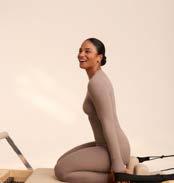
Ava - Reformer Pilates
“It taught me how to be strong and sof at the same time.”
At frst, Ava just wanted better posture. But Reformer Pilates surprised her—it became her space to slow down, connect with her breath, and rebuild trust with her body. She says it’s the one hour a week where everything else fades, and all that matters is how she feels from the inside out.
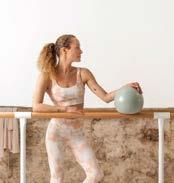
- Barre
“I never knew small movements could make me feel so powerful.”
Jasmine found barre during a hectic season of life. Te precision and rhythm gave her focus, and the burn reminded her she was capable of more than she thought. What started as a class became a mindset: grace, grit, and glowing confdence.
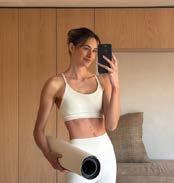
“Every drop of sweat reminded me that I’m alive.”
Lena used to avoid workouts that pushed her limits, but HIIT changed that. It became her outlet—a place to release stress and walk out feeling unstoppable. Now, she sees every sprint, jump, and burpee as a reminder of her resilience.
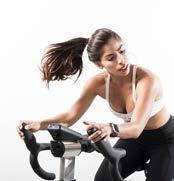
“Te lights go of, the music turns up, and I remember who I am.”
For Nina, spin is more than cardio—it’s therapy. Te beat-based rides and collective energy help her disconnect from the noise and reconnect with her inner fre. She leaves class not just stronger, but lighter—like she’s pedaled through her own chaos.
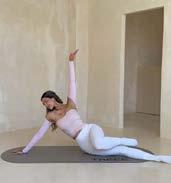
“It made me fall back in love with moving my body.”
Sophia grew up in sports but lost touch with ftness afer college.
Yoga sculpt helped her rediscover movement in a way that felt joyful, not punishing. It blends strength, fow, and sweat—everything she didn’t know she was missing.




What if rest wasn’t something you earned—but something you’re always worthy of? In a world that glorifes the grind, we’re learning how to slow down without guilt.
For years, rest was something I penciled in only when I had no choice—when my eyelids felt heavy or my body ached in protest. Even then, I rarely enjoyed it. Rest was failure. Rest meant falling behind. The world around me didn’t celebrate slowing down; it celebrated pushing through. The sweaty selfes. The packed Google Calendars. The “no days off” mindset dressed up as discipline.
But lately, something has shifted—not just in me, but
in the cultural conversation about wellness. More and more, women are waking up to a powerful, quietly radical idea: rest isn’t weakness. It’s not a reward for productivity. Rest is strength. And most importantly, rest is a right.
The hustle mentality has been deeply woven into our culture, especially for women. We’re taught to prove ourselves—at work, in relationships, in our bodies. Even within the ftness world, rest is often framed as something you’ve “earned”
after a hard workout, not as a vital part of the process itself.
“I used to feel guilty if I missed a class or took a day off,” says Bella, a Pilates regular and former dancer. “Like my body would backslide instantly. But the more I pushed, the more burned out I became— physically and mentally. Rest started to feel like rebellion.”
That rebellion, it turns out, is necessary. According to sports medicine experts, recovery is when muscles repair, strength builds, and hormones
regulate. Without proper rest—both active and passive— performance declines and risk of injury increases. But beyond the biology, something deeper happens when we give ourselves permission to pause: we begin to unlearn the toxic belief that our worth is tied to how much we do.
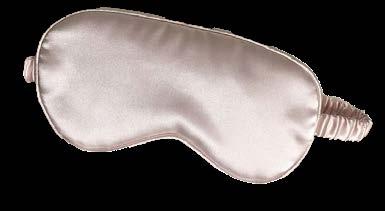
Redefning rest means expanding what it looks like. It doesn’t have to mean a full day off, and it’s not always about sleeping in (though that’s great too). Sometimes, rest is an evening walk instead of a spin class. A long stretch on your mat. Breathing in through your nose and out through your mouth while your muscles melt into the foor.
“Rest can be movement,” says Reena, a yoga sculpt instructor. “It can be slow, intentional, and rooted in presence. I think we’ve been taught that rest is only passive—but what if rest is just a change of pace?”
This mindset shift has led to the rise of “restorative ftness”—classes that focus on gentle strength, mobility, and mindfulness. Yin yoga, stretch fows, and even low-impact Pilates are gaining popularity for their ability to nourish the body without depleting it. And more women are building these practices into their routines not as an afterthought, but as a foundation.
were wasting time. But maybe that discomfort wasn’t about the rest itself. Maybe it was about what came up when we slowed down.
“When I started taking rest days, I had to confront how I talk to myself,” shares Maya, who turned to movement after years of body insecurity. “There was this voice that told me I was lazy, or that I’d lose progress. It wasn’t until I stayed still and listened that I realized how harsh I’d been to my body.”
Rest has a way of revealing the parts of ourselves we try to ignore in motion. It invites refection, softness, grace. And in that space, healing begins—not just physically, but emotionally. We learn to shift the inner dialogue from judgment to compassion. From “I should be doing more” to “this is exactly what I need.”
In a culture that glorifes busyness, choosing rest can feel lonely—or even shameful. That’s why collective shifts matter. Studios and ftness spaces are beginning to talk more openly about burnout, recovery, and sustainable
are encouraging students to honor where they’re at, offering modifcations and emphasizing breath over performance.
The shift is also showing up online. Instead of “what I eat in a day” videos and grueling ftness challenges, social media now hosts an increasing number of creators talking about nervous system regulation, the importance of sleep, and gentle ways to stay connected to your body during hard seasons.
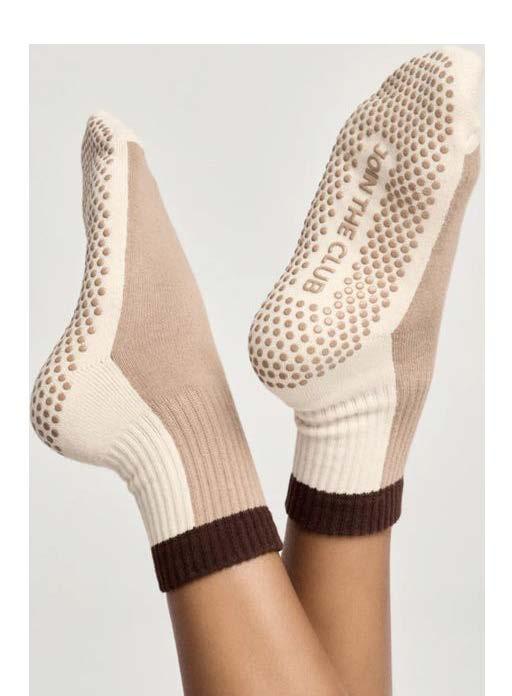
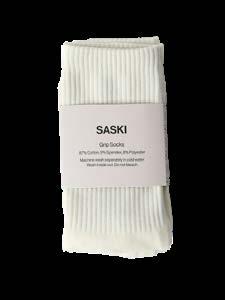
“I love seeing girls post their rest day fts,” laughs Dani, a barre instructor. “It’s like—yes, we’re romanticizing recovery now. Cozy socks and matcha and a long stretch? That’s hot girl energy too.”
Redefning rest isn’t just a personal wellness choice—it’s a form of resistance. It pushes back against systems that proft from burnout, insecurity, and overperformance. It reclaims time, energy, and joy.
For women, especially, choosing rest is powerful.
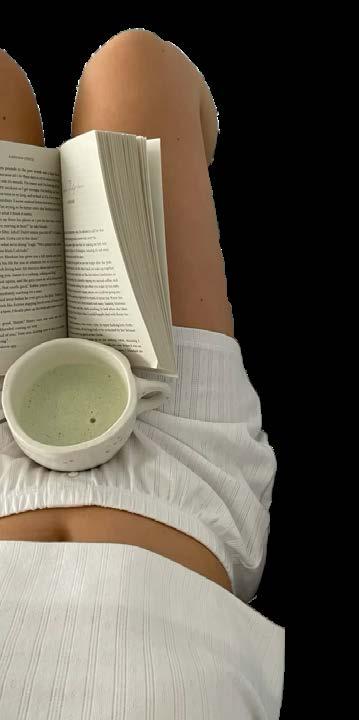
rest as part of the process—not a pause from it—we start to move through life with more intention. We train not just for strength or speed, but for longevity, for presence, for joy. Rest becomes less about stepping away and more about stepping into alignment with ourselves.
And maybe that’s the real goal: not to do it all, but to do it well. To listen closely, move kindly, and trust that slowing down isn’t falling behind—it’s catching up with what matters most.
There’s also something beautifully rebellious about choosing rest in a world that demands constant output. It’s a quiet reclaiming of your time, your energy, your body. It’s saying no to burnout culture and yes to sustainability, to joy, to wholeness.
Because at the end of the day, your body is not a project to perfect—it’s a home to care for. And rest is how we renovate, restore, and return to that home, again and again.
Learning to rest without guilt is a process, one that takes just as much practice as any workout. But over time, it becomes a rhythm—an act of trust, a form of love. And maybe the most radical thing we can do in a fast-paced world is to honor the quiet, and let it strengthen us.

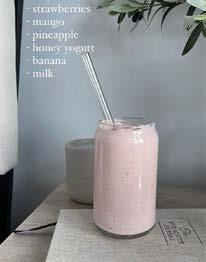
Being a “hot girl” is no longer about looking a certain way or chasing perfection. It’s about stepping into your power, owning your energy, and curating a life that feels as good as it looks. And at the center of this lifestyle? A smoothie. But not just any smoothie—the hot girl smoothie. It’s a symbol of ritual, nourishment, softness, strength, and aesthetic pleasure all blended into one glass.
What sets the hot girl smoothie apart is that it changes with you. It’s not rigid, boring, or bland. It’s playful, nourishing, and tuned into your current vibe. Some mornings call for something bright and energizing— maybe a blend of pineapple and matcha that makes you feel like you›re sipping sunlight. Other days, it’s a cozy, chocolatey combo that feels like a hug in a glass. It might be a thick, creamy mix post-workout, or a light, glowy blend made for sipping slowly while reading a book on your balcony.
Your smoothie becomes a reflection of how you feel and what you need. It adapts to your mood, your cycle, your cravings, your schedule. It’s both intuitive and intentional, and there’s something empowering about being able to create a delicious, nutrient-rich ritual just for yourself—something that requires no permission, no performance, and no explanation.
The rise of the smoothie as a lifestyle staple speaks to something deeper than taste. It taps into a craving for ritual. In a world that’s always asking us to do more, be more, push harder, there’s something grounding about making a smoothie. It’s a pause. A rhythm. A moment of care. It starts with the sound of the freezer door opening, the feeling of cold fruit between your fngers, the soft
Pretty, powerful, and packed with benefits—smoothies aren’t just a trend, they’re a lifestyle. Here’s how the modern hot girl blends her way to feeling good, inside and out.
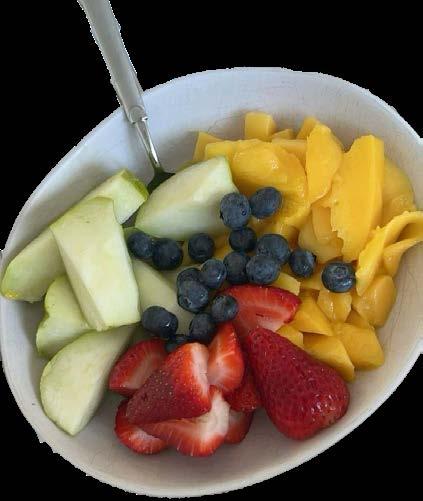

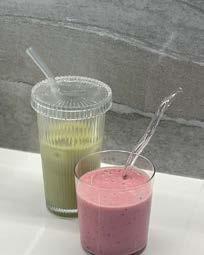
Maybe there’s music playing, or maybe it’s quiet. You choose your base, your fruits, your proteins, your little boosters—and with each ingredient, you’re asking yourself a simple but profound question: “What do I need today?”
The smoothie ritual becomes sacred in its simplicity. You’re not just fueling your body—you’re listening to it. You’re getting to know it. You’re choosing to show up for yourself in a way that’s joyful, nourishing, and deeply individual. And yes, you’re probably pouring it into a mason jar or a chilled glass with a cute straw—because making it beautiful is part of the point. Pleasure and wellness can coexist. In fact, they should.
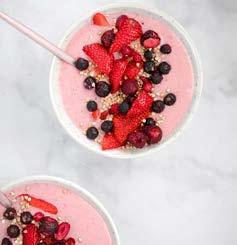
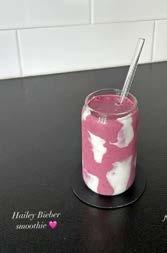
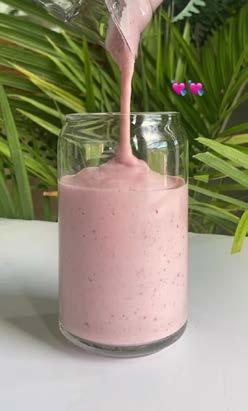
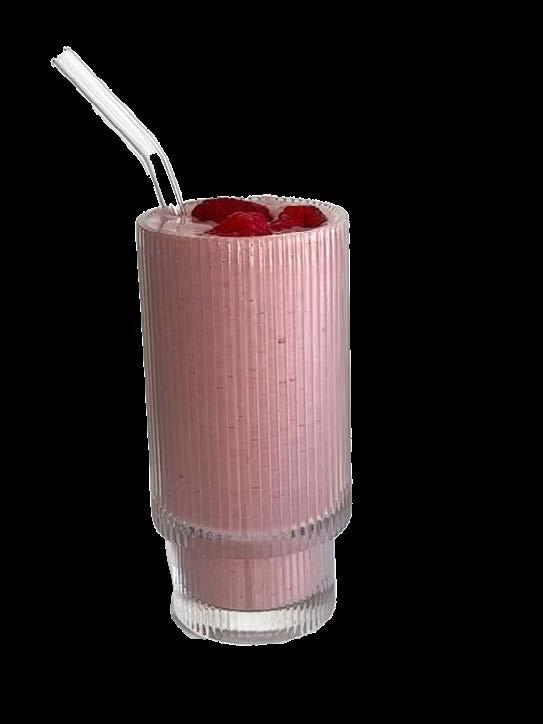
There’s no denying the aesthetic side of it all—and why should there be? The hot girl smoothie is a visual experience. It’s a colorful, creamy, sometimes over-the-top masterpiece that feels like a love letter to yourself. It might be soft pink, electric green, or moody purple, topped with granola or adorned with edible flowers. But more than anything, it’s unapologetically yours.
The smoothie aesthetic is about joy. It’s about crafting something that looks as good as it tastes, and letting that visual beauty enhance the moment. It’s about romanticizing the small things: your kitchen counter at 7 a.m., your afternoon reset, the feeling of drinking something that you know is good for you. It’s a way of reclaiming wellness from rigidity and turning it into a celebration.
Smoothies live beautifully online because they live beautifully in real life. They’re shareable, yes—but they’re also intimate. You don’t make a smoothie for attention. You make it because it feels good, because it nourishes you, because it adds a little spark of color to your day.
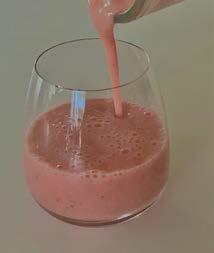
As more women move away from restrictive wellness ideologies and into intuitive, holistic practices, the smoothie becomes a symbol of that shift. It’s no longer about calorie counts or fad ingredients—it’s about how your body feels. It’s about energy, mood, hormones, digestion, skin, sleep. The smoothie becomes part of a larger conversation around sustainable health, joyful movement, and tuning in instead of checking out.
For some, smoothies are a gentle way back into nutrition after years of food fear. For others, they’re the missing link between working out and recovery, or the small act of care that helps manage anxiety, brain fog, or fatigue. It’s amazing how something so simple can be so powerful, and the best part is—there’s no one right way to do it.
Your smoothie doesn’t have to be flled with trendy ingredients or expensive powders. It doesn’t have to be photogenic. It doesn’t even have to be cold. It just has to be yours.