
Orchestral Institute
Plays Shostakovich, Haydn & Pärt
Saturday, 11 April 2026
Esplanade Concert Hall

Saturday, 11 April 2026
Esplanade Concert Hall
Orchestral Institute Plays Shostakovich, Haydn & Pärt
YST ORCHESTRAL INSTITUTE WITH
JASON LAI, PRINCIPAL CONDUCTOR
JOSEPH HAYDN
Symphony No. 100 in G Major (“Military”) <1793> — INTERMISSION —
ARVO PÄRT
Fratres (Winds, Strings & Percussion) <1977; rev. 2007>
DMITRI SHOSTAKOVICH
Symphony No. 5 in D minor, Op. 47 <1937>
Vice Dean’s Message
The
world is perfect. It’s a mess. It has always been a mess. Our job is to straighten out our own lives.
Joseph Campbell
Welcome, and thank you for joining us for this evening’s fnal Orchestral Institute performance of the 2025/26 academic year, under the direction of YST’s Principal Conductor, Jason Lai.
There is something quietly grounding in Joseph Campbell’s perspective—a recognition that while the world around us may remain unsettled, our work lies in how we listen, how we respond and how we shape our place within it.
Between two symphonic visions of confict, this evening offers a space to refect on that work.
In Joseph Haydn’s Symphony No. 100 (“Military”), confict is held at a distance—its gestures stylized, its disruptions absorbed into balance and wit. Even the nickname itself invites us into this framing, encouraging us to hear within its elegant surface the suggestion of marching rhythms, distant fanfares and the theatre of battle. For its frst audiences, this was not war as lived experience, but war as spectacle—a “hellish roar” safely contained within the refnement of the concert hall. In this way, contrast itself becomes the point: courtly poise set against fashes of something more volatile, all held within the clarity of form.
At the other end, Dmitri Shostakovich’s Symphony No. 5 brings us closer to something more immediate and unresolved. Here, confict is internalized, lived and sustained. Its surface may suggest triumph, yet beneath it lies tension, ambiguity and persistence.
Between these worlds rests Arvo Pärt’s Fratres.
In this music, time opens. The impulse to declare gives way to attention— to breath, to resonance, to the subtle act of listening. Each return is both familiar and newly heard. In that space, something essential emerges: not resolution, but presence; not agreement, but a shared stillness.
For our graduating fourth-year students, this evening refects a parallel journey. Over time, their work has deepened from individual preparation into a shared musical awareness—learning not only to project, but to listen; not only to lead, but to support; not only to shape sound, but to shape space together. This growth is rarely marked by a single moment, but rather by a gradual accumulation of experience that fnds its voice in performance.
In this way, the orchestra itself becomes a refection of something larger: a musical community formed through attention, responsibility and trust.
Thank you for joining us on this evening, and for sharing in this space of listening, refection and growth amidst whatever uncertainties the world may bring.
Associate Professor Brett Stemple Vice Dean (Performance & Research)
Programme Notes
COMPILED
&
EDITED BY TOH YAN EE & FAEZAH ZULKIFLI
Symphony No. 100 in G Major (“Military”) <1793>
JOSEPH HAYDN (1732–1809)
Opening our orchestral season fnale with brilliance and fair, Haydn’s “Military” Symphony exemplifes his mature symphonic style—clear in structure yet rich in surprise. The opening Adagio–Allegro begins with a stately introduction before unfolding into a lively sonataform movement, where crisp rhythmic motifs and bright orchestral colours are passed energetically between sections.
The famous second movement ( Allegretto) is built on a simple, almost march-like theme that undergoes a series of variations. Its sudden eruption of “Turkish” percussion—triangle, cymbals and bass drum—creates a striking contrast, transforming the music into something at once theatrical and unsettling. Haydn plays with expectations throughout, juxtaposing elegance with bombast.
The Menuetto restores a sense of courtly dance, though its robust accents lend it a more grounded character, while the trio offers a gentler, more rustic contrast.
The fnale (Presto) bursts forth with relentless energy, its rhythmic drive and tightly woven motifs propelling the music forward. Yet the spirit of the second movement lingers: the return of martial colour and percussive brilliance recalls the earlier “military” episode, now fully integrated into the symphony’s exuberant close. What frst appeared as theatrical interruption becomes, in the end, part of the work’s defning character—bringing the symphony to a conclusion that is at once jubilant, dazzling and knowingly dramatic.
Fratres (Winds, Strings & Percussion) <1977; rev. 2007>
ARVO PÄRT (B. 1935)
At the heart of this evening’s programme, Fratres offers a striking contrast in scale and sensibility. Constructed from a simple but rigorously controlled musical idea, it unfolds over a repeating harmonic sequence through a series of variations that differ in texture, register and instrumental colour.
Pärt’s tintinnabuli technique governs the musical language: one voice moves stepwise through a scale, while another outlines the notes of a triad, creating a bell-like resonance.
The work alternates between moments of motion and stillness. Each variation grows from the same material but is refracted differently, producing a sense of both continuity and transformation. Percussion punctuates the structure, acting almost as a ritual marker between sections.
Rather than progressing toward a conventional climax, Fratres invites deep listening to subtle shifts in sonority, spacing and resonance. Its closing moments recede into stillness, offering a point of refection within the arc of the concert—a quiet, suspended breath before Shostakovich’s symphonic statement.
Symphony No. 5 in D minor, Op. 47 <1937>
DMITRI SHOSTAKOVICH (1906–1975)
Bringing this evening to a powerful close, Shostakovich’s Fifth Symphony stands as one of the twentieth century’s most compelling orchestral statements. Built on a large-scale, four-movement structure, it draws on classical models while expanding them into a deeply expressive and often ambiguous musical language.
The frst movement follows a broad sonata form, beginning with a stark, unison string theme that generates much of the material that follows. Contrasting lyrical ideas emerge but are repeatedly destabilised, leading to a development section marked by fragmentation and mounting tension.
The second movement, a scherzo, offers sharp contrast through its rhythmic vitality and satirical character. Its dance-like gestures— sometimes rustic, sometimes grotesque—suggest a distorted waltz, with abrupt shifts in mood and orchestration.
At the centre of the symphony lies the slow movement (Largo), scored primarily for strings with spare use of winds and harp. Here, long, arching lines and sustained harmonies create an atmosphere of profound stillness and introspection. The music builds in intensity without losing its sense of restraint, culminating in a deeply affecting climax.
The fnale ( Allegro non troppo) introduces a forceful, march-like theme that drives the movement forward. While it appears to move toward a triumphant conclusion, Shostakovich complicates this narrative through repetition, orchestral weight, and an almost relentless insistence on resolution. The ending—brilliant yet ambiguous—remains one of the most debated in the symphonic repertoire. As the fnal notes of the season, this conclusion resonates with particular intensity—at once monumental, unresolved and deeply thought-provoking.
Creatives & Production
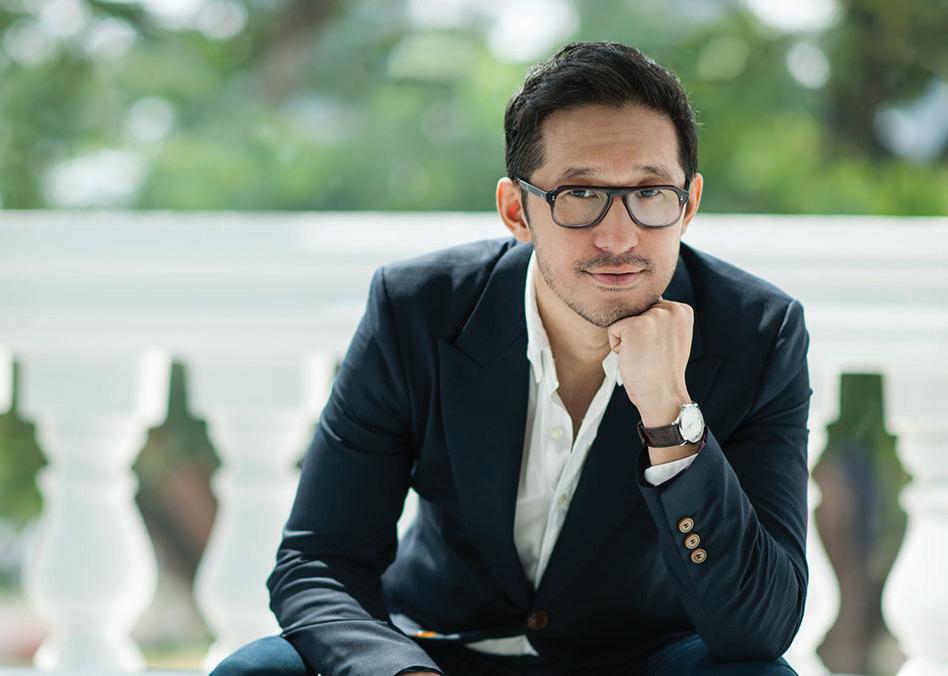
Jason Lai
CONDUCTOR
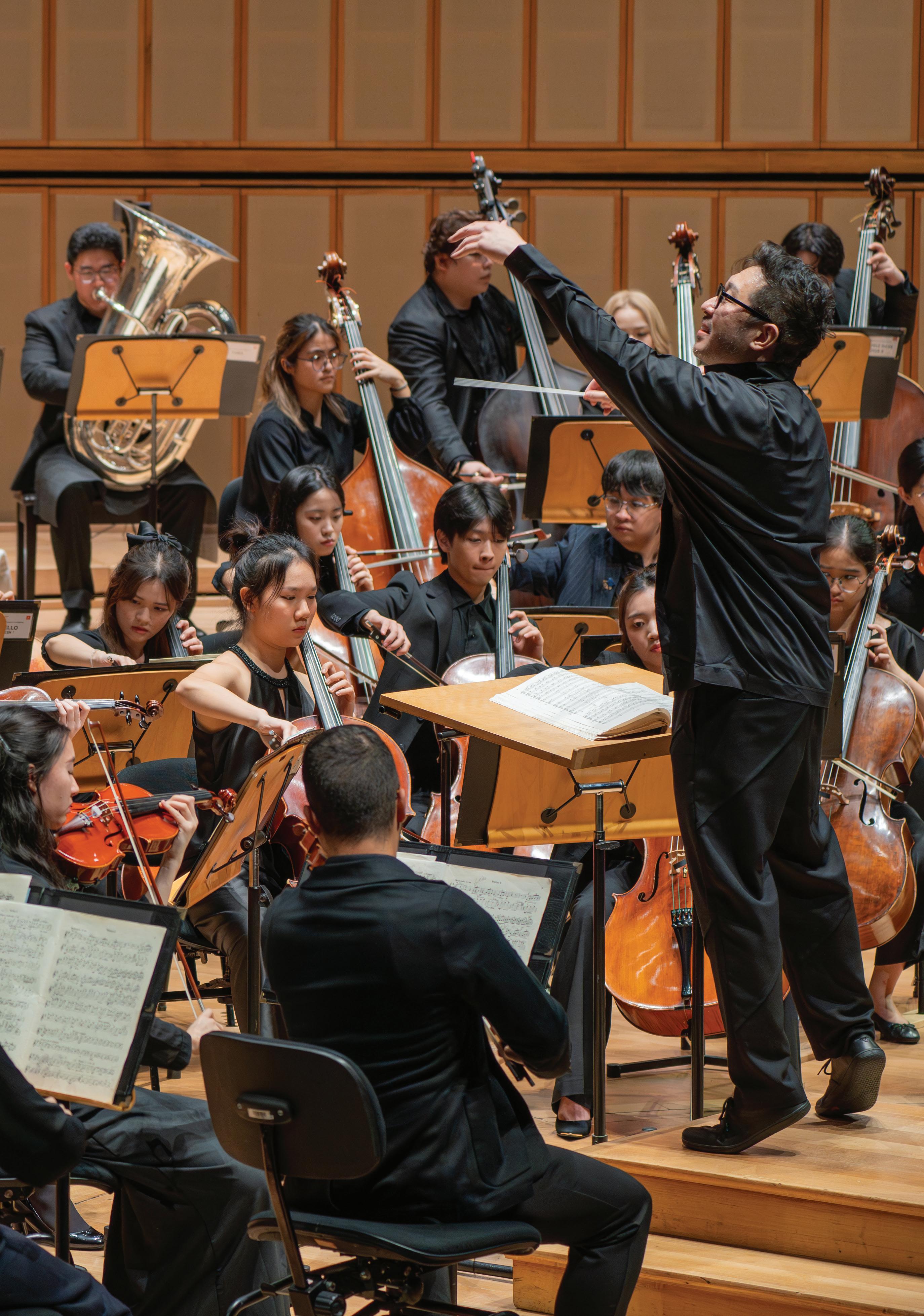
Jason Lai is the Principal Conductor at the Yong Siew Toh Conservatory, Principal Guest Conductor at the Orchestra of the Swan, and former Associate Conductor of the Singapore Symphony Orchestra and Hong Kong Sinfonietta.
Jason has been a prominent fgure in Singapore’s musical life since his arrival in 2010, but also active internationally giving masterclasses in Europe and China. He has also guest conducted the Adelaide Symphony Orchestra, New Japan Philharmonic, Podlasie Opera Philharmonic in Poland, Macao Orchestra, Hong Kong Sinfonietta, and Hong Kong Philharmonic.
Intent on broadening the appeal of classical music to audiences who would not normally think of going into a concert hall, Jason has built a unique reputation as a communicator with mass appeal
through his television appearances in both the UK and Asia. He has appeared on the BBC as a judge in both the BBC Young Musician of the Year competition and the classical talent show Classical Star. He was also a conducting mentor in the series Maestro and won the competition with his celebrity protégé.
Since settling in Singapore he has continued with his television work and was presenter and conductor for Project Symphony, an eight part series which followed him in his quest to set up a community orchestra. Other shows for BBC World News include Heart of Asia exploring the contemporary arts and culture scene in Thailand, Indonesia, Korea and the Philippines, and Tales from Modern China, a voyage through contemporary China. Most recently in Singing to Remember for Channel News Asia, Jason set out to test the theory that regular group singing in choirs helps slow down the damaging effects of dementia.
Orchestral Institute
VIOLIN
_______________________________
Chen Shu-Yu, Concertmaster
Lin Yi-Hsuan, Principal
Tsao Wei-Chun
Zhao Tongzhou
Zhan Qihui
Syu Cheng-Yi
Xu Zhuorui
Chen Yi-Tien
Ng Ee-Jun
Chien Hsin
Renee Toh
Viktoria Ivaylova Marinova
Siew Xuan Ying
Yin Chen Ziyue
Pey Kanchanabandhu
Yeo See Kang
Aureitsevich Natallia
Chen Yun-Li
Gao Wei Tina
Varvara Gritsenko
Peng Yiyang
Wu Yingtong
Wang Tianyi
Zhang Hanzhi
Zheng Xiyan
Sun Zhenyao
Huang Chia-Ying
Foong Shu Yan Ashley
Joelle Chiam^
Tan Xin Jie^
VIOLA
Pao Yu-Lin, Principal
Liu Wei-Jia
Xiao Lei
Cher Zhi Xian Timothy
Kung Yu-Ning
Yu Yang
Wu Haiping
Liu Xuanyu
Lee Hung
Chen Wei-Yan
Lu Mina
Chen You-Yun
CELLO
Chang Jia-Yun, Principal
Chen Pei-Yi
Liu You-Yu
Wu Zuhui
Ren Zhiyi
Wang Jiaye
Liu Yiduo
Liu Yubin
Assenbay Alan
Lev Alieiev
Lai Shin-Yen
DOUBLE BASS
Loewe Lim Li Tong, Principal
Huang Yung-Ting, Principal
Yu Wenpeng
Yuan Moer
Zhou Yutong
Wang Luyao^
Alexandrova Olga^
Dinah Hew^
FLUTE _______________________________
Oh Seonyoung, Principal
Simeon Yap Sheng Kiat
PICCOLO
Lazutina Anna Vladimirovna
OBOE
Reynard Ardian Simanjuntak, Principal
Valentino Gerry Febrian Banggul
Goh Jing Zhong, Jasper
CLARINET
Chua Jay Roon, Principal
Zhang Liangliang
Hu Shuai
E-FLAT CLARINET _______________________________
Dominic Koh
BASSOON _______________________________
Liu Jiayu, Principal
Wen Xiyu
Li Zhiguang
CONTRABASSOON
Chen Chia-Wei
FRENCH HORN
Yen Shih-Hsin, Principal
Harsharon Kaur, Principal
Gao Xiaoxuan, Principal
Lin Shu-Yu
Zhang Xinyan
TRUMPET _______________________________
Chou Hsin-Yu, Principal
Ravit Leelasiri, Principal
Aw Ping Hui
Yeh Tsung-Ruei
TROMBONE
Ong Aun Guan, Principal
Huang Shao-Wei
BASS TROMBONE
Liu Xiaowei
TUBA _______________________________
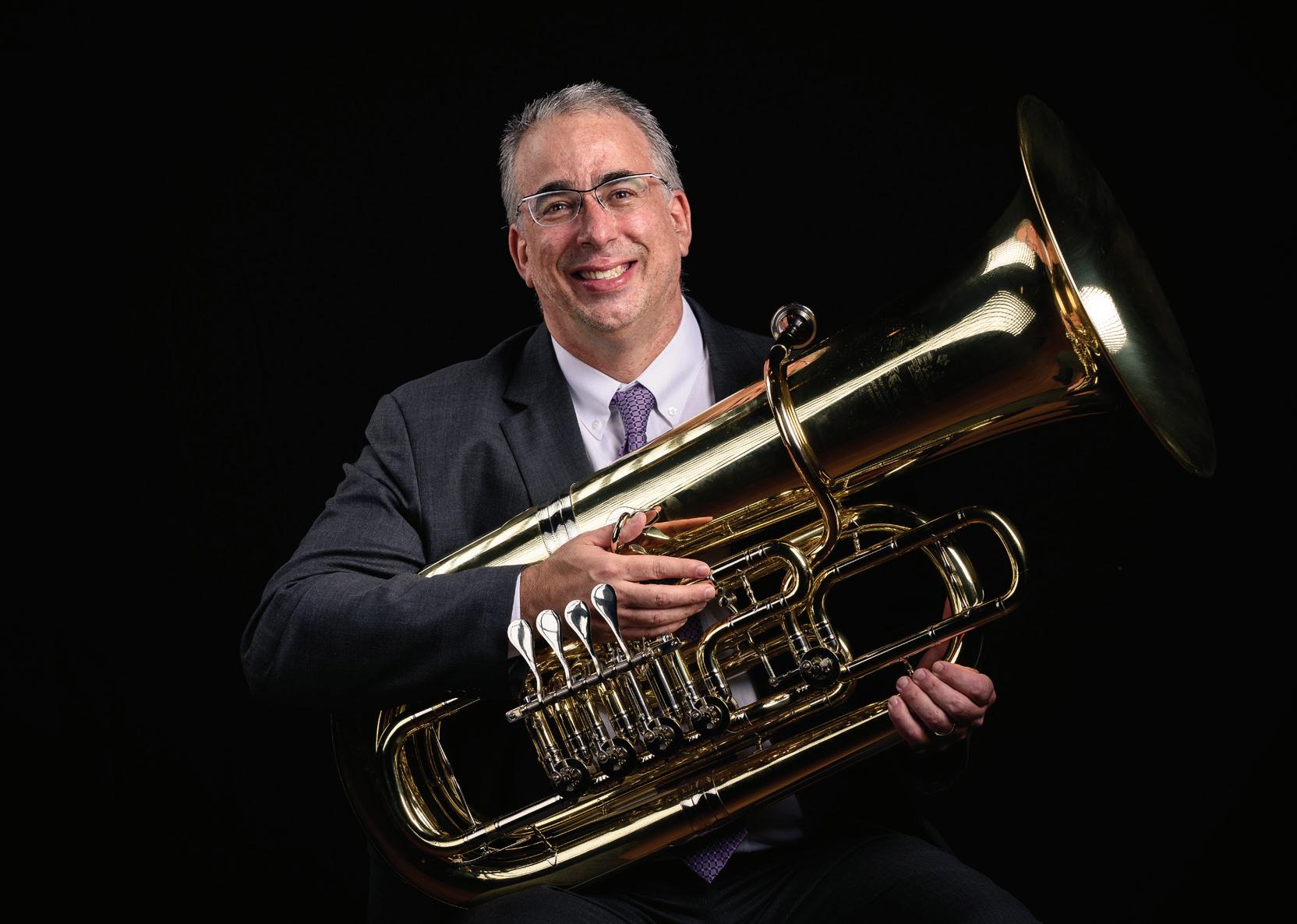
Tung Wei-Zhen, Principal
TIMPANI
Kuo Yan-Shin, Principal
Christian Daniel Ragay Borres, Principal
PERCUSSION _______________________________
Hsu Zih-Ciao, Principal
Kuo Yan-Shin
Isabel Chin Chun En
Ko I-Ting
Hu Yue
Evelyn Kuo Chan
Lin Yen-Ting
HARP _______________________________
Vanessa Jazzy Wahyudy Irwanto, Principal
Jesslyn Gautama
PIANO/CELESTA _______________________________
Chakrit Khanonvej
*YST Orchestral Institute Coach/Faculty ^Guest/Alumni
Administration
ORCHESTRAL INSTITUTE
Vice Dean (Performance & Research)
Brett Stemple
Orchestra & Ensembles Manager
Yap Zi Qi
Orchestra & Ensembles Assistant
Uvahraaj S/O Anbarasan
PROGRAMMING COMMITTEE
Committee Chair
Brett Stemple
Committee Members
Abigail Sin
Faezah Zulkifi
Jason Lai
Kenny Ooi
Lim Yan
Qin Li-Wei
Yap Zi Qi
PRODUCTIONS
Artistic Coordinator &
Strategic Project Manager
Kenny Ooi
Production Coordinator
Christopher Ong Yadao
Technical & Operations Managers
Zhang Feng Tee
William Yee
Sound & Video
YST Audio Arts & Sciences msm-productions
DEAN’S OFFICE
Executive Assistant to the Deanery
Lim Yang Zhi
Communications Offce
Faezah Zulkifi
Toh Yan Ee