

FPAHK: What Sex Education Needs Next
Sexual Violence: 'Monster' in the Room


Features
Night King: Not Just An ‘Adult Film’ Make ‘Bad’ Art
Don’t Close the Beach
FPAHK: What Sex Education Needs Next
Sexual Violence: 'Monster' in the Room
Features
Night King: Not Just An ‘Adult Film’ Make ‘Bad’ Art
Don’t Close the Beach
YOUTH HONG KONG
published quarterly by The Hong Kong Federation of Youth Groups
EDITORIAL BOARD
Hsu Siu-man
Lakshmi Jacota
William Chung
Ada Chau
Christa Cheung
Judith Lee
Marco Yu
Miranda Ho
Mia Yao
EDITING
Mia Yao (Managing Editor), Lakshmi Jacota, Elaine Morgan, Michelle Leung
INTERVIEWS
Mia Yao, Michelle Leung, Stella Chen
CIRCULATION (unaudited)
9,000 in Hong Kong, throughout the region and overseas
VIEWS EXPRESSED are the authors’ and interviewees’, may come from official sources, and do not necessarily reflect the views of the editorial board or publisher
REPRODUCTION OF CONTENTS without written permission from the publisher is prohibited
SECTIONS & TRANSLATION
Mia Yao, Michelle Leung
PHOTOGRAPHS
stock images or in public domain
TRADEMARKS All brand names and product names are registered trademarks. Youth Hong Kong is not associated with any product or vendor mentioned in articles.

ARTWORK & DESIGN
Bryan Tsui
COVER DESIGN
Bryan Tsui
PRINTING
New Century Printing Industrial Ltd.
ISSN 2071-3193 (Print)
ISSN 2519-1098 (Online)
WEB youthhongkong.hkfyg.org.hk
CORRESPONDENCE to The Editor, Youth Hong Kong, 21/F, The Hong Kong Federation of Youth Groups Building, 21 Pak Fuk Road, North Point, Hong Kong TEL 3160 8612
EMAIL youthhongkong@hkfyg.org.hk
ADVERTISING ENQUIRIES
Valerie Wong 3160 8583 Mia Yao 3160 8612
The Hong Kong Federation of Youth Groups was founded in 1960 and is the city’s largest youth service organisation. More than 25,000 activities are organised by over 90 units annually with attendance of nearly 4.5 million.
Services Camps, Leisure, Cultural and Sports Services, Counselling, Creativity education and STEM, Education and continuous learning, Employment and entrepreneurship, Exchange, Leadership training, M21 Multimedia, Parenting, Research and Publications, Volunteering, Youth at Risk, Youth SPOTs WEB hkfyg.org.hk m21.hk


Sex.
A short, ordinary word that still manages to make people shift in their seats. Depending on who you are, it can prompt curiosity, jokes, defensiveness, embarrassment, anxiety or complete silence. Often, it is not the word itself that unsettles us, but the values we attach to it.
This issue of Youth Hong Kong does not focus on sex itself. It is about how those values are formed and passed on in classrooms, in conversations families choose to have (or avoid), in stories friends share and in the endless stream of images, advice and opinions that young people scroll through every day.
We want to look at sex education as something normal, a part of growing up. By listening to educators, experts, parents and, most importantly, young people, the aim is to make room for more honest, grounded conversations and to consider how our community can show up better for the next generation.
How do you talk – or not talk – about sex? We would love to hear from you.
Hsu Siu-man Executive Director, HKFYG
June 2026
by Hsu Siu-man
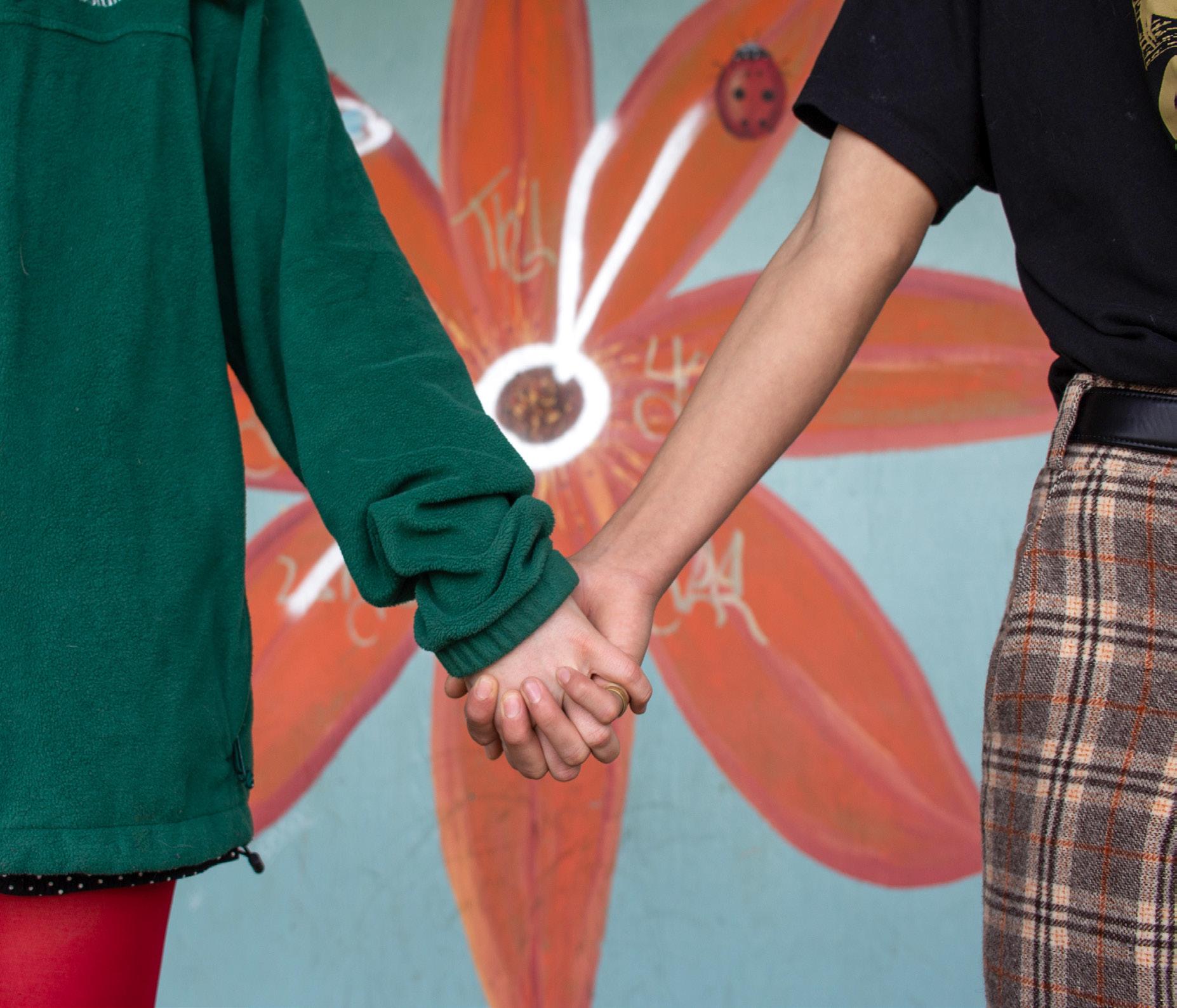
Hong Kong’s approach to sex education remains largely unchanged, anchored in biology, risk avoidance and moral caution. However, the world young people inhabit has decisively shifted. Their understanding of relationships, identity and intimacy is no longer learnt only in the classroom (or family), but through digital spaces, peer networks and global conversations that far outpace the curriculum.
This has created a widening gap between what is taught and what is lived. While schools continue to deliver essential knowledge, they often stop short of addressing the realities young people face: how to interpret consent in practice, navigate relationships, or make sense of what they encounter online. The issue is no longer a lack of information, but a lack of grounding.
As young people’s attitudes and behaviours are increasingly shaped outside the classroom, by digital spaces, peer networks and wider social influences, this gap continues to widen.
The question, then, is not simply whether sex education should change, but how responsibility for that change is shared. It calls for a broader view of the ecosystem
surrounding young people, recognising the role of youth services, families, digital platforms, and community organisations in shaping understanding.
So, what might this look like?
It could begin by reframing sex education as part of a broader set of life skills. Beyond knowledge, young people need opportunities to develop judgement, communication and self-awareness. They need to be able to ask challenging questions, such as how to recognise pressure, both online and offline, how to navigate rejection or set boundaries, or what respect looks like in practice, particularly in environments where social interactions are immediate and highly visible.
“ ”
The
issue is no longer a lack of information, but a lack of grounding.
These are not questions that have fixed answers. They require space for dialogue, sharing, context and connection to real experiences.
Creating such space does not rest with schools alone. Youth programmes, community initiatives and informal learning environments can complement formal education by offering settings where conversations are less constrained and where young people may feel more able to ask difficult questions. Equally, digital tools, if thoughtfully designed, can provide accessible, credible points of reference in an information-saturated environment.
These developments do not absolve the parents or educators, who, for the most part, are willing to participate, but remain hesitant. They are concerned about saying the wrong thing or opening discussions they feel unprepared to manage. This points to a practical area for development: not only resources for young people, but support for the adults around them, so that dialogue becomes more feasible and less fraught.
Dialogue becomes more feasible when adults feel supported and not scrutinised.
There is also value in involving young people more directly in these conversations. Peer-led approaches, when thoughtfully supported, can draw out perspectives adults might miss, while making more open and respectful dialogue feel normal.
Taken together, these strands suggest that progress is less about a single intervention and more about alignment. How can different parts of the system, including schools, families, community organisations and policymakers, act in a more coordinated way? Where are the most evident gaps, and which approaches are already showing promise?
In this context, organisations, like the HKFYG, with our frontline staff working closely with young people, are well placed to contribute direct insights. We learn what questions are being asked, where misunderstandings persist and how young people are navigating the tension between competing messages. Such insights can help inform a more practical and responsive conversation around policy and practice.
Underlying all of this is a broader shift in perspective. Sex education cannot remain a contained subject, addressed intermittently and cautiously. It intersects with mental well-being, digital behaviour, identity and relationships. Treating it as something peripheral risks leaving young people to make connections on their own, often without sufficient guidance.
So, how do we better respond to young people and their realities?
It may involve accepting that not every conversation will be comfortable or conclusive. It requires placing greater emphasis on listening and equipping adults to engage without needing to have all the answers. It also calls for recognising that openness, when rooted in respect, does not dilute values; it helps clarify them.
In a landscape where information is abundant but interpretation is uneven, the need is not for more content, but for clearer anchors. What matters is creating the conditions for young people to reflect, question and make sense of their experiences with greater confidence. They are already having these conversations. Our responsibility now is to engage with them, honestly, deliberately and consistently, as a shared commitment.
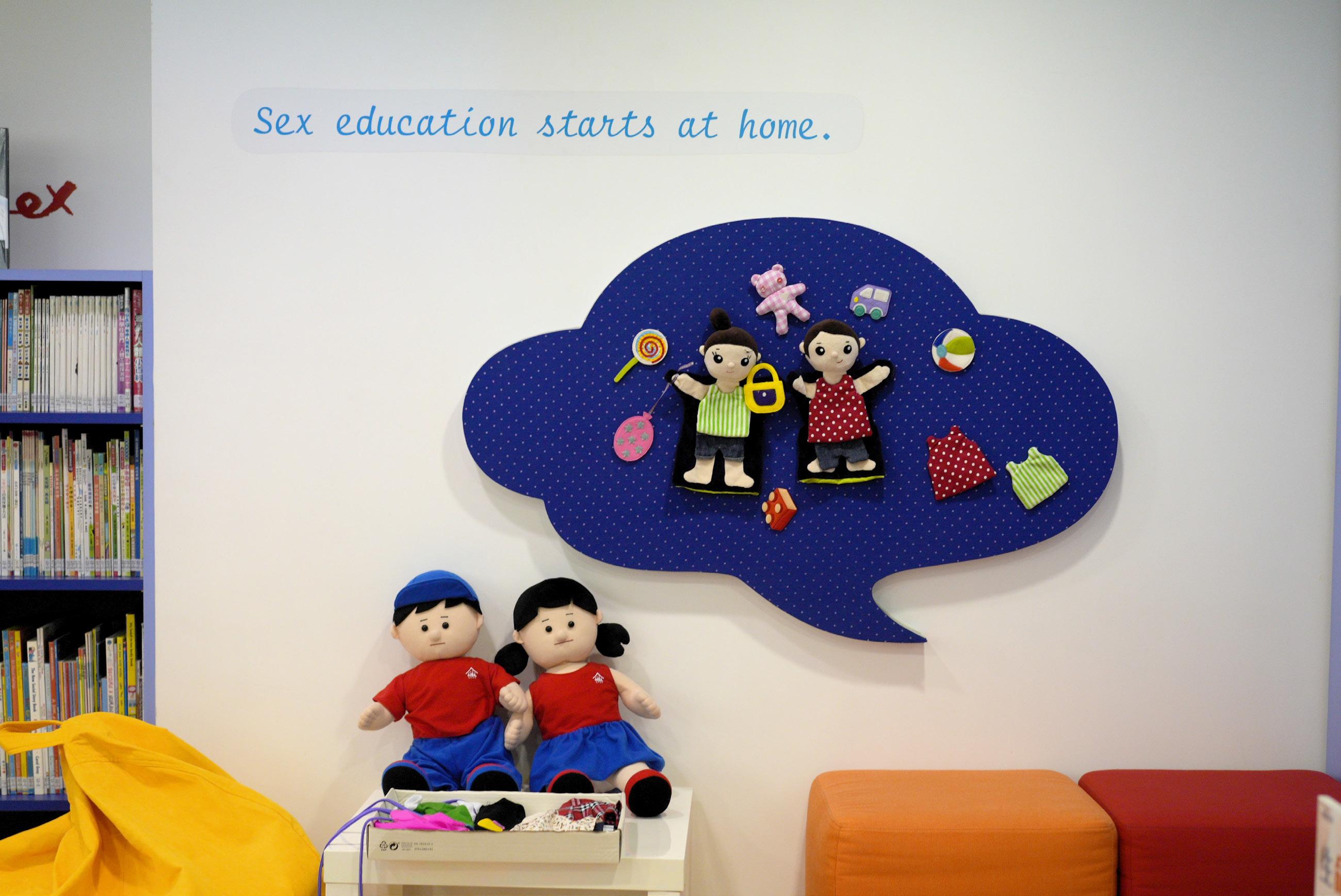
Why does Hong Kong need to shift from a risk-based “just say no” model to lifelong, open dialogue about sexuality?
When a young person’s most intimate questions are answered in seconds by a search engine or an AI chatbot, the question is no longer whether they will learn about sexuality, but what, how and from whom. In this landscape, what does meaningful, responsible sex education look like, and what do young people have a right to expect?
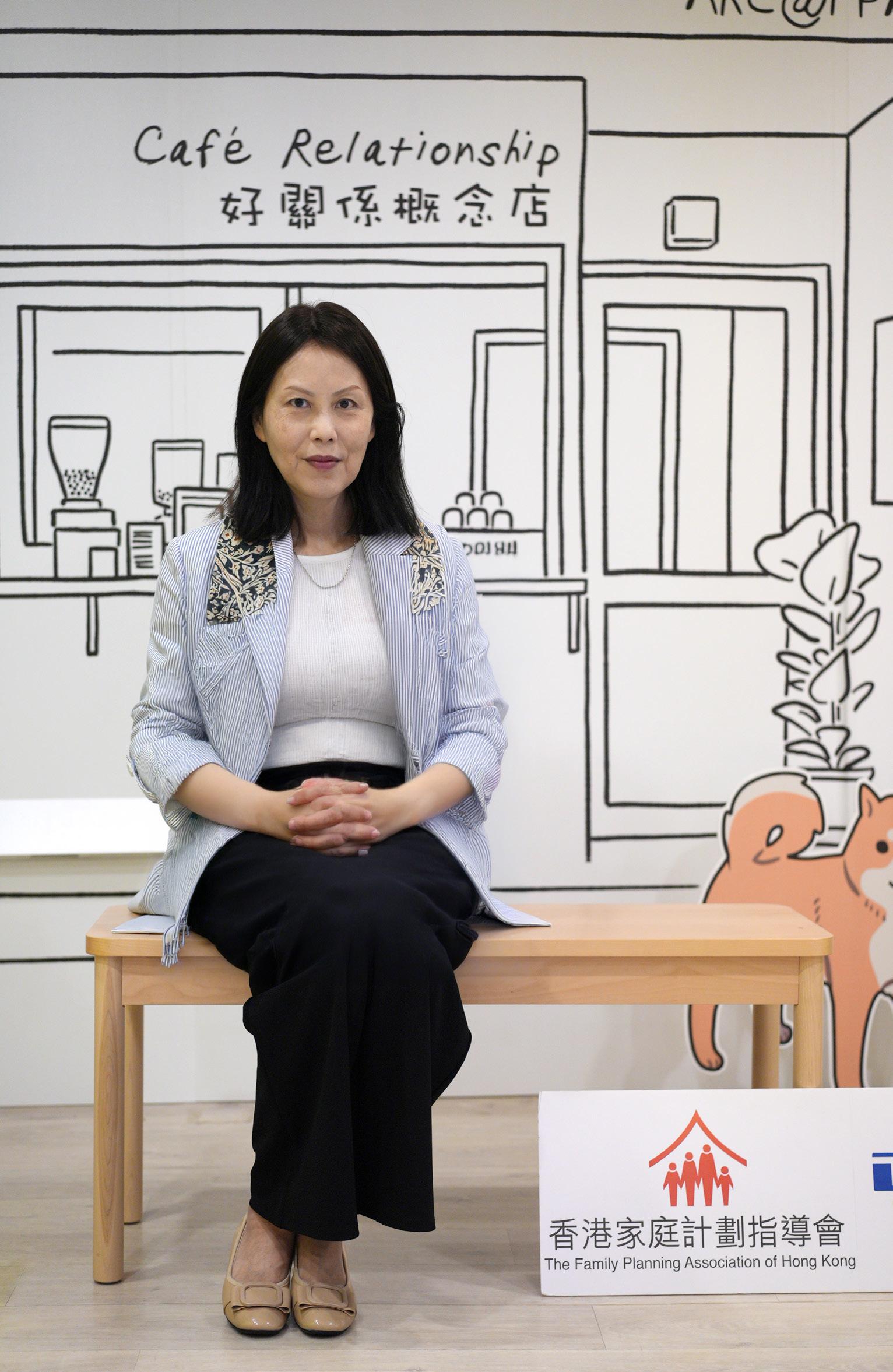
To explore this, we speak with Grace Lee, Education Manager at The Family Planning Association of Hong Kong (FPAHK), about how one of the city’s longest-standing sexuality educators, established in the 1950s, is adapting its approach to prepare a new generation for increasingly complex relationships.
FPAHK has always anchored its work in what they refer to as sexuality education. “We have always believed a child’s first sex educator should be their parent,” Grace says.
That principle still holds. But the context has shifted. Today, the debate is no longer about whether sexuality education matters, but how it is delivered and whether it can keep pace with the realities young people now navigate.
people’s lived experiences and equip them with the understanding to navigate them. “At FPAHK, we have always advocated Comprehensive Sexuality Education
At its core, CSE extends beyond the transmission of knowledge. It places equal weight on shaping attitudes, values, and practical life skills. “We hope teenagers can develop an open attitude towards sex, alongside the skills they need to make choices that are right for them,” she
Yet even as the case for early education has strengthened, a familiar pattern persists. Parents tend to be more receptive when their children are younger, engaging in conversations around bodily autonomy, safety and respect. But as children enter adolescence, that openness often gives way to hesitation, particularly when discussions
At that point, the answer is often blunt: “Don’t do it.”
The limitation of this approach is increasingly clear. Framing sex solely in terms of risk or prohibition leaves young people underprepared for the realities they will encounter. Saying “no” is not just a position to be held, but a skill to be exercised, one that requires confidence, clarity and the ability to communicate boundaries and consent.
Without these competencies, the message itself risks
In a written reply to Youth Hong Kong, Miss Yvonne Lam, Principal Assistant Secretary (Curriculum Development) of the Education Bureau (EDB), reaffirmed that sex education is not a standalone subject, but a core strand of values education delivered through an integrated, whole-school approach.
The EDB stressed that sex education should begin early, equipping students with accurate information so they can develop sound values, positive attitudes, critical thinking, interpersonal skills and, ultimately, responsible behaviour.
To this end, the EDB has been revising curriculum guides, creating new learning and teaching resources, and strengthening teacher training. Its latest Values Education Curriculum Framework 2026 places strong emphasis on reinforcing sex education content at different key stages, giving schools flexibility to use time both within and beyond the classroom to design holistic learning experiences.
Targeting primary and secondary schools, the framework also highlights the importance of integrating ethical and traditional Chinese family values into sex education–related topics. The EDB notes that it will continuously review the curricula to keep pace with changing societal needs.
Rapid advances in technology and AI, shifting family structures and aspirations, and evolving cultural and moral norms have increased students’ exposure to online and offline risks. In response, the EDB is broadening its resource base to include animations, life-event exemplars and a dedicated self‑protection webpage, while inviting schools to share effective practices and reflect on their own curricula.
Ultimately, the EDB sees students’ healthy development as the result of a multi‑pronged strategy: building teachers’ professional capacity, organising engaging student activities, enriching learning, and fostering closer home–school cooperation.
Taken together, effective sex education is not about steering young people towards a single outcome. “It’s not about encouraging sexual activity, but about fostering critical thinking,” says Grace. “We don’t tell teenagers what to choose. We want them to think things through, so they can make informed decisions.”
That capacity becomes even more critical in a digital environment saturated with information of uneven quality. Young people are not short of answers; what they often lack are the tools to evaluate them. The ability to question sources, weigh credibility, and navigate contradiction is now central to any meaningful form of education.
As Grace points out, the challenge is not hypothetical. “No matter what we tell them, there are times when they go online, do a search, or ask AI. The information online might overturn everything we’ve taught them.”
In response, organisations such as FPAHK continue to work alongside schools, through student sessions, teacher training and parent workshops. Yet the more persistent challenge, Grace suggests, lies not in access, but in how these conversations are framed.
“There are no absolute right or wrong values,” she says. “If conversations are respectful and non-judgmental, they can help teenagers reflect on and affirm their own values.”
She points to premarital sex as an example. Rather than prescribing a position, the emphasis is on helping young people think through their own reasons and decisions on questions such as why they hold this belief, what it requires, and how they will act.
For such reflection to take root, communication cannot be one-directional. “We cannot just speak at teenagers,” Grace says. “We also have to listen.”
In practice, that shift is far from straightforward. When young people raise difficult or sensitive questions, the response they encounter is often guarded, if not visibly uncomfortable. Faced with judgment, or the anticipation of it, many will simply look elsewhere for answers.
Grace sees this gap clearly: between the adults young people are expected to trust and those they actually turn to. Bridging it requires a recalibration of roles: from authority figures to approachable, consistent sources of support.
“We may not have all the answers,” she says. “But we can be someone they come back to, who has their back.”
The digital environment introduces a further layer of complexity. “Misinformation, stigma and stereotypes persist in online forums,” Grace explains. “This includes victim blaming, the so-called ‘virginity complex’, the expectation that girls should bear responsibility for contraception and the misconception that boys are somehow immune to sexual harassment.”
In response, FPAHK is developing an AI chatbot built on its own resources to provide young people with accurate information and accessible support, meeting them in the spaces they already inhabit.
FPAHK also brings young people directly into its work, including youth participation in its programmes and governance. “We cannot keep up on our own,” Grace says. “We have to let teenagers lead, so others will lean in.”
Its youth volunteer team, Red Face No More, runs peer-led education and support programmes using language and platforms that young people actually use. Through games, quizzes and informal gatherings, these balance engagement with substance. Even small shifts in tone matter; addressing someone by their first name, rather than defaulting to gendered titles, can signal respect and openness.
There are no absolute right or wrong values.
FPAHK’s approach rests on a broader understanding that sexuality education is not confined to adolescence. “It’s a lifelong process,” Grace notes. “It doesn’t end when you leave school.”
Accordingly, its programmes span different stages of life, from self-image and identity in youth, to relationships and parenting in adulthood, and sexual health through menopause and later years. Each stage brings new questions, shaped by changing circumstances and social expectations.
The role of education, then, is not to provide a fixed set of answers, but to remain relevant and offer guidance that evolves alongside people’s lived experiences.
In the end, Grace likens the work of sexuality education to planting seeds. “We know one talk will not change everything. But if a student walks away knowing that we are there, that seed may grow later when they need it.”
For these seeds to sprout into a healthier society, she believes it’s time to move past dated guidelines towards a sex-positive future that prioritises consent, respect, safety and wellbeing.
By fostering an environment where diversity is respected and boundaries are understood, young people can make confident, responsible choices around bodies and relationships, guided by their own values.
How do we normalise the conversation on sexual violence?

Sexual violence remains one of the most pressing issues in Hong Kong. Like the mass beneath an iceberg, most cases remain hidden from view, affecting far more people than official records suggest. As civil society organisations and educators push for reform, there is a growing consensus that the city’s approach to sex education, legal frameworks, and social attitudes must evolve.
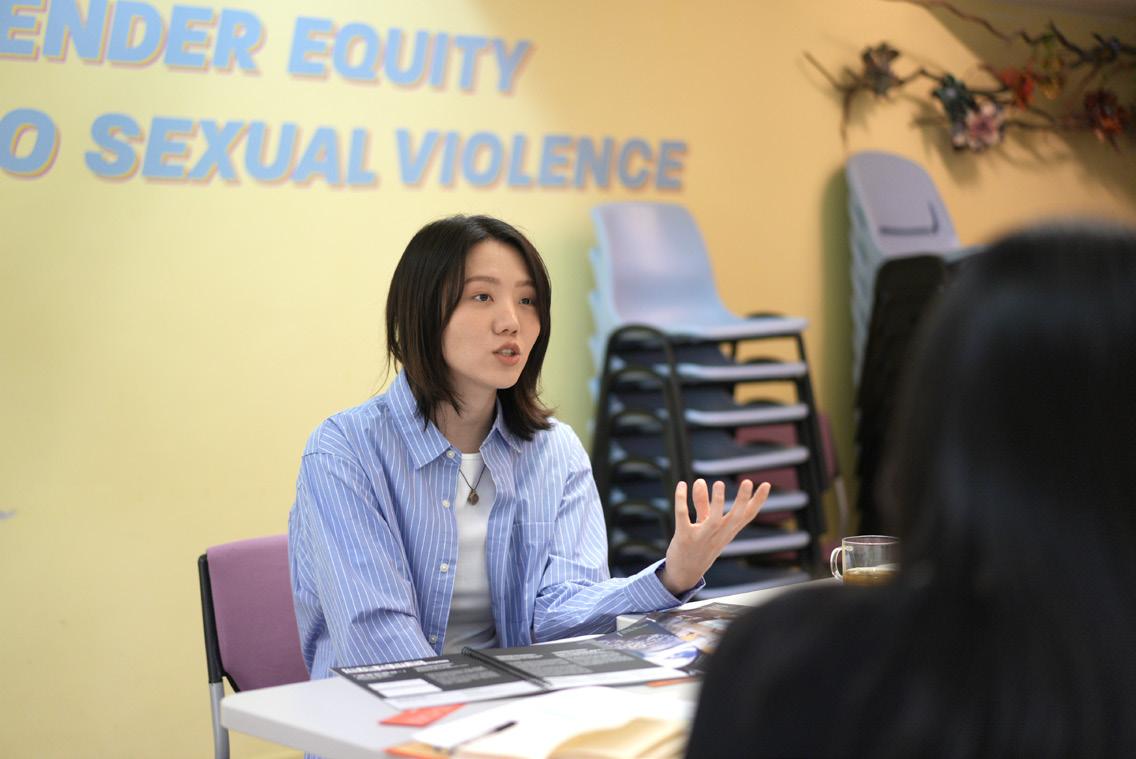
Jay Yam, Acting Centre Manager of the Association Concerning Sexual Violence Against Women (ACSVAW), highlights both the urgency of reform and the gaps that continue to leave many unsupported.
The true scale of sexual violence extends far beyond official statistics. In the past five years, reported rape cases have hovered between 50 and 79 annually. In

2025, police recorded 68 rape cases and 1,137 indecent assaults. Yet in 2023 alone, RainLily, Hong Kong’s first one-stop crisis centre for victims of sexual violence, received 182 rape reports, more than double the 79 cases reported to police that year.
Survey data paints an even starker picture. A 2013 study by the Hong Kong Women’s Coalition on Equal Opportunities found that approximately one in seven women (15.4%) had experienced sexual violence or abuse in their lifetime. More than 90% remained silent, and only 8% made a police report.
For Jay, these numbers reveal a system and environment many victims struggle to trust. Fear of reliving trauma, loss of privacy, public scrutiny, and facing perpetrators in court all discourage reporting. Language barriers and cultural differences further isolate individuals from diverse ethnic backgrounds. “The actual number is certainly higher,” Jay says. “The seriousness has been heavily underestimated.”
Founded in 1997 to support women survivors, ACSVAW has since expanded its scope alongside a growing understanding of sexual violence. “At that time, the term ‘sexual violence’ didn't colloquially exist,” Jay notes, and rape cases were more common.
To provide immediate, one-stop, comprehensive support, the RainLily Sexual Violence Crisis Centre was established in 2000, aiming to minimise secondary trauma and repeated recounting during the reporting and help-seeking process. In 2005, Anti480 Anti-Sexual Violence Resource Centre was launched to focus on education, advocacy, legal reform and research.
Today, ACSVAW’s services are increasingly gender-inclusive. The organisation collaborates with diverse civil society groups to support marginalised communities, including partnerships with LGBTQ+
organisations such as Quarks, to study the experiences of transgender individuals and sexual minorities. Despite limited government funding for minority groups, it has also worked with deaf communities and individuals with special educational needs to provide tailored support.
Sex education in Hong Kong schools remains inconsistent and often inadequate. Schools often fail to meet even the non-binding guidelines of 30 hours per year set by the Education Bureau in 1997.
Jay observes a profound gap between what students are taught and what they need to know. “When we speak to secondary school students and ask if they’ve heard the term ‘sexual violence,’ most shake their heads,” she says. Even by Secondary 3 or 4, awareness is strikingly low.
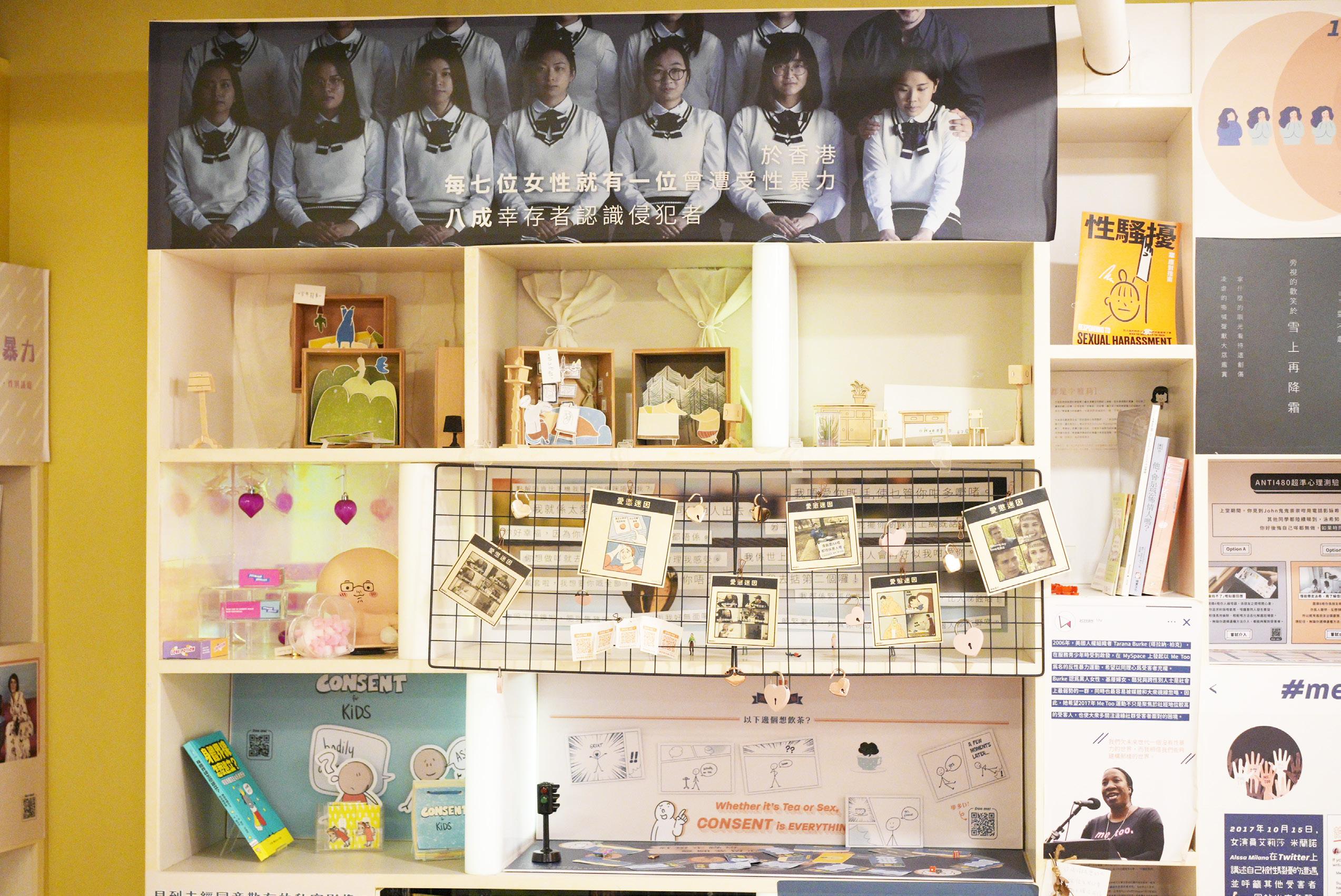
Based on Jay’s observation, students often lack understanding of key concepts: the relationship between sexual violence and harassment, differences between domestic and sexual violence, and the importance of boundaries. “They might say, 'Is that not allowed? They think physical contact is normal and acceptable when the couple are in a relationship,” Jay explains.
Nine out of ten students are unfamiliar with boundaries and sexual autonomy.
This is understandable given that misconceptions persist beyond the classroom. Many view sexual violence as an uncontrollable urge, rather than an abuse of power and a failure of values. To challenge this, ACSVAW uses interactive and experiential teaching. “If you’re hungry and smell fresh bread in a bakery, would you snatch it?” Jay asks students, prompting them to reconsider assumptions about sexual impulse and responsibility.
Workshops also include mock trials and “patriarchal simulation” games. Acting as jurors, university students confront the difficulty of securing convictions. Through role-play, male participants experience the pressures embedded in patriarchal systems, often leading to greater empathy and reflection.
Despite these efforts, institutional resistance remains strong. Schools often avoid sensitive topics such as consent, relationship boundaries and LGBTQ+ issues.
“ “
Teachers themselves are afraid. Many ask us to replace ‘sexual violence’ with milder terms like ‘sexual harassment.'
Wider societal attitudes present further barriers. Victim-blaming persists, fuelled by a lack of education about consent and responsibility. Without a clear understanding, public discourse often shifts scrutiny onto victims’ behaviour, rather than that of the perpetrators, reinforcing silence.
The digital age has introduced new risks, including deepfakes and non-consensual intimate images generated by AI. In response, ACSVAW launched a gender-neutral image removal service in early 2021
and played a key role in advocating for the 2021 legislation criminalising the non-consensual publication, or threat of publication, of intimate images, explicitly including altered images. As Jay puts it, “That photo is fake, but the hurt is real.” She emphasises the need for stronger digital literacy and platform accountability, beyond reactive legal measures
This educational deficit leaves young people vulnerable to more than just digital harassment. Echoed by the HKFYG Youth Crime Prevention Centre, Supervisor Michael Leung suggests that distorted values, limited understanding of legal consequences, low cyber literacy, and insufficient family and peer support may be associated with the escalation of compensated dating, deepfake scams, coerced sexual acts and abuse.
Legal reform remains central to long-term change. Many of Hong Kong’s laws, rooted in 1970s English legislation, place heavy emphasis on the defendant’s intent. This allows perpetrators to escape liability by claiming they misread the victim's silence and lack of resistance as implied consent, says Jay.
Organisations such as ACSVAW advocate for a consent-based legal framework that shifts the focus of sexual offence trials to whether consent was ascertained by the initiator prior to the sexual interaction. The organisation also supports introducing a clearer list of circumstances where there is no consent, similar to recent reforms in other common law jurisdictions, such as when an individual is intoxicated or coerced.
Ultimately, building a safer society requires a multi-layered approach: comprehensive and mandatory sex education, progressive legal reform, and a cultural shift toward empathy and accountability.
Jay hopes that one day, conversations around sexual violence will no longer feel taboo. “If sex education becomes more widespread, people won’t be so resistant,” she says.
"When we go into schools to talk about prevention, it must stop feeling like we’re exposing them to something terrifying or unknown, as if we’re asking them to face a monster."
James Lee, now an occupational and sex therapist, likens his career path from a music teacher to an unbroken chord.
Upon graduation, James Lee lived a life measured in musical notes and paychecks. As a professional musician, he functioned like a clockwork toy, racing between teaching sessions and performances. It was a lucrative existence, but eventually, the notes began to lose their resonance. Seeking a deeper purpose beyond the daily grind, James made a radical choice: he sold his instruments to his students, "burning his boats" to ensure there was no way back.
"I realised that the music industry, when pursued full-time, is remarkably lonely," James reflects. "From morning to night, you are on your own, hustling from one venue to the next,” he says. He eventually kept only a basic student model clarinet, just to hold onto the joy of playing, but he vowed never to make another penny from it.
What he didn’t know then was that music would eventually return to his life, not as a commodity, but as a bridge to the human soul.
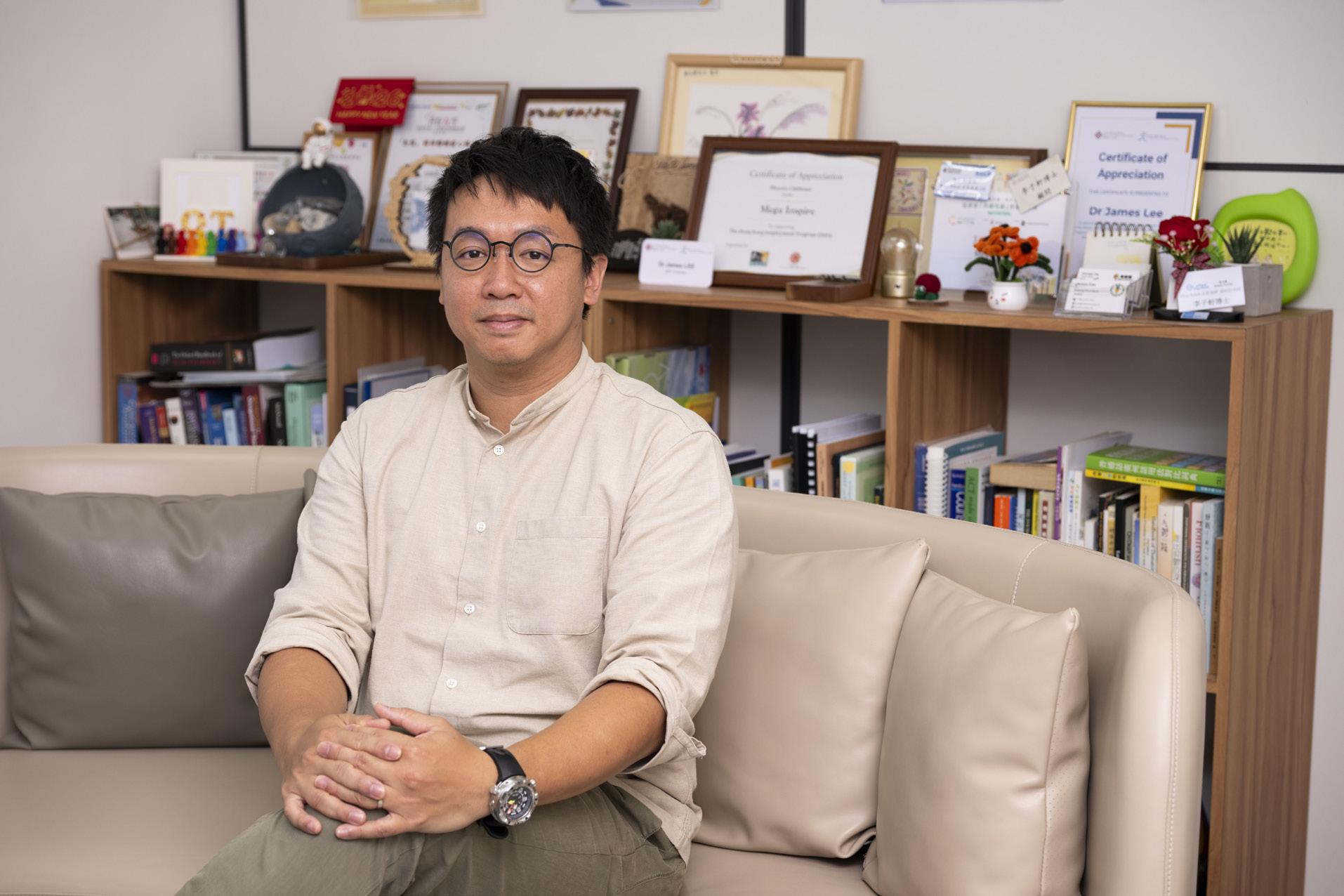
The turning point came during a Winter Solstice, a time of essential family gathering in Chinese culture. Consumed by work, James missed the dinner. When his father called to ask where he was, the disappointment in the old man's voice cut through James’s pride.
“I was incredibly arrogant,” James admits. “I believed that as long as I was making money, nothing else mattered. I felt like Nick Cheung’s character in the movie Unbeatable, as if the whole world belonged to me.” That call stayed with him. “I realised that while I was chasing 'success,'” he tells Youth Hong Kong, “I was absent for the moments that actually mattered to my family.”
This epiphany led him away from the stage and, after a few twists and turns, into the lecture halls of Hong Kong Polytechnic University, where he enrolled in a Master’s programme in Occupational Therapy (OT). He had found his new calling: a profession defined by human connection and the art of healing.
Later on, he specialises in therapies and interventions such as psychotherapy with music and imagery, sometimes involving mindfulness and sleep-focused approaches. Now, James teaches at The Education University of Hong Kong and works as an occupational therapist at Siu Lam Psychiatric Centre under the Correctional Services Department, providing treatment for incarcerated people under the mandatory hospital order — a legal mechanism for those requiring psychiatric care following a

For James, the work is a far cry from the spotlight of a concert hall, yet it offers a far more sustainable sense of fulfilment. Occupational therapy is the art of small victories: helping a stroke survivor regain the dignity of dressing themselves, or guiding a mental health patient reintegrate into the community.
“When you genuinely present with someone, you understand their struggles and their pain. Then you use your expertise or methods to help them get back on their feet and walk that road to recovery with them,” James adds.
That fulfilment is tremendous and self-sustaining.
Through his work, James has witnessed both the fragility and resilience of life. His time in the psychiatric centre has also sharpened his perspective on the systemic failures of society. He hears stories of men crushed by the stereotypical gender expectation to be "strong" or individuals broken by a lack of social mobility. "Deep down," he says, "I often feel like society has failed them."
To help others in their lowest moments, James sometimes had to confront his own deep-seated fears. Early in his clinical career, he routinely turned down elderly clients, paralysed by an intense fear of dealing with death. It was only through witnessing the full spectrum of the human condition, from birth, ageing, sickness, to death, that his perspective shifted. Gradually, he accepted mortality as an inevitable part of the journey.
"With more experience of life’s full cycle, I began to accept this reality," James reflects. "More importantly, I learned to truly cherish the time we have each day."
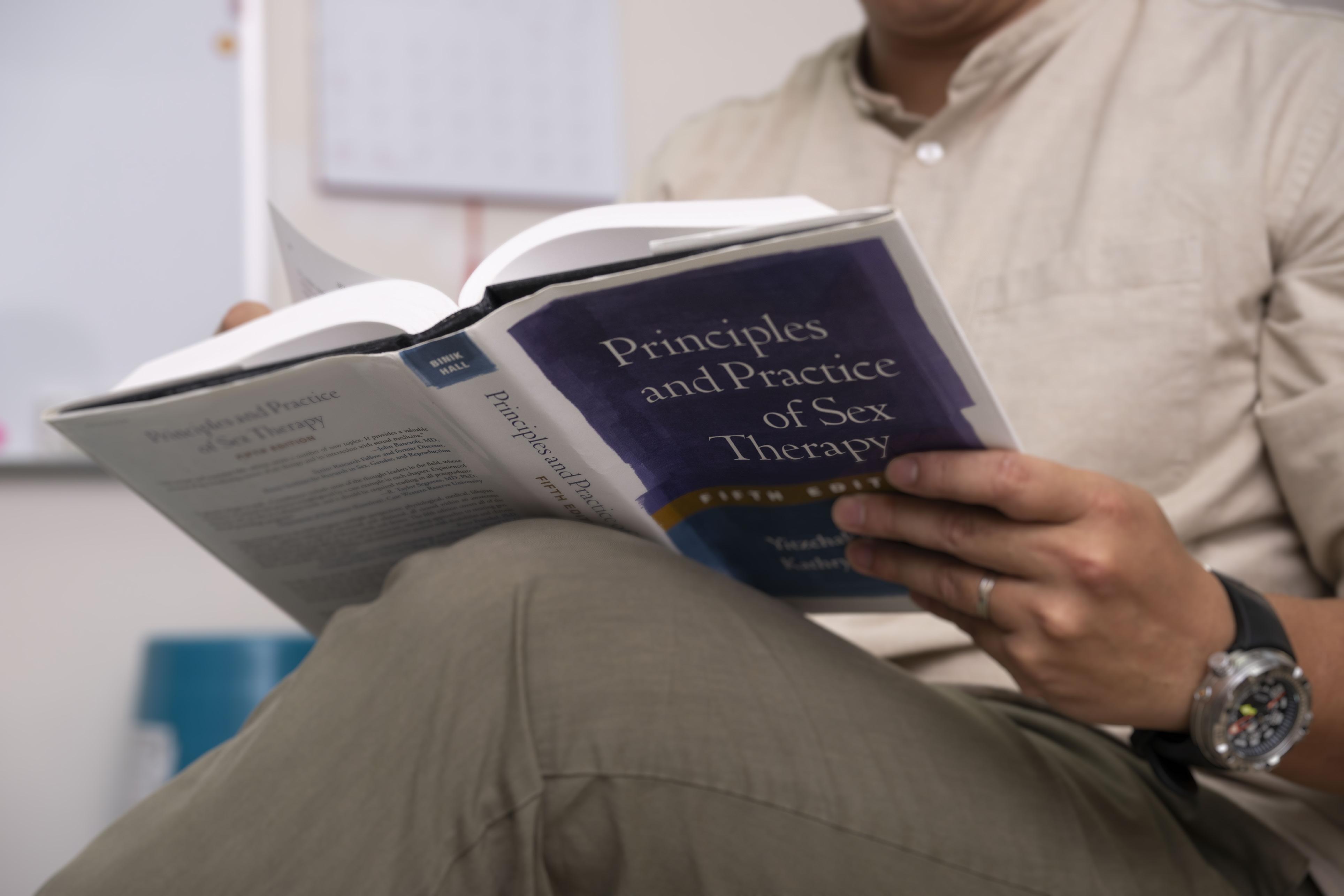
A significant, yet often overlooked, facet of James’s OT practice is sex therapy. In a culture where the topic remains taboo, James views sexual health as a fundamental human right and one of the foundational elements of Maslow’s hierarchy of needs. As the Founder of Dr. Sexology, a clinic that provides therapy, coaching, education and related clinical services, he critiques the current biological, sex abstinence education approach, which often steers students away from equally crucial broader topics such as love and relationships, family values, consent and respect.
"Sex isn't just about yourself. It affects the people around you, it affects your family, and it impacts society as a whole," James says.
He envisions a system that moves away from "spoon-feeding" facts, instead empowering young people to make informed, mature decisions regarding their own bodies and relationships.
James proposes a shift in sexuality education, advocating for robust home-school collaboration integrated with social service learning. He suggests that stakeholders develop interactive resources where teachers introduce core concepts that students then take home to complete with parents. This "homework" serves to bridge the communication gap, fostering an environment of trust where children feel comfortable discussing sexual health or reporting potential abuse with trusted adults.
Furthermore, he champions experiential learning through community service. By engaging with HIV carriers, sexual minorities, or sex workers through "human library" initiatives, students can move beyond textbook definitions to develop genuine empathy and dismantle long-standing social stigmas.
He also suggests that student representatives should influence the curriculum by voting on topics they find most relevant. By exposing students to diverse perspectives and real-world case studies, the goal is to equip them with the critical thinking skills necessary to navigate complex issues like unplanned pregnancy or sexual health management.
Reflecting on his journey from the orchestra to the clinic, James sees a common thread: inspiration. “I’m not here to tell them exactly what to do,” he says. “I’m here to offer inspiration and advice. I want my clients to make their own choices, and then I support them through that process. They say 'think big, act small.' Inspiration is one of those small things that changes everything."
Years after qualifying as a therapist, James was asked to play the clarinet at a funeral ceremony for a client who had passed away. Without hesitation, he reached for that old student-model instrument he had kept.
As the notes of the client’s favourite tune filled the room, the music felt different. "At that moment, the music transformed," he says.

It was no longer about a performance or a paycheck; it was an expression of trust and mutual respect.
In this circle of life, James is looking for a way to make his life, and the lives of others, meaningful. “I want to keep using my life to impact others,” he says. “I want to keep using my profession to serve people, rather than being served."
James Lee teaches sex therapy and trains
sexuality education tutors at the HKFYG Continuous Learning Centre.
Sex Education
Instructor Training
Dates:
17 June – 8 July 2026 (Wednesdays)
Time: 7:00 – 10:00 PM

Foundation in Sex Therapy
Dates: 20 & 27 July 2026
Time: 7:00 – 10:00 PM

More than half of respondents feel their school sex education was insufficient, lacking coverage on relationship dynamics, consent, and digital-age issues.
While friends and social media are common sources of information, AI chatbots have emerged as a preferred, judgment-free medium for sensitive topics.
Young men are more likely to let exposure to pornography shape their expectations. Young women heavily prioritise emotional compatibility and long-term commitment.
Two-thirds of young people cite cramped living spaces and long working hours as the primary obstacles to their intimate lives.
Despite high awareness of sexual violence, a notable portion of youth remain unprepared to take action in emergencies.
Ifriends, porn, and AI chatbots for answers? A new Youth Hong Kong survey of 516 young people aged 18–34 suggests that what happens in the classroom and what happens in real life are still a long way apart.
from 9 to 27 April. Of the respondents, 36% were male and 62% female, with 1% identifying as non‑binary. Around 30% are aged 18–24, and the remaining 70% are 25–34. Together, their responses reveal not just what young people know about sex, but how they are trying to piece that knowledge together in a fast‑changing, digitally saturated city.
When it comes to school‑based sex education, young people’s verdict is lukewarm at best. Their answers point to a double shortfall: not enough content, and not the right kind.
More than half of the respondents disagree that the sex education they received at school was enough.
The Education Bureau's latest Values Education Curriculum Framework, released in April 2026, reinforces sex education as part of values education. It stresses that content should be age‑appropriate and adds that controversial topics – complex moral, ethical and legal issues, or areas lacking social consensus – should not be “rigidly” incorporated into the primary and secondary school curriculum.
These sentiments likely stem from a gap between the biological and factual focus of current school curricula and the need for more complex, practical knowledge and interpersonal skills. While many respondents have learned about topics such as puberty (76%), safe sex (60%) and contraception methods (59%), they are more eager to understand the relational and ethical complexities of sex. The data highlights a clear mismatch between what school education covers and what respondents wish to learn.

Contraception methods
Sexual health, HIV/AIDS and venereal diseases
Pregnancy and childbearing
Preventing and dealing with sexual harassment
Consent and ethics
Pornography in the media
Risks of online dating and sexual transactions
Preventing and dealing with sexual violence
Relationship dynamics and communication
Gender identity and pleasure
Sexual orientation
Love and dating
If schools are supposed to be the “proper” place to learn about sex, young people’s actual behaviour tells a more complicated story. There is a sharp contrast between where they believe they should get information and where they really do.
Traditional sources – professionals, schools, reputable websites – are rated as highly reliable, yet they are often bypassed in favour of more accessible, though less reliable, digital and peer‑based channels.
School stands out as the only source where trust and use almost match: 46% of respondents consider school
information reliable, and 43% have used it. This suggests that, despite its gaps, school remains a primary and trusted pillar – just not the only, or always the first, place young people go.
Into this mix comes a new kind of “teacher”: AI chatbots. Around 16% of respondents say they trust information from AI, and nearly 13% have already used chatbots to ask about sex and relationships. Strikingly, about 23% feel more comfortable talking about sex with an AI chatbot than with professionals such as doctors or social workers. Anonymity, 24/7 availability, and the absence of visible judgment appear to be powerful advantages.
Ray LC, Assistant Professor at the City University of Hong Kong, who specialises in human–computer interaction, cautions against over‑reliance on these tools. “AI is not reliable. It’s biased, inconsistent, and draws lots of information from Reddit and other unreliable sources,” he notes. At the same time, he acknowledges why young people are drawn to it: AI offers a private space to talk about sensitive topics like sex and can provide a form of emotional support without fear of being judged. “People are forming intimacy with AI because it’s flexible and integrated into so much of their lives,” he says.
Sources I turn to vs. Sources I trust for information on relationships and sex (select all that apply)
I feel more comfortable talking about sex with _______.
(select all that apply)
The survey reveals clear gendered patterns in how young people navigate sexuality and seek information, patterns that shape what they expect from sex and relationships.
For the young men, pornography sits at the top of the information ladder: 58% of male respondents say they have learned about sex from porn, followed closely by social media and friends. For women, social media (56%) comes first, followed by school and friends. This difference shows up not only in where they learn, but in what they come to expect. About 58% of male respondents agree that exposure to pornography has shaped their expectations of a sexual encounter, compared with 43% of females.
Men are also more accepting of sexual activity at an earlier stage of connection. Around 28% of male respondents say sex is acceptable whenever there is a strong physical or emotional connection, regardless of relationship status. Among women, only 9% share this view.
When it comes to commitment, women are significantly more likely to say they would prefer to wait for a long‑term committed relationship (29%) or marriage (16%), compared with men (14% and 8%, respectively).

I have previously obtained information about relationships and sex from_____.
(Select all that apply)
At what stage do you think it is acceptable to have sex?
When there is a strong physical/emotional connection
Before officially becoming a couple
Only after officially becoming a couple
Only after being in a committed relationship for a long time
Only after marriage
Depends entirely on the individual situation
Do you think “physical compatibility” or “emotional compatibility” is more important in a relationship?
Physical compatibility is more important
Emotional compatibility is more important
Even when young people feel ready for intimacy, Hong Kong’s built environment often says “not yet.”
Which of the following do you consider to be the biggest obstacles to having a private/intimate life in Hong Kong?
(Select all that apply)


The survey also exposes a troubling gap when it comes to sexual violence: many young people know it happens, but still feel unsure what to do when it does.
I have heard of or personally known someone who experienced sexual violence/abuse.
Yes No Prefer not to say
If you or someone close to you were to experience sexual harassment or violence, what would be your first or most likely course of action?
The real lesson behind the numbers
Seek help from friends or peers
Report to the police
Contact an NGO Search for help/advice online/social media
Talk to parents or family members
Choose not to tell anyone due to privacy or fear of judgment I am not sure what I would do
Read the whole survey at youthhongkong.hkfyg.org.hk
by Lakshmi Jacota
What sits beneath these statistics is not just a story about sex, but about whether young people feel safe enough to be honest.
In school, students learn the mechanics: puberty, contraception, safe sex, but not the realities of modern relationships. So, they create a second syllabus from friends, social media, pornography and AI chatbots. These sources persist not because they’re reliable, but because they offer immediacy, anonymity and a lack of judgement.
Gender patterns deepen the problem. Many young men learn what sex “should” look like from porn and peers; many young women prioritise emotional safety and commitment. City life compounds this: small flats, long hours and scarce privacy make practising intimacy difficult even when partners agree.
Under these pressures, many respondents know someone who has experienced sexual violence or abuse. Yet a worrying minority don’t know what to do if it happened to them or a friend. Awareness has spread; action has not.
Seen altogether, the “aha” is simple: young people aren’t ignoring sex education, they’re finishing it themselves. Adults must do more than correct facts. They must build accessible, non‑judgmental spaces in schools, families, communities and policy that offer consistent care, shared values and clear plans to talk openly without shame, especially when things go wrong.
What is one thing about sex or relationships you wish someone had told you honestly when you were younger?
In this Youth Speak, young people break the silence and start the conversation –on love, sex, consent, desire, shame and truths locked away.
I don't believe there's one single set of correct values. But every young person deserves the chance to think through questions around sex — not get waved away with ‘ you'll know later when you grow up.’
Hong Kong’s sex education is not adequate or effective enough. It does not equip young people with practicalities. We need to move past this, and ‘no sex before marriage’ should not be the only message we send.
I wanted someone to tell me the truth, with some warmth in it, in a way I could understand. That’s what sex education needed to be.
We only learned about puberty and pregnancy in school. Desire, intimacy, and what happens between two people were almost treated as non-existent. I believe young people are entitled to age-appropriate sex education.
Sex education should be an open and safe conversation, one that young people can turn to, ask questions, and not feel judged.
Growing up in Hong Kong, sex was the door no one opened. I wish adults had been willing to walk through it with me, such that most of what I ‘knew' didn’t have to come from films, forums or friends.
In Asian families, sex is the conversation that we never had. Young people are left to piece together understanding from fragments. Without guidance, they very often either don’t know how, or know it wrongly.
I had sexual thoughts when I was younger, and I thought something was wrong with me. I didn't know what to do with them, so I buried them. Nobody ever told me that desire is normal, so when I felt it, all I felt was guilt.
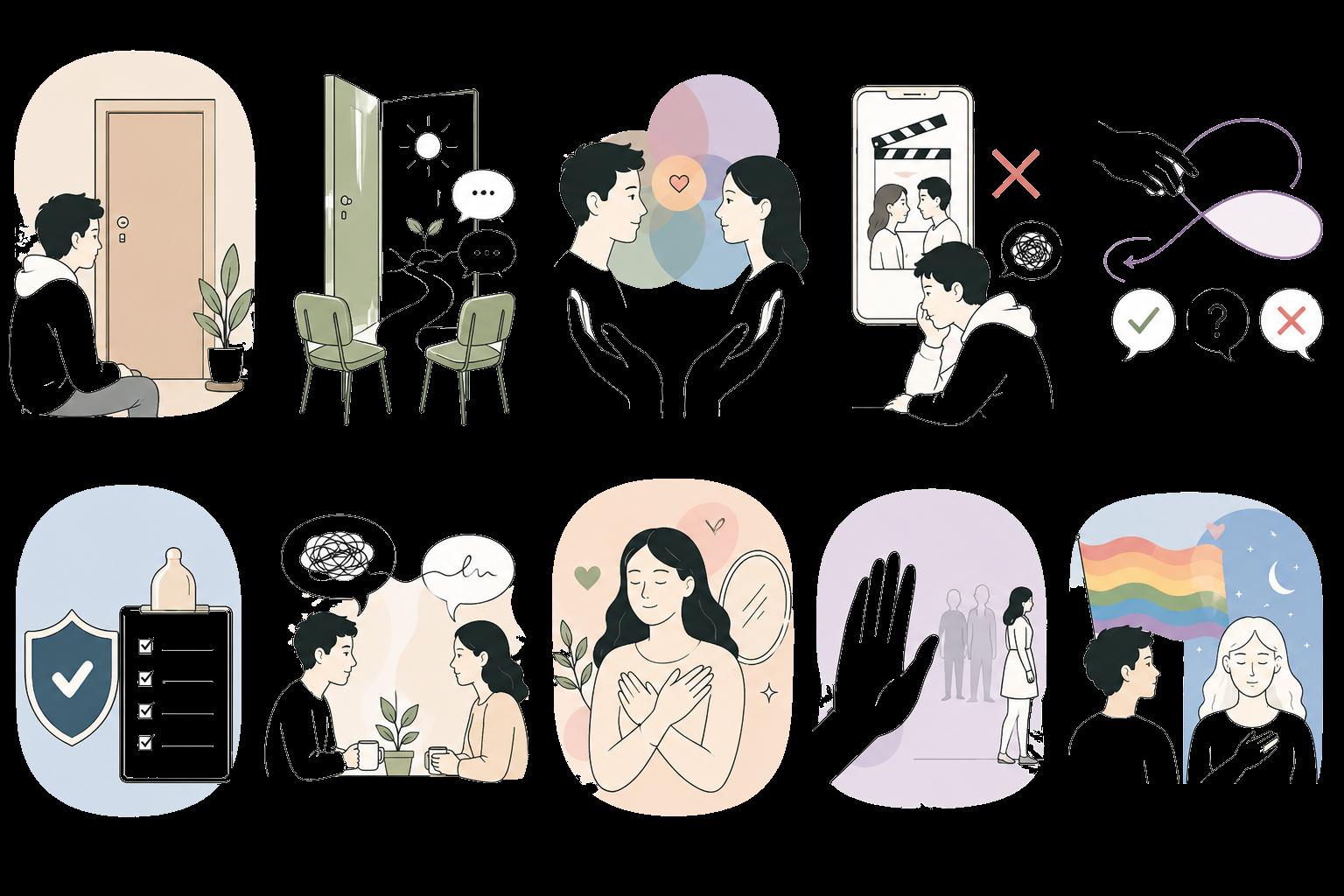
Many of us grow up hearing sex is either shameful or the ultimate proof of maturity. Rarely does anyone say: sex is a spectrum; your libido naturally fluctuates. Normalising this range earlier would have saved so much anxiety around performance, peer pressure and self-doubt.
Sex is a basic human need and a natural part of life. It can be a good thing between two people who want it, and can bring them closer in their relationship.
I read it somewhere that ‘sex is neither noble nor shameful. It's the most primal human instinct, and the most natural expression, within an intimate relationship.’ But above all, what I'd add is that all that has to be a free and voluntary choice.
Sex comes with risks and consequences. So young people should know the risks before making decisions for themselves. Don’t rush just to keep up.
Everything we ‘knew’ about sex came from the wrong places: porn, media, internet. They gave us a distorted picture, and we are left to correct that on our own, by living through it.
If we don’t watch a romcom thinking that’s how love works, why do guys learn about sex from porn? They are perfect performances only because they are staged and scripted.
Sex isn’t always smooth like what’s depicted in movies. It can be clumsy, funny and even awkward. That happens, and that's not a failure.
There’s a porn scene we all know: the girl says no, and the guy thinks she's just ‘playing hard to get.’ Countless young men have watched and believed it. In real life, if someone says no and you don’t stop immediately, it's assault!
Sex is not a competition. Being inexperienced at 20 doesn’t mean you’re behind; having had many partners doesn’t make you ‘used up.’
Porn is not the norm; you can’t just copy-paste it into your real sex life. It’s like watching a romance drama. We don’t take those plots and expect them to play out in real life. If young people could watch adult content under the guidance or supervision of parents or professionals, like teachers, counsellors, social workers, or health educators, it might actually reduce the negative consequences of kids going online to watch and learn on their own.
Sex isn’t a report card: you don’t have to be perfect to be worthy of being liked or respected. A lot of people get anxious wondering, ‘Am I good enough?’ or ‘Am I too slow, too fast, or not experienced enough?’ But the truth is, a solid, long-term intimate relationship is usually built on comfort, trust, and actually being able to talk to each other.
I wish someone had told me that ‘no’ doesn't have to be one big, dramatic reaction. If someone does make you feel guilty for checking in with yourself or hitting the brakes, they're showing you exactly who they are, and you should listen to that.
Consent isn’t a one-time ‘yes’ or ‘no’. It can be ‘I’m not sure’ or ‘I need time.’ It’s continuous – it can be withdrawn anytime, even mid-act. You don't owe anyone anything because things have already started.
Clarity is protective. It saves you from guessing, over-investing, and getting hurt by mixed signals. If I'd known earlier that I could talk openly, I'd have been able to make so many more healthier choices, so much faster.
Consent isn’t ‘I don’t hate this‘, but ‘I want this’. A ‘yes’ given out of fear of losing someone or ruining the mood is a quiet ‘no’. True consent should come from a place of enthusiasm, not obligation.
Rejection isn’t a failure or betrayal. It’s just a boundary. But we were never taught how to say ‘no’ to someone we love, or how to hear it without falling apart.
There were a few times where I felt uncomfortable, disconnected or unenthusiastic during sex. I thought there was a problem with me, when the problem really was a lack of honest communication and mutual care.
We know we should use a condom. But not everyone knows we should pinch the tip before putting it on, or that keeping it in your wallet can damage it. These are consequential and should have been taught.
Public proposals can feel like consent traps. When you feel forced and under pressure to say ‘yes’ in
When we talk about risk and prevention, we usually think of safe sex, STIs and STDs. But here’s something I wish I hadn’t learned the hard way: peeing after sex can help prevent UTIs.
All things come with caveats. We need to have a plan for when things go wrong. Say, the condom breaks or slips?
Telling students ‘just don't do it before marriage’ doesn’t prepare them enough for reality: when they really do it, they won't even know how to protect themselves properly from pregnancy or infection.
Some adults target young people on purpose. They look for the ones who are emotionally vulnerable and desperate to feel grown up. They manipulate and gaslight, and young people need to know this happens.
Social media has made it so easy for strangers to reach out. Young people don't always sense that someone has an agenda. They need to know they have a right to say no and draw a firm line on the internet.
Love isn’t a cure-all. For a relationship to work, it takes effective communication, conflict management, mutual respect, and so much more.
Relationships and intimacy are not things ‘you'll figure out naturally.’ You have to learn to talk, say what you need and hear what your partner needs. It's not just physical, but emotional, in the deepest sense possible.
A good intimate relationship should make you feel more like yourself, not like you're constantly performing for someone's approval.
Without the right guidance, it’s so easy for young people to mistake what they see online for real-world standards, which just leads to unnecessary anxiety about their own bodies or their partner's performance. I wish someone had stepped in sooner to break down those illusions—to tell me that real intimacy is built on communication, vulnerability, and mutual understanding, not just visual or sensory satisfaction.
Hong Kong moves fast. When things get tense, it’s easy to go into a ‘cold war. ’ But it doesn’t solve anything. The conversation worth having is the one to have when you're calm. Don't assume your partner will just know.
When things get tense, don’t start with ‘you always do this.’ It’s much better to say, ‘I feel lonely when we don’t spend time together,’ or ‘I wish we could try more of this because it makes me feel closer to you.’
What you feel isn’t always what you think it is. What feels like desire could be a need to be seen, a fear of being left out, or an escape from loneliness. When you can tell the difference, you can protect yourself better from pain.
Real intimacy is actually about feeling safe enough to stop, pivot, or just talk about what’s happening without the fear of disappointing the other person.
Communication is way more important than technique. A lot of people think sex ed is just about 'how to do it,' but actually, knowing 'how to talk about it' is the real key to making both people feel safe and comfortable.
You deserve to be respected and treated with kindness.
I wish somebody had told me about how to build up my own personal values. When a long-term relationship ends, it's so easy to feel like you've lost your value. I had a hard time learning how to take care of myself after a breakup, rebuild myself and refind my own worth.
The most important thing is to accept all of yourself. Everybody is unique. Nobody should ever be made anxious by a standard that was never meant for them, or hurt themselves just to become somebody's version of beautiful.
Sex isn't a proof of love. Intimacy isn't something you trade for affection. It should be built on trust, honesty, and willingness to show up for each other.
Maybe if I’d known earlier, I wouldn’t have had to learn everything through confusion and heartbreak. Maybe I would’ve been better at protecting myself, at saying no, at knowing where I ended and I could begin again.
For a long time, I believed that if I had a boyfriend, I had a duty to satisfy his sexual needs. I only realised later that my body is mine; I don’t need to please anyone or worry that I’ll disappoint. That’s a lesson I wish I’d learned earlier.
We need to talk about how harassment often comes from people we know and consider friends. In my school, it's hard to report it because guys often brush it off. But we have to start holding them accountable when they act inappropriately towards girls.
When harassment happens, most people go blank. And the perpetrator can walk away without consequence, without apology. We need to let victims know who they can turn to and how to stand up for themselves, so they don't need to face trauma alone.

Do parents think it is important to talk to their children about sex? What surprised us was the reluctance we received: Some found it distasteful, some were embarrassed, and some found it too personal. The reaction in itself was very educational for us, telling us about the gap even within families to talk about sex.
Mother of two high school-aged children
I am sorry. I don’t feel comfortable answering that question. This is something very private, and I don’t think it’s appropriate to discuss it openly.
Mother of a 14-year-old daughter and a 16-year-old son
I do think it’s important, but if I’m honest, I wish someone else would handle most of it. I do know that they get a lot of information from the internet, probably my son more. I’m not naive; I’m sure he’s seen things I’d rather he hadn’t. But the truth is I don’t know how to handle it. My husband is also not very helpful and we both believe that the schools should be doing more of the explaining: proper sex education, clear information about bodies, consent, protection, etc. They’re trained and know the right language. I feel like I would simply be improvising, because these are things I never discussed with my parents at all. At home I try to keep the door open. With my son, I might say something vague like, “You know you can ask me or your father if you ever have questions about relationships or those things.” With my daughter, right now, it is less about sex than the changes in her body and boundaries about how she dresses and uses makeup. It is an important issue, and I know I need to be better, but I just keep hoping that the school counsellor or health teacher has done a better job than me.
This is a very important issue, but it is not my job! I feel like my wife and school should have prepared her while she was at home. Now she’s at university, and I know she’s dating and travelling with friends. I don’t need, or want to know, the details. I do worry, especially when I read about date rape drugs and girls being forced into something they don’t want to do. I am more comfortable talking to her about these things: being careful, feeling safe and protecting herself. But the actual sex stuff, no. As her dad, I feel my role is to make her feel safe and secure.
The education they received in school was basic biology. I think it was a one-hour class that talked about the mechanics of it all. As they went to an all-girls school, most of the talk was about puberty and menstruation. When they were getting ready to go to university in the UK, I sat down and talked to them about contraception. Now, when they come home, we speak more about their boyfriends, relationships and emotions. Your question makes me now wonder if I actually really understood the importance of sex education and should have paid more attention to it. I guess by now they have probably educated themselves!
We are a very male-dominated house, so I think it is easier to have what might otherwise be embarrassing conversations. You ask if this is important? Absolutely! I remember being their age and I know exactly how much “deep thinking” went into my decisions back then, which is to say, not much. So, I keep it simple. I tell the boys three things:
One, use protection, every single time. I’m not ready to be a granddad and none of them are ready to be dads. Two, if the girl is drunk or crying or quiet, the answer is no. Full stop. Three: they need to respect themselves and not treat sex like a game to win or a scoreboard to fill.
I try to mix in some humour, because if I get too serious, they don’t listen. I’ll say things like, “Condoms are cheaper than nappies and lawyers,” and they groan and tell me to stop talking. But I know they are listening. They roll their eyes and walk away. But I’m pretty sure the message is in there somewhere. For now, I’ll take that.
I’m not very good at this, to be honest. I still go red just saying the word “sex” out loud. I grew up in a Christian home where the message was basically “wait until marriage,” and that was it. No explanations, no questions. Part of me still believes that sex is something special. It is meant for a committed relationship, ideally in marriage. But quite frankly, the modern world is not the same, and I know just saying “don’t” is not enough anymore. With my daughter, I’m trying to be a little braver than my parents were, even if I feel clumsy. I do talk about our faith. I believe that she should protect her heart and her body. Sometimes I’ll use a TV show as an excuse and say, “I hope you know you don’t have to rush into anything just because everyone seems to be doing it.” Or I’ll tell her, “If you ever have questions, even if you think I’ll be shocked, I’d rather you ask me than Google.” So far, nothing!
I consider both my children adults now, and we don’t sit down for formal “talks” anymore. When they were younger, we spoke about sex and puberty in general. I also sent them both to outside health-focused sex ed classes, so that if they had a specific question which they needed to have answered, it could still be done professionally. Having open conversations is important to me, and even now, we talk about relationships, intimacy, faithfulness and even heartbreak. Early on, I focused more on health and consent. Now the emphasis is on character. I’ve told them both that the way they treat partners, especially during break-ups, shapes who they are. It matters how they communicate and how they treat people. I believe that sex is a private act, but with social values. As a parent, I think my role has evolved: from giving basic information, to modelling respect in my own relationships, to being a sounding board when they face moral grey areas. So yes, it’s important, but not as a single, dramatic conversation. It’s important as a thread running through years of how we talk about bodies, gender, dignity and responsibility.
of three daughters who are 8, 10 and 12
I really believe that sex education is something that shapes a child’s entire life. While I might not always be the one to bring this topic up out of the blue, I’m certainly not going to shy away from it if the opportunity arises. I try to keep the conversation open and straightforward.
Recently, the TV drama Themis was about an underage student who had a relationship with her piano teacher and ended up pregnant. I do sit down and have a proper chat with my kids about it. I want them to understand the consequences. At the end of the day, it’s all about helping them build a strong sense of self-protection.
After I found out about this interview last week, I actually asked my youngest daughter what she knew about “where babies come from.” It turns out the schools are already covering the basics in their General Studies classes. As for the social side of things, like dating, I’ve told my girls they should wait until university at least. At the moment, they just laugh and tell me boys are “gross” and that they’re never getting married!
I try to be relaxed when talking about these topics. Sometimes when I’m on my phone, and a photo of a pretty woman pops up, my daughters will tease me and shout, “Look, Dad’s looking at pretty girls!” I just take it in my stride and tell them, “Well, it’s only natural for men to appreciate beautiful things.” It’s those little, easy-going moments that really help build a bridge of trust between us.
Mother of three children, who are 7, 10 and 12
I don’t normally bring up this topic. Usually, the conversation starts when they study General Studies, or when they hit puberty and start noticing classmates they "like." When these topics arise, I try to shift the focus toward a values-based approach to love and relationships. Rather than just reciting biological facts, I talk to them about what love actually looks like. I don't set a specific age for when they are "allowed" to date; instead, I tell them that to love someone else, you must first understand who you are Of course, it isn’t always easy. My younger child might say something sweet but naive, like, "I love my sister so much, can I marry her?" I have to gently explain that while love is beautiful, marriage is a different kind of commitment. With my teenager, it’s trickier. There is a definite sense of awkwardness; she’ll often roll her eyes and say, "Yeah, I know, I get it."
Many parents take a fear-based approach, simply telling their kids, "don’t do it." But I believe that if a child understands that intimacy carries a responsibility, they are less likely to act on impulse. Ultimately, while our traditional culture makes these topics feel taboo, and I may still feel a bit of embarrassment when the word "intercourse" comes up, but if they ask, I will always answer.
Sex education is absolutely vital. If my girl doesn't understand sexual boundaries, she might not even realise if someone is harming or manipulating her. Beyond safety, sex is an unavoidable part of growing up. It’s also a matter of honesty; her very existence is the result of the love between her parents and the intimacy we shared. You can't really hide that from a child when they start asking where they came from.
However, talking about it is far from easy. At 10, children often know “bits and pieces” from social media or friends, which leads to a lot of giggling and jokes. It’s a difficult balance: if I’m too serious, it feels overly heavy; if I’m too relaxed, she might think it’s just a joke and not take it seriously. While discussing physiological changes like menstruation or the need for a bra is manageable, explaining sexual intercourse feels incredibly awkward because it’s so personal.
I’ve noticed a real gap between school education and reality. Schools in Hong Kong are quite academic; they cover the “how” of reproduction but fail to address the “street knowledge” kids encounter. For instance, my daughter once received a WhatsApp image of a naked man. While I blocked it for security, we didn’t deeply address the “why” of her laughter or the disrespectful way sex is often portrayed online. Schools tend to stop the conversation at the joke, which doesn't actually help children process what they've seen.
The biggest challenge in sex education is the moral complexity of the modern world. Schools teach a very “textbook” view of relationships, usually focused on marriage and single partners. But in reality, children see divorce, cohabitation, and dating after separation. When what they see at home or in society contradicts the model answers they hear in class, they get confused. Schools are often too conservative to navigate these controversies, leaving parents to handle the heavy lifting. Ultimately, sex education isn’t just about biology; it’s about personal beliefs and values. Many parents still find it “improper” to discuss, but we have to find a way to bridge that gap.
Yes, it is very important and something we have to talk about with our son, especially as kids nowadays have access to information on channels like WhatsApp, YouTube, and Netflix. Even though my son does not search for this kind of information, his classmates may talk about it.
In fact, I once secretly checked my son’s WhatsApp while he was taking a shower, and I saw that a girl, one year younger than him, asked if he knew what “make love” meant. Girls nowadays are quite open and straightforward, and they tend to mature earlier than boys. Also, a boy who is two years younger once asked him what “flirting” means. I can see that kids are very curious about sex and relationships.
But as a mother, it is difficult and embarrassing for me to talk about sex with my son. I also think that boys think very differently from girls. As a female who studied in a girls’ school for 13 years, I don’t really know what or how boys think. I believe this should be my husband's or the school’s job.
I heard from a social worker that when boys have hair on their legs, it symbolises a stage of puberty, and they may start to develop sexual desire. I am keeping an eye on my son’s legs and will instruct my husband to talk to him about sex when he reaches that stage.
Yes, people need to know this. But I feel that talking about it just puts ideas in children’s heads and might encourage them to try things before they’re ready. So, when the time comes, we’ll see.
The Federation delivers sex education through foundational learning and crisis prevention.
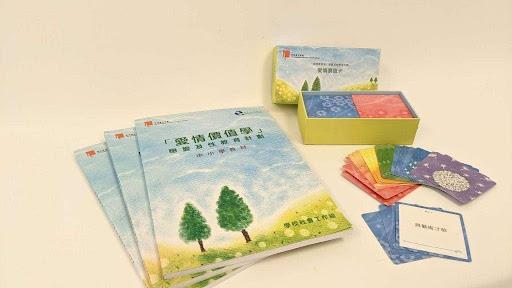
Since 2013, the Federation’s School Social Work Unit (SSW) has been providing in-school love and sex education services. Through workshops, a newly developed textbook with a board game, the unit collaborates with teachers and colleagues to promote love and sex education.
The unit also released a survey on young people's behaviours and views on love and relationships in 2019. Among those with dating experience, one in four had their first relationship before 13, and some were as young as nine. 55.0% had monthly conflicts with their partners. After break-ups, 50.6% hid their emotions, while 15.5% admitted to self-harming as a result. One in ten said they bad-mouthed their ex online.

The Youth Research Centre (YRC) has been tracking trends in young people’s attitudes towards love and marriage through its Youth Value Indicators since 1997.

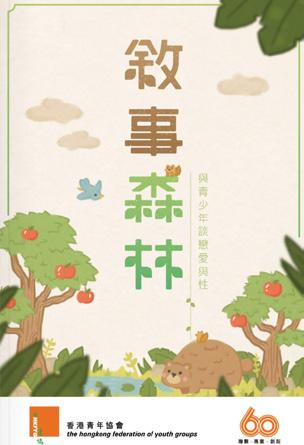

The book Love and Sex: Narrative Therapy for Youth, published by the Professional Publication Unit (CPS) in 2020, tells stories of young people who enter their own forest to explore precious, forgotten fragments of their growth and discover their personal value. A box of game cards is included with the book.
Meanwhile, the Youth Crime Prevention Centre (YCPC) focuses on crisis prevention. They provide professional workshops teaching students how to spot dangers, set clear boundaries, and protect themselves from sex-related crises.
Their LOVE SIM programme in 2019 aims to prevent sexual crises in adolescents. To reduce the risk of falling into sexual crises or committing sexual offences, the Centre’s sexual crisis support services help teenagers cultivate healthy attitudes and values regarding sex and love, enhance their awareness of sexual crises, self-protection abilities, emotional management skills, and establish a positive attitude towards life.

by Annette Chan
Sex education is not part of the formal curriculum; rather, the government recommends that schools embed it across subjects such as Biology and Liberal Studies as they see fit.
This approach has been criticised by NGOs and politicians as inadequate, especially following the Equal Opportunities Commission’s Study on Comprehensive Sexuality Education in Secondary Schools of Hong Kong in 2022, which reported that 59.1% of schools did not cover sexual consent and 13.8% of schools did not teach sex education at all. Instead, external organisations play a major role, with over 90% of schools inviting them to deliver sex education in the 2018/19 school year.
Most schools focus on the biological aspects of sex or puberty, while sexual violence, sexual orientation, informed consent, and digital literacy are often unaddressed.

In Taiwan, sex education shifted from an abstinence-based model following the introduction of the Gender Equity Education Act in 2004 to cover contraception, STI and STD prevention, gender equality, and sexual diversity. Sex education is integrated into different subjects in elementary and junior high school, with four hours mandated per term.
However, a sharp increase in child exploitation cases in the last decade and 2023’s MeToo movement have highlighted the gap between Taiwan’s public policies and reality. A 2025 survey of Taiwanese elementary school students found that 53.4% had forgotten their sex education, and the majority of parents were unwilling to discuss sex and gender openly at home due to social stigmas.
In February 2026, a trio of civil groups advocating for sex education urged the government to rehaul its sex education guidance to address power dynamics, dignity, and grooming.
While abstinence-only education was the norm for previous generations in many countries and regions, UNESCO and WHO now advocate for comprehensive sexuality education (CSE), which teaches not just the physical but also the cognitive, emotional, and social aspects of sexuality. However, attitudes towards sex — and by extension sex education — vary widely between cultures, depending on social mores, religion, and myriad other factors. So, how and when is sex education taught across the globe?
Sex education in the Chinese Mainland has gradually developed through policy reforms. In 2002, the Population and Family Planning Law of the People’s Republic of China marked the first time sex education was written into law. This was followed by the State Council’s Outline for the Development of Children in China (2011–2020), which explicitly called for incorporating sex and reproductive health education into the compulsory education curriculum.
In October 2020, the revised Law on the Protection of Minors further strengthened this framework by formally including sex education and requiring schools and kindergartens to provide age-appropriate sex education.
In practice, sex education in most primary and secondary schools is delivered through an “integrated” approach rather than as a standalone subject. Some developed regions, including Beijing and Shanghai, have begun experimenting with standalone courses or thematic lectures that offer more comprehensive content.
According to UNESCO’s findings on sexuality education implementation in Chinese middle schools in 2019, school-based programmes tend to focus on traditional topics such as puberty-related physical and psychological development, HIV/AIDS prevention, and relationships, while giving comparatively less attention to issues such as gender identity, sexual orientation, sexual behaviour, power dynamics, and contraception.
Similarly, Japan’s sex education is integrated into subjects such as science, home economics, and physical education. Upon its introduction to the national curriculum in the late 1980s, on the heels of the AIDS crisis and the country’s declining birth rate, sex education was taught through a public health lens.
In 1998, backlash from conservative groups led the government to introduce a “restriction clause” barring middle schools from teaching “the process leading to pregnancy”. While upper-secondary school students learn about the biology of reproduction, a combination of curricular restrictions, abstinence culture, and teachers’ fear of negative consequences has yielded inconsistent knowledge among Japan’s youth about consent, sexual health, gender equality, and sexual violence.
Though high schoolers are increasingly chaste — with 77.2% of boys surveyed in 2024 saying they’ve never kissed anyone — Japan has seen an “unprecedented increase” in syphilis cases since 2021, which medical experts attribute in part to insufficient education.
Australia takes a comprehensive approach towards sexuality education, with age-appropriate sex concepts included in the national syllabus from kindergarten to year 12. Kindergarteners are taught the names and functions of body parts, while primary school students learn about reproductive health, puberty, and bodily autonomy. Secondary school sex education introduces conception, pregnancy, sexual behaviours, contraception, and STI prevention before culminating in complex topics like relationships, consent, and intimacy.
In 2022, Australia mandated consent education, which includes topics like sexual coercion, power imbalances, and gender stereotypes, while state governments also provide resources about digital intimacy and intimate image laws to various extents. However, implementation varies across states and schools, and a 2024 report suggested that some teachers had focused too much on consent and neglected other equally important aspects of sex education. A 2018 survey of Australian sex education teachers found issues such as transphobia, teen parenting, abortion, sex acts other than intercourse, and sexual pleasure were less commonly covered.
Historically, the UK had only mandated education about reproduction and HIV/AIDS prevention, though schools could develop more comprehensive sexuality education beyond the national curriculum. In the 2010s, educators and parliamentary committees lobbied for statutory Relationships and Sexuality Education (RSE) in an effort to safeguard children through preventive education and provide a more enhanced and balanced understanding of relationships, sex, and health.
Though terminology varies between jurisdictions, RSE is now compulsory for secondary schools in England, and all students of compulsory school age in Wales and Northern Ireland. Official guidance recommends including LGBTQI topics, menstrual wellbeing, sexism, sexual harassment and abuse, mental health, and online safety. In Scotland, RSE is taught at the discretion of schools, though the government provides official guidelines.
RSE is highly politicised, with teachers’ unions and NGOs criticising the parental right to withdraw children from classes, as well as “faith-based carve-outs” which enable academies and religious schools to adapt material according to their beliefs. In Wales, however, all schools are legally required to teach RSE in a “neutral, factual way”, and parents do not have the right

With one of the lowest abortion rates in the world, the Netherlands is often held up as an example of how effective open and comprehensive sexuality education can be. While sex education is typically integrated into subjects like biology, citizenship education, or sociology, it is compulsory.
Education begins early, with primary school students learning about bodies, personal boundaries, crushes, consent, and respect in class. In secondary school, students learn about falling in love, relationships, sexuality, gender, pregnancy, social media, safe sex, and assertiveness.
Open discussions around sex and relationships are normalised and framed as a natural part of development. Rutgers, the national centre of sexual health and safety, holds two annual events in schools across the country: Spring Fever Week for primary schools and Week of Love for secondary schools. During these events, participating schools hold at least one age-appropriate sex education class a day for students.
One of the pioneers of comprehensive sexuality education, Sweden mandated sex education on a national level in 1955, becoming the first country to do so. Like other Nordic countries, Sweden is considered to have a robust sex education programme, with a strong emphasis on autonomy, communication, health, and pleasure.
Though sex education was historically the purview of Biology teachers, there has been a shift towards incorporating aspects such as sexual norms, discrimination, gender equality, and power structures more broadly across subjects following curriculum reform in the late 2010s. Topics such as digital sex culture and exposure to pornography have been increasingly taught to reflect the nuances of sex in the digital age.
The country’s safe sex habits are reflected in the Swedish Association for Sexuality Education (RFSU)'s annual Condom Control report, which showed that Swedes have the highest rate of condom usage among Nordic countries at 42%. Outside its own borders, Sweden also promotes the adoption of comprehensive sexuality education by funding UNESCO’s efforts to train teachers and strengthen curriculum-based education in sub-Saharan Africa.
Under the United States federal system, where governance is dictated at the state level, sex education is very fragmented and varies widely from state to state. Like in the UK, sex education is highly politicised, with comprehensive sexuality education being associated with liberal states, while conservative states practise an abstinence-based approach.
Of the 50 states in the US, 26 require sex education to be medically accurate, and eight states mandate LGBTQI-inclusive sex education. In these areas, educators are required to provide evidence-based instruction on contraception, pregnancy, and sexual health. However, some conservative states, such as Alabama, Oklahoma, and Texas, even go so far as to give conservative groups approval over teaching materials, while instructing students that being queer is “not acceptable”.
Interestingly, a 2023 survey of parents across different political and religious affiliations showed that when asked about specific topics — i.e. STI/STD prevention, how to deal with pressure to have sex, the meaning of gender — instead of whether they prefer CSE or abstinence, most parents were generally in support of sex education.
by Michelle Leung
Set in Hong Kong’s nightclub underworld, Night King is a film that trades titillation for a story of reinvention.
Hong Kong has not seen a film centred on the lives of sex workers since Golden Chickensss (2014). That makes Night King, released earlier this year as a crowd-friendly Lunar New Year drama-comedy, something of a surprise return to the genre. Once associated with bawdy humour and overt sensuality, the subject has been reshaped into something more measured with restraint, without sacrificing its commercial appeal.
Night King marks director Jack Ng Wai-lun’s (吳煒倫) follow-up to A Guilty Conscience (2023), reuniting much of the same cast and crew. Led again by Dayo Wong (黃子華), the film trades the courtroom for the nightclub. Set in 2012, it traces the gradual decline of Hong
Kong’s once-thriving nightlife industry. When the long-standing Club EJ in Tsim Sha Tsui East faces a corporate takeover, its manager is forced into an uneasy alliance with his ex-wife and former rival, as they attempt a last-ditch reinvention.
Despite its glitzy setting, Night King is less concerned with indulgence than with endurance. Ng leans into a distinctly Hong Kong ethos of pragmatism and perseverance, deliberately muting the more salacious elements of the milieu. The result is a film that feels notably restrained for its premise, yet broadly accessible. Like its predecessor, it has surpassed HK$100 million at the box office, reaffirming Ng’s instinct for crafting resonant crowd-pleasers.

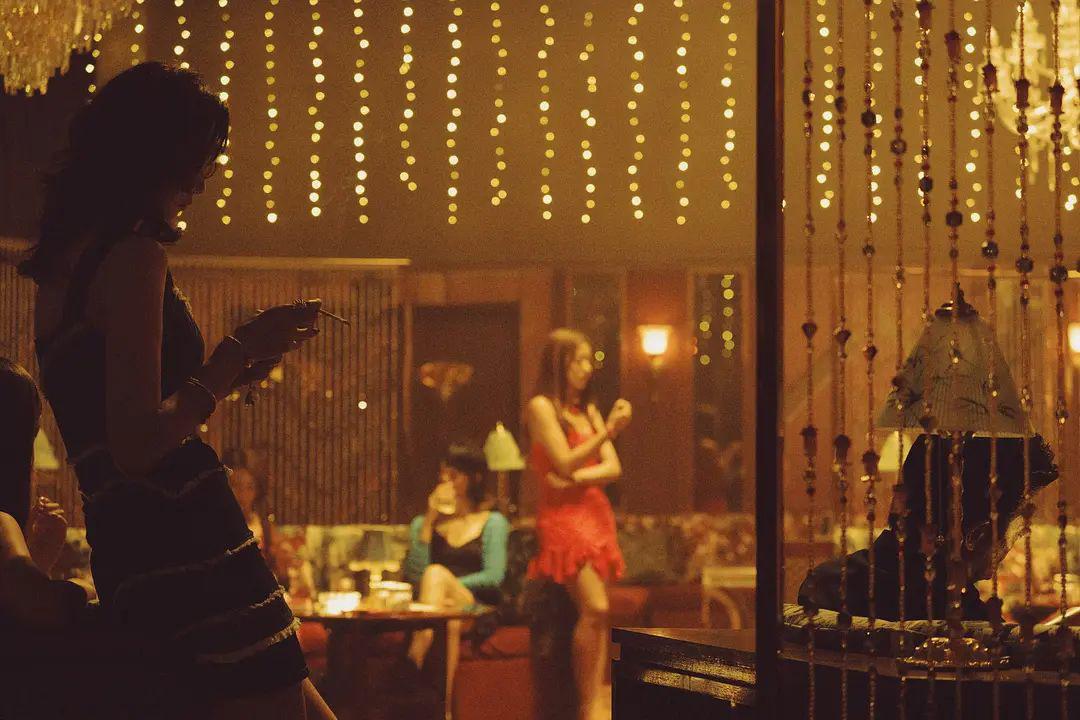
At its heart, the film is steeped in wistful nostalgia. Club EJ evokes the Japanese-style hostess clubs that flourished in the 1990s, with their choreographed glamour, hierarchical “mamasan” structures and ritualised performances of intimacy. By the 2000s, however, these spaces were already in decline, with many disappearing by the following decade. By setting the story in 2012, Night King captures the industry in its twilight.
Ng has cited the quiet resilience of this sunset trade as a key inspiration and that perspective anchors the film emotionally. One line encapsulates its ethos: “People think customers come to spend money on women. They are not buying pleasure, but dignity.” In this framing, the nightclub becomes less a site of excess than a transactional space where emotional validation and self-worth are negotiated. The diminished cultural prominence of Tsim Sha Tsui East today only deepens this sense of loss.
The film’s portrayal of women sits at the centre of its most contentious debates. Critics have argued that Night King risks perpetuating sexualisation and objectification without offering sufficiently complex characterisation. Yet there are signs of a more nuanced shift.
Rather than leaning on voyeurism, the film situates its “mamasans” and hostesses within a framework of labour and agency. Charm, intimacy and desirability are presented not as innate qualities, but as cultivated

skills. The recurring refrain, “Everyone is a Superstar,” gestures towards self-fashioning: dignity is not inherent, but constructed through performance.
This framing, however, is not without contradiction. The suggestion that beauty and sexuality can function as tools of empowerment risks reinforcing the very structures the film seeks to complicate. At the same time, it reflects a broader, ongoing negotiation around gender, labour and value in contemporary Hong Kong.
Ultimately, Night King is less about nightlife than about time. Its narrative of decline, adaptation and reinvention mirrors Hong Kong’s own trajectory in recent years, shaped by social upheaval, economic uncertainty and a pervasive sense of transition.
What lingers is not simply nostalgia, but a reframing of it. Rather than dwelling on loss, the film pushes its characters towards transformation, however imperfect. In doing so, it points to a reimagined Lion Rock spirit: not a fixed ideal, but one that endures through change.
The film does not fully resolve its tensions between spectacle and restraint, nostalgia and critique, commerce and commentary. Yet in a city still negotiating its future, Night King offers something both comforting and insistent: even in decline, reinvention remains possible.
This may well be what Hong Kong needs right now.
Michelle is always curious about the complexities of life. She is fascinated by the elasticity of words and the versatility of
by Selene Li
What if the secret to finding your creativity is not in perfection, but in the messy, liberated failure of making “bad” art?
To finish an art assignment, I have spent my entire weekend agonising over what the painting should "mean." I obsess over angles and fret over every small part that could possibly go “wrong.” By the end of the day, I haven’t actually moved forward; I am paralysed in the thinking stage, neglecting the making stage. I tell myself I’ll push through, in the hope that exhaustion will finally override my perfectionism so I can finish the project and sleep.
It isn’t until the critique that I realise I’ve missed the theme entirely. I focused so intently on the details that I forgot the bigger picture. The result is a


painting completed at the last minute, its surface masking hours of wasted sketches. The quality doesn't match my expectations. However, this failure reveals what I am capable of and what I’m not. It motivates me to do better. It suddenly occurred to me that, maybe, making “bad” art is actually not a bad thing, but an essential part of the journey.
"Bad" art is subjective, but for many, it implies a lack of skill or a finish that looks unpolished. It is the gap between what the maker intended and what actually appeared on the canvas. Unfortunately, we often use the fear of making something “bad” as an excuse to stop creating altogether.
We’ve all heard that art is about self-expression rather than polished outcomes or high scores, but do we actually believe it? As humans, we crave validation, uniqueness and yearn to be the best at something. When that doesn't happen, disappointment saps our motivation. We ask ourselves: What’s the point of creating if it’s going to be bad anyway?
We are afraid to create because we are afraid of failing our own expectations. I always spend way too much time preparing and researching than actually working on the painting. Then I end up giving up on it before I even start. Even while penning the article, I am overwhelmed by ideas in my head and my fear of falling short, even though I have done nothing about it.
There is a liberating mantra for this: "Make it exist first; you can always fix it later". It reminds me that you can’t fix what doesn’t exist. Embracing this mindset liberates us from unrealistic expectations and allows for genuine expression.
Cy Twombly is an artist whose work defies the idea of being skilful and perfect but embraces messiness. While critics often dismissed his work with the tired "my child could do that" line, Twombly’s style was actually the result of "de-skilling." To break free from traditional rules, he purposefully sabotaged his own skills, spending years drawing in the dark or using his wrong hand to erase his professional muscle memory.
Twombly wasn't trying to be “bad”; he was trying to be visceral. He ditched the polished, practised line and found a unique style of his own. He proves that when we stop obsessing over perfection, we will finally have room for authenticity. To find your true style, you have to be brave enough to let go of being "good."
Even when I free myself from my own expectations, the weight of outside judgment remains. However, creating bad art really helps shift my focus away from the end product to the creative process itself. It encourages me to be playful and experimental, understanding that it's okay to mess up, which is essential to the learning process.
Sure, I might not feel skilled sometimes, but I know I can’t get better without actually dipping my toes in it and practising. The satisfaction of finally getting something right makes the journey worthwhile. In a hectic society where your values are determined by how much you give, art can be an exception. Enjoy the simple act of making, away from the pressures of the outside world.
Today, making art is becoming even more crucial and, in my opinion, is how we prove ourselves human. With the rise of AI, doing something authentic by yourself is revolutionary. While machines can churn out perfect images in seconds, there’s an immense value humans bring to their artwork because it comes from their heart and soul. In a tech-driven society obsessed with algorithmic perfection, choosing to create art, regardless of its quality, is a powerful rejection of societal pressures to conform. Art gives unique experiences and emotions that only the living can share.
By recognising the importance of making bad art, we can shift our perceptions of creativity. Embrace the messiness, the imperfections and the joy of trying something new. Don’t wait for the perfect idea. Just create something. Make bad art.

Selene Li, 15, is a student at HKFYG Lee Shau Kee College. She enjoys reading, watching video essays, and, like many, often finds herself scrolling through her phone.
by Joy Pamnani
As governments enforce a social media ban, why is teaching “digital swimming” more effective than simply closing the beach?

y 13th birthday present wasn’t a new dress or a video game; it was my very own Facebook account! Thirteen was the minimum age, and with so many of my friends already online, I quickly became addicted, spending hours scrolling through profiles, liking posts, and playing games. Of course, my grades tanked, and my parents intervened with their own social media ban: my account was to be deactivated, accessible only during the holiday season. It worked. By the time I entered Form 3, I had learned a degree of self-discipline and was only checking in once or twice a day. Mom and Dad cancelled the ban.
Back then, a social media ban was a household rule enforced by frustrated parents, but today, governments are stepping in to do the same on a national level. With

ongoing pushes for teen social media bans in places like Australia and Denmark, is it Hong Kong’s turn?
When assessing if a ban makes sense for our city, we have to look at the benefits and harms of social media.
Let’s start with physical health. With childhood obesity rates rising in Hong Kong, it is easy to blame screens for a lack of exercise. But when I was a kid, we simply didn’t have the lightning-fast Wi-Fi speeds or the endless battery life that makes today's 24/7 digital immersion possible. Yet, the internet isn't purely a sedentary trap. I was never particularly good at traditional sports like basketball or badminton, but social media has given me access to an online dance community that fostered my active lifestyle. If you know where to look, social media has a ton of free fitness workout videos, saving you the cost of a gym membership.
What about mental health? Today's teens aren't just comparing themselves to their classmates; they are comparing themselves to celebrities and KOLs. Fewer likes on an Instagram post creates stress, and excessive use of social media has fueled depression and anxiety, not to mention cyberbullying. In the early days, cyberbullying was often dismissed as a "first-world problem" because you could simply turn off the screen and disconnect. But for today’s teens, their entire social lives are online. Asking them to disconnect is essentially asking them to embrace social isolation.
Who can forget the elephant in the room — the impact on grades? Certainly, there’s plenty of educational content available online. I would have loved to grow up with influencers like Mark Rober on YouTube, who teaches complex science concepts through engaging projects rather than rote memorisation. But how many teens are actually using social media for learning?
I recently adjudicated a friendly debate match between Precious Blood Secondary School (PBSS) and Islamic Kasim Tuet Memorial College (IKTMC) about whether a social media ban is right for us. Interestingly, both teams had similar ideas about the benefits and harms of these
platforms. The crux of the debate was about whether a complete ban is the right solution. PBSS argued for a total ban, while IKTMC insisted that we should instead focus on reducing time spent on harmful apps.
The Affirmative’s final speaker, Mecheal left the audience with a thought-provoking analogy: "We set boundaries for swimming pools to prevent kids from drowning. Why then are we letting kids drown in a digital ocean?"
As I evaluated the arguments, I couldn't help but ask myself a counterquestion: what if, instead of closing the beach, we teach students how to swim?
Yes, there’s plenty of inappropriate content and fake news online, but what if we can teach kids social media literacy? What if we can train them to leverage the benefits of social media and not be prone to its harms?
Finally, would a social media ban even work? As a kid, I remember using puppy-dog eyes to bargain for a few more minutes of screen time, and even actively trying to guess their passwords to get back online. Kids are endlessly resourceful when they are told they can't have something.
If the government mandates a ban, we have to ask ourselves if today’s digitally native teens will simply outsmart the tech companies and the legislation. With VPNs and fake accounts already acting as common workarounds, a ban might just drive the behaviour underground, removing the very opportunity for parents and educators to guide teens through the very real dangers of the internet.
We have to remember that these teens will become adults soon, stepping into a workforce and a society where the internet is inescapable. We absolutely need to protect our kids from the deep end, but if we spend their formative years just trying to keep them out of the water, they will drown the moment they have to navigate it on their own.
Born and raised in Hong Kong, Joy Pamnani, a long-time contributor to Youth Hong Kong, is an entrepreneur and a Public Speaking & Debate Coach at Inspire2Aspire Consulting.


by Eason Tang

Why do celebrities we chase on our screens feel like the closest friends we have?


As seven-year-old Kenneth Ma sits poised at the piano, eyes closed, the notes of Mozart’s Sonata No. 11 flow from his fingertips. What future do you picture unfolding? Perhaps the familiar archetype of a piano prodigy in the mould of Lang Lang or Li Yundi. But Kenneth, a pianist, conductor, entrepreneur and alumnus from the Hong Kong 200 leadership programme, would go on to compose a different story.
Now a Year 4 student with double majors in Business and Music at the University of Hong Kong, Kenneth was given an opportunity to be a conductor in the university choir. This random assignment made Kenneth realise how much he enjoys bringing musical talents together, even more than just playing the piano.
“Piano is often a very individual activity. If you were a solo pianist, you would always be alone on stage. Conducting is different, and I realise how much I enjoy meeting and working with people,” Kenneth says.
For Kenneth, conducting is putting together a puzzle, seeing the big picture and contemplating where and how each piece fits, ensuring the violin and trumpet harmonise, with attention to the timing, balance and nuance.
“On stage, the conductor is silent, yet communicating precisely with so many. The orchestra can only be unified, reading not only the music, but also my body language.”
As a student musician who directs an ensemble, Kenneth Ma shows how to lead and connect different communities through music.
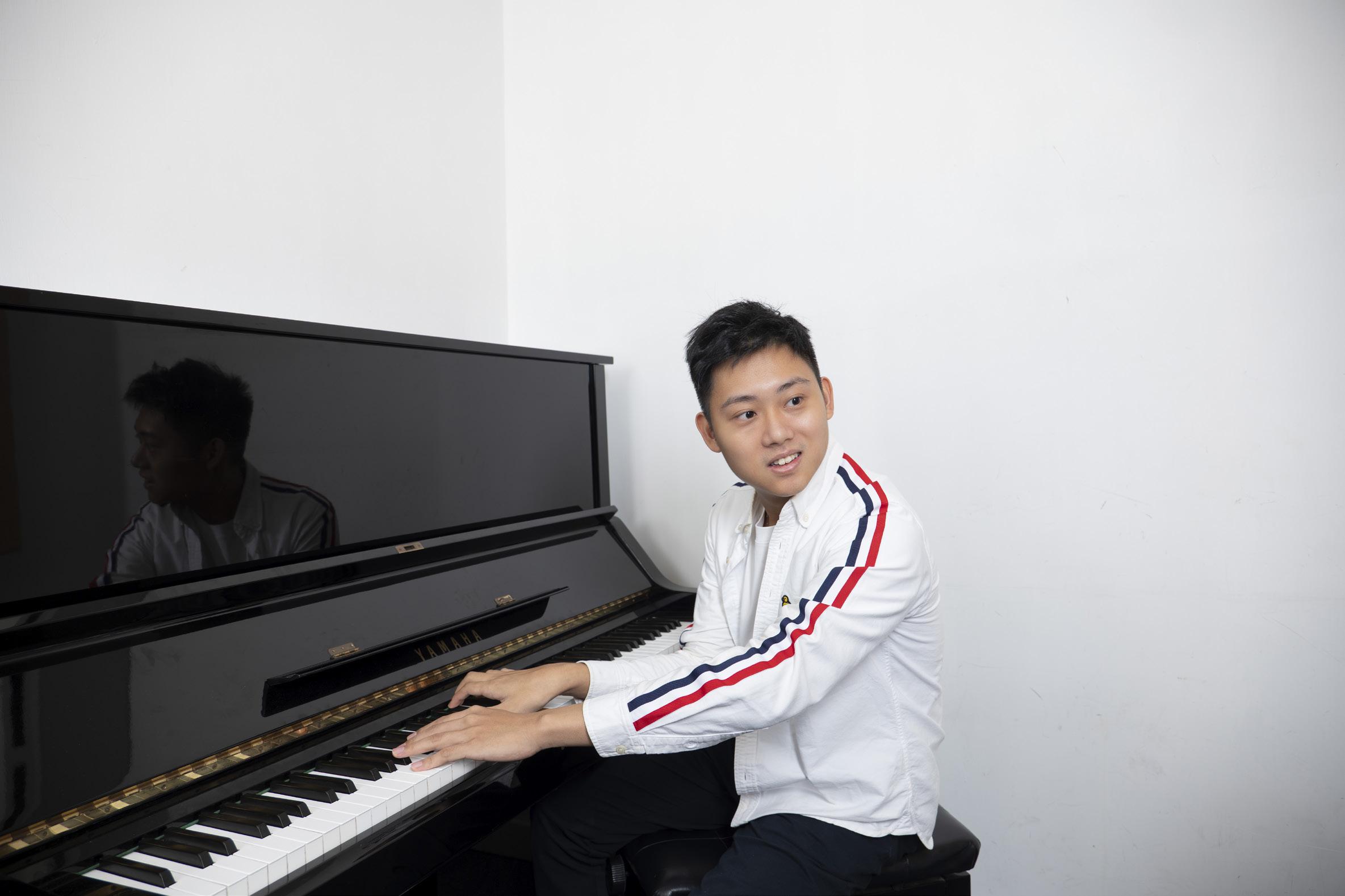
Kenneth has used his musical knowledge and talent to found the Embrace Chorus (昔唱 ), an initiative designed for the elderly with dementia, also known as Hong Kong’s first choir specially designed for dementia patients. This collaboration with local elderly centres has helped seniors who live with dementia to regain their memories, cognitive ability and sense of community.
The idea behind the Embrace Chorus can be traced back to the Hong Kong 200 project, a youth leadership initiative run by the HKFYG. Kenneth and his teammates, just after graduating from high school in 2021, won the Gold Award in “Project for Hong Kong” with Kei Lok Kin (耆樂鍵 ), which centred on the kalimba, a small finger piano, designed to collect information and data on elderly people’s cognitive responses as they played it.
Although the idea never materialised due to budget constraints, the idea to connect music with elderly care had taken root. Kenneth is grateful for the training, community engagement and experiential learning experiences.
From organised community exploration activities in Fanling, a town far from Hong Kong’s urban area, to designing an innovation project with his peers, Kenneth came to realise the connection between local communities and social issues that he had not encountered before.
“The activity made us slow down and observe. We would ask: ‘Why is the wet market arranged in this way?’ ‘Why are there so many playgrounds?’ ‘Why are the facilities
designed for elderly people?’ I began to notice details about the community that I had previously overlooked,” Kenneth says.
The impact of the Hong Kong 200 programme was the connection Kenneth made and the space given to reflect on the many ways young people could serve, connect and contribute, which eventually led to the development of Embrace Chorus.
Having observed a lack of willingness to move or communicate and increased screen time among the elderly, his team came up with the idea of designing interactive music-learning sessions to help reactivate their brain associated with memory, motivation and social interaction.
To make the teaching of music and singing clear and direct, Kenneth broke down the musical ideas into simple forms connected to everyday experiences to which the elderly could relate.
“ “
Communities do not have to stay in separate circles.
In demonstrating exactly how he did this, Kenneth explains how he taught the elderly to memorise the solfege of Do, Re, Mi. He asked them to associate the sounds with the Cantonese pronunciation of a familiar pastry, 牛角酥 (ngau4 gok3 sou1). By connecting musical knowledge to familiar objects in their daily lives, Kenneth’s teaching method helped build confidence among the participants who were new to choral singing.
Through months of lessons and practice, Kenneth was thrilled to see how the senior participants not only acquired new musical skills, but also got to know their neighbours better.
To Kenneth, people with dementia are those who have removed the “social mask” placed on them by society. “Being with them sometimes feels like interacting with very experienced children,” he says. “They are innocent and genuine. At the same time, they have rich life experiences. When I spend time with them, I learn a lot because they interact with me without defences or barriers,” Kenneth says.
Through the Embrace Chorus, an ongoing project at four local elderly centres every Saturday, Kenneth hopes to challenge the stereotype that people living with dementia are “blank” or “unresponsive”. He wants to raise awareness that social inclusion is not simply about
helping vulnerable groups catch up, but also to create the right channels for them to showcase their talents and share their stories.
As Kenneth says, communities do not have to stay in “separate circles.” They can move closer together through shared experiences, which he hopes will blur boundaries between communities.
If conducting is about bringing different musical instruments together while allowing them to remain different, the Embrace Chorus does the same: with children, the elderly and others from different backgrounds, all to co-create harmonious and meaningful experiences with a common purpose.
While Kenneth hopes to expand and continue the Embrace Chorus, he plans to continue studying conducting abroad without a clear sense of what’s next.
For Kenneth, life is like a box of chocolates: you never know what you're going to get. It is not a contract with a fixed return, nor a planned tour with every step clearly instructed. Sometimes, the return comes unexpectedly in the people one meets, the conversations one remembers, the communities one comes to understand, and the new directions that appear only after taking the first few steps.
He hopes young people can lower the pressure they place on themselves to find the “right” path immediately. Kenneth’s message is simple: treasure every relationship and do not be afraid to begin before everything feels certain.
In a world where efficiency and productivity speak volumes, music and conducting have taught Kenneth the value of slowly becoming, as music never arrives at a final endpoint. The most meaningful things, he suggests, take time. Like music, connections, trust and community, impact can take time. Life does not need to rush toward a final note; there is value in listening, adjusting and allowing the melody to simply develop and unfold.
Or, as Kenneth sings, “Que Sera, Sera: whatever will be, will be.” This does not mean waiting passively, but walking forward with faith and openness, lowering rigid expectations and believing that each sincere attempt may one day
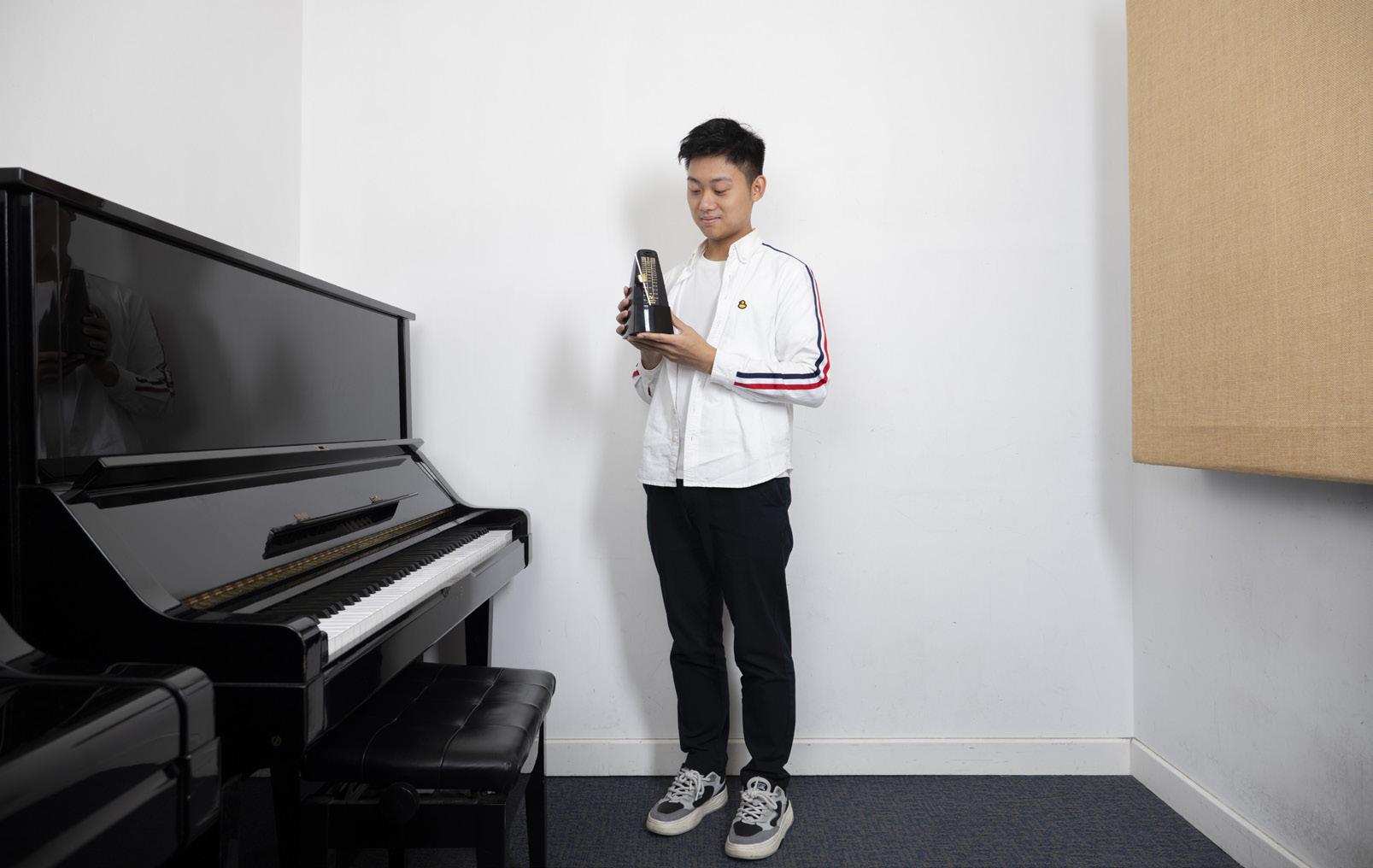
Kenneth Ma, now a Year 4 student at the University of Hong Kong, is a pianist, conductor, and founder of the ). He is also an alumnus of the leadership programme.
More than just a sport, volleyball becomes a vehicle for growth, resilience, and connection through the Federation’s Community Team Sports Office’s V.Cares Youth Volleyball Training Programme, Supported by Mitsubishi Electric (Hong Kong) Limited. V.Cares was recognised with the HKFYG Outstanding Programme Award 2025.
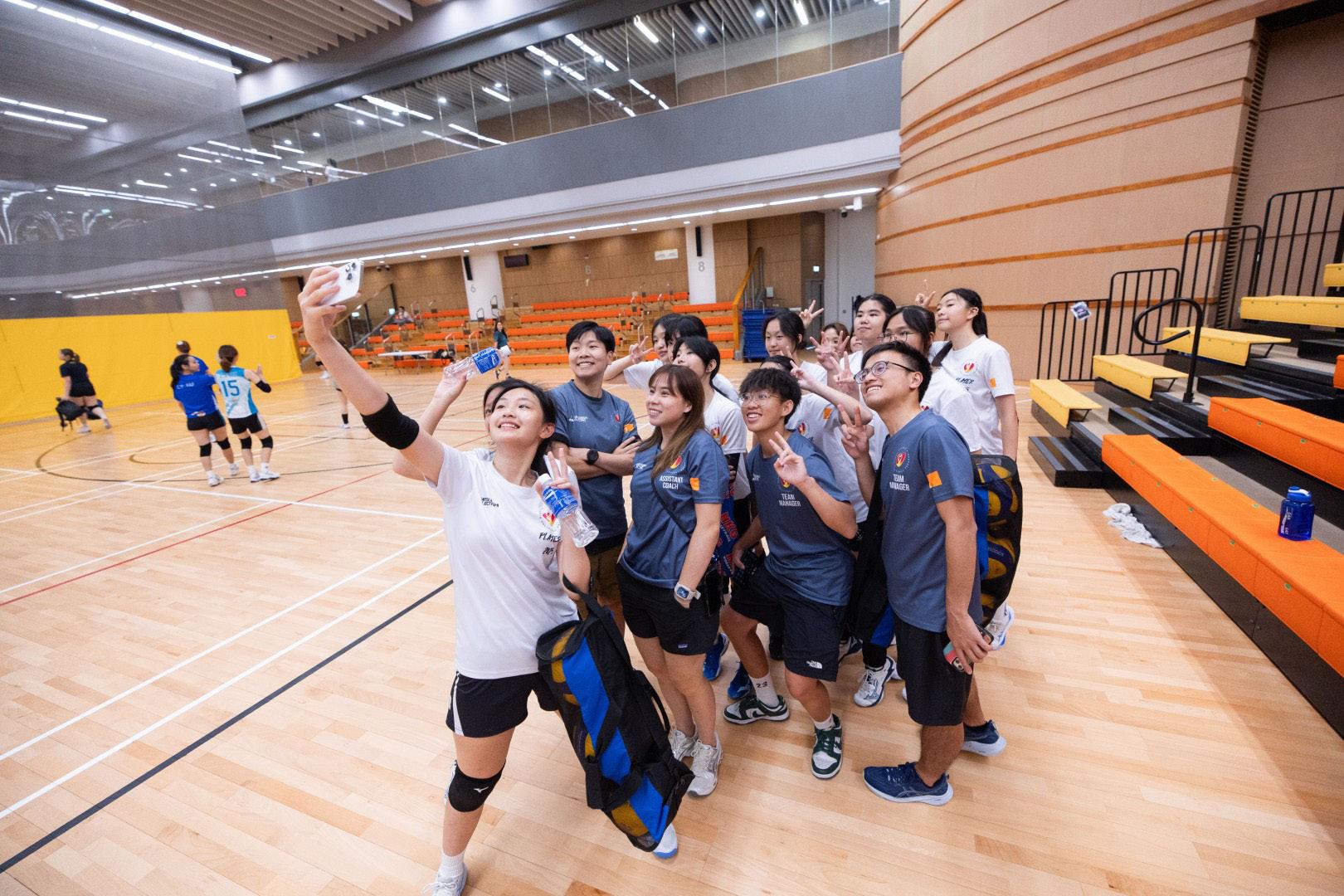
With limited opportunities for female volleyball training, V.Cares opens a space for young women to train and compete with a supportive team. In 2024, participants went on an exchange trip to Japan to train alongside the country’s top high school champions.
What makes the programme unique is its guiding philosophy: Passion matters more than skill. Volleyball coaches are paired with youth workers from Youth S.P.O.Ts to make sure that no player goes unnoticed or is left behind.
We aim to provide a platform where people from all backgrounds can fairly experience the joy of sports.
The spirit of sports shouldn’t be confined to the playing field. What we learn on the field, such as supporting one another and covering for teammates, can also be applied in real life.
What makes us most proud of V.Cares is the strong sense of connection it fosters among participants.
The HKFYG Community Team Sports Office (CTS) encourages young people to build a healthy physique and resilience through team sports. Across its sports service projects, professional and adventure training and certificate courses, it connects young people to the community through sports.

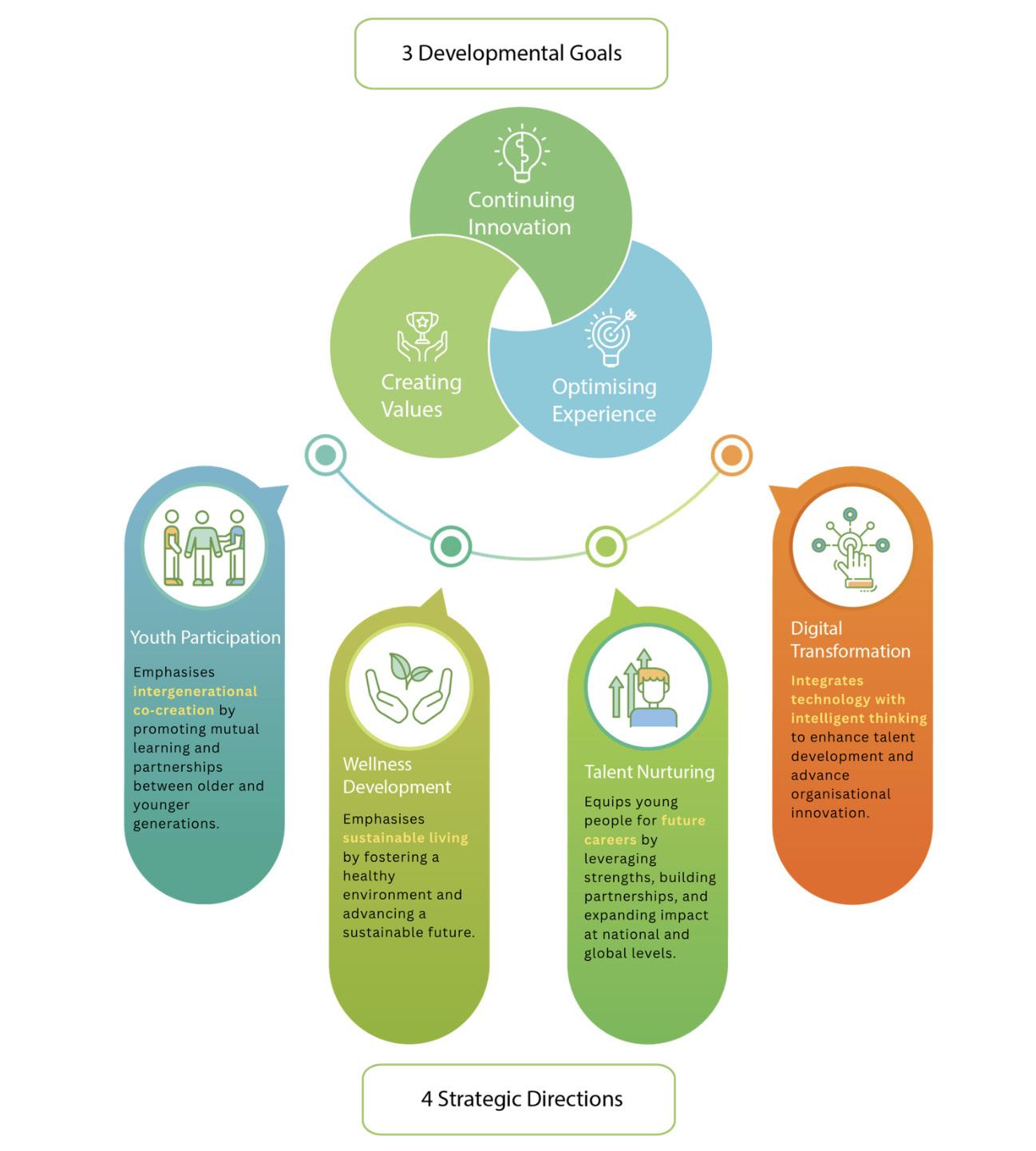
The HKFYG enters the third year of its Fifth Five‑Year Plan with three developmental goals: Continuing Innovation, Optimising Experience, and Creating Values.
Guided by four strategic directions in Youth Participation, Wellness Development, Talent Nurturing, and Digital Transformation, our work is further energised by three major themes: Intergenerational Co‑creation, Sustainable Living and the Future of Careers, bringing fresh perspectives to how we engage and serve.
Young people are not just participants, but co‑creators. Through the member–volunteer–leader pathway, we are strengthening youth leadership, fostering collaboration across generations, and expanding partnerships that empower young people to shape what comes next. At the same time, our commitment to sustainable living emphasises holistic wellness by supporting mental health, building resilience, and promoting community‑based initiatives that integrate sustainability into everyday life, in alignment with the UN Sustainable Development Goals.
Looking ahead, we continue to prepare young people for an evolving world of work through the “π‑shaped talent” approach, combining professional skills with broad interests, global awareness, and a strong sense of identity and purpose. Complementing this, digital transformation and AI adoption will drive innovation, responsiveness and collaboration in youth services.

Is your "freshly tossed" lunch just a high-end microwave meal?
Hong Kong is celebrated as a Culinary Capital, yet rising costs and a chronic shortage of chefs are quietly transforming the local kitchen. Industry estimates suggest that over 60% of local restaurants have adopted "prepared dishes."
This shift has created a significant transparency gap. When factory-made meals are sold at cooked-to-order prices without disclosure, consumers are denied their right to be informed, potentially damaging long-term trust in the F&B sector.
A recent study by the Federation's youth think tank, Youth I.D.E.A.S., examines citizens' awareness, attitudes, and experiences regarding prepared dishes. The research is based on a survey of 800 local residents aged 18 to 64, along with interviews with 13 individuals and seven experts, scholars and industry practitioners, conducted between December 2025 and February 2026.
Prepared dishes generally refer to foods made from one or more food ingredients. These products are subjected to processing methods (e.g. cutting, mixing, marinating, kneading, seasoning, etc.) and/or cooking techniques (e.g. frying, roasting, boiling, steaming, etc.), and are subsequently prepared as either finished or semi-finished dishes.

Key Findings
The Identification Failure:
While over 80% of surveyed citizens have heard of prepared dishes, the vast majority (91.3%) admit they cannot clearly identify whether the meals they consume are prepared.
The Default Expectation:
64.0% hold the prevailing expectation that dishes should be cooked-to-order when dining out.
The Demand for Honesty:
83.3% believe restaurants should explicitly indicate the use of “fully prepared” dishes that are only reheated before serving.
The Price of Secrecy:
42.5% would lose confidence in a restaurant if it fails to disclose the use of prepared dishes.
The Fair Value Rule: 79.9% think that prepared dishes should be priced lower than cooked-to-order ones.
Interviewees expressed a sense of being deceived when paying premium prices for reheated meals that lack the traditional "wok hei" (鍋氣) or authentic texture. Many remain sceptical about the nutritional integrity and the use of additives in factory-processed food components.
F&B practitioners highlighted that prepared dishes are a survival mechanism driven by high overheads and a lack of staff. While experts emphasise that modern food
The HKFYG Youth Research Centre (YRC) is the Federation’s youth think tank that conducts evidence-based research for policy advocacy. Since its establishment, it has completed over 80 research projects and actively communicated with policymakers and different sectors of society.

technology meets strict hygiene and safety standards, the public still prioritise the sensory experience of traditional craftsmanship.
Youth I.D.E.A.S. emphasises that integrity is the secret ingredient of Hong Kong’s food scene. To balance industrial efficiency with consumer rights, the following core recommendations are proposed:
Commission an independent study to develop an official Voluntary Certification Scheme and an associated certification mark to enhance transparency regarding food preparation in the catering industry.
Formulate practical guidelines under the Trade Descriptions Ordinance to clarify disclosure standards for cooking methods. This will safeguard the consumer's right to be informed while preserving operational flexibility for the industry.
Enhance public education by compiling official guides and funding community-based programmes. These efforts should aim to promote a better understanding of food technology and empower citizens to make informed dietary choices.
When dining out, I can identify dishes that are "pre-prepared".
Don't know / Hard to say
Completely
When dining out, I expect dishes to be cooked-to-order.
Hong Kong’s unique position as an East-meets-West cultural hub gives it an edge in nurturing creative talent. In fact, the cultural and creative industries are a vital economic engine. In 2023, the sector generated HK$134.5 billion (4.6% of GDP) and employed 226,200 people. The number has outperformed tourism in both economic contribution and workforce scale.
However, growth momentum has recently slowed, with the sector’s output growth lagging behind the overall economy. To revitalise the industry and align with the national 14th Five-Year Plan to build Hong Kong into an international cultural exchange centre, unlocking the commercial value of local Intellectual Property (IP) is a critical priority.
The Federation’s think tank Youth I.D.E.A.S. conducted online surveys, case studies, and expert interviews to examine the bottlenecks facing local creative IPs and explore how to unlock their market potential.
While local creative IPs have strong foundational talent and infrastructure, Hong Kong is lagging behind regional competitors like the Chinese Mainland and South Korea. Encouragingly, over 70% of surveyed youth support local IPs through purchases.
The Commercialisation Gap
Young people express moderate confidence in Hong Kong's ability to sustain sufficient industry talent. The primary obstacles are a lack of cross-disciplinary collaboration and mature commercialisation mechanisms. Stronger legal, financial, and professional support is urgently needed.
Limited Market Penetration
Although over 60% of youth agree that local IPs stimulate consumption, individual spending remains low. Businesses still heavily rely on traditional celebrity advertising rather than deep, engaging IP collaborations that appeal to youth.
In the past 3 months, which country or region did the cultural and creative IP products you purchased mainly come from?
In the past 3 months, which of the following types of Hong Kong cultural and creative IP products and services have you purchased?
for Start-ups
Young creators feel government support is insufficient. Current funding application processes are cumbersome for small start-up teams, and local corporations frequently prefer partnering with established foreign IPs over local ones.
1. Establish an IP Intermediary Matching Platform
Create the platform, to be led by the Cultural and Creative Industries Development Agency (CCIDA), to connect creators with legal and financial services. It would assist with IP registration, investor pitching, and licensing agreements to fast-track original ideas into the commercial market.
2. Launch a "Hong Kong Creative IP" Brand Certification
Create a systematic, public database of verified local IPs. Certified creative teams should be granted a fast-track, simplified procedure when applying for government funding.
3. Create Dedicated IP Shopping Arcades
Shopping mall operators should offer preferential rents or revenue-sharing models to host "Hong Kong Cultural and Creative IP" spaces. Combining retail with interactive events (like fan meetings or conventions) will drive offline foot traffic and youth consumption.
4. Boost International Visibility via ETOs
Hong Kong’s Economic and Trade Offices (ETOs) overseas should host dedicated film screenings, exhibitions, and networking events. This will showcase homegrown merchandise to international businesses and foreign governments.
5. Integrate IPs into Mega Events and Public Spaces
Embed local IP elements and mascots into high-profile initiatives, such as "M" Mark sports events, public waterfront promenades, and official government gifts for foreign dignitaries. This elevates the status of local creations from simple art to a powerful medium for diplomatic and commercial exchange.
Two Hong Kong students discover that what they will remember is not the packed itinerary, but the spaces in between where history, experience and friendship meet.
Somewhere between the rush through visits to Xiamen airport, Jimei School Village, the former residence of Tan Kah Kee, the Science and Technology Museum, Zhongshan Road Pedestrian Street and late-night corridor “parties”, Kitty and Cyrus’ four days in Xiamen became something more than a study tour.
They were among hundreds of students from nearly 40 secondary schools on the Youth High-Speed Rail Trip, an annual signature programme co-organised by The Dragon Foundation and The Hong Kong Federation of Youth Groups, funded under the Home and Youth Affairs Bureau’s exchange scheme and the Greater Bay Area Homeland Youth Community Foundation. This year the trip was to Xiamen, to mark the Special Economic Zone’s 45th Anniversary.
At Xiamen University, Cyrus listened to a talk on the high-quality development of the Belt and Road Initiative, and later, in the Xiamen Special Economic Zone Memorial Hall, he began to connect policies with places. Visiting state-owned and private enterprises, like the Xiamen International Bank, a free-trade logistics group and a vehicle company, he was enthused. “I didn’t think, as a secondary student, I would manage to visit a state-owned enterprise; just walking around and looking at everything,” he said.
Kitty’s reflections are similar, though with a different emphasis. Before the trip, Xiamen existed in her syllabus as a single line: one of China’s four special economic zones. On the ground, that sentence unfolded into an entire museum. “It makes me realise there is much more for me to learn,” she said. She
began to notice that while her textbook provided her with neat conclusions, in Xiamen, she began to notice side stories that never made it into exam questions.
Their favourite stop, unexpectedly, was Xiamen University. It was not the grandest site, but it was where the tour’s two strands, economy and culture, met. As a professor talked through growth figures and policy shifts of China’s development, the campus carried an older history through its architecture. Kitty said it demonstrated “how economics builds off those cultural buildings,” and how she was inspired to see heritage as a teacher about the future.
Both Kitty and Cyrus saw this replicated in Gulangyu, the tiny island of former consulates and churches, now full of cafes, restaurants, bookshops and souvenir shops. Here, the history of foreign trading powers and overseas Chinese entrepreneurs began to unfold out of history textbooks into living monuments.
The two young tourism ambassadors, used to thinking about how to make Hong Kong appreciated by visitors, found this blend of learning and leisure felt exactly right.
A city, they suggest, becomes knowable not only through dates and data, but through the way old buildings are allowed to hold new lives.
They will go home with photos and facts, but also with something harder to measure: a growing confidence in navigating unfamiliar environments, a curiosity to seek deeper understanding and a sharper lens through which to reflect on Hong Kong’s own tourist spots.

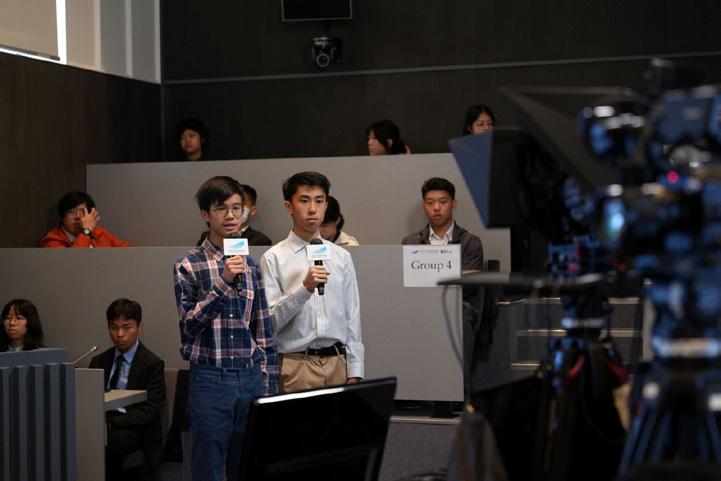
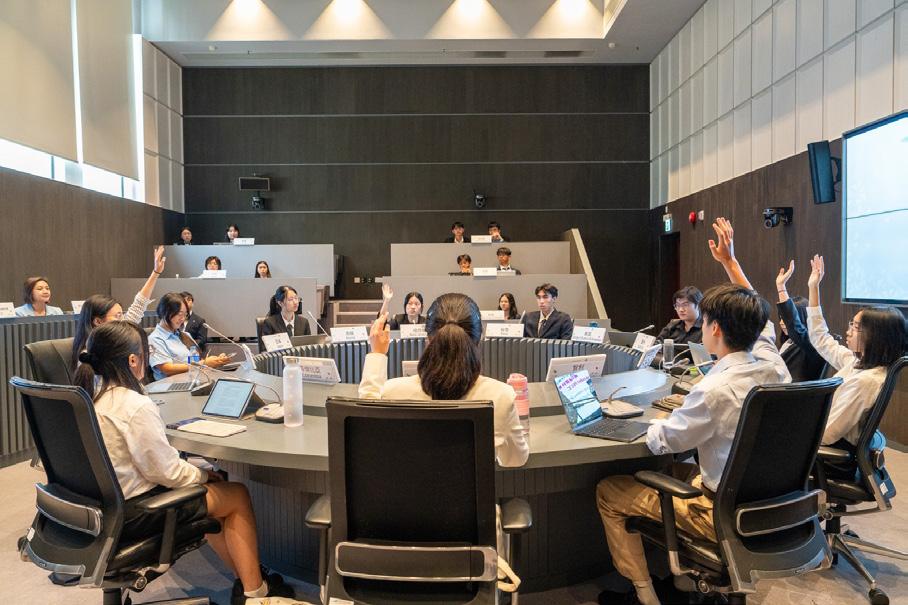
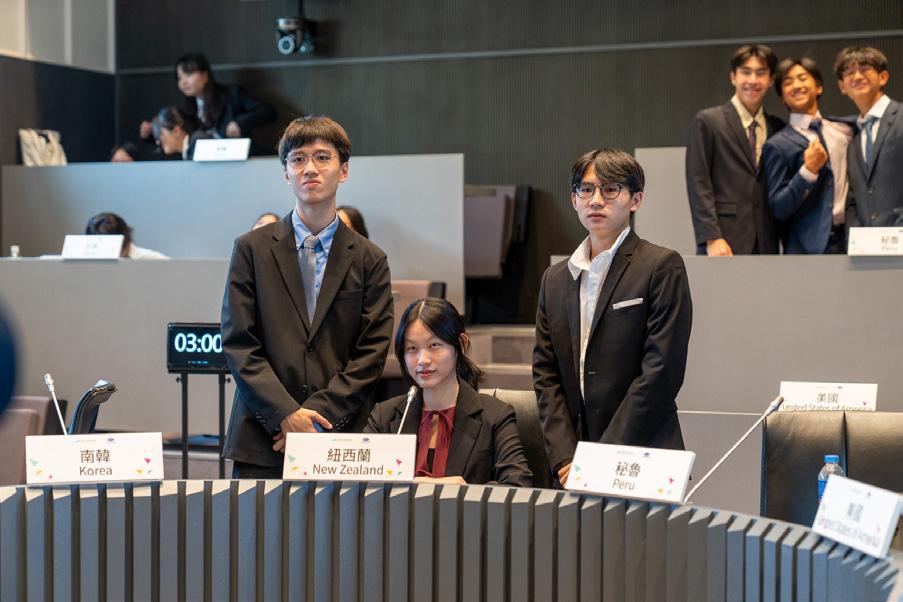
Equip yourself with skills and confidence to shine this summer! Nestled within our unique, inspiring historic campus, the HKFYG Leadership Institute offers a wide range of summer courses and three immersive 4-6-day residential summer camps designed to transform young learners into confident, forward-thinking leaders.
We have three exclusive summer school programmes for secondary students.
Tackle international issues and develop
Scan for more details practice.
Experience the full news production process, from scriptwriting to on-camera broadcasting, with opportunities to connect with industry professionals.
We also offer English Language Mastery Series for learners of all ages, providing structured, level-based training across phonics, grammar, reading, writing, and spoken English. Through interactive practice and personalised teacher feedback, every student builds a solid language foundation and the confidence to communicate clearly in class and everyday life.
Register today and let youth leadership adventures begin!







攤位號碼