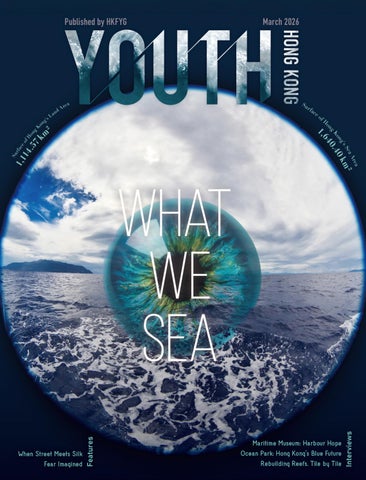
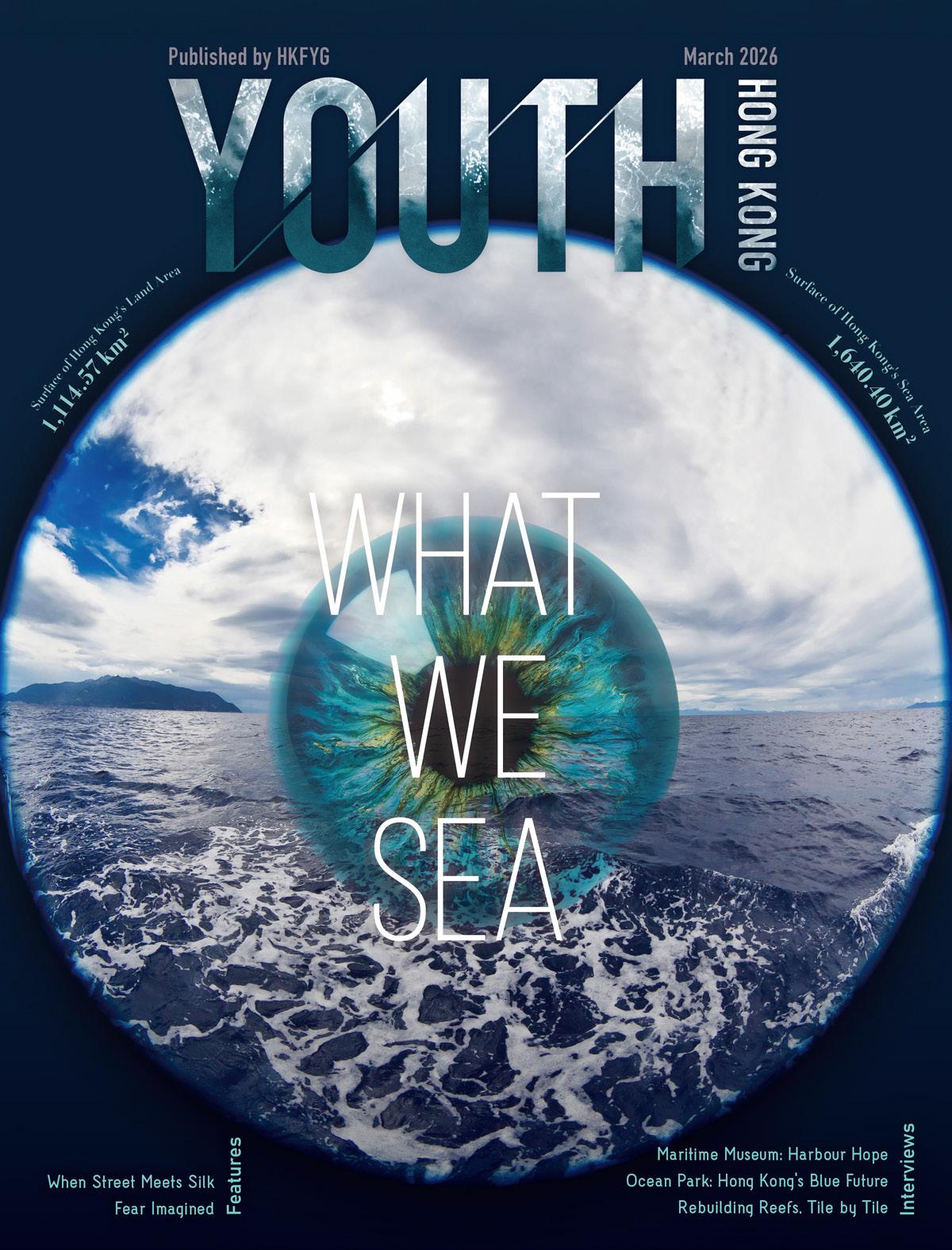
Youth Hong Kong March 2026
Volume 18 Number 1
YOUTH HONG KONG
published quarterly by The Hong Kong Federation of Youth Groups
EDITORIAL BOARD
Hsu Siu-man
Lakshmi Jacota
William Chung
Ada Chau
Christa Cheung
Judith Lee
Marco Yu
Miranda Ho
Mia Yao
EDITING
Mia Yao (Managing Editor), Lakshmi Jacota, Elaine Morgan, Michelle Leung
INTERVIEWS
Mia Yao, Lakshmi Jacota, Ashley Yau, Yammy Tsang, Marco Yu, Valerie Wong
CIRCULATION (unaudited) 9,000 in Hong Kong, throughout the region and overseas
VIEWS EXPRESSED are the authors’ and interviewees’, may come from official sources, and do not necessarily reflect the views of the editorial board or publisher
REPRODUCTION OF CONTENTS without written permission from the publisher is prohibited
SECTIONS & TRANSLATION
Mia Yao, Xu Peilun, Michelle Leung
PHOTOGRAPHS
stock images or in public domain
TRADEMARKS All brand names and product names are registered trademarks. Youth Hong Kong is not associated with any product or vendor mentioned in articles.

ARTWORK & DESIGN
Bryan Tsui
COVER DESIGN
Bryan Tsui
PRINTING
New Century Printing Industrial Ltd.
ISSN 2071-3193 (Print)
ISSN 2519-1098 (Online)
WEB youthhongkong.hkfyg.org.hk
CORRESPONDENCE to The Editor, Youth Hong Kong, 21/F, The Hong Kong Federation of Youth Groups Building, 21 Pak Fuk Road, North Point, Hong Kong TEL 3755 7220 FAX 3755 7155
EMAIL youthhongkong@hkfyg.org.hk
ADVERTISING ENQUIRIES
Valerie Wong 3755 7112 Mia Yao 3755 7220
The Hong Kong Federation of Youth Groups was founded in 1960 and is the city’s largest youth service organisation. More than 25,000 activities are organised by over 90 units annually with attendance of nearly 4.5 million. Services Camps, Leisure, Cultural and Sports Services, Counselling, Creativity education and STEM, Education and continuous learning, Employment and entrepreneurship, Exchange, Leadership training, M21 Multimedia, Parenting, Research and Publications, Volunteering, Youth at Risk, Youth SPOTs

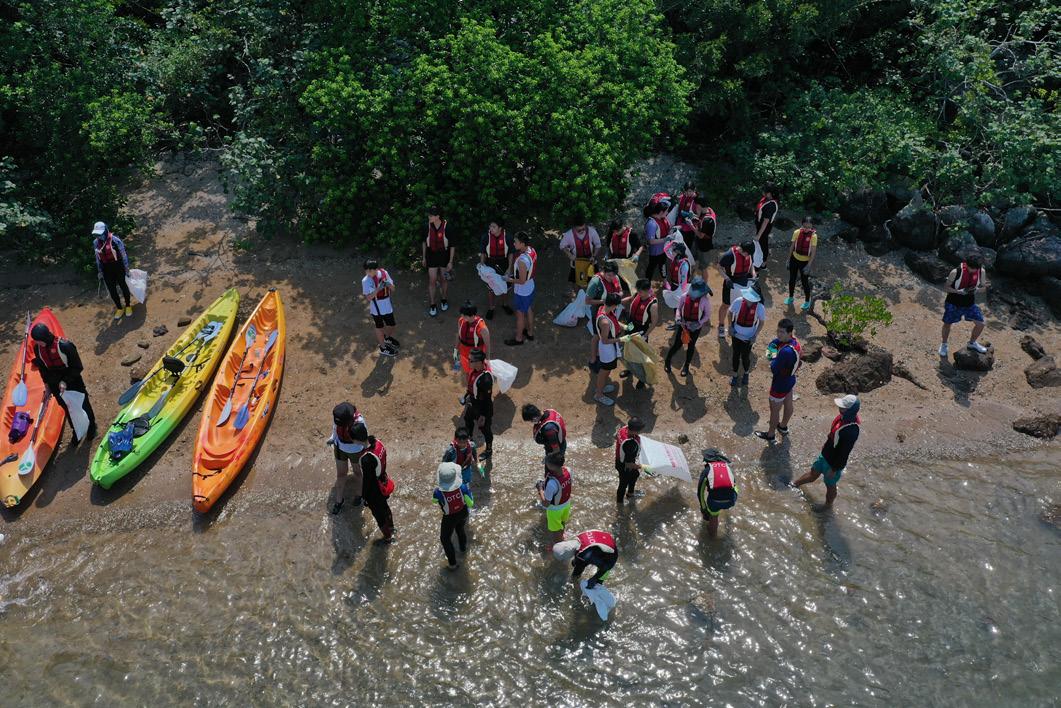
When I look out over Victoria Harbour, I often think about how young people see this view today. For earlier generations, the sea was about livelihood and home. For many of us now, it is more visual than visceral. We admire the skyline, yet rarely “touch” the water. Somewhere along Hong Kong’s journey of progress, our physical closeness to the sea has turned into emotional distance.
This 70th issue of Youth Hong Kong, with a new look, focuses on reclaiming both our understanding and relationship to the water. We explore how young people can lead in reimagining Hong Kong’s blue economy, how our cultural shoreline still holds lessons in resilience, and how education can renew our sense of belonging.
We also try to understand that decisions on land reclamation, marine ecology, and shoreline renewal affect not only geography, but generations. Our challenge is how to ensure that young people are not simply witnesses to these debates, but are informed, creative and hopeful co-creators of solutions, as we celebrate Hong Kong, a coastal city.
HSU Siu-man Executive Director, HKFYG
March 2026
WHERE THE CITY MEETS THE TIDE
by Lakshmi Jacota
Living in a city surrounded by water, where does the future lie, especially for young people?
Hong Kong is a city born of the sea, with over 250 islands, of which only 23 are currently inhabited. Before the skyline, street markets and mass transit system, there were fishing boats, sampans, junks, ferries, frigates and naval vessels. The first settlers here didn’t look inward to the mountains; they looked outwards over the water. The sea was their livelihood, their protection, and their way of seeing the world.
Walk along the narrow lanes of Sai Kung, the waterfront at Aberdeen, or the pedestrianised streets of Cheung Chau island, and you can still feel traces of the old maritime cultures. The fisherfolk who once lived on boats and the floating communities saw the sea dictate the rhythm of their lives, through the festivals they celebrated, the gods they worshipped, and even the food that defined their identity. This living heritage is a memory map of how Hong Kong learned to adapt in resilience and cooperation.
Today, it’s easy to forget that the street where we stand was once the ocean. The harbour that shaped Hong Kong also gave it its name, hoeng1gong2 (香港 ), meaning “fragrant harbour”. But as we’ve crowded the waterfront with towers, container terminals and malls, our daily relationship with the coast has changed. It’s become a view, a luxury asset rather than a shared, lived space.
This is a shift that matters. Because if we forget that Hong Kong is a coastal city, we also forget how future stories can be written.
Officially, Hong Kong still talks about itself as a leading logistics and tourist hub, with the nine major container terminals moving goods across the world, and the cruise terminals at Kai Tak and Ocean Centre bringing visitors into the city. These are not outdated industries, as they support the wider economy. However, if we only see the harbour through the lens of cargo and cruise ships, maybe we are thinking too small.
What would it mean for young people to look at these same spaces and see something more? Could there be low-carbon ports, or ships guided by local tech? Could cruise tourism give back more than it takes? Could waterfront jobs care more about the environment than profit? Could our waterfronts be places of learning, not just leisure? And most of all: could young people see themselves not just as users of the harbour, but as its future caretakers, builders and critics?
If we only see the harbour through the lens of cargo and cruise ships, maybe we are thinking too small.
In recent years, the government has promised to open up more of the harbourfront, blending promenades, and creating more public waterfronts and harbourside public spaces, whether from Chai Wan to Kennedy Town or in West Kowloon. The language is familiar. The real test is whether these places become more than just Instagram backdrops at a safe, decorative distance.
"In
Are they designed in ways that invite young people to do more than walk and shop? Perhaps we could be imaginative and innovative by turning the city’s extensive shorelines into open classrooms, or by canoeing through wetlands to learn about biodiversity, or by mapping sea temperatures as citizen scientists, or by holding art and music exhibitions on the piers. These opportunities could provide us with a new relationship with coastal life and contemporary meaning.
Every city chooses which parts of itself to remember.
Right now, many young Hongkongers meet the coastline through activities like beach clean-ups, school trips to wetlands or coral surveys, and weekend paddling sessions. These activities are often framed as something extra to their lives, as a project, a club, a hobby. But what if we treated them as the start of something much bigger and more intrinsic to their lives?
Picking up plastic might be the beginning of a career in environmental law or circular design. A school snorkelling trip might grow into work in marine science, coastal engineering or climate communication. A part-time job at the cruise terminal might lead someone to ask hard questions about emissions, waste and better ways of welcoming visitors. These are the areas to which we could direct young people’s attention.
Teaching them that the coast is a living laboratory and has the potential for new kinds of work and new kinds of responsibility.
Hong Kong’s future economic development doesn’t always have to mean offices, especially if there is an entire blue edge to this city waiting to be reimagined.
To many, the sea also means escape from study stress, work fatigue or the density of city life. Whether swimming, rowing, diving or fishing, dragon boating, windsurfing, yachting, or even stepping onto a ferry deck, there is an enjoyment of space that Hong Kong often hides, while, more importantly, reconnecting, even subconsciously, with the city’s history as a coastal city.
Most of us don’t think of that feeling as “heritage”. But it is, and young people growing up can inherit that story, whether they claim it or not.
Every city chooses which parts of itself to remember. Right now, Hong Kong talks loudly about finance, shopping, food and skylines. The sea is usually the background to the picture, not the subject. If young people can see the coast, not as the end of the city but its beginning, then perhaps Hong Kong can rediscover what made it exceptional in the first place: the courage to face the open sea and see opportunity in uncertainty.
For this generation, the choice is clear: treat the sea as mere scenery, or make it part of the foreground. The tide will not wait.
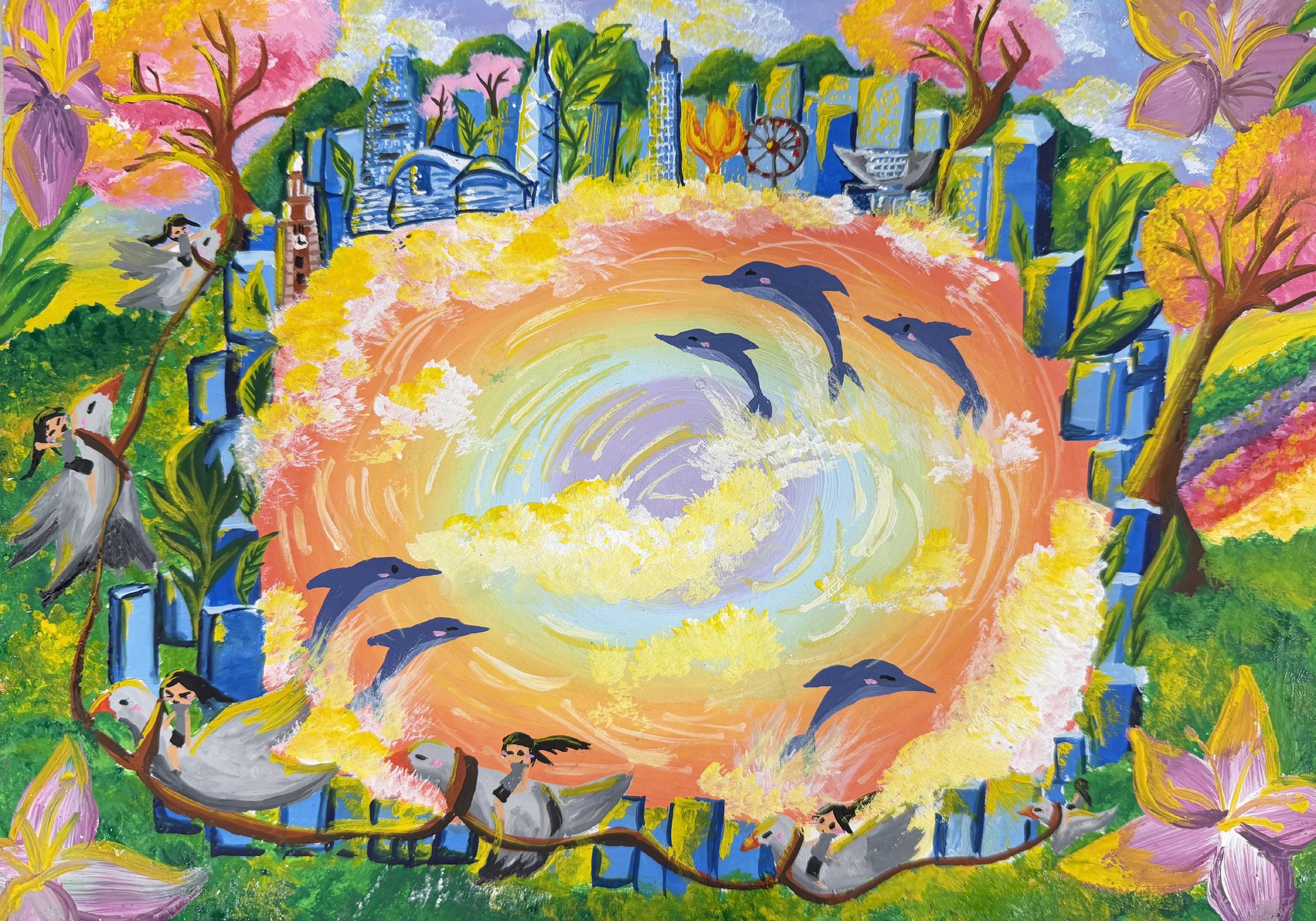
A painting by Lai Pui-yau from HKFYG Lee Shau Kee Primary School.
my dream, the future Victoria Harbour becomes a dreamlike and magical sea, full of nature surrounded by flowers and greenery. Cars will turn into little birds, and we can sit on them and fly to wherever we want to go."
Harbour Hope for Tomorrow: Better Late Than Never
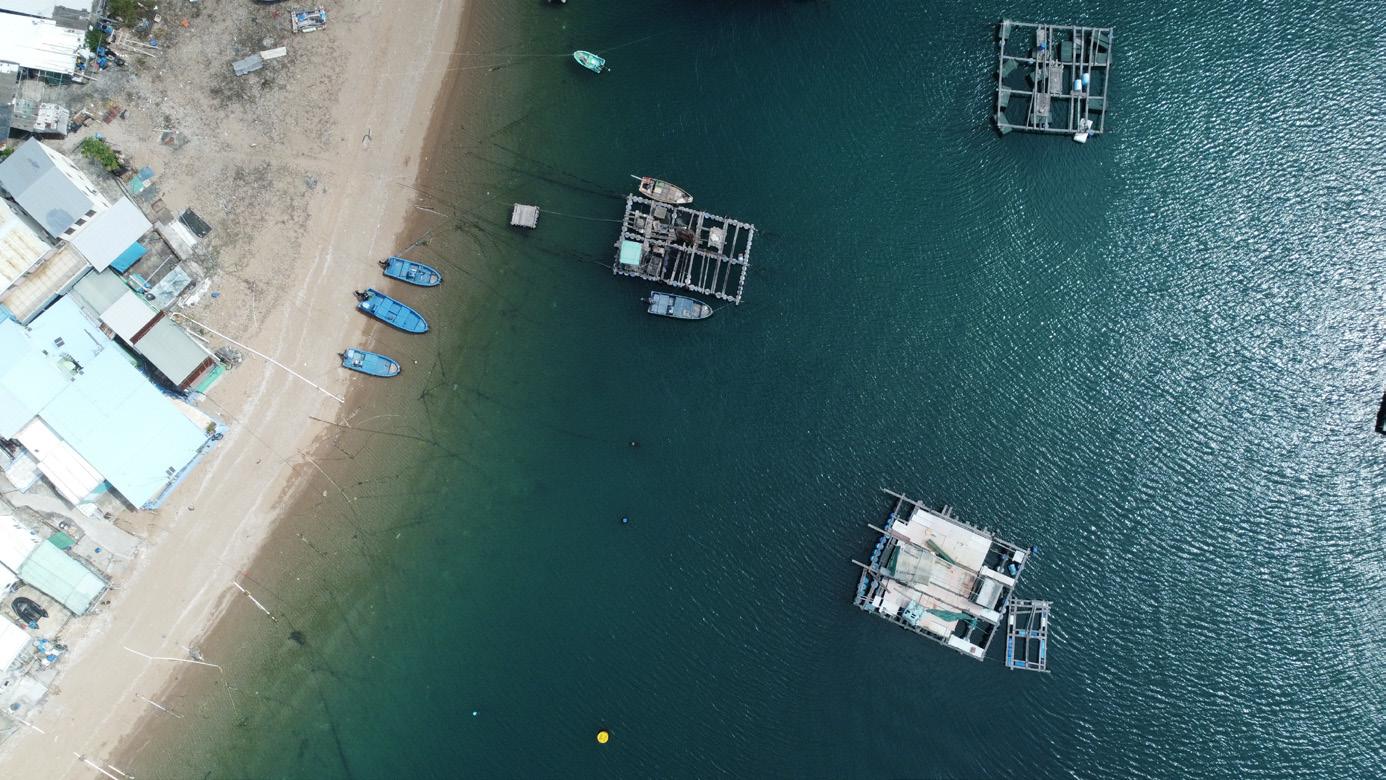
As Victoria Harbour narrows and fishing traditions fade, we ask whether Hong Kong can reclaim the maritime consciousness that once defined it.
Hong Kong’s maritime story is steadily fading from everyday awareness. As the city’s nautical heritage drifts into the background, Professor Law Lok-yin from the Education University of Hong Kong, Richard Kendall of the Hong Kong Maritime Museum, and writer Cheng Sze-hang offer their perspectives on how we can preserve memories for future generations.
No Ocean, No Hong Kong
The history of Hong Kong is written in salt water. As Kendall, Director and Chief Executive of the Maritime Museum, puts it: “Without maritime (history), Hong Kong wouldn’t be where it is today.” This is echoed by both Professor Law and Cheng, who remind us that from Hong Kong’s very earliest days, its sheltered coves were the home of people who lived with and from the sea. Once the modern world arrived in the mid-19th century, the fluid and cosmopolitan culture of today’s Hong Kong steadily grew.
While many view Hong Kong’s past through a simple lens and would describe its origins as a “fishing village,” Professor Law sees a more complex, dual evolution. “Typically, industrial ports and fishing villages evolve into separate, distinct spaces,” he says. “Yet, due to Hong Kong’s specific political and social development, we see a dual existence: the Victoria Harbour coastline developed into one of the Far East’s most sophisticated shipping and logistics hubs, while areas such as Cheung Chau and Sai Kung preserved authentic communities that continued to rely on fisheries and other trades for their livelihood.”
Hong Kong mirrored many South China Sea havens in the city’s transition from traditional junk trade to post-war entrepôt, but its shared border with the Chinese Mainland meant it maintained a level of global connectivity that few, if any, other cities could match. It became the primary connector for trade with the mainland and for the global Chinese diaspora.
The Disconnect
Yet if Hong Kong’s growth came from the sea, many residents today experience it only at a distance. Cheng points out that fishing traditions and island rituals that once defined local life, are fading. Remote outposts like Tap Mun (塔門) and Ko Lau Wan (高流灣) are losing residents, ferry services are disappearing and traditional customs like the On Lung Qing Jiao (安龍清醮) ritual feel more like historical curiosities than living culture.
From the list of 79 items in Hong Kong’s Intangible Cultural Heritage, many carry the maritime memories of ancestors, including the Hung Shing Festival, Tin Hau Festival, Tam Kung Festival, Dragon Boat Festival and Lung Mo (Dragon Mother) Festival. All these names refer both to the physical locations and the traditions created by the generations who lived from and with the sea. They are still celebrated by fishermen and boat people, invoking deities that protect those at sea or involve rituals performed on the water.
“We are losing the narrative of our remote islands,” Professor Law writes. As communities shrink, their traditions can appear “mysterious” to urban dwellers. They become invisible because they are no longer embedded in everyday experience.
The disconnect is also physical. Almost everyone over 40 years old will have a story about the loss of Hong Kong’s shorelines and the decrease in everyday use of water transport. Before the Cross-Harbour Tunnel opened in 1967 and the MTR in 1979, ferries and piers were central to city life. “That waterborne commute was essential,” says Law. “For people growing up before the 70s through the 90s, piers were central to their collective memory.”
Today, most of those piers are gone. According to the Annual Traffic Census, passenger journeys on the Star Ferry peaked in 1971 at more than 150 million and in recent years have hovered around 16 million.
The city looks at the harbour but rarely experiences it. Aberdeen’s once-bustling fishing fleet has dwindled to a few boats. Oyster farms in Lau Fau Shan (流浮山) have almost disappeared and pearl fishing in Tai Po, never a thriving trade, has vanished. As Law puts it, as part of their heritage, they are “barely recognised by the younger generation.”
The first population census in Hong Kong, conducted in 1841 shortly after the British landed, recorded a total population of approximately 7,450 people on Hong Kong Island, with most of them living beside the sea in Stanley and Shau Kei Wan and depending on it for food and livelihood. This population consisted mainly of Tanka fishermen, charcoal burners, and farmers living in coastal villages. And now, from the latest population census conducted in 2021, the number of local fishermen stood at 10,120, taking only a tiny percentage of the city’s 7.4 million population.
Kendall shares similar observations. “As society develops, we become slightly removed from the engine that drives the life that we have,” Kendall reflects. “When people go to the supermarket to buy their goods, they don’t automatically think about the ships that may have brought the goods here. It’s just available on the shelves.”
As urban expansion reshapes the coastline, Cheng says our connection to the sea feels “increasingly abstract.” “The more Hong Kong builds over the water,” she says, “the further its people drift from their maritime stories.”
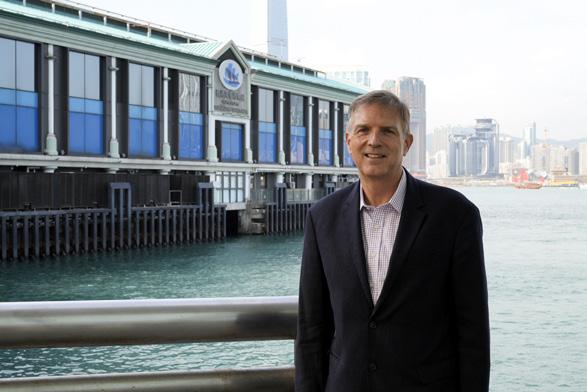
Richard Kendall, Director and Chief Executive of Hong Kong Maritime Museum, speaks with Youth Hong Kong
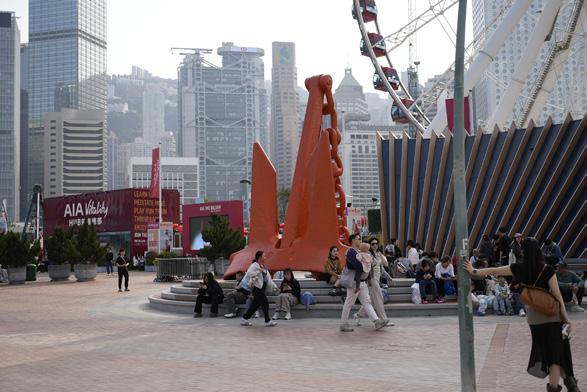
Anchor Plaza at Central Ferry Piers features a massive anchor from the Hong Kong-owned Seawise Giant.
Archiving Our City
It is critical, therefore, to archive and preserve this part of our city's memory. Founded in 2005 by Hong Kong’s ship-owning community, the Maritime Museum was designed to confront this collective amnesia. Originally housed in Stanley, it relocated in 2013 to Central Pier 8 with government support, becoming a public–private partnership.
“Every great port city should have a maritime museum,” Kendall says. “We might have been late, but better late than never.”
The museum’s mission to engage, educate and entertain extends beyond static displays. Its exhibitions and school programmes aim to reconnect citizens with the sea as lived history. Outside, Anchor Plaza features a massive anchor from the Hong Kong-owned Seawise Giant, the largest ship ever built. Longer than the IFC Mall is tall, the anchor offers a visceral sense of scale. “It’s a way to help people grasp the magnitude of global shipping,” Kendall explains.

hope my writing can be a gesture of reconnection, tracing those coastlines, both real and imagined, reminding us how the sea still defines who we are.”
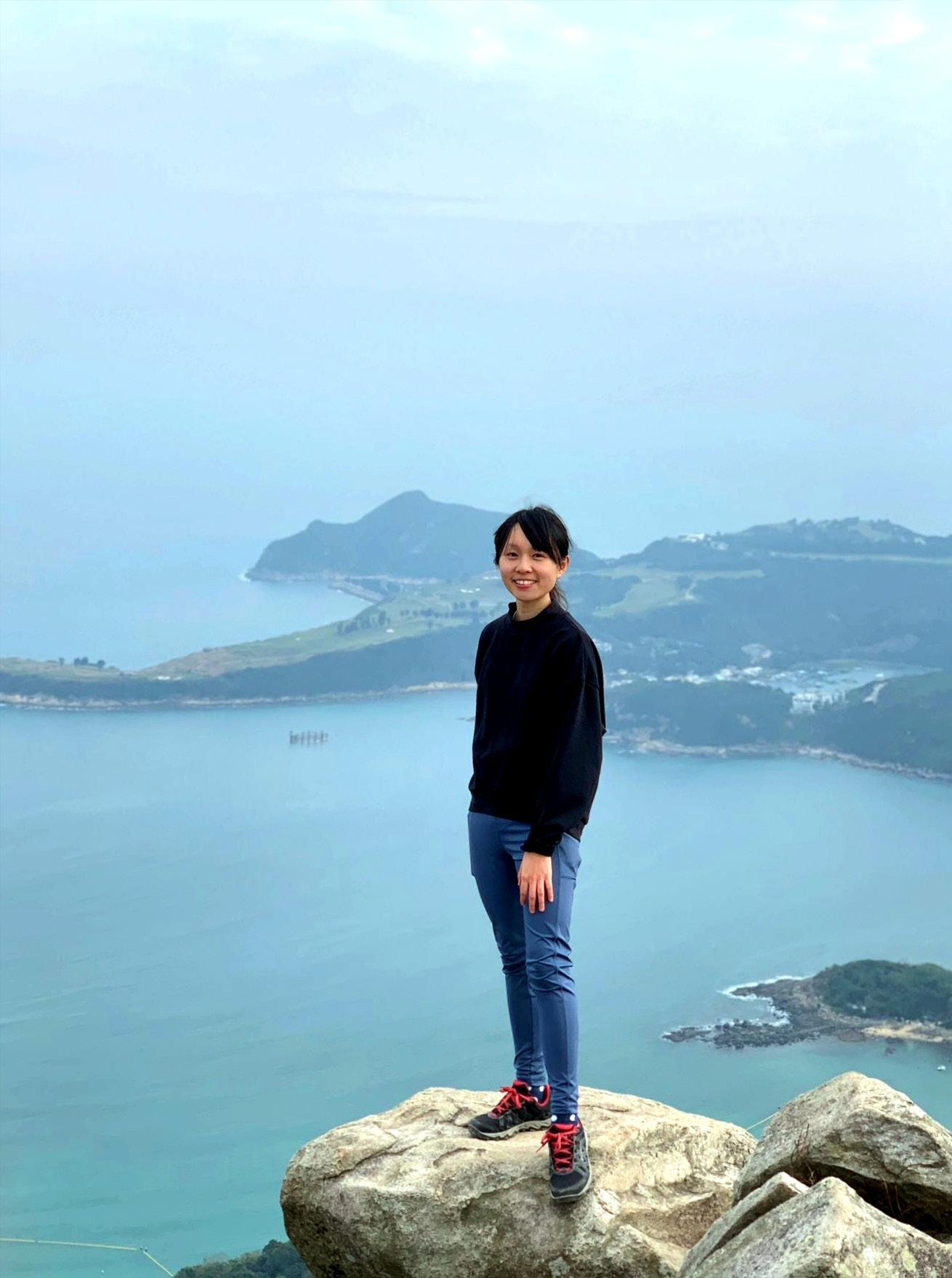
Professor Law Lok-yin
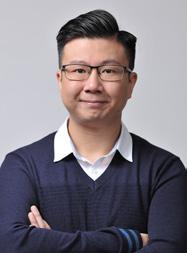
Writer Cheng Sze-hang
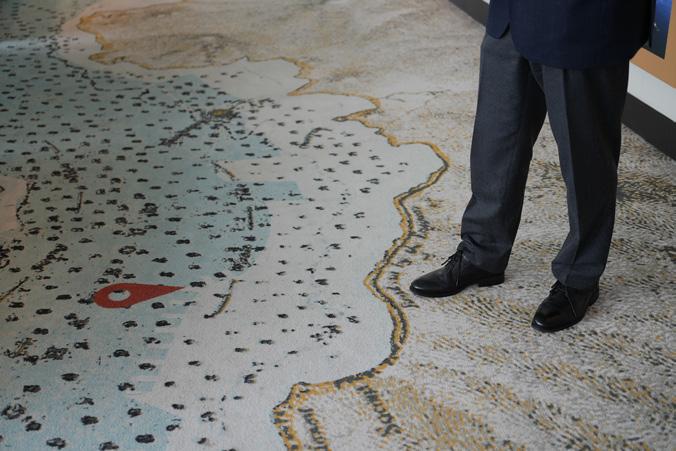
A carpet map at the Maritime Museum shows how Victoria Harbour has narrowed dramatically.
Photo provided by Professor Law Lok-yin shows the spirit assuaging ceremony at the Cheung Chau Bun Festival, a ritual that began for fishing communities to pray for safety from pirates.
These preservations of memories sit in stark juxtaposition to the reality of the city’s development, most especially land reclamation. Inside the museum’s Harbour View Gallery, a carpet map charting decades of encroachment shows how Victoria Harbour has narrowed dramatically. “It’s only about 900 metres across at the closest point today,” Kendall says. “It used to be 2.4 kilometres.”
Reclamation has long been both necessary and controversial. “We have to develop,” Kendall admits. “But we also need to protect the environment that sustains us.”
Law concurs. “Hong Kong’s coastal identity as a lived reality will continue to blur,” he predicts, citing climate change and declining reliance on the sea. Still, he sees a chance for renewal, if the city stops seeing the harbour as a place to fill with reclamation and starts valuing it as cultural heritage.
Hong Kong’s coastal identity as a lived reality will continue to blur.
Kendall, sitting in his office over the water at Pier 8 in Central, adjacent to reclaimed land, surveys the sea that remains the city’s lifeblood, even if many have forgotten. From his window, Hong Kong’s iconic red-sail Chinese junks carrying tourists move steadily in the distance. The coastline has moved, the piers have vanished, and the fishing fleets have thinned, but the ocean still sustains trade, climate and memory.
The Maritime Museum, late though it came, stands as a reminder of those enduring ties. Kendall remains hopeful. “It’s not too late to make a difference,” he says.
Ocean Park & Hong Kong’s Blue Future
As Hong Kong charts a course toward a sustainable "blue economy," how is Ocean Park anchoring the city’s future in marine conservation, tourism, and education?


revitalisation all point toward renewed interest in the blue economy, a term used to describe the oceans and seas as an engine of growth.
According to the World Bank, the blue economy is the “sustainable use of ocean resources for economic growth, improved livelihoods, and jobs, while preserving the health of the ocean ecosystem.”
In Hong Kong, the term covers industries such as shipping, marine services, fisheries and aquaculture, marine conservation, coastal tourism and recreation.
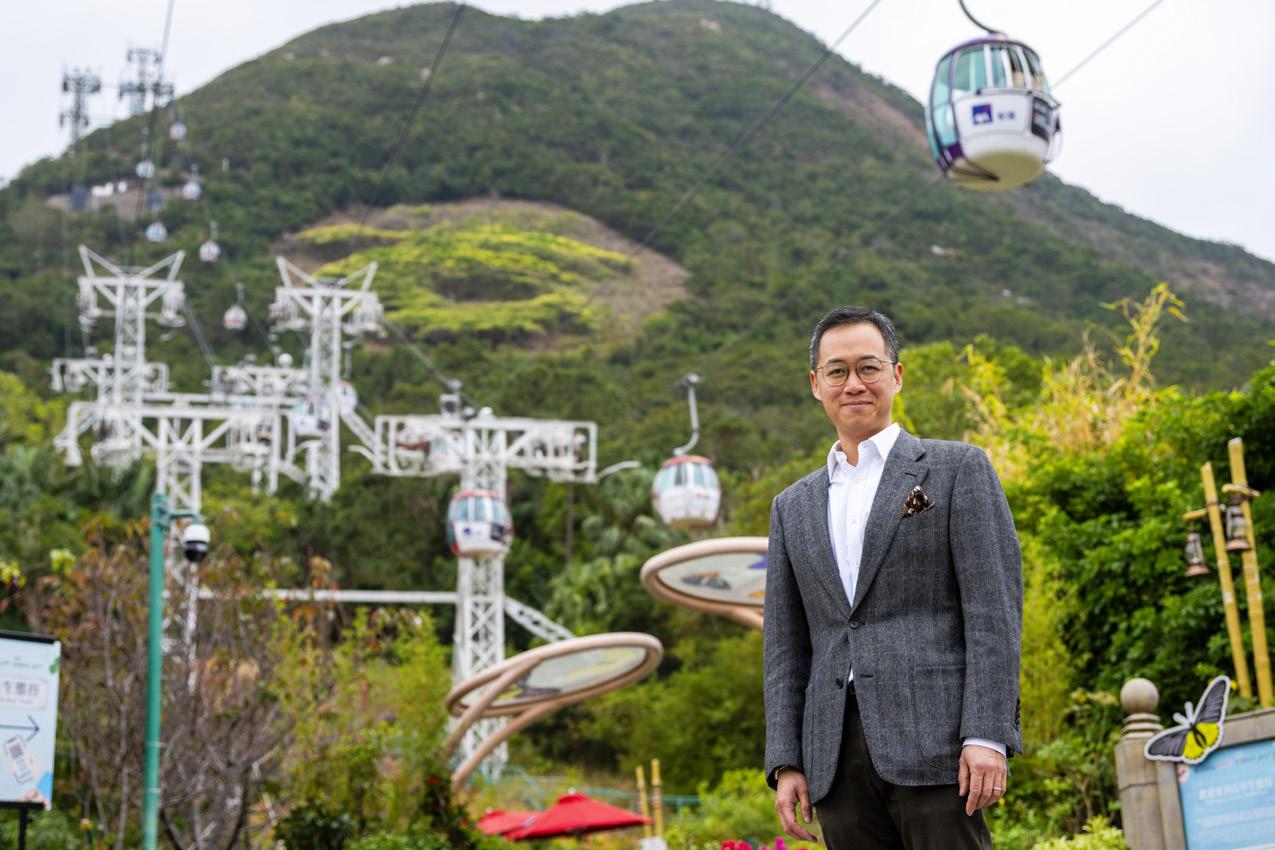
In conversations with Youth Hong Kong, Paulo Pong, Chairman of the Board of Ocean Park Corporation, shares his perspectives on Ocean Park in coastal development and an economy built on marine tourism, as well as the role of ocean education.
Gift to Hong Kong
Since opening in 1977, Ocean Park has been part of the city’s coastline story. Perched above Aberdeen and facing
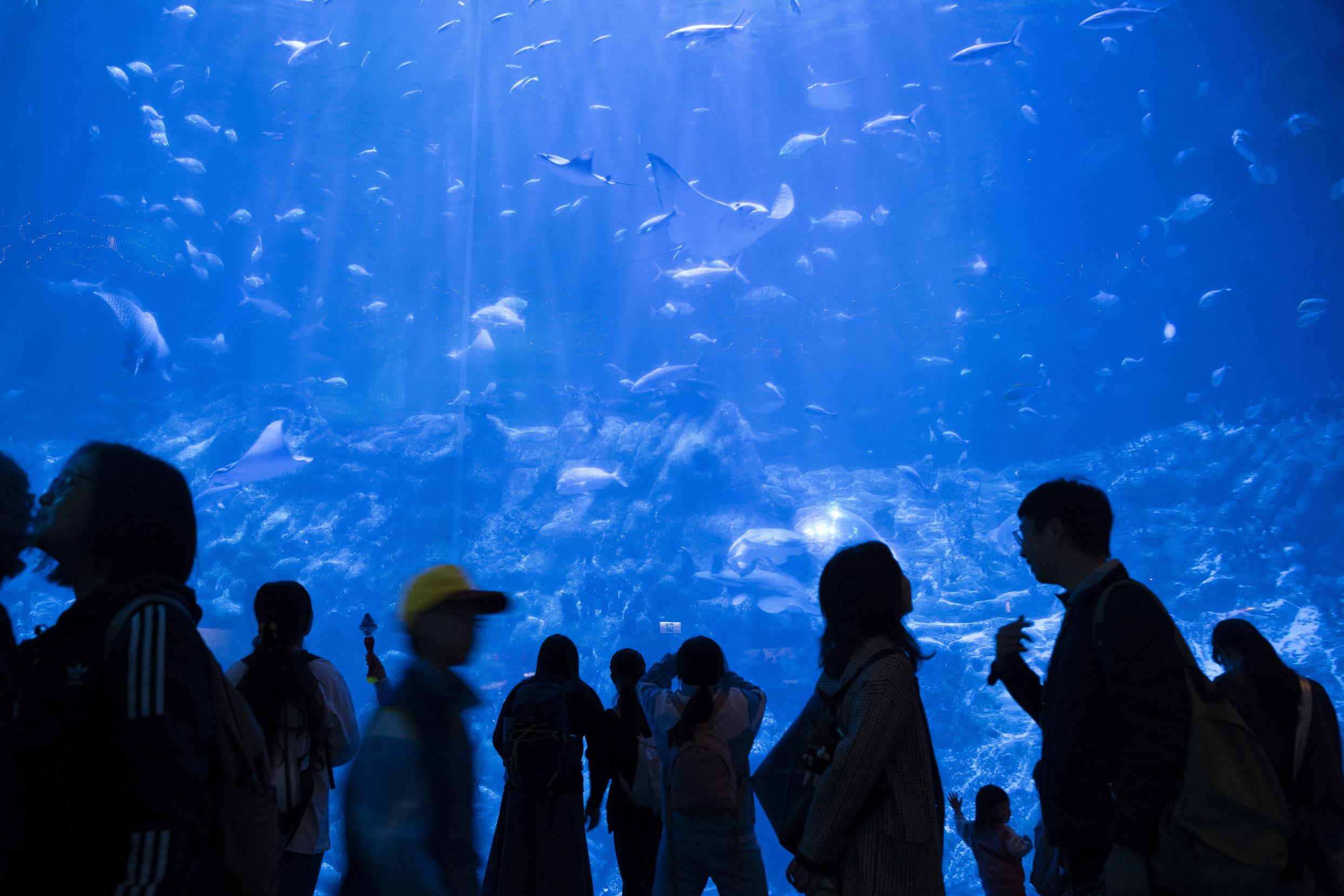
recreation and, perhaps, a reminder of the city’s maritime treasures.
Pong described the Ocean Park as “a gift to the Hong Kong people.” At a time when Hong Kong’s middle class was expanding, he says, families needed public spaces for weekends.
The Hong Kong Ocean Park, while unique in combining amusement park elements and its iconic giant pandas, is not alone in balancing marine conservation and education. Singapore Oceanarium, as one of the world's largest aquariums, advances regional ocean research through ocean observatories and coral propagation. Okinawa, which is held up as an “ocean tourism” success story, also sees institutions such as the Okinawa Churaumi Aquarium contributing to research while participating in reef-restoration work.
The Park began as an oceanarium with rides and animals, but its operational logic was built on something meaningful: reconnecting visitors to nature and the ocean.
For many Hong Kong children, the place is about their first encounter with the living ocean. “Even though we’re surrounded by the ocean in Hong Kong, you don’t see wildlife such as dolphins, sea lions, seals, etc” Pong notes. Ocean Park, in this sense, functions like a social thread, weaving between city life and sea life.
Marine Tourism
Yet Ocean Park does not operate in an ecological vacuum. It sits within a tourism economy shaped by growing regional competition, fluctuating visitor numbers, and post-pandemic recovery. The temptation, he warns, is to measure success purely by headcount.
“I don't think it's wise to go after big numbers. We need to look for the right audience and find the right tourists to come to Hong Kong to enjoy what we have now,” he says.
Serving multiple roles in film and the art industries, he suggests that the future of Hong Kong’s tourism industry is a more targeted, diversified tourism mix, such as concerts at new venues, arts and culture, and crucially, nature-based experiences that spread visitors beyond the usual mega shopping malls.
The broader city faces similar tensions in attracting visitors post-pandemic. Hong Kong in 2025 welcomed 49.9 million visitors, which is still below the pre-pandemic peak of about 65 million in 2018. The 2024 Policy Address highlights yacht tourism as a new growth area, with the development focus to attract international yachts and encourage overseas visitors to buy yachts in Hong Kong and sail them here for travel. Its tourism policy also emphasises better use of islands and coastline resources, especially marine tourism. China’s recently concluded annual meetings of its top legislature and political advisory body in March, known as Two Sessions, also highlighted high-quality development and protection of marine resources.
Blue Future Through Education
As one of the most important tourist attractions in Hong Kong, Pong hopes the Park, while remaining an indispensable part of local residents’ memory, will provide tourists with the same joy and fun, and most importantly, educational values.
While expanding marine experiences raises difficult ecological questions on how to balance economic growth with environmental conservation, Pong’s answer is consistent: biodiversity must remain a priority, animal
welfare must be taught, and education must underpin development. The solution, he thinks, “always lies in education” of children, parents and adults alike.
Ocean Park’s education work is not confined to visitors listening to the narrations in the aquarium. Pong speaks of a school alliance of around 700 schools, with programmes designed each year for school ambassadors, reaching over 14,000 students through the Ocean Park Conservation Alliance and Seahorse Rangers programmes. The goal is to move conservation from a one-off field trip into experiential learning, where students learn not only biology, but also what personal responsibility looks like in a modern city.
The Park also offers opportunities for older youth. Examples include various programmes which offer university students experience as education ambassadors, sharing animal and conservation knowledge with the public, participating in activities from events to eco-tours, and building soft skills such as presentation and communication.
And crucially, Pong emphasises taking conservation outside the Park. Since an ordinance amendment in 2021, Ocean Park has been able to do more external work, including consulting services off-site and even using a small boat to remove rubbish at sea. The Park works closely with local marine start-up Archireef, supporting research and monitoring of artificial reef tiles designed to regenerate damaged coral ecosystems (read more on page 13).
Most recently, Ocean Park Corporation and The Coral Academy at the School of Life Sciences of The Chinese University of Hong Kong signed a Memorandum of Understanding to solidify joint efforts in scientific collaboration, education, capacity building and public awareness for marine conservation, with a special focus on corals.
Near the end of our interview, Pong encourages young people to discover their interest in the ocean through all means, including water sports.
“Go to the beaches. Go to the seashores. Touch the water,” he says. Water sports such as sailing and diving, he suggests, allow young people to experience the sea without exploiting it.
If Hong Kong’s blue economy is to succeed, it will depend not only on marinas or visitor statistics, but also on whether the next generation understands that the ocean is not a backdrop to the city’s success.
An Ocean Classroom
Ocean literacy promotes an understanding of the ocean’s influence on humanity and humanity's influence on the ocean, according to the definition by UNESCO. Dr Jadis Blurton, the Head of Harbour School, in a written interview, explains its applicability in Hong Kong.
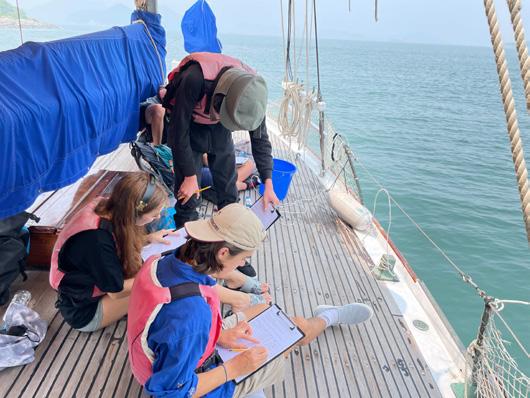
The school, with its campus located close to Ap Lei Chau, an island next to Aberdeen Harbour, has a unique Marine Science Centre (MSC), a part of its life-worthy learning, which places ocean literacy and experiential learning at its heart. Dr Blurton spoke about the importance of education extending beyond school walls, which in this case is the ocean.
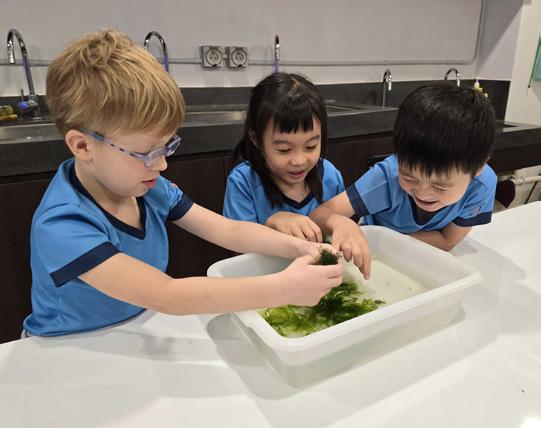
curriculum,
“Through their interaction with the MSC, students don’t just learn about marine animals; they also learn scientific and design reasoning, how to conduct research, and complex problem solving. In other words, the Marine Science Program is not just an end in itself, but rather a tool through which so many important educational goals can be attained,” she explains.
Students who are extremely passionate about marine science become docents in the primary level that places ocean literacy and experiential learning at its heart. Dr Blurton shared a story about a seventh grader who created a workshop called “The Hands-on Understanding, Growth and Opportunities in Science (HUGOS)”. This peer-to-peer three-hour workshop introduced and taught 90 students from local schools about marine science research.
Conducting research on topical issues is also part of the programme. For example, the Seaweed Project requires middle school students build seaweed farms from mostly biodegradable materials and deploy them in selected sites around Hong Kong. They can then monitor the seaweed’s effects by measuring things such as ocean chemistry, biodiversity, temperature and more. High school students have also collaborated with local fish farms to measure the effect of their seaweed farms on fish production.
Ultimately, by weaving marine science seamlessly into its curriculum through innovative, hands-on methods, The Harbour School ensures ocean literacy is a natural and integral part of every student's education and wider knowledge, while cultivating a profound, organic connection to Hong Kong's coastal ecosystems.
all primary and middle school students are required to spend some time at the centre.
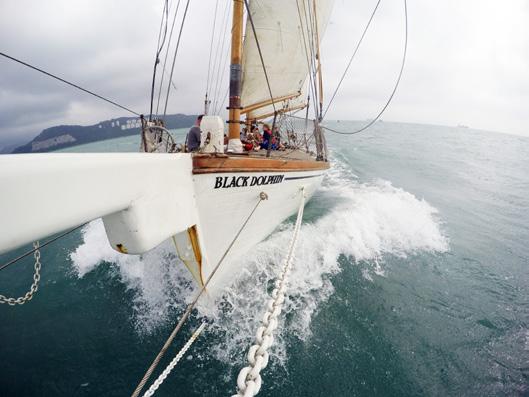
The school owns a 50-foot sailboat, called the Black Dolphin, where they organise activities such as archaeological digs for students to learn about the ocean.
Rebuilding Reefs, Tile by Tile
by Ashley Yau
How Hong Kong entrepreneur Vriko Yu turned scientific experimentation into 3D-printed tiles to revitalise coral reefs.
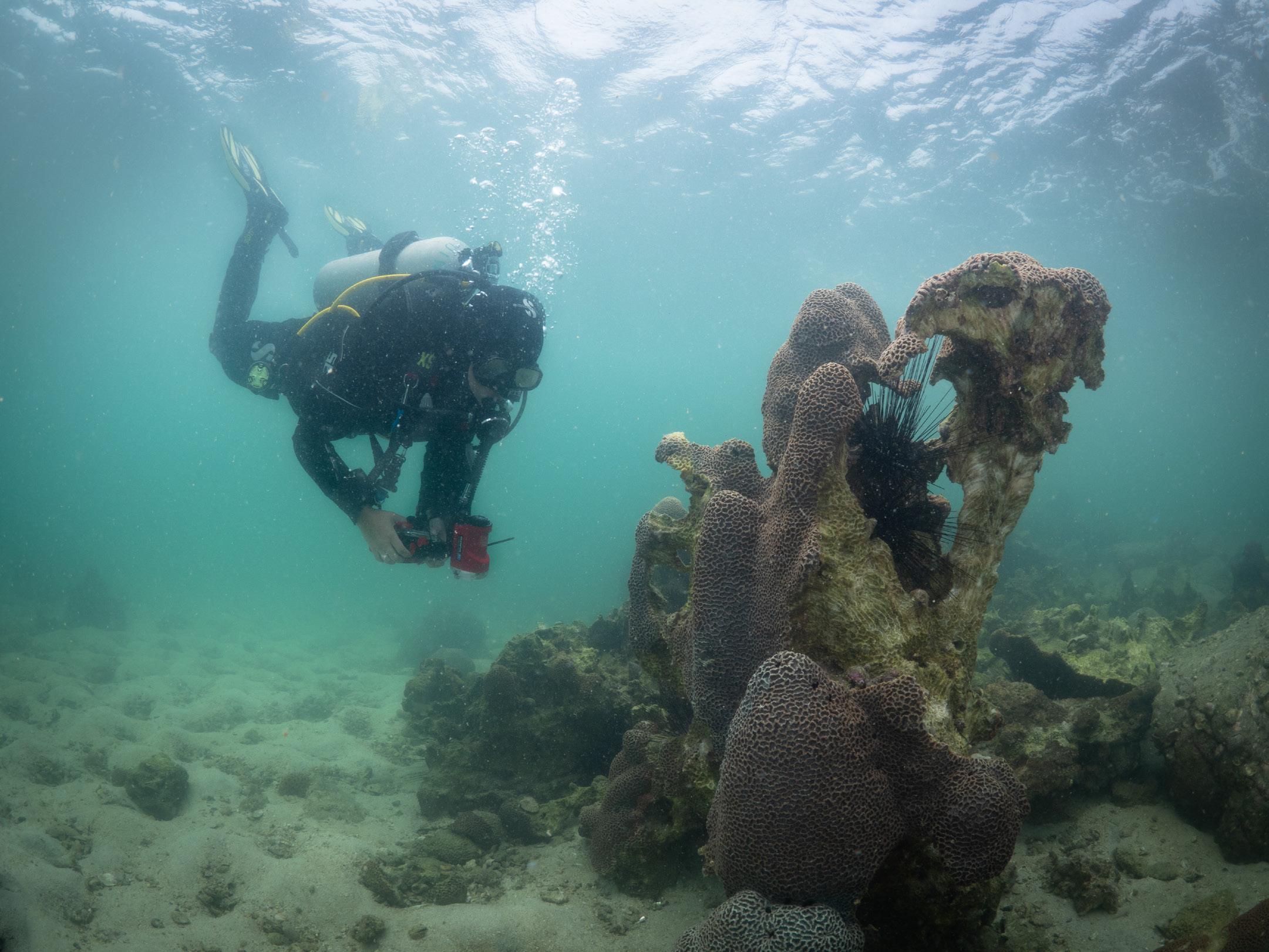
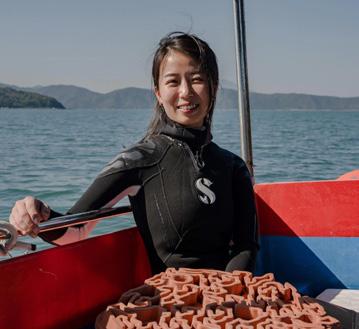
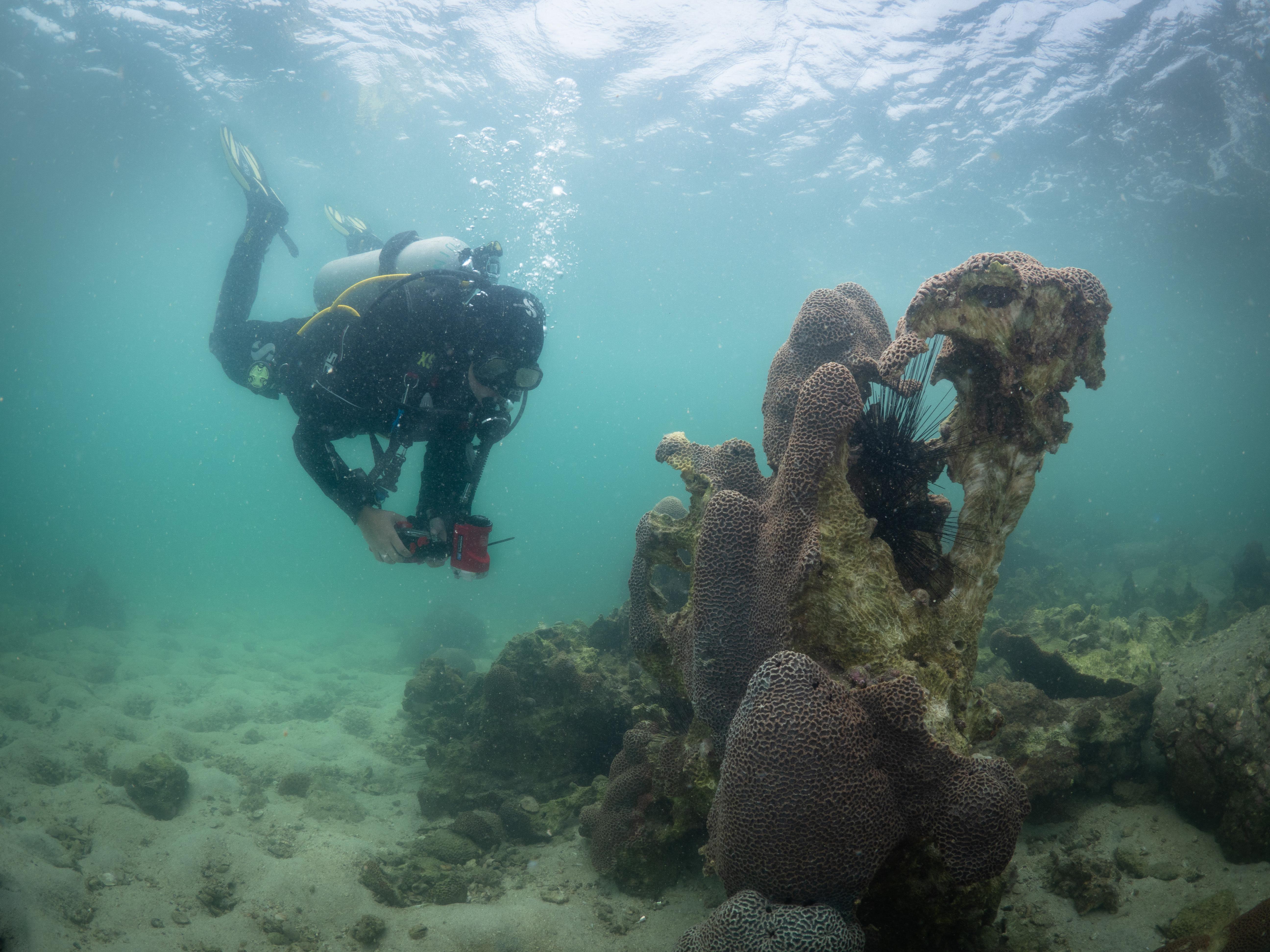
While many Hong Kong youth chase urban dreams in office buildings, 90s-born Vriko Yu has left her footprints on the coral communities off Sai Kung. As the Co-founder and CEO of Archireef, she leads an interdisciplinary team using a nature-based solution empowered by 3D printing technology to create “custom homes” for threatened coral reefs in challenging marine environments. From Hong Kong’s Hoi Ha Wan Marine Park, which is home to more than 60 coral and 120 fish species, to Abu Dhabi in the United Arab Emirates, she has brought Hong Kong-originated environmental innovation to the world.
Now based in Abu Dhabi, Vriko shares her journey with Youth Hong Kong, from witnessing the decline of corals to enabling their protection after repeated failures in the laboratory. This is not only a story of perseverance in environmental protection, but also a reflection of the power of Hong Kong’s youth to push boundaries and pursue their dreams.
Growing Up With Nature
When people think of Hong Kong, they often picture row upon row of skyscrapers, but Vriko’s childhood had a different backdrop. “I was born in the 1990s and was lucky enough to grow up in a rural part of Hong Kong,” she recalls with a smile. “My dad’s favourite place was Sai Kung, a place that coloured almost my entire childhood.” With the bustling urban skyline on one side, and the wild mountains and the sea on the other, this “half-and-half” upbringing has become her lifelong treasure.
About 40% of Hong Kong’s land consists of designated country parks and special areas according to government statistics. The sea, including Victoria Harbour, covers nearly 60% of the territory’s total area. This coexistence of urban life and nature is deeply etched in Vriko’s bones.
Her attachment to this landscape and seascape quietly sowed the seeds of passion, with nature becoming part of her identity.
“ “
I saw climate change happening right in front of me. It was terrifying.
In 2014, as she was about to graduate from the Chinese University of Hong Kong, where she studied natural science, Vriko obtained diving certification and began diving every week off Sai Kung. What she saw under the water has changed her academic path and her life’s trajectory.
She watched a 2-metre by 2-metre coral community degrade in just two months. “I watched it change from stressed to dying. The speed was terrifying. When you see corals dying before your very eyes, you truly realise the impact of climate change," Vriko adds.
“That was my epiphany. I realised that its impact is so much faster and greater than we’d ever anticipated or learned from textbooks,” she continues. “From then on, I became very curious about what is happening to the ocean and wanted to find out if there was anything scientists could do about it.” After that, she worked as a research assistant and then chose coral restoration as the focus for her PhD thesis.
Failure
Not An Option
When Vriko and her supervisor Professor David Baker first started working on coral restoration at the University of Hong Kong, they made many detours. They tried the traditional method commonly used worldwide at that time — extracting live coral fragments like surgeons, growing them in flat artificial nurseries, and then transplanting them to natural rocks or concrete blocks after two years of cultivation.
But despite their persistence, this led to four consecutive years of failure. “We found that Hong Kong’s underwater environment is very special. The depth where corals grow lacks a stable attachment base, and the metal steel bars and concrete blocks we used at that time were either not stable enough or had too high a pH value, making them completely unsuitable for coral growth,” Vriko recalls.
After two years of cultivation, the coral survival rate plummeted to around 20% and dropped even more by the third year. “It was frustrating. We clearly knew what we needed to do, but we couldn’t find the right way.”
But the team didn’t give up. A bold idea gradually took shape: could they create a stable and comfortable “custom home” for corals? She and Professor Baker, thought of 3D printing and clay materials. Clay is suitable for the marine environment, and 3D printing can create complex structures in a cost-effective way that fits the growth needs of different corals, she recounts.
So the team contacted two architects from the School of Architecture to collaborate across disciplines on creating what would later become the 3D-printed reef tiles. The bottom layer is like a tennis racket, she says, and the top layer imitates the structure of brain corals with many gaps. It can firmly fix the coral skeleton, reduce sand abrasion, create habitat complexity, and help mitigate sedimentation problems.

What’s more, these reef tiles can be customised. Different corals have different growth forms — some look like small trees, some like rocks, and some like blade. Vriko and the team used 3D printing to create different grooves and gaps to adapt to their growth needs. While the new solution, which took the team another four years to finalise, seemed revolutionary and ground-breaking, behind it were the solid steps taken to solve a scientific problem.
From Idea to Real Impact
In her third year of doctoral studies, when the 3D-printed reef tile project was gradually maturing, Vriko made a bold decision to step out of academia and to establish Archireef, bringing the technology from the laboratory to real-world application. “As scientists, we are used to the cycle of discovering problems, solving problems, and publishing papers,” she says. “But I didn’t want this technology to stay in published papers only. I wanted to see it have a real impact.”
But the road from scientist to entrepreneur was far more difficult than she imagined. “I had no business experience at that time, and I didn’t even know how to build a business model. There were no reference cases in the world,” Vriko admits. Fortunately, the Hong Kong Science Park gave her support, from building a business model to making the necessary connections.
Opportunity also came unexpectedly. Archireef’s technology was featured at the World Economic Forum, attracting the attention of a sovereign wealth fund in Abu Dhabi and allowing the startup to expand outside Hong Kong.
Today, Archireef’s 3D-printed reef tiles have been deployed in many countries and regions, including the United Arab Emirates, Hong Kong, Singapore and Saudi Arabia. The team works closely with local scientists and institutions around the world to understand site-specific coral species and environmental conditions, adapting solutions accordingly.
When talking about her entrepreneurial success, Vriko is very humble: “I have always felt that 99% of our success is luck and 1% is hard work. There are too many uncontrollable factors on the entrepreneurial road. We just happened to seize the opportunity and never give up.” She admits that in her five years of entrepreneurship, she has seen many failures, so she believes Archireef is very lucky to be among the few survivors.
She attributes Archireef’s success to Hong Kong being a coastal city with unique geographical advantages, while having environmental challenges
to be solved. “We're in a highly urbanised, subtropical region not known for corals. Yet, we have more than 84 hard coral species, more than the entire Caribbean. So, all of that combined makes Hong Kong a very interesting testing lab.”
Historically, corals were once widespread across Hong Kong, from Sai Kung to Lantau Island. However, before the government’s major wastewater and harbour‑cleanup, decades of pollution had severely damaged marine ecosystems. Even after efforts to improve water quality, coral recovery has been slow. These factors, according to Vriko, have played a role in the need for proactive environmental solutions.
As a young entrepreneur, Vriko thinks that young people need to unlearn traditional concepts like needing to be fully prepared before they start. Having grown up in an environment where failure was not allowed, Vriko reminds us that on the entrepreneurial journey, failure is the norm and is a vital part of growth.
Letter to Future Generations
Today, Vriko spends half her time advancing projects in Abu Dhabi and the other half back in Hong Kong, continuing to carry out her work in marine restoration.
“We cannot be satisfied with net zero emissions. ‘Do no harm’ is not enough. We also need to strive for net gain, to recover the lost marine ecosystems bit by bit,” Vriko says, her eyes shining. “Hong Kong has the ingredients to lead, with outstanding talents, strong institutions, and a young generation who cares about nature.”
Vriko thinks the city could become a key hub for the development of the blue economy, and that Hong Kong’s young people can fully leverage this advantage to build their own pathways for environmental protection and marine conservation.
What Vriko's team built through Archireef is not just technology; it’s a metaphor for all restoration. When nature is given the right space, it finds a way to return.
Listen, Learn, Live With the Sea
by Mia Yao
Actress, mother and diving instructor Hidy Yu finds in Hong Kon quiet calling to protect, educate and pass on her love for the
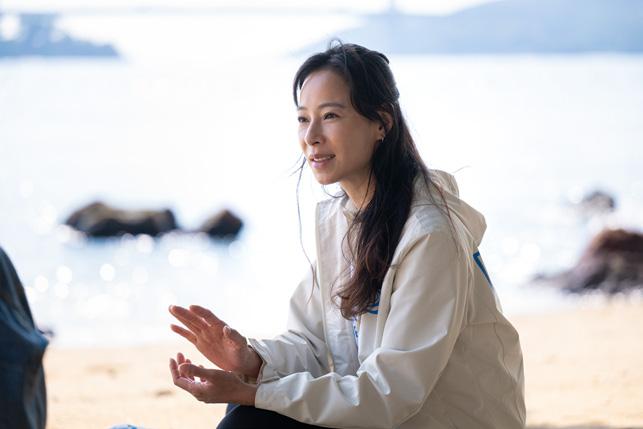
On a sunny, breezy winter morning, the waves roll steadily onto the narrow beach near Tsing Lung Tau, a quiet residential area on the south-west edge of Hong Kong’s New Territories. The wind carries the smell of salt and seaweed as Hidy Yu sits in the shade of a tree, her voice occasionally drowned out by the sound of the waves.
Hidy shares her journey from a nature lover to a learner and mother, and most importantly, to a guardian and educator for the ocean. With her multi-layered identity as an actress, model, scuba diving instructor and ocean ambassador, she contributes her “very small part” in helping with something “big” despite criticism and doubt, as she explains to Youth Hong Kong.
Vast, Yet Mysterious
Hidy’s first encounter with the sea started around 20 years ago. Fresh out of secondary school and waiting for her public examination results, she took a part-time job at an ocean-themed restaurant in Mong Kok. The owner happened to be a diving instructor. At that time, diving was far from mainstream in Hong Kong, limited information was available, and most people knew little about the underwater world.
“I was quite bold back then,” she recalls. “I asked if I could work at the restaurant in exchange for diving lessons from the owner.” That casual exchange led to her first diving certification and to a world she had never known existed.
The moment Hidy descended into the ocean, she was captivated. “It feels like entering a completely different world,” she says. “Everything changes, the way you breathe, move and see.” The underwater realm, as she explains, is not merely an extension of the world above but a parallel universe governed by its own rules. Vision is
magnified, sound travels faster, and the body becomes weightless. For some, this strangeness provokes fear, but for Hidy, it sparked a sense of belonging.
“ “
Everything changes, the way you breathe, move and see.
She soon found herself diving around Asia and beyond, from the Great Barrier Reef to Okinawa. She worked part-time as a model, one of the few with a diving qualification, taking part in underwater shoots and travel programmes. “That was when I truly realised how vast the world is,” she says. “About 70% of the world is covered by ocean. Once you learn to dive, you can see two-thirds more of the planet than most people ever will.”
Yet what fascinated her most was not the scale of the ocean, but its mystery. Unlike mountains, which humans have mapped and conquered, the deepest parts of the sea remain unreachable. “No one has been to the deepest point of the ocean,” she says. “Even with modern technology, we still only understand a small fraction of it.” For Hidy, being at one with the sea is both an exploration of the planet and an inward journey, an experience of self that exists only underwater.
Hearing the Ocean Speak
Over time, that relationship with the sea has reshaped her outlook on life. The longer she dived, the smaller she felt. “The ocean makes you realise how insignificant we humans are,” she says. “It changes every day. It can be calm and gentle, or terrifying and destructive. That’s why humility is so important.” The sea, she believes, teaches her to go with the flow — not in a passive sense, but with awareness and respect. “You can’t control everything. You do your best in the moment, and that’s enough.”
This philosophy stands in sharp contrast to life on land, particularly in a city like Hong Kong. Underwater, Hidy explains, there is no internet, no constant communication,
no need to explain oneself to others. “It’s very pure. You’re surrounded by the ocean and Mother Nature, and it feels like being held by nature itself.” That simplicity is what intrigues her the most. “Just like now,” she says, as the water gently laps onto the shore. “We just sit here and listen to the sea.”
Ironically, despite living in a city surrounded by water, Hidy notices that many Hong Kong people feel disconnected from the sea. Hong Kong is often described as a concrete jungle, yet around 60% of its territory is ocean, and more than 300 wild hills and mountains rise from its compact landmass. “You can hike in the morning, have lunch in the city, and dive in the afternoon. That’s incredibly rare anywhere in the world.”
Still, maritime culture remains marginal. “We know more about the land than the ocean,” she adds, which she thinks is probably influenced by the Chinese belief: “rather belittle a mountain, never belittle water” (欺山莫欺水). In other words, people growing up in such a culture think that water is dangerous.
Another persistent misconception is that Hong Kong’s waters are too polluted or not worth exploring. Hidy herself once believed this. “I wanted to dive all over the world, but I never thought about diving at home,” she admits. It was only after becoming a diving instructor, when students asked her where to dive locally, that she realised how little she knew about her home waters.
If you look closely, Hong Kong has its own beauty. “ “
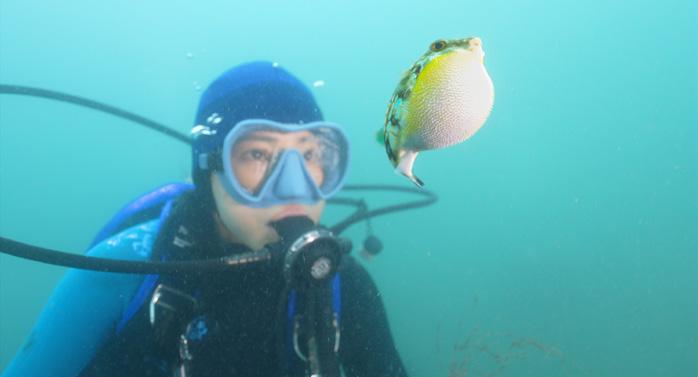
What she discovered then surprised her. Hong Kong’s eastern waters host an extraordinary diversity of hard corals, with around 84 recorded species of reef-building stony corals — surpassing the entire Caribbean in terms of species richness. Soft corals, gorgonians and other marine life thrive as well, despite the city’s subtropical and marginal conditions. “The visibility isn’t always perfect,” Hidy says, “but if you look closely, Hong Kong has its own beauty.”
That realisation sharpened her awareness of another gap — lack of education about the ocean. “We rely on the sea every day, for water, food, weather, but most people don’t think about it,” she says. For younger generations especially, the connection has weakened, replaced by screens and digital spaces. “So the question becomes: in such a technologically focused society, how do we restore balance?”
Diving into the Blue
For Hidy, the answer began to take shape through loss and shock. The first turning point came during a return trip to the Maldives. After a gap of eight years, she was heartbroken to see that the once thriving coral reefs had turned white from coral bleaching. It was the result of rising sea temperatures and climate change.
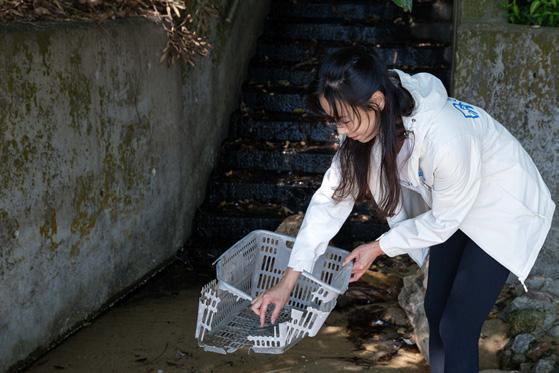
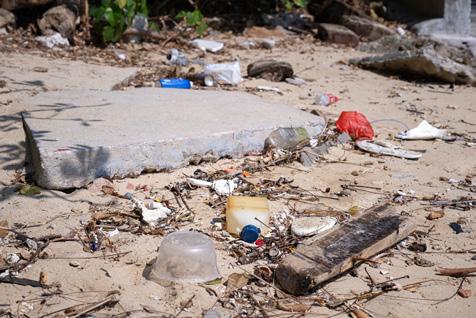
The second blow came closer to home. After Typhoon Mangkhut tore through Hong Kong in 2018, Hidy joined volunteers cleaning the coastline. The shore was buried under plastic waste — bottles, containers, fragments that had likely been drifting in the sea for decades. “It felt like the ocean was returning our rubbish to us,” she says.
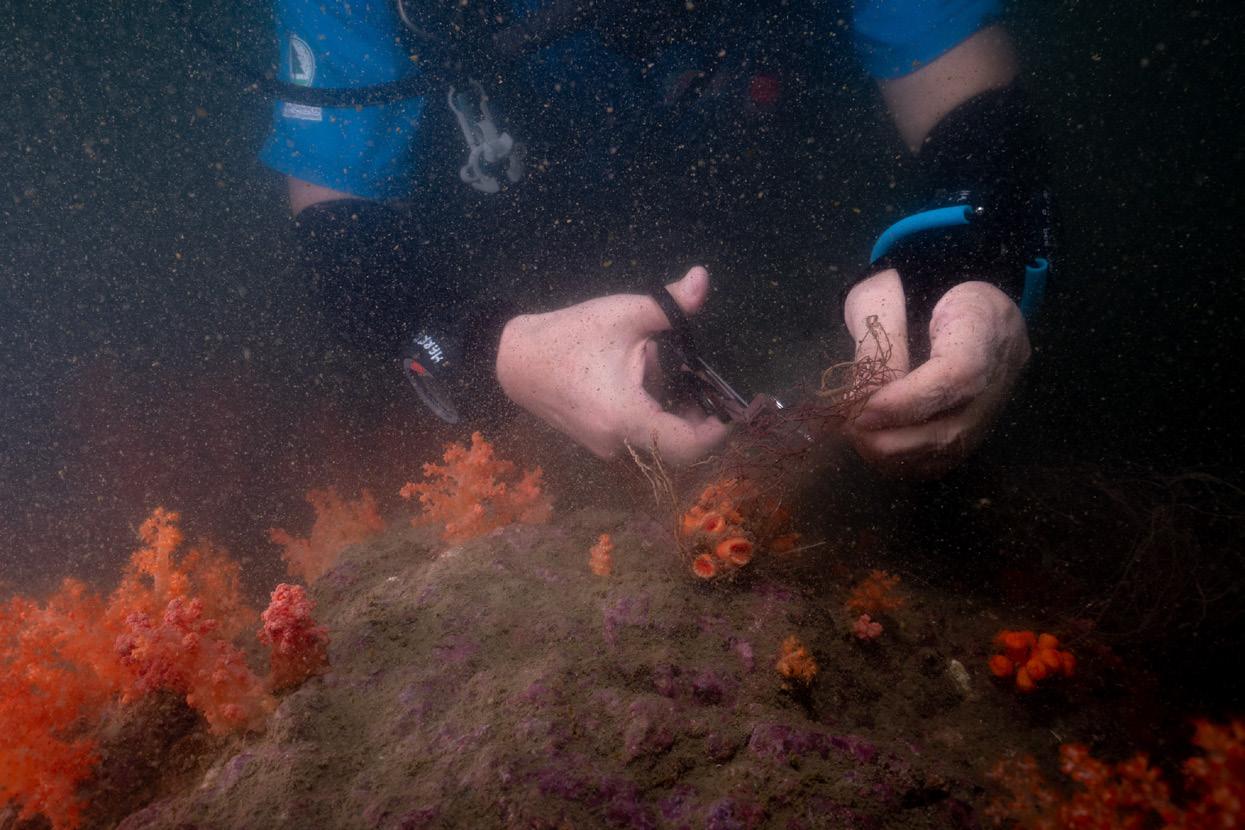
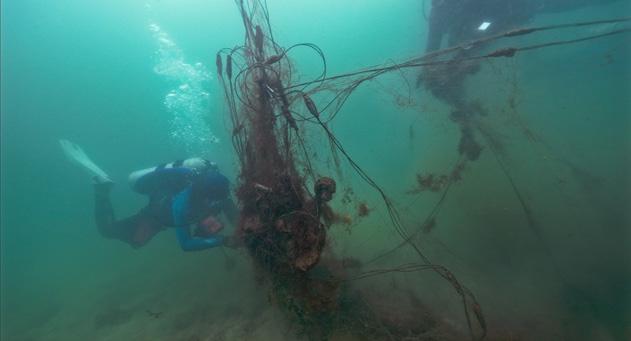
From that moment on, she began collecting underwater waste and cleaning ghost nets, the "silent killers" of
marine creatures, during her dives. Other divers joined in. What started as recreational diving slowly evolved into organised underwater clean-ups. To Hidy’s surprise, many divers were willing to pay to take part. Support soon followed from NGOs, institutions and companies with members who could not dive themselves but wanted to contribute.
In 2024, she formally established the Bling Bling Ocean Foundation, a non-profit organisation that promotes ocean culture, education and ocean cleaning in Hong Kong. Alongside underwater clean-ups, the foundation organises grassroots public activities such as drama workshops, fitness challenges using equipment made from marine waste, and ocean festivals that combine music, food and play.
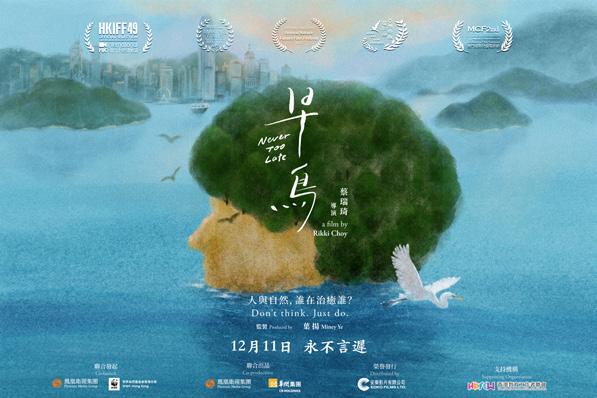
The impact has extended beyond these events. Hidy’s story also features in the documentary Never Too Late (早鳥), which follows individuals who find healing and meaning through nature. Screenings have drawn audiences who might never have thought about the ocean before. “Some people came back three or four times,” she says. “That kind of resonance is very powerful.”
However, not everyone is convinced. Over the years, Hidy has faced criticism and doubt. Some call her work unrealistic, too small, or too late. Others question how such efforts can sustain a livelihood. She shrugs. “People often judge things by whether they can make money,” she says, “but what matters to me is knowing why I chose this path.”
“I’ve always had my own way of thinking. As you grow older, you start to notice how easily people assume that what the majority believes must be right, but that’s not always true. Many things need to be experienced personally.”
Passing the Tide On
Education and what Hidy is doing now are all about quiet, gradual influence. “Maybe I’ll spend 20 years and still feel I’ve done very little, but that’s okay. We shouldn’t expect everything to be fast or instant, or to reach the destination overnight. Progress doesn’t work like that,” she says. “Moving slowly in the right direction is already a beautiful process.”
When I hold her hand underwater, I see my younger self in her eyes. “ “
Perhaps the most intimate form of impact is closer to home. Hidy’s 10-year-old daughter is already a certified diver. “There’s a scene in the documentary film where the director asks my daughter what she wants to be when she grows up. She answers, ‘Like mummy.’ When I saw that on screen, I realised how deeply my child has been influenced. I saw that what I am doing is real and meaningful. That’s when I realised how influence really works,” she says. “It starts with the people around you.”

She and her daughter have dived together overseas. That’s when she experienced the magic bonds that can exist between a mother, a daughter and the sea. “When I hold her hand underwater, I see my younger self in her eyes. She kept pointing at things she saw underwater, just like me when I first tried diving. It is just so touching.”
When our interview ends, Hidy reaches for a few bin liners from her canvas bag, ready to comb the shoreline for rubbish and collect sea glass for educational purposes before heading home. As the wind picks up, she finishes filling the bags with discarded plastic, the takeaway food packages and the styrofoam.
By doing seemingly trivial things like this, she hopes to impact future generations and bring them closer to the sea, a world where words are unnecessary and time slows. “So we beat on, boats against the current,” and the ocean is always there — vast, unknowable, and patient — speaking, as it always has, to those willing to listen.
Maritime Living
Take a trip back in time: we compare photos from 1924 and 2024 to see how life on the water in Hong Kong has changed over the last 100 years. From Hong Kong Island to the slightly remote Crooked Island, these areas have undergone massive transformations over the past century.
by Mia Yao, Xu Peilun
Shau
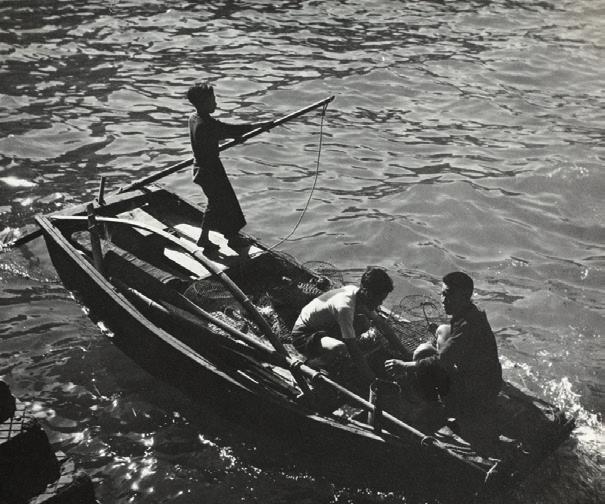
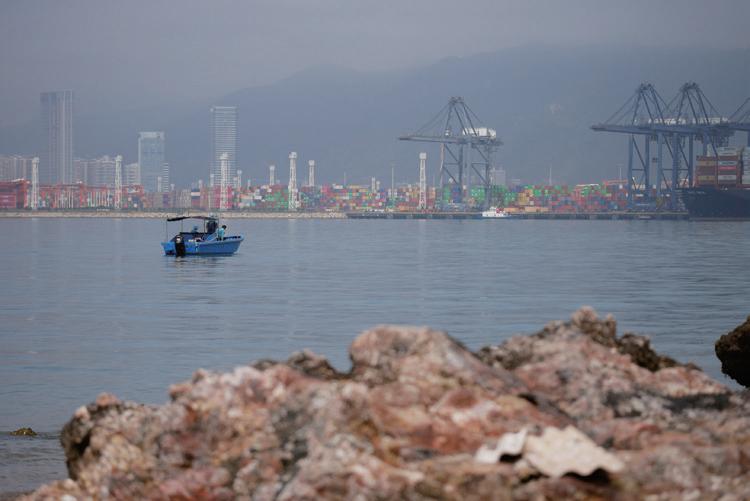
Hong Kong’s fishing industry has significantly declined from its peak. By the 1960s, over 20,000 fishing vessels operated in its waters, and the fishing population exceeded 150,000. Major fishing communities flourished in places like Aberdeen, Shau Kei Wan, Cheung Chau and Kat O, where generations of fisherfolk lived on their boats and shaped a distinct maritime culture.
The industry transformed in the post-war decades. Fishing vessels were motorised, allowing for offshore operations, and modern fish marketing systems were introduced. Yet perhaps the most profound change was social. From the 1970s onwards, government policies encouraged fisherfolk to move ashore, with public housing schemes gradually drawing boat-dwelling families onto land.
In 2025, according to the Agriculture, Fisheries and Conservation Department, the fishing industry consists of only about 4,980 fishing vessels and 10,120 local fishermen, with fishing activities mainly conducted by
sampans using fishing gear and smaller non-trawler vessels. Trawlers and other larger non-trawlers are generally operating in the adjacent waters of the South China Sea.
As the fishing industry has shrunk, the once vibrant life on the water has gradually faded away, but the traditional customs passed down through generations of fishermen have become even more precious amidst these changes. Hong Kong fishermen have preserved a distinctive maritime culture, much of which has now been recognised on the Intangible Cultural Heritage list. For example, the Tai O Dragon Boat Water Parade dates back over a century ago, as a plague broke out in Tai O. Fishermen rowed dragon boats towing deity vessels through the waterways, and the plague subsequently subsided. The ritual has been passed down ever since. In 2011, the Tai O Dragon Boat Water Parade was inscribed onto the National Intangible Cultural Heritage list, making it the only fishermen's custom in Hong Kong to receive this honour.
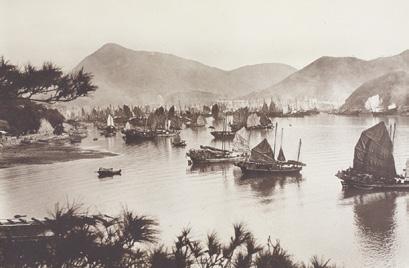
Photographer unknown. Image courtesy of Special Collections, University of Bristol Library (www.hpcbristol.net). Estimated year: 1924.
A Kat O fishing boat in 2024. Photo courtesy of Ray LC
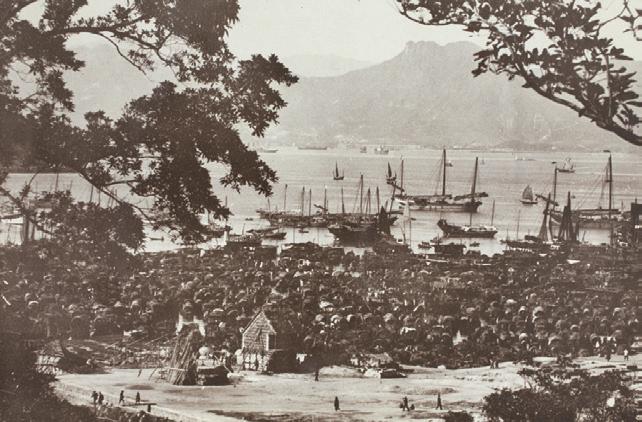
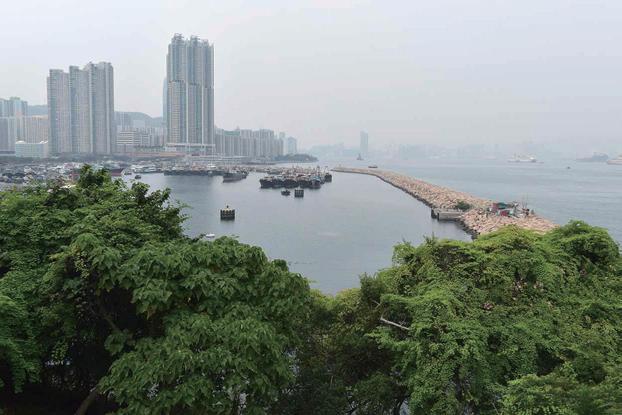
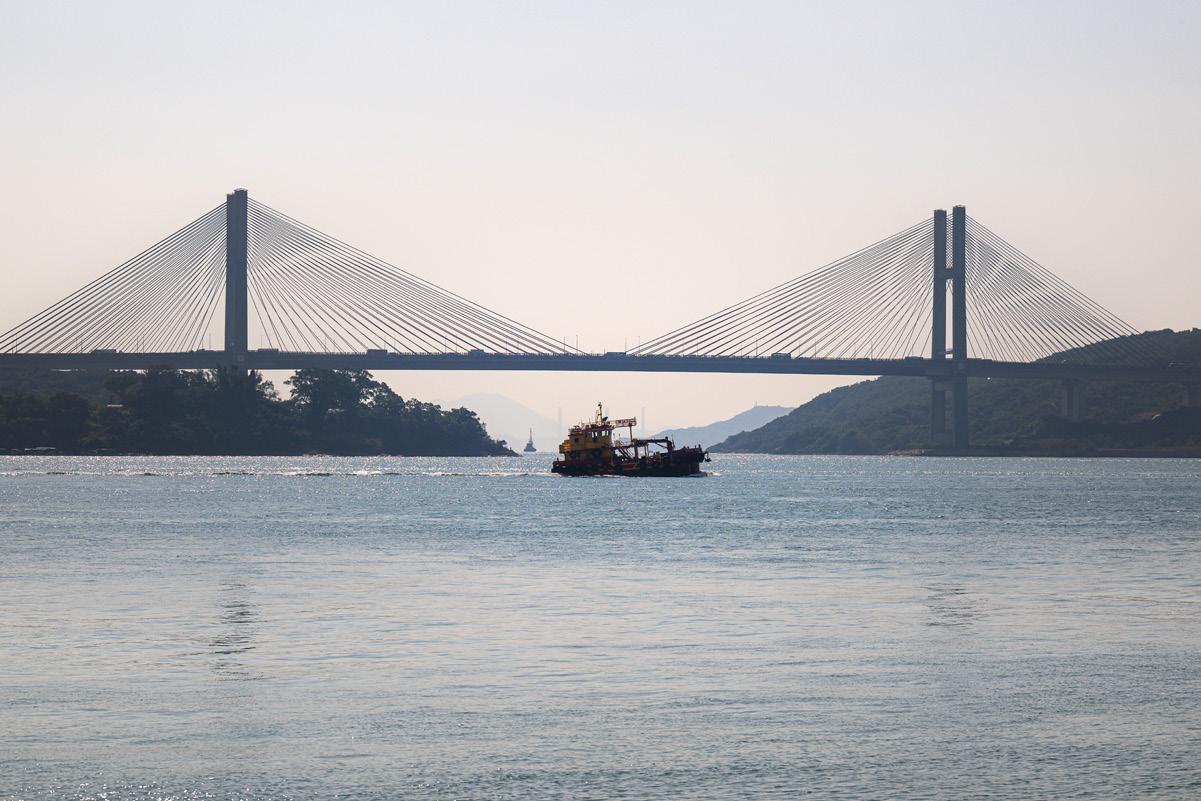
Aberdeen, or in Cantonese Hong Kong Tsai (香港仔), is believed to be the origin of Hong Kong or the fragrant harbour. Because back in the Ming Dynasty, fragrant incense products, specifically agarwood, were shipped from ports in Aberdeen or Shek Pai Wan to the Chinese Mainland, Southeast Asia and beyond.
Since Aberdeen's early days as a port, floating homes have been a common sight. Over time, the need for a sheltered harbour grew, leading to the development of the Aberdeen Typhoon Shelter.
Between 1976 and 1986, the Southern District gradually became a major residential area with its population increasing to more than 230,000. Due to industrial development and the construction of public housing estates, the population in the Southern District continued to increase and stood at over 250,000 in 2024.
The typhoon shelter then became a unique and self-sufficient floating community. Typhoon Shelter Stir-Fried Crab was born from this kind of practical
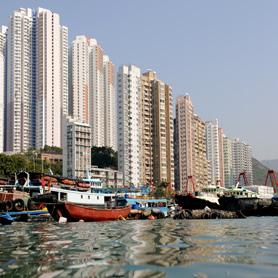
wisdom. Fisherfolk stir-fried the fresh seafood they caught that day with generous amounts of minced garlic and fermented black beans. The strong seasoning not only masked the fishy smell of seawater, but also helped replenish the salt lost through heavy physical labour.
Today, the dish has moved from the cramped decks of sampans into the grand banquet halls. It remains a fragrant reminder of a generation of fisherfolk who turned the necessity of survival into a legacy.
Shau Kei Wan Typhoon Shelter: A photograph from Shau Kei Wan, Hong Kong, China. Photo courtesy of metrotrekker
Photograph by Denis H. Hazell, estimated to have been taken in 1924. Image courtesy of Special Collections, University of Bristol Library (www.hpcbristol.net).
Photograph by Denis H. Hazell. Image courtesy of Special Collections, University of Bristol Library (www.hpcbristol.net). Estimated year: 1924.
Shau Kei Wan was once the largest fishing village on the north coast of Hong Kong Island, with about 1,200 residents, according to the 1841 Population Census, second in size only to Stanley in the early colonial period. Many residents lived on boats rather than on land. Fisherfolk originally used the natural bay as a storm refuge in the early 18th century and gradually settled there, turning it into a recognised typhoon haven and fishing community.
Main Street East (today lined with eateries) began as a coastal market street created to serve the fishing fleet, selling fuel, water, nets and other supplies to boat people.
Before nylon, fishermen preserved their hemp nets by soaking them in salted egg white, which is why salted egg yolks became a speciality in the village.
Due to rising piracy by the mid‑19th century, Governor Richard MacDonnell ordered a crackdown and had Shau Kei Wan replanned with proper roads, housing and police posts to bring order to the busy harbour community.
After World War II, Shau Kei Wan evolved into a major fish‑trading centre, a role it still keeps, while also receiving many refugees from the Chinese Mainland who built informal hillside and shoreline settlements.
Land reclamation from the 1960s onward reshaped the original bay and coastline, reducing traditional boat-dwelling life in the typhoon shelter and replacing waterfront squatter areas with housing estates and planned urban streets.
(Crooked Island)
Kat O, also known as Crooked Island, is one of Hong Kong's northeastern outposts and a narrow island shaped like a crooked "Z". Whenever seas turn rough and winds run high, fishermen across the waters often take refuge here. This is why it is called “Kat O” (吉澳), with Kat (吉) carrying the meaning of good fortune. The 1950s and 1960s marked Kat O's golden age. At its peak, the island's population reached as many as 6,000 people. The main street, Kat O Street, was lined with shops and bustling with activity, hosting over 60 businesses of various kinds.
However, as industrialisation took hold in urban Hong Kong, waves of young people left the island to seek opportunities in Kowloon, Hong Kong Island or overseas. By 1983, Kat O emigrants living in Europe had formed the Kut-O Chinese Association in the United Kingdom, establishing fisheries federations in Scotland and Ireland.
Yet, decline is not the whole story. Once every decade, Kat O springs back to life through its most distinctive tradition: the Da Chiu Festival (Tai Ping Ching Jiao), a major communal ritual held every ten years. Its rhythm reflects the ancient village's concept of time and attracts tourists. According to Hong Kong’s Countryside Conservation Office, Kat O holds the festival every decade, with the next one scheduled for 2026.
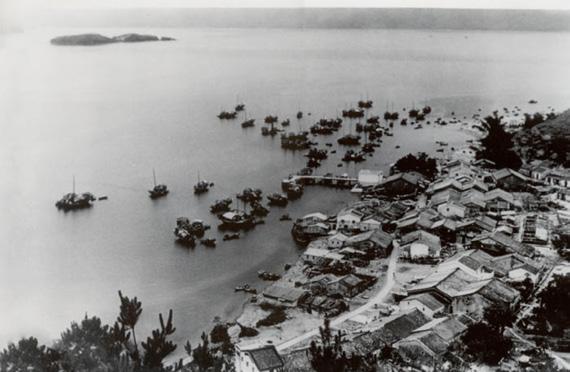
A photo from the 1950s archived by the Kut-O Chinese Association.


MY BLUE FUTURE
In children’s imagination, what will Victoria Harbour look like in the future?
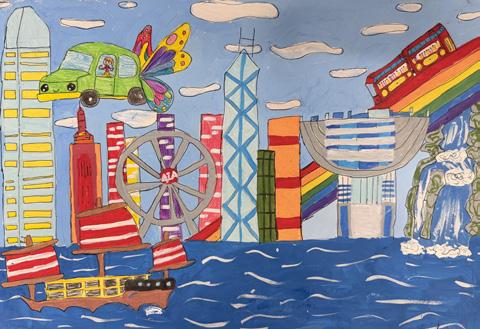
Leung Cheuk-ling
Youth Hong Kong
There will be flying cars soaring through the air in the future, along with the iconic buildings that make the Victoria Harbour recognisable. The cable car slides down a rainbow, and people will slide down from it.
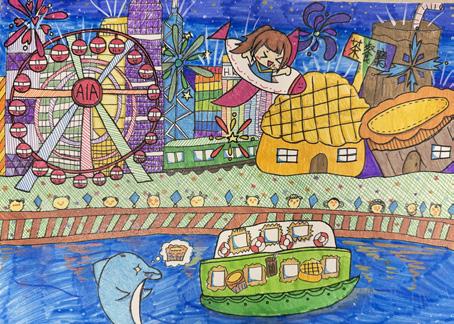
Ng Sin-yau
My Victoria Harbour is like a fairy tale filled with joy and warmth. I want to tell everyone that Hong Kong is not just a busy big city with tall, shiny buildings, pretty fireworks, and a beautiful night view. It also has warm and special things, like the pineapple buns, egg tarts, and milk tea. They are not only delicious food, but also a part of Hong Kong people's memories, and they show how much we care for each other.
Zhao Ru-xin
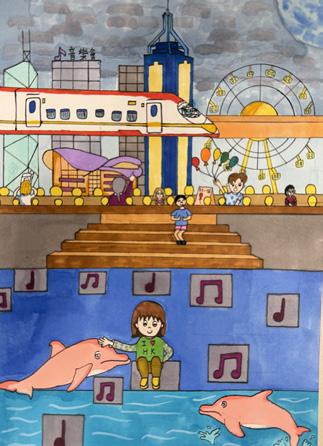
The Victoria Harbour of my dreams has clean blue water where I can play with pink dolphins. A fast train, driven by a robot, runs above the harbour. The observation wheel is colourful, and people are happy, with music playing everywhere. I love Hong Kong!
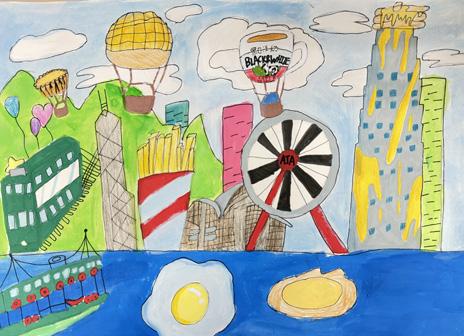
Leung Cheuk-lam
My drawing features my favourite Hong Kong food and childhood memories of Victoria Harbour. I also drew a tram going up the mountain and a ferry on the sea, which reminds me of my childhood rides.
OCEAN
For some, the sea is a childhood ritual. For others, it is a near-drowning experience, a race against the wind, a quiet romantic date, an escape. But to you, what is it about? Drawn from a youth survey, these stories remind us of our sometimes forgotten connections with the water.

THE OLD MAN AND THE SEA
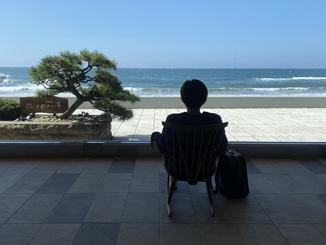
Hakodate, Japan 2024
Valerie
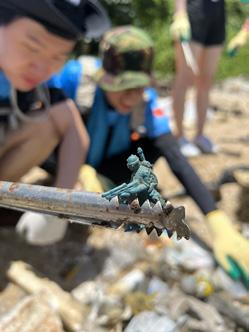
OCEAN TOYS
Tai Mei Tuk 2022
Lily
PEACEFUL
New Zealand
2018
Winky Healing time during my solo trip
I thought soaking in a saltwater open-air bath would let me embrace a moment of tranquil bliss, but I was caught off guard by nature’s unfiltered gaze — a seagull landed by the pool, with its look of disdain. Only after dressing and standing by the sea did I realise how easily human dignity crumbles before all living beings.
I went to Tai Mei Tuk with a group of young people to do beach clean-ups. We picked up strange things, and none of them belonged to the ocean. Many of the plastic bottles, fishing nets, plastic bags, and even mahjong tiles we picked up that day went to the garbage dump. But I took this little toy back to my office, and it's been sitting on my desk ever since.
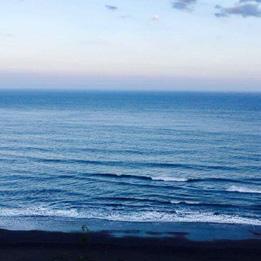
When I first travelled to Taitung as a travel journalist, I was amazed by this sea. I thought to myself: doing what I love, seeing the scenery I love, and the weather is so nice. It was such a wonderful moment!
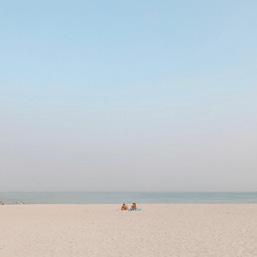
ON THE BEACH
Sai Kung 2021
Michelle
I could work from home and from anywhere when I was still with my previous company. Every Friday, for a change of scenery, I would work at the beach to reset and relax.
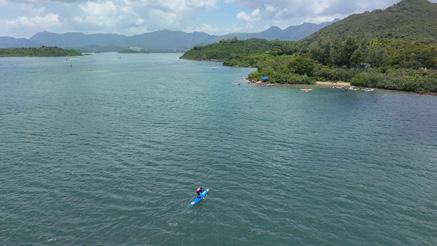
FERRY ME ACROSS
Sai Kung 2025
Aimee
Last year, during the long-distance race, the Sai Kung Sea was completely calm. This photo is proof of the tranquillity I felt while sailing alone in my small boat.
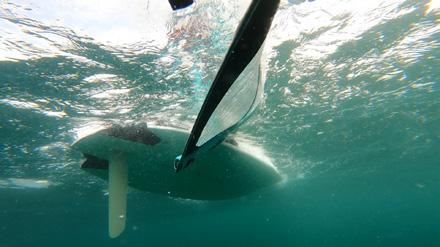
UNDER THE SEA
Stanley 2023
Sam
This underwater photo was taken when the camera at the stern of the sail fell into the water. So this is what windsurfing looks like from underwater.
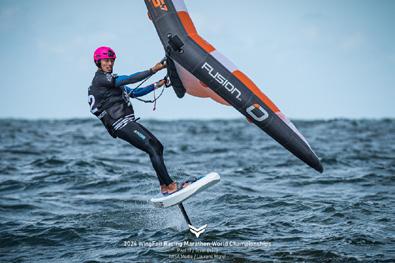
CHALLENGE
Texel, the Netherlands 2024
Feek
The 2024 WingFoil Racing Marathon World Championships was challenging. By trying different launch techniques and seeing top sailors struggling too, I found the energy to push through and finished 9th overall in the race. This photo captures the moment when I completed the race. It reminds me of the amazing force of nature and the human spirit that refuses to give up. No matter how tough it gets, you can overcome it when you adapt and keep going.
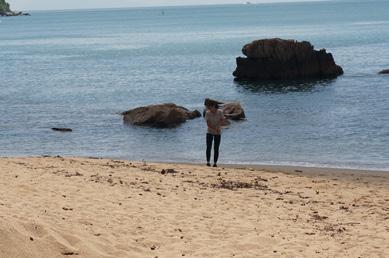
WHITE NOISE
Stanley 2024
Celia
I was practising long jump on a random Stanley beach when I found precious sea shells. The picture captured the scene of me looking down at the glittery sand and the scattered, weird-looking seashells.
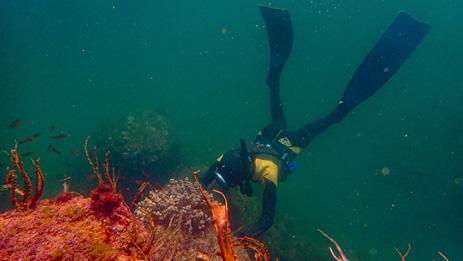
ONE WITH THE SEA
Miura Peninsula, Kanagawa, Japan 2025
Seiya Oshima
This photo was taken by my dive buddy during a dive in Miura Peninsula, about 90 minutes away from Tokyo. Tokyo Bay is often murky and faces serious pollution. But just a short distance away from the busy city coastal area, there is the beauty of coral, fish, and a quiet life thriving beneath the surface — something that gave me hope as I hovered above the corals.
When did you first start to the sea?
feeling connected
When I was younger, I almost drowned during a summer swim. That scared me, but the memory stayed with me. Instead of turning away from the sea, I became curious about its power, movement, and the life within it. Over time, that fear slowly became respect, which later grew into a connection.
My grandfather was a sailor, and my father enjoys swimming. My parents took me to the beach every summer for a swim, and those were among my fondest childhood memories.
Swimming with friends at Stanley Beach
Through watersports and windsurfing.
Taking the ferry when I was little.
When I was young, I lived close to the seaside. I would walk and spend time by the shore. The sea watched over me throughout my early childhood.
Going on a beach date with my partner.



What do you think has changed most in the way people connect to the sea?
Today, we are focused on city life, status and success. We sometimes forget that we are also part of nature. When we enter the water, we relax with our diving reflex. People used to worship nature with humility because of its power and mystery. Now, it’s a more distant relationship. We often just look at the sea from buildings or through screens. I’ve seen sea turtles swimming in Tokyo Bay – incredible in such a dense city – yet many people pass by without noticing. We just need to pause, look, and remember that we belong to the sea.
The sea has never left me, even though I spend less time with it now. As we grow older, our minds mature, and our reflections deepen. The sea stays constant, but its role shifts from a companion to a guiding light and mirror, allowing us to see how we have changed.
The connection is fading because of reclamation and urban development.
It’s like a beautiful postcard meant only for viewing. It forms the backdrop of our lives; we are within it, yet unfamiliar with its temperature and touch.
It’s a bit like animals in a zoo. It doesn’t feel closely integrated into our daily lives.
Hong Kong people love the sea and watersports, especially in summer, so the relationship may seem closer. However, there is still a lack of genuine reverence.
Probably not much has changed, because our understanding of the sea has not deepened much.

What have you
We cannot control the ocean. It has its own rhythm. Fight it, you will feel weak. Stay calm and move with it, you can understand it better. The sea teaches me to listen, adjust, and go with the flow. You must fear the ocean, but with respect and wonder. Not that it makes you run away, but that keeps you humble. When I enter the water, I remember that I am a guest.
learned ?
Patience and peace.
Nothing in life truly matters as much as we think. The things we cannot get over or let go of, that trap us, are insignificant in the eyes of nature.
Realising this brings me a sense of relief.
The immense power of the sea: we must learn to understand and move in harmony with it.
Storms in the sky are unpredictable; human fortunes can change overnight. The sea is vast and ever-changing.
Maintain a sense of awe.
What would the between us and the sea ?
ideal relationship
Not to control it, but to live beside it. Coastal cities would grow in harmony with the ocean, not at its expense. My major is English Literature, but I believe I still have a role in protecting the sea.
An easy, everyday connection: effortless access, peaceful moments, and the ocean as a place of healing amid busy lives.
Connect with the sea and appreciate its power; protect it and treasure what it has given us.
The ocean gives me true freedom and rare relief. It’s a place to breathe deeply and ride the waves. I dream that one day we can all feel the same — that the sea is not merely scenery, but a source of calm, escape, and renewal in our fast-paced lives.
Connect with the sea and appreciate its power; protect it and treasure what it has given us.
Remind ourselves of our maritime past and reconsider how we can reconnect with the sea.
“Receiving and safeguarding.” While enjoying its gifts, treasure them with reverence.
Keep the ocean clean. If I go into the water, I try to use reef-safe sunscreen.
Regarding the ocean as our home, just as we keep our own homes clean.
We do not have to fit into one box to make a difference. Whether someone is a scientist, an artist, an athlete, or simply someone who loves the ocean, we all have something to contribute.
— Seiya Oshima
Coastal Living in the Time of Climate Change
by Annette Chan
How eight places around the world are adapting to environmental challenges.
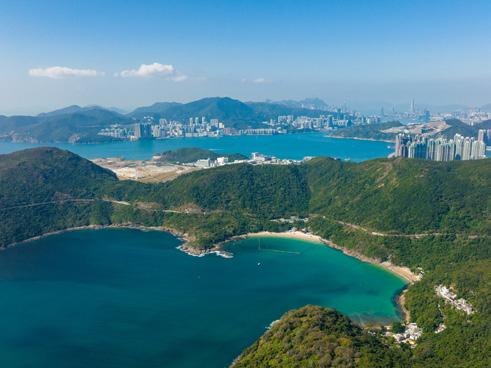
Of Hong Kong’s total area of 2754.97km2, the sea makes up 1640.40km2, with the land area made up of hundreds of islands. But the city’s rapid and large-scale urban development and land reclamation have threatened the existence of local flora and fauna, including our iconic pink dolphins, polluted the sea with microplastics, and left low-lying areas exposed to flooding from rising sea levels. Climate change has added extra pressures, with super typhoons flooding low-lying estates and paralysing transport, while storm surges are testing older seawalls, village piers and reclaimed shorelines. In response, the government is committed to carbon neutrality by 2050, with a climate action plan that pairs emissions cuts with coastal defence. To protect ecological resources, the city also updated the Hong Kong Biodiversity Strategy and Action Plan and emphasised nature conservation of forests, oceans and wetlands.
At the community level, people are also learning to live differently with the sea. The Nature Conservancy has found solutions ranging from planting mangrove stands to the reintroduction of oyster farms, which have over 1,000 years of history in Hong Kong and the Pearl River Delta. Local groups are also restoring wetlands in Mai Po and Tai O, organising beach clean-ups, monitoring coral health in eastern waters, and training citizen scientists to survey intertidal life.
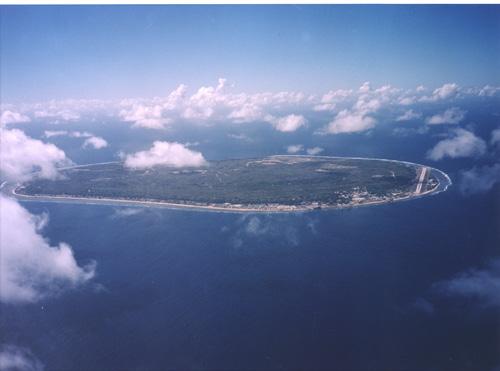
third-smallest country and one of the least-visited countries in the world. While those statistics may conjure the image of a pristine paradise, the once-lush central plateau comprising 80% of Nauru has been reduced to jagged coral-limestone pillars after decades of phosphate mining led by European colonists, decimating Nauru’s fertility and biodiversity.
The vast majority of Nauru’s population lives at low elevation along the coast, where the island’s remaining vegetation is concentrated. Though it is protected by a ring of coral reef, mining pollution has acidified Nauru’s waters. Ocean acidification, as well as climate change-induced rising sea levels and temperatures, have contributed to coral loss and bleaching that exposes the coast to erosion.
To improve its ecological and economic prospects, the Nauruan government has spearheaded several programmes. These include the Ridge to Reef project, which aims to improve terrestrial and marine conservation, as well as the Higher Ground Initiative, a core objective of which is to relocate 90% of its citizens to affordable green housing on Topside, its central plateau. However, the government’s sources of funding have drawn criticism, from a “golden passport” scheme to raise money from the public and partnering with a deep-sea mining company to harvest mineral-rich “seabed nodules” off its ocean floor.


Being a coastal city comes with its own environmental challenges. Broadly speaking, these include vulnerability to extreme weather, coastal erosion, and rising sea levels, all of which intersect with the local ecosystem and community in unique ways. How are coastal regions facing their own environmental challenges? What policies do their governments have to address climate change, and how do they react to environmental crises? What are the
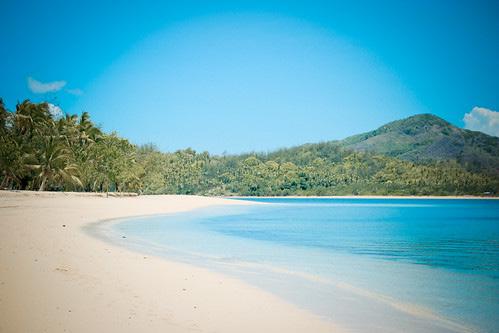
With its crystal clear waters, white sand beaches, and world-famous coral reefs, Fiji is considered one of the most idyllic places on the planet. However, as an island nation in a tropical cyclone basin, Fiji is especially vulnerable to climate change and natural disasters. As a result, this small and remote country is one of the most vocal advocates for climate action, even calling for acts with severe, widespread or long-term damage to the environment to be criminalised by the International Criminal Court.
With sea levels rising at almost double the global average and 70% of its population living within 5km of the coast, vast swathes of Fiji are exposed to saltwater intrusion, storm surges, and coastal erosion. Underwater, Fiji’s reef systems experience destruction from cyclones and record levels of stress from ocean heating and acidification, which in turn affects its agriculture and fisheries.
To protect its coastal communities, the Fijian government has begun relocating at-risk settlements to higher ground, while local communities, NGOs, and companies have planted 19 million native trees and mangroves since 2019 as part of a large-scale reforestation project. On a broader scale, Fiji has committed to using 100% renewable energy by 2035, achieving net-zero emissions by 2050, and investing in sustainable infrastructure projects to strengthen its climate resilience.
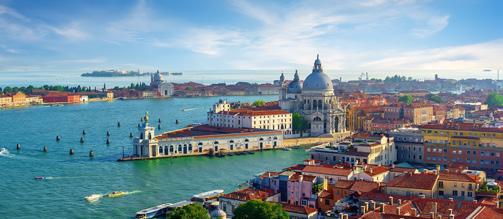
Venice, Italy
The famed “City of Water” dates back to the 5th century, when refugees settled on the Venetian Lagoon by driving an “upside-down forest” of wooden stakes into marshland and laying foundations on top. Over the centuries, the soft clay under these foundations has compacted and led Venice to slowly sink, a situation further compounded by tectonic plate shifts. This natural subsidence, combined with anthropogenic stressors like overtourism and groundwater being pumped from under the city, means Venice sinks 2mm a year while tides rise about 5mm a year.
Flooding is nothing new in Venice, but the government unveiled its long-awaited MOSE floodgates in 2020 to meet the increasingly frequent and severe “acqua alta” high tides. The mobile 1.6km-long flood barriers seal the lagoon from the Adriatic Sea when tides reach 1.1m. Though effective, MOSE has been called a temporary fix by experts, who expressed concerns that frequently closing the lagoon will harm its ecosystem. Some have suggested raising the city’s pavements, while a group of geologists and hydraulic engineers have proposed pumping seawater into the earth underneath Venice in the hopes of raising it by up to 30cm over a decade.
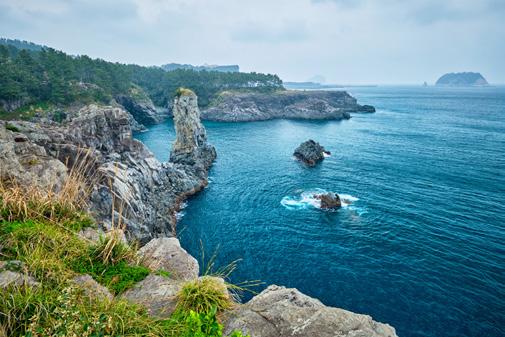
Jeju Island, South Korea
Nicknamed “Korea’s Hawaii”, this volcanic island is known for its diverse natural beauty, from volcanic landforms to forest landscapes, black sand beaches, and coral reefs. However, tourism to Jeju has skyrocketed, with 1.9 million tourists visiting the island in 2024 compared to the 80,000 visitors recorded in 2022.
With that volume has come a spate of antisocial behaviour, including littering, trespassing, public intoxication, and public defecation. In the sea, the increase in pollution and wildlife tours has led to the deaths of Indo-Pacific bottlenose dolphins spiking from one a year before 2021 to 10 in 2024.
Meanwhile, despite high rainfall, Jeju has historically suffered from significant water shortages due to its porous volcanic structure and reliance on groundwater. With increased demand, the steady rise in groundwater extraction could lead to erosion from saltwater intrusion in coastal areas.
In the face of these climate issues, Jeju’s government has set ambitious emissions targets, pledging to use entirely renewable energy by 2035 and eliminate plastic pollution by 2040. To do so, the province’s administration has invested in wind and solar energy, high-tech recycling plants, and ecotourism initiatives, while also introducing fines for misbehaving tourists.
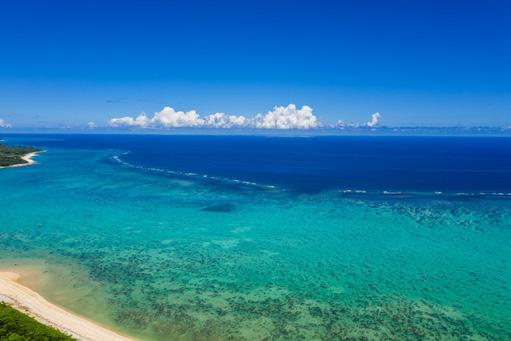
Okinawa Islands, Japan
This string of 113 subtropical islands is considered one of the world’s premier diving destinations, with warm waters, vibrant coral reefs, and abundant marine wildlife. While Okinawa continues to draw visitors from around the globe, its reefs have suffered from extreme degradation over the past 40 years.
Along with persistent outbreaks of the crown-of-thorns starfish (a predator of coral) and marine heatwaves, the coral loss and degradation have largely been attributed to disruption and pollution from urban developments, as well as the U.S. military’s long-time presence. As of 2019, approximately 67% of Okinawa’s coastline was artificial, thanks to extensive construction and land reclamation that has resulted in animals like the dugong, a manatee-like mammal, and endangered amphibians such as Anderson’s crocodile newt and Ishikawa’s frog losing valuable habitats.
But not all hope is lost. In Onna, the “coral village” of Okinawa, an initiative led by the local fisherman Koji Kinjo has been diligently cultivating and transplanting coral to the seabed since the early 2000s. To learn about their mission in a more hands-on way, tourists can visit Kinjo’s land-based coral farm or the Okinawa Diving Service Lagoon to create their own coral seedlings, which will later be transplanted into the sea.
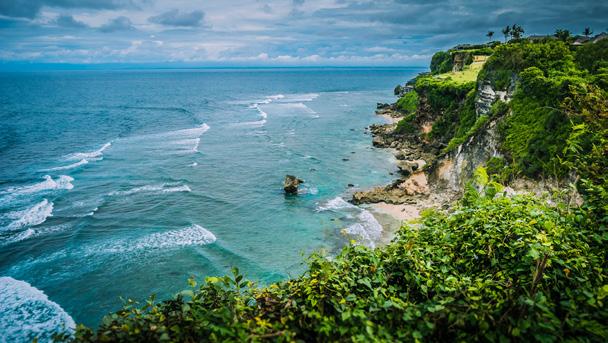
Bali, Indonesia
Dubbed the “Last Paradise” almost a century ago, the international image of Bali has long been one of Hindu spirituality, traditional crafts, and a laid-back island lifestyle. But travellers seeking serenity will find a rude awakening in the Bali of today, where rampant overtourism over the decades has resulted in air and noise pollution, extreme traffic congestion, beaches full of plastic waste, and the rapid degradation of natural resources.
Some 60% of the island’s rivers have dried up, and the water table in southern Bali has dropped by 50-70m in less than a decade, leading saltwater to seep into wells and accelerating coastal erosion. Despite this severe water crisis, a whopping 65% of Bali’s water is being directed to tourist infrastructure to meet the demand for spas, swimming pools, and gardens.
To bring clean water to the people of Bali, NGOs like the IDEP Foundation have installed rainwater-fed recharge wells to replenish groundwater levels. One of their partner organisations is Liquify, an initiative founded by teenager Ketut Darma Dipta, which has connected hundreds of people to clean drinking water through catchment systems and recharge wells, and conducted educational workshops about the water crisis for over a thousand students.
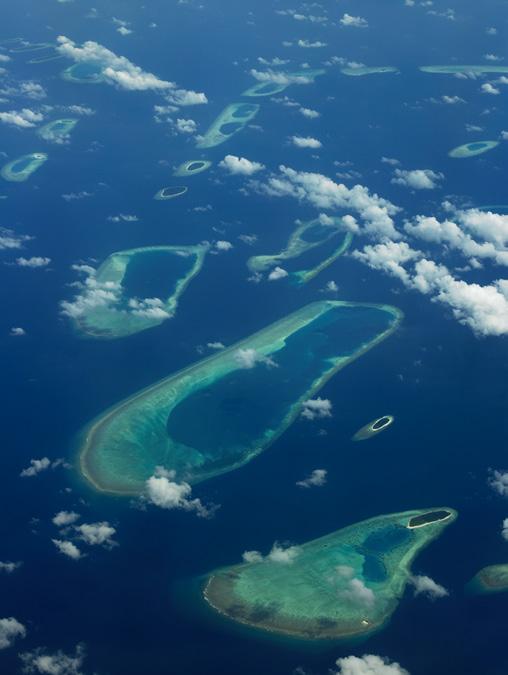
The Maldives
For tourists, perhaps the most predominant image of the Maldives is one of luxurious villas perched in aquamarine waters. But the reality isn’t quite so beautiful. Across the 1,192 small coral islands that comprise the Maldives, approximately 80% of its land is less than 1m in elevation — making it one of the lowest-lying countries in the world, and at a very real existential threat from rising sea levels. Meanwhile, stronger storm surges brought on by unpredictable weather patterns have exacerbated the Maldives’ coastal erosion. In response to these pressing issues, the Maldivian government has been experimenting with a number of different solutions, including buying foreign land for its potential relocation, installing a 3D-printed coral reef, building artificial islands, and building sea walls to fend off high tides.
Exploring the Sea and Waterways
From tracing the journey of freshwater, to studying marine science in the Chinese Mainland, young people are gaining first-hand experiences that deepen their understanding of our relationship with water. Take a look at how programmes organised by the Federation are helping youth explore the environmental, cultural and scientific dimensions of the sea and waterways.
Learning About Water
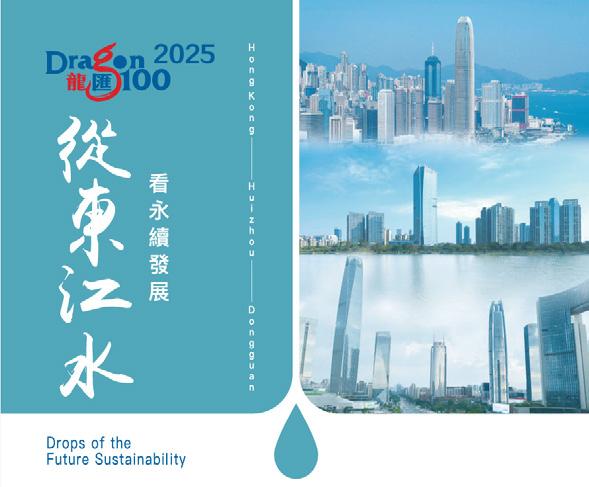
For more than two decades, Dragon 100 has served as a bridge connecting exceptional young leaders of Chinese heritage across the globe. In the past year, participants from 10 regions and countries joined a journey from Hong Kong to Huizhou and Dongguan.
Under the theme Drops of the Future Sustainability, they visited the Dongjiang Water Supply Project, a water infrastructure system first launched in 1965 during a time of severe droughts and water rationing.
As a lifeline for Hong Kong, it stretches over 80 km through aqueducts, pipelines, and pumping stations and provides 70–80% of the city’s freshwater.
Throughout the trip, participants explored how water is managed and protected from Dongjiang’s upstream basin to Hong Kong’s coastal reservoirs like Plover Cove. They examined integrated systems linking watershed conservation with urban water security. The Dragon 100 visit highlighted how innovation, cross-border collaboration, and climate adaptation come together in managing shared resources, and reaffirming water’s central role in sustaining life, health and the future of sustainable development.
Promoting Water Sports
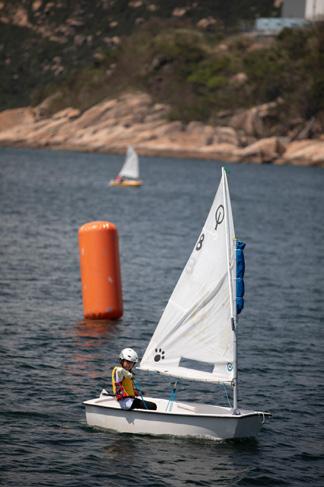
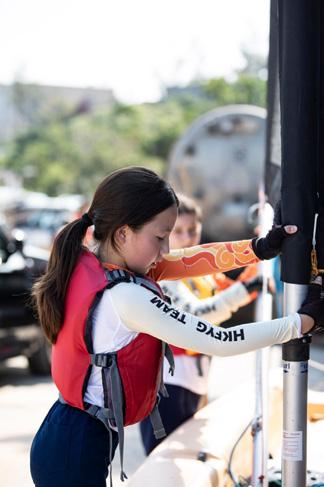
The Federation has further stepped up efforts to promote water sports across the community, staging large‑scale events to showcase the enjoyment and benefits of aquatic activities to the public. Building on this momentum, the Tai Mei Tuk Outdoor Activities Centre launched the AQUA GO! Water Sport Gala & Youth Competition last year. The initiative encourages greater youth participation, creating valuable opportunities for both recreational engagement and competitive sports development.
The growing interest in sailing driven by the Olympics and the National Games, along with the rise of local inter‑school and international events, has increased public awareness of the sport. In 2025, the first HKFYG Regatta was launched. It also established the HKFYG Sailing Team to provide regular training and competition for beginners with no prior experience.


Ocean Science Study Tour
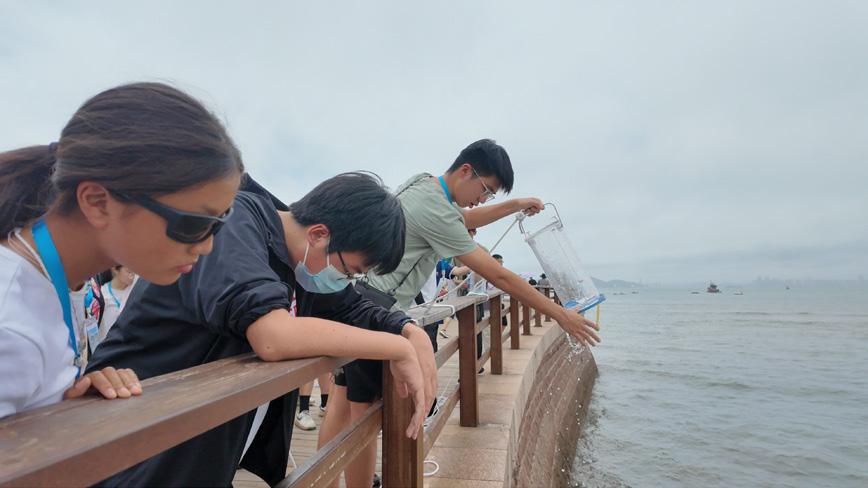
Last summer, the HKFYG Leadership Institute brought 29 secondary students on a six-day expedition to Qingdao and Weihai to explore China’s blue economy, marine conservation and ocean research.
Across six days, participants visited national research institutes like the Institute of Oceanology, Chinese Academy of Sciences and Qingdao Institute of Marine Geology, China Geological Survey, where they operated underwater robots and conducted water quality tests. They also discovered China’s maritime history at the Chinese People’s Liberation Army Naval Museum, and sustainable aquaculture practices at the Ailun Bay Marine Ranch.
By the end of the study tour, students brought their experiences home to create proposals for optimising Hong Kong’s coastline, such as blue bonds and marine waste monitoring apps – a promising sign of what these young pioneers can bring to Hong Kong’s blue future!

WHEN STREET MEETS SILK
by Ariana Wong

Neon spills across the pavement like melted highlighter ink. Sneakers squeak, heels click, and traffic lights blink in sync with the restless pulse of the crowd. I walk home after dance practice, hoodie damp, pulse still drumming between my ribs and ears. The city is loud, but my body is louder, every muscle humming from the aftershock of movement.
I push past bustling crowds when, in the blur of passing shoulders, something is pressed into my palm. I glance down. A leaflet.
Learn Traditional Chinese Fan Dance
The words curve across the page in elegant strokes. Beneath them, a dancer in a flowing costume hovers mid-turn, a crimson fan unfurling in her hand like a blossoming peony while her sleeves trail behind her like drifting clouds. A ripple runs through

memories.
It began a year ago, when curiosity nudged me to click “play” on the Chinese Mainland reality show: Street Dance of China. I remember sitting cross-legged, eyes wide, watching dancers snap their bodies into impossible shapes. It was mesmerising, and in that moment, a desire began to stir. Before I knew it, I was in a studio teaching my muscles a new language.
As my journey unfolded, I learned more techniques, and fell deeper into the world of street dance.
I’ve always been drawn to rhythm, to the way music taps your shoulder and invites your body to respond. Popping, a dance style built on quick, sharp muscle contractions, sent sharp jolts through my arms like flashes of lightning; Tutting, where movements unfold like intricate geometry, turned my hands into precise angles and shifting shapes. But freestyling was what I loved most. With no script, it was just me and the beat, chasing each note and stitching movements together on the spot. It felt as if my pulse had merged with the rhythm, moving as one shared heartbeat.
After long days of schoolwork, street dance became my escape. Whenever I danced, stress dissolved, my thoughts cleared, and my mind felt renewed. That was when I felt most alive.
Yet, even as I sank deeper into street dance, something quieter tugged at me.
Sometimes, late at night, I listen to soft traditional melodies, and my imagination drifts into ancient palaces and moonlit courtyards. I picture dancers in silk, their long sleeves gliding like brushstrokes across a painting. In Fan Dance, each gentle flick of the wrist unfurls a blossom of colour, and at times, I imagine myself among them, weaving stories that stretch across decades. In those moments, a deep calm settles over me, gently soothing the child within.
While street dance pulses with restless energy, Chinese dance drifts in serene elegance, like fire and water. And somehow, I longed for both.
That realisation didn’t feel exciting. It felt…complicated, because everywhere I looked, people said mastery required focus. Choose one path. Specialise. Excel. Time is limited. Energy is limited. Your body is limited. The message was clear: divide your attention, and you divide your potential. So, I stood at a crossroads of mirrors, unsure which reflection was truly mine. Was I the dancer in oversized streetwear hitting sharp beats? Or the one in silk robes tracing soft arcs? The more I tried to choose, the more tangled I felt, like two melodies playing at once, neither willing to fade.
As my thoughts spiral, the noise of the city pulls me back. The leaflet is still in my hand, its crisp edges pressing into my palm. I sigh and shove it into my pocket.
As I continue walking home, the pavement ahead grows livelier. I glance over. On one side, a break-dancer practices sharp footwork to pulsing street beats. Just steps away, an elderly group rehearses slow fan movements to soft traditional music. Their rhythms share the same stretch of sidewalk, rising and falling in distinct tempos. Yet neither interrupts the other. People drift between them unfazed, as if this quiet contrast is entirely ordinary.
Something about the scene feels strangely familiar, not just because I love both styles, but because this is exactly how Hong Kong moves. I think of studios where ballet bars line one wall while hip-hop speakers blast from another; where traditional melodies drift from upstairs while heavy bass pulses below. Different rhythms, different energies, all sharing the same space without needing to compete.
Our city is small. Space is scarce. But maybe that is why coexistence thrives. Density creates constant exposure, like sound leaks and overlapping spaces. Over time, you learn to combine and this blending feels natural. No single style dominates because none can fully separate. Even the city’s mindset shapes this: Hong Kong runs on speed and adaptability. That means dancers need to keep what works for their bodies and let go of what doesn’t, thus combining techniques unconsciously. That flexibility is simply how people here survive, move, and create. Perhaps our city has never asked dancers to choose, instead it has always encouraged differences to exist side by side.
So, the real question was never “which dancer should I be?” But “why must I be only one?”
Indeed, learning both street dance and Chinese dance is slower and messier. But that “in-between” space is where something meaningful grows. Street dance teaches me sharpness and confidence; Chinese dance teaches me control and patience. Together, they make me more complete.
And Hong Kong is the perfect place for this, welcoming differing styles and identities. Like the way Cantonese and English flow within the same sentence, overlapping identities is simply part of everyday life.
I take out the crumbled leaflet from my pocket, smooth it open, and dial the number for a trial class. Beneath the restless lights, I realise my dance journey is beginning to resemble the place I call home: layered, unpredictable, and beautifully, unapologetically intertwined.

Ariana Wong, 16, from Heep Yunn School, is passionate about traditional Chinese mythology and Chinese dramas. Apart from street dancing, public speaking, or sipping cranberry juice while dreaming up fantasy worlds, she finds joy in sunrises and sunlight. Compassionate and carefree, she hopes to make others feel safe and inspired to discover their own potential.
THE SOUNDTRACK OF MY LIFE
by Katherine Cheung

Amid the chaos of adolescence, Katherine discovers how music becomes both a refuge and a reckoning in her search for self-understanding.
When Mitski released her seventh album, The Land is Inhospitable and So Are
We, in 2023, I was 14, with too much energy, passion, drive and not enough emotional intelligence to know where to direct it when I first heard it. Still, somehow, this 32-year-old woman, who was unknown to me before that time, had released music that resonated with my soul.
The Land is Inhospitable and So Are We is a gorgeous, refined and cathartic album. Mitski tells

her feelings of being hurt whilst simultaneously blessing all her fans with an ear-gasm. The anxiety and turmoil of teenage angst that I had never been able to describe are expressed beautifully through her lyrics, making me feel that I’m not alone.
The first track of the album, Bug Like an Angel, is one of my favourites. The first few lines: “There’s a bug like an angel stuck to the bottom of my glass, with a little bit left as I got older. I learned I’m a drinker. Sometimes a drink feels like family” perfectly reflect the singer being aware of her family’s alcoholism and being trapped in the same cycle.
The bug has the smallest amount of life left in it, but it still has the willpower and courage to go on. In Mitski’s words, the bug is “like an angel” because after drinking the final
drops of the alcohol, the speaker looks through the glass and sees this crushed insect shining through.
I keep coming back to this song whenever I’m at my lowest, because every time the music comes to an end, I start to smile as I’m reminded that there’s life beyond the pain within. I think there are often times when people hit rock bottom and don’t have the motivation to go on. I know I’ve had a lot of those moments, and they just need some validation to keep going.
The song I Don’t Like My Mind is about a girl who’s haunted by the past. The lines “I get sick and throw up, and there's another memory that gets stuck, inside the walls of my skull, waiting for its turn to talk. And it may be a few years, but you can bet it's there, waiting still for me to be left alone in a room full of things that I’ve done,” echoes the feeling of needing a constant distraction for the unpleasant memories that just will not leave.
Sometimes, I'd forget the happy memories I want to keep and remember all the bad things I want to forget. I think the worst part of it all is being the only one who’s crying over the bad memory when everyone else has clearly forgotten. It’s embarrassing to be the only one who remembers. The way Mitski can personify memory and emotion has always captivated me. Listening to this song, I've never felt more seen. I’d felt like it wasn't just me who was going crazy.
And yet even with that glimmer of hope, Mitski doesn’t shy away from confronting the darker corners of the mind. In the song My Love Mine All Mine, Mitski sings about her journey towards reclaiming the idea of love for herself. She sings about how love is the only thing that belongs to her.
“Nothing in the world belongs to me, but my love, mine, all mine, all mine,” was a gut-punch of a lyric. Mitski’s message of nothing being free in this world but her own capability and choice to love, that no matter what, her love
will always be hers and only hers to give, was extremely empowering.
In a world where sometimes, everyone, your family and even your friends can make you feel like the loneliest person in the world, it's nice to have this song as a reminder of how, at the end of the day, you still have you. Everything around us is materialistic, and you can always lose your physical wealth. In the end, all you really have is your love, and it’s an intangible thing that you can’t ever pass on. Why not save some love for yourself?
“ “
Sometimes, it's nice to have someone on your side.
Mitski’s tone, intensity and alarmingly vulnerable lyrics make her music incredibly powerful to listen to. Her complicated emotions haunt her, just as they have haunted her throughout her life. I think that is why teenagers are so obsessed with her music.
To me, adolescence can be an incredibly confusing time. The journey to self-discovery often feels like navigating a maze of uncertainties. Mitski’s albums, which explore feelings of sadness, depression, shame, anxiety and most importantly, the alienation of adolescence, make her music extremely relatable to us. Her raw, vulnerable, painfully honest and relatable lyrics resonate with listeners. These feelings we share, which can be difficult to put into words, make me feel less alone in my struggles. She doesn’t sugarcoat negativity, and the listening experience feels a lot more real. She speaks to everyone’s soul, telling us: I get it. I’ve been there too. And sometimes, it's nice to have someone on your side.

Katherine Cheung, 16, is from HKFYG Lee Shau Kee College. Passionate about music, writing, and most importantly, art, she strives to express deep emotions through her artworks.

NINE TONES, ONE IDENTITY
by Irene So

From the golden era of Cantopop to today’s trilingual pressures, Irene asks whether Cantonese is fading, and what it will take to sustain it.
Ispent most of my childhood in the backseat of my mother’s car, watching the world blur past to the velvet-like baritone voice of Leslie Cheung. I couldn’t always understand the lyrics to Jeui and Monica, but they felt special. Whether we were driving to family dinners or to the grocery store, Leslie Cheung’s sentimental ballads and buoyant songs were always playing. I grew up humming along, unaware that the golden era he belonged to would, in fact, have an expiration date. Later, when I tried to recall those lyrics, the words felt heavier. I realised then that the effortless flow of Cantonese I took for granted in the backseat was
now slipping away, and prompted me to ask: was Cantonese potentially becoming an endangered language?
The Language That Shapes Us
Before answering, I had to understand why Cantonese was so special. In everyday conversations, Cantonese is my default language in which I think, speak, and write. With its complex phonetic system, consisting of nine tones, a single sound has different meanings. It is also flexible, directly translating colloquialisms into English words, like “laugh die me” and “add oil”. Even the Hong Kong English accent, like pronouncing a “th” as “d”, reflects us uniquely.
Cantonese is more than a way to speak; it’s part of our identity. In the 1980s, during Hong Kong’s cultural boom, people wanted songs, movies, and stories told in their own language. Artists like Paula Tsui, Anita Mui and Sam Hui made music that blended Western pop with Cantonese lyricism, which was the pride of locals.
Cantonese shaped our education too. After World War II, waves of immigrants from the Chinese mainland settled in Hong Kong, and teaching in Cantonese became the norm. Even now, universities research its phonetics and grammar, creating formal, definitive codification systems like “jyutping”, a romanisation system for Cantonese to standardise pronunciation. International conferences are even held just to study Cantonese linguistics.
So why, despite all the attention it receives, am I so concerned that it might fade?
The Space for Cantonese
The first reason is cultural change. Back in the 80s and 90s, Hong Kong culture was everywhere. People across Asia watched our films and listened to our music. Being fluent in Cantonese was almost trendy. But now, global streaming platforms and K-pop have changed what young people listen to and watch. Even local artists sometimes sing in English or Mandarin to reach larger audiences. Hong Kong’s new concert spaces, like Kai Tak Stadium, host stars from around the world, and our local music scene no longer dominates as it once did.
The second reason is the language shift. Between 1997 and 2021, around 1.12 million residents moved from the mainland to Hong Kong, increasing the number of native Mandarin speakers in Hong Kong by 99.4% over 20 years. As the official language of China, it has become necessary for business, economic, and career advancement, especially in the Greater Bay Area. What does this mean for Cantonese in public life?
The third reason is Hong Kong’s identity as an international metropolis. English is often used in prestigious schools as it’s linked to better employment prospects. Many young people also now use English on social media and digital platforms. With the government’s Biliterate and Trilingual Policy, which emphasises written Chinese and English, as well as spoken Cantonese, Mandarin, and English, Cantonese might find itself squeezed between two powerful languages.
Fourth, there are shifts on the home front. Children instinctively switch between Mandarin and English when seeking fluency in speech, while parents and
grandparents have a difficult time. I’ve come to realise that the loss of native proficiency is what makes Cantonese more our “grandmother tongue” than our “mother tongue”.
Finally, I think it is how we talk about Cantonese. If we keep labelling Cantonese as a dying language, usage will decrease, and negative psychological impacts will increase. So instead of asking, “Is Cantonese dying?” we should be asking: “What can we do to keep it alive?”
Keeping It Alive
To me, the answer starts with pride and creativity. Cantonese language cafes and Duolingo courses can be encouraged. Writing competitions for stories or melodies could be held. Intergenerational service projects could be organised for youth to practice spoken Cantonese with their elders.
When our parents teach us how to mutter our first words as a baby, they are passing on the strength of their culture and the voices of their ancestors to us. We inherit a language by speaking it, thinking in it and writing it. We inherit a language by practising the values that accompany it. And by passing it on, we preserve the culture that shaped us. Keeping Cantonese alive is something every speaker can do.
As Christine Johnson, a Tohono O’odham elder recognised for her work in indigenous language preservation, once said, “I speak my favourite language because that’s who I am. We teach our children our favourite language because we want them to know who they are.”
Maybe that’s the best way to think about it. Cantonese isn’t just a language; it is Hong Kong’s heartbeat. When we speak it, we don’t just preserve words; we keep alive the rhythm, warmth, and humour that make this city home.

Irene So is a secondary four student from Diocesan Girls’ School. She’s passionate about music, doing service, and travelling to culturally diverse destinations. She hopes to inspire, uplift, and empower like-minded people to connect with local communities and contribute in their own ways.

FEAR IMAGINED
by Kirsten Choi

By facing the stage she once feared, Kirsten learns that courage grows each time she chooses to step forward and learn.
Two years ago, when I was in Form 1, I shook violently, panting as my thoughts spiralled and came out of my mouth with no direction at all. Below me were all my peers, silently observing, expecting aggressive arguments and thought-provoking speeches. But instead, what they got was endless stuttering, blank moments of silence, and absolute gobbledygook. And yes, this ends with the classic “messed up and cried about it.” This has been officially declared as my worst debate experience.
I was a very self-conscious teen who was submerged in self-doubt, convincing myself that I was untalented with no potential. This has made me tell myself whenever an opportunity arose, “Well, that’s way too scary for me.” Because of this, I sabotaged my own development. Many of my peers and mentors saw huge potential in me, pointing out my solid foundation in creative and speech writing, storytelling and even acting. Yet I let the idea of being “scared” suffocate me, completely clouding my mind and self-confidence.
Later, when I was invited to join a public speaking programme at school, I once again thought: “That’s way too scary for me.” But since my teacher kept insisting, or in other words, forcing me to try, I had no choice. The first few workshops were total nightmares. I kept repeating the same ideas during impromptu speeches, I shook at every turn, and most cleverly (or so I thought), I avoided speaking at all.
This went on until one day, one of the mentors gave a workshop on how to appear confident on stage. He told us to think of every speech as a practice, an opportunity to learn, so that we can focus on our own performance and think of ways to do better. “Fear is only something you tell yourself,” he said. “To conquer it, just don’t tell yourself you’re scared; instead, tell yourself that you’re a confident speaker who’s ready to learn.”
This was exactly me! I realised that fear was what I was telling myself, instead of focusing on personal growth.
Very often, we tell ourselves that we are either unsuitable or lack potential in activities that interest us. This is not uncommon, because exploring new areas is like diving into an ocean with no gear at all. You have no idea what to do, where to start or which direction to go. That kind of puzzlement leaves us helpless, confused, and frustrated. So, we start to find activities “scary,” letting fear take over our autonomy.
Nelson Mandela once said, “I learned that courage was not the absence of fear, but the triumph over it.” As long as you don’t dwell on fear too much, it won’t overwhelm you. The triumph of fear is the happiness you find at the end of the experience, which gives you courage, makes you confident and prepared for every opportunity.
The most important part of conquering fear is taking your first step. If we’re honest, no one is going to judge you for being a beginner but will encourage you to grow. There really is no reason to fear. It is about breaking out of your comfort zone, taking the first step and really, having few expectations.
This is what I have learnt. Fear is just an imaginary thing that stops you from starting a journey. Never facing fears hinders growth and prevents us from being who we are meant to be. Even Adele, the British singer, started off with severe stage fright and anxiety about performing on stage. She said she relied on the familiarity of her songs and, most importantly, her connection with the audience to calm herself.
So, my advice is, if there’s something you have always wanted to try, but were concerned it was out of your league, impossible, or scary, take a moment to look around, take a deep breath and go for it. Don’t stay in your bubble made from thick layers of imaginary fear. Your fate is in your hands.

Kirsten Choi is a student from Ying Wa Girls’ School who is passionate about writing and public speaking. She believes that words connect people and act as the strongest form of communication. When she’s not writing or doing public speaking, she enjoys shopping and going to the beach.
“ ” It is perfectly fine to get lost.
Finding Purpose Without a Map
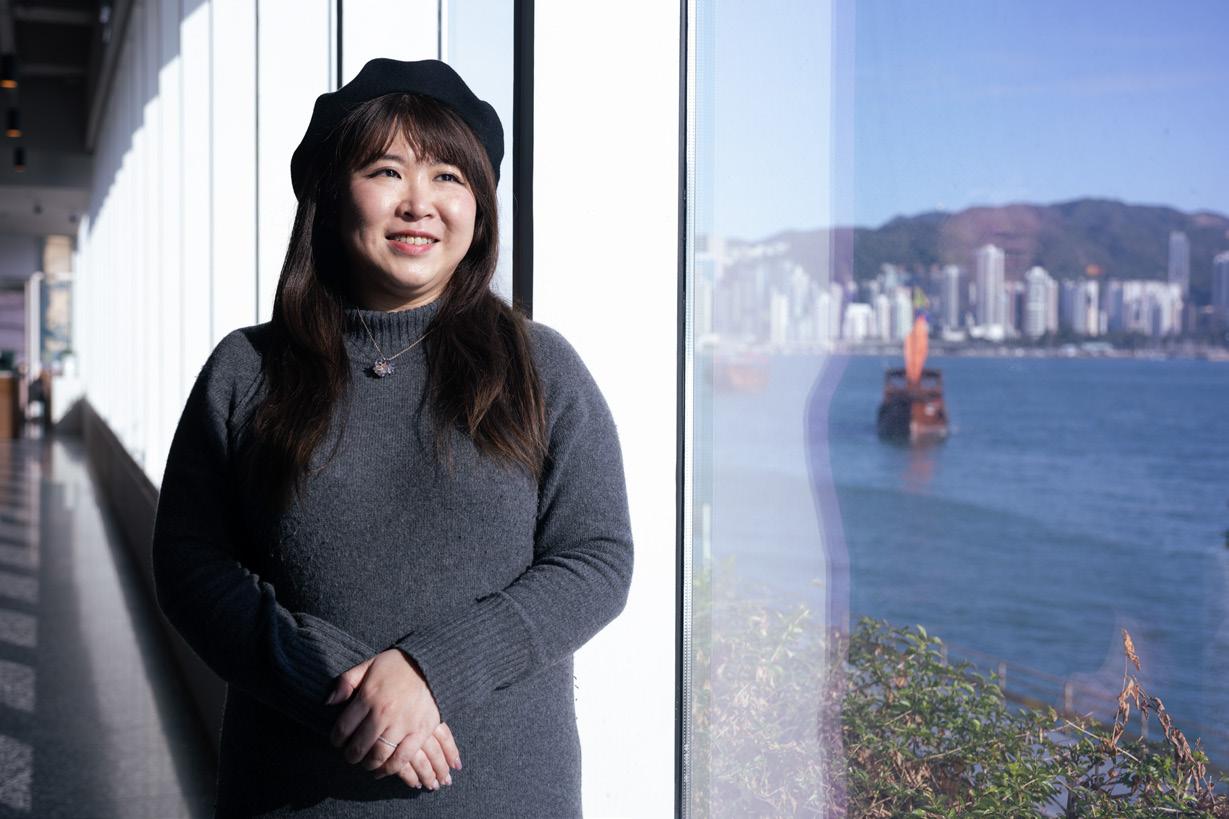
From a hesitant secondary school student to a policymaker shaping Hong Kong, HKFYG alumnus Yandy Chan’s journey shows how participation, reflection and the courage to keep trying can turn uncertainty into purpose.
Step Out, Meet People, Reconnect
Yandy Chan did not grow up knowing where she was headed. Her journey began at a moment when she felt most out of place. In her early secondary school years, she struggled to adapt and once told her mother she did not want to go to school anymore. “It was very unlike me,” she recalls. “I used to insist on going to school even when there was a typhoon.”
What brought her back was not a sudden breakthrough, but a small invitation. Her school social worker asked her to join activities and volunteer work, to step out, meet people, and reconnect with the community. There was no pressure. “He did not try to fix me,” Yandy says. “He invited me to participate.”
That invitation mattered. Summers were soon spent at Youth S.P.O.T., helping, joining programmes, trying small things without knowing where they would lead. Showing
up became a habit, and slowly, participation turned into perspective.
As she took part in the Federation’s initiatives, including the Young Ambassador Scheme, the head prefect training courses and the Federation’s “Hong Kong 200” Leadership Project, a programme that aims to cultivate capable and discerning young leaders, Yandy found herself being asked questions she had never considered before. “Those programmes kept asking us to think about the community, the city and efforts that young people could make,” she says. “Back then, the headline for Hong Kong 200 was ‘brushing colour into Hong Kong’s future.’ Looking back, I realise the real focus was on nurturing change‑makers.” She did not gain a clear answer about her future, but she learned how to ask better questions about her relationship with the place she called home.
Experience Over Certainty
Yandy studied business at the University of Hong Kong and followed what appeared to be a sensible path, which was taking up a banking internship. Yet, she was not convinced of her decision. “I realised I was not interested in working with numbers,” she says plainly. “I wanted to work with people and give back to Hong Kong.”
The idea of public service was not new. Years earlier, when she was in Form 3, she attended a youth forum organised by the Federation, where she first heard about the role of an Administrative Officer. “I did not really know what the job meant,” she admits, “but I remembered one phrase mentioned by the speaker, ‘be a change‑maker.’”
That phrase stayed with her, quietly resurfacing every time she thought about her long-term future.
After she eventually succeeded in joining the government, she attributed her success to the programmes she had joined, both within and beyond the Federation. “What helped me were the soft skills of communication, analysis and listening, which had been built through all those experiences outside the classroom.” Her path was not defined by early certainty, but by learning through experience and recognising what fit her best.
Policymaking on the Ground
Working in the government quickly showed Yandy that change‑making is rarely straightforward. To prepare for the unprecedented African Swine Fever outbreak in Hong Kong, her team had to compete against time and prepare for emergency plans within months. Yet every decision affected multiple groups at once. Some citizens were worried about price increases; industries were concerned about breaking evening and cross-border supply chains that were halted. “It felt like an entangled ball of strings,” she recalls. “We had to untangle it carefully under time pressure, because every single move affected someone.”
Then COVID-19 came. During the early phase of the pandemic, she had to work through the Lunar New Year, helping to scale quarantine facilities and constantly revising policies as the situation evolved. The experience reinforced one lesson above all. “Policy‑making is not just about numbers,” she says. “It is about people and how we ensure their livelihoods, emotions and trust.”
However, Yandy is also very pragmatic and understands that often, the hardest part is not making a decision, but explaining it. “Sometimes people do not see the whole picture behind a policy. Communication becomes just as important as the policy itself.” For her, being a change‑maker meant staying grounded, and never giving up listening, explaining, adjusting and more importantly, accepting that progress often comes with tension and resistance.
Embrace Uncertainty
Life as a civil servant also requires agility. Having worked in different bureaux for the past 13 years, Yandy now works as the Principal Assistant Secretary at the Culture, Sports and Tourism Bureau, an area she had never imagined working in. Even now, she admits, there are moments of uncertainty. “I still get lost,” she says, “but that’s normal!” Part of the challenge lies in time. “Policy outcomes take years, sometimes even a decade. You need patience, and you need to keep asking yourself: What am I doing now? What do I enjoy? What role do I want to play?”
Outside work, she continues to explore without overthinking the outcome, learning calligraphy, practising Indian dance and meeting people from different communities. “If you do not try, you will never know whether something is right for you,” she says. “Staying curious about life, not just work, helps me understand people and myself better.”
For her, getting lost is not a failure. It is part of staying open, reflective and human.
When students ask Yandy how to choose a major or a first job, she does not offer a formula. Instead, she normalises uncertainty. “It is perfectly fine to get lost,” she says, “as long as you keep thinking and keep trying.”
She encourages young people not to wait for the perfect time. “You do not have to be 100% prepared to begin. Sometimes, being 60 or 70% ready is already enough.” Not every step will lead directly to a destination, and that is fine. “You may not reach the endpoint straight away,” she says. “But you can keep exploring nearby. Along the way, you will slowly understand what you want.”
Yandy’s story is not about having a map from the start. It is about learning to walk without one, from participating, to reflecting and moving forward. Along this ongoing journey, purpose ends up taking shape.

Yandy Chan is a civil servant and an active participant in the Federation’s programmes, including the “Hong Kong 200” Leadership Project. She now works as the Principal Assistant Secretary at the Culture, Sports and Tourism Bureau.
Young People Back Mega Events Economy With Moderate Con dence
Can mega events strengthen young people’s connection to Hong Kong while building the city’s global reputation?
A majority of Hong Kong’s young people support the city’s push to develop a mega events economy, though their confidence in Hong Kong’s reputation as the “Events Capital of Asia” remains moderate, according to a new study released by Youth I.D.E.A.S.
The study, titled “Mega Events: What’s Next for Hong Kong and Young People?”, surveyed 520 young people aged 15 to 34 through in-person questionnaires conducted from 10 to 14 December 2025. The research also included interviews with 15 respondents and five subject experts.
Findings show that 86.2% of respondents believe mega events are important for society development. About 79% of them feel personally relevant to Hong Kong’s mega events, and about 74% agree that attending mega events can strengthen their sense of belonging to the city.
To what extent do you agree or disagree with the following statement? “Mega events in Hong Kong...”
you

Participation levels were also high. Some 82.9% of respondents said they attended at least one event as a visitor or spectator in 2025. Among these attendees, more than half reported spending between HK$1,000 and HK$2,999 on the events.
Young people most commonly described mega events as internationally renowned (27.3%), large-scale (21.5%), widely covered by the media (17.9%) and open to the public (17.1%).
Interviewees noted that mega events can boost the local economy and enhance Hong Kong’s international image. One example cited was the recent Jiao Festival in Kam Tin, Yuen Long, where elaborate bamboo scaffolding displays showcased the city’s distinctive folk culture. According to experts, successful mega events require strong international visibility as well as strategic, high-level planning.
Despite strong interest in deeper involvement, however, participation in event-related roles remained limited. While 49.6% expressed interest in professional development opportunities and 42.3% were interested in volunteering, only a small proportion had actually taken part in such roles. Just 1.7% served as volunteers, 1.5% as performers, 0.6% as full-time staff and 0.4% as interns.
The HKFYG Youth Research Centre (YRC) is the Federation’s youth think tank that conducts evidence-based research for policy advocacy. Since its establishment, it has completed over 80 research projects and actively communicated with policymakers and different sectors of society.

Spectators or Visitors:
Spending (n=431)
38.2%: <$1,000
53.5%: $1,000 - $2,999
7.5%: $3,000 - $4,999
0.7%: $5,000 or above
MEGA EVENTS
N=520
Interviewees think mega events are primarily about short-term consumption and entertainment. In reality, experts said, events such as international sports competitions can offer career opportunities in areas including data analytics, health management and operations.
Those who had volunteered described the experience as distinctive and rewarding. Some said they felt proud to receive specialised training in crowd management, emergency response and guest reception. However, they also noted that recruitment information was difficult to find, and many learned about opportunities only by chance.
The survey also revealed some reservations about Hong Kong’s long-term positioning as a major events hub. Respondents rated their confidence in the city maintaining its reputation as the “Events Capital of Asia” at an average of 6.8 out of 10. Meanwhile, 29.8% believe mega events help improve Hong Kong’s international image.
Interviewees raised concerns that the term “mega events” is sometimes used too broadly, with smaller events included in the category and potentially diluting the brand. Experts interviewed in the study said a clearer strategic vision and coordinated city-wide campaigns are needed to strengthen Hong Kong’s events branding.
If given the opportunity to play a bigger role in mega events, young respondents said they would most like to contribute in marketing and promotion (23.7%), guest services (14.4%) and programme design (14.0%).
To address the issues identified, Youth I.D.E.A.S. proposed several policy recommendations. These include introducing an official Hong Kong mega events logo to serve as a quality mark for qualifying events, helping to consolidate currently scattered information and enhance brand recognition. The think tank suggested that the logo design be created through an open competition, allowing young people to contribute works that combine global perspectives with local elements.
The study also calls for the creation of a one-stop mega events talent platform that would function as an information hub linking skills, experience and opportunities, enabling young people to translate their enthusiasm for events into long-term professional development.
In addition, Youth I.D.E.A.S. recommends establishing a mega events development office to strengthen Hong Kong’s competitiveness as major infrastructure projects come into operation. Such an office could coordinate resources, support brand export, cultivate talent and facilitate youth participation through government-funded programmes.
The role of young people at mega events





Organic
Farm Jockey Club




Hong Kong’s First Climate-Smart Agricultural Education Site Let's Join Hands to Practice a Low-Carbon Lifestyle

Location: No.1 Family Walk, Ho Pui Reservoir, Pat Heung, Yuen Long, N.T., Hong Kong
Website: www.organicfarm.hk
Contact: 2838 4808



Summer Events
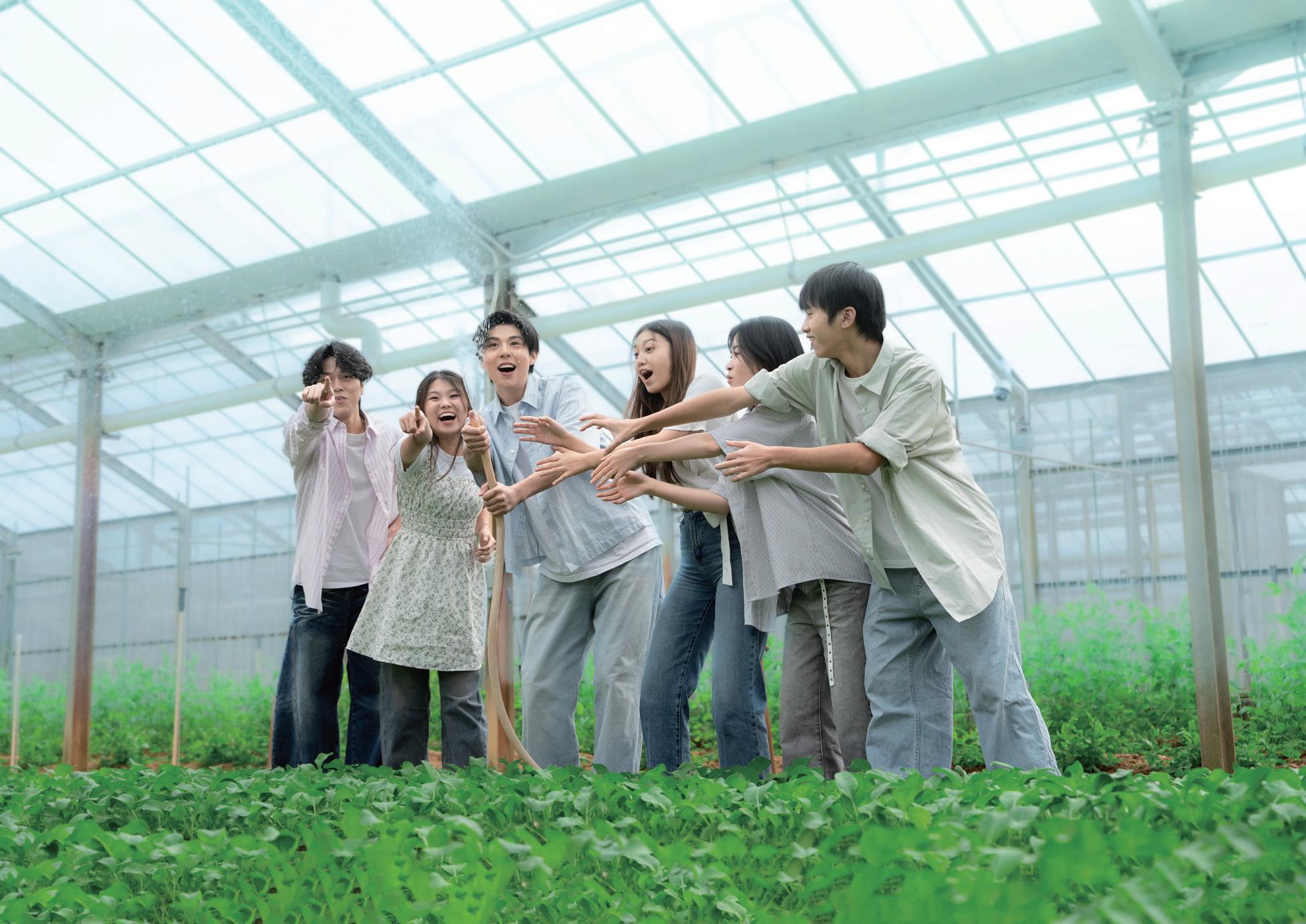





















Best Progress Awardee (2025), Ying Wa Girls' School
- Cheuk Nam CHENG
Junior Division Champion (2025) Chinese International School
Yuen Lok TANG