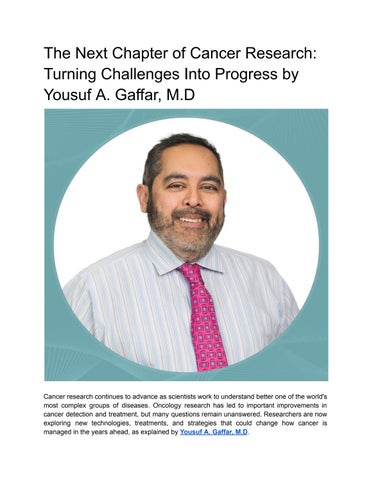
The Next Chapter of Cancer Research: Turning Challenges Into Progress by Yousuf A. Gaffar, M.D
Cancer research continues to advance as scientists work to understand better one of the world's most complex groups of diseases. Oncology research has led to important improvements in cancer detection and treatment, but many questions remain unanswered. Researchers are now exploring new technologies, treatments, and strategies that could change how cancer is managed in the years ahead, as explained by Yousuf A. Gaffar, M.D.
One major challenge is cancer's complexity. Cancer can develop in many different forms, and tumors can behave differently even when they occur in the same part of the body. Cancer cells may also change over time, making some treatments less effective. Researchers are studying these changes to discover why treatments stop working and how new therapies can overcome treatment resistance. Personalized medicine is becoming an important part of modern oncology research. Instead of using the same treatment approach for every patient, researchers are examining genetic and biological information to understand individual tumors better. This information may help doctors select treatments that are more closely matched to a patient's cancer. The goal is to improve treatment effectiveness while reducing unnecessary side effects. Immunotherapy is another promising area of cancer research. These treatments help the body's immune system recognize and attack cancer cells. Some patients have experienced significant benefits from immunotherapy, but not everyone responds in the same way. Researchers are working to understand these differences and develop approaches that can help more patients benefit. Technology is also transforming cancer research. Artificial intelligence and advanced data analysis can help researchers examine large amounts of medical information and identify patterns that may be difficult to recognize manually. Improved imaging technologies and laboratory methods are also helping scientists study tumors in greater detail. Clinical trials remain essential for turning research discoveries into potential treatments. These studies allow researchers to evaluate new therapies and determine whether they are safe and effective. Greater patient participation and improved access to clinical trials can help accelerate research while ensuring that studies reflect a broad range of patient experiences. Collaboration is another key part of progress. Scientists, oncologists, patients, and research organizations can achieve more when they share knowledge and work toward common goals. Patient perspectives can also help researchers focus on outcomes that matter in everyday life, including quality of life and treatment comfort. The future of oncology research is filled with possibilities. Although cancer remains a difficult challenge, continued innovation is creating new opportunities for earlier detection, more precise treatments, and better patient care. Each discovery adds to the growing knowledge of cancer and brings researchers closer to more effective solutions. With continued research and collaboration, the next generation of cancer care could offer patients better options and renewed hope.