Proven Strategies for Clinical Trial Research
Excellence by Yousuf A. Gaffar, M.D

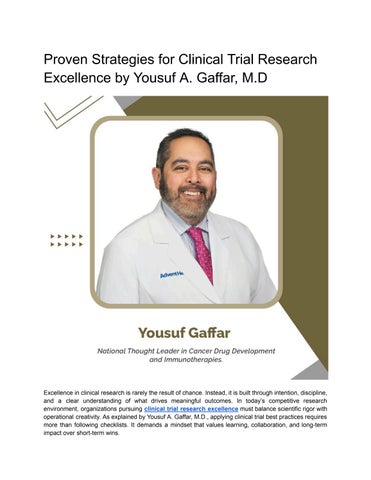
Excellence in clinical research is rarely the result of chance Instead, it is built through intention, discipline, and a clear understanding of what drives meaningful outcomes In today’s competitive research environment, organizations pursuing clinical trial research excellence must balance scientific rigor with operational creativity As explained by Yousuf A Gaffar, M D , applying clinical trial best practices requires more than following checklists It demands a mindset that values learning, collaboration, and long-term impact over short-term wins.
One proven strategy begins with clarity of purpose High-performing research teams define success early and align every decision to that definition This includes study design, patient engagement, data collection, and reporting standards. When goals are well articulated, teams move faster and with greater confidence As a result, resources are used more effectively, and avoidable delays become less common
Another critical factor is interdisciplinary collaboration Clinical trials succeed when scientists, clinicians, data specialists, and operations teams work as a unified system Open communication builds trust and reduces friction across departments. Moreover, it allows teams to anticipate challenges before they escalate Strong collaboration also supports innovation, since diverse perspectives often uncover smarter solutions
Investment in people is equally important Research excellence depends on skilled professionals who feel empowered to contribute ideas. Ongoing training, mentorship, and clear career pathways strengthen both performance and retention When teams feel valued, they are more likely to uphold quality standards and take ownership of outcomes
Technology also plays a defining role. Modern data platforms, remote monitoring tools, and analytics solutions improve accuracy and transparency However, technology must serve strategy, not replace it The most effective organizations integrate tools thoughtfully, ensuring that systems enhance decision-making rather than complicate workflows
Finally, patient-centered thinking separates good trials from great ones. Designing studies around participant needs improves recruitment, retention, and data quality Clear communication, respect for patient time, and ethical transparency reinforce trust Over time, this approach strengthens reputation and supports sustainable growth
Achieving excellence in clinical trial research requires consistency, reflection, and adaptability. Organizations that embed clinical trial best practices into their culture position themselves for lasting success By combining purpose, people, and process, research teams can deliver results that advance science while meeting the demands of a modern, creative business landscape.