HARDWARE Connection™

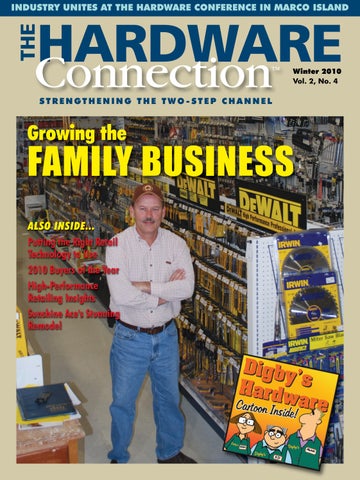


Putting the Right Retail Technology to Use
2010 Buyers of the Year
High-Performance Retailing Insights
Sunshine Ace's Stunning Remodel

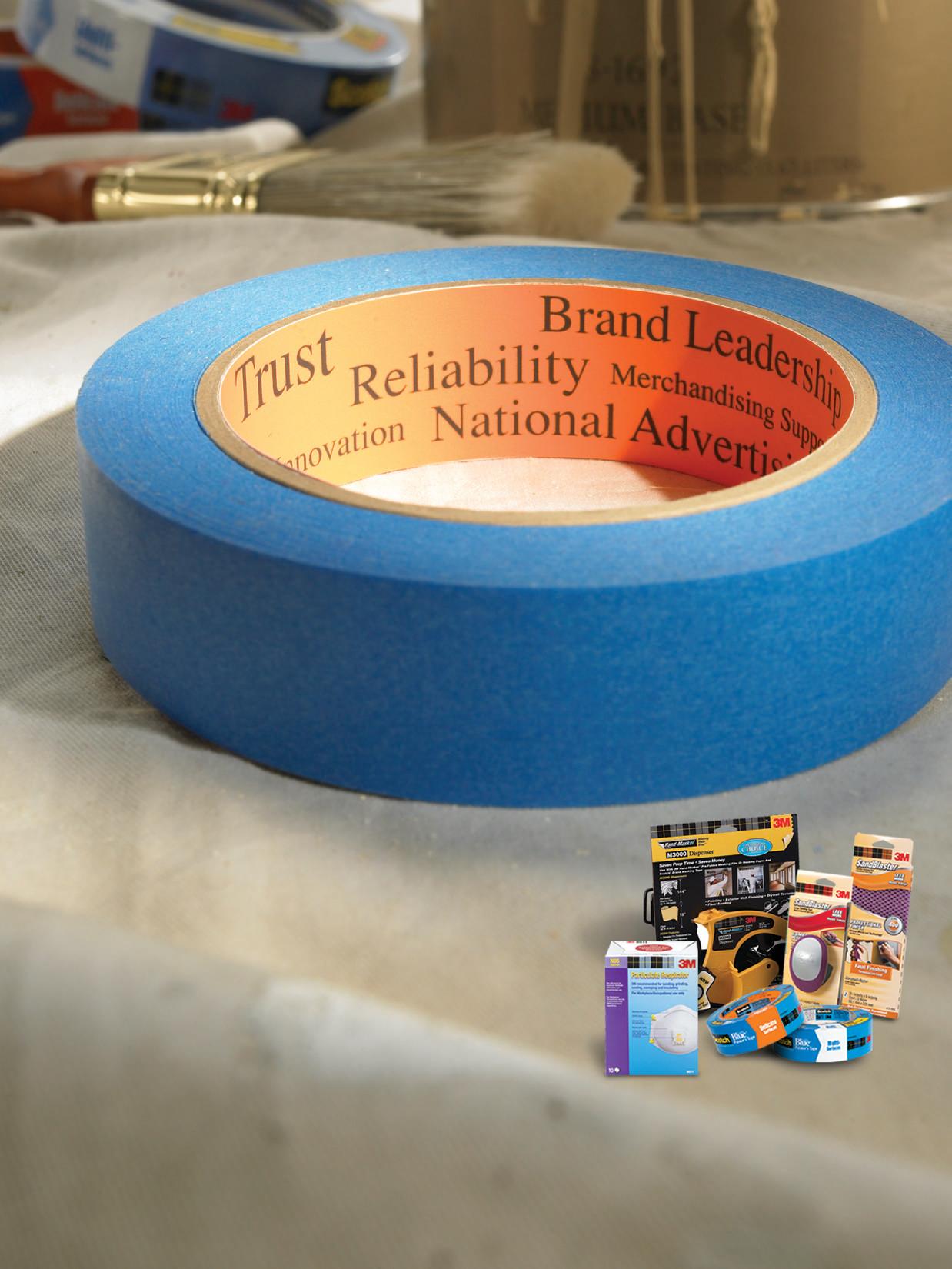
Scotch-Blue™ Painter’s Tape could lead the category on the strength of its adhesive technology alone. Yet for us, creating the most reliable, innovative products just isn’t enough. We also back them with superior brand support, aggressive merchandising programs and national advertising. While other companies try to copy our products, we know that our values and our commitment to retail success simply can’t be matched. For more information on all of 3M’s category-leading products, call 1-800-494-3552. www.scotch-blue.com Making your job a whole lot easier.


It’s hard to believe this is already the fifth issue of The Hardware Connection.
After more than 20 years of writing about entrepreneurs, it’s been a nice challenge to put on my entrepreneur’s hat. It’s been fun developing a magazine that represents the issues and concerns of retailers while taking advantage of the latest publishing technology.
When people ask me what I do for a living, I say, “I get to travel around the country and visit hardware stores.” I’ve been to stores in downtown Manhattan and South Central Los Angeles, from the Louisiana bayou and the Texas Panhandle to the Florida Keys.
My wife and kids cringe every time we’re on vacation and I come across a hardware store. “Let me stop here. It will just take a minute,” I say. They know better. Of course there’s the time we stoppedat Old Forge Hardware in the Adirondacks and I had to plead with them to leave the store after an hour because they weren’t done perusing all the neat stuff.
I tried to guess how many hardware and home improvement stores I’ve visited in my 23 years as a hardware journalist and my best estimate is about 1,500. The stores run the gamut in terms of size and sophistication but the memorable part is always the people. Dedicated, proud folks who work long hours because they like being in control of their own destiny and get satisfaction from helping customers
By Chris Jensen
and supporting their communities. I’ve met so many wonderful retailers through the years and I have a tremendous amount of respect for what it takes to run a successful business in a competitive industry, especially during a down economy.


We’ve gotten lots of terrific feedback on the magazine from retailers, and that’s very gratifying. Much of the editorial content comes straight from retailers, which is the best way to ensure The Hardware Connection remains of value to our readers. Let us know what’s on your mind and continue to share your funny stories and news of your achievements so we can share with the industry.
In this issue you will find thoughtprovoking articles from Doug Stephens and Bob Phibbs that will help you make sense of retail technology trends. We share what took place at The Hardware Conference in Marco Island and profile two terrific stores that have undergone dramatic transformations: Pembroke Hardware and Sunshine Ace Hardware. And we’re especially proud to announce the winners of our 2010 “Buyer of the Year” program. We felt it was time to recognize the important role that buyers play in the industry.
Thanks for your readership and for what you do every day to make a difference in your communities.

At Activant, we understand the hardware business from from both sides—retail and manufacturing—and off and offer proven solutions for success whichever sid ever side you’re on.
Industry-leading Activant Eagle® business management software and services enable you to:
• Increase customer satisfaction and loyalty
• Manage inventory more efficiently and accurately
• Maintain operational control through business analytic tools
• Increase profits with integrated inventory, purchasing and receiving
Comprehensive Activant Vista® Information Services helps you:
• Strengthen relationships with channel partners
• Maximize sales with the right products at the right place at the right price
• Pinpoint issues, analyze success, track market performance
• Communicate in a fact based common language

Visit www.activant.com/HC to learn how an Activant solution can make it easier to take your hardware business to the next level.
Recently I was speaking with a wholesale executive about the issues our industry faces now and in the future. He brought something to my attention that I hadn’t given much thought to on an industry or personal level.
He pointed out that the average hardware store owner is between 53 and 56 years old and that less than 30 percent of hardware store owners have a succession plan in place for their business. This caught me a little off-guard as I always considered myself one of the “younger guys” and then I realized I’m 54 years old.
Do I have my succession plan in place? At least I started thinking about it a few years ago before the economy caved in and then retirement started seeming like a far and distant place I would never get to visit.
I remember when I first came out of college filled with wonderful business theories of how I was going to completely rejuvenate our family business, make millions in the process and retire when I was 50. I did do some of that in “theory,” but unless we have a miraculous economic turnaround I’m not going to retire any time soon. I’m not even sure what I would do if I did retire. Where would I go each day and what would I do? Golf is way too frustrating and while I like “catching,” I’m not much on just fishing.
By Tom Chasteen
I remembered that when my father was thinking of retiring, it was a process that didn’t just take place overnight. I’m an only child, so our estate and succession planning process was much easier than it is for bigger families. There are several things that sound easy to do but in practicality aren’t so easy to implement. Estate planning is never quick. There are tax implications, both state and federal, and there are inheritance issues and what is the best way to divide the estate among the heirs.


In my case, how was I to buy the business and what about the building, was it better to separate the two or leave them together? How was I going to pay my parents for this wonderful business without severely crippling the cash flow and reserves? How would their interest be protected in the event something would happen to me? And then we got down to the really tough question: what was the business really worth?
I distinctly remember when my father suggested we needed to retain the services of an estate attorney and asked that I accompany him and my mother to the first appointment. Being young and a little rebellious I told him I had no desire to be a part of the planning of their eventual deaths. It just wasn’t something
I wanted to do. My father said it’s your choice, either we can make plans to pass this business and what we’ve earned over the years to you and your children or we can simply give most of it to the federal government. “It’s not going to affect me or your mother one way or the other,” he said.
One of the things I learned from my father over the 18 years I worked with him before his death was that theory is a wonderful mental exercise but nothing can substitute for the practical application gained from experience. If you are in your late forties or older and you are not part of the 30 percent who has an exit strategy (succession plan) you had better, at the very least, start giving it some thought. Even if you’re like me and really like what you do and cannot see yourself retiring in the near future, you still better give it some serious thought.
you first started or took over your business and there is a lot more at stake.
It’s not easy to be successful in hardware retailing. It’s a “take charge, hands on” type of business. By the same token, succession planning is also a “hands on” process that requires a lot of thought to make sure the business has the right people in place to stay successful. Even if you don’t see your business continuing on, it still requires some effort to avoid costly tax issues down the road.
I was fortunate to have my father as my mentor to help make sure our family business could be passed on to me successfully. Unfortunately, I am the last one in our family who has any desire to operate the business and even though retirement seems like a far away, exotic place I would like to visit, I need to be thinking about how to structure the best exit strategy so someone else can make it their family dream.
If you are in your late forties or older and you are not part of the 30 percent who has an exit strategy (succession plan) you had better, at the very least, start giving it some thought.
Even if your children have no interest in the business, is it fair for them to guess what you would like them to do? In the event you don’t have any children or immediate family don’t you think you are in a better position to decide how to disburse your estate than the state and federal government? I would argue that your exit strategy is as important as the business strategy you followed when
It’s been very good to our family for more than 50 years and I would hate to see it just go away.
If you have any ideas for future columns or stories you would like to share, I’d love to hear from you at 305-852-6126 or tom@thehardwareconnection.com
It’s always nice to talk “dealer to dealer,” because at the end of the day we all face the same challenges.
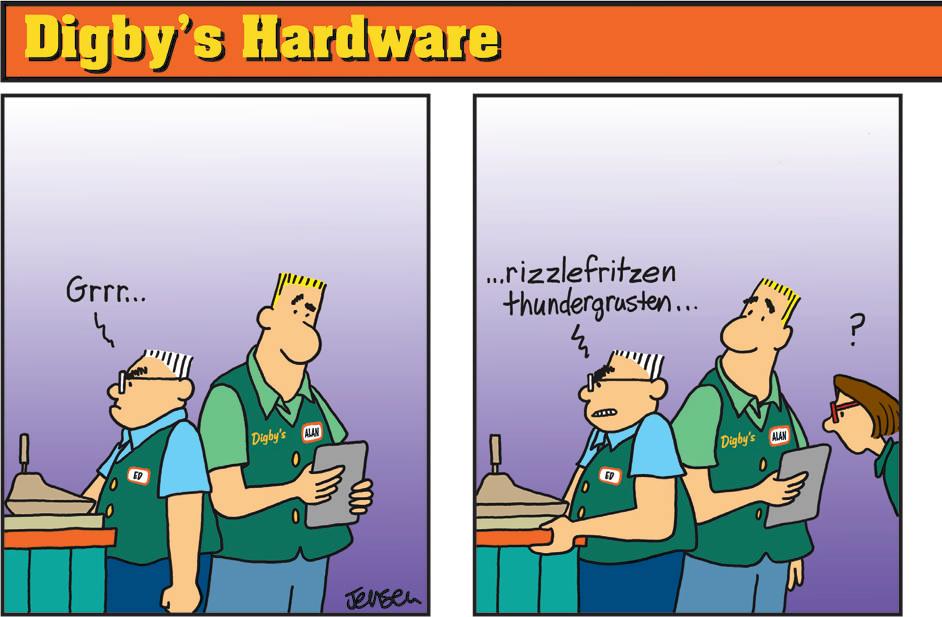
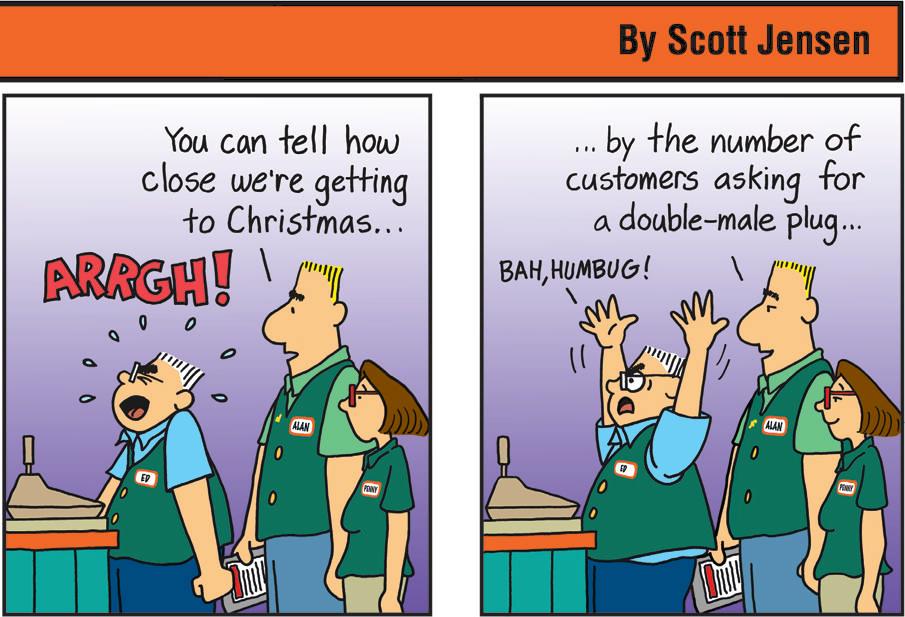
When the holiday season approaches, it brings out the best — and worst — of people. Maybe it’s something in the eggnog.
The Digby’s Hardware cartoon below captures a scene that plays out in every hardware store at this time of year. What can you do about it except grin and bear it?
We know you face lots of other amusing, bewildering and head-scratching moments as retailers, either from your interactions with customers or employees. Pass along your stories, photos and ideas to chris@thehardwareconnection.com so we can share your pain with other retailers. Who knows, we might even incorporate your idea into a future cartoon strip.
“I had one Saturday. As people are getting ready for deer season, we have been selling a lot of the camouflage paint. A woman was studying a can of camo spray paint for a while, so I asked her if I

could help. She said, ‘How does this work?’ I showed her the spray button. And she said, ‘No, I mean how does it make the pattern?’”
John Paul CBS Home Express Coushatta, La.


“I’ve been dressing up as Santa Claus for about 23 years — I spend all year growing the beard. I converted a golf cart into a sleigh and I drive around neighborhoods and pass out candy canes to kids every night the weather’s not bad from Thanksgiving up until Christmas Eve.
One time I got pulled over by a sheriff’s deputy, who said I didn’t have any tail lights. I do have strobe lights on the back. What’s funny is the other deputy in the car recognized me and remembered getting candy from me as a kid. I said, ‘You can’t give Santa Claus a ticket.’ He ended up giving me a warning ticket.”
Chuck Tubbs Your Old Tyme Hardware Canton, Ohio
“This new age of customer dependence still has me chuckling. Had an older lady in the other day who made a purchase. She paid for the item at the counter and proceeded to the exit doors, which are double-outswing ADA easy open with a big PUSH sign on them. She stopped at the doors and just stared at them.
My clerk at the counter asked her if had forgotten something or needed help. She replied, ‘Don't these doors open?’ My clerk said ‘no’ and before she could say anything else out of this nice little lady’s mouth comes: ‘Well, how in the hell am I supposed to get out of here’?
And it wasn't even a full moon…”
Mike Pratt Kinney & Keele True Value Hardware Ontario, Ore.


2010 Sales: Business is starting to pick up. We started seeing some increases in the spring. Sales are up from a year ago. Home building is about dead but people are remodeling and that business is strong.
What’s new: We’ve broke ground on a 280,000-square-foot building that will open in 2012. We will be able to expand just about every department while enabling us to bring in our other businesses such as the Hartville Tool catalog division. It will make our store even more of a destination for local customers. We’re starting to get into the social media with Facebook and Twitter and recently upgraded our web site.
Bob Testa
Hartville Hardware
Hartville, Ohio
2010 Sales: Business has been very soft this year. People are watching every cent they have. It’s not just us — all the local businesses are struggling around here. The glory days of northeast Ohio are behind us, so we all have to live with a little bit less. A recent study looked at the retail square footage per capita and Ohio has three times the national average.
What’s selling:People are coming in daily for the little stuff, but they go to the big boxes for bigger projects. I’m constantly looking for good niches but that’s elusive.
What’s new: Our daughter got us set up on Facebook. She knows how to figure that stuff out and she posts hardware tips of the day and seasonal information. We have 142 fans so far and it’s generating some interest.
Dave Murch
Richner Hardware
Twinsburg, Ohio

In retail, cash is king. And helping our member-owners maximize their cash flow is serious business. How do we do it?
• Lowest cost of operation—yesterday, today and tomorrow
• 90% of SKUs available as one each—to lower inventory and increase turns
• True landed costs—invoice prices include all delivery costs, for effective margin management
• No long-term debt—this means larger rebates to members, not interest to banks
• No national advertising fees—you choose what, when and where to advertise
If you’d like to see the difference we can make in your business’s bottom line, give us a call at 877-301-2646 or send us an email at cashflow@doitbest.com for a no-obligation, confidential cash flow analysis.
Continued from page 12
important selling tool, but we expect our Internet catalog to become more and more important as a new generation of buyers and consumers come to market. We want to be one of their available choices.
Sales/margins for 2010: We are fortunate to be located in Houston, Texas. If things continue in November and December as they have so far this year, sales will catch up with 2009 and end up even for the calendar year-end. Gross margins are slightly ahead of 2009.
What’s selling well: Our strongest categories are paint, plumbing and LBM. Our building material sales are down this year, not a big surprise, but electrical and housewares have picked up. Many of our commercial customers use us for their cleaning and maintenance needs. We reduced margins on some of the more popular consumables in this department and have seen solid sales increases because of that.
We've been working diligently on a new, updated web presence. We purchased new catalog and shopping cart software and have spent a great deal of time improving our data. Our goal is to better present our entire inventory and promote better awareness of all of our products through the new site design. I don’t think it will be dramatic when we launch the new site, but we do expect it to grow in importance. The physical salesfloor will continue to be our most
Cutting costs: We've been diligent all along with expense control. Most of our management team started our hardware careers in the early 1980s, during the horrible oil crunch in Texas. That lasted for several years in Houston and none of us have forgotten what it was like. It was a very formative experience for me. We have been very careful to maintain strong A/R collections. We've been judicious with pay and benefits. We have avoided debt and maintained our plant and equipment on schedule to keep things in good working order.
Virgil Cox Cox Hardware & Lumber Houston, Texas
2010 sales: “Business overall is down. It’s nowhere close to where it was last year or the year before. We’ve got to find ways of doing business that we haven’t done before,” Boland said in an interview with The State newspaper.
Continued on page 16


Continued from page 14
What’s new: Planning to move soon to a new 20,000-square-foot Destination True Value store that will appeal more to women by devoting more space to paint, home decor and kitchen fixtures. Since the new salesfloor will be twice as big there will also be more nuts and bolts for the men, and five additional acres of outdoor space create opportunities to carry more bulk products.
Ronnie Boland
Boland’s True Value Chapin, S.C. ■
Sales/profits for 2010: Sales and profits are on the upswing. As a company we have been up every month since April anywhere from 3.5 to 9%. We had a strong start to our season with a 6.6% increase in October. We remain cautiously optimistic that this positive sales trend will continue into 2011. Consumers appear to be moving forward with home projects that they have delayed during the economic downturn. Their appetite for higher-priced items like grills or premium paints is also much stronger in recent months.
What’s selling well: STIHL, Big Green Egg, and the new Gennex assortment of Ben Moore paints.
Cutting costs: I can’t think of any major expense category that has much room for additional cuts. Our main focus is to maintain the expense reductions that we have already made in the face of increasing
sales. Our recent focus has been more on hiring top talent in the face of a rebound. We have hired an experienced procurement director to ensure lower landed cost and improved inventory turns. We have also made key hires in new or expanding divisions such as commercial paint and commercial supply.
Michael Wynn
Sunshine Ace Hardware Naples, Fla.
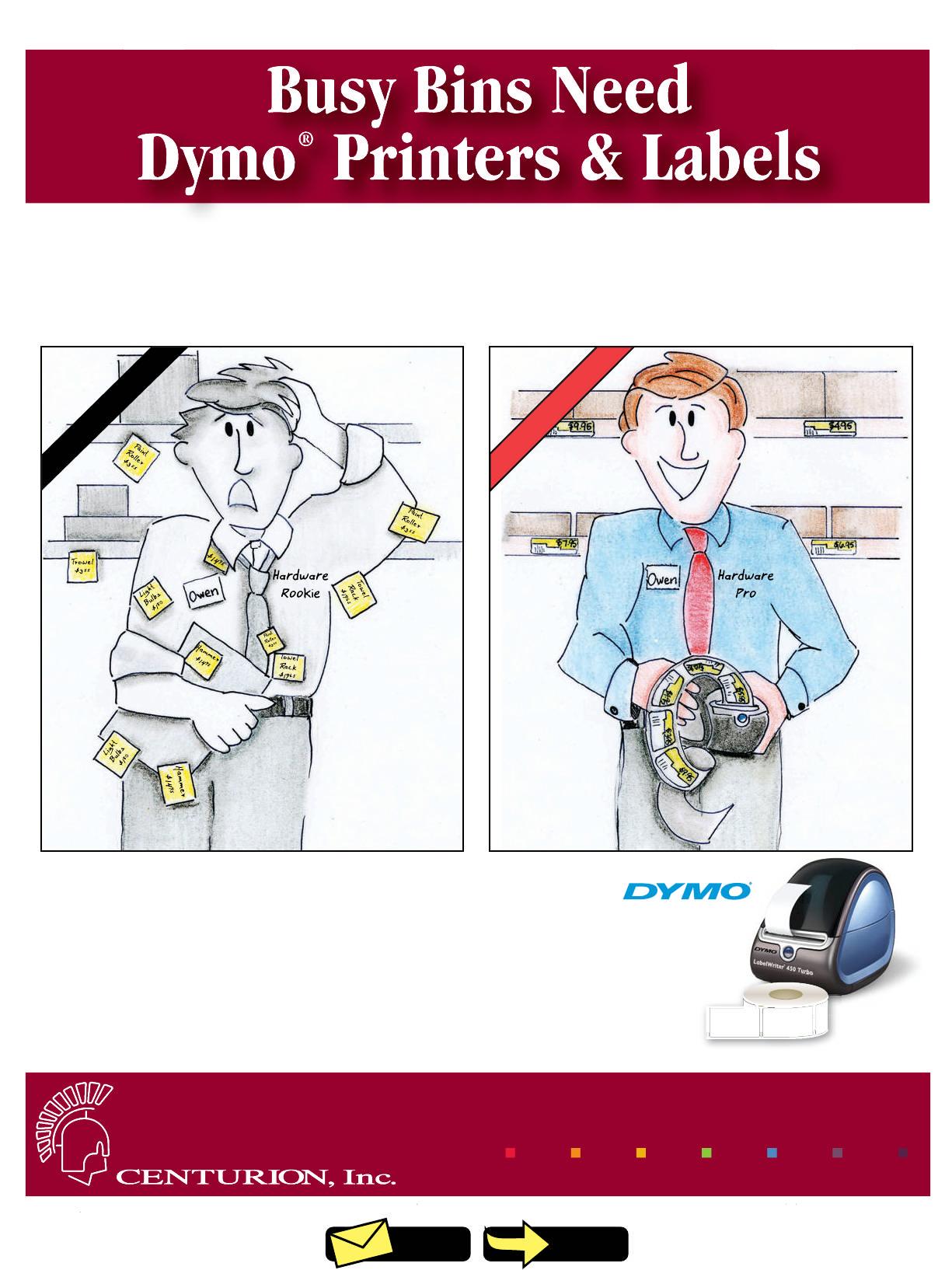
Busy stores have dlb bins. And, b lllb
Busy stores have busy bins. And, busy bins need Dymo® printers and labels. From computer to printer in 2 seconds, our premier labels will turn you into a bin labeling pro and let you spend time on more important things – like taking care of customers.
Please note: Our Dymo® Printers come with free software that allows you to print bin labels from any PC and are also compatible with Activant, RockSolidPOS, Retail Automation’s ABS and TransActPOS Software Systems.
Contact a Centurion Service Representative to discuss all your labeling options.
Continued from page 16
Sales/margins in 2010: Hardware is up about 10% while lumber is down 5% so overall sales are up about 5% for the year. We had strong sales through August. We’re pleased with our performance considering we have such a big LBM department. On the lumber side our margins are 24% while our hardware margin is 35%. We offer so many discounts to contractors even on the hardware side it keeps our margins down.
Forecast for 2011: We have a flat projection for next year.
Steps taken this year to cut costs: We’ve really analyzed our labor costs to make sure we’re not wasting money there. We’ve cut our ad budget in half every year for five years and no longer do Yellow Pages. We’re focused on making good use of our ad dollars, analyzing our circular distribution because consumers find us in diverse places. Energy consumption is another area we’re focusing on. We’re set to meet with consultants who can save us money across the board.
Lindsey Locklear Pembroke Hardware Pembroke, N.C.
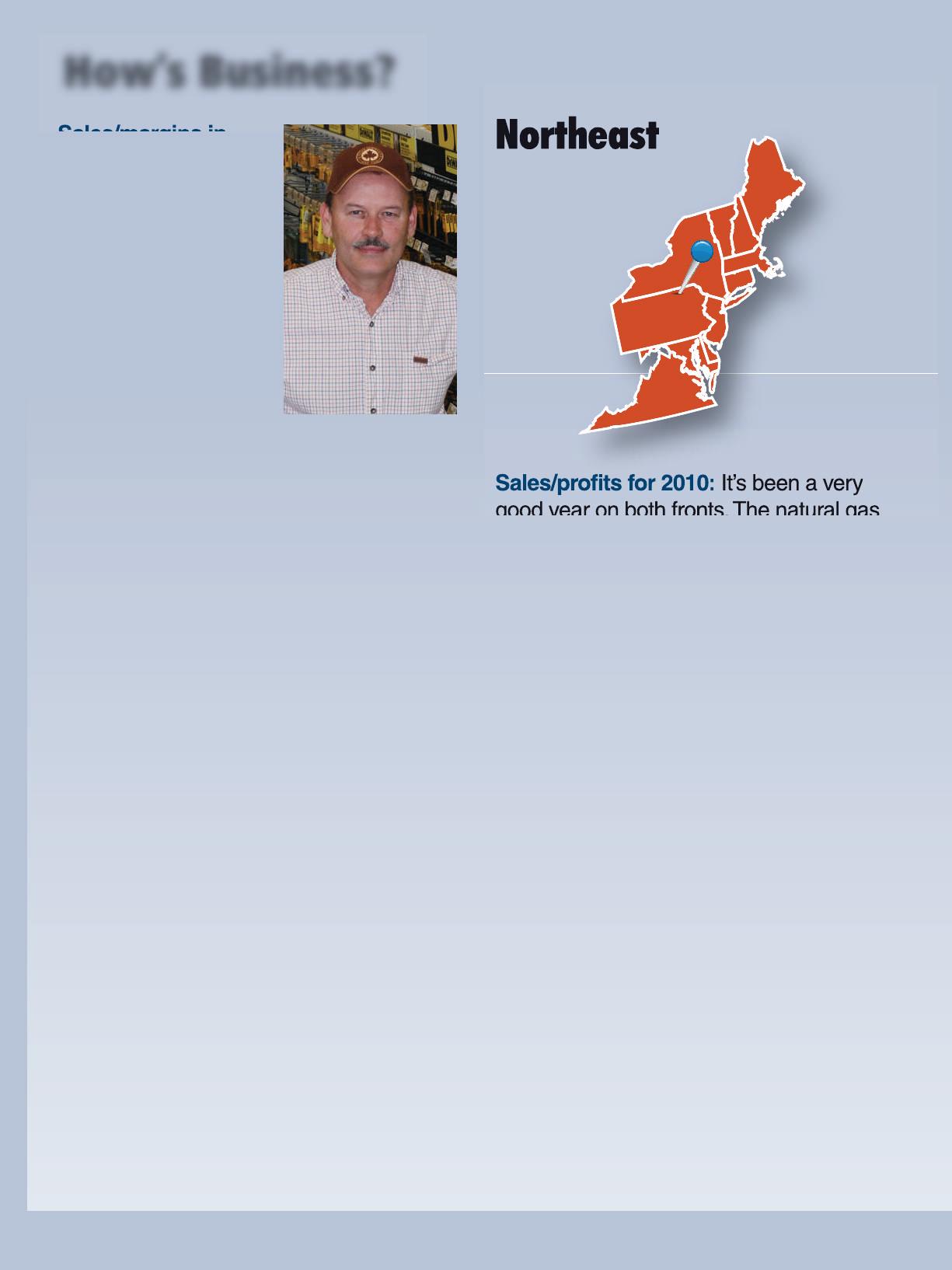
Sales/profits for 2010: It’s been a very good year on both fronts. The natural gas drilling (with the Marcellus Shale) has given people confidence their home values will appreciate and folks finally have money to spend. There are people moving into the area — they say the population may double within five years. We’ve done well over the last 10-15 years, but it’s exciting to see a boom time come our way. Definitely a lot of activity that bodes well for our business.
What’s selling: Building materials and kitchen and bath. Just acquired a local kitchen and bath retailer and are seeing a lot of remodeling activity. People are fixing up their homes and investing in projects such as decks.
Cutting costs: We still watch our costs, but we’ve hired three people this year and I just built a new warehouse and bought another vehicle. Fortunately there’s growth supporting these new expenditures.
Warren Croft Croft Lumber Sayre, Pa.

By Tom Chasteen
The fall wholesaler shows have ended and it’s time to gear up our stores for the winter season and prepare for the spring selling season. Although I’m a self-proclaimed “tool guy” I am going to review three products that are not tools. These are items that all of us could possibly sell in our stores but may have overlooked.
Like many hardware stores, we used to have a housewares department that was well-stocked in the basics but lacked creativity. As a result, the department was managed more like a “niche” than an actual department.

Tom Chasteen will be reviewing 3-4 hardware products from “Tom’s Shop” in each issue of the magazine.
Then we experienced the ramped-up competition of discount and department stores and decided that housewares was not our core business and we let the department quietly go away. Perhaps that was a poor decision or maybe with this soft economy I have more time to think of ways to increase sales. Either way, we should revisit this merchandise category with a more objective approach.
If you have any suggestions of products to highlight in the next issue, email me at tom@thehardwareconnection.com or call me at my store, Tavernier Hardware, 305-852-2511.
I used to dread selling garage door openers, because I knew it was not an easy item for even skilled D-I-Y’ers to install. These products typically required one or two phone calls to help the customer finish the install and often
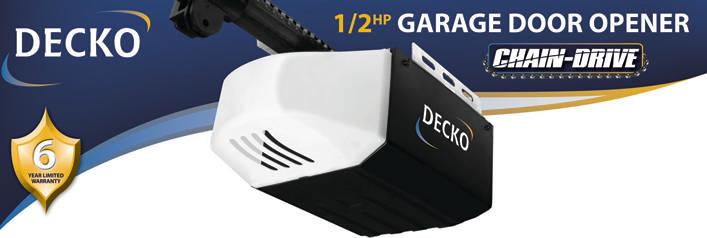
a trip to the customer’s house, which usually ended up with me helping the customer finish the install. Sound familiar? Decko has eliminated
95 percent of those issues. First, everything comes preassembled and wired. The photo eyes are pre-wired and there are no left or right or polarity issues. The trolley
and cable is already assembled and everything is organized and labeled. The force limits are adjusted by pressing the open button, so you no longer need to set the tension using a ladder and tools.
Decko has real people who man the customer help desk 10 hours
a day, seven days a week. And everyone who manages the help desk has actually installed several units under different conditions before they are allowed to work the help desk. What a great idea and refreshing approach to customer service.
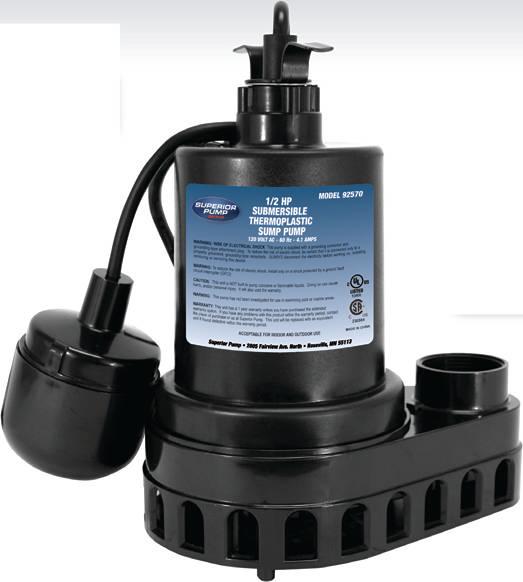
Superior Pumps has developed a complete line of sump/utility pumps with thermoplastic that are completely submersible. They come with or without float switches and they vary in horsepower size from ¼ to ½ and have a pumping capacity of 1,800 to 3,300 gallons per hour to over 2,000 gallons per hour 15 feet above the pump.
Each pump has a built-in thermal overload protection for safety and only draws 4.1 amps. The compact design allows them to fit into tight spaces and all come with 1-¼" to 1-½" NPT discharge. They also come with a one-year warranty and the larger ½ hp pump comes with a stainless
steel impeller and a three-year warranty.
As a retailer, the one feature I really like is the product packaging. All of the specs are printed plainly and are easy to see. Superior Pump has also printed the pumping performance specifications including the discharge heights above the pump. In other words, they have taken all of the guesswork out of selecting a pump for the customer.
When was the last time you saw a customer who needed a sump/utility pump come into your store with a smile on their face? Typically, when a
The graphics on the box and directions in the box are outstanding. If you’ve avoided selling garage door openers in the past, think about how manyhomes in your market have garage doors and then look into Decko garage door openers. Contact Decko at 877-436-4402.
customer needs a pump they need it now and the quicker they can determine which pump will do the job and the quicker they can get out of the store the better. Superior Pump fits the bill. To contact Superior Pump, call 800-495-9278 or go to www.superiorpumpco.com.
3M has been quietly expanding its “Filtrete” line beyond just air filters and has developed a Filtrete water filter product line. The two products I have tried are the Filtrete water pitcher and the Filtrete water bottles. As with most 3M products, a great deal of research and product development is donebefore they launch the product in the marketplace. The water filtration line is no exception.
The Filtrete water pitcher flows five times faster than

the competition, has a recyclable filter that has a filter change indicator built into the filter, will reduce sediment and the taste and odor of chlorine and has a 100-gallon filter life. That’s 800 pint bottles of water. That’s a lot of drinking water and a lot of money a customer can save over buying 800 pints of water over the retail counter.
To make the process even more convenient and help the consumer save
more money, 3M has developed a two-pack water bottle product that is dishwasher safe and has a leak-proof cap. The packaging is very good, easy to read and colorful. The Filtrete water filter line is available through most hardware wholesalers as either a warehouse or drop-ship item.


Houston Bowlin is product manager at House-Hasson Hardware.
The Hardware Connection magazine has announced the winners of its “Buyer of the Year” award, a program that recognizes the important role buyers play in the hardware/home improvement industry.
“The buyers in our industry have a very difficult but important job trying to satisfy a diverse group of independent retailers, balancing the merits of new items with the need to maintain turns and margins for their companies. We felt it was time to finally give them the recognition they deserve,” says Tom Chasteen, sales director of The Hardware Connection.


Charlie Crittenden is merchandise manager at Ace Hardware Corp.
The 2010 Buyers of the Year are:
Houston Bowlin, product manager-paint, paint sundries and electrical, House-Hasson Hardware Company
Charlie Crittenden, merchandise manager-electrical, Ace Hardware Corp.
Jeff Kammer, global product merchant-hardware and automotive, True Value Company
The winners were selected by the retail readers of The Hardware Connection, who were asked to nominate their favorite wholesale buyer. Each Buyer of the Year honoree will receive a plaque of recognition.


Jeff Kammer is global product merchant at True Value Co.
“Buyers have to stay on top of product trends, work closely with manufacturers to bring new products to market, negotiate fairly and ethically, satisfy internal requirements at their companies and also be responsive to the needs of retailers. That’s a challenging but crucial function,” says Chris Jensen, editor of The Hardware Connection. “We think the fact that the Buyers of the Year were picked by retailers gives this award extra credibility.
Bowlin, who has been with House-Hasson for 22 years, said he was very honored to receive the award. “We have a very hard-working team in the merchandising department
here, and it’s nice to get a little recognition for the job we do,” he said.
For Ace’s Crittenden, buying runs in the family. His father worked as a buyer at Sears for 40 years. “It’s very gratifying to win this type of honor from peers in the industry. I’m very humbled actually,” he said.
Crittenden has been at Ace for 23 years, starting as an inventory analyst and then moving up to assistant buyer. He spent many years as a buyer in the builders hardware department before switching
to electrical in 2007. His hardware industry career actually started with Kmart, where he was an assistant store manager for about four years. “I know what it’s like to work retail, so I’ve always been able to translate that to my job as a buyer,” he said.
Kammer has been with True Value 27 years, seven years in a sales assignment and the rest in the merchandising department. He’s in his second stint as hardware and automotive buyer and has also been a buyer in the lawn & garden and hand & power
tools departments. “I enjoy working with entrepreneurial retailers, who are the grassroots of our economy. To be recognized with an award like this, being nominated by retailers, is what makes it all worthwhile,” he said.
Kammer adds that the buying function hasn’t changed over the years but the level of sophistication has. “Buyers today have such a wide range of analytical tools at their disposal such as POS information to help them make tough decisions.”

Lost in a forest of confliction and unsubstantiated website claims in your search for highly experienced help with a Store Closing Sale? Go with the proven professionals...that’s us!
Storeowners who have done their research are choosing Wingate because we’ve rescued more investments and liquidated more assets profitably than anyone in the business. In this economy storeowners find it difficult to meet day to day obligations. Profits are slipping as consumers tighten purse strings. Look at it as an opportunity–An opportunity to liquidate and rescue investment and turn store assets into cash before they erode away. At Wingate we’ve helped more storeowners convert inventories, fixtures and equipment into more cash than they ever dreamed possible.
• Closing to retire? We’ll help you CELEBRATE!
• Closing to start another business venture? We’ll help you!
• Closing to pay off creditors? We’ll help you!
Find out how we can do it for you call 1-888-480-7253. We’ll gladly answer your questions and send an info packet including letters from storeowners who have used our service.
Sincerely,
Garold Wingate, Pres.
By Doug Stephens
In a few short months retail practitioners from far and wide will descend on New York City for the National Retail Federation Conference, an annual showcase of the latest trends and ideas in the world of retail.
And, as is typically the case, the trade show floor of the Jacob Javits Center will be littered with a dizzying array of technologies, each promoting itself as a panacea for enhanced sales, profits and customer satisfaction, each promising to be the next “big” thing!
For the average retailer, navigating this sea of technology can be overwhelming. It’s difficult to discern between those things that might add true value to your business and those that are mere baubles. It’s particularly challenging if you have no clear technology plan in place to guide your decision making. And the sad truth is that the vast majority of retailers will drift aimlessly in what seems like a sea of technology.
When speaking to groups there are three things that I encourage them to consider as they contemplate their retail technology needs. If nothing else, they may serve as a starting point in
seeking out relevant in-store systems. They are as follows:
There was a time not so long ago where the IT strategy of most companies was to let the competition go first, then wait patiently until the bugs were worked out at which point they too would get on board. This strategy was feasible because the technology was moving slowly enough to allow companies to jump in late and catch up without losing a great deal. In fact, given the inherent risks, there was often very little advantage in being first.
That’s changed, largely due to the fact that technology is now moving exponentially faster than ever before. For example, it took the Internet four years to reach 50 million users. However, the Apple App Store got 1 billion hits within nine months of its introduction in 2008 — a quantum
leap in the speed of technological adoption.
This has made fast-following all but impossible. By the time companies wait for their competitors to prove the value of a given technology it will often be verging on obsolescence. In order to keep up, it’s become increasingly necessary for companies to remain ahead of what’s happening and to be ready to take advantage of new technologies as they emerge.
Moreover, there’s growing evidence of a strong correlation between early adoption of technology and business success. Brands like Starbucks, Best Buy and even Ford are demonstrating that moving first, when it comes to technology, creates a sustainable competitive advantage.
Not so long ago the challenge for consumers was often the lack of availability of the things they needed. Today the opposite problem exists. Consumers are faced with an overabundance of choices regardless of what they seek. We have to accept the fact that we have more choice today than at any other time in history.
As a result, the majority of shopping ventures now begin with a web search and increasingly these searches are mobile in nature. Between 2008 and 2009, there was a 34 percent increase in mobile web usage. Smartphone adoption rates are soaring and it’s estimated that by 2012 the majority of all web search
will be performed on mobile devices. Consumers are leveraging the Internet on the fly to guide them to the best option — local or otherwise. They are accessing pricing comparisons, user reviews and promotional offers, all from the palm of their hand.
As a retailer you have to take a hard look at how your business performs in web searches relative to your competitors. Can consumers find you using keywords that are typically related to your category? Do you appear in local results and maps on Google? Is your business listed with Google Places? At a bare minimum, you need to ensure that your business can be found in a search. If consumers can’t find you they won’t shop you. It’s just that simple.
Secondly, you should take the time to ensure that your website can be navigated on the most popular brands of smart
phones. If they are not navigable, give strong consideration to redesigning your site or building a new mobile-ready site.
With the ubiquity of Facebook, Twitter and other social networks, web search results are increasingly returning usergenerated reviews, tips and references to the places consumers are shopping. The power of these endorsements or in some cases indictments is indisputable. Research has consistently shown that consumers almost invariably trust the opinion of a friend or family member over any form of corporate advertising or promotion.
The more chatter you can build around your brand the better your chances of being found on the web.
The direction to retailers — provided they are confident in their offering — is to actively promote discussion about their store, their brand and their products within social networks. Encourage and reward customers for taking the time to review or comment on your store. The more chatter you can build around your brand the better your chances of being found on the web.
The challenge with advertising has always been to reach the consumer at exactly the right time for the marketing message to be most relevant — to speak to them when they are prepared to buy.
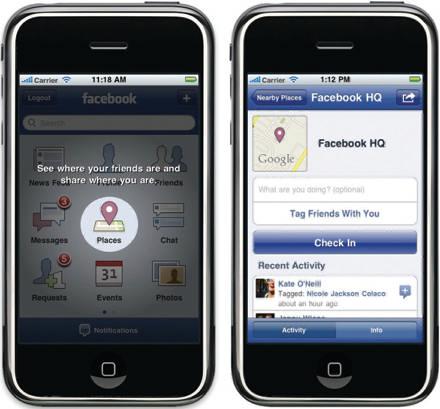
For that reason, location-based services are being viewed as the Holy Grail of marketing. Locationbased services are mobile utilities or applications that track the user’s whereabouts using GPS and alert them to things and places nearby.
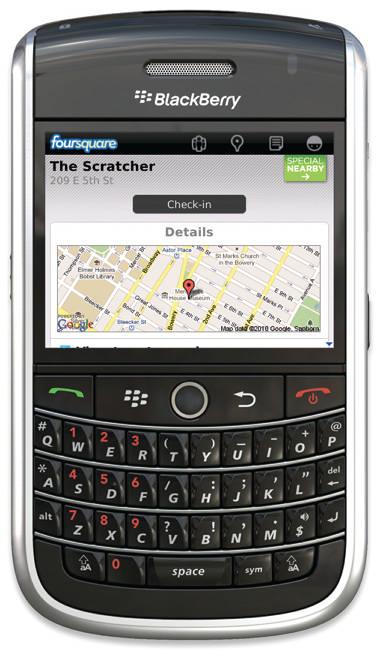
Applications like Foursquare, Gowalla and Facebook Places allow users to digitally “check-in” to the places they physically visit during their day. On check-in they may receive information, rewards, promotional offers and even tips from past customers about the location. Some applications even provide for functionality called geo-fencing, whereby customers who come within a certain defined distance of the business are automatically alerted to specials or promotions at their favorite stores or restaurants on their mobile device.
Some businesses have leveraged location-based services like Foursquare to enhance their loyalty marketing efforts, rewarding customers who frequently check in at their stores with special rewards and incentives.
All these digital breadcrumbs will help to optimize your store’s presence on Google and make it easier for new customers to find you. All you need to do is get involved.
There was an awkward period in retail which began in the late 1980’s and lasted until the early 2000’s when retailers were introducing retail technology aimed at reducing staff and improving operational efficiency. The problem was that the technology wasn’t quite good enough to completely eliminate the need for human staff and served only to marginalize, frustrate and disempower them. This was a combination that amounted to some mediocre shopping experiences.
Since that time, retail technology has improved significantly and is now very capable of eliminating a lot of unnecessary human intervention. In turn, digital networks and applications are capable of empowering retail staff with a wealth of customer, pricing and product information. These advancements in store technology are supporting the evolution of two vastly different but equally relevant consumer experiences. And it’s up to retailers to decide which experience best reflects their brand and the needs of their consumers.
The convenience-oriented retailer should focus strictly on technologies that streamline the shopping experience and lower operating costs through efficiency. Simply, the goal is to get the customer in and out with what they came for as quickly as possible and at the lowest competitive price. Self-serve information kiosks, digital price-checkers and self-checkout are just a few examples of in-store technologies that could help support the convenienceoriented experience.
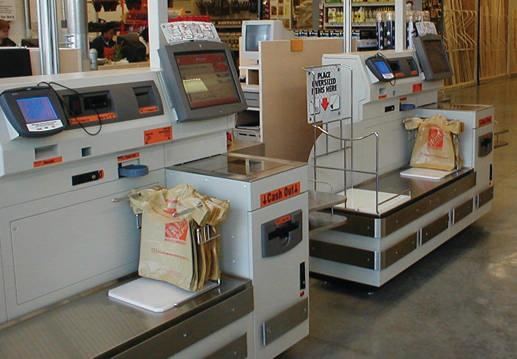
Other considerations may include allowing customers to buy online and pick up instore or conversely buy in-store with free home delivery. Whatever technologies make it fast, easy and efficient to shop your store are the ones you should be actively seeking out. Don’t get sidetracked by any technology that doesn’t support this goal, no matter how slick or cool it may appear to be.
The high-fidelity retailer should pursue any systems or technologies that can enhance the consumer’s shopping experience and promote the highest possible transaction values. High-fidelity stores are typically those where personal and professional service is aimed at building strong customer relationships and where prices may be comparatively higher than competitors. System considerations in this environment could include such things as mobile point-of-sale systems to keep sales staff engaged with their customer. Interactive digital signage can add a sense of entertainment while delivering essential information to build sales. Hand-held personal selling assistants can put product, inventory and pricing information at
your staff’s fingertips.

Any technology that promotes a deep, engaging and highly personalized experience is within scope. And likewise, don’t allow yourself to creep toward technologies that won’t deliver on this experience — no matter how good they look.
Increasingly consumers are expecting and demanding either a high convenience or high-fidelity experience but not something in the middle. The middle is no-man’s land. The middle is neither highly enjoyable nor highly convenient
and increasingly consumers are shunning middle-of-the-road experiences, particularly in the face of far more considered consumption patterns.
Start with a clear decision about which you are — high convenience or high fidelity — and then begin seeking out the appropriate combination of technologies to deliver exactly that experience to your shoppers.





Doug Stephens is one of the world’s onlyretailindustry futurists. His thinking has influenced manyofNorth America’s bestknown retailers and brands including Walmart,HomeDepot,DisneyandBenjamin Moore. Prior to founding Retail Prophet ConsultingDougspent20yearsinretailholding senior international roles, including the leadershipofoneofNewYorkCity’smosticonic retail chains. Doug is the author of Retail Prophet’s Shift 2020 Retail Trends Report and a member of the Retail Wire Brain Trust. He is also founder of the Retail Prophets industrythink-tankandacontributingblogger to Technorati’s business channel. When not consulting,Dougisahighlysoughtafter speaker, writer and opinion leader for business media on trends and changes in retailing and consumerism. Visit his website at www.retailprophet.com or contact him at 647-393-9033 or doug@retailprophet.com.
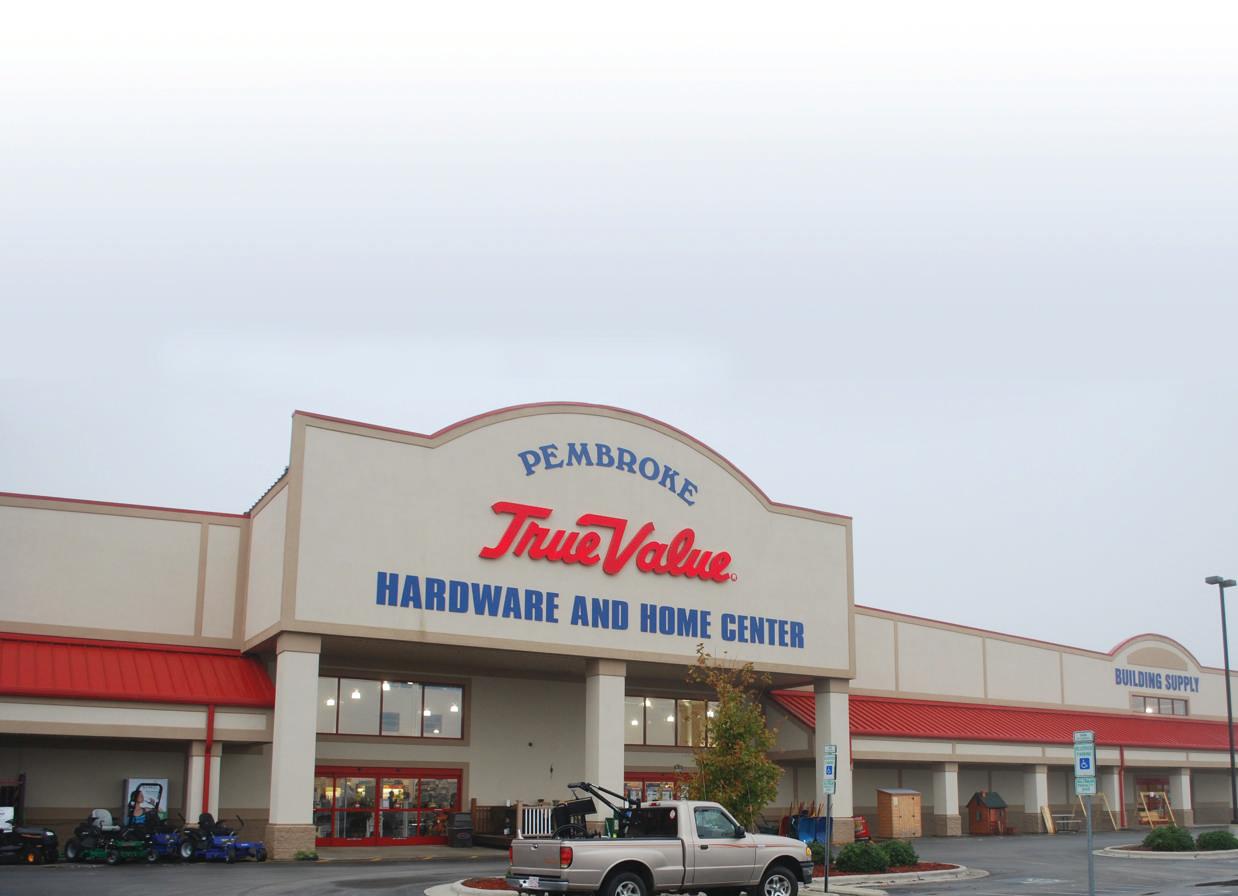
Curt Locklear, a World War II veteran and Lumbee Indian Tribe member, started Pembroke Hardware in 1963. He envisioned a neighborhood hardware store where high-quality merchandise and personal attention would be top priority. Over the years the business grew and the store expanded to 9,000 square feet. In 1992, the family opened a lumber and building materials business a few blocks away. Today the business is operated by five of Curt’s children, with son Lindsey operating as general manager.
To provide for growth, to improve operating performance and to better meet consumer expectations for product and service, the two locations were combined into a new 120,000-square-foot facility with 35,000 square feet of retail space and four acres of yard products in October 2006. In 2010 Pembroke Hardware was recognized as a winner in True Value’s “Best Hardware Store in Town” awards program.
Wholesaler affiliation: True Value
Number of employees: 55 total; 30 full time
Other family members in business: Father Curt still comes in most days while mother Catherine comes in once or twice a week to help out. Brother Steve handles hardware side with me; brother Milton oversees LBM; brother Anthony is in charge of rental and small engine repair and sister Janice Sheffield helps with the bookkeeping.
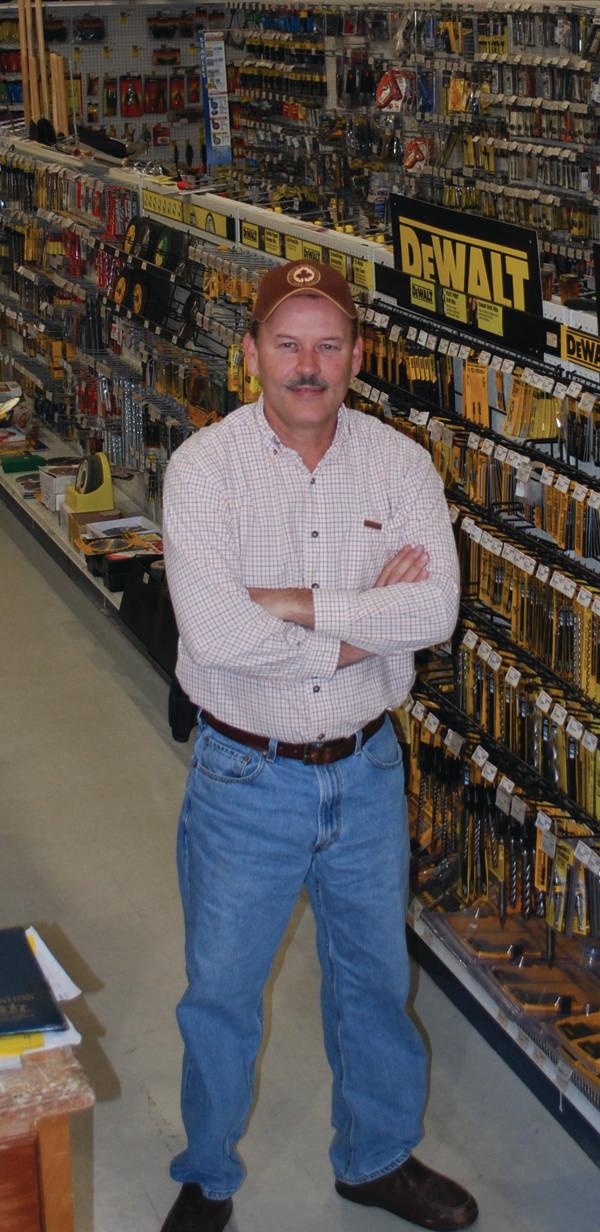
Lindsey Locklear is general manager of his family’s business, Pembroke Hardware in Pembroke, N.C.
Salesfloor square footage: Retail square footage is 35,000 but building is 120,000 sq. ft. with warehouse.
% Sales Pro vs. DIY: 50-50
Top categories: Tool Shop is tops in sales but paint is the most consistent category. Plumbing is third.
Most successful niche: Appliances are great — gained double digits in that niche for last five years. Our furniture sales are fantastic. People expect us to have certain things since our store is so large. Other niches include sporting goods (hunting and fishing), workwear and rental. How would you characterize your retail philosophy? The business was founded on the principle of having the products customers need. When we set up the new store we planned for dominant assortments in every category. The second is customer service. Customers are blown away by the fact we’re a home center but they can still get great service from a store this size. Also, we’re not extravagant with our prices and don’t aggressively
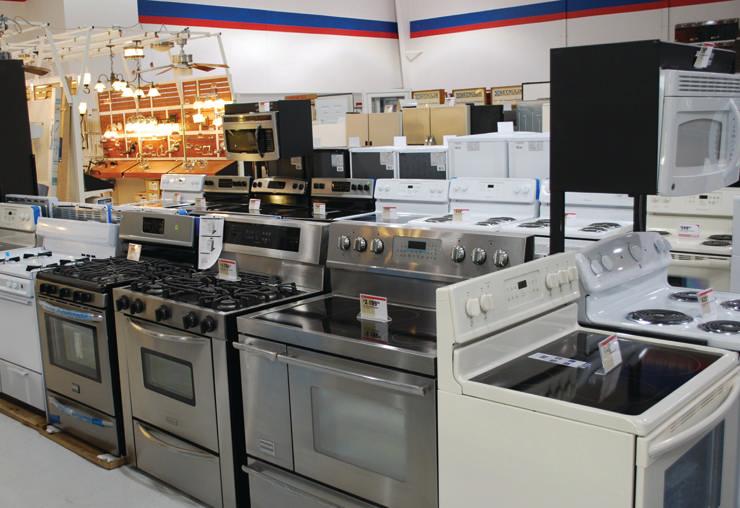
Sales of appliances continue to grow double digits each year and the store has developed niches in furniture, toys, hunting and fishing, workwear, outdoor power equipment and housewares.
variable price although we keep our prices in line on highly visible items.
What consumer trends have you been noticing? Consumers are changing the way they get information. That’s why we’re looking into social media.
What new initiatives are planned? We have a basic web page through True Value but we’re planning to enhance that and have a customized e-commerce site. That will help us deal with government entities, which is an untapped opportunity for us. We have space for a garden center but haven’t got around to
developing it yet.
What can vendors do to make your life easier as a retailer? Not sell out to big boxes. Improve packaging. Vendors should listen to retailers and not wholesalers and get out more in the field. Get knee deep in the trenches with dealers and do the same thing with consumers.
How do you keep people buying local? Being a large store we can be a one-stop shop by carrying different categories. Hardware stores are driven by relationships and we’re able to maintain a small-store atmosphere with a big store.
Any problems with financing? We used an SBA loan to expand the business in 2006. Our biggest problem is being able to offer financing in a rural area for big-ticket items. We could double our sales of high-end, aboveground swimming pools if we had outside financing to offer.
Biggest challenge facing your business? The economy is the biggest fear because it’s an unknown factor. Financing on big-ticket items is an ongoing concern and I worry about the credit I’ve extended to huge contractor accounts.
Short-term goals for the business? Try to improve
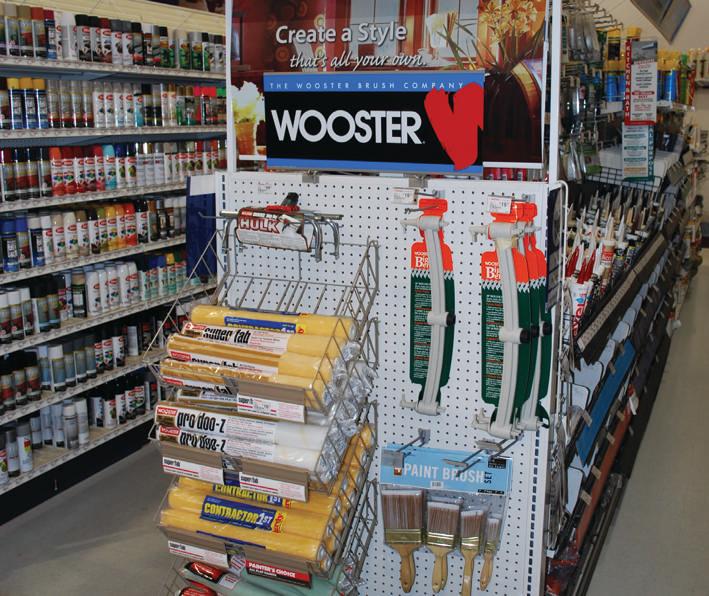
Paint is one of the most consistent categories along with tools.
merchandising across the store. We’ll probably adopt some of the Destination True Value concepts and use different graphics to change the look and feel of the store. We’re still
working on getting the flow right.
What do you do for fun? I used to golf a lot but scaled back when we opened the bigger store.
A new 120,000-square-foot facility opened in 2006 that combines the company’s hardware and building material businesses under one roof.


By Bob Phibbs
Do you have a website? A blog? A Facebook Fan page? Are on YourTube, Twitter or Foursquare?
You’re not on any of them?
The Internet is not a storm. A storm is something that you’re waiting to pass, and you know when it’s over that you will be OK. The Internet is a radical change; the Ice Age in terms of the information world. It has completely transformed the way we play the game of marketing — forever.
We are not going back to print. Newspapers are not making money because ads are drying up so the news hole has shrunken driving more people online.
We are not going back to direct mail from purchased lists. Why? Twenty states across the nation have legislation pending that there will be a “Do Not Mail” list. That’s why direct mail marketers are scared.
We are not going back to sticking fliers on people’s cars. Forget about the trash issue and green concerns, did anyone meet with success doing this — ever?
The difference between being in print and online is the difference between opening a door and yelling into a dark room, “Where are you?” versus opening a door to a well-attended party and announcing, “I’m here!”
You have to get more out of the people that know you and you have to get more people to know about your business. We used to call this word-ofmouth marketing. All of that has evolved with the Internet.
I hope to explain this to you in a new way. It is crucial because many independent hardware stores don’t have a website.
Picture a busy freeway of cars; these are your customers on the Internet. People are buzzing by quickly, trying to get to a specific exit. Now picture yourself standing on the side of the road with your direct mail piece trying to interrupt them to see you.
Where are your customers’ eyes on the Internet freeway? Straight ahead toward their destination. Even if you jump up and down and paint yourself
red trying to stop them, they are not going to pay attention until they reach their exit.
That’s the point at which you can capture their interest; because they have arrived. The Internet freeway is the browser page into which your potential customers type their search terms. Once the search engines have delivered their search results on another page, that’s the exit ramp.
That is when customers are interested in who is on those search results; only once they’ve arrived. Make sense?
You have to get what I call “Tier One Marketing” perfect to get in front of people looking for your products or services by being in the top three search results. Think of the Internet another way — as the old Yellow Pages on steroids. By the way, if you are taking out ads in the Yellow Pages, that is back to the Eisenhower administration. No one other than your grandma is looking for anything except maybe a plumber. Save your money — cancel that contract now.
Let’s return to the Internet as a giant freeway; picture whatever one is by you. I am from Los Angeles so it would be the 405. People are buzzing by so quickly

because they are trying to get to a specific place, to their exit. On the Internet, you have to be where they are looking and that is only at the off-ramps on that freeway. At that point you can stop their attention because the drivers have arrived at their destination. Make sense?
On the Internet, that exit is the page that comes up when someone puts their search terms into their browser. That’s why you need a website. Once they have arrived, that is when customers are interested in what is at that exit. If you aren’t there, you can bet your competitors are.
We want our customers on the Internet to stop when they are at the exit, because that is when they are ready to listen. I am not talking about payper-click ads here, I am talking about your basic website.
While you can have someone do the work for you, you need to understand that your site is your front door and realize what is important and what isn’t; so read on.
Google prides itself on being 98 percent correct when you put your search terms into their browser. To stay with our freeway analogy, when you tell your GPS, “I want exit 151” your device delivers the message “I know right where 151 is, and using satellites, will take you there.”
Google navigates by search terms, also called “keywords.” A keyword forms the exit ramp of the Internet highway. If I type in “Decking materials, Toledo, Ohio,” those four words are the destination I want Google to bring back to me. The more specific the keywords, the more targeted the search. This example yielded 32,400 results — still a lot
for both you and the search engine to sift through.
How can it possibly show all of those? It can’t. Therefore, it has to rate sites on criteria and then position them accordingly. Now take a blank piece of paper and come up with all the possible search terms or keywords you think customers would use to find your business on the Internet. Then sit down for a half hour in front of your computer and actually search those terms to see who comes up. Part of this process is to see where you rank on the search but also who the search engines think are your competitors.
Once you have a list you feel represents your customers, go to https://adwords. google.com/select/KeywordToolExternal and enter each of your keywords from your list.
This site will deliver how many people actually searched for those keywords as well as come up with some variations for you to consider. For example, “People who look for party supplies often look for this…” It is a great resource to verify that enough people are searching for the keywords you have identified on your list. You will either find you were right on the money, or perhaps if you were a toy store, that no one is looking for “crown screw and bolt” — and can therefore find more meaningful keywords that draws them in like “nuts and bolts.”
Next, prioritize your list with the #1 most searched keyword at the top; you will want this to be first whenever you use keywords. While you can find niche markets by using keywords not necessarily the most popular, you want to fish where the fish are first, not swim in your own pool.
Even if you have a website, pay attention to the keywords that get the most results. If you are still telling yourself you don’t need a website, notice how many times you use your computer to search for things. Your customers are doing the same thing.
Bob Phibbs, the Retail Doctor®, has helped hundreds of small and medium-sized businesses in every major industry, including manufacturing, service, restaurant and retail. He is a nationally recognized expert on business strategy, customer service, sales and marketing and has spoken to both Do it Best and True Value hardware dealers. With over 30 years of experience beginning in the trenches of retail and extending to senior management positions, he has been a corporate officer, franchisor and entrepreneur. His newest book, The Retail Doctor’s Guide to Growing Your Business, has received praise from both Inc. magazine and USA Today. A free chapter and ordering information can be found at http://www.retaildoc.com/guide.




Sunshine Ace Hardware’s flagship store in Naples, Fla., was ready for a change, and the Wynn family decided to go above and beyond the typical remerchandising. The store, which has been in the family since 1958, had not undergone a major remodel since moving to the current location in 1964. A $400,000 renovation project has turned the 14,000-square-foot store into a stunning, eyecatching museum that pays tribute to its deep roots in the community while also making the shopping experience more fun for customers.
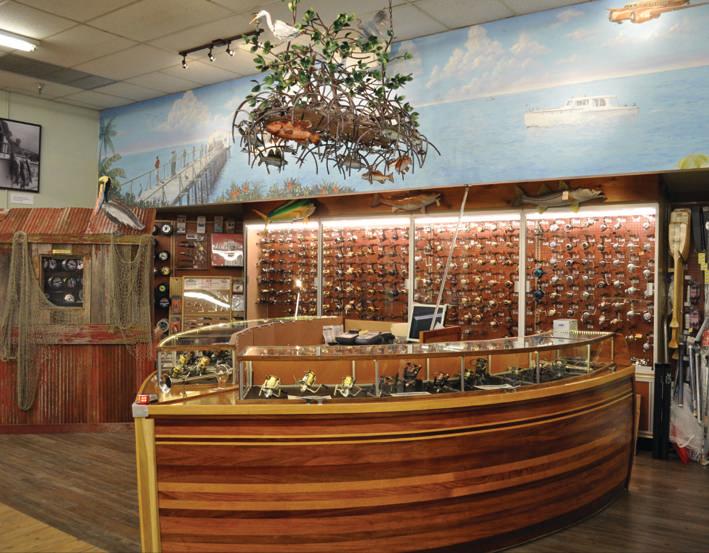
The main counter that holds the store’s high-end reels has been constructed to look like a classic Chris-Craft boat. The construction includes inner ribs along with mahogany wood, working navigation lights and glass showcase space.
“One of the key differences in this remodel has been making it a community project — not just an internal effort,” says Michael Wynn, president. “We have reached out to long-time customers, local artists, historians and business leaders to create a finished product that is far superior to anything we could have done on our own. Through this effort we have created a store that is truly connected to Naples’ rich heritage and have community advocates that will be referring new
customers to us for years to come,” he adds.
CBI Technologies was the store layout and designer. Owner Jeff Dietrich took the design concepts and ideas as offered by the Wynn family and not only brought them to life but also took them to a new level, Wynn points out.
Sunshine Ace took a dramatic detour from the colors it has traditionally used in its décor. Gone is the drab gray shelving and pegboard that occupied the store for 45 years. Now customers will see tan shelving with cinnamoncolored pegboard. Tan and cinnamon colors accent the new endcaps along with a sage color that ties to designs in the terrazzo floor. Specialty fixtures have been added throughout the store to make shopping easier for customers. One example of this is in the new fixtures that hold 1,430 fishing rods plus 226 rod/reel combos.
Three murals totaling 600 square feet were handpainted by a local artist. One mural depicts a scene with the Naples Pier as it was in the 1950s while another mural depicts Naples Bay. Historical elements
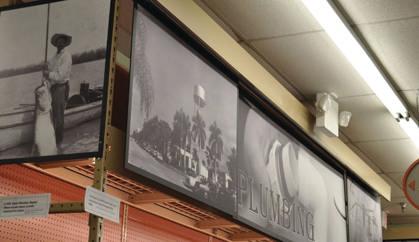
A total of 24 historical panels were installed just below the ceiling around the store’s perimeter and more than 70 photos are incorporated in various locations throughout the store. The pictures feature theWynnfamilyaswellashistorical photos of old Naples.
will be incorporated throughout the murals to help educate customers about Naples history.
Careful attention was given to the core retail strategy for the store to improve overall sales performance and ease of shopping. The new layout provides improved traffic flow and improved visibility for all product categories. Upon entering the store the customer can see almost all departments from 10' inside the store versus a cutup maze that had occupied the store before. Aisle markers have been incorporated into the new endcap displays and are angled to allow customers to see aisle directories easier and eliminate the time it
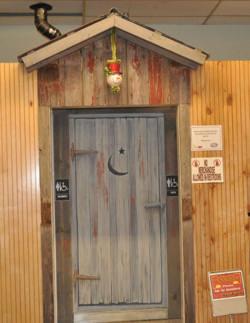
Whether it’s an old tin roof that extends out from a hand-painted mural of a metal shack or hand-crafted frame at the front of the store that houses portraits of the Wynn family, customers will feel elements of Old Naples as they shop the store.

Sunshine Ace partnered with two artists to create art pieces on the front exterior. One artist created a stone mosaic depicting the Orange Blossom Express passenger train that operated in the days of Naples’ founding while the other art piece includes colorful pottery depicting an underwater scene.
takes to locate products.
In addition to stimulating customers visually, Sunshine Ace will be testing scent technology to further make the shopping experience memorable. The store is using an ocean scent in the fishing department and is reviewing other options that may tie into the holidays as well as seasonal changes. “Our goal is to subtlety connect customers to the scents they most associate with a particular time of year or a particular product category,” says Wynn.
The grand reopening for the store on November 13 attracted a full house. “It has been a very rewarding experience to see the end results and get such positive feedback from customers,” says Wynn.

A custom-designed sculpture hangs over the boat counter that features mangroves, driftwood and birds as well as lifelike snapper, redfish, snook and other Florida fish. It is set against the backdrop of the Gulf of Mexico mural.
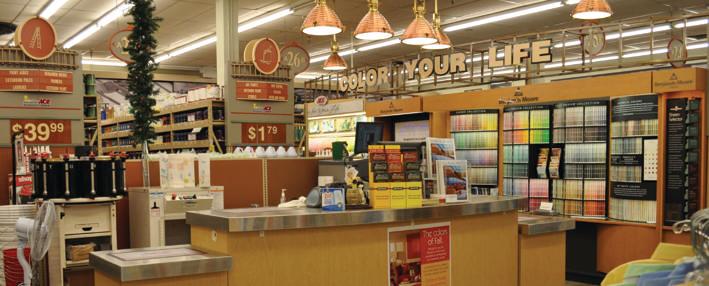
In signature departments such as paint, sporting goods and fasteners, the store added specialty lighting fixtures that are coordinated with the department. Specialty lights in sporting goods feature old pulley systems used in years past at boat docks. A light in the shape of an 8' long nut and bolt incorporates spotlights inside the bolt to shine down on the fastener aisle.
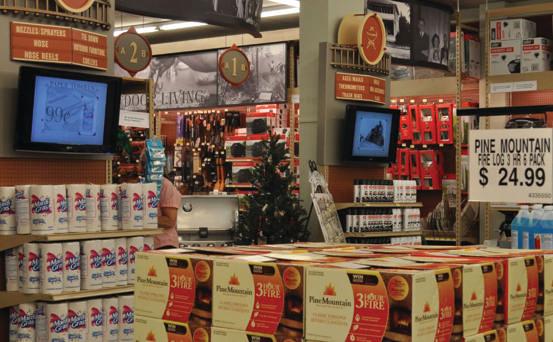
Tenflat-screenTVsarefixedtoendcaps throughoutthemaintrafficareasofthestore.In additiontopromotingaparticularproductand price,theyfeatureslidesoncontinuousrotation thathighlightthestore’shistoricaltheme.
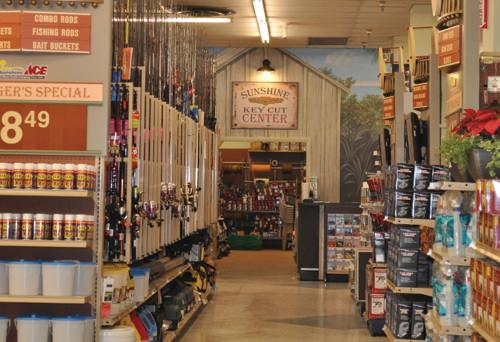
The new design allowed Sunshine Ace to add more than 200 additional linear feet of product as well as 2,000 square feet of peg space due to raising the fixtures by 12".
There were lots of familiar faces and some new ones too as hundreds of retailers returned to The Hardware Conference in Marco Island, Fla. The annual event, which took place September 10-12 at the Marco Island Marriott, is the largest annual dealer event in the industry as well as the only industry event held exclusively for independent retailers regardless of wholesaler affiliation.
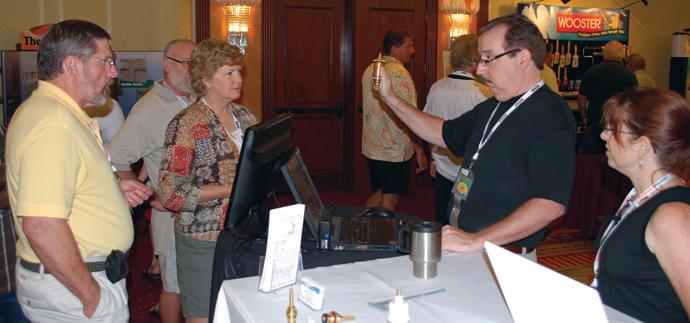
When the exhibit area is open the ballroom is filled with activity as dealers and vendors get to know one another while discussing business issues.
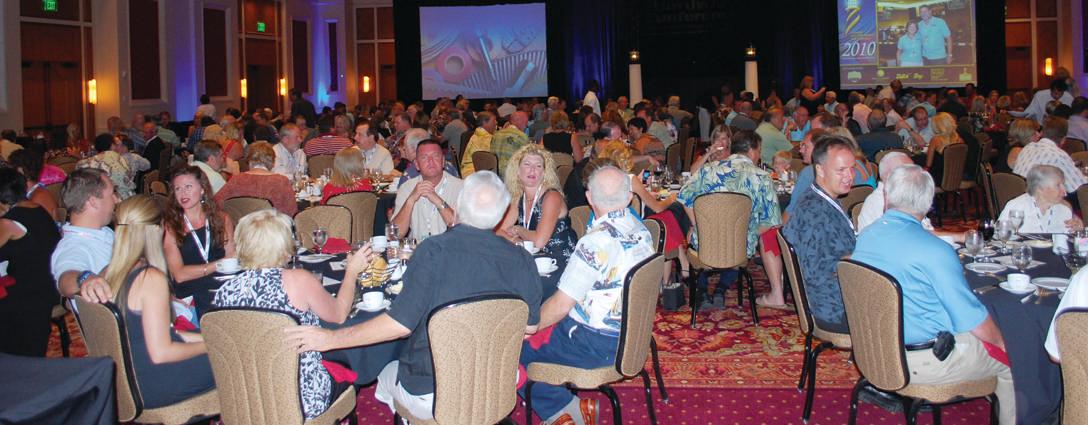
The Hardware Conference, now in its 22nd year, is an opportunity for dealers to gather in a casual setting to share ideas with other dealers and meet face-to-face with manufacturers without the pressure of negotiating deals. Leading industry manufacturers had tabletop booths displaying products, while the wholesale segment was represented by Ace, Do it Best and Orgill.
“Attendance was strong despite the economy and the fact this year’s event conflicted with the True Value market,” said Conference Director Tom Chasteen, who

operates the Conference and Tavernier Ace Hardware with his wife, Dale. The weather was fantastic all week, so attendees had plenty of opportunity to enjoy outdoor activities such as swimming, golfing, shelling or walking on the pristine white beaches.
First-time attendee Jim Waters of Waters True Value in Salina, Kan., was impressed by the laid-back, fun spirit that pervaded the event, as well as the many opportunities to bounce ideas off other dealers and engage vendors in discussion. “It’s a fun and entertaining event and I picked up some valuable information,” Waters said.
“As a Do it Best member I found it interesting and informative to be able to talk shop with Ace, True Value and Orgill dealers,” said Ed Tisdale of Family Do it Express in Cape Coral, Fla. “Everyone at the Conference is treated like family — dealers, vendors and guests.”
Bob Vereen was on hand to sign copies of his new book.

Cocktail parties are held every evening of the Conference to give attendees a chance to visit with old friends and make new ones.

Gail and Judy Lanier of Lanier True Value in Lexington, N.C.
Two retailers were honored with Beacon Awards for their efforts within the industry and their respective communities: Rick Heuser, Handyman Hardware, St. Cloud, Fla.
Valdin Llano, Doral Ace Hardware, Doral, Fla.
In addition, two industry veterans were recognized with the Lifetime Achievement Award: Jim Gray and Bob Vereen. Gray spent four decades in the industry starting with the Ohio Hardware Association and then the National Retail Hardware Association (NRHA) before spending 14 years with the American Hardware Manufacturers Association as director-industry liaison. “I’m honored to receive such recognition. It’s very humbling,” commented Gray.
Vereen, who was editor of Hardware Retailing magazine for 30 years, has been covering the hardware industry for 60 years. He also ran Liberty Distributors, managed the Home Center Institute, directed the Worldwide DIY Council and was a key executive with NRHA for decades, retiring in 1987 as senior vice president.
“This was my first time attending the Conference, and I am so sorry I missed other meetings,” said Vereen. “If you have not attended, make plans to do so next year. It will be one of your most interesting and productive meetings ever.”
For the first time a gathering was held for those who participate on Hardlines Digest. “Our Hardlines meeting was larger than expected with a number of vendors and store owners attending to find out what Hardlines is all about,” said organizer Rick Heuser. “Later that evening about 15 Hardliners had a great dinner together. It was
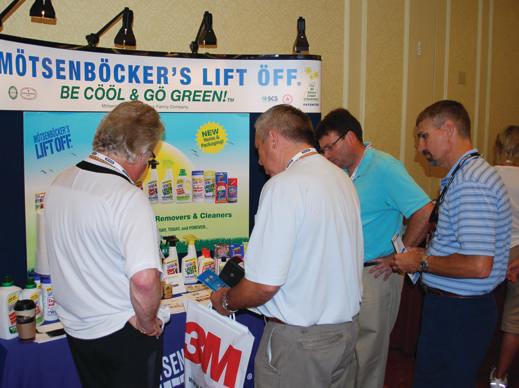
Retailers love the opportunity to meet vendors face to face and learn more about their products without the pressure of buying.

Valdin Llano of Doral Ace Hardware was presented with the Beacon Award by Conference Director Tom Chasteen.

Rick Heuser of Handyman Hardware (left) was one of the Beacon Award winners. He is shown with Jim Troiano of Do it Best.
nice to finally put faces to the names on Hardlines,” he added.
The Activant-Eagle Users Group Conference, which in the past has been an informal, half-day event, was a two-day session preceding the 2010 Hardware Conference. The event started with a halfday training session on Wednesday followed by an all-day session the next day. Dealers were able to choose between two tracks: an executive/management track and an inventory best practices track. Attendees such as Trey Kiper of Kiper Ace Hardware & Lumber commented on how valuable they found the workshop. “I got a lot out of it and it was wellworth my time,” he said.
Chasteen moderated a wide-ranging dealer seminar on Friday afternoon that covered the ins and outs of buying and selling a store. With many older store owners getting ready to retire or others just wanting to sell their store, the dealers in attendance helped identify some of the factors that should be considered when evaluating a possible store purchase.
Those factors include:
■ Location
■ Store’s profitability
■ Competition (now and future)
■ Median income of the area
■ Market potential
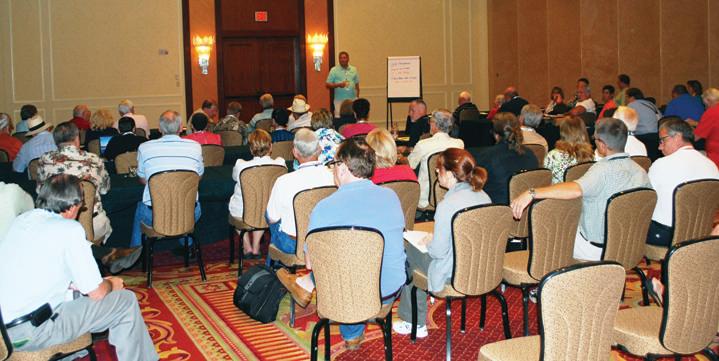
The dealer seminar addressed the best way to buy and sell a store.
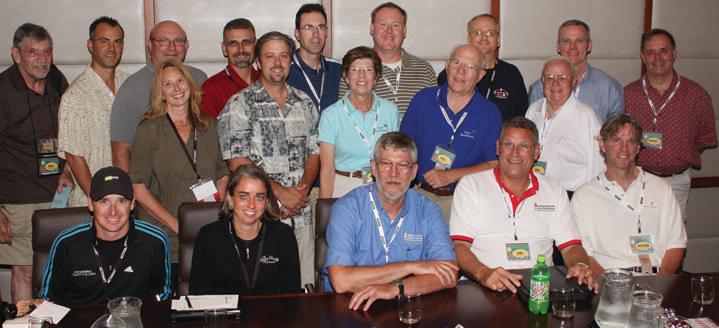
Members of Hardlines Digest gathered to put faces to names during an informal meeting.
■ Traffic counts
■ Store’s reputation
■ General economic conditions
■ Financing – lease or own?
■ Population – % owners and renters
■ Inventory levels
■ Three years of profit statements
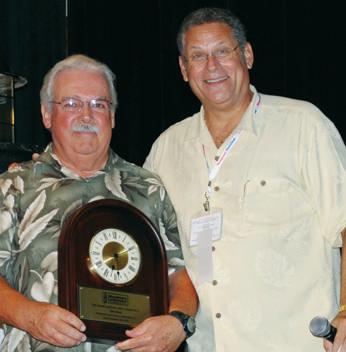
Jim Gray was recognized with a Lifetime Achievement Award by Conference Director Tom Chasteen.
When looking to buy an existing store, evaluate whether you are willing to hold paper. Can you get a better deal by holding paper? At 7% interest every seven years your money doubles.
“You have to worry about getting paid if you hold a note — make sure you’re the first seat,” Chasteen advised. “Then you’ll really need to keep a handle on the inventory.” Other suggestions included making sure the owner has current insurance with you named on the policy as well as key man insurance. It’s essential to see financials regularly with a CPA report if it’s audited. Most dealers end up going with a fixed rate on a five- to seven-year balloon.
If you’re looking to sell an existing business, make sure your financials are in order so it makes sense for the buyer. Be sure to charge rent that’s indicative of profitability. It will probably take three years to show the valuation you want, so you need to start planning five years out, Chasteen pointed out.
As usual, the open dialogue sessions generated candid exchange of opinions about key issues affecting dealers and
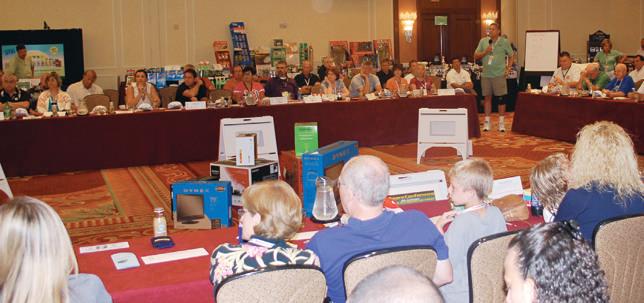
The Open Dialogue sessions provide a chance for retailers and vendors to say what’s on their minds with no topic off-limits.
manufacturers. Here are some of the concerns retailers hope will be addressed by vendors:
■ Find ways to help me move more merchandise
■ Minimum pre-paid shipments are often too high
■ Frustrated with packaging that is nonresealable
■ If packaging wasn’t so large compared to product size we could better maximize shelf space
■ Guaranteed sales are good way to share risk of introducing new products
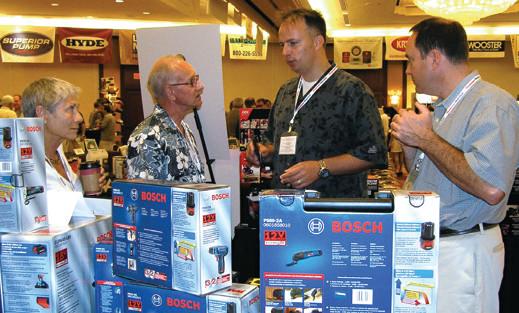
Lucie Thauvette and Michel Chenier of Embrun Co-op in Embrun, Ontario in Canada (left) learn more about the Bosch product line from Art Stankiewicz and Rob Stelling of Robert Bosch Tool Corp.

Jim and Terree Ertzmann from South Hills True Value in Pittsburgh.
■ Honor marketing promises — maintain vendor integrity
■ Print advertising doesn’t work for us — be flexible with co-op dollars
■ Need more and better P-O-P materials
■ Stop overloading merchandise on factory-provided displays
■ Better communicate price increases — one big increase is better than two small increases
■ Let us know how can we support you
■ Need some exclusive products for twostep distribution, given the growth of bigbox retailers with whom we compete
■ Better return policy on defective goods
■ Enforce minimum advertised prices Dealers candidly told manufacturers what they liked and didn’t like about manufacturer marketing programs, while manufacturers and wholesalers urged retailers to make better use
of promotional programs that are offered and recognize the growing importance of social media and the Internet as a marketing source and a retailing opportunity.
Chasteen noted it’s becoming exceedingly difficult for vendors to stay profitable in the two-step distribution channel and suggested the industry as a whole take a closer look at policies for returned goods. Most dealers were in favor of a flat discount on their invoice instead of an openended policy for returns, saying they will police it more if it affects their bottom line.
Others pointed out that many returned items have to be Policy A because the package isn’t reusable.


Tom
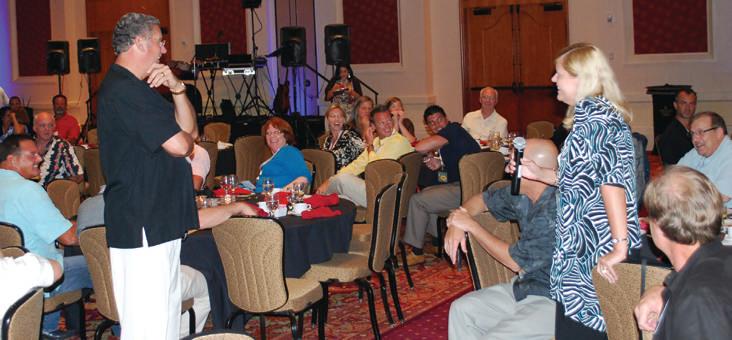

“We’ve had to react to what the big boxes do with unconditional guarantees for more than price,” said Walter Toole of Bray’s Ace Hardware in Winter Garden, Fla. Dan Hitchcock added, “We give customers a voucher so they can return a product within 24 hours. After that they get in-store credit for 30 days.”
Mark Madden and Jame Bolender were among the dealers who stated they were experimenting with social media such as Facebook. “We’re playing with it. I hate it, but you need to learn more about it,” noted Richard Johnson of Bailey’s True Value in Sanibel Island, Fla.
“There are over 500 hardware stores on Facebook. The important thing is to post something frequently and inject some humor into it. And you should monitor Twitter because that’s where people complain,” advised Vereen, who recently completed a how-to book titled “Successful Web Retailing.”
Retailers noted they are doing fewer drop ships and buying in smaller quantities, pointing out that it’s an economic issue and drop-ship deals aren’t as good as they used to be. “Freight kills it. It’s a loser for us,” commented one vendor, Gregg Motsenbocker of Motsenbocker’s Lift Off.

The Conference is held in a gorgeous hotel right on the beach, with plenty of time to enjoy outdoor activities.
“We appreciate the retailers that take the time to attend the Conference and provide us the opportunity to discuss the issues and challenges we all face in conducting business,” said Casey Mathews of The Wooster Brush Co.

The Duracell hospitality suite was open every evening to give attendees another chance to socialize in a beautiful setting.

John Hammond, retired managing director of NRHA (center), has a discussion with Jim Gray (left) and Bill Zeithammer.
Special thanks go to the marquee sponsors: Liquid Nails, Activant, Irwin, Bosch Tools, Eazypower, The Hillman Group, Wooster Brush, Krylon, The Hardware Connection magazine and Miami Children’s Hospital Foundation. Additional sponsorship support came from 3M Company, Apex Tool Group, Centurion, Sunnyside Corp., H.D. Hudson, Duracell, Poms & Associates, Minwax and WM Barr.
“We couldn’t put on this Conference without the wonderful support we receive from these sponsors, and we are fortunate to have so many vendors who are willing to support the independent channel,” said Chasteen.
“A huge thank you to the all the sponsoring vendors who spent big bucks to inform, feed and entertain us all. We are in
the process now of converting some nonsponsor SKUs we buy from the Do it Best warehouse to those of Hardware Conference sponsor vendors,” said Tisdale.
The wholesale segment also lends it support to the Conference each year, with representatives from Ace Hardware, Do it Best and Orgill in attendance and conducting meetings with their members and customers. True Value will be back supporting next year’s Conference.
At the end of the Conference the vendors auction off their display merchandise and the money raised is donated to the Miami Children’s Hospital Foundation. This year’s auction raised $40,000, bringing the total fundraising amount over the years to over $700,000. “That says a lot about how wonderful this industry is,” said Chasteen.
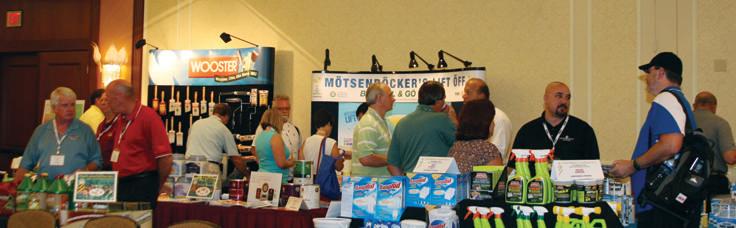
At table-top exhibits, vendors were able not only to present products but to share some of their concerns about current retailer attitudes.
“This year we were able to have four of our five grandkids join my wife and I along with the two sets of grandkid parents. The grandkids all cried on Sunday morning, the last day of the Conference, because they were having so much fun and did not want to leave,” said Tisdale.
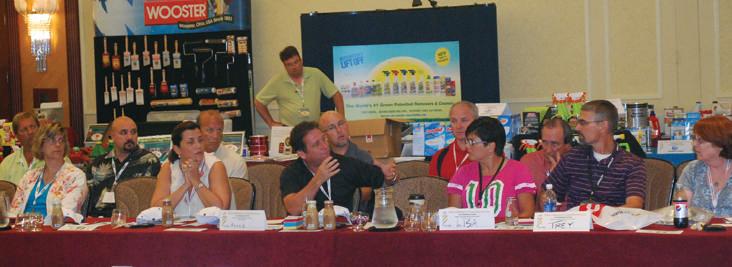
Start making plans to attend next year’s Hardware Conference, scheduled for September 9-11, 2011, at the Marco Island Marriott. For more information, call Tom or Dale Chasteen at (305) 853-0049 or go to www.thehardwareconference.com.



MBy John Franklin
Over the 40 years I have worked in the hardware business I have been in hundreds of stores around the country. Most of these stores were doing fine, some were just holding on and a handful was doing fantastic. What made the difference with the few stores that were doing fantastic? The difference was attention to details. I have seen the positive effects that attention to the right details can create and the almost immediate negative effects caused by a lack of attention to these same details.
ost of us have heard the catch phrase “the details at retail,” but what does that mean? I find the phrase far too vague. The idea is good, but it leaves retailers with little idea on what actually to do.
To better communicate the actual ideas of retail, I refer to the “details at retail” as the P’s and Q’s of retail. I have a list of 11 P’s and two Q’s that create true positive results in retail.
If you want to have a high-performing store, you have to do the following 13 things very well, all the time. All you have to do is get the right Product in the right Quantity with the right Perpetuation of stock for the right Price in the right Quality in the right Place with the right Presentation for the right Period of time with the right People generating the right Productivity by using the right
Policies and Procedures supported by the right Promotions generating the right Profit to stay in business. Whew, what a mouthful! But this is everything you need to do to develop and sustain a profitable business. Every one of these concepts is a small but still significant area of concern. However, if you do all of these things all of the time, the results are almost magical. By concentrating on these areas I have seen departments with sales increases of more than 40 percent in a year when everyone else is satisfied with a 5 percent increase.
Most good stores do a lot of these things fairly well some of the time. The difference is that the superior stores do these 13 things well nearly all the time. Let’s see what it means to mind these P’s and Q’s.
Having the Right Product means you only stock products that have a high probability of selling in your market during the season you are currently in. If you fill your shelves with dead or out-of-season items that just won’t sell in your area, you greatly lower your sales potential. Pay close attention to product selection — keep it current, clean and salable. If you do not have what customers want you can’t be the best. You must have the highest density of inventory your display area will hold. The more choices you have of different products the more chance you will make a sale. Having six months worth of inventory on hand in one item is never
as good as having two months worth of inventory on hand for three items.
Right Quantity means a lot of things. This is the second most important “detail of retail” and demands the most attention. First, it means that you have it in stock. You can do some special order business on products you don’t carry in stock, but the majority of your sales will come from immediate purchases of on-hand product.
Second, it means that you have to stock the right quantity all the time. The correct quantity has a lot to do with the rate of sale, but it also has a lot to do with what it is and how it must be sold. For example, how many table legs can you sell if you just stock one? How many casters, clothesline pulleys or shelf brackets can you sell if you only stock one? I have seen many stores that did not understand the weakness of their computer and allowed the system to set order points on these and similar types of items based only on an arbitrary computer-generated percent of last year’s unit sales.
Your computer may be good at math, but it doesn’t know things that humans know: you almost always need four table legs at a time to make a table or you need a pair of 3-way switches to do a complete job. You must maintain the minimum sales threshold to sell these types of product. When a table leg or similar item develops a blind
order point of less than the minimum required for a sale, say at one, it will never sell, and never generate a new order. Since it never goes out of stock it will not show up on an out-of-stock report and may hide in the system for a long time. This kind of system problem takes human intervention. The computer is happy with one on hand, it’s just your customer that isn’t. This is one of the most overlooked problems in retail. Do not let your computer system force you to use undesirable order points on this type of product, because there are thousands of items in hardware stores that need to be stocked in pairs or multiples of pairs to meet customer need. It can be a serious sales killer. This problem is silent, leaves almost no trace and occurs as sudden as shutting off the water to a sink. Look at your system history file on some of these items and you will see your customer buying patterns. If you see that almost every sale is two or four units, you can’t let the computer try to get by with one on hand.
Right Perpetuation means that you have to replace the good sellers.Have a system in place to automatically replenish all stocked items that sell at a proper time to keep sales at maximum level. I have seen many good selling items sell out and never be replaced because of a system order point error. You can’t sell out twice unless you order a second time. Keep the selling items in stock at the proper quantity only for the season they are sold. You should work to keep inventory at proper levels. Do not have too much, but never have
too little.
Keep in mind that if you have too much on hand, sales will remain good and time will fix the problem. However, if you have too little on hand, sales will be lost and the problem may never be found and fixed. I have seen decreases as high as 5-10 percent in departments because of numerous order point calculation problems. If a customer keeps coming into your store and continually sees just one shelf bracket on the shelf, he knows somebody is not paying attention.
Right Price means that you have investigated all other local stores that sell the same product and you have set your retail to a reasonable level based on your actual local competition. You can do almost everything else right but if you leave the retail at a level that is 50 percent higher than other stores in your area, then you wasted a lot of good work because you probably will not sell any.
On the other hand, if you have a retail that is much lower than other local stores you are throwing away gross margin. Don’t be too high and don’t be too low. A competitive price is critical for high-performance stores. Remember, you cannot do pricing in your office! You must do pricing in your competitors’ stores.
Right Quality means that you are providing a high level of quality for your customers. Sell only good product. Do not get a reputation for selling junk. The possible gain in profit selling low-quality product will not make up for the damage to your customer service level when customers have a problem.
Right Place means that all products are properly displayed in a location that the customer would expect to find that product if they were looking for it. If you have clocks buried in the middle of the paint department you probably will not sell many of them. Keep products in a well-organized location based on product selection and job completion. A modern store department layout can make a big difference in sales. Keep the best products at eye level and put lowerpriced products down on the bottom shelf. Make sure the light level of the store is high enough for your customers to read the fine print on the boxes.
Right Presentation means that the product is displayed in a manner that stimulates sales. The product must be current, clean, neat and without damaged cartons. It is critical to have all products priced and those that need to be assembled must be properly put together. Never use a returned, used or defective item for a display. You will just turn off the customer.
Right Period of time means that you can’t sell snow shovels in July unless you give them away and any space on the salesfloor that is taken up by snow shovels out of season is completely dead for sales production. Make sure you carefully follow the seasons. You can extend a season a little in the beginning, but you cannot profitably extend a season after it officially comes to an end. At the end of every season,
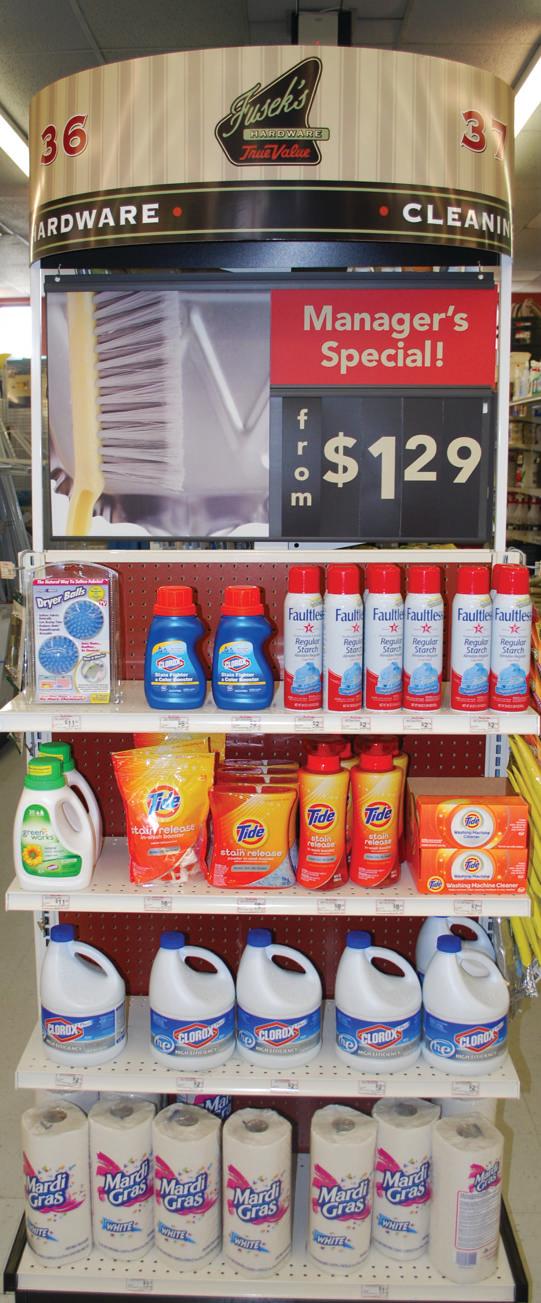
Make sure your merchandise displays have the right presentation to attract sales.
clear out the old seasonal products and replace with something that will sell in the current season.
Right People means that you have a properly trained staff that will complement your products and provide a superior level of service. The level of service you provide must be in balance with your prices. You cannot support high service on low prices. If you need high service, set your prices with competitors that are also providing a high level of service, not the low-price big-box stores. Customers are generally willing to pay for value, and service is part of the value. Whatever you do, your people must always tell the truth and keep all promises. The fastest way to destroy good customer service is tell a lie or break a promise, especially on delivery dates for product. Customers never forget lies.
Right Policies and Procedures means you have set up the operations of your store to maximize sales potential. Most policies and procedures are set up to benefit management and make it easy for management to police and control employees. I would beg these stores to change the focus. Every policy and procedure must be set up with the customer in mind. Yes, protect your assets and important functions, just make your procedures procustomer. I have seen countless policies and procedures set up that basically tell a customer “no” or what we won’t do, rather than what we will do. Change your focus and it will change your business.
Right Promotions refers to the fact you must continually try to add new customers as well as bring back old customers with a well-thought-out
advertising campaign. It is an unfortunate truth of business that every day some of our best customers are dying off or moving away. You need to replace lost customers to continue to grow.
Right Profit means that unless you make some profit on an item it is not doing any good for your operation. You need to make enough profit to stay in business. This is a combination of generating gross margin by sales, but also keeping net profit by controlling expenses. Right profit covers all the non-selling parts of your business, because it is important to keep all the possible profit made from a sale.
I have listed the 13 categories in a general order of importance. Work from top to bottom on the list or you will have your cart before your horse and not achieve the desired gain. Work a little on this list every day. Doing these things is not a quick fix. It is a job that is never done. It takes years to get most of these 13 categories humming the way they should, so just keep at it and you will see the results.

John Franklin has nearly 40 years experience in hardware retailing, most recently as merchandise manager at Williams Lumber & Home Centers in upstate New York. He is available for retail consulting or you can contact him with questions or feedback at john@thehardwareconnection.com.
By John Fix III
Hardlines is distributed via email, as is The Hardware Connection, so hardware dealers are naturally interested in what stores are doing with customer email addresses. Over the past few months several dealers posted comments about email marketing.
Merita Bullock of Jay’s Hardware in Wrens, Ga., described their procedure: “We've been doing email marketing for the last seven months and think it is definitely worth it! While you are collecting emails also get cell phone numbers for SMS Text Marketing in the future. Email is great, but the subject line has to be enticing enough for people to open. A text everyone reads, no matter what. To keep people from opting out, we only send out one email per month. Also kicked off our SMS Marketing with a 50% Invitation Only sale. Suddenly everyone wants to give us their cell phone numbers!”
Ruth King of McDonald Garden Center in Virginia shared their method for collecting and using customer email addresses. “We've been collecting email addresses when we sign up customers for our loyalty program. About 30% of the accounts on file give us their email address and we email them once a week with a coupon. The redemption rate varies by the offer: generic $5 off works a lot better than a sale price on a specific item, but we
only offer the $5 off coupon about once a season.”
She adds, “We've only had a few dishonest customers that print and redeem the coupon more than once. As I discover these accounts, I flag them so the cashier checks QuickRecall before redeeming another coupon under that account. We always assign every offer a SKU so we can check the redemption rate. Our email addresses are uploaded into Constant Contact and the emailing done through them. We used to email internally from an office PC until the list grew too big. We definitely think it's worth the money for the service with Constant Contact.
Over the past few years, we have started sending out event notifications via email in addition to their weekly coupon email. We've also asked them to RSVP to the event via email link.”
Bob Brame at Cadiz Hardware in Cadiz, Ky., asks for email addresses at any event or drawing that he does. “We have amassed a significant email list and have used Constant Contact, but more often make our own with Publisher and do our own emailing. It amazes me how many are bad addresses from one mailing to the next. I have had five email addresses over the years, but it appears that some people have that many a year! It does take some time and you need to be very detailed. We get the
best results from generic coupons, and some are used more than one time.”
Tony Miller of Hanneke Hardware & Industrial Supply in St. Louis created a promotion called “Wild Wednesdays.” He explains, “After using email marketing for sporadic ‘touches’ several years ago, we began using weekly email blasts to all our email contacts. We typically include two items in the blast: one item directed primarily to the commercial side and one item geared more toward the retail customer. They are sent out first thing Wednesday morning and the special pricing is valid through the close of business that Friday.”
Actual sales results are sporadic, according to Miller. “Sometimes we get numerous sales from the items, other times no sales at all. Results are much like
using circulars, which, in our opinion, are not very successful in our marketplace other than for brand awareness.”
Miller adds, “I continue to get comments from customers commenting on ‘Wild Wednesday’ emails. Occasionally we will add a bonus to the bottom of the email to see if folks are reading to the bottom. For example, at the bottom, we will say that the first four respondents to this email will receive a $25 Hanneke gift card! Again some hits, but not always.”
Cash flow can be a challenge during tough economic times, and payroll is one of the biggest expenses for dealers. One way to help with cash flow is to change from weekly to bi-weekly payrolls, and several dealers weighed in

Some retailers switched to bi-weekly payroll to cut costs and softened the blow to employees by offering direct deposit.
with how they handled that change.
Brame at Cadiz Hardware made the change to bi-weeky four years ago. “It helped cut payroll costs and is in line with most industries and school system locally. We told everyone about two months before the change and offered direct deposit at the same time. All but two did this (one was my wife), and I told each employee if there was a problem with the first month, I would assist as best as I could and take it out of their pay over a three-month period. I had to help one employee whose rent was due in the first two-week pay period. I did the loan and he paid me back out of the first two paychecks and never had a problem again.”
Chris Rubeo at Berger Hardware in Hawthorne, N.Y., changed his payroll frequency a year ago. “There really was no problem with it. We had the same concerns and we felt as long as we gave plenty of notice it was fair. Only had one or two complaints and they ended pretty quickly.”
Rick Schwartz of Schwartz Hardware in Fall River, Mass., has considered making a change but has held off for now. “I did look at bi-weekly and got a major whiplash from the associates. However, I agree the bi-weekly will cut the payroll processing fee in half — too many of the associates live week by week with no budgeting of their expenses. I doubt if they could budget over two weeks.”
Scott Hatcher of M&D Supply in Beaumont, Texas, had a similar issue but managed to realize payroll savings by changing all employees to direct


Dealers discussed whether to allow customers to use credit cards to pay their house account balances.
deposit. “After years of paying bi-weekly, we moved back to paying weekly. Most of our staff lives week to week. We use this benefit as a selling point to potential hires. To offset the cost, we simultaneously went to direct deposit or paycards only. No more cutting / handing out checks or employees needing to leave early or take longer lunches to deposit their checks on payday. It has worked out great so far. I know the employees really appreciated the change.”
Another way to help with cash flow is to speed up collection of accounts receivable. A few dealers shared their thoughts about allowing accounts to pay their balances with a credit card.
Will Barnhart with Wilco Farm Stores in Mt. Angel, Ore., suggested dealers consider all the ramifications before allowing the practice. “We stopped allowing credit cards to be used for paying on accounts several years ago. When we looked into the fine
print, we learned that Visa and Mastercard did not intend for their cards to be used for that either, so it supported our decision. If I remember correctly, their language said credit cards were to be used for payment of goods at time of purchase, not to pay off bills later.”
Maurice White of White Hardware in McCormick, S.C., accepts cards to pay a balance but made changes to the discount structure. “I have only one commercial customer that does that. Before they got the credit card, they received a 1% discount. Once they went on the credit card, they lost the discount. The purchasing agent asks about the discount, so I had to tell him that the credit card added almost 2% extra expense to me. He then said, yeah, most of the businesses aren't giving me the discount now.”
Lex Stevens of Back Bay Hardware in Boston offers a choice to his customers. “I only have a couple of accounts who pay with a credit card, and if I did not take the card, they would be very slow payers. They are also some of my larger accounts that do not ask for a discount. I balance the fees that I pay to the credit card company versus the time it would cost me to chase them for the money — account review, phone calls, copies of invoices and statements, etc.”
Stevens adds, “The one thing I have learned is to establish a relationship with the bookkeeper of these customers. When the payer — usually the owner — pays the account with a credit card, I notify the bookkeeper myself. My policy is that they only get one substitution off the menu: pay with a credit card or get a
discount. The smart customer takes the discount and writes the check, but usually the customer who pays with a credit card is too disorganized to work all that out. And as with all policies, they have to be tailored for each customer’s needs.”
This is just a sample of popular discussions over the past few months. Some discussions consist of just a few message posts, such as when a dealer is trying to locate information about a discontinued product or a source for a special order item. The sheer variety of discussion topics continues to amaze me, and as the number of Hardlines members has grown over the years so has its value to everyone. By having a “critical mass” of dealers you can expect at least one or two responses to the most obscure product request or the most unusual store management question. Hope to see you on Hardlines!
John Fix started the Hardlines Digest in January 1996 and continues to run the servers out of his hardware store in Eastchester, N.Y. There are currently more than 2,300 subscribers to Hardlines Digest. To join this free email discussion list visit www.hardlinesdigest.com or send a blank email message to join-hardlines@lists.cornells.com.

The following trends come from Garden Media Group’s 2011 Mega Trends to Garden Trends study.
■ Consumers are looking to purchase low-maintenance landscapes, native plants, drought-tolerant plants, fountains, arbors and ornamental water features.
■ Water-saving products such as timed sprinklers, soaker hoses, rain barrels and water-efficient nozzles are in demand.
■ Weathered copper containers are in and purple will be the color of choice for flowers.
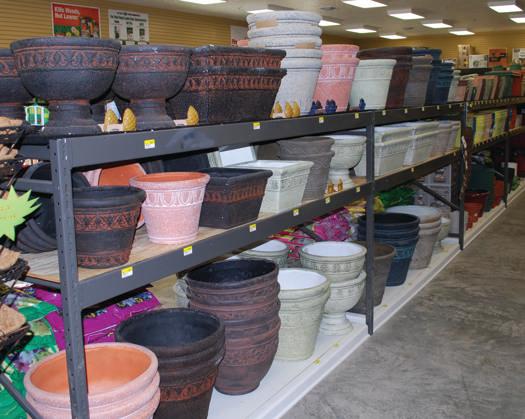
Color and style are the most important factors for consumers looking to purchase planters and containers, but they are also seeking low-maintenance, durable choices.
■ Consumers are looking for value, price and performance, balancing practicality with comfort. The “can-do” attitude of self-sufficiency has driven seed sales up 50% while vegetable gardening is up 19% and canning jar sales have risen 15%.
■ The market for organic products is exploding. Homeowners want to see organic alternatives on the shelf—must be high quality and good for the earth.
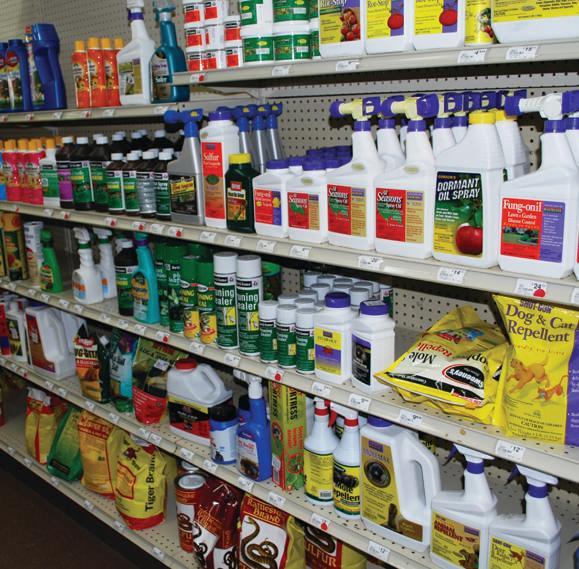
Consumers are looking for organic solutions as an alternative to traditional insecticides and fertilizers.
■ 50% of homeowners have gardens in their backyard and 26% have gardens in the front. 52% purchase spring plants from garden centers or local stores compared to 37% going to the big box or mass merchant.
■ More people are downsizing their lawns and going with low-water-use gardens, low-maintenance turfgrass, trees and shrubs.
■ When it comes to purchasing decisions, consumers are looking for simple, small and cheap. They want products that are easier to use, energy-efficient, self-sustaining, easy to repair and waste-reducing.
How has business been so far in 2010?
Hasson: It’s going to end up terrific. We’ve been up pretty consistently the entire year and will probably end up 40 percent ahead of last year. It’s been a busy, busy year after our acquisition of MooreHandley late last year.
In what categories are you seeing the strongest growth?
Hasson: Although the home-building business is terrible now, we’ve seen the most gain in buildingrelated categories such as door locks, power tools and accessories and fasteners. Moore-Handley was more oriented toward building centers and lumberyards, so that’s helped diversify our business.




House-Hasson Hardware Company, based in Knoxville,Tenn., is a member of Distribution America.The company, which was founded in 1906, acquired Persinger Supply in 2007 and Moore-Handley in October 2010. President and CEO Don Hasson, who has led the company to record growth, discussed how the distributor is coping with success.

When the housing market rebounds we will be positioned for strong growth.
To manage the growth you experienced after the MooreHandley acquisition, you’ve had to expand both your warehouses. What is the status of those warehouse expansions?
Hasson: We have completed a 50,000-squarefoot expansion of our Knoxville warehouse, which allowed us to take on new product lines while adding more inventory for existing lines. We added six new truck bays and doubled the size of the conveyor loop in the front of the building, so we now have twice as many doors serviced by
the conveyor. Work is underway at our Prichard warehouse to add 100,000 square feet of space, new truck docks and other improvements. It’s on track to be completed by January. The best part is for the first time we’ll be able to offer identical inventories of 50,000 SKUs in both warehouses. These warehouse expansions will help us continue operating efficiently so we can meet our customers’ expectations for service levels as well as accommodate future growth.
How has your expanded sales territory affected your dealer markets?
Hasson: Our dealer base is now pretty spread out geographically, but we
want to make sure our markets remain convenient to attend. Our dealer market next summer will be held in Atlanta for the first time, which will be well-received by our Southern customers. Our Cincinnati market in July was very well-attended by our Northern dealer base, with attendance and sales up about 35 percent, while our October market in Sevierville, Tenn., was more centrally located and also saw a 35 percent increase. We were asked by the management of the Opryland Hotel in Nashville to move our next market to February as a result of the devastating flooding they suffered, and we are excited about the opportunity to see what’s essentially a brand new hotel on the inside.
How many new employees have you added since last year?
Hasson: We’ve added 100 employees — 75 in Knoxville and 25 in Prichard. With two recent acquisitions under our belt, we’re now accustomed to this type of activity.
What are your plans for the Hardware House line of privatelabel products that you picked up along with Moore-Handley?
Hasson: We’ve been making great improvements to the line, but the most important was getting the service level back to where it needed to be. We’ve moved all operations out to Atchison, Kansas,so it can be more closely managed by our partners, Blish-Mize. Our dealer base is gaining confidence in the Hardware House line, because it offers them a line of products that can’t be found in the boxes. We’re real pleased with how it’s going.
You recently revamped the company web site. What were the goals of the redesign?
Hasson: We wanted to give it a modern look and make sure it told our story correctly. We had focused most of our attention on the back end of the site with data and invoices and hadn’t focused on the first impression a dealer prospect gets when he comes to the site. We’ve
had a lot of good comments since redoing the site.
You now serve dealers in 17 states and a number of countries. Any plans to further expand your territory?
Hasson: We’re where we want to be. We want to be the best regional distributor in the country — that’s our mission. Expanding just for the sake of expansion doesn’t make sense, and we think our table is pretty well set just taking care of our existing customers.

Don Hasson, president and
CEO
of House-Hasson
Hardware,
is the third generation of his family to run the company.

Walk the floor of any buying show or dealer market and you will hear this question more than any other asked by retailers that are contemplating a purchase of a new product — is it in the warehouse? I know in all my years as a retailer, I must have asked this question hundreds of times.
Of course if the products were in warehouse the vendors would gladly let you know as they are grabbing an order form. But more often than not, they tell you the items are not in warehouse, but if you and several other retailers buy the product it would help convince the distributor to add them to the warehouse.
I know that the initial reaction is to wait as buying new products drop ship requires that you will eventually have to meet freight minimums to refill the most popular items that sell out first. This is especially true as the trend in the past few years has been for the manufacturers to lower the individual piece counts of assortments to lessen the total cost. This is good on the front side to buy in at a low investment and not commit to a large inventory of the “C” and “D” items in the assortment. The problem is that inevitably you sell out of the
“A” items first and are faced with empty peg
By Paul McNally
hooks until you can generate enough for a pre-paid drop-ship reorder.
The retailer part of me always wanted the item stocked in warehouse, but after working in the wholesale side of the business for many years, I understand why that is not always the most sensible thing to do. Distributors perform a crucial function in the supply chain of the hardware industry and especially in these tough economic times, retailers are relying more heavily on the support of these distributors to allow them to carry less day-to-day inventory.
Distributors carry anywhere from 40,000 to 60,000 SKUs and like a retailer, have to make sure that the sales of these items support them being stocked. To stay competitive and keep costs in check, all distributors have to make sure they have the right mix of product and be aware of trends in supporting new items.
As a retailer, you need to stock indepth assortments for all of the major departments of your store so your customers can complete a project. Many times this includes the “C” and “D” items that don’t always represent a huge volume but are necessary. The wholesalers are faced with the same dilemma, as they have to ensure that they have large quantities of
the fastest-moving items but also fully support the complete assortments.
The unknown in all of this are new items and when to add them to inventory if at all. As a retailer, I was often frustrated because I would be the one who would have to pioneer new items and take the risk if my distributor was not willing to. I soon realized that I was in the best position to get these new items in front of my customers and could execute success in a short time frame.
It’s a great feeling when you have customers coming in your store and you are able to be the first to introduce them to a new product. This is an invaluable function that independent retailers perform and it shows your customers that you are a progressive merchant.
The key in making this commitment is to work with the manufacturers in the purchase and support of new items and have them take some ownership and accountability of the process. Ask for a guaranteed sale clause as part of the deal. If they are unwilling to commit to that, keep a record of the success or failure of new additions and meet with them at your next show to review your records. Manufacturers love progressive, forwardthinking retailers as they are the best measure of success of their products. More times than not, they will be willing to work with you to ease the burden of you having dead stock.
We cannot ignore the importance of new items, because in some categories such as power tools they can represent more than 25 percent of a manufacturer’s annual volume. While retailers cannot add every new item, they need to be aware of the success and trends in the industry and be able to respond.
Wholesalers are wrestling with the same dilemma every day and are trying to keep up with adding the right products to warehouse. I would suggest developing a relationship with your distributors and especially their merchandising department. When you can collaborate with someone in looking at new products or programs it is always helpful to have a support group with differing opinions and views.
The most progressive retailers are the ones willing to take risks on new products and assortments even if they are not supported in a distributor’s warehouse. Put in the work on the front side of the purchase, get input from your distributors’ salesperson or merchandising department and most of all get the manufacturer to get some skin in the game. It’s not an exact science and goodness knows we all make mistakes along the way, but you are in the driver’s seat and there is nothing wrong with being a pioneer.
Paul McNally grew up working with six siblings in the family hardware store, Mac Supply in New Jersey. He later spent nine years managing two stores for Opdyke Lumber and most recently served 12 years in a sales and merchandising role for Distribution America. Paul can be contacted at paul.mcnally@windstream.net.


● C Bar H Farm and Home has relocated to a new 44,000-square-foot building in Garden City, Kan., with owner Brian Shaw holding a grand reopening Aug. 27-29.
● Peter Wernick has opened Peter’s Hardware Center in Palm City, Fla.
● Grant and Michael Bryan opened Greenville True Value in Greenville, Mich.
● Mike and Debbie Staples opened Staples Hardware in Bingham, Maine.
● Jeff Gross bought back the store he used to own with his uncle, Ormond Ace Hardware in Ormond Beach, Fla. He hopes to expand to three stores within 10 years.
● Owner Adam Raynor opened APW Floor to Ceiling in Sanford, N.C., in September. It includes three stores in one: design showroom, paint store and hardware store.
● Jim Junga opened Junga’s Ace Hardware in Saline, Mich., in October.
● Russ and Peg Dubels opened Workshop Do it Best Hardware in Wilsonville, Ore., to replace a store they had closed a year earlier.
● Brandon Clarke opened Cayce Ace Hardware in Cayce, S.C., in September.
● Wayne and Peg Winckler opened Tyndall Ace Hardware in Tyndall, S.D., in November.
● Jim and Janet Smyth bought Buckworth’s Hardware in Middletown, Del., and are changing name to Middletown Hardware.
● Brian Forest was set to open Lakeland True Value in Manitowish Waters, Wis., to replace a store recently closed in Rhinelander.
● Jeff and Faye Lohman opened True Value Marketplace Hardware in Palm Desert, Calif.
● David and Scott McKenzie opened Esparto Ace Hardware in a
renovated historic building in Esparto, Calif.
● Jimmy and Joanne Gilchriest opened Ransom Brothers True Value in Ramona, Calif.


Kudos to:
● Graafschap Hardware, a Do it Best member in Holland, Mich., celebrated its 150th anniversary with a cookout, door prizes and a $1,000 giveaway. Harlan Lubbers is the seventh generation of his family to operate the business.
● Frager’s Hardware in Washington, D.C., held a week-long customer appreciation event to mark its 90th anniversary. The store, which serves the Capitol Hill region, was recognized on the floor of Congress.
● Tony and Pat Brinkmann held a grand reopening after doubling the size of Brinkmann True Value in Blue Point, N.Y., to 10,600 sq. ft.
● Ternent & Sons in Lonaconing, Md., which is being transitioned to the fourth generation of family
ownership, celebrated its 125th anniversary this year. The main counter dates back to the store’s founding in 1885.
● Owners Mike and Claudette Skakoon held a 25th anniversary sale for Skakoon Home Hardware in Sudbury, Ontario, with proceeds supporting the Lions Club Children’s Telethon.
● Larson Trustworthy Hardware in Mabel, Minn., operated by thirdgeneration owner Joseph Larson Jr., marked its 100th anniversary.
● Uptown Hardware Inc., which operates Pearl Ace Hardware and Woodstock Ace Hardware in Portland, Ore., celebrated its 60th year in business.
● Canon City True Value in Canon City, Colo., owned by Jim Fontana, held a grand reopening in August.
● Wolfinger Hardware in Litchfield, Mich., marked 90 years in business.
● Jeff and Jerry Burchardt marked the 140th anniversary of Lorleberg
True Value, the oldest retail business operating in Oconomowoc, Wis.
● McKinnon Lumber in Hollister, Calif., owned by John Barrett, is celebrating its 100th anniversary.
● Pat’s Market and Do it Best Hardware in Freeland, Mich., marked 55 years in business.
● Brownsboro Hardware & Paint, a Do it Best store operated by Jim and Marilyn Lehrer in Louisville, Ky., celebrated its 50th anniversary on Sept. 30.
● San Joaquin Lumber Co. in Manteca, Calif., celebrated its 100th anniversary.
● Farr’s True Value in Coos Bay, Ore., celebrated a grand reopening after undergoing an extensive renovation of the 94-year-old business.
● Joseph Collings, CEO of Ferguson Lumber Do it Best in Rockville, Ind., was elected president of the National Lumber and Building Material Dealers Association.
● Do it Best Corp. was ranked 23rd on the
InformationWeek 500 list of innovative uses of retail technology.
● Taylor’s Do it Centers has been named to Inside Business’ “Roaring 20.” The award recognizes the most dynamic local businesses, based on revenue and employee growth, that are making significant contributions to the local economy in Hampton Roads, Va.

● True Value Co. reported revenue declined 0.4% while net income decreased 11.2% in the third quarter. Revenue is $1.386 billion for the first nine months of 2010, a 2.1% drop. In other news, the co-op launched a new e-commerce site Nov. 8 that offers 22,000 SKUs that can be shipped directly to consumers or to a True Value store for pickup. Members need to undergo online training and receive certification to be listed on the site. So far 1,200 True Value stores have signed up for the e-commerce program.
● House-Hasson Hardware Co. was on track to complete a $2 million, 100,000-square-foot expansion of its Prichard, W. Va., warehouse by January, which will enable the company to offer an identical inventory to its Knoxville, Tenn., warehouse.
● RONA Inc. closed Nov. 4 on a deal to acquire TruServ Canada, a dealer-owned distributor with two DCs serving 650 dealers across Canada. TruServ Canada will operate as a fully owned subsidiary of RONA, which will now offer independent dealers in Canada three choices: the RONA bannered dealer store, the TruServ Canada specialized banners and distribution services for dealers without banners.
● Do it Best Corp. unveiled a free monthly video program for members and distributed $100.6 million in rebates to member-owners at its October Market. The co-op reported fiscal 2010 sales of $2.38 billion, down 3.1% from the prior year, with international
sales growing 8.4% and lumber sales up 7.2%.
● Do it Best also announced it is now stocking Pratt & Lambert Paint in its Retail Service Centers. “Our members can now offer customers the full spectrum of paints, from economy products to designer,” said Dick Wise, merchandise manager for paint & sundries. “Customers now have 1,500 additional colors to choose from, while members have the opportunity to offer two premium paint lines in Pratt & Lambert and Valspar,” Wise added.


● TIM-BR MARTS Ltd. has acquired CanWel Hardware, which includes two hardware distribution operations and two building material warehouses, as well as ownership of
the PRO name and licensing rights to the ACE brand name in Canada.
● Ace Hardware Corp. has launched an Ace Rewards Visa in conjunction with its existing loyalty program and announced plans to convert its international division into a standalone subsidiary to facilitate increased foreign sales. During its Fall Convention in Orlando, the coop revealed its exclusive deal to carry Sears Craftsman products in Ace stores has been extended through 2014 and noted the Vision 21 program is evolving into a Platinum Performance Retailing program.


● Lowe’s abruptly closed underperforming stores in San Bernardino and Apple Valley, Calif.
● Hyde Tools named Corey Talbot vice president-marketing.
● Geff Lynch has been named senior vice president-sales and marketing at Lancaster Distributors

● Roy Nyberg, who founded Nyberg’s Ace Hardware in Sioux Falls, S.D., died Sept. 6 at age 84. He served as president of the National Retail Hardware Association, Minnesota-Dakotas Retail Hardware Association and South Dakota Retailer Hardware Association. He was a two-time delegate to the White House Conference on Small Business. In 2010, he and son Kevin accepted the South Dakota Retailer of the Year award.
● Ted and Karen Nichols, third-generation owners of Nichols Hardware in Purcellville, Va., were killed in a car accident Sept. 5. The Nichols and their 95-year-old store were featured in a documentary recently released by The Lincoln Studios titled “The Last Hardware
Store,” which chronicled the charm of the old-fashioned hardware store.


● A group of hardware retailers in California are battling rising workers’ comp costs by banding together to form their own self-insured group. Read more at http://tinyurl.com/2axfcjf
● Connelly Hardware is among the merchants taking advantage of a townwide program in Brookline, Mass., to offer a secure, prepaid smart card that operates like a debit card but functions as a safe, local currency. Go to http://tinyurl.com/2vyha5b
● Bill Dieruf, owner of Dieruf Do it Best Hardware in Louisville, has been elected mayor of Jeffersontown, Ky. Go to http://tinyurl.com/2bcfnb3
● Ace Hardware Corp. reported a 0.9% decline in revenues and a 48% decrease in net income for the third quarter. Total revenues for the nine-month period are up 0.5%. Full details at http://tinyurl.com/22u4hsq
● Manager shot during robbery attempt at Palmer Ace Hardware in Elkhart, Ind. Read full story at http://tinyurl.com/2vtxs3g


Innovative succession planning program at RONA helps five young entrepreneurs become dealerowners. Read more at http://tinyurl.com/3amf9rn
● Hardware store bookkeeper avoids prison after stealing $200,000. Go to http://tinyurl.com/2uayam2
● Main Street Fairness Act would require online and mail-order companies to collect state and local taxes. Read more at http://tinyurl.com/28rn5a2
● Deer breaks in and damages North Hall Ace Hardware in Gainesville, Ga. Go to http://tinyurl.com/3ajcguj
● Google has introduced enhancements to its Google Places local search function. Go to http://tinyurl.com/23zm68z
● Retailers may see debit transaction fees go down as a result of the banking reform bill. Read more at http://tinyurl.com/27jypmq
JANUARY
Do it Best Corp. Winter Conference ■ January 22-24, Red Rock Resort, Summerlin, Nev.
International Builders’ Show ■ January 12-15, Las Vegas Convention Center, Las Vegas, www.buildersshow.com
Lancaster/Five Star Northeast Show ■ January 15-16, Terrace on the Park, Queens, N.Y.
Lancaster/Five Star New England Show ■ January 22-23, Connecticut Convention Center, Hartford, Conn.
Northwest Building Products Expo ■ January 10-11, Grand Casino, Hinckley, Minn.
True Value Spring/Rental Market ■ January 31- February 2, Orange County Convention Center, Orlando, Fla.
FEBRUARY
American Rental Association: The Rental Show ■ February 27-March 2, Mandalay Bay Convention Center, Las Vegas, www.therentalshow.com
House-Hasson Hardware Spring Dealer Market ■ February 10-12, Opryland Resort Hotel, Nashville, Tenn., www.househasson.com
House-Hasson Hardware will be holding its 2011 Spring Dealer Market at the Opryland Resort Hotel in Nashville, Tenn.
Lancaster/Five Star Dealer Buying Extravaganza ■ February 11-12, Marriott Orlando World Center Resort, Orlando, Fla.
Orgill, Inc. Spring Dealer Market ■ Feb. 24-26, Orange County Convention Center, Orlando, Fla.
MARCH
Hearth, Patio & Barbecue Expo ■ March 3-5, Salt Palace Convention Center, Salt Lake City, www.hpbexpo.com
International Home & Housewares Show ■ March 6-8, McCormick Place, Chicago, www.housewares.org
Iowa Lumber Convention ■ March 3-4, Marriott Coralville Hotel & Conference Center, Coralville, Iowa
Nebraska Lumber Dealers Convention ■ March 9-10, Embassy Suites Hotel & Conference Center, La Vista, Neb.
APRIL
Ace Hardware Corp. Spring Convention ■ April 1-3, McCormick Place, Chicago
Submit show information to chris@thehardwareconnection.com.
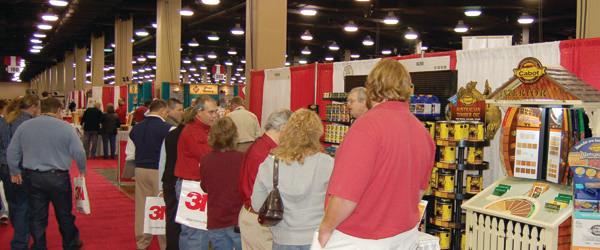


Soap-box derby, beltsander and frog races may be entertaining, but nothing beats a good ol’ dachshund race. The folks at Builders Warehouse have discovered that people just can’t get enough of watching the little wiener dogs race up and down the track. After all, everyone likes rooting for the underdog.
The Kearney, Neb., retailer held its third annual “Dog Days of Summer” celebration on August 14, which attracted huge crowds. In addition to a vet clinic, pet portraits and K9 police dog exhibition, attendees could buy hand-made pet wear. A fund-raising dog wash raised $800 for the local Humane Society. But the dachshund race was definitely the main event, with a special 50-foot track set up on the main aisle of the store.
Plans are underway for the fourth annual “Dog Days of Summer”

The highlight of the “Dog Days of Summer” event at Builders Warehouse is the dachshund race.
next year, and the dogs are already in training.
Michael Ellis has begun a new store history project in the interior of the family’s hardware store, Ellis Ace Hardware in Seneca, Ill. The first mural is of Ellis’ grandfather, Norbert Ellis, who was the third generation in the Ellis family to operate the hardware store, running the business from 1947 until his death in 1953.
The mural is 13 feet long by 4 feet wide. Ellis
was able to scan the photo and have it created into wallpaper, which was hung on the wall above the entrance to the store.
The plan is to continue the murals throughout the store as a way of highlighting the now six generations of the Ellis family that have run the hardware store since 1872. Ellis also plans to include signs next to each photo with information on what was happening in the world at that time, local history and interesting facts about the Ellis family operating the store at the time.
“We hope to have a sort of history museum throughout the store,” Ellis says. “It’s rare today, especially in the current economic climate, to be able
to say your store has been in business for 138 years.”
Joel Ellis came to Seneca in 1872 after serving in the Army and began with a lumber business and expanded to hardware, farm machinery and implements. The business has been handed down from generation to generation and a new building was constructed in the late 1970s on South Main Street in Seneca.
Ellis Hardware currently employs six members of the Ellis family representing the fourth, fifth and sixth generations. The business was
awarded the Illinois Historical Society Centennial Award in 2009 after the family was able to provide evidence that a member of the Ellis family has continuously owned and operated the hardware business in Seneca since 1872.
“This is a work in progress. I have collected all the photos and I am currently working on the facts for the time period,” says Ellis, who hopes to complete the project by spring. “It’s really fun to look at all the old products that were sold during that time period,” he adds.
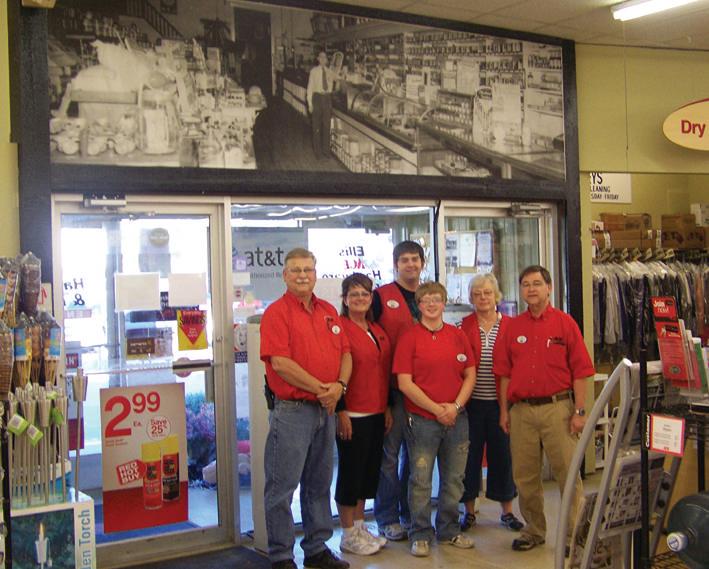
A photo mural over the front entrance pays tribute to the third generation of the Ellis family to operate Ellis Ace Hardware. Shown here are (left to right): David Ellis, Jenny Ellis, Michael Ellis, Kylee Ellis, Sandra Ellis and John Ellis.

Nearly 4,000 people were on hand for Mazzone True Value’s sixthannualPumpkinFest.
Mazzone True Value has started a tradition in the Carroll Gardens neighborhood of Brooklyn, N.Y. On October 2 the store held its sixth annual Pumpkin Fest, which attracted nearly 4,000 people this year.
Offering up more than 1,000 free pumpkins to be carved ensures the event is well-attended by families with children. Clowns, music, face painting, pony rides and free refreshments add to the fun. The Mazzones get a number of other local businesses and organizations to help sponsor the event, turning it into a true community gathering.
“Everyone seemed to
have a great time. The weather was perfect and most importantly, there were lots of smiling children,” said Matt Mazzone.
When the economy is slow, retailers are more likely to suffer theft from cashiers. That’s why it’s important to have the right procedures in place to keep everyone honest.
“You cannot trust anyone, even those you want to. We have used dedicated tills for years,” says Dan Schiffman, ceo of Pasadena True Value Hardware and Paint in Pasadena, Calif. “Shortages happen occasionally, but never the substantial errors and possible thefts of the past,” he says.
Here are some of the cash-handling procedures his store follows:
● For those on the Activant system, there is an option where the cashier must relog in for each transaction after the drawer is closed. This keeps the cashier from just making change out of the drawer.
● Make sure you either use the high-security passwords or at random have all staff, including cashiers, change their passwords while you supervise the process. This will make it harder for ‘shoulder surfers’ to steal passwords. “There will be some sour looks and attitudes, but they will get over it. Customers have never complained that my checkout lines were too slow,” Schiffman points out.
● Have a removable cash tray for each cashier that they count when their shift begins. Make regular cash pickups that the cashier and duty manager verify.
● Keep a tally sheet of some kind in the tray that each initials upon the change of custody of the cash. Include listing all additions of coin and

bills to the tray during the day.
● Balance each cashier at the end of their shift to verify what they should have had picked up in "drops" and what is still in the tray after the opening amount (Pasadena True Value uses $300 in coin and small bills). Their total must match.
● If they do not match, the detective work begins. Make sure that your change fund is balanced and correct. If the cashier is within $1.00, let the variation go until the store is balanced the next morning before opening.
● If the discrepancy is over $1.00, a written employee warning form should be filled out and signed by both duty manager and cashier. Most variations are found when the entire store is balanced. Doing a random balance of a tray mid-shift without warning really keeps the cashiers on their toes.
“Overages are as bad as shorts. I have terminated, prosecuted and convicted for missing cash in the past,” Schiffman adds.


ABy Fred Fischer
few short years ago managing our hardware and lumber businesses was a cash register, three-part invoices with carbon paper and a 21-column ledger pad. It was mark everything up 50% for a 33% profit margin. And of course the old price gun with lots of price stickers. Those were the good old days!
The worst part was we had no idea what our gross profit was on our daily sales. We did not even know if our employees were writing the correct price on the invoices or entering the correct price when they keyed in the amounts on the cash register. That was assuming the employee was honest and if not, who knows what was going on.
Taking inventory usually involved closing the business for a day and using adding machines to come up with a retail total and then guessing the gross margin and hoping it matched the dollar amount of inventory the accountant said was supposed to be on the shelves.
What a difference 10 or 20 years can make. We now have point-of-sale computer systems that tell us our daily sales amounts, how much gross profit we made, what is and is not selling, who our best customers are and what customers we need to pay more attention to, and the list goes on. So what does the future hold?
It is in front of you, just look around. At the point of sale are touch-screen monitors so cashiers can handle more customers faster. Bio login that reads digital points on an employee’s finger eliminates buddy punching and accurate login on your POS system. Digital signature capture at time of sale so the office staff does not have to hand file invoices. Laser printers and plain paper invoices to reduce printing cost. Emailing invoices and statements to customers to reduce labor and postage cost.
We now have rewards programs to identify good customers. We can send them coupons and promotions to give them reasons to come back to our stores to spend more money. With LCD monitors at point of sale we can
display ads and product information instead of using old post displays that only show one or two lines of characters. Our receipt printers can add coupons at the end of the receipt, in some cases related to the products the customer has just purchased to help increase sales.
When customers are lined up at the checkout, wireless handheld devices can do line busting and pre-scanning of merchandise items, and the sale can be completed at the POS computer. This same wireless device can receive inventory and be used for ordering, taking physical inventory and bin tag maintenance. All this increases efficiency, reduces labor cost and increases profits.
Retailers lose $30 billion to shoplifting every year. High-definition security camera systems use computers, not tapes, to store up to 60 or 90 days of visual images that can be viewed in great detail. You can search by date and time or go to a product on a shelf and find out the last time it moved. Cameras in storage areas only record when there is movement in the camera viewing area, which saves storage space. With IP-based camera systems, you can view all the activity in your store from home or from your hotel room while attending a wholesaler show.
Digital signage can advertise and promote products in stores. There are also digital signage programs that allow retailers to share in the revenue for advertising from other area businesses while still promoting products and services available in your store.
For retailers who do deliveries, there are wireless handhelds that can store sales transactions for the delivery driver. These devices incorporate scanners to
make up orders, digital signature capture to store who signed for the products, credit card readers with cell phone authorization (so you get the best rate on the credit card payment), GPS so you can go to a computer in your store and see where the driver is at any given moment, a digital camera that can take and store a picture of the products being delivered and signed for, and on top of all that this device is a cell phone.
There are bin tags that feature little LCD displays and are wireless, so that when the prices change in the POS system the LDC bin tags are updated automatically. Still a bit pricey, but the technology is there and the costs of the LCD bin tags are coming down.
The purchase of new technology is not an expense; it is an investment in the future of your business. How current is your technology? The days of note pads and three-part forms have long since passed. Take a few minutes to take stock of your store. Other than the cost of the merchandise you purchase to sell, labor is the next biggest dollar amount that is part of the profit and loss statement. Does your staff have the latest technology to work with? How does your store measure up? The future is now.
Fred Fischer is president of Ganymede Technologies Corp. in Bucyrus, Ohio, which markets the J3 Point-of-Sale retail inventory management system. He can be reached at fred@j3pos.biz.



Identity theft is the fastest-growing crime in the world, and many hardware stores have not taken the proper security measures to protect themselves and their customers. This is troubling considering that a recent Visa study found that small businesses accounted for more than 80 percent of last year’s data security breaches.
In 1996, Visa, MasterCard, American Express, Discover and JCB formed the Payment Card Industry Security Standards Council (PCI SSC) to address this important issue. This organization established the Payment Card Industry Data Security Standard (PCI DSS) to ensure that all companies that process, store or transmit credit card information do so in a secure environment.
The PCI DSS applies to all retailers who accept, transmit or store credit card data, regardless of size or number of transactions. These retailers have a legal responsibility to protect that data and are required to be compliant now.
Despite the PCI SSC’s educational campaign, there is much confusion over this process and retailers are facing tremendous challenges in implementing these controls. The PCI SSC has focused most of its attention on the Level 1 and 2 Merchants (retailers who process over 1 million transactions annually). Most



independent hardware stores would fall under the Level 4 Merchant category (processing under 1 million transactions annually).
It is logical to assume that the PCI SSC will soon turn its focus on improving compliance levels with Level 4 Merchants, who account for 32 percent of all Visa transactions. The clock is ticking for these companies to comply.
There are three parts to adhering to the PCI DSS: Assessing the condition of your systems and identifying potential vulnerabilities; Remediating and fixing these vulnerabilities; and Reporting the measures you have taken to protect customer information to the appropriate banks and card brands.
The PCI DSS is organized around the following steps:
■ Build and Maintain a Secure Network – PCI DSS requires that retailers install and maintain a firewall to protect cardholder data, and use unique system passwords for their systems.
■ Protect Cardholder Data – Retailers who choose to store cardholder information have a legal obligation to protect that data by encrypting it, so that even if someone was able to get access to the

database they still could not decipher its information. If a retailer conducts business over the Internet, they must also send this data in its encrypted form.
■ Maintain a Vulnerability Management Program – Hackers constantly develop new ways of attacking networks. PCI DSS requires that retailers protect their systems by regularly updating their anti-virus software, computer hardware, operating systems and software.
■ Implement Strong Access Control Measures –PCI DSS mandates that retailers restrict access to cardholder data to a limited number of individuals. Each person who does have access needs to have a unique ID. PCI DSS also requires that cardholder data be stored on computers that are locked up in a secure location.
■ Regularly Monitor and Test Networks – PCI DSS mandates that retailers track and monitor all access to network resources and cardholder data. It also requires that security systems and processes be tested regularly.
■ Maintain an Information Security Policy – Retailers must draft and implement a company-wide information security policy. All company employees should understand the importance of securing cardholder data.
The PCI SSC would like every retailer to immediately comply with all six of the principles listed above. Unfortunately, this is not a realistic goal. It will be most difficult to bring the Level 4 Merchants into the fold because of their sheer numbers and lack of internal IT staff. Therefore, the PCI SSC developed
the following five steps for these retailers to achieve PCI compliance:
■ Identify their Validation Type – There are five categories a Level 4 merchant can fall under. This will determine which self-assessment questionnaire they must fill out.
■ Complete the Self-Assessment Questionnaire – Retailers can find that here: www.pcisecuritystandards.org/ saq/instructions_dss.shtml
■ Pass a Vulnerability Scan – Merchants who store cardholder information electronically or have processing systems with Internet connectivity must perform a quarterly scan by a PCI SSC Approved Scanning Vendor.
■ Complete the relevant Attestation of Compliance – which is located in the Self-Assessment Questionnaire.
■ Submit the Self-Assessment Questionnaire, Evidence of a Passing Scan (if required) and the Attestation of Compliance to your acquirer Level 4 merchants should contact their merchant bank for details on their specific validation requirements and deadlines. At the Level 4 merchant level, the merchant banks are doing all deadline enforcement. Most hardware store owners are not going to be sophisticated IT experts and will struggle navigating through the complex technical and operational requirements set by the PCI SSC. These requirements can seem overwhelming, but they do not have to be. It is critical for all retailers to take action to become compliant as soon as possible. Talk with your POS vendor and merchant bank before you have a security breach.
Matt Mullen is director of market development for Activant Solutions Inc.
6.3%
Sales increase reported by Family Dollar for fiscal 2010. Same-store sales were up 5.1% for Dollar General and 6.7% for Dollar Tree in the second quarter, while Walmart saw its 2Q sales drop 1.8%. To recapture market share it has lost to dollar stores, Walmart plans to open 20,000-square-foot convenience stores in small towns and cities such as Chicago, Detroit and San Francisco beginning in early 2011.
$100.6 million
Total of the rebate returned to Do it Best members for 2010. The co-op reported fiscal 2010 sales of $2.38 billion, down 3.1% from a year earlier.


30%
Percentage of small business owners who reported weak sales as their biggest business problem, according to the National Federation of Independent Business.
10%
Percentage increase reported in existing home sales in September to a seasonally adjusted annual rate of 4.53 million, according to the National Association of Realtors.

2.3%
Percentage increase in holiday sales this year predicted by the National Retail Federation, a big jump from last year’s 0.4% increase and the 3.9% decrease posted in 2008.

$9.5 million

Amount a jury has awarded to a Louisiana woman for injuries she says she suffered after the front end loader of a tractor detached and fell on her. She sued the tractor manufacturer and the hardware store where she rented the tractor.