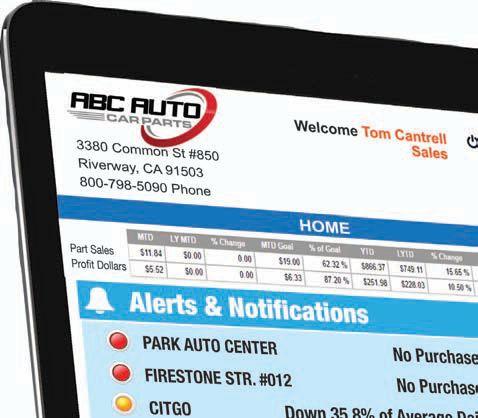
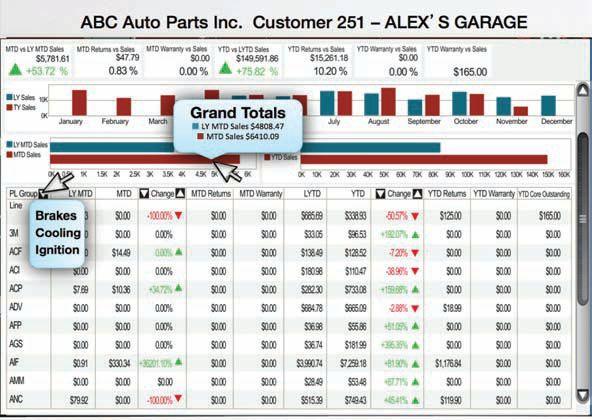
The systems you use every day to manage your business have incredible capabilities that go beyond simply ringing up a sale. Paint & Decorating Retailer spoke to point-of-sale system experts and the retailers who use those systems in their own stores to show you how technology can help you run a more streamlined operation and better manage your finances, inventory and more.
38
Going All In at Reno Paint Mart
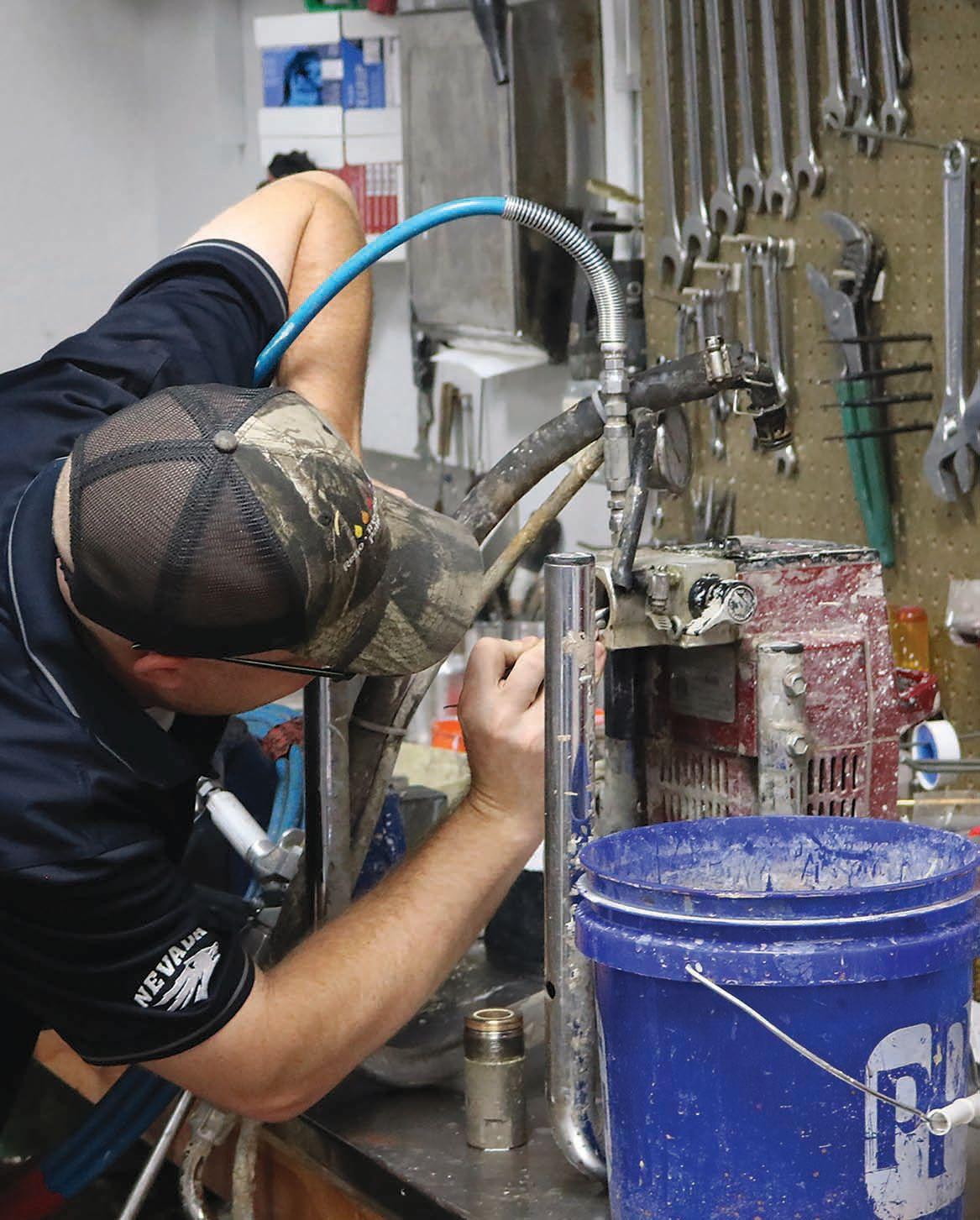
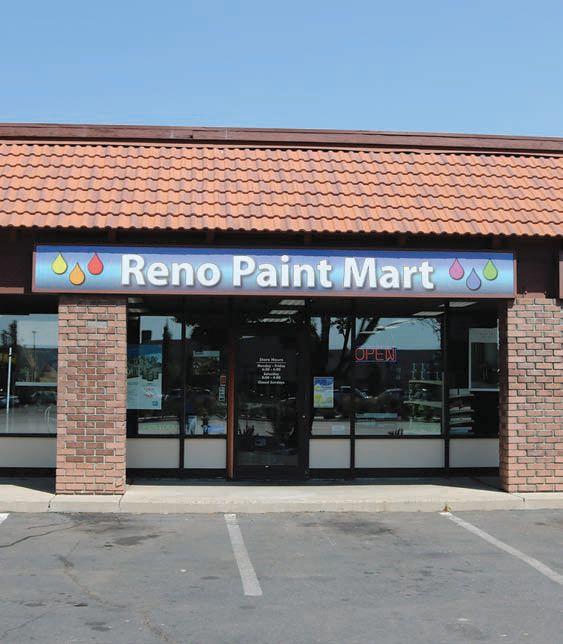
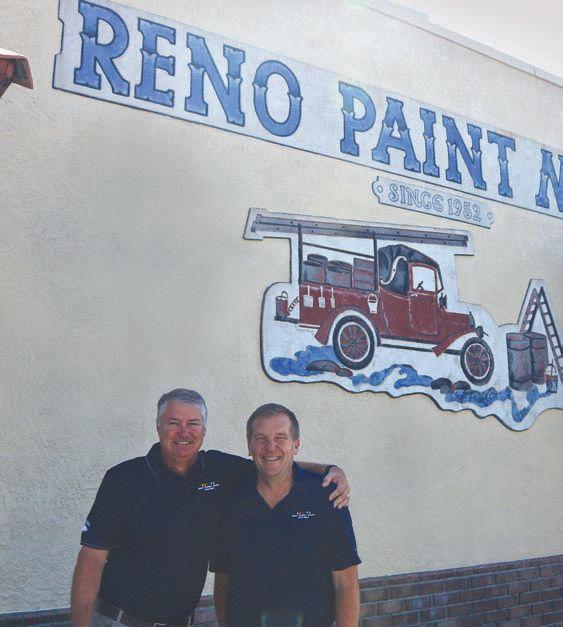
Reno Paint Mart has grown from a single operation in Reno, Nevada, to three in Reno and Carson City, Nevada, and Truckee, California, in 65 years of business. The company has added new products and services, like power equipment repair, in order to fill needs in the community.
Concrete Creations
From sealing and painting to flooring and driveways, concrete has evolved from purely functional to being another chance to add flair to homes or businesses. We discovered what the latest trends are in concrete coatings so you can deliver the possibilities of this diverse material to your customers. 44
A Workshop for All Seasons
Take advantage of your customers’ interest in all things natural with this how-to guide for making “tree cookies.” This nature-focused DIY project would make a solid seasonal in-store event, whether you’re showing customers how to make Halloween decor or a thoughtful handmade holiday-themed gift. 52
Contents
Departments
6 Viewpoint
Dan Tratensek appreciates how far technology has come and how it benefits the independent retailing industry.
8 Industry News
Customers told J.D. Power in a recent study what they want from your paints and stains.
14 Product News
Top Knobs cabinet hardware is inspired by English traditions.
18 Columns: Merchandising and Opportunity
Heather Kauffman-Peters offers quick tips for window displays; David Stephenson talks about the future of concrete coatings.
22 The Big Picture
A reimagined gas station in London gets a splash of color to reflect the changes in the surrounding neighborhood.
54 Coverage
Blank walls may soon be covered with the help of drones; golfers keep distractions to a minimum with a new paint on their drivers.
58 PDRA Now
Learn more about how the PDRA works for you with education and marketing programs. Reach out to tell your story in Paint & Decorating Retailer
60
Industry Profile
Heirloom Traditions Paint connects with customers face to face in the store and online.
62
Industry Profile
Independent retailers are the bread and butter of Benjamin Moore & Co.
64 Industry Calendar
The remainder of 2017 is shaping up to be educational and engaging.
66 Finish
A lighthouse gets a historically accurate fresh coat of paint.
On the Cover
Are you taking advantage of all that your POS system can do for your business?
Correction
In the annual Registry in the July 2017 issue, the address for Dripless Inc. was listed incorrectly. The correct address is:
Idistinctly remember the first time I ever used a cellphone. Even though it was literally the size of two bricks molded together, and the sound quality was barely a notch better than a HAM radio, it was still a pretty exciting experience.
The thought that I could cruise around in my car and call someone was truly amazing. Plus, I thought it made me look pretty cool, too.
Today, of course, mobile technology is eons beyond where it was 30 years ago when I had my Alexander Graham Bell moment. I would hazard a guess that most people reading this column would have a pretty hard time making it through a typical day without access to their mobile devices.
This access to information is why mobile devices are so widely used as business tools. Smart, progressive businesspeople know that quick access to information can be a real differentiator between success and failure.
We could argue whether being so dependent on our devices is a blessing or a curse, but one thing that is hard to dispute is that mobile technology provides us with a certain degree of power by giving us virtually limitless access to information.
This access to information is why mobile devices are so widely used as business tools. Smart, progressive businesspeople know that quick access to information can be a real differentiator between success and failure.
And while most of us are quick to harness the power of our mobile devices, there are still many retailers who don’t take advantage of the full power of technology when it comes to their point-of-sale systems.
In this issue of Paint & Decorating Retailer, we examine how retailers can tap into the wealth of information these systems can provide to help them run better, smarter and more profitable operations. And while I can’t promise you’ll look as cool using your POS system as I did chatting on my brick phone, you’ll at least be armed with some pretty powerful information.
Dan Tratensek DanT@nrha.org
Publisher/Director of Sales
Dan Simon dan@pdra.org
Phone: 800-737-0107, Fax: 636-229-4750
Editor-in-Chief
Dan Tratensek dant@nrha.org
Contributing Editors
Diane Franklin
Tammy Adamson-McMullen
Karon Warren
EDITORIAL, DESIGN & PRODUCTION
Features Editor
Melanie Moul
Jesse Carleton
Renee Changnon
Lynnea Chom
Whitney Daulton
Graeme Haase
Chad Husted Liz Lichtenberger
Todd Taber
Kelsey Truex Nancy Vondersaar
Production Director
Jo Ann Ray jo@pdra.org
Circulation Manager/Directories Editor Lori Goad lori@prda.org
Director of Finance/Human Resources
Renée Nolte renee@pdra.org
Association Coordinator Tina Sullivan tina@pdra.org
ADVERTISING
Account Executives
Richard Bright rbright@brightconcepts.net
Phone: 410-869-3253, Fax: 530-452-2266
Brandi Hemmer brandi@pdra.org
Phone: 636-680-2785, Fax: 636-229-4750
PDRA EXECUTIVE LEADERSHIP
Executive Director
LeAnn Day
OFFICERS
Craig Bond
President and Western Region Director
Tommy’s Paint Pot, Eugene, Oregon
Mike Fleck
Vice President/Treasurer and Eastern Region Director Fleck’s Paint Spot, Toms River, New Jersey
DIRECTORS
Robert Mueller
Director at Large
Benjamin Moore Kelowna, Kelowna, B.C., Canada
Jay Donnelly
Midwestern Region Director Flanagan Paint & Supply, St. Louis, Missouri
Lesley Davies-Baptista
Southern Region Director Paint Fair Ltd., Freeport, Grand Bahama, Bahamas
PDRA ADVISORY COMMITTEE
Dori Marks, PPG Industries
Thomas Hill, The Coatings Alliance
Eugene Andreassi, Benjamin Moore
Joe Jankoski, Hunter Douglas
Bob Clemence, Hyde Tools
John J. Petroci III, Dumond Chemicals
John Shingledecker, Allpro Corp.
Richard Russo, Reed Exhibitions
Mike Dube, Lancaster
What Do Your Customers Want?
Recent Study Says Variety in Paint Color and Staying Power in Stains
According to a recent J.D. Power 2017 Paint Satisfaction Study SM, paint customers want a broad color selection and exterior stain customers want durability.
Colors, colors and more colors are what consumers want when paint shopping. “The myriad choices don’t confuse paint shoppers; rather, it helps them zero in on the color they think is best,” says Greg Truex, senior director of the at-home practice at J.D. Power. Meanwhile, satisfaction among stain customers comes after the purchase, as they judge the product’s longevity and weather resistance.
Satisfaction in either case is significantly higher when customers speak at length with a salesperson and encounter a prompt greeting by sales staff; salespeople who listen carefully to questions; and salespeople who are professionally dressed.
When these metrics are met, 59 percent of customers say they “definitely will” repurchase the brand, versus 27 percent when two are met and 18 percent when only one is met.
The study gauged consumer satisfaction with exterior paint and stain products on a 1,000-point scale based on six factors: application; design guides; durability; price; product offerings; and warranty/guarantee.
Get all the benefits of finish quality, control, and affordability in a brand new option with firm filaments! Wooster Gold Edge paintbrushes are made with an exclusive formula of white and gold CT™ polyester. They are smooth and fine to virtually eliminate brushmarks, yet they have added stiffness to efficiently push paint on the surface and provide control for sharp, single-pass cuts. With 22 brushes included in the launch, you can have your favorite size and style right from the beginning.
Dripless Adds Consumer-Friendly Features to New Website
Dripless Inc. recently launched an updated website, bringing new functionality, information resources and web-based service to customers.
New features on the website include a store locator showing consumers the retail locations where Dripless goods are sold by ZIP code; how-to instructions on matching specialty tools to the diverse selection of sealants and adhesives on the market; and a full line of videos to engage and inform consumers.
Santa Rosa, California-based Dripless has been manufacturing caulking guns with its patented dripless mechanism in the U.S. since 1992. The company is the original patent owner and marketer of the dripless function, which is a one-handed stop-flow mechanism that releases the pressure on the caulk tube when the trigger is released.
For more information about the company and Dripless caulking guns and to see the capabilities of the new website, visit dripless.com
ACQUISITION
Rust-Oleum Company Acquires Flooring Maker
RPM International Inc., the parent company of brands such as Rust-Oleum, DAP, Zinsser and other coatings, sealants and protectants, recently acquired Key Resin Co., a manufacturer of polymer flooring and coating systems. The terms of the acquisition were not disclosed.
Key Resin Co. is headquartered in Batavia, Ohio, with manufacturing sites in Cincinnati and Phoenix and has annual sales of $25 million. The flooring company manufactures and markets terrazzo and resinous flooring, wall coating systems, concrete repair materials and maintenance products for industrial, institutional and commercial applications.
“Key Resin fits right within our sweet spot for acquisitions,” says Frank C. Sullivan, RPM chairman and CEO. “It’s a well-run, family-founded specialty coatings business that is a market leader.”
Jeff Cain, a second-generation family leader, will continue to head Key Resin Co. as president.
For more information, visit rpminc.com or keyresin.com.
Photo courtesy of Key Resin Co.
The flooring in the orangutan exhibit at the Indianapolis Zoo was manufactured by the Key Resin Co.
STORE SERVICES
Home Depot, Williams-Sonoma Add Designers
While big-box stores have always represented competition when it comes to selling cans of paint and other niches and categories found in independent paint and decorating stores, another layer of competition has recently entered the market.
The Home Depot and home furnishings and housewares retailer Williams-Sonoma recently added interior design arms to their businesses.
Home Depot recently partnered with design firm Laurel & Wolf for a program called the Home Depot Pro Referral Service. Consumers who consult Home Depot’s service will have access to Laurel & Wolf designers.
Williams-Sonoma added 500 employees to a group it calls the Design Crew, which offers free design consultations to customers. Members of the Design Crew advise customers on fabric selections and are available for in-home consultations, according to the San Francisco Chronicle.
Product News
Still on Top
Flat Hardware Element Provides Sophisticated Style
With traditional style inspired by English harbor towns and villages, the Kingsbridge series of cabinet hardware brings a clean look to kitchen and bath designs.
Designed by Top Knobs, the Kingsbridge series is part of the Devon Collection, which is itself influenced by Devon County in southwest England.
“These elements are wide, but not too wide. Detailed, but not too ornate. Everything in the Devon Collection is designed with exquisite detailing for a classic yet modern feel,” Top Knobs product manager Christine Zimmer says.
The Kingsbridge series is available in eight sizes: three T-shaped knobs, four pulls and a 12-inch appliance pull. It is available in eight finishes, including Ash Gray, Honey Bronze, Black, Brushed Satin Nickel, Polished Chrome, Polished Nickel, Sable and Umbrio.
“The Kingsbridge series features smooth, flat tops and slightly rounded edges,” Zimmer says. “The base of each piece includes an extra layer of detailing with two parallel bands, and the T-shaped knobs mimic the shape of the pulls with the same wide, flat surface.”
For more information, visit topknobs.com
Fire-Suppressing Spray
Fire Gone™ is a fire suppressant in an aerosol can. It delivers a targeted stream that goes right to the source of the fire, coating it with a firefighting foam. The product is easy to use and is simple to clean up. It is made from biodegradable materials and is patent pending.
Max-Pro Inc.
800-655-1675 or airduster.com
Sink and Faucet Collection
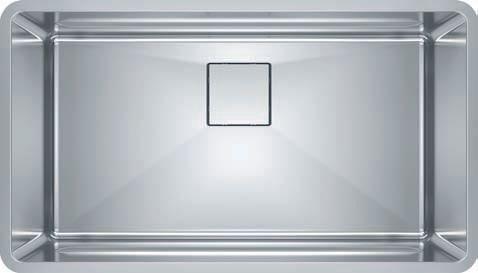
The Pescara Collection is a family of sinks and faucets with clean lines and a large, open workspace inspired by Italian artisan culture. Designed in stainless steel, the collection includes seven sink sizes that range from a 14-inch prep sink to a 31-inch single bowl sink.
Franke Group
800-626-5771 or franke.us
Specialized Distressed Paint
Chalky Paints and Finishes are designed for use in projects involving vintage, repurposed or distressed furniture. The products leave no lingering odor, and no rubbing or buffing is necessary to finalize a project.
Chalky Paints and Finishes 949-292-0695 or chalkypaintsandfinishes.com
Do you sell a product that your customers can’t get enough of? Let Paint & Decorating Retailer know about it! To submit a product that you would like to see featured in Product News, contact Chad Husted at chusted@nrha.org or 317-275-9402.
Guest Column Merchandising
Made You Look
3 Tips for Eye-Catching Window Displays
Creative and fun window displays can increase foot traffic and generate interest in a store, but retailers can go wrong by adding too many products, not using enough lighting and relying on worn-out clichés, especially during the holidays. Plus, once the holidays begin, they seem to roll from one to another without pause—Halloween to Valentine’s Day—so planning is vital. To help paint and decorating retailers prepare and avoid pitfalls, here are three tips to develop attention-grabbing window displays in the hopes of making your business’s selling season run a little more smoothly and profitably.
Tell a Story
Stories are used to sell everything, from high-end wine to juice boxes, and marketers who understand the importance of stories often see their sales climb as a product connects with its intended audience. Stories can have the same impact in the retail space, too, especially in window displays. By focusing on a story instead of traditional themes, retailers can avoid overused tropes like pumpkin spiced everything in fall or red and green for Christmas. For example, think Under the Harvest Moon instead of Thanksgiving when developing a plan for a holiday window display. Paint and decorating retailers can also avoid holiday window stereotypes by highlighting a store’s uniqueness and focusing on a niche.
Keep It Simple, Yet Bold
When developing a holiday window display, retailers may be tempted to stock the space with something from every category. Why not use the storefront to promote all the newest items, best gifts and special deals the store offers? Unfortunately, the display will have the opposite effect from what was intended if a retailer tries this tactic. Customers have a difficult time focusing on any one product when a display is too cluttered. They will pass it by without any notice. The best way to grab attention is by using large props, bright colors, interesting textures and bold lighting. The goal should be to catch someone’s eye from across the street.
Borrow and Steal
Not everyone is creative all the time—that’s why we have inspiration websites like Pinterest and DIY blogs. A simple search for holiday window displays opens the floodgates to the most whimsical, bold and unique ideas imaginable. Borrow ideas from other industries and use them as catalysts for inspiration or take notes from paint and decorating peers. If you are creative and want to develop your own ideas, that is great, but if there aren’t enough hours in the day to sketch out a window display, don’t be afraid to borrow plans and adjust them for your space. In my research, I also found whimsical, hand-painted windows that could offer an eye-catching option for retailers who lack space for a display.
Heather Kauffman-Peters
has written for the paint and hardware retailing industries for nearly 14 years. She holds a master’s degree from Butler University, has edited children’s magazines and currently teaches preschool. Her book, “Blizzard on the Plains,” is for middle schoolers.
Guest Column Opportunity
Primed, Polished and Ready
A Closer Look at Polished Concrete
As a construction consultant specializing in concrete, I know a thing or two about the concrete flooring industry. First, what is polished concrete?
Polished concrete is accomplished by using progressively finer steps of diamond tooling to remove scratches from the surface, which creates a smooth finish with a varying degree of gloss. The customer has the option to select a matte, gloss or semigloss finish. The degree of shine is controlled by the final grit of the polishing process. Most projects have a high gloss.
The polish industry is growing rapidly, as the low maintenance cost, low installation cost and the continued push for sustainable construction make it the preferred flooring selection for a variety of customers. It currently makes up over 5 percent of the hard surface flooring market. The rapid growth (over 30 percent from 2015 to 2016) shows that polished concrete will make up about 15 percent of the hard surface flooring market by 2020. Polished concrete was initially created 20 years ago as an offshoot of the stone and terrazzo industries.
All of this history brings me to the main point of this column. There is a lot of opportunity for coatings retailers to capitalize on the rapid growth of the polished concrete industry, and chemicals play an important part of the process. There are three main chemical types that are used on every concrete polishing project.
• Densifier is used to make the concrete surface harder by chemical reactive crystal growth in the concrete. There are three main types of densifier: sodium-based, lithium-based and potassium-based.
• Stain protection is another primary chemical used to polish concrete. It slows the penetration of liquid spills from seeping into or staining the polished concrete.
• Dyes are the third commonly used chemical. Dyes can change the color of the concrete after it is dry and hardened.
There are many ancillary chemicals as well, including salt guard, oil repellent, efflorescence blocker and grinding aids. Another large market segment is concrete flooring maintenance. Cleaners used for flooring such as tile can eat away at the concrete, causing pits to form at the surface. In addition, typical solvents can dissolve dyes and destroy stain protection.
Polished concrete cleaners do not contain harmful acids or solvents. Most cleaners suitable for concrete maintenance are made by construction chemical suppliers rather than janitorial chemical companies. These polished concrete cleaners are not readily available in the market, and with over 1 billion feet of concrete flooring installed, the lack of available product causes major issues for owners and end users.
Selling concrete cleaning products and sharing that information with local facility managers could open the doors for the sale of other polished concrete products and allow you to take advantage of this rapidly growing industry.
David Stephenson is an independent construction consultant specializing in concrete flooring and related services. He has been involved in the concrete industry since 2000. Stephenson’s goal is to help grow the decorative concrete industry by taking his knowledge to new companies and customers.
Removing graffiti has never been easier. Safely remove unwanted graffiti, marker, and other “tags” from concrete andblock surfaces, lockers, road signs, rail cars, and anywhere else graffiti is found.
• Formulations for Both Hard and Porous Surfaces
• Made with 100% American Grown Soybeans
• Virtually No Odor
The Big Picture
The Brightest Station on the Block
One part of northwest London is now a little flashier thanks to a renovated gas station with a brand new paint job.
The White City neighborhood is being revitalized and redeveloped as a residential area, according to Fast Company. It used to be home
Photo by Jamie M. Smith
to the BBC’s headquarters, and graphic designers Craig Redman and Karl Maier used that inspiration as they transformed the abandoned gas station. The final project is called Here After, a design installation that features the same retro colors as the BBC’s old test cards, used for television test signals.
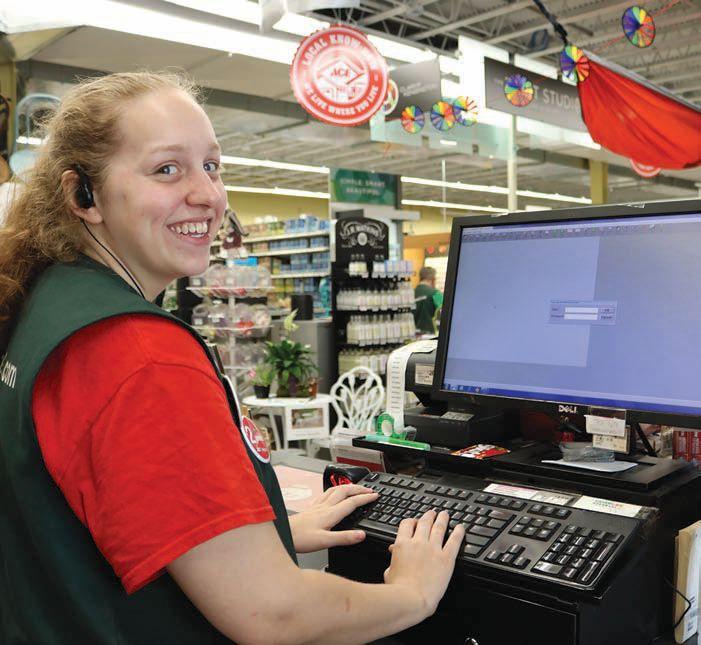
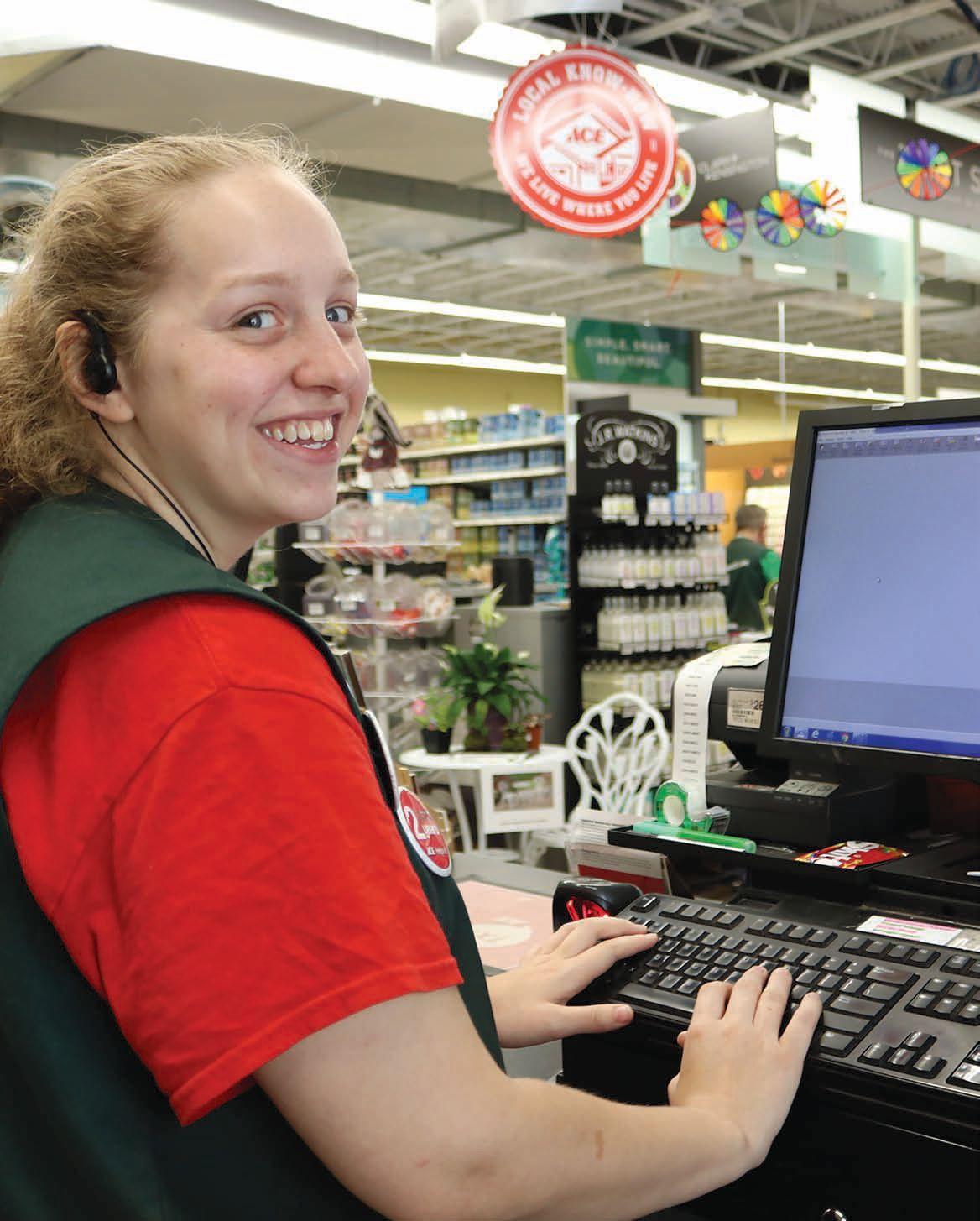
When employee Kelly Weber rings up a sale at Canton Ace Hardware in Baltimore, which is part of A Few Cool Hardware Stores, the Epicor POS system collects the data for use in future reports.
By Diane Franklin
Using Your Information Wisely
How to Track Just About Everything—From Sales to Inventory to Customer Data—With Your POS System
Storeowners today can’t get by without a multifaceted point-of-sale computer system. It’s like having a second brain, an expanded sales team and a savvy business consultant all rolled into one. Not only is a POS system your conduit to better customer service, but it’s also a source of data and analytics that can help you run your business smarter, more efficiently and more profitably.
“The overall theme we’ve been emphasizing for quite some time is ‘the connected retailer,’” says Doug Smith, director of retail product marketing for Epicor Software Corp. “A connected retailer is a business person who is plugged into their consumers, contractors and vendors and is using technology to leverage those relationships.”
Using technology well is essential, especially in an era in which consumers are carrying smartphones that give them product answers to their queries in a matter of seconds. As instantaneous access to information expands, expectations for fast, efficient service increases proportionally.
“Today’s consumers have all these fantastic tools at their disposal—to get more information, to find products faster and easier,” Smith says. “Whenever retailers can participate in this, by making things go faster and easier at their stores, consumers will tend to show up there.”
Smith points to such advancements as contactless pay or emailing receipts, which are available through the Epicor Eagle® POS system. “If you can shave off even a few moments from a transaction because people don’t have to reach into their purse or billfold, they’re all in favor of it. Or if you can email the receipt—anything that can simplify the process—it’s going to have an impact on the consumer and their willingness to come back.”
POS System Capabilities
The most effective POS systems are those that offer comprehensive capabilities to the retailer.
“We are an all-in-one solution—from advanced purchasing, pricing, point-of-sale, inventory control, reporting—all the way through the line,” says Daniel Steele, sales executive for
CAM Commerce Solutions. “Along with that comes unloading responsibility from sales clerks and from store staff, which is demonstrated in our ability to manage pricing levels and different pricing schemes. Our RetailSTAR POS system automatically knows what to charge a certain customer based on who they are, how much they buy, the time of year they buy and so on.”
In addition to accommodating the retail price and various contractor pricing levels, RetailSTAR’s pricing capabilities also support promotional pricing. “You can do all kinds of promotions, even long-term sales lasting a number of months,” Steele says. “There is also unique item pricing with the ability to do multiple discounts or to exclude certain categories from discounts. There’s a lot of technology involved in the way we do pricing that makes it more efficient for the retailer.”
Another useful feature of the RetailSTAR system is customization of what is being displayed at the register. “For instance, whenever you call up a product, you can show how many are on order and how many are on hand,” Steele explains. “You can show discount percentage—whatever the retailer wants to see.”
Customer invoices and statements are fully customizable with RetailSTAR as well. “A lot of
retailers want their statements to have their logos on them and to be organized by purchase order number,” says Steele. “It’s something small, but it’s the small things—taken in total—that add up to a great solution.”
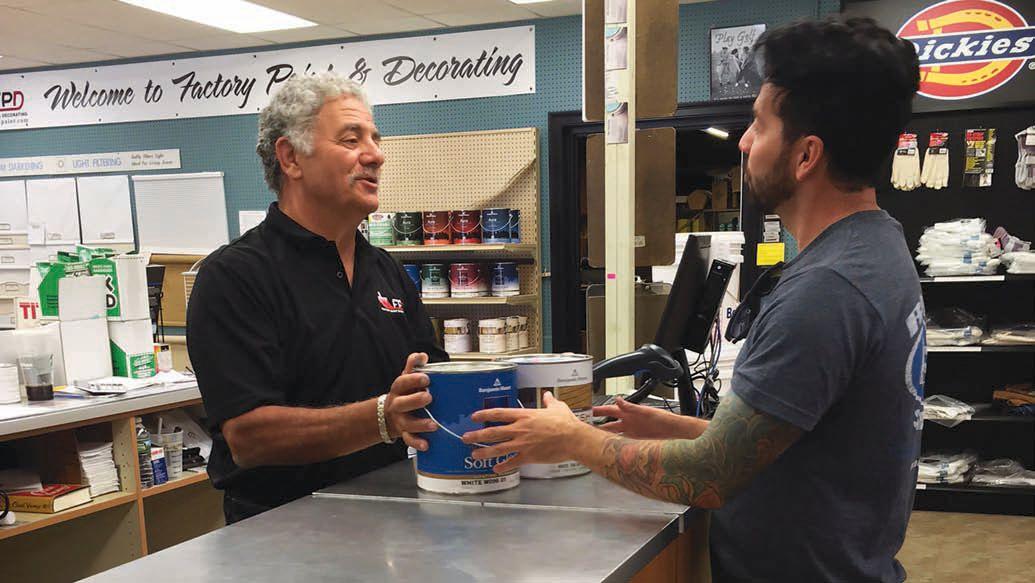
Factory Paint & Decorating, with three locations in Massachusetts, uses CAM Commerce’s RetailSTAR to improve the efficiency of its business. This threestore retailer upgraded to RetailSTAR in April 2016 from a previous CAM system.
“A great feature of RetailSTAR is that we’re able to email customers their invoices immediately,” says marketing manager Kristen van Dyk, granddaughter of company founder Edmund Laniewski. “Our in-house accounts love that. They get a paper copy from us as well as an electronic copy for their records. We’re also able to email house accounts their monthly statements, which we were unable to do before.”
RetailSTAR lets retailers set various pricing levels for contractors and in-house accounts. Plus, the ease with which it creates contract pricing is a valuable feature. “When the name comes on the screen, it automatically says, ‘This customer has a contract attached. Would you like to use contract pricing?’ All we have to do is click on it,” van Dyk says.
Factory Paint also achieves several operational efficiencies through RetailSTAR when it comes
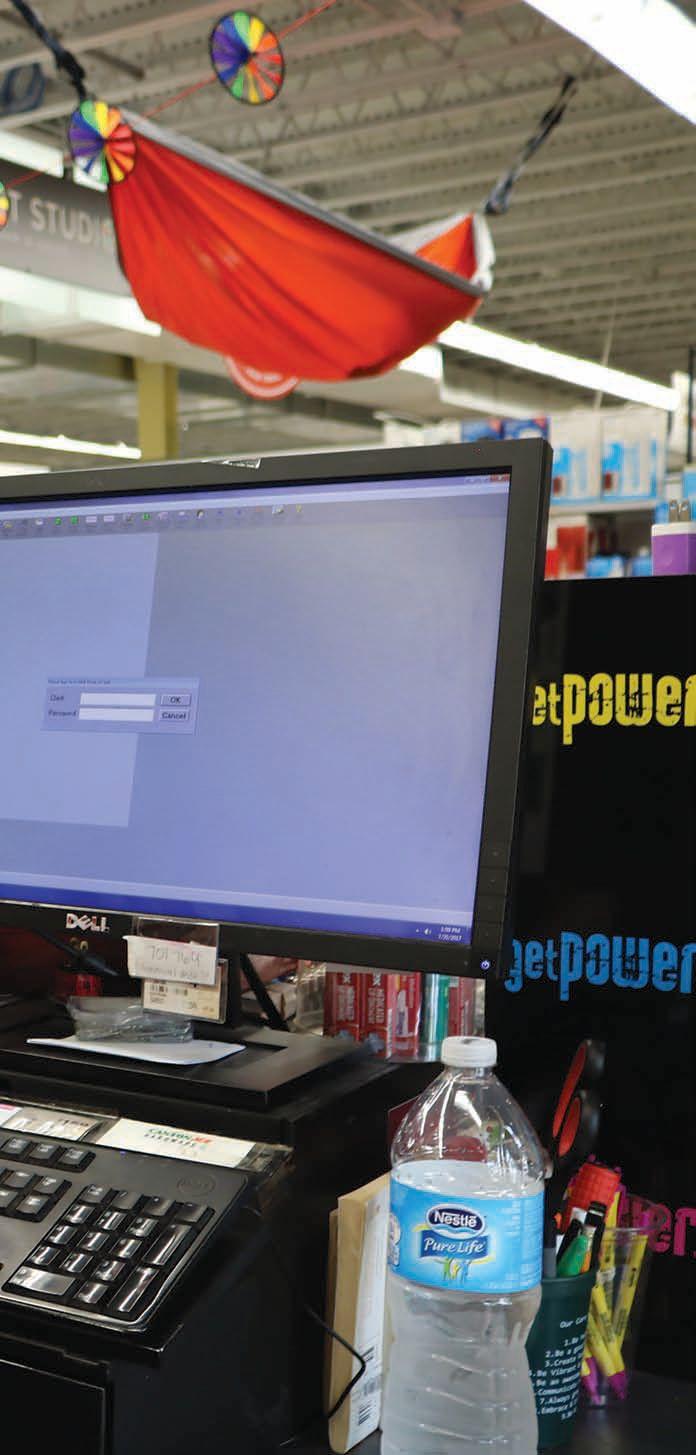
The Epicor system at Waverly Ace Hardware in Baltimore, which is part of the A Few Cool Hardware Stores, allows employee Tracey Williams to offer custom pricing to specific customers.
Influenced by decorating retailers, buying groups and distributors
Customizable, exportable, prompting for colour formula and special orders, tint costing, data mining, equipment rental entry, helpful wizards, advanced security, user tracking and more Your first call for setup, training and best-management practices
“When we transitioned from our previous system, we were able to bring over all of our loyalty customers, and we’re able to add new customers every week.”
—Kristen van Dyk, marketing manager, Factory Paint & Decorating
to entering pricing updates and preparing both end-of-month and end-of-year reports. Inventory management is also enhanced. “We’re able to see inventory sold in real time,” van Dyk says.
Another special feature is the ability to call up a customer’s history by various parameters, including customer name, date, products purchased, purchase order number and more. Factory Paint also has a loyalty program, which is easily facilitated using RetailSTAR. “When we transitioned from our previous system, we were able to bring over all of our loyalty customers, and we’re able to add new customers every week.”
Core Technology
Ward Partridge, co-president of CBC Computer Systems Inc., points out that a retailer’s POS system is the core piece of technology in paint stores today, affecting every part of operations from ordering to pricing to stocking to virtually every customer interaction.
On the sales side, Partridge observes that the POS system should be able to keep track of
every customer, including contact information, credit terms and special pricing as well as details of every sale. “The captured information can then be used to keep in touch with customers with valuable product information, promotions, reminders and updates,” he says.
In addition, the technology gives retailers the ability to facilitate inventory control with such capabilities as tracking stock levels, creating purchase orders, transmitting orders to suppliers, receiving goods on mobile scanners and even printing shelf tags. The POS system also facilitates pricing by reading suppliers’ product files and using them to add new items and update prices on existing items. “There should be reporting on price overrides, low margins and a history of both cost and price updates as well,” Partridge says.
CBC offers all of these features in its Decor Fusion system. “Working closely with the major paint manufacturers, CBC has added new features in Decor Fusion, including manufacturers’ color number and name lookup, links to product safety data sheets and technical documents and automatic rebate programs,” Partridge says. “We should also soon have updated information on weight, volume and hazardous classification for the major paint lines. Decor Fusion can even interact with some manufacturers’ color systems to capture and maintain details on tint formulations.”
The RetailSTAR POS system helps paint manager Joe Bognanno (left) of Factory Paint & Decorating keep a record of his customers’ purchase histories.
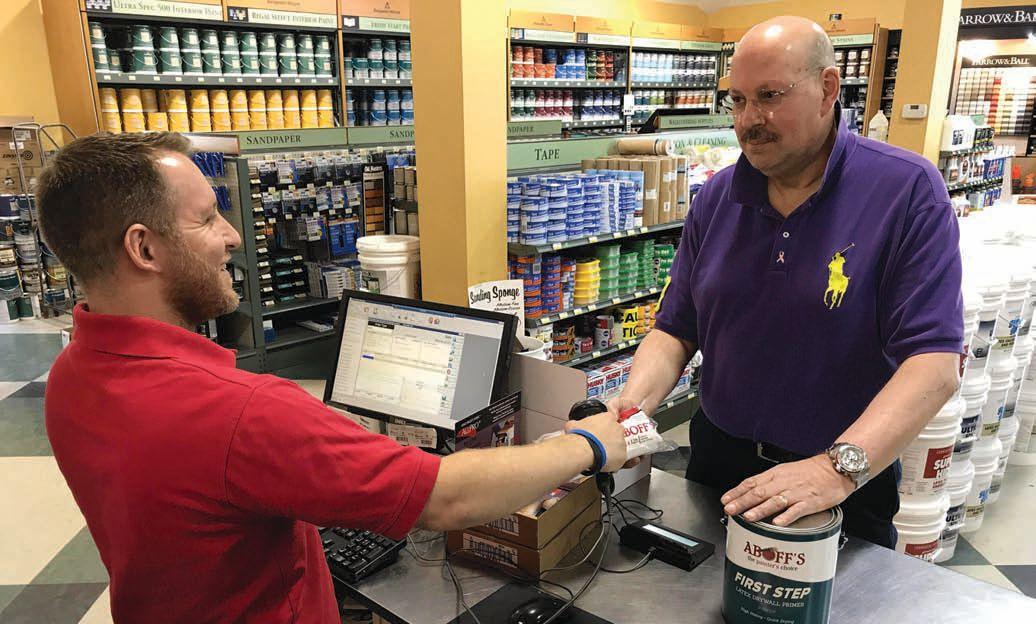
Aboff’s, which has 32 stores located in Long Island, New York, uses Decor Fusion for its POS system. “There are two functions we are looking for in our POS system,” says general manager Kevin Koster. “No. 1 is to run the store, and No. 2 is to run the company. Decor Fusion allows us to do both very well. The people who designed it, Ward and Wade Partridge, created the system specifically for paint retailers where the majority of their business is custom-tinted paint. It’s set up so the sales associate is prompted to put the color number or formula in, and when the customer returns at a later date, we can call it up very easily.”
Because Aboff’s does a large percentage of its business with painting contractors, the ability to set multiple pricing levels is critical. “Most paint stores have different pricing levels for different size contractors, either as a fixed price or a calculation of a gross margin,” Koster says.
Aboff’s pricing levels encompass regular pricing, promotional pricing and job quote pricing. “The system searches for the lowest prices and promotions available for specific customers at the time of sale,” Koster explains. “Flexibility is key,
“There are two functions we are looking for in our POS system. No. 1 is to run the store, and No. 2 is to run the business.”
—Kevin Koster, general manager, Aboff’s
and our POS system needs to be nimble. Without this system, we could not go to market every day. Ward and Wade have given us the tools to solve almost every problem, but when the solution is not there, they are only a phone call away.”
Assessing Information
Relevant information provided by your POS system is also a means for increasing sales. “Our Eagle system has a business analytics tool called Market Basket that helps retailers identify, ‘When customers buy Product X, they also tend to buy Product Y.’ Retailers can use this information to help better merchandise their stores and to train their staff,” Epicor’s Smith says.
When customers walk into a store, they’ll see Products X and Y displayed together. And if they get to the sales counter without both products in hand, the POS system will provide the staff with built-in prompts to suggest the companion product. Other product prompts are offered through the Eagle Gift and List Registry application. “Think of it not as a gift registry but as a project list registry,” Smith says. “For example, when people come in and say, ‘I’ve got to clean and restain my deck,’ you’ll have a prepopulated list with all the things people need to complete that project.”
With sales information captured at POS, retailers can use the data to target their customers. “You can look at which customers bought a certain line
Evan Kuby (left), manager of the Aboff’s location in Huntington, New York, uses Decor Fusion to scan in a product while making a sale.
of paint or deck stain and contact those people exclusively,” Smith says. “Analytics are huge, but information has to be relevant to both the retailer and the consumer.”
Relevant information through the Eagle system has been integral to improving sales performance for Marc Friedman, who co-owns 12 stores under the banner of A Few Cool Hardware Stores in the Washington, D.C., and Baltimore areas. Friedman uses the Eagle Compass analytic reporting tool as a
allow him to analyze a variety of factors and target areas for improvement, such as product returns and inventory shrinkage attributable to mistints.
“We use Epicor for everything we do—including point-of-sale, inventory planning, accounts receivable and Compass reporting,” says Friedman. “It works well with a high SKU count and seasonal sales. We do a large number of transactions, so integration with our vendors is extremely important. Being able to submit orders to our primary vendors is a big deal.”
8 Retail Technology Trends You Should Know
“We see contactless pay as a trend that’s growing and will continue to grow,” Epicor’s Doug Smith says. “Here in the San Francisco Bay area and elsewhere on the West Coast, it’s very big. We even have hamburger stands that use it. People often get frustrated when they come into a store, plug their card into a reader and are basically held hostage until it goes through. That’s where contactless pay is a big opportunity.”
With marketing and promotional emails becoming more prone to ending up in the spam folder, Smith reports retailers are turning to text messages to contact customers. “With the customer’s permission, you can text information about when a product comes in or when a special order is ready for pickup,” he says. “That is something we facilitate through the Eagle system.”
Chip-enabled cards and EMV card readers are on the upswing in retail. “In the paint industry, there hasn’t been a strong push for it because retailers typically know their customers and are less susceptible to fraudulent charge-backs,” says Rob Josefs, marketing operations manager for CAM Commerce. “I think all retailers will eventually move to EMV processing, as customers are going to appreciate that extra layer of security.”
“The ability to be untethered and to use technology applications anywhere and anytime will continue to grow,” says Smith. “We’ve been adding a variety of mobile manager applications, giving retailers the ability to do inventory right on the floor. If I’m a manager, I can be at lunch with someone, and if I need to approve a transaction or check on a sale, I can do that directly from my phone.”
CBC’s Ward Partridge says their new cloud version of Decor Fusion means retailers no longer have to purchase, set up and maintain their own servers or backup equipment. “A basic computer and internet connection are all retailers need to run their POS systems in a secure, reliable environment,” he says. “The cloud environment also facilitates extended features and interactions with other businesses.”
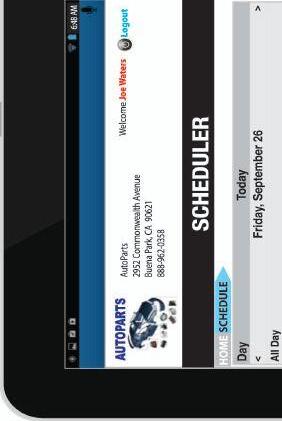
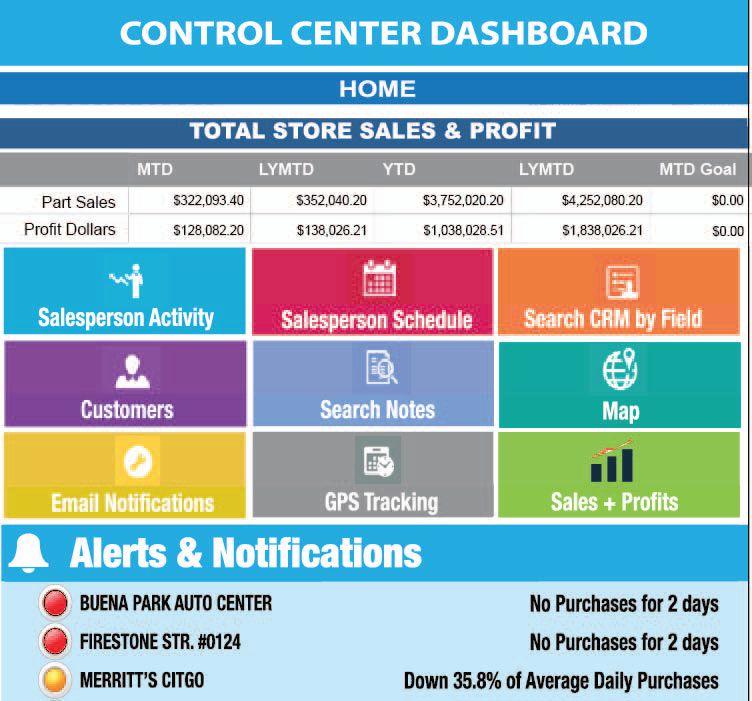
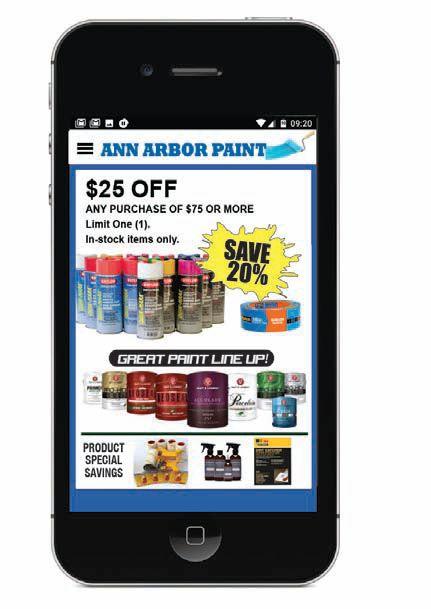
There is possibly no better way to connect with your customers than via a mobile app. Major retailers have one, so why shouldn’t you? Autologue offers an affording customizable app for small retailers. “For just a couple hundred dollars a month, retailers can put in their own coupons, flyers, pricing and store information. And it’s all customizable with their logo,” Autologue president and CEO Jim Franco says.
Smith sees loyalty programs evolving away from point systems. “Rather than giving out points, the retailer will give special pricing to loyalty members whenever they come in the store,” he says. “It’s a quid pro quo. Retailers collect email addresses and cellphone numbers as a way to contact their customers. In exchange, the consumer gets special pricing and news about what’s happening at the store.”
In-store kiosks allow customers to search for products and build a sales ticket, Autologue’s Franco says. The store salesperson is still an integral part of this process, locating and providing information about the products the customer wishes to purchase. “The salesperson also could use a hand-held tablet to accomplish the same thing,” Franco says. “They can create a list while walking and talking with the customer.”
The ability to offer flexible pricing is another big deal. “We use the custom pricing plan to work with our painting contractors and offer them tiered volume discounts,” Friedman says. “We utilize Ace’s Supply Place portal, which allows our customers to view and pay invoices online and create project wish lists.”
At Factory Paint, van Dyk also stresses the importance of assessing information to improve store operations. “The reports are huge for us,” she says. “I use the ReportSTAR module, and I love it because you can make your own custom reports. I use it to see a history of what has sold and what hasn’t. When an item hasn’t been selling, I know not to bring it back in.”
Being able to customize reports is something that resonates strongly with retailers, Steele says. “The paint retailers I talk to typically want just five reports, but they’re never the same five reports,” he says. “ReportSTAR comes with 30 or 40 different reports. You can copy these or you can use a Wizard that walks you through creating your own customized reports. You have access to the entire database, allowing you to do very detailed reports on demand.”
The data generated by a POS system is an important resource for retailers as they make adjustments in their businesses. At Aboff’s, Decor Fusion helps Koster make purchasing decisions based on the historical data it generates. “The system works as well for 32 stores as it does for one,” Koster says. “Whether the order is placed on the store level or the company level, we can
replenish inventory without over ordering, which increases cash flow and turns.”
Own Your Zone
When used to its full advantage, a POS system can help retailers grow their businesses. Jim Franco, president and CEO of Autologue Computer Systems, describes in-store technology as a tool retailers can use to target a specific geographic area. “It’s a strategy called ‘own your zone,’ where you saturate your market and make connections with customers,” he says.
Autologue spent a year and a half developing a new customizable app that can help retailers build customer connections. “We use our smartphones on average 160 times a day,” says Franco. “Having an app is an effective way to reach customers. They can download your app, place orders online and pick them up at your store.”
By focusing on customer connections, retailers are in a better position to meet their customers’ needs. “That’s why it’s important to have a store sales history for retail customers as well as wholesale accounts,” Franco says. “The next phase is to add business intelligence. If a customer hasn’t been in your store for the last 30 days, for instance, you can offer them a coupon.”
The key is to incentivize customers to come to your store. “Once they are there, you can show you have something the big boxes do not, namely, your service, knowledge and expertise.”
With PDRA’s Customer Service Specialist Course, your staff can get the service training they need online. They can take the course at your store, in their homes or on their smartphones. Anywhere, anytime.
For greater flexibility and convenience, the seven-
to-10 hour course can be taken in multiple settings over days or even weeks. It’s available to PDRA members and to nonmembers.
Greet customers and gain their trust
Ask questions to determine customer needs
An exam is given at the end of the course, and those with a passing score receive a certificate, lapel pin and press release for your local newspapers. Join
Match your products to customer needs
Sell add-ons
For more information about the PDRA and to save money registering for this course, contact Tina Sullivan at 800.737.0107 or email tina@pdra.org. Explain the advantage of dealing with an independent paint and decorating store
Close transactions
Compete against the big box stores
Develop better telephone skills
Deal with difficult customers
By Tammy Adamson-McMullen
A Diverse Operation
Reno Paint Mart Meets Supply and Service Needs
It’s fair to say that Reno Paint Mart in Reno, Nevada, might be “the biggest little store in the world.” Owned by Brad Becker and Geoff Dankers, the store is set to celebrate its 65th year of continual operation. Since its start, the operation has provided a wide variety of paint and sundries to a diverse customer base.
The business wasn’t content to rest on the strong reputation of a single store, though. The company opened a second location in Truckee, California, in 2000, and then a third in Carson City, Nevada in 2014. These locations have proven to be just as successful as the original.
What may be even more impressive than the company’s growth is the fact that the operation has been entirely family-owned since its beginning.
The original store was founded in 1952 by J C Becker and then passed to William Becker, Brad’s father. Brad Becker was essentially born and raised in the business, he says, and has been actively involved for more than 30 years. Dankers, a long-time employee, joined Becker as co-owner in 2007.
At one point early on, Becker thought he might pursue another career.
“I saw what my dad went through and the hours he put in and wasn’t sure it was for me,” Becker says. “A few birthdays went by, and I realized it was a great opportunity.”
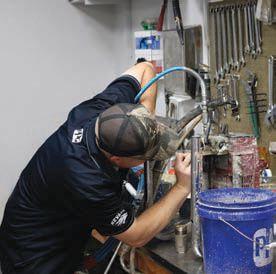
Reno Paint Mart’s stores distinguish themselves by offering equipment repair to customers. Here, employee Evan Deprosse ensures equipment is in peak condition.
Now in its third generation, the team at Reno Paint Mart has never lost sight of its original mission of being a “painter’s paint store,” and the business prides itself on what it offers to professionals as well as to residential customers.
The main draw? “Diversity of products and services,” Becker says. “We offer a lot of unique things they won’t find at any other store.”
A Mammoth Operation
It’s not hyperbole to say that, over the years, Reno Paint Mart has grown into a mammoth operation. The flagship store has nearly 15,000 square feet of space, including a basement warehouse and storage. The store has added 900 square feet of storage in the last five years. Within this footprint, Reno Paint Mart offers one of the largest and most complete paint and sundry inventories in northern Nevada, with approximately 7,000 different SKUs.
The store’s product mix is 65 percent paint and 35 percent sundries, with a small smattering of what Becker calls “softer products.” Inventory includes architectural coatings from two national paint companies; three main brands of industrial coatings; four brands of stain; two brands of automotive paint; a huge selection of sundries; an incredible array of spray equipment, which is sold, rented and serviced by the store; and wallpaper, custom window treatments, blinds and similar products, sold through the decorating center at the Reno location.
At all three stores, Becker and Dankers stock products broadly and deeply. “We take pride in sourcing products that our customers need,” says Becker.
This is no small feat, since Reno Paint Mart’s customer base is so diverse. Professional painters account for the lion’s share of business with 65 percent of sales, followed by residential customers at 25 percent of sales and industrial clients, which can range from small autobody shops to large geothermal plants, at 10 percent. The other two locations are similar but do slightly more business with contractors.
“We also provide several OEM customers with their coating and sundry needs. This is usually a steady business and one that we enjoy working with,” Becker says.
Within its paint lines, Reno Paint Mart offers products at a wide range of price points. Five years ago, the store was selling a good deal of lower-priced architectural paints, which were in demand after the real estate market bottomed out. At that time, Dankers reported that foreclosure fixups had been a large part of the store’s business and that the store’s mix had adapted to the changing market conditions.
Top: Reno Paint Mart serves a diverse clientele of professional and DIY customers.
Bottom: Co-owners Brad Becker and Geoff Dankers are celebrating the operation’s 65th anniversary this year.
Becker notes that specialty-coating sales require a lot of guidance by staff to make sure customers understand the application steps.
Reno Paint Mart has continued to react to a changing market, but those conditions have become more positive in the interim. “We’re in a great climate with a lot of new construction and new projects,” Becker says. And while the store continues to sell a full spectrum of quality products at various price points, there has been an uptick in sales of top-of-the-line products.
Within its paint lines, Reno Paint Mart also does well with specialty-coating products. Concrete coatings in particular sell well in this part of Nevada.
“We sell a lot of concrete stain,” Becker says, noting that he especially likes to help customers with their specialty-coating projects. “For me, those are the fun projects and are a lot more exciting than selling flat paint.”
Becker notes that specialty-coating sales require a lot of guidance by staff to make sure customers
understand the application steps. But there are many rewards, including beautiful end results and highly satisfied customers.
Certainly, one of the most impressive—and lucrative—categories for the store is sundries.
Reno Paint Mart carries a huge array of sundries that includes many top-name brands. The store works hard to make sure the products are attractively priced. “There is always pressure for competitive pricing,” Becker says.
In support of its sundry inventory, the store is a member of the ALLPRO® Corp. buying group.
According to Becker, the membership offers many advantages, including the ability to access a wide range of products.
“There is an advantage in networking, talking to other dealers and finding out what works for them, what doesn’t work and how to go to market,” he says.
Going the Extra Mile
Another rewarding area of the store is the spray shop. Reno Paint Mart is an authorized service center for most brands of spray equipment and carries the largest selection of spray parts and accessories in northern Nevada. It also is a full-service rental center for pressure washers, gas and electric airless sprayers, HVLP turbine units, square buff sanders and floor scarifiers.
Reno Paint Mart employees help their customers tackle paint projects large and small. The operation also offers one of the state’s largest wallpaper and fabric selections as well as equipment repairs.
In helping customers select the right equipment, the store offers personal consultations as well as basic training and demonstrations on rentals and purchases. Additionally, if a contractor has a rental item break on a job site, Reno Paint Mart will pick up, repair and return the equipment.
By having so much equipment on hand, the operation has attracted the rental market in the area, and rentals are available at all three stores. Additionally, Reno Paint Mart generously services any unit, regardless of whether it’s been purchased at the store—a service that sets it apart from the competition.
“We’re really the only service shop in the area, so we’re happy to do it,” Becker says. “When other people bring their unit to us, it’s an opportunity for us to capture more of their business.”
The design center also goes the extra mile for customers. Located at the Reno location, the four designers will go anywhere in the vicinity of the three stores to help their residential and commercial customers. The design center brings years of experience to customers’ projects, as well as one of northern Nevada’s largest selection of wallpaper and fabric books.
However, customers are drawn to Reno Paint Mart not only by what the store has on hand, but also by what it doesn’t. The store has a reputation for locating and ordering hard-to-find products, and this draws sales from around the region.
Selling to and servicing this large and varied inventory is a large and varied staff—some of whom have been with the company for years. Becker and Dankers offer a competitive employee package with continuing education opportunities,
including monthly training sessions. “We make sure it’s a career for them and not just a job,” Becker says.
In total, the three stores employ 35 employees, including inside and outside salespeople to seek out new business and maintain business relationships, Becker says.
While knowledgeable salespeople are a big draw to the store, potential customers can get a good impression of Reno Paint Mart without ever visiting the premises simply by visiting its website or checking out its social media presence.
Becker and Dankers use a professional agency to ensure they have a user-friendly website and get a “good push” on social media. Consequently, the store’s website and social media sites are colorful, informative, thorough in their presentation and easy to navigate for customers looking to learn more about the store’s product offerings.
Additionally, Becker and Dankers participate in more traditional advertising, including local TV commercials, which they are currently running. They also partner with their painting contractors to split the cost of workers’ shirts, thereby promoting both of their businesses.
With all of these efforts, Reno Paint Mart, Truckee Paint Mart and Carson Paint Mart continue to grow and make inroads into their markets. Yes, there is stiff competition, Becker says, naming the usual assortment of big boxes and company-owned paint stores. But Becker and Dankers keep plugging away—and so far, success has followed.
“This is our 65th year in business, and we are looking forward to the next 65 years,” Becker says.
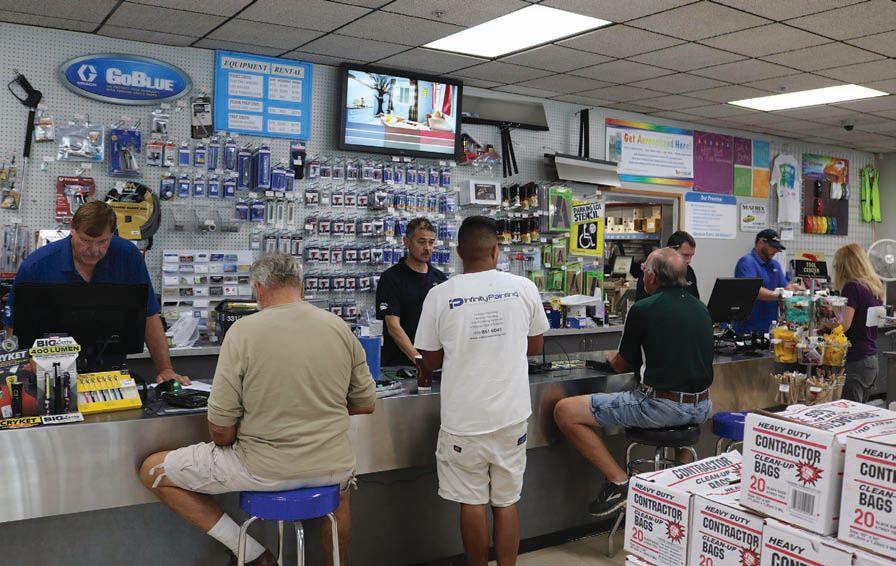
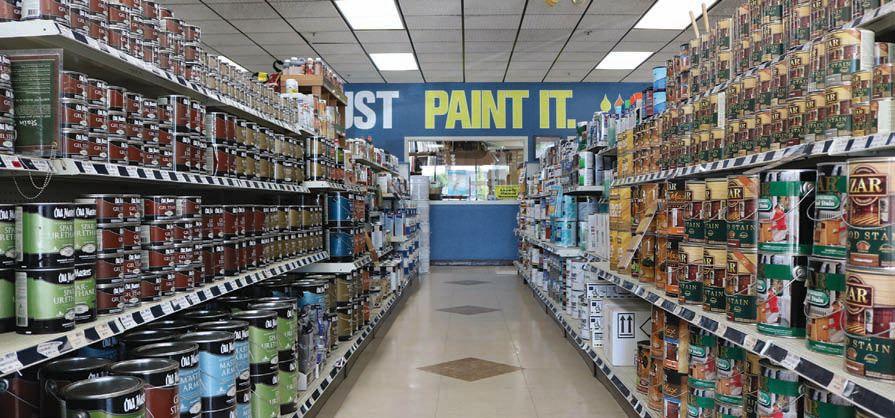
Customers at Reno Paint Mart will discover a wide array of paint products and accessories on hand, as well as a hardworking, knowledgeable salesforce committed to helping customers find the right equipment for their projects.
By Tammy Adamson-McMullen
Protection, Purpose and Polish C
Concrete Coatings Are on the Upswing in Utility and Decor
oncrete holds the distinction of being the most widely used material in the world. And its use is on the rise—not only on the exterior of homes and buildings but inside them, too.
It should come as no surprise, then, that the coatings that seal and decorate concrete surfaces are also growing in popularity.
Concrete coating manufacturers report that sales of their products are up across the board, from primers and stains to clearcoats and sealers. And it’s a trend that shows no signs of slowing.
“There’s little doubt that concrete surface applications are gaining in popularity, and the products designed to treat them are as well,” says Dave Barnes, president of SaverSystems. He notes that while demand has come from professionals, homeowners looking to take on DIY projects are also contributing to market growth.
Traditionally, garages have been responsible for the lion’s share of concrete coatings sales. But there are many more application possibilities today. Driveways, patios,
pool decks, porches, countertops, fireplace surrounds, flooring and more are all boosting sales.
According to Jeff Spillane, senior manager of product training implementation for Benjamin Moore & Co., the natural look of concrete is an important design element in both commercial and residential settings.
“Natural-finish concrete floors are a big trend,” he says. “They can be acid stained, polished, clear-sealed or a combination of those finishes. The capabilities of concrete coatings continue to drive sales and give Benjamin Moore additional product development targets.”
Both flooring and countertops are current design favorites when it comes to concrete surfaces, says Tony Anderson, national sales manager for Anvil Paint & Coatings Inc. Concrete floor coatings are so popular, in fact, that they sometimes win over carpet.
“We’ve been watching the trend of carpet be replaced by other concrete options, like acid stains or the semitransparent look,” Anderson says. “We’re also seeing a lot of high-gloss epoxies being used in residential and commercial office areas.”
Decorative Options
High-gloss finishes, in general, are popular on concrete surfaces for their aesthetics, but they offer practical benefits, too.
“Due to the roughness of most masonry surfaces, there is generally a discussion around sheen,” says Spillane. “While a flatter sheen will aesthetically offer a nice look, it is more likely to hold more dirt. A higher sheen will stay clean and nicer-looking longer.”
The popularity of high-gloss finishes is a somewhat new phenomenon, as decorative preferences have evolved over time. These looks began in commercial and industrial settings and have now moved into residential ones, where they offer a more sophisticated presentation.
“In the 1990s, we began to see epoxy floors with the color flakes that were broadcast over the topcoat,” Anderson says. “Shortly after that, semitransparent stains with different hues became popular. Now, you see homeowners and business owners alike going high gloss and metallic.”
Anderson says that high-gloss sealers, semitransparent stains with glitter and metallic colors are all trending.
“Many consumers are using stencils on top of concrete as a way to create a patterned mosaic floor, making the color composition more complex.”
—Dee Schlotter, senior color marketing manager, PPG Paints
Additionally, Anderson says solid-color coatings currently sell better than semitransparent because of the one-two-three-step application. “All you have to do is: one, prep; two, prime; and three, coat,” Anderson says. “With a semitransparent, it can get more involved, which is why I think the solid color is the easier choice.”
There is also a trend toward incorporating marbleized finishes, which create a high-end look, says Dee Schlotter, senior color marketing manager for the PPG Paints brand. Schlotter says that the trend complements a PPG Paints brand 2018 color trends palette, called “The Brave,” which has deep, rich colors like Charcoal Smoke, Pinot Noir and Black Elegance.
NEWMODELS
Also popular are concrete stencils. “Many consumers are using stencils on top of concrete as a way to create a patterned mosaic floor, making the color composition more complex,” Schlotter says. She explains that the trend is inspired by traditional patterns and complements “The Brave” as well as the “Dreamweaver” color palette, which features muted colors and ethereal brights.
Better-Performing Products
Home improvement shows like “Fixer Upper” and “Love It or List It” and websites like Houzz are partly to credit for the increased demand for concrete surfaces and coatings. However, manufacturers have also responded with better-performing products.
Barnes says that the abundance of how-to information has helped fuel concrete coating sales. “The coatings have also gotten better and more userfriendly in recent years,” he says. “Now it’s more likely that homeowners can complete projects successfully.”
As an example, Barnes says that waterborne resins are better than ever, with improved application and durability. “Blushing from moisture—a real problem with these types of products in the past—has been all but eliminated with some of the newer technologies,” he says.
Photo courtesy of PPG
Jenny Burroughs, senior product marketing manager for the PPG Paints brand, agrees that improvements in products have helped fuel the demand for concrete coating products. “Concrete coatings have seen improved performance temperatures, lower VOCs, quicker dry times and faster application on fresh concrete,” Burroughs says.
As an example, PPG Paints recently unveiled its enhanced Perma-Crete® Pitt-Flex® elastomeric coating, which has many performance features. “This 100 percent acrylic formula is a popular concrete product in the PPG lineup due to its strong yet flexible bond, low application temperature and ability to be applied to concrete with a pH level of less than 13,” Burroughs says.
A broader selection of price points, performance levels, colors and finishes also contribute to additional improvements in the concrete coatings market, says Paul Qualkenbush, brand marketing director for Rust-Oleum.
“Rust-Oleum’s RockSolid brand brings industrial-grade performance and designer finishes to a DIY level while also making the project easier and faster for the DIYer through consumer-friendly features, like a burst-pouch and a 24-hour drive-on time,” he says.
RockSolid Polycuramine, which has a proprietary blend of chemistries developed by Rust-Oleum, is an industrial-grade product made easy for DIYers.
“Polycuramine has a working time two to three times that of traditional coatings at this industrial performance level,” Qualkenbush says. The product offers ultradurability, flexibility and resistance to chemicals, as well as aesthetics with high-gloss metallic, marble and pearlescent finishes and various color options, all of which are appealing qualities for consumers.
Meanwhile, Benjamin Moore, which offers masonry coatings under its own branded products as well as under the Coronado and Corotech labels, is continually at the R&D table. “Continued research and resin development have enabled us to improve our existing products and add additional products to the portfolio,” says Spillane.
But new technologies aren’t the only driver in improved products; a new mindset is as well. Spillane adds that for years the industry looked at masonry as a maintenance-free substrate, and coatings were used for aesthetic purposes only.
“There has been a change, and we now know that masonry substrates can and will deteriorate in time based on the environment, just like steel.”
Concrete Coating Sales to Exceed $1.5B by 2024
You’ve heard “water, water everywhere,” but the expression could just as easily be “concrete, concrete everywhere.”
According to ConcreteHelper.com, concrete is used more than any other man-made material in the world and is the second-most used substance after water. The concrete industry is worth more than $37 billion and produces 10 billion tons of concrete every year.
As a result, the products used to protect and beautify concrete are also a developing industry that is projected to have widespread growth within the next decade.
A recent study by Global Market Insights Inc. shows that concrete flooring coating sales are expected to exceed $1.5 billion worldwide by 2024.
Propelling these coating sales is growth in home renovations and remodeling; robust industries, specifically, food and beverage, pharmaceutical and automotive; and government investments in infrastructure.
And the No. 1 coating of concrete floors? Epoxies, accounting for 50 percent of the market and expected to rise.
Whether you stock a full line of flooring solutions or a limited selection of everyday cleaning products, the evidence is clear that concrete maintenance products should be a consideration.
Photo courtesy of Concrete Decor Show staff
Concrete is an affordable, versatile and long-lasting solution for homes and public spaces. From the foundation to the entryway, designers and decorators are seeing the possibilities in a classic building material.
Photo courtesy of PPG
A Plethora of Products
Additionally, there are dozens of products out there on the market. Manufacturers have expanded their product lines in recent years—not only as an industry but also on an individual basis.
Ron Hutton, director of marketing for Richard’s Paint Manufacturing Co. Inc., says concrete coatings have been a growth category for the company for the last decade. Part of the reason for the growth in concrete coatings at Richard’s Paint is because the company offers such an extensive line of products.
“We do so many different coatings for concrete. The products include some that are a little bit specialized, but most are more broad application,” Hutton says. “And we have a lot of them.”
Hutton says that many companies have moved away from solvent-borne technologies due to ever-tightening VOC regulations. However, while still meeting VOC regulations, Richard’s Paint has continued to offer older technologies that are proven to perform.
One example is the 500 Series, Bond-Crete Solvent/Acrylic Concrete Waterproof/Sealer, which offers a special formulation of solvents, acrylic resin, silicone and color pigments.
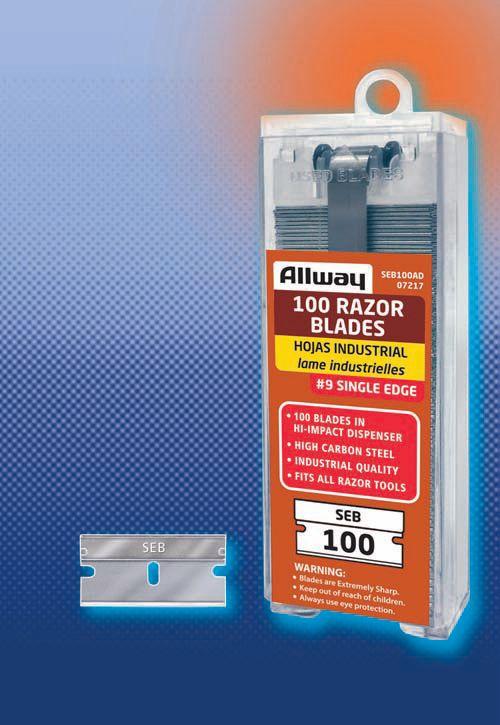
• High Carbon Steel
• High Carbon Steel
• Safer Handling and Storage
• Safer Handling and Storage
• Remove 1 Blade at a Time
• Remove 1 Blade at a Time
• Safely Store Remainng Blades inside Dispenser
• Safely Store Remainng Blades inside Dispenser
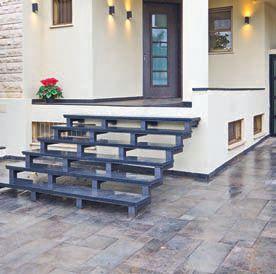
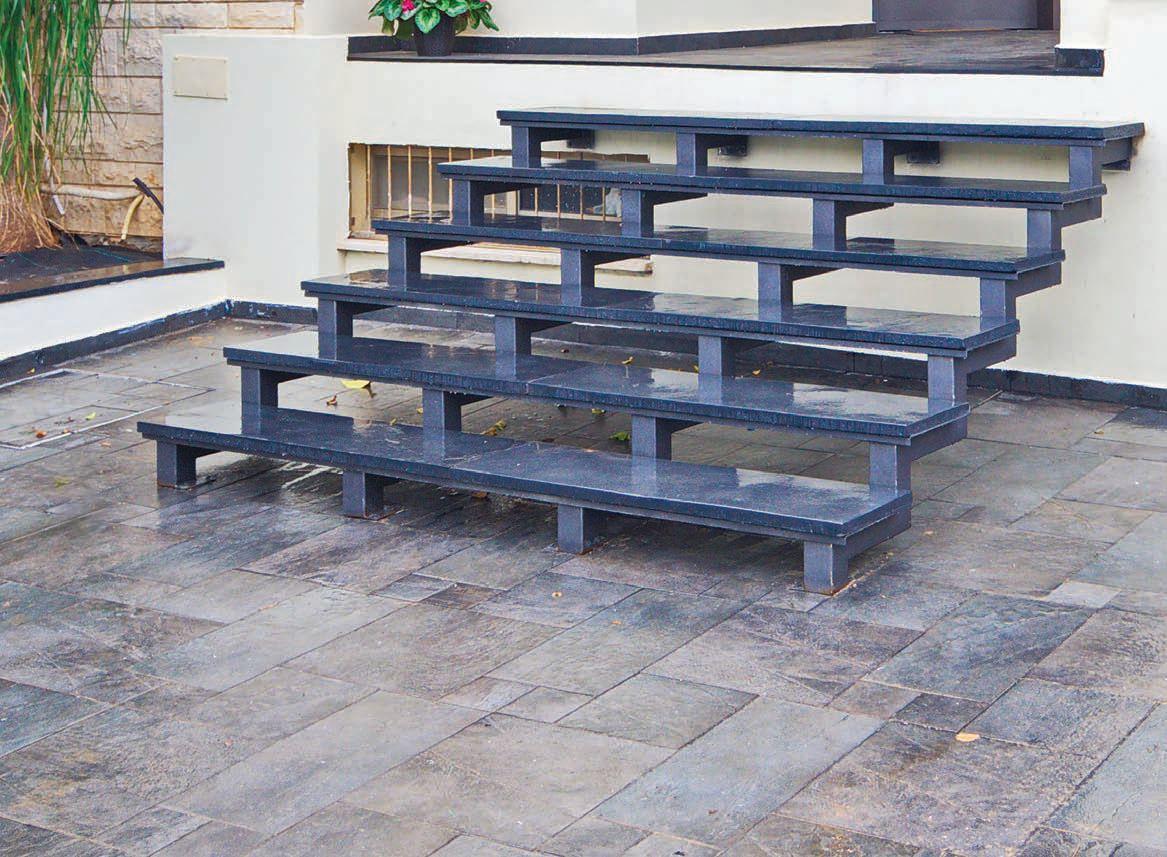
Concrete coatings can protect and add appeal to concrete in both interior and exterior settings, such as the extended front porch seen here.