




















































































































































































































































1025 E. 54th St. Indianapolis, Indiana 317-275-9400 NHPA@YourNHPA.org YourNHPA.org
Melanie Moul Communications & Content Manager mmoul@YourNHPA.org
Lindsey Thompson Associate Editor lthompson@YourNHPA.org
Carly Froderman Associate Editor cfroderman@YourNHPA.org
Autumn Ricketts Graphic Designer
Olivia Adam Graphic Designer
Austin Vance Production Manager
Freda Creech Sales & Production Assistant
Kevin Trehan Digital Media Specialist
Julie Leinwand Marketing Manager
ASSOCIATION PROGRAMS
800-772-4424 | nhpa@YourNHPA.org
Katie McHone-Jones kmchone-jones@YourNHPA.org Director, Member Services & Events
Kim Peffley kpeffley@YourNHPA.org Director, Organizational Development & Consulting
Jesse Carleton jcarleton@YourNHPA.org Training Manager & Editor
Renee Changnon rchangnon@YourNHPA.org Retail Engagement Specialist
LeAnn Day lday@YourNHPA.org Publisher
Scott Gilcrest 317-508-7680 | sgilcrest@YourNHPA.org Director of Sales & Southern Sales Director
Jordan Rice 217-808-1641 | jrice@YourNHPA.org Northern Sales Director
OUR MISSION
The North American Hardware and Paint Association (NHPA) helps independent home improvement and paint and decorating retailers, regardless of affiliations, become better and more profitable retailers.
NHPA EXECUTIVE STAFF
Bob Cutter President & CEO
Dan Tratensek
Chief Operating Officer
David Gowan
With rising interest rates and inflation and continuing supply chain and labor issues, retailers face an uphill climb in 2023, making business planning more important than ever. In light of an uncertain economy and consumer environment, developing strategies around business structure and succession planning can put you in the best position to succeed. Next month, discover business planning best practices and strategies to apply to your operation to weather the next year and beyond.
PAINT & DECORATING RETAILER
(ISSN 1096-6927): Published monthly except December by the North American Hardware and Paint Association, 1025 E. 54th St., Indianapolis, IN 46220. Phone: 800-737-0107. Subscription rates: January through November issues, $50 in U.S., payable in advance. Canada $75 per year. All other countries $100 per year. Single copy $7, except July issue, $25. Periodicals postage paid at Indianapolis, Indiana, and additional mailing offices. Postmaster: Send address changes to Paint & Decorating Retailer, P.O. Box 16709, St. Louis, MO 63105-1209. Returns (Canada): Return undeliverable magazines to P.O. Box 2600, Mississauga, Ontario L4T 0A8. PM# 41450540. Copyright © North American Hardware and Paint Association, 2022.
Chief Financial Officer & Executive Vice President, Business Services
Scott Wright Executive Director, Advanced Retail Education Programs
Whitney Daulton Executive Director of Innovation & Engagement
NHPA BOARD OF DIRECTORS
CHAIRMAN OF THE BOARD
Jared Smith, Jared’s Ace Hardware, Bishopville, South Carolina
EXECUTIVE VICE CHAIRMAN
Craig Bond, Tommy’s Paint Pot, Eugene, Oregon DIRECTORS
Alesia Anderson, Handy Ace Hardware, Tucker, Georgia
Jay Donnelly, Flanagan Paint & Supply, Ellisville, Missouri
Ned Green, Weiders Paint & Hardware, Rochester, New York
Scott Jerousek, Farm and Home Hardware, Wellington, Ohio
Ryan Ringer, Gold Beach Lumber Yard Inc., Gold Beach, Oregon
Jackie Sacks, Round Top Mercantile Co., Round Top, Texas
SECRETARY-TREASURER
Bob Cutter, NHPA President & CEO
NHPA CANADA
NHPA CANADA
Michael McLarney, +1 416-489-3396, mike@hardlines.ca
330 Bay Street, Suite 1400 Toronto, ON, Canada M5H 2S8
CIRCULATION, SUBSCRIPTION & LIST RENTAL INQUIRIES
CIRCULATION DIRECTOR
Richard Jarrett, 314-432-7511, Fax: 314-432-7665


For more than 60 years, our fourthgeneration family company has been committed to providing the finest paintbrushes and rollers in the industry. Each professional applicator is handmade in Tampa, Florida, USA, to meet the needs of the professional contractor as well as the DIY painter.
Corona’s professional tools are constructed to exacting standards. Using a combination of traditional and innovative techniques, we deliver the highest level of performance and durability, the finest finish, and ease of use and cleanup with today’s coatings.
For the next paint job, big or small, think Corona.

Scan this QR code or visit PDRmag.com/october to see these stories and more resources for your operation.
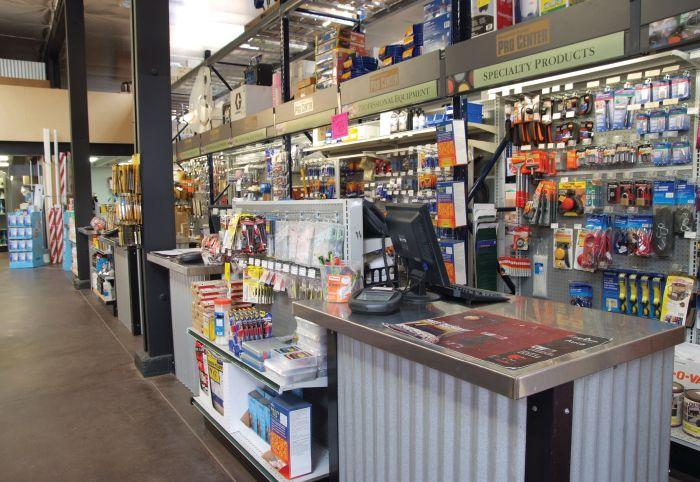
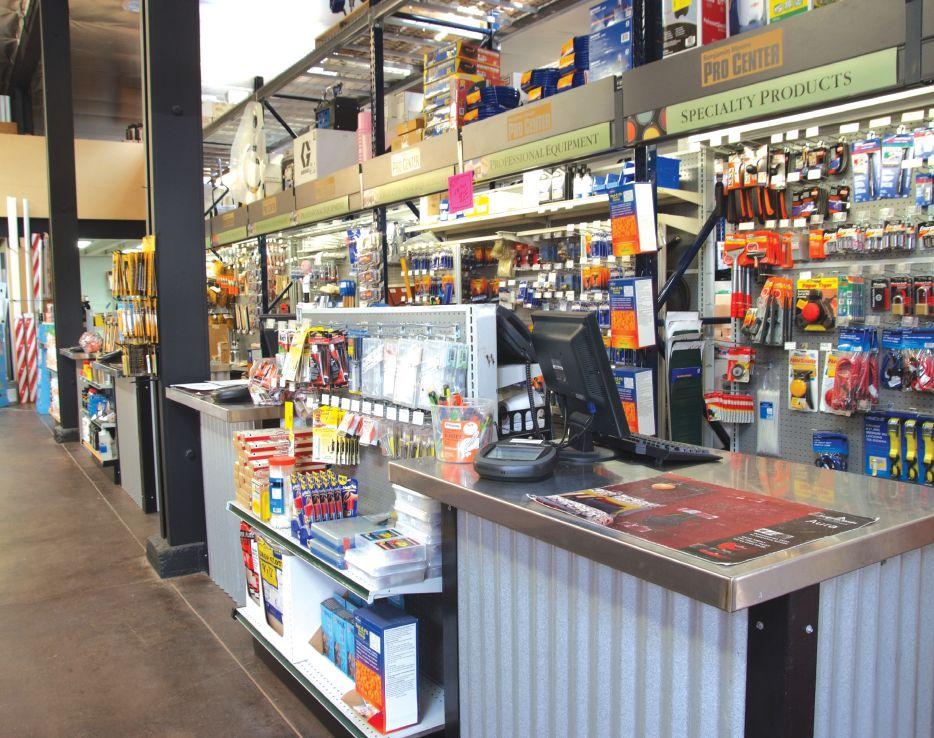
At San Francisco Paint Source in San Francisco, frequently stolen items are kept behind the checkout counter to prevent theft.
FIGHT AGAINST FRAUD AND THEFT IN YOUR OPERATION
Choosing the right loss prevention methods for your operation protects your bottom line and can save you and your employees time and energy. Turn to Page 22 to discover loss prevention best practices from fellow retailers and utilize the online resources below.
Two retailers share how they handle shrinkage issues from internal sources like inventory mismanagement, employee fraud and other administrative errors.
Read about the methods fellow retailers use to manage and prevent theft and fraud issues in their operations.
With many events returning in person, NHPA has been across the country attending fall markets and other events and shares updates and news from around the home improvement industry.
Discover best practices new managers learning the operations side of the business can use to develop an effective pricing strategy.
Check out the different online courses NHPA offers to teach employees about workplace safety and HR compliance.
Listen to Dan’s conversation with Geff Lynch, president of Lancaster, as the two discuss the importance of retailers having an online presence, supply chain issues and the paint industry as a whole.

Scan the QR code or visit the website below to listen.
YourNHPA.org/podcasts


When you think about all the things you need to be successful in business these days, it might seem like a pretty long list. But when I look around at all the retailers I know who are aggressively driving their business, there is one asset they covet above just about anything else—information.
The most progressive retailers I know are hungry for information anywhere they can get it. They attend conferences, participate in roundtable groups, commission research, pore over POS reports and even query their own teams for any edge the insights might provide them. These retail leaders understand that access to information, ideas and insights helps them make better decisions.
As a business leader, whether you decide to embrace this concept or not is a choice. There may be some of you out there who rely on your gut instincts and eschew any kind of more formal information gathering.
I guess that’s why they still print paper maps and copies of the Yellow Pages.
At the North American Hardware and Paint Association (NHPA), we understand how vital it is for progressive retailers to have access to as much information as possible. That’s why we are constantly looking for new ways to provide our members with data to feed their appetites.
“We understand how vital it is for progressive retailers to have access to as much information as possible.”
Take for instance our Cost of Doing Business Study. The latest version is available for purchase by visiting YourNHPA.org/codb. The study provides operators of hardware stores, lumberyards, home centers and paint and decorating outlets with vital insights into how other stores are performing. This study has been around for over 100 years and continues to serve as the standard for evaluating home improvement business performance.
In addition to our venerable Cost of Doing Business Study, we are constantly looking for new ways to add to the library of information we make available to members. For example, this month we are launching a new joint project with noted research firm The Farnsworth Group called the Independent Retailer Index. Together we intend to survey market conditions for independent home improvement retailers regularly and provide these dynamic performance metrics back to the industry.
Lastly, in another new venture, we recently announced that we will be hosting the NHPA Independents Conference next year in Dallas. This conference will bring together retailers, distributors, manufacturers and service providers from across the industry to share ideas and learn from each other. The event’s theme is technology and operational best practices, and attendees will learn more about how leading retailers are utilizing all the tools available to them to overcome challenges in areas ranging from employee productivity and inventory management to customer outreach and marketing. Be sure to visit YourNHPA.org/conference to sign up for updates and receive the most current information on the event.
These are just some of the programs your association is making available to you. It’s entirely up to you whether or not you choose to take advantage of them, but I will leave you with a word of warning: If you aren’t willing to take advantage of all the tools available to you to drive your operation, there is always someone out there who is.
Dan M. Tratensek Chief Operating Officer & Publisher

Send your merchandising tips, event recaps, employee morale boosters and other stories to editorial@YourNHPA.org
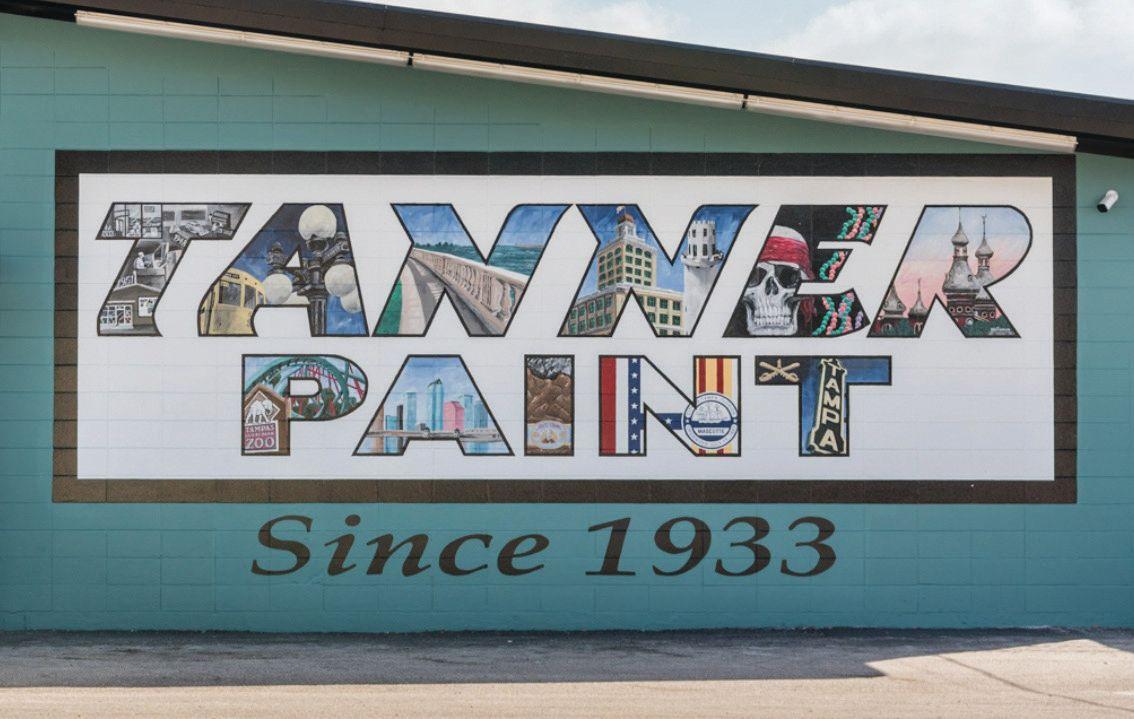
At Tanner Paint Co. in Tampa, Florida, the letters of a mural on the outside of the store spell out the history of the company and the city. Walker Tanner, the company’s owner and fourth generation leader, says the mural was painted seven years ago to share the company’s history.
“The T of the mural features the 1938 store downtown and our store from 1948, when we had a drive-in paint store. It also features photos from when we started manufacturing paint in 1951 and our store today,” Tanner says. “We found a photo of my grandmother and granddad helping customers for the mural, and when the artist painted that photo in the mural, he changed it to be me and my dad helping customers instead of my
grandmother and granddad. It’s a cool way to include us in our history.”
The remaining letters pay homage to well-known spots in Tampa and the Tampa Bay area. The letter A features Ybor, a historical area of Tampa, and the first N represents Bayshore, one the longest continuous sidewalks in Florida.
“My mom really wanted to put a manatee in the mural, so if you look close, a little manatee is popping up in the water on the first N,” Tanner says.
The other letters represent downtown Tampa, City Hall, the water tower, the Gasparilla parade, the University of Tampa, the Tampa Zoo, Busch Gardens, a cigar to represent Tampa’s history in cigar-rolling, the Tampa city flag and the Tampa Theater.
With an eye to the sky and a desire to be more eco-conscious, owner Peter Goedecke of Goedecke Decorating installed solar panels at his store in Bedford, New Hampshire.
Goedecke says in the three years since he installed the solar panels, they have generated nearly $60,000 worth of electricity.
“I like the concept of making our own power and how we are using it to help the environment,” Goedecke says. “Plus, it’s good for business, helping us save money. We used to have electric bills of $1,200 to $1,800 a month, but now our electric bill is just a couple hundred dollars once a year.”
The solar panels have also reduced costs by keeping the parts of the roof that are covered cooler in the summer months.
“The panels have been a big success for sure, it's a good green story, but it's also a good economical one,” Goedecke says. “Our customers seem to appreciate the effort too.”

The solar panels installed at Goedecke Decorating have reduced the store’s environmental impact and saved the company tens of thousands of dollars.

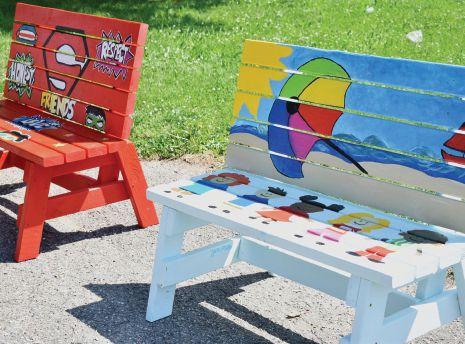
When local organization Survivors Speak needed supplies for a project, Anderson Paint Co. stepped in to help. The operation, which has two locations in Ann Arbor, Michigan, donated paint for buddy benches that were installed at Estabrook Elementary in Ypsilanti, Michigan.
Don McGee, outside sales rep for Anderson Paint Co., says the company got involved with Survivors Speak through the contractor who built the benches. The nonprofit organization uses the arts and other creative platforms to bring a voice to taboo topics and social injustices.
"Anderson Paint Co. is always looking for ways to help the community around us," McGee says. "We were happy to be a part of this worthwhile project."
Visit YourNHPA.org/conference to learn more about the conference and sign up to receive notifications when more details become available.
JOIN US IN 2023 AND GET YOUR TECHNOLOGY QUESTIONS ANSWERED
The North American Hardware and Paint Association (NHPA) has announced the focus areas for the 2023 NHPA Independents Conference, which will take place Aug. 2-3, 2023 in Dallas.
Featured topics for the two-day industrywide event include operations and productivity, cybersecurity and risk management and marketing and e-commerce.
Guided by the theme of “Putting Technology to Work for You,” the conference will highlight the latest in retail technology and focus on solutions independent
home improvement retailers are using to improve their efficiency, their customer service and their competitive advantage in the channel.
The event will feature breakout educational sessions, industry-leading speakers and retailer panel discussions. It will also host two popular NHPA programs, the Young Retailer of the Year Awards reception and the Top Guns Awards. In addition to the education, conference sessions and networking opportunities, NHPA will also invite technology and service vendors to exhibit and meet with attendees.
If you have experience in any of these topics in your operation and want to share your solutions at the conference, reach out to Melanie Moul, NHPA communications and content manager, at mmoul@yournhpa.org
Access the Industry’s Benchmark Tool
Visit YourNHPA.org/codb to purchase the complete 2022 Cost of Doing Business Study
Visit YourNHPA.org/codb to purchase the complete 2022 Cost of Doing Business Study and benchmark your business.
NHPA’s 2022 Cost of Doing Business Study is now available. For more than 100 years, independent home improvement retailers have trusted this annual benchmarking tool to understand how their businesses compare financially to typical and high-profit operations and strategize for the future.
The study offers a wealth of data to help retailers make informed decisions for their operations—with financial
data from independent hardware stores, home centers, lumberyards and paint and decorating outlets. This year, more than 1,000 retailers participated in the study.
The complete study is now available for purchase. Retailers who participated in the study will receive a free digital copy along with a personalized financial analysis. Visit YourNHPA.org/codb to order your copy today.
Visit YourNHPA.org/memberhip to learn more about Premier Membership courses.
With heightened inflation on their minds, many consumers these days are taking a closer look at their spending. To stay competitive, retailers need to keep their prices in line with rising costs while maintaining a positive price image. A solid pricing strategy is essential for staying profitable.
The Basic Retail Pricing online course from NHPA offers an overview of basic pricing concepts and can help owners and managers analyze the effectiveness of their own pricing strategies. The average employee can also benefit from taking this course, as it will give them a foundational understanding of the importance of pricing and how it plays into a business’s marketing strategy.
The course begins with a general overview of why pricing is critical to the overall success of a business. It continues with a module on basic pricing math, showing how to calculate margin and markup. The course also discusses price shopping, different pricing strategies and the importance of maintaining a price image. It concludes with suggestions on how retailers can improve their price strategy to be more competitive while maximizing profits.
The Basic Retail Pricing course is available to NHPA Premier Members on the association’s learning management system. TRAINING

Learn more about the NHPA Health Insurance Program at YourNHPA.org/health-insurance.
Have you reviewed your health insurance options? The NHPA Health Insurance Program provides competitive health insurance benefits.
The program is managed by Custom Benefits Insurance Group Inc. and allows independent operators to access benefits at lower rates due to the volume of retailers who participate in the nationwide program. The program also offers additional benefit options, such as dental, vision, life and disability insurance.
To get started, visit YourNHPA.org/health-insurance, or call 888-201-7408 to speak with a member of the Custom Benefits Insurance Group team.
Retailer Recommendations
Send an email to editorial@YourNHPA.org telling us about the products your customers love and why they are such a hit in your business.
GOLDEN ARTIST COLORS INC goldenpaintworks.com or 800-959-6543
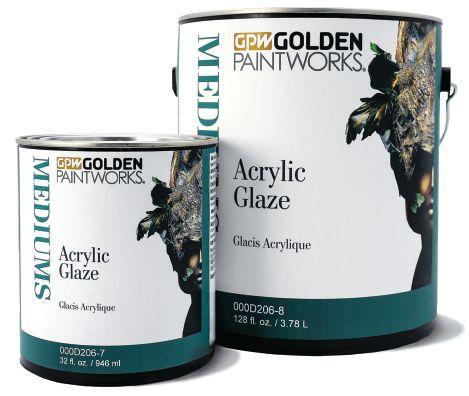
Golden Paintworks Acrylic Glaze is a professional water-based acrylic glaze that has an extended open time to stay wet for longer periods. The glaze is designed to be used over
PURDY | purdy.com or 800-547-0780
Purdy® Chinex® Elite™ Cub™ paintbrushes are pre-flagged for better coverage and fast application. The extra-stiff DuPont filament bristles are durable and easy to clean. They’re designed for heavy-bodied and low-VOC coatings on textured surfaces like stucco, rough-sawn lumber and brickwork. The brushes are handcrafted in the U.S.


FASHION WALLPAPER
YORK WALLCOVERINGS
yorkwallcoverings.com or 717-846-4456
York Boho Luxe Wallpaper is prepasted, washable and strippable. Made from York’s Sure Strip material, it features a straight match with repeating bohemian patterns. Rolls are 27 inches by 27 feet (60.75 square feet).
Visit YourNHPA.org/subscribe to join the mailing list for the Paint & Decorating Retailer Hot Products & Trends newsletter.

WernerCo. | wernerco.com or 888-523-3370
Werner’s Extension Ladder WalkThru™ attaches to Werner extension ladders using a dual-clamping system, allowing users to safely step directly from the ladder onto a roof without stepping out to the side. It improves access to rooftops and provides an ergonomic transition from a ladder to a roof.
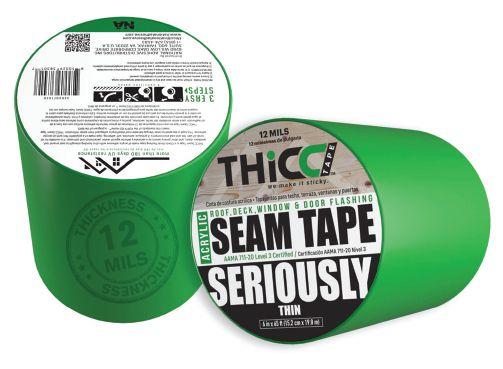
NATIONAL ADHESIVE thicctape.com or 855-674-4583
THICC Acrylic Roof/Deck/Window & Door
Flashing Tape is only 12 mils thick, meeting the AAMA 711-20 certification to seal decks, roofs, windows and doors against extreme weather conditions. It is easy to apply, offers strong adhesion and is thin enough not to get in the way of construction. It is available in 4-inch and 6-inch x 65-foot rolls.
SHUR-LINE | shurline.com or 800-253-7856
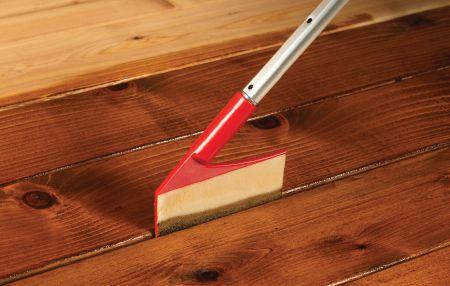
Shur-Line’s Between the Boards Painter is designed for painting edges between deck and fence boards. Its tear-resistant flocked pad provides a smooth finish with all paints and stains. The threaded handle fits most extension poles, and it provides 6-inch wide coverage.
TUNABLE LED PUCK LIGHT
TRESCO® LIGHTING
trescolighting.com or 800-277-1171
Tresco® Lighting’s 4W CCT Power Pockit® is a tunable LED puck light, adjusting between warm 2700K to daylight 6500K lighting while providing even illumination without multipoint diode reflection. It is UL-listed, runs on a 24VDC system and is available in white, black or nickel finishes.

VARIABLE TEMPERATURE HEAT GUN
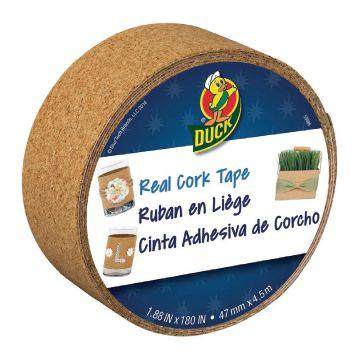
MAKITA USA INC.
makitatools.com or 800-462-5482
Makita’s 18V LXT® Variable Temperature Heat Gun is a cordless solution for anyone who needs a portable heat source. It offers over 21 minutes of continuous runtime with an 18V LXT® 6.0Ah battery, has a variable temperature of up to 1,022 F and a variable airflow of 4.2 to 7.1 CFM. It includes a lock-on and lock-off trigger switch, an LED light and a rubberized soft grip. It is ideal for applying vehicle wraps and tinting, thawing frozen pipes, loosening tile and putty, re-melting adhesive, removing stickers, waxing and de-waxing, bending plastic pipes or sheets, stripping lacquer, paint and varnish and more.
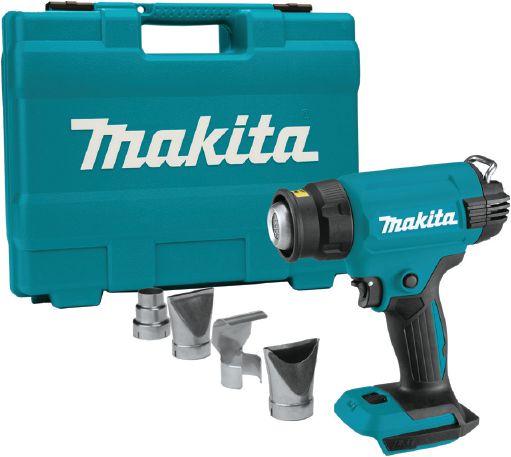
SHURTAPE TECHNOLOGIES
duckbrand.com or 800-321-0253
Duck® Brand Real Cork Tape is ideal for decor and craft projects and features an easy-to-use adhesive backing. The 1.88-inch x 5-yard rolls can be used to create unique corkboards, craft projects, wallets, purses and more.
By Lindsey Thompson
Discover five ways to enhance customer loyalty by focusing on your brand at PDRmag.com/branding
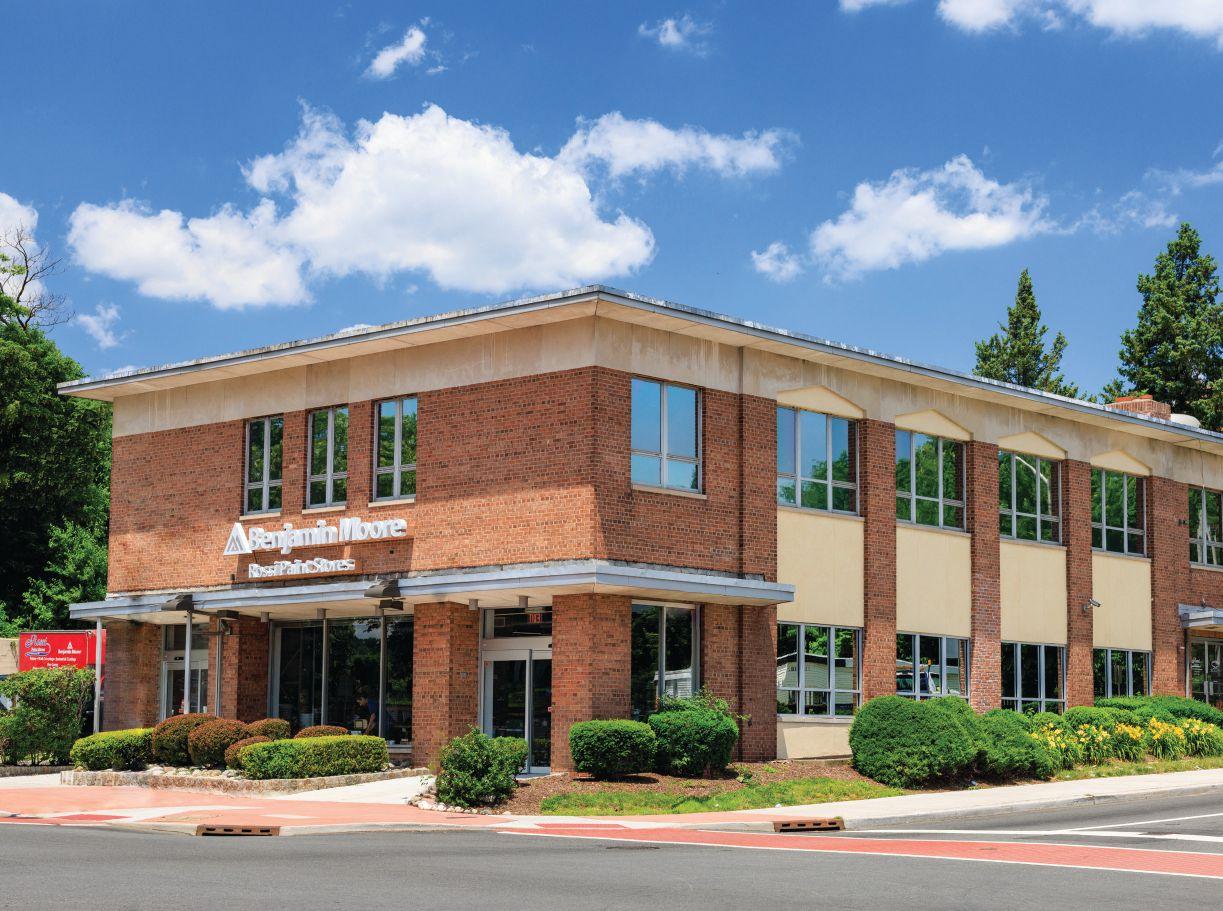
With almost a century of service in the paint industry, Rossi Paint Stores has found a way to honor its storied tradition while adapting to a changing industry. The operation recently underwent an overhaul of its brand, updating the look, feel and offerings of Rossi Paint Stores without losing the history of customer service, fair prices and ethical business practices that made it successful, says creative manager Carl Lombardi. He has been with the company since 2021 and handles the company’s digital presence, including its website, social media and e-commerce.
In 1906, Luigi Rossi, a talented painter, emigrated to the United States from Italy with his family, including his brother Alfred Rossi, who also had a passion for paint. Alfred opened the first Rossi Paint Stores location in the 1930s on Holbert Street in Orange, New Jersey.
About a decade later, Alfred retired from the business, and Luigi went from purchasing his paint from the family paint store to running the operation with his daughter Emma. Luigi and Emma expanded the store beyond paint and sundries, stocking hardware and assorted home goods, but still held true to the family values the store was founded on years before.
After returning from serving in World War II, Luigi’s son Joseph Rossi took over the business and brought the store back to its original roots, focusing on paint and sundries. When Joseph’s sons, Louis and Bernard, joined the business, Rossi Paint Stores opened additional stores and became incorporated.
In 2007, Louis’ son Matthew took over as managing director, the fourth generation of the Rossi family to manage the day-to-day operations.
Rossi Paint Stores currently has stores in Orange, Ridgewood and Wyckoff, New Jersey, and two locations in Staten Island, New York. The Orange location recently moved into a new building on Main Street in Orange, which continues to serve as the operation’s flagship location. The company also offers full delivery service to the entire metro New York City area.
At the flagship location, the company serves mostly contractors with a mix of DIYers. The other locations serve a more even customer mix.
“We enjoy having the capability of catering to both segments,” Lombardi says. “If you are a paint contractor and need to fulfill larger orders consistently, we can fill that need. If you are a DIY weekend type painter, we
“While we are mainly a paint-focused store, we believe in the design of the entire living and working space and can provide our customers with much more than just paint.”
—Carl Lombardi, Rossi Paint Stores
provide a welcoming retail experience with personalized service to help you meet the goals of any weekend project.”
To further meet customers’ needs, the Ridgewood and Wyckoff locations employ a full-time design and color consultant, and the company started expanding into selling custom shelving, Lombardi says.
“While we are mainly a paint-focused store, we believe in the design of the entire living and working space and can provide our customers with much more than just paint,” he says.
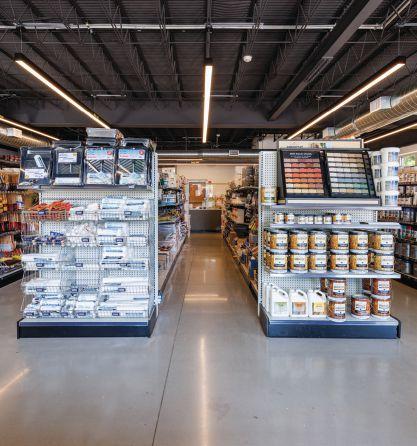
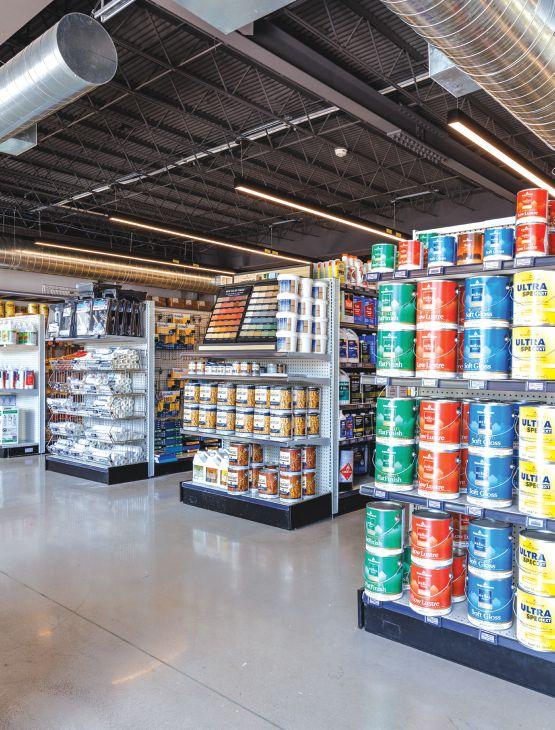
Enhancing the Rossi Paint Stores brand has been a focus for Lombardi, and he has found ways to create a consistent image across brick-and-mortar and digital spaces through big and small changes. Even the new flagship location reflects the company’s brand; it is flooded with natural light, well-designed spaces and a modern feel.
Another piece of the rebrand, the company’s website underwent a complete overhaul, including adding e-commerce capabilities. Lombardi says he was focused on creating a digital presence that would add value to the brand and its DIY and professional customers. He also wanted to take any intimidation out of shopping at specialty paint retailers.
“We have our core offerings, which will always be in stock for our customers. To keep product inventory fresh, we use analytics to see what products are selling to what customers and base our ordering on those stats. If we see an increase in a specific product or line, we know there is demand and expand our offerings. Conversely, if the market makes it clear a product lacks demand, we replace it with something better suited to our consumer base. Our inventory is always evolving based on market demands, and if our customers make it known they need a specific product in stock, then it is stocked.”
“We wanted to create a website that was more helpful and consumer-friendly and that led people to learn more to make them experts,” Lombardi says. “Parts of the new website, like the Product Selector, make it easy for customers to shop with us, walking them through the process step by step.”
During the website revamp, the company also added an internal website for employees to use for training and companywide communications.
Along with the new website, Rossi Paint Stores added digital price tags to replace paper tags in every store. The tags allow for instant updates of inventory, pricing and product availability and simplify inventory management processes with price changes done at the management level instead of the store level.
“The tags are beautiful and also provide a branding opportunity for Rossi’s and our business partners,” Lombardi says. “If there is an area where we can be forward-thinking with technology, we relish the opportunity to incorporate it into our business model.”
The new changes continue to enhance the Rossi Paint Stores brand and honor the legacy of the company, but Lombardi says the company won’t rest on what it has accomplished so far.
“Stagnation is the death knell for any company; companies that rest on the laurels of their past success find that future success is no guarantee,” Lombardi says. “We spend every day improving, evolving and trying to find new ways to provide value in the paint retail space.”
That commitment to improvement comes from setting goals, which Lombardi says are the same whether they are looking at the next day, next month or years down the road.
“We strive to provide the best service to our customers at a fair price while also being ethical in our practices with our commercial partners,” he says. “If your goal stays on the customer and finding new innovative solutions to their needs and wants, the next year or five will take care of itself.”
“If your goal stays on the customer and finding new innovative solutions to their needs and wants, the next year or five will take care of itself.”
—Carl Lombardi, Rossi Paint Stores
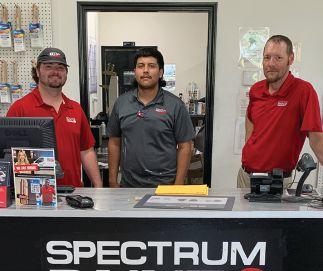
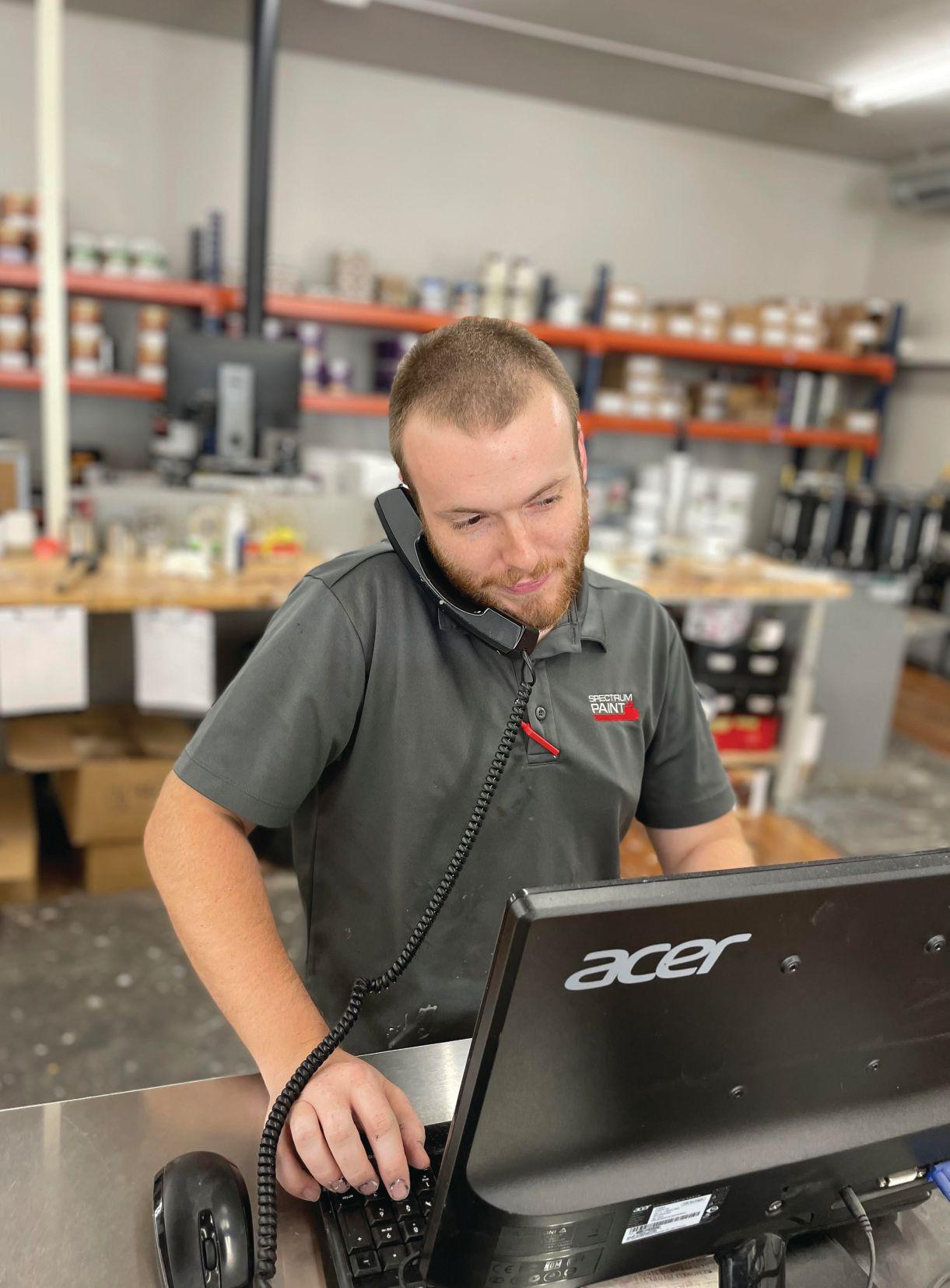
Spectrum Paint employees are trained to only accept credit card orders over the phone if the customer can provide the zip code and three-digit security code.
BY LINDSEY THOMPSON
From organized smash-and-grabs to employee embezzlement and fraud, retailers have been reeling from an increase in asset and product loss since the start of the pandemic. Theft and fraud have always been an unfortunate part of the retail scene, but the pandemic brought on additional challenges.
According to the 2021 Retail Security Survey, published by the National Retail Federation, 69% of retailers saw an increase in organized retail crimes in late 2020 and early 2021. Nearly 65% of retailers indicated that organized retail crime (ORC) became more of a priority last year, and 53% said internal theft was a higher priority. During the pandemic, 22% of retailers saw a significant increase in ORC, and 16% experienced significantly higher rates of shoplifting.
The pandemic can’t take all the blame for the increase in retail losses, however. The growth of online shopping has led to more cybercrimes while increased felony thresholds, where thefts under a certain dollar amount aren’t prosecuted as felonies or at all, have led to more brazen criminals and incidences of retail crime. In the 2020 Organized Retail Crime Survey, two-thirds of retailers reported seeing an increase in the average ORC case value in states that raised the threshold for felony theft.
Just as criminals are getting smarter and bolder, loss prevention programs have also evolved to offer better protection against asset and product losses. To assist retailers in tackling this important part of any operation, Paint & Decorating Retailer shares four solutions from Jeff Miller, loss prevention manager for Spectrum Paint.
Miller started in the paint industry 28 years ago working for an industrial and lacquer coating manufacturer in research and development and manufacturing quality control before becoming a regional operations manager for Kwal Paint. He joined the Spectrum Paint family when Spectrum purchased Kwal Paint stores and worked in several departments with Spectrum before moving into an inventory control manager position in 2013. In this role, Miller was responsible for the physical inventories at all the locations and investigated missing product and employee fraud, job duties that led to him becoming Spectrum Paint’s first loss prevention manager in 2021.
“Spectrum Paint now has 92 paint store locations in 10 states,” Miller says. “The growth of Spectrum Paint and the number of stores and employees we now have has made it necessary to have this role.”
Nearly 65% of retailers indicated that organized retail crime became more of a priority last year.
Source: 2021 National Retail Security Survey, National Retail Federation.
$461.86
was the average dollar loss per shoplifting incident in 2020.
For San Francisco Paint Source president and owner James Fregosi, loss prevention hits close to home. Over a decade ago, employee fraud and theft resulted in a six-figure loss that accounted for 1.6% of the cost of goods sold over an 18-month period. The experience led him to revamp the operation’s loss prevention practices, and since then, he has continued to evolve his loss prevention strategies at the store and relies on careful accounting and keeping a close eye on the business.
While that practice is easier said than done, especially for busy owners with lots of other areas of the business to handle, Fregosi says it’s crucial to stopping theft and fraud. He reads reports routinely, looking for discrepancies.
“We look at margin, and we look at the customers who bought from us,” Fregosi says. “Understanding what the
reports say is critical for loss prevention on a big scale, when it comes to embezzlement or an employee working with a customer outside the store to steal from the store.”
While technology is helpful when it comes to loss prevention, it needs to be closely monitored as it can become a source of the problem. Part of the theft issue at San Francisco Paint Source was corrupt employees who took advantage of technology in place at the store to steal from the company.
“Technology allowed those issues to happen, and we had to take personal responsibility for that,” Fregosi says. “We have systems in place now where in less than a minute, I can see everything in the business. We also look closely at who is buying from us, and who’s coming into the store. If something doesn’t line up, we look closer.”
Learn how two retailers handle internal shrink issues, including returns fraud and inventory errors at PDRmag.com/internal-shrinkage
For Spectrum Paint, most employee fraud comes from employees using fraudulent cash refunds, running cash invoices or canceling transactions and taking cash, Miller says.
He says his operation’s No. 1 loss prevention tool is security systems with cameras. The cameras provide days of saved video that can be reviewed later, and the monitored security system prevents break-ins when the stores are closed. The stores also have cash drawer sensors that trigger a one-minute video every time a cash drawer is opened.
“We developed nightly reports I look at every day that allow me to video review every refund, canceled and aborted invoices and inventory adjustments being made in all stores,” Miller says. “This method has allowed me to catch employee fraud.”
Spectrum Paint has two hardware stores as part of its operation and Miller says security cameras are important for both types of stores but in different ways.
“Compared to paint stores, the hardware stores provide more opportunity for shoplifting, as there is more foot
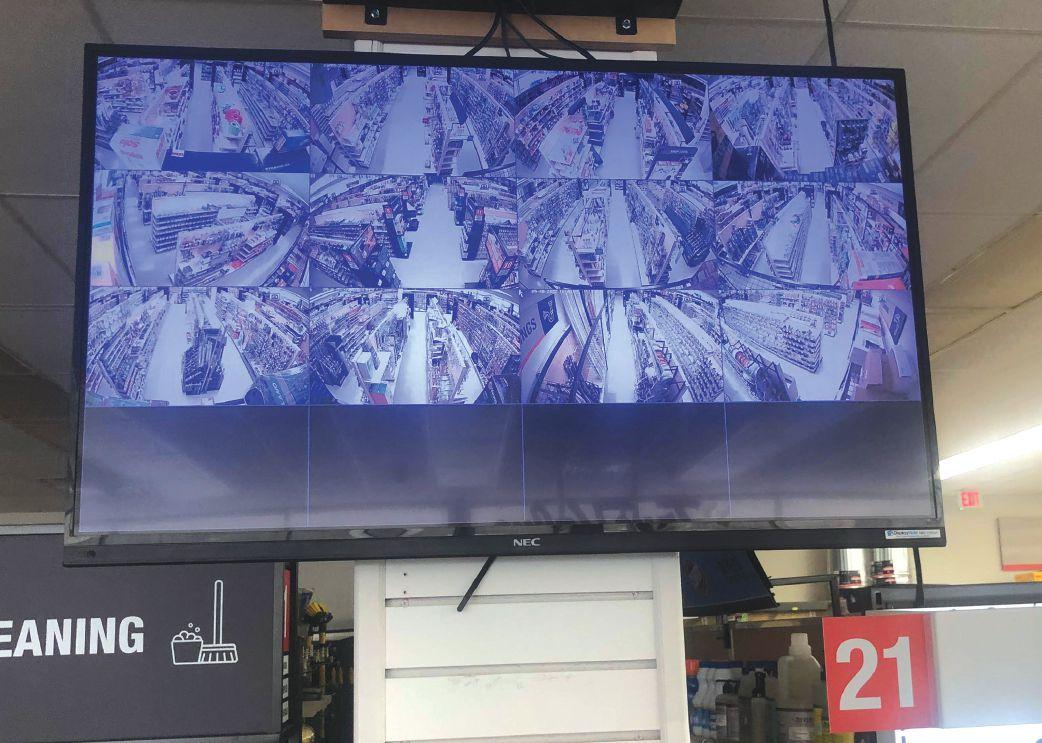
A CLOSE EYE
Adding security cameras and security mirrors have been an effective theft deterrent for many of the Spectrum Paint store locations.
traffic, and many very small items are easy to steal,” Miller says. “The hardware stores typically have more cameras covering every aisle and visible TV monitors, so customers know video surveillance is in place. In our paint stores, we use fewer cameras focused on high theft areas, entries and the check out areas.”
Miller monitors company-issued credit cards, and he also utilizes a vehicle tracking service to monitor company vehicle use.
“With hundreds of credit cards and company vehicles, I monitor these daily to keep credit card fraud and misuse of vehicles in check,” Miller says.
Paying attention to the time of day is also important, as most fraud occurs early or late in the day when an employee is by themselves, Miller says. He also says the days right before payday can be a trigger for theft by employees.
Each of the Spectrum Paint stores are merchandised so high theft items like paint brushes and tools are visible to employees in the work or tint areas.
Merchandise smarter. Fregosi says the positioning of the store’s inventory minimizes theft and allows employees to serve customers more efficiently. His store is designed so the expensive quick-pocket items are displayed behind the counter.
At Spectrum Paint stores, theft by customers in the store is a small part of the problem, but customers using stolen credit card info to make purchases is a bigger problem, Miller says. The operation takes many call-in credit card orders a day, making it difficult to catch every instance of fraud, but adding over-the-phone checks has helped catch more fraud. For phone orders, the customer must provide the credit card’s 3-digit security code and zip code and have an established account or be a repeat customer. If they don’t have an established account, the customer can purchase in a store with a photo ID. These checks are especially important for large purchases like spray rigs, one product where the company has seen the most fraud with call-in orders.
Employee training is another key component of loss prevention, even with many retailers reeling from worker shortages. Employees at Spectrum Paint are trained to watch groups of customers that come in because thieves will sometimes work in groups, Miller says; one or two people in the group distract the employee while the others in the group attempt to steal.
“Lack of staffing always presents a challenge in all areas and any time our stores are short staffed, it only makes it easier for theft to occur in the stores,” Miller says. “Having the cameras installed and visible lets people know they are being watched. In stores where we have high customer traffic, we sometimes also put a monitor where customers can see they are being viewed in the store.”
Cycle count. To check for products that have left the store that haven’t been paid for, Fregosi does spot inventory checks and cycle counts of certain products. These checks are also a good way to catch any other potential inventory issues, he says.
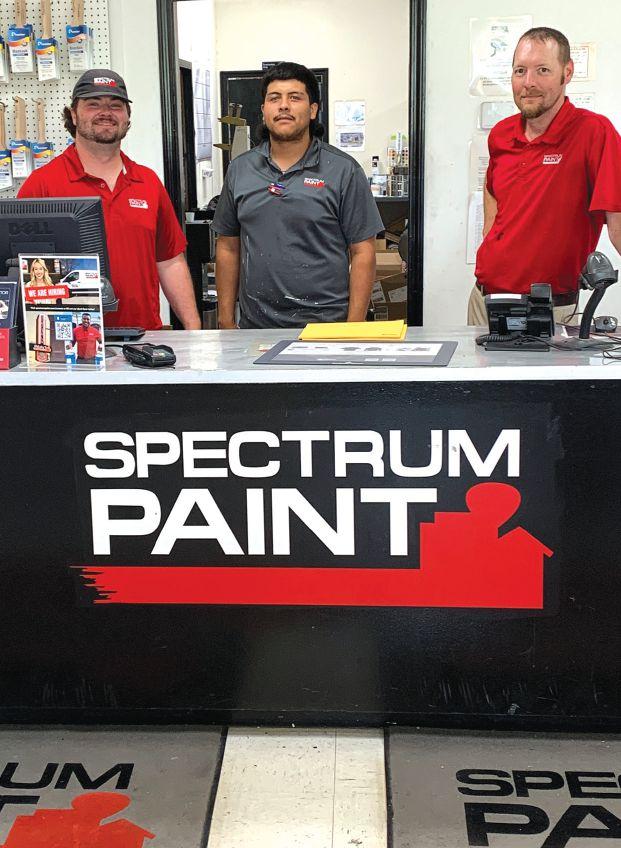
A TRAINED EYE
Employees at every Spectrum Paint location are trained on the red flags to look for that could indicate theft or fraud.
BUSINESS FOR SALE
Northwest Farm & Home Supply Co.
Location: Lemmon, SD
Gross Revenue: $3.21 million
The main building is a total 27,213 sq. ft. of retail and warehouse space on 4 acres. The main bldg. was constructed in 1994 with additions constructed in 2002 & 2004. Single story with 22’ clear height in 11,459 sq. ft. of lumber warehouse, three grade level doors and two dock height doors.
BUSINESS FOR SALE
Location: Vermont
Gross Revenue: $2.82 million
Price: $1.1 million
Full-service decorating store providing flooring, paint, window treatments, kitchen/bathroom remodeling, cabinetry product offerings, design assistance, specialized service, and professional installation.
SEEKING BUSINESSES
BUSINESS FOR SALE
Home Improvement Supply Store
Location: Missouri
Gross Revenue: $1.04 million
This historic home improvement and hardware store is a staple of its community and operates from its headquarters in Missouri. The Company is a long-standing retailer and installer of consumer and commercial improvement products.
BUSINESS FOR SALE
Hoosick True Value
Location: Hoosick Falls, New York
Gross Revenue: $1.26 million
Price: $1.875 million
This opportunity offers a turnkey sale of a general hardware operation located in northeastern Rensselaer Co., New York. The business serves five towns, southwestern Bennington Co., Vermont, and 25 miles east of Troy, New York.
For our next acquisition, we are looking for:
• Single-store and multi-store hardware operations
• Located in northeast and southeast United States Store size of 5,000-30,000 ft2
• At least $3 million in average store sales
BUSINESS FOR SALE
Private Business
Location: Alabama
Gross Revenue: $2.21 million
Price: $649,000
SEEKING BUSINESSES Bolster Hardware
We are looking for:
• Geography agnostic
• With or without real estate Store revenues of $1.5M+
• We prefer to honor the family name and heritage in the local community by not changing the name
• We prefer to keep all employees as part of the acquisition

BY JESSE CARLETON
If you’re not making price changes today, you may not be in business tomorrow. That’s the stark reality of a market plagued by higher-than-normal inflation and supply chain issues. When cost outruns the shelf price, retailers who fail to keep up may run out of cash. A solid pricing strategy is essential for survival.
To learn how retailers are coping with pricing, Paint & Decorating Retailer spoke with two retailers who offer four key components to an effective pricing strategy and a positive price image. Glen Morosohk is the general manager at Ricciardi Brothers Paint, with 48 locations across
New Jersey, Pennsylvania and Delaware, and Brad Green owns West Branch Ace Hardware and Standish Ace Hardware in Michigan and is the creator of the Margin Master pricing software.
This year, inflation has caused prices in the home improvement industry to change frequently, sometimes as often as weekly. That’s a shock for an industry where retailers could typically get by with relatively few price changes.
“In the past, manufacturers would increase prices about once a year,” Morosohk says. “Now with the supply chain shortages and cost of raw
materials, we are getting price changes sometimes on a daily basis.”
Managers at Ricciardi Brothers stores are responsible for reviewing and implementing price changes right away. If the price increase is significant, company leadership may increase the price on the shelf gradually so as not to cause sticker shock for the customers, but either way, making price adjustments isn’t optional. Let the price go unchanged for too long and the replacement cost of an item exceeds the price you were selling it for.
Price increases can also be a challenge for his contractor customers, Morosohk says. If they quote a job six months in advance and the price changes, they could lose a lot of money, especially if the price has increased 25% over that time. While he can’t change his price, Morosohk says communication is vital for those customers. He notifies them as soon as he knows about a coming price increase, which puts the responsibility on them to protect their own price with their customers.
As both a retailer and a software developer, Green has spent his career thinking about pricing strategy and helping retailers understand the impact even small price adjustments can make to the bottom line. He says that many retailers have long struggled with pricing, and the current state of inflation will make matters even worse.
“First, lose the assumption that everything is priced correctly in your store,” he says. “Pricing for most retailers is a mess and it’s costing them 2% or 3% profit simply because prices are not where they should be. And you can’t make up the profit you’re losing, for example, by cutting more keys; you need to update your retails to a proper price point.”
But even if prices are perfect in the POS system, the right price still has to make it to the shelf. That’s where many retailers have trouble. One of the most common complaints Green hears from other retailers is that they don’t have time to change prices. To compound the issue, it’s hard enough to find enough staff to wait on customers, let alone change the bin tags for a price adjustment. However, not changing the prices will cost you significant profit dollars and can lead
to customer confusion if the price on the shelf doesn’t match the price at the register.
If you’re short staffed or can’t do the changes during regular store hours, you may need to ask employees to stay after for a couple of hours and pay them for the extra time. He suggests finding a way to make the activity fun, such as buying them pizza or a movie ticket.
“If you don’t have time to update prices, you don’t have time to stay in business; it’s a recipe for disaster,” says Morosohk. “If you’re not in the habit of updating prices, then it’s time to reinvent the way you do things. We all wear a lot of hats and time is at a premium, but like anything else, you have to prioritize the importance of what you do. Margin erosion is the cause of death for most businesses. Your survival depends on being able to keep up with price changes. Not changing those prices is costing you thousands of dollars, so whatever it takes, you have to get it done.”
“Pricing for most retailers is a mess, and it’s costing them 2% or 3% profit simply because prices are not where they should be.”
—Brad Green, West Branch Ace Hardware and Standish Ace Hardware
Suitable for all employees, NHPA’s Basic Retail Pricing course explains pricing fundamentals. Learn more at YourNHPA.org/membership.
Higher cost of goods, higher expenses due to inflation and rising labor costs are just a few of the reasons why now, more than ever, retailers need to be savvy about their pricing. If it’s been a while since you reviewed your overall pricing strategy, take the time to analyze every department in your business to make sure you’re maximizing your margins. Be sure you’ve kept up with any changes in the competitive landscape around you, too. Using suggested retail prices is a good start, but you may choose to adjust the prices based on your goals for a particular department.
“Too many retailers blindly follow suggested retail pricing, but there are many unique pricing opportunities and challenges in every market,” says Green. “Implementing an intelligent market driven pricing strategy will deliver an improved bottom line. Establishing pricing that achieves the desired profit levels is the most important role in a retail operation.”
There may be areas where you need to maintain a thin margin to stay in line with competitors on price sensitive items. However, there are also many areas where you can improve margins without affecting your pricing image. Or, you can look for alternative products for some categories.
To compete with the big-box retailers in his market, Morosohk says he shops for alternative products in certain categories that will allow him to make a larger margin. Switching brands on items that are not brand-sensitive to his customers usually allows him the opportunity to either add margin points or just maintain prices at a healthy level.
Another tactic is to utilize price management software such as Green’s Margin Master to keep up with price changes and identify margin opportunities. Many times, price changes will be incremental and customers may not even notice.
When Green talks about raising prices, he’s not talking about gouging customers. Rather, he suggests strategically adding a few pennies or dimes to the price on selected items, which will make a big difference for the business.
“I think pricing is critically important. If retailers had a way to drive another 3% or 4% to their bottom line by something other than pricing management, they would do it,” Green says. “They’ve already squeezed their expenses to the max and there’s not a lot of other places to turn for margin improvements. But a small 5% or 10% change in prices adds significantly to the bottom line.”
Even if you’re making weekly price changes and the cost on the shelf is higher than it’s ever been for consumers, it is still important to maintain your competitive price image. Inflation is hitting all home improvement retailers equally and big-box retailers will also be raising their prices to stay profitable. As it has always been, using a price matching guarantee will be one of the best ways to level the playing field and survive today’s pricing challenges.
“Many retailers may be fearful of it but it’s important they get past it; hang up a banner in your business that says you’ll match anyone’s price,” says Green. “Big-box stores do that and in fact say they’ll beat a competitor’s price by 10%. Don’t be afraid to
While rising prices are affecting consumers’ purchasing, there is still a high intent to pursue home improvement projects, spelling opportunities for retailers.
Source: Numerator 2022 July Home Improvement Report of




If the customer wants you to match the price on an item that is not the same as what you sell, then take the time to explain the quality differences between your product and the competitor’s.
do that too. If we were to track how many times a customer actually asked to match a price, it’s not very often.”
When a customer does challenge your price, then match it, even if you make little or no margin, he says. If the customer wants you to match the price on an item that is not the same as what you sell, for example, it’s a different brand or model with different features, then take the time to explain the quality differences between your product and the competitor’s. Put the focus on the quality of the product rather than the price.
Even when the price match seems unjustified, don’t send the customer away upset and without the product, because they may never come back. By rejecting their price match request, you will have solidified in that customer’s mind the impression that your prices are too high, especially if they visit a discount retailer and start comparing all of your prices. The cost of losing that one customer, who is sure to tell their friends about their experience, is more than a few dollars lost on a single product. Instead, says Green, maintain your price image the same way the big boxes do. Price match, but also utilize good merchandising techniques such as endcaps, dump bins and impulse displays. Look for margin opportunities wherever you can, but also make sure you are priced right on all of the price sensitive items.
Since you have a price matching policy, customers will perceive you are priced competitively. The amount of price competitive leverage you can gain with a price matching policy far outweighs any money you may lose on a single transaction.
Price has become a top concern for homeowners tackling DIY projects, meaning it’s more important than ever for retailers to create a value proposition to earn their business when they’re ready to buy.
of consumers put off a home improvement project in July 44%
58%
put off the project because of budget or finances
52%
put off the project because of material prices
Source: HIRI and the Farnsworth Group, August 2022 Home Improvement Monthly Tracker
Get some additional pricing basics every new manager needs to know, at PDRmag.com/pricing-basics
Customers want low prices but also quality. Many retailers offer a combination of competitive prices, outstanding customer service and quality products, but at the end of the day, one of those three will rise to the top as what sets you apart.
Customers who find good customer service and a quality product at your business will return. Most will expect to pay a slightly higher price in return for that shopping experience. In the end, a healthy retail strategy should be value-based rather than price-driven.
Selling on value may help defer the conversation with the customer away from price and toward what the product will do for them.
“The price may not be the price on the can; we talk with customers about the job as a whole,” says Morosohk. “We look at the cost of the job. There may be certain attributes of the product that make it easier to put on the wall or require fewer coats. It may be more expensive per gallon but saves labor. That is something we can quantify and sell to the customer.”
Look for other ways to add value where your competitors aren’t, such as having a seamless online shopping experience, design services, convenient parking and free delivery. Even during a time of high inflation, value will still make a difference when customers choose where they will shop.
“When a customer pulls out of their driveway and heads for the hardware store, they’ve already made up their mind where they are going,” says Green. “They could turn one way and go to the big-box or turn the other and go to your store. They’re coming to the independent retailer, maybe expecting to pay a premium price, but they are also expecting you to call them by name, ask about their kids and ask them how you can help them. That’s why they‘re coming to you. If they were only looking for the cheapest price, they could order it on Amazon and have it tomorrow.”
Of the 54% of consumers who said they would decrease or stop spending on non-essential items in the second half of 2022, only 35% said they would cut back on home improvement purchases. Restaurants Non-Essential
Most Common Items to Cut Back
Source: Numerator 2022 July Home Improvement Report







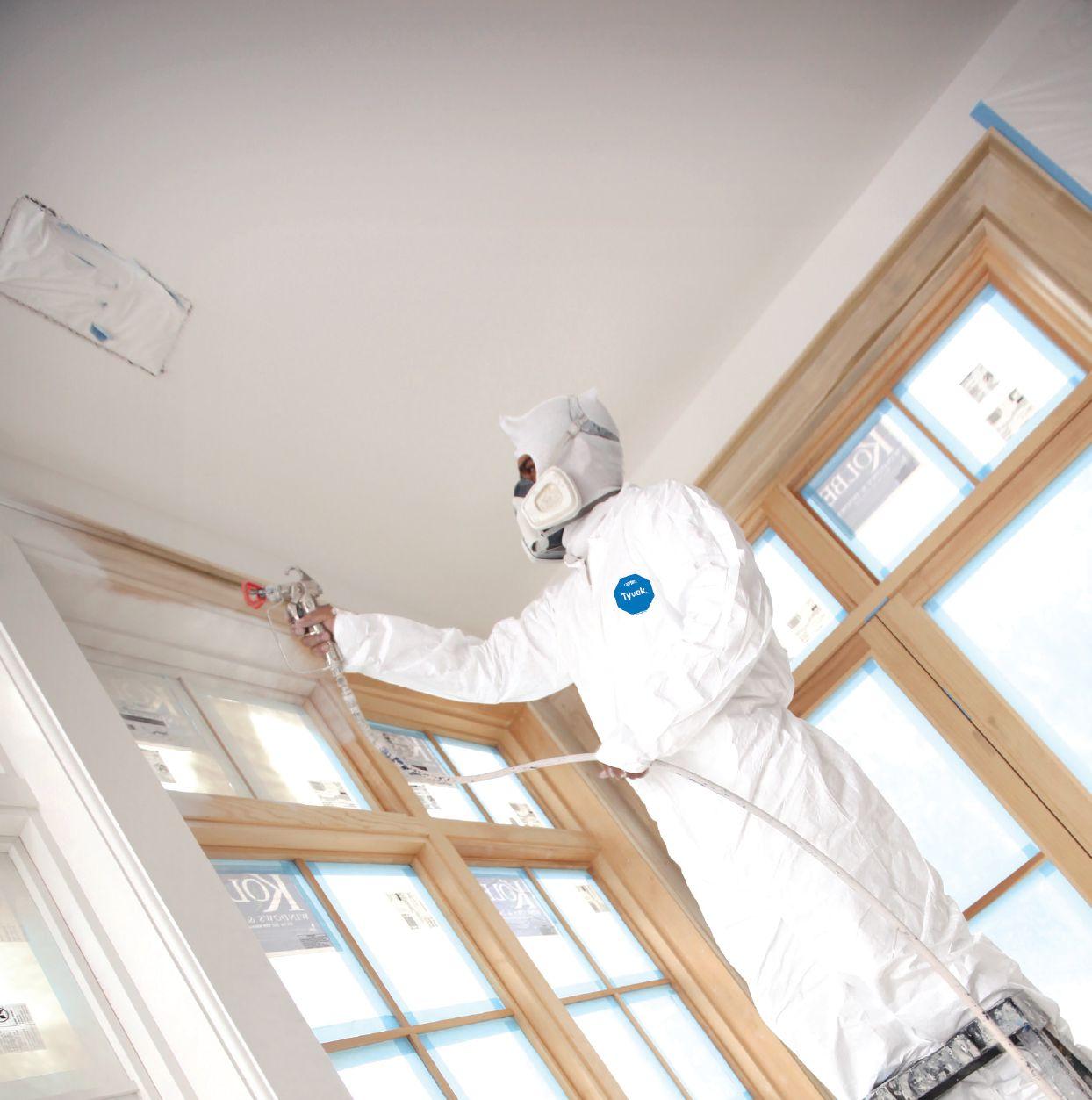



In what seems to be a common refrain for many types of products and services involved in home remodeling and renovation, the paint product market has been overwhelmed with strong demand and supply constraints in the previous year. Early in the pandemic, homeowners confined to their homes did exactly what you would expect and began to modify their houses. At that point, due to the understandable health concerns, much of that work was DIY.
Historically, the Home Improvement Research Institute (HIRI) has tracked painting as one of the lowest barriers and easiest DIY entries in home remodeling. Paint and preservative sales estimates demonstrated significant DIY painting activity throughout 2020 with 15.6% growth and another 8% growth in 2021, showing there was very high demand for paint products. In fact, in HIRI research, we see the number of households that purchased paint and sundries increased by 16% from 2019 to 2021.

Moving forward to this year, we are seeing a slightly different picture. On the consumer side, HIRI isn’t expecting to see any growth in paint sales over 2021. While it sounds negative, it is saying that demand is still at nearly an all-time high. There is no expected shrinkage in the market, just no growth. On the pro side, we see a shifted timeline compared to consumers. While 2020 had moderately strong growth for pros, it was not comparable to the consumer side of the equation. That difference shifted in 2021 with much stronger growth for pros than consumers. Now moving into 2022, pro sales growth is tempered but still much stronger than the consumer side.
With strong demand for the better part of two years, paint suppliers, while rushing to meet demand, are struggling to keep up. While the manufacturers have been facing similar delays as manufacturers of other types of products, there are additional aspects that act as a headwind to keeping up with this strong demand. While not often thought about, there are dozens of individual components that go into making paint, and each of them has its own supply chain and constraints. Some of these supply chains have seen reduced production in some form or another. Originally, we were seeing additive shortages to create certain hues of blue paint in 2021. Without consistent dyes and additives, it becomes impossible to achieve consistency from one batch of paint to another.
Lately, we’ve been seeing more natural disasters playing a role: weather slowing down petroleum production, fires at a polymer factory, wildfires devastating linseed crops and others. These struggles will sort themselves out over time, but it is not an expedient process and will have some lasting impacts on the paint market for the next several quarters.
“While not often thought about, there are dozens of individual components that go into making paint, and each of them has its own supply chain and constraints.”

BY LINDSEY THOMPSON
While painting isn’t inherently dangerous, there are risks involved like burns and breathing issues caused by the chemicals in paint products. Safety gear and personal protective equipment (PPE) are the last level of protection against hazards in the hierarchy of controls and can be the determining factor in whether a worker stays safe on the job, says Nicole Randall,
director of marketing and external affairs for the International Safety Equipment Association. Selling paint safety products alongside paint, rollers and other supplies positions you as a one-stop shop and go-to place for your customers’ painting needs, whether they are weekend warriors or professionals. Read on to discover the top safety products to stock and why every painter should be using them.
Remind employees of common hazards found on the salesfloor with the NHPA safety worksheet. Download the checklist at YourNHPA.org/safetychecklist
Safety gear only works when used correctly and consistently, so a plan must be put in place to ensure workers understand and feel comfortable using it, Randall says. Along with selling the safety products customers need, instruct them on proper usage based on the manufacturer specifications and standards from safety organizations like the Occupational Safety and Health Administration (OSHA).
Protective eyewear is especially important when handling paint thinners, lacquers and other paint chemicals and when using a paint sprayer or painting above one’s head. Have customers try on the eyewear to find the tightest but most comfortable fit.
Respirators keep the user from breathing in harmful chemicals and vapors that can damage the lungs. The type of respirator a customer needs varies depending on the type of painting they are doing, with heavy-duty options recommended for spray painting and when using toxic materials.
Gloves protect skin on the hands from chemicals and solvents while painting. Gloves should have a snug fit but be comfortable and flexible enough to allow the painter to work.
Coveralls and shoe covers are equally valuable for cleanliness as they are for safety, keeping clothes clean and protecting the user’s skin.
Mitigating heat stress has become a major focus this year, Randall says. Along with prevention tactics such as rest, hydration and shade, cooling PPE can be used to reduce the core body temperature. With so many painting jobs taking place outdoors, this issue is an important one your customers need to know. Along with cooling PPE, carry other products like sunscreen, hats, cooling towels and water bottles to keep your customers safe.
OPERATIONS
Digital Protection
Learn five resources you can utilize to protect your business from cyberattacks at PDRmag.com/ransomware
RANSOMWARE IS A TYPE of malware that can either encrypt all of your data so you can’t access it or lock you out of your computer. According to IBM Security’s X-Force Threat Intelligence Index 2022 Full Report, 21% of cyberattacks were ransomware attacks in 2021, making them the top security attack type for over three years. Educate yourself on the risks and discover strategies to mitigate and avoid ransomware attacks.
Backing up data, encrypting those backups and making sure they aren’t connected to the primary network are the most effective ways to recover from a ransomware attack. Backups also save you from needing to pay a ransom or losing data. 57%
of respondents to Sophos’ The State of Ransomware 2021 survey who had been hit by ransomware recovered their data through a backup.
of online attacks used phishing for initial access in 2021.
Phishing is when criminals send emails posing as well-known companies or even internal staff to get recipients to divulge sensitive information or to gain access to a network. Implement phishing exercises into employee training to protect your business.
Sources: X-Force Threat Intelligence Index 2022 Full Report, IBM Security; Blueprint for Ransomware Defense, IST; The State of Ransomware 2021, Sophos.
5
Create a plan to respond to












Prevention Best Practices
Read about the loss prevention best practices other retailers are utilizing in their operations at PDRmag.com/loss-prevention-tips
Theft, fraud and shrinkage can wreak havoc on a business, with the 2021 National Retail Security Survey reporting that the average dollar loss increased from 2019 to 2020. The average loss for shoplifting was up 71%, and dollar loss from robberies increased an astounding 816%. Fortunately, retailers don’t have to fight alone. Read on to discover resources and organizations to guide your loss prevention strategies, and turn to Page 22 for more loss prevention best practices.
NRF PROTECT
An annual conference hosted by the National Retail Federation (NRF), NRF PROTECT brings together retailers and law enforcement agencies from the federal, state and local levels. The event addresses changing threats with new strategies and shares tools and resources to combat retail crime.
In February 2022, the Coalition of Law Enforcement and Retail (CLEAR) formed the National Organized Retail Crime (ORC) Committee, made up of nationally recognized experts in ORC from the law enforcement and retail communities. The committee provides an opportunity for industry collaboration to make an impact against ORC and looks to partner with retailers to meet its goals.
Several state governments, including Illinois, Missouri and California, have recently established retail crime task forces that work with retailers dealing with ORC. Check with your state’s attorney general’s office or public safety office to see if any resources are available at the state level. Your local law enforcement agencies are also a good source of information.










INSL-X ® offers a complete line of problem-solving paints and primers for:
Swimming Pools
Floors & Patios
Garages
Athletic Fields & Courts
Parking Lots & Warehouses
Cabinets & Trim
Ceilings
Cold Storage Facilities
Basements
Intumescent Specifications
Lead Encapsulation
Anti-Slip Requirements



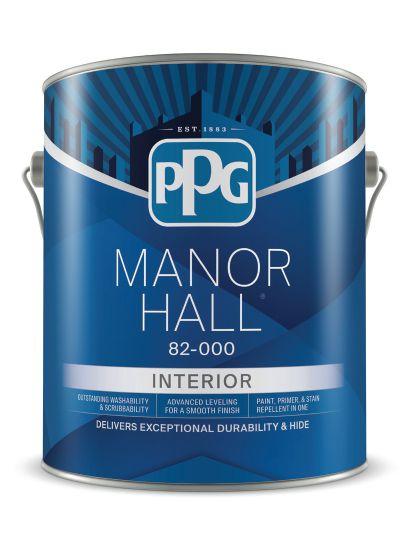







MANOR HALL® INTERIOR




• DELIVERS EXCEPTIONAL DURABILITY & HIDE
• OUTSTANDING WASHABILITY & SCRUBBABILITY
• 100% ACRYLIC LATEX PAINT & PRIMER* IN ONE
• ADVANCED LEVELING FOR A SMOOTH FINISH

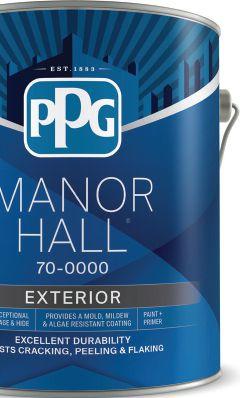
MANOR HALL® EXTERIOR
• EXCELLENT DURABILITY RESISTS CRACKING, PEELING & FLAKING
• EXCEPTIONAL COVERAGE & HIDE
• PAINT & PRIMER*



• PROVIDES A MOLD, MILDEW & ALGAE RESISTANT COATING