





Follow us: facebook.com/PrevalSprayer | twitter.com/PrevalSprayer | youtube.com/user/prevalspraygun







Follow us: facebook.com/PrevalSprayer | twitter.com/PrevalSprayer | youtube.com/user/prevalspraygun

































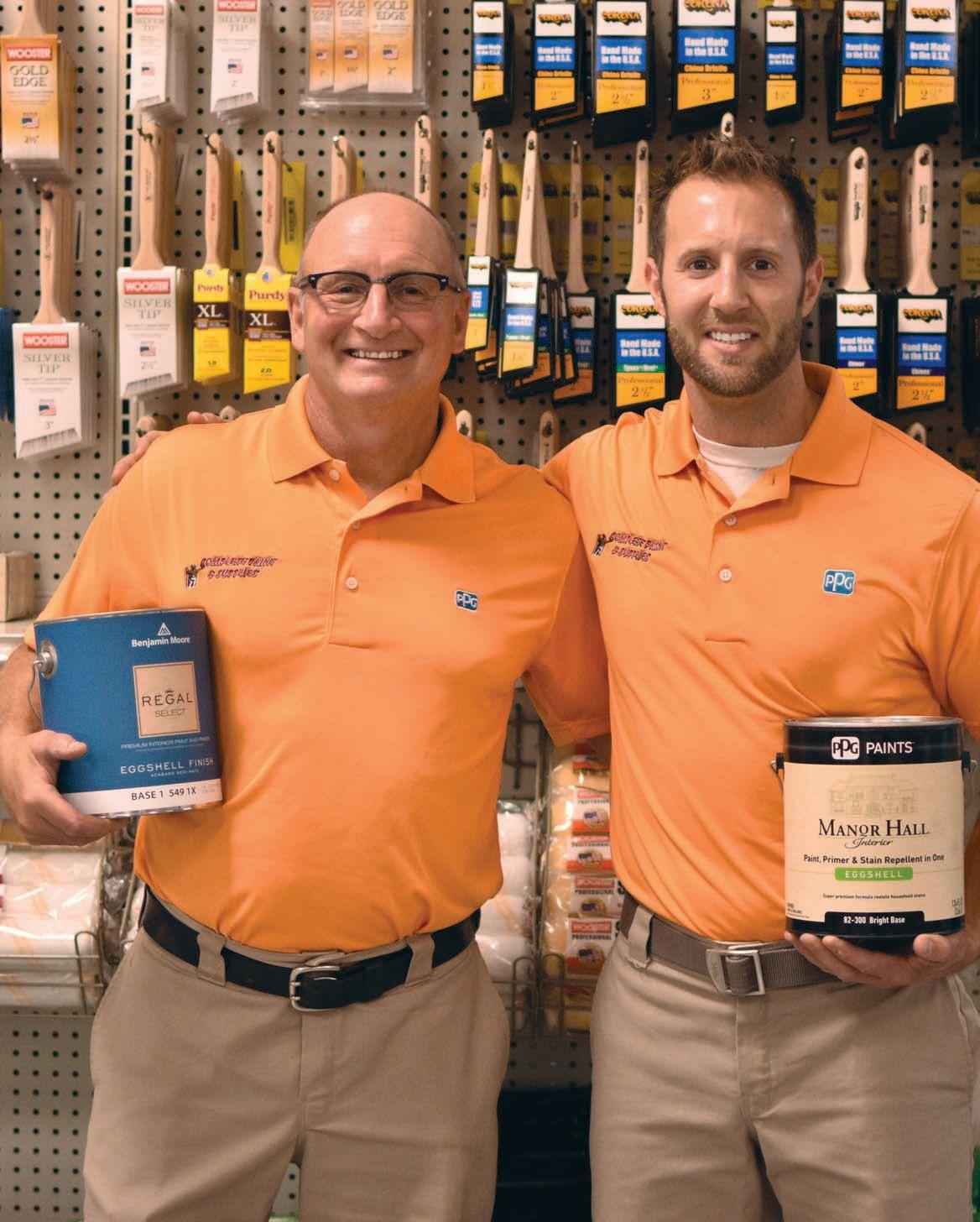
At Complete Paint & Supplies, customers are part of the family. The two-location business in northern Michigan has been run by Chris Smrekar for more than 20 years, and he is preparing his son Steven to eventually take over the operation. Learn how the father-son team gets through the day-to-day and find out the priorities that have made them successful over the course of two decades.

24
The team at HPM in Hawaii is proud of its community and its heritage, and they recently celebrated with a mural on the side of the building. In The Big Picture, discover the meaning behind the mural and how the community was involved in every step of the project.
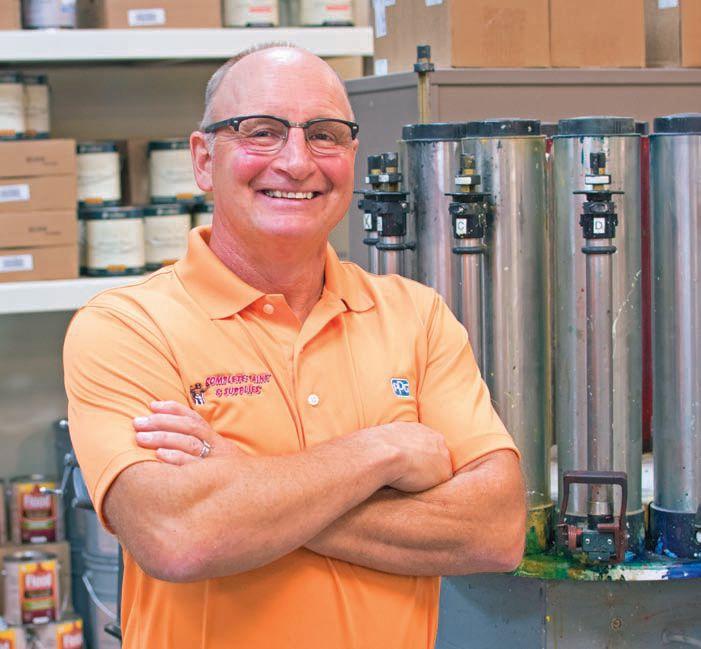
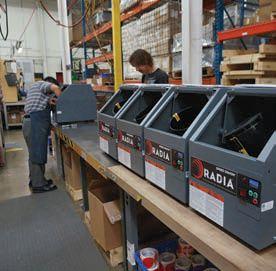
You would probably lose business quickly if you didn’t have the right equipment to mix and tint paint. Paint & Decorating Retailer caught up with the leading manufacturers of mixing and tinting equipment so you can stay on top of the capabilities of these crucial industry tools. 36

Being the expert on paint and coatings in your community means having the tools and products in stock to keep your community looking clean and fresh. Learn about the features of paint strippers and graffiti abatement products so you can be the resource when your town wants to clean up and start anew.
Dan Tratensek asks you to identify the specific ways you can stand out.
You could win the seventh annual Indie Awards, the annual contest from Independent We Stand.
Minwax debuts new brushes that are just right for Minwax stains and finishes.
Sonya Ruff Jarvis discusses the value of establishing a mission statement and sharing it with your team; John Kowalski talks through regular tinter maintenance.
Paint on the streets leads to cooler climates; and cars of the future will repair themselves, thanks to this coating.

Let your high-achieving employees know that the 2018 PDRA scholarship application is now available to give them a chance at even more success; learn more about the PDRA education membership; and more.
Evolving with technology and offering technical support have contributed to the successes Gemini Industries has seen in over 50 years of operation.
Corona has the strong legacy of four generations and a commitment to quality leading it through its next big project: expansion.
Round out the end of 2017 and then gear up for the hustle and bustle in the first quarter of 2018.
The Pantone Color Institute™ pays homage to legendary artist Prince with a new indigo hue.
Chris Smrekar, owner of Complete Paint and Supplies in Petoskey and Harbor Springs, Michigan, runs a family-friendly operation. 52 66


(ISSN 1096-6927): Published monthly except December by the Paint and Decorating Retailers Association, 1401 Triad Center Drive, St. Peters, Missouri, 63376-7353. Phone: 800-737-0107. Subscription price, January through November issues, $33.00 in U.S., payable in advance. Canada add $10.00, and foreign countries add $16.00 to above charges. Single copy $5.50, except July issue $15.00. Periodicals postage paid at St. Peters, Missouri, and additional mailing offices. Postmaster: Send address changes to Paint & Decorating Retailer, 1401 Triad Center Drive, St. Peters, Missouri, 63376-7353. Returns (Canada): Return undeliverable magazines to P.O. Box 2600, Mississauga, Ontario L4T 0A8. PM# 41450540. Copyright © Paint & Decorating Retailers Association, 2017.




One of the first questions I ask independent retailers is, “How do you differentiate your operation from the competition?”
Generally, the answers I get fall into a two different buckets.
Convenience: “You can be in and out of our store in a few minutes instead of trudging around a big box.”
Customer service: “We know all of our customers by name and shake their hands when they walk into our store.”
Is your operation more convenient than grabbing your phone, tapping the screen and having products delivered to your front door within two hours?
For the most part, independent retailers can be more convenient than a big box and usually offer more personalized service. But these factors do not constitute a strong enough argument to keep customers coming back. Is your operation more convenient than grabbing your phone, tapping the screen and having products delivered to your front door within two hours? Because that’s a retail reality today.
When it comes to knowing customers’ names, guess what? Amazon and other big boxes know more than just names. They know names, birthdays, addresses, previous purchases, coordinating products and more.
The truth is, service and convenience are the cost of entry to gain business in today’s retail environment for independent retailers.
You can differentiate your business by offering truly unique services, aggressively seeking out unique products, looking for complementary categories that go beyond what a typical paint and decorating store might offer, and lastly, making sure you constantly offer solutions.
As you read about the latest trends hitting the industry, explore unique products and services and discover what other retailers are doing to differentiate their operations, I would encourage you to ask yourself one simple question—is my operation really all that different from the competition? If not, it’s time to start thinking about how to make sure you stand out from the crowd.


Dan
Tratensek DanT@nrha.org





Publisher/Director of Sales
Dan Simon dan@pdra.org
Phone: 800-737-0107, Fax: 636-229-4750
Editor-in-Chief
Dan Tratensek dant@nrha.org
Contributing Editors
Diane Franklin
Features Editor Melanie Moul
Jesse
Whitney Daulton
Truex Nancy Vondersaar
Production Director Jo Ann Ray jo@pdra.org
Circulation Manager/Directories Editor Lori Goad lori@prda.org
Director of Finance/Human Resources
Renée Nolte renee@pdra.org
Association Coordinator Tina Sullivan tina@pdra.org
Account Executives
Richard Bright rbright@brightconcepts.net
Phone: 410-869-3253, Fax: 530-452-2266
Brandi Hemmer brandi@pdra.org
Phone: 636-680-2785, Fax: 636-229-4750
PDRA EXECUTIVE LEADERSHIP
Executive Director LeAnn Day
OFFICERS
Craig Bond
President and Western Region Director
Tommy’s Paint Pot, Eugene, Oregon
Mike Fleck
Vice President/Treasurer and Eastern Region Director Fleck’s Paint Spot, Toms River, New Jersey
DIRECTORS
Robert Mueller Director at Large
Benjamin Moore Kelowna, Kelowna, B.C., Canada Jay Donnelly
Midwestern Region Director Flanagan Paint & Supply, St. Louis, Missouri
Lesley Davies-Baptista
Southern Region Director Paint Fair Ltd., Freeport, Grand Bahama, Bahamas
PDRA ADVISORY COMMITTEE
Dori Marks, PPG Industries
Thomas Hill, The Coatings Alliance
Eugene Andreassi, Benjamin Moore
Joe Jankoski, Hunter Douglas
Bob Clemence, Hyde Tools
John Shingledecker, Allpro Corp.
Richard Russo, Reed Exhibitions
Mike Dube, Lancaster














Independent We Stand, the movement that celebrates small businesses and shopping local, recently launched its seventh annual Indie Awards program. The program, sponsored in part by PPG Pittsburgh Paints, will award one independent retailer a grand prize valued at $50,000.
According to the North American Retail Hardware Association’s Home Sweet Home Study , for every dollar a consumer spends at an independent home improvement store, twice as much money remains in their community than if they purchased the same item at a big-box store. The same statistic is true for professional contractors and tradespeople, which NRHA demonstrated in its Home Sweet Home Pros’ Edition study this year.
The winner of Independent We Stand’s Indie Award will receive: A branding, advertising and public relations
makeover from The Meridian Group; a $5,000 cash prize; a 12-month subscription and 3 months free of managed marketing services for small business email and social media services from SnapRetail; a three-day/two-night retreat and branding workshop in Virginia Beach, Virginia; a $1,000 STIHL equipment certificate; and public relations and social media recognition.
The winner will also receive $1,000 cash to donate to their favorite small business group. All 25 quarterfinalists receive a free Independent We Stand premium membership for life.
Nominations and voting are already taking place. Independent paint and decorating retailers are encouraged to nominate their own businesses, so visit indiebizaward.com to enter before Nov. 12.
Get all the benefits of finish quality, control, and affordability in a brand new option with firm filaments! Wooster Gold Edge paintbrushes are made with an exclusive formula of white and gold CT™ polyester. They are smooth and fine to virtually eliminate brushmarks, yet they have added stiffness to efficiently push paint on the surface and provide control for sharp, single-pass cuts. With 22 brushes included in the launch, you can have your favorite size and style right from the beginning.



Over the summer, Hunter Douglas marked a milestone: 25 years of working with Habitat for Humanity.
The window treatment manufacturer is committed to helping Habitat build safe, stable, affordable housing alongside homeowners across North America and abroad.
Hunter Douglas provides privacy blinds for all new and rehabilitated Habitat homes in the U.S. Over the last quartercentury, Hunter Douglas has donated nearly 9,200 privacy blinds each year for more than 220,000 windows.
“Hunter Douglas is honored to stand beside Habitat for Humanity, which brings hope, light and stability to so many families worldwide,” says Ron Kass, CEO of Hunter Douglas North America. “We know that there is a direct correlation between housing quality and the homeowners’ well-being.”
In addition to providing window coverings to Habitat for Humanity homes, Hunter Douglas has also partnered with the organization on several relief and recovery efforts around the world.
Late this summer, Gemini Industries Inc. announced its acquisition of Amteco Inc., a manufacturer of exterior wood and metal coatings products.
Amteco, which is headquartered in Pacific, Missouri, manufactures the wood preservative TWP and the directto-metal rust- and corrosion-prevention coating, Zero Rust. These products will now fall under the Gemini Industries family of coatings offerings.
“The acquisition of Amteco provides Gemini with best-inclass technology and a highly competitive product portfolio for both the exterior wood and metal coatings markets in North America,” says David Warren, Gemini president and CEO. “For years now, TWP has been a top choice for professionals when it comes to wood preservation, and the Zero Rust product line has quickly become a go-to choice for protecting your metal investments.”
According to Gemini, the companies have worked together closely for several years, and the acquisition officially combines their resources to serve North America.

Gemini is headquartered in El Reno, Oklahoma, and has manufacturing and distribution facilities in Holbrook, New York; Harrisonburg, Viriginia; Sparks, Nevada; Grand Prairie, Texas; and Toronto. The operations for both companies will remain in their current locations.
According to Gemini, the company’s employees, who are also shareholders, are excited about the acqusition and look forward to the opportunities the acquisition will create.
For more information about Gemini Industries, Amteco or the acqusition, visit gemini-coatings.com, or turn to Page 58 for an in-depth profile of the company.



It’s






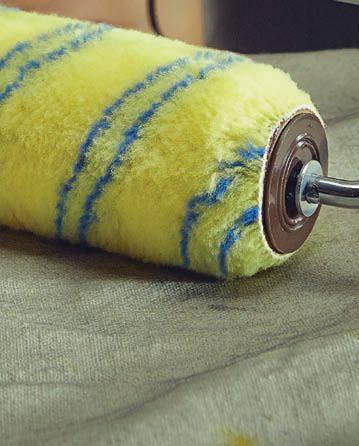













ot every stain and finishing product is designed the same. Each is produced with strict adherence to its technical qualifications and its aesthetic purpose. So why shouldn’t that kind of exacting standard be applied to brushes?
That’s what Minwax thought when it designed its newest addition to the applicator market. These brushes come in three bristle selections, with each type of brush available in either 1 ½-inch or 2-inch trim. Each brush is designed to work with a different Minwax stain or finishing product.
Amy Kovach, assistant brand manager of applicators for Sherwin-Williams, says the brushes are designed to ease customer confusion and allow the best possible outcome when the products are used as intended pairs.
“These brushes aid in the paint applicator selection process. By designing brushes for specific coatings, we’re able to make the decision process much simpler for DIYers,” Kovach says.
The wood finish brush with natural black bristles is designed for oil-based stains. The polyurethane brush, with natural white bristles, works on oil-based stains and clear finishing products. Finally, the polycrylic brush, with synthetic bristles, is best with water-based stains and finishes.
The handles, made with stainless steel ferrules, are also designed to fit inside Minwax cans, making a tray unnecessary.
“Staining projects can sometimes be a tedious process. Especially if someone is refinishing an item, the last thing we want is for a customer to use the incorrect applicator and not get the best result possible from the coating,” Kovach says.
For more information, visit minwax.com






The Nix Mini Color Sensor takes the technology of the Nix Color Sensor and reduces its size. Weighing 0.6 ounces and sized smaller than a pingpong ball, the Nix Mini is designed to bring a color-matching system with access to 10,000-plus colors from leading brands to professional consumers such as interior designers, painters and homeowners. It pairs with a supporting app and can match to RGB, HTML and CMYK colors. Nix Sensor
800-649-1387 or nixmini.com

The INOX Privacy Lock is designed to offer a reliable locking mechanism for barn door applications without the outside look of standard locks. Installed inside the jamb, the bolt slides into the barn door’s discrete strike. A variety of thumbturns, including ADA-compatible options, enhance privacy and decor. A release button is installed on the outside of the door for emergency access. Unison Hardware 916-388-1888 or unisonhardware.com
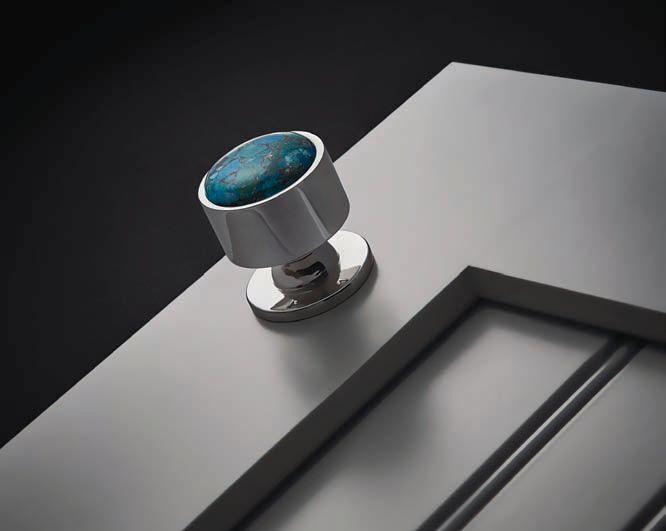
The FIRESKY line of cabinet pulls features a blend of exotic earth elements and metal. Natural stones such as Mojave Lapis, Iron Tiger-Eye, Mojave Calcite or Carrera are selected for their distinctive qualities. FIRESKY is composed of 83 pieces in four handpolished finishes, including polished satin nickel, polished brass, polished chrome and polished nickel. Vesta Fine Hardware 800-499-9093 or vestafinehardware.com
Do you sell a product that your customers can’t get enough of? Let Paint & Decorating Retailer know about it! To submit a product that you would like to see featured in Product News, contact Chad Husted at chusted@nrha.org or 317-275-9402.












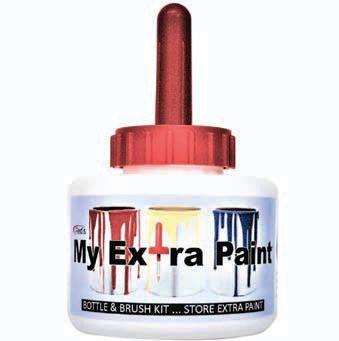
The My Extra Paint bottle features an all-in-one bottle and brush kit designed to store leftover paint in a ready-to-use manner for future touch-ups. The patented bottle top is designed to clean the brush stem of extra paint while being removed, leaving enough paint on the brush for small applications. The bottle holds up to 10 ounces of paint.
My Extra Paint 716-652-0350 or myextrapaint.com
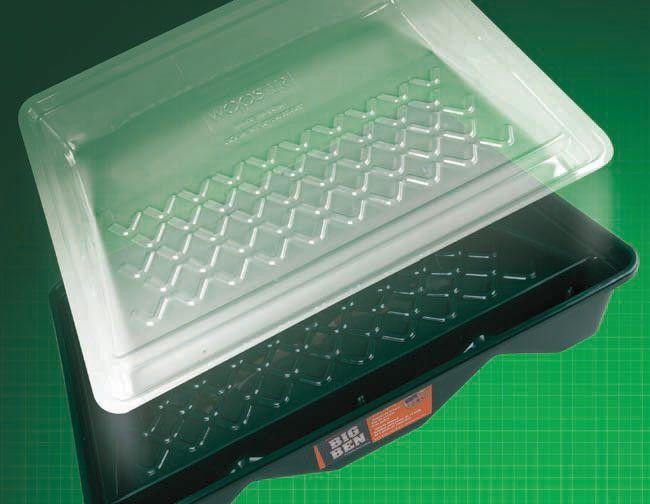
Made of clear, solvent-resistant recycled plastic, the Big Ben® Tray Liner is designed to pair with the Wooster Big Ben Tray. These liners utilize all the features of the Big Ben Tray (1-gallon working capacity, integrated roll-off area and built-in tool compartments) without needing to clean the tray between uses. When a project is finished, the liner can be dried and disposed of.
Wooster Brush
800-392-7246 or woosterbrush.com




The Majic Diamondhard RePurpose Interior and Exterior Acrylic Satin Paint is designed to transform older, weathered furniture and surfaces without sanding or priming. This paint can be applied to ceramic, tile, PVC and vinyl by brush, roller or spray. It is available in 10 ready-mixed colors, including Glacier Mist, Golden Dandelion, Midnight Waver, Ivory Flake, Mocha, Olive, Sangria, Serenity, Black and White.
Yenkin-Majestic Paint
800-848-1898 ext. 284 or creativity-unleashed.com






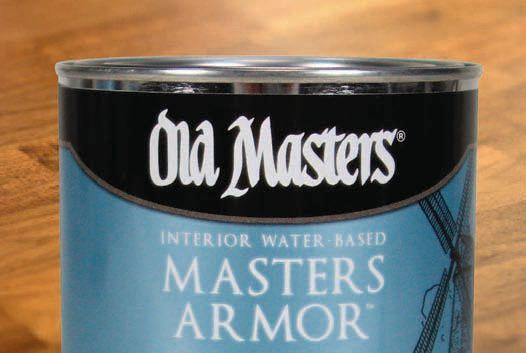
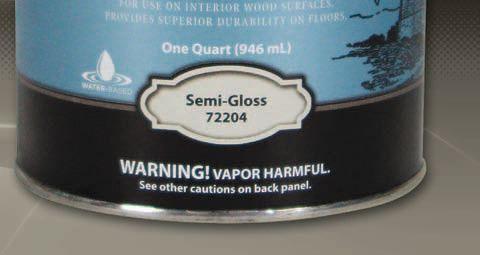
Removing graffiti has never been easier. Safely remove unwanted graffiti, marker, and other “tags” from concrete andblock surfaces, lockers, road signs, rail cars, and anywhere else graffiti is found.



• Formulations for Both Hard and Porous Surfaces
• Made with 100% American Grown Soybeans
• Virtually No Odor






































The full-color Bluetooth GLM 50 C from Bosch has a digital screen and Bluetooth functionality so users can transfer measurements to a smartphone or tablet, documenting plans onto actual photos. It has a combined accuracy down to 1/16 of an inch, with an overall range of 165 feet. The tool can connect to the MeasureOn app to create floorplans and full project plans.
Bosch Power Tools
877-267-2499 or boschtools.com


































At an early age, we learn the four cardinal directions north, south, east and west. This early lesson is crucial to helping us understand our location in relation to where we are and where we want to go. Like life, a business needs a directional map, too, that helps navigate its strategic direction, align and guide its culture and establish a value system.
One way to keep your business grounded is by creating a mission statement to lay out your purpose or goals. Mission statements also keep us honest. All components of a business—strategic direction, practice and behavior—should point back to the mission statement.
If the majority of your employees aren’t living out the mission statement in their attitude, behavior and decisions, then leadership is failing them and the business. A mission statement is only as strong as the attitudes and behavior allowed, encouraged and exhibited within the business. If leadership isn’t living and breathing the mission, employees will have nothing to mirror. If you’re a leader in your organization, your actions should lead by example. Your behavior should exemplify the mission statement. It will take you a long way in helping to accomplish the company’s goals.
Every leader should be a brand ambassador, protecting the integrity of the mission statement. If a leader has a difficult time living out the mission statement, employees will, too.
When you get your mission statement right and are able to follow it, point to it and use it as a guiding light, your employees will have a feeling of freedom, because the guidelines are set and expectations are clear.
Whether you’re crafting a mission statement, tweaking one or upholding one that is long-established, here are some suggestions to help.
• Clarity. It should be succinct, easy to understand and simple to execute.
• Specificity. Details matter, so be as specific as possible to ensure less chance of ambiguity.
• Focus. Center and concentrate the mission on the everyday life of the organization.
• Sustainability. Ensure your mission can survive new strategic processes.
• Communication. Show the mission in your words and actions, supporting your team to accept and embrace it. If you think that sounds difficult, consider Facebook’s new mission statement. CEO Mark Zuckerberg developed a mission that will lead the social networking company through the next 10 years with five words: “Bring the world closer together.”
Mission statements fit businesses of all sizes because you are never too small or too large to create a strategic map of your goals and values. You always want to check your mission statement and use it as a guide. It will be a journey with crossroads, but the mission statement will always point you in the right direction.

Sonya Ruff Jarvis is an entrepreneur and founder of Jarvis Consultants LLC, marketing, events and branding firm that helps businesses create innovative approaches to navigate the world of marketing. Follow Sonya on Twitter @jarvisconsult or email her at sonya@jarvisconsultants.com

Whether it’s a custom match on your spectrophotometer or pulling up an existing formula, the color journey begins. Early on, it could go in many directions. Ideally, color data will flow smoothly through the software, off to the dispenser to be mixed, then shaken and verified. If all goes well, the color scanned or chip read matches the mixed paint. Throughout this process, there are plenty of obstacles and potential pitfalls that could quickly turn your journey into a mistinted fiasco. There are several ways to avoid these issues, however.
• Calibrate your spectrophotometer. If you’re using a spectrophotometer for a custom match, ensure it has been properly calibrated according to the manufacturer’s recommendations or the instrument’s specifications. Also ensure that the sensor lens is clean. When you perform a calibration, your spectrophotometer is brought back to its original factory settings. You can maintain precise and accurate measurements through regular calibration.
• Update your databases. Paint companies are always looking to cut manufacturing expenses by adjusting the raw materials of their bases. These changes, even slight, can have a real effect on how the colorants react with the base and ultimately your finished paint. Therefore, to ensure integrity, databases should be updated every two to three years.
• Schedule regular dispenser maintenance . Ensure the water is cleared and changed regularly, the right amount of colorant is maintained in the canisters and the nozzle is regularly purged and cleaned to extend the life of your dispenser. Once in place, most dispensers are never calibrated, so they lose accuracy over time. Some oxide colorants can be very abrasive and can

wear on the seals and nozzles, which can cause too much colorant to be dispensed. Annual checks, at a minimum, can help prevent this wear. Replacing wornout seals and nozzles can easily bring your instrument back into calibration. For high-volume paint stores with accutinters, it is recommended that dispensers be recalibrated twice a year.
• Watch out for contamination. If the nozzles of an automatic tint machine aren’t kept clean, it’s possible for incorrect colorant to drop into the can during color formulation. While mixing a light beige color, even a single drop of green is an immediate mistinted fiasco.
• Check the shaker speed. If the shaker in one store is shaking at a different speed than at another store or even a shaker beside it, they won’t mix the colorants equally, creating mismatches that can be over two Delta E different, resulting in visible variances. In addition, different shaking modes (gyro versus shake) can cause similar discrepancies. When it comes to mixing paint, there are so many variables, and if any one of them is off even just a bit, you have a mistinted fiasco that is wasteful, reduces your profits and could result in unhappy customers. Paying close attention to your equipment can help prevent these mishaps and ensures you deliver consistent quality paint, time and again.

John Kowalski is the business line/development manager with BYK-Gardner USA. He has over 25 years of marketing, branding and strategy experience, with more than 10 in color technology. You can reach him at john.kowalski@altana.com or visit paintpos.com for more information.


HPM Building Supply, a home improvement retailer with eight locations in Hawaii, wanted a big way to remind shoppers it has deep roots in the community. To honor the grand opening of their newly remodeled store in Kailua-Kona, Hawaii, company officials commissioned a group of local artists to paint a mural of a native Hawaiian bird on the outside of

the building. Store employees even had a chance to take part in the painting. To unveil the work and celebrate local art, HPM hosted a block party in the store’s parking lot.
“People love it,” says Tracie Foglia, talent development manager for HPM. “We want to emphasize we are a locally owned company and different from our chain competitors.”



By Todd Taber
It’s a drizzling, windy morning in August, but the damp weather hasn’t slowed business at Complete Paint and Supplies in Petoskey, Michigan. Customer after customer arrives and is greeted by a friendly team that understands that the key to success is treating fellow employees and customers like family.
Family values are second nature for the team at Complete Paint and Supplies, a two-store operation with locations in Petoskey and Harbor Springs, Michigan, owned by Chris Smrekar. His son, Steven Smrekar, is the general manager of the Petoskey location. Chris’s wife, Toni, and Steven’s wife, Ally, handle the operation’s bookkeeping, and Steven and Ally’s dog Chloie is often in the store, napping near the door but eager to nudge customers toward a purchase.
Even team members who aren’t related feel a special bond and work together to help the business succeed season after season.
“We want to help our customers get things right. We don’t want to give them a can of paint and show them the door. We really analyze what they’re trying to do to make sure they’re doing it right. Big boxes don’t ask questions, but we really dig in to learn what the customer needs,” Chris says.
Chris started in the paint business in 1977 when he worked at a local Sherwin-Williams store in Cadillac, Michigan, straight out of high school.
“I graduated on a Wednesday, and I needed a job,” Chris says. “I was hired at Sherwin-Williams the following Monday and moved up pretty quickly in the store. I went from stocking the warehouse to working the salesfloor in a few months, and I worked there for about a year and a half.”
After hearing about an opening at a Sherwin-Williams in Petoskey, Chris took a chance and moved. He stayed at his new job for 13 years before deciding to branch out and open a paint store with a financial partner when he was 32 years old.
After about five years of running the business together, opening three stores and doing well financially, the business partners went their separate ways. Chris took some time to figure out his next step, and he ultimately decided to continue in the industry he had known since graduating high school nearly 20 years before.
With a new business partner, Larry Wieland, Chris opened Complete Paint and Supplies in March 1996. The company has since become a top supplier of paint, sundries and accessories in northern Michigan.
“I’d say we were successful right from the very start,” Chris says. Slowly but surely, customers and connections he had made at Sherwin-Williams and from the paint stores he had left followed him to Complete Paint and Supplies. He had competition from other local companies, but as more companies went out of business or owners retired, Complete Paint and Supplies was ready to meet the demands of customers looking for a reliable paint store.
Initially, Chris says it was difficult to find footing in the region’s crowded paint industry. Popular paint brands were already spoken for in northern Michigan by more established paint stores, but he wasn’t deterred.
“I ended up going with offshoot companies to get my start,” he says. “Getting customers to switch from a brand they’ve been using for years to a new one was a challenge, but we kept chugging away and eventually picked up Pittsburgh PPG Paints and Benjamin Moore in our stores.” Those two lines are now some of the operation’s best-sellers, popular among DIY and pro customers alike.
In 1998, the Complete Paint and Supplies team expanded to a second location in Charlevoix, Michigan, but the peaks and valleys of a seasonal economy proved too much to overcome.
“The economy over there is so different,” Chris says. “There’s nobody there from October to May. It’s a ghost town. We couldn’t establish enough growth to keep it going, but we gave it a valiant effort.”
The Charlevoix location operated from 1998 to 2003 before closing. In the meantime, Chris and his team opened a third location in nearby Harbor Springs, Michigan, which is still in business and is meeting the paint and accessories needs of a quaint vacation community.
In the years since opening the first Complete Paint and Supplies location, Chris remarried and Steven returned from college, taking on a more official role at the store. Steven now serves as general manager of the Petoskey location. In 2015, Chris bought out his business partner Wieland.
Chris’s wife was able to pick up Wieland’s bookkeeping duties and helped stabilize the business as Chris took full rein of the operation.
Chris estimates that both Complete Paint and Supplies locations cater more to professional customers, so having the right mix of eye-catching paints for homeowners and high-powered equipment for professional crews is a balancing act that requires constant attention.
At the 6,500-square-foot Petoskey location, the team stores OSHA-rated scaffolding and ladders for its professional customer base and offers logging accessories for construction crews.
“We’ve been one of the state’s top Sikkens sellers for years,” Chris says. “We decided a number of years ago to go after the log business, so we sell a lot of chinking, backer rod and tools for sanding down logs.”





















































“That search for new business isn’t just about finding new customers. It’s also about offering them the latest in paint and coating technology.”
—Don Thompson, manager, Complete Paint and Supplies
Petoskey and Harbor Springs are surrounded by beaches and ski resorts, and the areas are popular weekend destinations for people from around the Midwest and beyond.
But to keep the area pristine and inviting, local neighborhood associations have imposed strict regulations on when and what kind of exterior renovations can be done, including banning exterior paint jobs in the busy summer months.
“It makes for a short season for a lot of our customers,” Don Thompson, manager of the Harbor Springs location, says. “You better hope the snow melts away or there’s no rain, but often snow can stick around even into April or May. You have to go with the flow. It’s about all you can do.”
To keep a steady income, many professional paint crews turn to commercial and municipal projects around the region.
“When those neighborhoods shut down, you have to look out in the surrounding area to find other opportunities. You go to grade schools and colleges and seek out new business that way,” Thompson says.
Customers use the PPG Color Work Station to see new paint possibilities at Complete Paint and Supplies’ Petoskey, Michigan, location.
That search for new business isn’t just about finding new customers. It’s also about offering customers old and new the latest in paint and coating technology.
“We sell a lot of industrial coatings because there seems to be a trend in that,” Thompson says. “More people are using epoxies for flooring, which makes them a lot more interesting. It’s not just a basic gray floor anymore. Customers want to see designs in them, they want to see their logos.”
More pressing than finding the right mix of pro and DIY products, Chris and the rest of the Complete Paint and Supplies team are considering the future of their small business.
Last year, the operation celebrated 20 years of service and will soon join the ALLPRO Buying Group, “a big step” that Chris and his team believe will be a huge advantage in the decades ahead.
“That’s going to change our buying structure. How we buy, where we buy, everything,” Chris says. “Being a large buying group with independent paint stores, it lets us buy supplies directly from a lot more people at lower prices. They offer more discounts from our big suppliers, so for a little company like us, a few percentage points here and there really add up.”

Increase sales, keep customers. Anywhere, anytime.
With PDRA’s Coatings
Specialist Course, your staff can get the paint product and sales training they need online. They can take the course at your store, in their homes or on their smartphones. Anywhere, anytime.
For greater flexibility and convenience, the eight-

to-12 hour course can be taken in multiple settings over days or even weeks. It’s available to PDRA members and to nonmembers.
An exam is given at the end of the course, and those with a passing score receive a certificate, lapel pin and press release for your local newspapers.
COURSE TOPICS INCLUDE HOW TO:
Guide customers to the right coating
Give instructions on prep and application
Ensure customers have the tools and sundries they need
Demonstrate the value of using quality products

Recognize and resolve common coatings problems
Advise customers on color and decorating
Sell more paint!
For more information about the PDRA and to save money registering for this course, contact Tina Sullivan at 800.737.0107 or email tina@pdra.org.
The move to join ALLPRO underscores a shift in Complete Paint and Supplies itself. Chris is planning to retire in the coming years and will hand the operation over to Steven.
“Joining ALLPRO is probably one of those things that plays more into my future with the business than his,” Steven says. “It’s important for him to get me set up, comfortable and confident with it to benefit the business altogether.”
Though they haven’t set an official timetable for the change in ownership, Chris and Steven’s working relationship has been growing stronger year after year. Steven says that after college, he and his dad didn’t always see eye to eye, but he values the relationship they’ve established.
“I am my father’s son. He was stubborn and hot-headed, and I think I struggled with that as well right after college,” Steven says. “There’s a lot to learn in the paint business, and it takes a lot of time to earn trust and confidence from your customer base. We’ve had our struggles, but I’ve noticed the ease of working with him has grown as I’ve gotten older.”
“I think the next big milestone will be the change in ownership, the day my dad decides he wants to hand the reins over.”
—Steven Smrekar, general manager, Complete Paint and Supplies
The Complete Paint and Supplies team sees similarities between the two generations of Smrekars.
“I’ve known Steven since he was a little kid, and I see a lot of the same traits in him that his dad has,” Thompson says.
The father-and-son Smrekar team is taking succession planning day by day, and Steven is looking ahead to the business’s future.
“I think the next big milestone will be the change in ownership, the day my dad decides he wants to hand the reins over. He’s got to have the confidence that I’m capable and have enough respect from our employees and the crews that we handle to put their trust in me. For me, that’s the next milestone,” Steven says.
When he’s in charge, Steven wants to explore opportunities to expand the company’s market reach, but doesn’t want to lose sight of his father’s management style.
“He’s been at this since 1996 and has built a great reputation in our small town,” Steven says. “I’m going to strive to uphold that reputation. Everything we do here is for the customer’s satisfaction and for taking care of our employees. That’s our family here.”


































‘’
‘’
‘’





















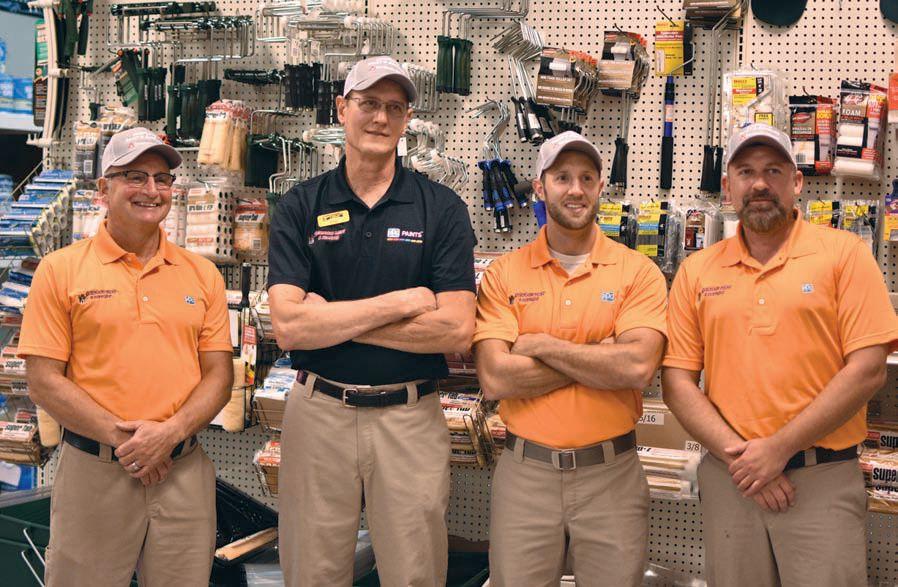
Chris says he wouldn’t have been in business for 21 years and counting if not for steady support from his employees and the community Complete Paint and Supplies serves.
“I have a great crew now, probably the best crew I’ve had,” Chris says. “They work hard, and they care about what they’re doing.”
Chris says he’s lucky to have retained long-term employees, many of whom have worked for the company for more than a decade. Their experience allows them to offer the product knowledge and assistance necessary to make customers’ paint projects successful.
“I’m not Complete Paint and Supplies, my employees are Complete Paint and Supplies,” he says. “Take care of your employees, give them a fair wage to make a living. If you keep everything for yourself, employees will always be looking for another job. I try to take care of my employees so they’re not looking. That’s my philosophy.”
Don Thompson shares Chris’s thoughts on finding the right employees to deliver the best customer experience.
“Customer satisfaction is everything to us,” Thompson says. “A lot of paint stores sell paint, but we sell service—that’s the difference. Especially in small communities like this, people talk and we want them to say good things about us.”
Perhaps the team’s greatest seal of approval is welcoming a new generation of customers.
“What we enjoy seeing is a mom and dad buying paint from us, then a few years later, their kids are buying paint from us. Seeing different generations come in to buy paint tells us we’re achieving what we need to,” Thompson says.
After two decades of service, Chris and his team don’t invest too heavily in advertising. Instead, they prefer to support local causes and organizations that enrich the community they’ve called home for decades.
“I must’ve spent thousands of dollars on radio and TV promotions, and I can count on one hand the number of times that worked,” Chris says. “I think the best way to advertise is to promote locally.”
The business supports the Petoskey Education Foundation’s annual golf tournament, the local YMCA and community food banks. For Chris and the team, helping out local organizations is the most reliable form of advertising.
As he turns his thoughts to retirement, Chris doesn’t point to a single event as the highlight of his 40-year career in the paint industry. Instead, he sees each day as a continued success.
“I think it’s a personal achievement being here every year,” Chris says. “Having this company, having the employees I’ve had for this long, it’s been an awesome outcome for me.”

By Diane Franklin
Dispensers, Mixers, Shakers Keeping Pace
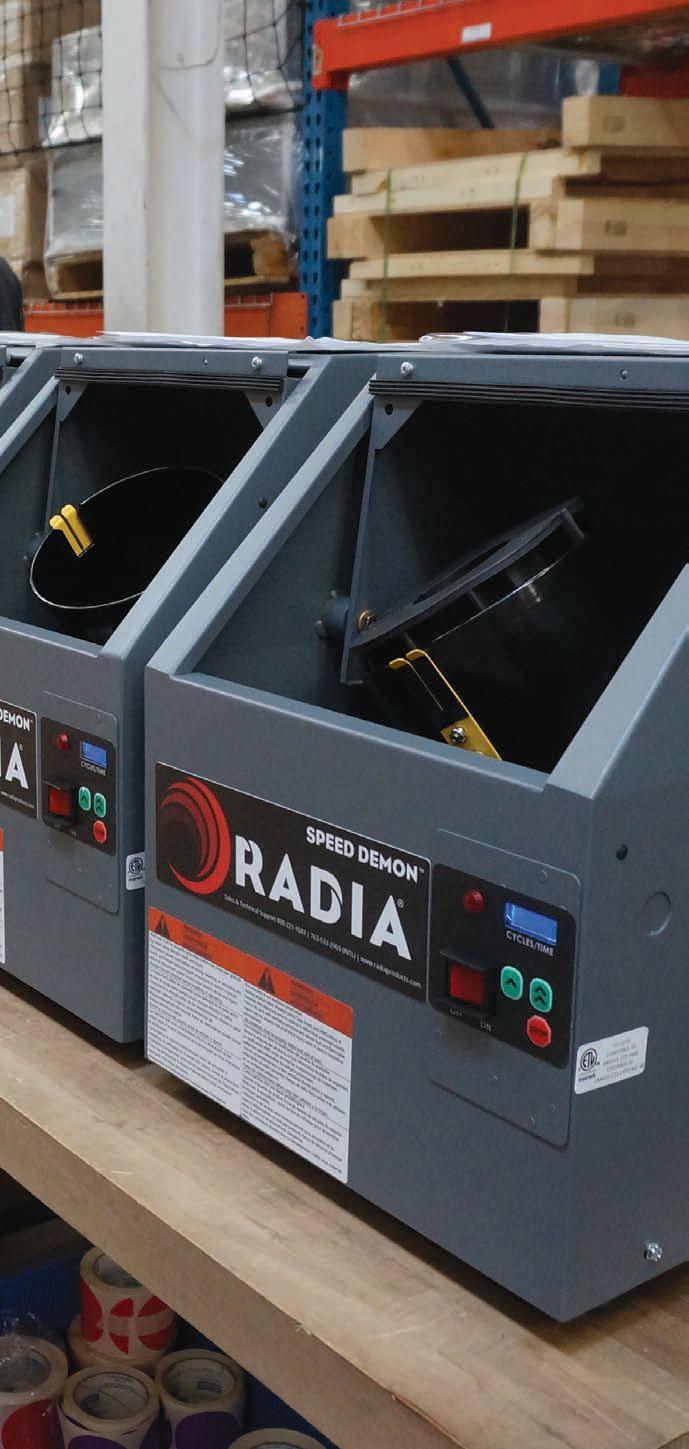
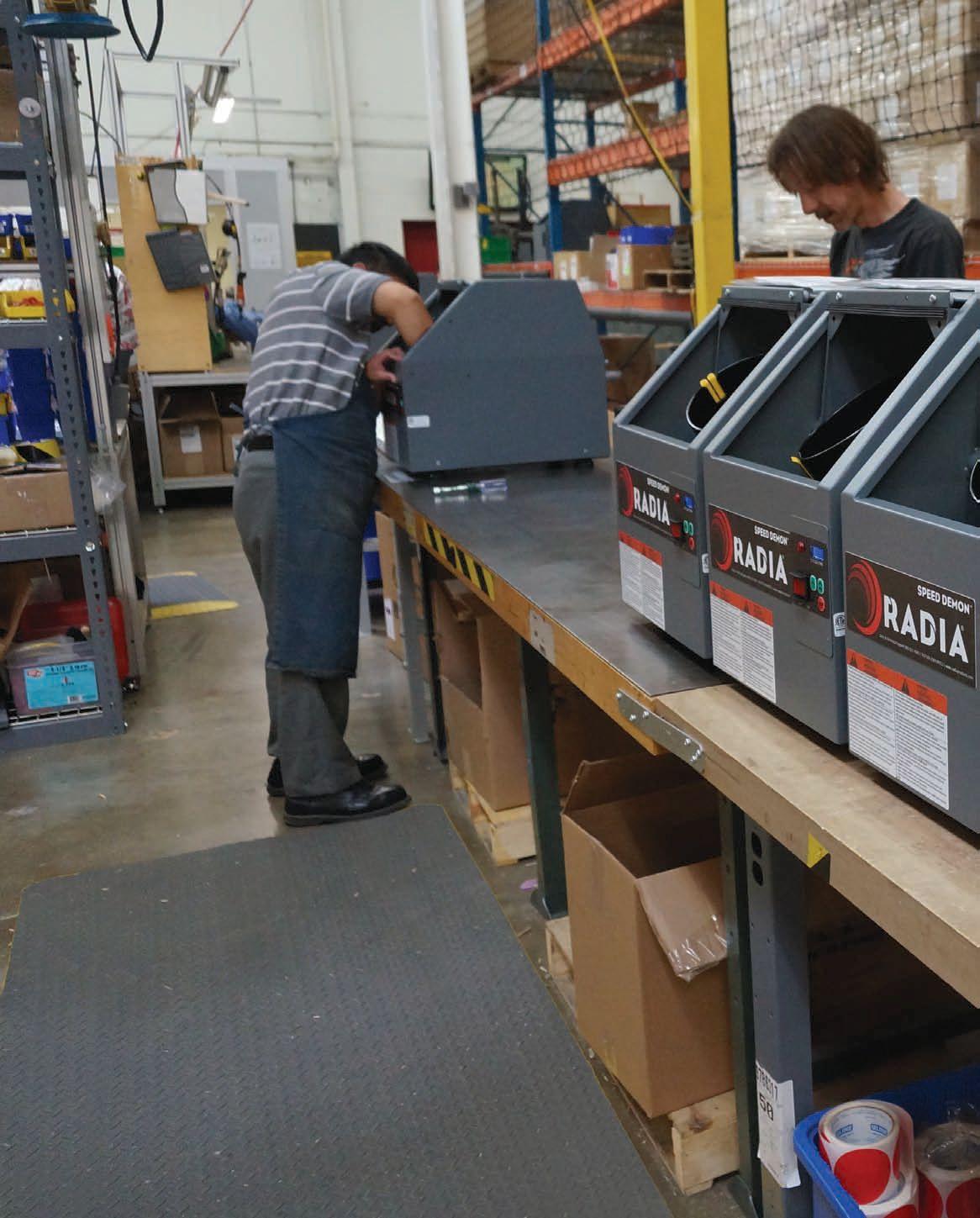
Paint stores rely on colorant dispensers, mixers and shakers to get paint out the door in a hurry. The need for speed and accuracy has increased in this fast-paced, competitive and technologydriven marketplace. At the same time, addressing emerging trends, such as lower-VOC colorants and the rising popularity of sample-size containers, is also a priority concern.
Fortunately, equipment manufacturers are meeting the challenges in today’s market and considering how the equipment is used from start to finish.
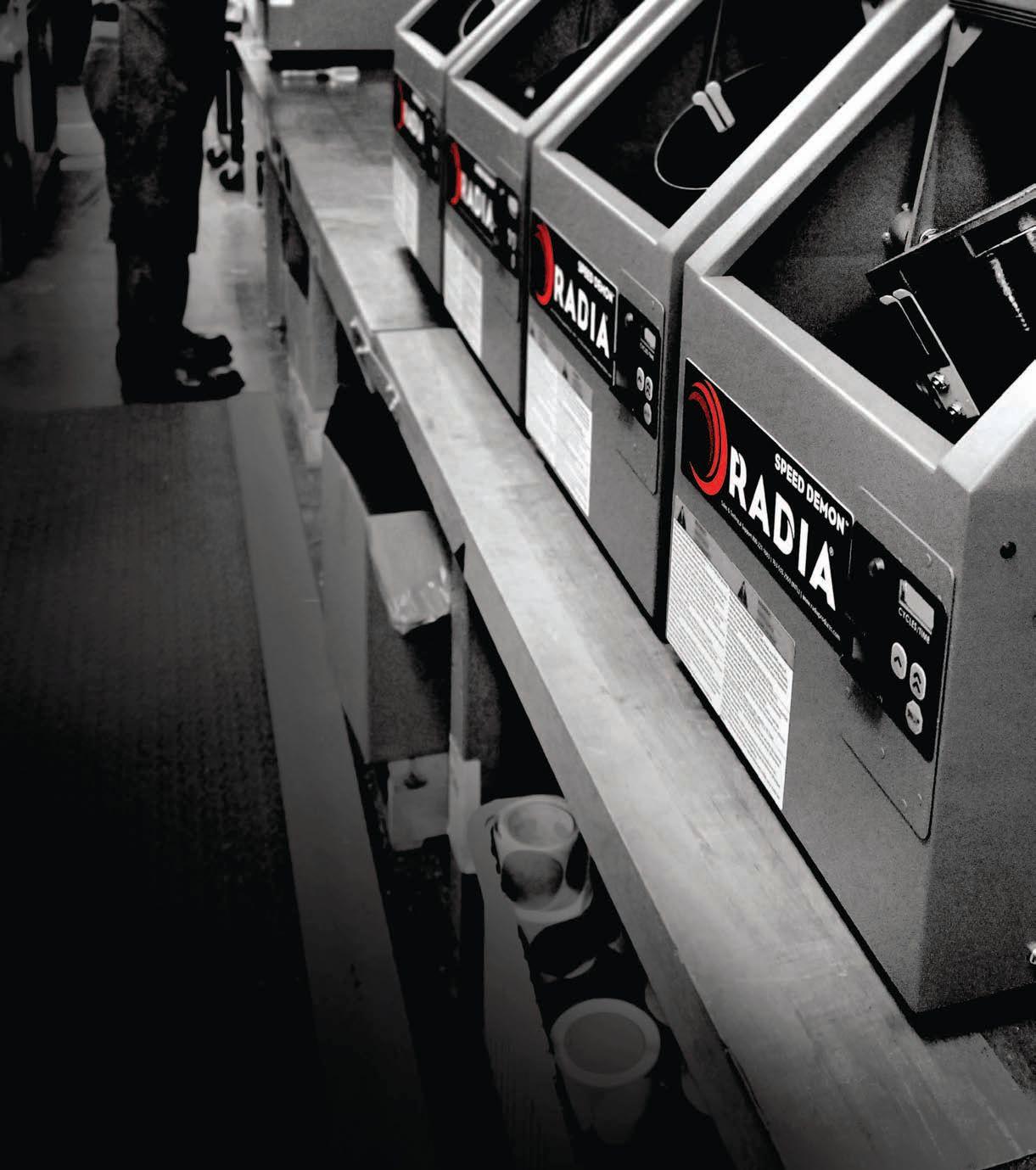
“We encourage our customers to think of the entire process when choosing mixing equipment and mixing accessories,” Kayla Trevino, marketing manager for Radia, says.
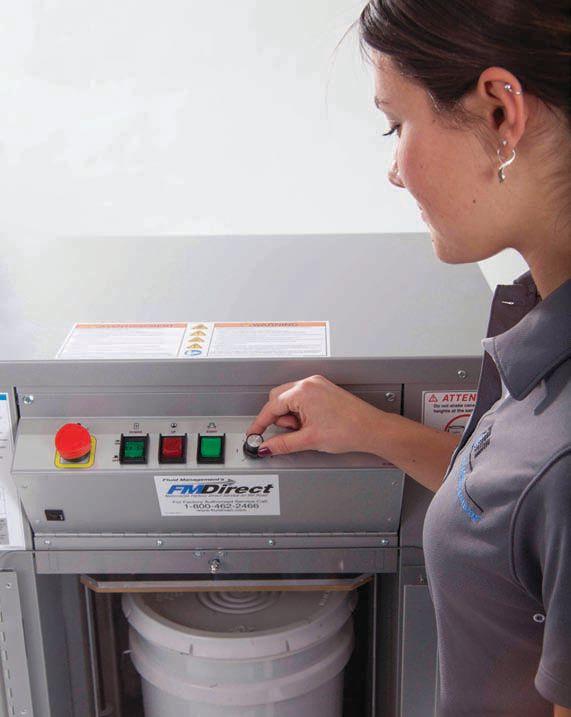
Technology advancements have also impacted the performance and durability of these machines, says Gary Lalla, senior product commercialization manager for Fluid Management Inc. “New pump technology has improved performance, speed and accuracy.”
Because of the need for more efficiency, automated solutions are becoming more prevalent.
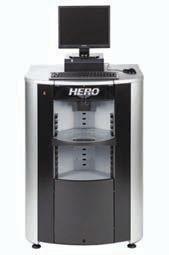
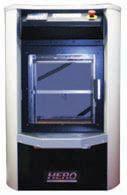
“The trend has moved from manual to automatic,” says Matt Docherty, vice president of sales for corporate accounts at HERO Products Group.
“We’ve seen that for two reasons. First, it increases efficiency, and second, it reduces mistakes.”
Since stepping up from manual to automatic dispensing equipment is a significant investment, Docherty advises retailers to look for a company that will give them strong after-sale support. From HERO, this level of support means access to technicians when the equipment needs servicing, but also a selfservice component for pump replacement with its Eureka and Archimede series of automatic dispensers.
“If a unit goes down, you can replace a pump and have it up and running again in 15 minutes or less,” Docherty says. “Our goal is to minimize down time and maximize ‘up’ time. I always tell my team, ‘We’re not selling equipment, we’re selling a solution to the color delivery process for the retailer.’”
At Fluid Management, there are a variety of options for retailers who wish to upgrade to an automatic dispenser. The entry-level unit is the X-Smart, a sequential dispenser for the smaller and economically minded retailer.
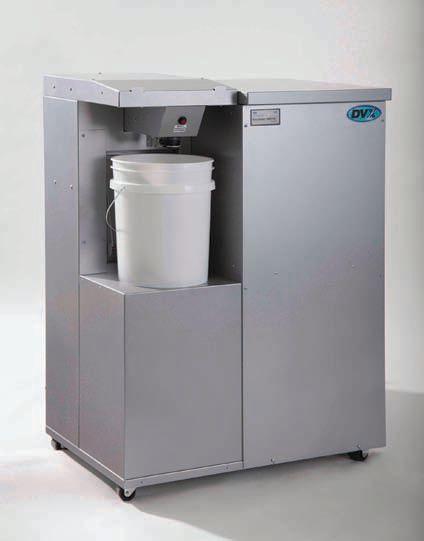
“If you’re looking for something faster, we offer simultaneous dispensing in our AT1600 series, and for high-volume stores with large contractor business, we offer our AT7000 and AT8000 products,” says Lalla. “All of these dispensers utilize our DVX pump technology that provides precision, accuracy and speed.”
Better technology is critical to meeting some of the latest trends in the industry. One such trend is the movement by paint manufacturers toward low- or no-VOC colorants.
“More paint companies have expanded their product platforms to include low-VOC or zeroVOC paints,” says Docherty, noting that dispenser manufacturers have introduced new technology to address the properties of these newer colorants.
New patented technology from HERO was specifically designed for these faster-drying VOCfree colorants. The Progressive Cavity Pump (PCP) design, available in the Archimede and Eureka series of automatic dispensers, minimizes the problem of drying colorant by reversing the flow back into the nozzle body before it is closed off with a humidified automatic nozzle capper. An added bonus is that it reduces colorant accumulation and dripping as well.
Dave Christiansen, director of sales and operations for Santint USA Inc., describes the challenges that equipment manufacturers have faced with this trend toward low- and no-VOC colorants. “Old glycol-containing colorants that all paint manufacturers used to use, although sometimes messy, were great to use in dispensers, both manual and automatic. The glycol was ‘slippery’ and could be easily pumped and measured. It was somewhat resistant to drying and, with a little care and cleaning, wouldn’t pose many problems in the paint equipment.”
However, says Christiansen, these newer colorants have different properties. “Most are water-based. Some have resins in the formulas and tend to dry very rapidly. Some are very thick and viscous.”
When these newer colorants were introduced several years ago, many retailers were required to switch over to more expensive automatic dispensers. “Most manual dispensers 10 years ago would not work with these new colorants,” Christiansen says. “The colorants would dry
in the nozzles. Valve washers would bind and create problems daily. The reason they required automatics then is because most had nozzle covers and some had humidifiers that kept the dispense nozzles from clogging with these new colorants.”
Santint’s manual dispensers have been used successfully with no-VOC colorants for at least five years, Christiansen says. Features on Santint’s M3 manual dispenser include ceramic valves with no washers (similar to new plumbing fixtures) as well as a nozzle cover that closes after a brief “sniffback” of any colorant left in the nozzle so as to prevent drying.
In addition, Santint has many automatic options that address the new colorants. “Our low-priced A4 100 percent automatic has a patented nozzlevalve that is integrated into the recirculation system,” Christiansen says. “This prevents any air from reaching the colorants in the nozzle and drying. It also eliminates the need for purging and wasting costly colorants.”
Larger Santint automatics such as the AO and AD have nozzle closers, recirculation and humidification to keep the colorants flowing. “These simultaneous piston pumps have pressure sensors to handle all the new colorants,” Christiansen says. Lalla confirms that low- and no-VOC colorants created challenges for equipment manufacturers that had to be addressed with new technology.





www.byk.com/instruments
















“With the technology we have in our pumps and software, we have the capability to make sure our equipment is working with thicker colorants or lower viscosity colorants,” he says, explaining that varying colorants perform differently as they are dispensed. “The heavier viscosity colorants have a tendency to hang at the end of the nozzle versus the lower viscosity colorants, which is why it’s so important to have the right sniff-back settings in place to ensure that what’s coming out of the nozzle is accurate and there’s not one extra drip that could result in a mistint.”
“Not only do these pumps perform more quickly, but they ensure more accuracy for everything from a small sample size to a 5-gallon bucket in various types of bases.”
—Gary Lalla, senior product commercialization manager, Fluid Management Inc.
Another major trend equipment manufacturers are addressing with their products is the growing use of sample-size containers.
“Sample sizes have become more popular, so the accuracy of dispensing a formula into a smaller container is definitely important,” says Lalla. “You want the color of the sample to be consistent with the color that is dispensed later into a larger container, such as a gallon or 5-gallon pail.”
Lalla also points to a growing market for dispensing in the stain category. “What we’ve seen in the industry is people doing more staining, especially during specific times of the year,” he says. “The base of a stain is much more watery than a paint base, so as colorants get dispensed into this waterlike base, you have to be able to control the process through technology, electronics and software to avoid splashing outside the container, because that can correlate to a mistint.”
Being able to address various types of coatings and container sizes is important, Lalla stresses, because each has its own requirements in terms of base products and colorants. “We need to make sure our product is dispensing accurately and at a sufficient speed so the retailer can assist the customer in getting in and out with their paint as quickly as possible.”
The performance of Fluid Management’s DVX pumps accomplishes this goal, Lalla says. “It’s a faster dispensing technology, especially when you get into larger formulas, deeper bases and 5-gallon buckets. Not only do these pumps perform more quickly, but they ensure more accuracy for everything from a small sample size to a 5-gallon bucket in various types of bases.”
The newest mixers and shakers address the demand for faster and more efficient service.
Santint’s Christiansen sees a trend toward high-speed gyroscopic mixers. “We are introducing a line of ‘oneminute’ gyroscopic mixers, available in manual and automatic clamping versions capable of handling up to 88 pounds,” he says. “These will mix all but the deepest colors or thickest products in 60 seconds.”
Another key trend is related to ensuring greater safety and ease of use for employees who regularly lift heavy paint containers. At Radia, that means easing the transition between equipment.
“Instead of hauling a 5-gallon bucket onto the tinter racking then bringing it down to load into a floor-height mixer, we now have models at rollerracking height for a smooth transition from tinter to mixer—no lifting necessary,” Trevino says. “It saves time and your employees’ backs.”


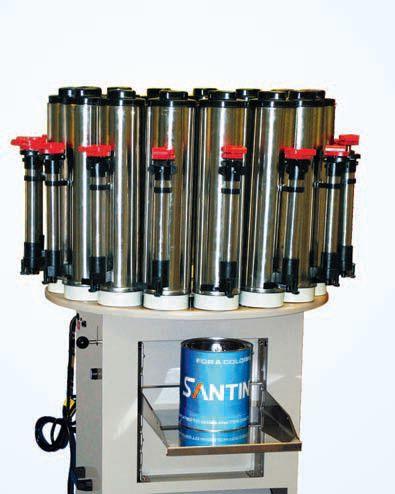













Radia offers several accessories for ensuring safety as well as expediency in the color-mixing process. “From the moment they touch a 5-gallon bucket (or a 1-gallon container, for that matter), they should have to lift it and carry it around as little as possible,” she says. “Adding a specially designed cart to carry stacks off a pallet to the tinter, adding racking to slide buckets straight from the tinter to the mixer, adding an extractor so the 5-gallon bucket comes straight out of the mixer without bending over—even adding a space-saver base to raise your 1-gallon machines to counter height or switching out the standard mallet for a lid closer are ways to improve workflow and work safer.”
The advent of riser leg systems also improve productivity by bringing the mixer to rollerracking height. Radia’s 5025 Red D Mix, a 5-gallon gyroscopic mixer, comes with this option as well as with a bucket extractor. “This has been a real hit with anyone mixing metal 5-gallon buckets because they no longer have to reach into the machine to pull the bucket out,” Trevino says. “Now all they have to do is pull the handle,
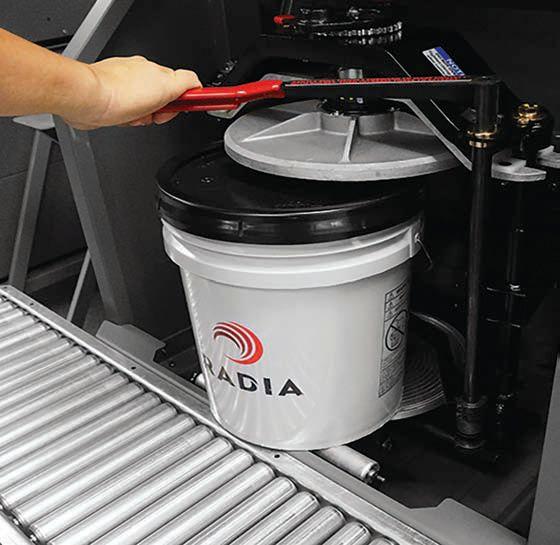
















Red Devil Equipment Co., the industry-leading mixer, shaker and mixing equipment manufacturer, is now RADIA. A small change perhaps. But after 25 years in the mixing business, we’ve built a reputation as the equipment that lasts with unmatched customer support. And that’s not about to change. Between its longevity and reliability, there a list of reasons RADIA mixers mix more. CALL TODAY



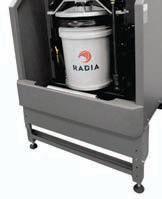




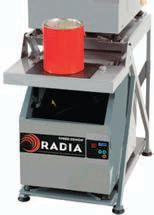



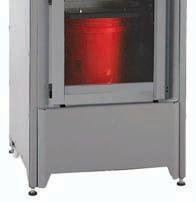
and it will slide right out of the machine. This saves their backs, their fingers and their energy.”
A relatively new product that also reduces lift risks is the Fetch, a height-adjustable 5-gallon dolly that can be used to reach a stack of buckets at ground or pallet height. “We’ve gotten a lot of great feedback that it’s way more lightweight and easier to maneuver compared to a standard 5-gallon dolly,” says Trevino.
Trevino also points to a growing trend toward mixers and shakers that operate more quietly. “The customer experience is more important than ever,” she says, noting that noise reduction
“It’s important to invest in equipment that gives you consistency and reliability and not to just buy on price.”
—Matt Docherty, vice president of sales for corporate accounts, HERO Products Group.

is one way to enhance that experience. Quieter operation can be enhanced with Radia’s lid press as a mallet alternative. “It limits noise caused by pounding lids closed, and it seals the entire can completely in one motion, saving time and energy and helping guard against that daunting day when a paint can leaks into your mixer,” Trevino says.
The ability to use space efficiently is yet another trend in the mixing area. “Most stores use a multisize shaker that handles all containers, from half-pints to 5-gallon pails, including cases,” Christiansen says. “Santint offers a unique space-saving design that incorporates a manual colorant dispenser on top of a shaker for smaller stores.”
Docherty points out that retailers can save space by using a stackable set of 1-gallon mixers such as HERO’s S2450. He has a suggestion for retailers to get greater life out of their mixers in this configuration. “Nine times out of 10, the retailer will use the top one. Rotate them so you get a longer life out of the mixer.”
Even with heavy use, Docherty says that HERO’s mixers are built to last. The S2450,




for instance, is a Dual-Axis vortex mixer with a rugged gear-drive design that has been tested to 100,000-plus mix cycles. The S2700 is a 5-gallon mixer with a heavy-duty mixing capacity that accommodates all can shapes and sizes from halfpints to 5-gallon containers.
Lalla stresses the need to have efficiency in the mixing area, especially if the retailer needs to keep pace with speedy automatic dispensers. “Today’s dispensers are so fast and efficient that if a backup occurs, it usually occurs at the mixer,” he says. “If the retailer doesn’t have the right setup with multiple mixers and shakers, that can cause a lineup at the counter.”
Fluid Management provides various options for the mixing area, including 1-gallon and 5-gallon vortex mixers as well as a 5-gallon orbital shaker that handles everything from quarts to gallons
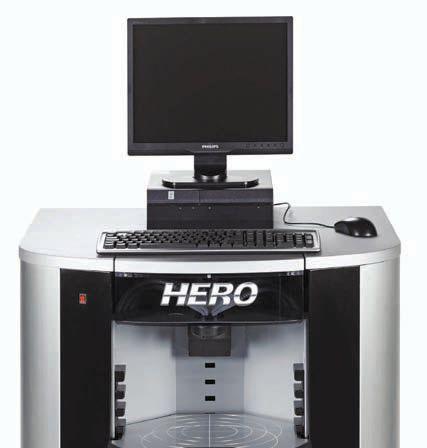
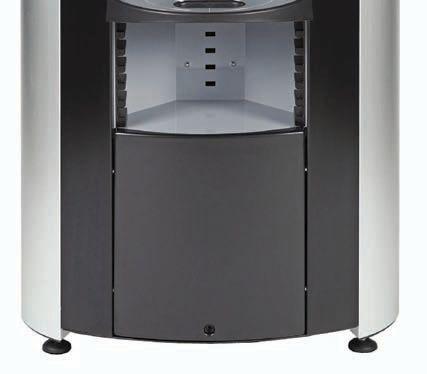
to 5s. “We also have a countertop option, our 1-gallon vortex mixer, as we understand space requirements in paint stores are critical,” Lalla says.
And let’s not forget about those samplesize containers. Equipment manufacturers are accommodating those with special adapters.
At Radia, for instance, Trevino says that its case shaker can accommodate the sample sizes with a tray adapter. Additionally, Radia will be introducing a new adapter for its 1-gallon mixer, which will mix three sample containers at once in a stackable configuration.
It’s important that the equipment you purchase for your operation is reliable and provides a good value for the investment.
Christiansen says Santint focuses on value by offering quality equipment at the lowest price.
“Retailers should look at an equipment supplier’s warranty,” he says, noting that Santint surpasses others in the industry with a three-year parts warranty on all equipment.
While advancements in technology have brought about greater reliability, Lalla stresses the importance of regular maintenance as a means of extending the overall life and performance of dispensing equipment.
“Just as with any type of capital investment you may make, you want to ensure you conduct the necessary daily maintenance on your equipment and have a good understanding of the machine’s operation,” he says.
To ensure long-lasting performance, Lalla recommends retailers take advantage of Fluid Management’s preventive maintenance program. “Doing an annual preventive maintenance checkup on the equipment that keeps you operational is a proactive approach that allows us to take corrective action before something potentially goes wrong,” he says. “We also have an extended warranty beyond two years to provide peace of mind.”
At HERO, Docherty reports that retailers can feel confident in their purchase thanks to the longevity of the company’s warranty. HERO also emphasizes a commitment to the lowest total cost of ownership as exemplified though the longevity of its PCP technology, the moneysaving self-service maintenance features of its equipment and the availability of a responsive service team when needed.
“It’s important to invest in equipment that gives you consistency and reliability and not to just buy on price,” he says.
By Karon Warren
Graffiti, lead paint and eroded coatings are all examples of paint that needs to be removed. Sometimes it’s to restore the original appearance of the surface, sometimes it’s for safety and sometimes it’s to recoat the surface. Regardless of the reason, graffiti abatement and paint stripping products are essential items that every retailer should stock.
As the name implies, graffiti abatement products are used to remove unwanted paint from surfaces. “They are created to prevent and eliminate graffiti from a variety of surfaces— exterior and interior, both solid and porous—and for various applications, like commercial, private and government property,” says Patty Ducey-Brooks, sales and marketing manager for Mötsenböcker’s Lift Off, a division of Stoner Inc. in San Diego.
As you can imagine, these products have to be able to tackle a number of different duties and be effective on a wide range of paints and surfaces. Because of this, these products are available from a variety of manufacturers to suit these many applications. For instance, the graffiti removers produced by Franmar in Bloomington, Illinois, are liquids that can be sprayed either from a pump sprayer or with the trigger sprayers that come with the quart bottles, says Scott Sarver, marketing coordinator for Franmar.
“To remove graffiti from a hard surface—something that has been powder-coated, metals, train cars, some street signs, cars, vinyl siding and others—a small scrub pad is the only additional item needed, along with a water rinse.

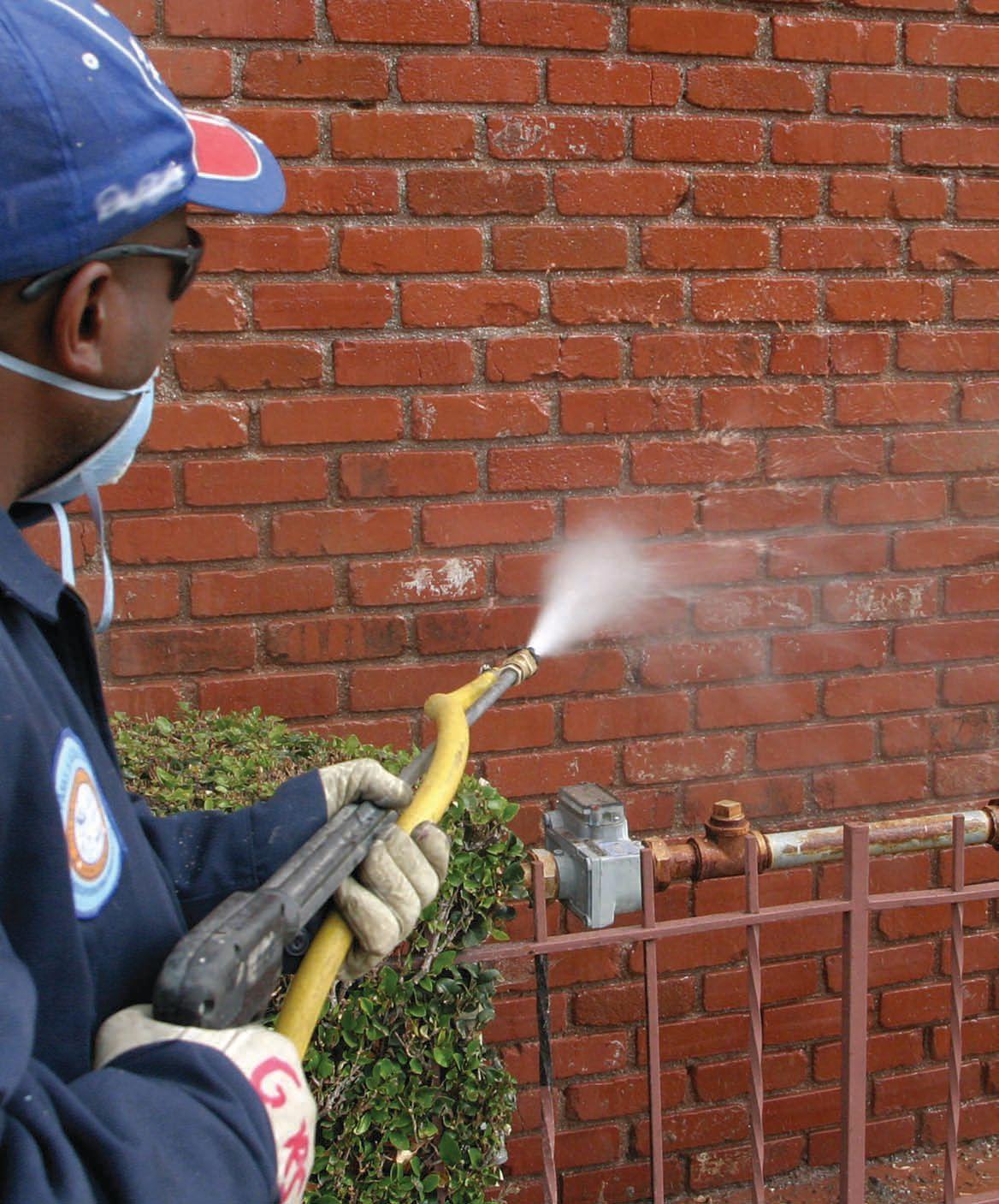
Graffiti on a porous surface like concrete, stone or brick will need a power washer and potentially a stiff metal brush. The nature of the surface needs the help of the power washer to remove the paint from the pores.”
Paint stripper products can also be used to remove lead paint and paint coatings that have endured damage or simply need to be replaced.
“The change in regulations actually helped us find an even better formulation that works well and removes the ghost images left by other graffiti removers.”
—Scott Sarver, marketing coordinator, Franmar

In recent years, sales of graffiti abatement and paint stripper products have been on the upswing, which is always good news for retailers and manufacturers.
“We have seen an increase in sales because the general public has become increasingly more aware, and they want to aggressively eliminate graffiti as soon as possible and prevent future tagging,” Ducey-Brooks says. “Graffiti has a stigma associated with it: Where there is graffiti, there is likely crime and other forms of vandalism.”
At Franmar, Sarver says the increase in sales is due in part to new formulations. “We released our new graffiti removers at the beginning of 2017 after a reformulation to meet the new VOC requirements,” he says. “The change in regulations actually helped us find an even better formulation that works well and removes the ghost images left by other graffiti removers.”

Formulations that make the products safer for the user have also helped increase sales for Sunnyside Corp. in Wheeling, Illinois. “As the years go by, a lot of people—a DIY consumer or a contractor—are getting more comfortable with the safer products,” says Adam Newman, national sales manager for Sunnyside. “They see they will work. In the past, they weren’t sure they would. They have more trust in the way these products perform.”
There’s a general perception that certain geographic areas are more conducive to better sales of graffiti abatement and paint stripper products. For instance, Ducey-Brooks says urban markets are always more likely to experience some form of graffiti in both residential and commercial communities.
While Newman agrees with this assessment, he says that suburban or rural areas with many older houses and buildings might not focus on graffiti abatement, but they will need paint strippers to remove lead paint. Regardless of location, he also says buildings such as museums, for example, may have coatings that have to come off. Coastal regions also contribute to strong sales. “A lot of high-rises along the Gulf Coast have coatings that have to come off because they have eroded,” Newman says.
As a result of these needs, making room on store shelves for graffiti abatement and paint stripper products could be a boon for a retailer’s business reputation.
“By carrying these type of products, retailers can demonstrate that they understand the market and the needs of their communities,” Ducey-Brooks says. “It also shows that they have a proactive approach to dealing with the problem.”
Given that many retailers are actively involved in their communities, it makes sense for them to carry graffiti abatement and paint stripper products. “If you already have a relationship with your municipality or local schools, these products become an obvious choice to increase sales,” Sarver says. “Large and small towns everywhere are dealing with graffiti in one way or another. This can only strengthen your offering or it can be the product to help get you in the door to move the rest of your line.”
Just like other paint products, carrying graffiti abatement and paint stripper products is more than just putting cans and bottles on the shelf. Educating retailers on how the product works and how it
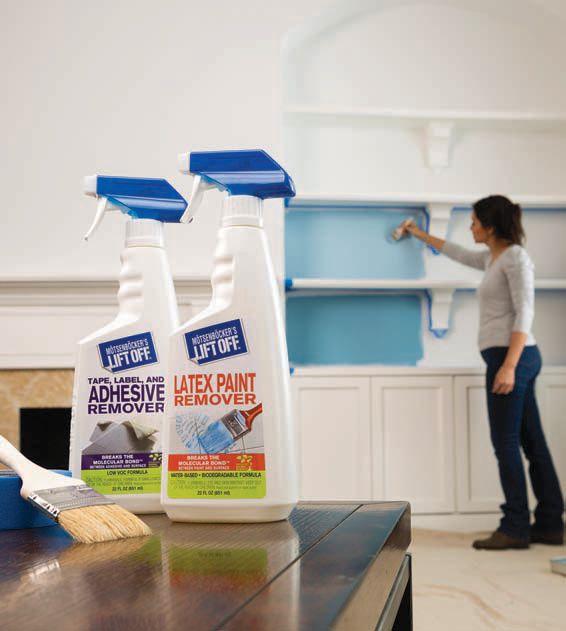
should be applied is essential not only to making the sale, but also having satisfied customers.
“We believe the best way to convince someone about the product is to demonstrate it for them,” Sarver says. “Making claims about how well the remover works is one thing, but showing how well it works is another. We are more than happy to arrange a product knowledge session with retailers to show them how to use the product, and when they see it and have used it, that translates well to the customer.”
Selling graffiti abatement and paint stripper products does require time to learn about the products, what applications they are best for, which product works best for different applications and how the products should be used, but that time is necessary for a high return on investment, Ducey-Brooks says.
“If you don’t invest the time to train staff and know the products, then your customer may be guessing through the maze of options that are available today,” Ducey-Brooks says. “There are a lot of different forms of graffiti and on various surfaces. If you don’t understand and lack the experience in addressing removal and prevention issues, you shouldn’t be offering advice that might lead to the wrong results.”
One way to include these community members in your promotions is to conduct in-store clinics for maintenance employees or landlords who often have to deal with graffiti or unwanted coatings.
Additional selling tools that Ducey-Brooks recommends include signage that highlights the products, sales sheets properly explaining how the products work and videos from the manufacturer showing how to properly apply the products.
Despite their name, graffiti abatement and paint stripper products should not be considered a niche category. “I believe there’s a place for these products anywhere at any store,” Newman says. “There is always going to be paint that needs to be removed.”
However, be ready to make the most of these product lines to increase sales.
“If you are going to invest in the products and equipment for graffiti removal and prevention, you should also know what’s occurring in your community,” Ducey-Brooks says. “Most communities have business improvement districts, neighborhood watch organizations and chambers of commerce. Get to know what they are doing for graffiti removal and prevention. Team up with them to support their efforts to rid your community of graffiti.”
This community-focused approach could also connect your business to administrators at public schools and museums, contractors managing a historic restoration, and even maintenance companies that service older buildings. Seek opportunities to promote the potential that graffiti abatement and paint stripper products have to address your current and future customers’ needs and to bolster your bottom line with a product category that people may not know you carry.
One way to include these community members in your promotions is to conduct in-store clinics for maintenance employees or landlords who often have to deal with graffiti or unwanted coatings. Display not only the products and how they work, but allow these potential customers to try out their own techniques on prepared materials. This allows useful training on the customers’ part, while giving your employees the opportunity to interact with community members in a positive way. Graffiti prevention and removal are often seen as acts of a cohesive community, and aiding that effort gives back to the community.
















In many parts of the world, rising temperatures in urban cities make hot days unbearable. Much of that heat is due to roads being made of black asphalt, which absorbs 80 to 95 percent of sunlight, making it hotter.
To address the problem, the city of Los Angeles found a product that can reduce heat from black asphalt by applying a special gray treatment to the streets, according to Agence France Presse.
Applying the gray cooling pavement is meant to lower ground temperature and reduce urban street heat.
Jeff Luzar, sales director at GuardTop, which markets the product, says applying the paint could drop street temperatures by about 12 degrees Fahrenheit after just one coat.
The gray paint was first applied to parking lots in a trial run, and now the city of Los Angeles is testing it on
public roads, Greg Spotts, assistant director of the city’s Bureau of Street Services says in the AFP article.
“We’re hoping to inspire other cities to experiment with different ways to reduce the heat island effect,” Spotts says. “And we’re hoping to get manufacturers to come up with some new products. Potentially there could be a huge market for cool pavement products, and in fact, it’s part of a much larger economic trend where solutions for climate change could be the next great investments for the future.”
Research is being conducted to see if the benefits of the pavement outweigh environmental concerns. However, Alan Barreca, an environmental science professor at the University of California, Los Angeles, says the pavement cooling technology could be more equitable than current methods, like air conditioning.

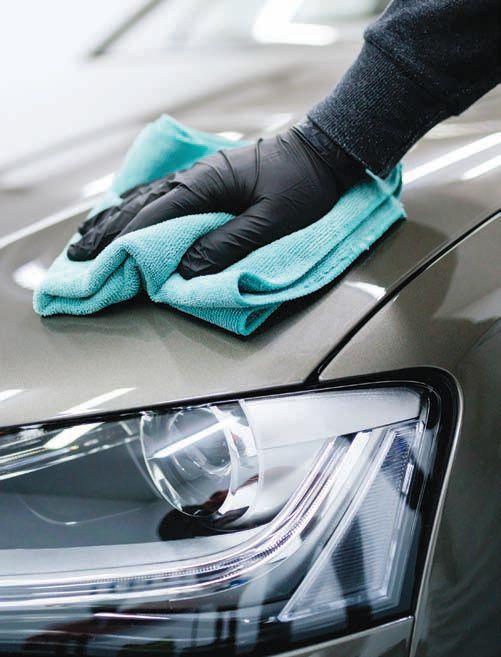
If a car gets scratched, drivers may think it’s time to visit to the shop. However, if new technology becomes more widespread, that may not be necessary.
According to Auto Express, a UK-based car news publication, car care has come a long way. Chemical companies have been able to evolve car film wraps so a car can heal itself after damage.
The thermoplastic urethane protective film has self-healing properties, and the film returns to its natural shape after a collision. The glue under the paint doesn’t harden, but remains fluid to recover from scratches, Auto Express reports.
For success with the technology, cars need to be washed thoroughly, dried and cleaned with isopropyl alcohol to remove lingering oils or residue. After hours of detailing and polishing, they’re sent to temperature-controlled rooms, where installers wear lint-free suits to keep dust or particles from the paint.
Applying the coating soon after purchasing a vehicle may help owners save money in the long run from dents and dings that are bound to occur during a vehicle’s lifetime.


Applications for the 2018
If you have an employee or know someone in the industry who is ready to get started on a career, the annual PDRA scholarship, sponsored by the National Hardware Show®, presents the perfect opportunity.
Nominate someone who is interested in pursuing a career in the paint and decorating retail industry for a $5,000 scholarship to help them take the next step. Applicants can also nominate themselves for the award with a recommendation from someone within the industry. The scholarship can be used for higher education costs in a related field.
The 2017 winner, Jennifer Fick, a junior at Missouri State University and color consultant at Seminole Design Center in Seminole, Missouri, used the award to cover tuition for her internship at Seminole Design Center. She is studying interior design and is minoring in construction management.
“Scholarships are hard to come by, so when you find that opportunity, you definitely want to take it,” Fick says.
For more information about the scholarship, visit pdra.org/education or contact association coordinator Tina Sullivan at 800-737-0107, ext. 113, or tina@pdra.org
Now is Sponsored by Santint Santint specializes in manufacturing and distributing paint mixing and tinting machinery. For more information about Santint, visit santintusa.com or call 847-350-6911.

The Paint and Decorating Retailers Association is the only industry association that represents you as an independent paint and decorating retailer. The association recently redeveloped its membership structure, and the opportunities and benefits of joining the PDRA have never been better.
If you operate an independent business that sells any combination of paint, wallcoverings, window treatments, floor coverings and related sundries and equipment, you have access to these free resources from the PDRA.
• Paint & Decorating Retailer magazine
• PDRA newsletter
• Store locator
• Free VIP attendance at the National Hardware Show ®
• Educational webinars
• Train the Trainer guide
• Industry research studies
• Various educational research and guides
• Business service programs
Education members receive access to all those resources in addition to advanced, industry-specific training and operational resources.
Basic Education Membership
$149 annually, plus $49 for each additional store location
• Generic electronic flipbook of Quarters magazine
• Value Pak coupon book
• Digital problem-solver
• Basic Training Selling Skills (1 seat)
• Electronic version of The Registry
Premier Education Membership
$249 annually, plus $99 for each additional store location
• Everything in the Basic Education Membership, plus...
• Customer Service Selling Training (1 seat)
• Coatings Specialist Training (1 seat)
• Project Pro (1 seat)
• Digital signage (1 program)
If you need help deciding which PDRA education membership is right for your team and your business, contact the PDRA’s Member Services at 800-737-0107 or email info@pdra.org.

The Paint and Decorating Retailers Association is pleased to welcome 13 new members to the association. These new members operate independent paint and decorating businesses across the United States and Canada.
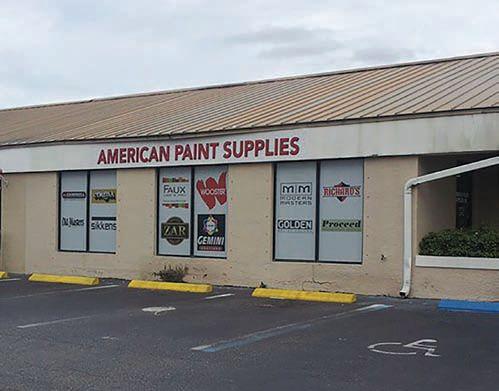
Gene Ur, owner of American Paint Supplies Inc. in Naples, Florida, says his business was previously a member, but lost touch. He rejoined because he looks forward to educational and networking opportunities that the PDRA offers.
“I grew up in the industry with my father,” Ur says. “We worked at another paint store together, and then we opened up our store.”
Ur has owned his business, which sells Richards Paint and lacquers and automotive coatings, for 22 years. His customer base is mostly professional and industrial.
AAA Paint & Supply
Andrew Blatnick, owner Tempe, Arizona
American Paint Supplies
Gene Ur, owner Naples, Florida
Countryside Carpet and Paint
Eric Denu, owner Middlebury, Vermont
Fisk Paints & Stains & Coatings
John Fisk, owner Sand City, California
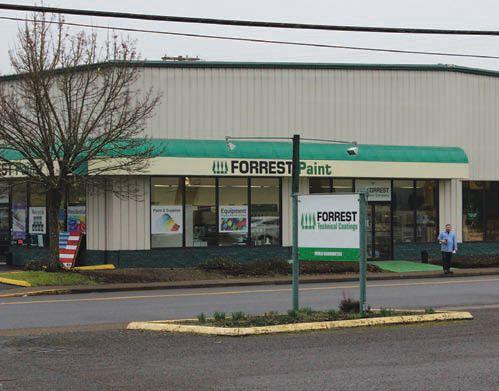
Forrest Paint
Phil Barry, store manager Eugene, Oregon
Heritage Paint & Decorating Centers
Bruce Hendricks, owner Houston, Texas
Howard’s Paint & Wallpaper Ltd.
Doug Misener, owner West Vancouver, British Columbia, Canada
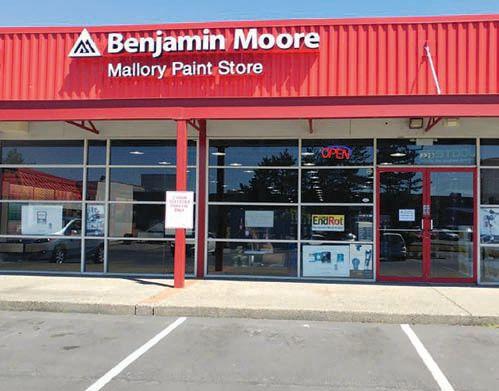
Mallory Paint Store
Kelly Wahl, regional manager Issaquah, Washington
Mobley Paint & Hardware
Brock Johnson, owner Cave City, Iowa
Partners Paint & Paper
Chris & Kelly Collison, co-owners Stratford, Ontario, Canada
Spectrum Paint
Travis Detter, president Tulsa, Oklahoma
Thomsen Hardware
Brenda Sichmeller, owner Tyler, Minnesota
Wallauer’s Design Center
Debora Duncan, owner White Plains, New York

Increase sales with PDRA’s in-store digital signage!
PDRA’S digital signage program is a powerful marketing tool that positions your staff as the go-to experts for decorating questions. It will encourage customers to purchase sundries they forgot or didn’t know existed in order to complete their decorating

project. The program may be personalized by adding still image files to the drive to loop with existing files, although the movie file included cannot be edited. Easy-to-use plug andplay program is available for USB-equipped TVs. Only $99 for PDRA Members ($199 for non-members).
Supplies and sundries
Painting trim
Remembering prep items
Painting latex over oil/alkyd
Reasons to buy quality paint
U.S. and Canadian versions available PRESENTATION INCLUDES SUCH TOPICS AS:
Color quiz
Choosing color and sheen
Staining decks
Color schemes
For more information to order, contact Tina Sullivan at 800.737.0107 or email tina@pdra.org
By Karon Warren
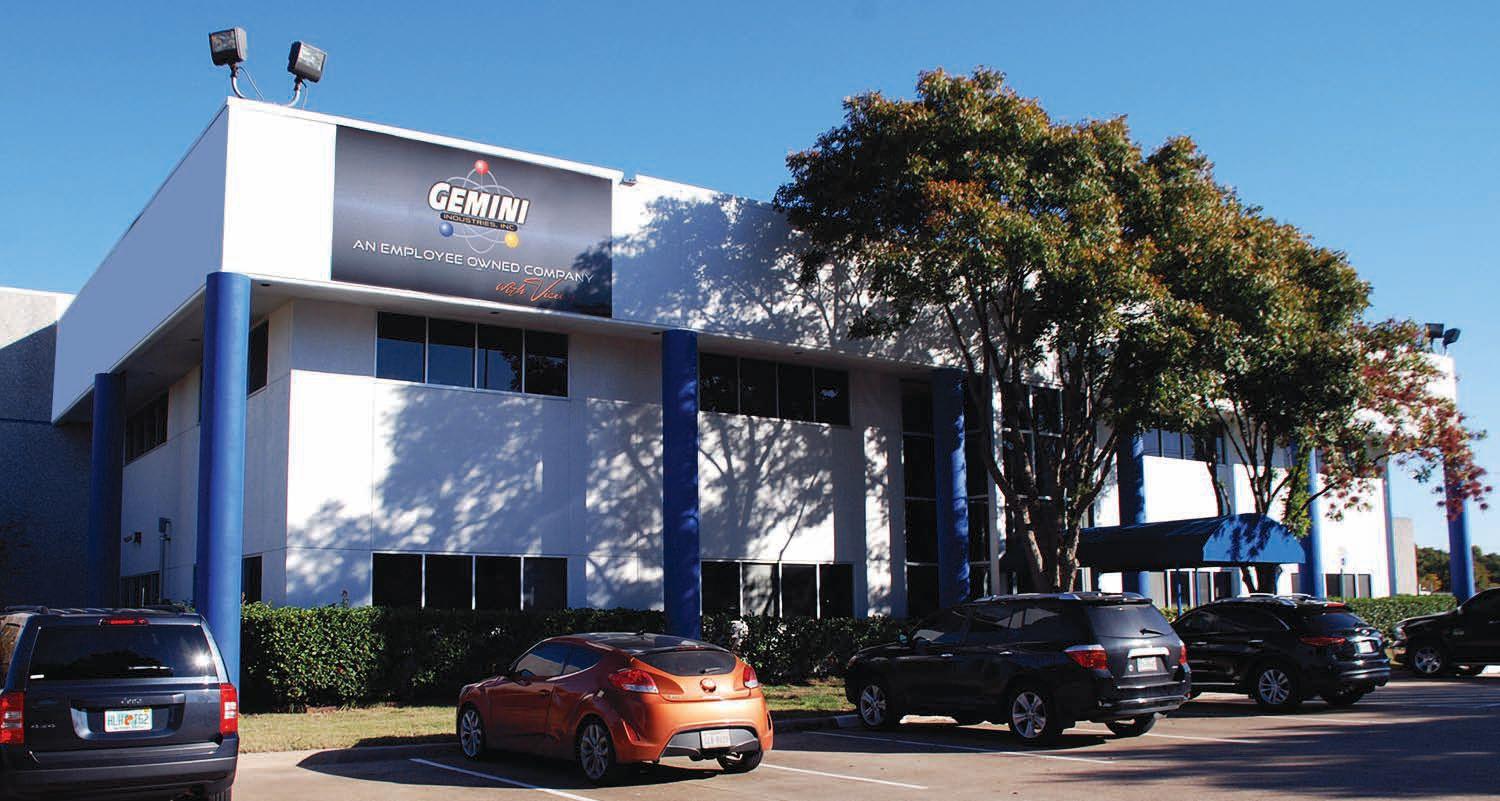
Back in 1964, when Bill Smith first launched Gemini Lacquers in Oklahoma City, Oklahoma, his goal was to produce high-quality woodfinishing systems for architectural and industrial applications. Since then, Smith has seen the company grow into Gemini Industries, employing 170 people with six facilities across North America, including its corporate headquarters and manufacturing facility in El Reno, Oklahoma. Gemini also runs manufacturing facilities in Grand Prairie, Texas, and Pacific, Missouri.
During this period of growth, Gemini Industries’ technology offerings have expanded and now include conversion varnishes, lacquers, acrylic systems, urethanes, aerosols, low-VOC solvent systems, touch-up and repair systems, stains, glazes, exterior wood preservatives, metal coatings, UV technologies and waterborne systems.
Along with its technology offerings, the company has evolved in its approach to the coatings industry. As technology evolved and the demands on its products increased, Gemini was able to meet the challenge by highlighting its service options to its retailers as well as the range of its products. Today, Gemini’s employees produce coating options that would have been impossible when the company was founded.
“The biggest change we’ve seen has been embracing new technology and cutting-edge coatings we didn’t originally envision,” says David Warren, president and CEO for Gemini Industries. “This change has driven our ability to grow as we embraced the challenge.”
In rising to this test, Gemini Industries assembled what Warren calls “the best technical support team in the industry, made up of artisans and craftsmen who live and breathe these coatings and know how to fine-tune these coatings to make them really perform.” By doing so,
the company provides top-quality products to retailers, who, in turn, benefit by being able to provide their customers with high-end service and product assortments.
Currently, the company is working on developing a full range of eco-friendly products in solvent systems, more high-end waterborne systems and an ever-evolving low-VOC stain and glaze family of products. “Color is very popular right now,” Warren says. “This is an industry where you have to stay very tuned in to the latest trends.”
Although Gemini Industries currently offers exterior wood coatings, the company plans to expand those products going forward, with its recent acquisition of Amteco, which manufacturers the wood preservation coating, TWP ®. “TWP has been in the product mix for more than 10 years, but we’re putting more focus on it now to grow that market,” Warren says. “The expansion into exterior could expand into coatings for other materials.”
“Gemini Industries is really going to grow in the business of coatings. We’re expanding with research and development and sending our salesforce into other areas of coating.”
—David Warren, president and CEO, Gemini
Accomplishing these goals will go a long way in helping Gemini Industries expand as an even larger provider and manufacturer of coatings, Warren says.
“Gemini Industries is really going to grow in the business of coatings,” he says. “We’re expanding with research and development and sending our salesforce into other areas of coatings.”
To further strengthen its position in the industry, Gemini Industries has partnered with Sirca, a European coatings company. “European standards are like the gold standard,” Warren says. “It felt like they were a good fit. They truly are a partner.”
Right now, the company has revenues of $60 million per year, and Warren says Gemini is on track to double that number by the 2020s.
“We’ve been on this course for a while,” he says.
Gemini Industries is an employee-owned company, something Warren takes pride in. “When you talk to anyone here, you’re talking to an owner,” he says.

Increase sales, keep customers. Anywhere, anytime.
With PDRA’s Customer Service Specialist Course, your staff can get the service training they need online. They can take the course at your store, in their homes or on their smartphones. Anywhere, anytime.
For greater flexibility and convenience, the seven-

to-10 hour course can be taken in multiple settings over days or even weeks. It’s available to PDRA members and to nonmembers.
Greet customers and gain their trust
Ask questions to determine customer needs
An exam is given at the end of the course, and those with a passing score receive a certificate, lapel pin and press release for your local newspapers. Join
Match your products to customer needs
Sell add-ons
For more information about the PDRA and to save money registering for this course, contact Tina Sullivan at 800.737.0107 or email tina@pdra.org. Explain the advantage of dealing with an independent paint and decorating store
Close transactions
Compete against the big box stores
Develop better telephone skills
Deal with difficult customers
By Diane Franklin
Corona Brushes Inc. is a great American success story that has unfolded over four generations. The company got its start in Havana, Cuba, before relocating to Tampa, Florida, where it became one of the most significant manufacturers in the U.S. paint applicator market.
In an environment of intense competition and industry consolidation, Corona has had a consistent presence that has thrived based on a commitment to making quality handmade painting tools and serving its customers well. In fact, the company has recently undertaken an expansion that will ensure its growth for years to come.
Corona’s reputation comes from a tradition of excellence established by the Waksman family and passed down from generation to generation. It began with the vision of company founder Jude Waksman, who learned the brush-making trade in post-World War I Russia before immigrating to Cuba. It continued in America, where Jude’s sons, David and Gregory, adapted to a new market and forged a connection with the independent dealer market. Today, Gregory’s sons, Ben and Albert, serve as managing partners to continue their grandfather’s legacy. Ben’s son, Michael, has joined the company to aid in that cause.
“We are proud to be a fourth-generation family company,” says Ben Waksman, Corona’s president. He recalls how he and his brother Albert learned important values in their early days with the business. And it was all grounded in their quest to produce the best brushes and rollers possible.
“The basic tenets were simple, in a way, but the gist is to try to be better than you have to be,” Waksman says. “Try to make the product better than just good.”
Corona achieves this excellence through careful selection of materials, processing and construction with the ultimate goal of making a product that works better for the user over a longer period of time.

“Without the retailers and the painters, there is no Corona. We work hard to earn their trust in our brand.”
—Ben Waksman, president, Corona Brushes Inc.
“With changes in paint and construction styles, we are constantly working on ways to update our blends of materials and processes to ensure top performance characteristics, ease of flow, cutting-in, coverage and application,” Waksman says.
“There are always changes and new ideas, but it is nice to have the traditions and heritage of four generations to always be there for us.”
Corona could not retain its tradition of excellence without the dedication of its employees, many of whom have been with the company for 20 or even 30 years. “We consider our employees as all part of the Corona family,” Waksman says.
He also gives credit for Corona’s success to many people outside the plant. “This includes our suppliers, the retailers who resell our products, the painters who buy and use Corona handmade painting tools to earn their livelihoods

and everyone else who comes in contact with the process or the result of our quality tools. Without the retailers and the painters, there is no Corona. We work hard to earn their trust in our brand.”
Corona is undergoing an expansion, which it expects to complete by early 2018. The project will give add a total of 85,000 square feet to accommodate both present volume and future growth. “We will be able to significantly increase our production of both paintbrushes and paint rollers,” Waksman says. “Part of the expansion will allow us to enlarge our marketing and administrative forces.”
In anticipation of increased production, Corona has already started hiring new employees and training them in the craft of making quality applicators by hand. “We’re developing a crop of new brush-makers and roller-makers, and it takes time to train them well,” Waksman says.
Thus, the vision of Jude Waksman continues, nearly a century after he first learned how to make a quality handmade paintbrush in a small Russian village. His grandson, Ben, affirms this: “While we innovate constantly, the basic way of building our products has remained the same, by hand.”


DECEMBER 7
The North American Retail Hardware Association is hosting the third annual State of Independents Conference Dec. 7 in Chicago. The event, which is free for retailers, will include propriety research from NRHA about the state of the independent home improvement industry and will present networking opportunities between independent retailers and other channel members. The program provides retailers the chance to discuss challenges and successes directly with manufacturers, wholesalers and vendors.
Based on attendee feedback, this year’s conference will have shorter presentations and more retailer panels, so attendees will spend more time hearing about other independent retailers’ day-to-day experiences.
For more information and to register, visit soic.eventbrite.com or contact Dan Tratensek at dant@nrha.org
NOVEMBER 7-9
The Atlanta Fall Immediate Delivery Show®, a Cash + Carry Event AmericasMart Atlanta, Georgia americasmart.com
JANUARY 9-11, 2018
NAHB International Builders’ Show Orange County Convention Center Orlando, Florida buildersshow.com
FEBRUARY 16-18, 2018
Cirque de Lancaster — The 2018 Florida Buying Show Gaylord Palms Resort & Convention Center Kissimmee, Florida lancasterco.com/events
FEBRUARY 21-23, 2018
2018 Painting and Decorating Expo San Luis Resort & Convention Center Galveston, Texas pdca.org
FEBRUARY 22-24, 2018
Orgill Spring Dealer Market Orange County Convention Center Orlando, Florida orgill.com
MARCH 10-13, 2018
International Home + Housewares Show McCormick Place Expo Center Chicago, Illinois housewares.org
APRIL 9-11, 2018
American Coatings Show and Conference
Indianapolis Convention Center Indianapolis, Indiana american-coatings-show.com
American
Benjamin
Brewster
Corona




Few artists have been so closely associated with a color as musician and actor Prince. The Grammy®- and Academy Award®-winner used purple to imbue his work with an evocative, unmistakable mood. When he died in April 2016, fans flooded his Paisley Park studio to remember “The Purple One.”
The Pantone Color Institute™ and The Prince Estate recently unveiled Love Symbol #2, a standardized custom color which will now serve as the official shade of the artist’s brand.
Prince took his association with purple to new heights, but color and culture have influenced one another for centuries, says Dee Schlotter, senior color marketing manager at PPG.
“Everything around us affects how we relate to colors,” she says. “Current color trends reflect our fascination with wellness, and green is quickly becoming a more popular color than blue. You see green colors on your plate and in green smoothies, and that has an effect on everything you do.”

Schlotter says the color may be too aggressive for a wall covering, but it represents a middle ground between genders.
“Men and women can use purple without going so far as pink or blue. There’s also a nostalgia around purple; lots of people relate it to their grandmother, and it always reminds people of royalty,” she says.
Schlotter says Love Symbol #2 is similar to PPG’s 2017 color of the year, violet verbena, a muted purple shade.
“We picked violet verbena in January 2016, and when Prince died, we were shocked,” she says. “We started to see the color appear everywhere.”
Prince’s estate is currently in discussions with various partners to incorporate the custom color into consumer-facing products.
Gemini Industries, Inc (an employee owned company) is proud to announce the acquisition of Amteco, Inc.
The acquisition of Amteco provides Gemini with best-in-class technology and a highly competitive product portfolio for both the exterior wood and metal coatings markets in North America.
For years now TWP (an EPA registered preservative) has been the brand of choice when it comes to the professionals. The Zero Rust product line has quickly become the go to product of choice when it comes to protecting your metal investments. Just ask your local Hot Rod enthusiast.
Gemini’s shareholders (our employees) couldn’t be more excited with this recent acquisition. Two GREAT companies coming together and combining resources to service the North America market like no one else can in today’s market.
Just remember when you give us a call, no matter who picks up the phone, you will be talking to an owner!



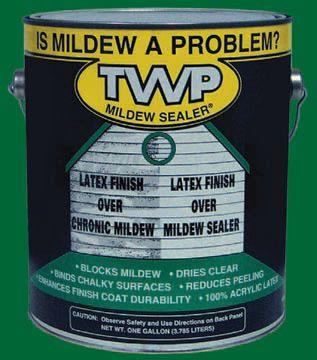
Mildew Sealer is a totally mildew resistant water based clear sealer for chronically mildew prone painted surfaces. MILDEW SEALER IS IMPERVIOUS TO MILDEW! When applied over existing mildew, it not only blocks the re-growth of existing surface mildew, but also enhances the mildew resistance of