










































































Learn how custom window treatments can put a signature touch on every room, bring new sales to your business and inspire customers to take on their next redecorating project. Jamie Llosa, designer from Don Smith Paint Co., and Ron Bryza, director of in-home services for JC Licht, explain how window treatments are setting their businesses apart.

Continuing to learn about the industry and improve selling skills are hallmarks of successful paint and decorating retailers. Learn how the PDRA’s training programs can empower and instill confidence in you and your employees. Hear from education sponsors on why seeking new educational resources is a valuable investment for the entire industry.


Review the news, trends and regulatory decisions that impacted the industry in 2018. Hear from Steve Skodak, the Painting Contractors Association’s executive director, on what contractors across the country need from independent paint retailers. Also, learn the rewards of being a small business owner from Gary Pittsford, president and CEO of Castle Wealth Advisors.


Finding the right employee can make a huge difference for your business. Get insights from Rob Simms, vice president of sales and marketing for The Paint Shop, to learn the skills and traits he looks for when searching for new employees to join his operation. Plus, save time and energy with five key tips to attract the right talent to your business.
LeAnn Day emphasizes the importance of education and training. Dan Tratensek explains why retailers should deliver the Cracker Jack Effect at every opportunity.
Nominate your business to win a branding and marketing makeover valued at $25,000. Plus, discover the new features of Armstrong-Clark Co.’s recently redesigned website.
Get information on sealants that can improve the look of patios and driveways and safeguard them for years to come.
It’s not enough to simply launch a social media account. In this guest column, learn the steps you can take to ensure your social media is well-maintained and attracting new customers.

Eagle Scout Noah Mandelman wanted to give back to his local synagogue. See the stunning results of his hard work.
For many retailers, cold weather is beginning to settle in. Get tips on how you can winterize your business while keeping sales hot.
The Wooster Brush Co. has developed and manufactured some of the finest paint tools on the market for more than 160 years. Read about the company’s dedication to the independent channel and its plans for the future.
Get information on events that can guide your business on the path to success.
Kathy Boyd, co-founder of ArtFusion, talks about this year’s event and gives a sneak preview of the 2019 gathering.

Jamie Llosa (left) and Jill Selinger of Don Smith Paint Co. have found success by offering custom window treatments. Get tips on incorporating window treatments within your business.

PAINT & DECORATING RETAILER
(ISSN 1096-6927): Published monthly except December by the Paint and Decorating Retailers Association, 1401 Triad Center Drive, St. Peters, Missouri, 63376-7353. Phone: 800-737-0107.
Subscription price: January through November issues, $49 in U.S., payable in advance. Canada add $24, and foreign countries add $48 to above charges. Single copy $10, except July issue, $25. Periodicals postage paid at St. Peters, Missouri, and additional mailing offices.
Postmaster: Send address changes to Paint & Decorating Retailer, 1401 Triad Center Drive, St. Peters, Missouri, 63376-7353. Returns (Canada): Return undeliverable magazines to P.O. Box 2600, Mississauga, Ontario L4T 0A8. PM# 41450540. Copyright © Paint & Decorating Retailers Association, 2018.


Knowledge comes with practice, and it comes with training. That’s why the PDRA has created a robust portfolio of training opportunities to help you create your own program and develop more knowledgeable, more effective sales associates.
With another year under our belts, I want to thank all of you on behalf of the Paint and Decorating Retailers Association. I’ve had the opportunity to connect with you at industry events, visit you in your stores and otherwise engage with you over the last year.
These meetings have helped me understand the needs of independent paint retailers. There is no better time to be in this industry than right now, as consumers are becoming more interested in supporting their local communities by shopping local.
As you head into the New Year with that knowledge, I urge you to consider how your operation approaches training and its relationship to customer service. The PDRA is committed to helping you grow your business and better prepare your staff for success. One of the most effective ways to reach customers is through knowledgeable staff, people who understand how to meet the needs of anyone who walks into your store, pros and DIYers alike.
Knowledge comes with practice, and it comes with training. That’s why the PDRA has created a robust portfolio of training opportunities to help you create your own program and develop more knowledgeable, more effective sales associates.
Review our training programs on Page 24 and discover the opportunities you have to empower your team now and into the future. From introductory training on selling skills and merchandising best practices to advanced coatings knowledge and loss prevention management, there are training programs for everyone on your staff.
Another benefit of these programs is that they can be the perfect tool to onboard new members of your team but they also provide valuable refreshers for veteran staff, too. There is something for every associate level within these programs.
With the nearly endless training options available to you, the question isn’t why, but why not?
The PDRA training programs are available to PDRA training members. Please reach out to us to find out what membership is right for your operation and what training programs will get your program started on the right track.
For information about memberships, contact our member services team at 800-737-0107 or info@pdra.org In addition, please reach out to me to let me know your thoughts on the training resources we have and what kinds of resources you would like to see in the future.
Here’s to all of us expanding our knowledge in 2019.

LeAnn Day CEO, PDRA leann@pdra.org
















When I was younger, Cracker Jack was pretty near the top of my list of favorite treats. Sure, I am a sucker for popcorn of just about any type, but the real reason Cracker Jack was among my favorites was—you guessed it—the prize.
What could be better than getting delicious caramel-covered popcorn and peanuts that also had a cool toy in the box? You never knew what the toy was going to be. Could it be an army man? Sure. What about a whistle? You bet. Whatever it was, you were pleasantly surprised. Even if you weren’t crazy about the prize you got, you knew the next box might have something even better.
Today’s consumers gravitate toward this same kind of reward. They want to be surprised by good customer service. You may have heard this concept referred to as creating the “Wow Factor” for your customers. For the sake of this column, however, I will refer to it as the Cracker Jack Effect.
To be successful in the customer service game, you should definitely look for ways to surprise and delight your customers. You should create those “prize moments” as often as you can.
Studies show that, when retailers can surprise customers with some sort of truly exceptional service experience, they have a better chance of earning customers for life.
To be successful in the customer service game, you should definitely look for ways to surprise and delight your customers. You should create those “prize moments” as often as you can. However, to have an impact, service really needs to be “special,” not just something that feels like an afterthought.
With more people turning to big boxes or going online to shop, creating the Cracker Jack Effect in your operation is more important now than ever. To do this, you have to train and empower your employees to go above and beyond. Service with a smile is no longer enough.
Think about it, you don’t hear too many kids clamoring for Cracker Jack anymore. Since the prizes aren’t really that special these days, they’re just as happy with a bag of popcorn (that the parents probably ordered from Amazon).


Dan Tratensek DanT@nrha.org




Publisher/Director of Sales
Dan Simon dan@pdra.org
Phone: 800-737-0107, Fax: 636-229-4750
Editor-in-Chief
Dan Tratensek dant@nrha.org
Contributing Editors
Heather Kauffman-Peters
Karon Warren
EDITORIAL, DESIGN & PRODUCTION
Features Editor
Melanie Moul
Association Coordinator Tina Sullivan tina@pdra.org
Account Executive
Brandi Hemmer brandi@pdra.org Phone: 636-680-2785, Fax: 636-229-4750
PDRA EXECUTIVE LEADERSHIP
Chief Executive Officer LeAnn Day
Craig Bond
Chairman of the Board
Tommy’s Paint Pot, Eugene, Oregon
DIRECTORS
Robert Mueller
Director at Large
Benjamin Moore Kelowna, Kelowna, B.C., Canada Jay Donnelly
Midwestern Region Director Flanagan Paint & Supply, St. Louis, Missouri
Lesley Davies-Baptista
Southern Region Director Paint Fair Ltd., Freeport, Grand Bahama, Bahamas
PDRA ADVISORY COMMITTEE
Dori Marks, PPG Industries
Thomas Hill, The Coatings Alliance
Eugene Andreassi, Benjamin Moore
Joe Jankoski, Hunter Douglas
Bob Clemence, Hyde Tools
John Shingledecker, Allpro Corp.
Richard Russo, Reed Exhibitions
Mike Dube, Lancaster

$25,000
Independent We Stand is encouraging the public and business owners to help promote the strong economic benefits of “buying local” through its eighth annual Indie Award. The contest provides a chance for the winning independent business to benefit from a branding, advertising and public relations makeover valued at $25,000.
Getting involved is as easy as nominating locally owned small businesses that go above and beyond to support their communities through charitable donations and community outreach. The annual Indie Award contest also gives supporters the opportunity to acknowledge businesses that exceed customer service expectations and grow their local economies.
“With small business optimism at a record high, consumers have a chance to boost that positive outlook even more through this contest,” says Bill Brunelle, co-founder of Independent We Stand. “We want to help bolster the efforts to grow small business, just like our members do every day in their communities, by giving customers a platform to recognize their favorite
independent businesses. The bottom line: We all win when small businesses succeed and people shop local.”
Anyone can nominate a small business online and voting begins as soon as a business is nominated. Consumers can vote a maximum of three times per 24-hour period from the same IP address. Any locally owned and operated business in the U.S. is eligible to enter the contest. Nominate and vote at indiebizaward.com. The nomination phase and initial voting runs through Nov. 11.
The winner of the 2018 Indie Award will receive many prizes, including a branding, advertising and public relations makeover from independent advertising agency, The Meridian Group, valued at $25,000; a plaque to display at the winner’s business; and public relations and social media recognition. Quarterfinalists receive an Independent We Stand Premium Membership for life.
Nominations and quarterfinalist voting run through Nov. 11. Semifinalist voting begins Nov. 19 and ends on Dec. 16. The announcement of the winner will be made on Dec. 19, 2018.
To nominate and vote for your favorite small business, visit indiebizaward.com
















Armstrong-Clark Co. has launched the first phase of a three-stage website redesign for armclark.com. The new release is a cleaner and easier site to navigate than the previous website, according to the company.
The website redesign process has been centered around feedback from current customers on what they want from a website. Feedback was sought from store managers, contractors and DIYers.
The store locator includes not only stocking stores, but also a list of stores that have expressed interest in carrying Armstrong-Clark products. President Brian Carter recognizes that there is a disconnect between the end users of their product and storeowners and managers, and they are investigating solutions to bridge the gap.
“Store owners and managers may tell me they have not heard of our product, but every day our phone rings from all around the country, especially along the east coast and states around the Great Lakes. Our customers spread the word about our product and hopefully something like an interested parties list will connect our customers to local brick-and-mortar stores.”
Homeowners and contractors often research the best stains on the market using third-party websites. Many of these sites ranked Armstrong-Clark in their top brands of stains on the market.
“Once a consumer makes a decision on a product, they go to the stores that a store locator tells them to go to get what they want,” Carter says. “As a result, customers are not asking managers for products like they used to—they are simply going where their phone or tablet is telling them to go.”
Stages two and three of the project will include a completely redesigned how-to section; an updated inspiration gallery with filters to help customers narrow down image searches; updated articles; a new blog; additional updates to the design of the store locator; the addition of a manager and contractor portal; a more insightful company history; as well as a content management system.
The next stage is expected to be completed sometime this winter.







On rooftops across New York City, freshly applied white paint is being used to help lower the heat of buildings during the warmer seasons.
Since 2009, NYC CoolRoofs, a program run by Small Business Services, has applied more than 6.7 million square feet of white paint for free to the rooftops of nonprofit organizations, hospitals and affordable housing buildings across the city. The program is designed to help support the city’s goal to reduce carbon emissions 80 percent by 2050.
The white paint can also significantly decrease these buildings’ internal temperatures and lower expensive air conditioning costs.
NYC CoolRoofs has hired 70 people to paint the rooftops. According to the Mayor’s Office of Sustainability, every 2,500 square feet of painted roof lowers the city’s carbon footprint by one ton of emissions.

For the first time since 1745, a major construction project took place at Westminster Abbey in London and paint manufacturer AkzoNobel supplied paint and coatings for the royal undertaking.
The new addition is Weston Tower, which provides staircases and elevator access to the Queen of England’s Diamond Jubilee Galleries. The tower includes 500 leaded windows, and every frame is safeguarded with AzkoNobel’s Interpon powder coatings.
“The powder coating was very easy to apply and the efficiency was superb,” says Andris Valters, owner of Hereford Coatings.
The Diamond Jubilee Galleries were officially opened by Queen Elizabeth II this summer and display more than 300 religious artifacts and relics from the royal family.
AkzoNobel has supplied products for the London Eye, Wembley Stadium and other iconic U.K. destinations.


First the Radius360°® Now as Radius360°Air® Dust-Free
Introduced in 2004 - The Full Circle Radius360°® with its Unparalleled Range of Motion, Finish Quality, and No-Flip characteristics quickly established it as the “Tool of Choice” for drywall sanding professionals.












Introduced in 2016 - The vacuum extracted Full Circle Radius360°Air® maintains the desired characteristics of the original Radius360°® with the added feature of being Dust-Free!


















Available as the Full Circle Dust-Free Sanding System, both vacuum extracted drywall sanding tools: the round Radius360°Air®, and the rectangular FlexAir® Sanding Tools are included for a total sanding experience.


Patios and driveways can take a lot of punishment. From vehicles and outdoor power equipment to patio furniture and grills, these surfaces are tasked with supporting a lot in the modern household.
Protecting these surfaces from stains from automotive oils or damage from moving furniture can enhance the look of outdoor surfaces as well as maintain them for the future. The RockSolid line of sealants from Rust-Oleum allows professional contractors as well as DIY homeowners to protect their outdoor surfaces and apply a coating that enhances outdoor living spaces.
RockSolid Wet Look Lacquers are solvent-based, giving them maximum longevity in sealing and protecting concrete surfaces from damaging elements. Using NeverWet properties, they provide superior water repellency, protect against stains and can extend the life of concrete. The line is available in both wet-look and low-luster finishes, and they
can be used on a variety of surfaces, such as natural stone, slate, decorative concrete, exposed aggregate and more.
“Our full line of RockSolid Concrete Sealers offers products for both the pro and DIYer with a variety of sealer options— all with outstanding performance,” says Kerri Schlenker, brand manager at Rust-Oleum. “RockSolid Wet Look Lacquer sealers provide the ultimate resistance from the elements but also enhance the look of concrete with an attractive ‘wet look’ finish.”
The Penetrating Concrete Sealer and Film-Forming Concrete Sealer offer protection for outdoor surfaces, while the Concrete Stain and Sealer allows users to add some more style and color.
Paver Lock locks down the sand between pavers. RockSolid Elite Sealer is designed for dense masonry surfaces such as slate or tile. There are also three products designed for the preparation and cleanup phase of applying these sealers.
For more information on the RockSolid line of sealers, call 877-385-8155 or visit rustoleum.com .

Deco and Deco offers four high-end drapery hardware collections and accessories. From Italian Murano glass to imported crystals and hand-sculpted metals, each collection is crafted with materials allowing designers to seamlessly select from high-quality products to complement any design. The lines include the Murano, Crystal, Acrylic and Metals lines. Each collection includes a range of new and returning products as well as accessories available for order in an array of sizes and up to 13 finishes.
Deco & Deco 855-876-0846 or decondeco.com


Pro-Fit Terrain Ledgestone blends textures and patterns to provide high-quality designs for wall surfaces while also meeting GREENGUARD Gold Certification standards. The veneers are precision-fit for easy assembly and installation, and they are available in four color options: Arcadia, Arctic, Ethos and Trek. Cultured Stone 800-255-1727 or culturedstone.com
BB Frosch Premium Finishing Wax contains an environmentally friendly blend of waxes that naturally enhance chalk-painted surfaces as well as bare or stained wood. The wax is toluene-free and low aromatic. Its texture allows for even application using a wax brush or lint-free cloth. Users can buff it to the desired sheen within minutes to provide a finish that enhances and protects a surface.
BB Frosch 702-415-5810 or bbfrosch.com
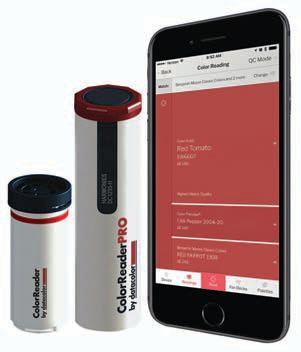
The ColorReader by Datacolor is a portable tool that can find the closest paint color match to an existing wall, trim or inspiration across all major paint brands. The Bluetooth-connected device works with a smartphone app to identify, coordinate and share colors. ColorReader can be used by homeowners and DIYers as well as paint professionals.
Datacolor
609-528-1307 or colorreader.datacolor.com


Vesta™ Fine Hardware features the Palazzo collection of decorative hardware options, influenced by octagonal elements. These hardware options are available in nine cabinet pull and knob shapes, and the classically inspired collection blends emotion and creativity with exceptional craftsmanship and artisanal European design. This lineup is available in eight finishes.
Vesta Fine Hardware 800-499-9093 or vestafinehardware.com













Floating Shelves from The Art of Storage® create a clean look for wall storage without visible brackets. Patented Invizibolt™ brackets fit into standard drill bits and bolt into studs, with the shelf sliding onto the brackets and hiding them from view. The shelves are sourced from formaldehyde-free, reforested wood. They are available in white, black and natural wood colors and can hold up to 33 pounds.


Delta Cycle 800-474-6615 or theartofstorage.com








































Much like maintaining a home, keeping your social media presence fresh requires a plan of action. At your home, lightbulbs need to be replaced, decks need to be weatherproofed. Online, you need to post content regularly and develop eye-catching graphics. You don’t need to do these things all at once, but they are necessary. The good news? Like any maintenance plan, some thoughtful work up front will save a lot of time—and possibly money—in the future.
Start with a strategy.
Take 30 minutes and decide these three things: Who is in charge of posting content? Who is in charge of social ads? Who is managing these people? Clearly identify the expectations of each role and consistently follow up. This foundation is critical as a great strategy is useless if it’s not being managed.
Create checklists.
I’m a big fan of checklists. People love feeling accomplished by checking things off a to-do list, and it keeps us all accountable. Create a checklist that includes items that need to be done daily, weekly and monthly. Many of the businesses we work with already have an operational checklist, which makes it easy to add in a few social media tasks.
Maintain consistent branding.
Here at Social Edge, we love and use online design platform Canva to keep our brand identity consistent. If your brand colors are red and black, then the images and graphics you create should incorporate those colors to build brand recognition. Check your Facebook page, do your graphics truly represent your brand? If they don’t, consider upgrading to the Pro feature in Canva. With the Pro feature, you can upload your brand’s fonts and colors to quickly access them when creating graphics.

Always be building.
Continue to grow your social media following using a mix of organic methods and social ads. Building your following allows you to get in front of potential new customers each week. You can use Facebook ads to specifically target people who are likely to buy from you, you can even target people that are standing within a mile of your store. That remarkable precision can be a vital component to reaching new clientele.
Social should be simple, you just need a plan. Take some time to create your plan and be sure to tweak it as you need to fit your business. Keeping social media fresh will invigorate your team and your customers.

Pauline Blasetti
is the Facebook Ads Director of Social Edge, which helps brick-and-mortar businesses drive foot traffic, She has run more than 2,500 ad campaigns for independent retailers, helping them drive traffic, grow sales and increase event attendance.



















For his community project as an Eagle Scout, Noah Mandelman wanted to give back to his local synagogue. Noah’s rabbi recommended a mural on the outside wall, so Noah started developing plans to execute the project. He and his scoutmaster chose to paint on PVC panels instead of painting directly on the exterior concrete wall. Once they decided on using panels, Noah needed technical assistance before he could get started.

Through his Eagle Scout adviser, Noah connected with technical advisers from Benjamin Moore & Co. who tested the PVC panels and helped him identify the right kind of paint to use for the mural. Paint store Ricciardi Bros. in Lodi, New Jersey donated the paint for the project.
Inspired by the stained glass windows in the temple, Noah created a paint-by-numbers schematic to plan the mural across several panels. Nearly 60 volunteers invested more than 1,000 hours of work to create the mural.

















Delayed Shipping & Extended Payment Terms
Travel & Stay Reimbursements Prize Giveaways Networking
FRIDAY, FEBRUARY 1ST
SATURDAY, FEBRUARY 2ND

As the unemployment rate falls and wages rise in other sectors, attracting and retaining talent that grows with your business for years will likely continue to be a challenge throughout the independent home improvement retail industry. But there is a solution to improving morale and encouraging your current team to become more engaged with the operation: training.
According to the 2017 Employee Compensation Report, 66 percent of independent retailers budget 1 percent or less of sales to employee training. (See the whole report at pdra.org.)
On the other hand, offering a robust training program increases transaction sizes, improves customer service and reduces employee turnover. Employees who know how to sell, how to treat customers and feel engaged in the operation are more likely to stay around longer.
The Paint and Decorating Retailers Association is committed to helping you implement a well-rounded training program. On the following pages, review the training programs that the association offers members to discover the opportunities that await your team and your business.

Announcing the 12th Annual PDRA College Scholarship Competition!

Create good will with your customers and in your community by promoting PDRA’s annual college scholarship competition.
















Anyone can enter under your nomination, and your industry association will award one lucky recipient $5,000 at the National Hardware Show® in Las Vegas, May 7-9, 2019.

Deadline for Entries: March 1, 2019
For rules of entry visit pdra.org/scholarship
Scholarship generously sponsored by the National Hardware Show®
As part of the PDRA’s alliance with the North American Retail Hardware Association, paint and decorating retailers now have access to a variety of in-depth training programs. Read through the training programs here and consider how they may have a positive impact on your operation. To learn more about how to access these programs through a PDRA membership, visit pdra.org/membership or contact Tina Sullivan at tina@pdra.org or 800-737-0107.
Prepare your employees to create imaginative, effective displays with the Merchandising Basic Training course. This program starts students with the basics, providing an introduction to merchandising, and then leading them through nine other essential elements of merchandising.
Making a sale is more involved than simply ringing up a customer on the register. The Selling Skills Basic Training course overviews necessary skills that all retail associates should master, including managing customer complaints, telephone skills and how to suggest add-on sales.
Keeping staff, customers and the store safe is the responsibility of every team member. Be sure your employees understand what constitutes internal theft, how to address external theft and ways to ensure the physical safety of property and people throughout the store.
When you welcome new team members to your operation, it’s a good idea to give them an overview of the industry. The Paint Basic Training course offers industry

newcomers a comprehensive introduction to the various types of paints and coatings, tools and other products you likely have in your inventory.
If a significant portion of your customer base is professionals, this training program will help your team members know how to serve their specific needs by learning about specific projects. The course overviews exterior painting, drywall repair, deck maintenance and more.
If you recently promoted an employee to a supervisory or managerial role, the “3 Pennies of Profit” video will help them better understand retail profit and loss and how their actions on the salesfloor directly impact the store’s profit. It can also be a useful tool for company meetings.
Prepare any associate to become a leader in your business with Trainer’s Toolbox. This package of training materials guides your employees through the steps necessary to create and implement a thorough, industry-specific training program. It’s recommended that the guide be used in conjunction with Trainer’s Toolbox lessons.
The lessons in this package can be used to introduce new associates to best practices in a variety of areas or can be used as refreshers for long-time sales staff. Used alongside the Train the Trainer Guide, your training team will have access to a wealth of materials to ensure everyone on your salesfloor has the knowledge they need to be successful.



These classic PDRA training programs provide insight into the basics of the paint and decorating retail industry. Graduates of the programs receive certificates of completion and pins so customers know your team has the expertise to address their needs.
Send your new associates through the Customer Service Specialist program to ensure they have the skills to help anyone who comes in the door. Topics addressed in this program include overviewing the benefits of shopping local; greeting customers; matching products to customer needs; explaining the difference quality makes; and more.
Many PDRA members have made this training program a requirement before new associates can work on the salesfloor. The program overviews the various types of paint and coatings available on the market, the tools customers will need to apply them properly and how to answer customers’ questions. Prepare your team for any technical question or applicator query a customer may bring into the store.







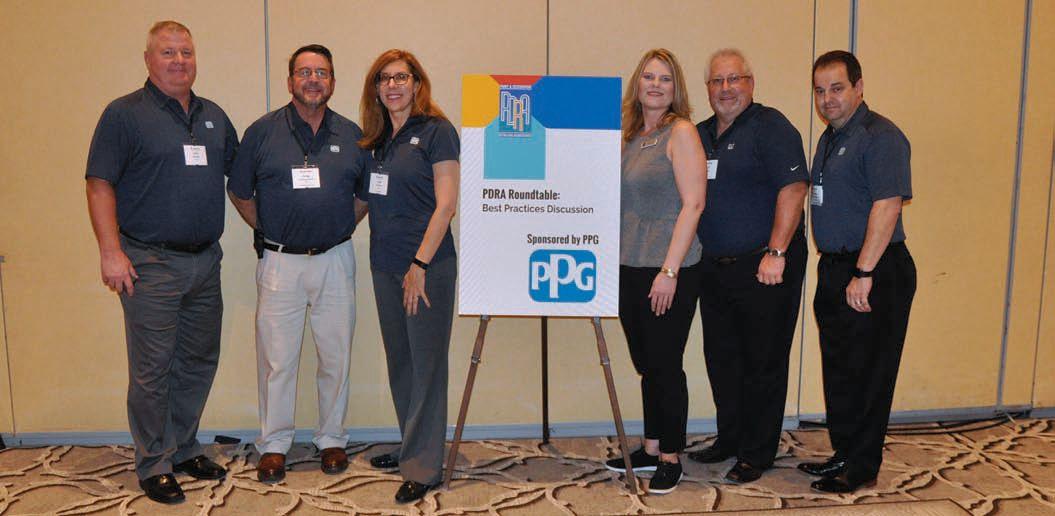
The mission of the PDRA is to educate and support the independent paint and decorating retailer. There are many industry organizations that are also committed to this cause, and the PDRA Education Initiative is made possible through their generous support. These loyal education sponsors provide the PDRA the opportunity to develop valuable and innovative online courses that support you, your employees and your business. We asked each company to share their thoughts about why education is vital for independent retailers’ success and how the PDRA serves the industry. For more information about any of these sponsors, visit pdra.org/education and click the links to each company’s website on the bottom of the page.
PPG has continually given significant support to the PDRA in various ways, including sponsoring a retailer roundtable earlier this year at the 2018 Florida Buying Show.
Paint & Decorating Retailer talked to Joe Smith, national sales director, and Aimee Peters, director of trade sales integration for architectural coatings at PPG, about why supporting retailer education is important to their mission and how building relationships with industry organizations like the PDRA helps strengthen the entire industry.
Paint & Decorating Retailer (PDR): Why is supporting dealer education important to PPG?
Joe Smith (JS): We believe that training is a very important part of how we go to market. Whether through PPG training or what the PDRA brings to the table, part of the success of dealers is getting them trained on product knowledge, selling skills and general operations. There are a variety of areas where we offer support that can help paint retailers be successful as entrepreneurs.
Aimee Peters (AP): Part of our value proposition beyond great brands and great products is our retailers’ success. When they succeed, we succeed, and providing training is a big part of that. We need to be continuous learners.
In addition to product-focused training, we're also developing operations management programming, in areas like managing working capital, human resources and selling skills. All of that is in an effort to promote the success of retailers.
PDR: What types of retailer education programs and training does PPG offer?
JS: We spend a lot of time training our sales team because part of the sales role is training. Since they are in the field,
they can work individually with retailers in their stores, or sometimes they bring a group of retailers in a region together. In both of those scenarios, they’re providing basic Paint 101 training all the way up to specialty products. It all depends on what type of business the retailer is chasing. We do a lot of training around color, too. In addition, our sales reps spend a lot of time working with our retailers’ outside sales reps to help them drive customer contact and develop customer relationships. People are so busy, it’s tough to get time with them, but we want to make sure their team is trained.
PDR: Are there new initiatives on the horizon that you’re able to share more about?
AP: Throughout 2018, we have focused on training, and that focus will continue in 2019. We know the relationships our retailers have with their sales reps are so important, and that has been the vehicle through which we’ve delivered training.
A new initiative that is really interesting is our e-dealer website. We’re launching a segment that gathers data from retailers to help us understand what types of additional training they may need. What we’d like to do is deliver customized content that matches the interests of the dealer and their go-to-market activity. When we know what they need, we can provide them with web training or make a request to the training team to deliver that training in person. There’s more to come in that regard.
“No matter how long you’ve been in this business, there’s always an opportunity to learn from a product application standpoint, new products and innovative products.”
—Joe Smith, PPG
PDR: Why should independent paint dealers seek out additional training opportunities, whether in-store, online or at industry events?
JS: It all comes down to the idea of continuous education. No matter how long you’ve been in this business, there’s always an opportunity to learn from a product application standpoint, new products and innovative products.
The selling cycle has changed a lot from what it used to be, too. If you’re going to matter in this business, you need to stay up with technology and what’s going on in the industry.
What we’ve seen is that all retailers want to be a part of training. Everyone is a little different when it comes to their market, their customers and their products. We put together products and programs that focus on what they’re good at it.
PDR: Why is supporting industry groups like the Paint and Decorating Retailers Association important to PPG?
JS: From the PPG point of view, our independent dealer business is a very important part of our strategy. When we look at what the PDRA and other groups like Independent We Stand, which we sponsor, bring to the table, we continue to find ways to reach out and show retailers our support.


“An investment in knowledge pays the best interest.”
~Benjamin Franklin








Education is the passport to the Future!

The PDRA Education Initiative is made possible through the generous support of a variety of channel partners.
These companies—manufacturers, vendors and distributors—have all made a commitment
to working in and contributing to the independent paint retail market, and the PDRA is grateful for their continued support to help retailers thrive through education. Paint & Decorating Retailer asked each company why they give and why independent retailers matter.
“Supporting retailer education is not only a priority for Epicor, it’s a necessity. At Epicor, our primary goal is to make our customer’s job easier. Whether they are experiencing an implementation, an upgrade, or onboarding a new employee, they need a comprehensive, guided and immersive learning experience.”
—Monica Green, Senior Manager, Epicor University
“Lancaster’s success is very reliant on our customers’ success, and educating retailers helps ensure their viability and longevity in their market area, giving them an advantage against their competitors.”
—Mike
Dube, Director of Marketing, Lancaster
“For today’s independent to be successful, they need to be more than product experts or exemplary service providers. They need to understand how to sell against the box and chain stores, effectively leverage social media, competitively compensate their employees and so much more. A retailer education program helps shorten that learning curve and ultimately better positions the retailer for success.”
—Scott Morath, Director of Marketing, AllPro Corp.
Why are groups like the Paint and Decorating
Association important for the industry?
“Industry associations such as the PDRA offer many benefits to independent retailers, such as learning and networking opportunities. Both are critically important components to growing and maintaining a healthy business.”
—John Lanzillotti, Senior Vice President of Global Sales, Benjamin Moore
“Groups like PDRA play an important role in the industry by providing independent dealers with education and other essential tools and resources, as well as a meeting ground for an exchange of ideas. Corona is proud to support these efforts.”
—Michael Waksman, Marketing Director, Corona Brushes Inc.
“Through the PDRA’s seminars, magazine and other resources, retailers can access an enormous amount of helpful information. This helps make independent retailers stronger and more effective in helping their customers.”
—Tom Niehoff, Vice President, Pro Roller Co.
“The PDRA adds value through networking, training programs, and developments that impacting the industry. Members benefit most when the channel contributes toward a common goal. The PDRA offers many advantages in a competitive world.”
—Ron Hutton, Director of Marketing, Richard’s Paint
“The National Hardware Show® strives to provide value to retailers so they can take back the newest products and the latest trends. Part of that initiative lives with paint retailer education. At NHS, we try to provide a platform allows opportunities for retailers to share best practices. They not only benefit from the content being delivered, but also the vast experience of thousands of other retailers to network with.”
—Richard Russo, Vice President, National Hardware Show
“The PDRA reaches retailers through events and information in its publication. The Wooster Brush Co. supports independent education through these opportunities.”
—Jon Rose, Vice President of Sales, The Wooster Brush Co.

By Todd Taber
Retailers across the country face many of the same challenges and opportunities. From training employees and stocking new products to staying ahead of shifting customer preferences and regulatory changes, independent retailers can expect to stay busy year after year.
2018 was no different. Online competition remained fierce, which presented new challenges for brick-and-mortar retailers.
Across the country, many homeowners decided to stay put and renovate their homes as opposed to purchasing new properties. In addition, a nationwide labor shortage continued, putting many contractors in a position where jobs were plentiful, but hiring enough crew members proved difficult.
2018 was a year of transition, mandating retailers stay nimble and responsive month after month.



















Steve Skodak, who serves as the executive director of the Painting Contractors Association, says professionals in the independent paint and decorating industry are facing industrywide obstacles but are also finding new pathways to success.
The Painting Contractors Association was founded in 1884 and represents contracting professionals across the U.S. Estimates show there are more than 306,000 contractors working in the country, and their relationship with independent paint manufacturers is crucial, Skodak says.
According to Skodak, the national labor shortage continues to be a challenge for paint and decorating contractors, but many contractors still
In the first six months of 2018, the industry was $367 million ahead of the same period in 2017.
have plentiful leads and operate well with the crews and equipment they have.
“Most of the contractors we represent are experiencing an exceptional year,” Skodak says.
“They’ve seen year-over-year growth in the residential and commercial sectors, with some residential contractors seeing double-digit growth.”
Skodak credits the rising consumer confidence level, which hit an 18-year high in August, as a driving factor for increased painting.
In addition, the U.S. Census Bureau reports housing starts are increasing in the U.S., but have not yet reached the same levels as seen before the Great Recession in 2008. Data shows many homeowners are staying put and renovating their homes as opposed to buying new properties.
Source: North American Industry Classification System 2018
According to market research firm IBISWorld, the U.S. retail paint industry, including independent operators, is valued at $13 billion in 2018. Between 2013 to 2018, the industry as a whole saw a 4.1% growth rate and the firm expects the overall industry to continue to grow from 2019 to 2023.
Source: IBISWorld, Paint Industry Market Research Report
Source: Compiled from companies’ quarterly financial reports


Skodak says this consumer activity has resulted in more residential repaints than in previous years.
He says that the steadily increasing number of millennial homeowners in the nation is also a major opportunity for paint and decorating contractors.
Millennials are a “do-it-for-me” generation, he says. They are actively seeking paint and decorating professionals to finish their homes, which gives contractors across the country continuous leads for new business as more millennials become homeowners.
Changing environmental regulations and new reports from government agencies also affected the paint and decorating industry in 2018, Skodak reports.
In May, the Environmental Protection Agency issued new guidance on products containing methylene chloride. After this announcement, some retailers, including national big-box chains, pulled paint strippers and other products containing the chemical from their shelves.
In August, California instituted new regulations for Proposition 65, which stipulates products containing chemicals known to cause cancer or birth defects must place visible warnings on product packaging.
According to Skodak, many contractors navigated these new regulations by working directly with paint retailers to find alternative paint strippers that work as well as products they had previously used.
Perhaps the biggest issue affecting paint contractors in 2018 was a national skilled labor shortage, Skodak says.
“A labor shortage leads to a more competitive work environment,” he says. “We find most companies that are successful in finding new employees under these conditions promote the craft and culture of their company. Lots of painters are looking to grow with companies that have a great corporate culture.”
Skodak says that there are three historically proven ways to respond to a labor shortage.
Professionals can raise their prices and limit demand; hire new crews to meet demand; or work more efficiently with the crews and time they have.
Because of these professional conditions, Skodak recommends all paint retailers advertise products that can save contractors time and allow them to work more efficiently without sacrificing the quality of the end product. It’s one move that can help solidify the relationship between retailers and contractors.
“I see lots of interest from paint contractors who are looking for new products that have time-saving qualities and work well in the field,” he says. “Whenever a store owner can realize that saving time is like hiring a new employee for a contractor, or if they can connect them with a product that dries in one-third of the time, that’s a win for both parties.”

By Gary Pittsford
When I think about the recognition small business owners receive, I think not only of our firm’s hundreds of clients in all 50 states, but also the huge economic engine made up of the nation’s 28 million family businesses. Then I consider two important facts: Every time 10 people are hired in this country, six of them go to work for small businesses; and together, those 28 million small businesses generate more than half of our nation’s GDP.
Why should someone want to be a small business owner? Certainly, for the financial rewards, and simply for the pleasure of entrepreneurial endeavors. Also for the gratification that comes from knowing you’ve contributed to your community and neighbors. Having the knowledge that you have created something that will continue to contribute to the community for years to come is powerful. Who needs a better reason than that?
Many business owners between the ages of 60 and 70 have children interested in buying their business. Of course, for such a transition to succeed, an owner needs to be a good coach and the new owners need to be good listeners.




The business also needs a sound succession plan to address the many legal, financial and operational matters required for the transition. However, if the transition is designed well, the next generation will have a great chance of being successful.
Our country needs these 28 million hardworking small business owners. Those of us at Castle Wealth Advisors congratulate every small business owner who is running their own company for the contributions they make to our communities and nation every day.

Gary Pittsford
is president and CEO of Castle Wealth Advisors LLC, a firm that specializes in family business valuations, succession planning, estate and income tax analysis and retirement income security. Contact him at 888-849-9559 or gary@castle3.com






By Renee Changnon
Walking into a home or business, it would be odd to discover bare windows in every room. From a design standpoint, window treatments help soften a room and can add personality to the space. Window treatments also provide privacy and light control for home and business owners. Custom window treatments offer a wide variety of sales opportunities for independent paint and decorating retailers. And the potential for growth in the category is significant, too.
To discover what it takes to create and maintain a successful window treatments business within an independent paint and decorating retail operation, Paint & Decorating Retailer spoke to experts from two different businesses, Don Smith Paint Co. in Springfield, Illinois, and JC Licht, a chain of stores in the Chicago area.
Don Smith Paint Co. has been serving the Springfield, Illinois, area since 1949. But it wasn’t until the early 2000s that window treatments were added to the business.
Window treatments have continued to grow in popularity as the business has increased its offerings, says Jamie Llosa, one of the designers who works at the business.

“Window treatments are the fastest-growing segment for our business,” Llosa says. “We started small and it has grown and expanded since then. Now, we have several different brands and styles available and we make sure we have a wide price range to serve customers across the board. It’s all about having more options available for our customers so they can find what they need.”
For more than 100 years, JC Licht has been selling paint and decorating products to customers in the greater Chicago area. The company has 38 locations, 17 of which promote, display and sell window treatments, says Ron Bryza, director of in-home services for the company.
While window treatments have been a part of the operation for several years, Bryza was brought on to work for JC Licht last January to help expand and enhance the home fashions aspect of the business. Bryza brings 30 years of expertise in the window treatment industry to the retail operation.
“My goal at JC Licht is to help the company build a strong foundation in window treatments, as well as help consolidate the product lines,” Bryza says.
“Our strategy is to bring in complementary vendors, like Hunter Douglas, which we can offer alongside our paint and sundries product lines. We’re also working on incorporating a new software program to bring online and brick-and-mortar sales together.”
One way JC Licht plans to grow its window treatments business is by providing consistency in product offerings, pricing and order processing at all of its locations, Bryza says.
At Don Smith Paint Co., selling window treatments is an additional offering that makes sense for the business, Llosa says.
“Custom window treatments go hand-in-hand with decorating,” Llosa says. “We want to offer as much as we can to our customers. I think window treatments often are overlooked until a customer realizes it is something they need to complete their project for design, privacy and function purposes.”
Word of mouth from customers is one way both stores advertise their window treatment offerings, along with in-store signage and display areas customers can discover when shopping for paint, sundries and more.
To keep customers at all 36 stores aware of their window treatment business, JC Licht employees wear buttons that encourage customers to ask them about window treatment options.
“Styles tend to change and get updated every few years in window treatments. Currently, a major customer focus is on smart technology, like motorized window treatments.”
—Jamie Llosa, Don Smith Paint Co.
Window treatments encompass a wide variety of styles and designs, and they are typically divided into three distinct categories: hard window treatments, soft window treatments and layered window treatments, which are a combination of both hard and soft treatments.
Just as a retailer needs to know popular color choices and paint projects customers want to learn more about, understanding trends in window treatments is necessary to establish business in the home decor category.
Design trends have changed a lot since Don Smith Paint Co. first added window treatments to its product offerings, Llosa says.
“Styles tend to change and get updated every few years in window treatments,” Llosa says.
“Currently, a major customer focus is on smart technology, like motorized window treatments,” Llosa says. “Since I started with the company eight years ago, the biggest change I have seen is that our customers are interested in finding motorized window treatments they can control from their phone or through the push of a button.”
JC Licht has also seen home automation increase in popularity among its customers, creating another opportunity to provide smart home technology.

Drawdown kits now available from the PDRA








Use these kits for making draw down paint sample cards from fresh paint using draw down paint sample cards. Kit includes 8” metal drawdown bar (machined to deposit precisely three mils of paint), 10” x 12” Clipboard and 50 drawdown cards. Join PDRA today and save! For more information or to order this product, contact Tina Sullivan at 800.737.0107 or email tina@pdra.org





Another evolving trend the company promotes is the increased focus on child safety with products like cordless blinds, Bryza says.
“Manufacturing of window treatments like shades and blinds has changed dramatically in the past several years,” Bryza says. “The demands from consumers have changed the types of products manufacturers produce.”
When customers walk through Don Smith Paint Co., they’re greeted by helpful employees ready to help select paint colors, talk window treatments or assist with anything else in between.
“We have an entire wall that displays our window treatment offerings,” Llosa says. “Inside our store, we try to show as many options as we can and we also have books of samples they can browse through. An added service many of our customers utilize is in-home consultations, which help them visualize the products in their home before they make a buying decision.”
Since window treatments are a special order, retailers don’t carry backstock. This helps them sell more than if they were dependent on inventory.
“When a customer is ordering window treatments at one of our JC Licht stores, they are placing a special order,” Bryza says. “The margins with window treatments are generally much higher than paint if you can find the right suppliers. On top of that, paint and window treatments build off each other really well, so incorporating window treatments into our business just makes sense.”
In order to provide next-level service to customers, Don Smith Paint Co. has a skilled window treatment installer on staff that completes jobs. Since it is a very technical project, employees utilize the training resources and opportunities their window treatment suppliers provide throughout the year.
“Our team goes through training to understand the different products we sell in window treatments, and our installer is constantly staying up to date on what he needs to know to be certified,” Llosa says. “However, all of our employees can answer basic questions, even if one of our two designers or our installer aren’t on hand.”
JC Licht’s strategy for increasing sales in the window treatment category is by focusing on training and sending out their own in-home sales team, Bryza says.
If you haven’t sold window treatments or are considering adding these products to your offerings, it’s important to know the different types of treatments your customers may ask for.
Hard window treatments are made of durable materials like wood or vinyl.
Shutters are installed into a window frame and have horizontal slats that tilt up and down. They do not move up and down like blinds.
Blinds allow windows to tilt open or close without having to lift the whole window. These include Venetian blinds and vertical blinds. Blinds allow users to manipulate light for a more customized feel. The term “blinds” comes from their ability to prevent people from looking inside through a window. Most window shades are considered a hard treatment, but it depends on the materials.
Soft window treatments are made of lighter materials, and can include shades and various types of drapery.
Soft shades are made of fabric which rolls, stacks or folds. These include Roman shades, roller shades and pleated shades.
Drapery, also referred to as curtains, are used to reduce exterior noise, keeping a room like a bedroom or library quiet. Made of fabric, customers can select various patterns and colors to enhance the look of a space.
Sheer or net curtains are made of translucent fabric, like gossamer, silk or nylon.
Layered window treatments represent a combination of hard and soft window treatments. By layering two different window treatment styles, homeowners can create a unique look that provides more functionality to the windows in a room.
One of the main reasons a homeowner will layer window treatments is for aesthetic purposes. Adding draperies to a window with blinds might be done to add softness to a room.
Another reason users might layer window treatments is to add an extra level of light control, perhaps offering light-filtering and room-darkening options. Doubling window treatments may also enhance the energy efficiency of the space.
Check out the three distinct window treatment categories below and learn about the types of products that fall within those categories so you can best assist customers.



“Learn the product knowledge as you go and train your employees to work one-on-one with customers. You won’t regret adding this offering to your operation.”
—Ron Bryza, JC Licht
“Since I was hired, we’ve gone from having one home sales rep for window treatments to five sales reps,” Bryza says. “We want to convert our foot traffic into home appointments.”
Although only 16 JC Licht stores include window treatment areas, Bryza says that’s fine because window treatments are a destination customers are willing to travel to visit.
“We will continue to look for ways to make our window treatment areas in our stores more robust,” Bryza says. “However, customers are often willing to travel as far as 20 to 30 minutes away for this specialty offering.”
For retailers considering entering into the window treatment category or expanding upon a small selection, Bryza recommends finding good manufacturers to work with.
“Find a solid partner to work with when you’re introducing window treatments at your operation,” he says. “You’ll want more than one supplier but try not to bring on too many, as it makes it harder to control.”
To keep customers happy, Bryza says it’s very important to pay attention to the finer details. In this category, that means double-checking things like window measurements.
If an employee writes down an incorrect measurement, the customer’s project can be delayed, costing the retailer time, money and potentially ruining their experience.
While entering the window treatments category might seem daunting to those who don’t have as clear of an understanding of it as they do in paint or other departments, Bryza stresses the importance of creating relationships and allowing yourself to learn the ins-and-outs of window treatments as you go.
“Retailers might avoid adding window treatments because they don’t think they know enough about the products,” he says. “This is a high-margin, high-revenue category. Your customers will be more inclined to shop with you based on how you treat them and if you have an attentive, helpful salesperson. Learn the product knowledge as you go and train your employees to work one-on-one with customers. You won’t regret adding this offering to your operation.”



0 Mike Weber | Hirshfield’s







By Chad Husted
Most independent retailers in the paint and decorating industry can probably offer a handful of horror stories about a hire that went wrong or how difficult it can be to find talented sales associates. It can be difficult to both find and retain successful employees in the world of retail, with paint and decorating businesses also needing to train employees in an industry that can be difficult to pick up for those not willing to put in the time and energy.
Hiring practices, and how to consistently use them when considering candidates for employment, are some of the most important aspects of a successful retail operation. It can be tempting to take on a candidate that fits most of the criteria a retailer is looking for, but there could be overlooked warning signs that eventually put the retailer right back into search mode.
To learn some of the best hiring practices retailers can implement in their businesses, Paint & Decorating Retailer spoke to Rob Simms, vice president of sales and marketing for The Paint Shop. With 34 locations of varying sizes in eastern Canada, The Paint Shop offers case studies for large and small retailers alike in their search for better hiring tactics.
Hiring new employees is common practice for most retailers. That’s a hole in the weekly calendar of hourly shifts that has to be filled by current employees who already have a lot on their plate, and an understaffed store can quickly become a footnote for customers looking to finish projects or move on to the next job site.
Where do retailers start? There are the usual options, given how technology has reinvented the job search. Online job posting boards and job-search-specific websites offer the ability to pull from the internet when announcing an open position. This method has its uses, Simms says, and is usually the first step for The Paint Shop locations in larger markets to fill openings.
“Job postings that appear online give you a broad reach that can at least let you see what kinds of resumes are out there and who you’re looking at in the job market for that city,” Simms says. “The hard work in that situation is sifting through the—hopefully—many applications and resumes sent in to find the top candidates you want to focus on.”
Advantages to posting openings online and waiting for applications include receiving a large number and variety of resumes to review. This can be useful for the current search, as well as for putting a reserve file together of other candidates to keep an eye on for future openings, Simms says.
“Your employees are the ones who will have to work with the new hire. They want the best work environment they can possibly have, as does everyone in the company, so it’s a great way to grow through your employees.”
—Rob Simms, The Paint Shop
However, online postings pull from a wide pool of applicants that can sometimes be unqualified or not a fit for the industry. These postings are also troublesome for smaller markets, where there is less reliance on online job boards.
“For some of our smaller locations, casting a wide net just hits empty air. In those markets, the employed are usually quite happy where they are,” Simms says. “With a smaller pool of potential candidates, we sometimes try a more local approach to source a larger pool of talent.”
After posting a job opening online, The Paint Shop’s approach moves on to surveying its current staff for suggestions on candidates. Employees are likely to have contacts in the area, either through personal relationships or contacts that work in the retail sector as well. On top of the already established connection, current employees have every reason to recommend top-quality candidates, Simms says.
“Your employees are the ones who will have to work with the new hire, so they’re going to advise you to pick someone they want to see every day. They want the best work environment they can possibly have, as does everyone in the company, so it’s a great way to grow through your employees,” Simms says.


Employees form the backbone of every retail business. Oftentimes it isn’t the business owner who first interacts with a customer, whether on the phone or in person. That job is handled by employees who are hired by the manager or owner, and therefore that employee becomes the face of the business.
Here are five tips for creating a business that attracts the strongest employees for long-term success.
A huge benefit of having strong workplace bonds is that a retailer can go to a trusted employee for candidate suggestions. While retailers still need to do their due diligence in reviewing applicants, using tips from current employees can lead to candidates who would fit into the strong foundation of a store.
Rob Simms, vice president of sales and marketing with The Paint Shop, puts a priority on sales experience and customer relations. Product knowledge absolutely has a place in hiring strategy, but customer service has to be a priority in the retail world.
Retailers often put their efforts into building their business up and shaping its culture to reflect their own beliefs and aspirations. So why not make it clear to potential employees that this is a treasured place to work? Add some extra information to an ad about how a job can help an employee grow in their career.
Simms doesn’t only look for potential talent in the paint industry. Retailers who spot strong customer service in other industries, such as at restaurants or other retail industries, should keep those high-achievers in mind when a new position becomes available in their business. 1 2 3 4 5
By putting employees first and prioritizing their training, skills and benefits, retailers can build a culture that speaks for itself when it comes time to add a new member to the team. Employees who are valued for their knowledge and work ethic want to work with others who will carry on that same tradition.

Simms has an example of an apartment complex that relied heavily on current tenants to find future residents. The real estate agency that managed the complex looked to current tenants for suggestions when a unit would come open and would actively recruit those tenants to fill apartment vacancies.
“If you have people living in that complex who are quality tenants, they will often associate with other people who would be solid tenants,” Simms. “In retail, if we have a great sales associate and they like our business, they’ll want to bring in someone who will work as hard as them.”
A third tactic The Paint Shop uses, which Simms calls “guerilla job searching,” is a more discreet form of recruitment. Simms and The Paint Shop managers have a long-held belief that the proper employee can be taught paint and decorating knowledge, but innate customer service skills are a must-have for a new hire.
In this stage of recruitment, a lead might come from a manager visiting an area restaurant or another retail business. If they happen upon an employee at that business with exceptional customer service skills, the manager might leave their business card with a comment about how, should they ever be on the job market, that looking at The Paint Shop could be positive move.
“You need to ask the questions that will get someone talking. Most people will tell you exactly who they are with the right questions.”
—Rob Simms, The Paint Shop
The idea is to identify individuals who have already shown they can handle customer interactions with poise, Simms says. One of the top success stories in one The Paint Shop location came when a manager, having eaten breakfast at the same diner for years, had the chance to recruit a server who had displayed exceptional service qualities. While the server protested about her inexperience in paint products, she is now one of the most trusted employees at the location and is able to handle the business with or without the manager in the store.
“Compared to other retail businesses, such as restaurants, we have a few advantages. Our hours are usually better and there may be more room for advancement,” Simms says. “It’s a less active form of recruitment, but it can plant a seed of thought into someone that might come to fruition down the line.”
When it comes down to what The Paint Shop seeks in potential hires, Simms is clear about where the company’s priorities lie.
“We focus on service first, because if an employee has high service levels, that means they’re good at handling difficult customers. They’re better at managing customer expectations and selling what is on the shelves,” Simms says. “Those social skills can make up for lack of product knowledge.”
While selling skills and customer service are of prime importance for new hires at The Paint Shop, the business is also committed to increasing product knowledge within its staff through multiple programs. Training begins soon after a hire starts at their location. Training consists of programs from manufacturers and online training resources from the Paint and Decorating Retailer Association.
The company also holds two gatherings a year where associates from each branch of the company come together for training sessions focusing on the latest trends in product choice, DIY projects and technology in the paint industry.
On top of individual training, The Paint Shop does have multiple long-term employees on staff
in several locations that carry the kind of product knowledge that can solve the more in-depth concerns newly hired employees might not be able to handle. The business is proactive about allowing locations that don’t feature this kind of employee in their store to have access to paint and coating experts in order to add their depth of knowledge even from a remote location.
“Our store-helping-store programs are key to how we operate. It allows us to spread out the product knowledge that can often be centered on the career employees, which are becoming harder to find and retain,” Simms says.
For Simms, the most important part of employee retention starts well before the final hiring decision is made and the employee begins taking shifts on the salesfloor. While efforts are surely needed to stay present with employees to manage their morale and see how they and the business can better their professional relationship, having the right employee in the first place takes precedence.
“We’re very clear with all of our managers, anyone who will be in a position to hire someone: They need to trust their gut. Candidates can look great on paper, that’s why you decided to interview them. You need to ask the questions that will get someone talking,” Simms says. “Most people will tell you exactly who they are with the right questions.”
Simms says this philosophy is carried out in multiple ways across the company’s locations, but some of the main tenets reinforce the idea that it is acceptable for managers to decide none of their candidates are the right fit and keep looking. The danger, especially in the high-stress world of retail, is that finding someone who can take on a shift when a store is understaffed is an easy trap to fall into.
One question in particular has proven to be important for The Paint Shop retailers in many interviews, and it is brought up at some point in every prospective employee’s initial interview. The manager will make a point to ask the candidate what their salary expectations are, with the manager then following with the company’s standard range for the position.
Simms knows it’s an awkward question for the interviewed candidate, while admitting it’s no more pleasant for himself and his managers, but having an open dialogue can keep misunderstandings from becoming larger headaches in the future.
“Without asking about expectations, a low number might be insulting to the candidate, or they might take it and immediately be looking for something that will pay more. It needs to be the right fit of knowledge and expectations,” Simms says. “We want the best. If you have a top three and take the top one but still have reservations, you’ll be recruiting again in six months. Filling a vacancy is hard, but putting the investment in once is better than redoing the process.”


Winterizing takes on wider parameters than weather-stripping and ice melt when your business is involved. Beyond normal building preparations, your business itself needs to be protected. The following guidelines can help you avoid winter-related damages and reduce business interruptions while also making the best use of post-holiday traffic times.
• Review your insurance policy. Winter storms and the effects of cold weather are the leading cause of business interruption and one of the most common property and liability claims for small businesses. Know your insurance policy inside and out before bad weather hits. Be certain your policy covers winter storm damage,
injury to guests and employees and business interruption coverage. You should keep inventory lists (with photos) of valuable equipment in case of damage.
• Have a contingency plan for emergency situations. You should have a plan in place for communicating store closures with employees and customers. If damage or severe weather causes extended closures, consider how you might set up a temporary shop to continue operations.
• Stock a winter emergency kit and first-aid kit. Be sure to include food, water, blankets, toiletries, a radio, flashlights, a whistle for signaling help, phone chargers, hand sanitizer and traditional first-aid supplies.
Once you have put policies and plans in place, focus on winterizing your building. Check the following tasks off your list before the seasons change.
• Check out your internal systems. Perform checkups on your HVAC systems. Be sure to install new air filters and drain air conditioning units. It’s also a good time to replace the batteries in smoke and carbon monoxide detectors and have fire extinguishers inspected. Also take the time to seal gaps around entries to prevent cold air from seeping in.
• Take a look outside your building. Do a top-to-bottom review of the exterior. Clear roof drains and gutters to prevent ice dams, and check that downspouts are draining away from foot traffic areas. Insulate exterior pipes to prevent bursts.
• Contact a snow removal company in advance. Don’t wait to hire someone to handle snow removal for parking lots and walkways. You should also have a removal plan for buildup on roofs in the event of extreme snow. In the meantime, keep sand, ice melt and shovels on hand for clearing sidewalks.
• Consider a backup generator. A backup generator could prove useful during extreme weather events that may overwhelm utility companies. It could allow your business to reopen quicker or stay open longer.
In the first few months of the year, shift your attention to important business practices that may have been neglected in the fourth quarter.
• Talk to your employees. During the post-holiday crawl, spend time with new holiday hires and regular employees. Ask for input about the successes and challenges that arose during the last quarter. Seeking feedback not only helps managers improve store conditions, but it also creates loyal employees who will be eager to return the next holiday season or whenever additional part-time help is needed.
• Improve your web presence. Take time in January to evaluate your website. Make updates and improvements based on usage and traffic during the holiday season. The slower winter months also allow time for obtaining new online tools, boosting your social media presence and investigating the latest online marketing trends.
• Assess your floor plan. Take what you learned during the previous season and make adjustments to your floor plan so you’ll be ready to impress customers who are looking for a paint or home decor refresh in the spring. Now is a great time to perform a full inventory count to find holes or slow-moving categories. Consider adding new niches or doing a reset to give your operation a new look for the New Year.

By Karon Warren
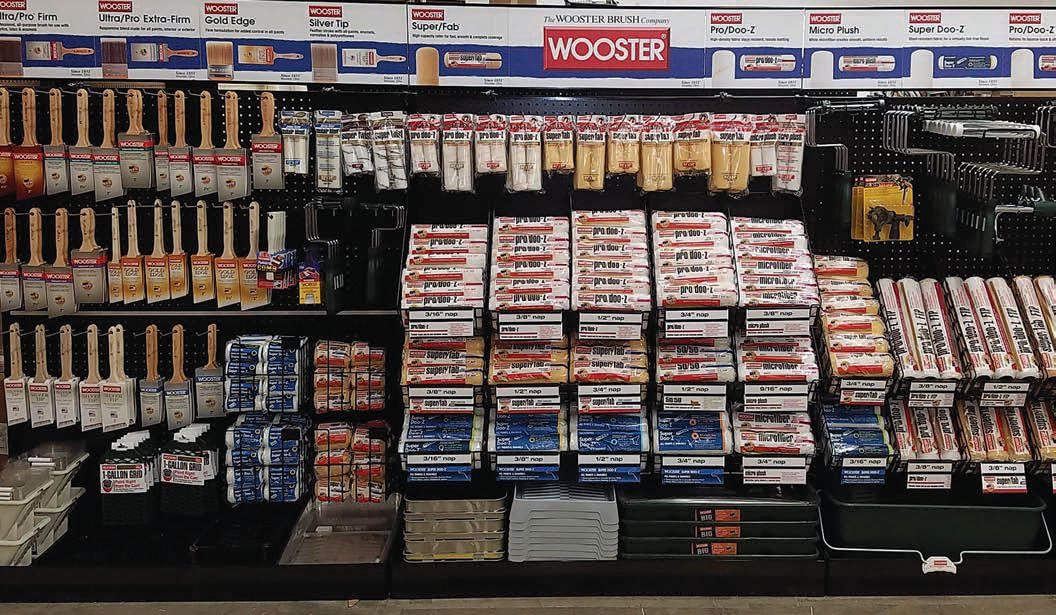
With more than 160 years of experience serving independent paint and hardware retailers,
The Wooster Brush Co. in Wooster, Ohio, has a pretty good idea of how to deliver not only what customers want, but also what they need. From training resources to merchandising assistance, the company has crafted a well-rounded combination of assets specifically geared toward enabling retailers to successfully serve their customers.
“The Wooster Brush Co. continues to be the independent paint store’s best partner,” says Scott Rutledge, vice president of marketing for The Wooster Brush Co. “Our successes and failures are greatly rooted in the success of the independent.”
One of the main ways Wooster Brush supports customers is through its representatives who offer opportunities for in-person demonstrations and training sessions.
“Wooster has both company employees and manufacturers’ representatives throughout the U.S. and Canada,” says Jon Rose, vice president of sales for The Wooster Brush Co.
“These representatives are well-versed in product knowledge and welcome the opportunity to educate retailers and their customers on the many features and benefits of our products.”
In fact, Wooster Brush’s sales staff go far beyond just selling the products. They also offer product knowledge sessions for store employees, professional painters or both, Rutledge says.
“These training sessions help retail employees understand not just the basics of paint application, but why many locations carry a wide variety of tools,” he says. “Our district managers have the know-how and experience to educate personnel on issues such as how paint choice can determine which brush to recommend or how weather can alter their applicator selection.”
Demonstrations can offer the kinds of product knowledge that can be useful for both consumers and sales associates. They allow retailers to truly own a category and offer expert advice.
“Some professional painters may not understand that Wooster’s Sherlock GT® system is an engineering advancement that will save them time and make their work more precise,” Rutledge says.
Wooster also seeks to provide innovative merchandising solutions to help retailers best market their products.
“Wooster Brush has long been recognized as a leader with informative packaging, helpful display techniques, educational literature and videos, signage and effective cross merchandising assistance,” Rose says.
“Wooster will continue doing what we’ve done for 167 years— listen to the needs of retailers and painters and respond with the industry’s best solutions.”
—Scott Rutledge, The Wooster Brush Co.
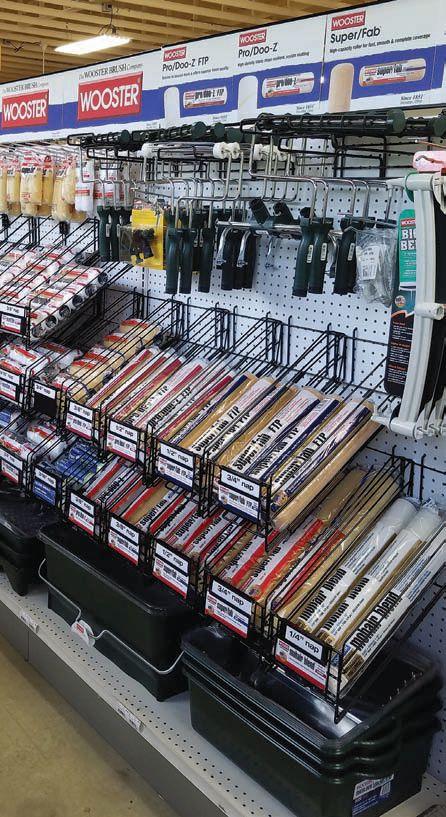
For example, the company recently streamlined its professional roller bags and display signage to help store personnel and retail customers easily identify the strengths and benefits of Wooster’s many different applicator lines, Rutledge says. In addition, the company developed a number of four-tier displays and counter boxes that allow retailers to highlight various applications and their corresponding benefits in their retail locations.
These support resources are just the tip of the iceberg when it comes to Wooster Brush’s commitment to independent paint retailers.
“Wooster has a vast library of support materials,” Rutledge says. “Whether customers are just getting started and need materials like our All About Applicators or Proper Cleaning Tips brochures or want support pieces on the benefits of Wooster poles, frames or specific applicator lines, our customer service and marketing departments can get you what you need to educate your staff and customers.”
Wooster Brush continues to develop and evolve its training and merchandising solutions based on its customers’ feedback in order to offer the best support possible. One example of this came from the continued success of the company’s 14-inch roller program in response to the launch of its 14-inch Sherlock ® frame.
“Because of the growing awareness, many retailers asked how more of these rollers can be placed inside the displays,” Rutledge says. “We responded by rearranging how these larger rollers are displayed in an aisle and, as a result, many retailers have been able to keep up with their store’s demands.”
Given the success that Wooster Brush and retailers have experienced from this partnership, the independent sector should look for the company to maintain a multipronged approach to customer support.
“The future for retailers working with Wooster is positive as we are committed to providing maximum value with our products,” Rose says. “We also plan to continue our support of industry initiatives such as trade organization educational programs, management training for retailer development, retailer product training through videos and presentations, trade school support, distributor and retailer shows and industry event participation.”
While the company has grown extensively since 1851, it has not lost touch with its origins as a small business and, thus, draws on these roots to serve its customer base. “Wooster will continue doing what we’ve done for 167 years—listen to the needs of retailers and painters and respond with the industry’s best solutions,” Rutledge says.

JANUARY 13-15
One of the world’s largest retail shows returns to New York City in the New Year. Join retail innovators from around the world for three days of the newest concepts in retail and to listen to speakers who are leading change in the industry. Hear from big-box leaders, like Target Corp. chairman and CEO Brian Cornell, and get insights into how the mobile generation is changing retail from Manish Chandra, founder and CEO of Poshmark. Consider extending your stay for an additional day for exclusive retailer-only workshops that focus on cybersecurity and supply chain logistics. For more information, visit nrfbigshow.com
NOVEMBER 14-16
Greenbuild International Conference and Expo 2018 McCormick Place Chicago greenbuildexpo.com
NOVEMBER 27-28
The National Paint and Decorating Show 2018 Ricoh Arena Coventry Coventry, England paintshow.co.uk
6
NRHA State of Independents Conference Hyatt Regency O’Hare Rosemont, Illinois nrha.org/soic
JANUARY 13-15, 2019
NRF 2019: Retail’s Big Show Jacob K. Javits Convention Center New York City nrfbigshow.com
FEBRUARY 11-14, 2019
SSPC 2019 Coatings+ Disney Coronado Springs Resort Orlando, Florida sspc2019.com
MARCH 2-3, 2019
PACOA Spring Dealer Market Queens College Flushing, New York pacoa.com/events
MARCH 6-8, 2019
2019 Paint and Decorating Contractors of America Expo Westin Savannah Harbor Golf Resort & Spa Savannah, Georgia pdca.org/expo
If you would like your event included in this list, email Renee Changnon at rchangnon@nrha.org with the date, location and an overview of your event.
Note: This index
Statement of Ownership, Management and Circulation (Required by 39 U.S.C. 3685)
1. Publication Title - Paint & Decorating Retailer; 2. Publication No. - 0111-8910; 3. Filing Date - 9/26/2018; 4. Issue Frequency - Monthly except December; 5. No. of Issues Published Annually - 11 x a Year; 6. Annual Subscription Price - $49.00; 7. Complete Mailing Address of Known Office of Publication - 1401 Triad Center Dr., St. Peters, MO 63376; Contact Person - LeAnn Day, Telephone - 636-236-2636; 8. Complete Mailing Address of Headquarters or General Business Offices of the Publisher - 1401 Triad Center Dr., St. Peters, MO 63376; 9. Full Names and Complete Mailing Addresses of Publisher, Editor, and Managing Editor - Dan Simon, Publisher, Paint & Decorating Retailer, 1401 Triad Center Dr., St. Peters, MO 63376; Dan Tratensek, Editor, Paint & Decorating Retailer, 1401 Triad Center Dr., St. Peters, MO 63376; Dan Tratensek, Managing Editor, Paint & Decorating Retailer, 1401 Triad Center Dr., St. Peters, MO 63376; 10. Owner - Paint & Decorating Retailer Association, 1401 Triad Center Dr., St. Peters, MO 63376; 11. Known Bondholders, Mortgagees, and Other Security Holders Owning or Holding 1 Percent or More of Total Amount of Bonds, Mortgages, or Other Securities - None; 12. Tax Status - Has Not Changed During Preceding 12 Months; 13. Publication Name - Paint & Decorating Retailer; 14. Issue Date for Circulation Data Below - September 2018; 15. Extent and Nature of Circulation; Average No. Copies Each Issue During Preceding 12 Months: 15a. Total No. Copies - 21,190; 15b. Legitimate Paid and/or Requested Distribution (By mail and outside the mail); (1) Outside County Paid/Requested Mail Subscriptions stated on PS Form 3541 - 12,495; (2) In-County Paid/Requested Mail Subscriptions stated on PS Form 3541 - 0; (3) Sales Through Dealers and Carriers, Street Vendors, Counter Sales, and Other Paid or Requested Distribution Outside USPS - 234; (4) Requested Copies Distributed by Other Mail Classes Through the USPS - 0; 15c. Total Paid and/or Requested Circulation - 12,729; 15d. Non requested Distribution (By mail and outside the mail) - (1) Outside County Nonrequested Copies stated on PS Form 3541 - 7,905; (2) In-County Nonrequested Copies Stated on PS Form 3541 - 0; (3) Nonrequested Copies Distributed Through the USPS by Other Classes of Mail - 0; (4) Nonrequested Copies Distributed Outside the Mail - 193; 15e. Total Nonrequested Distribution - 8,098; 15f. - Total Distribution - 20,827; 15g. Copies Not Distributed - 363; 15h. Total - 21,190; 15i. Percent Paid and/or Requested Circulation - 61.1; No. Copies of Single Issue Published Nearest to Filing Date; 15a. 21,221; 15b. Legitimate Paid and/or Requested Distribution (By mail and outside the mail); (1) Outside County Paid/Requested Mail Subscriptions stated on PS Form 3541 - 13,328; (2) In-County Paid/Requested Mail Subscriptions stated on PS Form 3541 - 0; (3) Sales Through Dealers and Carriers, Street Vendors, Counter Sales, and Other Paid or Requested Distribution Outside USPS - 382; (4) Requested Copies Distributed by Other Mail Classes Through the USPS - 0; 15c. Total Paid and/or Requested Circulation - 13,710; 15d. Non requested Distribution (By mail and outside the mail) - (1) Outside County Nonrequested Copies stated on PS Form 3541 - 6,699; (2) In County Nonrequested Copies Stated on PS Form 3541 - 0; (3) Nonrequested Copies Distributed Through the USPS by Other Classes of Mail - 0; (4) Nonrequested Copies Distributed Outside the Mail - 65; 15e. Total Nonrequested Distribution - 6,764; 15f. - Total Distribution - 20,474; 15g. Copies Not Distributed - 747; 15h. Total - 21,221; 15i. Percent Paid and/or Requested Circulation - 67.0; 16. Electronic Copy Circulation; Average No. Copies Each Issue During Previous 12 Months: 16a. Requested and Paid Electronic Copies - 0; 16b. Total Requested and Paid Print Copies + Requested/Paid Electronic Copies12,729; 16c. Total Requested Copy Distribution + Requested/Paid Electronic Copies - 20,827; 16d. Percent Paid and/or Requested Circulation (Both Print and Electronic Copies) - 61.1; No. Copies of Single Issue Published Nearest to Filing Date: 16a. Requested and Paid Electronic Copies - 0; 16b. Total Requested and Paid Print Copies + Requested Paid Electronic Copies - 13,710; 16c. Total Requested Copy Distribution + Requested/Paid Electronic Copies - 20,474; 16d. Percent Paid and/or Requested Circulation (Both Print & Electronic Copies) - 67.0; 17. Publication of Statement of Ownership for a Requester Publication is required and will be printed in the November 2018 issue of this publication. 18. Signature and Title of Editor, Publisher, Business Manager, or Owner - Richard Jarrett, Circulation Manager; Date - 9/27/2018; I certify that all information furnished on this form is true and complete. I understand that anyone who furnishes false or misleading information on this form or who omits material or information requested on the form may be subject to criminal sanctions (including fines and imprisonment) and/or civil sanctions (including civil penalties). PS Form 3526-R.
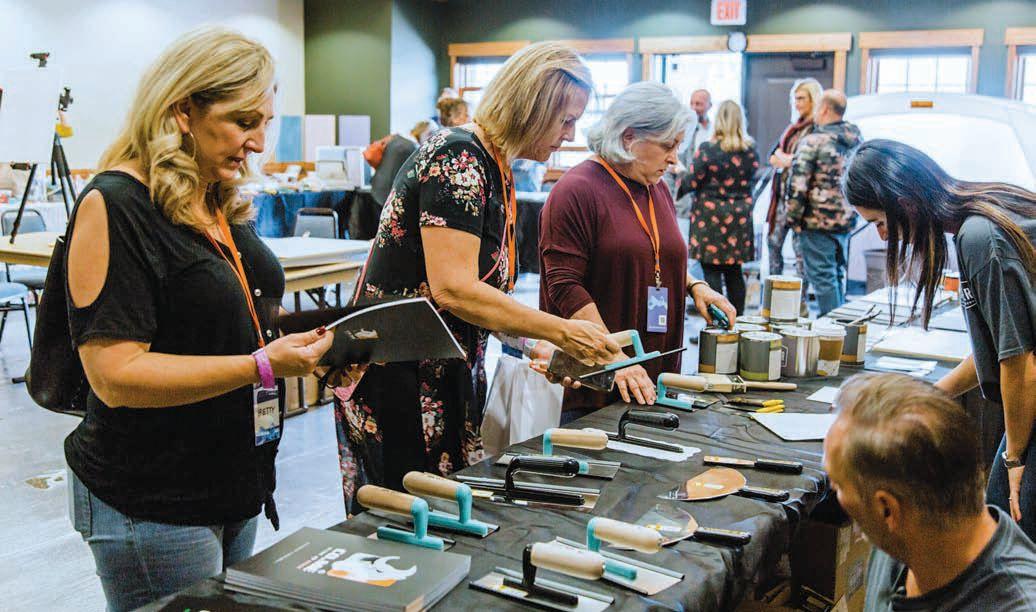
In early October, decorative painters, specialty coatings professionals and industry leaders gathered in Estes Park, Colorado, for the annual ArtFusion event. The five-day event included workshops, seminars and presentations from manufacturers and vendors, keeping attendees up to date with innovative new products and the latest industry trends.
“This year’s ArtFusion was the best yet,” says event founder Kathy Boyd. She says this year’s event benefited from more international instructors than ever before, representing Denmark, Italy, Mexico, Singapore and England.
This year’s ArtFusion event was held at a private lodge in Colorado, which Boyd says gave attendees the chance to network and strengthen their connections with other industry professionals.
“At ArtFusion, so many people connect with each other for the first time. Even if they know them from other events or if they’ve talked online, Artfusion gives them the chance to meet and collaborate in person,” she says.
This year, the event included a session focused on how to provide reliable estimates for painting and finishing projects. Other workshops included wood grain and marbling techniques and how to replicate the look of hardwood flooring on concrete.
Boyd is already planning the next ArtFusion event, which will take place in Santa Fe, New Mexico, in April 2019.
Boyd says ArtFusion is open to anyone who wants to learn more about decorative paint finishes and coatings, no matter their connection to the industry or artistic background.
For more information and to register for the 2019 event, visit artfusionevent.com .




















Choose a company that knows the value of a true partnership. With the right array of products to compete in every market segment and an industry-leading color program, PPG is equipped with the expertise to help your business succeed.