































Guiding customers toward products that ensure easy application, lasting durability and a sound investment can be a complex task. Learn new ways to motivate customers to look beyond price and choose quality materials.
Help your customers discover less common paint applicators to inspire them to try new specialty paint projects. Learn more about the latest advances in major manufacturers’ paint applicators.
There’s more than meets the eye when it comes to color-matching. Outfitting your business with the latest technology can boost your customer service and drive sales. Discover the possibilities color-matching tools can provide.
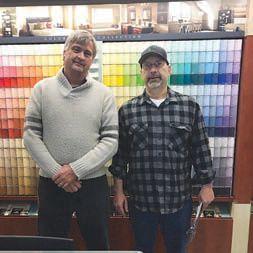
In California, independent paint retailer Jerry Newell is finding new ways to connect with shoppers and solidify his operation. Learn more about how he and his team have adapted to address his community’s needs to deliver stellar service.
PAINT & DECORATING RETAILER
(ISSN 1096-6927): Published monthly except December by the Paint and Decorating Retailers Association, 1401 Triad Center Drive, St. Peters, Missouri, 63376-7353. Phone: 800-737-0107. Subscription price: January through November issues, $49 in U.S., payable in advance. Canada add $24, and foreign countries add $48 to above charges. Single copy $10, except July issue, $25. Periodicals postage paid at St. Peters, Missouri, and additional mailing offices. Postmaster: Send address changes to Paint & Decorating Retailer, 1401 Triad Center Drive, St. Peters, Missouri, 63376-7353. Returns (Canada): Return undeliverable magazines to P.O. Box 2600, Mississauga, Ontario L4T 0A8. PM# 41450540. Copyright © Paint and Decorating Retailers Association, 2019.
This December, it will be 19 years since my family and I moved into the house we currently live in. So much has changed in these nearly two decades. We’ve seen our kids grow up, go off to college and have kids of their own. We’ve had countless dinner parties, barbecues and birthdays. But despite all the things that have changed in our little “starter” home, there are a few things that haven’t—namely our living room couch and dining room set.
Why, you ask? Well, despite having very little disposable income when we first moved into our home, my wife and I made the decision to save up our money to buy a high-quality sofa and high-quality dining room furniture. So, even though we were proud of our new home, our living room and dining room sat bare for nearly a year while we squirreled away our nickels and dimes to buy some key pieces of furniture we knew would last.
You need to be able to have the same conversation with your customers: The conversation about the value of investing in quality paint and applicators .
This month, our youngest daughter and her fiance are moving into their first apartment together, and they will inherit our living room sofa. Hopefully, it will last them for years to come as well.
See, these are decisions we made based on our desire for quality. We knew we couldn’t afford to spend money on quality furniture for every piece we had in the house, but we knew just spending a little bit more in key areas would make a big difference.
You need to be able to have the same conversation with your customers: The conversation about the value of investing in quality paint and applicators. To learn more about how to have this discussion about quality, and what quality means to different customers, turn to our feature on Page 38.
We hope this article will help you show your customers that a little bit of money well spent can go a long way. It will help you explain that they don’t need to spend a lot for every project they do, but when it counts, making an investment in quality products can more than pay off. My wife and I know it has for us.


Dan Tratensek DanT@nrha.org




Publisher, Executive Vice President, Sales Dan Simon dan@pdra.org
Phone: 800-737-0107, Fax: 636-229-4750
Editor-in-Chief
Dan Tratensek dant@nrha.org
Issue Contributors
Hilary Daninhirsch
Diane Franklin
Heather Kauffman-Peters
Jerry Rabushka
Karon Warren
EDITORIAL, DESIGN & PRODUCTION
Managing Editor
Melanie Moul
Lynnea Chom
Chad Husted
Todd Taber
Kelsey Truex
Nancy Vondersaar
Association Coordinator Tina Sullivan tina@pdra.org
ADVERTISING
Account Executive
Brandi Hemmer brandi@pdra.org
Phone: 636-680-2785, Fax: 636-229-4750
PDRA EXECUTIVE LEADERSHIP
LeAnn Day
Chief Executive Officer
OFFICERS
Craig Bond Chairman of the Board
Tommy’s Paint Pot, Eugene, Oregon
DIRECTORS
Robert Mueller
Benjamin Moore Kelowna Kelowna, B.C., Canada
Jay Donnelly
Flanagan Paint & Supply St. Louis, Missouri
Lesley Davies-Baptista Paint Fair Ltd. Freeport, Grand Bahama, Bahamas
PDRA ADVISORY COMMITTEE
Dori Marks, PPG Industries
Thomas Hill, The Coatings Alliance
Eugene Andreassi, Benjamin Moore
Joe Jankoski, Hunter Douglas
Bob Clemence, Hyde Tools
John Shingledecker, Allpro Corp.
Richard Russo, Reed Exhibitions
Mike Dube, Lancaster


n October, the Holy Virgin Protection Russian Orthodox Church in Nyack, New York, reinstalled two gleaming cupolas after a five-month restoration project that involved nearly 270 square feet of gold leaf. The gold-domed church was built in the late 1950s and the cupolas were last gilded in 1976.

After restoring the damaged areas of the cupolas, volunteers applied squares of patent leaf and ribbon leaf. The gold leaf used was 23 ¾ karat Rosenoble gold leaf.
“A properly applied high-karat, heavy gold leaf has the potential to last for decades outdoors,” says Jennifer Longworth of Sepp Leaf Products Inc., which supplied the materials.

Church council member John Paschenko, who led the project, had a special connection to the cupolas: His relative helped build them in the 1950s, and his grandmother applied gold leaf during the last restoration.

With a high-quality product and the dedication of several parishioners, the gleaming cupolas on the Hudson River will be around for generations to come.

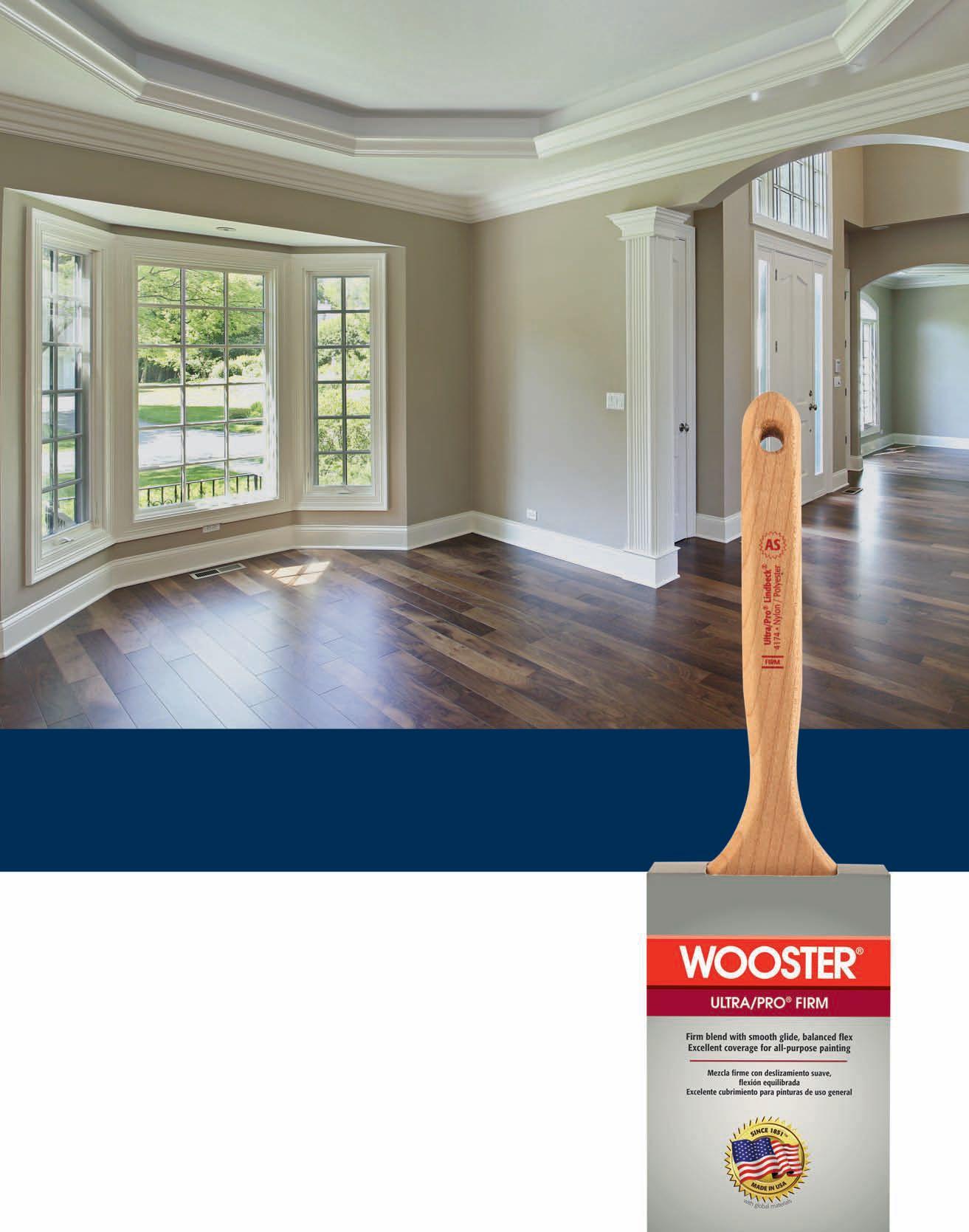
People don’t just have tinting requests—most days they have questions too. They need tools that deliver the kinds of results that are expected from a professional or that can make them appear like today wasn’t a rst-time painting experience. Wooster Ultra/Pro® Firm paintbrushes bring success to every-day painting jobs. If your customers are counting on professional painting results—tell them that Wooster is the way to get there.


Having a morning pick-me-up on a wooden deck is a great way to start the day.
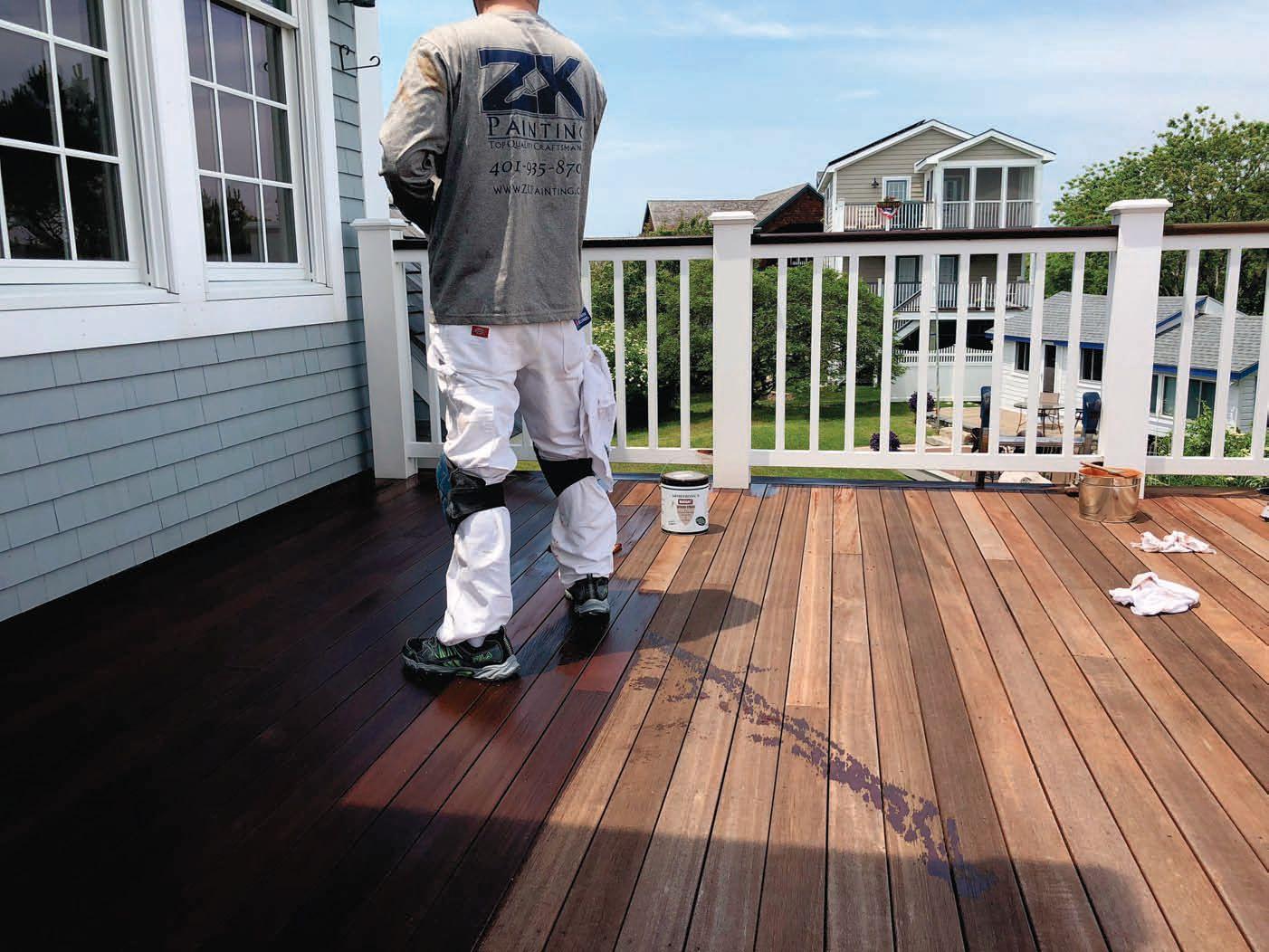
Now, thanks to Armstrong-Clark, that deck and other wooden materials can have the same bold coloring as a good cup of coffee.
The new color, Espresso, is the fourth new color Armstrong-Clark has brought to the market in the last three years. Each of the latest colors in the lineup have come through development due to popular demand, says Armstrong-Clark president Brian Carter.
“We have received quite a bit of feedback from customers the past few years wanting a deeper, richer brown with less red,” Carter says.
Armstrong-Clark worked with store managers, contractors and homeowners nationwide to provide feedback in the preliminary rounds of color formulation to help narrow down a spectrum of browns before finalizing Espresso.
The semisolid stain is designed to allow minimal wood grain to be seen while providing the greatest amount of UV protection. It’s designed for softwoods with only one coat needed for horizontal application.
Best applications for Espresso include older, unpainted wood surfaces such as decks, siding, shingles, fences and log homes. It should not be used on new wood less than one year old nor on sitting surfaces for furniture.
Armstrong-Clark’s formula is a combination of drying and nondrying oils that gives the user two layers of protection with one brush stroke. Armstrong-Clark’s Wood Stains have only a mild boiled linseed oil aroma and can be applied in the direct sunlight or the heat of the day. They can be exposed to light to normal rain 60 minutes after absorption into wood. All of Armstrong-Clark’s colors are intermixable.
For more information, contact Armstrong-Clark by calling 800-916-8211 or visiting armclark.com











The ProSensor T9 has eight precision sensors to find studs in a home’s walls. The T9 has a max detection depth of 1.6 inches and its 4-inch LED display shows the stud’s center and edges. It features proximity indicators which illuminate when approaching a hidden object and also provides a convenient pencil caddy. It runs on AAA batteries. Franklin Sensors 208-918-2403 or franklinsensors.com


Wallsauce offers thousands of mural wallpaper options. The murals are printed on premium wallpapers and shipped worldwide. Designs range from classic art to space motifs. Wallsauce can also help customers turn specific images into wall art.
Omega Sky Limited 888-581-7892 or wallsauce.com
The Hot Air Balloon Battery Children’s Fairy Lights are each 2 ½ inches tall and come in a variety of colors, including pink, yellow, blue and green. The lights come on a 7-foot string and are powered by three AA batteries. The lights are controlled by a six-hour timer. Lights4Fun lights4fun.co.uk







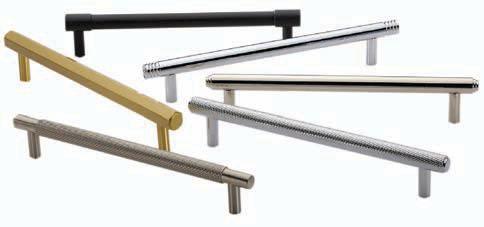
Ashley Norton recently expanded its collection of cabinet pulls with six solid brass designs. The profile is designed to complement modern cabinetry sets. The collection includes the tapered Stepped Pull, hexagonal-shaped Hex Profile Pull, the Phoenix Pull with cap-like ends and Ridged Pull with circular, ringed edge pattern. Rounding out the collection are a Knurled Pull and Partial Knurled Pull.
Ashley Norton 973-835-4027 or ashleynorton.com
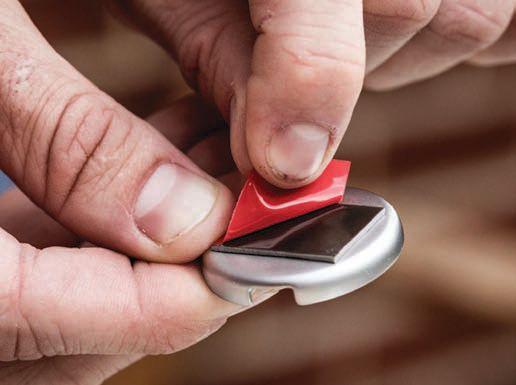
T-Rex ® Mounting Tape is an alternative to nails, screws, staples and glue while still achieving similar holding power. The tape is for indoor and outdoor use and can be used on a variety of surfaces, including metal, plastic, wood, glass, concrete, brick, tile and ceramic. T-Rex Mounting Tape is available in 30- and 50-pound limit varieties.
ShurTech Brands
440-937-7000 or trextape.com
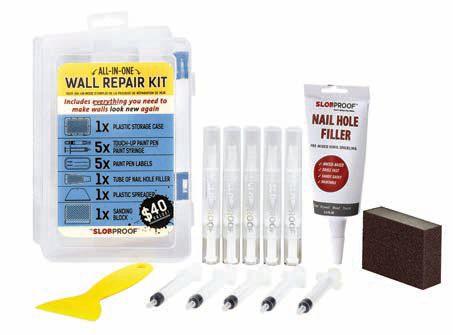
Slobproof Touch-Up Paint Pen is designed to make color-matched paint touch-ups on scuffed walls, trim, cabinets, furniture or any painted surface. The air-tight design fills with any latex paint and keeps paint fresh for seven years. Slobproof pens are available in packs or as part of a complete wall repair kit.
Slobproof 888-444-5593 or slobproof.com
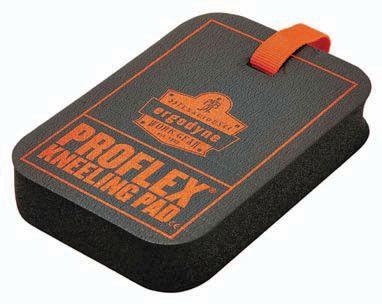
The ProFlex ® 365 Mini Kneeling Pad is designed to be a portable option to ease sore knees during any task, including painting trim, installing carpet or other tasks. The pad is small enough to have on hand for any job, and it has a strap that can be attached via carabiner to a belt loop or tool belt.
Ergodyne 800-225-8328 or ergodyne.com
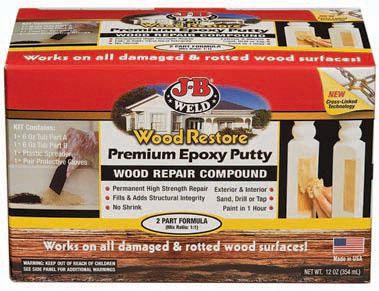
J-B Weld Wood Restore Premium Epoxy Putty—Repair Compound is a hand-mixable epoxy putty formulated to repair and rebuild wood. When applied, it adds structural strength to areas of damaged or rotted wood. It can be used to fill, build, reinforce or bond wood surfaces in interior and exterior applications.
J-B Weld 903-885-7696 or jbweld.com

The Medium Minimalist Floating Shelf Bracket can suspend a shelf for a floating look by using a bracket that provides support underneath and has a lip on top for added stability. The brackets can be used with ¾-inch thick shelves up to 12 inches deep. Rounded contours give a smooth contemporary accent to your modern design. The brackets are available in three lengths to accommodate shelves of 24, 36 and 48 inches.
Doug Mockett & Co.
800-523-1269 or mockett.com
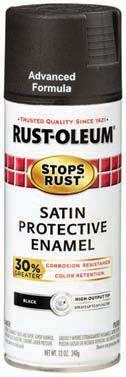
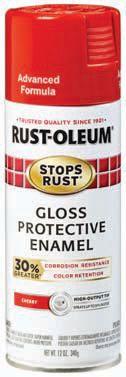
Stops Rust Advanced spray paint is a new formulation that provides 30 percent greater corrosion resistance and color retention compared to the original line of Stops Rust products. Its main use is protecting outdoor metal projects. With the new high-output tip, users can spray up to 50 percent faster compared to the brand’s standard tip.
Rust-Oleum
888-855-1774 or rustoleum.com
“One of the greatest sections in Paint & Decorating Retailer magazine is the new product introductions . The core group of readers is independent retailers looking for new ideas, so that section is a huge asset .”
—Jay Donnelly, Flanagan Paint & Supply
Paint & Decorating Retailer magazine is seeking your input for an upcoming special section. If you have a product you can’t keep on the shelf, a tool that has helped you boost margins or an impulse item that consistently raises your transaction sizes, send them to info@pdra.org Be sure to include your name, your company, the product name and a few sentences explaining why you love the product! For more information, contact Tina Sullivan at 800-737-0107.

Paint manufacturer PPG is celebrating 135 years of successful operation. At its annual shareholders meeting in April, company chairman and CEO Michael H. McGarry remarked on the occasion.
“In our 135th year in business, PPG’s 47,000 employees around the world are focused on strengthening our position as a world-leading paint, coatings and specialty materials company,” McGarry says. “Every day, we strive to achieve our purpose: We protect and beautify the world.”
Also at the shareholders meeting, McGarry announced several financial and strategic highlights from 2018, including sales from continuing operations reaching $15.4 billion, an increase of about 4 percent from the year prior.
McGarry also reviewed the four acquisitions PPG made in 2018: Paintzen, which allows customers to pick colors and schedule paint work; ProCoatings, a Dutch architectural paint and coatings wholesaler; Hodij Coatings, a Dutch paint distributor; and SEM, a U.S.-based manufacturer of specialized automotive refinish products.
“We are well-positioned to benefit from continued global economic growth because of our geographic reach; robust growth strategy; excellent product portfolio, innovation pipeline and advanced customer technologies; and enduring commitments to sustainability, ethics and community engagement,” McGarry says.

PPG has announced Devashish Saxena will serve as the company’s vice president and chief digital officer.
In his role, Saxena will be responsible for overseeing PPG’s digital transformation and creating a sustainable digital organization to “unlock customer value through enhancement, connectivity, automation, insights and innovation,” the company states.
“Devashish has a proven record in building global digital organizations and strategy, holding executive leadership roles across numerous multichannel and Fortune 500 companies throughout his 25-year career,” says Tim Knavish, PPG senior vice president of architectural coatings and president of Europe, Middle East and Africa.
Previously, Saxena oversaw the digital strategy of Rexel, a French multichannel distributor of electrical supplies. Prior to that position, he served as senior vice president of global e-commerce strategy for distribution group Premier Farnell.
Saxena holds a master of business administration in addition to master’s and bachelor’s degrees from the University of Texas.


The U.S. and China, the world’s two largest economies, have both imposed tariff hikes on products entering their countries, CNBC reports.
The tariffs come after the two countries were unable to finalize ongoing trade discussions, according to the article.
The U.S. increased tariffs on approximately $200 billion worth of Chinese products from 10 percent to 25 percent, according to reports. China then responded by raising tariffs on $60 billion in U.S. goods, which took effect June 1.
The Office of the U.S. Trade Representative published a list of Chinese-made goods that would be hit with new duties, including plastic and wooden picture frames, photo albums, various fasteners, wallpaper, paintbrushes and paint rollers. Other products from China that will carry new tariffs include livestock, dairy products, vegetables, rice and tea.
According to CNBC, the tariffs were instituted after U.S. officials say Chinese representatives “backed out of major parts of a developing trade agreement” between the two countries.




















According to data from the American Rental Association, revenue from the equipment and event rental industry in North America will surpass $61.3 billion in 2019. This figure represents a 5 percent uptick compared to 2018 equipment and event rental industry revenue, ARA states.
“The equipment and event rental industry is growing and continues to expand faster than the overall economy. The outlook continues to be positive,” says John McClelland, vice president for government affairs and chief economist of the ARA.
In the U.S., equipment and event rental revenue could grow 4.2 percent in 2020 and reach as much as $69.8 billion in 2022.
Scott Hazelton, managing director of IHS Markit, the forecasting firm that compiles data and analysis for ARA, says the industry shows potential for steady growth in the next five years.
“We expect moderate growth of more than 5 percent in 2019, and 4 percent in 2020 and 2021. In the U.S., not one state has a decline in construction, general tool or party and event rental revenue and there are no signs of recession,” Hazelton says.
Based in Illinois, ARA is an association of owners of equipment and event rental businesses and related manufacturers and suppliers.
The U.S. Department of Commerce has announced the country’s gross domestic product has risen by an annual rate of 3.2 percent in the first three months of 2019, according to a report from The New York Times
According to the article, GDP is “the broadest measure of goods and services produced in the economy.” The first-quarter rate surprised financial analysts, who had not expected to see such a rise.
Some economists believe the report was “inflated by short-term factors and probably overstated the underlying pace of growth,” the Times reports.
“The angst has settled, and the economy has come back,” says Ben Herzon, an economist with Macroeconomic Advisers, a forecasting firm. “I just can’t point to anything now that’s going to push us into recession.”


York Wallcoverings has named Vincent Santini as its vice president and general manager of York brands. He will oversee all sales and support for the company’s residential and commercial segments and drive continued growth to expand the company’s reach in 85 countries.
“It’s a great honor to join York Wallcoverings,” Santini says. “It’s exciting to join a company with such a solid team, rich history and extensive design and manufacturing capabilities.”
Santini has prior experience in customer-facing roles leading sales and support teams. Previously, he worked at Hubbell Lighting as vice president of sales service and support. He has also worked for HLI and Litecontrol.
“We are thrilled to have Vince Santini join the York leadership team,” says York Wallcoverings CEO Brian Golden. “He has a strong track record of leading organizations to achieve new levels of growth and enhance their customer experience. Vince will help build on our current momentum, further strengthen our leadership team and position us well for the future.”
Founded in 1895, York Wallcoverings is the U.S.’s oldest and largest wallcovering manufacturer.
The Washington state legislature has passed a bill that allows the paint stewardship program PaintCare to begin operating within the state.
Washington is now the ninth state to pass legislation introducing PaintCare services to residents.
The legislation was first introduced in January and was passed by the Washington House and Senate in April. Gov. Jay Inslee is expected to sign the bill into law.
Once made official, the law will permit retail businesses, including independent paint stores in the state, to accept leftover paint from customers to be used in different projects or safely recycled.
Paint manufacturers that do not participate in the program will be barred from selling architectural paint in Washington.
PaintCare is a 501(c)(3) program developed by the American Coatings Association. The organization estimates roughly 10 percent of paint goes to waste. PaintCare aims to help retailers ensure customers buy enough paint for their projects while limiting leftover material, reusing paint for other projects and recycling paint.


By Jerry Rabushka




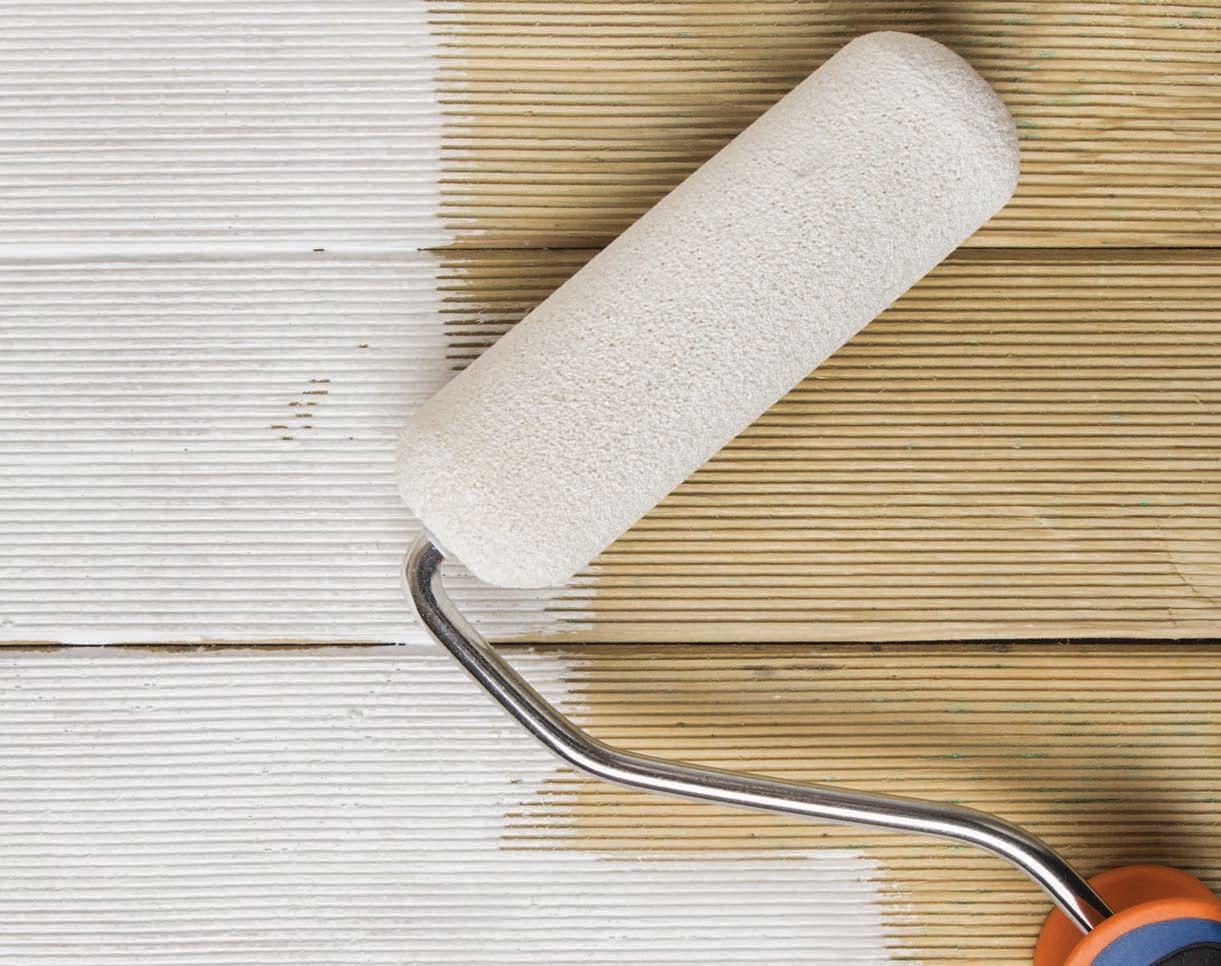
Painters have their favorite applicators, and even weekend warriors paint with some trusted companions. While there’s a lot to be said for that type of loyalty, it might cause some customers to overlook fabrics and bristles that,

while not necessary for every job, can be used for specialty projects.
Learn more about the kinds of products manufacturers believe are underrepresented in the market to spruce up your displays and enrich your product selection.











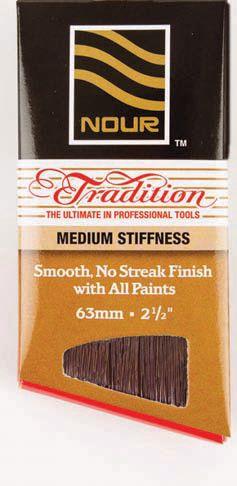




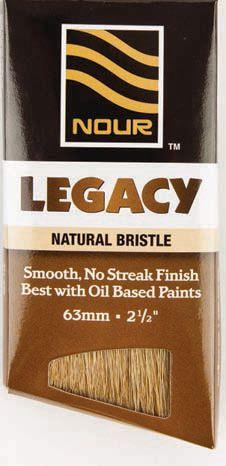


Stocking specialty products and applicators can show customers that not all brushes, roller covers or other applicators are created the same. Without this knowledge, a customer is likely to pick up a standard brush designed for general painting instead of the brush that’s intended for their particular project.
There are opportunities to enhance your team’s product knowledge, whether that’s working with vendors to schedule demos or accessing training programs through your association.
The Paint and Decorating Retailers Association offers product knowledge training through its online course. You can learn more about advanced learning opportunities that can prepare your team to help any customer at pdra.org/education
Bill Laramy, executive director of sales at Whizz® Rollers, says the Whizz Mini Rat Tail has a thin, stiff bristle that allows painters to get into tight spots. Its size allows retailers to display it in a tight spot. Benefits include nylon-polyester bristles, a copper ferrule and its ability to be used on oil- and water-based coatings.
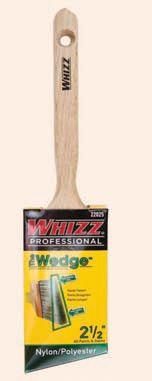
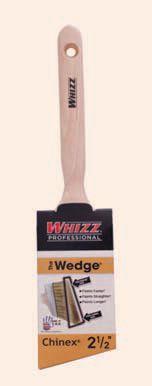
Whizz also has a patented paint brush: The Wedge™ The Wedge is designed to combine a rattail and an angular sash brush into one tool. It is thicker in the back to hold more paint, but thin at the top of the brush for cutting in with a straight line.
“The Wedge has become so popular Whizz now offers it in three different configurations: 100 percent polyester, nylon polyester and 100 percent Chinex for an easily cleaned Wedge,” Laramy says.
With the broad selection of paint formulations in today’s market, specialty applicators are also a necessity.
Some applicators will be suited to work with certain paints, whether they are low-VOC, non-VOC, water-based or oil-based or latex paints. Be sure to have options available for every type of paint you stock.
Having a variety of specialty equipment also elevates your operation and boost its reputation for knowledge and product selection. Make sure you consider all available options, especially if customer demand has led certain formulations to be high sellers. Be sure to demonstrate the abilities of specialty applicators to show how they can make a difference.
If you sell an applicator that customers love, share it with Paint & Decorating Retailer magazine at info@pdra.org

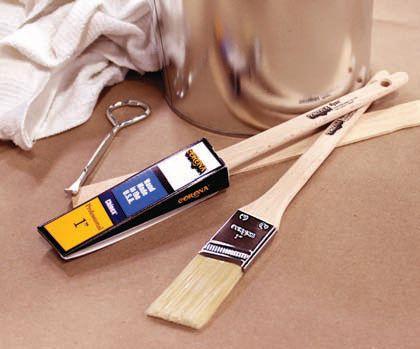
The Performance Chinex ® Ryan 1-inch is a thin, firm brush with a rattail handle that will help painters get into the tightest crevices, corners and window trim. Its firm flex and shorter trim length offer control for fine-line work, and the exclusive blend of 100 percent Chinex makes it ideal for all paints and primers.
On the opposite end is the Black Nylon Mt. Dora 4-inch, a block wall brush with a hand-chiseled edge.
“This brush is designed for covering large areas, but is also remarkably lightweight and balanced,” says Ben Waksman, president at Corona Brushes. “The grip can be removed from the block so a painter can insert an extension pole with a standard ¾-inch thread, allowing access to high areas without a ladder.”
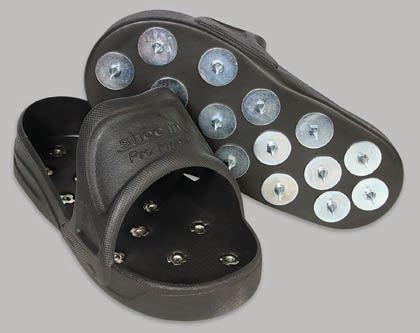
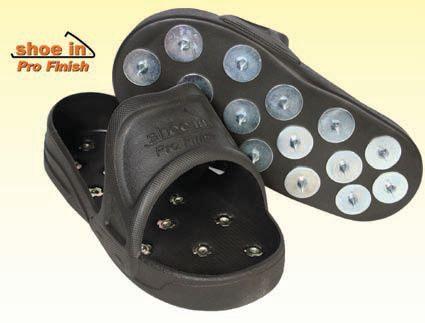
Take any opportunity you have to cross merchandise in your applicator department. Other products that assist professional painters include Pro Roller’s Shoe-In Finish Spiked Shoes. These protective shoes allow painters to quickly slip them on over their normal shoes when needed.
“Immediately after putting Shoe-In Spikes on your feet, you’ll notice you have increased stability and added flexibility when you need to bend over or kneel down,” Pro Roller president Tom Niehoff says. “We also carry several options of finishing tools such as notched squeegees, trowels, microfiber pads, and spiked roller covers. With these added tools, painters can complete their jobs quicker with a higher degree of quality while expanding the services they offer.”
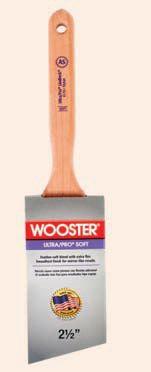
“Made from top-quality nylon, Wooster Ultra/Pro® Soft brushes are designed for fine finish painting with clears, stains and low viscosity paints or primers,” says Tim Yates, communications and multimedia manager at The Wooster Brush Company.
These brushes have flex that provides superior performance in low humidity and cooler temperatures. Because it is 100 percent nylon, it cleans up easily after the job.
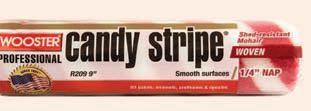
“The Wooster Candy Stripe® rollers feature a shed-resistant mohair blend fabric that can be used with all paints, enamels, urethanes and epoxies,” Yates says. “Wooster Candy Stripe rollers can produce the type of flawless results required when working on wood or metal surfaces.”
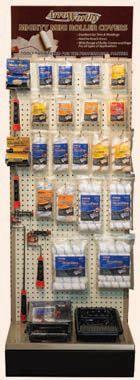
As miniroller offerings expand in size and scope, there are more reasons than ever for everyone to get a few. A good display and occasional demonstration may be all a retailer needs to add these to a sundries purchase.
“Today, the most versatile tool for a pro or DIYer is the miniroller,” says Roland Kolilias, vice president of ArroWorthy® “These by far have become the most essential part of any paint job.”
“Minirollers don’t leave marks when painting doors, trim or woodwork,” says Carl Rumpf, vice president of sales at Premier® Paint Roller. “A selection of different fabrics is necessary to address all surfaces and paints. A 4-foot display is easy to merchandise because packaging is made for peg hooks.”



Greg Isaac, president at FoamPro®, says some products deserve a place in a painter’s truck.
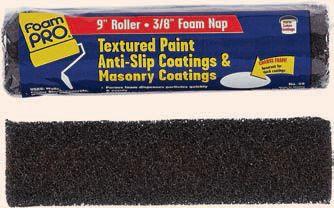
“Our High-Capacity Slit-Foam Roller Cover is probably the most versatile roller cover on the market,” he says. “Although it tends to get pigeonholed in the industry as an ‘acoustical cover,’ it can be used on stucco, wood fencing, brick, cinder block and pavers.”
Another versatile FoamPro roller is the Texture Paint & Antislip Coating Roller.
“The open-celled, coarse foam picks up and releases coatings that contain particles without dumping or clumping,” he says. “The thickness is easily controlled by the amount of pressure and number of strokes in the application of many different specialty coatings.”
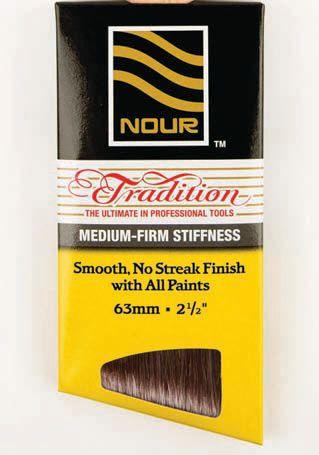
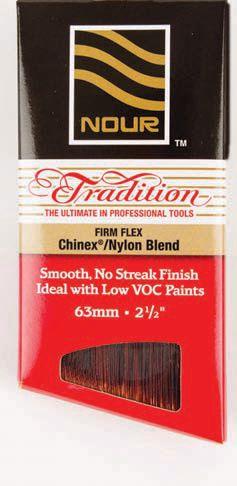
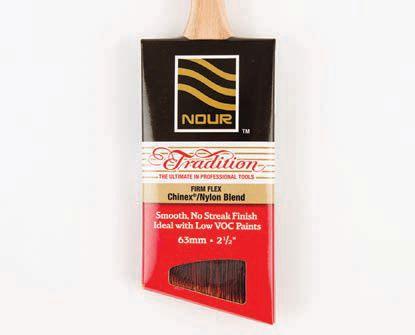
Paint is always changing, and these reformulations can turn a tool used occasionally into a mainstay. Nour Fleifel, sales associate and project manager at Nour Trading House, notes the increasing popularity of the company’s Tradition Firm Flex brush, which is made of a Chinex®-nylon filament blend.
“Chinex is well suited for today’s heavy-bodied paints because it maintains stiffness and shape, and it easily absorbs and releases paint,” he says.
Mainly, the Tradition Firm Flex is recommended for low-VOC coatings.
“The Chinex filament cleans up faster than nylon and polyester filaments, helping save time after a project,” Fleifel says. “In addition, stiffer filaments will provide greater control.”
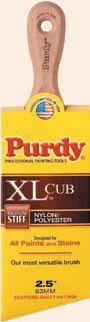
The Purdy® XL™ Cub™ is a brush customers don’t know they need, says Purdy senior product manager Connie McKinney.
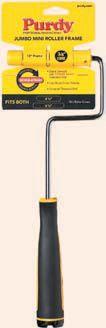
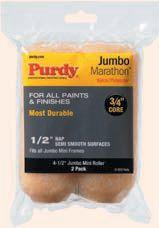
The Purdy Jumbo Mini Roller is suitable for finishing up small projects. Retailers should recommend it for bathrooms, accent walls, doors, cabinets and similar surfaces.
“The covers utilize the same fabric as our full-size covers for consistent finishes and come in two cover lengths and two handle lengths,” McKinney says. “The frames also feature Quick Connect, which allows them to work with Purdy’s PowerLock extension poles.”
The products are available in packages of two and six and come in many fabric types.
















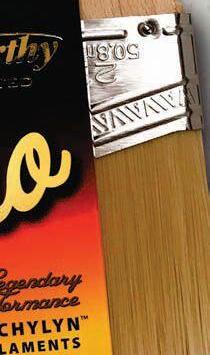
Composed of CHYLYN™ filaments, the ORO Brush is the perfect compliment for all Latex or Oil/Alkyd Paints and Stains.




Superior Taper








Advanced Flagging






Exceptional Quality Holds & Delivers More!




























TRADITIONAL Filaments








Today’s paints demand more from today’s applicators and the lintless Glossdel Plus delivers like no other cover.
Supreme Woven Fibers
Solvent Resistant Core

Exceptional Pick-up and Release















By Diane Franklin
The most successful paint retailers realize their job is not just to sell the product in the can—it’s also about selling the color that goes on the wall. Many customers today don’t just want a color— they want the perfect color, which is why the need for accurate color-matching has never been greater.
“Today’s paint retailers are facing increasing pressures,” explains Jason Loehr, global product manager for Datacolor. “In the world of retail paint, success means providing solutions that help customers find the perfect color and streamlining their purchasing experience, so they keep coming back.”
Loehr says identifying the perfect paint color is a challenge for those who are tasked with accurately measuring and matching paint colors.
“This challenge presents a clear opportunity for retailers to create lasting customer relationships by offering solutions beyond fan decks and paint cans,” he says.
Matthew Adby, retail paint product portfolio manager for X-Rite Inc., says the need for accurate color-matching is driven by consumers who go into a paint store with higher expectations than ever before.
“Retailers have to deliver ever-higher performance to meet those expectations,” Adby says. “These customers aren’t just looking to buy paint; they’re looking for an ‘experience,’ which includes interacting with a sales associate who is a color-matching expert, even for multicolored fabrics or on textured pieces like stucco or shag carpeting.”








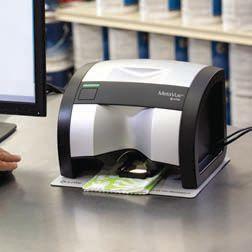
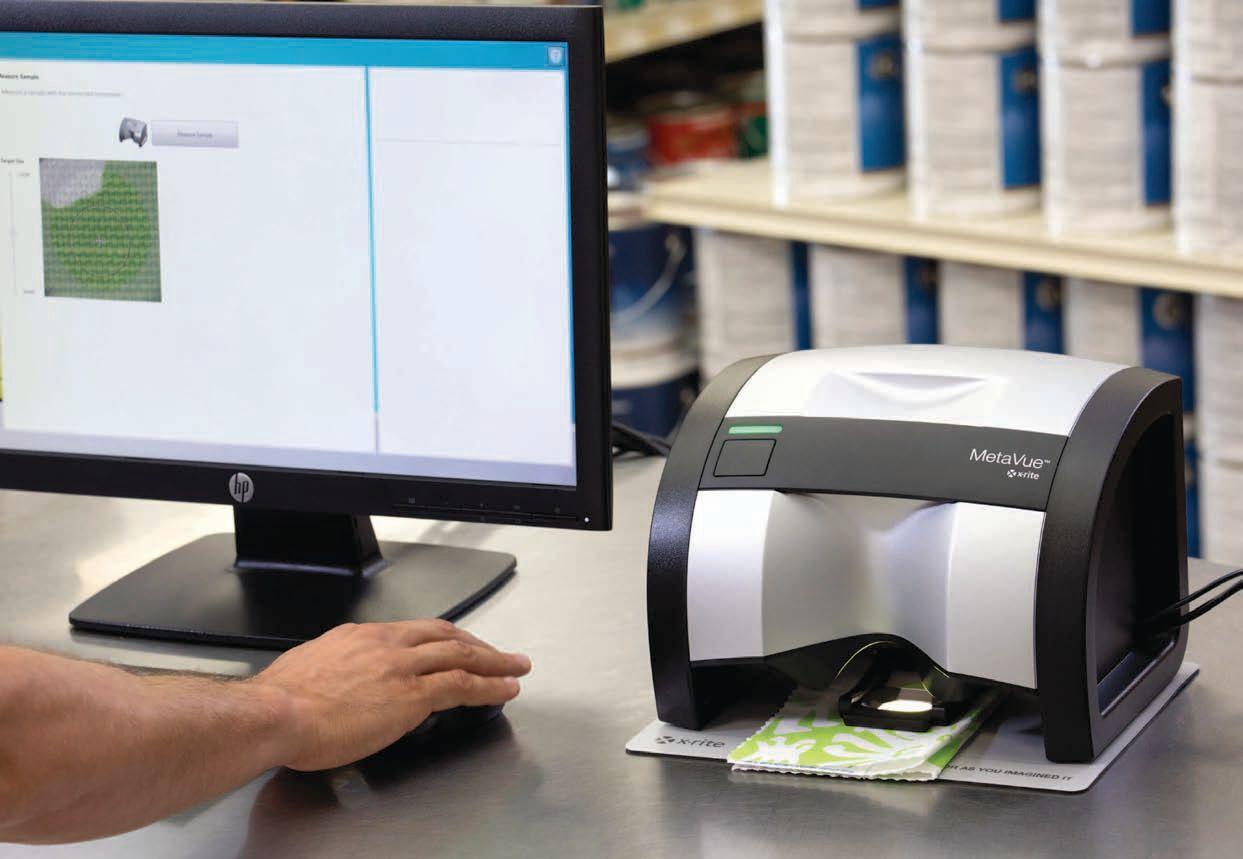
X-Rite enables retailers to meet these high expectations with MetaVue, a noncontact spectrophotometer featuring an onboard, full-color imaging camera. Combined with ColorDesigner PLUS color-matching software, MetaVue has the measurement ability to offer a broad array of samples.
“What differentiates X-Rite and changes the way sales associates are interacting with customers is our hyper-spectral imaging, which is what MetaVue provides,” Adby says. “We’re able to achieve what we call the spectral fingerprint of the color to provide a true color match.”
Among MetaVue’s advancements is Smart Spot technology, which compensates for shadows and defects in samples to provide a more accurate reading.
“With MetaVue, we have been able to achieve a 25 percent improvement in match acceptance and performance with difficult types of samples,” Adby says.
MetaVue also has a feature called dominant color extraction, which can pull a specific color from even a complex, variegated sample. With an adjustable aperture, MetaVue can accommodate sample sizes as small as 2 mm and use on-screen targeting to measure the desired portion of a sample with extreme precision.
In this competitive market, providing accurate color matches quickly and with minimal downtime is an important consideration. BYK-Gardner meets
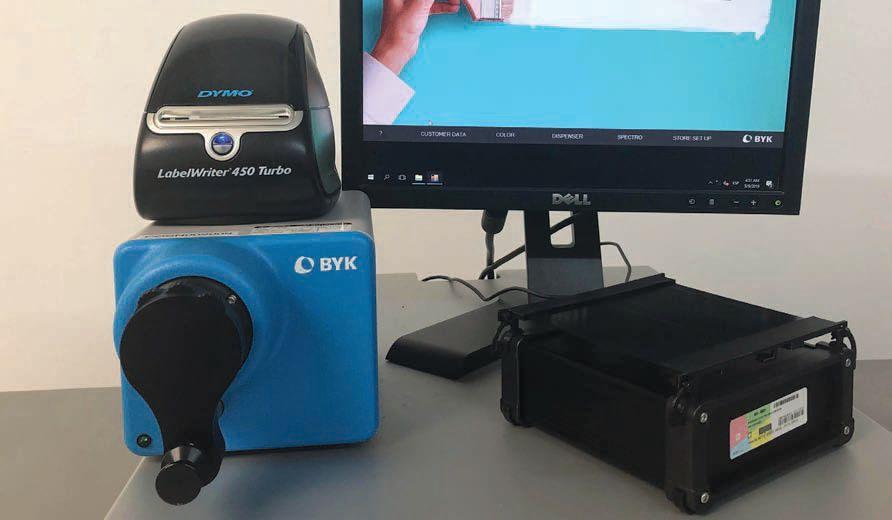
these expectations by incorporating the Paint Brain, an industrial-grade computer dedicated to paint center operations, into its next generation of color measurement.
“This unique computer and centralized ‘brain’ operates, monitors and measures all activity through the paint center,” says John Kowalski, business line manager of Paint POS for BYK-Gardner USA.
The Paint Brain is small enough to be mounted inside a dispenser or under a desk. It works in combination with BYK-Gardner’s automatch software to create a system with an easy-to-use interface that provides custom color matches in less than four seconds. Customizable to the retailer’s paint brand, the system has a correction feature that allows for precise match fine-tuning, resulting in fewer mistints and improved customer service.
“This system is all about uptime while providing accurate paint matches,” Kowalski says. “It has preventative maintenance notifications and database integrity indicators. It can monitor the health of the system and has a variety of connectivity options.”
An important consideration when weighing the affordability of a color-matching system is how much it will cost you if you don’t have one .
For retailers concerned about affordability, color-matching technology is within reach.
“With Datacolor’s solutions, retailers can become the ultimate design center, thanks to accessible and affordable technology,” Loehr says.
Datacolor’s lineup includes Datacolor 200R, a benchtop system that provides color measurement, formulation and correction with the ability to match across any texture and sheen.
“The system utilizes Datacolor’s unique SP2000 technology, capturing the true spectral fingerprint of any color at the highest possible accuracy for retail paint,” Loehr says.
The Datacolor PAINT 2.0 has an intuitive interface, and Loehr identifies it as the industry’s leading paint-matching software solution.
“The lab-quality matching capabilities enable you to find the right color for your customer faster, but also formulate that color with greater accuracy— improving customer satisfaction and minimizing retints,” Loehr says. “Datacolor PAINT 2.0 provides 30 percent greater efficiency in first-shot matching than competitive POS products.”
An important consideration when weighing the affordability of a color-matching system is how much it will cost you if you don’t have one.
For instance, Adby says that retailers will achieve a quick ROI by investing in MetaVue.
“First, they’re offering the best service to customers, which will attract more people to the store,” he says. “Secondly, there’s a significant reduction in mistints because of the ability to measure a wider range of samples and achieve a correct color match.”
Among the trends in color-matching is the use of portable devices that don’t compromise affordability, durability and accuracy. You can find such features in the Nix Color Sensor lineup, whose hardware devices include the Nix Pro, Nix Mini and Nix QC.
“Though all devices can be paired with the Nix Paints App, the Nix Mini is best suited for the retail paint industry because of its portability and affordability,” says Matthew Sheridan, CEO and founder of Nix Sensor Ltd. “Because it’s smaller than a ping-pong ball, you can get accurate results on the go.”
Paired with the Nix Paints App, the Nix Mini aids DIY homeowners to professional painting contractors to interior designers—in matching paint colors and selecting color harmonies.
Nix ensures the durability of its color sensors with an award-winning and patented solid-state design, which prevents dust and debris from damaging the interior components and adversely affecting the accuracy of the color results.
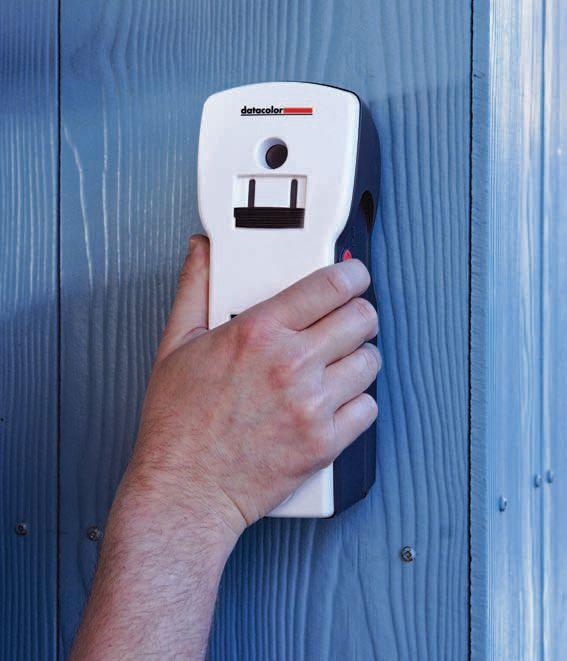

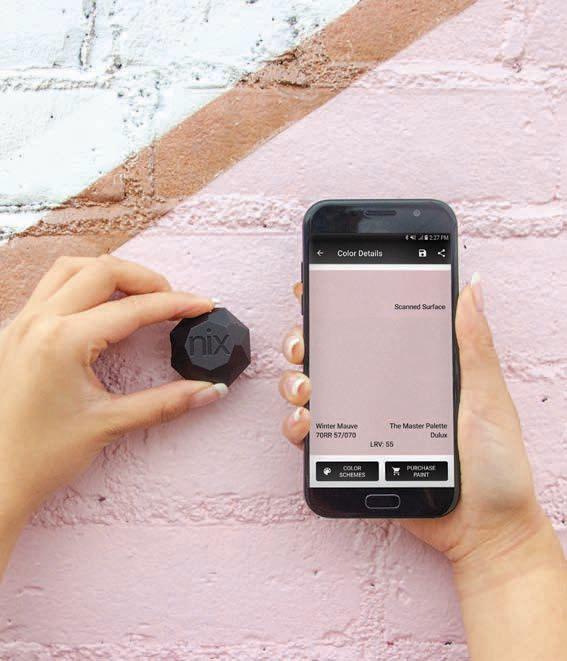
Advancements in color-matching technology allow professionals and DIYers to find the closest matches on even complex textured surfaces.
“Light plays an important role in how we perceive color, and objects can look noticeably different in natural sunlight than fluorescent light .”
—Matthew Sheridan, Nix Sensor Ltd.
As a further assurance of accuracy, Nix devices are individually calibrated in the company’s Canadian lab using proprietary calibration methods.
“You’ll get reliable and accurate data without the need for a calibration chip,” Sheridan says. “We are the only company in the world to use this innovative method.”
An additional feature of Nix devices is their ability to block out ambient light that could affect the color reading.
“Light plays an important role in how we perceive color, and objects can look noticeably different in natural sunlight than fluorescent light,” Sheridan says. “The design of our Nix devices
blocks out any ambient light. This feature provides its own light source for every scan, making sure you get accurate results no matter what lighting you’re in.”
Datacolor also offers portable color-matching solutions, including the Datacolor 20D, a portable version of the 200R that enables highly accurate sample measurement in any location.
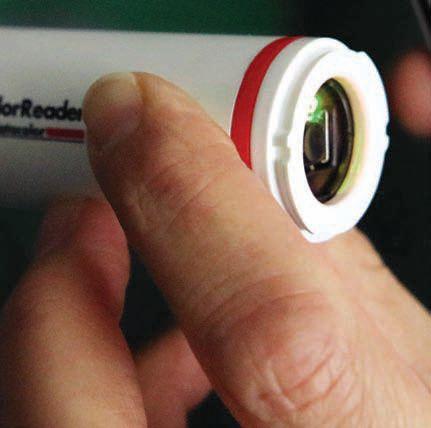
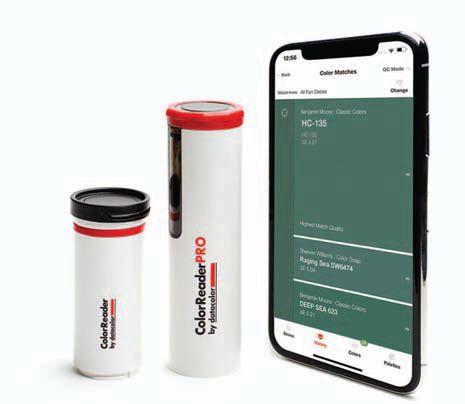
There are also two portable devices from Datacolor: ColorReader and ColorReaderPro. Loehr says ColorReader is a low-cost, Bluetoothconnected color selection device, allowing professionals and DIY customers to precisely identify colors of paint and everyday objects across color collections. Its accuracy rate exceeds 94 percent.
“Independent from a color-matching system, the ColorReader works in conjunction with the free ColorReader mobile app on both Android and iOS devices,” Loehr says, adding that ColorReader saves time compared to a traditional, visual color search with a fan deck or color card.
ColorReaderPRO, meanwhile, serves as a professional color lookup solution.
“It’s an essential tool for contractors, a helpful device for DIYers and a new way retailers can


No more frustration with straps, buckles, and adjustments. Just step right in to Shoe-In Spikes and get to work. Immediately after putting Shoe-In Spikes on your feet, you’ll notice you have increased stability and added flexibility when you do need to bend over or kneel down. Applying epoxy floor coatings and decorative concrete coatings with spiked shoes has never been easier. You’ll love Shoe-In Spikes and toss away those old plastic spikes of yesteryear.
provide on-the-floor service to consumers who want to match real-life color inspirations to the closest paint color,” he says. “Additionally, combining Paint 2.0 with ColorReaderPRO provides an introductory low-cost solution for those who want to increase their paint sales and streamline the customer experience.”
X-Rite offers several portable technology solutions, one of which supports consumers who make purchasing decisions on their phones.
The solution, called Color-Eye®, includes a wallet-sized calibration card and software developing kit to measure any color with an iOS or Android device. Featuring new X-Rite technology to enhance accuracy, Color-Eye can be implemented into existing customer apps so consumers can identify matching or complementary colors to any inspirational item they may choose.
Retailers can order Color-Eye calibration cards to sell. Another strategy is to offer them as a giveaway to customers.
“Consumers take the card home to measure the drapes or the sofa or whatever else provides their color inspiration with the idea of driving their next painting project,” Adby says.
2018-01 CT31 Quarter AD_outlined.pdf 1 3/7/2019 3:22:44 PM
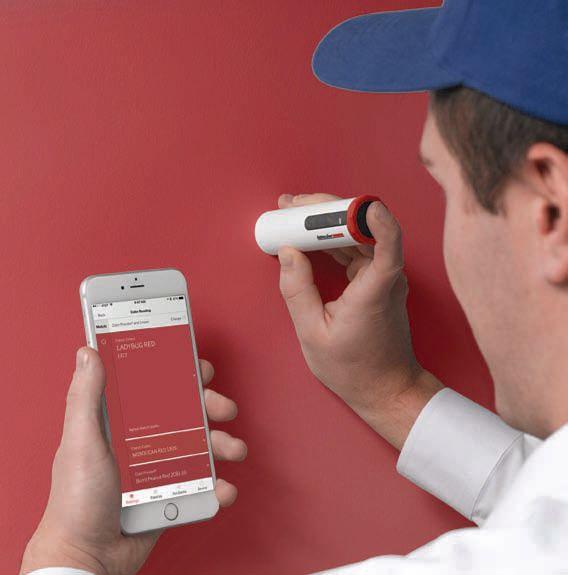

















































Another X-Rite tool for portable color-matching is CAPSURE, a handheld color-matching instrument featuring Bluetooth connectability and offering the same multicolor extraction capability as the MetaVue to achieve accurate matches for a wide variety of samples.
Color-matching technology has come a long way from the days when veteran paint store employees would match samples by eye. There are still some of those veterans around, but using technology takes the subjectivity out of the process.
“Color-matching by eye may work for some, but the challenge is that everyone sees color a bit differently,” Kowalski says. “Looking under one lighting condition may seem OK, but under another could present challenges. Using a spectrophotometer is the only way to ensure a correct and accurate match.”
Technology also makes for a more efficient operation with solutions that are tailored to the needs of various customer segments.


“It’s all about understanding customers,” Kowalski says. “Contractors, for example, need speed, accuracy and delivery. Anything you can do to keep them painting will help them be more profitable.”
Technology brings many advantages to the color-matching experience, with speed and accuracy being among the most important.
“Our team has heard from store employees that some colors can take up to two hours to match by eye,” Loehr says. “Most customers aren’t willing to wait that long for their color—not to mention the customers who are waiting behind them.”
Loehr adds that color-matching by eye is skewed by individual perceptions as well as such factors as lighting and background, which makes subjective, repeatable, high-quality color management impossible.
“Datacolor’s solutions take the guesswork out of color-matching and formulation, ensuring accurate, repeatable results that can’t be achieved by matching by eye,” Loehr says. “To accurately identify and reproduce colors, retailers need tools and processes to establish consistent color-matching, so they can get the color right the first time.”
Being able to quickly color-match is also a benefit that Nix Color Sensors provide over other solutions. The Nix Paints App is constantly updated with the newest paint collections.
“After scanning a surface with a device, our technology systematically filters through more than 40,000 paint colors to find the best paint match,” Sheridan says. “It is physically impossible for a human to filter through all the possible options within seconds. Color technology saves you time by calculating the closest paint matches from a variety of collections and colors within seconds.”
With such capabilities as Smart Spot measuring and dominant colorant extraction, Adby sees MetaVue as easily able to surpass various analog approaches to matching colors. Using technology to match colors also ensures correct colorant loading and is not impacted by such factors as variations in lighting.
“I would be willing to challenge anyone matching colors by eye and trying to beat a modern-day matching system,” he says.
And here’s another advantage to technology: Without having to worry about getting the color match right, store associates will have more time to interact with the customers and help them find the right paint and tools for their projects.
“Your store associates will be able to focus on their other skills of offering design direction to the customer and sharing their knowledge about color harmony and color trends,” Adby says.

0 Mike Weber | Hirshfield’s
By Karon Warren
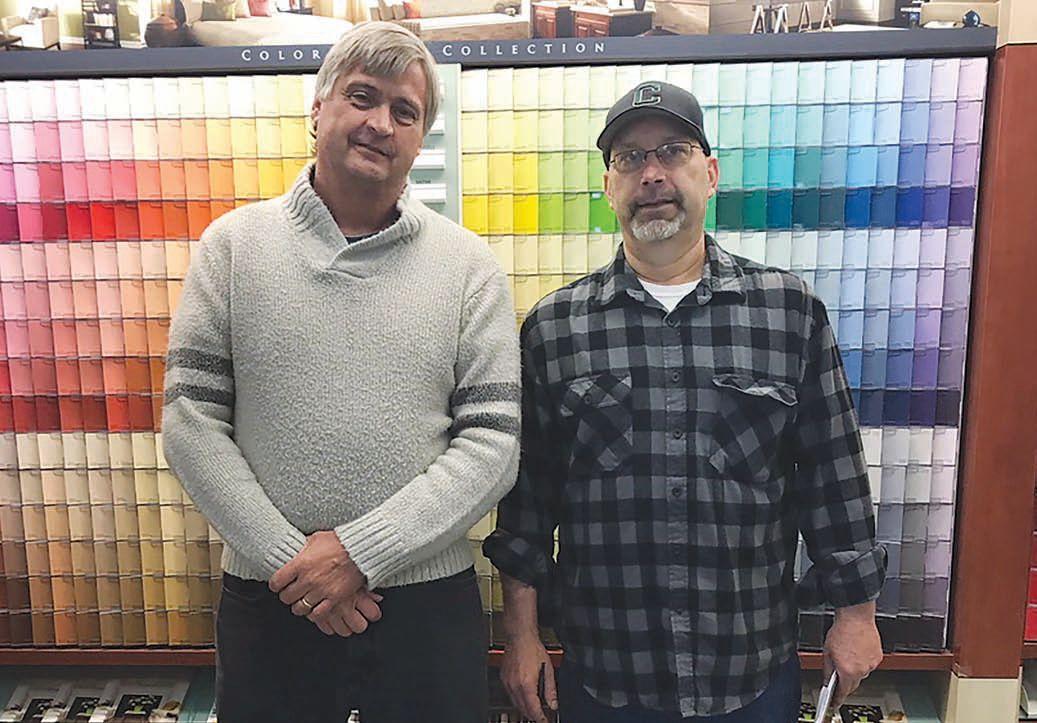
Jerry Newell has always been involved in the paint business. Beginning in college, he worked as a painter. Then, he took a job with Sherwin-Williams for about 15 years, where he started as a sales representative before moving into management.
“It was a good place to learn,” Newell says. “They have a really good training program.”
After he left Sherwin-Williams, he started his own paint contracting business, Crown Painting and Decorating in Northern California, which he ran for the next 10 years.
Although Newell’s time on the professional side of the brush was quite successful, it eventually became too challenging to continue that operation.
“I was getting older,” Newell says. “Those 40-foot ladders get taller every year. I was getting close to 50 years old, and the economy was poor in 2009. All contractors were struggling to find any kind of work.”
But he wasn’t done with the paint business just yet. In 2010, Newell transitioned to the other side when he opened Chester Paint Center in Chester, California.
The Independent Home Improvement Show (IHIS) is uniquely designed to connect independent retailers with leading manufacturers. At IHIS you will create personalized, meaningful connections, develop strategic sourcing opportunities and walk away with top notch education to arm yourself in today’s ultra-competitive marketplace.


































“It made more sense to go back into the supplier side because we have more access to the market that way,” he says. “When you’re a painting contractor, you can only do so much as far as controlling the size of the market. But as a supplier, I basically have access to the whole market. So it made more sense. When you’re in a recession, you want more access to the whole pie. It is riskier; there’s no doubt about that. But if you’re successful during those high-risk times, then you set your table for success in the future.”
That certainly seems to be the case for Newell. Rather than return to his previous employer, Newell went in another direction when it came to selecting his primary product lines. He carries Kelly-Moore Paints, Flood Wood Finishes and Sikkens exterior stains.
“People gravitate to the product because that’s where the contractors go,” Newell says. “The contractors here in Northern California have been hardcore Kelly-Moore people for a long time.”
Newell’s customer base includes both professional and DIY customers. Because the stores are in a resort area, many clients are paint contractors. His DIY customers tend to skew younger.
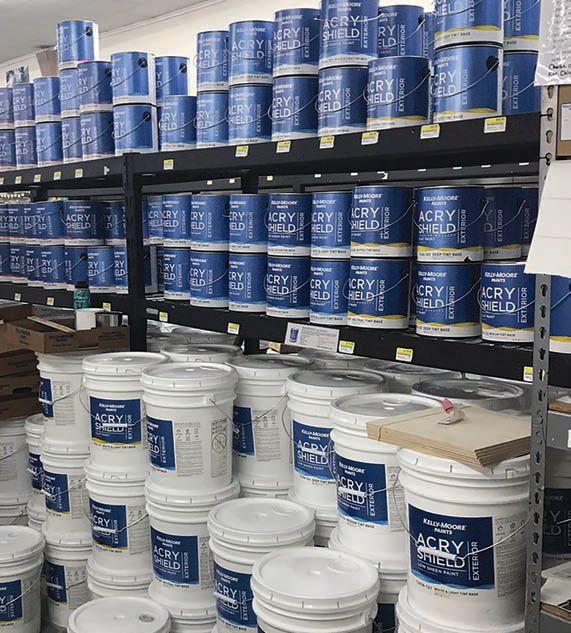
Chester, California, sits on the edge of Lake Almanor right outside the Lassen National Forest. The store there is small compared to those in larger cities.
The same is true for the two stores Newell opened shortly after Chester Paint Store: Quincy Paint Store in Quincy and Susanville Paint Center in Susanville. He employs 13 people across all three stores.
“My market is very small,” Newell says. “The largest town we have a store in has 7,500 residents. When we opened each store, there was already a paint store in each town. We offered a better product for less money with a more knowledgeable sales staff. Within one year, all competitors had closed their doors.”
Newell says a key reason for his operation’s success is the simple fact that they are dedicated paint stores.
“Our customers are happy to have a real paint store,” he says. “Our competitors are local hardware stores or building supply stores. I’m the only dedicated paint store.”
Of course, having trained staff members who know the products and how to properly use them also makes a difference.
“Training is key,” Newell says. “To offer the best service possible, your entire staff must be well trained and knowledgeable.”
Newell says training comes through a variety of ways. Part of it is having new employees shadow more experienced co-workers as they help customers.
“They are under instructions to watch and listen carefully to the answers that are given,” Newell says. “That is how you learn.”
Newell says they also go through the basics of product knowledge one on one with other staffers.
“We have on-hand training on an individual basis,” he says. “We want to know what they already know. In some cases, they already know a lot, but in some cases, they come into the store with very little prior knowledge.”
He also gives his employees the opportunity to work with the products themselves. Every employee learns how to apply paint to a surface.
“We grab some paint and a roller and start rolling a wall,” Newell says.
Talking with the professional painters who use the products day to day also benefits his staff.
“Most of what I’ve learned over the years is from painters,” Newell says. “You learn more from them than almost anybody else. They talk about what’s going on at the job site, and you’ve got to file that away. When you run into it again, you remember how it was fixed the last time. Experience goes a long way.”
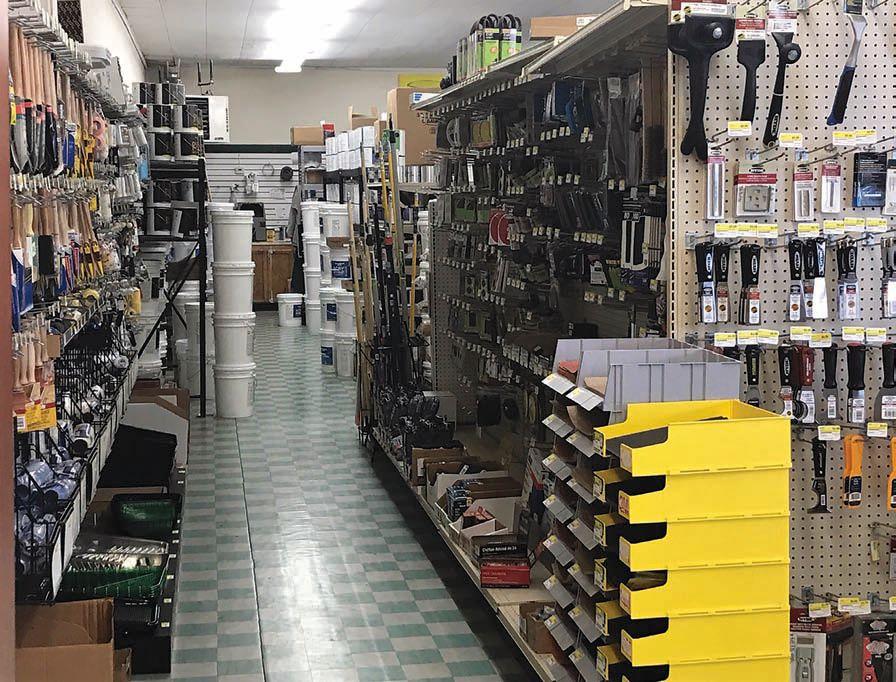
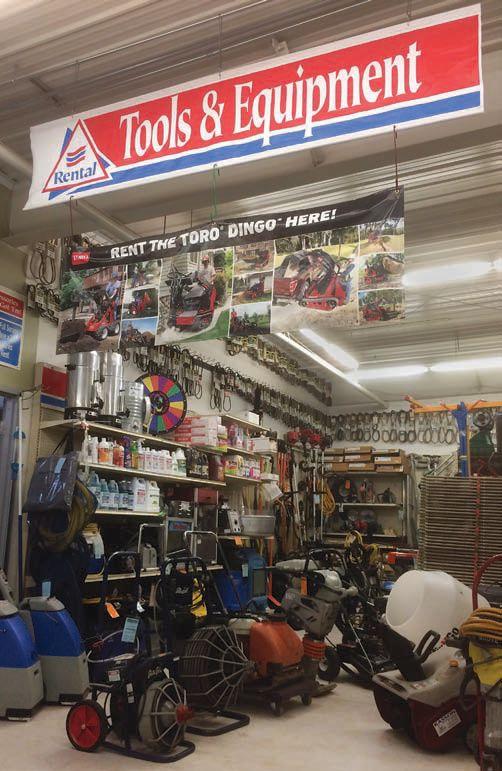
While the primary focus of Chester Paint Center and Newell’s other two operations is paint, he has diversified his operation by adding tools and power equipment, which appeal to the needs of his local community.
“The best person to give a challenging product to is a contractor because they’re going to give you the honest truth .”
—Jerry Newell, Chester Paint Center
In fact, Newell happily works with contractors to find out firsthand how new products work.
“You need to get the product in the contractors’ hands because they are the ones who use it day in and day out,” he says. “That is your best test. You don’t want to give a challenging product to a DIYer. You want to give them a product that’s easy to use. The best person to give a challenging product to is a contractor because they’re going to give you the honest truth.”
Looking ahead to the future, Newell wants to keep moving forward, offering the best products
to his customers at a competitive price with the best service possible.
“We have a strong future,” Newell says. “We’ve had 5 to 20 percent annual growth for the past 10 years.”
When asked if more store locations are part of that future, he doesn’t rule it out, although he doesn’t seem intent on making that decision.
“It’s crazy to close off potential expansion, but as far as brick-and-mortar stores, I’ll leave that to my children,” he says.
Newell’s son Tyler runs Quincy Paint Center, while his son Ryan runs Intermountain Hardware and Supply, which Newell opened in 2014. He also opened a Husqvarna dealership in 2015.
“There are more chainsaws in this town than there are people,” Newell says. “Even though paint is my home base, I need to diversify because I operate in a small town.”
Although Newell says he has tentative plans to retire within the next decade, he does acknowledge he probably will never fully leave the business.
“Anybody in the paint business knows, once you get in, you can’t get out,” Newell says. “It seems that everybody I’ve ever known in this business leaves for a little bit, but somehow they get back in.”

By Hilary Daninhirsch
Quality, like beauty, is in the eye of the beholder. After all, what matters to one buyer may not matter to another.
In the paint retail industry, there is no one specific factor, attribute or descriptor that is universally endorsed as the quintessential definition of quality.
For some consumers, quality paint may simply mean that it’s “good enough.” For others, quality paint may be viewed as the priciest option on the market. Still others may interpret quality to mean one that lasts the longest in between paint jobs.
Nonetheless, it is important for retailers to at least have a conversation with potential buyers about that elusive Q word for several reasons: It is a means to build relationships with customers, learn their priorities when it comes to paint and demonstrate confidence in the products you sell.
Quality is often based on need.
“To me, ‘quality’ is the attribute that makes the product or solution desirable for a particular customer,” says Ron Hutton, director of marketing for Richard’s Paint.
Brian Osterried, marketing manager for the PPG paint brand, notes that what may meet one customer’s need to repaint a few rental units will be different than what someone else needs for a high-end master bathroom renovation.
“This is why paint companies have so many ranges of price points and quality levels,” he says.


According to Kelly-Moore product manager Nathan Hardy, the spectrum of quality often depends on the project.
“With high quality, you’re really looking for long-lasting finishes and something that is easy to apply,” he says. “You will get that with premium products; economical products will sacrifice some of those attributes.”
When it comes to a quality formula, it’s about meeting customers’ diverse needs, which is a complex process, says Benjamin Moore field development manager Mike Mundwiller.
“There are trade-offs in formulations,” he says. “Increase one raw material to better one desired attribute, and you could possibly weaken another. Add to that the need to produce consistency over time, and it’s apparent how great the challenge is.”
“Once you understand the customers’ needs, you can begin with the application attributes, explaining how the proposed product brushes, rolls or sprays .”
—Mike Mundwiller, Benjamin Moore
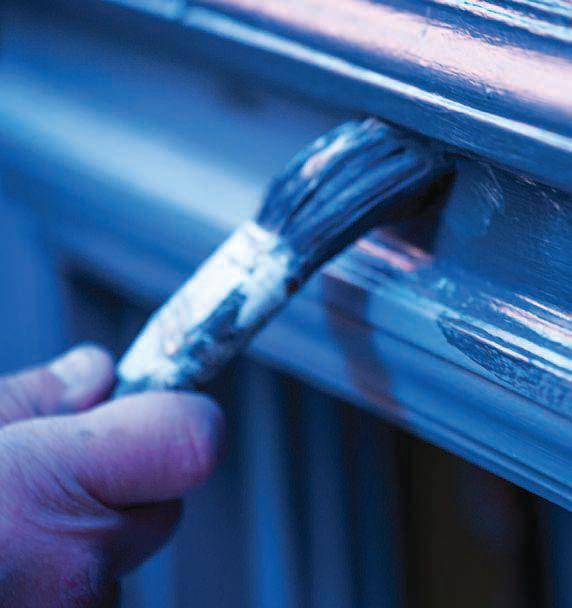
In leading up to a conversation about quality, the first step should be to ascertain the project scope.
“A retailer can never go wrong by starting with a customer-centric approach,” says Mundwiller.
Hutton says retailers should begin with a set of questions that fall into three general categories: What are you painting? Why are you painting this? How do you foresee the outcome?
“Those three categories can branch into any number of different directions. ‘What are you painting?’ will lead to the right product category. You can take a very high-quality product, but if you don’t use it for its intended purpose, it can have a very bad outcome,” says Hutton.
When it comes to why, Hutton says the answer to that question can give retailers a clue about the prep work the customer will need to do to the surface before the first coat of product.
Finally, asking the customer about their expectations for the final project will help them settle on a choice.
“If they want something that lasts a long time, for example, that opens the door to go straight away to recommending high-quality, flagship products,” Hutton says.
Mundwiller agrees that outlining expectations is an important first step for the conversation.
“Once you understand the customers’ needs, you can begin with the application attributes, explaining how the proposed product brushes, rolls or sprays,” he says. “For example, what is the flow and leveling of the product you are recommending for repainting kitchen cabinets? How well does the product hide, and does it spatter? How easy is it to use, such as maintaining a wet edge or touching up.”
After that, he says, the discussion can transition to how the product looks and feels; how resistant it is to the elements in its environment; whether it washes well; and whether it is scrub and scuff resistant.
“Always explain how these attributes benefit the customer,” Mundwiller says.
It’s important to start by offering premium paints, Hardy says, because they are the easiest paints for painters of any skill level to manage.
“Those products will last the longest and will be simplest to sell,” he says. “With premium paints, you get the best of both worlds—all the application characteristics and all the durability.”
Still, he agrees that the scope of the project should be the final determinant, along with who is buying the paint. Regardless of the scope of the project, everyone wants to feel satisfied with the outcome.

While some customers may be wary about the cost associated with premium paint, it’s important to recommend using the product that will last the longest. If they understand they won’t need to repaint as frequently, customers will likely be more comfortable spending more.
“For the retail customer or property owner, high-quality paints will provide a longer-lasting finish, be more durable and will have fewer repaint cycles,” Hardy says. “In a contractor situation, using premium paints will save time, as labor costs are the most expensive thing. If the goal is to ultimately make money on the project, premium paints are easier to apply; a contractor will spend less time on a job.”
Plus, he says, the contractor is likely to have fewer callbacks, and a better-looking paint job could likely lead to referrals.
Quality is not solely about the elements of the paint—it’s also about the overall buying process.
“A satisfied customer isn’t one who feels they are coerced into something, but instead is given good information and led in the right direction. That is a part of the whole quality experience: not only the product itself, but the advice and direction they receive from retailers,” Hutton says.
The nature of the paint job should dictate the type of paint used. For example, says Osterried,
if a customer says they are going to paint a high-traffic area, you may want to steer them toward a product with a high level of scuff resistance or washability.
“It’s really a matter of selling those features to the particular situation a homeowner has,” he says.
Higher quality often equates to a higher price point. But customers need to understand that lower quality paint may end up costing more in the long run, especially if additional coatings need to be applied.
“In an ideal world, every customer who comes into a retail store will buy the most expensive paint, one that will provide the most margin for the retailer, but that is not reality,” Osterried says.
Osterried says most customers will come into a retail paint store with an idea of how much they want to spend per gallon. However, once you figure out the customer’s project details, it’s appropriate to give them a few options at different price points.
“Obviously you want to respect their budget, but there is nothing wrong with talking about other features and showing them the benefits of a higher priced product,” he says.
In the paint industry, sometimes visual evidence is more powerful than verbal reassurance. It’s one thing to talk up a paint, but it is quite another to show its true colors to a customer.
Today’s consumers are savvy. They read up on products before they buy and they watch videos online to see how it performs before they pick up a roller.
Hutton says paint retailers can start the conversation by posting in-store videos and hosting in-person demonstrations. For example, retailers can record themselves painting crown molding with specific coatings or a variety of brushes or applicators.
“You can show them, ‘This is the brush I use, and this is the result you’re going to get.’ Then you can do the same thing for the other quality level of products. Those demo pieces can let them see what it really looks like,” he says.
Demonstrations also soften the sell.
“It is a less offensive way to make one more attempt at getting someone to decide to buy a higher quality, higher priced product,” he says.
“When a retailer can say, ‘I’ve used this product in my home, and I can attest to its quality,’ that authenticity can speak volumes .”
—Ron Hutton, Richard’s Paint
Osterried says retailers can use case history and personal or customer experience to their advantage when it comes to discussing the features and benefits of quality paints.
“It comes back to understanding the features, benefits and what the particular priced paint stands for and matching up the message to the particular project that the customer has,” he says.
“Amassing experience with the products you sell fosters a belief in them. That confidence in what you are selling is readily transmittable to the end consumer,” Hutton says. “When a retailer can say, ‘I’ve used this product in my home, and I can attest to its quality,’ that authenticity can speak volumes.”

By Chad Husted
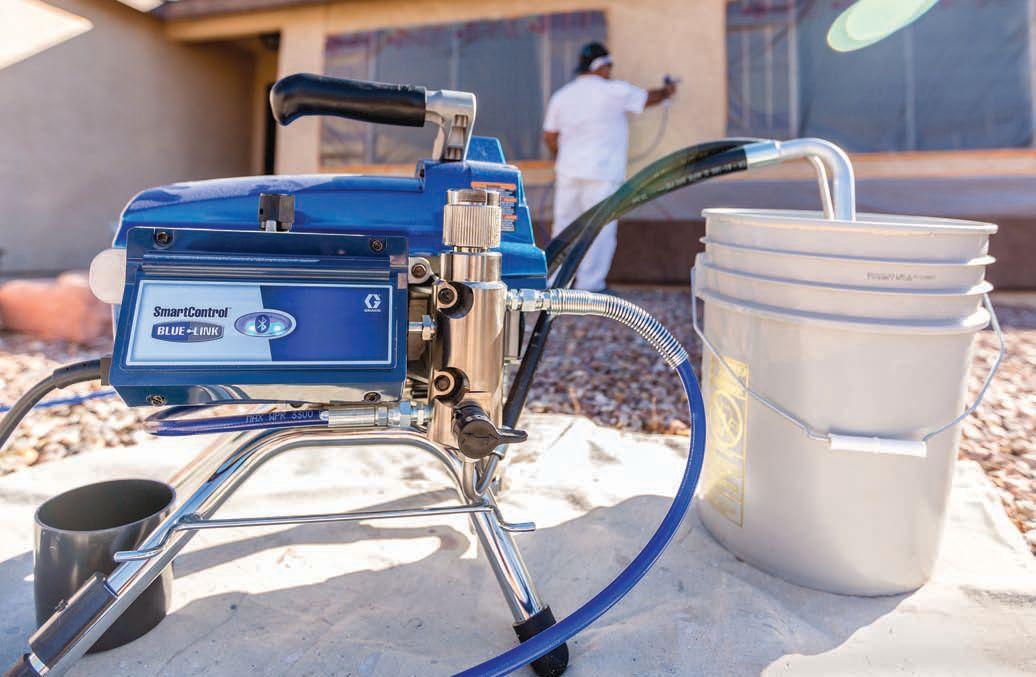
Independent paint and decorating stores serve many different customers. Some cater to large commercial operations, some are a hub for local contractors serving multiple job sites and still others are the go-to corner shop for homeowners with a project.
With this kind of diversity in the industry, it takes a product lineup that is just as diverse to serve it. While a retailer might carry multiple brands of brushes or paint rollers in order to cover the whole market, paint sprayers might be a different story.
Graco, which began as a company focused on lubrication and grease pumps in the automotive industry, now offers one of the most diverse paint sprayer lineups in the industry. With sprayers designed for the demanding needs of dedicated painting professional as well as the DIY weekend warrior, Graco entered 2019 with more than 120 new part numbers that cover a wide range of paint and texture applications.
In 1926, Russell and Leil Gray formed Gray Company in Minneapolis. The brothers were interested in developing air-operated pumps that pushed grease into the chassis fittings of cars. This technology served the company well for decades, including becoming a major supplier to the U.S. war effort during World War II.
It wasn’t until 1958 that Gray Company unveiled the product that would make the manufacturer a recognized leader in the paint industry: the airless paint sprayer. Before this technology, air was added to a spray gun to atomize the coatings. As the business evolved, the company kept up-to-date by listening to end-user reactions and developing sprayers that fit their needs, says Jon Knutson, vice president of marketing for Graco’s worldwide contractor equipment division.
“By listening to their needs and observing any struggles they had with the overall job, Graco was able to identify
new product opportunities to help make the spray painting application easier,” Knutson says. “This constant focus and attention on end-user needs has allowed Graco to continue to evolve and grow while at the same time helping our customers grow their business.”
Graco shows this dedication by investing in research and development as well as homegrown manufacturing facilities. According to Knutson, the manufacturer is committed to investing in U.S.-based engineering, manufacturing, assembly and distribution facilities, and has a strong focus on funding for research and development.
“While it is not always easy to compete on price with products that are produced overseas or manufactured overseas and assembled in the U.S., we know the importance of quality results and reliable performance to our customers and will not sacrifice in that area,” Knutson says.
Some of the top new technologies Graco launched this year include Bluetooth-connected sprayers, a light airless spray gun for long-term professional use and a pump system with advanced durability.
The Graco BlueLink™ Job & Sprayer Management System pairs a mobile app with Bluetooth-enabled Graco sprayers to provide job site information in real time. BlueLink provides instant maintenance alerts, on-demand productivity reports and more. The app is simple to use and does not include any monthly contracts.
The Contractor PC™ airless spray gun is a light, comfortable spray gun and is Graco’s longest lasting, most durable gun. Graco innovations provide all-day comfort and a 50 percent lighter trigger pull. E-Z Fit™ on-the-fly trigger adjustment allows users to choose two-, three- or four-finger handling for greater control. The ProConnect™ Replacement Cartridge allows for a no-tools rebuild of the gun in seconds to maximize uptime.
The Endurance Vortex™ MaxLife® Extreme Pumps are designed for long life with a Vortex rotating piston rod that delivers high-velocity flow and a 360-degree wear surface while providing the ability to spray up to six times more gallons between repacks. The MaxLife Extreme rod is built with an abrasion-resistant composite that triples pump rod life while offering the industry’s lowest price to own.
“Having the product in stock and having the right product mix is critical for an independent retailer’s success . Spray equipment and accessories are typically impulse items .”
—Christopher Tracy, Graco
With such a wide variety of sprayers available, Graco has made it easy for retailers to source products, and have the knowledge necessary on the salesfloor to educate consumers.
Getting products to the store in a timely manner is the first step for Graco. To serve independent retailers, Graco uses a highly-trained factory direct sales force and its affiliations with multiple national paint and sundries buying groups and two-step distribution partners. This keeps products in stock and ready for emergencies and regular sales.
“Having the product in stock and having the right product mix is critical for an independent retailer’s success. Spray equipment and accessories are typically impulse items,” says Christopher Tracy, senior national account manager for Graco. “When a sprayer goes down or a tip is blown out, the professional painter needs a replacement now and will search area retailers to find a place to purchase. Those that have product in stock win the sale.”
Another access point for retailers to learn more about Graco is the company’s SalesBook app, which provides resources like manuals, videos and more to learn about products, programs, promotions and training tools. Retailers can also register for Graco University for access to free training. For more information, visit graco.com

If you’re looking for a way to reach younger consumers online, prioritizing Instagram is a solid strategy. Don’t be afraid to test the waters when it comes to going live. According to the Pew Research Center Internet & Technology division, while Facebook remains a dominant social media platform across all age groups, 71 percent of Americans age 18 to 24 use Instagram. Within the same age group, 81 percent of users visit the platform daily, and 55 percent log on several times a day.
Give your followers about six to eight hours to ask their questions about decorating trends or specific products. Have another associate pick out a handful of questions to answer before you go live so you don’t have to sort through them during the Q&A. Be sure to pick a fun one to show some personality, too!
Every few weeks, go live to give your followers a tour of the store. Highlight new products, show off new displays and talk about upcoming promotions. This strategy is especially helpful if you notice a new batch of followers because it can serve as an introduction to your store and your team for people who may be unfamiliar with the business.
Pick your top-selling unique product for the month or a new line and give a demo on Instagram Live. You can show the performance of a new coating or demonstrate how easy a new roller is to use. Be sure to promote these kinds of live events a week or so before you hit record to boost viewership.
While these Instagrammers may not be your target demographic today, if you capture their attention now, you can familiarize them with your brand so they remember you for their future home improvement projects. One way to connect with these users who are highly engaged on the platform is to use Instagram Live to your advantage. Here are some ideas for how you can use Instagram Live to reach more followers and grow your customer base.




Still
The Paint and Decorating Retailers Association represents all independent paint and decorating retailers, no matter the brands they sell or buying groups they work with. To help strengthen the independent home improvement channel as a whole, the PDRA formed an alliance with the North American Retail Hardware Association in 2017.
This year, as part of that alliance, PDRA members can now participate in NRHA’s industry benchmarking tool, the Cost of Doing Business Study NRHA has been collecting financial information from independent home improvement retailers for more than 100 years to develop a resource that retailers can use to gauge their performance against industry averages.
When you participate, you help the entire independent industry: The more data collected for the study, the more accurate the representations of high-profit and typical paint stores are.
In return for submitting your information, you will receive a free copy of the study (a $499 value); a Personalized Financial Analysis of your operation; and a what-if scenario generator, which shows how you could improve your bottom line by making certain financial changes in your operation.
The deadline to submit your information is June 30. Learn more about what information is needed and submit it directly to NRHA at nrha.org/codb . You can also email your information to NRHA vice president of finance and business services Dave Gowan at dgowan@nrha.org
The 74th annual National Hardware Show® took place May 7-9 in Las Vegas, and the Paint and Decorating Retailers Association was front and center.
The PDRA Paint & Accessories Show was rooted on the show floor amid nearly 3,000 exhibitors across more than a dozen categories.
Thousands of attendees scoured the show for the latest items to enhance their product mixes, boost add-on sales and impress customers.
“We’re always excited to see the new products on the show floor, and this year really delivered,” says PDRA executive vice president Dan Simon. “I had a great time walking the show floor and talking to vendors about their ideas. It’s a great place for inspiration.”
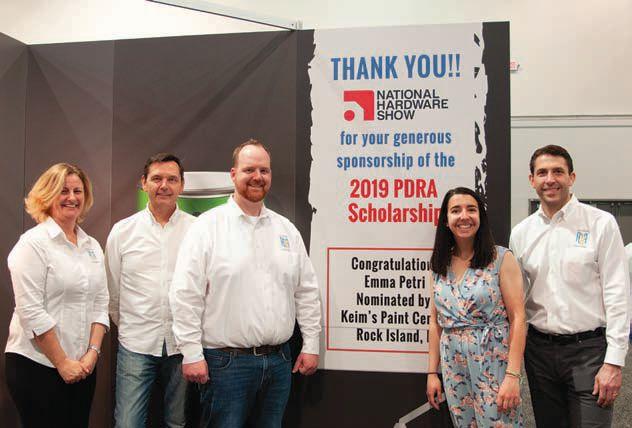
The PDRA also had reason to celebrate at the show. The association presented its annual scholarship to this year’s winner, Emma Petri, who is studying event management at Iowa State University. Petri was nominated by Jerry Keim, owner of Keim’s Paint Center in Rock Island, Illinois.
“We were thrilled to have the opportunity to meet Emma and present her scholarship at this year’s show,” says PDRA CEO LeAnn Day. “It’s an honor to be able to support continuing education for more than 10 years running.”
The PDRA also hosted a networking reception in the booth right on the show floor, and all independent retailers and channel supporters were welcome to attend.
“The networking reception at the show gives us the opportunity to meet show attendees and retailers we may not otherwise have the chance to interact with,” Day says. “We like to be able to celebrate with other attendees in this way.”
The networking reception was made possible with support from Lancaster, which held its Las Vegas Buying Show May 7-8 at the Westgate Las Vegas Resort & Casino, just a few steps away from the National Hardware Show. Look for a recap from that event in the July issue of Paint & Decorating Retailer

Sonya Ruff Jarvis has built her career as a marketer, entrepreneur and small business owner . In her new book “Mindful Minutes,” she takes you through key business lessons in a unique, engaging way .



Do you consistently see low open rates or watch your social media followers dwindle? Do you just not have time to develop content and find images to send regular communications to customers?
The PDRA offers an affordable, comprehensive solution with its content marketing program. For only $100 a month, you receive five articles along with five coordinating images about industry trends. You can use this content in all of your digital marketing spaces, whether that’s a blog, on social media or in your e-newsletter.
“This program gives retailers an all-in-one tool to manage their digital presence,” says PDRA CEO LeAnn Day. “The content is relevant and professional, which boosts your reputation as an expert in the industry.”
In addition to content and images, you also have access to consultants who can help you determine the best way to boost your reach online. The program also comes with a predesigned e-newsletter template, so it’s as easy as dropping in the content and hitting send.
Visit pdra.org/marketing-program for more information.
The PDRA offers a variety of training and educational resources, and many of them can be accessed anywhere you have internet.
One of those resources is webinars, and the PDRA offers members access to its wealth of archived episodes. If you can’t tune in live, the archives are a great way to spend your lunch hour or show during a staff meeting.
The next webinar will be hosted by Bill Brunelle, co-founder of Independent We Stand, an organization focused on promoting the value of independent businesses. Plan to join the conversation on June 19 at 10 a.m. CST to learn more about how you can boost your business in your community by promoting its commitment to living and supporting local.
To learn more about how you can access archived webinars—such as “Why Inventory Control Makes Money for Your Business” and “How to Put a Sizzle on Your Salesfloor”— email info@pdra.org or call 800-737-0107.



















In Malcolm Gladwell’s book “Outliers,” he defines an expert as a person who has studied a topic or a skill for at least 10,000 hours over a 10-year period. I don’t necessarily disagree with this formal definition, but I believe there are different degrees of experts and expertise. Expertise is relative.
Every single person has a different reference point. We come from different backgrounds and have different experiences, and all of these variables are factored in when defining who is an expert. So, when it comes to sharing or being paid to provide your expertise, be confident because no one has your unique perspective.
Are you the go-to person on your team? Do people want your input and insights when solving an issue or developing a long-term vision for the business? The biggest confirmation you can receive is when team members ask for your opinion. Being confident in your expertise is easier when we receive validation that we are contributors and that our viewpoints matter. These types of affirmations encourage us to learn more, do more to advance our expert knowledge and to be the best in our niche of expertise.
Do you accept this role of expert easily or does it make you feel uncomfortable? Are you confident in your expertise?

To be confident is to be self-assured and self-reliant. We can discuss a number of descriptions that get confused with confidence like cockiness, swagger, brashness, but we all know those are very distant cousins of confidence. Confidence is just as important as competence. When both are present it builds resiliency and gives us the ability to get things done.
Unfortunately, human nature breeds self-doubt and insecurity. I would wager that even the most confident people you know have some doubt about their level of expertise and if they really qualify as experts.
I would argue that fighting through self-doubt inevitably makes us more confident in our expertise. Most of us break through the negative voices in our heads with internal positive talk.
Here are three tips to help continue to build confidence in your expertise.
1. Self-evaluate. Be honest with yourself and your ability; know your strengths and weakness.
2. Keep learning. Even experts don’t know what they don’t know. Knowledge is power—keep gaining it.
3. Stretch. Yes—stretch out of your comfort zone and do things that are hard; take risks.
Don’t just do these exercises once, but continue to do them. These are the types of activities that career coaches will push their clients to do to grow and become more confident. Be specific when addressing each tip. Own your expertise. Be confident in what you bring to the business all while self-evaluating, continuing to learn and stretching to take on challenges and risks.
You might not have studied or worked on your skill for 10,000 hours over a 10-year period (yet, anyway); but you know your abilities and you should be confident in your expertise!

Sonya Ruff Jarvis is the managing member of Jarvis Consultants, the founder of the eRetailer Summit and JC Event Group. “Mindful Minutes,” her latest business book, is available now. Follow Sonya on Twitter @jarvisconsult or email her at sonya@jarvisconsultants.com





Brush up Nebraska is celebrating 30 years as a volunteer painting homes of low-income elderly and disabled homeowners in the Omaha, Nebraska, area. Since its inception, the program has aimed to help fellow citizens maintain their property, increase energy efficiency and beautify the community.
“The idea came from Wells Fargo Bank which wanted to do something that had a high impact in the community—something quick, impressive and helpful,” says Brush Up Nebraska executive director Tom Pettigrew. “My wife [Sheila Pettigrew] and I started it and have run the program since.”
The highlight of the program is a paint-a-thon held annually in August that Pettigrew describes as being similar to a “good old-fashioned barn-raising.” Teams of volunteers from community organizations come together to spend a few days painting qualified homes.
“People love doing this because it’s fast, but has exciting results,” says Pettigrew. “At the end of the day, they’ve changed something dramatically that’s been waiting a long time for help. It’s a win-win for the teams and the homeowners.”
Brush Up Nebraska’s paint-a-thons have painted nearly 2,900 homes, with 700,000 volunteer hours and over 40,000 gallons of paint. Fortunately, the Pettigrews have help from a homeowner selection committee, volunteer project ambassadors, an independent board of directors and sponsors, many of whom have been with the program for the entire 30 years, including Diamond Vogel, a fourth-generation paint and coatings company with locations across the Midwest.
“They’re an excellent company—you wouldn’t do that for 30 years if you weren’t committed,” says Pettigrew. “They’re usually ready to jump in whenever we need them.”
Diamond Vogel offers discounts to paint-a-thon teams that are responsible for providing their own paint supplies. The company also donates paint and warehouse space for the staging and pickup process before the big events.
Diamond Vogel sales manager Duane Beekhuizen currently sits on the organization’s board of directors.
“Brush Up Nebraska is a great group to work with,” says Beekhuizen. “It’s good for the community, the city, the recipients and the sponsors.”
Learn more about the organization at brushupnebraska.org
The entire Benjamin Moore & Co. Family of Brands includes much more than interior and exterior paint. We offer coatings for virtually all surfaces, including metal, masonry, pools and parking lots.
Talk to your Benjamin Moore® representative to learn about the products that will transform your paint store into the ultimate problem solver.