The Paint & Decorating Retailer color issue takes a step back to evaluate how color is part of a larger conversation of design. From color trends and design center operations to color-matching, see into every facet of decor.
What Fits in That Niche?
There are applicators on the market for specialty projects, and it’s important to know their intended purpose. Learn from leading applicator manufacturers about the tools that solve niche problems and how you can sell them.
The Big Picture
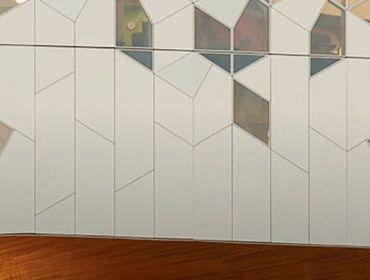
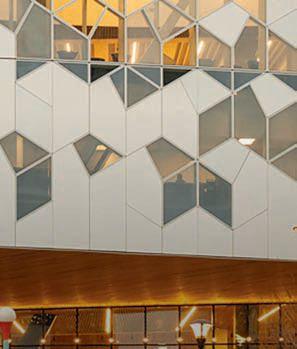
If you need a mirror in Calgary, Alberta, stop by the library. Peer into the exterior walls, which are decorated with a specialty PPG Duranar™ coating that reflects the beauty of the city and all who pass by.
Industry Profile: York Wallcoverings
This year marks York Wallcoverings’ 125th anniversary. Learn more about the company’s history and how it is using this milestone as an advantage into the future.
As we move into the new year, it’s a great time to ask yourself some good, honest questions about your business. One of the best questions to start with is, “What do we do better than anyone else out there?”
In many circles, this is referred to as the hedgehog concept. Why hedgehog? Apparently, it goes back to an old parable about how some animals do many things well, but the hedgehog does one thing extremely well.
In order to truly stand out or to thrive as a business, you have to be able to do one thing better than anyone else serving your market.
Now, I’m not exactly sure what this one thing is that the hedgehog does so well, or why an individual or business would want to be more like a hedgehog. What I do get, however, is the principle behind this concept. In order to truly stand out or to thrive as a business, you have to be able to do one thing better than anyone else serving your market.
So, what is your one thing?
If you can’t answer this question immediately, then you have some thinking to do.
At first, being able to list your operation’s hedgehog concept might seem simple, but the more you actually think about it, the more it reveals about your business and whether you are sufficiently differentiating it from the competition.
For example, an easy answer might be, “We provide the best customer service.” If you really think about this though, the real answer might not be that simple. So, you are saying you provide better customer service than any other business in your market. That, if asked about the absolute best customer service of any business in your area, consumers would overwhelmingly list your business? Maybe, maybe not.
That’s why thinking about the hedgehog principle can be so valuable. It is also good to start thinking about this concept as you read this month’s issue, where we talk about color and design consulting, training and niches. All of these areas offer possible ways to differentiate your business and set your operation apart from the competition. I guarantee you’ll already do any of these services better than your average hedgehog.
Dan
Tratensek DanT@nrha.org
Publisher, Executive Vice President, Sales
Dan Simon dan@pdra.org
Phone: 800-737-0107, Fax: 636-229-4750
Editor-in-Chief
Dan Tratensek dant@nrha.org
Issue Contributors
Diane Franklin Graeme Haase
Heather Kauffman-Peters
Jerry Rabushka
EDITORIAL, DESIGN & PRODUCTION
Managing Editor Melanie Moul editor@pdra.org
Hans Cummings
Autumn Ricketts
Todd Taber
Nancy Vondersaar
Association Coordinator Tina Sullivan tina@pdra.org
ADVERTISING
Advertising Manager Clarissa Thomas clarissa@pdra.org Phone: 636-680-2749
Jay Donnelly Flanagan Paint & Supply St. Louis, Missouri
Lesley Davies-Baptista Paint Fair Ltd. Freeport, Grand Bahama, Bahamas
PDRA ADVISORY COMMITTEE
Dori Marks, PPG Industries
Thomas Hill, The Coatings Alliance
Eugene Andreassi, Benjamin Moore
Joe Jankoski, Hunter Douglas
Bob Clemence, Hyde Tools
John Shingledecker, Allpro Corp.
Richard Russo, Reed Exhibitions
Mike Dube, Lancaster
The Big Picture
OFrozen Facade
ne of Architectural Digest magazine’s most anticipated buildings of 2018 is now finished with PPG metal coatings which added a distinctive element to the more than 460 exterior polygonal panels of fritted glass and iridescent aluminum.
According to PPG, the architects of the Calgary Central Library in Calgary, Canada selected
PPG’s Duranar ™ architectural coatings to create a unique look that evokes snowflakes or ice cracking on a lake. Standard Bright White and Broken Ice, a customer color that was topped by a pearlescent clearcoat, were chosen for the project.
PPG’s coatings appear on the window frames and many aluminum components of the unique building.
New Design Honors a History of Innovation Advertisement
The Wooster Brush Company | woosterbrush.com
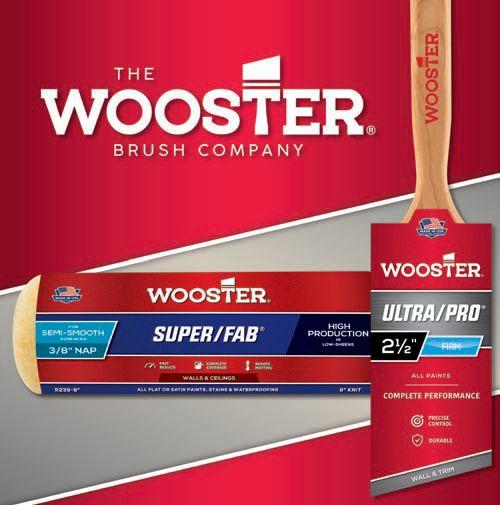
The Wooster Brush Company Has a Bold New Look
From two brothers making paint brushes by hand to employing over 650 employees—it’s easy to see how The Wooster Brush Company has grown and changed countless times since its humble 1851 beginning.
January 2020 will mark another bold leap as Wooster introduces a new logo and fully redesigned product packaging across its line of applicators.
A recent study revealed that those familiar with Wooster view the company as one that produces quality products, offers excellent customer support and takes pride in customer satisfaction.
Additionally, individuals feel the Wooster name represents knowledge, heritage, quality, pride, results, solutions and performance. Finally, the findings revealed a few opportunities for improvement.
The Logo
The world’s best-selling style of paint brush continues to be one that The Wooster Brush Company introduced in 1937 as a Lindbeck® By incorporating (what is more commonly known as) an angle sash brush into their logo, the new mark honors Wooster’s history of innovation and provides instant industry recognition for those unfamiliar with the Wooster name.
Packaging
Wooster’s new packaging accomplishes several company goals at once. All products are unified under the brand’s primary color—red—which creates a block of product in aisle that demands attention from retail customers. Soon, shoppers will recognize red brushes and rollers as Wooster items.
Every person applying paint begins with a primary goal. It may be achieving the smoothest application, fastest results or having tools that are durable enough for extended use. New and more concise product copy enables these Wooster packages in making proper tool selection easier. Each Wooster sub-brand clearly states its greatest strength followed by additional product features signified by attractive icons.
Availability
Red Wooster packaging will begin shipping at the beginning of the new year on a phase-in basis. The first items to transition to the new look will be professional paint brushes and roller covers. According to current projections, most professional brushes and rollers should move to the updated designs by the end of Q2 2020. Poles, buckets, trays and additional accessory items will follow. Wooster’s DIY and consumer-grade goods will be the final category to receive a makeover
Same Great Product
For nearly 170 years, The Wooster Brush Company has continued to grow because of great painting results that are achieved every day around the world. Even though the idea “We Take Pride in Your Results” has always been a part of Wooster’s identity, the company is moving that value to the forefront of its marketing and sales efforts.
Through spring 2020, Wooster will be utilizing a campaign with the heading “Same Great Product, Bold New Look!” showing retailers and painters from around the world that these new tools are the same ones they have trusted for generations—they simply have an updated appearance.
Saving Space and Wood
Eco Wood Treatment Protects Wood and the Environment
Shelf space in retail stores is always at a premium. In few places is this more evident than in the paint department. With the large variety of colors and finishes in paints and stains, it’s difficult to squeeze in new products.
Eco Wood Treatment solves this problem by packaging its product as a powdered concentrate to mix with water. One 5-gallon box of Eco Wood Treatment is a fraction of the size of a 5-gallon can of traditional liquid wood treatment. As powder, it is shelf stable almost indefinitely. Contractors and DIYers can mix just what they need of Eco Wood Treatment, further eliminating waste.
Since it is made of naturally occurring plant and mineral substances, it is nontoxic, prevents white rot fungi and can be used in direct contact with garden soil. It is also friendly to plants, animals and people. The proprietary formula works on all types of untreated, bare wood and it is effective for outdoor and indoor applications like decks, fences, siding, picnic tables, furniture, planters, birdhouses, siding, doors, shake roofs, timber construction, log homes and even marina docks.
As it is exposed to sun and rain, Eco Wood Treatment develops a silver to dark brown patina over time that provides high UV protection. Any water-based tint can be added to mixed Eco Wood Treatment for almost unlimited color customization.
Any applicators sold for traditional wood treatments will work with Eco Wood Treatment, brushes, rollers or sprayers. It can be worked while still wet without leaving permanent finger or foot marks and can be applied in any weather, even in temperatures as low as 32 F. After it is applied, it cannot wear off, will not peel or fade and enhances the wood’s natural beauty.
Parks Canada has been using Eco Wood Treatment for over 20 years, including at Banff, Kootenay and Yoho National Parks. Retailers and their customers can’t go wrong with a product that boasts a long shelf life, eliminates product and packaging waste, and is environmentally friendly while preserving wood construction for years of enjoyment.
Active Enzyme Caulk
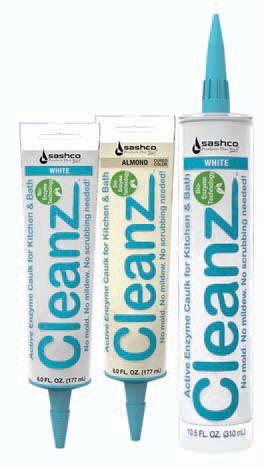
Cleanz is an active enzyme caulk formulated to stop mold before it grows. The active enzymes in Cleanz break down mold-feeding oils, keeping your caulk clean without scrubbing or harsh chemicals. It is suitable for use in bathrooms and kitchens, is low-odor and cleans up with water.
Sashco
800-767-5656 or sashco.com
Flexible Trim
Sponsored Product
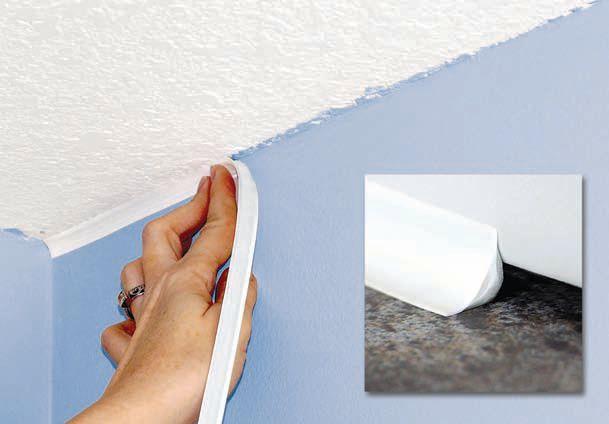
Cover sloppy paint on ceilings and contrasting walls or hide uneven gaps along baseboards with Instatrim. Its tacky adhesive remains pliable to move with expansion and contraction.
CornerFlex Inc.
info@instatrim.com or instatrim.com
Paint Stripper
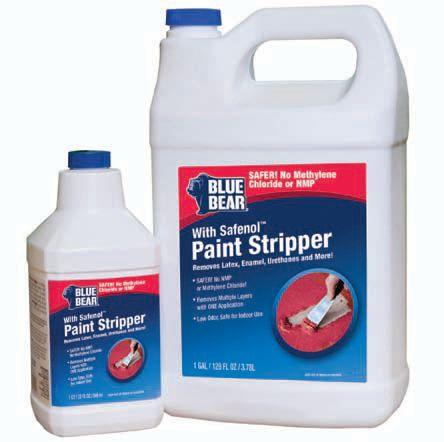
Blue Bear Paint Stripper is a safe, low-odor, biodegradable, noncaustic coating remover. It removes multiple layers in one application without using Methylene Chloride or NMP. Blue Bear’s Safenol™ formula removes paint, varnish, enamel, urethane, lead-based paint and other simple coatings.
Franmar
800-538-5069 or franmar.com
Paint and Primer
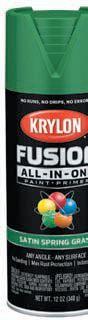
Krylon’s Fusion All-in-One™ bonds to plastic and ready-to-assemble furniture without sanding or priming. It dries to the touch in 25 minutes and dries to handle in 2 hours. It provides rust protection and is suitable for outdoor or indoor use.
Krylon
800-457-9566 or krylon.com
Industry News
In Memoriam: Edward J. Richard Sr.
The Richard’s Paint Mfg. Co. Inc. Founder Passed in December
Richard’s Paint founder Edward J. Richard Sr. passed away on Dec. 18, 2019. He leaves behind his wife of 66 years, Ruth, and their four children: Debbie, Pam, Eddie Jr. and Eric. He had 13 grandchildren and 15 great-grandchildren.
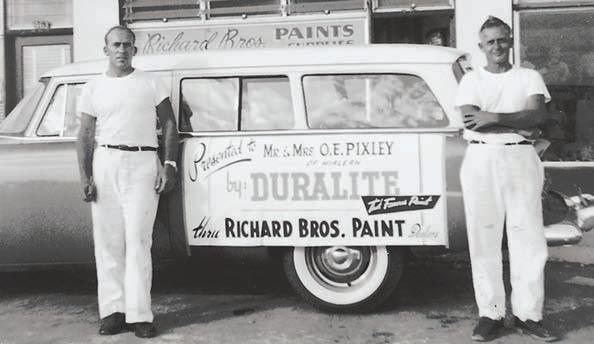
Richard served in the Merchant Marines from 1947 to 1953 and traveled the world. He and his brother Joe and their wives founded Richard’s Paint Mfg. Co. Inc. in 1954, initially as a painting contractor business. They started a retail business and began buying their paint wholesale. Richard bought out his brother in 1957 and then started manufacturing and custom-blending paint.
Over the years, Richard’s Paint grew from a 1,200-square-foot store operated by four people into a $20 million company that produces more than 2 million gallons of paint per year.
Richard was recognized for his contributions to the industry and to the local economy in Florida. Richard and his wife Ruth received the 2006 Business of the Year award from the Cocoa Beach Chamber of Commerce, and in 2017, Richard was named Founder of the Year by the Founders Forum.
Richard had the pleasure of seeing all of his children and three of his grandchildren carry on the family business. He will be missed by all who knew him: family, friends, employees and lifelong customers.
Richard’s Paint Mfg. Co. Inc. grew from a small retail operation into a multimillion dollar national paint company. Founder Edward J. Richard Sr. passed away in December after leading the company for more than 60 years.
Report Projects Window Covering Market Growth
According to a new report by Grand View Research Inc., the global window covering market is expected to reach $36.8 billion by 2025. Factors driving the industry’s growth include increasing number of households, rapid urbanization and rising per capita income. North America is the leading regional market, accounting for 40 percent of overall revenue in 2018.
Based on type of coverings, blinds and shades account for a 39.5 percent share of the overall revenue in the market. Curtains accounted for a 31.5 percent share of the market due to their accessibility and cost-efficient features. Factors driving the segment include changing trends and product technology. In-store purchases represented 84.6 percent of overall revenue in the market. According to the report, consumers are likely to continue this trend, choosing to purchase window treatments from wholesalers and home decor brick-and-mortar retailers. Online sales in rural areas are expected to drive additional growth.
Grand View Research is a U.S.-based market research and consulting company. Headquartered in San Francisco, the company comprises over 425 analysts and consultants and adds more than 1,200 market research reports to its database each year. Grand View Research helps academic institutions and Fortune 500 companies understand the regional and global business environment. Find more information at grandviewresearch.com.
Paint Industry Remembers Phil Wyant
Phil Wyant, a longtime leader in the paint industry, passed away late last year, leaving behind a legacy of innovation and steadfast commitment to the channel.
A graduate of Xavier University, Wyant founded the Lexington, Kentucky-based paint store Perspectives in 1980. Later that decade, the company was named one of the country’s fastest growing companies by Inc. magazine. Wyant served with many organizations, including as southern director for the National Decorating Products Association, which later became the PDRA.
Wyant retired from Perspectives in 2004, but stayed devoted to improving his community. Co-worker Jason Taylor says Wyant planted trees, raised funds to improve sidewalks and established a farmers market and bluegrass concert venue.
“Phil took care of his customers, and that’s the most important thing,” Taylor says.
The PDRA extends its condolences to Wyant’s wife and two daughters.
York Wallcoverings Announces Acquisition
York Wallcoverings Inc., America’s oldest and largest wallcovering manufacturer, has announced the acquisition of Hytex Industries, a supplier of acoustical wallcoverings and decorative textiles.
Brian Golden, York’s CEO, explained its innovative wallcoverings are enhanced by the high-performance products brought to the market by Hytex Industries.
“Our combined portfolio expands the range of products we can offer to our customers and provides the perfect blend of design and performance,” he says.
Hytex Industries is known for its eco-friendly acoustical and woven textiles. Former owner Alan Horowitz, believes Hytex’s success and momentum in the marketplace will be strengthened by its alignment with York Wallcoverings.
“This is an exciting time for Hytex,” he says. “The success and momentum of Hytex in the marketplace will only be strengthened by its alignment with York.
Hytex will continue operating in Randolph, Massachusetts. York Wallcoverings is headquartered in York, Pennsylvania.
Read more about York Wallcoverings on Page 44.
Special Section: The Color Issue
Beyond Color
Making Design the Core of Your Operation
When it comes to choosing a new paint color, consumers don’t make choices in a vacuum. They are surrounded by decor influences in their everyday lives, from high fashion runways to their next door neighbor’s new front door.
Color is a crucial component of any design, but it’s just one part of a complete concept. When consulting with your customers on color, it’s important to consider other elements, including the size of the room, ceiling height, furniture, accessories and the atmosphere throughout the rest of the space.
Consumers often think ahead with those details, so they may bring in a throw pillow or other decor item to match or coordinate their paint selections. In that scenario, it’s important to ensure your employees are trained to manage the color-matching process, whether it’s by eye or with the latest technology.
On the following pages, Paint & Decorating Retailer discusses the ins and outs of running a design center as a component of a paint business, and we touch on the skills that are required to talk color with anyone who comes in the door. Read these stories with input from retailers talking about the day-to-day operations and manufacturers discussing up-and-coming trends to get ahead this year on what it takes to expand your operation beyond color.
Keeping Colors in Mind: 2020 Colors of the Year
Selling the entire design project often starts with a swatch. These colors of the year from some of the industry’s leading brands are likely to be at the top of your trendiest customers’ wishlists, whether as a full room or as statement pieces. Familiarize yourself with these trends, even if you don’t sell the specific lines, so you can serve customers looking to match and complement these hues.
A theme across these varied color selections is coming home to a relaxing, stress-free space. See the shades that are geared toward helping people stop to take a breath and enjoy the peace.
The paint company chose this soft pink to represent a fresh start, corresponding with the start of a new decade. The shade works for a clean accent wall or lightens up kitchen cabinets with a muted pop of color. Less punchy than the millennial pink trend from recent years, it is a strong primary color option. See the entire Color Trends 2020 Palette at benjaminmoore.com/color-overview
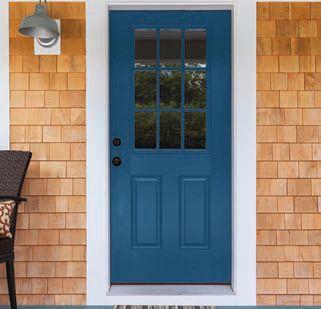
This rich blue shade was inspired by ancient traditional hues, and it is becoming increasingly common as an accent color in every area of the home, from bathroom walls and kitchen cabinets to front doors and furniture pieces. See PPG’s entire 2020 Global Color Trends Forecast at ppgpaints.com/color
PPG Paints Chinese Porcelain
Benjamin Moore First Light
For consumers, choosing a wall color is about more than just paint. Be sure you’re on top of the trends to help lead them through a complete design.
Richard’s Lioness
Another golden shade makes an appearance in the 2020 color of the year lineup. Richard’s Lioness represents “the strong influence of nature [that] continues to draw us toward organic hues that offer calm and comfort.” Complementary shades include rich blues, camel browns and stone. See more from the Richard’s collection at richardspaint.com.
This bright golden yellow stands out as a much bolder neutral option. The paint company says its choice of Sun God for the 2020 color of the year was inspired by the recent prevalence of gold in bath and kitchen fixtures and hardware, in painted accents and accessories. Kelly-Moore recommends pairing this shade with rich blues or earth tones. See the entire palette at kellymoore.com.
While Pantone isn’t in the paint business, the Pantone Color InstituteTM has selected a color of the year for the last 20 years. The organization’s choices often inspire trends throughout the decor world. Classic Blue is already inspiring beach and nautical decor trends from sea to shining sea. See all the palette combinations and the last 20 years of picks at pantone.com
Pantone Classic Blue
Kelly-Moore Sun God
Special Section: The Color Issue
By Diane Franklin
Keys to Success
Grow Closer to Customers by Offering Design Services
There’s a tried-and-true way for retailers to become known as the color and decorating experts in their communities—and that’s to offer design consulting services that guide customers toward achieving the ideal vision for their homes.
Whether it’s picking the ideal color for a bedroom or putting together a complete decorating package for every room, paint and decorating stores will do a better job of meeting their customers’ needs if they include design consulting among their services.
Paint & Decorating Retailer magazine spoke with two retailers who excel with design consulting to learn more about how they cater the services to each customer and create a collaborative atmosphere for design innovation in their stores.
Customizations Sell
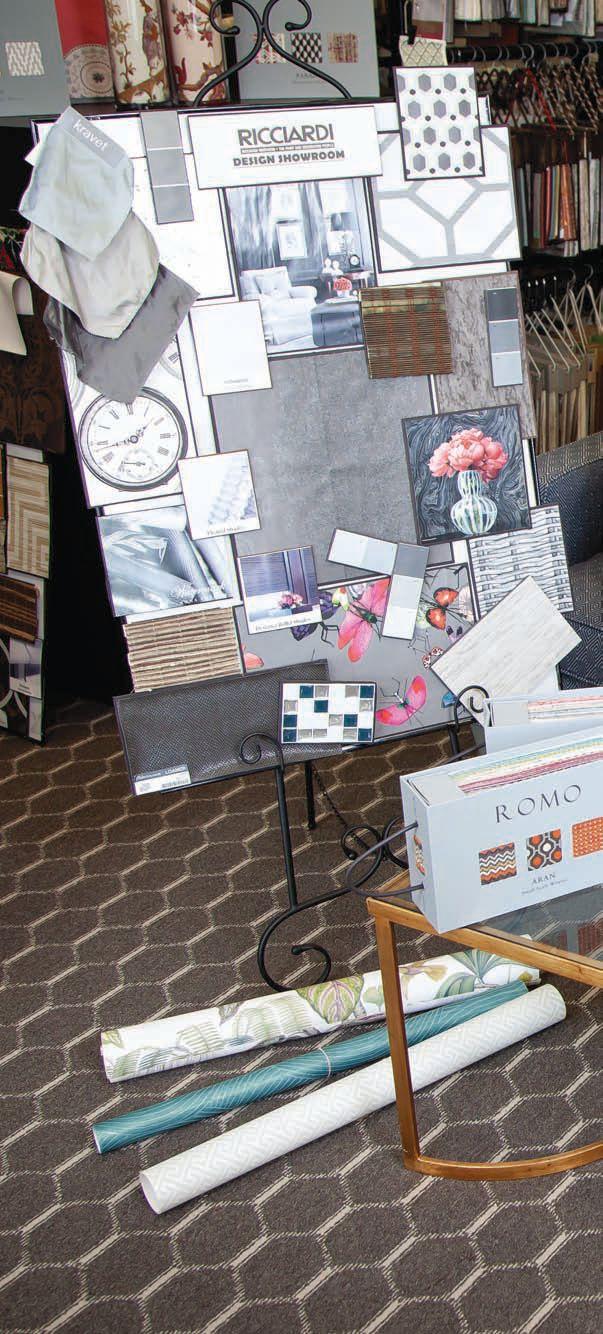
With 43 locations, Ricciardi Brothers does not take a one-size-fits-all approach to design consulting services.
“Different locations offer different services,” says Sixto Arroyo, general manager of the design department.
The business was founded more than 90 years ago in Newark, New Jersey, and now has a well-established presence throughout its home state. Its current flagship store is in Maplewood, one of 30 New Jersey locations. It also operates 10 stores in Pennsylvania and three locations in Delaware.
Special Section: The Color Issue
“Our locations in north New Jersey have been established for a while,” Arroyo says. “People know us and know what we can do, so in those locations we offer more of an all-around design service.”
That comprehensive service includes everything from color consultations to furniture placement.
“We can create a whole package for the customer that includes paint, wallpaper, carpeting, wood floors, upholstery, bedding—all of the core elements that pull a room together,” Arroyo says.
In its largest showrooms, Ricciardi Brothers has enough space to offer comfortable seating areas so customers can spend time browsing samples. In the Parsippany, New Jersey, store, the design department encompasses about 1,500 square feet and features extensive wallpaper and fabric libraries as well as custom window covering displays and home furnishings.
“Some of our other locations are smaller in square footage, so we don’t get to offer the same services as the larger stores,” Arroyo says. “But we still offer color consulting in every location where we have a design department.”
Arroyo oversees a design staff of approximately 20 people. In some cases, they are degreed designers. But all members of the team have a natural knack for design and color.
“We always look for someone who has some knowledge of color because of our presence in the paint world,” Arroyo says.
While it’s helpful if the designer has experience with window coverings or wallpaper, this background is not a prerequisite for hiring.
“We’re primarily looking for people who are interested in design and know a little about color,” Arroyo says. “Everything else, we can teach.”
Aesthetics of Design
Offering an attractive in-store environment is essential for retailers who want to be highly regarded for their design consulting abilities. Johnston Paint & Decorating in Columbia, Missouri, excels at these aesthetics.
Founded in 1925, the business has been at its current location for 12 years. With a showroom that encompasses approximately 8,500 square feet, the store makes a big impression from the second a customer walks in the door, thanks to a grand entryway, extensive product displays and a vibrant color center with a spacious color island and tables for in-store consultations. Every detail, including the restrooms, was created with an eye toward exceptional color and design.
Across New Jersey, Pennsylvania and Delaware, Ricciardi Brothers offers complete design services, including color consultations, furniture placement and advice on textiles.
Special Section: The Color Issue
What’s the Draw of Window Coverings?
If you want to start down the path of offering design consulting services, one critical step along the way is to expand into window coverings.
Dana Hickey, marketing services manager for Comfortex, explains why it makes sense for a paint store to expand into window covering sales.
• Customers frequently replace window shades after painting their walls or trim.
• Customers either want to match or coordinate window shades with their wall or trim paint color.
• Customers are seeking turnkey decorating solutions.
• The color of the window shade is a key customer requirement.
• The competition already offers or is in the process of implementing similar programs.
“Adding window coverings shows customers that the store offers more in the home decor space, broadening their capabilities into the world of customization and design,” says Jamie Rivera, director of marketing programs for the corporate marketing group of Hunter Douglas. “Including window coverings in paint stores allows consumers to match and decorate their spaces knowing what the window coverings will look like against their chosen paint color.”
The key to succeeding with window coverings is to familiarize yourself and your staff with the category.
“Stores should have people with in-depth knowledge of window treatments and products, and commit to having in-store displays and sample books to show the beauty, function and variety of Hunter Douglas products,” Rivera says.
Hickey likewise stresses the importance of product knowledge, explaining that it should encompass understanding of how to measure and install window treatments, how to make design and color recommendations and how to pick the right window coverings based on customer needs. The best way to gain this knowledge is to attend the training offered by window covering manufacturers, she says.
“Comfortex Window Fashions is one of the few in the industry that offers a free two-day ‘university’ training for retailers,” Hickey says. “In addition, many window covering manufacturers offer discounted store displays that work well in a showroom. But we would recommend having a trained window treatment professional on staff to handle the window portion of the design center.”
“When we built the store, we intentionally designed it to be comfortable for our customer base and at least as nice of an environment as they may have at home,” says Melissa Murphy, who co-owns the business with her husband, Blair, and cousin, Corey Turner.
Johnston Paint & Decorating has five degreed designers as well as a showroom coordinator and two college interns who are in a design program. The vast majority of design consultations take place in-store, but in-home consultations are available for $75 per hour. In-store consults typically work well for the customer who has a general idea of what colors and products they want or who brings in samples such as throw pillows, fabric swatches or small pieces of carpet that the in-store designer can use as a reference.
“If they come in with an iPad full of pictures and they’re showing us things that are relevant to help them pick the color, then it’s like—boom!—‘Here you go, this is the color for you,’ and we’re able to send them out the door with confidence,” Murphy says.
At Johnston Paint & Decorating, five designers and a showroom coordinator help clients elevate their decor with custom design services.
Special Section: The Color Issue
Conversely, if a customer walks in with no idea what color they want, they haven’t brought in any photos or samples from their home or their interior layout is difficult to describe, the store’s designers would likely suggest an in-home consultation.
The in-home consultation often starts with customers who want a designer to come out and help them pick paint colors that best coordinate with the existing furniture, countertops, appliances and other colors in their home.
“We thoroughly understand the color palette, and if we’re there to pick a blue, we’ll pinpoint some colors fairly quickly,” Murphy says. “We don’t need to look through all 418 blues on the fan deck. However, if the customer wants us to look at a lot of other blues to affirm their choice, we certainly can do that, in which case we’ll let them know that the appointment may take longer than an hour.”
For the most part, Johnston Paint & Decorating tries to do its in-home consultations in the early evening hours, which is generally what the customers prefer.
It also works best for Johnston Paint & Decorating as well, since designers won’t be gone during the day and leave the store short-handed. Designers who do in-home consultations are allowed to keep the hourly fee as compensation for their time.
“It’s a perk we give the designers that they’re able to keep those fees, but they are responsible for the taxes on them,” Murphy says. “They may do six or eight consults a month, so it’s a nice little side business for them.”
Building the Sale
The in-home appointment often starts out with one purpose—for example, as a color consultation for paint—but then leads into a discussion of other products, such as flooring or window treatments.
Design consultants recommend encouraging customers to take photos of fabrics, window treatments and color combinations that appeal to them to help guide their designs.
“It’s important for us to ask the right questions because that’s how you get great buy-in from the customer,” Murphy says. “Now they’re excited about their project and are confident you’re leading them in the right direction.”
Ricciardi Brothers has also used in-home consultations to build a sale.
“People may not have any idea that we offer other products besides paint, but being in their home is the perfect opportunity to tell them,” Arroyo says. “Sometimes someone starts with ‘I just want something for this one particular room,’ but once they see what can be done, they say, ‘Oh, I like this, let’s work on this other room as well.’ So, it’s like a domino effect that evolves into a bigger project than originally anticipated.”
The fee for Ricciardi Brothers’ in-home consultations varies, based on the scope and size of the project. In-store consultations, meanwhile, are free of charge, and customers get advice and attention from the designers on staff.
“We acknowledge every person when they walk in the door, no matter how busy we might be,” Arroyo says. “Some people come in wanting to browse through our fabrics, others come in wanting our help from the get-go. Either way, we try to make them comfortable without being overwhelming in our sales approach.”
A great advantage about offering design consulting services is that it often leads customers to provide referrals.
“We have people who refer us to their neighbor, their brother, their sister, their cousin—whoever—which helps us spread the word about what we can do,” Arroyo says. “We definitely have a leg up on the competition because of the knowledge, the service, the friendliness we can offer out of this department. That sets us apart from other competitors that are offering the same type of service.”
“We definitely have a leg up on the competition because of the knowledge, the service, the friendliness we can offer out of this department.”
—Sixto Arroyo, Ricciardi Brothers
Special Section: The Color Issue
By Hilary Daninhirsch
Strike a Match
The Tools and Tricks for Training Color
Acustomer walks into your store with a marigold pillow—or maybe the pillow is mustard, or perhaps yellow-orange or orange-yellow—and asks if you can create a paint color to match.
Helping her achieve the hue of her dreams may mean the difference between a regular customer and a customer who never comes back in the door. Color-matching is a necessary service that independent paint stores should offer, at the very least to compete with big-box stores. But the service doesn’t seem to be industrywide.
“We have found that roughly half of independent retailers do not own color-matching equipment,” says Jason Loehr, Datacolor’s global product manager.
Matthew Adby, retail paint portfolio manager for X-Rite, says color-matching has become a must-have for independent retailers, as it directly relates to trust and customer service.
“If you are serious about offering customers full color service, you really need to have a matching system,” he says.
Color-matching by eye is a custom in many operations, and that skill is often passed down through generations. However, there is often a greater margin of error matching by sight.
Because everyone sees color differently, BYK-Gardner technical marketing manager
John Kowalski suggests retailers and their staff take the Farnsworth-Munsell 100 Hue Test.
“I highly recommend your staff take that test to understand their capabilities and limitations,” he says.
Introducing Color Matching Like Never Before
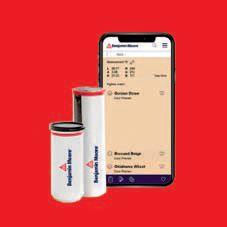
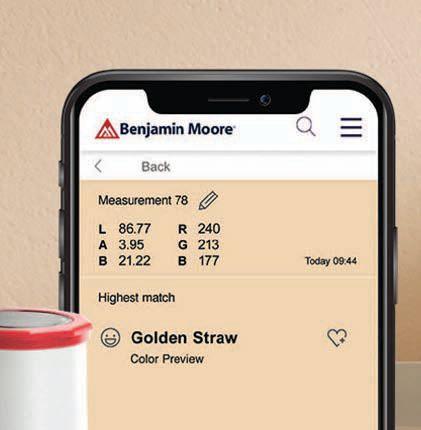
Imagine if you could give your customers the ability to accurately find the exact paint color they need right on the spot, wherever they are. Now you can with this powerful combination of device and app.
you can with this combination of device
ColorReader Device
the trusted precision of Datacolor, it’s lightweight and portable with an advanced color sensor that instantly provides accurate paint color matches wall or item.
Powered by the trusted precision of it’s and with an advanced color sensor that accurate color matches to any or
Color Portfolio App
Harnessing our unparalleled color expertise, the app saves matched colors, displays virtual fan decks and, with our photo and video visualizers, shows any color on the wall of any room.
Help your customers save time and money, elevate their work and be seen as the true professionals they are.
Contact your Benjamin Moore representative today to learn more about offering the Benjamin Moore Color Portfolio™ app + ColorReader device.
Special Section: The Color Issue
Kowalski says he big believes in using technology, then following up with a visual analysis to confirm that the technology is accurate.
Some retailers may be deterred by the cost of color-matching systems and delay investing in the machinery. But the long-term benefits of bringing in the latest tools can boost your operation’s reputation for color-matching expertise, leading to repeat business.
The Spectrum of Color-Matching
Consumer expectations are high in today’s fastpaced commercial culture. Having the right technology to serve their immediate needs will put you ahead of the competition.
“We know artists have matched colors for thousands of years, but their methods aren’t consistent in the commercial world,” Adby says. “We need to be more efficient in getting that color.”
Color-matching tools are highly accurate, but it depends on several variables, Adby says, including the object a customer wants to match, how well the base paint and the colorants are maintained, batch-to-batch variation and the calibration of the dispensing machine. It also depends on the methodology, but most technologies these days boast a high accuracy record.
“More accurate color-matching means less waste and less time customers are waiting for their paint,” says Loehr.
Kowalski says accuracy is vital. He recommends quality checks on databases every 18 months.
“Close enough isn’t good enough in retail paint matching,” he says. “The next step is the dispenser: equipment maintenance is an absolute must.
There are so many components, and if one thing goes wrong, it will cause some off-color matching.”
Certain inspiration items will not work for color-matching purposes. For example, an object that is metallic, made of mirrored glass or has a high gloss or sheen will be challenging because of its reflectivity.
The light sources in the store can be another limitation to achieving an accurate match, as light can render color differently, particularly if you’re color-matching with the naked eye, but some devices on the market remove that obstacle.
Color-Matching Lessons
Fortunately, learning to use most color-matching tools is not complicated. Often systems come with embedded on-the-job training resources, and many companies offer tutorials.
The X-Rite MetaVue noncontact imaging spectrophotometer includes training videos, and they are comprehensive enough that users don’t need to read the instruction manuals for the system.
Continued on Page 34
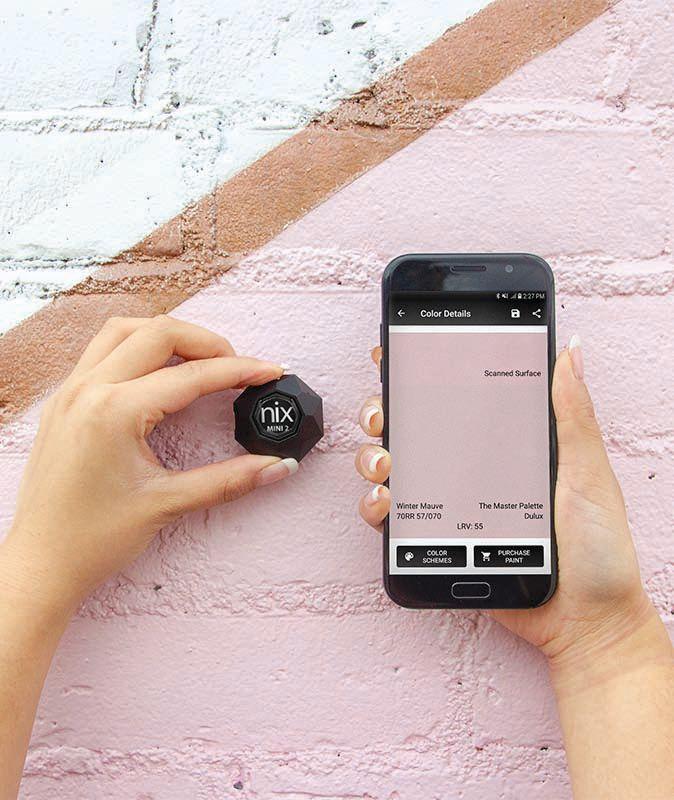
A trend in color-matching tools is to meet color-matchers where they are. The Nix Sensor is a handheld color-matching device that connects to an app, allowing users to match to thousands of swatches, wherever they are.
The deals will be magical on the show floor and the performances will dazzle you on the Lancaster stage!
Improving your Contractor Trade
3:00pm - 4:30pm
Sponsored by The Paint & Decorating Retailers Association and PPG
Learn more about developing your contractor and professional painter business in your local area. What do the professionals want/ expect from independent retailers? How can you strengthen your business relationship with the contractor trade? What can you do to support these professionals?
Steve will address the wants and needs of the contractor and how you can increase your professional painter business. Steve will share his experiences working with the PCA that will provide you with additional insight on how to develop a business strategy specific for your professional customers.
Presented by Steve Skodak, Executive Director of the Painting Contractors Association (2016-2019). Friday, TH Lancaster Buying Show • 9:00am - 5:00pm Lunch • 12:00pm - 1:30pm
Featuring the magic of illusionist, Drew Thomas (semi-finalist from America’s Got Talent) and much more. 6:30pm - 9:30pm Sunday, 9TH Breakfast • 7:00am - 8:30am Lancaster Buying Show • 8:00am - 12:00pm Saturday, 8TH Lunch Lancaster
The Magic of Lancaster Dinner & Entertainment
Special Section: The Color Issue
Talking About Tools
Having a comprehensive color-matching system in your store is an integral piece of equipment. There are a broad variety of handheld color-matching tools on the market that give you or your customers the power to match hundreds of thousands of colors on nearly limitless objects no matter where they are.
In addition to being another color-matching resource, these tools are often another margin-boosting opportunity.
Nix Color Sensor nixsensor.com
Nix’s color-matching solutions—available in Mini and Pro versions—allow the user to determine the exact color of any physical object and bring it into the digital world.
• Consumer friendly
• Digital library of 100,000 paint colors
• Mobile app available
• Uses its own light source to color-match
• Pre-calibrated
Many retailers purchase several of these handheld tools and rent them out to consumers and professionals for a fee. When customers return the device, they’re often coming back to purchase the paint they need in the exact color they matched.
See the highlights here to determine which tool makes the most sense to take your operation on the go.
ColorReader Pro datacolor.com
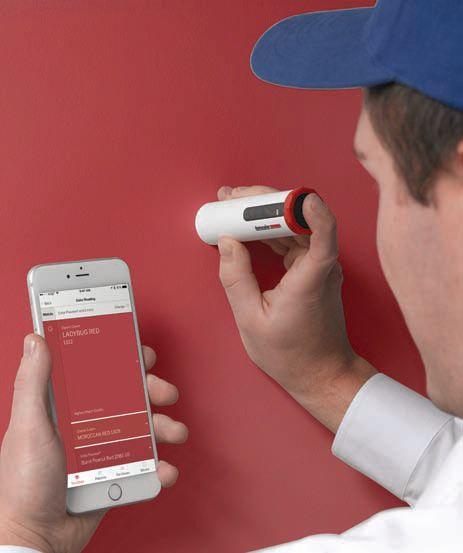
Datacolor offers the ColorReader Pro, a handheld device that can be used with a smartphone or as a standalone color-matching tool. Simply touch the device to any flat surface to find the color and manufacturer.
• Stores 10,000 colors
• Can be integrated into a store’s own mobile app
• Fan decks can be updated regularly through software
• Benchtop and portable spectrophotometers are also available
Photo by Jack Liu
Special Section: The Color Issue
Continued from Page 30
Datacolor’s ColorReader Pro operates with literally just the push of a button. The company provides video or remote session training if necessary, but Loehr says he is confident that most operators can use it without issue. It can also be paired with an app.
Kowalski says his company does provide training, but most tools on the market operate with extremely user-friendly software, so there isn’t a big learning curve for new users.
For example, BYK-Gardner’s software and Paint Brain system that is rolling out in the first quarter of 2020 combine reliability and performance and bring real-time business intelligence analytics to monitor your fleet and paint center operations. Kowalski says the has an easy-to-use interface walks users through the process.
and can be used at home, the need for customers bring inspiration objects into says the company’s director marketing, Katie Myciak. She the sensor requires little to time-saver users and associates back at store. The data from the Nix is also saved in the device, makes recalling specific
can save all scans into project great way to projects room by room, and is no limitation to how many you can store,” Myciak says. says saving the paint color that is generated for specific is important for earning
that customer information critical, as it keeps loyal customers back,” he says. “If they know have their paint color when they to make touch-ups, you’re going
Eagle Paint & Wallpaper owner Joe Pisarri trains his team how to use color-matching technology, color-match by sight and how to think about color from every angle when serving customers.
Using an Eagle Eye Eagle Paint & Wallpaper owner
Joe Pisarri is well known for his store’s ability to color-match from existing fan decks and create custom colors. In fact, color consulting represents about 35 percent of his Englewood, New Jersey, business, including clients from across the country. But color consulting affects all aspects of his operation.
“Every sale touches color for us in some way, shape or form,” he says. “Most customers ask for color help, leading to either matching or creating a color.”
Though the color-matching tools on the market make his job easier, he says it is equally important to train your eye to see pigments, and the key is to evaluate color daily.
“Color-matching can take a really long time; it’s not so easy,” he says. “A color can be created by using three pigments or more. Creating a color with three pigments can be learned in less time than a color with four or more pigments.”
New employees apprentice under Pisarri, and it can take about two years before they can match on their own.
“In training, we evaluate what the color needs in terms of which pigment and how much of it to add in,” he says. He says color-matching is a crucial service for independent retailers to offer.
“It’s something every independent retailer should be offering, but then they need to take it to the next step to really stand out among their competitors. Have conversations with your customers and develop the confidence it takes to be known as a color expert,” Pisarri says. “They will come back again for the next room, knowing you went out of your way to match chip on a fabric. It makes it special because no one else has that formulation because you made it for them. This service helps develop exclusive relationships.”
By Jerry Rabushka
Meet the Problem-Solvers
Niche Applicators Get Specific Jobs Done
Astrong assortment of niche applicators and applicator accessories can solve your customers’ problems and set you apart as the store that has everything on their list. By stocking unusual products in eye-catching displays and being knowledgeable about the projects they’re designed to accomplish, you can boost margins, earn some impulse sales and build your reputation as the paint store staffed with experts.
On the following pages, get some pointers about niche applicator merchandising and sales strategies from some of the category’s leading manufacturers. Also, get some tips on how to be sure your customers are prepared for their niche project.
Setting Up the Niche
“The retailer sets the tone for how the store should look and function,” says Ben Waksman, president of Corona Brushes.
“Good visibility, good light and easy access are all important.”
Bill Laramy, executive director of sales at Worktools International (Whizz), says applicators are often an impulse item, and niche applicators even more so.
Photo courtesy of The Wooster Brush Company
support that really understands your business formulated with specialized decor-industry features you shouldn't be without
“Implementing countertop assortments, side stack and nonstationary standing display racks near your POS area will all help boost sales of brushes and rollers,” Laramy says.
The Wooster Brush Company national sales manager A.J. Ernst says specialty applicators are often used in conjunction with seasonal projects, and he agrees that the type of display can be a guide for consumers to find the right tool for their project.
“The best way to sell a project is to understand the calendar of events and focus on those projects in a 2-to-3 foot section or display,” he says. “Endcaps and rolling power towers are great ways to tackle those problems.”
Sometimes, experimenting with displays is a great way to catch an impulse sale.
“The retail space at most locations is typically already tight, so finding specific solutions can be challenging,” Ernst says. “I don’t think there is a best or cookie-cutter way to do it.”
Context Clues
Waksman says setting your tools next to paint displays helps customers understand the context of their intended project.
For example, Corona’s Performance Chinex® and Red-Gold Nylon-Polyester™ blend brushes are excellent in both water-based and alkyd coatings. They can be displayed alongside all paints and coatings. Specialty brushes, such as stain applicators, can be displayed next to the stain displays.
“These brushes lead the way in our sales of professional brushes, but we see a continuing growth in sales of softer nylon brushes for application of newer technology waterborne alkyd hybrid enamels, especially those thinner in viscosity,” says Waksman.
In keeping with other decor trends making a comeback, the company’s wallpaper smoothing brushes and White China Duster brushes would be well suited in the wallcovering department or in a design center.
“The 6-inch-wide, flat Pro Dusters are being used in paint application as well as standard dusting duty,” Waksman says. “People are using them for applying stain, and also in faux finish mottling.”
When it comes to painting in the nooks and crannies, Corona has had some unconventional tools in its lineup, including two Radiator™ brushes to get behind pipes and other obstructions.
“We make one with thin stock and the other is thicker, both in pure China bristle for industrial applications,” says Waksman. “We also offer angular sash brushes with extra-long 30-inch hockey-sash handles to reach overhead, and 7-inch nylon block brushes that are used for texturing on walls and ceilings.”
Specialty applicators are often purchased for seasonal projects. You can capitalize on that fact by anticipating upcoming projects and preparing strategic merchandising to highlight your breadth of specialty applicators.
Photo courtesy of The Wooster Brush Company
Photo courtesy of Corona
Handcrafted Brushes
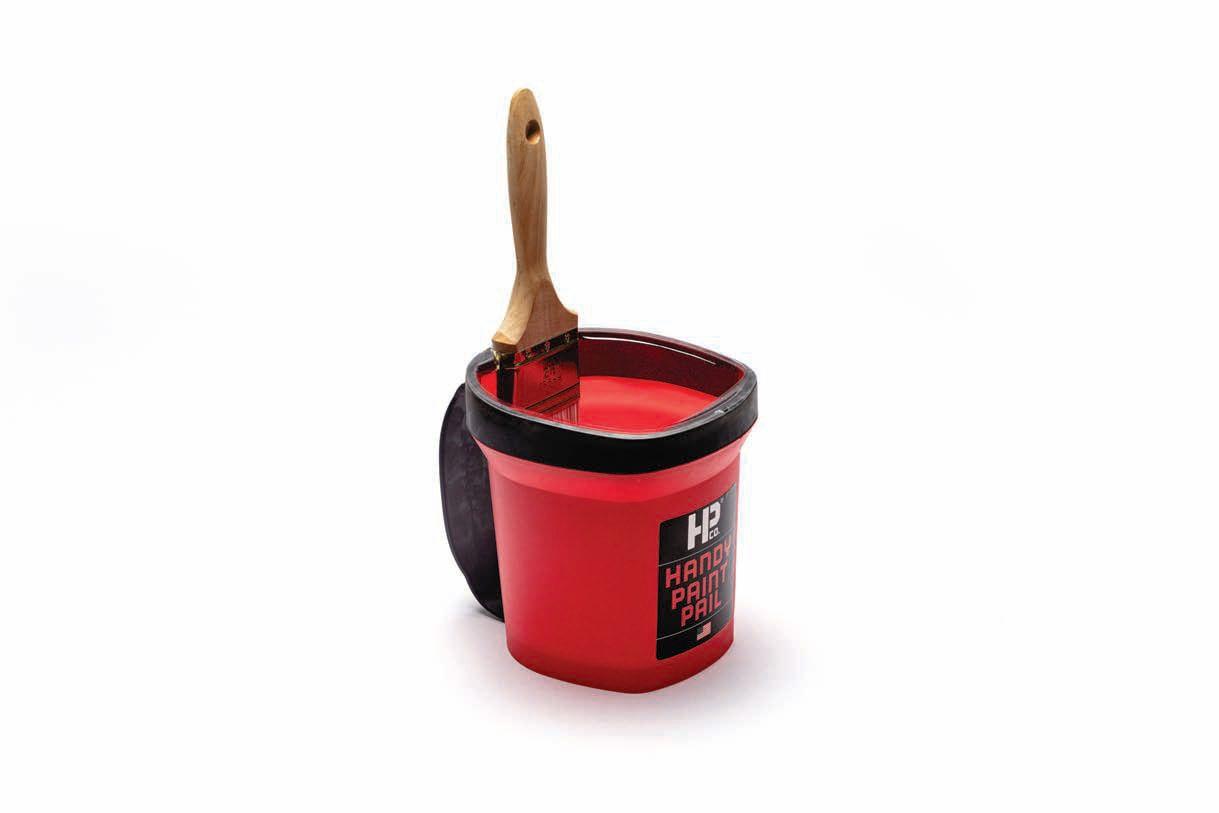
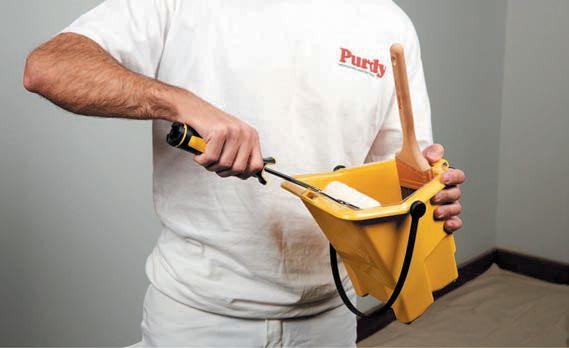
Allowing for interactive merchandising serves these types of products well, especially for pro-focused solutions. Purdy developed its multipurpose Painter’s Pail in response to feedback on what painters valued in a cut-in pail, and they recommend making it easily accessible so customers can have a hands-on experience before purchasing.
“This tool was designed to provide everything a painter needs in a cut bucket: ladder hooks and multiple grip options, including an easy-carry side grip; a brush magnet to keep the brush out of the wet paint; and a mini roller grid and mini rest area,” says Connie McKinney, senior product manager for Purdy Professional Painting Tools. “Display the Painter’s Pail where painters can pick it up to see the quality and all the helpful features. It’s also effective to hang it from a ladder hook, since this capability is not only helpful on the job site, but also provides safety for users climbing a ladder because they can have both hands free.”
Mix and Match
Paul Schmitke, vice president of sales for national accounts at Premier Paint Roller, says a good display includes heavy-hitters and niche products.
“Our assortment of mini roller products that are outside the typical ‘brush and roller’ category,” he says. “These products do a great job, especially with the integration of high-quality fabrics like microfiber and high-end woven materials. However, we believe the skilled use of a Premier paint brush, especially crafted with DuPont filaments, is still the best option for paint application in hard-to-reach spaces.”
Purdy developed the Painter’s Pail in response to feedback from professional painters. Merchandise the pail so customers can handle it before purchasing.
Photo courtesy of Purdy
Asking the Right Questions
Since many niche applicators are suited for a particular task, it’s important to understand the full scope of your customer’s project before recommending a tool.
A.J. Ernst, national sales manager for The Wooster Brush Company, says there are certain questions retailers should be sure to ask when it comes to selling unique tools.
“By understanding the project, you can help a customer identify all the tools they need to complete it,” he says. “You may need to provide additional education about the project or tool, especially for DIYers, but taking the time to do that is better than the customer needing to come back for a different tool.”
“There is no substitute for communicating with your customer,” says Paul Schmitke at Premier. “Asking questions to ensure your customer has everything they need to successfully complete the project is critical.”
To Get You Started
Here are some questions Ernst recommends asking each customer before making a sale.
• What type of project are you going to tackle?
• How big is the area? If it’s indoors, how tall is the ceiling?
• Is it a blank canvas or is there another coating already on the surface?
• How many areas will you have to cut-in around?
• Are you going to paint or stain? Will you be using a faux finish?
What are some questions you’re always sure to ask? Let us know at editor@pdra.org
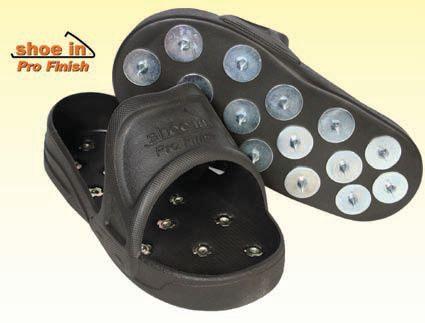
No more frustration with straps, buckles, and adjustments. Just step right in to Shoe-In Spikes and get to work. Immediately after putting Shoe-In Spikes on your feet, you’ll notice you have increased stability and added flexibility when you do need to bend over or kneel down. Applying epoxy floor coatings and decorative concrete coatings with spiked shoes has never been easier. You’ll love Shoe-In Spikes and toss away those old plastic spikes of yesteryear.
FoamPRO’s High-Capacity Slit-Foam Roller Cover was originally developed for painting acoustical (popcorn) ceilings because traditional rollers matted down and damaged the ceiling. This unique roller also performs great on a multitude of difficult surfaces including stucco, wood fencing, brick, cinder block and pavers.
“The durable, resilient foam material conforms to nearly any surface for fast, uniform coverage,” says company president Greg Isaac.
Beyond Paint
Staining projects often require specific tools and a steady hand, which means there is a broad mix of niche applicators and accessories for this coating category.
“Staining a deck or a piece of furniture isn’t exactly a fun job, but
Bravo Stainer is an excellent solution
—A.J. Ernst, The Wooster Brush Company
project.”
Premier Paint Roller’s 6111 All-Purpose Sprayer comes with an 8-foot hose, which helps painters cover large surfaces quickly and easily without sacrificing quality.
“It also comes with four different spray tips, allowing an end user to control the spray pattern better than other products in this category,” says Schmitke. “They can also work without having the sprayer strapped to their back or shoulder.”
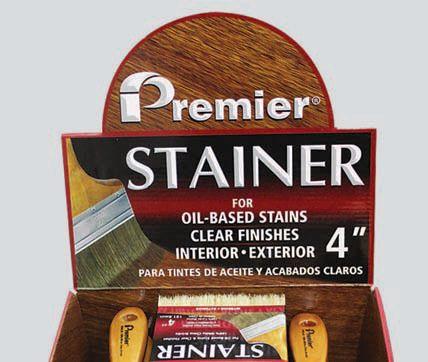
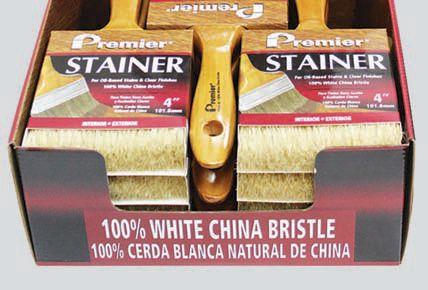
Premier’s complete line of block stainer brushes also offers solutions that make staining a simpler project.
“The block stainers and pump sprayer are often used together to apply the stain to the surface and back-brush the coating into the substrate,” Schmitke says.
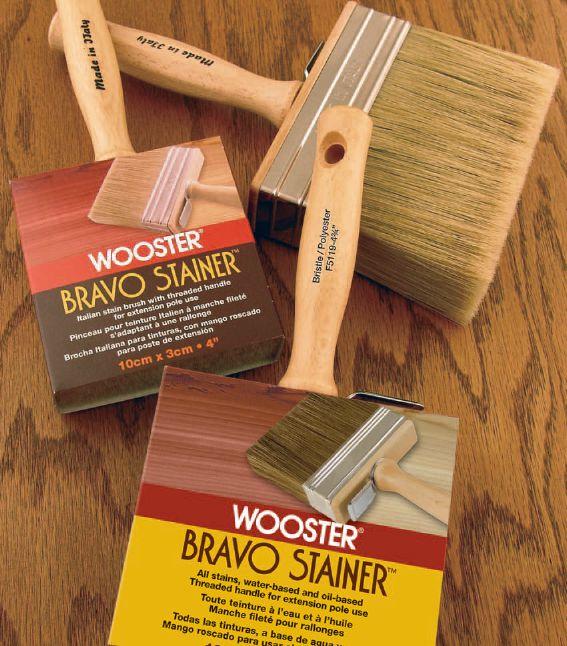
Wooster’s Bravo Stainer™ brush is an alternative to using a rag to wipe stain onto a surface, says Ernst.
“It carries a large amount of stain and allows you to apply it faster, making staining jobs quicker and easier,” he says. “Staining a deck or a piece of furniture isn’t exactly a fun job, but the Bravo Stainer is an excellent solution to a time-consuming project.”
Fitting in the Niche
Expand your niche of task-specific applicators by exploring the types of products that allow access to difficult spaces.
Photo courtesy of Premier Paint Roller
Wooster’s Jumbo-Koter mini rollers can fit in behind radiators and toilets or even underneath cabinets.
“The smooth-rolling frame and matching roller fabrics make achieving professional results that much easier,” Ernst says.
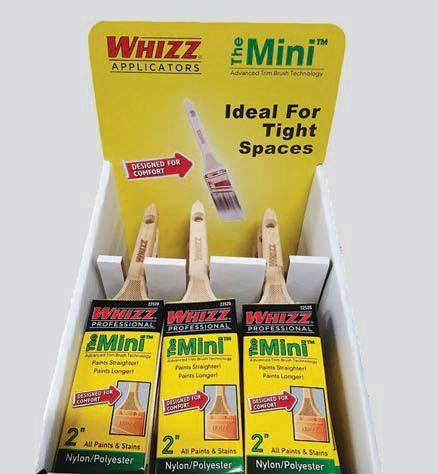
For tight spots, such as bathroom, kitchen and window trim, Laramy recommends the Whizz Mini Rattail brush.
“Its nylon polyester bristles will easily apply any standard to heavier bodied paints,” says Laramy. “The Whizz Microlon roller cover combines the best attributes of the popular white woven and microfiber type rollers into one. It is engineered to deliver a perfect finish and eliminates the challenge of leaving roller marks while painting with all satin, eggshell, semi-gloss and high-gloss paints.”
FoamPRO’s Wrought Iron Painter conforms to irregular surfaces, such as wrought iron, security bars, wood spindles and all long, narrow substrates.
“The high-capacity foam on this roller provides excellent paint pickup and paint release, and it applies a lint-free finish,” Isaac says.
Knowing what’s on the market and what’s up-and-coming can be a key to being a strong player in the niche applicator category. Waksman says staying aware of new products on the market will help you stay ahead of the continual changes in paint.
“Offering an expanded array of supplies serves both a practical purpose as well as a nod to the imagination,” he says. “It shows customers you’re on top of the trends.”
Understanding the scope of your customers’ projects helps you recommend products to help overcome common challenges.
Photo courtesy of Whizz Applicators
By Jerry Rabushka
A Century in the Making
York Wallcoverings Celebrates 125 Years
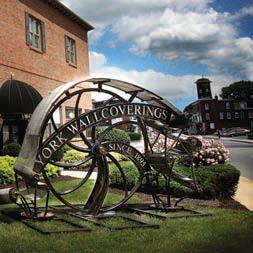
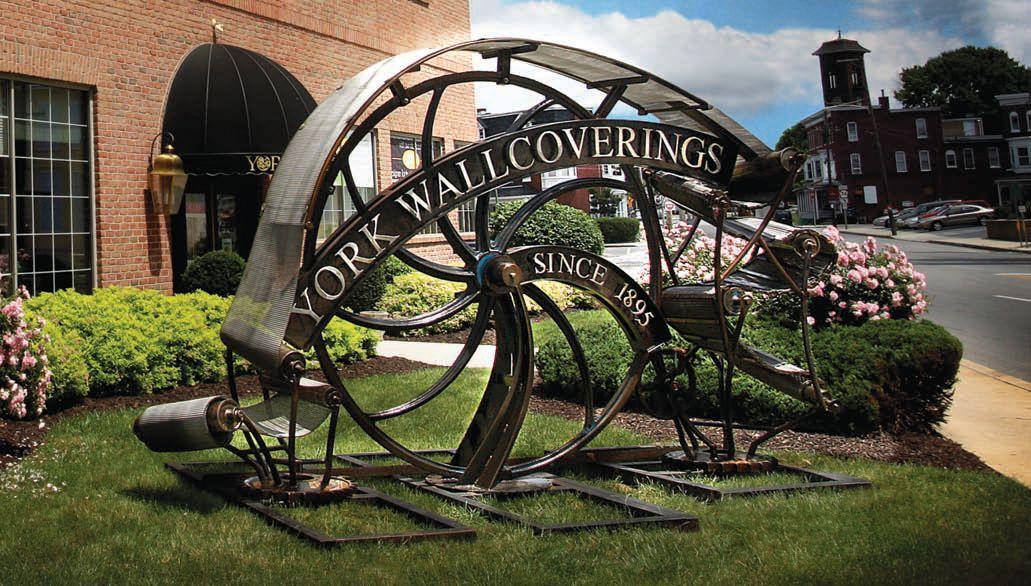
As the new year rolls in, there will be a very special party in York, Pennsylvania: York Wallcoverings will kick off a celebration of its 125th anniversary. Incorporated as York Wallpaper Co. on Jan. 12, 1895, the company has seen many transitions across industries over the last century-plus. But through all the shifts in design, technique, printing and trends, the company has weathered the storms and is heading into its next year stronger than ever.
York is the oldest and largest wallcovering producer in the U.S., manufacturing residential wallpaper, commercial wallcoverings and wall decals that can be found across 85 countries worldwide.
DeAnna Hain, the company’s executive director of marketing, acknowledges that wallpaper has been through some hard times, but she says people in the industry never let that stop them from moving forward.
“Wallpaper is back, and for interior designers, it never really went away,” she says. “When you become conscious of it, wallpaper is ever-present in popular culture. Today’s generation of influencers creates public demand and reemergence of the wallpaper genre.”
If you reduced or eliminated your wallpaper department, it may be time to take another look. Wallcoverings are now available in a variety of price points, and application and removal are easier without the threat of damage to walls.
Hain notes that older generations of customers may be surprised at how quickly new wallpaper comes off.
“Those who are afraid of removal are about to be outpaced by customers who have no negative preconceptions,” she says. “They will not be disappointed. Removability is now really part of the sale, because ease of removal is at the forefront of today’s technological innovations.”
Authenticity Is in Fashion
The innovations of 1895 appear basic today, and printing techniques have changed through the course of years. Even so, some of the hands-on artistry of printing heritage can be lost as a result of newer processes. York uses its long history to provide 125 years of choices, both in design and printing techniques. This way, fans of any era—from ragtime to art deco to psychedelic to steampunk—can find a perfect match.
“By having all forms of printing technologies under one roof, the creation of any pattern can be matched to the best printing type to get the desired effect,” Hain says.
York is one of the only printing companies in the world to own and operate seven different types of printing presses. From rare turn-of-the-century presses to modern digital applications, each type gives a distinctive look to the finished product. York’s revered archives contain thousands of document designs dating back to the early 18th century.
Last year, the company was recognized as North America’s only Surface Print Manufacturer. Also in 2019, the company acquired Hytex Industries, a supplier of acoustical and Woven Textile Wallcoverings. (Read more about the acquisition on Page 16.)
“York is always moving forward with technology anchored in 125 years of print knowledge,” Hain says. “We use our knowledge of printing technology to reinvent and reimagine our presses to innovate print techniques.”
Something for Everyone
In the decor business, you’ll encounter that one customer who is always afraid of making the wrong choice. To help you help those customers, York offers several tools so your customers can find the right pattern without becoming overwhelmed.
“By using our system of Designer Series, Designed to Inspire and Resource Library collections, any retailer can eliminate the frustrations of so many choices,” Hain says. “Designer signature style and upmarket pricing defines its category, while Designed to Inspire collections are built to cover market trends. The Resource Library collections include design categories like Small Prints, Stripes, Murals and Grasscloth.”
Hain says York is on both sides of the trend fence as the company is successful in creating new looks as well as capitalizing on what’s already on tap.
“We look to trend forecasting as well as existing trends for what’s new and what’s next. Cultural shifts, art and fashion all help define the future path of interiors,” Hain says. “Wallpaper can act as a major statement piece or a full wrap of textural warm color support. Our studio of designers, stylists and graphic artists all combine their talents and creativity to produce something which resonates as personal and valid.”
Current trends include the return of traditional, “resimercial” (residential influences in commercial spaces), sustainable designs, biophilic design, organic geometric and desert modern.
One trend York has stayed on top of is environmental responsibility; Hain says the company has a rich history of being a good steward of the environment.
“York has a commitment to integrity, which guides us to the best in quality workmanship and employee concerns,” Hain says. “We work as a family, always driven to improvement and solutions for our employee family.”
York Wallcoverings are made from harvested renewable resources; are low VOC; contain no ozone-depleting chemicals, cadmium or mercury; are made with water-based inks and coatings and smokeless nonpolluting inks; and have substrate sources from managed forests.
Retaining Relationships
York Wallcoverings prides itself on its relationship with independent retailers.
“Our account managers provide personal commitments to all aspects of doing business with us,” Hain says. “Our expertise is backed by a relationship with the company, be it in service, product or account management. We want to be partners in the success of our customers.”
The Amazon effect of consumers wanting a product immediately even manifests in the recreation of 125-year-old wallpaper. York has created several online tools to help speed selection and delivery as well as help pros and DIYers with installation and removal. These include a wallpaper estimator for ease of ordering, all colorway available in a room set for scale, videos on how to install and remove, trend and style reports and a playbook tool for B2B customers.
“Retailers have all of the tools—both digital and print—and product education to promote the sale of each collection,” Hain says. “York Wallcoverings is the wallpaper authority, combining technical expertise and unmatched design mastery with the dedication and integrity of our people. It is this unique fusion that inspires our promise to offer product of the highest quality combined with the best in customer support.”
Fresh Coat
3 Ways to Build an Instagram Following M
ost business owners understand the need to create and share content on social media as part of a healthy marketing strategy. But what if that eye-catching content has no audience? Sure, we all hope an Instagram post will go viral, but that’s the marketing equivalent of winning the lottery. Fortunately, there are strategies to help boost your luck.
1
Focus on interactions.
Quality of interactions (more likes and comments) has taken priority over quantity of followers. Marketing experts advise retailers to test which topics or shots are more popular and ask for ways you can improve—followers love giving their opinions. The new goal is to get higher interaction rates because they will get your account in front of more people.
2
Use creative hashtags.
Your Instagram account should be fun, which also includes creating memorable hashtags. Use less-popular hashtags to stand out in a smaller crowd or call attention to your brand. Participate in trends with popular hashtags. Be sure your hashtags are short and easy to understand.
3
Remember, Location Matters
Always include location tags in posts for enhanced visibility. Check out the Places tab to see the events and activities that are happening in your area so you can interact with those accounts. Like, comment and share them to get your account in front of more people.
Creativity-Unleashed
quarts available in case packs of 2
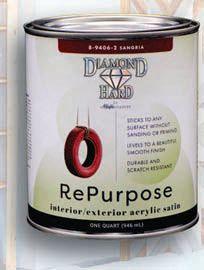
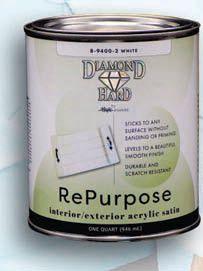
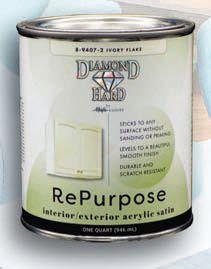
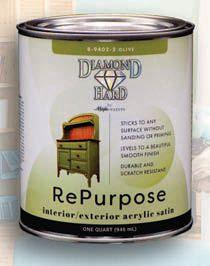
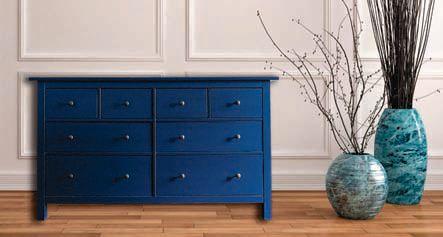
Available in 10 contemporary colors that can transform any ordinary object into a tasteful statement piece for any home, office, and more!
For product tips and inspiration, visit creativity-unleashed.com
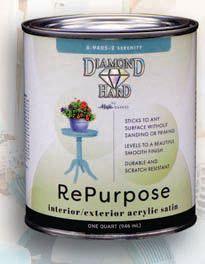
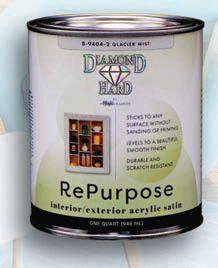
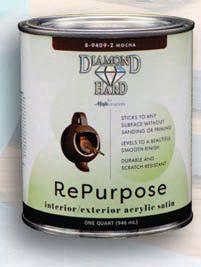
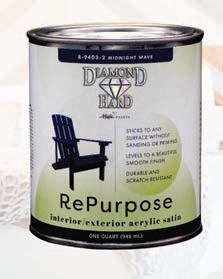
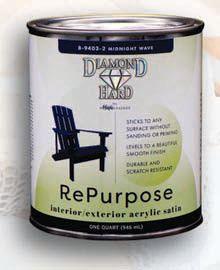
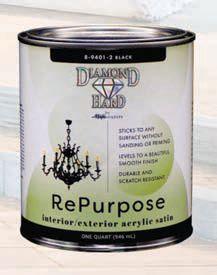
Diamondhard RePurpose
Interior/Exterior Acrylic Satin Finish
RePurpose is made using Yenkin-Majestic’s one of a kind Diamondhard polymer technology which enables it to stick to any surface without priming and sanding.
RePurpose levels to a beautifully smooth finish and can be used on both interior and exterior surfaces. RePurpose will wear great for years!
PDRA Now
Scholarship Solutions
It’s Time to Recognize Your Local Students
Do you know a strong student who is committed to their educational goals and could use some financial support to achieve them? Then you know someone who is qualified for the 2020 PDRA Scholarship Program. The deadline to submit nominations is March 2, which means there is plenty of time to sponsor a local student in your community.
Members of the Paint and Decorating Retailers Association in good standing can sponsor up to two nominees for the scholarship, and the process is simple. Applicants need to provide the following:
• The completed PDRA Scholarship application
• An essay detailing their academic history and how the scholarship will help them achieve their goals.
• A copy of their high school and/or college transcript (if applicant has completed college coursework)
• Two letters of recommendation from educators, religious leaders and/or employers.
The generous $5,000 award is made possible with support from the National Hardware Show. The PDRA member who sponsors the winning student will receive the scholarship check in a ceremony at the 2020 National Hardware Show, May 5-7.
For more information, to download marketing materials and to read the official rules, visit pdra.org/scholarship Members can send applicants to pdra.org/cashforcollege to apply.
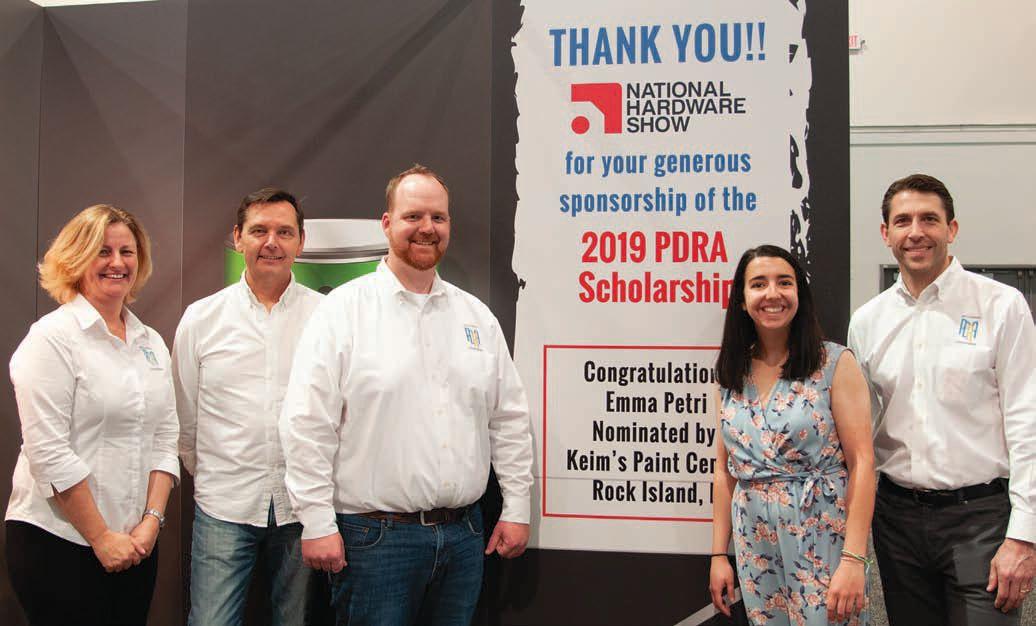
The Paint and Decorating Retailers Association board of directors celebrated the 2019 PDRA Scholarship recipient Emma Petri (second from the right) at the 2019 National Hardware Show in Las Vegas.
Top Your Training List With PDRA Resources
With your budget in place and your goals set for the new year, remember that your association is your go-to resource for implementing and executing a comprehensive training program.
The PDRA offers Training Members access to industry-specific interactive training programs that get your newest associates up to speed and give your veteran employees a refresher on the basics.
If you think you don’t have time or the staff to develop a training program, think again. The first component of the PDRA Training Program that makes creating a program a cinch is the Train the Trainer guide.
Here’s an overview of the guide so you can see the benefits of implementing a trainer’s training program today. For more information on becoming a PDRA Training Member, visit pdra.org/education
1. What it costs to not train. Get the details on how a training program improves staff retention, productivity, sales and more.
2. How to set up a program. From setting your training goals and timelines to developing reasonable outcomes and requirements, the guide helps you plan it all.
3. Evaluating who will make a strong trainer. This person may be you or it may be someone you can delegate to. The guide helps you determine the best choice.
4. Deciding the course of action. Whether you want your plan to include on-the-job components or if you want to mandate everyone complete the PDRA online training courses before they hit the salesfloor, the guide walks you through the distinctions.
In the November 2019 issue of Paint & Decorating Retailer, the website for SamaN was listed incorrectly in Finish. The correct website is saman.ca. We regret the error.
FEBRUARY 7-8
Lancaster Florida Buying Show Gaylord Palms Hotel & Resort Kissimmee, Florida lancasterco.com/events
PACOA Spring Dealer Market Queens College Fitzgerald Gymnasium Flushing, New York pacoa.com
MARCH 22-25
Shoptalk 2020 Mandalay Bay Las Vegas shoptalk.com
MAY 5-7
PDRA Paint & Accessories Show at the National Hardware Show Las Vegas Convention Center Las Vegas pdra.org/trade-show
JUNE 22-24
NRF Protect 2020 David L. Lawrence Convention Center Pittsburgh, Pennsylvania nrfprotect.com
If you would like your event included in this list, email Melanie Moul at editor@pdra.org with the date, location and a brief overview of your event.
Guest Column Setting Goals
Arriving Safely at Your Destination
Planning Your Roadmap for Success
When you’re rambling down country roads, it’s wonderful to wander. Do that with your business, though, and you may not get very far.
To be successful, create a roadmap toward your destination by setting goals. Be sure these goals are specific, realistic and measurable. Once you have your goals established—and documented—equip yourself with these characteristics to ensure follow-through.
• Optimism. A positive attitude leads to positive results.
• Imagination. Clearly visualize yourself reaching your goals.
• Compatibility. Employees’ on-the-job goals ideally should agree with yours.
• Commitment. Small goals along the way can feed your determination.
• Incentives. Engage in activities that keep you motivated at your business.
• Rewards. Give successful employees praise, cash bonuses and days off as they achieve their own goals.
• Organization. Track your store’s progress and manage time wisely.
• Confidence. Believe in yourself and know you’ll succeed.
• Flexibility. Prepare to adjust your goals—and methods to achieve them—as needed.
• Perspective. Keep sight of details while maintaining the big-picture view.
On any extensive journey, you’ll likely face roadblocks, so know how to steer around or right through them.
Feeling self-doubt? Fortify your positive attitude, redraw your picture of success and surround yourself with supportive people. Family issues and illness, a struggling economy and challenges in business can all obstruct your path. Accept, adjust and take productive action.
If you still feel blocked, ask yourself: Are my goals unrealistic? Am I relying on the wrong resources? Am I not trying hard enough? Even if you think you’ve failed somewhere, you’ve succeeded in taking risks and learning where you need to make changes. So if one road comes to a dead-end, try another.
Just before you arrive at your goals, set new ones. And when you successfully reach what you’ve set out to accomplish, celebrate! Also, consider the steps you took that allowed you to be effective, and then apply those strategies to future goals. Keep your eye on your goals and you’ll drive your dreams straight toward your next destination.
Claire Sykes
is a business management writer based in Portland, Oregon. She also covers health, bioscience, philanthropy, community and the arts. In addition to business writing, Sykes also writes annual reports, white papers and web content; consults for and edits nonfiction books; and conducts writing workshops.
PDRA EDUCATION INITIATIVE
ISupplying the Stars Finish
t’s never easy to break into the movie business, but over the years one retailer in South Carolina has leveraged their expertise into a long-term relationship with professional film crews, supplying the foundations for the sets of hit TV shows and movies filmed in Charleston.
“We’re familiar with the specialty needs in that market,” says Robin Phillips, the South Carolina regional sales manager for Spectrum Paint, a paint and coatings company with over 65 stores across the country. “When crews come to the area, they tap into us, set up accounts, and they’re off to the races.”
Spectrum Paint has provided shellacs, special pigments, base materials, resin packages, plaster, applicators, solvents and more to set designers and construction crews for years, including for films such as the “Die Hard” franchise and “The Notebook.”
“The most amazing part is that the crews are so talented,” says Phillips. “They’re not just painters, they’re artists. They’re given instructions on how a room should look, and they fabricate everything down to the grain in the floors. I’m always amazed by how resourceful and talented they are.”
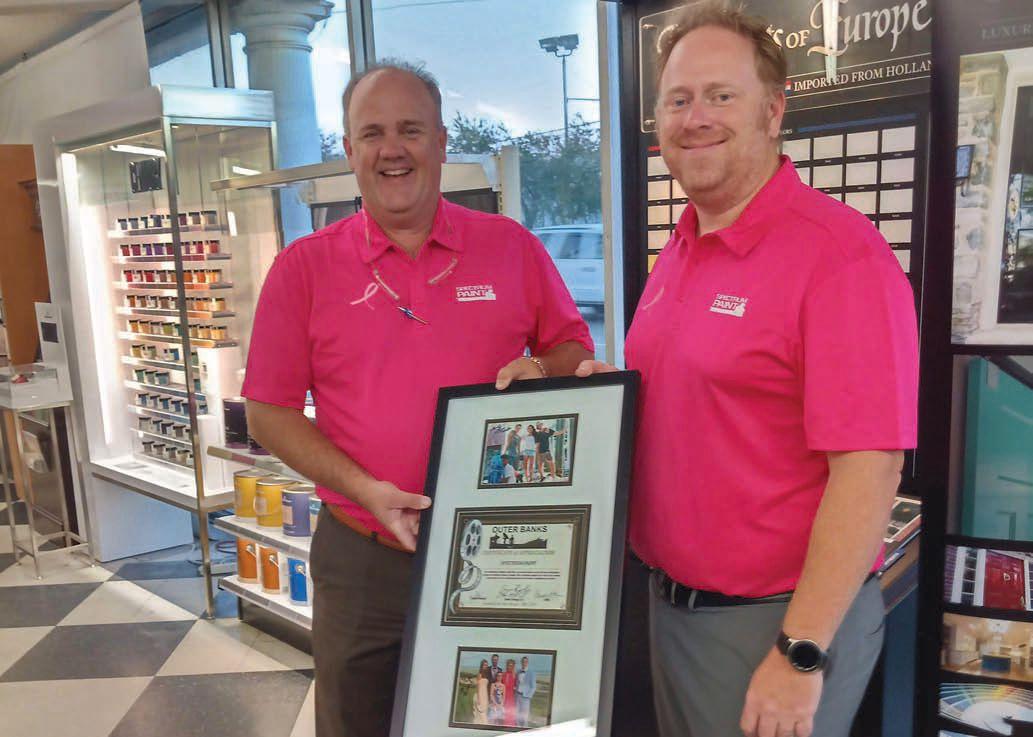
Most recently, Spectrum supplied set materials for a new Netflix series called “OBX,” a young adult drama about a group of friends navigating the Outer Banks after a hurricane. The show is scheduled to premiere this year. At the end of filming, the crew presented Phillips and Nathaniel Wood, Spectrum’s South Carolina operations manager, with a certificate of appreciation in the form of a plaque that included photos from the set.
“It was nice that they went out of their way to thank us,” says Phillips. “Over the years, the crews have become more than clients, they’re friends.”