THE INDUSTRY’S DIGITAL LEADER


ALSO INSIDE
House-Hasson Names New CEO | New Products Reviewed and Shared Spray Paint Merchandising Tips


CUSTOMER SUCCESS STORY #3
Whenever I’m asked what makes Morris Hardware special, I start with our story. Founded in 1845 by George Morris, our business has been part of the McConnelsville community for 180 years and remains one of the oldest continuously operating, family-owned hardware stores in the country. Today, his great-great-great-greatgreat-great-grandson, Tom Schanken, and I are honored to carry that legacy forward.
This business has weathered wars, depressions, pandemics, and the rise of big-box and online competition. Through it all, our small-town spirit and commitment to serving our employees, customers, and community have held strong Our customers are our neighbors contractors, farmers, and DIYers and we take pride in being the heart of Main Street
But even a 180-year-old business must evolve When we realized our previous supplier wasn’t helping us stay current, we looked for a partner who shared our values. That came in 2023 when we were introduced to Orgill. I first got to know Orgill through our sales rep, Jake Thompson, whose genuine kindness and willingness to help made a lasting impression. When it came time to make a change, the choice was clear
Orgill’s team worked alongside us during the conversion, helping modernize assortments, refresh key departments, and refine pricing while respecting our independence. Today, Morris Hardware is better positioned to serve modern customers while proving that personal service and community connection never go out of style and we’ve found those same values in our supply partner.
Shayna Roberts Co-Owner, Morris Hardware | McConnelsville, Ohio


Sharmeelee “Sharms” Bala, Orgill’s chief digital and information officer, is focused on building scalable technology and practical AI tools that improve efficiency and support independent retailers.






BYOTools looks at 11
repairready and job-site-versatile products from the Orgill Spring Market, with an emphasis on labor-saving design and addon sales potential.




Independent hardware stores are finding reliable gains in paint and decorating through project guidance, prepand-repair sales and strong attachment categories.
42 Category Report: Spray Paint
Spray paint remains a fragmented, project-driven category, with broad assortment and disciplined inventory management essential going forward. 46 Spray Paint Merchandising Tips
From lighting and layout to brand blocking and adjacencies, a smart look at keeping this aisle organized and built for add-on sales.
50 Product Spotlight
A lineup of new decorating, prep and job site solutions retailers should consider adding to their assortments.


There’s a word that kept coming up in conversations recently at markets and while talking to retailers for the “ How’s Business? ” section of this magazine, and it wasn’t spoken out of frustration or fear. It was said plainly, almost clinically.
Flat.
Not down. Not collapsing. Not even disappointing. Just flat.
At first glance, that might sound unremarkable. In an industry conditioned to chase growth curves and year-over-year comparisons, flat can feel like a placeholder or a missed opportunity. But listening more closely, it became clear that flat carries more meaning than it used to. What people seem tired of isn’t slow growth. It’s uncertainty.
Retailers and vendors know how to operate in lean times. They’ve done it before, repeatedly. They know how to tighten inventory, manage staffing carefully and make incremental improvements without overreaching. What wears on people is the inability to plan with any confidence beyond the next quarter.
Flat, in this moment, feels like a holding pattern.
By Doug Donaldson
You could hear it in the way conversations unfolded. Nobody was talking about pulling back dramatically. Nobody was rushing to make big bets, either. The prevailing mood was cautious steadiness. Keep shelves stocked appropriately. Maintain relationships. Avoid unforced errors. Be ready.
Readiness is the key distinction. Flat doesn’t signal retreat. It signals restraint.
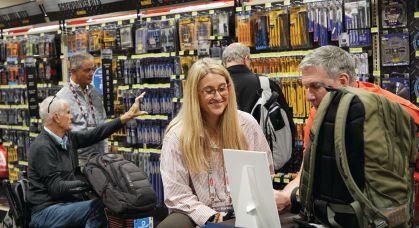
Vendors want to invest. Retailers want to invest. They want to update stores, expand assortments, hire with intention and lean into programs that take more than six months to pay off. In conversations at recent markets, retailers described a spirit of deliberate planning rather than hesitation. They walk the floors to study how merchandising concepts are executed, ask hard questions about turn and margin, then return home to evaluate the ideas against their own customer base before committing capital. They’re analyzing store assortments carefully, thinking through labor implications and mapping out timelines that extend well beyond a single season. The approach is measured, not timid—and it represents a steady recalibration that prioritizes sustainability over splash.

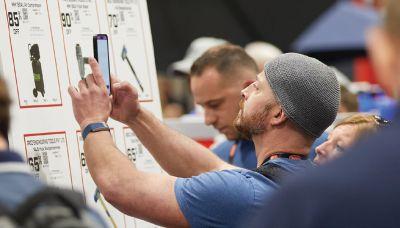

What’s holding them back isn’t a lack of belief in their businesses. It’s the sense that external conditions keep shifting just as decisions are made.
Flat becomes a form of patience. Yet what stood out most was how little anxiety there was behind the word. This wasn’t doom-and-gloom talk. It was realistic. Matter-of-fact. Almost weary. Hardware retailers weren’t asking for tailwinds or windfalls. They were asking for stability, something predictable enough to plan around.
That’s not a small ask nowadays. Independent retailers operate in real time. They don’t have layers of insulation between decisions and consequences. When they invest, they live with those choices on the sales floor every day. Flat conditions make it harder to justify long-term commitments, even when the underlying business remains sound.
The same is true for vendors. Product development cycles, tooling, staffing and marketing plans all benefit from a clearer horizon. Flat sales aren’t the problem. Indecision forced by volatility is.
In some ways, flat is an honest word for an honest moment.
The industry isn’t shrinking away. It’s bracing. It’s conserving energy. Consolidating. But it’s staying sharp without overextending. That’s not a failure of imagination. It’s experience talking.
There’s also something quietly reassuring about the absence of panic. People weren’t searching for silver bullets or buzzword solutions. They weren’t chasing trends for the sake of appearances. The conversations were grounded in fundamentals: service, inventory discipline, community connection and staying close to customers.
Flat conditions tend to expose what’s real.
Stores with strong local ties still feel busy. Vendors with clear value propositions still get attention. Relationships still matter. In a strange way, flat can be clarifying. It strips away noise and forces focus.
What comes next is the part everyone’s waiting for. Everyone desires just enough economic calm to move from holding pattern to forward motion. Enough consistency to plan, commit and invest without constantly secondguessing the timing.
When that happens—and it will—the people who stayed attentive during flat times will be ready. Their preparation and steady focus position them to move decisively when conditions shift.
Sure, flat rarely commands bold headlines. But right now, it’s the story hardware and home improvement stores are living. And for an industry built on patience, relationships and long views, that might be exactly what gets it through to whatever comes next. n
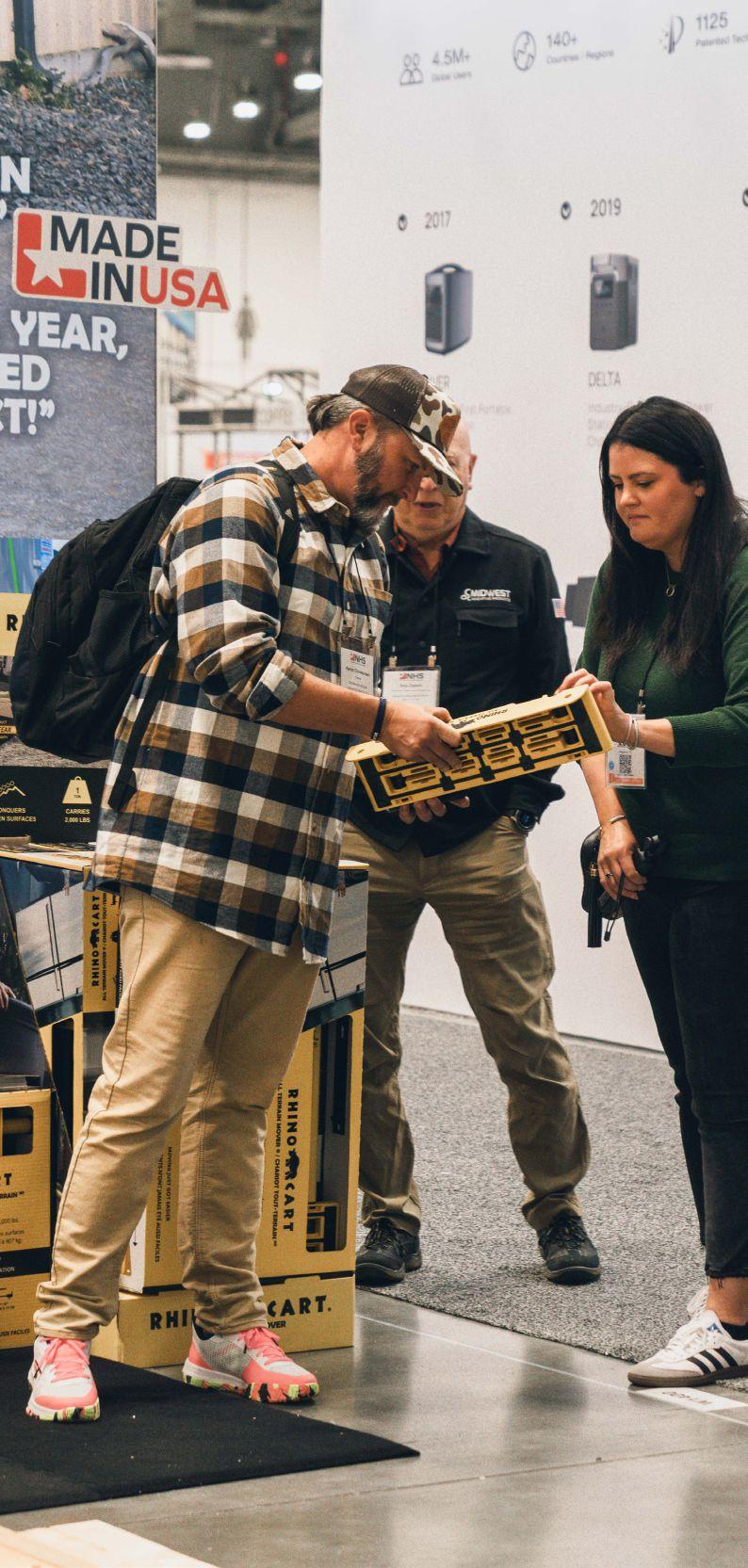

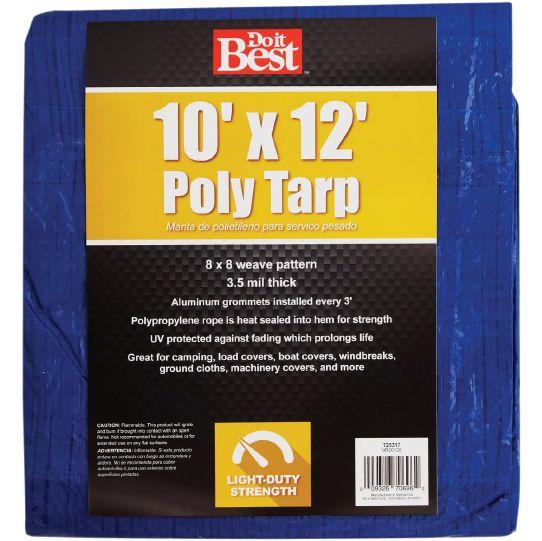
We had a customer come in one day needing a 12-by10 tarp. Not a 10-by-12. A 12-by-10.
“No problem,” I said, taking him to the aisle and handing him a 10-by-12.
He shook his head. “That won’t work. I need a 12-by-10.”
“If you turn it this way,” I said, rotating it like a magician revealing the trick, “it’s a 12-by-10.”
He wasn’t buying it. “Nope. A 10-by-12 ain’t going to work.”
He handed it back and left, still searching for the mysterious, mathematically unique 12-by-10 tarp.
Eric Kingsland BDK Feed & Supply Blanchester, Ohio

Acontractor came in and asked for a gallon of white paint.
“What kind of white?” I asked. In a hurry, he said, “white-ass white.”
Now, there are more shades of white than anyone can imag- ine—bright white, ultra white, soft white, warm white, antique white, eggshell white—and every one of them swears it’s the real white.
He wasn’t interested in any of that.
So I grabbed the bright- est base we had, shook it up and handed it over. No tint. No nuance. Just straight-up white-ass white. Sometimes at the paint counter, you match color; other days, you match conviction.
Dave PollockCampbell
Pines True Value Pollock Pines, Calif.
This Product Review is a little different from our traditional format. Typically, we test products with multiple users and focus on features and benefits. In this case, I was the sole tester, and I purchased the product myself to solve a problem in my own home.
Living in South Florida, air conditioning is not seasonal. It is constant, with our unit running an average of 350 days per year. Shortly after installing a new A/C unit, I ran into a frustrating issue: The drain line kept clogging. You already know what follows: backed-up pans, tripped overflow switches and a service call unless you’re comfortable clearing it yourself. If not, it turns into a pricey visit.
By Craig Cope
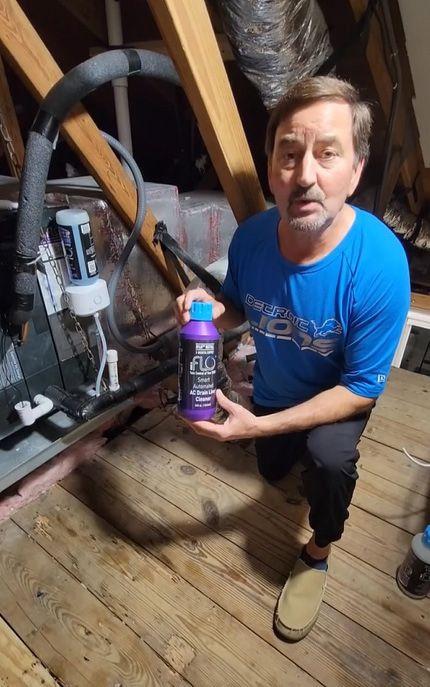
Frustrated, I realized I needed a preventative solution, not another temporary fix. Before reaching that
conclusion, I went through the basics. I flushed the line. I used a wet/dry vacuum to pull suction through it. I even used a fish tape to manually clear the drain. Every one of these approaches required me to remember to do it. None
of it was automated, and inevitably the clog would occur while I was traveling, leaving my wife to deal with the problem. It was not a system; it was a recurring chore.
After researching preventative options, I discovered iFLO, a company focused specifically on protecting condensate drain systems before clogs happen.
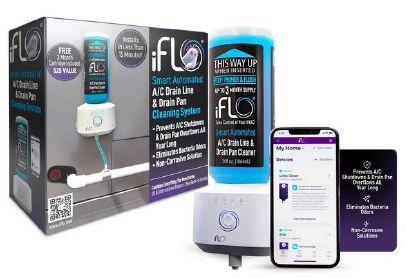
The concept is straightforward. The iFLO system automatically dispenses a proprietary enzymatic cleaning solution into the condensate line on a schedule. Instead of reacting to a clog, it works continuously to prevent the buildup of sludge and biofilm, often identified as Zoogloea, that cause blockages
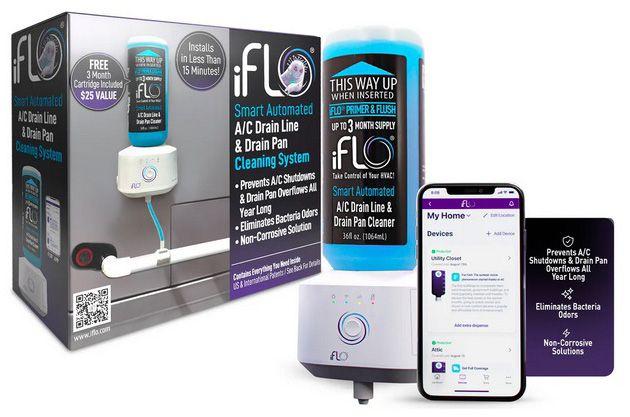
and odors. Many HVAC professionals note that this issue has become more common as modern air handlers have shifted from copper coils, which have natural antimicrobial properties, to all-aluminum evaporator coils. This shift creates an environment in which organic buildup can develop more easily inside condensate systems.

Installation was simple and works with existing drain lines. Once installed, the unit operates automatically. The app allows homeowners to monitor activity and track each dispense in real time, adding visibility without adding work. Click here to watch a brief company video.
After running the system in my South Florida home for six months without a single clog, I installed the same unit in my mother’s home in The Villages. Her situation was similar, with recurring drain line issues. After a few service calls, she was forced to rely on the same temporary tactics I initially used, and no son wants his mother manually
clearing an A/C drain line. The second installation was just as straightforward, and now both homes have consistent, automated protection in place.
From a product standpoint, the enzymatic solution is non-acidic, non-bleach and non-corrosive, making it safe for the system and the home. It attacks organic buildup at the source rather than masking the issue, supporting long-term HVAC performance.
There is also a smart retail angle. iFLO utilizes proprietary refill bottles verified through a QR-based authentication process. Once the initial bottle is empty, the unit will dispense only approved refill solutions. For

independent hardware retailers, this effectively creates a subscription-style revenue stream. Customers must return for authenticated refills, turning what is typically a one-time hardware sale into an ongoing maintenance relationship that drives incremental sales.
I recently connected with the company at a wholesaler show and agreed to share my experience. For full transparency, the company supplied the unit installed in my mother’s home, though I would have purchased it regardless, given my results. This review is based on two real-world installations protecting two homes in Florida’s demanding climate.
Independent hardware stores in The Villages, this is my personal plea: Please carry the iFLO system, or at minimum, stock the refill bottles. My mother prefers independent stores, and I would much rather have her walk into a locally owned store where someone helps her than navigate a big-box aisle or an app to find the product. She values knowledgeable service and personal attention, and this is exactly the type of preventative, practical product that belongs on independent shelves. Sometimes the best products are not flashy. They simply solve a real problem before it becomes an expensive one. iFLO does exactly that. n


How were sales and customer counts in 2025? Sales were essentially flat in 2025, with customer counts holding steady and comparable to 2024. Sales dollars remained level as well. A mild winter and an unusually wet spring affected early-season activity, and much of the year’s sale can be attributed to weather.
What’s unique about your business? We’re a one-stop-shop for just about anything you need. Our community shops us whether they’re working on their home, in the garden or caring for farm animals. That versatility sets us apart. The store operates with roughly a 70-30 split between DIY customers and professional contractors, with homeowners making up the majority of our core business.
Best niches? Fencing is one of our strongest niches right now, especially board fencing for horses and cattle, which has seen significant growth over the past year. We also benefit from the contractors in our area who rely on us for lumber, and that business drives a substantial amount of related hardware sales. In addition, we carry a full line of Nutrena feed and have built a solid
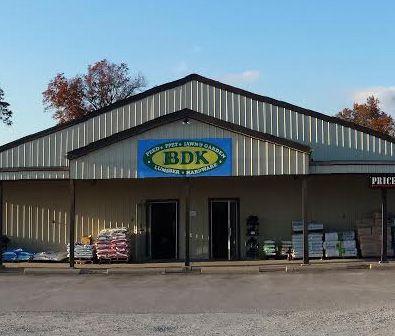
BDK Feed & Supply in Blanchester, Ohio, serves a largely DIY customer base while supporting local contractors, with fencing, Nutrena feed and lumber-driven hardware sales standing out as key niches for the family-run operation.
presence in the equine market.
What are your plans for 2026?
We’re looking for fresh ideas to keep things moving and make sure we don’t get stagnant. We’re not planning to add any new locations. We just want to keep improving the stores we have by filling in some of the gaps in our current lineup. Fencing has been a strong category the past couple of years, so we’d like to keep building on that and maybe look at a few types we don’t currently carry to see where we can grow.

How were sales and customer counts in 2025?
Business was down about 3 percent in 2025, with the fourth quarter running a little soft. In 2023, our community experienced significant flooding, which drove unusually strong sales in sump pumps, hoses and, later, sheetrock screws and paint. In 2024, a neighboring community was affected, and plumbing remained a strong category across both years. The housing market has been active for sellers, though buying or moving into an apartment remains challenging. The cost of
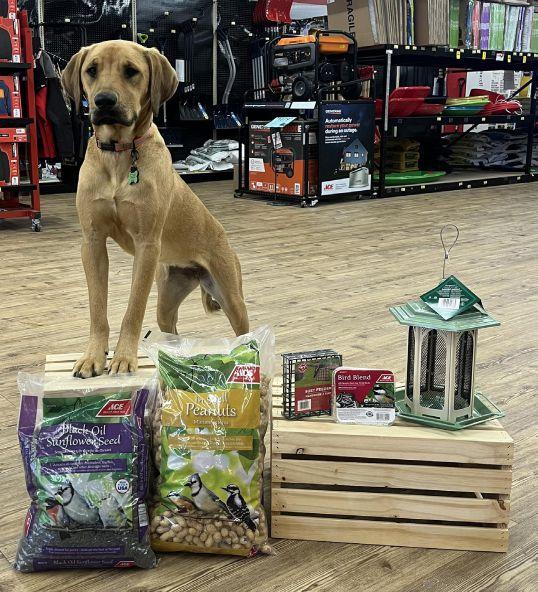
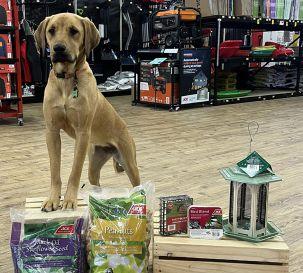
Sugar, the store pup at Nelson Ace Hardware, makes frequent appearances on the company’s social media channels, adding personality and a familiar, friendly canine face that customers have come to recognize online and in-store.
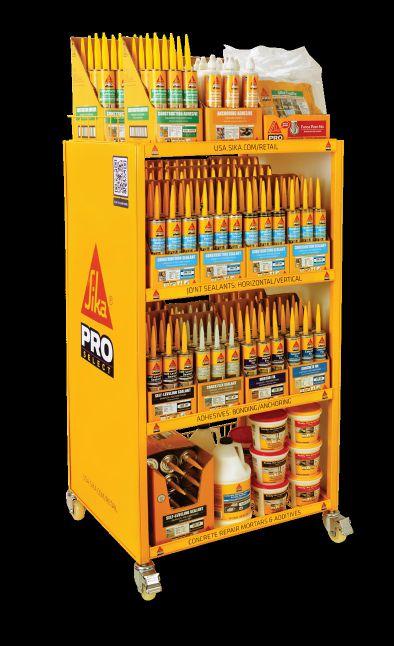

Scan the QR code to request more information on exclusive display pricing!
g Maximize product visibility
g Four rows of shelves for any array of products
g Heavy-duty design with lockable wheels
g Dimensions: W 28.75" x D 26" x H 58"

living in Vermont continues to run high. In December, supply constraints made it difficult to get salt, snow shovels and snowblowers.
What’s unique about your business? Customer service is our strength. We focus on training built around common courtesy and paying attention to the small details. We can usually tell within the first week or ten days if [an employee] isn’t naturally inclined to turn toward a customer and engage. We staff more heavily per square foot than most businesses, not just hardware stores. Our team genuinely enjoys solving problems and helping people.
Best niches? Our strongest niches are grills, especially Weber, along with paint, power tools and outdoor power equipment. We operate about 9,400 square feet of retail space, plus another 9,000 square feet in the basement. Milwaukee power tools and outdoor tools perform very well for us, and Ego power equipment has been an especially strong category.
are your plans for
We’re currently evaluating the Ace Elevate format and discussing it with our planner to determine whether it’s a good investment for us. At the same time, we’re paying close attention to how AI is changing search behavior. Customers aren’t just typing “hardware store near me” anymore; they’re using more descriptive phrases, such as “best customer service.” That shift is an

Bob and Linda Nelson of Nelson Ace Hardware in Barre, Vt., have built their store around strong grill, paint and power equipment categories while emphasizing attentive customer service.
interesting development and something we’re watching closely.
Surprise bestsellers? One surprise bestseller in 2025 was trading cards. We brought in basketball and football cards—something I collected as a kid—and they took off. Pokémon cards were another unexpected hit. I also surprised myself by bringing in sunglasses this year. We used to carry $10 to $20 pairs, and now we stock brands such as Costa, Oakley and Maui Jim. They arrived at just the right time, and once the weather improved, they sold better than expected. We try to stay on the forefront of trends and bring in items that make sense for our customers.
How were sales and customer counts in 2025? It was a really good year. It started off, like the previous year, a little slow. But sometime toward the end of summer, it started getting busy. The fall, even through the holidays, it was busier than normal. I think people just feel a little bit more comfortable with the economy and how things are going. Interest rates are finally trying to come back down; I guess that’s probably helping some. Gas prices are way down. Those kinds of things do matter.


Jim Bondurant says 2025 was a strong year for his family’s nearly 75-year-old business, citing renewed building activity, steady contractor relationships and a loyal base of DIY customers as key drivers of growth across his three-store operation.
And in our area, there’s some influx of building going on.
What’s unique about your business? My granddad started the business almost 75 years ago. My dad is still involved. We have three stores and it’s a family business.
Best niches? We’re a smaller, more

Accept cards, cash or charge customer


and update your
product, save orders and


Turn any mobile device into a powerful business tool






















rural area, so we have a lot of do-it-yourself people, but we have contractors we work with as well. And just everyday people who come in the store needing stuff to fix things and make improvements around their house. We do a lot of lumber sales as well, not just hardware.
What are your plans for 2026? Maybe tweak a few things, but mostly keep things exactly the way they are— for the most part, things are going pretty well. We’re just looking to add a few things here and there, continue to build up our customer base and work hard for our customers.
Jim Bondurant Bondurant Lumber & Hardware Century, Fla.
How were sales and customer counts in 2025? Steady. Not a big influx, but not decreased. We got a new city manager, and he’s starting to turn things around. We’re seeing some progress around the city.

What’s unique about your business? We’re a little bit of everything. We have lumber, hardware, feed. We’re diverse. My grandparents started the business 48 years ago. They
managed it for about 20 years before my parents bought it.
Best niches? Our strongest niches are the specialty items that larger box stores typically don’t carry. That includes specialty Milwaukee tools, hard-to-find feeds and farm supplies, and select automotive products. We focus on stocking deeper assortments in these areas so customers know they can come to us for items that aren’t readily available elsewhere.
We’re not expanding our physical footprint, but we are expanding the business by adding categories such as
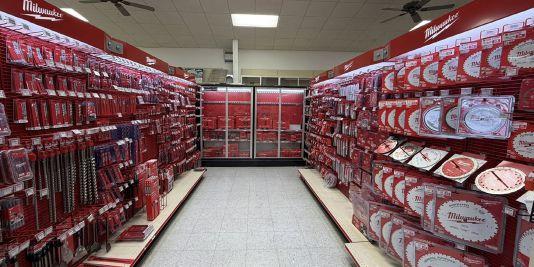
Smith & Sons Building Center leans into specialty Milwaukee accessories and hard-to-find tools that larger stores often overlook, building deeper assortments for contractors and serious DIY customers.
flooring. We’re also collaborating more closely with our other operations and team to support that growth, including dedicating staff to help develop and manage the flooring segment.
Brendon Smith
Smith & Sons Building Center Anadarko, Okla.
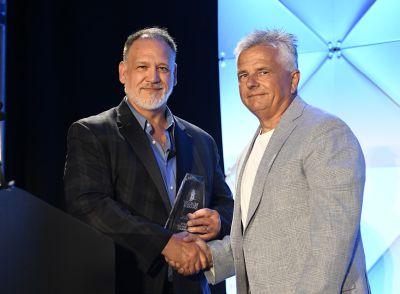








Join us for this important recognition program that honors the best of the best dealers who represent the future of the industry. The Beacon Awards are held annually at Independent Home Improvement Conference and are presented by Hardware Connection magazine. The IHI Conference will be held July 28-30, 2026 in Orlando, FL. For more information about attending this event along with all other educational seminars, open floor discussions and social activities at the 2026 IHI Conference, visit www.ihiconference.org . Sponsors:
EFFICIENCY-DRIVEN, REPAIR-READY AND JOB-SITE-VERSATILE TOOLS FEATURED ON BYOTOOLS, A 580,000-PLUS-SUBSCRIBER YOUTUBE CHANNEL FOCUSED ON PRACTICAL BUILDS AND TOOL USE.
By Brent Gentling
Walking the aisles of the recent Orgill Spring Market in Orlando, Fla., I found a focus on labor efficiency, multi-use job site tools and practical repair solutions that help contractors and DIY customers save time. Several products lean into pre-assembly, quick fixes and hybrid functionality, while others tap into strong accessory and consumable categories that drive add-on sales. There’s also a noticeable push toward durable, pro-grade upgrades in everyday tools—plus a few lifestyle items that signal opportunity for nontraditional impulse categories.
Here are 11 products that caught my attention. You can find videos of each on my YouTube channel .
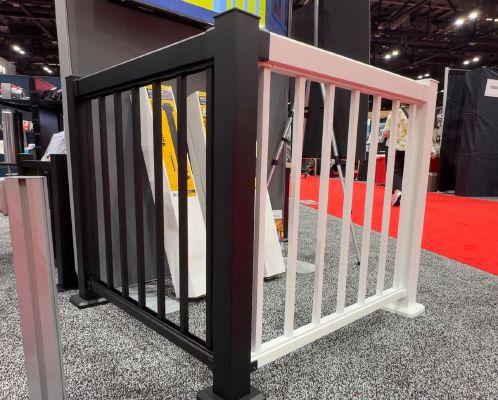
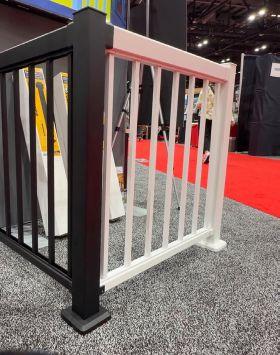
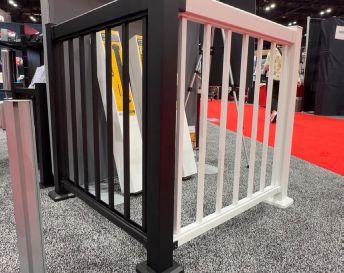
This pre-assembled railing system is designed to reduce installation time and simplify project planning for contractors and homeowners. Pre-built sections cut labor hours and minimize job site errors, making it a strong upsell opportunity in lumber and outdoor living
departments. Retailers with deck and railing traffic could position it as a premium time-saving alternative.
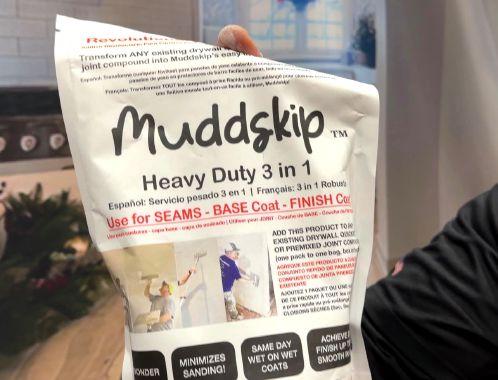
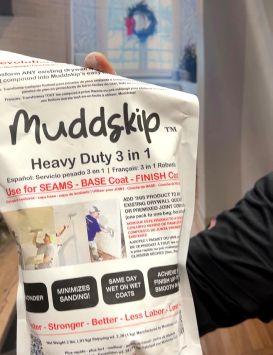
Muddskip offers a cleaner, more controlled way to manage mud, debris and material handling on job sites. Its value lies in reducing cleanup time and protecting finished surfaces—a strong appeal for remodelers. Merchandising alongside drywall and flooring supplies could drive incremental sales.

Thermal insulation coatings continue to gain attention as energy efficiency remains a priority, offering retailers entry into performance coatings that
promise insulation benefits without major construction. They fit well in paint departments positioned around energy savings and seasonal prep.
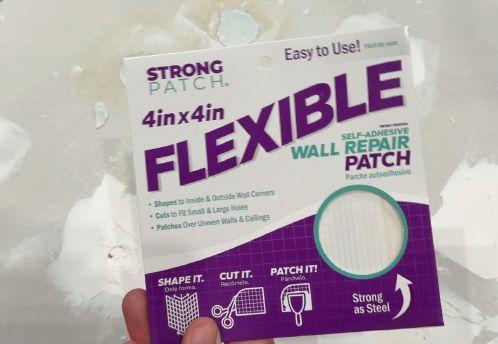
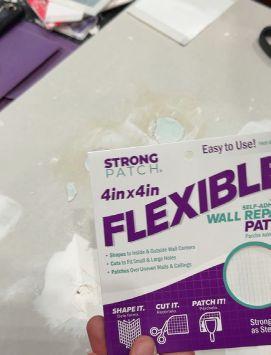
Flexible drywall patches simplify curved or irregular repairs, offering contractors and DIYers a solution for nonstandard fixes. Easy-to-use repair products are strong margin drivers in paint and decorating. Placing this near joint compound, sanding tools and touch-up paint creates a natural project bundle.
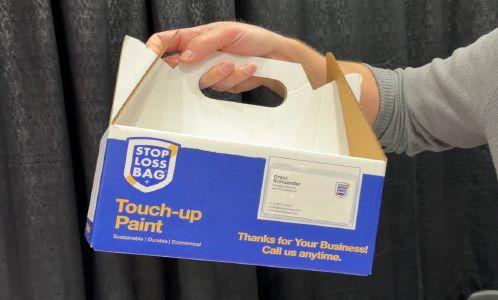
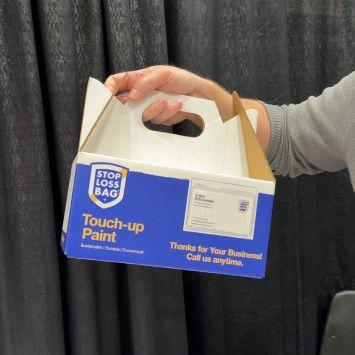
Designed to streamline touch-ups, this kit helps contractors manage leftover paint more effectively. It aligns well with pro paint departments and
service-oriented retailers. Displaying near paint counters encourages add-on purchases at checkout.
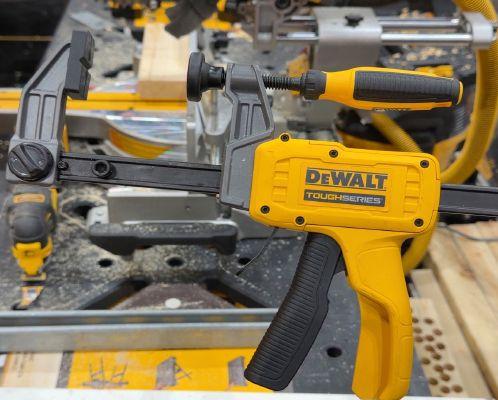
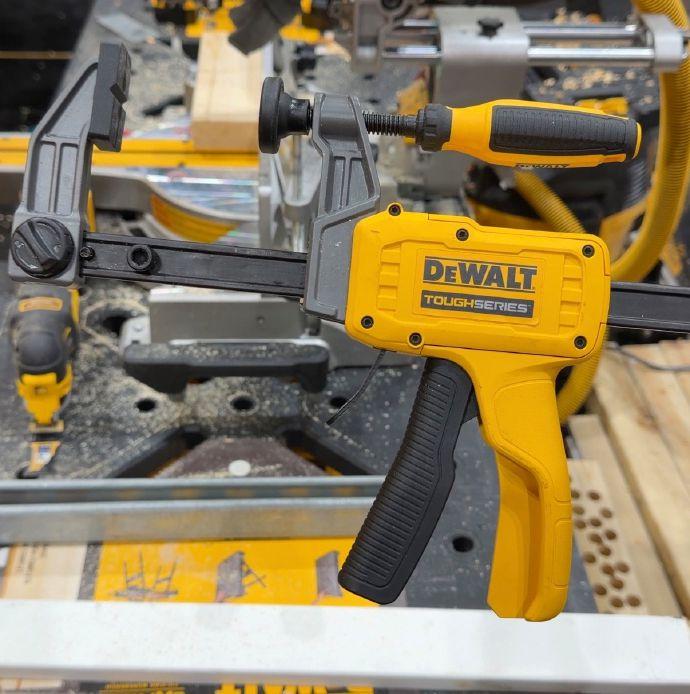
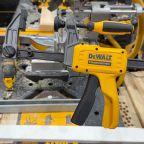
This hybrid clamp combines features of bar and C-clamps for greater versatility. Contractors value multifunction tools that reduce what they carry to the job site. Retailers can highlight this as a premium upgrade in the hand tool aisle.
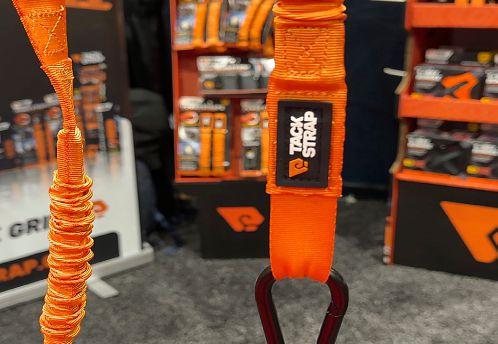
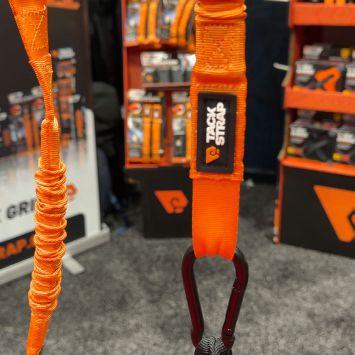
Heavy-duty strapping solutions remain staple add-on items for both pros and DIYers. The Power Strap emphasizes strength and reliability for
hauling or securing loads. Ideal crossmerchandising spots include truck accessories, storage and seasonal outdoor displays.
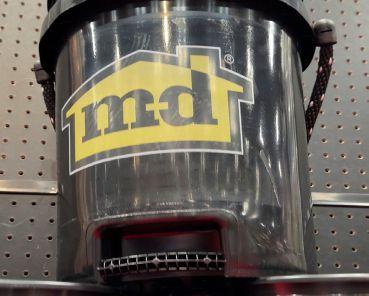
Five-gallon buckets remain one of the most versatile and highest-turn items in hardware stores. If enhanced with improved durability or specialty features, this version could provide differentiation in a commodity category. Buckets continue to support cross-selling across paint, concrete and landscaping.
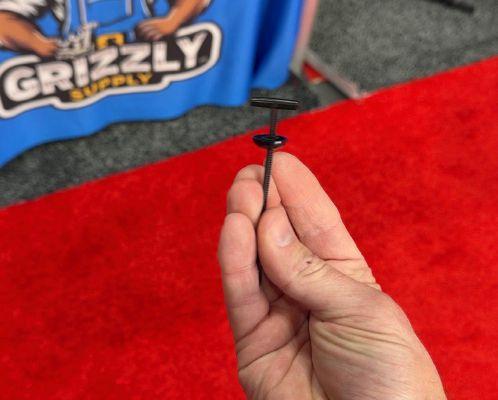
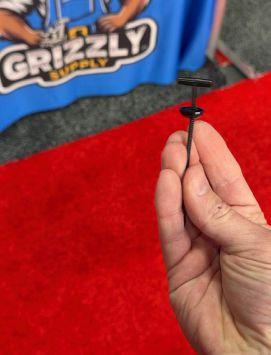
Rivet and fastening solutions address structural and repair needs
across multiple categories. Products like this support contractors looking for secure connections in framing or specialty applications. Placement near fasteners and metal hardware can drive incremental attachment sales.
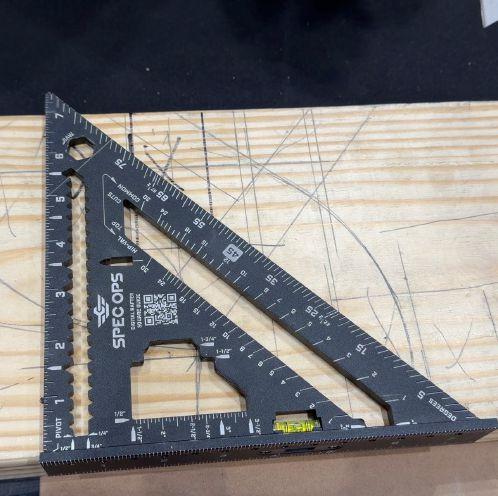
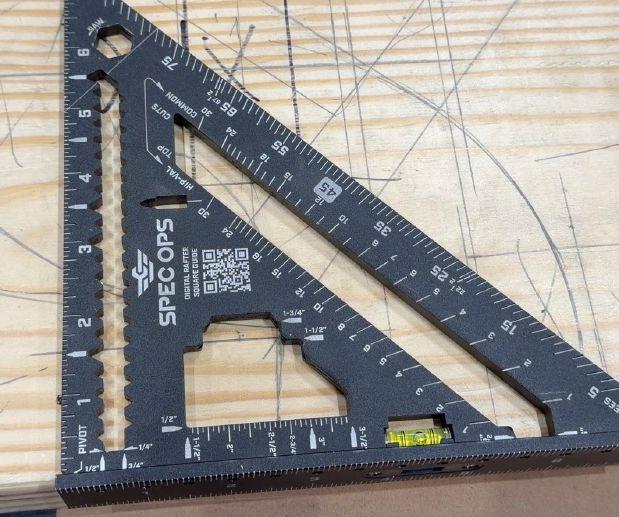
Upgraded layout tools remain attractive to pros seeking precision and durability. A premium rafter square with enhanced materials or markings appeals to framing contractors and serious DIY builders. Retailers can position it as a trade-up item in measuring and layout sections.
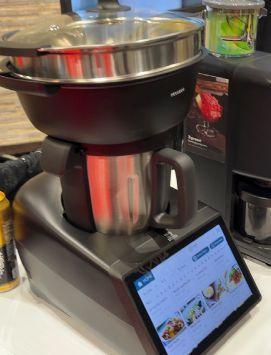
While not tool-related per se, this product signals opportunity in highend kitchen and lifestyle categories. Retailers with strong housewares or gift sections may find appeal in techenabled cooking appliances. This
“ RETAILERS WITH STRONG HOUSEWARES OR GIFT SECTIONS MAY FIND APPEAL IN TECHENABLED COOKING APPLIANCES.
”
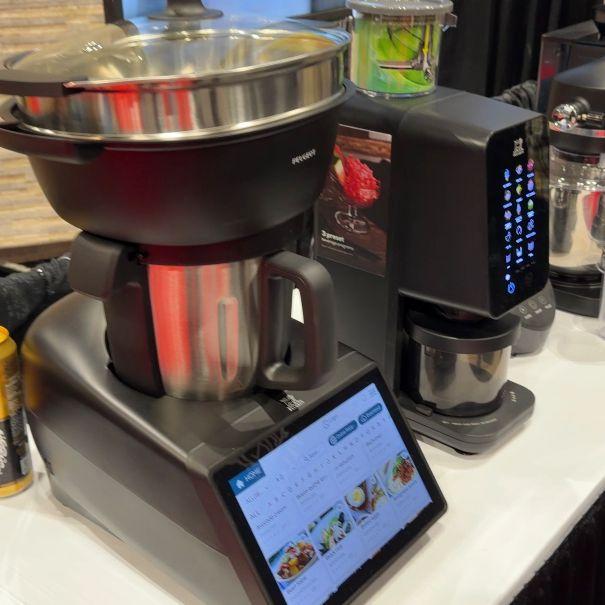
represents an example of expanding beyond traditional hardware into experiential retail. n

Brent Gentling is the creator of BYOTools, a DIY-focused YouTube and social media brand with millions of views, known for tool reviews, how-to videos and hands-on construction insights.
Q&A: THOUGHT LEADERSHIP
ORGILL’S NEW CHIEF DIGITAL AND INFORMATION OFFICER, SHARMEELEE “SHARMS” BALA, DISCUSSES CUSTOMER FOCUS, EFFICIENCY AND PRACTICAL AI ADOPTION.

Sharmeelee “Sharms” Bala brings more than two decades of retail technology experience to her new role as chief digital and information officer at Orgill. She joined Orgill’s leadership team Dec. 1, 2025, after executive roles at major retail organizations, including CIO and head of product management at JCPenney, where she led a digital overhaul that generated significant incremental sales
and modernization of core systems. Earlier in her career she held leadership responsibilities across global engineering, merchandising systems, logistics and enterprise data platforms at Gap Inc. and Walmart.
At Orgill, Bala oversees the recently restructured internal technology organization, with early focus areas centered on enterprise digitization, supported by enterprise architecture, software engineering, project management and


Bala and Orgill president and CEO Boyden Moore open the Orgill Technology Symposium ahead of the Spring Market. During the event, Bala emphasized customer focus, operational efficiency and practical use of data and AI.
ongoing-modernization of the distributor’s technology infrastructure. She is also guiding broader digital efforts tied to dealer- and customer-facing tools, data analytics and improved supply chain visibility. Orgill’s president and CEO, Boyden Moore, says her background aligns with the company’s vision for a digitally empowered future for Orgill and the independent retailers it serves. In this Q&A with Hardware Connection, Bala addresses how her retail experience
Bala is focused on building scalable technology and practical AI tools that improve efficiency and support independent retailers.
informs her work at Orgill, discusses the technology trends she’s watching and offers advice for hardware retailers who are investing in technology.
Hardware Connection: How does your career experience shape what you bring to Orgill, and what are you looking forward to doing there?
Sharmeelee “Sharms” Bala: I spent 20 years with Walmart, then

Gap, then JCPenney, all in retail technology. Throughout my career, my focus has consistently been on customers and the customer experience. That customer-first mindset has guided my work and shaped how I approach technology as a way to help organizations better serve the people they support.
What made retail interesting to me is that I’m a customer myself, so I can relate when things go well and when they don’t. Having that customer focus has always helped me come up with the best solution for whatever we’re trying to solve. The second focus for me has always been efficiency. There are multiple ways to solve a problem using technology, but the right way
Bala’s advice for hardware retailers considering their next technology purchase: “Don’t chase the shiny object. Choose something simple.”
almost always comes down to experience and efficiency.
Whether it’s supply chain—which I’ve been deeply involved in at previous organizations—automation or data and insights, the question is always: How do we use data to our benefit to generate insights that help our customers and, in turn, help us create the cash flow and margin we need? All of that is needed here at Orgill. It’s no different. The playbook may be slightly different, but it’s very similar, and those experiences will come in handy.
The Hardware Connection Century Club, sponsored by the National Hardware Show®, recognizes “The Innovators and Survivors Who Helped Build America.” Our Century Club currently includes 804 hardware and LBM retailers, 21 wholesalers and 207 manufacturers that were founded in the United States of America and remain in business after 100 or more years.
You can find the complete list of Century Club members including old store photos and links to company history by clicking here. We congratulate the following retailers who have been added to the Hardware Connection Century Club this past year:
Andrew Posey & Son Hardware, Jasper, AL—1924
Bourassa True Value Hardware, New Bedford, MA—1924
Bowling’s Feed and Hardware, Catlettsburg, KY—1924
Braun Building Center, Manitowoc, WI—1905
Carl Eliason & Company Lumber & Hardware, Sayner, WI—1924
Chairtown Lumber Company, Gardner, MA—1924
Clark Devon Hardware, Chicago, IL—1924
Congleton Lumber, Lexington, KY—1905
Denver Lumber Company, Denver, CO—1923
Gennett Lumber Company, Fletcher, NC—1901
Guy C. Lee Building Materials, Smithfield, NC—1924
Hamilton Building Supply, Hamilton, NJ—1924
Heller Lumber Company, Arlington Heights, IL—1924
Holman Supply Company, Moultrie, GA—1920
Howell Hardware, Millville, NJ—1924
Hunter’s Hardware, Berkley Spring, WV—1870
H&W Hardware, New York, NY—1924
SPONSORED BY
Kelly Seed & Hardware Co., Peoria, IL—1905
Learned Lumber, Hermosa Beach, CA—1924
Legg Lumber Company, Holt, MI—1884
Lummus Building Supply Co., Atlanta, GA—1925
Morrison Terrebonne, Houma, LA—1924
National Lumber Company, Baltimore, MD—1919
Newton’s True Value Hardware, Cherryvale, KS—1924
Page Lumber , Poughkeepsie, NY—1924—1,000th Centrury Club member
Paschal Brothers Hardware & Lumber, Jacksonville, FL—1924
Ransom Brothers Lumber & Supply, Ramona, CA—1924
Requarth Company, Dayton, OH—1860
Southern Builders Supply, Valdosta, GA—1880
Union Lumber Company, New Albany, MS—1902
Valley Park Elevator & Hardware, Valley Park, MO—1874
Western Materials Inc., Yakima, WA—1915
William B. Morse Lumber Company, Rochester, NY—1853

What specific skills or background have already started to click for you at Orgill?
I think the retail experience is especially relevant when we’re dealing with our dealers. If you see them as retailers and as our customers, you want to build something simple that can scale. That’s something I can bring to the table.
In large retail environments, off the shelf solutions often fall short. To solve that, we built innovative systems which are designed from the ground up to not just work, but to scale. Everything was designed with scale in mind— not hundreds but millions (skus, transactions) through the business.
That mindset is going to help, especially with our focus on customizing for our dealers. You’re not just building something once; that’s easy. You’re building something that can cater to different dealers with different needs, but in an efficient way so you’re not rebuilding everything for every customer. Building it correctly the first time, in a scalable way, will play a huge role for us.
What about Orgill’s culture or direction appealed to you?
A lot of things. The first thing that struck me was the focus on the customer. In my first conversation with Boyden, that focus was very clear. Like I said, I’ve always been fascinated by building
for the customer. If I only wanted to build technology, I could have gone to another product company. I’ve stayed with companies that focus on making life easier for their customers.
That’s what clicked when I spoke to him, and when I spoke to [chief human resources officer Dr. Laura Freeman and chief financial officer Julie Albrecht]. They all emphasized that we’re here to make our customers’ lives easier. That resonated with me. And of course, there are so many opportunities with technology to simplify things even more for our customers. That’s why I’m here.
What technology trends are you watching that are most relevant to where Orgill is headed?
There are several. First: data, insights and AI. There is so much we can do. At the same time, there’s a lot of cleanup work that needs to happen across the industry before we can fully use it effectively.
AI isn’t just for end users. It’s also for technology teams. Today, I can build many things using AI that would have taken much longer a few years ago. I can simplify development processes, generate test scenarios, build test cases and create data. There are tools where I can simply ask for something and receive it immediately. We need to make sure we’re using those tools so we’re not reinventing the wheel.

Then we can focus on what actually makes sense for Orgill—what brings IP and value to Orgill—rather than spending time on things that already exist elsewhere.
Is there a trend you believe will have an immediate or near-term impact?
With AI, there is a lot we can do immediately in terms of efficiency. In our supply chain alone, there’s a great deal of opportunity. We don’t have to transform everything overnight—that’s the longterm goal—but in the near term, we can focus on improving efficiency.
We can evaluate processes that have existed for years and ask whether they still make sense. Can we approach them differently? AI and data insights can play a major role in that. Bringing more consistency in how we think about
Building solutions for dealers starts with listening, aligning around processes and creating systems that can scale efficiently, Bala says.
processes will have a significant impact for Orgill.
For hardware retailers, investing in technology can be expensive and uncomfortable. What advice would you offer?
A couple of things. First, don’t chase the shiny object. Choose something simple. Most retailers aren’t looking for solutions that work for 200 or 2,000 stores; they need something that works for a smaller number of locations.
Second, don’t focus only on technology. You also have to focus on process. Make sure you understand how your processes need to change so you can use the technology effectively. n

By Doug Donaldson

Paint and decorating sit at the intersection of two forces currently shaping the home improvement economy: a large aging housing stock that keeps repair-andrefresh projects flowing, and consumers who continue to weigh spending carefully. For independent hardware store owners, the opportunity remains strong, with the most reliable wins coming from project guidance, in-stock performance and attachment sales rather than any single product trend.
The macro backdrop still favors “improve instead of move.” Harvard’s
Joint Center for Housing Studies projects that spending on improvements and maintenance to owner-occupied homes will grow early in 2026 before easing later in the year, with yearover-year growth projected at 2.9 percent early in the year and 1.6 percent by the end. That’s not a boom forecast, but it supports steady traffic for paint, patch, prep and decorating

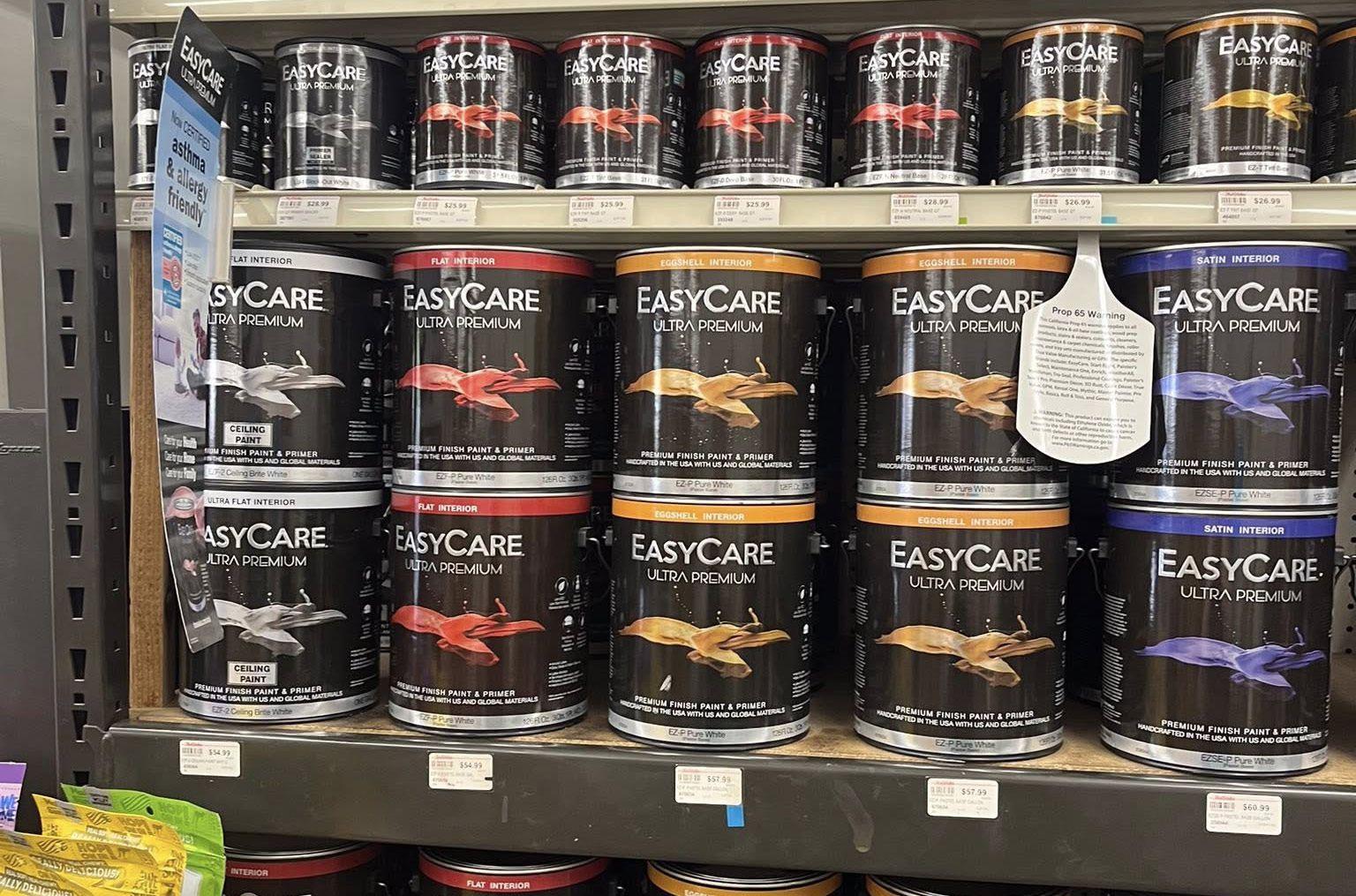
EasyCare paint anchors the core paint assortment at Pollock Pines True Value in Pollock Pines, Calif., where owner Dave Campbell positions the line on quality and value while supporting it with rotating endcaps and co-op promotions.

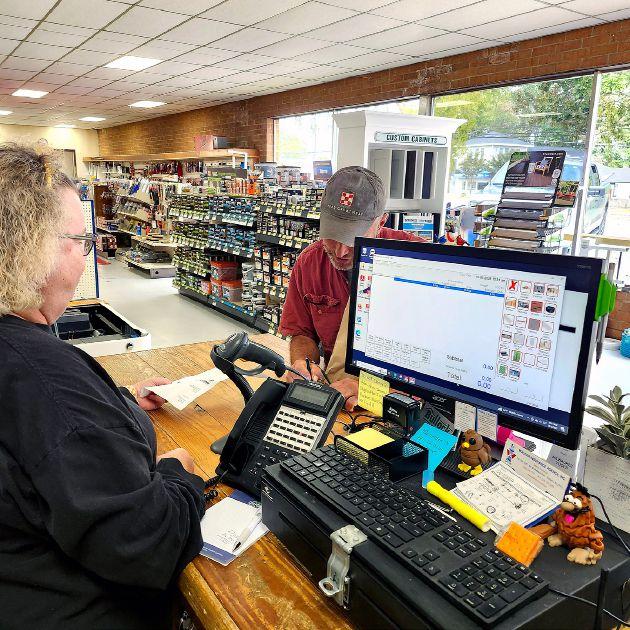
“Our previous system was cumbersome to wor k with and we had ver y little customer suppor t,” Frank Stoltmann of Bullock Supply explains “That’s where J3 POS really helps us out Fred’s family was in the hardware business for 100 years, so this system was bor n out of the hardware industr y,” Frank says “Understanding the requirements for a supply store and designing the POS so it’s easy to use at the front counter speeds up our operation, makes us more infor med when we’re talking to customers, and gives us the ability to track inventor y ”
“We had a ver y shor t window for install and J3 POS went above and beyond to get it done We had good solid training r ight from the star t Its quick lookup buttons let us click on a depar tment and find an item ver y easily And as we’ve gotten more familiar with the system, constant communication with J3 POS staff makes our utilization even easier ” “J3 POS software is tailored to our growth needs,” Frank adds “It’s what we need for today, tomorrow, and well into the future ”
“We can grow into the software versus modifying ourselves to fit a software.”

“Grade A support— Everything about what you guys do is top notch.”
“Having a server on site gives us a level of confidence… we can see it, touch it, feel it.”
See why independent supply stores trust J3 POS. Book your personalized demo today. 1-888-600-5522 • sales@j3pos biz • j3pos biz

supplies that tie to smaller upgrades and maintenance work.
At the category level, coatings industry data point to a return to modest growth after the volatility of the past several years. In its overview of the U.S. paint and coatings market, the American Coatings Association (ACA) notes that volumes fell from 2022 to 2023 while value rose, with estimates and forecasts calling for growth in both volume and value through 2024 and 2025. In other words, the category has been moving through a period during which pricing and mix mattered, and unit growth began to stabilize.
What that means on the retail floor: Paint is still moving, but customers want simple answers and products that perform as promised. The retailers who win are the ones who help customers
Hartville Hardware’s paint department in Hartville, Ohio, is backed by a formal onboarding and product training program designed to equip associates with category-specific expertise.
answer practical questions quickly: Which finish belongs on this surface, how much product is required, what prep steps determine results and which add-ons prevent rework?
Paint and decorating hold up because the category serves a wide range of project sizes. The same department supports a landlord repainting a unit, a homeowner patching a hallway, a contractor finishing trim and a customer refreshing patio furniture. In a year when remodel growth is expected
1. Project bundling drives margin. Paint is rarely a single-item purchase. Prep and protection products are where baskets grow: tape, masking, sanding, patch and repair, caulk, brushes and rollers, liners, trays, drop cloths, surface cleaners and PPE. The operational opportunity is to make those add-ons default rather than optional. Train staff to recommend the next two items before the customer asks. Build adjacencies that match the top project types in your trade area, such as rental turns, exterior refresh, deck and fence maintenance, and quick bathroom upgrades.
2. Right-size assortment beats endless assortment. Paint shoppers punish out-of-stocks. If a customer needs a specific primer, sheen or matching accessory, substitution is often unacceptable. Independents do not need to out-assort big boxes to win; they need to carry the right depth in the items that matter in their market and protect those positions with disciplined replenishment.
3. Mix management matters. Industry forecasts pointing to modest value growth alongside volume changes underscore the importance of mix: premium products, specialty solutions and system selling can lift department performance even when unit growth is
moderate. For independent retailers, that can show up in trade-up conversations: stain-blocking primers, scrubbable interior paints, exterior durability claims tied to region and specialty coatings that solve specific problems.
4. Consumers connect with brands. Execution in the paint aisle extends to brand positioning and promotional timing. At Pollock Pines True Value in Pollock Pines, Calif., owner Dave Campbell emphasizes carrying EasyCare, True Value’s line of paint, as a core category, citing its ingredient quality relative to price. Endcaps rotate frequently, supported by the coop’s bargain-of-the-month program, with promotions timed carefully to local traffic patterns.
5. The “refresh” customer remains a core driver. Harvard’s Joint Center remodeling outlook suggests continued activity in repair and maintenance, even as growth slows later in 2026. Paint and decorating aligns well with that environment because it’s a high-impact upgrade that can be completed quickly. Retailers can merchandise to that reality with endcaps and project callouts that speak to small wins: entryway refresh, trim touchups, cabinet updates, porch and patio maintenance, and seasonal exterior preparation.

to slow later, paint’s breadth matters. Paint projects can be scaled up or down, and that flexibility keeps demand more consistent than categories that rely on major discretionary remodels.
The architectural coatings segment also tracks housing and renovation activity closely. ACA’s industry coverage describes architectural coatings sales as highly correlated with housing and construction conditions, reinforcing why paint remains a reliable bellwether for the home improvement cycle.
Independent retailers are serving a customer base that includes experienced painters and first-timers. That mix creates a training opportunity for store teams. Signage, quick-reference guidance and “project talk” at the counter often matter as much as the brand on the can. Hardware retailers can treat paint as a consultative category, where the associate’s ability to translate project needs into a shopping list improves close rates and increases basket size.
This is also where independent retailers can differentiate. Big boxes can win on endless aisles. Independents can win on speed, local trust and solutions that prevent a second trip. The goal is
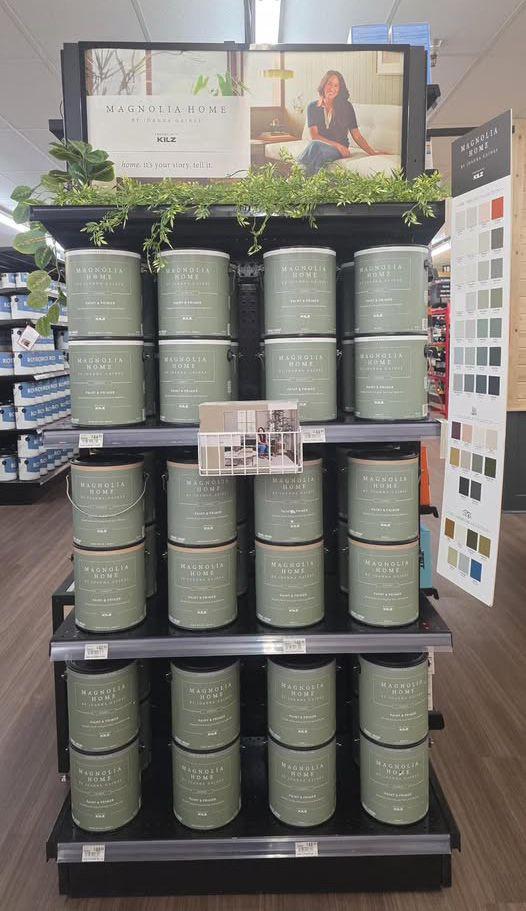
A Magnolia Home paint endcap at Madisonville Ace Hardware in Madisonville, Ky., reflects owner Ted Ratzloff’s focus on brand depth, consistent gallon and five-gallon in-stocks and trained associates who serve both contractors and DIY customers.
fewer stalled decisions and more “complete the project today” baskets.
Some independent retailers are doubling down on paint as a destination rather than just another aisle. At Nelson
Ace Hardware in Barre, Vt., owner
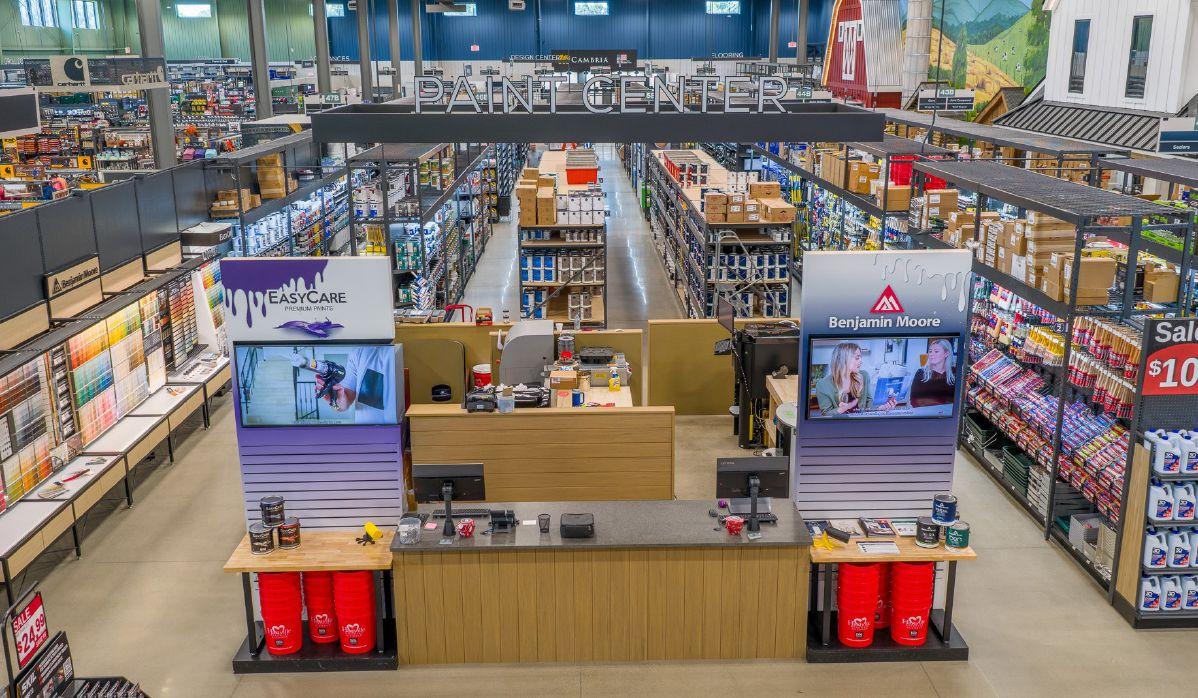
Bob Nelson carved out a long, narrow 1,200-square-foot building connected to the main store that operates like a store within a store touting its Benjamin Moore identity. The store supports the category with targeted streaming TV advertising and outreach to specific local demographics. The strategy reinforces paint as a defined draw within the broader hardware operation rather than a secondary department.
Start with employee education that focuses on project outcomes. One example: Hartville Hardware in Hartville, Ohio, has built a multiweek onboarding program, including online product knowledge training specific to paint and related categories, to ensure employees are prepared to assist customers effectively. Train staff on the questions that unlock the basket: surface type, interior versus exterior, current condition, desired finish, timeline and tolerance for odor and cleanup. Build a simple cheat sheet for coverage expectations, dry-to-touch ranges and recoat windows based on the brands you carry and make it accessible at the paint counter.
At Madisonville Ace Hardware in Madisonville, Ky., owner Ted Ratzloff says steady gains in the category have come from keeping gallon and five-gallon units consistently stocked,
FORECASTS
maintaining multiple brands including Benjamin Moore, Magnolia Home and Royal, and investing in dedicated staffing. The store relies on training through Ace University, vendor-led sessions and internal cross-store knowledge sharing to keep associates prepared. This approach has helped the store gain traction with contractor customers while still serving DIY demand.
Paint and decorating in 2026 looks like a category built for steady work. Industry forecasts describe moderate growth and continued correlation with renovation activity, while remodeling indicators point to positive but cooling expansion as the year progresses. For independent hardware store owners, that combination rewards execution: Help customers understand the project, keep the right products in stock and build baskets through smart adjacencies. n

Source:
Epicor’s Industry Data Analytics tracking information is based on sales from a representative sample of hardlines retailers located throughout the U .S . For more information, call 512-278-5800, visit Epicor’s website or email epicorindustryanalytics@epicor com
Spray paint behaves like a “project need” category, rather than a branddominance category. For hardware retailers, success depends on thoughtful assortment and adjacency merchandising, not just stacking the top sellers.
1. Spray paint is highly fragmented. No single item dominates. Even the top 30 items don’t crack 30 percent of unit sales. That suggests color variety, finish differences and niche uses drive demand.
2. Breadth matters more than a hero SKU. This isn’t a category where one or two products carry the department. Customers come in for very specific needs: gloss white, satin black, primer, specialty finishes, camo, appliance epoxy, etc.
3. Assortment is strategic. In a dispersed category like this, SKU reductions require careful evaluation, as demand is not concentrated in a small core. A retailer trimming too deeply to “clean up inventory” could unintentionally lose relevance.
4. Inventory management is critical. Because sales are spread out, slow movers are inevitable. The lesson isn’t to slash SKUs. Instead, it’s:
• Tight reorder discipline
• Smart color clustering
• Seasonal resets
• Data-driven assortment pruning
5. This is a traffic category. Spray paint is frequently purchased for specific tasks, creating attachment opportunities. Once in-store, attachment sales matter (drop cloths, tape, sandpaper, gloves, respirators).
6. It’s not a consolidation story. Unlike categories in which the top ten drive 60 to 70 percent of sales, spray paint remains a specialtydriven aisle. That favors independent hardware stores that carry depth and understand project use cases.
A standard 11- to 12-ounce spray paint can typically covers about 10 to 20 square feet, depending on surface texture and application technique. Smaller 4.5-ounce cans generally cover around seven square feet, while larger 16-ounce cans can reach up to 30 square feet.
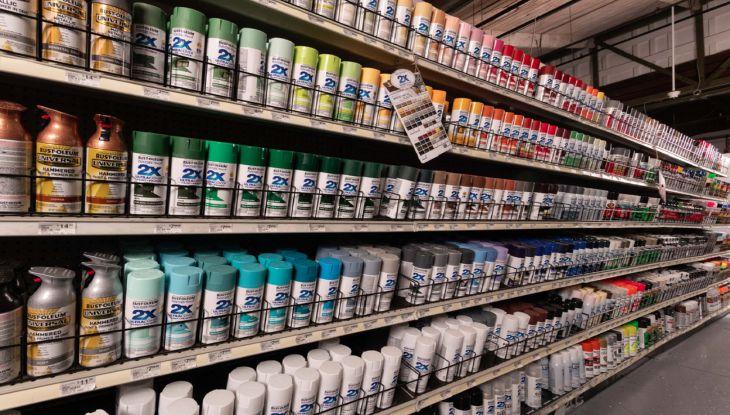
Spray paint organized by color at Jackson’s Hardware in San Rafael, Calif. In a low-concentration category in which demand is spread across hundreds of SKUs, clear color blocking helps customers quickly find the specific shade their project requires.
Strong paint sales begin with trained employees who can translate coverage numbers and product differences into clear guidance for customers tackling specific projects. The following spray paint fundamentals provide a practical framework for those conversations:
• One coat, light color over similar base: ~12 to 15 sq. ft.
• One coat, dark color over light base: ~8 to 10 sq. ft.
• Two coats (common for full opacity): ~6 to 8 sq. ft.
• Gloss finishes lay down more uniform film—one coat often meets opacity goals, so effective coverage per can may be closer to the high end (~12 to 15 sq. ft.).
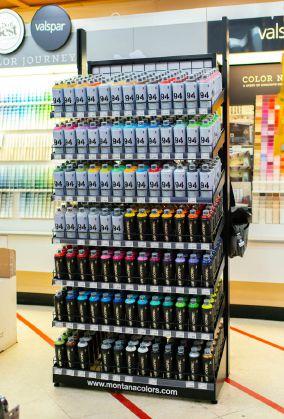
Above right: MTN 94 spray paint displayed at Modern Hardware in Grand Rapids, Mich. In a category in which sales are fragmented across more than 2,400 items, independent retailers win by pairing color depth with informed project guidance.
• Flat/matte finishes tend to require at least two coats for even color, dropping effective coverage closer to ~6 to 9 sq. ft. per can.
• White and light neutrals: closer to nominal coverage.
• Bright or deep colors (reds, blues, blacks): often two or more coats, dropping practical coverage to ~5 to 8 sq. ft. per can.
• Wood, concrete or textured metal can absorb more paint, reducing effective two-coat coverage to ~4 to 7 sq. ft. per can.



Spray paint remains a deceptively complex category. It looks simple on the shelf, but shoppers often arrive with a narrow, projectspecific need tied to color, finish and surface type. In the independent channel, unit sales are also spread across thousands of items rather than concentrated in a small group of top movers, which makes organization and presentation more than cosmetic.
Timmy Grins, head of U.S. sales for Montana Colors, says many retailers treat spray paint as a static aisle. “Keeping them fresh, overall, the spray paint category as a whole has been pretty dull of late,” Grins
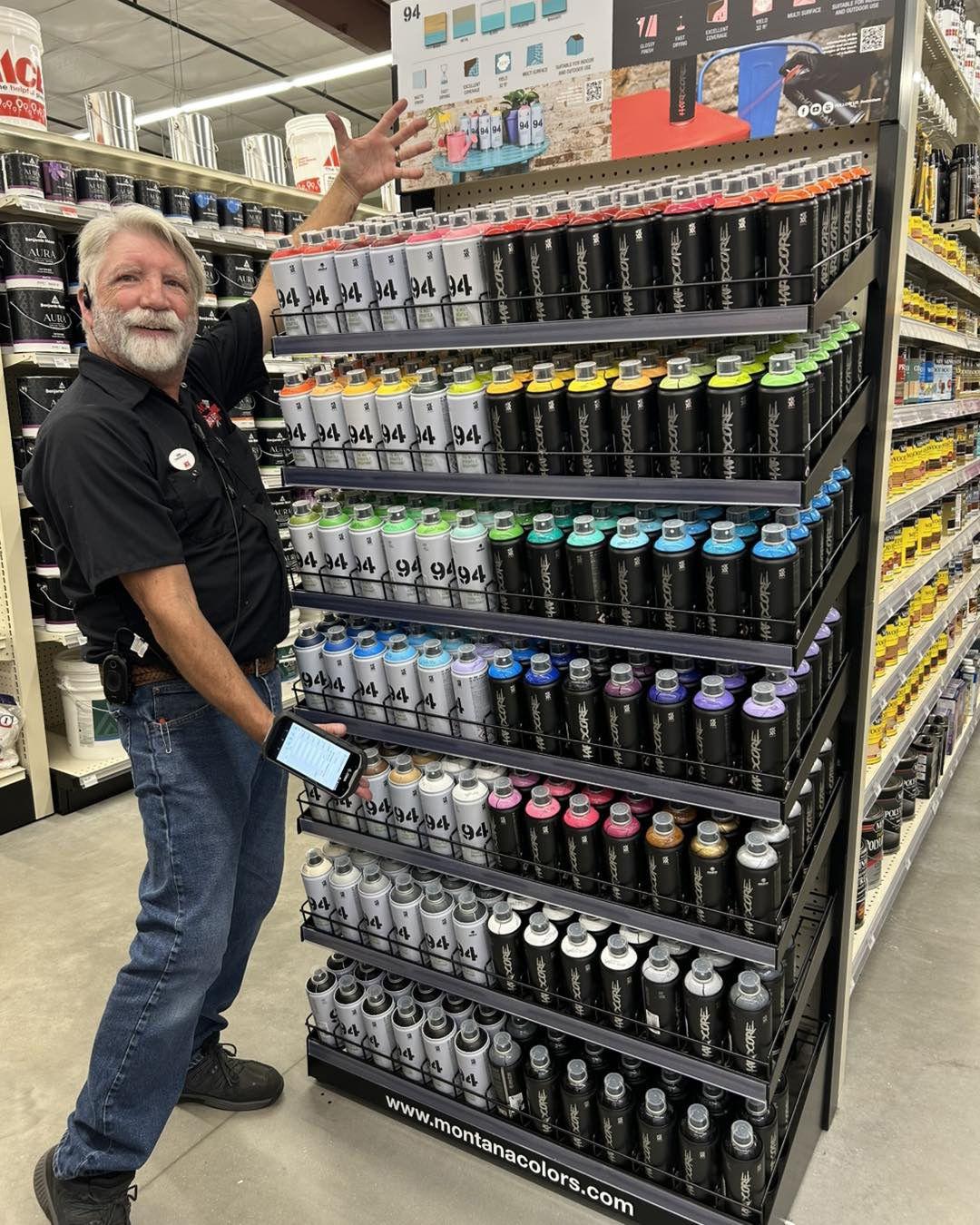
By featuring Montana Colors on a dedicated endcap, Hagan Ace Hardware in Florida creates a destination within the paint department while encouraging accessory add-on sales.
says. “It’s a lot of the same old, same old.”
His core message: The category performs better when it looks maintained and intentional. That begins with the basics—lighting, readability and routine resets—then expands into seasonality, adjacencies and inventory discipline.
Grins points first to visibility. Improving lighting and cleaning up presentation helps customers evaluate color and finish more quickly. From there, he recommends small, regular changes that signal the aisle is current: Highlight new additions, rotate seasonal items and remove underperformers as needed.
Those updates are not just aesthetic. Spray paint shoppers frequently want a specific shade and finish, and the faster they can find it, the more likely they are to complete the purchase rather than delay it or leave for another store.
Retailers often ask whether spray paint should be organized by color, project type or brand. Grins emphasizes brand organization because many frequent users shop within a system. “By brand, often painters prefer to work within their favored ecosystem,” he says. “They want to use the same brand primer, paint and finish.”
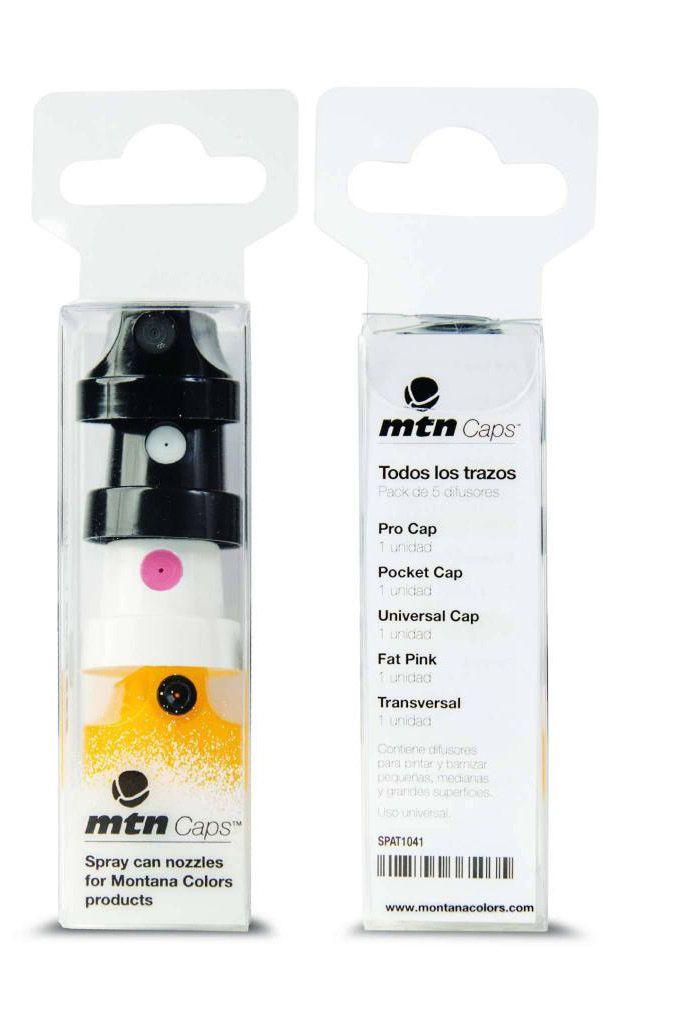
Montana Colors’ interchangeable caps highlight how targeted application accessories can build baskets alongside tape, plastic sheeting, sandpaper and prep supplies.
A brand-blocked layout makes it easier for a loyal user to build a complete solution. Within those brand blocks, stores can still use color flow to reduce friction for shoppers who are selecting by hue first. The important point is consistency: Whatever approach a store chooses should feel logical across the entire section so customers do not need to hunt.

Spray paint naturally supports addon sales because the can is only part of the process.
“Adjacencies are, in my opinion, somewhat slept on,” Grins says, adding that painter’s tape, drop cloths, plastic sheeting, sandpaper, prep wipes and gloves are strong companion items.
For specialty spray paint users, he also points to application accessories: “At Montana Colors, a great add-on is our caps; we have different types of caps for different types of jobs.”
The general retail takeaway is that the aisle should not be merchandised as “cans only.” Customers need prep and protection items, plus primers and clear coats depending on the surface and desired durability. Placing those products nearby and training employees to mention them turns a singleitem purchase into a complete project solution.
Grins says signage is often overlooked, particularly in long-established categories. “Signage is super important and is almost a lost art in spray paint. Brands have been on the shelf so long they think they don’t need to communicate anymore.”
He also notes that many newer shoppers would benefit greatly from simple assistance. “There is an entirely new generation coming into stores who are clueless and could use guidance,” Grins says.
For retailers, that means signage can do more than label price. Simple project
cues and quick instructions can reduce uncertainty and increase conversion: finish callouts, surface prep reminders and pointers such as primer-first guidance for slick surfaces. Project-based displays can also help, especially when tied to seasonal needs or common tasks.
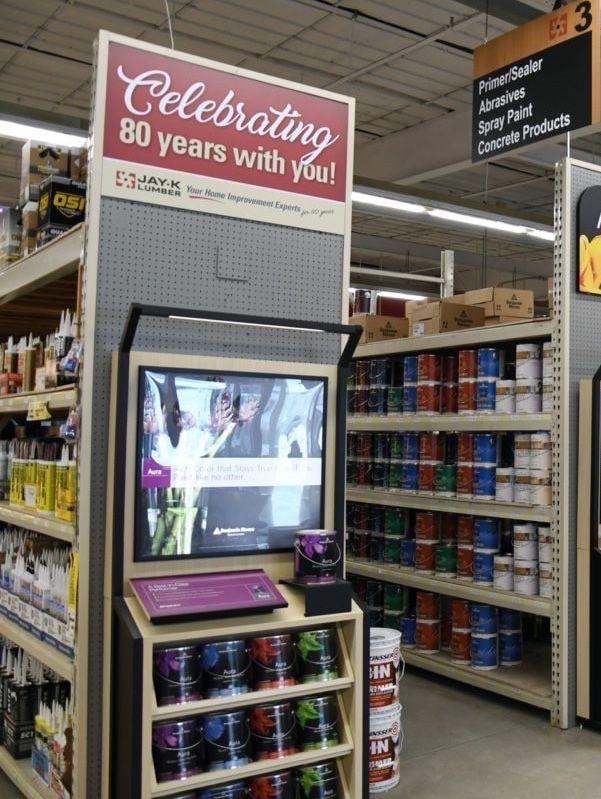
Placement is another recurring problem Grins sees in the field. “[Put it] in the paint section,” he says, noting he has walked stores where spray paint lives elsewhere. “Keep it simple is the golden rule.”
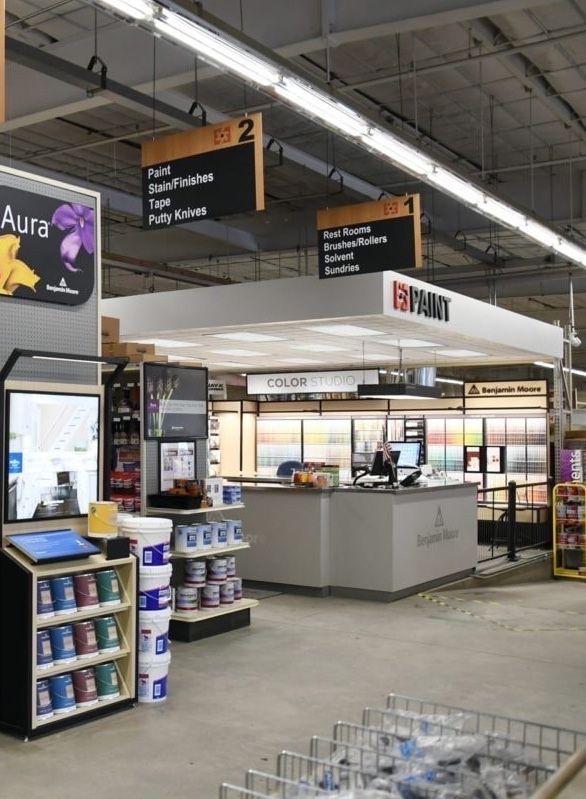
Jay-K Lumber in New Hartford, N.Y., keeps spray paint positioned within its robust paint department, reinforcing logical shopping flow and keeping the category near associates equipped to answer project questions.
Placing spray paint within the paint department reinforces logical shopping behavior and strengthens adjacencies. It also keeps the category near the employees most likely to answer paintrelated questions and recommend prep products.
Inventory strategy depends on who shops the aisle. “A lot of factors go into this decision,” Grins says. “Most importantly, though, stores with a decided consumer base should keep the stock deep to ensure that those customers don’t go elsewhere.” He adds that stores that are aiming to reach a wider audience may benefit from expanding color options to increase category appeal.
The practical approach is to decide what the store wants the category to be, then manage it accordingly: deeper inventory in core colors and systems for established users, broader color coverage where the opportunity is attracting more casual or first-time buyers. n

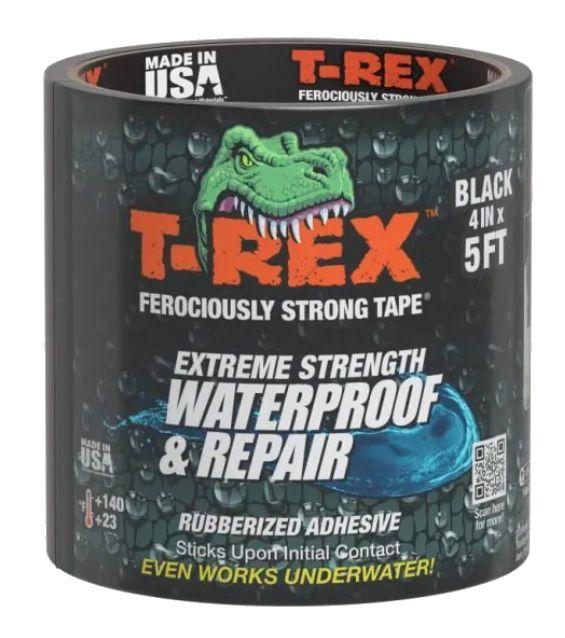
SHURTAPE TECHNOLOGIES, T-REX® HEAVY DUTY WATERPROOF AND REPAIR TAPE
• Extra-thick rubberized butyl adhesive for heavy-duty waterproof adhesion.
• Designed for patching and sealing both indoor and outdoor wet or dry surfaces—even underwater.
• Waterproof backing stands up to extreme weather and outdoor conditions.
• Temperature performance from roughly 23°F to 140°F.
• UV-resistant formula prevents breakdown under prolonged sunlight.
• Peelable liner streamlines application and keeps the adhesive clean.
• Combines wood glue and wood filler in one formula, eliminating the need for separate products.
• Thick, non-sag consistency fills gaps up to 1/8 inch while creating a strong bond.
• Designed for both interior and exterior woodworking applications.
• Sands easily once cured and can be stained or painted for a seamless finish.
• Suitable for cabinets, trim, furniture and general wood repairs.
• Made in the USA with global materials.
Technologies
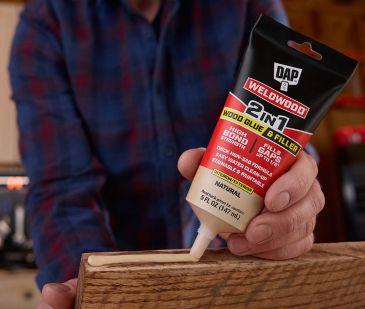
• Water-resistant when coated, expanding application flexibility.
• Streamlines project workflow by reducing product steps and simplifying repairs.
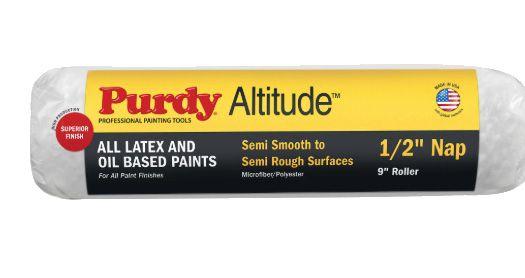
• Engineered with a premium microfi ber and polyester blend for enhanced paint pickup and distribution.
• Delivers an ultra-smooth, uniform fin ish with lower splatter and lint compared with standard covers.
• Offers up to 50 percent more cover age than Purdy® WhiteDove™ when used with premium paints, helping reduce trip-backs to the tray.
• Designed for semi-smooth to semirough surfaces, ideal for walls, doors and interior projects.
• Suitable for use with latex and oilbased paints across a variety of
• Designed to tackle corners, edges and tight spaces that are hard to reach with standard rollers or brushes.
• Woven pad applicator delivers smooth, even paint coverage for walls and trim.
• Comfort grip handle allows for longer use with less fatigue on small projects.
• Threaded handle accepts standard extension poles for higher reach without a ladder.
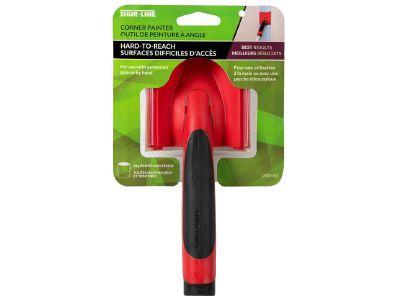
• Ideal as an add-on tool for interior surface painting and quick touch-ups.
• Refill pad available separately, making it a reusable solution that boosts attachment sales.
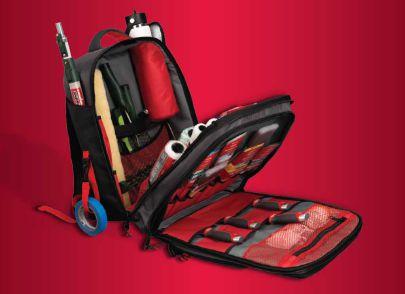
• Designed as a dedicated tool transport solution for painters carrying brushes, rollers, trays and accessories.
• Multiple compartments and pockets organize tools, hardware, mixing sticks, tapes and sundries in one carry system.
• Durable construction with reinforced stitching and abrasion-resistant materials for job site wear.
• Padded shoulder straps and back panel improve comfort during extended use or loaded carry.
• Includes interior sleeves sized for roller frames, brushes, scrapers and surface prep tools.
• Engineered with an epoxy-fortified acrylic formula for enhanced scuff resistance in busy spaces.
• Offers smooth application and finish with excellent coverage and high hiding power.
• Quick drying properties help speed project completion and reduce downtime.
• Zero VOC formulation supports healthier indoor air quality in occupied spaces.
• Excellent touch-up performance, minimizing rework in commercial and residential projects.
• Front and side pockets provide quick access to small items such as putty knives, utility knives, pencils and tape.
• Water-resistant base helps protect contents from damp conditions on job sites.
• Designed to complement professional tool kits and support workflow efficiency.
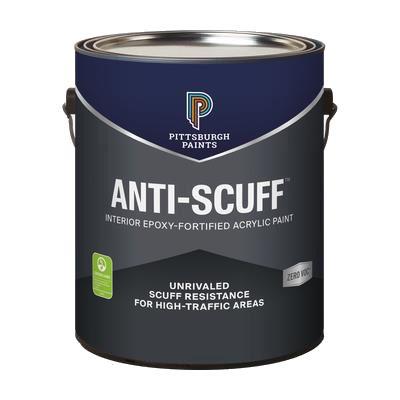
• Available in multiple sheen levels and tint options to suit design and performance needs.
• UL GREENGUARD Gold Emissions Certified, making it suitable for sensitive environments like offices, schools and health care facilities.
• Extends from 6.3 feet up to 12 feet, covering high walls and ceilings without a ladder.
• Lightweight anodized aluminum construction for durability without added weight.
• Internal bi-directional Twist-Lok mechanism locks securely at any extended length.
• Standard nylon threaded tip fits most paint rollers, dusters, scrubbers and other tools.
• Rust-resistant aluminum handle and slider for long service life.
• Eliminates ladder use for many painting, staining and cleaning tasks.
• Available in multiple adjustable length rang -

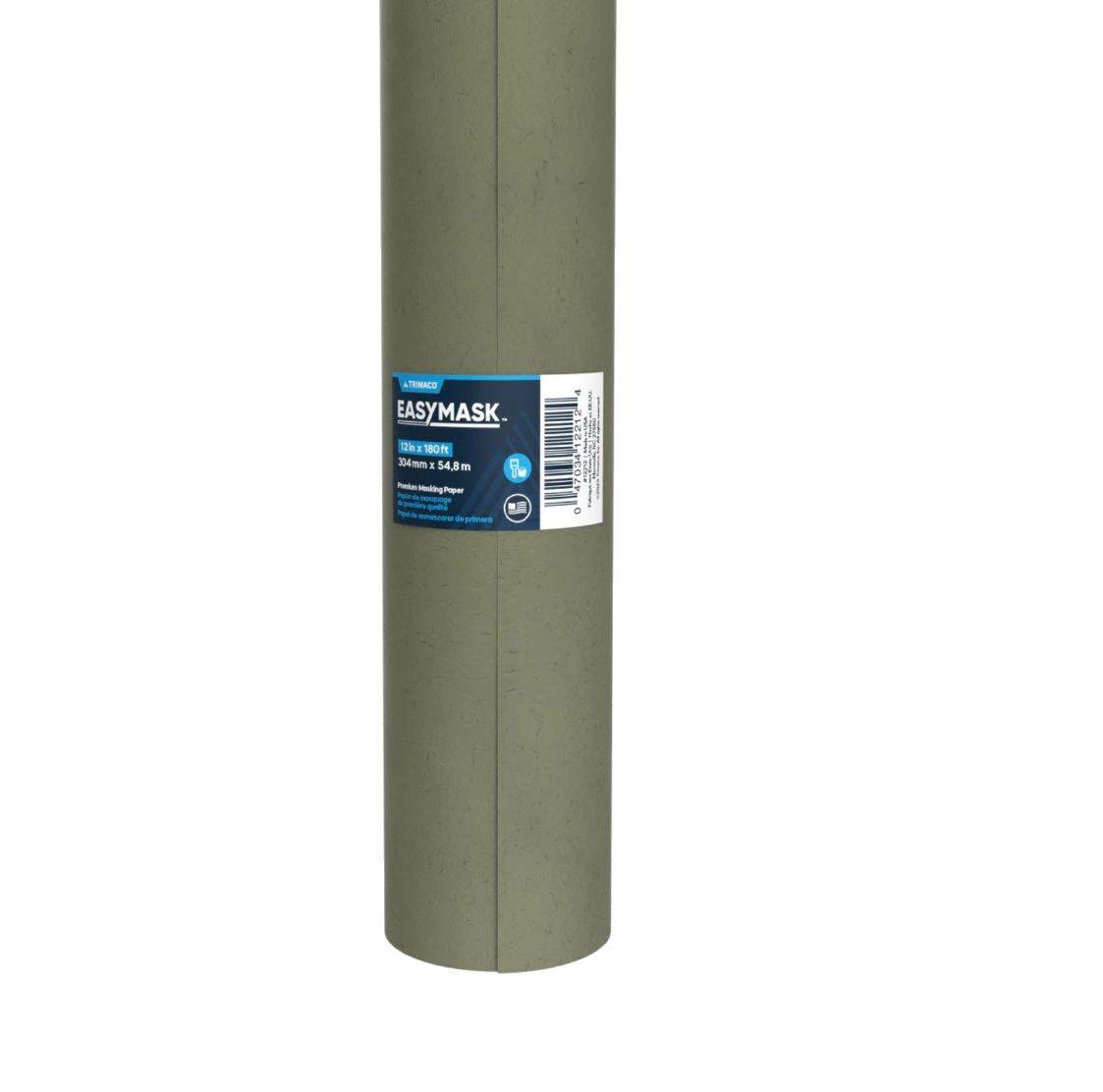
• Designed for masking off window trim, doors and floors prior to paint ing and spraying.
• Formulated to work with most waterand oil-based materials, including lacquers, solvent-based enamels and acrylics.
• Helps protect surfaces from paint spills, over-spray and splatters dur ing projects.
• Green paper color provides visual contrast when masking adjacent surfaces.
• Compatible with most hand-masking devices for easier application.
• Made in the United States.

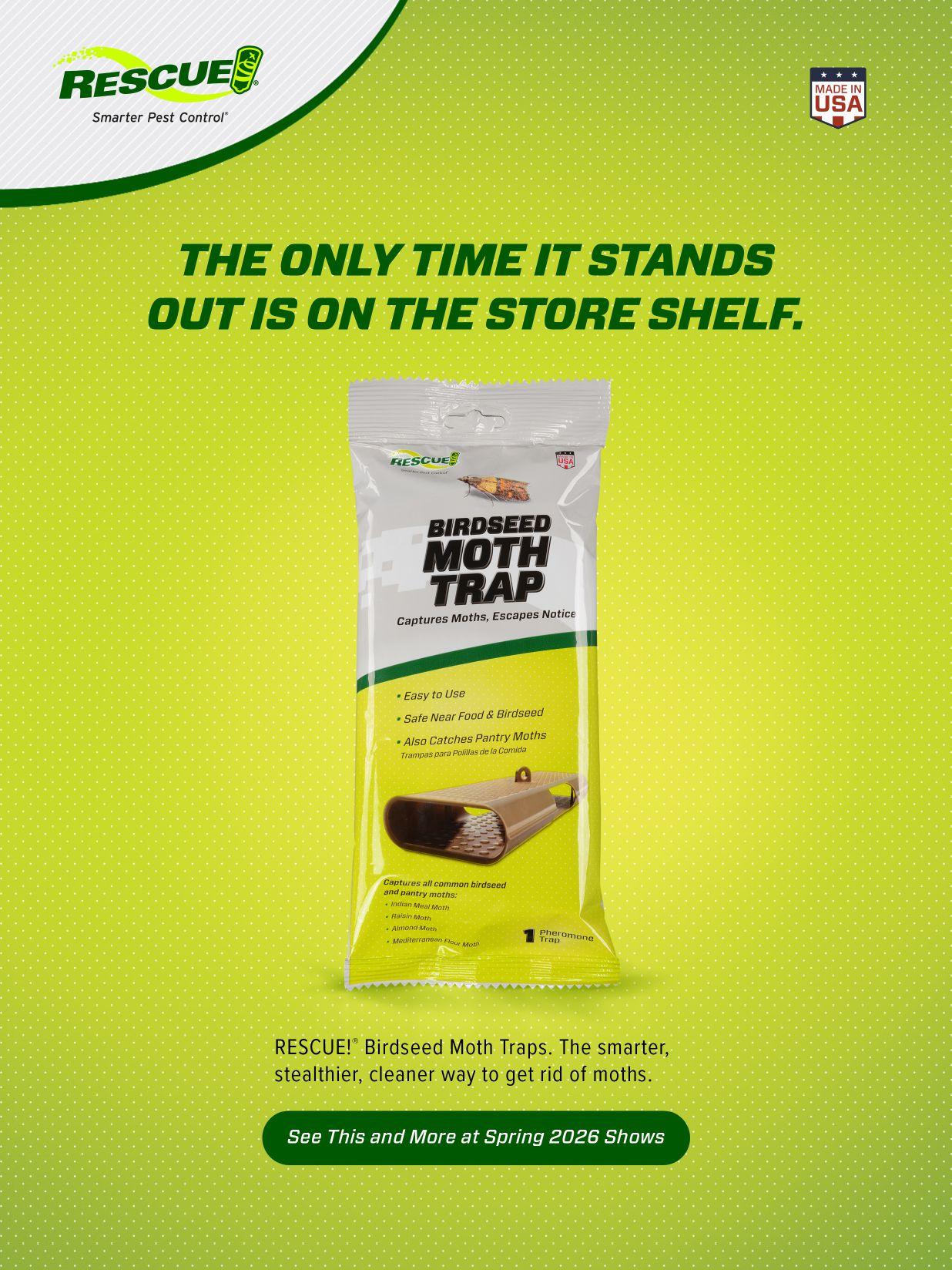
• Designed to convert a standard fivegallon bucket into a high-capacity fly trap when paired with a compatible RESCUE! fly trap or POP! fly trap insert.
• Works with most standard fivegallon buckets found in hardware stores, making setup simple and cost-effective.
• Uses a one-way entry design that attracts flies into the bucket while making it difficult for them to escape.
• Effective for catching large numbers of common nuisance flies around outdoor work and leisure areas.
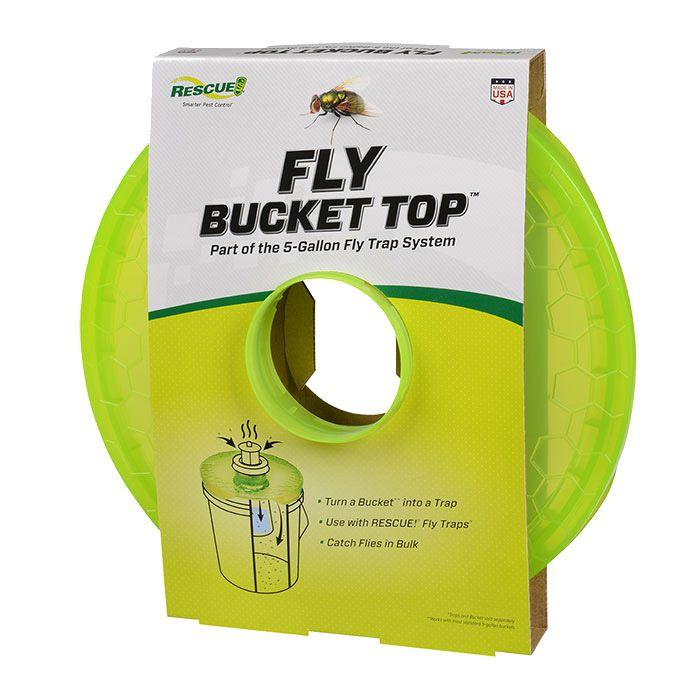
• Lightweight plastic construction allows for easy transport and placement near eaves, patios or exterior project zones.
• Compatible with reusable or disposable RESCUE! fly trap inserts, offering flexibility for repeat seasonal use. RESCUE!
FEBRUARY 2026
Ace Hardware Spring 2026
Convention
February 24-26, Kentucky Exposition Center, Louisville, Ky.
MARCH 2026
Blish-Mize Spring Customer Buying Market
March 19-21, Overland Park Convention Center, Overland Park, Kan.
Cameron Ashley Dealer Show
March 8-12, Walt Disney World Dolphin Resort, Orlando, Fla.
CONEXPO-CON/AGG
March 3-7, Las Vegas Convention Center, Las Vegas, Nev.
Do it Best, True Value Spring Market
March 6-8, Colorado Convention Center, Denver, Colo.
Eisenwarenmesse (International Hardware Fair)
March 3-6, Cologne, Germany, Koelnmesse exhibition center
LBM Advantage
March 2-4, Gaylord Opryland, Nashville, Tenn.
2026 LMC ANNUAL
March 10-12, McCormick Place, Chicago, Ill.
NLBMDA Spring Meeting & Legislative Conference
March 17-18, Washington, D.C.
NHS Concept to Commerce
March 31–April 2, Las Vegas Convention Center, Las Vegas, Nev.
PACOA Spring Dealer Market
March 21-22, Queens College, Flushing, N.Y.
The Inspired Home Show
March 10-12, McCormick Place, Chicago, Ill.
APRIL 2026
National Home Performance Conference & Trade Show
April 13-16, Greater Columbus Convention Center, Columbus, Ohio
Wallace Distribution Dealer Market 2026
April 1-2, Sevierville Events Center, Sevierville, Tenn.
MAY 2026
HDA Group Merchandising Conference
May 4-7, Embassy Suites Downtown Atlanta at Centennial Olympic Park, Atlanta, Ga.
Orgill Summer Buying Event
May 4-18
JULY 2026
Independent Home Improvement Conference
July 29-30, J.W. Marriott Orlando Grande Lakes, Orlando, Fla.
AUGUST 2026
House-Hasson Summer Dealer Market
August 6-8, Wilderness at the Smokies and Sevierville Convention Center, Sevierville, Tenn.
Orgill Fall Buying Event
August 3-16
SEPTEMBER 2026
Ace Hardware Fall 2026 Convention
September 22-24, Orange County Convention Center in Orlando, Fla.
Do it Best, True Value Fall Market
September 25-28, Indiana Convention Center, Indianapolis, Ind.

House-Hasson Hardware Company has appointed Jeff Land its new chief executive officer, the Knoxville, Tenn.–based wholesale distributor recently announced. Land joins the company from Northern Tool + Equipment, where he was senior vice president of merchandising, inventory management, product management and global sourcing. His experience also includes senior leadership roles at Generac and Harbor Freight.
Jim Hasson, chairman of the board at House-Hasson, said Land’s selection reflects the company’s focus on dealer-centric operations and long-term growth. “Jeff Land is a proven leader with deep experience across manufacturing, distribution and retail within the hardware and building materials industry,” Hasson said, noting that Land
Jeff Land, chief executive officer of HouseHasson Hardware Company, previously served as senior vice president at Northern Tool + Equipment.
stood out during a nationwide search that reviewed dozens of internal and external candidates.
Land succeeds Steve Henry, who is retiring after 16 years with the distributor. Henry said the leadership transition positions House-Hasson for continued stability and growth, and expressed confidence in Land’s ability to serve dealers, vendors and employees.
In a company press release, Land said he looks forward to building on House-Hasson’s legacy and strengthening partnerships with independent retailers. For more, see Hardware Connection’ s article here .

• Georgia-based Southeast Building Supply Interests has acquired Alpha Lumber & Supply of Montgomery, Ala., marking its eleventh acquisition and second Alabama location, with longtime owner Ken Williams continuing to lead operations at the business, founded in 1945.
• A new Ace Hardware store is set to open this spring in Moody, Ala. It will be owned by Southeast Ace Hardware, which operates six Ace Hardware locations in Pell City, Birmingham, Tuscaloosa, Northport, Meridian and Hattiesburg.
• Toms River Ace Hardware in Toms River, N.J., has a new store, with a grand opening celebration planned for March.
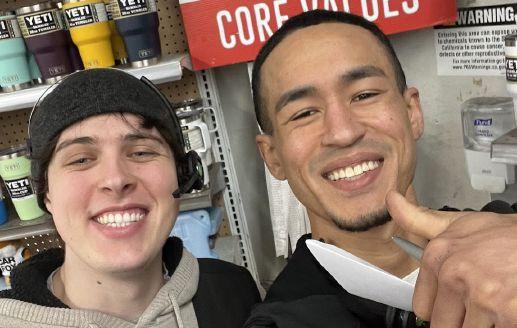
• The Redwood City, Calif., City Council recognized Ricky Pera and Jose Manuel Urrea, employees
of Hassett Ace Hardware, for helping rescue a driver from a burning vehicle that crashed into the Woodside Plaza store on Dec. 15, 2025, causing fire and water damage and a temporary closure for repairs.
• Customers at eight Rocky’s Ace Hardware locations in eastern Massachusetts raised $113,930 through this year’s Round Up for Kids campaign, with 100 percent of funds benefiting Baystate Children’s Hospital to support pediatric care and family-centered services. Also, customers at participating Rocky’s Ace Hardware stores nationwide helped raise more than $45,000 this year through the annual Round Up for Pets fundraiser, with all donations directed to care and shelter for rescued animals awaiting adoption.

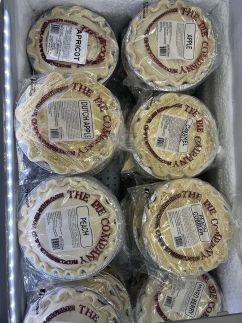
• At Strand Ace Hardware in Ripon, Calif., a partnership with The Pie Company turned frozen pies into a viral hit, with TikTok taste tests and in-aisle videos drawing hundreds of thousands of views and sparking shoppers to seek them out far beyond the local market.
• Trex Company is marking its thirtieth anniversary and also earned the 2026 America’s Most Trusted Outdoor Decking designation from
Lifestory Research for the sixth consecutive year.
• QXO announced 13 veteran recipients of its new roofs initiative, providing fully funded roof replacements as part of its QXO for Veterans community support program, now in its seventh year.
• Do it Best announced that Chad Ruth retired at the end of January. Ruth, former president and CEO of United Hardware Distributing Co., remained in senior leadership after Do it Best announced its intent to acquire United Hardware in May 2024, helping guide integration efforts.

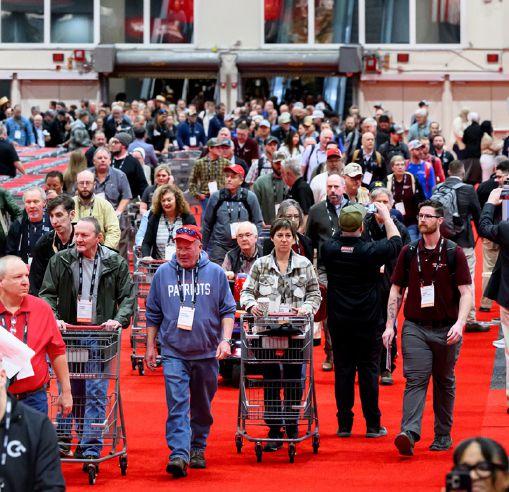
independent retailers together for buying opportunities and new store concepts, with president and CEO Boyden Moore emphasizing disciplined planning in a shifting market. For more, read the full article here.
• Boise Cascade Company promoted Angella Broesch to senior vice president of human resources and Chris Forrey to senior vice president of finance and investor relations.
• William “Will” Link has joined the ownership team at McKeithen’s Hardware in Statesboro, Ga.

• Orgill’s 2026 Dealer Market in Orlando, Fla., brought thousands of
• Do it Best and True Value reported more than $2.5 billion in consolidated revenue at midyear fiscal 2026, with strong seasonal category gains and nearly 60 percent e-commerce growth in December amid continued integration progress. For the full story, see here.
• In other Do it Best Group news, the co-op is accelerating its distribution optimization plan with the relocation of its Montgomery, N.Y., distribution center as part of broader efforts to enhance logistics and better serve independent retailers. For more, read the full article—with comments from Do it Best Group CEO Dan Starr here.
• QXO has agreed to acquire Kodiak Building Partners in a $2.25 billion deal that will expand its footprint and
capabilities in the building products distribution sector. For more, read the full article here.
• Ace Hardware Corporation reported fourth quarter revenue of $2.5 billion, up 9.9 percent from a year ago, and full-year 2025 revenue of $10 billion, reflecting growth in wholesale, new store expansion and digital sales. President and CEO John Venhuizen cited record revenue and shareholder dividends as highlights of the 53-week fiscal year. For more, read the full article here.
• In other Ace Hardware Corporation news, modern wellness brand Seventy has partnered with the co-op to roll out its spa-inspired showerhead nationwide beginning in February, expanding its retail footprint and positioning the product as a daily wellness upgrade built around waterfocused self-care.
• Lowe’s has entered a new partnership with Affirm to let customers split purchases into monthly or biweekly payments online and via its mobile app, expanding flexible checkout options for home improvement projects. At the same time, the company is eliminating about 600 corporate and support roles—about 1 percent of its workforce—to reallocate resources toward frontline store staff and support operations.
• The Home Depot ’s anti-theft tool policy, first announced in 2021 to require power tools be activated at
checkout, remains a work in progress, with many stores still locking high-theft items behind cages while the promised point-of-sale activation technology has yet to be widely implemented.
• Austin Huskey , CEO of Huskey Building Supply , passed away Feb. 9 in a plane crash in Colorado. Huskey was part of the family leadership team guiding the Morristown, Tenn.–based building materials supplier and played a key role in its continued growth and operations. For the full story, see here .
• John William “Bill” Travis, 93, passed away on Friday, Feb. 13, in Vinton, Iowa. Travis and his wife, Judy, operated the Dallas Center True Value for six years before purchasing Travis True Value in Vinton in 1969. They worked side by side at the store for 42 years.


John William “Bill” Travis
• Major Arch “Dean” Bostley , 84, passed away Feb. 7 in Grove, Okla.; he owned a True Value Hardware store in Eagle River, Alaska.
• Harley “Clair” Atwood, 87, passed away Feb. 5. He co-owned and operated a True Value Hardware store in Le Mars, Iowa.