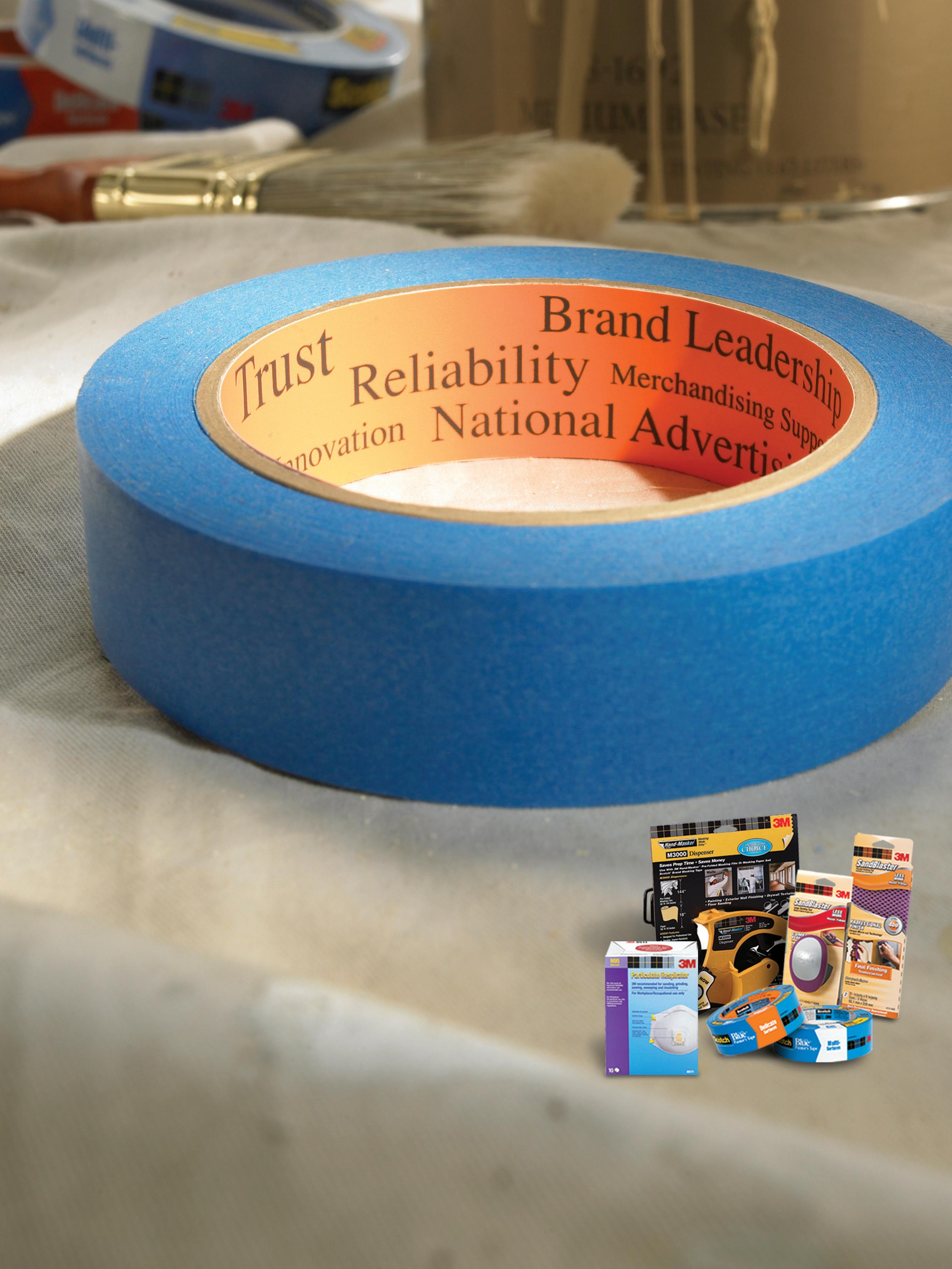
Scotch-Blue™ Painter’s Tape could lead the category on the strength of its adhesive technology alone. Yet for us, creating the most reliable, innovative products just isn’t enough. We also back them with superior brand support, aggressive merchandising programs and national advertising. While other companies try to copy our products, we know that our values and our commitment to retail success simply can’t be matched. For more information on all of 3M’s category-leading products, call 1-800-494-3552. www.scotch-blue.com Making your job a whole lot easier.
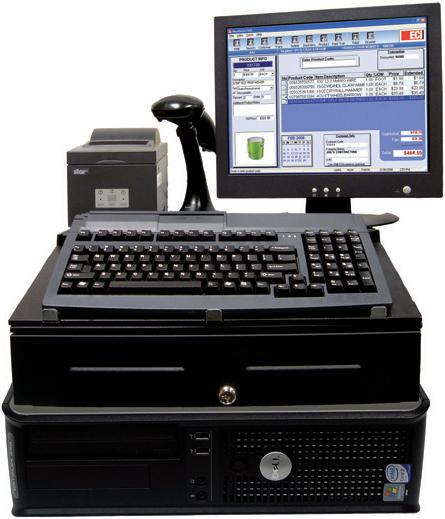
At Activant, we understand the hardware business from from both sides—retail and manufacturing—and off and offer proven solutions for success whichever sid ever side you’re on.
Industry-leading Activant Eagle® business management software and services enable you to:
• Increase customer satisfaction and loyalty
• Manage inventory more efficiently and accurately
• Maintain operational control through business analytic tools
• Increase profits with integrated inventory, purchasing and receiving
Comprehensive Activant Vista® Information Services helps you:
• Strengthen relationships with channel partners
• Maximize sales with the right products at the right place at the right price
Visit www.activant.com/HC to learn how an Activant solution can make it easier to take your hardware business to the next level.
THEWAYISEEIT
Do You Follow the ‘Five-Year Rule’ In Your Business?
Like most hardware store owners it seems I’m always struggling to find the balance between running our family hardware business and my personal life and family. Since I grew up in the family business this is not as much of a culture shock as it is for someone who didn’t. I’m always asked “How do you juggle all of the priorities in your life?” and I always answer, “Often with great difficulty.”
Owning any family business — I don't care what it is or what industry, retail, wholesale or manufacturing — is more of a lifestyle than just owning a business or making an investment. I personally don’t know a hardware dealer who at one time or another has not taken a paycheck because cash flow was tight, or who had to cancel or postpone their vacation plans because of the “family business.” I won’t go into how many dinners were missed or holidays I’ve had to work.
I watched my grandparents and parents struggle with these same issues. When I graduated from college (my parents didn’t go to college), they flew up on a Thursday, attended the ceremony on Friday and flew home on Saturday because my mother had to close the month-end books (this was before computers) so she could mail out statements on Monday, while my father
By Tom Chasteen
had to help work the floor for the people who covered for him while they were at my graduation. When I came into the business I was able to give them a little more time off and was happy for them when I eventually took over (that’s another story) and they were able to actually take vacations longer than four days. Eventually they bought a second home and spent months away from the store. Then I was the one who was “chained to the front door of the store.” Like I said, this is a lifestyle and not just a job so you’ve got to like what you do, otherwise you’ll feel like you actually are “chained to the front door of the store.”
I’ve had some huge advantages that have enabled me to break those chains…somewhat. We brought in a point-of-sale computer, so now I don’t need to price each invoice. Closing month-end now takes place in less than 30 minutes at 2 a.m. while I’m sleeping. Getting out customer statements takes less than two hours, not two days, and now I can generate an order, check the quantities on hand and either fax it or transmit it electronically, in most cases in less than an hour. But I still miss a paycheck now and then and I still have employee scheduling issues that I have to cover, because it’s still a family business.
Now I will share with you the standard I use that helps our family put the demands of owning a family business in perspective. While sometimes it doesn’t apply, I think you will find it applies more often than not. It’s called “Five-Year Rule” and how it works is very simple. If what you are deciding to do will have ramifications five years from now, then it is very important so you must make your choice very carefully. On the other hand, if the decision you are struggling with won’t have ramifications five years from now, it’s really not very important, so make it convenient on yourself and family.
Allow me to give you an example. It’s Tuesday afternoon, it’s been hectic all day and you didn’t get a chance to finish getting up a big order that came in or place two orders, or print several
that quote have ramifications five years from now? Will you remember if the statements were mailed on Tuesday or on Wednesday five years from now? If you answer yes to this question, then you really have a dilemma. However, if you don’t, I promise that you will remember that dance recital or that first scrimmage and so will your children or grandchildren. You see, it really helps put things in perspective, at least for me.
Just recently, my wife, Dale, mentioned we had something we were planning on doing that I had forgotten. My immediate reaction was I’ve got to work late tonight to catch up. She looked at me and said it’s a “Five-Year Rule” issue. I thought about it and she was right. The next day I was glad I had not worked late.
The “five-year rule” isn’t absolute, but it certainly helps us keep things in
If what you are deciding to do will have ramifications five years from now, then it is very important so you must make your choice very carefully.
quotes, whatever it is. And your daughter or granddaughter is having a dance recital or your son or grandson is having his first football scrimmage as a starter. Should you stay late and try to do what you perceive needs to be done or do it tomorrow?
Well, will you remember five years from now when that order went up, or if the order was placed on Tuesday night or Wednesday or even Thursday? Will
perspective and certainly enhances our quality of life. Believe it or not, it actually helps me be a better small business owner, because I look forward to going to work most days and don’t feel I’m “chained to the front door” of our family business.
I’d love to hear how other dealers handle these types of issues. Contact me at Tavernier Hardware, 305-852-2511 or tom@thehardwarestore.com.
Amazing but TRUE Hardware Stories
Hardware retailers continue to share the most humorous things that have happened in their stores. Make sure to keep them coming by emailing your stories and funny pictures to Editor Chris Jensen at chris@thehardwareconnection.com. Here are three more “Amazing But True Stories.”
“At the time this was not funny, but it is now looking back. We had an employee fall out of the upstairs window and land in the dumpster. Thankfully, he was unhurt. We now joke about throwing out perfectly good employees.”
Catherine Frederick Peachtree True Value Hardware Grand Junction,
Colo.
“We once hung a Bargain of the Month sign upside down in our window to see if anyone would notice the ‘error.’ This reminds me of the time I was on the way home after a long day when I told one of my ‘superstar’ high school kids to change the marquee sign and just use his imagination.
Next morning the marquee sign read:
THE BOSS SAID TO CHANGE THIS SIGN SO I DID. Seriously thought about firing him, but the sign got the most attention ever, with lots of laughing customers.”
Marilyn Weisman
Absecon Do it Best Hardware
Absecon, N.J.
“Some months ago, a young Central American man asked me how much it cost to have the key blank made with the black and white photo of Elvis Presley. I told him, and he asked if it includedthe photo. I said ‘yes, the photo was included,’ so he went outside to get his girlfriend out of the car to have her photo taken for the key.
With my limited (very limited) Spanish, I had to explain that the key blank only came with the photo of Elvis, we didn’t take anyone’s photo and add it to the
blank and that Elvis is famous, yes he really is famous, and yes he sings and dances, and made a movie or two. (I realize it should have been ‘sang and danced’ but my Spanish does not include past tenses).
The great cultural divides are only exceeded by the generational ones.”
Alan Talman Karp’s Hardware East Northport, N.Y.
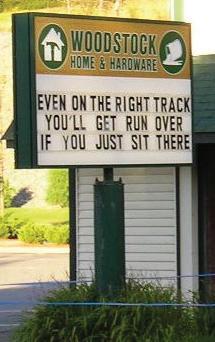
Woodstock Home & Hardware in Woodstock, Vt., gets a lot of attention for the messages Owner Larry Perry places on its roadside sign, many of them humorous in nature. Another sign read: "We Have Pellets for Wood Stoves, Water Softeners and Wabbits.”
Hardware retailers and their employees can receive The Hardware Connection for free by signing up at www.thehardwareconnection.com. If you already receive the magazine via e-mail there is no need to sign up again.
business? It’s eliminated a lot of regular business, because the condos are not renting so they are not doing their normal maintenance. The housing market is almost zero — no one’s building a house down here now. Those two areas used to account for 60-70% of our business and now it’s virtually nothing. Our business is down 40%.
Strategies for bouncing back: We’re adding in new merchandise, mainly to attract more women. We’re deep into paint, and we’re finding many condo owners are painting their own condos and handling their own maintenance. The beaches down here are virtually untouched, so hopefully the tourism bureau will do a better job of
getting the word out. It’s too pretty a place to not bounce back.
Mike Richardson Ace Hardware of South Walton Miramar Beach, Fla.
■
Impact of oil spill on business: We teamed up with Destin Ace Hardware to provide private individuals and local businesses with oil boom to protect their own property and not wait on BP.
The Miami Herald sent a couple of reporters to Destin and interviewed me and Mitzi Richardson (Destin Ace owner) about oil boom sales and also went down to our local docks and recorded a demonstration of the oil boom being used, interviewed several local captains and wrote an article about Destin and the fact that we have the largest charter boat fleet in the state of Florida and how the oil was and could possibly affect everyone here. “NBC Nightly News” and CBS Radio have also interviewed me about our oil boom sales.
Between our two stores (Santa Rosa Beach and Destin Ace) we have sold approximately 8,000 linear feet of oil boom to individuals alone and are currently working with several of the local municipalities for large volumes of oil boom and other oil protection products. They as well as many others are waiting to see if BP is going to pick up the bill before pulling the trigger on large orders. Sales Trends: As far as business goes, things were really beginning to move in a positive direction for us. Our sales are approximately 85% contractor driven as our
Continued on page 12
How’s Business?
Continued from page 10
primary focus has always been new construction and remodeling. Last year, as investors started to show interest in our coastal area again, housing starts were on an upward trend, scheduled real estate closings were higher than they had been in the last three years and our sales for April were up almost 19% compared to 2009. Condos and homes were selling again, albeit at bargain prices.
Now just the perception, the fear that oil is coming, has really changed all that. Only the Good Lord knows what the overall outcome will be from the oil spill to us and our local coastal area. Let’s just hope they can stop the leak and then get things cleaned up around here. So far Destin has been very blessed with only tar balls and light oil affecting our beaches, but our neighbors to the west have not been so fortunate. Now that we are in hurricane season one can only hope that BP gets things cleaned up before we have a storm come our way.
John Pugh
South Bay Ace Hardware, Lumber & Paint
Santa Rosa Beach and Panama
City Beach, Fla. ■
Impact of oil spill on business: It’s definitely affected us. I can tell you the exact day President Obama decided to shut down all the Gulf-area rigs because our business started dropping 25-35% that day. People are angry about it and they’re just sitting on their money now. This has affected thousands of people up and down the supply line just here in Louisiana and I just don’t see the reasoning behind it. It’s like closing the barn door after the horses have left.
How are you coping? It had been tough for about two years before this happened because of Katrina, but this time it was like taking a hammer and driving it home. We’ve geared the business way down, cutting as much overhead as we can, but we’ve still got to have a certain number of people to keep our customer service levels up. We’re surviving for now, but it’s not easy.
Mike Moore
Mike’s True Value Slidell, La.
Impact of oil spill on business: It’s certainly affected our business — sales are down double digits. Our customers are not doing repairs and maintenance on condos. We still have a major hotel that comes in and buys from us, but most everyone is cutting back. The waitresses and hairdressers aren’t making as much so they’re spending less — it trickles down.
How are you coping? We’ve taken on some new product lines to grab people’s attention and have cut back on inventory
Continued on page 14
ESSENTIAL Advice from Centurion, Inc.…
Busy stores have dlb bins. And, b lllb printe
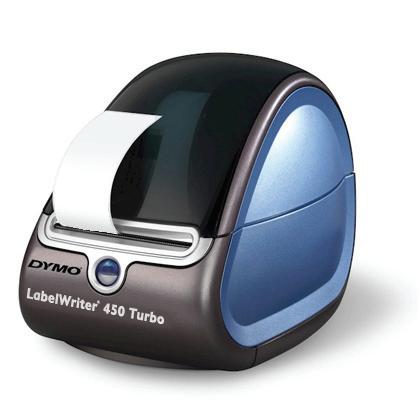
Busy stores have busy bins. And, busy bins need Dymo® printers and labels. From computer to printer in 2 seconds, our premier labels will turn you into a bin labeling pro and let you spend time on more important things – like taking care of customers.
Please note: Our Dymo® Printers come with free software that allows you to print bin labels from any PC and are also compatible with Activant, RockSolidPOS, Retail Automation’s ABS and TransActPOS Software Systems.
Contact a Centurion Service Representative to discuss all your labeling options.
How’s Business?
Continued from page 12
for standard lines. This situation has been going on so long that everyone just accepts it as fact and recognizes there’s nothing they can do about it.
Keith Parden
Jubilee Ace Home Center Fairhope, Ala.
Business outlook: Business has been a little soft this year — no one has any money to spend. More people are doing the work themselves to save money, which affects us. The hardest thing for us is getting through the long winter season.
New niches: We started a spray foam insulation business on the side three years ago that has proved to be a great success. We also began filling propane tanks and recently began offering major appliances and kitchen cabinets.
Bob Burt
Burt’s Lumber & Building Supply Perry, N.Y.
West
Sales trends: year. We get about 20-25% of our business from pros but we’re really down in all segments. It’s a tough business climate.
Ways to cut costs: We’re doing all the usual things such as reducing staff and maintaining tighter control of our inventory. Not a whole lot of ways to reduce our utility costs but we are taking a closer look at our health insurance expense.
Chris Searing Searing Electric & Plumbing PRO Hardware Longview, Wash.
Midwest
Margins and average transaction size: Margins are up 2-3% from last year and we have driven up the average transaction considerably by our extraordinary Weber grill sales, focusing on our impulse aisle and using (Ace retailer and consultant) Art Freedman’s philosophy on pricing. Our average ticket is $20.
Forecast for 2010: Our goal was an increase of 35% but we are probably only going to see a 25% increase this year.
Most successful niche: Holistic Select dog food. We drive people to the store with it and let everyone know we have it
via the Two Fat Guys Radio Show. It costs a little more than the grocery store brands, but it goes twice as far because there are no fillers. There is a good margin in the food and it drives footsteps. Now our customers are purchasing the highmargin collars, leashes and pet snacks because we are now an established pet destination. We invite them to bring their dogs in the store and we treat the dog as an honored guest. People will spend their last dollar on their pets. We beat everyone’s price and while they are in getting their food we engage the customer and hopefully put other products in their hands. Also, we have found that we can sell a flea and tick preventative at 20% less than everyone and still make $10 a unit. We challenge the cashiers to see who can sell the most. It’s a great add-on item but you must get the word out and have people that genuinely love dogs and it is essential that they are passionate about the product.
John “Smokey” Barker and Rick Kovacs
2 Fat Guys Ace Hardware Greenwood, Ind.
See the Dealer Profile of Two Fat Guys Ace on page 33.
From Tom’s Shop Hardware Products Review
By Tom Chasteen
Like all hardware store owners I’m always on the lookout for unique items I think our customers will hopefully purchase from our store. Even if you have the friendliest staff and most well-organized store, customers like to see new products. They are d-i-yers with varying degrees of skill level, but they are still d-i-yers and they like new products. I like new products, too, and the higher the gross margin the more I seem to like them — it’s a retailing thing.
PRODUCT #1: FbBag
Fb Systems LLC
A manufacturer’s rep (Evan Bedford with Phase III) that I like and respect called me the other day and mentioned he had a product that I should look at. As much as I like Evan, I thought to myself that every manufacturer’s rep that ever calls has a product they think I should look at.
However, Evan has developed credibility with
me, so I asked what it was. He told me he was representing a company, Fb Systems LLC, that had developed a new “sand bag.” You can imagine my excitement and I asked enthusiastically, “Does it come in fashion colors?”
After speaking with Evan and Clay Fondren, Fb’s sales manager, I began to see why they were excited. The bag is made from burlap (strong), has strap handles on each end (easy to maneuver)
Tom Chasteen will be reviewing 3-4 hardware products from “Tom’s Shop” in each issue of the magazine.
and is roughly 14" wide and 24" long. But it weights about one pound! That’s right — one pound!
The secret is a chemical that was developed by the owner of the company, Barron Tasker, so that it swells up almost immediately when it comes in contact with water to the size of a typical sand bag. And like a regular sand bag when it becomes wet it actually weighs more than water. This prevents it from
Continued on page 18
From Tom’s Shop
Hardware Products Review
floating away like other flood barriers that require you to fill them with water and any air trapped inside can make them at best neutral buoyant and hard to keep in place.
But that is not the best part, the chemical inside can also help trap toxic waste. Once the flood issue is resolved, the FbBag will allow the water to drain out while still retaining most of the toxic waste for disposal. And because most of the water has drained out the bag is so much lighter than
PRODUCT #2:
SuperBand
My SuperBand
Another product that did not initially capture my attention (but it does come in fashion colors) is the SuperBand™. It is simply a 1/4" length of surgical tubing that is joined together (very strong) to make a huge rubber band.
I was at a hardware show recently with another hardware retailer friend of
a wet sand bag. This not only makes it very effective for flash flooding and hurricane issues, but also for sewage and fuel spills or as a containment barrier. The other neat thing about this product is that it’s not freight intensive and is easy to store on the shelf in a retail store.
This is a completely new product on the market and they are actively seeking wholesaler distribution in the hardware channel. For more information, give Evan Bedford a call at 321-508-4455, email him at evanbedford@phase3inc. com or go to Fb’s website, www.fbsap.com.
FbBag from Fb Systems LLC.
mine, Joe DeRoest of Joe’s Hardware in Fallbrook, Calif., when he pointed out this product to me. I didn’t even notice it and being naturally skeptical didn’t pay it much attention. Until Joe told me how well he was selling them and the margin he was making, and then I perked right up!
The packaging is very customer friendly. It actually does come in several different colors and it is
extremely strong. In fact, I would not want to be holding it if it broke while stretched. Upon looking at the package, I suddenly realized what a great idea it was and all of the applications it could be used for.
So I immediately asked the salesperson for a sample. When I got home the first thing I did with it was to stretch it around a Rubbermaid 44-gallon Brute
Continued on page 20
garbage can to see if it could keep the garbage bag from falling in every time I would throw something larger than a water bottle in it — it worked great! Then I used it to secure a couple of scuba tanks on the boat; again it worked great.
Next I tried it to secure a
moving blanket (pad) over an end table we were moving in the back of a pickup truck. You guessed it — it worked great again. To find out more about this neat, high-profit item, go to www.mysuperband.com or call Travis or Amy Petty at 951-789-7199.
SuperBand from My SuperBand
PRODUCT #3:
Level Best2
SLK Development Group
If you remember from my last column I’m a tool junkie. During a recent hardware show I came across another neat item that is perfect for the d-i-yers.
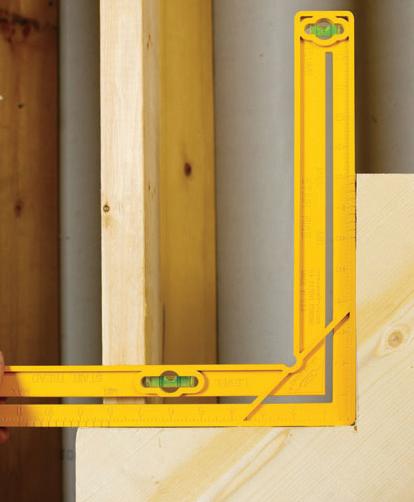
It’s called the Level Best2. It is a plastic square that has a level bubble in each end of the square — one vertical and one horizontal. It comes in two sizes: 12" and 6" and also comes in metric.
It is very durable and is perfect for those small, light jobs when you don’t seem to have enough hands. I used it recently to lay out and cut a small square hole in drywall — a wall that had to be level. The six-inch
square would have been too small but the 12-inch square was just perfect for such a job.
When I finished I started to put it away, but my wife, Dale, had taken it and was straightening up all of the pictures in our living room. So what originally started out as a one-hour job ended up as a three-hour picture-aligning job, but I must admit the Level Best2 square cut the time in half
without the arguments of “Is it straight or not?”
Currently, the Level Best2 products are distributed through a half-dozen hardware wholesalers. You can go to the company’s website, www.levelbest2.com, to contact them about distribution and pricing. It really is a great item if you operate a store that focuses on the DIY customer.
As always, if you have any comments, ideas or suggestions of products to highlight in the next issue, please email me at tom @thehardwarestore.com or give me a call at my store, Tavernier Hardware, 305-852-2511. From one dealer to another, let’s figure out a way to sell more hardware!
Cost-Cutting Strategies That Pay Off
By Chris Jensen
With the economy continuing to act sluggish, retailers are increasingly under the gun to find ways to maintain profitability. It’s easy to do things such as cut staff and eliminate advertising, but those steps can backfire and make the situation worse.
Hardware and home improvement retailers from all over the country weighed in with the cost-cutting strategies that have paid off for them. Read on to see if
some of these cost-saving measures can help you improve your business’ profits.
Look at Credit Card Fees
Mike Frattallone (along with father Larry and brother Tom) operates 15 Frattallone’s Ace Hardware stores in Minnesota, so keeping expenses under control is an ongoing concern. Frattallone has found a unique and creative way to save money on everyday expenses by using consultants.
“We found a trash consultant that lowered our rates by 30 percent and a credit card processing consultant that decreased our credit card processing fees by $39,000 this year alone,” he says. “The key is finding guys that will only make money if you save money.”
Frattallone explains that his credit card consultant, Dan Bauman, makes 25 percent of what he saves the retailer — that’s it. “Basically, he is selling us $100 bills for $25 — not a bad deal,” he points out. “And the credit card guy gets paid nothing if he can’t find real savings for you.”
Bauman, who bills himself as “The Credit Card Doctor,” works for Better
Business Solutions (http://bbsinc.us/), a privately owned, Minnesota-based expense reduction company. The firm can also help retailers find savings in areas such as freight, health insurance and utilities as well as accounts payable auditing to help retailers catch missed discounts and overpayment errors as well as identify multiple types of fraud. With several cases of embezzlement unearthed at hardware businesses recently, perhaps it’s not a bad idea to have someone else poring over your books on occasion.
“We thought we had a great credit card rate until Dan Bauman from BBS came in and evaluated our existing credit card plan. With the savings that he showed us, we quickly converted and have been very happy with the results,” says Dave Neiman, who owns 11 Arrow Ace Hardware stores in Minnesota and was able to reduce his annual credit card processing costs by $26,000.
“Merchant services is one of the largest expense areas most businesses and organizations face, yet very few have an independent representative looking out for their best interests in this expense area. Most credit card reps are going to look at how much you pay for merchant services, undercut it by just enough to get you to switch and keep the rest for profit,” Bauman says. “At BBS, we represent you and negotiate with our vendor partners to maximize your savings. We have no upfront fees, so there is no risk to you — our fees are generated from the savings we find our clients. We average 15-65% savings for our clients.”
The kicker is that retailers get a 10 percent referral rate every time they get another retailer to sign up with BBS. Call it the cost-cutting gift that keeps giving.
Tweak Employee Benefits
It’s not a bad idea to get unbiased opinions from consultants, but how about folks who are intimately involved in the business? Terry Asten Bennett of Cliff’s Variety in San Francisco suggests asking employees their opinions on how to save money. “They may have some really great ideas,” she says.
Asten Bennett shares two other areas where her business has been able to cut costs.
Health Insurance — “We changed our health insurance plan from a standard PPO or HMO to a high-deductible plan. Even with covering half of the deductible we realized an incredible savings on our insurance costs. If you pick your plan carefully you can get yourself and your employees much better coverage for a lot less money. Just be aware of in-network and out-of-network costs,” she says.
Paid Lunches — “We offered paid lunches until two years ago — we were paying $87,000 a year in paid lunches. Current employees were offered the choice to extend their shifts by 30 minutes. All new employees work the extended day. About two-thirds of the employees took the extended day. It may not have cut a lot off the payroll, but it did get us productivity for the money,” she reports.
Examine All Expenses
Big expenses such as payroll should be closely scrutinized to see where efficiencies can be made, but there are plenty of little expenses that can add up if not analyzed periodically. Lynn Lumber in Lynn, Mass., did away with its postage meter. “We used Neopost mail machine and spent over $200 a month in rent. We now
Cost-Cutting Strategies That Pay Off
buy self-stick stamps at Costco and save the $200 plus,” reports Joel Kessel. Here are some things Preston Bullock has done or is working on doing at Jay’s Hardware in Wrens, Ga.
■ Turned up air conditioners to higher temperature.
■ Cleaned any inventory out of offices.
■ Lowered all insurance including workers’ comp (make sure your employees are labeled correctly).
■ Cut retirement
■ Got rid of email you have to pay for and got free gmail.
■ Have everyone replace price stickers from Margin Master to make that $ quicker.
■ Downsized company vehicles.
■ Getting rid of most of the charge accounts.
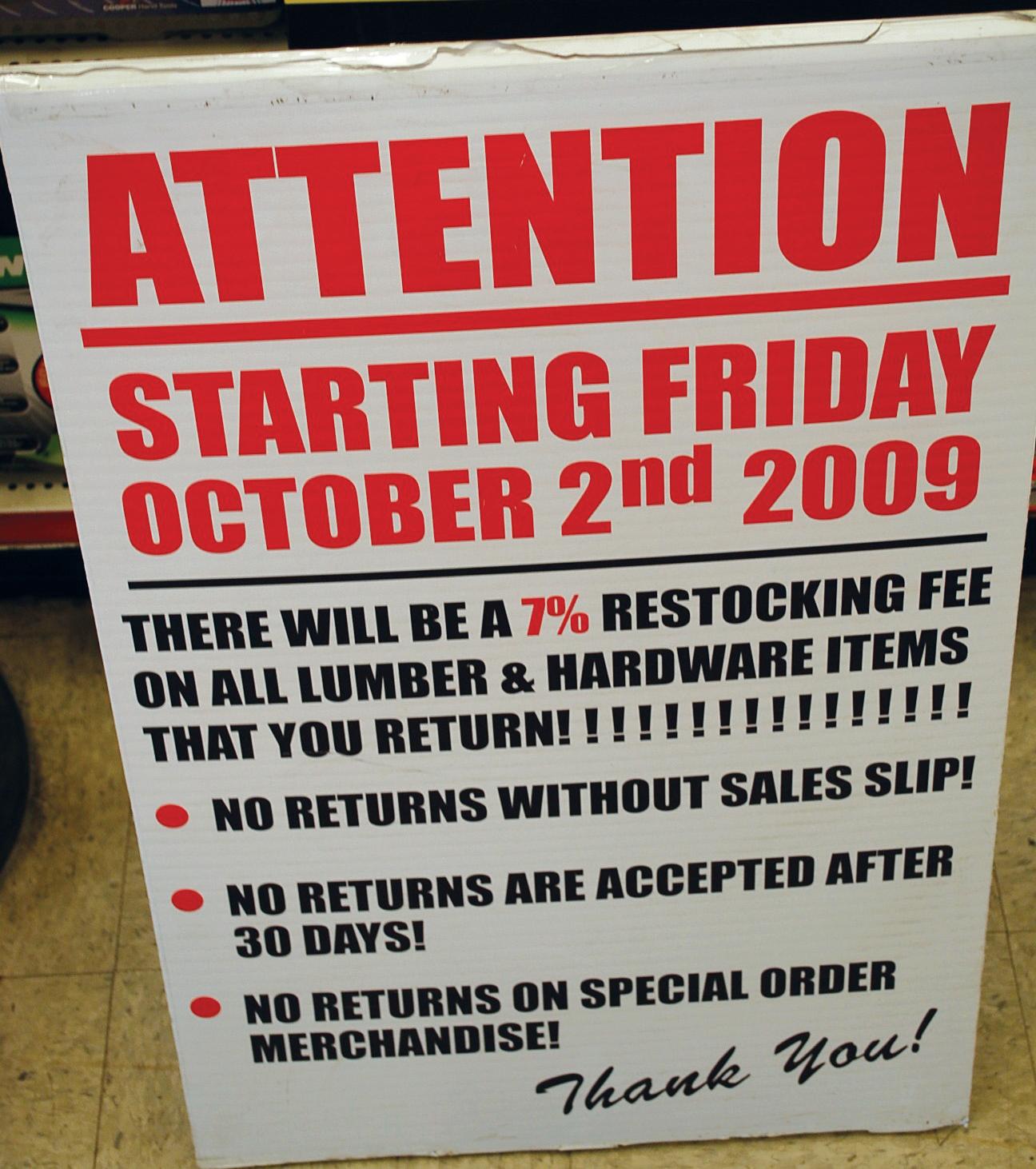
Burt’s Lumber in Perry, N.Y., started charging a restocking fee because returns were getting out of hand.
■ Looking at employees co-paying medical insurance.
David Bailey, who operates Dave’s Hardware in Phoenix, starting making changes several years ago when he started seeing numbers drift downward. “To survive we had to make changes,” he says. Here are some of the steps he has undergone to take costs out of his business:
■ Before the banking collapse he refinanced his debt.
■ Renegotiated rent down one-third and continues to include landlord like a partner in communications and finds him very supportive.
■ Cut payroll by one-third.
■ Modified evaporative coolers so he didn’t have to turn on the AC this year, saving $12,000.
■ Rewired lighting so that he is using only 60% of the lights, saving $300/month.
■ Changed phone service provider, cutting phone cost in half.
“To tell you the truth, I never knew these reductions were possible until I actually tried. If I only knew this eight years ago when I started, then this venture would be highly profitable instead of a break-even exercise,” Bailey says. “We have easily cut one-third of our expenses and we will continue to cut as we see the opportunity.”
Tighten Credit
Like many pro-oriented retailers, Sandersville Builders Supply in Sandersville, Ga., has been affected by the sluggish economy and a housing market that has dried up. Owner Jim Croome now pays closer attention to his house accounts. “We’ve tightened up our credit. We
don’t get involved in financing big-ticket purchases for customers,” he says. “We’re also more diversified with retail so we’re not so dependent on pro business.”
Michael Collins, who operates Colmar True Value Home Center in Margate City, N.J., gets about 30 percent of his sales from pros. He pays close attention to his accounts receivable and immediately starts contacting customers when they fall behind on payments, offering to set up a payment plan for them.
Jeff Christian, owner of White House Home Center in White House, Tenn., knows what happens when you become too trusting. He got stuck with $1.2 million in bad debt as builders began defaulting on payments in late 2007. Lenders were calling in loans on builders, who couldn’t secure financing to finish homes and creating a
Jim Croome and his son, Jimmy, have tightened credit policies at Sandersville Builders Supply.
crisis that echoed up and down the supply chain. Christian was forced to file for Chapter 11 bankruptcy protection this spring.
“We had really good men, that we had
Lost in a forest of confliction and unsubstantiated website claims in your search for highly experienced help with a Store Closing Sale? Go with the proven professionals...that’s us!
Storeowners who have done their research are choosing Wingate because we’ve rescued more investments and liquidated more assets profitably than anyone in the business. In this economy storeowners find it difficult to meet day to day obligations. Profits are slipping as consumers tighten purse strings. Look at it as an opportunity–An opportunity to liquidate and rescue investment and turn store assets into cash before they erode away. At Wingate we’ve helped more storeowners convert inventories, fixtures and equipment into more cash than they ever dreamed possible.
• Closing to retire? We’ll help you CELEBRATE!
• Closing to start another business venture? We’ll help you!
• Closing to pay off creditors? We’ll help you! Find out how we can do it for you call 1-888-480-7253. We’ll gladly answer your questions and send an info packet including letters from storeowners who have used our service.
Sincerely,
Garold Wingate, Pres.
Cost-Cutting Strategies That Pay Off
done business with for years, that defaulted (on payments),” Christian told the Nashville Business Journal. As a result, he has cut his staff from 34 to seven and cancelled most of his accounts with home builders, with plans to reorganize his operation and emerge from bankruptcy as a more diversified retailer.
If you are a pro-oriented retailer who offers credit to home builders make sure they have it secured through a construction loan to ensure you get paid. And if an account starts paying slow, cut them off and don’t extend more credit until they get caught up. That way, you limit your liability and perhaps help your builder customer from getting themselves in too deep.
Consider contacting the state board that licenses contractors and file a claim for non-payment. If the contractor continues to balk at payment they can get their contractor’s license suspended. It’s easier and less costly to a retailer than filing in small claims court or turning the account over to a collection agency.
Renegotiate Lease
Stephen Cornell operates Brownies
Hardware on a busy pedestrian street in the heart of San Francisco, a city known for having one of the highest costs of living in the U.S. Cornell pays just under $3/square foot per month (plus taxes and insurance), because in the beginning of 2009 he was able to renegotiate his lease and lock in a lower rate for the next five years.
In addition, Cornell gets free use of a basement storage area that is bigger than his salesfloor. The sluggish economy proved a motivating factor for both sides.
“I went to a seminar (at an Ace
convention) on looking at different ways of analyzing our P and L and balance sheet, One of the suggestions was to combine the occupancy costs and the advertising costs when comparing to other stores or national averages,” Cornell says. “The idea is that if you have a business with less traffic you pay less in rent and more in advertising. But if you have a very high traffic store, you pay very high rent and you don’t have to pay as much for advertising. Seems obvious, but I actually do it and find it a good tool.”
Go Green
Retailers should look into state and federal programs that assist small businesses who adopt energy-efficient products. Jackson’s True Value Hardware in Kittery, Maine, which turned 100 years old in 2009, recently installed new energyefficient lights using a grant from the state to pay for more than half the cost. Owner Dan Corcoran has seen his electricity bill decrease about 30 percent each month.
Orland Ace Hardware in Orland, Calif., was able to reduce its electrical bill 80 percent each month by installing solar panels on the store’s roof.
Bob Nelson, owner of Nelson Ace Hardware in Barre, Vt., is taking advantage of the state’s new Building Star program, which offers rebates and low-interest loans to businesses who install energysaving materials. "It will help us retrofit our 110-year-old building, making it more energy efficient, keeping heating costs down and ensuring that rent is affordable," says Nelson, who also owns apartments in the upper floors of the building.
Handle It Yourself
Since this is the fourth economic downturn he’s experienced as a hardware retailer, Bob Brame of Cadiz Hardware in Cadiz, Ky., is getting better at finding ways to tighten his belt. “Each time I have learned ways to become more cost effective. I love a sign my wife put in our kitchen in the early 1980s when interest rates hit 18 percent — USE IT UP, WEAR IT OUT, MAKE IT DO OR DO WITHOUT. The sad part is when times get better, we slack off and let costs increase,” he says.
Here’s what Brame has done in his store. “We have a little over half the lights that were recommended working in the store now and the lumens are acceptable. We put in two industrial ceiling fans and they do a great job of redistributing the air in the building and we have cut down on air conditioning and heating. We now do the floor cleaning; bought a machine a few markets ago at an incredible price (used but refurbished) and found that it is not rocket science and went from $500 per month to utilization of labor at odd times with very little added expense,” he says.
Other Ideas
Here are other steps retailers can take to keep expenses under control:
■ Special orders — Make sure you get a deposit from the customer so they have some skin in the game.
■ Payroll scheduling — Review your transaction history so you can pinpoint your busy and slow times, then adjust your staffing accordingly.
■ Banking — Many banks continue to raise their fees to business customers, and in general the bigger the bank the larger the fees. That’s why it makes sense to shop around for a bank that will help you
Installing an electronic surveillance system can help reduce shrinkage.
preserve capital, not spend it. Local credit unions and small community banks often have the lowest fees and tend to offer the highest rates on savings accounts.
■ Shrinkage — The average shrink is 1.5% of sales, according to the National Retail Security Survey by the University of Florida, with employee theft accounting for 44%, shoplifting 35% and administrative errors 15%. Install an electronic surveillance system and then aggressively prosecute those you catch.
■ Fax service — Drop landline-based fax service through telephone company and go with online fax service.
■ Yard management — Too many pro retailers don’t bother checking the loads of their customers as they leave the yard, figuring it takes too much time and makes it look like they don’t trust the customer. In actuality, some customers shouldn’t be trusted because they’re robbing you blind. Checking the load can be a service, too, since there will be times you discover a contractor’s load is short, so you can save him a trip back.
■ Business insurance — Review your business insurance policy annually to make sure it’s up-to-date and shop around to get competitive quotes. We want to know what other steps retailers are taking to reduce their costs. Share your tips with chris@thehardwareconnection.com.
Where Relationships Are Formed
Join the Fun at Industry’s Largest and Most Unique Dealer Gathering
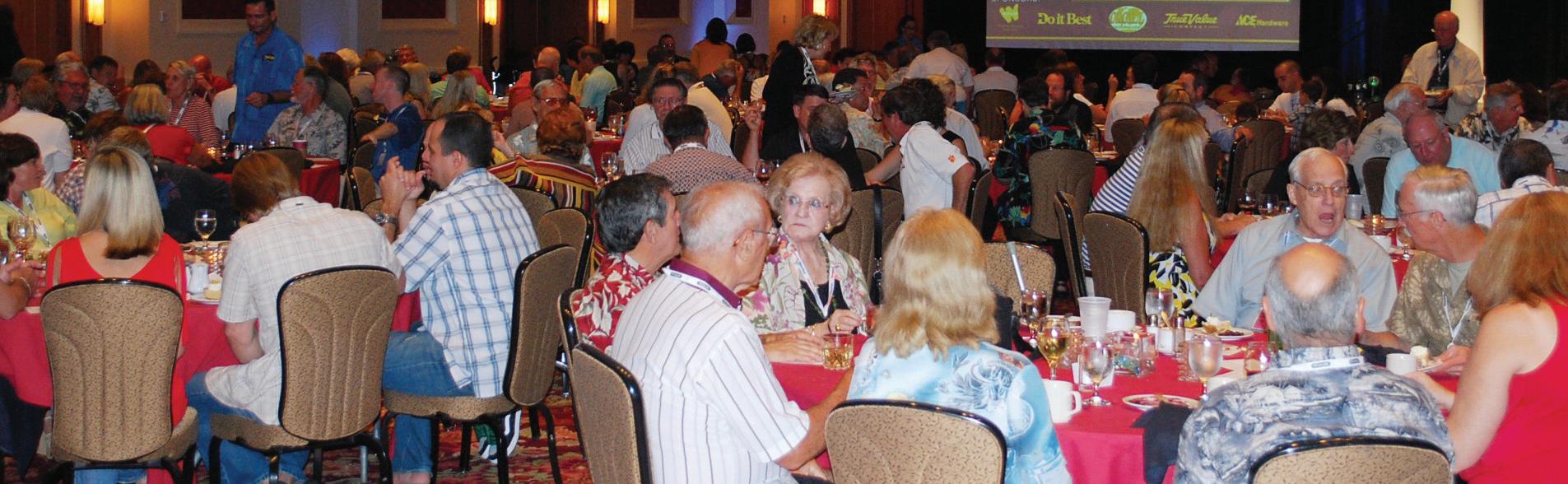
It’s not too late to make plans to attend an event that can have a tremendous impact on your business. The 2010 Hardware Conference will take place Sept. 8-12 at the Marco Island Marriott in Marco Island, Fla. It’s a chance to bring your whole family to a five-star resort right on the Gulf of Mexico with seven miles of pristine white beaches…and no oil. For the past 22 years, The Hardware Conference has provided a forum for retailers, regardless of wholesale affiliation, to get together and discuss ways to tackle common challenges. Not only are lasting friendships made, but attendees come away re-energized and filled with new ideas to take back to their stores. It’s impossible to come and not have fun and not learn something that can help you improve your business. Tom and Dale Chasteen, who operate a hardware store in the Florida Keys, have been putting on the Conference since 1988. “The Hardware Conference is the only industry event where the focus is on building relationships between dealers, manufacturers and wholesalers. For over 20 years our theme has been ‘Where relationships are formed.’ Come see for yourself — it’s the best deal in the industry,” Tom says.
The Marco Island Marriott is a world-class resort located directly on the beach.
Not only is The Hardware Conference the largest annual dealer event in the industry, NRHA’s decision to co-host its convention with the National Hardware Show beginning next year means The Hardware Conference is now the only industry event held exclusively for independent retailers regardless of wholesaler affiliation.
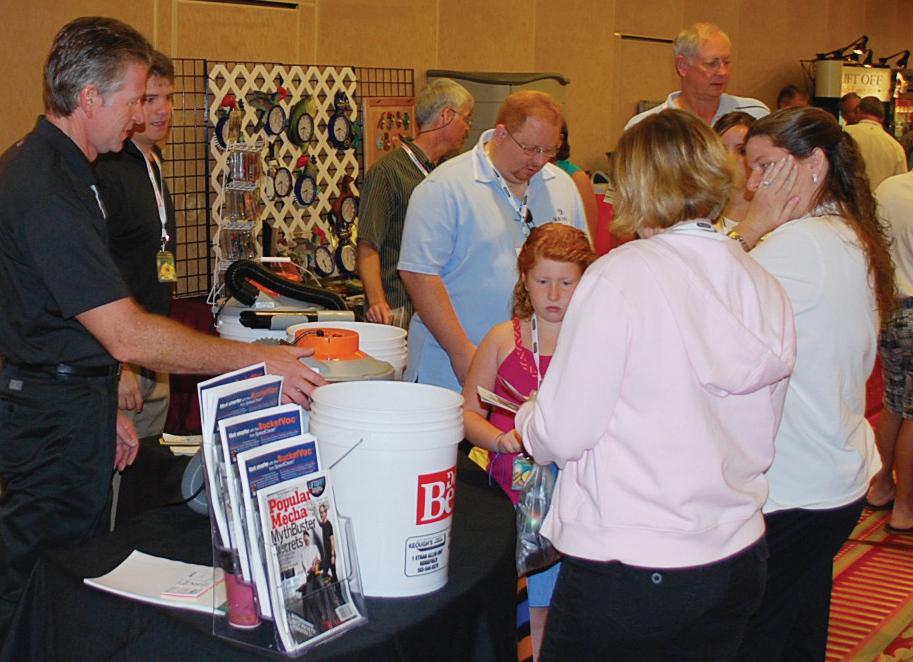
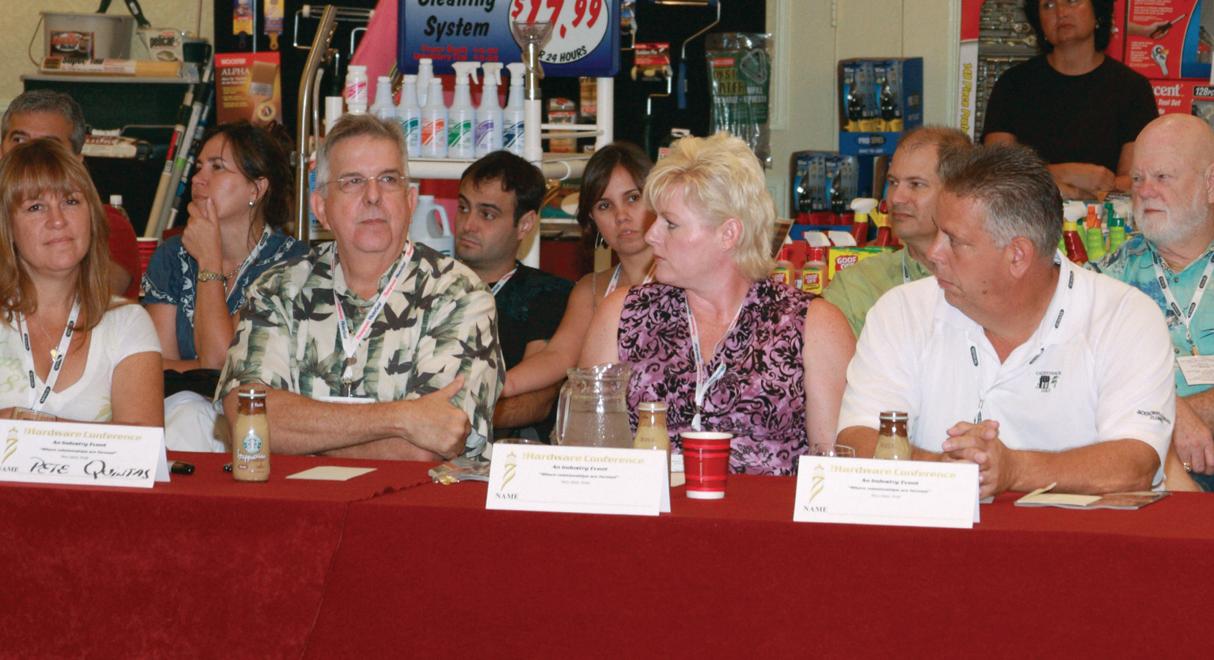
Key vendors participate in the Conference with tabletop booths showcasing their product lines, and dealers get a chance to have informal conversations with vendors without the pressure of buying. Another hallmark of the event is the Open Dialogue sessions, where dealers from around the country join vendors and wholesaler representatives in a spirited discussion of topics of concern to all.
“It’s so different from the co-op markets — you have the opportunity to see new products, talk to other dealers and learn from both dealers and vendors in a very
Tom Chasteen, who is a hardware retailer himself, has been conducting The Hardware Conference with his wife, Dale, since 1988.
relaxed setting,” says Rick Heuser of Handyman Hardware in St. Cloud, Fla.
Marquee Sponsors
The Hardware Conference would like to thank and recognize its Marquee Sponsors for their support over the years. It is with their cooperation and that of all of our sponsors, vendors and retailer attendees that The Hardware Conference has become the largest annual dealer event in the hardware industry. The following companies are Marquee Sponsors of this year’s event:
Dealer registration for The Hardware Conference is one of the best bargains in the hardware industry — $129 per person. The fee covers:
■ Three cocktail receptions, two dinners and two breakfasts plus access to the hospitality suite all weekend.
■ Your choice of golf, tennis, shelling or beach activities Saturday afternoon.
■ Access to manufacturer booths and New Product area Saturday and Sunday.
■ Open Dialogue sessions on Saturday and Sunday.
■ Dealer-only meeting on Thursday afternoon. This year’s main topic: Buying and Selling Hardware Stores.
■ Wholesaler luncheon on Friday.
To register go to www.thehardwareconference.com/register.html. “When was the last time you got a deal like that?” Tom says. “We will follow up with each dealer personally.”
Attendees have the opportunity to stay at a world-class resort, The Marco Island Marriott, at greatly reduced rates. The Conference rate is $157 per night double occupancy and the rate is good three days before and three days after the Conference, so you can come in early or stay late and
pay the same low rate. Call the hotel at (239) 394-2511 and ask for the “The Hardware Conference” block.
A special get-together on Thursday evening is planned for dealers who participate in Hardlines Digest. About 25 people have already expressed interest in attending. For more information on the Hardlines gathering, contact Rick Heuser at richeuse@kua.net.
Another highlight is the Saturday evening banquet, when the vendor booths are auctioned off with all proceeds going to support the Miami Children’s Hospital Foundation. Last year’s auction raised more than $28,000, bringing the total fundraising amount over the years to nearly $700,000.
“That’s an amount that all of us in this industry can be very proud of,” says Tom.
For more information on attending the industry’s most unique event, call Tom or Dale at (305) 853-0049 or go to www.thehardwareconference.com.
Come Early for Activant Conference
The Activant-Eagle Users Group Conference, which in the past has been an informal, half-day event, is now slated to be a two-day session preceding the 2010 Hardware Conference.
The Activant-Eagle Users Group Conference will start with a half-day training session on Wednesday, Sept. 8, followed by an all-day session the next day. Dealers will be able to choose between two tracks: an executive/ Dealers have plenty of opportunity to mingle casually with retailers from around the country.
The low conference fee includes two sit-down dinners, two breakfasts and three cocktail receptions.
management track and an inventory best practices track. Grow your business expertise, share ideas with colleagues and get more from your Eagle investment.
“This will be a first-rate training program with the best trainers Activant has. If you’re an Activant user and you’re serious about your business and computer system, you’ll want to give this strong consideration,” Tom says.
For the low fee of $279, dealers will be able to attend the Activant-Eagle Users Group Conference and then stick around through the weekend to participate in all the events and activities of The Hardware Conference at no additional cost. In addition to a cocktail reception on Wednesday evening, those participating in the ActivantEagle event will be offered breakfast and lunch on Thursday.
For more information on the ActivantEagle Users Group Conference, call 800538-8597 or register at www.activant.com/ userconferencemarcoisland.
Testimonials:
“The roundtable discussions bring the retailers, vendors and distributors together. This forum is usually an eye-opening experience. Retailers and distributors gain a better understanding of why vendors
institute certain policies and procedures.” — Casey Mathews, The Wooster Brush Co.
“We always appreciate the variety of opportunities offered to us not only to educate but to enlighten us about what is going on with our fellow ‘hardware people.’ We love the roundtable discussions and all the valuable input from the group. We always have such a pleasant time and love being able to visit with all of our ‘hardware families’ and friends.” — Alan and Donna Baro, Baro Hardware, Miami, Fla.
“The event provides a unique platform for the exchange of ideas between retailers, manufacturers and distributors. The event truly lives up to its billing as the place ‘Where Relationships are Formed.’ The Open Dialogue sessions were interesting to witness.” — Myron Boswell, Orgill Inc.
“This was a wonderful venue for hardware dealers of all kinds to come together and talk about issues that affect us all. I had the opportunity to meet with Ace dealers as well as True Value, Orgill and Do it Best. We all learned something from one another.” — Keith Davis, Stephens Ace, Fuquay-Varina, N.C.
Meeting & Event Schedule
Wednesday, September 8
Vendor Only Meeting • 10:00-3:00 p.m.
Activant Training Seminar • 1:00 p.m.-4:00 p.m.
Activant Cocktail Reception • 7:00 p.m.-8:30 p.m.
Thursday, September 9
Activant Training Seminar • 7:00 a.m.-4:00 p.m.
Vendor Set Up • 9:00 a.m.-4:00 p.m.
Vendor and Dealer Registration • 9:00 a.m. -12:00 p.m.
Vendor and Dealer Registration • 1:30 p.m.-4:00 p.m.
All Industry Cocktail Reception • 6:30 p.m-8:30 p.m.
Trolleys leave for Krylon Golf Outing • 12:00 p.m.-5:45 p.m.
Wooster Brush — Day at the Beach • 12:30 p.m.-4:30 p.m.
Hospitality Suite Open • 1:00 p.m.-5:30 p.m.
3M Tennis Outing • 2:00 p.m.-4:00 p.m.
Minwax Shelling Trip • 2:30 p.m.-4:30 p.m.
Kids’ (ages 4-12) Night Out • 6:15 p.m.-10:30 p.m.
Cocktail Party • 6:30 p.m.-7:15 p.m.
Dinner Party and Auction • 7:15 p.m.-10:30 p.m.
Hospitality Suite Open • 10:30 p.m. -11:30 p.m.
Sunday, September 12
Breakfast • 7:00 a.m.-8:00 a.m.
Exhibit Areas Open • 8:15 a.m.-10:00 a.m.
Open Dialogue • 10:15 a.m.-11:30 a.m.
Closing Remarks • 11:30 a.m.-12:00 p.m.
The two Open Dialogue sessions are a chance for retailers to speak out about topics of concern and share feedback directly with vendors and distributors.
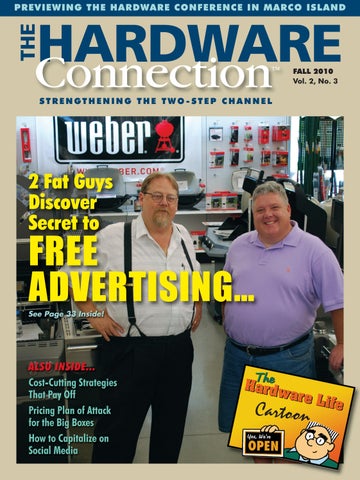
2 Fat Guys Discover Secret to Free Advertising
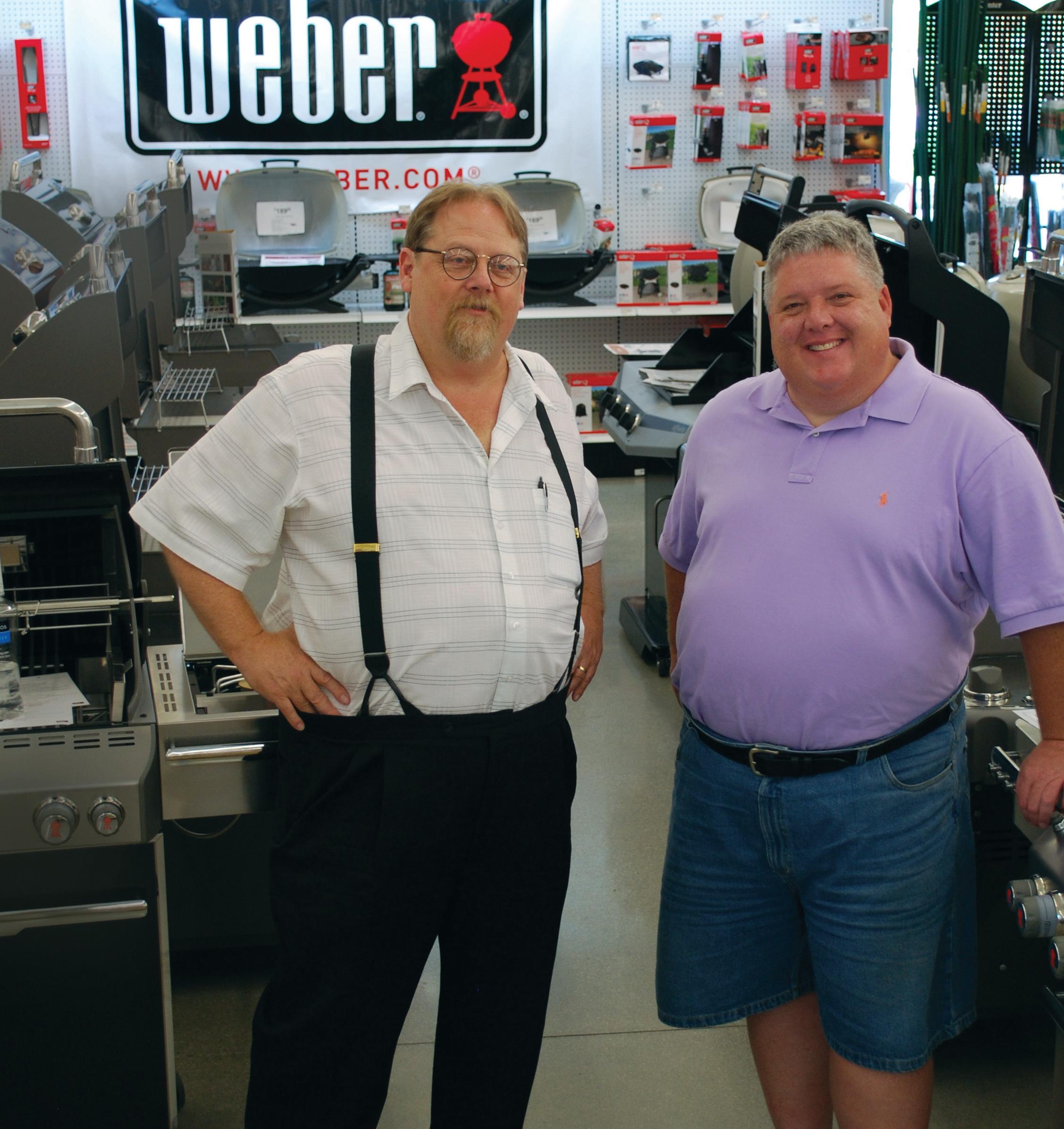
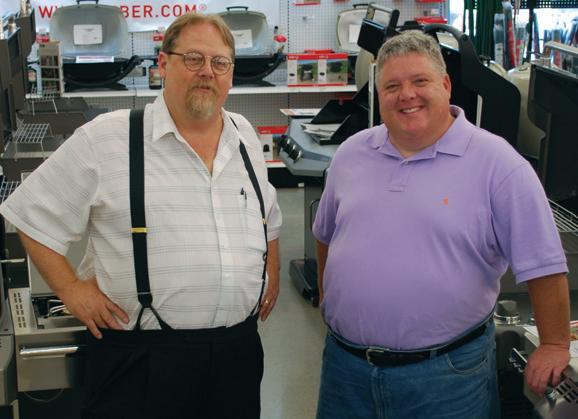
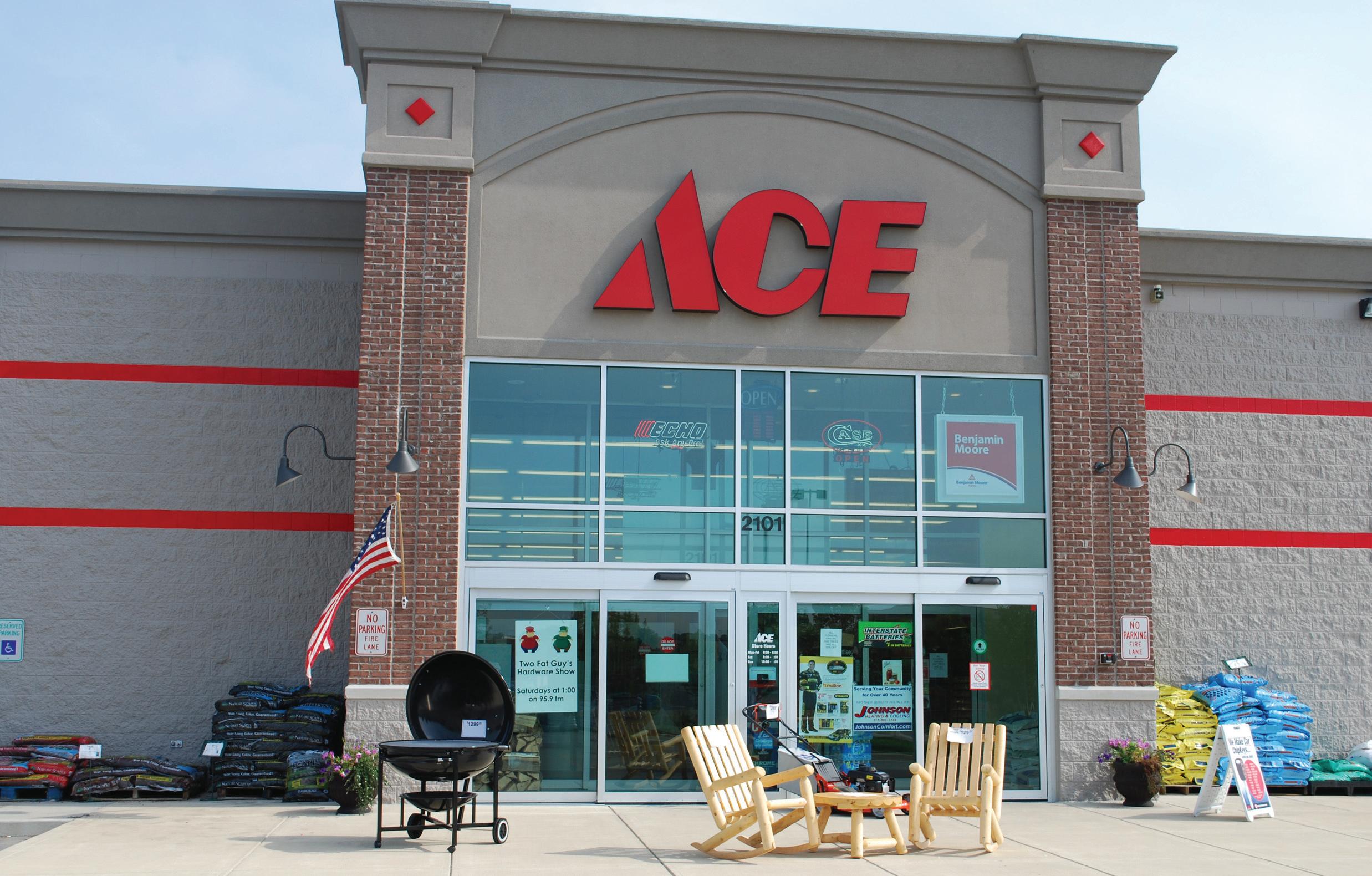
John “Smokey” Barker and Rick Kovacs are used to poking fun at themselves, which is how they ended up with a brand identity that makes light of their size — Two Fat Guys Ace Hardware. When they opened their new store in Greenwood, Ind., (a suburb of Indianapolis) about 19 months ago, they struggled to find a cost-effective way to promote their new business. They ended up buying an hour on the radio and took some of the advertising spots and sold them to cover most of the cost of the show, which they branded “The Two Fat Guys Hardware
Sales are up 25 percent this year at Two Fat Guys Ace Hardware.
Show.” Then they approached vendors for co-op dollars and now have a vehicle to connect with customers for the better part of an hour for free.
Since every radio station has to promote a show airing during the weekend, the two were able to negotiate 30-second promotional commercials every day as part of the deal. Now the store gets free advertising every weekday, which not only mentions the show but tells where
John “Smokey” Barker and Rick Kovacs
Two Fat Guys Ace Hardware Greenwood, Indiana www.2fatguysradio.com – Listen to past shows in the Audio Archives!
the store is located and what specials are going on then. As an added bonus, there are several 30 second commercials within the body of the show that can be used for store promotions as well. As Smokey points out, “You can say quite a bit in 30 seconds if you think about it.”
Smokey and Rick have tailored the show so it can be used and personalized by retailers in other markets. For more information go to www.2fatguysradio.com Smokey responded to the following questions.
Number of employees: We scrutinize payroll. Now our core is approximately 10 associates, however, we begin hiring an additional 10-15 in the spring and then cull out all but the best after Memorial Day. By July 4th we are back to 10-12.
Salesfloor square footage: 15,000 retail and 8,000 square feet of outdoor garden plus 2,000 square feet of backroom space that includes small engine repair.
Sales year to date (% up or down): 25% up.
Inventory turnover: 2.5
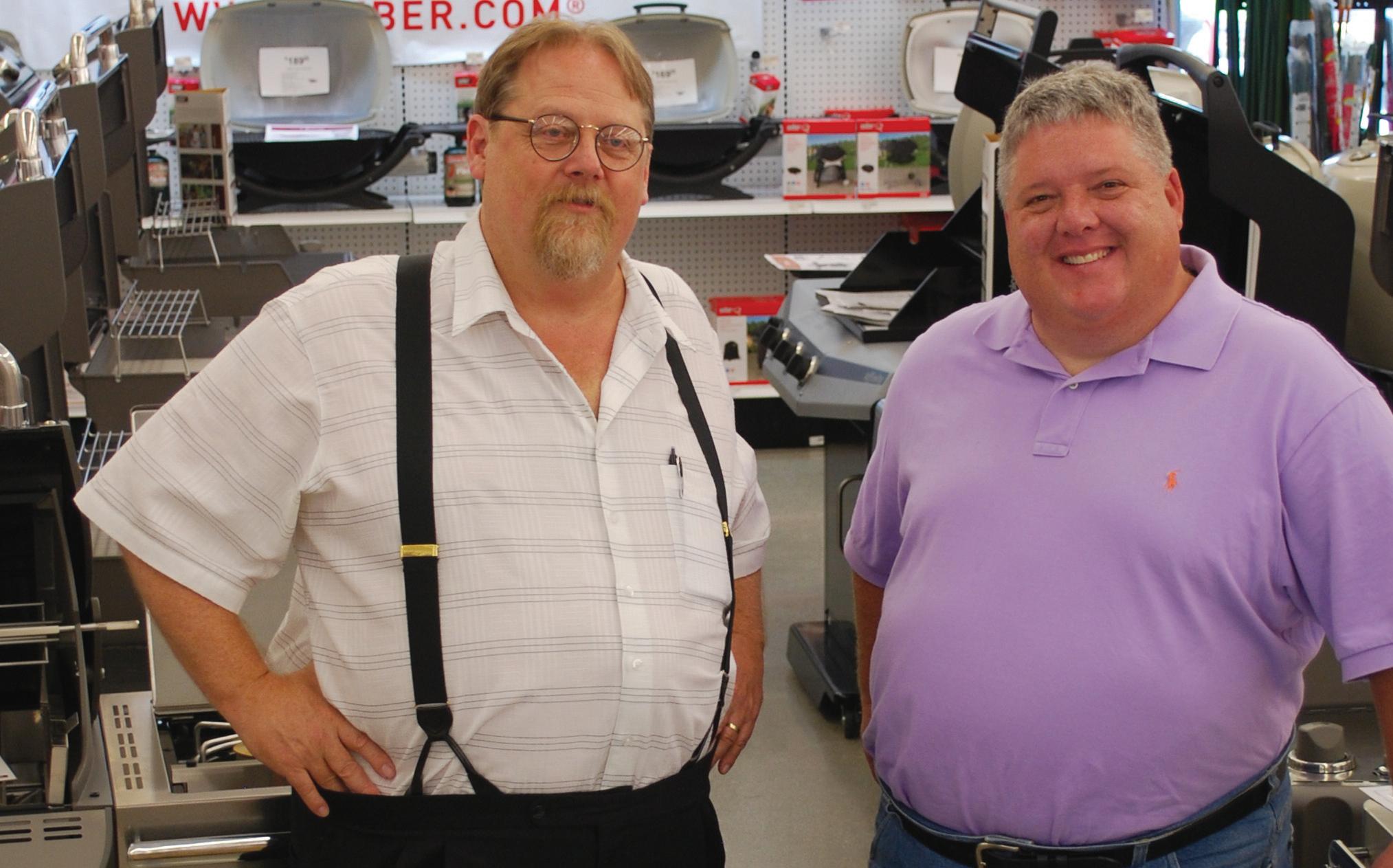
John “Smokey” Barker (left) and Rick Kovacs are turning to unconventional methods to promote their new store, Two Fat Guys Ace Hardware in Greenwood, Ind.
Gross margin: 41%
% sales pro vs. DIY: 5/95. We are less than 2 years old and we want to make sure our inside sales operations are dialed in before we actively go out and solicit commercial accounts. You only have one chance to make a good first impression.
Top categories: Hardware, Weber grills, Benjamin Moore Gennex products.
Most successful niche: Holistic Select dog food. (See page 15)
What made you decide to enter the retail hardware business? We didn’t intend to be in retail.
We are commercial real estate developers and assisted Ace Corporate with some of their new investors in our region. We built the store as an anchor for a shopping center we wanted to develop and our hope was that we would only own the business, not run it. We targeted a manager from Home Depot to run the place. That was our first major blunder. We quickly realized that he did not possess the qualities we needed, so we put the suits in the closet and went to work. We have been running the place ever since.
How would you characterize your retail philosophy? Customers must be
compelled to change their buying habits. We feel that is our driving focus. Today, that is primarily pricing. So, we identified a few categories that we could use to slay our competition such as free delivery, free assembly and a free first propane fill on their new Weber grill. We follow them home with their grill and we throw their old one in our dumpster for free. The first thing they do is invite their friends over and talk about how easy it was and we get more grill customers. It is almost viral. However, identifying and having compelling reasons to change their buying habits is useless unless you can drive it home to the masses.
That is where the Two Fat Guys Radio Show comes in. Finally, when we
get them in the store, we give incredible, stunning, world-class service to keep them coming back. Everyone that comes through our door is a treasured guest and we treat them that way. It also has to be fun. People like to come to a fun place. We get rid of “non fun” associates.
Lessons you've learned about retailing? It is hard.
Best advice to other retailers facing big boxes? It would be arrogant for us to give advice to anyone in the business. However, I do know that Einstein’s definition of stupidity is “doing the same thing over and over while expecting a different result.” Big boxes are impersonal and not
focused on service. We have many items that they don’t. We repair things so customers don’t have to purchase new. We rent equipment so they don’t have to buy. We haul things home for free because most don’t have a truck. We carry everything to their car. We have a treat for their dog. I could go on and on.
How did you get started with your radio show? Print ads almost killed us. It doesn’t work. TV is salty and most people TiVo through the commercials. We tried radio and it doesn’t work unless you do it continually and then it becomes expensive unless you purchase an hourof air time and negotiate several 30 second promos every
Smokey Barker (left) and Rick Kovacs (right) aim to entertain and educate people who listen to their Two Fat Guys Hardware Show on the radio. During a recent show taping, Jeanene Christy, Mrs. Indiana 2010, is entertained by the witty banter of Rick and Smokey as they eat dog food on air.
sell commercials to offset the price, which makes it affordable advertising that works. Our numerous promos throughout the week probably work as well as the actual show on Saturday.
How do you get ideas for your radio show? We found that most hardware shows are dry and boring, so we are much more entertainment oriented than hardware. We do have the various manufacturers reps on occasionally to explain briefly why people should purchase their products. A lot of items we sell are complicated and need explaining such as fertilizer, paint, herbicide, insecticide, electrical, etc. We do it fast, easy and fun.
How has the radio show benefitted your business? We wouldn’t be here if it weren’t for the Two Fat Guys Radio Show. No one in our region has a 25% sales increase from last year; we sell more Weber grills than anyone in the area; we are number 2 in nuts and bolts out of 43 stores in the region. Our customers feel like they
know us and it is affordable advertising that actually works. We also feel that we must be involved in the social media so it drives people to our web page (www.2fatguysradio.com) as well as Facebook and Twitter.
Whose idea was it to brand your show and your store as Two Fat Guys? Rick and I were at a bar lamenting on how in the world we found ourselves in the hardware business and I commented that a successful hardware store on the other side of the market had a hardware show and we should do our own version. He said what would we call it “the
Two Fat Guys Hardware Show?” Everyone at the bar laughed. You got to play the hand you’re dealt.
What can vendors do to make your life easier as a retailer? Make appointments instead of just showing up unannounced.
Biggest challenge facing your business? Challenging associates to be more than average. Most think that if they show up and perform on an “average” level then they are doing a good job. Average is unacceptable.
Short-term goals for the business? Build the customer base.
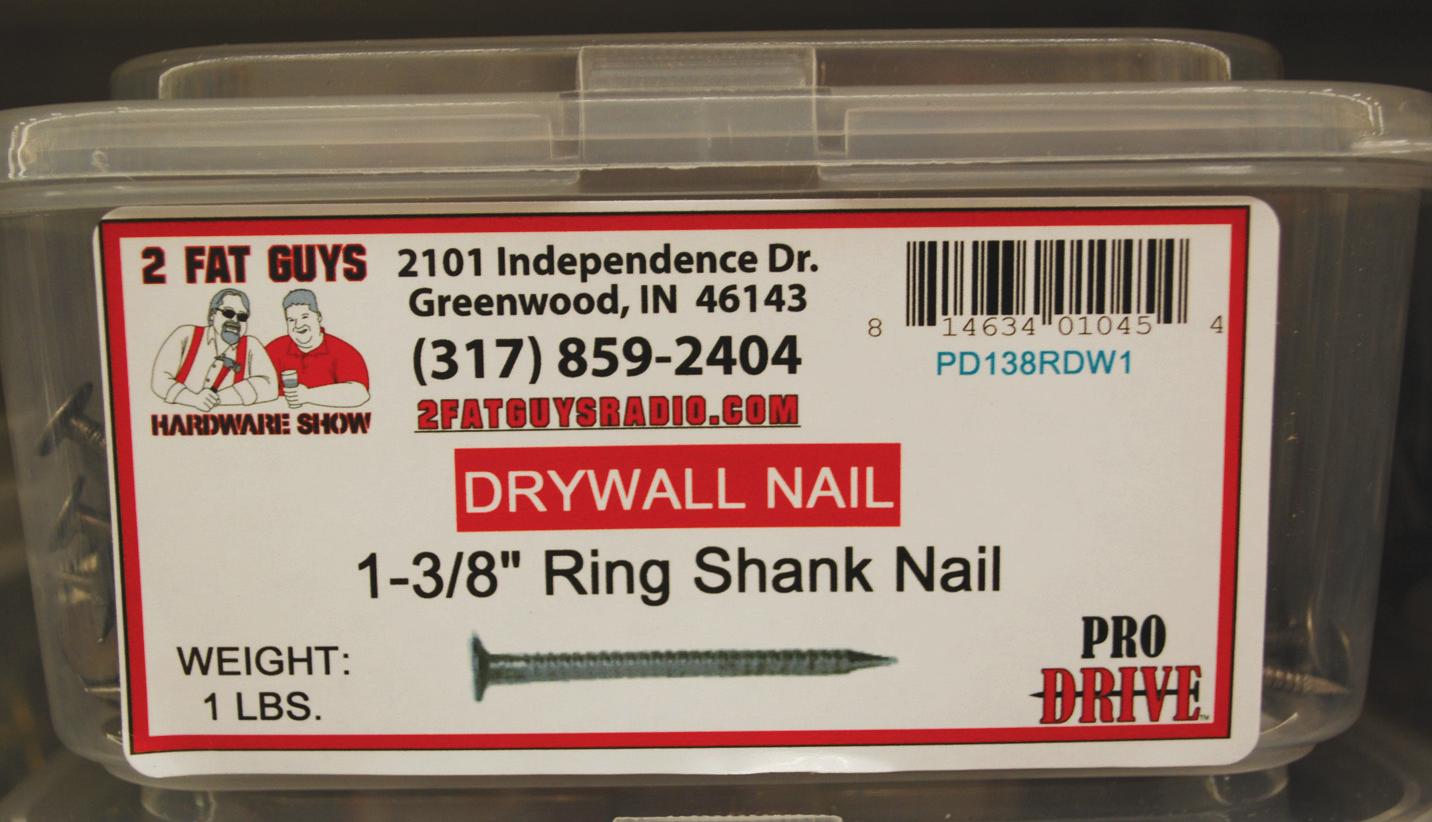
To help build their brand identity in the market the retailers place their own stickers on pre-packaged fasteners promoting the Two Fat Guys brand name.
Devising a Pricing Plan OF ATTACK After the Big Boxes Invade
WBy John Franklin
Getting the upper hand on local pricing takes some work, but I have found that the benefits are huge. For some stores, itʼs the difference between being profitable or unprofitable. Read on to discover how to develop the right plan of attack with your pricing strategy to combat a big-box invasion.
hen a customer has a choice between your store and a bigbox store such as Home Depot, Lowe’s or Menards, they make a series of buying decisions before they make a purchase. If they think you have it and the big-box store does not, you win hands down and can usually sell it at blind margins. However, if you have an item that is also stocked in one of the big boxes the customer now has a choice to come to you or go to them. This is a
complicated decision based on a lot of factors — how close you are, how high your prices are, how good your service is, what the hours are, etc. — but the decision is made every time they get in their car.
Since the decision the customer makes often comes down to the price, the biggest problem is that as much as 75 percent of what you have in your store is also carried in the big boxes. How can you compete? If you are a
Bottom Line
Devising a Pricing Plan of Attack After the Big Boxes Invade
small hardware store that is a fair distance from any big box, you are somewhat immune to their pressure. However, if you are a large hardware store or a home center with a new or established big box nearby, you must take into account the big-box price. Customers will shop your competition and make decisions based on pocket change.
Twenty years ago the big boxes were very competitive. Their job was to drive you out of business, and they succeeded in that plan too many times to count. Now their job is to make money. They cannot make money with low prices any more than you can, so they have had to crank up the retails.
What you need to concentrate on
before the big boxes arrive in your market is differentiation. Make sure your store is different than the big box so the customer will clearly see the advantage of continuing to shop at your store. You need to create as many blind items as you can by adding items to your inventory that will sell in your market but are not carried in your new competitor.
We added Benjamin Moore paint and Sikkens, Penofin and Cabot stains. We added Carhartt clothing, Husqvarna power equipment and other lines. Since we added them, Cabot and Husqvarna have shown up in limited supply in some of the Lowe’s. As far as pricing goes, let them make the first move.
After the Boxes Arrive
Phase two is when the big-box store arrives. As quickly as possible you must establish the margin range for the major commodity lines. In many categories, HD and Lowe’s will carry a similar product, and in some cases, the exact product. Since these are so recognizable, you must consider them competitive items. Therefore you must be close in price or you will be embarrassed.
In plumbing you should compare all the pipe and fittings for black, galvanized, brass, copper, PVC, PEX, flare, compression and Shark grip. These lines are very competitive with your contractor and experienced homeowner base. The boxes do not give this category away, especially the brass and copper. You can make high margins and still have a long list of stuff that you can brag about to your contractors.
Electrical wire and sundries must be checked. In hardware, glass, plexiglass and screen, nails, drywall and deck screws are very competitive. Check pricing on rolls of wire and rolls of screen. Make sure you are competitive to the bulk user. It is much more profitable for you to sell a whole roll of wire or screen to a customer than have an employee take valuable time to measure it out to sell just 10 feet.
Operating in a Mature Market
Phase three is a year or so after the big box arrives. The market starts to mature. The big-box store now has to shift from being the fierce competitor to a profit maker and to do so, it must raise prices. You no longer need to be as cheap as
the big box on as many items. Raise many of the lines 5-10 percent above the box price, but keep on doing the price checks regularly. I recommend you price these lines every 90 days. Once you do a major category shop, you can do the 90-day visit with just 10 percent of the products to accurately keep the margin range. If you find a big difference in the 10 percent you check, then go back and do more.
In fact, you cannot survive on the margin created by all low retails. All you have to do is be close. On blind items you can be 10-20 percent or more over the box and sell with no resistance. On competitive items you should not embarrass yourself. What is the point of having an item sit on the shelf and not be sold because you’re trying to make a higher margin than the customer will tolerate?
The retail price on any item should have nothing to do with the cost. Once you pay for an item, forget the cost. Get as much as you can for it. The retail is actually determined by customer demand. That is, the retail on any item must be the highest price a customer in your market will pay without resistance. If the retail is over cost, that is great. Buy some more of them. If the retail is actually under your cost, it still may be good if you are closing out the item to replace it with a winner.
Price Shopping the Boxes
How do you price shop a competitor like Home Depot or Lowe’s? When you go into a competitor’s location it is hard to spend the necessary time writing down prices and descriptions so when you get
Bottom Line
Devising a Pricing Plan of Attack After the Big Boxes Invade
back to your office you can remember what it was that you priced. Here are some good tools to get the job done quicker and more accurately.
First, try being a customer. When you enter a competitor’s store the best way to be comfortable is to be a customer rather than a sneak, so make a small purchase. When I worked in the field for a few years I had the need to enter hundreds of stores and make all kinds of evaluations. Whenever I entered a store that was difficult to shop, I went up to the first person I could find and asked for one of the 2 to 3 way electrical adapter plugs. They told me where they were, I went over, picked one up and then said to the employee, “This is a nice store; let me look around a bit and see what else you have.” I then was free to wander without looking like a shoplifter. After I was done, I bought the adapter, which usually cost me a mere 59 cents. At one point I must have had about 20 adapters in a box in my car. I figured that 59 cents was a cheap price to pay for a lot of priceless information. On several price shops I bought a lot more. We needed to price shop a store in our market and we were well known to them. I needed a lot of information and quickly. I went into the store dressed up in a suit and tie. I actually bought about $50 worth of stuff from a carefully created list of product. It was a rather random sample of products across
many categories. I specifically took only product that we also sold in our store. When I got back to our store I took the product back as a return in our store. This was the same as buying product at retail, but after we sold all the products we got our full cost back and the information I obtained was worth a lot.
Second, go prepared for a thorough job of collecting price information. Depot and Lowe’s use variable pricing, meaning they sell items such as 90 degree elbows at very low margins and odd fittings like reducing tees at very high margins. You cannot take a few prices and assume all the others are the same. Look carefully for the blind stuff that the boxes gouge customers on and you will be able to profitably match them. You will find you can walk into almost any Depot or Lowe’s and spend hours pricing. I once spent so long in a Home Depot that a customer thought I was an employee and asked me for help. I had been standing there with my flier and a clipboard getting about 500 prices on plumbing. I looked at him and said, “Sorry, I don’t work here.” He said, “Yeah, right,” like I was lying to him. I felt bad, so I helped him with his question.
If you need something to write on, use a store flier. On many occasions I have taken a store flier and written product and prices all over it. This requires writing a description down as well as a price. To really save time and improve accuracy, make up
some price grids ahead of time for the product you want to shop and just write down prices, not descriptions. This saves a huge amount of time and you can quickly get everything you need.
If you try to price openly in stores such as Menards or Walmart expect to get booted out. You need to be very sneaky in these locations. If you have a problem in any location, try this trick. Take a yellow legal pad and draw a few crude sketches of a house on the front page. Put down some measurements and make it look like a floor plan. Place it open on a clipboard and walk everywhere in the store with it completely visible.
With this approach you can walk right up to an employee and say, “I need some prices for an estimate to take to the bank. Can you help me figure out what some of this stuff costs?” You will get whatever help you need, but if you try this method you need to keep your priced items reasonable within the scope of a normal project. This system works well if you also
pick up some small item and actually make the purchase.
Below is a sample grid of part of my Copper Pricing sheets. This is not the whole sheet, but it gives you the idea. If you want the whole sheet or some others, see my email contact at the end of the article. This sheet will greatly speed up pricing competitive locations for copper sweat fittings and pipe. It does not require any writing except for the price. You can fill in the blocks at a rapid pace and not miss any sizes. This sheet is only for copper sweat fittings. It has most of the common sizes. If you carry any additional items not shown on this sheet, just confirm the competitor price and fill in the box. Take this page and photocopy it or make up a similar grid and use it for price shops. Do not put your store name on it or make it look like it is anything official. If you are shopping a Home Depot, take a Lowe’s flier into the store and place your price sheet in the Lowe’s flier. If you are in Lowe’s, use a Home Depot flier. Make
sure the flier is easy to see. If anyone asks if they can help you, say “Not yet, just comparing prices with the other guy.” They will walk away and leave you alone.
I also have a pricing grid for black, galvanized and brass threaded pipe fittings. You can quickly fill in this sheet and get as many as 200 items priced in a short time. It is so much faster than trying to write descriptions, and far more accurate. When you fill in the grid you can quickly see if there is an item with a crazy price.
Maximize Blind Items
While it is important to know what your competitor stocks, it is just as important to know what they do not stock. Why? Because all the items you stock that they don’t stock become blind rather than competitive to the customer. With nothing to compare to, you are free to increase the margin on these items with less resistance. For example, in a shop of our local Home Depot, we found they did not always carry all the ½" sizes on nipples. Wherever we found they did not have a particular size, we made our price the same as the next size up. We charge the same for a 3.5" as a 4". Since the customer cannot get them elsewhere, we stayed very competitive on items like the 6" nipple, but we made a better than normal margin on everything they did not have. We had no customer resistance. When I did big-box pricing, I found that I typically raised more prices than I dropped. After the market matures, you do not want or need to be lower than the big boxes. Being lower gives them
leverage to steal a customer. If you are lower, they will match your price to the customer and save them 10 percent. If your price is exactly the same as Depot they will not give the customer the 10%. I went close but slightly above. If Depot was $1.24, I went to $1.29 for our price. I made more margin and the customer did not feel like they were being gouged.
Did it work for us? Consider this.
During the 10 years that followed the first big-box store entering our market, six additional big-box stores arrived. During this same 10-year period of time six lumberyards and nine hardware stores in our market went out of business. Home Depot and Lowe’s took a big toll. While 15 independents were closing, our company grew by more than 400 percent. We were four times as big 10 years later despite the presence of these big-box stores. I believe a sound pricing program was a huge part of the success. Pricing takes a lot of time, but it is well worth the work.
John Franklin has nearly 40 years experience in hardware retailing, most recently as merchandise manager at Williams Lumber & Home Centers in upstate New York. Contact him at john@thehardwareconnection.com and he will send you sample pricing sheets you can use.
What’s the Buzz on Hardlines Digest?
By John Fix III
Discussions continue to be lively on the Hardlines Digest. During the busy late spring and early summer selling season there are fewer opportunities for dealers to gather to swap ideas and compare business practices and prices. Luckily, members of Hardlines Digest were able to exchange ideas and get answers to their business questions by posting messages to the message forum. Here’s a quick sample of three topics that generated some helpful and lively replies.
Ways to Save Money
With the economy continuing to sputter along some dealers posted ideas for reducing costs at the store level. Terry Asten Bennett of Cliff’s Variety in San Francisco had some ideas about ways to cut expenses.
■ Phone book advertising — last year we cut it by 3/4. Nobody uses the printed book anymore. I will probably cut it back even further this year.
■ Other advertising — we are an I.B.R. Ace store and saved ourselves $10,000/ year by not participating in the ACE branding program. Are you getting your bang for your buck out of your co-op advertising program?
■ Garbage and recycling — does your garbage company give discounts for increasing your % of recycling and composting?
Industry ISSUES
■ Occupancy sensors in our storage and employee-only areas to cut back on electricity usage.
Dan Vogel of Lee’s Home Center in Millstadt, Ill., added some ideas they had implemented at his business:
1. We reduced hours for most employees by 2 hours per week.
2. Changed all ballasts and bulbs to T8.
3. Reprogrammed thermostats a few degrees here and there.
4. Cut printing expenses by using Activant’s Printing Plans to ‘Prompt for Copies’ at the end of POS transactions, and using signature capture so we don't print any store copies (Many times we don't print invoices — customers don't want them anyway).
Price Surveys
Hardlines is often used to conduct informal price surveys of fellow dealers. In the past few months, dealers have compared prices for several services they provide in their stores.
Bill Zeithammer of Isles Do it Best in Punta Gorda, Fla., kicked off a discussion about rekeying prices by asking, “I'm wondering what you dealers might be charging for various lock services? We have been charging $4.50 for simple rekeying and making judgments for more difficult services. Have a feeling that we are under priced.”
Prices ranged from $5 up to $15, as you can see from the following responses:
“$5 per cylinder here. Free if they buy the lock from us.”
“$6 per cylinder regardless of if they buy the lock from us or not. Never had a complaint. Still lots less expensive than a locksmith.”
“We charge $5 per cylinder and include 2 new duplicate keys per cylinder.The vast majority of our rekeys are limited to Kwikset and Schlage (probably upwards of 95%, mostly because these are the brands we sell), though we do have the occasional other brand. I have discovered that we too are possibly underpriced, as a local locksmith is getting $8 per cylinder.”
“We get $15 for a rekey for each cylinder, and $25 for a rekey master key. The operations all carry their own SKU # for tracking purposes and include two new keys with the job.”
“We have been charging $10 per rekey for quite a while with no complaints.If we have to go to a house we can get $20 per rekey.Our local lock shop gets $8 per rekey but it can take up to a week because of their backlog, so most people are happy to pay the $10 and get it done right then.This is kind of a blind item as most people do not know how much it really costs to do, but we just raised our shop rate for repairs to $40 per hour broken out in 15-minute intervals.”
Related to the discussion about rekeying charges was a question about
how much stores are charging for labor. The range was not quite as wide as the rekey fees with most stores in the $60 per hour range.
Royce from Higginbotham Brothers in Texas said, “We were at a Husqvarna training (session) last week and they told us $60 per hour was a good number. We have not begun to shop around though and see where that puts us in the market.” Albrights Hardware and Home Ace Hardware both agreed with the $60 per hour rate.
Tom Cost of Killingworth True Value gets a bit more for labor. “Average labor rates vary depending where your store is located. In southern Connecticut we are now at $68 per hour for power equipment repair, $15 to $40 per unit for assembly and $40 per hour for screen repair. We have been told by several people in the business that our power equipment rate is lower than many of the other local shops.”
Drug Testing
Matt Mazzone of Mazzone True Value in Brooklyn, N.Y., was curious about how many retailers have a drugtesting program and hoped others were willing to share details. A number of dealers responded with options they have implemented.
Karla Robson of Slavens True Value in Cortez, Colo., replied this way: “We've drug tested all new employees and random tested current employees for about 5 years now. We found a crack pipe under the plunger in our men's room. YES…I did say…under the plunger! Obviously we should have
been doing it far sooner. The first time we had a surprise test for all, anyone who tested positive for anything was suspended for 5 days, with the understanding that in 5 days they needed to test lower than they did the first time, and be tested each week until all was out of their system. We have had only a couple of meth users, but I lost half of my department heads and all but 3 in my lumberyard to pot. My boss called me in his office and said to me, ‘Those of you who did not test positive will have to work really hard and really long hours the next 5 days.’ (I recommend a more positive approach!)”
Robson added, “We pay $25 for each new hire and $25 for each random test plus $35 if the drug place has to send to the lab for analysis. For DOT we pay $50. We random test quarterly, 4-5 people. The drug testing place has a computer to random the names, and then sends a letter to us, we note the date and time and then send the folks over. I am not sure what our approach will be with an employee who has a marijuana card — luckily we don't have any yet — but I have 3 shops in town now so it's only a matter of time. We are
Industry ISSUES
watching Colorado law to see how it's being handled. Also, if someone has any kind of accident that requires work comp on the job or any accident with our vehicles, they get sent right away.”
Bev Vervon of Budget Home Center in Longmont, Colo., shared this story: “We test all new hires — costs about $25. We also test when there is an injury or accident. That actually saved us what probably would've been a protracted work comp claim several years ago. The employee says he twisted his back at work when he was stepping off a step. No one saw it happen, but he said he was in pain, so we sent him to our preferred medical provider and they drug tested him. When the test came back positive for cocaine, our work comp supplier did a background check on the man. It turned out he was a serial work comp abuser. He had been off work for years at a time on five previous work comp claims, all vague 'something hurts' kinda injuries. Based on the positive drug test, the work comp supplier informed him they were only going to pay a portion of the medical bills and the balance would be his. That was the end of his injury, his claim and his employment. He took off.”
Virgil Cox of Cox Lumber in Houston also has a drug-testing policy. “We drug test all prospective hires as part of a pre-employment physical, costing $79 from Concentra. We give the applicant a signed approval sheet with our account number, authorizing the test, and Concentra bills us. The clinic normally calls right after the physical to verbally tell us those results, and then calls a few days
later when the drug test results are in. They also mail test results to the manager. If they pass the physical they can start work immediately pending satisfactory results of the drug test. We've had several come back for alcohol, cocaine, heroin and pot and have immediately terminated them, for drug policy violation and for lying. Policy is that they can retest immediately at their own expense, but we have never had that occur. We also test whenever there's an accident or if we suspect something. We had one guy who always had a ‘sports drink’ with him. Uh huh, let me see that.”
Hardlines continues to thrive because dealers are willing to share their ideas and procedures with other dealers. Without the wonderful dealers I’ve quoted in this article (and the many, many more who also post messages on Hardlines) the Hardlines Digest would just be a server sitting quietly in my office. So thank you to everyone who belongs to Hardlines, both those who post messages and those who read them.
John Fix started the Hardlines Digest in January 1996 and continues to run the servers out of his hardware store in Eastchester, N.Y. There are currently more than 2,300 subscribers to Hardlines Digest. To join this free email discussion list visit www.hardlinesdigest.com or send a blank email message to joinhardlines@lists.cornells.com.
An Opportunity to Relate to Customers and Make Your Store Stand Out
By Bob Vereen
Successful hardware, home center and lumber-building material retailers insist that among the main reasons for their success are that they offer the consumer a different experience, their customer service is better and their stores have distinct personalities.
That undoubtedly is true, but too many of them are not yet fully recognizing the amazing impact that social media — Facebook in particular — is having in the marketplace, which could help them convincingly demonstrate those characteristics to customers. It clearly is time for every growth-minded retailer to become a devotee of social media.
What retailers need to realize is that social media like Facebook and Twitter no longer are just something teenagers and the under-25 crowd are using, but they are now being widely used by the kinds of adults retailers are seeking as customers.
Marketing is changing in many ways for hardware
stores and home centers, just as many of the products one stocks are changing, but not all retailers are keeping up with new trends, and the reluctance to become involved in or delay using social media is one that could have long-term, negative implications for retailers. While some retailers are “giving up” on the use of Yellow Pages listings, what
Dave’s Ace Hardware in Wisconsin already has about 1,800 fans of its Facebook site and has received 357 comments on the photos it has posted. Owner Dave Warren uses Facebook to promote upcoming sales and special events, with extra discounts offered to the store’s Facebook fans. Fans that printed out the Facebook page to prove their status were able to receive an extra 50% off closeout merchandise or $2 off DVDs for sale. See how they do it here: http://www.facebook.com/davesace.
An Opportunity to Relate to Customers and Make Your Store Stand Out
alternatives are they seeking? Social media could be a very good substitute.
Just as retailers realized they needed to have a web site of their own in recent years, it seems, from consumer research being conducted, that it will be equally as important, if not more so, for stores to make an appearance in social media, and Facebook is the clear market leader.
Recent research in the U. S. shows that Facebook now has 500 million active users, up from 50 million just three years ago. Perhaps more important for retailers is that 35.6 million females with children — a target audience — were on Facebook in February 2010, nearly one-third of the total audience of females with children. These are prime prospects for hardlines retailers.
daily. Sixteen percent check Facebook or Twitter to get their daily news. And 23 percent of tweets on Twitter are retailrelated. Aren’t they your customers or target audience?
In special research this author conducted among a group of more than three dozen progressive hardlines retailers in March, 85 percent reported they are already using Facebook and other social media, although some have just begun doing so. Some retailers admit they should have started earlier. Those answering the survey who were not already using social media all said they are thinking about doing so.
Recent research in the U. S. shows that Facebook now has 500 million active users, up from 50 million just three years ago.
Another important statistic from this social media research: More than 40 percent of consumers 35 or older are using social media, another target audience of homeowners or potential homeowners. In other words, social media no longer is being used only by teens or the under-25 crowd. In fact, aging baby boomers are the fastest-growing user group.
Of the over-25 crowd, 55 percent check Facebook or other social media
Two-thirds reported that they know of other retailers in their trading area who are using it, so social media is becoming a part of mainstream marketing. Many see Facebook, Twitter or YouTube, the three most prominent, as taking over the former role of Yellow Pages telephonebook advertising, with the special advantage that it can be updated and kept current. More importantly, it is free! Facebook was by far the dominant choice, chosen by 100 percent of the reporting retailers. In addition, 37 percent were using Twitter, 18 percent YouTube and 15 percent LinkedIn.
Here are six reasons why every hardlines retailer should be using social media, as expressed by fellow retailers: The set-up is minimal and the cost is free. There is no good reason not to get your business involved in social media.
■ It is a way to directly interact with your customers and a way to reach and attract potential customers.
■ It is a way to create a personality for your store and your employees, as well as a way to set yourself apart from competition, especially big boxes.
■ Your store’s fans will spread the word about your site to their friends and thus increase your business and the number of fans (potential customers) you have.
■ Social media can be used to help create or enforce your store’s personality. Think like a customer. What do they want to hear about? What is interesting to them? Don’t make all your posts advertising messages.
■ As one retailer noted, it offers communication, connection and entertainment, all at no cost.
http://tinyurl.com/2993b97
A recent study by eMarketer, exploring social media, reported that 58 percent of users said the primary return on investment is the opportunity to listen to and understand customers. If that is the only result one gets, it certainly is worth doing, especially since there is no cost involved except one’s own time. Thirty-four percent said it had helped them grow their business. There are some very important “Do’s and Don’ts” to be considered.
■ Don’t make your postings all business or advertising.
If you go on Facebook and type in “Hardware,” you can check out more than 500 Facebook pages of hardware retailers already using this medium. A Facebook page consists of five sections: the Wall (or home page); an Info section in which you can provide store hours, phone, fax, web address and other pertinent information; Photos (to show your store, picture special store activities, etc.); a Discussion section and a Reviews section. Checking a number of Facebook pages, we find only a few retailers enjoyed discussions or reviews, but those that did universally rated positive ones. Belleville Pro Hardware in Michigan, for example, had people say they were glad to see them using Facebook. The retailer’s Facebook page also provided a link to a YouTube video they produced that describes what the store has to offer.
■ Update your postings frequently. Remember that people are checking regularly, so give them something fresh and new to read — about your community, the weather, household projects they should be thinking about, new products you’ve added, etc. Some retailers report that it takes about an hour a day to keep their pages current and interesting.
■ Ask your employees for their suggestions as to what might be of interest to visitors, especially your younger employees. They can be a great source of help. Some retailers are even turning management and maintenance of their Facebook pages over to these younger employees.
■ Remember that this is a way to interact with existing customers and a way to get new customers.
■ When you do promote, emphasize products that are unique or new to your store or community, and definitely stress products that are on sale.
■ Seek ways to get people interested in things that relate to their personal experiences, such as coping with snowstorms, or planting gardens, or hunting or fishing activities. Ask them to post their questions or talk about their projects. One retailer said it was “time to drown some bait” when discussing his fishing department. Humor helps. In fact, injecting humor into social media comments is a very wise action.
are talking to your customers, not “advertising” as such.
The Facebook page for Elliott’s Hardware in Dallas features lots of pictures of store events as well as a link to its monthly e-newsletter. Check it out here: http://www.facebook.com/elliottshardware
■ In any and all other kinds of advertising you do, be sure to mention your Facebook and Twitter, etc., activities and addresses. And be sure to post your web address on these social media listings and use social media logos on your web site.
■ Make sure you post lots of pictures of your store, especially of any fun special events you hold. Put some on your home page and others in the Photos section of Facebook. There is no excuse not to do so with digital cameras available. Change the photos from time to time so there is variety for repeat visitors.
■ Be sure to display your store’s expertise and knowledge, and try to inject some humor into your comments whenever possible. Remember you
Bob Vereen is a former editor of Hardware Retailing magazine who has been writing about the hardware industry since 1950. He recently published a book titled “Surviving…in spite of everything,” which offers a postwar history of the hardware industry. For more info or to order a copy of the book go to: http://www.survivinginspiteofeverything.com/. Bob will be signing copies of his book at The Hardware Conference in Marco Island in September. Bob is working on a new book to help retailers improve their web sites and make more web sales. “Successful Web Retailing” will be a how-to handbook for retailers of all types with practical suggestions that will be easy to implement. If you have suggestions for the book, contact Bob at bvereen053 @gmail.com.
Send comments to chris@thehardwareconnection.com
Tools & Hardware Buying Update
■ Increasing in popularity are compact and subcompact drill/drivers that offer smaller size but still strong power.
■ Some angle grinders now feature ergonomic grips that give users control while reducing fatigue.
■ Sawhorses that double as a workstation with a built-in clamp are an emerging category for pros and d-i-yers.
■ Homeowners are increasingly using decorative hardware to inject more personality into their living spaces (especially kitchens) so they stand out from friends and neighbors.
■ The aging population has led to development of hardware that is easier to grip and use such as larger cabinet pulls, with levers often used to replace knobs.
■ Soft-closing slides are now available in all price points.
Cole’s Home Solutions in Millington, Tenn., is taking steps to connect with the next generation of customers by stocking tool sets for kids in a prominent location. Kids can even demo the tools on the toy work bench.
■ Stainless steel, satin nickel and oilrubbed bronze remain the most popular finishes for decorative hardware with antique/distressed finishes gaining in popularity.
■ More consumers are coordinating the look of decorative hardware throughout the house, from kitchens and baths to closets. The coordinated look still involves incorporating a variety of styles for different applications.
Southaven Supply in Southaven, Miss., offers more than 1,200 different cabinet knobs, a dominant assortment that attracts customers from as far away as 250 miles.
8 Questions 8 Questions for Bob Taylor
Do it Best Corp. is celebrating its 65th anniversary this year.The co-op, then named HardwareWholesalers Inc., was founded by Arnold Gerberding in 1945.We interviewed BobTaylor, president and CEO, about the current state of the co-op and the industry as well as future plans.
How is 2010 shaping up for Do it Best?
Taylor: Given the economy and what we’ve had to deal with the last few years, we feel fortunate to be where we are. We’ve tried to look past some of the obstacles and focus on where the opportunities are for our members. A lot of things we do, such as our rebate program, drive cash flow for our members and we also have no longterm debt. On the distribution side, we need to be more proactive because the supply chain has been challenged. We’re looking closely at A items and lead times. Those companies who can manage assets well will be positioned to thrive when the economy rebounds.
What is the potential for social media such as Facebook and Twitter?
Taylor: If you’re a young person your life revolves around Facebook. When you look at it from a business perspective, it’s called social media for a reason. You have to be careful or it will turn people off. Retailers have to ask what they can do to connect with the community. You’ve got to find a way to generate a buzz like with a video on YouTube, and there are opportunities to transfer product knowledge to customers to position your store as the experts. From an independent’s perspective, technology can help a small retailer act big but the same is true in reverse.
What are the biggest challenges facing Do it Best Corp. and its members over the next few years?
Taylor: From a business environment with the way home building has been impacted it’s clear the economy will continue to be a challenge. So growing business in a slow economy is a challenge. Consumers’ needs are changing, so our members need to look for opportunities to grow in new ways. Then there are big-picture issues such as cap and trade, card check and the estate tax that have a big impact on businesses. We continue to keep the estate planning issue in front of members so they are successful in passing their businesses along.
Can the co-op business model continue in its present form or will it need to evolve in some manner in the future?
Taylor: We don’t see the form changing. There are a lot of benefits to the coop structure — tax advantages, low capital investment, all profits are funneled back to members — and not a lot of outside influences. It’s important to operate in an open framework but you don’t have the expense of complying with the SEC. The model is great for us — we have no debt, so we can stay focused on what’s important to our members.
The big boxes enjoy an advantage in access to capital. How difficult is it for your members to receive financing for business expansion?
Taylor: The boxes’ advantage of access to capital has been muted quite a bit. Do it Best has such a strong rebate structure it’s like a second profit for members to fund expansion or remerchandise. We’ve added programs such as
RetailSTART!™ or RetailPlus® that enhance expansion with support money. When I left my family business in Virginia we had five stores — today they have nine stores, because they used the rebate money to their advantage to find opportunities in a competitive environment. We’re seeing members get pinched more with activities outside their main business, working off an asset-backed loan.
What technology changes do you see having the greatest impact over the next 3-5 years?
Taylor: On the corporate side we see cloud computing from the POS side to how we manage Internet connections. There will be more of a focus on business intelligence components pulling data from members’ POS to compare to national and regional figures. For retailers you’ll see more mobile units with access for employees and customers. Red Laser is a program that allows consumers to compare prices, and retailers have to learn how to use that to their advantage.
How many members have adopted your Signature Store Design program?
Taylor: We’ve been in the store design arena since the early ‘80s but we needed to make it current to keep up with shopping patterns. We came up with a program that is flexible and scalable and works at retail for lumber, home center and hardware retailers. A little over 300 members so far have adopted Signature, and we’ve had about 100 come on board with projects in the last fiscal year. It’s positioned these members to capitalize on an upturn.
Continued on page 59
Bob Taylor is president and CEO of Do it Best Corp., which is celebrating its 65th anniversary in 2010.
New Stores:
● Haggerty Ace Hardware, owned by Jeff Haggerty, has opened its third store in Walton, N.Y.
In the News...
● Poulin Lumber reopened a store in Williamstown,Vt., that had been closed while operating under previous owners as Lacillade Lumber.
● Tillson True Value, owned by Richard Pfirman and Tom Tillson, held a grand opening for its second store in Hermon, Maine, on June 26.
● Miner’s Ace Hardware has opened its seventh location in San Luis Obispo, Calif.
● Withers Lumber has opened a new location in Molalla, Ore.
● Sanford and Hawley held a grand opening for its new yard in Unionville, Conn., on June 10.
● Samson True Value Hardware has reopened in a new location in Fairbanks, Alaska.
● Karen and Roman Siryk opened Ace Hardware of West Boca in Boca Raton, Fla.
● Miles and Cina Sorensen,owners of Los Banos True Value, added asecond store after reopening Modesto True Value in Modesto, Calif., which had closed under previous owners in February.
● Western Building Center of Kalispell, Mont., has acquired Stevensville Building Center in Stevensville, Mont.
● John and Michael Zettler opened their fourth Zettler Hardware in Powell, Ohio, in June. The store features green-friendly features such as a white roof and high-tech magnifyingtype glass tubes that reflect the sun and save energy throughout the store, automatic eyes that brighten and dim the lights depending on the amount of sunlight the
store is receiving and a rainwater recycling system.
● Peter Grebeck, owner of Peter’s True Value in Milford, Mich., is reopening South Lyon True Value Lumber, which had closed last August.
● Cindy and Joe Smith Jr. have opened their sixth Ace Hardware store in Vineland, N.J.
● Eric Jensen and Sarah McConnell have opened Cleveland Ace Hardware in Cleveland, N.C.
● North Elm Ace Hardware is opening this fall in Greensboro, N.C., with Doug Brown as managing partner.
● Hartville Hardware announced plans to build a 240,000-square-foot store — more than twice the size of the current store in Hartville, Ohio.
● Paula and Jim Mills opened Montgomery True Value Hardware in Montgomery City, Mo., replacing a store that had closed.
● Home Hardware Center acquired Builders Mart True Value in Tylertown, Miss., which will operate as the company’s 17th store.
In the News...
Kudos To:
● Marcus Lumber in Marcus, Iowa, marked its 90th anniversary in June.
● Urness Hardware & Appliance in Clarion, Iowa, celebrated its 50th anniversary in May.
● The Electrical Outlet, operated by Anthony and Alice Alexander in Moulton, Ala., was named “Business of the Year” by the Lawrence County Chamber of Commerce.
● Hess Lumber, which is celebrating its 75th anniversary, held a grand reopening in June for its new 9,000-square-foot facility in Malad, Idaho.
● The Sanders family, owners of Butler County Lumber Co. in Hamilton, Ohio, was recognized as “Small Business Person of the Year by the Greater
Hamilton Chamber of Commerce.
● Home Lumber Co. in Whitewater, Wis., was recognized with the 2010 Small Family Business of the Year Award from the Wisconsin Department of Commerce.
● Reitsma’s Home Hardware in Houston, B.C., received the Walter J. Hachborn Award for the Store of the Year.
● Tom and Marlene McDonald marked 35 years as owners of New Providence Hardware, a store that dates back to 1863 in New Providence, Iowa.
● Pinal Lumber of Globe, Ariz., was named “Business of the Year” by the Globe-Miami Chamber of Commerce.
● The Henry Bierce Company in Tallmadge, Ohio, is celebrating its 100th anniversary this year.
● Stevens Hardware in Annapolis, Md., has been in business for 50 years.
● Orangeville Home Hardware Building Centre in Orangeville, Ontario, owned by Buddy and
Melody Pitt, held a grand reopening for its renovated and expanded store, which is now 35,000 square feet.
● Meyer Ace Hardware is celebrating 75 years in Petoskey, Mich., operated by third-generation owners
David and Dale Meyer.
● Hindman ProMart
Home Center of Hindman, Ky., was honored with 2010 Paul L. Cosgrave Memorial Award by the PRO Group. Also named 2009 PRO Hardware Retailers of the Year were Wiley Brothers PRO Hardware and Lumber in Schaghticoke, N.Y.; Searing Electric & Plumbing PRO Hardware in Longview, Wash.; and Lincoln Hardware & Supply in Lincoln, Ala.
● Lanier’s True Value in Lexington, N.C., owned by Gail Lanier, marked its 70th anniversary with a special June coupon sale offering a 70% discount for any item under $70.
● Derstler Lumber Co. in Richmond, Mo., is celebrating 50 years in business.
People on the Move:
● Bob Moschorak has been named president of Ace Hardware’s international division.
● TW Perry has promoted Michael Cassidy to president and CEO and hired Tonya Watkins Farina as director of business development.
● Do it Best Corp. named Jeff Benzing as communications director.
● House-Hasson Hardware has named Steve Henry credit manager.
company received from its acquisition of MooreHandley last October.
● The Bostwick-Braun Company has promoted Chris Beach to president and COO and announced intentions to move to a new headquarters building by Thanksgiving.
● Richard Paige announced he will retire as chairman of The PRO Group at the end of the year. Paige, who joined PRO in 1989, will be replaced as chairman by Gary Cosgrave, a member of the founding family.
Other News:
● Alliston Home Hardware Building Centre in Alliston, Ontario, held a grand reopening for its newly expanded store. Owner John Ytsma added 8,300 square feet of retail space as well as a new 13,000-square-foot warehouse.
● Rob Scoble has been named president and COO for Hyde Tools, succeeding Rick Clemence, who has stepped forward to lead the Hyde Group as CEO.
Wholesalers in the News:
● House-Hasson Hardware is embarking on a 100,000-square-foot expansion of its Prichard, W. Va., warehouse as a result of the sales boost the
● Rita Kahle, executive vice president of Ace Hardware Corp., announced plans to retire from the co-op after 23 years of service.
● RONA Inc. has closed on its purchase of five Pierceys stores in Nova Scotia.
● Two retailers lost their stores to fires: Ohlmann Building Center and Lumberyard in Valentine, Neb., on June 9 and Middleville Pro Hardware in Middleville, Mich., on July 27.
In the News...
● Britain’s oldest hardware store, Gill & Co. in Oxford, has closed after being in business for 480 years.
● East Haven Builders Supply has acquired Millwood Lumber in Millwood, N.Y.
In Memory:
● John Ross Hurst, owner of five Hurst Ace Hardware stores in Utah, passed away June 16 at the age of 67. The business, which was founded by his parents as a five and dime store in 1946, operates by the mission statement: “Give our customers a shopping experience that makes them want to return.”
● Gregg Ziegler, past director and vice chairman of the board for Ace Hardware Corp., passed away in June at 89. After serving as an officer in the Marine Corps during World War II, Ziegler returned to the family hardware business, Ziegler’s Ace Hardware in Elgin, Ill. Honored in 1983 as the Illinois Retail Merchants
Association’s Retailer of the Year, Ziegler also set the NASCAR record for the Flying Mile event at Daytona Beach in 1960.
● Bob Sullivan, who founded Sullivan Hardware in Indianapolis in 1954, passed away July 29 at the age of 87.
● George Dean, who opened Northshore Hardware in North Muskegon, Mich., in 1955, died June 30 at age 89. An accomplished professional hockey player, Dean turned over the business to his three sons in 1986.
● Homer Hayward passed away July 30 at 89. Forced to take over the family business, Hayward Lumber Company in Salinas, Calif., at age 24 after the death of his father and grandfather, Hayward directed the company through 48 years of growth. Through the years Hayward Lumber acquired five other yards to become the leading lumber supplier on the Central Coast.
● Charles Veenstra, former owner of Big Buck Lumber in Racine, Wis., died in July at age 85.
● Johnny Thompson Sr., president of C.E. Thompson & Sons in Edinburgh, Va., and Thompson Building Material in Warrenton, Va., died July 7 at 76.
For the Full Story:
● Home Lumber in Whitewater, Wis., which is marking its 125th anniversary this year, was honored as Wisconsin Family Owned Business of the Year. Geoff Hale is the fourth generation of his family to operate the business. Read about the company’s keys to longterm viability here: http://tinyurl.com/354jy82.
● Swartz True Value in Newton, Mass., is celebrating its 120th anniversary throughout the year, but owner Michael Swartz almost had to close the store two years ago. Read about the hard choices he had to make to restore the business to profitability: http://tinyurl.com/29yuf89.
● Tax credits for health insurance are available to help retailers with fewer than 25 employees. For details, click here: http://tinyurl.com/2cy5hjq.
● Pot of gold? Hardware retailers in Montana have discovered a niche in selling products related to growing medical marijuana. Catch the buzz here: http://tinyurl.com/2g7e5hd.
● Discover the thought process behind True Value’s new corporateowned store in Mount Prospect, Ill.: http://tinyurl.com/23xtbl8.
● Danaher Corp. and Cooper Industries have formed a joint venture called Apex Tool Group LLC. The newly formed company, which will be headquartered in Sparks, Md., will offer leading brands from Danaher Tool Group and Cooper Tools. For more information, go to www.apextoolgroup.com.
● The National Lumber and Building Material Dealers Association (NLBMDA), along with a coalition of housing industry associations, filed suit in federal court July 8 against
the U.S. Environmental Protection Agency for removing the "opt-out" provision from its Lead: Renovation, Repair and Painting Rule. Learn more about the issue here: http://tinyurl.com/2bscvgm.
● A retailer in Indiana voices his concerns over the health-care legislation: http://tinyurl.com/285fbrm.
● Suspected embezzlement contributed to the demise of Ace Hardware in Pine Grove, Calif. Could this misfortune happen to
your store? Read the two reports from the Ledger Dispatch: http://tinyurl.com/24nfwsz ...
http://tinyurl.com/2eeref4.
● Woman facing charge of embezzling from a hardware store kills herself on train tracks: http://tinyurl.com/2ac7w3o.
● Westlake Ace Hardware has been hit with a second lawsuit alleging failure to pay overtime: http://tinyurl.com/26fh8td.
8 Questions for Bob Taylor
Continued from page 54
Do it Best is marking its 65th anniversary this year. How gratifying is it to play a key role in shaping the future of the company?
Taylor: We don’t look at it as a milestone. It’s a good opportunity to reflect on the performance we’ve delivered. Our number one goal remains helping members grow. It’s important to
have a financially strong and member-focused co-op, which is why we aligned our family business with Do it Best 20 years ago. We continue to raise the bar even higher to make our members successful and just try to be good stewards of a great company. I’m only the fourth CEO of the company in 65 years and that’s amazing when you think about it.
Upcoming Events
SEPTEMBER
Activant-Eagle Users Group Conference ■ September 8-9, Marco Island Marriott, Marco Island, Fla., www.activant.com/userconferencemarcoisland
Blish-Mize Co. Fall Market ■ September 24-25, Convention Center, Overland Park, Kan.
Bostwick-Braun Co. Fall Dealer Market ■ September 23-25, Seagate Convention Centre, Toledo, Ohio
Florida Building Material Association Gulf Atlantic Building Products Expo ■ September 22-24, Disney World’s Dolphin Resort, Lake Buena Vista, Fla.
HDW Inc. Fall Dealer Market ■ September 11-12, Shreveport Convention Center, Shreveport, La.
Home Hardware Fall Buying Market ■ September 12-14, Walter J. Hachborn Distribution Centre, St. Jacobs, Ontario
Horizon Distribution Annual Dealer Market ■ September 10-12, Convention Center, Yakima, Wash.
Jensen Distribution Services Fall Market ■ September 15-17, Spokane Convention Center, Spokane, Wash.
Monroe Hardware Co. Dealer Market ■ September 11-12, Greensboro Coliseum, Greensboro, N.C.
Standard Hardware Distributors Fall Show ■ September 29, Standard Hardware Distributors Warehouse, Merrimack, N.H.
The Hardware Conference ■ September 8-12, Marco Island Marriott, Marco Island, Fla., www.thehardwareconference.com
True Value Fall Market ■ September 13-15, Las Vegas Convention Center, Las Vegas
OCTOBER
Ace Hardware Corp. Fall Convention ■ October 28-31, Orange County Convention Center, Orlando, Fla.
Do it Best Corp. Fall Market ■ October 9-11, Indiana Convention Center, Indianapolis
House-Hasson Fall Dealer Market ■ October 7-9, Sevierville, Tenn.
Southern Hardware Company Fall Road Show ■ October 1-31 through Ark., Miss., La., Mo. and Tenn.
NOVEMBER
PRO Group/Distribution America Executive Planning Conference ■ November 15-17, JW Marriott Starr Pass Resort & Spa, Tucson, Ariz.
STAFDA Annual Convention ■ November 7-9, Phoenix Convention Center, Phoenix
Wallace Hardware Dealer Market ■ November 30-December 2, Gatlinburg Convention Center, Gatlinburg, Tenn.
Submit show information to chris@thehardwareconnection.com.
RETAIL IDEAS
Hindman ProMart Keeps Finding Ways to Grow
Hindman ProMart Home Center of Hindman, Ky., must be doing something right — sales have grown by 30 percent over the past decade. It’s one of the reasons the retailer has been recognized as the winner of the 2010 Paul L. Cosgrave Memorial Award from PRO Group as well as a 2009 PRO Hardware Retailer of the Year.
Since 1978, the store, owned by Bob Thacker, has been serving the small town of Hindman and four surrounding counties. It’s the only hardware retailer in the area, with the nearest alternative — Lowe’s — 16 miles away. Despite the economic slowdown, Hindman ProMart has implemented a new showroom.
Manager Stan Stumbo, who has been with the company for 23 years, said he was surprised to learn the store is being honored. “I was excited to think that a store in a town
Manager Stan Stumbo (left) and Owner Bob Thacker have propelled Hindman ProMart Home Center to national recognition.
of 800 people would win nationwide,” he says. It’s the breadth and depth of offerings that distinguish Hindman ProMart. Homeowners and home builders can purchase the materials to build, repair or maintain a home from the 23,000-squarefoot home center. “We’re not just a home center. We furnish everything for building a house, all the way from the foundation to the roof,” says Stumbo, who adds that the retailer’s extensive assortment appeals to both men and women.
He attributes their continued growth to following the six pillars
of success: identification, merchandising, low-cost purchasing, inventory control, advertising and value-added services.
A Bag Sale with a Twist
Dave Warren, owner of Dave’s Ace Hardware in Milton and Evansville, Wis., wanted to come up with a creative way to generate traffic in the slow month of February. He decided to run a bag sale, but not the same type of promotion that every retailer does.
Warren encouraged customers to bring in their own bags, regardless of size, and enjoy 20 percent off all the products they could fit in the bag. In addition to encouraging environmental responsibility, the promotion gave customers a chance to have fun.
“We’re pretty flexible. How about a golf club bag or a Christmas tree bag? If you only need some small items, how about an air sickness bag?” says Warren, who will probably run the promotion again.
Hacketts Helps Customers
Surf the Web
Hacketts Hardware, which dates back to 1830, has learned to stay on the cutting edge of technology. The retailer now offers free wireless Internet access in its Ogdensburg, N.Y., store.
The idea for the free WiFi came from customers — they kept asking for it, according to President Herbert Becker. Hacketts operates a restaurant and coffee shop within the store, and Becker anticipates the additional service will attract new customers and encourage regular ones to visit even more frequently.
Government Offers Free Tools for Small Businesses
It may be hard to believe, but the U.S. government does offer useful tools that can help you plan, market and grow your business. Better yet — they’re free to use! The following tools can be found at www.sba.gov:
● Learn how to write a business plan. Find out the elements of a comprehensive business plan and see sample business plans.
● Take advantage of free online training. The Small Business Training Network is a virtual campus offering publications and free online courses you can take at your own pace. Topics include
business planning, business management, advertising/marketing, surviving a slow economy and finance/accounting.
● Check out Google’s free marketing portal. The “Tools for Online Success” site — www.google.com/ help/sba — features tutorials, video testimonials and tips from savvy small business people who have leveraged the web to grow their businesses.
● Prepare for a disaster. Discover what a small business needs to do before disaster strikes as well as how to cope in the aftermath of a disaster.
● Understanding how to finance growth. Learn what to consider before you borrow money and what information lenders will want to know.
Powering Up a New Niche in Batteries
Looking for a new niche to drive foot traffic and sales? Some hardware retailers have discovered the benefits of tapping into the $24 billion replacement battery market. Batteries Plus opened its first franchise store in Fort Wayne, Ind., in 1992 and operates 400 stores in 43 states.
Now the Hartland, Wis., company has introduced a “store-within-astore” dealer program that is targeted to retailers in small markets (www.BatteriesPlus.com/Dealer). Here is what two retailers have to say about selling batteries:
“It is a natural fit. We had been looking for a traffic-building niche due to a Menards coming to our small town. I saw more new faces in our store in the first three months than I ever would have imagined. The demand for batteries is real, and Batteries Plus is a great company to work with. It takes about 300400 square feet with an inventory investment of about $10,000. Sales and
margins are good — we are approaching sales of $2,000/week. It’s a nice addition in a challenging economy and it definitely drives footsteps. We don't do automotive batteries as there are 8-10 places in our area selling them already. We are selling batteries for laptops, cell phones, portable phones, recreational vehicles, power tools, digital cameras, emergency lighting — anything you can imagine that has a battery. We are also able to test batteries and recondition them — for a fee.”
John Bouska Grande Ace Hardware Virginia, Minn.
“Our Batteries Plus department opened on October 5th. It is definitely
Batteries Plus offers a “storewithin-a-store” program targeted to retailers in small markets.
a great fit for our store. We did a valley layout, meaning it is at the beginning of a run on both sides, 7' high and 12' long each side with each leading endcap featuring Batteries Plus. It is followed by our battery department, extension cords, TV and phone stuff, etc. In October we did about $1,300, November $1,500 and December $2,800, so it started growing right away. Our margin averaged about 49%. We carry about $8,500 in inventory so far. Some people are willing to wait for a special order, some are not. Our closest fullsize Batteries Plus is about 60 miles away. Rocqui Gustafson
Ace Hardware Alexandria, Minn.
Technology Update Avoiding the Five Most Common Retail Automation Mistakes
The process of managing a retail operation is full of surprises and issues that are completely out of the control of a retail business owner.
But, all is not lost. Retailers throughout North America are surviving and, in some cases, expanding. How do they do it?
They have found that to survive and flourish you must provide exceptional customer service, optimize and manage your inventory, track transaction levels and patterns, outwit your competition, manage cash flow and improve overall profit margins.
It is almost impossible to accomplish all of these objectives without the inclusion of business management technology. Unfortunately, technology investments make many retailers uncomfortable. That is possibly because an investment in technology is a long-term commitment. Independent retailers know that a poor technology decision can result in lost revenue, frustrated employees and unhappy customers.
Consequently, your choice of a business management system must be made carefully. To help you with that choice, we have compiled this list of the five most common mistakes retailers make when choosing and implementing a system.
1. Ignoring Your Business Needs
Some retailers have difficulty determining their automation needs because they never took the time to properly analyze their business. A reputable business consultant can offer insights on what might be needed and how automation and certain software features will impact your business. The broad-based solution is to prepare a detailed needs assessment that examines every aspect of store operations. It should be possible to find software that meets 95 percent of your needs. Once you have identified software vendors that sell to hardware retailers, ask them for customer success stories and/or testimonials and request store visits with their current customers.
2. Purchasing Inexpensive Software and Hardware
Retailers who view their technology products as an expense and look for the cheapest hardware and software on the market often end up dissatisfied with their retail automation solution.
When you buy, consider where you want to go with your business versus where you are today. A few thoughts about
what your mindset should be during the investment period:
■ Make sure you understand the benefits and expected results.
■ Align the features and applications you need most to the quality of the hardware. If inventory management is a critical factor, invest in a reputable and reliable scanning device.
■ Strongly consider signing a maintenance repair contract that provides “tune-ups” for the equipment at regular intervals.
3. Underestimating Training and Documentation
A retail operation can have the best software available, but it is rendered worthless if you and your employees do not understand how to get the most from it. A poorly trained staff can result in frustrated and unhappy customers, inadequate inventory, dissatisfied salespeople and ineffective support. To reduce the risk of those bad outcomes and to train your employees effectively, you should consider providing training classes before, during and after installation.
Also, if you do not read manuals, you could be under-utilizing your software. Always read the documentation that comes with your hardware and software. When a problem arises, check the documentation first; often the solution is right there.
4. Failing to Protect Systems and Data
Backing up your system is critical, but doing it correctly is just as important. There are many ways that your system and storage can be damaged or lost. This issue presents itself each year in different parts of the country as retailers deal with thunderstorms, power outages, floods, earthquakes,
etc. The best ways to avoid disaster are to:
■ Buy the best back-up hardware you can afford.
■ Perform a full system back-up daily and replace tapes frequently.
■ Verify weekly with full restore.
■ Keep back-up disks/tapes off-site.
■ Scan for viruses.
■ Implement passwords and locking systems.
■ Protect each computer with an uninterruptible power supply (UPS) back-up system and test monthly.
■ Ask software and hardware vendors if their systems have low storage space alerts.
5. Changing Systems but Not Processes
If you implement new systems, but maintain old, inefficient business processes, you are negating most of the value you are hoping to get from your investment. In conjunction with installing new systems, conduct a thorough review of your processes, with an open mind to changing the ones that introduce inefficiencies or could be streamlined. Studies show that companies that purchase new technology but do not change processes see a 6-9 percent decrease in productivity. Companies that change processes see a 25-30 percent increase in productivity.
For more examples of how retailers can make mistakes with technology investments, call and request our “Avoiding the Ten Most Common Retail Automation Mistakes” white paper at (888) 463-4700.
Bill Delaney is segment marketing manager, hardware and home center group, for Activant Solutions Inc.
Do-It-Yourself Retirement Planning — Part 3
By Cale Smith
My last column discussed the benefits of using the SEP IRA to plan for retirement. For most business owners in the hardware industry, it’s likely the best option, as SEPs are ideal for high-income earners wanting to sock away as much as possible — and who have employees at the lower end of the pay scale. That said, if you would like to save for retirement in a plan that can also be an appealing recruiting tool, the SIMPLE IRA is well worth considering.
The Savings Incentive Match Plan for Employees program, otherwise known as a SIMPLE IRA, is best for someone with self-employment income of $30,000 or less. That’s because dollar limits are lower for SIMPLEs than other plans. These vehicles are generally considered to be better for employees, however, which can be important if you employ family members or are grooming staff to one day take over for you.
In contrast to SEP IRAs, SIMPLEs mandate an employer match and allow employees to contribute to their own retirement, too. The downside is that you cannot save as much for yourself. For 2010, annual contributions are generally limited to $11,500 (or $14,000 if you are 50 or older by December 31) plus an employer-matching contribution of up to 3 percent of your salary.
That means if you earn $30,000 a year and are under 50, you can contribute up to $12,400 annually to a SIMPLE, assuming you take advantage of the 3 percent matching contribution. In comparison, at that same salary level, the most you could set aside through a SEP would be $7,500. So while most of you likely earn more than that $30K threshold per year, if you earn income from sources other than your own business, it’s possible that you may be able to nonetheless put away more for retirement in a SIMPLE. You will want to talk to an accountant or tax expert about your particular options.
I believe SIMPLEs are a good recruiting tool for two main reasons. First, unlike with a SEP, employees can make their own contributions to SIMPLE IRAs. Second, well, there is that mandatory match. That’s just as good as free money from your employees’ perspective.
If you choose a SIMPLE, you are not permitted to set up any other type of retirement plan — unless it’s a traditional pension, in which case you can have both. As the name might suggest, opening and maintaining a SIMPLE is relatively easy to do, as there are no special tax forms to file and costs are quite low. However, you must open a SIMPLE by October 1st of the year you intend to make a contribution in order to get the deduction.
Here is another important point: don’t get SIMPLE IRAs confused with SIMPLE 401(k)’s. The latter is similar to a traditional 401(k) program, except you typically have less flexibility, not to mention higher fees. Candidly, I cannot think of any circumstance where a SIMPLE
might want to contact a good local small business benefits consultant, but be aware there will be a cost associated with doing so. And for the truly motivated, you can visit the IRS.gov web site and download Publication 560 to get all the details about the above retirement plans.
No matter which option you choose, the key is to simply take the next step and begin to get a retirement plan set up.
401(k) makes more sense to use. Stick to the IRA version and you will be better off. Along those same lines, while I don’t intend to discuss profit-sharing plans, defined benefit plans (like a Keogh) or traditional 401(k) plans in detail, they too might be an option depending on your circumstances. The costs of running a traditional 401(k) plan have dropped enough lately that it might be appealing for businesses with approximately 20 employees. Your tax adviser can help make this determination for you. Otherwise, if you are ready to set up a SIMPLE or SEP IRA, you have several options for how best to proceed. I would recommend you start by contacting either an independent fee-only firm or get in touch with a well-respected, no-load mutual fund company such as Vanguard. If you would like more details first, you
No matter which option you choose, the key is to simply take the next step and begin to get a retirement plan set up. It’s probably more important than you’d care to admit, but it’s also much easier than you might think.
Cale Smith is the managing partner of Islamorada Investment Management in Islamorada, Fla. His firm’s web site is www.islainvest.com.
BEHIND THE NUMBERS
37,188
Number of people on hand to watch Taylor Hasson of House-Hasson Hardware throw out the first pitch as the Cincinnati Reds played the Colorado Rockies on July 16. It was HouseHasson Hardware Night at Great American Ball Park as the wholesaler bought tickets for all its customers and vendors.
$271.8 billion
Projected size of the home improvement products market for 2010, according to HIS Global Insight/Home Improvement Research Institute. This represents a 1.7% increase from 2009.
66
Percentage of AHMA members in June who said they expect sales to be above current levels in six months, down from 69% in May. Just 7% expect sales to drop while 27% predict sales will be even in six months, according to the AHMA’s Home Improvement Industry Confidence Index.
76.0
Consumer Sentiment Index for June, according to the University of Michigan, the highest level for the index since January 2008.
110
Years in business for Old Forge Hardware in Old Forge, N.Y. Founded in 1900 to supply the steamboats that plied the Fulton Chain of Lakes, it is now billed as the “Adirondack’s most general store.”
330,000
Sales of new single-family houses in June 2010 (seasonally adjusted annual rate), according to the U.S. Census Bureau, a 23.6