
YourMagazine Volume 25 Issue 2: April 2026

Page 1


Your mag

Recognized in Spring 2012, YOURMAG ’s goal is to promote knowledge of the magazine industry by giving students the opportunity to be responsible for all aspects of a monthly lifestyle publication. With an audience of urban college students in mind, members create content across a broad range of topics and mediums, including style, romance, music, pop culture, personal identity, and experiences. YourMag’s overarching aim is to foster a positive, inclusive community of writers, editors, and artists.

volume 25 | issue 2 | april 2026

LAUREN MALLETT

Managing Editor

Ryan williams Editorial Director

LUCY LATORRE Web Editor

ELLA DONOGHUE Asst. Web Editor

Molly peay Romance Editor

Heather thorn Asst. Romance Editor

Emma fisher Photo Director

Payton montaina Copy Chief

Bri Cordon Social Media Director

KAT BOSKOVIC Editor-in-Chief

molly dehaven Head Designer

Audrey Coleman Co-Asst. Head Designer

ELizabeth liatsos Co-Asst. Head Designer

OLIVIA FLANZ A&E Editor

Lindsay gould Asst. A&E Editor

Anna chalupa Head Proofreader

grace chandler Asst. Head Proofreader

Tiffany Tran Marketing Director

JAVIER GOMEZ-Petit Creative Director

KYLIE LOHSE

Community Chair

ella mordarski Style Editor

tehya tenasco Asst. Style Editor

isabella castelo Living Editor

louise berke Asst. Living Editor

izzy maher

Art Director

isaiah flynn Head Stylist

Alexandra azan YMTV Director

Copy editors: Kristin Barrett and Jules Telfort

GRAPHIC designERS: Ema Sabau, Sydney Beliveau, Javier Gomez-Petit, Lauren Mallett

Proofreaders: JULES TELFORT, MADISON LUCCHESI, HEATHER THORN

The Line of Nonchalance

Boston’s Underground Black Market

Confessions of a Lovesick Girl

Your Love Life Q&A

Bite Your Tongue

California Gurl

Expiration Date

Are Butts the New Cleavage?

Your Closet

We’re All Born Naked and the Rest is Draaag A Period Piece PTSD

Transcendence

Build a Picnic and Find Out What Emerson Major You Are Carnal

Get In Loser, We’re Going To The Psych Ward

Do Painted Ballerinas Dream of Temporary Tattoos?

Influencer Invasion

Which Fictional Cannibal are you?

Crash Landing

LettersfromtheEditors

My final print issue of YourMag, and what a beautifully thrilling theme to land on. RAW is the pinnacle of honesty: baring our souls and sharing the truth of our lived experiences. For me, this issue is exactly what YourMag is all about; giving space to Emerson students to share their thoughts with a strong, loving community—and getting the chance to be a little bit freaky.. Join us as we examine the gritty reality of hookup culture, the bloody depths of the human body, and the carnal cesspool that makes up our social feeds. Watch as we tear ourselves limb from limb for your entertainment, I hope you find something beautiful wrapped inside all the guts and gore, for we are all nothing but raw on the inside.

Eternally yours, Lauren Mallett <3

We are all liars, all performers, all conmen of our own toothless lives. But strip this all away, tear down the set and rip off the mask and we reveal the rawness that makes us so unbearably yet quintessentially human. A phrase from a 1979 IBM training manual has revived from the dead and nestled itself into the corners of social media feeds recently: “A computer can never be spiteful or horny, therefore a computer must never make art.” In this issue, we excavate the theaters of our own performances, we lift the curtain of nonchalance to reveal the rage, insecurity, and ambiguity that makes us us. This is YourMagazine, raw and bloodied by our own digging hands. This is YourMagazine, spitefully human.

Bones and all, Kat Boskovic

RAW! RAW! RAW!

When coming up with the theme for the print (April) issue, I was dead set on the human experience. As nations collide, corruption eats us up alive, & the façade is wrinkling from extended usage; we strip it down to our flesh—blood—soul. We often take for granted the vessel we live in. We tear open our own seams and somehow expect to be restored to our original form. Yet, the more we retaliate against our RAW selves, the more we become it.

RAW wants you to be uncomfortable. To understand that at its core, we are perfectly human. Oxymoronic? Maybe. True? Absolutely. But what that means to you can mean something different to me. But I know for certain that after the curtains have closed— after we have given it all—after the standing ovation fades, what remains is an intimate sense of self.

I want you—yes, you—to not see RAW as another YourMagazine issue, but as a manifesto on the cruelty of our nation, of our systems, of our institutions, and of our personal understandings of hierarchy and power.

RAW is disgusting. RAW is oneself. RAW is simply RAW.

BUT at the end of the day, RAW can be love, hope, and subversion. If we allow it.

Welcome to the RAW issue.

With undying love, Javier Gomez-Petit

ur modern dating scene is more of a chessboard than anything remotely close to courtship. The epidemic of nonchalance tells us to calculate our every move, provoking a detached approach to romance in which we wear our best poker face rather than our heart on our sleeve.

Dating used to be defined by making the first move and romantic gestures. Flowers, holding the door open, showing effort in a way that puts yourself out there in order to show the other person you care... Long gone are the days of explicit pursuit. Instead, we’ve perfected dating down to an equation— one that keeps our egos intact but prevents us from opening up

. Playing it cool to save

We’ve lost the art of romancing. In its place, we’re left to count the minutes or hours before sending a text back in order to perfect a sense of mystique. We pull away from potential connections for fear of appearing needy, overly attentive, too interested, or even desperate. By shying away from expressing emotional investment to love interests, we protect ourselves from the embarrassment of rejection—or so we tell ourselves.

Gen Z’s nonchalance epidemic stems from the fear of rejection. Putting up the front of being laid-back, unbothered, and disinterested allows us to emotionally withdraw in the name of self-preservation. The unbearability of the worst-case scenario—being brushed off, turned down, or even laughed at— becomes an excuse not to make the first move or subsequent ones that show your hand. We keep our cards up our sleeves,

indifference can also stop us from connecting with people we’ve already met—potential partners and flying sparks, the closest we’ll get to the fire we’re too afraid to light.

This nonchalance epidemic finds us equating vulnerability with weakness. We emotionally detach in the name of love and consequently set ourselves up for romantic failure in connecting with people. Moreover, we’ve begun to associate attachment with codependency, stemming from our fears of appearing overly invested too quickly with the other person. Manufacturing an air of passivity lets us pull away from giving too much of ourselves—but then we end up giving too little. Using the facade of disinterested “coolness” to avoid getting hurt ultimately only prevents us from finding the intimacy we’re looking for.

When we deny ourselves the undeniably emotional aspects tied to romance—such as attentiveness, investment, and communication—we end up with no real way to connect, no grounds to build a lasting relationship. Only honesty opens the door for genuine connection.

The necessity of vulnerability should not be overlooked in dating—at any stage. While it’s natural to gradually open up more and build intimacy as we become closer with another person, vulnerability is crucial during the early stages of a budding romance. By showing the other person who we are beneath the persona of passivity, we can build real bonds, the kind required for fostering intimacy and genuine connection.

When our guards are always up, though, how can we expect to build worthwhile connections? At some point, the line of nonchalance becomes less of a boundary and more of a box where the walls we put up for protection end up pushing people away. In this way, we inevitably self-sabotage by preventing ourselves from meeting and talking to new people. The front of

So, in a world that demands our best poker face, bring back showing you care! Be upfront, show your emotions, and open yourself up to the possibility of deflection, embarrassment, and rejection—the stakes of dating that none of us like to think about, but are very much real and necessary.

Stop hiding your heart. Break down your own walls so that you can be seen in the way you want: an intimacy impossible to achieve behind locked doors. Put yourself out there; when you do, you might just find what you’re looking for. YM

Boston’s Underground Black market

On the second night of college, some guy asked me to “shit on his face.” I, politely, declined his offer and was met with pictures of his body—every inch.

I was no stranger to Grindr’s abrasive nature. Two days after I turned 18, I downloaded it late one night—jittery in bed—out of morbid curiosity. I found, to my dismay, it was not filled with secret gay guys from my school or other desperate boys from neighboring towns. It was mostly just couples looking for thirds or the closeted dads of my New Jersey suburb. Frankly, it was boring.

However, an even greater disappointment was redownloading Grindr in Boston. It didn’t give me some magic key that unlocked hot liberal arts guys or law students at Suffolk University. Just creeps.

In retrospect, I derived a perverted amusement from the entire ordeal. No one had ever been that upfront with me, and I had never really had the opportunity for anyone to be that upfront with me. I had never been the object of anonymous sexual desire due to sheer lack of opportunity.

On the third night at school, having still failed to make any real friends, I lay in bed and opened the app, again. I scrolled through anonymous profiles, down a grid of faces, potbellies, abs, boxers, and briefs—until my phone buzzed.

“Interested in daddy?”

I ignored it, ready to close the app, until it buzzed again: “I’ll give you $50 to fuck me.”

Another: “I’ll leave my door unlocked, come in, I’ll be waiting, leave when you’re finished.”

I was no stranger to the app’s forward nature—it is a sex app, after all—but something about the phrasing opened a deep pit in my stomach. Maybe it was the fact it was being said to me and I was not reading screenshots secondhand. Maybe it was the fact that this man was putting so much trust into a stranger who had never responded. Maybe it was how desperate he was, how desperate he was to have sex with an eighteen year old—the only identifier on my account. He was 63 and 2000 ft away.

I have downloaded and deleted Grindr various times since, each time being driven off by similarly disturbing messages, the locations getting eerily closer until they reached double digits.

I am no prude. I did not download the app in search of a meetcute. The marketing team does, frankly, a nice job at promoting a

sexual safe-space of sorts through interactive and witty posts—they partnered with Uber Eats to make a “bottom-friendly” menu and frequently leave cheeky comments under posts referencing the app, gay dating, or sex culture. However, what the app’s kitschy social media presence fails to promote is the unsolicited drug pushing and rampant attempts at prostitution within its user base.

The last time I downloaded the app was at around four in the morning the night after my nineteenth birthday. I woke up to use the bathroom and couldn’t go back to sleep; perversely curious what hedonism this hour brought, I logged back in while I washed my hands.

I was greeted with familiar torsos and underwear-clad asses and the occasional visitor. I was talking to some guy from Northeastern University when my phone began to vibrate rapidly. Dazed, I waited for the call screen to show up or an alarm to go off, until I realized I was just being sent rapid fire messages.

“Hey.”

“Interested?”

“?”

“$$$?”

“ParTy?

“How much $?”

“?”

Despite being the spring semester and piles of snow stacking on my windowsill, it felt like September again: in bed, alone, and disgusted with both myself for having redownloaded the app, and the anonymous profiles’ aggressive conquest for an 18-year-old sex worker. I thought of how my friends and I would gasp and whisper about this the next morning as I sat on their bedroom floor, talking about how we don’t know how someone can reach that point.

“Can you at least give a response?”

Something about this actually evoked one: “Take a hint holy shit.”

It buzzed again: “Pussy.”

He wasn’t wrong. I didn’t know what about these messages made my stomach churn more than any others; maybe it was his aggression, maybe his abrasion, maybe that he was a little more than 500 feet away.

I had a hard time falling back asleep knowing that these people were likely passing me on the street, that they weren’t these haggard creatures of the night, but civilians. YM

Confessions of a Lovesick Girl

Days turn into weeks, weeks turn into months, and months turn into years, and every day, I am nauseatingly lovesick. It’s not the lovesickness where you’re head over heels for someone perfectly made for you, so much so that you can’t even act normally. It’s the type of lovesick that settles like a weight in your stomach. I’m not sick because of love, I’m sick of love itself.

Obviously, such a melodramatic statement requires context. By every definition of the words, I’m a late bloomer: I’ve never dated anyone. This isn’t without effort on my behalf. I’m a firm believer that you never know if you never try, so I’ve certainly admitted my feelings to a fair number of crushes. From each one, I’ve gotten the same response: “I’m flattered, but….” Then, I thought the problem of confusing friendly feelings with romantic ones could be solved by going on dating apps. Dozens of swipes later, the furthest I got was a few talking stages.

Still, I find myself developing affections. I go to class eager to see my cute seatmate. I admire the person waiting in line ahead of me. I continue to swipe on Hinge. I can’t help being a hopeless romantic, but each and every time it doesn’t work out, I feel myself growing more pessimistic. If lovesickness, as I’ve defined it, is an illness, I often think I’ll be sick for the rest of my life.

On a good day, I can realize that this is an experience many people have. There’s no set timeline for romantic landmarks. While some people had their first kiss in middle school, others may find themselves waiting until after college. There’s nothing wrong with that, whether it’s intentional or not. But when it comes to seeking out these experiences and still not having them, I find myself ruminating on feelings of worthlessness, fear, and ostracization.

There have been plenty of nights when I’ve wondered if there’s something wrong with me. Though I know you’re not supposed to trust how you feel about yourself after 8:00 p.m., I toss and turn, finding myself debating over what it is, exactly, that keeps people from feeling about me the way I do about them. I fall back into old habits of prodding at my body, trying to figure out what can be fixed. I ask myself if there was some essential lesson on love that I missed. If I’m putting myself out there and coming up short, certainly it has to be my fault, right?

That’s when the fear of being alone forever sets in. It’s easy to identify and much harder to fight. Sometimes it’s a dull thrum in my chest, while other times it spirals into worstcase scenarios and brings me to the verge of panic. It’ll go away after an effective distraction—I recommend rewatching a comfort

sitcom—only to be triggered again later.

Worst of all, at least to me, is the feeling of ostracization that comes with being a late bloomer. When my friends talk about past relationships, I lack anecdotes to share. When they talk about current crushes or flings or partners, I can’t help but settle into the guttural feeling of jealousy. Of course I’m happy for them. But I can’t help but want to scream, “When is it my turn?!”

I’ve spent time in therapy working through all of this, and I’ve determined one thing: I can’t refute this anxiety. I can’t resolve it easily. Even when I’m in a relationship for the first time, I know the fear of being alone will still bite at my heels. Because when it comes down to it, these feelings have merit. It would be crueler to myself to bury them deep down and try and erase them.

I often mourn a version of myself that could have been: the one who experienced the exciting, messy, coming-of-age movie teenage love. Maybe it wouldn’t have been all that, but I craved it then, and that’s worth validating. At the same time, I hold hope for a future first love that I can cherish. I try not to let pessimism get the best of me. There’s no clean or clear way out of this cycle I’ve found myself in.

I expect that I’ll return to this article in the near future, lovesick in the traditional way, and honor everything I’m feeling now. But for now, my hope will ebb and flow. I’ll stew in discomfort and wonder when it’ll all be worth it. The cycle will continue. Despite that, I’ll keep putting myself out there. If I hang my head

YOURLOVELIFEQ&A

1. What was your favorite inedible item to eat as a child?

2. What is the best concert you’ve been to? The weirdest?

3. If someone followed you around with a camera for a week, who would your audience want you to be with?

4. If your love life was a genre of books, what would it be?

5. What is a completely irrational dating fear you have?

6. What is your favorite thing to get at Trader Joe’s?

7. What is the worst date you have ever been on?

8. What aesthetic or vibe do you think you give off?

9. If someone described your dating style in three words, what would they be?

10. What do you think your theme song is?

11. What book changed your life?

12. What is one thing you wish people knew about you?

13. What is something you do everyday to make you happy?

14. What is a green flag you look for that most people wouldn’t notice?

Questions to ask your partner (or situationship)

15. What is the weirdest thing that someone has done that has given you butterflies?

16. What everyday activity becomes romantic when we do it together?

17. If our relationship had a theme song what would it be?

18. What is the cheesiest romantic gesture you’ve done for someone?

19. What “rom-com” moment do you think would actually work in real life?

20. Have you ever been caught getting it on?

21. Who was your sexual awakening?

22. What is the most awkward flirty moment you’ve ever experienced?

23. What is a ridiculous pickup line that has worked on you— or that you’ve wanted to try out?

24. What is your favorite part of your body, and why?

25. When did you realize what your type is?

26. What are you looking for in a relationship?

BiteYour Tongue

DIRECTED BY OLIVIA FLANZ
PHOTOGRAPHED BY OLIVIA FLANZ
MODELED BY EMMY PORTNOY

I’ve hated my body for as long as I can remember—until this year. As a 2003 baby, my whole childhood was surrounded by Today show weight loss segments, crazy infomercial diets, Victoria’s Secret bombshell bras, and photoshopped magazine covers. I ate Skinny Cow ice cream bars and read tabloids that shamed women for having cellulite. Some of my more horrifying memories include the 4th grade boys “rating” the girls as they walked to the restroom during class and spending an afternoon in middle school figuring out which girl had the slimmest collar bone via how many quarters could fit in its notch without falling out.

While society has very slowly become more “body positive,” these principles stick with you forever, and taunt you every single day. In a 2015 study, it was found that about 50% of preadolescent girls dislike their body. I would have been 12 years old when this study was released, making me part of that statistic. I’ve always loved fashion (duh, I’m style editor) and dreamed for almost two decades of having a skinny body like the runway models, wishing on birthday candles and buying clothes multiple sizes too small in hopes of one day fitting into them.

One of the first CDs I owned in the 2000s was Katy Perry’s Teenage Dream. Perry is naked on the cover, while a cloud of cotton candy helps to hide some of the more scandalous areas. I idolized her…and her body. Because of this album, I have always imagined Los Angeles to be just like the song “California Gurls”: a city filled with glittery beaches, sweet candy, constant sex, bright sun, and, of course, skinny bikiniclad women with perky boobs. I can still remember the first time I ever watched the music video. Perry squirting whipped cream from her bra will always be a cultural touchstone in my zeitgeist.

was worth it, and despite the fountain of tears, it was actually one of the happier times in my life so far. I found a couple good friends, enjoyed the sun, and got to see the inner workings of the entertainment industry. Oh, and I met Jake Shane—that was really the highlight for me. Although all of these adventures shocked me to some extent, one epiphany truly left me speechless: I liked my body in Los Angeles.

When I hopped off the plane at LAX with a dream and a cardigan, I immediately felt…new. Like someone had dramatically wiped everything off my very messy desk. As I began actually living, the city began to slowly strip away my emotions and polyester protection. Sometimes I took off my sweater because it was too warm, or put on jeans at night to shield my legs from the wind, and even wore gym shorts for my weekly walk to Trader Joe’s. At one point, I even purchased a Reformation top that was both tight and sheer. It still had long sleeves, but baby steps. I began looking in the dorm mirror thinking I looked…kinda…nice.

So, when I found out I would be spending a semester in Los Angeles, I was both excited and terrified. How was I going to cover up my body around all the skinny people in such warm weather? I put off shopping and packing for so long just to avoid the body dysmorphia demons in my head. I decided my uniform would be long flowy dresses (covering the stomach) and a thin cardigan (to cover my arms). Promising myself that I would only wear tight clothing in desperate cases…like a $50 yoga class. My whole plan was golden

Well, turns out my semester spent in Los Angeles was nothing close to the Eve Babitz-like dream I had constructed in my head. There was no Hollywood magic or young hot actors looking for a date, and job opportunities were certainly not raining down on me. Instead, my time was spent crying in my cement walled room, etching names into my enemy list, and accidentally taking the bus 45 minutes in the opposite direction.

It wasn’t all bad though. In fact, I actually miss those chilly desert nights and The Grove’s AMC. In retrospect, the experience

I returned back to Boston in December, and walked straight off the plane into dirty snow and the bitter cold. That night, for the first time in months, I bundled up in thick layers, oversized coats, and scarves meant to block out the world. As the new semester began, I felt a familiar feeling of dread for my body return with every zipper of my winter jacket. I longed for the feeling of content I had in Los Angeles. As I slipped my way around Boston on black ice, I began to put the pieces together as to why I liked my body more on the West Coast. In Los Angeles, I had to wear less out of necessity for the weather, and over time, I got used to seeing my body. My hems got shorter, sizes were tighter, and straps became thinner. I wasn’t forced to pack on layers of clothing or pick a coat that a sweatshirt could fit underneath. The city pushed me outside my comfort zone, acting almost as exposure therapy for my base skin, stretch marks, and fat rolls. Did I run naked down Melrose? Definitely not. That’s illegal and my worst nightmare. However, I left the semester having learned that hiding your body doesn’t actually make you feel better about yourself, it just helps you avoid thinking about it.

Do I love my body? No. Even the most confident person I know, who grew up in Los Angeles, dislikes a thing or two about their body. But that’s normal! It’s how you grow from that realization that counts. 7-year-old Ella dancing in her room would be shocked at simply the idea of living in Los Angeles for any small period of time, much less adding it to her potential post-grad moving locations list. Who knew that California would have such an impact on me? Well, actually…I guess Katy Perry did. As she says in the song, “You could travel the world / But nothing comes close to the golden coast / Once you party with us / You’ll be fallin’ in love.” YM

EXPIRATION DATE

Back in February, New York’s Jack Shainman Gallery was decked out in hand-painted scenic murals, rich velvet curtains, vintage rugs, and animal print furnishing. The decor gave a preview of what was to come.

As the lights dimmed and awoke, Gigi Hadid strutted onto the runway with the first look: a bouclé tweed corset on top of a turtleneck, with a tailored skirt, delicate chain belt, and boots. The outfit set the tone for the rest of the show, which included neutral colors, layered pieces in an array of textures, and intricate embroidery.

The collection was cohesive, all outfits have a similar tone— romantic with an edge—and heroic silhouettes that are richly diverse, yet can stand on their own. The show demonstrated its use of fabric choices, from leather to tweed to wool to velvet to chain links, creating appealing combinations of dimensions. While rustic, the styles could easily be found in the modern day. The pieces in Ralph Lauren’s Fall/ Winter 2026 collection aren’t screaming at you to look at them, with no bright colors or extremes of any sort. The outfits don’t beg for attention, but earn it, and that quietness adds to their allure.

In the comment sections of videos from the show, it is clear that many share a similar sentiment to mine:

@usa-girl911: “Ralph Lauren is one of the only designers where I can watch the fashion show and actually see myself wearing a lot of the looks.”

@vickiweber4718: “RL always knows how to create timeless style.”

@ToniMg4u: “Ladies…a designer has one goal…to make WEARABLE clothes that elevate you and make you feel beautiful and gorgeous. RL does NOT disappoint.”

Overall, the collection was held in high regard. The assortment of outfits has been labeled as “wearable,” “classic,” and of course, “timeless.” In a time where the trend cycle has been moving at a record pace, the Ralph Lauren Fall/Winter 2026 collection takes a step away from it all. Nothing about it is specifically groundbreaking or new, but regardless, the collection is a hit. In a time where every fashion trend has an expiration date, Ralph Lauren didn’t go for one-week sensations, but an arrangement that will be remembered long after this year is over. How is this “timelessness” obtained? What makes an outfit timeless without being boring? When every effort of creativity has a timeline, how does one expand its length?

By the second model, it was obvious what the color palette was for the show: neutral, brown, camel, and beige tones dominated every

look, creating a cohesive aesthetic across the collection. When you hear that a color palette is neutral toned, for many it can seem like a limitation. Trends today often rely on at least one, or many, statement pieces with bright colors often begging for attention. In regard to Ralph Lauren’s collection, choosing to limit the color palette to earthy tones created more room for creativity when it comes to texturization and the versatility of pieces.

Not one of the looks were the same, regardless of the fact that the palette was limited. Yes, brown tones dominated each piece, but the range of neutral brown tones was evident in how they used both warm and cold undertones, adding a different air to each piece. This could be seen in one particular look where the model wore a grayish blazer with a warm fawn-brown coat. Fur bursted from the lining of the coat, the brownish green fur gave an almost metallic look due to its color and texture.

The silhouettes of the looks made each one stand out individually. Gigi Hadid’s silhouette was almost body-con, but then others, like the long fawn-brown coat, gave an a-line silhouette. Another look had a dark velvet turtleneck, a light brown blazer with an inverted stitching pattern, flowing silk muralistic pants held by leather belts, and hide boots. The look introduces a column silhouette—a straight, narrow outline that purposely elongates the model.

Statement pieces were seen in the texture and pattern of the garments throughout the show. Numerous outfits had pieces that gave a mural or painted illusion. This not only fit the romantic and earthy branding of the entire show, but also made the outfits stand out from any other basic blazer sets.. It added a level of sophistication and elegance—which could also be seen in the animal print, worn leather, and velvety fabrics frequented throughout the show.

As I said before, nothing in the show was groundbreaking, but I don’t mean that as demeaning or as criticism. As a society, I think when it comes to fashion, we are feeling fatigue from designers trying to scream “different,” when in reality, that not only takes away from the craftsmanship and wearability of the look, but also ends up looking like the same fast fashion slop we see everywhere else.

What the Ralph Lauren 2026 Fall/Winter collection did was dig into the roots of what makes a charming collection, literally and figuratively, with its patterns, texturization, and overall earthy, romantic branding. Timelessness isn’t boring quarter zips or “old money luxury,” but arranging pieces together that both make sense, and feel purposeful—in both versatility and artistic choice. YM

WRITTEN BY MOLLY PEAY
ART BY ISABELLA CASTELO

The butt is very much having its moment. Alexander McQueen’s 2026 Spring collection, Zoë Kravitz’s dress at the 2025 Vanity Fair Oscar Party, and Heated Rivalry all come to mind; Heated Rivalry fans have been posting edits of Connor Storrie’s and Hudson William’s shapely butts, and various articles have been published about how to achieve said shapely butt.

I’ll admit, I’ve been pulled into the frenzy. I want a Heated Rivalry ass. In the gym, I’ve steadily pulled out larger and larger weights, doing deeper and deeper squats. And, at the same time, I am ashamed that this body-trend has gotten to me; when body parts come in and out of fashion, the symbolic meanings attached to them are often forgotten or dismissed—and I did just that.

Historian Sander Gilman once said, “Buttocks have everchanging symbolic value.” We associate the cheeks with motion, the hole with excretion, and the whole with sexual value. Yet, the symbolic meaning of the buttocks—much like how breasts are often tied to motherhood—are actually deeply connected to race, sexuality, and capitalism.

To understand that, let’s go back to the start: the story of Saartjie Baartman, or Sarah Baartman. Brought to London from South Africa in the early nineteenth century, Baartman was displayed for working and middle-class English people in a racist exhibition that promoted colonialism. She was exhibited for her “unusual” features, and was subject to inhumane treatment. The producers of her show used cartoon images of an African woman with a big butt as part of her exploitation; her “display” was used to construct a racial narrative framing black women as hypersexual.

After Baartman’s death, Georges Cuvier, a French scientist, conducted her autopsy. Cuvier believed white Europeans were at the top of the human hierarchy. Every other race was below. Heather Radke, author of Butts: A Backstory, states in an interview with W Magazine, that Cuvier claimed Baartman’s autopsy confirmed that “African women with big butts were more sexual than white women.” Though none of this is true, this supposed evidence was widely believed.

What’s important to note is that at the same time as these racist exhibitions were shown throughout England, bustles and corsets were all the rage. Both clothing items served the purpose of making the waist slimmer, and the wearer’s bottom fuller. White women could imitate curves without being defined by them.

In the present day, it is less common to wear corsets, and even less so to wear bustles. We do have, however, a more modern take: butt implants and rib remodeling. By getting a Brazilian butt lift and a few ribs removed, you can achieve the same effect that bustles and corsets gave nineteenth century white women: a slimmer waist and a fuller bottom.

When the trend shifts, as it inevitably does, both nineteenth century white women, and modern financially-able women are given a privilege to simply take it off. When the trend comes back into style: put it back on—whether a new piece of clothing, surgery, or workout plan. (Say goodbye to donkey kicks! Connor Storrie says elevated sumo squats are the secret to a bodacious booty. Though, how can anyone achieve such a round butt like an actor or influencer whose literal job is to look perfect.)

But, let’s take a step back for a second.

When Kim Kardashian was rumored (still never confirmed) to have removed her butt implants, the New York Post ran an article titled:

“Bye-bye booty: Heroin chic is back.” But, as with the patriarchy, white feminine ideals, like heroin chic, never truly go out of style.

In Western society, light skin, thinness, and delicate features have historically been considered desirable and have allowed white women to exert authority within patriarchal systems; think Jane Eyre, the Victorian Era, and the Cult of True Womanhood. Professor Sabrina Strings, author of Fearing the Black Body, argues that colonialist ideologies believed “fatness was evidence of ‘savagery’ and racial inferiority” to white people; the white feminine ideal represents the benchmark woman—what women must achieve to be desirable.

However, the inherent racism in declaring what type of body is fashionable doesn’t mean we should swing the other way; it doesn’t solve the underlying problem. Often when a certain body type becomes acceptable (rather than trendy)—e.g. the butt—it still excludes people of color. The research article “Are We There Yet? Progress in Depicting Diverse Images of Beauty in Instagram’s Body Positivity Movement,” found that out of “almost 250 body positivity posts on Instagram…67% of the posts featured white women, with men and ethnic minority women seriously under-represented.”

So, even though the body positivity movement has claimed to celebrate diverse bodies, it centers white women. And the flip side— body trends like having a big butt—also does the same. A 2014 Vogue article titled “We’re Officially in the Era of the Big Booty,” focused on celebrities like Jennifer Lopez, Kim Kardashian, Miley Cyrus, and Iggy Azalea as the face of the butt trend. (When hip-hop and rap, aspects of Black culture, became mainstream in the 90s, it made butts trendy. So why weren’t any Black women featured in the article?)

Heather Radke suggests that many white women pursue having a big butt in the first place because it provides them “access to sexiness, an opportunity to rebel, (and) a way to push beyond the rigidity of white femininity”—that heroin chic.

At several of the Fall/Winter 2025 fashion shows, designers like Duran Lantink, Valentino, and Kiko Kostadinov exaggeratingly emphasized the models’ hips. These models were, of course, thin. Even SKIMS has opted into this, despite it being considered an inclusive brand. In 2023, SKIMS released Ultimate Hip. Clothes from the Ultimate Hip line were illusionary shapewear. They used soft pads embedded at the hip to create a full hourglass figure. But, if we have to change our body to fit into a trend, is it really inclusive? Is it really a rebellion to change our body? These fashion lines were just another way to opt into body trends, push the boundaries of white femininity, and also upkeep the moral standing of that “benchmark woman”.

And though the butt can function as a form of rebellion against the white feminine ideal, opting into wearing trendy features for only as long as it remains fashionable, does not truly work against the patriarchy. It only separates it from its history, sidelines the bodies of people of color, and ignores the shame that shaped feminine ideals in the first place.

Look, I am not here to tell you to stop shaking booty. The issue is not the butt itself. The issue is the way people, and particularly white women, treat the butt as something to wear when it is fashionable and discard when it is not. A butt is not a piece of clothing.

Real rebellion—or, simply, freedom—from the confines of white femininity comes not from chasing trends, but from accepting and appreciating every body, every butt, exactly as they are. Exercise for movement. And shake the butt your mother gave you—literally. YM

YOUR CLOSET YOUR CLOSET

makenna

How would you describe your personal style in three words?

Crafty, cultural, androgynous. Where do you typically get outfit inspiration from?

Artists who make their own clothes, jewelry and accessories, and other folks on their journey towards incorporating the diaspora into their self expression. What song would you use to narrate your style?

“Mesh Hastanna” by Felukah and MMKN.

INTERVIEWED BY TEHYA TENASCO
PHOTOGRAPHED BY EMMA FISHER
(they/she)

What is your favorite color to wear?

When I am more on the fem side, I like earth tones— green and browns. When I am more masculine, I like to wear black, red, grey, and white. How has your style changed since coming to Emerson?

I came from a place where I had not been able to connect to other Arabs—since there are very few in Vermont—so I wasn’t super connected with my culture. Since then, I have incorporated Lebanese jewelry and clothing pieces into my style, to be the representation of a gender-queer Muslim that I never had growing up.

YOUR CLOSET YOUR CLOSET

maRLEY

(she/her)

If you could only shop at one place for the rest of your life, where would it be?

Ebay! I like a lot of reseller sites, but Ebay was my first and true love that I still do about 80% of my shopping on today. I feel like after having the same account since 10th grade, its algorithm really knows me and what I like.

What TV character’s wardrobe do you identify most with?

I most identify with Marceline the Vampire Queen from Adventure Time. My friends often tell me I look like a cartoon character when I get dressed up, and I love combining a vampy aesthetic with more casual, low-key attire. During the fall I live in tank tops and my favorite oversized flannel.

INTERVIEWED BY TEHYA TENASCO
PHOTOGRAPHED BY EMMA FISHER

What is one unique story about a piece of clothing in your closet?

I got my big flashy New Rock Boots in Europe during my first winter break at Emerson. There’s only a couple official physical locations selling those shoes in the world (Spain, Paris, Indonesia, and L.A.). I got my first pair of New Rocks (sneakers) second hand as a high school graduation gift for myself, and my second pair (bigger boots) to celebrate leaving the U.S. for the first time, on a family trip to Paris. What song would you use to narrate your style?

A song I would use to narrate my style is “Horses” by Yung Lean. Honestly, I’ve just been listening to it a lot. It’s a more modern song by an alternative artist that takes inspiration from The Rolling Stones’ 70s hit “Wild Horses.”. Kind of like how I like to combine vintage and modern fashion.

DIRECTED BY JAVIER GOMEZ-PETIT

PHOTOGRAPHED BY SOPHIE RASMUSSEN

MAKEUP BY NIKO RINCON & GEORGIA CROWDER

MODELED BY GEORGIA CROWDER, JULIETTE HAGOBIAN, AND SANDRA SHEEDY

From ages 12 to 16, every time someone asked if I got my period yet, I always shrugged and said, “Guess I’m a late bloomer.” Then, I’d waddle away, trying to de-wedgie four pads that I had stacked on top of one another. I hated ripping open the packaging in the school bathrooms, so in the morning I layered four pads. As each filled throughout the day I’d peel a layer off to reveal a clean one.

I smelled like sweat, stale blood, and damp cellulose fluff.

I was repulsed by my period—it hurt, it was messy, and I knew nothing about it when I got my first one. My measly middle school health classes taught us about abstinence before puberty, and my mom was uncomfortable discussing anything that had to do with my developing body—in 8th grade I made her cry when I lied about getting bullied in the locker room just so she would buy me a bra at the Hanes outlet store. Everyone around me danced around the topic, so when I finally got it in 6th grade it felt like I had to keep it a secret.

I cut the wings off my pads for gymnastics competitions, spent entire beach days on the sand, licking the beads of sweat off my upper lip and pretending it was the ocean water I usually liked to suck out of my hair, and wasted so many rolls of toilet paper wrapping my underwear like a sprained ankle. My commitment to secrecy kept me from asking questions. I spent years trying to DIY my period away, and years failing. My methods, like the pad layering, left me humid between the legs and my refusal to talk to anyone about it made me think that periods were always smelly, sticky, and a borderline biohazard.

As the years progressed, I finally worked up the courage to use tampons and consult my mom (on the condition that she was sworn to secrecy). My periods became less physically disgusting, but I still couldn’t shake feeling like a pig in the mud.

Women have been told our periods are dirty for centuries. Even the Bible has something to say about it, asserting that a woman and everything she touches is made unclean by her menstruation. And although I wasn’t around for the time when people were convinced that everything a menstruating woman touched turned blood red, the fear of periods prevailed. Now, we’re sold pads that boast to be the most invisible diaper on the market and thick tampons that are breeding grounds for lifethreatening bacteria—but at least they last the longest.

All the conversations around periods are centered around a woman’s ability to hide and ignore them as effectively as possible. There’s never any talk about touching, smelling, and embracing menstruation. These commercials and awkward conversations with my mother never directly told me “Your period is disgusting

and you’re a dirty disgrace to God,” but they told me that it needed to be discreet. I filled in the blanks from there using the pre-pubescent boys’ “ew”s and my own stale smell.

But at 17, looking for the latest and greatest tool to manage my period, I found the Diva Cup. The box in Target promised me 12-hour wear with no leaking, no toxic chemicals, and the unfathomable reality of not having to spend hundreds of dollars on period products each year. I bought it instantly, and drove home with it in my lap, eager to slip it in and have it save my life.

It took me about 45 minutes to insert the cup the first time. I read the manual, watched YouTube tutorials, and looked at myself in a hand mirror to make sure I was trying the right hole. By the end of it both my hands were covered in blood and my upper lip was beady with sweat. But it was in, and I jumped up and down, wiggled my hips back and forth, and did a handstand to make sure of it.

After I bleached the toilet and scrubbed the blood out of my cuticles, I was surprised to feel pride instead of disgust. In those 45 minutes trying to insert the cup, I was the closest and most accepting of my period, and my body, that I had ever been. For years, I tried everything to make my period invisible, but this time I was so focused on beating the Diva Cup, that I forgot I was digging through my blood clots to do so.

With each insertion the process got easier. Now, it takes me less than a minute to remove, empty, and reinsert. And although my hands don’t end up dripping with blood, it’s impossible to avoid getting it on my fingers, and under my nails and cuticles. The cup forced me to confront my period, and, honestly, my vagina, so much that it felt scandalous at first—like I must’ve been doing something wrong. But now, when I’m forced to use one of my emergency tampons, the dryness and penetration of it all is what gives me the chills.

Having to not only see my blood, but touch it and watch it coat my fingers, made me go beyond acceptance of my body and its processes—it taught me to love it. It was a sticky and bloody exposure therapy that showed me that my body was not disgusting, but fascinating and capable of more than I could ever comprehend. It boosted my confidence and pride in all aspects of my femininity, not just my period. I show off more of my body, found beauty in my bare, acne-ridden face, and cut my hair into a pixie cut because I was tired of hiding behind dead ends.

Embracing my period meant embracing me, and that’s bled through every aspect of my life. I plan to ride this red wave all the way through the hot flashes on menopause, and to find the same confidence and pride in each phase of my life. YM

ART BY LUCY

PTSD

WRITTEN BY LAUREN MALLETT
ART BY IZZY MAHER

How do you move when you’re too afraid to blink? How do you scream when you’re too afraid to breathe?

Post traumatic stress disorder, or PTSD, is defined by MerriamWebster as “a psychological reaction occurring after experiencing a highly stressing event…that is usually characterized by depression, anxiety, flashbacks, recurrent nightmares, and avoidance of reminders of the event.”

Halfway through my junior year at Emerson, I was diagnosed with PTSD. My diagnosis was a long time coming. It was a concept my therapist had floated once or twice before, but it wasn’t something I was ready to fully talk about, let alone accept about myself. After three years of appointments, I finally felt safe enough to tell him about my high school boyfriend for the first time. He had hit me, and I spent the rest of my high-school career on the constant verge of a panic attack, terrified that he was around every corner. This, in combination with other uncomfortable and traumatic experiences with men in my life, slowly avalanched until I could no longer deny the possibility. The final nail in the coffin was the multiple instances of stalking I experienced on Emerson’s campus. The panic attacks and constant looking over my shoulder sent me over the edge, bringing me right back to when I was 15 and hopeless. When the floodgates opened during my therapy Zoom call, there was no damming it back up; My therapist officially diagnosed me with PTSD in January of 2025.

Post traumatic stress is difficult to deal with. During the day, I dream up worst case scenarios. In my sleep they transform into nightmares that feel far more realistic than I would like to admit. I constantly scan every room I’m in or sidewalk I’m on, looking for signs of danger, for those familiar faces that haunt my nightmares. Dealing with PTSD on a relatively small college campus is another world entirely. Every hallway of the Walker building is suddenly an obstacle course, a fight to avoid confrontation. No longer was running up five flights of stairs the cause of my overly intense heart rate, but rather finding that he was sitting outside my classroom, waiting for me to arrive. There have been far too many times when I’ve broken down in the fifth floor Walker genny neutch, hoping that nobody walks in since the door’s lock is moderately broken. I’ve become all too familiar with the backroom-esque staircases that nobody else takes, and I’ve spent my fair share of time in the Healing and Advocacy office.

through—the abusive boyfriend, the preying groomer, the stalker creeping on your college campus—so what makes me special? Why do I get the privilege of having my experiences validated by a diagnosis?

UN Women reports that “An estimated 840 million women— almost one in three—have been subjected to physical and/or sexual intimate partner violence, non-partner sexual violence, or both at least once in their life.” The National Domestic Violence Hotline reports “1 in 6 women...in the US have been a victim of stalking at some point during their lifetime.” These events are so incredibly common for women around the world. Every day, women are subjected to gender based violence, with many living each day in fear of what may happen if we leave the house. We talk about how men treat women, but with the lifetime prevalence of PTSD in women sitting between 10–12%, according to the National Library of Medicine, it doesn’t add up with how little we talk about the long-term impacts.

I have found that people our age don’t talk about PTSD, and even less so do our elders. Through sharing my story with close friends, I’ve had a shocking amount of them confide in me that they too share my diagnosis and have been through eerily similar experiences. Only a few months ago did a close friend reveal that she had also experienced stalking on campus, and I now find myself in the same boat she was in, fearing the inevitable of a graduation ceremony run-in.

We throw around anxiety, depression, ADHD, and all sorts of diagnoses like jokes on a regular basis, treating them with lightheartedness to take away from the shock and intensity of our experiences. Gen Z-ers joke about their “trauma-bonds” and how they’re “soooo mentally ill” all the time, yet when someone drops the big fourletter acronym, the energy switches. No longer is it an acceptable thing to joke about, no longer do we keep it casual in sharing our stories. There’s a much more solemn tone that takes over, and it often feels like pity. The first time I shared my diagnosis with my family, I leaned on a joke for comfort. A poor response at the moment, yes, but a default coping mechanism that many people rely on. Instead of laughing along with me, all of their faces fell, and suddenly I felt my power slipping away as I was once again a victim.

When I was diagnosed with major depressive and general anxiety disorders during my teenage years, I felt relieved. Here was proof of the hurt in my mind, of the struggles I was facing day in and day out. Pen to paper, there was a viable explanation for what I was going through. Sometimes it feels like everyone our age has anxiety or depression. There’s almost a comfort in putting a name to the feelings, and finding solace in the community of those struggling with similar things. So why, when I was diagnosed with PTSD, could I only feel shame and fear?

I sometimes feel ashamed of my diagnosis, almost as if I didn’t earn it. I didn’t fight in a war, I didn’t survive a catastrophic natural disaster. My post-traumatic stress stems from a series of traumatizing situations with men throughout my life. It’s something that so many women go

PTSD is no joke. It’s a serious diagnosis, and nobody should have their experiences invalidated with jokes or snide comments. However, the power to take back control and make those jokes yourself, to make light of your own pain, should be an option. Nobody should feel ashamed for what they’ve gone through. We should be able to discuss our stories in safe spaces without fear of being looked down upon, of being treated like a victim rather than a survivor. People cope in all different ways, and there shouldn’t be a sense of shame when those coping mechanisms carry over for those with PTSD. A PTSD diagnosis is not something to be ashamed of, and nobody should feel like a burden because of what they’ve gone through. Sometimes a joke is all it takes to make those steps towards acceptance, towards knowing that this thing does not define you. So, if you want to shame me or make me feel bad for how I cope, go right ahead. I already have PTSD, how much worse can it get? YM

TRANSCENDENCE

Idon’t know who I am, and, frankly, I don’t know what I’m doing. I exist in a “gray area,” the in-between of becoming and being, a liminal space of perpetual questioning. Or, to put it less dramatically, I’m approaching post-grad.

I now find myself staring vacantly at my LinkedIn profile page, laboring to construct a digital self who is simultaneously professional, motivated, personable, and representative. My cursor blinks impatiently in the empty “About Me” entry; I am unable to produce an adequate description. In job interviews, I am asked to explain myself and my future as briefly as possible. I stumble over my words and improvise, never offering the same response twice. Barrages of post-grad questions from my loved ones are ceaseless: Where do I see myself in six months? What passions will I chase, experiences will I gain, milestones will I achieve? What kind of art will I sprawl onto this big blank canvas known as my life? The closer I get to May, the more this concept of self, both internally and professionally, is the subject of every conversation, every event, every thought

The more I think about it, the more I spiral, the more I truly don’t know. Do I stay in politics, navigating the uncertainty of the current climate? Go to law school, equipped with little to no legal experience? Or maybe I should go abroad, teach English in a foreign country, and immerse myself in a whole new culture. In a world of almost endless options, how is it that I am unable to choose one? Is it a lack of selfhood, a shortfall of character, an overflow of passivity? Perhaps the absence of answers to these questions is not truly an emptiness, but a contradiction. There are too many ways to explain myself, too many things to do.

I’ve always been an indecisive person. My family still recalls the time they set 8-year-old me loose in a toy store, with instructions to choose a toy—any toy! An opportunity for innocent joy turned to restlessness as hours later, I was still wandering the aisles. How was I supposed to decide between a stuffed penguin, a manicure kit, and a 3-D printing pen? How will I know which is the best option for me? Which will bring me the most happiness, last the longest, and make my brother the most jealous? After far too long, my grandfather grabbed me and the stuffed penguin and announced we would be leaving, and what a great choice I had made. But I hadn’t made a choice; I was paralyzed in indecision.

Decision paralysis is related to the psychological concept of “overchoice”: the higher the number of options you are given, the less likely you are to choose at all. More possibilities require more mental strife—weighing options, analyzing different perspectives, considering endless risks. Human brains were simply not created to exist in ambiguity; we seek definitive answers, patterns, and predictability. In fact, most people would rather make a decision that they know will

have a bad outcome than one with an unknown outcome. So how can I be expected to reckon with the obscurity yet inevitability of selfdevelopment and futurehood?

As many others going through a quarter-life crisis do, I’ve searched for solace in philosophy and psychology. After all, every human emotion has been felt before. 100 years ago, Carl Jung explored decision paralysis not as a permanent setback, but as an opportunity for “transcendence.”

While the showy verbiage may evoke images of psychedelics and meditation, Jung’s transcendence is different. It proposes that all this spiraling and anxiety can be boiled down to a reckoning of the conscious and unconscious mind; it is inherent to humanity. Jung’s treatments and overall social views have been (rightfully) critiqued in the past century, but I believe this concept holds a baseline relevance, especially during major life changes:

“Since life cannot tolerate a standstill, a damming up of vital energy results, and this would lead to an insupportable condition did not the tension of the opposites produce a new, uniting function that transcends them” (Jung, 1926).

While arduous, the discomfort and uncertainty of individuation are vital to life progression, as long as they are fully lived in. Entering post-grad, several internal and external conflicts await that cannot be avoided, no matter how hard I try. From job searches to relocations to self-explorations, this approaching era is nothing short of overchoice; my vital energy is surely dammed up. But, I find just a smidge of comfort in knowing that these are the moments that create who I am—when I’m stunned in indecision but act anyway.

Choosing to attend Emerson College after weeks of painstaking deliberation, accepting an internship in the House of Representatives while consulting twelve friends, six family members, and two teachers, or shakily sending a resignation notice to my first minimum wage coffee shop job, which had violated simply too many health codes. None of these life choices came without mental strain, excessive worry, and sometimes chest pain, but I wouldn’t be who or where I am without them. I transcended the self and progressed in life, whether I could explicitly foresee the outcomes or not. And my 12-year-old stuffed penguin has sat happily on my bed throughout them all.

So how do I walk the line between paralysis and transcendence in a world of LinkedIn headlines, endless job sites, and five-step interview processes? I still don’t know that part—yet. But even if I don’t know where I am going, I’m going. So, I will navigate the unknown nature of the approaching world, trusting that from this arises the very formation of who I am, have been, and will be. Self-actualization is in itself contradictory. Maybe, sometimes, I don’t have to know; I’ll just become YM

PICK AN APPETIZER:

A) Cheese cubes and fruit

B) Veggies and hummus

C) Olives

D) Caprese skewers

E) Canned fish

Build a Picnic and Find Out What Emerson Major You Are

PICK AN ENTREE:

A) Tuna or chicken salad

B) Pasta salad

C) HUGE shareable sub

D) Pizza

E) Soup

PICK A DESSERT:

A) Brownies

B) Fruit salad

C) Strawberry shortcake

D) Chocolate covered strawberries

E) Walk and get ice cream

A) Striped

B) Park bench

C) Beach towels

A) Water

B) Flavored seltzer

C) Soda

D) Kombucha

E) Homemade juice

PICK A PICNIC BLANKET:

D) Tree roots

E) A tent

PICK A DRINK:

MOSTLY A’S: JOURNALISM

While you all definitely take yourselves way too seriously, Emerson journalism students are some of the best in the business. Your hard work is inspiring, to say the least. You may not be the richest alums at the class reunion 20 years from now, but you will have exclusive bragging rights that your name has appeared in print multiple times. If your family ever comments on your choice of career, just tell them you’re a science student! I mean, it’s technically true… you’ll be graduating with a Bachelor’s degree in Science. It may be in communication, but at least it’s not an Arts degree.

MOSTLY B’S: WRITING, LITERATURE & PUBLISHING

Either you’re a social butterfly or have never talked to another person on campus; there’s no in between. If your suitemates can’t find you, you’re most likely hiding away in the Iwasaki, typing a million miles per minute while chugging a Tatte matcha. Other students on campus underestimate just how difficult your courses actually are. Whoever wrote the Chicago Manual of Style truly wanted to see writing students suffer on the daily. Your downfall: critiquing. This is a college writing course, not the Fashion Police discussing Oscars dresses. Maybe a refresh on the compliment sandwich could be worthwhile?

MOSTLY C’S: BUSINESS OF CREATIVE ENTERPRISES

Let’s be honest; most of Emerson has no idea what this stands for, and by the time you finish explaining it, they’re left even more confused. With that said, this is one of the most useful degrees at Emerson. There are numerous industries that could use your creative brain power. I can already picture you living in Los Angeles, having a shiny house in the hills, and enjoying a weekly drink with someone who owns a private jet. However, underneath all those business classes and contact lists, we know this is not your passion. BCE is a parent-pleasing degree. So don’t forget to keep in touch with your desire, whether it be music, theater, design, or fashion. The nice thing about Emerson is that you can do both!

MOSTLY D’S: VISUAL AND MEDIA ARTS (VMA)

Let me start off by saying: I’m so sorry you didn’t get into NYU, and honestly, it’s their loss. But is Emerson that much different? Both schools are located in major cities, covered in purple decor, and filled with wealthy liberal arts students who will forever be in search of job security. Your biggest strength as an Emerson student? The AMC Stubs A-List membership you’ve had since your first week freshman year. Emerson VMA students single handedly keep the Boston Common AMC running, so use that membership to your advantage! Take a special someone on a hot date to the movies. Their cheeks will blush and their heart will skip a beat when you get to jump the line for popcorn.

MOSTLY E’S: PERFORMING ARTS

I hate to break it to you all, but you get a pretty bad rap. When someone is introduced as a “Performing Arts Major” the typical response is an eye roll of epic proportions. Don’t let that fool you, though; they’re only doing that because they’re lowkey jealous. It takes discipline, determination, and confidence to pick musical theater or acting as a career. Are your classes weird? Yes—we have all heard the stories of you all pretending to be animals and talking about childhood trauma. But at the end of the day, you’re the major that truly makes Emerson stand out from its fellow liberal arts colleges. After all, not many people can say they spent their Sunday at a Halloween-themed cabaret show watching a friend belt with a witch hat on.

DIRECTED BY VIVIANA RODRIGUEZ

PHOTOGRAPHED BY MORGAN GLANTZ

MAKEUP BY NIKO RINCON

MODELED BY ANDY BROWN, ABBY COCKERILL, JULIA O’CONNOR, TRISTAN YOUNG, VIOLET WOODLEY, AKILI BANDELE, AND KEAVY CROWE

CARNAL

On Thanksgiving last year, I ended up in the psych ward. Not intentionally—though I’m not sure many purposefully seek out cutting up their food with only a spoon—but as a true New Englander, I needed my daily iced coffee, and my usual Dunkin’ was closed for the occasion. The map said my mobile pickup was a 10-minute walk near Tufts Medical Center. Half an hour of circling later, I found the Dunkin’ inside, wedged between the emergency room and the psych ward. Even the asylum runs on Dunkin’, I suppose.

I, who had only witnessed mental institutions on the other side of the fourth wall in film and television, expected something more obviously, well, mental: nurses in identical pastel uniforms distributing cups of unnamed pills, messy-haired women with cigarettes dangling from their lips, distant screams piercing through the buzz from the fluorescent lights overhead. But the hallway was indistinguishable from any other hospital ward; if I hadn’t read the sign at the entrance, I wouldn’t have pictured those wild-eyed women at all.

There seems to be a particular allure, a particular sexiness in the descent into insanity. Across social media, girls post photos and videos with the overlaying text reading, “i just need to be a victorian woman taken to the sea for hysteria”; “she’s a 10 but she would’ve been lobotomized in the 1950s”; “ready for my year of rest and relaxation (winter break)”; “every morning i choose between going to my classes or pulling a sylvia plath.” The letters are all lowercase, and the juxtaposed music, is more often than not, some song from Lana Del Rey’s Ultraviolence album, back when she would sleep with men twice her age and wasn’t just a normie—bonus point if there’s a pink ribbon looped into a neat bow.

We’ve built an entire trope around this character; the fragile girl with the institutional white gown fluttering like a nightdress from the breeze of a cracked open window where she smokes her cigarettes mid-breakdown. The appeal is not simply sadness, but containment—after all, femininity historically has always been a condition closely monitored and medically interpreted. As literary critic Elaine Showalter argues in The Female Malady, Western culture has long treated female emotion as something precariously close to

pathology. The “madwoman” became one of the most recognizable figures in literature and culture as a volatile, fragile, and romantic character—but always ultimately confined.

This impulse to sort female behavior into recognizable narrative roles appears even in archetypal frameworks. In her 1984 book, Goddesses in Everywoman, Jungian analyst Jean Shinoda Bolen identifies seven female literary archetypes, with three teetering on the cusp of this madness in their own respects: the Mystique, the Lover, and the Huntress. When these archetypes slip beyond their prescribed boundaries—when desire becomes too attached, mystery too untethered, or independence too unruly—the narrative must find a way to contain them. Institutionalization, then, is not merely a medical response but a narrative one, a way of containing the excess of a woman’s character within the tidy architecture of the asylum.

And yet the modern internet seems less interested in the brutality of those institutions than in their atmosphere. Online, the asylum becomes some sort of retreat, a fantasy embedded in the relinquishing of responsibility by a regulated schedule and authority figure. In a culture where femininity increasingly resembles a form of constant self-management—tracking your moods, regulating your productivity, optimizing your mental health—the idea of simply collapsing into institutional care begins to feel perversely luxurious.

Even language reflects this shift, with girls joking about how they deserve a lobotomy for minor inconveniences and threatening sedation à la My Year of Rest and Relaxation. Though I believe the novel to be one of Ottessa Moshfegh’s lesser works—criminal, I know—it remains an undeniably poignant tale of self-sedation to opt out of the endless administrative labor of womanhood. Yet, the book has been reinterpreted as an aspirational text, even the jacket cover participating in the misreading. Portrait of a Young Woman in White, once a depiction of aristocratic apathy in the aftermath of the French Revolution, adopts a new context when wrapped around Moshfegh’s novel. The image she writes of is no longer a story of a cruel, drug-addled, or grotesque narrator, but a languid

anti-heroine, a beautiful girl too bored with the world to participate in it. Pharmaceutical hibernation begins to resemble the modern equivalent of that same aristocratic ennui, and unsurprisingly, the public perception faced no distressing dilemma in choosing which reading to receive: the seductive possibility of disappearing for a while under medical supervision provided by a friend who checks up on you every week or so, and the occasional pizza to keep you alive. How else is a girl going to sedate herself without Quaaludes nowadays?

This reinterpretation fits neatly into a longer lineage of romanticized female collapse, whose mother novel is none other than The Bell Jar. Published in 1963 only a month before Sylvia Plath’s own death, the novel has since become a canonical text of feminine breakdown. Protagonist Esther Greenwood’s descent from being a guest editor at a glossy Manhattan magazine to enduring vomit-inducing electroshock therapy and a failed suicide attempt is nowhere near glamorous, yet the bell jar itself—Plath’s metaphor for the sealed atmosphere of depression— becomes decorative, a glass dome trapping a beautiful sadness inside it. If Pinterest were any indicator of culture, it seems now that everyone and their mother has a purple fig tattooed on their body—another metaphor that was originally intended to communicate suffocation. And so the same woman who wrote “Is there no way out of the mind?”, who wrote, “If I didn’t think, I’d be much happier,” who wrote, “It is so much safer not to feel, not to let the world touch me,” and who killed herself via head in the oven, becomes an objective on a vision board.

Cinema, of course, wastes little time translating this aesthetic into images. If the literary madwoman drifts beneath a glass bell jar, the cinematic one wanders the corridors of the asylum in slow motion, cigarette smoke curling toward fluorescent lights. Few films have done more to cement this image than Girl, Interrupted

adapted from Susanna Kaysen’s memoir of her 18-month stay in a psychiatric hospital in the late 1960s.

“Maybe I was just crazy,” Susanna, the protagonist, reflects in the opening narration. “Maybe it was the sixties. Or maybe I was a girl.” The line gestures toward the same historical tension that critics like Showalter have traced for decades, that uneasy overlap between female emotion and psychiatric diagnosis, but the Girl, Interrupted adaptation adds to the narrative magnetism. If Dead Poets Society gave us the romantic mythology of the troubled boy in the classroom, Girl, Interrupted feminizes that mythology by relocating it to the psychiatric ward. The desks and chalkboards may be swapped for hospital beds and group therapy circles, but the structure is familiar: a cohort of young people bound together by crisis, each with their own dramatic pathology. Much of it gathers around Lisa Rowe, the sociopathic ringleader played with feral allure by Angelina Jolie, whose instability becomes a spectacle—dangerous, no doubt, but thrilling to the voyeur.

Recently, an audio clip has surfaced on TikTok from the film, an exchange between Susanna and Dr. Crumble that occurs in the first 10 minutes: “Susanna, four days ago you chased a bottle of aspirin with a bottle of vodka.” To which Susanna casually replies, “I had a headache.”

Girls with wide eyes and pouty lips lip-sync the audio beneath overlaying captions about their most recent mental breakdowns: sobbing on the bathroom floor, throwing a hairbrush at the wall, or disappearing into days-long episodes of self-isolation. The performances are exaggerated but strangely sincere, delivered directly into the front-facing camera like miniature monologues.

The result is a peculiar loop. Culture produces the archetype of the unstable girl; film refines it into a compelling narrative with aesthetic shots; the internet then redistributes the fragments back to its users, who rehearse the role themselves. The unstable girl is no longer a patient, but a character waiting to be inhabited. Perhaps this is the only logical endpoint for a society that already treats femininity as a selfmanaged clinic where the body is already governed by a scrutinizing gaze. In her song, “Ride,” Lana Del Rey says, “I am fucking crazy/ but I am free.” Sure, you may be fucking crazy, but are you truly free if your madness is less concerning than it is beautiful?

You’re certainly not free from the male gaze. Enter the male spectator, those boys who claim online that they like “crazy girls” and “evil women.” Because I believe Hinge’s purpose to be one of ragebaiting and pranking men—sue me—I once matched with a man whose profile proudly declared his attraction for these “unhinged” ladies. At one point in the conversation, he told me—

Culture produces the archetype of the unstable girl; film refines it into a compelling narrative with aesthetic shots; the internet then redistributes the fragments back to its users, who rehearse the role themselves.

completely earnestly—that he would feed me my antidepressants “like grapes.” So the languid patient is draped across the fainting couch, the attentive man hovering over her with a bottle of pills, dispensing them one by one into her mouth like a Roman emperor. Her chaos is contained by a man who can administer the cure, and that is her sex appeal.

Obviously, I never met up with this Hinge “prospect”—though a genuine prospect he was not. If I were truly crazy, I doubt a mere man on a dating app—5-foot-7, at that—would be the antidote to bring me back to sanity. Nor would this craziness be glamorous in the slightest; when I finally found that Dunkin’ at Tufts Medical Center on Thanksgiving, there were no cigarettes propped on the ledges of cracked open windows or languid anti-heroines drifting through the hallways like they had wandered off the set of Girl, Interrupted. If anything, the most remarkable thing about the ward was how ordinary it felt. No one was feeding anyone antidepressants like grapes, yet the fantasy persists of a character waiting to be inhabited, rehearsed, and circulated again. Meanwhile, somewhere between the emergency room and the psych ward, Dunkin’ keeps YM

Do Painted Ballerinas Dream of Temporary Tattoos?

ike many girls who turned three in 2007, I watched Barbie in the 12 Dancing Princesses like it was a requirement. The sisters mesmerized me—their steps light and delicate, but their personalities bright and bold. I would bounce around my living room trying to mimic their moves, matching their faces, and pretending that I had my own brightly colored dress. There, in front of my TV, I was a ballerina, too.

Outside of my living room, I took ballet lessons at a local dance studio. I wasn’t a bad dancer. I wasn’t a very good dancer, either. My passion pushed me to at least have a speck of showmanship, even if I was a beat behind everyone else. Even if my arms weren’t straight and I couldn’t jump without landing heavily on my weird, tiny feet, I looked like I was having a good time. Like Princess Genevieve and her sisters, I danced with a smile on my face, my personality just as visible as my dance moves.

But then I saw a new kind of ballerina. In the left corner was an Edgar Degas painting littered with pristine ballerinas, outdoing even the most beautiful of the Barbie sisters. When I was zoning out on the barre, I would fixate on them. The ballerinas always donned grand white tutus and puffed sleeves with brightly colored sashes tied at the waist. Their hair was wrapped into perfect, voluminous buns with flowers and bows. As I stared at the girls, they stared back at me in all my awkward glory.

Unlike the ballerinas in Degas’s paintings, I was not neat. I never wore my snood, so my bun was loose with too many flyaways. My tights were ripped and running, and sometimes I’d forget to wear them at all. I would get my nails painted with bright, sparkly colors and chew on them, leaving each nail with its own unique, chipped-up shape. If I didn’t have the unitard and the slippers, there was absolutely nothing about me that screamed “ballerina.”

Like many girls who turned five in 2009, I liked to cover myself in temporary tattoos. Butterflies, Harley-Davidson logos, and Disney Princesses covered any visible skin. I was more of a billboard than a child. But for 25 cents at a local diner, temporary tattoos were an inexpensive way to express my personality and my interests. I could put my tights on and be a ballerina, but afterwards, my legs would be an advertisement for everything I loved.

This feeling was not reciprocated by my ballet teacher. During a lesson before our recital, my teacher invited the parents to discuss how to dress us. Each girl was to look exactly the same as the girl next to her. Or, at least, not at all like me. She called me to stand in front of the class.

“Now, this is what you shouldn’t look like.”

No runs in our tights, no flyaway hairs, no sparkly nail polish. No temporary tattoos. As I walked back to the circle of my classmates, I was forced to reckon with a tough truth. Half the beauty of ballet is the synchronicity, in appearance as well as movement. To be a ballerina, you have to sacrifice your personality.

Degas’s ballerinas watched this, locked behind the painting. They stayed completely still as nothing more than a group of ballerinas. Barely any expressions besides a slight smile. I think they would’ve looked better with some temporary tattoos. YM

Today, everyone seems to think they can be an entertainment journalist.

As long as you have a mini microphone, mediocre jokes, and decent following, the job requirements are filled. There’s no need to actually watch the films diligently or ask any real questions when your goal for the night is a viral clip and some high-quality Getty Images to brag about at brunch. For those of us who have accrued hundreds of thousands of dollars in loans—and life long copyediting trauma—studying journalism, it’s a bit maddening to watch influencers struggle through awkward red carpet interviews.

Let me get something straight before we continue: I’m not anti-influencer by any means. In fact, I love social media. The best part of my day is doomscrolling TikTok in bed and watching my best friend’s Instagram stories. Are there downsides to it? Yeah, sure. I definitely have a shorter attention span, arthritis in my thumb, and blue-light-burned-retinas. But, the content and dopamine hit are totally worth the physical pain, I swear! Influencers all deserve flowers for the consistent stream of entertainment they provide me and millions of others all over the globe.

At first glance, the concept of influencers hosting red carpets and attending press junkets makes sense. These creators have an established following, on-camera charisma, and a familiar presence that allows for a built-in audience. Legacy media companies, such as Condé Nast, are in a constant battle to adapt alongside the continuously evolving media landscape. Hiring influencers for interview coverage was an easy way to blend their already running content with modern entertainment with little to no actual change, and for a while, it worked. However, in the past two years, it has begun to feel like influencers are invading the red carpets one TikTok at a time. A tradition that once felt fun now feels forced for views. What influencers lack in content and sincerity, they make up for in numbers. When Emma Chamberlin first began hosting the Met Gala livestream, many viewers tuned in that night just to see her.

At that time, the occasional influencer host felt almost like bring your child to work day: special and amusing, but not permanent or serious. Looking back, it’s not hard to realize that many of these hosting gigs are more self-indulgent than anything else. Instead of interviewing artists about their work, influencers are creating viral moments that will be used as TikTok sounds for the next six months. In the worst-case scenarios, some of these interactions lead to real moments of embarrassment, disrespect, and insult. On a red carpet, the line between an off-hand joke and an offensive comment can be as simple as a raise of the eyebrow. Once you have offended that celebrity, you can sure as hell know their PR team will never let you near them again.

I’m the first to admit that the technical side of journalism can be boring and make us sound pretentious as fuck. For God’s sake, I have a degree in the field and refuse to ever be called a journalist. Between how society views us in this political era, and having the creativity metaphorically beat out of me by uncompassionate professors, I understand the negative connotation better than anyone else. However, in the same breath, I’ll fight anyone who challenges the notion that it’s not a developed skill. Journalists, no matter their specialty, have been trained to successfully research and interview a subject with the purpose of telling a story. In the entertainment industry specifically, it’s essential to spend a rigorous amount of time preparing for interviews. You must interact with the material and understand the subject before even attempting to write questions. Few talk about the contractual aspects of journalism, especially within entertainment. You and the interviewee are doing a job with the intent to gain something from it. While it’s great to be comfortable and friendly during an interview, influencers often act like they are chatting with someone over a glass of wine.

At the end of the day, it all boils down to an entertainment journalist’s overall goal that sets them apart from influencers: we want to know the why. Choosing to work in entertainment on any front is a leap of faith and a test of resilience. It’s definitely not a parent-pleasing industry that provides job security and stable mental health. Often, you’re paying for passion projects out of pocket, always looking for the next job, and working long hours with no compensation other than crafty. Everyone rolls their eyes when I say this, but it’s true: entertainment is often a thankless job. That’s why, when you get that big break or reach that milestone moment, you want to share why you did it…and an influencer is not gonna do that for you YM

ART BY LUCY LATORRE

YOUREntertainment

Which Fictional Cannibal Are You?

BY

What is your ideal Friday night?

A. An intimate candlelit dinner

B. A bonfire party in the woods

C. A massive pool party

D. A peaceful night drive

How would you describe your style?

A. Dark Academia

B. Girl Next Door

C. Y2K

D. Granola

Choose a hobby:

A. Cooking

B. Journaling/Writing

C. Acting

D. Going on walks/Hiking

How would your friends describe you?

A. Charismatic

B. Natural leader

C. Magnetic and a social butterfly

D. Gentle and a good listener

What is your love language?

A. Acts of Service

B. Quality Time

What is your secret weapon?

C. Physical Touch

D. Words of Affirmation

A. Your intellect

B. Whatever is close by

C. Your charm

D. Your intuition

Do you lead with your head or your heart?

A. Always lead with my head

B. Always lead with my heart

C. Neither, I lead with my gut

D. Heart, but I don’t trust it

Pick Your Poison (aka song choices):

A. Angel by Massive Attack and Horace Andy, Terrified by Childish Gambino, Skyfall by Adele

B. The Butcher by Radiohead, BIRDS OF A FEATHER by Billie Eilish, Which Witch by Florence + The Machine

C. Bang Bang Bang Bang by Sohodolls, Maneater by Nelly Furtado, All The Things She Said by t.A.T.u

D. First Love/Late Spring by Mitski, Crush by Ethel Cain, Lover, You Should’ve Come Over by Jeff Buckley

Mostly A’s: Mostly B’s:

Dr. Hannibal Lector

Hannibal (2013 show)

When you enter a room, people immediately notice. You carry yourself with confidence, discipline, and an impressive level of patience. When something happens, you don’t react—you respond with intention. People find you magnetic; they’re drawn to your intelligence and presence. You have a natural ability to leave a lasting first impression without even trying.

Mostly C’s:

Jennifer Check

Jennifer’s Body (2009 movie)

Life is a stage, and you know exactly how to own it. You have a magnetic charm and a sharp sense of humor that draws people in. Whether you realize it or not, people are often captivated by your essence. You know how to read a room and play your role perfectly, making others laugh, feel seen, or stay intrigued.

Shauna Shipman Yellowjackets (2021 show)

You often get underestimated, but in reality you are tougher than you look. When things go sideways, you don’t freeze. You step up. You have a natural instinct for leadership, especially in difficult situations, and you lead with heart. Your strength comes from your emotional depth, and even when things are messy, you find a way to keep going.

Mostly D’s:

Maren Yearly Bones and All (2022 movie)

You have a gentle heart and a genuine interest in getting to know people, yet can be avoidant due to past experiences. Your history may have made you more guarded or hesitant to fully open up, but your empathy shines through in the way you connect with others. You make people feel seen, causing people to open up to you without meaning to. You tend to lead with your heart, even when it scares you.

DIRECTED BY KYLIE

PHOTOGRAPHED BY SOPHIE SCHOLL

MAKEUP BY KYLIE LOHSE

MODELED BY

Crash Landing

Anatomy of Sound

Heart of Glass - Blondie

Cornflake Girl - Tori Amos

Call It Fate, Call It Karma - The Strokes

Closer - Nine Inch Nails

Hurt - Johnny Cash

Jennifer’s Body - Hole

Tear You Apart - She Wants Revenge

Bite My Hip - Bauhaus

I Don’t Care - VIOLENT VIRA

Spiderwebs - No Doubt

Tears In The Typing Pool - Broadcast

Peacock - Katy Perry

Biscuit - Portishead

The Sharpest Lives - My Chemical Romance

Mysterons - Portishead

White Feather Hawk Tail Deer Hunter - Lana Del Rey

Down By The Water - PJ Harvey

I Know The End - Phoebe Bridgers

Tymps (The Sick in the Head Song) - Fiona Apple

Forgiven - Alanis Morissette

Black Milk - Massive Attack, Elizabeth Fraser

You Belong to Me - Carly Simon

No Children - The Mountain Goats

Hurt Feelings - Halsey

I Killed You - Tyler, The Creator

The Dancer - PJ Harvey

HANNAH BRUESKE ARTIST STATEMENT

A JOURNALIST. AN ARTIST. A VISIONARY.

YOUR WORK. ONE SENTENCE.

NEVER DEVOID OF HOPE. HISTORY WITH JOURNALISM?

Funnily enough, I didn’t consider journalism in any measure until I saw it as a checkbox under the majors when I applied to Emerson. It was the only college I applied to for journalism, and when I got accepted it simply felt true for me to go. Once I started studying, I realized journalism is a combination of all the things I love to do: having conversations with passionate people about what moves them, getting deep underneath the surface of a topic, reading, writing, traveling, and always and forever asking questions. In a way, I feel like I’ve always been a journalist; I was just missing the label. When I started school, I was very focused on hard news and investigative reporting — the beets I considered “real” journalism. I’ve come a long way since then. Of course, I still believe it is noble work, but I’ve learned that focusing on human-driven and long form stories, whether that be arts and culture features, profiles, or documentary film, fulfills me on a deeper level. This December I graduate, after which I want to move to New York City and hit the ground RUNNING.

INSPIRATION?

My great-grandma (my “Umi”) instilled in me a love for storytelling. Growing up, I would often sneak into the hallway after my parents put me to sleep to steal the landline receiver and carefully dial her number. Then I would make her tell me stories from her childhood until I fell asleep. Today, I am lucky to have amazing friends with similar ambitions in journalism and film that I love growing alongside of and talking through my ideas with.

Most importantly, the soul of all of my work are the people I get to encounter in my pursuit of a story.

I DON’T KNOW THE COLORS OF THE IMAGE I WANT TO PAINT UNTIL I MEET THEM.
HANNAH WITH HER GREAT GRANDMOTHER (HER “UMI”)

JOURNALISM. WHAT DOES IT MEAN TO YOU?

My vision of journalism is one of potential. Operating at its highest form, journalism can take poignant snapshots of the mood of the world at a moment in time. It can be provocative without being alienating — encouraging the reader and viewer to reflect rather than antagonizing them. Journalism can be a platform for debate, cultural dialogue and individual testimony. Journalism brings us closer to ourselves, and lets us travel far no matter our financial or physical restraints.

On a more personal note, journalism continuously nourishes my curiosity. There’s nothing I want more than to understand people — especially those who live in the same world as me, yet see it so differently. What experiences shaped their minds?

YOUR CREATIVE PROCESS?

This is a difficult question to answer because I’m not sure I have a process. After a story finds me (mostly through nagging interest) I like to jump right in and let the story lead the way. That’s another reason this kind of journalism fulfills me — it’s not formulaic. As a student I don’t want to perfect my recipe yet. Sometimes there can be pressure to have a very specific niche and market yourself as a product that fits neatly into one box. Yet, I’ve been able to find and hone my own voice the most by letting myself paint with broad strokes first.

FAVORITE PROJECT?

Usually, my favorite project is the one I am currently immersed in. I’ve been directing a documentary short about this incredible veterinarian who runs a solo in-home euthanasia practice. Her outlook on death and end-of-life care is unique, and it has made me reconsider the way that we, as a culture, speak about these topics.

ADVICE TO NEW AND UPCOMING JOURNALISTS?

Be present in conversations; don’t treat interviews like checklists. Always be open to let people surprise you; don’t think you know your story until you’ve sat with your subjects. Strive to be fair, not free of bias (spoiler: the latter is a futile pursuit). Journalism should never feel predatory — if you’re expecting vulnerability, you need to be willing to give some too; trust is earned. And finally, always consider impact.

WHERE CAN WE FIND YOUR WORK?

The best way to follow my work is through my journalism instagram account (@hannahbrueskejournalist). Right now, you can find my words in the ArtsFuse, a Boston arts and culture publication, The Berkeley Beacon, Emerson’s student newspaper, and The Independent, a campus magazine that I am the Editor-in-Chief of. I am also interning on my first documentary feature film Where The Mountains Sing for Mesmeric Media, which will premiere on PBS and Amazon Prime near the end of this year.

AS A JOURNALIST I DON’T JUST WANT TO PREACH TO THE CHOIR OR SCREAM INTO A VOID, I WANT TO BE A CONDUIT FOR CONVERSATION
WHERE DO YOU SEE YOURSELF IN 10 YEARS? CREATIVELY FULFILLED.

YOUR MAG SENIORS FORBIDDEN FRUIT

DIRECTED BY ISABELLA CASTELO & LAUREN MALLETT PHOTOGRAPHED BY LAUREN MALLETT & ELLA MORDARSKI

MODELED BY LAUREN MALLETT, LUCY LATORRE, OLIVIA FLANZ, ISABELLA CASTELO, MOLLY PEAY, ELLA MORDARSKI, ANNA CHALUPA, IZZY MAHER, & PAYTON MONTAINA

Lauren Mallett

Serving as the Managing Editor of YourMag for the last year has been a truly honoring experience. When I first joined YourMag my sophomore year, I was nervous to dive into this group of intimidatingly cool people; those same people later became some of my closest friends and strongest advocates. YourMag has become my outlet; it’s a place where I can be creative, be vulnerable, and be myself. I am so proud of the work that I have produced and the work I have been a part of over the last three years, and I wouldn’t trade it for the world. It hasn’t always been easy or perfect (ifykyk), but it’s home. I wouldn’t be where I am without YourMag, and I’d like to think I had a similar impact on YM as well. Thank you to everyone who has ever thrown their hat in the ring and worked with us, and to all of our readers—you have made a beautiful difference in my life. Thank you to Hailey and Molly, my design team for life, and thank you to Conor, my forever muse. It’s going to be strange leaving this world behind, but I’ll never be too far.

I <3 YourMag.

All my love, Lauren

Lucy latorre web editor

fromIcametoEmersonasaTheaterEducationmajor.Ilovedit,butIneededmore Switchingmyclassesthanrollingaroundonthefloorandworkingonmybreathing. into Creative Writing was far easier than I expected. After a brief meeting with Roy Kamada, I was in the program. But that was only on paper.

While my original journey to Your Magazine started with success, my journey to E-Board was due to rejection. I had received three back-to-back rejection letters from on-campus comedy troupes. And you know what, thank god, because I had the time to become the Web Editor. Sometimes rejection leads you to the most wonderful opportunities.YourMag meetings became thehighlightofmyweek,givingmethetimetofocusonsomethingIlovedwitha like-minded group of kind, supportive people. Thank you to my lovely, lovely bloggers: Brooke, Ella, Molly, Anna, Isabella, Nina, Allegra, Ella, Lily, Lindsay, meTehya,Sophia,andKat.Gettingtoworkonyourblogswasajoy.Youallmade laugh, cry, and genuinely love my job. Remember, if you miss me, you can alwaysgotoyourmagazine.org,whereapartofmysoulnowrests.

YourOutintheactualEmersonabyss,Iwasfloatingaroundhopingtofindanoutlet. momentMagazinewasalways,secretly,mygoal,soIalmostdroppedmyphonethe Igotmyfirstpitchpickedup.ItwasasimpleessayabouttheGrateful scary,Dead,butitmademefeellikeIcouldconqueranything.Whatwasonceabig, serious on-campus magazine was something that wanted to work withthreeme.Thatoneemailhasspiraledinto8(maybe9…)essaysand10artpiecesin years.

Iloveyouall, Lucy

ella mordarski style editor

I’ll always remember sitting on an uncomfortable chair in the student health center, freshman year, reluctantly telling the therapist how much I hated Emerson. Between my jackass JR 101 teacher, lack of friends, and the disgusting Little Building communal bathrooms, I was at my emotional limit. At the end of our meeting, she asked one final question: “Why are you still here?” It was only the first semester, and there was still time to drop out or transfer. “I just have this feeling deep down that Emerson is the place I’m supposed to be,” I said without hesitation.

A few months later, I sat next to a funny and charismatic girl in research writing who would unknowingly become my best friend, and pitched my firstever story to Your Magazine. From there, I began to find myself in the people and experiences around me, figuring out who I was one breakdown at a time. From joining Your Magazine’s executive board, to spending late nights belly laughing on the floor with suitmates, and dozens of FaceTime calls with Roxy each summer. I began to understand exactly what and who I wanted to fill my life with, even during times of rejection, sadness, or anger, I learned something notable.

I began at Your Magazine sophomore year as an Assistant Editor, and soon became head of the style section, a position I have held for multiple semesters since. It has been a life-affirming experience to write, edit, and create for Your Magazine with so many passionate people by my side. The magazine has given me countless opportunities that I will be forever grateful for. No matter where I go in life or who I end up working for, Your Magazine will always hold a special place in my heart.

As I sit here in my senior dorm room, memories scattered around every corner, I am undeniably happy I listened to my gut about Emerson. Because while it hasn’t been the best or easiest years of my life, it has been the most transformative, and I can say with certainty that this is definitely the place I’m supposed to be.

Thanks for the memories and bylines, Ella Mordarski

isabella castelo

Dear Your Mag,

I cried for days after I accepted my offer to Emerson. At 18, I desperately wanted to go to school in New York City, probably because I was from Jersey and it was the only city I’d ever been to. And no, I did not apply to NYU—I’m not a disappointed film student. Despite my reluctance, I was surprisingly responsible and knew that my “dream” would never be worth the $100,000 dollars of debt I’d be in after four years following it. Thank god I did because after three major changes and three years with Your Mag, I discovered my real dream: being a picky bitch who tells other people what to do, AKA an editor.

Three years and 14 issues later, Living is more like a child than a magazine section to me. It’d be remiss not to thank everyone who has written for me these past three years. I’d be nowhere without you, and I know sometimes I can be a little particular, but you guys took it like champs. And of course, the rest of the board. Working with such an amazing group of people, especially my fellow seniors, has been the highlight of my college career. YourMag, you truly changed my life for the better, and any of the super-famous magazines I end up editing for have you to thank for my talents.

Signing off,

molly peay

if you know me at all, you know i love all things romantic. whether imagined worlds, the romantic era, adventures, whimsy, or relationships. there’s something that always brings me—and many others—back to it. my passion for romance, in its many formats, is what inspired me to join yourmag in the first place. so both writers and readers can feel freed from shame, understood, seen, known, informed, entertained, encouraged, and even to hope. in such a time where romance and love feels lacking, i am so glad i got to help bring it into the world and shown to new audiences over the course of the past three semesters. it would be remiss of me to not also mention my gratitude for yourmag itself. beyond all i could contribute, it has taught me to have a keener eye, given me opportunities to write and collaborate, and brought me into the world of magazine publishing—a space I never thought was for me, being such a book nerd and all. thank you to everyone i have worked with, to my romance assistant, and everyone who has trusted me with your writing.

with love, molly

olivia arts & entertainments editor f lanz

Your Magazine was the first Emerson Org I was introduced to. I remember seeing all the cool editorials the Magazine was putting out in Spring 2023, with astronaut helmets, skateboards, and bowling balls. I remember scrolling on its website, reading articles with such bold and refreshing styles. Everyone seemed so creative and talented, and I wanted to create something at that level, regardless of the fact that I had never written for a magazine or touched a camera other than my iPhone before coming to Emerson.

Your Magazine has been a piece of Emerson that’s been with me since the very beginning. I pitched my first article in my first semester, for the October issue. It was on the pressure to date in college, and it was my first time doing “man on the street” interviews at this school. Being a journalism major, Your Magazine has been a place where I can let loose and explore topics through a different lens of journalism that isn’t necessarily taught in the classroom.

Being the Arts and Entertainment Editor of Your Magazine, I’ve read a ton of beautiful works, and I’ve been continuously inspired by the talented writers and creatives in this organization and at this school. I’m forever thankful for my time and the people at YM.

izzy maher art director

Thank you for having me on the team this year! I haven’t been on e-board a long time, but I am glad to have contributed. Super grateful for the work I’ve been able to showcase and all the great people I met! Love y’all.

And I am not very good at writing so I made a little thank you card because Lauren said I could.

payton montaina copy chief

Dear YourMag Readers,

Being a part of Your Magazine has been such a special experience that I will never forget. I joined my freshman year after a friend recommended it, and began proofreading for the magazine. After that, I slowly moved over to copyediting and started working under Sophie as the Assistant Copy Chief during my junior year. She taught me so much that I’ve been able to use this year as Copy Chief. Being part of a group of creative and passionate people has inspired me so much. Everyone is so welcoming and pushes each other out of their comfort zone to pour everything into the wonderful magazine. I’ll miss being part of YourMag, and I look forward to seeing the future issues to come!

Xoxo, Payton

anna chalupa head proofreader

Dear YourMag,

What to say. As Head Proofreader, I have inspected every page, every paragraph, every inch of the past eight Your Magazine issues. For reference, that’s 1,950 comments and corrections (yes, I counted). Within these pages, I have read things I could have never expected and contemplated topics previously inconceivable. From butts to bushes to God to Gucci—Your Magazine knows how to start a conversation. There’s a beauty in that.

Thank you to my proofreaders, who help me protect the grammatical and visual integrity of the work that our authors, artists, and designers pour into every issue. I couldn’t have done it without you, and I’m so happy you keep volunteering despite my (often frantic) emails and ridiculously quick requested turnarounds. Thanks to Your Magazine, “attention to detail” has a permanent spot on my resume.

See you in post-grad, Anna

Turn static files into dynamic content formats.
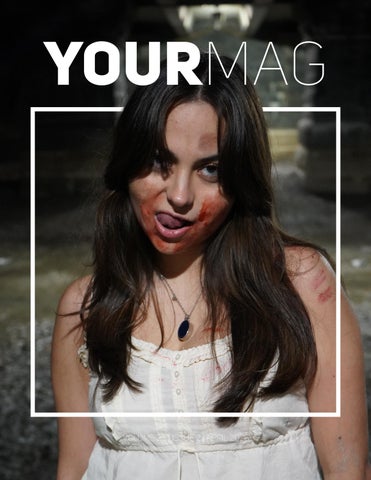
Create a flipbook
YourMagazine Volume 25 Issue 2: April 2026 by Your Magazine - Issuu