“The aim of art is to represent not the outward appearance of things, but their inward significance.”
– Aristotle
We live in a world where discomfort is often viewed as negative or damaging, but being uncomfortable is a part of life. And art, by its nature, is meant to show us things as they really are, not how they present. The inherent authenticity of art means it’s going to agitate, inspire, and start conversations –no matter how di cult or divisive.
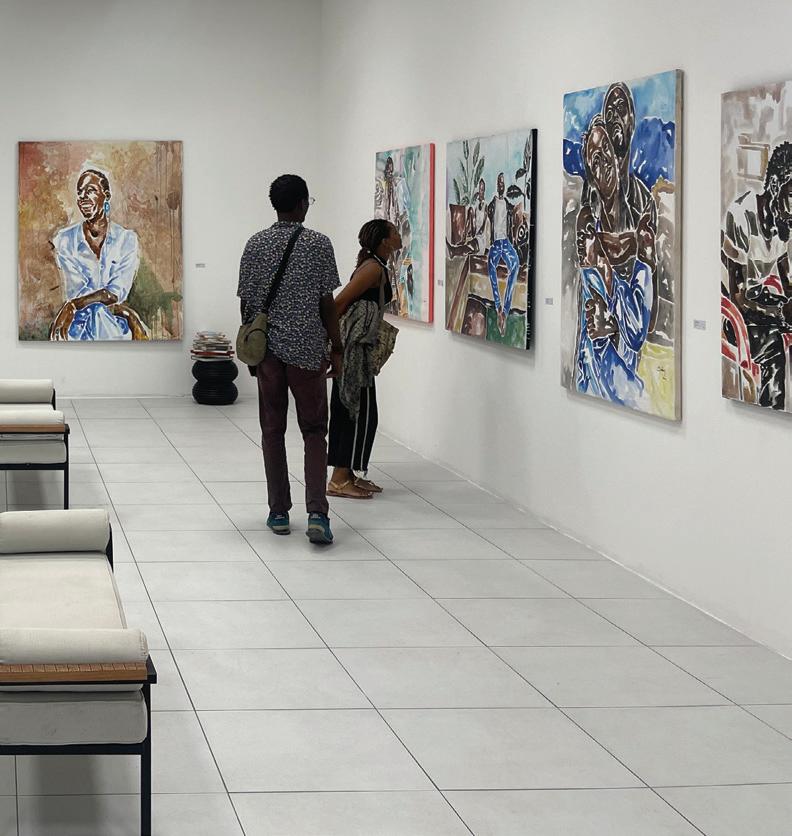
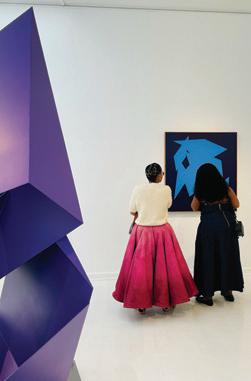
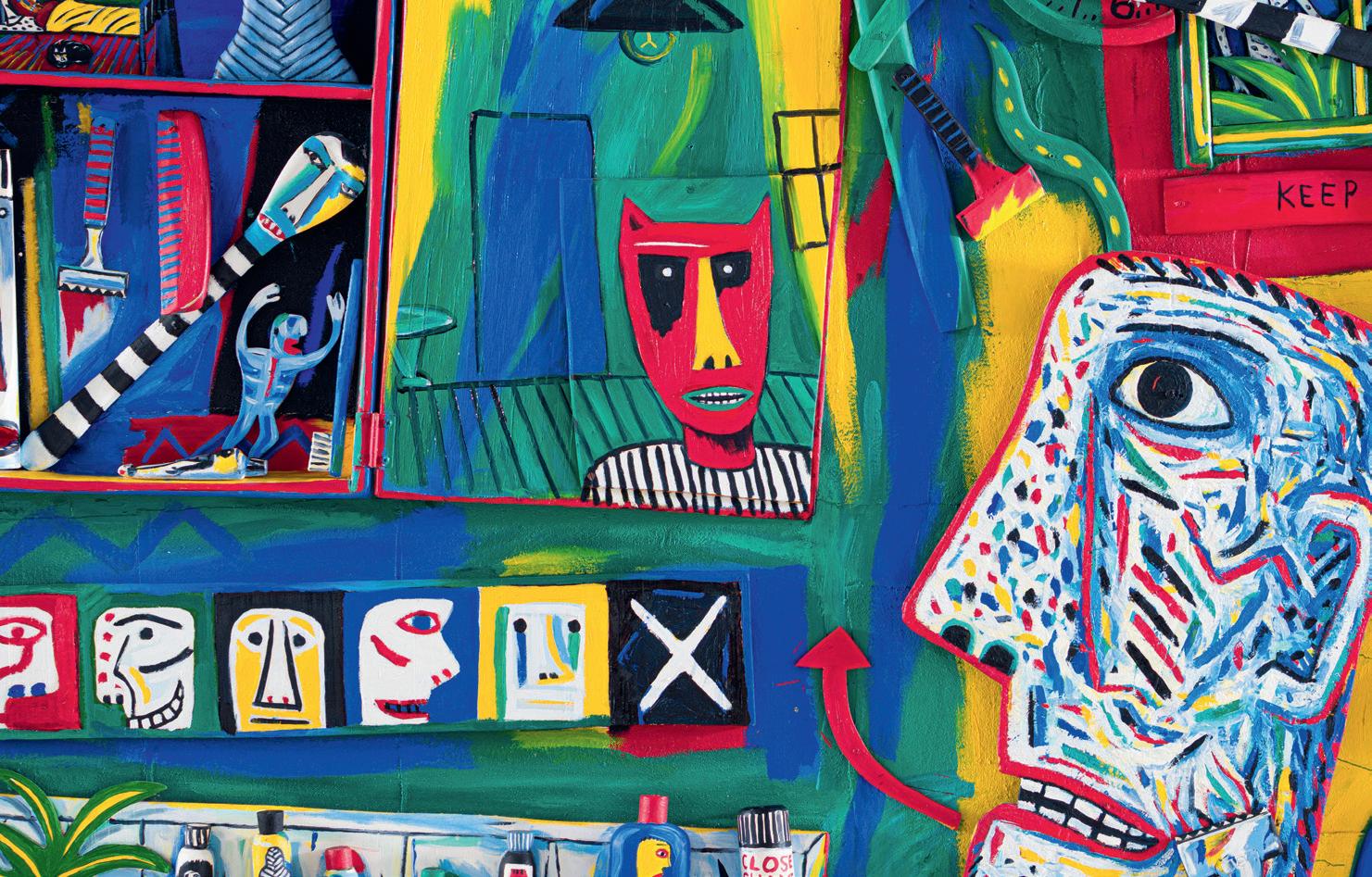
There have already been some uncomfortable moments this year in the South African art world with galleries, government, and artists not being aligned on what to showcase, posing questions around censorship and the parameters of freedom an artist has. When the art world arrives in the Mother City this month for the Investec Cape Town Art Fair (ICTAF), the worlds of commerce and creativity will coalesce. From Cameron to Uganda, under this year’s theme Listen, galleries and artists will use art to encourage us to pay attention beyond what is being said.
February in Cape Town is also Mining Indaba and Furniture Week –bringing designers and makers from across the country to celebrate our unique African craftsmanship.
It’s fitting that one of Africa’s most popular cities becomes host to captains of industry, who will buy said art that will sit in homes across the world.
For this first issue of the year, we continue to celebrate the Mother City, artists and curators, and the contemporary creative talent that make our continent such an exciting place. Now, more than ever, we need to listen with more than just our ears; it’s time to use our hearts to hear the unsaid.
As we get into the Year of the Fire Horse, my hope for you is that you set the pace for the speed of change you want in your life this year. It might be uncomfortable at first, but I implore you to be the artist of your own life. 2026 is a blank canvas – break the rules, aim for the sky, and life might just pleasantly surprise you. Anything and everything is possible.
MY TOP PICKS
My belief about 2026 is that we’ll be focusing on our homes. As the world gets crazier and bleaker, our homes have become our sanctuaries, our o ces, and our healing place. And what I’m learning is that it’s truly the little things that make a house a home…
DIPTYQUE – 34 BOULEVARD SAINT
GERMAIN ROOM SPRAY
Diptyque’s signature home fragrance composed like an eau de toilette: fresh green notes of moss and crushed blackcurrant leaves mingle with florals, spice, and the warmth of woods and balms – creating that unmistakable Parisian apartment atmosphere. This room spray is not only for air – it can also be misted over curtains, fabric wall coverings, and cushions for a more layered scent trail.
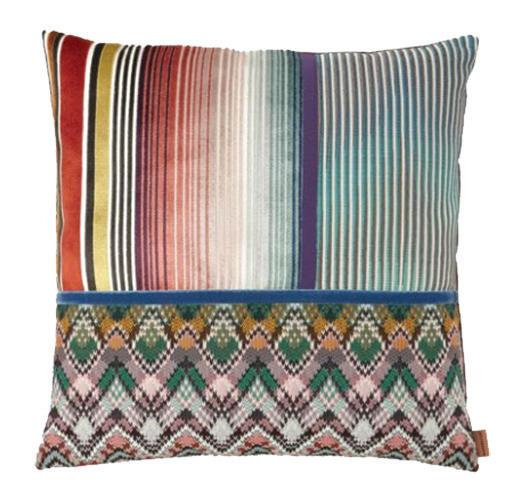
MISSONI HOME CONSTELLATION (ALBUFEIRA) CUSHION
A collectable interiors accent with unmistakable Missoni DNA: a confident clash of jacquards, impressionist motifs, florals, and tiny herringbone faux-plains, all meeting in one visually rich composition.
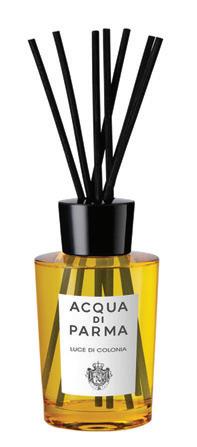
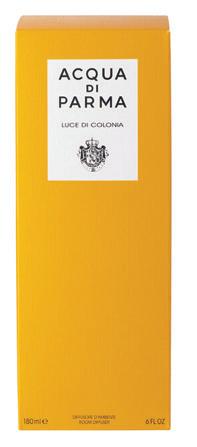
ACQUA DI PARMA – LUCE DI COLONIA DIFFUSER
DIFFUSER
One of Acqua di Parma’s bestsellers, the Luce di Colonia Di user, is inspired by the House’s iconic Colonia universe, designed to lift a space with a radiant citrus freshness that feels instantly polished and welcoming.
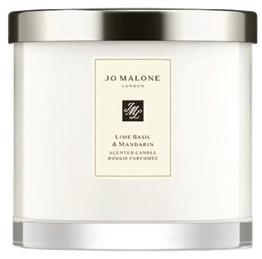
JO MALONE LONDON – LIME BASIL & MANDARIN CANDLE
Jo Malone’s signature fragrance in candle form – zesty lime carried on a breezy citrus accord, sharpened by peppery basil and aromatic white thyme for that distinctive, modern twist. This is a brilliant kitchen-to-lounge scent if you have an open-plan space – it cuts through cooking aromas without ever feeling like an air freshener.
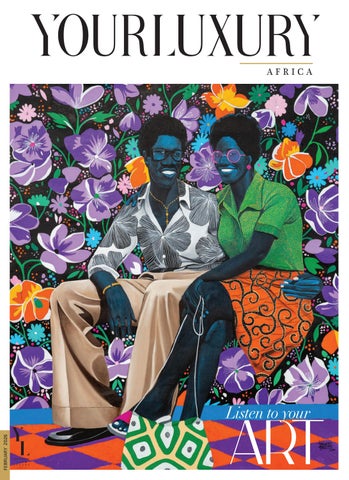
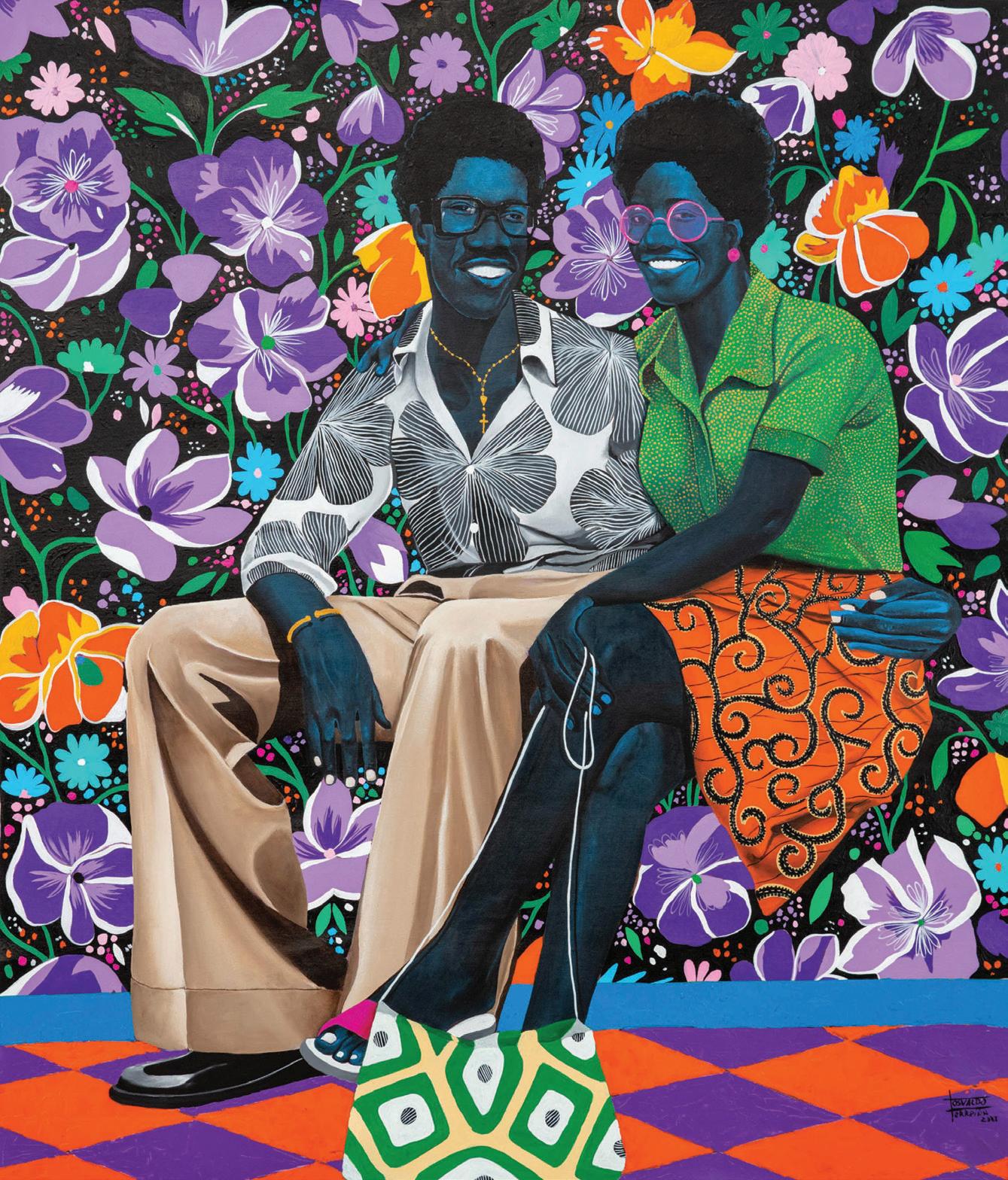
Listen to your
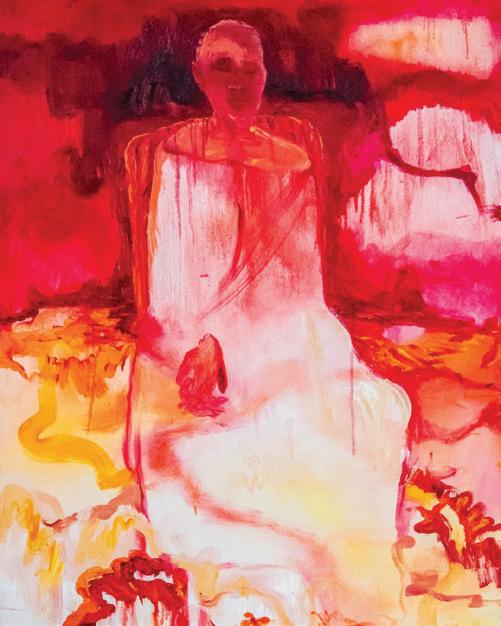
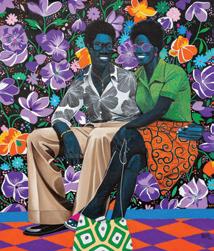
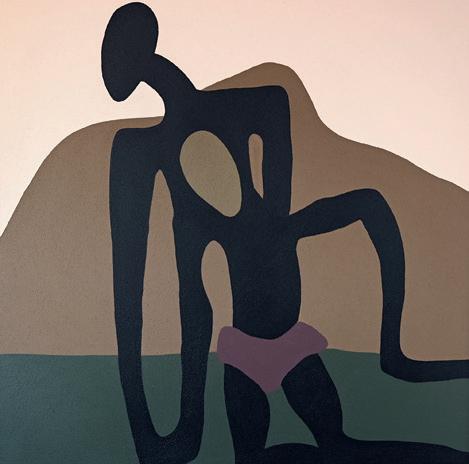
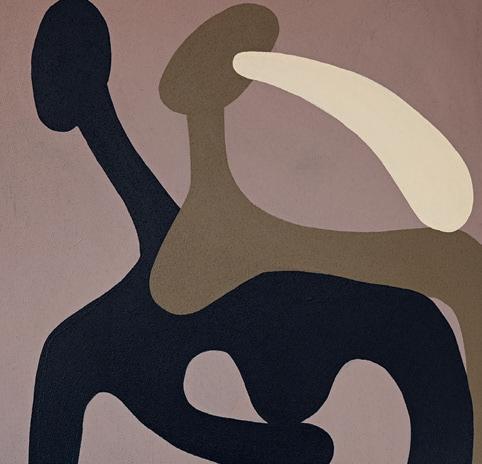
Osvaldo Ferreira, O Sorriso Branco
TIME Where draws us together
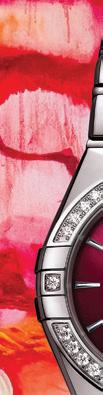
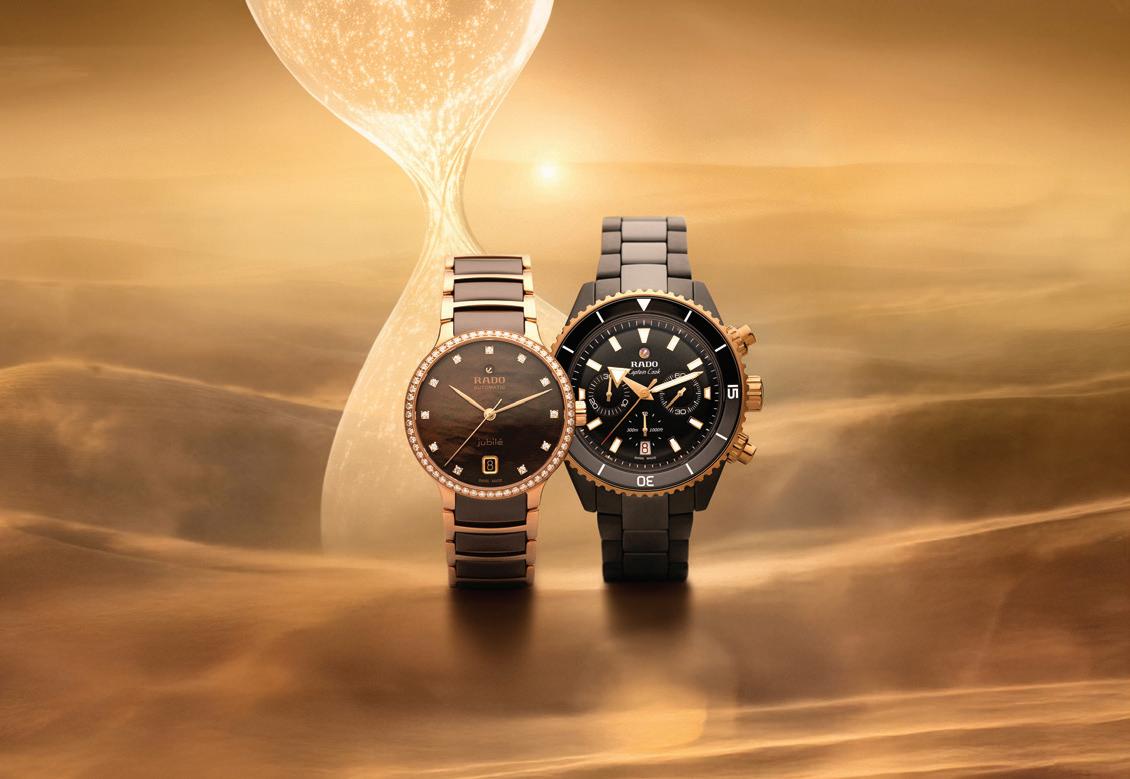
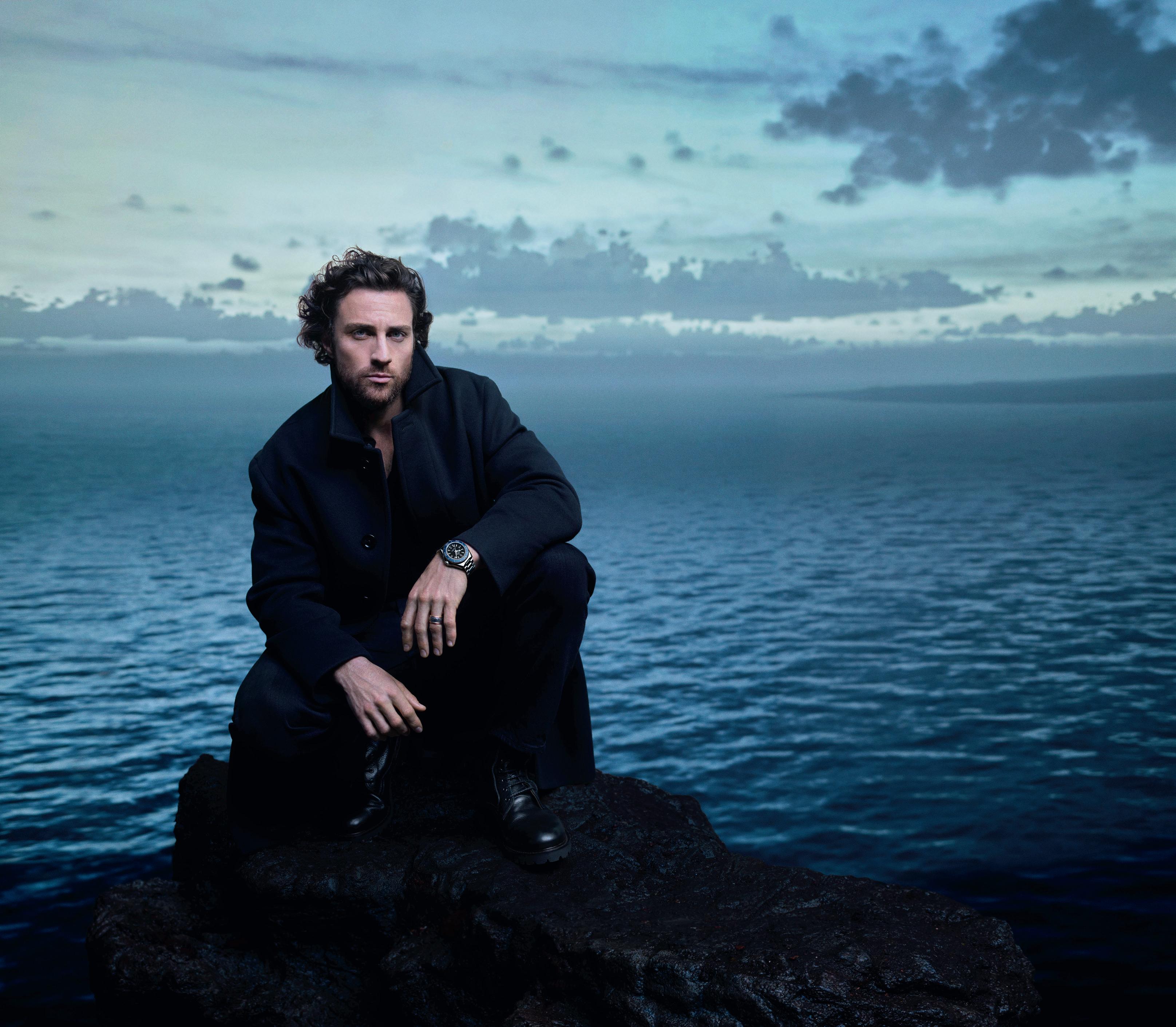
For its new campaign, Rado reunites global ambassadors –British-Indian actress Katrina Kaif and Hrithik Roshan, one of India’s most iconic actors – in a visual narrative shaped by art, emotion, and quiet magnetism. Conceived as a dialogue between opposites, the story unfolds across two contrasting worlds that move independently before being drawn together by a single, unifying force.
Katrina’s universe is characterised by soft curves and light. Veils of white and beige float through airy arches, creating a space that reflects her poise and modern femininity. On her wrist, the Centrix Diamonds’ bezel glimmers softly. Hrithik, by contrast, is framed by a raw, elemental landscape. Volcanic rock formations and sculpted terrain speak of strength and movement. He wears the Captain Cook High-Tech Ceramic Chronograph – a more adventurous piece with a purposeful design.
At first, these worlds exist in parallel. In this Art of Connecting Worlds campaign, the Rado anchor is a signature force drawing two people together. Here, it’s more than a symbol. It’s also the emotional and mechanical heart of the brand. Present on all Rado automatic watches, it represents precision, reliability, and continuity.
RYAN ENSLIN
I’m inspired by the quiet but forceful reckoning with race, gender, and labour that Mary Sibande brings to life through Sophie. Further north, I’m drawn to the photographic practice of Maheder Haileselassie, based in Addis Ababa. Her body of work, Climate and Child Marriage, amplifies the link between climate stress and accelerated early marriage as a survival strategy.
See: p46 A VALENTINE’S MEDITATION ON ART, CONTRAST, AND CONNECTION, RADO’S LATEST CAMPAIGN UNITES TWO DISTINCT CREATIVE WORLDS THROUGH TIME WORDS
Romantic without sentimentality and artistic without excess, the campaign captures Rado’s enduring belief that time, like love, is most powerful when it connects.
rado.com; tanur.co.za
DEBBIE HATHWAY
MEET OUR CONTRIBUTORS
WHO’S YOUR FAVOURITE AFRICAN ARTIST AND WHY?
PHILA TYEKANA
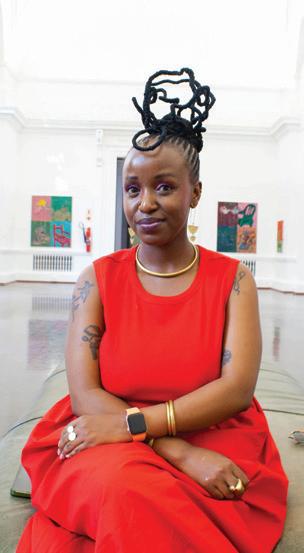
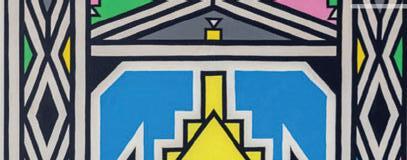
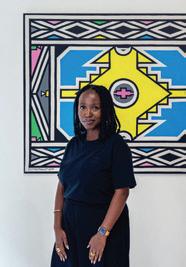
The revered grandmother of African art, Mama Esther Mahlangu. Her work reminds us that authenticity and culture have global power. I’ve been lucky enough to visit her home and experience the world’s coolest grandmother first-hand.
See: p56
INNOCENT NDLOVU
It changes all the time as I discover artists. Right now, I’m drawn to Terence Maluleke’s work. It’s culturally relevant and visually striking. His paintings have the qualities to become future classics.
See: p28
JACQUIE MYBURGH CHEMALY
South African sculptor Nic Bladen’s bronze botanical sculptures are extraordinary; the detail and level of perfection are something to behold. Nic started as a jewellery designer, and a chance commission to create a bronze orchid many years ago ignited an obsession with organic matter. It’s hard to believe his delicate creations are sculptures and not the real thing.
See: p34
EDITORIAL: EDITOR IN CHIEF Lerato Tshabalala lerato@yourluxury.africa CREATIVE DIRECTOR Kate Walters COPY EDITOR Tamlyn Cumings
CONTRIBUTING EDITOR Leigh Herringer IMAGE EDITOR Coralie Elske DIGITAL EDITOR Jessica Levitt jessica@yourluxury.africa TRAFFIC CO-ORDINATOR Rachel Ndawo ADVERTISING & MARKETING: ADVERTISING DIRECTOR Yvonne Sha +27 (82) 903 5641 I yvonne@yourluxury.africa ADVERTISING CO-ORDINATOR Yvette Mehl + 27 (21) 439 4907 I yvette@yourluxury.africa ACCOUNT MANAGER: NATIONAL Gina van de Wall I gina@yourluxury.africa SALES EXECUTIVES: Sumeshni Pillay I sumeshni@yourluxury.africa; Susan Pienaar I susan@yourluxury.africa ADVERTISING SALES MANAGER: LONDON AND THE UK Louella Stocchi I louella@yourluxury.africa MANAGEMENT: MANAGING DIRECTOR Yvonne Sha DIRECTOR Jacquie Myburgh Chemaly DISTRIBUTION & PRINT: DISTRIBUTION On the Dot, Media Support PRINTED BY CTP Printers, Cape Town for YourLuxury PO Box 1053, Sea Point 8060, Cape Town.
All rights reserved. Whereas precautions have been taken to ensure the accuracy of information, neither the editor nor YourLuxury Africa can be held liable for any inaccuracies, injury or damages that may arise. The opinions expressed in the articles may not reflect those of the publisher. As part of our celebration of craftsmanship and culture, this publication features select alcohol brands. We support responsible enjoyment. Not for sale to persons under 18. Please drink responsibly. All prices correct at time of going to print.
yourluxury.africa
MASTER OF MATERIALS
TRUE SQUARE OPEN HEART
THE MARABI MUSICAL
29 January – 15 February | Johannesburg, South Africa
The Market Theatre in Newtown presents a month-long production celebrating Marabi, the music style that emerged from Johannesburg’s early township dancehalls and shaped the city’s jazz heritage. Known for its rhythmic drive and social context, Marabi continues to influence contemporary South African music. The production’s previous run received praise for its strong ensemble performances and its clear framing of Johannesburg’s cultural history. The 2026 staging is ideal for audiences who are interested in music-led theatre and historical narrative. markettheatre.co.za
CULTURE
DIARY
WINTER OLYMPIC GAMES
6–22 February | Italy
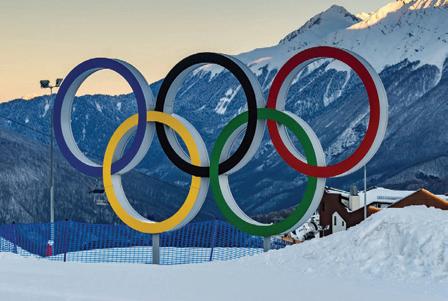
Officially titled Milano Cortina 2026, the Winter Olympic Games takes place across Italy’s Milan and Cortina d’Ampezzo. African participation in winter sports has steadily increased over the past decade, with athletes from countries including Morocco, Eritrea, Nigeria, and Ghana competing in recent Games. Their continued presence offers a broader narrative within traditionally Eurocentric disciplines. For travellers, the event combines beautiful alpine destinations with global sporting culture. olympics.com
BLACK COFFEE WEEKENDER
27 February – 1 March | Cape Town, South Africa
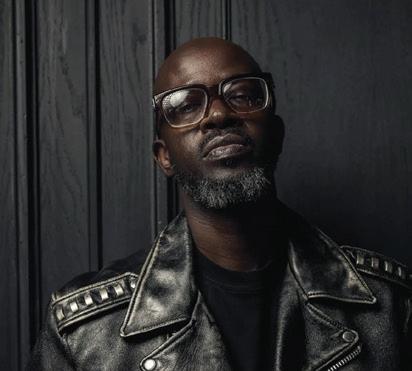
Curated by Grammy Award-winning producer Black Coffee, this three-day cultural festival features Peggy Gou’s first South African performance –an exciting booking given her global influence across electronic music, fashion, and lifestyle.
Following its 2025 debut with Copenhagen group WhoMadeWho, the Weekender continues its focus on attracting international audiences to Cape Town’s late summer season. The programme includes a Friday charity gala, Saturday’s main concert at The Ostrich, and Sunday’s seaside brunch afterparty. blackcoffeeweekender.com
CAPE TOWN FURNITURE WEEK
18–21 February | Cape Town, South Africa
Cape Town Furniture Week (CTFW) positions the city as an emerging centre of contemporary African design, showcasing makers who combine traditional techniques with modern production. The programme includes Design Talks at the Cape Town Club and open studio tours offering access to key creative spaces across the city. CTFW highlights local studios gaining international recognition, particularly among collectors focused on sustainable practices and region-specific narratives. For visitors, it offers a curated lens of Cape Town’s design-led creative economy. capetownfurnitureweek.co.za
INVESTEC CAPE TOWN ART FAIR
20–22 February | Cape Town, South Africa
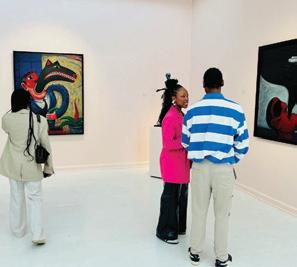
The 12th edition of the Investec Cape Town Art Fair returns with its most exciting programme to date, presenting works by more than 490 artists from 34 cities across five continents. This year’s theme, ‘Listen’, encourages dialogue and attentive engagement. First-time participants include galleries from Tokyo, Kampala, and Kuwait City, expanding the fair’s international reach. The ‘Tomorrows/Today’ and ‘Alt’ sections continue to spotlight emerging talent and underrepresented artists shaping Africa’s next wave. A key date for collectors focused on African art. investeccapetownartfair.co.za
An appointment with BRITISH EXCELLENCE
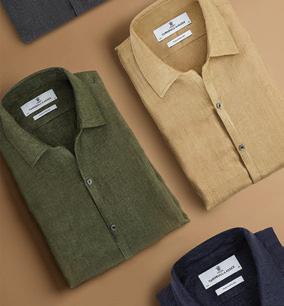
TURNBULL & ASSER HAS DRESSED KING CHARLES III, WINSTON CHURCHILL, PABLO PICASSO, AND THE ACTORS WHO PLAYED JAMES BOND. THIS MONTH, THE LUXURY BRITISH SHIRTMAKER BRINGS ITS FIRST BY APPOINTMENT TRUNK SHOW TO CAPE TOWN
HISTORY IN THE MAKING
Founded in 1885 by John Arthur Turnbull and joined by salesman Ernest Asser, the brand is not only revered as the pinnacle of Britain’s finest menswear but also for its ability to seamlessly merge tradition and innovation. The first store opened in London’s affluent St James’ district, and then moved to Jermyn Street, where the iconic store remains today.
In 1915, Turnbull & Asser created the Active Service Coat – a trench coat that doubled as a sleeping bag –for the British military. During the Second World War, Winston Churchill became known for his Siren Suit – a one-piece garment he famously wore to cabinet and meetings with Theodore Roosevelt and Joseph Stalin.
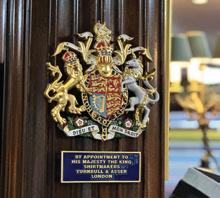
His Majesty King Charles III has long been a loyal customer at Turnbull & Asser.
In 1980, when he was given the power as the Prince of Wales to bestow Royal Warrants, the first one he awarded was to the luxury shirtmaker on Jermyn Street. More recently, he collaborated with Turnbull & Asser to create his Coronation shirt – a cream spun-silk shirt with handembroidered oak leaves and his cypher.
In 1962, Turnbull & Asser dressed actor Sean Connery in the movie Dr. No. The distinctive shirts with their folded cocktail cuffs quickly became a 007 signature worn by almost every James Bond actor. Other famous clients include Pablo Picasso, Ronald Reagan, Charlie Chaplin, Andy Warhol, and Eric Clapton, and more. Celebrated actress Katharine Hepburn also famously wore custom-made Turnbull & Asser shirts.
For 140 years, Turnbull & Asser’s tailored shirts – the epitome of sartorial elegance and exquisite craftsmanship – have been favoured by royalty, world leaders, and Hollywood stars. With flagship stores in London’s Jermyn Street and in Manhattan, New York, each shirt – to this day – is made in Britain using the same meticulous skills as its Victorian founders.
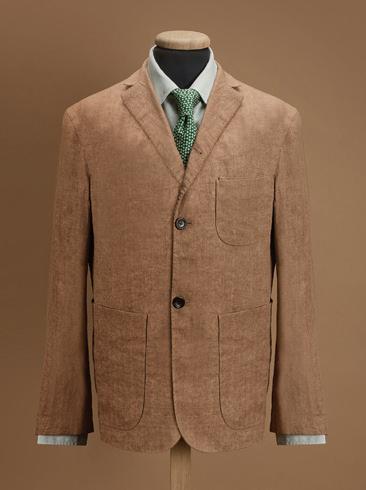
With its rich legacy of craftsmanship and quiet authority, Turnbull & Asser is at the forefront of global style that lasts forever. And for the first time on African shores, the House’s master tailors will host private consultations on 9 and 10 February at the Cape Grace Hotel at the V&A Waterfront.
NEW CHAPTER
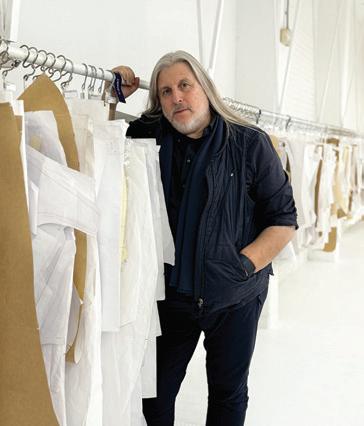
In December 2025, Turnbull & Asser appointed Roberto Menichetti as its new Creative Director (pictured above).
The acclaimed Italian designer, who not only launched Jil Sander’s menswear collection, but modernised Burberry’s iconic check in the late 1990s, is known for his “essentialist” philosophy, which centres on timelessness over trends.
“Turnbull & Asser represents more than a brand; it is a living expression of British style and elegance, carefully built over generations,” he says. “My vision is to uphold and protect this tradition while introducing quiet innovations that ensure its voice continues to resonate with discerning clients around the world.” Roberto also plans to focus on innovation in fabric development and sustainable practices.
Turnbull & Asser’s bespoke shirt-making service caters to every need of the client and is offered at various venues worldwide. By appointment, 18 precise measurements are taken by London-based specialist tailors, considering everything from posture to personal style. Once an individual master pattern is created, it is digitally remastered and brought to life by highly skilled seamstresses.
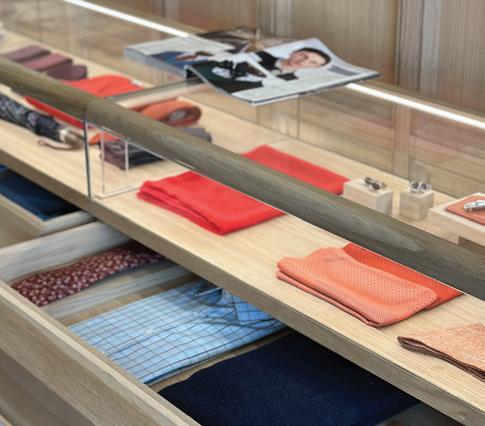
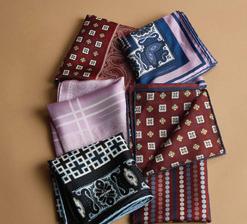
A selection of ties and nightwear is also available. The event is hosted in collaboration with Gaziano & Girling, renowned British shoemakers and fellow Royal warrant holders. Visit turnbullandasser.co.uk for more.
To book an appointment on 9 or 10 February, please email byappointment@turnbullandasser.co.uk.
CRIMSON
WITH THEIR RICH TONES, PINK AND BURGUNDY DIALS
OFFER A QUIETLY ROMANTIC WAY TO MARK TIME – AND LOVE – WELL BEYOND VALENTINE’S DAY
WORDS DEBBIE HATHWAY
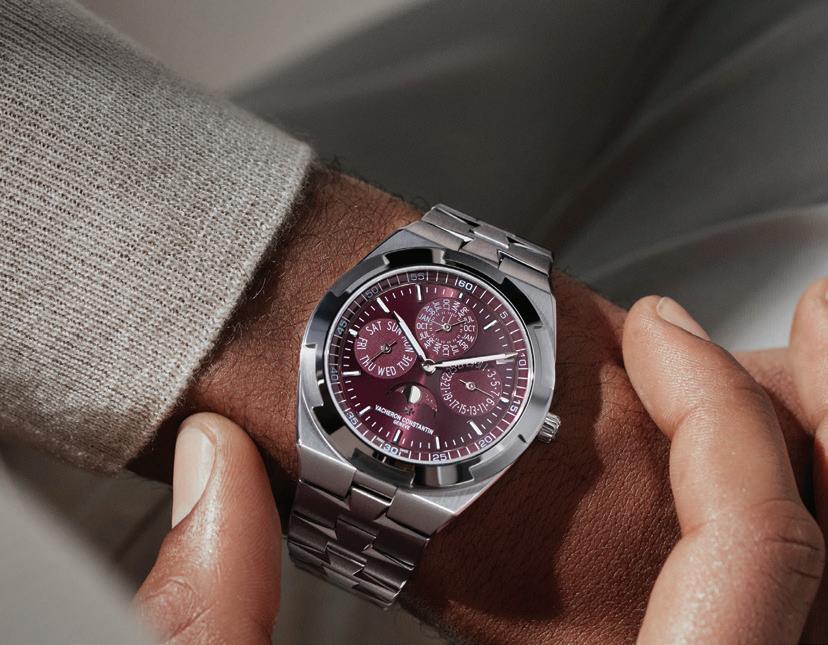
Vacheron Constantin released an extension to the Overseas line late last year. This version of the Overseas Perpetual Calendar Ultra-Thin is o ered in an 18kt white gold 41.5mm case with a burgundy lacquer dial. Its 18kt gold bracelet is easily interchangeable with the supplied rubber straps in burgundy and white. The ultra-thin self-winding movement, Manufacture Calibre 1120 QP/1, incorporates a perpetual calendar and moon-phase display. POA, vacheron-constantin.com
TAG Heuer Carrera celebrated its 60th anniversary in 2023 by reintroducing the iconic glassbox design to the TAG Heuer Carrera Chronograph, which features a flange to display essential information. Two years later, the brand added precious stones with a diamond-set flange and chaton diamond indexes. The curved sapphire crystal enhances visibility while referencing the original Carrera design. This powdery pink circular-brushed dial, pink counters, and rhodiumplated polished hands, is set in a steel case. R203 300 (online exclusive), tagheuer.com, picotandmoss.co.za
hour
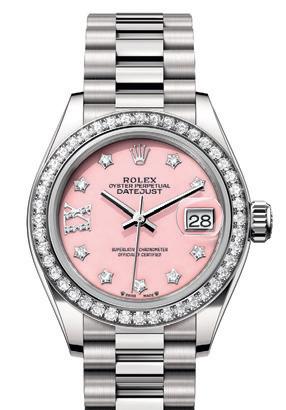
Masterful brushing techniques that create the subtle sunray finish on the pink dial, hand-carved settings, and meticulously hand-placed diamonds are among the reasons to gift the Rolex Oyster Perpetual Lady-Datejust in Oystersteel and white gold. This 28mm version shimmers on the wrist, with the white Rolesor case adding lustre. POA, rolex.com
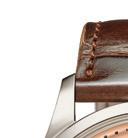
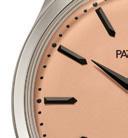
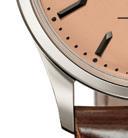
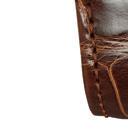
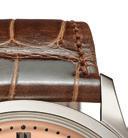
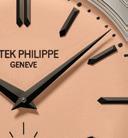
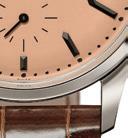
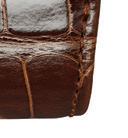
The Patek Philippe Reference 6196P-001 in the Calatrava collection is a head-turner in platinum, featuring an opaline rose-gilt dial. Understated and classic on a chocolate-brown leather strap, the manually wound 30-255 PS calibre ensures a 65-hour power reserve and stop-seconds function for precision setting to the exact second. POA, patek.com
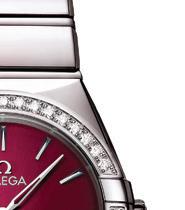
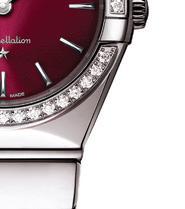
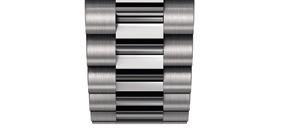
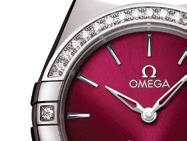
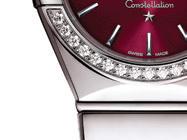
This is one of the new OMEGA Constellation models in a fully polished 28mm steel case and bracelet with burgundy lacquer dial, skeletonised 18kt white gold hands, diamond-set bezel and Geneva Observatory’s eight-star medallion on the caseback. It’s powered by the OMEGA Calibre 4061 quartz movement. The bracelet incorporates a butterfly clasp with 2mm comfort adjustment. R134 000, omega.com
THE FINEST SHOES IN THE WORLD
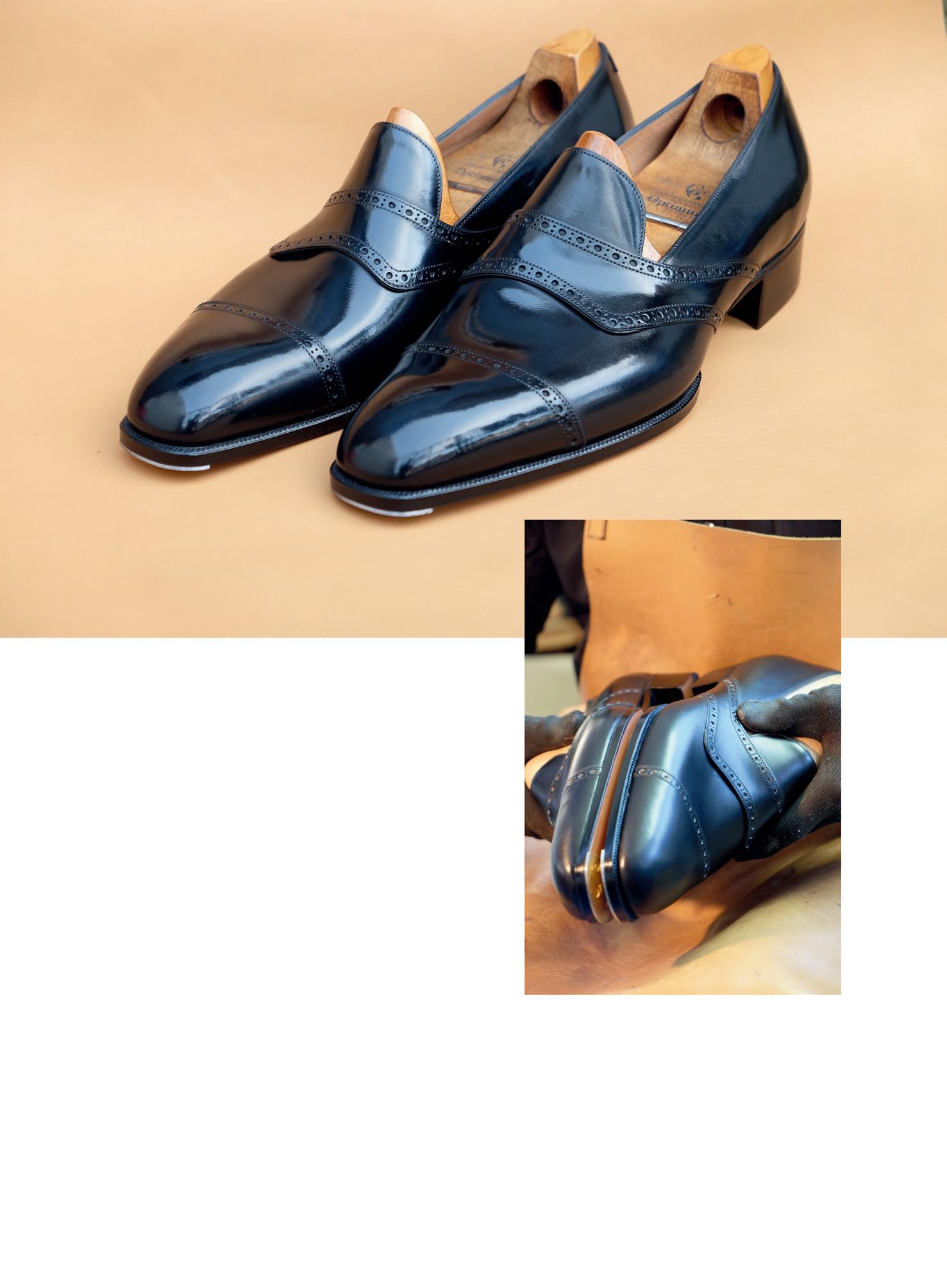
Since 2006, Tony Gaziano & Dean Girling have produced the finest shoes in the world. Mixing English craft and tradition with a continental silhouette, our shoes are crafted with zero-compromise.
We are proud to be the only shoemakers on Savile Row.
Appointed as Shoemakers to His Majesty the King, we are showcasing our collection at the Cape Grace Hotel, Cape Town between 9th-10th February.
Come and give your feet the shoes they deserve.
By Appointment only simon@gazianogirling.com
with
SHIMANSKY
Shimansky’s My Girl Diamond Collection celebrates the centuries-old romance behind the exchange of diamonds with a unique square cut and diamondshaped table. My Girl Lucky 8 diamond pendant in 18kt white gold. From R68 550, shimansky.com
L VE
THESE JEWELS CAPTURE ROMANCE IN ITS RICHEST FORM – DESIGNED TO BE WORN, TREASURED, AND REMEMBERED
COMPILED BY DEBBIE HATHWAY
MORAGLIONE
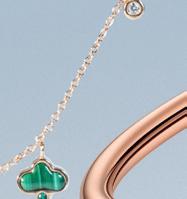
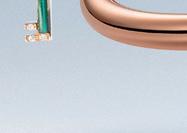
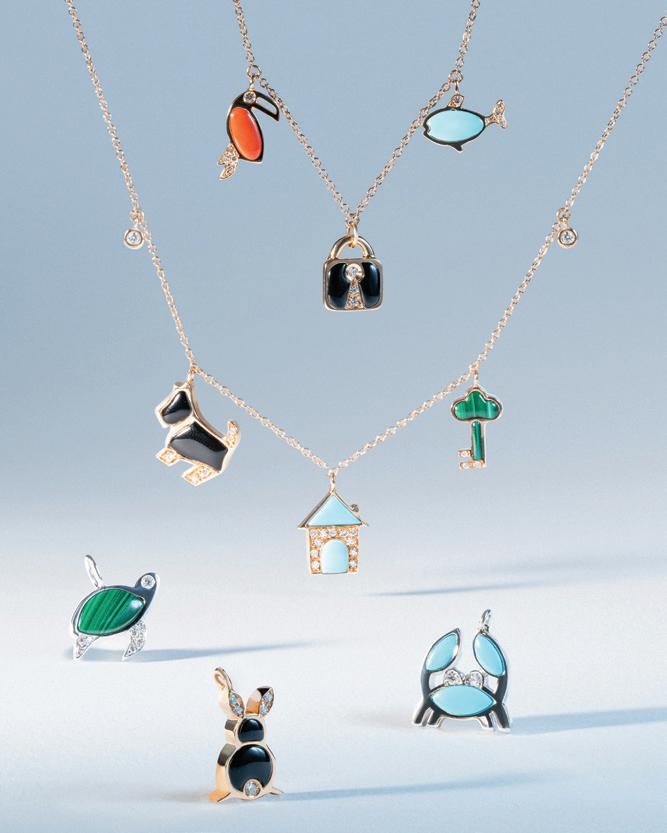
Necklaces with charms like these pictured below highlight Moraglione’s distinctive expertise in the carving and setting of hardstones – malachite, turquoise, onyx, and coral.
GRAFF
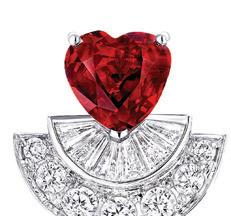
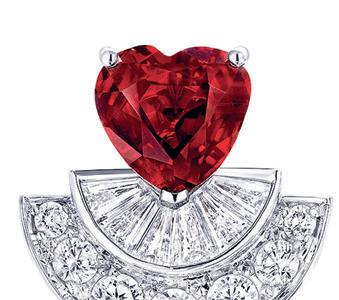
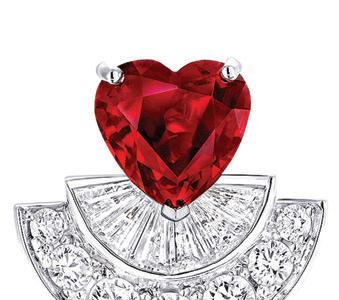
Gra describes its heartshaped diamonds as love stories written in light. Icons such as the Gra Venus and the 157.80ct Infinity Diamond demonstrate why the cut remains one of the most technically demanding in high jewellery. Heart-shape Mozambique unheated ruby and white diamond earrings (rubies 8ct, diamonds 4ct).
POA, Sculptural intaglios transform
settings into miniature works of in every polished contour. POA,
CHOPARD
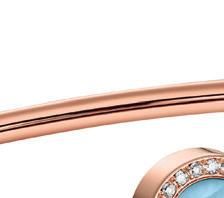
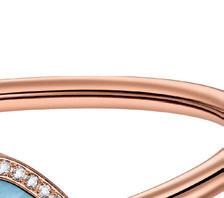
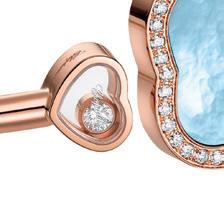
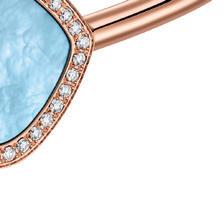
Happy hearts incorporate the inspiration behind Chopard’s dancing diamonds – water droplets sparkling in sunlight –in Co-President and Artistic Director Caroline Scheufele’s watch and jewellery creations. Ref. @85A074-5340. Bangle in ethical 18kt rose gold featuring a turquoise mother-of-pearl heart and a small heart with a dancing diamond. POA, chopard.com, bhhboutique.co.za
CARTIER
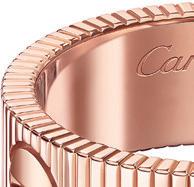
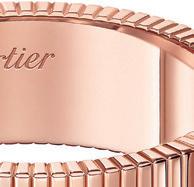
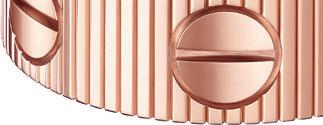
We love the timeless, unisex Cartier Love collection, photographed by Sofia Coppola on Australian actor and Cartier ambassador Jacob Elordi. The rigid oval bracelet – composed of two semi-circles in pure gold and secured to the wrist with a screwdriver – is available in several iterations today. LOVE Unlimited ring, 18kt rose gold (750/1000), 6.5mm wide. POA, cartier.com
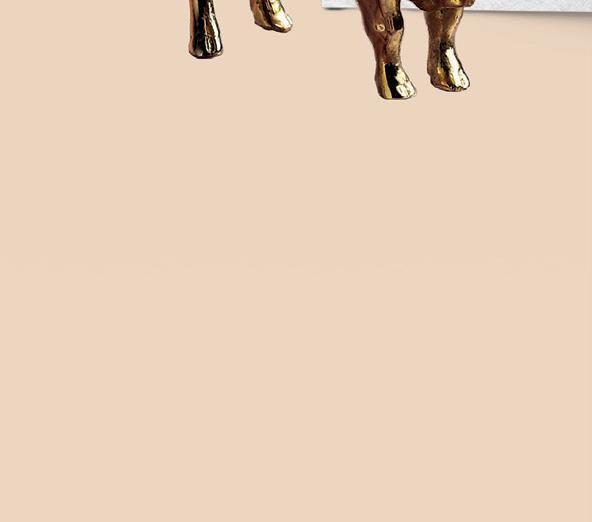
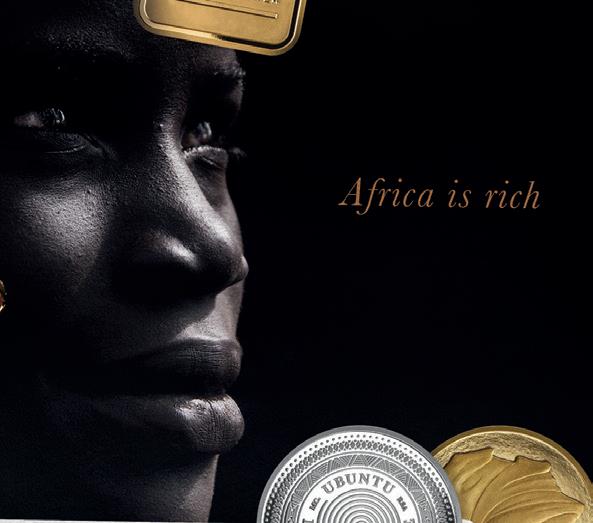
The Evolution of African Wealth
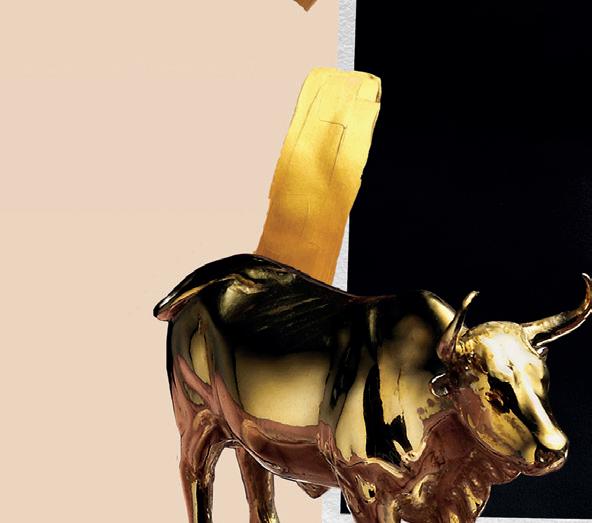
From the spirit of Ubuntu to the strength of the Nguni, African wealth has always told a story.
MetCon honours this legacy with modern expressions of value — Ubuntu Rounds, Minted Bars, and Nguni Cows & Bulls — cast in precious metals, from the heart of our land.
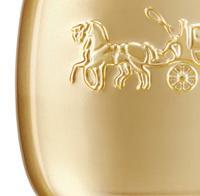
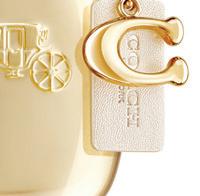
WRAPPED IN GOLD, THESE FRAGRANCES BECOME MORE THAN JUST A FINISHING TOUCH – THEY BECOME AN EXPERIENCE
COMPILED BY INGRID WOOD
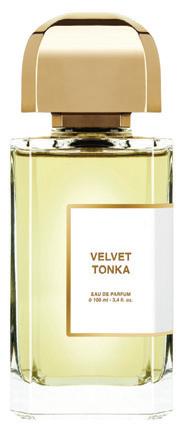
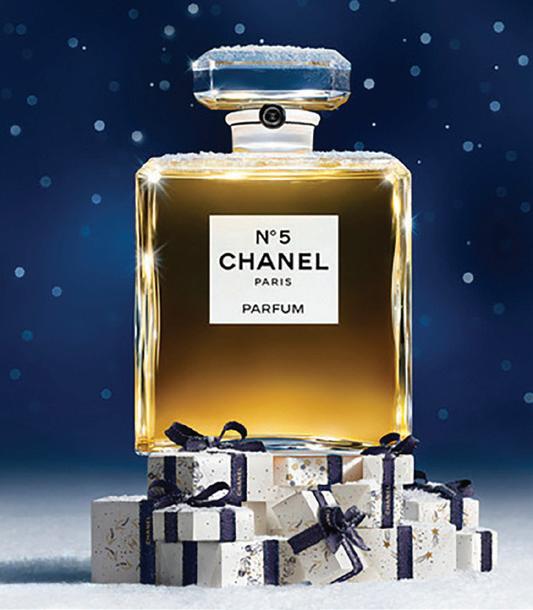
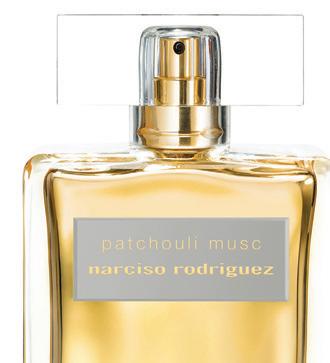
1. COACH Gold Parfum, 90ml: Launched as Coach’s first golden fragrance, this fruity oriental is inspired by the warmth and intense brightness of a sunny day. R2 355, edgars.co.za 2. GAULTIER Divine Elixir Parfum, 100ml: Rich tuberose, warm tonka bean, and creamy tuberose make for a high-intensity, vibrant fragrance. R3 875, woolworths.co.za 3. NARCISO RODRIGUEZ Patchouli Musc EDP Intense, 100ml: Indonesian patchouli, the signature powdery note of musc, and intense spices, this woody fragrance has an oriental composition. R 4 355, woolworths.co.za 4. RABANNE Million Gold for Her Parfum, 90ml: A sensual scent of white flowers, sparkling rose, and addictive mineral musk. R3 325, arcstore.co.za 5. DOLCE&GABBANA The One Pour Homme Gold EDP Intense, 100ml: A masculine blend of woody and spicy notes, including clary sage, bergamot, and patchouli. R3 355, arcstore.co.za 6. BDK PARFUMS Velvet Tonka EDP, 100ml: A trilogy of tonka bean, almond, and orange blossom on an amber base. R4 990, skins.co.za 7. MONTALE Aoud Leather EDP, 100ml: Warm leather with spicy pepper, cardamom, and sa ron, as well as fruity bergamot. R 2 750, skins.co.za 8. CHANEL N°5 EDP, 100ml: A timeless treasure, this floral bouquet is composed around May rose, jasmine, and vanilla while aldehydes create a unique presence. R3 750, Chanel Fragrance & Beauty Boutiques
ADividend The
WORDS BRIGHT KHUMALO
rt is one of the only investments you can hang on the wall, insure for a fortune, and still argue about at dinner. It doesn’t pay a dividend and it doesn’t compound in a spreadsheet. Yet, quietly, it has created and destroyed more discreet wealth than most asset classes would care to admit.
The seductive part of investing in art is the mythology – that you spotted a Basquiat before he was Basquiat. That you once stood in front of a Gerhard Richter, hesitated, and now use the word ‘regret’ as punctuation.
Charles Saatchi paid around $14 000 for Damien Hirst’s sculpture The Physical Impossibility of Death in the Mind of Someone Living – a tiger shark in formaldehyde that became the poster child for ’90s British art. When it was later sold for a reported $12 million, the message to the market was clear: contemporary art had arrived as an asset class.
But here’s the part often glossed over: plenty of Saatchi’s other bets went nowhere. For every Hirst, there were five artists who dissolved into obscurity.
Art is a market where timing, taste, and access matter more than balance sheets. The best investors understand they’re not buying a painting, but a position in cultural history. And history is written by curators, critics, institutions… and occasionally TikTok.
Case in point is Jean-Michel Basquiat. In 1984, a collector sold one of his pieces for $19 000. In 2017, a similar one went for $110.5 million at Sotheby’s, purchased by billionaire Yusaku Maezawa. That’s not just appreciation – that’s a cultural re-rating.
But art doesn’t always age like a Bordeaux. Sometimes it ages like milk.
In the early 2000s, the Chinese contemporary art boom saw works by artists such as Zhang Xiaogang and Yue Minjun skyrocket in value. Western collectors rushed in, auction prices followed, but a decade later, prices corrected brutally. Some works fell by over 70 percent, proof that hype remains just that.
Then there is the great art world irony: the most valuable works tend to be bought by those who don’t need to make money from them. Museums, dynastic families, and ultra collectors are playing a longer, quieter game. They lend pieces to exhibitions, build provenance, and turn visibility into value. .
Modern art, despite complaints, is a resilient long-term store of value when curated correctly. Picasso alone accounts for more than $4 billion in auction turnover annually. His works don’t trade like art – they trade like blue-chip equities.
The rule is simple: buy artists, not art. Buy stories, not signatures. And, if possible, buy what museums will one day beg to borrow. The best art investors are rarely the loudest. They move quietly through private dealers and back rooms at Art Basel. They understand that the real return is not just financial, but social, cultural, and almost spiritual.
Because when it works, art doesn’t just outperform – it immortalises. And when it doesn’t? At least you have something beautiful to look at. Which, in investing, is already more than most assets can offer. ■
Bright Khumalo is a Portfolio Manager and Analyst at Vestact Asset Management
INVESTEC CAPE TOWN ART
FROM NIGERIA TO ANGOLA, KENYA TO ZIMBABWE, AND ACROSS CAMEROON AND UGANDA, AFRICAN GALLERIES AT THE INVESTEC CAPE TOWN ART FAIR EMBRACE THE THEME LISTEN, REFRAMING HOW CONTEMPORARY AFRICAN ART IS SEEN AND UNDERSTOOD
WORDS LERATO TSHABALALA
TLISTENING
The POWER of
here are art fairs that dazzle, and art fairs that speak. The Investec Cape Town Art Fair (ICTAF) has always done a bit of both – but in 2026, it leans decisively towards the latter. Under the theme Listen, the fair invites visitors to shift from consumption to contemplation: to step away from the theatre of “what’s trending” and attune themselves to what is being said – quietly, insistently, spiritually, politically – across contemporary art practices on the continent.
Listen is not a passive request; it’s a provocation. ICTAF Director Laura Vincenti calls it “a crucial, ethical act… a radical and active method of engaging with art, as well as engaging with one another and with our current moment.” In an African context, she adds, “The continent’s particular present is informed by a history that requires specific listening to both political and social realities,” while cautioning against treating Africa as a single, flattened identity.
This year’s edition features galleries from Nigeria, Kenya, Zimbabwe, Cameroon, Ethiopia, Uganda, Zambia, and Angola – representation that is not merely geographic, but cultural and infrastructural. “Our variety of exhibiting galleries hailing from the continent echo an ongoing commitment and ethos of Investec Cape Town Art Fair: to bridge contemporary art across all localities, cultures, and continents,” says Laura. “As the leading and largest international contemporary art fair in Africa, we have a responsibility to use our platform to
include – and showcase – galleries that might otherwise remain somewhat unheard by the international community.”
Laura is direct about the harmful simplifications that have long shaped the international reception of art from the continent.
For ICTAF, listening becomes a strategy – making room for nuance, resisting reduction, and positioning galleries from our continent as equal participants in global dialogue. “An African gallery should always be viewed as an equal member of the international art community… the fair is a common ground for galleries from all geographies,” she notes.
Across the fair, Listen encourages curatorial approaches that highlight “the softer sounds and voices that are not often immediately noticed” – with spirituality, mythology, dreaming, and ecology surfacing across programmes. “The artworks of Botswana-born artist Pamela Phatsimo Sunstrum come to mind,” Laura says. “Her artworks listen to the mythical and geological… [placing] cosmological frequencies in conversation with the movement and communities that have informed her identity.”
As the fair unfolds, Laura’s longer-term ambition is clear: lasting outcomes, not momentary visibility. Strengthening Africa’s art ecosystem, she argues, requires “more institutional presence to actively promote and bolster the incredible community of creatives who deserve to have their voices heard.” It also requires a shift in framing: “It’s not ‘African art’ on a global stage – it’s contemporary art from Africa.”
Mobolaji Ogunrosoye, Portraits | On Two Zara
Afeez Onakoya,
KENYA
Circle Art Agency (Nairobi)
Circle Art Agency has long been a cornerstone of East Africa’s contemporary ecosystem – as much a career-building platform as a gallery. With Nairobi’s cultural confidence rising, Circle has helped shape how East African art is presented, collected, and understood beyond regional borders. Laura notes that Circle plays “a very important role” in Nairobi, where artists often struggle to be supported by existing art infrastructure. And this year, Laura says the booth centres on the relationships between humans and animals – a meaningful extension of Director Danda Jaroljmek’s passions, and a timely discourse within the current global environment. circleartagency.com
NIGERIA
The 1897 Gallery (Lagos)
Polish meets purpose in this tightly curated programme, known for presenting artists with both cultural relevance and collector resonance. Among its roster is British-Nigerian photographer Ade Adekola, whose conceptual practice examines contemporary identity at the intersection of culture and technology, as well as Ken Nwadiogbu, celebrated for his layered, technically masterful works spanning painting, installation and video. The gallery also represents Sola Olulode, recognised for intimate portrayals of community and desire, often centering black womanhood with subtle nods to Yoruba Adire textile traditions. the1897.com
“It’s not ‘African art’ on a global stage –it’s contemporary art from Africa”
O’DA Art (Lagos)
Part of Lagos’ new-generation gallery infrastructure, this space embodies a culturally literate, internationally minded programme with narrative at its core. Expect artists who treat the body and the self as archive – work shaped by memory, intimacy, and contemporary African experience. odaartgallery.com
Wunika Mukan Gallery (Lagos)
Storytelling sits at the heart of this programme, often expressed through symbol, portraiture, and layered memory. Laura highlights the fair’s expanded movingimage focus, saying, “We have more video works than ever before being shown at the fair this year… [following] the logic that our theme, Listen, encourages.” She points to Nigerian-British artist Chidirim Nwaubani, showing with Doyle Wham in ‘Tomorrows/Today’, and adds that “Listening is offering a new ethics of viewing… in truly ground-breaking ways at the fair’s 2026 edition.” wunikamukangallery.com
kó (Lagos)
Lagos’ energy carries through kó’s programme: contemporary, ambitious, and globally fluent. The gallery is known for championing artists who balance visual confidence with conceptual depth, often navigating identity, urban life, and reinvention in works that reward close reading. ko-artspace.com
Simon Ojeaga, Imade I (I did not fall) Gratitude and Appreciation
Souad Abdelrassoul, From
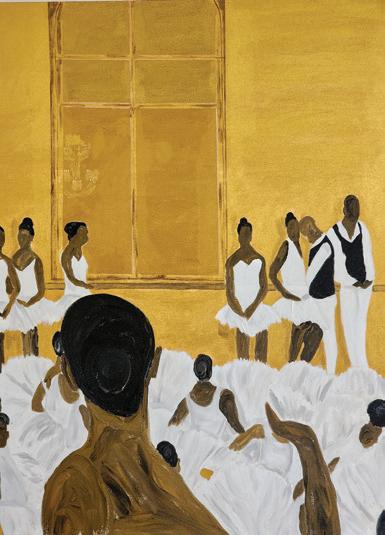
Themba Sibeko, The Golden Waiting Room
CAMEROON
Logmo + Makon (Douala)
A compelling Central African perspective enters the fair through Douala’s experimental, urban creative language – a practice shaped by materiality, community, and cultural critique. The gallery champions contemporary voices such as Jean David Nkot, Carine Mansan, and Wilfried Mbida, artists whose work speaks to identity, memory, and modern African lived realities through a distinctly conceptual lens. This marks the gallery’s debut at ICTAF. @logmomakongallery
UGANDA
Umoja Art Gallery (Uganda)
Uganda’s contemporary art ecosystem continues to gain momentum, with artists exploring themes of identity, family, social transformation, and cultural inheritance. Umoja Art Gallery supports this trajectory, presenting work rooted in human stories –emotionally intelligent, sometimes politically attuned, often intimate. In a fair context, the gallery’s role is vital: bringing East African voices into the collector gaze and challenging the assumed hierarchies of which African cities “matter” in art. umojartgallery.com
ZAMBIA
ETHIOPIA
The Space Ethiopia (Addis Ababa)
Ethiopian contemporary art is increasingly entering broader global awareness – a scene shaped by deep history and a strong aesthetic sensibility. The Space Ethiopia o ers a platform for artists whose work often navigates heritage, spirituality, symbolism, and modern life, bringing Ethiopian perspectives into a pan-African contemporary conversation. thespaceethipoia.com
Everyday Lusaka Gallery (Lusaka)
Lusaka’s emergence as a represented city at ICTAF is one of this year’s most exciting signals. Everyday Lusaka Gallery brings a Zambian voice into the fold – fresh, contemporary, and distinctly of the now. This is not heritage for display; it is modern African creative life expressed with confidence. Laura frames such debuts as essential to the fair’s growth. New entrants, she says, “O er fresh perspectives to enrich the diverse fabric of creative voices hosted by the fair itself”. everydaylusaka.com
Dagim Abebe, Unknown
Pamela Enyonu, Permesso
Maingaila Muvundika & Alick
Phiri
ZIMBABWE
First Floor Gallery Harare (Harare)
Zimbabwe’s contemporary scene is among the continent’s most conceptually sharp –shaped by resilience, critique, humour, and urgency.
First Floor Gallery Harare has played a crucial role in building visibility for Zimbabwean artists, providing a serious platform for practices that move beyond surface aesthetics into cultural interrogation.
It exhibits a stable of solely Zimbabwean artists, o ering a distinct gathering of voices. “It is our only exhibitor in Main showing only artists from Zimbabwe,” says Laura. “At our 2026 edition, the gallery shows Troy Makaza, Again Chokuwamba, Mavis Tauzeni, Grace Nyahangare, Gresham Tapiwa Nyaude, Wycli e Mundopa, and Helen Teede. It’s an exciting display of regional expression on an international stage.”
ANGOLA
THIS IS NOT A WHITE CUBE (Luanda)
Founded in Luanda in 2016 and now based in Lisbon, THIS IS NOT A WHITE CUBE is an international contemporary art gallery focused on representing and collaborating with both established and emerging artists. Its programme is driven by relevant narratives and critical debate, positioned between the European context and the Global South. Operating across geographies, including Luanda, the gallery brings a concept-led presentation – often sculptural, rigorous, and intellectually precise. thisisnotawhitecube.com
Laura explains, “Perhaps what many might not know is that both Circle Art Agency and First Floor Gallery Harare play very important roles in their respective home cities of Nairobi and Harare, where artists generally struggle to be supported by existing art infrastructure. In this way, both galleries are very significant spaces for the art communities in East and Southern Africa.” firstfloorgalleryharare.com
Loft 3 Gallery (Harare)
Harare’s contemporary scene is further amplified by Loft 3 Gallery, which supports artists with strong visual identities and a sharp eye for social observation. For collectors, its programme o ers work that feels grounded, intelligent, and quietly powerful. loft3gallery.com ■
Gresham Tapiwa Nyaude, Suger Kot+
Mukudzei Kudodomera, Unknown
Wycli e Mundopa, Demure
Ibrahim
Bemba
Kébé, Assorted mixed media works
EMOTIONS Inside OF THE SUN
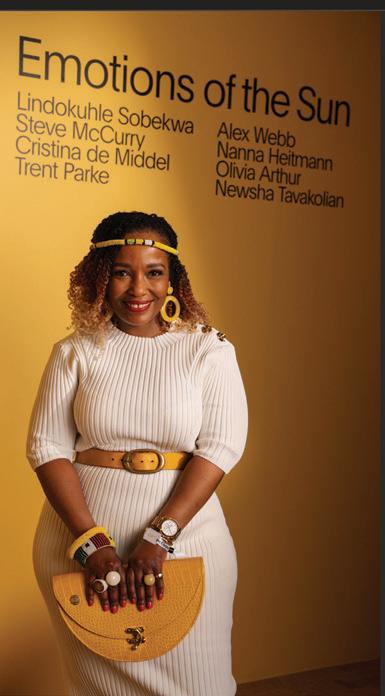
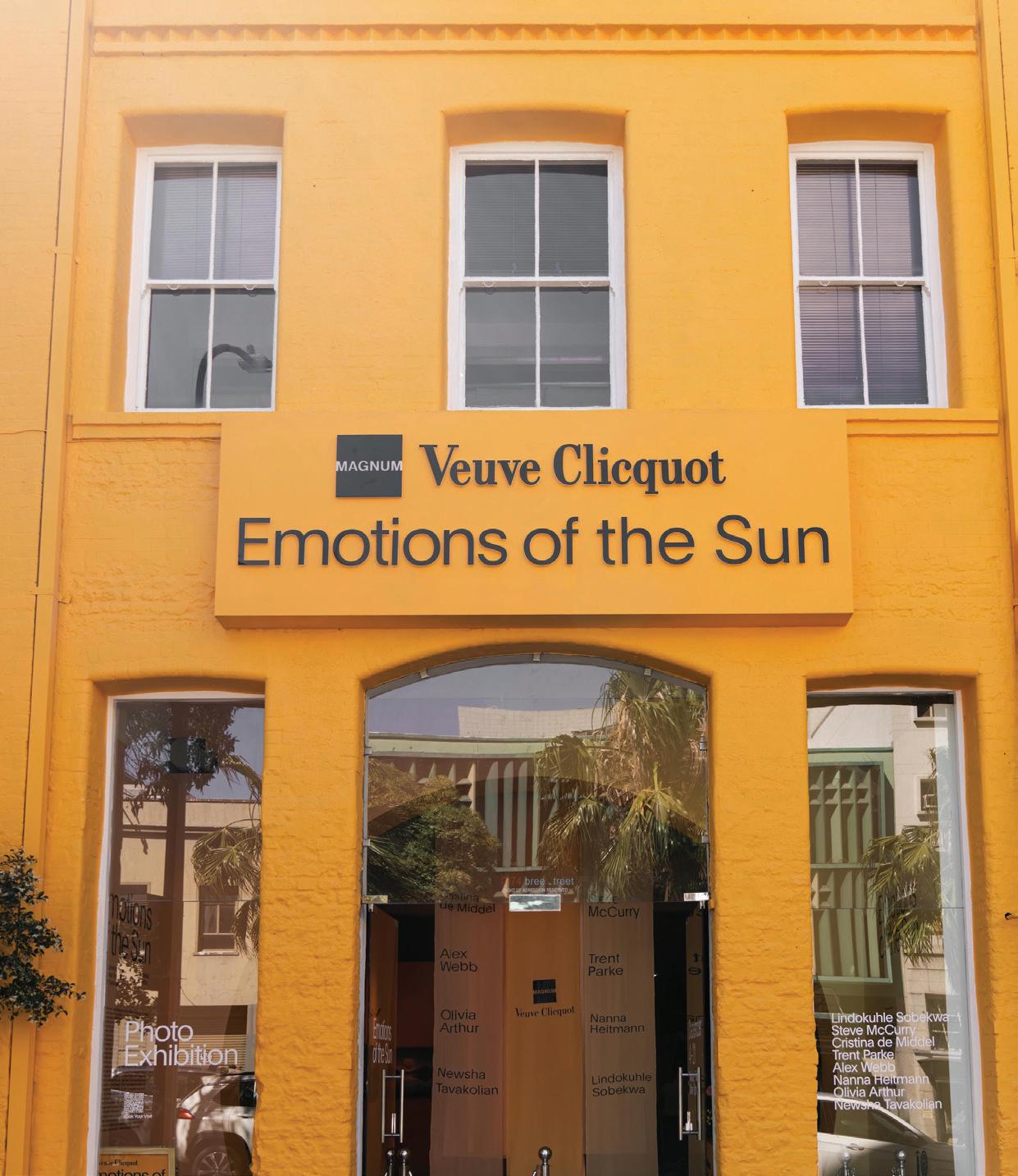
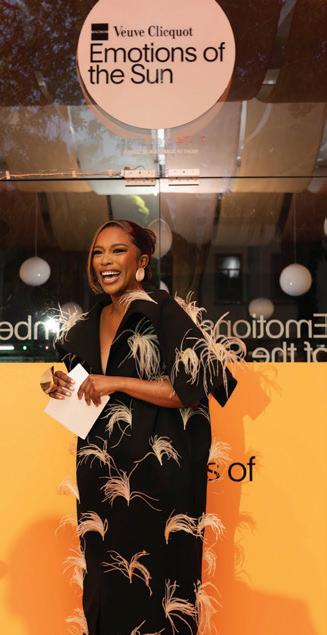
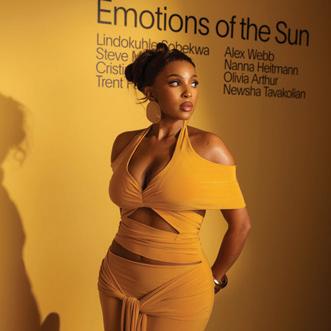
AS VEUVE CLICQUOT’S EMOTIONS OF THE SUN EXHIBITION ILLUMINATED YOUNGBLOOD GALLERY IN CAPE TOWN, A SELECT GROUP OF YOURLUXURY AFRICA GUESTS STEPPED INTO A BRIGHT CELEBRATION OF PHOTOGRAPHY, ART, AND A BEAUTIFULLY INTIMATE BRUNCH DESIGNED FOR CONNECTION
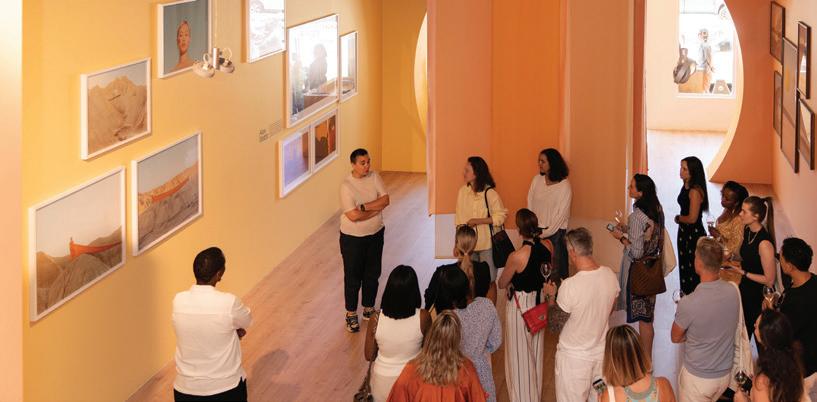
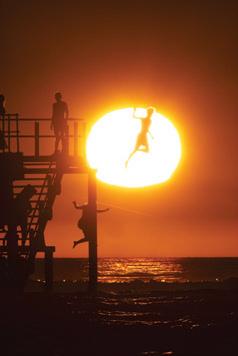
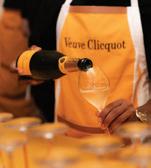
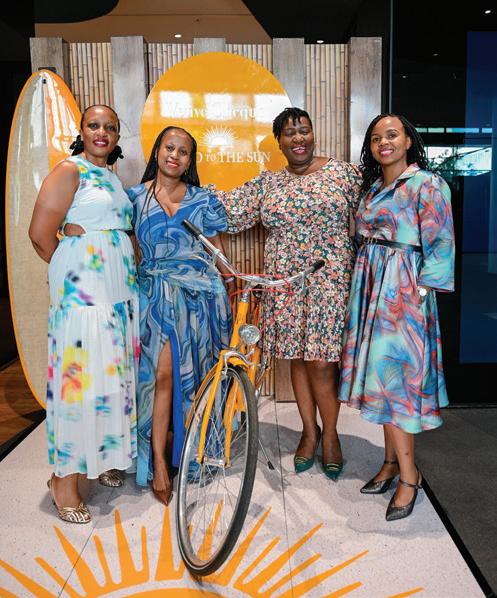
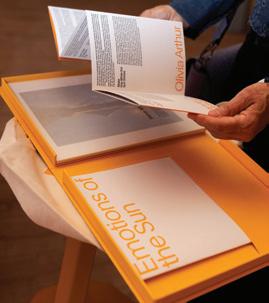
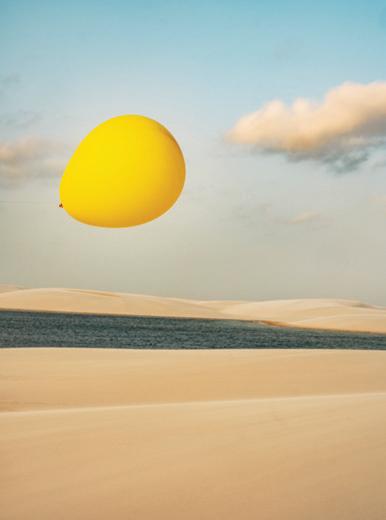
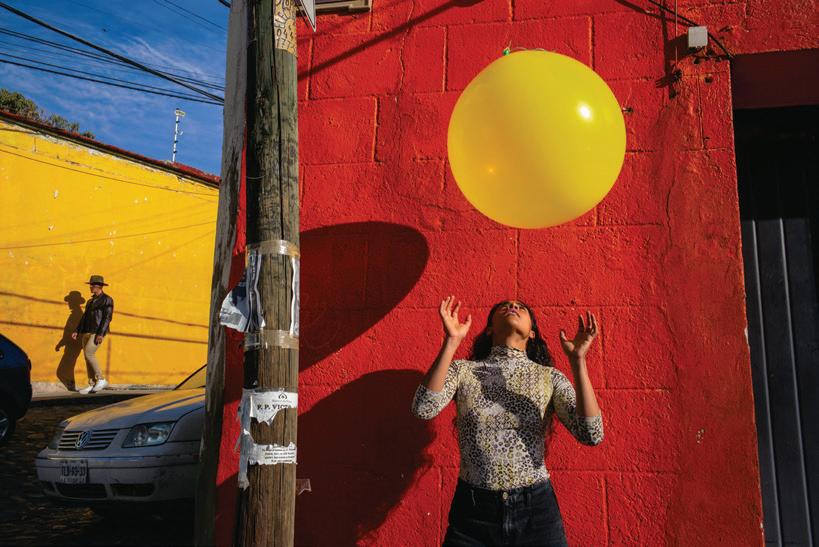
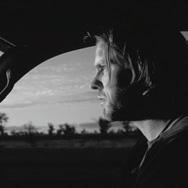
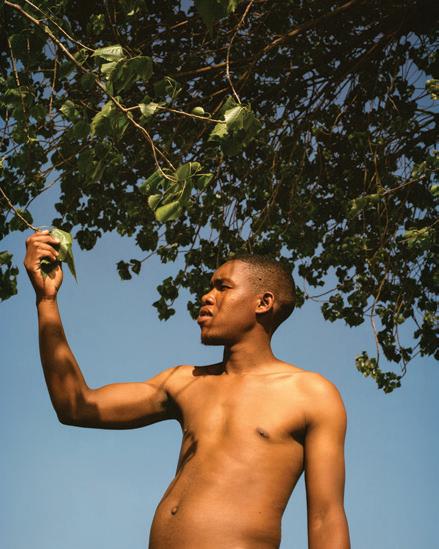
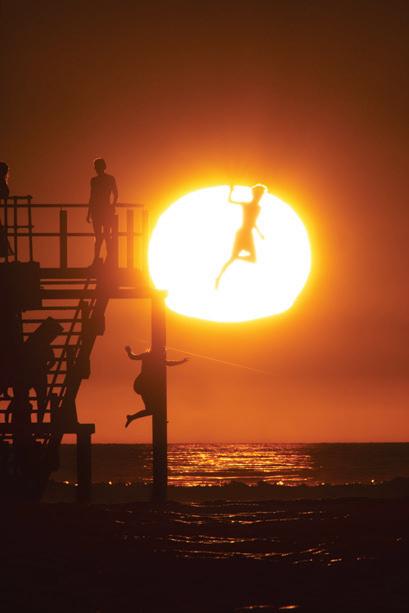
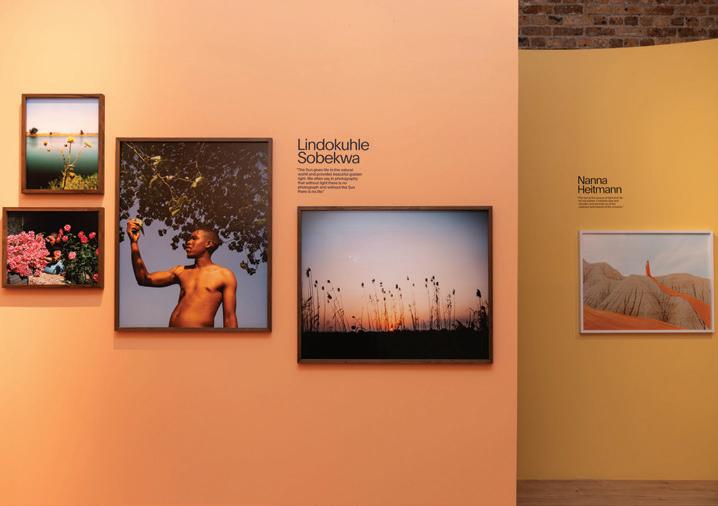
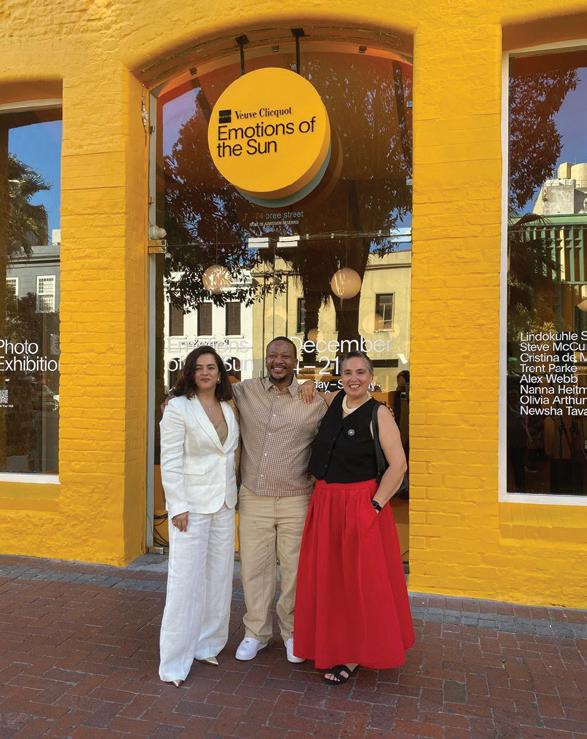
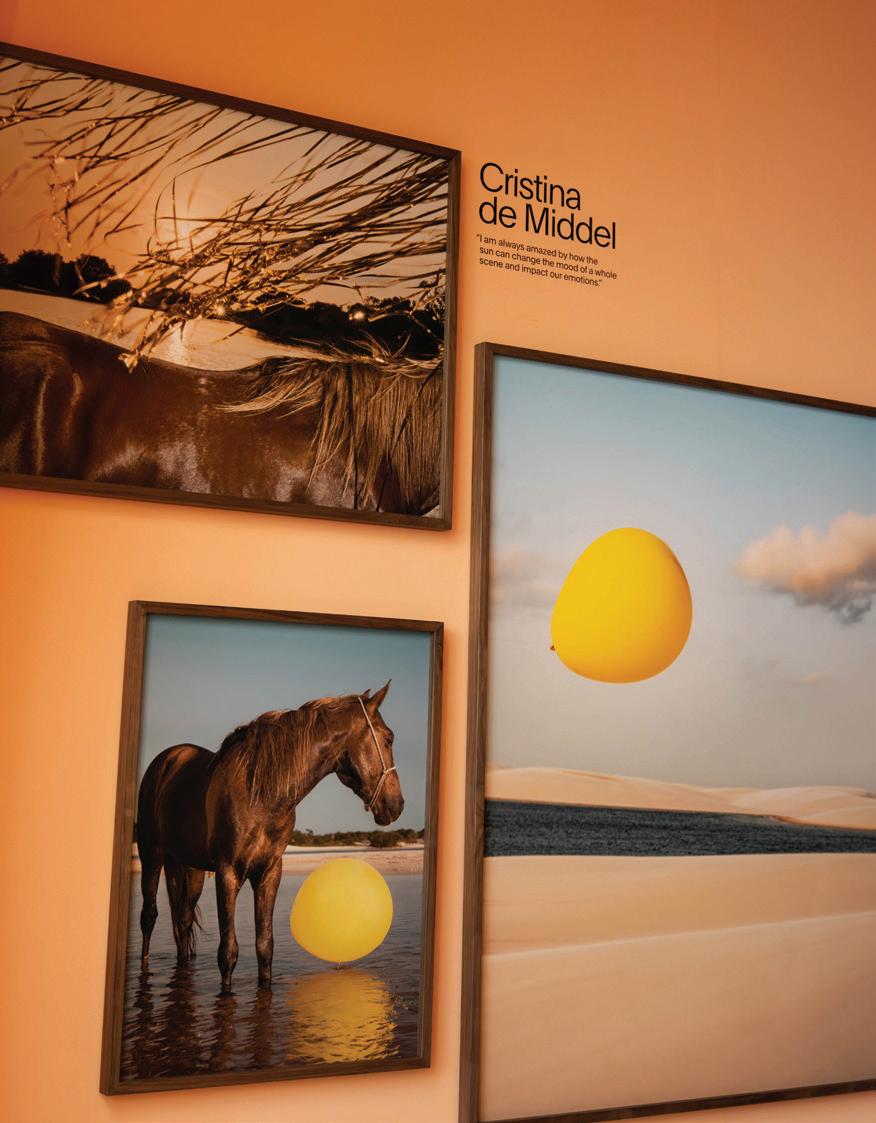
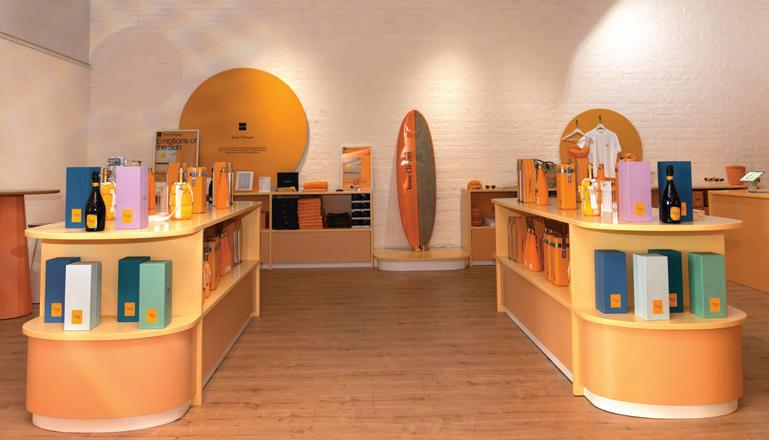
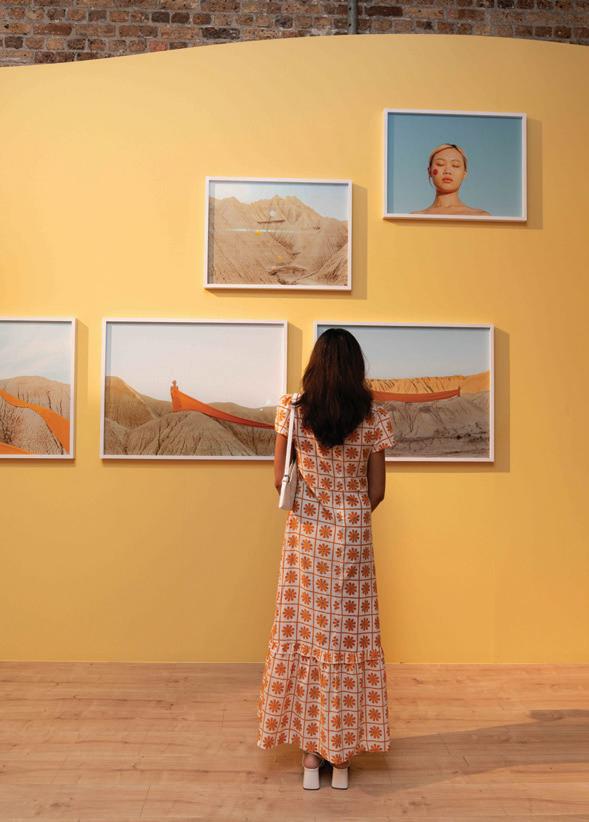
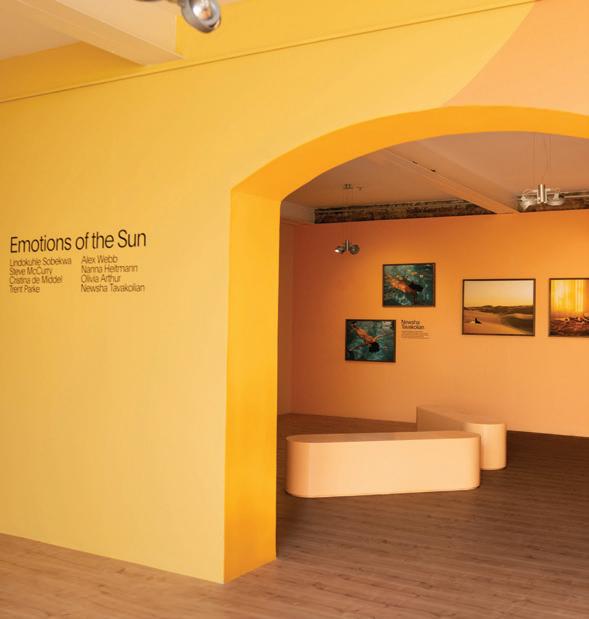
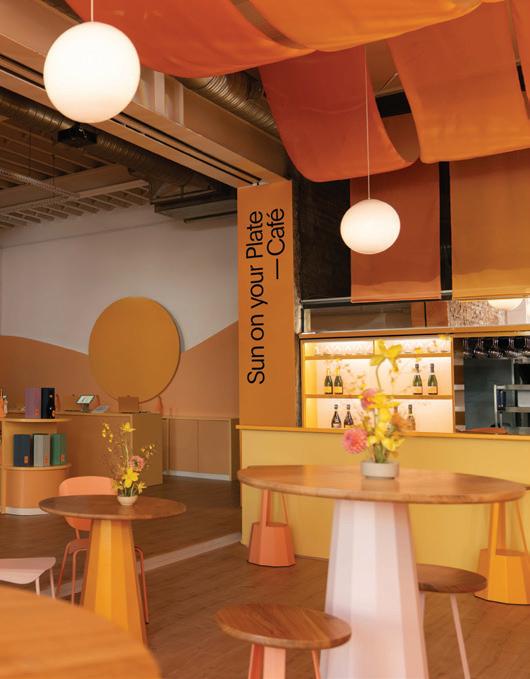
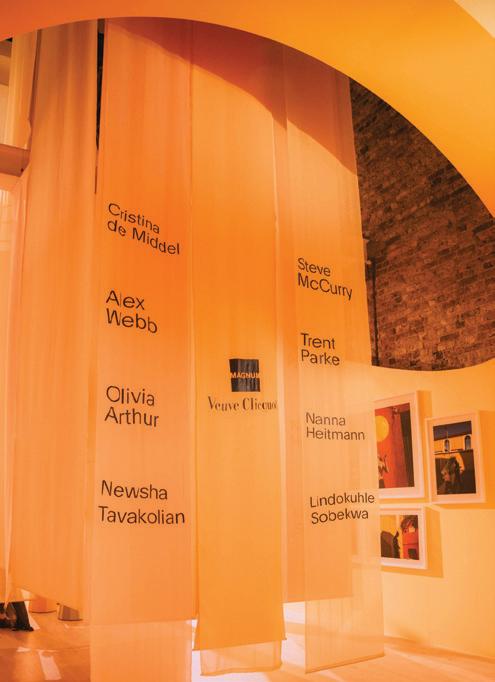
Veuve Clicquot’s acclaimed Emotions of the Sun arrived in Cape Town this past December as a radiant collaboration with Magnum Photos, transforming Youngblood Gallery on Bree Street into an immersive experience. The exhibition brought together 40 photographic works by eight celebrated Magnum photographers, each invited to respond to the sun through a creative carte blanche – resulting in images that explored light as both subject and metaphor: life-giving, playful, connective, and deeply human.
Rooted in the Maison’s solaire spirit, the show treated the sun as an emotional language. Across the works, sunlight
became a symbol of warmth and creativity, as well as a bridge between cultures – a reminder that the same glow can hold wildly different stories yet still feel universal. The Cape Town edition, following showcases in Milan and New York, felt perfectly matched to a city known for its radiant light, incredible nature, and creative energy.
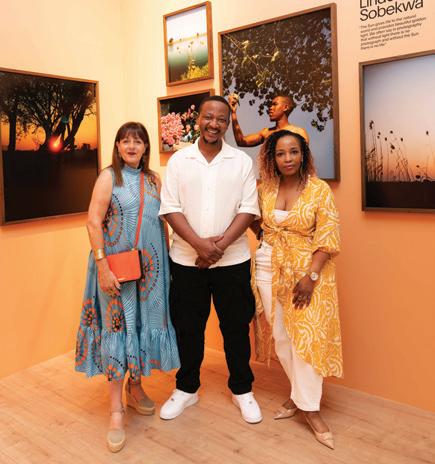
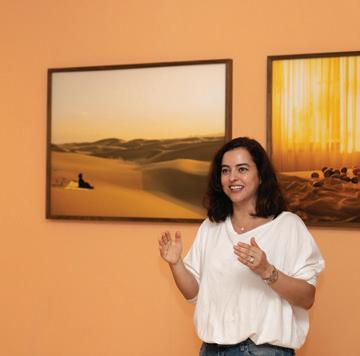
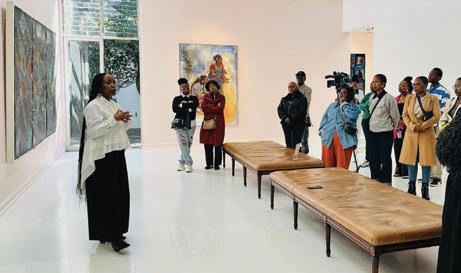
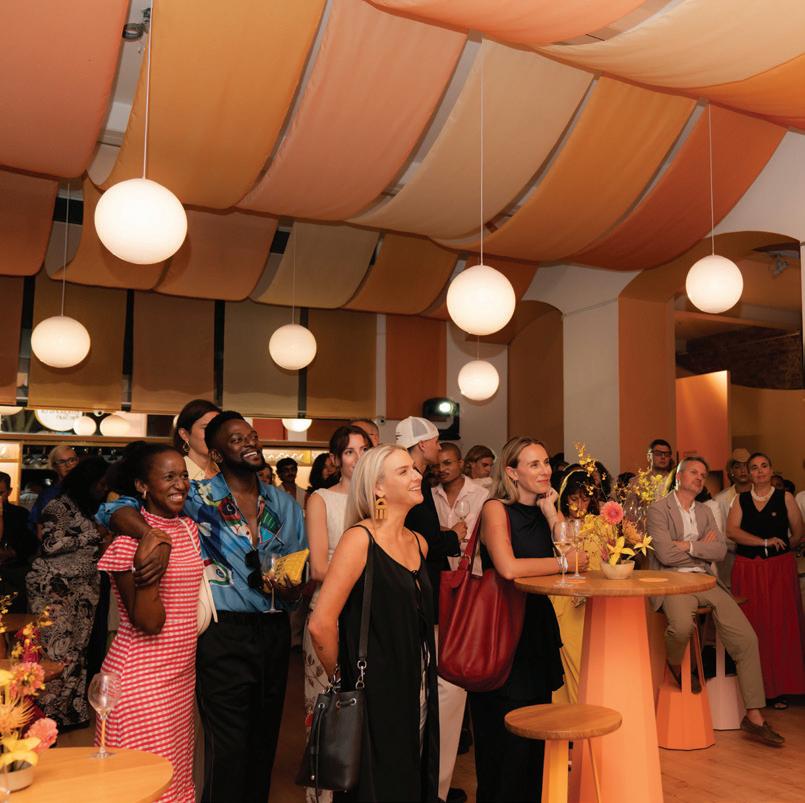
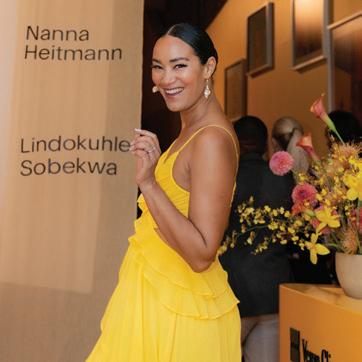
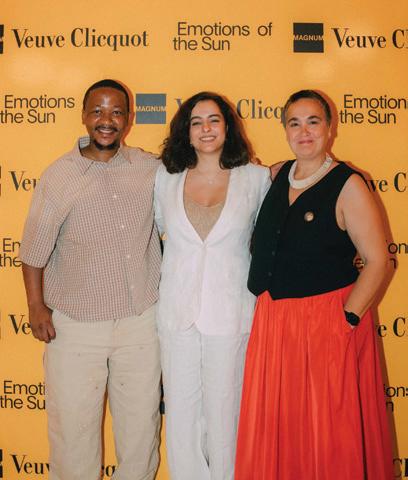
Within this golden landscape of imagery, YourLuxury Africa hosted an intimate private morning for 20 guests. In a rare moment of access, three of the exhibition’s featured photographers joined the group for a personal walkthrough and conversation: South Africa’s own visual poet Lindokuhle Sobekwa, the acclaimed Iranian storyteller Newsha Tavakolian, and Cristina de Middel, the respected photographer and current President of Magnum Photos.
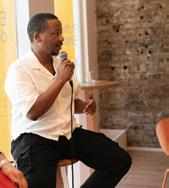
Lindokuhle opened the aperture into his personal life, moving from the city (Johannesburg) to the rural areas (Eastern Cape), and his approach to his practice.
A panel discussion anchored the morning, where he spoke with disarming sincerity about his creative path –including the impact of his mentorship under acclaimed artist Professor Zanele Muholi, who was among the invited audience. It was a full-circle moment: one generation of visual storytelling honouring the next, in a room humming with African pride.
The group moved slowly through the works, not rushing to interpret, but allowing the photographs to speak first. Conversations drifted between craft and meaning: what it took to hold light still, how joy could be a form of resistance, and why the sun so often became a shorthand for hope.
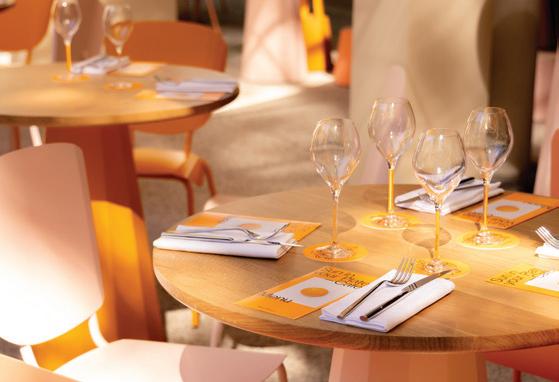
Afterwards, the gathering softened into a celebratory brunch. Guests were treated to a menu curated by MasterChef winner Seth Shezi – a culinary complement to the exhibition’s solar theme – paired with glasses of Veuve Clicquot bubbly. Thoughtful touches, including personalised Veuve Clicquot merchandise, made the beautiful summer morning feel both elevated and warmly personal. In the end, the brunch felt like more than an event. It became a shared pause – a moment of beauty, storytelling and togetherness under the same sun – and an unforgettable way to end 2025.
THIS
WOMAN’S WORK
AHEAD OF HER UPCOMING EXHIBITION DURING THE INVESTEC CAPE TOWN ART FAIR, SOUTH AFRICAN ARTIST LULAMA WOLF MLAMBO REFLECTS ON HER EARLY BEGINNINGS, MOTHERHOOD, AND THE MAKING OF AN INTERNATIONAL CAREER WORDS INNOCENT NDLOVU
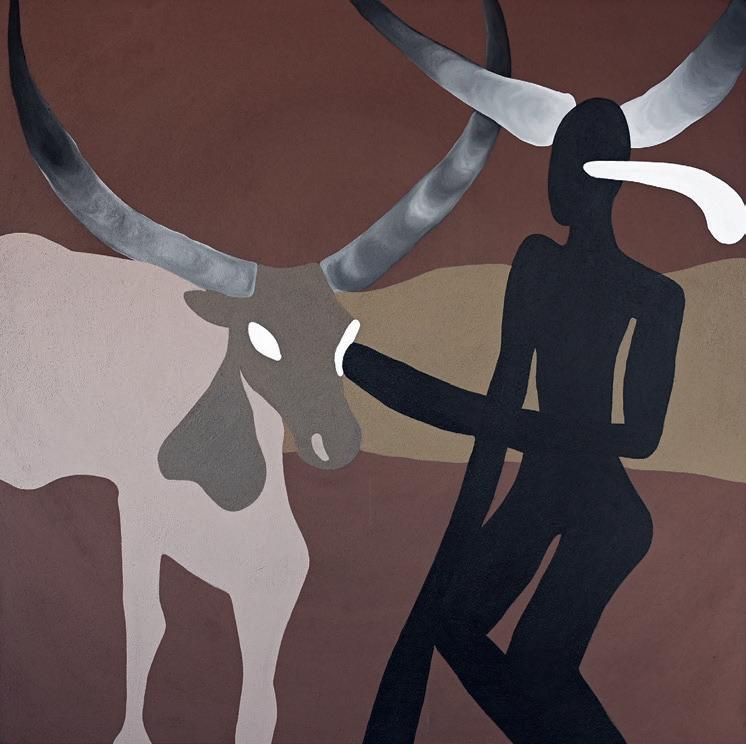
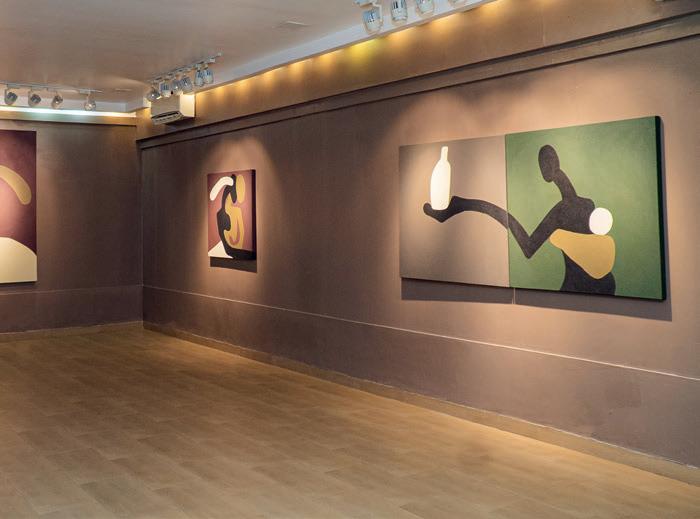
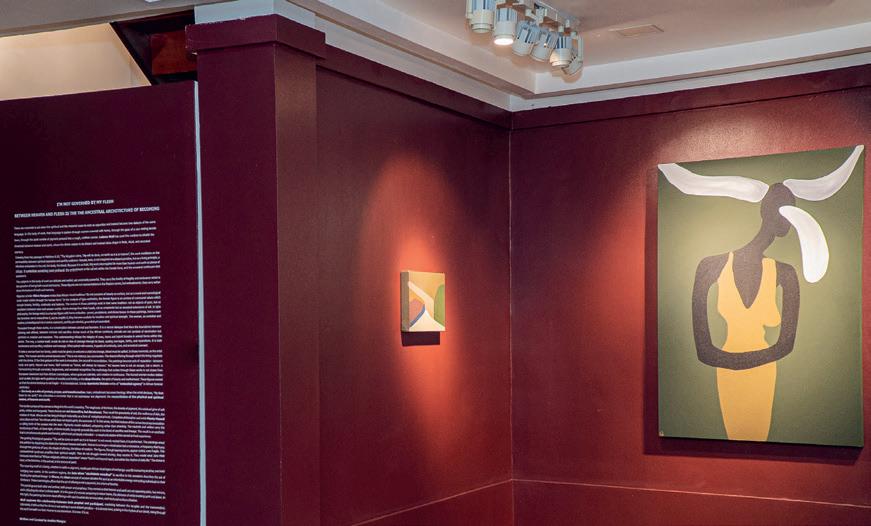
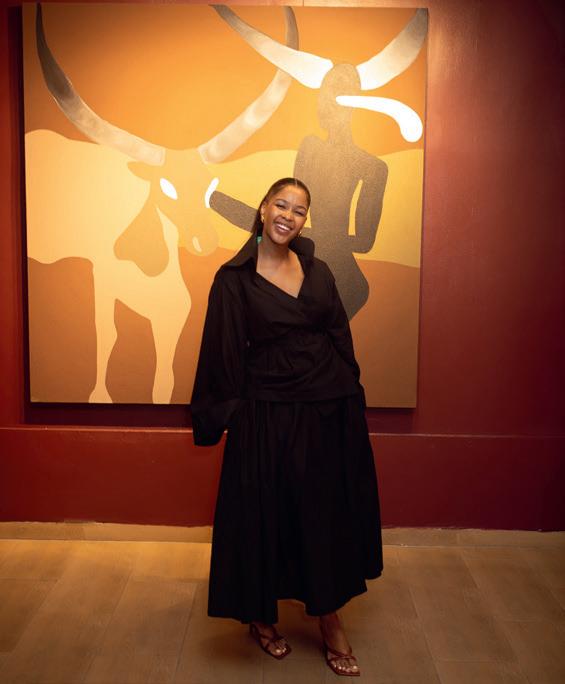
RIGHT: I’m not governed by my flesh, 2025 BELOW: Bulumko 2024-2025 OPPOSITE, BELOW: Bawo Baxolele, 2024-2025
“It took me almost 10 years to solidify my practice to what it is now, where it's clear and understandable. And there's a purpose to what I do,” Lulama Wolf Mlambo declares. As one of South Africa’s leading artists, Lulama is defining the next era of contemporary art across the continent. Her work combines neo-expressionism – the emotive art movement that emerged in New York in the late 1970s – with themes of pre-colonial African experience, creating a distinctive oeuvre of modern African art.
Influenced by the works and philosophies of South African art trailblazers Ernest Mancoba and Mmakgabo Helen Sebidi, Lulama has carved her own path, marked by international showcases and brand collaborations with retail giants such as H&M and Superbalist. Earthy colours, natural elements, and striking patterns found in vernacular architecture set the foundation for the dark, faceless figures in her paintings.
Her childhood, she says, was filled with wonder, learning, and trying out different hobbies. As a Xhosa child growing up in the Free State, she also mastered the art of adapting early on – a skill that has contributed to her success over the years. When the artist couldn’t complete her studies in fashion and art at the University of Johannesburg due to a lack of funds, she chose to commit full-time instead of giving up. “By my third year, I was practising. I had no choice. I had to be decisive,” she explains. From there, everything fell into place.
When I chat to Lulama in early January, she’s still on holiday in St Francis Bay, a scenic coastal town in the Eastern Cape. She's attempting to prolong her time with family for as long as possible before returning to her studio in Johannesburg. Since becoming a mother last year, her view of the world has intensified,
“In a world of AI and flawless, clinical aesthetics, I’m attracted to the opposite”
and downtime is now a necessity. “I’m taking my health and wellness more seriously,” she reveals with a chuckle. “I feel invigorated and inspired, and I'm ready to see the world with new eyes as a mother.” These days, reading, writing, and exploring new mediums are just some of the leisurely activities she finds herself indulging in. It’s almost like going back in time.
Grounded in memory, material, and meaning, Mlambo’s work is guided as much by intuition as it is by experience. Here, she reflects on her journey, process, and the values that underpin her practice.
ABOVE: Lulama at the opening of her exhibition, I’m Not Governed by My Flesh, in Lagos, Nigeria
The 13th edition of the Investec Cape Town Art Fair takes place from 20–22 February at the Cape Town International Convention Centre.
HOW DID YOU DISCOVER YOUR PASSION FOR ART?
Art is something I grew up with. My mother taught us how to use our hands, so I was raised exploring various creative hobbies, from sewing and painting to drawing. Everything was tactile for me.
HOW DO YOU APPROACH YOUR CREATIVE PROCESS?
It’s instinctive. I always circle back to how I grew up. I don’t chase perfection. In a world of AI and flawless, clinical aesthetics, I’m attracted to the opposite, doing the best I can and achieving excellence in imperfection because there’s a humanness in that. Even though I know I’ll never be perfect, I still strive for excellence in that moment.
WHEN YOU TRANSLATE VERNACULAR ARCHITECTURAL TECHNIQUES INTO YOUR ART, DO YOU SEE YOURSELF AS PRESERVING TRADITION OR REINVENTING IT FOR A MODERN GAZE? I’m drawn to archiving history, to make it digestible in today’s world and context. I use my art to document historical and cultural elements and bring that into the present through a contemporary lens.
WHAT ROLE DO YOU THINK AI WILL PLAY IN THE FUTURE OF ARTISTIC EXPRESSION? I believe some industries need AI, but not necessarily the art world. There’s something about our handiwork that will never be duplicated by technology. I believe we don’t need it in creating the art itself, but maybe it can support the business side of our work.
HOW WOULD YOU SAY MOTHERHOOD HAS INFLUENCED YOUR CREATIVE VOICE?
Motherhood has been an interesting revelation, but also a certainty that this is what I should be doing. Storytelling remains a part of that. My intention going forward is to be more present and to set a good example for my daughter.
WHAT DOES COMMUNITY MEAN TO YOU? People are a big part of how we see ourselves because they act as mirrors. I personally enjoy getting perspectives from different people. It creates room for correction, accountability, and learning.
YOUR RECENT EXHIBITION, I’M NOT GOVERNED BY MY FLESH – SHOWCASED AT AFFINITY GALLERY IN LAGOS, NIGERIA –EXPLORES THE CONNECTION BETWEEN HEAVEN AND EARTH, SPIRIT AND FLESH. HOW DOES SPIRITUALITY, RELIGION, AND ANCESTRAL PRESENCE INFLUENCE YOUR WORK? I started creating for that show during my pregnancy, and it was an
act of surrender and a love letter to God. I say a love letter because I was in awe of that entire journey and who I was throughout that experience. In the works, I challenged myself to see colour, textures, and spaces differently so that they don’t overpower the canvas but give it the presence it needed.
TELL US ABOUT YOUR UPCOMING EXHIBITION DURING INVESTEC CAPE TOWN ART FAIR… I’ll be showcasing as part of a group show named Home/land. The artworks are a continuation of I’m Not Governed by . My work and shows always inform each other.
WOULD YOU SAY YOU’VE ACCOMPLISHED ALL THE GOALS YOU SET WHEN STARTING OUT? I’ve surpassed my goals. The last seven years have been wonderful, and the standard keeps getting higher. Working with incredible galleries and brands, travelling the world, and being featured in books is amazing. It’s given me the audacity to want more. ■
PREMIER CULTURAL GATHERING DURING CAPE TOWN ART WEEK 20.02.2026
PREMIER CULTURAL GATHERING DURING CAPE TOWN ART WEEK 20.02.2026
One of the most anticipated and unmissable cultural events on the continent returns on Friday, 20 February. Set against the breathtaking backdrop of Cape Town during Art Week, the Gala honours distinguished luminaries whose creativity, generosity, and vision reflect the museum’s mission to champion contemporary art from Africa and its diaspora.
One of the most anticipated and unmissable cultural events on the continent returns on Friday, 20 February. Set against the breathtaking backdrop of Cape Town during Art Week, the Gala honours distinguished luminaries whose creativity, generosity, and vision reflect the museum’s mission to champion contemporary art from Africa and its diaspora.
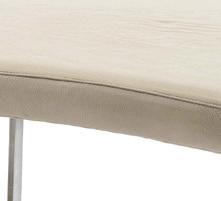
How does a simple chair become a prized auction item? What mysterious chemistry transforms plywood and leather into a design phenomenon? And how can a keen collector even start to spot tomorrow’s icons today?
AT FIRST GLANCE, IT’S JUST A CHAIR. BUT THEN YOU LEARN ITS NAME, ITS MAKER, ITS ERA – AND SUDDENLY IT BECOMES SOMETHING ELSE ENTIRELY: A WORK OF ART. WHILE ART COLLECTORS HAVE LONG ENJOYED A PLAYBOOK FOR INVESTING, FURNITURE HAS BEEN THE QUIET DISRUPTOR – UNTIL NOW… WORDS JACQUIE MYBURGH CHEMALY
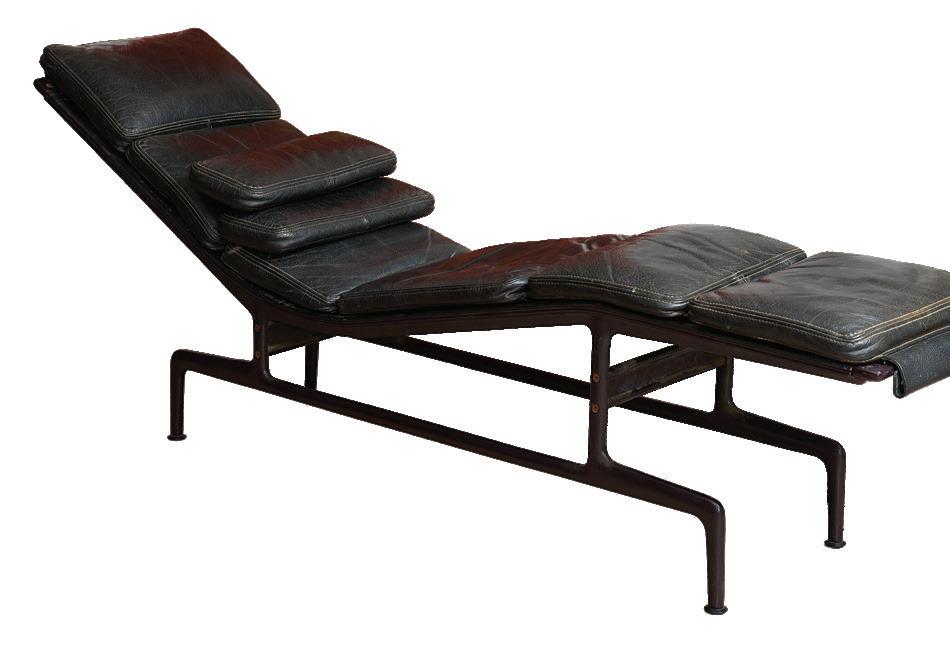
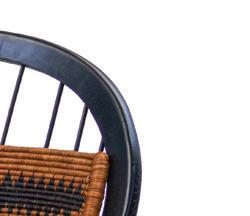
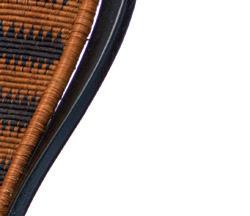
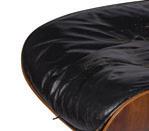
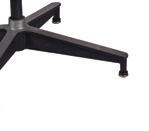
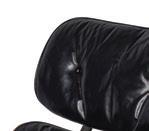
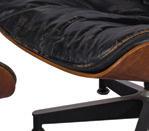
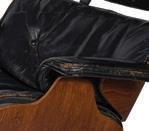
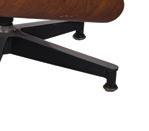
In the rarefied world of art collecting, information about investment pieces is readily available. When it comes to furniture design, not so much. Most of us are familiar with rock-star pieces such as Hans J. Wegner’s Shell Chair (1963), Ludwig Mies van der Rohe’s Barcelona Chair (1929), or the iconic Eames Lounger Chair and Ottoman (1956) – an original set can fetch up to $10 000 on auction.
Locally, designer Gregor Jenkins’ showstopping steel dining tables are highly coveted and generally resell for more than they were originally bought for.
According to Susie Goodman, Executive Director at Strauss & Co Auctioneers, certain furniture and design objects have, in recent years, become a global phenomenon and a key growth point, particularly when there has been softness in aspects of the art market. “In South Africa, our design department is two years old and design between furniture, glass, and silver has become such a collectable within the art ecosystem,” she says.
“In South Africa, design between furniture, glass, and silver has become such a collectable within the art ecosystem”
– Susie Goodman, executive director at Strauss & Co Auctioneers
A furniture piece’s journey from functional object to auction-house star is never accidental. There appears to be a foolproof formula for identifying design items that are – or will become – collectables: they are more often than not the product of aesthetic innovation, cultural resonance, scarcity and, always, a compelling story.
design items that are – or will become innovation, cultural resonance, scarcity
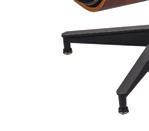
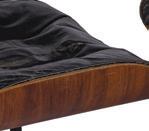
Take that Eames lounger, designed in 1956 by Charles and Ray Eames and produced by Herman Miller. What transformed this chair from cuttingedge design into an icon was not merely its materials (moulded plywood and fine leather), but also its revolutionary blend of comfort and modernism.
With post-war design heralded as innovative and optimistic, it was inevitable that the mid-century era would yield many icons. Jill van Dugteren, design and decorative arts coordinator at Strauss & Co, notes that the craftsmanship, honesty, and intelligent design of the Danish aesthetic have contributed to the enduring value of that country’s iconic mid-century furniture.
notes that the craftsmanship, honesty,
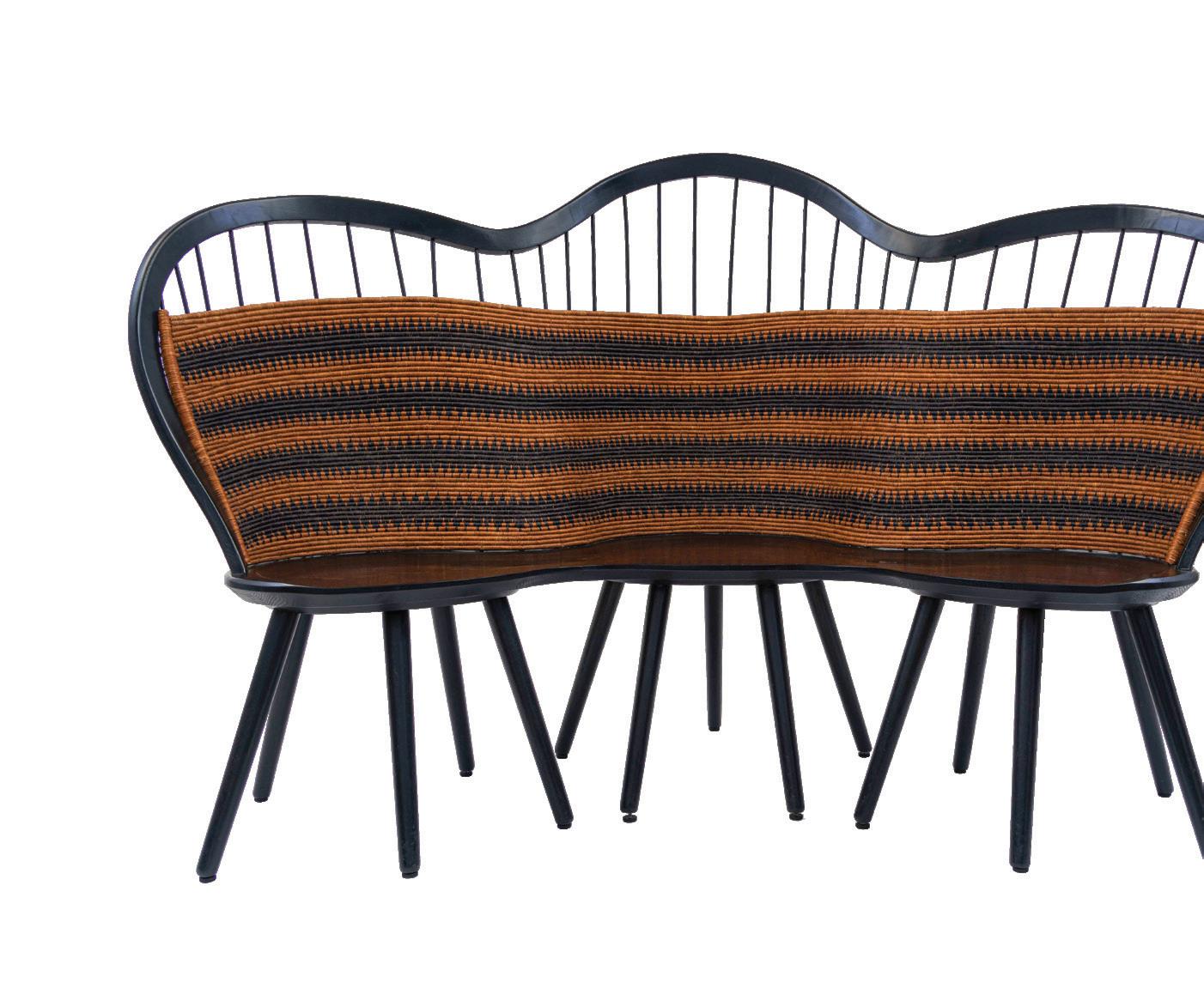
Similarly, South African designers such as Haldane Martin, James Mudge, and Tonic create furniture with “cultural visibility”. Their designs are highly photogenic and achieve celebrity status by being instantly recognisable. “What builds value is craftsmanship, authenticity and scarcity of the real thing,” Jill adds.
Similarly, South African designers such
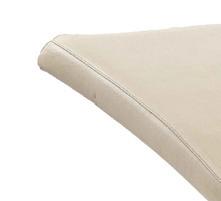
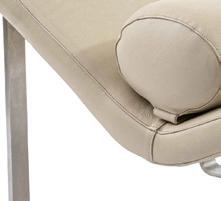
OPPOSITE, TOP: Houtlander and Mash-T. Design Studio Hlabisa Bench LEFT: Billy Wilder Model ES106’ chaise longue, after a 1968 design by Charles and Ray Eames for Herman Miller
RIGHT:
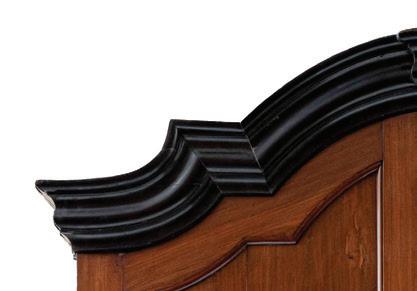
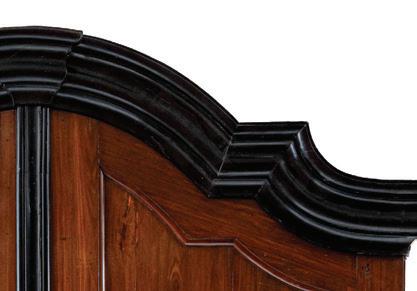
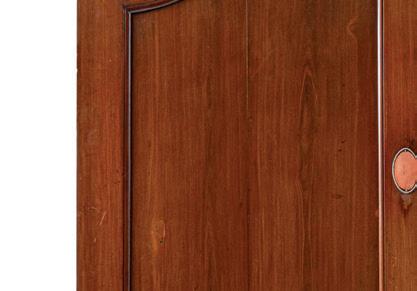
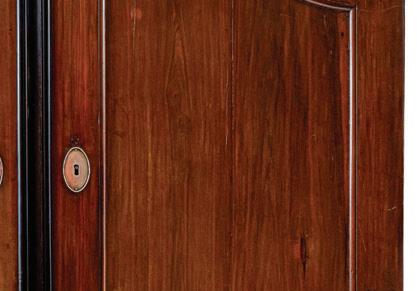
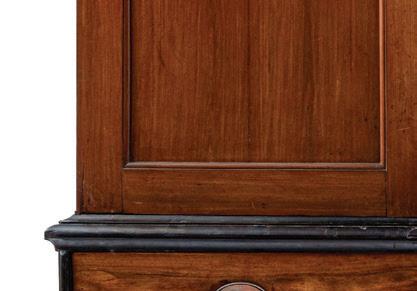
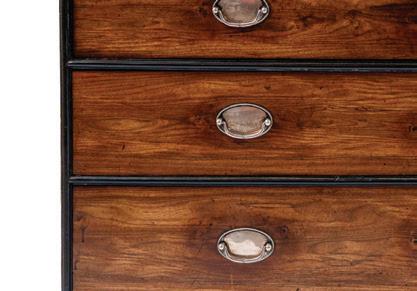
A Cape stinkwood, beefwood, and ebony armoire, late 18th century with silver escutcheons
DESIGNER’S
Bilala lists these African designers at the top of her collectable list:
• CHEICK DIALLO, architect and furniture designer from Bamako, Mali. His impeccable furniture and objects challenge common perceptions of African Design with their modern sensibility and solid craftsmanship.
• ZIZIPHO POSWA’s large-scale ceramic and bronze sculptures are a bold interpretation and representation of African womanhood and her matrilineal heritage, celebrating Xhosa women in both contemporary and traditional form.
• THABISA MJO of Mash.T Design consistently incorporates her heritage with the incredible craft legacy we have in this country. It’s a huge part of the reason that her Tutu Light has become part of some of the globe’s most important design and art institutions, such as the Louvre, which recently acquired one into its permanent collection.
• Ananta Design Studio, whose founders VIVEKA AND RUCITA SASSEN combine their ancestry from India into their lived experience growing up in South Africa. The result is something rich in symbolism and a celebration of global craft culture. Their light fixtures are a tribute to our diversity.
ABOVE:
Haldane Martin, Simplicity
chaise longue, South Africa, 20th century
BELOW:
Gregor Jenkin ‘Kaapentry’ blued-steel and laser-cut dining table, 2005
BOTTOM:
A Charles and Ray Eames first generation ‘670’ lounger and ‘671’ ottoman for Herman Miller, 1956-1960
Nicky Myburgh, Cape furniture specialist at Strauss & Co, emphasises the importance of identification in confirming a piece’s value. Massproduced items, she explains, lose their value. What renders an object collectable is a clear mark of origin that allows for traceability, exceptional craftsmanship, the use of high-quality materials, and a story that explains the context of the design. For these reasons, the prices of Cape Furniture, for example, soared in 2013.
Items at the top of Nicky’s list of local collectables include a Cape armoire with silver escutcheons, as well as designs by South African studios Houtlander, Haldane Martin, and Gregor Jenkin.
Fittingly, Cape Town now plays host to the fourth edition of Cape Town Furniture Week (18–21 February), a four-day celebration of contemporary design featuring open showrooms, exhibitions, talks, and behind-thescenes factory tours. The event is designed to inspire both industry professionals and the broader public.
Bilala Mabuza, founder of Cocoon Lifestyle Studio and Chief Curator of Women in Design Africa, says when it comes to design icons, she looks for pieces that speak of process, provenance, and honesty. “You can feel when a designer or maker has put their heart and soul into a structure or piece. Designs that reflect their environment, reference the genius of their origin, or evolve cultural touchstones are the ones that often endure. If a piece can hold emotional weight and story, it’s already halfway to being a true collectable.”
She adds, “I gravitate towards designers and makers who can create a dialogue between who they are, where they come from, and their craft lineage in their designs.” ■
Cape Town Furniture Week – a citywide event with multiple venues – takes place from 18–21 February at Church House.
ART PATRONAGE meets where
HEADLINED BY AWARD-WINNING SINGER ZOË MODIGA, THE ZEITZ MOCAA GALA RETURNS THIS MONTH AS A SIGNIFICANT CULTURAL GATHERING, BRINGING TOGETHER COLLECTORS, PATRONS, AND CREATIVES
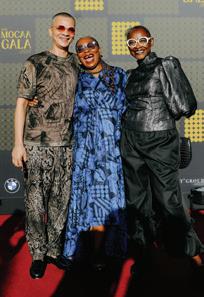
As Cape Town Art Week reaches its peak, Zeitz Museum of Contemporary Art Africa (Zeitz MOCAA) hosts its most anticipated evening of the year. On 20 February, the Zeitz MOCAA Gala convenes art patrons, collectors, philanthropists, and cultural leaders from South Africa and abroad for a night of creativity, while directly supporting the future of contemporary African art.
Set against the museum’s monumental concrete silos and the luminous presence of Table Mountain, the Gala has become synonymous with cultural significance and civic pride. Both a social highlight and a vital fundraising platform, it reinforces Zeitz MOCAA’s role as a living, accessible institution amplifying African and diasporic voices on a global stage.
At the heart is award-winning singer, songwriter, and performer Zoë Modiga, who takes centre stage as the Gala’s exclusive headline act. Known for her genre-defying sound – moving e ortlessly between jazz, soul, African rhythms, and experimental performance – Zoë has carved out a distinctive space in contemporary music. Her work is deeply emotive, rooted in storytelling that explores heritage, spirituality, womanhood, and modern African identity.
Her appearance at the Gala follows a period of significant creative momentum. The release of her acclaimed third studio album, Nomthandazo, marked a mature and resonant chapter in her career, while her recognition as a Spotify EQUAL Africa ambassador and her 2025 honour as Most Stylish Performing Artist in Music at the SA Style Awards underscore both her artistic influence and cultural presence. Her performance promises to be immersive and commanding, setting the emotional tone for the evening.
The experience unfolds as a carefully choreographed journey through the museum. Guests arrive via a glamorous red carpet before gathering on the Level 6 Rooftop Terrace for a Hazendal MCC reception. A bespoke multi-course dining experience follows, framed by the dramatic verticality of the silos. Here, the architecture itself becomes part of the narrative, reinforcing the ambition and permanence of the institution’s vision.
A defining moment in the programme is the presentation of the Zeitz MOCAA Honorary Awards. This year’s recipients – Abdoulaye Konaté, Dr Anita Blanchard, Martin Nesbitt and Justice Albie Sachs – are recognised for their enduring contributions to art, leadership, justice, and cultural advocacy. The evening is guided by Emmy Award–winning storyteller and producer Thando Dlomo, supported by a distinguished Gala Host Committee. Fashion designer Thebe Magugu curates the styling of the hosts, adding a refined Afro-modernist sensibility to the occasion.
Beyond the Gala itself, the event anchors a three-day cultural programme from 20 to 22 February.
Ultimately, the Zeitz MOCAA Gala is an act of collective patronage. Funds raised support the museum’s exhibitions, education initiatives, and artist-focused research, while sustaining projects such as MOCAA on the Move – an art classroom on wheels designed to reach communities beyond the walls of the museum. By attending or sponsoring the Gala, patrons invest in the future visibility, accessibility, and global impact of contemporary African art. For more information, visit zeitzmocaa.museum
YourLuxury Africa acknowledges the dynamic late Executive Director and Chief Curator, Koyo Kouoh, pictured left, whose absence from this year’s event will be felt.
IN CAPE TOWN – SOUTH AFRICA’S MOST FOOD-OBSESSED CITY – FOUR CHEFS ARE FUSING TECHNIQUE WITH STORYTELLING, LUXURY WITH LOCALITY, AND AMBITION WITH WARMTH WORDS LERATO TSHABALALA
Dining in Cape Town requires a calendar alert, a strategic group chat, and the calm confidence to commit weeks in advance – in both time and money. Because the real flex is no longer just the handbag, the watch, or the hotel suite –it’s the reservation message.
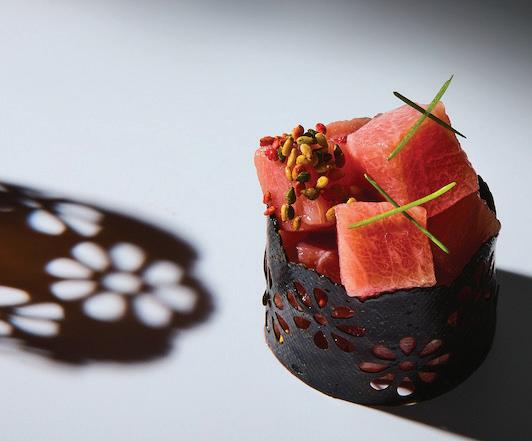
What’s fascinating about the Mother City’s current global culinary moment is how refined it has become. The best dining rooms now operate like modern ateliers: obsessive about detail, certain about their identity, and capable of turning a single ingredient into an emotional arc.
Belly of the Beast promises carnivorous dishes but delivers some of the best vegetarian variations in the country. JAN and Wolfgat have made the top travel dining destinations for people and publications around the world. And the guests – international and welltravelled, visually literate, with sophisticated palates – have consistently voted Cape Town as one of the best food cities in the world.
Rankings have merely formalised what diners already know. Condé Nast Traveller captured the mood when readers named Cape Town the Best City in the World for Food in 2024. Meanwhile, culinary heavyweights such as La Colombe and FYN continue to anchor the city’s global reputation, keeping standards high and expectations higher.
But the true story isn’t only written in awards. It’s written in exports – restaurants and hospitality concepts so influential that they start shaping international taste. Babylonstoren has become one of the country’s most evocative lifestyle exports: garden-driven, design-forward, and globally aspirational. It has sparked international curiosity and sister-property comparisons with The Newt in Somerset in the UK. The Newt is no small reference point either, having earned Three MICHELIN Keys and recognition on The World’s 50 Best Hotels list.
In this landscape – equal parts competitive and collaborative – four chefs stand out not only for what they cook, but for what they represent: confidence, culture, mentorship, and a belief that world-class is not a location, but a discipline.
Dining in Cape Town makes you feel plugged into local and global culture (what the futurists are coining ‘glocal’).
And if the world is paying attention now, it’s because the city isn’t asking for validation anymore. It’s simply serving.
HC EF’S TABL E
AMORI BURGER UPPER UNION
As executive chef of Upper Union, Amori Burger has helped shape one of the city’s most magnetic dining spaces. And the recognition has followed. In 2025, Amori won the Culinary Rising Star Award at the Luxe Restaurant Awards, a fitting nod to a chef whose influence is felt not only in flavour, but in the way she builds energy and consistency in a room.
The word ‘honest’ is the anchor. It explains why her cooking feels emotionally accessible even when it’s highly considered: it isn’t trying to impress you with complexity. It’s trying to make you feel good.
Amori also speaks openly about leading with an open mind and a touch of humour. “I lead the same way I cook,” she says. “With curiosity, intention, and a bit of playfulness. And I genuinely care about my team.” There’s something distinctly modern about that kind of leadership: emotionally intelligent, standards-driven, and fully aware that great hospitality is built by people who feel valued.
Her creative fuel comes from exposure – collaborations, festivals, stepping into other chefs’ worlds. “I come home with a head full of new sparks,” she says. “Then I start playing with local ingredients… it’s not mimicry. It’s a conversation.”
And that’s exactly what Upper Union feels like: a room in conversation with the city.
upperunion.co.za
ABOVE: Beef tartare
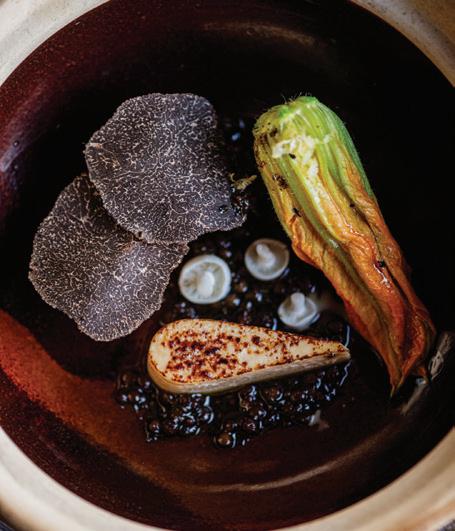
ABOVE, RIGHT: Claypot Hokkaido Pumpkin
ABOVE:
IVOR JONES
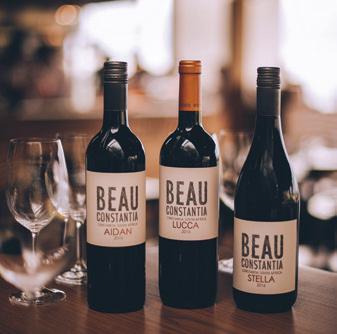
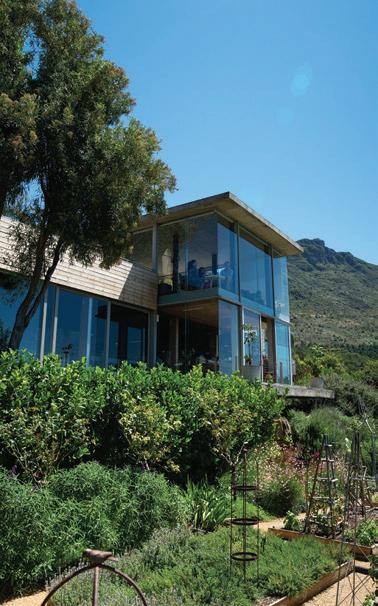
CHEFS WAREHOUSE BEAU CONSTANTIA
Often described as “your favourite chef’s favourite chef”, Ivor Jones delivers excellence at the highest level night after night at Chefs Warehouse Beau Constantia. It’s the kind of reputation you can’t manufacture – it’s earned in kitchens, and affirmed in quiet admiration.
He’s helped define the modern Cape Town standard: elevated, seasonal food served with ease – sophisticated, but never stiff. It’s a style that mirrors the city’s broader dining mood. “Cape Town cooks like it’s got nothing to prove,” says Ivor, “and that confidence is contagious.”
The restaurant’s standing is reflected in a stream of industry recognition, including its repeated Three Plates accolade from the JHP Gourmet Guide – a marker reserved for world-class destination dining. Beau’s reputation is also echoed on global platforms such as La Liste, the international restaurant ranking and awards guide that tracks the world’s most celebrated dining rooms.
Then there’s the chef himself. In 2025, Ivor was named Eat Out S.Pellegrino & Acqua Panna Chefs’ Chef – arguably the most meaningful kind of recognition, because it comes from the people who understand the craft most intimately.
Ivor cooks like someone who understands what today’s diner wants: surprise without confusion, flavour without clutter, and a sense of mood that makes the experience feel effortless. “Awards don’t change how I cook,” he says. Then he adds the kind of detail that reveals where his real focus lies: “The real win is when a guest takes a bite and gives that little ‘oh wow’ grin.” chefswarehouse.co.za
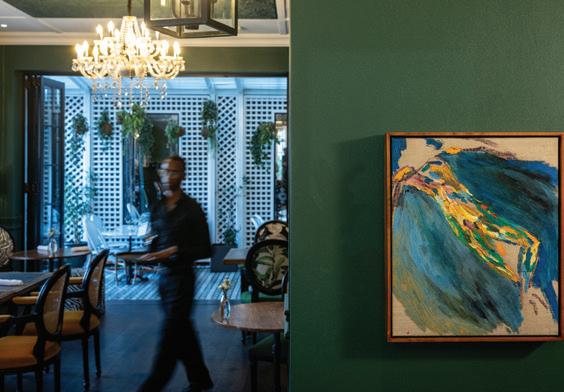
The art featured in Upper Union, courtesy of Everard Read Gallery, adds a unique designer touch to the interiors
VUSI NDLOVU EDGE
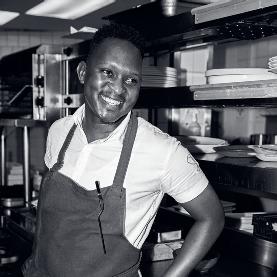
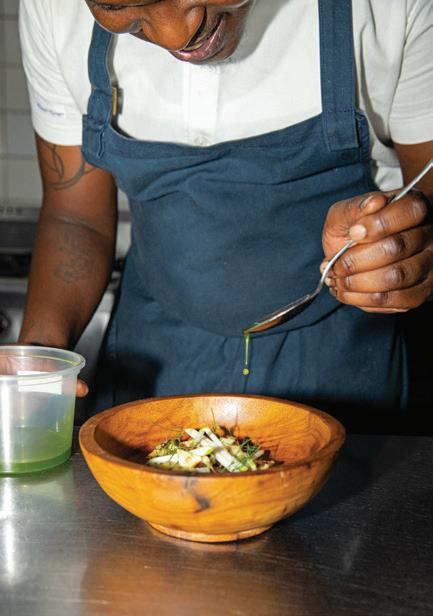
Ranked among the top seven at the S.Pellegrino Young Chef finale in 2018 and a founding member of the African Culinary Library, Vusi Ndlovu represents a new kind of culinary authority: chef, storyteller, and cultural custodian. His work isn’t about chasing trends. It’s about building an African food narrative that is intellectually respected, globally relevant, and proudly its own. “The philosophy is to share our beliefs and pride in the African pantry with everyone and anyone that’s willing to listen,” he says. “True stories shared over the fire.”
And the accolades, he insists, matter most because of what they unlock for others. “We always say we don’t cook for awards,” he says, “but for the young team we’re building.” Seeing them celebrate success makes it meaningful – because “that is why EDGE exists: for a young African child to be allowed to dream.”
“The spirit of EDGE was based on celebrating everything we love about the continent: the people, the energy, the food,” he says. “We just thought, why not celebrate with the people we like?” It’s this combination of craft and charisma that gives EDGE its distinct, well, edge: African flavours explored over open flame, delivered with modern precision and a sense of drama that feels intentional.
“I have a very playful personality,” he admits, “and I want people to be curious… to push their understanding of what an ingredient can be.” The experiments aren’t always guaranteed wins, and he’s refreshingly honest about that too. “Believe me, sometimes we miss big time – but that’s part of the charm.”
Vusi’s vision feels distinctly future-facing: collaboration, movement, and continental scale. “We have a Euro trip starting in winter 2026,” he says, “cooking alongside some of our favourite chefs in really cool cities. We’ll announce the tour details in early 2026.” edgerestaurant.africa
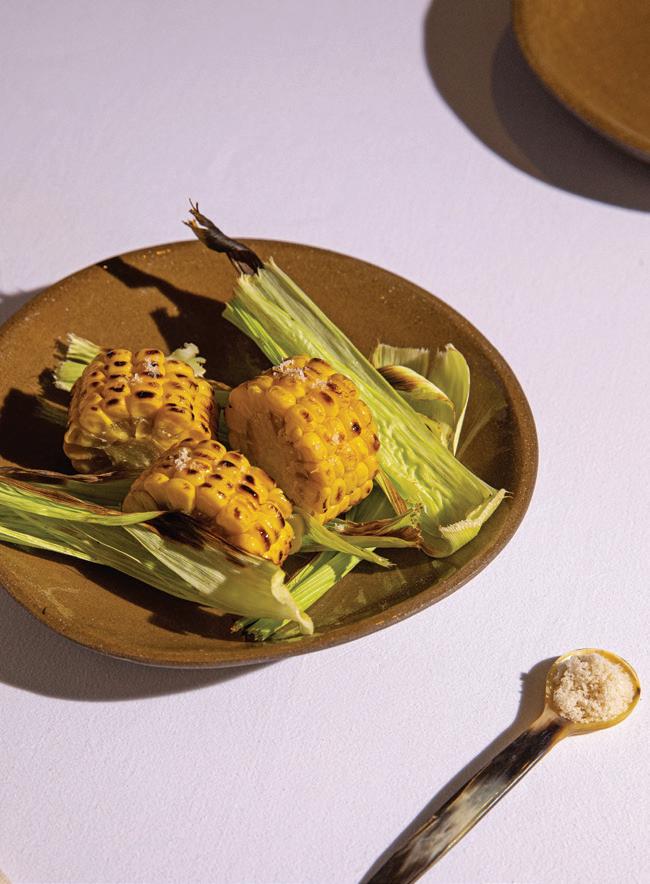
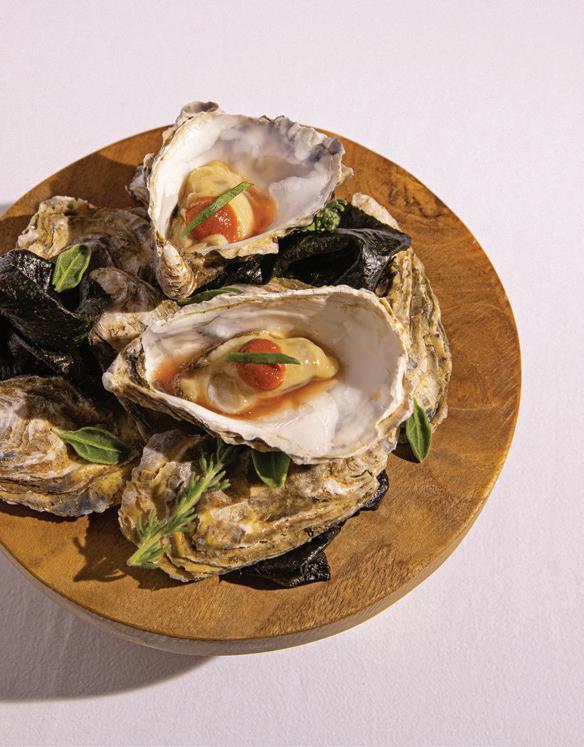
ABOVE & BELOW: Sweetcorn in hay and delectable oysters are just some of the dishes with a twist on the menu
Fdesert Where the whispers
IN THE
VAST STILLNESS OF THE NAMIB DESERT, LUXURY TAKES
ON A QUIETER, MORE MEANINGFUL FORM. DESERT WHISPER BY GONDWANA COLLECTION NAMIBIA IS AN EXCLUSIVE RETREAT FOR TWO, WHERE DESIGN, SOLITUDE, AND SUSTAINABILITY UNITE TO CREATE THE MOST INTIMATE EXPERIENCE
or more than 30 years, Gondwana Collection Namibia has redefined how travellers encounter one of Africa’s most captivating landscapes. Born from a deep respect for Namibia’s natural and cultural heritage, the collection offers a diverse portfolio of lodges, camps, and hotels that deliver a seamless all-in-one travel experience. Conservation, social upliftment, and responsible tourism are not afterthoughts here – they are fundamental to the Gondwana ethos.
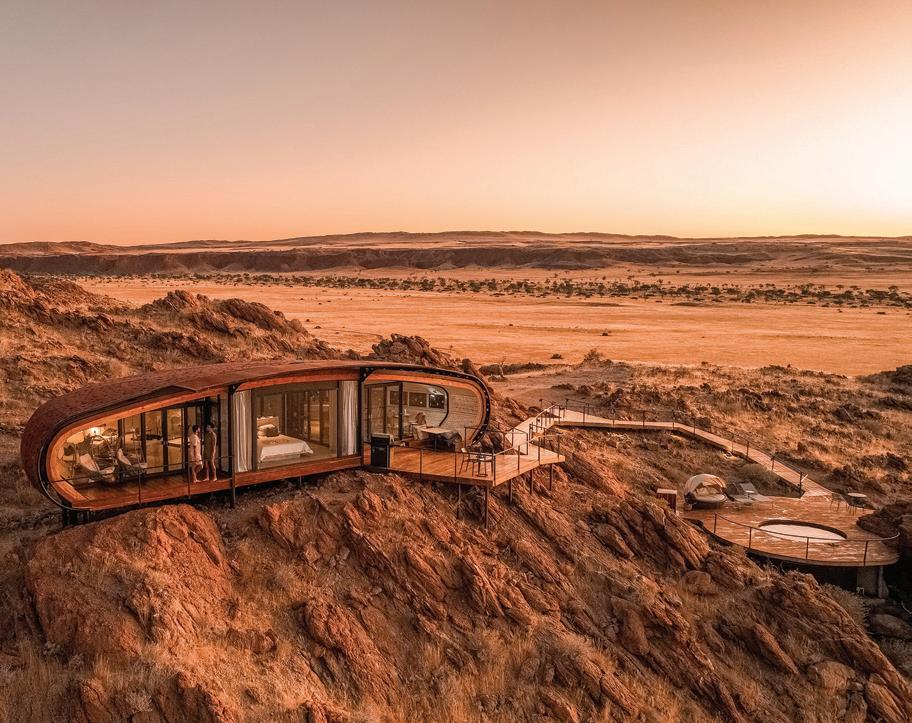
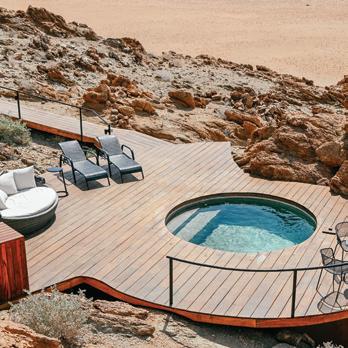
One of its standout properties is Desert Whisper, a place that elevates exclusivity to an art form. Situated deep within the Namib Desert, this fully inclusive hideaway accommodates just two guests at a time, offering an unparalleled sense of privacy and the perfect space to reconnect.
This is refined luxury at its best. There are no distractions – just pure silence, endless views, and the whisper of the wind as it sculpts the dunes. Designed as a contemporary desert retreat for couples, Desert Whisper invites guests to slow down and immerse themselves in the rhythm of the desert.
Architecturally, the pod is both striking and sensitive to its surroundings. Inspired by natural forms and desert tones, it was constructed from neutral materials that blend effortlessly into the landscape. Laminated flooring and organic design elements regulate the temperature year-round, creating a comfortable sanctuary even in extreme desert conditions.
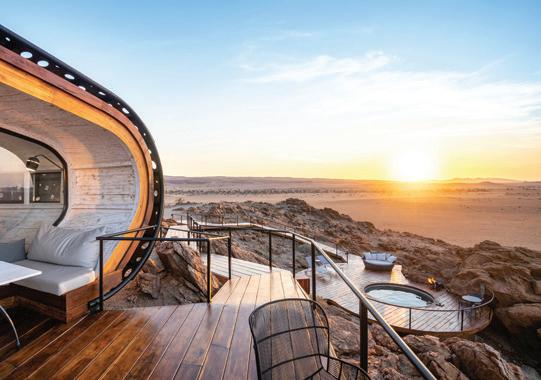
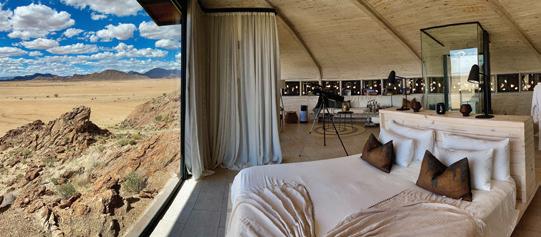
canvas. Outside, a private terrace invites moments of quiet indulgence, whether sipping coffee at sunrise or enjoying a sundowner. The plunge pool, accessed via a wooden walkway, provides a refreshing escape from the desert heat and is entirely yours for the duration of your stay.
Service is intuitive and personal. A dedicated host ensures that every detail is taken care of – from pre-arranged meals tailored to your dietary preferences to a scenic drive that reveals the raw beauty of the surrounding landscape.
Located approximately 30 kilometres from Solitaire and just 60 kilometres from Sesriem – the gateway to the iconic Sossusvlei –Desert Whisper offers both seclusion and access to one of Namibia’s most celebrated natural wonders.
For travellers within the Southern African Development Community, Gondwana Collection Namibia offers a SADC Membership, designed to make travel within Namibia more accessible while fostering a deeper appreciation of the country’s fragile ecosystems. The membership provides preferential rates across Gondwana properties and is available on an individual basis, with each traveller requiring a valid membership to qualify.
Inside, the open-plan living space flows between the lounge, dining area, and a fully equipped kitchen, complemented by a fully stocked bar. The luxurious en-suite bedroom offers uninterrupted views across the desert – an ever-changing
At Desert Whisper, luxury is not defined by excess, but by intention. It is found in space, silence, and the rare privilege of having one of the world’s oldest deserts almost entirely to yourself. The desert is calling – even if it’s at a whisper. gondwana-collection.com
RYAN COLE
SALSIFY AT THE ROUNDHOUSE
Under Ryan Cole’s leadership, Salsify (pronounced sal-si-fee) at the Roundhouse has become a Cape Town pilgrimage: intimate, intelligent, and steeped in story. The restaurant’s rise has been validated on global and local stages. From its entry onto The World’s 50 Best Restaurants extended list at No. 88 to its top-tier accolades at home, recognition has followed. Ryan’s personal honours – like being voted Eat Out’s Chefs’ Chef of the Year by his peers – carry weight, and not just because they widen responsibility. “All awards… are a stark reminder that my role goes beyond cooking,” he says. “My job is to be a mentor to the next generation and to act as a kind of lighthouse in the industry… someone steadfast, who works for the greater good of hospitality.”
Sustainability for Ryan is not a marketing line; it’s a personal inheritance. Coming from a fishing family, he speaks about seafood with reverence. It’s a story – “a fisherman who woke up at two in the morning and risked his life… to bring back something beautiful and fresh.”
Salsify & Friends, hosted every August with peers from across South Africa, has become an engine for that philosophy – and last year the concept went global with collaborators including Margot Janse, Gaggan, Phil Howard, and London’s Akoko. “I’ve always believed collaboration is one of the most powerful ways to grow our industry,” he says.
And 2026 is already shaping up to be a year of international visibility. Ryan has several projects lined up, including a collaboration with The Alchemist in Copenhagen in February, a World’s 50 Best Signature Session at Sand & Koal in Abu Dhabi for the Middle East & North Africa’s 50 Best Restaurants, and a onenight collaboration dinner with Gaggan in Bangkok (voted the Best Restaurant in Asia in 2025 by the World’s 50 Best Restaurants) – also in February. Further collaborations are in the works for Scotland and London in March and April, respectively.
salsify.co.za ■
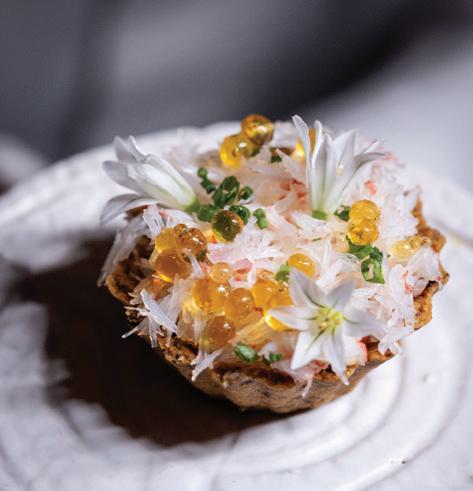
ABOVE & BELOW: Designer tartlets and unique interior installations are served at this Mother City hotspot
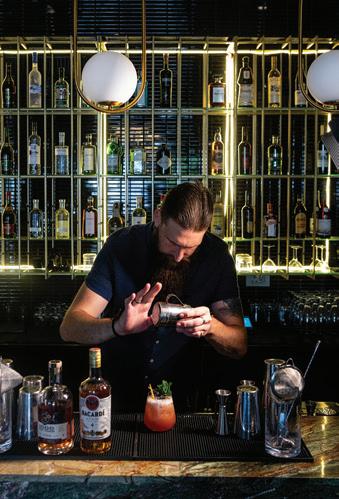
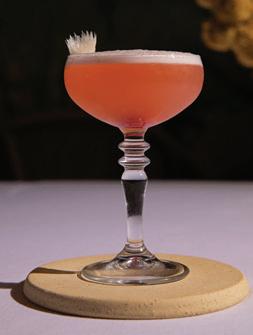
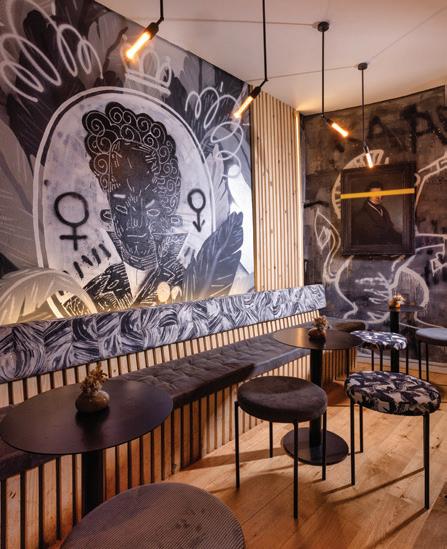
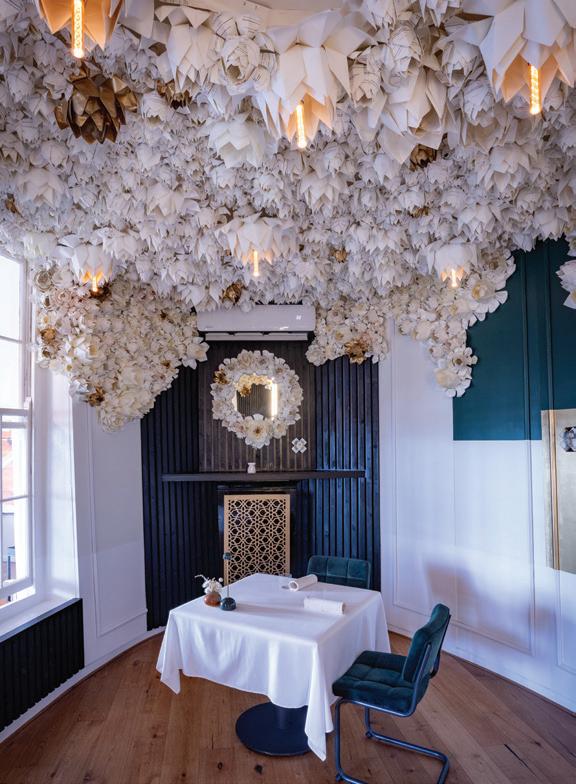
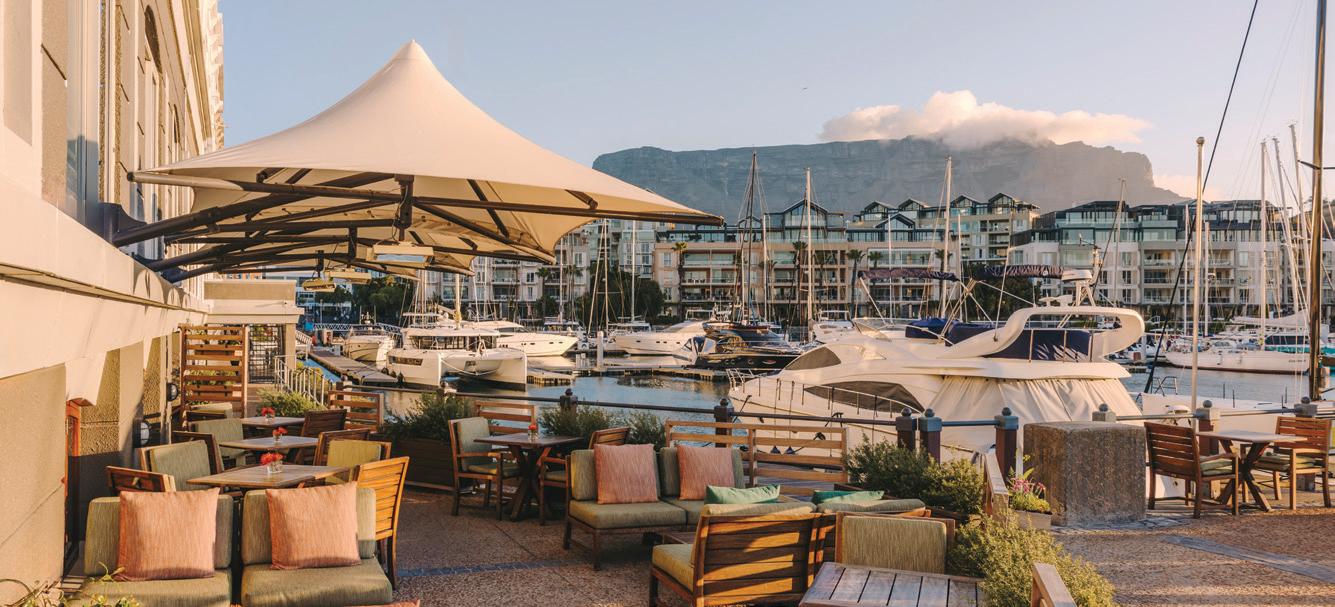
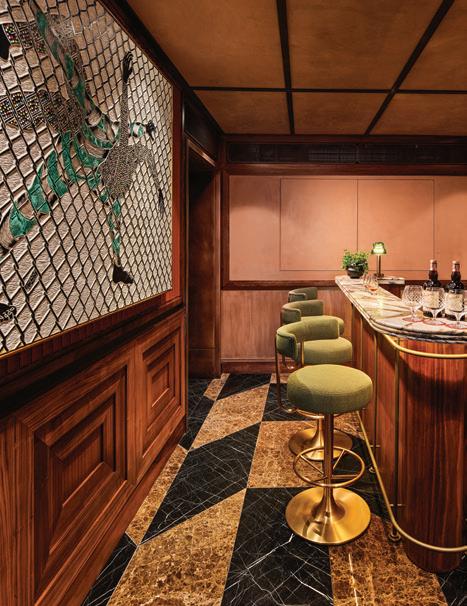
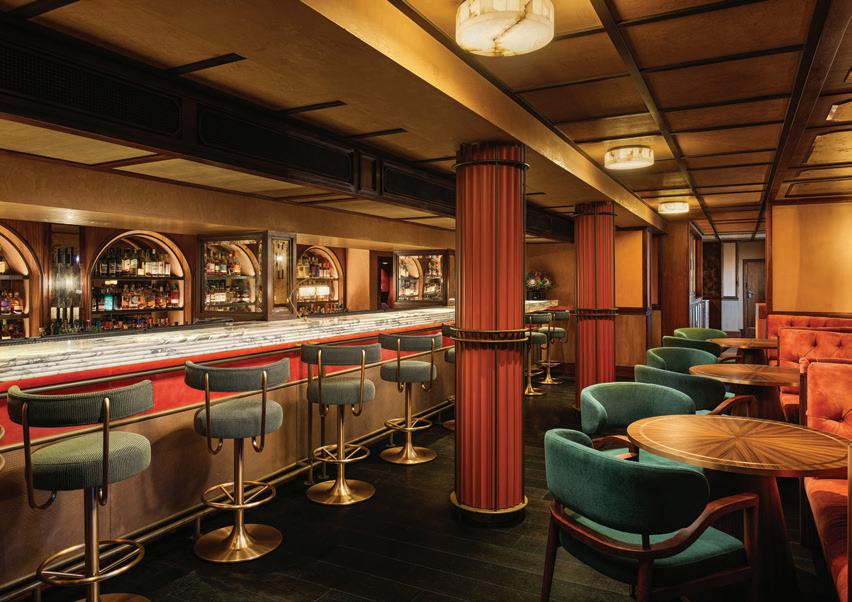
Situated at Cape Grace Hotel on the edge of the marina, Bascule Bar is a sophisticated haven for whiskey lovers and cocktail enthusiasts. Enjoy a standout whiskey collection, iconic views, and live weekend music.
A Masterclass in
COMMUNITY
WITH INSPIRING SPEAKERS, IMMERSIVE BRAND EXPERIENCES, AND THE WARM GUIDANCE OF AMANDA DAMBUZA, THE 2025 VASTLY SAGE BRUNCH OFFERED AN UNFORGETTABLE JOURNEY INTO PERSONAL GROWTH AND SHARED WISDOM
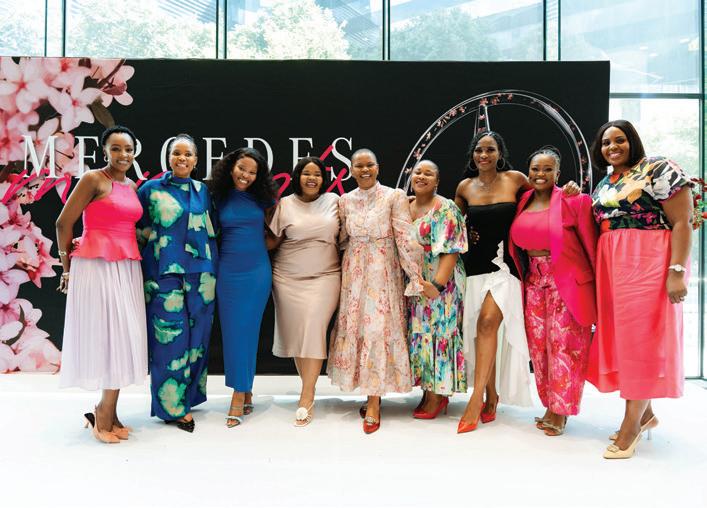
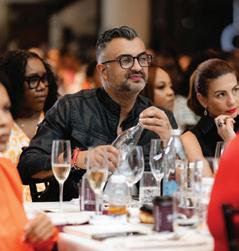
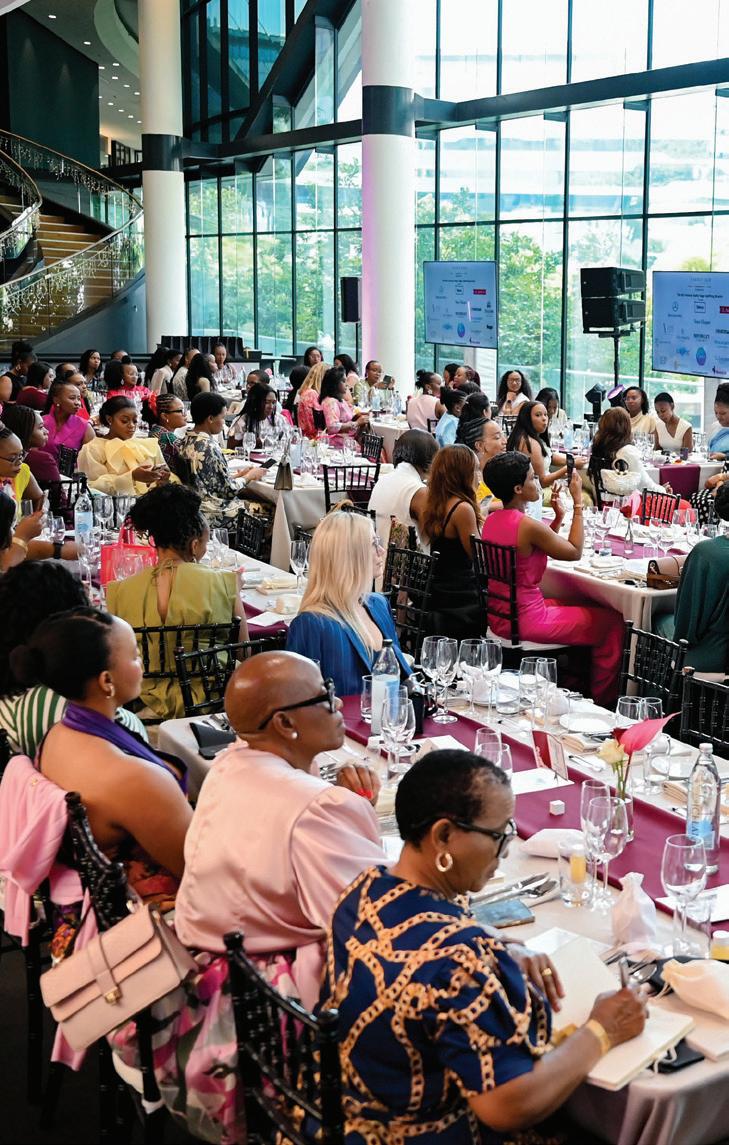
For six years, the Vastly Sage Brunch, hosted by founder and author Amanda Dambuza, has served as a powerful reminder of the beauty of community and intentional living. Opening the event with characteristic warmth, Amanda’s laughter, dancing, and passion immediately set the tone for a day defined by upliftment and authenticity.
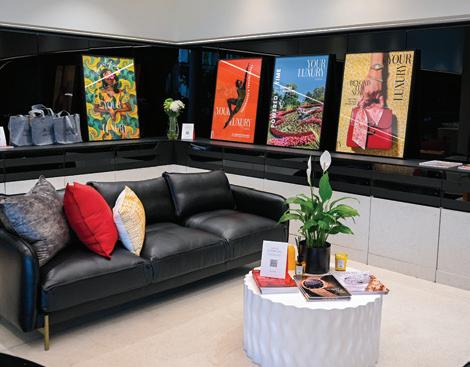
Returning as media partner, YourLuxury Africa hosted a beautifully curated lounge scented with Acqua di Parma candles. Guests were invited to network, sip on a glass of Veuve Clicquot or Terre Paisible Chardonnay, and enjoy moments of indulgence and meaningful connection.
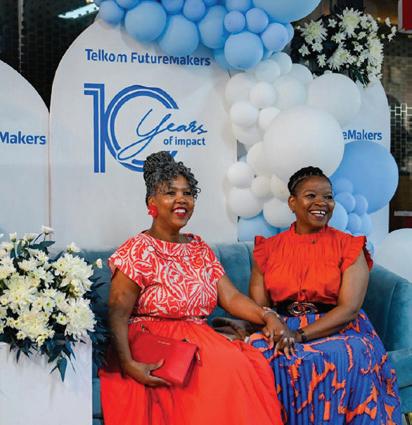
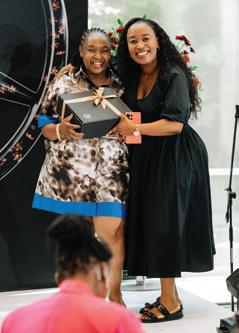
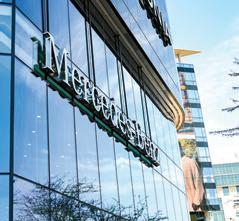
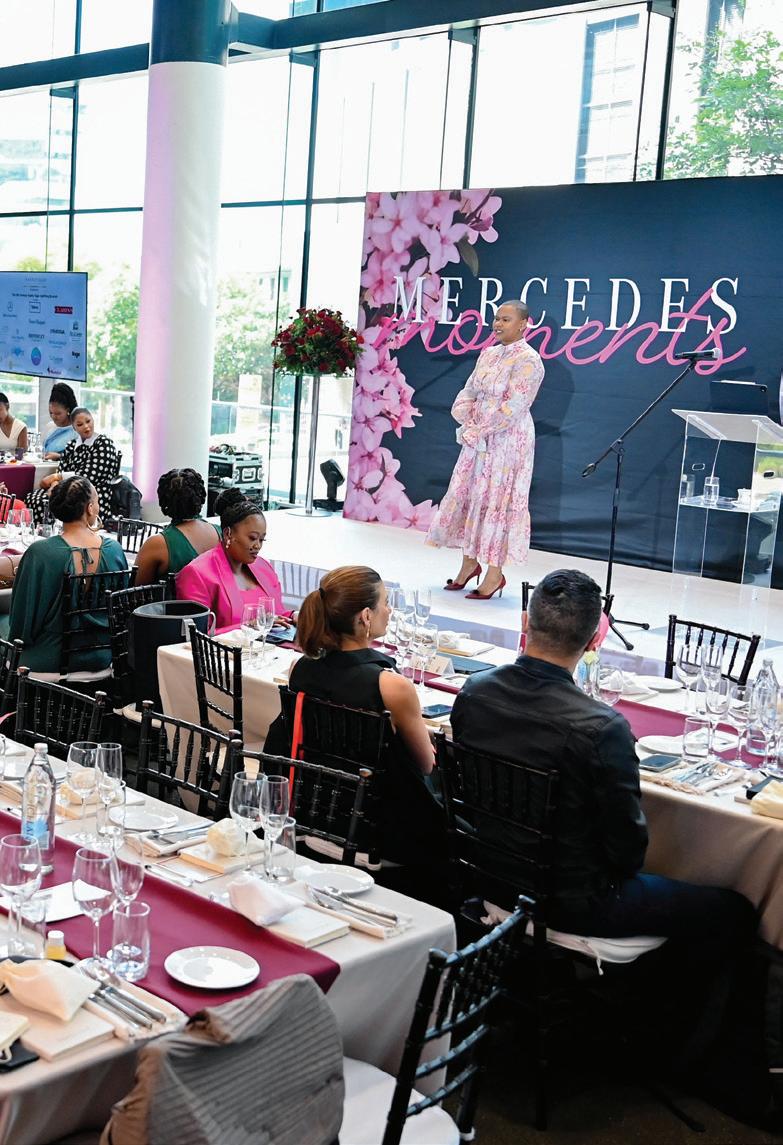
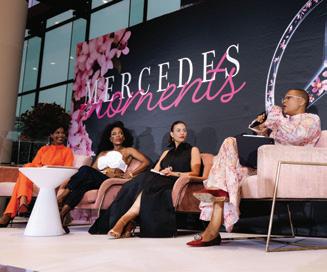
Held at the Mercedes-Benz Sandton showroom, the venue featured a thoughtful selection of immersive brand partnerships, including Sage coffee stations, encouraging guests to taste, sample, and experience. Mayur Bhana, General Manager: Marketing & Customer Journey at Mercedes-Benz South Africa, gave a heartfelt talk titled Rejection & Vulnerability: The Power of Owning Your Story. His unabashed reflections on personal challenges and past mistakes echoed the Vastly Sage mission of creating a sanctuary for visionaries who lead with intention. The brunch was again powered by Telkom, who celebrated 10 years of impact through the enterprise development programme Future Makers. A lineup of incredible speakers shared powerful insights, including From Abandonment to Purpose by Reverend Kabelo Mothlakane and The Psychology of Wealth by Nomi Bodlani, Head of Direct & Private Clients at Allan Gray.
Nomonde White Ndlovu, Chief Information Officer at Bidvest Bank and Chair of Wired4Women, co-hosted the event. Alongside Amanda, the two women guided a day rich in wisdom and transformation. A recurring theme emerged: leadership is not defined by titles alone, but by community, courage, and collective evolution.
Guests were treated to a spectacular lunch prepared by awardwinning Chef Wandile Mabaso of Les Creatifs. The menu included a live sushi station, sorghum and samp salad, paella, and an abundant table spread of artisanal breads, cheeses, fruits, and dips.
Another highlight was a powerful panel discussion offering an honest and relatable exploration of perimenopause. Psychiatrist Dr Clementine Chawane, Shirley van Wyk, Managing Director of Terre Paisible Medical Spa, and sexologist Dr Mpume Zenda unpacked the physical and emotional changes women experience, sharing practical suggestions for improved wellbeing and vitality. The thoughtful Clarins beauty spoils were a welcome start to this wellness journey.
The day concluded with an engaging and insightful address by the enigmatic Dr Mzamo Masito, former CMO of Vodacom and Google and current Africa Lead for Canva. His talk, A Personal Journey: Men Too, Heartbreak & The Power of Storytelling through Visual Communication, had guests laughing while reflecting deeply on the male perspective. It was a fitting end to a gathering where power, purpose, and prestige converged in the most human way.
For more information, visit vastlysage.com.
“Returning as media partner, YLA hosted a beautifully curated lounge”
TAKING the P UNGE
CAPE TOWN HAS EMERGED AS ONE OF THE WORLD’S MOST AFFORDABLE WELLNESS DESTINATIONS, WHERE THE ATLANTIC OCEAN HAS MADE COLD-WATER IMMERSION PART OF THE CITY’S RHYTHM WORDS & PHOTOGRAPHY RYAN ENSLIN
Cold-water immersion – or cold-water plunging – has surged into the global wellness mainstream, fuelled by a social media boom. Hashtags such as #coldplunging have racked up more than a billion views on TikTok, while Instagram is awash with #icebath and #coldtherapy content. Celebrity endorsements, alongside podcasts and wellness platforms spotlighting figures such as Wim Hof – the Dutch extreme athlete known as “The Iceman” and creator of the Wim Hof Method – have helped transform this into a viral wellness ritual embraced across continents and climates.
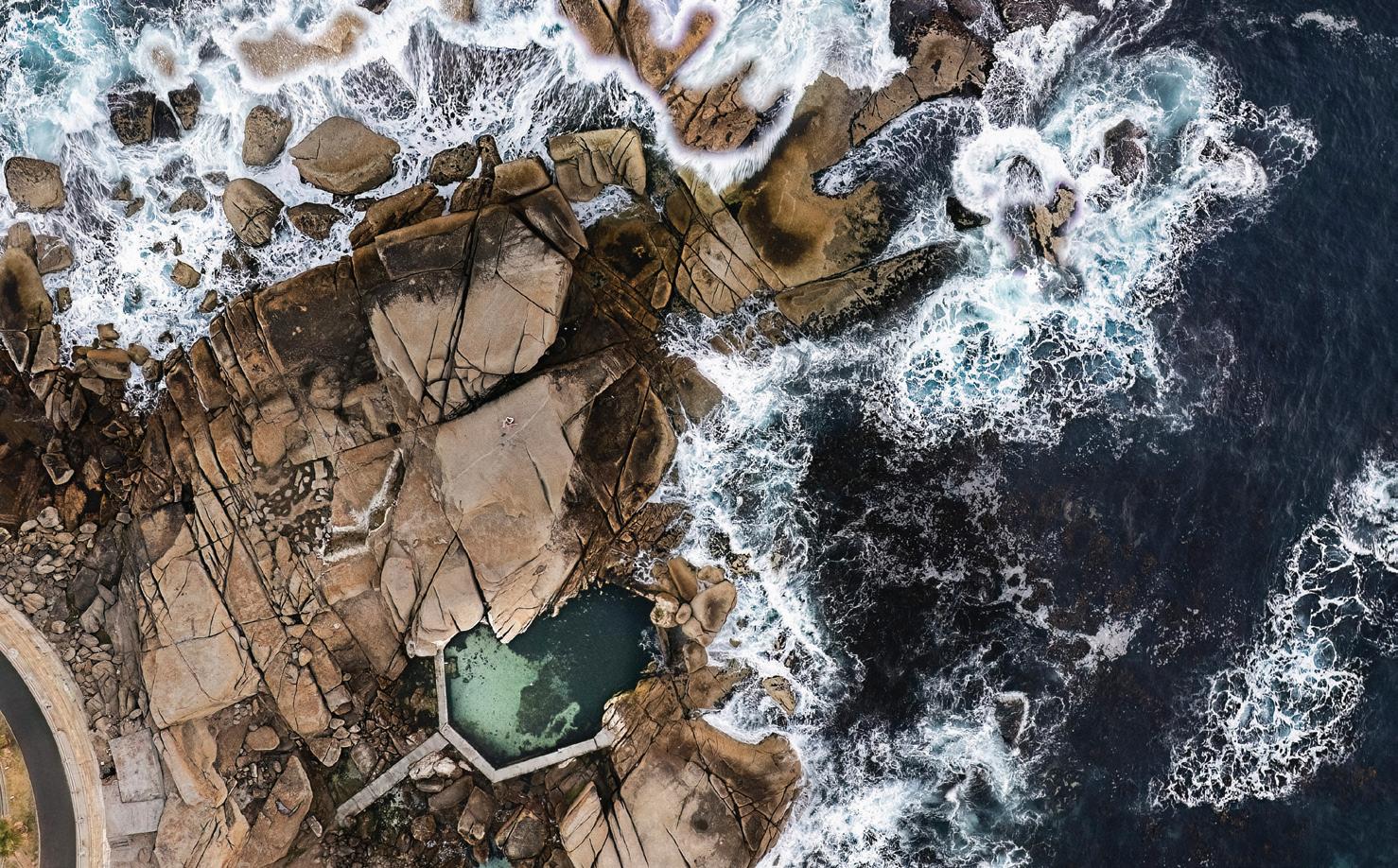
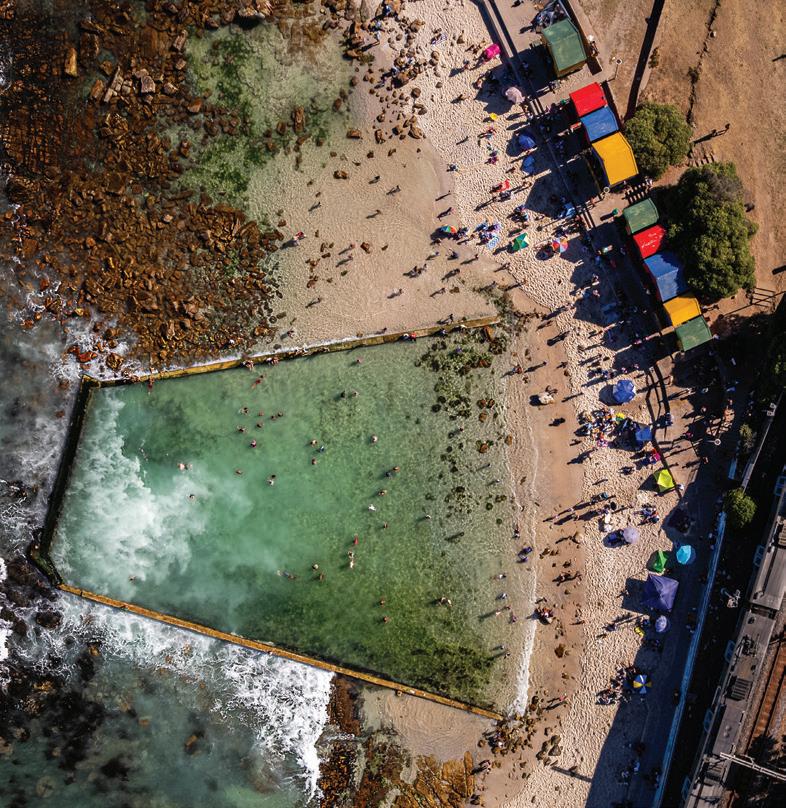
Nowhere is this more evident than at Saunders Rock Tidal Pool in Bantry Bay. Set against sweeping Atlantic views, the tidal pool offers a striking sense of perspective as waves crash below and the horizon stretches ahead. The water remains bracing throughout the year, often dipping into the low teens, delivering a sharp, invigorating contrast to the city’s mild coastal air.
Once niche, cold-water plunging has evolved into a wellness movement, embraced for its physical and mental benefits and propelled into the mainstream by science, social media, and a growing focus on preventative health. In Cape Town, the ritual feels instinctively at home – a natural extension of a city where cold ocean water, elemental beauty, and mindful living converge effortlessly.
A COOL RITUAL
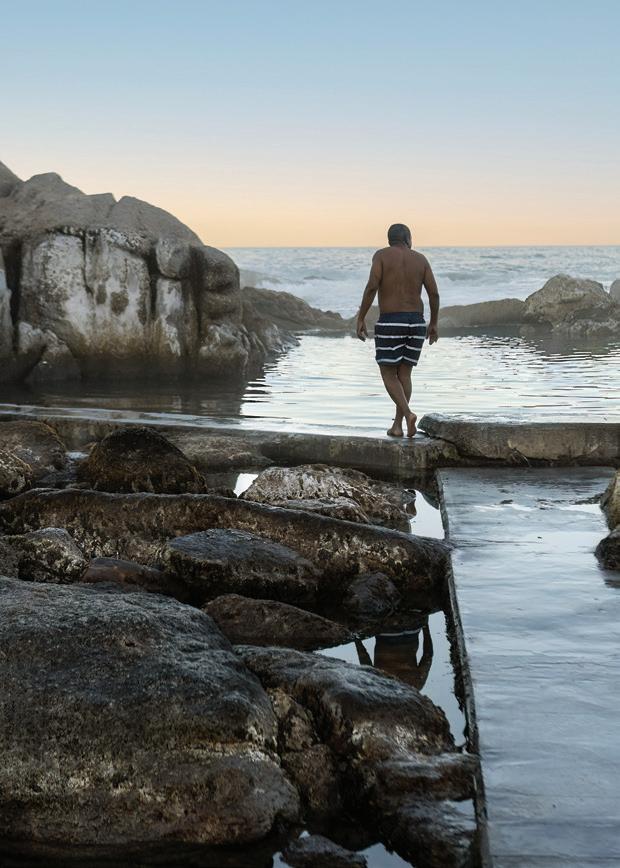
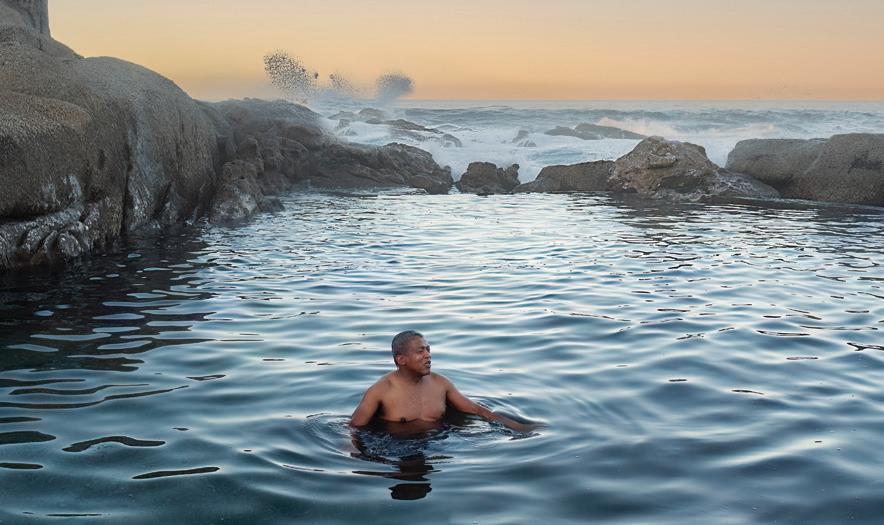
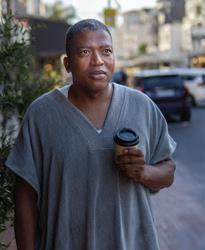
I met Lesego Majatladi just after sunrise at Saunders Rock Tidal Pool, drawn there by conversations with a friend who spoke of his coldwater practice. After trading Johannesburg for Cape Town some years ago, he’s found in the ocean a ritual that has come to anchor his days. The morning still held its grip on the air as the light crept in. The water lay dark and calm, framed by granite. This stretch of coast – where mountain, ocean, and city converge – reveals one of Cape Town’s quieter luxuries: daily access to cold water that is neither artificial nor controlled.
Lesego approached the tidal pool with an ease shaped by familiarity rather than bravado. Cold-water immersion, he told me, had entered his life without fanfare. “By virtue of living here,” he shared, “the tidalpool culture is at your doorstep.” Taken through his eyes, the practice feels less like a trend than a response to geography.
When he stepped in, it was gradual. Ankles first, then a pause as the cold took hold. “It’s like you’ve got two ice blocks for feet,” he would say later. Each step was deliberate, his breath adjusting as the body responded to the temperature. Only once he found a rhythm in the cold did he move deeper, meeting the water without resistance.
ABOVE:
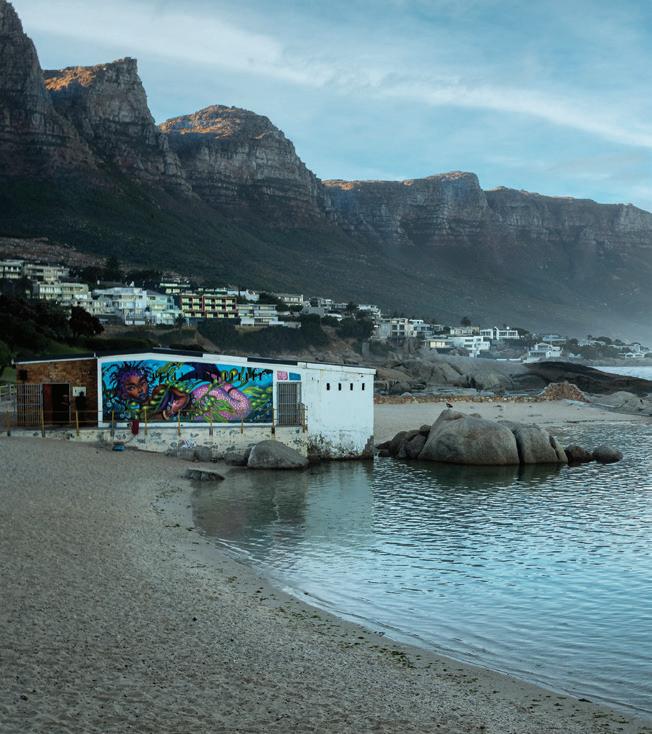
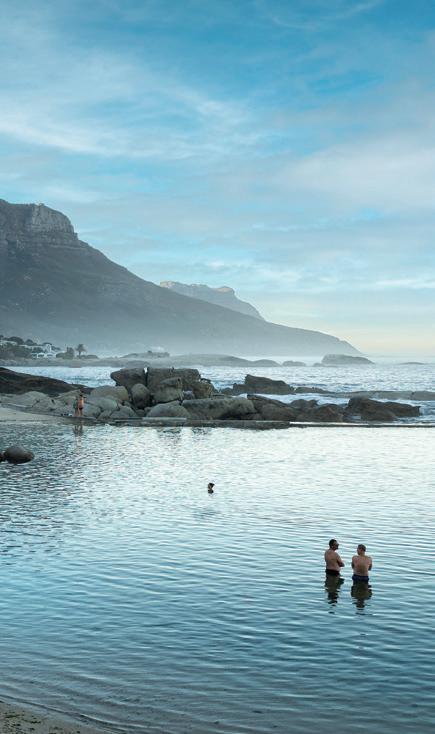
Bathers linger in the quiet shallows at dawn, the cold wrapping around them as Camps Bay slowly stirs LEFT:
Dawn softens the rocks as Lesego enters the pool, taking the day’s first deliberate steps
BELOW:
Afterwards, as we walked along the rocks, he spoke about what the cold gives him. “When you do this daunting thing to start your morning,” he said, “everything else feels less challenging.” What he described wasn’t about endurance or conquest. It was recalibration.
Watching Lesego step calmly into the tidal pool, I was reminded that this quiet ritual has ancient echoes. Across cultures, cold water has long been used to sharpen awareness and pare life back to its essentials. Roman bathhouses ended in the frigidarium, a final plunge into ice. In Japan, misogi is practised beneath waterfalls as a form of spiritual cleansing. In the far north, winter swimming is less novelty than custom. These practices, like Lesego’s, are not performances; they are practical ways of returning to oneself, of finding focus in discomfort.
Listening to Lesego, it became clear how his ritual sat beside these histories. He wasn’t chasing toughness or purification. “I do it because it makes me feel alive,” he said. Alive, I realised, not as a transformation, but as recognition of self.
“Across cultures, cold water has long been used to sharpen awareness and pare life back to its essentials”
COLD BUT COMMUNAL
Further along the coastline, at the Camps Bay Tidal Pool, the practice takes on a different tone. The Twelve Apostles rise behind the water, steady against the Atlantic’s restlessness. Even on the calmest morning, the ocean remains visibly cold – its darker hue a reminder of depth and distance.
Saunders Rock Tidal Pool, a soft pause in the Atlantic coastline, gathers the day before the ocean begins its restless work
After photographing the pool, I noticed a woman stepping from the water, wrapping herself in a towel, her shoulders trembling lightly. Her hands gripped the fabric with resolve. We found ourselves in the same coffee queue a short while later, where she introduced herself as Erica.
Between small shivers and steady words, we fell into conversation. She spoke of how the cold lifts her mood, sharpens her focus, and sets the pace for the day ahead. Where Lesego’s practice felt inward and instinctive, hers was openly shared. Cape Town’s tidal pools hold many such circles. The Waterblommetjies gather at Camps Bay. The Atlantic Waterbabies meet nearby, sometimes in the tidal pool, others directly in the ocean. What binds them is repetition rather than structure – the cold becomes communal.
“Cold-water plunging invites a slower, more attentive start”
ORIENTATION, NOT ESCAPE
For Lesego, mornings offer clarity. The Atlantic delivers a jolt he feels immediately. “It’s like 10 coffees,” he joked. On occasion, when his wife joins him, the rhythm shifts and they take a plunge later in the day, letting the softer light shape their ritual. The same pool carries a different tone. Conversation drifts. The cold steadies rather than sharpens.
CAPE TOWN TIDAL POOLS TO TRY
• St James Tidal Pool (St James): A colourful, sheltered classic with calm water; popular with families and year-round dippers.
• Dalebrook Tidal Pool (Kalk Bay): A beloved sunrise spot with an energising local swim culture.
• Camps Bay Tidal Pool (Camps Bay): Central and scenic, framed by the Twelve Apostles – ideal for a quick ocean reset post-walk.
• Kommetjie Tidal Pool (Kommetjie): More rugged and secluded, with raw sea air and dramatic views for committed cold-plunge lovers.
• Soetwater Tidal Pool (Kommetjie/Scarborough side): Quiet and nature-rich, often paired with coastal walks and wildlife sightings.
Lesego pauses in the quiet water, the Atlantic crashing softly behind his morning ritual
ABOVE:
The St James Tidal Pool fills with colour and movement, warm Indian Ocean water holding a bright gathering between shore and tide LEFT:
A warm cup steadies Lesego after the Atlantic’s bite
Cold-water swimmers often speak of the afterglow, warmth returning slowly to the limbs – a quiet brightness settling in the chest. For Lesego, entering the pool marks the day’s true beginning. “I would have a horrible day if I didn’t do it,” he said. “It’s like starting the day on the wrong foot.” The cold gives him a sense of orientation he trusts.
At the beginning of the year, cold-water plunging invites a slower, more attentive start. It asks for restraint – a willingness to listen before pushing further. Those new to the practice learn quickly that less is more than enough; that brief moments in the cold can steady the body without overwhelming it. In Cape Town, the ocean offers this lesson daily. The ritual promises no reinvention, only orientation – a quieter way of arriving at oneself as the year opens. ■
TOP:
ELECTRIFIED LUXURY
THE LEXUS RX 450H+ IS QUIETLY REWRITING THE MODERN SUV STORY
Luxury has evolved. It’s no longer defined by volume, flash, or visible excess, but by how effortlessly something integrates into your life. Lexus has long understood this shift, and with the RX 450h+, the brand brings its most recognisable SUV into the electrified era.
This plug-in electric vehicle adapts seamlessly to your lifestyle. Around town, the RX 450h+ operates comfortably on electric power alone, offering up to 65km of allelectric driving. For school runs, city commutes, and everyday errands, the experience is calm, silent, and unexpectedly satisfying.
PERFORMANCE WITHOUT THE DRAMA
When longer journeys beckon, the petrol-hybrid system takes over seamlessly. With a combined system output of 227kW, the RX delivers ample power when required. Acceleration is smooth and immediate, aided by electric torque, while the insulated cabin remains hushed even at speed. Adaptive Variable Suspension and all-wheel drive contribute to a ride that feels both smooth and responsive, whether navigating urban streets or stretching out on the open road.
EVERYDAY LUXURY
Visually, the RX strikes a careful balance, its bold proportions communicating confidence without excess. Inside, that sense of ease is amplified. The cabin feels generous and considered, offering space where it matters most on longer journeys. The driver environment follows the Lexus intuitive Tazuna layout, placing screens and controls exactly where you expect and reducing any chance of distraction on the road.
Materials are tactile rather than showy, selected for how they wear and feel over time. Ambient lighting shapes the mood, while comfort remains the clear priority. Heated and ventilated seats with memory functions ensure personalised ease, and rear passengers enjoy the same level of consideration.
SMART BY NATURE
The integrated features include a Head-Up Display, Adaptive Cruise Control, a panoramic view monitor with reverse camera, and automatic three-zone climate control. Completing the experience is the Mark Levinson 21-speaker sound system, transforming the cabin into your private theatre.
PROTECTION WITH PURPOSE
Safety systems operate quietly in the background, supported by a comprehensive suite of advanced features designed to protect both driver and passengers. The Pre-Crash System, e-Latch System, Lane Keeping System with Lane Trace Assist, Blind Spot Monitor, Park Distance Control, and up to eight airbags all contribute to a confident drive.
“The RX 450+ is designed for those who appreciate progress delivered with restraint”
The Lexus RX 450h+ is designed for those who appreciate progress delivered with restraint. In a world increasingly defined by excess, that restraint may be the most compelling luxury of all.
DESIGN PHILOSOPHY: A calm, confidence-led approach that prioritises proportion, balance, and usability over visual excess.
CABIN ATMOSPHERE: Tactile materials, understated finishes, and customisable ambient lighting create a quietly cocooned environment.
DRIVER-FIRST LAYOUT: The Tazuna cockpit places controls and screens intuitively, reducing distraction and enhancing focus.
COMFORT AS LUXURY: Heated and ventilated seats, memory functions, and a generous rear-seat space designed for long, unhurried journeys.
SOUND AND SILENCE: Mark Levinson 21-speaker premium audio paired with exceptional cabin insulation for a refined acoustic experience.
TECHNOLOGY WITH PURPOSE: HeadUp Display, wireless charging, panoramic view monitor, and seamless plug-in hybrid integration.
LUXURY IS IN THE DETAILS
TOP D O W N TITANS
NO MATTER THE BADGE ON THE BONNET, THE MAGIC OF A CONVERTIBLE IS UNIVERSAL. POWERED BY A HYBRID SYSTEM, A BITURBO V8, OR A NATURALLY ASPIRATED POWERHOUSE, THE MOMENT THE ROOF FOLDS AWAY, EVERY JOURNEY BECOMES AN ESCAPE
WORDS EDWARD MOLEKE MAKWANA
There’s a specific kind of liberation that only those who’ve felt it can describe. My wife and female relatives often speak of the bliss of unfastening a bra after a long day. In the motoring world, convertibles offer a similar release. With the touch of a button, the world opens up and the car transforms into a sanctuary of wind, sky, and emotion. Let’s call them convertibles, because when the roof folds away, something inside you unfolds too.
These machines offer a therapy of their own: a cleansing breath along scenic routes like Chapman’s Peak, the sculpted R44 between Gordon’s Bay and Rooi Els, the warm breeze
of KwaZulu-Natal’s Dolphin Coast, or the undulating green embrace of Mpumalanga’s endless valleys. It was this blend of freedom and soulfulness that washed over me when MercedesBenz South Africa handed me the keys to the all-new Mercedes-AMG SL63.
Few badges carry a history as storied as the SL. Nearly 70 years ago, a racing-bred machine emerged from Stuttgart and instantly became an icon. The 300 SL of 1952 – light, focused, relentless –dominated circuits from Le Mans to the Nürburgring, cementing the SL name in automotive mythology. The modern SL63 reminds you of that lineage the moment you ignite its heart.
yourluxury.africa
THE MERCEDES-AMG SL63
When I collected the SL63, I knew immediately where I needed to take it: Slaaihoek Road in the eMakhazeni and eNtokozweni region (formerly Machadodorp) in Mpumalanga – a 40km ribbon of bliss I first discovered seven years ago. Before heading there, I stopped by the Geek House Eatery in Tshwane for Daytona South Africa’s Supercar Sunday – a vibrant collage of roaring engines, young dreamers, seasoned collectors, and pure automotive passion. A brief immersion in that energy only intensified my longing to hit the open road.
The three-hour journey to Slaaihoek felt effortless, and as I approached the region, my heartbeat shifted; it felt like meeting an old love again.
The landscape opened its arms: rolling green hills, towering pine forests, and roads that curve not for convenience, but for joy. With the roof folded
THE PORSCHE 911 CARRERA 4 GTS CABRIOLET
No conversation about convertibles is complete without mentioning Porsche. The 911 Carrera 4 GTS Cabriolet represents both legacy and evolution.
The GTS badge dates back to 1963 and, while the 911 has only worn it since 2010, the spirit remains unchanged: a car that bridges everyday usability with track-inspired intent. The latest GTS pushes boundaries further than ever before – it is the first road-legal 911 to feature a performance hybrid system, combining a newly developed 3.6-litre engine with lightweight electric innovation.
The numbers are staggering: 398kW of combined power, 610Nm of torque, and 0 to 100km/h in 3.1 seconds.
The design has been refined, the interior digitised, and personalisation options expanded through Paint to Sample and Porsche Exclusive Manufaktur. It is a car that can be tailored not just to a driver, but to a personality.
Pricing starts at R3 793 000.
“With the roof folded neatly away, the SL63 awakened its full personality”
neatly away, the SL63 awakened its full personality; its 4.0-litre V8 biturbo singing in deep growls and sharp pops. Switching into Sport and Sport Plus modes transformed the car into a precise instrument – the AMG Performance 4MATIC+ system keeping it perfectly poised while the active rear-end steering elegantly carved through corners.
Each gearshift from the AMG SPEEDSHIFT MCT 9G felt like an orchestration of immediacy and emotion. With 430kW of power and 800Nm of torque underfoot, the hills became a stage, the car a performer, and I the fortunate audience.
The weather danced playfully during my drive – mist one moment, sunbeams the
next. It felt symbolic. When temperatures dipped, Mercedes’ clever AIRSCARF system wrapped warm air around my neck, allowing the drive to remain opentop and unbroken.
Two hours of driving, photographing, and reflecting slipped by like minutes. When it was time to head home, I chose the longer loop through eManzana, Carolina, and eventually back onto the N4, because experiences this pure deserve to be savoured.
The SL63 left a mark on me – emotional, visceral, and unforgettable. If one day my garage were to gain a new crown jewel, it would be this. Pricing starts at R3 943 156, including a five-year/ 100 000km PremiumDrive Care plan.
“At a time when many performance cars are downsizing or turning fully electric, the Stingray stands defiantly in celebration of purity”
THE CORVETTE STINGRAY
I was also scheduled to test the new Corvette Stingray, fitted with the naturally aspirated 6.2-litre V8 that reminds drivers why the visceral experience of a big-capacity engine still matters in an era of electrification and downsizing. Unfortunately, my test drive couldn’t happen, as the unit I was meant to experience was sold to a customer of CVH Auto Group, the importers and distributors of Maserati and Corvette in South Africa.
What impressed me – even without driving it – was how the Corvette Stingray is reshaping expectations among South African enthusiasts. At a time when many performance cars are downsizing or turning fully electric, the Stingray stands defiantly in celebration of purity. Its character is shaped not only by the mid-engine architecture but by the bold design philosophy behind it: wide haunches, dramatic airflow sculpting, and a silhouette that feels more supercar than traditional American muscle. It speaks to those who still crave the physicality and raw acoustics that only a naturally aspirated V8 can deliver – a reminder that analogue passion still has a place in a digital age.
The mid-engine layout – a first for the Corvette lineage –delivers a unique blend of balance, immediacy, and theatre. Combined with the unmistakable V8 soundtrack and the Stingray’s sculpted, aerodynamically driven design, it continues to resonate with South African motorists who value authenticity and craftsmanship.
The car’s appeal extends beyond performance figures. Its presence – wide, low, and sculptural – draws attention wherever it appears, creating a renewed appetite for expressive automotive design. Inside, the driver-focused cockpit and premium finishes offer refinement without compromising its racing DNA. Pricing starts from R3 600 000.
CURATOR, WRITER, AND CULTURAL INNOVATOR
MPUMI MAYISA’S ‘GLIDING THROUGH THE GALLERY’ SERIES TURNS JOHANNESBURG AND CAPE TOWN’S ART SPACES INTO INSIGHTFUL, WELCOMING EXPERIENCES THAT FEED CURIOSITY COMPILED BY PHILA TYEKANA
but make it
fuuWHAT ACTUALLY HAPPENS DURING A GLIDE? You book a ticket and I take care of the rest. I research the exhibitions, artists, and their practice. Sometimes people get a bit of homework – a few things to research afterwards. On the day, guests walk around before I provide context, followed by more wandering and connecting. Occasionally we do studio visits with artists to see the process behind the art. Every Glide is different.
HOW OFTEN DOES ‘GLIDING THROUGH THE GALLERY’ TAKE PLACE? In Johannesburg, it happens on the last Saturday of every month. It runs bi-monthly in Cape Town, and we’re looking at taking it to Pretoria and possibly Makhanda in the Eastern Cape – depending on what’s happening in the arts calendar.
WERE YOU ALWAYS INVOLVED IN THE ARTS? Not at all, I studied law! I grew up in the far East Rand where art wasn’t easily accessible. When I moved to Johannesburg, I picked up a camera and worked as a photographer for JHB Live. I started covering art events, and that’s where the curiosity really kicked in, eventually leading to an internship at the Nirox Foundation, which changed everything.
HOW DID THE INTERNSHIP COME ABOUT? I was a poet before anything else – my work was published in the Sol Plaatjie European Union Poetry Anthology. I attended a writing workshop linked to Nirox and the curator offered me a spot on an all-women exhibition. Much of my journey has been about surrender; being open and present when opportunities appear.
WHEN DID YOUR ART CAREER BEGIN? In 2017, when I founded the creative platform ‘Among The Lilies’. It became a space to experiment and build community. I then created ‘Ode to the Woman’, an all-women exhibition and market, ‘Bathini Abafazi’, which explored women’s voices and lineage, and later ‘The Book Social’, bringing authors and readers together through conversation.
WHAT’S BEEN THE BIGGEST HIGHLIGHT OF ‘GLIDING THROUGH THE GALLERY’ SO FAR? Building a real community. Art spaces can feel intimidating, and the Glide softens that. People leave curious, inspired, and wanting to learn more – not overwhelmed.
WHAT STORIES ARE YOU INTERESTED IN EXPLORING NEXT? Love. I want to understand love more deeply through art and my practice –it is expansive, layered, and endlessly interesting.
WHAT DOES LUXURY MEAN TO YOU? Over-considered design. Refinement. Softness. Feeling held and cared for, whether it’s an experience or an object.
IF SOUTH AFRICA WERE A PERSON IN ONE OF YOUR EXHIBITIONS, HOW WOULD YOU DESCRIBE HER? Vibrant, raw, rough, beautiful, and full of possibility. A place where dreams can genuinely be cultivated.
WHAT’S ON YOUR TRAVEL BUCKET LIST? Brazil. In 2027, I’ll hopefully take my Gliders there.
TOP CITIES YOU’VE VISITED? London is my favourite art city. The Lagos art and design scene is luxurious and electric.
WHO’S CATCHING YOUR EYE IN THE ART WORLD AT THE MOMENT? Bonolo Kavula. She uses punched shweshwe fabric to create geometric works that feel both scientific and mathematical. Her practice is incredibly innovative.
IF YOUR LIFE HAD A THEME SONG, WHAT WOULD IT BE? My Road, Our Road by Lee Oscar.
WHAT SHOULD WE KNOW ABOUT YOUR WORK THIS YEAR? I’ve launched the ‘Budding Collector Circle’ to grow a new generation of art collectors, and I’m expanding ‘Gliding Through the Gallery’ internationally. The Venice Biennale and Paris Glide runs from 3 to 12 August, and will include flights, accomodation, and more.
AND YOUR THEME FOR 2026? Expansion. @mpumi.mayisa ■
Upcoming Auctions
Modern and Contemporary Art
Hair Matters: A Selection of Works from the Georgina Jaffee Collection
Saturday 21 February | 4pm
Portway to Cohen: A Collector’s Legacy and Other Properties
Visit www.straussart.co.za for the full February art programme including talks, walkabouts, and exhibitions.
Norman Catherine,
UNDER THE AFRICAN SUN
FAMED GLOBAL EXHIBITION IN SOUTH AFRICA CELEBRATES UNIVERSAL POWER OF THE SUN
Veuve Clicquot launched its acclaimed Emotions of the Sun photographic exhibition for the first time in South Africa in December 2025. Following showcases in Milan and New York, the global exhibition was held at the Youngblood Gallery in the heart of Cape Town’s creative hub on Bree Street.
In collaboration with iconic Magnum Photos agency and in celebration of the Maison’s solaire spirit, 40 extraordinary works by eight selected photographers highlighted the sun’s emotional, cultural, and universal power. The celebrated photographers included Steve McCurry, Cristina de Middel, Trent Parke, Alex Webb, Nanna Heitmann, Olivia Arthur, Newsha Tavakolian, and South African Lindokuhle Sobekwa.
“The sun is our ultimate muse”, said Thomas Mulliez, President of Veuve Clicquot, “It’s a source of warmth and creativity, deeply intertwined with our philosophy. Cape Town – with its radiant light and vibrant community – embodied this spirit perfectly, and it was only natural for Emotions of the Sun to have found a home here, in a city that lives and breathes the optimism and artistry we celebrate,” he added.
Each photographer – spanning five continents – was given creative freedom to explore the sun’s many facets. The result was a captivating dialogue of light that not only radiated personal perspectives but highlighted cultural connections across the globe.
“It reminded me how emotion and light connect us all, wherever we are in the world,” said Lindokuhle, the first photographer to have won the esteemed FNB Art Prize. His images of South Africa’s landscape honoured both local storytelling and the country’s rich photographic history.
Visitors were also invited to immersive extensions of the exhibition that echoed the sun’s many expressions and Veuve Clicquot’s joie de vivre.
Translating the brand’s philosophy into a designer culinary experience at Sun on Your Plate Café, local chef Seth Shezi curated a seasonal brunch-style menu paired with Veuve Clicquot Yellow Label. Signature dishes included goat’s cheese on yellow beetroot crisps with wild honey and salmon sashimi on turmeric blinis.
“Veuve Clicquot has become synonymous with unforgettable brunches around the world. Our approach to food is rooted in the same values that define our champagne: generosity, creativity and a celebration of life’s bright moments,” said Brune Failliot, Global Communication and Digital Director of Veuve Clicquot.
The sunshine journey continued at Youngblood Gallery’s gifting boutique, where visitors could personalise bespoke Veuve Clicquot collectables such as the Clicquot Arrow and the Ice Jacket, which is made from recycled fabrics.
In addition, Bold Conversations by Veuve Clicquot – a platform created to empower dialogue around women’s entrepreneurship – featured discussions during the exhibition between dynamic duos Amanda Dambuza and Carol Bouwer on The Power of Role Models and The Balancing Act, and Nomndeni Sethole and Mo Mokone, who explored the ‘’Why’’ of Entrepreneurship and Turning Risk into Reward.
Now in its fourth year in South Africa and its 53rd worldwide, the glittering Veuve Clicquot Bold Woman Award was recently held in Johannesburg, with YourLuxury Africa as esteemed media partner.
Having championed female ambition for more than 250 years, beginning with Madame Clicquot herself, who was one of the world’s first modern businesswomen, the award has grown into a global celebration of female leadership across 27 countries.
Veuve Clicquot’s iconic yellow, the colour of the sun, which radiates through the Maison’s global footprint, symbolises the spirit of joy and the promise of infinite possibilities. Emotions of the Sun was a luminous reminder that art – like sunshine – is best enjoyed as a shared experience.
In the 1970s, ALEX WEBB documented small-town life in the American deep south in black and white. Working in the Caribbean and Mexico, he embraced colour photography and is exhibited widely at institutions such as the Metropolitan Museum of Art.
MEET THE PH O T O GRAPHERS
of the most innovative photographers of
Australian
American STEVE MCCURRY is one of the most iconic voices in contemporary photography, with more than 20 books and worldwide exhibits to his name. His award-winning work reflects the human condition and cultural interactions.
The current president of Magnum Photos, CRISTINA DE
explores photography’s complex relationship with truth by blending documentary and conceptual practices. She’s received many honours, including an Infinity Award from the International Center of Photography.
South African photographer LINDOKUHLE SOBEKWA was awarded a scholarship to study at the Market Photo Workshop and has since exhibited his work worldwide. In 2023, he was the first documentary photographer to win the prestigious FNB Art Prize.
Moscow-based photographer NANNA HEITMANN covers defining shifts such as climate change and the ways people interact with their environment. Her work has appeared in National Geographic and Time magazines, and she is a contributor to the New York Times.
OLIVIA ARTHUR explores private life, gender, and our relationship to the human body. She is a co-founder of Fishbar, a publishing house and photography space in London.
photographer
is renowned for her poignant themes, notably the challenges faced by women in Iran.
documentary,
and imagination.
Iranian
NEWSHA TAVAKOLIAN
Blending art with
her incredible works blur the lines between reality
One
his generation,
TRENT PARKE’S poetic, often darkly humorous photography combines fiction and reality to explore themes of identity, place, and family life.
MIDDEL
C O VERED IN SUNSHINE
The Emotions of the Sun launch event on 3 December was a bold celebration of the power of visual storytelling. Held at Cape Town’s Youngblood Gallery on Bree street, the evening opened with an address from David White, Managing Director Middle East and Africa, Moët Hennessy. Actress and media personality Nomzamo Mbatha served as MC, leading an engaging panel discussion with the photographers. Guests from across creative and commercial industries enjoyed champagne while connecting and networking.